Blog

  • MIL-OSI Global: After he reached the Super Bowl, Colin Kaepernick’s racial justice protests helped expose US views toward sports activism

    Source: The Conversation – USA – By Betina Cutaia Wilkinson, Associate Professor & Associate Chair of Political Science, Wake Forest University

    San Francisco 49ers players Eric Reid, left, and Colin Kaepernick take a knee during the national anthem before a game against the Los Angeles Rams on Sept. 12, 2016. Daniel Gluskoter/AP Images for Panini

    Back in 2012, quarterback Colin Kaepernick was one of the NFL’s most popular stars. He led the San Francisco 49ers to the Super Bowl and was just a few plays away from winning the title and lifting the Lombardi Trophy.

    But America’s focus on Kaepernick’s athletic success waned in 2016. That’s when he began to kneel before games during the playing of “The Star-Spangled Banner” to protest the deaths of young Black men at the hands of white police officers.

    They included Alton Sterling and Philando Castile, two unarmed Black men killed by police in the summer of 2016.

    “To me, this is bigger than football, and it would be selfish on my part to look the other way,” Kaepernick said in The Guardian newspaper. “There are bodies in the street and people getting paid leave and getting away with murder.”

    Kaepernick’s activism, coinciding with the reemergence of the Black Lives Matter movement, received varied responses.

    Some NFL players, like Kaepernick’s then-teammate Eric Reid, imitated Kaepernick’s actions, generating a wave of anti-racist activism – not just in football but in other sports, too, like women’s basketball. Others, including several NFL executives, responded with vitriol and hate.

    A recent study I conducted with colleagues Lisa Kiang and Elizabeth Seagroves examines American attitudes toward sports activism, providing insight into the stark responses to Kaepernick’s advocacy and those of other athletes.

    Making sense of the varied responses

    We surveyed 207 college students and 33 residents in Winston-Salem, North Carolina, where I teach, to examine their views on racial justice activism among professional athletes.

    We found there were three general perspectives.

    One group supported the sports activism and tied it to changing the status quo. People in this group back athletes’ ability to serve as activists and role models, and they hope the protests generate meaningful sociopolitical change.

    “I thought it was very necessary and good,” said one participant in the study, referring to athletes’ activism. “I think that if they can use their platform for something good, they should.”

    When we asked about Kaepernick’s activism in 2016, these participants lauded him for his courage.

    They felt Kaepernick’s protests, along with the Black Lives Matter movement, helped raise awareness of racial injustices in the United States.

    Activists supporting players’ right to protest appear outside a hotel where NFL meetings were being held on Oct. 17, 2017, in New York.
    Spencer Platt/Getty Images

    Participants reject racial justice advocacy

    Other participants in our study expressed support for athletes’ right to protest, but they rejected their racial justice advocacy.

    They said athletes have the freedom to say what they think. And they tied the protests to the United States’ commitment to freedom of speech. But they disapproved of kneeling during the playing of the national anthem, labeling it as disrespectful.

    “I think most of it is good. If you have a platform, you should use it,” one participant told us. “However, when misinformation is spread, it becomes bad.”

    Several participants felt the conflation of the national anthem with protesting racial injustices was misleading and wrong, and this participant considered Kaepernick’s protest “misinformation.”

    Kaepernick’s activism elicited similarly mixed feelings at the time. A majority of the public viewed Kaepernick’s refusal to stand as unpatriotic. Most, however, also supported his right to free speech.

    In May 2018, NFL Commissioner Roger Goodell barred athletes from protesting on the sidelines during the national anthem, but he gave them the option to remain in the locker room during the playing of “The Star-Spangled Banner” if they preferred. The move came after players had protested racial inequality and police brutality for two seasons.

    “We want people to be respectful of the national anthem,” Goodell said, according to ESPN. “We want people to stand – that’s all personnel – and make sure they treat this moment in a respectful fashion. That’s something we think we owe. But we were also very sensitive to give players choices.”

    In June 2020, in the wake of George Floyd’s death and years into Kaepernick’s activism, Goodell apologized to players and reversed the policy, saying, “We were wrong for not listening to NFL players earlier.”

    Dontari Poe of the Dallas Cowboys kneels during the playing of the national anthem on Sept. 13, 2020, in Inglewood, Calif.
    AP Photo/Ashley Landis

    But team protests varied throughout the league.

    Some teams such as the Green Bay Packers and Jacksonville Jaguars, at least on one occasion, remained in their locker rooms during the playing of “The Star-Spangled Banner.”

    Some teams acted uniformly with the exception of one or two players. Dallas Cowboys player Dontari Poe was the only person on his team to kneel during the playing of the national anthem.

    The fact that not all players protested, and that teams had distinct approaches to protesting, is not surprising given the public’s varied responses to athlete activism.

    Complete disapproval

    A third group of participants in our study disapproved of sports activism entirely. And these participants often accompanied their criticism by saying that athletes strayed from their role as entertainers.

    “I don’t think it’s good because it’s giving people a reason not to like a professional athlete when their job is to play a sport. They are not politicians and haven’t been able to prove they can make a change,” said one participant.

    For example, when responding to WNBA player Skylar Diggins-Smith’s call for the imprisonment of the police officers in Louisville, Kentucky, involved in the 2020 shooting death of Breonna Taylor during a nighttime apartment raid, one participant said: “It’s not for the average citizen to call for police officers to be investigated. It’s just not OK for a professional athlete to push their agenda like that.”

    Our study, much like other studies, found that people who are white, older and politically conservative are more opposed to racial justice activism in sports than their counterparts.

    What does this mean?

    As seen in our study, U.S. views toward sports protests are tied to the role people believe athletes should play in society.

    For some, athletes can and should be role models; that includes by raising awareness of racial injustices. For others, athletes should only express their perspectives under certain conditions.

    And yet other Americans believe athletes are performers whose only role should be to entertain.

    Still, there’s no doubt Kaepernick’s activism changed the playing field, even if his NFL career suffered. After the 2016 season, he was never picked up by another team.

    Kaepernick’s activism inspired people to attend protests and donate to political causes.

    The NAACP has asked college athletes to avoid attending schools that are dismantling their diversity, equity and inclusion, or DEI, initiatives.

    Coach Steve Kerr and All- Star Steph Curry of the Golden State Warriors regularly voice their political views and draw attention to injustices.

    Several sports associations – the NFL, NBA, WNBA and NWSL – have implemented social justice initiatives and councils that strive to mobilize voters and educate the electorate on political issues.

    Colin Kaepernick’s activism may have ended his Super Bowl dreams, but his legacy extends far beyond the game of football.

    Betina Cutaia Wilkinson previously received funding from the Latino Center for Leadership Development.
    Lisa Kiang works with Betina Wilkinson at Wake Forest University. Elizabeth Seagroves was Betina Wilkinson’s student during her time at Wake Forest University

    ref. After he reached the Super Bowl, Colin Kaepernick’s racial justice protests helped expose US views toward sports activism – https://theconversation.com/after-he-reached-the-super-bowl-colin-kaepernicks-racial-justice-protests-helped-expose-us-views-toward-sports-activism-242672

    MIL OSI – Global Reports

  • MIL-OSI USA: Lummis Applauds Trump Administration for Bringing Transparency to FDIC

    US Senate News:

    Source: United States Senator for Wyoming Cynthia Lummis

    February 5, 2025

    Washington, D.C.—  Senator Cynthia Lummis (R-WY) released the following statement in response to a Trump-led Federal Deposit Insurance Corporation (FDIC) releasing 790 pages of previously hidden documents relating to the FDIC’s conduct in Operation Chokepoint 2.0.

    “The days of an administration that operates in the dark are over,” said Lummis. “I appreciate the Trump administration for ensuring the federal government is transparent and beholden to the American people it serves. I look forward to working with Acting Chairman Hill to restore the FDIC’s mission to serving American businesses, not shielding unelected bureaucrats.”

    In January, Senator Lummis sent a letter to FDIC Chair Marty Gruenberg after her office was contacted by whistleblowers alleging the FDIC was destroying materials with respect to the digital asset activities of the agency and threatening retaliation against staff for speaking out.

    MIL OSI USA News

  • MIL-OSI USA: McConnell Proud to Confirm Turner as HUD Secretary

    US Senate News:

    Source: United States Senator for Kentucky Mitch McConnell

    Washington, D.C.U.S. Senator Mitch McConnell (R-KY) issued the following statement today regarding the confirmation of Scott Turner as U.S. Secretary of Housing and Urban Development:

    “Scott Turner is another positive addition to the President’s cabinet at the Department of Housing and Urban Development. His experience spearheading creative solutions, like Opportunity Zones, will be needed to cut bureaucratic red tape and reform our failed federal housing policies. I look forward to working with Secretary Turner to help the agency better serve the American people, particularly improving its delivery of resources to distressed communities.”

    MIL OSI USA News

  • MIL-OSI USA: Ahead of Hearing, Warren Pushes Trump Trade Representative on Tariff Policy

    US Senate News:

    Source: United States Senator for Massachusetts – Elizabeth Warren

    February 05, 2025

    Warren Questions Greer on Trade Agenda, Tariff Exemptions for Trump’s Allies and Special Interests

    “Tariffs are an important strategic economic tool, but Donald Trump’s desire to start and stop random trade wars will not protect jobs, keep Americans safe, or bring down costs for families.”

    Text of Letter (PDF)

    Washington, D.C. – U.S. Senator Elizabeth Warren (D-Mass.), Ranking Member of the Senate Committee on Banking, Housing, and Urban Affairs (BHUA) and member of the Senate Finance Committee, wrote to Jamieson Greer, nominee to be U.S. Trade Representative (USTR), ahead of his February 6, 2025 confirmation hearing, probing his views on trade. Senator Warren asked Mr. Greer to address her concerns with the administration’s tariff strategy, corporate influence over trade agreements, corporations offshoring of jobs, and other trade-related concerns. 

    The USTR is responsible for developing and promoting the U.S. trade agenda and leading trade negotiations on behalf of the U.S., playing a critical role in the economy. This week, the Trump administration announced new tariffs on Canada, Mexico, and China. During the last Trump administration, corporations and their lobbyists abused tariff exclusion loopholes to receive secretive exemptions from President Trump and his trade team. The Commerce Department’s Inspector General found that the process for receiving an exemption was “neither transparent nor objective.”

    “(T)he President does not appear to have a strategic plan in place to ensure that his proposed tariffs are implemented in a way that secures wins for hardworking Americans and precludes carveouts for special interests,” wrote Senator Warren. “Instead, he has threatened, and withdrawn tariff threats in a chaotic and haphazard manner that has only resulted in uncertainty for American consumers, workers, and manufacturers, as well as our allies.”

    Large multinational companies have also gained outsized influence in trade negotiations and trade disputes. For decades, membership of the trade advisory committee has leaned heavily in favor of billionaire corporations and their industry associations, and Investor-State Dispute Settlement (ISDS) provisions have allowed corporations to sue governments—including the United States—for pursuing public policies they may disagree with. Senator Warren encouraged Mr. Greer to pursue the removal of ISDS provisions from trade agreements with U.S. allies. 

    Senator Warren also wrote that she believes large corporations have too many incentives to move jobs and manufacturing abroad. “In order to reverse the negative effects offshoring has had on the American economy, the Administration must invest in domestic industry and eliminate incentives for corporations to hide their profits abroad,” the senator wrote

    Senator Warren also expressed support for the Trade Adjustment Assistance (TAA) program to help American workers whose jobs are displaced by trade. “Renewing TAA is a no-brainer, and I hope you will support it to make sure that workers at home get a fair deal,” said Senator Warren.

    In order to better understand Mr. Greer’s approach to trade, Senator Warren asked him to prepare to answer questions on his vision for the Trump administration’s trade agenda on February 6, 2025, the date of his confirmation hearing. 

    MIL OSI USA News

  • MIL-OSI United Nations: Expand Educational, Workplace Opportunities for Women and Girls to Build Careers in Science, Secretary-General Urges in Observance Message

    Source: United Nations General Assembly and Security Council

    Following is UN Secretary-General António Guterres’ message for the International Day of Women and Girls in Science, observed on 11 February:

    Ten years ago, the first International Day of Women and Girls in Science recognized a fundamental truth:  women’s participation is essential for building a better world through science and technology.  I saw that enormous potential firsthand when I was teaching engineering, and I saw the remarkable talent, creativity, and determination of countless women scientists.

    Yet today, women still represent just one third of the global scientific community.  Deprived of adequate funding, publishing opportunities and leadership positions in universities, women and girls continue to face an uphill battle in building careers in science, technology, engineering and math (STEM).

    Look no further than the development of new digital technologies.  Men dominate the field at every level — including in artificial intelligence.  The result is a surge of biased algorithms and embedded inequality, risking a new era of digital chauvinism.

    The more that women are excluded from STEM, the more we limit our collective power to address urgent global challenges, from climate change and food security to public health and technological transformation. 

    We can and must do more to level the playing field.  By expanding scholarships, internships and mentorship opportunities to open doors for women and girls in STEM; creating workplaces that attract, retain and advance women in science; encouraging girls’ engagement in STEM from an early age; championing women leaders in science through the media; and dismantling gender stereotypes.

    The Pact for the Future, agreed last September by Member States, gives renewed momentum to these goals by committing to address barriers preventing the full, equal and meaningful access for women and girls in scientific fields.

    On the tenth anniversary of this important day, and as we reflect on 30 years since the Beijing Declaration, let’s help pave a path to STEM careers that women and girls deserve — and our world needs.

    MIL OSI United Nations News

  • MIL-OSI Australia: Person impaled on fence

    Source: South Australia Police

    A woman is being treated after being impaled on a fence in Alberton last night.

    Just before 10pm on Wednesday 5 February, police and SAAS were called to Angas Street after reports a person was impaled on a fence.

    The woman aged in her 30s was treated by SAAS members for an upper leg wound.

    There are no suspicious circumstances surrounding the incident.

    MIL OSI News

  • MIL-OSI Security: USS St. Louis (LCS-19) Supports Operation Southern Guard at Naval Station Guantanamo Bay

    Source: United States SOUTHERN COMMAND

    The Freedom-variant littoral combat ship USS St. Louis (LCS 19) is moored at U.S. Naval Station Guantanamo Bay (NSGB) and the crew is supporting the expansion of the base’s Migrant Operations Center as part of Operation Southern Guard.

    At the direction of the President of the United States to the Department of Homeland Security (DHS) and the Department of Defense (DOD), U.S. military service members are supporting removal operations led by DHS at NGSB. U.S. Southern Command has set up a Joint Task Force Migrant Operations (JTF-MIGOPS) at the Naval Station to execute the directive.

    The USS St. Louis is currently deployed to the Caribbean conducting counter-illicit drug trafficking operations in support of Joint Interagency Task Force South (JIATF-South), and participating in operations with partner nations in support of U.S. Naval Forces Southern Command/U.S. 4th Fleet. USS St. Louis arrived at NSGB on January 30, and the crew has been steadily assisting ever since.
     
    “As a forward-deployed asset, our crew is ready to respond to emerging tasks and missions at a moment’s notice,” said Cmdr. Timothy J. Orth, commanding officer of the USS St. Louis. “We’re honored to work alongside our joint task force partners and play a role in this important effort, which reflects U.S. Naval Forces Southern Command and U.S. Fourth Fleet’s commitment to security and cooperation.”

    While USS St. Louis is moored at NSGB, the Sailors are helping to set up tents and participating in other logistics activities in expanding the Migrant Operations Center. The first phase of expansion will increase the center’s capacity to approximately 2,000 migrants, with additional phases to follow at NSGB.

    U.S. Naval Station Guantanamo Bay is a critical forward-operating base that enables the United States to maintain persistent presence in the Caribbean, support regional security objectives, and defend the Homeland.
     
    “In support of DHS, we often practice our migrant contingency plan at U.S. Naval Station Guantanamo Bay” said Rear Adm. Carlos Sardiello, Commander, U.S. Naval Forces Southern Command/U.S. Fourth Fleet. “The naval station routinely provides support to joint and interagency operations like this.”

    U.S. Naval Forces Southern Command/U.S. 4th Fleet integrates and deploys all-domain combat power to expose, deter, degrade malign influences and activities, prevent and to respond to crises, and, if necessary, conduct decisive operations to prevail in conflict in the USSOUTHCOM AOR to protect the Homeland, ensure freedom of action in the maritime domain, protect U.S. interests throughout the region and enhance U.S. Alliances and partnerships.

    MIL Security OSI

  • MIL-OSI Security: U.S. Army South leads joint task force in support of illegal alien holding operation in Guantanamo Bay

    Source: United States SOUTHERN COMMAND

    At the direction of the President of the United States, and in coordination with the Department of Homeland Security and the Department of Defense, U.S. Army South has assumed responsibility as the lead Joint Task Force for ongoing illegal alien holding operations at Naval Station Guantanamo Bay, Cuba.

    Under the command of Maj. Gen. Phil Ryan, USARSOUTH will oversee the establishment and management of facilities supporting DHS-led operations.

    More than 300 U.S. military personnel are currently deployed to support the mission, including elements from USARSOUTH, U.S. Southern Command, and U.S. Marine Corps units. These forces will provide operational support, security, and logistical assistance as part of the broader interagency effort.

    As the land component of USSOUTHCOM, USARSOUTH remains committed to executing its mission in support of national security objectives while working alongside DHS and other federal agencies.

    MIL Security OSI

  • MIL-OSI Security: Ohio Man Pleads Guilty to Methamphetamine Trafficking

    Source: Office of United States Attorneys

    PITTSBURGH, Pa. – A resident of Akron, Ohio, pleaded guilty in federal court to a charge of conspiracy with intent to distribute and distribution of methamphetamine, Acting United States Attorney Troy Rivetti announced today.

    Charles Woods, 67, pleaded guilty to one count before United States District Judge Christy Criswell Wiegand.

    In connection with the guilty plea, the Court was advised that investigators identified Woods as a methamphetamine supplier for a drug trafficking operation between Akron, Ohio, and Pittsburgh, Pennsylvania. Investigators searched Woods’ residence and obtained approximately 294 grams of methamphetamine. During his hearing, Woods admitted that he conspired to distribute and distributed between 500 grams and 1.5 kilograms of methamphetamine over a five-month period.

    Judge Wiegand scheduled sentencing for June 12, 2025. The law provides for a total sentence of not less than five years and up to 40 years in prison, a fine of up to $5 million, or both. Under the federal Sentencing Guidelines, the actual sentence imposed is based upon the seriousness of the offense and the prior criminal history, if any, of the defendant.

    Assistant United States Attorney Rebecca L. Silinski is prosecuting this case on behalf of the government.

    Homeland Security Investigations, the United States Postal Inspection Service, and the Pennsylvania State Police conducted the investigation that led to the prosecution of Woods.

    MIL Security OSI

  • MIL-OSI: Northeast Bank Announces Dates for Fiscal 2025 Second Quarter Earnings Results and Conference Call

    Source: GlobeNewswire (MIL-OSI)

    PORTLAND, Maine, Feb. 05, 2025 (GLOBE NEWSWIRE) — Northeast Bank (the “Bank”) (NASDAQ: NBN), a Maine-based full-service bank, announced today it will release its fiscal 2025 second quarter earnings results on Thursday, February 6, 2025. Following the release, the Bank will host a conference call with a simultaneous webcast at 10:00 a.m. ET on Friday, February 7, 2025. The conference call will be hosted by Rick Wayne, President and Chief Executive Officer, Richard Cohen, Chief Financial Officer, and Pat Dignan, Chief Operating Officer.

    To access the conference call by phone, please go to this link (Phone Registration), and you will be provided with dial in details. The call will be available via a live webcast, which can be viewed by accessing the Bank’s website at www.northeastbank.com and clicking on the Investor Relations section. To listen to the webcast, attendees are encouraged to visit the website at least 15 minutes prior to the start of the call to register, download and install any necessary audio software. Please note there is a slide presentation that will accompany the webcast. For those who cannot listen to the live broadcast, a replay will be available online for one year at www.northeastbank.com.

    About Northeast Bank

    Northeast Bank (NASDAQ: NBN) is a full-service bank headquartered in Portland, Maine. We offer personal and business banking services to the Maine market via seven branches. Our National Lending Division purchases and originates commercial loans on a nationwide basis. ableBanking, a division of Northeast Bank, offers online savings products to consumers nationwide. Information regarding Northeast Bank can be found at www.northeastbank.com.

    NBN-F

    For More Information:
    Richard Cohen, Chief Financial Officer
    Northeast Bank
    27 Pearl Street, Portland, ME 04101
    207.786.3245 ext. 3249
    www.northeastbank.com

    The MIL Network

  • MIL-Evening Report: Mark Zuckerberg wants business to ‘man up’, but what it really needs is more women entrepreneurs

    Source: The Conversation (Au and NZ) – By Rod McNaughton, Professor of Entrepreneurship, University of Auckland, Waipapa Taumata Rau

    Sergey Nivens/Getty Images

    By claiming workplaces need to “man up”, Meta CEO Mark Zuckerberg is ignoring one of the biggest untapped opportunities for economic growth – women entrepreneurs.

    A 2024 study found promoting female entrepreneurship can greatly enhance women’s workforce participation and drive significant economic growth. And in 2015, the McKinsey Global Institute found advancing women’s workforce equality could add US$12 trillion to global growth.

    Yet, women remain significantly underrepresented as startup founders, particularly in high-growth industries.

    According to Startup Genome, which analyses global startup ecosystems, just 26% of founders in New Zealand are women (still one of the higher rates globally). But only about 4% of Australia’s venture capital investment goes to startups founded solely by women, and about 7% in New Zealand.

    Encouraging women to develop entrepreneurial mindsets could help address both countries’ stagnating productivity. So what stops women from pursuing this path?

    Our latest research explores why fewer women undergraduate students at the University of Auckland pursue entrepreneurship and how universities can help close the gap.

    Lagging behind

    We used data from the 2021 Global University Entrepreneurial Spirit Students’ Survey (GUESSS) of more than 267,000 students in 57 countries to assess the gender gap. Among them, 1,050 were undergraduate students from the University of Auckland.

    During the early stages of their undergraduate degrees, male and female students at the university showed similar interest in founding a business at the beginning of their careers – 8% versus 6%. However, both genders significantly lagged behind the 21% and 15% global averages.

    Asked about what they hope to be doing five years later, 28% of men and 18% of women at the University of Auckland said they wished to run their own business. While interest in entrepreneurship increases, the gender gap widens. And both genders still lagged the global averages of 37% for men and 30% for women.

    While university experience influences career ambitions, external factors after graduation can also discourage women from entrepreneurship.

    Societal expectations, industry norms, and lack of access to funding all play a role. Confidence is also a factor. In the survey, women reported lower confidence in their ability to start a business.

    Recent global research has found female entrepreneurship can greatly enhance women’s workforce participation, but women are still lagging behind men when it comes to founding businesses.
    loreanto/Shutterstocl

    The link between STEM and entrepreneurship

    The subjects students choose to study also shape their exposure to entrepreneurship.

    Women at the University of Auckland are underrepresented in STEM (science, technology, engineering and mathematics) and business disciplines.

    This matters because these fields of study are associated with higher interest in business formation. Students in business and STEM programmes are more likely to encounter entrepreneurial concepts, role models and develop relevant industry networks.

    Without efforts to introduce entrepreneurship into a broader range of disciplines, many women may miss out on these vital opportunities and networks.

    Closing the gender gap

    Female participation in the University of Auckland’s Centre for Innovation and Entrepreneurship (CIE) programmes has increased from 23% in 2015 to 44% in 2024. Last year, two of the centre’s alumni were named Cartier Women’s Initiative Fellows.

    Yet our research shows women still enrol in entrepreneurship courses and extracurricular activities less often than men. These experiences matter. Women who engage in them are more likely to see themselves as future entrepreneurs.

    To close the gap, universities must embed entrepreneurship across disciplines. In addition to STEM and business students, those in health, law and social sciences can also benefit from early exposure to entrepreneurial thinking. Tailored programs that show how entrepreneurship applies in these fields can make a difference.

    Role models and mentorship are also essential. Women students need to see successful female entrepreneurs to believe they can follow the same path. Universities should actively recruit women founders as speakers, mentors, and industry partners.

    Hands-on experience is a game-changer. Universities must ensure their startup incubators, pitch competitions and funding programs are accessible to female students. Special funding streams for women-led ventures can help level the playing field.

    Finally, the way entrepreneurship is framed matters.

    Many women are drawn to careers that create social impact. Universities should highlight how startups can drive change in sustainability, healthcare and community development. A broader definition of entrepreneurship will make it more appealing.

    By integrating entrepreneurship into all disciplines, increasing the visibility of female founders, and fostering inclusive networks, universities can help break down the barriers that hold women back.

    If universities take action now, they can unlock untapped potential and drive future economic and social impact.

    The authors do not work for, consult, own shares in or receive funding from any company or organisation that would benefit from this article, and have disclosed no relevant affiliations beyond their academic appointment.

    ref. Mark Zuckerberg wants business to ‘man up’, but what it really needs is more women entrepreneurs – https://theconversation.com/mark-zuckerberg-wants-business-to-man-up-but-what-it-really-needs-is-more-women-entrepreneurs-248440

    MIL OSI AnalysisEveningReport.nz

  • MIL-Evening Report: ‘Serious concerns’: national assessment reveals rivers flowing into the Great Barrier Reef are getting more polluted

    Source: The Conversation (Au and NZ) – By Anna Lintern, Senior Lecturer in Civil Engineering, specialising in water quality, Monash University

    Polluted runoff is still smothering the Great Barrier Reef, our first national assessment of water quality trends in Australian rivers has revealed. The problem on the reef is getting worse, not better, despite efforts to improve farming practices and billions of dollars committed by governments to water-quality improvements.

    But in good news, there are signs of improvement in the Murray-Darling Basin, where less salt, sediment and phosphorous were detected in the water.

    Our latest research quantifies, for the first time, how water quality in Australian rivers has changed over the past two decades. Around half our 287 monitoring sites experienced significant changes in water quality between 2000 and 2019 on every measure we analysed. But the results for the reef and the basin stood out.

    In particular, freshwater flows into the Great Barrier Reef lagoon contained increasing levels of sediment and phosphorous. If the trend continues, we have serious concerns for the health of the Great Barrier Reef and the tourist industry it supports.

    Understanding river water quality

    We studied water quality monitoring data from 287 river sites across Australia. The relevant agency in each state and territory collects this information and makes it available online. The data covers the following:

    • salinity: too much makes water unsuitable for drinking or irrigation
    • dissolved oxygen: when the level is too low it can kill aquatic life
    • nitrogen and phosphorous: high levels of either can cause excessive algae growth and consumes oxygen
    • sediment: too much reduces light penetration and disrupts ecosystems

    We focused on sites with records of all five water quality indicators from 2000 to 2019.

    River flows can vary enormously from year to year and this affects water quality. So we used statistics to account for this and identify underlying long-term trends.

    In the catchments that exhibited significant changes between 2000 and 2019, about half showed improvements in dissolved oxygen, salinity and phosphorus, while the other half deteriorated. Sediment levels mostly improved (86% of catchments) over time. The story was not so good when it came to nitrogen levels, which went up in 60% of catchments.

    Two regions experienced the greatest large-scale changes in water quality over that time: the North East Coast basin and the Murray-Darling Basin.

    The research analysed two decades of water quality monitoring data from 287 sites dotted across Australia.
    Danlu Guo, CC BY-ND

    More polluted water flowing to the reef

    In the North East Coast basin, many rivers capture water from inland areas, including farming regions, and carry it to the ocean near the Great Barrier Reef. So, any pollution in these rivers are carried to the reef.

    Suspended sediments make the water cloudy or “turbid”. This can reduce the growth of seagrass and disrupt the growth and reproductive cycles of coral and some fish.

    Phosphorous and nitrogen are essential minerals or nutrients, which is why they are used on farms as fertiliser. But too much of either can lower coral diversity, and reduce resilience of coral to bleaching and disease.

    We found water quality in rivers flowing to the reef – one of the world’s seven natural wonders – had declined over the past two decades. In particular, levels of phosphorus and sediments had increased at around 5% per year on average across catchments.

    This may be a hangover from intensifying land use and clearing in the 1960s and ‘70s. Land clearing can lead to more erosion of sediment and phosphorus attached to soils. Similarly, intensive agriculture can lead to increased phosphorus in rivers, due to fertiliser use.

    Substantial investment has been made to improve water quality over many years. This includes almost A$1.8 billion committed by the federal and Queensland governments between 2014 and 2030. But it appears greater effort is needed to turn things around.

    It can take a long time for management strategies to start having an effect on water quality. So efforts to date may not yet be showing up. Or perhaps the scale of these changes has not been enough to shift the long-term trend in water quality.

    Regardless, declining water quality over the past two decades has direct implications for the future of the world heritage listed site.

    Cleaning up the basin

    In contrast, we found water quality in the Murray-Darling Basin was improving. Salinity levels declined, along with phosphorus and suspended sediment.

    Managing salinity in the basin is a long-term issue. Much of the basin’s groundwater is naturally saline to begin with. Land clearing and agricultural activities since European colonisation have further exacerbated the problem.

    But our results suggest salinity levels in the Murray-Darling Basin rivers are improving. This may be due to large-scale management actions such as improving irrigation efficiency, reducing drainage, installing salt interception, and drainage diversion schemes to divert saline groundwater away from entering the Murray River.

    These changes in water quality could also be due to declines in rainfall during the Millennium drought period over the late 1990s and early 2000s. The dry conditions might have altered processes controlling flushing of salt, sediments and phosphorus into waterways. As such, the drought has likely had more complicated and long-lasting impacts on water quality than the year-to-year variation in river flow.

    While our research shows water quality in the Murray-Darling Basin has improved, this does not mean funding in this area should reduce or cease. Scientists and policymakers must continue monitoring and working towards a healthy basin for future generations.

    Salt interception schemes divert about 400,000 tonnes of salt away from the river every year.
    Photo by Zac Edmonds on Unsplash, CC BY

    Keeping watch over water quality

    Unfortunately, insufficient long-term water quality monitoring limits our understanding of water quality trends across large parts of the country.

    This includes a large proportion of the western, northern and central parts of Australia. Filling these data gaps will require new and ongoing investment into water quality monitoring.

    Australian water authorities need to keep checking the health of our rivers.

    A national program to harness this data from states and territories, to monitor and track river water quality, is needed to continue similar Australia-wide assessments of water quality.

    Such assessments are vital for providing an evidence base for federal policy and identifying future needs in river water quality protection.

    Anna Lintern has previously received funding from the Australian Research Council and the Victorian State Government. She is an unpaid volunteer for her federal Independent MP’s office.

    Danlu Guo does not work for, consult, own shares in or receive funding from any company or organisation that would benefit from this article, and has disclosed no relevant affiliations beyond their academic appointment.

    ref. ‘Serious concerns’: national assessment reveals rivers flowing into the Great Barrier Reef are getting more polluted – https://theconversation.com/serious-concerns-national-assessment-reveals-rivers-flowing-into-the-great-barrier-reef-are-getting-more-polluted-248903

    MIL OSI AnalysisEveningReport.nz

  • MIL-Evening Report: Elections mean more misinformation. Here’s what we know about how it spreads in migrant communities

    Source: The Conversation (Au and NZ) – By Fan Yang, Research fellow at Melbourne Law School, the University of Melbourne and the ARC Centre of Excellence for Automated Decision-Making and Society., The University of Melbourne

    Shutterstock

    Migrants in Australia often encounter disinformation targeting their communities. However, disinformation circulated in non-English languages and within private chat groups often falls beyond the reach of Australian public agencies, national media and platform algorithms.

    This regulatory gap means migrant communities are disproportionately targeted during crises, elections and referendums when misinformation and disinformation are amplified.

    With a federal election just around the corner, we wanted to understand how migrants come across disinformation, how they respond to it, and importantly, what can be done to help.


    Read more:
    Misinformation, disinformation and hoaxes: What’s the difference?


    Our research

    Our research finds political disinformation circulates both online and in person among friends and family.

    Between 2023 and 2024, we carried out a survey with 192 respondents. We then conducted seven focus groups with 14 participants who identify as having Chinese or South Asian cultural heritage.

    We wanted to understand their experiences of political engagement and media consumption in Australia.

    An important challenge faced by research participants is online disinformation. This issue was already long-standing and inadequately addressed by Australian public agencies and technology companies, even before Meta ended its fact-checking program.

    Lack of diversity in news

    Our study finds participants read news and information from a diverse array of traditional and digital media services with heightened sense of caution.

    They encounter disinformation in two ways.

    The first is information misrepresenting their identity, culture, and countries of origin, particularly found in English-language Australian national media.

    The second is targeted disinformation distributed across non-English social media services, including in private social media channels.

    Misinformation is often spread on Chinese social media platforms to target their users.
    Shutterstock

    From zero (no trust) to five (most trusted), we asked our survey participants to rank their trust towards Australian national media sources. This included the ABC, SBS, The Age, Sydney Morning Herald, 9 News and the 7 Network.

    Participants reported a medium level of trust (three).

    Our focus groups explained the mistrust participants have towards both traditional and social media news sources. Their thoughts echoed other research with migrants. For instance, a second-generation South Asian migrant said:

    it feels like a lot of marketing with traditional media […] they use marketing language to persuade people in a certain way.

    Several participants of Chinese and South Asian cultural backgrounds reported that Australian national media misrepresent their culture and identity due to a lack of genuine diversity within news organisations. One said:

    the moment you’re a person of colour, everyone thinks that you’re Chinese. And we do get painted with the same paintbrush. It is very frustrating […]

    Another added:

    Sri Lanka usually gets in the media for cricket mainly, travel and tourism. So apart from that, there’s not a lot of deep insight.

    For migrants, the lack of genuine engagement with their communities and countries of origin distorts public understanding, reducing migrants to a one-dimensional, often stereotypical, portrayal. This oversimplification undermines migrants’ trust in Australian national media.

    Participants also expressed minimal trust in news and information on social media. They often avoid clicking on headline links, including those shared by Australian national media outlets. According to a politically active male participant of Chinese-Malaysian origin:

    I don’t really like reading Chinese social media even though I’m very active on WeChat and subscribe to some news just to see what’s going on. I don’t rely on them because I usually don’t trust them and can often spot mistakes and opinionated editorials rather than actual news.

    Consuming news from multiple sources to understand a range of political leanings is a strategy many participants employed to counteract biased or partial news coverage. This was particularly the case on issues of personal interest, such as human rights and climate change.


    Read more:
    About half the Asian migrants we surveyed said they didn’t fully understand how our voting systems work. It’s bad for our democracy


    What can be done?

    Currently, Australia lacks effective mechanisms to combat online disinformation targeting migrant communities, especially those whose first language is not English.

    Generalised counter-disinformation approaches (such as awareness camapaigns) fail to be effective even when translated into multiple languages.

    This is because the disinformation circulating in these communities is often highly targeted and tailored. Scaremongering around geopolitical, economic and immigration policies is a common theme. These narratives are too specific for a population-level approach to work.

    Our focus groups revealed that the burden of addressing disinformation often falls on family members or close friends. This responsibility is particularly carried by community-minded individuals with higher levels of media and digital knowledge. Women and younger family members play a key role.

    Women and younger family members play a key role in debunking misinformation in migrant families.
    Shutterstock

    Focus group members told us how they explained Australian political events to their families in terms they were more familiar with.

    During the Voice to Parliament referendum, one participant referenced China’s history of resistance against Japanese Imperialism to help a Chinese-Australian friend better understand the consequences of colonialism and its impacts on Australia’s First Nations communities.

    Younger women participants shared that combating online disinformation is an emotionally taxing process. This is especially so when it occurs within the family, often leading to conflicts. One said:

    I’m so tired of intervening to be honest, and mostly it’s family […] my parents and close friends and alike. There is so much misinformation passed around on WhatsApp or socials. When I do see someone take a very strong stand, usually my father or my mother, I step in.

    Intervening in an informal way doesn’t always work. Family dynamics, gender hierarchies and generational differences can impede these efforts.

    Countering disinformation requires us to confront deeper societal issues related to race, ethnicity, gender, power and the environment.

    International research suggests community-based approaches work better for combating misinformation in specific cohorts, like migrants. This sort of work could take place in settings people trust, be that community centres or public libraries.

    This means not relying exclusively on changes in the law or the practices of online platforms.

    Instead, the evidence suggests developing community-based interventions that are culturally resonant and attuned to historical disadvantage would help.

    Our recently-released toolkit makes a suite of recommendations for Australian public services and institutions, including the national media, to avoid alienating and inadvertently misinforming Asian-Australians as we approach a crucial election campaign.

    Sukhmani Khorana receives funding from the Australia Research Council and has previously conducted commissioned research for migrant and refugee-focused organisations.

    Fan Yang does not work for, consult, own shares in or receive funding from any company or organisation that would benefit from this article, and has disclosed no relevant affiliations beyond their academic appointment.

    ref. Elections mean more misinformation. Here’s what we know about how it spreads in migrant communities – https://theconversation.com/elections-mean-more-misinformation-heres-what-we-know-about-how-it-spreads-in-migrant-communities-247685

    MIL OSI AnalysisEveningReport.nz

  • MIL-Evening Report: The butterfly effect: this obscure mathematical concept has become an everyday idea, but do we have it all wrong?

    Source: The Conversation (Au and NZ) – By Milad Haghani, Associate Professor & Principal Fellow in Urban Risk & Resilience, The University of Melbourne

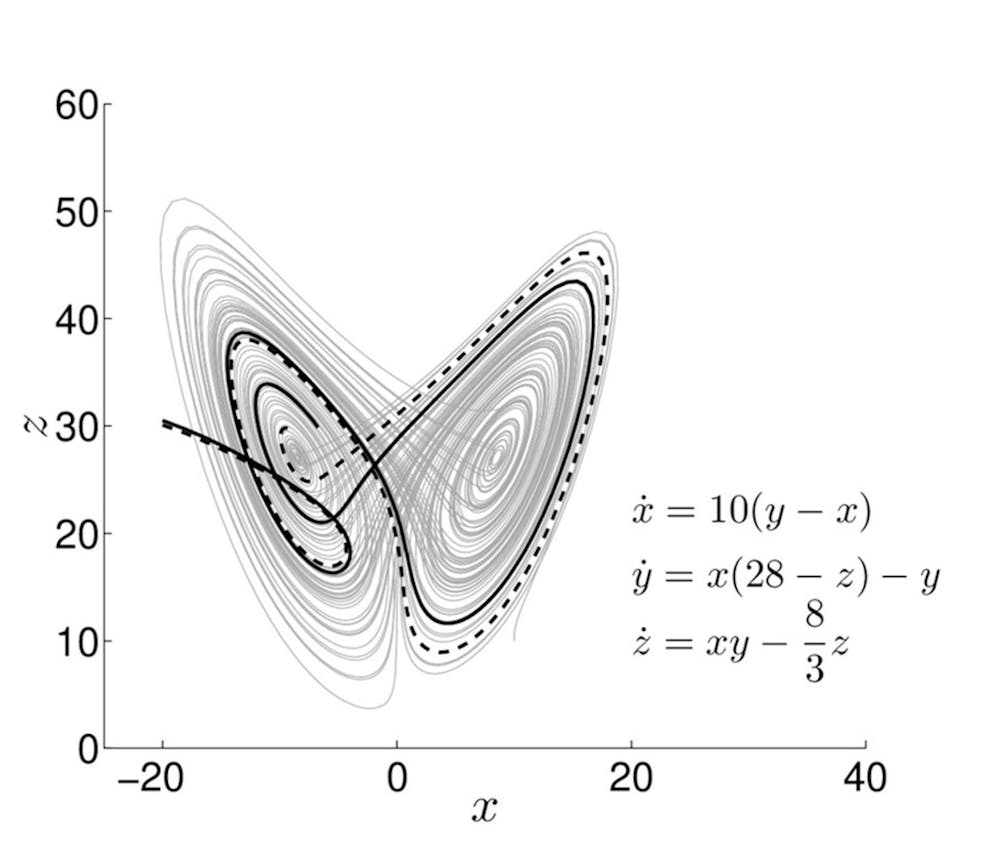
    Edward Lorenz’s mathematical weather model showed solutions with a butterfly-like shape. Wikimol

    In 1972, the US meteorologist Edward Lorenz asked a now-famous question:

    Does the flap of a butterfly’s wings in Brazil set off a tornado in Texas?

    Over the next 50 years, the so-called “butterfly effect” captivated the public imagination. It has appeared in movies, books, motivational and inspirational speeches, and even casual conversation.

    The image of the tiny flapping butterfly has come to stand for the outsized impact of small actions, or even the inherent unpredictability of life itself. But what was Lorenz – who is now remembered as the founder of the branch of mathematics called chaos theory – really getting at?

    A simulation goes wrong

    Our story begins in the 1960s, when Lorenz was trying to use early computers to predict the weather. He had built a basic weather simulation that used a simplified model, designed to calculate future weather patterns.

    One day, while re-running a simulation, Lorenz decided to save time by restarting the calculations from partway through. He manually inputted the numbers from halfway through a previous printout.

    But instead of inputting, let’s say, 0.506127, he entered 0.506 as the starting point of the calculations. He thought the small difference would be insignificant.

    He was wrong. As he later told the story:

    I started the computer again and went out for a cup of coffee. When I returned about an hour later, after the computer had generated about two months of data, I found that the new solution did not agree with the original one. […] I realized that if the real atmosphere behaved in the same manner as the model, long-range weather prediction would be impossible, since most real weather elements were certainly not measured accurately to three decimal places.

    There was no randomness in Lorenz’s equations. The different outcome was caused by the tiny change in the input numbers.

    Lorenz realised his weather model – and by extension, the real atmosphere – was extremely sensitive to initial conditions. Even the smallest difference at the start – even something as small as the flap of a butterfly’s wings – could amplify over time and make accurate long-term predictions impossible.

    The ‘Lorenz Attractor’ found in models of a chaotic weather system has a characteristic butterfly shape.
    Milad Haghani, CC BY

    Lorenz initially used “the flap of a seagull’s wings” to describe his findings, but switched to “butterfly” after noticing a remarkable feature of the solutions to his equations.

    In his weather model, when he plotted the solutions, they formed a swirling, three-dimensional shape that never repeated itself. This shape — called the Lorenz attractor — looked strikingly like a butterfly with two looping wings.

    Welcome to chaos

    Lorenz’s efforts to understand weather led him to develop chaos theory, which deals with systems that follow fixed rules but behave in ways that seem unpredictable.

    These systems are deterministic, which means the outcome is entirely governed by initial conditions. If you know the starting point and the rules of the system, you should be able to predict the future outcome.

    There is no randomness involved. For example, a pendulum swinging back and forth is deterministic — it operates based on the laws of physics.

    Systems governed by the laws of nature, where human actions don’t play a central role, are often deterministic. In contrast, systems involving humans, such as financial markets, are not typically considered deterministic due to the unpredictable nature of human behaviour.

    A chaotic system is a system that is deterministic but nevertheless behaves unpredictably. The unpredictability happens because chaotic systems are extremely sensitive to initial conditions. Even the tiniest differences at the start can grow over time and lead to wildly different outcomes.

    Chaos is not the same as randomness. In a random system, outcomes have no definitive underlying order. In a chaotic system, however, there is order, but it’s so complex it appears disordered.

    A misunderstood meme

    Like many scientific ideas in popular culture, the butterfly effect has often been misunderstood and oversimplified.

    One common misconception is that the butterfly effect implies every small action leads to massive consequences. In reality, not all systems are chaotic, and for systems that aren’t, small changes usually result in small effects.

    Another is that the butterfly effect carries a sense of inevitability, as though every butterfly in the Amazon is triggering tornadoes in Texas with each flap of its wings.

    This is not at all correct. It’s simply a metaphor pointing out that small changes in chaotic systems can amplify over time, making long-term outcomes impossible to predict with precision.

    Taming butterflies

    Systems that are very sensitive to initial conditions are very hard to predict. Weather systems are still tricky, for example.

    Forecasts have improved a lot since Lorenz’s early efforts, but they are still only reliable for a week or so. After that, small errors or imprecisions in the starting data grow larger and larger, eventually making the forecast inaccurate.

    To deal with the butterfly effect, meteorologists use a method called ensemble forecasting. They run many simulations, each starting with slightly different initial conditions.

    By comparing the results, they can estimate the range of possible outcomes and their likelihoods. For example, if most simulations predict rain but a few predict sunshine, forecasters can report a high probability of rain.

    However, even this approach works only up to a point. As time goes on, the predictions from the models diverge rapidly. Eventually, the differences between the simulations become so large that even their average no longer provides useful information about what will happen on a given day at a given location.

    A butterfly effect for the butterfly effect?

    The journey of the butterfly effect from a rigorous scientific concept to a widely popular metaphor highlights how ideas can evolve as they move beyond their academic roots.

    While this has helped bring attention to a complex scientific concept, it has also led to oversimplifications and misconceptions about what it really means.

    Attaching a metaphor to a scientific phenomenon and releasing it into popular culture can lead to its gradual distortion.

    Any tiny inaccuracies or imprecision in the initial description can be amplified over time, until the final outcome is a long way from reality. Sound familiar?

    Milad Haghani does not work for, consult, own shares in or receive funding from any company or organisation that would benefit from this article, and has disclosed no relevant affiliations beyond their academic appointment.

    ref. The butterfly effect: this obscure mathematical concept has become an everyday idea, but do we have it all wrong? – https://theconversation.com/the-butterfly-effect-this-obscure-mathematical-concept-has-become-an-everyday-idea-but-do-we-have-it-all-wrong-246577

    MIL OSI AnalysisEveningReport.nz

  • MIL-OSI Global: Trump’s reversal of climate policies risks undermining U.S. manufacturing — and could cost people jobs

    Source: The Conversation – Canada – By Thomas Stuart, Lecturer in Communications, Gustavson School of Business, University of Victoria

    United States President Donald Trump’s early executive actions have set American manufacturing on a collision course with his administration’s fossil-fuel-driven agenda. It’s clear that climate change policies run counter to his vision of American primacy.

    Trump wasted no time reversing the green initiatives of his predecessor, former president Joe Biden. He withdrew the U.S. from the Paris Climate Agreement for a second time, rolled back environmental regulations and froze green energy funding.


    Read more:
    The impact of Donald Trump’s anti-climate measures on our heating planet


    However, these reversals have exposed complications in Trump’s economic platform. For all his promises to revive American industry and reduce reliance on foreign production, Trump’s opposition to clean energy threatens green technology investments and other incentives that drive U.S. manufacturing development.

    Trump’s Strategic National Manufacturing Initiative promised to “stop outsourcing” and turn the U.S. into a “manufacturing superpower.” Yet his plans to cancel the electric vehicle mandate and reduce regulations promoting clean energy undermine the manufacturing sector’s shift toward green technology.

    In the long run, Trump’s own actions may undermine his vision of an American manufacturing renaissance by cutting crucial investments, putting the U.S. at odds with a global economy increasingly focused on clean technologies.

    The green manufacturing boom

    Republican congressman John James recently applauded Trump’s reversal of green policies during a congressional hearing. Yet, in the same breath, James called for the administration to continue “onshoring the future of automotive jobs and manufacturing,” a policy he linked to Biden’s Inflation Reduction Act (IRA).

    Other Republican representatives from Michigan, Georgia and North Carolina increasingly find themselves walking along the same rhetorical tight-rope.

    While Biden’s IRA has been widely criticized by the Trump administration, the act has brought Republican districts significant green investments and manufacturing jobs.

    As James acknowledged:

    “While the bulk of the IRA is damaging policy, we must not neglect the sector-wide energy tax provisions that manufacturers and job creators rely on in my district and around the country.”

    The green manufacturing boom is not an abstract concept, but a tangible economic engine, particularly in districts with established fossil fuel industries like Chatham County, N.C. Here, manufacturer Wolfspeed’s new US$5 billion dollar semiconductor plant sits in the heart of traditional coal country.

    Since 2022, the private sector has invested US$133 billion in clean energy and electric vehicle (EV) technology. Manufacturing investments alone have jumped by three times over the previous two years, totalling US$89 billion.

    The impact of the IRA on ‘red states’

    Biden-era policy has largely driven the America’s green energy economic development. The IRA provided a staggering US$312 billion in planned investments in EV and battery manufacturing.

    Eighty-five per cent of this funding flows into Republican-voting districts — areas that have historically voted against climate-focused legislation like the IRA. Yet the rewards of these green tech policies have been a boon for local economies.

    Georgia, for instance, has become a model for the American green energy transformation. In the first two years of the IRA, about US$15 billion dollars flowed into the state. Since then, Georgia has added a projected 43,000 new green jobs.

    Meanwhile, North Carolina’s Randolph County has seen the largest investment in green technology in U.S. history. Under the previous administration, it received about US$14 billion in funding, allowing Toyota to build a manufacturing megasite.

    By 2030, the site is expected to create 5,000 jobs in the area, with wages averaging 80 per cent more than the county median salary. Once fully operational, the site will manufacture enough batteries annually to power and maintain up to 500,000 EVs.

    What comes next?

    As Trump continues to roll back environmental protections and withdraw from climate agreements, whether he can still deliver the manufacturing revival he promised remains to be seen.

    In one respect, his policies may lead to a consolidation in the green technology sector. Despite his administration’s retreat from broader green energy policies, Trump says he will continue securing the U.S. supply of critical minerals for EV batteries.

    This could reflect the influence of Tesla CEO Elon Musk, who is serving under Trump as a “special government employee.” Tesla, which relies on these critical minerals for its EV production, would benefit from a stable supply.

    Musk resents regulatory interventions, particularly those that encourage competition. On a call with investors, Musk said Tesla might feel a slight impact from lost subsidies. However, he suggested the real damage would be to competitors who are scrambling to catch up in an industry where raw materials are king. Musk predicted that “long term, it probably actually helps Tesla.”

    In another respect, Trump’s policy reversal could also weaken Republican unity. Republican politicians like Georgia’s Buddy Carter, Tennessee’s Chuck Fleischmann and Georgia Gov. Brian Kemp have highlighted the short-sighted nature of Trump’s economic plan.

    Trump’s decision to turn his back on climate change policy is more than a blow to environmentalists; it’s a direct challenge to his own economic agenda. He risks not just the environment, but also the green investments essential to American industry’s competitive revival.

    Thomas Stuart does not work for, consult, own shares in or receive funding from any company or organisation that would benefit from this article, and has disclosed no relevant affiliations beyond their academic appointment.

    ref. Trump’s reversal of climate policies risks undermining U.S. manufacturing — and could cost people jobs – https://theconversation.com/trumps-reversal-of-climate-policies-risks-undermining-u-s-manufacturing-and-could-cost-people-jobs-248399

    MIL OSI – Global Reports

  • MIL-OSI Video: Deputy Minister Ms Nonceba Mhlauli visits Kaalfontein High School for back to school campaign

    Source: Republic of South Africa (video statements-2)

    Deputy Minister in the Presidency Ms Nonceba Mhlauli visits Kaalfontein High School for back to school campaign

    https://www.youtube.com/watch?v=eh_uAUbFLlI

    MIL OSI Video

  • MIL-OSI Video: Deputy Minister in the Presidency Nonceba Mhlauli Visits Monwabisi Senior Club Centre.

    Source: Republic of South Africa (video statements-2)

    Deputy Minister in the Presidency Nonceba Mhlauli Visits Monwabisi Senior Club Centre.

    https://www.youtube.com/watch?v=bQiitKk8Me0

    MIL OSI Video

  • MIL-OSI USA: Sens. Markey, Cruz Statement on Commerce Committee Vote to Advance AM Radio for Every Vehicle Act

    US Senate News:

    Source: United States Senator for Massachusetts Ed Markey

    Washington (February 5, 2025) – Senator Edward J. Markey (D-Mass.) member of the Science, Commerce, and Transportation Committee, and Ted Cruz (R-Texas), Chairman of the Science, Commerce, and Transportation Committee today released the following statement on the committee’s vote to advance the AM Radio for Every Vehicle Act, bipartisan and bicameral legislation that would direct federal regulators to require automakers to include AM broadcast radio in their new vehicles at no additional charge.

    “Today’s vote to advance the AM Radio for Every Vehicle Act broadcasts a clear message to car manufacturers that AM radio is an essential communication tool for millions of Americans across the country. From emergency response to sports, entertainment, and news, AM radio is a lifeline that must be protected. Our bill ensures that no one is cut off from their communities and that AM radio stays a part of our constituents’ daily lives.”

    In May 2023, Senators Markey and Cruz led their colleagues in introducing the AM Radio for Every Vehicle Act.  The AM Radio for Every Vehicle Act passed through the Senate Commerce Committee in July 2023 and passed through the House Energy and Commerce Committee in September 2024.

    MIL OSI USA News

  • MIL-OSI USA: Lankford Applauds POTUS’ Push to Hold FEMA Accountable, Advocates for Reform

    US Senate News:

    Source: United States Senator for Oklahoma James Lankford

    WASHINGTON, DC – Senator James Lankford (R-OK) sent a letter to President Donald J. Trump to applaud his recent Executive Order to hold the Federal Emergency Management Agency (FEMA) accountable for their failed responses to disasters and to advocate for robust reforms.

    “I write to commend your recent Executive Order establishing the Federal Emergency Management Agency (FEMA) Review Council. The current federal framework for responding to disasters is insufficient, and major reforms are necessary to ensure Americans are best supported in times of need,” Lankford wrote in the letter.

    Lankford also introduced four bills to continue to build on President Trump’s work to address FEMA’s failures and inadequacies. The Expediting Hazard Mitigation Assistance Projects Act gives the FEMA Administrator the authority to cut red tape on unnecessary environmental and historic preservation review requirements. The Direct Property Acquisitions Act creates a pilot program for communities to avoid lengthy delays by applying directly for property acquisitions. The Investing in Community Resilience Act with Senator Peter Welch (D-VT) incentivizes communities to create readiness and resilience measures before a disaster. The Stopping Political Discrimination in Disaster Assistance Act will prohibit discrimination based on political affiliation in federal disaster relief. This bill is cosponsored by Senators Roger Marshall, MD (R-KS), Rick Scott (R-FL), Ted Budd (R-NC), Josh Hawley (R-MO), Marsha Blackburn (R-TN), and Thom Tillis (R-NC).

    View the letter here or below. 

    Dear President Trump:

    I write to commend your recent Executive Order establishing the Federal Emergency Management Agency (FEMA) Review Council. The current federal framework for responding to disasters is insufficient, and major reforms are necessary to ensure Americans are best supported in times of need. As the Council engages with leaders to discuss potential reforms, I respectfully request that the Council consider the following:

    1. Reforming FEMA’s responsibilities and/or consolidating the federal disaster framework more generally. FEMA has two core responsibilities: managing security grants and serving as the leading agency for federal disaster relief. While both roles can be vested in a single agency, I am concerned that FEMA’s dual responsibilities are hampering its emergency response capabilities. At the same time, the current federal disaster framework involves too many agencies with a variety of other, non-emergency response duties, including the US Department of Commerce, US Department of Housing and Urban Development, US Department of Health and Human Services, US Department of Agriculture, the Small Business Administration, and the Environmental Protection Agency, among several others. I ask that your Council consider whether more federal emergency response capabilities should be consolidated under FEMA, which would reduce the number of agencies constituents need to work through when seeking federal disaster assistance, and whether other, current responsibilities should be placed elsewhere.
    1. Reassessing the federal government’s role in disasters. Under current law, the default federal assistance for major disasters is 75%, with opportunities to increase the federal cost share. The federal cost share is often increased to 100%. It is paramount that all levels of government involved in emergency response and recovery have skin in the game. I urge the Council to consider the benefits and drawbacks of a sliding cost share that begins at a lower percentage for federal support but can be increased based on the needs and capacity of the community in question. I also urge the Council to consider recommending how to limit ad hoc federal cost share increases and eliminate the possibility of a 100% federal cost share as it relates to FEMA’s disaster aid.
    1. Conducting an in-depth review of all federally funded disaster activities conducted by FEMA. The federal government’s labyrinthine disaster response and recovery programs have not been subject to the scrutiny needed to assess whether it is achieving its goals or whether its funding would be better spent with limited strings attached at the state and local levels. I ask that the Council provide a comprehensive analysis of these programs and make a formal, performance-based recommendation on how the funding for these programs should be spent.
    1. Exploring ways to speed up FEMA-led disaster projects. Federal funding for disaster relief comes with countless conditions, many of which unnecessarily prolong the duration of projects. I urge the Council to assess whether conditions on federal disaster aid, including conditions such as Environmental and Historic Preservation (EHP) reviews, harm the disaster recovery process for communities. 

    Lastly, it is essential that the Council solicit feedback from leaders with substantial knowledge of disaster recovery efforts. Oklahoma is no stranger to natural disasters, and we are often forced to grapple with the ensuing wreckage and trauma. Despite these challenges, Oklahomans have consistently risen above the fray to help one another in recovery. Given our experience with natural disasters, I respectfully request that the Council solicit feedback from emergency management leaders in Oklahoma.

    In God We Trust,

    MIL OSI USA News

  • MIL-OSI USA: Boozman, Tillis, Murray Introduce Bipartisan, Bicameral Legislation to Support Purple Heart Families

    US Senate News:

    Source: United States Senator for Arkansas – John Boozman

    WASHINGTON––U.S. Senator John Boozman (R-AR) joined Senators Patty Murray (D-WA) and Thom Tillis (R-NC) to introduce the Purple Heart Veterans Education Act, legislation allowing veterans who received their Purple Heart after their service to transfer their educational benefits to one or more of their dependents

    “I’m proud to support policies that honor the promises made to the brave men and women who have worn our nation’s uniform,” said Boozman. “Ensuring that veterans, and especially Purple Heart recipients, are able to access the benefits they have earned for themselves and their families is a duty that Congress should always prioritize.”

    “Purple Heart veterans have made tremendous sacrifices to defend our freedoms, and we as a nation should do everything we can to support them and their families when they return—that includes ensuring all Purple Heart veterans have the full benefits they have earned,” said Murray. “As the daughter of a Purple Heart Veteran, this is personal to me—and I’m grateful to my colleagues on both sides of the aisle for joining me in this effort.”

    “Purple Heart recipients are heroes who honorably served our country at great costs, and this oversight that prevents servicemembers who received this distinguished award after their service from transferring their GI bill benefits to their dependents needs to be corrected immediately,” said Tillis. “I am proud to co-introduce this commonsense legislation to close this loophole and ensure every Purple Heart recipient and dependents are able to further their education.”

     Specifically, the Purple Heart Veterans Education Act would:

    • Permit an individual awarded the Purple Heart after their service in the Armed Forces to transfer their post-9/11 educational benefits to one or more of their dependents.
    • Allow flexibility by permitting the veteran to allocate different amounts, totaling 36 months of benefits, to their dependents. For example, one dependent may be designated 20 months and the other 16 months. 
    • Protect the veteran’s right to their benefits by prohibiting the use of their educational benefits to be treated as marital property or the asset of a marital estate. 
    • Honor the veteran’s legacy by allowing their dependents to continue using the unused benefits after their death. 

    The legislation is also cosponsored by Senators Rick Scott (R-FL), Angus King (I-ME), Jacky Rosen (D-NV), Steve Daines (R-MT), Ron Wyden (D-OR), John Cornyn (R-TX), Mark Kelly (D-AZ), Kevin Cramer (R-ND) and Michael Bennet (D-CO).

    Congressmen Mike Levin (D-CA-49) and Greg Murphy (R-NC-03) introduced companion legislation in the U.S. House of Representatives.

    The Purple Heart Veterans Education Act is endorsed by Disabled American Veterans (DAV), Iraq and Afghanistan Veterans of America (IAVA) and Veterans of Foreign Wars (VFW).

    Click here for full text of the legislation.

    MIL OSI USA News

  • MIL-OSI USA: Boozman, Grassley, Welch Work to Provide Hospitals with Financial Stability and Security

    US Senate News:

    Source: United States Senator for Arkansas – John Boozman

    WASHINGTON––U.S. Senators John Boozman (R-AR), Chuck Grassley (R-IA) and Peter Welch (D-VT) introduced the Rural Hospital Support Act to prevent rural hospital closures by extending and modernizing critical Medicare programs. 

    “Hospitals are one of the last community pillars still standing in rural America. They not only offer accessible, vital health care but also provide key economic benefits that cannot be replicated. As these institutions continue to face headwinds threatening their viability, we can help sustain them by supporting fair and adequate reimbursement for their services,” Boozman said

    “As a lifelong resident of rural Iowa, I know the importance of having access to health care services close to home. In addition to providing life-saving care, rural hospitals are a source of economic security for many rural communities,” Grassley said. “Our bipartisan bill will ensure the continuity of these vital programs and help keep rural hospitals’ doors open.”

    “Rural hospitals provide essential care to patients in rural communities, including to folks who rely on Medicare and Medicaid. In Vermont, rural hospitals are also job creators and economic drivers. But across the country, rural hospitals are struggling to stay open, and they need a lifeline,” Welch said. “Our bipartisan legislation will help ensure rural hospitals are reimbursed for resources they need to continue delivering vital care in our rural communities.”

    Specifically, the Rural Hospital Support Act would:

    • Permanently extend the Medicare-Dependent Hospital (MDH) program to ensure eligible rural hospitals are reimbursed for their costs;
    • Permanently extend the Low-Volume Hospital (LVH) program to level the playing field for rural hospitals whose operating costs often outpace their revenue; and
    • Update the rebasing year for Sole Community Hospitals (SCH) and MDHs to allow hospitals to tie reimbursement estimates to more recent trends in costs.

    The bipartisan legislation is also cosponsored by Senators Shelley Moore Capito (R-WV), Tim Kaine (D-VA), Roger Wicker (R-MS), Jeanne Shaheen (D-NH), Jerry Moran (R-KS), Tina Smith (D-MN), Cindy Hyde-Smith (R-MS), John Fetterman (D-PA), Mark Kelly (D-AZ), Roger Marshall, M.D. (R-KS) and Gary Peters (D-MI). 

    The Rural Hospital Support Act has garnered support from stakeholders including the Alliance for Rural Hospital Access, the American Hospital Association and the National Rural Health Association.

    Background

    Rural hospitals provide critical care for patients, many of whom rely on Medicare and Medicaid. These hospitals also serve as economic anchors – accounting for around 14 percent of total employment in rural areas.

    The MDH and LVH programs have supported rural communities for decades. The programs were last extended as part of the Continuing Resolution on December 20, 2024, and would expire on March 31, 2025, without congressional action. The Rural Hospital Support Act does not change other rural hospital Medicare programs including critical access hospitals (CAH), rural referral centers (RRC), Rural Community Hospital Demonstration or the new voluntary rural emergency hospitals (REH). Each of these rural programs offer unique flexibilities to ensure health care services are accessible in rural America.

    Find bill text here.

    MIL OSI USA News

  • MIL-OSI Russia: Financial news: Scheduled maintenance on the OTC service

    Translartion. Region: Russians Fedetion –

    Source: Moscow Exchange – Moscow Exchange –

    Dear customers,

    On February 8, 2025, scheduled maintenance will be carried out on the Moscow Exchange OTC OTC reporting service. Please note that the maintenance will affect all protocols. During the maintenance, we recommend that you refrain from reporting OTC transactions on this day.

    All transactions entered on February 8 from 00:00 to 23:59 will be considered test transactions, including those sent through the personal account.

    Contact information for media 7 (495) 363-3232Pr@moex.kom

    Please note: This information is raw content directly from the source of the information. It is exactly what the source states and does not reflect the position of MIL-OSI or its clients.

    Please Note; This Information is Raw Content Directly from the Information Source. It is account to What the Source Is Stating and Does Not Reflect the Position of Mil-Sosi or Its Clients.

    HTTPS: //VVV. MOEX.K.M.M.

    MIL OSI Russia News

  • MIL-OSI Russia: Financial news: Capital adequacy ratio for professional participants: new calculation rules

    Translartion. Region: Russians Fedetion –

    Source: Central Bank of Russia –

    Bank of Russia updated the calculation procedure capital adequacy ratio (CAD) for professional participants in the securities market in order to minimize risks to their financial stability.

    The new version specifies the procedure for calculating the broker’s credit risk in relation to clients for whom the risk coverage standard has been violated when making margin transactions. It is prohibited to accept securities issued by the debtor itself and assets of companies affiliated with it as collateral. It is also permitted to use the broker’s ratings to reduce the credit risk rates in relation to the debt of companies associated with the broker, but on the condition that the debtor’s assessment of its own (independent) creditworthiness indicates its financial stability.

    In addition, the document provides for the calculation of the risk on digital rights acquired and issued by a professional participant. An alternative calculation of the amount of market risk on option agreements has appeared (similar to the regulation of credit institutions). Measures are being introduced to discourage large open currency positions among professional participants. The rules for determining the values of credit risk rates in relation to counterparties and clients are also simplified.

    The regulation comes into force on October 1, 2025.

    Preview photo: Jsnow my wolrd / Shutterstock / Fotodom

    Please note: This information is raw content directly from the source of the information. It is exactly what the source states and does not reflect the position of MIL-OSI or its clients.

    Please Note; This Information is Raw Content Directly from the Information Source. It is account to What the Source Is Stating and Does Not Reflect the Position of Mil-Sosi or Its Clients.

    HTTPS: //VVV.KBR.ru/Press/Event/? ID = 23346

    MIL OSI Russia News

  • MIL-OSI United Nations: Clock ticking on South Sudan’s transition, Security Council hears

    Source: United Nations 4

    By Vibhu Mishra

    Peace and Security

    As South Sudan enters a so-called “extended transitional period” this month, the UN’s top envoy to the country has warned that the clock is ticking to accomplish the commitments under a key 2018 peace accord, ahead of a new deadline set for February 2027.

    Signed in 2018 to end years of conflict, the Revitalized Peace Agreement, initially set a three-year timeline for elections and the formation of a democratic government. The transition has been extended four times, with key political, security, and governance benchmarks remaining unfulfilled.

    Under the latest extension, announced by the authorities in September last year, general elections are scheduled to take place in December 2026.

    Waiting for progress

    Briefing ambassadors at the Security Council on Wednesday, Special Representative of the Secretary-General for South Sudan Nicolas Haysom stressed that while the country’s citizens have been patient, they expect progress.

    There is a strong desire for the leaders to focus on the benchmarks set out in the peace agreement – without further delay.

    With progress stalling in several critical areas, Mr. Haysom urged South Sudan’s leaders to accelerate security sector reform, electoral preparations, and reform of the constitution and judicial processes.

    The clock is already ticking on the extended transitional period. Decision-makers need to tackle several issues simultaneously and immediately,” he emphasised.

    Significant gaps remain

    Despite some achievements, major gaps persist – especially oncerning elections scheduled for December 2026.

    While a framework for security sector management and a national community violence reduction strategy have been adopted, critical conditions remain unmet – including the full deployment of unified security forces, voter education, and a code of conduct between political parties and other stakeholders.

    We have not yet seen the previously promised harmonized workplan with an operational timetable for elections,” Mr. Haysom said, adding that delays in government funding and decision-making are further impeding progress.

    Escalating security concerns

    Communal violence remains a major driver of insecurity, disproportionately affecting vulnerable populations, including women and children.

    Recent clashes between armed groups in Western Equatoria, along with widespread reports of illegal checkpoints, highlight the fragility of the security environment, Mr. Haysom noted.

    At the same time, the war between rival militaries in in neighbouring Sudan is having spillover effects in South Sudan, including violent unrest in Juba following reports of South Sudanese nationals being executed in Sudan’s Wad Madani region.

    UN Photo/Eskinder Debebe

    Nicholas Haysom, Special Representative of the Secretary-General briefing the Security Council on the situation in South Sudan.

    Humanitarian crisis

    More than one million Sudanese refugees have fled into South Sudan during the reporting period, joining an already staggering 9.3 million people in need of humanitarian assistance.

    The country’s economic crisis is also worsening, with inflation soaring to 107 percent and food prices doubling, while government employees have not been paid for 10 months.

    Health conditions are also deteriorating, with over 23,000 reported cholera cases exacerbated by last year’s floods. The disease continues to spread, particularly in remote areas with limited healthcare access.

    The 2025 Humanitarian Needs and Response Plan aims to reach 5.4 million people with life-saving assistance and protection, but funding remains a critical challenge. The UN is appealing for $1.7 billion to meet urgent needs this year.

    UNMISS operational constraints

    Mr. Haysom, who also leads the UN peacekeeping mission in the country, UNMISS, briefed on logistical challenges faced after the Government requested the mission vacate part of its headquarters within 45 days.

    He described the demand as imposing “significant costs” and logistical hurdles that UNMISS is not currently equipped to manage.

    Restrictions on peacekeeper movement in some areas also continue to limit the mission’s ability to provide security and humanitarian support.

    Steadfast support

    Concluding his briefing, Mr. Haysom reaffirmed the UN’s commitment to standing “shoulder-to-shoulder” with the people of South Sudan on their path to stabilisation and democratisation.

    Special Representative Haysom briefing the Security Council on the situation in South Sudan.

    MIL OSI United Nations News

  • MIL-OSI New Zealand: Investigation launched after serious assault, Wainuiomata

    Source: New Zealand Police (National News)

    Police investigating an assault in Wainuiomata last night are asking for the public’s help, after a man was left seriously injured.

    About 10pm, Police were called to a car park on The Strand after a report of people fighting.

    Those involved have left the scene in two vehicles before Police arrived.

    A short time later, emergency services have received another call for service to Riverside Drive, stating a man had been injured and required medical assistance.

    He was located in his vehicle with serious injuries, which are believed to have been sustained in the altercation at The Strand.

    He was transported to hospital, where he remains in a serious condition.

    Police are now working to establish the full circumstances of what has occurred and to locate those responsible for the man’s injuries.

    We are asking anyone who may have witnessed this incident, or who has information about those involved, to please get in touch and share what you know.

    You can do so by calling 105 and quoting reference number 250205/0193.

    You can also share information anonymously through Crime Stoppers on 0800 555 111.

    ENDS 

    Issued by Police Media Centre

    MIL OSI New Zealand News

  • MIL-OSI USA: Legislation considered under suspension of the Rules of the House of Representatives during the week of February 10, 2025

    Source: US Congressional Budget Office

    The Majority Leader of the House of Representatives announces bills that will be considered under suspension of the rules in that chamber. Under suspension, floor debate is limited, all floor amendments are prohibited, points of order against the bill are waived, and final passage requires a two-thirds majority vote.

    At the request of the Majority Leader and the House Committee on the Budget, CBO estimates the effects of those bills on direct spending and revenues. CBO has limited time to review the legislation before consideration. Although it is possible in most cases to determine whether the legislation would affect direct spending or revenues, time may be insufficient to estimate the magnitude of those effects. If CBO has prepared estimates for similar or identical legislation, a more detailed assessment of budgetary effects, including effects on spending subject to appropriation, may be included.

    CBO’s estimates of the bills that have been posted for possible consideration under suspension of the rules during the week of February 10, 2025, include

    • H.R. 224, Disabled Veterans Housing Support Act 
    • H.R. 225, HUD Transparency Act of 2025
    • H.R. 386, Chinese Currency Accountability Act of 2025
    • H.R. 692, China Exchange Rate Transparency Act, as amended 
    • H.R. 736, Protect Small Business from Excessive Paperwork Act of 2025
    • H.R. __, Housing Unhoused Disabled Veterans Act 
    • H.R. __, Credit Union Board Modernization Act

    MIL OSI USA News

  • MIL-OSI USA: New ‘Tree Tracker’ Webpage and Interactive Tool Launches

    Source: US State of New York

    Governor Kathy Hochul today announced the launch of a new webpage and interactive tracking tool to help document progress toward New York State’s goal to plant 25 million trees by 2033. Hosted by the New York State Department of Environmental Conservation and developed in cooperation with the Office of Information Technology Services, the webpage and Tree Tracker allow State agencies, organizations, private entities, and individuals to report the location and number of trees planted into the tracking tool, measuring progress in the statewide effort.

    “New York is taking decisive action to protect our environment and strengthen communities’ ability to withstand severe weather,” Governor Hochul said. “Our progress toward the 25 Million Tree goal is a testament to the power of community-driven action, and the new Tree Tracker will make it easier for New Yorkers to track our progress, share updates and contribute to a healthier environment for the future.”

    Trees planted in 2024 and on count toward the statewide total. Every entry records the number and location of trees planted. Entries can also include additional information such as planting date(s), tree species, and tree size. The webpage displays an interactive map of planting projects across New York State, and tallies trees planted by region, county, and municipality for visitors to track planting across the state as the initiative progresses toward the 25 million tree goal.

    In addition to linking to the Tree Tracker, the 25 Million Trees webpage provides information on how to plant trees, how to care for them to aid their survival, and where to go for more technical assistance.

    Department of Environmental Conservation Interim Commissioner Sean Mahar said, “Working with the New Yorkers we serve, the 25 Million Tree Goal is helping to address our sustained efforts to protect communities and natural resources across the state. Every tree planted is a step toward a healthier, greener New York. The Tree Tracker will empower New Yorkers to share their stories with us as our partners in this historic effort, which will have a lasting impact on the environment.”

    The Nature Conservancy’s New York Executive Director Bill Ulfelder said, “The Nature Conservancy is pleased to see New York State unveil new tools to document progress towards New York’s goal to plant 25 million trees by 2033. Achieving this goal would help New York meet its carbon reduction goals while protecting clean drinking water, restoring wildlife habitat, and reducing the risks of extreme heatwaves, which can be fatal in neighborhoods without trees.”

    Governor Hochul launched the 25 Million Trees Initiative in her 2024 State of the State address, allocating $32 million in Clean Water, Clean Air and Green Jobs Environmental Bond Act Funds to modernize the State’s tree nursery and harness technology to track forestation efforts in New York and $15 million in the Executive Budget to support resilient reforestation projects. The Initiative is invigorating statewide tree planting efforts, sending an unmistakable market signal to private nurseries, and growing the state’s vital forest products industry. The Initiative advances the climate equity and reforestation goals outlined in New York’s Climate Leadership and Community Protection Act and contributes to New York’s broader efforts to reduce the pollution contributing to climate change.

    The 25 Million Trees Initiative also highlights funding opportunities for afforestation and reforestation projects in New York State. Private landowners had access to $4.5 million for projects expanding and restoring forests through the Establishing Large Forests (ELF) Grant Program, and $15 million is currently available to municipalities, not-for-profits, and State agencies to create forested natural areas servicing urban communities through the Community Reforestation (CoRe) Grant Program until March, 12, 2025.

    New York’s 25 Million Trees Initiative also contributes in part to the Great Lakes St. Lawrence Governors and Premiers’ call for planting 250 million trees around the Great Lakes region by 2033.

    MIL OSI USA News

  • MIL-OSI USA: ICYMI: Governor Newsom cuts red tape to help Los Angeles quickly recover and rebuild

    Source: US State of California Governor

    Feb 5, 2025

    What you need to know: Governor Newsom has taken unprecedented action to cut red tape and remove regulatory barriers to help Los Angeles recover and rebuild quickly – including by suspending CEQA and Coastal Act permitting requirements.

    LOS ANGELES — In response to the unprecedented disaster caused by the recent firestorms in Los Angeles, Governor Newsom has taken significant executive action to remove red tape and suspend regulatory barriers, from suspending permitting requirements to fast-tracking cleanup efforts.

    “We will not let red tape block people from rebuilding and getting back into their homes. The state is here to assist the Los Angeles community recover, not to hinder their efforts.”

    Governor Gavin Newsom

    Recovery and rebuilding, faster than ever

    Governor Newsom has launched historic recovery and rebuilding efforts, cutting red tape and suspending regulations to help make the recovery process faster than ever before. Moving proactively to remove barriers that would prevent a quick recovery, Governor Newsom began issuing orders and suspending regulations related to rebuilding in the days immediately after the firestorms began.

    ✂️ Suspending permitting requirements. Governor Newsom waived permitting requirements based on the California Coastal Act and the California Environmental Quality Act on January 12.

    🏠 Creating more temporary housing, faster. To help provide necessary shelter for those immediately impacted by the firestorms, the Governor issued an executive order on January 16 to streamline the construction and occupancy of accessory dwelling units, increase availability of trailers and other temporary housing, and suspend fees for mobile home parks

    ⚠️Fast-tracking clean-up and recovery. With an eye toward recovery, On January 12, the Governor directed fast action on debris removal work and mitigating the potential for mudslides and flooding in areas burned. Three days later, he signed an executive order to allow expert federal hazmat crews to start cleaning up properties as a key step in getting people back to their properties safely.
     
    📝 Tax and mortgage relief for disaster victims and businesses. On January 11, California postponed the individual tax filing deadline to October 15 for Los Angeles County taxpayers. Additionally, the state extended the January 31, 2025, sales and use tax filing deadline for Los Angeles County taxpayers until April 30 — providing critical tax relief for businesses. Governor Newsom suspended penalties and interest on late property tax payments for a year, effectively extending the state property tax deadline. The Governor also worked with state– and federally-chartered banks that have committed to providing mortgage relief for survivors in certain zip codes.

    ✔️ Waiving licensing fees for small businesses. The Governor issued an executive order on January 29 to support small businesses and workers, by providing relief to help businesses recover quickly by deferring annual licensing fees and waiving other requirements that may impose barriers to recovery.

    ❤️ Making it easier for survivors to quickly get help. The Governor fast-tracked more relief for survivors on January 27 by waiving or suspending regulations that could make it more difficult for survivors to access important services, such as child care, education, rental housing, health care, and tax relief.

    View all the actions Governor Newsom has taken in response to Los Angeles firestorms

    Get help today

    For those Californians impacted by the firestorms in Los Angeles, there are resources available.Californians can go to CA.gov/LAfires – a hub for information and resources from state, local and federal government.  

    Individuals and business owners who sustained losses from wildfires in Los Angeles County can apply for disaster assistance:

    If you use a relay service, such as video relay service (VRS), captioned telephone service or others, give FEMA the number for that service.

    Recent news

    News What you need to know: People impacted by the recent fires in Los Angeles may be eligible for new food benefits. A family of four with a monthly income up to $3,529 per month may be eligible to receive $975. Los Angeles, California – As part of California’s…

    News SACRAMENTO – Governor Gavin Newsom today announced the following appointments:Mark Tollefson, of Rancho Cordova, has been appointed Chief Deputy Director at the California High-Speed Rail Authority. Tollefson has been Undersecretary of the California State…

    News What you need to know: Governor Gavin Newsom today issued an executive order removing bureaucratic barriers, extending deadlines, and providing critical regulatory relief to help LA fire survivors rebuild, access essential services, and recover more quickly. LOS…

    MIL OSI USA News

  • MIL-OSI Australia: Shots fired at Glen Osmond

    Source: South Australia Police

    Police are investigating after shot were fired at Glen Osmond earlier this morning.

    Just after midnight on Thursday 6 February, police were called to Elinor Terrace at Glen Osmond after reports of shots being fired.

    On arrive police located damage to a glass balustrade from the first-floor balcony and visible holes in the façade of the building.

    No one was physically injured as a result of the shots being fired.

    Anyone with information about the shooting or any suspicious vehicles or activity in the area can report it anonymously to police via Crime Stoppers on 1800 333 000 or online at www.crimestopperssa.com.au

    MIL OSI News

  • MIL-OSI Security: Philadelphia Store Owner Sentenced to 18 Months in Prison for Defrauding Supplemental Nutrition Assistance Program

    Source: Office of United States Attorneys

    PHILADELPHIA – United States Attorney Jacqueline C. Romero announced that Jenny Espinal Tejada, 34, of Philadelphia, Pennsylvania, was sentenced by United States District Court Judge Joshua D. Wolson to 18 months in prison, $1,841,402 in restitution, and forfeiture of the proceeds of her offenses, for defrauding the U.S. government.

    The defendant was charged in July of last year by superseding indictment and pleaded guilty in October to one count of wire fraud and one count of defrauding the Supplemental Nutrition Assistance Program (“SNAP”).

    Espinal Tejada admitted that she used her small corner grocery store in Philadelphia to redeem SNAP benefits, even though she knew the store had not been approved to participate in SNAP as a merchant. She gained access to the program by misappropriating merchant identification numbers that had been assigned to stores that participated in the program legitimately. By using the misappropriated numbers, she was able to work around the rules of SNAP, and she further abused the program by trading benefits for cash in her store.

    “Espinal Tejada sought to profit illicitly from the SNAP program, diverting nearly $2 million of the USDA’s money,” said U.S. Attorney Romero. “On behalf of the folks who rely on these resources every day — and the taxpayers who fund the programs — we and our partners will continue to prosecute abuses like this and ensure that those who commit them are held appropriately accountable.”

    “SNAP was created to provide food and nutrition to those who truly need this assistance,” said Charmeka Parker, Special Agent in Charge with the U.S. Department of Agriculture’s Office of Inspector General (USDA-OIG). “This joint investigation identified those who sought to profit from SNAP through illegal schemes. We are thankful to our law enforcement and prosecutorial partners and will continue to dedicate investigative resources in order to protect the integrity of these programs and bring those who commit fraud to justice.”

    The case was investigated by the U.S. Department of Agriculture Office of Inspector General, Homeland Security Investigations, and the FBI and prosecuted by Assistant United States Attorney Elizabeth Abrams. 

    MIL Security OSI