Category: Europe

  • MIL-OSI United Kingdom: More funding to combat rural and wildlife crime

    Source: United Kingdom – Executive Government & Departments

    News story

    More funding to combat rural and wildlife crime

    Funding boost for specialist rural and wildlife crime units.

    Rural communities will be better protected from the scourge of crimes such as equipment theft, livestock theft and hare coursing which can devastate countryside communities, farming and wildlife, through a funding boost to dedicated police units.

    The National Rural Crime Unit and National Wildlife Crime Unit will receive over £800,000 to continue their work tackling rural and wildlife crime, which can pose unique challenges for policing given the scale and isolation of rural areas.

    Funding to the National Rural Crime Unit will enable the unit to continue to increase collaboration across police forces, harnessing the latest technology and data to target the serious organised crime groups involved in crimes like equipment theft from farms.

    The National Wildlife Crime Unit will strengthen its ability to disrupt criminal networks exploiting endangered species both in the UK and internationally. Enhanced data analysis and financial investigation will help the unit track illegal wildlife profits and ensure offenders face justice.

    The funding comes as the government works with the National Police Chiefs’ Council to deliver the new Rural and Wildlife Crime Strategy, to ensure the entire weight of government is put behind tackling rural crime.

    Minister for Crime and Policing Dame Diana Johnson said:

    When you report a crime, it should be properly investigated, with victims having faith that justice will be delivered and criminals punished.

    But too often victims of crime in rural communities have been left feeling undervalued and isolated, whether it be famers having equipment or livestock stolen, or villages targeted by car thieves and county lines gangs. 

    This new funding, alongside the forthcoming Rural and Wildlife Crime Strategy and our Neighbourhood Policing Guarantee, will help deliver the change rural communities deserve, ensuring no matter where you live your streets are safe and police responsive to your local needs as we continue to deliver on our Plan for Change.

    The government is determined to ensure its Safer Streets Mission applies to all communities no matter where they live with rural communities set to benefit from more visible local policing through the Neighbourhood Policing Guarantee.

    This will deliver 13,000 more neighbourhood police officers and police community support officers by the end of the Parliament as part of the Prime Minister’s Plan for Change.

    Secretary of State for the Environment, Food and Rural Affairs Steve Reed said:

    For too long, rural crime has gone unpunished. Organised crime, fly-tipping and farm theft blight our countryside.

    This government will crackdown on these criminals and bring them to justice with specialist rural policing units to protect farmers and our rural communities.

    The new funding follows the government’s flagship Crime and Policing Bill, which gives police and local authorities new powers to tackle crime, including crimes that do real damage to rural communities.

    This includes new statutory guidance for local authorities to support them to make full and proper use of their fly-tipping enforcement powers.

    New warrantless powers of entry for police to enter premises identified by electronic mapping will give officers a valuable tool to tackle equipment and machinery stolen from farms and agricultural businesses. 

    The government is committed to implementing the Equipment Theft (Prevention) Act 2023 which will make it harder for criminals to sell stolen agricultural equipment. Secondary legislation is due to be introduced later this year.

    Superintendent Andrew Huddleston, Head of National Rural Crime Unit said:

    This funding is critical and will enable information sharing and joint operations to continue across the UK facilitated by the National Rural Crime Co-Ordinator.

    The contribution to the replacement of the operational team vehicles is equally important as it will allow the continued support of forces on the ground and recovery of stolen equipment which since the inception of the team in 2023 stands at over £22 million.

    Chief Inspector Kevin Lacks-Kelly, Head of UK Wildlife Crime said:

    This funding is a significant step forward in the fight against wildlife crime. By enhancing our intelligence capabilities and strengthening enforcement, we will be better equipped to protect endangered species and disrupt the criminals who exploit them.

    The UK is seen as a centre of excellence in tackling this global issue, working closely with international partners to ensure a safer future for our planet’s wildlife.

    The funding for the National Wildlife Crime Unit will reinforce the UK’s leadership in global wildlife crime prevention, through the unit’s work with INTERPOL and global enforcement agencies to combat the illegal wildlife trade on a worldwide scale.

    Wildlife crime not only threatens biodiversity but also fuels organised crime and corruption.

    Country Land and Business Association (CLA) President Victoria Vyvyan said:

    Rural crime blights the countryside, so we welcome the news of more funding as well as the upcoming launch of the new national strategy.

    Farmers and communities – many already struggling with isolation – have had enough of criminals and violent organised gangs targeting them. They deserve to feel safe and protected.

    As recent CLA analysis found, some police forces lack dedicated rural officers and basic kit. This new funding is a step in the right direction in the fight against rural crime, and must be used to equip more officers as well as improve training for call handlers.

    Updates to this page

    Published 25 March 2025

    MIL OSI United Kingdom

  • MIL-OSI Economics: Christodoulos Patsalides: Current landscape and future challenges

    Source: Bank for International Settlements

    Ladies and gentlemen, esteemed guests, colleagues,

    It is a great pleasure to welcome you today to this conference, jointly organized by the Central Bank of Cyprus and the European Stability Mechanism (ESM). I extend my sincere gratitude to our distinguished speakers and participants for joining us today to engage in an important discussion on the structural transformation of the Cypriot economy over the recent years.

    Cyprus stands at a pivotal moment in its ongoing economic evolution. Over the past decade, we have witnessed significant shifts in our economic and banking models, from the recovery following the financial crisis of 2013 to a more diversified and resilient economy today. At the same time, global and regional developments-including geopolitical and trade tensions, technological advancements, and climate imperatives- are shaping a new economic reality that requires strategic adaptation and agile forward-looking policies, but they are also fueling uncertainty that warrants vigilance and agility.

    The ESM has played a crucial role in safeguarding financial stability in the euro area and has been a key partner in Cyprus’s economic recovery and resilience. Its role in ensuring a robust macroeconomic and financial performance is as relevant today as it was during the crisis years. However, stability and robustness alone are not enough-we must also ensure that our economy is built on a foundation of sustainability, innovation, and inclusiveness.

    The Banking Sector: a pillar of economic stability

    A critical component of our economic transformation has been the strengthening of our banking sector. Over the past decade, Cyprus has made remarkable progress in enhancing financial stability, reducing non-performing loans, and improving regulatory oversight. The banking sector today is resilient and enjoys stronger capital and  liquidity buffers, among the highest in the euro area. These reforms have positioned our financial institutions to support economic growth more effectively.

    Looking ahead, the continued modernization of our banking system will be crucial. Embracing digitalization, strengthening financial literacy, and ensuring access to financing for businesses and households are key priorities. Additionally, aligning with European banking standards and sustainability frameworks will further enhance the sector’s role in fostering long-term economic stability. The resilience and adaptability of our financial institutions will be instrumental in supporting Cyprus’s broader economic transformation.

    Structural Changes: the future of the Cypriot economy

    Cyprus has made substantial progress in bolstering its financial system and expanding its economic diversification. However, structural challenges persist, and our discussions today will center on effective strategies to tackle them. I will now mention some of the key areas of transformation that have strengthened Cyprus’s ability to withstand external shocks, whether from financial market fluctuations, geopolitical shifts, or supply chain disruptions:

    We have reduced reliance on traditional sectors and expanded our footprint on industries such as technology, fintech, and renewable energy.

    The adoption of digital financial services enhanced productivity, and promoted  innovation.

    We have aligned our economy with European and global sustainability goals, thus ensuring that growth is both environmentally responsible and economically viable.

    As regards labour market and skills development, we have adopted demographic changes by fostering lifelong learning, and ensuring that our workforce is equipped with the skills necessary for the jobs of the future.

    Structural reforms and the Stability and Growth Pact

    Structural changes are not just a necessity for economic modernization, they are also closely linked to the European framework for fiscal and economic governance. The Stability and Growth Pact (SGP) sets the rules for sound public finances in the euro area, ensuring that fiscal policies support economic stability and sustainable growth. As Cyprus continues its path of economic transformation, it is imperative that our structural reforms are aligned with the principles of fiscal responsibility, debt sustainability, and macroeconomic resilience. The budget surplus for 2024, which reached 4,5% of GDP, illustrates our commitment to fiscal responsibility. Furthermore, the trajectory of public debt, which reached 61,9% in January 2025, reinforces the country’s progress toward long-term financial stability.

    The SGP framework emphasizes structural reforms that enhance productivity, competitiveness, and economic resilience. For Cyprus, this means:

    • Strengthening public finances further while supporting growth-enhancing reforms in key sectors.
    • Ensuring that investments in digital and green transformation are conducted in a fiscally sustainable manner.
    • Enhancing the efficiency of public administration and regulatory frameworks, fostering an environment that supports private sector growth and innovation.

    At the Central Bank of Cyprus, we recognize the importance of the balance between fiscal prudence and strategic investment in long-term growth. Our policies must safeguard that Cyprus continues to comply with the European fiscal framework while creating the conditions for sustainable economic progress.

    A shared responsibility for the future

    While challenges remain, Cyprus has repeatedly exhibited through time endurance and its ability to adapt, reform, and progress. It is now the time to navigate the next steps in this journey, identifying policy priorities, investment opportunities, and regulatory frameworks that will further shape a healthy and prosperous future of our economy. A research and policy center has been recently established at the Central Bank of Cyprus, dedicated to conducting in-depth analysis and research to inform and guide our policy decisions.

    I encourage an active engagement in today’s discussions, exchange of ideas, and exploring solutions that will enable Cyprus to position itself as a dynamic, competitive, and resilient economy within the euro area and beyond.

    Once again, I would like to extend my sincere appreciation to our ESM colleagues for their collaboration and I wish you all a productive and insightful participation.

    Thank you.

    MIL OSI Economics

  • MIL-OSI Economics: José Luis Escrivá: Address at the presentation of the 20th King of Spain Prize in Economics

    Source: Bank for International Settlements

    Good afternoon.

    Firstly, I would like to thank Your Majesty for being present at today’s King of Spain Prize in Economics award ceremony and for gracing this institution with your attendance once again.

    The King of Spain Prize in Economics was established in 1986 by the Fundación José Celma Prieto. I would like to take this opportunity to thank the foundation’s president, Javier Celma, for continuing the generous patronage his father began.

    For this twentieth edition of the award, it has been my honour to preside the prize jury, made up by Álvaro Rodríguez Bereijo as vice-president, José Ramón Álvarez Rendueles, José Luis Feito Higueruela, Julio Segura, Carmen Reinhart and Carmen Herrero Blanco.

    Following its deliberations on 29 October last year, the panel resolved to award the King of Spain Prize in Economics to Roberto Serrano for his brilliant academic and research trajectory, reflected in the quantity and quality of his publications. The prize winner is also an example of personal merit and dedication to the community as an economist.

    Roberto Serrano was born in Madrid in 1964 and holds a degree in Economics from the Complutense University of Madrid, where he started his teaching career as an assistant lecturer. He was subsequently awarded a Fundación Ramón Areces Fellowship and a Fulbright Fellowship, which enabled him to pursue his M.A. and PhD studies at Harvard University. He completed his PhD there in 1992 under the direction of professors Mas-Colell, Maskin (2007 Nobel Prize in Economics) and Green. Serrano became a professor of economics at Brown University in 1997, when he was only 33 years old, and is currently the Harrison S. Kravis Professor at Brown University.

    Professor Serrano defines himself as an economic theorist. Economic theory works with abstract and mathematical models to shed light on the functioning and behaviour of the economy. And within economic theory, Serrano has specialised in microeconomics, which focuses on the behaviour of individuals and firms as economic agents. Microeconomics is often overshadowed by macroeconomics, which deals with large aggregates and dominates economic news. This is why microeconomists often receive less attention and recognition. This prize rightfully acknowledges the centrality (which I believe is growing) of microeconomics in economic science. As the availability of microdata and the computational capacity for processing them has grown, not only has it become necessary to develop new empirical instruments to analyse them, but also new microeconomic conceptual models to understand the logic and fundamentals of the results obtained.

    In the realm of microeconomics, professor Serrano is recognised globally as a leading authority in game theory, which studies strategic decisions made by individuals or “players” in situations where each participant’s outcome depends on the decisions of others.

    Among his numerous research contributions are his studies on the non-cooperative aspects of cooperative game theory and his work on designing mechanisms that steer players’ behaviour towards achieving the best outcome for everyone involved, even without mutual cooperation. He also made a significant contribution to risk measurement by developing a risk index in 2008 in collaboration with Nobel laureate Robert Aumann.

    Roberto Serrano has published over 80 papers on economics, game theory, operational research and applied mathematics in high-impact academic journals. Ten of these articles have appeared in some of the most prestigious economics journals.

    Roberto’s primary concern is improving our understanding of economic reality, thereby fostering societal development. His aim is to better comprehend market mechanisms and economic agents’ incentives in order to help design policies that increase social well-being.

    Teaching and sharing knowledge are also integral to his work. He has authored two textbooks, on intermediate microeconomics and welfare economics, which are widely used in universities around the world. As a professor, he has won high praise from his students and has received several awards for his excellence in teaching.

    He was included in “The Best 300 Professors”, a guidebook published by The Princeton Review for “finding teachers with the power to change your life”. In it, the 300 highest-rated professors are selected from 60 different academic fields based on interviews with millions of undergraduate students in the United States.

    Roberto was elected a Fellow of the Econometric Society in 2013 and a Fellow of the Game Theory Society in 2017. Among his editorial work, his role as editor-in-chief of Economic Letters between 2011 and 2017 is noteworthy.

    Roberto Serrano has achieved all this after overcoming great challenges, as he was diagnosed with retinitis pigmentosa when he was a teenager, which made him progressively lose his sight until he became completely blind. Thanks to his determination and the support of his father, Carlos, he was able to finish his university studies with excellent grades. Indeed, the tribute paid to Carlos Serrano by the Complutense University in 2005, with the attendance of his son, was entirely fitting. Fourteen years later, Roberto himself was awarded the title of doctor honoris causa by his alma mater, as a testament to his exceptional merit and personal dedication to the good of the community.

    Your Majesty, thanking you once again for your presence at this ceremony, it only remains for me, with your permission, to ask the prize winner to step up to receive the 20th King of Spain Prize in Economics.

    MIL OSI Economics

  • MIL-OSI Economics: Dimitar Radev: Bulgaria currently fulfils unconditionally all nominal convergence criteria

    Source: Bank for International Settlements

    Dear colleagues and guests,

    Thank you for inviting me to open today’s conference. It is taking place at a particularly dynamic and challenging moment for both the global and the Bulgarian economy. Such forums are extremely useful for the exchange of analyses, opinions and ideas at a time when the need to adapt economic processes to new realities is becoming increasingly clear.

    Let’s start with the geopolitical context. In my opinion, at least for the last 35 years, it has not been as important for the economic and financial, but also for the political development of Bulgaria, as it is now.

    The key words for today’s geopolitical context are uncertainty and unpredictability about what lies ahead or, as the President of the ECB very well put it these days, quoting Paul Valéry: “The trouble with our times is that the future is not what it used to be.”

    The obvious question is, what to do in such an environment? Politicians are facing it, but not only them. It is not my job to give advice on what should be done on the political front, at least not in my capacity. I shall therefore confine myself to one sentence: Active participation in strengthening and developing the European project in today’s geopolitical context is the surest guarantee for Bulgaria’s good prospects.

    I will focus more on the economic and financial aspects.

    Developments in Ukraine and the Middle East, the increasing trade conflicts between leading economies and the process of geopolitical fragmentation, as well as the boom in digital technology development are triggering significant structural transformations in global supply chains with uncertain duration, depth and consequences.

    These developments are already having a tangible impact on international trade, leading to increased volatility in commodity prices and forcing a number of countries to adapt their economic and, in particular, industrial policies to rising protectionism worldwide. In pursuit of economic security, many economies are reviewing their dependence on external suppliers and taking measures to localise critical industries, restructuring their production chains.

    These developments are likely to have an increasing impact on Europe, which remains one of the most vulnerable economies in the context of global geopolitical uncertainties, especially with regard to energy resources. For us, this vulnerability is an even more serious risk factor, given that our country remains one of the most energy-intensive economies in Europe. Breaking long-standing energy dependencies, soaring gas and electricity prices and the need for accelerated energy transformation pose serious challenges to European economies. Energy costs continue to be significantly higher than in the US and some Asian economies, creating serious structural challenges for the competitiveness of European industry.

    In this complex global environment, Bulgaria’s starting macroeconomic position is actually not at all bad. In 2024, the country’s real GDP grew by 2.8%, i.e. above expectations, and according to the latest BNB forecast, economic growth will remain stable on positive territory, standing at 2.5% this year and 3.0% in 2026. Growth will be supported primarily by domestic demand in a context of historically very low unemployment and the absence of macroeconomic imbalances.

    The performance of our banking sector remains robust, with capital buffers, liquidity coverage and profitability above the EU average.

    Despite the deterioration of fiscal indicators in recent years, our country still has manoeuvrability, both in terms of the fiscal space available and in terms of the opportunities to restore the fiscal buffers exhausted by the recent budgets.

    Last but not least, our country currently fulfils unconditionally all nominal convergence criteria, including the price stability criterion, with which we have had problems in recent years.

    For a small and open economy like ours, which is highly integrated into global supply chains, geopolitical developments also pose a number of risks, mostly related to:

    • a continued decline in foreign demand for Bulgarian goods and services, especially in view of the deepening structural challenges faced by some of our main euro area trading partners; and
    • increased fluctuations in the prices of key energy and non-energy raw materials, which affect business production costs and household disposable income.

    In an environment of such risks, it is essential that the economy is well prepared for unexpected shocks affecting the aggregate supply of goods and services. Macroeconomic preparations mainly consist of maintaining sufficient buffers in the banking and fiscal sectors. On the one hand, the existence of such buffers would contribute to cushioning the effect of materialisation of risks and, on the other hand, to adapting to and potentially benefiting from changes in the global economy, such as the restructuring of global production chains. A good example in this regard in recent years is the relatively smooth transition of the Bulgarian economy through the COVID crisis. The high levels of fiscal reserve and bank capitalisation maintained at that time allowed our country to recover relatively quickly from the crisis and without the need for external financial support.

    In such an environment, it is extremely important to break the momentum of quantitative and structural deterioration of our fiscal position and restore fiscal buffers. I will give the following example. By the end of 2024, the fiscal reserve reached its historical low, both as a percentage of GDP (4.7%) and as a percentage of total budgetary expenditure under the Consolidated Fiscal Programme (12.3%). For comparison, the average values of these indicators for the last two decades amounted to 8.8% and 24.4%, respectively. The consolidation of the fiscal stance will remain a serious medium-term challenge against the objective need for higher public investment and military expenditure.

    Let me also say a few words about the role of the BNB. In this uncertain environment, the BNB will continue to apply conservative supervisory and regulatory policies, introducing preventive measures to ensure the resilience of the banking system. The consistency and predictability of the policies we pursue are key to the confidence of the banking sector, businesses and investors.

    Our approach will continue to include:

    • maintaining high capital and liquidity buffers that ensure the resilience of the banking system;
    • strict supervision of lending to avoid the accumulation of excessive risks on banks’ balance sheets; and
    • policy flexibility so that we can respond adequately to new challenges, including in terms of anticipatory economic growth objectives.

    In other words, we not only want to ensure stability, but also to create a predictable environment in which economic actors can plan and invest with greater confidence.

    Finally, of course, I will also touch on the subject of the country’s accession to the euro area.

    This topic unites more strongly than before the current issues we are discussing from geopolitics to economics and finance.

    We have, indeed, one final step left. I am convinced that we are able to do it with dignity and self-confidence. It is not by chance that I emphasised that at the moment our country meets all the convergence criteria.

    As a central bank, we are focused both on the successful implementation of this final step and on our full readiness to work in the context of the shared monetary sovereignty of the euro area. This includes two main groups of tasks.

    The first relates to the operationalisation of the existing capacity to operate in the euro area, including the performance of functions that we cannot perform in a currency board environment. These functions relate both to the participation in defining the Eurosystem’s monetary policy, which required the building of strong analytical capacity, and to the implementation of the common monetary policy at national level through its main instruments, including the conduct of open market operations, the preparation of conditions for participation and the technical provision of access for Bulgarian banks to the ECB’s standing facilities. In addition to our participation in the process of creating and distributing the money supply, the BNB will also act as a lender of last resort, providing extraordinary liquidity support to Bulgarian banks in case of need.

    The second task is related to logistics and technical preparation of the process of exchange and functioning of the banking system in the context of the euro area. What has been done so far is truly unprecedented for the bank and the country in terms of scale and technical complexity. It includes construction and renting of areas; supply of machinery, equipment and materials; providing in practice a new fleet of armoured and security vehicles; creation of a qualitatively new payment and IT infrastructure; development and approval of transport schemes and security systems; full readiness to mint Bulgarian euro coins and deliver the necessary euro banknotes; obtaining the necessary licences and certificates; carrying out a large number of public procurements. I am making this incomplete enumeration to underline two things: first that we have been working hard on this topic and not since yesterday or today; and second, that the BNB and the banking sector are very ready to join and operate within a euro area context.

    Allow me to finish with a few conclusions:

    • First, geopolitical uncertainty is one of the main risks to the country’s economy and finances and requires the maintenance of buffers in the banking and fiscal spheres and readiness to implement adaptive policies;
    • Second, the banking sector is well prepared to face the risks stemming from the external macroeconomic environment and can play an important role in the materialisation of potential development opportunities for key sectors of the economy by channelling credit resources to them;
    • Third, unlike the banking sector, public finances need to restore fiscal buffers in the medium term while preserving the long-term sustainability of government debt; and
    • Fourth, joining the euro area has enormous potential to become a catalyst for the country to navigate successfully in the face of global uncertainty. And this potential needs to be exploited.

    Thank you for your attention and I wish you interesting and fruitful discussions!

    MIL OSI Economics

  • MIL-OSI Global: Fighting fake news: how media in Kenya and Senegal check facts

    Source: The Conversation – Africa – By Layiré Diop, Professseur de communication, Francis Marion University

    Misinformation has accelerated in recent years, in speed and volume. Studies show that Africans are exposed to misinformation and disinformation on a regular basis.

    Disinformation refers to false information deliberately created to cause harm. Misinformation consists of false information that wasn’t created with the intention of harming individuals or groups. Either way, it’s often difficult to know whether something is true and accurate.

    Media fact-checking and media literacy have become more important than ever.

    As specialists in media and mass communication, we conducted a study of strategies to combat misinformation and disinformation. We also examined the role and impact of fact-checking practices. This research is based on 42 interviews conducted in 2021 with media professionals in Kenya and Senegal.

    The participants fell into three main categories. Some were journalists, while others specialised in fact-checking. The rest were individuals who influenced media policies, including government officials, thinktank employees and academics.

    Findings indicate that media professionals in Senegal and Kenya employ reactive fact-checking strategies such as cross-checking information from sources and verifying images and videos. They also promote media literacy as a proactive strategy to help media consumers critically engage with media content.

    The combination of the two methods is described as a shield and an antidote against the spread of misinformation and disinformation.

    Fact-checking: practices and perception

    In Kenya and Senegal, though information verification was already a daily routine for news organisations, fact-checking is gaining ground. It is emerging as an important approach to counter disinformation.

    Fact-checkers and journalists are at the forefront of verifying and determining the accuracy of information shared in public (for example, posts made by social media users) or content created by the media company. The most popular fact-checking services used by participants are PesaCheck, Piga Firimbi and AfricaCheck.

    In both countries, verification methods involve cross-checking multiple sources and analysing visual content. Findings of this study reveal that misinformation is most commonly found in political and health-related topics.

    Once verified, the information is shared in different formats. It is disseminated through news reports, social media posts, and short videos that debunk fake news.

    Cross-checking information

    This process involves consulting primary sources and seeking input from experts to clarify information and put it in context. Participants defined experts as specialists in a specific field, and individuals who regularly contribute to the subject through the media.

    In addition to asking sources and experts, media companies are setting up fact-checking services to verify information before publication. Participants from both countries revealed that media organisations trained their employees to use verification tools.

    Verifying images and videos

    Images and videos on social media often mix truths and manipulations. To debunk them, professionals use verification techniques. One common method is reverse image search: an online search for the image. This technique is made possible by geolocation and the large number of online images. Fact-checkers compare these images to verify content. Google’s reverse image search tool is the most widely used.

    Geolocation through Google Maps helps pinpoint the exact location where an image was taken, for comparison with the location claimed in the content being verified. For videos, professionals use a tool called InVID. This tool generates images from a video, which are then geolocated using reverse image search techniques.

    Perceptions of the effectiveness of fact-checking

    Media professionals in both countries saw fact-checking as an effective strategy to combat misinformation and disinformation and an essential tool for verifying content.

    However, they emphasised the importance of respecting freedom of expression. For them, it was essential to prevent the government or private sector from becoming the sole authority on the accuracy of information shared on media platforms.

    The recent decision by Meta (the technology conglomerate that owns Facebook, WhatsApp, Instagram and other services) to end its fact-checking programme and replace it with community ratings could lead to a new spread of false information.

    Media literacy: practice and perceptions

    Study participants concur that training the public in how to verify content is a proactive measure to curb misinformation. By doing this, professionals share their fact-checking processes as a form of media literacy.

    In Kenya, the press produces videos and tutorials to teach the public how to verify information online. Africa Check also produces materials on methods of verifying information.

    Fact-checking organisations and media outlets play a crucial role in verifying content. They also educate content consumers on how to verify information before sharing it on social media or messaging apps. To make these educational videos more accessible, they are translated into local languages. This helps content creators and consumers who do not understand French or English to better engage with the information.

    In Senegal, Africa Check partnered with a community radio station to provide media literacy training in a local language. The initiative involves fact-checking, translating articles into the Wolof language, and then sharing the information on WhatsApp.

    Perception of the effectiveness of media literacy

    Respondents saw media literacy as a proactive strategy that empowers the public to think critically and verify facts independently. Journalists and fact-checkers in Kenya and Senegal emphasised the importance of media education in curbing the spread of false information.

    In addition, they emphasised that media literacy is not only important for the public. Media professionals also need training to stay updated on technological changes and the strategies and techniques used by misinformation propagandists.

    Challenges to overcome

    These approaches face several obstacles. One is the reluctance of government officials to respond to information requests, often out of fear of critical fact-checking of their own statements. Cultural and linguistic diversity in Africa also presents a challenge for media professionals. Translating verified content into local languages is not easy and requires time and financial resources.

    In Senegal and Kenya, as in many other African countries, media literacy is not yet included in the school curriculum. Investing in media literacy programmes in schools would require expertise, money and time.

    In addition to the creation of fact-checking desks in newsrooms and raising public awareness of the dangers of misinformation, promoting media literacy at all levels (media, mosques, churches, businesses, schools, universities) should be a priority. Organising media weeks at school, as France does, could be a step towards that goal.

    Layiré Diop does not work for, consult, own shares in or receive funding from any company or organisation that would benefit from this article, and has disclosed no relevant affiliations beyond their academic appointment.

    ref. Fighting fake news: how media in Kenya and Senegal check facts – https://theconversation.com/fighting-fake-news-how-media-in-kenya-and-senegal-check-facts-251123

    MIL OSI – Global Reports

  • MIL-OSI Global: How US foreign aid cuts are threatening independent media in former Soviet states

    Source: The Conversation – UK – By Jeremy Hicks, Professor of Russian Culture and Film, Queen Mary University of London

    Oleksandr Polonskyi / Shutterstock

    Before Donald Trump’s administration suspended – and subsequently resumed – American military aid to Ukraine, it had announced its intention to cut 90% of United States Agency for International Development (USAid) foreign aid contracts. These funding cuts will endanger life around the world, including in Ukraine.

    USAid has provided Ukraine with US$2.6 billion (£2 billion) in humanitarian aid, US$5 billion in development assistance, and more than US$30 billion in direct budget support since Russia’s full-scale invasion in 2022. The funding has helped pay for bomb shelters and medical equipment, among other things.

    But the purge of US foreign aid programmes will also affect Ukraine and other former Soviet countries in more insidious ways. The funding cuts could lead to a decline in the number of independent media outlets in the region, which are key to the fight for democracy and human rights.

    Government censorship over the war in Ukraine has led to the collapse of independent journalism in Russia. Russian media reports on the war, which they still refer to as a “special military operation”, can only use official Russian military sources. Violating laws on disseminating “fake news” is penalised by hefty prison sentences.

    These developments led to an exodus of international news organisations from Russia shortly after the start of the war, with global news media citing the need to protect their journalists. Since relocating from Moscow to the Latvian capital, Riga, US government-funded Radio Free Europe’s reporting on the war in Ukraine has been highly acclaimed.

    It has also been growing in popularity in Russia, despite being labelled “undesirable” – and effectively blocked – by the Russian authorities. According to a 2023 survey, 9% of the Russian adult population consume Radio Free Europe content every week. Official Russian media saw domestic audience numbers fall by as much as 30% in 2024.

    However, the cuts to US foreign aid risk squandering this growing advantage in the struggle to report on the Ukraine war objectively. Radio Free Europe, which billionaire businessman Elon Musk described in February as “just radical left crazy people talking to themselves”, has had all of its US grants pulled.

    It already updates its website less, and it is reportedly contemplating staff cuts. Its online television channel, Current Time, has had to close down some of its programmes. The Czech foreign minister, Jan Lipavsky, has said he would discuss with fellow EU foreign ministers “how to at least partially maintain” the group’s broadcasting.

    Ukraine’s media outlets are also now facing a crisis. Despite martial law, Ukrainian media stands out as a positive example of media diversity and independence in the post-Soviet world. Ukraine ranks 61 out of 180 countries in Reporters Without Borders’ press freedom index. This puts it well above Russia, Belarus and all of the former Soviet countries apart from Moldova and the Baltic states.

    However, many Ukrainian media outlets are experiencing the effects of US foreign funding cuts. The subscription model followed by English language publication, the Kyiv independent, is rare in the region. One of the affected organisations is Ukrainian Pravda, an online news outlet that has played a leading role in Ukrainian civil society.

    Journalists at Ukrainian Pravda, which is now facing funding cuts of up to 15%, were key in covering Ukraine’s so-called Revolution of Dignity in 2014. Pro-European and anti-corruption protests ultimately brought down the Russian-backed government of Viktor Yanukovych.

    While covering deadly clashes between protesters and the police in Kyiv on January 24 2014, Ukrainian Pravda’s website received over 1.6 million visitors. This was a record for Ukrainian online media at the time.

    Resilient media landscape

    One cause for optimism is the media’s resilience in former Soviet countries. The media landscape in the region has successfully adapted to many disruptions over the past 35 years.

    The collapse of the Soviet Union in 1991 meant the creation of new national media. This involved a shift from state-funded to market-funded models, often through advertising, as well as negotiating the wider move from analogue to digital.

    An encouraging example is the Artdocfest film festival. It began life in Moscow in 2007 showing independent Russian language or Russia-related documentary films. Depicting opposition figures and taboo topics, the festival served as an oasis of free speech in a growing desert of repression and conformism.

    As political restrictions on what the festival could show grew more severe, it partially relocated to Riga in 2014, the year Russia invaded eastern Ukraine. And following Russia’s full-scale invasion in 2022, the festival no longer screens any films in Russia, as well as any films funded by the Russian government.

    The relocation has required finding new funding sources, shifting the focus away from Russia itself by making English (as opposed to Russian) the festival’s official language, and introducing a new Baltic programme. The festival remains a forum for criticising the shortcomings of Russia and other post-Soviet societies.

    In implicit tribute to Artdocfest’s importance, the Russian television network RT has created its own similar sounding RTdocfest, where the Kremlin’s narrative is the only one.

    A press conference in Riga in February 2023 ahead of that year’s Artdocfest.
    Artdocfest

    Since 2022, the Russian slogan sila v pravde (“strength is in truth”) has become one of the rallying cries of the country’s campaign in Ukraine. It is widely known from Brother 2, an anti-Ukrainian Russian film released in 2000.

    There is a bitter irony in its espousal by Vladimir Putin’s regime, which has been founded on lies, disinformation and distortion. Nevertheless, strength does lie in truth.

    Ensuring the region’s independent media landscape remains is critical to telling the truth about Russia’s war in Ukraine, and exposing injustice and corruption throughout the post-Soviet world.

    Jeremy Hicks is a member of the Labour Party (UK)

    ref. How US foreign aid cuts are threatening independent media in former Soviet states – https://theconversation.com/how-us-foreign-aid-cuts-are-threatening-independent-media-in-former-soviet-states-251763

    MIL OSI – Global Reports

  • MIL-OSI Africa: Fighting fake news: how media in Kenya and Senegal check facts

    Source: The Conversation – Africa – By Layiré Diop, Professseur de communication, Francis Marion University

    Misinformation has accelerated in recent years, in speed and volume. Studies show that Africans are exposed to misinformation and disinformation on a regular basis.

    Disinformation refers to false information deliberately created to cause harm. Misinformation consists of false information that wasn’t created with the intention of harming individuals or groups. Either way, it’s often difficult to know whether something is true and accurate.

    Media fact-checking and media literacy have become more important than ever.

    As specialists in media and mass communication, we conducted a study of strategies to combat misinformation and disinformation. We also examined the role and impact of fact-checking practices. This research is based on 42 interviews conducted in 2021 with media professionals in Kenya and Senegal.

    The participants fell into three main categories. Some were journalists, while others specialised in fact-checking. The rest were individuals who influenced media policies, including government officials, thinktank employees and academics.

    Findings indicate that media professionals in Senegal and Kenya employ reactive fact-checking strategies such as cross-checking information from sources and verifying images and videos. They also promote media literacy as a proactive strategy to help media consumers critically engage with media content.

    The combination of the two methods is described as a shield and an antidote against the spread of misinformation and disinformation.

    Fact-checking: practices and perception

    In Kenya and Senegal, though information verification was already a daily routine for news organisations, fact-checking is gaining ground. It is emerging as an important approach to counter disinformation.

    Fact-checkers and journalists are at the forefront of verifying and determining the accuracy of information shared in public (for example, posts made by social media users) or content created by the media company. The most popular fact-checking services used by participants are PesaCheck, Piga Firimbi and AfricaCheck.

    In both countries, verification methods involve cross-checking multiple sources and analysing visual content. Findings of this study reveal that misinformation is most commonly found in political and health-related topics.

    Once verified, the information is shared in different formats. It is disseminated through news reports, social media posts, and short videos that debunk fake news.

    Cross-checking information

    This process involves consulting primary sources and seeking input from experts to clarify information and put it in context. Participants defined experts as specialists in a specific field, and individuals who regularly contribute to the subject through the media.

    In addition to asking sources and experts, media companies are setting up fact-checking services to verify information before publication. Participants from both countries revealed that media organisations trained their employees to use verification tools.

    Verifying images and videos

    Images and videos on social media often mix truths and manipulations. To debunk them, professionals use verification techniques. One common method is reverse image search: an online search for the image. This technique is made possible by geolocation and the large number of online images. Fact-checkers compare these images to verify content. Google’s reverse image search tool is the most widely used.

    Geolocation through Google Maps helps pinpoint the exact location where an image was taken, for comparison with the location claimed in the content being verified. For videos, professionals use a tool called InVID. This tool generates images from a video, which are then geolocated using reverse image search techniques.

    Perceptions of the effectiveness of fact-checking

    Media professionals in both countries saw fact-checking as an effective strategy to combat misinformation and disinformation and an essential tool for verifying content.

    However, they emphasised the importance of respecting freedom of expression. For them, it was essential to prevent the government or private sector from becoming the sole authority on the accuracy of information shared on media platforms.

    The recent decision by Meta (the technology conglomerate that owns Facebook, WhatsApp, Instagram and other services) to end its fact-checking programme and replace it with community ratings could lead to a new spread of false information.

    Media literacy: practice and perceptions

    Study participants concur that training the public in how to verify content is a proactive measure to curb misinformation. By doing this, professionals share their fact-checking processes as a form of media literacy.

    In Kenya, the press produces videos and tutorials to teach the public how to verify information online. Africa Check also produces materials on methods of verifying information.

    Fact-checking organisations and media outlets play a crucial role in verifying content. They also educate content consumers on how to verify information before sharing it on social media or messaging apps. To make these educational videos more accessible, they are translated into local languages. This helps content creators and consumers who do not understand French or English to better engage with the information.

    In Senegal, Africa Check partnered with a community radio station to provide media literacy training in a local language. The initiative involves fact-checking, translating articles into the Wolof language, and then sharing the information on WhatsApp.

    Perception of the effectiveness of media literacy

    Respondents saw media literacy as a proactive strategy that empowers the public to think critically and verify facts independently. Journalists and fact-checkers in Kenya and Senegal emphasised the importance of media education in curbing the spread of false information.

    In addition, they emphasised that media literacy is not only important for the public. Media professionals also need training to stay updated on technological changes and the strategies and techniques used by misinformation propagandists.

    Challenges to overcome

    These approaches face several obstacles. One is the reluctance of government officials to respond to information requests, often out of fear of critical fact-checking of their own statements. Cultural and linguistic diversity in Africa also presents a challenge for media professionals. Translating verified content into local languages is not easy and requires time and financial resources.

    In Senegal and Kenya, as in many other African countries, media literacy is not yet included in the school curriculum. Investing in media literacy programmes in schools would require expertise, money and time.

    In addition to the creation of fact-checking desks in newsrooms and raising public awareness of the dangers of misinformation, promoting media literacy at all levels (media, mosques, churches, businesses, schools, universities) should be a priority. Organising media weeks at school, as France does, could be a step towards that goal.

    – Fighting fake news: how media in Kenya and Senegal check facts
    – https://theconversation.com/fighting-fake-news-how-media-in-kenya-and-senegal-check-facts-251123

    MIL OSI Africa

  • MIL-OSI Europe: New deal struck on EU driving licence rules

    Source: European Union 2

    Parliament and Council negotiators agreed new driving licence rules, introducing a mobile licence, a probation period for new drivers, and “accompanied” driving.

    The agreement on an update of EU driving licence directive reached on early Tuesday morning is intended to improve road safety in Europe, with almost 20,000 lives lost on EU roads annually.

    Training on phone usage and driving in dangerous conditions

    MEPs managed to insert new requirements so that drivers are better prepared for real driving situations and develop sufficient risk awareness of pedestrians, children, cyclists and other vulnerable road users. To qualify for a licence, a driver will have to learn about safe phone usage while driving, blind spot risks, driver-assistance systems, the safe opening of doors, and driving in snow and slippery conditions.

    Mobile driving licence

    A digital driving licence, available on a smartphone with EU-wide digital wallet technology, will become the main format in the EU, under the new rules. Member states will have five years and six month following the entry into force of the new rules to implement this. However, MEPs made sure drivers will continue to have the right to request a physical driver’s licence.

    Two-year probation for new drivers, alcohol limit

    For the first time, EU rules will set a probationary period of at least two years for new drivers. Novice drivers will be subject to stricter rules and sanctions for driving under the influence of alcohol and driving while not using safety belts or child-restraint systems. MEPs secured an encouragement in the text for EU countries to pursue a zero tolerance policy on alcohol and drugs, that would ban consumption for all drivers.

    Lowering the eligibility age for professional licences, introduction of accompanying drivers

    To mitigate a shortage of professional drivers, the minimum age whereby a driver can obtain a truck licence will be lowered from 21 to 18, and for a bus driving licence from 24 to 21, provided the applicant holds a certificate of professional competence. EU countries may allow 17-years-old to drive a truck or van on their territory only, if accompanied by an experienced driver. This system of accompanied drivers will apply more widely across the EU for car drivers.

    Validity and health checks

    Negotiators agreed that driving licences should be valid for 15 years for motorcycles and cars. EU countries may reduce this period to 10 years if the licence can be used as a national ID, while truck and bus licences will have to be renewed every five years. EU countries can shorten the validity of driving licences of older drivers (65 years and older).

    Before they are issued with first licence, a driver should pass a medical check, including of their eyesight and cardiovascular condition. However, for car drivers or motorcycle riders EU countries may opt to substitute the medical check by self-assessment forms or, in case of driving licence renewal, other alternative measures. At the initiative of MEPs, national authorities will be encouraged to enhance the public awareness of minimum standards of physical and mental fitness for driving.

    Quote

    EP rapporteur Jutta Paulus (Greens, DE) said: The new driving license directive makes people’s lives easier – more digital, more flexible, and with less bureaucracy. At the same time, we are sending a clear signal for greater road safety in line with Vision Zero: fewer accidents, fewer injuries, and fewer fatalities on our roads.

    Additionally, we introduce uniform standards across Europe and make it easier for young people to enter the driving profession. On top, we strengthen our volunteer civil protection services and tackle the shortage of skilled workers in the transport sector. Finally, we ensure that no one’s right to drive is restricted due to long processing times.”

    Next steps

    The preliminary deal still needs to be approved by Council and Parliament. EU countries will have four years to transpose new provisions into national law and prepare for its implementation.

    Background

    Revised EU driving licence rules are part of a road safety package presented by the Commission in March 2023, which aims to improve safety for all road users and to move as close as possible to zero fatalities in EU road transport by 2050 (“Vision Zero“). The same package also contains driving disqualification rules on which Parliament and Council negotiators are working to find an agreement.

    MIL OSI Europe News

  • MIL-OSI Europe: Sciences Po Launches a Dual Degree With the University of Cape Town

    Source: Universities – Science Po in English

    Students in front of the entrance at 1 St-Thomas (credits: Pierre Morel)

    Virtual Undergraduate Open House day 2025

    Come meet our teams and students at our campuses.

    Sign-up

    Virtual Graduate Open House day 2025

    Meet faculty members, students and representatives and learn more about our 30 Master’s programmes.

    Sign-up

    MIL OSI Europe News

  • MIL-OSI Global: Amid a tropical paradise known as ‘Lizard Island,’ researchers are cracking open evolution’s black box – scientist at work

    Source: The Conversation – USA – By James T. Stroud, Assistant Professor of Ecology and Evolution, Georgia Institute of Technology

    After gathering data on the captured anole, the team releases it back to the wild. Neil Losin/Day’s Edge Prods.

    Every morning in Miami, our fieldwork begins the same way. Fresh Cuban coffee and pastelitos – delicious Latin American pastries – fuel our team for another day of evolutionary detective work. Here we’re tracking evolution in real time, measuring natural selection as it happens in a community of Caribbean lizards.

    As an assistant professor of ecology and evolution at Georgia Tech, my journey with these remarkable reptiles has taken me far from my London roots. The warm, humid air of Miami feels natural now, a far cry from the gray, drizzly and lizard-free streets of my British upbringing.

    Our research takes place on a South Florida island roughly the size of an American football field – assuming we’re successful in sidestepping the American crocodiles that bask in the surrounding lake. We call it Lizard Island, and it’s a special place.

    Here, since 2015, we’ve been conducting evolutionary research on five species of remarkable lizards called anoles. By studying the anoles, our team is working to understand one of biology’s most fundamental questions: How does natural selection drive evolution in real time?

    Each May, coinciding with the start of the breeding season, we visit Lizard Island to capture, study and release all adult anoles – a population that fluctuates between 600 to 1,000. For the entire summer, female anoles lay a single egg every seven to 10 days. By October, a whole new generation has emerged.

    The anoles of Lizard Island, clockwise from top left: Cuban knight anole, Hispaniolan bark anole, American green anole, Cuban brown anole, Puerto Rican crested anole.
    Neil Losin/Day’s Edge Prods.

    The secret lives of lizards

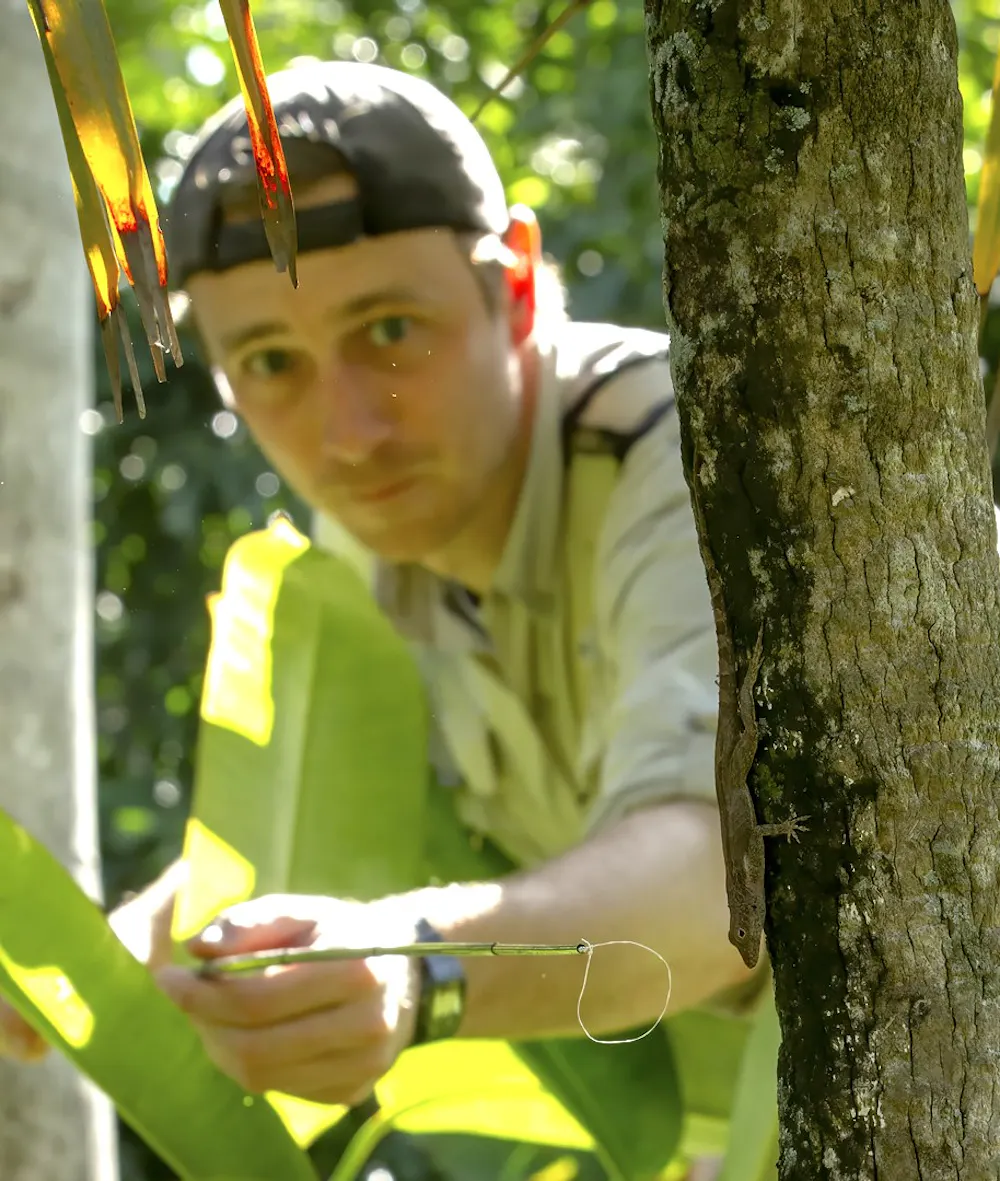
    Anoles aren’t early risers, so we don’t expect much activity until the Sun strengthens around 9:30 a.m.; this gives us time to prepare our equipment. Our team catches anoles with telescopic fishing poles fitted with little lassos, which we use to gently pluck the lizards off branches and tree trunks. Ask any lizard biologist about their preferred lasso material and you’ll spark the age-old debate: fishing line or dental floss? For what it’s worth, we recently converted – we’re now on Team Fishing Line.

    Picture yourself as an anole on Lizard Island. Your life is short – typically just one year – and filled with daily challenges. You need to warm up in the Sun, find enough food to survive, search for a mate, guard your favorite branch from other lizards and avoid being eaten by a predator.

    Like human beings, each lizard is unique. Some have longer legs, others stronger jaws, and all behave slightly differently. These differences could determine who survives and who doesn’t; who has the most babies and who doesn’t.

    These outcomes drive evolution by natural selection, the process where organisms with traits better suited to their environment tend to survive and reproduce more. These advantageous traits are then passed on to future generations, gradually changing the species over time. However, scientists still have an incomplete understanding of exactly how each of these features predicts life’s winners and losers in the wild.

    To understand how species evolve, researchers need to crack open this black box of evolution and investigate natural selection in wild populations. My colleagues and I are doing this by studying the anoles in exquisite detail. Last year was especially exciting: We ran what we called the Lizard Olympics.

    Catching an anole with a lizard lasso. Look closely – the anole blends in quite well with the tree.
    Neil Losin/Day’s Edge Prods.

    Tiny fishing poles

    As the morning heat builds, we spot our first lizards: Cuban brown anoles near to the ground, and the mottled scales of Hispaniolan bark anoles just above them. Further up, in the leafy tree canopies, are American green anoles, and the largest species, the Cuban knight anole, about the size of a newborn kitten.

    In 2018, a new challenger entered the arena – the Puerto Rican crested anole, a species already present in Miami but one that hadn’t yet made it to Lizard Island. Its arrival provided us with an unexpected opportunity to study how species may evolve in real time in response to a new neighbor.

    Catching these agile athletes requires patience and precision. With our modified fishing poles, we carefully loop the dental floss over their heads. Each capture site is marked with bright pink tape and a unique ID number; all lizards are then transported to our field laboratory just a short walk away.

    In the laboratory, Stroud weighs a green anole.
    Neil Losin/Day’s Edge Prods.

    The Lizard Olympics

    Here, the real Olympic trials begin. Every athlete goes through a comprehensive evaluation. Our portable X-ray machine reveals their skeletal structure, and high-resolution scans capture the intricate details of their feet. This is particularly critical: Like their gecko cousins, anoles possess remarkable sticky toes that allow them to cling to smooth surfaces such as leaves and maybe even survive hurricanes.

    We also measure the shape and sharpness of their claws, as both features are crucial for these tree climbers. DNA samples provide a genetic fingerprint for each individual, allowing us to map family relationships across the island and see which is the most reproductively successful.

    A portable X-ray machine takes detailed measurements of a lizard’s skeleton.
    James Stroud

    The performance trials are where things get interesting. Imagine a tiny track meet for lizards. Using high-speed video cameras, we precisely test how fast each lizard runs, and using specialist equipment we measure how hard it bites and how strong it grips rough branches and smooth leaves.

    These aren’t arbitrary measurements – each represents a potential evolutionary advantage. Fast lizards might better escape predators. Strong bites might determine winners in territorial disputes. Excellent grip is crucial for tree canopy acrobatics.

    Each measurement helps us answer fundamental questions about evolution: Do faster lizards live longer? Do stronger biters produce more offspring? These are the essential metrics of evolution by natural selection.

    The identification code lets researchers track the lizard’s growth and survival.
    Neil Losin/Day’s Edge Prods.

    As afternoon approaches, the team relocates each piece of bright pink tape and returns the corresponding lizard to the exact branch it was caught on. The anoles now sport two tiny 3-millimeter tags with a unique code that lets us identify it when we recapture it in future research trips, along with a small dot of white nail polish so we know not to catch it immediately after we let it go.

    At 8:30 p.m., with the Lizard Olympics done for the day, we return to the island donning headlamps. Night brings a different perspective. Some of the most wily lizards are difficult to catch when fully charged by the midday Sun, so our nocturnal jaunts allow us to find them while they sleep. However, it’s often a race against time. Hungry lizard-eating corn snakes are also out hunting, trying to find the anoles before we do. As we wrap up another 16-hour day around 11:30 p.m., the team shares stories of the night.

    Should a snake climb along a branch where a baby anole sleeps, the lizard will wake up and drop to the ground to escape.
    James Stroud

    Evolution on the island

    Now spanning 10 years, 10 generations and five species, our Lizard Island dataset represents one of the longest-running active studies of its kind in evolutionary biology. By tracking which individuals survive and reproduce, and linking their success to specific physical traits and performance abilities, we’re documenting natural selection with unprecedented detail.

    So far we have uncovered two fascinating patterns. Initially, it didn’t pay to be different on Lizard Island. Anoles with very average shapes and sizes lived longer compared with those that are slightly different. But when the crested anoles arrived, everything changed: Suddenly, brown anoles with longer legs had a survival advantage.

    Anoles communicate with their dewlap, an expandable throat fan that signals other lizards.
    Jon Suh

    The Lizard Olympics is helping us understand why. The larger, more aggressive crested anoles are forcing brown anoles to spend more time on the ground, where those with longer legs might run faster to escape predators – allowing them to better survive and pass on their long-leg genes, while shorter-legged anoles might be eaten before they can reproduce.

    By watching natural selection unfold in response to environmental changes, rather than inferring it from fossil records, we’re providing cutting-edge evidence for evolutionary processes that Charles Darwin could only theorize about.

    These long days of observation are slowly revealing one of biology’s most fundamental processes. Every lizard we catch, every measurement we take adds another piece to our understanding of how species adapt and evolve in an ever-changing world.

    James T. Stroud does not work for, consult, own shares in or receive funding from any company or organization that would benefit from this article, and has disclosed no relevant affiliations beyond their academic appointment.

    ref. Amid a tropical paradise known as ‘Lizard Island,’ researchers are cracking open evolution’s black box – scientist at work – https://theconversation.com/amid-a-tropical-paradise-known-as-lizard-island-researchers-are-cracking-open-evolutions-black-box-scientist-at-work-246474

    MIL OSI – Global Reports

  • MIL-OSI United Kingdom: UKHSA publishes first annual report summarising latest infectious disease trends

    Source: United Kingdom – Executive Government & Departments

    News story

    UKHSA publishes first annual report summarising latest infectious disease trends

    The UK Health Security Agency’s (UKHSA) first annual report summarising the latest infectious disease trends, bringing together all the key data from 2023 to early 2025 and outlining steps the organisation is taking to tackle these threats.

    The Infectious diseases impacting England: 2025 report shows a rise in both endemic disease and vaccine-preventable infections. Infectious diseases were the primary reason for over 20% of hospital bed usage, at an annual cost of almost £6bn in 2023 to 2024. Developing scientific capability and effective interventions are having positive impacts, but more action is needed.

    The report shows the re-emergence, re-establishment and an unrelenting rise in a number of infectious diseases since 2022 to 2023, with particular increases in endemic diseases and vaccine-preventable infections. The agency acknowledges that the return of social mixing, international travel and migration following the COVID-19 pandemic have contributed to these patterns.

    The report also shows some really positive impact in some areas due to the introduction of new public health interventions.

    An intense influenza and RSV (respiratory syncytial virus) season was seen in 2024 to 2025, for the second consecutive year after the pandemic, with activity and hospital admissions at similar levels seen post-pandemic in 2022 to 2023. The introduction of the new RSV vaccine programmes for the elderly, and pregnant women are already helping to reduce winter pressures. Interim findings published today confirm a 30% reduction in the rate of RSV hospital admissions in the winter of 2024 to 2025 in 75 to 79 year olds; this cohort are eligible for vaccination under the new programme.

    COVID-19 transmission has declined, with the virus circulating at baseline levels of activity for much of the current winter season. Incremental vaccine effectiveness was around 45% against hospitalisation, with vaccine uptake in older age groups at 60% to 70%. Vaccination of priority groups, in particular the elderly, remained an important intervention to protect against severe disease.

    Tuberculosis (TB) cases have increased by 11% in 2023 compared to 2022, with provisional data for 2024 showing a further increase of 13%, which amounted to more than 600 additional notifications of people being diagnosed in 2024 compared to 2023. This trajectory would see the UK lose its World Health Organization (WHO) low incidence status if not reversed. UKHSA continues to work with NHSE and other partners on the TB action plan, which sets out steps to improve the prevention and detection of TB.

    Continued progress in eliminating viral Hepatitis C (HCV) as a public health problem by 2030 has been made, with the number of people living with chronic HCV infection falling dramatically by 57% from 2015 to the end of 2023. England is also meeting and exceeding the WHO’s absolute targets on Hepatitis B virus (HBV) related mortality, incidence, mother-to-child transmission and vaccine coverage.

    There has been surge in cases of measles in children under the age of 10 and an outbreak of whooping cough (pertussis) in 2024, with 433 cases in infants under 3 months of age, of whom 10 died. Both outbreaks highlight the critical importance of vaccination in eligible groups.

    UKHSA analysis found that over 20% of secondary care bed days in 2023 to 2024 in NHS hospitals (admitted care) were primarily attributable to infectious disease, at a cost of £5.9bn. These infections are also distributed unevenly; in England, from 2023 to 2024, hospital admission rates due to infectious

    Diseases and infections were nearly twice as high for people in the 20% most deprived areas compared to the least deprived. UKHSA is undertaking further work to better understand these disparities.

    UKHSA continues to be at the forefront of the work being done to tackle the spread of TB, working closely with the NHS and local systems to ensure optimal prevention and control measures are implemented, for example. Also crucial is developing the evidence base for new interventions to support further policy development to help reduce transmission of the disease.

    There are also novel interventions on the horizon for sexually transmitted infections (STIs), based on UKHSA evidence. A routine gonorrhoea programme using the 4CMenB vaccine for GBMSM (gay, bisexual and men who have sex with men) at high risk has been advised. UKHSA has also worked with the British Association for Sexual Health and HIV to develop their evidence-based clinical guideline for the use of doxycycline post-exposure prophylaxis for the prevention of syphilis, which is currently out for public consultation.

    Richard Pebody, Director of Epidemic and Emerging infections at UKHSA, said:

    It is clear that a number of factors altered the rates and impact of endemic and epidemic infectious diseases in England over recent years, and the reductions in transmission related to the COVID-19 pandemic have been followed by a rise in a range of infections since 2022 to 2023 due to the return of social mixing, international travel and migration.

    We have also seen vaccine uptake decrease for a number of infectious diseases, including measles, whooping cough and in certain groups eligible for the flu vaccine, such as under 65 at risk, pregnant women and health care workers.

    This winter has demonstrated that rises in rates of infectious diseases can cause significant strain, not only on the individuals directly affected, but also on the NHS. It is vital that we are not complacent about infections where we can reduce the burden of disease via interventions such as our world-class vaccination programmes.

    Dame Jenny Harries, Chief Executive of the UK Health Security Agency, said:

    Our scientific capability and the introduction of new interventions are all helping to keep people safe and well, but our report also highlights that we have plenty of work and opportunities ahead.

    Along with our partners across the healthcare sector, we need to be bolder. Behind this data there are real people, people who are sick or at risk of becoming sick, and in some cases dying. This brings with it a cost to our economy too. Yet much of this harm and distress is preventable.

    Our rich data sources provide us with a huge amount of knowledge, and we will continue to use it, carefully and confidentially, to reduce the burden of infectious disease across the country, ensuring our interventions reach the people who need them most.’

    Updates to this page

    Published 25 March 2025

    MIL OSI United Kingdom

  • MIL-OSI USA: An Interview with Eva Schnitzler, Foreign Law Intern

    Source: US Global Legal Monitor

    Today’s interview is with Eva Schnitzler, a foreign law intern working with Foreign Law Specialist Jenny Gesley in the Global Legal Research Directorate of the Law Library of Congress. 

    Describe your background.

    I grew up in a small town in North Rhine-Westphalia, Germany, close to the border of the Netherlands. During my school days, I had the opportunity to attend high school in North Vancouver in Canada, and gained my first experiences living abroad.

    What is your academic/professional history?

    After graduating from high school, I started studying law and economics at the University of Bonn. The bachelor’s program focused on the economic analysis of law, which examines the effect of legal regulations on human behavior. During my studies, I spent a semester abroad at the Université de Fribourg in Switzerland, and worked as a research assistant at the Center for Advanced Studies in Law and Economics at the University of Bonn. After completing my Bachelor of Laws, I studied law at the University of Bonn and specialized in corporate and capital markets law. I passed the first German state exam in 2023, and started my two-year legal traineeship program at the Higher Regional Court of Cologne to qualify as a lawyer in Germany. During the previous parts of my legal traineeship, I worked at the Regional Court of Cologne, at the Public Prosecutor’s Office, at the German Federal Ministry of Finance in Berlin, and at a U.S. law firm in Cologne.

    How would you describe your job to other people?

    As a foreign law intern at the Global Legal Research Directorate of the Law Library of Congress, I assist my supervisor, Jenny Gesley, with providing legal expertise on German-speaking jurisdictions and the European Union in response to requests from Congress, executive agencies, or the courts. Additionally, I prepare articles for the Global Legal Monitor.

    Why did you want to work at the Law Library of Congress?

    Working in the Law Library of Congress is an amazing opportunity to get an insight into the work of the U.S. government. My internship at the Law Library of Congress is also a great opportunity to work at the interface of politics and law, and meet experts of different legal systems from all over the world.

    What is the most interesting fact you have learned about the Law Library of Congress?

    The underground tunnel system connecting the federal buildings including the Library of Congress is impressive. Formerly, the tunnel system in the Library of Congress was used to transfer books. Nowadays, the tunnels are used as pedestrian walks, and you can find a coffee shop or even a gym there.

    What’s something most of your co-workers do not know about you?

    I really enjoy skiing! At the age of three, I started skiing and have never missed a skiing season so far.


    Subscribe to In Custodia Legis – it’s free! – to receive interesting posts drawn from the Law Library of Congress’s vast collections and our staff’s expertise in U.S., foreign, and international law.

    MIL OSI USA News

  • MIL-OSI: VelocityEHS Revolutionizes Contractor Safety with AI-Driven Verification and Compliance Automation

    Source: GlobeNewswire (MIL-OSI)

    CHICAGO, March 25, 2025 (GLOBE NEWSWIRE) — VelocityEHS, the global leader in EHS & ESG software solutions, is excited to unveil an advanced AI-powered feature designed to streamline contractor safety management. This new capability automates contractor verification processes, reduces compliance risks, and significantly improves operational efficiency for organizations that manage contractors onsite.

    As part of its Contractor Safety Solution, Velocity deploys AI to generate guided workflows, flag risks, and make intelligent recommendations, making it easier for non- or less-experienced EHS managers to verify contractor credentials like Certificates of Insurance and OSHA Logs to facilitate compliance.

    Contractor workers face significantly higher risks on the job, with injury and illness rates 36% to 72% higher than those of full-time employees. Additionally, 37% of all temporary workers are employed in high-risk industrial sectors, underscoring the critical need for more effective safety and compliance solutions.

    “Our mission is to help create safer workplaces,” said Matt Airhart, CEO of VelocityEHS. “We are dedicated to developing AI-driven innovation that enables our customers to reach better outcomes faster. Even before this new feature, our Contractor Safety & Permit to Work solution helped organizations achieve 70%-time savings compared to traditional third-party management processes. Now their operational efficiency will reach new heights.”

    As regulatory demands and safety concerns continue to escalate, organizations need reliable, scalable, and intelligent solutions to ensure contractor compliance—particularly in safety-critical industries such as manufacturing, pharmaceuticals, chemicals, and food & beverage, where staying on top of complex requirements is a daily challenge.

    Key Benefits of the AI-Powered Contractor Safety Feature

    • Faster, More Accurate Compliance Assessments: AI-driven automation accelerates document reviews, eliminating manual errors and ensuring precise contractor verification.
    • Reduced Compliance Risks: Quicker and easier access to crucial data to make informed decisions, ensuring contractors meet safety standards.
    • Lower Administrative Burden: Saves time by streamlining manual contractor verification processes, giving workers time to focus on higher-value safety initiatives rather than repetitive compliance tasks.

    “Many businesses face challenges with manual compliance workflows, resulting in costly delays in contractor verification and increased exposure to risks,” said Dr Julia Penfield, VP of Research & Machine Learning.

    “Over time, this leads to reactive risk management, human error, productivity losses and potential fines for non-compliance. Our new AI-powered Contractor Safety Solution is changing the game, transforming the process with an intuitive, automated solution that simplifies compliance and drives better overall safety outcomes,” she added.

    For more information about VelocityEHS, visit www.EHS.com

    About VelocityEHS 
    Relied on by more than 10 million users worldwide to drive operational excellence and achieve outstanding outcomes, VelocityEHS is the global leader in true SaaS enterprise EHS & ESG technology. The VelocityEHS Accelerate® Platform is the definitive gold standard, delivering best-in-class software solutions for managing Safety, Ergonomics, Chemical Management, and Operational Risk. In addition, Velocity offers world-class applications for Contractor Safety & Permit to Work, Environmental Compliance, and ESG.

    The VelocityEHS team includes unparalleled industry expertise, with more certified experts in health, safety, industrial hygiene, ergonomics, sustainability, the environment, AI, and machine learning than any other EHS software provider. Recognized by the EHS industry’s top independent analysts as a Leader in the Verdantix 2025 Green Quadrant Analysis, VelocityEHS is committed to industry thought leadership and to accelerating the pace of innovation through its software solutions and vision. Its privacy and security protocols, which include SOC2 Type II attestation, are among the most stringent in the industry. 

    VelocityEHS is headquartered in Chicago, Illinois, with locations in Ann Arbor, Michigan; Tampa, Florida; Oakville, Ontario; London, England; Perth, Western Australia; and Cork, Ireland. For more information, visit www.EHS.com.  

    Media Contact 
    Jennifer Sinkwitts 
    jsinkwitts@ehs.com 

    The MIL Network

  • MIL-OSI Video: Happy Greek Independence Day from The White House! 🇺🇸🎉🇬🇷

    Source: United States of America – The White House (video statements)

    “Greek-Americans have blessed our country with exceptional courage, patriotism, and tremendous skill. Under this administration, we will continue to honor the virtues, ideals, and spirit of this magnificent heritage – From the Golden Age of Greece to the Golden Age of America.” –President Donald J. Trump

    https://www.youtube.com/watch?v=8zAYSpWYAVY

    MIL OSI Video

  • MIL-OSI Europe: ASIA/INDONESIA – The Carmelites in Flores: rooted in pastoral, educational and spiritual service

    Source: Agenzia Fides – MIL OSI

    Ende (Agenzia Fides) – The Carmelite charism continues to expand in eastern Indonesia and will strengthen its service to the population on the island of Flores.Today, March 25, 2025, when the universal Church celebrates the Feast of the Annunciation, the Carmelite Order of the Province of Indonesia announced the creation of a new province on the island of Flores, within the East Nusa Tenggara region. The new province has chosen Saint Titus Brandsma as its patron.The first Carmelite religious arrived in Flores in 1969 to begin their mission. Over time, their presence was consolidated through the establishment of formation houses for candidates for religious life. Today, that presence has reached a new level of institutionalization with the creation of the new province. The General Council of the Carmelite Order in Rome has appointed Friar Marselinus Barus OCarm as its first Prior. “With this new province, we hope that the Carmelite mission in eastern Indonesia will continue to grow. My wish is that the Carmelites here, anchored in Christ, will continue to build fraternity and cooperation,” the Prior declared. The impact of the Carmelite presence in Indonesia is evident in three key areas: education, pastoral care, and spiritual accompaniment. In the field of education, the Carmelites seek not only intellectual formation (ratio), but also the formation of the heart and spiritual growth. Therefore, Carmelite schools are deeply marked by the spirituality of the Order. Currently, the Carmelites run two schools in Java, two in Flores, and one in Sumba, in addition to seven dormitory schools distributed throughout these regions. In the pastoral sphere, the religious are present in numerous parishes and dioceses, where their contemplative charism enriches the work of evangelization. In addition to preaching the Word of God, the Carmelites foster fraternal life and promote a concrete commitment to justice. Their presence is valued in dioceses such as Medan, Padang, Palembang, Jakarta, Bandung, Malang, Surabaya, Denpasar, Maumere, Ende, Ruteng, Weetebula, Pontianak, Palangkaraya, Banjarmasin, Makassar, and Sorong Manokwari.In the spiritual sphere, the Carmelites are recognized as masters of prayer and guides in the spiritual accompaniment of the faithful. They organize retreats, formation courses, study days, and seminars on Christian and Carmelite spirituality, often in collaboration with the Indonesian Carmelite Institute (IKI) and utilizing various retreat houses. The Carmelites have also extended their work to the fields of culture and communication.Through their publishing house, “Karmelindo,” they publish books, magazines, bulletins, biblical reflections, and theological texts, with the aim of strengthening catechesis and spiritual formation. More recently, they have promoted multimedia projects, with the creation of “Carmel Vision” and “Radio Carmel,” platforms through which they produce audiovisual and informative content to evangelize and spread Carmelite spirituality.Finally, in its commitment to the most vulnerable, the Carmelite Province in Indonesia founded the NGO “Darma Laksana,” which promotes assistance and cooperation projects for the poor and destitute, bringing a message of hope and salvation to those most in need. (PA) (Agenzia Fides, 25/3/2025)
    Share:

    MIL OSI Europe News

  • MIL-OSI Europe: AFRICA/ETHIOPIA – The Eparch of Adigrat: “We are trying to move forward as a Church in a context of total precariousness, with the risk of a new civil war”

    Source: Agenzia Fides – MIL OSI

    Tuesday, 25 March 2025

    Internet

    Adigrat (Agenzia Fides) – The bloody civil war that ravaged Tigray between 2020 and 2022 is now compounded by an internal split within the Tigray People’s Liberation Front (TPLF), one of the two factions vying for control of the region. The fragile peace agreement signed in Pretoria in 2022 (see Fides, 7/8/2024) between the Addis Ababa government and representatives of the TPLF appears to have succumbed to a new wave of violence and disorder, with the growing risk of plunging northern Ethiopia back into civil war.On March 11, the rebel faction took control of Adigrat, a town on the border with Eritrea, and subsequently captured Adi-Gudem, located near the regional capital, Macallé, thus escalating an internal conflict within a larger conflict. For weeks, various media outlets have reported the imminent possibility of a new outbreak of violence, this time with the direct involvement of Eritrea.The bishop of the Catholic Eparchy of Adigrat, Tesfaselassie Medhin, confirmed this situation to Fides. “Instability in our region continues to persist, tensions between Ethiopia and Eritrea are increasing, and the country could be engulfed in a very bloody confrontation. God forbid that the factions involved start a new war in Tigray, which has already suffered enormously.”“In general, internal politics in Tigray are not good,” Medhin continues. “The division between local politicians and the sudden interruption of USAID funding are severely penalizing millions of people. The impact on programs for the poor run by NGOs, religious organizations, and government agencies is devastating, and there is no exit strategy. Even the government agency Catholic Relief Services of Ethiopia, which provides emergency food aid, has seen its activities suspended. We have been informed that they will continue to operate with private funding, but only for smaller programs. We do not yet know what these will consist of,” explains the bishop.“For the rest, in a context of great anguish and suffering for our people, we are trying to move forward as a Church, to give hope to the people and be a sign of hope for them. We try to be at their side and work for healing from the trauma of the bloody conflicts of which they have been victims,” notes Medhin.The Eparch of Adigrat concludes his conversation with a thought for Pope Francis: “We pray for him. We are united in his suffering, but also in the joy that God has given us to have him as our pastor on the Chair of Peter.” (AP) (Agenzia Fides, 25/3/2025)
    Share:

    MIL OSI Europe News

  • MIL-OSI Europe: AFRICA/SUDAN – South Sudan and Chad condemn war threats launched by a Sudanese general

    Source: Agenzia Fides – MIL OSI

    Khartoum (Agenzia Fides) – Tensions are growing between South Sudan and Chad, on the one hand, and the Sudanese government of General Abdel Fattah al-Burhan, on the other. The dispute erupted following statements by General Yasir Al-Atta, deputy commander-in-chief of the Sudanese Armed Forces, who, in an interview with Al Jazeera on March 23, 2025, stated that the airports of N’Djamena and Amdjarass, in Chad, are legitimate targets for Sudanese forces. Khartoum suspects that the United Arab Emirates is using these airports to supply the Rapid Support Forces (RSF), a Sudanese paramilitary group opposed to the national army (see Fides 23/10/2024).In his statements, Al-Atta also issued threats against South Sudan, prompting an immediate reaction from both neighboring countries.Chad and South Sudan reacted strongly to the Sudanese general’s remarks. “The statements made on March 23, 2025, in which General Al-Atta declared the readiness of the Sudanese government and its armed forces to confront what he describes as ‘traitors’ within the Republic of South Sudan, are not only reckless and provocative, but also a flagrant violation of the principles of good neighborliness, peaceful coexistence, and international law,” reads a statement from the Ministry of Foreign Affairs in Juba. “The Government of the Republic of South Sudan remains firmly committed to regional peace and stability and has consistently supported dialogue and diplomatic efforts to resolve disputes,” the statement continues.The South Sudanese government has also reiterated its call for an immediate end to the devastating conflict in Sudan, which continues to force thousands of Sudanese citizens to flee beyond its borders in search of safety. “We urge the leaders of the Republic of Sudan to reaffirm their commitment to peaceful relations and to ensure that public statements by their officials reflect respect for international norms and the sovereignty of all nations,” the statement added. For its part, the Chadian government has responded with an even stronger condemnation. In a statement from the Ministry of Foreign Affairs, N’Djamena strongly rejected the Sudanese general’s remarks, warning that they “could be interpreted as a declaration of war if put into practice.” “Such statements could lead to a dangerous escalation for the entire region,” the statement said. The Chadian government has been clear in its warning: “Chad reserves the legitimate right to respond firmly to any attempt at aggression against our country, regardless of its origin. If even a single square meter of our territory were threatened, Chad would respond in accordance with the principles of international law.” Despite the gravity of the situation, Chad reiterated its commitment to peace in Sudan, recalling that “the conflict in Sudan is an internal matter, the sole responsibility of the parties to the conflict.” Furthermore, it underscored its humanitarian role in the region: “Chad, faithful to its traditions of hospitality and solidarity, has welcomed and continues to welcome hundreds of thousands of Sudanese refugees, which represents a considerable burden for our country and demonstrates our commitment to peace, solidarity, and regional stability,” the statement concludes. (L.M.) (Agenzia Fides, 25/3/2025)
    Share:

    MIL OSI Europe News

  • MIL-OSI Europe: ASIA/LAOS – A new Bishop for the small Church: the new Apostolic Vicar of Vientiane consecrated

    Source: Agenzia Fides – MIL OSI

    Tuesday, 25 March 2025

    Vientiane (Agenzia Fides) – The small but vibrant Catholic community of Laos has joyfully welcomed its new bishop. Msgr. Anthony Adoun Hongsaphong, a priest of the Apostolic Vicariate of Pakse, received episcopal ordination at the Sacred Heart Cathedral in Vientiane, during a solemn Eucharist celebrated on March 25, 2025. His appointment as Apostolic Vicar of Vientiane was announced by Pope Francis in December 2024. The ceremony was attended by the prelates of the Episcopal Conference of Laos and Cambodia (CELAC), gathered in the Laotian capital for their annual assembly.Msgr. Anthony Adoun Hongsaphong, 61, succeeds Cardinal Louis-Marie Ling Mangkhanekhoun, who turned 80 in April 2024. Fr. Hongsaphong was a professor at the National Major Seminary of Thakeh and responsible for pastoral care in the 11 mission stations of the Apostolic Vicariate of Paksé, his hometown. Ordained a priest in 1994, he completed his studies at the University of Fribourg (Switzerland) and the Pontifical Angelicum University in Rome. He carried out pastoral service in Thailand and then in 2005, he began contributing to the Laotian Catholic community (a total of 51,000 people) by dedicating himself to the formation of young people at the Pastor Bonus preparatory seminary in Paksé.Among the prelates from Cambodia, Jesuit Father Enrique Figaredo Alvargonzález, Apostolic Prefect of Battambang, highlights “the great hope of the Church in Laos,” highlighting “the vitality of a small but vibrant ecclesial community.” Despite the government ban on the presence of foreign missionaries, the local Church shows signs of growth. Laos has 20 priests in total, but there is a flourishing vocational program that inspires confidence for the future: some 50 Laotian boys and young men are on their way to the priesthood (about 20 in the minor seminary, 10 in the preparatory year, and 20 in the major seminary).The Lao People’s Democratic Republic is a socialist state with 7.5 million inhabitants, a Buddhist majority. The Catholic Church in Laos originated within the Apostolic Vicariate of Eastern Siam and is currently organized into four apostolic vicariates: Vientiane, Pakse, Luang Prabang, and Savannakhet. Since the official recognition of the Church by the Lao Front for National Development in 1979, relations with the government have improved, particularly in terms of religious freedom, recognized in the 1991 Constitution, which allows four religions: Buddhism, Christianity, Islam, and the Baha’i Faith. However, in some provinces, Christianity is still viewed as a “foreign faith.” (PA) (Agenzia Fides, 25/3/2025)
    Share:

    MIL OSI Europe News

  • MIL-OSI United Kingdom: Inspection report published: An inspection of the Border Force operation to deter and detect clandestine entrants to the UK August 2024 – November 2024

    Source: United Kingdom – Executive Government & Departments

    News story

    Inspection report published: An inspection of the Border Force operation to deter and detect clandestine entrants to the UK August 2024 – November 2024

    This inspection examined the Border Force operation to deter and detect clandestine entrants at the juxtaposed controls in northern France (Calais, Coquelles, and Dunkerque), focusing on how efficiently and effectively staff resources and detection techniques are used and on Border Force’s engagement with security contractors, port and transport operators, and the French authorities.

    Over the course of the last decade, the UK government has contributed hundreds of millions of pounds towards the strengthening of security measures in northern France with the aim of preventing migrants from entering the UK illegally. Since 2020, spending has been focused on combating ‘small boat’ crossings. Prior to that, the emphasis had been on improving the physical security measures at the juxtaposed ports, including through the installation of many miles of fencing on the approach roads. This has made incursions into the ports and clandestine entry by concealment in vehicles much more difficult, which many argue is the reason why the small boat crossings began.   

    It is clear that the numbers of clandestine entrants detected at Calais, Coquelles, and Dunkerque have fallen substantially. In 2016, there were over 56,000. In 2024, there were around 5,000. However, the relationship between small boats and clandestine entry through the juxtaposed ports is not well understood. This needs more attention, not least to get ahead of any displacement effect if new measures to reduce small boat crossings begin to work.   

    Meanwhile, this inspection has shown that the threat of clandestine entry at the juxtaposed ports remains high and is unrelenting, both from organised facilitations and from opportunistic ‘jump-ups’. Border Force resources and capabilities are stretched, and its operations and those of its security contractors are closely monitored by migrants and by smuggling gangs to identify and be ready to exploit any weaknesses. It is therefore vital that Border Force continues to invest in staff, detection equipment and IT systems at the juxtaposed ports. To do so with confidence that it is investing in the right places, it needs to record and analyse what is working and where the gaps are much more systematically than is currently the case.        

    One of the measures employed to deter clandestine entry is a penalty scheme that enables Border Force to levy fines on anyone found to have a clandestine entrant in their vehicle. When I looked at this scheme in 2018, I found that no penalties had been imposed since July 2016. My report described the system as “broken” and in need of urgent attention. I recommended that the Home Office should fix the scheme so that penalties were issued wherever appropriate, and payment was pursued promptly. This recommendation was accepted. In 2019, I found that significant headway had been made with the backlog of referrals, but some cases had been waiting almost three years for a penalty notice to be imposed, calling into question the deterrent value of any eventual penalty. There was a problem with the resourcing of the team managing the scheme, and it did not have the IT it needed. At the time, Border Force indicated that it was aware of these issues and was already taking action to address them.   

    Given this history, it was all the more disappointing to find in this latest inspection that the team is still not staffed appropriately and does not have the systems required to run the scheme efficiently and effectively. This is despite the fact that the scope of the scheme was extended in 2023 to take in hauliers and lorry drivers who are found not to have secured their vehicles. At the same time, the penalties were substantially increased.     

    Even if income-generation is not its primary purpose, and the monies recovered are not wholly retained by the Home Office, it is hard to excuse the perennial under-investment in this area when the scheme has recovered over £10 million since the beginning of 2022, with another £26 million still to be recovered, albeit that some of this is uncollectible. If the Home Office is unwilling or unable to resource the scheme so that it works efficiently and effectively, ensuring that penalties are demonstrably consistent and fair, it should give serious consideration to reforming the scheme in line with the resources it is prepared to invest in it.  

    My report contains seven recommendations, covering: ‘ownership’ of clandestine entry and responsibility for ensuring that recommended improvements are implemented and embedded; an improved range of analyses, assessments and intelligence products to support decision-making about resources, investments and operational deployments; the provision of training to frontline Border Force officers to enable them to be used more flexibly; the installation of an integrated Automatic Number Plate Recognition (ANPR) system linking the juxtaposed controls at Calais, Coquelles, and Dunkerque; a ‘root and branch’ review of the working practices and processes of the civil penalties team; production and publication of an ‘engagement plan’ for industry stakeholders; and publication of an annual report on how the scheme is working.  

    In its formal response, the Home Office has accepted two recommendations and partially accepted four. While I had hoped that the department might have shown more ambition in some areas, including in its timescales for implementing improvements, it has set out its thinking and what it intends to deliver in a way that will enable the ICIBI and others to measure its progress. Meanwhile, it has rejected my recommendation regarding an integrated ANPR system on grounds of cost versus likely benefits, which I understand, but which reinforces my view that it needs to become better at analysing what is working in order to inform investment decisions.    

    My report was sent to the Home Secretary on 4 February 2025, so its publication today is well within the target of eight weeks, which is encouraging. The published report contains a number of redacted passages. These redactions were made by the Home Secretary in line with the UK Borders Act 2007 which empowers her to omit material if she thinks its publication is undesirable for reasons of national security. In my view, the redactions do not affect understanding of the key findings and recommendations. 

    My principal concern going forward is that whatever improvements Border Force makes to its processes and practices as a result of this inspection these are banked and become ‘business as usual’, so that when the ICIBI comes to look at this area again it is not having to repeat the same points.

    David Bolt, Independent Chief Inspector of Borders and Immigration

    25 March 2025

    Updates to this page

    Published 25 March 2025

    MIL OSI United Kingdom

  • MIL-OSI United Kingdom: French string quartet Quatuor Béla set to stop off in Derry-Londonderry as part of NI tour

    Source: Northern Ireland – City of Derry

    French string quartet Quatuor Béla set to stop off in Derry-Londonderry as part of NI tour

    25 March 2025

    Walled City Music and Moving On Music (Belfast) present Quatuor Béla, one of France’s leading string quartets on a rare tour of Northern Ireland, supported by Arts Council of Northern Ireland and Queens University Belfast.

    Guided by the personality and work of Béla Bartok, the quartet play and deliver programmes with sincere conviction. Recognized for their “diabolical technique” (Télérama), Quatuor Béla have become one of the leading European quartets working with contemporary composers such as Garth Knox, Kaija Saariaho and Francesca Verunelli.

    Founded in 2006 by four musicians from the National Higher Conservatory of Music of Lyon and Paris, the Béla Quartet were brought together by a shared passion for the repertoire of the 20th century. The quartet is committed to championing new compositions and exploring the relationship between composers and performers.

    This tour of NI will feature significant works of the classical repertoire with Beethoven’s Serioso Quartet, Fauré’s only string quartet, alongside works by Queens University associated composers Piers Hellawell, and world premieres by Simon Mawhinney and Pedro Rebelo.

    The tour will begin in Christ Church Derry on Thursday 3rd April with Walled City Music, continuing to St Macartin’s Enniskillen with Music in Fermanagh, Market Place Theatre Armagh on Saturday 5th and finishing in Harty Room QUB Belfast on Sunday 6th April.

    For concert details and tickets for the Derry performance, please visit www.walledcitymusic.com.

    MIL OSI United Kingdom

  • MIL-OSI Russia: HSE University Presents Results of Rating Study of Creative Industries in Russian Regions

    Translartion. Region: Russians Fedetion –

    Source: State University Higher School of Economics – State University Higher School of Economics –

    Institute for the Development of Creative Industries Faculty of Creative Industries The National Research University Higher School of Economics conducted a study, within the framework of which a rating of the development of creative industries in the regions was compiled. This study assessed both the state of creative industries in the region as a whole and the efforts of local authorities to develop the potential of territories.

    The study developed and tested a new approach to ranking the subjects of the Russian Federation by the level of development of creative industries. This approach allows us to identify groups of territories, each of which is characterized by its own level of development of both the creative industries themselves and their infrastructure.

    The developers divided the regions into 3 rating groups:

    Group A – regions with high rates of development of creative industries; in this group, regions are distinguished mainly by a comprehensive system of measures to support creative entrepreneurship.

    Group B — regions with lower assessments of creative industries development indicators. With the exception of several regions in this group, at least two elements of the system of measures to support creative industries have been implemented in the regulatory field.

    Group C — regions where creative industries development indicators have significant growth potential, but are currently at a low level. With rare exceptions, in the regions of this group the system of measures to support creative entrepreneurship is in the process of formation.

    In all of the creative industries considered and studied, the leaders of Group A were Moscow, the Moscow Region, and St. Petersburg. Moscow, the Moscow Region, St. Petersburg, Krasnodar Krai, and the Sverdlovsk Region occupy leading positions in the development of IT, architecture, design, photo industry, event and advertising industries.

    Tyumen Oblast and Krasnodar Krai are among the top 5 in terms of gastronomy development; Voronezh Oblast and Krasnodar Krai are among the top 5 in terms of game design and computer graphics development; Novosibirsk Oblast, Krasnodar Krai, the Republics of Tatarstan and Bashkortostan are among the top 5 in terms of animation and film industries; Krasnodar Krai and Tatarstan are among the top 5 in terms of media and publishing industry development. Chelyabinsk Oblast, Crimea and Tatarstan are among the top 5 in terms of folk crafts and trades industry development; Sverdlovsk Oblast and the Republic of Tatarstan are among the top 5 in terms of television and radio, as well as theatre and performing arts.

    Ivanovo and Novosibirsk regions entered the top five leaders of Group A in the development of the fashion industry, Yaroslavl region and the Republic of Tatarstan – museums and galleries, Arkhangelsk region, Krasnodar region and the Republic of Sakha – the music industry.

    The leading regions contain 44.3% of organizations implementing specialized activities in the field of design, 76.3% of companies implementing activities in the field of architecture, and up to 69.8% of the number of organizations engaged in the production of folk arts and crafts.

    The distribution of companies from various creative industries across regions is uneven. For example, game design is one of the industries with a pronounced geographical concentration – according to statistics, this industry is practically not represented in a number of regions. And in 35 regions of Russia, commercial art galleries and organizations for the retail sale of works of art in commercial art galleries were not registered.

    The results of the study confirmed the uneven development of creative industries in the subjects of the Russian Federation, as well as the direct influence of the systemic efforts of regional administrations on the level of development of creative industries. Also important factors in the development of creative industries in the regions are specialized education, tourism and a number of other related industries and areas of activity, in addition, there is a connection between the infrastructure at the regional level and the results of the development of the creative industries themselves.

    Please note: This information is raw content directly from the source of the information. It is exactly what the source states and does not reflect the position of MIL-OSI or its clients.

    MIL OSI Russia News

  • MIL-OSI Russia: The capital’s municipal vehicles have been switched to summer operating mode

    Translartion. Region: Russians Fedetion –

    Source: Moscow Government – Government of Moscow –

    Specialists from the city services complex have switched road cleaning equipment to summer mode. This was reported by the Deputy Mayor of Moscow for Housing and Public Utilities and Improvement Petr Biryukov.

    “Due to the established positive average daily air temperature, the entire fleet of municipal vehicles has been switched to summer maintenance mode. To ensure daily cleaning of the city, watering equipment has been installed on the vehicles,” noted Petr Biryukov.

    The main part of municipal equipment works all year round thanks to attachments, which are changed depending on the specifics of seasonal work. Now brushes, plows, rotors, anti-icing material distributors have been removed from road cleaning machines. After that, diagnostics and scheduled maintenance were carried out. Equipment that was not used in winter was de-preserved and brought into readiness.

    Containers with emergency supplies of anti-icing materials were taken to temporary storage warehouses and installed at dangerous sections of roads, near transport, social and commercial facilities.

    Please note: This information is raw content directly from the source of the information. It is exactly what the source states and does not reflect the position of MIL-OSI or its clients.

    Please Note; This Information is Raw Content Directly from the Information Source. It is access to What the Source Is Stating and Does Not Reflect

    https: //vv.mos.ru/nevs/ite/151774073/

    MIL OSI Russia News

  • MIL-OSI: Nokia to showcase latest optical innovations to network the cloud for the AI era at OFC50

    Source: GlobeNewswire (MIL-OSI)

    Press Release
    Nokia to showcase latest optical innovations to network the cloud for the AI era at OFC50

    • New optical networking powerhouse to demonstrate bolstered product portfolio and pioneering innovations.
    • Nokia offers solutions and industry firsts to help network operators more efficiently address capacity demands driven by rapid growth in data center builds and AI workloads.
    • Nokia to hold executive briefing at OFC50 to provide optical insights in the era of AI.

    25 March 2025
    Espoo, Finland – Nokia announced today that it will be showcasing its comprehensive set of networking solutions designed to help operators network the cloud and meet the connectivity challenges of the artificial intelligence (AI) era at the OFC50 conference in San Francisco to be held March 30 to April 3, 2025.

    The increasing prevalence of cloud-based services and applications, notably AI workloads, is driving significant increases in data center capacity. New AI services delivered by cloud service providers, including hyperscale and webscale operators, internet exchange and colocation providers, and CSPs who are building dedicated managed optical fiber networks and data centers in support of AI initiatives, all require optimized solutions that can enable simple network scaling while minimizing power consumption.

    “The solution to challenges posed by AI and cloud-based connectivity demands starts with scale, but it certainly doesn’t end there. Nokia’s expanded portfolio of optical network solutions and technology capabilities delivers tangible network value that supports our customers’ long-term business success. At OFC50, it’s our pleasure to show these off publicly for the first time. Visitors to this iconic show will find Nokia occupying two booths; because there’s simply too much innovation to fit into just one,” said James Watt, Senior Vice President and General Manager of Optical Networks at Nokia.

    The Nokia solutions portfolio, which includes several new pioneering innovations, will help network operators more efficiently address capacity demands driven by rapid growth in data center builds and AI workloads, while driving down power per bit, simplifying network architectures, and increasing automation and security.

    Nokia will showcase its latest optical networking innovations and industry-firsts at this year’s OFC, including:

    • New Wavelength Division Multiplexing (WDM) Optical Line System: optimized for high-capacity data center interconnection (DCI). A new highly integrated C+L and feature rich WDM optical line system with enhanced optical client optical management facilitating seamless support of a wide variety of input wavelengths including lower power coherent pluggables – ideal for providing maximum scalability for DCI with cost-effective, and operationally efficient connectivity.
    • Pluggable Optimized Muxponder and Transponder (X-Ponder) Line Cards: A new series of line cards for Nokia’s compact modular transport platforms utilizing high-performance 400Gb/s and 800Gb/s pluggable coherent optics supporting efficient transponder and muxponder aggregation capabilities.
    • Multi-Haul 800Gb/s Coherent Pluggables: Live demonstration of the industry’s first multi-vendor interoperable multi-haul 800Gb/s pluggable coherent optics in industry standard form-factors including QSFP-DD800 and OSFP. Supporting a wide variety of deployment configurations including transponders and coherent routing, these solutions offer network operators a low-cost and power efficient solution for applications up to 2000km.
    • Intra-Data Center Connectivity Solutions: Live demonstration of Nokia’s ultra-low power 1.6Tb/s intra-datacenter optical connectivity solutions that can drive down the power required for high-speed connectivity by as much as 70%. This innovative technology can be seamlessly integrated into fully retimed, half-retimed, and linear drive pluggable solutions to support any intra-data center connectivity requirements.

    In addition, Nokia will demonstrate its comprehensive multi-layer networking solutions, featuring industry-leading solutions, including:

    • Embedded Optical Solutions: The industry’s leading and record-setting 1.2Tb/s embedded coherent optics operating over C+L line systems, enabling operators to scale fiber capacity up to 76.8Tb/s in the C+L bands.
    • Enhanced Network Security Solutions: Innovative Quantum-Safe Networking solutions for optical and IP networks, to provide the highest level of network protection against existing and future hacking threats.
    • AI Powered Network Automation: Enabling automated management, coordination and service activation with unified network visualization across IP, optical and cross-domain layers to simplify network operations, increase resiliency, and monetize networks with new and faster service deployment.
      • Routing & Switching: High-performance data center switching and flexible Coherent Routing interconnectivity solutions delivering automated operations with un-matched reliability, scalability, and flexibility.
        • Broadband Fiber Access Solutions: For 25G and 50G passive optical networks (PON) and coherent solution overlays for PON networks to deliver 100G business services.

    Nokia will hold an executive investor, analyst and media briefing at OFC50 on April 2 from 8:30 – 9:30am PDT in the Moscone Center, Level 3, Room #314. The Optical leadership team will be on stage to discuss evolving industry trends and how Nokia’s expanded portfolio of optimized optical networking solutions is solving critical network operator challenges in the era of AI and hyperscale cloud-based connectivity. The event will be publicly available via live webcast and replay on the Investor Relations section of Nokia’s website, under Events.

    For more information on Nokia’s participation at OFC, visit us at OFC50 | Nokia.com.

    Multimedia, technical information and related news 
    Web Page: Optical Network Solutions
    Web Page: Nokia at OFC50

    About Nokia
    At Nokia, we create technology that helps the world act together.

    As a B2B technology innovation leader, we are pioneering networks that sense, think and act by leveraging our work across mobile, fixed and cloud networks. In addition, we create value with intellectual property and long-term research, led by the award-winning Nokia Bell Labs, which is celebrating 100 years of innovation.

    With truly open architectures that seamlessly integrate into any ecosystem, our high-performance networks create new opportunities for monetization and scale. Service providers, enterprises and partners worldwide trust Nokia to deliver secure, reliable and sustainable networks today – and work with us to create the digital services and applications of the future.

    Media inquiries
    Nokia Press Office
    Email: Press.Services@nokia.com

    Follow us on social media
    LinkedIn X Instagram Facebook YouTube

    The MIL Network

  • MIL-OSI: CoinShares announces issue of options under the Employee Incentive Plan

    Source: GlobeNewswire (MIL-OSI)

    25 March 2025 | SAINT HELIER, Jersey | CoinShares International Limited (“CoinShares” or the “Company“) (Nasdaq Stockholm Market: CS; US OTCQX: CNSRF), a global investment firm specializing in digital assets, has granted 345,038 options (the “Options”) over ordinary shares of £0.000495 par value each (“Ordinary Shares”). The Options have been granted under the Company’s Employee Incentive Plan (“EIP”) as part of the staff remuneration for the financial year ended 31 December 2024, as approved by the Board on 24 March 2025.

    The 345,038 Options granted represent 0.52% of the issued share capital of the Company, bringing the total number of shares currently under option in issue to 3,511,303 (5.00% of the issued share capital of the Company).  

    The vesting date of the Options granted shall be 24 March 2028, being three years from the date of grant. The exercise price of the Options is SEK 72.8 per Ordinary Share.

    Options granted under the EIP to persons discharging managerial responsibilities for the Company have been included in the table below, which sets out the total shareholding and interests of each individual in the Company:

    Individual Role Number of Shares  % of issued capital New Options Total Options
    Richard Nash CFO 900 0.00% 220,038 424,461
    Benoit Pellevoizin Head of Marketing and Communications 0 0.00% 30,000 70,000
    Lewis Fellas Head of Hedge Fund Solutions 300 0.00% 30,000 30,000
        1,200 0.00% 280,038 524,461

    About CoinShares

    CoinShares is a leading global investment company specialising in digital assets, that delivers a broad range of financial services across investment management, trading and securities to a wide array of clients that includes corporations, financial institutions and individuals. Focusing on crypto since 2013, the firm is headquartered in Jersey, with offices in France, Sweden, Switzerland, the UK and the US. CoinShares is regulated in Jersey by the Jersey Financial Services Commission, in France by the Autorité des marchés financiers, and in the US by the Securities and Exchange Commission, National Futures Association and Financial Industry Regulatory Authority. CoinShares is publicly listed on the Nasdaq Stockholm under the ticker CS and the OTCQX under the ticker CNSRF.

    For more information on CoinShares, please visit: https://coinshares.com
    Company | +44 (0)1534 513 100 | enquiries@coinshares.com
    Investor Relations | +44 (0)1534 513 100 | enquiries@coinshares.com

    This information is information that CoinShares International Limited is obliged to make public pursuant to the EU Market Abuse Regulation (596/2014). The information in this press release has been published through the agency of the contact persons set out above, at 13:00 GMT on Tuesday, 25 March 2025.

    The MIL Network

  • MIL-OSI Global: Trump’s desire to ‘un-unite’ Russia and China is unlikely to work – in fact, it could well backfire

    Source: The Conversation – USA – By Linggong Kong, Ph.D. Candidate in Political Science, Auburn University

    Presidents Xi Jinping of China and Russia’s Vladimir Putin. Getty Images

    Is the U.S. angling for a repeat of the Sino-Russian split?

    In an Oct. 31, 2024, interview with right-wing pundit Tucker Carlson, President Donald Trump argued that the United States under Joe Biden had, in his mind erroneously, pushed China and Russia together. Separating the two powers would be a priority of his administration. “I’m going to have to un-unite them, and I think I can do that, too,” Trump said.

    Since returning to the White House, Trump has been eager to negotiate with Russia, hoping to quickly bring an end to the war in Ukraine. One interpretation of this Ukraine policy is that it serves what Trump was getting at in his comments to Carlson. Pulling the U.S. out of the European conflict and repairing ties with Russia, even if it means throwing Ukraine under the bus, can be seen within the context of a shift of America’s attention to containing Chinese power.

    Indeed, after a recent call with Russian President Vladimir Putin, Trump told Fox News: “As a student of history, which I am – and I’ve watched it all – the first thing you learn is you don’t want Russia and China to get together.”

    The history Trump alludes to is the strategy of the Nixon era, in which the U.S. sought to align with China as a counterbalance to the Soviet Union, encouraging a split between the two communist entities in the process.

    Yet if creating a fissure between Moscow and Beijing is indeed the ultimate aim, Trump’s vision is, I believe, both naive and shortsighted. Not only is Russia unlikely to abandon its relationship with China, but many in Beijing view Trump’s handling of the Russia-Ukraine war –- and his foreign policy more broadly – as a projection of weakness, not strength.

    A growing challenge

    Although Russia and China have at various times in the past been adversaries when it suited their interests, today’s geopolitical landscape is different from the Cold War era in which the Sino-Soviet split occurred. The two countries, whose relationship has grown steadily close since the fall of the Soviet Union,have increasingly shared major strategic goals – chief among them, challenging the Western liberal order led by the U.S.

    Soviet soldiers keep watch on the Chinese-Soviet border during a monthslong conflict in 1969.
    Keystone/Getty Images

    Both China and Russia have, in recent years, adopted an increasingly assertive stance in projecting military strength: China in the South China Sea and around Taiwan, and Russia in former Soviet satellite states, including Ukraine.

    In response, a unified stance formed by Western governments to counter China and Russia’s challenge has merely pushed the two countries closer together.

    Besties forever?

    In February 2022, just as Russia was preparing its invasion of Ukraine, Presidents Vladimir Putin and Xi Jinping announced a “friendship without limits” – in a show of unified intent against the West.

    China has since become an indispensable partner for Russia, serving as its top trading partner for both imports and exports. In 2024, bilateral trade between China and Russia reached a record high of US$237 billion, and Russia now relies heavily on China as a key buyer of its oil and gas. This growing economic interdependence gives China considerable leverage over Russia and makes any U.S. attempt to pull Moscow away from Beijing economically unrealistic.

    That doesn’t mean the Russian-Chinese relationship is inviolable; areas of disagreement and divergent policy remain.

    Indeed, there are areas that Trump could exploit if he were to succeed in driving a wedge between the two countries. For example, it could serve Russia’s interests to support U.S. efforts to contain China and discourage any expansionist tendencies in Beijing – such as through Moscow’s strategic ties with India, which China views with some alarm – especially given that there are still disputed territories along the Chinese-Russian border.

    Putin know who his real friends are

    Putin isn’t naive. He knows that with Trump in office, the deep-seated Western consensus against Russia – including a robust, if leaky, economic sanctions regime – isn’t going away anytime soon. In Trump’s first term, the U.S. president likewise appeared to be cozying up to Putin, but there is an argument that he was even tougher on Russia, in terms of sanctions, than the administrations of Barack Obama or Joe Biden.

    So, while Putin would likely gladly accept a Trump-brokered peace deal that sacrifices Ukraine’s interests in favor of Russia, that doesn’t mean he would be rushing to embrace some kind of broader call to unite against China. Putin will know the extent to which Russia is now reliant economically on China, and subservient to it militarily. In the words of one Russian analyst, Moscow is now a “vassal” or, at best, a junior partner to Beijing.

    Transactional weakness

    China for its part views Trump’s peace talks with Russia and Ukraine as a sign of weakness that potentially undermines U.S. hawkishness toward China.

    While some members of the U.S. administration are undoubtedly hawkish on China – Secretary of State Marco Rubio views the country as the “most potent and dangerous” threat to American prosperity – Trump himself has been more ambivalent. He may have slapped new tariffs on China as part of a renewed trade war, but he has also mulled a meeting with President Xi Jinping in an apparent overture.

    Beijing recognizes Trump’s transactional mindset, which prioritizes short-term, tangible benefits over more predictable long-term strategic interests requiring sustained investment.

    This changes the calculation over whether the U.S. may be unwilling to bear the high costs of defending Taiwan. Trump, in a deviation from his predecessor, has failed to commit the country to defending Taiwan, the self-governing island claimed by Beijing.

    Rather, Trump had indicated that if the Chinese government were to launch a military campaign to “reunify” Taiwan, he would opt instead for economic measures like tariffs and sanctions. His apparent openness to trade Ukraine territory for peace now has made some in Taiwan concerned over Washington’s commitment to long-established international norms.

    Insulating the economy

    China has taken another key lesson from Russia’s experience in Ukraine: The U.S.-led economic sanctions regime has serious limits.

    Even under sweeping Western sanctions, Russia was able to stay afloat through subterfuge and with support from allies like China and North Korea. Moreover, China remains far more economically intertwined with the West than Russia, and its relatively dominant global economic position means that it has significant leverage to combat any U.S.-led efforts to isolate the country economically.

    Indeed, as geopolitical tensions have driven the West to gradually decouple from China in recent years, Beijing has adapted to the resulting economic slowdown by prioritizing domestic consumption and making the economy more self-reliant in key sectors.

    A souvenir shopkeeper displays Matryoshka dolls featuring Russian President Vladimir Putin and U.S. President Donald Trump.
    Misha Friedman/Getty Images

    That in part also reflects China’s significant global economic and cultural strength. Coupled with this has been a domestic push to win countries in the Global South around to China’s position. Beijing has secured endorsements from 70 countries officially recognizing Taiwan as part of China.

    China’s turn to exploit a split?

    As such, Trump’s plan to end the Russia-Ukraine war by favoring Russia in the hope of drawing it into an anti-China coalition is, I believe, likely to backfire.

    While Russia may itself harbor concerns about China’s growing power, the two country’s shared strategic goal of challenging the Western-led international order — and Russia’s deep economic dependence on China — make any U.S. attempt to pull Moscow away from Beijing unrealistic.

    Moreover, Trump’s approach exposes vulnerabilities that China could exploit. His transactional and isolationist foreign policy, along with his encouragement of right-wing parties in Europe, may strain relations with European Union allies and weaken trust in American security commitments. Beijing, in turn, may view this as a sign of declining U.S. influence, giving China more room to maneuver, noticeably in regard to Taiwan.

    Rather than increasing the chances of a Sino-Russia split, such a shift could instead divide an already fragile Western coalition.

    Linggong Kong does not work for, consult, own shares in or receive funding from any company or organization that would benefit from this article, and has disclosed no relevant affiliations beyond their academic appointment.

    ref. Trump’s desire to ‘un-unite’ Russia and China is unlikely to work – in fact, it could well backfire – https://theconversation.com/trumps-desire-to-un-unite-russia-and-china-is-unlikely-to-work-in-fact-it-could-well-backfire-252243

    MIL OSI – Global Reports

  • MIL-OSI Global: Trump is not a king – but that doesn’t stop him from reveling in his job’s most ceremonial and exciting parts

    Source: The Conversation – USA – By Shannon Bow O’Brien, Associate Professor of Instruction, The University of Texas at Austin

    President Donald Trump speaks with Elon Musk next to a Tesla Model S on the South Lawn of the White House on March 11, 2025. Andrew Harnik/Getty Images

    Heads of state are the symbolic leader of a country. Some of them, like King Charles III of the United Kingdom, carry out largely ceremonial roles these days. Others, like Saudi Arabian King Salman, are absolute monarchs and involved in governing the country’s day-to-day activities and policies. It also means that the Saudi monarch gets to do whatever he wants without much consequence from others.

    In the United States, the president is both the head of state and head of government. The head of government works with legislators and meets with other world leaders to negotiate agreements and navigate conflicts, among other responsibilities.

    Some presidents, like Jimmy Carter, got so bogged down in the specifics that the nighttime comedy show “Saturday Night Live” made fun of it in 1977. “SNL” spoofed Carter responding in extreme, mundane detail to a question about fixing a post office’s letter sorting machines.

    As a political scientist who studies American presidents, I see that President Donald Trump loves the power and prestige that comes with being head of state, but does not seem to particularly enjoy the responsibility of being head of government.

    Trump rarely talks about the often-tedious process of governing, and instead acts with governance by decree by signing a flurry of executive orders to avoid working with other parts of the government. He has also likened himself to a king, writing on Feb. 19, 2025, “Long Live the King!”

    As much as Trump loves hosting sports teams and talking about paving over the White House’s rose garden in a remodeling project, he seems to begrudgingly accept the role of head of government.

    President Donald Trump is driven around the track prior to the Daytona 500 in Daytona Beach, Fla., on Feb. 16, 2025.
    Chris Graythen/Getty Images

    ‘You have to be thankful’

    Trump revels in social events where he is heralded as the most important person in the room. On Feb. 9, 2025, Trump became the first sitting president to attend a Super Bowl. A week later, he attended the Daytona 500 at Daytona Beach, Florida, where his limousine led drivers in completing a ceremonial lap.

    Trump’s preference for serving as head of state and not head of government was on full display during his now infamous Feb. 28, 2025, White House meeting with Ukrainian President Volodymyr Zelenskyy.

    In the televised Oval Office meeting, Trump repeatedly told Zelenskyy, “You have to be thankful.”

    Trump was demanding deference from Zelenskyy to show his inferior and submissive position as a recipient of U.S. aid and military support. These are mannerisms of absolute kings, not elected officials.

    Governing through executive orders

    The beginning of Trump’s second term in office has been filled with announcements of changes – mostly through executive actions. The Trump administration has ordered the Pentagon to stop cyber operations against Russia and fired hundreds of employees at the National Oceanic and Atmospheric Administration. The administration has also closed the Social Security Administration’s civil rights office and, among many other things, named the president chair of the Kennedy Center, a performance arts venue in Washington.

    Trump has enacted policy changes almost exclusively through executive orders, instead of working with Congress on legislation.

    Executive orders do not have to be negotiated with the legislative branch and can be written by a small team of advisers and approved by presidents. Within the first six weeks, Trump has signed more than 90 executive orders. By comparison, former President Joe Biden signed 162 executive orders during his four years in office.

    Many of Trump’s executive orders are being challenged in court, and some have been found to likely not be constitutional.

    More importantly, Trump’s successor can turn executive orders into confetti in an instant, simply with a signature. Trump himself has signed at least two executive orders that rescind over 60 previous executive orders, mostly signed by Biden.

    The fact that Trump has removed almost all of Biden’s executive orders highlights how the orders can create change for a moment, or a few years. But when it comes to long-term policy change, congressional action is needed.

    President Donald Trump signed a series of executive orders at the White House on March 6, 2025.
    Alex Wong/Getty Images

    Trump gets bored

    Early in Trump’s first term in 2017, the administration planned themed weeks called “Made in America” and “American Heroes,” for example, to emphasize changes it intended to pursue.

    Trump’s staff launched, stopped and then relaunched a themed infrastructure week seven times in 2019. This happened after Trump repeatedly derailed infrastructure events to focus on a more interesting event or topic, ranging from defending his comments that seemed to suggest support for white supremacists to discussing the reboot of Roseanne Barr’s sitcom.

    In his second term, Trump has farmed out many head of government tasks to other people, notably billionaire Elon Musk, who is leading the new so-called Department of Government Efficiency. By mid-February 2025, Trump gave Musk, who holds the title of special government employee, oversight for hiring decisions at every governmental agency.

    But as DOGE has initiated widespread cuts at different government agencies and offices in an effort to trim government waste, Musk has reportedly clashed with Trump’s cabinet members. This includes Secretary of State Marco Rubio, as well as other independent agencies funded by Congress.

    Government agencies, funding recipients and others are pushing back against the cuts and at times are succeeding in getting court rulings that halt the dismissal of government workers, or reinstate other workers at their jobs.
    Trump also seems to have abdicated most responsibility of bureaucracy to others by allowing Musk’s team unprecedented access to sensitive government programs and documents that include people’s personal information.

    Absolute kings, queens, emperors and dictators are heads of state who demand obedience because they hold the nation in their grip.

    Presidents from elected democracies may, as in the case of the U.S., have a ceremonial aspect to the job, but it is only a part of it. The people democratically elect American presidents to serve everyone and provide the best government possible.

    Shannon Bow O’Brien does not work for, consult, own shares in or receive funding from any company or organization that would benefit from this article, and has disclosed no relevant affiliations beyond their academic appointment.

    ref. Trump is not a king – but that doesn’t stop him from reveling in his job’s most ceremonial and exciting parts – https://theconversation.com/trump-is-not-a-king-but-that-doesnt-stop-him-from-reveling-in-his-jobs-most-ceremonial-and-exciting-parts-251445

    MIL OSI – Global Reports

  • MIL-OSI Video: Secretary Rubio meets with Foreign Minister’s from  Estonian, Latvian, and Lithuanian – 11:00 AM

    Source: United States of America – Department of State (video statements)

    Secretary Rubio meets with Estonian Foreign Minister Margus Tsahkna, Latvian Foreign Minister Baiba Braže, and Lithuanian Foreign Minister Kęstutis Budrys at the Department of State, on March 25, 2025.

    ———-
    Under the leadership of the President and Secretary of State, the U.S. Department of State leads America’s foreign policy through diplomacy, advocacy, and assistance by advancing the interests of the American people, their safety and economic prosperity. On behalf of the American people we promote and demonstrate democratic values and advance a free, peaceful, and prosperous world.

    The Secretary of State, appointed by the President with the advice and consent of the Senate, is the President’s chief foreign affairs adviser. The Secretary carries out the President’s foreign policies through the State Department, which includes the Foreign Service, Civil Service and U.S. Agency for International Development.

    Get updates from the U.S. Department of State at www.state.gov and on social media!
    Facebook: https://www.facebook.com/statedept
    X: https://x.com/StateDept
    Instagram: https://www.instagram.com/statedept
    Flickr: https://flickr.com/photos/statephotos/

    Subscribe to the State Department Blog: https://www.state.gov/blogs
    Watch on-demand State Department videos: https://video.state.gov/
    Subscribe to The Week at State e-newsletter: http://ow.ly/diiN30ro7Cw

    State Department website: https://www.state.gov/
    Careers website: https://careers.state.gov/
    White House website: https://www.whitehouse.gov/
    Terms of Use: https://state.gov/tou

    #StateDepartment #DepartmentofState #Diplomacy

    https://www.youtube.com/watch?v=r35eCLKHaNU

    MIL OSI Video

  • MIL-OSI United Kingdom: A “gargantuan waste of money”

    Source: Green Party of England and Wales

    Responding to the news that the government has given the go ahead to the largest tunnel in the UK under the Thames, Sian Berry MP said,

    “The Lower Thames Crossing is a gargantuan waste of money that will dirty our air and increase road traffic danger and congestion across the South East.

    “We have known for many decades that building new roads creates new traffic, and it’s estimated that this £10 billion scheme will only help journeys on the Dartford Crossing for five years while it induces new journeys to clog up all the roads in the area in short order. How many years before a multi-billion-pound relief road is suggested to cut congestion on the Lower Thames Crossing by those who want this scheme?”

    “Instead of building ridiculously expensive and unnecessary new roads, we should be expanding our green public transport network to improve the day-to-day journeys of everyone who needs to get around, for a fraction of the cost.”

    MIL OSI United Kingdom

  • MIL-OSI Security: Officer dismissed following conviction of assault

    Source: United Kingdom London Metropolitan Police

    A Met officer has been dismissed without notice after being convicted of assault.

    PC Jonathan Marsh, attached to the East Area Command Unit, appeared before a misconduct hearing on Monday, 24 March.

    The hearing considered all the evidence and found that PC Marsh breached the standards of professional behaviour for authority, respect and courtesy, equality and diversity and discreditable conduct at a level of gross misconduct.

    The chair heard that PC Marsh was convicted of assault at City of London Magistrates’ Court on Monday, 29 January 2024.

    On the evening of 13 November 2022, PC Marsh and colleagues were called to a report of criminal damage in Atlanta Boulevard in Romford.

    On arrival, PC Marsh mistook another man for the suspect, despite him telling the officers that he called police.

    PC Marsh attempted to place him in handcuffs before taking him to ground and punching him on the head.

    The man was subsequently identified as the complainant, and was de-arrested at the scene.

    Chief Superintendent Stuart Bell, in charge of policing in East Area, said: “All police officers know they will be held to account for any use of force, and any use of force must be reasonable.

    “On this occasion, PC Marsh went beyond the level of force necessary and it is right that he has to face the consequences of his actions.

    “I would like to apologise to the victim of the assault. This incident should not have happened and it is a matter of profound regret that an innocent member of the public was injured in this way.”

    PC Marsh was sentenced at Westminster Magistrates’ Court on Monday, 29 April 2024, to 12 weeks in jail, suspended for 12 months. He must also complete 150 hours unpaid work, pay £1,500 compensation and a statutory charge of £154.

    PC Marsh will be placed on the barred list held by the College of Policing. Those appearing on the list cannot be employed by police, local policing bodies, the Independent Office for Police Conduct or His Majesty’s Inspectorate of Constabulary and Fire and Rescue Services.

    MIL Security OSI

  • MIL-OSI United Kingdom: DWP appoints new Chair of Industrial Injuries Advisory Council (IIAC)

    Source: United Kingdom – Executive Government & Departments

    News story

    DWP appoints new Chair of Industrial Injuries Advisory Council (IIAC)

    Professor Gillian Leng CBE has been appointed as the new Chair of the Industrial Injuries Advisory Council (IIAC) effective from 1 April 2025.

    The Department for Work and Pensions has announced the appointment of Professor Gillian Leng CBE as the new Chair of the Industrial Injuries Advisory Council (IIAC) effective from 1 April 2025.

    Professor Gillian Leng CBE will succeed Dr Lesley Rushton, who has held the post of IIAC Chair since 1 April 2018.

    Minister for Transformation Andrew Western MP said:

    I am very pleased to welcome Professor Gillian Leng CBE to the role of IIAC Chair. Professor Leng CBE will bring a wealth of experience to this challenging but rewarding role. I would also like to thank Dr Lesley Rushton as the IIAC Chair, for her substantial contribution to the Industrial Injuries Advisory Council.

    Professor Gillian Leng CBE said:

    I am delighted to be appointed as the next chair of the Industrial Injuries Advisory Council. The Council has played a vital role in advising on industrial injuries since 1945 and is now entering an exciting time with the ability to commission additional scientific support. I look forward to playing a part in the next phase of its work.

    Dr Lesley Rushton, outgoing Chair of IIAC said:

    It has been my privilege to serve as Chair of the Industrial Injuries Advisory Council for the past seven years. We have evaluated a wide range of occupation-related ill-health issues including the impact of the COVID-19 pandemic on UK workers, probably the most challenging issue in IIAC’s recent history. I am pleased to welcome Professor Gillian Leng CBE as the new IIAC Chair and I am sure she will find the role as rewarding as I have.

    About IIAC

    The Industrial Injuries Advisory Council (IIAC) is a non-departmental public body established under the National Insurance (Industrial Injuries) Act 1946, which came into effect on 5 July 1948. The Council provides independent advice to the Secretary of State for Work and Pensions in Great Britain and the Department for Communities (DfC) in Northern Ireland on matters relating to Industrial Injuries Disablement Benefit and its administration.

    About Professor Gillian Leng CBE

    Gillian is a clinician by background, with a passion for using evidence to improve care. She joined NICE, the National Institute for Health and Care Excellence, in 2001 to establish its clinical guidelines programme. In 2020, she became only its second CEO. She led the development of a new 5-year strategy and set out updated methods and processes to put NICE at the forefront of evaluating new technologies and to deliver dynamic living guidelines for frontline staff.

    She is now the President at the Royal Society of Medicine, and a non-executive director for the Department of Science Innovation and Technology. She retains her interest in the use of high-quality evidence and is a trustee of the Cochrane Collaboration and a Council member of Alive, the international Alliance for Living Evidence. In 2024 she was asked by government to lead an independent review into the roles of Physician and Anaesthesia Associates.

    IIAC Chair

    Professor Gillian Leng CBE takes up her 5-year appointment as IIAC Chair from 1 April 2025.

    Professor Gillian Leng CBE is entitled to an annual remuneration of £22,000, reflecting a time commitment of approximately 60 days per year.

    Updates to this page

    Published 25 March 2025

    MIL OSI United Kingdom