Blog

  • MIL-OSI USA: Amo, Pocan, Krishnamoorthi, 49 Colleagues Slam Rubio’s Decision to Incinerate Food Aid

    Source: US Congressman Gabe Amo (Rhode Island 1st District)

    WASHINGTON, DC – Friday, Congressman Gabe Amo (D-RI), Congressman Mark Pocan (D-WI), Congressman Raja Krishnamoorthi (D-IL) led a letter with 49 of their colleagues to Secretary of State Marco Rubio opposing his decision to withhold nearly 500 metric tons of emergency food aid and instead incinerate those supplies once they expire.

    “As you know, these rations were designed to nourish vulnerable children in conflict-affected regions such as Afghanistan and Pakistan,” the Members wrote. “This action is not only morally indefensible, but also wasteful, strategically shortsighted, and completely counter to the entirety of your work while in the Senate.”

    “We understand that instead of delivering this emergency assistance to malnourished children as originally intended, the State Department will destroy the biscuits at an additional cost to the taxpayer of $130,000,” the Members continued. “According to reporting in the Atlantic, USAID employees and inventory data say this food could have fed 1.5 million children for a week. Given the alarming rates of food insecurity and famine in regions like Gaza and Sudan, the decision to burn lifesaving aid produced by American farmers and paid for by American tax dollars amounts to a tragic abdication of our global humanitarian responsibilities and hurts our own global interests.”

    “The United States has long led the world in humanitarian assistance, not only as a matter of compassion but also as a cornerstone of global stability and diplomacy,” the Members concluded. “Destroying aid that could save lives undermines that legacy and damages our standing in the international community. We urge you to immediately prioritize the distribution of all remaining and viable food assistance stockpiles. American leadership demands nothing less.”

    A full copy of the letter can be found here.

    The list of signers includes Representatives Gabe Amo (D-RI), Mark Pocan (D-WI), Raja Krishnamoorthi (D-IL), Nannete Barragán (D-CA), Donald Beyer (D-VA), Suzanne Bonamici (D-WA), Julia Brownley (D-CA), Shontel Brown (D-OH), André Carson (D-IN), Greg Casar (D-TX), Ed Case (D-HI), Joaquin Castro (D-TX), Steve Cohen (D-TN), Jason Crow (D-CO), Danny Davis (D-IL), Diana DeGette (D-CO), Lloyd Doggett (D-TX), Dwight Evans (D-PA), Valerie Foushee (D-NC), Laura Friedman (D-CA), John Garamendi (D-CA), Jonathan Jackson (D-IL), Pramila Jayapal (D-WA), Julie Johnson (D-TX), Marcy Kaptur (D-OH), Ro Khanna (D-CA), George Latimer (D-NY), Seth Magaziner (D-RI), Lucy McBath (D-GA), Sarah McBride (D-DE), Betty McCollum (D-MN), Gwen Moore (D-WI), Seth Moulton (D-MA), Jerrold Nadler (D-NY), Eleanor Holmes Norton (D-DC), Ilhan Omar (D-MN), Scott Peters (D-CA), Brittany Pettersen (D-CO), Delia Ramirez (D-IL), Jamie Raskin (D-MD), Mary Gay Scanlon (D-PA), Janice Schakowsky (D-IL), Lateefah Simon (D-CA), Eric Sorensen (D-IL), Suhas Subramanyam (D-VA), Mark Takano (D-CA), Mike Thompson (D-CA), Rashida Tlaib (D-MI), Nydia Velázquez (D-NY), Eugene Vindman (D-VA), and Nikema Williams (D-GA). 

    ###

    MIL OSI USA News

  • MIL-OSI USA: House Passes Four Amo Amendments to Strengthen Rhode Island’s Defense Workforce and Blue Economy

    Source: US Congressman Gabe Amo (Rhode Island 1st District)

    Amo amendments bolstering Rhode Island’s cutting-edge defense innovation and our nation’s readiness included in the Department of Defense Appropriations Act passed through the House.

    WASHINGTON, DC – TODAY, House Foreign Affairs Committee Vice Ranking Member Gabe Amo (D-RI) authored four amendments that passed the House as part of the Fiscal Year 2026 Department of Defense Appropriations Act. The amendments support and encourage Rhode Island’s premier defense manufacturers like VATN Systems in Portsmouth, Composite Energy Technologies in Bristol, Textron Inc. in Providence, and G-Form in North Smithfield — national leaders in developing underwater drones for the United States Navy.

    “Rhode Island is leading our nation in developing cutting-edge technology that should be utilized to strengthen and modernize the U.S. military,” said Congressman Gabe Amo (D-RI). “The amendments I pushed for that were included in this year’s Defense Department appropriations bill will support good paying jobs at home in Rhode Island while advancing our national security.”


    Background

    Ranking Member Amo’s first amendment provides $10 million in funding for testing and adoption across the U.S. Navy fleet of underwater drone battery technology developed in RI.

    Amo’s second amendment provides $8 million in funding to develop underwater drones utilizing cutting edge composite materials technology developed by companies like Composite Energy Technologies in Bristol, RI.   

    The third amendment authored by Amo provides $10 million to upgrade the fuel tanks of military helicopters to increase servicemember safety and maintenance affordability while providing good-paying jobs in Rhode Island. 

    Amo’s fourth amendment provides $5 million in improvements to the safety and functionality of servicemembers helmets in extremely cold conditions using state of the art materials like those developed by G-Form in North Smithfield, RI.

    ###

    MIL OSI USA News

  • MIL-OSI USA: In Letter, Murray, Blumenthal, Gallego Call on Secretary Collins Stop Endangering VA Research

    US Senate News:

    Source: United States Senator for Washington State Patty Murray

    “Scientific research takes years to build, and it cannot be treated like a spigot – turned on and off at will to serve the Trump Administration’s efforts to balance the budget on the backs of veterans.”

    Washington, D.C. – U.S. Senators Patty Murray (D-WA), Vice Chair of the Senate Appropriations Committee and a senior member and former chair of the Senate Committee on Veterans’ Affairs, Senate Veterans’ Affairs Committee Ranking Member Richard Blumenthal (D-CT), and Ruben Gallego (D-AZ) recently expressed their deep concerns with the ongoing setbacks to medical research at the Department of Veterans Affairs (VA) as a result of VA Secretary Doug Collins’ cuts and policies at the Department, including his months-long hiring freeze on essential research staff.

    “Mr. Secretary, your hiring freeze has brought real-life impacts and pain upon our veterans – and reversing your hiring freeze for these positions months later is not enough to undo this harm,” the senators wrote in their letter to Secretary Collins. “VA researchers often work on 2- or 3-year appointments – “not to exceed” (NTE) contracts – which, as long as the researcher has funding, are typically rolled over into new appointments. Due to your hiring freeze, essential researchers whose terms were ending soon were shown the door and forced to abandon often lifesaving work, and their positions were unable to be backfilled. These actions damaged veterans’ access to cutting-edge treatments and clinical trials.” The senators cited specific examples of how the Trump VA’s hiring freeze impeded veterans’ access to critical clinical trials, including those aimed at preventing dementia and heart disease, better predicting veterans’ stroke risk, studying advanced cancers, and a substance use disorder study.

    The senators urged Collins to “rebuild this cornerstone of the United States’ medical research enterprise” by rehiring VA researchers whose terms were not extended due to the hiring freeze; addressing the backlog of research positions that were frozen but are now able to be hired again; coordinating with the National Institutes of Health to restore cancelled grants for VA researchers; and allowing researchers to publish their findings without the unprecedented step of preapproval by political appointees.

    The senators also emphasized their concerns around the prospect of politicizing VA research: “We are also concerned by reports that VA research studies may now have to be approved by political appointees before publication in academic journals. Please clarify to Congress, VA research employees, and veterans that no political appointees will be involved in approving or censoring the publication of research studies. Such clarification will support the historically bipartisan nature of VA research and help assure current and future VA researchers that VA will not censor the work of the talented staff it employs.”

    The senators concluded: “Scientific research takes years to build, and it cannot be treated like a spigot – turned on and off at will to serve the Trump Administration’s efforts to balance the budget on the backs of veterans. The consequences of your hiring freeze – and the resulting backlog in hiring VA research staff – could be severe and long-lasting. You still have the chance to correct course by immediately rehiring wrongly terminated researchers, working with OPM to quickly address the backlog in research staff hiring, coordinating with other agencies to restore all grants revoked from VA researchers, and assuring current and future VA researchers that their research will not be subject to political review.”

    Senator Murray was the first woman to join the Senate Veterans’ Affairs Committee and the first woman to chair the Committee—as the daughter of a World War II veteran, supporting veterans and their families has always been an important priority for her. In March, Senator Murray and her colleagues sent letters to VA Secretary Doug Collins demanding that the VA swiftly reverse moves to cut VA researchers, as well as multiple letters pressing Secretary Collins to sever DOGE’s access to any VA or other government system with information about veterans, and protect veterans, their families, and VA staff from unprecedented access to sensitive information. Senator Murray grilled Trump’s nominee for VA Deputy Secretary, Dr. Paul Lawrence, on the mass firings of VA employees and VA researchers, and voted against Doug Collins’s nomination to be VA Secretary in early February, sounding the alarm over reports of DOGE at the VA and making clear that the Trump administration’s lawlessness was putting our national security and our veterans at risk.

    The full letter is available HERE and below:

    Dear Secretary Collins,

    We write today to express our deep concerns with the setbacks to medical research at the Department of Veterans Affairs (VA) under your leadership. Although VA has begun to resolve some of your self-inflicted issues, including your multiple months-long hiring freeze on essential research staff, we call on you to take additional key actions to build back VA research. To rebuild this cornerstone of the United States’ medical research enterprise, you must rehire VA researchers whose terms were not extended due to the hiring freeze, address the backlog of research positions that were frozen but are now able to be hired again, coordinate with the National Institutes of Health (NIH) to restore cancelled grants for VA researchers, and allow researchers to publish their findings without the unprecedented step of preapproval by political appointees.

    Mr. Secretary, your hiring freeze has brought real-life impacts and pain upon our veterans – and reversing your hiring freeze for these positions months later is not enough to undo this harm. VA researchers often work on 2- or 3-year appointments – “not to exceed” (NTE) contracts – which, as long as the researcher has funding, are typically rolled over into new appointments. Due to your hiring freeze, essential researchers whose terms were ending soon were shown the door and forced to abandon often lifesaving work, and their positions were unable to be backfilled. These actions damaged veterans’ access to cutting-edge treatments and clinical trials. For example:

    • A clinical trial aimed at preventing dementia and heart disease was unable to renew a without compensation appointment and had to turn veterans away from enrollment.
    • A substance use disorder study was paused due to an employee’s termination, leaving progress stalled on a major public health issue affecting veterans at a rate higher than non-veterans.
    • Critical research employees on a study predicting stroke risk were fired, leading this study to be halted.
    • Enrollment in clinical trials for advanced cancers was delayed, limiting access to promising therapies.

    To ensure there are no further impediments to this vital research, we request a list of all research positions that are still subject to the hiring freeze – including research positions at VA’s Centers of Excellence and Centers of Innovation – and call on you to rehire all researchers who, through no fault of their own, had their NTE contracts expire during the hiring freeze. We also urge you to work with the Office of Personnel Management (OPM) to quickly address the backlog in research staff hiring that your hiring freeze has engendered. VA research staff nationwide are reporting a significant backlog in the hiring process for critical research employees who are finally, after months of waiting, no longer subject to your hiring freeze. Failure to swiftly address this backlog will put veterans’ health at risk, decimate the morale of an already understaffed research workforce, and undercut one of VA’s best recruiting tools.

    Furthermore, timely coordination with the National Institutes of Health – the nation’s leading biomedical research agency – is essential to restore any VA researchers’ canceled NIH grants. Our offices have heard from VA researchers whose studies on topics such as opioid use disorder among veterans have been halted due to NIH grant cancellations. We urge you to work with NIH to restore these grants and all other cancelled grants that funded studies to improve veterans’ health outcomes. We are similarly concerned that additional grants for VA researchers affiliated with academic institutions have been canceled, especially given VA’s refusal to answer repeated requests from our offices regarding the status of VA research at Harvard University. Reporting has noted that VA research projects associated with Harvard University – including studies on veteran suicide prevention, toxic exposure, and prostate cancer screening – have been proposed for termination. Veterans should not have to suffer due to this Administration’s political crusade on research and academia. We urge you to work to restore any such canceled grants without delay.

    We are also concerned by reports that VA research studies may now have to be approved by political appointees before publication in academic journals. Please clarify to Congress, VA research employees, and veterans that no political appointees will be involved in approving or censoring the publication of research studies. Such clarification will support the historically bipartisan nature of VA research and help assure current and future VA researchers that VA will not censor the work of the talented staff it employs.

    Scientific research takes years to build, and it cannot be treated like a spigot – turned on and off at will to serve the Trump Administration’s efforts to balance the budget on the backs of veterans. The consequences of your hiring freeze – and the resulting backlog in hiring VA research staff – could be severe and long-lasting. You still have the chance to correct course by immediately rehiring wrongly terminated researchers, working with OPM to quickly address the backlog in research staff hiring, coordinating with other agencies to restore all grants revoked from VA researchers, and assuring current and future VA researchers that their research will not be subject to political review.

    We appreciate your attention to this critical issue and stand ready to support swift efforts that will allow VA research to thrive once more and continue to improve veteran health outcomes.

    MIL OSI USA News

  • MIL-OSI USA: Grassley Joins Legislation to Strengthen Whistleblower Protections for Federal Contractors

    US Senate News:

    Source: United States Senator for Iowa Chuck Grassley

    WASHINGTON – Sen. Chuck Grassley (R-Iowa), Co-Chair of the Senate Whistleblower Protection Caucus, is cosponsoring bipartisan legislation alongside Senate Homeland Security and Governmental Affairs Committee Ranking Member Gary Peters (D-Mich.) to expand whistleblower protections for government contractors and grantees.

    The Expanding Whistleblower Protections for Contractors Act closes existing loopholes in whistleblower protection laws that leave employees of federal contractors who have disclosed waste, fraud or abuse in federal agencies vulnerable to acts of reprisal and allow whistleblower retaliators to escape accountability. The bill clarifies whistleblower protections cannot be waived by a nondisclosure agreement or other conditions of employment.

    “Whistleblowers working for federal contractors and subcontractors shouldn’t face retaliation for sounding the alarm on waste, fraud and abuse. These patriots are critical in safeguarding Americans’ tax dollars. As a long-time advocate for whistleblowers, I’m glad to sponsor this legislation to strengthen protections for whistleblowers and close the loopholes that have allowed retaliation,” Grassley said.

    “Whistleblowers who expose government fraud deserve strong protection from retaliation,” Peters said. “This bipartisan legislation closes dangerous loopholes in current law and ensures that contractor employees can report wrongdoing without fear of reprisal. By strengthening these safeguards, we’re protecting both whistleblowers and taxpayer dollars.”

    Eight members of the Make It Safe Coalition applauded Grassley for his sponsorship of the Expanding Whistleblower Protections for Government Contractors Act.

    “As [a] longstanding whistleblower champion in the Senate and the Chair of the Senate Whistleblower Protection Caucus, we are proud to have worked with your staff over the decades to codify whistleblower protections into law. There can be no credible debate that whistleblowers are America’s best weapon against fraud, waste and abuse. This legislation is a true story of bipartisan Senate work.”

    Background:

    A long-time advocate for whistleblowers, Grassley authored the 1986 updates to the False Claims Act that have since allowed the federal government to recover $78 billion in taxpayer dollars. A key provision in that update, qui tam, allows whistleblowers to sue alleged fraudsters on behalf of the government and share in any recoveries.

    Grassley worked to enact whistleblower protections for private sector employees as part of the whistleblower provisions of the Sarbanes-Oxley Act, the Anti-Money Laundering Act and the Criminal Antitrust Anti-Retaliation Act reform efforts. This Congress, Grassley also introduced bipartisan legislation, the SEC Whistleblower Reform Act of 2025 and the Artificial Intelligence (AI) Whistleblower Protection Act, to strengthen protections for corporate whistleblowers.

    In 2014, Grassley welcomed the Supreme Court’s decision to uphold the law extending whistleblower protection to federal contractors and subcontractors. The Expanding Whistleblower Protections for Contractors Act fixes loopholes that were not addressed in the original legislation.


    -30-

    MIL OSI USA News

  • Doctors shouldn’t be allowed to object to medical care if it harms their patients

    Source: ForeignAffairs4

    Source: The Conversation – Global Perspectives – By Julian Savulescu, Visiting Professor in Biomedical Ethics, Murdoch Children’s Research Institute; Distinguished Visiting Professor in Law, University of Melbourne; Uehiro Chair in Practical Ethics, The University of Melbourne

    HRAUN/Getty

    A young woman needs an abortion and the reasons, while urgent, are not medical. A United States Navy nurse at Guantánamo Bay is ordered to force-feed a defiant detainee on hunger strike.

    These very different real-life cases have one connecting thread: the question of whether a health professional can conscientiously object to carrying out a patient’s request.

    Freedom of conscience is often held up as a purely noble principle. But when it’s used to deny health care, it means a single person’s beliefs are dictating what is best for another person’s physical and mental health – which can have devastating, even fatal, results.

    In our recent book, Rethinking Conscientious Objection in Healthcare, colleagues and I conclude doctors should not be free to make medical decisions based on their personal beliefs.

    It’s not noble to refuse care

    Freedom of conscience is strongly – but not absolutely – protected under international human rights law. It is enshrined in the Universal Declaration of Human Rights.

    This principle has often been used for moral purposes: for example, to resist orders to torture or kill.

    But after researching use of conscientious objection by health professionals, I have concluded it is seriously flawed when used to deny patients health services. This is especially so when particular doctors have a monopoly on service provision, as is the case with abortion and assisted dying in many rural and regional areas of Australia.

    In Australia, doctors are allowed to conscientiously object to abortion, although nearly all states require referral to other service providers or information about how to access the relevant service.

    In practice, these laws are not enforced and sometimes disregarded.

    A doctor’s refusal can mean patients can be denied the standard of care they need, or indeed, any care at all.

    Health-care professionals are not like pacifists refusing conscription into the military, opposing something forced upon them. They freely choose health-care careers that come with obligations and with ethical stances already established by professional codes of conduct.

    People are free to hold whatever beliefs they choose, but those beliefs will inevitably close off some options for them. For example, a vegetarian will not be able to work in an abattoir. That is true for every one of us. But what shouldn’t happen is a doctor’s personal beliefs closing off legitimate options for their patient.

    4 guiding questions

    Instead of personal values, there are four key secular principles we propose that doctors should rely on when deciding how to advise patients about sensitive procedures:

    • is it legal?

    • is it a just and fair use of any resources that might be limited?

    • is it in the interests of the patient’s wellbeing?

    • is it what the patient has themselves decided they want?

    Of course, there will be times when some of these principles are in conflict – that is when it is important to apply the most crucial ones, the wellbeing of the patient and the patient’s own wishes.

    In Ireland in 2012, a young woman named Savita Halappanavar went to an Irish hospital for treatment for her miscarriage. Doctors knew there was no hope of the pregnancy surviving but refused to evacuate her uterus while there was still a fetal heartbeat, for fear of breaching Ireland’s anti-abortion laws. The result: Savita died of septicaemia at 31.

    If doctors had put the patient’s wellbeing first, they would have given her that termination, despite the law, and it would have saved her life.

    These are the principles that should have been applied to the examples above: the woman seeking an abortion for career reasons or the nurse refusing to force-feed prisoners.

    The doctor (or nurse) should ask: Is it what the patient has autonomously decided they want? Will it lead to the best outcome for both their physical and their mental health?

    If abortion will promote a woman’s wellbeing, it is in her interests. Hunger strikers should not be force-fed because it violates their autonomy.

    An unfair burden

    While doctors’ personal values are important, they should not dictate care at the bedside. Not only can this disadvantage the patient, but it places an unfair burden on colleagues who do accept such work, and must carry a disproportionate load of procedures they might find unpleasant and financially unrewarding.

    It also creates injustice. Patients who are educated, wealthy and well-connected already find it easier to access health care. Conscientious objection intensifies that unfairness in large swathes of the country because it further limits options.

    Two countries with excellent health-care systems, Sweden and Finland, do not permit conscientious objection by medical professionals.

    In Australia, it is time we do the same and strongly limit conscientious objection as a legal right for health professionals. We should also ensure those entering the discipline are prepared to take on all procedures relevant to their specialty.

    And lastly, but most importantly, we should educate them that the patient’s interests and values must always come first. An individual doctor’s sense of moral authority should not be permitted to morph into medical and moral authoritarianism.

    The Conversation

    Julian Savulescu does not work for, consult, own shares in or receive funding from any company or organisation that would benefit from this article, and has disclosed no relevant affiliations beyond their academic appointment.

    ref. Doctors shouldn’t be allowed to object to medical care if it harms their patients – https://theconversation.com/doctors-shouldnt-be-allowed-to-object-to-medical-care-if-it-harms-their-patients-260003

  • Could the latest ‘interstellar comet’ be an alien probe? Why spotting cosmic visitors is harder than you think

    Source: ForeignAffairs4

    Source: The Conversation – Global Perspectives – By Sara Webb, Lecturer, Centre for Astrophysics and Supercomputing, Swinburne University of Technology

    Comet 3I/ATLAS International Gemini Observatory/NOIRLab/NSF/AURA/K. Meech/Jen Miller/Mahdi Zamani, CC BY

    On July 1, astronomers spotted an unusual high-speed object zooming towards the Sun. Dubbed 3I/ATLAS, the surprising space traveller had one very special quality: its orbit showed it had come from outside our Solar System.

    For only the third time ever, we had discovered a true interstellar visitor. And it was weird.

    3I/ATLAS breaking records

    3I/ATLAS appeared to be travelling at 245,000 kilometres per hour, making it the fastest object ever detected in our Solar System.

    It was also huge. Early estimates suggest the object could be up to 20km in size. Finally, scientists believe it may even be older than our Sun.

    Davide Farnocchia, navigation engineer at NASA’s JPL, explains the discovery of 3I/ATLAS.

    Could it be alien?

    Our first assumption when we see something in space is that it’s a lump of rock or ice. But the strange properties of 3I/ATLAS have suggested to some that it may be something else entirely.

    Harvard astrophysics professor Avi Loeb and colleagues last week uploaded a paper titled Is the Interstellar Object 3I/ATLAS Alien Technology? to the arXiv preprint server. (The paper has not yet been peer reviewed.)

    Loeb is a controversial figure among astronomers and astrophysicists. He has previously suggested that the first known interstellar object, 1I/ʻOumuamua, discovered in 2017, may also have been an alien craft.

    Among other oddities Loeb suggests may be signs of deliberate alien origin, he notes the orbit of 3I/ATLAS takes it improbably close to Venus, Mars and Jupiter.

    The trajectory of comet 3I/ATLAS as it passes through the Solar System, with its closest approach to the Sun in October.
    NASA/JPL-Caltech

    We’ve sent out our own alien probes

    The idea of alien probes wandering the cosmos may sound strange, but humans sent out a few ourselves in the 1970s. Both Voyager 1 and 2 have officially left our Solar System, and Pioneer 10 and 11 are not far behind.

    So it’s not a stretch to think that alien civilisations – if they exist – would have launched their own galactic explorers.

    However, this brings us to a crucial question: short of little green men popping out to say hello, how would we actually know if 3I/ATLAS, or any other interstellar object, was an alien probe?

    Detecting alien probes 101

    The first step to determining whether something is a natural object or an alien probe is of course to spot it.

    Most things we see in our Solar System don’t emit light of their own. Instead, we only see them by the light they reflect from the Sun.

    Larger objects generally reflect more sunlight, so they are easier for us to see. So what we see tends to be larger comets and asteroid, especially farther from Earth.

    It can be very difficult to spot smaller objects. At present, we can track objects down to a size of ten or 20 metres out as far from the Sun as Jupiter.

    Our own Voyager probes are about ten metres in size (if we include their radio antennas). If an alien probe was similar, we probably wouldn’t spot it until it was somewhere in the asteroid belt between Jupiter and Mars.

    If we did spot something suspicious, to figure out if it really were a probe or not we would look for a few telltales.

    A streak of coloured light against a background of stars.
    Viewing 3I/ATLAS through coloured filters reveals the colours that make up its tail.
    International Gemini Observatory/NOIRLab/NSF/AURA/K. Meech (IfA/U. Hawaii) / Jen Miller & Mahdi Zamani (NSF NOIRLab), CC BY

    First off, because a natural origin is most likely, we would look for evidence that no aliens were involved. One clue in this direction might be if the object were emitting a “tail” of gas in the way that comets do.

    However, we might also want to look for hints of alien origin. One very strong piece of evidence would be any kind of radio waves coming from the probe as a form of communication. This is assuming the probe was still in working order, and not completely defunct.

    We might also look for signs of electrostatic discharge caused by sunlight hitting the probe.

    Another dead giveaway would be signs of manoeuvring or propulsion. An active probe might try to correct its course or reposition its antennas to send and receive signals to and from its origin.

    And a genuine smoking gun would be an approach to Earth in a stable orbit. Not to brag, but Earth is genuinely the most interesting place in the Solar System – we have water, a healthy atmosphere, a strong magnetic field and life. A probe with any decision-making capacity would likely want to investigate and collect data about our interesting little planet.

    We may never know

    Without clear signs one way or the other, however, it may be impossible to know if some interstellar objects are natural or alien-made.

    Objects like 3I/ATLAS remind us that space is vast, strange, and full of surprises. Most of them have natural explanations. But the strangest objects are worth a second look.

    For now, 3I/ATLAS is likely just an unusually fast, old and icy visitor from a distant system. But it also serves as a test case: a chance to refine the way we search, observe and ask questions about the universe.

    The Conversation

    Sara Webb does not work for, consult, own shares in or receive funding from any company or organisation that would benefit from this article, and has disclosed no relevant affiliations beyond their academic appointment.

    ref. Could the latest ‘interstellar comet’ be an alien probe? Why spotting cosmic visitors is harder than you think – https://theconversation.com/could-the-latest-interstellar-comet-be-an-alien-probe-why-spotting-cosmic-visitors-is-harder-than-you-think-261656

  • Do countries have a duty to prevent climate harm? The world’s highest court is about to answer this crucial question

    Source: ForeignAffairs4

    Source: The Conversation – Global Perspectives – By Nathan Cooper, Associate Professor of Law, University of Waikato

    Getty Images

    The International Court of Justice (ICJ) will issue a highly anticipated advisory opinion overnight to clarify state obligations related to climate change.

    It will answer two urgent questions: what are the obligations of states under international law to protect the climate and environment from greenhouse gas emissions, and what are the legal consequences for states that have caused significant harm to Earth’s atmosphere and environment?

    ICJ advisory opinions are not legally binding. But coming from the world’s highest court, they provide an authoritative opinion on serious issues that can be highly persuasive.

    This advisory opinion marks the culmination of a campaign that began in 2019 when students and youth organisations in Vanuatu – one of the most vulnerable nations to climate-related impacts – persuaded their government to seek clarification on what states should be doing to protect them.

    Led by Vanuatu and co-sponsored by 132 member states, including New Zealand and Australia, the United Nations General Assembly formally requested the advisory opinion in March 2023.

    More than two years of public consultation and deliberation ensued, leading to this week’s announcement.

    What to expect

    Looking at the specific questions to be addressed, at least three aspects stand out.

    First, the sources and areas of international law under scrutiny are not confined to the UN’s climate change framework. This invites the ICJ to consider a broad range of law – including trans-boundary environmental law, human rights law, international investment law, humanitarian law, trade law and beyond – and to draw on both treaty-related obligations and customary international law.

    Such an encyclopaedic examination could produce a complex and integrated opinion on states’ obligations to protect the environment and climate system.

    Second, the opinion will address what obligations exist, not just to those present today, but to future generations. This follows acknowledgement of the so-called “intertemporal characteristics” of climate change in recent climate-related court decisions and the need to respond effectively to both the current climate crisis and its likely ongoing consequences.

    Third, the opinion won’t just address what obligations states have, but also what the consequences should be for nations:

    where they, by their acts and omissions have caused significant harm to the climate system and other parts of the environment.

    Addressing consequences as well as obligations should cause states to pay closer attention and make the ICJ’s advisory more relevant to domestic climate litigation and policy discussions.

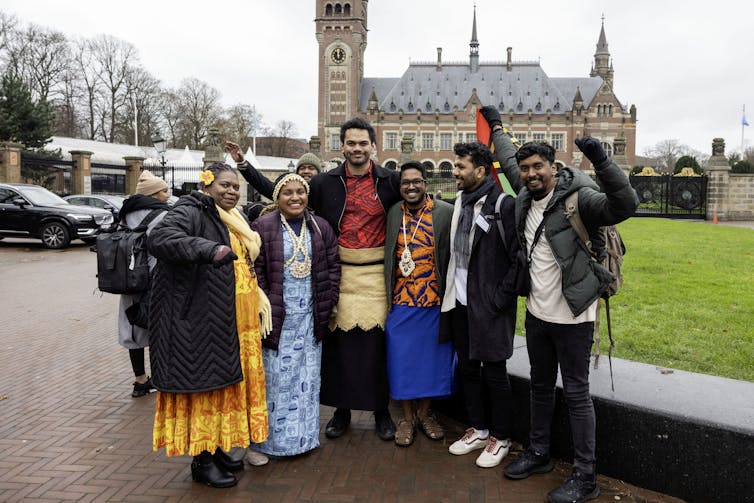
    Representatives from Pacific island nations gathered outside the International Court of Justice during the hearings.
    Representatives from Pacific island nations gathered outside the International Court of Justice during the hearings.
    Michel Porro/Getty Images

    Global judicial direction

    Two recent court findings may offer clues as to the potential scope of the ICJ’s findings.

    Earlier this month, the Inter-American Court of Human Rights published its own advisory opinion on state obligations in response to climate change.

    Explicitly connecting fundamental human rights with a healthy ecosystem, this opinion affirmed states have an imperative duty to prevent irreversible harm to the climate system. Moreover, the duty to safeguard the common ecosystem must be understood as a fundamental principle of international law to which states must adhere.

    Meanwhile last week, an Australian federal court dismissed a landmark climate case, determining that the Australian government does not owe a duty of care to Torres Strait Islanders to protect them from the consequences of climate change.

    The court accepted the claimants face significant loss and damage from climate impacts and that previous Australian government policies on greenhouse gas emissions were not aligned with the best science to limit climate change. But it nevertheless determined that “matters of high or core government policy” are not subject to common law duties of care.

    Whether the ICJ will complement the Inter-American court’s bold approach or opt for a more constrained and conservative response is not certain. But now is the time for clear and ambitious judicial direction with global scope.

    Implications for New Zealand

    Aotearoa New Zealand aspires to climate leadership through its Climate Change Response (Zero Carbon) Amendment Act 2019. This set 2050 targets of reducing emissions of long-lived greenhouse gases (carbon dioxide and nitrous oxide) to net zero, and biogenic methane by 25-47%.

    However, actions to date are likely insufficient to meet this target. Transport emissions continue to rise and agriculture – responsible for nearly half of the country’s emissions – is lightly regulated.

    Although the government plans to double renewable energy by 2050, it is also in the process of lifting a 2018 ban on offshore gas exploration and has pledged $200 million to co-invest in the development of new fields.

    Critics also point out the government has made little progress towards its promise to install 10,000 EV charging stations by 2030 while axing a clean-investment fund.

    Although a final decision is yet to be made, the government is also considering to lower the target for cuts to methane emissions from livestock, against advice from the Climate Change Commission.

    With the next global climate summit coming up in November, the ICJ opinion may offer timely encouragement for states to reconsider their emissions targets and the ambition of climate policies.

    Most countries have yet to submit their latest emissions reduction pledges (known as nationally determined contributions) under the Paris Agreement. New Zealand has made its pledge, but it has been described as “underwhelming”. This may present a chance to adjust ambition upwards.

    If the ICJ affirms that states have binding obligations to prevent climate harm, including trans-boundary impacts, New Zealand’s climate change policies and progress to date could face increased legal scrutiny.

    The Conversation

    The authors do not work for, consult, own shares in or receive funding from any company or organisation that would benefit from this article, and have disclosed no relevant affiliations beyond their academic appointment.

    ref. Do countries have a duty to prevent climate harm? The world’s highest court is about to answer this crucial question – https://theconversation.com/do-countries-have-a-duty-to-prevent-climate-harm-the-worlds-highest-court-is-about-to-answer-this-crucial-question-261396

  • MIL-OSI USA: Congressman García’s Statement on Prisoner Trade with Venezuela

    Source: United States House of Representatives – Representative Jesús Chuy García (IL-04)

    CHICAGO — Congressman Jesús “Chuy” García (IL-04) issued the following statement on the United States prisoner trade with Venezuela and El Salvador:  

    “This trade is about cleaning up the mess left behind by Trump’s immigration agenda.

    “The U.S. illegally deported migrants, many who had legal permission to be here, most with no criminal record. They were held without charges and used as bargaining chips in a deal. 

    “This is the legacy of the Trump administration: lying to federal judges, handing billions to DHS, and treating human beings like pawns. This is what authoritarian regimes do, and we must end our government’s practice of kidnapping and disappearing migrants once and for all.”

    # # # 

    MIL OSI USA News

  • Here’s why 3-person embryos are a breakthrough for science – but not LGBTQ+ families

    Source: ForeignAffairs4

    Source: The Conversation – Global Perspectives – By Jennifer Power, Principal Research Fellow, Australian Research Centre in Sex, Health and Society, La Trobe University

    Last week, scientists announced the birth of eight healthy babies in the United Kingdom conceived with DNA from three people. Some headlines have called it “three-person IVF”.

    The embryo uses the DNA from the egg and sperm of the intended father and mother, as well as cells from the egg of a second woman (the donor).

    This process – known as mitochondrial replacement therapy – allows women with certain genetic disorders to conceive a child without passing on their condition.

    While it’s raised broader questions about “three-parent” babies, it’s not so simple. Here’s why it’s unlikely this development will transform the diverse ways LGBTQ+ people are already making families.

    What this technology is – and isn’t

    The UK became the first country in the world to allow mitochondrial donation for three-person embryos ten years ago, in 2015.

    In other countries, such donations are banned or strictly controlled. In Australia, a staged approach to allow mitochondrial donation was introduced in 2022. Stage one will involve clinical trials to determine safety and effectiveness, and establish clear ethical guidelines for donations.

    These restrictions are based on political and ethical concerns about the use of human embryos for research, the unknown health impact on children, and the broader implications of allowing genetic modification of human embryos.

    There are also concerns about the ethical or legal implications of creating babies with “three parents”.

    Carefully and slowly considering these ethical issues is clearly important. But it’s inaccurate to suggest this process creates three parents.

    First, the amount of DNA the donor provides is tiny, only 0.1% of the baby’s DNA. The baby will not share any physical characteristics with the donor.

    While it is significant that two women’s DNA has been used in creating an embryo, it doesn’t mean lesbian couples will be rushing to access this particular in vitro fertilisation (IVF) technology.

    This technique is only used for people affected by mitochondrial disease and is closely regulated. It is not available more widely and in Australia, is not yet available even for this use.

    Second, while biological lineage is an important part of many people’s identity and sense of self, DNA alone does not make a parent.

    As many adoptive, foster and LGBTQ+ parents will attest, parenting is about love, connection and everyday acts of care for a child.

    How do rainbow families use IVF?

    Existing IVF is already expensive and medically invasive. Many fertility services offer a range of additional treatments purported to aid fertility, but extra interventions add more costs and are not universally recommended by doctors.

    While many lesbian couples and single women use fertility services to access donor sperm, not everyone will need to use IVF.

    Less invasive fertilisation techniques, such as intrauterine insemination, may be available for women without fertility problems. This means inserting sperm directly into the uterus, rather than fertilising an egg in a clinic and then implanting that embryo.

    Same-sex couples who have the option to create a baby with a sperm donor they know – rather than from a register – may also choose home-based insemination, the proverbial turkey baster. This is a cheaper and more intimate way to conceive and many women prefer a donor who will have some involvement in their child’s life.

    In recent years, “reciprocal” IVF has also grown in popularity among lesbian couples. This means an embryo is created using one partner’s egg, and the other partner carries it.

    Reciprocal IVF’s popularity suggests biology does play a role for LGBTQ+ women in conceiving a baby. When both mothers share a biological connection to the child, it may help overcome stigmatisation of “non-birth” mothers as less legitimate.

    But biology is by no means the defining feature of rainbow families.

    LGBTQ+ people are already parents

    The 2021 census showed 17% of same-sex couples had children living with them; among female same-sex couples it was 28%. This is likely an underestimate, as the census only collects data on couples that live together.

    Same-sex couples often conceive children using donor sperm or eggs, and this may involve surrogacy. But across the LGBTQ+ community, there are diverse ways people become parents.

    Same-sex couples are one part of the LGBTQ+ community. Growing numbers of trans and non-binary people are choosing to carry a baby (as gestational parents), as well as single parents who use donors or fertility services. Many others conceive children through sex, including bi+ people or others who conceive within a relationship.

    While LGBTQ+ people can legally adopt children in Australia, adoption is not common. However, many foster parents are LGBTQ+.

    When they donate eggs or sperm to others, some LGBTQ+ people may stay involved in the child’s life as a close family friend or co-parent.

    Connection and care, not DNA

    While mitochondrial replacement therapy is a remarkable advance in gene technology, it is unlikely to open new pathways to parenthood for LGBTQ+ people in Australia.

    Asserting the importance of families based on choice – not biology or what technology is available – has been crucial to the LGBTQ+ community’s story and to rainbow families’ fight to be recognised.

    Decades of research now shows children raised by same-sex couples do just as well as any other child. What matters is parents’ consistency, love and quality of care.

    The Conversation

    Jennifer Power receives funding from the Australian Department of Health, Disability and Aged Care and the Australian Research Council.

    ref. Here’s why 3-person embryos are a breakthrough for science – but not LGBTQ+ families – https://theconversation.com/heres-why-3-person-embryos-are-a-breakthrough-for-science-but-not-lgbtq-families-261462

  • MIL-OSI USA: Ranking Member Omar Opening Remarks at Subcommittee Hearing on the Future of Workplace Safety

    Source: United States House of Representatives – Representative Ilhan Omar (DFL-MN)

    WASHINGTON Ranking Member Ilhan Omar (MN-05) delivered the following opening statement at a Workforce Protections Subcommittee hearing entitled, “Safe Workplaces, Stronger Partnerships: The Future of OSHA Compliance Assistance.”

    “Thank you, Mr. Chairman, and thank you to our witnesses for being here today.

     “Over the last six months, the Trump Administration has embarked on an aggressive assault on worker protections. And just in the past two weeks, Trump’s Department of Labor has released five dozen deregulatory rulemakings – two-thirds of which focus on health and safety issues.

     “These proposals target core worker protections, including changes to child labor rules, removing a requirement as basic and essential as having adequate lighting on construction sites, and even weakening workers’ protections against asbestos.

     “This spree of deregulation follows months of mass firing at the very agencies tasked with researching and investigating workplace conditions—and a proposed budget that would reduce inspections and slash DOL’s capacity to develop new safety standards.

     “The message is clear: workers’ rights and protections are under attack. Compliance assistance programs, such as the Voluntary Protection Program, have their place. But they are no substitute for clear standards that are actively and effectively enforced.

     “No job should ever be a death sentence. Workers deserve to come home to their families at the end of the day alive, healthy, and whole. Yet, according to the AFL-CIO, workplace hazards killed approximately one hundred forty thousand workers in 2023, including 5,283 workers from traumatic injuries and an estimated 135,000 from occupational diseases.

     “To protect workers from harm, Congress passed landmark safety laws and established important agencies like OSHA, MSHA, NIOSH, and the Chemical Safety and Hazards Investigation Board. When they are allowed to do their jobs and are fully funded, these agencies save lives and prevent harm to workers. But now, the Trump Administration is attempting to strip away safety regulations and dismantle critical agencies like NIOSH & the CSB. In doing so, they are threatening the lives of workers who rely on those safeguards and the resources these agencies provide.

     “In my own district, we are already feeling the consequences of these cuts. The University of Minnesota’s Midwest Center for Occupational Health and Safety is one of just 18 NIOSH-funded Education and Research Centers in the nation. It trains the next generation of workplace safety experts who will help protect our workers in high-risk industries.

     “Without NIOSH, the invaluable research and workforce development provided by that Center—and others like it across the country—will be lost. That means fewer trained medical and safety professionals, less research capacity on critical issues such as heat stress, and decreased investment in innovative technologies that can prevent illness and injury.

     “The Trump Administration’s deregulatory agenda will result in more injuries, more deaths, more grieving families – and lessaccountability for employers who put their workers in harm’s way.

     “Committee Democrats are committed to honoring those workers who have been harmed or killed on the job, not just with words, but with action to change the system.

     “Later today, Ranking Member Scott will reintroduce a bill that will finally bring workers the common-sense protections they deserve against heat-related injury and illness.

     “I am a proud cosponsor of the Asunción ValdiviaHeat Illness, Injury, and Fatality Prevention Act, which requires OSHA to finally issue an enforceable rule with the strongest feasible protections against heat illness, including paid rest breaks, access to water, shaded or cooled recovery areas, and training that is delivered in a language and format that workers understand. These are sensible safeguards that will save lives. 

    “Ranking Member Scott, Representative Courtney, and I also reintroduced the Protecting America’s Workers Act, which would make long-overdue improvements to the enforcement of the Occupational Safety and Health Act. This bill would expand coverage to millions of workers currently excluded from the law’s protections and strengthen whistleblower protections. These reforms are critical to preventing the most serious violations that endanger workers’ safety.

    “Democrats are offering real solutions to the problems workers face on the job instead of ripping away protections. I hope that our discussion today can center around ensuring that workers come home safely at the end of the day.

    “Finally, Mr. Chairman, I request unanimous consent to enter into the record a statement from the United Steelworkers about the compliance assistance programs we will be discussing today. 

    “Thank you, and I yield back.”


    MIL OSI USA News

  • MIL-OSI USA: Rep. Omar Introduces Five Amendments to FY 2026 Defense Appropriations Act

    Source: United States House of Representatives – Representative Ilhan Omar (DFL-MN)

    WASHINGTON–Rep. Ilhan Omar (D-MN) introduced five amendments to the FY 2026 Department of Defense Appropriations Act. The amendments aim to center human rights; redirect funds to critical medical research; destroy chemical agents and munitions; stop military funding to Israel; fund environmental restoration to clean up hazardous substances, pollutants, and munitions from former defense sites; and prohibit the United States Northern Command from unlawfully operating inside Mexico.

    “We have a moral responsibility to reduce our defense budget and invest in our communities,” said Rep. Omar. “It’s way past time we stop writing blank checks for endless wars that only hurt our reputation abroad and do not make us safer. I introduced five amendments to bring us in line with a more just defense budget–one that centers the needs of the American people and addresses past harms. Earlier this month, Congress greenlit an additional $150 billion to our defense budget to fund Trump’s police state. At a time when the United States spends more on our defense than the next nine highest-spending countries combined, it is more important than ever to reorient our budget to address the pressing issues facing our communities instead of appeasing warmongers.”

    The amendments introduced by Rep. Omar include:
    •    Omar #122 – transfers $5 million from defense-wide operation and maintenance to defense health programs.
    •    Omar #123– transfers $5 million from defense-wide operation and maintenance to chemical agents and munitions destruction account.
    •    Omar #168– strikes military funding to Israel.
    •    Omar #169– transfers $5 million from Army aircraft procurement to Army environmental restoration.
    •    Omar #211– strikes the exemption for Executive Order 14167 in the prohibition on Northern Command activities with respect to Mexico.

    Additionally, Rep. Omar is cosponsoring the following amendment:
    •    Gosar #126– prohibits funds to carry out section 702 of the Foreign Intelligence Surveillance Act of 1978.

    The full text of the amendments is available here.

    MIL OSI USA News

  • MIL-OSI USA: CPC Taskforce Chair Ilhan Omar Condemns Bloated Pentagon Spending Bill, Highlights Amendments to Promote Peace

    Source: United States House of Representatives – Representative Ilhan Omar (DFL-MN)

    WASHINGTON — Representative Ilhan Omar (MN-05), Chair of the Promoting Peace & Security Taskforce of the Congressional Progressive Caucus (CPC), issued the following statement on H.R. 4016, the Department of Defense Appropriations Act of 2026, which passed on a party-line vote:

    “Last night’s Republican spending bill further bloats an out-of-control Pentagon while doubling down on skewed priorities. This bill expands funding to a military deployed by Trump to launch unconstitutional wars while enriching well-connected private contractors with no safeguards. Meanwhile, this legislation attacks the right to access reproductive healthcare in the military and guts efforts to recruit diverse servicemembers who reflect the full range of America.

    “The Pentagon has failed every audit since it became legally required to submit one in 2018. No other federal agency is thrown hundreds of billions of dollars with so little transparency. Meanwhile, Trump is illegally destroying agencies like the Department of Education and the Consumer Financial Protection Bureau, which provide urgent resources to our children’s classrooms and protect Americans from corporate fraud.

    “The Progressive Caucus will continue to push for a budget that prioritizes human needs and lifts up our communities at home—not endless wars abroad. I am proud of my CPC colleagues for putting forward commonsense alternatives to this Pentagon budget that advance peace, restraint and social justice. I urge Senate Democrats to impose meaningful checks on Trump’s unconstrained military during the appropriations process as this bill now moves to that chamber.”

    The following submitted amendments are a sampling of CPC Members’ efforts to improve the Defense Department Appropriations bill:

    Amendment #123 by Rep. Omar transfers $5 million from defense-wide operation and maintenance to chemical agents and munitions destruction account.

    Amendment #126 by Reps. Omar, Tlaib, Gosar, and Biggs prohibits funds to carry out section 702 of the Foreign Intelligence Surveillance Act of 1978.

    Amendment #337 by Rep. Chuy Garcia prohibits the use of funds for transferring data and other records to DHS for civil immigration enforcement.

    Amendment #342 by Rep. Chuy Garcia and Amendment #455 from Rep. Salinas prohibit the use of funds for the National Guard to enforce immigration laws.

    Amendment #471 by Rep. Chuy Garcia and Amendment #475 by Rep. Nadler prohibit the use of funds for transferring any individual to the Migrant Operations Center at United States Naval Station at Guantanamo Bay.

    Amendment #509 by Rep. Kamlager-Dove prohibits the use of funds to implement the June 7 presidential memo activating the deployment of the National Guards to protect ICE personnel and federal property in Los Angeles.

    Amendment #188 by Takano, Smith, Jacobs, Randall, Pappas, Torres, and Craig prohibits funds from being used to implement, administer, or enforce Executive Order No. 14183, which prohibits transgender people from serving in the military.

    Amendment #397 by Rep. Friedman strikes section 8142 – prohibiting funding for execution of DOD memorandum on access to reproductive care.

    Amendment #13 by Rep. Jacobs strikes Sections 8138, 8139, 8144, and 8145, which ban gender-affirming care, drag queen shows, and allows discrimination for people who do not support gay marriage.

    Amendment #200 by Rep. Tlaib strikes sections prohibiting programs relating to advancing racial equity and support for under-served communities and diversity, equity, and inclusion programs.

    Amendment 206 by Rep. Tlaib prohibits the use of funds for foreign security force training with respect to El Salvador.

    Amendment #441 from Rep. Garamendi limits funding for the Sentinel intercontinental ballistic missile (ICBM) program until Congress receives the Milestone B approval decision pursuant to section 4252(e) of title 10, United States Code.

    Amendment #394 from Rep. Simon and Amendment #488 from Rep. Khanna and Rep. Massie prohibits fund from being used to introduce U.S. forces into hostilities in Iran in contravention of the War Powers Resolution.

    Amendment #203 from Rep. Tlaib prohibits funds from being used in contravention of the War Powers Resolution with respect to Yemen.

    Amendment #355 from Rep. Tlaib prohibits funds from being used to support the Gaza Humanitarian Foundation (GHF).

    Amendment #301 from Reps. Chuy Garcia, Castro, Velázquez prohibits funds from being used for unauthorized military force against Mexico.

    Amendment #216 by Rep. Velázquez prohibits military action and/or regime change in the Western Hemisphere without Congressional authorization.

    Amendment #213 from Rep. Tlaib prohibits the use of funds to maintain a U.S. military presence inside Syria after one year, unless otherwise Congressionally authorized.

    ###

    MIL OSI USA News

  • MIL-OSI USA: Readout of Congresswoman Ilhan Omar’s US-Africa Policy Working Group Briefing on Debt Sustainability in Africa

    Source: United States House of Representatives – Representative Ilhan Omar (DFL-MN)

    Today, the U.S.-Africa Policy Working Group convened a meeting to examine the growing debt challenges facing many African countries. Members of the Working Group heard from leading experts, including Mr. Tim Hirschel-Burns, Policy Liaison for the Global Economic Governance Initiative at Boston University’s Global Development Policy Center; Dr. Brahima Coulibaly, Vice President & Director of the Global Economy and Development Program at the Brookings Institution; and Mr. Eric LeCompte, Executive Director of Jubilee USA Network.

    The briefers discussed the structural and geopolitical drivers of Africa’s sovereign debt burden, including rising borrowing costs, external shocks, economic vulnerabilities, and institutional governance issues. They emphasized the critical role of private creditors, bilateral lenders, and multilateral institutions in shaping both the debt landscape and the policy responses available. The discussion also explored the shortcomings of current debt relief mechanisms and identified opportunities to improve global financial governance, strengthen creditor coordination, and expand fiscal space for African governments to invest in sustainable development.

    Members engaged in a constructive dialogue about how the U.S. and Congress can help advance debt fairness, economic resilience, and inclusive growth – advancing strategic and mutually beneficial partnerships across the continent.

    MIL OSI USA News

  • MIL-OSI USA: Rep. Omar’s Statement on Voting NO on Rescissions Package, Cuts Public Broadcasting and Global Aid

    Source: United States House of Representatives – Representative Ilhan Omar (DFL-MN)

    WASHINGTON—Rep. Ilhan Omar (D-MN) released the following statement after voting “no” on the GOP rescission package. 

    “This arcane law is being used to undermine services the American people rely on. This bill cuts funding for public broadcasting, including NPR and PBS. Public broadcasts are some of the last places people can turn to for local stories, trusted reporting, and emergency alerts. It will be devastating for the nearly 3 in 4 Americans who rely on public radio for essential updates. Not only is public broadcasting on the chopping block, but crucial foreign aid is being cut. From ripping away global health programs to rescinding economic and development assistance to eliminating  humanitarian aid, this bill has far-reaching, devastating consequences for thousands around the world. These cuts mean huge setbacks in the fight to address diseases like malaria, TB, and Polio. It means emergency food sites and shelters will be shut down. And it means our ability to be a force for good in the world will be weakened. The fact that Republicans are canceling funds that Congress already approved and were signed into law reaches a new low. For those reasons, I voted NO on this shameful betrayal of the values that make our country great.”

    MIL OSI USA News

  • MIL-OSI USA: Stauber Votes to Send Rescissions Package to President Trump’s Desk

    Source: United States House of Representatives – Congressman Pete Stauber (MN-08)

    WASHINGTON, D.C. – Today, Congressman Pete Stauber (MN-08) voted to pass the Recissions Act of 2025, legislation that will claw back $9 billion in wasteful federal spending. This first rescissions package includes necessary cuts to USAID, National Public Radio (NPR), and Public Broadcasting Service (PBS).

    Of his vote, Congressman Stauber stated, “Today, I was proud to take an essential step to rein in federal spending and save taxpayer dollars. The bulk of this $9 billion package targets wasteful foreign spending identified by the Department of Government Efficiency. The American people should not be paying $1 million for voter ID in Haiti, $6 million for Net Zero Cities in Mexico, $3 million for Iraqi Sesame Street, $4 million for sedentary migrants in Columbia, or $135 million to the World Health Organization- which lied about the origins of COVID. And there are so many other egregious examples.

    “Regarding the public broadcasting cuts included in this package, I also do not believe Americans should be forced to fund opinion journalism masquerading as unbiased news coverage. A recent survey found that 100% of NPR’s 87-person editorial board in DC are registered Democrats with zero Republicans. This has led to many concerning headlines, including one claiming there is no evidence that biological men have an unfair advantage over biological women in sports. And even worse, PBS has pushed gender-affirming care for children on its airwaves. 

    “While many on the left will falsely claim that these cuts will restrict access to information, remember that 96% of Americans report using the internet regularly, providing far more access to the news than ever before. 

    “The passage of this package through Congress is a win for commonsense and it wouldn’t have been possible without the leadership of President Trump. Our nation is currently $36 trillion in debt, so I am excited to keep the momentum going by voting for more rescission packages down the road.”

    BACKGROUND: 

    Under the Impoundment Control Act (ICA), the Administration may transmit a request to Congress to rescind previously appropriated funds through a rescissions package. 

    ###

    MIL OSI USA News

  • MIL-OSI USA: Stauber Announces the Federal Prison Camp in Duluth Will Remain Open and Operational

    Source: United States House of Representatives – Congressman Pete Stauber (MN-08)

    DULUTH, MN – Today, Congressman Pete Stauber (MN-08) announced that the Biden administration’s misguided decision to close the Federal Prison Camp in Duluth has been overturned by the Trump administration, ensuring the facility will remain open and operational for years to come. This decision follows a recent visit to the camp by William Marshall, the newly appointed Director of the Federal Bureau of Prisons under the Trump administration, a visit Stauber helped facilitate and personally attended. 

    Of this news, Stauber said, “I am overjoyed by the news that the Federal Prison Camp in Duluth will remain open, and that the 90 federal employees who currently work there will remain employed. Since the Biden administration announced their disastrous decision to close FPC Duluth in December, I made it a top priority to work with the Trump administration to keep it open. During last week’s visit to FPC Duluth, Director Marshall was able to see firsthand the prison’s top-notch programming, dedicated employees, and the value it brings to our community. I join FPC Duluth’s employees and their families in thanking Director Marshall and the Trump administration for their attention to this issue and for making the right decision.”

    ###

    MIL OSI USA News

  • MIL-OSI Submissions: Doctors shouldn’t be allowed to object to medical care if it harms their patients

    Source: The Conversation – Global Perspectives – By Julian Savulescu, Visiting Professor in Biomedical Ethics, Murdoch Children’s Research Institute; Distinguished Visiting Professor in Law, University of Melbourne; Uehiro Chair in Practical Ethics, The University of Melbourne

    HRAUN/Getty

    A young woman needs an abortion and the reasons, while urgent, are not medical. A United States Navy nurse at Guantánamo Bay is ordered to force-feed a defiant detainee on hunger strike.

    These very different real-life cases have one connecting thread: the question of whether a health professional can conscientiously object to carrying out a patient’s request.

    Freedom of conscience is often held up as a purely noble principle. But when it’s used to deny health care, it means a single person’s beliefs are dictating what is best for another person’s physical and mental health – which can have devastating, even fatal, results.

    In our recent book, Rethinking Conscientious Objection in Healthcare, colleagues and I conclude doctors should not be free to make medical decisions based on their personal beliefs.

    It’s not noble to refuse care

    Freedom of conscience is strongly – but not absolutely – protected under international human rights law. It is enshrined in the Universal Declaration of Human Rights.

    This principle has often been used for moral purposes: for example, to resist orders to torture or kill.

    But after researching use of conscientious objection by health professionals, I have concluded it is seriously flawed when used to deny patients health services. This is especially so when particular doctors have a monopoly on service provision, as is the case with abortion and assisted dying in many rural and regional areas of Australia.

    In Australia, doctors are allowed to conscientiously object to abortion, although nearly all states require referral to other service providers or information about how to access the relevant service.

    In practice, these laws are not enforced and sometimes disregarded.

    A doctor’s refusal can mean patients can be denied the standard of care they need, or indeed, any care at all.

    Health-care professionals are not like pacifists refusing conscription into the military, opposing something forced upon them. They freely choose health-care careers that come with obligations and with ethical stances already established by professional codes of conduct.

    People are free to hold whatever beliefs they choose, but those beliefs will inevitably close off some options for them. For example, a vegetarian will not be able to work in an abattoir. That is true for every one of us. But what shouldn’t happen is a doctor’s personal beliefs closing off legitimate options for their patient.

    4 guiding questions

    Instead of personal values, there are four key secular principles we propose that doctors should rely on when deciding how to advise patients about sensitive procedures:

    • is it legal?

    • is it a just and fair use of any resources that might be limited?

    • is it in the interests of the patient’s wellbeing?

    • is it what the patient has themselves decided they want?

    Of course, there will be times when some of these principles are in conflict – that is when it is important to apply the most crucial ones, the wellbeing of the patient and the patient’s own wishes.

    In Ireland in 2012, a young woman named Savita Halappanavar went to an Irish hospital for treatment for her miscarriage. Doctors knew there was no hope of the pregnancy surviving but refused to evacuate her uterus while there was still a fetal heartbeat, for fear of breaching Ireland’s anti-abortion laws. The result: Savita died of septicaemia at 31.

    If doctors had put the patient’s wellbeing first, they would have given her that termination, despite the law, and it would have saved her life.

    These are the principles that should have been applied to the examples above: the woman seeking an abortion for career reasons or the nurse refusing to force-feed prisoners.

    The doctor (or nurse) should ask: Is it what the patient has autonomously decided they want? Will it lead to the best outcome for both their physical and their mental health?

    If abortion will promote a woman’s wellbeing, it is in her interests. Hunger strikers should not be force-fed because it violates their autonomy.

    An unfair burden

    While doctors’ personal values are important, they should not dictate care at the bedside. Not only can this disadvantage the patient, but it places an unfair burden on colleagues who do accept such work, and must carry a disproportionate load of procedures they might find unpleasant and financially unrewarding.

    It also creates injustice. Patients who are educated, wealthy and well-connected already find it easier to access health care. Conscientious objection intensifies that unfairness in large swathes of the country because it further limits options.

    Two countries with excellent health-care systems, Sweden and Finland, do not permit conscientious objection by medical professionals.

    In Australia, it is time we do the same and strongly limit conscientious objection as a legal right for health professionals. We should also ensure those entering the discipline are prepared to take on all procedures relevant to their specialty.

    And lastly, but most importantly, we should educate them that the patient’s interests and values must always come first. An individual doctor’s sense of moral authority should not be permitted to morph into medical and moral authoritarianism.

    Julian Savulescu does not work for, consult, own shares in or receive funding from any company or organisation that would benefit from this article, and has disclosed no relevant affiliations beyond their academic appointment.

    ref. Doctors shouldn’t be allowed to object to medical care if it harms their patients – https://theconversation.com/doctors-shouldnt-be-allowed-to-object-to-medical-care-if-it-harms-their-patients-260003

    MIL OSI

  • MIL-OSI Submissions: Doctors shouldn’t be allowed to object to medical care if it harms their patients

    Source: The Conversation – Global Perspectives – By Julian Savulescu, Visiting Professor in Biomedical Ethics, Murdoch Children’s Research Institute; Distinguished Visiting Professor in Law, University of Melbourne; Uehiro Chair in Practical Ethics, The University of Melbourne

    HRAUN/Getty

    A young woman needs an abortion and the reasons, while urgent, are not medical. A United States Navy nurse at Guantánamo Bay is ordered to force-feed a defiant detainee on hunger strike.

    These very different real-life cases have one connecting thread: the question of whether a health professional can conscientiously object to carrying out a patient’s request.

    Freedom of conscience is often held up as a purely noble principle. But when it’s used to deny health care, it means a single person’s beliefs are dictating what is best for another person’s physical and mental health – which can have devastating, even fatal, results.

    In our recent book, Rethinking Conscientious Objection in Healthcare, colleagues and I conclude doctors should not be free to make medical decisions based on their personal beliefs.

    It’s not noble to refuse care

    Freedom of conscience is strongly – but not absolutely – protected under international human rights law. It is enshrined in the Universal Declaration of Human Rights.

    This principle has often been used for moral purposes: for example, to resist orders to torture or kill.

    But after researching use of conscientious objection by health professionals, I have concluded it is seriously flawed when used to deny patients health services. This is especially so when particular doctors have a monopoly on service provision, as is the case with abortion and assisted dying in many rural and regional areas of Australia.

    In Australia, doctors are allowed to conscientiously object to abortion, although nearly all states require referral to other service providers or information about how to access the relevant service.

    In practice, these laws are not enforced and sometimes disregarded.

    A doctor’s refusal can mean patients can be denied the standard of care they need, or indeed, any care at all.

    Health-care professionals are not like pacifists refusing conscription into the military, opposing something forced upon them. They freely choose health-care careers that come with obligations and with ethical stances already established by professional codes of conduct.

    People are free to hold whatever beliefs they choose, but those beliefs will inevitably close off some options for them. For example, a vegetarian will not be able to work in an abattoir. That is true for every one of us. But what shouldn’t happen is a doctor’s personal beliefs closing off legitimate options for their patient.

    4 guiding questions

    Instead of personal values, there are four key secular principles we propose that doctors should rely on when deciding how to advise patients about sensitive procedures:

    • is it legal?

    • is it a just and fair use of any resources that might be limited?

    • is it in the interests of the patient’s wellbeing?

    • is it what the patient has themselves decided they want?

    Of course, there will be times when some of these principles are in conflict – that is when it is important to apply the most crucial ones, the wellbeing of the patient and the patient’s own wishes.

    In Ireland in 2012, a young woman named Savita Halappanavar went to an Irish hospital for treatment for her miscarriage. Doctors knew there was no hope of the pregnancy surviving but refused to evacuate her uterus while there was still a fetal heartbeat, for fear of breaching Ireland’s anti-abortion laws. The result: Savita died of septicaemia at 31.

    If doctors had put the patient’s wellbeing first, they would have given her that termination, despite the law, and it would have saved her life.

    These are the principles that should have been applied to the examples above: the woman seeking an abortion for career reasons or the nurse refusing to force-feed prisoners.

    The doctor (or nurse) should ask: Is it what the patient has autonomously decided they want? Will it lead to the best outcome for both their physical and their mental health?

    If abortion will promote a woman’s wellbeing, it is in her interests. Hunger strikers should not be force-fed because it violates their autonomy.

    An unfair burden

    While doctors’ personal values are important, they should not dictate care at the bedside. Not only can this disadvantage the patient, but it places an unfair burden on colleagues who do accept such work, and must carry a disproportionate load of procedures they might find unpleasant and financially unrewarding.

    It also creates injustice. Patients who are educated, wealthy and well-connected already find it easier to access health care. Conscientious objection intensifies that unfairness in large swathes of the country because it further limits options.

    Two countries with excellent health-care systems, Sweden and Finland, do not permit conscientious objection by medical professionals.

    In Australia, it is time we do the same and strongly limit conscientious objection as a legal right for health professionals. We should also ensure those entering the discipline are prepared to take on all procedures relevant to their specialty.

    And lastly, but most importantly, we should educate them that the patient’s interests and values must always come first. An individual doctor’s sense of moral authority should not be permitted to morph into medical and moral authoritarianism.

    Julian Savulescu does not work for, consult, own shares in or receive funding from any company or organisation that would benefit from this article, and has disclosed no relevant affiliations beyond their academic appointment.

    ref. Doctors shouldn’t be allowed to object to medical care if it harms their patients – https://theconversation.com/doctors-shouldnt-be-allowed-to-object-to-medical-care-if-it-harms-their-patients-260003

    MIL OSI

  • MIL-OSI Submissions: Could the latest ‘interstellar comet’ be an alien probe? Why spotting cosmic visitors is harder than you think

    Source: The Conversation – Global Perspectives – By Sara Webb, Lecturer, Centre for Astrophysics and Supercomputing, Swinburne University of Technology

    Comet 3I/ATLAS International Gemini Observatory/NOIRLab/NSF/AURA/K. Meech/Jen Miller/Mahdi Zamani, CC BY

    On July 1, astronomers spotted an unusual high-speed object zooming towards the Sun. Dubbed 3I/ATLAS, the surprising space traveller had one very special quality: its orbit showed it had come from outside our Solar System.

    For only the third time ever, we had discovered a true interstellar visitor. And it was weird.

    3I/ATLAS breaking records

    3I/ATLAS appeared to be travelling at 245,000 kilometres per hour, making it the fastest object ever detected in our Solar System.

    It was also huge. Early estimates suggest the object could be up to 20km in size. Finally, scientists believe it may even be older than our Sun.

    Davide Farnocchia, navigation engineer at NASA’s JPL, explains the discovery of 3I/ATLAS.

    Could it be alien?

    Our first assumption when we see something in space is that it’s a lump of rock or ice. But the strange properties of 3I/ATLAS have suggested to some that it may be something else entirely.

    Harvard astrophysics professor Avi Loeb and colleagues last week uploaded a paper titled Is the Interstellar Object 3I/ATLAS Alien Technology? to the arXiv preprint server. (The paper has not yet been peer reviewed.)

    Loeb is a controversial figure among astronomers and astrophysicists. He has previously suggested that the first known interstellar object, 1I/ʻOumuamua, discovered in 2017, may also have been an alien craft.

    Among other oddities Loeb suggests may be signs of deliberate alien origin, he notes the orbit of 3I/ATLAS takes it improbably close to Venus, Mars and Jupiter.

    The trajectory of comet 3I/ATLAS as it passes through the Solar System, with its closest approach to the Sun in October.
    NASA/JPL-Caltech

    We’ve sent out our own alien probes

    The idea of alien probes wandering the cosmos may sound strange, but humans sent out a few ourselves in the 1970s. Both Voyager 1 and 2 have officially left our Solar System, and Pioneer 10 and 11 are not far behind.

    So it’s not a stretch to think that alien civilisations – if they exist – would have launched their own galactic explorers.

    However, this brings us to a crucial question: short of little green men popping out to say hello, how would we actually know if 3I/ATLAS, or any other interstellar object, was an alien probe?

    Detecting alien probes 101

    The first step to determining whether something is a natural object or an alien probe is of course to spot it.

    Most things we see in our Solar System don’t emit light of their own. Instead, we only see them by the light they reflect from the Sun.

    Larger objects generally reflect more sunlight, so they are easier for us to see. So what we see tends to be larger comets and asteroid, especially farther from Earth.

    It can be very difficult to spot smaller objects. At present, we can track objects down to a size of ten or 20 metres out as far from the Sun as Jupiter.

    Our own Voyager probes are about ten metres in size (if we include their radio antennas). If an alien probe was similar, we probably wouldn’t spot it until it was somewhere in the asteroid belt between Jupiter and Mars.

    If we did spot something suspicious, to figure out if it really were a probe or not we would look for a few telltales.

    Viewing 3I/ATLAS through coloured filters reveals the colours that make up its tail.
    International Gemini Observatory/NOIRLab/NSF/AURA/K. Meech (IfA/U. Hawaii) / Jen Miller & Mahdi Zamani (NSF NOIRLab), CC BY

    First off, because a natural origin is most likely, we would look for evidence that no aliens were involved. One clue in this direction might be if the object were emitting a “tail” of gas in the way that comets do.

    However, we might also want to look for hints of alien origin. One very strong piece of evidence would be any kind of radio waves coming from the probe as a form of communication. This is assuming the probe was still in working order, and not completely defunct.

    We might also look for signs of electrostatic discharge caused by sunlight hitting the probe.

    Another dead giveaway would be signs of manoeuvring or propulsion. An active probe might try to correct its course or reposition its antennas to send and receive signals to and from its origin.

    And a genuine smoking gun would be an approach to Earth in a stable orbit. Not to brag, but Earth is genuinely the most interesting place in the Solar System – we have water, a healthy atmosphere, a strong magnetic field and life. A probe with any decision-making capacity would likely want to investigate and collect data about our interesting little planet.

    We may never know

    Without clear signs one way or the other, however, it may be impossible to know if some interstellar objects are natural or alien-made.

    Objects like 3I/ATLAS remind us that space is vast, strange, and full of surprises. Most of them have natural explanations. But the strangest objects are worth a second look.

    For now, 3I/ATLAS is likely just an unusually fast, old and icy visitor from a distant system. But it also serves as a test case: a chance to refine the way we search, observe and ask questions about the universe.

    Sara Webb does not work for, consult, own shares in or receive funding from any company or organisation that would benefit from this article, and has disclosed no relevant affiliations beyond their academic appointment.

    ref. Could the latest ‘interstellar comet’ be an alien probe? Why spotting cosmic visitors is harder than you think – https://theconversation.com/could-the-latest-interstellar-comet-be-an-alien-probe-why-spotting-cosmic-visitors-is-harder-than-you-think-261656

    MIL OSI

  • MIL-OSI Submissions: Do countries have a duty to prevent climate harm? The world’s highest court is about to answer this crucial question

    Source: The Conversation – Global Perspectives – By Nathan Cooper, Associate Professor of Law, University of Waikato

    Getty Images

    The International Court of Justice (ICJ) will issue a highly anticipated advisory opinion overnight to clarify state obligations related to climate change.

    It will answer two urgent questions: what are the obligations of states under international law to protect the climate and environment from greenhouse gas emissions, and what are the legal consequences for states that have caused significant harm to Earth’s atmosphere and environment?

    ICJ advisory opinions are not legally binding. But coming from the world’s highest court, they provide an authoritative opinion on serious issues that can be highly persuasive.

    This advisory opinion marks the culmination of a campaign that began in 2019 when students and youth organisations in Vanuatu – one of the most vulnerable nations to climate-related impacts – persuaded their government to seek clarification on what states should be doing to protect them.

    Led by Vanuatu and co-sponsored by 132 member states, including New Zealand and Australia, the United Nations General Assembly formally requested the advisory opinion in March 2023.

    More than two years of public consultation and deliberation ensued, leading to this week’s announcement.

    What to expect

    Looking at the specific questions to be addressed, at least three aspects stand out.

    First, the sources and areas of international law under scrutiny are not confined to the UN’s climate change framework. This invites the ICJ to consider a broad range of law – including trans-boundary environmental law, human rights law, international investment law, humanitarian law, trade law and beyond – and to draw on both treaty-related obligations and customary international law.

    Such an encyclopaedic examination could produce a complex and integrated opinion on states’ obligations to protect the environment and climate system.

    Second, the opinion will address what obligations exist, not just to those present today, but to future generations. This follows acknowledgement of the so-called “intertemporal characteristics” of climate change in recent climate-related court decisions and the need to respond effectively to both the current climate crisis and its likely ongoing consequences.

    Third, the opinion won’t just address what obligations states have, but also what the consequences should be for nations:

    where they, by their acts and omissions have caused significant harm to the climate system and other parts of the environment.

    Addressing consequences as well as obligations should cause states to pay closer attention and make the ICJ’s advisory more relevant to domestic climate litigation and policy discussions.

    Representatives from Pacific island nations gathered outside the International Court of Justice during the hearings.
    Michel Porro/Getty Images

    Global judicial direction

    Two recent court findings may offer clues as to the potential scope of the ICJ’s findings.

    Earlier this month, the Inter-American Court of Human Rights published its own advisory opinion on state obligations in response to climate change.

    Explicitly connecting fundamental human rights with a healthy ecosystem, this opinion affirmed states have an imperative duty to prevent irreversible harm to the climate system. Moreover, the duty to safeguard the common ecosystem must be understood as a fundamental principle of international law to which states must adhere.

    Meanwhile last week, an Australian federal court dismissed a landmark climate case, determining that the Australian government does not owe a duty of care to Torres Strait Islanders to protect them from the consequences of climate change.

    The court accepted the claimants face significant loss and damage from climate impacts and that previous Australian government policies on greenhouse gas emissions were not aligned with the best science to limit climate change. But it nevertheless determined that “matters of high or core government policy” are not subject to common law duties of care.

    Whether the ICJ will complement the Inter-American court’s bold approach or opt for a more constrained and conservative response is not certain. But now is the time for clear and ambitious judicial direction with global scope.

    Implications for New Zealand

    Aotearoa New Zealand aspires to climate leadership through its Climate Change Response (Zero Carbon) Amendment Act 2019. This set 2050 targets of reducing emissions of long-lived greenhouse gases (carbon dioxide and nitrous oxide) to net zero, and biogenic methane by 25-47%.

    However, actions to date are likely insufficient to meet this target. Transport emissions continue to rise and agriculture – responsible for nearly half of the country’s emissions – is lightly regulated.

    Although the government plans to double renewable energy by 2050, it is also in the process of lifting a 2018 ban on offshore gas exploration and has pledged $200 million to co-invest in the development of new fields.

    Critics also point out the government has made little progress towards its promise to install 10,000 EV charging stations by 2030 while axing a clean-investment fund.

    Although a final decision is yet to be made, the government is also considering to lower the target for cuts to methane emissions from livestock, against advice from the Climate Change Commission.

    With the next global climate summit coming up in November, the ICJ opinion may offer timely encouragement for states to reconsider their emissions targets and the ambition of climate policies.

    Most countries have yet to submit their latest emissions reduction pledges (known as nationally determined contributions) under the Paris Agreement. New Zealand has made its pledge, but it has been described as “underwhelming”. This may present a chance to adjust ambition upwards.

    If the ICJ affirms that states have binding obligations to prevent climate harm, including trans-boundary impacts, New Zealand’s climate change policies and progress to date could face increased legal scrutiny.

    The authors do not work for, consult, own shares in or receive funding from any company or organisation that would benefit from this article, and have disclosed no relevant affiliations beyond their academic appointment.

    ref. Do countries have a duty to prevent climate harm? The world’s highest court is about to answer this crucial question – https://theconversation.com/do-countries-have-a-duty-to-prevent-climate-harm-the-worlds-highest-court-is-about-to-answer-this-crucial-question-261396

    MIL OSI

  • MIL-OSI Submissions: Here’s why 3-person embryos are a breakthrough for science – but not LGBTQ+ families

    Source: The Conversation – Global Perspectives – By Jennifer Power, Principal Research Fellow, Australian Research Centre in Sex, Health and Society, La Trobe University

    Last week, scientists announced the birth of eight healthy babies in the United Kingdom conceived with DNA from three people. Some headlines have called it “three-person IVF”.

    The embryo uses the DNA from the egg and sperm of the intended father and mother, as well as cells from the egg of a second woman (the donor).

    This process – known as mitochondrial replacement therapy – allows women with certain genetic disorders to conceive a child without passing on their condition.

    While it’s raised broader questions about “three-parent” babies, it’s not so simple. Here’s why it’s unlikely this development will transform the diverse ways LGBTQ+ people are already making families.

    What this technology is – and isn’t

    The UK became the first country in the world to allow mitochondrial donation for three-person embryos ten years ago, in 2015.

    In other countries, such donations are banned or strictly controlled. In Australia, a staged approach to allow mitochondrial donation was introduced in 2022. Stage one will involve clinical trials to determine safety and effectiveness, and establish clear ethical guidelines for donations.

    These restrictions are based on political and ethical concerns about the use of human embryos for research, the unknown health impact on children, and the broader implications of allowing genetic modification of human embryos.

    There are also concerns about the ethical or legal implications of creating babies with “three parents”.

    Carefully and slowly considering these ethical issues is clearly important. But it’s inaccurate to suggest this process creates three parents.

    First, the amount of DNA the donor provides is tiny, only 0.1% of the baby’s DNA. The baby will not share any physical characteristics with the donor.

    While it is significant that two women’s DNA has been used in creating an embryo, it doesn’t mean lesbian couples will be rushing to access this particular in vitro fertilisation (IVF) technology.

    This technique is only used for people affected by mitochondrial disease and is closely regulated. It is not available more widely and in Australia, is not yet available even for this use.

    Second, while biological lineage is an important part of many people’s identity and sense of self, DNA alone does not make a parent.

    As many adoptive, foster and LGBTQ+ parents will attest, parenting is about love, connection and everyday acts of care for a child.

    How do rainbow families use IVF?

    Existing IVF is already expensive and medically invasive. Many fertility services offer a range of additional treatments purported to aid fertility, but extra interventions add more costs and are not universally recommended by doctors.

    While many lesbian couples and single women use fertility services to access donor sperm, not everyone will need to use IVF.

    Less invasive fertilisation techniques, such as intrauterine insemination, may be available for women without fertility problems. This means inserting sperm directly into the uterus, rather than fertilising an egg in a clinic and then implanting that embryo.

    Same-sex couples who have the option to create a baby with a sperm donor they know – rather than from a register – may also choose home-based insemination, the proverbial turkey baster. This is a cheaper and more intimate way to conceive and many women prefer a donor who will have some involvement in their child’s life.

    In recent years, “reciprocal” IVF has also grown in popularity among lesbian couples. This means an embryo is created using one partner’s egg, and the other partner carries it.

    Reciprocal IVF’s popularity suggests biology does play a role for LGBTQ+ women in conceiving a baby. When both mothers share a biological connection to the child, it may help overcome stigmatisation of “non-birth” mothers as less legitimate.

    But biology is by no means the defining feature of rainbow families.

    LGBTQ+ people are already parents

    The 2021 census showed 17% of same-sex couples had children living with them; among female same-sex couples it was 28%. This is likely an underestimate, as the census only collects data on couples that live together.

    Same-sex couples often conceive children using donor sperm or eggs, and this may involve surrogacy. But across the LGBTQ+ community, there are diverse ways people become parents.

    Same-sex couples are one part of the LGBTQ+ community. Growing numbers of trans and non-binary people are choosing to carry a baby (as gestational parents), as well as single parents who use donors or fertility services. Many others conceive children through sex, including bi+ people or others who conceive within a relationship.

    While LGBTQ+ people can legally adopt children in Australia, adoption is not common. However, many foster parents are LGBTQ+.

    When they donate eggs or sperm to others, some LGBTQ+ people may stay involved in the child’s life as a close family friend or co-parent.

    Connection and care, not DNA

    While mitochondrial replacement therapy is a remarkable advance in gene technology, it is unlikely to open new pathways to parenthood for LGBTQ+ people in Australia.

    Asserting the importance of families based on choice – not biology or what technology is available – has been crucial to the LGBTQ+ community’s story and to rainbow families’ fight to be recognised.

    Decades of research now shows children raised by same-sex couples do just as well as any other child. What matters is parents’ consistency, love and quality of care.

    Jennifer Power receives funding from the Australian Department of Health, Disability and Aged Care and the Australian Research Council.

    ref. Here’s why 3-person embryos are a breakthrough for science – but not LGBTQ+ families – https://theconversation.com/heres-why-3-person-embryos-are-a-breakthrough-for-science-but-not-lgbtq-families-261462

    MIL OSI

  • MIL-OSI USA: Reps. McCollum, Huffman, Pingree, Craig, Omar, Morrison Demand Answers on Reverse of Mineral Withdrawal in Minnesota’s Boundary Waters

    Source: United States House of Representatives – Congresswoman Betty McCollum (DFL-Minn)

    WASHINGTON, D.C. — Today, Dean of the Minnesota Congressional Delegation Congresswoman Betty McCollum (D-Minn.), U.S. House Natural Resources Committee Ranking Member Jared Huffman (D-Calif.), U.S. House Appropriations Subcommittee on Interior Ranking Member Chellie Pingree (D-Maine), U.S. House of Representatives Agriculture Committee Ranking Member Angie Craig (D-Minn.), Congresswoman Ilhan Omar (D-Minn.), and Congresswoman Kelly Morrison (D-Minn.) sent a letter to Agriculture Secretary Rollins and Interior Secretary Burgum demanding answers on the U.S. Department of Agriculture’s decision to overturn the 225,504-acre federal mineral withdrawal in the Rainy River Watershed on the Superior National Forest. 

    This move would blindside local communities, ignore scientific consensus, and put the profits of mining interests ahead of Minnesota’s clean water and world-renowned wilderness.

    “This withdrawal is crucial for protecting the clean water, unparalleled recreation opportunities, and biodiverse wildlife habitat of Minnesota’s Boundary Waters Canoe Area Wilderness (Boundary Waters)—the most visited National Wilderness Area in the nation,” the lawmakers wrote. “As Representatives for the people of the United States and champions for the Boundary Waters – a vast reserve of some of our nation’s purest water and one of our greatest outdoor treasures – we have significant concerns both the substance of this announcement and the manner in which it was communicated.”

    The lawmakers slammed Secretary Rollins for announcing the decision using a vague and misleading social post, claiming to have reviewed the withdrawal and taken into account the extensive public input. Multiple environmental reviews and public letters from the U.S. Forest Service leadership have repeatedly concluded that opening the Superior National Forest to mineral development would pose unacceptable risks to the watershed’s cultural, economic, and natural resource values. Polls show that 70 percent of Minnesotans support permanent protection of the Boundary Waters. 

    “The people of Minnesota and Americans nationwide overwhelmingly support permanent protection for the headwaters of the Boundary Waters Canoe Area Wilderness. The use of an inaccurate tweet lacking substantive detail has generated confusion and concern among our constituents, who have already provided extensive public input in support of protecting the Boundary Waters through a mineral withdrawal,” added the lawmakers. 

    Unraveling the mineral withdrawal protecting these headwaters threatens pristine ecosystems and a vibrant recreational economy supporting nearly 96,000 jobs in Minnesota and generating $13.5 billion annually. The lawmakers asked Secretary Rollins and Secretary Burgum to address their concerns before any further action is taken on the Rainy River Mineral Withdrawal by either the USDA or the DOI. 

    Read the full letter here. 

    MIL OSI USA News

  • MIL-OSI USA: Scott Statement on Deportations of Cruise Ship Seafarers

    Source: {United States House of Representatives – Congressman Bobby Scott (3rd District of Virginia)

    Headline: Scott Statement on Deportations of Cruise Ship Seafarers

    WASHINGTON, DC – Congressman Robert C. “Bobby” Scott (VA-03) issued the following statement on recent press reports of U.S. Customs and Border Patrol (CBP) deporting cruise ship seafarers at the Port of Norfolk and other ports in the United States:

    “My office has been made aware of recent immigration enforcement actions by CBP at the Port of Norfolk and other ports in the United States against cruise ship seafarers from the Philippines and other nations even though they held valid C1/D visas. 

    “Based on credible press reports, an earlier CBP action last year in Florida aboard a cruise ship was pursuant to a law enforcement investigation. However, that individual was arrested, charged, and convicted of a crime – and will not be deported until after serving his sentence. It is unclear based on press reports why these recently deported seafarers were targeted. Especially, whether for each individual detained, if there was probable cause that they had committed a crime.

    “I am making inquiries with the appropriate federal authorities to gather more information. Our nation was founded on the fundamental principles of due process. Under our Constitution, everyone is entitled to due process regardless of citizenship or immigration status.”

    # # #

    MIL OSI USA News

  • MIL-OSI USA: Scott Votes Against Crypto Legislation

    Source: {United States House of Representatives – Congressman Bobby Scott (3rd District of Virginia)

    Headline: Scott Votes Against Crypto Legislation

    WASHINGTON, D.C. – Congressman Bobby Scott (VA-03) issued the following statement after voting against H.R. 3633, the Digital Asset Market Clarity Act of 2025, S. 1582, the GENIUS Act, and H.R. 1919, the Anti-CBDC Surveillance State Act:

    “Cryptocurrency must be meaningfully regulated to protect consumers and prevent systemic risks to the financial system. Any legislation governing digital assets should also require crypto operators to have a fiduciary responsibility to consumers. 

    “These bills fall short. They lack the reporting requirements and regulatory oversight necessary to protect consumers, and they create an unnecessary risk of taxpayer-funded bailouts. The regulations will create a veneer of legitimacy when the assets may have little underlying value. The regulations also fail to prevent the use of digital assets in money laundering or other illicit activities.

    “It is noteworthy that these bills prohibit members of congress and senior executive branch officials from creating a stablecoin, yet curiously provide no limits on the president or vice president. If a regulatory framework is going to be established, consumers should be able to make investments in cryptocurrency and have confidence that they are not being ripped off.”
     

    # # #

    MIL OSI USA News

  • MIL-OSI USA: Scott Votes Against GOP Bill to Defund Public Broadcasting and National Security Investments

    Source: {United States House of Representatives – Congressman Bobby Scott (3rd District of Virginia)

    Headline: Scott Votes Against GOP Bill to Defund Public Broadcasting and National Security Investments

    WASHINGTON, D.C. – Congressman Bobby Scott (VA-03) issued the following statement after voting against the Senate Amendment to H.R. 4,the Rescissions Act of 2025:

    “Congressional Republicans just voted to cancel federal funding for public broadcasting and important national security initiatives. These were funds that were just appropriated by legislation that passed by a bipartisan majority a few short months ago. And this comes just weeks after Republicans enacted the Big, Ugly Bill that adds $3.4 trillion to our national debt. It is absurd to characterize rescinding less than one-third of one percent of the $3.4 trillion as doing something fiscally worthy. 

    “This package cuts funds to public broadcasting which provides Americans with educational programming and fact-based news reporting. Cutting public broadcasting also makes it harder for communities to get emergency alerts during disasters. The bill slashes critical aid from displaced, hungry and sick people in developing countries and conflict zones across the globe and rescinds funds to prevent disease and future pandemics. These are the same cuts from DOGE that just this week caused the Trump Administration to incinerate 500 metric tons of emergency food aid.

    “These cruel cuts undermine our safety and national security and undermine our standing in the world.”

    # # #

    MIL OSI USA News

  • MIL-OSI USA: Scott Votes Against GOP’S FY26 Defense Appropriations Bill

    Source: {United States House of Representatives – Congressman Bobby Scott (3rd District of Virginia)

    Headline: Scott Votes Against GOP’S FY26 Defense Appropriations Bill

    WASHINGTON, D.C. –Congressman Bobby Scott (VA-03) issued the following statement after voting against H.R. 4016, the Department of Defense Appropriations Act for FY 2026.

    “The annual defense appropriations bill must be a strong investment in our servicemembers and our national security. There are some provisions I support in this defense appropriations bill such as investments in shipbuilding, including funding the Columbia-class and Virginia-class submarines and the Gerald R. Ford Class Nuclear Aircraft Carrier program. The bill also includes an important amendment to prevent the closure of the United States Army Transportation Museum at Fort Eustis.

    “However, I ultimately cannot support the bill in its current form because the Republicans included language directing the Department of Defense to make harmful cuts in service of Elon Musk’s DOGE agenda. This bill will cut over $2 billion for troop readiness and $409 million for health programs. The bill includes provisions that attack the civil rights and liberties of service members and military families, including eliminating any office of diversity, equity, or inclusion. The bill also restricts access to abortion for servicemembers and fails to include $300 million for the Ukraine Security Assistance Initiative to help Ukraine defend itself against Russia’s invasion. 

    “I am hopeful that as the bill moves to the Senate, the final enacted version of this legislation will ensure our servicemembers and their families are protected and will also include necessary investments to our national security.”

    CLICK HERE for a fact sheet on the legislation.  

    # # #

    MIL OSI USA News

  • MIL-OSI USA: Congressional Democrats Join Union Workers to Announce Legislation to Protect Workers from Extreme Heat

    Source: {United States House of Representatives – Congressman Bobby Scott (3rd District of Virginia)

    Headline: Congressional Democrats Join Union Workers to Announce Legislation to Protect Workers from Extreme Heat

    As originally released by the Committee on Education & Workforce, Democrats

    WASHINGTON – Today, Ranking Member Robert C. “Bobby” Scott (D-VA-03), House Committee on Education and Workforce, Representative Judy Chu (D-CA.-28), and Senator Alex Padilla (D-CA) joined union workers from the United Farm Workers (UFW), American Federation of State, County and Municipal Employees, and United Steelworkers to announce their bipartisan, bicameral legislation to implement federal enforceable workplace heat stress protections.

    Co-leads of the legislation include Representative Alma Adams (D-NC-12), and Senators Edward J. Markey (D-MA) and Catherine Cortez Masto (D-NV). 

    To address the increasing risks from extreme temperatures, the lawmakers introduced the Asunción Valdivia Heat Illness, Injury, and Fatality Prevention Act, legislation to protect the safety and health of indoor and outdoor workers who are exposed to dangerous heat conditions in the workplace.  The legislation would protect workers against occupational exposure to excessive heat by requiring the Occupational Safety and Health Administration (OSHA) to establish an enforceable federal standard to protect workers in high-heat environments with commonsense measures like paid breaks in cool spaces, access to water, limitations on time exposed to heat, and emergency response for workers with heat-related illness. The bill also directs employers to provide training for their employees on the risk factors that can lead to heat illness and guidance on the proper procedures for responding to symptoms.

    The bill is named in honor of Asunción Valdivia, who died in 2004 after picking grapes for 10 hours straight in 105-degree temperatures.  Mr. Valdivia fell unconscious, but instead of calling an ambulance, his employer told Mr. Valdivia’s son to drive his father home. On his way home, he died of heat stroke at the age of 53.

    “This summer, Americans across the country are grappling with some of the hottest temperatures on record. Yet workers in this country still have no legal protection against excessive heat—one of the oldest, most serious, and most common workplace hazards. Heat illness affects workers in our nation’s fields, warehouses, and factories, and climate change is making the problem more severe every year,” said Ranking Member Scott.  “This legislation will require OSHA to issue a heat standard on a much faster track than the normal OSHA regulatory process.  I was proud to advance this important bill in 2022, and I urge Chairman Walberg and Committee Republicans to do so again this Congress.  Workers deserve nothing less, particularly as heat-related illnesses and deaths rise.”

    “As we continue to experience record-breaking summer heat waves, we’re also seeing a distressing increase in cases of workers collapsing and even losing their lives due to excessive heat. I will never forget people like Asunción Valdivia or Esteban Chavez Jr., who passed away in Pasadena, California in 2022 after a day of delivering packages in 90-degree heat in a truck without air conditioning. Unfortunately, their tragic deaths were entirely preventable,” said Representative Chu“Whether on a farm, driving a truck, or working in a warehouse, workers like Asunción and Esteban keep our country running while enduring some of the most difficult conditions—often without access to water or rest. To protect our workforce and save lives, we must pass this bill into law and establish comprehensive and enforceable federal standards addressing heat stress on the job.”

    “Asunción Valdivia’s death was completely preventable, yet his story is sadly not unique.  As the planet continues to grow hotter, there is still no federally enforceable heat safety standard for workers.  That’s not just dangerous for the farm workers and construction workers who work all day outside in the sun — it’s also dangerous for the factory and restaurant workers in boiling warehouses and kitchens,”said SenatorPadilla.  “Every family deserves to know that even on the hottest day, their loved one will come back home.  A national heat safety standard would provide that peace of mind and finally give workers the safety they deserve.”

    “As we face record temperatures, it has never been more important that we protect our workers facing extreme heat in the workplace,”said Representative Adams. “Last year, a North Carolina postal worker Wendy Johnson lost her life to heat illness after spending hours in the back of a postal truck on a 95-degree day with no air conditioning. Her death was entirely preventable, and Wendy should still be with us today. I’m proud to introduce this bill so we can honor her memory and ensure every worker has the protections from extreme heat that Wendy deserved.”

    According to the National Oceanic and Atmospheric Administration (NOAA), 2024 was the warmest year on record for the United States.  The past decade, including 2024, was the hottest on record, marking a decade of extreme heat that will only get worse.  Heat-related illnesses can cause heat cramps, organ damage, heat exhaustion, stroke, and even death.  Between 1992 and 2017, heat stress injuries killed 815 U.S. workers and seriously injured more than 70,000.  The Washington Center for Equitable Growthestimates hot temperatures caused at least 360,000 workplace injuries in California from 2001 to 2018, or about 20,000 injuries a year. The failure to implement simple heat safety measures costs U.S. employers nearly $100 billion every year in lost productivity.

    From 2011-2020, heat exposure killed at least 400 workers and caused nearly 34,000 injuries and illnesses resulting in days away from work; both are likely vast underestimates.  Farm workers and construction workers suffer the highest incidence of heat illness.  And no matter what the weather is outside, workers in factories, commercial kitchens, and other workplaces, including ones where workers must wear personal protective equipment (PPE), can face dangerously high heat conditions all year round.

    The bill is cosponsored by Representatives Rep. Robert C. “Bobby” Scott (D-VA-03) , Rep. Alma Adams (D-NC-12), Rep. Gabe Amo (D-RI-01), Rep. Yassamin Ansari (D-AZ-03), Rep. Nanette Barragán (D-CA-44), Rep. Suzanne Bonamici (D-OR-01), Rep. Julia Brownley (D-CA-26), Rep. Nikki Budzinski (D-IL-13), Rep. Andre Carson (D-IN-07), Rep. Troy A. Carter, Sr. (D-LA-02), Rep. Greg Casar (D-TX-35), Rep. Sean Casten (D-IL-06), Rep. Kathy Castor (D-FL-14), Rep. Joaquin Castro (D-TX-20), Rep. Sheila Cherfilus-McCormick (D-FL-20), Rep. Yvette D. Clarke (D-NY-09), Rep. Emanuel Cleaver, II (D-MO-05), Rep. Angie Craig (D-MN-02), Rep. Danny K. Davis (D-IL-07), Rep. Diana DeGette (D-CO-01), Rep. Rosa DeLauro (D-CT-03), Rep. Suzan DelBene (D-WA-01), Rep. Chris Deluzio (D-PA-17), Rep. Debbie Dingell (D-MI-06), Rep. Lloyd Doggett (D-TX-37), Rep. Sarah Elfreth (D-MD-03), Rep. Lois Frankel (D-FL-22), Rep. Maxwell Alejandro Frost (D-FL-10), Rep. Sylvia Garcia (D-TX-29), Rep. Jesús G. “Chuy” García (D-IL-04), Rep. Daniel Goldman (D-NY-10), Rep. Jimmy Gomez (D-CA-34), Rep. Josh Gottheimer (D-NJ-05), Rep. Al Green (D-TX-09), Rep. Jahana Hayes (D-CT-05), Rep. Steven Horsford (D-NV-04), Rep. Pramila Jayapal (D-WA-07), Rep. Henry C. “Hank” Johnson, Jr. (D-GA-04), Rep. Raja Krishnamoorthi (D-IL-08), Rep. Rick Larsen (D-WA-02), Rep. Michael Lawler (R-NY-17), Rep. Teresa Leger Fernández (D-NM-03), Rep. Mike Levin (D-CA-49), Rep. Stephen Lynch (D-MA-08), Rep. Seth Magaziner (D-RI-02), Rep. John Mannion (D-NY-22), Rep. Lucy McBath (D-GA-06), Rep. Betty McCollum (D-MN-04), Rep. Morgan McGarvey (D-KY-03), Rep. Jim McGovern (D-MA-02), Rep. LaMonica McIver (D-NJ-10), Rep. Grace Meng (D-NY-06), Rep. Kweisi Mfume (D-MD-07), Rep. Gwen Moore (D-WI-04), Rep. Seth Moulton (D-MA-06), Rep. Frank J. Mrvan (D-IN-01), Rep. Kevin Mullin (D-CA-15), Rep. Jerrold Nadler (D-NY-12), Rep. Donald Norcross (D-NJ-01), Rep. Eleanor Holmes Norton (D-DC-At Large), Rep. Alexandria Ocasio-Cortez (D-NY-14), Rep. Ilhan Omar (D-MN-05), Rep. Frank Pallone, Jr. (D-NJ-06), Rep. Jimmy Panetta (D-CA-19), Rep. Chellie Pingree (D-ME-01), Rep. Mark Pocan (D-WI-02), Rep. Delia Ramirez (D-IL-03), Rep. Jamie Raskin (D-MD-08), Rep. Luz Rivas (D-CA-29), Rep. Raul Ruiz (D-CA-25), Rep. Andrea Salinas (D-OR-06), Rep. Linda Sanchez (D-CA-38), Rep. Mary Gay Scanlon (D-PA-05), Rep. Hillary Scholten (D-MI-03), Rep. Adam Smith (D-WA-09), Rep. Melanie Stansbury (D-NM-01), Rep. Marilyn Strickland (D-WA-10), Rep. Mark Takano (D-CA-39), Rep. Shri Thanedar (D-MI-13), Rep. Bennie G. Thompson (D-MS-02), Rep. Dina Titus (D-NV-01), Rep. Rashida Tlaib (D-MI-12), Rep. Paul Tonko (D-NY-20), Rep. Norma Torres (D-CA-35), Rep. Derek T. Tran (D-CA-45), Rep. Juan Vargas (D-CA-52), Rep. Marc Veasey (D-TX-33), Rep. Nydia M. Velazquez (D-NY-07), Rep. Debbie Wasserman Schultz (D-FL-25), and Rep. Bonnie Watson Coleman (D-NJ-12).

    To read the fact sheet on the Asunción Valdivia Heat Illness, Injury, and Fatality Prevention Act is availablehere.

    To read the section-by-section summary of the bill is available here.

    To read the bill text of the Asunción Valdivia Heat Illness, Injury, and Fatality Prevention Act here.

    ###

    MIL OSI USA News

  • MIL-OSI USA: Chairman McCaul Delivers Opening Remarks at Task Force on Securing the Homeland for Special Events Inaugural Hearing

    Source: United States House of Representatives – Congressman Michael McCaul (10th District of Texas)

    WASHINGTON – Today, Congressman Michael McCaul (R-Texas) — chairman of the bipartisan Task Force on Enhancing Security for Special Events — held the task force’s first hearing, entitled “Lessons Learned: An examination of historic security incidents at mass gatherings.” Chairman McCaul highlighted several previous attacks on mass gatherings and emphasized the need for federal and state level cooperation in preventing future security incidents ahead of major events planned in the United States, including the 2026 FIFA World Cup and the 2028 Olympics. 

    Click to watch 

    Full Transcript of Opening Remarks: 

    I’d like to welcome everyone to this inaugural hearing of the bipartisan House Committee on Homeland Security’s Task Force on Enhancing Security for Special Events in the United States. In the coming decade, the United States will host millions of international travelers for several major national and international special events, including the FIFA World Cup, the celebration of the United States 250th birthday in 2026, and the Los Angeles Summer Olympics of 2028. 

    Though these events present an opportunity to showcase everything that makes America great, we cannot forget that our adversaries and other violent extremists will view these events as targets for inflicting mass casualties and generating fear.

    To that end, I’m honored to chair the task force and lead the committee’s efforts in investigating and conducting oversight of the security needs of these major national and international events. Our goal is to develop and advance legislative solutions that will enhance our preparedness and security posture against all threats, and I look forward to working with the ranking member of the task force, Mrs. Nelly Pou of New Jersey, and with all the members assigned to this task force to empower state and local law enforcement and other first responders to carry out their missions.

    As we prepare to secure the major events ahead, this task force must begin by learning from past failures both here and abroad. In the United States, we’ve seen deadly attacks at mass gatherings: the 1996 Olympic bombing in Atlanta and the 2025 New Year’s Day attack in New Orleans. Abroad, the 1972 Munich Olympics, which are still emblazoned in my mind, saw terrorist murder [11] Israeli athletes after exploiting security gaps. In addition, in 2015, ISIS launched coordinated attacks across Paris, killing 130. 

    These tragedies make clear the cost of complacency, and we owe it to the American people to confront these lessons and ensure we don’t repeat them. This hearing is the first step.

    Today’s historic focus will lead us to discuss and consider [events] like the instance of vehicular terrorism on January 1st of this year in New Orleans, the crowd security breach at the Copa América final game at Miami Hard Rock Stadium last year, and the Kansas City parade shooting early last year.

    We will also discuss the 2013 Boston Marathon Bombing, which occurred during my tenure as chairman of this committee. And, Commissioner Davis, it’s great to see you again. We worked well together in our oversight and investigating the activities following that tragedy to find a constructive outcome so that something like that couldn’t happen again. 

    So, we look forward to hearing from our witnesses on these challenges, what we can do better and more importantly, we want to know what more Congress and the federal government can do to strengthen security ahead of these major events.

    One clear lesson from the past attacks is the need for strong intelligence sharing. Our state and local law enforcement rely on timely information from the federal intelligence community, especially our fusion centers. With rising tensions in the Middle East and the threat of Iran backed actors operating inside the United States, raising awareness and coordination is critical to stopping potential attacks before they happen.

    Earlier this month, Congress passed — and the president signed into law — supplemental funding for the World Cup and the Los Angeles Olympics, which will be used in part to enhance information sharing. That same information sharing is critical in stopping human trafficking, which we see unfortunately all too well at these events. With millions of international visitors expected, criminal networks will look to exploit. 

    We also face a growing threat from drones. According to the NFL, there were over 2,800 drone incursions at stadiums during the 2023 season — a 4,000-percent increase from just five years prior. With minimal skill, bad actors can use these drones to launch attacks or create chaos. Yet most state and local agencies lack the authority to respond. We need to equip federal agencies so they can help the state agencies and close the gap to make these events safe. 

    We have a lot of work to do ahead of these events. I hope this hearing is a strong first step to ensure the incidents we discuss today will never happen again, and that the United States remains a global leader in providing safe and secure experiences for citizens and visitors alike. 

    ###

    MIL OSI USA News

  • MIL-OSI USA: McCaul Votes to Pass Defense Appropriations Bill in Support of U.S. Servicemembers, Strengthen National Security

    Source: United States House of Representatives – Congressman Michael McCaul (10th District of Texas)

    WASHINGTON – U.S. Congressman Michael McCaul (R-Texas) — chairman emeritus of the House Foreign Affairs Committee — voted for the fiscal year 2026 Defense appropriations bill. 

    “After four years of President Biden’s weak leadership that fueled global chaos, the Trump administration has worked swiftly to reassert U.S. military superiority and restore peace through strength,” said Rep. McCaul. “Today, I was proud to help advance their work at this crucial moment in history by voting to fully fund our Department of Defense. This bill not only honors the brave service men and women who defend our freedoms each day, but it also readies our military with best-in-class defense technology, infrastructure, and training to ensure the U.S. will continue to lead on the world stage and deter our adversaries’ aggression.”

    The FY26 Department of Defense Appropriations Act will support our servicemembers and strengthen U.S. national security by: 

    • Raising all military personnel pay by 3.8 percent;
    • Funding border security and measures to counter drug trafficking;
    • Prioritizing fiscal sanity by eliminating waste, fraud, and abuse at the Pentagon;
    • Drives a major shift to embed AI and advanced tech into defense by rapidly scaling innovation programs, streamlining procurement, and leveraging commercial breakthroughs to outpace future threats;
    • Investing in critical ships, aircraft, and next-generation military assets, including unmanned aerial systems, hypersonics, and missile warning systems; and
    • Bolstering medical and health programs and improving quality of life for servicemembers and families.

    ###

    MIL OSI USA News

  • MIL-OSI USA: McCaul, Vasquez Lead Stop Coyotes Act

    Source: United States House of Representatives – Congressman Michael McCaul (10th District of Texas)

    WASHINGTON – U.S. Congressman Michael McCaul (R-Texas) — chairman emeritus of the House Homeland Security Committee — introduced the Stop COYOTES Act alongside Congressman Gabe Vasquez (D-N.M.). The bipartisan bill is designed to address the continued threat of organized criminal activity in border communities by targeting drug cartels and human traffickers who exploit vulnerable populations, particularly children, and strengthening law enforcement’s ability to respond through enhanced coordination, resources, and accountability.

    “For too long, dangerous criminals have exploited our border crisis to traffic innocent children and smuggle deadly narcotics into our nation,” said Rep. McCaul. “It’s time we finally put a stop to these predators and ensure law enforcement agencies have the information-sharing infrastructure to do their jobs efficiently and effectively. I am proud to co-lead this bill alongside Rep. Vasquez to protect innocent children across Texas and support our local law enforcement officers as they work to counter cartel-sponsored crime.”

    “Representing 180 miles of the U.S.-Mexico border, I’ve had the opportunity to hear directly from law enforcement, educators, and families about the very real challenges posed by transnational criminal organizations in border towns,” said Rep. Vasquez. “My bipartisan bills strengthen our ability to disrupt cartel activity, protect our kids from exploitation, and equip local law enforcement with the tools and coordination they need to keep communities safe.”

    Background:

    The Stop COYOTES Act improves public safety by imposing harsher penalties against human smugglers and fentanyl traffickers while also improving information sharing and reporting between the Department of Homeland Security (DHS) and local law enforcement along the border. Under the bill, DHS must report on trafficking trends, smuggling routes, and cartel activity — ensuring that local communities have the data they need to respond in real time. 

    ###

    MIL OSI USA News