Source: United States House of Representatives – Representative Salud Carbajal (CA-24)
Carbajal Slams Republicans’ Passage of President Trump’s Cuts to Public Broadcasting & Other Essential Programs
Washington, July 18, 2025
U.S. Representative Salud Carbajal (D-CA-24) released the statement below following the House passage of President Trump’s request to cancel $9 billion in congressionally appropriated funding. The canceled funding includes $1.1 billion for the Corporation for Public Broadcasting (CPB) — which oversees public media networks like NPR, PBS, and their member stations — and about $7 billion in foreign aid.
“Just weeks after ramming through a reckless budget that slashes food assistance and health care for millions of Americans, while also ballooning our national debt — all to give billionaires big tax breaks — Republicans are back at it with another disastrous bill,” said Rep. Carbajal. “This package guts public media, threatening the local radio stations that keep Central Coast families informed, especially during wildfire season. And it doesn’t stop there. The bill’s extreme cuts to foreign aid will cause needless suffering around the world and weaken our country’s national security. As Republicans turn their backs on these public institutions, I will work with my Democratic colleagues to defend the critical programs working families rely on.”
Headline: Justice Department Publishes Proposed Rule to Grant Relief to Certain Individuals Precluded from Possessing Firearms
WASHINGTON — President Trump directed the Department of Justice to address the ongoing infringements of the Second Amendment rights of our citizens—all of them. Federal law disables the firearms rights of many citizens who have been convicted of crimes without regard to whether they actually pose a threat of violence. But federal law also empowers the Attorney General to restore Second Amendment rights to individuals who are not “likely to act in a manner dangerous to public safety.” Today, the Department of Justice submitted to the Office of the Federal Register a proposed rule regarding the exercise of the Attorney General’s authority under 18 U.S.C. 925(c) to grant relief to individuals who are otherwise precluded from possessing firearms.
WASHINGTON — President Trump directed the Department of Justice to address the ongoing infringements of the Second Amendment rights of our citizens—all of them. Federal law disables the firearms rights of many citizens who have been convicted of crimes without regard to whether they actually pose a threat of violence. But federal law also empowers the Attorney General to restore Second Amendment rights to individuals who are not “likely to act in a manner dangerous to public safety.” Today, the Department of Justice submitted to the Office of the Federal Register a proposed rule regarding the exercise of the Attorney General’s authority under 18 U.S.C. 925(c) to grant relief to individuals who are otherwise precluded from possessing firearms.
“For too long, countless Americans with criminal histories have been permanently disenfranchised from exercising the right to keep and bear arms—a right every bit as constitutionally enshrined as the right to vote, the right to free speech, and the right to free exercise of religion—irrespective of whether they actually pose a threat,” said Attorney General Pamela Bondi. “No longer.”
The proposed rule will provide citizens whose firearm rights are currently under legal disability with an avenue to restore those rights, while keeping firearms out of the hands of dangerous criminals and illegal aliens. Ultimate discretion to grant relief will remain with the Attorney General, and she will exercise that discretion on a case-by-case basis in light of all available facts and evidence that bear on an individual’s application. But absent extraordinary circumstances, violent felons, registered sex offenders, and illegal aliens, in particular, will remain presumptively ineligible for relief.
“General Bondi’s support of the rebooted 925(c) program is consistent with President Donald J. Trump’s promise to the American people to support the beautiful Second Amendment,” said U.S. Pardon Attorney Edward R. Martin Jr. “My team and I are developing a 925(c) program landing page with a sophisticated, user-friendly platform for Americans petitioning for the return of their gun rights, which will make the process easier for them.”
The Justice Department welcomes comments from communities that could be affected by a final rule including law enforcement, victims’ advocates, elected officials, and individuals who would like to apply to have their gun rights restored. Because this proposed rule is intended to create a fair and thoughtful system to evaluate applications for the restoration of firearms right, the Justice Department recommends that individuals seeking the restoration of their firearm rights review and comment on the proposed process rather than submit applications at this time.
View the proposed rule as it was submitted to the Office of the Federal Register HERE. An official copy will be published next week.
SAN ANTONIO – A South Texas man was sentenced to 17 ½ years in prison for receipt of child pornography following an investigation by U.S. Immigration and Customs Enforcement Homeland Security Investigations.
David Guzman, 44, from San Antonio was sentenced July 17 by a federal judge to 210 months in prison for receipt of child pornography.
“Seeking out and downloading child pornography, as Guzman did, eternally victimizes the innocent children forced to engage in despicable acts and encourages the production of child sexual abuse material,” said U.S. Attorney Western District of Texas Justin R. Simmons. “Protecting children from predators and criminal exploitation remains a priority in this district, and I thank our partners at HSI San Antonio for working with us to bring this predator to justice.”
“HSI is dedicated to safeguarding children from exploitation and ensuring justice is served,” said ICE HSI San Antonio Special Agent in Charge Craig Larrabee. “This 17 ½-year sentence reflects the seriousness of crimes involving the receipt of child pornography and underscores our commitment to holding offenders accountable. HSI will continue working tirelessly with our partners to protect vulnerable victims and pursue those who prey on them.”
According to court documents, Guzman knowingly received child pornography and, using his laptop and cell phone, searched for and downloaded files containing child pornography using a peer-to-peer file sharing program called uTorrent. Of the files on his laptop, Guzman possessed 107 image files and 268 video files containing infants, toddlers, bondage, bestiality, and other sadistic acts.
HSI executed a federal search warrant at Guzman’s residence on Nov. 30, 2022. He was arrested on Dec. 1, 2022, and was subsequently charged in a two-count indictment on Dec. 14, 2022. On April 10, 2024, he pled guilty to receipt of child pornography. In addition to the more than 17-year imprisonment, U.S. District Judge Jason Pulliam sentenced Guzman to lifetime supervised release and ordered him to pay $65,000 in restitution.
Assistant U.S. Attorneys Bettina Richardson and Kirk Mangels from the Western District of Texas prosecuted the case.
Members of the public can report crimes or suspicious activity by calling the ICE Tip Line at 866-DHS-2-ICE (866-347-2423) or by completing the online tip form.
For more information about HSI San Antonio and its public safety efforts in Central and South Texas, follow HSI San Antonio on X at @HSI_SanAntonio.
This summer four soon-to-be medical students in UConn School of Medicine’s Class of 2029 had the inaugural opportunity to participate in the longstanding Summer Research Fellowship Program of the Health Career Opportunity Programs.
Class of 2029’s Bria Slater with her summer research poster (John Atashian Photo/ UConn Health – July 17, 2025).
“This is the first time we have ever had incoming medical students join our summer research program,” said Dr. Marja Hurley, founding director and associate dean of the Health Career Opportunity Programs (HCOP) and its Aetna Health Professions Partnership Initiative. “This is a great opportunity for the new medical students to make some connections and maybe even decide to later go back and do more research in the faculty mentor’s lab.”
The incoming members of the Class of 2029 were thrilled to present their summer research posters outside the Academic Rotunda on July 17 and cannot wait for medical school at UConn!
Bria Slater, 22, hails from Atlanta, Georgia and believes attending UConn medical school is meant to be.
UConn SOM Class of 2029 student Bria Slater discussing her summer research (John Atashian Photo/UConn Health – July 17, 2025).
“It’s fate. UConn came out of the blue,” applauded Slater of the medical school’s communication outreach, and she is already bleeding UConn blue even before medical school officially starts in August.
“UConn is a very supportive environment and where faculty will have your back. That sealed the deal,” says Slater about her decision to choose UConn School of Medicine. “I’m excited to be a part of this community! I’m looking forward to meeting my peers.”
Slater’s summer research experience at UConn was “amazing” she exclaimed in the exciting neuroscience research lab of Feliks Trakhtenberg, Ph.D., assistant professor in the Department of Neuroscience.
Her research focused on further testing as a local treatment of a promising developed fibronectin (Fn)-based peptide in mice to promote possible axon regeneration for spinal cord injury. Trakhtenberg’s Lab has previously shown that the peptide promotes axon regeneration in injured optic nerves of mice.
Slater looks forward to pursing her interest in neurology, concluding, “I can see myself doing this for the rest of my career.”
Incoming UConn medical student Sophia Fernandes (John Atashian Photo/UConn Health – July 17, 2025).
Sophia Fernandes, 25, from Lincoln, Rhode Island is entering the SOM Class of 2029. She was paired for her summer research experience with Dr.Dyanne Tappin, assistant professor of Obstetrics and Gynecology.
“I’ve had a great summer research experience. Dr. Tappin has been a great resource,” says Fernandes. “I have had an interest in maternal health disparities. Black women are two times more susceptible to Perinatal Mood and Anxiety Disorders. I had no idea before doing this research!”
Her summer research identified gaps in access to Perinatal Mental Health care in Hartford County and made recommendations for care improvements, especially for those in minority communities.
She is excited to get underway at the School of Medicine as a medical student.
“I chose UConn for its supportive environment and HCOP. It’s such a good resource,” Fernandes stated.
Christopher Morales, 23, of Derby, Connecticut is also soon entering the School of Medicine Class 2029 and is already feeling at home at UConn’s medical school.
“I love this place,” says Morales. “I found a medical school where I already feel comfortable. Everyone here is wonderful!”
Class of 2029 Christopher Morales presenting his summer research findings. He already loves UConn’s medical school (John Atashian Photo/UConn Health – July 17, 2025).
Morales first learned about HCOP’s opportunities during his medical school interview process.
“I was an immediate yes,” he says to attending UConn. “I love the medical school’s programming of team-based learning and early patient care experiences in the CLIC program. I love working with patients.” In fact, Morales worked for two years in the ophthalmology care field before medical school.
His mother immigrated to the U.S. from Brazil and Morales is proudly the first generation in his family to gradate college, and now to go on to medical school.
Christopher Morales’ summer research faculty mentor Alice Burghard, Ph.D., assistant professor of Neuroscience (center) with fellow mentor Dr. Dyanne Tappin, assistant professor of Obstetrics and Gynecology (left) and Dr. Marja Hurley, founder and director of HCOP (right). (John Atashian Photo/UConn Health – July 17, 2025).
“I never thought I would be here,” says Morales. “I am very grateful.”
He looks forward to donning his medical school white coat on Friday, August 22 at the traditional White Coat Ceremony held for new medical students at UConn School of Medicine.
Morales loves exploring all about the central nervous system and knows he wants to be a teaching physician someday, so UConn’s academic medical center is a “perfect fit” for him to learn.
His summer research mentor is Alice Burghard, Ph.D., assistant professor of Neuroscience who also enjoyed mentoring Morales and says, “I’m very happy about the study findings.”
In mouse models Morales examined the age and sex differences when it comes to susceptibility to hearing loss due to sound exposure. Interestingly, he found that young females were the most resilient to noise exposure.
“It’s surreal, I’m excited,” says Dany Skaf, 25, from Florida about getting ready to attend UConn for medical school.
Excited Class of 2029 incoming med student Dany Skaf presenting his summer research findings from Dr. Francesco Celi’s Lab. (John Atashian Photo/UConn Health – July 17, 2025).
UConn’s medical school has been on his radar. During COVID-19 in 2020 his in-person HCOP summer research program experience turned virtual due to the pandemic concerns.
But he finally had his chance to participate in the HCOP summer research program in-person in the lab of Chair of the Department of Medicine and endocrinology physician-scientist Dr. Francesco Celi. In Celi’s Lab this summer Skaf helped successfully create a Fibroblast Growth Factor 2 Flox AdipoCre mice colony for further study of the key protein, performed genotype testing, and to further explore the protein’s impact on metabolism, especially for diabetes. As the protein increases one’s likelihood of developing diabetes.
“I hope to continue working on this research. Hopefully, this research opens the door to potentially help improve insulin resistance and to prevent diseases like diabetes and obesity,” says Skaf.
There was a big turnout for the HCOP summer research program poster presentations on July 17, 2025 outside the Academic Rotunda (John Atashian Photo/UConn Health – July 17, 2025).
Congratulations to all the student summer researchers and presenters in both the Summer Research Fellowship Program and the Health Disparities Clinical Summer Research Fellowship Program.
Historian and podcaster Adam Tooze says we are at a turning point in history – as the Trump administration upends decades of assumptions on geopolitics, trade and the economy. Coinciding with the dawn of artificial intelligence, the rise of China, and demographic shifts are adding to transformative changes for us all.
CNBC anchor Chery Kang joins us in the studio at AMNC25 to co-host the episode.
The World Economic Forum is the International Organization for Public-Private Cooperation. The Forum engages the foremost political, business, cultural and other leaders of society to shape global, regional and industry agendas. We believe that progress happens by bringing together people from all walks of life who have the drive and the influence to make positive change.
From historic membership applications to architectural milestones and visionary leadership, this week in European Commission history offers a blend of diplomacy, legacy, and foundational moments. Explore highlights from our AV archives and delve into Europe’s evolving story with our weekly teaser. Dive further with us into the European Commission’s audiovisual archives and discover important anniversaries with our biweekly AV history teaser!
Upcoming anniversaries in the teaser:
· 1925: Commemorating 100 years since the birth of Jacques Delors, former Commission President
· 1952: Treaty of Paris enters into force, founding the European Coal and Steel Community
· 1990: Malta presents its application to join the European Community
· 2005: Laying of the first foundation stone of the European Investment Bank’s new building in Luxembourg
Get the complete material from our archive:
https://europa.eu/!xRWB7N
https://europa.eu/!CcnxFY
https://europa.eu/!rJPFNw
https://europa.eu/!HxQdpm
Follow us on:
-X: https://twitter.com/EU_Commission
-Instagram: https://www.instagram.com/europeancommission/
-Facebook: https://www.facebook.com/EuropeanCommission
-LinkedIn: https://www.linkedin.com/company/european-commission/
-Medium: https://medium.com/@EuropeanCommission
Source: United States House of Representatives – Representative Young Kim (CA-39)
Washington, DC – This week, U.S. Representative Young Kim (CA-40), chairwoman of the House Foreign Affairs East Asia and Pacific Subcommittee, was recognized by American Chambers of Commerce (AmChams) of Asia Pacific for her valuable contribution to increase trade and investment between the United States and the Asia Pacific.
“In our global economy, economic policy should be at the forefront of our U.S. foreign policy. Anything less is unacceptable and hurts American businesses both here at home and overseas,” said Congresswoman Kim. “I am humbled to be recognized by AmChams of Asia Pacific and will keep working as East Asia and Pacific Subcommittee Chairwoman to ensure our foreign policy prioritizes fair policies that strengthen American businesses’ access to foreign markets.”
Congresswoman Kim has championed improving the State Department’s economic statecraft policy and led commonsense bills to deepen engagement in the region and promote fair trade policies and level the playing field such as:
The People’s Republic of China (PRC) is Not a Developing Country Act, which became law in the FY24 NDAA to ensure the United States opposes the PRC’s “developing country” label in international organizations;
The Reviewing Economic and Protection Objectives for the Reciprocal Tariffs Act (REPORT) Act to restore Congressional oversight of the executive branch’s tariff authority;
The Taiwan Non-Discrimination Act to promote the inclusion of Taiwan as a member of the International Monetary Fund;
The Taiwan Travel and Tourism Coordination Act to enhance U.S.-Taiwan economic and trade ties, expand market access in the Indo-Pacific region, and facilitate safer travel to the U.S.;
The PARTNER with ASEAN Act to extend diplomatic privileges to ASEAN partners, promoting market access and mutual economic prosperity; and,
The Strengthening the Quad Act to boost Quad cooperation, including on technology and energy innovation, critical minerals supply chains, and other economic priorities. The Quad includes the U.S., Australia, Japan, and India.
Source: United States House of Representatives – Representative Dale Strong (Alabama)
WASHINGTON – Today, Congressional Golden Dome Caucus Co-Chairs, U.S. Representatives Dale Strong (AL-05) and Jeff Crank (CO-05) released the following statement after the Senate’s unanimous confirmation of Gen. Michael A. Guetlein to lead the Department of Defense’s Golden Dome project:
“President Trump’s decision to have General Guetlein serve as the Golden Dome Czar is a strategic move to strengthen our national defense at a critical time. I applaud the Senate for swiftly taking up his nomination, and I look forward to working with him to defend our homeland and advance the Golden Dome’s mission to keep Americans safe,” said Representative Dale Strong.
“Congratulations to General Guetlein on his confirmation. I am confident that under his leadership, President Trump’s vision to innovate our homeland missile defense through Golden Dome will soon become a reality – creating a strong deterrence against our adversaries. I look forward to working with General Guetlein to ensure Congress is providing as much support as possible for this essential program,” said Representative Jeff Crank.
BACKGROUND:
The Congressional Golden Dome Caucus was established in June 2025, following President Trump’s Executive Order, issued on January 27, 2025, directing the implementation of a “next-generation missile defense shield for the United States against ballistic, hypersonic, advanced cruise missiles, and other next-generation aerial attacks.”
Guetlein is no stranger to North Alabama, having served as the Program Executive for Programs and Integration within the Missile Defense Agency at Redstone Arsenal from April 2017 – June 2019.
PM meeting with Taoiseach Micheál Martin of Ireland: 18 July 2025
The Prime Minister spoke to the Irish Taoiseach Micheál Martin this afternoon.
The Prime Minister spoke to the Irish Taoiseach Micheál Martin this afternoon.
The leaders began with a constructive discussion on a framework for dealing with legacy and underscored the importance of a way forward that built consensus.
Turning to the shared challenges faced by the UK and Ireland, including on trade and growth, the leaders agreed on the importance of working closely together to deliver for people in both countries.
The Prime Minister also updated on his recent visits by the German Chancellor, Friedrich Merz, and French President Emmanuel Macron. Both the Prime Minister and Taoiseach welcomed the closer relationship between the UK and the EU.
The leaders looked forward to speaking again soon.
Source: United States Senator for Colorado John Hickenlooper
WASHINGTON – U.S. Senators John Hickenlooper and Michael Bennet and Colorado U.S. Representatives Joe Neguse, Diana DeGette, Jason Crow, and Brittany Pettersen congratulated David Steiner on his appointment as the 76th Postmaster General of the United States, and stressed the need for continued oversight and collaboration with Colorado communities.
“As you begin your tenure, we urge you to prioritize improving service for Colorado’s rural and mountain regions that rely on the Postal Service for essential needs. Over the past several years, our offices have repeatedly raised concerns about deteriorating postal service in Colorado’s mountain and rural communities. Residents have experienced unacceptable delivery delays, staffing shortages, facility issues, and a lack of communication from USPS leadership,” wrote the lawmakers.
The lawmakers highlight that many communities in Colorado rely solely on local post offices for everything from receiving prescription medications to voting by mail.
“We invite you and Chair McReynolds to visit Colorado to meet with local officials, USPS employees, and residents to understand the challenges our communities face. We believe your leadership offers a valuable opportunity to strengthen USPS’ relationship with Colorado, and we look forward to working together to make that happen,” concluded the lawmakers.
The text of the letter is available HERE and below:
Dear Postmaster General Steiner and Chair McReynolds:
Congratulations to Postmaster General Steiner on your appointment as the 76th Postmaster General of the United States. We look forward to working together to ensure the U.S. Postal Service (USPS) provides accessible, reliable service to every community in Colorado. As you begin your tenure, we urge you to prioritize improving service for Colorado’s rural and mountain regions that rely on the Postal Service for essential needs.
Over the past several years, our offices have repeatedly raised concerns about deteriorating postal service in Colorado’s mountain and rural communities. Residents have experienced unacceptable delivery delays, staffing shortages, facility issues, and a lack of communication from USPS leadership. Many of these communities lack home delivery and rely entirely on their local post offices for everything from receiving prescription medications to voting by mail. In some cases, these local facilities are at risk of closure or are operating under severe financial and staff constraints.
We also urge you to focus on USPS’ responsiveness to outreach from local governments and the constituents we represent. In many Colorado communities, local leaders have made repeated attempts to communicate with USPS about urgent issues, such as expiring building leases, repeated mail theft, or interrupted delivery, only to receive limited, delayed, or no response. Increased transparency will be critical to building trust with these communities.
To that end, we invite you and Chair McReynolds to visit Colorado to meet with local officials, USPS employees, and residents to understand the challenges our communities face. We believe your leadership offers a valuable opportunity to strengthen USPS’ relationship with Colorado, and we look forward to working together to make that happen.
In his remarks, the Secretary-General celebrated the extraordinary life of the South African civil rights icon, affectionately known by his Khosa clan name, Madiba.
“He endured the brutal weight of oppression, and emerged not with a vision of vengeance and division – but of reconciliation, peace and unity,” Mr. Guterres said.
“Today, Madiba’s legacy is now our responsibility. We must carry forward his commitment to peace, justice and human dignity.”
To honour this legacy, the UN chief awarded the annual Nelson Mandela Prize to two individuals who reflect the late leader’s commitment to peace and collective action, and this year’s theme of combating poverty and inequity: Brenda Reynolds of Canada and Kennedy Odede of Kenya.
Brenda Reynolds: turning pain into action
Brenda Reynolds is a Saulteaux member from Fishing Lake First Nation in Canada, and as a social worker she has spent decades advancing Indigenous rights, mental health and trauma-informed care.
“There are many parallels to what we had experienced in both our countries, where the governments made impacted policies to change who we are, to face oppression, to face violations of human rights in our countries,” Ms. Reynolds said in her acceptance speech.
In 1988, she supported 17 teenage girls in the first residential school sexual abuse case in Saskatchewan.
“These charges were the beginning of other disclosures that came from across Canada from survivors speaking about their sexual abuse experiences. Those charges and the disclosures became the largest class action lawsuit to date in Canada,” known as Canada’s Indian Residential Schools Settlement Agreement, she explained.
Afterwards, she became a special adviser to the Truth and Reconciliation Commission and developed the Indian Residential School Resolution Health Support Program – both created by the agreement – helping shape survivor support and trauma responses nationwide.
Kennedy Odede: from slums to CEO
After growing up in Kenya’s Kibera Slum, Kennedy Odede went from living on the street to global recognition when he was named one of TIME magazine’s 2024 100 Most Influential People and became a New York Times bestselling author.
“At ten years old, fleeing domestic violence, I joined the ranks of Nairobi’s street children. One day I stole a mango because I was starving. A mob gathered to beat me dead, until a stranger stepped forward, paid for that mango, and in that single act of grace, showed me that kindness could interrupt cycles of violence,” Mr. Odede recounted in his acceptance speech.
He began his journey as an activist by saving his meagre factory earnings to buy a soccer ball and bring his community together.
“That ball was not just for play; it was a tool for organising. A centre around which a community could form,” he said.
This soon grew into Shining Hope for Communities (SHOFCO), the largest grassroots movement in Kenya he now leads as CEO. SHOFCO operates across the country, empowering local groups and delivering vital services to over 4 million people annually.
“Mandela showed all of us at SHOFCO, that leadership is not a privilege reserved for those born to power. It belongs to anyone willing to serve and look within.”
Source: United States House of Representatives – Representative Don Beyer (D-VA)
The U.S. Bureau of Labor Statistics (BLS) today reported that the unemployment rate in Virginia rose again in June, to 3.5 percent. The BLS report notes that “Virginia had the only rate increase” in the month of June. This was the sixth consecutive increase in Virginia’s unemployment rate, the first time the Commonwealth’s unemployment has continuously risen over half a year since the Great Recession job losses of 2008-2009.
Virginia’s rising unemployment rate comes amid the Trump Administration’s purges of thousands of federal workers and contractors across the Commonwealth, many of which are not captured in this data because they will not take effect until subsequent months. CNBC just downgraded Virginia in its annual “Top State for Business” rankings to the lowest point in nearly a decade, specifically citing “federal job cuts.” Recent mass firings by the Trump Administration are likely to substantially increase these cuts even further in coming months.
The rising unemployment rate in Virginia may also be an early indicator of broader damage to the Commonwealth’s economy which Virginia-based forecasters warn could be severe. Yet despite these warnings and increasingly threatening strains on local governments, Governor Youngkin and Lieutenant Governor Earle-Sears have so far continued to support the Trump Administration’s mass layoffs and broader cuts to the federal government’s footprint in Virginia.
Congressman Don Beyer (D-VA), who serves as the top House Democrat on the Congressional Joint Economic Committee, said:
“With six monthly unemployment increases in a row and the only June increase in America, this can no longer be waived away: Virginia’s unemployment rate is clearly rising in a sustained way, and it is a certainty that this increase is being driven by the Trump Administration’s policies. Trump’s mass firings and cuts are draining Virginia’s economy, while also hurting the services Virginians depend on, and many of those cuts are not even showing up in the data yet. I fear it will only get worse as the number of workers purged rises and the economic damage spreads further to other sectors of our economy.
“Governor Youngkin took office in 2022 at a time of historic job growth in Virginia, with an unemployment rate of 2.7 percent the day he was sworn in. Youngkin and Sears are presiding over a worrying increase in Virginia unemployment, but rather than stand up and fight for Virginians, they are cheering it on for purely political reasons. It’s hard to imagine a worse indictment of their leadership, and Virginians deserve better.”
Historical economic data, including unemployment rates for states including Virginia, is tracked by the Federal Reserve Bank of St. Louis (FRED).
Rep. Don Beyer (D-VA) is the Senior House Democrat on Congress’ Joint Economic Committee, and serves on the House Committee on Ways and Means, which has jurisdiction over major economic levers include tax policy, trade, and Social Security. He previously served as Virginia’s Lieutenant Governor from 1990-1998.
Source: United States House of Representatives – Congressman Jared Huffman Representing the 2nd District of California
July 18, 2025
Washington, D.C. – Today, Congressional Freethought Caucus Co-Chairs Jared Huffman (CA-02) and Jamie Raskin (MD-08) led their colleagues in a letter to Internal Revenue Service (IRS) Commissioner Billy Long expressing concerns regarding the Trump administration’s recent court filing that undermines the constitutional separation of church and state.
The filing signals that Trump can allow churches to endorse or oppose political candidates from the pulpit – blatantly violating the 70-year-old Johnson Amendment while still maintaining their tax-exempt status. The motion is a strikingly inaccurate reinterpretation of current U.S. laws that help reconcile and harmonize our nation’s core principles of free speech, free exercise of religion, and the separation between church and state.
In their letter to Commissioner Long, the lawmakers demand that the IRS immediately reconsider its motion and remedy its failure to enforce the Johnson Amendment in accordance with longstanding legal interpretations and statutory requirements.
“As members of the Congressional Freethought Caucus, we urge you to reconsider the Internal Revenue Service’s (IRS) decision to propose the deeply flawed proposed settlement in the matter of National Religious Broadcasters Association et al v. Long. We strongly disagree with the stunningly inaccurate reinterpretation of the Johnson Amendment adopted in this proposed settlement,” the lawmakers wrote. “Congress passed the Johnson Amendment 70 years ago to reconcile and harmonize our nation’s core principles of free speech, free exercise of religion and the separation between church and state. This proposed settlement now threatens to upend and unravel that careful and delicate balance.”
The lawmakers continued, “When writing the tax code in 1954 to establishguardrails around organizational tax exemption, Congress included the Johnson Amendment without any extended discussion or debate. It was noncontroversial and widely supported precisely because it established reasonable boundaries between partisan politics and tax-exempt religious exercise. Under the Johnson Amendment, houses of worship are protected from government interference by securing tax exemptions while taxpayers are protected from being compelled to subsidize religious institutions’ political speech.”
“It is therefore deeply troubling that the IRS, in supporting the flawed arguments made by the plaintiffs in this case, accepts the false opposition that the religious Right has tried to create between the First Amendment’s Free Exercise and Establishment Clauses,” the lawmakers added.
In addition to Reps. Huffman and Raskin, the letter was signed by Reps. Yassamin Ansari, Becca Balint, Suzanne Bonamici, Julia Brownley, Greg Casar, Sean Casten, Lizzie Fletcher, Laura Friedman, Robert Garcia, Pramila Jayapal, Henry C. “Hank” Johnson, Eleanor Holmes Norton, Mark Pocan, Delia C. Ramirez, Emily Randall, Andrea Salinas, Rashida Tlaib, and Nydia Velázquez.
The Congressional Freethought Caucus is an interfaith group of Members dedicated to advocating for religious freedom, church-state separation, and public policies based on science and reason.
Source: The Conversation – UK – By Rachael Eastham, Lecturer in Young People’s Health Inequalities, Division of Health Research, Lancaster University
Homabay, Kenya, in February 2025.Rachael Eastham, CC BY
My phone wouldn’t stop ringing – nurses, social workers, young mothers – all begging for help. ‘I’ve lost my job,’ ‘I have no food,’ ‘What do we do now?’ I felt helpless.
These are the words of Rogers Omollo, founder and CEO of Activate Action – a youth-led non-profit organisation that supports young people with HIV and disabilities in Homa Bay, a town in west Kenya on the shores of Lake Victoria.
As specialists in youth and sexual and reproductive health, we were on a field trip to learn from Omollo and others like him. We wanted to find out about the work they were doing to tackle HIV, stigma and health inequalities.
But our time there was dominated by one thing: President Donald Trump’s executive order which put almost all international spending by the United States Agency for International Development (USAID) on pause for a 90-day review and subsequently took a wrecking ball to all international aid programmes funded by the US.
In July, research published in The Lancet medical journal found that the US funding cuts towards foreign humanitarian aid could cause more than 14 million additional deaths by 2030, with a third of those at risk of premature deaths being children. Davide Rasella, who co-authored the report, said low- and middle-income countries were facing a shock “comparable in scale to a global pandemic or a major armed conflict”.
In the immediate aftermath, we saw firsthand the profound impact the “pause” had in this community. Activate Action is not directly funded by USAID, but as we followed in the footsteps of our host, Omollo, meeting the organisation’s collaborators and beneficiaries, the true extent of the funding freeze became shockingly apparent.
Places like Homa Bay relied heavily on USAID funding to keep hospitals and clinics running, to ensure access to essential medicines, and to support reproductive health and HIV programmes. The executive order, in principle, resulted in the immediate halting of over US$68 billion (£51 billion) in foreign aid, a substantial portion of which supports lifesaving reproductive health and HIV programmes worldwide.
The Insights section is committed to high-quality longform journalism. Our editors work with academics from many different backgrounds who are tackling a wide range of societal and scientific challenges.
As we walked through abandoned offices and healthcare facilities speaking to bewildered people out of work and in need of critical services in February 2025, the chilling reality set in. Omollo reflected:
People who have spent years saving lives are now struggling to survive. The clinics are empty, the hope in their voices fading. It broke my heart. I wanted to scream, to fix it, but the truth hit hard – we can’t depend on one lifeline. If funding stops, lives should not. We must build something stronger, something that lasts.
So, before we even set off on our research trip to unite sexual and reproductive health advocates and collaborate with African partners, we knew we were swimming against this tide.
Final figures remain unclear but in early 2025, the abrupt suspension of an estimated US$500 million of funding to Kenya was suggested by Amnesty International to have led to the layoff of 54,000 community health workers – many of whom had been part of robust, locally led responses to HIV, tuberculosis and malaria.
The decision to do this was driven by US audit and efficiency “reevaluations” over 8,000 miles away in Washington. Decisions were made and implemented by small numbers of people within the Trump administration including Elon Musk, whose estimated individual wealth far exceeds the gross domestic product of many entire east African nations, including Kenya.
Despite years of progress in community-based healthcare systems managed by Kenyans just like Activate Action, these cuts by one external donor disrupted critical services overnight. This also demonstrated that African health systems, no matter how effective, remain subject to profound external control.
Our project was funded in October 2024, before Trump’s re-election. One week of activities in the UK, one week in Kenya. By the time Activate Action visited Lancaster, in the north of England, in January 2025, we had already started to raise eyebrows as our colleagues began receiving communications from USAID-funded initiatives about pausing projects. Two weeks later, by the time we gathered in Kenya, the immediate human cost was clear to see.
‘The field has been eviscerated’
We sat at the back of a meeting observing training for an Activate Action initiative that would see community health champions offer peer support for their neighbours on safer sex and HIV prevention. In a building that was usually busy and populated by USAID-funded staff, the lights remained on in only one room.
Before visiting Homa Bay, we knew of its reputation when it came to the so-called triple threat of gender-based violence, HIV infection and teenage pregnancy rates – all of which disproportionately affects this semi-rural county in west Kenya.
As we watched the training, a colleague based in Europe (who was instrumental in connecting some of the members of our group) texted after learning we were in Kenya, saying:
It’s terrifying. Document it. No one gets it. The field has been eviscerated.
So, what did this evisceration look like?
Staff directly affected by the order were either not permitted to talk about what was happening on the record or didn’t feel safe doing so. We spoke to at least five people who told us directly they couldn’t “speak out” and were nervous about us taking any photographs.
An Activate Action event on International Condoms Day in February 2023. Rogers Omollo, CC BY
We saw how scores of people were served their notice to cease projects, backdated and effective immediately – a stop work order, followed by (for reasons with cloudy legal foundations) official terminations to contracts. Their economic and professional futures left hanging in the balance.
As we navigated workshops and meetings, Omollo (now unexpectedly advantaged through Activate Action not being USAID-funded) continued to receive multiple texts, calls and emails from people seeking work.
A researcher we know working on a USAID supported HIV and maternity care project described doing frantic overtime in the face of uncertainty. She needed to put in hours of extra (unpaid) work to communicate with research participants as it would not be ethical to abruptly disappear on people currently engaged in an active research programme.
She had no way to manage expectations with those she spoke to and no way of knowing if they were saying a final “thank you and goodbye” to the people she had been working with for months. Despite the descriptions of USAID project funds being “paused”, she was quickly served a full termination of employment notice.
In east Africa, where this sudden and mass unemployment of vital technical and administrative staff is happening, more than half of young people aged 15-35 are unemployed. The rate is even higher among young women in rural areas (up to 66%.)
A greater horror unfolds when you consider who these unemployed workers are usually paid to help because they serve communities with some of the highest needs related to HIV, teenage pregnancy and gender-based violence.
The youth health facility we visited, for example, was locked up when we arrived. We sat in stunned silence in an empty three-roomed building with a youth HIV counsellor. We were shown photographs that showed how it was once a vibrant and busy place.
Locked up youth health facility. Rachael Eastham, CC BY
Here, the free services and information on HIV, contraception and mental health was being delivered by skilled and non-judgmental youth specialists. But it was closed down from January 20, 2025 and its future remains uncertain. A free condom dispenser outside lay empty, all supplies given out on closure day in a last ditch attempt to help young people remain safe over the coming weeks.
In Homa Bay, huge achievements have been made in addressing teenage pregnancy and adolescent HIV infection in recent years. There has been a remarkable decline in prevalence rates, new infections, and HIV-related deaths, aided by robust treatment programmes that contribute to better health. People have been living with HIV at undetectable levels, therefore unable to transmit infection. But this “safe” status requires ongoing treatment with antiretroviral medication.
What now in the absence of USAID?
But at the time of our visit, the delivery of antiretroviral therapy was becoming more restricted and would require collection by the user every three weeks, rather than the usual three months, therefore lasting the user a shorter time. To service providers we spoke to, this increase in the frequency of collection of medication was known to be a significant barrier for people having to travel long distances more frequently without transport to get their supply replenished.
Omollo explained to us that Homa Bay is also a medication hub, of sorts. People come here from other communities where, due to stigma, the risks of being identified as someone who is HIV positive in their own communities are much higher.
Every conversation we had yielded new information about the reality. Gender-based violence projects were also suspended, in part because of the Trump administration’s intentions to end “gender ideology”. A service provider joked despondently during a presentation how: “I got sacked for saying gender.”
In Kenya, femicide (the murder of women or girls because of their gender) has been described as a “crisis” requiring urgent action. In Homa Bay specifically, the sexual and gender-based violence statistics are higher than national averages and have been on the rise, especially among young people.
This follows alarming countrywide coverage about femicide across Kenya including high profile and horrifying cases such as that of the Ugandan athlete Rebecca Cheptegei.. Official figures are unclear but there are currently widespread protests and calls to action related to this injustice.
Activate Action had recently won one USAID award focusing on men living with HIV and substance use problems (factors that are both implicated in gender-based violence). Since the USAID funding freeze this offer has instantly been dissolved with no expectation of reinstatement.
Meanwhile, the fight against cervical cancer – the leading cause of cancer death in Kenya – has also been hit. Human papilloma virus (HPV) vaccination campaigns across the county have stalled, despite the fact the vaccines help prevent cervical cancer.
At one point, a 23-year-old mother of three small children asked us directly if we found it troubling (as she did) that she will not be able to receive maternal healthcare and her contraception. The list of effects is grim and feels endless.
Collateral damage
When our group convened for a workshop at a community venue with sexual and reproductive health and rights staff from across the area, the chatter was similarly focused on the effects of the USAID funding freeze, but this time in the direct shadow of operations.
Next door, four-wheel drive Jeeps had been recalled and locked behind USAID premises gates, gathering dust instead of being out in the field delivering HIV outreach services. They represented the stasis of operations more widely.
Dr Peter Ibembe, from a party of service providers visiting from Uganda, was formerly a Programme Director for the non-governmental organisation Reproductive Health Uganda where he was in charge of service delivery. He spoke to us about the atmosphere:
An eerie tone of quiet has descended on the place. Many have been suddenly rendered jobless; creating mental stress, depression, anxiety. But there has also been an indirect effect on the wider community through the entire value chain: landlords, banks and other credit institutions; food vendors; gas stations; transportation facilities and companies; hotels, restaurants and lodges; schools hospitals and the like.
Everyone has been left in limbo. Kenya, despite gradual improvements, is a lower middle income country. Poverty identified by the World Bank as a key development challenge for the nation with, in 2022, over 20 million Kenyans identified as living below the poverty line. So these knock-on effects can be drastic.
At an organisational level we also saw clearly how the boundaries of any one project running within any organisation cannot be neatly drawn, nor can projects be plucked from this matrix discretely in the way we might imagine when we hear how “USAID projects” have been suspended. This way of thinking profoundly undermines the reality of what these cuts mean because many projects are interdependent and interrelated. Omollo added:
Whilst Activate Action was not directly funded by USAID, the overall reduction in health services affects the community they serve. The lack of support for HIV prevention, mental health and economic empowerment programmes placed additional strain on grassroots organisations like us … which have had to fill gaps with limited resources.
Omollo taking a selfie with Activate Action on International Condoms Day in February 2023. Rogers Omollo, CC BY
Services the world over, especially community based services, usually operate with multiple funding streams each providing different projects. Naturally the people, resources and activities overlap. To stress, this is not evidence of the “corruption” the Trump administration claims it wants to weed out, but it is the reality of how services reliant on external funding work.
It is usual that a patchwork of project grants function together to keep the doors open and the lights on. In fact, the sharing of operational resource is what bolsters an organisation’s capacity to serve its communities most effectively.
Considering “USAID projects” as single discretely bounded entities belie the messy complexity of how community and healthcare services work.
For another example of this kind of inter-connection, look no further than “table banking”. Table banking has been described as a “microcredit movement by women and for women” – effectively a DIY bank. We saw table banking used at Activate Action’s Street Business School, an initiative that tackles HIV through training women and building economic sustainability so they do not become trapped in poverty which may force them into have transactional sex. From a seated circle under trees, we watched as the collective pay in and take out loans to support their businesses from a central informal “bank account”.
Beneficiaries from this project continue to come together every Thursday, pooling finances and taking loans to sustain their business needs for the coming week (for example, buying stock for their market stalls). They told us how they are planning to collaborate on a catering business which will mean the older, sicker members of the group remain able to work and earn.
Similarly, Omollo told us how “a bit like table banking”, among his friends and colleagues, they also pool finance on a weekly basis to tick off items on a collective shopping list. He said: “One week we buy for one person, the next week, the next person and so on, until we all have a microwave.”
These demonstrations of microfinance arguably present, however idealistic, inspiration for a more financially sustainable future whereby its principles offer a “light of hope” at grassroots level, possibilities for nations in meeting sustainable development goals and, crucially in this context, freedom from dependency on external donors.
Social dictators of health
When we planned this exchange project, we wanted to work with Activate Action because of our shared interests.
Its explicit focus on the “social determinants of health” (the non-medical factors that affect health) is a refreshing departure from so many health programmes that seek to intervene on a person’s behaviour without attending to how it may be shaped by the wider social system.
For example, in the case of Homa Bay, Activate Action works to address root causes, such as poverty. Poverty means that transactional sex (which could be sex for food or period products) is common. Unsafe sex can be a hallmark of these sexual encounters, increasing HIV risk and transmission. Helping women build businesses, earn their own money to buy food and make their own period pads, reduces the need to trade sex for necessities.
As we sat discussing the various ways the cancelling of USAID would have devastating effects on different programmes and so the lives of different people, we realised how myriad social determinants – such as income, unemployment and healthcare services – are overwhelmingly contingent on distant regimes. Regimes run by people who seem to demonstrate little regard for the lives of disadvantaged and minoritised people.
No period of consultation, no management of expectations – a profound example of how bigger systems that govern our social lives can, in fact, dictate the outcomes of our health.
Antiretroviral drugs for HIV literally keep people alive and prevent transmission to others. Efforts to critique the USAID freeze by the inspector general of USAID, Paul Martin, saw him sacked. Again, no reason was given, and the White House did not have any comment.
When we were trying to explore whether termination notices for staff in Kenya were even legal, one media report about a judicial effort to halt the USAID stop work order noted that Trump has a “high threshold for legal risk”. An insight into what type of threats we may need to consider when trying to understand risks to and protections for health in the future.
Dr Ibembe, who provided closing remarks to our workshop, highlighted how “the effect of USAID cuts on the east African development landscape has been nothing short of seismic. It has created an environment of uncertainty, fear and stress. In some instances, up to 80% of health-related initiatives are donor supported. The funding and operational gap created is almost insurmountable.”
This reliance on external financial support and limited domestic financing in Kenya and other sub-Saharan African countries is common. This makes a nation vulnerable. Kenya also experiences substantial “donor dependency” especially across the health system which makes it harder to absorb the shock of a donor pulling funds.
In other words, this is a highly precarious system that is going through a shock which it will find incredibly difficult to withstand.
The situation is a stark reminder of just how unfair the power dynamics are that dictate African health governance and sovereignty.
Conversations about reducing the dependence of countries like Kenya on external donors have been going on for a long time. Throughout it has been acknowledged that any transition away from donor dependence needs to be carefully managed to avoid upsetting all the gains that have been made through initiatives like those funded by USAID. This has been completely impossible given the pace of change since January 2025 when the USAID stop work order came into play.
African solutions to African problems
The question now is not merely how African institutions will survive these disruptions but how they will leverage them as an impetus for change. Discussions about donor dependency arguably contribute to the framing of African states and institutions that are economically vulnerable and a “risk”. This in turn creates a negative bias that has recently been identified as costing African nations billions in lost or missed investment opportunities.
While financial constraints are a reality, the dominance of stereotypes also means we may overlook the effective strategic responses and resilience demonstrated by African organisations over the years. The challenge is not simply to reduce donor reliance but to reposition African institutions as key architects of health solutions through approaches that emphasise ownership, sustainability and regional integration.
Omollo talking to The Street Business School in January 2023. Rogers Omollo, CC BY
The Afya na Haki (Ahaki) institute provides a clear example of this shift towards what they refer to as “Africentric” models of health governance. The aim is to build African solutions to African problems.
This approach is anchored on four key pillars: amplifying positive African narratives; strengthening engagement with African regional institutions; supporting and fostering collaboration among African non-governmental organisations (NGOs) and other organisations; and bringing together African experts and communities to create knowledge that reflects local realities and needs.
Yet, restrictive policies that pre-date the USAID cuts such as the global gag rule which means NGOs are prohibited from receiving any US government funding if they provide, advocate for, or even refer to abortion services, have significantly disrupted this work, forcing institutions to rethink their operational strategies. An Ahaki staff member told us how their core focus on empowering Africans has been “thrown into disarray”.
Research that puts African stories and priorities front and centre is crucial – not just for shaping policies but for shifting the focus from dependence on external aid to African-led solutions and self-determination.
‘Hope hasn’t disappeared’
Within days of the USAID executive order on January 20, the USAID website was unreachable and our colleagues in Homa Bay sat reeling. By February 14, just after our visit, it was confirmed that a federal judge had successfully blocked the funding suspensions, although the relevance of this for people and projects like those we met in Homa Bay, whose contracts had already been terminated, was limited.
This executive order is one of many that has triggered global shockwaves. But for every action there is a reaction and we have also witnessed international resistance, from protests of USAID and nonprofit workers in Washington, to 500 Kenyan community workers demanding their unpaid salaries.
Musk’s company Tesla has been subject to widespread boycott and coordinated protest by “Tesla Takedown” in over 250 cities around the world. Canada has also made strides to reject American imports and strengthen its domestic markets, building greater independence from the USA, echoing desires of many African nations in relation to US donor dependence.
Musk suggested that USAID needs “to die” due to widespread corruption – an assertion that remains unsubstantiated. However, the violence and damage of this sentiment is being realised. As the sites we visited remain eerie and empty, gathering dust, our immediate concern is for the people and communities that agencies once funded by USAID represent and serve.
Omollo, and others like him, are now finding new ways to navigate these problems. The ripple effects of the USAID funding freeze have hit hard, programs have stalled, uncertainty has grown and communities are feeling the strain.
“But in the cracks, we’ve found ways to adapt,” he said. “At Activate Action, we’ve leaned on local partnerships, stretched every resource, and kept showing up for young people. Hope hasn’t disappeared; it’s just become something we fight for daily.”
To hear about new Insights articles, join the hundreds of thousands of people who value The Conversation’s evidence-based news. Subscribe to our newsletter.
We would like to acknowledge the specific contribution of Rogers Omollo from Activate Action in developing this article.
Christopher Baguma works with Afya na Haki as a Director of Programmes.
Source: The Conversation – UK – By Sarah Parkhouse, British Academy Research Fellow, Centre for Biblical Studies, University of Manchester
Cynthia Erivo, the award-winning actor and star of Wicked, will play Jesus Christ at the Hollywood Bowl in Los Angeles between August 1 and 3 2025.
Unsurprisingly perhaps, the casting of the Wicked star as the son of God in Tim Rice and Andrew Lloyd Webber’s provocative rock opera Jesus Christ Superstar has caused upset on social media. Accusations of blasphemy have been made based on Erivo’s gender, sexuality, race – and even hairstyle.
The UK-based Christian magazine Premier Christianity responded to the outcry, featuring articles on whether a female Jesus was “inclusive” or “offensive”. Erivo laughed it all off.
I’m an expert in the reception of Biblical narratives. As such, I believe the outrage over this particular casting choice misses the fact that women have been involved in reimagining and retelling the Jesus story since antiquity.
The earliest gospels were originally written anonymously. They have only retroactively been ascribed to male authors, Matthew, Mark, Luke and John. Within a few generations after Jesus’s death, a work titled the Gospel of Mary was written from the perspective of Mary Magdalene, positioning her as Jesus’s favoured disciple and bearer of secret knowledge.
While we can’t prove the Gospel of Mary was written by a woman any more than we can prove the four canonical gospels were written by men, within the text the male disciple Peter attacks Mary precisely for being a woman. This suggests that the author was clued into gender dynamics, especially in the context of early Christian discourse and authority.
Looking for something good? Cut through the noise with a carefully curated selection of the latest releases, live events and exhibitions, straight to your inbox every fortnight, on Fridays. Sign up here.
As Christianity was gaining state approval within the Roman empire in the fourth and fifth centuries, the elite woman poet Faltonia Betitia Proba and the Byzantine empress Aelia Eudocia composed their own gospel retellings. They reconfigured the Hebrew Bible and gospel stories by using verses from Virgil and Homer.
These ancient works offer a distinctively female perspective. Their retellings pay careful attention to the experiences of female characters who are often marginalised in the canonical tradition, depicting the particularly gruelling experience of Mary’s maternal grief when her son was crucified.
These retellings aren’t apocryphal outliers – they belong to the same literary tradition of the four gospels Bible readers know today.
Just as Matthew and Luke (and possibly John) very clearly reworked Mark by adapting and rearranging scenes and strings of words, so too the Gospel of Mary retells the resurrection scene from John. Proba and Eudocia combine and rearrange gospel material to tell the story anew again.
Women continue to retell the Jesus story today, sometimes focusing more on the female characters. In Edinburgh, director Suzanne Lofthus has been writing and directing the city’s annual Passion Play for the last 20 years. Her 2024 and 2025 productions reimagined Jesus’s masculinity and placed the experiences of women at its centre. This year, she showed Jesus willingly getting stuck into the “women’s work” of making bread at the house of Mary and Martha, and questioning the culpability of the man in the story of the woman caught in adultery.
The Nativity Story focused on women’s experiences.
Catherine Hardwicke, meanwhile, best known for directing the first Twilight movie, directed The Nativity Story in 2006, a tender portrayal of Mary’s journey through her pregnancy, with particular emphasis on the women around her.
These creative contributions are really quite different to brutal, hypermasculine retellings such as Mel Gibson’s The Passion of the Christ (2004), for which a sequel is reportedly in development. Hardwicke herself contrasted The Nativity Story with The Passion, noting striking differences “especially [in] the quarts of blood per frame”.
Women playing Jesus
The role of Jesus is often played by women in these retellings. Erivo herself sang the role of Mary Magdalene in a 2017 New York concert that led to two all-female concept albums, controversially titled She Is Risen. The project was the brainchild of singer and actor Morgan James, who performed the role of Jesus.
Just last year, an all-female cast performed Jesus Christ Superstar in Santa Barbara, California. And a gender-blind casting led to the role of Jesus being given to Mina Kawahara in a 2017 production of the hippy-ish retelling of the gospel, Godspell, at Villanova Theatre, Pennsylvania. She followed a precedent of other female leads in this musical. The Japan-born Kawahara donned a white pantsuit with flowers in her hair.
A Japanese woman named Yuko Takeda took on the role of the son of God in the 2010 Helsinki Passion Play – another casting choice that enraged some conservative Christians. The female director, Miira Sippola, commented that the decision would free the audience from focusing too much on whether the performer resembles the Jesus of medieval artwork – already so far from the historical Jesus.
Over in New Jersey, a 15-year-old American girl played the role of Jesus in a 2023 passion play, carrying a 12-foot cross for over two miles in bare feet. These are a mere smattering of examples, of which there are many more.
The controversy over Erivo’s casting reveals more about cultural assumptions than historical precedent. The Hollywood Bowl’s Jesus Christ Superstar continues the often-overlooked tradition of women who have long participated in retelling, reshaping and performing the story of Jesus — on the page, on screen and on stage.
Sarah Parkhouse receives funding from the British Academy.
Source: The Conversation – UK – By Giray Gozgor, Associate Professor of Economics & Finance, School of Management, University of Bradford
Historically, UK spending on defence has often been pitted against welfare, education and local government. But at a time when the government has pledged to meet Nato’s target for defence spending – 5% of GDP in the next decade, up from around 2.3% – it appears to be offering a different fiscal equation.
The government has suggested that it aims to shift the tax burden upwards, targeting especially large profits and tax avoidance. Despite recent fury over its welfare reforms, as far as taxes go, the government still appears to believe that those with the broadest shoulders should carry the weight.
Past approaches to balancing the books relied on austerity or slashing welfare spending. Throughout the 2010s and early 2020s, Conservative governments framed public finance as a rigid trade-off. This mentality dominated budget decisions, forcing domestic priorities to shrink as defence budgets grew.
However, Labour now appears to want to boost defence spending without austerity-level cuts to public services.
Beyond defence, this shift of the tax burden could signal a broader transformation in how national priorities are financed. If implemented effectively, this approach could protect public services even during times of global insecurity.
But while it may seem like a win-win, reforms of this nature have often faced political resistance or been deprioritised in favour of short-term fixes. What is different now is that global economic uncertainty is creating growing pressure for more sustainable and equitable choices.
So who pays?
The core question in any public finance debate is not what the money is spent on, but who pays for it. First, the government wants to close some of the loopholes that allow large firms to legally reduce their tax bill. Of course, the risk here is that some leave the UK and their taxes are lost entirely.
The government also has in its sights high-income individuals. While around 60% of tax receipts come from the top 10% of earners, these people can also benefit from lower effective tax rates thanks to tax-efficient investments, for example. Again though, the risk for Labour is that it causes some of them to leave the country.
Similarly, those with a high net worth often hold assets offshore in order to pay less tax in the UK. This can be legal, but opaque, and the government would like to increase the tax these people pay.
Lastly, Labour is looking more closely at what to do about taxing sectors with windfall profits, namely energy.
This approach is not only ideological but also strategic. By targeting wealth and excess, the government hopes to fund new priorities without alienating working and middle-class voters, and to avoid painful cuts to essential services.
But clearly, it is not quite as simple as that. To make this sustainable, a combination of targeted tax reform, economic growth and spending efficiency will be needed. However, this approach could mark a pivot towards a fairer way of sharing the burden. It also reflects a more profound shift in political storytelling.
Labour leaders have made clear that there will be no return to austerity. The broader policy direction suggests ambitions to invest in the NHS, early-years and social housing, as well as refining in-work welfare benefits such as universal credit.
But these aims require fiscal headroom, and this is where the challenge lies. Parallel commitments such as raising defence spending and funding welfare might look impossible to live up to. Many are questioning whether the government can maintain economic stability without increasing the overall tax burden on ordinary households.
The answer depends on three things: political will, economic performance and execution. Even if there is public support for a fairer tax system, building and enforcing it will require effort and patience beyond this parliament. The government will need to strengthen tax compliance, close legal loopholes and prevent the flight of capital.
None are easy, but we argue they are entirely achievable. Progress globally is already proving it. Automatic tax-data sharing between nations and the Organisation for Economic Cooperation and Development’s global minimum tax (which ensures that large corporations operating in member nations pay at least 15% tax) have made offshore tax havens far less viable.
At home, modernising tax laws and properly funding enforcement can shut down legal exploitation of the system. With political will and international cooperation, these reforms can deliver a fairer system without sacrificing competitiveness.
The UK’s debt to GDP ratio is very high, and economic growth is sluggish. Therefore, there is little space for manoeuvre. That’s why tax reform, not just tax increases, will be key. Efficiency in collection, transparency and closing loopholes are just as crucial as raising tax rates.
The financial implications of military expansion are real, but so are the choices in how the country funds it. Labour is betting that a fairer tax system can finance Britain’s rising defence commitments while protecting public services. However, efforts to procure or produce new military equipment rank very low on the public’s priorities..
Aiming taxes upwards could be a vote-winner with lower and middle earners. JMundy/Shutterstock
Defence needs steady funding to handle national security threats. Welfare programmes are vital to support vulnerable people, reduce economic inequality and to help more people into paid work.
Progressive taxation taps wealth from the richest but often sparks fierce resistance from powerful groups. The alternative (cutting schools, hospitals or pensions) is politically and morally costly.
But this strategy requires clear communication and a commitment to both security and social justice. If successful, it could mark a real turning point in how the UK balances its responsibilities.
The authors do not work for, consult, own shares in or receive funding from any company or organisation that would benefit from this article, and have disclosed no relevant affiliations beyond their academic appointment.
Source: The Conversation – UK – By Natalie Hanley-Smith, Teaching fellow in early modern history, University of Warwick
The Stolen Kiss by Jean Honore Fragonard (1787).Hermitage Museum
A stolen glance across a crowded room, a shadowy figure slipping through a doorway, a lover hidden behind a curtain – adultery has long been a drama of secrecy. From Renaissance masterpieces to tabloid snapshots, the act of romantic betrayal has not only shaped personal lives but also left its mark on art history. Painters across the centuries have turned this most intimate of transgressions into art, inviting viewers to become voyeurs of passion, guilt and desire.
Historically, artistic representations of adultery have been used to raise questions about the importance of love and sexual desire in marriage. Artists have also used their works to explore themes of culpability and punishment, and to explore the consequences of infidelity for the families of the adulterers.
Renaissance and Baroque artists picked up on the theme of adultery by depicting episodes from the Bible. Portraying scenes that were set in eras during which the punishment women faced for adultery was death, artists including Rembrandt, Rubens and Tintoretto, explored religious disciplinary processes and the difficulties of pronouncing moral judgments.
Looking for something good? Cut through the noise with a carefully curated selection of the latest releases, live events and exhibitions, straight to your inbox every fortnight, on Fridays. Sign up here.
Rembrandt’s The Woman Taken in Adultery (1644) tells the story of how Christ’s compliance with Jewish law was put to the test by a council of Pharisees (members of a biblical Jewish sect who were fanatic about obeying religious laws), who bring an adulteress before him.
The punishment for her crime according to Mosaic law was to be stoned to death. Christ’s response, “he that is without sin among you, let him first cast a stone at her”, emphasised the moral hypocrisy of the men who stood as judges.
Close up of The Woman Taken in Adultery by Rembrandt (1644). National Gallery
Although the figure of Jesus is prominent in the painting, the adulteress is central. She appears penitent, dressed in white and bathed in light – a striking contrast to the dark male figures that surround her.
That is not to say women were always portrayed as vulnerable. Throughout early modern Europe (circa 1450-1800), perceptions of women were heavily influenced by biblical figures such as Eve.
Women were largely believed to be the more lustful sex, weaker and more likely to succumb to temptation, and to be more deceptive and manipulative than men. The German Renaissance painter, Lucas Cranach demonstrated this belief in The Fable of the Mouth of Truth (1534).
The painting depicts another married woman surrounded by men who are scrutinising her. But in this case, she is not repentant. Instead, she is trying to trick her way out of receiving any punishment for her infidelity with the help of her lover, who is masquerading as a fool.
Certain artistic genres were employed to publicise and critique changes to laws regarding adultery and divorce. For centuries, church courts dealt with marital disputes and adultery in Britain.
A full divorce (that allowed both parties to remarry) was only possible by act of parliament, which made it unobtainable for all but very wealthy men.
The art of divorce
After the Matrimonial Causes Act was passed in 1857, divorce became a matter for the civil courts, and therefore a viable option for a greater proportion of British society.
Several pre-Raphaelite artworks, including Augustus Egg’s Past and Present series, depicted the damage that infidelity and subsequent divorce could have on the family unit. Egg’s work emphasised that women, who were often ostracised and cut from their social and familial networks after divorce, were punished more severely than men for their transgressions.
Past and Present Number Two by Augustus Egg (1858). Tate Britain
Satirists including James Gillray and Thomas Rowlandson chose very different devices to critique laws concerning adultery when they ridiculed “Criminal Conversation”, a civil suit that was introduced in the early 18th century, and only ended with the 1857 Act.
“Crim con” allowed a man to sue his wife’s lover for robbing him of her affections and domestic support. If his suit was successful, the husband could claim financial compensation from his rival, sometimes to the tune of tens of thousands of pounds.
Perhaps unsurprisingly, such suits were most often pursued by members of the landed gentry and the aristocracy. Moreover, as they were heard in the Court of the King’s Bench, which was open to journalists and the public, the salacious details of the affairs were published in newspapers and pamphlets.
The 1782 cartoon by James Gillray, depicting Sir Richard Worsley helping George Bisset view his wife naked in a bath-house. National Portrait Gallery
Crim con suits were much deplored by contemporary moralists. They emphasised the impropriety of a man receiving money from another man for the sexual services of his wife, as well as the debauchery of some elite husbands, who were viewed as being culpable and complicit in their wives’ affairs.
The crim con trial of Worsley versus Bisset in February 1782 attracted a considerable amount of publicity and was depicted by several of London’s best satirists. A story about the affair that inspired many satirical prints had been discussed at length in court. Lady Worsley had been enjoying a dip at Maidstone bathhouse, when her husband allegedly hoisted her lover, Captain Bisset, on to his shoulders, so that he could see her naked body.
The notion that Worsley was a voyeur who had pimped his wife out for his own delectation was so popular that it even influenced the judge, who awarded him a humiliating one shilling in damages.
The satires were meant to entertain and titillate their audiences, but they also raised awareness of the apparent profligacy of the ruling elite. Representations of the adulterous liaisons of celebrities, including military heroes like Admiral Lord Nelson, politicians like Charles James Fox, actresses like Mary Robinson, and even royals, such as George IV, were used to highlight their moral corruption, and they provided much fodder for activists demanding political reform.
The history of adultery in art draws attention to the intersections between personal relationships and the public realm. Even today, when consensual relationships between adults are not formally policed, affairs continue to prompt public discussions about private morality, ideal marriages and the suitability of casting judgment. We continue to enjoy the opportunity to moralise while being entertained by the salacious portrayals of other people’s affairs.
Natalie Hanley-Smith does not work for, consult, own shares in or receive funding from any company or organisation that would benefit from this article, and has disclosed no relevant affiliations beyond their academic appointment.
A case that first appeared in a medical journal several years ago has recently resurfaced in the media, highlighting an unexpected risk of hormone therapies: a baby girl in Sweden developed unusually large genitals after lying on her father’s bare chest, accidentally exposed to his testosterone gel.
The incident is a reminder that hormone treatments, while safe when used correctly, can pose risks to others if proper precautions aren’t followed.
Testosterone is a powerful sex hormone that plays a crucial role in male development. In the early months of life, babies undergo rapid development, making their bodies, and hormones, extremely sensitive. Even small amounts of testosterone absorbed through the skin can affect a baby’s development, particularly with repeated exposure.
Get your news from actual experts, straight to your inbox.Sign up to our daily newsletter to receive all The Conversation UK’s latest coverage of news and research, from politics and business to the arts and sciences.
During “mini-puberty” – a short surge in hormone levels occurring a few months after birth – boys experience rising testosterone levels that help complete reproductive system development and prime it for adulthood. This process also influences brain development.
In girls, oestrogen rises slightly during this period, but testosterone remains very low. When a girl is exposed to external testosterone, such as from hormone gel, it can cause unexpected changes, including enlarged clitoris or fusion of the labia. This is precisely what occurred in the Swedish case.
Testosterone gels are commonly prescribed to treat men with low testosterone deficiency. The gel is typically applied once daily to clean, dry skin on the shoulders, upper arms or stomach. These alcohol-based gels help the hormone absorb into the skin.
While the gel dries within minutes, residue can remain on the skin for an hour or two after application. If someone touches the treated area too soon, or rests directly on it, they can inadvertently absorb some of the hormone. This risk is particularly significant for babies and children, whose thinner, more absorbent skin and developing bodies make them more vulnerable.
Testosterone gels are also increasingly used off-label in women to treat menopause symptoms (such as low libido, low mood and fatigue) and at around one-tenth of the dose given to men. This lower dose is achieved by applying a smaller amount of the same male product — this time to the lower abdomen, buttocks or outer thighs.
This means there’s much less hormone overall, but incidental exposure from women is also possible, for example, when holding a child soon after application.
Some perspective
While stories like this understandably cause concern, it’s crucial to understand the actual risk level. In the UK, around 50,000 to 100,000 people are prescribed testosterone on the NHS, with gel formulations popular due to their ease of application. If accidental exposure were common, we would see far more cases than the small number reported in medical journals.
The instructions accompanying these gels are clear: apply only to specified areas, wash hands immediately, cover the skin once dry and avoid close skin contact for several hours. When these guidelines are followed, transfer is very unlikely.
In the case of the Swedish child, when the father stopped resting the baby on his bare chest, the genital changes reversed over time. This pattern holds true for other reported cases – if exposure stops early, many effects can fade naturally.
However, in more severe or prolonged cases, children may need medical treatment. This could include hormonal tests, continued monitoring, anti-hormone treatment, or even surgery if physical changes don’t resolve. Early intervention is key, making it essential to consult a doctor if there’s any concern.
For those with babies, young children, or pregnant partners at home, the solution is straightforward planning. Apply the gel when you won’t be in direct contact immediately afterwards, or consider alternative application methods such as injections, skin patches, or tablets (available in the US), which carry lower risks of unintentional exposure to others.
This case serves as a valuable reminder that testosterone therapy, like all medications, comes with responsibilities. When used properly, it’s an effective treatment for men with diagnosed testosterone deficiency, improving sexual function and mood, with evidence suggesting it can also support muscle mass, bone health, and metabolism.
There is no need to fear these treatments, but if you are prescribed this medication, use it responsibly and follow the instructions carefully.
Daniel Kelly does not work for, consult, own shares in or receive funding from any company or organisation that would benefit from this article, and has disclosed no relevant affiliations beyond their academic appointment.
In a pioneering move to promote workplace wellness, the Department of Legal Affairs under the Ministry of Law and Justice inaugurated the ‘Mahila Aarogyam Kaksh,’ a dedicated health and fitness facility for women employees, at Shastri Bhawan. The initiative, launched by Union Minister of State (Independent Charge) for Law and Justice, Arjun Ram Meghwal, marks a significant step toward fostering women’s well-being in government workspaces.
The inauguration ceremony, attended by Law Secretary Dr. Anju Rathi Rana, senior officials, and numerous women employees, featured a ribbon-cutting, plaque unveiling, and a tour of the newly established facility. Transformed from an unused garage, the Mahila Aarogyam Kaksh now houses gym equipment and a private lactation room for nursing mothers, creating a vibrant space designed to support physical fitness, mental health, and work-life balance.
Speaking at the event, Meghwal lauded the initiative as a vital contribution to Prime Minister Narendra Modi’s ‘Hum Fit Toh India Fit’ campaign. He emphasized that prioritizing the well-being of women employees is crucial for building an inclusive and healthy India, urging them to fully utilize the facility.
Dr. Anju Rathi Rana highlighted the initiative’s broader significance, noting the challenges women often face in balancing professional and personal responsibilities while neglecting their own health. “This space is a reminder that self-care is foundational to empowerment,” she said, reaffirming the Department’s commitment to fostering an inclusive work environment that prioritizes employee well-being.
The Mahila Aarogyam Kaksh redefines the concept of government offices, moving beyond mere administrative spaces to workplaces that address the human needs of their employees. Aligned with the Fit India Movement and the vision of a Viksit Bharat, this facility underscores the importance of dignity, health, and inclusion in institutional culture.
Briefing the Security Council for the last time as head of the UN Verification Mission, Special Representative Carlos Ruiz Massieu said the peace agreement provided a roadmap for addressing the root causes of conflict.
“The Final Peace Agreement of 2016 set out the path to be followed: a holistic and comprehensive roadmap for addressing deep-rooted structural issues that have driven violence in Colombia for decades,” he told ambassadors.
He cited progress in land reform, rural development, the reintegration of more than 13,000 former FARC combatants, the start of a “complex journey” for truth and reconciliation, and opening of political space.
“Today, Colombia is a very different country from that it was in the years prior to the signing of the peace agreement,” he added, noting however that gaps and challenges remain.
SRSG Ruiz Massieu briefs the Security Council.
Violence persists
Chief among these is the limited presence of civilian and military state institutions in various regions of the country where peace dividends remain limited and violence persists, including against social leaders and ex-combatants.
At least 472 former fighters have been killed since 2016, four in recent weeks alone, Mr. Ruiz Massieu said, urging measures to strengthen their protection and ensure accountability.
“It is also essential to achieve effective complementarity between peacebuilding policies, security strategies, and efforts to combat illicit economies,” he added.
Painful moments revived
Mr. Ruiz Massieu highlighted progress on opening political space, noting “a widespread rejection of political violence” but warning that the attempted assassination of presidential candidate Miguel Uribe in June revived painful memories and underscored the need to remove violence from electoral competition.
To address persistent insecurity, he urged full implementation of security guarantees alongside rural development programs and strategies to combat illicit economies.
“Expanded and sustained state presence remains essential,” he said, stressing the need for coordinated investments in conflict-prone regions.
UN Photo/Loey Felipe
A wide view of the Security Council meeting on the UN Verification Mission in Colombia (UNVMC).
Upcoming elections
The briefing also comes as Colombia enters a sensitive period leading to the elections next year.
Mr. Ruiz Massieu appealed to all actors to uphold commitments for a peaceful campaign and to advance the comprehensive vision of the 2016 accord, which includes provisions for women, Afro-Colombian and Indigenous communities.
“In their pursuit of peace, Colombians have a deeply rooted history of resilience and persistence – sometimes their efforts have not yielded the expected results but other times, thanks to patience and perseverance, they have achieved significant progress,” he said.
Path to peace is never easy
“The path to peace is never easy, nor is it free of obstacles. But staying the course is always worthwhile,” he concluded. “The 2016 peace agreement is a striking example of this.”
Mr. Ruiz Massieu, who has led the mission for more than six years, will soon assume duties as the Special Representative of the UN Secretary-General for Haiti.
He thanked the Council for its “consistent and crucial” support, adding that the UN mission’s role in fostering trust “will remain as important as ever in the period ahead.”
Adds $1.39 Million in Cash-Flow-Positive Revenue from a CNC Machining, Mold Manufacturing, and Specialty Metals Operation Serving the Aerospace, Defense, and Industrial Markets.
Adds to PMGC’s U.S. Manufacturing Revenue Through a Second Bolt-On Acquisition Under Its Roll-Up Strategy, Bringing Estimated Total Annualized Revenue to Over $2.25 Million.
NEWPORT BEACH, Calif., July 18, 2025 (GLOBE NEWSWIRE) — PMGC Holdings Inc. (Nasdaq: ELAB) (the “Company,” “PMGC” or “we”), a diversified public holding company, today announced that it has completed the acquisition of AGA Precision Systems LLC (“AGA”), a California-based CNC machining business that generated over $1.39 million in revenue in 2024 and has a track record of profitability. The transaction reflects PMGC’s continued focus at both the management and strategic levels on acquiring U.S.-based, cash-flow-positive industrial businesses with capabilities that strengthen mission-critical supply chains. It also aligns with broader industry momentum toward US based manufacturing, reshoring, which are revitalizing America’s aerospace, defense, and precision manufacturing sectors.
About AGA Precision Systems LLC
AGA Precision Systems LLC is a specialized CNC machine shop focused on high-tolerance milling, turning, mold manufacturing, and machining of complex metals including titanium and Inconel. The company serves customers across the aerospace, defense, and industrial sectors, delivering precision components to demanding technical specifications.
Founded over a decade ago, AGA has built a strong reputation for quality and reliability, having grown its business exclusively through referrals and repeat orders without a formal sales or marketing function. Its long-standing customer relationships and niche capabilities have supported consistent operating profitability from its base in California. The company will continue operations with existing leadership and under the guidance of a new experienced machine shop management team, supported by strategic and financial oversight from PMGC.
In 2024, AGA generated $1,390,000 in revenue and was earnings before interest, tax, depreciation and amortization (EBITDA) positive.
Strategic Rationale
The acquisition of AGA aligns with PMGC’s broader strategy of acquiring specialized, U.S.-based manufacturing businesses with strong fundamentals, consistent earnings, and long-term growth potential. AGA’s technical expertise and positioning across mission-critical industries make it a strategic addition to PMGC’s operating portfolio.
“AGA Precision Systems exemplifies our focus on acquiring high-quality, resilient businesses vital to U.S. manufacturing,” said Graydon Bensler, Chief Executive Officer of PMGC Holdings Inc., managed through GB Capital Ltd. “Its expertise in specialty metals, long-standing customer relationships, and role in critical supply chains add strong operational and strategic value to our platform.”
PMGC intends to support AGA’s continued growth through targeted investments in business development, production efficiency, and resource planning. The Company also sees long-term opportunity to deepen AGA’s footprint across defense and industrial programs requiring reliable, U.S.-based suppliers.
Industry Outlook
The global CNC machine tool market is projected to grow from $100.5 billion in 2024 to $109.1 billion in 2025, reaching over $200 billion by 2033i. Growth is driven by demand from aerospace, defense, and industrial sectors, alongside reshoring efforts supported by the CHIPS and Inflation Reduction Acts.
AGA marks PMGC’s second completed acquisition this quarter, following the acquisition of Pacific Sun Packaging on July 10, 2025. The Company has two additional pending acquisitions previously announced and continues to pursue further opportunities in cash-flow-positive U.S.-based manufacturing and industrial businesses.
PMGC acquired 100% of the issued and outstanding interests in AGA for $650,000 in cash with no debts or liabilities.
About AGA Precision Systems LLC
AGA Precision Systems LLC is a California-based CNC machining company specializing in high-tolerance milling, turning, mold manufacturing, and the machining of metals such as titanium and Inconel. The company serves customers across aerospace, defense, space, and industrial markets.
About PMGC Holdings Inc.
PMGC Holdings Inc. is a diversified holding company that manages and grows its portfolio through strategic acquisitions, investments, and development across various industries. We are committed to exploring opportunities in multiple sectors to maximize growth and value. For more information, please visit https://www.pmgcholdings.com.
Forward-Looking Statements
Statements contained in this press release regarding matters that are not historical facts are “forward-looking statements” within the meaning of the Private Securities Litigation Reform Act of 1995, as amended. Words such as “believes,” “expects,” “plans,” “potential,” “would” and “future” or similar expressions such as “look forward” are intended to identify forward-looking statements. Forward-looking statements are made as of the date of this press release and are neither historical facts nor assurances of future performance. Instead, they are based only on our current beliefs, expectations and assumptions regarding the future of our business, future plans and strategies, projections, anticipated events and trends, the economy, activities of regulators and future regulations and other future conditions. Because forward-looking statements relate to the future, they are subject to inherent uncertainties, risks and changes in circumstances that are difficult to predict and many of which are outside of our control. Although the Company believes that the expectations expressed in these forward-looking statements are reasonable, it cannot assure you that such expectations will turn out to be correct, and the Company cautions investors that actual results may differ materially from the anticipated results. Therefore, you should not rely on any of these forward-looking statements. These and other risks are described more fully in PMGC’s filings with the United States Securities and Exchange Commission (“SEC”), including the “Risk Factors” section of the Company’s Annual Report on Form 10-K for the year ended December 31, 2024, filed with the SEC on March 28, 2025, and its other documents subsequently filed with or furnished to the SEC. Investors and security holders are urged to read these documents free of charge on the SEC’s web site at www.sec.gov. All forward-looking statements contained in this press release speak only as of the date on which they were made. Except to the extent required by law, the Company undertakes no obligation to update such statements to reflect events that occur or circumstances that exist after the date on which they were made.
Gatineau, Quebec – July 18, 2025 – Media representatives are advised that the Honourable Julie Dabrusin, Minister of Environment and Climate Change, alongside Indigenous leaders, will launch one of the world’s largest Indigenous-led land conservations projects in the Northwest Territories. She will be joined by the Honourable Rebecca Alty, Minister of Crown-Indigenous Relations; Danny Yakeleya, Chair of the Our Land for the Future Trust; representatives from local Indigenous governments; the Government of Northwest Territories; and philanthropic organizations to celebrate this important milestone to conserve more nature in the Northwest Territories.
Event: Announcement Date: Monday, July 21, 2025 Time: 10:30 a.m. (PDT) Location: The Explorer Hotel 4825 49 Avenue Katimavik, Room D Yellowknife, Northwest Territories
To be made aware of any changes, media representatives are encouraged to register for this in-person event by contacting Environment and Climate Change Canada’s Media Relations at media@ec.gc.ca.
The Honourable Marjorie Michel, Minister of Health, will make an important announcement on helping to address the substance use and overdose crisis in the Atlantic Region.
July 18, 2025, Fredericton, New Brunswick – The Honourable Marjorie Michel, Minister of Health, will make an important announcement on helping to address the substance use and overdose crisis in the Atlantic Region. She will be joined by David Myles, Parliamentary Secretary to the Minister of Canadian Identity and Culture and Minister responsible for Official Languages and to the Secretary of State (Nature) and Member of Parliament for Fredericton-Oromocto.
There will be a media availability immediately following the announcement.
Following the conclusion of the press conference, media will be invited to a photo opportunity at the overnight outreach van.
Date
July 21, 2025
Time
11:00 AM (AT)
Location
The event will be held in-person at: Fredericton City Hall Council Chambers, 2nd Floor 397 Queen Street Fredericton, NB E3B-1B5
Village of Gwa’yas’dums, British Columbia, July 18, 2025 — Gilford Island coastlines will be protected from the impacts of climate change and erosion after an investment of more than $3.2 million from the federal government.
Gwa’yas’dums Village (gwa-yas-dums) is a remote coastal island community that is at risk of coastal flooding and shoreline erosion due to sea-levels rising and storm surges. The current shoreline protection infrastructure was installed in the 1960’s and has passed its life expectancy. This project includes two key elements: armouring the shoreline with riprap, which is human-placed rock or other natural materials used to protect shoreline structures against erosion, as well as the construction of a bio-engineered slope. These assets will increase the community’s resilience by mitigating the impacts of coastal flooding to the community’s critical infrastructure and essential services.
Source: United States Small Business Administration
SACRAMENTO, Calif. – The U.S. Small Business Administration (SBA) is reminding eligible small businesses and private nonprofit (PNP) organizations in Texas of the deadline to apply for low interest federal disaster loans to offset economic losses caused by adverse weather conditions occurring as noted below.
The disaster declarations cover the counties listed below:
Declaration Number
Primary Counties
Neighboring Counties
Incident Type
Incident Date
Deadline
20929
Bee, Kleberg and Live Oak
Atascosa, Brooks, Duval, Goliad, Jim Wells, Karnes, Kenedy, McMullen, Nueces, Refugio and San Patricio
Armstrong, Briscoe, Carson, Cochran, Coke, Coleman, Collingsworth, Concho, Cottle, Crosby, Floyd, Garza, Hall, Hardeman, Hockley, Hutchinson, Lamb, Lynn, Moore, Nolan, Ochiltree, Oldham, Parmer, Potter, Roberts, Sherman, Taylor, Terry and Tom Green; Curry, Quay and Roosevelt in New Mexico; Harmon and Texas in Oklahoma.
Excessive Heat and High Winds
Occurring June 1–Oct. 31, 2024
8/19/25
Under this declaration, SBA’s Economic Injury Disaster Loan (EIDL) program is available to small businesses, small agricultural cooperatives, nurseries, and PNPs with financial losses directly related to the disaster. The SBA is unable to provide disaster loans to agricultural producers, farmers, or ranchers, except for small aquaculture enterprises.
EIDLs are available for working capital needs caused by the disaster and are available even if the business or PNP did not suffer any physical damage. The loans may be used to pay fixed debts, payroll, accounts payable and other bills not paid due to the disaster.
“Through a declaration by the U.S. Secretary of Agriculture, SBA provides critical financial assistance to help communities recover,” said Chris Stallings, associate administrator of the Office of Disaster Recovery and Resilience at the SBA. “We’re pleased to offer loans to small businesses and private nonprofits impacted by these disasters.”
The loan amount can be up to $2 million with interest rates as low as 4% for small businesses and 3.25% for PNPs with terms up to 30 years. Interest does not accrue, and payments are not due until 12 months from the date of the first loan disbursement. The SBA sets loan amounts and terms based on each applicant’s financial condition.
To apply online and receive additional disaster assistance information visit sba.gov/disaster. Applicants may also call SBA’s Customer Service Center at (800) 659-2955 or email disastercustomerservice@sba.gov for more information on SBA disaster assistance. For people who are deaf, hard of hearing, or have a speech disability, please dial 7-1-1 to access telecommunications relay services.
Submit completed loan applications to SBA no later than Aug. 19.
###
About the U.S. Small Business Administration
The U.S. Small Business Administration helps power the American dream of business ownership. As the only go-to resource and voice for small businesses backed by the strength of the federal government, the SBA empowers entrepreneurs and small business owners with the resources and support they need to start, grow, expand their businesses, or recover from a declared disaster. It delivers services through an extensive network of SBA field offices and partnerships with public and private organizations. To learn more, visit www.sba.gov.
Home Newsroom Labrador Letter: Supreme Court tees up perfect chance to fully protect women’s sports
Op-Ed: Supreme Court tees up perfect chance to fully protect women’s sports by Attorney General Raúl Labrador In 2019, the University of Montana allowed a runner named June Eastwood, a biological male who had adopted a female identity, to compete against women. Among Eastwood’s competitors were two young women attending Idaho State University, Madison Kenyon and Mary Kate Marshall, who were unjustly defeated by Eastwood on multiple occasions. The following year, the Idaho Legislature passed HB 500, making Idaho the first state in the nation to protect women and girls from losing to men in their own sports. The years since have brought both setbacks and breakthroughs. Gender identity activists at the ACLU immediately sued Idaho to block the law, and so far, the courts have agreed. Meanwhile, cases like UPenn swimmer Lia Thomas — who became the first man to win an NCAA women’s swimming title — kept the national debate intensifying. By the 2024 election, President Trump made this issue a centerpiece of his campaign, exposing the Democratic Party’s radical stance on gender identity issues. His victory paved the way for this February’s executive order with a clear message echoing Idaho’s law: Men don’t belong in women’s sports. The mounting cases of men taking medals from women shifted public opinion decisively. A New York Times/Ipsos poll revealed that 79 percent of Americans agree that women’s sports should be for women only. This groundswell of support gave Trump’s executive order real momentum, prompting even the NCAA to abandon its policy allowing males to compete against women. Yet despite this national shift, Idaho remains unable to enforce its own pioneering law, for now. It’s time to end this historic violation of equal opportunity for women and let Idaho guarantee fairness to all of our female athletes. Idaho wasn’t alone in this fight. West Virginia passed similar protections, and predictably, the ACLU sued to block its law, too. Recognizing the need for national clarity, both states joined with attorneys at Alliance Defending Freedom to petition the Supreme Court. On July 3 — the 135th anniversary of Idaho’s statehood — the court granted review in both cases, giving us the chance to secure nationwide fairness for women and girls who simply want to compete on a level playing field. This is an important moment for all of us who are fighting to preserve safety, dignity, and fair competition in women’s sports. While Trump’s executive order pushed the ball forward for branches of the federal government, the Supreme Court’s pending review in Little v. Hecox (Idaho’s case) and West Virginia v. BPJ leaves open the question of whether states can pass laws that preserve the integrity of women’s sports. The Supreme Court’s recent decision in U.S. v. Skrmetti offers an encouraging precedent. That ruling upheld Tennessee’s law preventing medical professionals from subjecting children to dangerous, experimental transition drugs and surgeries. That decision also allowed Idaho to enforce our own child-protection law. However, Skrmetti left the women’s sports question unresolved. Both Idaho and West Virginia urged the court to address this gap by reviewing our cases alongside that precedent. The justices’ decision to grant review suggests they recognized the need for comprehensive clarity. If the Supreme Court agrees with our arguments, that means states will be free to ensure female athletes enjoy a level playing field for competition. Girls will once again be free to become champions in their own sports and pursue collegiate and professional opportunities without fear of losing to the opposite sex. We couldn’t have gotten here without the brave women who took a stance for their sports, such as the four high school athletes in Connecticut who said enough is enough, or the young women in West Virginia who intervened to preserve their state’s law, or the aforementioned Madison and Mary Kate, who intervened to protect Idaho’s law. There’s still much more work to be done before we can fully guarantee that women’s sports are fully protected, but there are many signs of hope for a brighter future. As we’ve recently seen, UPenn, which had allowed a male to compete and steal medals from women, changed its tune (thanks to pressure by the Trump administration) by apologizing and preventing any more men from competing and restoring the records of female athletes affected by his participation. By granting our cases, the Supreme Court is giving West Virginia, Idaho, and many other states the opportunity to cross the finish line. But more importantly, it’s giving every girl in America a fair chance to win. This op-ed originally ran in The Hill on July 10, 2025
A family run organised crime group orchestrated by a 65-year-old grandmother have been sentenced for drug-dealing across London and the UK, following an extensive investigation by the Metropolitan Police Service.
Six women, a man and Deborah Mason, known as ‘Queen Bee’, were sentenced to a combined 106 years and six months’ imprisonment for their involvement in supplying nearly a tonne of cocaine over seven months at Woolwich Crown Court on Friday, 18 July.
The group of couriers collected packages of imported cocaine and drove them all over London and the UK to locations as far as Bradford, Leicester, Birmingham, Bristol and Cardiff between April and November 2023.
It is estimated each individual earned more than £1,000 a day.
Deborah Mason, 65 (28.02.1960), of Crayford Road, Tufnell Park played the leading role in the prolific criminal enterprise. She was found guilty of conspiracy to supply Class A drugs at Woolwich Crown Court on Monday, 28 April and was sentenced at the same court to 20 years’ imprisonment on Friday, 18 July.
The sentencing comes as part of the Met’s relentless efforts to target perpetrators of crimes using precision technology.
Met Detective Constable Jack Kraushaar, who led the investigation, said:
“This was a sophisticated operation which was extremely profitable for those involved.
“Following months of work by the Met Police to relentlessly pursue these perpetrators, we were able to arrest and eventually convict them, preventing more drugs flooding streets across the UK which leads to violence, antisocial behaviour and misery for communities.
“The group were sucked into criminality, selfishly attracted by the financial benefits of the drug-dealing to fund lavish lifestyles. They were unaware we were coming for them and this sentencing should act as a deterrent to those who think about committing this type of crime.”
Robert Hutchinson, Specialist Prosecutor at the Crown Prosecution Service, said:
“This was no ordinary family. Instead of nurturing and caring for her relatives, Deborah Mason recruited them to establish an extraordinarily profitable criminal enterprise that would ultimately put them all behind bars.
“The CPS worked closely with the police from the earliest opportunity to make sure we had ample evidence to prosecute them for the full extent of their actions.
“We reviewed thousands of messages and other digital evidence that not only revealed incriminating messages sent between them, but also a significant pattern of deleting messages, helping to prove that they all knew exactly what they were doing.”
The investigation
Acting on intelligence, Met officers used a wide range of investigative techniques including extensive call data and conventional surveillance to track Mason and her courier’s movements.
The data received confirmed that on 20 April 2023, a hired car driven by Mason left her house on Crayford Road, Tufnell Park at 04:30hrs and arrived at Harwich Port at around 06:20hrs.
After just 20 minutes at the port, to collect a shipment of cocaine, the car headed back.
What followed were a number of trips made by Mason, as well as all other defendants to complete various drop offs and collections throughout the seven-month period.
Met officers discovered that trips were made to Harwich Port regularly, as well as South London, Rotherham, Southend, Leicester, Walsall and various other locations across the country.
The group used encrypted messaging site Signal to communicate. Officers trawled through thousands of messages following their arrests which further proved their criminal movements.
The messages also showed that Mason was living an extravagant lifestyle with her profits, having bought a Gucci collar and lead worth £400 for her cat as well as lots of luxury outdoor garden items. The group booked various holidays and purchased luxury goods with their earnings.
A number of hire cars and hotels were expensed as part of their spending.
Sentencing
Following the investigation, all but one of the group were arrested in May 2024. Anita Slaughter was later arrested in November 2024 after being identified from the messages.
Following an 11-week trial at Woolwich Crown Court, Roseanne Mason, Chloe Hodgkin, Lillie Bright, Demi Bright and Anita Slaughter were all found guilty of conspiracy to supply Class A drugs on Monday, 28 April.
Prior to her trial, Lillie Bright pleaded guilty to a separate offence of offering to supply Class A drugs, identified following a review of her mobile device.
Tina Golding, Reggie Bright and Demi Kendall all pleaded guilty to conspiracy to supply Class A drugs at Woolwich Crown Court, prior to trial.
Demi Kendall and Reggie Bright also pleaded guilty to a separate offence of possession with Intent to supply Class A drugs and possession of criminal property following seizures of cocaine and more than £15,000 cash during a search of their home address.
On Friday, 18 July, the group were sentenced at Woolwich Crown Court.
Roseanne Mason, 29 (19.05.1996), of Grosvenor Avenue, Canonbury was sentenced to 11 years’ imprisonment.
Demi Bright, 30 (02.05.1995), of Samuel Peto Way, Ashford, Kent was sentenced to 11 years’ imprisonment.
Lillie Bright, 26 (04.04.1999), of Evergreen Way, Ashford, Kent was sentenced to 13 years’ imprisonment.
Reggie Bright, 24 (18.09.2000), of Frittenden Road, Staplehurst, Kent was sentenced to 15 years’ imprisonment.
Demi Kendall, 31 (15.05.1994), of Frittenden Road, Staplehurst, Kent was sentenced to 13 years and six months’ imprisonment.
Tina Golding, 66 (24.01.1959), of Beecholme Drive, Ashford, Kent was sentenced to 10 years’ imprisonment.
Anita Slaughter, 44 (22.08.1980), of Pearmain Way, Ashford, Kent was sentenced to 13 years’ imprisonment.
Chloe Hodgkin, 23 (27.01.2002) of Abbots Walk, Wye, Kent will be sentenced at a date to be set.
A family run organised crime group orchestrated by a 65-year-old grandmother have been sentenced for drug-dealing across London and the UK, following an extensive investigation by the Metropolitan Police Service.
Six women, a man and Deborah Mason, known as ‘Queen Bee’, were sentenced to a combined 106 years and six months’ imprisonment for their involvement in supplying nearly a tonne of cocaine over seven months at Woolwich Crown Court on Friday, 18 July.
The group of couriers collected packages of imported cocaine and drove them all over London and the UK to locations as far as Bradford, Leicester, Birmingham, Bristol and Cardiff between April and November 2023.
It is estimated each individual earned more than £1,000 a day.
Deborah Mason, 65 (28.02.1960), of Crayford Road, Tufnell Park played the leading role in the prolific criminal enterprise. She was found guilty of conspiracy to supply Class A drugs at Woolwich Crown Court on Monday, 28 April and was sentenced at the same court to 20 years’ imprisonment on Friday, 18 July.
The sentencing comes as part of the Met’s relentless efforts to target perpetrators of crimes using precision technology.
Met Detective Constable Jack Kraushaar, who led the investigation, said:
“This was a sophisticated operation which was extremely profitable for those involved.
“Following months of work by the Met Police to relentlessly pursue these perpetrators, we were able to arrest and eventually convict them, preventing more drugs flooding streets across the UK which leads to violence, antisocial behaviour and misery for communities.
“The group were sucked into criminality, selfishly attracted by the financial benefits of the drug-dealing to fund lavish lifestyles. They were unaware we were coming for them and this sentencing should act as a deterrent to those who think about committing this type of crime.”
Robert Hutchinson, Specialist Prosecutor at the Crown Prosecution Service, said:
“This was no ordinary family. Instead of nurturing and caring for her relatives, Deborah Mason recruited them to establish an extraordinarily profitable criminal enterprise that would ultimately put them all behind bars.
“The CPS worked closely with the police from the earliest opportunity to make sure we had ample evidence to prosecute them for the full extent of their actions.
“We reviewed thousands of messages and other digital evidence that not only revealed incriminating messages sent between them, but also a significant pattern of deleting messages, helping to prove that they all knew exactly what they were doing.”
The investigation
Acting on intelligence, Met officers used a wide range of investigative techniques including extensive call data and conventional surveillance to track Mason and her courier’s movements.
The data received confirmed that on 20 April 2023, a hired car driven by Mason left her house on Crayford Road, Tufnell Park at 04:30hrs and arrived at Harwich Port at around 06:20hrs.
After just 20 minutes at the port, to collect a shipment of cocaine, the car headed back.
What followed were a number of trips made by Mason, as well as all other defendants to complete various drop offs and collections throughout the seven-month period.
Met officers discovered that trips were made to Harwich Port regularly, as well as South London, Rotherham, Southend, Leicester, Walsall and various other locations across the country.
The group used encrypted messaging site Signal to communicate. Officers trawled through thousands of messages following their arrests which further proved their criminal movements.
The messages also showed that Mason was living an extravagant lifestyle with her profits, having bought a Gucci collar and lead worth £400 for her cat as well as lots of luxury outdoor garden items. The group booked various holidays and purchased luxury goods with their earnings.
A number of hire cars and hotels were expensed as part of their spending.
Sentencing
Following the investigation, all but one of the group were arrested in May 2024. Anita Slaughter was later arrested in November 2024 after being identified from the messages.
Following an 11-week trial at Woolwich Crown Court, Roseanne Mason, Chloe Hodgkin, Lillie Bright, Demi Bright and Anita Slaughter were all found guilty of conspiracy to supply Class A drugs on Monday, 28 April.
Prior to her trial, Lillie Bright pleaded guilty to a separate offence of offering to supply Class A drugs, identified following a review of her mobile device.
Tina Golding, Reggie Bright and Demi Kendall all pleaded guilty to conspiracy to supply Class A drugs at Woolwich Crown Court, prior to trial.
Demi Kendall and Reggie Bright also pleaded guilty to a separate offence of possession with Intent to supply Class A drugs and possession of criminal property following seizures of cocaine and more than £15,000 cash during a search of their home address.
On Friday, 18 July, the group were sentenced at Woolwich Crown Court.
Roseanne Mason, 29 (19.05.1996), of Grosvenor Avenue, Canonbury was sentenced to 11 years’ imprisonment.
Demi Bright, 30 (02.05.1995), of Samuel Peto Way, Ashford, Kent was sentenced to 11 years’ imprisonment.
Lillie Bright, 26 (04.04.1999), of Evergreen Way, Ashford, Kent was sentenced to 13 years’ imprisonment.
Reggie Bright, 24 (18.09.2000), of Frittenden Road, Staplehurst, Kent was sentenced to 15 years’ imprisonment.
Demi Kendall, 31 (15.05.1994), of Frittenden Road, Staplehurst, Kent was sentenced to 13 years and six months’ imprisonment.
Tina Golding, 66 (24.01.1959), of Beecholme Drive, Ashford, Kent was sentenced to 10 years’ imprisonment.
Anita Slaughter, 44 (22.08.1980), of Pearmain Way, Ashford, Kent was sentenced to 13 years’ imprisonment.
Chloe Hodgkin, 23 (27.01.2002) of Abbots Walk, Wye, Kent will be sentenced at a date to be set.
RANCHO CORDOVA, Calif., July 18, 2025 (GLOBE NEWSWIRE) — Five Star Bancorp (Nasdaq: FSBC) (“Five Star” or the “Company”), a holding company that operates through its wholly owned banking subsidiary, Five Star Bank (the “Bank”), announced today the declaration of a cash dividend of $0.20 per share on the Company’s voting common stock. The dividend is expected to be paid on August 11, 2025, to shareholders of record as of August 4, 2025.
About Five Star Bancorp Five Star is a bank holding company headquartered in Rancho Cordova, California. Five Star operates through its wholly owned banking subsidiary, Five Star Bank. The Bank has eight branches in Northern California. For more information, visit https://www.fivestarbank.com.
Special Note Concerning Forward-Looking Statements This press release contains forward-looking statements within the meaning of the Private Securities Litigation Reform Act of 1995. These forward-looking statements represent plans, estimates, objectives, goals, guidelines, expectations, intentions, projections, and statements of the Company’s beliefs concerning future events, business plans, objectives, expected operating results, and the assumptions upon which those statements are based. Forward-looking statements include without limitation, any statement that may predict, forecast, indicate, or imply future results, performance, or achievements, and are typically identified with words such as “may,” “could,” “should,” “will,” “would,” “believe,” “anticipate,” “estimate,” “expect,” “aim,” “intend,” “plan,” or words or phases of similar meaning. The Company cautions that the forward-looking statements are based largely on the Company’s expectations and are subject to a number of known and unknown risks and uncertainties that are subject to change based on factors which are, in many instances, beyond the Company’s control. Such forward-looking statements are based on various assumptions (some of which may be beyond the Company’s control) and are subject to risks and uncertainties, which change over time, and other factors, which could cause actual results to differ materially from those currently anticipated. New risks and uncertainties may emerge from time to time, and it is not possible for the Company to predict their occurrence or how they will affect the Company. If one or more of the factors affecting the Company’s forward-looking information and statements proves incorrect, then the Company’s actual results, performance, or achievements could differ materially from those expressed in, or implied by, forward-looking information and statements contained in this press release. Therefore, the Company cautions you not to place undue reliance on the Company’s forward-looking information and statements. Important factors that could cause actual results to differ materially from those in the forward-looking statements are set forth in the Company’s Annual Report on Form 10-K for the year ended December 31, 2024 and Quarterly Report on Form 10-Q for the three months ended March 31, 2025, in each case under the section entitled “Risk Factors,” and other documents filed by the Company with the Securities and Exchange Commission from time to time.
The Company disclaims any duty to revise or update the forward-looking statements, whether written or oral, to reflect actual results or changes in the factors affecting the forward-looking statements, except as specifically required by law.
Investor Contact: Heather C. Luck, Chief Financial Officer Five Star Bancorp (916) 626-5008 hluck@fivestarbank.com
Media Contact: Shelley R. Wetton, Chief Marketing Officer Five Star Bancorp (916) 284-7827 swetton@fivestarbank.com




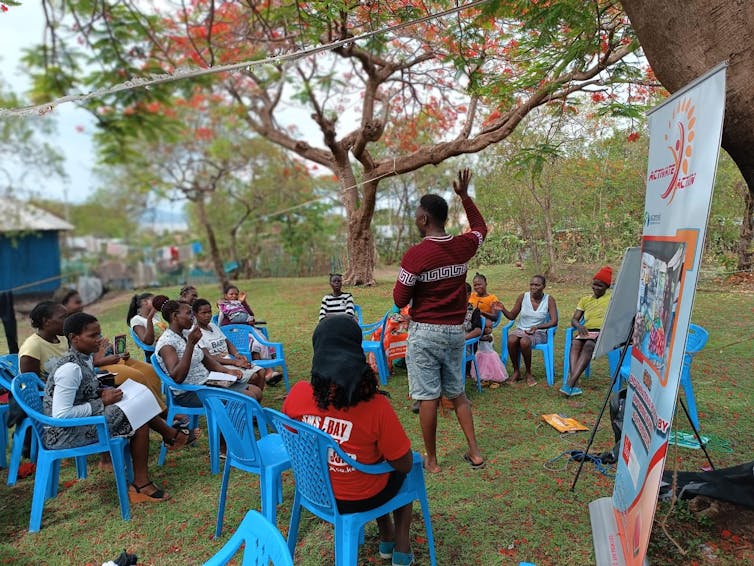





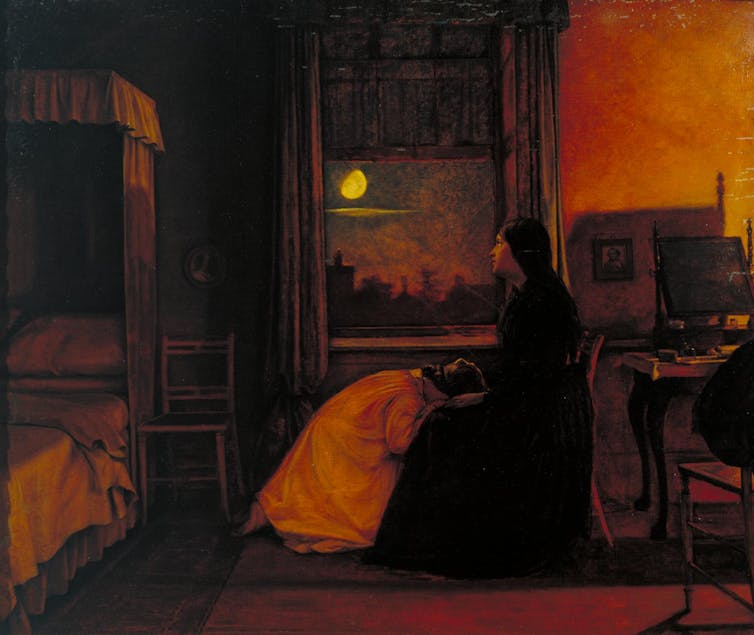









.jpg#/media/File:Lucas_Cranach_d.%C3%84._-_Bocca_della_Verit%C3%A0_(ca.1530).jpg/2)


