Blog

  • MIL-OSI Analysis: MethaneSat: The climate spy satellite that went quiet

    Source: The Conversation – UK – By Vincent Gauci, Professorial Fellow, School of Geography, Earth and Environmental Sciences, University of Birmingham

    Satellites circling the Earth have many different functions, including navigation, communications and Earth observation. About 8%-10% of all active satellites are military or “dual use” serving intelligence or reconnaissance functions as spy satellites.

    But it was a climate satellite serving as both spy and “name and shame” police officer in the sky that recently caught the world’s attention when it went quiet.

    MethaneSat was developed to spot emission hot spots or plumes of invisible methane pollution from space. Built by the US non-profit, the Environmental Defense Fund with Nasa’s support, it tracked methane leaks from oil and gas sites, farms and landfills across the globe.

    These are among the biggest human-caused emission sources. But methane emissions are traditionally hard to spot because they come from so many relatively small point sources or plumes.


    Get your news from actual experts, straight to your inbox. Sign up to our daily newsletter to receive all The Conversation UK’s latest coverage of news and research, from politics and business to the arts and sciences.


    This specialist observation satellite was developed and deployed because methane acts differently to other greenhouse gas emissions. Methane is a powerful greenhouse gas that, over 20 years, is more than 80 times more powerful a greenhouse gas than carbon dioxide.

    Since 1750, additional human-caused methane emissions have contributed directly and indirectly, to around 60% of the global warming of carbon dioxide over that time.

    Methane also has a short lifetime. Where carbon dioxide stays in the atmosphere for in excess of 100 years, relying on plant uptake for its removal from the atmosphere and conversion into other carbon forms, methane is broken down in the atmosphere by molecules known as hydroxyl radicals. These are nicknamed “the atmosphere’s detergent”, because they effectively remove methane from the atmosphere in less than ten years.

    A gas flare at an oil refinery – one of many pinpoint sources of methane emissions.
    hkhtt hj/Shutterstock

    This combination of short lifetime and high global warming potential (a measure of the climate strength of the gas relative to carbon dioxide) makes methane both a problem and an ideal target for reduction. In fact, growth in atmospheric methane is occurring at such a rate that it is placing us dangerously off track from meeting our Paris agreement obligations to stay within 1.5°C of climate warming by 2050 and 2°C by 2100.

    Eyes in the sky

    But how can we achieve these reductions and what was the role of MethaneSat in seeking to meet this objective?

    There are two ways atmospheric methane concentrations can be reduced. A recent and more challenging proposition is that methane is actively removed from the atmosphere.

    This is difficult because it relies on technological advances that are at their earliest stages (although growing more trees can go some way to achieving this). Another more realistic approach is to reduce emissions and then to let atmospheric chemistry do the work of removing excess methane in the atmosphere.

    The global methane pledge was announced in 2021 at the UN climate summit, Cop26, in Glasgow. This aimed to reduce human-caused methane emissions by 30% on 2020 levels by 2030. More than 150 countries have now signed up to this pledge. If successful, it could reduce warming by up to 0.2°C by 2050. That’s why MethaneSat was so useful.

    MethaneSat is fitted with a hyperspectral sensor – which can record sunlight reflected off Earth in hundreds of narrow colour bands across the spectrum, far beyond what our eyes can see. It’s capable of picking up concentrations of methane in air at minute quantities.

    This sensor allowed the satellite to spot individual plumes of methane, so it had a crucial role in identifying those problem areas. Given that these are dispersed but also individual point sources, it was invaluable in intervening in the leaks, permitting identification of those responsible so they could be held to account and so address the problem.

    No one instrument can cover what MethaneSat could do with freely available data. It had high precision, high spatial resolution and, critically, global coverage and it was particularly useful at identifying plumes in nations that don’t have the resources for the sort of regional surveys using aircraft mounted systems that can fill the gap in developed regions.

    Now that MethaneSat is no longer operational, there are some other tools to identify small anthropogenic emissions sources, but they tend to be regionally focused like the aircraft measurements mentioned.

    Other satellites gather similar data but that data sits behind commercial paywalls, whereas MethaneSat data was freely available. Collectively, these drawbacks mean that it’s just going to be that much harder to spot the emissions MethaneSat was so good at tracking.


    Don’t have time to read about climate change as much as you’d like?

    Get a weekly roundup in your inbox instead. Every Wednesday, The Conversation’s environment editor writes Imagine, a short email that goes a little deeper into just one climate issue. Join the 45,000+ readers who’ve subscribed so far.


    Vincent Gauci receives funding from the NERC, Spark Climate Solutions, the JABBS Foundation and has received funding from the Royal Society, Defra and the AXA Research Fund.

    ref. MethaneSat: The climate spy satellite that went quiet – https://theconversation.com/methanesat-the-climate-spy-satellite-that-went-quiet-261022

    MIL OSI Analysis

  • MIL-OSI Analysis: AI can be your wingman when online dating – but should you let it?

    Source: The Conversation – UK – By Natasha McKeever, Lecturer in Applied Ethics, University of Leeds

    YWdesign/Shutterstock

    Many dating app companies are enthusiastic about incorporating generative AI into their products. Whitney Wolfe Herd, founder of dating app Bumble, wants gen-AI to “help create more healthy and equitable relationships”. In her vision of the near future, people will have AI dating concierges who could “date” other people’s dating concierges for them, to find out which pairings were most compatible.

    Dating app Grindr is developing an AI wingman, which it hopes to be up and running by 2027. Match Group, owner of popular dating apps including Tinder, Hinge and OK Cupid, have also expressed keen interest in using gen-AI in their products, believing recent advances in AI technology “have the power to be transformational, making it more seamless and engaging for users to participate in dating apps”. One of the ways they think gen-AI can do this is by enhancing “the authenticity of human connections”.

    Use of gen-AI in online dating is not just some futuristic possibility, though. It’s already here.

    Want to enhance your photos or present yourself in a different style? There are plenty of online tools for that. Similarly, if you want AI to help “craft the perfect, attention-grabbing bio” for you, it can do that. AI can even help you with making conversation, by analysing your chat history and suggesting ways to reply.

    Extra help

    It isn’t just dating app companies who are enthusiastic about AI use in dating apps either. A recent survey carried out by Cosmopolitan magazine and Bumble of 5,000 gen-Zers and millennials found that 69% of respondents were excited about “the ways AI could make dating easier and more efficient”.

    An even higher proportion (86%) “believe it could help solve pervasive dating fatigue”. A surprising 86% of men and 77% of the women surveyed would share their message history with AI to help guide their dating app conversations.


    Dating today can feel like a mix of endless swipes, red flags and shifting expectations. From decoding mixed signals to balancing independence with intimacy, relationships in your 20s and 30s come with unique challenges.Love IRL is the latest series from Quarter Life that explores it all.

    These research-backed articles break down the complexities of modern love to help you build meaningful connections, no matter your relationship status.


    It’s not hard to see why AI is so appealing for dating app users and providers. Dating apps seem to be losing their novelty: many users are reportedly abandoning them due to so-called “dating app fatigue” – feeling bored and burnt out with dating apps.

    Apps and users might be hopeful that gen-AI can make dating apps fun again, or if not fun, then at least that it will make them actually lead to dates. Some AI dating companions claim to get you ten times more dates and better dates at that. Given that men tend to get fewer matches on dating apps than women, it’s also not surprising that we’re seeing more enthusiasm from men than women about the possibilities AI could bring.

    Talk of gen-AI in connection to online dating gives rise to many ethical concerns. We at the Ethical Dating Online Network, an international network of over 30 multi-disciplinary academics interested in how online dating could be more ethical, think that dating app companies need to convincingly answer these worries before rushing new products to market. Here are a few standout issues.

    Pitfalls of AI dating

    Technology companies correctly identify some contemporary social issues, such as loneliness, anxiety at social interactions, and concerns about dating culture, as hindering people’s dating lives.

    But turning to more technology to solve these issues puts us at risk of losing the skills we need to make close relationships work. The more we can reach for gen-AI to guide our interactions, the less we might be tempted to practise on our own, or to take accountability for what we communicate. After all, an AI “wingman” is of little use when meeting in person.

    Also, AI tools risk entrenching much of dating culture that people find stressful. Norms around “banter”, attractiveness or flirting can make the search for intimacy seem like a competitive battleground. The way AI works – learning from existing conversations – means that it will reproduce these less desirable aspects.

    Gen-AI may reproduce the negative elements of online dating culture.
    fizkes/Shutterstock

    Instead of embracing those norms and ideals, and trying to equip everyone with the tools to seemingly meet impossibly high standards, dating app companies could do more to “de-escalate” dating culture: make it calmer, more ordinary and help people be vulnerable. For example, they could rethink how they charge for their products, encourage a culture of honesty, and look at alternatives to the “swiping” interfaces.

    The possibility of misrepresentation is another concern. People have always massaged the truth when it comes to dating, and the internet has made this easier. But the more we are encouraged to use AI tools, and as they are embedded in dating apps, bad actors can more simply take advantage of the vulnerable.

    An AI-generated photo, or conversation, can lead to exchanges of bank details, grooming and sexual exploitation.

    Stopping short of fraud, however, is the looming intimate authenticity crisis. Online dating awash with AI generated material risks becoming a murky experience. A sincere user might struggle to identify like-minded matches on apps where use of AI is common.

    This interpretive burden is annoying for anyone, but it will exacerbate the existing frustrations women, more so than men, experience on dating apps as they navigate spaces full of with timewasting, abuse, harassment and unwanted sexualisation.

    Indeed, women might worry that AI will turbo-charge the ability of some men to prove a nuisance online. Bots, automation, conversation-generating tools, can help some men to lay claim to the attention of many women simultaneously.

    AI tools may seem like harmless fun, or a useful timesaver. Some people may even wholeheartedly accept that AI generated content is not “authentic” and love it anyway.

    Without clear guardrails in place, however, and more effort by app companies to provide informed choices based on transparency about how their apps work, any potential benefits of AI will be obscured by the negative impact it has to intimacy online.

    The authors do not work for, consult, own shares in or receive funding from any company or organisation that would benefit from this article, and have disclosed no relevant affiliations beyond their academic appointment.

    ref. AI can be your wingman when online dating – but should you let it? – https://theconversation.com/ai-can-be-your-wingman-when-online-dating-but-should-you-let-it-254666

    MIL OSI Analysis

  • MIL-OSI Analysis: Looking for meaningful romantic relationships? Start by diversifying your friendships and forgetting your wishlist

    Source: The Conversation – UK – By Mariko Visserman, Assistant Professor in Psychology, University of Sussex

    loreanto/Shutterstock

    When you’re looking for a relationship, chances are you’ll start off with a wishlist for your ideal partner. Maybe someone who is attractive or wealthy, someone who likes the same movies and the outdoors. Seems like a solid starting point, right? The problem is that in the real world, these wishlists are rarely helpful. And how realistic is the idea that one person can fulfil all our needs in the first place?

    In 2017, researchers conducted a large speed-dating study. They wanted to see how well the preferences people indicated for a potential partner predicted who they wanted to see again after the event.

    The researchers were left with nothing: people’s wishlists did not predict who they actually liked. Instead, they suggested that the best predictor of whether you like someone is seeing how they make you feel when you interact with them. Do you feel comfortable in their presence? Do they make you laugh?

    The scientific evidence suggests that you have to meet people in the flesh if you want to find your match.


    Dating today can feel like a mix of endless swipes, red flags and shifting expectations. From decoding mixed signals to balancing independence with intimacy, relationships in your 20s and 30s come with unique challenges. Love IRL is the latest series from The Conversation’s Quarter Life that explores it all.

    These research-backed articles break down the complexities of modern love to help you build meaningful connections, no matter your relationship status.


    People used to find their romantic partner by tapping into their social networks – through friends, family, or the people they met in their daily lives. Nowadays, we often look for a romantic partner using online dating platforms, which allow us to access a larger network of potential romantic partners than ever before.

    This apparent abundance may encourage a critical comparison with your wishlist and you may spend a lot of time swiping through profiles of potential partners, without initiating meeting them.

    Research suggests that doing so can leave you feeling paralysed by an overload of choice and less optimistic about your chances. Research also shows that people tend to have fewer matches as the number of profiles on offer increases.

    The researchers of this paradox suggest that you may be wise to put yourself on a dating diet: only looking at a limited number of profiles each day and exploring them with a curious mind. Then, when contact is established and you feel positive about the initial interaction, the real experiment begins.

    When you spend a long time interacting online you may construct an idealised version of your potential partner and what you hope they’re like. That leaves you all the more likely to be disappointed when meeting them in person, as it’s easy for them to fall short of your expectations.

    When you spend long time interacting online you may construct an idealised version of your potential partner.
    dodotone/Shutterstock

    A better strategy would be to meet them in the flesh with a curious mind, before becoming overly invested in an online persona that is not a fair representation of what the other person may be like.

    Taking it offline

    Whether you will go on to have a satisfying relationship in the long run depends more than anything on your relationship expectations and behaviour.

    Being kind and attentive to each other’s goals and needs ensures each partner’s happiness and will help weather any challenge, small or large, that couples inevitably face. But here too, technology may disrupt your mindful awareness of others – for example being on your phone in the presence of your partner – posing a risk to enjoying relationships.

    Couples today also seem to have historically high expectations for their partner to help them fulfil all their goals and needs. You may want a partner to be a passionate lover, your best friend, your motivational coach and help you achieve personal growth.

    In other words, people’s wishlists people carry into relationships too, as we long for a partner to fulfil all our needs.

    Diversifying your friendships can put less pressure on your romantic connection.
    Dupe/Daniel Bughiu

    Demanding all of this from one partner can place too much pressure on the relationships, rather than satisfying your needs. You may be left with a dissatisfying relationship that falls short of your expectations.

    In some ways, we may all benefit from adopting lower expectations when looking for a partner and when being with them long term. This may help us appreciate them instead of taking their support and kind acts for granted.

    It’s also a good idea to diversify your relationships. Having other important close (and even less close) relationships can help fulfil some needs your partner may not be best suited to meet, such as friends who like the same movies you do or who like to explore the outdoors together.

    Research has shown that a greater diversity of relationships benefits happiness, as different relationships can serve different roles in fulfilling your needs, which may take some pressure off “the one” fulfilling all your needs.

    Putting some brakes on your expectations for a romantic partner, when looking for a partner and when sharing your life with them, may help you to see more clearly who they are and appreciate what they contribute to your life.

    Mariko Visserman does not work for, consult, own shares in or receive funding from any company or organisation that would benefit from this article, and has disclosed no relevant affiliations beyond their academic appointment.

    ref. Looking for meaningful romantic relationships? Start by diversifying your friendships and forgetting your wishlist – https://theconversation.com/looking-for-meaningful-romantic-relationships-start-by-diversifying-your-friendships-and-forgetting-your-wishlist-254022

    MIL OSI Analysis

  • MIL-OSI Analysis: Love IRL: a new Quarter Life series on modern dating from The Conversation

    Source: The Conversation – UK – By Anna Walker, Senior Arts + Culture Editor

    Roman Samborskyi/Shutterstock

    None of the cultural love stories of the 2000s started with a swipe. Friends taught us that your social circle could double as a dating pool. The Office proved that love could blossom by the water cooler, and in High School Musical the perfect match could be the new girl at school.

    But in the years since, apps have changed the way we date. The old-fashioned meet-cute was replaced by swipes, and slow-burn feelings were forgotten in favour of instant digital chemistry. It came with some benefits. Gone were the days when your romantic options were limited to bad set-ups, overly flirty colleagues, or trying to catch the eye of the hottie reading on the train. And introverts could pursue connections without the anxiety of approaching someone in a noisy bar or making the first move with a friend. But there were losses too.

    While the convenience of dating apps expanded our horizons, they also stripped away some of the spontaneity and authenticity of in-person connections. The rush of emotions tied to real-life interactions – the spark of chemistry when eyes meet across a room or the thrill of an unexpected conversation – has become less frequent. Swiping left and right creates a kind of detachment, where it’s easier to dismiss someone with a flick of the thumb than to take a moment to truly get to know them. What we gained in options, we lost in meaningful connections.

    Now another love revolution is on the horizon as algorithms and AI start to play an ever-growing role in how we form and navigate our relationships. Whether you’re single, dating, married or somewhere in between, our love lives are increasingly mediated by technology.

    This is especially true for those of us in our 20s and 30s, who grew up with the promise of finding romance in real life but came of age as the dating app revolution began in earnest. Which is where Love IRL, a new Quarter Life series from The Conversation, comes in. These research-backed articles break down the complexities of modern love, from decoding mixed signals to balancing independence with intimacy. Along the way we’ll help you navigate the ghosts, love-bombers, breadcrumbers and catfishers and strive for more meaningful connections – offline and on.

    Some of the topics you’ll read about include how ditching the wishlists can help you find meaningful romantic relationships, how AI wingmen are influencing online dating, and how rising living costs are changing the way we date, live and love.

    Thoughts? Relationship woes? Get in touch at quarterlife@theconversation.com


    Dating today can feel like a mix of endless swipes, red flags and shifting expectations. From decoding mixed signals to balancing independence with intimacy, relationships in your 20s and 30s come with unique challenges. Love IRL is the latest series from Quarter Life that explores it all.

    These research-backed articles break down the complexities of modern love to help you build meaningful connections, no matter your relationship status.


    ref. Love IRL: a new Quarter Life series on modern dating from The Conversation – https://theconversation.com/love-irl-a-new-quarter-life-series-on-modern-dating-from-the-conversation-259474

    MIL OSI Analysis

  • MIL-OSI Canada: Assault of staff member at Kent Institution

    Source: Government of Canada News (2)

    July 15, 2025 – Agassiz, British Columbia – Correctional Service Canada

    On July 14, 2025, a staff member was assaulted at Kent Institution, a maximum-security federal institution.

    The injured staff member was evaluated and treated at an outside hospital.

    The assailant has been identified and the appropriate actions will be taken.

    The Agassiz detachment of the Royal Canadian Mounted Police and the institution are presently investigating the incident.

    The safety and security of institutions, their staff, and the public remains the highest priority in the operations of the federal correctional system.

    In order to improve practices aimed at preventing this type of incident, the Correctional Service of Canada will review the circumstances of the incident and take the appropriate measures.

    MIL OSI Canada News

  • MIL-OSI Security: Three MS-13 Members Charged with Racketeering Conspiracy Involving Murder

    Source: United States Attorneys General

    Three alleged members of the notorious gang La Mara Salvatrucha, commonly known as MS-13, made their initial appearance in the District of Maryland yesterday for their role in a racketeering conspiracy, including murder and drug trafficking.

    “As alleged, the defendants are MS-13 members who carried out a brutal and senseless murder in exchange for promotions within the gang and drugs,” said Acting Assistant Attorney General Matthew R. Galeotti of the Justice Department’s Criminal Division. “Their actions furthered MS-13’s reign of terror across communities in Maryland. The Criminal Division will continue to pursue charges against MS-13 members and associates and will not relent until this dangerous gang is eradicated from our streets.”

    “The brutal retaliatory murder of this victim is a chilling reminder of the MS-13 gang’s callous disregard for human life,” said U.S. Attorney Kelly O. Hayes for the District of Maryland. “Those who assault and kill others must be brought to justice and ultimately held accountable for their actions. The U.S. Attorney’s Office for the District of Maryland will continue to work relentlessly with our law enforcement partners to dismantle violent criminal organizations that terrorize our communities.”

    “The FBI and our partners are committed to using every tool available to prevent violent criminals from terrorizing the communities they live in,” said Assistant Director Jose A. Perez of the FBI’s Criminal Investigative Division. “We will not let up. We will relentlessly pursue those who engage in violent activity like murder and drug trafficking until they are held accountable.”

    According to court documents, on July 4, 2024, Maxwell Ariel Quijano-Casco, 24, of El Salvador; Daniel Isaias Villanueva-Bautista, 19, of El Salvador; and Josue Mauricio Lainez, 21, of Hyattsville, Maryland, allegedly killed a homeless man as part of their involvement with MS-13. On July 5, 2024, a passerby called 911 after seeing the victim sitting in a blue 2008 Dodge Caravan that was parked in a used car lot in Hyattsville, Maryland. When the police arrived, they found the deceased victim, who appeared to have been stabbed in the neck. Investigators obtained video surveillance from a nearby business that captured the incident.

    The surveillance video shows that at approximately 11:35 p.m Quijano-Casco and another person approach the victim. The video shows the victim wielding what looks like a metal pole at Quijano-Casco, at which point Quijano-Casco and the other person flee on foot and the victim returns to the Dodge Caravan. About 15 minutes later, Quijano-Casco returns with co-defendants Villanueva-Bautista, Lainez, and another person. At approximately 11:48 p.m., the video surveillance shows all four of them approaching the blue Dodge Caravan. 

    The surveillance video then shows Quijano-Casco, Villanueva-Bautista, Lainez, and the unnamed person opening the van’s rear sliding driver’s side door, reaching inside, and moving as if striking someone. 

    The victim does not exit the blue Dodge Caravan after the attack.

    On Aug. 23, 2024, Prince George’s County Police arrested Quijano-Casco and Villanueva-Bautista. Quijano-Casco was in possession of a black Ruger P95DC semi-automatic handgun and about eight grams of cocaine at the time of his arrest. Quijano-Casco and Villanueva both admitted that they were present for the altercation where the victim was murdered. Quijano-Casco allegedly admitted to Prince George’s County Police to stabbing the individual.

    Quijano-Casco, Villanueva-Bautista, and Lainez are each charged with racketeering conspiracy, including the July 4, 2024, murder. If convicted, Quijano-Casco, Villanueva-Bautista, and Lainez face a maximum penalty of life in prison. A federal district court judge will determine any sentence after considering the U.S. Sentencing Guidelines and other statutory factors.

    The FBI and Prince George’s County Police Department are investigating the case.

    Trial Attorney Christina Taylor of the Criminal Division’s Violent Crime and Racketeering Section and Assistant U.S. Attorney Joel Crespo for the District of Maryland are prosecuting the case.

    An indictment is merely an allegation and all defendants are presumed innocent until proven guilty beyond a reasonable doubt in a court of law.

    MIL Security OSI

  • Angels, witches, crystals and black cats: How supernatural beliefs vary across different groups in the US

    Source: ForeignAffairs4

    Source: The Conversation – USA (3) – By Christopher P. Scheitle, Associate Professor of Sociology, West Virginia University

    Education, income and demographics shape our views of the unseen world, a survey found. karetoria/Collection Moment via Getty Images

    Younger Americans are more likely to express belief in witchcraft and luck, as our new research shows.

    As sociologists who research the social dynamics of religion in the United States, we conducted a nationally representative survey in 2021. Our survey posed dozens of questions to 2,000 Americans over the age of 18 on a wide range of beliefs in supernatural phenomena – everything from belief in the devil to belief in the magical power of crystals.

    Our statistical analyses found that supernatural beliefs in the United States tend to group into four types.

    The first represents what many consider “traditional religious beliefs.” These include beliefs in God, the existence of angels and demons, and belief in the soul and its journey beyond this lifetime.

    A second represents belief in “spiritual and mental forces,” some of which are associated with either paranormal or new age beliefs. These include communicating with the dead, predicting the future, or believing that one’s soul can travel through space or time.

    A third group represents belief in “witches and witchcraft.” This was measured on our survey with questions about the existence of “black magic” and whether it was “possible to cast spells on people.”

    The fourth and final group represents beliefs in supernatural forces that shape “luck” – for instance, that “black cats bring bad luck.”

    Our analysis finds that higher education and higher income are associated with lower levels of all four types of supernatural belief. Those with a bachelor’s degree or higher, for instance, score below average on all four types of belief, while those with less education score higher than average on all four.

    Looking at race and ethnicity, we found that Latino or Hispanic individuals were more likely than white individuals to express belief in the “witches and witchcraft” form of supernatural belief. About 50% of Latino or Hispanic individuals in our survey, for example, strongly agreed that “witches exist.” This compares with about 37% of white individuals.

    Comparing gender differences, we find that women are more likely than men to believe in the “spiritual and mental forces” forms of supernatural belief. For instance, about 31% of women in our survey agreed that “it is possible to communicate with the dead” compared with about 22% of men.

    Why it matters

    Our research addresses two key questions: first, whether people who hold one type of supernatural belief are also more likely to hold other types of supernatural beliefs; and second, how do different types of supernatural belief vary across key demographic groups, such as across educational levels, racial and ethnic groups, and gender?

    Answering these questions can be surprisingly difficult. Most scientific surveys of the U.S. public include, at best, only one or two questions about religious beliefs; rarely do they include questions about other types of supernatural beliefs, such as belief in paranormal or superstitious forces. This could lead to an incomplete understanding of how supernatural beliefs and practices are changing in the United States.

    An increasing number of Americans are leaving organized religion. However, it is not clear that supernatural beliefs have or will follow the same trajectory – especially beliefs that are not explicitly connected to those religious identities. For example, someone can identify as nonreligious but believe that the crystal they wear will provide them with supernatural benefits.

    Moreover, recognizing that supernatural beliefs can include more than traditionally religious supernatural beliefs may be vital for better understanding other social issues. Research has found, for example, that belief in paranormal phenomena is associated with lower trust in science and medicine.

    What’s next

    Our survey provides some insight into the nature and patterns of supernatural belief in the U.S. at one point in time, but it does not tell us how such beliefs are changing over time.

    We would like to see future surveys – both ours or from other social scientists – that ask more diverse questions about belief in supernatural beings and forces that will allow for an assessment of such changes.

    The Research Brief is a short take on interesting academic work.

    The Conversation

    Christopher P. Scheitle receives funding from the National Science Foundation and the John Templeton Foundation. The research discussed in this article was supported by a grant from the Science and Religion: Identity and Belief Formation grant initiative spearheaded by the Religion and Public Life Program at Rice University and the University of California-San Diego and provided by the Templeton Religion Trust via The Issachar Fund.

    Bernard DiGregorio receives funding from the National Science Foundation. The research discussed in this article was funded by a grant from the Science and Religion: Identity and Belief Formation grant initiative spearheaded by the Religion and Public Life Program at Rice University and the University of California-San Diego and provided by the Templeton Religion Trust via The Issachar Fund.

    Katie E. Corcoran receives funding from the National Science Foundation, the John Templeton Foundation, and the Patient-Centered Outcomes Research Institute. The research discussed in this article was supported by a grant from the Science and Religion: Identity and Belief Formation grant initiative spearheaded by the Religion and Public Life Program at Rice University and the University of California-San Diego and provided by the Templeton Religion Trust via The Issachar Fund.

    ref. Angels, witches, crystals and black cats: How supernatural beliefs vary across different groups in the US – https://theconversation.com/angels-witches-crystals-and-black-cats-how-supernatural-beliefs-vary-across-different-groups-in-the-us-258377

  • California farmers identify a hot new cash crop: Solar power

    Source: ForeignAffairs4

    Source: The Conversation – USA (2) – By Jacob Stid, Ph.D. student in Hydrogeology, Michigan State University

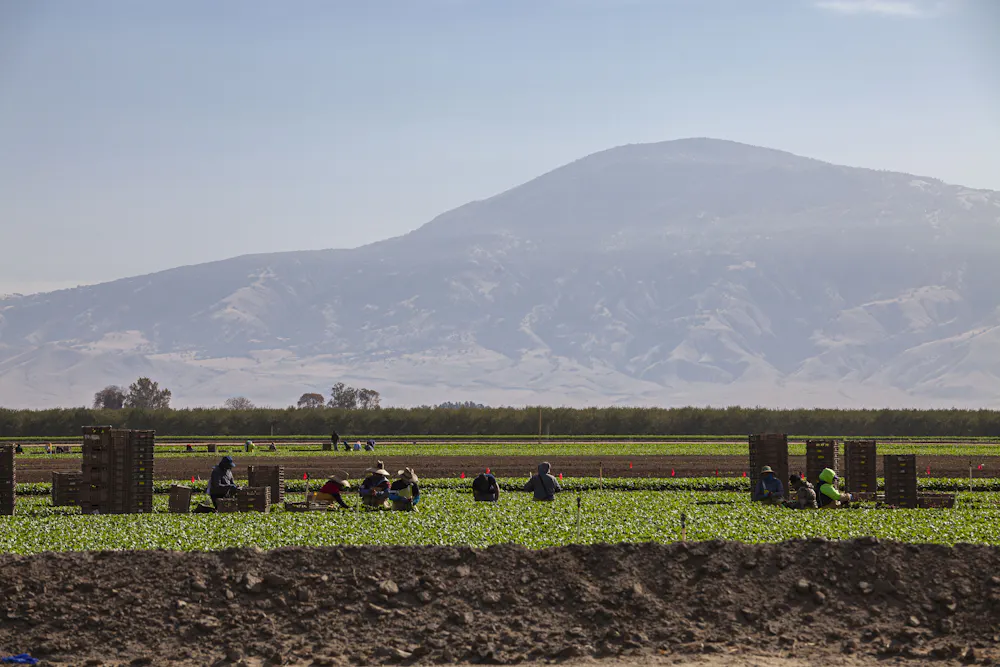
    This dairy farm in California’s Central Valley has installed solar panels on a portion of its land. George Rose/Getty Images

    Imagine that you own a small, 20-acre farm in California’s Central Valley. You and your family have cultivated this land for decades, but drought, increasing costs and decreasing water availability are making each year more difficult.

    Now imagine that a solar-electricity developer approaches you and presents three options:

    • You can lease the developer 10 acres of otherwise productive cropland, on which the developer will build an array of solar panels and sell electricity to the local power company.
    • You can select 1 or 2 acres of your land on which to build and operate your own solar array, using some electricity for your farm and selling the rest to the utility.
    • Or you can keep going as you have been, hoping your farm can somehow survive.

    Thousands of farmers across the country, including in the Central Valley, are choosing one of the first two options. A 2022 survey by the U.S. Department of Agriculture found that roughly 117,000 U.S. farm operations have some type of solar device. Our own work has identified over 6,500 solar arrays currently located on U.S. farmland.

    Our study of nearly 1,000 solar arrays built on 10,000 acres of the Central Valley over the past two decades found that solar power and farming are complementing each other in farmers’ business operations. As a result, farmers are making and saving more money while using less water – helping them keep their land and livelihood.

    A hotter, drier and more built-up future

    Perhaps nowhere in the U.S. is farmland more valuable or more productive than California’s Central Valley. The region grows a vast array of crops, including nearly all of the nation’s production of almonds, olives and sweet rice. Using less than 1% of all farmland in the country, the Central Valley supplies a quarter of the nation’s food, including 40% of its fruits, nuts and other fresh foods.

    The food, fuel and fiber that these farms produce are a bedrock of the nation’s economy, food system and way of life.

    But decades of intense cultivation, urban development and climate change are squeezing farmers. Water is limited, and getting more so: A state law passed in 2014 requires farmers to further reduce their water usage by the mid-2040s.

    Workers on farmland with mountains in the background.
    California’s Central Valley is some of the most productive cropland in the country.
    Citizen of the Planet/UCG/Universal Images Group via Getty Images

    The trade-offs of installing solar on agricultural land

    When the solar arrays we studied were installed, California state solar energy policy and incentives gave farm landowners new ways to diversify their income by either leasing their land for solar arrays or building their own.

    There was an obvious trade-off: Turning land used for crops to land used for solar usually means losing agricultural production. We estimated that over the 25-year life of the solar arrays, this land would have produced enough food to feed 86,000 people a year, assuming they eat 2,000 calories a day.

    There was an obvious benefit, too, of clean energy: These arrays produced enough renewable electricity to power 470,000 U.S. households every year.

    But the result we were hoping to identify and measure was the economic effect of shifting that land from agricultural farming to solar farming. We found that farmers who installed solar were dramatically better off than those who did not.

    They were better off in two ways, the first being financially. All the farmers, whether they owned their own arrays or leased their land to others, saved money on seeds, fertilizer and other costs associated with growing and harvesting crops. They also earned money from leasing the land, offsetting farm energy bills, and selling their excess electricity.

    Farmers who owned their own arrays had to pay for the panels, equipment and installation, and maintenance. But even after covering those costs, their savings and earnings added up to US$50,000 per acre of profits every year, 25 times the amount they would have earned by planting that acre.

    Farmers who leased their land made much less money but still avoided costs for irrigation water and operations on that part of their farm, gaining $1,100 per acre per year – with no up-front costs.

    The farmers also conserved water, which in turn supported compliance with the state’s Sustainable Groundwater Management Act water use reduction requirements. Most of the solar arrays were installed on land that had previously been irrigated. We calculated that turning off irrigation on this land saved enough water every year to supply about 27 million people with drinking water or irrigate 7,500 acres of orchards. Following solar array installation, some farmers also fallowed surrounding land, perhaps enabled by the new stable income stream, which further reduced water use.

    A view of farmland with irrigation sprinklers spraying widely.
    Irrigation is key to cropland productivity in California’s Central Valley. Covering some land with solar panels eliminates the need for irrigation of that area, saving water for other uses elsewhere.
    Citizen of the Planet/UCG/Universal Images Group via Getty Images

    Changes to food and energy production

    Farmers in the Central Valley and elsewhere are now cultivating both food and energy. This shift can offer long-term security for farmland owners, particularly for those who install and run their own arrays.

    Recent estimates suggest that converting between 1.1% and 2.4% of the country’s farmland to solar arrays would, along with other clean energy sources, generate enough electricity to eliminate the nation’s need for fossil fuel power plants.

    Though many crops are part of a global market that can adjust to changes in supply, losing this farmland could affect the availability of some crops. Fortunately, farmers and landowners are finding new ways to protect farmland and food security while supporting clean energy.

    One such approach is agrivoltaics, where farmers install solar designed for grazing livestock or growing crops beneath the panels. Solar can also be sited on less productive farmland or on farmland that is used for biofuels rather than food production.

    Even in these areas, arrays can be designed and managed to benefit local agriculture and natural ecosystems. With thoughtful design, siting and management, solar can give back to the land and the ecosystems it touches.

    Farms are much more than the land they occupy and the goods they produce. Farms are run by people with families, whose well-being depends on essential and variable resources such as water, fertilizer, fuel, electricity and crop sales. Farmers often borrow money during the planting season in hopes of making enough at harvest time to pay off the debt and keep a little profit.

    Installing solar on their land can give farmers a diversified income, help them save water, and reduce the risk of bad years. That can make solar an asset to farming, not a threat to the food supply.

    The Conversation

    Jacob Stid works for Michigan State University. Funding for this work came from the US Department of Agriculture’s National Institute of Food and Agriculture program and the Department of Earth and Environmental Sciences at Michigan State University. He also receives funding from the Foundation for Food and Agricultural Research.

    Annick Anctil receives funding from NSF and USDA.

    Anthony Kendall receives funding from the USDA, NASA, the NSF, and the Foundation for Food and Agricultural Research. He is an Assistant Professor at Michigan State University, and serves on the nonprofit board of the FLOW Water Advocates.

    ref. California farmers identify a hot new cash crop: Solar power – https://theconversation.com/california-farmers-identify-a-hot-new-cash-crop-solar-power-259653

  • MethaneSat: The climate spy satellite that went quiet

    Source: ForeignAffairs4

    Source: The Conversation – UK – By Vincent Gauci, Professorial Fellow, School of Geography, Earth and Environmental Sciences, University of Birmingham

    Satellites circling the Earth have many different functions, including navigation, communications and Earth observation. About 8%-10% of all active satellites are military or “dual use” serving intelligence or reconnaissance functions as spy satellites.

    But it was a climate satellite serving as both spy and “name and shame” police officer in the sky that recently caught the world’s attention when it went quiet.

    MethaneSat was developed to spot emission hot spots or plumes of invisible methane pollution from space. Built by the US non-profit, the Environmental Defense Fund with Nasa’s support, it tracked methane leaks from oil and gas sites, farms and landfills across the globe.

    These are among the biggest human-caused emission sources. But methane emissions are traditionally hard to spot because they come from so many relatively small point sources or plumes.


    Get your news from actual experts, straight to your inbox. Sign up to our daily newsletter to receive all The Conversation UK’s latest coverage of news and research, from politics and business to the arts and sciences.


    This specialist observation satellite was developed and deployed because methane acts differently to other greenhouse gas emissions. Methane is a powerful greenhouse gas that, over 20 years, is more than 80 times more powerful a greenhouse gas than carbon dioxide.

    Since 1750, additional human-caused methane emissions have contributed directly and indirectly, to around 60% of the global warming of carbon dioxide over that time.

    Methane also has a short lifetime. Where carbon dioxide stays in the atmosphere for in excess of 100 years, relying on plant uptake for its removal from the atmosphere and conversion into other carbon forms, methane is broken down in the atmosphere by molecules known as hydroxyl radicals. These are nicknamed “the atmosphere’s detergent”, because they effectively remove methane from the atmosphere in less than ten years.

    gas refinery plume burning
    A gas flare at an oil refinery – one of many pinpoint sources of methane emissions.
    hkhtt hj/Shutterstock

    This combination of short lifetime and high global warming potential (a measure of the climate strength of the gas relative to carbon dioxide) makes methane both a problem and an ideal target for reduction. In fact, growth in atmospheric methane is occurring at such a rate that it is placing us dangerously off track from meeting our Paris agreement obligations to stay within 1.5°C of climate warming by 2050 and 2°C by 2100.

    Eyes in the sky

    But how can we achieve these reductions and what was the role of MethaneSat in seeking to meet this objective?

    There are two ways atmospheric methane concentrations can be reduced. A recent and more challenging proposition is that methane is actively removed from the atmosphere.

    This is difficult because it relies on technological advances that are at their earliest stages (although growing more trees can go some way to achieving this). Another more realistic approach is to reduce emissions and then to let atmospheric chemistry do the work of removing excess methane in the atmosphere.

    The global methane pledge was announced in 2021 at the UN climate summit, Cop26, in Glasgow. This aimed to reduce human-caused methane emissions by 30% on 2020 levels by 2030. More than 150 countries have now signed up to this pledge. If successful, it could reduce warming by up to 0.2°C by 2050. That’s why MethaneSat was so useful.

    MethaneSat is fitted with a hyperspectral sensor – which can record sunlight reflected off Earth in hundreds of narrow colour bands across the spectrum, far beyond what our eyes can see. It’s capable of picking up concentrations of methane in air at minute quantities.

    This sensor allowed the satellite to spot individual plumes of methane, so it had a crucial role in identifying those problem areas. Given that these are dispersed but also individual point sources, it was invaluable in intervening in the leaks, permitting identification of those responsible so they could be held to account and so address the problem.

    No one instrument can cover what MethaneSat could do with freely available data. It had high precision, high spatial resolution and, critically, global coverage and it was particularly useful at identifying plumes in nations that don’t have the resources for the sort of regional surveys using aircraft mounted systems that can fill the gap in developed regions.

    Now that MethaneSat is no longer operational, there are some other tools to identify small anthropogenic emissions sources, but they tend to be regionally focused like the aircraft measurements mentioned.

    Other satellites gather similar data but that data sits behind commercial paywalls, whereas MethaneSat data was freely available. Collectively, these drawbacks mean that it’s just going to be that much harder to spot the emissions MethaneSat was so good at tracking.


    Don’t have time to read about climate change as much as you’d like?

    Get a weekly roundup in your inbox instead. Every Wednesday, The Conversation’s environment editor writes Imagine, a short email that goes a little deeper into just one climate issue. Join the 45,000+ readers who’ve subscribed so far.


    The Conversation

    Vincent Gauci receives funding from the NERC, Spark Climate Solutions, the JABBS Foundation and has received funding from the Royal Society, Defra and the AXA Research Fund.

    ref. MethaneSat: The climate spy satellite that went quiet – https://theconversation.com/methanesat-the-climate-spy-satellite-that-went-quiet-261022

  • Small penises are still the butt of the joke in film and TV

    Source: ForeignAffairs4

    Source: The Conversation – UK – By Neil Cocks, Associate Professor in the Department of English Literature, University of Reading

    Gen V (2023-present), the recent iteration of the wildly successful superhero satire The Boys (2019), thrives on scenes of bodily outrage. One such episode concerns a young woman who is able to shrink – an ability triggered by self-induced vomiting.

    Her boyfriend persuades her to use her powers during sex and we see her touching his penis, which is now taller than she is. We also understand why the boyfriend is so insistent about her transformation: relatively speaking, he has a small penis.

    In Companion (2025), a film about a young man who has an abusive sexual relationship with a self-conscious robot, a small penis is also mocked. When the robot gains autonomy, and has an intelligence boost, she confronts and shames the abusive man, claiming that he is motivated in his violent and controlling behaviour by “a below average-sized penis”.

    What interests me about these works, as a researcher of sexuality and film, is that they are otherwise committed to questioning reductive ideas about the body. Yes, in the universe of The Boys there is undoubted glee at all the exploding heads and superpowered, murderous buttocks, but the keynote is pathos.


    Looking for something good? Cut through the noise with a carefully curated selection of the latest releases, live events and exhibitions, straight to your inbox every fortnight, on Fridays. Sign up here.


    The girl who changes her shape through vomiting is arguably representing bulimic experience and there are characters whose superpowers can be understood to negotiate, for example, self-harm and dysmorphia. But when it comes to a man with a small penis, it’s a different story. His body is understood to directly influence both his actions and sense of morality.

    Likewise, in Companion, which is in so many senses a meditation on the fraught relationship between mind and body, the small penis of the young man is understood to be the obvious source of his repressive actions.

    In both cases, the audience is expected to laugh at the abuser because of his small penis. The small penis is framed as both a signifier and cause of abusiveness.

    ‘We are still so medieval about penis size’

    It could be argued that in Companion and Gen V, the small penis itself is not what is being mocked. The men involved in both are young, white and heterosexual. The idea is, perhaps, that mocking those with small penises is acceptable, because in this the creators are really questioning white, heterosexual and male power structures, and that the inadequacy of that power, its mythic nature, is exposed.

    One difficulty in this is that as only power held by men with small penises is mocked, the power of the well endowed, regardless of racial or sexual identity, is naturalised.

    Equally, those people of colour or queer people who have small penises might implicitly be included in the mockery, with the implication that they are somehow the beneficiaries of power structures, misuse this power, and have obvious, biologically rooted motivations in so doing.

    The trailer for Gen V.

    Gen V qualifies the laughter – the girl , talking later to a friend, makes clear that there is nothing wrong in having a small penis, just “don’t be a dick about it”. But the only small-penised character we see is, of course, being “a dick”.

    There have been a number of television shows that focus on penis size, but each explores the pathos of having a large penis: Hung (2009), The Hard Times of RJ Berger (2010), Sex Education (2019). Imagine an equivalent concerning a character with a small – or even simply not large – penis.

    As journalist Caitlin Moran wrote in a 2023 Guardian article introducing her book, What About Men:

    We are still so medieval about penis size that we see male genitalia as being inimical to a man’s soul. Remember when Stormy Daniels told the world that Donald Trump’s penis was ‘smaller than average – a dick like the mushroom character in Mario Kart’. And we were all like: ‘Yes, it makes sense the horrible man has a small, weird mushroom penis.’ The whole world joined in on that one.

    Let us instead question the relationship between biology and destiny. And let this action be taken not to frame heterosexual white men as a disadvantaged group, but for the good of us all. Our bodies are ours to negotiate, with ourselves, and with our significant others, as well as those others that find in them indifference, or more troubling affects.

    As Gen V and Companion suggest, in recent science fiction stories that otherwise reimagine the body, the small penis can only be imagined as shameful. It is taken to be an obvious motivation for abusive behaviour. Such an understanding helps no one. As the science fiction genre is especially well placed to question common-sense ideas about the human and its form, it would be a good place to begin.

    The Conversation

    Neil Cocks does not work for, consult, own shares in or receive funding from any company or organisation that would benefit from this article, and has disclosed no relevant affiliations beyond their academic appointment.

    ref. Small penises are still the butt of the joke in film and TV – https://theconversation.com/small-penises-are-still-the-butt-of-the-joke-in-film-and-tv-256748

  • AI can be your wingman when online dating – but should you let it?

    Source: ForeignAffairs4

    Source: The Conversation – UK – By Natasha McKeever, Lecturer in Applied Ethics, University of Leeds

    YWdesign/Shutterstock

    Many dating app companies are enthusiastic about incorporating generative AI into their products. Whitney Wolfe Herd, founder of dating app Bumble, wants gen-AI to “help create more healthy and equitable relationships”. In her vision of the near future, people will have AI dating concierges who could “date” other people’s dating concierges for them, to find out which pairings were most compatible.

    Dating app Grindr is developing an AI wingman, which it hopes to be up and running by 2027. Match Group, owner of popular dating apps including Tinder, Hinge and OK Cupid, have also expressed keen interest in using gen-AI in their products, believing recent advances in AI technology “have the power to be transformational, making it more seamless and engaging for users to participate in dating apps”. One of the ways they think gen-AI can do this is by enhancing “the authenticity of human connections”.

    Use of gen-AI in online dating is not just some futuristic possibility, though. It’s already here.

    Want to enhance your photos or present yourself in a different style? There are plenty of online tools for that. Similarly, if you want AI to help “craft the perfect, attention-grabbing bio” for you, it can do that. AI can even help you with making conversation, by analysing your chat history and suggesting ways to reply.

    Extra help

    It isn’t just dating app companies who are enthusiastic about AI use in dating apps either. A recent survey carried out by Cosmopolitan magazine and Bumble of 5,000 gen-Zers and millennials found that 69% of respondents were excited about “the ways AI could make dating easier and more efficient”.

    An even higher proportion (86%) “believe it could help solve pervasive dating fatigue”. A surprising 86% of men and 77% of the women surveyed would share their message history with AI to help guide their dating app conversations.


    Dating today can feel like a mix of endless swipes, red flags and shifting expectations. From decoding mixed signals to balancing independence with intimacy, relationships in your 20s and 30s come with unique challenges.Love IRL is the latest series from Quarter Life that explores it all.

    These research-backed articles break down the complexities of modern love to help you build meaningful connections, no matter your relationship status.


    It’s not hard to see why AI is so appealing for dating app users and providers. Dating apps seem to be losing their novelty: many users are reportedly abandoning them due to so-called “dating app fatigue” – feeling bored and burnt out with dating apps.

    Apps and users might be hopeful that gen-AI can make dating apps fun again, or if not fun, then at least that it will make them actually lead to dates. Some AI dating companions claim to get you ten times more dates and better dates at that. Given that men tend to get fewer matches on dating apps than women, it’s also not surprising that we’re seeing more enthusiasm from men than women about the possibilities AI could bring.

    Talk of gen-AI in connection to online dating gives rise to many ethical concerns. We at the Ethical Dating Online Network, an international network of over 30 multi-disciplinary academics interested in how online dating could be more ethical, think that dating app companies need to convincingly answer these worries before rushing new products to market. Here are a few standout issues.

    Pitfalls of AI dating

    Technology companies correctly identify some contemporary social issues, such as loneliness, anxiety at social interactions, and concerns about dating culture, as hindering people’s dating lives.

    But turning to more technology to solve these issues puts us at risk of losing the skills we need to make close relationships work. The more we can reach for gen-AI to guide our interactions, the less we might be tempted to practise on our own, or to take accountability for what we communicate. After all, an AI “wingman” is of little use when meeting in person.

    Also, AI tools risk entrenching much of dating culture that people find stressful. Norms around “banter”, attractiveness or flirting can make the search for intimacy seem like a competitive battleground. The way AI works – learning from existing conversations – means that it will reproduce these less desirable aspects.

    Woman looking annoyed and upset at phone
    Gen-AI may reproduce the negative elements of online dating culture.
    fizkes/Shutterstock

    Instead of embracing those norms and ideals, and trying to equip everyone with the tools to seemingly meet impossibly high standards, dating app companies could do more to “de-escalate” dating culture: make it calmer, more ordinary and help people be vulnerable. For example, they could rethink how they charge for their products, encourage a culture of honesty, and look at alternatives to the “swiping” interfaces.

    The possibility of misrepresentation is another concern. People have always massaged the truth when it comes to dating, and the internet has made this easier. But the more we are encouraged to use AI tools, and as they are embedded in dating apps, bad actors can more simply take advantage of the vulnerable.

    An AI-generated photo, or conversation, can lead to exchanges of bank details, grooming and sexual exploitation.

    Stopping short of fraud, however, is the looming intimate authenticity crisis. Online dating awash with AI generated material risks becoming a murky experience. A sincere user might struggle to identify like-minded matches on apps where use of AI is common.

    This interpretive burden is annoying for anyone, but it will exacerbate the existing frustrations women, more so than men, experience on dating apps as they navigate spaces full of with timewasting, abuse, harassment and unwanted sexualisation.

    Indeed, women might worry that AI will turbo-charge the ability of some men to prove a nuisance online. Bots, automation, conversation-generating tools, can help some men to lay claim to the attention of many women simultaneously.

    AI tools may seem like harmless fun, or a useful timesaver. Some people may even wholeheartedly accept that AI generated content is not “authentic” and love it anyway.

    Without clear guardrails in place, however, and more effort by app companies to provide informed choices based on transparency about how their apps work, any potential benefits of AI will be obscured by the negative impact it has to intimacy online.

    The Conversation

    The authors do not work for, consult, own shares in or receive funding from any company or organisation that would benefit from this article, and have disclosed no relevant affiliations beyond their academic appointment.

    ref. AI can be your wingman when online dating – but should you let it? – https://theconversation.com/ai-can-be-your-wingman-when-online-dating-but-should-you-let-it-254666

  • Looking for meaningful romantic relationships? Start by diversifying your friendships and forgetting your wishlist

    Source: ForeignAffairs4

    Source: The Conversation – UK – By Mariko Visserman, Assistant Professor in Psychology, University of Sussex

    loreanto/Shutterstock

    When you’re looking for a relationship, chances are you’ll start off with a wishlist for your ideal partner. Maybe someone who is attractive or wealthy, someone who likes the same movies and the outdoors. Seems like a solid starting point, right? The problem is that in the real world, these wishlists are rarely helpful. And how realistic is the idea that one person can fulfil all our needs in the first place?

    In 2017, researchers conducted a large speed-dating study. They wanted to see how well the preferences people indicated for a potential partner predicted who they wanted to see again after the event.

    The researchers were left with nothing: people’s wishlists did not predict who they actually liked. Instead, they suggested that the best predictor of whether you like someone is seeing how they make you feel when you interact with them. Do you feel comfortable in their presence? Do they make you laugh?

    The scientific evidence suggests that you have to meet people in the flesh if you want to find your match.


    Dating today can feel like a mix of endless swipes, red flags and shifting expectations. From decoding mixed signals to balancing independence with intimacy, relationships in your 20s and 30s come with unique challenges. Love IRL is the latest series from The Conversation’s Quarter Life that explores it all.

    These research-backed articles break down the complexities of modern love to help you build meaningful connections, no matter your relationship status.


    People used to find their romantic partner by tapping into their social networks – through friends, family, or the people they met in their daily lives. Nowadays, we often look for a romantic partner using online dating platforms, which allow us to access a larger network of potential romantic partners than ever before.

    This apparent abundance may encourage a critical comparison with your wishlist and you may spend a lot of time swiping through profiles of potential partners, without initiating meeting them.

    Research suggests that doing so can leave you feeling paralysed by an overload of choice and less optimistic about your chances. Research also shows that people tend to have fewer matches as the number of profiles on offer increases.

    The researchers of this paradox suggest that you may be wise to put yourself on a dating diet: only looking at a limited number of profiles each day and exploring them with a curious mind. Then, when contact is established and you feel positive about the initial interaction, the real experiment begins.

    When you spend a long time interacting online you may construct an idealised version of your potential partner and what you hope they’re like. That leaves you all the more likely to be disappointed when meeting them in person, as it’s easy for them to fall short of your expectations.

    Woman smiling at her phone
    When you spend long time interacting online you may construct an idealised version of your potential partner.
    dodotone/Shutterstock

    A better strategy would be to meet them in the flesh with a curious mind, before becoming overly invested in an online persona that is not a fair representation of what the other person may be like.

    Taking it offline

    Whether you will go on to have a satisfying relationship in the long run depends more than anything on your relationship expectations and behaviour.

    Being kind and attentive to each other’s goals and needs ensures each partner’s happiness and will help weather any challenge, small or large, that couples inevitably face. But here too, technology may disrupt your mindful awareness of others – for example being on your phone in the presence of your partner – posing a risk to enjoying relationships.

    Couples today also seem to have historically high expectations for their partner to help them fulfil all their goals and needs. You may want a partner to be a passionate lover, your best friend, your motivational coach and help you achieve personal growth.

    In other words, people’s wishlists people carry into relationships too, as we long for a partner to fulfil all our needs.

    Girl and boy feeding each other crisps
    Diversifying your friendships can put less pressure on your romantic connection.
    Dupe/Daniel Bughiu

    Demanding all of this from one partner can place too much pressure on the relationships, rather than satisfying your needs. You may be left with a dissatisfying relationship that falls short of your expectations.

    In some ways, we may all benefit from adopting lower expectations when looking for a partner and when being with them long term. This may help us appreciate them instead of taking their support and kind acts for granted.

    It’s also a good idea to diversify your relationships. Having other important close (and even less close) relationships can help fulfil some needs your partner may not be best suited to meet, such as friends who like the same movies you do or who like to explore the outdoors together.

    Research has shown that a greater diversity of relationships benefits happiness, as different relationships can serve different roles in fulfilling your needs, which may take some pressure off “the one” fulfilling all your needs.

    Putting some brakes on your expectations for a romantic partner, when looking for a partner and when sharing your life with them, may help you to see more clearly who they are and appreciate what they contribute to your life.

    The Conversation

    Mariko Visserman does not work for, consult, own shares in or receive funding from any company or organisation that would benefit from this article, and has disclosed no relevant affiliations beyond their academic appointment.

    ref. Looking for meaningful romantic relationships? Start by diversifying your friendships and forgetting your wishlist – https://theconversation.com/looking-for-meaningful-romantic-relationships-start-by-diversifying-your-friendships-and-forgetting-your-wishlist-254022

  • Love IRL: a new Quarter Life series on modern dating from The Conversation

    Source: ForeignAffairs4

    Source: The Conversation – UK – By Anna Walker, Senior Arts + Culture Editor

    Roman Samborskyi/Shutterstock

    None of the cultural love stories of the 2000s started with a swipe. Friends taught us that your social circle could double as a dating pool. The Office proved that love could blossom by the water cooler, and in High School Musical the perfect match could be the new girl at school.

    But in the years since, apps have changed the way we date. The old-fashioned meet-cute was replaced by swipes, and slow-burn feelings were forgotten in favour of instant digital chemistry. It came with some benefits. Gone were the days when your romantic options were limited to bad set-ups, overly flirty colleagues, or trying to catch the eye of the hottie reading on the train. And introverts could pursue connections without the anxiety of approaching someone in a noisy bar or making the first move with a friend. But there were losses too.

    While the convenience of dating apps expanded our horizons, they also stripped away some of the spontaneity and authenticity of in-person connections. The rush of emotions tied to real-life interactions – the spark of chemistry when eyes meet across a room or the thrill of an unexpected conversation – has become less frequent. Swiping left and right creates a kind of detachment, where it’s easier to dismiss someone with a flick of the thumb than to take a moment to truly get to know them. What we gained in options, we lost in meaningful connections.

    Now another love revolution is on the horizon as algorithms and AI start to play an ever-growing role in how we form and navigate our relationships. Whether you’re single, dating, married or somewhere in between, our love lives are increasingly mediated by technology.

    This is especially true for those of us in our 20s and 30s, who grew up with the promise of finding romance in real life but came of age as the dating app revolution began in earnest. Which is where Love IRL, a new Quarter Life series from The Conversation, comes in. These research-backed articles break down the complexities of modern love, from decoding mixed signals to balancing independence with intimacy. Along the way we’ll help you navigate the ghosts, love-bombers, breadcrumbers and catfishers and strive for more meaningful connections – offline and on.

    Some of the topics you’ll read about include how ditching the wishlists can help you find meaningful romantic relationships, how AI wingmen are influencing online dating, and how rising living costs are changing the way we date, live and love.

    Thoughts? Relationship woes? Get in touch at quarterlife@theconversation.com


    Dating today can feel like a mix of endless swipes, red flags and shifting expectations. From decoding mixed signals to balancing independence with intimacy, relationships in your 20s and 30s come with unique challenges. Love IRL is the latest series from Quarter Life that explores it all.

    These research-backed articles break down the complexities of modern love to help you build meaningful connections, no matter your relationship status.


    The Conversation

    ref. Love IRL: a new Quarter Life series on modern dating from The Conversation – https://theconversation.com/love-irl-a-new-quarter-life-series-on-modern-dating-from-the-conversation-259474

  • MIL-OSI NGOs: Enough of passing the buck, enough of the delay, enough of the bloodshed

    Source: Oxfam –

    In response to the EU’s foreign affairs ministers meeting to discuss the list of options for political action against Israel, Bushra Khalidi, Oxfam’s Policy Lead in the Occupied Palestinian Territory and Gaza, said: 

    “Every day that passes without real action means more death and destruction. Yet, once again, Europe is kicking the can down the road.  

    “The recent aid deal may have been a step, but, in reality, it is mere breadcrumbs. Aid alone cannot stop this catastrophe. We cannot continue to watch children killed and say ‘we are making progress’. We cannot watch food rot in aid trucks while people starve and say ‘this is working.’ 

    “The EU cannot continue to maintain full ties with a government it acknowledges may be violating EU human rights principles, while offering humanitarian aid with one hand and enabling impunity with the other. 

    “We do not need another cautious statement nor another backroom deal. We need real leadership and decisive action. Enough of passing the buck. Enough of the delay. Enough of the bloodshed.”  

    EU foreign affairs ministers met today for the Foreign Affairs Council. At the meeting, EU Foreign Affairs Chief, Kaja Kallas, presented a list of options to EU foreign affairs ministers including the full or partial suspension of the EU-Israel Association Agreement.    

    The EU is Israel’s biggest trading partner.   

    Article 2 of the EU-Israel Association Agreement states “Relations between the Parties, as well as all the provisions of the Agreement itself, shall be based on respect for human rights and democratic principles, which guides their internal and international policy and constitutes an essential element of this Agreement.” Israel’s well-documented violations of international humanitarian law and human rights, particularly in Gaza and the West Bank, violate Article 2.     

    On Thursday, the EU and Israel agreed on steps that include “the substantial increase of daily trucks for food and non-food items to enter Gaza, the opening of several other crossing points in both the northern and southern areas; the reopening of the Jordanian and Egyptian aid routes” among other items.    

    Beyond suspending this agreement, Oxfam is calling for a permanent ceasefire, safe and unhindered humanitarian aid, an end to illegal Israeli occupation and a halt in all arm sales and transfers to Israel while there is a risk they are used to commit or facilitate serious violations of international humanitarian or human rights law.      

    Jade Tenwick | Brussels, Belgium |jade.tenwick@oxfam.org | mobile +32 473 56 22 60 | Personal (WhatsApp only) +32 484 81 22 94            

    For more information on our work and to see our latest press releases, please visit oxfam.org/eu.         
        
    For updates, follow us on Twitter, BlueSky and LinkedIn.          

    MIL OSI NGO

  • MIL-OSI NGOs: Greenpeace: Ramaphosa, G20 must end financial apartheid with tax on super-rich

    Source: Greenpeace Statement –

    Durban, South Africa, 16 July 2025 – Greenpeace Africa has demanded G20 host and South African President Ramaphosa push ahead on accelerating efforts to impose a wealth tax on the world’s billionaires and to support the UN Tax Convention for new and fair global tax rules. 

    Greenpeace Africa activists hung a giant banner with a photo of South African president Cyril Ramaphosa reading ‘End Financial Apartheid #TaxTheSuperRich’, ahead of the G20’s 3rd Finance Ministers and Central Bank Governors’ meeting in Durban. Greenpeace is demanding the G20 host push ahead on accelerating efforts to impose a wealth tax on the world’s billionaires and to support the UN Tax Convention for new and fair global tax rules. © Chanho Kondolo / Greenpeace

    Ahead of the G20’s 3rd Finance Ministers and Central Bank Governors’ meeting, Greenpeace Africa activists dropped a 15 metre long x 2 metre high banner from a highway bridge near King Shaka International Airport with a photo of Cyril Ramaphosa and a message that said: ‘End Financial Apartheid. Tax The Super Rich’. 

    Cynthia Moyo, Lead Campaigner, Greenpeace Africa, said: “It’s outrageous that billionaires keep getting richer off a broken global tax system while millions across Africa and the world are pushed deeper into poverty and climate chaos. This is financial apartheid. South Africa understands the cost of injustice. Just as Mandela led the fight against political apartheid, President Ramaphosa now has a chance to lead the G20 in dismantling financial apartheid by taxing the super-rich and backing the UN Tax Convention. This is a fight for justice, dignity, and a future where wealth serves people, not the powerful few.”

    The action comes after an announcement at the UN Financing for Development conference that Spain, Brazil and South Africa are launching an initiative to tax the super-rich and the recent BRICS statement in support of the UN Tax Convention.[1] [2] [3]

    Fred Njehu, Global Political Lead of the Fair Share campaign, Greenpeace Africa, said: “We are on the cusp of momentous change. There is growing public and political momentum for taxing the super-rich and new global tax rules that work for all to achieve social and climate justice.

    “This is a historic opportunity for President Ramaphosa, who must seize this chance to lead the G20 in an economic direction that will serve not only the people of South Africa and the continent, but the majority world, by redistributing funds to tackle the social, environmental and climate polycrisis.

    “We ask G20 countries to support and engage constructively in the UN Tax Convention process as a global multilateral platform that will shape and determine the future of taxation, one rooted in transparency, accountability, equity and justice.”

    Globally, billionaire wealth grew three times faster in 2024 than in 2023.[4] In Africa, the four richest people have more wealth than half of the region’s 750 million people combined. Since 2020, the average income of the richest 1% in Africa has increased five times faster than that of the bottom 50%.[5]

    ENDS

    Photos and Videos can be downloaded via Greenpeace Media Library

    NOTES

    [1] At the recently concluded 4th International Conference on Financing for Development in Seville, South Africa had joined the ranks of Spain and Brazil in forming a coalition of willing countries to work on taxing the super-rich and to support fair taxation at the upcoming UN Tax Convention negotiations. Greenpeace’s press release 

    [2] BRICS leaders’ endorsement of the UN framework for international tax cooperation

    [3] New global tax rules in an UN Framework Convention on International Tax Cooperation are being negotiated, from now until 2027. It is a historic opportunity to redistribute power and wealth, and foster tax transparency and accountability. It aims to take control of global tax rules from the rich OECD (Organisation for Economic Cooperation and Development) countries to place it in the hands of the 193 member states of the United Nations. 

    [4] Oxfam report: Takers not Makers: The unjust poverty and unearned wealth of colonialism

    [5] Oxfam report: Africa’s Inequality Crisis and the Rise of the Super-Rich

    CONTACTS

    Ferdinand Omondi, Communications and Storytelling Manager, Greenpeace Africa, +254 722 505 233 , fomondi@admin

    Ibrahima Ka Ndoye, International Communications Coordinator, Greenpeace Africa, +221778437172, indoye@admin

    Greenpeace International Press Desk, +31 (0)20 718 2470 (available 24 hours), [email protected]

    MIL OSI NGO

  • MIL-OSI Banking: Somalia: Third Review Under the Extended Credit Facility and Request for a Modification of Quantitative Performance Criterion-Press Release; Staff Report; and Statement by the Executive Director for Somalia

    Source: International Monetary Fund

    International Monetary Fund. Middle East and Central Asia Dept. “Somalia: Third Review Under the Extended Credit Facility and Request for a Modification of Quantitative Performance Criterion-Press Release; Staff Report; and Statement by the Executive Director for Somalia”, IMF Staff Country Reports 2025, 191 (2025), accessed July 16, 2025, https://doi.org/10.5089/9798229014779.002

    MIL OSI Global Banks

  • MIL-OSI Submissions: Angels, witches, crystals and black cats: How supernatural beliefs vary across different groups in the US

    Source: The Conversation – USA (3) – By Christopher P. Scheitle, Associate Professor of Sociology, West Virginia University

    Education, income and demographics shape our views of the unseen world, a survey found. karetoria/Collection Moment via Getty Images

    Younger Americans are more likely to express belief in witchcraft and luck, as our new research shows.

    As sociologists who research the social dynamics of religion in the United States, we conducted a nationally representative survey in 2021. Our survey posed dozens of questions to 2,000 Americans over the age of 18 on a wide range of beliefs in supernatural phenomena – everything from belief in the devil to belief in the magical power of crystals.

    Our statistical analyses found that supernatural beliefs in the United States tend to group into four types.

    The first represents what many consider “traditional religious beliefs.” These include beliefs in God, the existence of angels and demons, and belief in the soul and its journey beyond this lifetime.

    A second represents belief in “spiritual and mental forces,” some of which are associated with either paranormal or new age beliefs. These include communicating with the dead, predicting the future, or believing that one’s soul can travel through space or time.

    A third group represents belief in “witches and witchcraft.” This was measured on our survey with questions about the existence of “black magic” and whether it was “possible to cast spells on people.”

    The fourth and final group represents beliefs in supernatural forces that shape “luck” – for instance, that “black cats bring bad luck.”

    Our analysis finds that higher education and higher income are associated with lower levels of all four types of supernatural belief. Those with a bachelor’s degree or higher, for instance, score below average on all four types of belief, while those with less education score higher than average on all four.

    Looking at race and ethnicity, we found that Latino or Hispanic individuals were more likely than white individuals to express belief in the “witches and witchcraft” form of supernatural belief. About 50% of Latino or Hispanic individuals in our survey, for example, strongly agreed that “witches exist.” This compares with about 37% of white individuals.

    Comparing gender differences, we find that women are more likely than men to believe in the “spiritual and mental forces” forms of supernatural belief. For instance, about 31% of women in our survey agreed that “it is possible to communicate with the dead” compared with about 22% of men.

    Why it matters

    Our research addresses two key questions: first, whether people who hold one type of supernatural belief are also more likely to hold other types of supernatural beliefs; and second, how do different types of supernatural belief vary across key demographic groups, such as across educational levels, racial and ethnic groups, and gender?

    Answering these questions can be surprisingly difficult. Most scientific surveys of the U.S. public include, at best, only one or two questions about religious beliefs; rarely do they include questions about other types of supernatural beliefs, such as belief in paranormal or superstitious forces. This could lead to an incomplete understanding of how supernatural beliefs and practices are changing in the United States.

    An increasing number of Americans are leaving organized religion. However, it is not clear that supernatural beliefs have or will follow the same trajectory – especially beliefs that are not explicitly connected to those religious identities. For example, someone can identify as nonreligious but believe that the crystal they wear will provide them with supernatural benefits.

    Moreover, recognizing that supernatural beliefs can include more than traditionally religious supernatural beliefs may be vital for better understanding other social issues. Research has found, for example, that belief in paranormal phenomena is associated with lower trust in science and medicine.

    What’s next

    Our survey provides some insight into the nature and patterns of supernatural belief in the U.S. at one point in time, but it does not tell us how such beliefs are changing over time.

    We would like to see future surveys – both ours or from other social scientists – that ask more diverse questions about belief in supernatural beings and forces that will allow for an assessment of such changes.

    The Research Brief is a short take on interesting academic work.

    Christopher P. Scheitle receives funding from the National Science Foundation and the John Templeton Foundation. The research discussed in this article was supported by a grant from the Science and Religion: Identity and Belief Formation grant initiative spearheaded by the Religion and Public Life Program at Rice University and the University of California-San Diego and provided by the Templeton Religion Trust via The Issachar Fund.

    Bernard DiGregorio receives funding from the National Science Foundation. The research discussed in this article was funded by a grant from the Science and Religion: Identity and Belief Formation grant initiative spearheaded by the Religion and Public Life Program at Rice University and the University of California-San Diego and provided by the Templeton Religion Trust via The Issachar Fund.

    Katie E. Corcoran receives funding from the National Science Foundation, the John Templeton Foundation, and the Patient-Centered Outcomes Research Institute. The research discussed in this article was supported by a grant from the Science and Religion: Identity and Belief Formation grant initiative spearheaded by the Religion and Public Life Program at Rice University and the University of California-San Diego and provided by the Templeton Religion Trust via The Issachar Fund.

    ref. Angels, witches, crystals and black cats: How supernatural beliefs vary across different groups in the US – https://theconversation.com/angels-witches-crystals-and-black-cats-how-supernatural-beliefs-vary-across-different-groups-in-the-us-258377

    MIL OSI

  • MIL-OSI Analysis: California farmers identify a hot new cash crop: Solar power

    Source: The Conversation – USA (2) – By Jacob Stid, Ph.D. student in Hydrogeology, Michigan State University

    This dairy farm in California’s Central Valley has installed solar panels on a portion of its land. George Rose/Getty Images

    Imagine that you own a small, 20-acre farm in California’s Central Valley. You and your family have cultivated this land for decades, but drought, increasing costs and decreasing water availability are making each year more difficult.

    Now imagine that a solar-electricity developer approaches you and presents three options:

    • You can lease the developer 10 acres of otherwise productive cropland, on which the developer will build an array of solar panels and sell electricity to the local power company.
    • You can select 1 or 2 acres of your land on which to build and operate your own solar array, using some electricity for your farm and selling the rest to the utility.
    • Or you can keep going as you have been, hoping your farm can somehow survive.

    Thousands of farmers across the country, including in the Central Valley, are choosing one of the first two options. A 2022 survey by the U.S. Department of Agriculture found that roughly 117,000 U.S. farm operations have some type of solar device. Our own work has identified over 6,500 solar arrays currently located on U.S. farmland.

    Our study of nearly 1,000 solar arrays built on 10,000 acres of the Central Valley over the past two decades found that solar power and farming are complementing each other in farmers’ business operations. As a result, farmers are making and saving more money while using less water – helping them keep their land and livelihood.

    A hotter, drier and more built-up future

    Perhaps nowhere in the U.S. is farmland more valuable or more productive than California’s Central Valley. The region grows a vast array of crops, including nearly all of the nation’s production of almonds, olives and sweet rice. Using less than 1% of all farmland in the country, the Central Valley supplies a quarter of the nation’s food, including 40% of its fruits, nuts and other fresh foods.

    The food, fuel and fiber that these farms produce are a bedrock of the nation’s economy, food system and way of life.

    But decades of intense cultivation, urban development and climate change are squeezing farmers. Water is limited, and getting more so: A state law passed in 2014 requires farmers to further reduce their water usage by the mid-2040s.

    California’s Central Valley is some of the most productive cropland in the country.
    Citizen of the Planet/UCG/Universal Images Group via Getty Images

    The trade-offs of installing solar on agricultural land

    When the solar arrays we studied were installed, California state solar energy policy and incentives gave farm landowners new ways to diversify their income by either leasing their land for solar arrays or building their own.

    There was an obvious trade-off: Turning land used for crops to land used for solar usually means losing agricultural production. We estimated that over the 25-year life of the solar arrays, this land would have produced enough food to feed 86,000 people a year, assuming they eat 2,000 calories a day.

    There was an obvious benefit, too, of clean energy: These arrays produced enough renewable electricity to power 470,000 U.S. households every year.

    But the result we were hoping to identify and measure was the economic effect of shifting that land from agricultural farming to solar farming. We found that farmers who installed solar were dramatically better off than those who did not.

    They were better off in two ways, the first being financially. All the farmers, whether they owned their own arrays or leased their land to others, saved money on seeds, fertilizer and other costs associated with growing and harvesting crops. They also earned money from leasing the land, offsetting farm energy bills, and selling their excess electricity.

    Farmers who owned their own arrays had to pay for the panels, equipment and installation, and maintenance. But even after covering those costs, their savings and earnings added up to US$50,000 per acre of profits every year, 25 times the amount they would have earned by planting that acre.

    Farmers who leased their land made much less money but still avoided costs for irrigation water and operations on that part of their farm, gaining $1,100 per acre per year – with no up-front costs.

    The farmers also conserved water, which in turn supported compliance with the state’s Sustainable Groundwater Management Act water use reduction requirements. Most of the solar arrays were installed on land that had previously been irrigated. We calculated that turning off irrigation on this land saved enough water every year to supply about 27 million people with drinking water or irrigate 7,500 acres of orchards. Following solar array installation, some farmers also fallowed surrounding land, perhaps enabled by the new stable income stream, which further reduced water use.

    Irrigation is key to cropland productivity in California’s Central Valley. Covering some land with solar panels eliminates the need for irrigation of that area, saving water for other uses elsewhere.
    Citizen of the Planet/UCG/Universal Images Group via Getty Images

    Changes to food and energy production

    Farmers in the Central Valley and elsewhere are now cultivating both food and energy. This shift can offer long-term security for farmland owners, particularly for those who install and run their own arrays.

    Recent estimates suggest that converting between 1.1% and 2.4% of the country’s farmland to solar arrays would, along with other clean energy sources, generate enough electricity to eliminate the nation’s need for fossil fuel power plants.

    Though many crops are part of a global market that can adjust to changes in supply, losing this farmland could affect the availability of some crops. Fortunately, farmers and landowners are finding new ways to protect farmland and food security while supporting clean energy.

    One such approach is agrivoltaics, where farmers install solar designed for grazing livestock or growing crops beneath the panels. Solar can also be sited on less productive farmland or on farmland that is used for biofuels rather than food production.

    Even in these areas, arrays can be designed and managed to benefit local agriculture and natural ecosystems. With thoughtful design, siting and management, solar can give back to the land and the ecosystems it touches.

    Farms are much more than the land they occupy and the goods they produce. Farms are run by people with families, whose well-being depends on essential and variable resources such as water, fertilizer, fuel, electricity and crop sales. Farmers often borrow money during the planting season in hopes of making enough at harvest time to pay off the debt and keep a little profit.

    Installing solar on their land can give farmers a diversified income, help them save water, and reduce the risk of bad years. That can make solar an asset to farming, not a threat to the food supply.

    Jacob Stid works for Michigan State University. Funding for this work came from the US Department of Agriculture’s National Institute of Food and Agriculture program and the Department of Earth and Environmental Sciences at Michigan State University. He also receives funding from the Foundation for Food and Agricultural Research.

    Annick Anctil receives funding from NSF and USDA.

    Anthony Kendall receives funding from the USDA, NASA, the NSF, and the Foundation for Food and Agricultural Research. He is an Assistant Professor at Michigan State University, and serves on the nonprofit board of the FLOW Water Advocates.

    ref. California farmers identify a hot new cash crop: Solar power – https://theconversation.com/california-farmers-identify-a-hot-new-cash-crop-solar-power-259653

    MIL OSI Analysis

  • MIL-OSI United Kingdom: UK Export Finance makes historic first visit to Turkmenistan

    Source: United Kingdom – Executive Government & Departments

    World news story

    UK Export Finance makes historic first visit to Turkmenistan

    UK Export Finance visited Turkmenistan for the first time last month and met with key ministries and institutions.

    Ms Clare Allbless, Deputy Head of Mission, British Embassy Ashgabat, Ms Sebnem Alp, UKEF Country Head for Türkiye, Eastern Europe and Central Asia, and Ms Irem Kayhan, Deputy Head for Türkiye, Turkmenistan & Mongolia, Mr Eldar Latypov, Project Officer, British Embassy Ashgabat.

    The British Embassy in Ashgabat is pleased to announce the successful conclusion of the first-ever visit to Turkmenistan by senior representatives of UK Export Finance (UKEF), the UK Government’s export credit agency. From 23 to 27 June 2025, Ms Sebnem Alp, UKEF Country Head for Türkiye, Eastern Europe and Central Asia, and Ms Irem Kayhan, Deputy Head for Türkiye, Turkmenistan & Mongolia, held high-level meetings with key ministries and institutions across Turkmenistan.

    Productive discussions with the Ministries.

    The visit, graciously facilitated by the Ministry of Foreign Affairs of Turkmenistan, included productive discussions with the Ministry of Finance and Economy, Ministry of Energy, Central Bank, Vnesheconombank, and other strategic agencies. These engagements explored opportunities for UKEF to support major sovereign projects across infrastructure, fertiliser, transport, agriculture, water, and green transition sectors in Turkmenistan, potentially backed by UKEF guarantee support of up to £5 billion

    Ms Clare Allbless, Deputy Head of Mission, British Embassy Ashgabat, Ms Sebnem Alp, UKEF Country Head for Türkiye, Eastern Europe and Central Asia, and Ms Irem Kayhan, Deputy Head for Türkiye, Turkmenistan & Mongolia, Mr Eldar Latypov, Project Officer, British Embassy Ashgabat.

    This milestone visit marks a new chapter in UK – Turkmenistan relations and opens the door to deeper bilateral trade and investment cooperation. The British Embassy stands ready to support continued dialogue and collaboration between UKEF and the Government of Turkmenistan to deliver sustainable, high-quality development outcomes.

    Updates to this page

    Published 16 July 2025

    MIL OSI United Kingdom

  • MIL-OSI United Kingdom: Government tackles postcode lottery of school technology

    Source: United Kingdom – Government Statements

    Press release

    Government tackles postcode lottery of school technology

    Every school to have reliable, safe tech in classrooms as government rolls out plans for the future of digital standards to ensure no child is left behind

    Pupils and staff across the country will have access to reliable, safe technology in their classroom as the government announces plans to help narrow the digital divide in schools – making outdated systems and patchy connectivity a thing of the past.

    Across the country there are stark inequalities where some pupils suffer from basic digital access whilst others benefit from cutting-edge technology, including AI – creating unfair barriers to learning and future opportunities.

    Following consultation with schools, the government is today (16 July) setting out expectations for schools and colleges to meet six digital standards by 2030, helping to end the postcode lottery in access to tech that has left too many pupils behind, by preventing teachers from delivering modern lessons and stopping pupils developing digital skills essential for modern careers.

    The six standards cover broadband internet, wireless networks, network switches, digital leadership, plus two safety requirements: cyber security and filtering and monitoring to keep pupils safe online. 

    Online safety is at the heart of the government’s plans, with the cyber security and filtering and monitoring standards designed so that as digital access improves, school IT systems are protected from cyber security threats and the risk of online threats – ensuring technology enhances children’s education.

    To support schools, the government will expand its Plan technology for your school service to give every school tailored support and guidance on how and where to make lasting, cost effective improvements to their technology.

    This comes alongside a £45 million investment from government this year to boost school infrastructure, including upgrades to fibre and wireless networks – helping get classrooms online and boosting standards where it is most needed.  

    Minister for Early Education, Stephen Morgan, said: 

    Every child deserves access to the digital tools that will prepare them for the modern world, regardless of which school they attend. For too long, we’ve seen a postcode lottery where some pupils thrive with cutting-edge technology whilst others are held back by outdated equipment. 

    Meeting our six digital standards will ensure that by 2030, all schools have the digital provision they need. We’re investing in our children’s futures, supporting pupils to get the digital access they need to succeed whilst keeping them safe online. 

    This is a key part of our Plan for Change – ensuring every child has the chance to reach their full potential and no pupil is left behind in the digital age.

    The Plan technology for your school service helps schools understand their bespoke technology needs, create digital strategies fit for the future and save money with guidance to enable them to strike the best deal possible with suppliers.

    Jisc will also continue to support colleges with expert advice on the use of technology and access to Janet, the UK’s National Research and Education Network.

    Evidence is clear that access to technology can boost a student’s attainment and meeting the standards will ensure every school has the digital infrastructure to deliver the technological support for staff and pupils for years to come. 

    The work forms part of the Government’s wider plan to break down barriers to opportunity, as too many pupils currently miss out on digital skills that are essential for modern careers, creating lasting disadvantage and impacting their future. The Connect the Classroom programme has so far improved connectivity for more than 1.3 million pupils in 3,700 schools.   

    By ensuring schools have reliable, safe technology, the Government is giving pupils – regardless of their school’s location or resources – the digital foundation they need to succeed in education and beyond. 

    Schools will work towards meeting the standards by 2030, with government support to ensure no pupil is left behind in the digital age.

    Updates to this page

    Published 16 July 2025

    MIL OSI United Kingdom

  • MIL-OSI Asia-Pac: Hong Kong Customs raids two suspected illicit cigarette storage centres in Sham Shui Po (with photos)

    Source: Hong Kong Government special administrative region

    Hong Kong Customs shut down two suspected illicit cigarette storage centres in Sham Shui Po today (July 16), seizing a total of about 1 million suspected illicit cigarettes with an estimated market value of about $4.5 million and a duty potential of about $3.3 million. One 45-year old non-local man was arrested.

    Customs officers conducted an anti-illicit cigarette operation in Sham Shui Po this afternoon and spotted a suspicious man moving some carton boxes near an illicit cigarette black spot in Kweilin Street. Customs officers then intercepted the man and found about 70 000 suspected illicit cigarettes. After follow-up investigations, about 80 000 and about 850 000 illicit cigarettes were uncovered respectively from two units at a nearby rear lane.

    After preliminary investigations, Customs believes that the two suspected illicit cigarette storage centres have been operating for about three months, supplying illicit cigarettes to the aforesaid black spot. An investigation is ongoing.

    Hong Kong Customs has been mounting a territory-wide enforcement operation codenamed “Thunder” since last week to combat illicit cigarette telephone-ordering activities, including illicit cigarette storage centres, black spots and peddling. Customs will continue its risk assessment and intelligence analysis for interception at source as well as through its multipronged enforcement strategy targeting storage, distribution and peddling to spare no effort in combating illicit cigarette activities.

    Customs stresses that it is an offence to buy or sell illicit cigarettes. Under the Dutiable Commodities Ordinance, anyone involved in dealing with, possession of, selling or buying illicit cigarettes commits an offence. The maximum penalty upon conviction is a fine of $1 million and imprisonment for two years.

    Members of the public may report any suspected illicit cigarette activities to Customs’ 24-hour hotline 182 8080 or its dedicated crime-reporting email account (crimereport@customs.gov.hk) or online form (eform.cefs.gov.hk/form/ced002).

    MIL OSI Asia Pacific News

  • MIL-OSI Asia-Pac: HKSAR reiterates Lai Chee-ying’s case and his custodial arrangements always handled in accordance with the law

    Source: Hong Kong Government special administrative region

    HKSAR reiterates Lai Chee-ying’s case and his custodial arrangements always handled in accordance with the law 
    A spokesman for the HKSAR Government pointed out that, “The HKSAR Government has emphasised time and again that as the legal proceedings involving Lai Chee-ying are still ongoing, it is inappropriate for any person to comment on the details of the case in an attempt to interfere with the court to exercise judicial power independently, which might otherwise constitute perverting the course of justice. However, foreign organisations primarily from the US and Western countries, including governments and the media, continue to distort the truth, blantantly discredit the judicial system and trials of the HKSAR, and make false and misleading statements by fabricating information about the treatment provided to Lai Chee-ying during his custody, in an attempt to glorify criminal behavior and exert pressure on the courts of the HKSAR. In fact, Lai Chee-ying’s actual legal representative has already made a clarification earlier that Lai Chee-ying has all along been receiving suitable treatment and care in prison. However, the organisations from the US and Western countries choose to turn a blind eye to these facts and evidence, and carry on with their malicious political maneuvers with ulterior motives. The HKSAR Government opposes such actions.”
     
    The spokesman reiterated, “The Correctional Services Department (CSD) attaches great importance to the safety and health of persons-in-custody (PICs). Regardless of the identities, ages and nationalities of PICs, the CSD is committed to ensuring that the custodial environment is secure, safe, humane, appropriate and healthy, and that an environment with good ventilation, as well as appropriate and timely medical support will be provided. If inmates require further examination and treatment, they will be referred to specialist medical staff or to public hospitals for further follow-up. The CSD has also put in place an established mechanism, including regular independent visitors, namely Justices of the Peace, who inspect the prisons to ensure the rights of PICs are protected. The CSD also adopts the above arrangements when handling matters related to Lai Chee-ying, which are no different from those applicable to other PICs.
     
    “In the interests of a particular prisoner or for the maintenance of good order and discipline, the Commissioner of Correctional Services is empowered to make arrangements under section 68B of the Prison Rules that such prisoner should not associate with other prisoners (i.e. the so-called ‘solitary confinement’). One of the purposes of the relevant arrangement is to ensure the personal safety and well-being of the PICs, which can be requested by the PICs themselves and approved by the Commissioner after considering the matter in accordance with the law; or the Commissioner may make such arrangements after considering the relevant factors in accordance with the legal requirements and procedures. We must once again point out the fact that the arrangement for Lai Chee-ying’s removal from association from other PICs has all along been made at his own request and approved by the CSD after considering all relevant factors in accordance with the law. The remarks by organisations from the US and other Western countries regarding Lai Chee-ying’s solitary confinement are completely fact-twisting, reflecting a malicious intention to smear and attack the HKSAR Government.”
     
    The spokesman stressed, “All cases in the HKSAR (including Lai Chee-ying’s case) are handled strictly on the basis of evidence and in accordance with the law; the Department of Justice of the HKSAR, by virtue of Article 63 of the Basic Law, controls criminal prosecutions, free from any interference; all defendants will receive fair trial with applicable Hong Kong laws (including the Hong Kong National Security Law) and under the safeguards of the Basic Law and the Hong Kong Bill of Rights.”
    Issued at HKT 21:00

    NNNN

    MIL OSI Asia Pacific News

  • MIL-OSI USA: U.S. proved reserves fell in 2023 from 2022 record

    Source: US Energy Information Administration

    In-brief analysis

    July 16, 2025


    U.S. proved reserves of crude oil and lease condensate totaled 46 billion barrels at year-end 2023, a 4% decline from the previous year’s record, according to our U.S. Crude Oil and Natural Gas Proved Reserves, Year-End 2023 report. U.S. proved reserves of natural gas fell to 604 trillion cubic feet, a 13% decline from their 2022 record. Both declines marked the first annual decrease in U.S. proved reserves for those fuels since 2020.

    Proved reserves are operator estimates of the volumes of oil and natural gas that geological and engineering data demonstrate with reasonable certainty to be recoverable in the future from known reservoirs under existing economic and operating conditions. Prices heavily affect estimates of proved reserves.

    Operators revised their proved reserves downward in response to falling prices in 2023 from the historical highs observed in 2022. Annual average wholesale prices at the domestic benchmarks for West Texas Intermediate crude oil and Henry Hub natural gas fell by 18% and 61%, respectively, between 2022 and 2023.

    North Dakota’s crude oil and lease condensate reserves decreased 12%, or 611 million barrels, from 2022, the largest annual net decline reported among all states. Alaska’s oil reserves decreased 11%, or 384 million barrels, the second-largest net decline. New Mexico’s reserves increased by 380 million barrels, the largest increase among the states in 2023.

    Alaska’s natural gas proved reserves decreased 23%, the largest annual net decline (28 trillion cubic feet) among all states in 2023. Texas had the second-largest net decline in proved reserves of natural gas (13%, or 21 trillion cubic feet). Montana reported the largest annual net increase in proved reserves of natural gas (11%, or 70 billion cubic feet).

    Our U.S. Crude Oil and Natural Gas Proved Reserves, Year-End 2023 report includes additional data on proved reserves, including crude oil and lease condensate reserves from shale plays by state and area. We estimate reserves for subdivisions within each state or area for some locations, namely California, Louisiana, New Mexico, Texas, and the Federal Offshore Gulf of America.

    Principal contributor: Steven Grape

    MIL OSI USA News

  • MIL-OSI Security: Two Men Indicted on 22 Counts for Wire Fraud Conspiracy, Sale of Stolen Vehicles, and Trafficking Stolen Vehicles with Altered VINs

    Source: US FBI

    Greenbelt, Maryland – The U.S. Attorney’s Office for the District of Maryland unsealed a 22-count indictment, charging Jamaican national — Charles Edwards Madden, 39, of New Carrolton, Maryland — and Michael R. Bourne, 33, of New York, New York, with conspiracy, conspiracy to commit wire fraud, operating a chop shop, sale or receipt of stolen vehicles, and trafficking in motor vehicles with altered vehicle identification numbers (VINs).

    Kelly O. Hayes, U.S. Attorney for the District of Maryland, announced the indictment with Assistant Director in Charge Steven J. Jensen, Federal Bureau of Investigation (FBI) – Washington Field Office, and Chief George Nader, Prince George’s County Police Department (PGPD).

    According to the indictment, between at least January 2020, and continuing into June 2024, Madden and Bourne engaged in a conspiracy to buy and sell vehicles that they knew were stolen from various locations across the United States.  As part of the conspiracy, Madden and Bourne altered the VINs to conceal the stolen vehicle scheme and evade law enforcement. 

    Madden and Bourne combined parts from salvaged vehicles and resold them to victim purchasers in Maryland and elsewhere, concealing the prior salvage or damage status and misrepresenting their conditions to buyers.  During the conspiracy, Madden and Bourne obtained dozens of stolen vehicles collectively worth more than $1 million, many of which were transported to and altered in Prince George’s County, Maryland.

    If convicted, Madden and Bourne face a maximum of 20 years in federal prison for wire fraud conspiracy, a maximum of 10 years for sale or receipt of stolen vehicles, and a maximum of 10 years for trafficking in motor vehicles and motor vehicle parts.  Additionally, Madden is charged with operating a chop shop located in Prince George’s County which carries a maximum of 15 years.

    Actual sentences for federal crimes are typically less than the maximum penalties. A federal district court judge determines sentencing after considering the U.S. Sentencing Guidelines and other statutory factors.

    An indictment is not a finding of guilt.  Individuals charged by indictment are presumed innocent until proven guilty at a later criminal proceeding.

    U.S. Attorney Hayes commended the FBI and PGPD for their work in the investigation.  Ms. Hayes also thanked Assistant U.S. Attorney Megan S. McKoy and Trial Attorneys Amy Schwartz and Alyssa Levey-Weinstein, Justice Department Violent Crime and Racketeering Section, who are prosecuting this case.

    For more information about the Maryland U.S. Attorney’s Office, its priorities, and resources available to report fraud, please visit justice.gov/usao-md and justice.gov/usao-md/report-fraud.

    # # #

    MIL Security OSI

  • MIL-OSI: Goosehead Insurance, Inc. to Report Second Quarter 2025 Results

    Source: GlobeNewswire (MIL-OSI)

    WESTLAKE, Texas, July 16, 2025 (GLOBE NEWSWIRE) — Goosehead Insurance, Inc. (“Goosehead” or the “Company”) (NASDAQ: GSHD), announced today that it will report its second quarter 2025 results after the market close on Wednesday, July 23, 2025.

    The company will hold a conference call to discuss results at 4:30 PM ET on July 23rd. To access the call by phone, participants should go to this link (registration link), and you will be provided with the dial in details. A live webcast of the conference call will also be available on Goosehead’s investor relations website at ir.gooseheadinsurance.com.

    A webcast replay of the call will be available at ir.gooseheadinsurance.com for one year following the call.

    About Goosehead
    Goosehead (NASDAQ: GSHD) is a rapidly growing and innovative independent personal lines insurance agency that distributes its products and services through corporate and franchise locations throughout the United States. Goosehead was founded on the premise that the consumer should be at the center of our universe and that everything we do should be directed at providing extraordinary value by offering broad product choice and a world-class service experience. Goosehead represents over 150 insurance companies that underwrite personal and commercial lines. For more information, please visit goosehead.com or goosehead.com/become-a-franchisee.

    Contacts

    Investor Contact:

    Dan Farrell
    Goosehead Insurance – VP Capital Markets
    Phone: (214) 838-5290
    E-mail: dan.farrell@goosehead.com; IR@goosehead.com

    PR Contact

    Mission North for Goosehead Insurance
    Email: goosehead@missionnorth.com; PR@goosehead.com

    The MIL Network

  • MIL-OSI: Troller Cat Launches Beta Game Center Ahead of Presale Price Hike, Raises Over $325K in Stage 13

    Source: GlobeNewswire (MIL-OSI)

    NEW YORK, July 16, 2025 (GLOBE NEWSWIRE) — Ethereum-based project Troller Cat ($TCAT) has officially launched the Beta version of its Game Center as its presale enters Stage 13. With over $325,000 raised and a 15% price increase set to go live in 72 hours, the project is attracting growing interest from meme coin investors and gaming enthusiasts alike.

    The newly released Troller Cat Game Center Beta features two browser-based games—Troller Verse, an endless runner, and Troller Dash, a wall-jumping reflex game. The games are inspired by viral internet culture and reflect the project’s broader mission to blend community humor with gamified tokenomics.

    “We believe meme coins can do more than ride hype cycles,” said a Troller Cat spokesperson. “The Game Center is the first step toward utility that rewards engagement while supporting token value through monetization and deflationary mechanics.”

    Gamified Tokenomics with Burn-Back Utility

    While the current Beta release focuses solely on gameplay, the full launch will introduce video and display ads, generating revenue that will be used to buy back and burn $TCAT tokens from the open market. This deflationary mechanism is designed to reduce supply over time while incentivizing long-term participation.

    The presale is structured across 26 themed stages, each referencing iconic internet “troll” moments. Stage 13, called “The ‘Friday’ Phenomenon”, draws from the viral rise of pop culture content. The current token price is $0.00008406, with a listing price set at $0.0005309, offering potential early investors a discounted entry point ahead of the next price tier.

    More than 1,400 holders have already joined the presale, and with just three days remaining before the next 15% price increase, the window for entry at this level is closing.

    Market Context: Meme Coin Sector Shows Signs of Rotation

    Troller Cat’s momentum comes as other meme coins show signs of cooling. Notably, Dogwifhat (WIF) and Dogs (DOGS) have experienced price corrections in the past 24 hours, down 7.29% and 5.83%, respectively. Market participants are now closely watching emerging tokens with utility-driven mechanics and structured presale phases.

    Tokenomics Snapshot

    • Current Stage 13 Price: $0.00008406
    • Listing Price: $0.0005309
    • Projected ROI from Stage 13 to Listing: ~531.57%
    • Current Holders: 1,400+
    • Presale Raised: Over $325,000
    • Next Price Increase: In 72 hours (Stage 14)

    For users purchasing $25 or more, a referral code system is available, allowing both referrers and referees to receive a 10% bonus on token allocations.

    About Troller Cat

    Troller Cat ($TCAT) is an Ethereum-based meme coin project combining viral internet culture, structured presale mechanics, and gamified economics. With 26 themed presale stages, a community-first approach, and a deflationary model powered by ad revenue, Troller Cat aims to redefine the meme coin experience through interactive participation and scarcity-driven value creation.

    For More Information:

    Media Contact:
    Troller Cat Team
    Email: info@trollercat.io
    Admin@trollercat.com

    Telegram: https://t.me/trollercatofficial

    Disclaimer: This content is provided by Troller Cat. The statements, views, and opinions expressed in this content are solely those of the content provider and do not necessarily reflect the views of this media platform or its publisher. We do not endorse, verify, or guarantee the accuracy, completeness, or reliability of any information presented. We do not guarantee any claims, statements, or promises made in this article. This content is for informational purposes only and should not be considered financial, investment, or trading advice.Investing in crypto and mining-related opportunities involves significant risks, including the potential loss of capital. It is possible to lose all your capital. These products may not be suitable for everyone, and you should ensure that you understand the risks involved. Seek independent advice if necessary. Speculate only with funds that you can afford to lose. Readers are strongly encouraged to conduct their own research and consult with a qualified financial advisor before making any investment decisions. However, due to the inherently speculative nature of the blockchain sector—including cryptocurrency, NFTs, and mining—complete accuracy cannot always be guaranteed.Neither the media platform nor the publisher shall be held responsible for any fraudulent activities, misrepresentations, or financial losses arising from the content of this press release. In the event of any legal claims or charges against this article, we accept no liability or responsibility.Globenewswire does not endorse any content on this page.

    Legal Disclaimer: This media platform provides the content of this article on an “as-is” basis, without any warranties or representations of any kind, express or implied. We assume no responsibility for any inaccuracies, errors, or omissions. We do not assume any responsibility or liability for the accuracy, content, images, videos, licenses, completeness, legality, or reliability of the information presented herein. Any concerns, complaints, or copyright issues related to this article should be directed to the content provider mentioned above.

    Photos accompanying this announcement are available at
    https://www.globenewswire.com/NewsRoom/AttachmentNg/fd5971de-f1af-41d6-b4c7-822feb269d2e

    https://www.globenewswire.com/NewsRoom/AttachmentNg/edc87764-a86f-4f9f-af92-65f68f200b94

    The MIL Network

  • MIL-OSI: PredictIt Announces Regulatory Agreement Supporting Broader Public Participation

    Source: GlobeNewswire (MIL-OSI)

    WASHINGTON, July 16, 2025 (GLOBE NEWSWIRE) — PredictIt, the nation’s premier political prediction market, announces significant updates to its platform following a new agreement with the Commodity Futures Trading Commission (CFTC). These updates represent a major step forward for millions of Americans choosing to engage in the democratic process by making small-dollar forecasts on the platform.

    The updated agreement removes the 5,000-trader limit on contracts, enabling an unlimited number of participants to join. As stated in the new No-Action Letter from the CFTC, “The removal of the trader cap is intended to foster broader public participation and enhance the utility of prediction markets as tools for academic research and public insight.” Additionally, the position limit has been expanded from $850 to the federal individual campaign contribution limit, currently set at $3,500. 

    “This new cap strikes the right balance—it allows meaningful participation and more informative markets, while preventing billionaires from distorting the odds or overwhelming the collective voice of everyday Americans,” explained David Mason, PredictIt General Counsel and former Federal Election Commission Chair.

    The platform will now be governed by a non-profit entity, the Prediction Market Research Consortium, advised by academic experts from Princeton, Rutgers, and Wake Forest. This new governance structure recognizes the significant research contributions made by PredictIt and other prediction markets, further strengthening their value to the academic community. This shift reflects PredictIt’s commitment to advancing research and reinforcing its role as a valuable tool for academia, the media, and the public.

    “PredictIt’s role in contributing meaningful data to researchers and media is a vital part of understanding political behavior and voter trends,” said John Aristotle Phillips, co-creator of PredictIt.

    This victory includes the legal admission, as determined by the Fifth Circuit Court of Appeals, that the prior chairman of the commission acted in an “arbitrary and capricious” manner in seeking to shut down PredictIt — and enables PredictIt to continue operating indefinitely under a transparent and fair regulatory framework.

    “We are deeply grateful to Acting Chair Caroline Pham and the commission staff for recognizing the importance of PredictIt. Their diligence ensures the orderly expansion of prediction markets, allowing more Americans to participate in informed forecasting,” added Phillips.

    PredictIt would also like to thank its dedicated community of over 400,000 users, including the thousands who sent letters of support to their representatives and regulators during the legal battle. These individuals wrote letters, signed petitions, and advocated for fair regulation. Similarly, prominent media organizations, including The New York TimesThe Wall Street JournalFinancial TimesDrudge Report, and others, continued to reference PredictIt’s unique market data, underscoring its credibility and importance.

    A special acknowledgment goes to the plaintiffs of the case Clarke v. CFTC, whose dedication was instrumental in this effort. Our gratitude extends as well to the legal and operational teams, led by Mike Edney and David Mason, for their steadfast leadership throughout this challenging time.

    A PDF accompanying this announcement is available at http://ml.globenewswire.com/Resource/Download/0c3287c6-d016-4bac-b926-3b89cec18228

    The MIL Network

  • MIL-OSI: PredictIt Announces Regulatory Agreement Supporting Broader Public Participation

    Source: GlobeNewswire (MIL-OSI)

    WASHINGTON, July 16, 2025 (GLOBE NEWSWIRE) — PredictIt, the nation’s premier political prediction market, announces significant updates to its platform following a new agreement with the Commodity Futures Trading Commission (CFTC). These updates represent a major step forward for millions of Americans choosing to engage in the democratic process by making small-dollar forecasts on the platform.

    The updated agreement removes the 5,000-trader limit on contracts, enabling an unlimited number of participants to join. As stated in the new No-Action Letter from the CFTC, “The removal of the trader cap is intended to foster broader public participation and enhance the utility of prediction markets as tools for academic research and public insight.” Additionally, the position limit has been expanded from $850 to the federal individual campaign contribution limit, currently set at $3,500. 

    “This new cap strikes the right balance—it allows meaningful participation and more informative markets, while preventing billionaires from distorting the odds or overwhelming the collective voice of everyday Americans,” explained David Mason, PredictIt General Counsel and former Federal Election Commission Chair.

    The platform will now be governed by a non-profit entity, the Prediction Market Research Consortium, advised by academic experts from Princeton, Rutgers, and Wake Forest. This new governance structure recognizes the significant research contributions made by PredictIt and other prediction markets, further strengthening their value to the academic community. This shift reflects PredictIt’s commitment to advancing research and reinforcing its role as a valuable tool for academia, the media, and the public.

    “PredictIt’s role in contributing meaningful data to researchers and media is a vital part of understanding political behavior and voter trends,” said John Aristotle Phillips, co-creator of PredictIt.

    This victory includes the legal admission, as determined by the Fifth Circuit Court of Appeals, that the prior chairman of the commission acted in an “arbitrary and capricious” manner in seeking to shut down PredictIt — and enables PredictIt to continue operating indefinitely under a transparent and fair regulatory framework.

    “We are deeply grateful to Acting Chair Caroline Pham and the commission staff for recognizing the importance of PredictIt. Their diligence ensures the orderly expansion of prediction markets, allowing more Americans to participate in informed forecasting,” added Phillips.

    PredictIt would also like to thank its dedicated community of over 400,000 users, including the thousands who sent letters of support to their representatives and regulators during the legal battle. These individuals wrote letters, signed petitions, and advocated for fair regulation. Similarly, prominent media organizations, including The New York TimesThe Wall Street JournalFinancial TimesDrudge Report, and others, continued to reference PredictIt’s unique market data, underscoring its credibility and importance.

    A special acknowledgment goes to the plaintiffs of the case Clarke v. CFTC, whose dedication was instrumental in this effort. Our gratitude extends as well to the legal and operational teams, led by Mike Edney and David Mason, for their steadfast leadership throughout this challenging time.

    A PDF accompanying this announcement is available at http://ml.globenewswire.com/Resource/Download/0c3287c6-d016-4bac-b926-3b89cec18228

    The MIL Network

  • MIL-OSI: DIAGNOS Files FDA Pre-Submission for its CARA System: Strategic Entry into the U.S. Optometry Market with Support from ORA LLC

    Source: GlobeNewswire (MIL-OSI)

    BROSSARD, Quebec, July 16, 2025 (GLOBE NEWSWIRE) — Diagnos Inc. (“DIAGNOS” or the “Corporation”) (TSX Venture: ADK, OTCQB: DGNOF, FWB: 4D4A), a Canadian leader in artificial intelligence (AI) for the early detection of retinal and systemic diseases, is proud to announce that it has formally submitted a Pre-Submission (Q-sub) to the U.S. Food and Drug Administration (FDA) for its flagship CARA System. This filing marks the first strategic step toward regulatory clearance and commercial deployment in the U.S. optometry market.

    The CARA System—DIAGNOS’ cloud-based platform—is designed to inform optometrists by providing AI-assisted analysis of retinal images to detect indicators of Diabetic Retinopathy (DR), Hypertensive Retinopathy (HR), Age-Related Macular Degeneration (ARMD), and other vascular or macular anomalies.

    The United States hosts approximately 49,300 actively practicing optometrists, according to the U.S. Bureau of Labor Statistics (May 2023) who, to the American Optometric Association, perform an estimated 88 million comprehensive eye exams annually. Given this high volume of routine evaluations, DIAGNOS sees a strong market for its AI assisted solution which is designed to enhance efficiency, ensure greater consistency, and support early detection in everyday optometric practice.

    Enhancing Optometry Through AI-Driven Microcirculation Analysis

    The CARA System also enables evaluation of the retina’s microcirculation—an important window into systemic vascular health—by analyzing subtle vascular changes that may indicate early disease.

    “CARA has been designed to perform image analysis and provide informative results at the fingertips of optometrists, giving them more time to focus on meaningful patient interactions and recenter the patient at the heart of the visit,” said Yves-Stéphane Couture, Chief Operating Officer of DIAGNOS.

    By delivering fast, AI-driven insights through a streamlined, intuitive interface, CARA not only accelerates documentation—it also enhances the role of the optometrist by providing tools to detect early signs of Age-Related Macular Degeneration (ARMD), Diabetic Retinopathy (DR), and Hypertensive Retinopathy (HR), supporting more accurate referrals and timely intervention for systemic conditions.

    The eye is a window into your heart—and DIAGNOS gives optometrists the clarity to see through it. We are proud to take this significant step toward entering the U.S. market. We would like to express our sincere appreciation to ORA for their outstanding regulatory support and ophthalmic device expertise, which have been instrumental throughout the pre-submission process.”

    CARA’s dataset is the result of screenings conducted in 16 countries, encompassing retinal images from over 450,000 patients. This global foundation ensures the robustness and adaptability of the system across diverse populations, enabling more reliable detection and information for clinical decision-making in various healthcare settings.

    About DIAGNOS

    DIAGNOS is a publicly traded Canadian corporation dedicated to early detection of critical eye-related health problems. By leveraging Artificial Intelligence, DIAGNOS aims to provide more information to healthcare clinicians to enhance diagnostic accuracy, streamline workflows, and improve patient outcomes on a global scale.

    Additional information is available at www.diagnos.com and www.sedarplus.com.

    This press release contains forward-looking information. We cannot guarantee that the forward-looking information mentioned will prove to be accurate, as there may be a significant discrepancy between actual results or future events and those mentioned in this statement. DIAGNOS disclaims any intention or obligation to publicly update or revise any forward-looking information, whether as a result of new information, future events or otherwise. The forward-looking information contained in this press release is expressly covered by this caution.

    Neither the TSX Venture Exchange nor its Regulation Services Provider (as that term is defined in the policies of the TSX Venture Exchange) accepts responsibility for the adequacy or accuracy of this release.

    The MIL Network

  • MIL-OSI: DIAGNOS Files FDA Pre-Submission for its CARA System: Strategic Entry into the U.S. Optometry Market with Support from ORA LLC

    Source: GlobeNewswire (MIL-OSI)

    BROSSARD, Quebec, July 16, 2025 (GLOBE NEWSWIRE) — Diagnos Inc. (“DIAGNOS” or the “Corporation”) (TSX Venture: ADK, OTCQB: DGNOF, FWB: 4D4A), a Canadian leader in artificial intelligence (AI) for the early detection of retinal and systemic diseases, is proud to announce that it has formally submitted a Pre-Submission (Q-sub) to the U.S. Food and Drug Administration (FDA) for its flagship CARA System. This filing marks the first strategic step toward regulatory clearance and commercial deployment in the U.S. optometry market.

    The CARA System—DIAGNOS’ cloud-based platform—is designed to inform optometrists by providing AI-assisted analysis of retinal images to detect indicators of Diabetic Retinopathy (DR), Hypertensive Retinopathy (HR), Age-Related Macular Degeneration (ARMD), and other vascular or macular anomalies.

    The United States hosts approximately 49,300 actively practicing optometrists, according to the U.S. Bureau of Labor Statistics (May 2023) who, to the American Optometric Association, perform an estimated 88 million comprehensive eye exams annually. Given this high volume of routine evaluations, DIAGNOS sees a strong market for its AI assisted solution which is designed to enhance efficiency, ensure greater consistency, and support early detection in everyday optometric practice.

    Enhancing Optometry Through AI-Driven Microcirculation Analysis

    The CARA System also enables evaluation of the retina’s microcirculation—an important window into systemic vascular health—by analyzing subtle vascular changes that may indicate early disease.

    “CARA has been designed to perform image analysis and provide informative results at the fingertips of optometrists, giving them more time to focus on meaningful patient interactions and recenter the patient at the heart of the visit,” said Yves-Stéphane Couture, Chief Operating Officer of DIAGNOS.

    By delivering fast, AI-driven insights through a streamlined, intuitive interface, CARA not only accelerates documentation—it also enhances the role of the optometrist by providing tools to detect early signs of Age-Related Macular Degeneration (ARMD), Diabetic Retinopathy (DR), and Hypertensive Retinopathy (HR), supporting more accurate referrals and timely intervention for systemic conditions.

    The eye is a window into your heart—and DIAGNOS gives optometrists the clarity to see through it. We are proud to take this significant step toward entering the U.S. market. We would like to express our sincere appreciation to ORA for their outstanding regulatory support and ophthalmic device expertise, which have been instrumental throughout the pre-submission process.”

    CARA’s dataset is the result of screenings conducted in 16 countries, encompassing retinal images from over 450,000 patients. This global foundation ensures the robustness and adaptability of the system across diverse populations, enabling more reliable detection and information for clinical decision-making in various healthcare settings.

    About DIAGNOS

    DIAGNOS is a publicly traded Canadian corporation dedicated to early detection of critical eye-related health problems. By leveraging Artificial Intelligence, DIAGNOS aims to provide more information to healthcare clinicians to enhance diagnostic accuracy, streamline workflows, and improve patient outcomes on a global scale.

    Additional information is available at www.diagnos.com and www.sedarplus.com.

    This press release contains forward-looking information. We cannot guarantee that the forward-looking information mentioned will prove to be accurate, as there may be a significant discrepancy between actual results or future events and those mentioned in this statement. DIAGNOS disclaims any intention or obligation to publicly update or revise any forward-looking information, whether as a result of new information, future events or otherwise. The forward-looking information contained in this press release is expressly covered by this caution.

    Neither the TSX Venture Exchange nor its Regulation Services Provider (as that term is defined in the policies of the TSX Venture Exchange) accepts responsibility for the adequacy or accuracy of this release.

    The MIL Network