PITTSBURGH – The Communications Workers of America (CWA) union, representing striking journalists, production, and advertising workers at the Pittsburgh Post-Gazette, released the following statement in response to the decision issued by the United States District Court for the Western District of Pennsylvania:
Striking workers at the Pittsburgh Post-Gazette have held their picket lines and maintained their solidarity for 862 days, waging the longest-running strike in America to protest the Post-Gazette’s ongoing violations of federal law.
Tomorrow will be 863 days on strike.
###
About CWA: The Communications Workers of America represents working people in telecommunications, customer service, media, airlines, health care, public service and education, manufacturing, tech, and other fields.
Source: United Nations General Assembly and Security Council
On Monday, 10 February, the United Nations Secretary-General, António Guterres, arrived in Paris where, on Tuesday, he would attend the Artificial Intelligence (AI) Summit, co-hosted by French President Emmanuel Macron and Prime Minister Narendra Modi of India.
On Monday evening, the Secretary-General attending a working dinner hosted by President Macron.
On Tuesday morning, the Secretary-General delivered remarks at the AI Summit.
He told the leaders gathered there about the growing concentration of AI capabilities in the hands of a few companies. “While some companies and countries are racing ahead with record investments, most developing nations find themselves left out in the cold,” he said. “This growing concentration of AI capabilities risks deepening geopolitical divides.”
He underscored that the United Nations offers an inclusive, transparent and effective platform for AI solidarity. Through the Global Dialogue that Member States agreed to establish last year, the Secretary-General said that we can align governance efforts around the world and reinforce their interoperability, uphold human rights in AI applications and prevent misuse.
The UN, Mr. Guterres said, provides an inclusive forum for cooperation, complementing existing mechanisms such as the Organisation for Economic Cooperation and Development (OECD) AI Principles, the Group of 7 (G7) and the Global Partnership on AI — as well as regional efforts by the African Union, European Union, the Association of Southeast Asian Nations (ASEAN) and the Council of Europe. (See Press Release SG/SM/22548.)
Prior to attending the Summit, the Secretary-General attended a working breakfast hosted by French Foreign Minister Jean-Noël Barrot. They discussed a wide-ranging set of issues, including the Israeli-Palestinian conflict, the work of the UN peacekeeping forces in southern Lebanon, the situation in the eastern Democratic Republic of the Congo, the war in Ukraine and, of course, the Artificial Intelligence Summit.
The Secretary-General also had a bilateral meeting with Alain Berset, the Secretary-General of the Council of Europe. They discussed the cooperation between their two organizations.
On Wednesday, prior to leaving Paris for Addis Ababa to attend the African Union summit, the Secretary-General visited the headquarters of Reporters Sans Frontières (Reporters without Borders) where he met with the Director General of the press freedom organization, Thibaut Bruttin.
In addressing the staff, the Secretary-General said that organizations like RSF are on the front line in the common fight for truth against fiction, for science against conspiracy, and to fight against impunity when journalists face violence and even death.
The Secretary-General said the struggle to defend freedom of the press and the journalists themselves is essential to preserve our democracies.
The Secretary-General met with H.E. Mr. Paul Kagame, President of the Republic of Rwanda.
They discussed the situation in the eastern Democratic Republic of the Congo.
The Secretary-General underlined the need for a cessation of hostilities, active engagement in diplomatic efforts and full implementation of the decisions taken at the Joint East African Community-Southern African Development Community summit.
In recent years, Alberta has invested significantly in caribou recovery, and most herds are stable or increasing. However, herds remain small and vulnerable to predators. Recovery work is also complex in large part because caribou live in forests that can take decades to establish. Caribou recovery must also work together with local economies and the jobs that families rely on.
Alberta’s government and the Aseniwuche Winewak Nation of Canada have signed a memorandum of understanding (MOU) to help advance caribou recovery in west central Alberta. This MOU is another important step in the province’s long-term caribou recovery efforts, restoring critical habitats while also creating jobs and supporting local economies.
(Left to right) David MacPhee, President of Aseniwuche Winewak Nation of Canada, and Rebecca Schulz, Minister of Environment and Protected Areas, signing the MOU.
“Caribou recovery takes time, while habitat restoration is one aspect of this, as is predator control, we are working closely with industry and Indigenous partners, exploring other ideas that may have potential. I respect the Aseniwuche Winewak Nation of Canada’s dedication to caribou habitat restoration and look forward to working together on caribou recovery in Alberta.”
“Our Elders say we need to look at the landscape as a whole, and speak for the caribou, as they cannot speak for themselves. When I can hunt caribou again, then I’ll know the forest is in balance. AWN hopes this MOU represents a stronger relationship and a renewed commitment to caribou recovery with the Government of Alberta.”
In recent years, significant efforts have been made to support caribou recovery in west central Alberta. More than 1.8 million trees have been planted in the Little Smoky and A La Peche caribou ranges alone.
Both Alberta’s government and the Aseniwuche Winewak Nation of Canada agree that collaboration plays a key role in the survival of woodland caribou. One of the main goals of the MOU is returning naturally self-sustaining caribou to areas of importance to Aseniwuche Winewak Nation of Canada in west central Alberta. The new agreement will also work towards:
Enhancing the Aseniwuche Winewak Nation of Canada Caribou Patrol Program
Identifying opportunities for Aseniwuche Winewak Nation members to be involved in caribou habitat restoration efforts
Exploring new ways to enhance area caribou recovery
Over the next few months, Alberta Environment and Protected Areas will work with Aseniwuche Winewak Nation of Canada members to establish a work plan that supports these objectives.
This MOU is another important step in the province’s long-term caribou recovery program, investing in the specialized work needed to restore critical habitats while maintaining working landscapes.
Quick facts
Alberta’s woodland caribou population is listed as a threatened species.
More than $70 million has been invested into replanting and restoring caribou habitat across the province through the Caribou Habitat Recovery Program.
More than 2,600 kilometres of seismic lines have been treated and assessed and 1.8 million trees have been planted in the Little Smoky and A La Peche caribou ranges since 2020.
The MOU is not a funding agreement. Funding from the Alberta government as part of implementing the MOU will be determined after a work plan is formulated, subject to financial availability and the actions outlined in the plan.
(HARTFORD, CT) – Governor Ned Lamont today announced that due to a weather forecast indicating that Connecticut will experience a blast of arctic temperatures and breezy winds over the next several days, he is directing the state’s severe cold weather protocol to go into effect beginning at 6:00 p.m. on Sunday, February 16, 2025, and remaining in effect through 12:00 p.m. on Saturday, February 22, 2025.
During this period, overnight temperatures are expected to drop into the single digits. Coupled with steady winds, it will feel like it is below zero during the overnights for much of next week.
Anyone in need of shelter or a warming center is urged to call 2-1-1 or visit211ct.orgto find available locations. Transportation can be provided if necessary.
“Following the snow and freezing rain that is expected to move into the state beginning Saturday afternoon and continuing into Sunday morning, it’s looking like abnormally cold air will settle into the region, causing it to feel brutally cold for much of the week,” Governor Lamont said. “With the kind of arctic air that is headed our way, frostbite can develop on exposed skin in under 30 minutes. Spending long periods of time outdoors in these conditions is not only harmful, but it can also be fatal. Shelters and warming centers are available across Connecticut, and transportation can be provided if needed.”
The purpose of the state’s severe cold weather protocol is to ensure that the most vulnerable populations receive protection from the severe cold, which could be life threatening if exposed to the elements for extended periods of time. While enacted, a system is set up for state agencies and municipalities to coordinate with United Way 2-1-1 and Connecticut’s network of shelters to make sure that anyone in need can receive shelter from the outdoors, including transportation to shelters.
The following actions are implemented while the protocol is enacted:
The Connecticut Department of Emergency Services and Public Protection’s Division of Emergency Management and Homeland Security uses its WebEOC communications network, which is an internet-based system that enables local, regional, and state emergency management officials and first responders to share up-to-date information about a variety of situations and conditions. The system is used to monitor capacity at shelters across the state, enabling 2-1-1 to act as a clearinghouse to assist in finding shelter space for those who need it. Local officials, working through WebEOC, can alert 2-1-1 and the state when they open temporary shelters or warming centers.
The Connecticut Department of Social Services, Connecticut Department of Housing, and Connecticut Department of Mental Health and Addiction Services coordinate with 2-1-1 and the Connecticut Coalition to End Homelessness, along with community-based providers, to provide transportation for people seeking shelter.
For emergency management news and resources, visit the state’s CTPrepares website atct.gov/ctprepares.
SACRAMENTO – California Attorney General Rob Bonta today announced the arrests and filing of felony charges against four individuals for allegedly operating two residential brothels in Sacramento County, laundering money, conspiracy, and tax evasion. During the operation, six survivors were offered resources and services. An extensive investigation was conducted by special agents from the California Department of Justice (DOJ)’s Human Trafficking and Sexual Predator Apprehension Team and White-Collar Investigation Team, with support from the newly formed Sacramento Regional Human Trafficking Task Force. Assistance was also provided by the Bureau of Gambling Control, the United States Department of State, the United States Department of Homeland Security, Sacramento County Code Enforcement, the California Franchise Tax Board, and the Employment Development Department through the TRUE Task Force.
“Every single day, our dedicated prosecutors and special agents strive to protect the most vulnerable Californians from exploitation. This case is an example of the California Department of Justice’s continued dedication to dismantling these criminal networks and standing with survivors on their path to recovery and justice,” said Attorney General Bonta. “Through collaboration with our partners, we are able to leverage our collective resources across the state to keep our communities safe and hold people accountable for their crimes. I take immense pride in what we can achieve through collaboration, and I extend my heartfelt gratitude to all our federal, state, and local law enforcement partners who played a crucial role in achieving this significant outcome.”
“By working closely with our law enforcement partners, we have taken down a dangerous operation that exploited individuals to simply line their pockets,” said HSI San Francisco Special Agent in Charge Tatum King. “HSI is committed to holding those responsible accountable for their actions and dismantling criminal networks that prey on vulnerable populations.”
The suspects ran two residential brothels from April 2022 until February 13, 2025, utilizing homes in residential areas. They recruited women to engage in commercial sex at these locations, promoted their prostitution services on various websites, and collected payments from clients who visited to buy sexual services.
The case will be prosecuted by DOJ’s Special Prosecutions Section. Charges against the suspects include conspiracy, pimping, pandering, money laundering, tax evasion, mortgage fraud and criminal profiteering. Arraignment for the defendants is set for Tuesday, February 18 before the Sacramento County Superior Court.
It is important to note that criminal charges are only allegations against a person. Every defendant is presumed innocent unless or until proven guilty.
KERN COUNTY – California Attorney General Bonta today announced charges filed against former Kern County Supervisor, Zachary Scrivner. After an extensive investigation, the California Department of Justice charged Scrivner with three felony counts of Penal Code section 273a, subdivision (a), alleging child abuse, and two felony counts of Penal Code section 30605, subdivision (a), alleging possession of assault weapons. Charges were filed in Kern County Superior Court.
“No one is above the law,” said Attorney General Bonta. “At the California Department of Justice, we will continue to fight for the people of California and hold those who break the law accountable.”
It is important to note that criminal charges are only allegations against a person. Every defendant is presumed innocent unless or until proven guilty.
Nokia Corporation Stock Exchange Release 14 February 2025 at 22:30 EET
Nokia Corporation: Repurchase of own shares on 14.02.2025
Espoo, Finland – On 14 February 2025 Nokia Corporation (LEI: 549300A0JPRWG1KI7U06) has acquired its own shares (ISIN FI0009000681) as follows:
Trading venue (MIC Code)
Number of shares
Weighted average price / share, EUR*
XHEL
1,400,000
4.78
CEUX
–
–
BATE
–
–
AQEU
–
–
TQEX
–
–
Total
1,400,000
4.78
* Rounded to two decimals
On 22 November 2024, Nokia announced that its Board of Directors is initiating a share buyback program to offset the dilutive effect of new Nokia shares issued to the shareholders of Infinera Corporation and certain Infinera Corporation share-based incentives. The repurchases in compliance with the Market Abuse Regulation (EU) 596/2014 (MAR), the Commission Delegated Regulation (EU) 2016/1052 and under the authorization granted by Nokia’s Annual General Meeting on 3 April 2024 started on 25 November 2024 and end by 31 December 2025 and target to repurchase 150 million shares for a maximum aggregate purchase price of EUR 900 million.
Total cost of transactions executed on 14 February 2025 was EUR 6,692,140. After the disclosed transactions, Nokia Corporation holds 249,209,658 treasury shares.
Details of transactions are included as an appendix to this announcement.
On behalf of Nokia Corporation
BofA Securities Europe SA
About Nokia At Nokia, we create technology that helps the world act together.
As a B2B technology innovation leader, we are pioneering networks that sense, think and act by leveraging our work across mobile, fixed and cloud networks. In addition, we create value with intellectual property and long-term research, led by the award-winning Nokia Bell Labs which is celebrating 100 years of innovation.
With truly open architectures that seamlessly integrate into any ecosystem, our high-performance networks create new opportunities for monetization and scale. Service providers, enterprises and partners worldwide trust Nokia to deliver secure, reliable and sustainable networks today – and work with us to create the digital services and applications of the future.
Inquiries:
Nokia Communications Phone: +358 10 448 4900 Email: press.services@nokia.com Maria Vaismaa, Global Head of External Communications
In the original press release dated February 5, 2025, announcing the closing of a private placement of 6,715,370 units issued at a price of $0.30 per unit, for gross proceeds of $2,014,611, the number of units, the amount of gross proceeds and the amount of cash remuneration to finders were incorrect. The corrected news release is presented below.
BROSSARD, Quebec, Feb. 14, 2025 (GLOBE NEWSWIRE) — DIAGNOS Inc. (“DIAGNOS” or the “Corporation”) (TSX Venture: ADK) (OTCQB: DGNOF), a pioneer in early detection of critical health issues through the use of Artificial Intelligence (AI) technologies, announces the closing, on February 5, 2025, of a non-brokered private placement of 6,715,369 units (each a “Unit”) issued at a price of $0.30 per Unit, for gross proceeds of $2,014,610.70 (“Private Placement”).
Each Unit consists of:
One (1) common share (“Share”), and
One (1) common share warrant (“Warrant”).
As part of the closing of the Private Placement, 6,715,369 Warrants have been issued to the subscribers. Each Warrant can be exercised, for a period of 18 months ending on August 5, 2026, to purchase one Share at a price of $0.40 per Share.
In connection with the closing of the Private Placement, the Corporation (i) paid cash commissions totalling $67,302.72 and (ii) issued an aggregate number of 130,821 finder’s warrants to five qualified firms acting at arm’s length to the Corporation. Each finder’s warrant entitles the holder to purchase one Share at an exercise price of $0.40 per Share for a period of 18 months ending on August 5, 2026.
The net proceeds from the Private Placement will be used to fund product development and commercialization of AI-based screening services, regulatory affairs as well as general and administrative operations.
All securities issued as part of the Private Placement are subject to a statutory hold period ending June 6, 2025.
The closing of the Private Placement remains subject to receipt of all required approvals, including the approval of the TSX Venture Exchange, as well as execution of formal documentation.
All monies quoted in this press release shall be stated and paid in lawful money of Canada.
About DIAGNOS DIAGNOS is a publicly traded Canadian corporation dedicated to early detection of critical health problems based on its FLAIRE Artificial Intelligence (AI) platform. FLAIRE allows for quick modifying and developing of applications such as CARA (Computer Assisted Retina Analysis). CARA’s image enhancement algorithms provide sharper, clearer and easier-to-analyze retinal images. CARA is a cost-effective tool for real-time screening of large volumes of patients.
Neither the TSX Venture Exchange nor its Regulation Services Provider (as that term is defined in the policies of the TSX Venture Exchange) accepts responsibility for the adequacy or accuracy of this release.
This press release contains forward-looking information. We cannot guarantee that the forward-looking information mentioned will prove to be accurate, as there may be a significant discrepancy between actual results or future events and those mentioned in this statement. DIAGNOS disclaims any intention or obligation to publicly update or revise any forward-looking information, whether as a result of new information, future events or otherwise. The forward-looking information contained in this press release is expressly covered by this caution.
Carlsbad, CA, Feb. 14, 2025 (GLOBE NEWSWIRE) — True I/O, an emerging leader in blockchain-based security, identification, and tokenization solutions, today announced the appointment of Alex Holmes as a Strategic Advisor. Holmes’s extensive background in fintech, global payments, and blockchain innovation brings invaluable expertise to True I/O at a pivotal time in the company’s growth.
As a veteran of the financial services industry, Holmes served as CEO of MoneyGram, guiding the global cross-border payments leader through digital transformations that bridged traditional finance with fintech and blockchain technologies. His deep understanding of payment ecosystems, risk management, and large-scale adoption will be instrumental in accelerating True I/O’s efforts across its flagship products—UCID (Universal Communications Identifier) and Blockchain Names.
Elevating Device Security and Tokenization Capabilities
UCID (Universal Communications Identifier) provides real-time device security and geo-spatial intelligence. UCID offers a universal ledger for physical and digital devices, enabling instant Proof of Identity and proactive threat detection. This revolutionary product is essential in safeguarding IoT networks, supply chains, financial services, and more.
Blockchain Names simplifies complex blockchain addresses by replacing them with intuitive, human-readable identifiers. Powered by IPFS, this user-friendly system enhances interactions with decentralized technologies—connecting wallet addresses, IPFS links, NFTs, and Metaverse assets through memorable names instead of cryptic alphanumeric strings.
Together, these innovations form the foundation of True I/O’s vision to offer robust security, transparency, and scalability to industries aiming to digitize and tokenize real-world assets (RWAs).
Seizing the $12 Trillion RWA Opportunity
The global RWA tokenization market is projected to reach $12 trillion, presenting a significant growth opportunity. By leveraging UCID’s device-level security and Blockchain Names’ accessibility, True I/O delivers a seamless way to tokenize and manage real-world assets—ranging from real estate and commodities to intellectual property. With Alex Holmes’s leadership and strategic insights, the company is well-positioned to expand its market reach, forge new partnerships, and drive innovation within this burgeoning sector.
“Having Alex join True I/O is a tremendous milestone,” said Vincent Maher, CEO of True I/O. “His experience in steering MoneyGram’s digital transformation and his success in fintech perfectly align with our mission to secure and tokenize real-world assets. We’re poised to redefine blockchain security and compliance at a global scale.”
About Alex Holmes
Alex Holmes is an accomplished leader in global finance and technology, recognized for his leadership at MoneyGram, where he served as CEO. Under his guidance, the international cross-border payments provider embraced cutting-edge innovations in digital payments and blockchain solutions. Holmes’s track record spans fintech, digital identity, and emerging tech, where he has consistently demonstrated the ability to develop strategies that bring novel concepts to market, scale rapidly, and drive widespread adoption.
About True I/O
Based in Carlsbad, CA, True I/O is revolutionizing how businesses and consumers approach security, identity, and connectivity in a decentralized world. By combining UCID—an innovative ledger for real-time device integrity—with Blockchain Names—a user-friendly naming system for blockchain addresses—True I/O is redefining global standards for trust, transparency, and proactive threat detection.
From preventing counterfeit devices to enabling frictionless tokenization of real-world assets, True I/O stands at the forefront of Web3 innovation. Backed by blockchain, IPFS, and geo-spatial intelligence, the company’s solutions are poised to empower organizations across telecommunications, finance, IoT, healthcare, and beyond to confidently navigate an increasingly interconnected digital ecosystem.
For more information, please visitwww.trueio.io or email hello@trueio.io
A popular model of evolution concludes that it was incredibly unlikely for humanity to evolve on Earth, and that extraterrestrial intelligence is vanishingly rare.
But as experts on the entangled history of life and our planet, we propose that the coevolution of life and Earth’s surface environment may have unfolded in a way that makes the evolutionary origin of humanlike intelligence a more foreseeable or expected outcome than generally thought.
This view, firmly rooted in biology, independently gained support from physics in 1983 with an influential publication by Brandon Carter, a theoretical physicist.
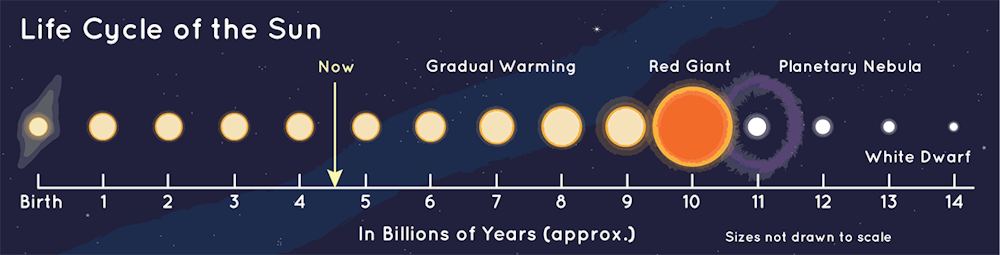
In 1983, Carter attempted to explain what he called a remarkable coincidence: the close approximation between the estimated lifespan of the Sun – 10 billion years – and the time Earth took to produce humans – 5 billion years, rounding up.
He imagined three possibilities. In one, intelligent life like humans generally arises very quickly on planets, geologically speaking – in perhaps millions of years. In another, it typically arises in about the time it took on Earth. And in the last, he imagined that Earth was lucky – ordinarily it would take much longer, say, trillions of years for such life to form.
Carter rejected the first possibility because life on Earth took so much longer than that. He rejected the second as an unlikely coincidence, since there is no reason the processes that govern the Sun’s lifespan – nuclear fusion – should just happen to have the same timescale as biological evolution.
So Carter landed on the third explanation: that humanlike life generally takes much longer to arise than the time provided by the lifetime of a star.
The Sun will likely be able to keep planets habitable for only part of its lifetime – by the time it hits 10 billion years, it will get too hot. NASA/JPL-Caltech
To explain why humanlike life took so long to arise, Carter proposed that it must depend on extremely unlikely evolutionary steps, and that the Earth is extraordinarily lucky to have taken them all.
He called these evolutionary steps hard steps, and they had two main criteria. One, the hard steps must be required for human existence – meaning if they had not happened, then humans would not be here. Two, the hard steps must have very low probabilities of occurring in the available time, meaning they usually require timescales approaching 10 billion years.
Tracing humans’ evolutionary lineage will bring you back billions of years.
If an evolutionary innovation required for human existence was truly improbable in the available time, then it likely wouldn’t have happened more than once, although it must have happened at least once, since we exist.
For example, the origin of nucleated – or eukaryotic – cells is one of the most popular hard steps scientists have proposed. Since humans are eukaryotes, humanity would not exist if the origin of eukaryotic cells had never happened.
On the universal tree of life, all eukaryotic life falls on exactly one branch. This suggests that eukaryotic cells originated only once, which is consistent with their origin being unlikely.
In the evolutionary tree of life, organisms that have eukaryotic cells are all on the same branch, suggesting this type of cell evolved only once. VectorMine/iStock via Getty Images Plus
The other most popular hard-step candidates – the origin of life, oxygen-producing photosynthesis, multicellular animals and humanlike intelligence – all share the same pattern. They are each constrained to a single branch on the tree of life.
However, as the evolutionary biologist and paleontologist Geerat Vermeij argued, there are other ways to explain why these evolutionary events appear to have happened only once.
This pattern of apparently singular origins could arise from information loss due to extinction and the incompleteness of the fossil record. Perhaps these innovations each evolved more than once, but only one example of each survived to the modern day. Maybe the extinct examples never became fossilized, or paleontologists haven’t recognized them in the fossil record.
Or maybe these innovations did happen only once, but because they could have happened only once. For example, perhaps the first evolutionary lineage to achieve one of these innovations quickly outcompeted other similar organisms from other lineages for resources. Or maybe the first lineage changed the global environment so dramatically that other lineages lost the opportunity to evolve the same innovation. In other words, once the step occurred in one lineage, the chemical or ecological conditions were changed enough that other lineages could not develop in the same way.
If these alternative mechanisms explain the uniqueness of these proposed hard steps, then none of them would actually qualify as hard steps.
But if none of these steps were hard, then why didn’t humanlike intelligence evolve much sooner in the history of life?
Environmental evolution
Geobiologists reconstructing the conditions of the ancient Earth can easily come up with reasons why intelligent life did not evolve sooner in Earth history.
For example, 90% of Earth’s history elapsed before the atmosphere had enough oxygen to support humans. Likewise, up to 50% of Earth’s history elapsed before the atmosphere had enough oxygen to support modern eukaryotic cells.
All of the hard-step candidates have their own environmental requirements. When the Earth formed, these requirements weren’t in place. Instead, they appeared later on, as Earth’s surface environment changed.
We suggest that as the Earth changed physically and chemically over time, its surface conditions allowed for a greater diversity of habitats for life. And these changes operate on geologic timescales – billions of years – explaining why the proposed hard steps evolved when they did, and not much earlier.
In this view, humans originated when they did because the Earth became habitable to humans only relatively recently. Carter had not considered these points in 1983.
Moving forward
But hard steps could still exist. How can scientists test whether they do?
Earth and life scientists could work together to determine when Earth’s surface environment first became supportive of each proposed hard step. Earth scientists could also forecast how much longer Earth will stay habitable for the different kinds of life associated with each proposed hard step – such as humans, animals and eukaryotic cells.
Evolutionary biologists and paleontologists could better constrain how many times each hard-step candidate occurred. If they did occur only once each, they could see whether this came from their innate biological improbability or from environmental factors.
Lastly, astronomers could use data from planets beyond the solar system to figure out how common life-hosting planets are, and how often these planets have hard-step candidates, such as oxygen-producing photosynthesis and intelligent life.
If our view is correct, then the Earth and life have evolved together in a way that is more typical of life-supporting planets – not in the rare and improbable way that the hard-steps model predicts. Humanlike intelligence would then be a more expected outcome of Earth’s evolution, rather than a cosmic fluke.
Researchers from a variety of disciplines, from paleontologists and biologists to astronomers, can work together to learn more about the probability of intelligent life evolving on Earth and elsewhere in the universe.
If the evolution of humanlike life was more probable than the hard-steps model predicts, then researchers are more likely to find evidence for extraterrestrial intelligence in the future.
Daniel Brady Mills receives funding from the German Research Foundation.
Jason Wright works for Penn State University, where his research in the search for life in the universe is supported by internal funds, grants from NASA, and individual philanthropists.
Jennifer L. Macalady works for Penn State University, where her research on how microorganisms, minerals and fluids interact through geologic time is supported by internal funds, grants from NASA and NSF, and grants from private foundations.
Source: United States Senator for Alaska Dan Sullivan
02.14.25
WASHINGTON—In response to questions posed yesterday by U.S. Senator Dan Sullivan (R-Alaska) in a hearing of the Senate Armed Services Committee (SASC), General Gregory Guillot, commander of U.S. Northern Command and the North American Aerospace Defense Command (NORAD), endorsed the idea of reopening the long-shuttered Adak Naval Air Station and increasing military infrastructure investments across Alaska. In his exchange with Gen. Guillot, Sen. Sullivan highlighted the escalating incursions by Russian and Chinese military aircraft and vessels in Alaska’s Air Defense Identification Zone (ADIZ) and Exclusive Economic Zone (EEZ) in the past several years.
Gen. Guillot also committed to working with Sen. Sullivan on implementing President Trump’s executive order, “Iron Dome for America,” and on Sens. Sullivan and Kevin Cramer’s (R-N.D.) IRON DOME Act, new legislation to strengthen and expand the U.S. homeland missile defense system.
[embedded content]
Below is a full transcript of Sen. Sullivan’s exchange in SASC.
Sen. Dan Sullivan: Thank you, Mr. Chairman. Gentlemen, thank you for your testimony. I want to echo what the chairman has been saying. We do need Canada to step up. When they don’t meet their 2 percent of GDP NATO commitments, it undermines the entire alliance. I appreciate that the chairman mentioned that. General, it was good to meet with you the other day. We had a meeting with senior Trump administration officials just a couple days ago—a number of senators who are focused on the border. They focused, like your testimony, a lot on the northern border, which I really appreciate. I have a chart here that depicts a lot of the air and sea incursions that we’ve seen in the last few years. It’s been quite remarkable, particularly the joint Chinese-Russian strategic bomber missions into our ADIZ and the joint Chinese-Russian naval task force—quite big—[an 11] ship naval task force [in 2023]. President Trump himself commented recently that we need to increase military investments in Alaska as Russia and China make more menacing moves in the region. That’s a list—that’s just an example of all the different incursions, air and sea, just in the last [few] years, which is quite astounding. General, I want to go into a little bit more detail. Your troops have done a great job of intercepting these strategic bombers. By the way, they come with armed MiGs, right? This is a serious incursion. Not easy to do. Our Navy’s done a good job—although, the first time we had that joint Russian-Chinese task force, we didn’t have any Navy response, nothing, which was ridiculous, in my view. One 150-foot Coast Guard cutter. But these are difficult missions, made more difficult—for example, when you’re intercepting strategic bombers, a lot of times our fighters are having to fly over a thousand miles just to get to the end of the ADIZ to intercept them. So, my question—Do you agree we need more infrastructure? You and I have talked about reopening the airfield and the Navy base at Adak, which is out here in the Aleutian Island chain, or Utqiagvik and Barrow, Alaska, to help with the SAR missions. Can you explain that in a little bit more detail? Admiral Paparo is in agreement with you on this. These incursions are going to increase. This is America, our northern border, and yet the infrastructure we have for the young men and women who are doing these dangerous intercept missions, both at sea and in the air, they need more infrastructure for their safety and for our rapid response. Do you agree with me that they do and would you support reopening the Adak naval base and the extension of the Barrow runway, which is way up there in the northern part of America, North America?
Gen. Greg Guillot: Senator, I do agree with you. As you mentioned, Admiral Paparo and I are very closely linked and aligned on all issues in the Pacific. I would support Adak for sure for maritime and air access and, as you pointed out, Deadhorse or a point at the far north part of Alaska, because those missions aren’t only long—a thousand miles or more with five or six or seven air refuelings usually at night—but also the harsh conditions. If a pilot should have to eject, having those forward points that you mentioned would allow us to pre-position search and rescue aircraft or be able to land there in an emergency, which are capabilities that we just don’t have right now.
DS: Great. Thank you on that. Again, I want to thank the men and women under your command. They do these intercept missions all the time. They’re very tough. They’re dangerous. They don’t make a lot of news down here in the Lower 48, but they’re doing a great job.
Let me turn to missile defense. Senator Cramer and I recently introduced our IRON DOME Act that reinforces what President Trump’s executive order does. That’s a depiction of that, covering the whole United States with integrated missile defense systems to protect our homeland. I’d love to get co-sponsorships from all my colleagues. My 2017 Advancing America’s Missile Defense Act, which pretty much became law in the NDAA, had 30 co-sponsors—ten Democrats, 20 Republicans. Can I get your sense to—first, your commitment to work with me and Senator Cramer on that? Then, you mentioned the NGIs and the ground-based missile interceptors. Those are almost all based in Alaska. Why is it taking so long to fill those 20 silos that we just built out that are needed? Can I get your commitment to work with me, as part of this IRON DOME Act, to accelerate that?
GG: Senator, you have my full commitment to work with you on the Iron Dome. The core mission of NORAD and NORTHCOM is to defend just as you described there. You also have my full commitment to work to move all defense industrial base capabilities to the left to bring these capabilities earlier as our adversaries are advancing their capability, and we must keep pace.
Source: United States Senator for Arkansas – John Boozman
WASHINGTON––U.S. Senators John Boozman (R-AR) and Steve Daines (R-MT) introduced the Protecting Access for Hunters and Anglers Act to prohibit the U.S Fish and Wildlife Service (USFWS), the Bureau of Land Management (BLM) and the U.S. Forest Service (USFS) from banning the use of lead ammunition or tackle on public lands unless such action is supported by the best available science.
“Enjoying the outdoors through hunting and fishing is part of the fabric and culture of The Natural State,” said Boozman. “These cherished pastimes not only help Arkansans connect to the resources we are blessed to enjoy but also play an important role in wildlife management. I am proud to join my colleagues in working to ensure hunting and fishing can continue on public lands without unreasonable, unscientific restrictions.”
“The great outdoors is a staple of our Montana way of life. Montana hunters and anglers play an important role in wildlife management, and a ban on lead ammo and tackle would be unfair to our sportsmen. I’ll keep fighting with my colleagues to make sure decisions impacting outdoor recreation are guided by commonsense science, not anti-hunting groups,” said Daines.
Specifically, the legislation blocks a prohibition on the use of lead ammunition or tackle unless a decline in wildlife population in a specific unit of federal land or water is primarily caused by the use of lead in ammunition or tackle.
The Protecting Access for Hunters and Anglers Act is cosponsored by Senate Majority Leader John Thune (R-SD) and Senators Jerry Moran (R-KS), Dan Sullivan (R-AK), Bill Cassidy, M.D. (R-LA), Thom Tillis (R-NC), Mike Crapo (R-ID), Jim Risch (R-ID), Cynthia Lummis (R-WY), John Barrasso (R-WY), Rick Scott (R-FL), James Lankford (R-OK), Tommy Tuberville (R-AL), Mike Lee (R-UT), Roger Marshall, M.D. (R-KS), Marsha Blackburn (R-TN), Roger Wicker (R-MS), Deb Fischer (R-NE), Tim Sheehy (R-MT), Mike Rounds (R-SD), Katie Britt (R-AL), Kevin Cramer (R-ND), Tom Cotton (R-AR), Jim Justice (R-WV), Bill Hagerty (R-TN), John Hoeven (R-ND) and Cindy Hyde-Smith (R-MS).
Public Notice: Certified Election Equipment Demonstration
The Missouri Secretary of State invites the public to attend a demonstration of election equipment by a current certified vendor. This event aims to showcase the voting system seeking certification for sale and use in Missouri elections.
Event Details:
Date: Tuesday, February 18, 2025
Time: 2:00 p.m.
Place: Missouri State Capitol, 201 W Capitol Ave, House Hearing Room 2, Jefferson City, MO 65101
Rutland, Vermont – The Office of the United States Attorney for the District of Vermont announced that yesterday, Tyler Hayes, 42, of Bennington, Vermont, was convicted of two charges stemming from his unlawful possession of a homemade bomb, following a jury trial in U.S. District Court in Rutland. U.S. District Judge Joseph Laplante ordered that Hayes remain in jail pending sentencing, which has not been scheduled. Hayes has been held in custody since his arrest on January 19, 2024.
According to court records and evidence presented at trial, a bomb was discovered in Hayes’s former Bennington residence days after he abandoned the property in February of 2023. The property manager contacted law enforcement, who defused the bomb. Witnesses at trial described how Hayes had been discussing and constructing bombs for months, and had offered to trade a bomb for fentanyl. Other witnesses described Hayes making admissions after the bomb was discovered, including that he was “on the run” after a bomb had been found at his residence. An explosives expert from the Bureau of Alcohol, Tobacco, Firearms, and Explosives testified that, although the homemade bomb was rudimentary and simplistic (constructed from a combination of a pipe bomb and flammable liquids stored in plastic water bottles), it was nonetheless capable of causing substantial destruction and injury had it been detonated.
The jury convicted Hayes of possessing an unregistered destructive device, in violation of the National Firearms Act (“NFA”), and of possessing a destructive device while being an unlawful user of a controlled substance, in violation of the Gun Control Act (“GCA”). Hayes faces up to 10 years in prison on the NFA violation, and up to 15 years on the GCA violation. The actual sentence will be determined by the judge with reference to the Federal Sentencing Guidelines and the statutory sentencing factors.
“Yesterday’s guilty verdict in Rutland reflects not only the investigative skill of agents from the Bureau of Alcohol, Tobacco, Firearms & Explosives and Homeland Security Investigations, but also the work of an extraordinary team of prosecutors and support staff from this office,” stated Acting United States Attorney Michael P. Drescher. “The superb organization and presentation of evidence at trial demonstrated not only that Hayes was guilty of the crimes charged beyond a reasonable doubt, but also the extreme danger he presented to the community.” Drescher also thanked the Vermont State Police, whose Explosive Ordinance Disposal Unit disabled the bomb, as well as the Bennington Police Department for their assistance in the case.
The prosecutors are Assistant United States Attorneys Corinne Smith and Nicole Cate. Hayes is represented by James Valente, Esq., and Chandler Matson, Esq.
This case is part of Project Safe Neighborhoods (PSN), a program bringing together all levels of law enforcement and the communities they serve to reduce violent crime and gun violence, and to make our neighborhoods safer for everyone. On May 26, 2021, the Department launched a violent crime reduction strategy strengthening PSN based on these core principles: fostering trust and legitimacy in our communities, supporting community-based organizations that help prevent violence from occurring in the first place, setting focused and strategic enforcement priorities, and measuring the results. For more information about Project Safe Neighborhoods, please visit Justice.gov/PSN.
Louisville, KY – A local man was sentenced yesterday to 10 years in federal prison for conspiracy to distribute methamphetamine and distribution of methamphetamine.
U.S. Attorney Michael A. Bennett of the Western District of Kentucky, Acting Special Agent in Charge A.J. Gibes of the ATF Louisville Field Division, and Chief Paul Humphrey of the Louisville Metro Police Department made the announcement.
According to court documents, Shawon Hickman, 51, was sentenced to 10 years in prison, followed by 5 years of supervised release, for conspiring to possess with the intent to distribute more than 50 grams of methamphetamine from February to June 8, 2023, and for distributing over 50 grams of methamphetamine on February 16th and March 1st, 2023 in Jefferson County, Kentucky.
There is no parole in the federal system.
This case was investigated by the ATF with assistance from the Louisville Metro Police Department.
Assistant U.S. Attorney Joshua R. Porter prosecuted the case.
This case is part of Project Safe Neighborhoods (PSN), a program bringing together all levels of law enforcement and the communities they serve to reduce violent crime and gun violence, and to make our neighborhoods safer for everyone. On May 26, 2021, the Department launched a violent crime reduction strategy strengthening PSN based on these core principles: fostering trust and legitimacy in our communities, supporting community-based organizations that help prevent violence from occurring in the first place, setting focused and strategic enforcement priorities, and measuring the results.
BECKLEY, W.Va. – Matthew Harris England, 38, of Meadow Bridge, was sentenced today to one year and eight months in prison, to be followed by three years of supervised release, for being a felon in possession of a firearm and possession of an unregistered short-barreled shotgun.
According to court documents and statements made in court, on April 3, 2023, law enforcement responded to reports of a domestic disturbance at England’s residence in Meadow Bridge. When law enforcement entered the residence, they found and seized a Savage model Stevens 94F, 20-gauge shotgun with a modified and shortened barrel and a modified and shortened stock on a chair in the living room. England was arrested, and told officers he knew the firearm was in the residence and that the length of its barrel appeared to be illegal.
The short-barreled shotgun was not registered to England in the National Firearms Registration and Transfer Record as required by federal law. Federal law also prohibits a person with a prior felony conviction from possessing a firearm or ammunition. England knew he was prohibited from possessing a firearm because of his prior felony convictions for aiding and abetting the possession of stolen firearms in United States District Court for the Southern District of West Virginia on May 9, 2014.
United States Attorney Will Thompson made the announcement and commended the investigative work of the Summers County Sheriff’s Department, the West Virginia State Police, and the Bureau of Alcohol, Tobacco, Firearms and Explosives (ATF).
Chief United States District Judge Frank W. Volk imposed the sentence. Assistant United States Attorney Lesley C. Shamblin prosecuted the case.
This case is part of Project Safe Neighborhoods (PSN), a program bringing together all levels of law enforcement and the communities they serve to reduce violent crime and gun violence, and to make our neighborhoods safer for everyone. On May 26, 2021, the Department launched a violent crime reduction strategy strengthening PSN based on these core principles: fostering trust and legitimacy in our communities, supporting community-based organizations that help prevent violence from occurring in the first place, setting focused and strategic enforcement priorities, and measuring the results.
A copy of this press release is located on the website of the U.S. Attorney’s Office for the Southern District of West Virginia. Related court documents and information can be found on PACER by searching for Case No. 5:23-cr-93.
Order attempts to force Apple to provide security authorities access to encrypted user data
Move would put anyone critical of the authorities at increased risk
‘Governments should be encouraging companies to provide greater protections of our data and our rights, not seeking back doors that will leave people around the world at risk’ – Joshua Franco
‘If these reports are true, this is an alarming overreach by the UK authorities seeking to access private data’ – Zach Campbell
The UK government’s order to Apple to allow security authorities access to encrypted cloud data severely harms the privacy rights of users in the UK and worldwide, Amnesty International and Human Rights Watch said today.
The secret order, reported in The Washington Post last week, was issued in January by the Home Office. It concerns Advanced Data Protection, an iPhone function that uses end-to-end encryption on data stored in the cloud, ensuring that only the user of the account can access the data stored and attempts to force Apple to provide security authorities access to it, including device backups that can include contact lists, as well as location and messaging history, for any Apple user worldwide.
The order is disproportionate by design, as it would weaken data protections for all users, not just those suspected of a crime or under investigation. Compliance would harm privacy rights of users worldwide.
News reports said that the Government ordered Apple to build a back door into its products under the Investigatory Powers Act, a 2016 surveillance law that includes provisions allowing the Government to order companies to remove “electronic protection” of user data. The law also prohibits the recipients of these orders, in this case Apple, from acknowledging or commenting on them and reportedly “requires blanket capability to view fully encrypted material” for Apple users worldwide, including users with no apparent connection to the UK.
Privacy vital to protecting people’s rights
Encryption is a crucial enabler of human rights online and offline. Human rights defenders, journalists, and everyone else rely on the security and privacy of their devices to protect them not only from unlawful government spying, but also from cybercrime and other attacks from non-state actors. Weakening encryption, or mandating back doors, leaves all users more vulnerable.
Governments should support strong encryption, and companies should build it into their products and services by default.
In recent years there have been a stream of revelations about government spying relying on surveillance tools eg spyware and digital forensic tools but also taking advantage of overly permissive legal regimes that allow states to access huge troves of personal data from private companies.
State surveillance threatens the work of human rights defenders and journalists, puts marginalised groups including women and LGBT activists at particular risk, and creates a society-wide chilling effect, undermining the rights of everyone to express themselves and protest peacefully.
These tools exploit weaknesses in device encryption and security, and their use is enabled by an under-regulated trade in spyware and other surveillance tools at a global scale, and by the unwillingness of states to regulate their own surveillance practices, too often leaning on “national security” as a blanket excuse for unfettered snooping.
Efforts to protect people’s data
In part due to such revelations, some companies, including Apple, have added new security features to help protect users, including those who may be at particular risk. These include Lockdown Mode, a feature that provides extra protection from spyware and targeted hacking to mobile devices, as well as Advanced Data Protection, the subject of the UK government’s reported order.
The UK is a party to several international and regional treaties enshrining the right to privacy and data protection rights. The vital role of encryption as an enabler of privacy and human rights has been widely recognised including by UN bodies, the UN High Commissioner for Human Rights and human rights experts.
The UN General Assembly and the Human Rights Council, in several resolutions, have called on governments to refrain from interfering with encryption technologies. UN resolutions also encourage technology companies to secure and protect the confidentiality of digital communications and transactions, including measures for encryption, pseudonymisation and anonymity.
Both Amnesty and Human Rights Watch have been critical of the Investigatory Powers Act since its inception. In written evidence to the Joint Committee on the Draft Investigatory Powers Bill in 2016, Human Rights Watch recommended that the UK should refrain from undermining encryption and digital security. It specifically said that the legislation should be amended to ensure that authorities are prohibited from imposing obligations on internet service providers to weaken security measures or design their systems to incorporate measures for exceptional access into encryption by UK authorities.
Joshua Franco, Amnesty Tech’s senior research adviser, said:
“Governments have more and more powerful legal and technical tools at their disposal, and research shows that they are using them to target people for protesting, speaking out, or even just because of what they represent.
“Strong encryption is one of the few protections we have against such attacks, and states should be encouraging companies to provide greater protections of our data and our rights, not seeking back doors that will leave people around the world at risk.”
Zach Campbell, Human Rights Watch’s senior surveillance researcher, said:
“If these reports are true, this is an alarming overreach by the UK authorities seeking to access the private data of not only people in the UK, but anyone worldwide with an Apple account.
“People rely on secure and confidential communications to exercise their rights. Access to device backups is access to your entire phone, and strong encryption to prevent this access should be the norm by default.”
Hideko Hakamada’s brother Iwao was sentenced to death for murder in Japan in 1968. She campaigned tirelessly for his release as he spent nearly five decades on death row, being described as the world’s longest-serving death row prisoner.
In September 2024, Hakamada was acquitted after a retrial – a court ruling that the evidence that incriminated him was fabricated. Here, 92-year-old Hideko celebrates her brother’s long-awaited freedom.
I thought my brother would not smile in prison. So I smiled every time I visited him, so that he would not forget to smile. When I smile, Iwao also smiles. That is what I tried to do.
Everyone knew he was on death row, so there was no point in hiding it. I kept a little distance from the world – I didn’t go to social gatherings. I think that’s how I was able to do so many things so hard for Iwao.
I was in my 40s, I had a job. I would come home from work at night, and when I was home alone at night, my eyes would open suddenly in the middle of the night. Then all I could think about was Iwao. I couldn’t go to sleep. I had to go to work in the morning, so I drank whiskey to sleep. I drank too much. I drank every day. Then I realized I wouldn’t be able to help Iwao if I was like that, so I stopped drinking altogether.
I was so focused on Iwao that I had no regard for anything else. I visited him a lot. I felt that I had to help my brother who was suffering. I was fighting for him because I thought it was only natural that he should be acquitted because he was innocent.
It is a crime for a human being to kill another human being, no matter what the government says.
In November 1980, when Iwao’s appeal was dismissed and the death penalty was confirmed, everyone was there, from the lawyers to the supporters and newspapers. At that very moment, everyone seemed to be my enemy.
Later, however, I was supported by the Japan Federation of Bar Associations and that kind of feeling has eventually disappeared. I am also very much indebted to Amnesty International. We went on a “Speaking Tour” throughout Japan together. It was about appealing to everyone. There were people who had never heard of the Hakamada case.
Iwao was on death row, and we didn’t know what tomorrow would be. But I believe that appealing to these people made a difference.
I used to accept the death penalty without giving it much thought. But after what happened with Iwao, I became against the death penalty. It is a crime for a human being to kill another human being, no matter what the government says.
Some people may say that there are people who seem to deserve death penalty, but criminals are still human beings. Some may be rehabilitated, and some may not be rehabilitated, but they are still human beings. I believe that we have to take care of human beings.
I think it is important for everyone to speak out against the death penalty, even if it may or may not work, rather than just saying nothing because no one will listen. Do not go silent. You must always express that you are against it. We need a world where the death penalty is no more. I believe that the death penalty will eventually be abolished.
We have been fighting for 58 years. We have received support not only from all over Japan, but also from overseas. I would like to express my gratitude to everyone for their support. It was not because of the hard work on my end that Iwao was saved. It was only possible because of this support.
When the judge said that the defendant is not guilty in court, the judge’s voice sounded divine. I was so moved and happy that I burst into tears. I couldn’t stop crying for about an hour.
Source: United States Senator John Hickenlooper – Colorado
Survivors of natural disasters like the Marshall Fire often have to pay thousands of dollars to replace critical documents like passports or visas
WASHINGTON – Today, U.S. Senators John Hickenlooper, James Lankford, Michael Bennet, and John Curtis along with Representatives Joe Neguse and Celeste Maloy introduced the bipartisan, bicameral Replacing Essential Passports and Licenses After Certain Emergencies (REPLACE) Act, which would automatically waive replacement fees for survivors who lose critical documents like passports in natural disasters.
“Costly replacement fees for critical documents – like passports and visas – are one more hurdle for disaster survivors trying to rebuild,” said Hickenlooper. “Waivers are already legal. They should be automatic.”
“As families recover from major disasters, the last thing they should have to worry about is paying to replace passports and other critical documents lost in the damage,” said Bennet. “Our bill will ensure document replacement is free, taking one burden off of Coloradans’ shoulders as they move forward after disaster strikes.”
“I’m pleased to reintroduce the Replace Act and address the urgent needs of disaster-impacted Americans by ensuring fee waivers for essential documents are automatically granted. When a wildfire destroys a home, the last thing that a family should worry about is paying fees to replace their documents like passports and birth certificates,” said Curtis. “This legislation is particularly crucial for rural Utahns, who will benefit from streamlined access to document replacements in times of need.”
“In the aftermath of the Marshall Fire, our office worked to ensure those affected could quickly recover critical documents like passports and birth certificates. After a disaster, the cost of replacing lost documents can be overwhelming. Our bill, the REPLACE Act, helps ease this burden by waiving fees for those impacted—ensuring passports and immigration documents can be replaced at no additional cost,” said Neguse.
“Utah families should not have to cover the costs to replace critical documents – like passports and visas – after wildfires and other natural disasters,” said Maloy. “The REPLACE Act removes a bureaucratic hurdle so that survivors can move forward with one less thing to worry about.”
Victims of major disasters can spend tens of thousands of dollars replacing critical documents lost in natural disasters, including passports, employment authorizations, proof of citizenship, green cards, and more.
Under current law, federal agencies may waive these fees, but this process is not automatic. Waivers are not guaranteed and are not always issued. Additionally, survivors may not know to wait for a fee waiver and often need documentation immediately.
The REPLACE Act would amend the Disaster Recovery Reform Actof 2018 to require automatic waivers of certain critical document fees for individuals and households affected by major disasters.
The REPLACE Act would automatically waive the cost of replacing:
IAM Union is calling on President Trump to immediately reverse his decision and reinstate Gwynne Wilcox to the National Labor Relations Board (NLRB). IAM Union believes this action is critical for ensuring that working Americans receive the full protections they are entitled to under U.S. labor law.
On Jan. 27, President Trump unlawfully dismissed Wilcox, the first Black woman to serve on the board. This decision was not only a violation of legal processes, but also a direct assault on the rights of American workers.
TAKE ACTION: Call 866-832-1560 or click here to urge your representatives to support Wilcox’s reinstatement.
By reducing the NLRB to only two members, the president has effectively crippled the board’s ability to function, leaving workers vulnerable to union-busting tactics and retaliation.
“The IAM urges President Trump to reverse the unprecedented and illegal firing of National Labor Relations Board Member Gwynne Wilcox, restore the Board’s independence, and protect workers’ rights,” said IAM International President Brian Bryant in a letter sent to members of Congress.
Thanks in large part to the IAM’s advocacy, a bipartisan group of 265 lawmakers, including every single U.S. House and Senate Democrat, as well as U.S. Rep. Brian Fitzpatrick (R-Pa.), sent a letter to President Trump urging him to reinstate Wilcox “to restore the NLRB’s ability to protect the rights of American workers to organize and collectively bargain, which have already been impaired by understaffing at the agency and now are effectively lost by the lack of quorum on the NLRB.”
With a suite of NASA science and technology on board, Firefly Aerospace is targeting no earlier than 3:45 a.m. EST on Sunday, March 2, to land the Blue Ghost lunar lander on the Moon. Blue Ghost is slated to touch down near Mare Crisium, a plain in the northeast quadrant on the near side of the Moon, as part of NASA’s CLPS (Commercial Lunar Payload Services) initiative and Artemis campaign to establish a long-term lunar presence. Live coverage of the landing, jointly hosted by NASA and Firefly, will air on NASA+ starting at 2:30 a.m. EST, approximately 75 minutes before touchdown on the Moon’s surface. Learn how to watch NASA content through a variety of platforms, including social media. The broadcast will also stream on Firefly’s YouTube channel. Coverage will include live streaming and blog updates as the descent milestones occur. Accredited media interested in attending the in-person landing event hosted by Firefly in the Austin, Texas, area may request media credentials through this form by Monday, Feb. 24. Following the landing, NASA and Firefly will host a news conference to discuss the mission and science opportunities that lie ahead as they begin lunar surface operations. The time of the briefing will be shared after touchdown. Blue Ghost launched Jan. 15, at 1:11 a.m. EST on a SpaceX Falcon 9 rocket from Launch Complex 39A at NASA’s Kennedy Space Center in Florida. The lander is carrying a suite of 10 NASA scientific investigations and technology demonstrations, which will provide insights into the Moon’s environment and test technologies to support future astronauts landing safely on the lunar surface, as well as Mars. NASA continues to work with multiple American companies to deliver science and technology to the lunar surface through the agency’s CLPS initiative. This pool of companies may bid on contracts for end-to-end lunar delivery services, including payload integration and operations, launching from Earth, and landing on the surface of the Moon. NASA’s CLPS contracts are indefinite-delivery/indefinite-quantity contracts with a cumulative maximum value of $2.6 billion through 2028. In February 2021, the agency awarded Firefly this delivery of 10 NASA science investigations and technology demonstrations to the Moon using its American-designed and -manufactured lunar lander for approximately $93.3 million (modified to $101.5 million). Through the Artemis campaign, commercial robotic deliveries will perform science experiments, test technologies, and demonstrate capabilities on and around the Moon to help NASA explore in advance of Artemis Generation astronaut missions to the lunar surface, and ultimately crewed missions to Mars. Watch, engage on social media Let people know you’re following the mission on X, Facebook, and Instagram by using the hashtag #Artemis. You can also stay connected by following and tagging these accounts: X: @NASA, @NASA_Johnson, @NASAArtemis, @NASAMoon Facebook: NASA, NASAJohnsonSpaceCenter, NASAArtemis Instagram: @NASA, @NASAJohnson, @NASAArtemis For more information about the agency’s Commercial Lunar Payload Services initiative: https://www.nasa.gov/clps -end- Karen Fox / Alise Fisher Headquarters, Washington 202-358-1600 karen.c.fox@nasa.gov / alise.m.fisher@nasa.gov Natalia Riusech / Nilufar RamjiJohnson Space Center, Houston 281-483-5111 natalia.s.riusech@nasa.gov / nilufar.ramji@nasa.gov
On Tuesday, January 28th, Fairbanks BEST Homeschool joined the Geophysical Institute for an afternoon of rocket exploration, hands-on activities, and stargazing inside a planetarium. This event was free and open to the public. Despite their frigid winter weather, 200 attendees were curious about the scientific endeavors of Alaska-based researchers alongside cutting-edge investigations conducted by NASA rocket scientists. Families and friends in attendance learned about two NASA rocket missions that would study the flickering and vanishing auroras: Ground Imaging to Rocket investigation of Auroral Fast Features (GIRAFF) and Black and Diffuse Aurora Science Surveyor (BaDASS). Visitors had an opportunity to sign up for text notifications related to the launch window. The planetarium presentations touch on Heliophysics Big Ideas that align with the three questions that drive NASA’s heliophysics research:
What are the impacts of the changing sun on humanity? How do Earth, the solar system, and the heliosphere respond to changes on the sun? What causes the sun to vary?
The event also offered sun-related hands-on activities provided by the University of Alaska Museum of the North. This event was offered to the community in association with the Science For Alaska Lecture Series and the 2025 NASA Sounding Rocket campaign. Every attendee left with something inspiring to think about. Parents and educators interested in learning more about auroras and do participatory science may check out NASA’s Aurorasaurus citizen science project. The Geophysical Institute at the University of Alaska Fairbanks is a Co-Investigating team for the NASA Heliophysics Education Activation Team (NASA HEAT), which is part of NASA’s Science Activation Portfolio. Learn more about how Science Activation connects NASA science experts, content, and experiences with community leaders to do science in ways that activate minds and promote deeper understanding of our world and beyond: https://science.nasa.gov/learn Aurora Educational Resource List by Aurorasaurus
It was so much fun! We are receiving rave reviews from our families and the surrounding community. THANK YOU AGAIN FOR COLLABORATING WITH US!
Headline: How to do Business with FEMA After a Disaster
How to do Business with FEMA After a Disaster
LOS ANGELES – FEMA works with private sector vendors to help fulfill the response and recovery needs for disasters like the recent Los Angeles County Wildfires.The Doing Business with FEMA webpage outlines the steps that companies and small businesses looking to compete for federal contracts should take. During response and recovery, FEMA’s goal is to contract with local businesses in the affected area whenever practical and feasible.FEMA will only engage with companies through the federal procurement process. Business solicitations sent to individual members of the FEMA workforce will not be processed. The FEMA website outlines how companies can see and respond to the agency’s solicitations. The key steps to beginning the process are:Consult your local procurement center: We recommend you consider consulting with these Procurement Technical Assistance Centers.Register with SAM.gov: This is the System for Award Management. Entity registrations are free, and registration is required to do business with the federal government.Understand the FEMA mission: FEMA’s mission, as authorized by the Robert T. Stafford Act, is to help people before, during and after disasters.Monitor contracting sites for opportunities: Contracting sites are listed on FEMA’s webpage.Debris removal is often contracted locally after a disaster. If your company provides debris removal services, you can sign up with the U.S. Army Corps of Engineers Contractor Registry. You can also register your business information (including capabilities and locations served).Additional information can be found on our Frequently Asked Questions webpage.For the latest information about California’s recovery, visit fema.gov/disaster/4856. Follow FEMA Region 9 @FEMARegion9 on X or follow FEMA on social media at: FEMA Blog on fema.gov, @FEMA or @FEMAEspanol on X, FEMA or FEMA Espanol on Facebook, @FEMA on Instagram, and via FEMA YouTube channel. California is committed to supporting residents impacted by the Los Angeles Hurricane-Force Firestorm as they navigate the recovery process. Visit CA.gov/LAFires for up-to-date information on disaster recovery programs, important deadlines, and how to apply for assistance. daniel.demski Fri, 02/14/2025 – 18:01
This image, released on Feb. 12, 2025, is the deepest X-ray image ever made of the spectacular star forming region called 30 Doradus. By combining X-ray data from NASA’s Chandra X-ray Observatory (blue and green) with optical data from NASA’s Hubble Space Telescope (yellow) and radio data from the Atacama Large Millimeter/submillimeter Array (orange), this stellar arrangement comes alive. Otherwise known as the Tarantula Nebula, 30 Dor is located about 160,000 light-years away in a small neighboring galaxy to the Milky Way known as the Large Magellanic Cloud. Because it one of the brightest and populated star-forming regions to Earth, 30 Dor is a frequent target for scientists trying to learn more about how stars are born. Learn more about this new image and what it reveals. Image credit: X-ray: NASA/CXC/Penn State Univ./L. Townsley et al.; Infrared: NASA/JPL-CalTech/SST; Optical: NASA/STScI/HST; Radio: ESO/NAOJ/NRAO/ALMA; Image Processing: NASA/CXC/SAO/J. Schmidt, N. Wolk, K. Arcand
A small island at Tonga’s Home Reef got a little roomier in recent weeks. The underwater volcano emerged above sea level during a 2022 eruption, adding new land to the nation of islands in the South Pacific Ocean. It continued to grow during eruptions in September 2023, January 2024, and June 2024, expanding to 12.2 hectares (30.1 acres). During the most recent period of activity, from December 2024 to January 2025, the island grew another 3.7 hectares. Landsat satellites observed the island’s recent growth spurt. The OLI-2 (Operational Land Imager-2) on Landsat 9 captured an image of the island on November 11, 2024 (left), before the latest expansion. The OLI (Operational Land Imager) on Landsat 8 imaged the same location on February 2, 2025 (right). The new land formed as lava flowed from the volcano’s vent and solidified into rock. The discolored water around the island is a sign of gases and magmatic fluids escaping from the volcano. “Most likely, we’re seeing a large amount of yellow sulfur mixing with the blue ocean to give the plumes a greenish hue,” said Cornel de Ronde, a geologist at GNS Science and the co-author of a study in Geochemistry, Geophysics, Geosystems about monitoring submarine volcanoes. The impact of underwater volcanic eruptions on marine ecosystems can be mixed. Some of the substances found in underwater plumes, especially iron, can encourage the growth of phytoplankton, said Sharon Walker, a NOAA oceanographer and lead author of the study. However, the hot, acidic plumes are also known to be harmful to many species of fish and other types of marine life. Meanwhile, the new land offers more habitat for pioneer species, such as bacteria, algae, lichens, insects, and seabirds. Prior to 2022, Home Reef had four recorded eruptions, including events in 1852 and 1857 that formed small, temporary islands. In 2006, an eruption also produced an island that had cliffs measuring up to 70 meters (230 feet) tall and survived for about nine months. Geologists expect the current island to last longer. “Some of the previous eruptions had a more explosive character, which led to land made of a more fragmented, easily erodible material,” said Simon Plank, a researcher from the German Aerospace Center (DLR). “This one is characterized by effusive flows that form a hard material that gives the island a high chance of surviving for several years.” Home Reef sits within the Tonga-Kermadec subduction zone, an area where three tectonic plates are colliding at the fastest converging boundary in the world. Here, the Pacific Plate is sinking beneath two other small plates, yielding one of Earth’s deepest trenches and most active volcanic arcs. So far, Home Reef’s eruptions have had little impact on people, unlike the neighboring Hunga Tonga-Hunga Ha‘apai volcano, which erupted in 2022, triggering a tsunami, covering nearby islands with ash, and damaging crops and fisheries. “Given what the world witnessed at Hunga, it’s certainly worth monitoring submarine volcanoes,” said de Ronde. “Satellites offer one of the best, quickest, and safest ways to do that.”
NASA Earth Observatory images by Lauren Dauphin, using Landsat data from the U.S. Geological Survey. Story by Adam Voiland.
The universe is a dusty place, as this NASA/ESA Hubble Space Telescope image featuring swirling clouds of gas and dust near the Tarantula Nebula reveals. Located in the Large Magellanic Cloud about 160,000 light-years away in the constellations Dorado and Mensa, the Tarantula Nebula is the most productive star-forming region in the nearby universe, home to the most massive stars known. The nebula’s colorful gas clouds hold wispy tendrils and dark clumps of dust. This dust is different from ordinary household dust, which may include of bits of soil, skin cells, hair, and even plastic. Cosmic dust is often comprised of carbon or of molecules called silicates, which contain silicon and oxygen. The data in this image was part of an observing program that aims to characterize the properties of cosmic dust in the Large Magellanic Cloud and other nearby galaxies. Dust plays several important roles in the universe. Even though individual dust grains are incredibly tiny, far smaller than the width of a single human hair, dust grains in disks around young stars clump together to form larger grains and eventually planets. Dust also helps cool clouds of gas so that they can condense into new stars. Dust even plays a role in making new molecules in interstellar space, providing a venue for individual atoms to find each other and bond together in the vastness of space.
Explore More
Media Contact: Claire Andreoli (claire.andreoli@nasa.gov)NASA’s Goddard Space Flight Center, Greenbelt, MD
Source: US Department of Health and Human Services – 3
For Immediate Release:
Today, the U.S. Food and Drug Administration approved Merilog (insulin-aspart-szjj) as biosimilar to Novolog (insulin aspart) for the improvement of glycemic control in adults and pediatric patients with diabetes mellitus. Merilog, a rapid-acting human insulin analog, is the first rapid-acting insulin biosimilar product approved by the FDA. As a rapid-acting insulin, Merilog helps to lower mealtime blood sugar spikes to improve control of blood sugar in people with diabetes. The approval is for both a 3 milliliter (mL) single-patient-use prefilled pen and a 10 milliliter (mL) multiple-dose vial.
Merilog is the third insulin biosimilar product approved by the FDA and joins the two long-acting insulin biosimilar products approved in 2021 by the FDA. Approval of biosimilar products can increase patient access to safe and effective treatment options.
“The FDA has now approved three biosimilar insulin products to treat diabetes,” said Peter Stein, M.D., director of the Office of New Drugs in the FDA’s Center for Drug Evaluation and Research. “Today’s approval highlights our continued efforts to improve the efficiency of the biosimilar approval process to help support a competitive marketplace and increase options for costly treatments, like insulin. Increasing access to safe, effective and high-quality medications at potentially lower cost remains a continued priority for the FDA.”
Biological products include medications for treating many serious illnesses and chronic health conditions, including diabetes. A biosimilar is a biological product that is highly similar to, and has no clinically meaningful differences from, a biological product already approved by the FDA (also called the reference product). Patients can expect the same safety and effectiveness from the biosimilar as from the reference product. To date, the FDA has approved 65 biosimilar products for a variety of health conditions.
More than 38 million people in the U.S. have been diagnosed with diabetes, a disease that occurs when blood glucose (sugar) is too high. Approximately 8.4 million Americans rely on insulin therapy, either rapid-acting and/or long-acting, to manage diabetes. Insulin, a hormone made by the pancreas, helps glucose get into a person’s cells to be used for energy. With diabetes, the pancreas doesn’t make enough insulin to keep blood sugar levels in the normal range, which can lead to serious health problems for patients.
“For the millions of people who rely on daily injections of insulin for treatment of diabetes, having a biosimilar option for their rapid-acting insulin injection can truly make a difference, as biosimilar products have the potential to increase access to these life-saving medications,” said Sarah Yim, M.D., director of the Office of Therapeutic Biologics and Biosimilars in the FDA’s Center for Drug Evaluation and Research.
Like Novolog, Merilog should be administered within five to ten minutes prior to the start of a meal. Merilog is administered subcutaneously (under the skin) by injection into the stomach, buttocks, thighs or upper arms. Dosing of Merilog should be individualized and adjusted based on the patient’s needs.
Merilog may cause serious side effects, including hypoglycemia (low blood sugar), severe allergic reactions and hypokalemia (low potassium in blood). Other common side effects may include injection site reactions, itching, rash, lipodystrophy (skin thickening or pitting at the injection site), weight gain and swelling of hands and feet.
The FDA granted approval of Merilog to Sanofi-Aventis U.S. LLC.
Related Information
Related Information
###
Boilerplate
The FDA, an agency within the U.S. Department of Health and Human Services, protects the public health by assuring the safety, effectiveness, and security of human and veterinary drugs, vaccines and other biological products for human use, and medical devices. The agency also is responsible for the safety and security of our nation’s food supply, cosmetics, dietary supplements, radiation-emitting electronic products, and for regulating tobacco products.
CHARLESTON, W.Va. – The West Virginia Higher Education Policy Commission and Community and Technical College System remind students that the deadlines to apply for the merit-based financial aid program Promise Scholarship and the need-based West Virginia Higher Education Grant Program (HEGP) for the 2025-2026 academic year are quickly approaching. High school seniors may apply for the $5,500 annual Promise award until March 1; and the $3,400 Higher Education Grant annual award until April 15.
“The Promise Scholarship and Higher Education Grant open doors of opportunity for West Virginia’s students,” said Dr. Sarah Armstrong Tucker, West Virginia’s Chancellor of Higher Education. “I encourage this year’s high school seniors to complete the FAFSA and apply for our state’s financial aid programs, and to reach out to our office for support.”
“In addition, anyone planning to enroll in college within the next 12 months should file the FAFSA to see if they are eligible for the HEGP,” Chancellor Tucker added. “This includes adult first-time students and those returning to college to retrain.”
The Promise Scholarship eligibility requirements for the class of 2025 are:
ACT: 21 composite score with a minimum of 19 in English, math, science, and reading.
SAT: 1080 total score with a minimum of 510 in math, evidence-based reading, and writing.
The Promise Scholarship application and other eligibility requirements are available at cfwv.com/promise. The Free Application for Federal Student Aid (FAFSA), which is required to access all state and federal financial aid and serves as the application for the HEGP, can be completed online at fafsa.gov.
For assistance filing the FAFSA or with applications, students and families are encouraged to call the state’s financial aid hotline at 877-987-7664. Students are also encouraged to sign up for West Virginia’s text-message college counseling program, “Txt 4 Success,” by visiting cfwvconnect.com/txt-4-success/.
[BOISE] – Attorney General Raúl Labrador has announced investigators with his Idaho Internet Crimes Against Children (ICAC) Task Force and the Pocatello Police Department, working in conjunction with the Homeland Security Investigations (HSI) arrested James Martin (32) on Thursday, February 13th, 2025, under 18 U.S Code 2422 – Coercion and Enticement of a Child for Sexual Activity. “Every ICAC arrest makes our communities safer by taking these predators out of circulation,” said Attorney General Labrador. “I’m grateful for the hard work our ICAC Unit does to keep Idaho children safe from exploitation. The network of partnerships across the state makes it possible to take swift action in these critical situations.” “This arrest is a critical step in our ongoing efforts to protect the most innocent members of our society,” said ICE HSI Seattle acting Special Agent in Charge Matthew Murphy. “By working together with our law enforcement partners, we will continue to target online predators, ensuring that those who prey on children are held accountable for their actions.” This operation was a cooperative effort that included the ICAC Task Force, Pocatello Police Department, Homeland Security Investigations, and the Bonneville County Sheriff’s Office. Pocatello Police Department Chief Roger Schei of the Pocatello Police Department said, “This is a testament to the power of relationships. Many agencies came together to make this arrest happen to keep our community safe, I appreciate all the hard work by the men and women who were involved.” Anyone with information regarding the exploitation of children is encouraged to contact local police, the Attorney General’s ICAC Unit at 208-947-8700, or the National Center for Missing and Exploited Children at 1-800-843-5678. The Attorney General’s ICAC Unit works with the Idaho ICAC Task Force, a coalition of federal, state, and local law enforcement agencies, to investigate and prosecute individuals who use the internet to criminally exploit children. Parents, educators, and law enforcement officials can find more information and helpful resources at the ICAC website, ICACIdaho.org.