Blog

  • MIL-OSI Africa: Minister Itoua: Congo’s Energy Ambitions Set for Full Display at Congo Energy & Investment Forum (CEIF) 2025

    Source: Africa Press Organisation – English (2) – Report:

    BRAZZAVILLE, Congo (Republic of the), February 12, 2025/APO Group/ —

    Minister of Hydrocarbons of the Republic of Congo Bruno Jean-Richard Itoua has announced that the Ministry will leverage the upcoming inaugural Congo Energy & Investment Forum (CEIF) to support the country’s long-term view to becoming a major player in regional energy development.

    Taking place from March 24-26, 2025, in Brazzaville, CEIF 2025 will connect project developers with Congolese regulators and policymakers while enabling candid dialogue and facilitating new investments and deals in the country’s energy sector. Set to headline CEIF 2025, Minister Itoua’s leadership in Congo has been instrumental in driving forward ambitious reforms and initiatives aimed at maximizing the country’s energy potential.

    The inaugural Congo Energy & Investment Forum, set for March 24-26, 2025, in Brazzaville, under the patronage of President Denis Sassou Nguesso and supported by the Ministry of Hydrocarbons and Société Nationales des Pétroles du Congo, will bring together international investors and local stakeholders to explore national and regional energy and infrastructure opportunities. The event will explore the latest gas-to-power projects and provide updates on ongoing expansions across the industry.

    During CEIF 2025, the Ministry of Hydrocarbons will launch its 2025 licensing round, offering onshore, offshore and marginal acreage to potential investors and developers. This year’s licensing round aligns with the country’s strategy to increase oil production from the current 274,000 barrels per day (bpd) to 500,000 bpd by the end of this year.

    “We hope that through the conference, we will be able to launch a tender,” Minister Itoua stated. “We have many licenses available, and we will make them available for tender. We have very large areas in which we have information proving that we have high potential.”

    Meanwhile, the Ministry is also set to launch a new Gas Master Plan for the country at CEIF 2025. Originally announced by Minister Itoua at last year’s African Energy Week: Invest in African Energies 2024 in Cape Town, the Gas Master Plan aims to consolidate the position of existing exploration and production companies while attracting new investments to the country’s natural gas sector.

    “We hope to be a key player, especially in gas. We want to become a key player in terms of finding opportunities. Congo could be the biggest place for refining, not only for Africa, but also on an international level,” Minister Itoua added.

    CEIF 2025 will provide a platform for investors and industry leaders to explore the nation’s recent developments, which have been driven by the strategic leadership of Minister Itoua. Among these initiatives is the Marine XII LNG development, which exported its first cargo in early-2024 from the Tango FLNG facility and is projected to reach 3 million tons of LNG per year this year.

    Meanwhile, key players such as Trident Energy and Perenco have expanded their presence in Congo, acquiring major assets and driving upstream development in alignment with the Ministry’s efforts to foster an investment-friendly environment.

    The forum is expected to bring together policymakers, international oil companies, independent explorers and financiers to discuss strategies for maximizing the country’s hydrocarbon potential, expanding LNG production and advancing green energy solutions. As such, Minister Itoua’s participation will set the tone for discussions while highlighting the country’s vision for the energy sector and its plans to secure long-term partnerships.

    MIL OSI Africa

  • MIL-OSI Africa: Nigeria to Host 32nd Afreximbank Annual Meetings from 23 to 28 June 2025

    Source: Africa Press Organisation – English (2) – Report:

    ABUJA, Nigeria, February 12, 2025/APO Group/ —

    The Federal Government of Nigeria and Afreximbank (www.Afreximbank.com) have signed the Host Country Agreement for the 32nd Afreximbank Annual Meetings (AAM) in Abuja, Nigeria, from 23-28 June 2025.

    Afreximbank Annual Meetings is one of the most anticipated gatherings on the African continent, featuring high-level policy discussions, presentations, and side events on issues pertinent to the socio-economic development of Africa as well as business networking sessions that drive integration through trade and investments.

    The 32nd Afreximbank Annual Meetings in June 2025 is expected to be the largest gathering of Global Africa in the Bank’s Annual Meetings history, bringing together over 6,000 delegates including Heads of State, government officials, captains of industry, businesspeople, decision-makers, academics, respected experts and advisors from Africa, the CARICOM region and globally.

    Commenting on the significance of the agreement, H.E. Wale Edun, the Honourable Minister of Finance and Coordinating Minister of the Economy for Nigeria, emphasised Nigeria’s strong partnership with Afreximbank and its commitment to fostering trade and economic growth for Africa and beyond.

    He said: “Nigeria is honoured to host the 2025 Afreximbank Annual Meetings, which will serve as a critical platform to drive discussions on trade financing, economic growth, and investment opportunities across Africa.” He added: “This event is a testament to our commitment to strengthening Africa’s financial sector and positioning Nigeria as a hub for economic transformation.”

    Professor Benedict Oramah, President and Chairman of the Board of Directors, Afreximbank, said: “We greatly appreciate the Federal Government of Nigeria’s acceptance to host the 2025 Afreximbank Annual Meetings, which demonstrates our united determination to accelerating Africa’s economic growth and development.

    “The Government of Nigeria has been a steadfast partner and a strong backbone of the Bank. It has consistently responded positively to capital calls, injecting significant equity into the Bank even when the economic environment seemed challenging; removing regulatory hurdles that would otherwise inhibit the Bank’s business in Nigeria, and being at the forefront of rallying continental support for the Bank.”

     “This year’s theme, ‘Building the Future on Decades of Resilience,’ reflects the progress that we have made over the past three decades and the bold steps that are imperative to navigate the increasingly complex global landscape. The African Continental Free Trade Area (AfCTA) has given our continent an unrivalled opportunity to deliver sustainable economic transformation that will propel Africa’s economic growth and raise living standards and prosperity for all Africans.

    “Afreximbank Annual Meetings will provide a platform to reflect on our journey, celebrate contributions, and chart a path forward that reinforces our continent’s economic independence and global influence. We look forward to welcoming and meeting stakeholders from across Africa and other parts of the world to Abuja for this prestigious event.”

    Prof. Oramah noted that Nigeria’s unwavering support to Afreximbank has been the primary driver of the Bank’s strong continental impact. “The impact on the Nigerian economy is equally palpable. Being the largest recipient of the Bank’s trade and development finance, Nigeria has attracted cumulative disbursements of about US$52 billion in addition to being the first beneficiary of several flagship transformative projects being executed by the Bank such as the African Medical Centre of Excellence (AMCE), African Quality Assurance Centre (AQAC), Afreximbank African Trade Centre (AATC), among others.

    This year’s event comes on the backdrop of the highly successful 2024 AAM, held in Nassau, The Bahamas and attended by over 4,000 delegates, including over 20 Heads of State, government ministers, high-level dignitaries, global experts, and world-renowned celebrities and artists.

    Afreximbank was established when the shareholders held their first General Meeting in Abuja, Nigeria in October 1993. Today, Nigeria is Afreximbank’s second-largest shareholder.

    MIL OSI Africa

  • MIL-OSI United Nations: Security Council: Syrian leaders urged to prioritise inclusive transition

    Source: United Nations 4

    By Vibhu Mishra

    Peace and Security

    The UN Special Envoy for Syria on Wednesday called on the country’s caretaker authorities to make the transition to democratic rule inclusive, warning that transparency, rule of law and fair elections – particularly for women taking part – remain key concerns.

    Briefing ambassadors in the Security Council, Geir Pedersen acknowledged commitments made by interim president Ahmad Al-Sharaa but stressed that Syrians across the country expect tangible actions.

    “All Syrians I met…stressed to me how much they want institutional appointments, the transitional government, the provisional legislative body, the national dialogue process and any preparatory committees, and these need to be credible and inclusive,” he said.

    He added that Syrian women, in particular, seek more than protection.

    They want meaningful participation in decision-making or appointments in key positions, based on their qualifications, [and] to participate in transitional institutions, so that their perspectives are considered, including on issues related to the status and rights of Syrian women.”

    Security and economic risks

    The fragile security situation continues to threaten political progress, Mr. Pedersen warned, citing ongoing hostilities in the northeast, including daily clashes, artillery exchanges, and airstrikes that are impacting civilians and infrastructure.

    A recent wave of car bombings in residential areas has caused significant casualties.

    While welcoming initial dialogue between caretaker authorities and the Kurdish-led Syrian Democratic Forces (SDF) in the northeast, he urged the United States, Türkiye, and regional and national actors to work together on “genuine compromises” that enable peace and stability.

    It is crucial that all doors remain open to ensuring the inclusion of all parts of Syria and all key constituencies within the political transition,” he added.

    Concerns are also growing over economic stability against a backdrop of sanctions, widespread poverty and sudden donor cuts to humanitarian aid.

    Mr. Pedersen urged sanctioning states to consider easing restrictions in critical sectors such as energy and finance, noting that many Syrians will measure progress not only by political reforms but by the price of food, access to electricity and employment opportunities.

    Worsening humanitarian crisis

    As political talks continue, the humanitarian situation in Syria remains dire, with more than 70 per cent of the population in need assistance.

    Joyce Msuya, Assistant Secretary-General for UN aid coordination, emphasised that humanitarians are scaling up efforts to deliver aid despite challenges.

    Fresh fighting, particularly in the north, has displaced over 25,000 people from Manbij near the restive Turkish border area and attacks continue to hinder efforts to repair Tishreen Dam, a vital source of water and electricity for hundreds of thousands. In addition, explosive ordinance continues to pose a threat to civilians and hamper humanitarian efforts.

    All parties must take constant care to spare civilians and civilian infrastructure in the course of military actions,” Ms. Msuya stressed.

    Assistant Secretary-General Msuya briefing the Security Council.

    Aid delivery

    The UN has been scaling up aid deliveries despite immense logistical challenges, having reached over 3.3 million people with food assistance since late November, following rapid gains made by opposition forces in against Assad regime-controlled areas.

    Cross-border operations from Türkiye remain a lifeline, with 94 trucks carrying food, medical supplies, and other essential aid arriving in Syria last month – more than triple the amount delivered during the same period last year.

    However, funding shortfalls remain a major constraint.

    Ms. Msuya noted that dozens of health facilities are at risk of closure, while water and sanitation services have already been suspended in displacement camps, affecting more than 635,000 people.

    Furthermore, the recent suspension of US funding for aid programmes – which accounted for over a quarter of the humanitarian response budget in 2024 – have added to the uncertainty.

    “Delays or suspension of funding will affect whether vulnerable people can access essential services,” Ms. Msuya warned.

    Refugees weigh return

    Increasing numbers of Syrian refugees are considering returning home, the deputy relief chief said.

    Since December, approximately 270,000 Syrians have returned from neighbouring countries. A recent UN survey found that more than a quarter of refugees intend to return within the next year – a notable increase from previous years.

    Ms. Msuya stressed that sustainable, safe, and dignified returns require major investments in livelihoods, health services, education and infrastructure.

    Now is the time to invest in Syria’s future,” she said, underscoring the need to ensure protection of civilians, facilitate flow of aid and a peaceful transition.

    “Alongside the most critical lifesaving support, we must sustain and restore critical health, water, and other services that can enable people to rebuild their lives and livelihoods.”

    MIL OSI United Nations News

  • MIL-OSI USA: ICE Washington, D.C. and FBI Washington, D.C. arrest 7 illegal aliens in Northern Virginia operation

    Source: US Immigration and Customs Enforcement

    February 12, 2025Annadale, VA, United StatesEnforcement and Removal

    ANNANDALE, Va. — U.S. Immigration and Customs Enforcement, assisted by the FBI, apprehended seven illegally present aliens during a routine enforcement operation in Annandale, Feb. 5.

    “These seven individuals were in the Northern Virginia area in violation of U.S. immigration laws,” said ICE Enforcement and Removal Operations Washington, D.C. acting Field Office Director Patrick Divver. “ICE Washington, D.C.’s mission is to ensure the safety and security of our District of Columbia and Virginia communities through the arrest and removal of those individuals who undermine the safety of our communities and the integrity of our immigration laws. We take this mission extremely seriously, and we will continue to arrest and remove alien offenders.”

    During the targeted operation, ICE officers and FBI special agents arrested:

    • A 51-year-old, previously deported Mexican national convicted of DWI in Prince William County, Virginia, in April 2024.
    • A 36-year-old Nicaraguan national who refused to depart the United States to Nicaragua after being ordered to do so on Jan. 24 by a Department of Justice immigration judge.
    • A 24-year-old Honduran national, with no previous encounters with ICE, who illegally entered the U.S. without inspection, admission, or parole by a designated immigration official.
    • A 22-year-old Salvadoran national previously apprehended after illegally entering the U.S. in June 2019.
    • A 32-year-old Guatemalan national who entered the U.S. lawfully and violated the terms of his lawful admission.
    • A 24-year-old Guatemalan national, with no previous encounters with ICE, who illegally entered the U.S. without inspection, admission, or parole by a designated immigration official.
    • A 30-year-old Guatemalan national, with no previous encounters with ICE, who illegally entered the U.S. without inspection, admission, or parole by a designated immigration official.

    Members of the public can report crimes and suspicious activity by dialing 866-DHS-2-ICE (866-347-2423) or completing the online tip form.

    Learn more about ICE’s mission to increase public safety in our communities on X: @EROWashington.

    MIL OSI USA News

  • MIL-OSI USA: IAM Reaches Historic Milestone for Veterans, Becomes First Labor Union Recognized as VSO

    Source: US GOIAM Union

    For the past two years, the IAM Veterans Services team has been traveling across the country, assisting and advocating on behalf of our veteran members. On Jan. 17, 2025, the U.S. Department of Veterans Affairs (VA) notified the IAM that the Veterans Services Program had reached their long and hard-fought goal. IAM is officially the first and only labor union to be recognized as a national Veterans Service Organization (VSO). For IAM U.S. military veterans and their families, this recognition means increased access to vital resources and support, along with a powerful advocate by their side.

    “It has been a long road, but we made it,” said IAM International President Brian Bryant. “For IAM military veterans, this recognition brings hope and assurance that they are not alone. They have a trusted ally with the formal backing of the VA, with the expertise to help secure the benefits they earned through their service at no cost to our members and their families. The entire Executive Council and I take great pride in this accomplishment, as should all IAM members.”

    This official recognition by the VA is not just a title. It signifies that the IAM has met stringent requirements and is now able to expand its representation of veterans in a more formal capacity. This includes assisting with claims through more representatives, advocating for benefits, pushing for legislative changes, and providing guidance through the often-complex VA system. It demonstrates the organization’s strong commitment to understanding and meeting the needs of veterans and their families. 

    The IAM has one of the highest percentages of military Veterans in the entire labor movement. In less than three years, the IAM Veterans Services Program has secured over $3 million in disability payments and over $300,000 a month in compensation increases for about 300 IAM Veterans.

    “We will now be able to grow our organization and set a new standard of care for all IAM Veterans,” said IAM Veterans Services Coordinator Richard Evans. “For the IAM itself, this recognition is a testament to our hard work, dedication, and tireless advocacy on behalf of those who have served in our military. It shows that this organization is equipped with the tools, knowledge, and resources to effectively help Veterans navigate the challenges they face after service. Whether it’s securing healthcare, disability benefits, or educational opportunities, this recognition strengthens our ability to fight for veterans’ rights and ensure they receive the care and support they deserve.”

    “This is a significant level up for the IAM Veterans Service program,” said IAM Veterans Services Assistant Coordinator Bryan Stymacks. “We’re incredibly grateful to so many within the IAM who helped us move this application forward, as well as former VA Secretary Denis McDonough and the Biden Administration for approving the IAM as a VSO.”

    “We owe this achievement to the veterans themselves, the true heroes. This recognition is about them and ensuring that they are never forgotten,” said IAM Retirees and Membership Assistance Director James Little. “Our work has only just begun, and with this recognition, we are more motivated than ever to continue pushing forward, advocating for the rights of veterans, and ensuring they have the support they need and deserve.”

    Share and Follow:

    MIL OSI USA News

  • MIL-OSI USA: Supporting Businesses and Working Parents to Solve the Childcare Shortage: Lt. Gov. Austin Davis and Second Lady Blayre Holmes Davis Call for New Investments in Childcare Workforce

    Source: US State of Pennsylvania

    February 12, 2025Claysburg, PA

    Supporting Businesses and Working Parents to Solve the Childcare Shortage: Lt. Gov. Austin Davis and Second Lady Blayre Holmes Davis Call for New Investments in Childcare Workforce

    Lt. Gov. Austin Davis and Second Lady Blayre Holmes Davis joined local business leaders, parents and providers for a roundtable conversation at Sheetz’s corporate support center in Claysburg to highlight the Shapiro-Davis Administration’s 2025-26 proposed budget, which continues vital investments in childcare and early learning and includes a new proposal to address shortages in the childcare workforce.

    “The childcare workforce shortage hurts working families, and it hurts our economy, likely in the range of billions of dollars in lost earnings, productivity and revenue,” said Lt. Gov. Davis, who is co-chair of the Early Learning Investment Commission (ELIC), a public-private partnership that brings together leaders to make recommendations and policy for early learning. “That’s why our new proposed budget would fund $1,000 bonuses to recruit and retain childcare workers across the Commonwealth. These workers are caring for our most valuable resource – our children. Many of them are mothers, who are also trying to make ends meet for their own families. They work hard, and they deserve it.”

    “The Lieutenant Governor and I know about this issue firsthand – our daughter, Harper, attends a wonderful childcare facility that we were incredibly fortunate to find,” said Second Lady Holmes Davis. “We want working parents all across this Commonwealth to have the same access to affordable, high-quality care that we have, and we want every Pennsylvania child to have the same opportunities our daughter has – opportunities to learn, play and grow in a safe and loving environment.”

    Roundtable Participants Include:
    Lieutenant Governor Austin A. Davis
    Second Lady Blayre Holmes Davis
    Sheetz EVP of People and Culture Stephanie Doliveira
    Bright Horizons Divisional VP Julie Beam
    Litte Sproutz Teacher Chelsey Morse
    Sheetz Employee Relations Lauren Harris
    Blair County Commissioner Laura O. Burke, Esq.
    Altoona Blair County Development Corporation – VP of Business Retention & Expansion Matt Fox
    Blair Companies President & CEO Phil Devorris

    MIL OSI USA News

  • MIL-OSI USA: RIDOH Launches Rental Registry’s Public Database

    Source: US State of Rhode Island

    As part of work statewide to protect children and families from the hazards of lead exposure, the Rhode Island Department of Health (RIDOH) has launched its Rental Registry public database. (See link below.)

    With this dashboard, a resident can look up their rental property to see if the property’s landlord has secured a Certificate of Lead Conformance, or other lead certificate, for the property. These have been required by Rhode Island law for pre-1978 homes since 2005. They are issued by a licensed lead inspector and document that a property is in a lead-safe condition. The registry will also make the contact information of the property owner or manager available.

    “This new public database promotes transparency, safety, and accountability for people who rent their homes in Rhode Island,” said Director of Health Jerry Larkin, MD. “All children and families deserve to live in housing that is healthy and safe. By ensuring compliance with the requirement for landlords to provide lead-safe housing – which has been on the books for two decades – we are one step closer to that goal.”

    A requirement for landlords to register their rental properties by October 1, 2024 was laid out in the Residential Landlord and Tenant Act (R.I. Gen. Laws � 34-18-58), which became law in Rhode Island in 2023. Through increased trainings and licensing professionals who were already license-holders in other states, RIDOH has significantly increased the number of licensed lead inspectors who are available to inspect properties for lead.

    In addition to allowing people who rent to search their properties, the new system also features a portal for landlords that makes it easier to register their rental properties. Landlords who have already registered their properties do not need to take any additional action right now. RIDOH will provide information to landlords about when re-registration is required. Landlords must re-register every year. (In the upcoming version of the Rental Registry, landlords will no longer need to upload their lead certificates. The new system will automatically recognize whether a property’s units are lead certificate compliant.)

    Most homes in Rhode Island were built before 1978 and likely have lead-based paint. (Lead paint was banned after 1978.) Lead paint and paint dust can harm young children’s health. Children younger than six years old are at greatest risk. Lead exposure can slow a child’s development and cause learning disabilities and behavior problems. The most effective way to prevent lead exposure is to properly maintain lead-painted surfaces or remove lead-based paints.

    RIDOH is continuing to focus its efforts on landlord education through broad social media and paid media campaigns right now. However, the failure to register and/or have a lead certificate can result in fines. RIDOH anticipates beginning to fine noncompliant landlords this summer. RIDOH will do additional, wide communication to landlords and the public before any fines are levied.

    The fine for failure to register is $50 per month, per unit. The fine for failure to obtain a valid lead certificate, where applicable, is $125 per month, per unit. A landlord who continues to fail to register or obtain a lead certificate is subject to additional, more significant penalties. Additionally, landlords cannot file for eviction for nonpayment of rent unless the property involved is registered in the Rhode Island Rental Registry.

    The rental registry includes rental properties that have been registered by landlords and properties that may be rental units that are still unregistered. (Potential rental properties were identified using tax assessor data and other public information.) As more properties are registered, the registry will become more complete. If tenants do not find their residence while searching the database, they can write to rentalregistry@health.ri.gov.

    MIL OSI USA News

  • MIL-OSI Security: New Eurojust-hosted project widens scope of actions against impunity for war crimes and genocide beyond EU

    Source: Eurojust

    National Authorities Against Impunity (IMPNA) project

    View leaflet

    The practical aim of this project is to assist CSOs at regional and local level and set up platforms for their cooperation with judicial authorities outside the EU. This will assist organisations in dealing with the increase in violations of human rights due to the sharp rise of armed conflicts across the globe. 

    The number of armed conflicts worldwide has doubled over the last five years, according to Armed Conflict Location and Event Data (ACLED). This has led to a stark increase in war crimes, genocide and crimes against humanity, so-called core international crimes. This brings particular challenges for the international community to pursue accountability in order to get justice done for the victims by exercising universal and extraterritorial jurisdiction. 

    Commenting on the launch of IMPNA, Eurojust Vice-President Ms Margarita Šniutytė-Daugėlienė said: ‘The fight against impunity for the most atrocious crimes requires cooperation on the broadest level to make sure perpetrators can be brought to justice. Especially with the rise of armed conflicts around the world, we need to work with as many actors as possible: national authorities, the International Criminal Court, fact-finding missions, the United Nations and civil society organisations. For this reason, I very much welcome this new project, as it will give a major impetus to cooperation efforts in the interest of all victims of core international crimes.’

    EU Member States constitute the majority of countries that initiate investigations and prosecutions in response to atrocities committed worldwide. Yet the nature and potential impact of universal jurisdiction calls for its use globally. By widening the scope of judicial actions against core international crimes, across regions and situations, the number of ’safe havens’ for perpetrators can be limited. 

    Furthermore, the fight against impunity benefits from the contribution of various actors who seek to advance the cause of justice. These include national authorities, international and hybrid criminal courts and tribunals, investigative mechanisms and fact-finding missions mandated by the United Nations and CSOs. 

    Over the years, CSOs have provided key contributions to accountability efforts, including by collecting and preserving information on core international crimes and human rights violations. The IMPNA project will bolster their capacities, as well as those of national authorities, to work together and enhance cooperation between all efforts undertaken in both EU Member States and third countries. A principal aim is to avoid duplication of efforts through better coordination and cooperation, with a special focus on victims, especially female survivors. 

    The project is funded by the European Commission’s Directorate-General for International Partnerships (DG INTPA) for four years, from October 2024 until September 2028. With its official launch today at Eurojust, IMPNA has now formally started. It will be implemented and hosted by Eurojust and the Genocide Network Secretariat, based at the Agency.

    MIL Security OSI

  • MIL-OSI Security: Clearland — UPDATE: Missing person found safe

    Source: Royal Canadian Mounted Police

    The 28-year-old man who was reported missing on February 11 from Clearland has been found safe.

    The RCMP thanks Bridgewater Police Service for their assistance with this investigation, and Nova Scotians for assisting with missing persons files through social media shares and offering tips.

    MIL Security OSI

  • MIL-OSI: Solodev Unveils Keycloak Serverless and Managed Keycloak: Simplifying Secure Identity in the Cloud

    Source: GlobeNewswire (MIL-OSI)

    ST. PETERSBURG, Fla., Feb. 12, 2025 (GLOBE NEWSWIRE) — Solodev, the cloud platform for developers, is redefining identity management with the launch of Keycloak Serverless and Managed Keycloak—two powerful cloud-based solutions designed to help businesses scale authentication and access security with greater ease and flexibility. Keycloak Serverless is powered by an advanced cloud architecture and deployed on AWS, the world’s most trusted cloud provider. Both services are managed by Solodev and are available now in the AWS Marketplace.

    Moving to a Passwordless World
    Identity and access management (IAM) is one of the top cybersecurity concerns today. Research shows that up to 30% of data breaches at organizations are caused by individual users sharing and reusing passwords—and data breaches are estimated to cost an average of $4 million per incident.

    As organizations navigate the growing complexities of securing digital identities across cloud environments, traditional authentication models can be resource-intensive, and enterprise platforms like Okta are simply too expensive for most organizations to adopt. Solodev is tackling this challenge head-on by introducing serverless and fully managed options for Keycloak—the leading open-source single sign-on (SSO) and IAM solution for modern applications and services.

    Keycloak simplifies SSO. Rather than handling authentication separately for each app, users log in once through Keycloak, reducing the need for custom authentication mechanisms in individual apps. Keycloak also supports user federation like LDAP and Active Directory, allowing you to sync from external sources and eliminate the burden of user management. Keycloak also supports widely used authentication protocols like OAuth 2.0, OpenID Connect, and SAML 2.0 to enable secure access and authorization flows, including multi-factor authentication (MFA) and Passkeys for passwordless strategies.

    Introducing Keycloak Serverless: Fast, Scalable, and Cost-Efficient IAM
    With Keycloak Serverless, businesses can now deploy Keycloak on-demand without managing infrastructure. Solodev’s unique serverless approach eliminates the need for manual setup, allowing teams to scale authentication dynamically while reducing costs. Supported by Solodev and its U.S.-based resources, Keycloak Serverless is a frictionless launchpad for connecting your customer portals or internal applications via SSO on the AWS global infrastructure at any scale.

    Managed Keycloak: Enterprise-Grade SSO Without the Overhead
    For organizations that require a hands-free identity solution, Managed Keycloak offers a fully supported, enterprise-ready deployment. This allows businesses to focus on growth while Solodev handles the heavy lifting of IAM management. With Managed Keycloak, experienced engineers provide the setup and configuration of your Keycloak Serverless instance, including 24/7 monitoring, automated updates, and compliance-driven security configurations. You also get a uniquely branded SSO interface that aligns with your visual presentation and provides a seamless gateway to all your websites and applications.

    Simplifying Identity Across Industries
    Businesses rely on a growing ecosystem of cloud applications, from digital marketing to payment processing. Solodev’s Keycloak solutions deliver trusted, high-availability performance for any identity or authorization utility, across any industry. With Solodev’s Keycloak Serverless and Managed Keycloak, brands can ensure seamless authentication across their martech stacks, ad tech platforms, and commerce systems—streamlining access while reinforcing security.

    “Identity security is at the heart of digital transformation,” said Shawn Moore, CTO at Solodev. “With Keycloak Serverless and Managed Keycloak, we’re making it easier than ever for organizations to implement robust authentication, whether they want full control or a completely managed experience.”

    Solodev Keycloak Solutions are Available in the AWS Marketplace

    For additional questions, contact Solodev.

    About Solodev
    Solodev helps developers around the globe build amazing customer experiences and collaborate on digital transformation, from code to cloud. The Solodev Platform provides the most complete ecosystem for developing apps and launching brands powered by cutting-edge technologies—including AI, Cloud, Metaverse, Digital, Blockchain, and more. Solodev also provides world-class consulting, training, managed services, and 24/7 human support. An Amazon Web Services Advanced Tier Partner, Solodev has achieved AWS competencies in Government, Education, Advertising & Marketing Technology, and Public Safety. Solodev products and services can be purchased at www.solodev.com or in the AWS Marketplace.

    For media inquiries:
    Matt Garrepy
    press@solodev.com

    A photo accompanying this announcement is available at https://www.globenewswire.com/NewsRoom/AttachmentNg/c616de85-26f5-4f65-90b3-76ce45923660

    The MIL Network

  • MIL-Evening Report: Hate speech on X surged for at least 8 months after Elon Musk takeover – new research

    Source: The Conversation (Au and NZ) – By Michael Jensen, Associate professor, Institute for Governance and Policy Analysis, University of Canberra, University of Canberra

    Kemarrravv13/Shutterstock

    Hate speech on X was consistently 50% higher for at least eight months after tech billionaire Elon Musk bought the social media platform, new research has found.

    The research looked at the prevalence of overt hate speech including a wide range of racist, homophobic and transphobic slurs.

    The study, published today in PLOS ONE, was conducted by a team of researchers led by Daniel Hickney from the University of California, Berkeley.

    It clearly demonstrates how a platform initially invented to help friends and family stay in touch has now metamorphosed into a place where hate speech is prolific. This is especially concerning given hate speech online has been linked to violent hate crimes offline.

    A long list of promises

    On October 27 2022, Musk officially purchased X (then known as Twitter) for US$44 billion and became its CEO. His takeover was accompanied by promises to reduce hate speech on the platform and tackle bots and other inauthentic accounts.

    But after he bought X, Musk made several changes to the platform to reduce content moderation. For example, in November 2022 he fired much of the company’s full time workforce. He also fired outsourced content moderators who tracked abuse on X, despite research showing social medial platforms with high levels of content moderation contain less hate speech.

    The following month, Musk also disbanded the platform’s Trust and Safety Council – a volunteer advisory group of independent human rights leaders and academics formed in 2016 to fight hate speech and other problems on the platform.

    Previous research has shown hate speech increased on X immediately after Musk took over. So too did the prevalence of most types of bots.

    This new study is the first to show that this wasn’t an anomaly.

    Hate speech including homophobic, racist and transphobic slurs was significantly higher on X after Elon Musk bought the platform. The black lines represent standard errors.
    Hickey et al., 2025 / PLOS One

    More than 4 million posts

    The study examined 4.7 million English language posts on X from the beginning of 2022 through to June 9 2023. This period includes the ten months before Musk bought X and the eight months afterwards.

    The study measured overt hate speech, the meaning of which was clear to anyone who saw it – speech attacking identity groups or using toxic language. It did not measure covert types of hate speech, such as coded language used by some extremist groups to spread hate but plausibly deny doing so.

    As well as measuring the amount of hate speech on X, the study also measured how much other users engaged with this material by liking it.

    The researchers’ access to X data was cut off during the study due to a policy change by the platform, replacing free access to approved academic researchers with payment options which are generally unaffordable. This significantly hampered their ability to collect sample posts. But they don’t mention whether it affected their results.

    A clear increase in hate

    The study found “a clear increase” in the average number of posts containing hate speech following Musk’s purchase of X. Specifically, the volume of posts containing hate speech was “consistently” 50% higher after Musk took over X compared to beforehand – a jump from an estimated average of 2,179 to 3,246 posts containing hate speech per week.

    Transphobic slurs saw the highest increase, rising from an average of roughly 115 posts per week before Musk’s acquisition to an average of 418 afterwards.

    The level of user engagement with posts containing hate speech also increased under Musk’s watch. For example, the weekly rate at which hate speech content was liked by users jumped by 70%.

    The researchers say these results suggest either hate speech wasn’t taken down, hateful users became more active, the platform’s algorithm unintentionally promoted hate speech to users who like such content – or a combination of these possibilities.

    The study also detected no decrease in the activity of inauthentic accounts on X. In fact, it found a “potential increase” in the number of bot accounts partly based on a large upswing in posts promoting cryptocurrency, which are typically associated with bots.

    An important data-driving deep dive

    There were a number of limitations to the study. For example, it only measured hate speech posts in English, which accounts for only 31% of posts on the platform.

    Even so, the study is an important, data-driven deep dive into the state of X. It shows it is a platform where hate speech is prolific. It also shows Musk has failed to fulfil his earlier promises to address problems on X such as hate speech and bot activity.

    As Musk himself said at the White House earlier this week: “Some of the things I say will be incorrect and should be corrected”.

    Michael Jensen receives funding from the Australian Research Council, Bayer, and the Australian Department of Defence Science and Technology Group.

    ref. Hate speech on X surged for at least 8 months after Elon Musk takeover – new research – https://theconversation.com/hate-speech-on-x-surged-for-at-least-8-months-after-elon-musk-takeover-new-research-249603

    MIL OSI AnalysisEveningReport.nz

  • MIL-Evening Report: 3.5 kilometres underwater, scientists found a staggeringly energetic particle from outer space

    Source: The Conversation (Au and NZ) – By Luke Barnes, Lecturer in Physics, Western Sydney University

    An artist’s impression of a high-energy particle travelling through the KM3NeT neutrino telescope. KM3NeT

    Three and a half kilometres beneath the Mediterranean Sea, around 80km off the coast of Sicily, lies half of a very unusual telescope called KM3NeT.

    The enormous device is still under construction, but today the telescope’s scientific team announced they have already detected a particle from outer space with a staggering amount of energy.

    In fact, as the team report in Nature, they found the most energetic neutrino anyone has ever seen – and it represents a tremendous leap forward in exploring the uncharted waters of the extreme universe.

    To explain why it’s such a remarkable discovery, we need to understand what KM3NeT is, what it’s looking for, and what it saw.

    What is KM3NeT?

    KM3NeT is a gigantic deep sea telescope being built by an international collaboration of more than 300 scientists and engineers from 21 countries.

    At the site off Sicily, and another off the coast of Provence in France, KM3NeT will be made up of more than 6,000 light detectors hanging in the pitch-black depths. When the telescope is complete, it will cover about a cubic kilometre of sea.

    The KM3NeT telescope will eventually have more than 6,000 detectors like this one floating in the depths of the Mediterranean watching for tell-tale flashed of blue light.
    N Busser / CNRS

    Down deep, KM3NeT is shielded from ordinary sources of light, such as the Sun. It is also shielded from other particles like electrons and protons, which are absorbed by the water long before they reach the detectors. So what does it see?

    What is KM3NeT looking for?

    Of all the particles that physicists have discovered, only the elusive neutrino can reach all the way down to KM3NeT.

    The neutrino is an elementary particle with no electric charge and only a very tiny mass. It interacts with matter so weakly that it can pass through kilometres of ocean – and even thousands of kilometres of Earth itself – to reach the detector. That’s why KM3NeT is at the bottom of the sea: to see neutrinos, and only neutrinos.

    But won’t the neutrinos pass through the detector, too? Yes, almost all of them.

    When a high-energy particle passes through KM3NeT, the detectors register the tell-tale blue flashes and allow scientists to figure out how fast the particle was going and where it came from.
    KM3NeT

    But very rarely, a neutrino will crash right into a water molecule. When it does, it can pack an enormous punch.

    The energy of the neutrino can create many more particles. As these particles blast through the water, they create a bluish glow. That’s what KM3NeT detectors see.

    By analysing this bluish light, and by timing each flash, scientists can reconstruct the original energy of the neutrino, and the direction from which it came. (Either that, or they’ve just clocked one of those deep-sea glowing fish travelling at nearly the speed of light.)

    The most energetic neutrino ever detected

    On February 13 2023, KM3NeT detected a neutrino travelling so fast it had 30 times more energy than any previously detected.

    The amount of energy is 220 petaelectronvolts, but that doesn’t mean much to a non-particle physicist. It’s hard to imagine, but let’s try.

    The neutrino had 100 trillion times more energy than a typical particle at the centre of the Sun. It’s a trillion times more energy than medical X-rays, and ten billion times more than the most dangerous radioactive particles. Earth’s biggest particle accelerators can’t produce a particle with even one ten thousandth of this energy.

    Short story: it’s a lot of energy for one particle.

    Making neutrinos in space

    Neutrinos interact with matter very weakly, so how could a single neutrino have been given so much energy? What sort of cosmic event could create such a particle?

    That’s the exciting part: we don’t know.

    We know there are colossal explosions in the universe, such as supernovas: when a star exhausts its fuel and collapses. And there are gamma ray bursts, which are even more energetic explosions of supermassive stars, or collisions of neutron stars. These create extremely energetic neutrinos.

    But there are other candidates. Supermassive black holes at the centre of galaxies have millions to billions of times as much mass as the Sun.

    As matter is swallowed by these black holes, it is accelerated to extreme speeds, and becomes wrapped around intense magnetic fields. The particles that aren’t swallowed can be shot out at extreme speeds. These “active galactic nuclei” are another way that the universe could create extreme neutrinos.

    Third, the neutrinos could be created more locally (cosmically speaking). Explosions and active galactic nuclei also create cosmic rays: extremely energetic protons and electrons.

    These could stream across the universe towards us, before colliding with a particle of light along the way. That collision can create an energetic neutrino.

    How can we find the source?

    Here’s where the Australian connection comes in. KM3NeT tells us this neutrino came from a particular spot in the southern sky.

    If it came from an extreme explosion or an active galactic nucleus, we might hope to spot the source with other telescopes. In particular, both supernova remnants and active galactic nuclei can be spotted using radio waves.

    Australia has the biggest radio telescopes in the southern hemisphere. The Australian Square Kilometre Array Pathfinder (ASKAP) has mapped a lot of the southern sky, and found many supernova remnants and active galactic nuclei.

    My colleagues and I at Western Sydney University are using ASKAP to follow up on KM3NeT detections like this one. For this particular neutrino, there are no obvious candidates in the radio sky that it came from.

    However, KM3NeT doesn’t provide a very accurate position, so we can’t be completely sure. We’ll keep looking.

    KM3NeT is still under construction, and ASKAP continues to survey the sky. Our window on the extreme universe is just opening up.

    Luke Barnes does not work for, consult, own shares in or receive funding from any company or organisation that would benefit from this article, and has disclosed no relevant affiliations beyond their academic appointment.

    ref. 3.5 kilometres underwater, scientists found a staggeringly energetic particle from outer space – https://theconversation.com/3-5-kilometres-underwater-scientists-found-a-staggeringly-energetic-particle-from-outer-space-249590

    MIL OSI AnalysisEveningReport.nz

  • MIL-OSI Global: German party leaders are united against immigration – but there is little evidence for a key part of their argument

    Source: The Conversation – UK – By Dominic Afscharian, Research Officer of Comparative Public Policy, University of Tübingen

    As Germany elects its next Bundestag, migration remains one of the most important issues to voters. But politicians are not debating how to attract the 288,000 migrants the country needs every year to maintain its workforce. Rather, parties struggle over who can promise the most deportations and the tightest border controls.

    Anti-immigrant sentiment has profoundly reshaped Germany’s political landscape. It is connected to the surge of the far-right Alternative for Germany (AfD), as well as the rightward shift of the Christian Democrats and Liberals, and the social democrat SPD under current chancellor Olaf Scholz.

    Even the Greens and the Left party were internally conflicted on the matter, ultimately leading the anti-immigration BSW to split off from the Left.

    One of the most prominent areas of anti-migrant sentiment is social policy. Migrants are depicted as the culprit behind problems with minimum income protection, child benefits, the education system and even dentist appointments.

    At the centre of the debate is the notion of “welfare magnetism”. This is the idea that migrants are drawn to Germany by its generous welfare system. Actors like the AfD and Christian Democratic chancellorship-hopeful Friedrich Merz refer to it more pointedly as “Sozialtourismus” – welfare tourism.

    Welfare magnetism: what does the evidence say?

    For decades, politicians in Germany have suspected welfare as a “pull factor” for migrants, especially those living in poverty. Parties have proposed and implemented the same solution again and again: welfare exclusions. In 2006 and 2016, EU migrant citizens were excluded from two major social assistance schemes for their first five years in Germany.

    Aside from normalising anti-immigrant sentiment, this achieved very little. In a major research project on the interplay between migration and social policy that ran from 2019 to 2024, we could find no evidence that introducing these exclusions led to declining migrant numbers.

    Generally, most research finds that welfare magnetism is an overstated idea. Analyses of various countries, including Germany, find no evidence of welfare take-up being a significant driver of (large-scale) migration.

    Even researchers promoting the idea struggle to produce convincing evidence. Their findings are often limited to hyper-specific scenarios, such as migration between border towns of two US states.

    While immigration economist George Borjas claims that “differences in welfare benefits generate strong magnetic effects” he himself calls the empirical evidence “relatively weak”, and notes that “there may well be alternative stories that explain the evidence”.


    Want more politics coverage from academic experts? Every week, we bring you informed analysis of developments in government and fact check the claims being made.

    Sign up for our weekly politics newsletter, delivered every Friday.


    In one study, researchers claimed to find “some of the first causal evidence on the welfare magnet hypothesis” in Denmark. Yet they analysed a case in which many of the immigrants in question were also excluded from the labour market and where their belongings were (partially) confiscated upon entering the country.

    Under these circumstances, the researchers found that radically cutting welfare benefits by up to 50% could lead asylum seekers – who were migrating either way – to choose a different country of destination. As the researchers point out, “most newly arrived refugees have very limited job opportunities and therefore no alternative to welfare benefits”.

    A major driving force of international migration is conflict. If refugees fleeing war are given no alternative option of sustaining a living than receiving benefits – and if these benefits are then cut – the refugees in question may seek asylum elsewhere. This, however, has little to do with a “pull effect” and is a far cry from anything that could be considered welfare tourism.

    When confronted with the research, centrist politicians argue that regardless of how big a threat welfare magnetism actually is, people are afraid of it. To beat the far right, politicians feel obliged to copy their arguments.

    But research shows this approach does not work. By copying the far right, mainstream parties normalise instead of weakening the fringes. Far-right parties will always be able to make more extreme demands than the mainstream – there is no point in trying to beat them on their own turf.

    Policies that link migration and welfare can also make situations in already struggling areas worse. In our forthcoming research, we identified such problems in Germany.

    In Nordstadt, a deprived neighbourhood in Dortmund, many migrants face poor living conditions as economic disadvantages overlap with welfare exclusions. Many cannot afford proper housing and healthcare, and have to accept exploitative working conditions.

    Social assistance could provide help, yet excluding migrants from federally funded welfare schemes means that municipalities are largely left to deal with these challenges.

    Working with the far right

    Despite the lack of evidence for welfare tourism, the current political trajectory suggests that anti-immigrant sentiment will thrive further in Germany. Recent acts of violence by asylum seekers, including a fatal stabbing in Aschaffenburg, led the far-right AfD – accompanied by mainstream parties – to immediately push for restrictive immigration policy reforms.

    In a watershed moment for German politics, the Christian Democrats subsequently broke with a postwar taboo, voting with the AfD in favour of border closures and similar measures. Merz was harshly criticised for cooperating with the AfD, and his immigration bill ultimately failed.

    But, notably, hardly any party openly opposed his anti-immigration positions as such. The dispute was primarily about his cooperation with the AfD and less about disagreement over policy substance.

    This was evident in the first televised debate between Scholz and Merz, where competition over who was tougher on migrants took up a significant portion of the run time.

    Rarely have German elections seen a list of lead candidates so unequivocally united in characterising migrants as a threat. However, political tides may shift. Some of these candidates will unavoidably lose – and, perhaps, parties will shift gear once in opposition or government responsibility.

    Dominic Afscharian has previously received funding from the German Federal Ministry of Labour and Social Affairs under the FIS research grant. This article has followed from the associated project “Freedom of Movement and Social Policy in Historical and International Comparison (FuS)”. He currently works for the Zentrum für neue Sozialpolitik in Berlin, Germany, which was not involved in the genesis of this article.

    Martin Seeleib-Kaiser has previously received funding from the German Federal Ministry of Labour and Social Affairs under the FIS research grant. This article has followed from the associated project “Freedom of Movement and Social Policy in Historical and International Comparison (FuS)”.

    ref. German party leaders are united against immigration – but there is little evidence for a key part of their argument – https://theconversation.com/german-party-leaders-are-united-against-immigration-but-there-is-little-evidence-for-a-key-part-of-their-argument-249074

    MIL OSI – Global Reports

  • MIL-OSI USA: Kennedy: President Trump is prosecuting wasteful spending

    US Senate News:

    Source: United States Senator John Kennedy (Louisiana)

    Watch Kennedy’s comments here.

    WASHINGTON – Sen. John Kennedy (R-La.) celebrated the Trump administration’s effort to expose wasteful spending within the federal government in a speech on the Senate floor.

    Key excerpts of the speech are below:

    “I want to make a brief comment about the continuing saga that our new president is doing, in my judgment, a good job of prosecuting here in Washington. I am talking about his audits of federal government spending and all of the wasteful spending—I call it spending porn—that he is finding.”

    . . .

    “The battle lines are drawn. Some of my colleagues have decided to support the bureaucracy and the spending porn over the American taxpayer. . . . That is their right.

    “It is not against the law or unconstitutional to be foolish in America, but these are the same people . . . who chose to support illegal immigration over the rule of law. These are the same people who have chosen to support teachers’ unions over parents and kids. These are the same people who have chosen to support criminals over cops and victims. These are the same people who have chosen to support transgender athletes over women’s sports. These are the same people who have chosen to support Hamas over Israel.

    “They think they are winning. Maybe in this town they are—if you listen to a lot of the pundits up here, if you listen to a lot of the members of the ‘wokerati’ in Washington—but they are not winning in America. The justice stick is coming, and I am very proud to be a part of that effort.”

    Watch Kennedy’s full speech here.

    MIL OSI USA News

  • MIL-OSI Security: Natuashish — Natuashish RCMP investigates serious assault; victim airlifted for medical treatment, woman arrested

    Source: Royal Canadian Mounted Police

    Following an investigation into a serious assault that occurred at a home in Natuashish on February 10, 2025, 32-year-old Antonia Jacobish was arrested and charged by Natuashish RCMP.

    Shortly before midnight on Monday, Natuashsish RCMP received a report of the assault. A woman received serious injuries resulting from a physical attack that occurred inside a home. The victim was airlifted out of the community for urgent medical attention.

    The investigation, which was assisted by RCMP NL’s West District General Investigation Section, resulted in the arrest of Jacobish on February 11, 2025. She attends court today, charged with aggravated assault and assault with a weapon. The victim of the crime is recovering from injuries that are now considered non-life threatening.

    MIL Security OSI

  • MIL-OSI: Richtech Robotics Launches the Richtech Accelerator Program to Bolster AI and Robotics Research at U.S. Universities

    Source: GlobeNewswire (MIL-OSI)

    Columbia University announced as first institution to join the program

    LAS VEGAS, Feb. 12, 2025 (GLOBE NEWSWIRE) — Richtech Robotics Inc. (Nasdaq: RR) (“Richtech Robotics”), a Nevada-based provider of AI-driven service robots, proudly announces the launch of the Richtech Accelerator Program. This initiative aims to bolster AI and robotics research at U.S. universities by integrating localized AI models with robotics hardware, marking a significant step forward in the advancement of localized AI systems for robots.

    The goal of this program is to provide AI and robotics research institutions with more technologically advanced development frameworks, granting them access to Richtech Robotics’ commercially-validated robotic systems. These include autonomous mobile robots (AMRs) and robotic arm platforms, which are equipped with machine vision and voice interaction modules and powered by NVIDIA Jetson Orin Nano. The program features notable robots, such as ADAM and Scorpion, which have gained significant media attention at CES multiple times.

    Through the Richtech Accelerator Program, research labs will be established in collaboration with participating universities to enhance machine vision, AI interaction, and robotic arm path planning – all deployed on a localized AI model. The ultimate goal is to help industries including manufacturing, healthcare, and the service sector, benefit from AI-powered robotic solutions by improving efficiency and addressing labor shortages.

    Columbia University is the first institution to join the program under the leadership of Associate Professor Zhou Yu from the Fu Foundation School of Engineering and Applied Science. Their research will focus on Natural Language Processing (NLP), aiming to localize NLP models within Richtech Robotics’ robotic systems. These integrations will enable seamless human-robot interaction with minimal setup, aligning with Richtech Robotics’ broader vision: enabling robots to understand and execute tasks through natural language rather than requiring specialized engineers to code each function.

    “We are thrilled to launch the Richtech Accelerator Program and proud to announce Columbia University as our first partner,” said Matt Casella, President of Richtech Robotics. “Our mission is to leverage AI robotics technology to reduce strenuous labor for humans, ultimately creating more freedom through technology. This program allows leading research institutions to directly develop localized AI models on Richtech Robotics’ commercially-validated robotic platforms, eliminating the need to build robotic structures from scratch and thus improving research efficiency and, potentially, success rates.”

    Participants in the Richtech Accelerator Program will also gain exclusive access to Richtech’s Application Programming Interfaces (APIs), enabling researchers to customize and enhance AI integration in unique ways and further advance groundbreaking research.

    With over 300 robots successfully deployed worldwide, Richtech Robotics seeks to collaborate with talented and innovative developers through this program, building an AI-driven robotics ecosystem and assisting institutions in successfully commercializing their research results.

    The Richtech Accelerator Program offers two types of funding: fully funded and partially funded. The fully funded option is limited to ten recipients, while the number of partially funded spots is unlimited.

    For universities and researchers interested in joining the Richtech Accelerator Program, please visit www.RichtechRobotics.com or contact Timothy Tanksley at press@richtechrobotics.com.

    About Richtech Robotics
    Richtech Robotics is a provider of collaborative robotic solutions specializing in the service industry, including the hospitality and healthcare sectors. Our mission is to transform the service industry through collaborative robotic solutions that enhance the customer experience and empower businesses to achieve more. By seamlessly integrating cutting-edge automation, we aspire to create a landscape of enhanced interactions, efficiency, and innovation, propelling organizations toward unparalleled levels of excellence and satisfaction. Learn more at www.RichtechRobotics.com and connect with us on X (Twitter), LinkedIn, and YouTube.

    Forward Looking Statements

    Certain statements in this press release are forward-looking within the meaning of the Private Securities Litigation Reform Act of 1995. These statements may be identified by the use of forward-looking words such as “anticipate,” “believe,” “forecast,” “estimate,” “expect,” and “intend,” among others. Forward-looking statements are predictions, projections and other statements about future events that are based on current expectations and assumptions and, as a result, are subject to risks and uncertainties. Such forward-looking statements include, but are not limited to, statements regarding the performance of Richtech Robotics’ products and the success of the Richtech Accelerator Program, including the likelihood of improving research efficiency and success rates.

    These forward-looking statements are based on Richtech Robotics’ current expectations and actual results could differ materially. There are a number of factors that could cause actual events to differ materially from those indicated by such forward-looking statements include, among others, risks and uncertainties related to the results of the Richtech Accelerator Program and the ability of AI-powered robotic solutions to improve efficiency. Investors should read the risk factors set forth in Richtech Robotics’ Annual Report on Form 10-K/A, filed with the SEC on February 7, 2025, the IPO registration statement and periodic reports filed with the SEC on or after the date thereof. All of Richtech Robotics’ forward-looking statements are expressly qualified by all such risk factors and other cautionary statements. The information set forth herein speaks only as of the date thereof. New risks and uncertainties arise over time, and it is not possible for Richtech Robotics to predict those events or how they may affect Richtech Robotics. If a change to the events and circumstances reflected in Richtech Robotics’ forward-looking statements occurs, Richtech Robotics’ business, financial condition and operating results may vary materially from those expressed in Richtech Robotics’ forward-looking statements.

    Readers are cautioned not to put undue reliance on forward-looking statements, and Richtech Robotics assumes no obligation and does not intend to update or revise these forward-looking statements, whether as a result of new information, future events or otherwise.

    Contact:

    Investors:
    CORE IR
    Matt Blazei
    ir@richtechrobotics.com

    Media: 
    Timothy Tanksley
    Director of Marketing
    Richtech Robotics, Inc
    press@richtechrobotics.com
    702-534-0050

    Attachment

    The MIL Network

  • MIL-OSI: Announcement of Dorado Marketing Agreement

    Source: GlobeNewswire (MIL-OSI)

    Dubai, Feb. 12, 2025 (GLOBE NEWSWIRE) — Dubai, 12 February 2025: Vantage Drilling International Ltd. (the “Company”) announces it has entered into a marketing agreement with Eldorado Drilling AS to market the 7th Generation Dorado Drillship for drilling opportunities in various locations in Africa, the Mediterranean, Asia and Australasia.

    Ihab Toma, CEO of Vantage Drilling, commented: ´We are delighted to have entered into this agreement with Eldorado Drilling and we look forward to successfully placing the rig in operation.  The Dorado is one of the last delivered 7th generation drillships – an advanced-capability drillship designed to operate in water depths of up to 12,000 feet. This new agreement further demonstrates the rig owners’ confidence in Vantage as a most reliable and trusted partner to market and operate their assets.´

    About the Company
    Vantage Drilling International Ltd., a Bermuda exempted company, is an offshore drilling contractor. Vantage Drilling’s primary business is to contract drilling units, related equipment and work crews primarily on a dayrate basis to drill oil and natural gas wells globally for major, national and independent oil and gas companies. Vantage Drilling also markets, operates and provides management services in respect of drilling units owned by others. For more information about the Company, please refer to the Company’s website, www.vantagedrilling.com  

    Attachment

    The MIL Network

  • MIL-Evening Report: To achieve real growth, the NZ government needs to relax the rules around housing

    Source: The Conversation (Au and NZ) – By James Graham, Senior Lecturer in Economics, University of Sydney

    Ufuk Zivana/Shutterstock

    Prime Minister Christopher Luxon wants New Zealand to “go for growth”.

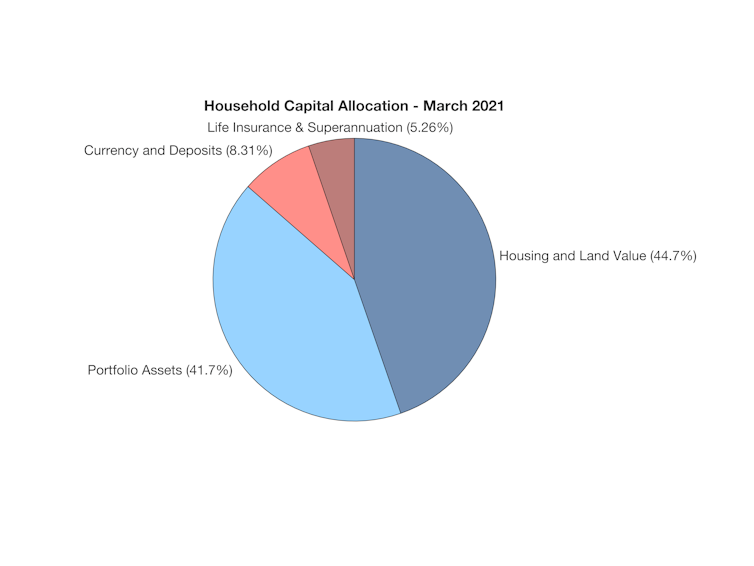
    But his plan, focused on reforming foreign investment, planning and competition laws, as well as boosting the tourism and mining sectors, is hampered by a fundamental reality of New Zealand’s economy: much of the country’s capital is tied up in unproductive (and expensive) housing.

    While this issue is not new, with New Zealand’s economy once described as “a housing market with bits tacked on”, the solution may lie in making housing more readily available through deregulation and policy reform. This would free up capital for drivers of growth such as infrastructure and business investment.


    Pie chart of household capital allocation.
    Household capital allocation March, 2021. Data source: RBNZ Household Balance Sheet.
    Author provided

    The temptation of housing

    Rapidly growing house prices over the past two decades have provided strong incentives to direct investment to the housing market.

    On average, the price of a typical house has grown by around 8% per year, far outpacing household income growth. For example, in 2005 the median house price was roughly five times the average household income. By the middle of the pandemic house values had ballooned to nine times the average income.

    Soaring prices have made residential investment extremely profitable for a long time. This means savings and investments have tended to flow into residential property rather than other productive sectors of the economy.

    Constraints on housing supply

    The problem is that in recent decades additional residential investment has not led to a substantial increase in new homes.

    Local and central government rules and regulations have long hampered the construction of new houses. Instead, more investment in real estate has generally led to even higher prices.

    As concerning as this is, it does not mean investments in housing have been misplaced. Rather, high prices and profits are what the market required in order to encourage those willing to build (few that there are) despite the costs, delays and uncertainties associated with bureaucratic battles with councils, planners and local NIMBY groups.

    Banning property speculation might have kept prices down and reallocated investment to other productive uses. But in the absence of those speculators, the supply constraints would not have been any looser. Lower prices mean lower returns over building costs, leading to even fewer houses built.

    Shifting capital out of the housing market in this way would not have benefited the country – we might have produced more and goods and services but fewer homes in which to live.

    Chirstopher Luxon speaks in parliament.
    Christopher Luxon is pushing forward his plan for growth focused on reforming foreign investment, planning and competition laws, as well as boosting the tourism and mining sectors.
    Hagen Hopkins/Getty Images

    Reforming housing supply

    Fortunately, New Zealand has made meaningful progress on housing supply recently. For example, Auckland and Lower Hutt changed zoning laws in the 2010s making it easier to build, and Wellington City has recently followed suit.

    These changes have led to local construction booms and, crucially, lower house prices and rents.

    More recently, central governments of both stripes introduced policies like the National Policy Statement on Urban Development, Medium Density Residential Standards, and housing growth targets for local councils.

    These reforms make it easier to build, reduce house prices and mean less investment capital is required for each new house built. So these policies have the dual benefit of improving housing affordability and freeing up capital for other productive sectors of the economy.

    As prices come down, New Zealanders will no longer need to pour nine times their income into a home.

    That will free up funds for investments in new bridges and tunnels, small businesses, and exciting new startups that will help drive innovation and generate the long-run growth we seek.

    New Zealand need not give up its housing dreams in order to get business moving. Rather, it can do both.

    All that requires is for local and central government to continue to let people build the housing they want so that we can free up the capital our infrastructure and businesses need.

    The Conversation

    James Graham has received research funding from the Australian Housing and Urban Research Institute and is a member of Sydney YIMBY.

    ref. To achieve real growth, the NZ government needs to relax the rules around housing – https://theconversation.com/to-achieve-real-growth-the-nz-government-needs-to-relax-the-rules-around-housing-249000

    MIL OSI AnalysisEveningReport.nz

  • MIL-OSI USA: Fischer Reintroduces EV Legislation to Ensure Fairness on the Roads

    US Senate News:

    Source: United States Senator for Nebraska Deb Fischer
    to support nationwide infrastructure investments and promote fairness among drivers. The Fair Sharing of Highways and Roads for Electric Vehicles (Fair SHARE) Act would ensure that electric vehicles (EVs) pay into the Highway Trust Fund (HTF) to support the construction and maintenance of U.S. roads and bridges.
    Gasoline-powered cars pay into the HTF through the gas tax, but as of now, EVs do not contribute to the HTF at all. However, the average EV is significantly heavier than its gas-powered counterpart due to the weight of large EV batteries. The Fair SHARE Act would require additional investment in the HTF for EVs with heavier batteries to account for the road damage and increased maintenance costs they cause.
    In addition to Senator Fischer, the legislation is cosponsored by U.S. Senators Cynthia Lummis (R-Wyo.) and Pete Ricketts (R-Neb.). U.S. Representative Dusty Johnson (S.D.–AL) introduced identical companion legislation in the House.
    “EVs can weigh up to three times as much as gas-powered cars, creating more wear and tear on our roads and bridges. It’s only fair that they pay into the Highway Trust Fund just like other cars do. The Fair SHARE Act will require EVs to pay their fair share for the upkeep of America’s infrastructure,” said Senator Fischer. 
    “EV drivers use our highways just as much as gas-powered vehicles,  yet they are currently exempt from paying into the Highway Trust Fund because the Biden administration wanted to score points with its radical climate change base. The days of liberal elites in their expensive EV’s getting a free pass are over; they are contributing to wear and tear on our roads, and they should be forced to pay their fair share in repairs just like the rest of us,” said Senator Lummis.
    “EVs are heavier than other consumer vehicles, and increase the wear and tear on our roads. EV drivers also don’t pay a gas tax like other drivers do,” said Senator Ricketts. “That’s wrong. This bill ensures Americans fueling their vehicles are not forced to pay for EV drivers.” 
    “The Highway Trust Fund is on the road to insolvency,” said Congressman Johnson. “It’s time to consider real changes and ensure EVs pay their fair share to maintain our roads and bridges. I’m grateful for Senator Fischer’s leadership on this bill that will undoubtedly create a more stable Highway Trust Fund, ensuring the government can continue to make meaningful investments in our road infrastructure needs.”
    “All Americans benefit from a robust and safe transportation system. When it comes to paying for the maintenance and expansion of our road network, no one should get a free ride,” said American Trucking Associations Senior Vice President of Legislative Affairs Henry Hanscom.  “The trucking industry makes up just four percent of the vehicles on our nation’s highways, yet we pay nearly half the tab into the federal Highway Trust Fund—all while moving over 70 percent of the domestic freight tonnage. Clearly trucks are doing their part to invest in the nation’s infrastructure, and it is reasonable to expect electric vehicles to do the same. As fuel efficiency rises and adoption rates for alternative fuels accelerate, we must find long-term, sustainable, and equitable sources of revenue for the HTF. We commend Senator Deb Fischer and Congressman Dusty Johnson for leading this effort to ensure that electric vehicles are paying their fair share.”
    “For nearly 70 years, purchasers of gasoline, diesel, gasohol, liquified natural gas and liquified petroleum gas have supported the maintenance and improvement of the nation’s roads and bridges. The lone exception to this user-fairness principle remains vehicles powered by electricity.  Thankfully, Senator Fischer and Representative Johnson have introduced the Fair SHARE Act to correct this oversight and improve mobility for all Americans,” said American Road & Transportation Builders Association President and CEO Dave Bauer.   
    “This measure will provide a sustainable, long-term revenue stream to the Highway Trust Fund, allowing the construction employers to maintain and rebuild our nation’s roads and bridges. The legislation will close a loophole for electric vehicles, which currently do not currently contribute to the Fund. Instead of giving them a free ride, this measure simply asked electric vehicle users to take part in the same user-pay approach that enabled the U.S. to build and maintain the highway network,” said Associated General Contractors of America CEO Jeff Shoaf. 
    “It is imperative that all vehicles share the responsibility of maintaining our roadways.  Senator Fischer’s Fair SHARE Act will ensure that by requiring EVs to contribute to the Highway Trust Fund, we can ensure that essential transportation infrastructure remains safe and accessible to everyone without any unfair burden placed upon any specific type of vehicle,” said National Association of County Engineers Executive Directors Kevan Stone.Full List of Stakeholder Support:
    American Trucking Associations, American Road and Transportation Builders Association, American Society of Civil Engineers, Associated General Contractors of America, National Association of Counties, National Association of County Engineers, and National League of Cities. 
    Background:The HTF supports over 90 percent of federal highway aid to states. The HTF was meant to befunded primarily by the federal gas tax. However, since the gas tax was last raised in 1993, the HTF faces insolvency due to more fuel-efficient vehicles on the roads, leading to reduced fuel consumption.
    EVs are not subject to the gas tax and do not contribute to the HTF. Furthermore, their heavy batteries (up to triple the weight of gas-powered cars) lead to more extensive road wear, causing more maintenance and greater costs.
    Senator Fischer’s legislation would fix this discrepancy by implementing a fee at the manufacturer level at the point of sale of EVs. This ensures that every vehicle on the road is paying into the HTF and supporting critical repairs to America’s infrastructure.
    Click 

    MIL OSI USA News

  • MIL-OSI USA: Warren Statement on House GOP Budget Proposal

    US Senate News:

    Source: United States Senator for Massachusetts – Elizabeth Warren
    February 12, 2025
    Washington, D.C. – Today, in response to House Republicans unveiling their FY 2025 budget resolution proposal, U.S. Senator Elizabeth Warren (D-Mass.) released the following statement:
    “Republicans are pulling a fast one on working people by reaching into their pockets to pay for billionaire handouts. Make no mistake: this GOP plan will raise the cost that American families pay for groceries, health care, and getting an education – all to fund tax cuts for the ultra-rich.”

    MIL OSI USA News

  • MIL-OSI USA: Durbin Condemns Tulsi Gabbard’s Nomination To Serve As Director Of National Intelligence

    US Senate News:

    Source: United States Senator for Illinois Dick Durbin
    February 12, 2025
    WASHINGTON – In a speech on the Senate floor, U.S. Senate Democratic Whip Dick Durbin (D-IL) outlined his serious concerns with Tulsi Gabbard, President Trump’s nominee to be the Director of National Intelligence ahead of her confirmation vote. Durbin began his remarks by highlighting the history of the Office of the Director of National Intelligence, which was established after the September 11th terrorist attacks.
    “[September 11 led to the creation] of the Office of the Director of National Intelligence, which oversees the 18 intelligence agencies that span the CIA, Defense Department, State Department, Energy Department, and others. It is now essential to modern safety in America. But yet, the President—Donald Trump—has selected a person who has little or no experience to lead this critical part of America’s security apparatus: her name is Tulsi Gabbard,” Durbin said.
    “During President Trump’s first term, he made clear his fondness for certain leaders of the world that are controversial such as Viktor Orban of Hungary, Vladimir Putin of Russia, and Kim Jong Un of North Korea. So, he ends up picking a person to run America’s intelligence network who shares similarly terrible judgment on critical security matters. Tulsi Gabbard is infamous fordefending despots and other autocratic leaders in the world—including Vladimir Putin and Bashar al-Assad—and traitors to the United States such as Edward Snowden. And her fondness for these oppressive, anti-democratic regimes does not go unreciprocated—they know her [and] they like her,” Durbin continued.  
    Durbin then highlighted examples on the floor of the anti-democratic regimes who are cheering for Ms. Gabbard’s confirmation—including hosts of Russian media who believe her nomination will “dismantle America,” and some on Russian state channels have even referred to her as their “girlfriend.” Russian state TV also called her a Russian “comrade” in President Trump’s emerging cabinet. A pro-Putin propagandist Vladimir Soloviev once called Gabbard “our friend.”  Later, when asked if she was “some sort of Russian agent?” Soloviev replied: “yes.” In a profile in a Russian state newspaper, it said of Gabbard’s nomination: “The C.I.A. and the F.B.I. are trembling,” noting that Ukrainians consider her “an agent of the Russian state.”
    “Imagine that. The person tapped to head America’s intelligence community—being called a puppet of an adversary’s country by that very same country. It seems too ridiculous to be true. But I’m sorry to say it is. To merely join America’s intelligence community—never mind lead it—candidates must go through vigorous background checks and earn security clearances… If Tulsi Gabbard was applying for an entry-level position, her relationship with Russia would disqualify her for the job. Why, then, would we trust her to [head the entire intelligence network] given the examples that abound of Tulsi Gabbard proving publicly, shamelessly, and carelessly her sympathies for nations that undermine U.S. interests and security. That is unexplainable and irresponsible,” Durbin continued.
    “Our allies depend on us as much as we depend on their security and to share critical intelligence. Now, they are looking at us in disbelief that we would let someone like Tusli Gabbard with such an appalling record anywhere near the leadership of the intelligence community. Intelligence professionals from Canada and the United Kingdom—which are members of the critical Five Eyes intelligence alliance along with the U.S., Australia, and New Zealand—have expressed concern about even working with her if she is in charge. In order to keep Americans safe throughout the world, we need to have the trust of our allies,” Durbin said.
    Durbin then spoke about the impacts Ms. Gabbard’s confirmation would have on supporting our Ukrainian ally and their defense against Russia. Since Russia’s full-scale invasion, Gabbard has taken Russia’s side—claiming ‘Russia had legitimate security concerns,’ and blaming NATO, one of our most significant security alliances.
    “Let me be clear: Supporting democracies has not historically been a partisan matter,” Durbin continued. “For example, contrast Tulsi Gabbard’s nonsense with former President Ronald Reagan’s clear-eyed understanding of the danger of the communist Russian empire. Nearly 40 years ago, he stood at the Brandenburg Gate in West Berlin and famously challenged the Soviet Union to ‘tear down this wall.’ Reagan understood the true nature and threat of the Russians. And we have all seen the horrific costs of Russia’s war in Ukraine and increasing attacks against NATO allies.” 
    “Is there a deal to be made to end this war? Perhaps. But doing so must be with the best intelligence available—a clear eye about who we are negotiating with and long-term guarantees of the security of Ukraine, of Europe, and the transatlantic alliance. One would think that any American president navigating such difficult waters would want a top official to serve as the head of National Intelligence. Tulsi Gabbard fails that test,” Durbin said.
    Durbin concluded, “Tulsi Gabbard would not be qualified for an entry-level position within our intelligence community. And she is not qualified to lead it. Period. Some of the President’s cabinet nominees are hard to imagine because they are so unqualified. But for the position of DNI—putting someone unqualified in charge is not funny at all. It is life or death dangerous.”
    Video of Durbin’s remarks on the Senate floor is available here.
    Audio of Durbin’s remarks on the Senate floor is available here.
    Footage of Durbin’s remarks on the Senate floor is available here for TV Stations.
    -30-

    MIL OSI USA News

  • MIL-OSI USA: Defense Secretary Pete Hegseth Holds Media Availability in Stuttgart, Germany

    Source: United States Department of Defense

    DEFENSE SECRETARY HEGSETH: How’s it going everybody? Sir. Good to see you. It’s been a great day, really. Any day we can spend with the troops from the very early morning of PT with some high speed guys and gals to two COCOMs that are right in the front lines of advancing American interests. Proud to be here today.

    Just an impressive display of what Americans are doing in far flung places for the American people, so proud to be here for sure. I think we have a local — where’s our local reporter? I’d like to go first to our local.

    Q: Thank you so much. So —

    DEFENSE SECRETARY HEGSETH: Where are you from?

    Q: I’m from Suddeutsche Zeitung. That’s the second biggest newspaper in Germany.

    DEFENSE SECRETARY HEGSETH: Well, it’s my favorite now.

    Q: And you are visiting Africom as one of your first points in your duty. Does that mean that the American strategic aims in Africa are going to change?

    DEFENSE SECRETARY HEGSETH: Well, I think it’s a reflection of the importance of that command as well as EUCOM. We spent this morning at EUCOM, as well; made sense to come to both if we’re here in Germany.

    But it’s also a reflection that, you know, the PRC’s intentions are pernicious, not just in their part of the world, but also in South America and on the African continent. And America’s posture there along with allies and partners is going to matter about contesting that space. So, it certainly remains a priority.

    You saw the strike in Somalia on February 1st. That — as we talked to the command, that’s a reflection also of pushing decision authority down, untying the hands of war fighters who in the previous administration made multiple requests and were often denied for that kind of kinetic action, or the decision had to be made at the White House when it should be made at the four star level or at the Secretary of Defense level more quickly based on the ability to degrade the enemy.

    So, this is a very important part of the world for us. The President feels that way, as well, and we’re honored to be here. Thank you.

    Q: Mr. Secretary, are you planning to cut the number of American forces in Europe, shift to the Pacific and focus on China?

    DEFENSE SECRETARY HEGSETH: There are no plans right now in the making to cut anything.

    There is an understanding that we’re going to review force posture across the world, right. President Trump’s planning assumptions are different in many ways, or at least strategic assumptions than Joe Biden’s were. We certainly don’t want to plan on the back of the withdrawal from Afghanistan and what happened on October 7th and the war that was unleashed in Ukraine.

    You have to manage and mitigate those things by coming alongside your friends in Israel, ensuring their defense and peacefully resolving the conflict in Ukraine. But those shouldn’t define how we orient and with hopefully a rapid peace deal in Ukraine, which the President is committed to delivering, we can then review force posture and encourage as we’re going to — you’re going to see tomorrow in Ukraine and — or at the Ukraine Contact Group and the NATO ministerial, we’re going to have straight talk with our friends.

    This kind of urgency of this moment requires friends talking to friends about capabilities, about leadership, about stepping up, about burden sharing and the incentives to say the European continent deserves to be free from any aggression.

    But it ought be those in the neighborhood, investing the most in that collective — individual and collective defense. That’s common sense. As the President talks a lot about, common sense is you defend your neighborhood and the Americans will come alongside you in helping in that defense. If and when that happens, and I believe it will because of President Trump, most NATO countries are already close to 2 percent.

    We believe that needs to be higher. The president has said 5 percent. I think he’s right. That’s a reflection of a need to invest on the continent. If and when that happens through investments in the defense industrial base, as well, then yes, America as the leader of the free world defending American interests is going to need to make sure we’re focused properly on the Communist Chinese and their ambitions in the Indo-Pacific, and as I mentioned before, around the world.

    So, we would be remiss in not reviewing force posture everywhere, but it would be the wrong planning assumption to say, oh, America is abandoning something or America is leaving. No, America is smart to observe, plan, prioritize and project power where we need to deter conflict. We don’t want conflict with China.

    We don’t want — the President has ran on being a peace president, and he’s delivered that. But being strong, peace through strength is how you deter that, and we want to posture for that just like we believe the Europeans alongside our support need to on the continent, as well.

    Q: Is China the biggest threat to the United States?

    DEFENSE SECRETARY HEGSETH: Well, right now, the biggest threat was securing our own border, which we are addressing rapidly. And I’m proud of what NORTHCOM has done and the Defense Department has done is shifting there. You don’t have a country if you don’t have borders, as the President has pointed out. And we’ve been defending other people’s borders for a long time; time to defend ours. So we’re sealing that border. We continue to do that. But as far as external threats, there’s just no doubt the communist Chinese ambitions are robust. Their view of the world is quite different than ours. And whoever carries that mantle is going to set the tone for the 21st century.

    UNKNOWN: Christine —

    Q: You made the point to do PT with tenth group this morning on very little sleep. Why was it so important for you to do this? And tell us about the workout?

    DEFENSE SECRETARY HEGSETH: I did do PT with the troops this morning. Listen, it’s not that long ago that I was right there with them. I probably — no offense, General — I probably connect more with those guys than I do with four-star Generals. But now I get the chance of working with four stars and others who are committed to the troops.

    But when I can get down, do push ups and deadlifts with the troops, and just hear from them, what’s working, what isn’t, how do you see your mission set, I love that. So there was never a doubt. even though we got in at 2:00 in the morning, that we were getting up a couple hours later to go do PT. It’s a reminder that — you guys — the press in Washington might think I’m young, but in military terms, I’m old.

    And that showed this morning with these young guys who ran circles around me in that parking lot.

    UNKNOWN: We’ll [Inaudible] then Zach.

    DEFENSE SECRETARY HEGSETH: Go ahead.

    Q: Thanks for doing this. Uh, you mentioned earlier that President Trump wants, uh, NATO countries to spend 5 percent of their GDP on defense. Do you think the US should also spend 5 percent of its GDP on defense?

    DEFENSE SECRETARY HEGSETH: Well, I think the US needs to spend more than the Biden administration was willing to, who historically underinvested in the capabilities of our military. So the president is committed, as he was in the first term, to rebuilding America’s military by investing. And you’re going to see that in the conversations on Capitol Hill.

    We’ve already been intimately involved with the folks on HASC and SASC and appropriations, talking about the capabilities we’re going to need, not just next year and the year after that or for the next four years, but for power projection going forward and then the reforms needed to make sure that every dollar goes further.

    Now at a minimum, we should not go below 3 percent. That’s a view I know the President shares. But as far as going forward in that, those are decisions he will make based on my consultations with him. Listen, any defense secretary would be lying if they said they didn’t want more. You always want more.

    But we live in fiscally constrained times where we need to be responsible with taxpayer dollars. We’re $37 trillion in debt. That’s a national security liability, as well. So, we’re going to work with Capitol Hill. The President is going to lead the way on making sure the troops have the resources they need and that we truly rebuild our military just like President Trump did in the first term.

    Q: And President Biden — President Biden vowed against sending US troops into Ukraine. Would you be open to sending US troops into Ukraine to track weapons shipments?

    DEFENSE SECRETARY HEGSETH: We are not sending US troops to Ukraine.

    Q: You talked about wanting to welcome Elon Musk and DOGE into the Pentagon potentially in the next few weeks. Do you expect him to start unilaterally cutting programs and contracts the way he’s done at USAID and other agencies? And are there any limits or supervision you’d want to place on his team, given his conflicts of interest [Inaudible]?

    DEFENSE SECRETARY HEGSETH: Well, we’ve been in touch with — I’ve been in touch with Elon Musk, who’s a great patriot, interested in advancing the America First agenda, knows that President Trump got 77 million votes and a mandate from the American people. And part of that is bringing actual businesslike efficiency to government; hence, what DOGE is doing.

    Uh, we’ve been talking to them, in partnership with them. And as I said on social media, we welcome DOGE to the Pentagon, and I hope to welcome Elon to the Pentagon very soon and his team, working in collaboration with us. There are waste, redundancies and headcounts in headquarters that need to be addressed.

    There’s just no doubt. Look at a lot of the climate programs that have been pursued at the Defense Department. The Defense Department is not in the business of climate change, solving the global thermostat. We’re in the business of deterring and winning wars. So, things like that we want to look for to find efficiencies and many others – the way we acquire weapons, system procurement.

    There’s plenty of places where we want the keen eye of DOGE, but we’ll do it in coordination. We’re not going to do things that are to the detriment of American operational or tactical capabilities. There’s just — President Trump is committed to delivering the best possible military. The Defense Department is not USAID. USAID has got a lot of problems that I talked about with the troops, pursuing globalist agendas that don’t have a connection to America First.

    That’s not the Defense Department, but we’re also not perfect, either. So where we can find billions of dollars — and he’s right to say billions — inside the Defense Department, every dollar we save there is a dollar that goes to warfighters, and that’s good for the American people.

    Q: [Inaudible] Mr. Secretary, Since we’re here at AFRICOM, I have a question about Africa. Now when you served, you fought jihadists in the Middle East, and there’s a lot of jihadists in Africa, whether it’s ISIS, al-Qaida, al-Shabab, go on and on. How do you plan to handle that threat?

    I’m not saying put troops on the ground in Africa to fight them, but are you concerned that there could be some sort of cell that might be plotting attacks against other parts of the world, trying to recruit soldiers because it’s Africa with a growing population? How concerned are you about the jihadist threat in Africa today?

    DEFENSE SECRETARY HEGSETH: Definitely concerned. I mean, anybody of our — anybody of my generation that served in Iraq and Afghanistan or have been a part of post-9-11 understands the threat of global jihad, especially the desire to export that against our allies in Europe or Israel or certainly the United States of America. So the counterterrorism threat focused on those who would seek to do us harm is of the highest priority, which is why you saw what AFRICOM did so well in that strike in Somalia.

    Where we see those growing, plotting or planning with increased capabilities we will strike. And that pertains to Islamist organizations all across the continent. But it also — we have to work with partners and allies. I mean, foreign internal defense and security force assistance — I was with Green Berets this morning.

    You know, we think of Green Berets in the context of post-9-11, right – kicking down doors, and they’re really good at that. But what they’re best at is doing security force assistance and foreign internal defense where they work with local security forces to build up their capabilities so that it’s indigenous forces fighting Islamists because they want to secure their country, as well.

    And AFRICOM is very directly committed to doing that. That’s a mission very much worth resourcing. I mean Africa is very much the front lines of a fight from Islamists. You’ve got Christian populations that are under siege in Africa and have been ignored for far too long and American interests there. It matters a great deal. And Islamists — we’re not going to allow them to maintain a foothold, especially to try to strike at America.

    UNKNOWN: We’re going to finish up with two questions from these two [Inaudible].

    DEFENSE SECRETARY HEGSETH: Ok. One more here and then here.

    Q: John Barrowman, Stars and Stripes. Also related to AFRICOM and Somalia, during the end of President Trump’s first term, he elected to pull forces out of Somalia and switched to more of a rotational concept.

    President Biden sent troops back in there on a full time basis. What’s your vision going forward for Somalia? Do you want to maintain troops there continuously, or are you looking more towards pulling them back?

    DEFENSE SECRETARY HEGSETH: Well, I mean, I’m going to listen to the commanders on the ground, first and foremost, as is the President.

    And he’s charged me with, hey, give me your best advice, but also keep your ear to the ground of what’s most effective. But he’s also been very clear that we’re not trying to have American boots all over the globe. Where we can do counterterrorism effectively over the horizon, that’s the preference. But we’ll review the force posture there and with the generals doing the heavy lifting and take it into consideration, no doubt.

    But thankfully, we have the intelligence capabilities to do the kind of strike that we saw, and we believe we can do more of that.

    UNKNOWN: Last question.

    Q: So — so you renamed the name of Fort Liberty into Fort Bragg, and you honored the private first class who lost his life while liberating Germany. What does that mean for the US forces?

    DEFENSE SECRETARY HEGSETH: Well, first, it means Bragg is back. It means the legacy of an institution that generations of Americans have mobilized through and served at is back.

    I mean, it’s a shame what was done to vets, service members, their families who were born there, deployed out of there, lived there, gave there — I was with airborne troops here, some of which spent 25 years at Fort Bragg and never called it Fort Liberty because it wasn’t Fort Liberty, it’s Fort Bragg.

    And so I was honored to be able to put my signature on that. By the way, with the support of the President of the United States who set the tone on this and said, I want Fort Bragg back.

    And we’re honored to support a private first class who received a Purple Heart and the Silver Star at the battle of the bulge. We’re honoring a private first class and I’m proud that we have a Marine corporal as the vice president of the United States too. Junior enlisted have never seen better days. But it’s about that legacy.

    It’s about the connection to the community, to those who served. And we’re not, as the President has said and I’ve said as well, we’re not done there. There are other bases that have been renamed that erodes that very same legacy. There’s a reason I said Bragg and Benning when I walked into the Pentagon on day one.

    But it’s not just Bragg and Benning. There are a lot of other service members that have connections and we’re going to do our best to restore it. It’s an honor to do so. Thank you all for your time. Appreciate it. Thank you. Thank you. Thank you. Thank you.

    MIL OSI USA News

  • MIL-OSI Security: Massachusetts Resident Sentenced on Gun and Drug Convictions

    Source: Office of United States Attorneys

    ALBANY, NEW YORK – Kyle Taylor, age 29, of Malden, Massachusetts, was sentenced last month to 10 years in prison for distributing methamphetamine, possessing a firearm in furtherance of a drug trafficking crime, and conspiring to possess with intent to distribute fentanyl.

    United States Attorney Carla B. Freedman and Bryan Miller, Special Agent in Charge of the New York Field Division of the Bureau of Alcohol, Tobacco, Firearms, and Explosives (ATF), made the announcement.

    When he pled guilty in September 2024, Taylor admitted that he sold multiple firearms and controlled substances to another person in Rensselaer County between September 2023 and January 2024. Taylor admitted that he had sold two firearms to this person on separate occasions in October 2023, and on both occasions also distributed controlled substances. In December 2023, Taylor and a co-conspirator sold this person over 400 fentanyl pills along with approximately 25 grams of fentanyl powder.

    United States District Judge Mae A. D’Agostino also imposed a 4-year term of post-incarceration supervised release.

    ATF investigated this case with assistance from the Troy Police Department, the Brookline (Massachusetts) Police Department, and the Cambridge (Massachusetts) Police Department. Assistant U.S. Attorney Joseph S. Hartunian prosecuted the case.

    MIL Security OSI

  • MIL-OSI Security: Construction and Property Management Companies and Company Owners Plead Guilty to Asbestos Violations

    Source: Office of United States Attorneys

    PORTLAND, Ore.–A construction company operating in Hood River, Oregon, and a property management company operating in The Dalles, Oregon, together with the owners, pleaded guilty Friday to violating asbestos work standards and negligent endangerment by discharging a hazardous pollutant in violation of the Clean Air Act.

    The property management company Horseshoe Grove, LLC pleaded guilty to violating asbestos work practice standards, and its owner and operator, Ryan Richter, 44, of The Dalles, pleaded guilty to negligent endangerment by discharging a hazardous pollutant.

    The construction and demolition company Chamness Dirt Works Inc. pleaded guilty to violating asbestos work practice standards, and its owner and president, Ronald Chamness, 58, of Hood River, pleaded guilty to negligent endangerment by discharging a hazardous pollutant.

    According to court documents, in November 2022, Horseshoe Grove purchased a property operating as a mobile home rental site with approximately thirty tenant spaces. The property also contained two dilapidated structures located near the actively rented tenant spaces. At the time of sale, Richter received an asbestos survey completed in 2021 which reported over 5,000 square feet of asbestos within the dilapidated structures. Richter also received a demolition estimate from Chamness Dirt Works to sample, test and remove asbestos containing materials but excluded the costs for asbestos abatement.

    In February 2023, Richter and Horseshoe Grove hired Chamness Dirt Works to demolish the two asbestos-laden structures. On February 20, 2023, Chamness received a quote from an asbestos abatement contractor for the proper removal and disposal of asbestos containing materials. Despite knowing the structures contained asbestos, Chamness and Richter, through and with their companies, knowingly violated the Clean Air Act by demolishing the structures without hiring a certified asbestos abatement contractor or implementing the precautionary measures mandated by federal regulations for handling such materials.

    On November 19, 2024, Richter, Chamness, Horseshoe Grove, and Chamness Dirt Works were charged by criminal information with negligent endangerment and violating the Clean Air Act’s asbestos work practice standards.

    Richter and Chamness each face a maximum sentence of one year in prison, a $100,000 fine, and five years of supervised release. Horseshoe Grove and Chamness Dirt Works each face a maximum sentence of five years’ probation and $500,000 fine. As part of the plea agreement, Richter and Chamness have agreed to conduct asbestos remediation on the property. They will be sentenced on April 3, 2025, before U.S. District Court Judge Marco A. Hernández.

    This case was investigated by the Environmental Protection Agency and is being prosecuted by Bryan Chinwuba, Assistant U.S. Attorney for the District of Oregon.

    MIL Security OSI

  • MIL-OSI Security: Brazilian Man Indicted for Illegal Reentry

    Source: Office of United States Attorneys

    BOSTON – A Brazilian man has been indicted by a federal grand jury in Boston for illegally reentering the United States after deportation.    

    Rafael De Jesus-Ribeiro, 39, was indicted on one count of unlawful reentry of a deported alien. De Jesus-Ribeiro was detained by Immigration and Customs Enforcement on Jan. 13, 2025. He will appear in federal court in Boston at a later date.

    According to the indictment, De Jesus-Ribeiro was deported from the United States on July 17, 2019. It is alleged that sometime after his July 2019 removal, De Jesus-Ribeiro illegally reentered the United States without permission.

    The charge of unlawful reentry of a deported alien provides for a sentence of up to two years in prison, one year of supervised release and a fine of up to $250,000. The defendant will be subject to deportation proceedings upon completion of an imposed sentence. Sentences are imposed by a federal district court judge based upon the U.S. Sentencing Guidelines and statutes which govern the determination of a sentence in a criminal case.

    United States Attorney Leah Foley and Todd M. Lyons, Field Office Director, Boston, U.S. Immigration and Customs Enforcement’s Enforcement and Removal Operations made the announcement today. Assistant U.S. Attorney Eric L. Hawkins of the Major Crimes Unit is prosecuting the case.

    The details contained in the charging documents are allegations. The defendant is presumed innocent unless and until proven guilty beyond a reasonable doubt in a court of law.
     

    MIL Security OSI

  • MIL-OSI Security: St. Michael Man Sentenced to Federal Prison for Child Abuse

    Source: Office of United States Attorneys

    Fargo – United States Attorney Mac Schneider announced that Collin Ray Delorme, also known as Collin Ray Delorme Sr., age 30, from St. Michael, North Dakota, appeared in United States District Court for the District of North Dakota in Fargo today and was sentenced by Chief Judge Peter Welte to serve 40 years in federal prison, to be followed by three years of supervised release during which time he will be required to follow a number of conditions. Delorme was also ordered to pay restitution, joint and severally with his codefendant, for medical and funeral expenses.

    On February 18, 2023, Baker called 911 from a home in St. Michael, North Dakota within the boundaries of the Spirit Lake Reservation. Delorme’s co-Defendant, Kenzie Rose Baker, reported her one-year-old child was not breathing. The child was transported to CHI St. Alexius in Devils Lake, North Dakota and was pronounced dead. An autopsy concluded the cause of death was “battered child” due to multiple, repeated injuries of various ages, evident upon external and internal examination. The child’s internal injuries were untreated which created infection and sepsis.

    Two of the charges to which Delorme pled are related to his abuse of the deceased one-year-old child.  The third charge is the result of his abuse of a three-year-old child that included hitting the child on the arms and throwing him on a bed.

    On August 16, 2024, Baker pleaded guilty to charges of Accessory after the Fact; Child Abuse in Indian country; Child Neglect in Indian country. Baker is scheduled to be sentenced on February 24, 2025.

    “This sentence provides a measure of accountability for the horrendous abuse and tragic death of a toddler,” Schneider said. “Through their work on multi-disciplinary teams on each reservation with tribal social services, law enforcement, tribal court prosecutors, and behavioral health partners, our Indian country prosecutors are committed to preventing child abuse. They also will not hesitate to bring forceful prosecutions against child abusers in federal court. Our hope is that today’s sentence serves as a deterrence in our efforts to keep children safe.”

    “The abuse and neglect that these children experienced is truly horrific. No child should ever endure such suffering,” said Special Agent in Charge Alvin M. Winston Sr. of FBI Minneapolis. “Today’s sentencing demonstrates the FBI and our partners’ commitment to protecting the most vulnerable in our communities and ensuring that those who harm children are brought to justice.”

    This case was investigated by the Federal Bureau of Investigation and prosecuted by Assistant United States Attorneys Lori H. Conroy and SheraLynn Ternes.

    # # #

    MIL Security OSI

  • MIL-OSI Security: Juvenile Charged With August 2024 Armed Carjacking

    Source: Office of United States Attorneys

               WASHINGTON – Aniq-Kai Covington, 16, of Washington, D.C., was charged as an adult (under Title 16) on February 11, 2025, in Superior Court with armed carjacking in connection with an August 13, 2024 incident in Southeast D.C. The charge was announced by U.S. Attorney Edward R. Martin, Jr., and Chief Pamela Smith of the Metropolitan Police Department (MPD).

               According to documents filed in court, on August 13, 2024, at approximately 9:15 p.m., police officers were dispatched to the 2700 block of  31st Street S.E., where they located the victim of an armed carjacking. The victim told the officers that at least two suspects approached the victim, who was sitting in their vehicle waiting for a family member. One suspect approached the victim’s driver’s side door and pointed a firearm at the victim, ordering the victim to get out of the vehicle. Another suspect attempted to open the victim’s passenger door. The victim complied and got out of the car. The first suspect then demanded money and took the victim’s wallet and cell phone, before the suspects fled northbound on 31st Street, SE in the victim’s car.  The victim borrowed a phone from a family member and called 911. 

               The victim’s vehicle was located in the 2500 block of High Street S.E., stationary and unoccupied, just before 9:30 p.m., approximately 15 minutes after police were dispatched to the scene of the carjacking.  The victim’s vehicle was forensically processed, and a latent fingerprint recovered from the interior passenger’s side door handle was later determined to belong to Covington. 

               Covington was presented in court yesterday and ordered detained. A preliminary hearing is scheduled for February 14, 2025.

               The Metropolitan Police Department is investigating the case. Assistant U.S. Attorney Lauren Winer is prosecuting the case.

               These charges are merely an allegation and all defendants are presumed innocent until proven guilty beyond a reasonable doubt in a court of law.

    MIL Security OSI

  • MIL-OSI Security: Former Prison Guard Sentenced to Prison for Conspiring to Smuggle Drugs into Virginia Prison

    Source: Office of United States Attorneys

    BOSTON – A Virginia man was sentenced yesterday for conspiring to distribute controlled substances and launder drug proceeds with co-conspirators in Massachusetts and Virginia.

    Kenneth J. Owen, 24, of Charlotte Court House, Va., was sentenced by U.S. District Court Chief Judge F. Dennis Saylor IV to 21 months in prison, to be followed by three years of supervised release. In September 2024, Owen pleaded guilty to one count of conspiracy to distribute and possess with intent to distribute MDMA and buprenorphine and two counts of money laundering conspiracy.

    In December 2019 and January 2020, Owen conspired with Sathtra Em, a Lowell resident, and Michael Mao, an inmate at the Buckingham Correctional Center in Dillwyn, Va., to smuggle MDMA and buprenorphine in the form of Suboxone and generic Suboxone sublingual films into the prison. At the time, Owen was working as a correctional officer at Buckingham.  

    As part of the conspiracy, Em mailed the drugs to Owen’s residence and paid him $1,600 in bribes to deliver the drugs and other contraband to Mao in the prison. Mao then sold the smuggled drugs to other inmates at Buckingham and Em collected the drug debts on behalf of Mao in the same Cash App accounts she used to pay the bribes to Owen. Owen used a Cash App account with the name “Carlos” to receive the bribes from Em, and he cashed out the funds to his bank account within minutes of receiving them.    

    Em and Mao previously pleaded guilty to their roles in the conspiracy. In August 2024, Em was sentenced to 21 months in prison to be followed by three years of supervised release. Mao was sentenced to 121 months in prison to be followed by four years of supervised release, in November 2024.

    United States Attorney Leah B. Foley and Jodi Cohen, Special Agent in Charge of the Federal Bureau of Investigation, Boston Division made the announcement. Special assistance was provided by the Drug Enforcement Administration, the Internal Revenue Service’s Criminal Investigations and the Virginia Department of Corrections. Assistant U.S. Attorney Fred M. Wyshak, III of the Organized Crime & Gang Unit and Assistant U.S. Attorney Alexandra Amrhein of the Asset Forfeiture Unit, prosecuted the case.

    This case is part of an Organized Crime Drug Enforcement Task Forces (OCDETF) operation. OCDETF identifies, disrupts, and dismantles the highest-level criminal organizations that threaten the United States using a prosecutor-led, intelligence-driven, multi-agency approach. Additional information about the OCDETF Program can be found at https://www.justice.gov/OCDETF.
     

    MIL Security OSI

  • MIL-OSI Security: Groundwater: How Scientists Study its Pollution and Sustainability

    Source: International Atomic Energy Agency – IAEA

    An aquifer is a porous rock that is water bearing and from which water can be extracted (Infographic: Adriana Vargas/IAEA).

    Groundwater accounts for around 30 per cent of the world’s freshwater, making it an important resource for addressing current global issues, such as world population growth, agricultural intensification and increased water use in different sectors like oil and gas extraction and mining, apparel and textile manufacturing and livestock farming. To protect groundwater from the threats of overextraction and pollution, and to manage it sustainably for the future, it is essential to understand where groundwater in specific locations is originating from, what its quality is and how quickly it replenishes. Scientists can perform this kind of research by analyzing the water ‘fingerprints’ called “isotopes”, which are variations of atoms in the water molecule.

    What is groundwater?

    Groundwater is water found underground. It can be hidden in the cracks and spaces within rocks and sediments, forming an underground resource, hosted in what is known as an “aquifer”. Depending on the characteristics or the aquifer, groundwater can be extracted, using pumping wells, for irrigation, drinking and industrial water supply and other human activities.

    How are aquifers formed and why should we use them wisely?

    Groundwater is part of the water cycle. Following rainfall, some water soaks into the soil and, driven by gravity, migrates downwards continuously through the subsoil and moves until it is eventually stopped by compact, impermeable rock, called an aquiclude. Many aquifers are connected to, and fed by, rivers and other surface water bodies, during the dry season. In the wet season, this system can be reversed with groundwater moving back into rivers and lakes and replenishing them.

    What are isotopes and how can they help scientists understand water?

    The water molecule is composed of atoms of oxygen and hydrogen. Some variations of the atoms of the same chemical element, called isotopes, can be used to study the water cycle, including groundwater.

    Isotopes are atoms of the same element with the same number of protons but a different number of neutrons.

    Different “isotopic” techniques are used to measure isotope amounts and proportions, and to trace their origin, history, sources and interactions in the environment.

    Water has a different or unique isotopic “fingerprint”, or “isotopic signature”, depending on where it comes from. Scientists analyze isotopes to track the movement and pollution sources of water along its path through the water cycle.

    How do scientists use isotopes to establish whether groundwater is being overused?

    Scientists use isotopes in large-scale studies on water, to assess its amount, age, and origins, and to establish whether the amount being used by people is sustainable.

    For example, radioisotopes naturally present in groundwater, such as tritium, carbon-14, and noble gases helium-3, helium-4 and krypton-81, are used to learn more about how old groundwater is and the timescales of groundwater flow. By analyzing the concentration of different combinations of both stable and radio-isotopes, scientists can calculate when exactly the water is recharged in aquifers, how fast groundwater flows, and how long it takes to replenish. With this data, it is possible to establish, for example, whether or not agricultural activities in a specific area are demanding an amount of groundwater that will not be replenished fast enough to sustain irrigation needs in the long run.

    How do scientists use isotopes to study groundwater pollution?

    Scientists use specific isotopes like nitrogen-15, oxygen-18, and sulfur-34 to identify pollutants such as nitrate and sulphates. They also use these isotopes to establish whether the groundwater in a specific location is safe for human use.

    For example, scientists can establish whether water contaminated with an excessive amount of nitrate is being polluted by either human waste or by fertilizers. Nitrate ions are made up of nitrogen and oxygen, and nitrogen has two isotopes while oxygen has three. The ratio of these isotopes is different in human waste and in fertilizers. Therefore, the source of pollution can be identified based on these isotopic differences. Knowing the origins of pollutants is a milestone in addressing problems with water quality and working toward the sustainable management of water resources.

    What is the role of the IAEA?

    • The IAEA uses isotope hydrology to support Member States in water resources assessment and sustainable water management. The Agency also provides assistance and training to laboratories and scientists on analytical services through its Isotope Hydrology Laboratory.
    • Offering a wide range of courses, the IAEA provides training on the fundamentals of isotope hydrology and isotopic analyses of stable isotopes, tritium and noble gases.
    • Through its technical cooperation programme, the IAEA collaborates closely with its Member States to improve the availability and sustainability of freshwater resources through science-based, comprehensive water resources assessments.
    • Partnering with the World Meteorological Organization, the IAEA operates the Global Network of Isotopes in Precipitation, which contains scientific advice, logistics and technical support in isotope hydrology.

    This article was first published on 22 March 2023.

    MIL Security OSI

  • MIL-OSI Security: U.S. Marshals Fugitive Task Force Apprehends Mother’s Boyfriend for Injury to a Child

    Source: US Marshals Service

    Austin, TX – The U.S. Marshals Lone Star Fugitive Task Force arrested a man sought by Austin Police for injury to a child following an incident on February 7th that resulted in the hospitalization of a 2-year-old victim.  

    Marcos Amaya Maldonado, 25, of Del Valle, is alleged to have committed the injury while the child was in his custody during the day at the child’s mother’s residence in the 9900 block of Dessau Road. According to an affidavit by an investigator with the Austin Police Department (APD) Child Abuse Unit, Maldonado is the boyfriend of the victim’s mother. 

    When the mother arrived at the residence from work, she observed bruising to the side of the child’s face, according to the affidavit. After noticing an increase in bruising and swelling to the child’s face, and a “rash” under the diaper area, the mother called 911.

    Medical personnel at a nearby hospital reported the victim had sustained a large contusion to her head and extensive bruising to her genitalia and vaginal lacerations. 

    Following an investigation on February 9th, the APD Child Abuse Unit obtained a warrant in the City of Austin Municipal Court and requested assistance from the Lone Star Fugitive Task Force-Austin Division to locate and apprehend Maldonado. 

    Members of the task force initiated a fugitive investigation and arrested Maldonado in the 100 block of Fortuna Drive in Del Valle.

    Maldonado was transported to the APD Child Abuse Unit and booked into the Travis County Jail where he will await judicial proceedings.  

    Members of the Lone Star Fugitive Task Force in Austin:

    Austin Police Department-Tactical Intelligence Unit
    Georgetown, Round Rock, and San Marcos Police Department
    Caldwell, Hays, Travis, and Williamson County Sheriff’s Office
    Texas Attorney General’s Office
    Texas Department of Criminal Justice OIG
    Texas Department of Public Safety
    U.S. Immigration & Customs Enforcement
    U.S. DHS/Homeland Security Investigations

    MIL Security OSI