Today, the Government tabled in Parliament its response to the independent review of legislative amendments made in 2021 and 2022 to provide for virtual company meetings and the electronic distribution, signing and execution of company documents.
The Government has accepted or accepted in principle all recommendations of the independent panel.
This includes accepting the key recommendation of the panel to maintain the current requirement for listed companies and registered schemes to obtain constitutional permission from their members before they can hold a wholly virtual meeting.
The Government has also accepted the recommendation of the panel to conduct another review in 5 years’ time of the effectiveness of the virtual meeting laws, to allow time for companies and members to become adept to the use of virtual meetings and for bodies such as ASIC, ASX and industry associations to issue guidance on appropriate conduct and use of technology at members’ meetings.
The Government encourages these bodies to provide guidance well before the commencement of the further review in 5 years.
The Government is committed to ensuring the efficient and effective operation of Australian capital markets, recognising the importance of good corporate governance and the rights of members.
I thank the panel, the Hon Dr Robert Austin AM (as Chair), Ms Helen Bird and Ms Judith Fox for their considered review and extend my thanks to all stakeholders for their contributions during the consultation process.
The tabling of the Government response satisfies the requirements in subsection 1687J(6) of the Corporations Act for the Government to table a response to the review in Parliament.
The 1980s are remembered for many things including power suits, the Ford Falcon and the long lunch.
The last was thanks to a generous interpretation of tax law as it applied to food and entertainment at “business meetings”. Bosses could deduct the cost of lunch with colleagues and contacts for tax purposes.
The Hawke government ended that when it made sweeping changes to tax law the mid 80s including the introduction of a fringe benefits tax.
But the long lunch might return under a Coalition government.
Its estimated cost to the budget, however, swings wildly. The Parliamentary Budget Office puts the figure at A$250 million, while a government-commissioned study by Treasury says it could be between $1.6 billion and $10 billion .
The different estimates result from varied modelling of how many businesses would seek the deduction and the average amount each would claim. Shadow treasurer Angus Taylor on Tuesday said it would cost less than $250 million. He said the Treasury estimates were “straight nonsense”.
Angus Taylor said Treasury’s estimates were “straight nonsense” Mick Tsikas/AAP
The actual cost may also depend on whether the deduction would be limited to employees or could include spending on their family members and on clients. These things are not yet clear.
One thing that is clear, however, is higher spending at hospitality venues should bring in more tax from businesses to offset the lost deduction revenue.
Whatever rules emerge, enforcing them could be expensive. Some small businesses might be tempted to inflate their expenditure, or simply “reclassify” usual food and drink costs to make them eligible for a deduction.
Opposition leader Peter Dutton announced the plan late last month. He said small businesses could claim deductions for meals and entertainment. This would be available to businesses with a turnover under $10 million and excluded alcohol.
The deduction would be capped at $20,000 a year. The policy would run initially for two years and would presumably be reviewed with a view to extending it or making it permanent.
Dutton gave two reasons for reintroducing the exemption to the FBT. First, it was an incentive that would help retain and reward employees. Employees can get a “little bit of a return”, Dutton said at the time. Second, it would boost hospitality spending.
Overwhelmingly, this policy is an incentive for small businesses. However, tax policy experts argue the tax system should not use targeted tax breaks to promote a particular economic activity.
One major concern is this plan runs counter to the reasonably clear boundary our income tax system has established between private consumption expenditure (not deductible) and income producing expenditure (deductible).
The 1985 deduction denial for entertainment expenditure is a central part of this framework; it squarely recognised the private consumption character of the expenditure and it has stood for 40 years in tax law. Serious analysis should be done before changes are made.
Also, it might lead to claims of “what about me?” Think, for example, of a small business taxpayer with a turnover of $12 million who misses out. What about an independent contractor who falls short of being a business?
It looks like the technical way the tax deduction is to be achieved will depend on who benefits from the food and entertainment. If the beneficiary is a customer of the small business, the small business will be given a deduction. If the employee benefits, the small business will get an exemption for the benefit and obtain a deduction for the expenditure.
Peter Dutton said in his announcement last month the Coalition was doing this in a way to ensure small businesses “are not dragged into a complicated tax jungle”.
The complexity of fringe benefits tax is well known. Compliance costs are high and mistakes are made by taxpayers and tax agents. The complexity is greatest for entertainment spending where income tax interacts with fringe benefits tax and the GST.
Without knowing the proposed rules, there is a chance a small business incurring entertainment expenditure can avoid being brought into a “tax jungle” if they keep employees and customers at separate entertainment events.
If they do combine the two, some complications arise, but they are not insurmountable. In any event, tax agents and their clients tend to get used to their specific situation over time. Excluding alcohol does add a slight complication, though, because of the different treatment it will attract.
Overall, the concerns about this policy are real and substantial. It is worth recalling that there are many examples of poor tax policy getting into legislation, and despite the significant evidence about them, they are not removed.
The capital gains tax discount is a good example. This discount has overwhelmingly delivered a tax break to high income earners. And the amount of the lost revenue is continually increasing. Let us think before running this risk with the proposed “long lunch” tax break.
Dale Boccabella does not work for, consult, own shares in or receive funding from any company or organisation that would benefit from this article, and has disclosed no relevant affiliations beyond their academic appointment.
Source: Novosibirsk State University – Novosibirsk State University –
NSU News and Events News
At NSU, vice-rectors of Novosibirsk universities discussed issues of network interaction and diplomas in the format of startups
04.02.2025
Material prepared by: Elena Panfilo, NSU press service
Nadezhda Solovoy’s research is aimed at studying the conditions for the formation of single-crystal films of multi-alkali compounds of antimony and bismuth. This material is of interest for creating photocathodes in sources of spin-polarized electrons of particle accelerators. In addition, the results of the study can help improve the characteristics of photoelectronic converters based on such photocathodes.
Please note: This information is raw content directly from the source of the information. It is exactly what the source states and does not reflect the position of MIL-OSI or its clients.
Headline: TOYOTA GAZOO Racing Launches Evolved GR Corolla in Japan
TOYOTA GAZOO Racing (TGR) has started accepting orders for its evolved GR Corolla, a model that leverages insights gained by competing in motorsports. Orders will be accepted through Toyota dealerships across Japan from today, February 4, and actual launch is planned for March 3. This is the same model announced on August 2, 2024, in the USA, but with Japanese market specifications. The following news release provides detailed information on the features of this evolved GR Corolla.
Australia’s Windmill Theatre Company will return to Hong Kong from February 28 to March 2, following a 10-year hiatus, with the celebrated picture-book character Grug.
The puppetry show Grug and the Rainbow will make up the finale of the Leisure & Cultural Services Department’s “Cheers!” Series.
Grug is a character from the much-loved picture books of Australian writer Ted Prior. He began life as a burrawang treetop before falling to the ground, and is fascinated by the world around him.
In Grug and the Rainbow, Grug is amazed by the vibrant colours of a rainbow and wants to have a rainbow of his own.
The show, which will be staged at Sha Tin Town Hall, is best suited for children aged 2 to 6.
Performances in English, with simple Cantonese interpretation, will be held at 5pm and 7.30pm on February 28, at 11.30am on March 1, and at 2.30pm on March 2. Performances exclusively in English will be held at 2.30pm on March 1 and at 11.30am on March 2.
Each performance will run for about 35 minutes without intermission, and will be followed by an interactive session.
On 5 February, Minister for Foreign Affairs Maria Malmer Stenergard will travel to Copenhagen for a meeting with Danish Minister for Foreign Affairs Lars Løkke Rasmussen.
“Sweden and Denmark are close Allies, neighbours and friends. Denmark has just taken over from Sweden as coordinator of the Nordic-Baltic foreign and security policy cooperation format. I look forward to discussing how we can further develop our cooperation to tackle regional and global challenges and advance our positions,” says Ms Malmer Stenergard.
Topics for the meeting between the foreign ministers will include enhanced regional cooperation, security issues, support to Ukraine and the 25th anniversary of the Öresund Bridge.
Months out from a federal election, the industry lobby is gearing up in opposition to the Albanese government’s renewable energy targets. In a salvo on Monday, food distributors urged the government to increase fossil fuel production, as a way to purportedly tackle high energy prices.
It was followed by comments on Tuesday by the Australian Chamber of Commerce and Industry, which also called for fast-tracking of gas expansion to avoid price spikes and blackouts.
Unfortunately, however, these approaches miss the point. They are a short-sighted response to what is, in large part, a climate-induced problem.
In fact, evidence suggests burning more coal and gas will only make things worse for many industries, including the food sector.
More fossil fuels = more industry disruption
The industry group Independent Food Distributors Australia claims Labor’s energy policies are driving up costs for businesses and, in turn, consumers.
In comments published in The Australian, the group’s chief executive Richard Forbes said the phase-out of coal-fired energy was too fast and the government’s renewable energy target was too ambitious. The newspaper claimed business owners instead want Labor to support new gas plants and support upgrades to existing coal plants.
The group represents food manufacturers, suppliers and distributors supporting the food service industry. Its members largely comprise food distribution warehouses operating large refrigerators and freezers.
First, it’s important to ask whether a focus on renewable energy can be blamed for Australia’s high energy prices. The answer is largely no.
That aside, would expanding fossil fuel production ultimately be a boon to food distributors? Evidence suggests it would not.
A study published in 2022, led by my colleagues at the University of Sydney, found that almost one-fifth of total emissions from global food systems were produced by transport and supporting services, such as distribution warehouses. This was equivalent to about 6% of the world’s greenhouse gas emissions.
Of course, greenhouse gas emissions are warming the climate and leading to worse and more frequent natural disasters. And, as another University of Sydney study showed, these disasters have extensive repercussions for the food industry.
It found the disruptions would be hardest felt by the fruit, vegetable and livestock sectors, however effects flowed to other sectors such as transport services. Overall, people in rural areas and those from a low-socioeconomic background were most vulnerable, both to food and nutrition impacts, as well as losses in employment and income.
What’s more, research I led into the economic impact of Australia’s 2019–20 bushfires also reveals the vulnerability of the food ecosystem. The 2024 study, which focused on tourism, found employment and income losses were greatest in the hospitality and transport sectors respectively. Restaurants, cafes and accommodation providers were disproportionately hit by job losses resulting from reduced consumption, including less food being consumed out of home.
So what does all this mean? Clearly, expanding polluting energy generation to reduce food distribution costs in the short term will not, ultimately, secure the sector’s future.
Making food distribution more sustainable
Having said all this, Australia’s high energy prices are undoubtedly a stress point for many Australian businesses. So how can the food sector tackle the problem?
Energy requirements (and therefore costs and emissions) differ according to the type of food. Fruits and vegetables, for example, are likely to require a temperature-controlled environment. This generates about double the emissions produced by growing the crops themselves.
Growing and distributing crops that can be transported at ambient temperatures would reduce energy use. This is particularly important given refrigeration needs are likely to increase as the planet warms.
The weight of food freight has also been correlated with energy use. Cereals – along with fruit and vegetables, flour and sugar beet/cane – are among the food types transported at high tonnages.
As my colleagues have noted, there are huge energy savings to be gained if the global population ate more locally produced food, and if food businesses used cleaner production and distribution methods, such as natural refrigerants.
Global food systems are crucial to human wellbeing. It’s in everyone’s interests to keep them functioning well and protected from climate-fuelled hazards.
The choices now facing the food-distribution sector represent one of many tradeoffs Australia must make during its transition to a low-carbon future.
Will we continue the polluting, business-as-usual approach or will we embrace Australia’s natural advantages in renewable energy, and protect the planet that supports us?
When it comes to food distribution, will Australia expand gas and coal production as a purported answer to lower energy costs in the short term – or will we move swiftly to decarbonise the sector and buy more local, sustainable food?
Vivienne Reiner does not work for, consult, own shares in or receive funding from any company or organisation that would benefit from this article, and has disclosed no relevant affiliations beyond their academic appointment.
Source: United States Senator for New Mexico Martin Heinrich
Trump’s tariffs will increase prices, cost families as much as $1,200 per year
WASHINGTON — U.S. Senator Martin Heinrich (D-N.M.) released the following statement on President Trump’s announced 25% tariffs on Mexico and Canada and 10% tariffs on China:
“Donald Trump’s tariffs are a tax on New Mexico’s working families. Trump’s tariffs will raise costs, kill jobs, and weaken our economy, costing New Mexicans up to $1,200 per household. With Mexico as New Mexico’s largest trading partner, Trump’s trade war and tariffs tax will directly hurt New Mexico’s farmers, businesses, and consumers.
“We need to be putting the interests of working people first, not last. And that starts by lowering costs, not raising them.”
While the effective dates of the tariffs are shifting, their catastrophic impacts are indisputable.
Background on How New Mexico’s Economy Relies on Trade with Mexico
New Mexico’s solid economic growth after pandemic-era disruptions was spurred in large part by cross-border commerce. An unnecessary trade war with Mexico drummed up by President Trump threatens to drive up prices for groceries, gas, cars, and other consumer goods, erasing wage increases and straining New Mexicans’ wallets.
Benefits to New Mexico from Trade with Mexico
In 2023, $28 billion worth of goods came through the Santa Teresa Port of Entry (STPOE), which Heinrich has pushed to expand by introducing legislation, securing federal appropriations, and urging leaders in Congress and the Executive Branch to prioritize this project.
The STPOE supported over 7,000 jobs and contributed $2 billion to New Mexico’s economy in 2023.
Since 2020, an additional 2,000 jobs in New Mexico have been added by the increased economic activity around STPOE.
New Mexico exported $3.4 billion to Mexico in 2023.
In 2021, exports supported 15,000 jobs in New Mexico.
Mexico is New Mexico’s largest trade partner, amounting to 70% of the state’s total goods exported in 2023.
UN decisions confirm Australia’s human rights obligations to refugees and people seeking asylum sent offshore
The Refugee Convention is the international community’s commitment to work together to protect people fleeing violence and persecution. When Australia agreed to be bound by the Refugee Convention and its 1967 protocol, we agreed to protect refugees who came to our country seeking safety.
Australia has provided safety and a new life in peace and freedom for hundreds of thousands of refugees and their families. They have contributed richly to our society. But over the years, key parts of our refugee policies have hardened. Instead of protecting people seeking safety who arrive by boat, successive Australian governments have harmed them, detaining them indefinitely and transferring them to remote offshore islands.
The Commission has long held concerns about these policies and two important recent UN Human Rights Committee decisions confirm that Australia has breached the human rights of people transferred offshore.
The two cases involved 25 people who came to Australia by boat in 2013 and 2014 seeking safety. They were first detained in Australia and then forcibly removed to Nauru, a tiny island nation some 3,000 kilometres off the Australian coast. They were detained there under arrangements agreed between Australia and Nauru and funded by Australia. In the group, 24 were children at the time. All but one of the group were found to be refugees.
The UN Committee’s decisions documented the harm experienced by the group and the degree of control exercised by Australia over the arrangements in Nauru. The Committee concluded that their human rights were breached, and that Australia was responsible for the breaches on Nauru. As Committee member Mahjoub El Haiba said: “Where there is power or effective control, there is responsibility. The outsourcing of operations does not absolve States of accountability.”
The decision is an important vindication for the affected people. The UN Committee called on Australia to compensate the victims, prevent similar violations and align its laws and policies with its human rights obligations. The Australian Government should implement the ruling. The decision is timely as Australia is still transferring people to Nauru. Around 100 people who came to our country seeking safety are currently on Nauru after being transferred there by Australia.
The UN decision, which drew on the Commission’s work, is also internationally significant as other countries look to copy aspects of Australia’s harmful policies.
Instead of prompting a race to the bottom, Australia should be taking the lead on protecting people fleeing violence and persecution and encouraging others to follow our example.
As stakeholder expectations on Environment, Social and Governance (ESG) issues continue to evolve, we are seeing a movement build from voluntary standards to domestic regulation. Concurrently, the opposition to ESG-related action is adding to uncertainty and complexity when it comes to legal compliance and alignment with global high watermarks.
In this Insight, we take stock of the ESG journey and reflect on the trends to look out for in 2025 and beyond.
Key takeaways
Growing uncertainty around upcoming ESG legislation is expected to raise complexity and costs for companies in achieving regulatory compliance. The shift from a more global consensus on climate and environmental commitments, ESG due diligence and reporting requirements may result in deeper fragmentation of laws across jurisdictions, presenting new challenges for companies navigating competing pro- and anti-ESG regulatory trends.
Companies that are revisiting their sustainability and ESG-related claims and commitments amid heightened reputational and legal exposures over ‘greenwashing’ risk will need to continue to balance accuracy and appropriateness of public commitments with the risk of being perceived as laggards by their stakeholders, including scrutiny of perceived ‘greenhushing’ or ‘greywashing’.
Litigation risk remains a key challenge for businesses navigating ESG obligations and evolving stakeholder expectations. Potential claims are expanding to include directors’ duties and emerging intersectional ESG issues, including nature and biodiversity, human rights and plastics. Non-judicial forums such as complaints to OECD National Contact Points are likely to remain attractive for stakeholders seeking behavioural change.
Regardless of whether companies and their directors elect to recalibrate their ESG policies, companies should ensure they are satisfied that their chosen course of action is in the best interests of the company, and retain evidence to support that view and regarding the reasonable grounds for key decisions.
Who in your organisation needs to know about this?
Boards; general counsel and legal; sustainability; regulatory and compliance; cultural heritage and communities teams; external affairs.
A recap of 2024
New ESG legislation, an uptick in regulatory enforcement and the rising expectations of investors and other stakeholders are elevating ESG issues to the top of boardroom agendas.
In 2024, we saw the multi-jurisdictional trend of new ESG due diligence and reporting laws continue in places like the EU and California, adding to recent regulatory developments in Australia, the US, the UK, Canada and elsewhere. Australian companies have been responding, even if not directly in scope, as these new legal requirements flow through from customers and clients.
Combating alleged ‘greenwashing’ and ‘bluewashing’—being claims that environmental and social disclosures are false, misleading or have no reasonable basis—has become an enforcement priority for Australia’s corporate regulators. In November 2024, the Australian Securities and Investments Commission (ASIC) confirmed greenwashing and misleading conduct involving ESG claims would remain an enforcement priority in 2025.
Activists and strategic litigants have deployed strategies in and out of the courtroom seeking to influence corporate behaviour. While the majority of cases have commenced in the US, Australia consistently comes a close second, with cases increasingly focusing on the intersection between the environment and human rights, including the rights of First Nations peoples.
Alongside these developments, the backlash against ESG action increased in 2024 and was a key issue during elections in the US and across the EU. In the US, laws have been passed restricting ESG-related investment decisions, which have impacted investment flows, while legal challenges have delayed the implementation of the US Securities and Exchange Commission’s climate-related financial disclosure rules. Some financial institutions and asset managers are moving away from membership of voluntary ESG commitments, such as the Net Zero Asset Managers and Net Zero Banking Alliance initiatives.1
Looking ahead to 2025
Deregulation may increase uncertainty and complexity for companies
The conversation around deregulation is already becoming more pronounced in 2025, in light of recent political developments and as ESG regulatory changes take effect.
Upon commencing his second term in office on 20 January 2025, President Trump’s executive orders have so far included:
withdrawing the US from the Paris Agreement (for a second time); and
revoking the country’s financial commitments under the United Nations Framework Convention on Climate Change and the US International Climate Finance Plan.
His nominations to environmental protection and corporate regulatory agencies may foreshadow a further rollback of measures on:
anti-pollution;
emissions reduction; and
climate-related financial disclosures.
The wave of new executive orders has already sought to wind back the Biden Administration’s ESG policies (including those encouraging the uptake of electric vehicles).
In the EU, the outcome of a new omnibus proposal aiming to streamline various Green Deal sustainability regulations is due to be released by 26 February 2025. It is possible the proposal will include delays in implementation, while a recently leaked European Commission strategy paper for streamlining the Commission’s regulatory processes suggests there may be a greater focus on reducing the regulatory burden for small and medium-sized companies.
This uncertainty around upcoming ESG legislation is likely to mean increased complexity and costs for companies associated with achieving regulatory compliance. A move away from a more global consensus on ESG due diligence and reporting requirements may result in deeper fragmentation of laws across jurisdictions. Companies will continue to face challenges in navigating these pro- and anti-ESG regulations across different jurisdictions.
At the same time, disasters such as the Los Angeles fires will keep ESG issues in the public consciousness, and deregulation is unlikely to be aligned with the evolving high watermark to which stakeholders are holding companies to account. We anticipate an increase in ESG litigation as activists continue to pursue behavioural change by governments and companies in the courts.
ESG as a ‘dirty word’: greenhushing and greywashing
While many companies continue to take voluntary action on ESG issues, some are revisiting their ESG commitments in light of the increasingly contested and politicised environment, as well as the heightened reputational and legal exposures associated with sustainability and ESG-related public claims and commitments.
The paring back of existing commitments will continue to be scrutinised by regulators and civil society, and we anticipate that allegations of ‘greenhushing’ or ‘greywashing’ may develop.
‘Greenhushing’ refers to deliberately withholding information about sustainability goals and achievements.
‘Greywashing’ refers to setting strategies and policies that are too watered down, unambitious, qualified or ambiguous to result in meaningful change.
ASIC Chair Joe Longo has described greenhushing as ‘just another form of greenwashing’, which ‘risks misleading by omission’, referring to the annual Net Zero Report issued by South Pole which highlighted a substantial decrease in climate communications across a number of sectors.
Companies will need to continue to balance accuracy and appropriateness of commitments while maintaining flexibility in the changing political environment, with the risk of being perceived as laggards by their stakeholders.
The ESG litigation field expands
Despite the mixed successes of recent ESG claims, we expect activists will continue to pursue strategic litigation to extract concessions from governments and companies and effect behavioural change.
ESG claims have expanded beyond the traditional higher-emitting sectors. Stakeholders are looking more widely at targets and potential claims with the objective of disrupting capital flows, including scrutinising companies’ exposure through their financing activities and broader value chains. We expect that financial institutions will remain a target of stakeholder scrutiny, and that claims and complaints will continue to explore the intersection between climate change and issues such as nature and biodiversity, human rights and plastics. The use of new technologies such as AI and carbon capture and storage (or CCS) is also attracting activist scrutiny.
In 2025, decisions from the International Court of Justice and Australian courts may clarify legal obligations related to climate change, particularly in tort law, potentially impacting future corporate liability for alleged climate change impacts.
Non-curial avenues such as the OECD National Contact Points and UN Special Procedures are already a well-tested forum on ESG issues. Complainants are likely to be interested in exploring the recent updates to the OECD Guidelines on matters such as climate change and biodiversity. The Australian National Contact point may also be utilised by stakeholders in response to the three-year modified liability regime under the new mandatory climate-related financial reporting regime introduced from 1 January 2025, which prevents private litigation in respect of certain ‘protected statements’ for a period of time.
International discussions will continue to influence private actors
Despite failures by state parties to reach agreement at 2024’s UN biodiversity and plastic forums, discourse surrounding the negotiations appears to be sharpening corporate and civil society focus, including through an uptick in plastics-related litigation and campaigns. The next UN biodiversity COP taking place in Rome in February this year, and international negotiations will continue on a treaty to address the full lifecycle of plastic—from production to design and disposal.
Another emerging focus area for companies is Indigenous Cultural and Intellectual Property (ICIP), particularly in the life sciences and mining sectors. A new treaty on genetic resources and traditional knowledge was concluded at the international level in 2024 under the auspices of the World Intellectual Property Organization (WIPO), which will require inventors to disclose the source of genetic resources and associated traditional knowledge in patent applications. After many years of diplomatic efforts by countries including Australia, this is the first multilateral treaty specifically relating to traditional knowledge, and efforts continue to protect traditional cultural expressions at the international level. It remains to be seen how this significant step at the international level will affect the discourse concerning the need for sui generis ICIP legislation in Australia.
Subject matter trends
Implications of US exit from international climate change commitments and shift in domestic energy policy
The United States’ withdrawal from the Paris Agreement introduces a new element of uncertainty for global efforts to address climate change. It remains to be seen whether the Trump Administration’s decision will leave the US as an outlier in international climate and energy policy, or if it may have a broader chilling effect on global cooperation on climate change and other emerging environmental issues.
President of the European Commission, Ursula Von der Leyen, has already reaffirmed that ‘Europe will stay the course’ and reaffirmed the EU’s commitments to the Paris Agreement. A net zero-focused bipartisan alliance of 24 State Governors has also vowed to sustain and advance climate action in the US.
The new US administration has also embarked on a significant gear change in US domestic energy policy.
Executive orders have been effected to declare a ‘national energy emergency’.
This expedites the permitting of oil and gas projects (specifically in Alaska) and temporarily suspends new federal offshore wind leasing pending an environmental and economic review.
The US Federal Reserve has also withdrawn from the Network for Greening the Financial System—an international group of central banks, including the Reserve Bank of Australia, that analyses the economic fallout from climate change.
The Office of Management and Budget also ordered a temporary pause on grant funding by federal agencies for activities implicated by the new executive orders, including renewable energy and climate and atmospheric research programs. The order was subsequently rescinded after an urgent legal challenge by non-profits successfully sought an injunction.
These changes are likely to lead to legal challenges, further adding to the uncertainties faced by businesses navigating the new energy policy environment. As the Trump Administration seeks to encourage investment in the oil and gas sectors, we also expect stakeholders to intensify their scrutiny of companies’ exposure to higher-emitting projects.
Methane emissions
International initiatives to reduce methane emissions have been gaining industry and national support:
the World Bank’s Global Flaring and Methane Reduction (GFMR) Partnership is now active in over a dozen countries and has been endorsed by 57 companies.
the Global Methane Pledge launched at COP26 in 2021 by the EU and US has received 159 country endorsements as of 2024, including Australia’s.
Several countries have moved to impose stricter regulations on methane emissions. In May 2024, the EU introduced its Methane Regulation requiring increased monitoring, detection and reduction of methane emissions. Additional import restrictions will extend to gas imported into the Eurozone from 2027. In November 2024, the United States Environmental Protection Agency announced new regulations on the emission of methane from crude-oil and natural gas facilities.
New and expanded gas projects (and related infrastructure and supply chains) remain a focus of campaigning and shareholder activism on fugitive methane emissions by organisations such as Market Forces.
Biodiversity and nature
Countries are moving to implement their national commitments under the Kunming-Montreal Global Biodiversity Framework.
Australia’s Nature Repair Market is set to open for business in 2025, operating in a similar fashion to the existing carbon market, to incentivise projects to protect and restore the environment through biodiversity credits.
The EU’s Regulation on Nature Restoration entered into force in August 2024, and the Canadian Government has moved to legislate a Nature Accountability Bill as part of its 2030 Nature Strategy released in June 2024.
However, the future of the Canadian bill is now uncertain due to the suspension of all parliamentary business after Parliament was prorogued on 6 January 2025 following the resignation of Prime Minister Justin Trudeau. While Canada’s next general election is scheduled for 20 October 2025, opposition parties have foreshadowed a no-confidence motion when the next parliamentary session resumes on 24 March which, if successful, may trigger an early vote.
Several jurisdictions are also moving to address deforestation in supply chains, with measures including import restrictions and due diligence requirements.
The EU’s Regulation on Deforestation-free Products will enter into effect from 30 December 2025 and require certain commodities and derived products to be ‘deforestation-free’ if placed, made available on or exported through the EU common market.
The UK is also developing its own Forest Risk Commodity Regulation,2 which would also impose commodity-based restrictions and due diligence requirements.
Plastics pollution and the circular economy
A growing number of jurisdictions are introducing restrictions on plastic products, including single-use and microplastics.
The EU’s Single Use Plastic Directive came into force in 2024, and the European Commission has proposed additional measures to prevent the unintentional release of plastic pellets.
In the US, the State of California has commenced proceedings against Exxon Mobil and PepsiCo Inc in relation to allegedly misleading the public regarding plastics pollution.
In Australia, the ACCC commenced enforcement proceedings against Clorox Australia Pty Ltd in April 2024 for alleged greenwashing over claims relating to its ‘GLAD’ plastic bag products.
The right to water
From the Murray-Darling Basin to the Great Barrier Reef and beyond, we expect to see preservation of, and access to, water resources increase in priority for stakeholders as an issue that crosses geographical and jurisdictional boundaries.
Access to water and sanitation is recognised as a fundamental human right by the UN General Assembly, and stakeholders are raising issues around water security, water quality, contamination by microplastics and Per- and Polyfluoroalkyl Substances (PFAS) chemicals, access to water resources for agriculture, and ensuring First Nations peoples’ interests and connection to water are taken into account.
Modern slavery reporting reforms
In December 2024, the federal Attorney-General’s Department (AGD) published the Government’s response to the 2023 statutory review of the Modern Slavery Act 2018 (Cth) (MSA). The response follows the appointment of Australia’s first national Anti-Slavery Commissioner, who is expected to lead in the implementation of modern slavery reporting reforms.
The Government has agreed (in full, in part, or in principle) to 25 of the 30 recommendations from the review, including the need to strengthen the compliance and enforcement framework under the MSA. The Government agreed in principle to the introduction of a penalty regime—details are not yet available, but the Government is expected to consult with stakeholders in 2025.
One issue that remains unresolved is the status of proposals for mandatory human rights due diligence (HRDD) by reporting entities under the MSA. The Government has ‘noted’ the recommendation to introduce HRDD; however, it has indicated that the AGD will engage with stakeholders on HRDD as part of the next stage of implementation.
The introduction of mandatory HRDD would align Australia with a number of jurisdictions that have introduced supply chain due diligence requirements, most notably the EU’s Corporate Sustainability Due Diligence Directive adopted by the European Parliament in 2024. The Canadian Government has proposed new supply chain due diligence legislation, while a parliamentary review of the UK’s modern slavery legislation has recommended the introduction of due diligence obligations.
The timeline for legislative amendments to the MSA may be complicated by the federal election, which is due to occur before 17 May 2025.
Navigating AI in the employment context
As AI technologies advance, companies will need to navigate the social issues raised due to the use of AI in the workplace.
Already, we are seeing increasing use of AI in hiring practices such as the screening of job applications. Based on how the algorithm was trained, AI can perpetuate biases, potentially leading to harmful or discriminatory outputs for individuals, groups or communities and arguably resulting in adverse human rights impacts.
In the US, we are seeing court cases alleging unlawful discrimination where AI tools have been used for hiring, insurance claims and rental applications.3 We anticipate Australian businesses may face similar claims if AI is used without accounting for the risk of inherent bias.
The rate of change brought by advancements in AI technology is not only front of mind for employers, but also for employees concerned about its implications. In October 2024, it was reported that Cbus and its employees had agreed to a first-of-its-kind enterprise agreement dealing with protections for employees if or when the super fund introduces AI technologies. The agreement contains an agreed definition of AI, and provides that Cbus must consult with staff on any changes that impact them in relation to AI.
Rights of First Nations peoples
In 2025, the Joint Standing Committee on Aboriginal and Torres Strait Islander Affairs is set to continue its inquiry into the Truth and Justice Commission Bill 2024. The Bill seeks to establish a Commission to make recommendations to Parliament on historic and ongoing injustices against First Nations Australians. The Australian Law Reform Commission is also taking submissions as part of its review of the ‘future acts’ regime in the Native Title Act 1993 (Cth), with a final report to be delivered by December 2025. For more, see our Insight.
There are increasing demands on industry to consult First Nations stakeholders in their decision-making and operations, and to engage in benefit-sharing with Traditional Owners, with an emerging focus on the clean energy sector. The First Nations Clean Energy Network has published Best Practices Principles to help First Nations communities in Australia to share in the benefits of renewable energy projects, including calling for Free, Prior, and Informed Consent (FPIC) standards to apply throughout the lifecycle of projects.
We expect that international, ‘soft law’ standards will continue to evolve. For example, the International Council of Mining and Metals (ICMM) recently updated its Indigenous Peoples and Mining Position Statement to emphasise the responsibility of mining companies to achieve FPIC through meaningful engagement and good faith negotiation with Traditional Owners. Although the new standard goes beyond the current position in the Native Title Act and many cultural heritage laws in Australia, it is possible it will become a benchmark for mining companies in Australia—see our Insight.
Addressing misconduct impacting First Nations peoples also remains an enforcement priority for ASIC.
Diversity and inclusion
Diversity, equity and inclusion policies and initiatives have also become the subject of backlash in the United States through three executive orders signed by President Trump, with one executive order foreshadowing regulatory action to ‘encourage’ private sector employers to dismantle diversity programs that have been based on federal anti-discrimination law.
This backlash has already placed diversity on the political agenda in Australia, and the discussion around diversity policies and initiatives is likely to increase in the lead-up to the federal election this year.
Company culture and governance issues in the spotlight
Corporate culture is an ongoing boardroom issue and recent examples underscore the importance of accountability, transparency and strong and ethical corporate governance.
Cultural concerns: in the wake of federal Respect@Work reforms, a number of prominent Australian brands have been in the spotlight regarding whistleblower complaints on cultural issues. Widespread media reporting has led some companies to launch internal investigations to respond to shareholder concern and address reputational damage in the community.
Regulatory scrutiny: in addition to reputational damage, there is also now a real prospect of scrutiny from regulators in relation to corporate cultural issues. In its updated enforcement priorities announced on 14 November 2024, ASIC reaffirmed its commitment to addressing governance and directors’ duties failures as an enduring enforcement priority for 2025. As an example, ASIC commenced proceedings against Regional Express Holdings Limited and several of its directors for engaging in misleading and deceptive conduct and for contraventions of continuous disclosure obligations in relation to ASX announcements about the company’s financial position prior to entering into voluntary administration in July 2024.
Navigating complexities in AI and ESG reporting
As ESG reporting obligations expand in Australia and overseas, AI will become an increasingly attractive tool for companies seeking to reduce the time needed for data gathering and drafting.
However, the use of AI may also present legal, regulatory and reputational risk:
Environmental impacts associated with the training and use of AI models. This includes increased demand for electricity consumption; the water footprint associated with training and maintaining AI models; and electronic waste generation.
Susceptibility to bias, which may result in errors that could lead to misleading statements or discriminatory outputs.
Privacy concerns from the use of sensitive or personal information without consent. Privacy law reforms introduced in late 2024 require companies to disclose when they will be using AI automated decision-making (see our Insight).
Human rights implications such as discrimination or potential harm to vulnerable groups such as children or workers in the AI supply chain.
Regulatory scrutiny on the use of AI, as indicated by the increased regulatory guidance available to companies, including Australia’s new Voluntary AI Safety Standard, the European Parliament’s AI regulations, and ASIC’s report on ‘Governance arrangements in the face of AI innovation’.
Actions you can take now
Regardless of whether ESG policies are recalibrated in light of growing uncertainty around legislative frameworks and the anti-ESG backlash, companies and directors should ensure they are satisfied that their chosen course of action is in the best interests of the company, and gather evidence to support that view.
The influence of new legislation is being felt on companies even where not directly in scope. Consider adopting a higher water mark approach appropriate to the company’s risk profile and appetite to future proof against evolving stakeholder expectations and regulatory requirements.
Understand the scope of the company’s voluntary commitments and what these entail, including in international law.
When refreshing policies and procedures, look at these through the lens of emerging areas of focus. Consider if your policies fit for purpose and reflect emerging risk areas.
Consider the role of legal—privilege can be a useful tool where appropriate, given the regulatory and risk environment.
PANAMA CITY, Feb. 03, 2025 (GLOBE NEWSWIRE) — CALGO, a DeFi aggregator and investment platform, has officially launched, offering users a simplified way to access and manage decentralized finance (DeFi) investments. By integrating multiple DeFi protocols into one streamlined platform, CALGO seeks to address the complexity often associated with DeFi, providing a more accessible entry point for both novice and experienced investors.
The platform leverages artificial intelligence (AI) to optimize investment performance. Its AI-driven system analyzes market trends in real time, automatically adjusting users’ investment allocations across various DeFi protocols to maximize returns. Unlike traditional DeFi platforms requiring manual intervention, CALGO offers an automated, hands-off approach, making it easier for users to generate passive income.
CALGO Logo
“CALGO is built to eliminate the barriers that often prevent investors from fully benefiting from DeFi opportunities,” said CALGO’s representative. “By combining ease of use, investment optimization, and a strong focus on security, we’re making decentralized finance more approachable without compromising safety.”
Enhanced Security and Investor Protection
Recognizing the importance of security in the DeFi space, CALGO has obtained ISO 27001 certification, demonstrating its commitment to stringent cybersecurity standards. This certification ensures user funds and sensitive information are protected from potential threats.
In addition, CALGO has joined the Cyprus Investor Compensation Fund (ICF), which provides added financial protection for investors. This participation underscores the platform’s commitment to safeguarding users from market risks and potential losses.
Introducing the Validator System in 2025
CALGO is also preparing to launch a Validator system by Q2 2025. This feature will evaluate DeFi products based on performance, security, and profitability, providing users with key insights before making investment decisions. The Validator system aims to enhance transparency and help investors navigate the DeFi space with greater confidence.
With its comprehensive approach to DeFi investments, CALGO offers users a platform that balances ease of use, optimized returns, and robust security measures. As the DeFi market continues to grow, CALGO is poised to play a key role in bridging the gap between traditional investors and blockchain-based finance.
Australian radio host Kyle Sandilands announced on air yesterday that he has a brain aneurysm and needs urgent brain surgery.
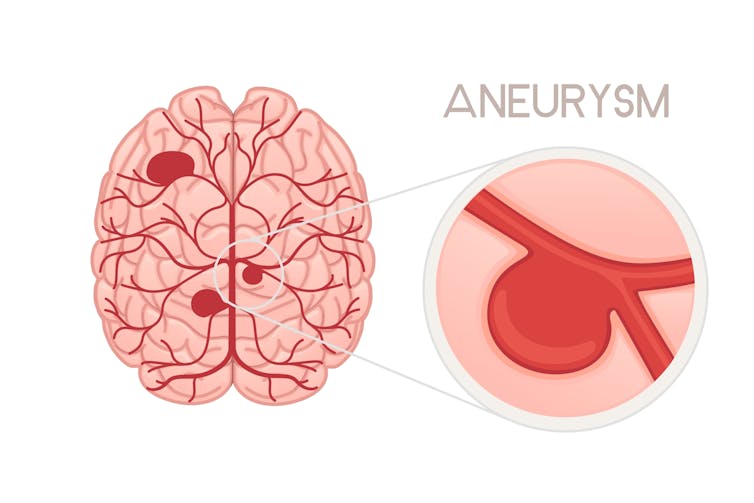
Typically an aneurysm occurs when a part of the wall of an artery (a type of blood vessel) becomes stretched and bulges out.
You can get an aneurysm in any blood vessel, but they are most common in the brain’s arteries and the aorta, the large artery that leaves the heart.
Many people can have a brain aneurysm and never know. But a brain (or aortic) aneurysm that ruptures and bursts can be fatal.
So, what causes a brain aneurysm? And what’s the risk of rupture?
Weakness in the artery wall
Our arteries need strong walls because blood is constantly pumped through them and pushed against the walls.
An aneurysm can develop if there is a weak part of an artery wall.
The walls of arteries are made of three layers: an inner lining of cells, a middle layer of muscle and elastic fibres, and a tough outer layer of mostly collagen (a type of protein). Damage to any of these layers causes the wall to become thin and stretched. It can then balloon outward, leading to an aneurysm.
For all of us, our artery walls become weaker as we age, and brain aneurysms are more common as we get older. The average age for a brain aneurysm to be detected is 50 (Sandilands is 53).
Females have a higher risk of brain aneurysm than males after about age 50. Declining oestrogen around menopause reduces the collagen in the artery wall, causing it to become weaker.
A brain aneurysm occurs when a part of the wall of an artery balloons out. Alfmaler/Shutterstock
High blood pressure can increase the risk of a brain aneurysm. In someone with high blood pressure, blood inside the arteries is pushed against the walls with greater force. This can stretch and weaken the artery walls.
Another common condition called atherosclerosis can also cause brain aneurysms. In atherosclerosis, plaques made mostly of fat build up in arteries and stick to the artery walls. This directly damages the cell lining, and weakens the muscle and elastic fibres in the middle layer of the artery wall.
Several lifestyle factors increase risk
Anything that increases inflammation or causes atherosclerosis or high blood pressure in turn increases your risk of a brain aneurysm.
A study of more than 60,000 people found smoking and high blood pressure were the strongest risk factors for a brain aneurysm.
Is it always a medical emergency?
About three in 100 people will have a brain aneurysm, varying in size from less than 5mm to more than 25mm in diameter. The majority are only discovered while undergoing imaging for something else (for example, head trauma), because small aneurysms may not cause any symptoms.
Sandilands described “a lot of headache problems” leading up to his diagnosis. Headaches can be due to minor leaks of blood from the aneurysm. They indicate a risk of the aneurysm rupturing in subsequent days or weeks.
If it does occur, rupture of a brain aneurysm is life-threatening: nearly one in four people will die within 24 hours, and one in two within three months.
If someone’s brain aneurysm ruptures, they usually experience a sudden, severe headache, often described as a “thunderclap headache”. They may also have other symptoms of a stroke such as changes in vision, loss of movement, nausea, vomiting and loss of consciousness.
Whether surgery will be used to treat a brain aneurysm depends on its size and location, as well as the age and health of the patient. The medical team will balance the potential benefits with the risks of the surgery.
A small aneurysm with low risk of rupture will usually just be monitored.
However, once a brain aneurysm reaches 7mm or more, surgery is generally needed.
In surgery to repair a brain aneurysm, the surgeon will temporarily remove a small part of the skull, then cut through the coverings of the brain to place a tiny metal clip to close off the bulging part of the aneurysm.
Another option is endovascular (meaning within the vessel) coiling. A surgeon can pass a catheter into the femoral artery in the thigh, through the aorta to the brain. They can then place a coil inside the aneurysm which forms a clot to close off the aneurysm sac.
After either surgery, usually the person will stay in hospital for up to a week. It can take 6–8 weeks for full recovery, though doctors may continue monitoring with annual imaging tests for a few years afterwards.
You can lower your risk of a brain aneurysm by not smoking, moderating alcohol intake, eating a healthy diet, exercising regularly and maintaining a healthy weight.
The authors do not work for, consult, own shares in or receive funding from any company or organisation that would benefit from this article, and have disclosed no relevant affiliations beyond their academic appointment.
Independent Allegra Spender spearheaded a condemnation of antisemitism by federal parliament – but the debate was mired in partisanship.
The opposition tried to prevent the government bringing on the Spender motion in the House of Representatives, because it said it wanted something stronger and would not be able to amend the motion.
Coalition speakers repeatedly used the debate to attack the government for not, in its view, doing enough to combat antisemitism, particularly after the pro-Palestine demonstration at the Opera House in the wake of the Hamas atrocities of October 7 2023.
Eventually the Spender motion was passed without dissent. It said the House:
deplores the appalling and unacceptable rise in antisemitism across Australia – including violent attacks on synagogues, schools, homes, and childcare centres
unequivocally condemns antisemitism in all its forms and
resolves that all parliamentarians will work constructively together to combat the scourge of antisemitism in Australia.
Opposition Leader Peter Dutton said Spender had agreed to delete words in an earlier version that would have condemned “all similar hatred directed to any groups in our community”.
“The member agreed to that form of words being struck out because we don’t think that was necessary. And we also think it is inexplicable to try and mount the argument that this sort of hatred and this sort of racism and this sort of antisemitism is being conveyed against any other pocket of the Australian community.”
Dutton said the opposition had voted against the government bringing on the motion “because it stopped us from moving amendments […] which would have strengthened the motion and provided stronger support to the community.”
Spender said combating antisemitism was not just a matter of laws but also of culture.
“We must lead by example. The message from our parliament today must be unambiguous. We will not stand for hate. We will not stand for abuse.
“We will not abide intimidation. We will not tolerate the terrorising of any part of our community. We are united against antisemitism. Words must be backed by action, but words matter, particularly those of the parliament.”
Spender will seek to strengthen the anti-hate bill currently being considered by the parliament.
The motion was seconded by Jewish Labor MP Josh Burns, who said: “the last six months have been like no other I’ve experienced in this country. And my grandparents came to this country looking for a safe haven for the Jewish people. And over the last six months, we’ve seen cars set alight. We’ve seen synagogues burnt down. We’ve seen Jewish homes and businesses marked. And we have seen childcare centres being burnt down.”
Anthony Albanese said: “We know that antisemitism has given dark shadows across generations. I say to Jewish Australians, live proudly, stand tall, you belong here and Australia stands with you.”
Former Minister for Indigenous Australians, Linda Burney, accused a previous Coalition speaker, Andrew Wallace, who criticised the government, of being “corrosive” on “an issue where we should be coming together”.
In the Senate, crossbencher Jacqui Lambie moved the same motion as Spender. The opposition unsuccessfully tried to amend it to embrace mandatory sentencing. A member from independent Lidia Thorpe was also defeated and the motion was passed on the voices.
Michelle Grattan does not work for, consult, own shares in or receive funding from any company or organisation that would benefit from this article, and has disclosed no relevant affiliations beyond their academic appointment.
WASHINGTON, D.C. – In November 2023, the Federal Highway Administration (FHWA) adopted a final rule requiring state departments of transportation and metropolitan planning organizations to measure greenhouse gas (GHG) emissions on the highway system and set declining targets. Congress has never granted the Department of Transportation this authority.
Shortly after the rule was finalized, attorneys general from 21 states, including North Dakota, filed litigation challenging the regulation. The U.S. District Court for the Western District of Kentucky found the rule illegal, but the Biden FHWA appealed the decision to the Sixth Circuit Court of Appeals. In October, U.S. Senator Kevin Cramer (R-ND), Chairman of the Senate Environment and Public Works (EPW) Transportation and Infrastructure Subcommittee; U.S. Senator Shelley Moore Capito (R-WV), Chairman of the Senate EPW Committee; U.S. Representatives Sam Graves (R-MO-6), Chairman of the House Transportation and Infrastructure Committee; and Rick Crawford (R-AR-1), former Chairman of the House Highways and Transit Subcommittee, led their colleagues in filing an amicus brief in opposition to the rule.
Today, the Sixth Circuit Court of Appeals dismissed the case with prejudice at the request of the Trump administration, ending the year-long court battle.
“This is really big news, and this dismissal reinforces the fundamental principle: federal agencies do not have authority Congress doesn’t grant them,”said Cramer. “The Biden Federal Highway Administration tried to pull a regulation out of thin air to pursue its radical, crazy, bizarro climate agenda, deliberately ignoring the legal boundaries of the law and our Constitution. States and my colleagues in Congress were right to push back against this unlawful mandate. I’m really grateful the Trump administration changed course and for the Court’s requisite dismissal.”
“The greenhouse gas emissions performance measure rule would have limited the flexibility of states to advance their own transportation investment priorities that meet the needs of their constituents,”said Capito.“The rule shifted the focus of the Federal-aid Highway Program away from building roads and bridges – jeopardizing jobs and undermining economic growth across the country. The decision from President Trump’s FHWA to end the previous administration’s attempt to continue this unlawful rule is an important step in reversing the extreme climate agenda of the past four years, and I’m thrilled that the court has now officially dismissed the appeal.”
The state of Texas also filed a separate suit against FHWA, and the District Court for the Northern District of Texas vacated the Biden rule. The Department of Transportation appealed the ruling. Cramer, Capito, Graves, and Crawford also led their colleagues in filing a separate bicameral amicus brief requesting the Fifth Circuit Court of Appeals uphold the District Court decision.
Previously, Cramer led a bipartisan Congressional Review Act joint resolution of disapproval to overturn the rule. The resolution passed the Senate in April by a vote of 53 to 47, reiterating Congress’ opposition to FHWA’s overreach. In a speech on the Senate floor, Cramer committed to leading an amicus brief in support of overturning the rule in court.
A pro-Russian paramilitary leader from eastern Ukraine, Armen Sarkisyan, has died from his injuries in a blast at a residential building in Moscow, local media reported Monday.
Sarkisyan was the head of the Donetsk People’s Republic Boxing Federation and founder of the Arbat volunteer battalion.
One person was killed and four others were injured in the explosion at the entrance of the residential building in Moscow on Monday, the Russian Investigative Committee said.
The committee later said that one of the injured died in hospital. Local media confirmed that person to be Sarkisyan.
Russia will deploy its Oreshnik missile systems in Belarus in accordance with the agreements reached between the leaders of the two countries, a senior Russian diplomat confirmed on Tuesday.
“In line with our allied commitments … Russia is ready to provide Minsk with the necessary support and take measures to protect our common defense space,” Alexey Polishchuk, head of the Second Department of the Commonwealth of Independent States at the Russian Foreign Ministry, said in an interview with TASS news agency.
He emphasized that the medium-range ballistic Oreshnik missiles will be stationed in Belarus as part of these agreements.
Polishchuk added that Belarus already hosts a joint Regional Forces Group, modern Russian defense systems, and non-strategic nuclear weapons, emphasizing that the country’s armed forces and security agencies are capable of handling both external and internal threats independently.
In late January, Belarusian President Alexander Lukashenko announced that Russia’s Oreshnik hypersonic missile system would arrive in Belarus “any day now,” adding that the system may be deployed closer to the Smolensk region.
At the invitation of Chinese Premier Li Qiang, Prime Minister of Thailand Paetongtarn Shinawatra will pay an official visit to China from Feb. 5 to 8, a foreign ministry spokesperson announced here on Tuesday.
The Minister for Communications, the Hon Michelle Rowland MP, today tabled the Report of the Statutory Review of theOnline Safety Act 2021. The independent review examined the operation and effectiveness of the Act and considered whether additional protections are needed to combat online harms, including those posed by emerging technologies. The report makes 67 recommendations to strengthen Australia’s online safety laws, including changes to existing complaints schemes for those experiencing online harms, stronger penalties for non-compliance by online services, increased transparency requirements for online services, and changes to governance arrangements for the Office of the eSafety Commissioner. In line with a key recommendation of the review, the Government has already committed tolegislate a Digital Duty of Care. This will put the legal onus on platforms to keep users safe and help prevent online harms. The Albanese Government announced the independent review in November 2023, bringing forward its commencement by a year. Completed by Ms Delia Rickard PSM, the review was informed by extensive stakeholder engagement, including 72 meetings with industry, civil society, academia, law enforcement, and domestic and international government bodies. The review also considered over 2,200 responses submitted through public consultation. The Government is continuing to carefully consider all recommendations put forward in the report and will respond in due course. Read the final report: www.aph.gov.au/Parliamentary_Business/Tabled_Documents/9184
Quotes attributable to the Minister for Communications, the Hon Michelle Rowland MP: “The Albanese Government is committed to ensuring the online world is a safe experience for all. “Our Government has been proactive in ensuring our legislative framework remains fit-for-purpose. That’s why we’ve wasted no time in committing to legislate a Digital Duty of Care to place the onus on online services to keep their users safe. “We are committed to strengthening our online safety laws to protect Australians – particularly young Australians.”
The ATO’s small business online learning platform provides flexible and free courses to build knowledge for all stages of operating a business or organisation. NFPs share many tax obligations with small businesses, and the online learning is a valuable resource to help you avoid common mistakes and understand the tax and super obligations of your NFP better.
Essentials for your small businessExternal Link can enhance your knowledge of tax and super with a learning path tailored to support your NFP, at a time that is convenient for you. Key features of the learning platform include:
instructional videos and infographics
tailored options to access courses that are important to you
key information you can export to your personal device
bookmark options for courses or specific content that you can share.
You can also save your progress and jump back into a course when you’re ready again.
Some content that NFPs might find useful includes:
With over 20 short courses on offer, Essentials to strengthen your small business is likely to have a course that suits your NFP’s needs.
If your not-for-profit (NFP) organisation needs to lodge the NFP self-review return, don’t worry, there is still time for you to lodge.
Non-charitable NFPs with an active Australian business number (ABN) that self-assess as income tax exempt have until 31 March 2025 to lodge their 2023-24 return.
The return must be lodged to notify us of your NFP’s eligibility to self-assess as income tax exempt.
But before you lodge the return, it’s a good idea to check whether your organisation is ready to lodge. Our NFP self-review return – update, connect and lodge overview provides a step-by-step guide to setting up access to lodge your return online.
The guide is a great way to identify any action you need to take to ensure you have everything you need to lodge by the due date. It covers:
checking your NFP’s ABN details
setting up myID and linking it to Relationship Authority Manager (RAM)
reviewing your income tax exemption eligibility
lodgment options.
The NFP self-review return question guide is another great tool that lists all the questions in the return, so you can prepare your answers before lodging.
If you need more help with getting ready to lodge, there are plenty of useful tools and information available to help you understand the NFP self-review return and to prepare, including the NFP self-review return factsheet.
Source: United States Senator Tommy Tuberville (Alabama)
WASHINGTON – Today, U.S. Senator Tommy Tuberville (R-AL) joined “The Megyn Kelly Show” to discuss the need for the Senate to quickly bring his Protection of Women and Girls in Sports Act, or S.9, to the floor for a vote. The U.S. House of Representatives passed similar legislation on a bipartisan basis in January.
Senator Tuberville’s interview comes ahead of National Girls and Women in Sports Day on Wednesday, February 5.
Excerpts from Senator Tuberville’s interview can be found below, and his full interview can be viewed here.
KELLY: “Senator Tommy Tuberville of Alabama has been on the frontlines working to pass the legislation and he has been working for years—I went back and looked at the number of times he’s tried to bring this up when nobody wanted to hear from him, when it appeared to have no chance of passing, he brought it up, he brought it up again, he brought it up again. He has been like a dog with a bone on this—a true ally to women and girls everywhere, and there’s a reason, I think. He’s got a historic background in the sports world as a former head coach for several college football teams, Senator Tuberville—Coach Tuberville—welcome to the show.”
TUBERVILLE: “Thank you, Megyn. Thanks for having me on. And what a great subject we’re going to talk about.”
KELLY: “I’m your huge fan at like the number of times you have tried to push this boulder up the hill really makes me respect you, even though you knew there was no way a Democrats-controlled Senate was going to give you a vote. But then, GOP wins control of the Senate—and what we’ve seen since you guys got control of the House and the Senate is the House passed it, and it got massaged a bit, they passed it again and said ‘Yeah, okay here we go, back to you guys in the Senate’ and we’ve been waiting—I’ve been waiting to see a vote by the GOP-controlled Senate on this thing because it’s much better—notwithstanding Trump’s executive orders—if it can become law. Law that can’t just be undone by an executive order four years from now. So why aren’t we seeing a vote?”
TUBERVILLE: “Well, exactly right, Megyn. A lot of people don’t realize that an executive order, which President Trump signed almost a couple of weeks ago defining gender, by the way, and he even come out and said, ‘Listen, we have to have a bill within thirty days,’ because if you don’t know this, executive orders only last as long as that president’s there. So, we got some work to do. This is the third time—third time’s the charm. […] 79% of the people in this country—Republican and Democrat—say it is wrong for men or boys to participate in women’s sports. We’ve got the majority on our side. As you said—we’ve got to get it to the floor. John Thune told me he’s going to get it to the floor. He hasn’t done it. Now, it’s time to put up or shut up. We’ve got to get it on the floor so people can see. If it’s not going to pass, we’ll do it again, but we’ve got to get people on the record because this is something that’s very dear to the heart of all parents across the country and it’s dead wrong.”
KELLY: “Would John Thune not want it to come to the floor—he certainly wouldn’t want to protect Democrats—he must know of Republicans who are not ready to vote for this thing.”
TUBERVILLE: “Well, leadership is actually co-sponsors of this, and I think at the end of the day, John Thune’s been overwhelmed. Obviously, you’ve got President Trump breathing down his neck, you’ve got the […] House pushing things over—we’re trying to do reconciliation. The Laken Riley Act needed to be passed because it was so important with the border being under attack and we’re losing so many young men and women to fentanyl and all those things. But now is the time to act on this. We can’t wait any longer. 50 years of Title IX—it has been decimated by Biden and the Democrats and all the far-left progressives. I grew up in this business of coaching. I saw what it did for young girls, older girls—it’s created leaders across this country.” […]
KELLY: “Is there some belief that this can’t pass, and they only want wins right now? They only want to put legislation on the floor that can get through?”
TUBERVILLE: “Yeah, and put yourself in John Thune’s position and the leadership of the Senate. They’re looking at things ‘Hey, let’s win early. Let’s get on the scoreboard early.’ But the problem with this is we’ve already won because President Trump pushed this out there. Now’s the time to put pressure on the Democrats. Time and time again, 4 or 5 times if we have to, even before the next election—get them on [record on] the vote that they’re going to vote against girls and women [by] having them participate against men and boys. It’s devastating to sports. It’s devastating to the lives of young people—there has been rapes in dressing rooms and showers. […] It’s going to become a common thing if you don’t stop this now. You let this landslide keep going—we’re going to have huge problems getting it stopped. So, it’s important that we stop it now, President Trump’s hot on the trail on this with his Executive Order. […] 50 years ago was the first time we ever said, ‘Okay, let’s give women […] an opportunity.’ […] And it’s the best thing that ever passed out of this place we call ‘the Swamp’ here in Washington, D.C. But again, we’re going to keep fighting for it…I’m going to continue to push leadership—John Thune, John Barrasso—they’re on my side on this, but again, you might have hit the nail on the head a while ago when you said, ‘They might just want to win.’ Well, we’ve had two losses in the last two votes that weren’t Laken Riley. So hey, let’s not worry about winning or losing on this—let’s get it out there where people can see what’s going on.’”
Senator Tommy Tuberville represents Alabama in the United States Senate and is a member of the Senate Armed Services, Agriculture, Veterans’ Affairs, HELP, and Aging Committees.
Source: United States Senator Tommy Tuberville (Alabama)
WASHINGTON – U.S. Senator Tommy Tuberville (R-AL) joined U.S. Senator Jerry Moran (R-KS) in cosponsoring the Veterans’ Assuring Critical Care Expansions to Support Servicemembers (ACCESS) Act of 2025, which would increase access to care for veterans through the Department of Veterans Affairs (VA) providers in the community.
“Veterans have paid the ultimate sacrifice in order to secure our freedom,” said Sen. Tuberville. “Over the last four years, many veterans have endured painfully long wait times and few options for care outside the VA. We should be providing quality and timely community care options—not making it harder for veterans to even get through the door. This legislation is a crucial step in righting the wrongs of the past administration. I trust that soon-to-be Secretary Doug Collins will prioritize getting veterans access to the care they earned.”
U.S. Senators Tuberville and Moran are joined by U.S. Sens. Jim Banks (R-IN) and Thom Tillis (R-NC).
The legislation is endorsed by the Wounded Warrior Project, Disabled American Veterans, The American Legion, the Veterans of Foreign Wars of the United States, Paralyzed Veterans of America, Military Officers Association of America, America’s Warrior Partnership, Vietnam Veterans of America, the Tragedy Assistance Program for Survivors, the Elizabeth Dole Foundation, the Military Order of the Purple Heart, Hunter Seven Foundation, Concerned Veterans for America, Americans for Prosperity and the National Defense Committee.
Full text of the legislation can be found here.
BACKGROUND:
The Veterans’ Assuring Critical Care Expansions to Support Servicemembers (ACCESS) Act of 2025 would establish existing community care access standards as the baseline standard of care for veterans seeking care in the community, increase access to life-saving treatment programs for veterans with mental health conditions or addiction and expand the list of criteria VA is required to take into account when determining whether it is in a veteran’s best medical interest to refer a veteran to the community to include veteran preference and continuity of care.
Last year, Sen. Tuberville joined Sen. Moran in sending a letter to former Secretary McDonough urging him to reassess actions taken by the VA to cut referrals to community care. Sen. Tuberville also partnered with Sen. Rubio in introducing the Ensuring Continuity in Veterans Health Act, which would require the VA to consider continuity of healthcare when deciding whether seeing a provider in the community is in a veteran’s best medical interest.
MORE:
Tuberville, Blackburn Reintroduce Bill to Improve Veterans’ Access to Health Care
Tuberville, Blackburn Introduce Legislation to Improve Veterans’ Access to Free-Market Health Care
Tuberville Pushes Legislation to Improve Quality, Access to Care for Veterans
Tuberville Questions Collins, Wants to Restore VA to its Original Mission
The VA is broken, and Doug Collins can fix it
The Dangerous Biden-Harris Plan to Leave our Veterans Behind
Senator Tommy Tuberville represents Alabama in the United States Senate and is a member of the Senate Armed Services, Agriculture, Veterans’ Affairs, HELP, and Aging Committees.
Last updated 4 February 2025 Last updated 4 February 2025
Print
Share
The Tertiary Education Commission is extending the implementation date for Significant Plan Amendments (SPA) and Replacement Plans (RP) criteria – to 1 January 2026. The Tertiary Education Commission is extending the implementation date for Significant Plan Amendments (SPA) and Replacement Plans (RP) criteria – to 1 January 2026.
We appreciate the feedback on the proposed criteria for SPAs and RPs that providers and peak bodies gave us at the end of last year. We initially intended to publish the criteria (via a Gazette notice) by the first quarter of this year. We are making progress on revising the criteria, but we want to make sure we get the settings right. So, we have extended the implementation date. We will engage with peak bodies on the revised SPA and RP criteria in May. At this stage, there are no set criteria. If you are a provider, you still need to follow the guidance for SPAs and RPs: Changing your Plan. If you are considering changes, then, as a first step, you will need to contact your Relationship Manager (RMI) or our Customer Contact Group. If you have any questions, please contact 0800 601 301 or customerservice@tec.govt.nz using the subject line: [Edumis #] Significant Plan Amendment / Replacement Plan.
Police have made arrests and seized vehicles after reports of dangerous driving through parts of south Auckland today.
Just before 11.30am, the public began reporting dirt bikes blocking a Manurewa intersection at Great South and Weymouth roads.
Police have established the movements were part of a funeral procession moving from Manurewa to Pukekohe.
“A group of vehicles were observed heading south on State Highway 1 driving in an unsafe manner,” District Shift Commander, Senior Sergeant Nick Ewen says.
“The Police Eagle helicopter deployed and monitored the driving behaviour from overhead.”
Police staff on the ground intercepted the vehicles in the Pukekohe area.
Senior Sergeant Ewen says three people were arrested on the roadside, with four vehicles also being impounded.
“Those arrested will be facing driving-related offences in court,” he says.
“Counties Manukau staff have also impounded a further two dirt bikes at an address.
“This is a great outcome, and it sends a message that Police and the wider community will not accept dangerous or unsociable behaviour on our roads.”
Senior Sergeant Ewen says Police would like to hear from any members of the public as enquiries continue.
“If you witnessed the driving behaviour or have dashcam footage, we need to hear from you,” he says.
If you have footage or information to assist Police, please call 105 using the reference number P061507502.
Source: United States Senator for Kentucky Mitch McConnell
Washington, D.C. – U.S. Senator Mitch McConnell (R-KY) issued the following statement today regarding the confirmation of Chris Wright as U.S. Secretary of Energy:
“From day one, President Biden worked relentlessly to kneecap American energy production, both onshore and offshore. Secretary Wright’s singular focus on restoring affordable domestic energy is a welcome change after four years of policies that put ideology and politics ahead of American workers. I look forward to working with Secretary Wright to move our country toward greater energy dominance and to support the agency’s job-creating policies, like their work at the Department of Energy site in Paducah, Kentucky.”
WASHINGTON, D.C. – U.S. Sen. Ted Cruz (R-Texas) introduced the Education Freedom Scholarships and Opportunity Act. The legislation expands education options and would provide a federal tax credit for individuals and businesses to donate to nonprofit scholarship funds for individual students’ education.
Upon introduction, Sen. Cruz said, “Every child deserves the chance to succeed. The Education Freedom Scholarships and Opportunity Act ensures students have access to quality education regardless of their income or background. This legislation will empower families and foster private investment through a dollar-for-dollar tax credit, expanding opportunities for all American students.”
This bill is also cosponsored by Sen. James Lankford (R-Okla.).
Read the bill text here.
BACKGROUND
Sen. Cruz has led this effort to provide expand education options available to all students since 2019. Sen. Cruz has also previously introduced this legislation in 2021 and 2023.
The Education Freedom Scholarships and Opportunity Act:
Encourages States to Opt In: Opting in to the freedom scholarship approach to education will reduce federal control over education and return the power to government more accountable to parents.
Is State Directed: States maintain the authority to create a program that works for them. States can decide which students are eligible for the scholarship credit, what constitutes eligible educational expenses and eligible educational providers, and more.
Encourages Workplace Training Education: There is more than one pathway to success, and our rapidly-changing 21st century economy means that workers need new skills to compete. In addition to elementary and secondary education scholarships, this bill allows for scholarships related to career and technical education, apprenticeships, certifications, and other forms of workforce training for postsecondary students.
Prohibits Federal Control of Education: Clarifies that nothing in this act shall be construed to permit, allow, encourage, or authorize any increased regulation or control over any aspect of a participating educational provider, scholarship granting organization, or workforce training organization. This allows all education providers to be able to participate, without fear of federal control.
Helps Our Most Vulnerable Students: Many low and middle-income students cannot afford tuition and educational expenses themselves, or do not have the means to pay for the workforce training needed to secure a stable, high-paying job. This tax credit will provide scholarships for these students, so that they can have the opportunity to receive an effective and successful education that prepares them for the future.
WASHINGTON, D.C. – U.S. Sen. Ted Cruz (R-Texas), a member of the Senate Foreign Relations Committee, issued the following statement after the announcement of subcommittee assignments for the 119th Congress on the Committee. Sen. Cruz will be the Chairman of the Subcommittee on Africa and Global Health Policy, as well as a member of the Subcommittee on Near East, South Asia, Central Asia, and Counterterrorism and the Subcommittee on Western Hemisphere, Transnational Crime, Civilian Security, Democracy, Human Rights, and Global Women’s Issues.
Sen. Cruz said, “As the Chairman of the Subcommittee on Africa and Global Health Policy, I intend to pursue a robust oversight agenda and hearings schedule, with a focus on countering the Chinese Communist Party’s predatory practices toward our African partners. I will also focus on addressing threats posed by terrorist groups, freedom of navigation in the Red Sea, illicit finance across the continent, and diplomacy targeting us and our allies by malign actors. I look forward to also continuing work on other subcommittees strengthening strategic partnerships across the Middle East and the Western Hemisphere.”
BACKGROUND
The Senate Foreign Relations Subcommittees Sen. Cruz sits on holds jurisdiction over the following areas:
Subcommittee on Africa and Global Health Policy:
The subcommittee deals with all matters concerning U.S. relations with countries in Africa (except those, like the countries of North Africa, specifically covered by other subcommittees), as well as regional intergovernmental organizations like the African Union and the Economic Community of West African States. This subcommittee’s regional responsibilities include all matters within the geographic region, including matters relating to: (1) terrorism and non-proliferation; (2) crime and illicit narcotics; (3) U.S. foreign assistance programs; and (4) the promotion of U.S. trade and exports.
In addition, this subcommittee has global responsibility for health-related policy, including disease outbreak and response.
Subcommittee on Near East, South Asia, Central Asia, and Counterterrorism:
This subcommittee deals with all matters concerning U.S. relations with the countries of the Middle East, North Africa, South Asia, and Central Asia, as well as regional intergovernmental organizations. This subcommittee’s regional responsibilities include all matters within the geographic region, including matters relating to: (1) terrorism and non-proliferation; (2) crime and illicit narcotics; (3) U.S. foreign assistance programs; and (4) the promotion of U.S. trade and exports.
In addition, this subcommittee has global responsibility for counterterrorism matters.
Subcommittee on Western Hemisphere, Transnational Crime, Civilian Security, Democracy, Human Rights, and Global Women’s Issues:
This subcommittee deals with all matters concerning U.S. relations with the countries of the Western Hemisphere, including Canada, Mexico, Central and South America, Cuba, and the other countries in the Caribbean, as well as the Organization of American States. This subcommittee’s regional responsibilities include all matters within the geographic region, including matters relating to: (1) terrorism and non-proliferation; (2) crime and illicit narcotics; (3) U.S. foreign assistance programs; and (4) the promotion of U.S. trade and exports. In addition, this subcommittee has global responsibility for transnational crime, trafficking in persons (also known as modern slavery or human trafficking), global narcotics flows, civilian security, democracy, human rights, and global women’s issues.
Responding to Te Pāti Māori’scall for an unelected Te Tiriti Commissionerto veto legislation from Parliament, ACT Leader David Seymour says:
“ACT would like to thank Te Pāti Māori for being so honest about the fact they don’t support rule by elected Parliament. Ironically, they’ve shown voters electing the next Parliament what’s at stake if they vote Labour, the Greens, or Te Pāti Māori.
“If we take Te Pāti Māori seriously, it would be one vote, for one party, once. A person who ‘needs to be Māori’ would have a veto on all laws.
“If breaking democracy is a bottom line for Te Pāti Māori, Labour and the Greens need to rule out ever being in Government with them, or they’ll never be in Government with anyone. New Zealand voters will see to it, and Labour and the Greens will be collateral damage.
“Labour and the Greens need to decide if they’re still serious parties. Labour and the Greens faced a test when the Speaker asked for their votes to censure Te Pati Māori’s haka last year. They voted against the Speaker and with Te Pati Māori. If they can do that to Parliamentary debate, what else are they up for?
“Te Pāti Māori’s latest crazy demand also shows why they oppose the Treaty Principles Bill. It is about all New Zealanders having an equal say through democratic processes. Te Pāti Māori want the opposite.
“The Treaty Principles Bill would prevent our founding document from being twisted to justify these kinds of constitutional travesties. Te Tiriti promised the same rights for all New Zealanders. That should include the right to cast a vote and have your values put into action by Parliament, without an unelected Commissioner vetoing your democratic choices on behalf of one group of New Zealanders.”
Associate Justice Minister Nicole McKee has acknowledged today’s High Court decision which saw Janet Dickson’s claims in her case against the Real Estate Agents Authority dismissed. “As a matter of principle, Mrs Dickson chose not to complete the compulsory professional development topic Te Kākano (The Seed) – which introduced real estate professionals to Māori culture, language, customs, and the Treaty of Waitangi. Under the Real Estate Agents Act 2008 the REA is required to cancel a real estate agent’s licence if they do not complete their CPD requirements. Mrs Dickson applied for an exemption from completing Te Kākano and that application was denied. She therefore faced the prospect of not being able to practise as a real estate agent for five years. “I sent a Letter of Expectation to the Real Estate Authority Board in February last year clearly outlining that CPD requirements should be relevant to the job of real estate agents. “I advised the Board that I did not consider the mandatory CPD topic in 2023 – Te Kākano (The Seed) – to meet my expectation of being relevant to the real estate profession. “It is critically important to me that the Real Estate Authority can demonstrate that its services materially improve outcomes for all New Zealanders and that they represent value for money. “This case has shed light on an overly harsh punishment for real estate agents who have not completed the CPD requirements,” Mrs McKee says. “No other profession imposes a five-year disqualification period on individuals for failing to complete their CPD requirement. It is a disproportionate response that stops people from working in their chosen profession. “The Regulatory Systems (Occupational Regulation) Amendment Bill which I introduced to Parliament in December last year addresses this by removing that clause from the Real Estate Agents Act 2008, creating consistency with other regulated professions.”