Blog

  • MIL-OSI United Kingdom: PM call with President Trump of the United States: 26 January 2025

    Source: United Kingdom – Government Statements

    The Prime Minister spoke to President Trump today.

    The Prime Minister spoke to President Trump today. 

    President Trump opened by sending his condolences to the Prime Minister on the loss of his brother. The Prime Minister thanked President Trump for his kind words and congratulated him on his inauguration. 

    The Prime Minister paid tribute to President Trump’s role in securing the landmark ceasefire and hostages deal in Gaza. The President welcomed the release of Emily Damari and sent his best wishes to her family. They discussed the importance of working together for security in the Middle East. 

    They also discussed trade and the economy, with the Prime Minister setting out how we are deregulating to boost growth. 

    The two leaders stressed the importance of the close and warm ties between the UK and the US, and the President spoke of his respect and affection for the Royal Family. 

    They agreed to meet soon and looked forward to further discussions then.

    Updates to this page

    Published 26 January 2025

    MIL OSI United Kingdom

  • MIL-OSI Canada: Government of Yukon ratifies a new Collective Agreement with the Yukon Association of Education Professionals

    Government of Yukon ratifies a new Collective Agreement with the Yukon Association of Education Professionals
    jlutz

    The Government of Yukon values the work of educators and is very pleased to announce a new collective agreement is in place with the Yukon Association of Education Professionals. The three-year agreement contains several updates and new provisions to benefit employees, including wage increases of 14.15 per cent over three years.

    The new collective agreement keeps Yukon educators among the highest paid in Canada while maintaining fiscal responsibility. 

    The Government of Yukon has 90 days following ratification by the union membership to implement the new collective agreement. Once in place, the new agreement will be in effect until June 30, 2027. 

    MIL OSI Canada News

  • MIL-OSI Canada: Statement from Minister McPhee for National Crime Stoppers Month

    Statement from Minister McPhee for National Crime Stoppers Month
    jlutz

    Minister of Justice Tracy-Anne McPhee has issued the following statement:

    “Every January is National Crime Stoppers Month. This year, the Yukon Chapter is hosting an awareness and information session at the Canada Games Centre on Saturday, January 25, from 11 am to 3 pm. This information session is to raise awareness about the Crime Stoppers tip app, which allows anyone to anonymously report a crime in their community. I encourage Yukoners to attend, learn more about this important organization and discover how we can all make a difference.

    “This independent, non-profit organization empowers Yukoners to take action by anonymously reporting suspicious activities or potential crimes through a secure tip line system, available by phone, online or on the app. Any tips received that help solve a case or lead to an arrest are eligible for a cash reward.

    “Crime Stoppers Yukon plays a key role in raising public awareness and educating the community about illegal activities. This organization is committed to stopping, solving and preventing crimes in the Yukon. Crime Stoppers collaborates with law enforcement and government agencies to provide information on supports and resources to help both offenders and victims. Our government will continue to work with Crime Stoppers Yukon and other organizations to help further reduce crime rates across the territory.

    “Public safety and community wellbeing remain top priorities for our government. We thank Crime Stoppers Yukon for their strong program and for their commitment to making communities safer for all Yukoners.”
     

    MIL OSI Canada News

  • MIL-OSI Canada: Government of Yukon highlighted territory’s mineral potential at conferences in Vancouver

    Government of Yukon highlighted territory’s mineral potential at conferences in Vancouver
    jlutz

    This week, Premier Ranj Pillai, Deputy Premier and Minister Responsible for Women and Gender Equity Directorate Jeanie McLean and Energy, Mines and Resources Minister John Streicker joined a delegation of representatives from the Government of Yukon, Yukon First Nations, the Yukon Geological Survey, the Yukon Mining Alliance, the Yukon First Nation Chamber of Commerce, the Yukon Chamber of Mines and Yukon businesses to promote Yukon jobs and industry at the Association for Mineral Exploration’s Roundup (AME Roundup) conference and the Vancouver Resource Investment Conference in Vancouver, British Columbia.

    Cabinet Ministers and Government of Yukon officials highlighted the importance of industry and government working with Yukon First Nations communities and shared upcoming plans for investment in the territory’s economic development through an emphasis on infrastructure upgrades and modernizing legislation. The Government of Yukon attended the conferences to provide information about mineral development opportunities in the territory.

    Investments in strategic infrastructure play a pivotal role in supporting Yukon residents, businesses and the territory’s mining industry. Ministers emphasized Government of Yukon priorities including improving access to Yukon communities through the Yukon Resource Gateway program, ongoing work with the Government of Canada to connect the Yukon and British Columbia’s electricity grids, as well as recent successes including the now-completed Dempster Fibre Line project.

    At AME Roundup, Minister John Streicker led a panel discussion on how industry and governments at all levels must work together to support community safety so that Yukon communities can truly benefit from the economic opportunities that industry presents. Geologists from the Yukon Geological Survey presented the results of their fieldwork to the mineral and investment community.

    Minister McLean joined Doris Bill, former Chief of the Kwanlin Dün First Nation, and Gina Nagano, President and Community Safety Specialist at House of Wolf, to lead a vital panel discussion at The Gathering Place on the importance of community safety as a foundation for equitable participation in the mining and resources industry. The session highlighted the critical role of safety and other foundational conditions in fostering inclusive opportunities, with a focus on Yukon-led initiatives such as the Yukon’s Missing and Murdered Indigenous Women, Girls and Two-Spirit+ Strategy. Minister McLean emphasized the importance of creating safe and supportive communities to ensure all Yukoners, particularly Indigenous women and Two-Spirit+ individuals, can benefit from the territory’s economic development.

    MIL OSI Canada News

  • MIL-OSI Canada: Statement from Minister McLean on International Day of Education 2025

    Statement from Minister McLean on International Day of Education 2025
    jlutz

    Minister of Education Jeanie McLean has issued the following statement:

    “Today, we celebrate International Day of Education. This year’s theme, Artificial Intelligence and Education: Preserving Human Agency in a World of Automation, encourages us to reflect on the role of education in preparing the next generation to understand the impact of artificial intelligence and to make thoughtful decisions about how they engage with technology.

    “In the Yukon, we are proud to prioritize digital literacy in our schools. Beginning in Grade 6, students are introduced to the responsible and ethical use of digital tools. As technology continues to advance, it’s critical that we not only teach students to use these tools effectively but also empower them to maintain their autonomy in a world increasingly shaped by automation and artificial intelligence.

    “By fostering critical thinking, problem-solving and creativity through digital literacy programs, we are helping ensure that Yukon students are informed and active participants when using technology. These skills are essential as artificial intelligence continues to transform various aspects of day-to-day life. The principles of digital literacy being taught today lay the groundwork for students to embrace the digital world with confidence, responsibility and critical awareness.

    “On this International Day of Education, join me in celebrating Yukon students and supporting them as they work toward a bright and promising future.”

    MIL OSI Canada News

  • MIL-OSI USA: Statement by US Immigration and Customs Enforcement

    Source: US Immigration and Customs Enforcement

    January 26, 2025Washington, DC, United StatesStatement

    U.S. Immigration and Customs Enforcement, along with federal partners, including the FBI, ATF, DEA, CBP and the U.S. Marshals Service, began conducting enhanced targeted operations today in Chicago to enforce U.S. immigration law and preserve public safety and national security by keeping potentially dangerous criminal aliens out of our communities.

    MIL OSI USA News

  • MIL-OSI: Radix Adds World-Class Supply Chain Resilience to Best-In-Class Asset Performance Management

    Source: GlobeNewswire (MIL-OSI)

    HOUSTON, Jan. 26, 2025 (GLOBE NEWSWIRE) — Radix, a global technology solutions company at the forefront of industrial digital transformation, unlocks data with actionable insights at scale with speed, and sustainability to drive optimal asset performance in industries such as Energy, Chemical, Manufacturing, Oil & Gas, Power Generation and Distribution, Pulp & Paper, and Metals, Mining & Minerals. 

    Radix supply chain and asset performance competencies drives resilience, visibility, and performance, across all industry verticals. With its “on the ground,” world-class industry experts and data-driven transformation capabilities, Radix bolsters the total product lifecycle and boosts the decision-making capability within the entire Supply Chain spectrum. 

    Grant Belden, Vice President of Supply Chain and recent addition at Radix, spearheads the Radix supply chain division. Belden joins Radix bringing 25 years of “end to end” supply chain experience in industry experience with commercial, planning, sales and operational planning, procurement, logistics and warehousing – all on a global scale.

    “Radix is and has always been about being on the ground with our customers to help them achieve new levels of operational success. Grant’s robust Supply Chain leadership experience deepens the team’s expertise and impact with a wealth of Sales and Operational Planning leadership experience and capabilities,” says Keith Stentiford, SVP of Infrastructure North America.

    “Radix is uniquely built with data intelligence and people in mind, supported by a large team of in-house engineers and data scientists experts,” says Alexander Clausbruch, Founder & Chief Executive Officer, of Radix North America. “Our deep industry knowledge, and ‘skin in the game’ capabilities empower our customers’ digital transformation journey to accelerate, scale, and better navigate the various phases of the supply chain from end to end. I am proud of our team and our growth as we continue to be on the ground with our customers expanding our footprint in North America and around the world.” 

    “Radix provides executives, managers, and field operators across supply chain ecosystems with clear roadmaps and implementation services to optimize and navigate the most critical aspects of their Supply Chain and Asset Management operations,” said Tim Brown, Academic Program Director for AI at the Georgia Institute of Technology and previous Managing Director of the Georgia Tech Supply Chain and Logistics Institute. 

    According to Belden, Radix’s value within the supply chain spectrum is unique. “Where most Supply Chain point providers stop and hand off services within the larger supply chain process, Radix continues by empowering operations with industry-leading Asset Performance Management. As a result, we provide the value and industrial intelligence that companies need to seamlessly manage the entire product lifecycle.” 
      
    The Radix Supply Chain team will attend the Manifest Supply Chain event in Las Vegas from February 10 to 12 – showcasing the tangible impact of Radix Supply Chain visibility, and the resilience that comes from Radix’s best-in-class Asset Performance Management services and solutions.    

    About Radix  

    Founded in 2010, Radix is a privately held global technology solutions company providing consulting, engineering, operations technology, and data and software technology solutions. Radix combines key capabilities and practices to empower customers to thrive along their digital transformation journey. Radix provides technology-based, data-driven solutions to industrial and non-industrial companies worldwide. Radix has experience leading projects in more than 30 countries and has more than 1,700+ employees around the globe, with North American headquarters in Houston, Texas, main headquarters in Rio de Janeiro, additional offices in Sao Paulo and Belo Horizonte, and a presence in Singapore and Amsterdam. To learn more, visit www.radixeng.com.

    For more information:
    Citalouise Geiggar, Ph.D.
    citalouise.geiggar@radixeng.com 
    Radix

    A photo accompanying this announcement is available at https://www.globenewswire.com/NewsRoom/AttachmentNg/85916472-18aa-44c2-aefb-52618b3185c0

    The MIL Network

  • MIL-Evening Report: Wanting to ‘return to normal’ after a disaster is understandable, but often problematic

    Source: The Conversation (Au and NZ) – By Anthony Richardson, Senior Lecturer and Deputy Director, Te Puna Ako Centre for Tertiary Teaching and Learning, University of Waikato

    Media coverage of the recent fires in Los Angeles showed the heartbreaking damage in Pacific Palisades and elsewhere across Los Angeles County. People lost not only their houses but also the thriving communities of which they had been part.

    What was quickly apparent was the desire to rebuild. People often want their lives to bounce back from every crisis or disaster and to recreate what they have lost.

    And this points to a broader issue that emerges after many natural disasters. People want to rebuild and return to normal when, in the face of an increasingly volatile climate, the best option may be to adapt and change.

    There is a tension between a common understanding of personal resilience and the resilience of complex adaptive systems such as cities. People have a psychological and social need for stability and permanence, but all complex systems are resilient only because they adapt when forced to.

    In New Zealand, the same tension emerged in the aftermath of Cyclone Gabrielle. Ahead of the second anniversary of the devastating cyclone – and as Northland is battered, yet again, by severe weather and flooding – New Zealanders need to ask how we can balance our personal resilience and need for stability while also acknowledging the need for a managed retreat.

    The long history of fires in Los Angeles

    In his essay The Case for Letting Malibu Burn, writer Mike Davis outlines how fire is an inescapable part of Los Angeles history and how after each fire the city has always been rebuilt.

    Davis’ work focuses on Los Angeles but raises important questions about the future of all communities facing increasing risks from climate change.

    The repeated rebuilds in Los Angeles have created an expectation that the city will be rebuilt after every fire.

    But the city also has unique physical features that make such fires inescapable: the combination of the Santa Ana winds blowing from the desert with chaparral vegetation growing in the steep and dry canyons.

    Fire has always been a natural part of the cycle of regeneration in this landscape. What has changed is the encroachment of human dwellings at the foot of these hills and canyons, and into them. Between 1990 and 2020, nearly 45% of the homes built in California were placed in these high fire risk areas.

    Climate change is also making both localised rain events and droughts in the Los Angeles environs more extreme, creating larger and then drier fuel loads.

    From a systems perspective, a managed retreat from the areas of worst fire risk makes sense. The resilience of cities requires them to be adaptive.

    Yet adaptation in Los Angeles is largely not happening. After previous fires, rebuilding has generally occurred within six years and with minimal to no change in building design or placement. People have found comfort in the idea of “bouncing back” like a rubber ball.

    Pricing in the risk

    There is one group within this complex system which is actually adapting in the face of increasing climate change – in Los Angeles and elsewhere, including in New Zealand.

    Home insurers have drastically raised premiums in Los Angeles, or removed cover entirely from many homeowners, to cover ever-growing losses. The insurance bill for these recent fires is predicted to be US$30 billion and the frequency and cost of such climate disasters is increasing.

    Together, the 2023 Auckland Anniversary floods and Cyclone Gabrielle cost insurers more than NZ$3.5 billion. The cost of insurance in New Zealand rose by 14% in 2024, significantly outpacing general consumer price inflation.

    In system terms, increased insurance premiums represent some of the adaptive capacity of a community that insists on rebuilding in the face of increasing risks.

    In economic terms, you can also think of insurance premiums as a market signal which is pricing the ever-increasing risk of disaster into the cost of living in such fire or flood zones.

    Accepting risk or accepting change in NZ

    The approaching second anniversary of Cyclone Gabrielle and the ongoing debate over managed retreat demonstrates the same tension in Aotearoa New Zealand between increasing climate risks and our very human need to rebuild and restore what we have lost.

    City and regional councils are facing questions about whether to build (or rebuild) in high-risk areas.

    But with two thirds of our population living in flood risk areas and both flood risks and insurance costs increasing, how many times can New Zealand rebuild in these risky areas?

    In the end, we need to remember that a crucial, and sometimes overlooked, element of psychological resilience is acceptance of change.

    In a world of accelerating climate change and related disasters this is increasingly the more realistic response.

    Anthony Richardson does not work for, consult, own shares in or receive funding from any company or organisation that would benefit from this article, and has disclosed no relevant affiliations beyond their academic appointment.

    ref. Wanting to ‘return to normal’ after a disaster is understandable, but often problematic – https://theconversation.com/wanting-to-return-to-normal-after-a-disaster-is-understandable-but-often-problematic-247884

    MIL OSI AnalysisEveningReport.nz

  • MIL-OSI United Kingdom: The UK is deeply concerned by the scale and pace of recent M23 and Rwandan Defence Forces advances in eastern DRC: UK statement at the UN Security Council

    Source: United Kingdom – Executive Government & Departments

    Statement by Ambassador James Kariuki, UK Deputy Permanent Representative to the UN, at the UN Security Council meeting on the Democratic Republic of Congo.

    President, MONUSCO peacekeepers and personnel work bravely to deliver this Council’s mandate in the most difficult of circumstances.

    The United Kingdom reiterates clearly today that attacks on UN peacekeepers are absolutely unacceptable, and may constitute war crimes. 

    We also recall that planning, directing, sponsoring or conducting attacks against MONUSCO peacekeepers may constitute a basis for UN sanctions designations.

    The UK extends its sympathies to the families of the Blue Helmets from South Africa and Uruguay who have lost their lives serving in MONUSCO, and we extend our best wishes for a full recovery to those peacekeepers who have been injured.

    The UK also extends its condolences to the families of all troops from the Southern African Development Community Mission in DRC who have lost their lives in support of DRC’s stability and security.

    As we do so, we fully acknowledge that the numbers of those lost and injured is changing by the hour. It is a critical moment for DRC and for the region.

    President, I would now like to make three points.

    First, the United Kingdom once again condemns the violent actions of all armed groups, including FDLR and M23.

    We are deeply concerned by the scale and pace of recent M23 and Rwandan Defence Forces advances in eastern DRC.

    In December this Council renewed MONUSCO’s mandate. And in the four weeks since, M23’s unacceptable offensive, and that of the Rwanda Defence Forces, through North and South Kivu, has resulted in the capture of several towns and villages.

    As we’ve heard, hundreds of thousands of civilians have been displaced, and violence has intensified as a result.

    We are also deeply alarmed by M23’s declaration that they intend to take Goma, a city where the humanitarian situation is already catastrophic.

    The rising number of displaced people resulting from M23’s territorial expansion has placed further pressure on crowded IDP camps and exacerbates the challenges faced by humanitarian actors.

    This morning, the UK Foreign Secretary spoke with President Kagame and called for urgent de-escalation, outlining the need for Rwanda and the DRC to urgently return to the negotiating table.

    Now, more than ever, it is critical that MONUSCO is able to deliver its mandate. M23 attacks on peacekeepers, with support from the RDF, must stop immediately.

    These attacks prevent the force from being able to discharge its Security Council-mandated mission to protect civilians.

    Rwandan spoofing and jamming of GPS signals, which obstruct UN and humanitarian operations, must also stop.

    We urge all parties to remember their obligations under international humanitarian law.

    Finally, President, the United Kingdom once again extends its thanks to Angola for its leadership on mediation efforts.

    We encourage DRC and Rwanda to return to the negotiating table and to focus on making tangible progress on delivering on their commitments under the concept of operations.

    There can be no military solution. Fighting must stop. Civilians must be protected. And the parties should engage in good faith in the political process.

    Updates to this page

    Published 26 January 2025

    MIL OSI United Kingdom

  • MIL-OSI Europe: Statement on Belarus

    Source: Government of Sweden

    Statement on Belarus – Government.se

    Please enable javascript in your browser

    Published

    Joint Statement by Nordic Baltic Foreign Ministers on Belarus, 26 January 2025.

    The Nordic-Baltic countries support the statement by EU High Representative for Foreign Affairs and Security Policy Kaja Kallas on support to the Belarusian people.

    The Nordic-Baltic countries stand in solidarity with the Belarusian people who strive for a free, democratic, sovereign and independent Belarus. A future democratic Belarus has a place in the European family. Our countries will continue to support the tireless efforts of the Belarusian democratic forces led by Sviatlana Tsikhanouskaya and independent Belarusian civil society both inside and outside Belarus.

    The Nordic-Baltic countries continue to support the democratic right of the Belarusian people to choose their leaders through free and fair elections. This requires rule of law, political pluralism, and full respect for human rights and fundamental freedoms as genuine democratic preconditions. None of this is, regretfully, observed in today’s Belarus. Instead, the relentless and unprecedented level of repression, including arbitrary detention and torture, mass human rights violations, severe restrictions to political participation for opponents of the regime and highly restricted access to independent media have deprived the process that took place today of any legitimacy. This is also reflected in the decision of the Belarus’ authorities to invite the OSCE ODIHR mission only 10 days beforehand.

    The Nordic-Baltic countries strongly urge the immediate and unconditional release of all political prisoners, and their effective rehabilitation. Aliaksandr Lukashenka continues to lack any democratic legitimacy.

    MIL OSI Europe News

  • MIL-OSI USA: PHOTO RELEASE: Kristi Noem Sworn in as the Secretary of DHS

    Source: US Federal Emergency Management Agency

    Headline: PHOTO RELEASE: Kristi Noem Sworn in as the Secretary of DHS

    “It is such an honor to be sworn in as the United States Secretary of Homeland Security. It was made even more meaningful by being sworn in by Supreme Court Justice Clarence Thomas at his home. Thank you, President Trump for putting your trust in me to help keep America safe.”  
    — Secretary Kristi Noem  

    On January 25, Kristi Noem is sworn in as the Secretary of the Department of Homeland Security” data-asset-id=”58348″ data-asset-link=”1″ data-asset-type=”imageasset” data-entity-type=”emerald” data-image-style=”large” src=”https://www.dhs.gov/sites/default/files/styles/large/public/externals/d505d2c6eeb96b260e0bf3ec5f6b6333.jpg.webp?itok=Qj2BrOKq”>
    On January 25, Kristi Noem is sworn in as the Secretary of the Department of Homeland Security | View Original

    The swearing-in ceremony took place at the home of U.S. Supreme Court Justice Clarence Thomas.” data-asset-id=”58349″ data-asset-link=”1″ data-asset-type=”imageasset” data-entity-type=”emerald” data-image-style=”large” src=”https://www.dhs.gov/sites/default/files/styles/large/public/externals/b0642fea0bc46d5281a980c46b4a66c5.jpg.webp?itok=voFvGwUA”>
    The swearing-in ceremony took place at the home of U.S. Supreme Court Justice Clarence Thomas. | View Original

    On January 25, Kristi Noem is sworn in as the Secretary of the Department of Homeland Security” data-asset-id=”58347″ data-asset-link=”1″ data-asset-type=”imageasset” data-entity-type=”emerald” data-image-style=”large” src=”https://www.dhs.gov/sites/default/files/styles/large/public/externals/eeffcfca5c3db081f5303d7872426ff4.jpg.webp?itok=o7Q6ncNh”>
    On January 25, Kristi Noem is sworn in as the Secretary of the Department of Homeland Security | View Original

    On January 25, Kristi Noem is sworn in as the Secretary of the Department of Homeland Security” data-asset-id=”58346″ data-asset-link=”1″ data-asset-type=”imageasset” data-entity-type=”emerald” data-image-style=”large” src=”https://www.dhs.gov/sites/default/files/styles/large/public/externals/8a6abd552845ee30f4fda87ab732b217.jpg.webp?itok=zGe7jFfu”>
    On January 25, Kristi Noem is sworn in as the Secretary of the Department of Homeland Security | View Original

    MIL OSI USA News

  • MIL-OSI Security: Man charged following investigation into theft of high-value handbags from Wimbledon shop

    Source: United Kingdom London Metropolitan Police

    A man has been charged following a police investigation into the theft of high-value handbags from a shop on Wimbledon High Street.

    Joshua Grant McKenzie, 22 (18.09.02) of Hounslow Rd, Feltham, was charged with theft on Sunday, 26 January in relation to the incident which took place on Tuesday, 14 January.

    He is due to appear at Ealing Magistrates’ Court on Monday, 27 January.

    Met officers have been working closely with Surrey Police colleagues, and today, McKenzie has also been charged by Surrey Police with theft from a store owned by the same business in Oakdene Parade, Cobham, on Monday 13 January.

    The charges relate to the alleged theft of handbags, totalling around £15,000 in value, from the shops.

    The store owner has been updated by police.

    A 22-year-old man was arrested on Saturday, 25 January and charged as above.

    MIL Security OSI

  • MIL-OSI Security: PHOTO RELEASE: Kristi Noem Sworn in as the Secretary of DHS

    Source: US Department of Homeland Security

    WASHINGTON – Yesterday, Kristi Noem was confirmed by the U.S. Senate in a vote of 59-34  and sworn in as the Secretary of the Department of Homeland Security by U.S. Supreme Court Justice Clarence Thomas.  

    “It is such an honor to be sworn in as the United States Secretary of Homeland Security. It was made even more meaningful by being sworn in by Supreme Court Justice Clarence Thomas at his home. Thank you, President Trump for putting your trust in me to help keep America safe.”  

    — Secretary Kristi Noem  

    On January 25, Kristi Noem is sworn in as the Secretary of the Department of Homeland Security

    ” data-asset-id=”58348″ data-asset-link=”1″ data-asset-type=”imageasset” data-entity-type=”emerald” data-image-style=”large” src=”/sites/default/files/styles/large/public/externals/d505d2c6eeb96b260e0bf3ec5f6b6333.jpg.webp?itok=Qj2BrOKq”/>

    On January 25, Kristi Noem is sworn in as the Secretary of the Department of Homeland Security | View Original
    The swearing-in ceremony took place at the home of U.S. Supreme Court Justice Clarence Thomas.

    ” data-asset-id=”58349″ data-asset-link=”1″ data-asset-type=”imageasset” data-entity-type=”emerald” data-image-style=”large” src=”/sites/default/files/styles/large/public/externals/b0642fea0bc46d5281a980c46b4a66c5.jpg.webp?itok=voFvGwUA”/>

    The swearing-in ceremony took place at the home of U.S. Supreme Court Justice Clarence Thomas. | View Original
    On January 25, Kristi Noem is sworn in as the Secretary of the Department of Homeland Security

    ” data-asset-id=”58347″ data-asset-link=”1″ data-asset-type=”imageasset” data-entity-type=”emerald” data-image-style=”large” src=”/sites/default/files/styles/large/public/externals/eeffcfca5c3db081f5303d7872426ff4.jpg.webp?itok=o7Q6ncNh”/>

    On January 25, Kristi Noem is sworn in as the Secretary of the Department of Homeland Security | View Original
    On January 25, Kristi Noem is sworn in as the Secretary of the Department of Homeland Security

    ” data-asset-id=”58346″ data-asset-link=”1″ data-asset-type=”imageasset” data-entity-type=”emerald” data-image-style=”large” src=”/sites/default/files/styles/large/public/externals/8a6abd552845ee30f4fda87ab732b217.jpg.webp?itok=zGe7jFfu”/>

    On January 25, Kristi Noem is sworn in as the Secretary of the Department of Homeland Security | View Original

    MIL Security OSI

  • MIL-OSI Global: LA gets rain, but also risk of flooding and debris flows from wildfire burn scars – a geologist explains the threat

    Source: The Conversation – USA – By Jen Pierce, Professor of Geosciences, Boise State University

    A debris flow channel in a severely burned watershed in Idaho. Amirhossein Montazeri/Boise State University, CC BY-ND

    While firefighters work to extinguish the Los Angeles-area wildfires, city officials and emergency managers are also worried about what could come next.

    Light rain began falling on Jan. 25, 2025, helping firefighters who have been battling fires for nearly three weeks, but rain can also trigger dangerous floods and debris flows on burned hillslopes. The National Weather Service issued a flood watch for the burned areas through Jan. 27.

    Debris flows can move with the speed of a freight train, picking up or destroying anything in their path. They can move tons of sediment during a single storm, as Montecito, just up the coast from Los Angeles, saw in 2018.

    What causes these debris flows, sometimes called mudflows, and why are they so common and dangerous after a fire? I am a geologist whose research focuses on pyrogeomorphology, which is how fire affects the land. Here’s what we know.

    How debris flows begin

    When severe fires burn hillslopes, the high heat from the fires, sometimes exceeding 1,000 degrees Fahrenheit (538 degrees Celsius), completely destroys trees, shrubs, grass and structures, leaving behind a moonscape of gray ash. Not only that, the heat of the fire actually burns and damages the soil, creating a water-repellent, or hydrophobic, layer.

    What once was a vegetated hillslope, with leaves and trees to intercept rain and spongy soils to absorb water, is transformed into a barren landscape covered with ash, and burned soil where water cannot soak in.

    Illustrations show how fire can change the soil and landscape.
    National Weather Service

    When rain does fall on a burned area like this, water mixes with the ash, rocks and sediment to form a slurry. This slurry of debris then pours downhill in small gullies called rills, which then converge to form bigger and bigger rills, creating a torrent of sediment, water and debris rushing downhill. All this debris and water can transform small streams and usually dry gullies into a danger zone.

    Because the concentration of sediment is so high, especially when there is a large amount of ash and clay, debris flows behave more like a slurry of wet cement than a normal stream. This fluid can pick up and move large boulders, cars, trees and other debris rapidly downhill.

    A firefighter walks through knee-deep mud while checking for victims after a debris flow hit Montecito, Calif., in January 2018.
    Wally Skalij/Los Angeles Times via Getty Images

    In January 2018, a few weeks after the Thomas fire burned through the hills above Montecito, a storm triggered debris flows that killed 23 people and damaged at least 400 homes.

    What controls size and timing of debris flows

    The geography of the land, burn severity, storm intensity and soil characteristics all play important roles in if, when and where debris flows occur.

    Fire and debris flow scientists with the U.S. Geological Survey use these variables to create models to predict the likelihood and possible hazards from postfire debris flows. They are already developing maps to help residents, emergency managers and city officials prepare and predict postfire debris flows in 2025 burn areas in Los Angeles.

    The U.S. Geological Survey modeled debris flow risks after the Palisades Fire near Los Angeles. The map shows some of the highest-risk areas if hit by 15 minutes of rain falling at just under 1 inch (24 millimeters) per hour.
    USGS

    Some of the triggers of debris flows are literally part of the landscape.

    For example, the slope angle in a watershed and the amount of clay in the soil are important. Watersheds with gentle slopes – generally less than about 23 degrees – and a lack of clay and silt-sized particles are unlikely to produce debris flows.

    Other key factors that contribute to postfire debris flows relate to the proportion of the watershed that is severely burned and the intensity and duration of the rainstorm event.

    Early important research in the field of pyrogeomorphology demonstrated that while large, intense storms are more likely to cause large, intense debris flows, even small rainstorms can produce debris flows in burned areas.

    Debris flows are becoming more common

    A whopping 21.8 million Americans live within 3 miles of where a fire burned during the past two decades, and that population more than doubled from 2000 to 2019. A recent study from central and northern California indicates that nearly all the observed increases in area burned by wildfires in recent decades are due to human-caused climate change.

    The warming climate is also increasing the likelihood of more extreme downpours. The amount of moisture the atmosphere can hold increases by about 7% per degree Celsius of warming, leading to more intense downpours, particularly from ocean storms. In California, scientists project increases in rainfall intensity of 18% will result in an overall 110% increase in the probability of major debris flows.

    Jon Frye, of Santa Barbara Public Works, shows what happened in the January 2018 Montecito debris flow and why the risks to downslope communities would continue for several years. Source: County of Santa Barbara, 2018.

    Studies using models of fire, climate and erosion rates estimate that the amount of sediment flowing downhill after fires will increase by more than 10% in nine out of every 10 watersheds in the western U.S.

    Even without rain, debris on fire-damaged slopes can be unstable. A small slide in Pacific Palisades shortly after a fire burned through the area split a home in two. A phenomenon called “dry ravel” is a dominant form of hillslope erosion following wildfires in chaparral environments in Southern California

    Preparing for debris flow risks

    Research on charcoal pieces from ancient debris flows has shown fires and erosion have shaped Earth’s landscape for at least thousands of years. However, the rising risk of wildfires near populated areas and the potential for increasingly intense downpours mean a greater risk of damaging and potentially deadly debris flows.

    As their populations expand, community planners need to be aware of those risks and prepare.

    This article, originally published Jan. 23, 2025, has been updated with rainfall in Los Angeles.

    Jen Pierce receives funding from the National Science Foundation and is the chair of the Quaternary Geology and Geomorphology division of the Geological Society of America.

    ref. LA gets rain, but also risk of flooding and debris flows from wildfire burn scars – a geologist explains the threat – https://theconversation.com/la-gets-rain-but-also-risk-of-flooding-and-debris-flows-from-wildfire-burn-scars-a-geologist-explains-the-threat-247770

    MIL OSI – Global Reports

  • MIL-OSI Global: Rain falling on wildfire burn scars can trigger deadly debris flows – a geologist explains how

    Source: The Conversation – USA – By Jen Pierce, Professor of Geosciences, Boise State University

    A debris flow channel in a severely burned watershed in Idaho. Amirhossein Montazeri/Boise State University, CC BY-ND

    While firefighters work to extinguish the Los Angeles-area wildfires, city officials and emergency managers are also worried about what could come next.

    Light rain began falling on Jan. 25, 2025, helping firefighters who have been battling fires for nearly three weeks, but rain can also trigger dangerous floods and debris flows on burned hillslopes. The National Weather Service issued a flood watch for the burned areas through Jan. 27.

    Debris flows can move with the speed of a freight train, picking up or destroying anything in their path. They can move tons of sediment during a single storm, as Montecito, just up the coast from Los Angeles, saw in 2018.

    What causes these debris flows, sometimes called mudflows, and why are they so common and dangerous after a fire? I am a geologist whose research focuses on pyrogeomorphology, which is how fire affects the land. Here’s what we know.

    How debris flows begin

    When severe fires burn hillslopes, the high heat from the fires, sometimes exceeding 1,000 degrees Fahrenheit (538 degrees Celsius), completely destroys trees, shrubs, grass and structures, leaving behind a moonscape of gray ash. Not only that, the heat of the fire actually burns and damages the soil, creating a water-repellent, or hydrophobic, layer.

    What once was a vegetated hillslope, with leaves and trees to intercept rain and spongy soils to absorb water, is transformed into a barren landscape covered with ash, and burned soil where water cannot soak in.

    Illustrations show how fire can change the soil and landscape.
    National Weather Service

    When rain does fall on a burned area like this, water mixes with the ash, rocks and sediment to form a slurry. This slurry of debris then pours downhill in small gullies called rills, which then converge to form bigger and bigger rills, creating a torrent of sediment, water and debris rushing downhill. All this debris and water can transform small streams and usually dry gullies into a danger zone.

    Because the concentration of sediment is so high, especially when there is a large amount of ash and clay, debris flows behave more like a slurry of wet cement than a normal stream. This fluid can pick up and move large boulders, cars, trees and other debris rapidly downhill.

    A firefighter walks through knee-deep mud while checking for victims after a debris flow hit Montecito, Calif., in January 2018.
    Wally Skalij/Los Angeles Times via Getty Images

    In January 2018, a few weeks after the Thomas fire burned through the hills above Montecito, a storm triggered debris flows that killed 23 people and damaged at least 400 homes.

    What controls size and timing of debris flows

    The geography of the land, burn severity, storm intensity and soil characteristics all play important roles in if, when and where debris flows occur.

    Fire and debris flow scientists with the U.S. Geological Survey use these variables to create models to predict the likelihood and possible hazards from postfire debris flows. They are already developing maps to help residents, emergency managers and city officials prepare and predict postfire debris flows in 2025 burn areas in Los Angeles.

    The U.S. Geological Survey modeled debris flow risks after the Palisades Fire near Los Angeles. The map shows some of the highest-risk areas if hit by 15 minutes of rain falling at just under 1 inch (24 millimeters) per hour.
    USGS

    Some of the triggers of debris flows are literally part of the landscape.

    For example, the slope angle in a watershed and the amount of clay in the soil are important. Watersheds with gentle slopes – generally less than about 23 degrees – and a lack of clay and silt-sized particles are unlikely to produce debris flows.

    Other key factors that contribute to postfire debris flows relate to the proportion of the watershed that is severely burned and the intensity and duration of the rainstorm event.

    Early important research in the field of pyrogeomorphology demonstrated that while large, intense storms are more likely to cause large, intense debris flows, even small rainstorms can produce debris flows in burned areas.

    Debris flows are becoming more common

    A whopping 21.8 million Americans live within 3 miles of where a fire burned during the past two decades, and that population more than doubled from 2000 to 2019. A recent study from central and northern California indicates that nearly all the observed increases in area burned by wildfires in recent decades are due to human-caused climate change.

    The warming climate is also increasing the likelihood of more extreme downpours. The amount of moisture the atmosphere can hold increases by about 7% per degree Celsius of warming, leading to more intense downpours, particularly from ocean storms. In California, scientists project increases in rainfall intensity of 18% will result in an overall 110% increase in the probability of major debris flows.

    Jon Frye, of Santa Barbara Public Works, shows what happened in the January 2018 Montecito debris flow and why the risks to downslope communities would continue for several years. Source: County of Santa Barbara, 2018.

    Studies using models of fire, climate and erosion rates estimate that the amount of sediment flowing downhill after fires will increase by more than 10% in nine out of every 10 watersheds in the western U.S.

    Even without rain, debris on fire-damaged slopes can be unstable. A small slide in Pacific Palisades shortly after a fire burned through the area split a home in two. A phenomenon called “dry ravel” is a dominant form of hillslope erosion following wildfires in chaparral environments in Southern California

    Preparing for debris flow risks

    Research on charcoal pieces from ancient debris flows has shown fires and erosion have shaped Earth’s landscape for at least thousands of years. However, the rising risk of wildfires near populated areas and the potential for increasingly intense downpours mean a greater risk of damaging and potentially deadly debris flows.

    As their populations expand, community planners need to be aware of those risks and prepare.

    This article, originally published Jan. 23, 2025, has been updated with rainfall in Los Angeles.

    Jen Pierce receives funding from the National Science Foundation and is the chair of the Quaternary Geology and Geomorphology division of the Geological Society of America.

    ref. Rain falling on wildfire burn scars can trigger deadly debris flows – a geologist explains how – https://theconversation.com/rain-falling-on-wildfire-burn-scars-can-trigger-deadly-debris-flows-a-geologist-explains-how-247770

    MIL OSI – Global Reports

  • MIL-OSI: Purpose Investments Announces the Filing of Preliminary Prospectus for 8 New ETFs

    Source: GlobeNewswire (MIL-OSI)

    TORONTO, Jan. 26, 2025 (GLOBE NEWSWIRE) — Purpose Investments Inc. (“Purpose Investments”) is pleased to announce that it has filed and received a preliminary prospectus with the Canadian securities regulators for the proposed launch of eight new yield-focused single-stock ETFs. Each of the ETFs is a class of shares of Purpose Fund Corp.

    The new Yield Shares ETFs are:

    Costco (COST) Yield Shares Purpose ETF
    Palantir (PLTR) Yield Shares Purpose ETF
    UnitedHealth (UNH) Yield Shares Purpose ETF
    JPMorgan (JPM) Yield Shares Purpose ETF
    Coinbase (COIN) Yield Shares Purpose ETF
    Netflix (NFLX) Yield Shares Purpose ETF
    Broadcom (AVGO) Yield Shares Purpose ETF
    Tech Innovators Yield Shares Purpose ETF

    Each ETF seeks to provide shareholders with (i) long-term capital appreciation through purchasing and holding common stock of an underlying company, including by using leverage through cash borrowing to purchase common stock of the underlying company, and (ii) distributions by writing covered call options and/or cash covered put options on a portion of the fund’s portfolio.

    The Tech Innovators Yield Shares Purpose ETF intends to provide investors with long-term capital appreciation through investing primarily in a portfolio of leading global technology and innovation-driven companies while generating income by writing covered call options and/or cash covered put options on a portion of the portfolio. In accordance with applicable law, the ETF may also invest in underlying funds (including ETFs managed by Purpose) in order to achieve its investment objective.

    About Purpose Investments Inc.

    Purpose Investments is an asset management company with more than $23 billion in assets under management. Purpose Investments has an unrelenting focus on client-centric innovation and offers a range of managed and quantitative investment products. Purpose Investments is led by well-known entrepreneur Som Seif and is a division of Purpose Unlimited, an independent technology-driven financial services company.

    For further information, please contact:
    Keera Hart
    Keera.Hart@kaiserpartners.com
    905-580-1257

    A preliminary simplified prospectus relating to the ETFs (the “Preliminary Prospectus”) has been filed with the Canadian securities commissions or similar authorities. You cannot buy shares of the ETFs until the relevant securities commissions or similar authorities issue receipts for the final prospectus of the ETFs. Important information about the ETFs is contained in the Preliminary Prospectus. Copies of the Preliminary Prospectus may be obtained from Purpose or at www.purposeinvest.com.

    Commissions, trailing commissions, management fees, and expenses may all be associated with mutual fund investments. Please read the prospectus before investing. Mutual funds are not guaranteed; their values change frequently, and past performance may not be repeated.

    The MIL Network

  • MIL-OSI United Nations: UN officials call for ceasefire compliance after 15 people killed in Lebanon

    Source: United Nations 4

    Peace and Security

    Top UN officials in Lebanon are calling for compliance with the ongoing ceasefire after reports that Israeli forces killed 15 people, including a Lebanese soldier, along the buffer zone with Israel, which Israel was due to withdraw from on Sunday under the agreement.

    The timelines envisaged in the November ceasefire agreement “have not been met”, according to a joint statement by UN Special Coordinator for Lebanon Jeanine Hennis-Plasschaert and head of the UN peacekeeping mission, UNIFIL, and force commander Aroldo Lázaro.

    The agreement between Israel and armed group Hezbollah had been reached after more than a year of fighting, stemming from the Israeli war in Gaza.

    As seen tragically this morning, conditions are not yet in place for the safe return of citizens to their villages along the Blue Line,” they said, referring to the buffer zone between Israel and Lebanon.

    Israel warned Lebanese civilians not to return to their homes in the south this weekend, stating it would not withdraw due to alleged violations of ceasefire terms. 

    Violations of resolution 1701 recorded daily

    “Displaced communities, already facing a long road to recovery and reconstruction, are therefore once again being called on to exercise caution. Also, violations of UN Security Council resolution 1701 continue to be recorded daily.”

    That landmark resolution, adopted in 2006, called for the creation of a buffer zone between the countries and the withdrawal of Israeli forces.

    By the terms of the November ceasefire agreement, Israel was meant to have fully withdrawn its forces from the area by Sunday.

    ‘So much at stake’

    The Special Coordinator and UNIFIL chief said “compliance by both parties with their obligations under the November agreement and the full implementation of resolution 1701 constitute the only way to bring closure to the recent, dark chapter of conflict and open a new one, heralding security, stability and prosperity on both sides of the Blue Line.”

    At the same time, the UN will continue to engage all actors towards this end and remains ready to support any action consistent with resolution 1701 and the efforts of the Implementation Mechanism to achieve the objectives of the November Understanding. 

    “With so much at stake for both Lebanon and Israel, recommitment is urgently needed from all sides,” they said in the statement.

    Much has changed since ceasefire

    The UN officials said much has changed in Lebanon since the Cessation of Hostilities Understanding came into force on 27 November 2024.

    Violence has dramatically decreased, and in many areas of southern Lebanon, hundreds of thousands of people have been able to return to their towns and villages.

    The Lebanese Armed Forces (LAF) have shown resolve in deploying to positions from which the Israel Defense Forces (IDF) are withdrawing, the UN officials said.

    Supported by UNIFIL, the Lebanese forces are helping to restore services and facilitating humanitarian access to communities most affected by conflict, they said.

    The ongoing government formation process, following the election of a president and the designation of a prime minister, is a critical step in building trust between Lebanese citizens and the State, they explained. These developments also augur well for prospective support to the full extension of state authority over all Lebanese territory and for the country’s recovery, reconstruction and growth.

    UNIFIL troops stand ready

    The UN Interim Force in Lebanon (UNIFIL) remains very concerned about reports of Lebanese civilians returning to villages where Israeli Defense Forces (IDF) are still present and of casualties due to Israeli fire, according to a statement by the mission on Sunday.

    At Lebanese Armed Forces request, UNIFIL peacekeepers are deploying to areas indicated by the Lebanese forces across the mission’s area of operations to monitor the situation and help prevent any further escalation.

    “However, the management of crowds remains outside our mandate,” according to UNFIL, which is tasked with supporting the implementation of resolution 1701.

    ‘IDF must stop firing on civilians in Lebanon’

    “It is imperative to avoid further deterioration of the situation,” the UN peacekeeping mission said, calling on the Lebanese population to adhere to the directives of the LAF, which aim to protect lives and prevent an escalation of violence in southern Lebanon.

    “The IDF must avoid firing at civilians within Lebanese territory. Further violence risks undermining the fragile security situation in the area and prospects for stability ushered in by the cessation of hostilities and the formation of a Government in Lebanon,” UNIFIL said.

    The UN mission emphasised the critical importance of fully implementing resolution 1701 and the cessation of hostilities arrangements through established mechanisms, which includes the complete withdrawal of the IDF from Lebanon, the removal of any unauthorised weapons and assets south of the Litani river, the redeployment of the Lebanese Armed Forces in all of south Lebanon and ensuring the safe and dignified return of displaced civilians on both sides of the Blue Line.

    MIL OSI United Nations News

  • MIL-OSI United Nations: DR CONGO CRISIS: Live updates as Security Council holds emergency meeting

    Source: United Nations 4

    Spiralling violence and killings in the eastern Democratic Republic of the Congo triggered an emergency Security Council meeting Sunday morning on the heels of the UN mission temporarily relocating non-essential staff from the area. App users can follow our live coverage here.

    MIL OSI United Nations News

  • MIL-OSI Security: Officer commended for bravery after disarming knife-wielding man

    Source: United Kingdom London Metropolitan Police

    An officer has been praised for his outstanding bravery in single-handedly tackling a suspect armed with a knife who was trying to stab another man.

    PC Morgan Younger managed to take him to the ground and disarm and restrain him while calling for further assistance.

    The incident happened at a petrol station in Lee High Road, Lewisham at around 15:00hrs on Saturday, 25 January.

    Deputy Assistant Commissioner Jon Savell, in charge of policing London this weekend, said: “This is outstanding work from an officer who was on patrol alone, saw a very violent crime in progress and, without hesitation, raced in to assist.

    “I cannot overstate how proud we are in the Met today of his quick-thinking and bravery. He was calm and professional and everything we want our police officers to be.

    “I have no doubt without his intervention, the victim would have been seriously injured.”

    PC Younger, who is attached to South East Command Unit and has five years’ service, was on patrol when he stopped at the petrol station to quickly buy a drink. At the entrance, he saw a man grab the victim around the throat and try to stab him with a large knife.

    The officer immediately responded, took hold of the suspect and struggled with him while he continued to wield the knife.

    He managed to bring him to the floor and disarm him without any help.

    He then restrained him single-handedly while calling for back-up and still managing to arrest the man for attempted murder and possession of an offensive weapon.

    He kept the man under control for five minutes until further officers arrived to help.

    The man, in his 60s, remains in custody at this stage. He was further arrested for handling stolen goods and being concerned in the supply of Class A drugs, after a quantity of drugs was found at his home address.

    The victim, aged in his 40s, was not injured thanks to PC Younger’s swift work.

    MIL Security OSI

  • MIL-OSI United Kingdom: Community Assistance

    Source: Northern Ireland – City of Derry

    Community Assistance

    26 January 2025

    Community Assistance for those affected by Storm

    The public are advised that the following Derry City and Strabane District Council Leisure Centres at Templemore, Foyle Arena and Melvin Leisure Centres are open today, Sunday,  from 9am – 6pm for anyone who is affected by the storm and who require help with heat, showers, water, phone charging and hot drinks.

    The Riversdale and Derg Valley Leisure Centres will also open from 1pm – 6pm.

    NIE Networks will have representatives at Foyle Arena today from 10am to 4pm to offer support to anyone who is without power.

    NI Network have issued more info at the following link –

    https://www.nienetworks.co.uk/news/article/2025/storm-eowyn-assistance-centres

    MIL OSI United Kingdom

  • MIL-OSI Russia: GUU launched the All-Russian competition “Family History. Immortal Memory”

    Translartion. Region: Russians Fedetion –

    Source: State University of Management – Official website of the State –

    The opening ceremony of the All-Russian competition “Family History. Immortal Memory” was held on Russian Students’ Day, January 25. The State University of Management is the organizer of the competition.

    Opening the official ceremony, Deputy Minister of Science and Higher Education Olga Petrova noted the significance of the fact that the competition is starting in the Year of the Defender of the Fatherland. “This is a continuation of the Year of the Family, because the values that they lay down are fundamental family values, these are the meanings and traditions that connect us, generations to generations.”

    Rector of the State University of Management Vladimir Stroyev emphasized that the day for the start of such an important competition was not chosen by chance. “The competition will be interesting and useful for the younger generation, and I would like the date of the great Victory to become close and dear to them,” the rector noted, adding that the competition will last until mid-summer and include many events.

    Member of the State Duma Committee on Security and Anti-Corruption, GUU graduate Biysultan Khamzaev emphasized Russian Student Day in his speech. “Everyone remembers their student days and I would like today’s youth not to miss this moment, so that they would later remember their university days with warmth. Happy holiday to everyone. And this year – the year of the great Victory of our ancestors – the competition starts. Guys, spend your time creatively, study, but also do not forget our veterans.”

    The award ceremony was followed by. Biysultan Khamzayev presented letters of gratitude “For contribution to the development of higher education, long-term conscientious work and assistance in the implementation of parliamentary activities” to Vladimir Stroyev, Vice-Rector Pavel Pavlovsky, Deputy Director of the Institute of Industry Management Andrey Lipatov, Head of the Patriotic Education Department of the Department of Youth Policy and Educational Work (UMPiVR) Almaz Akhayev, specialist of the youth policy department of the UMPiVR Marianna Loretsyan. “For special achievements in studies, conscientious attitude to the educational process and active civic position” – to students of the Institute of Public Administration and Law Ramazan Rakhmanov and the Institute of Industry Management Magomed Khadziev.

    The opening ceremony of the competition was also attended by Deputy State Secretary of the Union State Elena Bogdan, Vice-Rector of the Russian State Humanitarian University Irakli Balkvadze, Vice-Rector of the Yaroslavl State Pedagogical University named after K.D. Ushinsky Denis Palatnikov, representatives of the Kherson University and Vitebsk State University.

    The All-Russian competition “Family History. Immortal Memory” is a competition for students and teachers who would like to tell the stories of their families during the Great Patriotic War. The main goal is to preserve the connection between generations: today’s youth and their grandfathers and great-grandfathers who defeated fascism. The initiator of the competition was the State University of Management and personally the rector Vladimir Stroyev. The strategic partners of the competition were the Association “I am proud” and the “People’s Front” of the DPR. RUDN, RTU MIREA, and RSUH participated in the work on organizing the event.

    Subscribe to the TG channel “Our GUU” Date of publication: 01/26/2025

    является организатором конкурса….” data-yashareImage=”https://guu.ru/wp-content/uploads/Семейная-история-бессмертная-память-1.webp” data-yashareLink=”https://guu.ru/%d0%b3%d1%83%d1%83-%d0%b4%d0%b0%d0%bb-%d1%81%d1%82%d0%b0%d1%80%d1%82-%d0%b2%d1%81%d0%b5%d1%80%d0%be%d1%81%d1%81%d0%b8%d0%b9%d1%81%d0%ba%d0%be%d0%bc%d1%83-%d0%ba%d0%be%d0%bd%d0%ba%d1%83%d1%80%d1%81/”>

    Please note: This information is raw content directly from the source of the information. It is exactly what the source states and does not reflect the position of MIL-OSI or its clients.

    MIL OSI Russia News

  • MIL-OSI Australia: eInvoicing for government

    Source: Australian Department of Revenue

    Australian Government’s commitment

    The Australian Government has extended its commitment to increase Peppol eInvoicing adoption in the Budget 2024–25External Link (information found on page 180 of Budget Paper No.2 PDF document). By leading the implementation of eInvoicing, the Government aims to improve cash flow, disrupt payment redirection scams and boost productivity across the economy.

    For these and other benefits to be realised, governments across the country need to use eInvoicing and encourage the businesses they interact with to use it too.

    In July 2022 many Australian Government entities were mandated to be able to receive eInvoices and 16,000 Australian businesses were registered on the Peppol network. By January 2025 this number has jumped to over 410,000, with 129 Australian Government entities and more than 300 state and territory government entities and local councils also getting on board.

    With the network growing, we now need to focus on increasing the volume of transactions supporting the government’s supply chain.

    Australian Government entities

    Building on the 1 July 2022 mandate to receive eInvoices, the next stage for Australian Government entities is to increase the uptake of eInvoicing in Australia in line with the recommendations agreed to in the Government response to the Statutory Review of the Payment Times Reporting Act 2020External Link:

    • 13.1 – Promote the adoption of eInvoicing by all businesses.
    • 13.2 – Adopt the full functionality of eInvoicing across Commonwealth agencies.

    The main role for the government is as a buyer of goods and services and supporting businesses by paying eInvoices more quicklyExternal Link:

    • If you’re already able to receive eInvoices, but eInvoicing is not yet fully integrated with your finance or enterprise resource planning (ERP) system and automated workflows, consider uplifting your accounts payable capability. Also include eInvoicing in your procurement and contract templates as the preferred way to receive invoices.
    • Consider your accounts receivable volumes and processes and investigate how you may embed eInvoicing as your default channel when sending invoices to businesses or other government agencies.

    To find out more about how the ATO is helping agencies meet their obligations, or to join our GovTEAMS community for peer support and to tap into more detailed information, email einvoicing@ato.gov.au.

    Check the full list of eInvoicing-enabled Australian Government entities.

    State and territory governments

    The ATO is also working with state and territory governments who are then furthering eInvoicing adoption in their jurisdictions:

    To connect with the eInvoicing lead in your state or territory, email us at einvoicing@ato.gov.au.

    Local government

    For more information about eInvoicing and to find out how we can help your council, email us at einvoicing@ato.gov.au.

    Getting started and getting the most out of eInvoicing

    Many government entities are using eInvoicing, including here at the ATO.

    If you’ve not yet got onboard, adding eInvoicing as a channel to government finance systems is essentially the same as for medium and large businesses.

    To make sure your eInvoicing capabilities are appropriate and you’re maximising the efficiency and productivity benefits for both you and your suppliers, read our:

    For more technical advice or for tailored help to increase the volume of eInvoices you receive, contact eInvoicing@ato.gov.au.

    MIL OSI News

  • MIL-OSI Australia: Key committees

    Source: Australian Department of Revenue

    ATO committee system

    The ATO’s committee system comprises a tiered structure that creates clear lines of authority and enables issues to be escalated and resolved. At the same time, it supports a strong governance culture that values impartiality, integrity and accountability.

    ATO committees

    The ATO Executive Committee is the organisation’s most senior committee. It is supported by the Audit and Risk Committee and 5 enterprise-level committees (Finance, People, Risk, Security and Strategy). These committees are our most senior committees and they have defined responsibilities to approve, advise and monitor specified governance areas across the organisation.

    These committees include:

    • Audit and Risk Committee – an independent committee comprised of independent (external) members. It is responsible for the audit and risk management of the ATO. It provides the Commissioner of Taxation with independent assurance and advice on the appropriateness of the ATO listed entity’s
      • annual financial statements
      • performance statements
      • performance reporting
      • system of risk oversight and management, and
      • system of internal controls.

    Refer to Audit and Risk Committee Charter

    • Finance Committee – responsible for exercising governance responsibilities with respect to the ATO’s resource allocation, investment and program delivery, including monitoring financial risk.
    • People Committee – an advisory committee responsible for ensuring workforce and culture strategies support a contemporary and capable workforce.
    • Risk Committee – responsible for oversight and assurance of the ATO risk profile and advising on the management of key risks.
    • Security Committee – responsible for ensuring protective security and business continuity management capabilities are managed effectively across the ATO.
    • Strategy Committee – responsible for stewarding the end-to-end taxpayer experience by shaping discretionary and non-discretionary (NPP) investment priorities and ensuring peak taxpayer strategies are aligned, appropriate and on track.

    Organisational chart

    See our Organisational chart showing the reporting responsibilities within the ATO by group and business line.

    MIL OSI News

  • MIL-OSI Australia: Emissions reduction plan

    Source: Australian Department of Revenue

    Accountable Authority sign off

    The Australian Taxation Office (ATO) recognises it has a role to play in addressing climate change by implementing the Government’s Net Zero in Government Operations Strategy. We understand that our operations affect climate change, and we are committed to leading by example in the transition towards a low-carbon future.

    This Emissions Reduction Plan builds upon our agency’s previous targets and action plans to minimise our carbon footprint and contribute to the nation’s broader climate goals.

    Our plan reflects our commitment to transparency, accountability, and continuous improvement in our environmental performance.

    As the Commissioner of Taxation, I am the Accountable Authority for the Australian Taxation Office listed entity, which is comprised of the ATO, the Tax Practitioner’s Board and the Australian Charities and Not-for-profits Commission (the ACNC), including the ACNC Advisory Board.

    Through this plan, we pledge to:

    • substantially reduce our greenhouse gas emissions
    • improve energy efficiency across our operations
    • transition to renewable energy sources
    • promote sustainable practices in our operations
    • foster a culture of environmental responsibility among our staff.

    ‘The ATO is committed to achieving net zero emissions by 2030. Together, we can create a more sustainable future for our nation and contribute to the global fight against climate change.’

    Rob Heferen
    Commissioner of Taxation
    Registrar of the Australian Business Register, Australian Business Registry Services, and
    Register of Foreign Ownership of Australian Assets.

    Acknowledgement of Country

    We acknowledge the Traditional Owners and Custodians of Country throughout Australia and their continuing connection to land, waters and community. We pay our respects to them, their cultures, and Elders past and present.

    We recognise the unique relationship Aboriginal and Torres Strait Islander people have to Country, culture, and community, and the important role this plays in us all walking together as Australians.

    MIL OSI News

  • MIL-OSI Global: California depends on prison labour to deal with climate disasters — Canada must avoid a similar model

    Source: The Conversation – Canada – By Jordan House, Assistant Professor, Labour Studies, Brock University

    As wildfires continue to burn in and around Los Angeles, the fact that many of the firefighters battling the blazes are inmates from California’s prison system has drawn significant attention in news coverage.

    While the California Department of Corrections and Rehabilitation (CDCR) claims their fire camp program is voluntary and provides prisoners with meaningful opportunities, research demonstrates otherwise.

    Critics, including the American Civil Liberties Union (ACLU), argue that the program exploits incarcerated individuals, labelling it as “modern-day slavery.” One ex-prisoner described it as “involuntary servitude.”

    An inmate shares his experience fighting California wildfires (ABC News).

    The use of prison labour is particularly concerning, given Black Americans are incarcerated at nearly five times the rate of white Americans in state prisons. In 12 states, more than half of the prison population is Black.

    California prisoners are denied access to minimum wage provisions, prevented from forming labour unions and denied access to other workplace safety regulations. They’re also more likely to be injured or to die on the job than non-incarcerated firefighters. Their wages are capped at US$29.80 per day, compared to non-incarcerated firefighters, who earn up to US$358 daily, not including overtime.

    While serving in a fire crew gives prisoners the chance to shave time off of their sentences and have records expunged, neither of these benefits is guaranteed. Both are contingent on the CDCR or county jails deeming the service in a fire camp to be “successful.” This leaves prisoners vulnerable to being denied these benefits, despite risking injury or death.

    Prison labour in the Canadian context

    Some Canadian coverage of the L.A. fires has noted that provincial prisoners in British Columbia also work in a wildfire suppression program. However, little has been said about how that work relates to the larger system of prison labour in the country.

    Like their counterparts south of the border, Canadian prisoners are engaged in various forms of labour, including wildfire management, but are denied basic rights as workers.

    In 1975, Donald Griggs, then-superintendent of Ontario’s Monteith Correctional Complex, told the Globe and Mail that prison labour had been used in response to fires from time immemorial: “When a fire got bad, the jails were emptied and the men were shoved out on the fire line.”

    By the late 1960s, programs for prisoners to support wildfire suppression had become more formalized. During that time, for example, prisoners at Beaver Creek, a federal prison in Ontario, participated in regional bushfire response efforts. Working in the program offered prisoners, who were paid $1.25 an hour, a chance at some “action.”

    By the mid-1970s, some Ontario prisoners earned up to $50 a day battling wildfires. Today, however, most prisoners don’t earn anything close to those wages. Federal prisoner pay maxes out at $6.90 per day.

    In the rare situations where prisoners are relatively well-compensated, prison labour still offers employers unique benefits. Prisoners’ lack of freedom and limited ability to refuse work is touted as an advantage. Correctional Service of Canada (CSC) officials have argued that, compared to volunteer firefighters, prisoners “are always in one place and available for duty.”

    Prison labour in British Columbia

    Canada’s most prominent use of prison labour to manage wildfires is in B.C. While prisoners served in direct firefighting roles in the past, today provincial prisoners, who make between $2 and $8 per day, play a critical support role for wildfire-fighting crews by maintaining equipment and fire camps.

    Notably, all the participating prisoners have “open custody” status, having “behaved exceptionally well during previous experience on other community work crews.”

    In Canada, prisoners are supposed to work as part of their rehabilitation, not as punishment. However, the reality often prioritizes the needs of employers over the rehabilitation of prisoners. A review of the CSC’s Federal Work Release Program, which was established in 1992 and included a firefighting component, notes:

    “It is not necessary that the work be directly related to the offender’s correctional plan…work release is a very flexible program that allows correctional managers to respond to community projects and local needs for labour.”

    This is particularly concerning given that ex-prisoners often struggle to secure gainful employment upon release, despite their participation in employment programming.

    Prison labour as a response to climate disasters

    While the idea of keeping people incarcerated to maintain a labour force to fight disasters might sound like something out of science fiction, it’s not mere speculation. Responses to climate catastrophes like the L.A. fires demand huge amounts of resources and labour.

    Former U.S. vice-president Kamala Harris, as California attorney general, led a campaign to defy a U.S. Supreme Court order to reduce the state’s prison population partly because decarceration would “severely impact fire camp participation.”

    In Canada, prison labour has similarly been used in disaster responses. Most recently, CORCAN, the federal prison industry program, has been contracted to build temporary housing for people displaced by the 2024 wildfires in Jasper, Alta.

    Just as Black, Indigenous and racialized people in the U.S. are more likely to become incarcerated, these are also the populations that suffer disproportionately from the impacts of wildfires. Studies have shown that Indigenous communities in Canada are the hardest hit by wildfires, while Indigenous Peoples make up the fastest growing prison populations.

    Much like the U.S., Canada also disproportionately incarcerates Black, Indigenous and racialized people, while also depriving incarcerated labourers of access to minimum wage rights, workplace safety provisions and the right to unionize.

    The root cause of many of these disasters — climate change — is disproportionately driven by the world’s wealthiest elites. The use of prison labour to fight wildfires only further perpetuates the systemic inequalities exacerbated by climate injustice and reflects a continuation of indentured servitude.

    The authors do not work for, consult, own shares in or receive funding from any company or organisation that would benefit from this article, and have disclosed no relevant affiliations beyond their academic appointment.

    ref. California depends on prison labour to deal with climate disasters — Canada must avoid a similar model – https://theconversation.com/california-depends-on-prison-labour-to-deal-with-climate-disasters-canada-must-avoid-a-similar-model-248099

    MIL OSI – Global Reports

  • MIL-OSI Global: The legacy of anti-Black racism: The public health crisis of racial trauma

    Source: The Conversation – Canada – By Ingrid Waldron, Professor, Faculty of Humanities, HOPE Chair in Peace & Health, McMaster University

    The police killing of George Floyd in 2020 in the United States was an appalling act involving a group of officers who did not place much, if any, value on the life of a Black man. In the agonizing nine minutes before he died under the knee of Derek Chauvin, Floyd cried out for air and for his mother.

    Those moments, recorded by a passerby and shared widely and repeatedly over the days that followed, shocked the consciences of many Americans and others, triggering protests across the United States and in other countries, many of them led by the Black Lives Matter movement.

    Chauvin was convicted of murder, and three other officers were convicted of other serious crimes.


    Read more:
    How to deal with the pain of racism — and become a better advocate: Don’t Call Me Resilient EP 2


    While there is now greater awareness and scrutiny of racism and violence in policing, there is also a long record of reverting to old ways. Indeed, deeply entrenched racial bias is rooted in the soul and psyche of North American society and globally.

    When we think about Black Lives Matter, we typically think of criminal justice, but the movement also started a conversation about the lingering mental health impacts of police brutality on those who experience it directly, as well as those who experience it vicariously.

    Black trauma

    The traumatizing after-effects of anti-Black racism also result from Black people’s experiences within other social structures, such as employment, education and health care.

    The trauma resulting from multiple forms of anti-Black racism has a legacy that took root during the colonial era and has endured, impacting the spiritual, emotional, psychological and mental well-being of Black people in societies harmed by colonialism, such as Canada, the U.S. and the United Kingdom.

    I am a professor and the HOPE Chair in Peace and Health in the Global Peace and Social Justice Program at McMaster University. I have been studying Black trauma for almost 20 years, and recently published a book on the subject, From the Enlightenment to Black Lives Matter: Tracing the Impacts of Racial Trauma in Black Communities from the Colonial Era to the Present.

    The book documents that since the colonial era, Black bodies have been receptacles for trauma that carry the weight of the past and the present. Black trauma is deep, complex and continuing, and has harmful impacts on the mental health of Black people. It includes the dehumanizing and lingering consequences of the slave trade, the social and economic subjugation of Black people in Jim Crow America and the racist social structures that persist there and in Canada, the U.K. and elsewhere.

    For Black people, trauma results from racist assaults to their spiritual, emotional, mental, psychological and physical well-being. When racism resides in the body in these visceral ways, it manifests as emotional pain and rage, and its lingering after-effects endure over generations.

    Public health crisis

    Addressing the public health crisis of racial trauma for Black people requires that racism be recognized as a legitimate issue in health education and training, research, clinical practice, mental health services and policy, and in the mental health system more broadly.

    It also requires that mental health professionals not only become more culturally competent, but also develop skills in structural competency.

    That means being prepared to play a role in dismantling the inequities embedded within our social structures, including addressing the impact of upstream factors (poverty, poor public infrastructure, etc.) on the mental health of Black and other marginalized populations.

    Addressing racial trauma experienced by Black people also demands an analysis that appreciates racism’s inter-generational and multifaceted features. This analysis would examine how racism not only manifests itself over generations, but also at different levels, such as through everyday interactions between people (individual racism), within institutions (institutional racism), or through cultural dominance (cultural racism).

    Challenging legacies

    Addressing racial trauma experienced by Black people also demands an analysis that appreciates racism’s inter-generational and multifaceted features.
    (Shutterstock)

    For too long, efforts to address disparities between Black and white people in education, labour, employment, health and other social structures have focused on attributing these disparities to pathologies presumed to be inherent to Black culture and Black people. Instead, these efforts must be focused on identifying, dismantling and resolving the pathologies embedded within these social structures and peeling back the systems of power that impact mental health and well-being in Black communities.

    Resolving structural pathologies that harm Black people must be accompanied by a willingness to understand and appreciate the complexities of Black life, Black trauma and Black responses to trauma that may appear maladaptive to many, but that are normal and natural responses to racism’s intergenerational, multi-faceted and multilevel manifestations.

    Finally, resolving Black trauma must involve challenging the colonial and imperial legacies that reside within psychiatry and other mental health professions.

    Ingrid Waldron receives funding from CIHR, SSHRC.

    ref. The legacy of anti-Black racism: The public health crisis of racial trauma – https://theconversation.com/the-legacy-of-anti-black-racism-the-public-health-crisis-of-racial-trauma-246104

    MIL OSI – Global Reports

  • MIL-OSI Global: Online platforms risk becoming ideological echo chambers that undermine meaningful dialogue

    Source: The Conversation – Canada – By Alexander Martin, PhD Student, Science and Technology Studies, York University, Canada

    The migration to Bluesky, especially after the 2024 U.S. presidential election, reflects a growing dissatisfaction with centralized platforms and their handling of political content. (Shutterstock)

    There has recently been a shift online from centralized platforms like X (formerly Twitter) to decentralized alternatives like Bluesky. In particular, many users unhappy with the politics and antics of X owner Elon Musk are moving to Bluesky.

    Users migrating from X have cited a rise in bots and hate speech as the reason for leaving the site. Journalist Cory Doctorow termed this the idea of “enshittification,” a process where platforms get worse by focusing on profit and spreading harmful content.

    Under Musk, X has seemingly shifted to promote more extreme accounts, making the platform less welcoming to others. These users are looking for more control, transparency, and less manipulation.

    However, this migration raises an important question. Is this shift towards platforms like Bluesky limiting cross-ideological conversation and increasing political polarization? If so, what does this mean for the health of democracy in the digital age?

    The migration to Bluesky, especially after the 2024 U.S. presidential election, reflects a growing dissatisfaction with centralized platforms and their handling of political content. Understanding this trend is essential, as it could shape how future political debates and movements unfold online.

    Social media and political discourse

    Social media platforms are now central to political discourse. Amid recent political movements, including Donald Trump’s rise, social media has emerged as a key player in shaping political narratives. Figures like Musk and Meta CEO Mark Zuckerberg are increasingly close to Trump.

    Meta donated $1 million to Trump’s inauguration fund, as did other tech companies. Both Zuckerberg and Musk made appearances at Trump’s inauguration, signalling support for Trump’s ascent to power. This demonstrates the tech industry’s close proximity to political power and centralized social media’s potential to amplify certain political agendas.

    The shift from X to Bluesky is part of a larger trend. Left-leaning users are moving to Bluesky because of concerns over political bias and misinformation on X.

    Musk’s acquisition of X in 2022 changed its content moderation policies. This change amplified conservative voices and pushed away users who already felt marginalized. This resulted in an initial exodus to another decentralized social media site called Mastodon, where the user count surged from 3,400 to 113,400 in a single day.

    Commentators have pointed out that many users want a platform with less bias, few manipulations and more freedom of expression.

    Bluesky’s open-source, federated structure provides a space where users have more control over their online experience. This has helped Bluesky grow rapidly, with the platform gaining 2.5 million new users in just two months and seeing a 500 per cent increase in traffic following the U.S. election.

    The platform’s appeal lies in its promise of transparency and user autonomy, qualities that users increasingly value as centralized platforms like X and Meta face scrutiny over political bias and misinformation.

    Tara McGowan discusses the migration of liberals from X to Bluesky.

    May fuel more polarization

    While Bluesky offers an alternative to X’s perceived political bias, it may also deepen political polarization. Its decentralized nature gives users control over what they see, which could reinforce ideological silos.

    Research being done on Mastodon shows that this model can contribute to the democratization of social media by offering more control. As left-leaning users flock to Bluesky while right-leaning users stay on X and Meta, the divide between these groups deepens, further entrenching political silos.

    One of the main reasons for the migration to Bluesky is dissatisfaction with content moderation practices on centralized platforms like X and Meta. Under Musk’s leadership, X has scaled back content moderation and reinstated controversial accounts, raising concerns about the spread of misinformation.

    Similarly, Meta has relaxed its content guidelines by introducing community notes, similar to X. This makes it easier for harmful content to spread. With the community notes, the platform decides what content is considered factual. While this gives users more freedom, it could also enable the spread of false and misleading information.


    Read more:
    Meta is abandoning fact checking – this doesn’t bode well for the fight against misinformation


    Bluesky offers a decentralized model that gives users more control over the content they see. Users can curate their own feeds, creating a more personalized experience.

    Though this model faces challenges, like bot activity and misinformation, it moves away from algorithm-driven approach of platforms like X and Meta. In an era where users worry about bias and censorship, Bluesky’s model offers a potential solution for those seeking more transparency and control over the content they see.

    However, all misinformation threatens the integrity of public discourse. As users gravitate toward platforms that reinforce their existing beliefs, they become more vulnerable to misinformation campaigns.

    This has the potential to undermine public trust in political institutions and the democratic process. Unchecked false information could have serious consequences for democratic participation and the legitimacy of the political process.

    A threat to democracy?

    Bluesky’s decentralized model offers an alternative to traditional centralized platforms that are increasingly seen as biased or manipulative.

    However, this migration also highlights the dangers of political polarization and echo chambers. As users move to platforms that align with their beliefs, space for cross-ideological dialogue shrinks, weakening public discourse.

    This growing division could make it harder for people to have informed, open debates about important issues that matter most. Moving to decentralized platforms like Bluesky may provide more control over the content, but it still requires careful attention to how platforms shape political narratives and the future of democratic engagement.

    Alexander Martin does not work for, consult, own shares in or receive funding from any company or organisation that would benefit from this article, and has disclosed no relevant affiliations beyond their academic appointment.

    ref. Online platforms risk becoming ideological echo chambers that undermine meaningful dialogue – https://theconversation.com/online-platforms-risk-becoming-ideological-echo-chambers-that-undermine-meaningful-dialogue-247982

    MIL OSI – Global Reports

  • MIL-OSI Global: How Jan. 27 came to be International Day of Commemoration in Memory of the Victims of the Holocaust

    Source: The Conversation – Canada – By Robert Jan van Pelt, Professor, School of Architecture, University of Waterloo

    When, in the late 1980s, I began my research on the architectural history of the Auschwitz death camp, Jan. 27 wasn’t marked on any official calendar as a special day of commemoration.

    Since then, as a historian who has focused on the history of the Holocaust in general and the history of Auschwitz in particular, and who has with collaborators curated the Auschwitz exhibition now showing in Toronto, I have seen changes in terms of how the Holocaust generally, and Auschwitz in particular, is publicly remembered and commemorated.

    Jan. 27 is now identified as an annual International Day of Commemoration in Memory of the Victims of the Holocaust. On Jan. 27 1945, the Red Army liberated some 7,000 remaining prisoners in Auschwitz, located in south-central Poland. How was this date chosen, and what issues or reflection might it raise?

    Poland

    With 1.1 million murdered victims — of whom one million were Jews — Auschwitz was the most murderous of the German death camps. It had already become by the mid-1970s a powerful symbol of the Holocaust.

    Yet during the Cold War, European nations commemorated the dead of the Second World War on dates that were anniversaries of the end of the war. In Poland, a profoundly Roman Catholic country, the observances of the victims of the war were held on All Saints Day or, since 1955, the Sunday closest to the Ides of April, not Jan. 27.

    In the early 1990s, the Polish government led by President Lech Walesa decided to make the 50th anniversary of the arrival of the liberating Red Army at the gates of Auschwitz into a major international commemoration in 1995.

    Seventeen heads of state, including German Federal President Roman Herzog, attended the occasion on Jan. 27, 1995. It was, in a sense, a “coming-out” of the now firmly democratic Polish Republic. At that time, Warsaw was eyeing membership of NATO and the EU, which had been formally established by means of the Maastricht Treaty two years earlier.

    In the 1995 commemoration, Jews were largely invisible — in fact, Walesa forgot to mention the Jews in his speech.

    Dates in the Hebrew calendar

    Among Jews, primarily in North America and Israel, Holocaust commemorations are typically associated with three dates in the Hebrew (lunar) calendar:

    1. The ninth day of the Jewish month of Av: Since time immemorial, Jews commemorated on this day the destruction of the First Temple (in 586 BCE) and the destruction of the Second Temple (in 70 CE).

    2. The 10th day of the Jewish month of Tevet: This day, King Nebuchadnezzar II began the siege of Jerusalem that was to lead to the destruction of the First Temple. Traditionally on this day, Jews say the prayer of the dead for family members whose date of death is unknown. As the date of death of most of the Jews murdered in the Holocaust is indeed unknown, the 10th of Tevet became quite prominent in Israel as a date of Holocaust commemoration.

    3. The 27th day of the Jewish month of Nisan: This day, established in 1953 as Yom Hashoah (Shoah Day) by the Israeli government, coincides with the Warsaw Ghetto Uprising, which is a point of great pride to Jews. Thus, Yom Hashoah was meant to commemorate not only the depth of the catastrophe, but at the same time one of the few points of light within the Holocaust.

    In American society, a custom arose in the 1980s to hold a commemorative day of the Holocaust in the period that stretches from the Sunday preceding Yom Hashoah to the Sunday following Yom Hashoah, creating a clear link with the Jewish practice. In Canada, Jews mobilized to introduce provincial days of remembrance, insisting that they would follow Jewish practice and be held on Yom Hashoah.

    Germany

    Months after the 1995 Polish commemoration, the leaders of the allied nations and Germany gathered in Berlin on May 8, 1995 to observe the 50th anniversary of the end of the Second World War. German President Herzog noted that while many Germans still remembered May 8 as a day of defeat, in fact that day had opened a door to a future of peace and co-operation in Europe.

    However, some Germans believed that it was now time to move on and stop talking about the the Nazis, the war and the Holocaust.

    Herzog decided something had to be done to force continued engagement with the Nazi past, and to shut up revisionists who stressed German victimhood. He proclaimed Jan. 27 as Day of Commemoration of the Victims of National Socialism. It was a politically astute move. He knew that in any discussion about the meaning of the Third Reich, the name “Auschwitz” was the ultimate trump card that could not be beaten.

    Sweden, U.K., EU, UN

    In 1998, Swedish Prime Minister Göran Persson declared Jan. 27 to be an official day of Holocaust Remembrance. This move was to lay the groundwork for a larger Swedish-led inter-governmental educational initiative founded to combat rising antisemitism.

    In support of this project, which lead to the Stockholm Declaration and the establishment of the International Holocaust Remembrance Alliance (IHRA), the British and Italian governments adopted Jan. 27 as a day of commemoration in 1999 and 2000.

    A few years later, the Czech Republic, Estonia, Hungary, Latvia, Lithuania, Poland, Slovakia and Slovenia — plus Malta and Cyprus — joined the EU. Until then, it had consisted of countries that had been either stable liberal democracies since 1945, or had become such in the 1970s.

    Most of the new members had been communist-ruled. There was nervousness about the baggage they would bring — especially persistent antisemitism. On Jan. 27, 2005, the European Parliament called on the European Council, Commission and member states to make Jan. 27 European Holocaust Memorial Day, to be observed across the EU.

    The effects were profound: Aleida Assmann, a prominent historian of collective memory, observed that pan-European importance of the Jan. 27 day of commemoration since 2005 confirmed the Holocaust as a common “europäischer Gründungsmythos” or European foundation narrative

    Later in 2005, the General Assembly of the United Nations made Jan. 27 an annual International Day of Commemoration in Memory of the Victims of the Holocaust. The resolution establishing the date invoked the Universal Declaration of Human Rights and reaffirmed “that the Holocaust, which resulted in the murder of one third of the Jewish people, along with countless members of other minorities, will forever be a warning to all people of the dangers of hatred, bigotry, racism and prejudice.”

    What to think of Jan. 27?

    While deeply committed to the study of the history of Auschwitz and profoundly engaged with the commemoration of both the Holocaust in general and Auschwitz in particular, if forced to choose, I have a clear preference for Yom Hashoah over Jan. 27.

    Jan. 27 as a day of commemoration emerged from initiatives taken by non-Jews at the highest political level, without much consultation with Jews.

    A few of my now-deceased Auschwitz survivor friends told me that the entire Jan. 27 date should be cancelled as it has no or little meaning for Jews, and it certainly had no meaning for them as Auschwitz survivors, because they had been taken away from Auschwitz in a death march before the arrival of the Red Army.

    Yet now it exists, and better to work with it. All the good reasons why Auschwitz became a symbol of the Holocaust are still valid — especially the fact that it ties a very complex series of events to a real place that everyone can visit.

    But I would like to invite all who gather on Jan. 27 to remember the Holocaust to consider also its profoundly political origins. And I hope that they will decide to also attend a similar event a few months later, on Yom Hashoah.

    Robert Jan van Pelt is curator for the Auschwitz exhibit at the ROM.

    ref. How Jan. 27 came to be International Day of Commemoration in Memory of the Victims of the Holocaust – https://theconversation.com/how-jan-27-came-to-be-international-day-of-commemoration-in-memory-of-the-victims-of-the-holocaust-248104

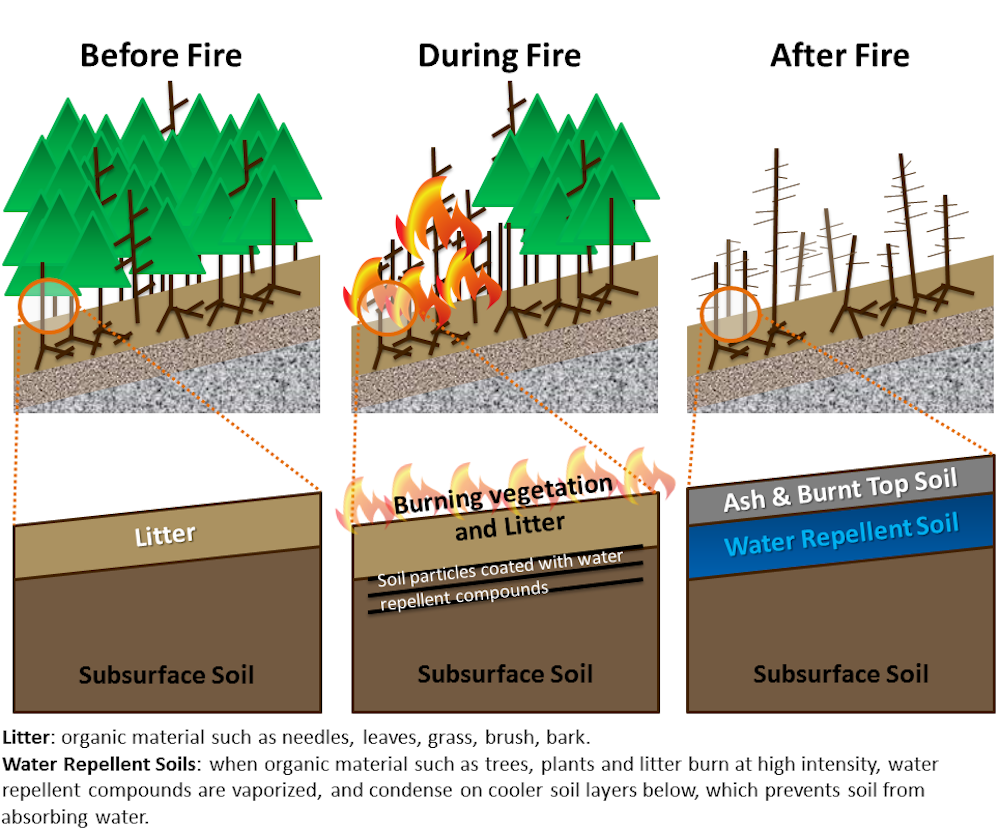
    MIL OSI – Global Reports

  • MIL-OSI Global: Canada’s claim that it champions human rights is at odds with its mining practices

    Source: The Conversation – Canada – By Véronique Plouffe, PhD candidate in Feminist and Gender Studies, L’Université d’Ottawa/University of Ottawa

    Canada presents itself as a gender equality and human rights champion both at home and abroad. But it’s also a global leader in mining, an industry with an abysmal human rights record.

    Under the previous Conservative federal government, Canadian foreign aid was more directly aligned with mining and commercial interests. But when Liberal Justin Trudeau was elected in 2015, it appeared to signal a return to more “progressive” values.


    Read more:
    Justin Trudeau’s resignation creates a progressive void in Canada, part of a long-established cycle


    The launch of the Feminist International Assistance Policy in 2017 was a powerful symbol in this direction. But despite Canadian mining companies being accused of environmental and human rights violations in various countries, the Liberal government continues to actively support mining abroad.

    Canada is a global mining powerhouse, home to almost half of the world’s publicly listed mining and mineral exploration companies.

    According to 2023 data, Canadian mining companies operate in 95 foreign countries and the value of Canadian mining assets totalled $336.7 billion. Half of Canadian foreign mining assets are located in Latin America and the Caribbean.

    Canadian mining in Peru

    Peru is a key mining partner; 71 firms operate in the country and Canada has nearly $10 billion of mining assets in the South American country. Canada has the largest number of mining exploration projects in Peru at 24, and ranks third (after the United Kingdom and Peru itself) in terms of mining exploration investments.

    At last year’s Asia-Pacific Economic Cooperation meeting in Lima, Trudeau announced investments to create “a better future by focusing on a healthier planet and equal opportunities for all.” These included initiatives to support women’s and girls’ rights as well as improving access to the justice system for Indigenous and Afro-Peruvian communities.

    Trudeau also announced the creation of a Canada-Peru Dialogue of Critical Minerals and Mining Sustainability.

    But can Canada be both a human rights champion and a global mining leader? While Canada describes its mining industry as sustainable and socially responsible, human rights organizations paint a different picture.

    Backing Boluarte government

    Canadian mining companies have been accused in Peru of environmental contamination, criminalizing community leaders, land dispossession and the violation of Indigenous self-determination. Canada has also supported Peruvian mining law reforms in favour of foreign mining investment.

    Canada’s support of the current and highly unpopular Dina Boluarte government, which ousted left-wing president Pedro Castillo in 2022, points to the ongoing prioritization of mining interests over human rights, even those of Canadian citizens.

    Castillo meanwhile had proposed a plan to renegotiate mining contracts with multinational companies so that more profits stayed in Peru.

    The impact on women

    Reports have shown that women bear the brunt of mining’s negative impacts, which include gender violence, economic and food insecurity and health problems.

    Women human rights defenders confronting extractive industries also face gender-specific risks and challenges. Indigenous women are often at the forefront of resisting extractive projects.

    Despite the bold ambitions of Canada’s Feminist International Assistance Policy to promote a “more peaceful, more inclusive and more prosperous world,” critics have highlighted several weaknesses and challenges.

    Among them: insufficient funding, its instrumentalist approach (when women are used for broader economic and political goals), as well as its emphasis on neoliberal capitalist growth and the private sector.

    Some have also highlighted its lack of coherence with other policy areas, including trade and security, its support for Israel and its treatment of Indigenous women in Canada.


    Read more:
    Canada’s inaction in Gaza marks a failure of its feminist foreign policy


    Structural causes not addressed

    My ongoing research with civil society organizations in Peru suggests that Canada is providing much-needed and highly appreciated support for women’s rights, LGTBQ+ and Indigenous women’s organizations, namely through its Women’s Voice and Leadership Program. The positive impacts of such initiatives should not be overlooked.

    But even though these projects — often short-term — may benefit some people and some organizations, they often fail to tackle the structural causes of poverty and gender inequality. They also neglect to take into account Canada’s role in creating and maintaining global inequalities through its disruptive mining activities.


    Read more:
    The role of Canadian mining in the plight of Central American migrants


    For years, Canadian civil society organizations have been demanding greater accountability and regulation for Canadian overseas corporations. Despite promises to hold companies accountable for abuses abroad with the creation of the Ombudsperson for Responsible Enterprise, the Trudeau government has been criticized for failing to deliver on these pledges.

    With the possible election of a Conservative federal government in the coming months, it’s unlikely that tightening regulations for private Canadian companies operating in other countries will be a priority.

    Despite its feminist ambitions, taking a closer look at Canada’s role in countries where it has significant mining interests reveals a more complex and nuanced image of Canada in the world.

    Véronique Plouffe receives funding from the Social Sciences and Humanities Research Council (SSHRC).

    ref. Canada’s claim that it champions human rights is at odds with its mining practices – https://theconversation.com/canadas-claim-that-it-champions-human-rights-is-at-odds-with-its-mining-practices-246757

    MIL OSI – Global Reports

  • MIL-OSI Australia: Call for witnesses – Assault – Darwin

    Source: Northern Territory Police and Fire Services

    The Northern Territory Police Force is calling for witnesses in relation to an assault that occurred in Muirhead this afternoon.

    At 3.05pm, police received reports of an alleged assault of an 11-year-old boy by an unknown male youth at the William Forest Park in Muirhead.

    The victim had been walking along Asche Street when he was allegedly followed by the offender riding a black two-wheel push scooter. As the victim entered the William Forest Park, the offender allegedly assaulted him, causing him to fall to the ground. The offender allegedly further assaulted him while on the ground, before the victim was able to get away and call for help.

    The offender subsequently fled the area on the scooter and remains outstanding.

    He is described as being of Aboriginal appearance, aged between 16-18 years old, about 5’10”, with a skinny build, wearing a long white and black dress with puffy hair.

    Detectives are currently investigating and urge anyone who witnessed the incident, or with CCTV footage or dash cam footage of the location between 2pm-3.30pm, to make contact on 131 444 and quote reference NTP2500009737.

    Anonymous reports can also be made through Crime Stoppers on 1800 333 000 or via https://crimestoppersnt.com.au/

    MIL OSI News