NewzIntel.com

    • Checkout Page
    • Contact Us
    • Default Redirect Page
    • Frontpage
    • Home-2
    • Home-3
    • Lost Password
    • Member Login
    • Member LogOut
    • Member TOS Page
    • My Account
    • NewzIntel Alert Control-Panel
    • NewzIntel Latest Reports
    • Post Views Counter
    • Privacy Policy
    • Public Individual Page
    • Register
    • Subscription Plan
    • Thank You Page

Blog

  • MIL-OSI Europe: Written question – Role of regional and local authorities in managing funds in the next programming period – E-002039/2024

    Source: European Parliament

    11.10.2024

    Question for written answer  E-002039/2024
    to the Commission
    Rule 144
    Elena Nevado del Campo (PPE), Isabel Benjumea Benjumea (PPE), Raúl de la Hoz Quintano (PPE), Juan Ignacio Zoido Álvarez (PPE), Nicolás Pascual De La Parte (PPE), Susana Solís Pérez (PPE), Borja Giménez Larraz (PPE), Pablo Arias Echeverría (PPE), Alma Ezcurra Almansa (PPE), Antonio López-Istúriz White (PPE), Adrián Vázquez Lázara (PPE), Maravillas Abadía Jover (PPE), Francisco José Millán Mon (PPE), Pilar del Castillo Vera (PPE), Fernando Navarrete Rojas (PPE), Esther Herranz García (PPE)

    Recent reports in some national and European newspapers[1][2] have provided details of the Commission’s supposed structural reform for the next programming period that will merge cohesion and common agricultural payments into a single national plan. Member States’ central authorities would thus draw up and manage directly the payments linked to those funds.

    Cutting the budget for those funds or breaking with the principle of partnership and multilevel governance would undoubtedly pose a serious risk to cohesion across Europe, especially with regard to regional and local authorities.

    In view of this potential redesign of the multiannual financial framework and the cohesion policy:

    • 1.Does the Commission intend to merge EU programmes such as the European Structural and Investment Funds and the CAP into a single national plan based on the model used for NextGenerationEU funds?
    • 2.If so, how will it maintain the role of regional and local authorities in managing such a policy, and ensure that the principles of shared management, partnership and multilevel governance are respected?

    Submitted: 11.10.2024

    • [1] https://elpais.com/economia/2024-10-08/von-der-leyen-explora-una-reforma-del-presupuesto-de-la-ue-que-refuerza-su-poder-al-condicionar-los-pagos-a-los-estados-a-que-hagan-reformas.html
    • [2] https://www.politico.eu/article/european-commission-budget-economic-reforms-conditions-power-grab/
    Last updated: 21 October 2024

    MIL OSI Europe News –

    January 24, 2025
  • MIL-OSI Europe: Written question – Problems arising from the EU’s agreement with the Mercosur countries – E-001995/2024

    Source: European Parliament

    Question for written answer  E-001995/2024
    to the Commission
    Rule 144
    Nikolas Farantouris (The Left)

    The protests by farmers in the first quarter of 2024 across the EU demonstrated, among other things, the problems stemming from the finalisation of the EU’s agreement with the Mercosur countries (Argentina, Brazil, Paraguay and Uruguay). Specifically, it was emphasised that the agreement does not reflect the challenges facing EU agriculture, such as the climate crisis, food security issues and the war in Ukraine, while huge disparities exist between EU and non-EU farmers in terms of labour, social and environmental matters and production standards. Talks on the agreement remain stalled on the key point of the ‘mirror clauses’, for the application of the same standards to products imported from the Mercosur countries. On 7 February Commission Executive Vice-President Maroš Šefčovič announced to the European Parliament that ‘the conditions for the conclusion of the Mercosur agreement are not met’[1]. However, on 8 February Commission Executive Vice-President Valdis Dombrovskis, responsible for trade, said that ‘work is continuing’[2].

    In view of this:

    • 1.At exactly what stage are the negotiations for the finalisation of the EU’s agreement with the Mercosur countries?
    • 2.Have European farmers’ reasonable requests for the removal of the inequalities created by the agreement been incorporated into the negotiations?

    Submitted: 9.10.2024

    • [1] https://www.reuters.com/world/europe/eu-conditions-complete-mercosur-trade-deal-not-met-yet-2024-02-07/
    • [2] https://www.lafranceagricole.fr/libre-echange/article/862757/le-dossier-mercosur-continue-malgre-la-france
    Last updated: 21 October 2024

    MIL OSI Europe News –

    January 24, 2025
  • MIL-OSI Europe: Written question – Mitigating climate change impact by strengthening EU solidarity mechanisms – E-001992/2024

    Source: European Parliament

    Question for written answer  E-001992/2024
    to the Commission
    Rule 144
    Vladimir Prebilič (Verts/ALE), Rasmus Andresen (Verts/ALE), Thomas Waitz (Verts/ALE), Lena Schilling (Verts/ALE), Gordan Bosanac (Verts/ALE), Jutta Paulus (Verts/ALE), Matjaž Nemec (S&D), Matej Tonin (PPE)

    The devastating floods that affected Slovenia in August 2023, as well as the more recent flooding across Austria, Poland and other European countries, have illustrated the increasing frequency and severity of climate-related disasters across Europe. While the EU’s solidarity mechanisms, including the European Union Solidarity Fund (EUSF), have provided vital assistance in response to such events, the scale of these crises across Europe demands a comprehensive review of existing frameworks to ensure faster and more effective responses, as well as better preparedness.

    The Slovenian example proves that the aid provided is indeed insufficient for recovery as the total estimate of the direct damage is approximately EUR 9.9 billion, while EU aid amounts to less than 5 % of that sum.

    • 1.Are there any plans to increase funding or flexibility within the EUSF or related instruments to ensure rapid and adequate responses to larger-scale or more frequent climate-related disasters such as floods, fires and droughts? Could improvements be made to streamline cross-border cooperation, resource sharing, and coordination between Member States in disaster preparedness and response?
    • 2.What measures or climate adaptation initiatives has the Commission put into its disaster response frameworks to reduce future risks and improve resilience at both national and EU levels?

    Submitted: 8.10.2024

    Last updated: 21 October 2024

    MIL OSI Europe News –

    January 24, 2025
  • MIL-OSI Europe: Written question – Discrimination against German pensioners and tourists in Spain – E-002004/2024

    Source: European Parliament

    Question for written answer  E-002004/2024
    to the Commission
    Rule 144
    Christine Anderson (ESN)

    German pensioners in Spain are reportedly experiencing systematic discrimination when applying for residence permits, despite having sufficient financial resources. Some are even said to have been deported as soon as they became reliant on assistance. These practices may constitute breaches of EU law. There have recently been protests against mass tourism in Mallorca, which targeted German tourists in particular. At the same time, economically viable projects such as the development of alternative tourism regions are being put on the back burner as a result of dependence on EU funding.

    • 1.What measures does the Commission intend to take to investigate discrimination against German tourists and pensioners in Spain and in particular in Mallorca?
    • 2.How does the Commission ensure that EU funding does not lead to economically viable projects being put on hold until subsidies are paid?
    • 3.What measures is the Commission taking to ensure the free movement of EU citizens in all Member States without bureaucratic hurdles and discrimination?

    Submitted: 9.10.2024

    Last updated: 21 October 2024

    MIL OSI Europe News –

    January 24, 2025
  • MIL-OSI Europe: Written question – Compatibility of Greece’s presumptive taxation with EU law – E-001783/2024

    Source: European Parliament

    Question for written answer  E-001783/2024/rev.1
    to the Commission
    Rule 144
    Afroditi Latinopoulou (PfE)

    The Greek Government has a presumptive taxable income system for the self-employed whereby, if a self-employed person has an income below a certain threshold (between EUR 10 920 and EUR 15 000, depending on criteria), that individual is automatically taxed as though he or she earned that amount, irrespective of his or her actual income.

    In light of the above:

    • 1.Has the Commission assessed whether this approach is compatible with EU tax law and principles, particularly as regards the taxation of actual as opposed to notional income?
    • 2.Does the Commission not believe that this system infringes the freedom of establishment or the freedom to provide services in the EU, raising potential issues of equal treatment, particularly when it comes to self-employed professionals operating across borders?
    • 3.Is it involved in dialogue with the Greek authorities about this taxation system and its possible impact on the EU single market?

    Submitted: 23.9.2024

    Last updated: 21 October 2024

    MIL OSI Europe News –

    January 24, 2025
  • MIL-OSI Europe: Highlights – EU Commissioners-designate confirmation hearings in committees – Committee on the Internal Market and Consumer Protection

    Source: European Parliament

    The designated candidates of the von der Leyen Commission will be heard by EP committees dealing with their respective portfolios from 4/11/2024 until 12/11/2024. During each hearing, the commissioner-designate will give an opening speech and then answer questions by committee members.

    EU Commissioners-designate Confirmation Hearings in IMCO

    • Michael McGrath (jointly with LIBE and JURI)
    • Stéphane Séjourné (jointly with ITRE, ENVI, and ECON)
    • Henna Virkkunen (jointly with ITRE).

    IMCO is also an invited committee for the confirmation hearings for Maroš Šefčovič, Dan Jørgensen, Jessika Roswall, Valdis Dombrovskis, Maria Luís Casanova Morgado Dias De Albuquerque, and Teresa Ribera Rodríguez.More detailed information, including the candidates’ portfolios, the procedure, the schedule, the latest news and a live webstreaming during and record after the hearing, can be found on the dedicated webpage (link below).

    MIL OSI Europe News –

    January 24, 2025
  • MIL-OSI USA: Statement from Vice President Kamala  Harris on New Rulemaking to Expand Access to Contraception

    US Senate News:

    Source: The White House
    Every woman in every state must have reproductive freedom and access to the health care they need. That is why I have fought to lower health care costs and protect the ability of every woman to make her own decisions about her own body. Today, our Administration is proposing the largest expansion of contraception coverage in more than a decade. This new proposed rule will build on our Administration’s work to protect reproductive freedom by providing millions of women with more options for the affordable contraception they need and deserve. That includes coverage for no-cost over-the-counter contraception without a prescription for the first time in our nation’s history. These lower contraception costs would be in addition to the billions of dollars that women have already saved on contraception under the Affordable Care Act which President Biden and I have strengthened since taking office. While we fight to protect and expand health care, extremist so-called leaders are attacking reproductive freedom at every turn. Republicans in Congress have repeatedly blocked legislation to protect the right to contraception across the country. They have also consistently refused to protect access to IVF, and continue to propose national abortion bans. President Biden and I stand with the majority of Americans – Republicans and Democrats alike – who support access to contraception. And we continue to call on Congress to pass federal legislation that restores reproductive freedom nationwide.

    MIL OSI USA News –

    January 24, 2025
  • MIL-OSI USA: Statement from President Joe  Biden on New Action to Significantly Expand Contraception Coverage Under the Affordable Care  Act

    US Senate News:

    Source: The White House
    Since Roe v. Wade was overturned more than two years ago, Republican elected officials have made clear they want to ban or restrict birth control, defund federal programs that help women access contraception, and repeal the Affordable Care Act. And Congressional Republicans have repeatedly blocked federal legislation to safeguard the fundamental right to birth control for women in every state. It’s unacceptable.
    Today, my Administration is taking a major step to expand contraception coverage under the Affordable Care Act. This new action would help ensure that millions of women with private health insurance can access the no-cost contraception they need. Vice President Harris and I have worked tirelessly to protect and build on the Affordable Care Act. We lowered costs for Marketplace coverage by an average of $800 per year for millions of Americans, and more Americans than ever before have signed up for health insurance through the law.  
    At a time when contraception access is under attack, Vice President Harris and I are resolute in our commitment to expanding access to quality, affordable contraception. We believe that women in every state must have the freedom to make deeply personal health care decisions, including the right to decide if and when to start or grow their family. We will continue to fight to protect access to reproductive health care and call on Congress to restore reproductive freedom and safeguard the right to contraception once and for all.

    MIL OSI USA News –

    January 24, 2025
  • MIL-OSI USA: FACT SHEET: Biden-⁠ Harris Administration Proposes Rule to Expand Coverage of Affordable Contraception Under the Affordable Care  Act

    US Senate News:

    Source: The White House
    Biden-Harris Administration Announces Proposal for Most Significant Expansion of Contraception Coverage Under the Affordable Care Act in More Than a Decade
    President Biden and Vice President Harris have protected and built on the Affordable Care Act. Nearly 50 million people over the past decade have had coverage through the Affordable Care Act’s Marketplaces, and the law has protected more than 100 million people with preexisting medical conditions. Thanks to the Biden-Harris Administration, Affordable Care Act coverage is more affordable than ever with millions of families saving an average of $800 per year on Marketplace coverage.
    The Affordable Care Act has also helped millions of women save billions of dollars on contraception—an essential component of reproductive health care that has only become more important since the Supreme Court overturned Roe v. Wade. As part of President Biden and Vice President Harris’ steadfast commitment to reproductive rights, the Biden-Harris Administration has further strengthened contraception access and affordability under the Affordable Care Act, through Medicare and Medicaid, through the Title X Family Planning Program, through federally qualified health centers, and for federal employees, Service members, veterans, and college students.
    Today, the Biden-Harris Administration is proposing a rule that would significantly increase coverage of contraception without cost sharing for 52 million women of reproductive age with private health insurance. Building on the Affordable Care Act’s requirement that most private health plans must cover contraception without cost sharing, today’s proposed rule from the Departments of Health and Human Services (HHS), Labor, and the Treasury would:
    Expand coverage of over-the-counter contraception without cost sharing. Under the proposed rule, for the first time, women would be able to obtain over-the-counter (OTC) contraception without a prescription at no additional cost. As a result, more women would be able to access and afford critical OTC medications such as emergency contraception and the first-ever daily oral contraceptive approved by the Food and Drug Administration (FDA) for use without a prescription that is now widely available across the country.
    Make it easier to learn about coverage for OTC contraception. To help ensure that women understand this new benefit, most private health plans would be required to disclose that OTC contraception is covered without cost sharing and without a prescription—and take steps to help women learn more about their contraception coverage.
    Strengthen coverage of prescribed contraception without cost sharing. The proposed rule would make it easier for most women with private health insurance to obtain contraception without cost sharing that is prescribed by their health care provider. Health plans would be required to cover every FDA-approved contraceptive drug or drug-led combination product without cost sharing unless the plan also covers a therapeutic equivalent without cost sharing, eliminating barriers that some women continue to face in accessing contraception prescribed by their provider.
    This proposed rule, if finalized, would be the most significant expansion of contraception coverage under the Affordable Care Act since 2012, when contraception was first required to be covered. Also today, the Biden-Harris Administration is issuing new guidance to help ensure that patients can access other preventive services, such as cancer screenings, that must be covered without cost sharing under the Affordable Care Act.
    The Biden-Harris Administration is issuing this proposed rule at a time when reproductive rights are under attack, and Republican elected officials remain committed to repealing the Affordable Care Act. Following the Supreme Court’s decision to overturn Roe v. Wade, dangerous and extreme abortion bans are putting women’s health and lives at risk and disrupting access to critical health care services, including contraception, as health care providers are forced to close in states across the country. At the same time, Republican elected officials in some states have made clear they want to ban or restrict birth control in addition to abortion, and Republicans in Congress have attacked contraception access nationwide by proposing to defund the Title X Family Planning Program. In contrast, President Biden and Vice President Harris believe that women in every state must have the freedom to make deeply personal health care decisions, including the right to decide if and when to start or grow their family.
    Today’s announcements build on actions that the Biden-Harris Administration has already taken to expand access to affordable contraception, including to implement the President’s Executive Order on Strengthening Access to Affordable, High-Quality Contraception and Family Planning Services from June 2023. The Administration has taken action to:
    Expand contraception coverage and affordability under the Affordable Care Act. The Departments of HHS, Labor, and the Treasury proposed a rule to provide a new pathway under the Affordable Care Act for women to access coverage of contraceptives when their private health coverage is exempt from covering this benefit due to a religious objection. These agencies also issued new guidance to support expanded coverage of a broader range of FDA-approved, cleared, or granted contraceptives at no additional cost under the Affordable Care Act, building on guidance issued after Roe v. Wade was overturned to clarify protections for contraceptive coverage under the Affordable Care Act. Further, HHS strengthened the standard for inclusion of family planning providers in Marketplace plan provider networks and provided nearly $9 million in grant funding to support state efforts to enhance and expand coverage of, and access to, reproductive and maternal health services, including contraception. And the Internal Revenue Service issued new guidance affirming that high-deductible health plans can cover OTC contraception as preventive care.
    Bolster family planning services through Title X clinics. HHS continues to rebuild and grow the Title X Family Planning Program, which has played a critical role in ensuring access to a broad range of high-quality family planning and preventive health services for more than 50 years. During the prior administration, more than 1,000 service sites left the Title X Family Planning Program, leading to a significant decline in people served. The Biden-Harris Administration reversed the policy changes that led to those departures, strengthening the Title X Family Planning Program and helping ensure that the Program remains a critical part of the nation’s health safety net. In 2023, HHS provided about $287 million to nearly 4,000 Title X clinics across the country to provide free or low-cost voluntary, client-centered family planning and related preventive services for 2.8 million women and families—an 80 percent increase since 2020.
    Support family planning coverage through the Medicaid and Medicare programs. The Centers for Medicare & Medicaid Services (CMS) issued new guidance to state Medicaid programs and Children’s Health Insurance Programs (CHIP) to help ensure that enrollees can access family planning services. The new guidance outlined existing state obligations under federal law, highlighted strategies to enhance access to contraception, affirmed confidentiality requirements for those seeking family planning services, and shared recommendations on ways to measure quality in delivering family planning services. To help ensure that women with Medicare coverage have access to more covered types of contraception without unnecessary barriers, CMS updated its Medicare Part D formulary clinical review process for plan year 2024 and 2025 to include additional contraceptive types, such as long-acting contraceptives, and is increasing public awareness of contraceptive coverage options under Medicare Part B. The Secretary of HHS also issued a letter to state Medicaid and CHIP programs as well as private health insurers and Medicare plans about their existing obligations to cover contraception for those they serve.
    Increase contraception access through federal health centers. Federal health centers continue to be an important source of family planning services: in 2023, health centers provided nearly 3 million contraceptive services visits to patients, a 14 percent increase since 2020. To support health centers in providing high-quality family planning services, the Health Resources and Services Administration (HRSA) provided updated guidance on existing federal requirements for family planning and related services, which is a required primary health care service under federal law, as well as evidence-based recommendations and resources. HRSA also adopted new data measures for health centers that will help assess whether patients have been screened for contraception needs. Screening and data measures will help enhance the overall delivery of voluntary family planning and related services.
    Support contraception access for federal employees and their families. The Office of Personnel Management strengthened access to contraception for federal workers, retirees, and family members by issuing guidance to insurers participating in the Federal Employee Health Benefits Program to clarify standards and support expanded coverage of a broader range of FDA-approved, cleared, or granted contraceptives at no additional cost. The Office of Personnel Management also required insurers that participate in the Federal Employee Health Benefits Program to take additional steps to educate enrollees about their contraception benefits and launched a public education campaign to highlight contraception benefits available to federal employees and their families.
    Promote contraception access and affordability for Service members and their families and certain dependents of veterans. To improve access to contraception at military hospitals and clinics, the Department of Defense expanded walk-in contraceptive care services for active-duty Service members and other Military Health System beneficiaries and eliminated TRICARE copays for certain contraceptive services. And the Department of Veterans Affairs eliminated out-of-pocket costs for certain types of contraception through the Civilian Health and Medical Program of the Department of Veterans Affairs.
    Support access to affordable contraception for college students. To help increase access to contraception for college students, President Biden directed the Secretary of Education to convene institutions of higher education to share best practices and ways to help students understand their options for accessing contraception. In 2023, Vice President Harris joined a Department of Education convening of representatives from 68 colleges and universities across 32 states to discuss promising strategies for protecting and expanding access to contraception for their students. This convening followed Vice President Harris’s multiple conversations about reproductive health access with students on college campuses across the country.
    Enhance contraception access through technical assistance and public-private partnership. In June 2023, HHS announced a new five-year public-private partnership to expand access to contraception with Upstream, a national nonprofit organization that provides health centers with free patient-centered, evidence-based training and technical assistance to eliminate provider-level barriers to offering the full range of contraceptive options. To date, HHS has connected Upstream to more than 130 health care clinics, resulting in partnerships that will help Upstream accelerate their national expansion to reach 5 million women of reproductive age every year.
    Promote research and data analysis on contraception access. To document the gaps and disparities in contraception access as well as the benefits of comprehensive coverage, HHS convened leading experts to discuss the state of research, data collection, and data analysis on contraception access and family planning services. These convenings helped identify research gaps, opportunities for collaboration, and ways to bolster research efforts for both Federal agencies and external partners.
    In addition to strengthening access to affordable contraception, the Biden-Harris Administration continues to implement President Biden’s threeExecutiveOrders and a Presidential Memorandum directing federal agencies to protect access to reproductive health care issued since the Court overturned Roe v. Wade. To date, the Biden-Harris Administration has taken action to protect access to abortion, including FDA-approved medication abortion; defend access to emergency medical care; support the ability to travel for reproductive health care; safeguard the privacy of patients and health care providers; and ensure access to accurate information and legal resources.
    The Vice President has led the White House’s efforts to partner with leaders on the frontlines of protecting access to abortion, highlighting the harm of abortion bans to women’s health at more than 100 events in more than 20 states since Roe v. Wade was overturned, and meeting with hundreds of  state legislators, health care providers, and advocates. On what would have been the 51st anniversary of Roe v. Wade, the Vice President launched a nationwide Fight for Reproductive Freedoms tour to continue fighting back against extreme attacks throughout America.
    President Biden and Vice President Harris will continue to call on Congress to restore the protections of Roe v. Wade in federal law to ensure that women in every state are able to make their own decisions about reproductive health care.

    MIL OSI USA News –

    January 24, 2025
  • MIL-OSI USA: Interested Parties Memo: Biden-⁠ Harris Administration Expands Coverage of Contraception Under the Affordable Care Act as Republican Elected Officials Continue Attacks on Reproductive  Freedom

    US Senate News:

    Source: The White House
    Jennifer Klein, Director, White House Gender Policy Council
    Under President Biden and Vice President Harris’s leadership, the Administration is taking bold action to expand coverage of contraception for the 52 million women of reproductive age with private health insurance, marking the most significant expansion of contraception benefits under the Affordable Care Act in more than a decade. Today’s announcement builds on the Biden-Harris Administration’s strong record of defending access to reproductive health care and commitment to ensuring that women have the freedom to make deeply personal health care decisions, including if and when to start or grow their family.
    Meanwhile, Republican elected officials continue to threaten women’s health, lives, and freedom through extreme abortion bans, some with no exceptions for rape or incest. Women are being denied essential medical care while doctors and nurses are threatened with jail time. Abortion, contraception, and IVF are under attack, while Republicans in Congress refuse to protect nationwide access to this vital reproductive health care. This extreme agenda is out-of-touch with the American people—which is why voters have overwhelmingly chosen to protect reproductive freedom in every state where abortion has been on the ballot.President Biden and Vice President Harris stand with the vast majority of Americans in supporting a woman’s right to choose, and they will continue the fight against a national abortion ban and call on Congress to restore the protections of Roe v. Wade in federal law once and for all.
    Women’s Health and Lives at RiskFrom day one, President Biden and Vice President Harris knew that state abortion bans would have devastating consequences for women’s health and lives. Since Roe was overturned, more than 1 in 3 women of reproductive age live in the more than 20 states with dangerous and extreme abortion bans in effect.
    Abortion bans are leaving women without emergency care. Courageous women and their families have shared harrowing stories about being denied urgently needed care because of state abortion bans. Women have died because they did not get the care they needed—or women only received care after developing sepsis or losing more than half of their blood. Some women are suing their states so other women with severe and dangerous pregnancy complications will not be similarly forced to the brink of death before they can receive an abortion.
    Abortion bans are worsening maternal mortality. States with abortion bans have higher rates of maternal mortality than states where abortion remains legal. For instance, after a dangerous Texas abortion ban went into effect in 2021, maternal mortality increased by 56% (compared to 11% nationwide). One year after Dobbs, two-thirds of OBGYNs reported that the Court’s decision worsened pregnancy-related mortality and their ability to manage pregnancy-related emergencies. And criminal and civil penalties under state abortion bans are causing doctors to flee abortion ban states, exacerbating the maternal health crisis and creating maternity care deserts that impact entire communities. 
    Abortion bans are making it even harder to access contraception and other essential care. Since Roe was overturned, abortion bans have caused dozens of reproductive health care clinics to shutter, jeopardizing access to abortion, contraception, and preventive care that women rely on. In states with abortion bans, there were over 4% fewer filled prescriptions for oral contraception in the first year after Roe was overturned. Some states had far greater declines: Texas, for instance, had a 28% decline in filled prescriptions for oral contraception.
    Abortion bans are forcing women to travel hundreds of miles for care. State abortion bans are forcing many women to travel to another state to obtain care that would have been available in their state if Roe were still the law of the land. Women in nearly a quarter of counties in America—especially in the South—have been forced to travel more than 200 miles to get the essential care they need.
    Abortion bans are jeopardizing our ability to train the next generation of medical providers. States with abortion bans continue to see a decrease in medical and residency student applications, especially among prospective OBGYNs. Nearly 60% of third- and fourth-year medical students said they were unlikely or very unlikely to apply to a single residency program in a state with abortion restrictions, while nearly 80% said that access to abortion care would influence where they would pursue their residency. And about 1 in 5 OBGYN residents said that the overturning of Roe changed where they had planned to practice medicine, and those who had planned to practice in a state with abortion bans were eight times more likely to change their intended practice location.
    Republican Officials’ Extreme Agenda
    Despite the devastating impact of state abortion bans, Republican officials continue to push for a nationwide abortion ban to restrict the rights of women in every state, deny access to emergency medical care, and eliminate access to safe and effective, FDA-approved medication abortion.
    Republicans in Congress have proposed four national abortion bans that would deny every woman in America the right to choose, regardless of where she lives. This includes a nationwide abortion ban with no exceptions for rape or incest that puts IVF treatment squarely at risk. House Republicans have also attacked contraception access nationwide by repeatedly proposing to defund the Title X Family Planning Program. And Senate Republicans continue to block federal legislation that would safeguard nationwide access to abortion, contraception, and IVF.
    Republican elected officials have enacted or enforced abortion bans in more than 20 states. Republican attorneys general have made clear they seek to access women’s medical records—even for out-of-state care—and have tried to discourage women from traveling out-of-state to receive lawful abortion care by threatening those who help them with criminal charges.
    Republican elected officials filed more than 350 bills restricting abortion during the 2024 legislative session. In Louisiana, Republican officials classified medications used in abortion and miscarriage management as controlled substances, making it even harder to access these critical medications during an emergency. In Florida, state officials are attempting to undermine support for a reproductive freedom ballot measure, including by threatening TV stations that run ads with criminal charges. And Republican state legislators are proposing legislation that would jeopardize access to IVF.
    Republican elected officials want to ban medication abortion nationwide, including in states where abortion remains lawful. They are also fighting to prevent women from receiving the emergency medical care they are entitled to under federal law— including abortion care when necessary to save a woman’s health or life.
    No attempt to “rebrand” can change the fact that Republican elected officials have spent decades undermining reproductive freedom. Republican elected officials will not stop pursuing extreme policies until there is a national abortion ban in place.

    MIL OSI USA News –

    January 24, 2025
  • MIL-OSI: Pineapple Energy Announces Two Additional Commercial Solar Installations, with Work Scheduled to Begin November 2024

    Source: GlobeNewswire (MIL-OSI)

    RONKONKOMA, N.Y., Oct. 21, 2024 (GLOBE NEWSWIRE) — Pineapple Energy Inc. (Nasdaq: PEGY) (“Pineapple” or the “Company”), a leading provider of sustainable solar energy and backup power to households, businesses, municipalities, and for servicing existing systems, today announced that work will soon be commencing on two new commercial contracts for solar projects on Long Island.

    The work will be performed under contract for facilities within the arts & entertainment and consumer retail sectors and is expected to begin in the fourth quarter of 2024. In terms of renewable energy production, generation across the two distinct sites is expected to yield a total of 87 kW of clean energy across a total of 176 rooftop modules.

    “Once again, the market demonstrates that there is ample demand for commercial and industrial work in the renewable energy space,” Scott Maskin, Pineapple’s Interim CEO, said. “As energy prices continue to increase, commercial, industrial, and institutional property owners see the value, savings, and energy security that solar delivers.”

    In providing this update, the Company reiterated that it remains confident that the second half of the year, notably on the commercial side of the business, will show marked improvement when compared to the first six months of 2024.

    “We’ve been saying for months that there has been an uptick on the commercial and industrial side of the business, and believe that these latest agreements validate this position,” John Mucci, SUNation’s General Manager of New York Operations, added. “These additional awards reflect the robust nature of our project pipeline and the diverse opportunities we are pursuing.”

    About Pineapple Energy
    Pineapple is focused on growing leading local and regional solar, storage, and energy services companies nationwide. Our vision is to power the energy transition through grass-roots growth of solar electricity paired with battery storage. Our portfolio of brands (SUNation, Hawaii Energy Connection, E-Gear) provide homeowners and businesses of all sizes with an end-to-end product offering spanning solar, battery storage, and grid services.

    Forward Looking Statements 
    This press release includes certain forward-looking statements within the meaning of the Private Securities Litigation Reform Act of 1995. These statements are based on the Company’s current expectations or beliefs and are subject to uncertainty and changes in circumstances, including the Company’s expectations regarding its ability to effect the reverse stock split and regain compliance with Nasdaq’s continued listing standards. While the Company believes its plans, intentions, and expectations reflected in those forward-looking statements are reasonable, these plans, intentions, or expectations may not be achieved. For information about the factors that could cause such differences, please refer to the Company’s filings with the Securities and Exchange Commission, including, without limitation, the statements made under the heading “Risk Factors” in the Company’s Annual Report on Form 10-K for the year ended December 31, 2023 and in subsequent filings. The Company does not undertake any obligation to update or revise these forward-looking statements for any reason, except as required by law.

    Safe Harbor Statement
    Our prospects here at Pineapple Energy Inc. are subject to uncertainties and risks. This news release (video statement) contains forward-looking statements within the meaning of Section 27A of the Securities Act of 1933 and Section 21E of the Securities Act of 1934. The Company intends that such forward-looking statements be subject to the safe harbor provided by the foregoing Sections. These forward-looking statements are based largely on the expectations or forecasts of future events, can be affected by inaccurate assumptions, and are subject to various business risks and known and unknown uncertainties, a number of which are beyond the control of management. Therefore, actual results could differ materially from the forward-looking statements contained in this presentation. The Company cannot predict or determine after the fact what factors would cause actual results to differ materially from those indicated by the forward-looking statements or other statements. The reader should consider statements that include the words “believes”, “expects”, “anticipates”, “intends”, “estimates”, “plans”, “projects”, “should”, or other expressions that are predictions of or indicate future events or trends, to be uncertain and forward-looking. We caution readers not to place undue reliance upon any such forward-looking statements. The Company does not undertake to publicly update or revise forward-looking statements, whether because of new information, future events or otherwise. Additional information respecting factors that could materially affect the Company and its operations are contained in the Company’s filings with the SEC which can be found on the SEC’s website at http://www.sec.gov.

    Contacts:
    Scott Maskin
    Interim Chief Executive Officer
    +1 (631) 823-7131
    scott.maskin@pineappleenergy.com

    Pineapple Investor Relations
    +1 (952) 996-1674
    IR@pineappleenergy.com

    The MIL Network –

    January 24, 2025
  • MIL-OSI: Federal Home Loan Bank of Atlanta Announces 2024 Director Election Results

    Source: GlobeNewswire (MIL-OSI)

    ATLANTA, Oct. 21, 2024 (GLOBE NEWSWIRE) — Federal Home Loan Bank of Atlanta (FHLBank Atlanta) today announced the results of the 2024 director election. The Bank conducted an election to fill the member directorships for North Carolina and Virginia, an independent directorship and a public interest independent directorship. Each director-elect will serve a four-year term commencing on January 1, 2025, and ending December 31, 2028.

    Suzanne DeFerie was elected to fill the member directorship representing the state of North Carolina and Scott Harvard was elected to fill the member directorship designated for the state of Virginia. Rodney Hood was elected to fill the independent directorship and Susan Dewey was elected to fill the public interest independent directorship. 

    “We are excited to welcome Rodney Hood to the board as an independent director and know his experience will greatly benefit the board and our members,” said FHLBank Atlanta chair of the board of directors, Thornwell Dunlap. “We are also pleased to have directors DeFerie, Harvard and Dewey return to the board and continue representing members across our district and their communities.”

    Ms. DeFerie has served on the FHLBank Atlanta board of directors since 2015, including four years as Finance Committee Chair and one year as Audit Committee Chair. Director DeFerie currently serves as Vice Chair of the board of directors and Executive Committee. She is currently a member of the board of First Bank, a subsidiary of First Bancorp in Southern Pines, North Carolina (NASDAQ-FBNC). She was previously president and chief executive officer of Asheville Savings Bank, S.S.B. in Asheville, North Carolina and its holding company, ASB Bancorp, Inc., when the bank and holding company were acquired by First Bancorp. Prior to becoming president and chief executive officer of Asheville Savings Bank and ASB Bancorp, Inc., Ms. DeFerie was the bank’s executive vice president and chief financial officer for 16 years. She is active in the Asheville community, currently serving as Vice Chair of the Community Betterment Foundation of the Asheville Chamber of Commerce, Chair of the Asheville Merchants’ Fund and member of the Board of ANC Healthcare, as well as past board chair of the Asheville Chamber of Commerce and United Way of Asheville and Buncombe County. 

    Mr. Harvard has served on the FHLBank Atlanta board since 2017, where he served as Chair of the Governance and Compensation Committee in 2022 and currently serves as Chair of the Enterprise Risk Management Committee (2023 –2024). He was a director for FHLBank Atlanta from 2003 to 2012, serving as chairman from 2007-2012. He has served as president, chief executive officer, and director of First National Corporation (NASDAQ – FXNC) since 2011. He was president, chief executive officer, and director of First Bank, an independent Virginia community bank, from 2011 to 2015 and chief executive officer and director of First Bank since 2015. He was previously on the board of the Virginia Association of Community Banks, is a past chairman of the Virginia Bankers Association (VBA) and has served on the Council of Federal Home Loan Banks.

    Ms. Dewey is the former chief executive officer of Virginia Housing and joined the FHLBank Atlanta board in January 2024. While leading Virginia Housing, a $10 billion organization devoted to helping Virginians attain affordable housing, Ms. Dewey served on FHLBank Atlanta’s Affordable Housing Advisory Council, the Fannie Mae Housing Impact Advisory Committee, and the National Association of Realtors Housing Opportunity Advisory Board. She was also the past chair of the National Council of State Housing Agencies and a founding member/chair of Housing Forward Virginia, as well as many other boards. Ms. Dewey was previously the State Treasurer of Virginia for four years, where she was responsible for all operations of the Department of Treasury and Treasury Board. She currently serves on several boards, including the Virginia Chamber of Commerce, the National Housing Conference Advisory Council, the William and Mary Real Estate Foundation, and VCDC (Virginia’s largest nonprofit investor in LIHTC properties).

    Mr. Hood is the former Chair of the Board of the National Credit Union Association (NCUA), where he was responsible for ensuring effective supervision and regulation of nearly 5,000 credit unions with assets exceeding $2 trillion. In this role he also oversaw the $16.7 billion National Credit Union Share Insurance Fund and $20 billion Central Liquidity Fund, ensuring sound financial accountability and stability. He was previously NCUA’s vice chair, focusing on enterprise risk management and comprehensive risk management strategies and the creation of the Temporary Corporate Credit Union Loan Guarantee Program, which stabilized the credit union system following the collapse of several large corporate credit unions during the Great Recession. Mr. Hood has nearly 25 years of banking within in FHLBank Atlanta’s district with GE Capital, NationsBank (now Bank of America), Wells Fargo, JPMorgan Chase, and North Carolina Mutual Insurance Company.

    Mr. Hood is also an independent director on the boards of ZEST AI, POSH AI, ModernFI, and DefenseStorm, firms focused on cybersecurity and the use of artificial intelligence and technology in the financial industry. He recently served as board chair, audit committee chair, and board member of NeighborWorks America, a nonprofit focused on affordable housing and community development.

    About FHLBank Atlanta
    FHLBank Atlanta offers competitively-priced financing, community development grants, and other banking services to help member financial institutions make affordable home mortgages and provide economic development credit to neighborhoods and communities. The Bank’s members—its shareholders and customers—are commercial banks, credit unions, savings institutions, community development financial institutions, and insurance companies located in Alabama, Florida, Georgia, Maryland, North Carolina, South Carolina, Virginia, and the District of Columbia. FHLBank Atlanta is one of 11 district Banks in the Federal Home Loan Bank System. Since 1990, the FHLBanks have awarded approximately $9.1 billion in Affordable Housing Program funds, assisting more than 1.2 million households.

    For more information, visit our website at http://www.fhlbatl.com.

    Contact:
    Sheryl Touchton
    stouchton@fhlbatl.com
    404.888.8105

    The MIL Network –

    January 24, 2025
  • MIL-OSI Economics: [Video] Galaxy Tab S10 Ultra: Faster and More Intelligent Than Ever Before

    Source: Samsung

    Samsung Electronics unveiled the Galaxy Tab S10 Ultra on September 27.
     
    The Galaxy Tab S10 Ultra features a large screen equipped with Dynamic AMOLED 2X technology for an optimal AI experience. The Galaxy Tab S10 Ultra also boasts an impressive, improved chipset. Upgrades include an 18% increase in CPU, 28% increase in GPU and 14% increase in NPU performance compared to its predecessor, the Galaxy Tab S9 Ultra.
     
    The experience is further enhanced with Dialogue Boost — an AI-powered feature that amplifies voices over unwanted noise in videos — so that users can immerse themselves in what they’re viewing with ultra-clear audio.
     
    Samsung Newsroom explored how Dialogue Boost works and compared the benchmark test results of the Galaxy Tab S10 Ultra and the Galaxy Tab S9 Ultra in the videos below.


    MIL OSI Economics –

    January 24, 2025
  • MIL-OSI Security: Turtleford — Turtleford RCMP seek public assistance locating missing 33-year-old man

    Source: Royal Canadian Mounted Police

    Turtleford RCMP is seeking the public’s assistance to help locate 33-year-old Kristian Klassan. Kristian was last seen Friday at a residence in Turtleford. He may be in the Macklin/Unity or Turtleford areas, but this is not confirmed.

    Kristian is described as being 6’1″ tall with a slim build, blue eyes and he shaved his head since the attached photo was taken, so he currently has no hair. He was last seen wearing a red shirt with a Fireball logo on it, tan pants, blue runners and baseball hat. He has a black sleeve tattoo on his left arm. He may be driving a silver 2002 Nissan Pathfinder with SK license 443 NKC and a missing front bumper.

    If you have seen Kristian or know where he is, contact Turtleford RCMP at 310-RCMP. Information can also be submitted anonymously by contacting Saskatchewan Crime Stoppers at 1-800-222-TIPS (8477) or http://www.saskcrimestoppers.com.

    MIL Security OSI –

    January 24, 2025
  • MIL-OSI Russia: Success of SPbGASU in the competition of the International Public Organization for the Promotion of Construction Education (ASV)

    Translation. Region: Russian Federation –

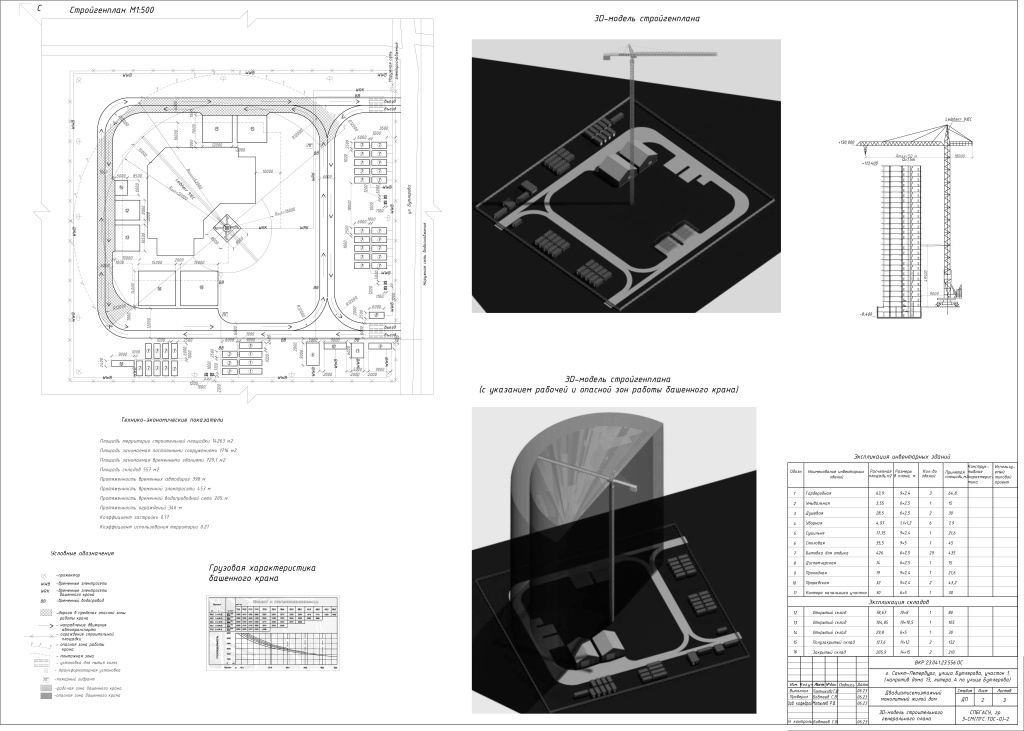
    Source: Saint Petersburg State University of Architecture and Civil Engineering – Fragment of the work by Anastasia Babinova. Open full size image

    The results of the competition of final qualification works, held by the International Public Organization for the Promotion of Construction Education (ASV), have been summed up. Students and graduates of SPbGASU became its laureates.

    Anastasia Babinova won first place in the nomination “Bachelor’s Project in the Field of Construction Technology and Organization” with her work “Design and Construction of a Complex of Buildings and Structures of a Technopark in the City of Vladikavkaz”. Anastasia continues her studies in the Master’s program. Her supervisor Sergey Bovteyev, Associate Professor of the Department of Construction Organization, tells about the student’s work:

    – Anastasia Babinova’s final qualification work examines a complex of objects, the architectural solutions for which were fully developed by the graduate herself during her third year of study. Margarita Aleksandrovna Gurieva, senior lecturer at the Department of Architectural and Construction Structures, provided great assistance in this. In addition, the project adopted a number of non-standard organizational and technological solutions, and also used modern calendar-network planning software. The knowledge gained from studying the course “Construction Organization” helped here, taught by Roman Vladimirovich Motylev, head of the Department of Construction Organization, and Vera Mikhailovna Chelnokova, associate professor at the Department of Construction Organization.

    Fragment of the work by Tatyana Pletnikova. Open full size image

    Tatyana Pletnikova was awarded a diploma for effective participation in the competition in the nomination “Technology and organization of construction”. The topic of her research is “Application of 4D modeling in the organization of construction of a 27-story monolithic residential building”. Tatyana Pletnikova’s work was also supervised by Sergey Bovteev.

    Anna Rerikh’s project “High-tech building solutions using nanocellulose” became the second among the research works of masters in the direction of “Production and application of building materials, products and structures”. The leader was Georgy Khrenov, associate professor of the Department of Building Materials Technology and Metrology.

    – Anna Vladimirovna demonstrated incredible diligence and perseverance. This allowed her to complete the work at a high level in a short time, publish several articles, including in a journal from the list of the Higher Attestation Commission. But most importantly, she managed to obtain interesting scientific results, determining the rational area of application of nanocellulose in building solutions. Anna Vladimirovna summarized the obtained results and developed a draft of practical recommendations that can be implemented in production, – said Georgy Khrenov.

    Timur Aibedulov with his work “Ventilation of the educational building of SPbGASU, Serpukhovskaya St., Bldg. 10 (TIM-project)” won second place in the nomination “Heat and Gas Supply and Ventilation (project)”. The work was supervised by Kirill Sukhanov, associate professor of the Department of Heat and Gas Supply and Ventilation.

    As Kirill Sukhanov explained, Timur carried out the work as part of a comprehensive TIM project. The team consisted of several people: an architect, a designer, a coordinator, an estimator and specialists in engineering sections. As part of the project, a 3D scan of the building was performed, and a full inspection of the facility was conducted.

    – Timur conducted a survey of the existing ventilation systems of the building. Based on the data obtained, he created an information model. Performed verification calculations of the ventilation system. After creating an information model of the existing facility, a model of the building reconstruction was created. Timur performed the necessary calculations and selected ventilation equipment. Particular attention was paid to the design of the atrium and parking ventilation systems. A ventilation system for the assembly hall was also developed while preserving the historical ventilation grille. Research was carried out on the parameters of the microclimate of the assembly hall with various ventilation equipment. The research was carried out using numerical modeling methods. The results obtained allowed us to select the optimal equipment that provides acceptable microclimate parameters, – said Kirill Sukhanov.

    Kristina Astashkevich with her work “Design of foundations of a multi-storey building with a single-level underground parking in the Kalininsky district of St. Petersburg” took third place in the nomination “Bachelor’s project in the field of geotechnics”. Now Kristina continues her studies in the master’s program. Her supervisor is Andrey Boyarintsev, senior lecturer of the Department of Geotechnics.

    – No construction project can be completed without geotechnical calculations, because each building requires a foundation. Moreover, in dense urban development, there is a need for additional parking spaces. According to current urban planning concepts, underground parking is the best solution for apartment complexes, as it saves above-ground space that can be occupied by public areas or green spaces. However, in the conditions of St. Petersburg, underground construction is complicated by weak water-saturated soils, which requires complex engineering solutions for the construction of the facility. It was this case of underground parking construction in a multi-story residential building, erected on weak soils, that was considered in the final qualification work. Now I continue to do geotechnical calculations, including in poor engineering and geological conditions. I am also involved in projects to strengthen the foundations of historical buildings in St. Petersburg, – said Kristina. The student is grateful for the help, consultations and important engineering solutions of Andrey Boyarintsev and Anatoly Osokin, Director of the Soil Testing Center of St. Petersburg State University of Architecture and Civil Engineering, Head of the Department of Geotechnics.

    Linda Fortas came in third in the nomination “Master’s Research in the Profile of Heat and Gas Supply and Ventilation” with her work “Air-thermal curtains for large-sized gates”. Her supervisor is Viktor Puhkal, associate professor of the Department of Heat and Gas Supply and Ventilation.

    – At automobile transport enterprises intended for repair of heavy-duty vehicles, large gates are used for entry and exit. Recommendations and methods for selecting air-thermal curtains for such gates are absent. That is why Linda chose the topic of her master’s thesis “Air-thermal curtains for large-sized gates”. The work includes studies of temperature and speed fields for various designs, positions and sizes of curtains. The influence of coolant parameters on the efficiency of curtains is also studied. The strengths of the work are the novelty of the research and consideration of issues of energy efficiency of air-thermal curtains, – said Viktor Puhkal.

    In the nomination “Master’s Research in Geotechnics”, Daria Paskacheva distinguished herself with her work “Stress-strain state of flexible enclosing structures in conditions of weak clay soils”, taking third place. Supervisor – Ivan Dyakonov, associate professor of the Department of Geotechnics.

    According to Daria, the high level of development of geotechnics in St. Petersburg is connected with the prevalence of “weak” clay soils in the city, which requires a highly scientific calculation approach to ensure safety during construction.

    The Department of Geotechnics of SPbGASU occupies a leading position in the field of calculations and design in such conditions.

    – I chose this topic because I became interested in what needs to be done to ensure the accuracy of geotechnical calculations in St. Petersburg’s natural conditions. Geotechnical calculations themselves, it seems to me, always include a large share of creative scientific work due to the complexity and relative youth of such a discipline as soil mechanics, – noted Daria Paskacheva.

    Currently, Daria continues to develop this topic in graduate school. The main component of her dissertation is the development of her own mathematical model of weak clay soil. In addition, in a team of graduate students and young teachers of the department, she is working on the creation of a software package based on the finite element method, which will allow the implementation of this model.

    – I would like to express my deep gratitude to my supervisor in the Master’s program, Associate Professor of the Department of Geotechnics Ivan Pavlovich Dyakonov for his support and guidance, which played an important role in my admission to graduate school and continuation of research in this area. I would also like to thank postgraduate student of the Department of Geotechnics Ivan Borisovich Bashmakov for his inspiration and help in choosing geotechnics as the main direction of my scientific and design activities.

    Please note: This information is raw content directly from the source of the information. It is exactly what the source states and does not reflect the position of MIL-OSI or its clients.

    Please note; This information is raw content directly from the information source. It is accurate to what the source is stating and does not reflect the position of MIL-OSI or its clients.

    http://www.spbgasu.ru/nevs-and-events/nevs/success-spbgasu-at-the-competition-of-an-international-public-organization-promoting-construction-industry/

    MIL OSI Russia News –

    January 24, 2025
  • MIL-OSI Security: Chiasson Office  — Have you seen this stolen ATV?

    Source: Royal Canadian Mounted Police

    The Lamèque RCMP is asking for the public’s help to locate a stolen all-terrain vehicle (ATV) from Chiasson Office, N.B.

    The theft is believed to have occurred sometime between October 11, 2024, and the afternoon of October 14, 2024, at a residence on Chiasson Road, in Chiasson Office.

    The ATV is described as a grey 2012 Can-Am Outlander 650 Max XT with New Brunswick licence plate YE2884, and vehicle identification number 3JBEPXJ18CJ000464.

    If you have seen the ATV since the night of October 11, or if you have information that could help further the investigation, please contact the Lamèque RCMP at 506-344-2006. Information can also be provided anonymously through Crime Stoppers at 1-800-222-TIPS (8477), by downloading the secure P3 Mobile App, or by Secure Web Tips at http://www.crimenb.ca.

    MIL Security OSI –

    January 24, 2025
  • MIL-OSI Video: The WTO is born: memories from Marrakech 1994

    Source: World Trade Organization – WTO (video statements)

    To mark the 30th anniversary of the Marrakesh Agreement, we sat down with Said El Hachimi, a former Moroccan trade negotiator and former WTO staff member. He shared his personal insights into the historic 1994 conference that led to the formation of the World Trade Organization.
    From the vibrant backdrop of Marrakesh to the challenges of organizing such an event, Said reflects on the lasting impact of the event and its role in reshaping global trade, especially for developing economies like Morocco.

    https://www.youtube.com/watch?v=XGfqrSKfzl0

    MIL OSI Video –

    January 24, 2025
  • MIL-OSI United Kingdom: Authorisation application deadlines for Christmas period 2024

    Source: United Kingdom – Executive Government & Departments

    Validation for applications during the Christmas period 2024 for MA, ManA, WDA, Batch Release, Specific Batch Control, and Special Import and Export Certificates.

    Our offices will be closed on Wednesday 25, Thursday 26 December and Wednesday 1 January.

    Validation during the Christmas Period 2024

    Marketing Authorisation applications

    In recognition of the resource pressures and delays to service currently being experienced, the VMD is extending the usual Christmas shut down period for 2024 to focus efforts on issuing existing applications.

    All applications must be received by 29 November to be processed during the Christmas period. Any applications received after this date will not be processed until 2 January 2024.

    Validation of New Marketing Authorisation applications

    The last validation meeting to discuss applications for new Marketing Authorisations (MAs) will take place on 12 December. New applications to be considered for validation must be received on or before 29 November. Weekly validation meetings will resume from 9 January 2024.

    For further information contact s.response@vmd.gov.uk

    Manufacturing and Wholesale Dealer Authorisation applications (new and variations)

    The last day for validation of applications for Authorisations for Manufacturers, Blood Banks, Equine Stem Cell Centres and Wholesale Dealers (new and variations) will be 13 December. To be considered for validation by this date, please ensure that your application reaches us by 11 December. The validation discussions will resume from 2 January 2024.

    For further information contact the team at inspections@vmd.gov.uk

    Export Certificates

    Your application for an export certificate must be received by 13 December to ensure it is dealt with during the Christmas period. Applications received after this date will be dealt with from 2 January 2024.

    For further information contact the team at exportcert@vmd.gov.uk.

    Specific Batch Control-PVMP

    Your application must be received by 11 December to ensure it is dealt with during the Christmas period. Applications received after this date will be dealt with from 2 January 2022.

    For further information contact the team at s.response@vmd.gov.uk.

    Batch Release Requests-IVMP

    Your batch release request must be received by 11 December to ensure it is dealt with during the Christmas period. Requests received after this date will be dealt with from 2 January 2024.

    For exceptional cases after 11 December, we will consider these on a case-by-case basis, contact the team on batchr@vmd.gov.uk.

    Special Import Scheme applications

    For Special Import Certificate and Wholesale Dealer Import Certificate applications requiring assessment, that is, not available instantly online, your application must be received by 13 December to ensure it is dealt with during the Christmas period.  

    Requests received after this date will be dealt with from 2 January 2024. If you have an urgent clinical need requiring an import certificate prior to this date, please email importcert@vmd.gov.uk identifying your application as urgent.

    Please send any general enquiries to postmaster@vmd.gov.uk, using key words in the subject heading.

    Share this page

    The following links open in a new tab

    • Share on Facebook (opens in new tab)
    • Share on Twitter (opens in new tab)

    Updates to this page

    Published 21 October 2024

    MIL OSI United Kingdom –

    January 24, 2025
  • MIL-OSI Security: Former Pharmaceutical Executive Sentenced for Falsifying Financial Documentation

    Source: Federal Bureau of Investigation (FBI) State Crime News

    DETROIT – A Northville man was sentenced Tuesday to one year and one day in prison, followed by two years of supervised release, for providing a financial institution with false documentation in connection with a bank loan, announced United States Attorney Dawn N. Ison.

    Ison was joined in the announcement by Special Agent in Charge Cheyvoryea Gibson, Federal Bureau of Investigation, Detroit Field Division

    Theodore Toloff, 65, entered his guilty plea in January before United States District Judge David M. Lawson.

    According to court records, Toloff served as the Chief Financial Officer of the Frank W. Kerr Company (“Kerr”), a now-defunct pharmaceutical wholesaler that was based in Novi, Michigan. Kerr had a revolving credit agreement with two large financial institutions under which the company borrowed funds up to $60 million pursuant to a calculation dependent on the company’s eligible accounts receivable and inventory. Toloff admitted that he submitted false documentation to the financial institutions that included $18 million in ineligible accounts receivable and that Kerr borrowed additional funds after this false documentation was submitted.   The Court found that Toloff’s criminal conduct caused Kerr’s lenders to sustain a loss of $1.3 million, which Toloff was also ordered to pay back to the lenders as restitution.

    “Corporate executives should be held to the same standard of honesty as anyone else when they interact with lending institutions,” stated United States Attorney Dawn N. Ison. “When individuals lie to lenders, those lies cause loans to become more difficult and more expensive for honest consumers and businesses to access. My office is committed to ensuring that those who engage in dishonest financial crimes are held accountable.”

    “The defendant admitted to providing false documents to a financial institution, undermining the laws and integrity of our financial systems, said Special Agent in Charge Cheyvoryea Gibson of the FBI in Michigan. “The FBI works tirelessly with our law enforcement partners and regulatory agencies to investigate those who commit financial crimes. If you believe you have information related to financial crimes, I urge the public to submit tips on alleged crimes such as those detailed in this case to 1-800-CALLFBI (1-800-225-5324) or online at tips.fbi.gov.”

    The case was prosecuted by Assistant U.S. Attorney Andrew J. Yahkind. The investigation was conducted by the Federal Bureau of investigation.

    MIL Security OSI –

    January 24, 2025
  • MIL-OSI USA: Governor issues statement on the passing of Navajo Code Talker John Kinsel Sr.

    Source: US State of New Mexico

    SANTA FE – Gov. Michelle Lujan Grisham on Sunday issued the following statement on Navajo Code Talker, John Kinsel Sr.

    “John Kinsel’s service as a Marine and Navajo Code Talker represented the values and valor that helped the U.S., and its allies prevail in World War II. His legacy is one of extraordinary courage and profound patriotism, not only as a warrior but as a protector of his Navajo heritage. I invite my fellow New Mexicans and Americans to join me in reflecting on Mr. Kinsel’s bravery and sacrifice in honor of his service to America and the Navajo Nation. Manny and I extend our deepest condolences to Mr. Kinsel’s family and loved ones during this difficult time.

    As we honor Mr. Kinsel’s life and contributions, it is also an opportunity to recognize the importance of the Navajo Code Talkers Museum. Although still in development, this museum will serve as a lasting tribute to the remarkable stories of Navajo Code Talkers like John Kinsel, ensuring that future generations understand and appreciate their vital role in history.”

    MIL OSI USA News –

    January 24, 2025
  • MIL-OSI Global: Toothbrushes and showerheads covered in viruses ‘unlike anything we’ve seen before’ – new study

    Source: The Conversation – UK – By Primrose Freestone, Senior Lecturer in Clinical Microbiology, University of Leicester

    Toothbrushes and showerheads in American homes are teeming with viruses known as bacteriophages (bacteria eaters), a new study has found. Many of these “phages” – as they’re known for short – have never been identified before.

    The researchers, from Northwestern University in Illinois, swabbed 92 showerheads and 36 toothbrushes. They described what they found as “unlike anything we’ve seen before” and “absolutely wild”. But how alarming is this finding? And what should you do to remain safe?

    It is increasingly recognised that wherever you look for microbial species (viruses and bacteria) you will probably find them, particularly in damp places where they thrive, such as showerheads and toothbrushes. The fact that bacteria-infecting viruses were found in great numbers on showerheads and toothbrushes should not come as a surprise. Where there are bacteria, there will inevitably be viruses that infect them.

    People’s homes are host to a variety of microbial communities, which include bacteria, viruses, fungi and protozoa. And it has been known for over a decade that showerheads and their hoses can harbour various bacterial species. These include ones that can cause ill health, such as mycobacteria, which can cause respiratory infections, Legionella which causes legionnaire’s disease and Pontiac fever, and Pseudomonas aeruginosa, which can cause ear and eye infections.

    Showerheads

    These bacteria have been found on showerheads at levels over 100 times those found in tap water.

    In showerheads, there will inevitably be viruses that infect the bacteria found on them. And the more species of bacteria there are, the greater the diversity of phages likely to be present.

    The presence of a microscopic ecosystem in your showerhead also means every time you shower, you are coating yourself in the showerhead bacteria and their related phage viruses. And this is an infection risk.

    To disinfect your showerhead, soak it in vinegar. It has the added benefit of removing any limescale.

    Unscrew the showerhead, brush off any soap residue, and place the showerhead in a plastic bag or other container with enough undiluted white vinegar to cover the item. Leave it for up to two hours.

    Rinse the showerhead well after taking it out of the vinegar solution, and repeat every month or so, depending on usage.

    Toothbrushes

    The researchers at Northwestern University also looked at phages inhabiting regularly used toothbrushes. Unsurprisingly, they also found a diversity of phages on the brush heads.

    During brushing, toothbrushes come into contact with structures in the mouth (gum, teeth, tongue, cheeks, uvula and palates). And each of these is home to hundreds of species of bacteria and other microbes.

    Oral microbes play an important role in keeping the mouth healthy by excluding harmful germs (pathogens), helping digest food, and regulating the working of the heart and immune system.

    The bacterial diversity of the mouth and tooth microbiomes will, as the US study found, influence the diversity of phages deposited onto toothbrushes.

    The study provides an interesting snapshot of the diversity of the oral micro-ecosystems (bacteria and viruses) that are deposited on toothbrushes but may cause some people to worry that the microbes on their toothbrushes are a potential source of infection.

    The toothbrush viruses identified were bacterial, not human viruses so they are not a health concern. However, while toothbrush microbes are not a risk to the toothbrush owner, as the microbes on it are their own, they can cause infections in others if a toothbrush is shared. One person’s harmless oral microbes can be another’s pathogens, leading to illnesses ranging from colds to endocarditis (a life-threatening inflammation of the heart’s inner lining).

    Phages explained.

    It is a good idea to clean your toothbrush regularly. The NHS advises running it under the hot tap for about 30 seconds, followed by air drying.

    Other websites advise soaking toothbrush heads in antibacterial mouthwash or denture cleaners. For electric toothbrushes, you should follow the manufacturer’s cleaning guidance.

    The take-home message from the Northwestern study is that we live in a richly microbial world and that interactions with bacteria and other microbes in our homes are an integral part of our human biology. Also, despite many new phage species being discovered, there is no cause for alarm – as long as you follow the advice above and keep your showerhead and toothbrush clean.

    Primrose Freestone does not work for, consult, own shares in or receive funding from any company or organisation that would benefit from this article, and has disclosed no relevant affiliations beyond their academic appointment.

    – ref. Toothbrushes and showerheads covered in viruses ‘unlike anything we’ve seen before’ – new study – https://theconversation.com/toothbrushes-and-showerheads-covered-in-viruses-unlike-anything-weve-seen-before-new-study-241072

    MIL OSI – Global Reports –

    January 24, 2025
  • MIL-OSI Global: Education and gender equality: focus on girls isn’t fair and isn’t enough – global study

    Source: The Conversation – Africa – By Kathryn Watt, Research Manager, The Asenze Project, University of KwaZulu-Natal

    For the past two decades, investing in girls’ schooling has been hailed as a cornerstone of promoting gender equality in sub-Saharan Africa. Between 2016 and 2018 the World Bank Group invested US$3.2 billion in education projects benefiting adolescent girls.

    The logic is straightforward. Girls face significant barriers to education, among them poverty, insufficient academic support, adolescent pregnancy, child marriage, and school related gender-based violence. Reducing these barriers can substantially improve their educational outcomes.

    But is this approach – investing in girls’ education – fair to boys, and enough to make a meaningful impact on girls’ lives in the long term? Having studied the relationship between interventions and the way people’s lives develop in adverse contexts, we argue that the answer is no on both counts.

    We explain this view in a recent paper. In it we compare the different effects of directing development assistance: improving girls’ school enrolment, prioritising schooling for both girls and boys, and addressing barriers to gender equality throughout life.

    We used publicly available data for 136 low- and middle-income countries, including those in sub-Saharan Africa. We calculated the female-to-male ratio for important education indicators in each country to show where girls are ahead, on par or behind boys.

    Our findings suggest that the current focus on girls’ schooling may both unintentionally disadvantage boys and be a relatively inefficient means of advancing gender equality.

    Girls’ and boys’ education in sub-Saharan Africa

    We focused on two indicators to assess the current state of girls’ and boys’ education in the region:

    • secondary school completion

    • student performance in standardised test scores, known as harmonised learning outcomes.

    Harmonised learning outcomes measure learning and progress based on the results from seven different types of tests combined and made comparable among children attending school. They reflect the environmental inputs into learning and achievement, such as school quality. Completing secondary school, meanwhile, has been shown to increase a person’s potential for future development, opportunities for employment and higher education.

    In most countries in sub-Saharan Africa, girls are behind boys on secondary school completion. The average completion rate for boys is 30%. For girls it is just 24%. In southern Africa specifically, girls have higher completion rates than boys. Figure 1 shows where girls are ahead or behind on this indicator.

    In sub-Saharan Africa, the average harmonised learning outcomes score for boys is 301; it is 303 for girls. Our results show that, for most countries in the region, girls are achieving roughly equal scores to their male peers.

    This suggests that gender gaps in education are not as pronounced as is often portrayed.

    Firstly, although school completion rates are higher for boys, this gap is small, and overall completion rates remain low for both genders.

    Secondly, where boys are averaging higher levels of completed schooling, it is not due to better academic performance. Once enrolled, girls in the region tend to keep up with boys in school completion and academic performance.

    Rather than asking who is ahead, it’s more important to note that neither boys nor girls are doing well. Our results show that educational outcomes in sub-Saharan Africa – including school performance and completion – are alarmingly poor for both girls and boys.

    So, if all children in the region are clearly in need of support, why target education interventions at girls alone?

    Large disparities in later life

    The key to gender equality lies in ensuring girls and boys, and men and women, have the same opportunities to reach their potential from early life, through late childhood and adolescence, into adulthood.

    Research emphasises that human development does not hinge on any single factor such as schooling. Rather, it depends on capabilities built throughout life.

    In early childhood, proper nutrition, among other things, is crucial for developing a child’s basic physical and cognitive capabilities. These early investments protect the potential for human development.

    During childhood and adolescence, factors like quality schooling and social support allow young people to realise that potential.

    Finally, in adulthood, social norms and job opportunities determine how fully a person can use their realised potential.

    Our findings suggest that, on average, in low- and middle-income countries the development potential of girls and young women is protected and realised better than it is for boys and young men. But later in life, women don’t have as many opportunities as men to use that potential.

    This implies that initiatives focused on girls’ schooling are likely not the most effective means of promoting girls’ development or reducing gender gaps.

    Large disparities emerge later in girls’ lives. For example, our findings show that women earn less than men in almost every country in sub-Saharan Africa. These results reflect how patriarchal norms, particularly the unequal burden of housework and childcare, tend to push women into lower-paid informal or part-time work. Even when similarly qualified and in comparable positions, women typically earn less than men.

    These findings, when considered in the context of the current state of education in the region, challenge the idea that focusing solely on girls’ education is enough to promote their lifelong development or meaningfully reduce gender inequalities.

    The argument that boys should not receive the same support as girls is weak.

    How to promote greater gender equality in sub-Saharan Africa

    Targeted interventions are likely to have the greatest impact where girls and women face the greatest barriers: in using their potential. That means, for example:

    • recognising the unpaid household and caregiving work that women shoulder

    • improving women’s access to better job opportunities in paid and formal work

    • challenging discriminatory laws and social norms.

    Social protection policies, including childcare and reproductive health services, can ease women’s caregiving burden and give them the time and agency to fully participate in politics, the economy and society.

    There are also opportunities beyond government, where support for trade unions, for instance, has been shown to help narrow gender wage gaps.

    Addressing gender inequality requires a life-course approach. It should involve quality education for both genders, and tackling the policies, practices and social norms that marginalise women and girls, especially in the later stages of their lives.

    Sara Naicker, Jere Behrman and Linda Richter contributed to the research this article is based on. Dhyan Saravanja contributed to this article.

    Chris Desmond receives funding from UK Research and Innovation Global Challenges Research Fund Accelerating Achievement for Africa’s Adolescents Hub,Grant/Award Number: ES/S008101/1

    Kathryn Watt does not work for, consult, own shares in or receive funding from any company or organisation that would benefit from this article, and has disclosed no relevant affiliations beyond their academic appointment.

    – ref. Education and gender equality: focus on girls isn’t fair and isn’t enough – global study – https://theconversation.com/education-and-gender-equality-focus-on-girls-isnt-fair-and-isnt-enough-global-study-240239

    MIL OSI – Global Reports –

    January 24, 2025
  • MIL-OSI Security: Kansas City Man Pleads Guilty to Three Fentanyl Overdose Deaths

    Source: Federal Bureau of Investigation (FBI) State Crime Alerts (b)

    KANSAS CITY, Mo. – A Kansas City, Mo., man pleaded guilty in federal court today to distributing fentanyl, which resulted in three overdose deaths in Belton and Raymore, Mo., as part of a drug-trafficking conspiracy.

    Tiger Dean Draggoo, 24, pleaded guilty before U.S. District Judge Roseann A. Ketchmark to one count of conspiracy to distribute fentanyl and three counts of distributing fentanyl resulting in death.

    By pleading guilty today, Draggoo admitted that he distributed fentanyl on Sept. 3, 2022, the use of which caused the death of another person. Draggoo admitted that he distributed fentanyl between Aug. 22 and Sept. 13, 2022, the use of which caused the death of another person. Draggoo admitted that he distributed fentanyl between Dec. 7 and 20, 2022, the use of which caused the death of another person.

    Draggoo also admitted that the government’s evidence of the total amount of drugs he is responsible for distributing or possessing is at least 22,364 pills that contained a total of 2,460 grams of fentanyl.

    Victim #1 Fatality

    On Sept. 4, 2022, Cass County, Mo., sheriff’s deputies found a juvenile, identified in court documents as “Victim #1,” deceased in her bedroom. An autopsy report identified “Fentanyl Intoxication” as the cause of death. Investigators determined that Draggoo was selling fentanyl pills to the victim and had supplied her with fentanyl pills on the evening of Sept. 3, 2022.

    Victim #2 Fatality

    On Sept. 13, 2022, a deceased person, identified in court documents as “Victim #2,” was found in the Belton residence where she lived with her mother. A blue pill was found in her bedroom, which was tested and determined to contain fentanyl. An autopsy report identified the cause of death as “Acute Fentanyl Toxicity.” Investigators learned that Draggoo was selling fentanyl pills to Victim #2. Draggoo typically would drop off pills near midnight at Victim #2’s bedroom window, and cell phone GPS information indicated Draggoo was in the area of Victim #2’s residence at approximately 12:20 a.m on Sept. 13, 2022.

    Attempted Arrest of Draggoo

    On Sept. 22, 2022, law enforcement officers conducted surveillance of Draggoo’s apartment and attempted to arrest him. Draggoo got into a Jeep Renegade driven by his brother, co-defendant Colt Justin Draggoo, 21, of Kansas City, Mo. Officers attempted to conduct a traffic stop of the vehicle, but the vehicle fled. Tiger and Colt Draggoo later returned to the apartment complex, but when an officer drove into the parking lot, Tiger Draggoo ran into the apartment building and was able to escape.

    Colt Draggoo was arrested. Officers found a loaded Springfield Armory 9mm handgun sitting on the driver’s seat of the Jeep. A laundry bag in the back seat contained two fire safes that had a total of $184,500 in cash. Colt Draggoo has pleaded guilty to his role in the drug-trafficking conspiracy.

    Officers searched Tiger Draggoo’s apartment and found 17 firearms, including two machine guns, ammunition of various calibers, $246,769 in cash, a ballistic vest with plates, a money counter, numerous pills that contained fentanyl, eight suspected LSD tabs, and marijuana. The 17 firearms included a Del-Ton 5.56-caliber rifle (converted into a machine gun), a Glock switch (used to convert a Glock pistol into a machine gun), three Marlin .22-caliber rifles, a Norinco 7.62-caliber rifle, a Mosin-Nagant rifle, an Anderson Manufacturing AM-15 .223-caliber rifle, a Mossberg 12-gauge shotgun, an Armscorp USA .308-caliber rifle, a Century Arms 7.62-caliber rifle, a Herbert Schmidt .22-caliber revolver, a New England Firearms .22-caliber revolver, a Kimber 9mm pistol, a Glock 9mm pistol, a Sig Sauer 9mm pistol, and a Metro Arms .45-caliber pistol.

    Victim #3 Fatality

    On Dec. 20, 2022, Raymore police officers were dispatched to a residence in Raymore regarding a non-breathing female, identified in court documents as Victim #3. Victim #3 was transported to a local hospital where she was pronounced deceased. A small jewelry box in Victim #3’s bedroom contained three broken segments of a blue pill that were tested and determined to contain fentanyl. An autopsy report identified the cause of death as “Acute Fentanyl Toxicity.” Investigators learned that Tiger Draggoo had been selling fentanyl to Victim #3 since as early as May 31, 2022. The last Facebook Messengers conversation between Tiger Draggoo and Victim #3 occurred on Dec. 7, 2022, when they agreed to meet and an amount of $50 was agreed upon.

    Arrest of Draggoo

    Tiger Draggoo was arrested at his residence on Jan. 20, 2023. Tiger Draggoo was in possession of almost $2,000 in cash in his billfold and pockets. Officers searched Tiger Draggoo’s apartment and recovered pills from the toilet. Officers also found suspected psilocybin mushrooms, 144 grams of yellow THC wax, and more than $62,000 in additional cash. Officers searched Tiger Draggoo’s Honda Accord and found three handguns, a Palmetto State Armory multi-caliber rifle, an unregistered short-barreled 12-gauge shotgun, and $1,250 in cash. Officers searched his girlfriend’s Jeep Renegade, which was located at the apartment complex, and found a backpack that contained more than $82,000 in cash.

    Under federal statutes, Tiger Draggoo is subject to a mandatory minimum sentence of 20 years in federal prison without parole, up to a sentence of life in federal prison without parole. The maximum statutory sentence is prescribed by Congress and is provided here for informational purposes, as the sentencing of the defendant will be determined by the court based on the advisory sentencing guidelines and other statutory factors. A sentencing hearing will be scheduled after the completion of a presentence investigation by the United States Probation Office.

    This case is being prosecuted by Assistant U.S. Attorneys Brad K. Kavanaugh and Robert Smith. It was investigated by the Jackson County Drug Task Force, the Bureau of Alcohol, Tobacco, Firearms and Explosives, the Belton, Mo., Police Department, the Raymore, Mo., Police Department, the Cass County, Mo., Sheriff’s Department, and the FBI.

    MIL Security OSI –
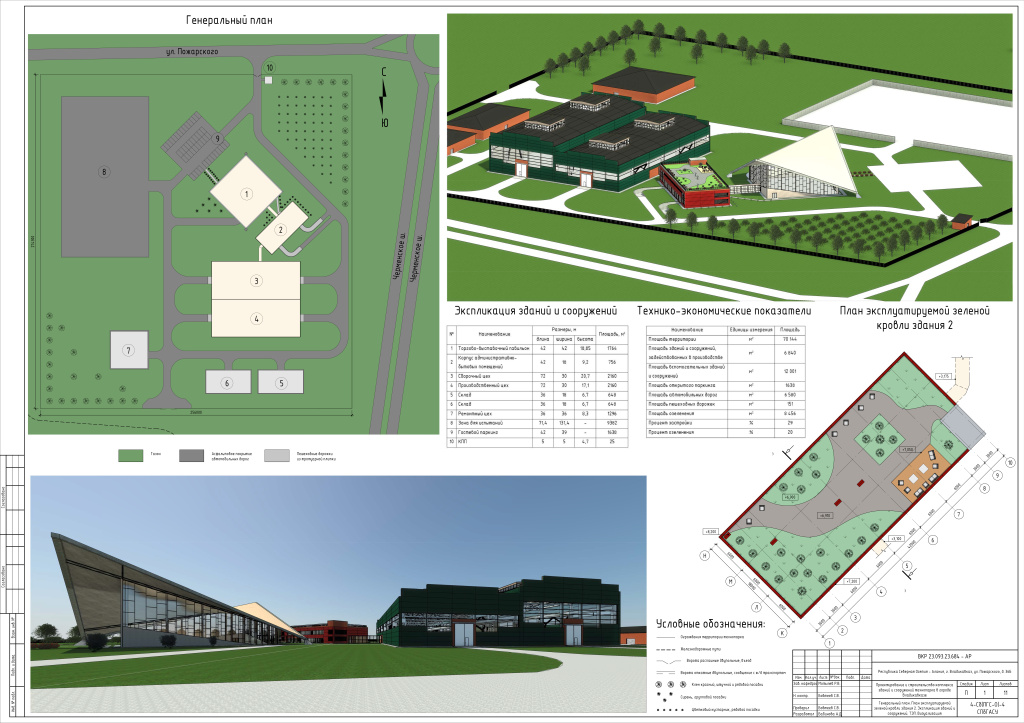
    January 24, 2025
  • MIL-OSI Global: Zimbabwe’s ZiG: devaluations won’t fix a currency that’s in trouble because of government overspending

    Source: The Conversation – Africa – By Jonathan Munemo, Professor of Economics, Salisbury University

    The Reserve Bank of Zimbabwe devalued the ZiG by 43% on 27 September 2024. This weakened the official exchange rate from 13.9 ZiG per US dollar to 24.4 ZiG per US dollar.

    The ZiG (Zimbabwe Gold) is the nation’s newest currency and was launched in April 2024.

    The unexpected devaluation was prompted by the need to contain resurgent exchange rate pressure which started back in August due to higher food import costs and a slide in mineral export sales. The central bank decided to ease this pressure by lowering the value of the currency instead of burning reserves to keep its value steady at 13.9 ZiG per dollar.

    The strain on the ZiG has intensified in the aftermath of the devaluation. It has weakened even further to more than 26 ZiG per dollar as of 18 October. This has raised speculation that it will continue to weaken.

    This would have a number of negative consequences. It would keep upward pressure on import prices, hurting households and businesses. If this happened, Zimbabwean households already hit by falling paycheques and savings might cut back further on spending.

    The strain on the currency also risks reigniting inflation. The risk comes after monthly inflation ticked up to 1.4% in August and then climbed to 5.8% in September. Resurgent inflation would also increase costs for businesses and threaten to stifle investment. That was on display in 2000-08 and 2019-20 when price instability dampened economic activity and created a costly business environment which discouraged investment.

    A further risk factor from currency instability is that it would deter foreign investors worried about the ZiG as a reliable store of value. The prospect of declining business investment, loss of confidence in the ZiG, and anaemic consumption would in turn be a major drag on economic activity. Economic growth in 2024 is expected to slow down to 2% from 5% last year. El Niño-induced drought, lower mining prices, and macroeconomic instability are among the key reasons.

    This is the sixth time Zimbabwe’s authorities have attempted to establish a stable national currency in the past 15 years. The history of failed attempts has cast a long shadow on the ZiG. The recent devaluation has not eased concerns about Zimbabwe’s struggles to develop and maintain a domestic currency that can be widely used for transactions and as a store of value on a voluntary basis.

    I have long thought the devaluation was inevitable. Authorities must confront the fundamental causes, which are rooted in a loss of faith in the ability of government to manage spending. In particular, its habit of printing money, overspending on its budgets and failing to expand the economy.

    Interventions

    The ZiG is part of a multicurrency system which allows individuals to use other major currencies including the US dollar, euro, South African rand and pound sterling.

    To increase the ZiG’s uptake, authorities imposed a number of measures. The new unit has to be used for paying a portion of company taxes and most government services. Fines are issued to traders unwilling to accept ZiG payments.

    Measures like these are not sufficient because they do not consider the real problems hindering success of the Zimbabwe dollar.

    The central bank also announced that it aims to slow the ZiG’s decline by imposing currency controls and raising the benchmark policy rate (the rate used to implement its monetary policy) from 20% to 35%. The jump in the cost of borrowing triggered by these measures will further weigh on business investment and consumer spending.

    Gains to Zimbabwean exporters from a cheaper ZiG are unlikely to be substantial because of an El Niño-induced drought which has devastated crops in southern Africa. And dollar earnings for Zimbabwe’s mineral exports have been hurt by lower commodity prices. The agriculture and food sector contributes about 17% to GDP and 40% of total export earnings on average, while mining accounts for about 12% of GDP and 80% of total exports.

    My worry is that a cheaper ZiG may not juice exports and reduce the trade shortfall of US$1,453 million recorded last year, given the hit to commodity prices and adverse impact of drought on agricultural production. A bigger trade deficit will keep downward pressure on the currency. The weaker ZiG could however boost inbound tourism.

    To retain a stable domestic currency, authorities will have to address deeper structural causes rooted in the country’s long history of printing money to pay for government overspending amid slow economic expansion. That means:

    • slashing the budget while giving greater spending priority to health, education, public infrastructure and other critical investments.

    • government weaning itself off dependence on printing money to finance fiscal deficits

    • supporting credible policies for more sustainable and private-sector led growth and policies for capturing more revenue from growth.

    Precedents

    This is not the first time that the Zimbabwe dollar has been unstable and weak. In the 2000s, printing money to finance government deficit spending produced periods of high inflation amid slow growth, making the currency weak and unstable.

    The currency eventually collapsed in 2009 due to hyperinflation and the US dollar became the official currency.

    Another local currency (the RTGS dollar) was later introduced in 2019. With the power to print more money restored, inflation rapidly accelerated and surpassed 500% in 2020. This made the new Zimbabwe dollar highly unstable and its value quickly deteriorated.

    As a result, the US dollar continued to be the dominant currency used in transactions and as a store of value. Inflation remained elevated until April 2024, when the ZiG was launched as the new national currency. Its value is backed by gold and foreign currency reserves.

    At first the move seemed to have tamed inflation. But widespread voluntary use of the ZiG failed to materialise. That’s because people are still wary of the government’s power to print money, which had been the key driver of inflation and currency instability.

    What policy makers can do

    Authorities must tackle the root causes of the nation’s currency struggles once and for all. Steps that can be taken to resolve longstanding structural factors include:

    • Re-prioritising public spending by undertaking deep fiscal reforms that will divert more resources towards spending on health, education, public infrastructure and other critical investments needed to boost growth. These reforms should also aim to capture more revenue from growth, for example, through tax reforms.

    • Implementing reforms to address corruption and improve governance is essential for imposing the discipline necessary to push back against covering fiscal deficits by printing money and for restoring faith in government institutions.

    • Pursuing credible policies for more sustainable and private-sector led growth. Strong growth expands tax revenues and gives the government more policy space to spend on essential services and critical investment needs.

    Devaluation and other measures that have been imposed to support the ZiG are not the solution.

    Jonathan Munemo does not work for, consult, own shares in or receive funding from any company or organisation that would benefit from this article, and has disclosed no relevant affiliations beyond their academic appointment.

    – ref. Zimbabwe’s ZiG: devaluations won’t fix a currency that’s in trouble because of government overspending – https://theconversation.com/zimbabwes-zig-devaluations-wont-fix-a-currency-thats-in-trouble-because-of-government-overspending-241686

    MIL OSI – Global Reports –

    January 24, 2025
  • MIL-OSI Global: Poverty in Lagos isn’t just about money – here’s why

    Source: The Conversation – Africa – By Oluwaseyi Omowunmi Popogbe, Lecturer II, Crawford University

    Lagos is Nigeria’s economic powerhouse, but it has some of the worst slums in the country.

    Lagos slums are characterised by high levels of poverty – the state of not having enough resources to meet basic needs for living, such as food, water, shelter, healthcare and education.

    Poverty is multidimensional. It is not only about money. Yet poverty in Lagos slums has often been studied using traditional methods that focus mostly on income thresholds. A person is considered poor if their income falls below a certain level. This approach captures financial hardship. But it misses other aspects of poverty, such as lack of access to education, healthcare, clean water and decent living conditions.

    Measuring poverty requires a multidimensional approach, not simply an income approach. Multidimensional poverty means looking at all the aspects of deprivation to get a fuller picture of what it means to live in poverty. It helps policymakers and researchers understand that even with some income, a person may still be struggling because they don’t have other essential services.

    In a study of poverty in the Lagos State slums, two other development economists and I used a mathematical framework to model multidimensional poverty. We used what is known as the fuzzy set approach. This was developed in the 1990s as an alternative to purely monetary measures of poverty.

    The traditional monetary approach often classifies people as either “poor” or “not poor” based on specific cut-off points. In reality, poverty exists on a spectrum, and people can experience different levels of deprivation across various aspects of their lives. The fuzzy set approach accounts for this by assigning degrees of membership to different poverty indicators.

    We found considerable disparities in poverty, based on a multidimensional index, across slums in Lagos State. Our insights will enable economists and policymakers to see the different ways people in slums are deprived. In turn this should help them understand how to make their lives better in a more targeted and effective way.

    Background and methodological approach

    Our study focused on five big slums that lie close to the coastal line in Lagos state. These are among the slums the World Bank has identified for upgrading as part of a US$200 million loan project to improve drainage and solid waste management.

    We chose 400 respondents from the five slums: Makoko, Iwaya, Ilaje, Ijora Badia and Amukoko.

    According to Avijit Hazra and Nithya J Gogtay, researchers in bio-statistics and research methodology, a minimum of 384 samples is appropriate for a large population size. Nevertheless, the selected sample for this study limits the ability to generalise the findings to other slums, especially those with different characteristics.

    Findings

    The multidimensional poverty index was highest in Makoko and Iwaya. These scores indicate severe poverty, as they are above the threshold of 0.50.

    In contrast, Amukoko had the lowest multidimensional poverty index, showing relatively less severe deprivation across indicators.

    Makoko and Iwaya are particularly deprived in areas like schooling, sanitation and nutrition. This explains their higher poverty levels compared to other communities.

    Makoko’s location along the coast, with its makeshift housing and poor infrastructure, adds to its vulnerability. Iwaya shares similar challenges in education and health services. These factors make both areas more deprived than other slums.

    Of the three broad poverty dimensions measured, education emerged with the highest deprivation across all communities. This highlighted the limited formal education among residents.

    Specifically, Makoko and Iwaya showed the highest deprivation in schooling. Despite some improvements, particularly in child enrolment, these communities are still marked by severe deprivation.

    The second dimension exhibiting severe deprivation was living standards. There were variations across different slums. Makoko and Iwaya had higher sanitation challenges.

    The third dimension in the severe deprivation category was health. Indicators included mortality and nutrition. They were high across many slums, contributing significantly to their multidimensional poverty indexes.

    Other communities, such as Amukoko (0.0312), showed better sanitation outcomes. On the other hand, electricity, flooring and cooking fuel indicators generally showed lower levels of deprivation, with most slums scoring around or below 0.03 in these categories.

    The prevalence of both serious and minor illnesses, coupled with insufficient medical care, contributed to high mortality rates.

    Poor sanitation could also be a factor in health issues. In Makoko and Iwaya, toilet facilities and waste management were poor, with waste often disposed of in waterways.

    Despite this, personal hygiene practices such as using clean water, soap and regular brushing were prevalent. This helped keep the sanitation index relatively low compared with other factors affecting health.

    Other slums had relatively better-organised waste collection systems and generally improved sanitation practices.

    What needs to be done

    Policymakers should prioritise education-focused initiatives. This should include improving access to quality schools, providing scholarships and setting up adult literacy programmes.

    The study also highlights challenges related to sanitation, especially in Makoko and Iwaya. There is a need for improved infrastructure in these areas, such as better sanitation facilities, waste management systems and access to clean water.

    Policies should focus on upgrading sanitation services to reduce health risks and improve living conditions.

    But the differences in poverty index across slums indicate varying levels of deprivation, suggesting that a one-size-fits-all approach will not be effective.

    Coastal slums like Makoko and Iwaya require more intensive interventions compared to slums not directly on coastal lines such as Amukoko.

    Policymakers should focus resources where they are most needed to have the greatest impact.

    Slums like Ilaje and Ijora Badia are close to the threshold of severe poverty. Policymakers need to take proactive measures to prevent these communities from falling into severe deprivation.

    Lastly, it is important to use data to identify priority areas and develop targeted interventions aimed at improving the quality of life for slum dwellers.

    Instead of relying on generalised approaches, the insights from this study can facilitate the design of specific policies that address the distinct needs of each community.

    Oluwaseyi Omowunmi Popogbe does not work for, consult, own shares in or receive funding from any company or organisation that would benefit from this article, and has disclosed no relevant affiliations beyond their academic appointment.

    – ref. Poverty in Lagos isn’t just about money – here’s why – https://theconversation.com/poverty-in-lagos-isnt-just-about-money-heres-why-240847

    MIL OSI – Global Reports –

    January 24, 2025
  • MIL-OSI United Nations: Video message for the COP16 Opening Ceremony on Biodiversity

    Source: United Nations secretary general

    Download the video: 

    https://s3.amazonaws.com/downloads2.unmultimedia.org/public/video/evergreen/MSG+SG+/SG+8+Oct+24/3271890_MSG+SG+BIODIVERSITY+OPENING+CEREMONY+08+OCT+24.mp4

    Excellencies, friends,

    I thank the Government of Colombia for hosting this important COP:

    The COP to make peace with nature;

    And the first since countries adopted the historic Kunming-Montreal Global Biodiversity Framework.
     
    That Framework is grounded in a clear truth: for humanity to thrive, nature must flourish.

    Destroying nature inflames conflict, hunger and disease;

    Fuels poverty, inequality, and the climate crisis;

    And damages sustainable development, green jobs, cultural heritage, and GDP.

    A collapse in nature’s services – such as pollination, and clean water – would see the global economy lose trillions of dollars a year – with the poorest hardest hit.

    The Global Biodiversity Framework promises to reset relations with Earth and its ecosystems.

    But we are not on track.

    Your task at this COP is to convert words into action.

    That means countries presenting clear plans that align national actions with all the Framework’s targets.

    It means agreeing a strengthened monitoring and transparency framework.

    And it means honouring promises on finance – and accelerating support to developing countries.

    We must leave Cali with significant investment in the Global Biodiversity Framework Fund, and commitments to mobilise other sources of public and private finance to deliver the Framework in full.

    And those profiting from nature must contribute to its protection and restoration.

    Developing countries are being plundered:

    Digitised DNA from biodiversity underpins scientific discoveries and economic growth. But developing countries don’t gain fairly from these advances – despite being home to extraordinary richness. 

    This COP must operationalise the mechanism that has been agreed – to ensure that when countries share genetic information, they share benefits – equitably. 

    It must engage all of society – as “La COP de la gente”

    And it must strengthen the role of Indigenous Peoples and local communities.

    Indigenous Peoples are the world’s great guardians of biodiversity; luminaries of sustainable use.

    Their knowledge and stewardship must be at the heart of biodiversity action at every level. 

    Excellencies,

    We have a plan to rescue humanity from a degraded Earth.

    I look forward to seeing you in person at the end of the COP to hear how you have delivered.

    Thank you.

    MIL OSI United Nations News –

    January 24, 2025
  • MIL-OSI Canada: Governments helping fruit sector seek new opportunities

    Source: Government of Canada News (2)

    News release

    The governments of Canada and Ontario are helping 128 apple, tender fruit, and table grape producers grow more popular and hardy varieties of produce. The Growing Future Opportunities Initiative, with funding through the Sustainable Canadian Agricultural Partnership (Sustainable CAP), is supporting these projects through a $4.4 million investment.

    $4.4 million investment enabling fruit growers to meet consumer demand

    Oct. 21, 2024 – Toronto, Ontario  –  Agriculture and Agri-Food Canada

    The governments of Canada and Ontario are helping 128 apple, tender fruit, and table grape producers grow more popular and hardy varieties of produce. The Growing Future Opportunities Initiative, with funding through the Sustainable Canadian Agricultural Partnership (Sustainable CAP), is supporting these projects through a $4.4 million investment.

    Growers are replanting more than 94 acres of apples and more than 60 acres of tender fruit and table grapes. The range of fruit varieties being planted are considered by the sector to have greater appeal with changing consumer tastes, and are more resilient to increase yield, improve hardiness, and enhance resistance to pests and diseases. This includes fruits such as Coral Star and Summer Serenade peaches and Gala and Honeycrisp apples.

    The Growing Future Opportunities Initiative is a 3-year, $8 million initiative providing eligible fruit producers with cost-share funding to purchase vines or trees of popular fruit varieties. Applications are still being accepted for tender fruit, table grapes and wine grapes. Under the Growing Future Opportunities Initiative, eligible producers can receive 75% of cost-share funding for plants.

    The Sustainable CAP is a 5-year, $3.5-billion investment by federal, provincial and territorial governments to strengthen competitiveness, innovation, and resiliency of Canada’s agriculture, agri‐food and agri‐based products sector. This includes $1 billion in federal programs and activities and a $2.5-billion commitment that is cost-shared 60% federally and 40% provincially/territorially for programs that are designed and delivered by provinces and territories. 

    Quotes

    “Ontario’s fruit producers are vitally important to Canada’s agriculture sector. The Growing Future Opportunities Initiative will help them stay competitive and increase their resiliency, while ensuring folks have access to the locally grown fruit they enjoy.”

    – The Honourable Lawrence MacAulay, Minister of Agriculture and Agri-Food. 

    “In its first year, the Growing Future Opportunities Initiative is already helping Ontario fruit producers to be more competitive, so they can provide and market more popular products for consumers to enjoy,” said Rob Flack, Ontario Minister of Agriculture, Food and Agribusiness. “Supporting agri-food production is part of our Grow Ontario Strategy, and it’s helping to drive economic growth in Ontario’s $50 billion agri-food sector.”

    – Rob Flack, Ontario Minister of Agriculture, Food and Agribusiness

    Quick facts

    • Agricorp is delivering the Growing Future Opportunities Initiative. 

    • The Growing Future Opportunities Initiative is helping Ontario reach the goals outlined in the Grow Ontario Strategy, which include increasing the consumption and production of food grown and prepared in the province by 30% by 2032.

    • Building sector capacity and growth through realizing the potential of value-added agri-food and agri-products were among the top priorities set for Sustainable CAP by the federal-provincial-territorial agricultural ministers in The Guelph Statement.

    • For more information about OMAFA programs and services, contact the Agricultural Information Contact Centre (AICC) by phone at 1-877-424-1300 or by email at ag.info.omafa@ontario.ca.

    Associated links

    Contacts

    For media:

    Annie Cullinan
    Director of Communications
    Office of the Minister of Agriculture and Agri-Food
    annie.cullinan@agr.gc.ca

    Media Relations
    Agriculture and Agri-Food Canada
    Ottawa, Ontario
    613-773-7972
    1-866-345-7972
    aafc.mediarelations-relationsmedias.aac@agr.gc.ca
    Follow us on Twitter, Facebook, Instagram, and LinkedIn
    Web: Agriculture and Agri-Food Canada

    Makena Mahoney
    Minister’s Office
    Makena.Mahoney@ontario.ca

    Meaghan Evans
    Communications Branch
    OMAFRA.media@ontario.ca

    MIL OSI Canada News –

    January 24, 2025
  • MIL-OSI USA: SEC Division of Examinations Announces 2025 Priorities

    Source: Securities and Exchange Commission

    The Securities and Exchange Commission’s Division of Examinations today released its 2025 examination priorities. The Division publishes its examination priorities annually to inform investors and registrants of potential risks in the U.S. capital markets and to make them aware of the examination topics that the Division plans to focus on in the new fiscal year. This year’s examinations will prioritize perennial and emerging risk areas, such as fiduciary duty, standards of conduct, cybersecurity, and artificial intelligence.

    “The Division of Examinations 2025 priorities enhance trust in our ever-evolving markets,” said SEC Chair Gary Gensler. “In examining for compliance with our time-tested rules, the Division plays a critical role in protecting investors and facilitating capital formation. Working with registrants to understand the rules helps ensure that markets work for investors and issuers alike.”

    “Our 2025 examination priorities identify the key areas of potentially increased risks and related harm for investors,” said Keith Cassidy, Acting Director of the Division of Examinations. “We hope that registrants will evaluate their compliance programs in the areas we identified and make the changes necessary to protect investors and maintain fair and orderly capital markets.”

    The Division examines SEC-registered investment advisers, investment companies, broker-dealers, clearing agencies, and self-regulatory organizations, among others, for compliance with federal securities laws. The Division prioritizes examinations of the practices, products, and services that were found, through a risk-based assessment, to present a heightened risk to investors or the integrity of the U.S. capital markets. The annual publication of the examination priorities furthers the SEC’s mission and aligns with the Division’s four pillars to promote and improve compliance, prevent fraud, monitor risk, and inform policy.

    For fiscal year 2025, in addition to conducting examinations in core areas such as disclosures and governance practices, the Division will also examine for compliance with new rules, the use of emerging technologies, and the soundness of controls intended to protect investor information, records, and assets.

    The 2025 examination priorities cover a broad landscape of potential risks to investors that firms should consider as they review and strengthen their compliance programs. They are not, however, an exhaustive list of all the areas the Division will focus on in the upcoming year.  The scope of any examination includes analysis of other risk factors such as an entity’s history, operations, and products and services.

    MIL OSI USA News –

    January 24, 2025
  • MIL-OSI USA: Trees in cities are beyond shady

    Source: US Geological Survey

    According to newly published U.S. Geological Survey research conducted in 8 large cities coast to coast, urban trees in hot and dry cities can amplify the cooling of local air temperature. 

    The multi-year study was conducted in Baltimore, Los Angeles, Phoenix, Portland, Miami, Tucson, Denver and Las Vegas. Scientists placed 80-100 sensors on trees in each city and measured hourly air temperatures for three months during the summers of 2016-2019. 

    “All trees have a cooling effect, but trees in hot, dry areas can have a greater impact than in humid cities,” said Peter Ibsen, USGS research ecologist. “Trees in areas like Las Vegas, Phoenix and Tucson are particularly effective at reducing heat.” 

    Tree canopy is important in urban environments as it has implications for city planning, public health, and climate resilience. 

    The team found that trees have a more pronounced cooling effect in hotter and drier regions, a contrast to buildings, which tend to have a warming effect in hotter and drier regions. Though in more humid cities like Baltimore, Portland, and Miami, tree cooling is stronger than warming coming from impervious surfaces, which highlights the potential for increasing local air temperature reductions by replacing impenetrable surfaces with tree canopy. 

    Trees reduce heat in all studied cities, but their effectiveness was contingent on local water availability. Irrigation is crucial for maintaining trees’ cooling effects in all studied areas.  

    Other surfaces had temperature changes more consistently across all regions. Flat surfaces like grass had a cooling effect consistently across the cities in the study, while paved areas had a warming effect consistently across the study.  

    MIL OSI USA News –

    January 24, 2025
  • MIL-OSI Canada: Competition Bureau seeks information from market participants on property controls to advance investigations

    Source: Government of Canada News

    Competition Bureau seeks information from market participants on property controls to advance investigations October 21, 2024 – GATINEAU, QC, Competition Bureau

    Bureau is examining whether property controls imposed by grocery retailers are harming competition 

    October 21, 2024 – GATINEAU, QC, Competition Bureau

    The Competition Bureau is inviting market participants to provide input about the use of property controls in the Canadian grocery industry.

    The Bureau is examining whether property controls imposed by grocery retailers are harming competition. Property controls may shield grocery stores from competition by preventing businesses from opening a retail food store or by limiting the products competitors can sell. As a result, consumers may be denied the benefits of competition, including: lower prices, better quality and more choice. 

    The call-out aims to gather information on the use of property controls in the grocery industry as a whole, and to inform the Bureau’s ongoing investigations into Sobeys and Loblaw. Areas of interest include:

    • any instances where property controls have prevented domestic or international grocers or food retailers from opening a store in Canada,
    • any instances where property controls have restricted the operations of a food retailer by, for example, limiting the sale of specific food products, and
    • the benefits and drawbacks of property controls for food retailers, landowners or landlords.

    The Bureau encourages market participants in the food retail and real estate sectors to confidentially share their experiences by emailing ControlesdePropriete-PropertyControls@cb-bc.gc.ca. For more information on how to submit information, please visit the Call-out for information about property controls in the Canadian grocery industry web page.

    The Competition Bureau is an independent law enforcement agency that protects and promotes competition for the benefit of Canadian consumers and businesses. Competition drives lower prices and innovation while fueling economic growth.

    MIL OSI Canada News –

    January 24, 2025
←Previous Page
1 … 5,305 5,306 5,307 5,308 5,309 … 5,934
Next Page→
NewzIntel.com

NewzIntel.com

MIL Open Source Intelligence

  • Blog
  • About
  • FAQs
  • Authors
  • Events
  • Shop
  • Patterns
  • Themes

Twenty Twenty-Five

Designed with WordPress