Blog

  • MIL-OSI Security: Defense News: CNO Press Briefing: Atlantic Council

    Source: United States Navy

    GENERAL JAMES L. JONES: Good morning, everybody. And welcome to today’s event with Chief of Naval Operations Admiral Lisa Franchetti—chief of naval operations of the world’s finest Navy, I might add—to discuss her 2024 Navigation Plan for America’s Warfighting [Navy].

    My name is Jim Jones, and I serve as executive chairman emeritus here at the Atlantic Council and as chairman of the Scowcroft Center. So, on behalf of the Scowcroft Center and the Atlantic Council, as well as its Forward Defense Program, I would like to welcome you to this exciting fourth installment of our 2024 Commander Series.

    As we all know, since its origin the United States has relied on her Navy to maintain global maritime dominance, ensuring freedom of navigation, the ability to project US power across the globe and played a critical role in the nation’s strategic deterrent capabilities. As we continue into this era of strategic competition with peer or near-peer adversaries, potential adversaries, namely China and Russia, and the threat landscape evolves, the Navy faces many challenges, and its capabilities are stretched across the world.

    The Navy, and I might add the Marine Corps—you’re not going to get away with a commandant introducing you without mentioning the Marine Corps—but the Navy and her Marines must be ready for the possibility of war in the near future. But beyond that, it will need to continue to enhance its long-term advantage to deter future aggression and ensure a major contribution to global stability. A critical component in the effectiveness of this strategy will be leveraging technological innovation to maintain a ready and modern force. The Navy will need to invest in newer platforms, newer weapon systems, and embrace robotic and autonomous systems as well.

    The key advantage that the United States holds over its adversaries is the strong alliance network the US maintains. The Navy must continue to strengthen these relationships, to enhance collective security, deter adversarial aggression by improving interoperability with joint and allied forces. With so many threats looming on the not-so-distant horizon, it is also imperative that the Navy has a forward-thinking strategic vision that leverages all the advantages the United States holds, and enables the readiness to respond in competition, crisis, and conflict if necessary.

    And so today, we’re extremely fortunate to be joined by the 33rd Chief of Naval Operations Admiral Lisa Franchetti, who will discuss her recently published Navigation Plan for America’s Warfighting Navy. This is her strategic guidance for the US fleet during her tenure. A native of Pittsford, New York, Admiral Franchetti is a graduate of the Medill School of Journalism and was commissioned through Northwestern University NROTC program in 1985. She earned her Surface Warfare qualification on the USS Shenandoah, went on to command at all levels, including Naval Reserve, Central Point, Oregon, USS Ross, Destroyer Squadron 21, US Naval Forces Korea, Carrier Strike Group 9 and 15, the US Sixth Fleet in Italy, and Striking and Support Forces NATO in Portugal.

    In addition to command, she has worked across the Navy and the joint force with emphasis on strategy, international engagement, and interagency collaboration, serving as the director Strategy, Plans, and Policy, J-5, and most recently as the vice chief of naval operations. As chief of naval operations, Admiral Franchetti is responsible for the command, use of resources, and operational efficiency of the naval operating forces and the Navy’s shore activities assigned by the secretary of the navy.

    Admiral Franchetti, we look forward to hearing from you today, and we’re very grateful for your presence here. After the admiral’s keynote remarks, she will be joined by Dan Lamothe for a moderated discussion. Dan has held a long career as a journalist and has written extensively about the armed forces for more than fifteen years. Since 2014, he has been covering the United States military and the Pentagon for The Washington Post. Dan, thank you very much for joining us today.

    I would also like to thank everyone attending this conversation with the admiral, whether in person or virtually. [Convenings] such [as] these are integral to the Atlantic Council’s [Scowcroft] Center for Strategy and Security, which works to develop sustainable, nonpartisan strategies to address the most important security challenges facing the United States and her allies and partners. Consistent with that mission, Forward Defense generates ideas and connects stakeholders in the defense ecosystem to promote an enduring military advantage for the United States, her allies, and partners. Its work identifies the defense strategies, capabilities, and resources of the United States needed to deter and, if necessary, prevail in any future conflict.

    I would like to extend a special thanks to Saab Corporation and Michael Anderson, who, unfortunately, couldn’t be here today but is usually in attendance. Saab and the Atlantic Council launched the Commander Series back in 2009. The vision was to establish a flagship speakers forum for senior military and defense leaders to discuss the most important security challenges, both now and in the future. Over the years, the program has become one of the Council’s main institutions. And we’re thankful to Saab for their continued support and collaborations. Before I turn it over to Admiral Franchetti for her keynote remarks, I’d like to remind everybody that this event is public and on the record. Thank you all for joining the Atlantic Council for what I know will be a captivating conversation.

    Admiral Franchetti, without any further ado, the floor is yours. Welcome.

    LISA FRANCHETTI: Well, thank you, General Jones, for your kind introduction and warm welcome. And I also want to thank the Atlantic Council for letting me be part of the Commander Series. It’s an incredible opportunity. And I’m very excited to have the opportunity to speak with all of you today.

    So, as General Jones just mentioned, I recently released my Navigation Plan for America’s Warfighting Navy, which is my overarching strategic guidance to the Navy to make our nation’s fleet more ready for potential conflict with the PRC by 2027, while also enhancing our Navy’s long-term warfighting advantage. But before I talk a little bit more about that, I want to talk about the why—the why behind the NAVPLAN, and what your navy is doing all around the world to protect our nation’s security and prosperity, to deter any would-be adversary, and to always be ready to fight and win decisively, if called to do so.

    As you all know, our Navy—our nation is and always has been a maritime nation. Seventy percent of our planet is made up of water. Eighty percent of the world’s population lives within two hundred kilometers of the coastline. Ninety percent of the global economy moves by sea. And 95 percent of international communications and about ten trillion dollars of financial transactions transit via undersea fiber optic cables every single day. In the United States alone, seaborn trade carries more tonnage in value than any other mode of transportation each year, generating about $5.4 trillion annually and supporting thirty-one million American jobs. And when our access to the sea is impacted, so too is our economy, our national security, and really our way of life.

    And I could think about a lot of different examples over the past years that demonstrate that intimate connection. Just think back to the impacts of COVID-19, the grounding of the Ever Given in the Suez Canal, and now Houthi attacks in the Red Sea, and even the port strikes on the east and west coast—gulf coast just a few weeks ago. It’s really clear that the seas are the lifeblood of our nation. And since the days of the Revolutionary War, as General Jones pointed out, our Navy and our Marine Corps team has protected and guaranteed our access to that sea. And on Sunday, we just celebrated our 249th birthday.

    I think the events of this year and the actions taken by your Navy-Marine Corps team in the Indo-Pacific, in the Mediterranean, in the Red Sea, and beyond really underscore the enduring importance of American naval power throughout our nation’s history. With an average of about 110 ships and seventy thousand sailors and Marines deployed on any given day, the Navy-Marine Corps team is operating forward, defending our homeland, and keeping open the sea lines of communication that fuel our economy. In the Indo-Pacific right now, the USS George Washington Carrier Strike Group and the America Amphibious Readiness Group, with the 31st MEU embarked, are working alongside allies and partners to sustain a free and open regional order and enhance our collective interoperability.

    In the Baltic, the Atlantic, the high north, and the Mediterranean, our navies continue to work alongside NATO and other partner navies to defend NATO and to support Ukraine as they defend their country and their democracy, to further deter Russian aggression, and to ensure that Russia’s continued unjustified and horrific invasion of the sovereign nation of Ukraine is a strategic failure. And in the eastern Mediterranean, the Red Sea, the western Indian Ocean, our naval forces—including aircraft carrier strike groups, amphibious readiness groups, submarines and multiple destroyers—working alongside allies and partners, are containing the Israel-Hamas conflict, deterring others, especially Iran and its proxies, from escalating hostilities into regional war, and continuing to support Israel’s defense.

    Over the last few weeks, more American destroyers—the Bulkeley, the Frank E. PetersenMichael Murphy, and the Cole—have joined about a dozen other naval assets over the last year in knocking down Iranian and Houthi-launched ballistic missiles, cruise missiles, and drones in defense of the rules-based international order, in defense of innocent civilian mariners, and in defense of Israel. The ability of our forces to seamlessly operate in any theater speaks to the value our Navy has provided to our nation for the last 249 years.

    We operate in a unique domain. It’s a domain that knows no boundaries. It’s a domain that transcends lines that are drawn on a map, and one in which the Navy provides agile, flexible options and decision space to our nation’s leaders every single day. I could not be more proud of that Navy team. It’s the active and reserve sailors. It’s our civilians. And it’s our families. There’s no other Navy in the world that can operate at this scale. No other Navy in the world can train, deploy, and sustain such a lethal, globally deployed, combat credible force at the pace, the scale, and the tempo that we do.

    And while all that we have achieved these past 249 years has filled me with confidence, I know that we cannot take our foot off the gas, because there’s no doubt that our nation is at an inflection point in history. We are facing a changing and challenging security environment, a changing character of war, and real challenges in ship, submarine, aircraft, construction and maintenance, munitions production, recruiting, and infrastructure maintenance. All while acknowledging the industrial and budgetary constraints complicating our efforts to address these challenges.

    I’ve already talked a little bit about the security environment, but I want to expand on how that’s changed a little bit more. As we are seeing, the rules-based international order that we have upheld, protected, and defended for over three-quarters of a century is under threat, in every ocean. The People’s Republic of China is our pacing challenge and presents a complex, multi-domain and multi-axis threat. I am eyes wide open that the challenge posed by the PRC to our Navy goes well beyond just the size of the PLAN fleet.

    It includes gray zone and economic campaigns, expansion of dual-use infrastructure like airfields and ports, and dual-use forces like the Chinese maritime militia, and a growing nuclear arsenal. It’s backed by a massive defense industrial base, which is on a wartime footing and includes the world’s largest shipbuilding capacity. The growing capabilities, capacity, and reach of the PRC military, along with its increasingly aggressive behavior in the East and South China Seas, underscore what Chairman Xi has told his forces, that they should be ready for war by 2027.

    The PRC is not our only competitor. Russia continues to be an acute threat. Iran, a stabling actor in the Middle East. And we are seeing increasing alignment of these competitors, the PRC, Russia, Iran, North Korea, violent extremist organizations, and globally sponsored terrorist organizations like Hamas, Hezbollah, the Houthis, ISIS-K, and more. In addition to this dynamic security environment, we’re also facing a changing character of war, with advancements in battlefield innovation and cheaper, more accessible technology available to state and nonstate actors alike. We’re all learning a great deal from Russia’s invasion of Ukraine and the continued Houthi ballistic missile, cruise missile, and drone attacks in the Red Sea.

    To get after all these challenges, I would love to have the resources and the industrial base capacity to just expand the size of our force overnight. And I acknowledge the need for a larger, more lethal force. But it’s no secret to any of you that we are facing financial and industrial headwinds at getting, what I like to call, more players on the field. Our budget falls short of the 3 to 5 percent increase above inflation needed to support the Navy’s growth. And we’ve had continuing resolutions for fourteen of the past fifteen years, which stifle our momentum and slow any progress in delivering the warfighting capability and capacity needed to meet the needs of today and tomorrow.

    And while we’re investing significant resources to address our industrial base challenges, change will not happen overnight. We cannot manifest a bigger Navy—a bigger traditional Navy in just a few short years. So as I came into this position, I took all of this in—the changing security environment, the changing character of war, and our own challenges—and that is what provided the context that framed my Navigation Plan. It’s a plan that lays out where we need to go to make our Navy more ready for potential conflict anytime and anywhere. As the CNO who will be at the helm into 2027, I am compelled to do more, and do more faster, to ensure that our Navy is more ready. I can’t stand still as we work to secure long-term investments for our force.

    And so my Navigation Plan essentially parks these known challenges in a box. I’m still going to work on them, but they’re not the only thing I’m going to think about. And it helps me set a course to make strategic gains in the fastest time possible with the resources I can influence. It builds on America’s Warfighting Navy, a document that I released in January that lays out my priorities of warfighting, warfighters, and the foundation that supports them. And the NAVPLAN continues where my predecessor’s 2022 NAVPLAN left off. It lays out my plan to raise our fleet’s baseline level of readiness and put more players on the field—platforms that are ready with the requisite capabilities, weapons, and sustainment, and people that are ready with the right mindset, skills, tools, and training.

    And it does that really in two ways. First, by implementing what I call Project 33, seven key areas in which we need to accelerate, areas where I will invest my personal time and resources and put my thumb on the scale to urgently move the needle, with 2027 as our North Star. And second, by expanding the Navy’s contribution to the joint warfighting ecosystem. This is all about building enduring warfighting advantage by investing in key capabilities and creating the layered effects that the Navy can contribute across all domains, to those of the joint force and those of our allies and partners. This is fundamental to my vision of how we will deter and, if necessary, fight and win our future wars.

    So, going back to the first I’d like to briefly just touch on these seven equally important Project 33 targets, as they align to my priorities of warfighting, warfighters, and the foundation that supports them.

    Under warfighting, my first target is readying our platforms.

    The second target is operationalizing robotic and autonomous systems.

    My third target is fighting from the Maritime Operations Center. That’s our command and control nerve center and it will help synchronize how we deliver effects as a Navy and as a broader joint and combined force.

    Under the warfighters’ bucket, my fourth target is recruiting and retaining talented people.

    My fifth target is delivering the quality of service that our sailors and their families deserve.

    My sixth target is investing in warfighter competency, making our live virtual constructive training as reliable, realistic, and as relevant as possible.

    And finally in the foundation bucket, my seventh target is restoring the critical infrastructure that generates, sustains, and postures our force to fight, prioritizing the Pacific theater.

    Together, these seven targets—really, stretch goals—they represent my plan to make strategic gains in the fastest time possible with the resources I can influence. I know that moving out with purpose and urgency on these targets will deter the PRC and any other potential adversary, and make us even more ready to fight and win decisively should that deterrence fail.

    I’d like to end with just a few comments about the joint warfighting ecosystem I mentioned before because my Navigation Plan is critical to expanding our Navy’s contribution to it. I know that our Navy will never fight alone, so we are laser-focused on developing and integrating key Navy capabilities with those of our joint teammates and of our allies and partners, because it’s the aggregate effects that we deliver collectively that will matter.

    The joint warfighting ecosystem is all about pooling and creating those aggregate effects. It’s a system in which a capability enables and then is enabled by each of its participants. It’s on display in the Middle East right now, and I know it’s one that Admiral Paparo will leverage in the Indo-Pacific.

    Achieving these objectives in my Navigation Plan is an all-hands-on-deck effort where everyone has a role to play—industry, Congress, academia, our joint teammates, our allies and partners, and of course our sailors and our civilians. So I would like to thank all of you here for your interest in our Navy, and I would like to thank you for all that you have done to support our Navy team and will continue to do in the future to support America’s warfighting Navy.

    I have a clock in my office that tells me that there are 807 days left until 1 January 2027. There is no time to waste, and your Navy is ready to get after it. Thank you very much, and I look forward to discussion today. Thank you.

    Dan.

    DAN LAMOTHE: All right. Good morning, everyone.

    LISA FRANCHETTI: Good morning.

    DAN LAMOTHE: Thank you for your time today, ma’am.

    You just spent several minutes articulating your plan. I know you must have spent a lot of time planning that. This town often sees plans that run into headwinds, run into real-life events. Can you walk us through a bit what you think you can do to make this plan durable, make this happen, kind of clear-eyed, noting the headwinds, the budgetary constraints, and other things like that?

    LISA FRANCHETTI: Yeah. Well, thank you. And again, thanks for the chance to talk a little bit about the plan today.

    You know, I think this plan is a little bit different from some of the plans that we have had in the past, and I worked to make sure that it would be durable and it would stick. And I really spent about the last year working on this plan alongside all of our four-star commanders, our fleet commanders, our type commanders to really get after what are the things that we need to do and what we do we need to do to think, act, and operate differently to stay ahead of the challenges that we have with the resources that we can influence right now.

    And so when you look at the plan, it’s very focused—I would say it’s different in a few ways from previous plans.

    First, it’s focused on 2027. It’s focused on the PRC. So I’ve set my priorities, my sight. It’s narrowly focused on getting after those challenges.

    The other thing is that it really builds on Navigation Plan 2022, in which we had about eighteen different areas which we were really focused on and a lot of structure was put in place with single accountable individuals to drive progress in each one of those areas. I took a look, I took a fix, and I said, all right, here’s where we are based on NAVPLAN 2022, and here are seven areas where I think we can really put our foot on the gas and accelerate our progress in those to be real gamechangers in what we need to be able to do in the future.

    I think the last thing I would say what’s different about it is that it does have this single accountable individual responsible for each one of the targets that we’re trying to get after. And what we’ve found through our perform-to-plan and naval sustainment systems, processes have been put in place, if you have a stretch goal, a single accountable individual, and a cadence of accountability, that drives success.

    And the Navigation Plan will change my focus. It changes where I go, what I visit, what reports I get, what meetings I go to. And so my personal attention will be on these Project 33 goals as well as building the capabilities I talk about as the key capabilities for warfighting advantage that will get us where we need to be in the future.

    DAN LAMOTHE: OK. One of your stated goals is boosting surge readiness to 80 percent. I know talking to a lot of analysts in this town, they raise concerns whether real-life events, physics, other things would really challenge this. And I know you’ve raised previously the aircraft as a kind of parallel. Do you see 80 percent as aspirational, achievable, both? And I guess, how do you put your foot on the gas with that?

    LISA FRANCHETTI: Thanks. This is one of the most important—all seven are equally important, but you know, I’ve long said that we need to get more players on the field. There’s a lot of ways to do that. You know, one is to buy new ones. One is to get them in and out of maintenance on time, which is—that’s why I put this goal in here. One is to use what you have differently.

    I am focused on this, because the aviation example is really illustrative of what we know we can achieve. So in 2018, Secretary Mattis challenged our aviation community to get F/A-18 readiness up from 50 percent readiness/availability to 80 percent. And over the process of these—the last couple of years, and now six years on, we’ve been able to sustain 80 percent readiness in the F/A-18s because of the processes that we put in place, data-driven, daily drumbeats of accountability to make sure that we understood what the readiness was, what the barriers were to achieving that readiness, and moving forward.

    They’ve been able to scale that now through other type model series, and we’ve expanded it to the submarine force and also the surface force. So it’s a stretch goal, but I am committed and the team is committed to going after that stretch goal. So we are putting all those—we have, actually, all those processes in place now, and I’m really looking forward to that.

    I will just give another example, a metric in surface that might be useful. So, you know, on-time completion of maintenance availabilities is really important. So if you think back in 2022 we had about 27 percent completion on time, 2023 we moved it up into the 30 percents, and this year we’ll be up to 67 percent. So we put in a lot of procedures to be able to plan maintenance availabilities early in a surface, a submarine, and aviation, making sure we understand what parts we need, having available pool of parts, investing in those parts so they can be there on time; planning our stuff—maintenance availabilities at least six months ahead of time and locking them in to let industry know what’s coming and also get those parts on order. Those are some of the things we’re doing.

    So these are stretch goals, but I am confident that we’re going to work hard to get after them. And if we don’t make exactly 80 percent, we’re going to be farther along the road than we would be if I hadn’t set such an ambitious goal.

    DAN LAMOTHE: OK.

    LISA FRANCHETTI: And I will say all the communities are locked hands on these goals, so we are all committed to working together to get after them.

    DAN LAMOTHE: A lot of discussions about the future of the Navy tend to focus on ship numbers. I heard in your comments there you kind of addressed that head on. To what do you—what degree do you consider that construct limiting, and to what degree do you consider that construct necessary? You know, I—there’s a pragmatic aspect to this, but numbers are numbers, and I’m sure that’s something that you get an earful on a lot as well.

    LISA FRANCHETTI: Certainly. Well, I fully acknowledge that we need a larger, more lethal Navy. You know, we have multiple assessments that say that we need to have a larger Navy, and I really want to work closely, you know, with Congress, with industry to be able to deliver that Navy that we need. And that’s a really important thing.

    But the size of the Navy is not the only thing that matters. I think if you look at that future warfighting ecosystem, it’s really about the effects you can deliver with that Navy from a widely dispersed, disaggregated force integrated with all of the other forces of our joint force, whether it’s cyber, space, Air Force, Army, Marines. You can definitely envision a different type of warfighting environment where all of those effects are layered together, and that is really how we’re going to beat any adversary.

    So, to me, it’s both. We need to focus on getting the fleet that we need with the capabilities we need, but we also need to understand how we’re going to better integrate them with the joint force and alongside our allies and partners. And really, how do we build that interoperability from the ground up with allies and partners through both weapons systems but also exercises, and make sure that we can really plug and play, plug and fight any time that we need to be able to do that?

    DAN LAMOTHE: OK. Thank you.

    Let’s talk some current ops and maybe tie it back to the plan a bit. The Navy’s been extremely busy in the Red Sea and other parts of the Middle East over the last year. You know, I think a lot of us are tracking ship movements and things like that on a level that, you know, is not always common. What is the service learning as a result as seemingly almost daily sailors are knocking, you know, munitions out of the sky? And how long do you think the service can keep this up? It seems to me that there would be concern as this stretches on on magazine depth and also on just, you know, as you’re trying to pivot elsewhere this seemingly doesn’t go away.

    LISA FRANCHETTI: Well, first, I couldn’t be more proud of our Navy and Marine Corps team that’s out there. As I said earlier, you know, from day one we’ve been there to deter further escalation. And you know, I’m very proud of all of our ships—working alongside allies and partners, I would add—there in the Red Sea and in the—in the Indian Ocean to really uphold that rules-based international order.

    I think we’re learning a lot by being in the Red Sea. First, the value of allies and partners. And again, all of these exercises and training that we do all around the world, that’s enabled us to work together to get after this challenge.

    I would say a few other things. First, that our sailors are confident in their weapons system. And that’s really a testament to the development of these weapons systems over the last many years, but also to the training, the certification, all of the work we do to get our sailors, our ships, our aircraft, everything ready to go before they head into harm’s way. And our systems have performed as designed. So, again, it’s a real testament to the designers, the engineers, and now our people who are able to employ them effectively.

    I think the other thing that we’re learning is that we’ve been able to observe all of the different engagements, everything that the Houthis have used, all of their Iranian-supplied weapons systems, and we’ve been able to look at their tactics that they’re using. We’ve been able to use data and extract that information from our weapons systems, bring that back here to the US in a matter of hours. And getting that to our engineers; to our warfighting development centers where they develop tactics, techniques, and procedures; this has been really a gamechangers because then all the experts can work together, understand what’s going on. As tactics evolve, then we can introduce different tactics, adjustments to radars, whatever it is we need to do to be able to get after that.

    I’ll just give a small example. When I was out visiting one of our ships, I got to promote a fire controlman second class to first class. And he was a technician who worked with a gun weapons system, and he had an idea about how he could make the gun more effective against Houthi threats. And he wrote up his idea, he sent it back to the technical authorities, they validated it, and they put it out the rest of the fleet because it was a better way to use the gun and more effective. And so we got to put technology into the hands of a warfighter; we got him to think about how to think, act, and operate differently; and he was really a pioneer in innovating there on the battlefield.

    I always like to say in Ukraine they innovate on the battlefield every single day. They take what they have and they use it differently. We need to be able to do the same. So I think that’s another lesson that we’ve learned there.

    DAN LAMOTHE: OK.

    LISA FRANCHETTI: And to your last point about, you know, are we concerned about our sustainability to be there, of course, our job is to be there, and that is what we train our people to do. So I’m very proud to be able to do that mission. And we’re continuing to work, again, to invest in the munitions as I talk about the foundation—munitions, bases, infrastructure—all those things we need to generate and sustain the force, committed to getting after that.

    DAN LAMOTHE: All right.

    And I think we have just time for one more question. We’ve seen the Abraham Lincoln Strike Group extended. We’ve seen the Marine Expeditionary Unit extended along with the ARG. As we see this extend, you know, it occurs to me we don’t necessarily have a follow-on ARG new behind it. To what degree are you concerned about being able to sustain the tempo out there?

    LISA FRANCHETTI: Well, as you know, we train, deploy, and certify all of our forces to be able to meet the requirements that are set forth, you know, by the secretary. We’re a globally deployed force, and I think that’s one of the greatest things about the flexibility of our Navy. We can generate the forces, we can send them where they need to go, and allow the secretary to be able to move them between the different theaters to get after the missions that we have. So I’m confident in our ability to do that.

    I am very focused on readiness for all of our ships. You know, when you think about in the big picture what are my priorities, first, Columbia, our number-one acquisition priority. But after that, readiness, capability, and then capacity. I’m really focused on readiness and getting after all of these maintenance challenges that have caused some of the delays in the past, whether it’s in our amphibious force or in any one of our platforms. So, again, that’s how we’re going to get after this. And that’s why that’s a key part of our Navigation Plan.

    DAN LAMOTHE: OK. Thank you all for your time today. I’d ask you to remain seated so that the admiral can depart for another meeting.

    LISA FRANCHETTI: Thank you very much.

    DAN LAMOTHE: All right.

    LISA FRANCHETTI: Thank you.

    DAN LAMOTHE: Thank you.

    LISA FRANCHETTI: Oh, thanks. That was fun.

    DAN LAMOTHE: Thank you.

    MIL Security OSI

  • MIL-OSI USA: DHS Offers Protections for Lebanese Nationals Currently in the United States

    Source: US Federal Emergency Management Agency

    Headline: DHS Offers Protections for Lebanese Nationals Currently in the United States

    em>Certain Lebanese nationals will be eligible for DED and TPS, allowing them to work and temporarily remain in the United States

    WASHINGTON The U.S. Department of Homeland Security (DHS) is announcing new actions to provide temporary immigration reprieve to eligible Lebanese nationals currently in the United States and allowing them the opportunity to request work authorization. Included in today’s announcement are details related to the Deferred Enforced Departure (DED) for Lebanese nationals as previously announced in July, and a planned new Temporary Protected Status (TPS) designation for Lebanon.

    After consultation with interagency partners, Secretary Mayorkas is announcing a new TPS designation for Lebanon for 18 months due to ongoing armed conflict and extraordinary and temporary conditions in Lebanon that prevent nationals of Lebanon from returning in safety. Those approved for TPS will be able to remain in the country while the United States is in discussions to achieve a diplomatic resolution for lasting stability and security across the Israel-Lebanon border. The designation of Lebanon for TPS will allow Lebanese nationals (and individuals having no nationality who last habitually resided in Lebanon) who have been continuously residing in the United States since October 16, 2024 to file initial applications for TPS, if they are otherwise eligible. Lebanese nationals who entered the United States after October 16, 2024 will not be eligible for TPS. More information about TPS, including how to apply for employment authorization, will be included in a forthcoming Federal Register Notice which DHS intends to publish in the next few weeks. Individuals should not apply for TPS under this designation until this Federal Register Notice publishes.

    Today, U.S. Citizenship and Immigration Services (USCIS)also posted a Federal Register Notice establishing procedures for those Lebanese nationals covered by President Biden’s July 26, 2024 grant of Deferred Enforced Departure to apply for Employment Authorization Documents (EADs) that will be valid through January 25, 2026. As described in the Federal Register Notice, eligible Lebanese nationals can apply for an EAD by filing Form I-765, Application for Employment Authorization. USCIS adjudicates each EAD application on a case-by-case basis to determine if an applicant meets all standards and eligibility criteria. More information about DED-based EADs is available on the USCIS website.

    DHS is also publishing a Special Student Relief Notice for F-1 nonimmigrant students whose country of citizenship is Lebanon, or individuals having no nationality who last habitually resided in Lebanon, so that eligible students may request employment authorization, work an increased number of hours while school is in session, and reduce their course load while continuing to maintain F-1 status through the DED designation period.

    In total, approximately 11,000 Lebanese nationals will likely be eligible for DED and TPS pursuant to these actions. There are also approximately 1,740 F-1 nonimmigrant students from Lebanon in the United States who may be eligible for Special Student Relief. 

    MIL OSI USA News

  • MIL-OSI USA: Statement from Secretary Alejandro N. Mayorkas on the Independent Review Panel Report of the July 13, 2024 Assassination Attempt in Butler, Pennsylvania

    Source: US Federal Emergency Management Agency

    Headline: Statement from Secretary Alejandro N. Mayorkas on the Independent Review Panel Report of the July 13, 2024 Assassination Attempt in Butler, Pennsylvania

    ASHINGTON – Secretary of Homeland Security Alejandro N. Mayorkas issued the following statement on the Independent Review Panel report released today regarding the July 13, 2024 assassination attempt against former President Trump in Butler, Pennsylvania.

    “We are grateful to the members of the bipartisan Independent Review Panel and their staff for their in-depth examination of the security failures that led to the July 13, 2024 assassination attempt on the former President and the loss of life and casualties suffered.  The members of the Independent Review Panel are highly accomplished individuals with extensive security and law enforcement backgrounds, and the U.S. Secret Service’s protection mission will benefit greatly from their recommendations.

    “I have reviewed the Independent Review Panel’s report and have met with the Panel members. We will fully consider the Panel’s recommendations and are taking the actions needed to advance the Secret Service’s protection mission.  These actions will be responsive not only to the security failures that led to the July 13, 2024 assassination attempt, but, importantly, to what the Independent Review Panel describes as systemic and foundational issues that underlie those failures.  I commend Acting Director Rowe for his leadership and for proactively undertaking security enhancements, including those informed by the Secret Service’s internal Mission Assurance Review.

    “I have the utmost confidence in the men and women of the United States Secret Service.  We are operating in a heightened and dynamic threat environment, and it is their talent, unwavering dedication, and tireless service that ensures the safety and security of their protectees and our nation.”

    Following the events of July 13 President Joe Biden directed DHS to conduct an independent security review. On July 21, 2024 Secretary Mayorkas named a bipartisan panel with extensive law enforcement and security experience to conduct a 45-day independent review. The independent review panel of experts from outside of government was comprised of former DHS Secretary Janet Napolitano; the Hon. Mark Filip, a former federal judge and Deputy Attorney General to President George W. Bush; Ms. Frances Townsend, former Homeland Security Advisor to President George W. Bush; and Chief David Mitchell, the former superintendent of Maryland State Police and former Secretary of the Department of Public Safety and Homeland Security for the State of Delaware.

    MIL OSI USA News

  • MIL-OSI Security: St. Andrews — 37-year-old man dies following two-vehicle collision

    Source: Royal Canadian Mounted Police

    A 37-year-old man from St. Andrews, N.B., has died following a two-vehicle collision in St-Andrews, N.B.

    On September 12, 2024, at approximately 1:52 p.m., members of the St. Andrews RCMP responded to a report of a collision between a motorcycle and a recreational vehicle (RV) at the corner of Mowat Drive and Cornelia Street, in St. Andrews.

    The collision is believed to have occurred when the motorcycle, traveling at high speed, failed to stop and ran into the back of the RV.

    The driver and sole occupant of the motorcycle was transported to hospital with what were believed to be life-threatening injuries. The driver and passenger of the RV were uninjured.

    On October 12, 2024, the driver of the motorcycle died as a result of his injuries.

    Members of Ambulance New Brunswick attended the scene. The New Brunswick Department of Public Safety is assisting with the investigation.

    Investigation is ongoing.

    MIL Security OSI

  • MIL-OSI Security: Waterville-Carleton  — 40-year-old man dies following single-vehicle crash

    Source: Royal Canadian Mounted Police

    A 40-year-old man from Jacksontown, N.B., has died following a single-vehicle crash in Waterville-Carleton, N.B.

    On October 12, 2024, at approximately 7:50 a.m., members of the Western Valley Region RCMP, Ambulance New Brunswick and the Hartland Fire Department responded to a report of a single-vehicle crash on Route 590 in Waterville-Carleton.

    The crash is believed to have occurred when the vehicle left the road, went down a large embankment and came to a stop in a brook. The 40-year-old man and sole occupant of the vehicle died at the scene as a result of his injuries.

    An RCMP collision reconstructionist and a member of the New Brunswick Coroner’s office is also assisting with the investigation. An autopsy is scheduled to determine the driver’s exact cause of death.

    The investigation is ongoing.

    MIL Security OSI

  • MIL-OSI Video: Vuk Talks Season 2 Episode 23 Kutlwano Moloi

    Source: Republic of South Africa (video statements-2)

    Kutlwano Christian-Tripp Moloi Is A 21-year-old Transformational Youth Leader and Development Agent. A South African Published & Gold-status Author with Over 90 000 Total Reads Globally – Ea ing Him an Impressive Achievement Of 9x Gold Trophies on Booksie Publications. A Multi Award-winning Creative, Recognised Business Leader at The Founder of The Year (FOYA) Awards, The Top 16 Youth-Owned Brands & Forty Under 40 South Africa. Kutlwano Is an Influential Thought Leader & Strategic Manager with Over 6 Years of Experience in Effectively Leading, Managing, And Developing Teams (including Remotely) To Achieve Desired Results for Projects, Departments, And Campaigns. An Entrepreneur and Skilled Critical Thinker. Keynote Speaker and High-Performance Coach. Moloi Is a Passionate Fitness/wellness Practitioner with A Strong Drive for Continuous Community and People Development – Especially in Local Townships. He`s Currently Leading Project These Amazing Projects: – Youth Empowerment Tour a Public Speaking Campaign That Aims to Eradicate Youth Unemployment and Foster a New Culture of Job Creation, Ownership, Wealth Creation, And the Elimination of Poverty by Empowering the Youth and Class Of 2023 with Practical Tools On Self-development And Entrepreneurship Training To Stimulate Economic Development. The Project Has Empowered Over 12 100 Students In South Africa. – Youth Fitness Movement A Community Initiative Designed to Help Young People in Local Townships Stay Fit and Healthy. The Project aims To Decrease the Levels of Substance Abuse and Addiction among the Youth. The Movement Has Impacted Over 150 Young People in Ghetto Townships. He Is the Author Of “Water Your Soul” (2022) and the Founder and CEO Of “Moloi Business Leadership Firm”.

    https://www.youtube.com/watch?v=1uDHMca6cak

    MIL OSI Video

  • MIL-OSI Video: Department of State Daily Press Briefing – October 17, 2024 – 1:15 PM

    Source: United States of America – Department of State (video statements)

    Spokesperson Matthew Miller leads the Department Press Briefing, at the Department of State, on October 17, 2024

    ———-
    Under the leadership of the President and Secretary of State, the U.S. Department of State leads America’s foreign policy through diplomacy, advocacy, and assistance by advancing the interests of the American people, their safety and economic prosperity. On behalf of the American people we promote and demonstrate democratic values and advance a free, peaceful, and prosperous world.

    The Secretary of State, appointed by the President with the advice and consent of the Senate, is the President’s chief foreign affairs adviser. The Secretary carries out the President’s foreign policies through the State Department, which includes the Foreign Service, Civil Service and U.S. Agency for International Development.

    Get updates from the U.S. Department of State at http://www.state.gov and on social media!
    Facebook: https://www.facebook.com/statedept
    Twitter: https://twitter.com/StateDept
    Instagram: https://www.instagram.com/statedept
    Flickr: https://flickr.com/photos/statephotos/

    Subscribe to the State Department Blog: https://www.state.gov/blogs
    Watch on-demand State Department videos: https://video.state.gov/
    Subscribe to The Week at State e-newsletter: http://ow.ly/diiN30ro7Cw

    State Department website: https://www.state.gov/
    Careers website: https://careers.state.gov/
    White House website: https://www.whitehouse.gov/
    Terms of Use: https://state.gov/tou

    #StateDepartment #DepartmentofState #Diplomacy

    https://www.youtube.com/watch?v=P_zveOBYejg

    MIL OSI Video

  • MIL-OSI Global: Madagascar’s mysterious Teniky rock architecture: study suggests a link to ancient Persia

    Source: The Conversation – Africa – By Guido Schreurs, Professor in Geology, University of Bern

    In the heart of Isalo National Park in central-southern Madagascar, at least 200km from the sea in any direction, is a remote valley with a mysterious past. This place, Teniky, can only be reached on foot, by hiking through a mountainous region dissected by steep canyons.

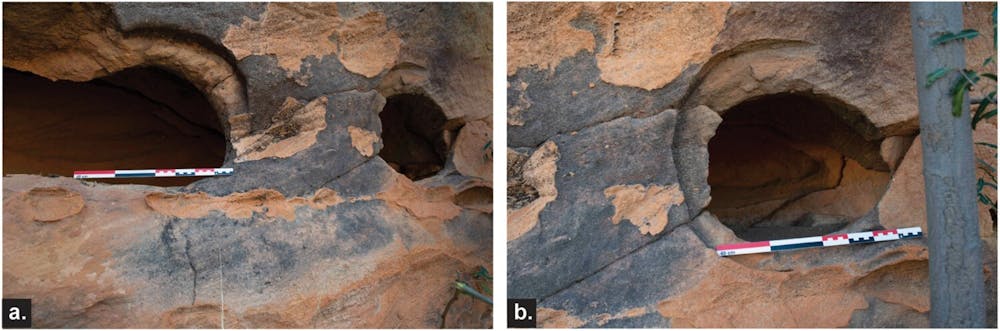
    Part of the Teniky site has been known for well over 100 years, as we know from names and dates scratched on the rocks there. Various visitors in the 1950s and 1960s with an interest in archaeology described an amphitheatre-shaped location with man-made terraces, a rock shelter with neatly constructed sandstone walls, a chamber cut into the rock with pillars and benches, and a large number of niches cut in the steep cliffs. Recesses are still visible around some of the niches, suggesting that they could be closed off by a wooden or stone slab.

    Among the suggested interpretations were that these structures had been made by shipwrecked Portuguese sailors, or Arabs, or even Phoenicians.

    No similar rock-cut architecture is known anywhere else in Madagascar or on the east African coast, 400km away.

    And until recently, no detailed archaeological studies had ever been carried out at Teniky.

    Madagascar’s past is still the subject of considerable debate. Situated in the south-western Indian Ocean, it is one of the last big islands to have been settled by humans. Genetic studies have identified the people of Madagascar as having come mainly from Africa and from Southeast Asia. Archaeology suggests that the first settlers arrived about 1,500 to 1,000 years ago. The earliest settlements studied have been located along the coast, close to river estuaries.

    Our archaeological study of Teniky, however, points to a new possibility: a former Persian presence in southern Madagascar about 1,000 years ago.

    What we found at Teniky

    Our study of high-resolution satellite images revealed the Teniky site was much larger than previously known. It showed there were more terraces and stone walls on a hill 2km to the west. This led us to take a closer look, hoping to get a better sense of who had lived there and when.

    During field prospecting on this hill we discovered niches, cut in the walls of a rock shelter, that had not been described before.

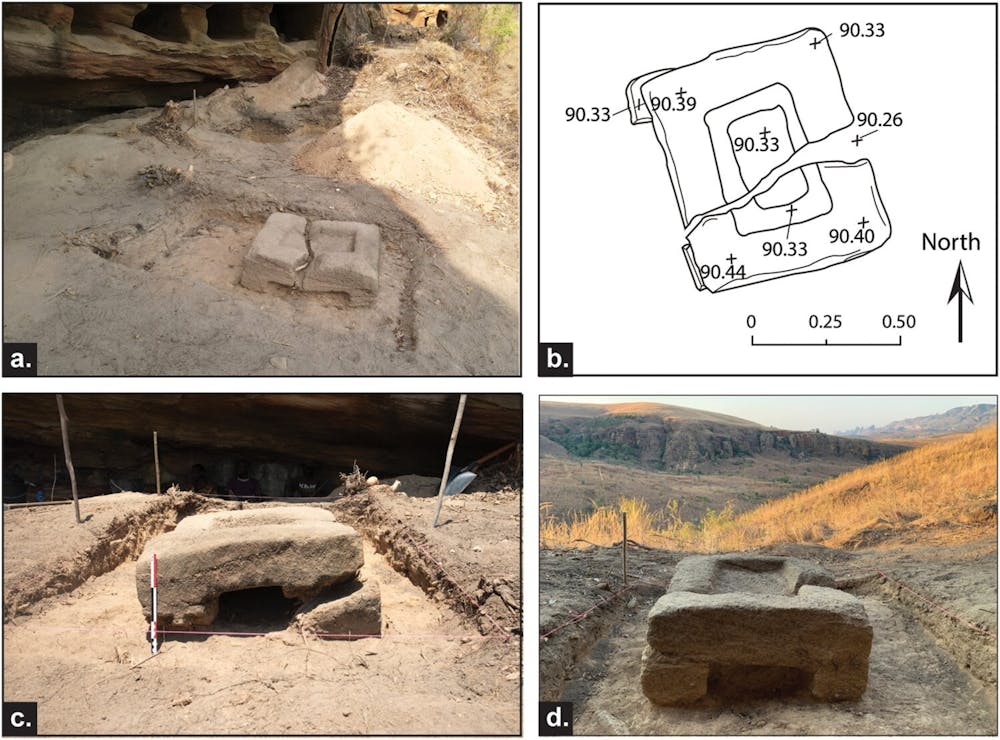
    Excavations at this rock shelter revealed more archaeological structures, including carved sandstone walls and a large stone basin.

    Radiocarbon dating of charcoal samples from the site dated to the late 10th to mid-12th centuries AD. Pieces of ceramic items of southeast Asian and Chinese origin found there have been dated by a specialist to the 11th to 14th centuries AD.

    We also found sandstone quarries from which the stones used to build the walls at the rock shelters were extracted. And we found more stone basins on terraces.

    The terraces cover a total area of about 30 hectares, indicating that Teniky must have been a fair-sized settlement. Water is available all year round in the valley below, where people might have been able to plant crops, fish for eels or even keep cattle.

    Considering the dimensions, location and character of the rock-cut structures at Teniky, we think the niches and chambers served a ritual purpose.

    Who were the people who lived at Teniky?

    There is no other archaeological site like Teniky in Madagascar. So, the question arises as to what group of people settled there, far inland, and carved the niches and chambers in the cliff walls about 1,000 years ago. The presence of imported ceramics indicates that they took part in the Indian Ocean trade networks at the time but doesn’t tell us where they came from.

    We think the answer may lie in the style of the rock-cut niches.

    Rock architecture at Teniky, Madagascar. Courtesy Guido Schreurs.

    They are similar to rock niches of the first millennium or earlier in Iran (formerly Persia). Archaeologists have interpreted those as belonging to Zoroastrian communities, which used them as part of their funeral rites.

    Zoroastrianism was the dominant state religion of the Persian Sasanian Empire (224-656 AD). After the conquest of the Sasanian Empire by the Arabs in the mid-seventh century AD, Islam was imposed.

    Zoroastrian funeral rites do not allow direct burial in the ground, so as not to pollute the earth. Instead, dead bodies are left in places of exposure not touching the ground. Once the flesh has decomposed or been removed by animals, the bone remains are dried and placed in bone receptacles (ossuaries).

    We tentatively interpret the rock-cut architecture at Teniky as having been made by a community with Zoroastrian origins.

    The larger rock-cut niches might have been the places where the bodies of the dead were exposed, and the smaller niches with recesses might have served as ossuaries, closed off by a slab to protect the bones from the rain and thus to prevent them from polluting the earth.

    The stone basins at Teniky show stylistic similarities with those used in Zoroastrian ritual ceremonies to hold water or fire, both agents of ritual purity.

    Zoroastrians abroad

    There are few accounts of Madagascar written at the turn of the first and second millennia AD. Buzurg Ibn Shahriyar, a tenth-century Persian sailor and writer, collected stories from sailors in port towns on the Persian Gulf which suggest that Persian contacts with Madagascar may have existed then. The name Madagascar did not exist at that time but names like “Wak-wak” or “Qumr”/“Komr” may have referred to the island.


    Read more:
    Madagascar cave art hints at ancient connections between Africa and Asia


    Historical documents, archaeological excavations and genetic studies indicate that Zoroastrians left Iran and settled in western India in the late eighth century AD.

    Did they settle on the island of Madagascar too? If the rock-cut architecture and associated stone basins at Teniky are the work of a community with Zoroastrian origins, this would strongly point to a former Persian presence in southern Madagascar about 1,000 years ago.

    Many questions remain. We hope future studies will answer some of them.

    The authors do not work for, consult, own shares in or receive funding from any company or organisation that would benefit from this article, and have disclosed no relevant affiliations beyond their academic appointment.

    ref. Madagascar’s mysterious Teniky rock architecture: study suggests a link to ancient Persia – https://theconversation.com/madagascars-mysterious-teniky-rock-architecture-study-suggests-a-link-to-ancient-persia-240725

    MIL OSI – Global Reports

  • MIL-OSI United Kingdom: Future of Great British Railways

    Source: United Kingdom – Executive Government & Departments 2

    Secretary of State for Transport outlines next steps for rail reform in Britain during the Derby rail skills event.

    Good morning everyone and let me start by thanking Derby City Council for organising this event.

    It’s wonderful to be back in Derby – the future home of Great British Railways (GBR).

    But in many ways, this has always been the industry’s home.

    A city of train building – 180 years and counting – from the Derby Works to Alstom today.

    A city of innovation – from the first steel rails to the iconic railway roundhouse.

    And a city of heritage – from railway cottages to the Brunswick Inn pub, which I’m glad to see is still going strong.

    But Derby has never rested on historic laurels.

    Instead, it has renewed and reformed. 

    That roundhouse is now Derby College, producing the engineers of tomorrow.

    The once rail technical centre is now part of Europe’s biggest rail cluster, with 11,000 jobs.

    And the works at Litchurch Lane, that once produced Victorian train carriages, now making trains for London’s Elizabeth Line.

    That’s why this event matters.

    Because today isn’t just about this city’s proud rail history, but about reinforcing Derby’s central role in shaping rail’s future.

    And about celebrating the brilliant businesses of all shapes and sizes that make up the rail industry.

    State of rail

    Derby’s zeal for renewal and reform is shared by this government.

    Because after years of dysfunction and decline – how our economy is managed, how public services are run, how government works, all must return to the service of working people, wherever they live.

    That is the work of national renewal the Prime Minister has promised.

    And it starts with our railways.

    On entering office, we were under no illusions as to the scale of the challenge.

    A railway mired in industrial action – costing the economy the equivalent of nearly £3 million pounds a day.

    And performance levels that were simply not good enough, with cancellations at a 10-year high.

    All visible problems, but with deep roots.

    Fragmentation, lack of accountability and conflicting interests.

    The very industry weaknesses Keith Williams identified years ago, still remain.

    The lack of political leadership on rail has left an industry more comfortable looking inwards, that fails to pull together when things go wrong, that has lost focus on improving each part of people’s experience with the railways – so passengers don’t get the journeys they deserve.

    We’ve seen this with delays to long promised upgrades to the East Coast Mainline, or the confusing array of fares and tickets passengers have to navigate. 

    And the great irony of privatisation is that the part of the industry that works best, that innovates and pushes boundaries – the dynamic supply chain – has been stifled. But these issues are systemic – not individual.

    Because when I speak to the supply chain and station staff, to engineers and signalers, they all want what’s best for the passenger.

    All are committed, enthusiastic and ready to work across organisational boundaries to deliver a better railway.

    But currently, they have neither the tools, incentives nor backing to do so.

    It’s why, as Passenger in Chief, when I said I would oversee the biggest overhaul of our railways in a generation, a big part of that will be a cultural reset.

    Where every part of the workforce feels empowered to challenge the orthodoxy of years past, supported by an entirely new and reformed organisation – Great British Railways.

    Where we value diverse skills, build new capabilities and forge high-quality careers that attract the next generation.

    And where everyone understands how they contribute to a railway unashamedly focused on delivering for passengers and taxpayers.

    It will not be British Rail Rebooted or Network Rail 2.0 – but we’ll usher in a new era for the railways where every part of the industry is motivated and incentivised to deliver for the passenger.

    That’s my personal mission.

    To join you in a determined effort to get our railways working again – for passengers, for its workforce and for communities across Britain.

    Because our railways are essential to getting Britain growing and moving again.

    Industrial action

    Within months, we’ve begun the essential work of change.

    We’ve ended the longest ever national strike on our railways.

    Gone are the political gimmicks of years past, which not only prolonged industrial action but caused misery for passengers and cost the railways £850 million pounds.

    Within days of taking office, I spoke to all rail unions and hit reset.

    I was clear that if talks were needed, we would sit round in good faith.

    If compromises could be made, we would all make them.

    And if a deal could be struck, we would fight for a fair agreement for workers, passengers and taxpayers.

    A new, grown-up, approach – which put passengers first and politics second. And clears the way for vital workforce reform, to modernise our railways and do away with outdated working practices.

    Public Ownership Bill

    I’ve also fired the starting gun on rail reform.

    The Public Ownership Bill has passed the Commons and now awaits committee stage scrutiny in the Lords.

    It calls time on a broken model, one that repeatedly failed passengers and one that cost tens of millions of pounds in fees each year.

    It allows us to bring passenger services into public hands as contracts expire over the next 3 years.

    But I know passengers won’t wait that long for things to improve.

    They rightly deserve better than the status quo.

    So we will continue building capacity and expertise in the public sector, as it takes on additional services.

    And in the meantime, I won’t hesitate to take decisive action if operators don’t meet their obligations.

    It’s a message I’ve already delivered loud and clear to the Managing Directors of Avanti West Coast and Cross Country. And indeed, we have set new and clear expectations to those train operating companies already in public ownership.

    Reform

    Now, public ownership and resolving national strikes are just stops on the journey to reform, not the terminus.

    The Railways Bill, which we will introduce later this parliamentary session, will get the industry back on track.

    We’ll establish Great British Railways – a directing mind running the railways as one system, with a relentless focus on passengers.

    We’ll stop the blame game, by unifying track and train.

    We’ll grip the finances, led by passenger need and taxpayer value.

    And we’ll grow freight, unlocking new green growth.

    Delivering GBR in full will be the work of years, not months. It is the biggest reform agenda of this government.

    But again, we cannot afford to wait.

    Shadow GBR

    So I’ve taken decisive action to bring the industry together under Shadow Great British Railways and its new Chair Laura Shoaf.

    Laura brings a wealth of experience.

    And I’ve asked her specifically to lay the foundations of culture change the industry needs.

    That, of course, means getting the basics right with performance, but it also means encouraging innovation at every opportunity.

    So, under her leadership, the heads of Network Rail, DOHL, and DfT’s rail services group – the people in charge of track and train – will work closer than ever before to set the tone of reform and deliver immediate improvements. 

    On performance: nowhere near good enough across the board, but not helped by the labyrinth of different contracts, measures and incentives at play.

    Different targets lead to competing priorities.

    And operational decisions that make sense in one part of the industry, can lead to worse outcomes overall – with passengers inevitably bearing the brunt.

    So, I will soon set out new performance measures, ensuring a more consistent and transparent approach.

    We’ll end the boom-and-bust approach to investment projects.

    Replacing it with a long term strategy for rolling stock – essential for the industry here in Derby.

    After years of government uncertainty and mixed messages, this will give the supply chain the certainty it needs to plan and invest.

    And finally, we’re reviewing fares and ticketing. Not just to unblock barriers to reform, but to urgently get passengers back on board with new exciting campaigns.

    That starts early next year, with a new ‘rail sale’ to coincide with the 200-year anniversary of the first passenger service.

    It will offer up to half price Advance and Off-peak fares – to get Britain moving, to connect our communities and to give back to passengers, who for too long have paid more and more for less and less.

    These first steps are important, as we start restoring some national pride to this industry and building the railway of tomorrow.

    Conclusion

    I began by talking about Derby, and it’s also a good place to end.

    We are standing in the biggest concentration of rail innovation and expertise in Europe.

    Around 600 rail companies, employing 45,000 people, have chosen to co-locate in the East Midlands.

    And it’s easy to see why.

    We have Derby University’s Rail Research Innovation Centre, Network Rail’s testing facility at Tuxford, Alstom’s world leading manufacturing facility and maintenance hubs for Sperry Rail and Railcare.

    All will soon be joined by GBR, providing the leadership this industry has sorely needed.

    Working in partnership – government and industry – to build a renewed and reformed railway, fit for the future, fit for Britain.

    A new era for our railways and a new era for Derby.

    Updates to this page

    Published 17 October 2024

    MIL OSI United Kingdom

  • MIL-OSI United Kingdom: Help the Big Guitar-in to hit the high notes

    Source: City of Liverpool

    Calling Liverpool’s guitarists! Can you help set a record at St George’s Hall in December?

    The Big Guitar-In is ready to strike a chord for the third consecutive year and organisers hope they can tempt more than 600 musicians into the Great Hall on 3 December for an extraordinary evening of music, community spirit, and a hopefully record-setting performance.

    Organisers The Florrie are looking for at least 601 musicians to join them in December to break last year’s record of 600 performers and everyone is invited – from beginners to seasoned professionals – to join in the collective performance.

    Last year, guitarists played alongside special guests such as The Bluebells and Brain Nash and this year’s event is shaping up to be bigger and better than ever, with a new lineup to be announced soon. The Big Guitar-In 2024 promises to be a once-in-a-lifetime experience.

    Proceeds from the event will support The Florrie’s continuing mission to preserve its historic Grade II-listed building, allowing them to continue serving the Liverpool L8 community as a vital social, cultural, and charitable hub.

    Tickets for both performers and spectators are available online

    Doors are open at 5pm and the performance starts at 6pm.

    Harry Doyle, Liverpool City Council’s Cabinet Member for Health, Wellbeing, and Culture, said: “The Big Guitar-In is a fantastic way to bring the community together through music. Events like this not only showcase Liverpool’s rich cultural scene but also promote wellbeing, as music has a unique way of lifting spirits and connecting people. I’m thrilled to see it return to St George’s Hall and look forward to seeing even more people pick up a guitar and join in.”

    Timothy Tierney, community coordinator at The Florrie, said: “If you’ve come along to any of The Florrie’s past Big Guitar events you will know how good they make you feel!

    “Singing and playing music together is wonderful and to do it in one of Liverpool most prestigious buildings is something that most people don’t get to experience. The Florrie Guitar Group supports people of all ages from eight to 89 all year round, building friendships, boosting mental health and confidence. It’s great to be heading back to St George’s Hall to share the group with people from across the city and further afield.”

    MIL OSI United Kingdom

  • MIL-OSI United Kingdom: AI model that checks for skin cancer shows promise

    Source: Anglia Ruskin University

    Published: 17 October 2024 at 14:45

    Research found model outperformed existing methods of finding suspicious lesions

    Scientists in the East of England have developed a way of using artificial intelligence to check for skin cancer, with the AI tool outperforming existing methods in a new study.

    Researchers from Anglia Ruskin University, Check4Cancer, University of Essex and Addenbrooke’s Hospital worked on the AI model which was trained on data from 53,601 skin lesions from 25,105 patients.

    In this study, researchers used machine learning and combination theory to distil 22 clinical features down to the seven most important that predict if a skin lesion might be suspicious or not. These features include: whether the lesion has recently changed size, colour or shape; whether the lesion was pink or inflamed; and hair colour at age 15.

    Researchers applied proportional weighting to these seven features to create the new C4C Risk Score which has an accuracy of 69%. In the study it significantly outperformed existing methods such as 7PCL (62%) and Williams score (60%).

    Some of the new risk factors they discovered, such as lesion age, pinkness, and hair colour, were important for all types of skin cancer but were not included in the older methods, which only focused on melanoma, a specific type of skin cancer.

    Professor Gordon Wishart, Visiting Professor of Cancer Surgery at Anglia Ruskin University and Chief Medical Officer at Check4Cancer, said:

    “This study shows the importance of using clinical data in skin lesion classification, which should help to improve the detection of skin cancer.

    “Our new AI model, which combines the C4C risk score together with skin lesion images, could lead to a reduction in the need for patient referrals for biopsies, shorter waiting times for skin cancer diagnosis and treatment, and improved outcomes for patients.”

    Consultant Plastic Surgeon Per Hall, who recently retired from Addenbrooke’s, said:

    “The added value that this paper brings is the ability to help identify patients whose skin lesions are suspicious enough to justify onward referral for face-to-face analysis.  

    “Emphasis in the past has been on pigmented lesions and melanoma but other things grow on the skin that need sorting out such as basal cell carcinomas and squamous cell carcinomas.  

    “The NHS is deluged with referrals for skin lesion analysis – the vast majority are in fact innocent.  This work is geared towards sifting out lesions that are potentially serious and identifying those patients whose skin is more prone to developing cancers so they can be seen quickly.”

    The study, which was part-funded by a Knowledge Transfer Partnership (KTP) Grant from Innovate UK, was published in the Nature journal Scientific Reports.

    It is hoped that regulatory approval for the AI model can be given in 2025.

    MIL OSI United Kingdom

  • MIL-OSI United Kingdom: ARU students make final of national AT Awards

    Source: Anglia Ruskin University

    Published: 17 October 2024 at 14:32

    Harriet and Rebecca shortlisted for their architectural technology projects

    Two Anglia Ruskin University (ARU) students have made the six-person shortlist for best project at the AT Awards, which recognise excellence in architectural technology.

    Harriet Key and Rebecca Wakely have both been named finalists for the Student Award for Excellence in Architectural Technology at the annual awards, which are organised by the Chartered Institute of Architectural Technologists (CIAT).

    Harriet and Rebecca study at ARU’s School of Architecture and Planning in Chelmsford, and have been shortlisted for projects they have completed as part of their ARU courses. 

    Rebecca, who lives in Godmanchester, designed The Octagon, a proposal for a sustainable community arts and cultural hub in the centre of Ely, while Harriet, who lives in Attleborough, has been shortlisted for Cranwood Residence, a design for a zero carbon, multi-generational housing development in Haringey, London.

    Mark Tree, Interim Head of Engineering and the Built Environment at ARU, said:

    “Congratulations to both Rebecca and Harriet for making the shortlist of the prestigious AT Awards this year – we’re extremely proud of their achievements. 

    “We were all incredibly impressed by the design projects they submitted, so it is pleasing that these also caught the eye of the awards judges. We are delighted with their deserved recognition.”

    For more information about the courses offered by ARU’s School of Architecture and Planning, visit https://www.aru.ac.uk/science-and-engineering/engineering-and-the-built-environment/school-of-architecture-and-planning 

    MIL OSI United Kingdom

  • MIL-OSI USA: Director of School of Public Policy Angela Eikenberry Named COPRA Chair

    Source: US State of Connecticut

    Angela Eikenberry, professor and director of the School of Public Policy, was appointed as the Chair of the Commission on Peer Review and Accreditation (COPRA) for the Network of Schools of Public Policy, Affairs, and Administration for the 2024-2025 term.  

    Eikenberry has been a member of the Commission since 2021 and brings expertise and experience in advancing public service programs. 

    COPRA is a Council for Higher Education Accreditation (CHEA)-recognized accreditation body for master’s degree programs in public and nonprofit policy, affairs, and administration globally. 

    MIL OSI USA News

  • MIL-OSI USA: Hartford Healthcare Partners Visit the School of Nursing

    Source: US State of Connecticut

    First-year students in Dr. Marianne (Mimi) Snyder’s class were visited on Thursday, Oct. 10 by UConn’s partners at Hartford Healthcare (HHC) to explore and discuss potential employment and career opportunities. 

    Over 100 first-year and a few undergraduate students participated in two career exploration sessions spearheaded by the Hartford Healthcare Nursing Professional Development (NPD) Leadership Team.

    Norma, Meaghan, Roxanne, and Clara from Hartford Healthcare posing in Widmer Wing Lobby

    Roxanne, Clara, and Meaghan showcased the HHC Center for Nursing Excellence, highlighting their areas of focus and transition to practice, including pathways for professional development. Thereafter, Norma covered benefits, the RN student debt assistance program, and how to sign up for roles such as patient care assistant, student nurse technician, and health science roles. Getting into these careers can really set students up for success in the health care field. 

    The NPDs gave students a preview of their own personal work experience while they, themselves, were attending school full-time. According to the team, “The faculty and students were particularly interested in hearing about our entry-level careers as patient care technician/patient care assistant, student nurse technician, and a variety of health science roles from phlebotomy/laboratory assistant to rehab aid.” 

    They go on to say, “Students were amazing – attentive, engaged, and eager to learn while posing questions. We appreciate Dr. Snyder’s commitment to student professional career development and can’t thank her enough for hosting these sessions with HHC!” 

    UConn Nursing is committed to fostering partnerships with local institutions like Hartford Healthcare who share the same core values and offer educational and work opportunities to nursing students throughout their time at UConn and beyond. 

    “It was a pleasure having the Nursing Professional Development (NPD) Leadership Team from Hartford Healthcare meet with our first-year nursing students and share with them the many clinical opportunities available at Hartford Healthcare while they are still in school and after they graduate,” says Dr. Snyder. 

    MIL OSI USA News

  • MIL-OSI USA: Media Advisory: media invited to view aircraft, equipment slated to map Iowa, Illinois and Wisconsin critical mineral potential during low-level flights

    Source: US Geological Survey

    Members of the news media are invited to attend a media day at the Dubuque Regional Airport to see firsthand the aircraft and equipment that will be used to image geology during a U.S. Geological Survey Earth Mapping Resources Initiative (Earth MRI) low-level airborne survey of the tristate region later this month. The aircraft will fly about 100 to 200 feet above the land surface. 

    MIL OSI USA News

  • MIL-OSI USA: NASA’s SpaceX 31st Resupply Mission to Launch Experiments to Station

    Source: NASA

    [embedded content]

    NASA and its international partners are launching scientific investigations on SpaceX’s 31st commercial resupply services mission to the International Space Station including studies of solar wind, a radiation-tolerant moss, spacecraft materials, and cold welding in space. The company’s Dragon cargo spacecraft is scheduled to launch from NASA’s Kennedy Space Center in Florida.
    Read more about some of the research making the journey to the orbiting laboratory:

    The CODEX (COronal Diagnostic EXperiment) examines the solar wind, creating a globally comprehensive data set to help scientists validate theories for what heats the solar wind – which is a million degrees hotter than the Sun’s surface – and sends it streaming out at almost a million miles per hour.
    The investigation uses a coronagraph, an instrument that blocks out direct sunlight to reveal details in the outer atmosphere or corona. The instrument takes multiple daily measurements that determine the temperature and speed of electrons in the solar wind, along with the density information gathered by traditional coronagraphs. A diverse international team has been designing, building, and testing the instrument since 2019 at NASA’s Goddard Space Flight Center in Greenbelt, Maryland.
    Multiple missions have studied the solar wind, and CODEX could add important pieces to this complex puzzle. When the solar wind reaches Earth, it triggers auroras at the poles and can generate space weather storms that sometimes disrupt satellite and land-based communications and power grids on the ground. Understanding the source of the solar wind could help improve space-weather forecasts and response.

    A radiation tolerance experiment, ARTEMOSS, uses a live Antarctic moss, Ceratodon purpureus, to study how some plants better tolerate exposure to radiation and to examine the physical and genetic response of biological systems to the combination of cosmic radiation and microgravity. Little research has been done on how these two factors together affect plant physiology and performance, and results could help identify biological systems suitable for use in bioregenerative life support systems on future missions.
    Mosses grow on every continent on Earth and have the highest radiation tolerance of any plant. Their small size, low maintenance, ability to absorb water from the air, and tolerance of harsh conditions make them suitable for spaceflight. NASA chose the Antarctic moss because that continent receives high levels of radiation from the Sun.
    The investigation also could identify genes involved in plant adaptation to spaceflight, which might be engineered to create strains tolerant of deep-space conditions. Plants and other biological systems able to withstand the extreme conditions of space also could provide food and other necessities in harsh environments on Earth.

    The Euro Material Ageing investigation from ESA (European Space Agency) includes two experiments studying how certain materials age while exposed to space. The first experiment, developed by CNES (Centre National d’Etudes Spatiales), includes materials selected from 15 European entities through a competitive evaluation process that considered novelty, scientific merit, and value for the material science and technology communities. The second experiment looks at organic samples and their stability or degradation when exposed to ultraviolet radiation not filtered by Earth’s atmosphere. The exposed samples are recovered and returned to Earth.
    Predicting the behavior and lifespan of materials used in space can be difficult because facilities on the ground cannot simultaneously test for all aspects of the space environment. These limitations also apply to testing organic compounds and minerals that are relevant for studying comets, asteroids, the surface of Mars, and the atmospheres of planets and moons. Results could support better design for spacecraft and satellites, including improved thermal control, and the development of sensors for research and industrial applications.

    Nanolab Astrobeat investigates using cold welding to repair perforations in the outer shell or hull of a spacecraft from the inside. Less force is needed to fuse metallic materials in space than on Earth, and cold welding could be an effective way to repair spacecraft.
    Some micrometeoroids and space debris traveling at high velocities could perforate the outer surfaces of spacecraft, possibly jeopardizing mission success or crew safety. The ability to repair impact damage from inside a spacecraft may be more efficient and safer for crew members. Results also could improve applications of cold welding on Earth as well.
    The investigation also involves a collaboration with cellist Tina Guo with support from New York University Abu Dhabi to store musical compositions on the Astrobeat computer. Investigators planned to stream this “Music from Space” from the space station to the International Astronautical Congress in Milan and to Abu Dhabi after the launch.

    Download high-resolution photos and videos of the research mentioned in this article. 
    Melissa GaskillInternational Space Station Research Communications TeamJohnson Space Center

    MIL OSI USA News

  • MIL-OSI: National Fuel Schedules Fourth Quarter Fiscal 2024 Earnings Conference Call

    Source: GlobeNewswire (MIL-OSI)

    WILLIAMSVILLE, N.Y. , Oct. 17, 2024 (GLOBE NEWSWIRE) — National Fuel Gas Company (NYSE: NFG) today announced it will release its fourth quarter fiscal 2024 earnings results on Wednesday, November 6, 2024 after market close.

    A conference call to discuss the results will be held on Thursday, November 7, 2024 beginning at 10:00 a.m. ET. Prepared remarks from the executive team are planned for approximately 20 minutes followed by a question and answer session.

    All participants must pre-register to join this conference using the Participant Registration link.

    A webcast link to the conference call will be provided under the Events Calendar on the NFG Investor Relations website at investor.nationalfuelgas.com.

    A replay will be available following the call through the end of the day, Thursday, November 14, 2024. To access the replay, dial 1-866-813-9403 and provide Access Code 646147.

    For additional information, contact:

    Natalie Fischer, Director of Investor Relations (716) 857-7315
    Kathryn Nikisch-Hoffman, Equity Plan Administrator (716) 857-7340
    Karen Merkel, Media Contact (716) 857-7654

    Email: nfg_investor_relations@natfuel.com

    National Fuel is a diversified energy company headquartered in Western New York that operates an integrated collection of natural gas assets across four business segments: Exploration & Production, Pipeline & Storage, Gathering, and Utility. Additional information about National Fuel is available at http://www.nationalfuel.com.

    The MIL Network

  • MIL-OSI: Newest Micetro release unifies network infrastructure management with support for Cisco Meraki

    Source: GlobeNewswire (MIL-OSI)

    TORONTO, Oct. 17, 2024 (GLOBE NEWSWIRE) — BlueCat Networks, a leading provider of core services for network infrastructure management, automation, and security, announced the latest release of Micetro, its industry-recognized DNS, DHCP, and IP address management orchestration solution. This release offers organizations with Cisco Meraki deployments a powerful new way to manage and monitor DHCP within their SD-WAN environments.

    DNS, DHCP, and IP address management (collectively known as DDI) are the cornerstones of network modernization. Together, they ensure that users can access network resources and applications from anywhere and on any device–whether on premises or from any cloud.

    This release extends Micetro’s capabilities by seamlessly consuming and managing DHCP configurations from Meraki devices. This integration provides agnostic and centralized DHCP orchestration and visibility across the cloud, corporate networks, and remote offices enabled by SD-WAN. By orchestrating DHCP configurations from Meraki, organizations get improved visibility into their IP space. It also provides network teams with even more granular role-based access controls. This helps network teams deliver and scale Meraki DHCP across branch locations.

    “Micetro helps organizations improve transparency with a single source of truth, enhances security, and automates core network services, reducing network conflicts and outages,” said Scott Fulton, Chief Product and Technology Officer at BlueCat. “We’re seeking to expand our cloud-connected networking support across additional platforms and to support enterprises looking to reap the benefits of network modernization.”

    Micetro is available for deployment in any on premises, hybrid, or multicloud network environment. Its intuitive user interface and API make it easy for IT teams to manage and automate their network infrastructure operations. This release also features extended language support, a crucial function for global organizations with diverse linguistic needs.

    Visit our website to learn more about Micetro’s unified DDI orchestration.

    About BlueCat 

    BlueCat provides core services and solutions that help our customers, and their teams, deliver change-ready networks. With BlueCat, organizations can build reliable, secure, and agile mission-critical networks that can support network modernization initiatives such as cloud adoption, SD-WAN, SASE and automation of key network provisioning and administration tasks. BlueCat’s growing portfolio includes services and solutions for automated and unified DDI management, network security, multi-cloud management, network observability, performance management and health. BlueCat’s DDI management platform was recognized as a market leader and outperformer in GigaOm’s 2024 Radar reports. The company is headquartered in Toronto and New York and has additional offices in Germany, Iceland, Japan, Singapore, Serbia, and the United Kingdom. Learn more at bluecat.com. 

    The MIL Network

  • MIL-OSI Canada: Federal government supports Francophone community in Val Therese

    Source: Government of Canada News

    Government of Canada is committed to protecting and promoting our two official languages.

    VAL THERESE, Ontario – Marc G. Serré, Parliamentary Secretary to the Minister of Energy and Natural Resources and to the Minister of Official Languages, and Member of Parliament (Nickel Belt), will be in Val Therese on Friday to announce an important investment in community infrastructure in Ontario. He will make the announcement on behalf of the Honourable Randy Boissonnault, Minister of Employment, Labour Development and Official Languages.

    Please note that all details are subject to change. All times are local.

    Journalists wishing to attend the press conference must confirm their attendance by sending their full name and the name of the media outlet they represent to media@pch.gc.ca by 4 p.m. on Thursday, October 17.

    The details are as follows:

    DATE:
    Friday, October 18, 2024

    TIME:
    10 a.m.

    PLACE:
    Library

    Ste-Thérèse Elementary School
    4617 St-Thérèse Street
    Val Therese, Ontario

    John Fragos
    Communications Advisor
    Office of the Minister of Employment, Workforce Development and Official Languages
    john.fragos@hrsdc-rhdcc.gc.ca

    MIL OSI Canada News

  • MIL-OSI Africa: Madagascar’s mysterious Teniky rock architecture: study suggests a link to ancient Persia

    Source: The Conversation – Africa – By Guido Schreurs, Professor in Geology, University of Bern

    In the heart of Isalo National Park in central-southern Madagascar, at least 200km from the sea in any direction, is a remote valley with a mysterious past. This place, Teniky, can only be reached on foot, by hiking through a mountainous region dissected by steep canyons.

    Isalo area. Guido Schreurs, Author provided (no reuse)

    Part of the Teniky site has been known for well over 100 years, as we know from names and dates scratched on the rocks there. Various visitors in the 1950s and 1960s with an interest in archaeology described an amphitheatre-shaped location with man-made terraces, a rock shelter with neatly constructed sandstone walls, a chamber cut into the rock with pillars and benches, and a large number of niches cut in the steep cliffs. Recesses are still visible around some of the niches, suggesting that they could be closed off by a wooden or stone slab.

    Among the suggested interpretations were that these structures had been made by shipwrecked Portuguese sailors, or Arabs, or even Phoenicians.

    Teniky. Guido Schreurs, Author provided (no reuse)

    No similar rock-cut architecture is known anywhere else in Madagascar or on the east African coast, 400km away.

    And until recently, no detailed archaeological studies had ever been carried out at Teniky.

    Madagascar’s past is still the subject of considerable debate. Situated in the south-western Indian Ocean, it is one of the last big islands to have been settled by humans. Genetic studies have identified the people of Madagascar as having come mainly from Africa and from Southeast Asia. Archaeology suggests that the first settlers arrived about 1,500 to 1,000 years ago. The earliest settlements studied have been located along the coast, close to river estuaries.

    Our archaeological study of Teniky, however, points to a new possibility: a former Persian presence in southern Madagascar about 1,000 years ago.

    What we found at Teniky

    Our study of high-resolution satellite images revealed the Teniky site was much larger than previously known. It showed there were more terraces and stone walls on a hill 2km to the west. This led us to take a closer look, hoping to get a better sense of who had lived there and when.

    During field prospecting on this hill we discovered niches, cut in the walls of a rock shelter, that had not been described before.

    Excavations at this rock shelter revealed more archaeological structures, including carved sandstone walls and a large stone basin.

    Radiocarbon dating of charcoal samples from the site dated to the late 10th to mid-12th centuries AD. Pieces of ceramic items of southeast Asian and Chinese origin found there have been dated by a specialist to the 11th to 14th centuries AD.

    We also found sandstone quarries from which the stones used to build the walls at the rock shelters were extracted. And we found more stone basins on terraces.

    The terraces cover a total area of about 30 hectares, indicating that Teniky must have been a fair-sized settlement. Water is available all year round in the valley below, where people might have been able to plant crops, fish for eels or even keep cattle.

    Considering the dimensions, location and character of the rock-cut structures at Teniky, we think the niches and chambers served a ritual purpose.

    Teniky. Raphael Kunz, Author provided (no reuse)

    Who were the people who lived at Teniky?

    There is no other archaeological site like Teniky in Madagascar. So, the question arises as to what group of people settled there, far inland, and carved the niches and chambers in the cliff walls about 1,000 years ago. The presence of imported ceramics indicates that they took part in the Indian Ocean trade networks at the time but doesn’t tell us where they came from.

    We think the answer may lie in the style of the rock-cut niches.

    Rock architecture at Teniky, Madagascar. Courtesy Guido Schreurs.

    They are similar to rock niches of the first millennium or earlier in Iran (formerly Persia). Archaeologists have interpreted those as belonging to Zoroastrian communities, which used them as part of their funeral rites.

    Zoroastrianism was the dominant state religion of the Persian Sasanian Empire (224-656 AD). After the conquest of the Sasanian Empire by the Arabs in the mid-seventh century AD, Islam was imposed.

    Zoroastrian funeral rites do not allow direct burial in the ground, so as not to pollute the earth. Instead, dead bodies are left in places of exposure not touching the ground. Once the flesh has decomposed or been removed by animals, the bone remains are dried and placed in bone receptacles (ossuaries).

    We tentatively interpret the rock-cut architecture at Teniky as having been made by a community with Zoroastrian origins.

    Circular niches with a recess around the opening. Guido Schreurs, Author provided (no reuse)

    The larger rock-cut niches might have been the places where the bodies of the dead were exposed, and the smaller niches with recesses might have served as ossuaries, closed off by a slab to protect the bones from the rain and thus to prevent them from polluting the earth.

    Basin in front of niches. Guido Schreurs, Author provided (no reuse)

    The stone basins at Teniky show stylistic similarities with those used in Zoroastrian ritual ceremonies to hold water or fire, both agents of ritual purity.

    Zoroastrians abroad

    There are few accounts of Madagascar written at the turn of the first and second millennia AD. Buzurg Ibn Shahriyar, a tenth-century Persian sailor and writer, collected stories from sailors in port towns on the Persian Gulf which suggest that Persian contacts with Madagascar may have existed then. The name Madagascar did not exist at that time but names like “Wak-wak” or “Qumr”/“Komr” may have referred to the island.


    Read more: Madagascar cave art hints at ancient connections between Africa and Asia


    Historical documents, archaeological excavations and genetic studies indicate that Zoroastrians left Iran and settled in western India in the late eighth century AD.

    Did they settle on the island of Madagascar too? If the rock-cut architecture and associated stone basins at Teniky are the work of a community with Zoroastrian origins, this would strongly point to a former Persian presence in southern Madagascar about 1,000 years ago.

    Many questions remain. We hope future studies will answer some of them.

    – Madagascar’s mysterious Teniky rock architecture: study suggests a link to ancient Persia
    https://theconversation.com/madagascars-mysterious-teniky-rock-architecture-study-suggests-a-link-to-ancient-persia-240725

    MIL OSI Africa

  • MIL-OSI: Emerging Markets in Africa and Asia Downloaded Bitget Wallet More Than Major Centralized Exchanges

    Source: GlobeNewswire (MIL-OSI)

    VICTORIA, Seychelles, Oct. 17, 2024 (GLOBE NEWSWIRE) — Bitget Wallet, the leading Web3 non-custodial wallet, has surpassed 40 million users, doubling its user base in just six months. The wallet also climbed to the second spot in global crypto app downloads for September, with nearly 6 million downloads in that month alone, closing in on Binance. This explosive growth is largely contributed by emerging markets, where Bitget Wallet’s user base has skyrocketed. Notably, Bitget Wallet’s user growth rate in Africa reached 413% and South Asia saw a 126% increase. These regions are turning to decentralized wallets as vital tools for financial independence and easy access to crypto services, often filling gaps left by centralized financial systems.

    In countries like Nigeria, where Bitget Wallet’s user growth rate hit 468% in Q3 2024, rising inflation and weakening currencies have led to increased adoption of decentralized wallets as secure, reliable financial tools. According to Bloomberg, the local naira currency has lost about 70% of its value since May 2023. As a result, people are seeking alternatives to preserve their wealth and participate in stable financial systems. Bitget Wallet serves this need, offering easy access to crypto assets and rewards with all-rounded trading and earning features, making it No. 1 on the App Store in Nigeria in June 2024.

    In Southeast Asia, Play-to-Earn (P2E) games once dominated the blockchain gaming landscape, attracting a young, tech-savvy audience. However, the trend has evolved towards Tap-to-Earn (T2E) games within Telegram ecosystem. T2E games are more accessible, requiring no separate app downloads or upfront NFT investments. Their simplicity, combined with Telegram’s referral system, has facilitated easy onboarding of new users, making Telegram a fertile ground for blockchain gaming.

    In Q3 2024, Bitget Wallet experienced a surge in user growth, particularly in the Philippines and Vietnam, with growth rates of 102% and 73%, respectively. This spike is attributed to the T2E trend, where users earn money by engaging with Telegram mini-games. The shift from P2E to T2E highlights a broader trend towards more integrated blockchain ecosystems, showcasing how gaming apps and social interactions are driving cryptocurrency adoption among younger generations.

    With its remarkable growth, Bitget Wallet aims to be the ultimate gateway for the next billion users to Web3, bringing together the best and latest opportunities in one seamless app. “We believe Web3 offers unprecedented potential for financial freedom, security through self-custody, and a more equitable future. Our mission is to make Web3 easy and accessible for everyone. We’re committed to bringing financial inclusion to regions where centralized financial systems fall short and giving people seamless tools to participate in a global decentralized economy,” said Alvin Kan, COO at Bitget Wallet.

    India’s crypto users are increasingly seeking decentralized financial tools amidst ongoing security concerns and regulatory uncertainty around centralized exchanges. Bitget Wallet has capitalized on this trend, recording 191% user growth in India during Q3 2024. The rise is attributed to its ability to cater to these needs by offering enhanced security features such as keyless MPC wallet, which removes the need for private keys and provides a more user-friendly experience. Additionally, Bitget Wallet’s integration with Telegram Tap-to-Earn mini-games, has made it easier for Indian users to engage with Web3.

    For similar reasons, European users are increasingly opting for decentralized wallets as alternatives to centralized exchanges. Countries like France, Germany, and the UK, where Bitget Wallet saw 286%, 115% and 94% user growth in Q3 respectively, are leading this trend. Users in these regions are drawn to Bitget Wallet’s all-in-one platform, which allows them to manage, trade, and explore decentralized apps extensively and securely. As wallets continue to evolve, they are emerging as essential entry points to Web3 for users across Europe.

    To get started with Bitget Wallet, please visit here.

    About Bitget Wallet

    Bitget Wallet stands as one of the world’s leading non-custodial Web3 wallets and decentralized ecosystem platform. With the Bitget Onchain Layer, the wallet is well-poised to develop a burgeoning DeFi ecosystem through co-creation and strategic incubation. Aside from a powerful Swap function, Bitget Wallet also offers multi-chain asset management, smart money insights, a native Launchpad, Inscriptions Center, and an Earning Center. Supporting over 100 major blockchains, 500,000+ tokens, and a wide array of DApps, Bitget Wallet is your top wallet for asset discovery and Web3 exploration.

    For more information, visit: Website | Twitter | Telegram | Discord

    A photo accompanying this announcement is available at https://www.globenewswire.com/NewsRoom/AttachmentNg/5b2fe99a-7041-4e45-9de8-d37cb4be97c4

    The MIL Network

  • MIL-OSI: CME Outfitters Collaborates with National Partners to Drive Diversity in Clinical Trials and Enhance Cultural Competency in Health Care

    Source: GlobeNewswire (MIL-OSI)

    RADNOR, Pa., Oct. 17, 2024 (GLOBE NEWSWIRE) — CME Outfitters (CMEO), a leading provider of accredited continuing medical education, is excited to announce a groundbreaking partnership with the American Clinical Health Disparities Commission (ACHDC), alongside its longstanding collaboration with the National Black Church Initiative (NBCI), to combat health disparities. ACHDC, a coalition of African American clinicians and church leaders, is dedicated to eliminating the adverse effects of social drivers of health and improving health outcomes for African Americans through greater participation in clinical trials. This powerful alliance underscores CMEO’s unwavering commitment to transforming health care education, advancing equity in health care access, and driving change in clinical research.

    Participation in Strategic Meetings with FDA and NIH
    With a strong commitment to advancing health care equity, CMEO and NBCI were honored to meet with both the Food and Drug Administration (FDA) and the National Institutes of Health (NIH). These pivotal collaborations aim to drive key health care initiatives focused on enhancing health equity, increasing diversity in clinical trials, and fostering cultural competency and humility among health care providers. Together, these efforts represent a unified step toward creating a more inclusive and effective healthcare system. These meetings are part of a broader effort to ensure that clinical research reflects the diversity of the population, particularly among African American communities, which have historically been underrepresented in medical research.

    “CME Outfitters is privileged to be at the forefront of these initiatives,” said Shari Tordoff, Founding Partner of CMEO. “Our collaboration with NBCI and ACHDC, along with our collaboration on FDA and NIH initiatives, allows us to leverage our expertise in education to help health care providers engage more effectively with diverse patient populations. By improving cultural competency and clinician competence, we are empowering providers to not only improve patient care but also actively contribute to diversity in clinical trials.”

    NBCI, a coalition of 150,000 African American churches representing over 27 million congregants, has been a key partner in this endeavor. The NBCI National Clinical Trial Strategic Plan (NCTSP), in collaboration with ACHDC, has been instrumental in increasing engagement in clinical trials within the African American community by addressing social drivers of health and reducing disparities in health care outcomes.

    “We are ushering in a new era of engagement for African Americans in clinical trials,” said Rev. Anthony Evans, President of NBCI. “By partnering with CME Outfitters, we’re able to leverage their expertise in clinician and patient education to bring about lasting change in health care access and equity. Together, we are not just improving participation in clinical trials—we are transforming the health care experience for millions of African Americans.”

    Among its many initiatives, CMEO has also been working closely with the CME Coalition to contribute to the Food and Drug Administration’s (FDA) Diversity Action Plan (DAP). The DAP aims to enhance the inclusion of underrepresented populations in clinical trials, ensuring that research results more accurately reflect the diverse makeup of the U.S. population. CMEO has provided valuable educational resources and strategic input in support of these goals, helping to lay the foundation for broader, more equitable participation in clinical research.

    Cultural Competency and Clinician and Patient Education
    CME providers have a responsibility to equip health care professionals with the skills to address bias and deepen their understanding of how diversity, equity, and inclusion initiatives can meaningfully influence clinical practices and improve patient care. CMEO has reached thousands of clinicians with education and actionable strategies to recognize and address implicit biases and health inequities. Patient-focused activities by CMEO have also empowered patients, particularly those from underserved communities, to advocate for their health, ensuring that their voices are heard, and their care needs are met. “These efforts extend beyond mere education—they lead to real change in clinician behavior and, likewise, patients being empowered to be shepherds of their own care,” said Kashemi Rorie, PhD, Chief Scientific Officer, of CMEO. “We have seen firsthand the impact of our programs on clinician behavior, particularly in terms of an increased awareness of bias and subsequent reductions in those biases. But importantly, we have also noted major shifts in promoting health equity and its impact on sustained optimal outcomes. Our collaboration with NBCI and ACHDC allows us to extend that impact even further by focusing on improving clinical trial diversity.”

    NBCI’s Achievements in Behavioral Change and Clinical Trial Enrollment
    NBCI has a long track record of successful health initiatives, having launched multiple programs that have demonstrated measurable changes in health behavior. From its immunization program to its multiple myeloma and endometrial cancer awareness efforts, NBCI has made significant strides in reducing health disparities among African Americans. Through its clinical trial programs, NBCI has educated over 52,000 individuals on the risks and benefits of clinical trial participation, and its faith-based command centers have enabled the rapid rollout of national health initiatives. NBCI plans to expand upon its successes by engaging 30,000 to 50,000 African American participants annually in clinical trials starting in 2025.

    About CME Outfitters
    CME Outfitters (CMEO) is dedicated to enhancing patient care through the development, distribution, and certification of cutting-edge continuing education activities. Our focus on integrating the interdisciplinary care team and patients ensures that health care providers deliver the highest standard of care. We offer a diverse range of educational interventions—including interactive webcasts, live symposia, medical simulations, and clinical case series—leveraging the latest technology to create an engaging learning environment that drives meaningful changes in clinician and patient behaviors. Additionally, we provide expert accreditation, outcome measurement, and logistics services for non-accredited organizations. Since joining KnowFully Learning Group in July 2020, CMEO has strengthened its commitment to transforming health care education. For more information about CMEO and its ongoing initiatives, visit http://www.cmeoutfitters.com.

    About National Black Church Initiative
    The National Black Church Initiative (NBCI) is a coalition of 150,000 African American and Latino churches working to eradicate racial disparities in health care, technology, education, housing, and the environment. The mission of NBCI is to provide critical wellness information to all of its members, congregants, churches, and the public. NBCI utilizes faith and sound health science and partners with major organizations and officials to reduce racial disparities in the variety of areas cited above. NBCI’s programs are governed by credible statistical analysis, science-based strategies and techniques, and methods that work and offer faith-based, out-of-the-box, and cutting-edge solutions to stubborn economic and social issues. For more information about NBCI, visit https://www.naltblackchurch.com, call (202) 744-0184, or contact Reverend Anthony Evans at dcbci2002@gmail.com.

    Contact:
    Kirstin Crane
    CME Outfitters
    Phone: 301-466-2416
    cranek@knowfully.com 

    The MIL Network

  • MIL-OSI Canada: Celebrating the ceremonial opening of Ne’ata’q Place, a shelter for Indigenous women and children in Newfoundland

    Source: Government of Canada News (2)

    News release

    October 17, 2024 — Stephenville, Newfoundland & Labrador — Indigenous Services Canada and Newfoundland Aboriginal Women’s Network

    Today marked the ceremonial opening of Ne’ata’q Place, a shelter for Indigenous women and children in Newfoundland. An initiative of the Newfoundland Aboriginal Women’s Network Inc. (NAWN), the shelter will provide a safe, supportive community for Indigenous women and children affected by family violence.

    Celebrating the opening of Ne’ata’q Place were the Director of Ne’ata’q House, Michelle Skinner; Minister Hutchings on behalf of Minister Hajdu, Minister of Indigenous Services; community members; and representatives from Canada Mortgage and Housing Corporation (CMHC), Indigenous Services Canada (ISC).

    Ne’ata’q in Mi’kmaq means the sun is coming out. The shelter will provide transitional housing and supportive services, including mental health counselling, life skills development, Indigenous cultural supports, and system navigation. The services will be provided in a welcoming, homelike environment, and the work will be rooted in traditional Mi’kmaw values and traditions, emphasizing culturally competent trauma-informed care.

    Providing longer-term stays than crisis shelters, occupancy is available for up to six months. The shelter will include six light and airy rooms with self-contained kitchenettes. Two of the units, one single and one double, are fully accessible.

    Funding for Ne’ata’q Place is jointly supported by Canada Mortgage and Housing Corporation, Indigenous Services Canada, and the Town of Stephenville.

    Ne’ata’q Place is scheduled to open its doors in November 2024.

    Quotes

    “Together, hand in hand with our dedicated partners, we have built more than a house; we have built a bridge from adversity to strength, from uncertainty to hope.” 

    Dr. Elder Odelle Pike
    President Newfoundland Aboriginal Women’s Network

    “We are supporting the safety and well-being of Indigenous women and children affected by family violence. Ne’ata’q Place will provide a safe haven devoted to culturally appropriate and trauma-informed care. We congratulate and celebrate the Newfoundland Aboriginal Women’s Network in their work to provide a good way forward.”

    The Honourable Patty Hajdu
    Minister of Indigenous Services

    “Everyone deserves a safe and affordable place to call home. Thanks to today’s investment, we are providing new affordable housing units for Indigenous Peoples and women and children fleeing domestic violence right here in Stephenville. This is one of the many ways our National Housing Strategy continues to ensure no one is left behind.” 

    The Honourable Gudie Hutchings
    Minister responsible for the Atlantic Canada Opportunities Agency, Minister of Rural Economic Development, Member of Parliament for Long Range Mountains 

    Quick facts

    • The Newfoundland Aboriginal Women’s Network Inc. (NAWN) is a non-profit organization that strives to promote, enhance, and encourage the health, social, educational, cultural and political well-being of the Aboriginal women within the Island portion of the province of Newfoundland.

    • Project funding includes:

      • $3,644,700 from the federal government through the National Housing Strategy’s Indigenous Shelter and Transitional Housing Initiative.
      • $40,000 from the federal government through Canada Mortgage and Housing Corporation’s SEED funding.
      • Ongoing operational funding from Indigenous Services Canada.
      • $150,000 in land equity from the Town of Stephenville.

    Associated links

    Contacts

    For more information, media may contact:

    Jennifer Kozelj
    Press Secretary
    Office of the Honourable Patty Hajdu
    Minister of Indigenous Services and Minister responsible for FedNor
    jennifer.kozelj@sac-isc.gc.ca

    ISC Media Relations
    819-953-1160
    media@sac-isc.gc.ca

    Michelle Skinner
    Director of Ne’ata’q House 
    709-721-0474
    director@nqplace.com

    Stay connected

    Join the conversation about Indigenous Peoples in Canada:

    X: @GCIndigenous
    Facebook: @GCIndigenous
    Instagram: @gcindigenous

    Facebook: @GCIndigenousHealth

    You can subscribe to receive our news releases and speeches via RSS feeds. For more information or to subscribe, visit http://www.isc.gc.ca/RSS.

    MIL OSI Canada News

  • MIL-OSI Asia-Pac: Lo Chung-mau meets Hainan officials

    Source: Hong Kong Information Services

    Secretary for Health Prof Lo Chung-mau met a delegation led by Hainan Vice Governor Xie Jing today to introduce the initiatives on developing Hong Kong into an international health and medical innovation hub as set out in the 2024 Policy Address.
     
    At the meeting, Prof Lo updated the delegation on the latest development of Hong Kong’s healthcare policy, including initiatives put forward in the Policy Address, including complementing technological innovation with institutional innovation through expediting the reform of the approval mechanism for drugs and medical devices, and strengthening research and development and translation of biomedical technology.
     
    The Hong Kong Special Administrative Region Government will support the innovation and application of advanced biomedical technology, with a view to attracting the world’s top-notch biomedical enterprises and research organisations to set up operations in Hong Kong, Prof Lo stressed.
     
    Additionally, the progress of hospital accreditation of public hospitals in the Hong Kong SAR through the adoption of “China’s International Hospital Accreditation Standards (2021 Version)” was discussed during the meeting.
     
    Prof Lo pointed out that the Hong Kong SAR Government will continue to actively promote the adoption of the accreditation standards by more public hospitals, including extending the adoption of the standards to two to three more public hospitals in addition to Pamela Youde Nethersole Eastern Hospital and Prince of Wales Hospital.
     
    The participation of public hospitals in the accreditation programme can serve as a demonstration to the international community the national hospital accreditation standards, with Hong Kong acting as a gateway to facilitate the national standards to go global, he highlighted.
     
    In this connection, both parties also explored ways to further encourage more hospitals in the two places to pursue accreditation so as to amplify the impact of the standards.
     
    “Looking ahead, we will remain committed to fostering cross-boundary medical co-operation so as to propel the important national strategy of ‘Healthy China’ through concerted contributions,” the health chief added.

    MIL OSI Asia Pacific News

  • MIL-OSI Security: Defense News: DoDEA Americas High Schools Named to College Board’s AP School Honor Roll, Again

    Source: United States Navy

    The AP School Honor Roll celebrates schools that prioritize AP programs, offering students the opportunity to engage in college-level coursework, accelerate graduation timelines, and cultivate a culture of academic rigor. Research consistently shows that students who participate in AP courses are more likely to enroll in college and earn their degrees on time.

    “I am incredibly proud of all our high schools’ efforts to promote participation in and success with our students taking AP courses,” said Dr. Judith Minor, Director for Student Excellence, DoDEA Americas. “It’s an outstanding achievement to have our high schools recognized on the AP School Honor Roll. Offering AP coursework prepares our military-connected students for success in higher education and provides a significant financial benefit to families by offering college credit opportunities.”

    AP courses are designed to challenge students academically while providing clear expectations, encouraging critical analysis of evidence, and researching diverse perspectives—qualities particularly vital for military-connected students. As many military families experience frequent relocations, access to rigorous AP courses ensures students maintain consistent academic standards across schools, fostering continuity in their education. The ability to earn college credit through AP courses also provides a significant financial advantage to military families, who often face unique financial challenges due to frequent moves and other service-related demands.

    AP courses, as part of DoDEA curriculum offerings, emphasize open-mindedness and intellectual growth by grounding lessons in primary sources and encouraging students to form their own conclusions. Teachers are regarded as experts in their fields, and the content reflects the high academic standards recognized by colleges and universities.

    The following DoDEA Americas high schools were recognized for their dedication to promoting a college-going culture, providing opportunities for students to earn college credit, and enhancing college readiness:

    Platinum Status:
    Ramey Unit School
    Gold Status:
    Fort Knox High School
    Silver Status:
    Lejeune High School
    Quantico Middle High School
    Bronze Status:
    Antilles High School
    Fort Campbell High School

    WT Sampson received Platinum in two of the three categories this year. However, due to the small size of the Senior Class, the Guantanamo Bay, Cuba based school did not meet the population percentage requirements for placement on the 2023-24 Honor Roll but did receive a gold medal on the 2022-23 Honor Roll.

    The achievements of DoDEA Americas high schools on the annual AP School Honor Rolls underscore their unwavering commitment to providing high-quality education to military-connected students. The College Board’s recognition highlights DoDEA schools’ dedication to academic excellence and preparing students for success in college and beyond.

    DoDEA operates as a field activity of the Office of the Secretary of Defense. It is responsible for planning, directing, coordinating, and managing pre-kindergarten through 12th-grade educational programs for the Department of Defense. DoDEA operates 160 accredited schools in 8 districts in 11 foreign countries, seven states, Guam, and Puerto Rico. DoDEA Americas operates 50 accredited schools across two districts, located on 16 military installations, including Army, Navy, Marine Corps, Air Force, and Coast Guard bases in seven states, Puerto Rico, and Cuba. Committed to excellence in education, DoDEA fosters well-rounded, lifelong learners, equipping them to succeed in a dynamic world.

    MIL Security OSI

  • MIL-OSI Russia: Marat Khusnullin took part in the All-Russian Congress of Road Workers

    MILES AXLE Translation. Region: Russian Federation –

    Source: Government of the Russian Federation – An important disclaimer is at the bottom of this article.

    Marat Khusnullin took part in the All-Russian Congress of Road Workers

    Deputy Prime Minister Marat Khusnullin took part in a panel discussion of the All-Russian Congress of Road Workers at the XI International Specialized Exhibition “Road-2024”. In particular, preliminary results of the implementation of the national project “Safe High-Quality Roads” were summed up.

    “In recent years, an effectively functioning, unified project team for the road industry of the entire country has been formed. Thanks to the support of the President, the Chairman of the Government, as well as the coordinated work of the Ministry of Transport, the Ministry of Finance, Rosavtodor, and regional teams, we have managed to achieve great success, including in the implementation of the national project “Safe High-Quality Roads”. As a result, comfortable conditions for study and work, for rest and raising children have been created. Positive changes have not gone unnoticed by residents of the regions. The national project is one of the most recognizable among the population. Over six years of work on “BKD”, we have been able to repair, reconstruct and build more than 100 thousand km of roads in 84 regions, and lay 800 million square meters of top layers of pavement. Now we are finishing the current road national project, the continuation of which in the future will be a new one – “Infrastructure for Life”. There is still a lot of work to be done, but with a well-coordinated team, I am sure that all targets will be met, and some of them will exceed the planned values,” said Marat Khusnullin.

    The Deputy Prime Minister thanked his colleagues for the work done in terms of developing the road transport industry and noted large-scale plans for the future. On the instructions of the President, by 2030 it is planned to build at least 50 bypasses of populated areas. Active development of the transport route “Russia”, international transport corridors “North – South”, “West – East” will also continue. Local measures to eliminate bottlenecks in the federal network, development of roads of the Azov-Black Sea cluster will also continue.

    Please note: This information is raw content directly from the source of the information. It is exactly what the source states and does not reflect the position of MIL-OSI or its clients.

    Please note; This information is raw content directly from the information source. It is accurate to what the source is stating and does not reflect the position of MIL-OSI or its clients.

    http://government.ru/nevs/53030/

    MIL OSI Russia News

  • MIL-OSI Security: Drug Trafficking Organization Sentenced to More Than 75 Years Combined in Federal Prison

    Source: Office of United States Attorneys

    FAYETTEVILLE – The final member of a Northwest Arkansas drug trafficking organization was sentenced to federal prison for crimes related to the Distribution of Methamphetamine. The Honorable Judge Timothy L. Brooks presided over the sentencing hearings for the United States District Court in Fayetteville.

    According to court documents, beginning in approximately October of 2022, agents with the Federal Bureau of Investigations (FBI), along with Investigators with the Fourth Judicial Drug Task Force (JDTF) initiated an investigation into a drug trafficking organization operating in the Fayetteville Division responsible for distributing methamphetamine. During the course of their investigation, investigators identified Charles Grinder as a leader of this local group.  Grinder was further identified as an incarcerated, gang member who was a source of supply for methamphetamine into the Western District of Arkansas.

    Those members of the drug trafficking organization indicted federally have been sentenced as follows:

    Charles Grinder:  age 44, McAlester, Oklahoma – Aiding and Abetting the Distribution of More than 50 Grams of Methamphetamine – 420 months imprisonment and 5-year term of supervised release.

    Chelsea Dray:  age 30, Bentonville, Arkansas – Distribution of Methamphetamine– 96 months months and 3-year term of supervised release.

    Paige Johnson: age 33, Claremore, Oklahoma – Conspiracy to Distribute Methamphetamine – 87 months imprisonment and 3-year term of supervised release.

    James Johnson: age 40, Wagoner, Oklahoma – Conspiracy to Distribute Methamphetamine – 188 months imprisonment and 3-year term of supervised release.

    Destiny McGinnnis: age 29, Stillwater, Oklahoma – Aiding and Abetting the Distribution of More than 50 Grams of Methamphetamine – 46 months imprisonment and 3-year term of supervised release.

    Christopher Outlaw: age 39, Tulsa, Oklahoma – Aiding and Abetting the Distribution of More than 50 Grams of Methamphetamine – 72 months imprisonment and 4-year term of supervised release.

    U.S. Attorney David Clay Fowlkes of the Western District of Arkansas made the announcement.

    The Federal Bureau of Investigations, Fayetteville Resident Office, Benton County Sheriff’s Office, 4th Judicial District Drug Task Force, and the Washington County Sheriff’s Office investigated the case.

    Assistant U.S. Attorneys Briana Robbins and Kim Harris prosecuted the case for the United States.

    This effort is part of an Organized Crime Drug Enforcement Task Forces (OCDETF) operation. OCDETF identifies, disrupts, and dismantles the highest-level criminal organizations that threaten the United States using a prosecutor-led, intelligence-driven, multi-agency approach. Additional information about the OCDETF Program can be found at https://www.justice.gov/OCDETF.

    Related court documents may be found on the Public Access to Electronic Records website @ http://www.pacer.gov

    MIL Security OSI

  • MIL-OSI Security: United States Attorney’s Office Observes Domestic Violence Awareness Month

    Source: Office of United States Attorneys

    Providence, RI — The U.S. Attorney’s Office for the District of Rhode Island marks Domestic Violence Awareness Month this October, reflecting our steadfast commitment to supporting survivors, raising awareness, and promoting justice for all those affected by domestic violence, announced U.S. Attorney Zachary A. Cunha.

    Domestic Violence Awareness Month serves as an important opportunity to shed light on the profound impacts that domestic violence has on victims, families, and communities, and to emphasize the importance of collective action. Each year, millions of individuals are impacted by intimate partner violence, and far too many families endure the tragic consequences of domestic abuse. This Office is committed to ensuring that survivors are heard and perpetrators are held accountable and to strengthening partnerships with communities to prevent domestic violence.

    This year marks a particularly significant commemoration of efforts to combat domestic violence because it is also the 30th anniversary of the Violence Against Women Act. In 1994, the passage of this landmark, bipartisan legislation transformed the way our nation addresses domestic and dating violence, sexual assault, and stalking by increasing protections for survivors, providing critical federal resources to support a coordinated community response to these crimes, and awarding grants at the local, state, territory, Tribal, and national levels.

    “Domestic and intimate partner violence is insidious, and it takes a devastating toll on our communities, transforming homes that should be places of refuge into scenes of abuse,” said U.S. Attorney Zachary Cunha.  “I am determined to expand our efforts to use federal law enforcement tools to seek justice for the victims of these crimes, and hold the perpetrators accountable – the survivors of domestic violence deserve no less.”

    This year, on September 18th, 2024, the office announced the launch of a DOJ initiative with local law enforcement partners to reduce domestic incidents in Rhode Island cities of Woonsocket, Pawtucket, and Central Falls. The initiative was a provision for each district to develop a plan to reduce intimate partner firearm violence and to prioritize prosecution of domestic violence offenders prohibited from owning firearms.

    Domestic violence, dating violence, sexual assault, and stalking can have long-lasting impacts and consequences, and survivors in underserved communities are disproportionately impacted due to the lack of resources or barriers to accessing services. DVAM provides an opportunity to spread awareness about domestic violence and encourage everyone to play a role in ending gender-based violence.

    We also encourage everyone to learn more about domestic violence and take steps to support friends, family, co-workers, and neighbors who may be affected. By understanding the signs of abuse, providing a safe space for survivors, and connecting them to available resources, we can all play a role in creating safer communities.

    Victims of domestic violence deserve safety, dignity, and justice. We are committed to prosecuting those who violate federal laws, collaborating with local law enforcement and prosecutors to identify domestic violence offenders who violate federal firearms prohibitions, and ensuring survivors have access to the resources they need for safety and healing. Together, we can bring hope to those in need and build a future free from domestic violence. For more information on Domestic Violence Awareness Month or to access resources, please visit https://ricadv.org/

    MIL Security OSI

  • MIL-OSI Security: Readout of Chairman of the Joint Chiefs of Staff Gen. CQ Brown, Jr.’s Meeting with Armenia’s Chief of the General Staff Lt. Gen. Edvard Asryan

    Source: US Defense Joint Chiefs of Staff


    Office of the Chairman of the Joint Chiefs of Staff Public Affairs

    October 17, 2024

    WASHINGTON, D.C. — Joint Staff Spokesperson Navy Capt. Jereal Dorsey provided the following readout:

    Chairman of the Joint Chiefs of Staff Gen. CQ Brown, Jr., met with Armenia’s Chief of the General Staff Lt. Gen. Edvard Asryan yesterday at the Pentagon.

    Gen. Brown thanked Lt. Gen. Asryan for Armenia’s productive military-to-military cooperation with the U.S and reaffirmed the importance of strengthening the defense relationship. Additionally, the military leaders discussed Armenia’s military modernization initiatives, and Gen. Brown offered to support these efforts through the State Partnership Program and additional training opportunities. Finally, the Chairman expressed concern about Russia’s malign influence in the region and the need to counter these activities.

    The U.S. remains committed to fostering regional stability and a lasting peace in the South Caucasus.

    For more Joint Staff news, visit: www.jcs.mil.
    Connect with the Joint Staff on social media: 
    Facebook, Twitter, Instagram, YouTube,
    LinkedIn and Flickr.

    MIL Security OSI

  • MIL-OSI United Kingdom: British Caribbean Minister meets Prime Minister Philip Davis KC in The Bahamas as the two countries strengthen trade ties

    Source: United Kingdom – Executive Government & Departments

    Baroness Chapman signs new trade deals between the UK and The Bahamas

    • Baroness Chapman to visit The Bahamas as part of her first visit to the Western Caribbean
    • Minister meeting with Prime Minister Philip Davis KC to formally sign series of UK-Bahamas trade deals
    • UK-Bahamas trade relationship worth $5bn per year

    The UK Minister for the Caribbean, Baroness Chapman is in The Bahamas today.

    While in Nassau, the Minister met Prime Minister Philip Davis KC to discuss formally our bilateral partnership, and our shared priority of growing our economies, empowering our young people, and fighting the climate and nature crises.

    The Minister and Prime Minister announced a series of new trade deals between the UK and The Bahamas, that will see UK businesses including Manchester Airport Group and Amey PLC awarded contracts for work to operator Freeport Airport, and rebuild Glass Window Bridge.  

    In a demonstration of the growing UK-Bahamas trade relationship, Baroness Chapman was also able to announce that Amey PLC, the firm behind construction of the M1 and the rebuilding of Liverpool Lime Street, will be making Nassau the home of its first ever office in the Americas.

    The firm will hire and train Bahamian engineers and project managers, and connect Bahamian companies with British expertise to win contracts across the Caribbean and USA. 

    The current trade relationship between the UK and The Bahamas amounts to $5bn a year, making the UK one of The Bahamas’ most significant trade partners.

    UK Caribbean Minister, Baroness Chapman said:

    The UK-Bahamas relationship is going from strength to strength.  

    The deals I am announcing alongside the Right Honourable Philip Davis here this week will see British businesses deliver essential infrastructure projects for The Bahamas, and invest directly in The Bahamas.

    They are a further illustration of our growing partnership, as we continue work to deliver growth and prosperity for the people of both our nations.

    I look forward to continuing to deepen our ties from trade to climate during my time in The Bahamas.

    During her visit, Baroness Chapman also met Minister of Education and Technical and Vocational Training, Glenys Hanna-Martin, where she formally handed over 10,000 pages of historic documents pertaining to Bahamian Independence, that have been stored in the National Archives in the UK.  

    The documents have also been digitised and will be made available by The Bahamas’ National Archive, which will increase access and public understanding of the process undertaken to achieve independence by students both in The Bahamas and the UK.  

    Following a visit to a coral reef to see the work local NGOs are doing to preserve an important ecological area, the Minister toured the University of The Bahamas, where she took part in a roundtable alongside environmental science students, academics and NGOs focused on the impact of climate change on The Bahamas.

    Finally, the Minister visited the Forensics department of The Royal Bahamas Police Force and met two senior female officers who were recipients of the UK Chevening scholarship, and who received formal UK forensics training.

    Media enquiries

    Email newsdesk@fcdo.gov.uk

    Telephone 020 7008 3100

    Contact the FCDO Communication Team via email (monitored 24 hours a day) in the first instance, and we will respond as soon as possible.

    Updates to this page

    Published 17 October 2024

    MIL OSI United Kingdom