Source: US National Republican Congressional Committee
The following text contains opinion that is not, or not necessarily, that of MIL-OSI –
October 8, 2024
Yadira Caraveo has been called out AGAIN for blatantly lying about Gabe Evans’ position on abortion. First, CBS Colorado fact-checked Caraveo’s abortion claims, calling it “misleading.”
Now, the
“This is embarrassing for Yadira Caraveo and her D.C. Democrat friends. The only thing they can do is lie, but their lies aren’t sticking because Coloradans know Gabe Evans will be a bipartisan advocate for Colorado’s 8th district.” — NRCC Spokeswoman Delanie Bomar
Source: US National Republican Congressional Committee
The following text contains opinion that is not, or not necessarily, that of MIL-OSI –
October 8, 2024
Missy Cotter Smasal has been called out AGAIN for blatantly lying about Congresswoman Jen Kiggans’ position on abortion. First, 13NewsNow fact-checked Smasal’s abortion claims, calling them “FALSE.”
Now, the
“This is embarrassing for Missy Cotter Smasal and her D.C. Democrat friends. The only thing they can do is lie, but their lies aren’t sticking because Virginians know Congresswoman Kiggans is a bipartisan advocate for Hampton Roads.”— NRCC Spokeswoman Delanie Bomar
Source: US National Republican Congressional Committee
The following text contains opinion that is not, or not necessarily, that of MIL-OSI –
October 8, 2024
A new column in the Washington Post shows how Democrats’ and Curtis Hertel’s abortion lies about Tom Barrett are failing to resonate with voters in the key House battleground race in MI-07.
This comes after the Wall Street Journal editorial board called out the DCCC for lying about Republicans’ position on abortion, saying “Democrats aren’t even attempting to be honest about abortion this year… This from the party that claims to be the protector of women’s health. The next time you see an abortion ad from a Democrat, assume it’s not telling the truth.”
Read more from the Washington Post here or see excerpts below.
Warning signs for Democrats in a Michigan bellwether The Washington Post James Hohmann October 8, 2024
BRIGHTON, Mich. — What if abortion is not the galvanizing issue on Election Day that Democrats are expecting? What I heard in Michigan last weekend made me wonder. Here in the 7th District, a congressional bellwether carried by Donald Trump in 2016 and Joe Biden in 2020, many voters just don’t prioritize the right to choose nearly as much as they did two years ago.
The 7th, which stretches from suburban Detroit to the capital of Lansing in central Michigan, hasn’t been easy for either party. Rep. Elissa Slotkin (D) won reelection here in 2022 by five points after clobbering her opponent, Tom Barrett, with commercials highlighting his stance as “100% pro-life — no exceptions.” A former Army helicopter pilot, Barrett never stopped running after the midterms. With Slotkin seeking the open U.S. Senate seat, Barrett now faces Curtis Hertel, a former colleague in the state Senate and aide to Gov. Gretchen Whitmer (D). It’s one of the most expensive races in the country — and one of the closest.
[…] But after Hertel delivered a pep talk to 16 volunteers at a party field office here last Saturday afternoon, state Rep. Jennifer Conlin (D) told the group that she had just returned from knocking on doors and expressed amazement at how much less abortion comes up than when she won two years ago in the aftermath of Dobbs.
That’s largely because many Michiganders feel a woman’s right to choose was guaranteed after voters overwhelmingly passed a state ballot referendum in 2022 to enshrine a right to the procedure in the state constitution. Certainly, these days, local Republicans call the issue settled, and that’s making it harder for Democrats to appeal to the multitudes of center-right women who crossed over to vote for Slotkin, Whitmer and the abortion initiative in 2022.
While Harris is winning college-educated women by large margins, there’s growing anxiety among top Democratic operatives that enthusiasm about voting for her has gotten shakier across the three blue-wall states that present her clearest path to the presidency: Michigan, Wisconsin and Pennsylvania. Slotkin recently told donors that her polling has Harris “underwater” in this state where 16 electoral votes are up for grabs. Trump has also been making incremental inroads with traditional Democratic constituencies, including Arab Americans and Black men, which could make the difference in a race as tight as this.
[…] In this environment, Barrett, 43, knows better than to say much. In an interview after marching in a parade with his daughter, he promised not to support any national ban that would overturn his state’s constitutional protections. If elected, he says, he would fight to protect the Hyde Amendment, so taxpayers don’t fund abortions, and champion incentives for women, including tax credits, to give up babies for adoption instead of aborting them. That’s been GOP boilerplate for 40 years.
Barrett says his biggest question going into the final month is whether pollsters are accounting for less-likely-to-vote Trump voters in Michigan whom they missed ahead of the 2016 and 2020 elections. If they are, he stands to come out ahead. Certainly, Barrett benefits from being better known than he was two years ago.
Republicans harbor no illusions about winning a college town like East Lansing, but they’re trying to minimize their losses after Slotkin carried 67 percent of the county that includes Michigan State in 2022. The House campaign launched Spartans4Barrett for campus outreach, and Trump is also doing more aggressive collegiate outreach than four or eight years ago.
[…] Afterward, several sorority sisters lined up to take selfies in front of the Trump bus. Abortion didn’t come up.
The Army Mission – our purpose – remains constant: To deploy, fight and win our nation’s wars by providing ready, prompt & sustained land dominance by Army forces across the full spectrum of conflict as part of the joint force.
Interested in joining the U.S. Army?
Visit: spr.ly/6001igl5L
Headline: 4 foundational ways that AI is transforming government
Of the many ways you might measure the potential value of AI on governments, one statistic jumps out. According to Gartner®, 2027 spend on AI software by use case, digital government services, is projected to reach USD41.8 billion in 2027. That tops all other industry sectors, with banking coming in second at USD28.2 billion.1 This represents a significant shift in priorities, as governments recognize the potential of AI to enhance public sector efficiency, transparency, and citizen engagement.
As Microsoft’s global government lead, I am inspired that so many agencies and organizations are not hedging their bets with AI, as was sometimes the case with prior waves (cloud computing and the rise of mobility come to mind). Instead, many governments are taking thoughtful early steps to explore AI and invest in early innovation.
Microsoft for Government
Achieve your mission with Microsoft.
How AI is transforming government IT
At Microsoft for Government, our job is to help governments make the most of their AI investments with best-in-class solutions that are tailored to their unique needs and brought to life through our global network of technology partners. Since the advent of generative AI in late 2022, we have worked closely with a wide array of agencies and organizations to develop targeted use cases designed to improve everything from citizen services to cybersecurity.
This level of innovation is even more impressive considering the unique pressures facing governments. Leaders must deliver results within constrained budgets and limited resources, respond to shifts in societies and workforces, and protect some of the most heavily cyber-attacked data and systems in the world.
Here’s a brief look at four essential areas where AI is helping to empower customers and reshape the impact of government around the world.
1. Delivering personalized experiences
Unproductive interactions with automated call centers and outdated websites are the bane of many constituents’ relationships with their government agencies. Well-intended at the core, too many of these services fail to connect with constituents, recognize their needs, and deliver useful information in a timely way.
Generative AI is revolutionizing these resources with self-service portals and contact centers that provide modern, user-friendly digital experiences. The combination of natural language processing (which enables machines to understand and generate human language), and semantic search (which goes beyond simple keyword matching to comprehend the meaning of a query) makes it possible to readily create chatbots and agents that interact smoothly with people and reason over vast amounts of data to instantly provide solutions.
An amazing example is a chatbot in India called Jugalbandi, built on Microsoft Azure OpenAI Service. Jugalbandi has bridged the nation’s vast linguistic divide by understanding spoken and typed questions, then responding in the user’s local language, all on widely used mobile devices. By covering 10 of India’s 22 official languages and 171 government programs (so far), it makes important information more accessible and reduces cost and friction for constituents and employees alike.
2. Empowering the government workforce
Ensuring that employees can focus on meaningful work is key to government success. In public service, many people are motivated by the opportunity to help others and solve important societal challenges. When subpar technology solutions create inefficiencies and cause unintended problems, productivity and morale suffer.
Government workers, like employees everywhere, welcome services and solutions that reduce friction, keep them connected, and make them more productive. Solutions that use generative AI’s unique predictive analytics and forecasting capabilities can help employees improve their decision-making and overall efficiency.
In the United Arab Emirates, the Dubai Electricity and Water Authority (DEWA) DWEA) built a new Business Requirement Document Generator using Microsoft Azure AI Services that enables employees to enter minimal information and easily generate important documents. Trained on 500 billion parameters, it proactively suggests required information and fills in gaps and other important information. What used to take one week can now be done in one day, including reviews. Complementing the solution, the Authority also boosted productivity by adopting Microsoft 365 Copilot, which is proving invaluable in helping employees to work faster and effectively, notably on research tasks.
3. Modernizing government operations
In many organizations and agencies, the journey to cloud computing has been hindered by important considerations unique to government, including cost, security, and a reliance on legacy systems which are often regarded as so critical that they can’t be modernized, despite being slow, complex, and vulnerable. As cloud and AI solutions become more mature and available, however, the barriers to modernization are dropping, while the price of inaction only rises.
Generative AI’s code generation capabilities (which empower non-developers to readily create AI applications) make it possible to manage critical workloads in the cloud, while gaining new benefits in flexibility, scalability, and resilience across agencies. This can unlock critical data stuck in silos and drive better decision-making for officials who, for example, can make more informed decisions on proposed legislation. Likewise, for citizens, it can turn the process of obtaining a building permit into a productive interaction with a helpful virtual agent, rather than a gauntlet of arcane rules and regulatory snags.
When Gamle Oslo realized that a district manager needed to log into 25 different systems to find relevant data for the city’s kindergarten services, they decided to build a unified data platform using Microsoft Fabric. The solution collects and analyzes all of the district’s data on housing, employment, health care, and public services, which had formerly been disconnected. Unified data with Fabric has improved many processes and opened the door to new benefits and insights, including setting the stage for new AI innovation.
4. Securing data and protecting resources
More than any other industry sector, governments are prime targets for cyberattacks. According to Microsoft’s Digital Defense Report for 2023, 53% of attacks worldwide focused on government organizations and critical infrastructure2. Over the last 18 months, public sector organizations have seen a 150% increase in cyberattacks3 due to the combination of escalating geo-political conflicts and increasing financial motivations.
This dangerous threat landscape urgently requires governments to improve their ability to safeguard critical systems, enhance data protection, and maintain compliance with a host of regulations. Making the challenge even more difficult for governments is the growing demand for skilled cybersecurity staff. Worldwide, there is a shortage of 4 million cybersecurity professionals4, and the problem can be worse for governments, who often struggle to attract and retain talent.
Cloud and AI technology can help level the cybersecurity playing field in a number of important ways. First, the Microsoft Cloud platform provides built-in security and resilience, reflecting our commitment to making security and compliance our top priority. Also, our comprehensive security offerings help an organization craft its own strategy using end-to-end products and tools. And finally, Microsoft Copilot for Security uses generative AI to empower security analysts to rapidly assess an organization’s security posture and create actionable insights and solutions at much greater speed than current approaches.
When the Dominican Republic’s National Cybersecurity Center (CNCS) recognized increases in both frequency and sophistication of cyberattacks, they responded by modernizing the government’s information system and in national critical infrastructure. Their comprehensive approach included adopting a variety of Microsoft solutions to monitor, analyze, manage, and respond to cyber threat cases across the country. The benefits of modern cybersecurity were soon evident, as the event correlation system running on Microsoft Sentinel established relationships between indicators of compromise four times faster than earlier approaches.
See AI in government for yourself
Beyond these transformational benefits, the explosion of AI innovation in government is also advancing the move to modern cloud and data platforms, which is not only essential for enabling AI but also delivers broader benefits in efficiency, productivity, and security.
The insights and examples shared here only just scratch the surface of what our customers are creating and learning. We’re discovering new and amazing things on a daily basis, and we invite you to become engaged.
To see for yourself and learn more:
Attend the Microsoft AI Tour—a free, one-day event with experts, industry leaders, and peers to explore how AI can drive growth and create lasting value. Events are happening worldwide through March 2025.
Visit us at Smart City Expo World Congress in Barcelona, Spain, November 5–7, 2024. I will present on the topic of “Next-Gen Tech Leading the New Urban Era,” and other Microsoft for Government sessions will be presented by Kathleen Mitford, Kirk Arthur, Jeremy Goldberg, Doug Priest, and Hannah Prior.
To discover how the city of Madrid is innovating to become a smarter, more sustainable city, download the new SmartCitiesWorld City Profile. And for a discussion of the new profile, including a new AI-driven virtual assistant, register for a SmartCitiesWorld webinar on October 22, 2024.
Sources:
1Gartner, Compare AI Software Spending in the Government Industry, 2023-2027, By Daniel Snyder, James Ingham, Inna Agamirzian, 27 March 2024. GARTNER is a registered trademark and service mark of Gartner, Inc. and/or its affiliates in the U.S. and internationally and is used herein with permission. All rights reserved.
Didier Ongena leads Microsoft’s Worldwide Public Sector Government team, focused on helping customers realize transformational impact through technology. He and his team help customers address global challenges such as sustainability, mobility, the energy crisis, healthcare, education, and more. They are eager to add value to government agencies worldwide.
Headline: Halo Studios: New name, new engine, new games, new philosophy
Studio Head Pierre Hintze defines this less like a clean break, and more like the turning of a page:
“If you really break Halo down, there have been two very distinct chapters. Chapter 1 – Bungie. Chapter 2 – 343 Industries. Now, I think we have an audience which is hungry for more. So we’re not just going to try improve the efficiency of development, but change the recipe of how we make Halo games. So, we start a new chapter today.”
The First Step
Switching from the studio’s proprietary Slipspace Engine to Unreal is a key part of that change. Previously, 343 Industries needed a large portion of its staff simply to develop and upkeep the engine its games ran on. “We believe that the consumption habits of gamers have changed – the expectations of how fast their content is available,” says Hintze. “On Halo Infinite, we were developing a tech stack that was supposed to set us up for the future, and games at the same time.”
As gaming evolves, and players increasingly point out how long it takes to see new games from their favorite series, the team at Halo Studios felt the need to react. As COO Elizabeth van Wyck puts it:
“The way we made Halo games before doesn’t necessarily work as well for the way we want to make games for the future. So part of the conversation we had was about how we help the team focus on making games, versus making the tools and the engines.”
Alongside the wider changes to how the studio is set up (which you can read more about below), adopting Unreal means Halo Studios is more able to create games with a focus that can satisfy fans – even setting up multiple teams to create different games simultaneously. But Unreal also comes with in-built benefits that would have taken years of work to replicate with Slipspace:
“Respectfully, some components of Slipspace are almost 25 years old,” explains Studio Art Director, Chris Matthews. “Although 343 were developing it continuously, there are aspects of Unreal that Epic has been developing for some time, which are unavailable to us in Slipspace – and would have taken huge amounts of time and resources to try and replicate.
“One of the primary things we’re interested in is growing and expanding our world so players have more to interact with and more to experience. Nanite and Lumen [Unreal’s rendering and lighting technologies] offer us an opportunity to do that in a way that the industry hasn’t seen before. As artists, it’s incredibly exciting to do that work.”
There’s another in-built benefit – Unreal is familiar to huge parts of the wider gaming industry. Where developers would have to spend time learning how to use Slipspace when joining 343, Halo Studios’ adoption of the industry-leading engine makes it a far smoother process to bring in new talent (and the studio is indeed hiring for its new projects now):
“It’s not just about how long it takes to bring a game to market, but how long it takes for us to update the game, bring new content to players, adapt to what we’re seeing our players want,” says Van Wyck. “Part of that is [in how we build the game], but another part is the recruiting. How long does it take to ramp somebody up to be able to actually create assets that show up in your game?”
With the move to Unreal, the on-ramp is shorter, the experience is there, and the series can grow far more quickly and organically than ever before.
Forging Ahead
Of course, Halo Studios needed to be confident in the switch to Unreal – this isn’t a decision taken lightly. The team had to be sure that the first Halo games to come out of a non-Slipspace engine would look, feel, and sound right. The team began experimenting, and it resulted in a research project known as Project Foundry – the source for all the new clips we saw today.
“When we decided to do Foundry, it wasn’t, at that point, in our plan,” says Van Wyck. “But we needed to pause and – ‘validate’ is not the right word, but educate and understand what our capability is, and assess it, so we actually know we’re on the right path.
“We’ve intentionally been really quiet up to this point, but I think [today] is about just sharing where we are, what our priorities are as a studio, and where the team is. We’re really proud of what came out of Foundry.”
So what does Foundry represent? The team is clear that this is not a new game – but nor is it a traditional tech demo. It isn’t just an exploration of what’s possible with this engine – it’s a true reflection of what would be required for a new Halo game using Unreal, and a training tool for how to get there. Foundry has been made with the same rigor, process, and fidelity as a shipped game would be.
“Where this type of work’s been done historically, across the industry, it can contain a lot of smoke and mirrors,” explains Matthews. “It sometimes leads players down paths where they believe it’s going to be one thing, and then something else happens. The ethos of Foundry is vigorously the opposite of that.
“Everything we’ve made is built to the kind of standards that we need to build for the future of our games. We were very intentional about not stepping into tech demo territory. We built things that we truly believe in, and the content that we’ve built – or at least a good percentage of it – could travel anywhere inside our games in the future if we so desire it.”
Hintze goes further: “It’s fair to say that our intent is that the majority of what we showcased in Foundry is expected to be in projects which we are building, or future projects.”
And what we’ve seen of Foundry promises incredible things. Named after the Foundry within Halo’s lore – the central forge of the megastructure used to create the Halo Rings themselves – the project saw the team set out to create three distinct biomes in the style of Halo. The goal was, as Matthews puts it, to make something old, something new, and something truly alien.
For something old, we see a biome inspired by the Pacific Northwest – a staple of the series – but in dramatic new form. Waterfalls crash over mountains, a running creek becomes the site of a tableau pitching the Chief against two Covenant Elites, and the team pushed Unreal to include as much foliage as technically possible.
For something new, we see the Coldlands location, a region locked in a deep freeze, with snowdrifts covering plateaus, and ice reflecting what’s above and refracting what’s below. And for something alien, we see the Blightlands, a brand new take on a Halo location – a world consumed by the parasitic Flood. The express purpose of the Blightlands was to see how this new-look Halo team could push the world itself farther than previous Halo games – the results speak for themselves.
Even the familiar looks new in Foundry. The Chief’s armor has been modelled with extreme care, down to individual panels on his combat gloves. An Elite’s energy sword now feels less like a solid object and more reflective of the name – a crackling swoosh of dangerous energy. The aim wasn’t just to push the studio, but the engine itself – Foundry is designed to do things that we haven’t seen in games using Unreal across the industry, Halo began its life as a graphical showcase for the original Xbox – the goal is to make that so again.
Halo Studios has worked closely with Unreal’s creators, Epic Games, to ensure they can reach that lofty goal.
“Halo is such an incredible franchise and it’s awesome to see Halo Studios already pushing the boundaries of Unreal Engine 5,” said Bill Clifford, Vice President and General Manager of Unreal Engine at Epic Games. “We’re honored to support the Halo team in realizing their creative visions through Unreal Engine. Project Foundry’s work demonstrates how they can bring Halo to life with beautifully detailed, uncompromised worlds.”
Of course, the soul of Halo isn’t just in how it looks, but how it feels – the intrinsic dance of its combat, the thud of the weapons, and the sense that you’re inhabiting the Master Chief’s armor. While Foundry may be a primarily visual project, Halo Studios is deeply invested in retaining the essence of what players love about Halo:
“I think it’s pretty well known that [switching engine] has been a topic that the studio has thought about for a long, long time,” says Van Wyck. “[The release of] Unreal Engine 5 was when we felt like we could make Halo games that respect and reflect the true soul of Halo while also being able to build games that can deliver on the scale and ambition of content that players want.”
“The spirit of Halo is more than just the visuals,” agrees Matthews. “It’s the lore. It’s the physics. Playing as the Chief, you’re this huge tank of a soldier – it’s the way that he moves, he feels. We’re all really obsessed about what our players love about Halo. We’re constantly listening to this feedback – and that’s at the core of any initiative like Foundry, or any intention that the studio has about how we move forwards.”
“We’re thinking about the intangibles,” Hintze adds. “The interaction with the Master Chief, or your Spartan, or the enemies. We are very careful about the decisions we’re making in that space – down to the precision and authenticity of the weapons, the authenticity of the animations. There are a list of nuances which we use to verify that we’re on track.”
Beyond the Visor
So, let’s talk about what’s coming beyond Foundry. As you might expect, the team isn’t talking about exactly what those new games will be right now – we’re at the beginning of this new chapter, not the final stages, and it’s fair to say that a new Halo game isn’t imminent. Halo Infinite will still be supported through the Slipspace Engine – you can expect more Operations, and updates to its Forge mode. In esports, Year 4 of the Halo Championship Series, using HaloInfinite, has just been announced. But in the background, the next steps for Halo will be taken.
The quietness is by design. Hintze makes clear that the priority right now is on doing the work, not simply talking about it:
“One of the things I really wanted to get away from was the continued teasing out of possibilities and ‘must-haves’. We should do more and say less. For me, I really think it is important that we continue the posture which we have right now when it comes to our franchise – the level of humility, the level of servitude towards Halo fans.
“We should talk about things when we have things to talk about, at scale. Today, it’s the first step – we’re showing Foundry because it feels right to do so – we want to explain our plans to Halo fans, and attract new, passionate developers to our team. The next step will be talking about the games themselves.”
What is clear is that, yes, it’s Halo games – plural – in development right now. Where Halo Infinite saw practically the entire studio focused on a single, evolving project, Halo Studios has recalibrated:
“We had a disproportionate focus on trying to create the conditions to be successful in servicing Halo Infinite,” says Hintze. “[But switching to Unreal] allows us to put all the focus on making multiple new experiences at the highest quality possible.”
A major part of this shift has been in reorganizing the structure of Halo Studios as a whole, in order to give development teams what they need to make something new.
“At the end of the day, if we build the games that our players want to play, that’s how we’ll be successful,” explains Van Wyck. “That’s what should motivate what we build. That’s also what this structure has done – we want the people that are day-in-day-out making the games to be the ones to make the decisions on the games.”
The team will also be seeking more input from outside the studio on those decisions:
“We’re seeking earlier and earlier, wider and wider feedback from our players,” she continues. “We started that with The Master Chief Collection, and carried that on with Halo Infinite, and we want to do it even more for our next projects. At the end of the day, it’s not just how do we evaluate, it’s how do our players evaluate it?”
343 Industries was founded to create Halo games but the impression I get is that, in its new incarnation as Halo Studios, the studio has been retooled to put the focus entirely on that goal – without distraction, without impediment, to create better games with players’ hopes and wishes at the heart of the endeavor.
“You asked why we consider this as a new chapter,” says Hintze. “We want a singular focus. Everyone is in this place is here to make the best possible Halo games.”
In northern Gaza, Palestine, Israeli evacuation orders and strikes are forcing people to flee south.
The bombing and evacuations of neighbourhoods in the north are making the area unliveable, with no supplies entering the area for a week.
We call on Israel to stop issuing evacuation orders and immediately allow in humanitarian aid.
Israeli evacuation orders for parts of northern Gaza, Palestine, issued on 7 October, are pushing tens of thousands of people to immediately flee south as the area is targeted by airstrikes and a ground offensive. In this latest forced mass displacement, residents of Beit Hanoun, Jabalia and Beit Lahia have been urged to move south to the overcrowded, so-called humanitarian zone between Al-Mawasi and Deir Al-Balah, where one million people are already living in inhumane conditions. The zone also remains unsafe for civilians and aid workers, as Israeli forces continue to repeatedly strike the area.
These forced mass evacuations of homes and bombing of neighbourhoods by the Israeli forces are turning the north of Gaza into an unliveable wasteland, effectively emptying out the whole north of the Strip of Palestinian life. To make matters worse, no humanitarian supplies have been allowed to enter the area since 1 October.
Médecins Sans Frontières (MSF) calls on the Israeli forces to halt evacuation orders, which are causing the forced displacement of people, and to ensure the protection of civilians. They must also allow desperately needed humanitarian supplies to enter the north as a matter of extreme urgency.
“All of a sudden, I was told that we had to move from the north,” says Mahmoud, an MSF watchman, who left Jabalia at night to find refuge at the MSF guest house in Gaza City. “We left our home in despair, under bombs, missiles and artillery. It was very, very difficult. I would prefer to die than to be displaced to the south; my home is here, and I do not want to leave.”
Israeli forces also called for the evacuation of the three main hospitals in northern Gaza, namely Indonesian, Kamal Adwan and Al-Awda hospitals. These are operating at minimal capacity and have a total of 317 patients still hospitalised, with around 80 people in intensive care and unable to move, according to the Ministry of Health. These three medical facilities, as well as those that remain partially functional across the Strip, must be protected at all costs.
The MSF clinic in Gaza City received 255 patients on Sunday and Monday alone, as options for people to access medical care shrink by the day. For some people, accessing the few existing health facilities is impossible; our teams have received reports of wounded people who have died as they were unable to seek medical care.
Among those facing evacuation orders in the north are seven MSF staff who managed to find shelter in Gaza City. Five others remain blocked in Jabalia, where the Israeli forces are on the ground carrying out attacks.
“The latest move to forcefully and violently push thousands of people from northern Gaza to the south is turning the north into a lifeless desert, while aggravating the situation in the south, where more than one million people have already been squeezed into a small portion of the Gaza Strip and live in deplorable conditions,” says Sarah Vuylsteke, MSF project coordinator in Gaza.
“Access to water, healthcare, and safety is already almost non-existent, and the thought of more people fitting into this space is impossible to imagine,” says Vuylsteke. “People have been subjected to endless displacement and relentless bombing for the past 12 months. Enough is enough, this must stop now.”
While the Israeli authorities have recently declared a minimal expansion of the so-called humanitarian zone, the area remains subject to evacuation orders and is unsafe due to regular Israeli bombardment. Many people living in the zone are suffering from skin diseases and respiratory infections because of the dire conditions. The situation is even more worrying with the approach of winter and the cold temperatures that people will be exposed to.
Israeli forces must urgently halt evacuation orders in the north of Gaza. The relentless killing of people in Gaza must stop now, and an immediate and sustained ceasefire must be implemented.
You could also be interested in
Gaza-Israel war
Israel and allies must bring year-long war in Gaza to an end
Press Release3 Oct 2024
Photo Story
Jenin after nine days of military incursion
18 Sep 2024
Photo Story
Palestine
Access to medical care at risk in West Bank as Israeli incursions intensify
Source: United States Senator for Virginia Tim Kaine
WASHINGTON, D.C. – Today, U.S. Senators Mark R. Warner and Tim Kaine, a member of the Senate Health, Education, Labor and Pensions (HELP) Committee, both D-VA, announced $2,225,710 in federal funding for education programs based in Alexandria, Richmond, and Harrisonburg to train behavioral health professionals to address substance use disorders, students’ mental health, and racial disparities in access to mental health treatment. The funding is being allocated by Substance Abuse and Mental Health Services Administration (SAMHSA) within the U.S. Department of Health and Human Services (HHS), for which the senators have consistently supported robust and continued funding.
“Helping those who struggle with behavioral health needs starts with adequately funding programs to recruit, educate, and train the first responders and behavioral health professionals who will be on the front lines,” said the senators. “This over-$2.2 million in grant funding will help us do that, and we will continue to do all that we can to bring resources to Virginia to support the mental health of our communities.”
The funding will be allocated as follows:
$1,924,595 to the Alexandria-based Foundation for The Advancement of Human Systems via the Minority Fellowship Program to recruit, train and support master’s- and doctoral-level students in behavioral health care professions to address services disparities for racial and ethnic minority populations.
$199,939 to Virginia Commonwealth University in Richmond to recruit and train first responders in rural areas on how to provide trauma-informed, recovery-based care for people with substance use disorders (SUD), and co-occurring substance use and mental health disorders (COD), in emergency situations.
$101,716 to Eastern Mennonite University in Harrisonburg to strengthen mental health services for college students, including increasing protective factors that promote mental health, as well as reducing risk factors for suicide.
Warner and Kaine have long advocated for federally-funded resources for Virginians who struggle with mental and behavioral health issues. In September 2024, Warner and Kaine announced $3.5 million in federal funding to expand mental health and substance abuse disorder services at community health centers. In August 2023, Warner and Kaine announced $1.4 million in federal funding for the Virginia Department of Behavioral Health and Developmental Services to expand access to mental health care in Virginia. In December 2022, Warner and Kaine announced $1 million in federal funding from SAMHSA to expand the 988 Suicide & Crisis Hotline in Virginia.
Source: United States Senator for Virginia Tim Kaine
WASHINGTON, D.C. – Today, U.S. Senators Mark R. Warner and Tim Kaine (both D-VA) announced $11,692,000 in federal funding to protect young children and their families from hazardous lead poisoning in their homes. The sale of lead-based paint is banned in the United States, but many older homes still have the old paint on walls, which can become dangerous as it peels and chips. Young children are most susceptible to lead poisoning and can face long-term developmental delays if exposed. This funding, courtesy of the U.S. Department of Housing and Urban Development (HUD) Lead Hazard Reduction Grant Program, will be used to identify and control lead-based paint hazards in Virginia’s older housing units.
“Lead poisoning can have negative long-term health impacts for those exposed,” the senators said. “This funding will help to protect children and families by identifying and mitigating the presence of dangerous lead-based paint.”
This funding is broken down as follows:
The Commonwealth of Virginia will receive $6,692,000 in funding to update older housing and improve community health. This funding will be distributed across Virginia;
The City of Roanoke will receive $5,000,000 in funding to update older housing and improve community health.
Warner and Kaine been vocal about the need for safe, affordable housing for Virginians. Earlier this year, the senators announced over $55 million in federal funding for improvements to affordable housing across the Commonwealth.
The Justice Department today sued Fitness International LLC, also called LA Fitness, for discriminating against people with disabilities at its gym and fitness clubs. LA Fitness is the largest chain of owner-operated gym and fitness clubs in the United States, with nearly 700 locations across the country.
The lawsuit, filed in the U.S. District Court for the Central District of California, alleges LA Fitness violated the Americans with Disabilities Act (ADA), which prohibits public accommodations, including gym and fitness clubs, from discriminating against people with disabilities. The ADA requires LA Fitness to give people with disabilities equal access to LA Fitness’ services and facilities, remove architectural barriers to make its facilities accessible to people with disabilities and maintain accessible features. The ADA also prohibits LA Fitness from charging extra fees to people with disabilities.
Yet, as the department’s lawsuit alleges, LA Fitness gym and fitness clubs have many barriers that prevent LA Fitness members with disabilities from accessing the clubs or using the clubs’ pools and fitness equipment. Common barriers include broken pool lifts and broken elevators. Sometimes, these issues left people with mobility disabilities unable to get into clubs or pools at all. Other times, people with disabilities have gotten stuck dangling over the water on broken pool lifts, have had to call LA Fitness staff to help them get in and out of pools or have had to crawl out of pools. Even after members with disabilities complained about these issues, LA Fitness did not fix them for long periods of time.
“Access to physical fitness activity is crucial for promoting the health and well-being of all Americans, including those with disabilities,” said Assistant Attorney General Kristen Clarke of the Justice Department’s Civil Rights Division. “For over 30 years, the ADA has prohibited gyms and fitness clubs like LA Fitness from denying patrons with disabilities the opportunity to use and enjoy facilities enjoyed by patrons without disabilities. Through this lawsuit, the Justice Department seeks to eliminate LA Fitness’s discriminatory barriers and ensure that people with disabilities have equal access to fully participate at their local LA Fitness gym and fitness clubs.”
“Ensuring accessibility is key to safeguarding civil rights for all Americans,” said U.S. Attorney Martin Estrada for the Central District of California. “Our office is committed to ensuring that people with disabilities have access to public accommodations by enforcing the protections afforded by the Americans with Disabilities Act. When we support those with disabilities, our entire community benefits.”
Through the lawsuit, the department asks the court to stop LA Fitness from discriminating against people with disabilities, including by requiring LA Fitness to make its facilities and equipment accessible. The department also seeks monetary damages for people harmed by LA Fitness’ discrimination. This includes people who were directly harmed by LA Fitness’ barriers to access and broken equipment, as well people who need help to use LA Fitness’ clubs and were charged extra fees to have a friend, nurse or personal assistant help them use LA Fitness facilities.
If you or someone you know had trouble accessing an LA Fitness gym or fitness club because of a disability, including due to a broken pool lift or elevator, or if you were charged an extra fee to have someone help you access LA Fitness’ equipment, please call 1-888-392-5417 (toll-free), or email Claims.LAFitness@usdoj.gov. For more information on the ADA, please call the department’s toll-free ADA Information Line at 1-800-514-0301 (TDD 800-514-0383) or visit www.ada.gov. For more information on the Civil Rights Division, please visit www.justice.gov/crt.
On August 19-20, 53 educators from a diverse set of learning contexts (libraries, K-12 classrooms, 4-H afterschool clubs, outdoor education centers, and more) gathered in Orono, Maine for the Learning Ecosystems Northeast (LENE) biannual Connect, Reflect, & Plan Connected Learning Ecosystems (CLEs) Gathering. These gatherings are meant to foster meaningful connections and collaborations and shared knowledge and confidence building amongst educators within the LENE network.
NASA Science Activation’s Learning Ecosystems Northeast (LENE) is a network of education partners across the Northeastern United States, led by the Gulf of Maine Research Institute. These partners are dedicated to creating and linking communities of in and out of school educators, Connected Learning Ecosystems (CLEs), who are committed to empowering the next generation of climate stewards.
The focus of this gathering was to provide educators the time, experiences, connections, and space to explore ways they can prepare the youth and communities they work with to build resilience in the face of climate change. Educators participated in sessions around local asset mapping, climate mental health, positive youth development, building STEM skills through games and fieldwork, and planning forward around coastal flooding and sea level rise. Each session was followed by time to debrief, reflect, and plan both in their regional CLEs as well as with statewide partners. The value of NASA assets and connection to local issues was woven throughout many experiences during this gathering. LENE’s CLE Resource Drive has a growing list of phenomena-based NASA assets that has been curated based on the interests of their network over time. The Global Learning and Observations to Benefit the Environment (GLOBE) program’s GLOBE Observer tree height app was part of the Ash Protection community science protocol and many NASA assets enhance the educator-guided planning forward experience guide that youth practice the difficult, real-life conversations about theconsequences of sea level rise as they think about ways they can plan for a resilient future in the face of rising seas and coastal flooding.
Sara King from the Rural Aspirations Project (Hancock/Midcoast CLE) had this to say: “Before I first joined the CLE, I viewed STEM professionals to be separate from myself for the most part because I did not feel very confident in my abilities in all parts of STEM. I feel more comfortable with data and technology, engineering, and science practices now.”
One educator said that their highlight from the gathering was, “[o]pportunities to meet with other teachers and educators and librarians to share ideas about how we can pool our resources and reach more students.” These educators left with draft learning projects ready for refinement and review, renewed dedication and motivation for the school year, and new perspectives to lead them into continued conversations and partnership with their CLE peers as they meet throughout the year.
Learn more about Learning Ecosystem Northeast’s efforts to empower the next generation of environmental stewards at https://www.learningecosystemsnortheast.org. The Learning Ecosystems Northeast project is supported by NASA under cooperative agreement award number NNX16AB94A and is part of NASA’s Science Activation Portfolio. Learn more about how Science Activation connects NASA science experts, real content, and experiences with community leaders to do science in ways that activate minds and promote deeper understanding of our world and beyond: https://science.nasa.gov/learn
The August 2024 Connect, Reflect & Plan Connected Learning Ecosystem Gathering crew (educators and project partners from across Maine and even one California partner).
Source: United States House of Representatives – Congressman Jerrold Nadler (10th District of New York)
New York, NY – Today, Representatives Jerrold Nadler, Hakeem Jeffries, Jamaal Bowman, Yvette Clarke, Dan Goldman, Tim Kennedy, Gregory Meeks, Grace Meng, Joe Morelle, Alexandria Ocasio-Cortez, Pat Ryan, Tom Suozzi, Paul Tonko, Ritchie Torres, and Nydia Velázquez issued the following statement:
“As Democratic Members of Congress, we believe in the freedom to peacefully assemble and protest as a fundamental right of our great nation. Each day, we work tirelessly to uphold this freedom for all Americans.
“However, when protests become violent, with actions that cross the line into acts of vandalism, they are no longer protests; they become crimes. These acts of intimidation are unacceptable and will not be tolerated.
“Over the past month, the office of Congressman Adriano Espaillat has been attacked and vandalized several times. This targeted vandalism puts constituents and congressional staffers alike in harm’s way, disrupting congressional operations and social services that constituents depend on.
“The latest outrageous vandalism occurred on a day of solemn reflection to mark one year since Hamas terrorists attacked Israel, murdering 1,200 civilians, including over 40 American citizens, and taking 251 hostages, including 12 Americans.
“Our delegation stands united in publicly condemning acts of violence, harassment, and intimidation. Together, we will keep working to ensure all perpetrators of such targeted acts against Congressman Espaillat, or any congressional office for that matter, are held accountable and prosecuted to the fullest extent of the law.”
###
FOR IMMEDIATE RELEASE: October 8, 2024
CONTACT: Matt Jansen (202) 494-1278
New York, NY – Today, Representatives Jerrold Nadler, Hakeem Jeffries, Jamaal Bowman, Yvette Clarke, Dan Goldman, Tim Kennedy, Gregory Meeks, Grace Meng, Joe Morelle, Alexandria Ocasio-Cortez, Pat Ryan, Tom Suozzi, Paul Tonko, Ritchie Torres, and Nydia Velázquez issued the following statement:
“As Democratic Members of Congress, we believe in the freedom to peacefully assemble and protest as a fundamental right of our great nation. Each day, we work tirelessly to uphold this freedom for all Americans.
“However, when protests become violent, with actions that cross the line into acts of vandalism, they are no longer protests; they become crimes. These acts of intimidation are unacceptable and will not be tolerated.
“Over the past month, the office of Congressman Adriano Espaillat has been attacked and vandalized several times. This targeted vandalism puts constituents and congressional staffers alike in harm’s way, disrupting congressional operations and social services that constituents depend on.
“The latest outrageous vandalism occurred on a day of solemn reflection to mark one year since Hamas terrorists attacked Israel, murdering 1,200 civilians, including over 40 American citizens, and taking 251 hostages, including 12 Americans.
“Our delegation stands united in publicly condemning acts of violence, harassment, and intimidation. Together, we will keep working to ensure all perpetrators of such targeted acts against Congressman Espaillat, or any congressional office for that matter, are held accountable and prosecuted to the fullest extent of the law.”
###
U.S. Representative Jerrold Nadler represents New York’s 12th Congressional District, which includes parts of Manhattan, and serves as the Ranking Member of the House Judiciary Committee.
Source: United States House of Representatives – Congresswoman Chellie Pingree (1st District of Maine)
Maine First District Congresswoman Chellie Pingree today praised the Biden-Harris Administration and the Environmental Protection Agency (EPA) for their final rule requiring states to identify and replace lead pipes within 10 years—a provision Pingree has long pushed for. The Lead and Copper Rule Improvements (LCRI) also require more rigorous testing of drinking water and a lower threshold requiring communities to take action to protect people from lead exposure in water. In addition, the final rule improves communication within communities so that families are better informed about the risk of lead in drinking water, the location of lead pipes, and plans for replacing them.
Alongside the Lead and Copper Rule Improvements, EPA is announcing $2.6 billion in newly available funding to improve drinking-water infrastructure, including $24.9 million in Maine. Made possible through the landmark Bipartisan Infrastructure Law, the federal funding will flow through the Drinking Water State Revolving Funds (DWSRFs) and will support lead-pipe replacement and other inventory projects in Maine. Communities may also apply directly for an additional $35 million in competitive grant funding for reducing lead in drinking water.
“I’m thrilled that the Biden Administration is delivering on its promise to improve our country’s drinking water and safeguard the American people from dangerous exposure to lead and other harmful contaminants,” Pingree said. “All Americans deserve access to clean, safe, reliable drinking water. Nearly 40 years after lead pipes were banned in the U.S., we’re finally taking the necessary steps to ensure that all outdated systems and pipes are replaced—including right here in Maine. This $24.9 million in funding will help communities across our state make much-needed needed investments to modernize their drinking-water infrastructure. Once again, the transformative Bipartisan Infrastructure Law is delivering real, tangible benefits to the people of Maine—and citizens across the country.”
“We’ve known for decades that lead exposure has serious long-term impacts for children’s health. And yet, millions of lead service lines are still delivering drinking water to homes,” said EPA Administrator Michael S. Regan. “President Biden is putting an end to this generational public health problem. With the Lead and Copper Rule Improvements and historic investments in lead pipe replacement, the Biden-Harris Administration is fulfilling its commitment that no community, regardless of race, geography, or wealth, should have to worry about lead-contaminated water in their homes.”
The Bipartisan Infrastructure Law provides $50 billion to support upgrades to the nation’s drinking water and wastewater infrastructure. This includes $15 billion over five years dedicated to lead service line replacement and $11.7 billion of general Drinking Water State Revolving Funds that can also be used for lead service line replacement.
Pingree, who serves as Ranking Member of the House Appropriations Interior and Environment Subcommittee, which oversees the EPA, has long pushed for a strong final rule requiring drinking water systems across the country to identify and replace lead pipes. In September, she and her Congressional colleagues called on the White House Office of Management and Budget to expedite its review of the Biden Administration’s proposed Lead and Copper Rule Improvements rule, which would lower the lead action level to better protect human health and require water systems to replace old and deteriorating lead pipes within a decade.
Across Maine and the U.S., communities face threats to their drinking water from a number of contaminants, including lead, arsenic, nitrates, volatile organic compounds, PFAS, and others. EPA estimates that up to 9 million homes are served through legacy lead pipes across the country, many of which are in lower-income communities and communities of color, creating disproportionate lead exposure burden for these families.
This Congress, Pingree reintroduced her bipartisan, bicameral Healthy Drinking Water Affordability Act, or the Healthy H2O Act, to provide grants for water testing and treatment technology directly to individuals and nonprofits in rural communities.
October 8, 2024 – Ottawa, Ontario – Agriculture and Agri-Food Canada
Today, at the 2024 Animal Health Canada Forum, Francis Drouin, Parliamentary Secretary to the Minister of Agriculture and Agri-Food, on behalf of the Honourable Lawrence MacAulay, Minister of Agriculture and Agri-Food, announced up to $13,343,409 over 5 years to Animal Health Canada (AHC) for three projects through the AgriAssurance Program – National Industry Association component, an initiative under the Sustainable Canadian Agricultural Partnership.
This investment aims to enhance animal health and welfare, while safeguarding Canadians, through improvements to disease surveillance, emergency management, and animal care standards.
AHC will receive up to $3,534,174 to expand its animal health surveillance networks and shift the Canadian Animal Health Surveillance System to a One Health approach. AHC aims to minimize the economic, health, and welfare impacts of potential disease outbreaks in Canadian livestock by improving disease surveillance and information sharing.
AHC will also receive up to $5,000,000 for a second project aimed at improving emergency management practices. Project activities include developing comprehensive emergency plans, training industry staff and producers across Canada, conducting educational workshops, and testing industry preparedness.
Finally, AHC will receive up to $4,809,235 to update, amend, and review several Codes of Practice. These Codes are nationally developed guidelines for the care and handling of animals, which help guarantee high standards of animal welfare. AHC will also ensure awareness of the changes to the Codes throughout the sector.
Animal health and disease management are a priority for the Government of Canada. These efforts aim to strengthen sector resilience, confirm Canada’s high standards of animal care, and ensure the health and safety of Canadians.
A One Health system is an approach to disease management and prevention that recognizes the interconnection between human, animal, and environmental health. It promotes collaboration across multiple sectors and disciplines to ensure the well-being of all.
The Canadian Animal Health Surveillance System is a distinct division of AHC that is dedicated to promoting a coordinated, national surveillance system through partner engagement and information sharing.
Updates to the Codes of Practice will be made through the National Farm Animal Care Council (NFACC), a distinct division of AHC.
Enhanced emergency management practices aim to build sector resilience and protect Canada’s agricultural resources through comprehensive planning and training.
AHC previously received over $6 million in funding under the Canadian Agricultural Partnership.
Animal Health Canada (AHC) is a national organization that brings together industry, federal, provincial, and territorial partners to provide guidance on a cohesive, functional, and responsive farmed animal health and welfare system in Canada.
The AgriAssurance Program – National Industry Association Component, under the Sustainable Canadian Agricultural Partnership, provides funding for national-level projects to help industry develop, verify, and integrate assurance systems to address market and regulatory requirements and to enable industry to make credible, meaningful, and verifiable claims about the health, safety, and quality of Canadian agriculture products.
The Sustainable Canadian Agricultural Partnership is a $3.5-billion, 5-year agreement (April 1, 2023 to March 31, 2028), between the federal, provincial, and territorial governments to strengthen the competitiveness, innovation, and resiliency of Canada’s agriculture, agri‐food, and agri‐based products sector.
Annie Cullinan Director of Communications Office of the Minister of Agriculture and Agri-Food annie.cullinan@agr.gc.ca
On Leif Erikson Day, we celebrate the history and heritage of Nordic communities in the United States, whose contributions and cultures have helped shape our Nation.
Many believe that roughly a millennium ago, Leif Erikson — a Norse explorer — and his crew were the first Europeans to reach the shores of North America. His spirit of adventure, curiosity, and resilience would inspire generations of Danes, Finns, Icelanders, Norwegians, and Swedes to sail across an ocean and begin new lives in America. These immigrants built bustling homes and enriched their communities, supporting and realizing the American Dream. They fought for our freedoms in the military; built new churches, businesses, and schools; and spearheaded social movements. Today, Nordic communities continue to enrich the fabric of the Nation.
Nordic-American communities in the United States are foundational to our partnership and friendship with our Nordic Allies and their people. These nations share our vision for a world based on freedom, security, and opportunities for all. Together, we are working in lockstep to tackle the climate crisis and pioneer the next generation of technology that will power everyone’s economies. We are also standing with the brave people of Ukraine as they defend themselves against Russia’s brutal assault. I am proud that the United States supported the ratification process for Finland to join NATO, which was the fastest ratification in history. And I was honored to welcome Sweden as NATO’s 32nd Ally earlier this year. Together, I know that we will continue to stand for freedom and democracy for generations to come.
Today, may we celebrate the important contributions and vibrant cultures of Nordic Americans to our Nation. And may we continue the work that so many Nordic communities in this country began: ensuring every American has an opportunity to reach the American Dream.
To honor Leif Erikson, son of Iceland and grandson of Norway, and to celebrate Nordic-American heritage, the Congress, by joint resolution (Public Law 88-566) approved on September 2, 1964, has authorized the President of the United States to proclaim October 9 of each year as “Leif Erikson Day.”
NOW, THEREFORE, I, JOSEPH R. BIDEN JR., President of the United States of America, do hereby proclaim October 9, 2024, as Leif Erikson Day. I call upon all Americans to celebrate the contributions of Nordic Americans to our Nation with appropriate ceremonies, activities, and programs.
IN WITNESS WHEREOF, I have hereunto set my hand this eighth day of October, in the year of our Lord two thousand twenty-four, and of the Independence of the United States of America the two hundred and forty-ninth.
In support of Helene response efforts, Minnesota National Guard Soldiers flying CH-47 Chinook helicopters transport food, water, and other supplies to communities in some of the hardest hit areas in Western North Carolina.
(Video by Sgt. 1st Class Jon Soucy, edited by Master Sgt. Amber Monio)
Milton, expected to make landfall as a major hurricane late on Oct. 9, is bearing down on boat and spa factories along Florida’s west-central coast, along with the rubber, plastics and fiberglass manufacturers that supply them. Many of these facilities use tens of thousands of registered contaminants each year, including toluene, styrene and other chemicals known to have adverse effects on the central nervous system with prolonged exposure.
Farther inland, hundreds more manufacturers that use and house hazardous chemicals onsite lie along the Interstate 4 and Interstate 75 corridors and their feeder roads. And many are in the path of the storm’s intense winds and heavy rainfall.
In disasters like these, the industrial damage can unfold over days, and residents may not hear about releases of toxic chemicals into water or the air until days or weeks later, if they find out at all.
Yet pollution releases are common.
After Hurricane Ian broadsided Florida’s western coast in 2022, runoff that included hazardous materials from damaged storage tanks and local fertilizer mining facilities, in addition to millions of gallons of wastewater, was visible from space, spilling across the coastal wetlands into the Gulf of Mexico. A year earlier, Hurricane Ida triggered more than 2,000 reported chemical spills.
Many types of toxic material can spread, settle and change the long-term health and environmental safety of surrounding communities – often with little notice to residents. Our team of environmentalsociologists and anthropologists has mapped hazardous industrial sites across the country and paired them with hurricanes’ projected impact maps to help communities hold nearby facilities accountable.
Major polluters on Gulf Coast at high risk”
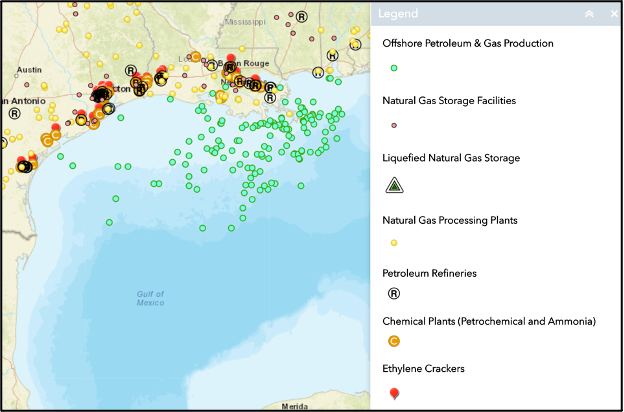
The risks from industrial facilities are most obvious along the U.S. Gulf Coast, where many major petrochemical complexes are clustered in harm’s way. These refineries, factories and storage facilities are often built along rivers or bays for easy shipping access.
But those rivers can also bring storm surge flooding that can raise the ocean by several feet during hurricanes. The storm surge from Helene was over 10 feet above ground level in Florida’s Big Bend and over 6 feet in Tampa Bay. With Milton, forecasters warning of a 10- to 15-foot storm surge at Tampa Bay.
A boom surrounds flooded railcars to try to contain leaks at a chemical plant in Braithwaite, La., after Hurricane Isaac in 2012. AP Photo/David J. Phillip
A recent study found evidence of two to three times more pollution releases during hurricanes in the Gulf of Mexico than during normal weather from 2005 to 2020.
The effects of these pollution releases fall disproportionately on low-income communities and people of color, further exacerbating environmental health risks.
Why residents may not hear about toxic releases
The statistics are disconcerting, yet they get little attention. That is because hazardous releases remain largely invisible due to limited disclosure requirements and scant public information. Even emergency responders often don’t know exactly which hazardous chemicals they are facing in emergency situations.
These risk management plans outline “worst-case” scenarios and are supposed to be publicly accessible. But, in reality, we and others have found them difficult to access, heavily redacted and housed in federal reading rooms with limited access. The reason local officials and national scientific review panels often give for the secrecy is to protect the facilities from terrorist attack.
Oil storage tanks and industrial facilities line the Houston Ship Channel, which is vulnerable to storm surge from Gulf of Mexico hurricanes. AP Photo/David J. Phillip
Adding to this opacity is the fact that many states – including those along the Gulf – suspend restrictions on pollution releases during emergency declarations. Meanwhile, real-time incident notifications from the National Response Center – the federal government’s repository for all chemical discharges into the environment – typically lag by a week or more,
We believe this limited public information on rising chemical threats from our changing climate should be front-page news every hurricane season. Communities should be aware of the risks of hosting vulnerable industrial infrastructure, particularly as rising global temperatures increase the risk of extreme downpours and powerful hurricanes.
Mapping the risks nationwide to raise awareness
To help communities understand their risks, our team at Rice University’s new Center for Coastal Futures and Adaptive Resilience investigates how industrial communities in flood-prone areas nationwide can better adapt to such threats, socially as well as technologically.
Our interactive map shows where elevated future flood risks threaten to inundate major polluters that we identify using the EPA’s Toxic Release Inventory.
The U.S. has several hot spots with clusters of flood-prone polluters. Houston’s Ship Channel, Chicago’s waterfront steel industries and the harbors at Los Angeles and New York/New Jersey are among the biggest.
Three of the biggest hot spots, where large numbers of industrial facilities with toxic materials face elevated future flood risks, are in the Northeast, the northwestern Gulf Coast and the southern end of the Great Lakes. Rice University Center for Coastal Futures and Adaptive Resilience, CC BY-ND
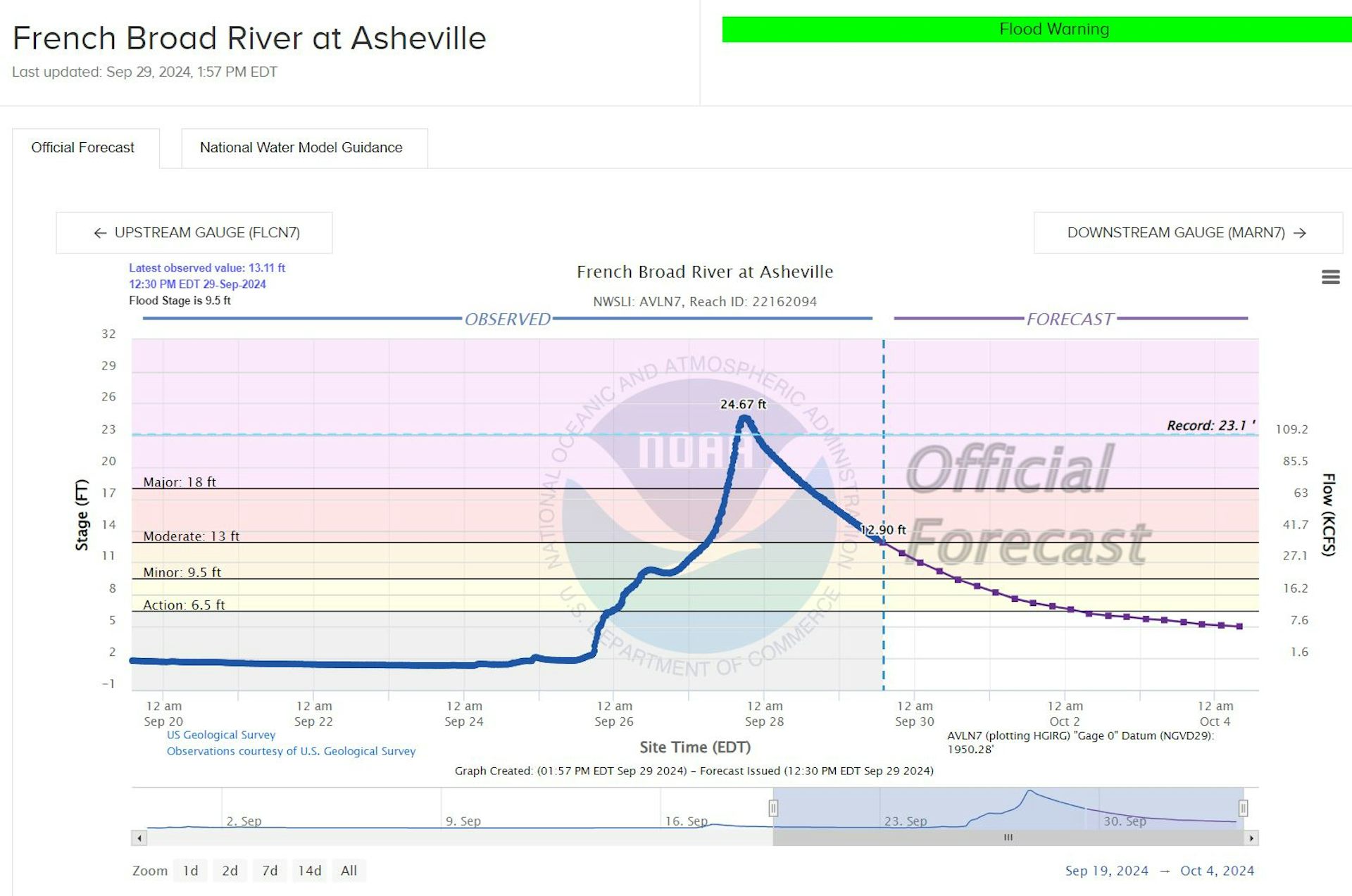
But, as Helene revealed, there can also be great concern in less obvious spots. Inland, particularly in the mountains, runoff can quickly turn normally tame rivers into fast-rising torrents. The French Broad River at Asheville, North Carolina, rose about 12 feet in 12 hours during Helene and set a new flood stage record.
When hurricanes and tropical storms are headed for the U.S., our interactive maps show where major polluters are located in the storm’s projected cone of impact. The maps identify hazardous flood-prone facilities down to the address, anywhere in the country.
Knowledge is the first step
Knowing where these sites are located is only the first step. Often, it’s up to communities themselves, many of them already overexposed and historically underserved, to raise concerns and demand strategies for mitigating the health, economic and environmental risks that industrial sites at risk of flooding and other damage can pose.
These discussions can’t wait until a disaster is on the way. By knowing where these risks may be, communities can take steps now to build a safer future.
This article, originally published Sept. 30, has been updated with Hurricane Milton.
James R. Elliott receives funding from the National Science Foundation and the National Renewable Energy Lab.
Dominic Boyer receives funding from the National Science Foundation, NOAA and Texas Sea Grant.
Climate change is usually discussed in terms of rising temperatures.
But scientists often use a different measure, known as “equilibrium climate sensitivity”. This is defined as the global mean warming caused by a doubling of pre-industrial carbon dioxide (CO₂) levels in the atmosphere.
We use this measure to describe the range of potential temperature increases on longer timescales, and to compare how well climate models reproduce observed warming.
But the predicted range of rising temperature has remained stubbornly wide, somewhere between 2°C and 5.5°C of warming, as assessed in several generations of reports issued by the Intergovernmental Panel on Climate Change. This is despite concerted efforts to narrow it down.
The Intergovernmental Panel on Climate Change has assessed Earth’s climate sensitivity in each of its reports. IPCC, CC BY-SA
Measuring long-term climate sensitivity is central to future predictions, but we are already seeing the effects of warming across the world with extremes in weather, even at the low end of the range. We argue efforts to boil down Earth’s response to climate change to one number may be unhelpful.
The continued uncertainty could be seen as a failure of climate models to converge on the correct value. Using equilibrium climate sensitivity as a metric for “precisely” predicting the amount of warming expected from a given amount of greenhouse gases is, at best, ambiguous.
History of climate sensitivity
About a century before the first computational estimates of Earth’s climate sensitivity were published in 1967, the Swedish physicist and 1903 Nobel laureate Svante August Arrhenius was the first to estimate values at 4-6°C.
Since the early efforts to model Earth systems, computer simulations have steadily increased in complexity. The first models only simulated the atmosphere, but they have evolved to include vegetation, processes in the ocean and sea ice.
While undoubtedly beneficial to the understanding of fundamental science, each of these added processes has introduced uncertainties in the models’ warming response.
Climate feedbacks are central to our argument that equilibrium climate sensitivity is poorly defined. An example of this is the relationship between ice volume and reflectivity.
As highly reflective ice melts on land or sea, the underlying surface is exposed and less sunlight reflected back into space. This increases the amount of warming for a given amount of greenhouse gases. It’s what scientists refer to as a positive feedback loop.
Atmosphere models can’t account for this alone, and when they are coupled with an ice-sheet or sea-ice model, the estimate of climate sensitivity changes.
Melting permafrost, such as seen here on Svalbard, represents a climate feedback loop, increasing the amount of warming for a given amount of greenhouse gases. Getty Images
Overheated arguments
It quickly became apparent when studying some recent climate model results that some simulations are producing equilibrium climate sensitivity ranges noticeably higher than before.
There has been some hesitancy to trust the results produced by these models. They are considered “too hot”.
But we feel these high equilibrium simulations still have value. While we are not arguing they are correct, they force us to consider the what-if situation of very high climate sensitivity, where a doubling of CO₂ would result in warming of 5°C or higher. We know the impact on our environment would be devastating.
Of course, we should treat all scientific results with caution, but the potential insights gained for uncertain futures are of particular importance when climate change is already being felt across the globe.
Where to from here?
We are continually improving our understanding of the climate – how it has changed in the past and how we think it may change in the future. Equilibrium climate sensitivity has consequently become the single solution we are seeking from climate models, even though the precise value will arguably never be known.
Equilibrium climate sensitivity is undoubtedly a convenient way of distilling future projections. However, it is important not to over-rely on an idealised quantity, because its utility as a useful comparative measure of climate models can give the false impression of a lack of progress in understanding.
There is similarity with the common misconception of a 50% probability of rainfall in a weather forecast, which is often misinterpreted as forecasters not knowing whether it will rain or not.
Communicating uncertainty in projections of future climate conditions is a “wicked” problem. But we risk losing perspective of Earth’s system response by focusing on the effort to make climate models agree on one measure. This is not the answer future generations need.
Jonny Williams receives funding from the Deep South National Science Challenge.
Georgia Rose Grant receives funding from MBIE Strategic Science Investment Fund.
For more than 20 years, we’ve invested in machine learning and AI research, tools and infrastructure to build products that make everyday life better for more people. Teams across Google are working on ways to unlock AI’s benefits in fields as wide-ranging as healthcare, crisis response and education. To keep you posted on our progress, we’re kicking off a regular roundup of Google’s most recent AI news across products, research and more. To start, here’s a look back at just a few of our AI announcements from September.
FREMONT, Calif., Oct. 08, 2024 (GLOBE NEWSWIRE) — Jackery, the global leader in solar generators and portable energy solutions, is gearing up for Amazon Prime Day with an unbeatable offer on its latest innovation, the Jackery Explorer 2000v2, starting October 8. This compact, next-generation solar generator is now available for a special low price, with exclusive bundles and a free gift opportunity for early shoppers.
During Amazon’s Prime Day from October 8 to October 9, those in the market for reliable and green backup power can take advantage of the following exclusive deals on Jackery’s E2000v2 series:
E2000v2: $999 (down from $1,499), delivering incredible value for home essential backup or outdoor use.
E2000v2 with two 200W Solar Panels: Bundle available for just $1599, providing a complete renewable power solution for emergency preparedness or off-grid adventures.
With the winter season fast approaching, the E2000v2 solar generator is an ideal choice for anyone looking to safeguard against potential power outages. No installation is required, making it a hassle-free backup power solution that can be deployed instantly during emergencies.
The Jackery Explorer 2000v2 Highlights:
Lightest, Smallest LFP 2kWh Power Station: the E2000v2 is the most compact solution of its class, featuring a robust 2200W output and a 4400W surge capacity, perfect for high-demand appliances like refrigerators, microwaves, or power tools.
Enhanced Charging Speed: With the capability to recharge in just two hours, the E2000v2 offers convenience and reliability, ensuring you stay powered during emergencies or on the go.
Versatile Power Options: Featuring multiple outlets and USB-A/USB-C ports, the E2000v2 can power everything from vital home electronics to smaller devices, making it a flexible solution for any situation.
Eco-Friendly: Unlike traditional gas generators, the E2000v2 can be paired with solar panels to harness clean, renewable energy, perfect for both outdoor use and indoor backup power needs.
Don’t miss out on Jackery’s best deals of the year. For more details, visit Jackery.com and be on the lookout for additional deals on Jackery’s Amazon Storefront from October 8-9, 2024.
About Jackery Founded in California in 2012, Jackery is the world’s leading provider of innovative solar generators and off-grid green energy solutions. As a global top-selling solar generator brand, Jackery is driven by its mission to “Bring Green Energy to All.” By integrating with Geneverse in 2024, Jackery has expanded its product offerings and is able to deliver a comprehensive range of energy solutions, from portable solar generators for outdoor use to whole-home backup systems, furthering its commitment to making green energy accessible for all. Jackery has consistently fulfilled its social responsibility on a global scale, maintaining long-term partnerships with global public welfare organizations such as WWF, NFF, and IRC. Through these collaborations, Jackery continues to contribute to global sustainable development and other public welfare initiatives, reinforcing its dedication to creating a greener, more sustainable future.
Community-driven Deeno game released on October 8th
KINGSTOWN, Saint Vincent and the Grenadines, Oct. 08, 2024 (GLOBE NEWSWIRE) — Derivio, a trading-centric consumer blockchain backed by Binance Labs, officially launched its Telegram game on October 8, 2024. The game introduces Deeno, a character designed to drive user interaction through social media and community tasks.
Players start by claiming an egg that will eventually hatch into Deeno. To progress, players complete tasks such as sharing social media content and engaging with the Derivio community. These activities earn players the “Power of Faith,” which strengthens the egg and accelerates the hatching process. Once hatched, Deeno can be leveled up through additional quests, with users unlocking more rewards through mini-games, including a gold miner challenge.
Derivio’s Telegram game incorporates both gameplay and community interaction with the satisfaction of achieving rewards. By participating, players unlock resources and level up their character, with further opportunities for bonuses and exclusive rewards provided by Derivio and its partners.
Game Launch Details
Derivio’s Telegram game launched on Oct. 8. The game aims to foster interaction within the community through a blend of simple tasks and mini-games, encouraging continued engagement.
About Derivio
Derivio is a trading-centric blockchain focused on consumer-facing products, offering tools designed to enhance accessibility for everyday users. The platform’s products, including its Perpetual Exchange and Prediction Markets, aim to provide a secure, high-performance, and user-friendly experience. Derivio also uses cryptographic techniques like Fully Homomorphic Encryption to enhance security in its decentralized trading ecosystem.
Disclaimer: This content is provided by Derivio. The statements, views and opinions expressed in this column are solely those of the content provider. The information provided in this press release is not a solicitation for investment, nor is it intended as investment advice, financial advice, or trading advice. It is strongly recommended you practice due diligence, including consultation with a professional financial advisor, before investing in or trading cryptocurrency and securities. Please conduct your own research and invest at your own risk.
Source: Federal Bureau of Investigation (FBI) State Crime Alerts (b)
ABERDEEN – United States Attorney Alison J. Ramsdell announced today that U.S. District Judge Charles B. Kornmann has sentenced a McLaughlin, South Dakota, man convicted of Voluntary Manslaughter. The sentencing took place on September 30, 2024.
Johnathan Guggolz, 48, was sentenced to five years in federal prison, followed by three years of supervised release, and ordered to pay a $100 special assessment to the Federal Crime Victims Fund.
Guggolz was indicted by a federal grand jury in October of 2023. He pleaded guilty on July 8, 2024.
On the afternoon of August 29, 2023, in McLaughlin, South Dakota, within the Standing Rock Sioux Indian Reservation, a 62-year-old man pulled into the school driveway to pick his wife up from work. Guggolz pulled up next to the man and confronted him about his driving, mocking and belittling him. The man eventually exited his car, secured a pair of duct-taped homemade nunchucks to protect himself, and squared up with Guggolz, a former amateur boxer. After a few moments of posturing, the man thrust the nunchucks towards Guggolz’ hip. Guggolz then punched the man in the face, knocking him unconscious. The man fell backwards and struck his head on the concrete. Guggolz glanced down at the man, now lying helpless on the driveway, then returned to his pickup and drove away. The man subsequently died of a traumatic brain injury incurred in the assault.
This matter was prosecuted by the U.S. Attorney’s Office because the Major Crimes Act, a federal statute, mandates that certain violent crimes alleged to have occurred in Indian country be prosecuted in federal court as opposed to State court.
This case was investigated by the FBI, the Bureau of Indian Affairs – Office of Justice Services, and the Mobridge Police Department. Assistant U.S. Attorney Carl Thunem prosecuted the case.
Guggolz was immediately remanded to the custody of the U.S. Marshals Service.
Source: Federal Bureau of Investigation (FBI) State Crime Alerts (b)
ABERDEEN – United States Attorney Alison J. Ramsdell announced today that U.S. District Judge Charles B. Kornmann has sentenced a Wakpala, South Dakota, woman convicted of Child Abuse. The sentencing took place on September 30, 2024.
Sheyenne Cadotte, 28, was sentenced to three years in federal prison, followed by three years of supervised release, and ordered to pay a $100 special assessment to the Federal Crime Victims Fund. One of her conditions of supervised release prohibits Cadotte from living with children or contacting her own children unless approved in writing by her probation officer.
Cadotte was indicted for Child Abuse by a federal grand jury in June of 2022. She pleaded guilty on May 16, 2024.
In 2021, Cadotte lived with her four-year-old daughter in Kenel, South Dakota, which lies within the Standing Rock Sioux Indian Reservation. Cadotte’s daughter is a profoundly delayed non-verbal child who requires a feeding tube for sustenance. During the summer and fall of 2021, Cadotte starved her daughter, routinely skipping scheduled feedings and swapping whole milk for formula. Due to this neglect, the girl’s weight dropped from 34 pounds in May to 25 pounds in December, when she was removed from Cadotte’s care. The child is currently thriving in an institutional setting.
This matter was prosecuted by the U.S. Attorney’s Office because the Major Crimes Act, a federal statute, mandates that certain serious crimes alleged to have occurred in Indian country be prosecuted in federal court as opposed to State court.
This case was investigated by the Bureau of Indian Affairs- Office of Justice Services and the FBI. Assistant U.S. Attorney Carl Thunem prosecuted the case.
Cadotte was immediately remanded to the custody of the U.S. Marshals Service.
Source: Federal Bureau of Investigation (FBI) State Crime Alerts (b)
RAPID CITY – United States Attorney Alison J. Ramsdell announced today that U.S. District Judge Camela C. Theeler has sentenced a Rapid City, South Dakota, man convicted of Involuntary Manslaughter. The sentencing took place on October 2, 2024.
Lionel Morrison, age 53, was sentenced to three years of probation and ordered to pay a $100 special assessment to the Federal Crime Victims Fund.
Morrison was indicted for the charge by a federal grand jury in July of 2023. He pleaded guilty on June 7, 2024.
In May of 2023, Morrison, who was intoxicated, was driving a vehicle just north of Pine Ridge when he lost control of the vehicle. After losing control of the vehicle, Morrison overcorrected the path of the vehicle causing it to roll three times causing the front passenger to be ejected from the vehicle. The victim ultimately succumbed to his injuries on the way to the hospital.
This matter was prosecuted by the U.S. Attorney’s Office because the Major Crimes Act, a federal statute, mandates that certain violent crimes alleged to have occurred in Indian country be prosecuted in Federal court as opposed to State court.
This case was investigated by the Oglala Sioux Tribe – Department of Public Safety and the FBI. Assistant U.S. Attorney Megan Poppen prosecuted the case.
Source: Federal Bureau of Investigation (FBI) State Crime Alerts (c)
Gregory J. Haanstad, United States Attorney for the Eastern District of Wisconsin, announced that on October 4, 2024, Anthony Brown, Jr. (age: 50), a former resident of Keshena on the Menominee Indian Reservation, received an eight-year federal prison sentence following convictions for possession with intent to distribute cocaine and possession of a firearm in furtherance of drug trafficking. Brown will also face five years of supervised release once he completes his sentence. The sentence, imposed by Senior United States District Judge William C. Griesbach, was the result of a guilty plea entered by the defendant on June 14, 2024.
According to court records, during the early morning hours of January 1, 2024, investigators with the Menominee Tribal Police Department observed the defendant in his vehicle as he engaged in a hand-to-hand drug transaction in the parking lot of a business on the Menominee Indian Reservation. After a brief interaction, the defendant was arrested and searched. Law enforcement recovered over 15 grams of cocaine and approximately $4400 in U.S. currency from his person and recovered a loaded .380 caliber semiautomatic handgun from the vehicle. The firearm had the defendant’s DNA on it.
Also, according to court records, law enforcement had an additional contact with Brown on January 15, 2024. Brown was arrested after being found passed out at the wheel of a car stopped in Keshena. Brown had cocaine on his person. Officers applied for and obtained a search warrant for the defendant’s residence, which led to the discovery of 380 grams of cocaine, paraphernalia associated with drug use and packaging, ammunition, a ledger containing names, amounts, and prices, and a Glock 21 .45 caliber handgun.
Investigators seized numerous items which the defendant agreed were proceeds or facilities of illegal drug activity, including $7000 in cash, a 2016 Chevrolet Corvette, a 1999 Porsche Boxster, a 2019 Ford F250 pickup, a 2014 Jeep Wrangler, and a 2017 Kawasaki sport bike style motorcycle. Investigators also seized 216 pairs of luxury shoes. These items were ordered forfeited as part of his sentence.
During the sentencing hearing, Judge Griesbach noted the seriousness of the crime and the need to deter those who might consider similar actions to protect the community from the destructive effects of controlled substance abuse. Judge Griesbach also observed the need to incapacitate the defendant for a lengthy period, particularly considering Brown’s previous convictions for drug dealing.
The Menomonee Tribal Police Department and the Federal Bureau of Investigations investigated the case as part of the Safe Trails Task Force (STTF) and the Native American Drug and Gang Initiative (NADGI). NADGI and STTF partner federal, tribal, state, and local law enforcement to combat drug trafficking and violent crime on the Menominee Indian Reservation. STTF members are deputized federal officers who identify and target for prosecution individuals who are involved in distribution of dangerous drugs on the Menominee Indian Reservation. Coordination of state resources through NADGI permits efficient communication and evidence processing, which are essential to swift and fair prosecution of offenders. Assistant United States Attorney Andrew J. Maier prosecuted the case.
The Justice Department today sued Fitness International LLC, also called LA Fitness, for discriminating against people with disabilities at its gym and fitness clubs. LA Fitness is the largest chain of owner-operated gym and fitness clubs in the United States, with nearly 700 locations across the country.
The lawsuit, filed in the U.S. District Court for the Central District of California, alleges LA Fitness violated the Americans with Disabilities Act (ADA), which prohibits public accommodations, including gym and fitness clubs, from discriminating against people with disabilities. The ADA requires LA Fitness to give people with disabilities equal access to LA Fitness’ services and facilities, remove architectural barriers to make its facilities accessible to people with disabilities and maintain accessible features. The ADA also prohibits LA Fitness from charging extra fees to people with disabilities.
Yet, as the department’s lawsuit alleges, LA Fitness gym and fitness clubs have many barriers that prevent LA Fitness members with disabilities from accessing the clubs or using the clubs’ pools and fitness equipment. Common barriers include broken pool lifts and broken elevators. Sometimes, these issues left people with mobility disabilities unable to get into clubs or pools at all. Other times, people with disabilities have gotten stuck dangling over the water on broken pool lifts, have had to call LA Fitness staff to help them get in and out of pools or have had to crawl out of pools. Even after members with disabilities complained about these issues, LA Fitness did not fix them for long periods of time.
“Access to physical fitness activity is crucial for promoting the health and well-being of all Americans, including those with disabilities,” said Assistant Attorney General Kristen Clarke of the Justice Department’s Civil Rights Division. “For over 30 years, the ADA has prohibited gyms and fitness clubs like LA Fitness from denying patrons with disabilities the opportunity to use and enjoy facilities enjoyed by patrons without disabilities. Through this lawsuit, the Justice Department seeks to eliminate LA Fitness’s discriminatory barriers and ensure that people with disabilities have equal access to fully participate at their local LA Fitness gym and fitness clubs.”
“Ensuring accessibility is key to safeguarding civil rights for all Americans,” said U.S. Attorney Martin Estrada for the Central District of California. “Our office is committed to ensuring that people with disabilities have access to public accommodations by enforcing the protections afforded by the Americans with Disabilities Act. When we support those with disabilities, our entire community benefits.”
Through the lawsuit, the department asks the court to stop LA Fitness from discriminating against people with disabilities, including by requiring LA Fitness to make its facilities and equipment accessible. The department also seeks monetary damages for people harmed by LA Fitness’ discrimination. This includes people who were directly harmed by LA Fitness’ barriers to access and broken equipment, as well people who need help to use LA Fitness’ clubs and were charged extra fees to have a friend, nurse or personal assistant help them use LA Fitness facilities.
If you or someone you know had trouble accessing an LA Fitness gym or fitness club because of a disability, including due to a broken pool lift or elevator, or if you were charged an extra fee to have someone help you access LA Fitness’ equipment, please call 1-888-392-5417 (toll-free), or email Claims.LAFitness@usdoj.gov. For more information on the ADA, please call the department’s toll-free ADA Information Line at 1-800-514-0301 (TDD 800-514-0383) or visit http://www.ada.gov. For more information on the Civil Rights Division, please visit http://www.justice.gov/crt.
Source: United States Department of Justice (Human Trafficking)
HOUSTON – A Mexican national illegally residing in Houston and a relative have been sentenced following their convictions of several sex trafficking crimes, announced U.S. Attorney Alamdar S. Hamdani.
Maria Botello-Morales, 57, and her son Edgar Adrian Botello, 31, Houston, pleaded guilty in 2023.
U.S. District Judge Andrew S. Hanen has now imposed a 280-month-term of imprisonment for Botello-Morales, while Botello received a total of 180 months. Restitution will be determined at a later date. Not a U.S. citizen, Botello-Morales is expected to face removal proceedings following her imprisonment, while Botello will serve 15 years on supervised release following completion of his prison term. During that time, he will have to comply with numerous requirements designed to restrict his access to children and the internet. Both will also be ordered to register as sex offenders.
“Cantina cases shine a light on a unique form of trafficking where mostly undocumented women are sexually exploited for the financial benefit of the traffickers,” said Hamdani. “These individuals stole the American dream from the victims. This form of trafficking takes advantage of the fear these victims live in and we are grateful for the hard work of the Texas Alcohol and Beverage Commission (TABC) and Homeland Security Investigations (HSI) in bringing them justice.”
“TABC is proud to work with the Office of the U.S. Attorney and our other partners in the effort to end human trafficking in Texas,” said TABC Chairman Kevin J. Lilly. “We join our fellow Texans in denouncing this heinous crime and reaffirming our pledge to help free the victims of human trafficking.”
At the time of the pleas, Botello-Morales admitted to sex trafficking with force, fraud or coercion and conspiracy to do so as well as sex trafficking of a minor. Botello pleaded guilty to conspiracy to commit sex trafficking with force, fraud or coercion, two counts of sex trafficking of adults as well as possession of child pornography.
In 2007, Botello-Morales recruited a minor female from Mexico. She caused the minor to engage in commercial sex and took payment directly from the commercial sex buyers.
Botello-Morales ran Puerto Algre with Botello and others from 2015 to 2020. Puerto Algre was a cantina where numerous females were forced to engage in commercial sex in backrooms built specifically for that purpose. Botello-Morales, Botello and others threatened and intimidated these victims with violence to manipulate them into engaging in commercial sex for their own financial benefits.
The victims reported they started at the bar as waitresses. However, Botello-Morales soon told them they had to engage in commercial sex. If they refused, she threatened them with violence.
Some witnessed violence and weapons at the bar and in the back area where the sex acts occurred. Each described how they had to take customers to the backrooms through a door and hidden from view of the bar. They were given a condom wrapped in a paper towel, were to spend no more than 15 minutes in the room and charge approximately $70. On the way out, they had to turn the money over to whoever was guarding the room.
During the investigation, one victim also explained when she refused to come to work, Botello-Morales sent someone to physically assault her.
The victims explained that Botello, who regularly carried a weapon, was the enforcer. He would also pass out the condoms and collect the money. During the execution of a search warrant at the home Botello-Morales and Botello shared, law enforcement found several loaded firearms in his room along with a computer containing child pornography.
Another co-conspirator, Esteban Toribio, 65, Houston, pleaded guilty June 17 and held the liquor license for the bar. Toribio reported the conduct to authorities in an attempt to help him gain control of the cantina. Also convicted in relation to the conspiracy was Arian Botello, 26, the nephew of Botello-Morales.
Both will remain in custody pending transfer to a U.S. Bureau of Prisons facility to be determined in the near future.
TABC and HSI conducted the investigation with the assistance of the Houston Police Department (HPD) as part of the Human Trafficking Rescue Alliance (HTRA). Assistant U.S. Attorney Sherri L. Zack prosecuted the case.
HTRA law enforcement includes members of the HPD; FBI; HSI; Texas Attorney General’s Office; IRS-Criminal Investigation; Department of Labor (DOL); DOL – Wage and Hour Division; Department of State; Federal Air Marshals; TABC; Texas Department of Public Safety; Texas Rangers; Texas Parks and Wildlife; Social Security Administration – OIG; Texas Department of Licensing and Regulation; Texas Department of Family and Protective Services as well as police departments in Houston Independent School District (ISD), Conroe ISD and Missouri City; Harris County constables offices – Precincts one and four; sheriff’s offices in Harris, Montgomery, Fort Bend, Brazoria and Waller counties in coordination with District Attorney’s offices in Harris, Montgomery, Fort Bend and Galveston counties. They work in coordination with victim service providers such as YMCA, United Against Human Trafficking and Texas Forensic Nurse Examiners.
Established in 2004, the United States Attorney’s office in Houston formed HTRA to combine resources with federal, state and local enforcement agencies and prosecutors, as well as non-governmental service organizations to target human traffickers while providing necessary services to those that the traffickers victimized. Since its inception, HTRA has been recognized as both a national and international model in identifying and assisting victims of human trafficking and prosecuting those engaged in trafficking offenses.
The United States continues to be in a heightened threat environment, and the FBI is fully engaged to detect and stop any potential threats to the American people. As we mark one year since the October 7, 2023, attack by Hamas, the ongoing conflict in the Middle East calls for vigilance by the FBI, our law enforcement partners, and members of the public.
Conspiracy to Commit Fraud and Related Activity in Connection with Computers; Intentional Damage to a Protected Computer; Transmitting a Demand in Relation to Damaging a Protected Computer; Conspiracy to Commit Money Laundering
The FBI is seeking to identify individuals involved in the violent activities that occurred at the U.S. Capitol and surrounding areas on January 6, 2021. View photos and related information here. If you have any information to provide, visit tips.fbi.gov or call 1-800-CALL-FBI.
Source: Federal Bureau of Investigation FBI Crime News (b)
ALBUQUERQUE – An Arizona woman has been charged by indictment on multiple counts of abandonment and abuse of a child for allegedly placing three girls in a dangerous situation earlier this year.
Avedale Johnson, 40, an enrolled member of the Navajo Nation, appeared before a federal judge last week and was placed on conditions of release pending trial.
According to the indictment, on May 4, 2024, Johnson is accused of putting Jane Doe 1, Jane Doe 2, and Jane Doe 3—three children under the age of 18—at significant risk of harm by placing them in a situation that could have endangered their lives and health.
If convicted, Johnson faces up to three years in prison.
U.S. Attorney Alexander M.M. Uballez and Raul Bujanda, Special Agent in Charge of the FBI Albuquerque Field Office, made the announcement today.
The Farmington Resident Agency of the FBI’s Albuquerque Field Office investigated this case with assistance from the Navajo Police Department and Department of Criminal Investigations. Assistant United States Attorney Caitlin L. Dillon is prosecuting the case.
An indictment is merely an allegation. All defendants are presumed innocent until proven guilty beyond a reasonable doubt in a court of law.