NewzIntel.com

    • Checkout Page
    • Contact Us
    • Default Redirect Page
    • Frontpage
    • Home-2
    • Home-3
    • Lost Password
    • Member Login
    • Member LogOut
    • Member TOS Page
    • My Account
    • NewzIntel Alert Control-Panel
    • NewzIntel Latest Reports
    • Post Views Counter
    • Privacy Policy
    • Public Individual Page
    • Register
    • Subscription Plan
    • Thank You Page

Blog

  • MIL-OSI Australia: Improved access to complex menopause care in Wagga Wagga

    Source: New South Wales Premiere

    Published: 23 September 2024

    Released by: Minister for Regional Health


    Women who experience severe or complex menopause symptoms will benefit from enhanced support, with the opening of a new menopause referral site in the Murrumbidgee at Wagga Wagga.

    The Murrumbidgee Local Health District’s (MLHD) Menopause Service is part of NSW Health’s extensive menopause network, which includes four health hubs and multiple referral sites throughout the state.

    As a part of this network, the Wagga Wagga-based service is designed to assist women whose menopause symptoms have not responded to previous treatments, or who face additional complications from other medical conditions.

    MLHD’s Menopause Service is linked to the South Western Sydney LHD Menopause Hub, which means women can access a comprehensive approach to managing severe menopausal symptoms through a multi-disciplinary team of medical specialists and allied health professionals, including women’s health nurses, physiotherapists, dietitians, and clinical psychologists.

    General practitioners, specialists, and nurse practitioners can refer eligible women for advanced care, they are also welcome to make contact with the service directly by emailing MLHD-menopauseservice@health.nsw.gov.au.

    Quotes attributable to Minister for Regional Health, Ryan Park:

    “Up to one in four women endure severe and debilitating menopause symptoms, which is why services like this one are so important.

    “The opening of MLHD Menopause Service means improved access to care for those women in this part of regional NSW who need it.

    “This service has the potential to be lifechanging for women in the community who require access.”

    Quotes attributable to Member for Wagga Wagga Joe McGirr:

    “I’m glad to see this service is now available in Wagga Wagga and the wider Murrumbidgee region. It will make a big difference to the lives of many women in the region experiencing severe or complex menopause symptoms.

    “To have access to the care right here in Wagga Wagga is potentially life-changing for many women in our community who may otherwise have to travel long distances to receive care.”

    Quotes attributable to MLHD Menopause Coordinator Mary Bartusek:

    “The Murrumbidgee service will help to ensure women of all backgrounds and diversity are able to access the specialised services they need to address their menopause symptoms.

    “This is an inclusive service which includes all women who may experience health inequities.  For example, women who identify as Aboriginal/Torres Strait Islander, women from a non-English speaking background, women with a disability, women who are victims of family and/or domestic violence and women living in rural and remote areas of the local health district.”

    MIL OSI News –

    September 29, 2024
  • MIL-OSI Australia: The night shift: 24-hour economy strategy puts needs of night-time workers first

    Source: New South Wales Premiere

    Workers on the night shift represent one in five, or 21% of workers in NSW – or more than 870,000 people.

    The refreshed NSW 24-Hour Economy Strategy, A New State of Night, outlines the work and programs of the Office of the 24-Hour Commissioner as it expands its remit to support night-time economies across the state, rather than just in Greater Sydney.

    The strategy will move beyond a focus on the hospitality and entertainment economy to one that supports a myriad of night workers – such as nurses, doctors, paramedics, police, drivers, retailers, cleaners, security guards and workers in manufacturing and construction across the state.

    Despite the essential nature of their roles, these people are often in less secure work, are often paid less and have fewer transport options, fewer childcare options, reduced safety and less retail and food options. Improving their experience requires a whole-of-government effort.

    Recent research has revealed people in NSW working between the hours of 6pm and 6am is forecast to grow by between 5% and 13% by 2031, implying a structural shift in the way the NSW economy operates, with a larger proportion of people working during the night.

    The NSW Government has been working to support the state’s night-time economy and improve vibrancy by changing regulation and legislation that constrains businesses. The second tranche of the Government’s vibrancy reforms coming later this year will propose to remove more red tape and provide greater support for special events and hospitality and live music venues.

    This strategy places a strong emphasis on data collection to inform policy development to ensure the NSW Government, local councils and private sector partners can effectively balance the night-time revival, safety and public amenity.

    An example of how the strategy will work in action is how the NSW Government supporting workers in the Randwick Health and Innovation Precinct, one of the state’s most concentrated night workforce areas, with 4500 night-time workers. The precinct is open around the clock and home to three hospitals, a major university and five medical research centres.

    Workers across the precinct and the wider community will benefit from a raft of programs designed to enhance safety and activation including:

    • $600,000 for Spot On, through the Permit/Plug/Play and Open Streets programs, to support collaboration across local businesses to unlock the potential of public streets and spaces
    • $400,000 in Community Improvement District funding backing businesses to get organised, with government, and make the most of their public spaces and local character to draw more visitors and more life to their district.
    • $200,000 for Heart of Randwick in the Uptown program, to support greater collaboration between the health and education campuses, businesses and the council to amplify its night-time offerings
    • The precinct also recently received $500,000 in Safer Cities funding, to improve lighting and safety particularly for workers going to and from work after dark.

    Other night-time worker centres include Port Kembla, a manufacturing hub with over 3,500 night-time workers.

    In Liverpool, the Health and Academic Precinct employs around 4,500 night-time workers.

    Another focus will be the new Western Sydney Airport precinct which will run 24/7 and will grow to employ around 200,000 people.

    As part of the strategy, the Office of the 24-Hour Commissioner will consult across industry to identify the pain points and bring a whole-of-government approach to solving these issues.

    For more information, visit: www.nsw.gov.au/business-and-economy/24-hour-economy/24-hour-economy-strategy.

    Minister for Roads, Music and the Night-time Economy and Minister for Jobs, John Graham said:

    “Night-time workers make up 21% of the NSW workforce. They play an important role in our communities and economies. They are nurses, doctors, paramedics, police, drivers, retailers, cleaners, security guards and workers in manufacturing and construction. They are often paid less and have less secure work.

    “This growing group of essential workers deserves safe environments and adequate services. They should be able to get a coffee before they start work or a decent meal when they finish.

    “Meeting their needs represents an enormous opportunity for the night-time economy. But this requires us to plan as well for the night as we do for the day.”

    “This strategy has an emphasis on data to both measure results as well as design better policy interventions.

    “We will continue to work alongside industry, businesses, councils and communities across NSW to ensure our state’s night-time economy reaches its true potential.

    “Our goal is to highlight our state as a safe and exciting night-time destination – not just for people looking for a great night out but for the people working hard to keep our state running at night.”

    24-Hour Economy Commissioner Michael Rodrigues said:

    “The Strategy we have developed is purposefully ambitious, but it is also full of practical ideas, solutions and strategic opportunities to bring our vision to life.

    “We know that people, especially night workers, want more amenity and safety at night – especially with the industry expected to grow by 5% to 13% by 2031. This includes activating outdoor spaces, diversity of offerings and safe, accessible transport.

    “We know that positive outcomes are possible when State Government, local councils and industry line up behind one plan. And with our work now extending across the State, it’s appropriate we have a strategy that continues to unite stakeholders to ensure NSW is as vibrant at night, as it is during the day.”

    Member for Coogee, Marjorie O’Neill said:

    “The Randwick Health and Innovation Precinct operates 24/7, with staff across emergency, wards, portering, catering, and support services always ready to serve.

    “We are working with the Precinct partners and district to improve our streetscapes and make better connection to our local communities. We are grateful for the Community Improvement District and Uptown Programs that enable us to make the Precinct safer and more vibrant for our workforce, students and local communities.”

    South Eastern Sydney Local Health District CEO Tobi Wilson said:

    “At the Randwick Health and Innovation Precinct, there are staff onsite 24 hours a day 365 days a year from those ready for us in the emergency departments to ward staff, porters, catering and support staff.

    “We are working with the Precinct partners and district to improve our streetscapes and make better connection to our local communities. We are grateful for the Community Improvement District and Uptown Programs that enable us to make the Precinct more vibrant for our workforce, students and local communities.”

    Background

    Research conducted in 2024 by SGS Economics & Planning on behalf of the Office of the 24-Hour Commissioner found:

    • The top industry by the number of night-time employees is Health Care and Social Assistance, with approximately 166,000, followed by
    • Accommodation and Food Services and Arts and Recreation Services, with around 155,200.
    • The Transport, Postal and Warehousing sector employs approximately 90,500 people during night-time hours, closely followed by
    • Retail Trade with 87,100 workers.
    • The Office of the 24-Hour Commissioner will consult with industry to understand the key challenges and barriers with government to develop appropriate policy measures and initiatives to sustainably develop night-workforce participation.

    The 24-hour Economy Strategy will serve as the NSW Government’s new blueprint to cement NSW as a safe, worldclass nightlife destination for visitors, locals and workers alike.

    The refreshed strategy’s five key pillars are:

    • An Enabling Regulatory Framework – Regulatory and legislative amendments aimed at bringing back vibrancy to enable diverse, sustainable and safe night-time economies across NSW.
    • Vibrant Coordinated Precincts and Places – Fostering collaboration among businesses, councils and other stakeholders to support precinct building and place-based economies.
    • Night-time workers, culture and industry collaboration – Collaborate across government and industry to support night-time workers, businesses, and cultural entrepreneurs to thrive in the 24-hour economy.
    • Safety, Mobility, Access and Inclusion – Enabling ease of movement to and from precincts while championing the wellbeing and safety of all within the night-time economy.
    • Authentic Storytelling – Celebrating the unique stories of our districts and promoting the experiences they offer to locals, visitors and workers.

    MIL OSI News –

    September 29, 2024
  • MIL-Evening Report: Woolworths and Coles sued by ACCC for allegedly misleading shoppers over the price of more than 500 products

    Source: The Conversation (Au and NZ) – By Jeannie Marie Paterson, Professor of Law, The University of Melbourne

    At a time most people are trying to cut their weekly grocery bills, Australia’s supermarket giants have been hit with legal action for allegedly misleading shoppers over the price of hundreds of products.

    The Australian Competition and Consumer Commission (ACCC) on Monday announced it was launching separate actions in the Federal Court against the largest and second-largest grocery chains, Woolworths and Coles.

    The ACCC alleges the two have systematically misled consumers over price discounts on hundreds of everyday products. The ACCC chair, Gina Cass-Gottlieb, said the alleged wrongdoing involved the sales of “tens of millions” of products, reaping “significant” extra revenue for the businesses.

    Woolworths’ list of 266 items included Arnott’s Tim Tams, Dolmio sauces, Doritos salsa, Friskies cat food, Kellogg’s cereal and Stayfree pads, while the 245 products allegedly targeted by Coles included Arnott’s Shapes biscuits, Band-Aids, Bega cheese, Cadbury chocolates and Libra tampons.


    These were not one-off pricing errors. The ACCC alleges the misleading conduct took place over 20 months as part of the Woolworths “Prices Dropped” and the Coles “Down, Down” promotional campaigns.

    How shoppers were allegedly misled

    The ACCC alleges on repeated occasions the supermarkets’ strategy was to temporarily raise the price of goods before applying the so-called discount.

    The approach meant that although the boldly placed, coloured discount tickets showed a reduction from the previous “regular” price of the products, the discounted price was still higher than the price before the temporary price rise.

    The ACCC gave the example of how consumers were allegedly misled over savings on a 370-gram family pack of Oreo original biscuits.

    From at least January 1 2021 until November 27 2022, Woolworths offered the Oreos for sale at a regular price of $3.50 on a pre-existing “Prices Dropped” promotion. Then, on November 28 2022, the price was increased to $5.00 for 22 days.

    On December 20 2022, the product was placed on a “Prices Dropped” promotion with the tickets showing a “Prices Dropped” price of $4.50 and a “was” price of $5.00. The “Prices Dropped” price of $4.50 was in fact 29% higher than the product’s previous regular price of $3.50.


    What is the legal claim?

    The ACCC does not regulate prices. Instead, it acts on breaches of the Competition and Consumer Act 2010, including making false or misleading claims about the prices of goods and services.

    While it was true that Woolworths and Coles reduced the shelf price of the products, the ACCC alleges they didn’t reveal that the starting price had recently been increased. It is this conduct of promoting a discount from a recently inflated price that the ACCC says would mislead consumers.

    The ACCC’s argument is the “ordinary and reasonable” consumer expects a discount to be genuine, not coming off a recently inflated price. The net effect of that strategy is just an increased price.

    Other cases

    This is not the first time the ACCC has pursued such a claim. In 2020, the commission successfully went after online retailer Kogan for engaging in a similar strategy.

    Kogan ran an online promotion advertising to consumers that they could use the code TAXTIME to reduce prices by 10% at the checkout. The court found the ads conveyed false or misleading representations because Kogan had increased the prices of more than 600 of its products immediately before the promotion by at least 10% per cent.

    A similar strategy of offering discounts that were not genuinely delivered has also been raised against insurer IAG. The Australian Securities and Investments Commission (ASIC) alleges IAG did not deliver promised loyalty discounts to customers because their premiums were increased before the discount was applied by more than the amount of the discount.

    IAG is now facing action for civil penalties from the regulator (ASIC) and a class action by affected customers.

    Potential penalties Woolies and Coles might face

    The ACCC is seeking fines (civil penalties) which could be significant. In the Kogan case, the Federal Court awarded penalties of $350,000.

    But since November 2022, potential penalties have risen. These increases are designed to ensure companies do not treat the possibility of being penalised as a cost of doing business that is outweighed (and disregarded) by the benefits that might come from contraventions of the law.

    These new penalty amounts work on a sliding scale: they start at $50 million but can go up to potentially 30% of a company’s turnover during the period of the contravening conduct.

    This amount is per contravention. This means, if the ACCC’s allegations of misleading conduct are established, each time the supermarkets misled consumers, they would technically be liable to pay the full penalty amount.

    That said, in such a case, a court would likely take a more holistic approach in setting the penalty, taking several matters into account including: the extent of the conduct, its impact on consumers, the gain to the business and whether the conduct was deliberate.

    Fittingly, the ACCC is also asking the supermarkets to make a contribution to charities that provide food to people in need.

    Notably, in May Qantas agreed with the ACCC to pay a penalty of $100 million, subject to court approval and in addition to compensating customers, for misleading conduct in selling tickets for flights it had already cancelled.

    Jeannie Marie Paterson receives funding from the Australian Research Council and DFAT.

    – ref. Woolworths and Coles sued by ACCC for allegedly misleading shoppers over the price of more than 500 products – https://theconversation.com/woolworths-and-coles-sued-by-accc-for-allegedly-misleading-shoppers-over-the-price-of-more-than-500-products-239585

    MIL OSI Analysis – EveningReport.nz –

    September 29, 2024
  • MIL-Evening Report: Earth is getting a tiny new mini-moon. It won’t be the first (or the last)

    Source: The Conversation (Au and NZ) – By Laura Nicole Driessen, Postdoctoral researcher in radio astronomy, University of Sydney

    The minimoon 2020 CD3 orbited Earth between 2018 and 2020. International Gemini Observatory/NOIRLab/NSF/AURA/G. Fedorets, CC BY

    Earth is going to have its very own mini-moon from September 29 until November 25. The regular Moon’s new, temporary friend is 2024 PT₅, an asteroid captured from the Arjuna asteroid group (called the “Arjunas”).

    Our new mini-moon is approximately 10 metres in diameter and will be captured by Earth’s gravity for 57 days. It’s small and faint, so it won’t be visible by the eye or with small telescopes, but will be visible to larger telescopes.

    What is a mini-moon?

    NASA defines “moons” as “naturally formed bodies that orbit planets”. Intuitively, we think of moons as big rocks that stick around for a while, like our very own Moon.

    Astronomers have defined mini-moons as asteroids or comets that are gravitationally captured by a planet for a temporary amount of time. Small mini-moons are very common, but ones big enough to spot are more rare.

    2024 PT₅ is only the fifth ever detected mini-moon captured by Earth.

    Orbiting or just flying by?

    A mini-moon is a “temporarily captured orbiter” if it completes at least one full orbit of the Earth before returning to its usual orbit around the Sun.

    If a mini-moon is captured by Earth’s gravity but doesn’t make it around for a full orbit, it’s a “temporarily captured flyby” instead.

    Two of Earth’s mini-moons were “temporarily captured orbiters”, while the other three (including 2024 PT₅) fall into the “temporarily captured flybys” category.

    Where do mini-moons come from?

    Mini-moons are asteroids from the large population of near-Earth objects (or NEOs) that are temporarily grabbed from their orbit around the Sun.

    Near-Earth objects are defined as natural physical objects floating in space, such as asteroids (space rocks) or comets (dirty space snowballs made of rock and ice), that are orbiting the Sun and approach to within 1.3 times Earth’s distance from the Sun at some point in their orbit.

    Because these objects are around the same distance from the Sun as the Earth, they can sometimes be captured by Earth’s gravity.

    2024 PT₅ and and a previous mini-moon called 2022 NX₁ were both captured from a group of asteroids orbiting the Sun at a similar distance from Earth, called the Arjunas. Arjuna is one of the main characters of the Hindu epic, Mahābhārata.

    The first mini-moon – and a fake one

    The first known mini-moon was called 1991 VG. It arrived in late 1991 and left in early 1992, and like 2024 PT₅ it was around 10 metres in diameter.

    The mini-moon 1991 VG (marked with green lines). This image was made by combining seven images from the European Southern Observatory (ESO) Very Large Telescope (VLT). All images were taken on May 30 2017. The images were taken by tracking the asteroid position, so background stars appear as streaks.
    Hainaut/Micheli/Koschny via Wikipedia, CC BY

    In 2002, amateur astronomer Bill Yeung found what he thought was a second mini-moon: J002E3.

    However, on closer inspection the object displayed a spectrum of light suggesting it was coated in white paint containing titanium oxide. Then, a study of how the object’s brightness changed over time found its shape resembled something like the upper stage of a rocket.

    Astronomers now believe J002E3 is the third stage of the Apollo Saturn V rocket (S-IVB) instead of a natural mini-moon.

    Images of the false mini-moon J002E3 taken by amateur Bill Yeung on September 3 2002.
    Bill Yeung / Bob Denny via Wikipedia, CC BY

    More discoveries – with a note of caution

    The plot twist of J002E3 made astronomers a bit more cautious. When another mini-moon (2006 RH₁₂₀) was spotted on September 14 2006, it was first classified as artificial. However, after more observations it turned out to be a natural mini-moon about 2–7 metres in diameter. 2006 RH₁₂₀ stuck around from July 2006 until July 2007.

    Animation of 2006 RH120’s orbit around Earth. The animation runs from April 1 2006 until November 1 2007. Earth is shown in blue, the Moon is shown in yellow and 2006 RH120 is shown in magenta.
    Phoenix7777/Wikipedia, CC BY

    The next mini-moon, 2020 CD₃, was gravitationally captured by Earth for more than two years, making it the longest-captured mini-moon observed to date. It escaped Earth’s orbit in May of 2020. This mini-moon was around 1–2 metres in diameter.

    Amateur astronomers Grzegorz  Duszanowicz and Jordi  Camarasa discovered 2022 NX₁ using the Moonbase South Observatory in Namibia. Similar to 2006 RH₁₂₀, it was initially thought to be an artificial object from a past space mission.

    It was later determined to originate from the Arjunas, just like 2024 PT₅. While it was discovered in 2022, it was temporarily captured by Earth’s gravity in January 1981 and June 2022. It’ll be captured again in December 2051.

    2022 NX₁ was later found to be a natural mini-moon 5–15 metres in diameter.

    Will we find more mini-moons?

    Modelling suggests that, at any given time, Earth has at least one captured mini-moon less than 1 metre in diameter.

    Even though astronomers think we always have a mini-moon, these bodies are challenging to detect. This is because they’re small and faint. They are usually found by projects specifically looking for asteroids near Earth.

    2024 PT₅ was discovered using the Asteroid Terrestrial-impact Last Alert System (ATLAS), which is an ongoing project specifically designed to search for asteroids. 2006 RH₁₂₀ and 2020 CD₃ were discovered using the ongoing Catalina Sky Survey (CSS) for Near Earth Asteroids. 1991 VG was discovered by the SPACEWATCH group using the Spacewatch Telescope.

    These projects will continue to search for asteroids, including mini-moons. We can also look forward to new discoveries and investigations when the Vera C. Rubin Observatory’s Legacy Survey of Space and Time (LSST) starts observing in the next couple of years.

    This enormous project will take images of the entire sky every few days for a period of ten years. First light of the Vera C. Rubin observatory is expected in mid-2025.

    Laura Nicole Driessen is a brand ambassador for the Rise & Shine Education Orbit Centre of Imagination.

    – ref. Earth is getting a tiny new mini-moon. It won’t be the first (or the last) – https://theconversation.com/earth-is-getting-a-tiny-new-mini-moon-it-wont-be-the-first-or-the-last-239507

    MIL OSI Analysis – EveningReport.nz –

    September 29, 2024
  • MIL-OSI Video: UpLink: Investing in Water Innovation

    Source: World Economic Forum (video statements)

    Water is crucial for human life and the economy, with its economic use value estimated at 60% of global GDP. However, investment in water solutions remains significantly low.

    This is the full audio from a studio session on 12 September, 2024 with leading investors and innovators discussing the untapped potential in water solutions and exploring the findings of the recently launched community paper ‘Investing in Water: A Practical Guide.’
    Panelists:

    Kelven Lam, Investment Manager, Emerald Technology Ventures Romeo Bütler, Principal, Verve Ventures Catalina Pfenniger, Strategy Director, Kran Nanobubble Anna Huber, UpLink Project Lead, Innovation Ecosystems, World Economic Forum (moderator)

    You can watch the session here: https://www.linkedin.com/events/investinginwaterinnovation7237072505000067072/theater/
    Links:

    Investing in Water: A Practical Guide: https (https://wef.ch/4d6u9GA) ://wef.ch/4d6u9GA (https://wef.ch/4d6u9GA)

    Check out all our podcasts on wef.ch/podcasts (http://wef.ch/podcasts) :

    YouTube: (https://www.youtube.com/@wef/podcasts) – https://www.youtube.com/@wef/podcasts

    Radio Davos (https://www.weforum.org/podcasts/radio-davos) – subscribe (https://pod.link/1504682164) : https://pod.link/1504682164

    Meet the Leader (https://www.weforum.org/podcasts/meet-the-leader) – subscribe (https://pod.link/1534915560) : https://pod.link/1534915560

    Agenda Dialogues (https://www.weforum.org/podcasts/agenda-dialogues) – subscribe (https://pod.link/1574956552) : https://pod.link/1574956552

    Join the World Economic Forum Podcast Club (https://www.facebook.com/groups/wefpodcastclub) : https://www.facebook.com/groups/wefpodcastclub

    https://www.youtube.com/watch?v=iNKPHdqwupQ

    MIL OSI Video –

    September 29, 2024
  • MIL-OSI Australia: Prescribed hazard reduction burns in Nicholls and Ngunnawal

    Source: Government of Australia Capital Territory

    On 13 September 2024, the ACT Government assumed a caretaker role, with an election to be held 19 October 2024. Information on this website will be published in accordance with the Guidance on Caretaker Conventions until after the election and conclusion of the caretaker period.

    Released 23/09/2024

    A prescribed hazard reduction burn in Nicholls will commence this evening, and another hazard reduction burn will commence at Hill Reserve in Ngunnawal tomorrow, subject to suitable weather and fuel moisture conditions.

    The prescribed hazard reduction burns are being conducted to reduce the ground cover of exotic grasses and reduce the fire hazard in the area.

    See the location map of the burn sites.

    Experienced ACT Parks and Conservation Service fire managers will conduct and oversee the burning operations alongside the Ginninderry Conservation Trust and local First Nations community members.

    Every effort is made to conduct burns in weather conditions that will minimise the impact of smoke, but temporary smoke cover is possible and may be visible across parts of Canberra.

    Fire crews will be on the ground monitoring and patrolling the prescribed burn to its conclusion.

    Smoke, flame, and glowing embers may be seen at these sites, which is normal for these types of operations. The public are asked not to call emergency triple-zero unless they see any unattended fire.

    Prescribed burns are an important part of the ACT’s annual Bushfire Operations Plan to enhance ecological quality, reduce the risk of bushfires and help keep Canberrans safe.

    More information about prescribed hazard reduction burns is available on the ACT Environment website.

    – Statement ends –

    ACT Environment, Planning and Sustainable Development Directorate | Media Releases

    Media Contacts

    «ACT Government Media Releases | «Directorate Media Releases

    MIL OSI News –

    September 29, 2024
  • MIL-OSI New Zealand: Health Investigation – Disability Service referred to Director of Proceedings 21HDC00035

    Source: Health and Disability Commissioner

    A disability service provider has been referred to the Director of Proceedings to investigate if further legal action should be taken. The Deputy Health and Disability Commissioner said there was public interest in holding the service to account for its failures, in a decision released today.
    Rose Wall said the service, and one of its care workers, breached multiple rights of a resident under the Code of Health and Disability Services Consumers’ Rights. She found several significant departures from accepted practice.
    The resident – a man in his thirties at the time – and the care worker, had known each other for around 20 years. Their relationship was characterised as ‘brotherly’ by the care worker.
    The breaches relate to multiple incidents involving the care worker, including the resident allegedly being supplied with marijuana and alcohol, physical violence, a strangulation event, sharing recordings of embarrassing acts, being injured by a piece of wood and unsafe driving.
    Ms Wall said, while she was unable to make findings on some aspects of the resident’s complaint, there was enough evidence to conclude the care worker acted inappropriately.
    “There was a clear power imbalance and Mr B failed to maintain the professional boundaries required of him in his role as a carer,” she said. She found that “by consuming alcohol with Mr A, being violent towards him, and driving in a way that made him feel unsafe, Mr B failed to provide services with reasonable care and skill.”
    Rose Wall was critical of the way the service managed the resident – and another care worker’s – complaints, noting it was important that vulnerable consumers, especially those in residential settings, are supported appropriately to complain about the services provided to them.
    “They have a right to expect that their complaints and concerns will be taken seriously and managed appropriately. Mr A raised several concerns about Mr B’s behaviour with the disability service over time… Despite this, the disability service largely dismissed these concerns and failed to manage them as complaints.”
    Ms Wall noted the service had failed to act on, or resolve, the man’s concerns about the care worker and had denied his right to efficient resolution of his complaints. No evidence was found of training or guidance on clear professional boundaries, nor were there adequate policies and procedures to manage professional boundaries and personal relationships between caregivers and residents in general, she found.
    Ms Wall also found that the service did not have a structure that provided safe and appropriate services in place for Mr A for his care planning and needs assessment.
    She noted there was a failure to provide services with reasonable care and skill, or comply with professional standards, which was in breach of the Code. The Ministry of Health also audited the facility and did not renew its contract with the service as a result.
    The service is no longer operating. Because of this, Rose Wall recommended a trustee, or senior staff member employed at the time of the events, formally apologise to the man.  

    MIL OSI New Zealand News –

    September 29, 2024
  • MIL-OSI Asia-Pac: Secretary for Home and Youth Affairs attends kick-off ceremony of entrepreneurship event for Hong Kong and Macao youths in Hengqin, Zhuhai (with photos)

    Source: Hong Kong Government special administrative region

    Secretary for Home and Youth Affairs attends kick-off ceremony of entrepreneurship event for Hong Kong and Macao youths in Hengqin, Zhuhai (with photos)
    Secretary for Home and Youth Affairs attends kick-off ceremony of entrepreneurship event for Hong Kong and Macao youths in Hengqin, Zhuhai (with photos)
    ******************************************************************************************

         The Secretary for Home and Youth Affairs, Miss Alice Mak, arrived in Hengqin, Zhuhai, this morning (September 23) to attend the kick-off ceremony of an entrepreneurship event for Hong Kong and Macao youths.     With the theme of “New Quality Productive Forces Strive for High-quality Development”, the event aims to help Hong Kong and Macao youths who are developing their careers in Guangdong to engage in exchanges and gain further understanding of the industry development of Guangdong Province through visits, research and discussions. This will enable them to deepen their knowledge of new productivity, thereby facilitating their active integration into the development of the Guangdong-Hong Kong-Macao Greater Bay Area (GBA).     Speaking at the ceremony, Miss Mak said that young people are an important driving force for the country’s high-quality development. The Hong Kong Special Administrative Region (HKSAR) Government aims to provide more comprehensive support for Hong Kong youths through new rounds of the Funding Scheme for Youth Entrepreneurship in the GBA and the Funding Scheme for Experiential Programmes at Innovation and Entrepreneurial Bases, helping them pursue innovation and entrepreneurship in the GBA.     Miss Mak said that the Home and Youth Affairs Bureau (HYAB) jointly established the Alliance of Hong Kong Youth Innovation and Entrepreneurial Bases in the Greater Bay Area with the Hong Kong and Macao Affairs Office of the People’s Government of Guangdong Province and the Human Resources and Social Security Department of Guangdong Province last year, gathering around 60 member organisations. Around 100 activities have been planned or held in Hong Kong and Guangdong by member organisations of the Alliance, which demonstrated the Alliance’s full support in helping Hong Kong youths to start their businesses in the GBA and enhancing their confidence in developing their careers in the GBA.     The event is organised by the Hong Kong and Macao Affairs Office of the People’s Government of Guangdong Province, the executive committee of Guangdong-Macao In-Depth Cooperate Zone in Hengqin, the HYAB of the HKSAR Government and the Education and Youth Development Bureau of the Government of the Macao Special Administrative Region.     Miss Mak finished the visit and returned to Hong Kong on the same day.

     
    Ends/Monday, September 23, 2024Issued at HKT 12:55

    NNNN

    MIL OSI Asia Pacific News –

    September 29, 2024
  • MIL-OSI New Zealand: Health Investigation – Woman’s rights breached when surgery performed without her informed consent 21HDC01573

    Source: Health and Disability Commissioner
    A woman’s rights to make a choice and give informed consent to a procedure were breached when her right fallopian tube was removed during a procedure to remove her left ovary and fallopian tube, said the Deputy Health and Disability Commissioner.
    In a decision released today, Dr Vanessa Caldwell said under the Code of Health and Disability Services Consumers’ Rights, before making a decision or giving consent, every person has the right to information that a reasonable consumer could expect to receive, and this opportunity was not provided to the woman.
    The complaint centres on surgery for the removal of a suspected ovarian cyst in the woman’s left fallopian tube. Written consent was provided for the removal of the woman’s left ovary and fallopian tube.
    On the morning of the surgery, the surgeon documented that the woman agreed to the removal of her right fallopian tube – known as a salpingectomy – the first mention of this in clinical records. He said he discussed the option of this as a preventative measure to alleviate the woman’s concerns about familial cancer risk, just before the surgery. However, after the surgery, the woman said she asked about her right fallopian tube and was told it was unaffected.
    While the removal of both fallopian tubes was noted in the woman’s discharge summary, the woman said she was only made aware of the removal of the right tube when she was advised by an ultrasound technician a year later.
    Dr Caldwell was critical of the doctor for advising the woman of the change in surgical plans, to include the right salpingectomy, in the preoperative holding bay while she was experiencing signs of acute stress relating to the procedure. “The environment in which this option was put to her was inappropriate. It affected her understanding of her surgery and the effect the procedure would have on her fertility was profound”.
    Dr Caldwell said the risks, benefits and options related to the procedure were not explained to the woman appropriately, particularly its potential effects on her fertility, and said the inadequate informed consent was a severe departure from accepted standards.
    Dr Caldwell was also critical that the written consent form did not include the right salpingectomy, because following the change in surgical plan, the doctor did not update the written consent form.
    She also made adverse comment against Health NZ for systemic issues relating to informed consent practise because, in the woman’s case, a surgical safety checklist was not followed.
    Dr Caldwell made a range of recommendations including that the doctor provide a formal apology to the woman and completes HDC’s the online learning modules about the Code. She has recommended Health NZ perform an audit of the last 30 clinical records for compliance with its informed consent policy. 

    MIL OSI New Zealand News –

    September 29, 2024
  • MIL-OSI Economics: CAF promotes a global network of scientists to protect the biodiversity of Latin America and the Caribbean

    Source: CAF Development Bank of Latin America

    CAF is fostering dialogue with scientific institutions to ensure the voice of science is heard ahead of COP16 and the implementation of the Global Biodiversity Framework. This effort aims to help promote and implement science-based solutions in its operations and in dialogue with countries.

    In this context, CAF, which will host a Latin America and Caribbean Pavilion open to all countries in the region at COP16, convened over twenty international scientific institutions to raise awareness about the importance of data, science, regional collaboration, and the application of scientific methods to solve problems related to biodiversity loss and restoration. The Executive Secretary of the Convention on Biological Diversity, Astrid Schomaker, closed the event, highlighting the importance of science. The conclusions of the meeting, along with CAF’s proposals to address the identified challenges, will be presented in Cali.

    “We are engaging with scientists to identify what we can do to be more effective in preserving biodiversity. We need to understand how scientific recommendations can be translated into efficient public policies and explore new ideas and proposals that help us find solutions to the dilemmas modern societies are facing due to climate change,” said Sergio Díaz-Granados, CAF’s Executive President.

    CAF’s work with international scientists aims to strengthen multilateralism by connecting scientific advances and generating new lines of work being carried out in various countries to stop and reverse biodiversity loss.

    “To halt biodiversity loss, it is essential to develop robust scientific knowledge and, most importantly, put it into practice. This requires creating communication channels that accelerate the implementation of science-based policies and integrate them into national development agendas and business strategies,” said Alicia Montalvo, CAF’s Manager of Climate Action and Positive Biodiversity.

    In this regard, the Intergovernmental Science-Policy Platform on Biodiversity and Ecosystem Services (IPBES) plays a fundamental role by fostering closer ties between the scientific community and decision-makers to build capacity and strengthen the use of science in public policy development. CAF aims to reinforce this work by bringing science closer to public and private financial institutions, promoting investment in biodiversity.

    CAF’s commitment to an ecosystem and science-based approach

    Latin America and the Caribbean is one of the richest regions in terrestrial and marine biodiversity. IPBES values the region’s terrestrial and coastal ecosystem services at $24.3 trillion per year. The region is home to six of the world’s seventeen megadiverse countries (Brazil, Colombia, Ecuador, Mexico, Peru, and Venezuela) and contains between 60% and 70% of all known species, approximately 25% of tropical forests, and the most biodiverse habitat on the planet: the Amazon rainforest.

    In this context, CAF has adopted an ecosystem approach in its operations, addressing not only the needs of countries for the integrated management of land, water, and living resources but also the needs of ecosystems for sustainable and equitable conservation and resource use.

    Examples of this new approach include the Program for Integrated and Sustainable Management of Sargassum in the Greater Caribbean, which will benefit Mexico, Costa Rica, Panama, Colombia, Jamaica, the Dominican Republic, Barbados, Trinidad and Tobago, and Venezuela through the promotion of sustainable sargassum management. Other examples include the coral reef restoration project in Colombia, Ecuador, Mexico, and Costa Rica; The Americas Flyways Initiative (AFI), which aims to identify and conserve more than 30 critical landscapes along migratory routes in North, Central, and South America and the Caribbean; and projects to strengthen the management of protected natural areas in Bolivia, Colombia, Costa Rica, Ecuador, and Panama.

    MIL OSI Economics –

    September 29, 2024
  • MIL-OSI Economics: What’s at stake for Latin America and the Caribbean at COP16 in Cali?

    Source: CAF Development Bank of Latin America

    At a time when the planet faces the most severe environmental challenges in its history, caused by the existing economic model, COP16 on Biodiversity will be the ideal stage for Latin America and the Caribbean to reaffirm their role as a region of solutions and raise their voice in the global debate on the accelerated loss of biodiversity. The region must advocate for a vision that considers people and communities whose survival is closely tied to unique and endangered ecosystems. The measures taken to preserve the region’s biodiversity have the potential to set a global example, advancing towards a harmonious and respectful coexistence with nature.

    All countries in the region have ratified the Convention on Biological Diversity (CBD), a 1993 agreement aimed at conserving biodiversity, sustainably using its components, and ensuring fairness in the use of genetic resources. However, few have presented action plans to advance biodiversity protection by 2030. These plans are among the historic milestones achieved at COP15 in Kunming-Montreal in 2022, where 23 key targets were set to halt and reverse biodiversity loss by 2030 and four goals to achieve positive biodiversity by 2050. In Cali, progress on these action plans will be reviewed, and two critical issues for the world’s most megadiverse region will be addressed: establishing a fair and equitable framework for access to the benefits of genetic resources and creating a new framework for tracking the committed mobilization of 200 billion dollars by 2030.

    COP16 is also expected to bring together initiatives that conserve and sustainably use biodiversity through innovative financial instruments, such as debt-for-nature swaps, green bonds, and biodiversity certificates. Additionally, there will be active participation from the private sector and philanthropy, which are increasingly focused on ecosystems and the risks posed by biodiversity loss. Special attention will be given to the key role played by local communities and indigenous peoples, promoting ways to incorporate ancestral knowledge into climate, sustainability, and biodiversity agendas. On all these fronts, the voice of Latin America and the Caribbean will be crucial.

    The region’s leading role is primarily due to its rich biodiversity: it hosts 60% of the world’s biodiversity, and six of its countries (Brazil, Colombia, Ecuador, Mexico, Peru, and Venezuela) are classified as megadiverse. These figures also make biodiversity a factor for regional integration, with ecosystem connectivity being key to conservation, and a crucial tool for positioning Latin America and the Caribbean in global sustainability discussions.

    The strategic ecosystems of Latin America and the Caribbean are essential for maintaining the planet’s environmental balance. They span across the region, are interconnected with each other and with other hemispheric ecosystems, and provide key services that ensure the livelihoods of local populations. Among these ecosystems are the páramos, Patagonia, the Caribbean, the Tumbes forests in the Chocó and Magdalena, the Atlantic Forest, the Mesoamerican biological corridor, the mangroves, the Amazon, the Humboldt Current, the Gran Chaco, and Pantanal, among others. Thus, COP16 will be a historic moment to introduce new narratives into the global debate on biodiversity.

    CAF at COP16

    With the Latin America and Caribbean Pavilion, CAF will bring the region’s voice to COP16 to highlight its leading role in preserving global biodiversity. CAF aims to generate discussions on the value of strategic ecosystems, the importance of the blue economy, the role of science and youth, the need for innovative financing systems, and the communities and territories on the front lines of biodiversity preservation.

    CAF will address biodiversity loss and the use of financial resources with a fresh perspective, placing communities that have direct relationships with the natural environment at the center of decision-making. These communities are best positioned to design actions that lead to ecosystem regeneration in ways that are consistent with the social and environmental context.

    MIL OSI Economics –

    September 29, 2024
  • MIL-OSI Banking: What’s at stake for Latin America and the Caribbean at COP16 in Cali?

    Source: CAF Development Bank of Latin America

    At a time when the planet faces the most severe environmental challenges in its history, caused by the existing economic model, COP16 on Biodiversity will be the ideal stage for Latin America and the Caribbean to reaffirm their role as a region of solutions and raise their voice in the global debate on the accelerated loss of biodiversity. The region must advocate for a vision that considers people and communities whose survival is closely tied to unique and endangered ecosystems. The measures taken to preserve the region’s biodiversity have the potential to set a global example, advancing towards a harmonious and respectful coexistence with nature.

    All countries in the region have ratified the Convention on Biological Diversity (CBD), a 1993 agreement aimed at conserving biodiversity, sustainably using its components, and ensuring fairness in the use of genetic resources. However, few have presented action plans to advance biodiversity protection by 2030. These plans are among the historic milestones achieved at COP15 in Kunming-Montreal in 2022, where 23 key targets were set to halt and reverse biodiversity loss by 2030 and four goals to achieve positive biodiversity by 2050. In Cali, progress on these action plans will be reviewed, and two critical issues for the world’s most megadiverse region will be addressed: establishing a fair and equitable framework for access to the benefits of genetic resources and creating a new framework for tracking the committed mobilization of 200 billion dollars by 2030.

    COP16 is also expected to bring together initiatives that conserve and sustainably use biodiversity through innovative financial instruments, such as debt-for-nature swaps, green bonds, and biodiversity certificates. Additionally, there will be active participation from the private sector and philanthropy, which are increasingly focused on ecosystems and the risks posed by biodiversity loss. Special attention will be given to the key role played by local communities and indigenous peoples, promoting ways to incorporate ancestral knowledge into climate, sustainability, and biodiversity agendas. On all these fronts, the voice of Latin America and the Caribbean will be crucial.

    The region’s leading role is primarily due to its rich biodiversity: it hosts 60% of the world’s biodiversity, and six of its countries (Brazil, Colombia, Ecuador, Mexico, Peru, and Venezuela) are classified as megadiverse. These figures also make biodiversity a factor for regional integration, with ecosystem connectivity being key to conservation, and a crucial tool for positioning Latin America and the Caribbean in global sustainability discussions.

    The strategic ecosystems of Latin America and the Caribbean are essential for maintaining the planet’s environmental balance. They span across the region, are interconnected with each other and with other hemispheric ecosystems, and provide key services that ensure the livelihoods of local populations. Among these ecosystems are the páramos, Patagonia, the Caribbean, the Tumbes forests in the Chocó and Magdalena, the Atlantic Forest, the Mesoamerican biological corridor, the mangroves, the Amazon, the Humboldt Current, the Gran Chaco, and Pantanal, among others. Thus, COP16 will be a historic moment to introduce new narratives into the global debate on biodiversity.

    CAF at COP16

    With the Latin America and Caribbean Pavilion, CAF will bring the region’s voice to COP16 to highlight its leading role in preserving global biodiversity. CAF aims to generate discussions on the value of strategic ecosystems, the importance of the blue economy, the role of science and youth, the need for innovative financing systems, and the communities and territories on the front lines of biodiversity preservation.

    CAF will address biodiversity loss and the use of financial resources with a fresh perspective, placing communities that have direct relationships with the natural environment at the center of decision-making. These communities are best positioned to design actions that lead to ecosystem regeneration in ways that are consistent with the social and environmental context.

    MIL OSI Global Banks –

    September 29, 2024
  • MIL-OSI United Kingdom: Honiara: London Fashion Week Show Blo Iumi returns bigger, better in 2024

    Source: United Kingdom – Executive Government & Departments

    The event celebrated 40 years of the London Fashion Show, one of the “Big Four” fashion weeks, alongside Paris, Milan, and New York.

    Winner of the Great London Fashion Show Mrs Hahe Alatala of Ahe Designs. Photo credit: Courtesy of Jay Gagame Photography.

    The British High Commission in Honiara hosted its second edition of the popular London Fashion Week Show Blo Iumi on Tuesday 17 September 2024, with fantastic local designers and incredible models showcasing the best in Solomon Design.

    The event celebrated 40 years of the London Fashion Show, one of the “Big Four” fashion weeks, alongside Paris, Milan, and New York. It showcases the work of leading British designers and attracts international buyers, media, and fashion enthusiasts. Burberry, present their collections here.

    The 40th celebration focuses on uniting creative communities, honouring the diversity of cultures and creativity of the city and positioning London at the forefront of the cultural zeitgeist. It is an occasion to celebrate not just the event itself but everyone that makes it possible.

    The Great funded Fashion Show Blo Iumi attracted 7 designers, 55 models including 5 Miss Solomon Islands Pageants 2024 contestants, and over one hundred excited guests.

    Speaking at the Fashion Show’s opening ceremony, Deputy High Commissioner to Solomon Islands, Emma Jane David said:

    Like in Solomon Islands, London’s fashion is deeply intertwined with its diversity. The city’s fashion reflects its multicultural population, drawing on a wide range of influences to create unique and eclectic styles. British fashion is at the forefront of sustainable and ethical fashion movements.

    This year’s Fashion Show Blo Iumi included 4 categories featuring a Lavalava wear, Evening wear, Lotu wear and a Contemporary traditional wear. Four judges made the tough decision selecting the best designs and models.

    Mrs Hahe Alatala of Hahe Designs emerged the winner, picking up a trophy and a mentoring session with a UK designer. Rosemary Boe of Rosie’s Couture and Wendy Gwaena of WG Designs took second and third places.

    Sonia’s Rochenberg of Sons and Daughters Designs, Prudence Beck of Threads Investment, Lava Grossmith of Lava’s Original and Luke Gegeu of EL Designs all received commendations.

    The show also featured body art by artists Hamid Ramokasa, Fred Oge, Wilson Kabe, Cassey Hairiu and Emmanuel Manu on five body building athletes, and a performance from Blad P2A and Khazin.

    Share this page

    The following links open in a new tab

    • Share on Facebook (opens in new tab)
    • Share on Twitter (opens in new tab)

    Updates to this page

    Published 23 September 2024

    MIL OSI United Kingdom –

    September 29, 2024
  • MIL-OSI Australia: Salisbury to Beaudesert rail planning summary report released

    Source: Australian Ministers for Regional Development

    The Australian and Queensland governments will be progressing further planning work to protect the future rail corridor between Salisbury and Beaudesert.

    The Salisbury to Beaudesert Passenger Rail study explored the long-term passenger and freight needs in the corridor and has recommended heavy rail as the best way to address forecast passenger demand.

    Both Governments committed $10 million each to undertake the study as part of the Inland Rail Bilateral Agreement.

    The Salisbury to Beaudesert corridor runs through some of the fastest growing areas in South East Queensland and forms part of the Queensland Government’s vision for the region’s rail network.

    Growth areas such as the Greater Flagstone Priority Development Area will play a critical role in the future shape of the region and need to be supported by a high quality, safe and reliable public transport network.

    Heavy rail was identified as the optimal transport mode to address forecast demand in the corridor.

    It would provide a high capacity, attractive public transport journey with competitive travel times, keeping people and goods moving efficiently.

    The current phase of the study has now been finalised.

    The next phase will involve protecting the corridor, including conducting a corridor protection study.

    This will refine the project’s design and land requirements and will also see community consultation begin on the identified corridor in 2025.

    The outcomes of community consultation will help to preserve a corridor and inform future planning.

    Quotes attributable to the Infrastructure, Transport, Regional Development and Local Government Minister Catherine King:

    “Passenger transport helps make our cities and regions run more efficiently.

    “The Australian Government partnered with the Queensland Government to explore opportunities for passenger and freight needs in the corridor between Salisbury and Beaudesert.

    “The Australian Government is committed to working with the Queensland Government to explore the next stage of investigations to ensure this important passenger and freight corridor is protected in a timely manner.”

    Quotes attributable to the Federal Treasurer, Jim Chalmers:

    “We’re doing the detailed planning work required for this project because we know it has the potential to deliver substantial benefits for people in our area.

    “New transport infrastructure is crucial to creating new jobs and opportunities and making it quicker and easier to get around our community.

    “This is what happens when you get state and federal governments working together and investing in our community in the best interests of local people.”

    Quotes attributable to the Queensland Transport and Main Roads Minister Bart Mellish:

    “The south-west corridor of South East Queensland is one of the fastest growing areas in the region.

    “High quality public transport infrastructure will play an important role in servicing these new and growing communities.

    “This planning demonstrates our commitment to finding the right transport solutions to ease congestion and address future community needs.”

    Quotes attributable to Member for Algester Leeanne Enoch:

    “This is an incredibly important project that will make a huge difference to residents of the Algester Electorate, which is why I have been advocating for this passenger rail project for many years.

    “As our government progresses the planning for this significant public transport infrastructure, community consultation will play an important role.

    “I look forward to working with our community to achieve the best results.”

    MIL OSI News –

    September 29, 2024
  • MIL-OSI USA: Congressman Robert B. Aderholt’s Bill to Name VA Clinic in Guntersville, Alabama Unanimously Passes on House Floor

    Source: United States House of Representatives – Congressman Robert Aderholt (AL-04)

    WASHINGTON – Congressman Robert B. Aderholt (R-AL) unanimously passed House Resolution 5464 on the House floor today to name the Department of Veterans Affairs community-based outpatient clinic in Guntersville, Alabama, as the “Colonel Ola Lee Mize Department of Veterans Affairs Clinic.”

    The bill needs to pass through the United States Senate where Senator Tommy Tuberville (R-AL) will carry it through the Senate process. After Senate passage, the bill will await the President’s signature.

    Ola Lee Mize is a native of Alabama’s Fourth Congressional District, born and raised in Albertville, Alabama. Colonel Mize was awarded the Medal of Honor, two Legion of Merits, the Silver Star, five Bronze Stars, and the Purple Heart for his actions across multiple tours in Vietnam as a Green Beret.

    Congressman Aderholt released the following statement:

    ”It is truly an honor to be able to recognize Colonel Ola Lee Mize, an American hero, by renaming a VA clinic that will help so many other American heroes. Colonel Mize’s life and military career exhibited what it means to live a life of service to something greater than yourself.

    “I hope that naming the VA clinic in Guntersville, Alabama, after Colonel Mize will serve his memory well and inspire future generations of Alabamians to lead lives of service.

    Find a clip of Congressman Aderholt speaking on this bill here.

    MIL OSI USA News –

    September 29, 2024
  • MIL-OSI USA: CONGRESSMAN THOMPSON STATEMENT ON THE PASSING OF BRAD ONORATO, DEPUTY CHIEF OF STAFF

    Source: United States House of Representatives – Congressman Mike Thompson Representing the 5th District of CALIFORNIA

    “It’s my heartfelt sorrow to share that after a long battle with cancer, our dear friend, colleague, and public servant Brad Onorato passed away today. Brad was an incredible public servant to our community and a vital member of Team Thompson for the last 34 years. Brad was a valuable asset and incredibly important member of our team, serving the people of the Fourth District with dedication and care. But more important, Brad was family. Brad loved our district and public service as much as we loved him. He will be dearly missed, and he leaves behind a void that will be impossible to fill.” 

    Details for a service will be shared at a later date.    

    MIL OSI USA News –

    September 29, 2024
  • MIL-Evening Report: Offering end of life support as part of home care is important – but may face some challenges

    Source: The Conversation (Au and NZ) – By Jennifer Tieman, Matthew Flinders Professor and Director of the Research Centre for Palliative Care, Death and Dying, Flinders University

    Andrew Angelov/Shutterstock

    Earlier this month, the government announced major changes to aged care in Australia, including a A$4.3 billion investment in home care.

    Alongside a shake up of home care packages, the Support at Home program will include an important addition – an end of life pathway for older Australians.

    This pathway will allow access to a higher level of in-home aged care services to help Australians stay at home as they come to the end of their life. Specifically, it will provide an extra A$25,000 for palliative support when a person has three months or less left to live.

    This is a positive change. But there may be some challenges to implementing it.

    Why is this important?

    Older people have made clear their preference to remain in their homes as they age. For most people, home is where they would like to be during their last months of life. The space is personal, familiar and comforting.

    However, data from the Australian Bureau of Statistics shows most people who die between the ages of 65 and 84 die in hospital, while most people aged 85 and older die in residential aged care.

    This apparent gap may reflect a lack of appropriate services. Both palliative care services and GPs have an important role in providing medical care to people living at home with a terminal illness. However, being able to die at home relies on the availability of ongoing support including hands-on care and assistance with daily living.

    Family members and friends often provide this support, but this is not always possible. Even when it is, carers may lack confidence and skills to provide the necessary care, and may not have enough support for and respite from their carer role.

    The palliative care funding offered within Support at Home should help an older person to remain at home and die at home, if that is their preference.

    Unless someone dies suddenly, care needs are likely to increase at the end of a person’s life. Supports at home may involve help with showering and toileting, assessing and addressing symptoms, developing care plans, managing medications, wound dressing, domestic tasks, preparing meals, and communicating with the person’s family.

    Occupational therapists and physiotherapists can assist with equipment requirements and suggest home modifications.

    End of life supports may also involve clarifying goals of care, contacting services such as pharmacists for medications or equipment, liaising with organisations about financial matters, respite care or funeral planning, as well as acknowledging grief and offering spiritual care.

    But we don’t know yet exactly what services the $25,000 will go towards.

    What do we know about the scheme so far?

    The Support at Home program, including the end of life pathway, is scheduled to start from July 1 2025.

    We know the funding is linked to a prognosis of three months or less to live, which will be determined by a doctor.

    Further information has indicated that an older person can be referred to a high-priority assessment to access the end of life pathway. We don’t know yet what this means, however they don’t need to be an existing Support at Home participant to be eligible.

    The pathway will allow 16 weeks to use the funds, possibly to provide some leeway around the three-month timeline.

    Although more details are coming to light, there are still some things which remain unclear.

    Home care providers will be looking for details on what can be covered by this funding and how they will work alongside primary care providers and health-care services.

    Older people and their families will want to know the processes to apply for this funding and how long applications will take to be reviewed.

    Everyone will want to know what happens if the person doesn’t die within three months.

    We’re awaiting certain details on what this new pathway will involve.
    Ground Picture/Shutterstock

    Some challenges

    Ready availability of appropriate supports and services will be crucial for older people accessing this pathway. Home care providers will therefore need to assess how an end of life pathway fits into their operational activities and how they can build the necessary skills and capacity.

    Demand for nurses with palliative care skills and allied health professionals is likely to increase. Providing end of life care can be especially taxing so strategies will be needed to prevent staff burnout and encourage self-care.

    How pathways are implemented in rural and remote areas and in different cultural and community groups will need to be monitored to ensure all older people benefit.

    Effective coordination and communication between home care, primary care and specialist palliative providers care will be key. Digital health systems that connect the sectors could be helpful. Family engagement will also be very important.

    Escalation pathways and referral pathways should be established to enable appropriate responses to emergencies, unexpected deterioration, and family distress.

    Finally, accurately determining when someone will die can be difficult. Knowing when the last three months of life starts may not be easy, particularly where frailty, cognitive issues and multiple health concerns may be present.

    This might mean some people are not seen as being ready for this pathway. Others may not be willing to accept this prognosis. An older person may also be expected to live with a terminal illness for many months or years. Their palliative care needs would not be met under this pathway.

    Despite these challenges, the announcement of an end of life pathway within the home care program is timely and welcome. As a population we are living longer and dying older. More details will help us be better prepared to implement this scheme.

    Jennifer Tieman receives grant funding from Department of Health and Aged Care and from SA Health. She is affiliated with Palliative Care SA, Palliative Care Australia and the Australian Institute for Digital Health.

    – ref. Offering end of life support as part of home care is important – but may face some challenges – https://theconversation.com/offering-end-of-life-support-as-part-of-home-care-is-important-but-may-face-some-challenges-239296

    MIL OSI Analysis – EveningReport.nz –

    September 29, 2024
  • MIL-OSI USA: Pelosi Announces $16 Million Federal Infrastructure Grants for San Francisco Ferries

    Source: United States House of Representatives – Congresswoman Nancy Pelosi Representing the 12th District of California

    Washington, D.C.  – Speaker Emerita Nancy Pelosi announced that San Francisco is set to receive more than $16 million in federal grants from the U.S. Department of Transportation.  This federal funding will help modernize the Bay Area’s ferry system and bring the San Francisco Bay Ferry one step closer to realizing a zero-emission fleet.

    “Thanks to the leadership of the Biden-Harris Administration, our nation’s infrastructure is stronger than ever – and San Francisco continues to make progress in our mission to be a transit-first city,” Speaker Emerita Nancy Pelosi said.  “The federal Department of Transportation grants announced for San Francisco will improve the quality of life for Bay Area working families by modernizing our ferry system.  This upgrade will create a cleaner, greener city where reliable public transit reduces congestion and helps build equity and opportunity for all members of our community.”

    “San Francisco Bay Ferry’s Rapid Electric Emission-free Ferry (REEF) Program is designed to reduce greenhouse gas emissions by providing a clean, congestion-reducing transit connection for some of San Francisco’s fastest growing waterfront neighborhoods,” said Seamus Murphy, San Francisco Bay Ferry Executive Director.  “Now, thanks to this federal investment, even more passengers will be able to ride the nation’s first network of zero-emission ferries.”

    “We are extremely grateful for the funding support to modernize our fleet in order to continue providing first-class ferry service to our users across the San Francisco Bay,” Denis Mulligan, General Manager of the Golden Gate Bridge, Highway and Transportation District said.  “The District is looking forward to introducing a new, high-speed low-emission, 500-passenger ferry that will enhance service and reliability while taking cars off the U.S. Highway 101 Corridor.”

    The San Francisco Bay Area Water Emergency Transportation Agency will receive $11.5 million to build two new electric ferry vessels to support the agency’s emission free ferry service between downtown San Francisco, Treasure Island and Mission Bay.  The project will reduce congestion and provide fast, clean and reliable ferry service to emerging neighborhoods and developing employment centers.  The Golden Gate Bridge, Highway and Transportation District will receive $4.9 million to buy a new low-emission ferry that will reduce emissions, enhance service reliability for passengers and relieve congestion on Bay Area roads.

    Today’s announcement was made following letters of support for the projects from Speaker Emerita Pelosi to the Federal Transit Administration.  This funding was awarded to the Bay Area from the Federal Transit Administration’s Electric or Low-Emitting Ferry Grant Program in a competitive national selection process.

    MIL OSI USA News –

    September 29, 2024
  • MIL-OSI New Zealand: First of its kind trilateral trade meeting held to celebrate Pacific partnership

    Source: New Zealand Government

    Trade Minister Todd McClay hosted Fijian Deputy Prime Minister and Trade Minister Hon Manoa Kamikamica and Australian Trade Minister Don Farrell for trilateral trade talks in Rotorua over the weekend.

    “The meeting was an opportunity to understand how we can all best support each other. As friends and partners, we want to increase the benefits of trade for the people of Fiji and the broader region,” Mr McClay says.

    “This is especially important given Fiji’s Prime Minister Sitiveni Rabuka and New Zealand’s Prime Minister Christopher Luxon have set an ambitious goal to hit NZ$2 billion of two-way trade by 2030.”

    The trilateral talks included discussion of the Pacific Agreement on Closer Economic Relations (PACER) Plus and how it could support investment and jobs, improve living standards, and deepen Pacific trade connections.  

    Ministers also addressed Australia, New Zealand, and Fiji’s collaborative efforts to encourage World Trade Organisation members to ratify the Fisheries Subsidies Agreement, which encourages ethical fishing practices. 

    The trade ministers released a trilateral joint statement following the meeting. 

    MIL OSI New Zealand News –

    September 29, 2024
  • MIL-OSI New Zealand: Health Investigation – Breach of the Code highlights lack of informed consent in treatment of a man with prostate cancer 22HDC03116

    Source: Health and Disability Commissioner

    Health and Disability Commissioner Morag McDowell has found a urologist breached the Code of Health and Disability Services Consumers’ Rights (the Code) in the treatment of a man with prostate cancer.
    The man was diagnosed with prostate cancer and offered two primary treatment options – radiation or surgery. The man opted for surgery, believing that the prostate cancer had not spread to the surrounding lymph nodes.
    Following surgery, two of the lymph nodes came back positive for metastatic disease. After another clinical consultation the man discovered that the spread of cancer to the lymph nodes was evident in his preoperative scan.
    The man said he was not told the surgery would not be curative because the cancer had spread, and that he would therefore require radiation therapy.
    Ms McDowell found that, while surgery was an appropriate treatment option, the urologist breached the Code for failing to ensure the man was adequately informed | whakamōhio and, therefore it followed that the man was not able to give informed consent for the procedure | whakaritenga mōu ake.
    She was critical that the urologist did not provide the man with an appropriate explanation of his preoperative scan result, so that he did not understand his pelvic lymph nodes were involved, and that the man did not have the opportunity for a radiation oncology review, or a clear explanation of the benefits of radiation or surgery.
    “Informed consent lies at the heart of the Code”, Ms McDowell said. “The responsibility for ensuring that the consumer has been provided with sufficient information to make an informed choice and give informed consent lies with the clinician who is to undertake that treatment.”
    Ms McDowell also found the urologist breached the Code for failing to comply with appropriate documentation standards | tautikanga. 
    “Given the man’s diagnosis and prognosis, I would have expected the urologist to have taken appropriate steps to ensure his discussions with the man, including the information provided to him, were documented adequately and accurately reflected what was discussed,” Ms McDowell said.
    She made an educational comment about consideration being given to a multidisciplinary team meeting, which would have enabled both radiologists and the radiation oncologist involved in the man’s care to confirm and interpret the scan findings.
    Since the events, the urologist has made significant changes, outlined in the report. Given the changes made by the urologist, Ms McDowell had no further recommendations. 

    MIL OSI New Zealand News –

    September 29, 2024
  • MIL-OSI Asia-Pac: Department of Sports launches the Swachhata Hi Seva with the theme of ‘Swabhav Swachhata- Sanskaar Swachhata

    Source: Government of India (2)

    Posted On: 23 SEP 2024 11:01AM by PIB Delhi

    Department of Sports launched Swachhta Hi Seva (SHS) Campaign, 2024 on 17th September, 2024, which will culminate on 2nd October, 2024. The Campaign is in line with the Government of India’s vision of a Swachh Bharat. The theme for SHS 2024, “Swabhav Swachhata, Sanskar Swachhata” (स्वभाव स्वछता, संस्कार स्वछता ) entails collective responsibility and active participation from all the citizens of the country. Three key pillars of this campaign are-

    • Sampoorna Swachhata through Shramdaan –This aims to transformation of specific target units and overall cleanliness through shramdaan activities.
    • Swachhata Ki Bhagidari – This encourages public participation through awareness and advocacy in cleanliness efforts through various participatory activities.
    • Safai Mitra Suraksha Shivirs:  This provides for activities to felicitate and benefit safai mitras.  

    In SHS-2024 campaign, the Department of Sports and organizations under it, namely, Sports Authority of India (SAI), National Sports University (NSU), National Anti-Doping Agency (NADA), National Dope Testing Laboratory (NDTL) and Lakshmibai National Institute of Physical Education (LNIPE) are working hand in hand to ensure widespread engagement and participation from every citizen, community, and organization during the fortnight to achieve the objective of SHS-2024.

    The Department and its organizations are organizing various awareness and swacchata activities from 14th September 2024 onwards which include mass shramdaan all across the country, plantation drives under ‘Ek Ped Maa Ke Naam’, holding various competitions etc throughout the duration of Campaign.

    *****

    Himanshu Pathak

    (Release ID: 2057724) Visitor Counter : 77

    MIL OSI Asia Pacific News –

    September 29, 2024
  • MIL-OSI Asia-Pac: Union Minister for Social Justice & Empowerment, Dr. Virendra Kumar to preside over as Chief Guest during the Sign Language Day celebrations in New Delhi tomorrow

    Source: Government of India (2)

    Union Minister for Social Justice & Empowerment, Dr. Virendra Kumar to preside over as Chief Guest during the  Sign Language Day celebrations in New Delhi tomorrow

    Theme for the Sign Language Day-2024 is ‘Sign up for Sign Language Rights’

    Posted On: 22 SEP 2024 2:00PM by PIB Delhi

    Union Minister for Social Justice & Empowerment (SJE), Dr. Virendra Kumar will be the Chief Guest for the  Sign Language Day-2024 celebrations tomorrow, at Bhim Hall, Dr. Ambedkar International Centre, Janpath, New Delhi. MoS (SJE), Shri B.L.Verma, will be the Guest of Honour on the occasion.

    The Indian Sign Language Research and Training Centre (ISLRTC), New Delhi, under the aegis of Department of Empowerment of Persons with Disabilities (Divyangjan) [DEPwD], Union Ministry of Social Justice and Empowerment, will be organising the event.

    The theme of this year Sign Language Day-2024 is ‘Sign up for Sign Language Rights’.  The world will once again highlight the unity generated by sign languages. World leaders and other government officials are invited to strive towards a better implementation of the Rights of Person with Disabilities at the national level through the linguistic human rights of deaf people; And, to Sign up for sign language rights by working with our local and national associations to announce the achievement of a concrete goal for deaf communities on Sign Language day.

    During the event, the following Indian Sign Language (ISL) terms and Videos will be launched:

    1. Launch of 2500 terms in Indian Sign Language: To expand the existing ISL dictionary, ISLRTC has collaborated with 4 organizations working in the field and jointly developed the 2500 terms in Indian Sign Language. The organizations are YUNIKEE, Hyderabad for 1000 terms, India Signing Hands, Mumbai for 500 terms, Bridge Connectivity Solutions, Delhi for 500 terms and Anuprayaas, Mohali for 500 terms. The 2500 terms covers the various school subjects such as mathematics, science, language, geography and higher education areas such as philosophy, linguistics, computer science, etc., and sports, infrastructure, accessibility, etc.
    2. Launch of 100 concept videos in ISL: ISLRTC in collaboration with YUNIKEE developed 100 concept videos in Indian Sign Language for Hearing Impaired children of class 6th, covering various school subjects such as mathematics, science, social science and language. The special features of concepts videos are detailed explanation in ISL to develop concept clarity, graphical images to promote learning, Audio and subtitles to promote inclusive learning and illustration and examples to improve learning outcomes and academic achievements.
    3. Launch of ISL dictionary in 10 languages: To promote accessibility, the ISL dictionary will be made available in 10 Regional Languages.
    4. Launch of Educational Animated Videos in ISL: To develop morals values and new learning experience among hearing impaired children and to promote inclusive learning environment.
    5. Launch of Deaf Role Model Videos in ISL: To create inspiration, motivation, sense of purpose, moral values and guidance among hearing impaired children.
    6. The Centre conducted 7th Indian Sign Language Competition, 2024 – a national-level competition held for students with hearing disabilities. The students have showcased their creativity and knowledge by participating in the competition. All the winners of the 7th ISL competition will be distributed trophy and certificate during the Sign Language Day 2024 programme.

    The ISLRTC celebrates the occasion every year ever since the United Nations declared 23rd September as the International Day of Sign Languages. DEPwD and ISLRTC are making all the possible efforts to bring more citizens, stakeholders, service-providing agencies, schools for deaf, NGOs, activists, deaf leaders, educators, researchers etc. together into the fold of Sign Language Day, in order to create positive awareness about ISL among all sections of our society.

    The Day also reminds us of the need and importance of preserving sign languages as a part of linguistic and cultural diversity. All the professionals, parents of deaf, deaf students and institutions working in the field of Indian Sign Language, deaf education and differently-abled people from all walks of life are important target groups to rope into the Sign Language Day celebration.

    Dignitaries gracing the occasion would include Shri Rajesh Aggarwal, Secretary, DEPwD; Dr. Sharanjeet Kaur, Chairperson, RCI; Shri Rajeev Sharma, Joint Secretary, DEPwD; and, Dr. Jitendra Sharma, Director, ISLRTC. Representatives from National Association of Deaf, All India Federation of Deaf Women and Indore Deaf Bilingual Academy and other representatives of the Deaf Community will also present on the occasion.

    *****

    VM


    (Release ID: 2057529) Visitor Counter : 553

    MIL OSI Asia Pacific News –

    September 29, 2024
  • MIL-OSI Submissions: Kiwifruit exports having golden season – Stats NZ media and information release: Overseas merchandise trade: August 2024

    Source: Statistics New Zealand

    Kiwifruit exports having golden season – 23 September 2024 – Kiwifruit exports were valued at $3.1 billion in the year ended August 2024, according to figures released by Stats NZ today.

    This is an increase of $524 million (20 percent) when compared with the year ended August 2023.

    “Kiwifruit export values for the season so far are the highest they have ever been,” international trade manager Viki Ward said.

    “The kiwifruit export season is typically from March to November.”

    Gold kiwifruit exports were $2.4 billion, up $457 million (24 percent) from year ended August 2023. This increase was driven by an increase in quantity (up 23 percent).

    Visit Statistics NZ’s website to read this news story and information release:

    • Kiwifruit exports having golden season
    • Overseas merchandise trade: August 2024
    • Overseas merchandise trade datasets

    MIL OSI –

    September 29, 2024
  • MIL-OSI Asia-Pac: Prime Minister meets President of Palestine

    Source: Government of India (2)

    Posted On: 22 SEP 2024 11:45PM by PIB Delhi

    Prime Minister Shri Narendra Modi met the President of Palestine, H.E. Mahmoud Abbas on 22 September 2024, on the sidelines of the Summit of the Future in New York.

    Prime Minister expressed deep concern at the humanitarian crisis unfolding in Gaza and the deteriorating security situation in the region and reaffirmed India’s unwavering support to the people of Palestine, including continued humanitarian assistance. Prime Minister reiterated India’s time-tested principled position on the Israel-Palestine issue, and called for ceasefire, release of hostages and return to the path of dialogue and diplomacy. He stressed that only a two State solution will deliver enduring peace and stability in the region. Recalling that India was one of the first countries to recognize Palestine, he conveyed India’s continued support to Palestine membership of the UN.

    The two leaders held constructive discussion on various facets of India-Palestine bilateral relations, including India’s support to Palestine at the United Nations and ongoing assistance and support to Palestine in the field of education, health, and other capacity building efforts. Both leaders reaffirmed their commitment to further deepen India-Palestine bilateral relations.

    *****

    MJPS/SR

    (Release ID: 2057698) Visitor Counter : 26

    MIL OSI Asia Pacific News –

    September 29, 2024
  • MIL-OSI Asia-Pac: Prime Minister meets with Crown Prince of Kuwait

    Source: Government of India (2)

    Posted On: 22 SEP 2024 11:36PM by PIB Delhi

    Prime Minister Shri Narendra Modi met with His Highness Sheikh Sabah Khaled Al-Hamad Al-Mubarak Al-Sabah, Crown Prince of the State of Kuwait, on the sidelines of the 79th session of the UNGA in New York today. This was the first meeting between the Prime Minister and the Crown Prince of Kuwa

    Prime Minister conveyed that India attaches utmost importance to its bilateral relations with Kuwait. Both leaders recalled the strong historical ties and people-to-people linkages between the two countries. They noted with satisfaction that the two countries were supporting each other with energy and food security requirements. They expressed their firm commitment to deepen and diversify bilateral ties for the mutual benefit of both countries. Prime Minister thanked the Crown Prince for ensuring the well-being of the Indian community in Kuwait, which is the largest diaspora group in the country.

    The meeting between the leadership of the two countries is expected to impart a fresh momentum to bilateral ties between India and Kuwait.

    *****

    MJPS/SR

    (Release ID: 2057697) Visitor Counter : 34

    MIL OSI Asia Pacific News –

    September 29, 2024
  • MIL-OSI Asia-Pac: Prime Minister meets Prime Minister of Nepal

    Source: Government of India (2)

    Posted On: 23 SEP 2024 7:08AM by PIB Delhi

    Prime Minister Shri Narendra Modi met H.E. Mr. K.P. Sharma Oli, Prime Minister of Nepal, on the sidelines of the 79th session of the UN General Assembly today.

    The two leaders reviewed the unique and close bilateral relationship between India and Nepal, and expressed satisfaction at the progress made in diverse sectors including development partnership, hydropower cooperation, people-to-people ties, and enhancing connectivity – physical, digital and in the domain of energy.

    Prime Minister congratulated Nepal on becoming the 101st country to join the International Solar Alliance (ISA) as a full member, and underlined the importance of a regional response to the challenge of climate change.

    Nepal is a priority partner of India under its Neighbourhood First Policy. This meeting continues the tradition of regular high-level exchanges between India and Nepal in furtherance of our Neighbourhood First policy.

    *****

    MJPS/SR

    (Release ID: 2057696) Visitor Counter : 19

    MIL OSI Asia Pacific News –

    September 29, 2024
  • MIL-OSI Asia-Pac: Prime Minister attends the CEOs Roundtable

    Source: Government of India (2)

    Posted On: 23 SEP 2024 7:01AM by PIB Delhi

    Prime Minister Shri Narendra Modi interacted with technology industry leaders in New York in a Roundtable anchored by the Massachusetts Institute of Technology (MIT), School of Engineering. The tech-roundtable focused on Artificial Intelligence and Quantum; Biotechnology and Life Sciences; Computing, IT and Communication; and Semiconductor technologies.

    The CEOs participated in a deep dive with Prime Minister on the evolving technology landscape at a global level and how these cutting-edge technologies are contributing to the well-being of people around the world including in India. They touched upon how technology is being leveraged for innovations, which have the potential to revolutionize the global economy and human development.

    Prime Minister appreciated the efforts of the MIT School of Engineering and its Dean for bringing the technology leaders together. He noted that technology collaboration and efforts such as the Initiative on Critical and Emerging Technologies [ICET] lie at the core of the India-US Comprehensive Global Strategic Partnership. He stressed that in his third term, India will make every effort to become the third largest economy in the world. He encouraged the companies to take advantage of India’s growth story for collaboration and innovation. They can co-develop, co-design, and co-produce in India for the world, harnessing the opportunities from India’s economic and technological growth. He assured the business leaders of India’s deep commitment to protection of intellectual property and to fostering tech-innovation.

    Prime Minister highlighted the economic transformation happening in India, particularly in electronics and information technology manufacturing, semiconductors, biotech and green development. He stated that his government was committed to making India a global hub of semiconductor manufacturing. He also dwelt on India’s BIO E3 policy to develop India into a biotech powerhouse. On AI, he noted that India’s policy is to promote AI for All, underpinned by its ethical and responsible use.

    The CEOs expressed their strong interest in investing and collaborating with India. India’s growing prominence as a global technology hub, driven by its innovation-friendly policies and flourishing market opportunities, got much appreciation from the tech-leaders. They also agreed that investing in startups would be a synergistic opportunity to innovate and develop newer technologies in India.

    MIT Professor Anantha Chandrakasan, Chief Innovation and Strategy Officer at the Institute and Dean of the MIT School of Engineering, who chaired the roundtable, thanked Prime Minister and CEOs for their participation, affirming MIT’s commitment to advancing technology and making it accessible for global good.

    List of CEOs who attended the Roundtable:

    Serial Number

    Name of the company

    Name of the CEO

    1

    Accenture

    Ms. Julie Sweet, CEO

    2

    Adobe

    Mr. Shantanu Narayen, Chairman, President, and CEO

    3

    AMD

    Ms. Lisa Su, CEO

    4

    Biogen Inc

    Mr. Chris Viehbacher, CEO

    5

    Bristol Myers Squibb

    Mr. Chris Boerner, CEO

    6

    Eli Lilly and Company

    Mr. David A. Ricks, CEO

    7

    Google

    Mr. Sundar Pichai , CEO

    8

    HP Inc.

    Mr. Enrique Lores, CEO & President

    9

    IBM

    Mr. Arvind Krishna, CEO

    10

    LAM Research

    Mr. Tim Archer, CEO

    11

    Moderna

    Dr. Noubar Afeyan, Chairman

    12

    Verizon

    Mr. Hans Vestberg, Chairman and CEO

    13

    Global Foundaries

    Mr. Thomas Caulfield, CEO

    14

    NVIDIA

    Mr. Jensen Huang, Founder, President and CEO

    15

    Kyndryl

    Mr. Martin Schroeter, CEO


    *****

    MJPS/BM

    (Release ID: 2057695) Visitor Counter : 64

    MIL OSI Asia Pacific News –

    September 29, 2024
  • MIL-OSI Asia-Pac: English rendering of PM’s address to the Indian Diaspora, New York, USA

    Source: Government of India

    Posted On: 23 SEP 2024 3:58AM by PIB Delhi

    Bharat Mata ki – Jai!

    Bharat Mata ki – Jai!

    Bharat Mata ki – Jai!

    Namaste U.S.! Now even our “Namaste” has gone multinational, transitioning from local to global, and it’s all because of you. Every Indian who holds Bharat close to their heart has made this possible.

    Friends, 

    You’ve come here from far and wide. Some faces are familiar, while others are new. Your love is a great honour for me. I recall the days when I wasn’t a PM, wasn’t a CM, wasn’t a leader at all. Back then, I used to come here as an inquisitive traveller, eager to see and understand this land, carrying many questions in my mind. Even when I held no official position, I had already toured almost 29 states in America. Later, when I became a CM, I continued connecting with you through technology. As a PM, too, I’ve received immense affection and warmth from you. In 2014, it was Madison Square; Sam Jose in 2015; Houston in 2019; Washington in 2023; and now New York in 2024, and each time, you surpass the last record.

    Friends, 

    I’ve always recognized the strength of the Indian diaspora. Even when I held no official post, I understood it, and I understand it today. You have always been Bharat’s strongest brand ambassadors for me. That’s why I call you the ‘Rashtradoot’ (nation’s emissaries). You’ve connected America to Bharat and Bharat to America. Your skills, talent, and commitment are unparalleled. Though you’ve crossed seven seas, no ocean is deep enough to separate you from the Bharat that resides in your hearts. What Maa Bharti has taught us, we can never forget. Wherever we go, we treat everyone like family. Embracing diversity, living it, and integrating it into our lives—these are our values, embedded in our very being. We are from a country with hundreds of languages and dialects, home to every religion and sect. Yet, we move forward as one and united. In this very hall, some speak Tamil, others Telugu, Malayalam, Kannada, Punjabi, Marathi, or Gujarati. Our languages may differ, but our spirit is one: “Bharat Mata ki Jai” (Victory to Mother Bharat), the spirit of Indianness. This is our greatest strength in connecting with the world. These values naturally make us ‘Vishwa Bandhu’ (global friend). As our scriptures say, तेन त्यक्तेन भुंजीथा: meaning those who sacrifice are the ones who truly enjoy. We find happiness by doing good to others and by sacrificing.  Wherever we live, this spirit remains unchanged. We contribute maximum to the societies we live in. In America, be it as doctors, researchers, tech professionals, scientists, or in other professions, you’ve soared high, and the world has witnessed it.  Just a short while ago the T-20 Cricket World Cup was held here and the USA team played amazingly, and the world has also seen the contribution of the Indians living here in that team.

    Friends, 

    For the world, AI means artificial intelligence, but I believe AI stands for America-India. This America-India spirit is the AI power of the new world, elevating Bharat-America relations. I salute all of you, the Indian diaspora. 

    Friends, 

    Wherever I go in the world, I hear nothing but praise for the Indian diaspora from every leader. Just yesterday, President Biden invited me to his home in Delaware. His warmth and hospitality were truly touching. This honour is for 140 crore Indians, for your hard work, for the millions of Indians living here. I extend my gratitude to President Biden and to all of you. 

    Friends, 

    The year 2024 is crucial for the world. On one side, we see conflicts and tensions among nations, while on the other, some countries are celebrating democracy. Bharat and America are together in this celebration of democracy. Elections are upcoming here in the U.S., while Bharat has already held its elections. These elections in Bharat were the largest in human history. You can imagine: almost double the number of voters as the total population of the U.S., and more voters than the entire population of Europe! So many people cast their votes in Bharat. When we see the scale of Bharat’s democracy, it fills us with pride. A three-month-long polling process, 15 million polling staff, over a million polling stations, more than 2,500 political parties, more than 8,000 candidates, thousands of newspapers in different languages, hundreds of radio stations, TV news channels, millions of social media accounts, lakhs of social media channels—all of this makes Bharat’s democracy vibrant. It’s an era of expanding freedom of expression, and our electoral process undergoes scrutiny at this level.

    And friends, 

    This long election process has led to something unprecedented in Bharat this time. What happened? What happened? What happened? ‘Abki Baar – ’ (This time again—), ‘Abki Baar – ’ (This time again—), ‘Abki Baar – ’ (This time again—)!

    Friends, 

    Our government has been re-elected for the third time. This hadn’t happened in Bharat in the last 60 years. The mandate the people of Bharat has given us is huge and significant. In this third term, we have even greater goals to achieve. We must move forward with three times the strength and three times the speed. You’ll remember one word: PUSHP (flower). Yes, consider it a lotus, I have no objections. PUSHP, and I define this PUSHP. P for Progressive Bharat, U for Unstoppable Bharat, S for Spiritual Bharat, H for Humanity First Bharat, and P for Prosperous Bharat. Together, these five petals of PUSHP will shape a ‘Viksit Bharat’ (Developed India).

    Friends, 

    I am the first Prime Minister of Bharat born after independence. During the freedom struggle, millions of Indians dedicated their lives to Swaraj (self-rule). They didn’t think of their personal interests or comfort zones; they forgot everything and fought against the British. Some were hanged, some were shot, some endured torturous imprisonment, and many spent their youth in jail.

    Friends, 

    We couldn’t die for our country, but we can surely live for it. Dying wasn’t in our destiny, but living is our destiny. Right from day one, my mind and mission has been clear. I couldn’t give my life for ‘Swaraj’ (independence), but I decided to dedicate my life to ‘Suraj’ (good governance) and a ‘Samridh’ (prosperous) Bharat. A large part of my life was spent wandering across the country for years. Wherever I found food, I ate; wherever I found a place to sleep, I slept. From the shores of the ocean to the mountains, from deserts to snow-covered peaks, I met people from every region, got to know and understand them. I gained first-hand experience of my country’s life, its culture, and its challenges. Though my path was different, destiny brought me into politics. I never imagined becoming a Chief Minister, but I became Gujarat’s longest-serving CM for 13 years. I remained Gujarat’s Chief Minister for 13 years and then people promoted me to Prime Minister. But the lessons I learned traveling through the country have shaped my governance model, both at the state and central levels. Over the past 10 years, the success of this governance model is evident to you and the world. And now, with great trust, the people of Bharat have given me a third term. I approach this third term with three times the sense of responsibility.

    Friends, 

    Today, Bharat is one of the world’s youngest nations. Bharat is filled with energy and dreams. Every day, new records are being set. Every day, new news. Just today, we received great news: Bharat won gold in both men’s and women’s categories at the Chess Olympiad. But let me tell you one more thing, which will require even more applause. For the first time in nearly 100 years, this has happened! The whole country and every Indian is proud of our chess players. There’s another AI driving Bharat. And what is that? It is A for Aspirational and I for Bharat: Aspirational Bharat. This is our new energy. The aspirations of millions of Indians are driving Bharat’s growth. Every aspiration is giving rise to new achievements, and every achievement is fuelling new aspirations. In just one decade, Bharat has risen from the 10th to the 5th largest economy. Now every Indian wants Bharat to quickly become the third-largest economy. Today, a large section of Bharat’s population has seen their basic needs met. Over the past 10 years, crores of people have gained access to clean cooking gas, piped water, electricity, and toilets. These crores of people now aspire to a better quality of life.

    Friends,

    Now, the people of Bharat don’t just want roads; they want magnificent expressways. Now, the people of Bharat don’t just want rail connectivity; they want high-speed trains. Every city in Bharat aspires to have metro services, and every city wants its own airport. Every citizen, whether from a village or a city, wants world-class facilities, and we are seeing the results of these aspirations. In 2014, only 5 cities in Bharat had metro services; today, 23 cities have metros. Bharat now has the second-largest metro network in the world, and it is expanding every day.

    Friends,

    In 2014, only 70 cities in Bharat had airports; today, more than 140 cities have airports. In 2014, fewer than 100 gram panchayats had broadband connectivity; today, more than 200,000 panchayats have it. In 2014, Bharat had around 140 million LPG consumers; today, the number has risen to over 310 million. What used to take years to accomplish is now being completed in months. There is a new confidence in Bharat’s people, a determination to reach their goals. Development in Bharat is becoming a people’s movement, and every Indian is becoming an equal partner in this movement of development. They believe in Bharat’s success and in its achievements.

    Friends,

    Today, Bharat is a land of opportunities. Bharat no longer waits for opportunities; Bharat creates opportunities. Over the past 10 years, Bharat has prepared a new launching pad for opportunities in every sector. Look at this – just in the last decade, and this will make you proud, 25 crore people have been lifted out of poverty. How did this happen? It happened because we changed the old mindset and approach. We focused on empowering the poor. We connected more than 500 million people to the banking system, provided more than 550 million people with free medical treatment up to 500,000 rupees, gave over 40 million families proper housing, and through collateral-free loans, we provided millions of people with ease of credit. Many such initiatives helped people lift themselves out of poverty, and those who have emerged from poverty today form the neo-middle class, which is driving Bharat’s development at a faster pace.

    Friends,

    We have prioritized women-led development alongside women’s welfare. The crores of houses built by the government have been registered in the name of women. Out of the crores of bank accounts opened, more than half were in women’s names. Over the past decade, 10 crore Indian women have joined the Micro Entrepreneurship Scheme. Let me give you another example. We are making significant efforts to integrate agriculture with technology in Bharat, and today, drones are being used extensively in farming. While drones may not be new to you, what might surprise you is this: do you know who is taking responsibility for them? It’s rural women. We are training thousands of women to become drone pilots, and this remarkable technological revolution in agriculture is being driven by rural women.

    Friends,

    The areas once neglected have now become national priorities. Bharat is more connected today than ever before. You may be astonished to learn the current size of Bharat’s 5G market. Would you mind if I told you? Today, Bharat’s 5G market is larger than that of the United States, and this achievement has been made within just two years. Now, Bharat is working on Made-in-India 6G. How did this happen? It happened because we devised policies to advance this sector. We invested in Made-in-India technology, affordable data, and mobile phone manufacturing. Today, nearly every major mobile brand in the world is Made in India. Bharat is now the second-largest mobile manufacturer globally. There was a time, before my tenure, when we were importing mobile phones; today, we are exporting them.

    Friends, Bharat no longer lags behind. Now, Bharat creates new systems and leads the way. Bharat has introduced the world to a new concept of Digital Public Infrastructure (DPI). DPI has promoted equality and become a powerful tool in reducing corruption. Bharat’s UPI is now capturing the world’s attention. While you may have a wallet in your pocket, in Bharat, people have both physical wallets and e-wallets on their phones. Many Indians no longer carry physical documents, as they now use DigiLocker. When travelling to airports, they seamlessly use DigiYatra. This has become the launching pad for digital public infrastructure, innovation, job creation, and every related technology.

    Friends,

    Bharat will not stop now, nor will it slow down. Bharat envisions a future where as many global devices as possible operate on Made-in-India chips. We have made the semiconductor sector the foundation of Bharat’s accelerated growth. In June last year, Bharat announced incentives for the semiconductor industry, and just a few months later, the foundation stone for Micron’s first semiconductor unit was laid. To date, five such units have been approved in Bharat. The day is not far when you will see Made-in-India chips here in America as well. This small chip will elevate Bharat’s journey towards development to unprecedented heights, and that’s Modi’s promise.

    Friends,

    The resolve and commitment towards reforms in Bharat today are unprecedented. Our Green Energy Transition Programme is a prime example of this. Despite accounting for 17 percent of the world’s population, Bharat’s contribution to global carbon emissions is only 4 percent. We played no part in harming the planet. In fact, compared to the rest of the world, our impact is nearly negligible. We, too, could have fuelled our growth by relying on carbon emissions, but we chose the path of green transition, guided by our deep-rooted respect for nature. As a result, we are investing heavily in solar, wind, hydro, green hydrogen, and nuclear energy. Bharat was the first country in the G20 to achieve the Paris climate goals. Since 2014, our solar energy capacity has increased by over 30 times. We are working to make every home in the country a solar-powered home. To achieve this, we have launched an extensive rooftop solar mission. Today, our railway stations and airports are transitioning to solar energy. From homes to streets, Bharat has embarked on a journey towards energy-efficient lighting. These efforts are generating a large number of green jobs in Bharat.

    Friends,

    21st-century Bharat is advancing through education, skills, research, and innovation. You are all familiar with the name Nalanda University. Not long ago, Bharat’s ancient Nalanda University was revived in a modern form. Today, it’s not only the university but also the spirit of Nalanda that is being reborn. We are creating a modern educational ecosystem that attracts students from across the globe to come to Bharat and study. Over the past 10 years, something remarkable has happened in Bharat. In this period, one new university has been built in Bharat every week, two new colleges have been established every day, and one new ITI has opened each day. In a decade, the number of IIITs has risen from 9 to 25, IIMs from 13 to 21, and AIIMS has tripled to 22. The number of medical colleges has nearly doubled in the same period. Today, even the world’s top universities are coming to Bharat. Bharat is now renowned. The world has long witnessed the power of Indian designers; now it will witness the brilliance of ‘Design in India’.

    Friends,

    Today, Bharat’s partnerships are expanding globally. Previously, Bharat followed a policy of Equal Distance, but now it embraces a policy of Equal Proximity. We are also becoming a strong voice for the Global South. You may have noticed that, due to Bharat’s initiative, the African Union was granted permanent membership at the G20 Summit. Today, when Bharat speaks on the global stage, the world listens. Not long ago, when I said, “This is not the era of war,” the gravity of the statement was understood worldwide.

    Friends,

    Whenever there is a crisis anywhere in the world, Bharat is one of the first to respond. During the COVID-19 pandemic, we sent vaccines and medicines to over 150 countries. Whether it was an earthquake, a cyclone, or a civil war, we were among the first to offer assistance. This is a reflection of the values and teachings passed down by our ancestors.
    Friends,

    Bharat is emerging as a new catalyst on the global stage, and its influence will be felt across all sectors. Bharat’s role will be crucial in accelerating global growth, promoting global peace, advancing climate action, closing the global skills gap, driving innovation, and stabilising the global supply chain.

    Friends,

    For Bharat, power and capability are symbolised by “ज्ञानायदानायचरक्षणाय”, meaning knowledge is for sharing, wealth is for caring, and power is for protecting. Therefore, Bharat’s priority is not to impose its dominance but to enhance its influence. We are not like fire that burns; we are like the sun’s rays that provide light. We do not seek to dominate the world but to contribute to its prosperity. Whether it’s promoting yoga, advocating for superfood millets, or championing the Mission LiFE vision (Lifestyle for the Environment), Bharat is prioritizing human-centric growth alongside GDP-centric growth. I urge you all to promote Mission LiFE as much as possible here. Small changes in our lifestyle can have a significant positive impact on the environment.

    You may have heard, and perhaps some of you have already participated, in a movement that’s gaining momentum in Bharat. Across the country, people are planting a tree in honour of their mothers (Ek Ped Maa Ke Naam). If your mother is alive, plant a tree along with her. If she is no longer with us, plant a tree in her memory – carry a picture of her with you and plant a tree. This movement is taking place in every corner of Bharat, and I encourage all of you to initiate a similar campaign here. This will not only honour the mothers who gave us life but also our Mother Earth.

    Friends,

    Bharat today dreams big and pursues those dreams with determination. The Paris Olympics concluded just a few days ago, and the next host will be the USA. Soon, you will also witness the Olympics being held in Bharat. We are making every possible effort to host the 2036 Olympics. Whether in sports, business, or entertainment, Bharat has become a centre of global attraction. Today, Indian leagues like the IPL rank among the world’s top leagues, and Indian films are making waves internationally. Bharat is also soaring in global tourism. There is a growing interest in celebrating Indian festivals across different countries. I notice that people in cities everywhere are now learning Garba for Navratri—this reflects their love for Bharat.

    Friends,

    Today, every country seeks to learn more about Bharat. I have something else that will bring you joy. Just yesterday, America returned 300 ancient inscriptions and statues to Bharat, some as old as 1,500 to 2,000 years, which had been stolen from Bharat So far, the United States has returned around 500 such artefacts to Bharat. This is not just about the return of a few items; it is a tribute to our rich heritage spanning thousands of years. It is a matter of pride for Bharat and for all of you. I am deeply grateful to the US government for this gesture.

    Friends,

    The partnership between Bharat and the United States is growing stronger by the day. Our collaboration is for the benefit of the world. We are enhancing cooperation across all sectors, and your convenience has been taken into account as well. Last year, I announced that our government would open a new Consulate in Seattle, which has now become operational. I had also sought your suggestions for the opening of two more consulates, and I am pleased to inform you that, based on your feedback, Bharat has decided to open two new consulates in Boston and Los Angeles.

    I am also delighted to announce the establishment of the Thiruvalluvar Chair for Tamil Studies at the University of Houston. This will further help in propagating the philosophy of the great Tamil saint Thiruvalluvar to the world.

    Friends,

    This event of yours has truly been remarkable. The cultural programme that took place here was fantastic. I have been informed that thousands of people wished to attend this event, but the venue proved to be too small. I apologise to those whom I couldn’t meet today. I look forward to meeting all of you next time, at another venue on another day. However, I know the enthusiasm will remain the same, and the passion will remain undiminished. May you all stay healthy and prosperous, and continue to strengthen the India-US friendship. With these wishes, I extend my heartfelt thanks to you all!

    Join me in saying:

    Bharat Mata ki Jai!

    Bharat Mata ki Jai!

    Bharat Mata ki Jai!

    Many thanks.

    DISCLAIMER: This is the approximate translation of PM’s speech. Original speech was delivered

    MIL OSI Asia Pacific News –
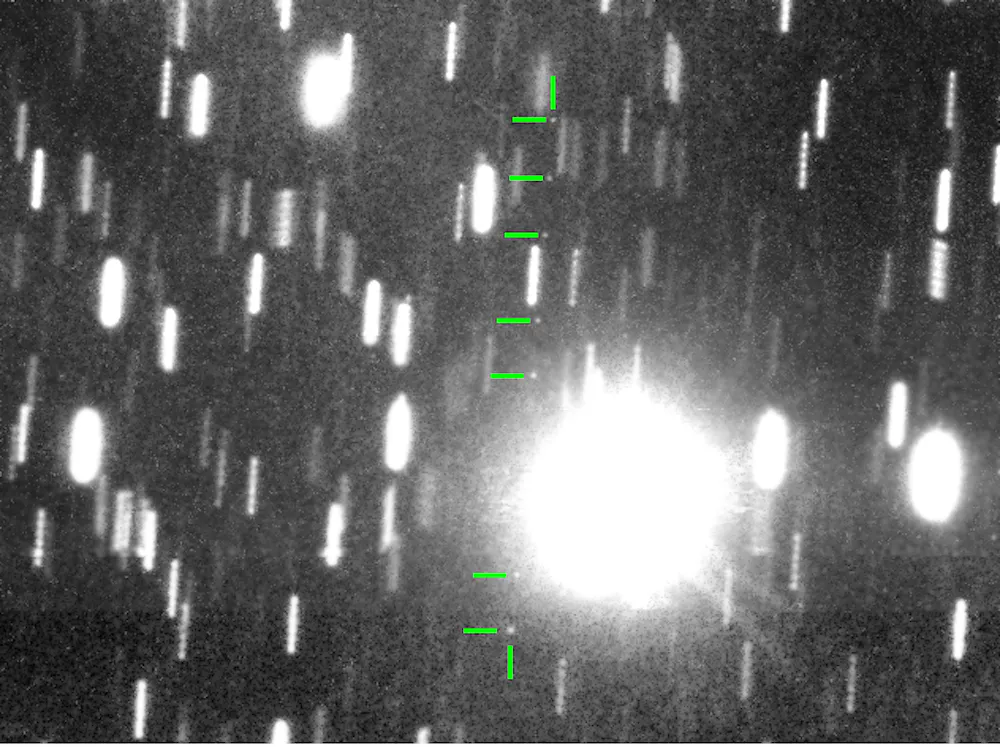
    September 29, 2024
  • MIL-OSI Asia-Pac: PM Modi lauds Indian contingent on winning Gold in both open and women’s category at 45th Chess Olympiad

    Source: Government of India (2)

    Posted On: 23 SEP 2024 1:15AM by PIB Delhi

    Prime Minister Shri Narendra Modi today lauded the Indian contingent for winning Gold in both open and women’s category at 45th Chess Olympiad. He congratulated the incredible Men’s and Women’s Chess teams for their remarkable achievement.

    The PM in a message on X stated:

    “Historic win for India as our chess contingent wins the 45th #FIDE Chess Olympiad! India has won the Gold in both open and women’s category at Chess Olympiad! Congratulations to our incredible Men’s and Women’s Chess Teams. This remarkable achievement marks a new chapter in India’s sports trajectory. May this success inspire generations of chess enthusiasts to excel in the game.”

    Historic win for India as our chess contingent wins the 45th #FIDE Chess Olympiad! India has won the Gold in both open and women’s category at Chess Olympiad! Congratulations to our incredible Men’s and Women’s Chess Teams. This remarkable achievement marks a new chapter in… pic.twitter.com/FUYHfK2Jtu

    — Narendra Modi (@narendramodi) September 22, 2024

    *****

    MJPS/SR

    (Release ID: 2057692) Visitor Counter : 19

    MIL OSI Asia Pacific News –

    September 29, 2024
  • MIL-OSI Asia-Pac: Prime Minister addressed the Indian community in New York

    Source: Government of India

    Posted On: 23 SEP 2024 12:28AM by PIB Delhi

    Prime Minister Shri Narendra Modi today addressed a large gathering of the Indian community at an event in Long Island, New York. Over 15,000 people attended the event.

    Prime Minister was welcomed by the community with exceptional warmth and enthusiasm. Addressing the gathering, Prime Minister noted that the India-US relationship is profoundly enriched by the Indian American community, which plays a pivotal role in fostering ties between the two great democracies. Prime Minister spoke about his meeting with President Biden the previous day in his home in Delaware. This special gesture reflected the bridge of trust that the Indian community has built with the United States.

    Prime Minister spoke about his vision for Viksit Bharat by 2047. He noted that the largest democratic exercise in human history had given him a historic third term, in which he was committed to work for the progress of India with ever greater dedication. He highlighted transformative changes in India in the last decade- from creation of next-generation infrastructure to pulling 250 million people out of poverty, India’s economic growth and going from being the 10th largest economy to the 5th largest, and now aiming at becoming the third largest economy in the world.

    Prime Minister underlined the government’s commitment to pursuing reforms to meet the aspirations of the people. He referred to the new vibrancy in the country, with innovation, entrepreneurship, start-ups, financial inclusion and digital empowerment propelling growth and prosperity. He highlighted the transformative impact at the grassroots level of women-led development and green transition.

    Prime Minister noted that India was a major contributor to global growth, prosperity, peace and security, climate change action, innovation, supply and value chains, and in filling global skill-gaps. India’s voice today resonated deeper and louder in the global arena, he added.

    Prime Minister announced plans to open two new Indian consulates in the US- in Boston and Los Angeles – and a Thiruvalluvar Chair of Tamil studies in the University of Houston. These initiatives would further strengthen the living bridge between India and its diaspora in the United States. He expressed the hope that the Indian diaspora, with its strong convening strength, would continue to play a crucial role in fostering closer ties between India and the US.

    *****

    MJPS/SR/BM

    (Release ID: 2057690) Visitor Counter : 77

    MIL OSI Asia Pacific News –

    September 29, 2024
←Previous Page
1 … 5,885 5,886 5,887 5,888 5,889 … 5,934
Next Page→
NewzIntel.com

NewzIntel.com

MIL Open Source Intelligence

  • Blog
  • About
  • FAQs
  • Authors
  • Events
  • Shop
  • Patterns
  • Themes

Twenty Twenty-Five

Designed with WordPress