Blog

  • MIL-OSI: Apollo Announces Olympus Housing Capital

    Source: GlobeNewswire (MIL-OSI)

    NEW YORK, June 30, 2025 (GLOBE NEWSWIRE) — Apollo (NYSE: APO) today announced the launch of Olympus Housing Capital (“Olympus” or the “Company”), a new homebuilder finance strategy. Olympus is an affiliate of Apollo and focuses on providing capital solutions to homebuilders across the United States to finance land acquisition and development work required to transform entitled residential land into finished lots ready for home construction. Olympus is led by CEO Andrew Brausa, an industry veteran with more than two decades of experience in residential housing.

    Olympus operates at the intersection of multiple secular tailwinds including the structural under-supply of single-family homes and homebuilder finance increasingly relying upon customized private financing solutions. Olympus’ originations are backed by capital from Apollo-managed funds and affiliated balance sheets, and the Company will target both public and private homebuilder customers who increasingly require scaled capital partners to support their growth ambitions and increase the supply of housing in the United States.

    Apollo Partners Peter Sinensky and Nancy de Liban said, “Olympus sits at the epicenter of multiple focus areas for Apollo and builds upon our expertise in residential real estate and asset-backed finance origination. This new strategy represents a highly scalable business that is poised to deliver flexible capital solutions to an underbuilt market with favorable long-term macroeconomic tailwinds, and we are pleased to partner with Andrew and leverage his extensive experience and strong track record in the sector.”

    Olympus CEO Andrew Brausa said, “I am excited to join forces with Apollo to launch Olympus amid robust and growing demand for reliable homebuilder capital solutions. With a flexible investment mandate and significant operating capabilities, we believe Olympus can provide value-add services that align with the interests of our clients and their community residents. I look forward to collaborating with Nancy, Peter and the Apollo team as we seek to scale the strategy and solve for a critical funding need helping facilitate new home ownership across the country.”

    Mr. Brausa has over 20 years of investment experience and most recently founded and managed Brookfield Asset Management’s land financing strategies. Previously, Brausa co-founded Domain Real Estate Partners to execute private land financings. He has also managed public market investment portfolios at DW Partners and held senior investment roles at several global asset managers.

    To learn more about Olympus, visit www.olympushc.com.

    About Apollo

    Apollo is a high-growth, global alternative asset manager. In our asset management business, we seek to provide our clients excess return at every point along the risk reward spectrum from investment grade credit to private equity. For more than three decades, our investing expertise across our fully integrated platform has served the financial return needs of our clients and provided businesses with innovative capital solutions for growth. Through Athene, our retirement services business, we specialize in helping clients achieve financial security by providing a suite of retirement savings products and acting as a solutions provider to institutions. Our patient, creative, and knowledgeable approach to investing aligns our clients, businesses we invest in, our employees, and the communities we impact, to expand opportunity and achieve positive outcomes. As of March 31, 2025, Apollo had approximately $785 billion of assets under management. To learn more, please visit www.apollo.com.

    Contacts

    Noah Gunn
    Global Head of Investor Relations
    Apollo Global Management, Inc.
    (212) 822-0540
    IR@apollo.com

    Joanna Rose
    Global Head of Corporate Communications
    Apollo Global Management, Inc.
    (212) 822-0491
    Communications@apollo.com

    The MIL Network

  • MIL-OSI: Abacus Global Management Announces Commencement of Exchange Offer and Consent Solicitation Relating to Warrants

    Source: GlobeNewswire (MIL-OSI)

    ORLANDO, Fla., June 30, 2025 (GLOBE NEWSWIRE) — Abacus Global Management, Inc. (“Abacus” or the “Company”) (NASDAQ: ABL), a leader in the alternative asset management space, today announced that it has commenced an exchange offer (the “Offer”) and consent solicitation (the “Consent Solicitation”) relating to its (i) outstanding public warrants (the “public warrants”) and (ii) outstanding private placement warrants (the “private placement warrants” and, together with the public warrants, the “warrants”) to purchase shares of common stock, par value $0.0001 per share, of the Company (“common stock”). The Company’s common stock and public warrants are listed on the Nasdaq Capital Market under the symbols “ABL” and “ABLLW,” respectively. The purpose of the Offer and Consent Solicitation is to simplify the Company’s capital structure and reduce the potential dilutive impact of the warrants, thereby providing the Company with more flexibility for financing its operations in the future.

    Exchange Offer and Consent Solicitation Relating to Warrants

    The Company is offering to all holders of the outstanding warrants the opportunity to receive 0.23 shares of common stock in exchange for each warrant tendered by the holder and exchanged pursuant to the Offer. Pursuant to the Offer, the Company is offering up to an aggregate of 4,743,381 shares of its common stock in exchange for the warrants. The offering period will continue until 11:59 p.m., Eastern Time, on July 29, 2025, or such later time and date to which the Company may extend (the “Expiration Date”), as described in the Company’s Schedule TO and Prospectus/Offer to Exchange (each as defined below). Tendered warrants may be withdrawn by holders at any time prior to the Expiration Date.

    Concurrently with the Offer, the Company is also soliciting consents from holders of the public warrants to amend the warrant agreement that governs all of the warrants (the “Warrant Agreement”) to permit the Company to require that each warrant that is outstanding upon the closing of the Offer be exchanged for 0.207 shares of common stock, which is a ratio 10% less than the exchange ratio applicable to the Offer (such amendment, the “Warrant Amendment”). Pursuant to the terms of the Warrant Agreement, all except certain specified modifications or amendments require the vote or written consent of holders of at least 50% of the outstanding public warrants. Parties representing approximately 25% of our outstanding public warrants and 94% of our outstanding private placement warrants have agreed to tender their warrants in the Offer and to consent to the proposed Warrant Amendment in the Consent Solicitation pursuant to tender and support agreements. Accordingly, if holders of an additional approximately 25% of our outstanding public warrants agree to consent to the Warrant Amendment in the Consent Solicitation, and the other conditions described in the Offer and Consent Solicitation are satisfied or waived, then the Warrant Amendment will be adopted.

    The Offer and Consent Solicitation are being made pursuant to a prospectus/offer to exchange, dated June 30, 2025 (the “Prospectus/Offer to Exchange”), and Schedule TO, dated June 30, 2025 (the “Schedule TO”), each of which has been filed with the U.S. Securities and Exchange Commission (the “SEC”) and more fully sets forth the terms and conditions of the Offer and Consent Solicitation.

    As of June 30, 2025, there were (i) 97,867,821 shares of common stock outstanding and (ii) a total of 20,623,395 warrants outstanding, including 11,723,395 public warrants and 8,900,000 private placement warrants. Assuming all warrant holders tender their warrants for exchange in the Offer, the Company would expect to issue up to 4,743,381 shares of common stock, resulting in 102,611,202 shares of common stock outstanding (an increase of approximately 5%), and no warrants outstanding.

    D.F. King & Co., Inc. has been appointed as the information agent for the Offer and Consent Solicitation (the “Information Agent”), and Continental Stock Transfer & Trust Company has been appointed as the exchange agent (the “Exchange Agent”).

    Important Additional Information Has Been Filed with the SEC

    Copies of the Schedule TO and Prospectus/Offer to Exchange will be available free of charge at the website of the SEC at www.sec.gov. Requests for documents may also be directed to the Information Agent at (866) 796-3441 (for warrant holders) or (212) 257-2075 (for banks and brokers) or via the following email address: abacus@dfking.com. A registration statement on Form S-4 relating to the securities to be issued in the Offer has been filed with the SEC but has not yet become effective. Such securities may not be sold nor may offers to buy be accepted prior to the time the registration statement becomes effective.

    This announcement is for informational purposes only and shall not constitute an offer to purchase or a solicitation of an offer to sell the warrants or an offer to sell or a solicitation of an offer to buy any shares of common stock in any state in which such offer, solicitation, or sale would be unlawful before registration or qualification under the laws of any such state. The Offer and Consent Solicitation are being made only through the Schedule TO and Prospectus/Offer to Exchange, and the complete terms and conditions of the Offer and Consent Solicitation are set forth in the Schedule TO and Prospectus/Offer to Exchange.

    Holders of the warrants are urged to read the Schedule TO and Prospectus/Offer to Exchange carefully before making any decision with respect to the Offer and Consent Solicitation because they contain important information, including the various terms of, and conditions to, the Offer and Consent Solicitation.

    None of the Company, any of its management or its board of directors, or the Information Agent, or the Exchange Agent, makes any recommendation as to whether or not holders of warrants should tender the warrants for exchange in the Offer or consent to the Warrant Amendment in the Consent Solicitation.

    About Abacus

    Abacus Global Management (NASDAQ: ABL) is a leading financial services company specializing in alternative asset management, data-driven wealth solutions, technology innovations, and institutional services. With a focus on longevity-based assets and personalized financial planning, Abacus leverages proprietary data analytics and decades of industry expertise to deliver innovative solutions that optimize financial outcomes for individuals and institutions worldwide.

    Contacts:

    Investor Relations
    Robert F. Phillips – SVP Investor Relations and Corporate Affairs
    rob@abacusgm.com
    (321) 290-1198

    David Jackson – Director of IR/Capital Markets
    david@abacusgm.com
    (321) 299-0716

    Abacus Global Management Public Relations
    press@abacusgm.com

    The MIL Network

  • MIL-OSI: Kneat Announces Upcoming Change to its Senior Leadership

    Source: GlobeNewswire (MIL-OSI)

    LIMERICK, Ireland, June 30, 2025 (GLOBE NEWSWIRE) — kneat.com, inc. (TSX: KSI) (OTCQC: KSIOF), a leader in digitizing and automating validation and quality processes, announces a change to its senior leadership team.

    Hugh Kavanagh, our CFO, is retiring from Kneat to spend more time pursuing other interests. We wish him the very best for the future. During his time at Kneat, Hugh contributed significantly to our success, helping the Company to grow to its current level and building a strong finance team. We have very much enjoyed working with Hugh and will miss his valuable contributions, his friendship and ongoing financial guidance at all levels within the Company.

    Dave O’Reilly will join the Kneat team as our new CFO on July 7th. Most recently, Dave served as CFO at Ekco for seven years. During his time there he helped scale this fast-growing cloud business from a start up to $200 million in annual revenue. He was responsible for directing financial strategy and operations, driving rapid business growth, and establishing Ekco as a market leader in the European Managed Security Service space. He built and led high-performing finance, accounting, and FP&A teams, fostering a culture of accountability and strategic alignment. Prior to his time at Ekco he served as the international controller for a $4 billion-SaaS business, Consensus Cloud Solutions/Ziff Davis Inc., formerly J2 Global. Dave holds a BA in Accounting and Finance from Dublin City University and is a licensed CPA.

    Dave will partner with Hugh for a period of one month – to ensure a smooth transition, and Hugh’s final day with the company will be Friday, August 8th.

    “I’d like to thank Hugh and our finance team for their continued dedication to Kneat and trust in their combined leadership to ensure a smooth transition in the coming months,” said Eddie Ryan, Kneat CEO. “I look forward to working with Dave, I’m confident he will have a considerable impact, as we continue to scale the value we deliver for Life Sciences.”

    About Kneat

    Kneat Solutions provides leading companies in highly regulated industries with unparalleled efficiency in validation and compliance through its digital validation platform Kneat Gx. As an industry leader in customer satisfaction, Kneat boasts an excellent record for implementation, powered by our user-friendly design, expert support, and on-demand training academy. Kneat Gx is an industry-leading digital validation platform that enables highly regulated companies to manage any validation discipline from end-to-end. Kneat Gx is fully ISO 9001 and ISO 27001 certified, fully validated, and 21 CFR Part 11/Annex 11 compliant. Multiple independent customer studies show up to 40% reduction in documentation cycle times, up to 20% faster speed to market, and a higher compliance standard.

    Cautionary and Forward-Looking Statements

    Except for the statements of historical fact contained herein, certain information presented constitutes “forward-looking information” within the meaning of applicable Canadian securities laws. Such forward-looking information includes, but is not limited to, the relationship between Kneat and the customer, Kneat’s business development activities, the use and implementation timelines of Kneat’s software within the customer’s validation processes, the ability and intent of the customer to scale the use of Kneat’s software within the customer’s organization, and the compliance of Kneat’s platform under regulatory audit and inspection. While such forward-looking statements are expressed by Kneat, as stated in this release, in good faith and believed by Kneat to have a reasonable basis, they are subject to important risks and uncertainties. As a result of these risks and uncertainties, the events predicted in these forward-looking statements may differ materially from actual results or events. These forward-looking statements are not guarantees of future performance, given that they involve risks and uncertainties.

    Kneat does not undertake any obligation to release publicly revisions to any forward-looking statement, except as may be required under applicable securities laws. Investors should not assume that any lack of update to a previously issued forward-looking statement constitutes a reaffirmation of that statement. Continued reliance on forward-looking statements is at an investor’s own risk.

    For more information visit www.kneat.com.

    Contact:

    Katie Keita, Kneat Investor Relations
    P: + 1 902-450-2660
    E: investors@kneat.com 

    The MIL Network

  • MIL-OSI: Kneat Announces Upcoming Change to its Senior Leadership

    Source: GlobeNewswire (MIL-OSI)

    LIMERICK, Ireland, June 30, 2025 (GLOBE NEWSWIRE) — kneat.com, inc. (TSX: KSI) (OTCQC: KSIOF), a leader in digitizing and automating validation and quality processes, announces a change to its senior leadership team.

    Hugh Kavanagh, our CFO, is retiring from Kneat to spend more time pursuing other interests. We wish him the very best for the future. During his time at Kneat, Hugh contributed significantly to our success, helping the Company to grow to its current level and building a strong finance team. We have very much enjoyed working with Hugh and will miss his valuable contributions, his friendship and ongoing financial guidance at all levels within the Company.

    Dave O’Reilly will join the Kneat team as our new CFO on July 7th. Most recently, Dave served as CFO at Ekco for seven years. During his time there he helped scale this fast-growing cloud business from a start up to $200 million in annual revenue. He was responsible for directing financial strategy and operations, driving rapid business growth, and establishing Ekco as a market leader in the European Managed Security Service space. He built and led high-performing finance, accounting, and FP&A teams, fostering a culture of accountability and strategic alignment. Prior to his time at Ekco he served as the international controller for a $4 billion-SaaS business, Consensus Cloud Solutions/Ziff Davis Inc., formerly J2 Global. Dave holds a BA in Accounting and Finance from Dublin City University and is a licensed CPA.

    Dave will partner with Hugh for a period of one month – to ensure a smooth transition, and Hugh’s final day with the company will be Friday, August 8th.

    “I’d like to thank Hugh and our finance team for their continued dedication to Kneat and trust in their combined leadership to ensure a smooth transition in the coming months,” said Eddie Ryan, Kneat CEO. “I look forward to working with Dave, I’m confident he will have a considerable impact, as we continue to scale the value we deliver for Life Sciences.”

    About Kneat

    Kneat Solutions provides leading companies in highly regulated industries with unparalleled efficiency in validation and compliance through its digital validation platform Kneat Gx. As an industry leader in customer satisfaction, Kneat boasts an excellent record for implementation, powered by our user-friendly design, expert support, and on-demand training academy. Kneat Gx is an industry-leading digital validation platform that enables highly regulated companies to manage any validation discipline from end-to-end. Kneat Gx is fully ISO 9001 and ISO 27001 certified, fully validated, and 21 CFR Part 11/Annex 11 compliant. Multiple independent customer studies show up to 40% reduction in documentation cycle times, up to 20% faster speed to market, and a higher compliance standard.

    Cautionary and Forward-Looking Statements

    Except for the statements of historical fact contained herein, certain information presented constitutes “forward-looking information” within the meaning of applicable Canadian securities laws. Such forward-looking information includes, but is not limited to, the relationship between Kneat and the customer, Kneat’s business development activities, the use and implementation timelines of Kneat’s software within the customer’s validation processes, the ability and intent of the customer to scale the use of Kneat’s software within the customer’s organization, and the compliance of Kneat’s platform under regulatory audit and inspection. While such forward-looking statements are expressed by Kneat, as stated in this release, in good faith and believed by Kneat to have a reasonable basis, they are subject to important risks and uncertainties. As a result of these risks and uncertainties, the events predicted in these forward-looking statements may differ materially from actual results or events. These forward-looking statements are not guarantees of future performance, given that they involve risks and uncertainties.

    Kneat does not undertake any obligation to release publicly revisions to any forward-looking statement, except as may be required under applicable securities laws. Investors should not assume that any lack of update to a previously issued forward-looking statement constitutes a reaffirmation of that statement. Continued reliance on forward-looking statements is at an investor’s own risk.

    For more information visit www.kneat.com.

    Contact:

    Katie Keita, Kneat Investor Relations
    P: + 1 902-450-2660
    E: investors@kneat.com 

    The MIL Network

  • MIL-OSI: Kneat Announces Upcoming Change to its Senior Leadership

    Source: GlobeNewswire (MIL-OSI)

    LIMERICK, Ireland, June 30, 2025 (GLOBE NEWSWIRE) — kneat.com, inc. (TSX: KSI) (OTCQC: KSIOF), a leader in digitizing and automating validation and quality processes, announces a change to its senior leadership team.

    Hugh Kavanagh, our CFO, is retiring from Kneat to spend more time pursuing other interests. We wish him the very best for the future. During his time at Kneat, Hugh contributed significantly to our success, helping the Company to grow to its current level and building a strong finance team. We have very much enjoyed working with Hugh and will miss his valuable contributions, his friendship and ongoing financial guidance at all levels within the Company.

    Dave O’Reilly will join the Kneat team as our new CFO on July 7th. Most recently, Dave served as CFO at Ekco for seven years. During his time there he helped scale this fast-growing cloud business from a start up to $200 million in annual revenue. He was responsible for directing financial strategy and operations, driving rapid business growth, and establishing Ekco as a market leader in the European Managed Security Service space. He built and led high-performing finance, accounting, and FP&A teams, fostering a culture of accountability and strategic alignment. Prior to his time at Ekco he served as the international controller for a $4 billion-SaaS business, Consensus Cloud Solutions/Ziff Davis Inc., formerly J2 Global. Dave holds a BA in Accounting and Finance from Dublin City University and is a licensed CPA.

    Dave will partner with Hugh for a period of one month – to ensure a smooth transition, and Hugh’s final day with the company will be Friday, August 8th.

    “I’d like to thank Hugh and our finance team for their continued dedication to Kneat and trust in their combined leadership to ensure a smooth transition in the coming months,” said Eddie Ryan, Kneat CEO. “I look forward to working with Dave, I’m confident he will have a considerable impact, as we continue to scale the value we deliver for Life Sciences.”

    About Kneat

    Kneat Solutions provides leading companies in highly regulated industries with unparalleled efficiency in validation and compliance through its digital validation platform Kneat Gx. As an industry leader in customer satisfaction, Kneat boasts an excellent record for implementation, powered by our user-friendly design, expert support, and on-demand training academy. Kneat Gx is an industry-leading digital validation platform that enables highly regulated companies to manage any validation discipline from end-to-end. Kneat Gx is fully ISO 9001 and ISO 27001 certified, fully validated, and 21 CFR Part 11/Annex 11 compliant. Multiple independent customer studies show up to 40% reduction in documentation cycle times, up to 20% faster speed to market, and a higher compliance standard.

    Cautionary and Forward-Looking Statements

    Except for the statements of historical fact contained herein, certain information presented constitutes “forward-looking information” within the meaning of applicable Canadian securities laws. Such forward-looking information includes, but is not limited to, the relationship between Kneat and the customer, Kneat’s business development activities, the use and implementation timelines of Kneat’s software within the customer’s validation processes, the ability and intent of the customer to scale the use of Kneat’s software within the customer’s organization, and the compliance of Kneat’s platform under regulatory audit and inspection. While such forward-looking statements are expressed by Kneat, as stated in this release, in good faith and believed by Kneat to have a reasonable basis, they are subject to important risks and uncertainties. As a result of these risks and uncertainties, the events predicted in these forward-looking statements may differ materially from actual results or events. These forward-looking statements are not guarantees of future performance, given that they involve risks and uncertainties.

    Kneat does not undertake any obligation to release publicly revisions to any forward-looking statement, except as may be required under applicable securities laws. Investors should not assume that any lack of update to a previously issued forward-looking statement constitutes a reaffirmation of that statement. Continued reliance on forward-looking statements is at an investor’s own risk.

    For more information visit www.kneat.com.

    Contact:

    Katie Keita, Kneat Investor Relations
    P: + 1 902-450-2660
    E: investors@kneat.com 

    The MIL Network

  • MIL-OSI: HighPeak Energy, Inc. Announces Proposed Aggregate $725 Million Private Offering of Senior Notes

    Source: GlobeNewswire (MIL-OSI)

    FORT WORTH, Texas, June 30, 2025 (GLOBE NEWSWIRE) — HighPeak Energy, Inc. (“HighPeak” or the “Company”) (NASDAQ: HPK) today announced that it intends to offer, subject to market and customary conditions, $725 million aggregate principal amount of senior notes due 2030 (the “Notes”) in a private placement under Rule 144A and Regulation S of the Securities Act of 1933, as amended (the “Securities Act”), to eligible purchasers (the “Offering”).

    The Company intends to use the net proceeds from the Offering, together with borrowings under a new revolving credit facility it expects to enter into in connection with the Offering, to fully repay its existing term loan credit agreement.

    The Notes to be offered will not be registered under the Securities Act or under any state or other securities laws, and will be issued pursuant to an exemption therefrom, and may not be offered or sold within the United States, or to or for the account or benefit of any U.S. person, absent registration or an applicable exemption from registration requirements.

    The Notes are being offered only to persons who are either reasonably believed to be “qualified institutional buyers” under Rule 144A or who are non-“U.S. persons” under Regulation S as defined under applicable securities laws.

    This press release does not constitute an offer to sell, a solicitation to buy or an offer to purchase or sell any securities, nor shall there be any sale of these securities in any state or jurisdiction in which such offer, solicitation or sale would be unlawful prior to registration or qualification under the securities laws of any such state or jurisdiction.

    About HighPeak Energy, Inc.

    HighPeak Energy, Inc. is a publicly traded independent crude oil and natural gas company, headquartered in Fort Worth, Texas, focused on the acquisition, development, exploration and exploitation of unconventional crude oil and natural gas reserves in the Midland Basin in West Texas.

    Cautionary Note Regarding Forward-Looking Statements

    This press release contains forward-looking statements within the meaning of the safe harbor provisions of the Private Securities Litigation Reform Act of 1995, with respect to the offering and the use of proceeds. These forward-looking statements, including statements regarding the intention, completion, timing and option relating to the offering, represent the Company’s expectations or beliefs concerning future events. These forward-looking statements are subject to risks and uncertainties related to market conditions and the satisfaction of customary closing conditions related to the offering. There can be no assurance that the Company will be able to complete the offering. When used in this document, including any oral statements made in connection therewith, the words “could,” “should,” “will,” “may,” “believe,” “anticipate,” “intend,” “estimate,” “expect,” “project,” the negative of such terms and other similar expressions are intended to identify forward-looking statements, although not all forward-looking statements contain such identifying words. These forward-looking statements are based on management’s current expectations and assumptions about future events and are based on currently available information as to the outcome and timing of future events. Except as otherwise required by applicable law, the Company disclaims any duty to update any forward-looking statements, all of which are expressly qualified by the statements in this section, to reflect events or circumstances after the date on which they are made. The Company cautions you that these forward-looking statements are subject to all of the risks and uncertainties, most of which are difficult to predict and many of which are beyond the control of the Company, incident to the development, production, gathering and sale of oil, natural gas and natural gas liquids.

    Investor Contact:

    Ryan Hightower
    Vice President, Business Development
    817.850.9204
    rhightower@highpeakenergy.com

    Source: HighPeak Energy, Inc.

    The MIL Network

  • MIL-OSI: Accredited Investors: Navigating the Post-Pandemic Landscape

    Source: GlobeNewswire (MIL-OSI)

    ATLANTA, June 30, 2025 (GLOBE NEWSWIRE) — A new era of early-stage investing takes center stage this summer as Keiretsu Forum South-East, the Angel Capital Association (ACA), and Georgia Tech’s Advanced Technology Development Center (ATDC) announce the Southeast Investor Conference, set for July 29–30, 2025, in Atlanta.

    The two-day program is designed to deliver candid insights, curated deal flow, and pragmatic strategies to navigate an investment landscape that has transformed dramatically in recent years. Attendees will explore evolving trends shaping portfolio management, early exits, and innovative funding models—while engaging with the entrepreneurs building the next generation of market solutions.

    The Southeast Investor Conference will feature a blend of educational programming and direct access to capital-ready startups. Notable sessions include:

    • Angel Returns & Portfolio Strategy, led by Rick Timmins, an ACA instructor and veteran investor, with data-driven approaches to diversification and IRR in uncertain markets.
    • Paradigm Shift in Early-Stage Investing, a discussion with Howard Lubert, Regional President of Keiretsu Forum Mid-Atlantic, South-East & Texas, and serial entrepreneur Christian Haller, exploring nimble investment approaches in the post-pandemic environment.
    • Leadership for Investors to Curate + Cultivate, to Profit in Turbulent Times, an interactive session led by Dr. Louise Yochee and Dr. Merom Klein, focused on identifying and cultivating the leadership attributes that drive portfolio success.
    • A keynote address from Ron Weissman, offering an unfiltered look at the state of early-stage investing, regional deal dynamics, and opportunities emerging across the Southeast innovation economy.

    The conference also includes a curated Startup Showcase, featuring promising early-stage companies actively raising capital. Participating founders will present their ventures to an audience of active accredited investors, followed by structured Q&A and networking opportunities during the investor reception and conference dinner.

    Organizers welcome angel groups throughout the Southeast with exceptional deal flow to connect regarding participation in the showcase. The event aims to spotlight founders and investment opportunities demonstrating market traction, clear pathways to scale, and strong potential for timely exits.

    The Southeast Investor Conference is supported by Accorto Regulatory Solutions, whose sponsorship underscores their commitment to strengthening the innovation landscape. They are a boutique regulatory firm that helps domestic and international companies bring FDA-regulated product concepts to market. Accorto partners with entrepreneurs and investors to accelerate compliant commercialization of breakthrough technologies.

    “The investment environment has never been more demanding,” said Barry Etra, Director of Entrepreneur Services, Keiretsu Forum. “This conference was designed to provide both the clarity and the connections serious investors need to navigate these cycles with confidence.”

    Registration for the Southeast Investor Conference is open to accredited investors and investment professionals. Capacity is limited to preserve the highly interactive format of the sessions and networking components. Register at https://www.k4-mst-investorconference.com/

    About Keiretsu Forum South-East
    Keiretsu Forum is the world’s largest and most active accredited investor community, with over 2,000 members across 50+ chapters globally. Since its founding, Keiretsu members have invested over $1 billion in early-stage companies spanning technology, life sciences, consumer products, and beyond.

    About the Angel Capital Association
    The Angel Capital Association is a professional alliance of accredited angel investors in North America. Representing more than 15,000 angels and over 250 angel groups and platforms, ACA supports investor education, public policy, and industry standards.

    About Georgia Tech’s ATDC
    The Advanced Technology Development Center (ATDC) at Georgia Tech is the state of Georgia’s technology incubator, helping entrepreneurs build and scale technology companies that make an impact.

    For media inquiries or information about participation in the Startup Showcase, please contact:

    Cindi Sutera
    K4-MST Communications
    CindiS@AMScommunications.net
    610-613-2773

    The MIL Network

  • MIL-Evening Report: Fiji human rights coalition challenges Rabuka over decolonisation ‘unfinished business’

    Asia Pacific Report

    The NGO Coalition on Human Rights in Fiji (NGOCHR) has called on Prime Minister Sitiveni Rabuka as the new chair of the Melanesian Spearhead Group (MSG) to “uphold justice, stability and security” for Kanaky New Caledonia and West Papua.

    In a statement today after last week’s MSG leaders’ summit in Suva, the coalition also warned over Indonesia’s “chequebook diplomacy” as an obstacle for the self-determination aspirations of Melanesian peoples not yet independent.

    Indonesia is a controversial associate member of the MSG in what is widely seen in the region as a “complication” for the regional Melanesian body.

    The statement said that with Rabuka’s “extensive experience as a seasoned statesman in the Pacific, we hope that this second chapter will chart a different course, one rooted in genuine commitment to uphold justice, stability and security for all our Melanesian brothers and sisters in Kanaky New Caledonia and West Papua”.

    The coalition said the summit’s theme, “A peaceful and prosperous Melanesia”, served as a reminder that even after several decades of regional bilaterals, “our Melanesian leaders have made little to no progress in fulfilling its purpose in the region — to support the independence and sovereignty of all Melanesians”.

    “Fiji, as incoming chair, inherits the unfinished work of the MSG. As rightly stated by the late great Father Walter Lini, ‘We will not be free until all of Melanesia is free”, the statement said.

    “The challenges for Fiji’s chair to meet the goals of the MSG are complex and made more complicated by the inclusion of Indonesia as an associate member in 2015.

    ‘Indonesia active repression’
    “Indonesia plays an active role in the ongoing repression of West Papuans in their desire for independence. Their associate member status provides a particular obstacle for Fiji as chair in furthering the self-determination goals of the MSG.”

    Complicating matters further was the asymmetry in the relationship between Indonesia and the rest of the MSG members, the statement said.

    “As a donor government and emerging economic power, Indonesia’s ‘chequebook and cultural diplomacy’ continues to wield significant influence across the region.

    “Its status as an associate member of the MSG raises serious concerns about whether it is appropriate, as this pathway risks further marginalising the voices of our West Papuan sisters and brothers.”

    This defeated the “whole purpose of the MSG: ‘Excelling together towards a progressive and prosperous Melanesia’.”

    The coalition acknowledged Rabuka’s longstanding commitment to the people of Kanaky New Caledonia. A relationship and shared journey that had been forged since 1989.

    ‘Stark reminder’
    The pro-independence riots of May 2024 served as a “stark reminder that much work remains to be done to realise the full aspirations of the Kanak people”.

    As the Pacific awaited a “hopeful and favourable outcome” from the Troika Plus mission to Kanaky New Caledonia, the coalition said that it trusted Rabuka to “carry forward the voices, struggles, dreams and enduring aspirations of the people of Kanaky New Caledonia”.

    The statement called on Rabuka as the new chair of MSG to:

    • Ensure the core founding values, and mission of the MSG are upheld;
    • Re-evaluate Indonesia’s appropriateness as an associate member of the MSG; and
    • Elevate discussions on West Papua and Kanaky New Caledonia at the MSG level and through discussions at the Pacific Islands Forum Leaders.

    The Fiji NGO Coalition on Human Rights (NGOCHR) represents the Fiji Women’s Crisis Centre (chair), Fiji Women’s Rights Movement, Citizens’ Constitutional Forum, femLINKpacific, Social Empowerment and Education Program, and Diverse Voices and Action (DIVA) for Equality Fiji. Pacific Network on Globalisation (PANG) is an observer.

    MIL OSI AnalysisEveningReport.nz

  • MIL-OSI United Nations: Financing for Development Conference Opens in Sevilla, Spain

    Source: United Nations MIL OSI b

    Fourth International Conference on Financing for Development,

    1st & 2nd Meetings (AM & PM)

    Don Felipe VI, King of Spain, opens the fourth International Conference on Financing for Development this morning in Sevilla, Spain.  Held from 30 June to 3 July, the conference provides a unique opportunity to reform financing at all levels, including to support reform of the international financial architecture and addressing financing challenges preventing the urgently needed investment push for the Sustainable Development Goals.  

    Throughout the week, leaders from all Governments, along with international and regional organizations, financial and trade institutions, businesses, civil society and the UN system, will unite at the highest levels, fostering stronger international cooperation.

    For information media. Not an official record.

    MIL OSI United Nations News

  • MIL-OSI Banking: RBI imposes monetary penalty on Shree Kadi Nagarik Sahakari Bank Ltd., Dist. Mehsana, Gujarat

    Source: Reserve Bank of India

    The Reserve Bank of India (RBl) has, by an order dated June 26, 2025, imposed a monetary penalty of ₹14.30 lakh (Rupees Fourteen Lakh Thirty Thousand only) on Shree Kadi Nagarik Sahakari Bank Ltd., Dist. Mehsana, Gujarat (the bank) for non-compliance with the certain directions issued by RBI on ‘Donations to Trusts and Institutions where Directors, their relatives hold position or are interested’ and ‘Management of Advances – UCBs’ This penalty has been imposed in exercise of powers conferred on RBI under the provisions of Section 47A(1)(c) read with Sections 46(4)(i) and 56 of the Banking Regulation Act, 1949.

    The statutory inspection of the bank was conducted by the RBI with reference to its financial position as on March 31, 2024. Based on supervisory findings of non-compliance with RBI directions and related correspondence in that regard, a notice was issued to the bank advising it to show cause as to why penalty should not be imposed on it for its failure to comply with the said directions. After considering the bank’s reply to the notice, oral submissions made during the personal hearing and additional submissions made by it, RBI found, inter alia, that the following charges against the bank were sustained, warranting imposition of monetary penalty:

    The bank had:

    1. donated certain amount to a trust in which the bank’s director’s relative was interested; and

    2. failed to ensure end-use of funds with respect to certain loans sanctioned by it.

    This action is based on deficiencies in regulatory compliance and is not intended to pronounce upon the validity of any transaction or agreement entered into by the bank with its customers. Further, imposition of this monetary penalty is without prejudice to any other action that may be initiated by RBI against the bank.

    (Puneet Pancholy)  
    Chief General Manager

    Press Release: 2025-2026/628

    MIL OSI Global Banks

  • MIL-OSI Banking: RBI imposes monetary penalty on Shree Kadi Nagarik Sahakari Bank Ltd., Dist. Mehsana, Gujarat

    Source: Reserve Bank of India

    The Reserve Bank of India (RBl) has, by an order dated June 26, 2025, imposed a monetary penalty of ₹14.30 lakh (Rupees Fourteen Lakh Thirty Thousand only) on Shree Kadi Nagarik Sahakari Bank Ltd., Dist. Mehsana, Gujarat (the bank) for non-compliance with the certain directions issued by RBI on ‘Donations to Trusts and Institutions where Directors, their relatives hold position or are interested’ and ‘Management of Advances – UCBs’ This penalty has been imposed in exercise of powers conferred on RBI under the provisions of Section 47A(1)(c) read with Sections 46(4)(i) and 56 of the Banking Regulation Act, 1949.

    The statutory inspection of the bank was conducted by the RBI with reference to its financial position as on March 31, 2024. Based on supervisory findings of non-compliance with RBI directions and related correspondence in that regard, a notice was issued to the bank advising it to show cause as to why penalty should not be imposed on it for its failure to comply with the said directions. After considering the bank’s reply to the notice, oral submissions made during the personal hearing and additional submissions made by it, RBI found, inter alia, that the following charges against the bank were sustained, warranting imposition of monetary penalty:

    The bank had:

    1. donated certain amount to a trust in which the bank’s director’s relative was interested; and

    2. failed to ensure end-use of funds with respect to certain loans sanctioned by it.

    This action is based on deficiencies in regulatory compliance and is not intended to pronounce upon the validity of any transaction or agreement entered into by the bank with its customers. Further, imposition of this monetary penalty is without prejudice to any other action that may be initiated by RBI against the bank.

    (Puneet Pancholy)  
    Chief General Manager

    Press Release: 2025-2026/628

    MIL OSI Global Banks

  • MIL-OSI Banking: RBI imposes monetary penalty on Shree Kadi Nagarik Sahakari Bank Ltd., Dist. Mehsana, Gujarat

    Source: Reserve Bank of India

    The Reserve Bank of India (RBl) has, by an order dated June 26, 2025, imposed a monetary penalty of ₹14.30 lakh (Rupees Fourteen Lakh Thirty Thousand only) on Shree Kadi Nagarik Sahakari Bank Ltd., Dist. Mehsana, Gujarat (the bank) for non-compliance with the certain directions issued by RBI on ‘Donations to Trusts and Institutions where Directors, their relatives hold position or are interested’ and ‘Management of Advances – UCBs’ This penalty has been imposed in exercise of powers conferred on RBI under the provisions of Section 47A(1)(c) read with Sections 46(4)(i) and 56 of the Banking Regulation Act, 1949.

    The statutory inspection of the bank was conducted by the RBI with reference to its financial position as on March 31, 2024. Based on supervisory findings of non-compliance with RBI directions and related correspondence in that regard, a notice was issued to the bank advising it to show cause as to why penalty should not be imposed on it for its failure to comply with the said directions. After considering the bank’s reply to the notice, oral submissions made during the personal hearing and additional submissions made by it, RBI found, inter alia, that the following charges against the bank were sustained, warranting imposition of monetary penalty:

    The bank had:

    1. donated certain amount to a trust in which the bank’s director’s relative was interested; and

    2. failed to ensure end-use of funds with respect to certain loans sanctioned by it.

    This action is based on deficiencies in regulatory compliance and is not intended to pronounce upon the validity of any transaction or agreement entered into by the bank with its customers. Further, imposition of this monetary penalty is without prejudice to any other action that may be initiated by RBI against the bank.

    (Puneet Pancholy)  
    Chief General Manager

    Press Release: 2025-2026/628

    MIL OSI Global Banks

  • MIL-OSI Banking: RBI imposes monetary penalty on Shree Kadi Nagarik Sahakari Bank Ltd., Dist. Mehsana, Gujarat

    Source: Reserve Bank of India

    The Reserve Bank of India (RBl) has, by an order dated June 26, 2025, imposed a monetary penalty of ₹14.30 lakh (Rupees Fourteen Lakh Thirty Thousand only) on Shree Kadi Nagarik Sahakari Bank Ltd., Dist. Mehsana, Gujarat (the bank) for non-compliance with the certain directions issued by RBI on ‘Donations to Trusts and Institutions where Directors, their relatives hold position or are interested’ and ‘Management of Advances – UCBs’ This penalty has been imposed in exercise of powers conferred on RBI under the provisions of Section 47A(1)(c) read with Sections 46(4)(i) and 56 of the Banking Regulation Act, 1949.

    The statutory inspection of the bank was conducted by the RBI with reference to its financial position as on March 31, 2024. Based on supervisory findings of non-compliance with RBI directions and related correspondence in that regard, a notice was issued to the bank advising it to show cause as to why penalty should not be imposed on it for its failure to comply with the said directions. After considering the bank’s reply to the notice, oral submissions made during the personal hearing and additional submissions made by it, RBI found, inter alia, that the following charges against the bank were sustained, warranting imposition of monetary penalty:

    The bank had:

    1. donated certain amount to a trust in which the bank’s director’s relative was interested; and

    2. failed to ensure end-use of funds with respect to certain loans sanctioned by it.

    This action is based on deficiencies in regulatory compliance and is not intended to pronounce upon the validity of any transaction or agreement entered into by the bank with its customers. Further, imposition of this monetary penalty is without prejudice to any other action that may be initiated by RBI against the bank.

    (Puneet Pancholy)  
    Chief General Manager

    Press Release: 2025-2026/628

    MIL OSI Global Banks

  • MIL-OSI Banking: RBI imposes monetary penalty on Saibaba Nagari Sahakari Bank Maryadit, Sailu, Maharashtra

    Source: Reserve Bank of India

    The Reserve Bank of India (RBl) has, by an order dated June 24, 2025, imposed a monetary penalty of ₹50,000/- (Rupees Fifty Thousand only) on Saibaba Nagari Sahakari Bank Maryadit, Sailu, Maharashtra (the bank) for non-compliance with certain directions issued by RBI on ‘Know Your Customer (KYC)’. This penalty has been imposed in exercise of powers conferred on RBI under the provisions of Section 47A(1)(c) read with Sections 46(4)(i) and 56 of the Banking Regulation Act, 1949.

    The statutory inspection of the bank was conducted by the RBI with reference to its financial position as on March 31, 2024. Based on supervisory findings of non-compliance with RBI directions and related correspondence in that regard, a notice was issued to the bank advising it to show cause as to why penalty should not be imposed on it for its failure to comply with the said directions. After considering the bank’s reply to the notice, additional submissions made by it and oral submissions made during the personal hearing, RBI found, inter alia, that the following charges against the bank were sustained, warranting imposition of monetary penalty:

    The bank had failed to:

    1. upload the KYC records of certain customers onto Central KYC Records Registry (CKYCR) within the prescribed time; and

    2. carry out periodic updation of KYC of certain customers as per the prescribed periodicity.

    This action is based on deficiencies in regulatory compliance and is not intended to pronounce upon the validity of any transaction or agreement entered into by the bank with its customers. Further, imposition of this monetary penalty is without prejudice to any other action that may be initiated by RBI against the bank.

    (Puneet Pancholy)  
    Chief General Manager

    Press Release: 2025-2026/629

    MIL OSI Global Banks

  • MIL-OSI Banking: RBI imposes monetary penalty on Saibaba Nagari Sahakari Bank Maryadit, Sailu, Maharashtra

    Source: Reserve Bank of India

    The Reserve Bank of India (RBl) has, by an order dated June 24, 2025, imposed a monetary penalty of ₹50,000/- (Rupees Fifty Thousand only) on Saibaba Nagari Sahakari Bank Maryadit, Sailu, Maharashtra (the bank) for non-compliance with certain directions issued by RBI on ‘Know Your Customer (KYC)’. This penalty has been imposed in exercise of powers conferred on RBI under the provisions of Section 47A(1)(c) read with Sections 46(4)(i) and 56 of the Banking Regulation Act, 1949.

    The statutory inspection of the bank was conducted by the RBI with reference to its financial position as on March 31, 2024. Based on supervisory findings of non-compliance with RBI directions and related correspondence in that regard, a notice was issued to the bank advising it to show cause as to why penalty should not be imposed on it for its failure to comply with the said directions. After considering the bank’s reply to the notice, additional submissions made by it and oral submissions made during the personal hearing, RBI found, inter alia, that the following charges against the bank were sustained, warranting imposition of monetary penalty:

    The bank had failed to:

    1. upload the KYC records of certain customers onto Central KYC Records Registry (CKYCR) within the prescribed time; and

    2. carry out periodic updation of KYC of certain customers as per the prescribed periodicity.

    This action is based on deficiencies in regulatory compliance and is not intended to pronounce upon the validity of any transaction or agreement entered into by the bank with its customers. Further, imposition of this monetary penalty is without prejudice to any other action that may be initiated by RBI against the bank.

    (Puneet Pancholy)  
    Chief General Manager

    Press Release: 2025-2026/629

    MIL OSI Global Banks

  • MIL-OSI Banking: Lending and Deposit Rates of Scheduled Commercial Banks – June 2025

    Source: Reserve Bank of India

    Data on lending and deposit rates of scheduled commercial banks (SCBs) (excluding regional rural banks and small finance banks) received during the month of June 2025 are set out in Tables 1 to 7.

    Highlights:

    Lending Rates:

    • The weighted average lending rate (WALR) on fresh rupee loans of SCBs declined to 9.20 per cent in May 2025 from 9.26 per cent in April 2025.

    • The WALR on outstanding rupee loans of SCBs dropped marginally to 9.69 per cent in May 2025 from 9.70 per cent in April 2025.1

    • 1-Year median Marginal Cost of Funds based Lending Rate (MCLR) of SCBs moderated to 8.90 per cent in June 2025 from 8.95 per cent in May 2025.

    • The share of External Benchmark based Lending Rate (EBLR) linked loans in total outstanding floating rate rupee loans of SCBs was 61.6 per cent at end-March 2025 (60.6 per cent at end-December 2024), while that of MCLR linked loans was 34.9 per cent (35.9 per cent at end-December 2024).1

    Deposit Rates:

    • The weighted average domestic term deposit rate (WADTDR) on fresh rupee term deposits of SCBs stood at 6.11 per cent in May 2025 as compared to 6.34 per cent in April 2025.

    • The weighted average domestic term deposit rate (WADTDR) on outstanding rupee term deposits of SCBs was 7.07 per cent in May 2025 (7.10 per cent in April 2025).1

    Ajit Prasad          
    Deputy General Manager
    (Communications)    

    Press Release: 2025-2026/627


    MIL OSI Global Banks

  • MIL-OSI Submissions: Ancient fossils show how the last mass extinction forever scrambled the ocean’s biodiversity

    Source: The Conversation – USA (2) – By Stewart Edie, Research Geologist and Curator of Paleobiology, Smithsonian Institution

    Even bivalves looked different during the time of the dinosaurs, as these fossils of an ultra-fortified oyster, left, and armored cockle show. Smithsonian Institution

    About 66 million years ago – perhaps on a downright unlucky day in May – an asteroid smashed into our planet.

    The fallout was immediate and severe. Evidence shows that about 70% of species went extinct in a geological instant, and not just those famous dinosaurs that once stalked the land. Masters of the Mesozoic oceans were also wiped out, from mosasaurs – a group of aquatic reptiles topping the food chain – to exquisitely shelled squid relatives known as ammonites.

    Even groups that weathered the catastrophe, such as mammals, fishes and flowering plants, suffered severe population declines and species loss. Invertebrate life in the oceans didn’t fare much better.

    But bubbling away on the seafloor was a stolid group of animals that has left a fantastic fossil record and continues to thrive today: bivalves – clams, cockles, mussels, oysters and more.

    What happened to these creatures during the extinction event and how they rebounded tells an important story, both about the past and the future of biodiversity.

    Surprising discoveries on the seafloor

    Marine bivalves lost around three-quarters of their species during this mass extinction, which marked the end of the Cretaceous Period. My colleagues and I – each of us paleobiologists studying biodiversity – expected that losing so many species would have severely cut down the variety of roles that bivalves play within their environments, what we call their “modes of life.”

    But, as we explain in a study published in the journal Sciences Advances, that wasn’t the case. In assessing the fossils of thousands of bivalve species, we found that at least one species from nearly all their modes of life, no matter how rare or specialized, squeaked through the extinction event.

    Statistically, that shouldn’t have happened. Kill 70% of bivalve species, even at random, and some modes of life should disappear.

    Bivalves had an amazing array of life modes just before the end-Cretaceous mass extinction 66 million years ago. Incredibly, despite the loss of 70% of their species, all but two modes of life survived – Nos. 2 and 10.
    Adapted from Edie et al. 2025, Science Advances

    Most bivalves happily burrow into the sand and mud, feeding on phytoplankton they strain from the water. But others have adopted chemosymbionts and photosymbionts – bacteria and algae that produce nutrients for the bivalves from chemicals or sunlight in exchange for housing. A few have even become carnivorous. Some groups, including the oysters, can lay down a tough cement that hardens underwater, and mussels hold onto rocks by spinning silken threads.

    We thought surely these more specialized modes of life would have been snuffed out by the effects of the asteroid’s impact, including dust and debris likely blocking sunlight and disrupting a huge part of the bivalves’ food chain: photosynthetic algae and bacteria. Instead, most persisted, although biodiversity was forever scrambled as a new ecological landscape emerged. Species that were once dominant struggled, while evolutionary newcomers rose in their place.

    The reasons some species survived and others didn’t leave many questions to explore. Those that filtered phytoplankton from the water column suffered some of the highest species losses, but so did species that fed on organic scraps and didn’t rely as much on the Sun’s energy. Narrow geographic distributions and different metabolisms may have contributed to these extinction patterns.

    Biodiversity bounces back

    Life rebounded from each of the Big Five mass extinctions throughout Earth’s history, eventually punching through past diversity highs. The rich fossil record and spectacular ecological diversity of bivalves gives us a terrific opportunity to study these rebounds to understand how ecosystems and global biodiversity rebuild in the wake of extinctions.

    The extinction caused by the asteroid strike knocked down some thriving modes of life and opened the door for others to dominate the new landscape.

    The rebound from the extinction wasn’t so straightforward. Some modes of life lost nearly all their species, never to recover their past diversity. Others rose to take the top ranks. Genera is the plural of genus.
    Adapted from Edie et al. 2025, Science Advances

    While many people lament the loss of the dinosaurs, we malacologists miss the rudists.

    These bizarrely shaped bivalves resembled giant ice cream cones, sometimes reaching more than 3 feet (1 meter) in size, and they dominated the shallow, tropical Mesozoic seas as massive aggregations of contorted individuals, similar to today’s coral reefs. At least a few harbored photosymbiotic algae, which provided them with nutrients and spurred their growth, much like modern corals.

    An ancient fossil of a rudist from before the last mass extinction. These bivalves could grow to a meter high.
    Smithsonian Institution

    Today, giant clams (Tridacna) and their relatives fill parts of these unique photosymbiotic lifestyles once occupied by the rudists, but they lack the rudists’ astonishing species diversity.

    Mass extinctions clearly upend the status quo. Now, our ocean floors are dominated by clams burrowed into sand and mud, the quahogs, cockles and their relatives – a scene far different from that of the seafloor 66 million years ago.

    New winners in a scrambled ecosystem

    Ecological traits alone didn’t fully predict extinction patterns, nor do they entirely explain the rebound. We also see that simply surviving a mass extinction didn’t necessarily provide a leg up as species diversified within their old and sometimes new modes of life – and few of those new modes dominate the ecological landscape today.

    Like the rudists, trigoniid bivalves had lots of different species prior to the extinction event. These highly ornamented clams built parts of their shells with a super strong biomaterial called nacre – think iridescent pearls – and had fractally interlocking hinges holding their two valves together.

    An ancient fossil of a pearly but tough trigoniid bivalve from the last mass extinction. The two matching shells show their elaborate hinge.
    Smithsonian Institution

    But despite surviving the extinction, which should have placed them in a prime position to accumulate species again, their diversification sputtered. Other types of bivalves that made a living in the same way proliferated instead, relegating this once mighty and global group to a handful of species now found only off the coast of Australia.

    Lessons for today’s oceans

    These unexpected patterns of extinction and survival may offer lessons for the future.

    The fossil record shows us that biodiversity has definite breaking points, usually during a perfect storm of climatic and environmental upheaval. It’s not just that species are lost, but the ecological landscape is overturned.

    Many scientists believe the current biodiversity crisis may cascade into a sixth mass extinction, this one driven by human activities that are changing ecosystems and the global climate. Corals, whose reefs are home to nearly a quarter of known marine species, have faced mass bleaching events as warming ocean water puts their future at risk. Acidification as the oceans absorb more carbon dioxide can also weaken the shells of organisms crucial to the ocean food web.

    Findings like ours suggest that, in the future, the rebound from extinction events will likely result in very different mixes of species and their modes of life in the oceans. And the result may not align with human needs if species providing the bulk of ecosystem services are driven genetically or functionally extinct.

    The global oceans and their inhabitants are complex, and, as our team’s latest research shows, it is difficult to predict the trajectory of biodiversity as it rebounds – even when extinction pressures are reduced.

    Billions of people depend on the ocean for food. As the history recorded by the world’s bivalves shows, the upending of the pecking order – the number of species in each mode of life – won’t necessarily settle into an arrangement that can feed as many people the next time around.

    Stewart Edie receives funding from the Smithsonian Institution.

    ref. Ancient fossils show how the last mass extinction forever scrambled the ocean’s biodiversity – https://theconversation.com/ancient-fossils-show-how-the-last-mass-extinction-forever-scrambled-the-oceans-biodiversity-258389

    MIL OSI

  • MIL-OSI Submissions: Ancient fossils show how the last mass extinction forever scrambled the ocean’s biodiversity

    Source: The Conversation – USA (2) – By Stewart Edie, Research Geologist and Curator of Paleobiology, Smithsonian Institution

    Even bivalves looked different during the time of the dinosaurs, as these fossils of an ultra-fortified oyster, left, and armored cockle show. Smithsonian Institution

    About 66 million years ago – perhaps on a downright unlucky day in May – an asteroid smashed into our planet.

    The fallout was immediate and severe. Evidence shows that about 70% of species went extinct in a geological instant, and not just those famous dinosaurs that once stalked the land. Masters of the Mesozoic oceans were also wiped out, from mosasaurs – a group of aquatic reptiles topping the food chain – to exquisitely shelled squid relatives known as ammonites.

    Even groups that weathered the catastrophe, such as mammals, fishes and flowering plants, suffered severe population declines and species loss. Invertebrate life in the oceans didn’t fare much better.

    But bubbling away on the seafloor was a stolid group of animals that has left a fantastic fossil record and continues to thrive today: bivalves – clams, cockles, mussels, oysters and more.

    What happened to these creatures during the extinction event and how they rebounded tells an important story, both about the past and the future of biodiversity.

    Surprising discoveries on the seafloor

    Marine bivalves lost around three-quarters of their species during this mass extinction, which marked the end of the Cretaceous Period. My colleagues and I – each of us paleobiologists studying biodiversity – expected that losing so many species would have severely cut down the variety of roles that bivalves play within their environments, what we call their “modes of life.”

    But, as we explain in a study published in the journal Sciences Advances, that wasn’t the case. In assessing the fossils of thousands of bivalve species, we found that at least one species from nearly all their modes of life, no matter how rare or specialized, squeaked through the extinction event.

    Statistically, that shouldn’t have happened. Kill 70% of bivalve species, even at random, and some modes of life should disappear.

    Bivalves had an amazing array of life modes just before the end-Cretaceous mass extinction 66 million years ago. Incredibly, despite the loss of 70% of their species, all but two modes of life survived – Nos. 2 and 10.
    Adapted from Edie et al. 2025, Science Advances

    Most bivalves happily burrow into the sand and mud, feeding on phytoplankton they strain from the water. But others have adopted chemosymbionts and photosymbionts – bacteria and algae that produce nutrients for the bivalves from chemicals or sunlight in exchange for housing. A few have even become carnivorous. Some groups, including the oysters, can lay down a tough cement that hardens underwater, and mussels hold onto rocks by spinning silken threads.

    We thought surely these more specialized modes of life would have been snuffed out by the effects of the asteroid’s impact, including dust and debris likely blocking sunlight and disrupting a huge part of the bivalves’ food chain: photosynthetic algae and bacteria. Instead, most persisted, although biodiversity was forever scrambled as a new ecological landscape emerged. Species that were once dominant struggled, while evolutionary newcomers rose in their place.

    The reasons some species survived and others didn’t leave many questions to explore. Those that filtered phytoplankton from the water column suffered some of the highest species losses, but so did species that fed on organic scraps and didn’t rely as much on the Sun’s energy. Narrow geographic distributions and different metabolisms may have contributed to these extinction patterns.

    Biodiversity bounces back

    Life rebounded from each of the Big Five mass extinctions throughout Earth’s history, eventually punching through past diversity highs. The rich fossil record and spectacular ecological diversity of bivalves gives us a terrific opportunity to study these rebounds to understand how ecosystems and global biodiversity rebuild in the wake of extinctions.

    The extinction caused by the asteroid strike knocked down some thriving modes of life and opened the door for others to dominate the new landscape.

    The rebound from the extinction wasn’t so straightforward. Some modes of life lost nearly all their species, never to recover their past diversity. Others rose to take the top ranks. Genera is the plural of genus.
    Adapted from Edie et al. 2025, Science Advances

    While many people lament the loss of the dinosaurs, we malacologists miss the rudists.

    These bizarrely shaped bivalves resembled giant ice cream cones, sometimes reaching more than 3 feet (1 meter) in size, and they dominated the shallow, tropical Mesozoic seas as massive aggregations of contorted individuals, similar to today’s coral reefs. At least a few harbored photosymbiotic algae, which provided them with nutrients and spurred their growth, much like modern corals.

    An ancient fossil of a rudist from before the last mass extinction. These bivalves could grow to a meter high.
    Smithsonian Institution

    Today, giant clams (Tridacna) and their relatives fill parts of these unique photosymbiotic lifestyles once occupied by the rudists, but they lack the rudists’ astonishing species diversity.

    Mass extinctions clearly upend the status quo. Now, our ocean floors are dominated by clams burrowed into sand and mud, the quahogs, cockles and their relatives – a scene far different from that of the seafloor 66 million years ago.

    New winners in a scrambled ecosystem

    Ecological traits alone didn’t fully predict extinction patterns, nor do they entirely explain the rebound. We also see that simply surviving a mass extinction didn’t necessarily provide a leg up as species diversified within their old and sometimes new modes of life – and few of those new modes dominate the ecological landscape today.

    Like the rudists, trigoniid bivalves had lots of different species prior to the extinction event. These highly ornamented clams built parts of their shells with a super strong biomaterial called nacre – think iridescent pearls – and had fractally interlocking hinges holding their two valves together.

    An ancient fossil of a pearly but tough trigoniid bivalve from the last mass extinction. The two matching shells show their elaborate hinge.
    Smithsonian Institution

    But despite surviving the extinction, which should have placed them in a prime position to accumulate species again, their diversification sputtered. Other types of bivalves that made a living in the same way proliferated instead, relegating this once mighty and global group to a handful of species now found only off the coast of Australia.

    Lessons for today’s oceans

    These unexpected patterns of extinction and survival may offer lessons for the future.

    The fossil record shows us that biodiversity has definite breaking points, usually during a perfect storm of climatic and environmental upheaval. It’s not just that species are lost, but the ecological landscape is overturned.

    Many scientists believe the current biodiversity crisis may cascade into a sixth mass extinction, this one driven by human activities that are changing ecosystems and the global climate. Corals, whose reefs are home to nearly a quarter of known marine species, have faced mass bleaching events as warming ocean water puts their future at risk. Acidification as the oceans absorb more carbon dioxide can also weaken the shells of organisms crucial to the ocean food web.

    Findings like ours suggest that, in the future, the rebound from extinction events will likely result in very different mixes of species and their modes of life in the oceans. And the result may not align with human needs if species providing the bulk of ecosystem services are driven genetically or functionally extinct.

    The global oceans and their inhabitants are complex, and, as our team’s latest research shows, it is difficult to predict the trajectory of biodiversity as it rebounds – even when extinction pressures are reduced.

    Billions of people depend on the ocean for food. As the history recorded by the world’s bivalves shows, the upending of the pecking order – the number of species in each mode of life – won’t necessarily settle into an arrangement that can feed as many people the next time around.

    Stewart Edie receives funding from the Smithsonian Institution.

    ref. Ancient fossils show how the last mass extinction forever scrambled the ocean’s biodiversity – https://theconversation.com/ancient-fossils-show-how-the-last-mass-extinction-forever-scrambled-the-oceans-biodiversity-258389

    MIL OSI

  • MIL-OSI Submissions: Ancient fossils show how the last mass extinction forever scrambled the ocean’s biodiversity

    Source: The Conversation – USA (2) – By Stewart Edie, Research Geologist and Curator of Paleobiology, Smithsonian Institution

    Even bivalves looked different during the time of the dinosaurs, as these fossils of an ultra-fortified oyster, left, and armored cockle show. Smithsonian Institution

    About 66 million years ago – perhaps on a downright unlucky day in May – an asteroid smashed into our planet.

    The fallout was immediate and severe. Evidence shows that about 70% of species went extinct in a geological instant, and not just those famous dinosaurs that once stalked the land. Masters of the Mesozoic oceans were also wiped out, from mosasaurs – a group of aquatic reptiles topping the food chain – to exquisitely shelled squid relatives known as ammonites.

    Even groups that weathered the catastrophe, such as mammals, fishes and flowering plants, suffered severe population declines and species loss. Invertebrate life in the oceans didn’t fare much better.

    But bubbling away on the seafloor was a stolid group of animals that has left a fantastic fossil record and continues to thrive today: bivalves – clams, cockles, mussels, oysters and more.

    What happened to these creatures during the extinction event and how they rebounded tells an important story, both about the past and the future of biodiversity.

    Surprising discoveries on the seafloor

    Marine bivalves lost around three-quarters of their species during this mass extinction, which marked the end of the Cretaceous Period. My colleagues and I – each of us paleobiologists studying biodiversity – expected that losing so many species would have severely cut down the variety of roles that bivalves play within their environments, what we call their “modes of life.”

    But, as we explain in a study published in the journal Sciences Advances, that wasn’t the case. In assessing the fossils of thousands of bivalve species, we found that at least one species from nearly all their modes of life, no matter how rare or specialized, squeaked through the extinction event.

    Statistically, that shouldn’t have happened. Kill 70% of bivalve species, even at random, and some modes of life should disappear.

    Bivalves had an amazing array of life modes just before the end-Cretaceous mass extinction 66 million years ago. Incredibly, despite the loss of 70% of their species, all but two modes of life survived – Nos. 2 and 10.
    Adapted from Edie et al. 2025, Science Advances

    Most bivalves happily burrow into the sand and mud, feeding on phytoplankton they strain from the water. But others have adopted chemosymbionts and photosymbionts – bacteria and algae that produce nutrients for the bivalves from chemicals or sunlight in exchange for housing. A few have even become carnivorous. Some groups, including the oysters, can lay down a tough cement that hardens underwater, and mussels hold onto rocks by spinning silken threads.

    We thought surely these more specialized modes of life would have been snuffed out by the effects of the asteroid’s impact, including dust and debris likely blocking sunlight and disrupting a huge part of the bivalves’ food chain: photosynthetic algae and bacteria. Instead, most persisted, although biodiversity was forever scrambled as a new ecological landscape emerged. Species that were once dominant struggled, while evolutionary newcomers rose in their place.

    The reasons some species survived and others didn’t leave many questions to explore. Those that filtered phytoplankton from the water column suffered some of the highest species losses, but so did species that fed on organic scraps and didn’t rely as much on the Sun’s energy. Narrow geographic distributions and different metabolisms may have contributed to these extinction patterns.

    Biodiversity bounces back

    Life rebounded from each of the Big Five mass extinctions throughout Earth’s history, eventually punching through past diversity highs. The rich fossil record and spectacular ecological diversity of bivalves gives us a terrific opportunity to study these rebounds to understand how ecosystems and global biodiversity rebuild in the wake of extinctions.

    The extinction caused by the asteroid strike knocked down some thriving modes of life and opened the door for others to dominate the new landscape.

    The rebound from the extinction wasn’t so straightforward. Some modes of life lost nearly all their species, never to recover their past diversity. Others rose to take the top ranks. Genera is the plural of genus.
    Adapted from Edie et al. 2025, Science Advances

    While many people lament the loss of the dinosaurs, we malacologists miss the rudists.

    These bizarrely shaped bivalves resembled giant ice cream cones, sometimes reaching more than 3 feet (1 meter) in size, and they dominated the shallow, tropical Mesozoic seas as massive aggregations of contorted individuals, similar to today’s coral reefs. At least a few harbored photosymbiotic algae, which provided them with nutrients and spurred their growth, much like modern corals.

    An ancient fossil of a rudist from before the last mass extinction. These bivalves could grow to a meter high.
    Smithsonian Institution

    Today, giant clams (Tridacna) and their relatives fill parts of these unique photosymbiotic lifestyles once occupied by the rudists, but they lack the rudists’ astonishing species diversity.

    Mass extinctions clearly upend the status quo. Now, our ocean floors are dominated by clams burrowed into sand and mud, the quahogs, cockles and their relatives – a scene far different from that of the seafloor 66 million years ago.

    New winners in a scrambled ecosystem

    Ecological traits alone didn’t fully predict extinction patterns, nor do they entirely explain the rebound. We also see that simply surviving a mass extinction didn’t necessarily provide a leg up as species diversified within their old and sometimes new modes of life – and few of those new modes dominate the ecological landscape today.

    Like the rudists, trigoniid bivalves had lots of different species prior to the extinction event. These highly ornamented clams built parts of their shells with a super strong biomaterial called nacre – think iridescent pearls – and had fractally interlocking hinges holding their two valves together.

    An ancient fossil of a pearly but tough trigoniid bivalve from the last mass extinction. The two matching shells show their elaborate hinge.
    Smithsonian Institution

    But despite surviving the extinction, which should have placed them in a prime position to accumulate species again, their diversification sputtered. Other types of bivalves that made a living in the same way proliferated instead, relegating this once mighty and global group to a handful of species now found only off the coast of Australia.

    Lessons for today’s oceans

    These unexpected patterns of extinction and survival may offer lessons for the future.

    The fossil record shows us that biodiversity has definite breaking points, usually during a perfect storm of climatic and environmental upheaval. It’s not just that species are lost, but the ecological landscape is overturned.

    Many scientists believe the current biodiversity crisis may cascade into a sixth mass extinction, this one driven by human activities that are changing ecosystems and the global climate. Corals, whose reefs are home to nearly a quarter of known marine species, have faced mass bleaching events as warming ocean water puts their future at risk. Acidification as the oceans absorb more carbon dioxide can also weaken the shells of organisms crucial to the ocean food web.

    Findings like ours suggest that, in the future, the rebound from extinction events will likely result in very different mixes of species and their modes of life in the oceans. And the result may not align with human needs if species providing the bulk of ecosystem services are driven genetically or functionally extinct.

    The global oceans and their inhabitants are complex, and, as our team’s latest research shows, it is difficult to predict the trajectory of biodiversity as it rebounds – even when extinction pressures are reduced.

    Billions of people depend on the ocean for food. As the history recorded by the world’s bivalves shows, the upending of the pecking order – the number of species in each mode of life – won’t necessarily settle into an arrangement that can feed as many people the next time around.

    Stewart Edie receives funding from the Smithsonian Institution.

    ref. Ancient fossils show how the last mass extinction forever scrambled the ocean’s biodiversity – https://theconversation.com/ancient-fossils-show-how-the-last-mass-extinction-forever-scrambled-the-oceans-biodiversity-258389

    MIL OSI

  • MIL-OSI Submissions: Ancient fossils show how the last mass extinction forever scrambled the ocean’s biodiversity

    Source: The Conversation – USA (2) – By Stewart Edie, Research Geologist and Curator of Paleobiology, Smithsonian Institution

    Even bivalves looked different during the time of the dinosaurs, as these fossils of an ultra-fortified oyster, left, and armored cockle show. Smithsonian Institution

    About 66 million years ago – perhaps on a downright unlucky day in May – an asteroid smashed into our planet.

    The fallout was immediate and severe. Evidence shows that about 70% of species went extinct in a geological instant, and not just those famous dinosaurs that once stalked the land. Masters of the Mesozoic oceans were also wiped out, from mosasaurs – a group of aquatic reptiles topping the food chain – to exquisitely shelled squid relatives known as ammonites.

    Even groups that weathered the catastrophe, such as mammals, fishes and flowering plants, suffered severe population declines and species loss. Invertebrate life in the oceans didn’t fare much better.

    But bubbling away on the seafloor was a stolid group of animals that has left a fantastic fossil record and continues to thrive today: bivalves – clams, cockles, mussels, oysters and more.

    What happened to these creatures during the extinction event and how they rebounded tells an important story, both about the past and the future of biodiversity.

    Surprising discoveries on the seafloor

    Marine bivalves lost around three-quarters of their species during this mass extinction, which marked the end of the Cretaceous Period. My colleagues and I – each of us paleobiologists studying biodiversity – expected that losing so many species would have severely cut down the variety of roles that bivalves play within their environments, what we call their “modes of life.”

    But, as we explain in a study published in the journal Sciences Advances, that wasn’t the case. In assessing the fossils of thousands of bivalve species, we found that at least one species from nearly all their modes of life, no matter how rare or specialized, squeaked through the extinction event.

    Statistically, that shouldn’t have happened. Kill 70% of bivalve species, even at random, and some modes of life should disappear.

    Bivalves had an amazing array of life modes just before the end-Cretaceous mass extinction 66 million years ago. Incredibly, despite the loss of 70% of their species, all but two modes of life survived – Nos. 2 and 10.
    Adapted from Edie et al. 2025, Science Advances

    Most bivalves happily burrow into the sand and mud, feeding on phytoplankton they strain from the water. But others have adopted chemosymbionts and photosymbionts – bacteria and algae that produce nutrients for the bivalves from chemicals or sunlight in exchange for housing. A few have even become carnivorous. Some groups, including the oysters, can lay down a tough cement that hardens underwater, and mussels hold onto rocks by spinning silken threads.

    We thought surely these more specialized modes of life would have been snuffed out by the effects of the asteroid’s impact, including dust and debris likely blocking sunlight and disrupting a huge part of the bivalves’ food chain: photosynthetic algae and bacteria. Instead, most persisted, although biodiversity was forever scrambled as a new ecological landscape emerged. Species that were once dominant struggled, while evolutionary newcomers rose in their place.

    The reasons some species survived and others didn’t leave many questions to explore. Those that filtered phytoplankton from the water column suffered some of the highest species losses, but so did species that fed on organic scraps and didn’t rely as much on the Sun’s energy. Narrow geographic distributions and different metabolisms may have contributed to these extinction patterns.

    Biodiversity bounces back

    Life rebounded from each of the Big Five mass extinctions throughout Earth’s history, eventually punching through past diversity highs. The rich fossil record and spectacular ecological diversity of bivalves gives us a terrific opportunity to study these rebounds to understand how ecosystems and global biodiversity rebuild in the wake of extinctions.

    The extinction caused by the asteroid strike knocked down some thriving modes of life and opened the door for others to dominate the new landscape.

    The rebound from the extinction wasn’t so straightforward. Some modes of life lost nearly all their species, never to recover their past diversity. Others rose to take the top ranks. Genera is the plural of genus.
    Adapted from Edie et al. 2025, Science Advances

    While many people lament the loss of the dinosaurs, we malacologists miss the rudists.

    These bizarrely shaped bivalves resembled giant ice cream cones, sometimes reaching more than 3 feet (1 meter) in size, and they dominated the shallow, tropical Mesozoic seas as massive aggregations of contorted individuals, similar to today’s coral reefs. At least a few harbored photosymbiotic algae, which provided them with nutrients and spurred their growth, much like modern corals.

    An ancient fossil of a rudist from before the last mass extinction. These bivalves could grow to a meter high.
    Smithsonian Institution

    Today, giant clams (Tridacna) and their relatives fill parts of these unique photosymbiotic lifestyles once occupied by the rudists, but they lack the rudists’ astonishing species diversity.

    Mass extinctions clearly upend the status quo. Now, our ocean floors are dominated by clams burrowed into sand and mud, the quahogs, cockles and their relatives – a scene far different from that of the seafloor 66 million years ago.

    New winners in a scrambled ecosystem

    Ecological traits alone didn’t fully predict extinction patterns, nor do they entirely explain the rebound. We also see that simply surviving a mass extinction didn’t necessarily provide a leg up as species diversified within their old and sometimes new modes of life – and few of those new modes dominate the ecological landscape today.

    Like the rudists, trigoniid bivalves had lots of different species prior to the extinction event. These highly ornamented clams built parts of their shells with a super strong biomaterial called nacre – think iridescent pearls – and had fractally interlocking hinges holding their two valves together.

    An ancient fossil of a pearly but tough trigoniid bivalve from the last mass extinction. The two matching shells show their elaborate hinge.
    Smithsonian Institution

    But despite surviving the extinction, which should have placed them in a prime position to accumulate species again, their diversification sputtered. Other types of bivalves that made a living in the same way proliferated instead, relegating this once mighty and global group to a handful of species now found only off the coast of Australia.

    Lessons for today’s oceans

    These unexpected patterns of extinction and survival may offer lessons for the future.

    The fossil record shows us that biodiversity has definite breaking points, usually during a perfect storm of climatic and environmental upheaval. It’s not just that species are lost, but the ecological landscape is overturned.

    Many scientists believe the current biodiversity crisis may cascade into a sixth mass extinction, this one driven by human activities that are changing ecosystems and the global climate. Corals, whose reefs are home to nearly a quarter of known marine species, have faced mass bleaching events as warming ocean water puts their future at risk. Acidification as the oceans absorb more carbon dioxide can also weaken the shells of organisms crucial to the ocean food web.

    Findings like ours suggest that, in the future, the rebound from extinction events will likely result in very different mixes of species and their modes of life in the oceans. And the result may not align with human needs if species providing the bulk of ecosystem services are driven genetically or functionally extinct.

    The global oceans and their inhabitants are complex, and, as our team’s latest research shows, it is difficult to predict the trajectory of biodiversity as it rebounds – even when extinction pressures are reduced.

    Billions of people depend on the ocean for food. As the history recorded by the world’s bivalves shows, the upending of the pecking order – the number of species in each mode of life – won’t necessarily settle into an arrangement that can feed as many people the next time around.

    Stewart Edie receives funding from the Smithsonian Institution.

    ref. Ancient fossils show how the last mass extinction forever scrambled the ocean’s biodiversity – https://theconversation.com/ancient-fossils-show-how-the-last-mass-extinction-forever-scrambled-the-oceans-biodiversity-258389

    MIL OSI

  • MIL-OSI Submissions: How the ‘Big Beautiful Bill’ positions US energy to be more costly for consumers and the climate

    Source: The Conversation – USA (2) – By Daniel Cohan, Professor of Civil and Environmental Engineering, Rice University

    Proposed revisions to U.S. energy policy would likely raise consumer prices and climate-warming emissions. zpagistock/Moment via Getty Images

    When it comes to energy policy, the “One Big Beautiful Bill Act” – the official name of a massive federal tax-cut and spending bill that House Republicans passed in May 2025 – risks raising Americans’ energy costs and greenhouse gas emissions.

    The 1,100-page bill would slash incentives for green technologies such as solar, wind, batteries, electric cars and heat pumps while subsidizing existing nuclear power plants and biofuels. That would leave the country and its people burning more fossil fuels despite strong popular and scientific support for a rapid shift to renewable energy.

    The bill may still be revised by the Senate before it moves to a final vote. But it is a picture of how President Donald Trump and congressional Republicans want to reshape U.S. energy policy.

    As an environmental engineering professor who studies ways to confront climate change, I think it is important to distinguish which technologies could rapidly cut emissions or are on the verge of becoming viable from those that do little to fight climate change. Unfortunately, the House bill favors the latter while nixing support for the former.

    Renewable energy

    Wind and solar power, often paired with batteries, are providing over 90% of the new electricity currently being added to the grid nationally and around the world. Geothermal power is undergoing technological breakthroughs. With natural gas turbines in short supply and long lead times to build other resources, renewables and batteries offer the fastest way to satisfy growing demand for power.

    However, the House bill rescinds billions of dollars that the Inflation Reduction Act, enacted in 2022, devoted to boosting domestic manufacturing and deployments of renewable energy and batteries.

    It would terminate tax credits for manufacturing for the wind industry in 2028 and for solar and batteries in 2032. That would disrupt the boom in domestic manufacturing projects that was being stimulated by the Inflation Reduction Act.

    Deployments would be hit even harder. Wind, solar, geothermal and battery projects would need to commence construction within 60 days of passage of the bill to receive tax credits.

    In addition, the bill would deny tax credits to projects that use Chinese-made components. Financial analysts have called those provisions “unworkable,” since some Chinese materials may be necessary even for projects built with as much domestic content as possible.

    Analysts warn that the House bill would cut new wind, solar and battery installations by 20% compared with the growth that had been expected without the bill. That’s why BloombergNEF, an energy research firm, called the bill a “nightmare scenario” for clean energy proponents.

    However, one person’s nightmare may be another man’s dream. “We’re constraining the hell out of wind and solar, which is good,” said Rep. Chip Roy, a Texas Republican backed by the oil and gas industry.

    Wind turbines and solar panels generate renewable energy side by side near Palm Springs, Calif.
    Mario Tama/Getty Images

    Efficiency and electric cars

    Cuts fall even harder on Americans who are trying to reduce their carbon footprints and energy costs. The bill repeals aid for home efficiency improvements such as heat pumps, efficient windows and energy audits. Homeowners would also lose tax credits for installing solar panels and batteries.

    For vehicles, the bill would not only repeal tax credits for electric cars, trucks and chargers, but it also would impose a federal $250 annual fee on vehicles, on top of fees that some states charge electric-car owners. The federal fee is more than the gas taxes paid by other drivers to fund highways and ignores air-quality and climate effects.

    Combined, the lost credits and increased fees could cut projected U.S. sales of electric vehicles by 40% in 2030, according to modeling by Jesse Jenkins of Princeton University.

    Nuclear power

    Meanwhile, the bill partially retains a tax credit for electricity from existing nuclear power plants. Those plants may not need the help: Electricity demand is surging, and companies like Meta are signing long-term deals for nuclear energy to power data centers. Nuclear plants are also paid to manage their radioactive waste, since the country lacks a permanent place to store it.

    For new nuclear plants, the bill would move up the deadline to 2028 to begin construction. That deadline is too soon for some new reactor designs and would rush the vetting of others. Nuclear safety regulators are awaiting a study from the National Academies on the weapons proliferation risks of the type of uranium fuel that some developers hope to use in newer designs.

    The House-passed bill would protect government subsidies for existing nuclear power plants, like the one in the background, while limiting support for wind turbines.
    Scott Olson/Getty Images

    Biofuels

    While cutting funding for electric vehicles, the bill would spend $45 billion to extend tax credits for biofuels such as ethanol and biodiesel.

    Food-based biofuels do little good for the climate because growing, harvesting and processing crops requires fertilizers, pesticides and fuel. The bill would allow forests to be cut to make room for crops because it directs agencies to ignore the impacts of biofuels on land use.

    Hydrogen

    The bill would end tax credits for hydrogen production. Without that support, companies will be unlikely to invest in the seven so-called “hydrogen hubs” that were allocated a combined $8 billion under the Bipartisan Infrastructure Law in 2021. Those hubs aim to attract $40 billion in private investments and create tens of thousands of jobs while developing cleaner ways to make hydrogen.

    The repealed tax credits would have subsidized hydrogen made emissions-free by using renewable or nuclear electricity to split water molecules. They also would have subsidized hydrogen made from natural gas with carbon capture, whose benefits are impaired by methane emissions from natural gas systems and incomplete carbon capture.

    However it’s made, hydrogen is no panacea. As the world’s smallest molecule, hydrogen is prone to leaking, which can pose safety challenges and indirectly warm the climate. And while hydrogen is essential for making fertilizers and potentially useful for making steel or aviation fuels, vehicles and heating are more efficiently powered by electricity than by hydrogen.

    Still, European governments and China are investing heavily in hydrogen production.

    As Congress deliberates on the One Big Beautiful Bill Act, the nation’s energy agenda is one of many issues being hotly debated.
    Kevin Carter/Getty Images

    Summing it up

    The conservative Tax Foundation estimates that the House bill would cut the Inflation Reduction Act’s clean energy tax credits by about half, saving the government $50 billion a year. But with fewer efficiency improvements, fewer electric vehicles and less clean power on the grid, Princeton’s Jenkins projects American households would pay up to $415 more per year for energy by 2035 than if the bill’s provisions were not enacted. If the bill’s provisions make it into law, the extra fossil fuel-burning would leave annual U.S. greenhouse gas emissions 1 billion tons higher by then.

    No one expected former President Joe Biden’s Inflation Reduction Act to escape unscathed with Republicans in the White House and dominating both houses of Congress. Still, the proposed cuts target the technologies Americans count on to protect the climate and save consumers money.

    Daniel Cohan receives funding from the Carbon Hub at Rice University.

    ref. How the ‘Big Beautiful Bill’ positions US energy to be more costly for consumers and the climate – https://theconversation.com/how-the-big-beautiful-bill-positions-us-energy-to-be-more-costly-for-consumers-and-the-climate-257783

    MIL OSI

  • MIL-OSI Submissions: How the ‘Big Beautiful Bill’ positions US energy to be more costly for consumers and the climate

    Source: The Conversation – USA (2) – By Daniel Cohan, Professor of Civil and Environmental Engineering, Rice University

    Proposed revisions to U.S. energy policy would likely raise consumer prices and climate-warming emissions. zpagistock/Moment via Getty Images

    When it comes to energy policy, the “One Big Beautiful Bill Act” – the official name of a massive federal tax-cut and spending bill that House Republicans passed in May 2025 – risks raising Americans’ energy costs and greenhouse gas emissions.

    The 1,100-page bill would slash incentives for green technologies such as solar, wind, batteries, electric cars and heat pumps while subsidizing existing nuclear power plants and biofuels. That would leave the country and its people burning more fossil fuels despite strong popular and scientific support for a rapid shift to renewable energy.

    The bill may still be revised by the Senate before it moves to a final vote. But it is a picture of how President Donald Trump and congressional Republicans want to reshape U.S. energy policy.

    As an environmental engineering professor who studies ways to confront climate change, I think it is important to distinguish which technologies could rapidly cut emissions or are on the verge of becoming viable from those that do little to fight climate change. Unfortunately, the House bill favors the latter while nixing support for the former.

    Renewable energy

    Wind and solar power, often paired with batteries, are providing over 90% of the new electricity currently being added to the grid nationally and around the world. Geothermal power is undergoing technological breakthroughs. With natural gas turbines in short supply and long lead times to build other resources, renewables and batteries offer the fastest way to satisfy growing demand for power.

    However, the House bill rescinds billions of dollars that the Inflation Reduction Act, enacted in 2022, devoted to boosting domestic manufacturing and deployments of renewable energy and batteries.

    It would terminate tax credits for manufacturing for the wind industry in 2028 and for solar and batteries in 2032. That would disrupt the boom in domestic manufacturing projects that was being stimulated by the Inflation Reduction Act.

    Deployments would be hit even harder. Wind, solar, geothermal and battery projects would need to commence construction within 60 days of passage of the bill to receive tax credits.

    In addition, the bill would deny tax credits to projects that use Chinese-made components. Financial analysts have called those provisions “unworkable,” since some Chinese materials may be necessary even for projects built with as much domestic content as possible.

    Analysts warn that the House bill would cut new wind, solar and battery installations by 20% compared with the growth that had been expected without the bill. That’s why BloombergNEF, an energy research firm, called the bill a “nightmare scenario” for clean energy proponents.

    However, one person’s nightmare may be another man’s dream. “We’re constraining the hell out of wind and solar, which is good,” said Rep. Chip Roy, a Texas Republican backed by the oil and gas industry.

    Wind turbines and solar panels generate renewable energy side by side near Palm Springs, Calif.
    Mario Tama/Getty Images

    Efficiency and electric cars

    Cuts fall even harder on Americans who are trying to reduce their carbon footprints and energy costs. The bill repeals aid for home efficiency improvements such as heat pumps, efficient windows and energy audits. Homeowners would also lose tax credits for installing solar panels and batteries.

    For vehicles, the bill would not only repeal tax credits for electric cars, trucks and chargers, but it also would impose a federal $250 annual fee on vehicles, on top of fees that some states charge electric-car owners. The federal fee is more than the gas taxes paid by other drivers to fund highways and ignores air-quality and climate effects.

    Combined, the lost credits and increased fees could cut projected U.S. sales of electric vehicles by 40% in 2030, according to modeling by Jesse Jenkins of Princeton University.

    Nuclear power

    Meanwhile, the bill partially retains a tax credit for electricity from existing nuclear power plants. Those plants may not need the help: Electricity demand is surging, and companies like Meta are signing long-term deals for nuclear energy to power data centers. Nuclear plants are also paid to manage their radioactive waste, since the country lacks a permanent place to store it.

    For new nuclear plants, the bill would move up the deadline to 2028 to begin construction. That deadline is too soon for some new reactor designs and would rush the vetting of others. Nuclear safety regulators are awaiting a study from the National Academies on the weapons proliferation risks of the type of uranium fuel that some developers hope to use in newer designs.

    The House-passed bill would protect government subsidies for existing nuclear power plants, like the one in the background, while limiting support for wind turbines.
    Scott Olson/Getty Images

    Biofuels

    While cutting funding for electric vehicles, the bill would spend $45 billion to extend tax credits for biofuels such as ethanol and biodiesel.

    Food-based biofuels do little good for the climate because growing, harvesting and processing crops requires fertilizers, pesticides and fuel. The bill would allow forests to be cut to make room for crops because it directs agencies to ignore the impacts of biofuels on land use.

    Hydrogen

    The bill would end tax credits for hydrogen production. Without that support, companies will be unlikely to invest in the seven so-called “hydrogen hubs” that were allocated a combined $8 billion under the Bipartisan Infrastructure Law in 2021. Those hubs aim to attract $40 billion in private investments and create tens of thousands of jobs while developing cleaner ways to make hydrogen.

    The repealed tax credits would have subsidized hydrogen made emissions-free by using renewable or nuclear electricity to split water molecules. They also would have subsidized hydrogen made from natural gas with carbon capture, whose benefits are impaired by methane emissions from natural gas systems and incomplete carbon capture.

    However it’s made, hydrogen is no panacea. As the world’s smallest molecule, hydrogen is prone to leaking, which can pose safety challenges and indirectly warm the climate. And while hydrogen is essential for making fertilizers and potentially useful for making steel or aviation fuels, vehicles and heating are more efficiently powered by electricity than by hydrogen.

    Still, European governments and China are investing heavily in hydrogen production.

    As Congress deliberates on the One Big Beautiful Bill Act, the nation’s energy agenda is one of many issues being hotly debated.
    Kevin Carter/Getty Images

    Summing it up

    The conservative Tax Foundation estimates that the House bill would cut the Inflation Reduction Act’s clean energy tax credits by about half, saving the government $50 billion a year. But with fewer efficiency improvements, fewer electric vehicles and less clean power on the grid, Princeton’s Jenkins projects American households would pay up to $415 more per year for energy by 2035 than if the bill’s provisions were not enacted. If the bill’s provisions make it into law, the extra fossil fuel-burning would leave annual U.S. greenhouse gas emissions 1 billion tons higher by then.

    No one expected former President Joe Biden’s Inflation Reduction Act to escape unscathed with Republicans in the White House and dominating both houses of Congress. Still, the proposed cuts target the technologies Americans count on to protect the climate and save consumers money.

    Daniel Cohan receives funding from the Carbon Hub at Rice University.

    ref. How the ‘Big Beautiful Bill’ positions US energy to be more costly for consumers and the climate – https://theconversation.com/how-the-big-beautiful-bill-positions-us-energy-to-be-more-costly-for-consumers-and-the-climate-257783

    MIL OSI

  • MIL-OSI Submissions: How the ‘Big Beautiful Bill’ positions US energy to be more costly for consumers and the climate

    Source: The Conversation – USA (2) – By Daniel Cohan, Professor of Civil and Environmental Engineering, Rice University

    Proposed revisions to U.S. energy policy would likely raise consumer prices and climate-warming emissions. zpagistock/Moment via Getty Images

    When it comes to energy policy, the “One Big Beautiful Bill Act” – the official name of a massive federal tax-cut and spending bill that House Republicans passed in May 2025 – risks raising Americans’ energy costs and greenhouse gas emissions.

    The 1,100-page bill would slash incentives for green technologies such as solar, wind, batteries, electric cars and heat pumps while subsidizing existing nuclear power plants and biofuels. That would leave the country and its people burning more fossil fuels despite strong popular and scientific support for a rapid shift to renewable energy.

    The bill may still be revised by the Senate before it moves to a final vote. But it is a picture of how President Donald Trump and congressional Republicans want to reshape U.S. energy policy.

    As an environmental engineering professor who studies ways to confront climate change, I think it is important to distinguish which technologies could rapidly cut emissions or are on the verge of becoming viable from those that do little to fight climate change. Unfortunately, the House bill favors the latter while nixing support for the former.

    Renewable energy

    Wind and solar power, often paired with batteries, are providing over 90% of the new electricity currently being added to the grid nationally and around the world. Geothermal power is undergoing technological breakthroughs. With natural gas turbines in short supply and long lead times to build other resources, renewables and batteries offer the fastest way to satisfy growing demand for power.

    However, the House bill rescinds billions of dollars that the Inflation Reduction Act, enacted in 2022, devoted to boosting domestic manufacturing and deployments of renewable energy and batteries.

    It would terminate tax credits for manufacturing for the wind industry in 2028 and for solar and batteries in 2032. That would disrupt the boom in domestic manufacturing projects that was being stimulated by the Inflation Reduction Act.

    Deployments would be hit even harder. Wind, solar, geothermal and battery projects would need to commence construction within 60 days of passage of the bill to receive tax credits.

    In addition, the bill would deny tax credits to projects that use Chinese-made components. Financial analysts have called those provisions “unworkable,” since some Chinese materials may be necessary even for projects built with as much domestic content as possible.

    Analysts warn that the House bill would cut new wind, solar and battery installations by 20% compared with the growth that had been expected without the bill. That’s why BloombergNEF, an energy research firm, called the bill a “nightmare scenario” for clean energy proponents.

    However, one person’s nightmare may be another man’s dream. “We’re constraining the hell out of wind and solar, which is good,” said Rep. Chip Roy, a Texas Republican backed by the oil and gas industry.

    Wind turbines and solar panels generate renewable energy side by side near Palm Springs, Calif.
    Mario Tama/Getty Images

    Efficiency and electric cars

    Cuts fall even harder on Americans who are trying to reduce their carbon footprints and energy costs. The bill repeals aid for home efficiency improvements such as heat pumps, efficient windows and energy audits. Homeowners would also lose tax credits for installing solar panels and batteries.

    For vehicles, the bill would not only repeal tax credits for electric cars, trucks and chargers, but it also would impose a federal $250 annual fee on vehicles, on top of fees that some states charge electric-car owners. The federal fee is more than the gas taxes paid by other drivers to fund highways and ignores air-quality and climate effects.

    Combined, the lost credits and increased fees could cut projected U.S. sales of electric vehicles by 40% in 2030, according to modeling by Jesse Jenkins of Princeton University.

    Nuclear power

    Meanwhile, the bill partially retains a tax credit for electricity from existing nuclear power plants. Those plants may not need the help: Electricity demand is surging, and companies like Meta are signing long-term deals for nuclear energy to power data centers. Nuclear plants are also paid to manage their radioactive waste, since the country lacks a permanent place to store it.

    For new nuclear plants, the bill would move up the deadline to 2028 to begin construction. That deadline is too soon for some new reactor designs and would rush the vetting of others. Nuclear safety regulators are awaiting a study from the National Academies on the weapons proliferation risks of the type of uranium fuel that some developers hope to use in newer designs.

    The House-passed bill would protect government subsidies for existing nuclear power plants, like the one in the background, while limiting support for wind turbines.
    Scott Olson/Getty Images

    Biofuels

    While cutting funding for electric vehicles, the bill would spend $45 billion to extend tax credits for biofuels such as ethanol and biodiesel.

    Food-based biofuels do little good for the climate because growing, harvesting and processing crops requires fertilizers, pesticides and fuel. The bill would allow forests to be cut to make room for crops because it directs agencies to ignore the impacts of biofuels on land use.

    Hydrogen

    The bill would end tax credits for hydrogen production. Without that support, companies will be unlikely to invest in the seven so-called “hydrogen hubs” that were allocated a combined $8 billion under the Bipartisan Infrastructure Law in 2021. Those hubs aim to attract $40 billion in private investments and create tens of thousands of jobs while developing cleaner ways to make hydrogen.

    The repealed tax credits would have subsidized hydrogen made emissions-free by using renewable or nuclear electricity to split water molecules. They also would have subsidized hydrogen made from natural gas with carbon capture, whose benefits are impaired by methane emissions from natural gas systems and incomplete carbon capture.

    However it’s made, hydrogen is no panacea. As the world’s smallest molecule, hydrogen is prone to leaking, which can pose safety challenges and indirectly warm the climate. And while hydrogen is essential for making fertilizers and potentially useful for making steel or aviation fuels, vehicles and heating are more efficiently powered by electricity than by hydrogen.

    Still, European governments and China are investing heavily in hydrogen production.

    As Congress deliberates on the One Big Beautiful Bill Act, the nation’s energy agenda is one of many issues being hotly debated.
    Kevin Carter/Getty Images

    Summing it up

    The conservative Tax Foundation estimates that the House bill would cut the Inflation Reduction Act’s clean energy tax credits by about half, saving the government $50 billion a year. But with fewer efficiency improvements, fewer electric vehicles and less clean power on the grid, Princeton’s Jenkins projects American households would pay up to $415 more per year for energy by 2035 than if the bill’s provisions were not enacted. If the bill’s provisions make it into law, the extra fossil fuel-burning would leave annual U.S. greenhouse gas emissions 1 billion tons higher by then.

    No one expected former President Joe Biden’s Inflation Reduction Act to escape unscathed with Republicans in the White House and dominating both houses of Congress. Still, the proposed cuts target the technologies Americans count on to protect the climate and save consumers money.

    Daniel Cohan receives funding from the Carbon Hub at Rice University.

    ref. How the ‘Big Beautiful Bill’ positions US energy to be more costly for consumers and the climate – https://theconversation.com/how-the-big-beautiful-bill-positions-us-energy-to-be-more-costly-for-consumers-and-the-climate-257783

    MIL OSI

  • MIL-OSI Submissions: How the ‘Big Beautiful Bill’ positions US energy to be more costly for consumers and the climate

    Source: The Conversation – USA (2) – By Daniel Cohan, Professor of Civil and Environmental Engineering, Rice University

    Proposed revisions to U.S. energy policy would likely raise consumer prices and climate-warming emissions. zpagistock/Moment via Getty Images

    When it comes to energy policy, the “One Big Beautiful Bill Act” – the official name of a massive federal tax-cut and spending bill that House Republicans passed in May 2025 – risks raising Americans’ energy costs and greenhouse gas emissions.

    The 1,100-page bill would slash incentives for green technologies such as solar, wind, batteries, electric cars and heat pumps while subsidizing existing nuclear power plants and biofuels. That would leave the country and its people burning more fossil fuels despite strong popular and scientific support for a rapid shift to renewable energy.

    The bill may still be revised by the Senate before it moves to a final vote. But it is a picture of how President Donald Trump and congressional Republicans want to reshape U.S. energy policy.

    As an environmental engineering professor who studies ways to confront climate change, I think it is important to distinguish which technologies could rapidly cut emissions or are on the verge of becoming viable from those that do little to fight climate change. Unfortunately, the House bill favors the latter while nixing support for the former.

    Renewable energy

    Wind and solar power, often paired with batteries, are providing over 90% of the new electricity currently being added to the grid nationally and around the world. Geothermal power is undergoing technological breakthroughs. With natural gas turbines in short supply and long lead times to build other resources, renewables and batteries offer the fastest way to satisfy growing demand for power.

    However, the House bill rescinds billions of dollars that the Inflation Reduction Act, enacted in 2022, devoted to boosting domestic manufacturing and deployments of renewable energy and batteries.

    It would terminate tax credits for manufacturing for the wind industry in 2028 and for solar and batteries in 2032. That would disrupt the boom in domestic manufacturing projects that was being stimulated by the Inflation Reduction Act.

    Deployments would be hit even harder. Wind, solar, geothermal and battery projects would need to commence construction within 60 days of passage of the bill to receive tax credits.

    In addition, the bill would deny tax credits to projects that use Chinese-made components. Financial analysts have called those provisions “unworkable,” since some Chinese materials may be necessary even for projects built with as much domestic content as possible.

    Analysts warn that the House bill would cut new wind, solar and battery installations by 20% compared with the growth that had been expected without the bill. That’s why BloombergNEF, an energy research firm, called the bill a “nightmare scenario” for clean energy proponents.

    However, one person’s nightmare may be another man’s dream. “We’re constraining the hell out of wind and solar, which is good,” said Rep. Chip Roy, a Texas Republican backed by the oil and gas industry.

    Wind turbines and solar panels generate renewable energy side by side near Palm Springs, Calif.
    Mario Tama/Getty Images

    Efficiency and electric cars

    Cuts fall even harder on Americans who are trying to reduce their carbon footprints and energy costs. The bill repeals aid for home efficiency improvements such as heat pumps, efficient windows and energy audits. Homeowners would also lose tax credits for installing solar panels and batteries.

    For vehicles, the bill would not only repeal tax credits for electric cars, trucks and chargers, but it also would impose a federal $250 annual fee on vehicles, on top of fees that some states charge electric-car owners. The federal fee is more than the gas taxes paid by other drivers to fund highways and ignores air-quality and climate effects.

    Combined, the lost credits and increased fees could cut projected U.S. sales of electric vehicles by 40% in 2030, according to modeling by Jesse Jenkins of Princeton University.

    Nuclear power

    Meanwhile, the bill partially retains a tax credit for electricity from existing nuclear power plants. Those plants may not need the help: Electricity demand is surging, and companies like Meta are signing long-term deals for nuclear energy to power data centers. Nuclear plants are also paid to manage their radioactive waste, since the country lacks a permanent place to store it.

    For new nuclear plants, the bill would move up the deadline to 2028 to begin construction. That deadline is too soon for some new reactor designs and would rush the vetting of others. Nuclear safety regulators are awaiting a study from the National Academies on the weapons proliferation risks of the type of uranium fuel that some developers hope to use in newer designs.

    The House-passed bill would protect government subsidies for existing nuclear power plants, like the one in the background, while limiting support for wind turbines.
    Scott Olson/Getty Images

    Biofuels

    While cutting funding for electric vehicles, the bill would spend $45 billion to extend tax credits for biofuels such as ethanol and biodiesel.

    Food-based biofuels do little good for the climate because growing, harvesting and processing crops requires fertilizers, pesticides and fuel. The bill would allow forests to be cut to make room for crops because it directs agencies to ignore the impacts of biofuels on land use.

    Hydrogen

    The bill would end tax credits for hydrogen production. Without that support, companies will be unlikely to invest in the seven so-called “hydrogen hubs” that were allocated a combined $8 billion under the Bipartisan Infrastructure Law in 2021. Those hubs aim to attract $40 billion in private investments and create tens of thousands of jobs while developing cleaner ways to make hydrogen.

    The repealed tax credits would have subsidized hydrogen made emissions-free by using renewable or nuclear electricity to split water molecules. They also would have subsidized hydrogen made from natural gas with carbon capture, whose benefits are impaired by methane emissions from natural gas systems and incomplete carbon capture.

    However it’s made, hydrogen is no panacea. As the world’s smallest molecule, hydrogen is prone to leaking, which can pose safety challenges and indirectly warm the climate. And while hydrogen is essential for making fertilizers and potentially useful for making steel or aviation fuels, vehicles and heating are more efficiently powered by electricity than by hydrogen.

    Still, European governments and China are investing heavily in hydrogen production.

    As Congress deliberates on the One Big Beautiful Bill Act, the nation’s energy agenda is one of many issues being hotly debated.
    Kevin Carter/Getty Images

    Summing it up

    The conservative Tax Foundation estimates that the House bill would cut the Inflation Reduction Act’s clean energy tax credits by about half, saving the government $50 billion a year. But with fewer efficiency improvements, fewer electric vehicles and less clean power on the grid, Princeton’s Jenkins projects American households would pay up to $415 more per year for energy by 2035 than if the bill’s provisions were not enacted. If the bill’s provisions make it into law, the extra fossil fuel-burning would leave annual U.S. greenhouse gas emissions 1 billion tons higher by then.

    No one expected former President Joe Biden’s Inflation Reduction Act to escape unscathed with Republicans in the White House and dominating both houses of Congress. Still, the proposed cuts target the technologies Americans count on to protect the climate and save consumers money.

    Daniel Cohan receives funding from the Carbon Hub at Rice University.

    ref. How the ‘Big Beautiful Bill’ positions US energy to be more costly for consumers and the climate – https://theconversation.com/how-the-big-beautiful-bill-positions-us-energy-to-be-more-costly-for-consumers-and-the-climate-257783

    MIL OSI

  • MIL-OSI Submissions: How your air conditioner can help the power grid, rather than overloading it

    Source: The Conversation – USA (2) – By Johanna Mathieu, Associate Professor of Electrical Engineering & Computer Science, University of Michigan

    Could this common home machinery help usher in more renewable energy? Holden Henry/iStock / Getty Images Plus

    As summer arrives, people are turning on air conditioners in most of the U.S. But if you’re like me, you always feel a little guilty about that. Past generations managed without air conditioning – do I really need it? And how bad is it to use all this electricity for cooling in a warming world?

    If I leave my air conditioner off, I get too hot. But if everyone turns on their air conditioner at the same time, electricity demand spikes, which can force power grid operators to activate some of the most expensive, and dirtiest, power plants. Sometimes those spikes can ask too much of the grid and lead to brownouts or blackouts.

    Research I recently published with a team of scholars makes me feel a little better, though. We have found that it is possible to coordinate the operation of large numbers of home air-conditioning units, balancing supply and demand on the power grid – and without making people endure high temperatures inside their homes.

    Studies along these lines, using remote control of air conditioners to support the grid, have for many years explored theoretical possibilities like this. However, few approaches have been demonstrated in practice and never for such a high-value application and at this scale. The system we developed not only demonstrated the ability to balance the grid on timescales of seconds, but also proved it was possible to do so without affecting residents’ comfort.

    The benefits include increasing the reliability of the power grid, which makes it easier for the grid to accept more renewable energy. Our goal is to turn air conditioners from a challenge for the power grid into an asset, supporting a shift away from fossil fuels toward cleaner energy.

    Adjustable equipment

    My research focuses on batteries, solar panels and electric equipment – such as electric vehicles, water heaters, air conditioners and heat pumps – that can adjust itself to consume different amounts of energy at different times.

    Originally, the U.S. electric grid was built to transport electricity from large power plants to customers’ homes and businesses. And originally, power plants were large, centralized operations that burned coal or natural gas, or harvested energy from nuclear reactions. These plants were typically always available and could adjust how much power they generated in response to customer demand, so the grid would be balanced between power coming in from producers and being used by consumers.

    But the grid has changed. There are more renewable energy sources, from which power isn’t always available – like solar panels at night or wind turbines on calm days. And there are the devices and equipment I study. These newer options, called “distributed energy resources,” generate or store energy near where consumers need it – or adjust how much energy they’re using in real time.

    One aspect of the grid hasn’t changed, though: There’s not much storage built into the system. So every time you turn on a light, for a moment there’s not enough electricity to supply everything that wants it right then: The grid needs a power producer to generate a little more power. And when you turn off a light, there’s a little too much: A power producer needs to ramp down.

    The way power plants know what real-time power adjustments are needed is by closely monitoring the grid frequency. The goal is to provide electricity at a constant frequency – 60 hertz – at all times. If more power is needed than is being produced, the frequency drops and a power plant boosts output. If there’s too much power being produced, the frequency rises and a power plant slows production a little. These actions, a process called “frequency regulation,” happen in a matter of seconds to keep the grid balanced.

    This output flexibility, primarily from power plants, is key to keeping the lights on for everyone.

    Power plants, like this one in Utah, adjust their output to match demand from electricity customers.
    Jason Finn/iStock / Getty Images Plus

    Finding new options

    I’m interested in how distributed energy resources can improve flexibility in the grid. They can release more energy, or consume less, to respond to the changing supply or demand, and help balance the grid, ensuring the frequency remains near 60 hertz.

    Some people fear that doing so might be invasive, giving someone outside your home the ability to control your battery or air conditioner. Therefore, we wanted to see if we could help balance the grid with frequency regulation using home air-conditioning units rather than power plants – without affecting how residents use their appliances or how comfortable they are in their homes.

    From 2019 to 2023, my group at the University of Michigan tried this approach, in collaboration with researchers at Pecan Street Inc., Los Alamos National Laboratory and the University of California, Berkeley, with funding from the U.S. Department of Energy Advanced Research Projects Agency-Energy.

    We recruited 100 homeowners in Austin, Texas, to do a real-world test of our system. All the homes had whole-house forced-air cooling systems, which we connected to custom control boards and sensors the owners allowed us to install in their homes. This equipment let us send instructions to the air-conditioning units based on the frequency of the grid.

    Before I explain how the system worked, I first need to explain how thermostats work. When people set thermostats, they pick a temperature, and the thermostat switches the air-conditioning compressor on and off to maintain the air temperature within a small range around that set point. If the temperature is set at 68 degrees, the thermostat turns the AC on when the temperature is, say, 70, and turns it off when it’s cooled down to, say, 66.

    Every few seconds, our system slightly changed the timing of air-conditioning compressor switching for some of the 100 air conditioners, causing the units’ aggregate power consumption to change. In this way, our small group of home air conditioners reacted to grid changes the way a power plant would – using more or less energy to balance the grid and keep the frequency near 60 hertz.

    Moreover, our system was designed to keep home temperatures within the same small temperature range around the set point.

    Smart thermostats could have frequency regulation capabilities available to interested consumers, to help balance the electricity grid.
    Danielle Mead/iStock/Getty Images Plus

    Testing the approach

    We ran our system in four tests, each lasting one hour. We found two encouraging results.

    First, the air conditioners were able to provide frequency regulation at least as accurately as a traditional power plant. Therefore, we showed that air conditioners could play a significant role in increasing grid flexibility. But perhaps more importantly – at least in terms of encouraging people to participate in these types of systems – we found that we were able to do so without affecting people’s comfort in their homes.

    We found that home temperatures did not deviate more than 1.6 Fahrenheit from their set point. Homeowners were allowed to override the controls if they got uncomfortable, but most didn’t. For most tests, we received zero override requests. In the worst case, we received override requests from two of the 100 homes in our test.

    In practice, this sort of technology could be added to commercially available internet-connected thermostats. In exchange for credits on their energy bills, users could choose to join a service run by the thermostat company, their utility provider or some other third party.

    Then people could turn on the air conditioning in the summer heat without that pang of guilt, knowing they were helping to make the grid more reliable and more capable of accommodating renewable energy sources – without sacrificing their own comfort in the process.

    Johanna Mathieu works for the University of Michigan. She has received funding from the National Science Foundation, Department of Energy, ARPA-E, and the Alfred P. Sloan Foundation. She is affiliated with the IEEE.

    ref. How your air conditioner can help the power grid, rather than overloading it – https://theconversation.com/how-your-air-conditioner-can-help-the-power-grid-rather-than-overloading-it-256858

    MIL OSI

  • MIL-OSI Submissions: Energy Star, on the Trump administration’s target list, has a long history of helping consumers’ wallets and the planet

    Source: The Conversation – USA (2) – By Magali A. Delmas, Professor of Management, Institute of the Environment and Sustainability, Anderson School of Management, University of California, Los Angeles

    The blue Energy Star label is widely recognized across the U.S. Alex Tai/SOPA Images/LightRocket via Getty Images

    Since the early 1990s, the small blue Energy Star label has appeared on millions of household appliances, electronics and even buildings across the United States. But as the Trump administration considers terminating some or all of the program, it is worth a look at what exactly this government-backed label means, and why it has become one of the most recognizable environmental certifications in the country.

    Energy Star was launched by the U.S. Environmental Protection Agency in 1992 and later expanded in partnership with the Department of Energy with a simple goal: making it easier for consumers and businesses to choose energy-efficient products, helping them reduce energy use and save money, without sacrificing quality or performance.

    As a scholar of energy conservation, I have studied the Energy Star program’s development and public impact, including how it has shaped consumer behavior and environmental outcomes.

    According to the EPA, it has saved consumers an average of US$15 billion a year on energy costs since its inception, a massive return on a program that costs taxpayers an estimated $32 million a year.

    How Energy Star works

    When you see an Energy Star label on a product, it means that product has met strict energy efficiency standards set by the EPA in collaboration with the U.S. Department of Energy, which tests how much energy appliances use. The federal agencies also consult with product manufacturers, utilities and others to figure out how best to improve products and determine how cost-effective changes might be.

    Products that earn the Energy Star certification typically use significantly less energy than standard models, often between 10% and 50% less. The energy – and financial – savings can add up quickly, especially when homes or buildings have multiple Energy Star appliances and systems.

    Energy Star itself does not manufacture or sell products. Instead, it acts as a trusted third-party certifier, providing consumers and businesses with reliable information and clear labeling. It also offers information to help people estimate energy savings and compare long-term costs, making it easier to identify high-performing, cost-effective options. Manufacturers participating in Energy Star seek to improve their environmental reputation and increase their market share, giving them a strong incentive to meet the program’s efficiency criteria.

    Today, the label appears on refrigerators, dishwashers, laptops, commercial buildings and even newly built homes. The government says people in more than 90% of American households recognize the label.

    Energy Star-certified appliances include upright freezers, clothes washers and many other types of home equipment, which use between 10% and 50% less energy than uncertified items.
    AP Photo/Joshua A. Bickel

    People don’t always choose efficient products

    Energy Star seeks to tackle a wide range of problems that can result in people deciding not to buy energy-efficient products.

    One problem is that efficient models often come with higher up-front costs. While efficient models save money over time, that higher purchase price can discourage buyers. Energy Star helps counter this problem by clearly showing how much money can be saved on energy costs over the lifetime of the product – as compared with noncertified products – and by offering rebates that reduce the initial expense.

    Another problem involves what economists call “split incentives.” A landlord might not want to pay a higher price up front for energy-efficient appliances if the tenants are the ones who will save money on the utility bills. And renters may not want to spend a lot of money on appliances or equipment in a place they do not own. Energy Star tries to bridge this divide by promoting whole-building certifications, which encourage landlords to invest in their buildings’ energy efficiency with the goal of making their properties more attractive to tenants.

    The countless varieties of refrigerators, dishwashers, air conditioners and other items on the market can also create confusion. Consumers who just look at manufacturers’ promotional material may find it very hard to determine which appliances truly deliver better energy efficiency. The Energy Star label makes this comparison easier: If the label is there, it is among the most efficient choices available.

    And consumers are often skeptical of manufacturers’ claims – especially when it comes to new technologies or environmental promises. Energy Star’s status as a program backed by the government, rather than a private company, gives it a level of independence and credibility that many other labels lack. People know the certification is based on science, not sales tactics.

    Lastly, Energy Star helps overcome the problem that many people are not aware of how much energy their appliances consume, or how those choices contribute to climate change. By connecting everyday products to larger environmental outcomes, Energy Star helps consumers understand the effects of their decisions, without needing to become energy experts.

    The program delivers real results

    Since its inception, more than 800,000 appliance models have earned Energy Star certification based on the criteria for their type of product.

    The same principles that make the label valuable for consumer appliances – independent certification, clear metrics and a focus on results – have proved equally effective in real estate. Nearly 45,000 commercial buildings and industrial plants have earned certification. And there have been more than 2.5 million Energy Star-certified homes and apartments built in the U.S.

    In 2023 alone, over 190,000 new homes and apartments were certified, representing more than 12% of all new residential construction nationwide.

    Energy Star-certified homes are designed to be at least 10% more energy efficient than those built to standard building codes, with more insulation and windows and lights that are energy-efficient, as well as appliances. These enhancements can translate to better quality, comfort and long-term cost savings for homeowners.

    Commercial buildings, which account for about 18% of total U.S. energy use, have also benefited substantially. Research I was involved in found that certified commercial buildings use an average of 19% less energy than their noncertified counterparts.

    Computers can sleep, too – not just cats. Both types conserve energy.
    Markus Scholz/picture alliance via Getty Images

    Why government leadership matters

    Energy Star’s status as a government-led label contributes to its credibility as a more neutral and science-based source of information than commercial labels.

    Energy Star’s government connections also bring scale: By requiring federal purchases to have Energy Star certifications, the federal government can influence manufacturers. For example, a federal executive order in 1993 required government agencies to purchase only computers that had been Energy Star-certified, which required them to have energy-saving sleep functions.

    In response, manufacturers began including the feature so they could sell their products to the government. Consumers soon came to expect the sleep feature on all computers.

    A quiet success story in energy and climate

    Energy Star does not grab headlines. It does not rely on regulation or mandates. Yet it has quietly become one of the most effective tools the U.S. has for improving energy efficiency across homes, offices and public buildings.

    That said, the program is not without its limitations. Some critics have pointed out that not all certified products consistently perform at the highest efficiency levels. Other critics note that the benefits of Energy Star are more accessible to wealthier consumers who can afford up-front investments, even with available rebates. And the EPA itself has, at times, struggled to manage the certification process and update standards in line with the latest technological advances.

    At a time when energy costs and climate concerns are rising, Energy Star stands out as a rare example of a practical, nonpartisan program that delivers real benefits. It helps individuals, businesses and communities save money, lower emissions and take part in a more sustainable future – one smart decision at a time.

    Magali Delmas received funding from the US EPA in 2002 for research on Environmental Management Strategies and Corporate Performance.

    ref. Energy Star, on the Trump administration’s target list, has a long history of helping consumers’ wallets and the planet – https://theconversation.com/energy-star-on-the-trump-administrations-target-list-has-a-long-history-of-helping-consumers-wallets-and-the-planet-258152

    MIL OSI

  • MIL-OSI Submissions: Energy Star, on the Trump administration’s target list, has a long history of helping consumers’ wallets and the planet

    Source: The Conversation – USA (2) – By Magali A. Delmas, Professor of Management, Institute of the Environment and Sustainability, Anderson School of Management, University of California, Los Angeles

    The blue Energy Star label is widely recognized across the U.S. Alex Tai/SOPA Images/LightRocket via Getty Images

    Since the early 1990s, the small blue Energy Star label has appeared on millions of household appliances, electronics and even buildings across the United States. But as the Trump administration considers terminating some or all of the program, it is worth a look at what exactly this government-backed label means, and why it has become one of the most recognizable environmental certifications in the country.

    Energy Star was launched by the U.S. Environmental Protection Agency in 1992 and later expanded in partnership with the Department of Energy with a simple goal: making it easier for consumers and businesses to choose energy-efficient products, helping them reduce energy use and save money, without sacrificing quality or performance.

    As a scholar of energy conservation, I have studied the Energy Star program’s development and public impact, including how it has shaped consumer behavior and environmental outcomes.

    According to the EPA, it has saved consumers an average of US$15 billion a year on energy costs since its inception, a massive return on a program that costs taxpayers an estimated $32 million a year.

    How Energy Star works

    When you see an Energy Star label on a product, it means that product has met strict energy efficiency standards set by the EPA in collaboration with the U.S. Department of Energy, which tests how much energy appliances use. The federal agencies also consult with product manufacturers, utilities and others to figure out how best to improve products and determine how cost-effective changes might be.

    Products that earn the Energy Star certification typically use significantly less energy than standard models, often between 10% and 50% less. The energy – and financial – savings can add up quickly, especially when homes or buildings have multiple Energy Star appliances and systems.

    Energy Star itself does not manufacture or sell products. Instead, it acts as a trusted third-party certifier, providing consumers and businesses with reliable information and clear labeling. It also offers information to help people estimate energy savings and compare long-term costs, making it easier to identify high-performing, cost-effective options. Manufacturers participating in Energy Star seek to improve their environmental reputation and increase their market share, giving them a strong incentive to meet the program’s efficiency criteria.

    Today, the label appears on refrigerators, dishwashers, laptops, commercial buildings and even newly built homes. The government says people in more than 90% of American households recognize the label.

    Energy Star-certified appliances include upright freezers, clothes washers and many other types of home equipment, which use between 10% and 50% less energy than uncertified items.
    AP Photo/Joshua A. Bickel

    People don’t always choose efficient products

    Energy Star seeks to tackle a wide range of problems that can result in people deciding not to buy energy-efficient products.

    One problem is that efficient models often come with higher up-front costs. While efficient models save money over time, that higher purchase price can discourage buyers. Energy Star helps counter this problem by clearly showing how much money can be saved on energy costs over the lifetime of the product – as compared with noncertified products – and by offering rebates that reduce the initial expense.

    Another problem involves what economists call “split incentives.” A landlord might not want to pay a higher price up front for energy-efficient appliances if the tenants are the ones who will save money on the utility bills. And renters may not want to spend a lot of money on appliances or equipment in a place they do not own. Energy Star tries to bridge this divide by promoting whole-building certifications, which encourage landlords to invest in their buildings’ energy efficiency with the goal of making their properties more attractive to tenants.

    The countless varieties of refrigerators, dishwashers, air conditioners and other items on the market can also create confusion. Consumers who just look at manufacturers’ promotional material may find it very hard to determine which appliances truly deliver better energy efficiency. The Energy Star label makes this comparison easier: If the label is there, it is among the most efficient choices available.

    And consumers are often skeptical of manufacturers’ claims – especially when it comes to new technologies or environmental promises. Energy Star’s status as a program backed by the government, rather than a private company, gives it a level of independence and credibility that many other labels lack. People know the certification is based on science, not sales tactics.

    Lastly, Energy Star helps overcome the problem that many people are not aware of how much energy their appliances consume, or how those choices contribute to climate change. By connecting everyday products to larger environmental outcomes, Energy Star helps consumers understand the effects of their decisions, without needing to become energy experts.

    The program delivers real results

    Since its inception, more than 800,000 appliance models have earned Energy Star certification based on the criteria for their type of product.

    The same principles that make the label valuable for consumer appliances – independent certification, clear metrics and a focus on results – have proved equally effective in real estate. Nearly 45,000 commercial buildings and industrial plants have earned certification. And there have been more than 2.5 million Energy Star-certified homes and apartments built in the U.S.

    In 2023 alone, over 190,000 new homes and apartments were certified, representing more than 12% of all new residential construction nationwide.

    Energy Star-certified homes are designed to be at least 10% more energy efficient than those built to standard building codes, with more insulation and windows and lights that are energy-efficient, as well as appliances. These enhancements can translate to better quality, comfort and long-term cost savings for homeowners.

    Commercial buildings, which account for about 18% of total U.S. energy use, have also benefited substantially. Research I was involved in found that certified commercial buildings use an average of 19% less energy than their noncertified counterparts.

    Computers can sleep, too – not just cats. Both types conserve energy.
    Markus Scholz/picture alliance via Getty Images

    Why government leadership matters

    Energy Star’s status as a government-led label contributes to its credibility as a more neutral and science-based source of information than commercial labels.

    Energy Star’s government connections also bring scale: By requiring federal purchases to have Energy Star certifications, the federal government can influence manufacturers. For example, a federal executive order in 1993 required government agencies to purchase only computers that had been Energy Star-certified, which required them to have energy-saving sleep functions.

    In response, manufacturers began including the feature so they could sell their products to the government. Consumers soon came to expect the sleep feature on all computers.

    A quiet success story in energy and climate

    Energy Star does not grab headlines. It does not rely on regulation or mandates. Yet it has quietly become one of the most effective tools the U.S. has for improving energy efficiency across homes, offices and public buildings.

    That said, the program is not without its limitations. Some critics have pointed out that not all certified products consistently perform at the highest efficiency levels. Other critics note that the benefits of Energy Star are more accessible to wealthier consumers who can afford up-front investments, even with available rebates. And the EPA itself has, at times, struggled to manage the certification process and update standards in line with the latest technological advances.

    At a time when energy costs and climate concerns are rising, Energy Star stands out as a rare example of a practical, nonpartisan program that delivers real benefits. It helps individuals, businesses and communities save money, lower emissions and take part in a more sustainable future – one smart decision at a time.

    Magali Delmas received funding from the US EPA in 2002 for research on Environmental Management Strategies and Corporate Performance.

    ref. Energy Star, on the Trump administration’s target list, has a long history of helping consumers’ wallets and the planet – https://theconversation.com/energy-star-on-the-trump-administrations-target-list-has-a-long-history-of-helping-consumers-wallets-and-the-planet-258152

    MIL OSI

  • MIL-OSI Submissions: Energy Star, on the Trump administration’s target list, has a long history of helping consumers’ wallets and the planet

    Source: The Conversation – USA (2) – By Magali A. Delmas, Professor of Management, Institute of the Environment and Sustainability, Anderson School of Management, University of California, Los Angeles

    The blue Energy Star label is widely recognized across the U.S. Alex Tai/SOPA Images/LightRocket via Getty Images

    Since the early 1990s, the small blue Energy Star label has appeared on millions of household appliances, electronics and even buildings across the United States. But as the Trump administration considers terminating some or all of the program, it is worth a look at what exactly this government-backed label means, and why it has become one of the most recognizable environmental certifications in the country.

    Energy Star was launched by the U.S. Environmental Protection Agency in 1992 and later expanded in partnership with the Department of Energy with a simple goal: making it easier for consumers and businesses to choose energy-efficient products, helping them reduce energy use and save money, without sacrificing quality or performance.

    As a scholar of energy conservation, I have studied the Energy Star program’s development and public impact, including how it has shaped consumer behavior and environmental outcomes.

    According to the EPA, it has saved consumers an average of US$15 billion a year on energy costs since its inception, a massive return on a program that costs taxpayers an estimated $32 million a year.

    How Energy Star works

    When you see an Energy Star label on a product, it means that product has met strict energy efficiency standards set by the EPA in collaboration with the U.S. Department of Energy, which tests how much energy appliances use. The federal agencies also consult with product manufacturers, utilities and others to figure out how best to improve products and determine how cost-effective changes might be.

    Products that earn the Energy Star certification typically use significantly less energy than standard models, often between 10% and 50% less. The energy – and financial – savings can add up quickly, especially when homes or buildings have multiple Energy Star appliances and systems.

    Energy Star itself does not manufacture or sell products. Instead, it acts as a trusted third-party certifier, providing consumers and businesses with reliable information and clear labeling. It also offers information to help people estimate energy savings and compare long-term costs, making it easier to identify high-performing, cost-effective options. Manufacturers participating in Energy Star seek to improve their environmental reputation and increase their market share, giving them a strong incentive to meet the program’s efficiency criteria.

    Today, the label appears on refrigerators, dishwashers, laptops, commercial buildings and even newly built homes. The government says people in more than 90% of American households recognize the label.

    Energy Star-certified appliances include upright freezers, clothes washers and many other types of home equipment, which use between 10% and 50% less energy than uncertified items.
    AP Photo/Joshua A. Bickel

    People don’t always choose efficient products

    Energy Star seeks to tackle a wide range of problems that can result in people deciding not to buy energy-efficient products.

    One problem is that efficient models often come with higher up-front costs. While efficient models save money over time, that higher purchase price can discourage buyers. Energy Star helps counter this problem by clearly showing how much money can be saved on energy costs over the lifetime of the product – as compared with noncertified products – and by offering rebates that reduce the initial expense.

    Another problem involves what economists call “split incentives.” A landlord might not want to pay a higher price up front for energy-efficient appliances if the tenants are the ones who will save money on the utility bills. And renters may not want to spend a lot of money on appliances or equipment in a place they do not own. Energy Star tries to bridge this divide by promoting whole-building certifications, which encourage landlords to invest in their buildings’ energy efficiency with the goal of making their properties more attractive to tenants.

    The countless varieties of refrigerators, dishwashers, air conditioners and other items on the market can also create confusion. Consumers who just look at manufacturers’ promotional material may find it very hard to determine which appliances truly deliver better energy efficiency. The Energy Star label makes this comparison easier: If the label is there, it is among the most efficient choices available.

    And consumers are often skeptical of manufacturers’ claims – especially when it comes to new technologies or environmental promises. Energy Star’s status as a program backed by the government, rather than a private company, gives it a level of independence and credibility that many other labels lack. People know the certification is based on science, not sales tactics.

    Lastly, Energy Star helps overcome the problem that many people are not aware of how much energy their appliances consume, or how those choices contribute to climate change. By connecting everyday products to larger environmental outcomes, Energy Star helps consumers understand the effects of their decisions, without needing to become energy experts.

    The program delivers real results

    Since its inception, more than 800,000 appliance models have earned Energy Star certification based on the criteria for their type of product.

    The same principles that make the label valuable for consumer appliances – independent certification, clear metrics and a focus on results – have proved equally effective in real estate. Nearly 45,000 commercial buildings and industrial plants have earned certification. And there have been more than 2.5 million Energy Star-certified homes and apartments built in the U.S.

    In 2023 alone, over 190,000 new homes and apartments were certified, representing more than 12% of all new residential construction nationwide.

    Energy Star-certified homes are designed to be at least 10% more energy efficient than those built to standard building codes, with more insulation and windows and lights that are energy-efficient, as well as appliances. These enhancements can translate to better quality, comfort and long-term cost savings for homeowners.

    Commercial buildings, which account for about 18% of total U.S. energy use, have also benefited substantially. Research I was involved in found that certified commercial buildings use an average of 19% less energy than their noncertified counterparts.

    Computers can sleep, too – not just cats. Both types conserve energy.
    Markus Scholz/picture alliance via Getty Images

    Why government leadership matters

    Energy Star’s status as a government-led label contributes to its credibility as a more neutral and science-based source of information than commercial labels.

    Energy Star’s government connections also bring scale: By requiring federal purchases to have Energy Star certifications, the federal government can influence manufacturers. For example, a federal executive order in 1993 required government agencies to purchase only computers that had been Energy Star-certified, which required them to have energy-saving sleep functions.

    In response, manufacturers began including the feature so they could sell their products to the government. Consumers soon came to expect the sleep feature on all computers.

    A quiet success story in energy and climate

    Energy Star does not grab headlines. It does not rely on regulation or mandates. Yet it has quietly become one of the most effective tools the U.S. has for improving energy efficiency across homes, offices and public buildings.

    That said, the program is not without its limitations. Some critics have pointed out that not all certified products consistently perform at the highest efficiency levels. Other critics note that the benefits of Energy Star are more accessible to wealthier consumers who can afford up-front investments, even with available rebates. And the EPA itself has, at times, struggled to manage the certification process and update standards in line with the latest technological advances.

    At a time when energy costs and climate concerns are rising, Energy Star stands out as a rare example of a practical, nonpartisan program that delivers real benefits. It helps individuals, businesses and communities save money, lower emissions and take part in a more sustainable future – one smart decision at a time.

    Magali Delmas received funding from the US EPA in 2002 for research on Environmental Management Strategies and Corporate Performance.

    ref. Energy Star, on the Trump administration’s target list, has a long history of helping consumers’ wallets and the planet – https://theconversation.com/energy-star-on-the-trump-administrations-target-list-has-a-long-history-of-helping-consumers-wallets-and-the-planet-258152

    MIL OSI

  • MIL-OSI Submissions: Waiting for Godot has been translated into Afrikaans: what took so long

    Source: The Conversation – Africa – By Rick de Villiers, Associate professor, University of the Free State

    At last, the most infamous latecomer in all of literature has arrived – not in the flesh, but in South Africa’s Afrikaans language. Irish playwright Samuel Beckett’s best-known drama, Waiting for Godot, now also lives as Ons Wag vir Godot.

    Published and staged in 2024, the translation was inspired by the official centenary of Afrikaans in 2025.

    As a Beckett scholar, I think it’s worth asking why Afrikaans is so late on the scene – and why it matters.

    Godot in many tongues

    First written in French, En attendant Godot was published in 1952 and debuted on stage the next year.

    The action involves two tramps, Vladimir and Estragon, who have a series of absurd conversations and encounters as they wait for a man called Godot who never arrives. Beckett would self-translate the drama into English in 1954, calling it “a tragicomedy in two acts”.

    Since then, translations of the play have exploded. By 1969 – the year of Beckett’s Nobel Prize for Literature – Waiting for Godot could already be read in dozens of languages, including Albanian, Marathi, and even Icelandic.

    Samuel Beckett and South Africa

    Beckett’s connections with South Africa are surprisingly varied. As a young man, he unsuccessfully applied for a lectureship at the University of Cape Town. His 1951 novel, Molloy, was translated from French into English with the help of a South African student, Patrick Bowles. And in 1968, Beckett made a donation to the then-banned resistance party, the African National Congress, in the form of a manuscript for auction.

    This gesture was unprecedented for the Irish writer, who was wary of political causes. Yet not only did Beckett feel strongly enough about apartheid’s injustices to make this donation, he also refused to let anyone perform his plays before South Africa’s racially segregated audiences.


    Read more:
    The case of the acclaimed South African novel that ‘borrows’ from Samuel Beckett


    Already in 1963 Beckett had signed the petition Playwrights Against Apartheid. He would continue to refuse performance rights in South Africa until 1980, when the Baxter Theatre was allowed to stage Waiting for Godot with a racially integrated cast.

    Nevertheless, unauthorised Godots materialised before this. Athol Fugard, the South African playwright whose own dramas were influenced by Beckett, directed one of the earliest South African productions in 1962. Featuring an all-black cast, it testified to the play’s political charge, which Fugard emphasised:

    Vladimir and Estragon … were at Sharpeville or the first in at Auschwitz.

    It’s reasonable to think that Beckett would have supported this protest performance. But he would probably have denounced the first and unofficial Afrikaans version, Afspraak met Godot, translated by Suseth Brits and performed in 1970 at the Potchefstroom University College (now North-West University) behind closed doors.

    For different reasons, Beckett would also have frowned on the substantial “borrowings” in Afrikaans novelist Willem Anker’s 2014 novel, Buys.

    Domesticating a European classic

    Fully sanctioned by Beckett’s estate and beautifully translated (from the French and English) by now-retired professor of French at the University of the Free State Naòmi Morgan, Ons Wag vir Godot arrives at a different moment altogether.

    The translation retains the gallows humour of the original while adding local flavour. For instance, where Vladimir originally names the Eiffel Tower as a picturesque site to commit suicide, his Afrikaans counterpart nominates Van Stadensbrug, a bridge over a ravine in the Eastern Cape. The slave-like Lucky once entertained his master with European dances: “the farandole, the fling, the brawl, the jig, the fandango”. These now become a South African mix: “volkspele, die riel, die pantsula, selfs die horrelpyp” (folk games, riel dance, pantsula dance, a hiding).

    In translation-speak, Ons Wag vir Godot is therefore fully “domesticated”: the play’s universality comes through even though – and perhaps even more so because – it’s anchored in a particular place and time.

    This struck me when I attended the play’s limited-run production, expertly directed by Dion van Niekerk, at the 2024 Vrystaat Kunstefees (Free State arts festival). Its set managed to thread together subtle South African roadside details: a toppled rubbish bin, pylons on the horizon, a (broken) picnic bench.

    In the text itself, we encounter familiar place names, sayings and cultural clues. Consider how Beckett’s abstract phrase “the essential doesn’t change” is grounded in African mythology: “Jakkals verander van hare, maar nie van streke nie” (The leopard doesn’t change its spots). Then there’s the charming touch of the dog in Vladimir’s song snatching “’n stukkie wors” (a piece of sausage particular to South Africa) rather than a measly “bone”.

    Godot and the Afrikaans canon

    Ons Wag vir Godot achieves its most profound tribute to Beckett and Afrikaans through its intertextual richness. Both the French and English originals are highly allusive texts: they invoke other works of literature to increase their range of meaning and subtlety. Morgan is attuned to this subtlety and to the parallels to be found in Afrikaans literature. There are references to works by canonical Afrikaans writers like Eugène Marais, Totius and C.J. Langenhoven, each adding its own resonance.


    Read more:
    Koos Prinsloo: the cult Afrikaans writer has been translated to English – here’s a review


    Yet the dilemma any translator faces is not so much in bringing in the new, but in striking a balance with the old. Consider the judicious swapping of a line from Percy Bysshe Shelley for a line from C. Louis Leipoldt.

    In the English version, Estragon looks up forlornly at the moon and half-quotes the English Romantic poet: “Pale for weariness … Of climbing heaven and staring on the likes of us.” In the Afrikaans, he gives us a fragment from the wistful poem, Die Moormansgat: “ek kyk na die lig van die volle silwermaan” (I behold the light of the full silver moon). At face value, this lacks the detached, woeful quality of Shelley’s line. But read in the context of Leipoldt’s poem, it is every bit as poignant.

    The virtue of waiting

    “Vladimir would agree,” Morgan concludes in the preface to her translation, “that a century is a decent amount of time to hone a language for the translation of one of the best-known dramas in world literature”.


    Read more:
    Animal Farm has been translated into Shona – why a group of Zimbabwean writers undertook the task


    And indeed, the riches of the Afrikaans language are on display in this sensitive, witty and allusive rendering of Beckett’s European classic. But it’s also true that a certain amount of political baggage had to be shaken off before such a feat could be realised – not just in the right words, but in the right spirit. Of course, if Beckett’s play teaches us anything, it’s the virtue of waiting.

    Rick de Villiers does not work for, consult, own shares in or receive funding from any company or organisation that would benefit from this article, and has disclosed no relevant affiliations beyond their academic appointment.

    ref. Waiting for Godot has been translated into Afrikaans: what took so long – https://theconversation.com/waiting-for-godot-has-been-translated-into-afrikaans-what-took-so-long-257345

    MIL OSI

  • MIL-OSI Submissions: Highways to hell: west Africa’s road networks are the preferred battleground for terror groups

    Source: The Conversation – Africa (2) – By Olivier Walther, Associate Professor in Geography, University of Florida

    What’s the connection between roads and conflict in west Africa? This may seem like an odd question. But a study we conducted shows a close relationship between the two.

    We are researchers of transnational political violence. We analysed 58,000 violent events in west Africa between 2000 to 2024. Our focus was on identifying patterns of violence in relation to transport infrastructure.

    Anecdotal evidence suggests that roads, bridges, pipelines and other transport systems are increasingly attacked across west Africa, but little is known about the factors that explain when, where and by whom.

    Violence in west Africa involves a complex mix of political, economic and social factors. Weak governance, corruption, urban-rural inequalities and marginalised populations have been exploited by numerous armed groups, including transnational criminal networks and religious extremists.

    West Africa has been one of the world’s most violent regions since the mid 2010s. In 2024 alone, the Armed Conflict Location and Event Data initiative recorded over 10,600 events of political violence in the region. These ranged from battles between armed groups, explosions and other forms of remote violence, to attacks on unarmed civilians. An estimated 25,600 people were killed. This has been the status quo in the region for nearly a decade.

    The results of our study show that 65% of all the attacks, explosions, and violence against civilians recorded between 2000 and 2024 were located within one kilometre of a road.

    Only 4% of all events were located further than 10km from a road. This pattern was consistent across all road types but most pronounced near highways and primary roads.

    We think the reason for this pattern is that there is fierce competition between state and non-state actors for access to and use of roads.

    Governments need well-developed road networks for a host of reasons, including the ability to govern, enabling economic activity, and security. Roads enable military mobility and reduce potential safe havens for insurgents in remote regions.

    Insurgent groups also see transport networks as prime targets. They create opportunities to blockade cities, ambush convoys, kidnap travellers, employ landmines, and destroy key infrastructure.

    Our research is part of a long line of work that explored the role of infrastructure in relation to security in west Africa. Our latest research reinforces earlier findings linking the two. Transport networks have become battlegrounds for extremist groups seeking to destabilise states, isolate communities and expand their influence.

    The network

    The west African road network is vast, estimated at over 709,000km of roads by the Global Roads Inventory Project. It compares unfavourably with other African regions. For example, paved roads remain relatively scarce in west Africa (17% of the regional network) when compared with north Africa (83%).

    Poorly maintained roads impose costs on west African countries. They increase transport time of perishable goods, shorten the operational life of trucks, cause more accidents, and reduce social interactions between communities.

    Still, significant variations in road quality are found across the region. The percentage of paved roads ranges from a high of 37% in Senegal to just over 7% in Mali. Nigeria has the largest road network in west Africa with an estimated 195,000km, but much of it has deteriorated because of poor maintenance.

    Road-related violence is on the rise

    We found that road-related attacks have been on the rise since jihadist groups emerged in the mid-2010s. Only 31 ambushes against convoys were reported in Burkina Faso, Chad, Mali and Niger from 2000-2015, against 497 from 2016-2023.

    Attacks frequently occur along the same road segments, such as around Boni in the Gourma Mounts, where Jama’at Nusrat ul-Islam wa al-Muslimin (JNIM) conducted nine attacks against Malian forces and Wagner mercenaries between 2019 and 2024.

    Violence was the most clustered near roads in 2011, with 87% of all violent events located within 1km of a road. Our analysis shows that, though still high, there’s been a decline post-2000: 59% in 2022 and 60% in 2024. This evolution reflects the ruralisation of conflict in west Africa. As jihadist insurgents target rural areas and small towns more and more, an increasing share of violent events also occurs far away from roads.

    We’ve studied the root causes of west Africa’s violence for nearly a decade, documenting the ever-intensifying costs paid by its people. In the process, we’ve uncovered overlooked aspects of the turmoil, including the centrality of the road networks to an understanding of where the violence is happening.

    The most dangerous roads of west Africa

    Our findings show that violence against transport infrastructure is very unevenly distributed in west Africa and that specific road segments have been repeatedly targeted. This was particularly the case in the Central Sahel, Lake Chad basin, and western Cameroon.

    For example, the 350km ring road linking Bamenda to Kumbo and Wum in Cameroon is the most violent road in west Africa, with 757 events since 2018, due to the conflict between the government and the Ambazonian separatists.

    The longest segments of dangerous roads are in Nigeria, particularly those connecting Maiduguri in Borno State to Damaturu, Potiskum, Biu and Bama.

    In the central Sahel, the road between Mopti/Sévaré and Gao is by far the most violent transport axis, with 433 events since the beginning of the civil war in Mali in 2012. South of Gao, National Road 17 leading to the Nigerien border, and National Road 20 heading east toward Ménaka have experienced 177 and 139 events respectively since the Islamic State – Sahel Province (ISSP) intensified its activities in the region in 2017.

    In Burkina Faso, all the roads leading to Djibo near the border with Mali have experienced high levels of violence since the early 2020s.

    Building transport infrastructure to promote peace

    Roads are an important part of state counterinsurgency strategies and a strategic target for local militants. Yes, as our work highlights, transport infrastructure is largely ignored in debates that emphasise more state interventions as a means of combating insecurity. Sixty years after the independence of many west African countries, road accessibility remains elusive in the region.

    Peripheral cities such as Bardaï, Bilma, Kidal and Timbuktu, where rebel movements have historically developed, are still not connected to the national network by tarmac roads.

    The duality of the transport infrastructure, as both a facilitator and target of violence, has put government forces at a disadvantage. Regular forces are heavily constrained by the sparsity and poor conditions of the road network, which makes them vulnerable to attacks without necessarily allowing them to project their military power over long distances.

    Rather than building transport infrastructure, states have focused on strengthening security by investing in military bases. The military coups in Burkina Faso, Mali and Niger have further reinforced this trend, with the creation of a joint force by the countries of the Alliance of Sahel States.

    Strengthening security has taken precedence over developmental support for peripheral communities, who experience the worst of the violence.

    Olivier Walther receives funding from the Organisation for Economic Co-operation and Development.

    Alexander John Thurston receives funding from the Organisation for Economic Co-operation and Development.

    Steven Radil receives funding from the Organisation for Economic Co-operation and Development.

    ref. Highways to hell: west Africa’s road networks are the preferred battleground for terror groups – https://theconversation.com/highways-to-hell-west-africas-road-networks-are-the-preferred-battleground-for-terror-groups-258517

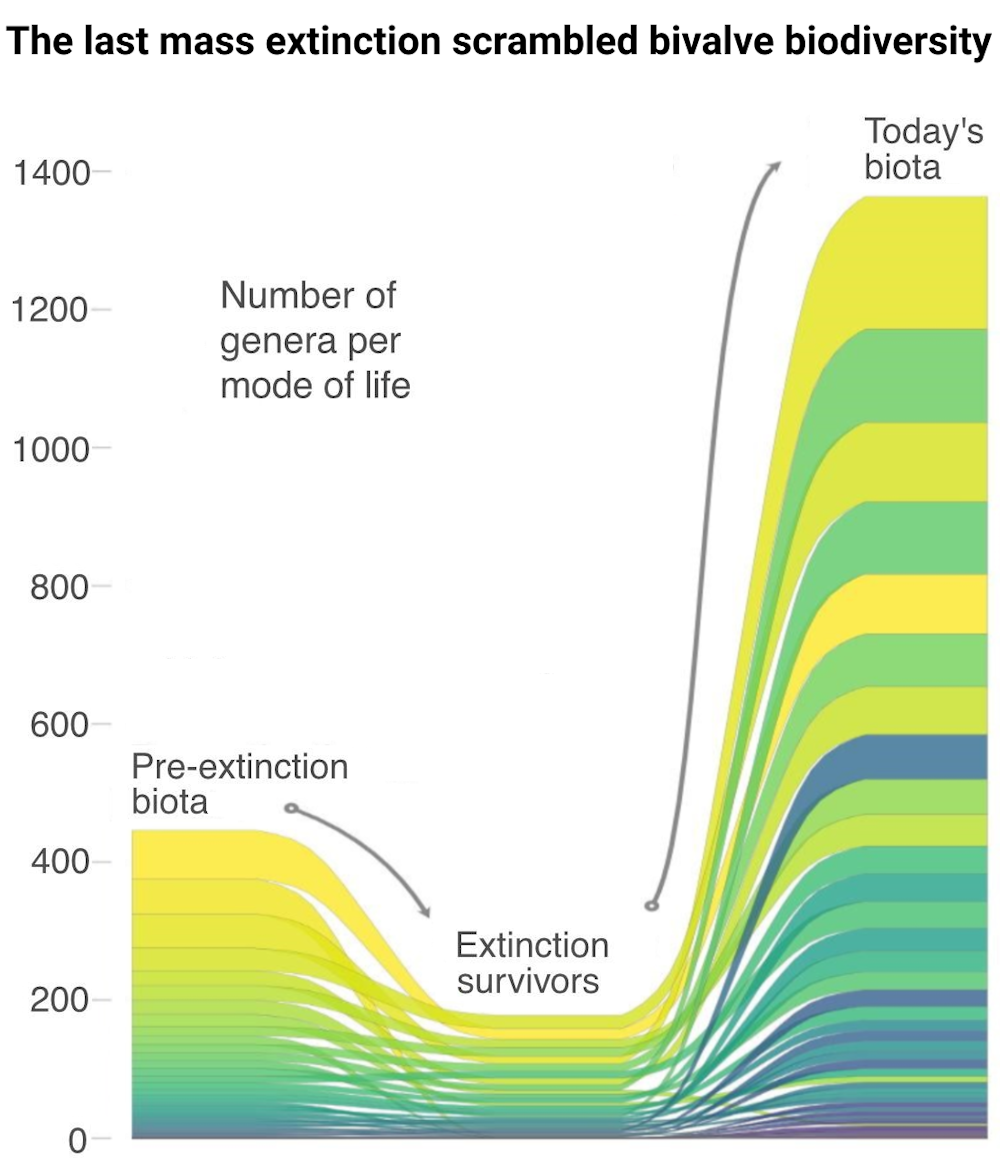
    MIL OSI