Category: Academic Analysis

  • MIL-OSI Global: China-US trade war: the next 90 days are a big deal for Beijing as it seeks long-term solutions

    Source: The Conversation – UK – By Chee Meng Tan, Assistant Professor of Business Economics, University of Nottingham

    Washington and Beijing have finally agreed a pause in their escalating trade war. US and Chinese officials announced in Geneva this week that US tariffs on Chinese goods would fall to 30%, while Chinese tariffs on US products would drop back to 10%.

    But the real battle to determine the fate of future US-Sino relations will be in negotiations that take place in the next 90 days. As both sides jostle to protect respective national interests, a win is possible for China. But that probably hinges on whether Donald Trump sees what’s on offer as a win for him as well.

    The 90-day deal to deescalate tariffs, which begins on May 14, includes significant concessions, and shows a willingness from both sides to negotiate.

    In early April, US tariffs on Chinese products had soared to 145%, while Beijing imposed a 125% tariff on US imports. US supermarkets had begun to warn of imminent stock shortages.


    Get your news from actual experts, straight to your inbox. Sign up to our daily newsletter to receive all The Conversation UK’s latest coverage of news and research, from politics and business to the arts and sciences.


    Donald Trump was quick to claim a significant win from Monday’s deal, but so did China.

    Was this really a win for either side? So far the only progress is the roll back of tariffs to levels before the trade war intensified in April 2025.

    But for China, the latest tariff reduction has provided much needed, if short term, economic relief, even if no one knows what will happen after 90 days. The Chinese stock market rallied immediately after the announcement. China is attempting to repair its ailing economy fuelled by a real estate crisis that began in 2021. So, Beijing needs more triumphs of this sort, as it realises that fiscal stimulus may be ineffective in the face of overwhelming tariffs.

    So, what measures should Beijing take to ensure that US tariffs remain low, if not lower?

    Before the trade war between the US and China began in July 2018, tariffs imposed by Washington on Beijing and vice versa were relatively low. In January 2018, US tariffs on Chinese exports stood at 3.1%, while Chinese tariffs on US exports were at 8%. While the current 10% Chinese tariffs on US goods isn’t far from the pre-trade war level, the same cannot be said of US tariffs on Chinese goods, which stand at 30%.

    What’s a big win for China?

    For Beijing, a big win would be a return of the pre-trade war tariffs or the absence of tariffs entirely. But either outcome is highly unlikely.

    A major obstacle is Trump’s need for a political win. In early April this year, the US president has harshly criticised foreign nations for having “looted, pillaged, raped, and plundered” the US. To address this problem, the US has imposed a minimum tariff of 10% on all nations sending exports to the US. And if Washington were to reduce tariffs on Chinese products to under 10%, then he would be expected to do the same with the rest of the world.

    Even this 90-day deal with China could be seen as capitulation by Trump, who was already under pressure from the US stock market and business leaders to roll back the high tariffs on Chinese goods. But revising baseline tariffs downwards to below 10% for the rest of the world would be seen as an even greater cop out.

    This could eat into Trump’s political capital and harm the Republican party’s chances at midterm elections scheduled for 2026. All of which seems unlikely.

    Details of the US and China trade war pause start to be revealed.

    What China hopes is for future US tariffs to get back to around 10%. This represents a massive improvement from the previous 145% imposed by the White House in April this year. But for Washington to save face and claim a believable victory of its own to reduce tariffs, Beijing needs to offer something in return.

    Sticking points

    One significant issue affecting US-Sino relations is the drug fentanyl. According to the US Drug Enforcement Agency (DEA), fentanyl, which is responsible for tens of thousands of US deaths each year, comes primarily from China and Mexico.

    Washington expects Beijing to do more to stem the flow of the drug and chemicals used to make the drug from flowing into the US. To push China to take action on this, the US imposed a 30% tariff on China instead of the baseline 10% it has put on all other nations.

    Beijing sees things differently and claimed that Washington is engaging in a “smear campaign” and aims to “shift blame” on China for not doing enough when the country has some of the strictest drug laws in the world.

    Trump sees the fentanyl problem as a national security issue, and says China needs to provide sufficient concessions in stemming the outflow of the drug so that the White House can justify the lowering of tariffs below the existing 30%.

    But China can do more to secure lower tariffs. As part of the present trade deal, China has agreed to lift its export ban of critical minerals to the US. This is a crucial for the US as these items are essential in manufacturing advanced weaponry.

    If Beijing can guarantee the flow of critical minerals to the US, and assure its support for US agriculture, an important political support base for Trump, then it is likely that a Trump administration would lower, and more importantly, maintain these tariffs in the foreseeable future.

    China probably will want to hedge its bets. It needs to engage with the US and lower US tariffs as much as possible, but will want to look at other options, rather than relying on an unpredictable Trump. It will look to increase its trade with other significant regional players such as the Association of Southeast Asian Nations, an economic bloc that promotes economic growth among its member nations.

    Ultimately, China needs policy continuity from Washington. Without it, any plans that it has in recovering its sluggish economy won’t work.

    But like any good trader, Trump will likely find it difficult to pass up a good deal, especially when the US has to deal with its own economic problems. So if Beijing can find a way to make a deal that works and brings a symbolic win for both sides, it is likely to get Trump’s attention.

    Chee Meng Tan does not work for, consult, own shares in or receive funding from any company or organisation that would benefit from this article, and has disclosed no relevant affiliations beyond their academic appointment.

    ref. China-US trade war: the next 90 days are a big deal for Beijing as it seeks long-term solutions – https://theconversation.com/china-us-trade-war-the-next-90-days-are-a-big-deal-for-beijing-as-it-seeks-long-term-solutions-256535

    MIL OSI – Global Reports

  • MIL-OSI Global: Peter Sullivan murder conviction quashed after 38 years in jail – it would be a mistake to see his case as a bizarre, one-off

    Source: The Conversation – UK – By Brian Thornton, Senior Lecturer in Journalism, University of Winchester

    Peter Sullivan has had his conviction for the murder of Diane Sindall quashed. He is not the Beast of Birkenhead. He is an innocent man who got ensnared in a malfunctioning system that then took 38 years to admit its mistake.

    He was wrongly convicted in 1987 for the brutal attack on the part-time pub worker. The 21-year-old was beaten to death and sexually assaulted as she walked home after a shift in Bebington, Merseyside.

    Sullivan is now 68 and has lost the best years of his life. Remarkably, in a statement read by his lawyer after his conviction was overturned he said he was “not angry, not bitter”. He said he had experienced horrors but would not dwell on them: “I’ve got to make the most of what is left of the existence I am granted in this world.”

    Given he’s the victim of the longest miscarriage of justice experienced by a living inmate in the UK, no one would begrudge Sullivan that.


    Get your news from actual experts, straight to your inbox. Sign up to our daily newsletter to receive all The Conversation UK’s latest coverage of news and research, from politics and business to the arts and sciences.


    But it would be a mistake to see his case as a bizarre, one-off. In March I wrote in detail about how the English criminal justice system continually betrays victims of injustice – from cases like the Birmingham six and the Guildford four to the hundreds of victims of the Post Office scandal.

    There are also immediate parallels to be made with two other miscarriage of justice cases – Victor Nealon and Andrew Malkinson.


    Read more:
    Convicting the innocent: how a rotten system ensures miscarriages of justice will continue


    The Sullivan, Malkinson, Nealon cases were all exposed as miscarriages of justice thanks to new DNA evidence, but only after a reluctant and incurious appeal system was dragged kicking and screaming into agreeing to new forensic testing.

    Malkinson was wrongly convicted of rape and spent 17 years in prison. The Criminal Cases Review Commission (CCRC) twice rejected his submissions that he was innocent, and he was only cleared when his own lawyers tracked down DNA evidence that proved his innocence.

    Nealon who was wrongfully convicted of attempted rape spent an additional ten years in prison because the CCRC refused to carry out DNA tests that would have proved his innocence. He applied to the CCRC twice but was rejected both times.

    In the Sullivan case, the CCRC feels it deserves credit for ordering the retesting that led to his exoneration, and it does. But it’s worth noting that he applied to the CCRC in 2021 and it took until now for him to be freed.

    No compensation

    Justice delayed is justice denied and all three men spent unnecessary years of their lives behind bars thanks to a sluggish and often inept appeals system.

    It took decades, but Sullivan is now a free man. He leaves prison with £89 in his pocket, and that’s it. There will be no automatic compensation, no system that eases him back into ordinary life.

    When Victor Nealon was released after 17 years in prison, he would have been homeless if it were not for the kindness of a journalist who allowed him to sleep on his couch. Nealon has never received compensation. After multiple rejections he and Sam Hallam, another miscarriage of justice victim who was accused of murder, took their claims for compensation all the way to the European Court of Human Rights (ECHR). They lost.

    The judges at the ECHR concluded that it was virtually impossible for victims of miscarriage of justice to receive compensation in the UK, noting that 93% of people who applied for compensation were rejected. The two men have never seen a penny of compensation.

    But it appears that Malkinson may be one of the lucky 7% who do. It has been reported that the Ministry of Justice is to pay him “a significant sum” and no one in their right mind would object to Malkinson receiving compensation. He is an innocent man who spent 17 wasted years in prison.

    Hallam, Nealon and so many more are also innocent but have been refused compensation. Why?

    It is difficult to come to any other conclusion than Malkinson is being compensated because of the media coverage his case attracted. Malkinson is a very impressive person – erudite, thoughtful and reasonable – someone capable of guest editing the Today programme. His case, along with his criticisms, threw the CCRC into crisis and led to the resignation of its chair. But not everyone can be Andrew Malkinson, and they shouldn’t have to be.

    Sullivan is a very different person. “He’s a very quiet, private man,” his lawyer told the BBC. He has so far shunned the media and it’s clear that he will not have the same high profile as Malkinson. His story will fade as the news agenda moves on and there will be a danger that the lessons from this case will be ignored or forgotten.

    For example, Sullivan’s case is a reminder that there are still people in prison who were jailed based on false confessions, and these cases should be reviewed urgently.

    And the project announced by the CCRC to identify cases where new forensic testing could provide fresh evidence needs to happen urgently. As Chris Henley KC, the lawyer who led a review into the CCRC’s handling of the Malkinson case, said, more miscarriages of justice cases are “inevitable” and so it is better to identify them as quickly as possible. No need for more innocent people to languish unnecessarily in prison.

    Ultimately, the main lesson for the criminal justice system to learn is humility.
    If a plane crashes, accident investigators will painstakingly piece the wreckage back together to identify what went wrong. If there is an infectious outbreak, medical experts will urgently seek out the source. They do this so that they can find out what went wrong and avoid future tragedies.

    But somehow the criminal justice system appears to feel it is above this approach, despite the fact that Peter Sullivan was failed by the police, by the legal system, courts and the Court of Appeal. As Henley said: “I think that there is a fundamental problem in relation to our appeal system generally, that it just won’t face up to the fact that mistakes can be made. It stubbornly wants to stick to the original flawed conviction.”

    But first and foremost, Peter Sullivan must receive the compensation he deserves. He was wronged and the state should swiftly and fairly do what it can to make that right.

    Brian Thornton does not work for, consult, own shares in or receive funding from any company or organisation that would benefit from this article, and has disclosed no relevant affiliations beyond their academic appointment.

    ref. Peter Sullivan murder conviction quashed after 38 years in jail – it would be a mistake to see his case as a bizarre, one-off – https://theconversation.com/peter-sullivan-murder-conviction-quashed-after-38-years-in-jail-it-would-be-a-mistake-to-see-his-case-as-a-bizarre-one-off-256723

    MIL OSI – Global Reports

  • MIL-OSI Global: Universities and social care depend on immigration. The UK government’s plans could be an economic own goal

    Source: The Conversation – UK – By Tom Montgomery, Lecturer in Work and Organisations, University of Stirling

    James Jiao/Shutterstock

    The recent launch of plans to reform the UK’s immigration system reflects the government’s effort to regain the initiative on this issue. But looking at the finer detail of migration to the UK shows restrictions introduced by the previous government, particularly around visas for social care workers and international students, have already led to fewer people arriving in the UK.

    What’s more, these latest proposals risk worsening crises in these key sectors. In adult social care and higher education, accelerating the decline in the numbers of migrants could create, rather than solve, problems for the government.

    The government argues there is a need to move away from the reliance on migrant workers in the UK’s adult social care sector. It has announced the closure of a visa route to new applications.

    But in its new white paper laying out its policy changes, the government acknowledges that following the tightening of the health and care worker visa route (particularly in terms of bringing dependants to the UK) the number of these visas granted for both main applicants and dependants fell by 68% in 2024 compared to the previous year. This means that, even before any new restrictions, fewer workers were arriving to plug the staffing shortages in the sector.


    Get your news from actual experts, straight to your inbox. Sign up to our daily newsletter to receive all The Conversation UK’s latest coverage of news and research, from politics and business to the arts and sciences.


    Keir Starmer’s government rightly points out that there have been longstanding issues of recruitment and retention in the social care sector across the UK. After all, it is often associated with poor pay and conditions.

    The government also highlights initiatives to address worker shortages, such as the independent commission into adult social care as well as proposed fair pay agreements. But care sector bodies such as Care England say the measures will not arrive in time and that international recruitment is being cut off before a solution is in place.

    Trade unions in the sector, including Unison, have also highlighted how migrant workers have been crucial for the sustainability of delivering care across the UK.

    Pay remains stubbornly low in the social care sector.
    Pressmaster/Shutterstock

    This points to the potential destabilising effect the white paper may have for a sector already in crisis. Attracting UK citizens to work in social care will also be difficult considering the stubbornly low pay for what can be a challenging job.

    Added to this, opportunities for pay progression are often limited. Care workers in England with five or more years’ experience are on average earning only around 10p more per hour than those with less than a year of experience. Research also indicates how attracting young people to a career in care is particularly difficult.

    The crisis in higher education

    Just as Starmer could blame the crisis in social care on the previous government, the same could be said for the emergency that is engulfing higher education.

    Over the past 15 years there has been a clear shift in the balance of funding for universities away from government grants and towards income from fees. Fee income from international students has been declining, especially since January 2024 in part due a tightening of restrictions by the previous government, such as students bringing family members with them.

    Debates around funding in the sector are taking place against the backdrop of institutions across the UK facing budget deficits and announcements of thousands of redundancies.

    The UK sector is clearly in a fragile state, and dependent on income from overseas students. But the government has indicated it wants to tighten requirements for recruiting international students and reduce students’ ability to remain in the UK after their studies to 18 months.

    It is also exploring a levy on UK higher education providers’ income from international students. These moves were said to be in response to the “misuse and exploitation” of student visas.

    These new measures have understandably caused alarm in the sector. Many institutions are still trying to convince students from around the world that the UK should be their destination for study, particularly when political developments may have made the US less attractive.

    Representatives such as the sector body Universities UK have asked the government to consider the damage a levy could do to the appeal of the UK higher education market. The University and College Union has also warned that moves to deter international students could lead to UK “universities going under”.

    In these ways, the white paper may have sought to see off political challenge, but it could instead expose the government to risk. The restrictions proposed in the white paper in relation to social care and higher education could easily worsen the crises in these sectors.

    Thousands of redundancies in the higher education sector and the shrinking of these institutions could also have a huge negative effect on local economies across the UK given the economic benefits that universities bring.

    And the measures will also have implications for Wales and Scotland, both due to hold elections next year. Recent polling indicates that support for pro-independence parties is surging, as Plaid Cymru and the SNP position themselves as the counterweight to further restrictions on immigration

    The immigration white paper has been an effort by the prime minister and his advisers to seize short-term political advantage. In the long term it could prove to be an economic own goal.

    Tom Montgomery works in higher education. He has conducted research on issues of social care, migration and labour markets that has been funded by the European Commission.

    ref. Universities and social care depend on immigration. The UK government’s plans could be an economic own goal – https://theconversation.com/universities-and-social-care-depend-on-immigration-the-uk-governments-plans-could-be-an-economic-own-goal-256707

    MIL OSI – Global Reports

  • MIL-OSI Global: Who is Project 2025 co-author Russ Vought and what is his influence on Trump?

    Source: The Conversation – UK – By Dafydd Townley, Teaching Fellow in US politics and international security, University of Portsmouth

    While Elon Musk has clearly been a major influence on the Trump administration, the less well known, but arguably more influential, power behind the presidency is Russell (usually Russ) Vought. Vought is the director of the Office of Management and Budget (OMB) – the nerve centre of the administration’s sweeping changes.

    Vought is also rumoured to be about to take over running the Department of Government Efficiency (Doge) from Musk.

    Unlike Musk, Vought acts mostly outside the media spotlight. He is fully committed to a radical overhaul of the way the US presidency works – and his deep religious convictions have led him to believe there should be more Christianity embedded in government and public life.

    He has vowed to “be the person that crushes the deep state”, and was part of the first Trump administration, where he held the position of OMB deputy director – and, briefly, director.


    Get your news from actual experts, straight to your inbox. Sign up to our daily newsletter to receive all The Conversation UK’s latest coverage of news and research, from politics and business to the arts and sciences.


    Vought worked with Trump in his first
    term on executive order 13957, which aimed to reclassify thousands of policy jobs within the federal government. This was designed to allow the White House to quickly change who was employed in these roles.

    This was subsequently revoked by the Biden administration. But Trump issued a similar executive order 14171 in January, which will implement quicker hiring and firing procedures. The Office of Personnel Management estimates that this could affect 50,000 federal roles.

    In an interview with conservative commentator and podcaster Tucker Carlson, Vought said that this was necessary for the White House to “retain control” of the agencies under its command. Without it, he claimed, ideological “opponents” within the agencies had the power to diminish the efficiency of White House initiatives. And his role as head of the OMB, he argued, was “to tame the bureaucracy, the administrative state”.

    During the Biden presidency, Vought was one of the main authors – credited as the key architect – of the Heritage Foundation’s influential Project 2025, widely seen as the blueprint for Trump’s second term of office. The 900-page document, whose full title is Mandate for Leadership: The Conservative Promise, was a major talking point during last year’s presidential election campaign.

    Throughout the campaign, Trump strenuously denied Democrat accusations of having any connection to Project 2025. But a large number of his appointees contributed to the Heritage Foundation’s publication, and numerous Project 2025’s recommendations have quickly been put into action. These include Trump’s high trade tariffs and Doge’s cost-cutting initiatives.

    Russ Vought talking to Tucker Carlson.

    During his confirmation hearing in the US Senate, Vought reiterated his belief that the White House has authority over federal spending, not Congress. This contradicts article I, section 8, of the US Constitution, which grants Congress the power to tax and spend for the general welfare of the country.

    For the majority of constitutional experts, the executive (the president) may propose a budget, but it is Congress that authorises it.


    Read more:
    How Project 2025 became the blueprint for Donald Trump’s second term


    Concerned by this, Democrats on the Senate budget committee attempted a boycott of Vought’s confirmation vote, which failed when all 11 Repubican members voted in favour. And when the call came on the Senate floor to confirm his appointment, all 47 Democratic senators held an all-night debate in protest.

    Democrat and Senate minority leader Chuck Schumer has called Vought the “most radical nominee” with “the most extreme agenda” and said that Americans needed to understand the danger he poses to them in their daily lives.

    Vought’s involvement in Project 2025

    When asked to compare the Trump administration’s policies to Project 2025, Paul Dans, who was the director of Project 2025 until he stepped down during the Trump campaign, said that the administration’s policies were “beyond my wildest dreams”. According to one website tracking the agenda, of the 313 suggested policy objectives in Project 2025, 101 have been implemented, while another 64 are in progress.

    A significant number of Project 2025’s recommendations have been implemented by the Elon Musk-led Doge. And Vought has been described by one journalist as “the glue between Musk and the Republicans”.

    Vought and Musk have forged a strange but effective relationship in executing Doge’s cost-cutting initiatives. According to reports quoting former Trump administration officials, Musk’s Doge has used data to identify what he considers to be overspending while and Vought’s OMB has confirmed Doge’s findings recommending how to deal with them.

    “What’s needed is a specific theory about the case and what can be done,” Vought said. It was part of an effort to help the government “balance its books”, he added.

    When asked by Tucker Carlson what he thought of Doge, Vought replied: “I think they’re bringing an exhilarating rush … of creativity, outside the box thinking, comfortability with risk and leverage.”

    The process to crush the so-called “deep state” conducted by Maga Republicans in Congress and Doge in the White House has been expertly coordinated by Vought. As one reporter wrote, he has experience of working on Capitol Hill and is on good terms with the Freedom Caucus who are the group of conservative Republicans that advocates for limited government, fiscal restraint and strict adherence to a constitutional, right-wing agenda.

    After the caucus was instrumental in defining the terms of support for Mike MCarthy as Speaker of the House in 2023, Vought called the members of Freedom House “the lions that have been through battle and won.” He knows the capabilities of the OMB – and is just as anti-establishment as Musk.

    According to independent researchers tracking Project 2025, a number of departments still have more than half of the project’s objectives to be completed. The administration will need to work quickly, however.

    Historically, the party that occupies the White House fares badly in the midterms. The Republicans could lose control of the House or the Senate, both of which they currently control. Should this happen, the administration may find it more difficult to implement the changes they wish.

    But it is highly unlikely that this will deter Vought and his drive for reforms of presidential powers. He, along with the majority of the Trump White House, believe in the unitary executive theory. This essentially argues that the president has control over all executive branch officials and operations, and that Congress cannot limit that control, even through legislation.

    If Vought does carry on and Congress challenges his decisions, the issue could end up in the Supreme Court – a court dominated by Trump appointees. Any judgment made by the court would be seismic in its importance of future interpretations of the constitution and where power really lies in the federal government.

    For Vought and other Project 2025 authors in the administration, a ruling in their favour would be vindication of their work.

    Dafydd Townley does not work for, consult, own shares in or receive funding from any company or organisation that would benefit from this article, and has disclosed no relevant affiliations beyond their academic appointment.

    ref. Who is Project 2025 co-author Russ Vought and what is his influence on Trump? – https://theconversation.com/who-is-project-2025-co-author-russ-vought-and-what-is-his-influence-on-trump-255134

    MIL OSI – Global Reports

  • MIL-OSI Global: Forget chatbots: research suggests reading can help combat loneliness and boost the brain

    Source: The Conversation – UK – By Barbara Jacquelyn Sahakian, Professor of Clinical Neuropsychology, University of Cambridge

    Rawpixel.com/Shutterstock

    Loneliness has become such a widespread problem that Silicon Valley billionaires are now highlighting it to market AI companions, with Mark Zuckerberg recently stating “the average American has fewer than three friends”.

    This actually echoes what the World Health Organization has called a crisis of social isolation and loneliness. They report that around 25% of older adults are socially isolated and 5%-15% of adolescents are lonely. But a variety of research – including our own – suggests reading may be a much better solution than chatbots.

    Human interaction is no doubt hugely important. In a study we published in 2023, we found that it only takes around five close friends for children and adolescents to thrive, giving them better brain structure, cognition, academic performance and mental health.

    Having fewer than five close friends may not provide enough social contact. But larger numbers are less likely to be close friends. The dilemma of technology frequently means that despite some people having vast numbers of friends on social media, they are not close friends and so do not provide the social support needed.


    Get your news from actual experts, straight to your inbox. Sign up to our daily newsletter to receive all The Conversation UK’s latest coverage of news and research, from politics and business to the arts and sciences.


    Similarly, chatbots may not provide the type of face-to-face social interaction that people need to flourish. During the pandemic lockdowns, a study found that face-to-face communication was far more beneficial for mental health than digital communication.

    But how can reading help us to feel less lonely and have better wellbeing?

    A recent survey from The Queen’s Reading Room, the charity and book club of Queen Camilla, and other surveys, have found that reading fiction and other books significantly reduces feelings of loneliness and improves wellbeing.

    Another charity, The Reader, conducted a survey of approximately 2,000 participants and found that this was especially true among young adults. Fifty-nine percent of those aged 18-34 said reading made them feel more connected to others and 56% felt less alone during the pandemic.

    Another survey, in conjunction with the University of Liverpool, of over 4,000 participants found that reading offers powerful benefits, serving as a top method for reducing stress. In addition, participants reported that reading encouraged personal growth, such as improving health, picking up hobbies and boosting empathy, with 64% of readers having a better understanding others’ feelings.

    Reading and the brain

    Indeed, scientific research looking at book clubs and shared reading back this up, finding notable emotional and social benefits of reading. For example, students reported greater connection (42.9%) to others, deeper understanding of others’ experiences and beliefs (61.2%) and reduced loneliness (14.3%) as a result of reading.

    The surveys above all rely on people reporting how they feel, rather than an objective measure. But there are also findings from objective measures of the brain, including neuroimaging. A systematic review of 11 intervention studies showed that shared reading among older adults improved wellbeing and helped alleviate loneliness and social isolation.

    One way in which reading may help reduce loneliness is by enhancing our social cognition, which is the ability to understand and connect with others.

    There are plenty of cognitive benefits from reading, in addition to social connectedness.
    aniascamera/Shutterstock

    A neuroimaging study of young adults found that reading fiction, particularly passages with social content, activated areas of the brain involved in social behaviour and emotional understanding, such as the dorsomedial prefrontal cortex. This brain region was also linked to the stronger social cognition seen in frequent fiction readers, suggesting a neural pathway through which reading fosters greater social connectedness.

    Importantly, reading may also reduce the risk of dementia. One study of 469 people aged 75 and over, with no dementia at baseline, were followed up for 5.1 years. Among leisure activities such as playing board games, playing musical instruments and dancing, reading was associated with a 35% reduced risk of dementia.

    A number of studies have similarly shown that engaging in cognitively stimulating activities, such as reading, can slow cognitive decline and reduce the risk of dementia.

    Our own research also showed the benefits of reading for pleasure early in life. In a large sample of over 10,000 children in the Adolescent Brain Cognitive Development (ABCD) Study, we found that those children who read for pleasure early in life had better brain structure, cognition, academic achievement, longer sleep duration and better mental health – including lower symptoms of inattention, stress and depression – when adolescents. Importantly, they also had less screen time and better social interactions.

    So, while AI and chatbots can enhance our lives in many ways, they are not a solution to everything. We know that while technology has many benefits, it has also produced many unforeseen problems. Let’s solve problems of loneliness and social isolation through reading and book clubs. Reading is also a great way to improve brain structure, cognition and wellbeing.

    We recently gave a talk about this topic for the British Neuroscience Association, in association with The Queen’s Reading Room. We would like to thank the Queen’s Reading Room CEO, Vicki Perrin for her input and support.

    Barbara Jacquelyn Sahakian receives funding from the Wellcome Trust and the Lundbeck Foundation. Her research work is conducted within the NIHR Cambridge Biomedical Research Centre (BRC) Mental Health and Neurodegeneration Themes. She consults for Cambridge Cognition.

    We recently gave a talk about this topic for the British Neuroscience Association, in association with The Queen’s Reading Room. We would like to thank the Queen’s Reading Room CEO, Vicki Perrin for her input and support. Christelle Langley receives funding from the Wellcome Trust. Her research work is conducted within the NIHR Cambridge Biomedical Research Centre (BRC) Mental Health and Neurodegeneration Themes.

    ref. Forget chatbots: research suggests reading can help combat loneliness and boost the brain – https://theconversation.com/forget-chatbots-research-suggests-reading-can-help-combat-loneliness-and-boost-the-brain-256613

    MIL OSI – Global Reports

  • MIL-OSI Global: Why spring 2025 is so dry

    Source: The Conversation – UK – By Jack Marley, Environment + Energy Editor, UK edition

    April showers bring May flowers according to an old English saying.

    This phrase, which might have originated in a verse written by poet Thomas Tusser in 1557, harks back to a time when most people depended on rough rules that were borne of practical experience to know when to plant crops. “Such weather lore was the only forecast available”, says meteorologist Rob Thompson at the University of Reading.


    Read more:
    ‘April showers’ – a rainfall scientist explains what they are and why they are becoming more intense


    UK farmers waited in vain for showers this April. The unusually dry month gave lie to the centuries-old expression, which hints at a climate that was generally more obedient to familiar rhythms. The heating of Earth’s atmosphere and ocean, predominantly caused by the mass burning of fossil fuels, has changed that. What we can expect in each season is no longer so assured.

    So, how do we keep our bearings on a warming planet?


    This roundup of The Conversation’s climate coverage comes from our award-winning weekly climate action newsletter. Every Wednesday, The Conversation’s environment editor writes Imagine, a short email that goes a little deeper into just one climate issue. Join the 45,000+ readers who’ve subscribed.


    Forecasting chaos

    Forecasters have an enormous challenge in predicting how the weather in each season will change, and in communicating the role of climate change.

    “Overall, we can be confident that climate change is bringing warmer conditions in all seasons,” say atmospheric scientists Simon H. Lee and Matthew Patterson at the University of St Andrews. Europe in particular has been a hotspot for warming, with temperatures rising at roughly double the global average.

    Patterson suspects that this has already warped our perceptions of what a “normal” season feels like. When a month arrives with temperatures closer to the long-term average for instance, like June 2024, people tend to experience it as unusually cold.


    Read more:
    Average months now feel cold thanks to climate change


    “Scientists also have strong evidence to suggest that drought conditions will become more common,” Lee and Patterson continue.

    The UK has had roughly half the rainfall it would usually expect for March and April, and spring 2025 is on track to be the country’s driest on record. Some of the latest research on Earth’s water cycle predicts that these dry bouts will get drier, while wet ones will get wetter, and that the switch from drought to deluge will be more sudden (“weather whiplash”, as some have called it).


    Read more:
    Landmark new research shows how global warming is messing with our rainfall


    This doesn’t fully explain the UK’s record-warm and dry spring, however. There are also “weather blocks” to factor in.

    “A blocking event is a disruption to the usual weather patterns of Earth’s middle latitudes,” explains Tim Woollings, a professor in physical climate science at the University of Oxford. In this part of the world it’s the jet stream, a river of air high in the atmosphere, that typically sets the agenda by driving transient weather over the British Isles from the Atlantic.

    Since the beginning of March, a zone of high pressure has rested above the UK and blocked the jet stream like a boulder in a river, Lee and Patterson say. The weather has effectively remained “stuck”. This phenomenon is responsible for a lot of extreme weather in the middle latitudes, as blocks prevent relief from heatwaves or cold snaps, Woollings adds.


    Read more:
    How weather ‘blocks’ have triggered more extreme heatwaves and floods across Europe


    There isn’t conclusive evidence to suggest these blocks are becoming more common as the climate warms according to Lee and Patterson. But one thing is clear: the climate is incredibly complex – and our continuing intervention in it is reckless.

    High-temperature haiku

    Seasons are our living world’s accommodation of the variation in day length, temperature and weather during the year.

    What we perceive as seasonal features, like the shedding of leaves, the arrival and departure of migratory animals, are the adaptations species have made to the average set of conditions that have remained within a particular range for several thousands of years.

    Changes in Earth’s orbit and spin axis gradually influenced the climate and seasons over millennia. More recently, fossil fuel burning has been the dominant influence.

    “As such, humanity is currently on the path to compressing millions of years of temperature change into just a couple of centuries,” say ancient climate experts Dan Lunt (University of Bristol) and Darrell Kaufman (Northern Arizona University).

    The seasonal signals we once thought of as immutable are changing to match these changing conditions. It’s too much, too fast for most species to deal with – including our own.


    Read more:
    Humanity is compressing millions of years of natural change into just a few centuries


    To reorient around a rapidly changing climate, we could do as Tusser did six centuries ago, and write poetry.

    Haiku is perhaps our most useful cultural barometer of climate change. These poems, which originated in 17th-century Japan, comprise three short lines and usually include a reference to the season in which they were composed.

    “A successful haiku could be described as a half-finished poem,” say lecturer in publishing Jasmin Kirkbride (University of East Anglia) and creative writing PhD candidate Paul Chambers (University of Bristol). The listener must complete the scene in their head by linking it with an intense moment of perception from their own life, in which “the vast is perceived in one thing”.


    Read more:
    Haiku has captured the essence of seasons for centuries – new poems contain a trace of climate change


    As seasons have shifted, so have their markers in haiku. Snowdrops, once a feature of February haiku, now appear close to Christmas. The language used to describe certain species has altered too, the pair say, to become “soaked in grief”. Butterflies that once formed “clouds” in earlier haiku, for example, are now “lone survivors… pushing against time”.

    Kirkbride and Chambers urge a new generation of poets to continue recording these changes in haiku: “The vast climate crisis is upon us, and we should write about it.”

    ref. Why spring 2025 is so dry – https://theconversation.com/why-spring-2025-is-so-dry-256709

    MIL OSI – Global Reports

  • MIL-OSI Global: Why are Turkey and the PKK turning to peace – and can it last?

    Source: The Conversation – UK – By Pinar Dinc, Associate Professor of Political Science, Department of Political Science and Researcher, Centre for Advanced Middle Eastern Studies, Lund University

    Negotiations to end more than 40 years of conflict between the Turkish state and the Kurdistan Workers’ party (PKK) have taken on a concrete dimension. On May 12, two months after the PKK’s imprisoned leader, Abdullah Öcalan, wrote a letter in which he called on the group to lay down its arms, it has announced it will disband.

    The PKK, which has been fighting for greater Kurdish rights and autonomy, has outlined several conditions it views as essential for it to dissolve. It insists that Öcalan lead and direct the peace process, that the right to democratic politics in Turkey is recognised, and that the group is given solid legal guarantees.

    On the one hand, there seems to be great longing for peace between Turkey and the PKK. This has been evidenced by the positive reactions to the PKK’s statement both nationally and internationally.

    Turkish president, Recep Tayyip Erdoğan, said the PKK’s disengagement with terror had opened “the doors of a new era in every area, namely strengthening politics and democratic capacity”.


    Get your news from actual experts, straight to your inbox. Sign up to our daily newsletter to receive all The Conversation UK’s latest coverage of news and research, from politics and business to the arts and sciences.


    However, there is also scepticism. Turkey views the peace process very differently from the Kurds, referring to it as part of the government’s “terror-free Turkey” initiative. The Kurdish movement has instead adopted the title of Öcalan’s February letter, “Call for Peace and Democratic Society”.

    Many also see Erdoğan’s willingness to resolve the Kurdish issue as a political maneuver by the ruling Justice and Development party (AKP). Positioning itself as the party that ended decades of “terror” at the hands of the PKK would allow the AKP to consolidate its hold on power.

    But, notwithstanding this, there are clear reasons for both the Turkish state and the PKK to come to the negotiating table now. One of the leading reasons is the changing geopolitical dynamics of the Middle East.

    In late 2024, Bashar al-Assad’s regime was toppled in Syria and the country was subsequently taken over by Islamist militants. Iran’s influence has also been weakened following the collapse of parts of its regional proxy network, notably Hamas in Gaza, Hezbollah in Lebanon and, most recently, the Houthis in Yemen.

    Israel, meanwhile, is continuing its war in Gaza. And it has intensified its military operations in Syria, particularly near the Israeli-occupied Golan Heights, alongside open expressions of support for Syria’s Druze religous communities.

    At the same time, Donald Trump has returned to the White House and reopened the door to dialogue with Iran over its nuclear programme. The region’s politics are being reshaped, and leaders across the Middle East are repositioning themselves accordingly.

    For the PKK and its broader political base, a peace process with Turkey offers a pathway to equal citizenship, democratic participation and long-term legitimacy for Kurds in the Middle East after nearly a century of struggle.

    This was signalled by the Kurdish National Conference in April 2025. The conference, which was attended by different Kurdish parties and organisations, highlighted the importance of strategic coordination among Kurds in the region.

    For Turkey, peace with the PKK now would further reduce a weakened Iran’s ability to project power westward. Some groups suspected of being affiliated with the PKK, such as the Sinjar Resistance Units in northern Iraq, have been indirectly supported by Iran.

    Turkey’s handling of the PKK conflict and the broader Kurdish issue has also often complicated its engagement with the west. For example, human rights groups have accused Turkey of allowing the Syrian National Army (a coalition of armed groups in northern Syria) to act with impunity against Kurdish civilians in areas outside its control.

    This has created friction in Turkey’s diplomatic outreach to the US and Europe. By addressing the longstanding Kurdish issue, Ankara could lay the groundwork for more stable relations with the west. These relations are particularly important now as Turkey is looking to take an increasingly key role in European security.

    It is serving as a mediator in negotiations to end the Ukraine war. And Erdoğan has even offered to host direct talks between the Ukrainian president, Volodymr Zelensky, and his Russian counterpart, Vladimir Putin, in Istanbul.

    Bumpy road ahead

    The PKK’s dissolution will not guarantee peace in Turkey. The Kurdish people expect equal citizenship and the end the government’s practice of removing elected mayors and replacing them with state-appointed trustees.

    They also demand the release of political prisoners and reforms to Turkey’s anti-terrorism laws, which critics say are frequently used to suppress dissent. These issues will be discussed in parliament over the coming days, with talks on a new constitution expected to take place in the autumn.

    The negotiations will not be simple. The Kurds have been persistently labelled as rebels, traitors and terrorists since the beginning of the Turkish republic in 1923. It will not be easy to change entrenched opinions overnight.

    Özgür Özel, the leader of Turkey’s main opposition Republican People’s party (CHP), has emphasised the importance of resolving the Kurdish issue peacefully and democratically. But it is not clear whether his views reflect those of his supporter base and Turkish society more broadly.

    Turkey must be further democratised to give the peace process a greater chance of success. The nation’s vibrant civil society currently operates under intense pressure from the state. Giving it more of a voice will help bring Turkey’s deeply divided society together.

    It is always difficult – if not impossible – to make predictions about the future when it comes to Middle Eastern politics. However, a new balance is being established in the Middle East, and in this new balance very different players have to sit at the same table.

    Pinar Dinc is the principal investigator of the ECO-Syria project, which receives funding from the Strategic Research Area: The Middle East in the Contemporary World (MECW) at the Centre for Advanced Middle Eastern Studies, Lund University, Sweden.

    ref. Why are Turkey and the PKK turning to peace – and can it last? – https://theconversation.com/why-are-turkey-and-the-pkk-turning-to-peace-and-can-it-last-256527

    MIL OSI – Global Reports

  • MIL-OSI Global: Caveman method skincare: how neglecting skincare completely can give you ‘cornflake’ build-up

    Source: The Conversation – UK – By Adam Taylor, Professor of Anatomy, Lancaster University

    Gorodenkoff/Shutterstock

    Social media has done it again – this time reviving a minimalist skincare trend known as the caveman method. Think of it as the paleo diet for your face: no cleansers, no moisturisers, no water. Just your skin, left completely to its own devices.

    Supporters claim it helps reduce breakouts, arguing that overuse of products is irritating their skin. But while simplifying your routine might have some short-term benefits, going completely product free, and especially water free, can put you at risk of a lesser known condition: dermatitis neglecta.

    Dermatitis neglecta was first described in a medical journal in 1995. It’s a skin condition that doesn’t involve inflammation but rather occurs when skin isn’t cleaned adequately over time. It’s most commonly seen in people with neurological or psychological conditions, or in people avoiding cleaning surgical wounds, skin sensitivity, or even poor hygiene.

    It often shows up on the face, chest and limbs, but can appear anywhere on the body. The hallmark? A pigmented, scaly build-up that looks like cornflakes.

    But what’s actually building up?

    Your skin is constantly renewing itself. As new skin cells form underneath, older ones are pushed up and eventually die due to lack of oxygen from the blood supply beneath.

    We shed about 500 million dead skin cells per day – roughly two grams’ worth. That’s not much, but if you’re not washing your face, even this small daily build-up can quickly lead to visible debris and dullness.

    This often overlooked layer of built-up skin can sometimes conceal underlying medical conditions, including cancer, that only become apparent once the excess is removed.

    Skin cancers are less common in people with darker skin tones but they often have worse outcomes, primarily due to delayed diagnosis, which makes the cancer harder to treat. In such cases, conditions like dermatitis neglecta may further obscure signs of disease, making early detection even more challenging.


    Get your news from actual experts, straight to your inbox. Sign up to our daily newsletter to receive all The Conversation UK’s latest coverage of news and research, from politics and business to the arts and sciences.


    But it’s not just dead cells at play. Your skin’s natural secretions, sweat and sebum, also contribute to this protective barrier.

    Sebum is an oily substance produced by sebaceous glands all over the body. It helps keep moisture in and has antimicrobial properties. The nose is the area with the highest sebum production, which explains its reputation for shininess. Sebum also plays a role in skin pH, helping keep the skin slightly acidic to ward off harmful bacteria.

    Sweat, meanwhile, also contains antimicrobial peptides that helps defend against pathogens. But if these secretions can’t reach or function properly at the skin’s surface – either because they’re blocked by build-up or not spread through cleansing – your natural defences may weaken, making it easier for bacteria or fungi to thrive.

    Skipping all skincare might sound natural, but it may disrupt these finely balanced systems. If the skin becomes overwhelmed, it can’t do its job – leading not just to clogged pores, but potential infection.

    Thankfully, dermatitis neglecta is relatively easy to treat. Mild cases clear up with warm soapy water. More stubborn build-up may require gentle cleansing with isopropyl alcohol. In extreme cases, dermatologists may prescribe keratolytics, creams that help break down and remove the thickened outer layers.

    Back to basics

    Let’s get one thing straight: you don’t need a ten-step routine. But, as well as keeping the skin clean, a few basic skincare practices go a long way.

    First, hydrate. Drinking water can improve skin hydration, especially if your intake has been low.

    Next, moisturise. A simple moisturiser with ingredients like hyaluronic acid or glycerin helps lock in moisture and support the skin’s natural barrier. You’ll often spot hyaluronic acid on product labels: it’s known for its ability to bind water to the skin.

    High molecular weight hyaluronic acid can help hydrate the surface of the skin and support it’s barrier function. But only low molecular weight hyaluronic acid can penetrate into the deeper layers, where it can help improve hydration more comprehensively and help reduce the appearance of fine lines. A blend of high and low molecular weight hyaluronic acid can offer both deep hydration and surface moisture retention.

    Humectants like sodium PCA also draw moisture from the air into the skin, helping to keep it soft and supple. This is particularly important for darker skin tones, which are more prone to transepidermal water loss, meaning they can lose moisture more quickly and may need extra hydration support.

    Finally, wear sunscreen – every day – no matter your skin tone. While melanin can offer some natural protection against UV damage, it’s not enough to prevent skin cancer, premature ageing, or pigmentation issues. Daily use of sunscreen is essential for everyone. UV rays damage collagen, the protein that keeps skin firm. They cause collagen to cross-link, making it stiff and contributing to wrinkles and sagging. Collagen has a half-life of around 15 years, so once it’s damaged, your skin takes a long time to recover.

    To maintain the skin’s young, fresh and healthy appearance collagen and other molecules need to be replaced and allowed to mature. But UV also physically damages the collagen formation and maturation process, making it more difficult for new collagen to form properly, further contributing to the aged appearance of skin. Sunscreen helps prevent this long-term ageing effect.

    Cheesy varnish

    If you think your skin has never been coated in build-up, think again. In the womb, your sebaceous glands produced a substance called vernix caseosa, Latin for “cheesy varnish”. This waxy coating, visible on many newborns, is made of sebum and dead skin. It moisturises, insulates and protects infants during birth – and it’s proof that build-up on your skin isn’t as unnatural as it might seem.

    Going back to basics can feel appealing, especially in a world overflowing with products. But your skin is a complex, hardworking organ that benefits from a little support.

    More research is needed to understand how skincare affects different people: factors like biological sex, skin tone, environment and genetics all play a role. But simple steps like drinking water, applying moisturiser, and wearing sunscreen can help your skin function at its best.

    So before you ditch everything in your bathroom, remember that “natural” doesn’t always mean “better”. Your skin evolved to protect you – but it still needs a little help now and then.

    Adam Taylor does not work for, consult, own shares in or receive funding from any company or organisation that would benefit from this article, and has disclosed no relevant affiliations beyond their academic appointment.

    ref. Caveman method skincare: how neglecting skincare completely can give you ‘cornflake’ build-up – https://theconversation.com/caveman-method-skincare-how-neglecting-skincare-completely-can-give-you-cornflake-build-up-256362

    MIL OSI – Global Reports

  • MIL-OSI Global: Post-sepsis syndrome: when the body recovers but the brain doesn’t

    Source: The Conversation – UK – By Steven W. Kerrigan, Professor of Precision Therapeutics, School of Pharmacy and Biomolecular Sciences, RCSI University of Medicine and Health Sciences

    A 3D rendering of the life-threatening condition sepsis Love Employee/Shutterstock

    Sepsis is a life-threatening condition triggered by the body’s extreme response to infection. It causes widespread inflammation, which can lead to tissue damage, organ failure and death.

    Thanks to modern medicine, survival rates have improved dramatically. But for many who survive, the battle isn’t over when they leave hospital. Instead, they enter a new and often overlooked phase of recovery marked by lingering, life-altering effects.

    Post-sepsis syndrome (PSS) affects up to half of all sepsis survivors and can persist for months or even years. It’s a complex mix of physical, cognitive and psychological symptoms. People may seem physically recovered yet struggle with overwhelming fatigue, chronic pain, muscle weakness and disrupted sleep.

    The most profound impacts, however, often show up in the brain. Many sepsis survivors experience cognitive problems that mirror those seen in traumatic brain injury or early dementia. These can include memory lapses, difficulty concentrating, slower thinking and impaired decision-making.


    Get your news from actual experts, straight to your inbox. Sign up to our daily newsletter to receive all The Conversation UK’s latest coverage of news and research, from politics and business to the arts and sciences.


    For some, these challenges are manageable. For others, they’re severe enough to interfere with work, education or independent living.

    One major culprit appears to be the body’s own inflammatory response. During sepsis, the immune system floods the body with inflammatory molecules – a so-called “cytokine storm”. This can damage the blood-brain barrier, allowing harmful substances and immune cells into the brain. The resulting neuroinflammation and oxygen deprivation can injure brain cells and disrupt normal function.

    Hidden psychological toll

    Anyone who survives sepsis can develop PSS, but some are more vulnerable than others. Risk factors include: older age, which increases the likelihood of cognitive decline; long ICU stays or the use of a ventilator, which can contribute to physical and mental complications; pre-existing mental health or cognitive conditions; and more severe inflammatory responses during sepsis, which are linked to lasting damage.

    Children are also at risk, as they may experience developmental or emotional challenges that affect their learning and social development for years.

    Many sepsis survivors go on to experience post-traumatic stress disorder (PTSD), anxiety or depression. These issues can be triggered by the trauma of a near-death experience, prolonged sedation, invasive treatments, or time spent in intensive care units (ICUs) – often while cut off from family and friends.

    In fact, “ICU delirium”, which affects up to 80% of patients on ventilators, has been strongly associated with long-term cognitive and psychological impairment. Sepsis survivors who experience this often recall vivid, terrifying hallucinations during their ICU stay. These memories can haunt them more than the physical illness itself.

    The recovery gap

    One of the biggest challenges for sepsis survivors is the lack of follow-up care. Unlike heart attack or stroke recovery, which typically involves coordinated rehabilitation, post-sepsis care is often fragmented. Patients can be discharged without a recovery plan and left to navigate a confusing and lonely road back to health.

    What’s needed are multidisciplinary post-sepsis clinics, where patients can access neurologists, psychologists, rehab specialists and social workers all under one roof. Early support, both psychological and cognitive, can dramatically improve long-term outcomes.

    Sepsis doesn’t just take a toll on survivors – it affects families, communities and healthcare systems. Many survivors cannot return to work, require ongoing care, and face financial hardship. In the US, sepsis costs an estimated US$60 billion annually (£50.8 billion), much of it spent on post-acute care and readmissions.

    A 2016 film inspired by the true story of Tom Ray, who lost his arms, legs and part of his face to sepsis.

    There’s also a growing concern that sepsis may raise the risk of long-term neurodegenerative diseases such as Alzheimer’s. More research is needed, but the links between inflammation, brain damage and cognitive decline are becoming harder to ignore.


    Read more:
    Thirty years on, our research linking viral infections with Alzheimer’s is finally getting the attention it deserves


    Globally, there is progress in helping people survive sepsis. But we must also ensure that sepsis survivors thrive afterwards.

    Here’s what I believe needs to happen now: encourage greater awareness of PSS among clinicians, patients and families; integrate post-sepsis care into chronic disease and rehabilitation programs; and generate more funding to research how and why PSS develops – and how to prevent or treat it.

    People recovering from sepsis often rely heavily on loved ones who need better support themselves. Survivors also need clearer, kinder help to get back to work and school, or just back to the everyday routines that once felt normal.

    Surviving sepsis is a triumph of modern medicine – but what comes after is still a neglected frontier. For too many, life after sepsis means battling invisible wounds that affect the brain, body and soul. Recognising, researching and responding to PSS isn’t just a clinical need – it’s a moral obligation. Survivors deserve more than survival. They deserve a chance to truly recover.

    Steven W. Kerrigan receives funding from Research Ireland, Health Research Board of Ireland, Irish Research Council and Enterprise Ireland. The author wishes to thank Liam Casey, a sepsis survivor, for his contribution to this article and for sharing his lived experience of PSS.

    ref. Post-sepsis syndrome: when the body recovers but the brain doesn’t – https://theconversation.com/post-sepsis-syndrome-when-the-body-recovers-but-the-brain-doesnt-256139

    MIL OSI – Global Reports

  • MIL-Evening Report: Two lizard-like creatures crossed tracks 355 million years ago. Today, their footprints yield a major discovery

    Source: The Conversation (Au and NZ) – By John Long, Strategic Professor in Palaeontology, Flinders University

    Marcin Ambrozik

    The emergence of four-legged animals known as tetrapods was a key step in the evolution of many species today – including humans.

    Our new discovery, published today in Nature, details ancient fossil footprints found in Australia that upend the early evolution timeline of all tetrapods. It also suggests major parts of the story could have played out in the southern supercontinent of Gondwana.

    This fossil trackway whispers that we have been looking for the origin of modern tetrapods in the wrong time, and perhaps the wrong place.

    The first feet on land

    Tetrapods originated a long time ago in the Devonian period, when strange lobe-finned fishes began to haul themselves out of the water, probably around 390 million years ago.

    This ancestral stock later split into two main evolutionary lines. One led to modern amphibians, such as frogs and salamanders. The other led to amniotes, whose eggs contain amniotic membranes protecting the developing foetus.

    Today, amniotes include all reptiles, birds and mammals. They are by far the most successful tetrapod group, numbering more than 27,000 species of reptiles, birds and mammals.

    They have occupied every environment on land, have conquered the air, and many returned to the water in spectacularly successful fashion. But the fossil record shows the earliest members of this amniote group were small and looked rather like lizards. How did they emerge?

    The oldest known tetrapods have always been thought to be primitive fish-like forms like Acanthostega, barely capable of moving on land.

    Acanthostega, an early tetrapod that lived about 365 million years ago, was a member of the ancestral stock that gave rise to amphibians and amniotes.
    The authors

    Most scientists agree amphibians and amniotes separated at the start of the Carboniferous period, about 355 million years ago. Later in the period, the amniote lineage split further into the ancestors of mammals and reptiles-plus-birds.

    Now, this tidy picture falls apart.

    A curious trackway

    Key to our discovery is a 35 centimetre wide sandstone slab from Taungurung country, near Mansfield in eastern Victoria.

    The slab is covered with the footprints of clawed feet that can only belong to early amniotes, most probably reptiles. It pushes back the origin of the amniotes by at least 35 million years.

    Mansfield slab, dated between 359-350 million years old, showing positions of early reptile tracks.
    The authors

    Despite huge variations in size and shape, all amniotes have certain features in common. For one, if we have limbs with fingers and toes, these are almost always tipped with claws – or nails, in the case of humans.

    In other tetrapod groups, real claws don’t occur. Even claw-like, hardened toe tips seen in some amphibians are extremely rare.

    Claws usually leave obvious marks in footprints, providing a clue to whether a fossil footprint was made by an amniote.

    Close up showing the oldest known tracks with hooked claws from Mansfield, Victoria. Left, photo; right, optical scan.
    The authors

    The oldest clawed tracks

    The previous oldest fossil record of reptiles is based on footprints and bones from North America and Europe around 318 million years ago.

    The oldest record of reptile-like tracks in Europe is from Silesia in Poland, a new discovery also revealed in our paper. They are around 328 million years old.

    However, the Australian slab is much older than that, dated to between 359 and 350 million years old. It comes from the earliest part of the Carboniferous rock outcropping along the Broken River (Berrepit in the Taungurung language of the local First Nations people).

    This area has long been known for yielding many kinds of spectacular fossil fishes that lived in lakes and large rivers. Now, for the first time, we catch a glimpse of life on the riverbank.

    Fossil hunters search the Carboniferous red sandstone in the Mansfield area of Victoria. Such outcrops recently yielded the trackways of the world’s oldest reptile.
    John Long

    Two trackways of fossil footprints cross the slab’s upper surface, one of them overstepping an isolated footprint facing the opposite direction. The surface is covered with dimples made by raindrops, recording a brief shower just before the footprints were made. This proves the creatures were moving about on dry land.

    All the footprints show claw marks, some in the form of long scratches where the foot has been dragged along.

    The shape of the feet matches that of known early reptile tracks, so we are confident the footprints belong to an amniote. Our short animation below gives a reconstruction of the ancient environment around Mansfield 355 million years ago, and shows how the tracks were made.

    A short animation showing the creature making the tracks and its scientific significance. By Flinders University and Monkeystack Productions.

    Rewriting the timeline

    This find has a massive impact on the origin timeline of all tetrapods.

    If amniotes had already evolved by the earliest Carboniferous, as our fossil shows, the last common ancestor of amniotes and amphibians has to lie much further back in time, in the Devonian period.

    We can estimate the timing of the split by comparing the relative lengths of different branches in DNA-based family trees of living tetrapods. It suggests the split took place in the late Devonian, maybe as far back as 380 million years ago.

    This implies the late Devonian world was populated not just by primitive fish-like tetrapods, and intermediate “fishapods” like the famous Tiktaalik, but also by advanced forms including close relatives of the living lineages. So why haven’t we found their bones?

    The location of our slab provides a clue.

    Big evolutionary questions

    All other records of Carboniferous amniotes have come from the northern hemisphere ancient landmass called Euramerica that incorporated present-day North America and Europe. Euramerica also produced the great majority of Devonian tetrapod fossils.

    The new Australian fossils come from Gondwana, a gigantic southern continent that also contained Africa, South America, Antarctica and India.

    In all of this vast landmass, which stretched from the southern tropics down across the South Pole, our little slab is currently the only tetrapod fossil from the earliest part of the Carboniferous.

    The Devonian record is scarcely much better. The Gondwana fossil record of early tetrapods is shockingly incomplete, with enormous gaps that could conceal – well, just about anything.

    This find now raises a big evolutionary question. Did the first modern tetrapods, our own distant ancestors, emerge in the temperate Devonian landscapes of southern Gondwana, long before they spread to the sun-baked semi-deserts and steaming swamps of equatorial Euramerica?

    It’s quite possible. Only more fieldwork, bringing to light new discoveries of Devonian and Carboniferous fossils from the old Gondwana continents, might one day answer that question.


    We acknowledge the Taungurung people of Mansfield area where this scientific work has taken place.

    John Long receives funding from the Australian Research Council.

    Grzegorz Niedzwiedzki receives funding from the Swedish Research Council and the European Research Council.

    Per Ahlberg receives funding from the European Research Council and the Knut & Alice Wallenberg Foundation.

    ref. Two lizard-like creatures crossed tracks 355 million years ago. Today, their footprints yield a major discovery – https://theconversation.com/two-lizard-like-creatures-crossed-tracks-355-million-years-ago-today-their-footprints-yield-a-major-discovery-254301

    MIL OSI AnalysisEveningReport.nz

  • MIL-Evening Report: Newly discovered frog species from 55 million years ago challenges evolutionary tree

    Source: The Conversation (Au and NZ) – By Roy M. Farman, Adjunct Associate Lecturer, School of Biological, Earth and Environmental Sciences, UNSW Sydney

    Australian Green Tree Frog (_Litoria caerulea_). indrabone/iNaturalist, CC BY-NC

    Australian tree frogs today make up over one third of all known frog species on the continent. Among this group, iconic species such as the green tree frog (Litoria caerulea) and the green and golden bell frog (Litoria aurea), are both beloved for their vivid colours and distinctive calls.

    In the Early Eocene epoch, 55 million years ago, Australia’s tree frogs were hopping across the Australian continent from one billabong to the next through a forested corridor that also extended back across Antarctica to South America. These were the last remnants of ancient supercontinent Gondwana.

    In new research published today in the Journal of Vertebrate Paleontology, we identify Australia’s earliest known species of tree frog – one that once hopped and croaked around an ancient lake near the town of Murgon in south-eastern Queensland.

    This research demonstrates tree frogs were present in Australia 30 million years earlier than previously thought, living alongside Australia’s earliest known snakes, songbirds and marsupials.

    A common ancestor

    Tree frogs (Pelodryadidae) have expanded discs on their fingers and toes enabling them to climb trees. Despite their name, however, they are known to occupy a wide range of habitats, from fast-flowing streams to ephemeral ponds.

    Australia’s previously earliest tree frogs were recovered from Late Oligocene (about 26 million years old) and Early Miocene (23 million years old) fossil deposits. Late Oligocene frog fossils were found at Kangaroo Well in the Northern Territory and Lake Palankarinna in South Australia. They were also recently found in many deposits from the Riversleigh World Heritage Area in Queensland.

    Artist’s reconstruction of the new species Litoria tylerantiqua (right) and previously described species Platyplectrum casca (left).
    Samantha Yabsley

    It has long been known that South American tree frogs and Australian tree frogs shared a common Gondwanan ancestor. What is unknown is when this common ancestor lived.

    Based on some molecular data, it has been estimated that the two groups separated from this common ancestor as recent as 32.9 million years ago.

    A diverse fossil deposit

    Our new study was based on frog fossils from a deposit near the town of Murgon, located on the traditional lands of the Waka Waka people of south-eastern Queensland. These fossils accumulated some 55 million years ago. This was between the time when a colossal meteorite took out the non-flying dinosaurs and the time when Australia broke free from the rest of Gondwana to become an isolated continent.

    CT scans of preserved frogs were used to compare the three-dimensional shape of the fossil bones with those of living species.
    Roy Farman/UNSW Sydney

    As well as ancient frog fossils, the Early Eocene freshwater clay deposit also contains fossils of ancient bats, marsupials, snakes, non-marine birds and potentially the world’s oldest songbirds.

    We used CT scans of frogs preserved in ethanol from Australian museum collections to compare the three-dimensional shape of the fossil bones with those of living species. This method is called three-dimensional geometric morphometrics. It has only been used on fossil frogs once before.

    Using these new methods, we can unravel the relationships of these fossils to all other groups of frogs – both living and extinct.

    Pushing back the evolutionary tree

    From its diagnostic ilium (one of three paired pelvic bones), we identified a new species of Litoria from the family Pelodryadidae. We named this species Litoria tylerantiqua in honour of the late Michael Tyler, a renowned Australian herpetologist globally celebrated for his research on frogs and toads.

    Litoria tylerantiqua joins the only other Murgon frog discovered so far, the ground-dwelling Platyplectrum casca, as the oldest frogs known from Australia. Both species have living relatives in Australia and New Guinea. This demonstrates the remarkable resilience over time of some of Australia’s most fragile creatures.

    Our new research provides crucial new understanding that helps to calibrate molecular clock studies. This is a method scientists use to estimate when different species split from a common ancestor based on the calculated rate of genetic change over time.

    Our research indicates the separation of Australian tree frogs and South American tree frogs is at minimum 55 million years ago. This pushes back the estimated molecular separation time for these groups by 22 million years.

    Three left sided ilia (pelvic fossil bones) which collectively provided the diagnostic information needed to identify the new species.
    UNSW Sydney/Roy Farman

    New insights to help endangered species

    Unravelling the deep-time changes in the diversity and evolution of the ancestors of today’s living animals can provide important new insights into the way these groups have responded in the past to previous challenges. These challenges include former natural cycles of climate change.

    The more we know about the fossil record, the more likely we will better anticipate future responses to similar challenges, including human-induced climate change.

    This is especially important for critically endangered species such as the Southern Corroboree Frog and Baw Baw Frog. Now restricted to alpine habitats in New South Wales and Victoria, they are at serious risk of extinction due to global warming.

    Roy M. Farman received funding from the Research Training Program through the University of New South Wales.

    Mike Archer has received funding from the Australian Research Council, the Australian Geographic Society, the National Geographic Society, the Riversleigh Society Inc and private funding from Phil Creaser (the CREATE Fund in UNSW), K. and M. Pettit, D. and A. Jeanes and other benefactors.

    ref. Newly discovered frog species from 55 million years ago challenges evolutionary tree – https://theconversation.com/newly-discovered-frog-species-from-55-million-years-ago-challenges-evolutionary-tree-256573

    MIL OSI AnalysisEveningReport.nz

  • MIL-OSI Global: M&S cyberattacks used a little-known but dangerous technique – and anyone could be vulnerable

    Source: The Conversation – UK – By Hossein Abroshan, Senior Lecturer, School of Computing and Information Science, Anglia Ruskin University

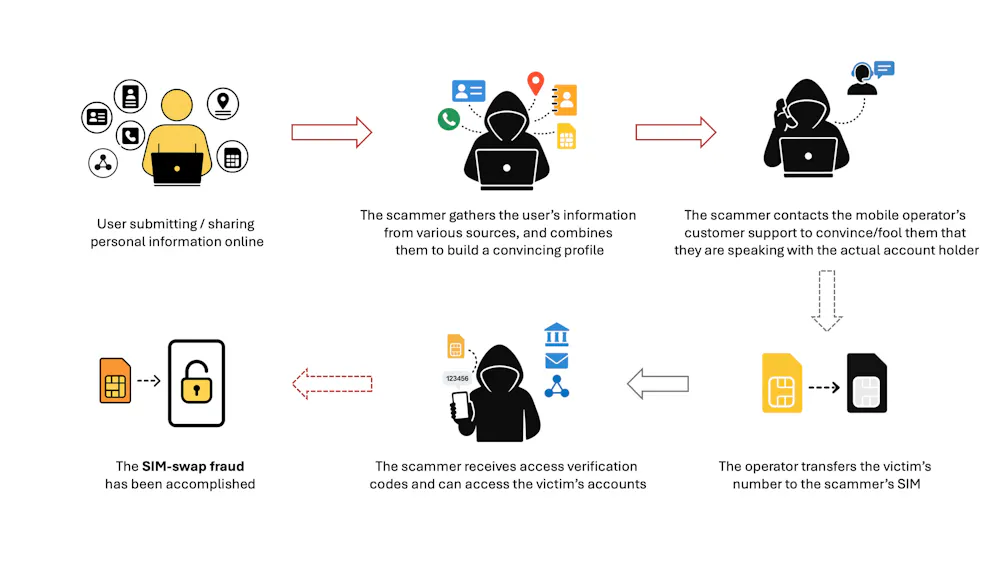
    The cyberattack that has targeted Marks & Spencer’s (M&S) is the latest in a growing wave of cases involving something called sim-swap fraud. While the full technical details remain under investigation, a report in the Times suggests that cyber attackers used this method to access M&S internal systems, possibly by taking control of an employee’s mobile number and convincing IT staff to reset critical login credentials.

    Sim-swap fraud is not a new phenomenon, but it is becoming increasingly dangerous
    and more prevalent. According to CIFAS, the UK’s national fraud prevention service, Sim-swap incidents have surged from under 300 in 2022 to almost 3,000 in 2023. What had been mainly a risk to cryptocurrency investors or online influencers is now much more prevalent.

    This form of cyberattack shows how major companies and ordinary people can be compromised through a tactic that exploits human factors, such as trust and how we have built our digital identities around mobile phones.

    Sim-swap fraud begins when a scammer convinces a mobile operator to transfer a victim’s number to a new sim card, or even an esim (one that’s embedded in the device), under the scammer’s control.

    This can be done over the phone, through an online chat, or even with the help of a
    bribed insider. Once the number is transferred, all calls and texts intended for the victim are redirected to the scammer. This includes those crucial verification codes used for logging into email, banking, messaging apps such as WhatsApp, and government services such as HMRC.

    This alone would be dangerous. But what makes sim-swap fraud so influential is
    that the cyber scammer often already has access to a patchwork of personal data
    about their target. That information may have been collected from data breaches,
    phishing attacks, low-reputation websites, or even the victim’s social media.

    People often underestimate the extent to which they reveal themselves online: a birthday posted on Instagram, a phone number included in a job posting, or a home address used in an online giveaway. Scammers combine this data to build a convincing profile, enough to fool a mobile operator’s customer service staff into believing they’re talking to the real account holder.

    How the sim-swap fraud works

    Once the scammer gains control of a number, the consequences are extensive.
    Attackers can access sensitive information, including personal documents and
    request and receive password reset links for the user’s other accounts. They can log in to WhatsApp or Telegram accounts, read private messages, impersonate the user, and even contact friends or family members to conduct further scams.

    The victims might see false messages posted in their names or fraudulent transactions made from their accounts. This can lead to financial loss, reputation damage, as well as emotional and mental health issues on the part of the victims.

    In the case of M&S, attackers apparently used this access to manipulate internal
    processes and gain access to sensitive systems. This highlights a broader risk:
    many companies still rely on phone numbers as a secondary verification method for
    staff, making their systems vulnerable to the same cyberattack used against
    individuals.

    How sim-Swap fraud works.
    Hossein Abroshan

    Reducing the risk

    While real-time detection of mobile number hijacking remains difficult, taking specific steps can significantly reduce the likelihood of being targeted and victimised. People should avoid sharing personal data unnecessarily, especially across multiple platforms and, very importantly, on unknown or untrusted websites.

    Many attackers don’t obtain all the necessary information from a single source. Instead, they collect it incrementally, using public profiles, marketing databases and past leaks to form a comprehensive picture.

    Being mindful of where you share your phone number, birthday or other identifiers can make it harder for others to impersonate you. It is also crucial to learn how phishing works and how to recognise it, so you will not submit your sensitive information to phishing or fake websites.

    Avoiding SMS-based authentication, where possible, is another key step. Many
    services now support authenticator apps, such as Google Authenticator, Microsoft Authenticator, Due or Authy, which are not tied to your mobile number. For mobile
    accounts themselves, setting up a unique pin or password to your account, which
    must be provided to authorise any changes, can add an extra layer of protection. This makes it harder for someone to initiate a sim swap without that code. However, users alone cannot fulfil this duty.

    Mobile network operators must strengthen identity verification practices, moving beyond basic questions about names and addresses that can be easily gathered or guessed. Banks and other financial institutions should reconsider using SMS or, at the very least, SMS-only as the default method for sensitive authentication. And companies, particularly those handling personal data or financial assets, need to train their IT and customer service teams to recognise the signs of identity based attacks.

    Sim-swap fraud is effective not because it’s highly technical, but because it exploits our trust in phone numbers for identity verification. The M&S case and similar examples show how fragile that trust can be – and why securing our mobile identities is no longer optional.

    Hossein Abroshan does not work for, consult, own shares in or receive funding from any company or organisation that would benefit from this article, and has disclosed no relevant affiliations beyond their academic appointment.

    ref. M&S cyberattacks used a little-known but dangerous technique – and anyone could be vulnerable – https://theconversation.com/mands-cyberattacks-used-a-little-known-but-dangerous-technique-and-anyone-could-be-vulnerable-256739

    MIL OSI – Global Reports

  • MIL-OSI Global: Southern Africa’s rangelands do many jobs, from feeding cattle to storing carbon: a review of 60 years of research

    Source: The Conversation – Africa – By Kevin Kirkman, Professor of Grassland Science, University of KwaZulu-Natal

    South Africa’s rangelands have always had great value for the country. These areas offer more than just grazing for livestock. They provide services like purifying water, storing carbon and conserving biodiversity.

    The grassland biome (28%), along with the savanna (32.5%) and the Nama-Karoo (19.5%), are collectively referred to as rangelands. They make up almost 80% of the land area of South Africa.

    Their ecological services haven’t always been fully appreciated. Research into rangelands has evolved in response to environmental changes, human needs and scientific discoveries.

    Commercial livestock production was the main concern when academics, researchers and practitioners met for the first congress of the Grassland Society of Southern Africa in 1966. Less than 15% of South Africa’s land surface area is arable. The only agricultural production possible on the balance of the land is livestock production from natural rangeland. Livestock production is thus a cornerstone of agriculture and food production in South Africa.

    Six decades on, the Grassland Society has reflected – through a special issue of its journal, the African Journal of Range and Forage Science – on how it has tackled research challenges and adapted to shifting perceptions of rangelands.

    Research has explored aspects of global change, bush encroachment and other changes in rangeland composition and function. Land transformation is another research area. Peri-urban sprawl, open-cast mining, timber plantations and other developments reduce and fragment rangeland. The result is increased pressure on the remaining, intact rangelands.

    Widening scope

    A review of research over the 60 years shows that early efforts focused mainly on forage production to support livestock industries. Research topics included rotational grazing and burning, as well as reinforcing rangelands by adding nutrients, forage grasses and legumes.

    By the 1980s, it became clear that rangelands offered more than just grazing – they were vital ecosystems.

    In the early 1990s, around the onset of democracy in South Africa, local researchers became part of global conversations around rangeland ecology. In doing so, they started to use the international terminology, instead of the old Dutch-derived word “veld”.

    This shift was not just about geography, but about scope. Rangelands were increasingly seen as multifaceted ecosystems critical in the fight against climate change. Increasing temperatures, increasing atmospheric carbon dioxide levels and changing rainfall patterns pose a threat to all ecosystems. Understanding the response of rangelands is increasingly important in devising management strategies to adapt to these changes.

    Scientists expanded their attention to preserving soil health, restoring degraded landscapes, and maintaining biodiversity. Issues like overgrazing, soil erosion and invasive species gained recognition in southern Africa. Degradation of rangelands in South Africa was first highlighted in the mid 1700s, and became a “mainstream” issue in the 1930s. Replacing a diverse group of wild animals with a single species of grazer, such as cattle, is the reason generally given for degradation. Fire has also been linked to it (often unfairly).

    The Grassland Society responded by promoting ideas like adaptive grazing management (making decisions in response to conditions, rather than following a recipe approach). It also encouraged integrating indigenous knowledge with scientific research to create more sustainable and resilient land-use systems. This has helped shape land management practices across the region.

    Many southern African rangelands face the challenge of balancing grazing with biodiversity conservation. Research on conservation agriculture and integrating livestock and wildlife systems is helping farmers and conservationists to find common ground. Wildlife, both in the conservation and the game production contexts, plays a critical role in South Africa’s economy. Tourism is one of the major contributors.

    Land management is particularly important in the Mediterranean-climate regions of South Africa, where poor crop farming practices have damaged soil health. The research is guiding the development of more sustainable farming systems focused on soil regeneration and biodiversity.

    A key indicator of ecosystem degradation is a decline in grassland forbs (herbaceous plants that are not grasses). They are highly sensitive to grazing pressure. So the role of wildflowers in ecosystem health and animal wellbeing has also become an important research area.

    Climate change, fire suppression and overgrazing drive woody plant encroachment, where grasslands are turning into shrublands. This calls for integrated management approaches that consider fire, grazing and even controlled rewilding.

    Fire is a natural element in many grassland ecosystems, and research has helped advance understanding of how it can be monitored and controlled to reduce risks while promoting healthy rangelands.

    People and grasslands

    Rangeland management has important social dimensions. Research is addressing issues such as land tenure, governance, community management systems on communal rangelands and indigenous knowledge in management decisions. These topics are essential for creating sustainable solutions that account for people’s livelihoods and needs.

    In addition to these ecological, social and management advances, the Grassland Society of Southern Africa has worked to develop the next generation of rangeland scientists and practitioners. Through its congresses, workshops and journal publications, the society continues to foster dialogue across disciplines and communities. Its 60th congress will be held in July 2025.

    Kevin Kirkman receives funding from the National Research Foundation.

    Helga van der Merwe receives funding from the National Research Foundation.

    Craig Morris does not work for, consult, own shares in or receive funding from any company or organisation that would benefit from this article, and has disclosed no relevant affiliations beyond their academic appointment.

    ref. Southern Africa’s rangelands do many jobs, from feeding cattle to storing carbon: a review of 60 years of research – https://theconversation.com/southern-africas-rangelands-do-many-jobs-from-feeding-cattle-to-storing-carbon-a-review-of-60-years-of-research-254736

    MIL OSI – Global Reports

  • MIL-OSI Global: Light is the science of the future – the Africans using it to solve local challenges

    Source: The Conversation – Africa – By Andrew Forbes, Professor, University of the Witwatersrand

    Light-based technologies have wide practical applications. Wikimedia Commons, CC BY

    Light is all around us, essential for one of our primary senses (sight) as well as life on Earth itself. It underpins many technologies that affect our daily lives, including energy harvesting with solar cells, light-emitting-diode (LED) displays and telecommunications through fibre optic networks.

    The smartphone is a great example of the power of light. Inside the box, its electronic functionality works because of quantum mechanics. The front screen is an entirely photonic device: liquid crystals controlling light. The back too: white light-emitting diodes for a flash, and lenses to capture images.

    We use the word photonics, and sometimes optics, to capture the harnessing of light for new applications and technologies. Their importance in modern life is celebrated every year on 16 May with the International Day of Light.

    Scientists on the African continent, despite the resource constraints they work under, have made notable contributions to photonics research. Some of these have been captured in a recent special issue of the journal Applied Optics. Along with colleagues in this field from Morocco and Senegal, we introduced this collection of papers, which aims to celebrate excellence and show the impact of studies that address continental issues.

    A spotlight on photonics in Africa

    Africa’s history in formal optics stems back thousands of years, with references to lens design already recorded in ancient Egyptian writings.

    In more recent times, Africa has contributed to two Nobel prizes based on optics. Ahmed Zewail (Egyptian born) watched the ultrafast processes in chemistry with lasers (1999, Nobel Prize for Chemistry) and Serge Harouche (Moroccan born) studied the behaviour of individual particles of light, photons (2012, Nobel Prize for Physics).

    Unfortunately, the African optics story is one of pockets of excellence. The highlights are as good as anywhere else, but there are too few of them to put the continent on the global optics map. According to a 2020 calculation done for me by the Optical Society of America, based on their journals, Africa contributes less than 1% to worldwide journal publications with optics or photonics as a theme.

    Yet there are great opportunities for meeting continental challenges using optics. Examples of areas where Africans can innovate are:

    • bridging the digital divide with modern communications infrastructure

    • optical imaging and spectroscopy for improvements in agriculture and monitoring climate changes

    • harnessing the sun with optical materials for clean energy

    • bio-photonics to solve health issues

    • quantum technologies for novel forms of communicating, sensing, imaging and computing.

    The papers in the special journal issue touch on a diversity of continent-relevant topics.

    One is on using optics to communicate across free-space (air) even in bad weather conditions. This light-based solution was tested using weather data from two African cities, Alexandria in Egypt and Setif in Algeria.

    Another paper is about tiny quantum sources of quantum entanglement for sensing. The authors used diamond, a gem found in South Africa and more commonly associated with jewellery. Diamond has many flaws, one of which can produce single photons as an output when excited. The single photon output was split into two paths, as if the particle went both left and right at the same time. This is the quirky notion of entanglement, in this case, created with diamonds. If an object is placed in any one path, the entanglement can detect it. Strangely, sometimes the photons take the left-path but the object is in the right-path, yet still it can be detected.


    Read more:
    Quantum entanglement: what it is, and why physicists want to harness it


    One contributor proposes a cost-effective method to detect and classify harmful bacteria in water.

    New approaches in spectroscopy (studying colour) for detecting cell health; biosensors to monitor salt and glucose levels in blood; and optical tools for food security all play their part in optical applications on the continent.

    Another area of African optics research that has important applications is the use of optical fibres for sensing the quality of soil and its structural integrity. Optical fibres are usually associated with communication, but a modern trend is to use the existing optical fibre already laid to sense for small changes in the environment, for instance, as early warning systems for earthquakes. The research shows that conventional fibre can also be used to tell if soil is degrading, either from lack of moisture or some physical shift in structure (weakness or movement). It is an immediately useful tool for agriculture, building on many decades of research.

    The diverse range of topics in the collection shows how creative researchers on the continent are in using limited resources for maximum impact. The high orientation towards applications is probably also a sign that African governments want their scientists to work on solutions to real problems rather than purely academic questions. A case in point is South Africa, which has a funded national strategy (SA QuTI) to turn quantum science into quantum technology and train the workforce for a new economy.

    Towards a brighter future

    For young science students wishing to enter the field, the opportunities are endless. While photonics has no discipline boundaries, most students enter through the fields of physics, engineering, chemistry or the life sciences. Its power lies in the combination of skills, blending theoretical, computational and experimental, that are brought to bear on problems. At a typical photonics conference there are likely to be many more industry participants than academics. That’s a testament to its universal impact in new technologies, and the employment opportunities for students.

    The last century was based on electronics and controlling electrons. This century will be dominated by photonics, controlling photons.

    Professor Zouheir Sekkat of University Mohamed V, Rabat, and director of the Pole of Optics and Photonics within MAScIR of University Mohamed VI Polytechnic Benguerir, Morocco, contributed to this article.

    The authors do not work for, consult, own shares in or receive funding from any company or organisation that would benefit from this article, and have disclosed no relevant affiliations beyond their academic appointment.

    ref. Light is the science of the future – the Africans using it to solve local challenges – https://theconversation.com/light-is-the-science-of-the-future-the-africans-using-it-to-solve-local-challenges-256031

    MIL OSI – Global Reports

  • MIL-Evening Report: Politics with Michelle Grattan: Andrew Leigh on more productive work in the age of AI

    Source: The Conversation (Au and NZ) – By Michelle Grattan, Professorial Fellow, University of Canberra

    Australia’s productivity performance has stagnated for years, and Treasurer Jim Chalmers has declared addressing this is a second term priority.

    “Productivity” is now an added part of the remit of Assistant Minister Andrew Leigh, along with his responsibility for competition, charities and Treasury matters.

    It’s an area to which Leigh brings some expertise. He is a former professor of economics at the Australian National University and has a PhD in Public Policy from Harvard Kennedy School.

    He joins us to discuss productivity and more.

    On the concept of productivity, Leigh outlines some common misconceptions.

    A lot of people think of productivity as being working longer or working harder, rather than working smarter.

    Really, productivity should be how much you can produce per hour, not how much you can produce per year, because I don’t think any of us feel productive if we’re forced to work at night and the weekend when we don’t want to. Improving the way in which we use technology can be important to that.

    On why it has taken government so long to boost productivity, Leigh says:

    The measures tend to be lagging. And it’s about changing the structure of businesses, and sometimes that takes a while to take effect. So, for example in the computer revolution, you don’t immediately see that showing up in the productivity statistics. Same story for electrification a couple of generations earlier.

    These so-called general purpose technologies take a while before work is revamped around them. So too we can have problems that take a while to embed themselves, and then it can take a while to get out.

    On emerging artificial intelligence technology, Leigh, while aware of the concerns, says there’s great potential:

    I think we’re all concerned about the implications for privacy. I think there are reasons to be concerned about the potential anti-competitive aspects if the AI engines consolidate over coming years. But it’s also very clear that this is a technology with great potential to take away drudge parts of our jobs and allow people to focus on the most stimulating types.

    There are invariably job impacts of any technology that comes along, and artificial intelligence is no different from that. We don’t tend to be very good as economists at forecasting precisely where the jobs of the future will come and where they’ll go, but we do know that it’ll have an impact, and this is potentially as big a general purpose technology as any of the others that we’ve seen in the past.

    As a member of parliament from the Australian Capital Territory, Leigh remains keen that both territories get more representation in the Senate.

    I think the ACT [and] the Northern Territory send representatives of strong calibre to the federal parliament. And having more representation for the territories would be a great thing.

    To have more ACT senators, I think, would be a terrific thing. We saw in the last election a pretty ferocious attack from the conservatives on Canberra, and so having more voices in the federal parliament standing up for the ACT would be great.

    Michelle Grattan does not work for, consult, own shares in or receive funding from any company or organisation that would benefit from this article, and has disclosed no relevant affiliations beyond their academic appointment.

    ref. Politics with Michelle Grattan: Andrew Leigh on more productive work in the age of AI – https://theconversation.com/politics-with-michelle-grattan-andrew-leigh-on-more-productive-work-in-the-age-of-ai-256685

    MIL OSI AnalysisEveningReport.nz

  • MIL-OSI Global: Social platform Stocktwits and other sources of ‘alternative data’ may be hurting financial analysts’ long-term forecasts

    Source: The Conversation – France – By Thierry Foucault, Professeur de Finance, HEC Paris Business School

    Since the beginning of the century, the number of satellites orbiting Earth has increased more than 800%, from less than 1,000 to more than 9,000. This profusion has had a number of strange and disturbing repercussions. One of them is that companies are selling data from satellite images of parking lots to financial analysts. Analysts then use this information to help gauge a store’s foot traffic, compare a retailer to competitors and estimate its revenue.

    This is just one example of the new information, or “alternative data”, that is now available to analysts to help them make their predictions about future stock performance. In the past, analysts would make predictions based on firms’ public financial statements.


    A weekly e-mail in English featuring expertise from scholars and researchers. It provides an introduction to the diversity of research coming out of the continent and considers some of the key issues facing European countries. Get the newsletter!

    According to our research, the plethora of new sources of data has improved short-term predictions but worsened long-term analysis, which could have profound consequences.

    Tweets, twits and credit card data

    In a paper on alternative data’s effect on financial forecasting, we counted more than 500 companies that sold alternative data in 2017, a number that ballooned from less than 50 in 1996. Today, the alternative data broker Datarade lists more than 3,000 alternative datasets for sale.

    In addition to satellite images, sources of new information include Google, credit card statistics and social media such as X or Stocktwits, a popular X-like platform where investors share ideas about the market. For instance, Stocktwits users share charts showing the evolution of the price of a given stock (e.g. Apple stock) and explanations of why the evolution predicts a price increase or decrease. Users also mention the launch of a new product by a firm and whether it makes them bullish or bearish about the firm’s stock.

    Using data from the Institutional Brokers’ Estimate System (I/B/E/S) and regression analyses, we measured the quality of 65 million equity analysts’ forecasts from 1983 to 2017 by comparing analysts’ predictions with the actual earnings per share of companies’ stock.

    We found, as others had, that the availability of more data explains why stock analysts have become progressively better at making short-term projections. We went further, however, by asking how this alternative data affected long-term projections. And we found that over the same period that saw a rise in accuracy of short-term projections, there was a drop in validity of long-term forecasts.

    More data, but limited attention

    Because of its nature, alternative data – information about firms in the moment – is useful mostly for short-term forecasts. Longer-term analysis – from one to five years into the future – is a much more important judgment.

    Previous papers have proved the common-sense proposition that analysts have a limited amount of attention. If analysts have a large portfolio of firms to cover, for example, their scattered concentration begins to yield diminishing returns.

    We wanted to know whether the increased accuracy of short-term forecasts and declining accuracy of long-term predictions – which we had observed in our analysis of the I/B/E/S data – was due to a concomitant proliferation of alternative sources for financial information.

    To investigate this proposition, we analyzed all discussions of stocks on Stocktwits that took place between 2009 and 2017. As might be expected, certain stocks like Apple, Google or Walmart generated much more discussion than those of small companies that aren’t even listed on the Nasdaq.

    We conjectured that analysts who followed stocks that were heavily discussed on the platform – and so, who were exposed to a lot of alternative data – would experience a larger decline in the quality of their long-term forecasts than analysts who followed stocks that were little discussed. And after controlling for factors such as firms’ size, years in business and sales growth, that’s exactly what we found.

    We inferred that because analysts had easy access to information for short-term analysis, they directed their energy there, which meant they had less attention for long-term forecasting.

    The broader consequences of poor long-term forecasting

    The consequences of this inundation of alternative data may be profound. When assessing a stock’s value, investors must take into account both short- and long-term forecasts. If the quality of long-term forecasts deteriorates, there is a good chance that stock prices will not accurately reflect a firm’s value.

    Moreover, a firm would like to see the value of its decisions reflected in the price of its stock. But if a firm’s long-term decisions are incorrectly taken into account by analysts, it might be less willing to make investments that will only pay off years away.

    In the mining industry, for instance, it takes time to build a new mine. It’s going to take maybe nine, 10 years for an investment to start producing cash flows. Companies might be less willing to make such investments if, say, their stocks may be undervalued because market participants have less accurate forecasts of these investments’ impacts on firms’ cash flows – the subject of another paper we are working on.

    The example of investment in carbon reduction is even more alarming. That kind of investment also tends to pay off in the long run, when global warming will be an even bigger issue. Firms may have less incentive to make the investment if the worth of that investment is not quickly reflected in their valuation.

    Practical applications

    The results of our research suggest that it might be wise for financial firms to separate teams that research short-term results and those that make long-term forecasts. This would alleviate the problem of one person or team being flooded with data relevant to short-term forecasting and then also expected to research long-term results. Our findings are also noteworthy for investors looking for bargains: though there are downsides to poor long-term forecasting, it could present an opportunity for those able to identify undervalued firms.

    Thierry Foucault a reçu des financements du European Research Council (ERC).

    ref. Social platform Stocktwits and other sources of ‘alternative data’ may be hurting financial analysts’ long-term forecasts – https://theconversation.com/social-platform-stocktwits-and-other-sources-of-alternative-data-may-be-hurting-financial-analysts-long-term-forecasts-244102

    MIL OSI – Global Reports

  • MIL-OSI Global: Assisted dying bill: religious MPs were more likely to oppose law change in first round of voting

    Source: The Conversation – UK – By David Jeffery, Senior Lecturer in British Politics, University of Liverpool

    MPs are due to vote for a second time on the terminally ill adults (end of life) bill in parliament – a law that would legalise assisted suicide in England and Wales.

    The third reading stage will take place after a debate on Friday May 16 and would test MPs’ commitment to a change they initially supported at second reading in November 2024. In this first vote, the bill passed with 331 votes to 276 (with 35 abstentions), but in subsequent stages, the process has been more controversial. Emotions are running high and pressure groups have been vocal on both sides.

    As with many issues of morality, this is a free vote – MPs are not told what to do by their party. And after the second reading in November, MPs could, and did, give a range of reasons for how they voted, including their own experiences of loved ones’ final days, discussions with constituents, the experiences of other countries with assisted suicide – and also their religious views.


    Want more politics coverage from academic experts? Every week, we bring you informed analysis of developments in government and fact check the claims being made.

    Sign up for our weekly politics newsletter, delivered every Friday.


    In that first vote, there were clear patterns in voting relating to religious affiliation. MPs with no religion were much more likely to support assisted dying.

    In this group, 76% voted for, while just 18% voted against. Christian MPs overall were more likely to oppose the bill, with 57% voting against with the most pronounced opposition coming from Catholics, who were 74% opposed.

    Muslim MPs were even more likely to vote against, with 84% of them on the no side. Jewish and Sikh MPs were both roughly twice as likely to support the bill as to oppose it, whereas Hindu MPs were more likely to oppose than support by the same margin. The one Buddhist MP – Suella Braverman – voted against.

    Beyond their own demographic, political or religious position, the views of their constituents are also expected to influence how MPs vote. To explore this, I conducted a regression analysis (a statistical method to find a relationship between factors) that included a range of constituency variables, such as the proportion of white residents and the percentage of each religious group (along with those identifying as non-religious).

    I also considered the percentage of constituents with no formal qualifications, graduates, and those reporting some form of disability. In the full model, which incorporated all these variables, none of the religious variables were found to be statistically significant, suggesting that localised religious lobbying did not have a measurable effect on MPs’ voting behaviour.

    However, an interesting finding is that MPs with a higher proportion of disabled people in their constituency were more likely to vote for assisted dying. It is not clear if this relationship is causal, suggesting they had been lobbied by their constituents to support the bill, or a correlation between disabled people being more likely to live in Labour constituencies.

    How MPs voted on assisted dying, November 2024

    Characteristic Overall Yes No Abstain
    Total 642 331 (52%) 276 (43%) 35 (5%)
    Female 261 143 (55%) 107 (41%) 11 (4.2%)
    Ethnic MP 90 30 (33%) 57 (63%) 3 (3.3%)
    LGBT 71 49 (69%) 18 (25%) 4 (5.6%)
    Elected As
    Labour 411 236 (57%) 155 (38%) 20 (4.9%)
    Conservative 121 23 (19%) 93 (77%) 5 (4.1%)
    Liberal Democrat 72 61 (85%) 11 (15%) 0 (0%)
    Scottish National Party 9 0 (0%) 0 (0%) 9 (100%)
    Independent 6 0 (0%) 6 (100%) 0 (0%)
    Democratic Unionist Party 5 0 (0%) 5 (100%) 0 (0%)
    Reform UK 5 3 (60%) 2 (40%) 0 (0%)
    Green Party 4 4 (100%) 0 (0%) 0 (0%)
    Plaid Cymru 4 3 (75%) 1 (25%) 0 (0%)
    Social Democratic & Labour Party 2 1 (50%) 0 (0%) 1 (50%)
    Alliance 1 0 (0%) 1 (100%) 0 (0%)
    Traditional Unionist Voice 1 0 (0%) 1 (100%) 0 (0%)
    Ulster Unionist Party 1 0 (0%) 1 (100%) 0 (0%)
    MP Religion
    None 234 179 (76%) 43 (18%) 12 (5.1%)
    Christian (all) 351 132 (38%) 199 (57%) 20 (5.7%)
    Catholic 35 7 (20%) 26 (74%) 2 (5.7%)
    Muslim 25 2 (8.0%) 21 (84%) 2 (8.0%)
    Jewish 13 8 (62%) 4 (31%) 1 (7.7%)
    Sikh 12 8 (67%) 4 (33%) 0 (0%)
    Hindu 6 2 (33%) 4 (67%) 0 (0%)
    Buddhist 1 0 (0%) 1 (100%) 0 (0%)

    Note: the vote tallies differ from that given by the parliament website because I have included tellers for both sides, and correctly assigned MPs who voted in both lobbies as abstentions.

    In the first vote, female MPs were slightly more likely to vote for assisted dying than against it. LGBT MPs leaned heavily towards support (with 69% voting in favour of the law change). And minority ethnic MPs leaned heavily in the opposite directions – with 63% voting against.

    Perhaps predictably, given the prime minister’s open support for assisted dying, Labour MPs supported the bill, with 57% voting in favour and 38% against.

    The Liberal Democrats were overwhelmingly supportive – 85% backed it – whereas 77% of Conservative MPs voted against. All Northern Irish unionist parties – as well as the independent unionist MP – voted against the bill, with no abstentions.

    Reform UK MPs were split, with two against and three in favour (albeit one of the three, the now-suspended Rupert Lowe, only after a survey of his own constituents).

    But there is an interesting story unfolding on the left of politics. The 2024 general election saw challenges to Labour from both the Green Party and so-called Gaza independents. In this free vote, we see the contrasting social views between these two groups play out.

    All Green MPs supported assisted dying, while all Gaza independents – and Jeremy Corbyn – opposed it. This divide echoes Maria Sobolewska and Robert Ford’s framework in Brexitland, which distinguishes between “conviction identity liberals” and “ethnic minority ‘necessity liberals’”.

    The latter group aligns with conviction liberals on issues of discrimination due to self-interest, but often diverges on broader socially liberal issues such as assisted dying. Issues like assisted dying lay bare the tensions within this coalition.

    Identifying religion in parliament

    Religion is a personal matter so there is no official database that records the religious affiliation of MPs. It is therefore often impossible to test how religious views interact with voting behaviour. To address this gap, I built a dataset using a three-step methodology to determine MPs’ religious affiliation.

    Among MPs (excluding the Speaker and Sinn Fein MPs, who don’t take their seats), 54.7% (351) are Christian, including 5.5% (35) who are Catholic; 36.4% (234) have no religion; 3.9% (25) are Muslim; 2% (13) are Jewish; 1.9% (12) are Sikh; 0.9% (6) are Hindu; and 0.2% (1) is Buddhist.

    To work this out, I look first to see if an MP is a member of a religiously based group, such as Christians in Parliament. They are classified as belonging to that religion. Second, if an MP has publicly stated their religious beliefs – say, in a speech or interview – they are also classified accordingly.

    Labour MP John Healey is sworn in with a bible.
    Flickr/UK Parliament, CC BY-NC-ND

    These first two steps, however, cover only a fraction of MPs. Fortunately, all MPs are required to take an oath of allegiance to the Crown when sworn in. This oath can be made on a religious text or as a non-religious affirmation, and crucially MPs can choose which text to swear on, making this decision a meaningful and publicly visible indication of belief.

    That brings us to step three: the religious text (or lack thereof) used in the swearing-in ceremony is taken as an additional source of evidence for classification.

    These three sources are used in order of priority. For example, Tim Farron is a member of Christians in Parliament and has spoken openly about his faith, yet he chose to affirm without using a religious text. Even so, he is classified as Christian based on the first two criteria.

    What has been particularly interesting in this case has been the different voting patterns between Christian groups. I was able to set these groups apart because when MPs swear in, Catholics usually request specific versions of the Bible – such as the New Jerusalem Bible – whereas others might simply ask for “the Bible” and are given the King James Version.

    Treating Catholics as a distinct category allows for greater nuance in the analysis of the religious composition of parliament. A full breakdown of the religion of MPs, and the data used for this project, can be found here.

    We’ll soon be able to see how these markers interact with voting in the third reading.

    David Jeffery does not work for, consult, own shares in or receive funding from any company or organisation that would benefit from this article, and has disclosed no relevant affiliations beyond their academic appointment.

    ref. Assisted dying bill: religious MPs were more likely to oppose law change in first round of voting – https://theconversation.com/assisted-dying-bill-religious-mps-were-more-likely-to-oppose-law-change-in-first-round-of-voting-256503

    MIL OSI – Global Reports

  • MIL-OSI Global: Do people really want to know their risk of getting Alzheimer’s?

    Source: The Conversation – UK – By Claudia Cooper, Professor of Psychological Medicine, Queen Mary University of London

    Tricky Shark/Shutterstock.com

    A new study has highlighted the complex emotions and ethical dilemmas of learning your future risk of Alzheimer’s disease. Among 274 healthy research participants from the US aged 65 and over, 40% declined to receive their personal risk estimates – despite having initially expressed an interest in doing so.

    These risk estimates were based on demographic data, brain imaging and blood biomarkers, offering an 82 to 84% accuracy in predicting the likelihood of developing Alzheimer’s disease within five years. By comparison, age alone can predict this risk with 79% accuracy.

    So the value of these tests is modest in people without any cognitive symptoms, and there are potential risks to disclosing them. People told they are at increased risk of dementia describe how this can feel like an illness in itself – or being in limbo between health and disease – and cause distress.

    Participants who did not want to be tested cited the uncertainty of the result, the burden of knowing, and their negative experiences of witnessing Alzheimer’s disease in others. Those with a family history of Alzheimer’s were less likely to want to know their results – perhaps because of greater exposure to these negative experiences.


    Get your news from actual experts, straight to your inbox. Sign up to our daily newsletter to receive all The Conversation UK’s latest coverage of news and research, from politics and business to the arts and sciences.


    Black participants were less likely to want to know, too, which the researchers suggest could relate to greater experiences of stress, stigma and discrimination, making the prospect of a positive test result feel more threatening.

    Perhaps the question here is not why more people didn’t want to know the result, but whether researchers should routinely offer them at all, given the lack of certainty of the results and the potential for distress.

    Another issue is their limited usefulness for people without symptoms. Addressing lifestyle risk factors, such as eating a healthy diet and getting regular exercise, can reduce cognitive decline, a message the public is increasingly aware of. But knowing your risk doesn’t change the advice.

    In contrast to areas like breast cancer, where people at high risk of the disease can be offered preventative measures, such as drugs, surgery or enhanced screening, there are no comparable interventions to reduce dementia risk in people without symptoms.

    The authors of the new study explain that researchers used to be cautious about not sharing test results with participants in Alzheimer’s studies. But now there’s a growing expectation that people will be given their results. A proposed “bill of rights” for dementia research participants includes the right to get their results and have them clearly explained.

    It’s hard to explain how uncertain these results can be. People often worry about getting dementia in general, not just Alzheimer’s, which makes up about two-thirds of all cases. Some people who are told they have a low risk of Alzheimer’s may still develop another form of dementia, such as vascular dementia.

    The wider science that produced these future risk estimates has enabled the development of new diagnostic technologies unimaginable ten years ago. Similar blood tests can detect Alzheimer’s disease pathology in people with cognitive symptoms with over 90% accuracy, potentially enabling more accurate and timely dementia diagnoses.

    Blood tests

    Two major UK research programmes are piloting these blood tests in the NHS to support the more accurate diagnoses of some forms of dementia, including Alzheimer’s disease. Improved and earlier detection is needed: a third of people with dementia in England and Northern Ireland are never diagnosed.

    The benefits of the first drugs to slow the progression of Alzheimer’s disease are modest. In the UK, the National Institute for Health and Care Excellence hasn’t yet been convinced that these drugs are worth the cost for the NHS.

    The NHS is trialling blood tests to spot early signs of Alzheimer’s.
    AntonSAN/Shutterstock.com

    Some might question a focus on identifying future risks for dementia before we have good treatments. But developing better treatments depends on the new scientific discoveries that are helping us detect Alzheimer’s earlier. Finding a treatment for an illness requires a detailed understanding of how that illness develops.

    We are closer to delivering accurate detection of Alzheimer’s disease than curative treatment. This presents a dilemma of how much to know about personal risk. Rights-based approaches situate this dilemma with the participant, to decide whether to know rather than researchers to decide whether to tell.

    For researchers, disclosing results compassionately and clearly is difficult and for some, the knowledge will cause distress, however well it is conveyed. The option to receive results should come with warnings.

    Claudia Cooper receives funding from the National Institute for Health and Care Research (NIHR) Dementia and Neurodegeneration Policy Research Unit (NIHR206110) and is supported by an NIHR Senior Investigator award (NIHR205009). The views expressed are those of the author and not necessarily those of the NIHR, the NHS or the Department of Health and Social Care. She received funding from ESRC/NIHR for the APPLE-Tree secondary dementia prevention programme from 2019-24 (ES/S010408/1). She works as a Professor of Psychological Medicine at Wolfson Institute of Population Health, Queen Mary University of London.

    ref. Do people really want to know their risk of getting Alzheimer’s? – https://theconversation.com/do-people-really-want-to-know-their-risk-of-getting-alzheimers-256340

    MIL OSI – Global Reports

  • MIL-OSI Global: Bitter Honey by Lola Akinmade Åkerström explores how mothers carry their histories into their daughters’ lives

    Source: The Conversation – UK – By Olumayokun Ogunde, PhD Candidate in English, City St George’s, University of London

    In Bitter Honey, novelist Lola Akinmade Åkerström explores the emotional undercurrents of motherhood and daughterhood. The novel reflects on how the past bears down on the present. How mothers carry their histories into their daughters’ lives – often uninvited, sometimes unrecognised.

    My research is concerned with narratives that crack open the heart of African motherhood, stories that strive not only to expose pain, but to understand it. Bitter Honey gestures towards this emotional terrain.

    One particular line is emblematic of this exploration: “‘When I was your age, I moved to Sweden without my mother. With nobody.’ Tina has heard this story a million times.” It captures both the weariness of inherited trauma and the fragility of the desire for understanding that threads through the novel.

    Bitter Honey begins with the promise of protagonist Tina’s rising stardom. Alone in a dressing room, navigating fame and the sudden reappearance of her absentee father, Tina’s story has all the markings of a Bildungsroman (a coming-of-age novel shaped by psychological and moral growth). But the novel’s emotional nucleus is not fame, nor even fatherhood – it’s Tina’s mother, Nancy. Or at least, it wants to be.


    Looking for something good? Cut through the noise with a carefully curated selection of the latest releases, live events and exhibitions, straight to your inbox every fortnight, on Fridays. Sign up here.


    Nancy’s story is one of deep and curdled regret. Akinmade crafts a portrait of a woman who once stood at the cusp of a glamorous new world, having fallen in love with Malik, an ambassador’s son who offers her access to elite circles, state dinners and the Swedish prime minister. But it is Lars, her white Swedish professor, who slowly unpicks the seams of her life.

    The novel promises a sense of romantic tension, inviting the reader to feel torn between Malik’s genuine warmth and Lars’s sophistication. But no such ambivalence materialises.

    Lars is not charming. He is jealous, controlling and ultimately predatory. Akinmade’s portrayal of Lars makes it clear: he is not a romantic dilemma, he is a colonising force. Nancy’s life with him is one of slow suffocation, and her daughter Tina is born of that rupture.

    Throughout the novel, there are subtle allusions and at times more overt depictions of Tina’s struggle with her mixed heritage. However, these moments feel overwritten, particularly in lines such as Tina’s desire to “fully wear her mixed skin”.

    While the phrasing may aim for poetic resonance, for me, it comes across as reductive. The metaphor inadvertently simplifies a complex and embodied experience, raising uneasy questions. Can identity be worn? Is it something that can be adorned, removed or chosen at will?

    Akinmade appears to be engaging with the constructedness of race and the illusion of agency within African diasporic identity. But Tina’s exploration of these themes lacks depth. There remains a striking incongruity between how she understands herself and how the world perceives her.

    At times her lack of critical self-awareness is jarring. Particularly when set against the more richly developed and emotionally layered portrayal of Nancy.

    Love and regret

    Where Akinmade excels is in her rendering of Nancy. Her character is more vividly drawn, more emotionally accessible than Tina’s. We see her consumed by grief and fear, mothering from a place of survival rather than nurture.

    “She would have resisted him. Even if it meant Tobias and Tina vanishing into thin air, never existing.” This is the agonising truth of Nancy’s lifetime: that her children are reminders of her own loss of agency. Her love is knotted with regret.

    There’s an urgent question running through Bitter Honey. What does it mean to parent when your life has been violently derailed by structures beyond your control?

    This legacy of cultural dislocation is a theme Akinmade touches on but stops short of fully exploring. Nancy, as an immigrant mother, carries a kind of preemptive grief. Her decisions are shaped not just by personal trauma but by a constant anticipation of harm. The immigrant mother often exists in survival mode, where care is expressed not through softness, but vigilance.

    “You figured I have no agency without him?” A line Tina delivers in a moment of confrontation typifies the novel’s uneven dialogue. Akinmade at times stumbles into phrasing that feels stilted or overwrought, reducing what could be moments of real emotional depth into awkward exchanges. Yet her broader ambition, to map generational wounds and diasporic complexity, is clear.

    The novel’s scope is wide. We move between Sweden and the United States, from the 70s to 2006, witnessing how each locale produces different shades of diasporic identity.

    Akinmade is particularly attuned to how Gambian communities shift across contexts – Gambians in Sweden are not like those in London or in New York. This specificity highlights that place informs not only experience but the perception of self.

    Ultimately, Bitter Honey is at its most compelling when it slows down, when it allows Nancy’s grief to speak plainly. One of the novel’s most poignant lines arrives when Nancy warns Tina before she signs with an American label that brands her the “Swedish siren”.

    “The world gives you your heart’s desires, then violently rips it away from your hands when you’re most vulnerable. Please stay vigilant.” Here, Akinmade captures the cruel irony of diasporic ambition, the way success can echo colonial exploitation, offering visibility at the cost of safety.

    Through Tina, the reader is kept at a remove from the raw reality of Nancy. The moments where we begin to glimpse the true texture of her life, her regret, her protectiveness, her survival, are all too fleeting.

    What would their lives look like without this fear? This is the novel’s quiet, unanswered question. Are these maternal guardrails protection or shackles? Bitter Honey doesn’t offer a resolution. But in asking, it reveals the aching legacy that mothers like Nancy pass down: not just trauma, but the impossible task of surviving without softness.

    Olumayokun Ogunde does not work for, consult, own shares in or receive funding from any company or organisation that would benefit from this article, and has disclosed no relevant affiliations beyond their academic appointment.

    ref. Bitter Honey by Lola Akinmade Åkerström explores how mothers carry their histories into their daughters’ lives – https://theconversation.com/bitter-honey-by-lola-akinmade-akerstrom-explores-how-mothers-carry-their-histories-into-their-daughters-lives-254527

    MIL OSI – Global Reports

  • MIL-OSI Global: Mrs Dalloway at 100: Virginia Woolf’s timeless novel is a work of pandemic fiction

    Source: The Conversation – UK – By Anna Snaith, Professor of Twentieth-Century Literature, King’s College London

    Virginia Woolf’s Mrs Dalloway, set on a June day in 1923, is unusual in that its two protagonists – society hostess Clarissa Dalloway and shell-shocked veteran Septimus Smith – never meet.

    Published 100 years ago on May 14 1925, the novel follows Clarissa as she prepares to host a party. She is visited by a former suitor, Peter Walsh, who has just returned from India. Her movements on London’s streets are intertwined with those of her husband, Richard, and daughter, Elizabeth, as well as a host of minor characters.

    Simultaneously, Septimus is experiencing what we would now understand as post-traumatic stress disorder (PTSD) caused by his service in the first world war. His sense of London as an apocalyptic war zone is exacerbated by his treatment at the hands of his doctors and their refusal to “hear” his trauma.

    Mrs Dalloway has inspired and continues to inspire numerous creative responses and reworkings, such as Michael Cunningham’s novel The Hours (1998) and Wayne McGregor’s triptych ballet Woolf Works (2015). The novel now has its own biography by Mark Hussey due to be published next month and DallowayDay celebrations that echo James Joyce’s Bloomsday.

    A century on, Mrs Dalloway speaks in so many ways to our own moment of militarisation, neo-imperialism and political crisis. In her diary, Woolf wrote that she wanted to “criticise the social system and to show it at work” and the novel offers an often excoriating critique of the military industrial complex of interwar Britain.


    This article is part of Rethinking the Classics. The stories in this series offer insightful new ways to think about and interpret classic books and artworks. This is the canon – with a twist.


    In her representation of returned soldier Septimus Smith’s PTSD, Woolf complicates the characters’ refrain that the “war is over” and the collective refusal to acknowledge the trauma of trench warfare. She was ahead of her time as a woman writing about war and in her literary depiction of the term and experience of “shell shock” so soon after the conflict when the condition was still often understood to be cowardice and malingering.

    Septimus’s trauma connects to the unspecified “illness” experienced by Clarissa, wife of a Conservative MP, preparing to host a party that evening. Woolf takes this privileged figure, who appears in her first novel The Voyage Out (1915) as a satirical cameo, and in this iteration offers the reader her rich inner life: her complex stream of thoughts, sensations and philosophical musings.

    The original book jacket.
    Wiki Commons

    Woolf’s acquaintance Kitty Maxse may have been the model for Clarissa. Kitty fell down the stairs to her death, raising the possibility of suicide. Instead, Woolf has Septimus commit suicide when he is faced with the threat of incarceration and the “rest cure”. News of the tragedy interrupts Clarissa’s party, but she understands his act: “Death was defiance. Death was an attempt to communicate … Somehow it was her disaster – her disgrace.”

    Clarissa feels herself, like Septimus, to be expendable: “She had the oddest sense of being herself invisible; unseen; unknown; there being no more marrying; no more having of children … this being Mrs Dalloway; not even Clarissa anymore.”

    Clarissa is 52 and, while the menopause is not mentioned directly, Woolf touches here in such a prescient way on the medicalisation and pathologising of women’s health. The novel is radical in its centring of a middle-aged protagonist – the novel form bends as it is uncoupled from the marriage plot. Woolf’s complex treatment of ageing – “she felt very young; at the same time unspeakably aged” – and the sense of both loss and possibility is acutely felt.

    Clarissa’s conformity to social expectations includes the suppression of her queer desires. Alone in her upstairs room, she reminisces about her “falling in love with women” and more specifically, her kiss with Sally Seton: “the most exquisite moment of her whole life … the whole world might have turned upside down!” Again, in her representation of queer lives, Woolf overturned the status quo.

    Mrs Dalloway and the pandemic

    In its engagement with feminist and queer politics, then, the novel has enduring appeal. But its post-COVID appreciation as a pandemic novel has meant that the novel has been read afresh by a whole new audience. Woolf and Clarissa are both survivors of the post-first world war influenza pandemic (known as the Spanish flu), which infected a third of the global population and caused an estimated 50-100 million deaths.

    We learn that Clarissa had “grown very white since her illness”, “her heart, affected, they said, by influenza”. Her sheer joy at walking London’s summer streets and mixing with crowds of passersby is a legacy of the pandemic as is the sense of loss and tolling of bells that echo through the novel.

    Critic Elizabeth Outka in Viral Modernism: the Influenza Pandemic and Interwar Literature (2019) has read the pandemic into the novel’s mobile and multifarious perspective.

    [It has] a narrative perspective that could move as nimbly among bodies as a virus, a plot defined less by linear timelines and more by temporal and experiential fluidity, and a structure that could express the delirious, hallucinatory reality that infused the culture.

    Clarissa has a poignant sense of the horror (“it was very, very dangerous to live even one day”) and joy (“in the triumph and the jingle … was what she loved; life; London; this moment of June”) of existence.

    The legacy of the war is present not only in Septimus’s trauma but in a wider civilian trepidation. In one scene, a skywriting aeroplane recalls the aerial and aural threat of wartime air raids over London. In another, a backfiring car sounds to Clarissa like a “violent explosion” or a pistol shot.

    The novel both registers the collective trauma of war but finds solace in the noisy, connective dynamism and diversity of urban life. Perhaps it is in Woolf’s acknowledgement of both the enormity and the minutiae of daily existence that this novel continues to speak to a contemporary readership.


    Looking for something good? Cut through the noise with a carefully curated selection of the latest releases, live events and exhibitions, straight to your inbox every fortnight, on Fridays. Sign up here.


    Anna Snaith does not work for, consult, own shares in or receive funding from any company or organisation that would benefit from this article, and has disclosed no relevant affiliations beyond their academic appointment.

    ref. Mrs Dalloway at 100: Virginia Woolf’s timeless novel is a work of pandemic fiction – https://theconversation.com/mrs-dalloway-at-100-virginia-woolfs-timeless-novel-is-a-work-of-pandemic-fiction-256642

    MIL OSI – Global Reports

  • MIL-OSI Global: How 7,000 steps a day could help reduce your risk of cancer

    Source: The Conversation – UK – By Mhairi Morris, Senior Lecturer in Biochemistry, Loughborough University

    PeopleImages.com – Yuri A/Shutterstock

    Physical inactivity costs the UK an estimated £7.4 billion each year — but more importantly, it costs lives. In today’s increasingly sedentary world, sitting too much is raising the risk of many serious diseases, including cancer. But could something as simple as walking offer real protection?

    It turns out the answer may be yes.

    A growing body of research shows that regular physical activity can lower the risk of cancer. Now, recent findings from the University of Oxford add more weight to that idea. According to a large study involving over 85,000 people in the UK, the more steps you take each day, the lower your chances of developing up to 13 different types of cancer.

    In the study, participants wore activity trackers that measured both the amount and intensity of their daily movement. On average, researchers followed up with participants six years later. They found a clear pattern: more steps meant lower cancer risk, regardless of how fast those steps were taken.


    Get your news from actual experts, straight to your inbox. Sign up to our daily newsletter to receive all The Conversation UK’s latest coverage of news and research, from politics and business to the arts and sciences.


    The benefits began to appear at around 5,000 steps a day – anything below that didn’t seem to offer much protection.

    At 7,000 steps, the risk of developing cancer dropped by 11%. At 9,000 steps, it dropped by 16%. Beyond 9,000 steps, the benefits levelled off. The difference in risk reduction became marginal, and varied slightly between men and women.

    These findings support the popular recommendation of aiming for 10,000 steps a day – not just for general health, but potentially for cancer prevention too. These associations also held up when results were adjusted for demographic, BMI and other lifestyle factors, such as smoking, suggesting that the observed changes in cancer risk were indeed down to the average number of daily steps a participant took.

    Step intensity was also analysed – essentially, how fast participants were walking. Researchers found that faster walking was linked with lower cancer risk. However, when total physical activity was taken into account, the speed of walking no longer made a statistically significant difference. In other words: it’s the total amount of walking that counts, not how brisk it is.

    Likewise, replacing sitting time with either light or moderate activity lowered cancer risk – but swapping light activity for moderate activity didn’t offer additional benefits. So just moving more, at any pace, appears to be what matters most.

    The researchers looked at 13 specific cancers, including oesophageal, liver, lung, kidney, gastric, endometrial, myeloid leukaemia, myeloma, colon, head and neck, rectal, bladder and breast.

    Over the six year follow-up period, around 3% of participants developed one of these cancers. The most common were colon, rectal, and lung cancers in men, and breast, colon, endometrial, and lung cancers in women.

    Higher physical activity levels were most strongly linked to reduced risk of six cancers: gastric, bladder, liver, endometrial, lung and head and neck.

    Break it up

    Previous studies have relied on self-reported activity logs, which can be unreliable – people often forget or misjudge their activity levels. This study used wearable devices, providing a more accurate picture of how much and how intensely people were moving.

    The study also stands out because it didn’t focus solely on vigorous exercise. Many past studies have shown that intense workouts can reduce cancer risk – but not everyone is able (or willing) to hit the gym hard. This new research shows that even light activity like walking can make a difference, making cancer prevention more accessible to more people.

    Walking just two miles a day – roughly 4,000 steps, or about 40 minutes of light walking – could make a significant impact on your long-term health. You don’t have to do it all at once either. Break it up throughout the day by: taking the stairs instead of the lift; having a stroll at lunchtime; walking during phone calls; parking a bit further away from your destination.

    Getting more steps into your routine, especially during middle age, could be one of the simplest ways to lower your risk of developing certain cancers.

    Of course, the link between physical activity and cancer is complex. More long-term research is needed, especially focused on individual cancer types, to better understand why walking helps – and how we can make movement a regular part of cancer prevention strategies.

    But for now, the message is clear: sit less, move more – and you could walk your way toward better health.

    Mhairi Morris does not work for, consult, own shares in or receive funding from any company or organisation that would benefit from this article, and has disclosed no relevant affiliations beyond their academic appointment.

    ref. How 7,000 steps a day could help reduce your risk of cancer – https://theconversation.com/how-7-000-steps-a-day-could-help-reduce-your-risk-of-cancer-255564

    MIL OSI – Global Reports

  • MIL-OSI Global: From boomers to Gen Z: How to solve the public sector succession crisis

    Source: The Conversation – Canada – By W. Dominika Wranik, Professor, Faculty of Management, Dalhousie University

    Public servants are the backbone of Canadian government. Canadians expect them to act in the best interest of society, to uphold Canadian democratic institutions, to steward public monies and to deliver programs and services.

    But as retirements surge, how can governments attract young people to work for them? It’s difficult when governments suffer from poor reputations, low public trust and offer working conditions that may not appeal to young people.

    What do young Canadians want from their careers, and what will it take for public service to win them over?

    This issue, among others concerning Canadian public servants, are currently being studied at the Professional Motivations Research Lab at Dalhousie University. The lab is led by the lead author of this piece, Dominika Wranik, whose work focuses on measuring and explaining the motivations of professionals in the public service.

    The lab’s insights shed light on the factors that influence how young people make decisions about whether to work for the public sector.

    Looming labour shortage

    In 1966, there were 7.7 working-age individuals for every senior in Canada. But in 2022, the ratio dropped to 3.4 and is projected to drop further over the next decade.

    A labour shortage will create increased competition for top talent between the public and private sector, an issue for governments as research has shown a growing disinterest among youth in pursuing civil service careers.

    Recruitment to the public service is further complicated by declining perceptions of competence and trust in Canadian public institutions. With studies demonstrating that applicants’ perceptions of an organization’s competence affect their attraction to working there, Canadian governments also run the risk of losing potential applicants who don’t view Canada’s public institutions as being competent or trustworthy.

    These challenges come as young Canadians enter the workforce with more career options than ever before, and different expectations from previous generations.

    Salary not the sole motivator

    Young Canadians are not solely interested in high incomes, but also in workplaces that provide a healthy work/life balance and align with their values.

    Data collected in 2024, for example, shows that 87 per cent of British Columbians between the ages of 18 and 34 prefer employers that are socially and environmentally responsible, with 61 per cent stating they would only work for such companies.

    This means Canadian governments are currently finding themselves in a perilous situation, where rising suspicion about their trustworthiness and competence, paired with growing disinterest in the public sector as a whole, means they’re not positioned well to navigate an impending labour shortage.

    Strengthening their capacity to attract and recruit the next generation of workers is therefore imperative, not only for upholding public institutions, but also for rebuilding trust in government.

    In the effort to resolve this issue and enhance recruitment to the public service, Canadian government officials must pore over existing research into the factors that determine why youth and those just entering the labour market — people between the ages of 13 to 27, known as Gen Z — pursue or refrain from pursing public service jobs.

    Some research suggests the three variables that potentially predict whether a member of Gen Z is inclined to pursue a career in the public sector are:

    Perceptions

    In terms of perceptions of the public sector, a recent study found that when choosing between the public and private sectors, university students in Norway and Poland were most influenced by their views of the public sector.

    The more positive the outlook — for example, that public sector work is considered less bureaucratic and less inefficient — the higher the preference to work in the public sector, and vice versa.

    This finding was echoed by racialized minorities in the United States. A 2022 study found that Black, Asian and Latinx young adults between the ages of 18-36 were largely turned off by government work due to perceptions that they weren’t represented or well-served by their “largely white, male and wealthy” local, state or federal government representatives.

    In Canada, a study led by the Public Policy Forum discovered that perceptions of the nature of government work also had a significant impact on a student’s decision to pursue a career in the public sector. Students who chose to enter the public service cited “opportunities to examine a wide range of complex challenges and help create policy solutions that can have a positive impact on many communities.”

    Motivations

    In terms of having public service motivation (PSM) — which refers to an individual’s inclination to serve the public interest — studies have found that members of Gen Z are more likely to be drawn to the public sector if they are high in PSM.

    Specifically, a study of Gen Z students in criminal justice programs found that those who identified with PSM tenets — such as “meaningful public service is very important to me” and “making a difference in society means more to me than personal achievements” — had a significantly higher likelihood of choosing the public sector over the private sector.

    Similarly, an interdisciplinary sample of undergraduate students with higher levels of PSM — and who therefore identified with the PSM dimensions of self-sacrifice, compassion and commitment to public values — were more likely to have a preference for the public sector.

    Job attributes

    Preferred job attributes also influence the employment choices of members of Gen Z. The aforementioned research on Norwegian and Polish youth and another 2017 study by Canada’s Public Policy Forum (2017) find that when Gen Z students are interested in public sector work, it’s due to the semblance of financial and job security.

    Given the growing disinterest among the Canadian population in pursuing employment in the public sector, new insights about what attracts Gen Z workers to the public sector should be required reading by governments across Canada.


    Read more:
    Public service reflections: Why the role of civil servants must evolve to ensure public trust


    Understanding Gen Z’s misgiving about public sector work will help better position governments to compete with the private sector to recruit the next generation of employees.

    With perceptions of government competence and trustworthiness continuing to fall, it is imperative that Canadian public policymakers take significant steps to engage with Gen Z students and workers to create employment conditions that are attractive and aligned with their values.

    The next generation of government leaders in Canada are currently in high school, college or university classrooms across the country, meaning that research centred in educational institutions is uniquely positioned to uncover valuable regarding how public sector employment is perceived.

    Therefore, government-led engagement that is conducted through town halls, workshops and focus groups can help strengthen trust in government while familiarizing Gen Z students with government careers.

    W. Dominika Wranik receives funding from the Social Sciences and Humanities Research Council. In the past, she has held funding from the Canadian Institutes of Health Research, Mitacs, Research Nova Scotia, and the EU Horizon 2020, as well as short-term funding from several provincial and federal government departments. Dr. Wranik serves as an expert consultant for Canada’s Drug Agency (CDA-AMC).

    Alec Brooks and Payton Nicol do not work for, consult, own shares in or receive funding from any company or organisation that would benefit from this article, and have disclosed no relevant affiliations beyond their academic appointment.

    ref. From boomers to Gen Z: How to solve the public sector succession crisis – https://theconversation.com/from-boomers-to-gen-z-how-to-solve-the-public-sector-succession-crisis-255077

    MIL OSI – Global Reports

  • MIL-OSI Global: Trump’s tariff threat to foreign films overlooks the value of multilingual cinema

    Source: The Conversation – Canada – By Gaelle Planchenault, Associate Professor of French Media, Culture, and Applied Linguistics, Simon Fraser University

    With the 78th Cannes International Film Festival underway this week, there is little doubt that one topic will be central to conversations among filmmakers, sales agents and journalists: United States President Donald Trump’s threat to impose a 100 per cent tax on foreign-made films.

    Amid an ongoing tariff war, Trump’s proposal — which may ultimately remain an empty threat — goes beyond economic protectionism. It is cultural protectionism. It also reflects language ideologies that have long constrained the American film industry and American engagement with multilingual cinema.

    Experts have offered various theories about the motivations behind this threat, as well as why it may ultimately prove unwise. In the rush to brace for impact, we often forget the values behind these extreme positions aren’t new. More importantly, we must also remember why it’s vital to protect these cultural expressions.

    As a linguist, I see a clear connection between this proposal and one of the administration’s actions earlier this year, when Trump signed an executive order designating English as the country’s sole official language. This move reflected a deeply rooted monolingual ideology that has long influenced both the U.S. language policy and education systems.


    Read more:
    Trump’s English language order upends America’s long multilingual history


    Monolingual ideology

    Such language ideology reflects a belief in the superiority of monolingualism, a view that American linguist Rosina Lippi-Green links to the “myth of Standard American English.”

    This myth is grounded in the subordination by one dialect, believed to be of higher quality and status, over other languages and dialects. According to Lippi-Green, the enforcement of this ideology follows a systematic process: language is mystified, authority is claimed and a series of negative consequences ensue. Misinformation is generated, targeted languages are trivialized, non-conformers are vilified or marginalized and threats are made.

    Such authority and threats are recognizable in this most recent threat to make access to foreign films difficult. The issue is not just about the economic dimension of foreign-made films. It is also about the perceived threat posed by the presence and influence of other languages. At its core, this reflects a fear or rejection of linguistic diversity.

    In the film industry, this monolingual ideology is closely tied to glottophobic attitudes, also referred to by some scholars as linguicism. These terms define the misrepresentation and negative stereotyping of speakers of languages other than English.

    Hollywood, in particular, has a long history of portraying foreign or heritage languages in stereotypical and often derogatory ways. Consider, for instance, the German-speaking characters in Second World War films, or more recent depictions of Arabic, Mexican Spanish or Russian speakers.

    These portrayals illustrate a tendency to depict other languages as menacing — a point that was also made in the American president’s claim that foreign films pose a “threat” because they constitute “messaging and propaganda.”

    Linguistic stereotyping

    It’s not just characters who speak other languages who have been misrepresented in American films. Those who speak English as a second language — that is with an accent or with a syntax that is marked by their first language — were often played by white actors and subject to similar derogatory stereotypes.

    Linguists have identified patterns in these linguistic representations, referring to them as Injun English, Mock Spanish or yellow voices, among others.

    Lippi-Green has famously argued that such linguistic depictions are ways to reinforce standard language ideologies through linguistic stereotyping in media, including popular Disney cartoons. They effectively teach American children how to discriminate.

    In my work, I examined French-accented English to demonstrate that these representations reflect broader cultural anxieties. Ultimately, this rhetoric reveals more about the U.S. relationship with linguistic diversity than it does about the communities being portrayed.

    Trump has made reference to “any and all movies coming into our country that are produced in foreign lands.” But it remains unclear how such measures would impact streaming platforms and the diverse range of films they currently offer.

    Hollywood has come a long way since the heydays of linguicism, gradually embracing a more inclusive and multilingual cinematic landscape. Today, films that present a more diverse linguistic landscape are increasingly common. And audiences are accustomed to having access to a wide selection of international content.

    The global success of the French series Call My Agent is just one example. Among others are popular French spy thrillers and romances, Swedish thrillers, Japanese anime and Korean dystopian series.

    The pleasure of watching foreign films

    For years, foreign language films have been recognized as an invaluable resource for language learning. This fact is supported by language learning apps that increasingly recommend users to view TV programs or movies to support learning. Movies and TV provide access to a variety of dialects as well as authentic forms of language.

    As a professor of French media and linguistics, I often use films to teach students about French language and culture. But beyond their educational benefits, foreign-language films offer unique esthetic and emotional pleasures.

    A press image for the show Call My Agent.
    Netflix

    Watching a film is to engage with sound and image. The language itself enhances the immersive experience, contributing to the authenticity of the storytelling. For example, one of my students told me he enjoys turning on closed captions in French. These are also known as SDH: Subtitles for the Deaf and Hard-of-Hearing. He does this not just for the dialogue but because they capture the full cinematic experience, including the naming of sounds.

    Restricting access to these cultural products would trap viewers in an ideological echo chamber, where only one language is heard and validated.

    Fictional representations play a powerful role in shaping and reinforcing real-world attitudes. Monolingual representations potentially foster linguistic discrimination and intolerance toward any word uttered with an accent or in another language. In short, such restrictions could pave the way for a partial and stunted society.

    Gaelle Planchenault does not work for, consult, own shares in or receive funding from any company or organisation that would benefit from this article, and has disclosed no relevant affiliations beyond their academic appointment.

    ref. Trump’s tariff threat to foreign films overlooks the value of multilingual cinema – https://theconversation.com/trumps-tariff-threat-to-foreign-films-overlooks-the-value-of-multilingual-cinema-256323

    MIL OSI – Global Reports

  • MIL-OSI Global: Pacific voyagers’ remarkable environmental knowledge allowed for long-distance navigation without Western technology

    Source: The Conversation – USA – By Richard (Rick) Feinberg, Professor Emeritus of Anthropology, Kent State University

    An outrigger canoe would typically have several paddlers and one navigator. AP Photo/David Goldman

    Wet and shivering, I rose from the outrigger of a Polynesian voyaging canoe. We’d been at sea all afternoon and most of the night. I’d hoped to get a little rest, but rain, wind and an absence of flat space made sleep impossible. My companions didn’t even try.

    It was May 1972, and I was three months into doctoral research on one of the world’s most remote islands. Anuta is the easternmost populated outpost in the Solomon Islands. It is a half-mile in diameter, 75 miles (120 kilometers) from its nearest inhabited neighbor, and remains one of the few communities where inter-island travel in outrigger canoes is regularly practiced.

    A documentary team made a recent visit to Anuta.

    My hosts organized a bird-hunting expedition to Patutaka, an uninhabited monolith 30 miles away, and invited me to join the team.

    We spent 20 hours en route to our destination, followed by two days there, and sailed back with a 20-knot tail wind. That adventure led to decades of anthropological research on how Pacific Islanders traverse the open sea aboard small craft, without “modern” instruments, and safely arrive at their intended destinations.

    Wayfinding techniques vary, depending upon geographic and environmental conditions. Many, however, are widespread. They include mental mapping of the islands in the sailors’ navigational universe and the location of potential destinations in relation to the movement of stars, ocean currents, winds and waves.

    Western interest in Pacific voyaging

    Disney’s two “Moana” movies have shined a recent spotlight on Polynesian voyaging. European admiration for Pacific mariners, however, dates back centuries.

    In 1768, the French explorer Louis Antoine de Bougainville named Sāmoa the “Navigators’ Islands.” The famed British sea captain James Cook reported that Indigenous canoes were as fast and agile as his ships. He welcomed Tupaia, a navigational expert from Ra‘iātea, onto his ship and documented Tupaia’s immense geographic knowledge.

    European explorers were impressed by the navigational skills of the people they encountered in the Pacific islands.
    Science & Society Picture Library via Getty Images

    In 1938, Māori scholar Te Rangi Hīroa (aka Sir Peter Buck) authored “Vikings of the Sunrise,” outlining Pacific exploration as portrayed in Polynesian legend.

    In 1947, Thor Heyerdahl, a Norwegian explorer and amateur archaeologist, crossed from Peru to the Tuamotu Islands aboard a balsa wood raft that he named Kon-Tiki, sparking further interest and inspiring a sequence of experimental voyages.

    Ten years later Andrew Sharp, a New Zealand-based historian and prominent naysayer, argued that accurate navigation over thousands of miles without instruments is impossible. Others responded with ethnographic studies showing that such voyages were both historic fact and current practice. In 1970, Thomas Gladwin published his findings on the Micronesian island of Polowat in “East Is a Big Bird.” Two years later, David Lewis’ “We, the Navigators” documented wayfinding techniques across much of Oceania.

    Many anthropologists, along with Indigenous mariners, have built on Gladwin’s and Lewis’ work.

    A final strand has been experimental voyaging. Most celebrated is the work of the Polynesian Voyaging Society. They constructed a double-hull voyaging canoe named Hōkūle‘a, built from modern materials but following a traditional design. In 1976, led by Micronesian navigator Mau Piailug, they sailed Hōkūle‘a over 2,500 miles, from Hawai‘i to Tahiti, without instruments. In 2017, Hōkūle‘a completed a circumnavigation of the planet.

    In traversing Earth’s largest ocean, one can travel thousands of miles and see nothing but sky and water in any direction. Absent a magnetic compass, much less GPS, how is it possible to navigate accurately to the intended destination?

    Looking to the stars

    Most Pacific voyagers rely on celestial navigation. Stars rise in the east, set in the west, and, near the equator, follow a set line of latitude. If a known star either rises or sets directly over the target island, the helmsman can align the vessel with that star.

    However, there are complications.

    Which stars are visible, as well as their rising and setting points, changes throughout the year. Therefore, navigation requires detailed astronomical understanding.

    Also, stars are constantly in motion. One that is positioned directly over the target island will soon either rise too high to be useful or sink below the horizon. Thus, a navigator must seek other stars that follow a similar trajectory and track them as long as they are visible and low on the horizon. Such a sequence of guide stars is often called a “star path.”

    Of course, stars may not align precisely with the desired target. In that case, instead of aiming directly toward the guide star, the navigator keeps it at an appropriate angle.

    A navigator must modify the vessel’s alignment with the stars to compensate for currents and wind that may push the canoe sideways. This movement is called leeway. Therefore, celestial navigation requires knowledge of the currents’ presence, speed, strength and direction, as well as being able to judge winds’ strength, direction and effect on the canoe.

    During daylight, when stars are invisible, the Sun may serve a similar purpose. In early morning and late afternoon, when the Sun is low in the sky, sailors use it to calculate their heading. Clouds, however, sometimes obscure both Sun and stars, in which case voyagers rely on other cues.

    Navigating requires deep understanding of waves, in the form of both swells and seas.
    AP Photo/Esteban Felix

    Waves, wind and other indicators

    A critical indicator is swells. These are waves produced by winds that blow steadily across thousands of miles of open sea. They maintain their direction regardless of temporary or local winds, which produce differently shaped waves called “seas.”

    The helmsman, feeling swells beneath the vessel, gleans the proper heading, even in the dark. In some locations, as many as three or four distinct swell patterns may exist; voyagers distinguish them by size, shape, strength and direction in relation to prevailing winds.

    Once sailors near their target island, but before it is visible, they must determine its precise location. A common indicator is reflected waves: swells that hit the island and bounce back to sea. The navigator feels reflected waves and sails toward them. Pacific navigators who have spent their lives at sea appear quite confident in their reliance on reflected waves. I, by contrast, find them difficult to differentiate from waves produced directly by the wind.

    Birds headed for home at the end of the day provide a clue about where land lies.
    Ecaterina Leonte/Photodisc via Getty Images

    Certain birds that nest on land and fish at sea are also helpful. In early morning, one assumes they’re flying from the island; in late afternoon, they’re likely returning to their nesting spots.

    Navigators sometimes recognize a greenish tint to the sky above a not-yet-visible island. Clouds may gather over a volcanic peak.

    And sailors in the Solomon Islands’ Vaeakau-Taumako region report underwater streaks of light known as te lapa, which they say point toward distant islands. One well-known researcher has expressed confidence in te lapa’s existence and utility. Some scholars have suggested that it could be a bioluminescent or electromagnetic phenomenon. On the other hand, despite a year of concerted effort, I was unable to confirm its presence.

    Estimating one’s position at sea is another challenge. Stars move along a given parallel and indicate one’s latitude. To gauge longitude, by contrast, requires dead reckoning. Navigators calculate their position by keeping track of their starting point, direction, speed and time at sea.

    Some Micronesian navigators estimate their progress through a system known as etak. They visualize the angle between their canoe, pictured as stationary, and a reference island that is off to one side and represented as moving. Western researchers have speculated on how etak works, but there is no consensus yet.

    For millennia, Pacific voyagers have relied on techniques such as these to reach thousands of islands, strewn throughout our planet’s largest ocean. They did so without Western instruments. Instead, they held sophisticated knowledge and shared understandings, passed by word of mouth, through countless generations.

    Richard (Rick) Feinberg has, in the past, received research funding from the National Science Foundation, the National Institute for Mental Health, and Kent State University. He is a member of the American Anthropological Association, the Association of Senior Anthropologists, and the Association for Social Anthropology in Oceania. He has maintained connections with people of the islands on which he has conducted research.

    ref. Pacific voyagers’ remarkable environmental knowledge allowed for long-distance navigation without Western technology – https://theconversation.com/pacific-voyagers-remarkable-environmental-knowledge-allowed-for-long-distance-navigation-without-western-technology-247547

    MIL OSI – Global Reports

  • MIL-OSI Global: M&S cyberattacks used a little-known but dangerous technique

    Source: The Conversation – UK – By Paul Rincon, Commissioning Editor, Science, Technology and Business

    Richard OD / Shutterstock

    The cyberattack that has targeted Marks & Spencer’s (M&S) is the latest in a growing wave of cases involving something called sim-swap fraud. While the full technical details remain under investigation, a report in the Times suggests that cyber attackers used this method to access M&S internal systems, possibly by taking control of an employee’s mobile number and convincing IT staff to reset critical login credentials.

    Sim-swap fraud is not a new phenomenon, but it is becoming increasingly dangerous
    and more prevalent. According to CIFAS, the UK’s national fraud prevention service, Sim-swap incidents have surged from under 300 in 2022 to almost 3,000 in 2023. What had been mainly a risk to cryptocurrency investors or online influencers is now much more prevalent.

    This form of cyberattack shows how major companies and ordinary people can be compromised through a tactic that exploits human factors, such as trust and how we have built our digital identities around mobile phones.

    Sim-swap fraud begins when a scammer convinces a mobile operator to transfer a victim’s number to a new sim card, or even an esim (one that’s embedded in the device), under the scammer’s control.

    This can be done over the phone, through an online chat, or even with the help of a
    bribed insider. Once the number is transferred, all calls and texts intended for the victim are redirected to the scammer. This includes those crucial verification codes used for logging into email, banking, messaging apps such as WhatsApp, and government services such as HMRC.

    This alone would be dangerous. But what makes sim-swap fraud so influential is
    that the cyber scammer often already has access to a patchwork of personal data
    about their target. That information may have been collected from data breaches,
    phishing attacks, low-reputation websites, or even the victim’s social media.

    People often underestimate the extent to which they reveal themselves online: a birthday posted on Instagram, a phone number included in a job posting, or a home address used in an online giveaway. Scammers combine this data to build a convincing profile, enough to fool a mobile operator’s customer service staff into believing they’re talking to the real account holder.

    How the sim-swap fraud works

    Once the scammer gains control of a number, the consequences are extensive.
    Attackers can access sensitive information, including personal documents and
    request and receive password reset links for the user’s other accounts. They can log in to WhatsApp or Telegram accounts, read private messages, impersonate the user, and even contact friends or family members to conduct further scams.

    The victims might see false messages posted in their names or fraudulent transactions made from their accounts. This can lead to financial loss, reputation damage, as well as emotional and mental health issues on the part of the victims.

    In the case of M&S, attackers apparently used this access to manipulate internal
    processes and gain access to sensitive systems. This highlights a broader risk:
    many companies still rely on phone numbers as a secondary verification method for
    staff, making their systems vulnerable to the same cyberattack used against
    individuals.

    How sim-Swap fraud works.
    Hossein Abroshan

    Reducing the risk

    While real-time detection of mobile number hijacking remains difficult, taking specific steps can significantly reduce the likelihood of being targeted and victimised. People should avoid sharing personal data unnecessarily, especially across multiple platforms and, very importantly, on unknown or untrusted websites.

    Many attackers don’t obtain all the necessary information from a single source. Instead, they collect it incrementally, using public profiles, marketing databases and past leaks to form a comprehensive picture.

    Being mindful of where you share your phone number, birthday or other identifiers can make it harder for others to impersonate you. It is also crucial to learn how phishing works and how to recognise it, so you will not submit your sensitive information to phishing or fake websites.

    Avoiding SMS-based authentication, where possible, is another key step. Many
    services now support authenticator apps, such as Google Authenticator, Microsoft Authenticator, Due or Authy, which are not tied to your mobile number. For mobile
    accounts themselves, setting up a unique pin or password to your account, which
    must be provided to authorise any changes, can add an extra layer of protection. This makes it harder for someone to initiate a sim swap without that code. However, users alone cannot fulfil this duty.

    Mobile network operators must strengthen identity verification practices, moving beyond basic questions about names and addresses that can be easily gathered or guessed. Banks and other financial institutions should reconsider using SMS or, at the very least, SMS-only as the default method for sensitive authentication. And companies, particularly those handling personal data or financial assets, need to train their IT and customer service teams to recognise the signs of identity based attacks.

    Sim-swap fraud is effective not because it’s highly technical, but because it exploits our trust in phone numbers for identity verification. The M&S case and similar examples show how fragile that trust can be – and why securing our mobile identities is no longer optional.

    ref. M&S cyberattacks used a little-known but dangerous technique – https://theconversation.com/mands-cyberattacks-used-a-little-known-but-dangerous-technique-256601

    MIL OSI – Global Reports

  • MIL-OSI Global: The US and China have reached a temporary truce in the trade wars, but more turbulence lies ahead

    Source: The Conversation – Global Perspectives – By Peter Draper, Professor, and Executive Director: Institute for International Trade, and Jean Monnet Chair of Trade and Environment, University of Adelaide

    Defying expectations, the United States and China have announced an important agreement to de-escalate bilateral trade tensions after talks in Geneva, Switzerland.

    The good, the bad and the ugly

    The good news is their recent tariff increases will be slashed. The US has cut tariffs on Chinese imports from 145% to 30%, while China has reduced levies on US imports from 125% to 10%. This greatly eases major bilateral trade tensions, and explains why financial markets rallied.

    The bad news is twofold. First, the remaining tariffs are still high by modern standards. The US average trade-weighted tariff rate was 2.2% on January 1 2025, while it is now estimated to be up to 17.8%. This makes it the highest tariff wall since the 1930s.

    Overall, it is very likely a new baseline has been set. Bilateral tariff-free trade belongs to a bygone era.

    Second, these tariff reductions will be in place for 90 days, while negotiations continue. Talks will likely include a long list of difficult-to-resolve issues. China’s currency management policy and industrial subsidies system dominated by state-owned enterprises will be on the table. So will the many non-tariff barriers Beijing can turn on and off like a tap.

    China is offering to purchase unspecified quantities of US goods – in a repeat of a US-China “Phase 1 deal” from Trump’s first presidency that was not implemented. On his first day in office in January, amid a blizzard of executive orders, Trump ordered a review of that deal’s implementation. The review found China didn’t follow through on the agriculture, finance and intellectual property protection commitments it had made.

    Unless the US has now decided to capitulate to Beijing’s retaliatory actions, it is difficult to see the US being duped again.

    Failure to agree on these points would reveal the ugly truth that both countries continue to impose bilateral export controls on goods deemed sensitive, such as semiconductors (from the US to China) and processed critical minerals (from China to the US).

    Moreover, in its so-called “reciprocal” negotiations with other countries, the US is pressing trading partners to cut certain sensitive China-sourced goods from their exports destined for US markets. China is deeply unhappy about these US demands and has threatened to retaliate against trading partners that adopt them.

    A temporary truce

    Overall, the announcement is best viewed as a truce that does not shift the underlying structural reality that the US and China are locked into a long-term cycle of escalating strategic competition.


    Read more:
    Why Trump fails to understand China’s trade war tactics, and what his negotiators should be reading


    That cycle will have its ups (the latest announcement) and downs (the tariff wars that preceded it). For now, both sides have agreed to announce victory and focus on other matters.

    For the US, this means ensuring there will be consumer goods on the shelves in time for Halloween and Christmas, albeit at inflated prices. For China, it means restoring some export market access to take pressure off its increasingly ailing economy.

    As neither side can vanquish the other, the likely long-term result is a frozen conflict. This will be punctuated by attempts to achieve “escalation dominance”, as that will determine who emerges with better terms. Observers’ opinions on where the balance currently lies are divided.

    Along the way, and to use a quote widely attributed to Winston Churchill, to “jaw-jaw is better than to war-war”. Fasten your seat belts, there is more turbulence to come.

    Where does this leave the rest of us?

    Significantly, the US has not (so far) changed its basic goals for all its bilateral trade deals.

    Its overarching aim is to cut the goods trade deficit by reducing goods imports and eliminating non-tariff barriers it says are “unfairly” prohibiting US exports. The US also wants to remove barriers to digital trade and investments by tech giants and “derisk” certain imports that it deems sensitive for national security reasons.

    The agreement between the US and UK last week clearly reflects these goals in operation. While the UK received some concessions, the remaining tariffs are higher, at 10% overall, than on April 2 and subject to US-imposed import quotas. Furthermore, the UK must open its market for certain goods while removing China-originating content from steel and pharmaceutical products destined for the US.

    For Washington’s Pacific defence treaty allies, including Australia, nothing has changed. Potentially difficult negotiations with the Trump administration lie ahead, particularly if the US decides to use our security dependencies as leverage to wring concessions in trade. Japan has already disavowed linking security and trade, and their progress should be closely watched.

    The US has previously paused high tariffs on manufacturing nations in South-East Asia, particularly those used by other nations as export platforms to avoid China tariffs. Vietnam, Cambodia and others will face sustained uncertainty and increasingly difficult balancing acts. The economic stakes are higher for them.

    They, like the Japanese, are long-practised in the subtle arts of balancing the two giants. Still, juggling ties with both Washington and Beijing will become the act of an increasingly high-wire trapeze artist.

    The authors do not work for, consult, own shares in or receive funding from any company or organisation that would benefit from this article, and have disclosed no relevant affiliations beyond their academic appointment.

    ref. The US and China have reached a temporary truce in the trade wars, but more turbulence lies ahead – https://theconversation.com/the-us-and-china-have-reached-a-temporary-truce-in-the-trade-wars-but-more-turbulence-lies-ahead-256448

    MIL OSI – Global Reports

  • MIL-OSI Global: Lady Gaga bomb plot: Thwarted plan lifts veil on the gamification of hate and gendered nature of online radicalization

    Source: The Conversation – Global Perspectives – By David Nemer, Associate Professor in the Department of Media Studies, University of Virginia

    Lady Gaga performs at Copacabana Beach on May 3, 2025, in Rio de Janeiro, Brazil. Kevin Mazur/WireImage for Live Nation

    The more than 2 million people who attended Lady Gaga’s free concert on Copacabana Beach on May 3, 2025, had no idea of a plot that, if successful, would have turned the event into a tragedy fueled by hate. Just hours before a sea of admirers waved fans in sync with the singer during the event, the Rio de Janeiro Civil Police thwarted a planned attack involving Molotov cocktails and improvised bombs – and targeting the American singer’s LGBTQ following.

    Two people have since been arrested over the plot, which was organized by users of digital platforms such as Discord. The intent, authorities say, was radicalizing and recruiting teenagers to carry out the planned attack.

    Those responsible hoped to entice these young people into actions that would gain online notoriety.

    More than 2 million people are said to have attended the Lady Gaga concert in Rio.
    Daniel Ramalho/AFP via Getty Images

    Although authorities were able to prevent the attack, the incident stands as a stark warning about the growth of hate networks among youth − and how platforms fuel the radicalization of teenagers, especially boys and young men.

    As experts in the anthropology of technology and information science, we see something deeply generational about this phenomenon. The recent Netflix series “Adolescence” broke viewership records by portraying an environment in which young people live in hyperconnected online spheres, absent of state oversight and parental supervision. In these spheres, bullying toxic masculinity permeates, and violence – often targeted at women and sexual minorities – is normalized.

    The show was set in the U.K., but it holds up a mirror to the world. Data from polling company Gallup reveals a growing ideological divide between young men and women in Gen Z across the globe. Too often, that divide, in which young men and boys are turning against progressive values, is being expressed through actions associated with the “manosphere,” such as misogyny and incel behavior.

    Platforms for hate

    In the United States, women aged 18 to 30 are now 30 percentage points more liberal than their male counterparts, according to Gallup’s surveys. In Germany, where a right-wing coalition recently won national elections and the extreme-right AfD party is rising in popularity at an alarming rate, the gap is also 30 points. In Poland, although the far-right left power at the end of 2023 after eight years, nearly half of men ages 18 to 21 support far-right parties − compared with just one-sixth of women in the same age range.

    This polarization is emerging just as online platforms such as Discord, TikTok and Reddit have become formative spaces of identity.

    Instead of promoting diversity, however, many of these platforms have been used as machines for producing and spreading hate. The 2021 study Mapping Discord’s Darkside, published in the journal New Media & Society, shows that despite marketing efforts to distance itself from the far right, Discord hosts thousands of servers associated with neo-Nazi, misogynistic, racist, transphobic and conspiratorial discourse. Researchers identified 2,741 such servers − with more than 850,000 active members.

    These networks end up functioning as recruitment hubs, where young people − especially boys − are lured in by edgy memes, promises of belonging and identity games based on excluding others. Discord’s structure, which prioritizes privacy and decentralization, has become fertile ground for the emergence of what scholar Adrienne Massanari calls “toxic technocultures.”

    Services such as Disboard − an informal search engine for Discord servers − are used to recruit teens into communities that glorify Nazism, encourage hatred toward women and people from the LGBTQ+ community, and even offer “services” for coordinated attacks on other servers. And this appears to be the case in the thwarted attack on the Lady Gaga concert.

    Presenting a challenge

    A significant factor in the success of these radicalizing environments is gamification − the use of gamelike elements such as challenges, rewards and leaderboards in nongame contexts. When applied to social networks and extremist forums, gamification turns engagement into competition and hate speech into a playful challenge.

    This practice makes the entrance into extremism more palatable for young, impressionable people by masking violence behind seemingly harmless mechanics. As noted in the European Commission’s 2021 report Gamification and Online Hate Speech, gamification has become a powerful tool for normalizing and spreading hate, particularly among young people seeking recognition and belonging.

    This process, known as “bottom-up gamification,” occurs when users create the rules, symbolic rewards and challenges. For example, by turning hate speech into “challenges” that involve humiliating women or people from the LGBTQ+ community online, the dehumanization of targets is presented in playful, viral ways.

    Turning hate into entertainment

    The investigation into the foiled attack on Lady Gaga’s Copacabana concert revealed exactly this mechanism: The attack was treated as a “collective challenge,” with youths recruited to build Molotov cocktails and explosive backpacks in order to gain notoriety on social media.

    The logic of gamification also creates a structure of “achievement” and “scoring” that fosters competition and reinforces radical ideology. As shown in the 2022 study by criminologists Suraj Lakhani and Susann Wiedlitzka, attacks such as the 2019 mosque attack in Christchurch, New Zealand, in which 51 people were killed, were planned and executed with strong inspiration from gaming, including live broadcasts similar to “Let’s Play” sessions, in which people offer live commentary during walk-throughs of games, typically first-person shooting games, and viewer comments that treat the number of deaths as a “score.”

    More than 50 people were killed in the terrorist attack on Christchurch mosques in New Zealand on March 15, 2019.
    Omer Kablan/Anadolu Agency via Getty Images

    This aestheticization of violence serves as a bonding element among young men in digital spaces, especially those who already feel marginalized or frustrated and who find in these games of hate a sense of belonging and affirmation. In this way, gamification transforms hate into entertainment, strengthening ties in toxic communities and making it harder to recognize the behavior as extremism.

    Turning a generation off hate

    Society is, we believe, facing a dual challenge: the need for moderation of platforms and for support for measures preventing men and boys from being drawn into toxic digital spaces.

    The gender divide within Gen Z is no small matter, too. It reflects, in broad terms, a rift between a generation of young women who, empowered by #MeToo and other feminist movements, have embraced progressive causes, and a generation of men who, threatened by their perceived diminished power in this new environment, are being co-opted by far-right and misogynistic discourse in digital spaces.

    This gap has real consequences in personal relationships, in schools and for democracy at large. But it also reveals something that we believe must be stated clearly: Platform regulation is not just a technical issue. The future of a generation cannot be built on algorithms that reward hate and radicalization.

    This article is a translated and adapted version of a story that was originally published by The Conversation Brazil on May 8, 2025.

    The authors do not work for, consult, own shares in or receive funding from any company or organization that would benefit from this article, and have disclosed no relevant affiliations beyond their academic appointment.

    ref. Lady Gaga bomb plot: Thwarted plan lifts veil on the gamification of hate and gendered nature of online radicalization – https://theconversation.com/lady-gaga-bomb-plot-thwarted-plan-lifts-veil-on-the-gamification-of-hate-and-gendered-nature-of-online-radicalization-256199

    MIL OSI – Global Reports

  • MIL-OSI Global: Territorial concessions will be central to any Ukraine peace deal, and to Russia’s long-term plan

    Source: The Conversation – Global Perspectives – By Stefan Wolff, Professor of International Security, University of Birmingham

    If the Ukrainian president, Volodymyr Zelensky, and his Russian counterpart, Vladimir Putin, meet in Istanbul on May 15, territory – and who controls it – will be high on their agenda.

    Putin offered to start direct talks between Russia and Ukraine at a press conference on May 11. Donald Trump pushed Zelensky to accept this offer in a social media post, saying that “Ukraine should agree to this, IMMEDIATELY.”

    The Ukrainian president, still buoyed by a meeting with the British, French, German and Polish leaders that called for an unconditional 30-day ceasefire, agreed shortly afterwards.

    Russia has said it wants to focus on the Istanbul communique of March 2022 and a subsequent draft agreement that was negotiated, but never adopted, by the two sides in April 2022.


    Get your news from actual experts, straight to your inbox. Sign up to our daily newsletter to receive all The Conversation UK’s latest coverage of news and research, from politics and business to the arts and sciences.


    These 2022 negotiations focused on Ukraine becoming a permanently neutral state and on which nations would provide security guarantees for any deal. They also relegated discussions over Crimea to separate negotiations with a ten-to-15-year timeframe.

    Russia uses the phrase “the current situation on the ground” as thinly disguised code for territorial questions that have become more contentious over the past three years. This relates to Russian gains on the battlefield and the illegal annexation of four Ukrainian regions in September 2022 (in addition to Crimea, which Russia also illegally annexed in 2014).

    Russia’s position, as articulated recently by the country’s foreign minister, Sergey Lavrov, is that “the international recognition of Crimea, Sevastopol, the DPR, the LPR, the Kherson and Zaporozhye regions as part of Russia is … imperative”.

    This is clearly a non-starter for Ukraine, as repeatedly stated by Zelensky. There could, however, be some flexibility on accepting that some parts of sovereign Ukrainian territory are under temporary Russian control. This has been suggested by both Trump’s Ukraine envoy, Keith Kellogg, and Kyiv’s mayor, Vitali Klitschko.


    Institute for the Study of War.

    Black Sea’s strategic value

    The territories that Russia currently occupies, and claims, in Ukraine have varying strategic, economic and symbolic value for Moscow and Kyiv. The areas with the greatest strategic value include Crimea and the territories on the shores of the Azov Sea, which provide Russia with a land corridor to Crimea.

    The international recognition of Crimea as part of Russia, as apparently suggested under the terms of an agreement hashed out by Putin and Trump’s envoy Steve Witkoff, could expand the areas of the Black Sea that Russia can claim to legally control.

    This could then be used by the Kremlin as a launchpad for renewed attacks on Ukraine and to threaten Nato’s eastern maritime flank in Romania and Bulgaria. Any permanent recognition of Russia’s control of these territories is, therefore, unacceptable to Ukraine and its European partners.


    Read more:
    Russia-China ties on full display on Victory Day – but all is not as well as Putin is making out


    Donetsk and Luhansk are of lower strategic value, compared with Crimea and the Kherson and Zaporizhzhia regions. However, they do have economic value because of the substantial resources located there. These include some of the mineral and other resources that were the subject of a separate deal which the US and Ukraine concluded on April 30.

    They also include Europe’s largest nuclear power plant in Zaporizhzhia and a large labour force among their estimated population of between 4.5 million to 5.5 million people who will be critical to Ukraine’s post-war reconstruction.

    Beyond the strategic and economic value of the illegally occupied territories, the symbolism that both sides attach to their control is the most significant obstacle to any deal, given how irreconcilable Moscow’s and Kyiv’s positions are. For both sides, control of these territories, or loss thereof, is what defines victory or defeat in the war.

    Putin may be able to claim that some territorial gains in Ukraine since the start of the full-scale invasion in February 2022 are a victory for Russia. But even for him any compromise that would see Russia give up territory that it has conquered – often at exceptionally high cost – would be a risky gamble for the stability of his regime.

    Anything less than the complete restoration of the country’s territorial integrity in its 1991 borders would imply recognition of defeat in the war for Ukraine. This would critically threaten the stability of the Zelensky government, whose political programme rests on exactly the premise of a return to the 1991 borders.

    Long-term consequences

    As a result, the Ukrainian leadership has become hostage to its own information strategy, which has placed the “return of all territories” at the top of the criteria for victory. This is a goal widely shared among Ukrainians, according to a poll conducted by the Razumkov Center in March 2025. But it will be hard to achieve.


    Read more:
    US-Ukraine minerals deal looks better for Kyiv than expected – but Trump is an unpredictable partner


    Apart from the potential domestic fall-out from any territorial compromises that Ukraine may be forced to make, there is another reason why the territorial question has become so intractable.

    Beyond any strategic, economic and symbolic value that the occupied Ukrainian territories hold from the Kremlin’s perspective, control over territory has always been an instrument for Russia to pursue its broader geopolitical agenda of exercising influence over its neighbours – from Moldova, to Georgia, Armenia and Ukraine.

    It is also important to remember that Russia’s territorial claims in Ukraine have gradually expanded since 2014. Until September 2022, when it annexed the other four regions, Russia laid claim to Crimea only.

    There is no guarantee that any territorial concession from Kyiv now would put a permanent end to Moscow’s territorial expansionism. It is therefore worrying that Trump envoy Witkoff, in an interview with the Breitbart news website, reiterated the US view that the two sides need to find compromises on who controls which territories.

    Russia’s aggression against Ukraine was not a war over territory as such, but was part of Moscow’s agenda to restore the sphere of influence that it lost at the end of the cold war. This agenda is far from finished.

    The strategy of both Moscow and Washington to focus on territorial consequences may lead to a ceasefire. But it will not address the fundamental issue of how to deal with a vengeful and revisionist autocracy on Europe’s doorsteps.

    Stefan Wolff is a past recipient of grant funding from the Natural Environment Research Council of the UK, the United States Institute of Peace, the Economic and Social Research Council of the UK, the British Academy, the NATO Science for Peace Programme, the EU Framework Programmes 6 and 7 and Horizon 2020, as well as the EU’s Jean Monnet Programme. He is a Trustee and Honorary Treasurer of the Political Studies Association of the UK and a Senior Research Fellow at the Foreign Policy Centre in London.

    Tetyana Malyarenko does not work for, consult, own shares in or receive funding from any company or organisation that would benefit from this article, and has disclosed no relevant affiliations beyond their academic appointment.

    ref. Territorial concessions will be central to any Ukraine peace deal, and to Russia’s long-term plan – https://theconversation.com/territorial-concessions-will-be-central-to-any-ukraine-peace-deal-and-to-russias-long-term-plan-256347

    MIL OSI – Global Reports

  • MIL-OSI Global: Pope Leo XIV’s link to Haiti is part of a broader American story of race, citizenship and migration

    Source: The Conversation – USA – By Chelsea Stieber, Associate Professor of French Studies, Tulane University

    Pope Leo XIV appears before thousands of journalists on May 12, 2025, in Vatican City. Vatican Media via Vatican Pool/Getty Images

    Early coverage of Pope Leo XIV has explored the first American pontiff’s Chicago upbringing, as well as the many years he spent in Peru, first as a missionary and then as a bishop.

    Genealogist Jari Honora broke the story of the pope’s ancestors’ connection to the Creole of color community in New Orleans. A family historian at the Historic New Orleans Collection’s Williams Research Center, Honora has given research presentations to my graduate students and consulted with me on my own work. In his research on Leo’s lineage, he was also able to find several official documents that list Haiti as the birthplace of his maternal grandfather, Joseph Norval Martinez.

    The pope’s Creole lineage in Louisiana is interesting enough. But many commentators have strained to make sense of the link to Haiti, if they mention it at all.

    As an expert in 19th-century Haiti, I study the period during which Leo’s ancestors likely traveled between Haiti and New Orleans before migrating to Chicago. Their story is part of a broader American story of race, citizenship and migration.

    A grandfather born in Haiti

    It’s worth noting that Leo’s genealogy is not entirely straightforward.

    At least one record indicates Joseph Norval as having been born in Louisiana. And a 1910 census seems to reinvent the family lineage: Martinez is now “Martina,” Joseph’s birthplace is “S. Domingo,” and he is supposedly Maltese.

    Nevertheless, far more documents – numerous census records as well as his marriage certificate – identify Martinez’s place of birth as Haiti. An 1866 passenger list for a ship bound for New Orleans from Haiti, despite some inconsistencies, does indeed appear to list members of the Martinez family, including his father and three siblings.

    Just because Leo’s grandfather was born in Haiti, it didn’t mean he was Haitian. Instead, he belonged to a class of people in New Orleans known as Creoles of color.

    A three-pronged racial order

    It’s important to understand the historical complexity of the Creole identity in New Orleans and in Louisiana, and its continued significance today.

    The descriptor “Creole of color” is somewhat anachronistic; it emerges at the end of the 19th century in Louisiana to categorize the descendants of a historically subordinate class known as free people of color, or “gens de couleur libres” in French.

    Portrait of a Free Woman of Color by François Jacques Fleischbein.
    Courtesy of the Historic New Orleans Collection

    It has its origins in the tripartite racial order of the French and Spanish colonial periods in the Americas, when authorities created a hierarchy of legal classes: enslaved people, free people of African descent, and white people.

    In theory, free people of color encompassed a range of people. It could describe formerly enslaved people; people who had never been enslaved; people born in Africa; or people with extended, mixed-race American families.

    In 19th-century Louisiana, the term generally referred to people of mixed racial ancestry who were born with free status, though at varying degrees of removal from slavery. They generally spoke French and were Catholic.

    Though they were subject to repressive laws and could never become citizens and gain the right to vote, free people of color could own, inherit and sell property, including enslaved people. Most worked as artisans and shopkeepers, and a handful became quite wealthy through trade and real estate.

    The Martinez family fits squarely within this community.

    Census records from 1850 list Jacques Martinez – Joseph Norval Martinez’s father and Leo’s maternal great-grandfather – as a tailor and modest property owner in New Orleans. They were never enslaved but do not appear to have been enslavers, either.

    Life gets worse for people of color

    So why was Joseph Norval Martinez born in Haiti?

    At some point, his parents probably felt they had to leave New Orleans.

    Despite their relative prosperity, free people of color in Louisiana and throughout the United States were being subjected to increasing legal restrictions, repression and violence in the years leading up to the Civil War.

    This situation worsened in the 1840s and ‘50s, as white Southerners worked to further restrict citizenship and rights along hard racial lines. The 1857 Dred Scott Supreme Court decision affirmed that any people descended from Africa, including free people of color, had no right to citizenship.

    For those who remained in the South, the outbreak of the Civil War in 1861 would have made life even more difficult.

    In the first half of the 19th century, many free people of color in Louisiana emigrated to France. But the two main options in the 1860s were Haiti and Mexico.

    However, at the time of the Martinez family’s departure, Mexico was embroiled in conflict with France. Haiti, meanwhile, was crafting an ambitious plan to attract immigrants.

    After the 1804 Haitian Revolution – the uprising against French colonizers that led to the creation of Haiti – the nation became the first in the world to permanently ban slavery. For this reason, many people of color viewed Haiti as a beacon of freedom and equality.

    Indeed, Haiti long promoted itself as a free soil republic: Any person with African descent would enjoy freedom and, eventually, Haitian citizenship. Several Haitian presidents staged immigration campaigns to attract enslaved and formerly enslaved laborers from the United States.

    Fabre Geffrard served as president of Haiti from 1859 to 1867.
    Heritage Art/Heritage Images via Getty Images

    In response to worsening conditions for people of color in the U.S., Haitian President Fabre Geffrard launched a particularly ambitious campaign, setting up Haitian Emigration bureaus and staffing them with agents in New York, Boston, New Orleans and other major cities. Louisiana newspapers advertised Geffrard’s immigration plan, which included land concessions for families and individuals. Geffrard’s focus was on attracting agricultural laborers – not the kind of work the Martinez family would likely be enticed to take on. Still, skilled artisans were welcomed as immigrants.

    It was within this context that the Martinez family probably departed New Orleans for Haiti. At present there is scant information about their voyage, but the journey would have echoed many family histories of migration from Louisiana to Haiti in the 1860s.

    Based on my study of census and notarial archives, it appears the Martinez family left sometime after the birth of daughter Adele in New Orleans in December 1861 and before the birth of Joseph Norval in Haiti in 1864.

    The promise of Reconstruction crumbles

    The Martinez family didn’t stay in Haiti long.

    According to the passenger list, they returned to New Orleans in February 1866.

    As was the experience for many émigrés to Haiti, they may have found the conditions difficult. It’s also possible that the successes of wartime Reconstruction in Louisiana encouraged them to reestablish their lives in New Orleans.

    They returned to a state transformed by the abolition of slavery. Free people of color were at the forefront of the fight for civil rights and key architects behind a progressive, egalitarian state constitution that called for equal access to education for all citizens.

    The Martinez children likely benefited – albeit briefly – from that provision. The 1870 census records show them all enrolled in school: Michel (14), Girard (12), Adele (9) and young Joseph Norval (6).

    They would also witness the violent backlash to Reconstruction, which was especially intense in Louisiana. In 1866, a white mob laid siege to those attempting to amend the state’s constitution to enfranchise Black voters, in what became known as the Mechanics Institute Massacre. In the ensuing years, the state was gripped by ever more violence.

    A sketch of the Mechanics Institute Massacre in an issue of Harper’s Weekly.
    The Historic New Orleans Collection

    Joseph Norval Martinez married Louise Baquié in 1887, and they went on to have six children, all girls, in New Orleans. He worked as a cigar maker – a common enterprise for free men of color during the period – and later as a clerk.

    The family was subjected to increasing segregation with the Separate Car Act, an 1890 Louisiana statute that separated train cars by race. The Supreme Court went on to uphold the Louisiana statute in 1896, enshrining the “separate but equal” doctrine throughout the South.

    An American tale

    Martinez and Baquié remained in New Orleans until 1910, at which point they joined the millions of other Black Americans who migrated from the South to the North and the West in the early decades of the 20th century, in what became known as the Great Migration. A significant portion, including Martinez and Baquié, ended up in Chicago.

    Their youngest daughter, Mildred Anges Martinez – Leo’s mother – was born there.

    Joseph Norval Martinez’s census records tell a complex story about the history of race in the U.S. Prior to 1900, he is listed as “m” for “mulatto.” In the 1900 census, he is listed as Black. And then in the 1910 census, he is listed as white.

    The Martinez family could not dictate the racial descriptors assigned to them in the census, but they had some claim over birthplace and lineage. Against the backdrop of segregation, disenfranchisement and violence, Martinez appears to have claimed a lineage – Maltese – that the 1910 census categorized as white.

    It is this – and so much more – that makes theirs a truly American story.

    One thing we do know: Martinez reverted back to his original lineage after he and his family settled in Chicago. The 1920 census lists Martinez’s birthplace of record as Haiti.

    Chelsea Stieber does not work for, consult, own shares in or receive funding from any company or organization that would benefit from this article, and has disclosed no relevant affiliations beyond their academic appointment.

    ref. Pope Leo XIV’s link to Haiti is part of a broader American story of race, citizenship and migration – https://theconversation.com/pope-leo-xivs-link-to-haiti-is-part-of-a-broader-american-story-of-race-citizenship-and-migration-256425

    MIL OSI – Global Reports

  • MIL-OSI Global: How does the EPA know a pesticide is safe to use in my yard?

    Source: The Conversation – USA – By Jeffrey Gore, Professor of Agricultural Science and Plant Protection, Mississippi State University

    A mosquito-control technician sprays a mixture including insecticides in a yard in Michigan. AP Photo/John Flesher

    Environmental Protection Agency head Lee Zeldin has said he wants the federal agency to accelerate scientific safety evaluations of various chemicals, including pesticides.

    The EPA reportedly has more than 500 pending reviews of proposed new pesticides and more than 12,000 overdue reevaluations of pesticides currently in use. The agency is under pressure from the chemical and agricultural industries to catch up, while health and environmental advocates demand it maintain high safety standards.

    The review process is careful for a reason – and perhaps the only real method of speeding it up is the one Zeldin has proposed: reassigning staff so there are more people to share the work.

    As a faculty member at a land-grant university who has studied the effectiveness of commercial and experimental pesticides in the southern U.S., I have seen how the federal pesticide regulatory process identifies risks to humans and the environment and mitigates them with specific use instructions. Here’s how the process works.

    First, what is a pesticide?

    The EPA, which regulates pesticides in the U.S., defines a pesticide as any substance or mixture of substances intended to prevent, destroy, repel or mitigate any pest, such as weeds, insects and organisms, that attack plants.

    Pesticides are often referred to as toxins when found in food, water bodies or other places where they are not intended. But just because something is detected doesn’t mean it’s harmful to humans or wildlife. Toxicity depends on how much of the substance a person or animal is exposed to, how they are exposed to it – such as breathing it, or getting it on their skin – and for how long.

    The Department of Agriculture began regulating pesticides in 1947 with the Federal Insecticide, Fungicide, and Rodenticide Act. Most of the department’s interest was whether a particular pesticide was effective against the target pests.

    In 1970, the newly formed EPA took over responsibility for pesticides. It shifted its focus to the safety of consumers, farmworkers and the environment after the Federal Environmental Pesticide Control Act took effect in 1972.

    A wide range of pesticides are available to consumers for use in their homes and yards.
    Jeffrey Greenberg/Universal Images Group via Getty Images

    Risk-benefit analysis

    Federal law requires the EPA to evaluate both the risks and the benefits of each pesticide – and to revisit that analysis at least every 15 years for every pesticide used in the U.S.

    The EPA determines whether the risks to people, animals or the environment are too high for the benefits the pesticide provides and whether any of those risks can be reduced. Sometimes a chemical’s risk can be lessened by recommending mitigation strategies such as wearing protective clothing, reducing environmental spread by barring the use of pesticides near the edges of a property, or decreasing the amount of a pesticide that’s legal to use.

    In its analysis of any given pesticide, the EPA requires a massive amount of data from the manufacturer about what ingredients the pesticide contains and how they work. The agency also reviews scientific research on the pesticide and uses its own scientists and independent experts to evaluate any studies that were submitted by the manufacturer.

    The EPA uses all the available data on a pesticide to evaluate the dose that would be toxic to a range of organisms, as well as what residues the pesticide may leave on plants, in the soil and in water. The data is incorporated into computer models that estimate the potential amount of the chemical that may come in contact with humans, animals and the environment. Those models’ results are then combined with toxicity data to determine risk.

    The models used by EPA scientists are very conservative. They often use significant overestimates of exposure, which means that when the models determine the risk of a pesticide is below a particular level, they are evaluating the risk posed by far higher quantities of the chemical than will ever actually be used. The risk from the amount actually used, therefore, is even less likely to cause harm.

    The EPA also provides opportunities for public comment on a pesticide and uses that information in its evaluations as well.

    Pesticides are commonly used in commercial agriculture.
    Charlie Neibergall/AP

    Additional scrutiny

    The Endangered Species Act also requires the EPA to evaluate the effects of pesticides on threatened and endangered species.

    If a pesticide is found to potentially be dangerous to a protected species or its habitat, the EPA will discuss those findings with the U.S. Fish and Wildlife Service and the National Marine Fisheries Service, which enforce the Endangered Species Act, and determine what to do to ensure the species aren’t harmed.

    The law’s requirement to reevaluate each pesticide every 15 years is based on the fact that science evolves and information becomes more precise. New data can shed light on potential risks and benefits, and even lead to pesticides being banned or more closely restricted.

    Until recently, for instance, pesticide residues on plants, food and in the environment were measured in parts per million. Newer equipment can measure even smaller amounts, determining parts per billion, which is as precise as identifying one single second in 32 years. Some chemicals can even be measured in parts per trillion, equivalent to one drop of water in 20 Olympic-size swimming pools. That means exposures can be more accurately measured. While some chemicals can be toxic in very small concentrations, most pesticides can be detected at levels that do not pose a biological risk.

    Allowing a pesticide to be used

    If the EPA determines that a pesticide’s risks outweigh its benefits, then its staff will conduct additional analyses to determine how to mitigate the risks enough to justify using it. If that’s not possible, the EPA will reject the application and not allow the pesticide to be used in the U.S.

    If the agency determines that the benefits outweigh the risks, the EPA approves the pesticide for sale and use in the U.S. The law requires the pesticide come with a label providing a strict set of guidelines for how, when and where to use the pesticide.

    The guidelines define amounts and timing for applying the pesticide safely, and specific restrictions or protection strategies to control the target pests while eliminating or minimizing harm to the environment, workers and the public.

    The EPA also makes information on pesticides available to the public, so anyone can find out how to use them safely. Using the pesticide without following those directions is a violation of federal law.

    Jeffrey Gore receives funding from the USDA-ARS and has received funding from various state and national commodity boards, and chemical and biotechnology companies in the past.

    Jeffrey Gore served on the EPA’s Farm, Ranch and Rural Communities Committee from 2019 to 2024.

    ref. How does the EPA know a pesticide is safe to use in my yard? – https://theconversation.com/how-does-the-epa-know-a-pesticide-is-safe-to-use-in-my-yard-256027

    MIL OSI – Global Reports