Category: Academic Analysis

  • Research: Endemic anoa and babirusa show surprising resilience on small islands

    Source: ForeignAffairs4

    Source: The Conversation – Indonesia – By Sabhrina Gita Aninta, Postdoctoral research fellow, University of Copenhagen

    ● Small-island populations are thriving in their small numbers.

    ● Small islands can be natural refugia for endangered megafauna.

    ● Protecting ecosystems on small islands is crucial for national conservation plans.


    Animal populations on small islands are often thought to be unlikely to survive in the long term. Continued exploitation of small islands—such as mining in Raja Ampat, West Papua—poses a serious threat to local wildlife.

    Governments often overlook biodiversity in these island ecosystems. Some small Indonesian islands are even listed for sale on websites like Private Island.

    However, our new study in the Proceedings of the National Academy of Sciences found that endemic large mammals on small islands may, in fact, be thriving.

    This finding is based on the genomic sequencing of two endemic species from the Wallacea region: the anoa (a dwarf buffalo) and the babirusa (a pig with upward-curving tusks that resemble antlers).

    Although their populations are small and genetically less diverse, anoa and babirusa appear to thrive better on smaller islands than on larger ones. This could help them survive in the long term—contrary to previous assumptions.

    In other words, small islands can serve as natural refuges for their native biodiversity—provided their ecosystems remain undisturbed. Thus, protecting these ecosystems is essential for their survival.

    Resilient small population of large mammals

    In theory, large-bodied mammals on small islands are prone to extinction due to limited mating opportunities. Restricted movement can lead to inbreeding, which reduces genetic diversity and jeopardises long-term health.

    However, that may not be the full story. Through genomic analysis, we explored the population history of the anoa and babirusa to uncover what has happened over the past few hundred generations.

    We sequenced the whole genomes of 67 anoa and 46 babirusa from across the Wallacea islands, including the large island of Sulawesi (in the north and southeast regions) and nearby smaller islands such as Buton and Togean.

    We found that anoa and babirusa on Buton and Togean had lower genome-wide diversity and higher levels of inbreeding. Surprisingly, however, these populations were more efficient at purging harmful mutations compared to those on the larger island.

    This suggests that small-island populations, having been isolated for long periods, have undergone natural genetic filtering—leaving individuals that are genetically “safe” and capable of thriving.

    In contrast, populations on the larger Sulawesi Island carry a higher “genetic load.” This is likely a consequence of external, human disturbances such as forest degradation, mining, hunting, and poaching, which have fragmented their habitats and populations. As a result, these groups may be more genetically compromised.

    According to the Kunming-Montreal Global Biodiversity Framework (2022), maintaining a sufficient effective population size (Ne) is crucial for long-term species survival. To avoid the risk of extinction, an Ne of at least 500—or roughly 5,000 individuals in total census size—is recommended.
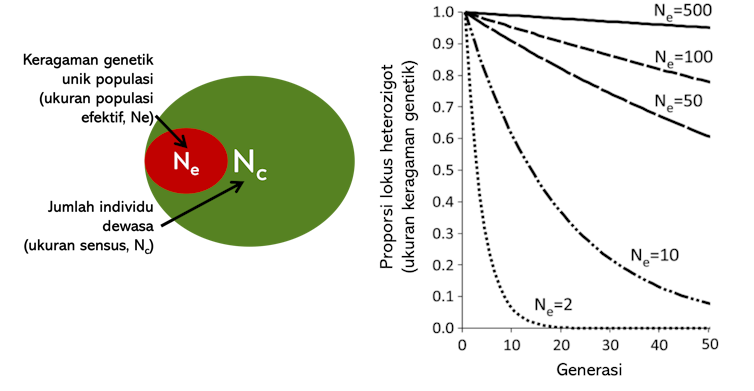
    Illustration of time to extinction based on effective popualtion size (Ne), reproduced from Kunming-Montreal Global Biodiversity Framework metadata page for Target A4: https://www.gbf-indicators.org/metadata/headline/A-4. The smaller Ne, the faster the rate of genetic diversity loss. The left illustration showed not all individual in census (Nc) provide genetic contributions.
    CC BY-SA

    Interestingly, our findings show that even small populations can remain viable over the long term—so long as they are protected from intense external pressures such as habitat loss, hunting, or disease outbreaks.

    Therefore, before conducting any animal translocation to boost genetic diversity, it’s critical to carefully assess the ecological and genetic context of each population.


    Baca juga:
    Membangun ‘big data’ keanekaragaman hayati kita


    Small islands as refugia

    Our study shows that mammals on small islands can be genetically resilient, even with small population sizes.

    Unfortunately, small-island habitats are often overlooked in national development plans.

    While conservation of small islands is legally regulated, the reality on the ground is starkly different. Indonesia’s outermost islands have frequently been allocated for resource exploitation—often without adequate protection of their ecosystems.

    Wallacea is just one example among many island groups that act as a natural laboratory for evolution. These islands have nurtured unique species for millions of years—species that are irreplaceable once lost.

    As an archipelagic nation, Indonesia must prioritise biodiversity conservation by putting greater focus on habitat protection in small islands.

    These islands can serve as natural refuges for endemic species—offering a more cost-effective and ecologically sound alternative to artificial captive breeding programmes.

    The Conversation

    This research is a collaboration between researchers from Queen Mary University of London (QMUL), Ludwig Maximilian Munich (LMU) Germany, and Universitas Indonesia, with the support of joint funding from NERC-Ristekdikti. Sabhrina Gita Aninta were funded by QMUL for her doctoral study that resulted in this research.

    ref. Research: Endemic anoa and babirusa show surprising resilience on small islands – https://theconversation.com/research-endemic-anoa-and-babirusa-show-surprising-resilience-on-small-islands-261063

  • Drones, disinformation and guns-for-hire are reshaping conflict in Africa: new book tracks the trends

    Source: ForeignAffairs4

    Source: The Conversation – Africa (2) – By Alessandro Arduino, Affiliate Lecturer, King’s College London

    Alessandro Arduino has researched Africa’s security affairs with a particular focus on the use of private military companies and other guns-for-hire across the continent. In his latest book, Money for Mayhem, Arduino examines how military privatisation intersects with international power dynamics. Drawing on fieldwork, interviews and firsthand data, he tracks actors from Russia, China and the Middle East to explore how they profit from instability across Africa.

    What war trends did you identify in your book?

    In Money for Mayhem, I chart the rise of mercenaries, private military companies and hackers-for-hire, alongside emerging technologies like armed drones.

    Nowhere does this rise ignite more readily than in Africa. The continent is flush with abundant natural resources that offer lucrative gains, but is hobbled by weak post-coup states desperate for foreign support. The continent has also been fractured by power vacuums, creating ineffective or weak regional and continental institutions that enable militant networks.

    As a result, mercenaries and contractors have returned to the central stage in Africa. They were once the not-so-hidden hand in post-colonial civil wars, such as in Angola in the 1970s and Sierra Leone in the mid-1990s where highly trained mercenaries profited from the conflict.

    Today, guns for hire wield profound geopolitical influence.

    What did you find out about the key players?

    Take Russia’s Wagner Group. It continues to be active from Libya to Sudan. The group is known for deploying paramilitary forces, conducting disinformation campaigns and supporting powerful political figures from Mali to the Central African Republic. Following its leader’s death in 2023, the Wagner Group shifted its operations. Rebranded as the Africa Corps,the group serves as a key instrument of Moscow’s influence on the continent.

    Then there are Turkish private military outfits operating from Tripoli to Mogadishu. Turkey’s private military companies are fast becoming a key instrument in President Recep Erdogan’s foreign policy. What sets these companies apart is their ability to pair boots on the ground with Turkey’s battle-proven armed drones. This fusion of a rentable army and an off-the-shelf air force could become a powerful export, serving Ankara’s political and economic ambitions in Africa.

    Then there are the Chinese private security companies, protecting Chinese investments and citizens in Africa. Their rise mirrors Beijing’s deepening footprint, where it is pouring billions into infrastructure and mining projects. In volatile nations like the Democratic Republic of Congo, Sudan and South Sudan, weak and unreliable local security forces have created a vacuum that’s being filled by Chinese security contractors.

    Through the ages, the mercenary’s paradox has endured: despised yet indispensable. Their business thrives on perpetual chaos. Every ceasefire threatens their livelihood.

    This dynamic was evident after Muammar Gaddafi’s fall in 2011 in Libya. Both the Government of National Accord in Tripoli and the rival Libyan National Army in the east turned to international mercenaries such as the Wagner Group and fighters from sub-Saharan Africa. This heavy dependence on foreign fighters obstructs national reconciliation.

    The Wagner tale is instructive. Once a Kremlin proxy in resource-rich Africa, the group amassed its own power. It was dismantled when it outlived its usefulness. The dispatch of Russian generals to negotiate Wagner’s fate in 2023 from Libya to Niger was a lesson in power: the puppeteer remains firmly in control.

    Russia’s foreign and defence ministries moved swiftly to reassure Middle Eastern and African partners that operations would continue uninterrupted after the death of Wagner’s leader. This signalled that unofficial Russian forces would maintain their presence on the ground.

    What is happening that’s new?

    The revolution in modern warfare is evident across Africa. Mercenaries, armed drones and AI-driven disinformation campaigns are redefining conflict. Today’s battlefields are evolving at such a dizzying pace that even seasoned military experts are routinely caught flatfooted.

    The speed of change is unprecedented.

    Drones, once the province of great powers, have become commonplace. Inexpensive, lethal, versatile and ever more autonomous, they patrol the skies daily, ushering in a remote-warfare era that upends ethical, strategic and tactical norms.

    The cost of a suicide drone, for instance, typically runs into a few thousand US dollars. A battle tank averages US$3–4 million. Three such drones and a skilled pilot can destroy a single tank, dramatically shifting the cost-benefit equation on the modern battlefield.

    Africa was an early proving ground: drones shaped the Libyan civil war. Since 2019, multiple incidents of precision air strikes conducted by unknown aircraft have occurred in apparent violation of a United Nations arms embargo.

    In early 2025, drones served as an off-the-shelf air force in the bombing of Port Sudan. Explosions rocked the vital humanitarian gateway in Sudan’s ongoing civil war between the Sudanese Armed Forces and the paramilitary Rapid Support Forces.

    Sudan’s army pinned these strikes on the Rapid Support Forces, highlighting the paramilitary group’s deadly embrace of drone warfare. Lacking a formal air force, drones offer the Rapid Support Forces a low-cost, high-lethality shortcut that delivers devastating blows while cloaking its operators in plausible deniability.

    How else is the warfare landscape changing?

    War is now being waged on other fronts as well.

    Africa’s youthful population consumes information primarily via social media. This provides fertile ground for propaganda, disinformation and misinformation – amplified by artificial intelligence (AI) at minimal cost.

    Deepfakes have burst onto the scene as a dire cybersecurity threat. AI-driven disinformation at an industrial scale is already a reality, magnifying hate speech and targeting the message to intended audiences with precision and at very low cost.

    For example, TikTok’s own recommendation engine has already come under fire from African human rights groups for amplifying toxic rhetoric.

    Already, false narratives thrive in Africa all on their own. AI’s true danger lies in its ability to turbocharge disinformation.

    Governments recognise that defending the homeland no longer means guarding cables and servers alone. It also means safeguarding the integrity of information itself.

    What needs to be done?

    Based on my findings, I argue that the fractures today are tomorrow’s global crises. War has irrevocably changed, and its next phase is already upon us.

    Marshalling global vigilance is a categorical imperative – or the world risks ceding control over violence. Building international consensus on already available enforcement mechanisms to regulate non-state armed actors is needed. There is also a need to strengthen global intelligence sharing to track the movements and influence of mercenaries across conflict zones.

    The Conversation

    Alessandro Arduino is an Associate Fellow at the Royal United Services Institute (RUSI)

    ref. Drones, disinformation and guns-for-hire are reshaping conflict in Africa: new book tracks the trends – https://theconversation.com/drones-disinformation-and-guns-for-hire-are-reshaping-conflict-in-africa-new-book-tracks-the-trends-262256

  • Ubuntu matters: rural South Africans believe community care should go hand-in-hand with development

    Source: ForeignAffairs4

    Source: The Conversation – Africa – By Simphiwe Gongqa, PhD candidate, Rhodes University

    The failure of many development initiatives has led some scholars, especially those associated with the post-development and decolonial schools of thought, to call for alternatives to development.

    The idea of development is a very influential way of explaining inequalities between different parts of the world. Most people think of some parts of the world as ‘developed’ and others as ‘developing’ and believe that those in the ‘developing’ world need to follow in the footsteps of those ahead of them on a universal path to development.

    However, critics of development reject this way of thinking. They believe that development damages the environment and is a form of cultural imperialism and that people should rather look to Indigenous concepts and practices to find alternative ways to live a good life. The African concept of Ubuntu is often mentioned.

    This term can be explained with reference to the isiZulu saying ‘umuntu ngumuntu ngabantu’ which means ‘a person is a person through other people’. It entails an ethics of care, compassion and cooperation.

    Concepts like Ubuntu are often contrasted with the idea of development. Advocates of alternatives believe that people in the Global South can draw on these concepts, rather than the idea of development, in order to improve their lives.

    We both study development and are interested in how communities in Africa understand development, including the question of whether or not people in Africa are pursuing alternatives to development.

    Based on our work, we contributed a chapter to a recent book which explores the question of alternatives to development in the Global South. Our contribution to this book looks specifically at the question of how South Africans understand development and Ubuntu and whether they see Ubuntu as a possible alternative to development.

    We spoke to people living in four marginalised communities in KwaZulu-Natal and the Eastern Cape. Such communities would be regarded by mainstream development thinkers as in need of development. These communities were also chosen because the people living there would be likely to have some understanding of the concept of Ubuntu as residents are isiZulu or isiXhosa speakers, two of the sociolinguistic groups commonly associated with the idea of Ubuntu.

    We found that people in these communities value both development and Ubuntu and see the two concepts as related to each other, but not necessarily in the way that either development or post-development theorists imagine. This study supports our previous research suggesting that people continue to value development.

    Respondents’ views on development and Ubuntu

    There were some differences in the way in which the communities spoke about development and Ubuntu. The KwaZulu-Natal communities placed emphasis on infrastructure, education and health, when asked to define how they understand development.

    Typical responses of KwaZulu-Natal residents to the question ‘What is development?’ included:

    • We want development … in order to have roads, [government housing], clinics and farming initiatives.

    • When we say that a place is developed, we see schools, libraries, roads, churches and clinics.

    • Things like water, houses [government housing], electricity, and sewerage systems.

    • There should be libraries, schools, houses [government housing], water, electricity, sewerage systems and hospitals.

    In the Eastern Cape, where only rural respondents were interviewed, residents mentioned infrastructure (roads, houses and schools) less often than those in KwaZulu-Natal and placed greater emphasis on income-generation opportunities, employment opportunities and support for farming. Some of the responses are given below:

    • Development means the creation of jobs to me.

    • Development means building. For example, building creches in the village, planting crops and creating jobs.

    • Development is growth. For example, rearing chickens and other animals for you to grow financially.

    When defining Ubuntu, respondents emphasised care, compassion, cooperation, helpfulness, mutual respect, harmony, consideration, dignity and a willingness to share.

    Here are some of the typical responses given when people were asked to define Ubuntu:

    It is being able to live with one another, you see. A person is a person because of other people kind of thing, and you must get along with all people and there shouldn’t be a person that you hate. You must be able to help another person in need if you can and there must be harmony with everyone.
    Ubuntu is about unity and empathy and love, yes. If we speak of Ubuntu, we speak of thinking for each other, and helping each other.

    When asked about the relationship between Ubuntu and development, most respondents suggested that Ubuntu and development can and should work together.

    Respondents commonly argued that development could best be advanced if people showed Ubuntu, which was presented as an ethic of care and cooperation. Consider the following comment:

    [Development and Ubuntu] go hand in hand because when I have something, I have to pull up a person that I see who is struggling and place them at an equal footing with me or maybe higher than me. I don’t look down on them because they are struggling, and I shouldn’t watch them walk to town everyday whilst I have a car that can help them because they are disadvantaged. If I have food, and a fellow person is hungry; I must give them food for free, yes, that is Ubuntu.

    The strong sense from our interviews is that people want development (understood as the provision of basic services and the general improvement of their lives) and they want it to be brought about in a way that is characterised by an ethics of Ubuntu (understood as an ethic of care and cooperation).

    Advocates of alternatives need to be cautious

    Our research suggests that at least some Global South communities engage with concepts like Ubuntu and development in ways that do not support claims that people should abandon development and live according to Indigenous concepts and practices to have a better life. Rather than viewing Ubuntu as an alternative to development, the people we interviewed suggest that development and Ubuntu are complementary.

    When seeking to articulate alternatives, it is important to be attentive to what people mean by development and Ubuntu so that activists and scholars from different communities can work together to build better lives for all.

    We acknowledge the role of Nhlanhla Mkhutle who conducted the KwaZulu-Natal fieldwork for this study and who co-authored the chapter upon which this article is based.

    The Conversation

    The authors do not work for, consult, own shares in or receive funding from any company or organisation that would benefit from this article, and have disclosed no relevant affiliations beyond their academic appointment.

    ref. Ubuntu matters: rural South Africans believe community care should go hand-in-hand with development – https://theconversation.com/ubuntu-matters-rural-south-africans-believe-community-care-should-go-hand-in-hand-with-development-259422

  • Trump’s new tariff regime has begun after months of chaos and uncertainty. But is his approach working?

    Source: ForeignAffairs4

    Source: The Conversation – UK – By Conor O’Kane, Senior Lecturer in Economics, Bournemouth University

    The beginning of August marks the latest deadline for US president Donald Trump’s “liberation day” tariff policy. This era of chaos and uncertainty began on April 2 and the situation remaims fluid. With the deadline for partners to secure a deal with Washington now passed, it’s a good time to take a broader view and consider if Trump’s trade gamble is paying off.

    The objectives of the tariff policy include raising tax revenues, delivering lower prices for American consumers, and boosting American industry while creating manufacturing jobs. The president has also vowed to get better trade deals for the US to reduce its trade deficit and to face down China’s growing influence on the world stage.

    But recently the US Federal Reserve voted to keep interest rates unchanged at 4.25% to 4.5%, despite pressure from Trump to lower them. In his monthly press briefing, Federal Reserve chair, Jerome Powell, said they were still in the early stages of understanding how the tariff policy would affect inflation, jobs and economic growth.

    On tariffs, Powell did say that revenues had increased substantially to US$30 billion (£22.9 billion) a month. However, only a small portion of the tariffs are being absorbed by overseas exporters, with most of the cost being borne by US import companies. In comments that will concern the Trump administration, the Fed said the cost of the tariffs was beginning to show up in consumer prices.

    The Fed expects inflation to increase to 3% by the end of the year, above its 2% target. US unemployment remains low, with Powell saying the economy is at or very close to full employment.

    While Powell’s decision to hold interest rates probably irritated Trump, economic theory suggests that lowering them with the US economic cycle at full employment would be likely to increase inflation and the cost of living for US consumers. A survey by Bloomberg economists suggests that US GDP growth forecasts are lower since April 2025, specifically because of its tariff policy.

    In terms of boosting US employment, the US administration can point to significant wins in the pharmaceutical sector. In July, British-Swedish drugmaker AstraZenica announced plans to spend US$50 billion expanding its US research and manufacturing facilities by 2030. The announcement follows a similar pledge from Swiss pharmaceuticals firm Roche in April to invest US$50 billion in the US over the next five years.

    Tougher times for US manufacturing

    The impact of tariffs on traditional US manufacturing industries is less positive. The Ford Motor Company has warned that its profits will see a sharp drop. This is largely down to a net tariff impact that the firm says will cost it US$2 billion this financial year. This is despite the company making nearly all of its vehicles in the US.

    Firms such as Ford are seeing an increase in tariff-related costs for imports. This dents their profits as well as dividends to shareholders.

    In recent months the US has announced major new trade agreements, including with the UK, Japan, South Korea and the EU. Talks on a trade deal with China continue. But rather than trade deals, these announcements should be thought of as frameworks for trade deals. No legally binding documents have been signed to date.


    Read more:
    European gloom over the Trump deal is misplaced. It’s probably the best the EU could have achieved


    It will take many months before a clear picture emerges of how these bilateral deals will affect the US trade deficit overall. Meanwhile, in Washington, a federal appeals court will hear a case from two companies that are suing Trump over the use of his International Emergency Economic Powers Act (IEEPA) of 1977.

    VOS Selections Inc, a wine and spirits importer, and Plastic Services and Products, a pipe and fittings company, are arguing that the president has “no authority to issue across-the-board worldwide tariffs without congressional approval”.

    With so much in play, it is difficult to judge whether Trump’s tariff policy can be viewed as a success. Higher tariff revenues from imports as well as significant investments from the pharmaceutical industry can be seen as clear wins.

    But increasing consumer costs through rising inflation, as well as tariff costs hurting US manufacturers, are clear negatives. While several framework trade deals have been announced, the real devil will of course be in the detail.

    Perhaps the greatest impact of the tariff policy has been the uncertainty of this new approach to trade and diplomacy. The Trump administration views trade as a zero-sum game. If one side is winning, the other side must be losing.

    This view of international trade harks back to mercantilism, an economic system that predates capitalism. Adam Smith and David Riccardo, the founders of capitalist theory, advocated for free trade. They argued that if countries focused on what they were good at making, then both sides could benefit – a so called positive-sum game.

    This approach has dominated global trade since the post-war period. Since then, the US has become the largest and wealthiest economy in the world. By creating and the institutions of global trade (the IMF, World Bank and World Trade Organization), the US has advanced its interests – and American-based multinationals dominate, especially in areas such as technology.

    But China and others now threaten this US domination, and Trump is tearing up the economic rulebook. But economic theory clearly positions tariffs as the wrong policy path for the US to assert and further its economic interests in the medium to long term. That’s why Trump’s course of action remains such a gamble.


    Get your news from actual experts, straight to your inbox. Sign up to our daily newsletter to receive all The Conversation UK’s latest coverage of news and research, from politics and business to the arts and sciences.

    The Conversation

    Conor O’Kane does not work for, consult, own shares in or receive funding from any company or organisation that would benefit from this article, and has disclosed no relevant affiliations beyond their academic appointment.

    ref. Trump’s new tariff regime has begun after months of chaos and uncertainty. But is his approach working? – https://theconversation.com/trumps-new-tariff-regime-has-begun-after-months-of-chaos-and-uncertainty-but-is-his-approach-working-262448

  • What will it take for China to arrest its declining birth rate?

    Source: ForeignAffairs4

    Source: The Conversation – UK – By Ming Gao, Research Fellow of East Asia Studies, Lund University

    China’s central government introduced a childcare subsidy on July 28 that will provide families with 3,000 yuan (around £312) a year for each child under the age of three. The announcement came days after plans were unveiled to roll out free preschool education across the country.

    These developments mark a shift from previous years, when the government largely left the issue of addressing China’s declining birth rate to local authorities. Many of those efforts, which range from cash incentives to housing subsidies, have made little difference. By stepping in directly, Beijing has signalled that it sees the situation as urgent.

    Fewer Chinese women are choosing to have children, and more young people are delaying or opting out of marriage. This has contributed to a situation where China’s population shrank for a third consecutive year in 2024. An ageing population and shrinking workforce pose long-term challenges for China’s economic growth, as well as its healthcare and pension systems.

    Before the central government’s recent roll-out, regions in China had already been experimenting with policies to increase birth rates. These include one-time payouts for second or third children, monthly allowances and housing and job training subsidies.

    One of the most eye-catching local policies came from Hohhot, the capital city of Inner Mongolia province. In March 2025, the authorities there began offering families up to 100,000 yuan (£10,400) for having a second and third child, paid annually until the children turn ten.

    The authorities in some other cities, including eastern China’s Hangzhou, have offered childcare vouchers or subsidies for daycare. Policies like these have seen the number of births increase slightly in a few regions. But uptake is generally low and none have managed to change the national picture.

    There are several reasons why incentive-based policies have not moved the needle. First, the subsidies are generally small – often equivalent to just a few hundred US dollars. This barely makes a dent in the cost of raising a child in urban China.

    China ranks among the most expensive countries in the world for child-rearing, surpassing the US and Japan. In fact, a 2024 report by the Beijing-based YuWa Population Research Institute found that the average cost of raising a child in China until the age of 18 is 538,000 yuan (£59,275). This is more than 6.3 times as high as China’s GDP per capita.

    The burden is so widely felt that people in China jokingly refer to children as tunjinshou, which translates to “gold-devouring beasts”.

    Second, the incentives largely don’t address deeper issues. These include expensive housing, intense education pressures, childcare shortages and some workplaces that penalise women for taking time off. Many Chinese women fear being pushed out of their jobs simply for having kids.

    Some local authorities have attempted to tackle the structural realities that make having and raising children in China difficult, and have enjoyed some success. In Tianmen, for example, parents of a third child can claim US$16,500 (£12,500) off a new home.

    However, these policies are confined to specific districts and villages or are limited to select groups. Support remains fragmented and insufficient, while the prospects of scaling these piecemeal initiatives nationwide are slim.

    Third, gender inequality in China is still deeply entrenched. Women carry most of the childcare and housework burden, with parental leave policies reflecting that imbalance. While mothers are allowed between 128 to 158 days of maternity leave, fathers receive only a handful – varying slightly by province. Despite public calls for equal parental leave, major legal changes seem far off.

    These factors have together given rise to a situation where, as in east Asia more broadly, many young people in China simply are not interested in marrying or having children.

    According to one online survey from 2022, around 90% of respondents in China said they wouldn’t consider having more children even if they were offered an annual subsidy of 12,000 yuan (£1,250) – far more than the recently announced 3,000 yuan subsidy.

    Is Beijing too late?

    The new measures show that Beijing is taking China’s declining birth rate seriously. But it might be too late. Fertility decline is hard to reverse, with research showing that social norms are difficult to snap back once they shift away from having children.

    South Korea has spent decades offering its citizens generous subsidies, housing support and extended parental leave. Yet, despite a recent uptick, its birth rate has remained among the lowest in the world.

    Projections by the UN paint a stark picture. China’s population is expected to drop by 204 million people between 2024 and 2054. It could lose 786 million people by the end of the century, returning its population to levels last seen in the 1950s.

    Still, the recent announcements are significant. They are the first time the central government has directly used fiscal tools to encourage births, and reflect a consensus that lowering the cost of preschool education can help boost fertility. This sets a precedent and, if urgency keeps rising, the size and scope of support may increase as well.

    However, if China hopes to turn things around, it will need more than cash. Parenting must be made truly viable and even desirable. Alongside financial aid and free preschool, families need time and labour support.

    This also means confronting cultural expectations. Raising a child shouldn’t be seen as a woman’s job alone. A real cultural shift is needed – one that treats parenting as a shared responsibility.

    My generation, which was born under the one-child policy, grew up in a time where siblings were heavily fined. I was one of them. But, just as fines didn’t stop all of those who wanted more children, cash rewards will not easily convince the many who don’t.


    Get your news from actual experts, straight to your inbox. Sign up to our daily newsletter to receive all The Conversation UK’s latest coverage of news and research, from politics and business to the arts and sciences.

    The Conversation

    Ming Gao receives funding from the Swedish Research Council. This research was produced with support from the Swedish Research Council grant “Moved Apart” (nr. 2022-01864). Ming Gao is a member of Lund University Profile Area: Human Rights.

    ref. What will it take for China to arrest its declining birth rate? – https://theconversation.com/what-will-it-take-for-china-to-arrest-its-declining-birth-rate-261717

  • School’s out – but as young people paint, skateboard and play with their friends, they’re still learning

    Source: ForeignAffairs4

    Source: The Conversation – UK – By Ioannis Costas Batlle, Senior Lecturer in Education, University of Bath

    Evgeny Atamanenko/Shutterstock

    School holidays are underway across the UK. But while young people might be getting a break from the classroom and having a chance to spend more time on their hobbies, they are still learning – whether they’re playing video games, painting toy soldiers or out on their bike.

    Learning doesn’t just happen at school, college, or university. For Danish learning expert Knud Illeris, any process not caused by biological maturation (for instance, growing from a baby into a toddler) counts as learning. Learning is both inevitable and ubiquitous: it is part of being alive. We cannot “not learn”.

    We can chunk the enormity of what learning is into smaller digestible portions. These three portions (called learning contexts) are formal learning, non-formal learning and informal learning. We can think of them as an iceberg, with some parts visible and others hidden below the water.

    Iceberg illustration annotated with formal learning, non-formal learning and informal learning
    Learning iceberg.
    Runrun2/Shutterstock (edited)

    Different contexts

    Formal learning is the very tip of the iceberg. This aims to intentionally teach someone something. It is provided by an education or training organisation that will give you a certificate or diploma to show what you have learned. Schools, colleges and universities are examples of formal learning contexts.

    Non-formal learning extends beneath the iceberg’s tip but remains above the water level. Like formal learning, it is learning as the result of some kind of teaching. However, non-formal learning is not necessarily provided by an education organisation, nor is it necessarily recognised with a certificate or diploma. Music lessons, sports clubs, cooking classes, developing skills at work, or museum tours all count as non-formal learning.

    Beneath non-formal learning, shrouded under the sea, is the gargantuan base of the iceberg: informal learning. Unlike formal and non-formal learning, informal learning is generally unintentional, unplanned and unconscious. This could be absorbing social norms, such as how to greet someone you don’t know, or unexpectedly learning new words by listening to podcasts.

    It’s a widely accepted assumption among academics that most of the learning we do is informal. And it makes sense when you think about how much young people’s development is unconscious and unplanned. For example, while being taught formally in school classrooms, they simultaneously informally learn values such as what it means to be – and behave like – a “good student”.

    The iceberg illustrates why we often think of learning in a narrow way. We overvalue what is easily recognisable, such as the schooling that leads to an exam result. And we undervalue the much larger, but comparatively less visible remainder of the iceberg: non-formal and informal learning, such as through hobbies.

    Young people, in particular, may overvalue formal learning for two reasons. First, it is tangible. It features physical buildings – schools, colleges and universities – where young people go almost every day to learn. In turn, they aim to leave these buildings with qualifications that “prove” what they have learned.

    Second, even though across our lifespans we spend a tiny fraction in formal learning contexts compared to non-formal and informal ones, that tiny amount is disproportionately weighted towards our youth. Children and teenagers spend a huge amount of time being formally educated.

    Learning through hobbies

    To encourage young people to flourish as learners, we need to help them value non-formal and informal learning contexts. Hobbies are great for this. Hobbies are serious leisure activities which young people find interesting and fulfilling. They are serious because hobbies require perseverance to gain experience, a skillset and a knowledge base.

    Whenever someone intentionally teaches a young person something hobby-related, that counts as non-formal learning. For instance, a coach explaining how to bounce a basketball, a music teacher describing how to hold a drumstick, or a friend explaining the rules to a board game.

    Hobbies are equally infused with informal, unplanned and often unconscious learning. Playing video games inadvertently develops eye-hand coordination and cognitive function (storing and processing information). Stamp collecting can foster attention to detail. Skateboarding can improve resilience in the face of failure.

    Part of the reason young people’s non-formal and informal hobby-related learning above is so difficult to recognise is because it is rarely described as “learning”. Instead, they “play” music and videogames; they “do” skateboarding and drawing.

    Though play is one of the best ways young people learn, both young people and the adults in their lives may undervalue its impact. While adults may assume there is no relationship between play and learning, teenagers may perceive play as childish.

    Too many young people think they are “bad learners” because they struggle in formal learning. However, I bet they are extraordinary learners when it comes to their hobbies. We simply need to help them recognise the value of non-formal and informal learning.

    The Conversation

    Ioannis Costas Batlle does not work for, consult, own shares in or receive funding from any company or organisation that would benefit from this article, and has disclosed no relevant affiliations beyond their academic appointment.

    ref. School’s out – but as young people paint, skateboard and play with their friends, they’re still learning – https://theconversation.com/schools-out-but-as-young-people-paint-skateboard-and-play-with-their-friends-theyre-still-learning-261125

  • Climate change: new method can more accurately attribute environmental harm to individual polluters

    Source: ForeignAffairs4

    Source: The Conversation – UK – By Shashi Kant Yadav, Lecturer, Northumbria University, Newcastle

    A small coastal community in Kivalina, Alaska sued several major oil and gas companies, including Exxon Mobil, in 2008. Local representatives argued that greenhouse gas emissions from these companies were contributing to the erosion of the coastline and causing irreversible damage to their village by heating the climate.

    But the US Court of Appeals dismissed the claim, citing a lack of evidence linking the corporate emissions with coastal erosion.

    In France, 2024, climate campaigners filed a criminal complaint against the major shareholders and the board of directors of TotalEnergies. They alleged that fossil fuels extracted by the company produced emissions that caused floods and storms that damaged property and irreversibly depleted biodiversity.

    Despite acknowledging damage related to climate change generally, the Parisian criminal court also dismissed the case. Again, it said there was insufficient evidence to link the activities of TotalEnergies and damage from extreme weather.

    Between 2008 and 2024, significant advances were made in climate science that enable us to understand how specific activities affect the climate, and contribute to wildfires, extreme heat and flash floods. The science linking these disasters to fossil fuel giants remains insufficient in the eyes of courts, however.

    A petrol station.
    TotalEnergies won its case in 2024.
    Tamer A Soliman/Shutterstock

    That’s because climate attribution science generally fails to meet the necessary standard of legal evidence to assign liability. For example, a recent advisory opinion published by the International Court of Justice acknowledged that states have a responsibility to address climate change, and that it is possible to establish a link between a state’s wrongful acts or omissions and the damage resulting from climate change. Despite this, claimants still sometimes fail to prove such a link in court.

    However, a new study has demonstrated a computer model that can reduce scientific uncertainty around linking emissions from a particular source to outcomes related to climate change. This end-to-end attribution model, as it is called, could strengthen legal claims against entities damaging the climate.

    Tracing emissions to damages

    The end-to-end attribution model uses a three-step process to assign liability for climate damage.

    First, using historical emissions data from online databases such as Carbon Major, the model simulates two scenarios: one with all historical emissions (the real world), and the other where the emissions from a particular company are excluded. The difference in emissions between these two scenarios is then paired with the concomitant increase in the global temperature, which shows how much warming can be directly attributed to that company.

    Using statistical methods, the model can then connect the relevant global temperature increase to changes in the intensity of heatwaves in a particular region. It could, for instance, calculate how much hotter the five hottest days of the year have become in a given year because of the company’s emissions.

    The model estimates the economic impact of these intensified heatwaves. It can do this using data on the consequences of reduced productivity and crop losses for growth, for example. It calculates how much money a region lost because of the heatwaves linked to the company’s emissions and gives a dollar value for the damages.

    By combining these three steps, the model traces the path from a company’s emissions to specific economic losses, theoretically making it possible to hold emitters financially accountable for climate damages.

    A satellite image of a hurricane.
    Economic losses from extreme weather are mounting.
    Triff/Shutterstock

    In doing so, the study estimated that emissions from Chevron alone caused between US$791 billion (£589 billion) and US$3.6 trillion (£2.7 trillion) in heat-related economic losses globally between 1991 and 2020, and that without emissions from 111 large oil, gas and coal producers (collectively referred to as “carbon majors”) such as ExxonMobil, BP, Saudi Aramco and Gazprom, the global economy would be US$28 trillion richer.

    The advantages for claimants

    Climate court cases in which claimants seek to assign liability to oil and gas companies are on the rise worldwide.

    About 230 lawsuits have been filed against fossil fuel giants and trade associations since 2015. More than two-thirds of these were filed between 2020 and 2024, and many are awaiting a final decision. For such cases, end-to-end attribution could be helpful.

    End-to-end attribution can assist claimants in meeting the commonly used “but for” test, by demonstrating that, but for a specific company’s emissions, certain climate-related damages would not have occurred. The method can also meet other liability tests. One is called proportional liability, and it attempts to quantify the extent to which a company’s emissions contributed to increased risk or the severity of damage. This flexibility strengthens the method’s applicability across different legal systems.

    The end-to-end attribution method enables claimants to connect global warming to local disasters, such as the 2021 Pacific Northwest “heat dome”. This is crucial, as climate litigation focused on single, high-impact events is usually more successful.

    It is well established that emissions from companies in the US and Europe have caused significant harm which is disproportionately suffered in the global south. End-to-end attribution strengthens the evidence base for such climate justice arguments in courtrooms.

    There are no established standards for how courts worldwide evaluate scientific evidence. Consequently, while the end-to-end attribution method can link fossil fuel companies and climate-related legal injuries, the courts, depending on differences between jurisdictions and the context of each case, may require higher thresholds to trigger criminal or civil liability.

    Additionally, fossil fuel companies often argue that any harm caused by their activities should be weighed against the benefits their products also provide. However, the benefits of fossil fuels should not exempt companies from climate-related liability, because climate change is an existential threat.

    End-to-end attribution provides a vital scientific tool for making fossil fuel companies accountable, and could reshape climate litigation globally.


    Don’t have time to read about climate change as much as you’d like?

    Get a weekly roundup in your inbox instead. Every Wednesday, The Conversation’s environment editor writes Imagine, a short email that goes a little deeper into just one climate issue. Join the 45,000+ readers who’ve subscribed so far.


    The Conversation

    The authors do not work for, consult, own shares in or receive funding from any company or organisation that would benefit from this article, and have disclosed no relevant affiliations beyond their academic appointment.

    ref. Climate change: new method can more accurately attribute environmental harm to individual polluters – https://theconversation.com/climate-change-new-method-can-more-accurately-attribute-environmental-harm-to-individual-polluters-256002

  • Peptides: performance-boosting, anti-ageing drugs or dangerous snake oil?

    Source: ForeignAffairs4

    Source: The Conversation – UK – By Adam Taylor, Professor of Anatomy, Lancaster University

    PeopleImages.com – Yuri A/Shutterstock.com

    For a growing number of middle-aged men, ageing no longer means surrendering to sagging skin, sore joints or slowing metabolism. Instead, it’s becoming a science experiment. The new frontier? Injectable peptides – experimental compounds that promise rapid recovery, fat loss and muscle gains with the ease of a twice-daily to weekly jab.

    Once confined to elite labs and obscure bodybuilding forums, these amino acid chains are now flooding wellness spaces, social media feeds and online marketplaces. Although they are marketed as “next-generation biohacks” and “research chemicals”, many peptides are not approved for human use and lack basic clinical testing.

    Still, their popularity is growing – fuelled by testimonials, influencer hype and the seductive promise of turning back time.

    But beneath the surface of glossy marketing and fitness fantasies lies a far more sobering truth: many of these substances operate in a medical grey zone, with unknown long-term risks, questionable manufacturing standards, and in some cases, life-threatening side-effects.

    Peptides aren’t entirely new to medicine. The first peptide drug – insulin – was isolated in 1921 and became commercially available in 1923. Today over 100 peptide medications are approved, including semaglutide – better known as Ozempic and Wegovy.

    But the compounds now circulating in fitness communities represent a very different category. They’re experimental substances that have shown promise in animal studies but have never undergone proper human trials.

    The ‘Wolverine stack’

    One such compound, first discovered in human gastric juice, that is attracting lots of attention is BPC-157. Early animal studies suggest it may help repair damaged tissue throughout the body.

    Researchers tested it on mice, rats, rabbits and dogs without finding serious side-effects. The compound appears to support healing of the tendons, teeth and digestive organs, including the stomach, intestines, liver and pancreas.

    Scientists don’t yet fully understand how BPC-157 works, but animal studies suggest it triggers several biological processes essential for healing. The compound appears to help cells move to damaged areas and encourages the growth of new blood vessels, bringing nutrients and oxygen to tissues in need of repair.

    Another compound gaining attention is TB500. It is a synthetic version of thymosin beta-4, a naturally occurring protein fragment that plays an important role in repairing and regenerating damaged cells and tissues.

    It also helps protect cells from further harm by reducing inflammation and defending against microbes. The combination of BPC-157 and TB500 has earned the nickname “the Wolverine stack”, named after the Marvel superhero famous for his rapid healing.

    Then there’s IGF-1 LR3, a modified version of a natural protein (IGF-1) linked to muscle growth. This synthetic compound was shown to increase muscle mass by 2.5 times in animal studies, though it has never been studied in humans.

    The limited human research that does exist for these compounds offers inconclusive results. For example, a study showed that over 90% of patients experienced reduced knee pain after BPC-157 injections. However, the study had no control group and several methodological issues, so the results should be viewed with caution.

    Hidden dangers

    Even though the early results seem exciting, these experimental compounds can be dangerous. Making them involves special chemicals called coupling agents, which can trigger serious allergic reactions, including anaphylaxis – a life-threatening condition.

    The health consequences extend well beyond allergic reactions. Long-term injection of performance-enhancing substances can lead to heart failure that can occur rapidly with little warning, as documented in recent medical case studies of young bodybuilders.

    Injection-related injuries pose another significant threat. “Compartment syndrome” can develop at injection sites in leg muscles, causing numbness, blood clots and muscle spasms that result in permanent loss of function.

    In severe cases, skin and underlying tissue can suffer necrosis (tissue death), requiring antibiotics or surgery to treat. More alarming still are reports of users contracting HIV, hepatitis B and C, and serious eye infections from contaminated injections.

    These compounds don’t just target muscles – they affect the entire body in ways scientists are only beginning to understand. Some interfere with natural insulin production, while others activate biological pathways that healthy cells use for growth and repair.

    The concern is that these same pathways are exploited by cancer cells. The VEGF pathway, which promotes blood vessel growth, is active in about half of all human cancers, including melanoma and ovarian cancer. Laboratory studies suggest that thymosin beta-4 may play a role in helping colorectal and pancreatic cancers spread.

    While there’s no direct evidence linking compounds like BPC-157 or TB500 to cancer, researchers emphasise that the long-term effects remain unknown because these substances have never undergone proper human trials. The World Anti-Doping Agency has banned these compounds, noting they lack approval from any health regulatory authority and are intended only as research tools.

    A growing problem

    Yet their use appears to be spreading rapidly. A 2014 study found that 8.2% of gym members used performance-enhancing drugs. By 2024, a comprehensive review suggested the figure could be as high as 29%. Perhaps most concerning: only 38% of users recognised the health risks involved.

    These experimental compounds represent a dangerous gamble with long-term health. Unlike approved drugs, they haven’t undergone the rigorous testing required to understand their safety profile in humans. While they may promise enhanced performance and healing, they deliver it at a cost that users may not fully understand until it’s too late.

    The appeal is understandable – who wouldn’t want faster healing and better muscle tone? But the reality is these substances remain experimental for good reason. Until proper human trials are conducted, users are essentially volunteering as test subjects in an uncontrolled experiment with their own bodies.


    Get your news from actual experts, straight to your inbox. Sign up to our daily newsletter to receive all The Conversation UK’s latest coverage of news and research, from politics and business to the arts and sciences.

    The Conversation

    Adam Taylor does not work for, consult, own shares in or receive funding from any company or organisation that would benefit from this article, and has disclosed no relevant affiliations beyond their academic appointment.

    ref. Peptides: performance-boosting, anti-ageing drugs or dangerous snake oil? – https://theconversation.com/peptides-performance-boosting-anti-ageing-drugs-or-dangerous-snake-oil-259531

  • The treaty meant to control nuclear risks is under strain 80 years after the US bombings of Hiroshima and Nagasaki

    Source: ForeignAffairs4

    Source: The Conversation – USA (2) – By Stephen Herzog, Professor of the Practice, Middlebury Institute of International Studies at Monterey, Middlebury

    The city of Hiroshima was destroyed when the United States dropped atomic bomb “Little Boy” on Aug. 6, 1945. Hulton Archive/Getty Images

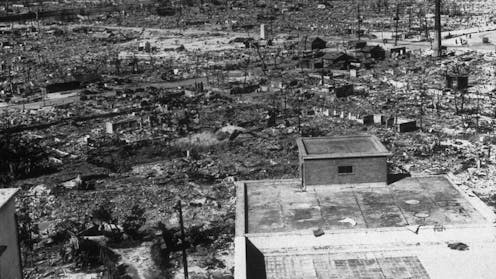
    Eighty years ago – on Aug. 6 and 9, 1945 – the U.S. military dropped atomic bombs on Hiroshima and Nagasaki, Japan, thrusting humanity into a terrifying new age. In mere moments, tens of thousands of people perished in deaths whose descriptions often defy comprehension.

    The blasts, fires and lingering radiation effects caused such tragedies that even today no one knows exactly how many people died. Estimates place the death toll at up to 140,000 in Hiroshima and over 70,000 in Nagasaki, but the true human costs may never be fully known.

    The moral shock of the U.S. attacks reverberated far beyond Japan, searing itself into the conscience of global leaders and the public. It sparked a movement I and others continue to study: the efforts of the international community to ensure that such horrors are never repeated.

    Two people in protective clothing, helmets and masks stand near blue barrels outside a building.
    Inspectors from the International Atomic Energy Agency visit an Iraqi nuclear facility in 2003, seeking to ensure that the country did not use peaceful nuclear materials to develop weapons.
    Ramzi Haidar/AFP via Getty Images

    Racing toward the brink

    The memories of Hiroshima and Nagasaki cast a long shadow over global efforts to contain nuclear arms. The 1968 Treaty on the Non-Proliferation of Nuclear Weapons, more commonly known as the Nuclear Nonproliferation Treaty, was a powerful, if imperfect, effort to prevent future nuclear catastrophe. Its creation reflected not just morality, but also the practical fears and self-interests of nations.

    As the years passed, views of the bombings as justified acts began to shift. Harrowing firsthand accounts from Hibakusha – the survivors – reached wide audiences. One survivor, Setsuko Thurlow, described the sight of other victims:

    “It was like a procession of ghosts. I say ‘ghosts’ because they simply did not look like human beings. Their hair was rising upwards, and they were covered with blood and dirt, and they were burned and blackened and swollen. Their skin and flesh were hanging, and parts of the bodies were missing. Some were carrying their own eyeballs.”

    Nuclear dangers increased further with the advent of hydrogen bombs, or thermonuclear weapons, capable of destruction far greater than the atomic bombs dropped on Hiroshima and Nagasaki. What had once seemed a decisive end to a global war now looked like the onset of an era wherein no city or civilization would truly be safe.

    These shifting perceptions shaped how nations viewed the nuclear age. In the decades following World War II, nuclear technology rapidly spread. By the early 1960s, the United States and the Soviet Union aimed thousands of nuclear warheads at one another.

    Meanwhile, there were concerns that countries in East Asia, Europe and the Middle East would acquire the bomb. U.S. President John F. Kennedy even warned that “15 or 20 or 25 nations” might be able to develop nuclear weapons during the 1970s, resulting in the “greatest possible danger” to humanity – the prospect of its extinction. This warning, like much of the early nonproliferation rhetoric, drew its urgency from the legacies of Hiroshima and Nagasaki.

    Perhaps the starkest indication of the gravity of the stakes emerged during the Cuban missile crisis of October 1962. For 13 days, the world teetered on the edge of nuclear annihilation until the Soviet Union withdrew its missiles from Cuba in exchange for the secret withdrawal of U.S. missiles from Turkey. During those long days, U.S. and Soviet leaders – and external observers – witnessed how quickly the risks of global destruction could escalate.

    Two ships steam side by side with an aircraft flying overhead.
    A Soviet freighter, center, is escorted out of Cuban waters by a U.S. Navy plane and the destroyer USS Barry during the 1962 Cuban missile crisis.
    Underwood Archives/Getty Images

    Crafting the grand bargain

    In the wake of such “close calls” – moments where nuclear war was narrowly averted due to individual judgment or sheer luck – diplomacy accelerated.

    Negotiations on a treaty to control nuclear proliferation continued at meetings of the Eighteen Nation Disarmament Committee in Geneva from 1965 to 1968. While the enduring horrors of Hiroshima and Nagasaki helped to drive the momentum, national interests largely shaped the talks.

    There were three groups of negotiating parties. The United States was joined by its NATO allies Britain, Canada, Italy and France – which only observed. The Soviet Union led a communist bloc containing Bulgaria, Czechoslovakia, Poland and Romania. And there were nonaligned countries: Brazil; Burma, now known as Myanmar; Ethiopia; India; Mexico; Nigeria; Sweden, which only joined NATO in 2024; and the United Arab Republic, now known as Egypt.

    For the superpowers, a treaty to limit the spread of the bomb was as much a strategic opportunity as a moral imperative.
    Keeping the so-called “nuclear club” small would not only stabilize international tensions, but it would also cement Washington’s and Moscow’s global leadership and prestige.

    U.S. leaders and their Soviet counterparts therefore sought to promote nonproliferation abroad. Perhaps just as important as ensuring nuclear forbearance among their adversaries was preventing a cascade of nuclear proliferation among allies that could embolden their friends and spiral out of control.

    Standing apart from these Cold War blocs were the nonaligned countries. Many of them approached the atomic age through a humanitarian and moral lens. They demanded meaningful action toward nuclear disarmament to ensure that no other city would suffer the tragic fate of Hiroshima and Nagasaki.

    The nonaligned countries refused to accept a two-tiered treaty merely codifying inequality between nuclear “haves” and “have-nots.” In exchange for agreeing to forgo the bomb, they demanded two crucial commitments that shaped the resulting treaty into what historians often describe as a “grand bargain.”

    The nonaligned countries agreed in the treaty to permit the era’s existing nuclear powers – Britain, China, France, the Soviet Union (later Russia) and the United States – to temporarily maintain their arsenals while committing to future disarmament. But in exchange, they were promised peaceful nuclear technology for energy, medicine and development. And to reduce the risks of anyone turning peaceful nuclear materials into weapons, the treaty empowered the International Atomic Energy Agency to conduct inspections around the world.

    People sit at a large table and sign documents.
    U.S. President Lyndon B. Johnson, right, looks on as Secretary of State Dean Rusk signs the Nuclear Non-Proliferation Treaty on July 1, 1968.
    Corbis via Getty Images

    Legacies and limits

    The treaty entered into force in 1970 and with, 191 member nations, is today among the world’s most universal accords. Yet, from the outset, its provisions faced limits. Nuclear-armed India, Israel and Pakistan have always rejected the treaty, and North Korea later withdrew to develop its own nuclear weapons.

    In response to evolving challenges, such as the discovery of Iraq’s clandestine nuclear weapons program in the early 1990s, International Atomic Energy Agency safeguard efforts grew more stringent. Many countries agreed to accept nuclear facility inspections on shorter notice and involving more intrusive tools as part of the initiative to detect and deter the development of the world’s most powerful weapons. And the countries of the world extended the treaty indefinitely in 1995, reaffirming their commitment to nonproliferation.

    The treaty represents a complex compromise between morality and pragmatism, between the painful memories of Hiroshima and Nagasaki and hard-edged geopolitics. Despite its many imperfections and its de facto promotion of nuclear inequality, the treaty is credited with limiting nuclear proliferation to just nine countries today. It has done so through civilian nuclear energy incentives and inspections that give countries confidence that their rivals are not building the bomb. Countries also put pressure on each other to obey the rules, such as when the international community condemned, sanctioned and isolated North Korea after it withdrew from the treaty and tested a nuclear weapon.

    But the treaty continues to face serious challenges. Critics argue that its disarmament provisions remain vague and unfulfilled, with some scholars contending that nonnuclear countries should exit the treaty to encourage the great powers to disarm. Nuclear-armed countries continue to modernize – and in some cases, expand – their arsenals, eroding trust in the grand bargain.

    Armed soldiers walk next to a barbed-wire fence.
    Tensions between India and Pakistan can often carry veiled, or even explicit, threats of nuclear action.
    Mukesh Gupta/AFP via Getty Images

    The behavior of individual countries also points to strains on the treaty. Russia’s persistent nuclear threats during its war on Ukraine show how deeply possessors may still rely on these weapons as tools of coercive foreign policy. North Korea continues to wield its nuclear arsenal in ways that undermine international security. Iran might consider proliferation to deter future Israeli and U.S. strikes on its nuclear facilities.

    Still, I would argue that declaring the treaty to be dead is simply premature. Critics have predicted its demise since the treaty’s inception in 1968. While many countries have growing frustrations with the existing system of nonproliferation, most of them still see more benefit in staying than walking away from the treaty.

    The treaty may be embattled, but it remains intact. Worryingly, the world today appears far removed from the vision of avoiding nuclear catastrophe that Hiroshima and Nagasaki helped awaken. As nuclear dangers intensify and disarmament stalls, moral clarity risks fading into ritual remembrance.

    I believe that for the sake of humanity’s future, the tragedies of the atomic bombings must remain a stark and unmistakable warning, not a precedent. Ultimately, the Nuclear Nonproliferation Treaty’s continued relevance depends on whether nations still believe that shared security begins with shared restraint.

    The Conversation

    Stephen Herzog does not work for, consult, own shares in or receive funding from any company or organization that would benefit from this article, and has disclosed no relevant affiliations beyond their academic appointment.

    ref. The treaty meant to control nuclear risks is under strain 80 years after the US bombings of Hiroshima and Nagasaki – https://theconversation.com/the-treaty-meant-to-control-nuclear-risks-is-under-strain-80-years-after-the-us-bombings-of-hiroshima-and-nagasaki-262164

  • From printing presses to Facebook feeds: What yesterday’s witch hunts have in common with today’s misinformation crisis

    Source: ForeignAffairs4

    Source: The Conversation – USA (3) – By Julie Walsh, Whitehead Associate Professor of Critical Thought and Associate Professor of Philosophy, Wellesley College

    An illustration from ‘The History of Witches and Wizards,’ published in 1720, depicting witches offering wax dolls to the devil. Wellcome Collection/Wikimedia Commons

    Between 1400 and 1780, an estimated 100,000 people, mostly women, were prosecuted for witchcraft in Europe. About half that number were executed – killings motivated by a constellation of beliefs about women, truth, evil and magic.

    But the witch hunts could not have had the reach they did without the media machinery that made them possible: an industry of printed manuals that taught readers how to find and exterminate witches.

    I regularly teach a class on philosophy and witchcraft, where we discuss the religious, social, economic and philosophical contexts of early modern witch hunts in Europe and colonial America. I also teach and research the ethics of digital technologies.

    These fields aren’t as different as they seem. The parallels between the spread of false information in the witch-hunting era and in today’s online information ecosystem are striking – and instructive.

    Birth of a publishing empire

    The printing press, invented around 1440, revolutionized how information spread – helping to create the era’s equivalent of a viral conspiracy theory.

    By 1486, two Dominican friars had published the “Malleus Maleficarum,” or “Hammer of Witches.” The book has three central claims that came to dominate the witch hunts.

    A yellowed title page from a manuscript, with print in black and red ink.
    A 1669 edition of ‘Malleus Maleficarum.’
    Wellcome Collection/Wikimedia Commons, CC BY-SA

    First, it describes women as morally weak and therefore more likely to be witches. Second, it tightly links witchcraft with sexuality. The authors claim that women are sexually insatiable – part of what leads them to witchcraft. Third, witchcraft involves a pact with the devil, who tempts would-be witches through pleasures such as orgies and sexual favors. After establishing these “facts,” the authors conclude with instructions for interrogating, torturing and punishing witches.

    The book was a hit. It had more than two dozen editions and was translated into multiple languages. While “Malleus Maleficarum” was not the only text of its kind, its influence was enormous.

    Prior to 1500, witch hunts in Europe were rare. But after the “Malleus Maleficarum,” they picked up steam. Indeed, new printings of the book correlate with surges in witch-hunting in Central Europe. The book’s success wasn’t just about content; it was about credibility. Pope Innocent VIII had recently affirmed the existence of witches and conferred authority on inquisitors to persecute them, giving the book further authority.

    Ideas about witches [from earlier texts and folklore] – such as the fact that witches could use spells to make penises vanish – were recycled and repackaged in the “Malleus Maleficarum,” which in turn served as a “source” for future works. It was often quoted in later manuals and woven into civic law.

    The popularity and influence of the book helped crystallize a new domain of expertise: demonologist, an expert on the nefarious activities of witches. As demonologists repeated one another’s spurious claims, an echo chamber of “evidence” was born. The identity of the witch was thus formalized: dangerous and decisively female.

    Skeptics fight back

    Not everyone bought into the witch hysteria. As early as 1563, dissenting voices emerged – though, notably, most didn’t argue that witches weren’t real. Instead, they questioned the methods used to identify and prosecute them.

    A faded painting of a bald man with a mustache, wearing a white ruff, heavy necklace, and red robe.
    Essayist Michel de Montaigne, painted around 1578 by an unknown artist.
    Conde Museum/Wikimedia Commons

    Dutch physician Johann Weyer argued that women accused of witchcraft were suffering from melancholia – what we might now call mental illness – and needed medical treatment, not execution. In 1580, French philosopher Michel de Montaigne visited imprisoned witches and concluded they needed “hellebore rather than hemlock”: medicine rather than poison.

    These skeptics also identified something more insidious: the moral responsibility of people spreading the stories. In 1677, English chaplain, physician and philosopher John Webster wrote a scathing critique, claiming that most demonologists’ texts were straightforward copy and paste jobs where the authors repeated one another’s lies. The demonologists offered no original analysis, no evidence and no witnesses – failing to meet the standards of good scholarship.

    The cost of this failure was enormous. As Montaigne wrote, “The witches of my neighborhood are in mortal danger every time some new author comes along and attests to the reality of their visions.”

    Demonologists benefited from the social and political status associated with the popularity of their books. The financial benefit was, for the most part, enjoyed by the printers and booksellers – what today we refer to as publishers.

    Witch hunts petered out throughout the 1700s across Europe. Doubt about the standards of evidence, and increased awareness that accused “witches” may have been suffering from delusion, were factors in the end of the persecution. The skeptics’ voices were heard.

    Psychology of viral lies

    Early modern skeptics understood something we’re still grappling with today: Certain people are more vulnerable to believing extraordinary claims. They identified “melancholics,” people predisposed to anxiety and fantastical thinking, as particularly susceptible.

    Nicolas Malebranche, a 17th-century French philosopher, believed that our imaginations have enormous power to convince us of things that are not true – especially fear of invisible, malevolent forces. He noted that “extravagant tales of witchcraft are taken as authentic histories,” increasing people’s credulity. The more stories, and the more they were told, the greater the influence on the imagination. The repetition served as false confirmation.

    “If they were to cease punishing (women accused of witchcraft) and treat them as mad people,” Malebranche wrote, “in a little while they would no longer be sorcerers.”

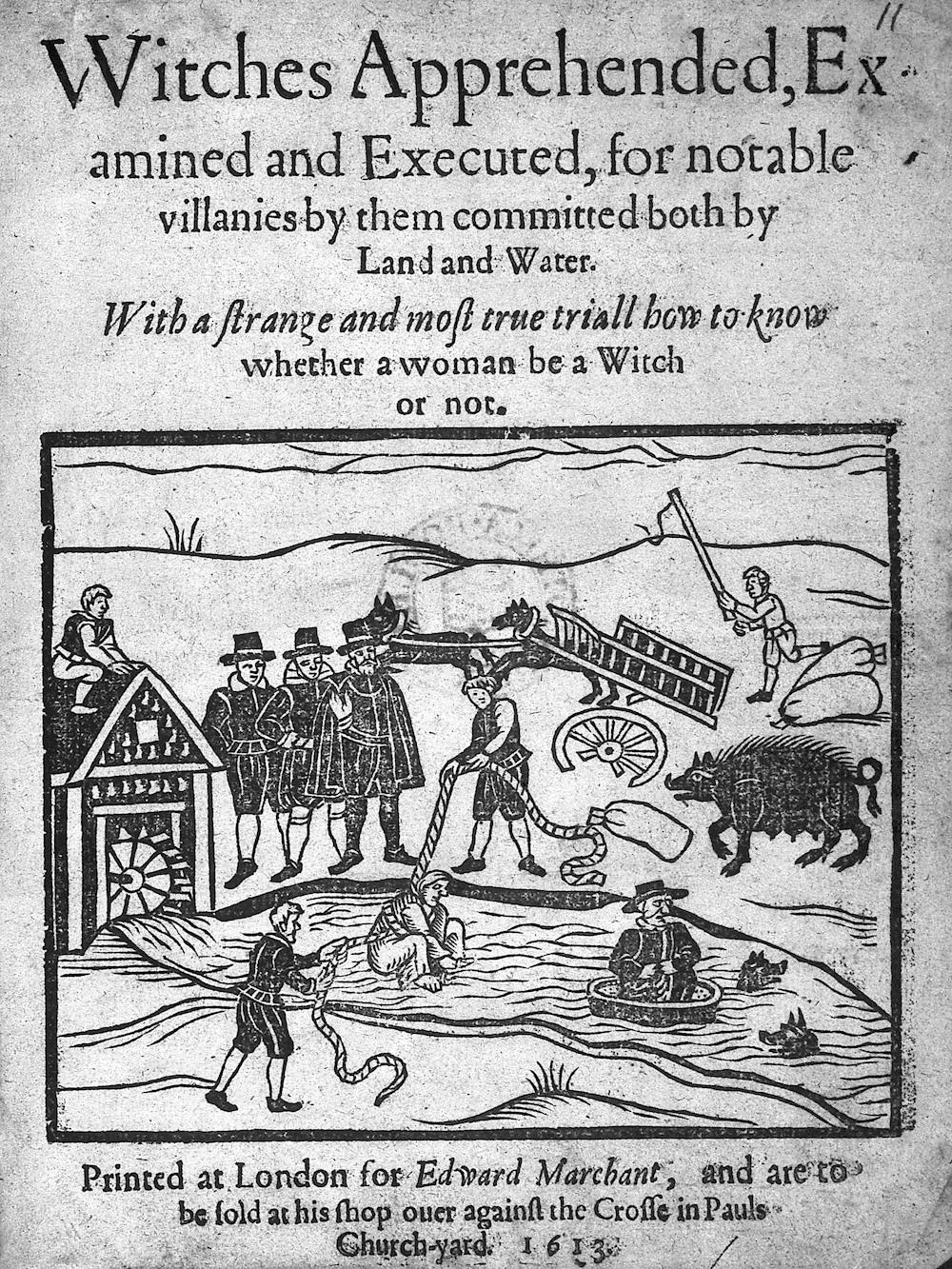
    A printed book page labelled 'Witches Apprehended, Examined and Executed,' with a drawing of people submerging a woman in a river.
    The title page of a treatise on witchcraft from 1613.
    Wellcome Collection/Wikimedia Commons, CC BY-SA

    Today’s researchers have identified similar patterns in how misinformation and disinformation – false information intended to confuse or manipulate people – spreads online. We’re more likely to believe stories that feel familiar, stories that connect to content we’ve previously seen. Likes, shares and retweets becomes proxies for truth. Emotional content designed to shock or outrage spreads far and fast.

    Social media channels are particularly fertile ground. Companies’ algorithms are designed to maximize engagement, so a post that receives likes, shares and comments will be shown to more people. The more viewers, the higher the likelihood of more engagement, and so on – creating a cycle of confirmation bias.

    Speed of a keystroke

    Early modern skeptics reserved their harshest criticism not for those who believed in witches but for those who spread the stories. Yet they were curiously silent on the ultimate arbiters and financial beneficiaries of what got printed and circulated: the publishers.

    Today, 54% of American adults get at least some news from social media platforms. These platforms, like the printing presses of old, don’t just distribute information. They shape what we believe through algorithms that prioritize engagement over accuracy: The more a story is repeated, the more priority it gets.

    The witch hunts offer a sobering reminder that delusion and misinformation are recurring features of human society, especially during times of technological change and social upheaval. As we navigate our own information revolution, those early skeptics’ questions remain urgent: Who bears responsibility when false information leads to real harm? How do we protect the most vulnerable from exploitation by those who profit from confusion and fear?

    In an age when anyone can be a publisher, and extravagant tales spread at the speed of a keystroke, understanding how previous societies dealt with similar challenges isn’t just academic – it’s essential.

    The Conversation

    Julie Walsh receives funding from the National Science Foundation

    ref. From printing presses to Facebook feeds: What yesterday’s witch hunts have in common with today’s misinformation crisis – https://theconversation.com/from-printing-presses-to-facebook-feeds-what-yesterdays-witch-hunts-have-in-common-with-todays-misinformation-crisis-260995

  • The World Court just ruled countries can be held liable for climate change damage – what does that mean for the US?

    Source: ForeignAffairs4

    Source: The Conversation – USA (2) – By Lauren Gifford, Faculty, Ecosystem Science & Sustainability; Director, Soil Carbon Solutions Center, Colorado State University

    Ralph Regenvanu, climate change minister of Vanuatu, speaks outside the International Court of Justice in The Hague on July 23, 2025. John Thys/AFP via Getty Images

    The International Court of Justice issued a landmark advisory opinion in July 2025 declaring that all countries have a legal obligation to protect and prevent harm to the climate.

    The court, created as part of the United Nations in 1945, affirmed that countries must uphold existing international laws related to climate change and, if they fail to act, could be held responsible for damage to communities and the environment.

    The opinion opens a door for future claims by countries seeking reparations for climate-related harm.

    But while the ruling is a big global story, its legal effect on the U.S. is less clear. We study climate policies, law and solutions. Here’s what you need to know about the ruling and its implications.

    Why island nations called for a formal opinion

    The ruling resulted from years of grassroots and youth-led organizing by Pacific Islanders. Supporters have called it “a turning point for frontline communities everywhere.”

    Small island states like Vanuatu, Tuvalu, Barbados and others across the Pacific and Caribbean are among the most vulnerable to climate change, yet they have contributed little to global emissions.

    Waves spend spray higher than houses and lap at the edges of homes, with palm trees in the background.
    Waves hit the shore in Majuro, the capital of the Marshall Islands, during a storm on Nov. 27, 2019. Waves inundated parts of the island, washing rocks and debris into roads.
    Hilary Hosia/AFP via Getty Images

    For many of them, sea-level rise poses an existential threat. Some Pacific atolls sit just 1 to 2 meters above sea level and are slowly disappearing as waters rise. Saltwater intrusion threatens drinking water supplies and crops.

    Their economies depend on tourism, agriculture and fishing, all sectors easily disrupted by climate change. For example, coral reefs are bleaching more often and dying due to ocean warming and acidification, undermining fisheries, marine biodiversity and economic sectors such as tourism.

    When disasters hit, the cost of recovery often forces these countries to take on debt. Climate change also undermines their credit ratings and investor confidence, making it harder to get the money to finance adaptive measures.

    A satellite image of the Maldives islands.
    The Maldives, shown in a satellite image from 2020, has an average elevation of less than 5 feet (1.5 meters) above sea level. With limited land where people can live, the country has tried to build up new areas of its islands for housing.
    NASA Earth Observatory

    Tuvalu and Kiribati have discussed digital nationhood and leasing land from other countries so their people can relocate while still retaining citizenship. Some projections suggest nations like the Maldives or Marshall Islands could become largely uninhabitable within decades.

    For these countries, sea-level rise is taking more than their land – they’re losing their history and identity in the process. The idea of becoming climate refugees and separating people from their homelands can be culturally destructive, emotionally painful and politically fraught as they move to new countries.

    More than a nonbinding opinion

    The International Court of Justice, commonly referred to as the ICJ or World Court, can help settle disputes between states when requested, or it can issue advisory opinions on legal questions referred to it by authorized U.N. bodies such as the General Assembly or Security Council. The advisory opinion process allows its 15 judges to weigh in on abstract legal issues – such as nuclear weapons or the Israeli occupation of the Palestinian territories – without a formal dispute between states.

    While the court’s advisory opinions are nonbinding, they can still have a powerful impact, both legally and politically.

    The rulings are considered authoritative statements regarding questions of international law. They often clarify or otherwise confirm existing legal obligations that are binding.

    What the court decided

    The ICJ was asked to weigh in on two questions in this case:

    1. “What are the obligations of States under international law to ensure the protection of the climate system … from anthropogenic emissions of greenhouse gases?”

    2. “What are the legal consequences under these obligations for States where they, by their acts and omissions, have caused significant harm to the climate system?”

    In its 140-page opinion, the court cited international treaties and relevant scientific background to affirm that obligations to protect the environment are indeed a matter of international environmental law, international human rights law and general principles of state responsibility.

    The decision means that in the authoritative opinion of the international legal community, all countries are under an obligation to contribute to the efforts to reduce global greenhouse emissions.

    To the second question, the court found that in the event of a breach of any such obligation, three additional obligations arise:

    1. The country in breach of its obligations must stop its polluting activity, which would mean excess greenhouse gas emissions in this case.

    2. It must ensure that such activities do not occur in the future.

    3. It must make reparations to affected states in terms of cleanup, monetary payment and apologies.

    The court affirmed that all countries have a legal duty under customary international law, which refers to universal rules that arise from common practices among states, to prevent harm to the climate. It also clarified that individual countries can be held accountable, even in a crisis caused by many countries and other entities. And it emphasized that countries that have contributed the most to climate change may bear greater responsibility for repairing the damage under an international law doctrine called “common but differentiated responsibility,” which is commonly found in international treaties concerning the environment.

    While the ICJ’s opinion doesn’t assign blame to specific countries or trigger direct reparations, it may provide support for future legal action in both international and national courts.

    What does the ICJ opinion mean for the US?

    In the U.S., this advisory opinion is unlikely to have much legal impact, despite a long-standing constitutional principle that “international law is part of U.S. law.”

    U.S. courts rarely treat international law that has not been incorporated into domestic law as binding. And the U.S. has not consented to ICJ jurisdiction in previous climate cases.

    Contentious cases before international tribunals can be brought by one country against another, but they require the consent of all the countries involved. So there is little chance that the United States’ responsibility for climate harms will be adjudicated by the World Court anytime soon.

    Still, the court’s opinion sends a clear message: All countries are legally obligated to prevent climate harm and cannot escape responsibility simply because they aren’t the only nation to blame.

    The unanimous ruling is particularly remarkable given the current hostile political climate in the United States and other industrial nations around climate change and responses to it. It represents a particularly forceful statement by the international community that the responsibility to ensure the health of the global environment is a legal duty held by the entire world.

    The takeaway

    The ICJ’s advisory opinion marks a turning point in the global effort to hold countries responsible for climate change.

    Vulnerable countries now have a more concrete, legally grounded base to claim rights and press for accountability against historical and ongoing climate harm – including financial claims.

    How it will be used in the coming years remains unclear, but the opinion gives small island states in particular a powerful narrative and a legal tool set.

    The Conversation

    Lauren Gifford receives funding from the National Science Foundation and the US Department of Agriculture.

    Daimeon Shanks-Dumont does not work for, consult, own shares in or receive funding from any company or organization that would benefit from this article, and has disclosed no relevant affiliations beyond their academic appointment.

    ref. The World Court just ruled countries can be held liable for climate change damage – what does that mean for the US? – https://theconversation.com/the-world-court-just-ruled-countries-can-be-held-liable-for-climate-change-damage-what-does-that-mean-for-the-us-262272

  • Historian uncovers evidence of second mass grave of Irish immigrant railroaders in Pennsylvania who suffered from cholera, violence and xenophobia

    Source: ForeignAffairs4

    Source: The Conversation – USA – By William E. Watson, Professor of History, Immaculata University

    Caskets of Irish railroaders whose remains were excavated from a mass grave outside Philadelphia. AP Photo/Matt Rourke

    When commuters on the R5 SEPTA train that connects suburban Chester County to Philadelphia approach Malvern station, they might spot a square stone monument on the right side in a clearing surrounded by a thick stand of forest.

    Above it, a sign paid for by the Amtrak electrical workers union and suspended from the trees reads:

    BURIAL PLOT OF IRISH RAILROAD WORKERS: At this site, known as Duffy’s Cut, fifty-seven Irish immigrant railroad workers from the counties of Donegal, Tyrone, Derry and Leitrim died of cholera and murder in the summer of 1832.

    I’m a historian at Immaculata University, about one mile west of Duffy’s Cut. In 2004, my colleagues and I were the ones to discover the mass grave when we excavated the site with the permission of the Pennsylvania Historical and Museum Commission.

    My students, who were about the same age as Duffy’s workers in 1832, provided a great deal of the labor at the excavation.

    More recently, in May 2025, we discovered human remains that suggest a second Irish immigrant railroader mass grave 11 miles west of Duffy’s Cut, in Downingtown.

    Commuter train passes wooded area with large rocks
    A SEPTA commuter train passes Duffy’s Cut in Malvern, Pa.
    William E. Watson, CC BY-NC-SA

    57 dead railroaders

    Duffy’s Cut was named after an Irish Catholic immigrant railroad contractor named Philip Duffy, who lived from 1783-1871 and was probably from County Donegal in northwest Ireland.

    I learned about the site and its possible mass grave from Pennsylvania Railroad documents that survived in my family.

    A 1909 file, labeled “History of Duffy’s Cut Stone enclosure east of Malvern, Pennsylvania, which marks the burial place of 57 track laborers who were victims of the cholera epidemic of 1832,” was compiled by future Pennsylvania Railroad president Martin W. Clement when he was an assistant supervisor. My grandfather, who was Clement’s executive assistant and later director of personnel, obtained the file before the records were auctioned off in 1972, and my brother showed me the file in 2002.

    The Philadelphia & Columbia Railroad, the predecessor of the Pennsylvania Railroad, wanted to shorten the travel time from Philadelphia to Pittsburgh from three to four weeks by Conestoga wagon to three to four days by rail, canal and river.

    The file my brother had in his possession stated that the dead railroaders at Duffy’s Cut were young men, recently arrived from Ireland. It also said the cost of mile 59 was vastly more expensive than the typical Philadelphia & Columbia Railroad mile. Laying a typical mile of P&C railroad cost US$5,000 in the 1830s. But at mile 59, gouging the landscape with a “cut” to lay the tracks on level ground and bridging the valley with a fill – an earthen bridge – cost $32,000. Although the work was especially difficult, the common laborers received about 25 cents a day.

    Artifact that looks like smooth stick with engraved with the word 'Derry'
    Fragment of an Irish-made clay pipe unearthed near the Duffy’s Cut mass grave.
    AP Photo/Matt Rourke

    Most of the men had sailed from the city of Derry in the north of Ireland to Philadelphia from April to June of 1832 aboard the John Stamp. The ship pulled into the Lazaretto quarantine station on the Delaware River in Essington, Pennsylvania, before sailing on to Philadelphia.

    No one on the John Stamp was reported to be ill. This was the height of the 1832 cholera epidemic that ultimately killed at least 10,000 people in the U.S.

    Forty-seven laborers from the John Stamp ship joined 10 other Irish immigrant workers who were already living with Duffy in a rental house in Willistown, a mile south of the work site.

    Yet almost as soon as they arrived to the work camp at mile 59, so did cholera, which had spread to Philadelphia from New York City.

    Cholera in the camps

    Americans could read about the spread of cholera across Europe in 1831 in the newspapers, but very little was known about the disease until decades later.

    Cholera is a bacterial infection that spreads due to poor sanitary practices in which human feces get into drinking water, via excrement passed into streams or by seepage from outhouses to wells.

    But in 1832, people believed cholera was linked to intemperance and vice, which were thought to weaken the body. According to the prevailing miasma theory, it caused outbreaks once airborne. Immigrants and the poor were thought to be especially susceptible to the disease and primary vectors for its spread.

    Cholera causes extreme diarrhea and vomiting that lead to rapid electrolyte loss. In 1832 it was fatal in about 50% of cases. In the Delaware Valley, cholera cases mounted from July into August 1832. Philadelphia registered its peak number of cases, 173, on Aug. 6 and peak number of deaths, 76, on Aug. 7. The hardest-hit areas in the region were working-class neighborhoods and canal and railroad work camps.

    A typical crew on a P&C mile numbered 100 to 120 men. However, the work by Irish immigrants was segregated along sectarian lines on the railroads in the U.S., as it was in the Belfast dockyards at the same time. The other half of the workers at mile 59, according to Canal Commission reports, were Irish Protestant immigrants who worked for an Irish Protestant contractor and did the less dangerous work of laying tracks. They did not die of cholera.

    Four men working in wooded area
    The author, second from left, and his team at the dig site at Duffy’s Cut in 2011.
    William E. Watson, CC BY-NC-SA

    Signs of a massacre

    To excavate the site, we partnered with the Chester County Emerald Society, a law enforcement group that cleared our work with the county district attorney, and the coroner, in case we found human remains. The University of Pennsylvania Museum provided ground-penetrating radar, as well as archaeological and anthropological assistance for the dig. Staff trained my students in how to properly excavate and handle artifacts and bones.

    Our research team uncovered seven sets of remains between 2009 and 2012 in the remaining eastern portions of the fill. The skeletons had been buried in coffins sealed with an exceptional number of nails, perhaps to contain the cholera.

    Analysis at the UPenn Museum showed evidence of violence to each of the skulls – with one skull showing both an ax blow and a bullet encased in the skull. Researchers found no evidence of defensive wounds on any skeleton, suggesting that the men might have been tied up before being killed.

    After our team analyzed the remains, we came to the startling conclusion that the men didn’t die from cholera – they were massacred.

    I believe that fear of cholera, an epidemic that some clergymen in America and England called “a chastisement for the sins of the people,” and anti-immigrant sentiment fueled violence against them by native-born populations.

    After forensic examinations of the remains, five of the skeletons were reburied during a ceremony at West Laurel Hill Cemetery in Bala Cynwyd in 2012. My team determined the identities of two of the deceased – 18-year-old John Ruddy from County Donegal and 29-year-old Catherine Burns, the daughter of one of the workers, from County Tyrone – and their remains were returned to their home counties in Ireland in 2013 and 2015.

    Man wearing red, purple and white vestments shown incensing caskets as crowd of people look on
    Bishop Michael J. Fitzgerald takes part in a funeral at West Laurel Hill Cemetery in 2012 for the five 19th-century Irish immigrants whose remains were excavated from the Duffy’s Cut site.
    AP Photo/Matt Rourke

    A second mass grave in Chester County

    Historical records led us to what we believe is a second mass grave in Chester County.

    An article in the Nov. 7, 1832, issue of the Village Record newspaper in West Chester reported that one man from Duffy’s Cut fled westward down the unfinished track line to another Irish immigrant railroader crew “near the line of East Bradford and East Caln.”

    This was P&C mile 48 in Downingtown, Pennsylvania. It was under the direction of Irish immigrant contractor Peter Connor, whose crew of 100 to 120 men was reported to have all died around the same time as Duffy’s crew.

    Forty years later, Charles Pennypacker’s 1909 “History of Downingtown” recorded that the dead Irishmen in Downingtown were carted north to a field where they were buried in a mass grave on the property of present-day Northwood Cemetery, “in the eastern part of the cemetery, near the gully.”

    Fragments of bones shown in container lined with purple satin
    File photo from March 24, 2009, shows bones recovered from the mass grave at Duffy’s Cut.
    AP Photo/Matt Rourke, File

    On May 15, 2025, the Duffy’s Cut team unearthed the first human remains from the Downingtown crew in the exact place reported by Pennypacker. This work has just started.

    Up and down the East Coast, there are numerous mass graves of anonymous workers who died of epidemics and overwork in the 1820s and 1830s. Most of those people will never have their stories told.

    At Duffy’s Cut, and now at the Downingtown site, we hope to humanize some of the hardworking immigrants who died building a crucial part of America’s industrial landscape.

    Visitors can view artifacts found at Duffy’s Cut at the Duffy’s Cut Museum in the Gabriele Library at Immaculata University in Malvern, Pa.

    Read more of our stories about Philadelphia and Pennsylvania.

    The Conversation

    William E. Watson serves as the unpaid director of the 501 c 3 educational non-profit and in 2016 served as director of an NEH summer teachers’ institute at Immaculata University. .

    ref. Historian uncovers evidence of second mass grave of Irish immigrant railroaders in Pennsylvania who suffered from cholera, violence and xenophobia – https://theconversation.com/historian-uncovers-evidence-of-second-mass-grave-of-irish-immigrant-railroaders-in-pennsylvania-who-suffered-from-cholera-violence-and-xenophobia-261442

  • Quantum scheme protects videos from prying eyes and tampering

    Source: ForeignAffairs4

    Source: The Conversation – USA – By Yashas Hariprasad, Assistant Professor of Computer Science, California State University, East Bay


    Quantum physics enables hack-proof video transmission.
    sakkmesterke/iStock via Getty Images

    We have developed a new way to secure video transmissions so even quantum computers in the future won’t be able to break into private video livestreams or recordings. We are computer scientists who study computer security. Our research introduces quantum-safe video encryption, which combines two complementary techniques: quantum encryption and secure internet transmission.

    With our encryption system, a hacker wouldn’t be able to access or understand the video data because it’s scrambled using a quantum key that changes unpredictably. Cryptographic keys scramble data so that only someone with the correct key can unscramble it. If the hacker even tries to peek, the system detects it and raises an alarm. The video also travels in the digital equivalent of a locked box over the internet, so nobody can swap or tamper with it in transit.

    Quantum encryption scrambles video data using truly random cryptographic keys based on quantum physics. Unlike traditional encryption that relies on mathematical complexity, quantum encryption uses the fundamental unpredictability of quantum states to generate unbreakable keys.

    Quantum refers to the scale of atoms and molecules, which behave in counterintuitive ways. Quantum computers take advantage of these strange behaviors to solve problems that are difficult or impossible for ordinary computers.

    We combine this quantum encryption scheme with secure transmission over the internet using transport layer security. This is the encryption scheme used to keep connections between web browsers and web pages private.

    Our approach works by converting each video frame into a quantum image representation, essentially a mathematical framework that captures visual information in quantum states. We then scramble the data by combining it with quantum-generated random keys, making the encrypted video statistically indistinguishable from pure noise.

    Quantum encryption explained.

    And because quantum encryption is resistant to future technology such as quantum computers, that video is safe for years to come.

    Why it matters

    Today’s encryption works well, until tomorrow’s quantum computers arrive. These super-powerful machines will be able to crack most current encryption methods in seconds. That means today’s private videos, stored on cloud platforms or transmitted over the internet, could be decrypted years from now.

    More dangerously, these stolen videos can be manipulated into deepfakes: AI-generated videos that can make anyone appear to say or do anything. A forged video can ruin reputations, sway decisions and even incite violence. A secure encryption system not only protects privacy, it helps protect truth.

    What other research is being done

    Researchers around the world are exploring quantum key distribution to securely share encryption keys. Others use chaos theory, deep learning or hybrid algorithms to secure video and image content.

    But most existing work focuses on images, or only on key exchange, without fully securing live or stored video data.

    What’s next

    We’re working toward scaling this system to encrypt full video files and real-time video streams, such as those used in video conferencing and surveillance systems.

    Next steps include reducing the performance overhead for smoother playback and testing the system in real-world environments. We’re also exploring how it can work alongside deepfake detection tools, so we not only stop hackers from accessing videos but also prove the videos haven’t been altered.

    While our framework shows strong early results, practical use will depend on phased adoption as quantum systems become more accessible over the years.

    The Research Brief is a short take on interesting academic work.

    The Conversation

    The authors do not work for, consult, own shares in or receive funding from any company or organization that would benefit from this article, and have disclosed no relevant affiliations beyond their academic appointment.

    ref. Quantum scheme protects videos from prying eyes and tampering – https://theconversation.com/quantum-scheme-protects-videos-from-prying-eyes-and-tampering-261049

  • As wrestling fans reel from the sudden death of Hulk Hogan, a cardiologist explains how to live long and healthy − and avoid chronic disease

    Source: ForeignAffairs4

    Source: The Conversation – USA (3) – By William Cornwell, Associate Professor of Cardiology, University of Colorado Anschutz Medical Campus

    Hulk Hogan’s international fame as a wrestling superstar began in the 1980s. This photo is from 2009. Paul Kane via Getty Images Entertainment

    On July 24, 2025, the American pro wrestling celebrity Hulk Hogan, whose real name was Terry Bollea, died at the age of 71. Hogan had chronic lymphocytic leukemia and a history of atrial fibrillation, or A-fib, a condition in which the upper chambers of the heart, or atria, beat irregularly and often rapidly. His cause of death has been confirmed as acute myocardial infarction, commonly known as a heart attack.

    Hogan became a household name in the 1980s and has long been known for maintaining fitness and a highly active lifestyle, despite having had 25 surgeries in 10 years, including a neck surgery in May.

    Hogan’s death has brought renewed attention to the importance of maintaining heart health through exercise. Many people think that bodybuilders are the “picture” of health. However, the truth is that too much muscle can increase strain on the heart and may actually be harmful. It may seem ironic, then, that people who exercise to extreme levels and appear healthy on the outside can, in fact, be quite unhealthy on the inside.

    As the director of sports cardiology at the University of Colorado Anschutz Medical Campus, I see patients of all age groups and at varying levels of fitness who are interested in promoting health by incorporating exercise into their lifestyle, or by optimizing their current exercise program.

    Two older women exercising together in a park.
    More exercise and less sedentary behavior reduces the risk of heart disease, stroke, cancer and dementia.
    andreswd/E+ via Getty Images

    Exercise is the foundation for good health

    When people think of vital signs, they usually think about things such as heart rate, blood pressure, temperature, breathing rate and blood oxygen levels. However, the American Heart Association also includes “fitness” as an additional vital sign that should be considered when determining a patient’s overall health and risk of heart disease, cancer and death.

    While fitness may be determined in various ways, the best way is by checking what is known as peak oxygen uptake, or VO2 max, through a specialized evaluation called a cardiopulmonary exercise test. These can be performed at many doctors’ offices and clinics, and they provide a wealth of information related to overall health, as well as heart, lung and skeletal muscle function.

    Exercise is one of the most effective interventions to prolong life and reduce the risk of developing chronic diseases throughout life – in effect, prolonging lifespan and improving health span, meaning the number of years that people spend in good health.

    In fact, a large study done by the Cleveland Clinic found that a low level of fitness poses a greater risk of death over time than other traditional risk factors that people commonly think of, such as smoking, diabetes, coronary artery disease and severe kidney disease.

    When it comes to brain health, the American Stroke Association emphasizes the importance of routine exercise and avoiding sedentary behavior in their 2024 guidelines on primary prevention of stroke. The risk of stroke increases with the amount of sedentary time spent throughout the day and also with the amount of time spent watching television, particularly four hours or more per day.

    Regarding cognitive decline, the Alzheimer’s Society states that regular exercise reduces the risk of dementia by almost 20%. Furthermore, the risk of Alzheimer’s disease is twice as high among individuals who exercise the least, when compared to individuals who exercise the most.

    There is also strong evidence that regular exercise reduces the risk of certain types of cancer, especially, colon, breast and endometrial cancer. This reduction in cancer risk is achieved through several mechanisms.

    For one, obesity is a risk factor for up to 13 forms of cancer, and excess body weight is responsible for about 7% of all cancer deaths. Regular exercise helps to maintain a healthy weight.

    Second, exercise helps to keep certain hormones – such as insulin and sex hormones – within a normal range. When these hormone levels get too high, they may increase cancer cell growth. Exercise also helps to boost the immune system by improving the body’s ability to fight off pathogens and cancer cells. This in turn helps prevent cancer cell growth and also reduces chronic inflammation, which left unchecked damages tissue and increases cancer risk.

    Finally, exercise improves the quality of life for all people, regardless of their health or their age. In 2023, Hulk Hogan famously quipped, “I’m 69 years old, but I feel like I’m 39.”

    7,000 steps is just over 3 miles – depending on your pace, that’s about 40 to 60 minutes of walking.

    The optimal dose of exercise

    Major health organizations, such as the American Heart Association, American Cancer Society and Department of Health and Human Services, all share similar recommendations when it comes to the amount of exercise people should aim for.

    These organizations all recommend doing at least 150 minutes per week of moderate-intensity exercise, or at least 75 minutes per week of vigorous-intensity exercise. Moderate exercises include activities such as walking briskly (2.5 to 4 miles per hour), playing doubles tennis or raking the yard. Vigorous exercise includes activities such as jogging, running or shoveling snow.

    A good rule of thumb for figuring out how hard a specific exercise is is to apply the “talk test”: During moderate-intensity exercise, you can talk, but not sing, during the activity. During vigorous intensity exercise, you can say only a few words before having to stop and take a breath.

    There is a lot of solid data to support these recommendations. For example, in a very large analysis of about 48,000 people followed for 30 years, the risk of death from any cause was about 20% lower among those who followed the physical activity guidelines for Americans.

    Life can be busy, and some people may find it challenging to squeeze in at least 150 minutes of exercise throughout the course of the week. However, “weekend warriors” – people who cram all their exercise into one to two days over the weekend – still receive the benefits of exercise. So, a busy lifestyle during the week should not prevent people from doing their best to meet the guidelines.

    What about the number of steps per day? In a new analysis in The Lancet, when compared with walking only 2,000 steps per day, people who walked 7,000 steps per day had a 47% lower risk of death from any cause, a 25% lower risk of developing heart disease, about a 50% lower risk of death from heart disease, a 38% lower risk of developing dementia, a 37% lower risk of dying from cancer, a 22% lower risk of depression and a 28% lower risk of falls.

    Historically, people have aimed for 10,000 steps per day, but this new data indicates that there are tremendous benefits gained simply from walking 7,000 steps daily.

    It’s never too late to start

    One question that many patients ask me – and other doctors – is: “Is it ever too late to start exercising?” There is great data to suggest that people can reap the benefits even if they don’t begin an exercise program into their 50s.

    Being sedentary while aging will cause the heart and blood vessels to stiffen. When that happens, blood pressure can go up and people may be at risk of other things such as heart attacks, strokes or heart failure.

    However, in a study of previously sedentary adults with an average age of 53, two years of regular exercise reversed the age-related stiffening of the heart that otherwise occurs in the absence of routine exercise.

    And it is important to remember that you do not have to look like a body builder or fitness guru in order to reap the benefits of exercise.

    Almost three-quarters of the total benefit to heart, brain and metabolic health that can be gained from exercise will be achieved just by following the guidelines.

    The Conversation

    William Cornwell does not work for, consult, own shares in or receive funding from any company or organization that would benefit from this article, and has disclosed no relevant affiliations beyond their academic appointment.

    ref. As wrestling fans reel from the sudden death of Hulk Hogan, a cardiologist explains how to live long and healthy − and avoid chronic disease – https://theconversation.com/as-wrestling-fans-reel-from-the-sudden-death-of-hulk-hogan-a-cardiologist-explains-how-to-live-long-and-healthy-and-avoid-chronic-disease-262103

  • Shingles vaccination rates rose during the COVID-19 pandemic, but major gaps remain for underserved groups

    Source: ForeignAffairs4

    Source: The Conversation – USA (3) – By Jialing Lin, Research fellow in Health Systems, International Centre for Future Health Systems, UNSW Sydney

    The CDC recommends shingles vaccination for all adults age 50 and older. xavierarnau/E+ via Getty Images

    Vaccination against shingles increased among adults age 50 and older in the U.S. during the COVID-19 pandemic, but not equally across all population groups. That’s the key finding from a new study my colleagues and I published in the journal Vaccine.

    Shingles is caused by the reactivation of the varicella-zoster virus, the same virus that causes chickenpox. It leads to a painful rash and potentially serious complications – especially in older adults – such as persistent nerve pain, vision loss and neurological problems. While antiviral treatments can ease symptoms, vaccination is the most effective way to prevent shingles.

    We analyzed nationally representative survey data from almost 80,000 adults age 50 and over between 2018 and 2022, collected by the Centers for Disease Control and Prevention to monitor the health of the U.S. population. The survey tracked vaccination rates in people of different ethnic backgrounds as well as other factors such as sex, household income and the presence of chronic conditions like diabetes and cardiovascular disease.

    The uptake of shingles vaccines rose notably during the pandemic – from 25.1% of people for whom it is recommended in 2018-2019, to 30.1% during 2020-2022. We observed this overall increase across nearly all groups in our study.

    We saw the greatest relative increases among groups that historically have had lower rates of shingles vaccination. These included adults ages 50-64, men, people from racial and ethnic minority groups such as non-Hispanic Black adults, those with lower household incomes, current smokers and people without chronic conditions like cancer or arthritis.

    Red bumpy skin rash caused by shingles
    Shingles is caused by the same virus that causes chickenpox. It leads to a painful rash and other potentially serious complications.
    Irena Sowinska/Moment via Getty Images

    Why it matters

    In the U.S., the CDC recommends shingles vaccination for all adults age 50 and older. However, uptake has been low, partly due to limited awareness, cost concerns and missed opportunities during routine health care visits.

    The COVID-19 pandemic, while disruptive, may have inadvertently created new opportunities to improve adult vaccination uptake, particularly among groups with historically low uptake of the shingles vaccine. Factors contributing to this shift likely included heightened public awareness of the importance of vaccination, more frequent health care encounters, especially during COVID-19 vaccine rollouts, and the expanded availability of adult vaccines in pharmacies and primary care settings.

    Replacing the older, less effective live attenuated zoster vaccine, called Zostavax, with the newer, non-live zoster vaccine, Shingrix, in 2020 also played a role. Public health campaigns that promoted co-administration of vaccines and launched targeted outreach to underserved populations further contributed to these gains.

    However, major inequities persist. While shingles vaccination rates improved across the board, groups that had lower uptake before the pandemic continued to lag behind wealthier, non-Hispanic white populations with greater health care access. Overall, the vaccination rate for shingles is still low – below other vaccines such as the flu vaccine.

    This gap reflects long-standing disparities in getting needed health care, which became even more prominent during the pandemic. It also highlights the need for fairer policies and customized outreach efforts to underserved communities that build trust and raise awareness about the health benefits of the shingles vaccine.

    What still isn’t known

    Although the upward trend we observed is encouraging, several questions remain. For example, we could not tell from the survey data we worked with whether participants received both doses of the Shingrix vaccine. Both are needed for full protection against shingles.

    Nor could we tell whether participants received the shingles vaccine alongside their COVID-19 vaccination. Receiving multiple vaccines at a single health care visit makes vaccination more convenient and may boost vaccine uptake by reducing the number of needed visits. Also unknown is how immunocompromised people fared during this period. Current guidelines recommend that immunocompromised adults regardless of age also receive the shingles vaccine, but the data only included adults age 50 and over.

    Addressing these questions in future studies would help public health experts develop strategies to encourage more eligible people to receive the shingles vaccine.

    The Research Brief is a short take on interesting academic work.

    The Conversation

    Jialing Lin does not work for, consult, own shares in or receive funding from any company or organization that would benefit from this article, and has disclosed no relevant affiliations beyond their academic appointment.

    ref. Shingles vaccination rates rose during the COVID-19 pandemic, but major gaps remain for underserved groups – https://theconversation.com/shingles-vaccination-rates-rose-during-the-covid-19-pandemic-but-major-gaps-remain-for-underserved-groups-262020

  • A university bookshop in Ibadan tells the story of Nigeria’s rich publishing culture

    Source: ForeignAffairs4

    Source: The Conversation – Africa – By Tinashe Mushakavanhu, Assistant Professor, Harvard University

    Driven by a desire to explore Nigeria’s literary and cultural history beyond the metropolis of Lagos, I took a road trip to Ibadan, once the most important university town in the country. Ibadan, in Oyo State, was the first city in Nigeria to have a university set up in 1948.

    Ibadan is where the Mbari Club once gathered, an experimental space where Nigerian writers, artists and thinkers – among them Chinua Achebe, Wole Soyinka, JP Clark, Christopher Okigbo, Uche Okeke, Bruce Onobrakpeya, Mabel Segun and South Africa’s Es’kia Mphahlele – met, debated and dreamed in the 1960s and 70s.

    It’s the city where celebrated Nigerian artist and architect Demas Nwoko imagined and built his utopias. Where the Oxford University Press and Heinemann Educational Books established their west African headquarters.


    Read more:
    Chimamanda’s Lagos homecoming wasn’t just a book launch, it was a cultural moment


    Books have always been a form of cultural currency in Ibadan. The presence of major publishers meant that bookshops were not just retail outlets, but intellectual salons, sites of encounter and exchange.

    So while in Ibadan I visited cultural spaces and independent bookshops but it was the charms of the University campus that mostly captured my imagination. And my favourite place was the University of Ibadan Bookshop. At this campus bookshop I lingered the most, in awe and wonder. Its eclectic range of books, journals, public lecture pamphlets, novels, poetry collections and monographs excited me.

    Today, when the global publishing economy has increasingly digitised and centralised, the bookshop feels almost radical just by existing. It’s a reminder that intellectual life in Africa is not peripheral or derived from the west. It is present, prolific and profoundly local. To walk through the shelves of this bookshop was to encounter a history of African thought written and produced on its own terms.

    As a scholar of African literature and archives, my research traces the hidden lives of spaces that have shaped publishing and archives. University bookshops have been overlooked but are essential nodes in the continent’s intellectual history.

    A snapshot of Nigeria

    This campus bookshop gives a snapshot of Nigeria as a print country. Here we witness the nation through its printed matter. A nation of prolific publishing. I found the literary output in the Ibadan campus bookshop not only vast but exuberant and unrelenting. It reflects the texture of the Nigerian personality: loud, boisterous, layered and insistent. Stacks upon stacks of books.

    In these stacks, it dawned on me that beneath the surface lies a vibrant, ongoing literary discourse that is unmistakably Nigerian, and sadly not resonant far beyond its borders. These are books you don’t see on reference lists of “popular” and “influential” scholarship that privileges work produced and imported to Africa from the Euro-American academy.

    I was especially intrigued with how the Nigerian academic and writer does not tire in producing academic and cultural journals. There are journals for every subject under the sun.

    While the critical framework of African literature is too often shaped by the global north (see critiques by Ato Quayson, Biodun Jeyifo, Simon Gikandi and Grace Musila) in Ibadan, I saw a distinctly local and deeply African critical discourse rooted in place, language and lived experience. To walk into the University of Ibadan Bookshop is to step into legacy. Its shelves bear the weight of decades of African thought, theory and storytelling.

    Despite being housed in an ageing building, it has stayed defiant. Even though floods destroyed books and computers worth a small fortune in 2019, the bookshop is still standing proudly. And there was pride too among the staff who were eager to help or answer any questions about the books.

    More than bookshops

    The University of Ibadan bookshop reminded me of the bookshop from my undergraduate days in Zimbabwe. Even though our campus bookshop was much smaller, I used to find pleasure going there in between lectures. It often felt like walking into a vault of African knowledge and memory.

    Our bookshop at Midlands State University stocked old, canonical books alongside current literature. On occasion, rare, out-of-print secondhand books would appear on the shelves. The bargain sales also meant I spent most of my money there.

    But to call these spaces on African university campuses “bookshops” hardly does them justice. They are hybrid cultural ecosystems that function as part bookshop, part print shop, stationer, library and sometimes even archive. They have long served as vital nodes in the circulation of African knowledge and thought.

    Yet this ecosystem is rapidly eroding, undermined by the rise of internet culture, artificial intelligence, piracy and harsh economic conditions. The result is a slow but devastating disappearance of African intellectual memory. As scholars remind us, digital platforms are not neutral. They are structured by algorithms that often marginalise black and African knowledge. So, the loss of these analogue spaces is more than nostalgic, it is epistemic erasure.

    In this digital age, there is something vital about the physical presence of bookshops on African campuses. Thanks to them, as a student, for me literature was the serendipity of discovery, the tactile feel of books, the beautiful persistence of a local knowledge system that was relatable and produced by people like me.


    Read more:
    Nigerian architect Demas Nwoko on his award-winning work: ‘Whatever you build, it should suit your culture’


    On the way out of the city, we stopped at Bower’s Tower. From there you can see Ibadan’s sprawling layout, the ancient hills from which the settlement was built, and its red roofs.

    The view reflected the complexity and density of ideas the city has nurtured. And despite shifts in Nigeria’s publishing geography from here to Lagos and Abuja, Ibadan still matters. It’s a city that remembers, that archives, that holds on to knowledge.

    The Conversation

    Tinashe Mushakavanhu does not work for, consult, own shares in or receive funding from any company or organisation that would benefit from this article, and has disclosed no relevant affiliations beyond their academic appointment.

    ref. A university bookshop in Ibadan tells the story of Nigeria’s rich publishing culture – https://theconversation.com/a-university-bookshop-in-ibadan-tells-the-story-of-nigerias-rich-publishing-culture-262050

  • European gloom over the Trump deal is misplaced. It’s probably the best the EU could have achieved

    Source: ForeignAffairs4

    Source: The Conversation – UK – By Maha Rafi Atal, Adam Smith Senior Lecturer in Political Economy, School of Social and Political Sciences, University of Glasgow

    The trade deal between the US and the European Union, squeezed in days before the re-introduction of Donald Trump’s “liberation day” tariffs, is reflective of the new politics of global trade. Faced with the threat of 30% baseline tariffs from Washington, as well as additional levies on specific sectors, the EU has secured a partial reprieve of a flat 15% tariff on all goods.

    Was this the best the bloc could have achieved? In the time available, it may well have been. The 15% rate is higher than the UK secured earlier this year, but it’s significantly below the level applied to China and Mexico, and on par with Japan.

    The EU has also managed a “zero-for-zero” tariffs deal on some hi-tech goods, notably semiconductors vital for products like phones and laptops. This is something the UK did not push for or secure in its own framework agreed with the US president.


    Read more:
    Donald Trump has reduced tariffs on British metals and cars, but how important is this trade deal? Experts react


    What’s more, EU leaders have argued that agreeing to the deal has security benefits in protecting dwindling US support for European defence. The urgency of Europe’s security concerns in Ukraine made these talks different from trade negotiations in the first Trump administration, when Europe could afford to be more aggressive.

    The biggest winners in this deal are Europe’s carmakers. The US has collapsed various sector-specific duties on goods like aircraft, cars and automotive parts into the 15% ceiling. This effectively reduces tariffs on EU-made cars (from 27.5%).

    American automakers, meanwhile, rely heavily on parts from Mexico and China – still subject to higher tariffs at the time of writing. This makes EU vehicles more competitive for US consumers than “American” cars that rely on overseas parts.

    Most importantly however, like the UK deal before it, the new EU agreement is a statement of understanding between the White House and the European Commission, rather than a formal treaty. A treaty would be subject to parliamentary ratification on both sides.

    But the semi-formal nature of this agreement allows both Trump and European leaders to portray the deal as a “win” by playing fast and loose with what’s actually in it.

    For example, the Trump administration will celebrate an EU commitment to buy US$250 billion (£189 billion) in US energy imports annually. Yet the concession holds no legal weight in the EU. The European Commission, which negotiated with Trump, does not buy any energy nor does it manage the power grid inside its 27 member states.

    The commission can encourage, but cannot compel, those states to buy American. (Indeed, it might want to do so anyway, since it helps it to pivot away from Russian gas). But ultimately, member states and businesses decide where their energy supply comes from, and they are not direct parties to the deal. Only a formal treaty ratified by the European parliament would compel them.

    No guarantees from Trump

    The informal nature of this agreement also allows EU member states to protest against what they see as capitulation to Trump’s demands without real consequence. After all, there is not yet a treaty text they would be required to vote on or implement.

    The Trump administration similarly imposed its sweeping tariff threats in early spring without a vote from Congress, and has been making ad hoc changes to the rates in the same way.

    On the one hand, this means European countries may not ultimately be required to implement some of the deal’s less savoury elements such as the energy purchases or lowering the bloc’s own tariffs on US goods.

    On the other hand, this means the Trump administration – notorious for abrupt changes of turn – can also renege at any time. In reality, there is little the EU can do about this. The question of leverage looms large. Trump’s longstanding antipathy towards the EU – seeing it less as an ally and more as a rival – meant that Brussels was never negotiating from a position of strength.

    The fact that the EU avoided the worst-case scenario, protected key sectors and secured other sector-specific advantages suggests a deal shaped not by triumph, but by containment of Trump. Since the deal was announced, the picture emerging from many European leaders has been one of gloom. True, the EU didn’t win – but it survived. And that, for now, is probably enough.


    Get your news from actual experts, straight to your inbox. Sign up to our daily newsletter to receive all The Conversation UK’s latest coverage of news and research, from politics and business to the arts and sciences.

    The Conversation

    Maha Rafi Atal does not work for, consult, own shares in or receive funding from any company or organisation that would benefit from this article, and has disclosed no relevant affiliations beyond their academic appointment.

    ref. European gloom over the Trump deal is misplaced. It’s probably the best the EU could have achieved – https://theconversation.com/european-gloom-over-the-trump-deal-is-misplaced-its-probably-the-best-the-eu-could-have-achieved-262369

  • Will the latest diplomatic moves to end the war in Gaza work?

    Source: ForeignAffairs4

    Source: The Conversation – UK – By Jonathan Este, Senior International Affairs Editor, Associate Editor, The Conversation

    This article was first published in The Conversation UK’s World Affairs Briefing email newsletter. Sign up to receive weekly analysis of the latest developments in international relations, direct to your inbox.


    It feels as if things are moving at completely different speeds in Gaza and in the outside world. From the embattled Gaza Strip the narrative is depressingly familiar. Dozens more Palestinian civilians have been killed in the past 24 hours as they try to get hold of scarce supplies of food.

    Aid agencies report that despite air drops of supplies and “humanitarian pauses” in the fighting, the amount of food getting through to the starving people of Gaza remains pitifully insufficient.

    Two more children are reported to have died of starvation, bringing the total number of hunger-related deaths to 159, according to Palestinian sources quoted by al-Jazeera.

    US envoy Steve Witkoff arrived in Jerusalem for more talks as the US president Donald Trump posted his latest bout of social media diplomacy on his TruthSocial site, a message which appears pretty faithful to the Netanyahu government’s position: “The fastest way to end the Humanitarian Crises in Gaza is for Hamas to SURRENDER AND RELEASE THE HOSTAGES!!”

    Both sides continue to reject the other side’s demands, bringing ceasefire negotiations to an effective standstill.

    In the outside world, meanwhile, events seem to be gathering pace. A “high-level conference” at the United Nations in New York brought together representatives of 17 states, the European Union and the Arab League, resulting in “a comprehensive and actionable framework for the implementation of the two-state solution and the achievement of peace and security for all”.


    Sign up to receive our weekly World Affairs Briefing newsletter from The Conversation UK. Every Thursday we’ll bring you expert analysis of the big stories in international relations.


    What first catches the eye about this proposal, which was signed by Saudi Arabia,
    Qatar, Egypt and Jordan, is that it links a peace deal with the disarming and disbanding of Hamas. It also condemns the militant group’s savage attack on southern Israel on October 23 2023, which was the catalyst for the latest and arguably most grievous chapter of this eight-decade conflict. It’s the first time the Arab League has taken either of these positions.

    The New York declaration, as it has been dubbed, envisages the complete withdrawal of Israeli security forces from Gaza and an end to the displacement of Palestinians. Government will be the responsibility of the Palestinian Authority (PA), and a conference to be scheduled in Egypt will design a plan for the reconstruction of Gaza, much of which has been destroyed in the 20-month assault by the Israel Defense Forces.

    It is, writes Scott Lucas, a “bold initiative” which, “in theory could end the Israeli mass killing in Gaza, remove Hamas from power and begin the implementation of a process for a state of Palestine. The question is whether it has any chance of success.”

    Lucas, an expert in US and Middle East politics at the Clinton Institute of University College Dublin, is not particularly sanguine about the short-term prospects for a ceasefire and the alleviation of the desperate conditions for the people of Gaza. But what it represents more than anything else, is “yet another marker of Israel’s increasing isolation”.

    He points to recent announcements that France, the UK (subject to conditions) and Canada will recognise the state of Palestine at the UN general assembly in September. The prospect of normalisation between Israel and Arab states, at the top of the agenda a few short years ago, is now very unlikely. And in the US, which remains Israel’s staunchest ally, a Gallup poll recently found that public opinion is turning against Israel and its prime minister, Benjamin Netanyahu.


    Read more:
    New peace plan increases pressure on Israel and US as momentum grows for Palestinian statehood


    But how important are the declarations by France, the UK and Canada of intent to potentially recognise Palestinian statehood, asks Malak Benslama-Dabdoub. As expert in international law at Royal Holloway University of London, who has focused on the question of Palestinian statelessness, Benslama-Dabdoub thinks that the French and British pledges bear closer examination.

    The French declaration was made on July 24 on Twitter by the president, Emmanuel Macron. Macron envisages a “demilitarised” state, something Benslama-Dabdoub sees as a serious problem, as it effectively denies the fundamental right of states to self-determination and would rob a future Palestinian state of the necessary right to self-defence.

    The declaration by the UK prime minister that Britain may also recognise Palestinian statehood in September is framed as a threat rather than a pledge. Unless Israel agrees to a ceasefire, allows the UN to recommence humanitarian efforts and engages in a long-term sustainable peace process, the UK will go ahead with recognising Palestine at the UN.

    You have to consider that the UK government’s statement said that the position has always been that “Palestinian statehood is the inalienable right of the Palestinian people”. So to frame this as a threat rather than a demand is arguably to deny that “inalienable right”.


    Read more:
    UK to recognise Palestinian statehood unless Israel agrees to ceasefire – here’s what that would mean


    Paul Rogers also sees serious problems with the pledges to recognise Palestinian statehood. Demands for Hamas to disarm and play no further role in Palestinian government he sees as a non-starter as is the thought of a demilitarised Palestine. “Neither plan has the slightest chance of getting off the ground.”

    Rogers, who has researched and written on the Middle East for more than 30 years, also thinks that without the full backing of the US there is very little chance that a peace plan could succeed.

    Rogers finds it hard to believe that Washington will change tack on the Palestinian question, “unless the US president somehow gets the idea that his own reputation is being damaged”. There’s always a chance of this. News from the Gaza Strip is relentlessly horrifying and the aforementioned polls suggest many voters are reassessing their views of the conflict. But Trump is heavily indebted for his re-election to the far-right Christian Zionist movement, who wield a great deal of power with the White House.

    The other thing that might influence the conflict is if enough of the IDF’s top brass recognise the futility of waging what has always been an unwinnable conflict. This, writes Rogers, is whispered about in Israel’s military circles and one eminent retired general, Itzhak Brik, has come out and said: “Hamas has defeated us.”

    These, writes Rogers, are currently the only routes to an end to the conflict.


    Read more:
    UK and France pledges won’t stop Netanyahu bombing Gaza – but Donald Trump or Israel’s military could


    Inside Trumpian diplomacy

    We mentioned earlier that the Canadian prime minister, Mark Carney, has also pledged to recognise the state of Palestine in September. This was immediately greeted by Trump with the threat that he does so it will derail a trade deal with the US. Whether this will cut any ice with Carney, who had to make concessions to get the trade deal done in the first place, remains to be seen.

    But there’s a broader point here, writes Stefan Wolff. As Wolff reports, this week the foreign ministers of the Democratic Republic of Congo and Rwanda got together in Washington to sign a ceasefire deal, brokered by the US. Trump also claims to have successfully ended a conflict between India and Pakistan at the end of May and hostilities between Thailand and Cambodia earlier this month.

    Meanwhile his efforts to secure peace deals, or even a lasting ceasefire, in Gaza or Ukraine have been unsuccessful.

    Wolff considers why some countries respond to Trump’s diplomatic efforts while others don’t. There are a number of reasons, principally the US president’s ability to apply leverage through trade deals or sanctions and the differing complexity of the conflicts.

    He also points to the depleted resources of the US state department, Trump’s use of personal envoys with little foreign affairs experience and the US president’s insistence on making all the important decisions himself. He concludes: “The White House simply may not have the bandwidth for the level of engagement that would be necessary to get to a deal in Ukraine and the Middle East.”


    Read more:
    Why Donald Trump has stopped some conflicts but is failing with Ukraine and Gaza


    One US government department whose resources haven’t been depleted under Donald Trump is the US Immigration and Customs Enforcement agency, known as Ice. Part of the Department of Homeland Security, Ice has been responsible for identifying and detaining non-citizens and undocumented migrants.

    Their agents carry guns, wear masks and typically operate in plain clothes, although they often wear military kit. The agency received massive funding via Trump’s One Bzig Beautiful Bill Act earlier this month, which will allow the agency to recruit hundreds, if not thousands, of new agents. The number of arrests is increasing steadily, as is the disquiet their operations are prompting in many American cities, where opposition protests are also growing.

    Dafydd Townley, an expert in US politics at the University of Portsmouth, explains how Ice operates and where it sits in Donald Trump’s plan to deport millions of illegal migrants from the US.


    Read more:
    Masked and armed agents are arresting people on US streets as aggressive immigration enforcement ramps up


    World Affairs Briefing from The Conversation UK is available as a weekly email newsletter. Click here to get updates directly in your inbox.


    The Conversation

    ref. Will the latest diplomatic moves to end the war in Gaza work? – https://theconversation.com/will-the-latest-diplomatic-moves-to-end-the-war-in-gaza-work-262380

  • The African activists who challenged colonial-era slavery in Lagos and the Gold Coast

    Source: ForeignAffairs4

    Source: The Conversation – Africa – By Michael E Odijie, Associate Professor, University of Oxford

    When historians and the public think about the end of domestic slavery in west Africa, they often imagine colonial governors issuing decrees and missionaries working to end local traffic in enslaved people.

    Two of my recent publications tell another part of the story. I am a historian of west Africa, and over the past five years, I have been researching anti-slavery ideas and networks in the region as part of a wider research project.

    My research reveals that colonial administrations continued to allow domestic slavery in practice and that African activists fought this.

    In one study I focused on Francis P. Fearon, a trader based in Accra, the Ghanaian capital. He exposed pro-slavery within the colonial government through numerous letters written in the 1890s (when the colony was known as the Gold Coast).

    In another study I examined the Lagos Auxiliary, a coalition of lawyers, journalists and clergy in Nigeria. Their campaigning secured the repeal of Nigeria’s notorious Native House Rule Ordinance in 1914. That ordinance had been enacted by the colonial government to maintain local slavery in the Niger Delta region.

    Considered together, the two studies demonstrate how local campaigners used letters, print culture, imperial pressure points and personal networks to oppose practices that had kept thousands of Africans in bondage.

    The methods Fearon and the Lagos Auxiliary pioneered still matter because they show how marginalised communities can compel power‑holders to close the gap between laws and lived reality. They remind us that well‑documented local testimony, amplified trans-nationally, can still overturn official narratives, compel policy change, and keep institutions honest.

    Colonial ‘abolition’ that wasn’t

    West Africa was a major source of enslaved people during the transatlantic slave trade. The transatlantic trade was suppressed in the early 19th century, but this did not bring an end to domestic slavery.

    One of the principal rationales for colonisation in west Africa was the eradication of domestic slavery.

    Accordingly, when the Gold Coast was formally annexed as a British colony in 1874, the imperial government declared slave dealing illegal. And slave-dealing was criminalised across southern Nigeria in 1901. On paper these measures promised freedom, but in practice loopholes empowered slave-holders, chiefs and colonial officials who continued to demand coerced labour.

    On the Gold Coast, the 1874 abolition law was never enforced. The British governor informed slave-owners that they might retain enslaved persons provided those individuals did not complain. By 1890, child slavery had become widespread in towns such as Accra. According to the local campaigners, it was even sanctioned by the colonial governor. This led to some Africans uniting to establish a network to oppose it.

    The Niger Delta region of Nigeria had a similar experience. The colonial administration enacted the Native House Rule Ordinance to counteract the effects of the Slave-Dealing Proclamation of 1901 which criminalised slave dealing with a penalty of seven years’ imprisonment for offenders. The Native House Rule Ordinance required every African to belong to a “House” under a designated head. It went on to criminalise any person who attempted to leave their “House”. In the Niger Delta kingdoms such as Bonny, Kalabari and Okrika, the word “House” never referred to a single dwelling. Rather, it denoted a self-perpetuating, named corporation of relatives, dependants and slaves under a chief, which owned property and spoke with one voice. By the 1900s, “Houses” had become the primary units through which slave ownership was organised.

    Therefore, the Native House Rule Ordinance compelled enslaved people in Houses to remain with their masters. The masters were empowered to use colonial authority to discipline them. District commissioners executed arrest warrants against runaways. In exchange, the House heads and local chiefs supplied the colonial administration with unpaid labour for public works.

    African campaigners in Accra and Lagos organised to challenge what they perceived as the British colonial state’s support for slavery.

    Fearon: an undercover abolitionist in Accra

    Francis Fearon was an educated African, active in the Accra scene during the second half of the 19th century. He was highly literate and part of elite circles. He was closely associated with the journalist Edmund Bannerman. He regularly wrote to local newspapers, often expressing concerns about racism against Black people and moral decay.

    On 24 June 1890, Fearon sent a 63-page letter, with ten appendices, to the Aborigines’ Protection Society in London. That dossier would form the basis of several further communications. He alleged that child trafficking continued.

    As evidence, he transcribed the confidential court register of Accra and claimed that Governor W. B. Griffith had instructed convicted slave-owners to recover their “property”.

    Fearon’s tactics were audacious. He remained anonymous, relied on court clerks for documents, and supplied the Aborigines’ Protection Society with evidence. He pleaded with the society to investigate the colonial administration in the Gold Coast.

    Although the society publicised the scandal, subsequent narratives quietly effaced the African source.

    Lagos elites organise – and name the problem

    Like Fearon, Nigerian campaigners also wrote to the Anti-Slavery and Aborigines’ Protection Society. They denounced the colonial government in Nigeria for promoting slavery, but they did not remain anonymous.

    By this time, the Native House Rule Ordinance had prompted some enslaved people to flee the districts in which it was enforced. They sought refuge in Lagos. Through these arrivals, Lagosian elites learned of the ordinance. They unleashed a vigorous campaign against the colonial state.

    The principal figures in this movement included Christopher Sapara Williams, a barrister, and James Bright Davies, editor of The Nigerian Times. Others included politician Herbert Macaulay, Herbert Pearse, a prominent merchant, Bishop James Johnson and the Reverend Mojola Agbebi. Unlike Fearon’s lone-wolf strategy, they mounted a coordinated assault on the colonial administration. They drafted petitions, briefed sympathetic European organisations, and inundated local newspapers with commentary.

    Their arguments blended humanitarian indignation with constitutional acumen. They insisted that the ordinance contravened both British liberal ideals and African custom.

    After years of pressure the law was amended and then quietly repealed in 1914.

    Why these stories matter now

    Contemporary scholarship on abolition is gradually shifting from asking “what Britain did for Africa” to examining the role Africans played in ending slavery.

    Many African abolitionists who fought and lost their lives in the struggle against slavery have long gone unacknowledged. This is beginning to change.

    The two articles discussed here highlight the creativity of Africans who, decades before radio or civil-rights NGOs, used transatlantic information circuits. They exposed colonial governments that continued to rely on forced-labour economies long after slavery was supposed to have ended.

    They remind us that grassroots documentation can overturn official narratives. Evidence-based advocacy, coalition-building, and the strategic use of global media remain potent instruments.

    The Conversation

    Research for these articles was funded by the European Research Council under the European Union’s Horizon 2020 research and innovation programme (Grant Agreement No. 885418).

    ref. The African activists who challenged colonial-era slavery in Lagos and the Gold Coast – https://theconversation.com/the-african-activists-who-challenged-colonial-era-slavery-in-lagos-and-the-gold-coast-261089

  • Cricket’s great global divide: elite schools still shape the sport

    Source: ForeignAffairs4

    Source: The Conversation – Africa – By Habib Noorbhai, Professor (Health & Sports Science), University of Johannesburg

    If you were to walk through the corridors of some of the world’s leading cricket schools, you might hear the crack of leather on willow long before the bell for the end of the day rings.

    Across the cricketing world, elite schools have served as key feeder systems to national teams for decades. They provide young players with superior training facilities, high-level coaching and competitive playing opportunities.

    This tradition has served as cricket’s most dependable talent pipeline. But is it a strength or a symptom of exclusion?

    My recent study examined the school backgrounds of 1,080 elite men’s cricketers across eight countries over a 30-year period. It uncovered telling patterns.


    Read more:
    Cricket: children are the key to the future of the game, not broadcast rights


    Top elite cricket countries such as South Africa, England and Australia continue to draw heavily from private education systems. In these nations, cricket success seems almost tied to one’s school uniform.

    I argue that if cricket boards want to promote equity and competitiveness, they will need to broaden the talent search by investing in grassroots cricket infrastructure in under-resourced areas.

    For cricket to be a sport that anyone with talent can succeed in, there will need to be more school leagues and entry-level tournaments as well as targeted investment in community-based hubs and non-elite school zones.

    Findings

    South Africa is a case in point. My previous study in 2020 outlined that more than half of its national players at One-Day International (ODI) World Cups came from boys-only schools (mostly private).

    These schools are often well-resourced, with turf wickets, expert coaches and an embedded culture of competition. Unsurprisingly, the same schools tend to produce a high number of national team batters, as they offer longer game formats and better playing surfaces. Cricket’s colonial origins have influenced the structure and culture of school cricket being tied to a form of privilege.


    Read more:
    Elite boys’ schools still shape South Africa’s national cricket team


    In Australia and England, the story is not very different. Despite their efforts to diversify player sourcing, private schools still dominate. Even in cricketing nations that celebrate working-class grit, such as Australia, private school players continue to shape elite squads.

    The statistics say as much; for example: about 44% of Australian Ashes test series players since 2010 attended private schools, and for England, the figure is 45%. That’s not grassroots, it could be regarded as gated turf…

    Yet not all countries follow this route. The West Indies, Pakistan and Sri Lanka reflect very different models. Club cricket, informal play and community academies provide their players with opportunities to rise. These countries have lower reliance on private schools. Some of their finest players emerged from modest public schooling or neighbourhood cricketing networks.

    India provides an interesting hybrid. Although elite schools such as St. Xavier’s and Modern School contribute players, most national stars emerge from public institutions or small-town academies. The explosion of the Indian Premier League since 2008 has also democratised access, pulling in talent from previously overlooked and underdeveloped cities.

    In these regions, scouting is based on potential, not privilege.

    So why does this matter?

    At first glance, elite schools producing elite cricketers might appear logical. These institutions have the resources to nurture talent. But scratch beneath the surface and troubling questions appear.

    Are national teams truly reflecting their countries? Or are they simply echo chambers of social advantage?


    Read more:
    Cricket inequalities in England and Wales are untenable – our report shows how to rejuvenate the game


    In South Africa, almost every Black African cricketer to represent the country has come through a private school (often on scholarship). That suggests that talent without access remains potentially invisible. It also places unfair pressure on the few who make it through, as if they carry the hopes of entire communities.

    I found that in England, some county systems have started integrating players from state schools, but progress is slow. In New Zealand, where cricket is less centralised around private institutions, regional hubs and public schools have had more success in spreading opportunities. However, even there, Māori and Pasifika players remain underrepresented in elite squads.

    Four steps that can be taken

    1. One solution lies in recognising that schools don’t have a monopoly on talent. Cricket boards must increase investment in grassroots infrastructure, particularly in under-resourced areas. Setting up community hubs, supporting school-club partnerships and more regional competitions could discover hidden talent.

    2. Another step is to improve the visibility and reach of scouting networks. Too often, selection favours players from known institutions. By diversifying trial formats and leveraging technology (such as video submissions or performance-tracking apps), selectors can widen their net. It’s already happening in India, where IPL scouts visit the most unlikely of places.

    3. Coaching is another stumbling block. In many countries, high-level coaches are clustered in elite schools. National boards should consider optimising salaries as well as rotating certified coaches into public schools and regional academies. They should also ensure coaches are developed to be equipped to work with diverse learners and conditions.

    4. Technology offers other exciting possibilities too. Virtual simulations, motion tracking and AI-assisted video reviews are now common in high-performance centres. Making simplified versions available to lower-income schools could level the playing field. Imagine a township bowler in South Africa learning to analyse their technique using only a smartphone and a free app?

    Fairness in sport

    The conversation about schools and cricket is not just about numbers or stats. It is about fairness. Sport should be the great leveller, not another mechanism of exclusion. If cricket is to thrive, it needs to look beyond scoreboards and trophies. It must ask who gets to play and who never gets seen?


    Read more:
    Why is cricket so popular on the Indian sub-continent?


    A batter from a village school in India, a wicket-keeper from a government school in Sri Lanka or a fast bowler in a South African township; each deserves the chance to be part of the national story. Cricket boards, policymakers and educators must work together to make that possible.

    The game will only grow when it welcomes players from all walks of life. That requires more than scholarships. It requires a reset of how we think about talent. Because the next cricket superstar may not wear a crest on their blazer. They may wear resilience on their sleeve.

    The Conversation

    Habib Noorbhai does not work for, consult, own shares in or receive funding from any company or organisation that would benefit from this article, and has disclosed no relevant affiliations beyond their academic appointment.

    ref. Cricket’s great global divide: elite schools still shape the sport – https://theconversation.com/crickets-great-global-divide-elite-schools-still-shape-the-sport-261709

  • Medieval skeletons reveal the lasting damage of childhood malnutrition – new study

    Source: ForeignAffairs4

    Source: The Conversation – UK – By Julia Beaumont, Researcher in Biological Anthropology, University of Bradford

    Beneath churchyards in London and Lincolnshire lie the chemical echoes of famine, infection and survival preserved in the teeth of those who lived through some of the most catastrophic periods in English history.

    In a new study, my colleagues and I examined over 270 medieval skeletons to investigate how early-life malnutrition affected long-term health and life expectancy.

    We focused on people who lived through the devastating period surrounding the Black Death (1348-1350), which included years of famine during the little ice age and the great bovine pestilence (an epidemic that killed two-thirds of cattle in England and Wales). We found that the biological scars of childhood deprivation during this time left lasting marks on the body.

    These findings suggest that early nutritional stress, whether in the 14th century or today, can have consequences that endure well beyond childhood.

    Children’s teeth act like tiny time capsules. The hard layer inside each tooth, called dentine, sits beneath the enamel and forms while we’re growing up. Once formed, it stays unchanged for life, creating a permanent record of what we ate and experienced.

    As our teeth develop, they absorb different chemical versions (isotopes) of carbon and nitrogen from our food, and these get locked into the tooth structure. This means scientists can read the story of someone’s childhood diet by analysing their teeth.

    A method of measuring the chemical changes in sequential slices of the teeth is a recent advance used to identify dietary changes in past populations with greater accuracy.

    When children are starving, their bodies break down their fat stores and muscle to continue growing. This gives a different signature in the newly formed dentine than the isotopes from food. These signatures make centuries-old famines visible today, showing exactly how childhood trauma affected health in medieval times.

    We identified a distinctive pattern that had been seen before in victims of the great Irish famine. Normally, when people eat a typical diet, the levels of carbon and nitrogen in their teeth move in the same direction. For example, both might rise or fall together if someone eats more plants or animals. This is called “covariance” because the two markers vary together.

    But during starvation, nitrogen levels in the teeth rise while carbon levels stay the same or drop. This opposite movement – called “opposing covariance” – is like a red flag in the teeth that shows when a child was starving. These patterns helped us pinpoint the ages at which people experienced malnutrition.

    Lifelong legacy

    Children who survived this period reached adulthood during the plague years, and the effect on their growth was recorded in the chemical signals in their teeth. People with famine markers in their dentine had different mortality rates than those who lacked these markers.

    Children who are nutritionally deprived have poorer outcomes in later life: studies of modern children have suggested that children of low birth weight or who suffer stresses during the first 1,000 days of life have long-term effects on their health.

    For example, babies born small, a possible sign of nutritional stress, seem to be more prone to illnesses such as heart disease and diabetes in adulthood than the population at large. These characteristics can also be passed to future offspring through changes in how genes are switched on or off, known as “epigenetic effects” – which can endure for three generations.

    Epigenetics explained.

    In medieval England, early nutritional deprivation may have been beneficial during catastrophic times by producing adults of short stature and the capacity to store fat, but these people were much more likely to die after the age of 30 than their peers with healthy childhood dentine patterns.

    The patterns for childhood starvation increased in the decades leading up to the Black Death and declined after 1350. This suggests the pandemic may have indirectly improved living conditions by reducing population pressure and increasing access to food.

    The medieval teeth tell us something urgent about today. Right now, millions of children worldwide are experiencing the same nutritional crises that scarred those long-dead English villagers – whether from wars in Gaza and Ukraine or poverty in countless countries.

    Their bodies are writing the same chemical stories of survival into their growing bones and teeth, creating biological problems that will emerge decades later as heart disease, diabetes and early death.

    Our latest findings aren’t just historical curiosities; they’re an urgent warning that the children we fail to nourish today will carry those failures in their bodies for life and pass them on to their own children. The message from the medieval graves couldn’t be clearer: feed the children now or pay the price for generations.


    Get your news from actual experts, straight to your inbox. Sign up to our daily newsletter to receive all The Conversation UK’s latest coverage of news and research, from politics and business to the arts and sciences.

    The Conversation

    Julia Beaumont receives funding from Arts and Humanities research council, British Academy/Leverhulme.

    ref. Medieval skeletons reveal the lasting damage of childhood malnutrition – new study – https://theconversation.com/medieval-skeletons-reveal-the-lasting-damage-of-childhood-malnutrition-new-study-262081

  • Weight loss drug demand continues to grow in the UK – here’s what’s being done to keep supplies readily available

    Source: ForeignAffairs4

    Source: The Conversation – UK – By Liz Breen, Professor of Health Service Operations, School of Pharmacy & Medical Sciences, University of Bradford

    Demand for weight loss jabs has surged in the UK. Mohammed_Al_Ali/ Shutterstock

    Over a fifth of people in the UK have tried to access a weight loss drug in the last year, according to a recent poll.

    Weight loss jabs such as Mounjaro (tirzepatide) and Wegovy (semaglutide) are very effective in managing obesity. Clinical trials have shown that some people lose up to 26% of their body weight while using these drugs.

    With this impact, it’s no wonder a growing number of people are seeking out these products – often buying them in private clinics or online. But with plans to expand access to these drugs through NHS prescriptions, there are concerns that supply may not meet demand – especially for those people in most need.

    In the UK, NHS prescriptions for weight loss jabs are only approved for people who meet strict eligibility requirements. For example, to qualify early for Mounjaro from your GP, you must have health problems due to your weight and a body mass index greater than 40 (adjusted for ethnicity). People assessed by the NHS and given prescriptions will also have access to additional support – such as advice about diet and physical activity.

    Weight loss drugs can be prescribed by specialist clinics and, increasingly, local GPs. But a lack of time and resources means even those who are eligible are left waiting. Consequently, people who can afford to do so are approaching private providers for access to these medicines – despite the potential risks to their health.

    There’s also evidence that people who aren’t clinically eligible for weight loss jabs prescribed by the NHS are purchasing them from online pharmacies.

    Supply issues

    Demand for weight loss jabs is about to grow, as the provision of Mounjaro via GPs is imminent, pending the creation of an infrastructure to support safe local prescribing.

    The number of monthly GP prescriptions in England for Mounjaro has already risen from under 3,000 in March 2024 (on introduction) to over 200,000 in May 2025. Mounjaro (also marketed in the US as Zepbound) is widely considered to be the best weight loss jab currently available and a great commercial success.

    GP prescriptions of all forms of semaglutide (the active ingredient in Wegovy) are more stable, at around 130,000 items per month (including generics and products to treat diabetes).

    While a number of GLP-1 drugs faced shortages last year (including Wegovy and Mounjaro), these shortages have now been resolved. Shortages were spurred by a spike in global demand for these drugs alongside stockpiling by private clinics to feed requests.

    Still, there were reports early this year that certain strengths of Mounjaro were difficult to access. The reasons for this are not clear, but may be due to the novelty of access to this new medication or a lack of access to alternatives.

    Around 220,000 people in England are due to be offered Mounjaro via the NHS over the next three years. However, it’s estimated that 3.4 million people in England could actually be eligible for Mounjaro.

    Two prescription boxes of Mounjaro 15mg.
    Mounjaro will initially be offered to 220,000 people on the NHS over the next three years.
    Cynthia A Jackson/ Shutterstock

    Wider NHS access to this drug is being phased to manage staff workload and ensure good support for patients. Phased rollout may also help to ensure there is enough supply for those who need to be prescribed one of these medications.

    Future access

    It’s likely that demand for these weight loss drugs will only continue to grow in the UK, so it’s important that supply is readily available.

    Regulatory agencies have taken some steps to tighten controls of online prescribing of weight loss drugs and prevent misuse. Registered online pharmacies must seek independent verification of key clinical information (such as from a GP or through a person’s medical records) instead of relying on questionnaires or phone calls.

    However, weight loss products remain easy to access for people with money and savvy search skills, but who may be clinically ineligible. The scale of demand from this group is difficult to quantify, but it’s clear more needs to be done to keep patients safe and manage demand.

    Several new weight loss drugs are undergoing trials in the UK. These drugs will work similarly to those already available but may be administered differently (such as an oral tablet). The trials for these and subsequent approvals will not only increase market competition, but also improve patient access and choice.

    Key patents for the manufacture of semaglutide are also due to expire in 2026 and 2031. Once a pharmaceutical product is outside of its patented time frame, other companies can be approved to manufacture it as a generic product.

    A generic product is approved on the basis that it works in the same manner and has equal benefits to the original product. The generics market allows new entrants and new versions of these very popular products onto the market.

    Generic products are usually less expensive and so are bought (where still clinically safe and effective) by the NHS. This change could provide greater access to weight loss medications and save the NHS and patients money in the long term.

    Generic semaglutide products will probably be available in the UK from 2032 but will be initially authorised to treat diabetes rather than weight loss. Still, this should have a positive impact on the availability of prescription drugs used for both diabetes and weight management.

    Generic liraglutide is already available on the NHS for the treatment of diabetes. The liraglutide brand Saxenda is also marketed for weight management. However, liraglutide is less effective than Wegovy or Mounjaro and requires daily injections.

    The number of monthly NHS prescriptions for liraglutide has fallen from over 40,000 in July 2020 to 1,000 in May 2025. This fall was most likely influenced by the discontinuation of the Victoza brand for type 2 diabetes in late 2024. Shortages of all types of GLP-1 drugs, which lasted until the end of 2024, may also have impacted demand for liraglutide.

    For now, NHS staff can report on known demand for these products to inform manufacturing quantities and procurement. What isn’t known is the future demand for online or private purchases of weight management drugs. It’s this “unknown” demand that may mean supply security is challenged and unsustainable.


    Get your news from actual experts, straight to your inbox. Sign up to our daily newsletter to receive all The Conversation UK’s latest coverage of news and research, from politics and business to the arts and sciences.

    The Conversation

    The authors do not work for, consult, own shares in or receive funding from any company or organisation that would benefit from this article, and have disclosed no relevant affiliations beyond their academic appointment.

    ref. Weight loss drug demand continues to grow in the UK – here’s what’s being done to keep supplies readily available – https://theconversation.com/weight-loss-drug-demand-continues-to-grow-in-the-uk-heres-whats-being-done-to-keep-supplies-readily-available-262065

  • Flames to floods: how Europe’s devastating wildfires are fuelling its next climate crisis

    Source: ForeignAffairs4

    Source: The Conversation – UK – By Ioanna Stamataki, Senior Lecturer in Hydraulics and Water Engineering, University of Greenwich

    In recent years, I have all too often found myself passing over an active wildfire when flying from London to my family home in Greece during the summer months. The sky glows an eerie, apocalyptic red, and the scent of smoke fills the cabin. Silence falls as we become unwilling witnesses to a tragic spectacle.

    Now wildfires are again raging across the Mediterranean. But the flames themselves are only part of the story. As wildfires become more intense and frequent, they’re setting off a dangerous chain reaction – one that also includes a rising risk of devastating floods.

    Wildfire viewed from a plane
    Author’s photo from a plane landing in Athens last summer.
    Ioanna Stamataki

    In January 2024, Nasa reported that climate change is intensifying wildfire conditions, noting that the frequency of the most extreme wildfires had more than doubled over the past two decades. While some of this is driven by natural weather variability, human-induced warming is clearly playing a major role. Decades of rising temperatures combined with longer and more severe droughts have created ideal conditions for wildfires to ignite and spread.

    This year, another brutal Mediterranean wildfire season is unfolding right before our eyes, with numerous active wildfire fronts across the region. As of July 22 2025, 237,153 hectares have burned in the EU – an increase of nearly 78% from the same period last year. The number of fires rose by about 45%, and CO₂ emissions increased by 23% compared to 2024. These are terrifying statistics.

    Climate phenomena are closely interconnected

    The fires themselves are bad enough. But they’re also closely connected to other climate-related extremes, including floods.

    Natural hazards often trigger chain reactions, turning one disaster into many. In the case of floods, wildfires play a big role both through weather patterns and how the land responds to rain.

    On the weather side, higher temperatures lead to more extreme rainfall, as warmer air can hold more moisture and fuels stronger storms. Intense wildfires can sometimes get so hot they generate their own weather systems, like pyrocumulus clouds – towering storm clouds formed by heat, smoke and water vapour. These clouds can spark sudden, localised storms during or shortly after the fire.

    The damage doesn’t end when the flames die down. Satellite data shows that burned land can remain up to 10°C hotter for nearly a year, due to lost vegetation and damaged soil.

    As the world warms, the atmosphere is able to hold about 7% more moisture for every extra degree. Recent temperatures of 40°C or more in Greece suggest a capacity for more downpours and more flooding.

    Climate stripes chart for Greece
    Greece is getting hotter and hotter (Each stripe represents one year, with blue indicating cooler and red indicating warmer than the 1961-2010 average).
    Ed Hawkins / Show Your Stripes (Data: Berkeley Earth & ERA5-Land), CC BY-SA

    Wildfires also make the land itself more vulnerable to flooding. Burnt areas respond much faster to rain, as there is less vegetation to slow down the water. Wildfires also change the soil structure, often making it water-repellent. This means more water runs off the surface, erosion increases, and it takes less rain to trigger a flood.

    Under these conditions, a storm expected once every ten years can cause the sort of catastrophic flooding expected only every 100 to 200 years. Water moves much faster across scorched landscapes without plants to slow it down. Wildfires also leave behind a lot of debris, which can be swept up by fast-moving floodwaters.

    While EU-wide data on post-wildfire flood risk is still limited, various case studies from southern Europe offer strong evidence of the connection. In Spain’s Ebro River Basin, for example, research found that if emissions remain high and climate policy is limited, wildfires will increase the probability of high flood risk by 10%.

    Nature’s ability to regenerate is nothing short of magical, but recovering from a wildfire takes time. Burnt soil takes years to return to normal and, during that time, the risks of extreme rainfall are higher. Beyond the impact of wildfires on soil and water, it is important not to overlook the devastating loss of plant and animal species or even entire ecosystems, making the natural world less biodiverse and resilient.

    To reduce the frequency and severity of extreme events, we must focus on repairing climate damage. This means moving beyond isolated perspectives and adopting a multi-hazard approach that recognises how disasters are connected.

    Flooding after wildfires is just one example of how one crisis can trigger another. We need to recognise these cascading risks and focus on long-term resilience over short-term fixes.


    Get your news from actual experts, straight to your inbox. Sign up to our daily newsletter to receive all The Conversation UK’s latest coverage of news and research, from politics and business to the arts and sciences.

    The Conversation

    Ioanna Stamataki currently receives funding from the Leverhulme Trust and the Royal Society for ongoing flood research. Previous research has been supported by the EPSRC and the Newton Fund (via the British Council) for career development and international collaboration.

    ref. Flames to floods: how Europe’s devastating wildfires are fuelling its next climate crisis – https://theconversation.com/flames-to-floods-how-europes-devastating-wildfires-are-fuelling-its-next-climate-crisis-262204

  • MIL-Evening Report: 5 reasons why wind farms are costing more in Australia – and what to do about it

    Source: The Conversation (Au and NZ) – By Magnus Söderberg, Professor and Director, Centre for Applied Energy Economics and Policy Research, Griffith University

    Saeed Khan/Getty

    Building a solar farm in Australia is getting about 8% cheaper each year as panel prices fall and technology improves, according to an official new report. Battery storage costs are falling even more sharply, dropping 20% over the past year alone.

    But the same can’t be said for wind farms, the second-largest source of renewable energy in Australia. Onshore wind costs actually rose about 8% in 2023–24 and another 6% in 2024–25.

    The findings are contained in the GenCost 2024–25 report by CSIRO and the Australian Energy Market Operator, released this week.

    Rising costs are putting real pressure on the wind industry, undermining investor confidence. Developers of offshore wind projects are walking away, and even cheaper on-shore wind projects are under strain. Even as wind energy becomes a mainstay in China, the United States and Germany, the industry faces real headwinds in Australia.

    This is surprising. Wind, like solar, was projected to get steadily cheaper. The fuel is free and turbines are getting better and better. Instead, wind in Australia has remained stubbornly expensive. Solving the problem will be challenging. But solutions have to be found fast if Australia is to reach the goal of 82% renewable power in the grid by 2030 – now less than five years away.

    Australia has no offshore wind projects up and running – and cost spikes may put planned projects at risk.
    Obatala-photography/Shutterstock

    Five reasons why this is happening

    Here’s what’s going on:

    1. Global supply chains have been disrupted

    The cost of steel, copper, fibreglass and other materials vital for wind turbines shot up during the pandemic. As a result, turbine prices rose almost 40% between 2020 and 2022. While input costs have fallen, turbine prices remain high. Solar panels can be churned out in factories, but modern wind turbines are massive, complex structures that require specialised manufacturing and logistics. That makes them more sensitive to global price fluctuations.

    2. Good wind is often in remote places

    Australia’s best wind resources are typically far from cities and existing grid infrastructure. Connecting far-flung wind farms such as Tasmania’s Robbins Island to the grid can require new and very expensive transmission lines. Remote sites mean extra costs such as temporary worker accommodation. The GenCost report notes this has added about 4% to wind project budgets in 2024–25 compared with the year before.

    Many other countries rely heavily on offshore wind, because wind blows more strongly and reliably over oceans. Unfortunately, spiking costs are likely to further delay the arrival of offshore wind in Australia. GenCost projects the first offshore wind projects in Australia will face even steeper costs.

    Good wind resources are often located in remote areas of Australia.
    Brook Mitchell/Stringer via Getty

    3. Local construction and labour costs have soared

    Australia faces a shortage of workers with the skills to build and maintain wind farms, resulting in higher wages and recruitment costs. Wind developers say construction costs have become a real issue. Wind farms are more labour-intensive than solar.

    4. Interest rates have raised financing costs

    Wind farms require large upfront investments and lengthy construction periods. Even a small increase in interest rates can make them unviable – and interest rates have been high for some time.

    5. Reliability concerns, regulatory delay and community opposition

    According to US researchers, technical issues have emerged for some new wind turbines, creating unexpected costs for developers. The long, complex process of getting permits, carrying out environmental assessments and building community support is pushing out project timelines, increasing costs and uncertainty for developers.

    Will solar take over?

    Solar faces far fewer challenges. Solar panels are mass-produced, meaning costs are steadily driven down through economies of scale. Panels can be deployed quickly and solar farms tend to face less community opposition.

    Wind turbines have to spin to function, while solar panels have no moving parts (though systems that track the Sun do). As a result, solar farms require less maintenance and are more reliable.

    It’s no surprise large-scale solar has been on a record-breaking run, growing 20-fold between 2018 and 2023.

    Solar panels make electricity during daylight hours, especially in summer. By contrast, wind tends to produce more power at night and during winter months. This is why wind is so useful to a green grid.

    Generating power from both wind and sunshine can slash how much storage is needed to ensure grid reliability, lowering overall system costs. A balanced mix of wind, solar and storage will meet Australia’s electricity needs more efficiently and reliably than just solar and storage, according to the International Renewable Energy Agency and independent researchers.

    Could wind come back?

    Making wind more viable will take work. Potential solutions do exist, such as expanding the skilled workforce and investing in specialised ships and equipment to install turbines offshore.

    Shipping large turbines from Denmark or China is expensive. To avoid these costs, it could make sense to encourage local manufacturing of large and heavy parts such as the main tower.

    Other options include finding lower-cost turbine suppliers and streamlining regulatory processes.

    Rising material and labour costs have driven up the cost of wind turbines. Pictured: turbine blades in China’s Jiangsu province in 2022 about to be shipped to Australia.
    Xu Congjun/Future Publishing via Getty Images

    The newly announced expansion of the government’s Capacity Investment Scheme could help reduce risks and give certainty, alongside public investment in new transmission lines.

    If nothing is done or if new measures don’t help, wind is likely to stall while solar and storage race ahead.

    That’s not the worst outcome. Australia could get a long way by relying on batteries and pumped hydro to store power from solar during the day and release it in the evenings, as California is doing. But this strategy involves trade offs, such as higher storage-capacity needs and the risk of insufficient power during long cloudy periods.

    For Australia to optimise its mix of renewables and storage, policymakers will have to tackle wind’s cost challenges. Effective action could lower costs, accelerate project timelines and bolster flagging investor confidence.

    Magnus Söderberg does not work for, consult, own shares in or receive funding from any company or organisation that would benefit from this article, and has disclosed no relevant affiliations beyond their academic appointment.

    ref. 5 reasons why wind farms are costing more in Australia – and what to do about it – https://theconversation.com/5-reasons-why-wind-farms-are-costing-more-in-australia-and-what-to-do-about-it-262126

    MIL OSI AnalysisEveningReport.nz

  • MIL-Evening Report: Politics with Michelle Grattan: independent MP Allegra Spender on making tax fairer for younger Australians

    Source: The Conversation (Au and NZ) – By Michelle Grattan, Professorial Fellow, University of Canberra

    With parliament now finished its first fortnight’s session, attention will soon be on the government’s August 19-21 economic reform roundtable, bringing together business, unions, experts and community representatives to pursue consensus on ways to lift Australia’s flagging productivity.

    Independent member for Wentworth Allegra Spender is one of the 25 participants invited to the roundtable. She’s particularly focused on tax reform and last week held a tax roundtable of her own.

    Spender joined the podcast to talk about making tax fairer, the need for greater economic reform, climate policy, the social media ban for under 16s, a ceasefire in Gaza, and more.

    On her ambitions on tax policy, Spender says income tax indexation is something that would benefit younger, working Australians:

    Myself and actually another number of crossbenchers […] wrote to both the government and the opposition last term, really pushing for tax indexation. And really the heart of this is startling statistics from last term. The [Reserve Bank of Australia] put out some information that showed that bracket creep was a bigger impost on average households’ budgets than the RBA increases in the interest rate.

    […] Just to give you two statistics about young working people: households over the age of 65, in the last 10 odd years, have grown their wealth by around 50%. Households under the age of 35 have not grown their worth at all, pretty much. So they are going backwards relative to the rest of the country. A household, two households, both on a $100,000, sitting next to each other. If [one] household is retired, they have to pay on average half the tax of a working age household.

    Spender says the system is stacked against young people, who “are really struggling economically compared to previous generations”.

    It’s in your early and midlife that you need money for housing, to raise kids and everything else. So we don’t have a tax system that works for younger people. We have a tax system that burdens younger people strongly and then actually gives people more tax breaks when they’re older, and normally wealthier.

    On climate targets, Spender says while she’ll be guided by the yet-to-be-provided Climate Change Authority’s advice, she wants to see Australia “try and lead other countries” – pointing to the United Kingdom, which has set a target to cut emissions by at least 81% by 2035.

    The Climate Change Authority put out their interim guidance to say that a target within 65 to 75% [emissions reduction on 2005 levels] was both achievable from an economic point of view and also appropriate towards a scientific point of view.

    My view is that we should be at the very top end of that. Now, if the Climate Change Authority significantly reviews, you know, revises down their targets, I will reconsider. But I think really what we should be doing is to say how can we be as ambitious as possible. And the reason I think that is important is actually, you know, from a business point of view, ambition and certainty is what they need to make the big investments that will actually achieve it.

    Ambition is needed from a scientific point of view, because if we took, say, less than 75% [emissions reduction], and the rest of the world did too, we would be looking at outcomes that are catastrophic for Australia. Regular days in Sydney and Melbourne that are above 50 degrees. A huge loss of coral reef. Continued adverse weather events.

    On the news that the government will include YouTube in its social media ban for under 16s, Spender says it’s now up to social media companies to make their websites safer to lift the bans.

    My eldest daughter [who’s 12] has a strong view on this. And she’s actually a big fan of the ban. She was like, ‘I just don’t understand how it makes sense to leave YouTube in and TikTok out’. […] She’s not on social media, but other people are, and she finds it sometimes frustrating.

    But I think the challenge on this is always going to be the implementation. I think it’s fiendishly complicated to implement. I think genuinely the most valuable part of this ban is actually the signal to families and parents about what is expected and what isn’t.

    […] I think the ball’s in the social media companies’ courts. If they want to move to a life beyond the ban, they need to show how they can make their platforms safe for younger Australians, because I don’t think they have delivered that to date. So I’d be open if they can provide the evidence of how they can change things. I’m always open minded to reversing or changing those bans. But at the moment, [social media] isn’t safe.

    Michelle Grattan does not work for, consult, own shares in or receive funding from any company or organisation that would benefit from this article, and has disclosed no relevant affiliations beyond their academic appointment.

    ref. Politics with Michelle Grattan: independent MP Allegra Spender on making tax fairer for younger Australians – https://theconversation.com/politics-with-michelle-grattan-independent-mp-allegra-spender-on-making-tax-fairer-for-younger-australians-262225

    MIL OSI AnalysisEveningReport.nz

  • MIL-Evening Report: Grief is the Thing with Feathers comes to the stage with a glorious intensity of purpose

    Source: The Conversation (Au and NZ) – By Huw Griffiths, Associate Professor of English Literature, University of Sydney

    Brett Boardman/Belvoir

    The idea of the titular Crow in Ted Hughes’ poems is wild, untameable and irreducible to words. In an early poem in the sequence, words come at Crow from all angles but he just ignores them. Finally, “Words retreated, suddenly afraid / Into the skull of a dead jester / Taking the whole world with them”.

    Crow just yawns: “long ago / He had picked that skull empty”. A figure that is ancient and beyond the reach of gods or human belief systems, Hughes’ Crow resists ever being pinned down or fully understood.

    In Max Porter’s 2015 novella, Grief is the Thing with Feathers, a version of Hughes’ Crow enters the life of a bereaved Dad, newly left to look after his two sons after the death of his wife.

    Dad is a literary scholar, writing a book about Ted Hughes, and Crow is a metaphor come to life, some version of the endless grief through which he is living.

    But Porter’s Crow is not quite the same thing as Hughes’ irredeemable half-myth/half-beast. This crow cares: “I do eat baby rabbits, plunder nests, swallow filth, cheat death […] But I care, deeply. I find humans dull except in grief”. And he is self-aware, too – aware that Hughes’ mythical beast image can also just be a performance, a piece of schtick: “I do this, perform some unbound crow stuff, for him”.

    Now, a new adaptation of the novella brings the story to the Belvoir stage.

    Devastation and renewal

    Toby Schmitz as both Dad and Crow is just brilliant. He exactly captures the messy contradictions of this situation, shifting between the quiet melancholy and stifled rage of the widower and the restless, contradictory energies of Crow.

    The latter he performs in recognisable Schmitz fashion: a leery and mischievous outsider, challenging the audience and holding their attention just as much as he teases, taunts and cajoles both Dad and his two sons.

    His performance brings out the humour of Porter’s book, the sense of its own absurdity that shadows his story of devastation and tentative renewal.

    Toby Schmitz as both Dad and Crow is just brilliant.
    Brett Boardman/Belvoir

    Also on stage are Philip Lynch and Fraser Morrison as the two boys, doing a great job (as the characters do in Porter’s book) of providing an emotional antidote to the wheeling terror that sometimes spins off Dad’s encounter with Crow.

    Schmitz adapted the book with director, Simon Phillips, and designer, Nick Schlieper. They have only very subtly altered the text in ways that enable a dynamic live performance, conversations between Dad, Crow and Boys.

    Tying the piece together are compelling video direction and live music. The former is genuinely exciting, as it etches the presence of Crow’s mythology across the stage, aided by Craig Wilkinson’s work as illustrator, clearly taking inspiration from Hughes’ original illustrator, Leonard Baskin. Composer and cellist, Freya Schack-Arnott provides a stunning and emotional soundtrack throughout, at times improvising to the action.

    An intensity of purpose

    Porter’s novel is ten years old this year. It has been ridiculously successful for a slender (114 pages) and apparently unconventional book.

    Seeming to imitate some of the conventions of 20th century modernism (non-linear narratives; stream-of-consciousness; an interplay of myth and reality; shifting perspectives from miniscule detail to grand narrative), it should not have been destined to occupy the best-seller list.

    And, yet, multiple awards later, it remains in regular rotation on the central displays of high street bookstores around the world. It has been adapted for the stage before, in a successful production in London starring Cillian Murphy in 2019, and in a less well-received 2025 film starrring Benedict Cumberbatch.

    Philip Lynch and Fraser Morrison as the two boys provide an emotional antidote.
    Brett Boardman/Belvoir

    It would be easy to dismiss this success as something to do with the aesthetic world within which it situates itself. Careful to use Faber and Faber’s classic font, Albertus (something it shares with the Belvoir production when passages are projected above the stage), the book is an elegant product that advertises its own self-conscious literariness.

    But this assessment would miss the brilliance, the sophistication and the tender power of Porter’s writing, as well as the way that the book has already got there before you.

    Porter plays with his own contemporary taming of older and wilder literary traditions. If Hughes’ Crow has been domesticated in Porter’s use of him (I can’t imagine Hughes’ Crow leaving us with the line, “Just be kind and look out for your brother”), he knows that this sentimentality is now hard-earned and not to be ignored.

    What this production adds to Porter’s beautiful book is an intensity of purpose. This is a gloriously collaborative effort, from theatre makers at the height of their powers, to communicate the beauty that persists through the pain and degradation that life throws at us.

    Grief is the Thing with Feathers is at Belvoir St Theatre, Sydney, until August 24.

    Huw Griffiths does not work for, consult, own shares in or receive funding from any company or organisation that would benefit from this article, and has disclosed no relevant affiliations beyond their academic appointment.

    ref. Grief is the Thing with Feathers comes to the stage with a glorious intensity of purpose – https://theconversation.com/grief-is-the-thing-with-feathers-comes-to-the-stage-with-a-glorious-intensity-of-purpose-260414

    MIL OSI AnalysisEveningReport.nz

  • MIL-Evening Report: Kids need to floss too, even their baby teeth. But how do you actually get them to do it?

    Source: The Conversation (Au and NZ) – By Dileep Sharma, Professor and Head of Discipline – Oral Health, University of Newcastle

    Jonathan Borba/Pexels

    A survey from the Australian Dental Association out this week shows about three in four children never floss their teeth, or have adults do it for them. Many of the survey respondents thought it wasn’t worthwhile for baby teeth.

    As anyone who cares for kids knows, it can be hard enough to get them to brush twice daily, let alone floss.

    So how do you actually get kids to floss? Why do they need to anyway?

    Do kids really need to floss?

    Flossing can reach between the teeth where toothbrushes can’t. It removes the soft food debris and biofilm, a slimy layer on teeth that harbours microbes, and so reduces the risk of dental decay and gum disease.

    So flossing is essential as soon as children’s teeth erupt and are in contact with the next one. This is typically at the age of six to eight months when the lower front teeth start to emerge through their gums.

    But they’re just baby teeth, right?

    You may be thinking flossing is not worth the time or trouble, especially for younger children who’ll lose their baby teeth in a few years anyway.

    However, baby teeth play a vital role in how children’s jaw bones develop and their face appears. And losing baby teeth early – due to the dental decay that can arise from not flossing – can have several effects.

    As a child, it can change their speech and appearance. These can affect a child’s self-esteem and impact their wellbeing, depending on their age.

    Losing baby teeth early can also affect them as a teenager or adult. Baby teeth act as a guide to where permanent teeth should erupt so losing them early can lead to crowding of teeth, needing orthodontic treatment (braces). In fact, premature loss of baby teeth can increase the risk of “malocclusion” or problems in the position of permanent teeth by more than 2.5 times.

    Cleaning between the teeth is also vital for teens to reduce the risk of gingivitis (inflammation of the gums). This is very common in this age group due to changes in hormone levels.

    Yes, it can be challenging

    Setting up a regular flossing routine may be challenging for many families. It’s one more thing to squeeze into the early morning rush to get to school or work. It can be hard to motivate tired children to floss at the end of the day too.

    The technique itself also needs a level of manual dexterity for the kids themselves or for the parents who floss younger kids’ teeth.

    You or your kids may have some form of dental anxiety due to previous negative experiences with dental visits. This may affect dental hygiene, or your likelihood to floss.

    All of these factors can lead to lack of motivation or reluctance to floss, and so increases the risk of dental decay and gum disease in children.

    But there are ways to help you and your kids develop and stick to a flossing regime.

    OK, you’ve convinced me. What next?

    First, gather your equipment.

    Interdental brushes look like mini bottle brushes. These are more effective for larger spaces between adjacent teeth, or if your child has braces.

    Floss or floss picks are only effective for areas with smaller or no spaces between adjacent teeth. Kid-friendly designs, such as animal-shaped and colourful floss and floss picks, can be an excellent option to make this routine more enjoyable. Flavoured floss, or floss that smells like fruit or chocolate can be appealing. Involving kids in the choice of floss or floss picks can boost their motivation to floss.

    Alternatively, a waterjet flosser can make cleaning between the teeth more engaging. It’s as effective as regular dental floss.

    For toddlers and preschoolers, using rewards and positive reinforcements, such as sticker charts or gold stars, can keep kids motivated to floss. So stock up.

    Then choose your timing. Flossing is best done once a day, either in the morning or before bedtime. That’s because flossing can effectively remove biofilm between the teeth for 24 hours. You can floss before or after brushing.

    Parents will need to brush and floss the teeth of infants and children up to five years old, until the children develop their own manual dexterity.

    For infants, it’s easier if one adult holds them upright or sits them on their lap while the other does the flossing. For toddlers and preschoolers it may be easier to floss if they are sitting on the toilet, or standing at the basin with their head tilted back.

    Last of all, lead by example. Kids with parents who regularly floss tend to pick up the routine quickly.

    Any more tips?

    Flossing is only one part of preventing tooth decay and dental diseases, such as gum disease. It’s also important for children to:

    • avoid snacking on food with a high sugar content

    • choose plain water over fruit juices or fizzy drinks

    • avoid falling asleep with a feeding bottle containing milk, fruit juice or sugary liquids

    • avoid using a dummy dipped in sugary liquids or honey

    • clean their tongue while brushing their teeth

    • see a dentist or oral health professional well before their first tooth erupts so they can get used to the idea of a dental appointment.

    Dileep Sharma receives funding from the Dental Council of NSW, International Association for Dental, Oral, and Craniofacial Research, Australian government Department of Foreign Affairs and Trade, International College of Dentists and Tropical Australian Academic Health Centre for his dental research projects. He is affiliated with The International Association for Dental, Oral, and Craniofacial Research and Australian Dental Association.

    ref. Kids need to floss too, even their baby teeth. But how do you actually get them to do it? – https://theconversation.com/kids-need-to-floss-too-even-their-baby-teeth-but-how-do-you-actually-get-them-to-do-it-262209

    MIL OSI AnalysisEveningReport.nz

  • MIL-Evening Report: The Muslim world has been strong on rhetoric, short on action over Gaza and Afghanistan

    Source: The Conversation (Au and NZ) – By Amin Saikal, Emeritus Professor of Middle Eastern and Central Asian Studies, Australian National University; and Vice Chancellor’s Strategic Fellow, Australian National University

    When it comes to dealing with two of the biggest current crises in the Muslim world – the devastation of Gaza and the Taliban’s draconian rule in Afghanistan – Arab and Muslim states have been staggeringly ineffective.

    Their chief body, the Organisation of Islamic Cooperation (OIC), in particular, has been strong on rhetoric but very short on serious, tangible action.

    The OIC, headquartered in Saudi Arabia, is composed of 57 predominantly Muslim states. It is supposed to act as a representative and consultative body and make decisions and recommendations on the major issues that affect Muslims globally. It calls itself the “collective voice of the Muslim world”.

    Yet the body has proved to be toothless in the face of Israel’s relentless assault on Gaza, triggered in response to the Hamas attacks of October 7 2023.

    The OIC has equally failed to act against the Taliban’s reign of terror in the name of Islam in ethnically diverse Afghanistan.

    Many strong statements

    Despite its projection of a united umma (the global Islamic community, as defined in my coauthored book Islam Beyond Borders), the OIC has ignominiously been divided on Gaza and Afghanistan.

    True, it has condemned Israel’s Gaza operations. It’s also called for an immediate, unconditional ceasefire and the delivery of humanitarian aid to the starving population of the strip.

    It has also rejected any Israeli move to depopulate and annex the enclave, as well as the West Bank. These moves would render the two-state solution to the long-running Israeli–Palestinian conflict essentially defunct.

    Further, the OIC has welcomed the recent joint statement by the foreign ministers of 28 countries (including the United Kingdom, many European Union members and Japan) calling for an immediate ceasefire in Gaza, as well as France’s decision to recognise the state of Palestine.

    The OIC is good at putting out statements. However, this approach hasn’t varied much from that of the wider global community. It is largely verbal, and void of any practical measures.

    What the group could do for Gaza

    Surely, Muslim states can and should be doing more.

    For example, the OIC has failed to persuade Israel’s neighbouring states – Egypt and Jordan, in particular – to open their border crossings to allow humanitarian aid to flow into Gaza, the West Bank or Israel, in defiance of Israeli leaders.

    Nor has it been able to compel Egypt, Jordan, the United Arab Emirates, Bahrain, Sudan and Morocco to suspend their relations with the Jewish state until it agrees to a two-state solution.

    Further, the OIC has not adopted a call by Malaysian Prime Minister Anwar Ibrahim and the United Nations special rapporteur on Palestinian territories, Francesca Albanese, for Israel to be suspended from the UN.

    Nor has it urged its oil-rich Arab members, in particular Saudi Arabia and the UAE, to harness their resources to prompt US President Donald Trump to halt the supply of arms to Israel and pressure Israeli Prime Minister Benjamin Netanyahu to end the war.

    Stronger action on Afghanistan, too

    In a similar vein, the OIC has failed to exert maximum pressure on the ultra-extremist and erstwhile terrorist Taliban government in Afghanistan.

    Since sweeping back into power in 2021, the Taliban has ruled in a highly repressive, misogynist and draconian fashion in the name of Islam. This is not practised anywhere else in the Muslim world.

    In December 2022, OIC Secretary General Hissein Brahim Taha called for a global campaign to unite Islamic scholars and religious authorities against the Taliban’s decision to ban girls from education.

    But this was superseded a month later, when the OIC expressed concern over the Taliban’s “restrictions on women”, but asked the international community not to “interfere in Afghanistan’s internal affairs”. This was warmly welcomed by the Taliban.

    In effect, the OIC – and therefore most Muslim countries – have adopted no practical measures to penalise the Taliban for its behaviour.

    It has not censured the Taliban nor imposed crippling sanctions on the group. And while no Muslim country has officially recognised the Taliban government (only Russia has), most OIC members have nonetheless engaged with the Taliban at political, economic, financial and trade levels.

    Why is it so divided?

    There are many reasons for the OIC’s ineffectiveness.

    For one, the group is composed of a politically, socially, culturally and economically diverse assortment of members.

    But more importantly, it has not functioned as a “bridge builder” by developing a common strategy of purpose and action that can overcome the geopolitical and sectarian differences of its members.

    In the current polarised international environment, the rivalry among its member states – and with major global powers such as the United States and China – has rendered the organisation a mere talking shop.

    This has allowed extremist governments in both Israel and Afghanistan to act with impunity.

    It is time to look at the OIC’s functionality and determine how it can more effectively unite the umma.

    This may also be an opportunity for its member states to develop an effective common strategy that could help the cause of peace and stability in the Muslim domain and its relations with the outside world.

    Amin Saikal does not work for, consult, own shares in or receive funding from any company or organisation that would benefit from this article, and has disclosed no relevant affiliations beyond their academic appointment.

    ref. The Muslim world has been strong on rhetoric, short on action over Gaza and Afghanistan – https://theconversation.com/the-muslim-world-has-been-strong-on-rhetoric-short-on-action-over-gaza-and-afghanistan-262121

    MIL OSI AnalysisEveningReport.nz

  • MIL-OSI Submissions: Israel’s attack on Syria: Protecting the Druze minority or a regional power play?

    Source: The Conversation – Canada – By Spyros A. Sofos, Assistant Professor in Global Humanities, Simon Fraser University

    A new round of violence recently erupted in southern Syria, where clashes between local Druze militias and Sunni fighters have left hundreds dead.

    In response, Israel launched airstrikes in and around the province of Sweida on July 15, saying it was acting to protect the Druze minority and to deter attacks by Syrian government forces.

    The strikes mark Israel’s most serious escalation in Syria since December 2024, and they underline a growing trend in its foreign policy: the use of minority protection as a tool of regional influence and power projection.

    The Druze minority

    The Druze, a small but strategically significant ethno-religious group, have historically occupied a precarious position in the politics of Syria, Israel and Lebanon.

    With an estimated million members across the Levant — a sub-region of west Asia that forms the core of the Middle East — the Druze have often tried to preserve their autonomy amid broader sectarian and political upheavals. In Syria, they make up about three per cent of the population, concentrated largely in the southern province of Sweida.

    Following the collapse of Bashar al-Assad’s regime in Syria in late 2024 and the rise of a new Islamist-led government under Ahmed al-Sharaa, the Druze in southern Syria have resisted central authority.

    Though not united in their stance, many Druze militias have rejected integration into the new Syrian army, preferring to rely on local defence networks. The latest wave of violence, sparked by the abduction of a Druze merchant, has been met with both brutality from pro-government forces and military retaliation by Israel.

    Truly protecting Syrian minorities?

    Israeli officials says they intervened to protect the Druze, which is not unprecedented. Over the past year, Israel has increasingly portrayed itself as a defender of threatened minorities in Syria — rhetoric that echoes past efforts to align with non-Arab or marginalized groups, such as the Kurds and certain Christian communities.

    This strategy may be less about humanitarian goals and, in fact, much more deeply political.

    By positioning itself as a regional protector of minorities, Israel could be seeking to craft a narrative of moral authority, particularly as it faces growing international outrage over its policies in the West Bank and Gaza. This is an example of what scholars refer to as strategic or nation branding by states to cultivate legitimacy and influence through selective interventions and symbolic gestures.

    But Israel’s actions may not just concern image. They could also be part of a broader geopolitical strategy of containment and fragmentation.

    The new authorities in Syria are seen as a significant threat, particularly because of the presence of Islamist factions operating near the Israeli-occupied Golan Heights. By creating what is in effect a buffer zone in southern Syria, Israel’s goal may be to prevent the entrenchment of hostile entities along its northern border while also capitalizing on Syria’s internal fragilities.

    Strategic risks

    With sectarian tensions resurfacing in Syria, the Israeli government probably sees an opportunity to build informal alliances with disaffected groups like the Druze, who may be skeptical of the new Syrian government. This reflects a shift in Israel’s foreign policy from reactive deterrence to proactive strategic disruption.

    This approach is not without risks. While some Druze leaders have welcomed Israeli support, others — particularly in Syria and Lebanon — have accused Israel of stoking sectarian tensions to justify military intervention and advance territorial or security aims.

    Such accusations echo longstanding criticisms that Israel’s involvement in regional conflicts is often guided less by humanitarian concern and more by cold strategic calculation.

    This new phase in Israeli foreign policy also fits into a broader pattern I’ve previously written about — the increasing revisionism of Israel’s regional strategy under Benjamin Netanyahu’s leadership. That strategy seemingly seeks to upend multilateral norms, bypass traditional diplomacy and pursue influence through direct engagement — often militarized — with non-state entities and marginalized communities.


    Read more:
    How Israel’s domestic crises and Netanyahu’s aim to project power are reshaping the Middle East


    Israel’s July 15 strikes, and an attack on Syria’s Ministry of Defence in Damascus the following day, have drawn strong condemnation from Arab states, Turkey and the United Nations.

    While Israeli officials have justified the attacks as defensive and humanitarian, the intensity and symbolic targets suggest a deeper intention: to demonstrate operational reach, and, more importantly, actively engage in a redesign of the region with fragmentation and state weakness as the main objective.

    Fragmentation of the Middle East

    The United States, while expressing concern over the violence, has largely remained silent on Israel’s expanding role in Syria. This could further embolden Israeli actions in a region where international norms are being increasingly upended and traditional great power engagement is waning.

    Sectarian clashes are likely to continue in Sweida and beyond as Syria’s central government struggles to reassert control. That means that for Israel, the opportunity to deepen its footprint in southern Syria under the guise of minority protection remains.

    But despite its effort to present itself as a stable, moral presence in an otherwise chaotic neighbourhood, Israel could be undermining the very stability it says it wants to protect as it militarizes humanitarianism.

    The world is not not just witnessing a series of airstrikes or another episode of sectarian violence in the Middle East. It’s watching a profound transformation in the regional order — one in which traditional borders, alliances and identities are being reshaped.

    Amid this environment, Israel’s role could evolve not just as a military power, but as a revisionist nation navigating, and helping to bring about, the fragmentation of the Middle East.

    Spyros A. Sofos does not work for, consult, own shares in or receive funding from any company or organisation that would benefit from this article, and has disclosed no relevant affiliations beyond their academic appointment.

    ref. Israel’s attack on Syria: Protecting the Druze minority or a regional power play? – https://theconversation.com/israels-attack-on-syria-protecting-the-druze-minority-or-a-regional-power-play-261648

    MIL OSI

  • MIL-OSI Submissions: ‘Pay us what you owe us:’ What the WNBA’s collective bargaining talks reveal about negotiation psychology

    Source: The Conversation – Canada – By Ryan Clutterbuck, Assistant Professor in Sport Management, Brock University

    WNBA all-star players, led by Indiana Fever’s Caitlin Clark and the Minnesota Lynx’s Naphessa Collier, recently made headlines by wearing “Pay Us What You Owe Us” T-shirts during the pregame warm-up.

    The T-shirts, which are now available for purchase, were a demonstration of players’ frustrations with the WNBA owners and the ongoing collective bargaining agreement negotiation. The collective agreement sets out the terms and conditions of employment (like salaries and benefits) between the league and its players, and is set to expire Oct. 31, 2025.

    Reportedly, players are asking for increased revenue sharing (the current agreement stipulates WNBA players receive only nine per cent of league revenue, relative to their NBA peers who receive 50 per cent), increased compensation (the average WNBA salary is US$147,745) and other benefits.

    Central to these demands is the perception that, despite a surge in popularity, media attention and viewership, WNBA players are still being underpaid and are undervalued.

    Negotiations for a new collective agreement are ongoing. But as the T-shirts and subsequent public statements from the players and the WNBA show, there is increasing frustration with how the process is unfolding.

    What is ‘owed’ to WNBA players?

    Debate over what is “owed” to WNBA players has intensified recently. ESPN commentator Pat McAfee, for example, has suggested the league should simply increase players’ salaries by US$30,000 per player, saying that contracts like Clark’s are “an embarrassment.”

    But others argue this discussion should go beyond players’ salaries. Syracuse University sport management professor Lindsey Darvin writes:

    “The question isn’t whether the WNBA can afford to pay players what they’re worth; it’s whether the league can afford not to make the investments necessary to realize its full potential.”

    According to Darvin, because the WNBA is an economically inefficient — and arguably exploitative — business, its focus should be on increasing revenue, and not simply on reducing its labour costs. For example, with the goal to satisfy increasing market demands for the WNBA, strategies to increase revenue could include expanding the league to new markets, scheduling more games at the 3 p.m. Eastern time slot and increasing the number of regular season games from 44 to 60 or more.

    In sport management classrooms and negotiation workshops at Brock University, we call this “expanding the pie” — working collaboratively, as opposed to combatively, to grow the game and the business so that both players and owners benefit over the long term. But this is easier said than done.

    Information shapes negotiation outcomes

    While it’s still early in the negotiation process, there are lessons that can be learned from this round of collective bargaining. One of those lessons has to do with making and receiving first offers. In particular, two psychological concepts are at play: information asymmetry and the anchoring effect.

    Information asymmetry occurs when one party holds more relevant knowledge than the other. For example, in a typical job negotiation, the employer knows the number of applicants for the position, how much the company is willing to pay and what compensation trends look like across the sector. The candidate, by contrast, lacks most if not all of this information and thus enters the negotiation at a distinct disadvantage.

    The question is: who should make the first salary offer? The general rule is that when you lack critical information, it’s better to let the other side make the first move.

    In the case of the WNBA’s negotiations, the information asymmetry problem is not so obvious. The owners likely have a certain perspective on what is acceptable in terms of sharing league revenue and improving working conditions. But the players possess their own kind of leverage, regarding their willingness to protest or walk out entirely.

    The league made its initial proposal to the players in early July, but it was not well received.

    The ‘anchoring effect’ can skew negotiations

    Another problem influencing negotiations is the “anchoring effect.” This occurs when an initial offer influences subsequent offers and counteroffers, and ultimately has an impact on the final outcome.

    Garage-sale aficionados may recognize this tendency, as buyers often negotiate with the seller’s sticker price in mind, haggling to earn a 25 or 50 per cent discount on an item without considering whether the item is actually worth the cost. Here, the sticker acts as the anchor.

    While sticker prices and first offers are not inherently malicious, some sale prices and first offers are intended to manipulate buyers and negotiators representing the other side. Savvy negotiators deploy strategic anchors, but even they can sometimes miss.

    In maritime terms, anchor scour occurs when a ship’s anchor fails to catch hold and instead drags across the seabed, destroying ecosystems caught in its path.

    In negotiations, a similar process can unfold. When initial moves and first offers fail to catch hold because they are perceived to be unfair by the other side, it can damage relationships and can make subsequent negotiations even more difficult.

    Now, the WNBA may face the consequences of a poorly received anchor. According to WNBA player representative, Satou Sabally, the WNBA’s initial offer was a “slap in the face”.

    New York Liberty’s Breanna Stewart called the players’ meeting with the league on July 17 to discuss a new collective bargaining agreement a “wasted opportunity” while Chicago Sky player Angel Reese called the negotiations “disrespectful.”

    It’s time to right the ship

    Though it’s still early days, we expect negotiations to heat up in the coming weeks as the Halloween deadline to reach a deal approaches.

    There is still time to right the ship, so to speak, but to do so, WNBA players and owners must internalize the potentially disastrous impacts that can come from negotiating over an imagined “fixed pie” instead of expanding it, and dropping anchors that fail to address the other sides’ key interests.

    WNBA players and WNBA team owners now have, in front of them, a once-in-a-generation opportunity to transform professional women’s sport in North America, through creatively and collaboratively expanding the pie and paying the players what they’re owed.

    Michele K. Donnelly has received funding from the Social Sciences and Humanities Research Council (SSHRC).

    Michael Van Bussel and Ryan Clutterbuck do not work for, consult, own shares in or receive funding from any company or organisation that would benefit from this article, and have disclosed no relevant affiliations beyond their academic appointment.

    ref. ‘Pay us what you owe us:’ What the WNBA’s collective bargaining talks reveal about negotiation psychology – https://theconversation.com/pay-us-what-you-owe-us-what-the-wnbas-collective-bargaining-talks-reveal-about-negotiation-psychology-261731

    MIL OSI