NewzIntel.com

    • Checkout Page
    • Contact Us
    • Default Redirect Page
    • Frontpage
    • Home-2
    • Home-3
    • Lost Password
    • Member Login
    • Member LogOut
    • Member TOS Page
    • My Account
    • NewzIntel Alert Control-Panel
    • NewzIntel Latest Reports
    • Post Views Counter
    • Privacy Policy
    • Public Individual Page
    • Register
    • Subscription Plan
    • Thank You Page

Category: Africa

  • MIL-OSI USA: Senator Marshall: America is Now the Hottest Country in the World

    US Senate News:

    Source: United States Senator for Kansas Roger Marshall

    Senator Marshall Joins Newsmax to Discuss the First Six Months of President Trump’s Second Term & the Booming Economy
    Washington – On Monday, U.S. Senator Roger Marshall, M.D. (R-Kansas), joined Marc Lotter and Sharla McBride on Newmax’s Wake Up America to discuss the first six months of President Trump’s second term, future spending cuts in Congress, DNI Tulsi Gabbard’s recent report, and the MAHA legislative package he is introducing.

    Click HERE or on the image above to watch Senator Marshall’s full interview.
    On the first six months of President Trump’s second term:
    “Exactly. I told my wife this morning, you know, we’re part of the Trump chain gang. Let’s get to work up here. Congress doesn’t have any idea what it’s like out in the real world, where, as a physician, I worked every weekend. I didn’t take days off for years at a time. So, I’m used to this pace. I’m used to Trump Time.
    “But I’m calling this economy the Lazarus Economy. A year ago, as President Trump said, the economy was dead, and now we’re the hottest country in the world. Trillions of dollars are being invested, jobs are growing, inflation is down, the price of gasoline is down, and the border is secure. And our military is being taken care of. We just passed the largest tax cut in American history and the largest cut in federal government spending as well. This was a bill that’s going to help middle-income Americans and small businesses. Very proud of the work we’ve done these last six months.”
    On future spending cuts from the Senate:
    “Well, we certainly need to prioritize them, and Congress needs to develop this memory. This is the first time… since President Bush, the first, we’ve actually done a rescissions package. So, this was a good start to learn. You know, the backdrop of this $37 trillion of national debt right now. We’re going to spend a trillion dollars on interest this year. This is the number one threat to my grandchildren’s future: this national debt.
    “Look, I think what your listeners need to understand is the Government Accounting Office, the Office of Inspector General, has been saying for over a decade now that there is systemic risk for fraud, waste, and abuse in USAID. And that’s why I asked Elon to burn it to the ground and start over.
    “Just give you a few more examples here… in Tanzania, Zambia … $50 million of medical equipment theft. In New Guinea, $100 million of scandals are going on. More recently, $500 million here in the United States, where people were skimming and taking bribes back; all USAID programs. Go back to an earthquake in Haiti. We gave them a billion dollars decades ago. They never did anything with it. They did not build the energy plant they were supposed to. So, we have a president standing up identifying fraud. Now Congress needs to do her job with 50 votes. We can continue this on the Senate side.”
    On DNI Tulsi Gabbard’s report about Russia misinformation:
    “Well, look, this is absolutely believable. This is new information that in the Oval Office, with the highest members of the FBI and the Intelligence Agency under Obama, they cooked up a plan to continue this ‘Russia, Russia, Russia’ hoax. You know, this is kind of the second chapter of the FISA court abuse that was done under the Obama administration as well. Those people never paid the price they should have paid as well. Judges should have been fired, and people within the FBI should have been fired over that. Maybe one person held accountable.
    “So, this is the next chapter. We need total transparency. I think that’s what, you know, the beauty of President Trump’s cabinet is, they’re going to show America the whole truth here, nothing but the truth, and let the Justice Department do its job. And by the way, you’ll see Congress probably having more hearings on this as well.”
    On the Make America Healthy Again package:
    “Well, look, what I believe is that healthy soil meets healthy food, meets healthy people. That when agriculture can focus on soil health by growing more with less, by using less pesticides, using less water, and using modern-day agriculture, precision agriculture practices, we can make the soil healthier. That’s going to make the food more nutrient-rich, and that’s going to lead to healthier people.
    “Look, 90% of the money spent on health care in this country is spent on seven chronic diseases, including hypertension, diabetes, obesity, Alzheimer’s, those types of things. So, we need to focus in on those chronic diseases, try to prevent them with healthy food, and then treat them with healthy food as well. And I’m so proud to work with Secretary Kennedy and Secretary Rollins to get this job done.”

    MIL OSI USA News –

    July 22, 2025
  • MIL-OSI USA: Senator Marshall: Congress Doesn’t Need a Vacation

    US Senate News:

    Source: United States Senator for Kansas Roger Marshall

    Senator Marshall Joins Fox News Live
    Washington – On Sunday, U.S. Senator Roger Marshall, M.D. (R-Kansas), joined Fox News to discuss Director of National Intelligence (DNI) Tulsi Gabbard’s recent report indicating that former President Obama’s administration manufactured the Russia misinformation scandal, the benefits of the $9 billion rescissions package, and the importance of the recently passed GENIUS Act for America’s financial stability.

    Click HERE or on the image above to watch Senator Marshall’s full interview.
    On DNI Tulsi Gabbard’s recent report:
    “I think there’s a lot of new information coming to bear right now, information that I’d never heard of before, as far as what was happening in the old Oval Office, where there was a conspiracy to absolutely undermine President Trump as he took office as well. You recall back when the FISA court abuses started, you were covering that story as well.
    “So, this just makes sense, after you understand what the FISA abuse that was going on. This was the next chapter of it. I think the Democrats never thought that President Trump could win. And now more of this is coming to light.”
    On whether the Senate intelligence committee missed something in the original report:
    “Look, I think that she’s uncovered new information since then. I think that there are new documents that are showing that President Obama was in the room and they did this conspiracy, working with lifetime people within the political agencies, within the FBI… there was a conspiracy to try to throw out this misinformation, to try to address [and] make this an illegitimate election. So, I think this is new information. I think it needs to be investigated. I think that’s the job of the Attorney General: to find the truth and deliver justice for America.”
    On the necessity to pass the $9 billion rescissions package:
    “Well, certainly the whole backdrop of this is the $37 trillion of national debt we have. $9 billion is still a lot of money back home. When the President discovers fraud, waste, and abuse, we need to go after it. I think what America doesn’t realize is that our own Government Accounting Office, our own Inspector General, has been saying for over a decade that USAID is rife with fraud and abuse.
    “Just think back recently, $500 million bribery scheme with USAID dollars, $100 million of embezzlement in Zambia recently as well. So all over the world, there’s fraud, waste, and abuse. We need to go after all of it. 
    “But yes, at the end of the day, we need to go back to a regular budget process. We recently dropped a budget bill that would require and force Congress to go back and do its job. And just like you start at home with your family, a budget or a business, we need to go back and do a real budget.”
    On the President signing the first major crypto currency bill:
    “Well, I think that this is a great start. I’m a doctor, and the first thing we learned, even before med school, is the skeleton. So think of this as the skeleton to preserve and protect the stablecoin industry. This is really important for consumers. It’s going to make sure that when they’re investing in crypto, it’s pegged one-to-one with the US dollar. So, it’s good for consumers. I think it’s going to keep the US dollar dominant. It’s going to promote innovation. 
    “When you put a few rules around it, those people that are innovators are ready to move forward as well. And I know that you care a lot about national security, so I think that this is a step forward in preventing some of the money laundering schemes that we see going across the world as well.
    “So, this is a great first step. Yes, it’s going to take more. Think back to the internet in 1996 – we wanted to put some guardrails around it, but not stifle the innovation.”
    On what’s next for crypto legislation in Congress:
    “You know, go back to my analogy of the skeleton. You learn the skeleton, and then you have to put muscles on it, and organs, and the nervous system. So, I think that how much more consumer protection do we need? What else can we do to make sure that these financial institutions that are issuing the coins are held up to the standards of, say, a bank, ‘know your customer type of philosophy as well.’
    “So, there’s more to be done, but this was the low-hanging fruit. This is what we could get 60 votes in the Senate for. We may struggle doing any more this year, but we’ll see.”
    On President Trump’s call to potentially end the August recess:
    “You know, absolutely, and certainly, I want to agree with the President that Leader Thune is very talented, and he’s doing an incredible job. Right now, I’ve talked to many of the Secretaries, the Cabinet Members, Billy Long over at the IRS, and they’re drowning. They’re drowning because the swamp is so deep here, and they need more political appointees to help them get through this swamp and get their job done. So, I’m willing to do it. Look, I’ve worked weekends my whole life. I don’t know what a vacation even means. I’m happy to stay here as long as we’re working.”

    MIL OSI USA News –

    July 22, 2025
  • MIL-OSI United Kingdom: Leicester’s new Roman visitor attraction ready to open its doors

    Source: City of Leicester

    THE MUSIC of Ancient Rome will resound around Leicester’s Jewry Wall this weekend as the city’s exciting new Roman visitor attraction opens to the public.

    Lyre player Michael Levy will join Roman re-enactors and City Mayor Peter Soulsby to cut the ribbon at the fully revamped Jewry Wall Museum at 9.50am on Saturday (26 July).

    Visitors with tickets for the very first admission at 10am will then head inside to enjoy the museum’s new multimedia exhibits, interactive displays and stunning immersive video experience.               

    While the museum’s use of 21st century technology will help tell the story of Roman Leicester like never before, it’s the 2nd century archaeology that will provide the real insight into everyday life in Roman Leicester, with more than a hundred items on display that were discovered in Leicester and Leicestershire.

    These include some of the finest Roman mosaics and wall plasters ever found in the UK, including the stunning Peacock and Blackfriars mosaics, as well as jewellery, pottery, bronzework (pictured) and coins.

    Content at the new museum has been developed with the help of the University of Leicester, which has shared its expertise on everything from Roman hairstyles and clothing to language and religion – ensuring the displays are both entertaining and educational.

    Mathew Morris, project officer at University of Leicester Archaeological Services (ULAS), has been digging up and researching Roman Leicester for the past 20 years and is proud to have been an adviser to the Jewry Wall Museum project. 

    “Leicester was an important regional administrative centre in Roman Britain,” he said.

    “Artefacts found in the city reveal its extensive links with the wider Roman world, including the Mediterranean as far afield as Egypt. The town’s residents of civilians, soldiers and slaves were immersed in Roman culture – and excavations over the years, many carried out by ULAS, have revealed their lives in incredible detail.

    “It is inspiring to see how their stories are now being brought vividly to life in the new Jewry Wall Museum and it’s been a privilege to collaborate with Leicester Museums and Galleries to showcase the very latest understanding of our Roman town.”

    The Grade II listed building, which housed both the former Vaughan College and the old museum that closed in 2017, has been fully refurbished, with a new pedestrian bridge from St Nicholas Circle making the building fully accessible for the first time.

    City Mayor Peter Soulsby said: “This magnificent new attraction means we can now shout proudly about our 2,000 years of history and Leicester’s place in Roman Britain.

    “Thanks to archaeological discoveries and interactive technology, the Jewry Wall Museum can reveal the public and private lives of the residents of Ratae Corieltauvorum like never before, telling their stories in new and compelling ways.

    “With more than a hundred items on display, discovered by archaeologists right here in Leicester, you’ll be able to see the mosaics and wall paintings that decorated their homes, the pottery they ate from, the jewellery they wore, and even the handy little tool that kept their fingernails clean!

    “It’s a fascinating story, which I hope people living in Leicester and further afield will be keen to discover.

    “And with no similar dedicated Roman visitor site within 80 miles of Leicester, our new Jewry Wall Museum is set to become the most important Roman-themed attraction in the Midlands.”

    Phil Hackett, general manager of the Jewry Wall Museum, said: “Jewry Wall isn’t just a museum – it’s a bold reimagining of how we tell Leicester’s Roman story.

    “By combining powerful archaeology, local discovery and world-class technology, we’ve created an experience that’s both deeply immersive and genuinely educational. We’re very proud to bring Leicester’s Roman roots to life, not just for local people, but for regional, national and international audiences.”

    Tickets for the Jewry Wall Museum include a Roman Explorer Pass, which allows unlimited visits to the attraction for 12 months. Prices are £12.50 for adults, with children aged 5-15 paying half-price. A family ticket for two adults and two children is available for £32.

    The museum shop will offer a range of books and Jewry Wall souvenirs, including a replica Roman brooch, a Peacock mosaic tile and even the museum’s take on a ‘tersorium’ – the sponge on a stick that was used by the Romans in public latrines before toilet paper was invented!

    There’s also an attractive café – overlooking the remains of the Roman bath house – that will be open to the public from 10am every day, without the need to buy an admission ticket.

    Further information and tickets are available now at jewrywall.com

    Leicester’s new Jewry Wall Museum is on St Nicholas Walk, Leicester LE1 4LB. Opening hours will be 10am-4am from Sunday to Friday, and from 10am-5pm on Saturdays and bank holidays, with the last admission 90 minutes before closing time.

    The new exhibition was designed by Haley Sharpe Design, the collections on display are from Leicester Museums & Galleries, the audiovisual content was created by Heritage Interactive Ltd and illustrative content and styling is by the artist Scott Tetlow.

    Leicester Museums & Galleries are a National Portfolio Organisation funded by Arts Council England.

    ends


    Picture caption:  Two of the Roman artefacts on display at Leicester’s new Jewry Wall Museum, which opens on Saturday 26 July

    • Bull’s head (bronze)
    • Figure of a male in a toga holding an offering dish (bronze)

     Photo credit: Ian Davis, Leicester City Council

    Background note:

    The remains of the bath house in Leicester are one of the largest civic Roman ruins in the country. Dating from around 125-130 AD, the remains have been referred to as ‘the Jewry Wall’ for centuries. The name is thought to have derived from the word ‘jurat’ – the name for the members of the medieval town’s corporation, who held their meetings nearby.

    From the 2nd century onwards, the bath house would have been one of the most important public buildings in Roman Leicester, together with the forum, the basilica and the market hall.


    MIL OSI United Kingdom –

    July 22, 2025
  • MIL-OSI Canada: Joint statement on behalf of 26 partners on the Occupied Palestinian Territories

    Source: Government of Canada News

    July 21, 2025 – Ottawa, Ontario – Global Affairs Canada

    The Foreign Ministers of Australia, Austria, Belgium, Canada, Denmark, Estonia, Finland, France, Iceland, Ireland, Italy, Japan, Latvia, Lithuania, Luxembourg, The Netherlands, New Zealand, Norway, Poland, Portugal, Slovenia, Spain, Sweden, Switzerland, the United Kingdom, and the European Union Commissioner for Equality, Preparedness and Crisis Management, today issued the following statement:

    “We, the signatories listed below, come together with a simple, urgent message: the war in Gaza must end now.

    “The suffering of civilians in Gaza has reached new depths. The Israeli government’s aid delivery model is dangerous, fuels instability and deprives Gazans of human dignity. We condemn the drip feeding of aid and the inhumane killing of civilians, including children, seeking to meet their most basic needs of water and food. It is horrifying that over 800 Palestinians have been killed while seeking aid. The Israeli Government’s denial of essential humanitarian assistance to the civilian population is unacceptable. Israel must comply with its obligations under international humanitarian law.

    “The hostages cruelly held captive by Hamas since 7 October 2023 continue to suffer terribly. We condemn their continued detention and call for their immediate and unconditional release. A negotiated ceasefire offers the best hope of bringing them home and ending the agony of their families.

    “We call on the Israeli government to immediately lift restrictions on the flow of aid and to urgently enable the UN and humanitarian NGOs to do their life-saving work safely and effectively.

    “We call on all parties to protect civilians and uphold the obligations of international humanitarian law. Proposals to remove the Palestinian population into a “humanitarian city” are completely unacceptable. Permanent forced displacement is a violation of international humanitarian law.

    “We strongly oppose any steps towards territorial or demographic change in the Occupied Palestinian Territories. The E1 settlement plan announced by Israel’s Civil Administration, if implemented, would divide a future Palestinian state in two, marking a flagrant breach of international law, and critically undermine the two-state solution. Meanwhile, settlement building across the West Bank and East Jerusalem has accelerated while settler violence against Palestinians has soared. This must stop.

    “We urge the parties and the international community to unite in a common effort to bring this terrible conflict to an end, through an immediate, unconditional and permanent ceasefire. Further bloodshed serves no purpose.  We reaffirm our complete support to the efforts of the US, Qatar and Egypt to achieve this.

    “We are prepared to take further action to support an immediate ceasefire and a political pathway to security and peace for Israelis, Palestinians and the entire region.”

    This statement has been signed by:

    • The Foreign Ministers of Australia, Austria, Belgium, Canada, Denmark, Estonia, Finland, France, Iceland, Ireland, Italy, Japan, Latvia, Lithuania, Luxembourg, The Netherlands, New Zealand, Norway, Poland, Portugal, Slovenia, Spain, Sweden, Switzerland and the UK
    • The EU Commissioner for Equality, Preparedness and Crisis Management

    MIL OSI Canada News –

    July 22, 2025
  • MIL-OSI: BitMart Research—Pudgy Penguins Goes Viral on Twitter: From NFT Project to Multi-Dimensional Web3 Ecosystem IP

    Source: GlobeNewswire (MIL-OSI)

    Mahe, Seychelles, July 21, 2025 (GLOBE NEWSWIRE) — BitMart Research, the research arm of BitMart Exchange, has released a detailed report on Pudgy Penguins, highlighting its remarkable transformation from an NFT avatar project into a multi-dimensional Web3 ecosystem brand. As major players like Coinbase, VanEck, and OpenSea embrace Pudgy Penguins avatars across social media, the project’s token $PENGU has surged over 200% in the past month, signaling growing institutional and retail interest. With real-world toy sales surpassing $10 million, a thriving gaming segment, and its own zk-powered Layer 2 network Abstract, Pudgy Penguins is emerging as a leading example of IP-driven expansion in crypto—blending culture, consumer products, and blockchain infrastructure into a unified ecosystem.

    I. Pudgy Penguins Spark a Twitter Profile Picture Trend

    Recently, Pudgy Penguins has ignited a profile picture trend across the crypto community, with major industry players such as Coinbase, Binance.US, OpenSea, VanEck, OKX, and BitMart successively changing their official Twitter profile pictures to Pudgy Penguins derivative images. Among them, the endorsement from traditional financial giant VanEck is particularly significant. This asset management firm with a 70-year history not only changed its Twitter avatar to a Pudgy Penguin as early as 2024 but also brought physical Pudgy toys to ring the Nasdaq bell on June 23 this year, marking a milestone of bringing a Web3 IP into mainstream finance. The recent surge in attention has also significantly boosted the price performance of related Pudgy Penguins assets. As of July 17, the ecosystem token $PENGU has skyrocketed by over 216% in the past month, with its market capitalization briefly surpassing $2.8 billion. Meanwhile, Pudgy Penguins NFT trading volume reached $13.726 million, representing a 111% increase compared to the previous month.

    II. The Ecosystem Landscape of Pudgy Penguins

    Since the NFT bear market began in 2022, Pudgy Penguins has not been overwhelmed by negative market sentiment. Instead, it has leveraged its uniquely adorable penguin image to actively pursue IP licensing and commercial implementation, presenting a narrative centered around brand building and cultural operations. Today, Pudgy Penguins has grown into the core brand of a diversified ecosystem. Within this ecosystem, not only is there the Ethereum Layer 2 network Abstract built on ZK architecture, but also a wide range of applications including gaming, MEMEs, NFT lottery platforms, physical toys, and consumer products.
    According to official data as of July, Pudgy Penguins’ toy sales exceeded $10 million, the gaming segment reached 60,000 users, and Abstract accumulated approximately 2.5 million active users. These figures indicate that Pudgy Penguins is transforming into a true Web3 super IP with user scale effects, product commercialization capability, and on-chain infrastructure strength.

    1. Physical Ecosystem
    In terms of physical products, the Pudgy Toys line from Pudgy Penguins is undoubtedly the most successful commercial implementation case. Since its initial launch in May 2023, Pudgy Toys quickly climbed Amazon’s bestseller list with sales surpassing $10 million, and it later successfully entered over 10,000 Walmart stores across the United States. With a rich variety of plush toys, figurines, and igloos, combined with a revenue-sharing mechanism linking Pudgy NFTs to real-world merchandise, NFT holders are also able to earn passive income from product sales. This model offers a valuable reference point for commercialization across the entire NFT industry.

    2. Gaming Sector
    The gaming sector is also a key focus area for Pudgy Penguins. In May of this year, the 1v1 turn-based battle game Pengu Clash launched on the TON ecosystem and attracted over 60,000 players within its first week. In addition, the upcoming multiplayer survival mini-game Pudgy Party, scheduled for release in the summer of 2025, has already drawn significant community interest, with its official Twitter account nearing 100,000 followers. By continuously launching lightweight gaming experiences that align with users’ social habits and entertainment preferences, Pudgy Penguins is steadily expanding the reach of its IP and effectively attracting more users into its ecosystem.

    3. Abstract Ecosystem

    Abstract
    Abstract is an Ethereum Layer 2 network based on ZK-rollup technology, jointly launched by Igloo Inc., the parent company behind Pudgy Penguins, and Cube Labs. It adopts a wallet solution that does not require mnemonic phrases and follows a user-centric design philosophy, aiming to lower the barrier to entry and expand the adoption of consumer-level applications. As of July 18, Abstract’s network TVL reached $42.6M (a 533% increase compared to the beginning of the year), with active users ranging between 50K and 200K. The network hosts a diverse ecosystem that includes games and NFT applications related to Pudgy Penguins. Some of the more popular projects within the ecosystem include:

    • Abster: Abster is the official MEME mascot of Abstract. As of July 17, Abster’s market cap rose to $37.6M, making it the highest-valued MEME token within the Pudgy Penguins ecosystem.
    • Polly: Polly is the official token of the lottery project PollyPrize. Users can participate in the platform’s lottery events by purchasing Polly tokens. One ticket costs either 1 USD or 50 Polly points, and prizes consist of popular NFTs, such as Goblintown and Moonbirds.

    III.Future Development Potential

    In the short term, there are three key developments within the Pudgy Penguins ecosystem that warrant close attention. First, in March of this year, crypto asset management firm Canary Capital officially submitted an application to the SEC to launch a spot ETF product based on $PENGU. If approved, this ETF would become the world’s first to use a native asset from an NFT project as its underlying. This would not only represent a milestone in the integration of Web3 and traditional finance but also bring unprecedented institutional recognition to $PENGU. Achieving asset anchoring and compliant circulation within the traditional financial system would significantly enhance Pudgy Penguins’ liquidity, valuation foundation, and investability for institutions.

    In addition, infrastructure development is accelerating around Abstract. Pudgy Penguins CEO Luca Netz stated publicly during a livestream that Abstract is expected to launch its TGE by the end of this year. As the core infrastructure supporting Pudgy Penguins’ games, NFT interactions, and social applications, the establishment of Abstract’s token mechanism would provide stronger incentives and collaborative expectations for ecosystem participants, driving further attention and activity across native projects like PENGU, Abster, and PollyPrize.

    Finally, the multiplayer survival mini-game Pudgy Party is expected to launch this summer and has already attracted significant community interest. As the official release approaches, MEME characters within the ecosystem—such as Abster—are likely to be integrated into the game through content and gameplay collaboration, further strengthening brand stickiness and increasing ecosystem engagement.

    Pudgy Penguins has now evolved far beyond the scope of a traditional NFT project. It has developed into a composite Web3 brand encompassing IP, physical products, gaming, and infrastructure. Originating from a PFP IP, it has expanded into offline consumer goods, casual social games, ZK Layer2 infrastructure, and MEME tokens with lottery platforms—gradually building a comprehensive ecosystem that spans virtual and real-world experiences, multi-chain architecture, and diverse application scenarios. This multidimensional ecosystem is a key reason why Pudgy Penguins continues to maintain market vibrancy despite the broader NFT market downturn.

    About BitMart

    BitMart is a premier global digital asset trading platform with more than 10 million users worldwide. Consistently ranked among the top crypto exchanges on CoinGecko, BitMart offers over 1,700 trading pairs with competitive fees. Committed to continuous innovation and financial inclusivity, BitMart empowers users globally to trade seamlessly. Learn more about BitMart at Website, follow their X (Twitter), or join their Telegram for updates, news, and promotions. Download BitMart App to trade anytime, anywhere.

    Risk Warning:

    The information provided is for reference only and should not be considered a recommendation to buy, sell or hold any financial asset. All information is provided in good faith. However, we make no representations or warranties, express or implied, as to the accuracy, adequacy, validity, reliability, availability or completeness of such information.

    All cryptocurrency investments (including returns) are highly speculative in nature and involve significant risk of loss. Past, hypothetical or simulated performance is not necessarily indicative of future results. The value of digital currencies may rise or fall, and there may be significant risks in buying, selling, holding or trading digital currencies. You should carefully consider whether trading or holding digital currencies is suitable for you based on your personal investment objectives, financial situation and risk tolerance. BitMart does not provide any investment, legal or tax advice.

    The MIL Network –

    July 22, 2025
  • MIL-OSI: BitMart Brand Renewal: Officially Launched BrandName in Chinese “币市”, Deeply Cultivating Global Localization Strategy

    Source: GlobeNewswire (MIL-OSI)

    Mahe, Seychelles, July 21, 2025 (GLOBE NEWSWIRE) — On July 21, 2025, BitMart, the world’s leading digital asset trading platform, announced the official launch of its brand name in Chinese “币市”, and simultaneously released a new brand mascot. This milestone demonstrates BitMart’s long-term commitment to the Chinese-language market and its firm determination to deepen localized services and help the healthy development of the industry.

    Since its establishment in 2017, BitMart has served more than 10 million users in nearly 200 countries and regions around the world. The platform now has more than 1,700 crypto assets and more than 400 perpetual contracts online. With its efficient technical architecture, strict risk control system and continuous innovation, it has won the trust of global users and the industry.

    In the face of the booming digital economy, BitMart has always adhered to the concept of “user first” and continuously optimized its products and services. This brand upgrade and the launch of the Chinese name “币市” is not only a key step in BitMart’s globalization strategy, but also carries the core mission of “making crypto asset transactions simpler and more reliable.” In the future, BitMart will provide Chinese-speaking users with diversified asset trading, financial services, ecological benefits and growth empowerment experience with a new image, and strive to become the preferred platform for digital asset trading.

    BitMart Global CEO Nenter Chow said: “The launch of the brand ‘BitMart’ in Chinese is an important step for us to listen to Chinese-speaking users and deepen local services. We look forward to accompanying users to step into the new era of digital assets with a clearer, easier to understand and more friendly brand image, and continue to empower the development of the industry with professionalism and innovation.”

    To cooperate with the brand upgrade, BitMart will launch a series of exclusive activities and services for Chinese-speaking users in the near future, continue to increase investment in the Asia-Pacific region, provide a better localized experience, and convey the new concept of “BitMart, the first stop for digital asset trading” to the majority of users.

    Looking to the future, BitMart will continue to expand the boundaries of cooperation and work with global partners to jointly promote the healthy prosperity and innovative progress of the digital asset industry.

    About BitMart
    BitMart is a premier global digital asset trading platform with more than 10 million users worldwide. Consistently ranked among the top crypto exchanges on CoinGecko, BitMart offers over 1,700 trading pairs with competitive fees. Committed to continuous innovation and financial inclusivity, BitMart empowers users globally to trade seamlessly. Learn more about BitMart at Website, follow their X (Twitter), or join their Telegram for updates, news, and promotions. Download BitMart App to trade anytime, anywhere.

    Disclaimer:
    The information provided is for informational purposes only and should not be considered a recommendation to buy, sell, or hold any financial assets. All information is provided in good faith. However, we make no representation or warranty of any kind, express or implied, regarding the accuracy, adequacy, validity, reliability, availability or completeness of such information. All crypto investments, including earnings, are highly speculative in nature and involve substantial risk of loss. Past, hypothetical, or simulated performance is not necessarily indicative of future results. The value of digital currencies can go up or down and there can be a substantial risk in buying, selling, holding, or trading digital currencies. You should carefully consider whether trading or holding digital currencies is suitable for you based on your personal investment objectives, financial circumstances, and risk tolerance. BitMart does not provide any investment, legal or tax advice.

    The MIL Network –

    July 22, 2025
  • MIL-OSI Submissions: Africa’s minerals are being bartered for security: why it’s a bad idea

    Source: The Conversation – Africa (2) – By Hanri Mostert, SARChI Chair for Mineral Law in Africa, University of Cape Town

    A US-brokered peace deal between the Democratic Republic of Congo (DRC) and Rwanda binds the two African nations to a worrying arrangement: one where a country signs away its mineral resources to a superpower in return for opaque assurances of security.

    The peace deal, signed in June 2025, aims to end three decades of conflict between the DRC and Rwanda.

    A key part of the agreement binds both nations to developing a regional economic integration framework. This arrangement would expand cooperation between the two states, the US government and American investors on “transparent, formalized end-to-end mineral chains”.

    Despite its immense mineral wealth, the DRC is among the five poorest countries in the world. It has been seeking US investment in its mineral sector.

    The US has in turn touted a potential multi-billion-dollar investment programme to anchor its mineral supply chains in the traumatised and poor territory.

    The peace that the June 2025 deal promises, therefore, hinges on chaining mineral supply to the US in exchange for Washington’s powerful – but vaguely formulated – military oversight.

    The peace agreement further establishes a joint oversight committee – with representatives from the African Union, Qatar and the US – to receive complaints and resolve disputes between the DRC and Rwanda.

    But beyond the joint oversight committee, the peace deal creates no specific security obligations for the US.

    The relationship between the DRC and Rwanda has been marred by war and tension since the bloody First (1996-1997) and Second (1998-2003) Congo wars. At the heart of much of this conflict is the DRC’s mineral wealth. It has fuelled competition, exploitation and armed violence.

    This latest peace deal introduces a resources-for-security arrangement. Such deals aren’t new in Africa. They first emerged in the early 2000s as resources-for-infrastructure transactions. Here, a foreign state would agree to build economic and social infrastructure (roads, ports, airports, hospitals) in an African state. In exchange, it would get a major stake in a government-owned mining company. Or gain preferential access to the host country’s minerals.

    We have studied mineral law and governance in Africa for more than 20 years. The question that emerges now is whether a US-brokered resources-for-security agreement will help the DRC benefit from its resources.

    Based on our research on mining, development and sustainability, we believe this is unlikely.

    This is because resources-for-security is the latest version of a resource-bartering approach that China and Russia pioneered in countries such as Angola, the Central African Republic and the DRC.

    Resource bartering in Africa has eroded the sovereignty and bargaining power of mineral-rich nations such as the DRC and Angola.

    Further, resources-for-security deals are less transparent and more complicated than prior resource bartering agreements.

    DRC’s security gaps

    The DRC is endowed with major deposits of critical minerals like cobalt, copper, lithium, manganese and tantalum. These are the building blocks for 21st century technologies: artificial intelligence, electric vehicles, wind energy and military security hardware. Rwanda has less mineral wealth than its neighbour, but is the world’s third-largest producer of tantalum, used in electronics, aerospace and medical devices.

    For almost 30 years, minerals have fuelled conflict and severe violence, especially in eastern DRC. Tungsten, tantalum and gold (referred to as 3TG) finance and drive conflict as government forces and an estimated 130 armed groups vie for control over lucrative mining sites. Several reports and studies have implicated the DRC’s neighbours – Rwanda and Uganda – in supporting the illegal extraction of 3TG in this region.

    The DRC government has failed to extend security over its vast (2.3 million square kilometres) and diverse territory (109 million people, representing 250 ethnic groups). Limited resources, logistical challenges and corruption have weakened its armed forces.

    This context makes the United States’ military backing enormously attractive. But our research shows there are traps.

    What states risk losing

    Resources-for-infrastructure and resources-for-security deals generally offer African nations short-term stability, financing or global goodwill. However, the costs are often long-term because of an erosion of sovereign control.

    Here’s how this happens:

    • certain clauses in such contracts can freeze future regulatory reforms, limiting legislative autonomy

    • other clauses may lock in low prices for years, leaving resource-selling states unable to benefit when commodity prices surge

    • arbitration clauses often shift disputes to international forums, bypassing local courts

    • infrastructure loans are often secured via resource revenues used as loan security. This effectively ringfences exports and undermines sovereign fiscal control.

    Examples of loss or near-loss of sovereignty from these sorts of deals abound in Africa.

    For instance, Angola’s US$2 billion oil-backed loan from China Eximbank in 2004. This was repayable in monthly deliveries of oil, with revenues directed to Chinese-controlled accounts. The loan’s design deprived Angolan authorities of decision-making power over that income stream even before the oil was extracted.

    These deals also fragment accountability. They often span multiple ministries (such as defence, mining and trade), avoiding robust oversight or accountability. Fragmentation makes resource sectors vulnerable to elite capture. Powerful insiders can manipulate agreements for private gain.

    In the DRC, this has created a violent kleptocracy, where resource wealth is systematically diverted away from popular benefit.

    Finally, there is the risk of re-entrenching extractive trauma. Communities displaced for mining and environmental degradation in many countries across Africa illustrate the long-standing harm to livelihoods, health and social cohesion.

    These are not new problems. But where extraction is tied to security or infrastructure, such damage risks becoming permanent features, not temporary costs.

    What needs to change

    Critical minerals are “critical” because they’re hard to mine or substitute. Additionally, their supply chains are strategically vulnerable and politically exposed. Whoever controls these minerals controls the future. Africa must make sure it doesn’t trade that future away.

    In a world being reshaped by global interests in critical minerals, African states must not underestimate the strategic value of their mineral resources. They hold considerable leverage.

    But leverage only works if it is wielded strategically. This means:

    • investing in institutional strength and legal capacity to negotiate better deals

    • demanding local value creation and addition

    • requiring transparency and parliamentary oversight for minerals-related agreements

    • refusing deals that bypass human rights, environmental or sovereignty standards.

    Africa has the resources. It must hold on to the power they wield.

    Hanri Mostert receives funding from the National Research Foundation (NRF) of South Africa. She is a member of the Expropriation Expert Group and a steering committee member of the International Bar Association’s (IBA) Academic Advisory Group (AAG) in the Sector for Energy, Environmental, Resources and Infrastructure Law (SEERIL).

    Tracy-Lynn Field receives funding from the Claude Leon Foundation. She is a non-executive director of the Wildlife and Environment Society of South Africa.

    – ref. Africa’s minerals are being bartered for security: why it’s a bad idea – https://theconversation.com/africas-minerals-are-being-bartered-for-security-why-its-a-bad-idea-260594

    MIL OSI –

    July 22, 2025
  • MIL-OSI Submissions: Ghana has a rare treasure, a crater made when a meteor hit Earth: why it needs to be protected

    Source: The Conversation – Africa – By Marian Selorm Sapah, Senior lecturer, University of Ghana

    Impact craters are formed when an object from space such as a meteoroid, asteroid or comet strikes the Earth at a very high velocity. This leaves an excavated circular hole on the Earth’s surface.

    It is a basic geological process that has shaped the planets from their formation to today. It creates landscapes and surface materials across our solar system. The moon is covered with them, as are planets like Mercury, Mars and Venus. On Earth, impacts have influenced the evolution of life and even provided valuable mineral and energy resources. However, very few of the impact craters on Earth are visible because of various processes that obscure or erase them.

    Most of the recognised impact craters on Earth are buried under sediments or have been deeply eroded. That means they no longer preserve their initial forms.

    The Bosumtwi impact crater in Ghana is different, however. It is well preserved (not deeply eroded or buried under sediments). Its well-defined, near-circular basin, filled by a lake, is surrounded by a prominent crater rim that rises above the surface of the lake and an outer circular plateau. This makes it a target for several research questions.

    As an Earth scientist, I joined a research team from 2019 to better understand the morphology of the crater. We carried out a morphological analysis of the crater (a study of its form, structure and geological features).

    This study concluded that the activities of illegal miners are a threat to the sustainability of the crater. We also discovered that the features of the Bosumtwi impact crater can be considered as a terrestrial representation for a special type of impact crater known as rampart craters. These are common on the planets Mars and Venus and are found on icy bodies of the outer solar system (like Ganymede, Europa, Dione, Tethys and Charon).

    For future studies, the Bosumtwi impact crater can be used to help understand how rampart craters form on Mars and Venus. So the Bosumtwi impact crater should be protected and preserved.


    Read more:
    Curious Kids: Why are there so few impact craters on Earth?


    The crater

    The Bosumtwi impact crater is in Ghana’s mineral-rich Ashanti gold belt. It is the location of the only natural inland lake in Ghana. As one of the world’s best-preserved young meteorite impact craters it is designated as an International Union of Geological Sciences geoheritage site.

    It is one of only 190 confirmed impact crater sites worldwide, one of only 20 on the African continent. Its lake is one of six meteoritic lakes in the world, recognised for their outstanding scientific value.

    At almost 1.07 million years old, the crater offers unparalleled opportunities for studying impact processes, climate history and planetary evolution. It’s an irreplaceable natural laboratory for researchers and educators.

    Beyond its scientific importance, the crater holds cultural significance for the Ashanti people of Ghana. The lake at its centre serves as a sacred site and spiritual landmark. The crater’s breathtaking landscape also supports eco-tourism and local livelihoods, contributing to Ghana’s economic development while maintaining exceptional aesthetic value.

    The research

    As part of further research work on the 2019 study, in 2025 we have discovered through field work and satellite data analysis that illegal artisanal mining is prevalent in the area and threatening the crater. This refers to informal, labour-intensive extraction of minerals, primarily gold. It is conducted by individuals or small groups using basic tools and rudimentary machinery. The use of toxic chemicals such as mercury and cyanide, and practices such as river dredging, cause severe environmental harm.

    Illegal miners are encroaching on and around the crater rim, posing severe threats to its environment and sustainability. Their activities have become more prevalent over the course of less than 10 years, indicating a growing problem. If unchecked, it could lead to irreversible damage to the crater.

    These mining operations risk contaminating the lake with toxic heavy metals. The consequences of these are grave. They include destroying critical geological evidence, accelerating deforestation, and degrading the land. All this damages the crater’s scientific, cultural and economic value.

    The International Union of Geological Sciences geoheritage designation of the crater underscores the urgent need for protection measures. The loss of this rare geological wonder would represent not just a national tragedy for Ghana, but a blow to global scientific heritage.

    Immediate action is required. This includes enhanced satellite monitoring (tracking illegal mining, deforestation and environmental changes) using optical imagery (such as Sentinel-2, Landsat, PlanetScope). These tools can detect forest loss, identify mining pits and sediment runoff, and analyse changes over time.

    Stricter enforcement of mining bans, and community engagement programmes, will help preserve the Bosumtwi impact crater’s unique attributes for future generations of scientists, students, tourists and local communities who depend on its resources.

    Marian Selorm Sapah does not work for, consult, own shares in or receive funding from any company or organisation that would benefit from this article, and has disclosed no relevant affiliations beyond their academic appointment.

    – ref. Ghana has a rare treasure, a crater made when a meteor hit Earth: why it needs to be protected – https://theconversation.com/ghana-has-a-rare-treasure-a-crater-made-when-a-meteor-hit-earth-why-it-needs-to-be-protected-260600

    MIL OSI –

    July 22, 2025
  • MIL-OSI Africa: G20: Startup20 priorities unveiled

    Source: Government of South Africa

    Small Business Development Minister Stella Ndabeni has unveiled South Africa’s priorities for the Startup20 Engagement Group – an official engagement group under the country’s G20 presidency.

    The Minister was delivering remarks at the midterm meeting held at Birchwood in Boksburg on Monday.

    Startup20 serves as a platform for startups and Micro, Small, and Medium Enterprises (MSMEs) to engage with G20 leaders on the challenges and opportunities they face.

    The five priorities are: 

    • Foundation and alliance – with the focus on enabling policies, and ways to build a more supportive and resourced eco-system for early-stage entrepreneurs and scale-ups.
    • Finance and investment – with the focus on addressing gaps in early-stage financing, cross-border financing, and ways to derisk investment, for underserved regions and groups like women and youth, including through pre-investment capital readiness support.
    • Inclusion and sustainability – with the focus on circular economy models, green innovation incentives, and pre-investment business support for youth and women led enterprises to improve capital readiness.
    • Market access – with the focus on facilitating international trade, enabling e-commerce, reforming public procurement systems and supporting regional integration
    • Township and rural entrepreneurship – with the focus on strengthening local value chains, improving infrastructure and connectivity, and improving access to finance and eco-system support for supporting co-operatives and micro enterprises.

    “Task teams made up of South African and international representatives have been established in these five priority areas.

    “This Midterm Engagement Group Session provides the opportunity for these task forces together with others in the broader eco-system to develop policy recommendations that culminate in a clear programme of action to be finalised in the Startup20 Summit on the 13th and 14th of November.

    “This summit in November will also include the inaugural Startup20 Awards, where the best startups and eco-system enablers from the G20 countries will be recognised. We will also, as DSBD, integrate our Presidential MSME Awards where we recognise and reward our best local talent,” Ndabeni said.

    She emphasised that South Africa would utilise its G20 presidency to champion “issues of the Global South and Africa in particular, including issues of public debt, food security, market access, and the availability and cost of capital”.    

    “With the African Union’s induction as a permanent G20 member in 2023, Africa’s voice is now more prominent in global policymaking. South Africa plays a dual role: both as a sovereign G20 member and as a strategic member of the AU. As such we are well positioned to support the continent’s startup and MSME agenda.

    “This alignment allows for greater policy coherence, enabling South Africa to serve as a bridge between global discourse and regional development aspirations, particularly in areas such as startup financing, regulatory reform, and digital transformation,” the Minister said. – SAnews.gov.za

    MIL OSI Africa –

    July 22, 2025
  • MIL-OSI Africa: Prolific week for entrepreneurs

    Source: Government of South Africa

    Small Business Development Minister Stella Ndabeni has declared this a “historic week” for entrepreneurs and Micro, Small, and Medium Enterprises (MSMEs).

    She was addressing the Startup20 Midterm Engagement Group Meeting held in Gauteng on Monday.

    The meeting kicks off a busy week, with Global Trade Promotion Organisations holding a parallel meeting hosted by the Department of Small Business Development (DSBD), together with the Department of Trade, Industry and Competition.

    “They will consider how the global trade system is being reconfigured, and how MSMEs can build resilience and pivot towards new markets,” Ndabeni said.

    Later this week, the department will host the Global SME ministerial meeting with the International Trade Centre.

    “This meeting will see Ministers, Deputy Ministers and officials from more than 60 countries, as well as various multilateral organisations, converge to discuss entrepreneurship and MSME policy, and look at ways to scale global support for MSMEs, especially in underserved countries,” Ndabeni explained.

    The Global SME ministerial meeting will take aim at:

    • How to bridge the digital divide to empower MSMEs and startups with the infrastructure, skills, and tools needed to compete globally;
    • How to unlock capital access, especially for women- and youth-led businesses, through inclusive financial ecosystems;
    • How to position MSMEs as key actors in the green economy, supporting sustainable practices and circular innovation, and
    • How to foster inclusive trade policies that ensure MSMEs have a seat at the global economic table.

    “The outcome will be a Call to Action, endorsed by the 60 plus countries, which will contain practical policy measures and reforms that will be championed in the UN system and which we can integrate with our G20 MSME agenda.

    “Building on the work started in Brazil, as South Africa we want a dedicated G20 MSME and Startup Working Group, and this week’s deliberations will greatly assist us craft clear terms of reference and agenda for this working group,” Ndabeni said.

    The ministerial meeting will also allow opportunities for inputs from the Startup20 Midterm engagement.

    “Some of you… will be given space to share your thinking with the delegates at the ministerial meeting.

    “Together, we will build a more equal and sustainable future led by MSMEs and startups,” Ndabeni said. – SAnews.gov.za

    MIL OSI Africa –

    July 22, 2025
  • MIL-OSI Africa: Call for urgent overhaul of disease control framework amid ongoing FMD challenges

    Source: Government of South Africa

    Agriculture Minister John Steenhuisen, has called for urgent and proper regionalisation of South Africa’s disease control framework, amid ongoing challenges posed by widespread Foot-and-Mouth Disease (FMD) outbreaks.

    “Every credible trading nation in the world understands the principle of regionalisation, that an outbreak in one part of a country should not result in blanket trade restrictions for the entire nation,” Steenhuisen said.

    The Minister made the call during the Foot-and-Mouth Disease (FMD) Indaba, currently underway at the ARC-VIMP Campus in Roodeplaat, northeast of Pretoria.

    The Minister’s call comes as the country is currently experiencing significant and ongoing challenges with widespread outbreaks of Foot and Mouth disease, affecting several provinces, including KwaZulu-Natal, Mpumalanga, Gauteng and, most recently, the Free State.

    The resurgence of the disease has resulted in livestock movement restrictions and has also significantly impacted the country’s red meat trade on international markets.

    In response to this escalating crisis, the Department of Agriculture, in partnership with the Agricultural Research Council (ARC), the University of Pretoria, and Onderstepoort Biological Products (OBP), is hosting a national Foot and Mouth Disease Indaba.

    The two-day event, starting Monday, 21 July 2025, aims to bring together top veterinary scientists, agricultural experts, and key industry stakeholders, to deliberate on and develop long-term solutions to combat FMD.

    In his opening address, Steenhuisen said South Africa is falling behind in establishing, certifying, and maintaining internationally recognised disease control zones.

    He said the failure to regionalise is not due to a lack of veterinary science, but institutional coordination, legal clarity, and capacity.

    “It is unacceptable that South Africa takes years to respond to import health questionnaires, delays that have cost us market access and weakened our negotiating position. This is not a regulatory issue; it is a capacity issue, and we are taking steps to fix it,” the Minister said.

    To address this, the Minister announced the appointment of two senior veterinarians, Dr Emily Mogajane and Dr Nomsa Mnisi, to lead the development of a comprehensive national regionalisation framework.

    Mnisi and Mogajane bring extensive experience in veterinary science, government, and international trade.

    Their work will focus on:
    •    Defining and operationalising regional disease zones for all major livestock sectors, in consultation with industry;
    •    Supporting provinces to assume their responsibilities as prescribed in the Animal Health Act, 2002 (Act No.7 of 2002), aligning disease control with our Constitutional division of powers; and
    •    Strengthening interdepartmental capacity to process export and import applications swiftly and credibly.

    Public-private partnerships to improve vaccine security

    Steenhuisen also called for stronger public-private partnerships to improve vaccine security, particularly for controlled animal diseases.

    He urged the livestock industry, especially red meat, dairy, and game sectors to co-finance vaccine procurement.

    “This does not mean you will manage the vaccines or the cold chains. But it does mean that, like in other agro-industries, we establish structured partnerships that ensure we are not caught unprepared again,” Steenhuisen said.

    The Minister pointed to a recent breakdown in vaccine availability during the FMD outbreak, and that the national vaccine bank was depleted and the production cycle was misaligned with outbreak realities.

    “Most notably, Onderstepoort Biological Products (OBP) currently lacks the infrastructure to produce FMD vaccines at the scale and speed required to respond to outbreaks.

    “As a result, we were compelled to import vaccines from Botswana, to mount even a partial response. This situation is unsustainable for a country with South Africa’s livestock footprint and export ambitions,” the Minister said.

    In response to this, Steenhuisen said government is establishing OBP, but warned that this will take time.

    In the interim, he said efforts are underway to secure vaccine imports and establish forward-looking supply contracts to ensure minimum stock levels of FMD and other priority vaccines, “before the next outbreak, not after.”

    He however warned that the State cannot do this alone and urged the industry to invest.

    “If you want predictability, you must also invest. The time has come to build a nationally managed but jointly funded vaccine bank, not only for FMD, but for lumpy skin disease, brucellosis, Rift Valley Fever, and all other controlled diseases affecting trade and production,” SAnews.gov.za

    MIL OSI Africa –

    July 22, 2025
  • MIL-OSI Analysis: African media are threatened by governments and big tech – book tracks the latest trends

    Source: The Conversation – Africa – By Hayes Mabweazara, Senior Lecturer in Sociological & Cultural Studies (Media, Culture & Society), University of Glasgow

    Media capture happens when media outlets lose their independence and fall under the influence of political or financial interests. This often leads to news content that favours power instead of public accountability.

    Media Capture in Africa and Latin America: Power and Resistance is a new book edited by news media scholars Hayes Mawindi Mabweazara and Bethia Pearson. It explores how this dynamic plays out in the global south and how journalists and citizens are resisting it. We asked them four questions.


    What is media capture and how has it reshaped itself in recent times?

    Media capture describes how media outlets are influenced, manipulated or controlled by powerful actors – often governments or large corporations – to serve their interests. It’s an idea that helps us understand how powerful groups in society can have a negative influence on news media. While this idea isn’t new, what has changed is how subtly and pervasively it now operates.

    These groups include big technology organisations that own digital media platforms – such as X, owned by xAI (Elon Musk), and Instagram and Facebook, owned by Meta. But it’s also important to consider Google as a large search engine that shapes the news content and audience of many other platforms.

    This matters because the media are important for the functioning of democratic societies. Ideally, they provide information, represent different groups and issues in society, and hold powerful actors to account.

    For example, one of the key roles of the media is to provide accurate information for citizens to be able to decide how to vote in elections. Or to decide what they think about important issues. One big concern, then, is the effect of inaccurate or biased information on democracy.

    Or it might be that accurate information is harder to access because algorithms and platforms make it easier to access inaccurate or biased information. These can be intended and unintended consequences of the technology itself, but algorithms can amplify misinformation and fake news – especially if this content has the potential to go viral.

    So, what’s particular about media capture in the global south?

    This is a really interesting question that is still being investigated, but we have some ideas.

    First of all, it’s useful to know that media capture scholarship from the global north emerged around the time of the 2008 financial crisis. The influence of financial institutions on business journalists was one of the first areas of study. Since then, research in the US has focused on the capture of government-funded media organisations like Voice of America. And on how digital platforms like Google and Facebook can lead to capture.

    In the global south, scholars have drawn attention to the importance of large media corporations in understanding media capture. For example, in Latin America, there’s a high level of what’s called “media concentration”. This is when many media outlets are owned by a few companies. These companies often own companies in other sectors, which means that critical reporting on business interests presents a conflict of interest.


    Read more:
    Public trust in the media is at a new low: a radical rethink of journalism is needed


    But to focus on Africa, scholars have drawn attention to governments as a source of pressure on journalists and editors. This can be through direct pressure or what we might call “covert” pressure. Withholding advertising that helps to fund media outlets is an example, or offering financial incentives to stop investigating certain topics.

    Researchers are also concerned about the influence of big tech in Africa. Digital platforms like Google and Facebook can shape the news and information that citizens have access to.

    Can you share some of the studies from the book?

    Our book includes many interesting studies – from Colombia, Brazil and Mexico in Latin America to Ethiopia and Morocco in Africa. We’ll share a few African cases here to give an overview of the issues.

    The book’s contribution on Ghana warns us that although more overt “old” types of media capture may have subsided, transitional democracies can feature messier, more nuanced forms of media control. This can be evident in government pressures and through capture of regulators.

    In the Morocco chapter, we see the threat to media freedom presented by digital platforms owned by global tech giants. This is known as “infrastructural capture”. It means news organisations become dependent on tech giants to set the rules of the game for democratic communication.

    Another compelling case is Nigeria, where researchers explore ties between media ownership and political patronage. The authors argue that the Nigerian press is failing in its democratic duty because of its reliance on advertising and sponsorship income from the state. Added to this are ineffective regulatory mechanisms and close relationships with some big businesses that own newspapers and printing presses.

    How can media capture be resisted in the global south?

    The studies in the book show some ways forward and we do think it’s important to be optimistic! Resistance takes many forms. Sometimes it comes through legal and policy reform aimed at increasing transparency and media diversity. In other cases, it’s driven by social movements, investigative journalists and independent media who continue to operate under pressure.

    The chapter on Uganda shows that journalist groups working with media advocacy organisations can strategically act to resist government media capture and harmful regulations. For example, to push back against one legislative change, several groups formed a temporary network called Article 29 (named after the article in the Ugandan constitution protecting free speech) and the African Centre for Media Excellence produced a report criticising the proposed changes.


    Read more:
    Western media outlets are trying to fix their racist, stereotypical coverage of Africa. Is it time African media did the same?


    One of the chapters on Ghana also shows how networks such as journalists, media associations, human rights groups and legal organisations can mobilise to push back against government influence. Organisations including the Ghana Journalists Association and Ghana Independent Broadcasters Association have played key roles in, for example, taking the media regulator to court to overturn laws that would have led to censorship. These findings are echoed in Latin America, where research on Mexico and Colombia also found professional journalism to be a strong source of resistance.

    The conversation must also include rethinking how we define capture itself. If we frame it only as total control, we risk missing the everyday ways influence operates – and the spaces where it can be resisted. We would also say it’s really important that citizens are aware and alert to the issues when they think about how they access news media and what platforms they use. This is sometimes called “media literacy” and is about people being more knowledgeable about where trustworthy news comes from.


    You can listen to a podcast about the book over here.

    The authors do not work for, consult, own shares in or receive funding from any company or organisation that would benefit from this article, and have disclosed no relevant affiliations beyond their academic appointment.

    – ref. African media are threatened by governments and big tech – book tracks the latest trends – https://theconversation.com/african-media-are-threatened-by-governments-and-big-tech-book-tracks-the-latest-trends-258017

    MIL OSI Analysis –

    July 22, 2025
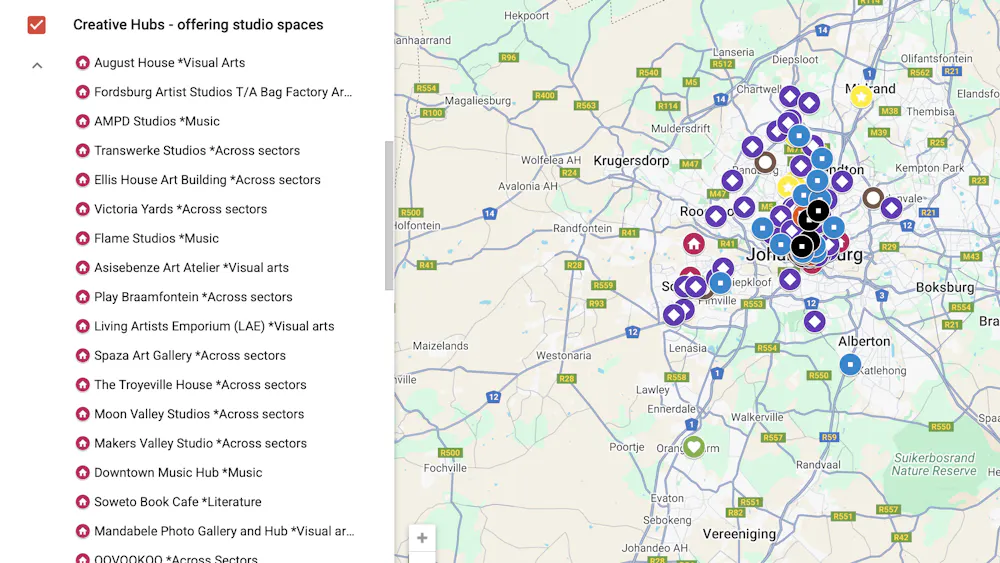
  • MIL-OSI Analysis: Johannesburg’s creative hubs are booming: how artists are rejuvenating a failing inner city

    Source: The Conversation – Africa – By Mariapaola McGurk, Lecturer in Innovation & Entrepreneurship, University of Auckland, Waipapa Taumata Rau

    Johannesburg is weathering a storm of crises. Nowhere is its complex tangle of challenges more visible than in the inner city, where crime, overcrowding, and infrastructure collapse – such as roads literally exploding – paint a grim picture. Cultural institutions haven’t been spared either, with long-standing landmarks like the Johannesburg Art Gallery caught in cycles of neglect and crisis.


    Read more:
    South Africa doesn’t need new cities: it needs to focus on fixing what it’s got


    Yet, while many avoid the inner city or speak only of its decline, the creative and cultural practitioners of Johannesburg never left. In fact, artists, architects, fashion designers, animators, musicians and the like have been hard at work. They’re building, dreaming and shaping a new urban reality that could become the beacon of hope this city needs.

    As a researcher and visual artist, I recently completed a PhD study that focused on Johannesburg’s cultural and creative industries. My research revealed that a clear understanding of the existing structures and dynamics within this industry is essential for developing effective strategies to strengthen its role in local economic development.

    Here I explore one such opportunity: creative hubs. I argue that they represent a low-hanging fruit for the inner city’s growth and revitalisation.

    Urban renewal

    Numerous articles have explored strategies for the city’s economic development and urban renewal. One group of scholars recently outlined four critical focus areas: coordinated efforts across government levels; an active civil society; a shift in political culture; and restored leadership in a revitalised administration.

    These are vital interventions, but they still beg a deeper question. What is the new “gold” of the “City of Gold”, the mining town founded in 1886 and on track to become a megacity by 2030?

    What is it that truly sets Johannesburg apart, nationally and globally? What strengths already exist that, if nurtured, could help address the city’s challenges? The answer may not lie in building something entirely new, but in recognising and investing in what already thrives. The city’s people, its culture, and its extraordinary creativity.

    In 2004, Unesco launched the Creative Cities Network. Today it comprises 246 cities in 80 member states. South Africa has three cities in the network: Cape Town (design), Durban (literature) and Overstrand (gastronomy). Johannesburg has never applied to belong.

    Cities are acknowledging the economic and social value of the cultural and creative industries, particularly in addressing challenges such as youth unemployment, micro-enterprise growth, equity and community development.

    Yet cities globally are grappling with how to retain creative professionals. This is the case in cities like Toronto, Sydney, Los Angeles, Cologne or Barcelona. Rising property prices, the redevelopment of industrial areas into commercial or luxury spaces, and short-term rental agreements are displacing these professionals from the urban cores they help energise. Cities are coming up with incentives and programmes to correct this.

    A recent World Cities Cultural Forum report offers a solution in the form of Creative Land Trusts. These permanently hold land and assets at affordable rates for creatives. They take property out of speculative real estate markets. They’re designed to support not galleries or theatres, but the studios and workspaces where creative production actually happens.

    Similar initiatives are happening in London, Helsinki and San Francisco.

    Mapping Johannesburg’s creative hubs

    Unlike cities that are trying to reverse the exodus of creatives, Johannesburg’s inner city has seen a recent surge in creative hub development.

    A creative hub is a physical or digital space (in this case physical) designed to bring together cultural and creative professionals for studio space, collaboration, networking and the exchange of ideas.

    Over the last year, 21 creative hubs have been mapped in the city, the majority newly established. Notable examples include Transwerke Studios, Asisebenze Art Atelier, Victoria Yards and Oovookoo. Remarkably, 19 of the 21 hubs identified in my open-source mapping process are in the inner city. Only two are government run – Transwerke and Downtown Music Hub.

    Across Johannesburg, creative hubs buzz with independent activity, yet share a common commitment to cultivating talent, business support and community impact. They are evidence of innovative partnerships between creatives and property developers.

    Inside these spaces, artists and creatives get opportunities through gallerist and investor visits (access to markets). They build practical and entrepreneurial skills through tailored workshops. And they collaborate on projects that place social upliftment at their heart.

    Some hubs focus on offering studio spaces, while others extend their reach beyond their walls, blending artistic expression with community development and public engagement.

    By actively building community and opportunity, creative hubs are becoming

    lighthouses for the new urban economy.

    They are small business incubators, urban beautification engines and potential cultural tourism hotspots. An event like Contra Fair opens the doors of art studio hubs once a year. Entrepreneur and social activist Tebogo Moalusi has now taken the lead in the establishment of Creative20. This will become a platform for revitalising Johannesburg’s creative cities campaign.

    Neglected by the city

    And yet the cultural and creative industries remain almost entirely absent from the city’s strategic planning. The Johannesburg 2040: Growth and Development Strategy fails even to mention the sector.

    This is despite Gauteng, the province that houses Johannesburg, being the epicentre of South Africa’s creative economy. It contributes 46.3% of the industry’s gross domestic product and generates the highest employment impact. Johannesburg hosts the majority of creative businesses in the province.


    Read more:
    The real Johannesburg: 6 powerful photos from a gritty new book on the city


    The Gauteng 2030 Strategy highlights three high-growth sectors: agro-processing, cultural and creative industries, and high-tech/knowledge sectors, including digital and gaming. Two of these directly involve the creative economy. Yet there’s been little effort to integrate them into Johannesburg’s urban development agenda.

    If Johannesburg is serious about inclusive economic development and sustainable urban growth, it must recognise and invest in the cultural and creative industries which are already thriving within its borders.

    Mariapaola McGurk consults to Creative20 Organisation

    – ref. Johannesburg’s creative hubs are booming: how artists are rejuvenating a failing inner city – https://theconversation.com/johannesburgs-creative-hubs-are-booming-how-artists-are-rejuvenating-a-failing-inner-city-260224

    MIL OSI Analysis –

    July 22, 2025
  • MIL-OSI Africa: African media are threatened by governments and big tech – book tracks the latest trends

    Source: The Conversation – Africa – By Hayes Mabweazara, Senior Lecturer in Sociological & Cultural Studies (Media, Culture & Society), University of Glasgow

    Media capture happens when media outlets lose their independence and fall under the influence of political or financial interests. This often leads to news content that favours power instead of public accountability.

    Media Capture in Africa and Latin America: Power and Resistance is a new book edited by news media scholars Hayes Mawindi Mabweazara and Bethia Pearson. It explores how this dynamic plays out in the global south and how journalists and citizens are resisting it. We asked them four questions.


    What is media capture and how has it reshaped itself in recent times?

    Media capture describes how media outlets are influenced, manipulated or controlled by powerful actors – often governments or large corporations – to serve their interests. It’s an idea that helps us understand how powerful groups in society can have a negative influence on news media. While this idea isn’t new, what has changed is how subtly and pervasively it now operates.

    These groups include big technology organisations that own digital media platforms – such as X, owned by xAI (Elon Musk), and Instagram and Facebook, owned by Meta. But it’s also important to consider Google as a large search engine that shapes the news content and audience of many other platforms.

    Palgrave Macmillan

    This matters because the media are important for the functioning of democratic societies. Ideally, they provide information, represent different groups and issues in society, and hold powerful actors to account.

    For example, one of the key roles of the media is to provide accurate information for citizens to be able to decide how to vote in elections. Or to decide what they think about important issues. One big concern, then, is the effect of inaccurate or biased information on democracy.

    Or it might be that accurate information is harder to access because algorithms and platforms make it easier to access inaccurate or biased information. These can be intended and unintended consequences of the technology itself, but algorithms can amplify misinformation and fake news – especially if this content has the potential to go viral.

    So, what’s particular about media capture in the global south?

    This is a really interesting question that is still being investigated, but we have some ideas.

    First of all, it’s useful to know that media capture scholarship from the global north emerged around the time of the 2008 financial crisis. The influence of financial institutions on business journalists was one of the first areas of study. Since then, research in the US has focused on the capture of government-funded media organisations like Voice of America. And on how digital platforms like Google and Facebook can lead to capture.

    In the global south, scholars have drawn attention to the importance of large media corporations in understanding media capture. For example, in Latin America, there’s a high level of what’s called “media concentration”. This is when many media outlets are owned by a few companies. These companies often own companies in other sectors, which means that critical reporting on business interests presents a conflict of interest.


    Read more: Public trust in the media is at a new low: a radical rethink of journalism is needed


    But to focus on Africa, scholars have drawn attention to governments as a source of pressure on journalists and editors. This can be through direct pressure or what we might call “covert” pressure. Withholding advertising that helps to fund media outlets is an example, or offering financial incentives to stop investigating certain topics.

    Researchers are also concerned about the influence of big tech in Africa. Digital platforms like Google and Facebook can shape the news and information that citizens have access to.

    Can you share some of the studies from the book?

    Our book includes many interesting studies – from Colombia, Brazil and Mexico in Latin America to Ethiopia and Morocco in Africa. We’ll share a few African cases here to give an overview of the issues.

    The book’s contribution on Ghana warns us that although more overt “old” types of media capture may have subsided, transitional democracies can feature messier, more nuanced forms of media control. This can be evident in government pressures and through capture of regulators.

    In the Morocco chapter, we see the threat to media freedom presented by digital platforms owned by global tech giants. This is known as “infrastructural capture”. It means news organisations become dependent on tech giants to set the rules of the game for democratic communication.

    Another compelling case is Nigeria, where researchers explore ties between media ownership and political patronage. The authors argue that the Nigerian press is failing in its democratic duty because of its reliance on advertising and sponsorship income from the state. Added to this are ineffective regulatory mechanisms and close relationships with some big businesses that own newspapers and printing presses.

    How can media capture be resisted in the global south?

    The studies in the book show some ways forward and we do think it’s important to be optimistic! Resistance takes many forms. Sometimes it comes through legal and policy reform aimed at increasing transparency and media diversity. In other cases, it’s driven by social movements, investigative journalists and independent media who continue to operate under pressure.

    The chapter on Uganda shows that journalist groups working with media advocacy organisations can strategically act to resist government media capture and harmful regulations. For example, to push back against one legislative change, several groups formed a temporary network called Article 29 (named after the article in the Ugandan constitution protecting free speech) and the African Centre for Media Excellence produced a report criticising the proposed changes.


    Read more: Western media outlets are trying to fix their racist, stereotypical coverage of Africa. Is it time African media did the same?


    One of the chapters on Ghana also shows how networks such as journalists, media associations, human rights groups and legal organisations can mobilise to push back against government influence. Organisations including the Ghana Journalists Association and Ghana Independent Broadcasters Association have played key roles in, for example, taking the media regulator to court to overturn laws that would have led to censorship. These findings are echoed in Latin America, where research on Mexico and Colombia also found professional journalism to be a strong source of resistance.

    The conversation must also include rethinking how we define capture itself. If we frame it only as total control, we risk missing the everyday ways influence operates – and the spaces where it can be resisted. We would also say it’s really important that citizens are aware and alert to the issues when they think about how they access news media and what platforms they use. This is sometimes called “media literacy” and is about people being more knowledgeable about where trustworthy news comes from.


    You can listen to a podcast about the book over here.

    – African media are threatened by governments and big tech – book tracks the latest trends
    – https://theconversation.com/african-media-are-threatened-by-governments-and-big-tech-book-tracks-the-latest-trends-258017

    MIL OSI Africa –

    July 22, 2025
  • MIL-OSI Africa: Johannesburg’s creative hubs are booming: how artists are rejuvenating a failing inner city

    Source: The Conversation – Africa – By Mariapaola McGurk, Lecturer in Innovation & Entrepreneurship, University of Auckland, Waipapa Taumata Rau

    Johannesburg is weathering a storm of crises. Nowhere is its complex tangle of challenges more visible than in the inner city, where crime, overcrowding, and infrastructure collapse – such as roads literally exploding – paint a grim picture. Cultural institutions haven’t been spared either, with long-standing landmarks like the Johannesburg Art Gallery caught in cycles of neglect and crisis.


    Read more: South Africa doesn’t need new cities: it needs to focus on fixing what it’s got


    Yet, while many avoid the inner city or speak only of its decline, the creative and cultural practitioners of Johannesburg never left. In fact, artists, architects, fashion designers, animators, musicians and the like have been hard at work. They’re building, dreaming and shaping a new urban reality that could become the beacon of hope this city needs.

    As a researcher and visual artist, I recently completed a PhD study that focused on Johannesburg’s cultural and creative industries. My research revealed that a clear understanding of the existing structures and dynamics within this industry is essential for developing effective strategies to strengthen its role in local economic development.

    Here I explore one such opportunity: creative hubs. I argue that they represent a low-hanging fruit for the inner city’s growth and revitalisation.

    Urban renewal

    Numerous articles have explored strategies for the city’s economic development and urban renewal. One group of scholars recently outlined four critical focus areas: coordinated efforts across government levels; an active civil society; a shift in political culture; and restored leadership in a revitalised administration.

    These are vital interventions, but they still beg a deeper question. What is the new “gold” of the “City of Gold”, the mining town founded in 1886 and on track to become a megacity by 2030?

    Work by artist Candice Kramer at Bag Factory Artists Studios. Mark Straw

    What is it that truly sets Johannesburg apart, nationally and globally? What strengths already exist that, if nurtured, could help address the city’s challenges? The answer may not lie in building something entirely new, but in recognising and investing in what already thrives. The city’s people, its culture, and its extraordinary creativity.

    In 2004, Unesco launched the Creative Cities Network. Today it comprises 246 cities in 80 member states. South Africa has three cities in the network: Cape Town (design), Durban (literature) and Overstrand (gastronomy). Johannesburg has never applied to belong.

    Cities are acknowledging the economic and social value of the cultural and creative industries, particularly in addressing challenges such as youth unemployment, micro-enterprise growth, equity and community development.

    Artist Mankebe Seakoe at Contra Fair. Mark Straw

    Yet cities globally are grappling with how to retain creative professionals. This is the case in cities like Toronto, Sydney, Los Angeles, Cologne or Barcelona. Rising property prices, the redevelopment of industrial areas into commercial or luxury spaces, and short-term rental agreements are displacing these professionals from the urban cores they help energise. Cities are coming up with incentives and programmes to correct this.

    A recent World Cities Cultural Forum report offers a solution in the form of Creative Land Trusts. These permanently hold land and assets at affordable rates for creatives. They take property out of speculative real estate markets. They’re designed to support not galleries or theatres, but the studios and workspaces where creative production actually happens.

    Similar initiatives are happening in London, Helsinki and San Francisco.

    Mapping Johannesburg’s creative hubs

    Unlike cities that are trying to reverse the exodus of creatives, Johannesburg’s inner city has seen a recent surge in creative hub development.

    A creative hub is a physical or digital space (in this case physical) designed to bring together cultural and creative professionals for studio space, collaboration, networking and the exchange of ideas.

    Some creative hubs offer gallery spaces. Mark Straw

    Over the last year, 21 creative hubs have been mapped in the city, the majority newly established. Notable examples include Transwerke Studios, Asisebenze Art Atelier, Victoria Yards and Oovookoo. Remarkably, 19 of the 21 hubs identified in my open-source mapping process are in the inner city. Only two are government run – Transwerke and Downtown Music Hub.

    Across Johannesburg, creative hubs buzz with independent activity, yet share a common commitment to cultivating talent, business support and community impact. They are evidence of innovative partnerships between creatives and property developers.

    Mapping Johannesburg’s creative hubs. Google Maps/Mariapaola McGurk

    Inside these spaces, artists and creatives get opportunities through gallerist and investor visits (access to markets). They build practical and entrepreneurial skills through tailored workshops. And they collaborate on projects that place social upliftment at their heart.

    Some hubs focus on offering studio spaces, while others extend their reach beyond their walls, blending artistic expression with community development and public engagement.

    By actively building community and opportunity, creative hubs are becoming

    lighthouses for the new urban economy.

    They are small business incubators, urban beautification engines and potential cultural tourism hotspots. An event like Contra Fair opens the doors of art studio hubs once a year. Entrepreneur and social activist Tebogo Moalusi has now taken the lead in the establishment of Creative20. This will become a platform for revitalising Johannesburg’s creative cities campaign.

    Neglected by the city

    And yet the cultural and creative industries remain almost entirely absent from the city’s strategic planning. The Johannesburg 2040: Growth and Development Strategy fails even to mention the sector.

    Bag Factory Artists Studios hosting a public event. Mark Straw

    This is despite Gauteng, the province that houses Johannesburg, being the epicentre of South Africa’s creative economy. It contributes 46.3% of the industry’s gross domestic product and generates the highest employment impact. Johannesburg hosts the majority of creative businesses in the province.


    Read more: The real Johannesburg: 6 powerful photos from a gritty new book on the city


    The Gauteng 2030 Strategy highlights three high-growth sectors: agro-processing, cultural and creative industries, and high-tech/knowledge sectors, including digital and gaming. Two of these directly involve the creative economy. Yet there’s been little effort to integrate them into Johannesburg’s urban development agenda.

    If Johannesburg is serious about inclusive economic development and sustainable urban growth, it must recognise and invest in the cultural and creative industries which are already thriving within its borders.

    – Johannesburg’s creative hubs are booming: how artists are rejuvenating a failing inner city
    – https://theconversation.com/johannesburgs-creative-hubs-are-booming-how-artists-are-rejuvenating-a-failing-inner-city-260224

    MIL OSI Africa –

    July 22, 2025
  • MIL-OSI Africa: Ghana has a rare treasure, a crater made when a meteor hit Earth: why it needs to be protected

    Source: The Conversation – Africa – By Marian Selorm Sapah, Senior lecturer, University of Ghana

    Impact craters are formed when an object from space such as a meteoroid, asteroid or comet strikes the Earth at a very high velocity. This leaves an excavated circular hole on the Earth’s surface.

    It is a basic geological process that has shaped the planets from their formation to today. It creates landscapes and surface materials across our solar system. The moon is covered with them, as are planets like Mercury, Mars and Venus. On Earth, impacts have influenced the evolution of life and even provided valuable mineral and energy resources. However, very few of the impact craters on Earth are visible because of various processes that obscure or erase them.

    Most of the recognised impact craters on Earth are buried under sediments or have been deeply eroded. That means they no longer preserve their initial forms.

    The Bosumtwi impact crater in Ghana is different, however. It is well preserved (not deeply eroded or buried under sediments). Its well-defined, near-circular basin, filled by a lake, is surrounded by a prominent crater rim that rises above the surface of the lake and an outer circular plateau. This makes it a target for several research questions.

    As an Earth scientist, I joined a research team from 2019 to better understand the morphology of the crater. We carried out a morphological analysis of the crater (a study of its form, structure and geological features).

    This study concluded that the activities of illegal miners are a threat to the sustainability of the crater. We also discovered that the features of the Bosumtwi impact crater can be considered as a terrestrial representation for a special type of impact crater known as rampart craters. These are common on the planets Mars and Venus and are found on icy bodies of the outer solar system (like Ganymede, Europa, Dione, Tethys and Charon).

    For future studies, the Bosumtwi impact crater can be used to help understand how rampart craters form on Mars and Venus. So the Bosumtwi impact crater should be protected and preserved.


    Read more: Curious Kids: Why are there so few impact craters on Earth?


    The crater

    The Bosumtwi impact crater is in Ghana’s mineral-rich Ashanti gold belt. It is the location of the only natural inland lake in Ghana. As one of the world’s best-preserved young meteorite impact craters it is designated as an International Union of Geological Sciences geoheritage site.

    It is one of only 190 confirmed impact crater sites worldwide, one of only 20 on the African continent. Its lake is one of six meteoritic lakes in the world, recognised for their outstanding scientific value.

    Satellite view of the Bosumtwi Impact Crater showing areas of Artisanal and Small scale Gold Mining activities. David Baratoux

    At almost 1.07 million years old, the crater offers unparalleled opportunities for studying impact processes, climate history and planetary evolution. It’s an irreplaceable natural laboratory for researchers and educators.

    Beyond its scientific importance, the crater holds cultural significance for the Ashanti people of Ghana. The lake at its centre serves as a sacred site and spiritual landmark. The crater’s breathtaking landscape also supports eco-tourism and local livelihoods, contributing to Ghana’s economic development while maintaining exceptional aesthetic value.

    The research

    As part of further research work on the 2019 study, in 2025 we have discovered through field work and satellite data analysis that illegal artisanal mining is prevalent in the area and threatening the crater. This refers to informal, labour-intensive extraction of minerals, primarily gold. It is conducted by individuals or small groups using basic tools and rudimentary machinery. The use of toxic chemicals such as mercury and cyanide, and practices such as river dredging, cause severe environmental harm.

    Illegal miners are encroaching on and around the crater rim, posing severe threats to its environment and sustainability. Their activities have become more prevalent over the course of less than 10 years, indicating a growing problem. If unchecked, it could lead to irreversible damage to the crater.

    These mining operations risk contaminating the lake with toxic heavy metals. The consequences of these are grave. They include destroying critical geological evidence, accelerating deforestation, and degrading the land. All this damages the crater’s scientific, cultural and economic value.

    The International Union of Geological Sciences geoheritage designation of the crater underscores the urgent need for protection measures. The loss of this rare geological wonder would represent not just a national tragedy for Ghana, but a blow to global scientific heritage.

    Immediate action is required. This includes enhanced satellite monitoring (tracking illegal mining, deforestation and environmental changes) using optical imagery (such as Sentinel-2, Landsat, PlanetScope). These tools can detect forest loss, identify mining pits and sediment runoff, and analyse changes over time.

    Stricter enforcement of mining bans, and community engagement programmes, will help preserve the Bosumtwi impact crater’s unique attributes for future generations of scientists, students, tourists and local communities who depend on its resources.

    – Ghana has a rare treasure, a crater made when a meteor hit Earth: why it needs to be protected
    – https://theconversation.com/ghana-has-a-rare-treasure-a-crater-made-when-a-meteor-hit-earth-why-it-needs-to-be-protected-260600

    MIL OSI Africa –

    July 22, 2025
  • MIL-OSI Africa: Africa’s minerals are being bartered for security: why it’s a bad idea

    Source: The Conversation – Africa – By Hanri Mostert, SARChI Chair for Mineral Law in Africa, University of Cape Town

    A US-brokered peace deal between the Democratic Republic of Congo (DRC) and Rwanda binds the two African nations to a worrying arrangement: one where a country signs away its mineral resources to a superpower in return for opaque assurances of security.

    The peace deal, signed in June 2025, aims to end three decades of conflict between the DRC and Rwanda.

    A key part of the agreement binds both nations to developing a regional economic integration framework. This arrangement would expand cooperation between the two states, the US government and American investors on “transparent, formalized end-to-end mineral chains”.

    Despite its immense mineral wealth, the DRC is among the five poorest countries in the world. It has been seeking US investment in its mineral sector.

    The US has in turn touted a potential multi-billion-dollar investment programme to anchor its mineral supply chains in the traumatised and poor territory.

    The peace that the June 2025 deal promises, therefore, hinges on chaining mineral supply to the US in exchange for Washington’s powerful – but vaguely formulated – military oversight.

    The peace agreement further establishes a joint oversight committee – with representatives from the African Union, Qatar and the US – to receive complaints and resolve disputes between the DRC and Rwanda.

    But beyond the joint oversight committee, the peace deal creates no specific security obligations for the US.

    The relationship between the DRC and Rwanda has been marred by war and tension since the bloody First (1996-1997) and Second (1998-2003) Congo wars. At the heart of much of this conflict is the DRC’s mineral wealth. It has fuelled competition, exploitation and armed violence.

    This latest peace deal introduces a resources-for-security arrangement. Such deals aren’t new in Africa. They first emerged in the early 2000s as resources-for-infrastructure transactions. Here, a foreign state would agree to build economic and social infrastructure (roads, ports, airports, hospitals) in an African state. In exchange, it would get a major stake in a government-owned mining company. Or gain preferential access to the host country’s minerals.

    We have studied mineral law and governance in Africa for more than 20 years. The question that emerges now is whether a US-brokered resources-for-security agreement will help the DRC benefit from its resources.

    Based on our research on mining, development and sustainability, we believe this is unlikely.

    This is because resources-for-security is the latest version of a resource-bartering approach that China and Russia pioneered in countries such as Angola, the Central African Republic and the DRC.

    Resource bartering in Africa has eroded the sovereignty and bargaining power of mineral-rich nations such as the DRC and Angola.

    Further, resources-for-security deals are less transparent and more complicated than prior resource bartering agreements.

    DRC’s security gaps

    The DRC is endowed with major deposits of critical minerals like cobalt, copper, lithium, manganese and tantalum. These are the building blocks for 21st century technologies: artificial intelligence, electric vehicles, wind energy and military security hardware. Rwanda has less mineral wealth than its neighbour, but is the world’s third-largest producer of tantalum, used in electronics, aerospace and medical devices.

    For almost 30 years, minerals have fuelled conflict and severe violence, especially in eastern DRC. Tungsten, tantalum and gold (referred to as 3TG) finance and drive conflict as government forces and an estimated 130 armed groups vie for control over lucrative mining sites. Several reports and studies have implicated the DRC’s neighbours – Rwanda and Uganda – in supporting the illegal extraction of 3TG in this region.

    The DRC government has failed to extend security over its vast (2.3 million square kilometres) and diverse territory (109 million people, representing 250 ethnic groups). Limited resources, logistical challenges and corruption have weakened its armed forces.

    This context makes the United States’ military backing enormously attractive. But our research shows there are traps.

    What states risk losing

    Resources-for-infrastructure and resources-for-security deals generally offer African nations short-term stability, financing or global goodwill. However, the costs are often long-term because of an erosion of sovereign control.

    Here’s how this happens:

    Examples of loss or near-loss of sovereignty from these sorts of deals abound in Africa.

    For instance, Angola’s US$2 billion oil-backed loan from China Eximbank in 2004. This was repayable in monthly deliveries of oil, with revenues directed to Chinese-controlled accounts. The loan’s design deprived Angolan authorities of decision-making power over that income stream even before the oil was extracted.

    These deals also fragment accountability. They often span multiple ministries (such as defence, mining and trade), avoiding robust oversight or accountability. Fragmentation makes resource sectors vulnerable to elite capture. Powerful insiders can manipulate agreements for private gain.

    In the DRC, this has created a violent kleptocracy, where resource wealth is systematically diverted away from popular benefit.

    Finally, there is the risk of re-entrenching extractive trauma. Communities displaced for mining and environmental degradation in many countries across Africa illustrate the long-standing harm to livelihoods, health and social cohesion.

    These are not new problems. But where extraction is tied to security or infrastructure, such damage risks becoming permanent features, not temporary costs.

    What needs to change

    Critical minerals are “critical” because they’re hard to mine or substitute. Additionally, their supply chains are strategically vulnerable and politically exposed. Whoever controls these minerals controls the future. Africa must make sure it doesn’t trade that future away.

    In a world being reshaped by global interests in critical minerals, African states must not underestimate the strategic value of their mineral resources. They hold considerable leverage.

    But leverage only works if it is wielded strategically. This means:

    • investing in institutional strength and legal capacity to negotiate better deals

    • demanding local value creation and addition

    • requiring transparency and parliamentary oversight for minerals-related agreements

    • refusing deals that bypass human rights, environmental or sovereignty standards.

    Africa has the resources. It must hold on to the power they wield.

    – Africa’s minerals are being bartered for security: why it’s a bad idea
    – https://theconversation.com/africas-minerals-are-being-bartered-for-security-why-its-a-bad-idea-260594

    MIL OSI Africa –

    July 22, 2025
  • MIL-OSI Africa: Unlocking Africa’s E-Mobility Future: Upcoming Webinar on Public Transport Electrification

    Source: APO

    Electrifying public transport is no longer just an aspiration for Africa—it is rapidly becoming a reality. On Wednesday, 23 July 2025, stakeholders from across the continent and beyond will convene virtually to explore the path forward in a high-impact webinar where industry experts discuss “The Future of Public Transport Electrification in Africa: Opportunities, Trends and Challenges.”

    The webinar will focus on unlocking practical solutions and scalable models to accelerate the shift to zero-emission mobility—particularly electric buses and paratransit systems, which form the backbone of Africa’s urban mobility landscape.

    Key Themes:

    • Energy and Charging Infrastructure
      Practical strategies for grid preparedness, depot-based and on-route charging, and strengthening public-private collaboration.
    • Innovative Procurement Models
      An exploration of models such as leasing, pay-as-you-go, and city-led ownership—what’s working, and where?
    • Electrifying Paratransit
      Addressing one of Africa’s most vital and informal transport systems—minibus taxis and other modes—and how e-mobility can integrate meaningfully into this space.

    Moderator:

    Prian Reddy, Senior Programme Manager: Zero Emission Buses (Africa), C40 Cities

    Expert Panel:

    • Hans van Toor, Strategy & Innovation, Roam
    • Moses Nderitu, Managing Director, BasiGo
    • Justin Coetzee, Founder, GoMetro

    Why You Should Attend:

    • Hear real-world insights from cities and transport operators already rolling out electric buses.
    • Learn about infrastructure readiness, energy strategies, and funding models fit for African cities.
    • Explore how electrification can include and uplift paratransit and informal transport sectors.
    • Connect with the experts and decision-makers shaping Africa’s low-carbon transport future.

    This event is designed for public officials, transport authorities, urban planners, mobility innovators, infrastructure investors, and all professionals interested in the continent’s clean, just energy transition.

    Join us for a crucial conversation that will help define the next phase of Africa’s transport transformation.

    Date: Wednesday, 23 July 2025
    Time: 10:00 WAT / 11:00 SAST & CAT / 12:00 EAT
    Register here: https://apo-opa.co/44GYAlJ

    Distributed by APO Group on behalf of VUKA Group.

    Additional Information:
    Link to Webinar: https://apo-opa.co/44GYAlJ 
    LinkedIN: https://apo-opa.co/4f24pxt 
    Website: https://apo-opa.co/40vphHw 
    Draft Programme: https://apo-opa.co/4f0Nxr4

    Media files

    .

    MIL OSI Africa –

    July 22, 2025
  • MIL-OSI Africa: Kaspersky: Advanced Persistent Threat (APT41) targets Southern African organisation in espionage attack

    Source: APO

    Kaspersky Managed Detection and Response experts (www.Kaspersky.co.za) have observed a cyber espionage attack on an organisation in Southern African and have linked it to the Chinese-speaking  APT41 group. Although the threat actor has shown limited activity in Southern Africa, this incident reveals that the cyber attackers have targeted government IT services in one of the countries in the region, attempting to steal sensitive corporate data — including credentials, internal documents, source code, and communications.

    APT (Advanced Persistent Threat) is a category of threat actors known for carrying out concerted, stealthy, and ongoing attacks against specific organisations, as opposed to opportunistic, isolated incidents that account for most cybercriminal activity. The adversaries’ techniques observed during the attack in Southern Africa allowed Kaspersky to attribute it to the Chinese-speaking APT41 group with a high confidence. The primary goal of the attack was cyber espionage, which is typical for this threat actor. The attackers attempted to collect sensitive data from the machines they compromised within the organisation’s network.

    It is noteworthy that APT41 typically has been showing quite limited activity in the Southern African region. APT41 specialises in cyber espionage and targets organisations across various industries, including telecommunications providers, educational and healthcare institutions, IT, energy, and other sectors, with known activity in at least 42 countries.

    Based on Kaspersky experts’ analysis, the attackers may have gained access to the organisation’s network through a web server exposed to the Internet. Using a credential harvesting technique – known in professional terms as registry dumping – the attackers obtained two corporate domain accounts: one with local administrator rights on all workstations and another belonging to a backup solution, which had domain administrator privileges. These accounts allowed the attackers to compromise additional systems within the organisation.

    One of the stealers used for data collection was a modified Pillager utility, designed for exporting and decrypting data. The attackers compiled its code from an executable file into a Dynamic Link Library (DLL). With it, they aimed to gather saved credentials from browsers, databases, administrative tools, as well as project source code, screenshots, active chat sessions and their data, email correspondence, lists of installed software, operating system credentials, Wi-Fi credentials, and other information.

    The second stealer used during the attack was Checkout. In addition to saved credentials and browser history, it was also capable of collecting information on downloaded files and browser-stored credit card data. The attackers also used the RawCopy utility and a version of Mimikatz compiled as a Dynamic Link Library (DLL) to dump registry files and credentials, as well as Cobalt Strike for Command and Control (C2) communication on compromised hosts.

    “Interestingly, as one of their C2 communication channels besides Cobalt Strike, the attackers chose the SharePoint server within the victim’s infrastructure. They communicated with it using custom C2 agents connected with a web-shell. They may have chosen SharePoint because it was an internal service already present in the infrastructure and unlikely to raise suspicion. Moreover, in that case, it probably offered the most convenient way to exfiltrate data and control compromised hosts through a legitimate communication channel,” explains Denis Kulik, Lead SOC Analyst at Kaspersky Managed Detection and Response service.

    “In general, defending against such sophisticated attacks is impossible without comprehensive expertise and continuous monitoring of the entire infrastructure. It is essential to maintain full security coverage across all systems with solutions capable of automatically blocking malicious activity at an early stage — and to avoid granting user accounts excessive privileges,” comments Denis Kulik.

    To mitigate or prevent similar attacks, organisations are advised to follow these best practices:

    • Ensure that security agents are deployed on all workstations within the organisation without exception, to enable timely incident detection and minimise potential damage.
    • Review and control service and user account privileges, avoiding excessive rights assignments – especially for accounts used across multiple hosts within the infrastructure.
    • To protect the company against a wide range of threats, use solutions from the Kaspersky Next (https://apo-opa.co/44EI2e3) product line that provide real-time protection, threat visibility, investigation and the response capabilities of EDR and XDR for organisations of any size and industry. Depending on your current needs and available resources, you can choose the most relevant product tier and easily migrate to another one if your cybersecurity requirements are changing.
    • Adopt managed security services by Kaspersky such as Compromise Assessment (https://apo-opa.co/4m8aElL), Managed Detection and Response (MDR) (https://apo-opa.co/4m6do37) and / or Incident Response (https://apo-opa.co/44VsAsP), covering the entire incident management cycle – from threat identification to continuous protection and remediation.  They help to protect against evasive cyberattacks, investigate incidents and get additional expertise even if a company lacks cybersecurity workers.
    • Provide your InfoSec professionals with an in-depth visibility into cyberthreats targeting your organisation. The latest Kaspersky Threat Intelligence (https://apo-opa.co/3TQbRlK) will provide them with rich and meaningful context across the entire incident management cycle and helps them identify cyber risks in a timely manner.

    A detailed analysis of the incident is available on Securelist (https://apo-opa.co/46mfGGS).

    Kaspersky Managed Detection and Response service monitors suspicious activity and helps organisations respond swiftly to minimise impact. This is a part of Kaspersky Security Services, a team delivering hundreds of information security projects every year for Fortune Global 500 organisations: incident response, managed detection, SOC consulting, red teaming, penetration testing, application security, digital risks protection. 

    Distributed by APO Group on behalf of Kaspersky.

    For further information please contact:
    Nicole Allman
    nicole@inkandco.co.za

    Social Media:
    Facebook: https://apo-opa.co/414B7bE
    X: https://apo-opa.co/4lYjIJQ
    YouTube: https://apo-opa.co/452Opa9
    Instagram: https://apo-opa.co/4lGn6JK
    Blog: https://apo-opa.co/4l8kweB

    About Kaspersky:
    Kaspersky is a global cybersecurity and digital privacy company founded in 1997. With over a billion devices protected to date from emerging cyberthreats and targeted attacks, Kaspersky’s deep threat intelligence and security expertise is constantly transforming into innovative solutions and services to protect individuals, businesses, critical infrastructure, and governments around the globe. The company’s comprehensive security portfolio includes leading digital life protection for personal devices, specialized security products and services for companies, as well as Cyber Immune solutions to fight sophisticated and evolving digital threats. We help millions of individuals and over 200,000 corporate clients protect what matters most to them. Learn more at www.Kaspersky.co.za. 

    Media files

    .

    MIL OSI Africa –

    July 22, 2025
  • MIL-OSI Africa: Morocco: African Development Bank approves €100 Million to empower women and youth entrepreneurs in building inclusive and sustainable agriculture

    Source: APO

    The Board of Directors of the African Development Bank Group (www.AfDB.org) has approved a €100 million loan to support Morocco’s inclusive solidarity-based agriculture program, focused on empowering women and young people.

    The project aims to generate sustainable economic opportunities for women and youth, boost food security, and strengthen the resilience of small-scale farming against climate change. It will stimulate entrepreneurship through tailored financing and incentive mechanisms and by bolstering technical and financial support systems.

    The program will also facilitate the deployment of new agricultural production and service infrastructure, helping to anchor women in local value chains, strengthen their skills, and boost their productivity. These actions will encourage the emergence of women entrepreneurs across agriculture, agro-processing and digital technologies. It will support the new roadmap for employment by promoting rural entrepreneurship.

    “Women who have the ambition to undertake and succeed in agriculture are our priority,” said Achraf Tarsim, head of the African Development Bank country office in Morocco. “Through this new operation, we will support them step by step to build a modern, inclusive and resilient agriculture, capable of revealing the full potential of those who aspire to innovate and create value and employment in their territories.”

    Aligned with Morocco’s priorities, the program will support the implementation of the Green Generation 2020-2030 Strategy, Morocco’s plan for transforming agriculture into a more inclusive, sustainable and efficient sector; the National Solidarity Agriculture Program, and the National Youth Entrepreneurship Program.

    For more than 50 years, the African Development Bank Group has supported the Kingdom in a partnership based on a shared and integrated vision of development. Over the period, the Bank invested nearly €15 billion in more than 150 high-impact projects in strategic sectors such as transport, water, energy, agriculture, social protection, governance and finance.

    Distributed by APO Group on behalf of African Development Bank Group (AfDB).

    Media contact:
    Fahd Belbachir
    Principal Communication and External Relations Officer
    media@afdb.org

    About the African Development Bank Group:
    The African Development Bank Group is Africa’s premier development finance institution. It comprises three distinct entities: the African Development Bank (AfDB), the African Development Fund (ADF) and the Nigeria Trust Fund (NTF). On the ground in 41 African countries with an external office in Japan, the Bank contributes to the economic development and the social progress of its 54 regional member states. For more information: www.AfDB.org

    Media files

    .

    MIL OSI Africa –

    July 22, 2025
  • MIL-OSI Africa: Integrating youth in agrifood systems transformation in Zimbabwe

    Source: APO


    .

    The Food and Agriculture Organization of the United Nations (FAO) in collaboration with the Government of Zimbabwe launched a technical cooperation programme to enhance national capacity to support meaningful youth engagement in agrifood systems through policy support, leadership development and institutional strengthening.

    FAO provides technical support to the Government of Zimbabwe to ensure that youth are meaningfully integrated into agrifood systems as key actors in productivity, innovation, and food security. This project builds upon the experiences of the FAO in Zimbabwe including the Green Jobs for Rural Youth Employment. It represents a crucial step in addressing the youth-related knowledge and skills and policy gaps identified in previous initiatives.

    FAO highlights the urgency of creating 10–12 million new jobs annually in Africa and positions agrifood systems especially given their rapid growth and high potential for value addition as key to unlocking youth employment. Drawing on FAO Investment Guidelines for Youth in Agrifood Systems, the approach emphasizes integrating youth perspectives throughout the project cycle. The approach encourages recognizing youth as a diverse group with varied needs, capacities, and aspirations, and calls for collaboration among public, private, and civil society actors to create enabling environments.

    “This project is set to inform and shape future priorities for collaboration between the Government of Zimbabwe and FAO on youth-related matters. By fostering this collaboration, the project aims to create an enabling environment that supports more effective interventions for youth engagement in agrifood systems, ultimately empowering young people to take a leading role in transforming these systems for the better,” said Patrice Talla, FAO Subregional Coordinator for Southern Africa and Representative to Zimbabwe.

    This milestone comes at an opportune time when the country is starting to operationalize the second phase of the Agriculture and Food Systems and Rural Transformation Strategy (AFSRTS 2.0) with a particular focus on mainstreaming and integrating youth in agrifood systems.

    “Mainstreaming youth is not an optional add-on; it is the fundamental strategy for achieving resilient, productive, and transformed agrifood systems and rural communities. The Government of Zimbabwe will provide visionary leadership, enact enabling policies, prioritize budget allocation for youth mainstreaming initiatives within Strategy 2.0, and ensure coordination across ministries,” said Mr. Jairos Mandizadza, Director – Gender Mainstreaming, Inclusivity and Wellness in the Ministry of Lands, Agriculture, Fisheries, Water and Rural Development in his keynote address.

    As part of its commitment to enhancing youth participation in Zimbabwe’s agrifood systems, the FAO-led project will initiate a consultative and participatory process to support the development of a comprehensive national strategy that integrate youth issues. The approach is designed to engage a wide spectrum of stakeholders, from primary producers to tertiary institutions and development partners while ensuring that the strategy is grounded in local realities and informed by diverse perspectives.

    As the project gains momentum, young people across Zimbabwe are expressing optimism and a renewed sense of purpose.

    “With this project we are energised, motivated, by being heard, valued, seen and more importantly included, we are no longer participants but change makers and this proves that there is nothing for us which can be done without us,” said Getrude Chambati, Secretary for the World Food Forum Zimbabwe Chapter.

    The process of project implementation will include a combination of face-to-face stakeholder consultations, strategic planning meetings, and a desk review of existing work by other partners in the sector. This blended methodology will ensure that the strategy builds on past efforts while introducing fresh, youth-centred insights. The project ultimately aims to support Zimbabwe in formulating a National Youth Investment Plan and a Youth-inclusive Agrifood Systems Strategy, laying the groundwork for sustainable and inclusive agricultural transformation.

    The inception meeting provided the platform to key stakeholders, including youths to review and provide input on how the draft AFSRTS 2 can integrate more youths issues. This was achieved through breakout sessions where participants were put into groups to review and update pillars of the AFSRTS 2. During the launch key stakeholders had the opportunity to appreciate the current youth in agrifood systems frameworks and policies at national, regional and international levels.

    Going forward, the project is poised to play a transformative role in shaping Zimbabwe’s agrifood landscape by supporting the development of a robust national strategy and targeted investment plans for youth. By enhancing the capacity and skills of both young people and agriculture ministry personnel, FAO is committed to strengthening governance and leadership frameworks that support youth inclusion. This marks a pivotal step toward building a more resilient, inclusive, and future-ready agrifood system, driven by the energy, innovation, and potential of Zimbabwe’s youth.

    Distributed by APO Group on behalf of Food and Agriculture Organization of the United Nations (FAO): Regional Office for Africa.

    MIL OSI Africa –

    July 22, 2025
  • MIL-OSI Analysis: Idi Amin made himself out to be the ‘liberator’ of an oppressed majority – a demagogic trick that endures today

    Source: The Conversation – Global Perspectives – By Derek R. Peterson, Ali Mazrui Professor of History & African Studies, University of Michigan

    Idi Amin addresses the United Nations General Assembly in 1975. Bettmann/Getty Images

    Fifty years ago, Ugandan President Idi Amin wrote to the governments of the British Commonwealth with a bold suggestion: Allow him to take over as head of the organization, replacing Queen Elizabeth II.

    After all, Amin reasoned, a collapsing economy had made the U.K. unable to maintain its leadership. Moreover the “British empire does not now exist following the complete decolonization of Britain’s former overseas territories.”

    It wasn’t Amin’s only attempt to reshape the international order. Around the same time, he called for the United Nations headquarters to be moved to Uganda’s capital, Kampala, touting its location at “the heart of the world between the continents of America, Asia, Australia and the North and South Poles.”

    Amin’s diplomacy aimed to place Kampala at the center of a postcolonial world. In my new book, “A Popular History of Idi Amin’s Uganda,” I show that Amin’s government made Uganda – a remote, landlocked nation – look like a frontline state in the global war against racism, apartheid and imperialism.

    Doing so was, for the Amin regime, a way of claiming a morally essential role: liberator of Africa’s hitherto oppressed people. It helped inflate his image both at home and abroad, allowing him to maintain his rule for eight calamitous years, from 1971 to 1979.

    The phony liberator?

    Amin was the creator of a myth that was both manifestly untrue and extraordinarily compelling: that his violent, dysfunctional regime was actually engaged in freeing people from foreign oppressors.

    The question of Scottish independence was one of his enduring concerns. The “people of Scotland are tired of being exploited by the English,” wrote Amin in a 1974 telegram to United Nations Secretary General Kurt Waldheim. “Scotland was once an independent country, happy, well governed and administered with peace and prosperity,” but under the British government, “England has thrived on the energies and brains of the Scottish people.”

    Even his cruelest policies were framed as if they were liberatory. In August 1972, Amin announced the summary expulsion of Uganda’s Asian community. Some 50,000 people, many of whom had lived in Uganda for generations, were given a bare three months to tie up their affairs and leave the country. Amin named this the “Economic War.”

    In the speech that announced the expulsions, Amin argued that “the Ugandan Africans have been enslaved economically since the time of the colonialists.” The Economic War was meant to “emancipate the Uganda Africans of this republic.”

    “This is the day of salvation for the Ugandan Africans,” he said. By the end of 1972, some 5,655 farms, ranches and estates had been vacated by the departed Asian community, and Black African proprietors were queuing up to take over Asian-run businesses.

    Ugandan Asian refugees arrive at an airport in the U.K. after being expelled from Uganda.
    P. Felix/Daily Express/Hulton Archive/Getty Images

    A year later, when Amin attended the Organization of African Unity summit in Addis Ababa, Ethiopia, his “achievements” were reported in a booklet published by the Uganda government. During his speech, Amin was “interrupted by thunderous applauses of acclamation and cheers, almost word for word, by Heads of State and Government and by everybody else who had a chance to hear it,” according to the the report.

    It was, wrote the government propagandist, “very clear that Uganda had emerged as the forefront of a True African State. It was clear that African nationalism had been born again. It was clear that the speech had brought new life to the freedom struggle in Africa.”

    Life at the front

    Amin’s policies were disastrous for all Ugandans, African and Asian alike. Yet his war of economic liberation was, for a time, a source of inspiration for activists around the world. Among the many people gripped by enthusiasm for Amin’s regime was Roy Innis, the Black American leader of the civil rights organization Congress of Racial Equality.

    In March 1973, Innis visited Uganda at Amin’s invitation. Innis and his colleagues had been pressing African governments to grant dual citizenship to Black Americans, just as Jewish Americans could earn citizenship from the state of Israel.

    Over the course of their 18 days in Uganda, the visiting Americans were shuttled around the country in Amin’s helicopter. Everywhere, Innis spoke with enthusiasm about Amin’s accomplishments. In a poem published in the pro-government Voice of Uganda around the time of his visit, Innis wrote:

    “Before, the life of your people was a complete bore,

    And they were poor, oppressed, exploited and economically sore.

    And you then came and opened new, dynamic economic pages.

    And showered progress on your people in realistic stages.

    In such expert moves that baffled even the great sages,

    your electric personality pronounced the imperialists’ doom.

    Your pragmatism has given Ugandans their economic boom.”

    In May 1973, Innis was back in Uganda, promising to recruit a contingent of 500 African American professors and technicians to serve in Uganda. Amin offered them free passage to Uganda, free housing and free hospital care for themselves and their families. The American weekly magazine Jet predicted that Uganda was soon to become an “African Israel,” a model nation upheld by the energies and knowledge of Black Americans.

    Roy Innis, national director of the Congress of Racial Equality, in 1972.
    Bettmann/Getty Images

    As some have observed, Innis was surely naive. But his enthusiasm was shared by a great many people, not least a great many Ugandans. Inspired by Amin’s promises, their energy and commitment kept institutions functioning in a time of great disruption. They built roads and stadiums, constructed national monuments and underwrote the running costs of government ministries.

    Patriotism and demagoguery

    Their ambitions were soon foreclosed by a rising tide of political dysfunction. Amin’s regime came to a violent end in 1979, when he was ousted by the invading army of Tanzania and fled Uganda.

    But his brand of demagoguery lives on. Today a new generation of demagogues claim to be fighting to liberate aggrieved majorities from outsiders’ control.

    In the 1970s, Amin enlisted Black Ugandans to battle against racial minorities who were said to dominate the economy and public life. Today an ascendant right wing encourages aggrieved white Americans to regard themselves as a majority dispossessed of their inheritance by greedy immigrants.

    Amin encouraged Ugandans to regard themselves as frontline soldiers, engaged in a globally consequential war against foreigners. In today’s America, some people similarly feel themselves deputized to take matters of state into their own hands. In January 2021, for instance, a right-wing group called “Stop the Steal” organized a rally in Washington. Vowing to “take our country back,” they stormed the Capitol building.

    The racialized demagoguery that Idi Amin promoted inspired the imagination of a great many people. It also fed violent campaigns to repossess a stolen inheritance, to reclaim properties that ought, in the view of the aggrieved majority, to belong to native sons and daughters. His regime is for us today a warning about the compelling power of demagoguery to shape people’s sense of purpose.

    Derek R. Peterson receives funding from the John D. and Catherine T. MacArthur Foundation and the Andrew Mellon Foundation.

    – ref. Idi Amin made himself out to be the ‘liberator’ of an oppressed majority – a demagogic trick that endures today – https://theconversation.com/idi-amin-made-himself-out-to-be-the-liberator-of-an-oppressed-majority-a-demagogic-trick-that-endures-today-256969

    MIL OSI Analysis –

    July 22, 2025
  • MIL-OSI United Kingdom: Occupied Palestinian Territories: joint statement, 21 July 2025

    Source: United Kingdom – Executive Government & Departments 3

    News story

    Occupied Palestinian Territories: joint statement, 21 July 2025

    The UK and 25 international partners gave a joint statement on the Occupied Palestinian Territories.

    Joint statement by:

    • foreign ministers of Australia, Austria, Belgium, Canada, Denmark, Estonia, Finland, France, Iceland, Ireland, Italy, Japan, Latvia, Lithuania, Luxembourg, The Netherlands, New Zealand, Norway, Poland, Portugal, Slovenia, Spain, Sweden, Switzerland and the UK
    • EU Commissioner for Equality, Preparedness and Crisis Management

    We, the signatories listed below, come together with a simple, urgent message: the war in Gaza must end now.

    The suffering of civilians in Gaza has reached new depths. The Israeli government’s aid delivery model is dangerous, fuels instability and deprives Gazans of human dignity. We condemn the drip feeding of aid and the inhumane killing of civilians, including children, seeking to meet their most basic needs of water and food. It is horrifying that over 800 Palestinians have been killed while seeking aid. The Israeli Government’s denial of essential humanitarian assistance to the civilian population is unacceptable. Israel must comply with its obligations under international humanitarian law.

    The hostages cruelly held captive by Hamas since 7 October 2023 continue to suffer terribly. We condemn their continued detention and call for their immediate and unconditional release. A negotiated ceasefire offers the best hope of bringing them home and ending the agony of their families.

    We call on the Israeli government to immediately lift restrictions on the flow of aid and to urgently enable the UN and humanitarian NGOs to do their life saving work safely and effectively.

    We call on all parties to protect civilians and uphold the obligations of international humanitarian law. Proposals to remove the Palestinian population into a “humanitarian city” are completely unacceptable. Permanent forced displacement is a violation of international humanitarian law.

    We strongly oppose any steps towards territorial or demographic change in the Occupied Palestinian Territories. The E1 settlement plan announced by Israel’s Civil Administration, if implemented, would divide a Palestinian state in two, marking a flagrant breach of international law and critically undermine the two-state solution. Meanwhile, settlement building across the West Bank including East Jerusalem has accelerated while settler violence against Palestinians has soared. This must stop.

    We urge the parties and the international community to unite in a common effort to bring this terrible conflict to an end, through an immediate, unconditional and permanent ceasefire. Further bloodshed serves no purpose.  We reaffirm our complete support to the efforts of the US, Qatar and Egypt to achieve this.

    We are prepared to take further action to support an immediate ceasefire and a political pathway to security and peace for Israelis, Palestinians and the entire region.

    This statement has been signed by: 

    • The Foreign Ministers of Australia, Austria, Belgium, Canada, Denmark, Estonia, Finland, France, Iceland, Ireland, Italy, Japan, Latvia, Lithuania, Luxembourg, The Netherlands, New Zealand, Norway, Poland, Portugal, Slovenia, Spain, Sweden, Switzerland and the UK 

    • The EU Commissioner for Equality, Preparedness and Crisis Management

    Media enquiries

    Email newsdesk@fcdo.gov.uk

    Telephone 020 7008 3100

    Email the FCDO Newsdesk (monitored 24 hours a day) in the first instance, and we will respond as soon as possible.

    Share this page

    The following links open in a new tab

    • Share on Facebook (opens in new tab)
    • Share on Twitter (opens in new tab)

    Updates to this page

    Published 21 July 2025

    MIL OSI United Kingdom –

    July 22, 2025
  • MIL-OSI Submissions: I watched a simulated oil spill in the Indian Ocean – here’s how island and coastal countries worked together to avoid disaster

    Source: The Conversation – UK – By Kate Sullivan de Estrada, Associate Professor in the International Relations of South Asia, University of Oxford

    Preparing to react to a maritime ’emergency’. Romuald Robert, CC BY

    The coils of black hose, drum skimmers designed to collect oil from the ocean’s surface, and orangey-red containment booms all looked out of place on the white sand of Mombasa’s touristy Nyali beach. But on July 9, dozens of emergency responders in red and orange hi-vis gear took over a portion of this beach. They were braving the wind and choppy Indian Ocean waves as they mock up the onshore response to a simulated oil spill at sea.

    I research how countries in the western Indian Ocean cooperate to make the seas around them safer, and I was there to observe a field training exercise that brought together around 200 participants from ten coastal and island states for one week in east Africa’s largest port city. Codenamed MASEPOLREX25, it put two types of emergency response to the test.

    The first was Kenya’s national-level response to marine oil pollution, guided by its national contingency plan. The second was a regional-level response that can bring in outside help from other nations. The organiser of the exercise, the Indian Ocean Commission (IOC) – an intergovernmental group of Western Indian Ocean islands headquartered in Mauritius – wanted the countries of the region to rehearse a joint response to marine pollution.

    Preparations begin on Kenya’s Nyali beach for the emergency exercise.
    Romuald Robert., CC BY

    The exercise put two IOC-designed regional centres through their paces. Think of them like a pair of regional helpdesks for ocean security, each with a distinct purpose.

    How does it unfold?

    The exercise began the day before with a briefing on the marine pollution scenario. The Kenyan authorities had received a distress call from the fictional captains of two damaged vessels.

    An oil tanker with a deadweight tonnage of 50,000 had collided with a feeder ship in Tanzanian waters, just south of Kenya’s maritime zone. The captain of the tanker suspected that 3,000-to-4,000 metric tonnes of intermediate fuel oil (persistent, thick oil that won’t evaporate by itself) had spilled into the ocean.

    Such an incident is plausible. A 2023 IOC-commissioned internal study pinpointed the Kenya-Tanzania border as a hotspot for marine pollution risk. Two major ports sit in close proximity in a busy maritime transit corridor.

    Clustered around an incident board, Kenya’s incident management team mounted their national response. Nuru Mohammed, liaison officer for the Kenya Maritime Authority, explained that the assessment of the size of the spill and expectations of its behaviour had already led the team to anticipate the need for regional support. At this time of year, the sea current would carry the slick northward into Kenyan waters.

    At the back of everyone’s minds was the 2020 Wakashio incident, in which a bulk carrier owned by a Japanese shipping company but flagged to Panama ran aground to the southeast of Mauritius. An estimated 800-to-1,000 tonnes of fuel oil spilled into the sea, affecting 30km of Mauritian coastline. The cost to marine life, food security and human health were compounded by economic and connectivity challenges posed by the COVID pandemic.

    Responders prepare oil-spill equipment on the beach near Mombasa.
    Romuald Robert, CC BY-SA

    For the exercise, aerial surveillance of the mock spill triggered the first attempt at containment. A live video feed of the offshore national response showed rice husks, a substitute for the oil, afloat on the waves. Two vessels sprayed simulated oil-spill dispersants in challenging winds.

    In real life, as in this exercise, oil properties determine how the spill will behave. IOC consultant Peter Taylor warned that churning waves could mix with the oil forming emulsions that were viscous and not dispersible.

    We turned our attention to the chat feed on SeaVision, an information-sharing platform. A notification popped up. The Regional Maritime Information Fusion Centre (RMIFC) in Madagascar had shared mapped and timestamped projections of the drift of the oil slick for the following 72 hours. The centre’s director, Alex Ralaiarivony, later explained how it could provide other technical support such as satellite imagery, and could calculate the proportions of oil that were likely to become submerged, evaporate, remain adrift and reach the shoreline.

    By July 9, the fictional oil spill had reached the coast. The team on Nyali beach hurried to deploy an oil containment boom, a floating barrier that can shield sensitive areas such as shorelines.

    Back at headquarters, SeaVision was busy with messages. The other centre, the Regional Coordination of Operations Centre (RCOC) in Seychelles, was urgently requesting more shoreline equipment to help with oil spills, such as booms, from regional partners. Mauritius and Madagascar both made offers to help that Kenya accepted, and the RCOC coordinated a Dornier aircraft from Seychelles for collection and delivery.

    How does the emergency response work?

    The two centres help countries in the Western Indian Ocean secure their maritime zones against threats such as piracy, illegal, unreported and unregulated fishing, the trafficking of illicit goods – and marine pollution incidents.

    In Madagascar, the RMIFC gathers and analyses maritime data from multiple sources to detect potential threats at sea. This enables early warning of threats like oil spills, as well as suspicious ships or boats engaged in illicit maritime activities.

    The RCOC in Seychelles responds to these threats. It draws on a shared pool of aircraft and ships belonging to its members, using these to coordinate joint responses – whether through sea patrols, boarding and inspecting ships, or laying the legal groundwork to prosecute offenders.

    The two regional centres serve seven states: IOC island members Comoros, Madagascar, Mauritius, Seychelles and France — through its island territory of La Réunion — as well as East African coastal states Kenya and Djibouti.

    On July 10, the exercise ended with an evaluation. One takeaway was that the two regional centres could have been used even more – for instance, to coordinate technical assistance from different partners. But a key purpose of the exercise was to help participating countries understand what the centres offer, and get them used to a regional-level response.

    Coastal and island states thousands of kilometres apart are being brought closer by maritime threats in their shared ocean. And the two centres are building their operational capacity to support the whole region, while also creating trust among countries. This matters in a geopolitical context of strategic competition in the Indian Ocean, where islands and East African coastal states sometimes want to put their own needs first.

    At the end of the exercise, IOC officer-in-charge Raj Mohabeer reminded participants that the island and coastal states of the Western Indian Ocean have vast maritime zones and face multiple seaborne security threats to their economies, ecologies and livelihoods. “No developing country can deal with a significant marine pollution event alone.”

    Kate Sullivan de Estrada receives funding from Research England’s Policy Support Fund allocation to the University of
    Oxford via the Public Policy Challenge Fund. Her project under the Fund is titled “Balancing ‘Sovereignty Trade-offs’ in Small-State Maritime Security Co-operation: The Case of the Indian Ocean Commission.”

    – ref. I watched a simulated oil spill in the Indian Ocean – here’s how island and coastal countries worked together to avoid disaster – https://theconversation.com/i-watched-a-simulated-oil-spill-in-the-indian-ocean-heres-how-island-and-coastal-countries-worked-together-to-avoid-disaster-260895

    MIL OSI –

    July 22, 2025
  • MIL-OSI Submissions: Three types of drought – and why there’s no such thing as a global water crisis

    Source: The Conversation – UK – By Filippo Menga, Visiting Research Fellow, Professor of Geography, University of Reading

    Lithium fields in the Atacama Desert, Chile. Freedom_wanted/Shutterstock

    Hosepipe bans have been announced in parts of England this summer. Following the driest spring in over a century, the Environment Agency has issued a medium drought risk warning, and Yorkshire Water will introduce restrictions starting Friday, 11 July. It’s a familiar story: reduced rainfall, shrinking reservoirs and renewed calls for restraint: take shorter showers, avoid watering the lawn, turn off the tap while brushing your teeth.

    These appeals to personal responsibility reflect a broader way of thinking about water: that everyone, everywhere, is facing the same crisis, and that small individual actions are a meaningful response. But what if this narrative, familiar as it is, obscures more than it reveals?

    In my new book, Thirst: The global quest to solve the water crisis, I argue that the phrase “global water crisis” may do more harm than good. It simplifies a complex global reality, collapsing vastly different situations into one seemingly shared emergency. While it evokes urgency, it conceals the very things that matter: the causes, politics and power dynamics that determine who gets water and who doesn’t.

    What we call a single crisis is, in fact, many distinct ones. To see this clearly, we must move beyond the rhetoric of global scarcity and look closely at how drought plays out in different places. Consider the UK, the Horn of Africa, and Chile: three regions facing water stress in radically different ways.

    UK: a crisis of infrastructure

    Drought in the UK is rarely the result of absolute water scarcity. The country receives relatively consistent rainfall throughout the year. Even when droughts occur, the underlying issue is how water is managed, distributed and maintained.

    Roughly a fifth of treated water is lost through leaking pipes, some of them over a century old. At the same time, privatised water companies have come under growing scrutiny for failing to invest in infrastructure while paying billions in dividends to shareholders. So calls for households to use less water often strike a dissonant note.

    The UK’s droughts are not just the product of climate variability. They are also shaped by policy decisions, regulatory failures and eroding public trust. Temporary scarcity becomes a recurring crisis due to the structures meant to manage it.

    Horn of Africa: survival and structural vulnerability

    In the Horn of Africa, drought is catastrophic. Since 2020, the region has endured five consecutive failed rainy seasons – the worst in four decades. More than 30 million people across Ethiopia, Somalia and Kenya face food insecurity. Livelihoods have collapsed and millions of people have been displaced.

    Climate change is a driver, but so is politics. Armed conflict, weak governance and decades of underinvestment have left communities dangerously exposed. These vulnerabilities are rooted in longer histories of colonial exploitation and, more recently, the privatisation of essential services.

    Adaptation refers to how communities try to cope with changing climate conditions using the resources they have. Local efforts to adapt to drought (such as digging new wells, planting drought-resistant crop or rationing limited supplies) are often informal or underfunded.

    When prolonged droughts strike in places already facing poverty, conflict or weak governance, these coping strategies are rarely enough. Framing climate-induced drought as just another chapter in a global water crisis erases the specific conditions that make it so deadly.

    Drought in Africa can be catastrophic.
    Dieter Telemans/Panos Pictures, CC BY-NC-ND

    Chile: extraction and exclusion

    Chile’s water crisis is often linked to drought. But the underlying issue is extraction. The country holds over half of the world’s lithium reserves, a metal critical to electric vehicles and energy storage.

    Lithium is mined through an intensely water-consuming process in the Atacama Desert, one of the driest places on Earth, often on Indigenous land. Communities have seen water tables drop and wetlands disappear while receiving little benefit.

    Chile’s water laws, introduced under the Pinochet regime, allow private companies to hold long-term rights regardless of environmental or social cost. Here, water scarcity is driven less by rainfall and more by law, ownership and global demand for renewable technologies. Framing Chile’s situation as just another example of a global water crisis overlooks the deeper political and economic forces that shape how water is managed – and who gets to benefit from it.

    No single crisis, no single solution

    While drought is intensifying, its causes and consequences vary. In the UK, it’s about infrastructure and governance. In the Horn of Africa, it’s about historical injustice and systemic neglect. In Chile, it’s about legal frameworks and resource extraction.

    Labelling this simply as a global water crisis oversimplifies the issue and steers attention away from the root causes. It promotes technical solutions while ignoring the political questions of who has access to water and who controls it.

    This approach often favours private companies and international organisations, sidelining local communities and institutions. Instead of holding power to account, it risks shifting responsibility without making meaningful changes to how power and resources are shared.

    In Thirst, I argue that the crisis of water is a cultural and political one. Who controls water, who profits from it, who bears the cost of its depletion: these are the defining questions of our time. And they cannot be answered with generalities. We don’t need one big solution. We need many small, just ones.

    This article features a reference to a book that has been included for editorial reasons. If you click on one of the links to bookshop.org and go on to buy something, The Conversation UK may earn a commission.


    Don’t have time to read about climate change as much as you’d like?

    Get a weekly roundup in your inbox instead. Every Wednesday, The Conversation’s environment editor writes Imagine, a short email that goes a little deeper into just one climate issue. Join the 45,000+ readers who’ve subscribed so far.


    Filippo Menga does not work for, consult, own shares in or receive funding from any company or organisation that would benefit from this article, and has disclosed no relevant affiliations beyond their academic appointment.

    – ref. Three types of drought – and why there’s no such thing as a global water crisis – https://theconversation.com/three-types-of-drought-and-why-theres-no-such-thing-as-a-global-water-crisis-260723

    MIL OSI –

    July 22, 2025
  • MIL-OSI Africa: SIU probe into NW Development Corporation expanded

    Source: Government of South Africa

    The Special Investigating Unit’s probe into the North West Development Corporation (NWDC) has been expanded to include contracts awarded to Tokiso Security Services CC.

    The original proclamation – which is now expanded – was signed by President Cyril Ramaphosa and directed the corruption busting unit to probe maladministration related to the establishment of Tokiso Security Services as a subsidiary of the NWDC.

    The company was contracted to provide security services to the NWDC and other provincial government entities.

    “The new amendment extends this mandate to examine all contracts where Tokiso Security Services CC was appointed to render security services to the NWDC, provincial departments, public entities and government business enterprises in the North West Province.

    “The expansion of the investigation scope will allow the SIU to determine whether the security service contracts were awarded appropriately and if any irregularities, maladministration, or financial losses to the state occurred during the procurement process. 

    “The SIU will investigate whether proper procedures were followed in appointing Tokiso Security Services CC and whether any officials, employees, or service providers acted improperly,” the SIU said.

    Additionally, the period under investigation will include conduct up to the date of the amended proclamation’s publication on Friday.

    “The original proclamation…also authorised the SIU to investigate irregularities in contracts associated with the NWDC, including the Youth Enterprise Combo implemented by MVEST Trust, security services provided by Naphtronics (Pty) Ltd, and the purchase of the Christiana Hotel and Game Farm.

    “Beyond investigating maladministration, corruption, and fraud, the SIU is committed to identifying systemic failures and recommending measures to prevent future losses.

    “In line with the Special Investigating Units and Special Tribunals Act 74 of 1996, the SIU will refer any evidence of criminal conduct uncovered during its investigation to the National Prosecuting Authority (NPA) for further action,” the SIU said. – SAnews.gov.za

    MIL OSI Africa –

    July 22, 2025
  • MIL-OSI Submissions: Congo and critical minerals: What are the costs of America’s peace?

    Source: The Conversation – Canada – By Evelyn Namakula Mayanja, Assistant Professor, Interdisciplinary Studies, Carleton University

    In March 2025, President Félix Tshisekedi of the Democratic Republic of Congo (DRC) offered the country’s critical mineral reserves to the United States and Europe in exchange for security and stability.

    At the time, the March 23 (M23) militia insurgency was unleashing violence: killing civilians, committing sexual violence, displacing communities and looting mineral resources. Since 1996, eastern Congo has been engulfed in wars and armed conflicts driven by regional powers and more than 120 armed groups.

    The U.S.-brokered peace agreement between Rwanda and the DRC raises critical questions: Is this a genuine path to sustainable peace, or a continuation of U.S. President Donald Trump’s strategy to secure access to critical minerals through coercive diplomacy?


    Read more:
    4 things every peace agreement needs – and how the DRC-Rwanda deal measures up


    Global arms race for critical minerals

    The global shift toward renewable energy, digital infrastructure and military modernization has sparked a geopolitical scramble for critical and rare earth minerals.

    In early 2025, Trump signed a series of executive orders that introduced aggressive and imperial-style tactics to secure access to mineral wealth. He threatened Canada with annexation and tariffs, demanded access to Greenland’s resources and linked U.S. support for Ukraine to access to its mineral reserves.

    The DRC’s offer must be viewed through this lens of global resource competition.

    Congo’s critical mineral wealth

    The DRC holds some of the world’s richest deposits of critical minerals and metals. A 2012 article estimated the value of Congo’s untapped mineral wealth at US$24 trillion, a figure nearing the U.S. first-quarter 2025 GDP of $29.962 trillion.

    The DRC produces 70 per cent of the world’s cobalt, ranks fourth in copper, sixth in industrial diamonds and also possesses vast reserves of nickel and lithium, including the Manono deposit expected to yield 95,170 tonnes of crude lithium.

    But the struggle to control these resources has fuelled a cycle of armed violence, displacement and exploitation. Despite several peace agreements, peace and stability remain elusive.

    America’s interests in Congo

    U.S. involvement in Congo stretches back to the Cold War, when it played a role in the 1961 assassination of Patrice Lumumba, Congo’s first elected prime minister who sought economic sovereignty.

    In 1996, the U.S. was accused of backing Rwanda and Uganda in the initial invasion of eastern Congo. A U.S. diplomat, “Mr. Hankins,” was quoted in Goma saying: “I am here …to represent American interests.”

    In 2024, President Joe Biden met Tshisekedi to advance the Lobito Corridor, a strategic trade route to counter China’s dominance in the region. Chinese companies currently control around 80 per cent of Congo’s copper market.

    When Trump signed the 2025 peace agreement, he openly stated the U.S. would gain “a lot of mineral rights … foreign trade and investment from the regional critical mineral supply chains.”

    U.S.-brokered peace deal

    The deal, however, prioritizes America’s access to minerals over the well-being of Congolese citizens. Historically, Congo’s mineral wealth has enriched elites and foreign powers while leaving its people impoverished and vulnerable. The new agreement could entrench existing inequalities and inflame tensions further.

    The U.S. has also cut off aid for war survivors, including emergency medical kits and antiretrovirals for rape victims, undermining humanitarian efforts.

    Crucially, the agreement overlooks:

    • The root causes and drivers of conflict at national, regional and international levels.

    • The role of Rwanda and Uganda, whose militaries and intelligence services have long been implicated in supporting groups like M23. Gen. Muhoozi Kainerugaba, son of Ugandan President Yoweri Museveni, has referred to M23 as “our brothers” and threatened military action in Congo.

    • The voices of Congolese civil society, war survivors and the public, who were excluded from the negotiation process.

    • State fragility and institutional collapse — major enablers of protracted violence.

    • The grievances of Hutu and Tutsi communities in the DRC, deeply rooted in colonial and regional politics.

    • The presence of more than 120 armed groups, many of them proxies for foreign powers engaging in what some scholars call “geocriminality.”

    Between January and February 2025 alone, more than 7,000 people were killed in the DRC. The United Nations and several human rights organizations have documented mass atrocities, including crimes of genocidal magnitude.

    A path toward real peace

    The peace agreement fails to demand justice for crimes committed against the Congolese people. Nobel Peace laureate Denis Mukwege condemned the deal for “rewarding aggression, legitimizing the plundering of Congo’s natural resources, and sacrificing justice for a fragile peace.”

    It also ignores the roles of international mining corporations and external entities that have long profited from Congo’s instability.

    True and lasting peace in the DRC cannot be imposed from the outside. U.S.-led mineral extraction without justice risks deepening the crisis. Since 1999, UN peacekeepers have been deployed in the Congo , yet violence continues.

    Sustainable peace will require:

    • An end to impunity;

    • Thorough investigations into war crimes;

    • Regional truth-telling processes;

    • Justice and reparations for victims;

    • And most importantly, inclusion of Congolese voices in shaping their future.

    Without these commitments, the U.S. risks replicating a long history of exploitation, trading in minerals while ignoring the human cost.

    Evelyn Namakula Mayanja receives funding from Social Sciences and Humanities Research Council and from Carleton University

    – ref. Congo and critical minerals: What are the costs of America’s peace? – https://theconversation.com/congo-and-critical-minerals-what-are-the-costs-of-americas-peace-260567

    MIL OSI –

    July 22, 2025
  • MIL-OSI NGOs: IAEA Applied Safeguards for 190 States – IAEA Report

    Source: International Atomic Energy Agency (IAEA) –

    Of the 190 States where the IAEA applied safeguards during 2024, 182 had CSAs in force, of which 137 also had APs in force. Of these 137 States, the IAEA concluded that “all nuclear material remained in peaceful activities” for 75 States. The IAEA drew this conclusion, also known as the ‘broader conclusion’, for the first time for Morocco. For 61 States, the IAEA was only able to conclude that declared nuclear material remained in peaceful activities as evaluations regarding the absence of undeclared nuclear material and activities remained ongoing.

    For 31 States with a CSA but no AP in force, the IAEA was able to conclude that declared nuclear material remained in peaceful activities.

    As of the end of 2024, three non-nuclear-weapon States party to the Treaty on the Non-Proliferation of Nuclear Weapons (NPT) had yet to bring CSAs into force pursuant to Article III of the Treaty. For these States, the IAEA could not draw any safeguards conclusions.

    For the three States in which the IAEA implemented safeguards pursuant to item-specific safeguards agreements (India, Israel and Pakistan), the IAEA concluded that “nuclear material, facilities or other items to which safeguards had been applied remained in peaceful activities”.

    Safeguards were also implemented in the five nuclear-weapon States party to the NPT under their respective voluntary offer agreements. For these five States (China, France, the Russian Federation, the United Kingdom and the United States of America), the IAEA concluded that “nuclear material in selected facilities to which safeguards had been applied remained in peaceful activities or had been withdrawn from safeguards as provided for in the agreements.”

    MIL OSI NGO –

    July 22, 2025
  • MIL-OSI Economics: [Opinion] Samsung in Collaboration with DTIC: Creating Meaningful Employment & Strengthening SA Economy through EEIP

    Source: Samsung


    According to research by Thrive CFO*: Small businesses in South Africa face numerous challenges, including access to funding, competition from larger companies, limited market reach, high operating costs, lack of skilled labour, regulatory compliance, cybersecurity threats, cash flow management, limited access to technology and environmental sustainability. *
     
    To help small enterprises in South Africa to overcome some of these challenges, Samsung in collaboration with the Department of Trade, Industry and Competition (DTIC) has – under its R280-million worth Equity Equivalent Investment Programme (EEIP), which was launched in 2019 – formulated programmes that address some of government’s priorities as well as Information and Communication Technology (ICT) challenges.
     
    This multi-million rand EEIP programme aims to empower black owned and local SMEs with a particular focus on women and start-up businesses in the ICT sector. It supports skills development, enterprise development and job creation to contribute to black economic empowerment. The EEIP is part of Samsung’s broader commitment to social responsibility and economic development within South Africa.
     
    Samsung’s EEIP programme is closely aligned to the overarching objectives of the National Development Plan (NDP) Vision for 2030 and South Africa’s framework of broad-based black economic empowerment (B-BBEE) – providing a mechanism for multi-nationals to contribute towards the development of black South Africans.
     
    This framework has allowed our company to contribute to B-BBEE goals through alternative investments, including investments in black-owned businesses, ICT development and skills development. Our EEIP programme focuses on strengthening black economic empowerment by supporting ICT entrepreneurs and fostering technological advancement, ultimately contributing to socio-economic development and job creation. South Africa’s NDP envisions a thriving SME sector as a cornerstone of the country’s inclusive, resilient economy by 2030.
     
    In essence, the NDP sees SMEs as a crucial engine for economic growth, job creation and poverty reduction. This strategic plan for South Africa’s future outlines various tactics to foster SME development and ensure their long-term success. Our government, which includes our collaborative partner, DTIC, believe that SMEs can create the majority of new jobs in the country – contributing significantly to economic growth as well as play a vital role in the reduction of poverty and inequality.
     
    As Samsung, we also understand how much entrepreneurship contributes to job creation, community development and how it fosters innovation and drives economic growth. For that reason, Samsung EEIP programme and DTIC have opened the third Call to Market for the Transformative SME Development Programme – targeting suitable ICT entrepreneurs in the country, that are eager to grow their businesses for funding and support.
     
    This transformative SME Development Programme seeks to support local entrepreneurs throughout their journey as well as driving a culture of innovation and digital solutions. So, in an effort to go beyond meeting our obligations towards government and demonstrate our ongoing investment in SME development – we are in the process of recruiting suitable SMEs to participate in this EEIP SME Development Programme with the ultimate aim of contributing to economic growth and job creation.
     
    In the last two years, our criteria for this EEIP SME Development Programme focused on targeting SMEs that had been operating in the ICT and Service Centre space for at least a minimum of three years with a turnover that is less than R50M per annum. This year, our EEIP SME Development Programme “Call to Market” campaign for entries has gone with a unique approach that aims to make a tangible difference in the lives of local ICT SMEs. We have changed our focus to include start-up, micro-enterprises that are still in their infancy stage and also put a strong focus on women-owned businesses.
     
    In collaboration with DTIC, we understand that start-up businesses are generally considered high-risk ventures, particularly in the early stages. We have therefore put in place some mitigating measures coupled with key performance indicators (KPI’s) to help manage these micro-enterprises efficiently and overcome any challenges that might come our way. The specific KPIs that are used in this EEIP SME Development Programme include:
     

    Economic Impact – looks at accumulative investment in SME development, capacity building as well as the contribution to the South African economy. Also, this KPI looks at job creation, growth in revenue and the profitability of supported SMEs.
    Enterprise Development – evaluates the number of SMEs specifically black-owned as well as those that are township-based and the number of businesses supported.
    Capacity Building: looks at the number of individuals trained or upskilled, improvements in business management skills as well as access to new markets and technologies. And lastly,
    Sustainability: The environmental impact of supported businesses, long-term viability of supported SMEs as well as the number of black-owned businesses and townships-based that are supported.

     
    We made these changes because we understand the need to develop local start-up enterprises and also how gender representation plays a crucial role in the development of entrepreneurs in the country. Importantly, we strongly believe that gender inclusion in the ICT entrepreneurship space will help to unlock economic potential, drive innovation and create a more equitable and sustainable future.
     
    With this new approach in this year’s EEIP SME Development Programme, we are now able to offer a larger pool of eligible ICT SMEs in the country an opportunity to access grant funding and enterprise development support to help propel their businesses to greater heights. This improved approach aims to identify gems in the market and offer them holistic support which also includes Business Development assistance (mentoring and coaching) to help in fostering growth, a dynamic and connected information society as well as a knowledge economy.
     
    This essentially means that this holistic approach in our transformative EEIP SME Development Programme does not only focus on developing technical skills (for those organisations in the ICT sector), but also other key entrepreneurial capabilities such as soft skills that can help create sustainable businesses in South Africa and enable them to become engines for job creation.
     
    Also, our business development initiatives include an Enterprise Development Bootcamp that is part of Samsung’s EEIP Programme – which helps young entrepreneurs launch and grow their businesses. This fast-paced four –month long, Bootcamp programme focuses on developing entrepreneurial skills and supporting Black-owned businesses in South Africa, particularly in the areas of Service Centre repairs and ICT. It aims to accelerate and grow businesses by providing entrepreneurs with training, mentorship, and financial support. 
     
    Samsung’s EEIP programme – now in its seven years of sustained success and this Enterprise Development “Call to Market” which represents the 3rd edition of our programme seeks to continue making a measurable difference to the socio-economic development of black South Africans. This year’s call follows two successful cycles and forms part of our broader commitment to the ICT sector, SME development and Vision 2030.
     
    This is our way of ensuring that we empower South Africa’s digital future by helping ICT entrepreneurs thrive as we deepen our commitment and collaboration with DTIC. The success of this EEIP SME Development Programme is highlighting the significant milestone of our EEIP in the country and the profound impact it has had on the nation’s ICT sector in conjunction with the DTIC.
     
    Our programme’s alignment with South Africa’s Vision 2030 and its success to date – has positioned this transformative SME Development Programme as one of the notably -value adding EEIPs in the sector. Furthermore, our strong and successful collaboration with the DTIC in strengthening the ICT sector through the EEIP – now complemented by our focus on providing support to start-ups in the infancy stage while also ensuring gender representation in this year’s SME Development Programme – is a true testament to shared goals for national development in the country.
     

    MIL OSI Economics –

    July 21, 2025
  • MIL-OSI Economics: [Opinion] Samsung in Collaboration with DTIC: Creating Meaningful Employment & Strengthening SA Economy through EEIP

    Source: Samsung


    According to research by Thrive CFO*: Small businesses in South Africa face numerous challenges, including access to funding, competition from larger companies, limited market reach, high operating costs, lack of skilled labour, regulatory compliance, cybersecurity threats, cash flow management, limited access to technology and environmental sustainability. *
     
    To help small enterprises in South Africa to overcome some of these challenges, Samsung in collaboration with the Department of Trade, Industry and Competition (DTIC) has – under its R280-million worth Equity Equivalent Investment Programme (EEIP), which was launched in 2019 – formulated programmes that address some of government’s priorities as well as Information and Communication Technology (ICT) challenges.
     
    This multi-million rand EEIP programme aims to empower black owned and local SMEs with a particular focus on women and start-up businesses in the ICT sector. It supports skills development, enterprise development and job creation to contribute to black economic empowerment. The EEIP is part of Samsung’s broader commitment to social responsibility and economic development within South Africa.
     
    Samsung’s EEIP programme is closely aligned to the overarching objectives of the National Development Plan (NDP) Vision for 2030 and South Africa’s framework of broad-based black economic empowerment (B-BBEE) – providing a mechanism for multi-nationals to contribute towards the development of black South Africans.
     
    This framework has allowed our company to contribute to B-BBEE goals through alternative investments, including investments in black-owned businesses, ICT development and skills development. Our EEIP programme focuses on strengthening black economic empowerment by supporting ICT entrepreneurs and fostering technological advancement, ultimately contributing to socio-economic development and job creation. South Africa’s NDP envisions a thriving SME sector as a cornerstone of the country’s inclusive, resilient economy by 2030.
     
    In essence, the NDP sees SMEs as a crucial engine for economic growth, job creation and poverty reduction. This strategic plan for South Africa’s future outlines various tactics to foster SME development and ensure their long-term success. Our government, which includes our collaborative partner, DTIC, believe that SMEs can create the majority of new jobs in the country – contributing significantly to economic growth as well as play a vital role in the reduction of poverty and inequality.
     
    As Samsung, we also understand how much entrepreneurship contributes to job creation, community development and how it fosters innovation and drives economic growth. For that reason, Samsung EEIP programme and DTIC have opened the third Call to Market for the Transformative SME Development Programme – targeting suitable ICT entrepreneurs in the country, that are eager to grow their businesses for funding and support.
     
    This transformative SME Development Programme seeks to support local entrepreneurs throughout their journey as well as driving a culture of innovation and digital solutions. So, in an effort to go beyond meeting our obligations towards government and demonstrate our ongoing investment in SME development – we are in the process of recruiting suitable SMEs to participate in this EEIP SME Development Programme with the ultimate aim of contributing to economic growth and job creation.
     
    In the last two years, our criteria for this EEIP SME Development Programme focused on targeting SMEs that had been operating in the ICT and Service Centre space for at least a minimum of three years with a turnover that is less than R50M per annum. This year, our EEIP SME Development Programme “Call to Market” campaign for entries has gone with a unique approach that aims to make a tangible difference in the lives of local ICT SMEs. We have changed our focus to include start-up, micro-enterprises that are still in their infancy stage and also put a strong focus on women-owned businesses.
     
    In collaboration with DTIC, we understand that start-up businesses are generally considered high-risk ventures, particularly in the early stages. We have therefore put in place some mitigating measures coupled with key performance indicators (KPI’s) to help manage these micro-enterprises efficiently and overcome any challenges that might come our way. The specific KPIs that are used in this EEIP SME Development Programme include:
     

    Economic Impact – looks at accumulative investment in SME development, capacity building as well as the contribution to the South African economy. Also, this KPI looks at job creation, growth in revenue and the profitability of supported SMEs.
    Enterprise Development – evaluates the number of SMEs specifically black-owned as well as those that are township-based and the number of businesses supported.
    Capacity Building: looks at the number of individuals trained or upskilled, improvements in business management skills as well as access to new markets and technologies. And lastly,
    Sustainability: The environmental impact of supported businesses, long-term viability of supported SMEs as well as the number of black-owned businesses and townships-based that are supported.

     
    We made these changes because we understand the need to develop local start-up enterprises and also how gender representation plays a crucial role in the development of entrepreneurs in the country. Importantly, we strongly believe that gender inclusion in the ICT entrepreneurship space will help to unlock economic potential, drive innovation and create a more equitable and sustainable future.
     
    With this new approach in this year’s EEIP SME Development Programme, we are now able to offer a larger pool of eligible ICT SMEs in the country an opportunity to access grant funding and enterprise development support to help propel their businesses to greater heights. This improved approach aims to identify gems in the market and offer them holistic support which also includes Business Development assistance (mentoring and coaching) to help in fostering growth, a dynamic and connected information society as well as a knowledge economy.
     
    This essentially means that this holistic approach in our transformative EEIP SME Development Programme does not only focus on developing technical skills (for those organisations in the ICT sector), but also other key entrepreneurial capabilities such as soft skills that can help create sustainable businesses in South Africa and enable them to become engines for job creation.
     
    Also, our business development initiatives include an Enterprise Development Bootcamp that is part of Samsung’s EEIP Programme – which helps young entrepreneurs launch and grow their businesses. This fast-paced four –month long, Bootcamp programme focuses on developing entrepreneurial skills and supporting Black-owned businesses in South Africa, particularly in the areas of Service Centre repairs and ICT. It aims to accelerate and grow businesses by providing entrepreneurs with training, mentorship, and financial support. 
     
    Samsung’s EEIP programme – now in its seven years of sustained success and this Enterprise Development “Call to Market” which represents the 3rd edition of our programme seeks to continue making a measurable difference to the socio-economic development of black South Africans. This year’s call follows two successful cycles and forms part of our broader commitment to the ICT sector, SME development and Vision 2030.
     
    This is our way of ensuring that we empower South Africa’s digital future by helping ICT entrepreneurs thrive as we deepen our commitment and collaboration with DTIC. The success of this EEIP SME Development Programme is highlighting the significant milestone of our EEIP in the country and the profound impact it has had on the nation’s ICT sector in conjunction with the DTIC.
     
    Our programme’s alignment with South Africa’s Vision 2030 and its success to date – has positioned this transformative SME Development Programme as one of the notably -value adding EEIPs in the sector. Furthermore, our strong and successful collaboration with the DTIC in strengthening the ICT sector through the EEIP – now complemented by our focus on providing support to start-ups in the infancy stage while also ensuring gender representation in this year’s SME Development Programme – is a true testament to shared goals for national development in the country.
     

    MIL OSI Economics –

    July 21, 2025
←Previous Page
1 … 25 26 27 28 29 … 464
Next Page→
NewzIntel.com

NewzIntel.com

MIL Open Source Intelligence

  • Blog
  • About
  • FAQs
  • Authors
  • Events
  • Shop
  • Patterns
  • Themes

Twenty Twenty-Five

Designed with WordPress