NewzIntel.com

    • Checkout Page
    • Contact Us
    • Default Redirect Page
    • Frontpage
    • Home-2
    • Home-3
    • Lost Password
    • Member Login
    • Member LogOut
    • Member TOS Page
    • My Account
    • NewzIntel Alert Control-Panel
    • NewzIntel Latest Reports
    • Post Views Counter
    • Privacy Policy
    • Public Individual Page
    • Register
    • Subscription Plan
    • Thank You Page

Category: Africa

  • MIL-OSI Africa: One day left until the SASSA gold card stops working

    Source: South Africa News Agency

    Social grant beneficiaries who have not replaced their South African Social Security Agency (SASSA) gold cards with the new Postbank black cards, have only one day left to make the change, before their gold cards stop working.

    After tomorrow, 20 March 2025, SASSA gold cards will be deactivated and beneficiaries who have not yet transitioned to the new Postbank black cards, may face disruptions in making any transactions from the card. 

    The beneficiaries would also not be able to use the SASSA gold cards to make any transaction, even if they have funds in their account.

    Earlier this week, SASSA and Postbank held a media briefing to update on the process of replacing the SASSA gold cards with the Postbank black cards. 

    Postbank CEO Nikki Mbengashe, explained that after the deadline, beneficiaries will not be able to use SASSA gold cards to buy or withdraw cash inside stores. 

    “Retailers would not accept the cards for any transactions, and any attempts will result in automatic system transaction declines. Beneficiaries would also not be able to use SASSA gold cards on any ATM. The SASSA gold may be swallowed when inserted in any ATM to attempt a transaction,” Mbengashe said on Monday.  

    However, the CEO further explained that tomorrow’s deadline is not a cut-off date for when Postbank stops replacing SASSA gold cards.

    Postbank will continue replacing SASSA gold cards with new Postbank black cards in all its card replacement sites, even after this date. 

    “Social grant beneficiaries may still replace their SASSA gold cards with Postbank black cards on, and after, 20th of March 2025.

    “To prepare for the next grant payments that are scheduled for 3 to 5 April 2025, SASSA and Postbank encourage beneficiaries to make extra efforts to use the period between now and the payments dates to get their black cards,” Mbengashe said. 

    How do I access my April Grant payment if I do not have a black card yet? 

    Postbank and SASSA have assured social grant beneficiaries and the public that the payments of social grants will not be interrupted. 

    All social grant beneficiaries will continue to be paid, including all the social grant beneficiaries who have not been able to get their black cards. 

    “Starting from the next grant payments that are scheduled for 3 to 5 April 2025 and onwards, social grant beneficiaries that are yet to replace their gold cards with Postbank black cards, can go withdraw their grant at their nearest Post Office. 

    “There are currently 543 Post Office branches countrywide that we are working with. All that one will need to make this withdrawal is their ID (green barcoded ID, smart card ID, or temporary ID),” Mbengashe said. 

    Mbengashe added that the Post Office branch-based payments are a channel that many of the social grant beneficiaries have used before, and they are familiar with. 

    Beneficiaries are urged to note that the Post Office branch payments will be restricted to social grant beneficiaries that are yet to replace their SASSA gold cards, asylum seekers and Postbank green Mzansi/blue cards’ grant beneficiaries. 

    Beneficiaries who already have Postbank black cards are urged to use their card through ATMs and retailers to access their funds. 

    The initial deadline for this transition was set for 28 February 2025 but was extended to 20 March 2025 to provide beneficiaries with additional time to make the switch. ​

    To date, over one million beneficiaries have successfully replaced their old SASSA Gold Cards with the new Postbank Black Cards. ​ 

    Beneficiaries who have not yet made the switch are strongly encouraged to do so immediately to avoid any inconvenience. 

    The new Postbank Black Cards can be obtained at various retailers, including Checkers, Shoprite, Pick n Pay, Usave, and Boxer. To receive a new card, beneficiaries need to present a valid South African ID or a temporary ID. ​ 

    Postbank has also made it easy for beneficiaries to locate the nearest place in every province where they can collect their Postbank Black Cards. Beneficiaries can use their cellphones to:​

    • Dial: 120*355#​
    • To continue, reply by pressing number: 1​
    • Reply with the number representing the province they live in​

    The new Postbank Black Cards offer several benefits, including improved security features, one free card replacement per year, three free withdrawals in stores per month, and one free monthly statement over the counter. – SAnews.gov.za

    MIL OSI Africa –

    March 20, 2025
  • MIL-OSI Africa: Deputy President Mashatile to lead Human Rights Day commemoration

    Source: South Africa News Agency

    Wednesday, March 19, 2025

    Deputy President Paul Mashatile will deliver the keynote address at Friday’s 2025 Human Rights Day commemoration event. 

    The Deputy President will deliver the address on behalf of President Cyril Ramaphosa at the Derrick Ferreira Stadium in Kariega, located within the Nelson Mandela Bay Municipality in the Eastern Cape.

    This as Human Rights commemorative events this year are held under the theme, “Deepening a Culture of Social Justice and Human Rights” .

    “This is a call for a renewed and strengthened commitment from all levels of society, to accelerate practical solutions in driving inclusive growth and job creation, to reduce poverty and tackle the high cost of living, and to build a capable, ethical and developmental State,” the Presidency said in a statement on Wednesday. 

    South Africa commemorates National Human Rights Day on 21 March to remember the Sharpeville massacre, where apartheid police killed 69 peaceful protesters against the regime in 1960.

    The Presidency stated that this is an important day, which also honours 35 people who were killed on 21 March 1985, when apartheid police targeted community members after a funeral in Uitenhage and KwaLanga.

    The government has chosen Kariega to host the national Human Rights Day commemoration as the State’s initiative to rotate national days, allowing communities across all provinces to pay tribute to those who lost their lives during the liberation struggle. 

    According to the Presidency, it also provides an opportunity to reflect on and evaluate the progress made towards building a non-racial, non-sexist, democratic, and united nation.

    Deputy President Mashatile will be accompanied by the Minister of Sport, Arts and Culture Gayton McKenzie, Minister of Justice and Constitutional Development Mmamoloko Kubayi, Premier of the Eastern Cape Province Oscar Mabuyane, Members of the Eastern Cape Provincial Executive Council, Mayors, and senior government officials. – SAnews.gov.za
     

    Share this post:

    MIL OSI Africa –

    March 20, 2025
  • MIL-OSI Africa: Developing oil and gas resources can boost economy

    Source: South Africa News Agency

    Mineral and Petroleum Resources Minister Gwede Mantashe says developing the country’s gas and oil potential could be a game changer for economic growth.

    “The South African government wants accelerated oil exploration in the country’s waters, we believe developing the country’s oil and gas resources could boost the country’s economic growth rate to 5% and possibly 8%. 

    “Government took a decision to rationalise some of our State-owned Entities [SOEs] to form the South African National Petroleum Company [SANPC]. The SANPC is a strategic intervention by government to create a State-owned national company to actively pursue oil and gas projects,” the Minister said in his speaking notes at the 4th Annual Southern Africa Oil and Gas (SAOG) Conference in Cape Town on Wednesday.

    Exploration has found that South Africa’s coastal and adjoining waters hold approximately nine billion barrels of oil and a further 11 billion barrels oil equivalent of natural gas, although there remains uncertainty about the extent.

    Mantashe noted that considering increasing demand for natural gas, “government has moved with speed to finalise the Gas Master Plan to achieve a stable and growing economy”. 

    “The Gas Master Plan is designed to complement existing energy policies and contribute to an integrated energy planning approach for the country as outlined in the updated Integrated Resources Plan. It provides a framework for the role of natural gas in the energy mix and gives policy direction to industry. 

    “Its objective is to ensure that government is able to diversify supply options from local and international markets. Furthermore, to facilitate the development an efficient, competitive and responsive energy infrastructure network, such as gas storage facilities, liquefied natural gas import facilities, pipeline networks and regasification plants.

    “Through this, the Plan would also enhance localisation, create jobs and enable inclusive economic growth,” Mantashe said.

    He noted that the European bloc of nations is looking to Africa to “diversify its gas supplies”. 

    “While this presents an opportunity to earn foreign revenue, we should ensure that we do not export our gas at the expense of domestic and regional markets. It is imperative for SADC [Southern African Development Community] countries to be resolute in their efforts to unlock oil and gas exploration and development. 

    “This further presents SADC countries with an opportunity to determine conditions that will alleviate global oil and gas prices by developing their own resources.

    “There must be a concerted effort among African nations to ensure that the oil and gas sector grows and thrives through investments in the upstream development for the economic prosperity of our nations,” he said. – SAnews.gov.za

    MIL OSI Africa –

    March 20, 2025
  • MIL-OSI Africa: Motsoaledi urges all to help fight against ’silent killer’ TB

    Source: South Africa News Agency

    Minister of Health, Dr Aaron Motsoaledi, says Tuberculosis (TB) has resulted in more deaths than all other infectious diseases combined but receives less attention. 

    In 2023 alone, TB claimed over 56 000 deaths in South Africa, despite being a preventable and treatable disease. 

    The Minister emphasised the urgent need to tackle this public health crisis and announced that the soon-to-be-launched End TB campaign aims to reduce TB-related deaths by 41% by 2035.

    “TB is one of the oldest and deadliest diseases, yet it continues to be a silent killer,” said Motsoaledi on Wednesday. 

    “TB doesn’t make noise. And that’s the problem that we’re faced with. That’s why I’m saying we are faced with a very difficult job.” 

    The Minister called on everyone to act now to end this epidemic and save lives.

    The Minister’s remarks come as Chairperson of the South African National AIDS Council (SANAC), Deputy President Paul Mashatile, will deliver the keynote address at the national World TB Day commemorative event on Monday, 24 March 2025.

    World TB Day is commemorated annually on the 24th of March to raise public awareness about the global epidemic of TB and highlight efforts to eliminate the disease.

    During the event on Monday, the Deputy President will also launch the national End TB campaign in Gamalakhe Township, Ugu District, KwaZulu-Natal. 

    According to the Minister, the End TB initiative aims to test five million people for the disease, leveraging the success of HIV treatment strategies to control disease and prevent drug resistance.

    “When we say you want to test five million people, if one family member tested positive, we want to test the whole family. That’s what we are going to do.”

    He noted that this infectious disease has killed more people than all other infectious including Ebola, malaria, yellow fever, smallpox, HIV/AIDS, COVID-19, influenza, and mpox. 

    In addition, Motsoaledi emphasised several key elements of the campaign, including the need for those who test positive to receive immediate treatment to prevent further transmission.

    The Minister acknowledged the strong link between TB and HIV/AIDS and announced that the campaign will integrate the management of these two diseases, noting that TB kills 80% of people with HIV. 

    He highlighted the success of SANAC in bringing HIV/AIDS under control, observing the reduction in funerals over the past 15 years.

    He suggested changing the name of SANAC to the South African National AIDS and TB Council to reflect the co-infection.

    Meanwhile, he said the End TB campaign was a critical step in South Africa’s efforts to address the longstanding TB epidemic and improve the health and well-being of its citizens. 

    He also touched on the promising new M72/AS01E TB vaccine, funded by the Gates Foundation and Wellcome, with the trial being conducted by the Bill & Melinda Gates Medical Research Institute (Gates MRI), with preliminary results expected in 2027. 

    The Minister called on the media to be an ally in shaping public perceptions, creating awareness, and influencing action around the TB campaign. 

    He was of the view that by amplifying the message, the media can play a crucial role in mobilising communities to participate in the fight against TB.

    “We cannot succeed in this battle without the support and engagement of the media. 

    “Together, we can raise awareness, dispel misconceptions, and empower people to take action against this preventable disease,” he stressed. – SAnews.go.za

    MIL OSI Africa –

    March 20, 2025
  • MIL-OSI United Kingdom: Young artists exhibit climate change issues at Inverness Botanic Gardens

    Source: Scotland – Highland Council

    Over 500 young artists from across the Highlands have used their creativity to make powerful works of art that highlight the climate issues that matter most to them.

    The public exhibition at the Inverness Botanic Gardens was enjoyed by hundreds of people, including Highland Councillors, MPs, MSPs and business leaders who experienced first-hand the climate challenges expressed by young people through art.

    Education Committee Chair, Cllr John Finlayson said: “The Art for Action exhibition at Inverness Botanic Gardens offered many young people from across Highland the opportunity to express powerful and inspiring art that reflected their own personal feelings about the climate emergency and its far-reaching effects on climate change. Using art to express the impacts and change that they want to see happen for a more sustainable future.

    “It was a really positive event, and my appreciation goes to all the talented pupils who captured thought-provoking art that really helped focus on real climate issues, and I extend my thanks to the team behind the scenes who brought it all together to exhibit in the beautiful surroundings of the Botanic Gardens.”

    The exhibition was part of Highland One World’s ‘Art for Action’ Global Citizenship project, funded by the Pebble Trust. The event is part of a larger international project that spans Highland, Nigeria, and Kenya, in partnership with the Open University.

    Coordinator at Highland One World, Catriona Willis said: “Children and young people are understandably concerned about the climate emergency and its impact on their future. At Highland One World, we want to support children to believe that a fairer, more sustainable world is possible, while developing key Global Citizenship skills and values to create positive change.

    “Through working with Highland schools on Art for Action we were able to provide a creative and engaging platform for children and young people to have a say on climate issues that matter to them and ensure that their voices are heard.”

    MIL OSI United Kingdom –

    March 20, 2025
  • MIL-OSI Africa: Cooperation between SA and Japan to continue 

    Source: South Africa News Agency

    South Africa and Japan continue to enjoy well-established diplomatic relations, which are particularly strong in the fields of trade and investment, science and technology and education, skills transfer and capacity building through development assistance. 

    This is according to Deputy President Paul Mashatile, who was speaking during an interview with the Foreign Correspondence Club of Japan as part of a working visit to the East Asian nation. 

    Full diplomatic relations with Japan were established in 1992, while in 2010, relations between the two countries were upgraded to a Strategic Cooperation Partnership. 

    This year marks 115 years of relations between the two nations. 

    READ | South Africa strengthens ties with Japan  

    Mashatile told the attendees that South Africa and Japan cooperate within the framework of the Partnership Forum held at a ministerial level, which covers the entire spectrum of sectoral cooperation. 

    The 13th Partnership Forum was held in 2022 in Tokyo and South Africa is expected to host the next session. 

    “Over the years, we have witnessed enhanced cooperation to foster closer relations through high-level engagements between our two countries. Japan is one of South Africa’s major economic partners with a sizeable investment in the South African economy, and the potential for increased investment exists,“ Mashatile said. 

    He stated that Japan is the fourth largest economy in the world and total bilateral trade between the two countries in 2024 was at R132 billion, with South Africa recording a trade surplus of R52 billion. 

    Development cooperation between South Africa and Japan involves technical assistance, research partnerships, financial loans, supplementary budget support through international organisations, and grassroots projects in collaboration with the Japan International Cooperation Agency (JICA). 

    In terms of multilateral cooperation, the Deputy President said Japan cooperates with Africa on the promotion of Africa’s developmental agenda, in line with Agenda 2063, through the Tokyo International Conference on African Development (TICAD) framework. 

    In addition, he said the two countries cooperate in the Group of 20 (G20) framework to strengthen efforts towards advancing international economic cooperation for the achievement of sustainable development. 

    The Deputy President reiterated the South African government’s key objectives, which include reducing poverty and the cost of living, driving economic growth and job creation, and building a capable and ethical State. 

    “We are committed to making sure that our country prospers, not only for us to attract investments, but also to ensure that South Africans, have an improved quality of life.” 

    Meanwhile, the Deputy President said South Africa continues to pursue strong bilateral relations with the United States, despite the recent withdrawal of South Africa’s ambassador to the United States of America (USA). 

    “Acknowledging the recent withdrawal of our Ambassador from the USA, as a country we maintain the position that South Africa should maintain strong bilateral relations with the USA. As a country, we are committed to improving mutually beneficial trade, political, and diplomatic relations with the USA,” the Deputy President said on Wednesday. 

    At the weekend, the Presidency stated that it remains committed to building a relationship with the USA, despite the “regrettable“ expulsion of the Ambassador. 

    Additionally, the Deputy President expressed gratitude to all Ministers, Deputy Ministers, senior government officials, the South African embassy, and all counterparts for contributing to the success of his brief visit. 

    In the past three days, the team has met with Prime Minister Shigeru Ishiba, Chief Cabinet Secretary, members of business, academia, research and numerous other stakeholders. 

    The Deputy President’s visit which began on Sunday, will conclude on Wednesday, 19 March. –SAnews.gov.za 

    MIL OSI Africa –

    March 20, 2025
  • MIL-OSI USA: Preston Man Sentenced to Prison for Possessing Child Pornography

    Source: US State of Idaho

    [BOISE] – Attorney General Raúl Labrador has announced that Michael Thomas Baird, 35, was convicted of two (2) counts of Sexual Exploitation of a Child by Possession of Sexually Exploitative Material. The Possession of Sexually Exploitative Material is a felony punishable by up to 10 years in prison. Baird was sentenced on March 13, 2025, by District Judge Cody L. Brower.
    “Removing these predators from our communities is a top priority for our office,” said Attorney General Labrador.  “Our ICAC prosecutors and investigators work tirelessly to deliver justice for these tragically young victims of abuse.  I’m continually grateful for the broad partnerships that have been built across the state to protect kids and put these offenders behind bars.”
    In July of 2024, the Internet Crimes Against Children (ICAC) Unit received a CyberTip that an account belonging to Baird had uploaded files containing child sexual abuse material (CSAM). On August 20, 2024, officers executed a search warrant on Baird’s home and seized various digital devices. Forensic examiners from the Office of the Attorney General were able to locate various files containing CSAM on devices seized during the search warrant. These files depicted predominately female children between three and eleven (3-11) years of age. Many of the images depicted children engaged in sex acts with adults. Baird was on probation for felony Aggravated Assault and felony Malicious Injury to Property at the time of his arrest.
    Judge Brower sentenced Baird to a total of fifteen (15) years in prison. Baird will be eligible for parole after five (5) years, and he will have to register as a sex offender pursuant to Idaho law.
    The case was prosecuted by Deputy Attorney General James Haws. The lead investigator on the case was Korey Payne from the Bonneville County Sheriff’s Office who serves in the Attorney General’s ICAC Unit. The successful prosecution of this case was the result of a collaborative effort lead by the Attorney General’s ICAC Unit and assisted by various law enforcement agencies across the State, including the Preston Police Department, the Frankin County Sherrif’s Office, the Madison County Sheriff’s Office, Idaho Fish and Game, and the Franklin County Prosecuting Attorney’s Office.

    MIL OSI USA News –

    March 20, 2025
  • MIL-OSI Global: US isn’t first country to dismantle its foreign aid office − here’s what happened after the UK killed its version of USAID

    Source: The Conversation – USA – By Sarah Stroup, Professor of Political Science; Director, Conflict Transformation Collaborative, Middlebury

    The U.S. and U.K. used to be major funders of global immunization programs for children. AP Photo/Sunday Alamba, File

    The Trump administration’s dismantling of the United States Agency for International Development is unconstitutional, a federal judge ruled on March 18, 2025. The court order to pause the agency’s shuttering came days after Secretary of State Marco Rubio said that 83% of its programs had been cut.

    USAID was created in 1961 as the lead agency for U.S. international development. Until recently, it funded health and humanitarian aid programs in more than 130 countries. Despite the administration’s claim of cost-cutting, USAID was a relatively small and economical operation. Its US$40 billion budget accounted for just 0.7% of annual federal spending. Congress also required regular reporting and evaluations on USAID, helping to ensure substantial oversight of how it spent its taxpayer dollars.

    USAID’s swift destruction has sent shock waves across the globe. But as a scholar of the global humanitarian aid sector and donor agencies, I know this assault on foreign aid is not unprecedented.

    In June 2020, Boris Johnson, then the prime minister of the United Kingdom, used similar claims of budget-tightening to effectively close the Department for International Development, Britain’s equivalent of USAID.

    A COVID merger

    Both the U.S. and British foreign aid programs have long prompted heated debates over the proper relationship between development, diplomacy and national security. The U.S. and Britain have long been among the top five providers of development assistance worldwide, and both USAID and DFID have played leading roles in the development community.

    Countries give foreign aid for both altruistic and self-interested reasons. Treating global diseases and addressing civil conflicts is a way for wealthy Western governments to limit threats that could destabilize their countries, as well as the rest of the world. It also burnishes their reputation and encourages cooperation with other governments.

    Scholars from across the political spectrum and around the world have questioned the general efficacy of foreign assistance, arguing that these programs are designed to serve the interests of donors, not the needs or recipients. Other development experts contend that foreign aid programs, while imperfect, have still made meaningful progress in improving health, education and freedoms.

    Britain’s DFID was created in 1997 as an independent, Cabinet-level department deliberately independent of partisan politics. It quickly developed a reputation as a model donor, even among skeptics of international aid.

    British Prime Minister Boris Johnson announced the DFiD merger in June 2020.
    AP Photo/Kirsty Wigglesworth, file

    For example, a staffer at the international medical charity Doctors without Borders told me in a 2006 interview that he had scoffed at the idea of a politics-free aid agency.

    Yet, he said, he had found DFID “relatively easier to work with” than other donors.

    “I have never heard of someone being told, as a result of accepting DFID funds, what to do, either explicitly or behind closed doors,” he told me.

    But its good reputation could not protect DFID. At the height of the COVID-19 pandemic, Johnson announced that DFID would merge with the Foreign Office, Britain’s equivalent of the State Department, to create a new government agency. By uniting aid and diplomacy, Johnson said, the new Foreign, Commonwealth and Development Office would get “maximum value for the British taxpayer,” and he cited the economic impact of COVID to justify his decision.

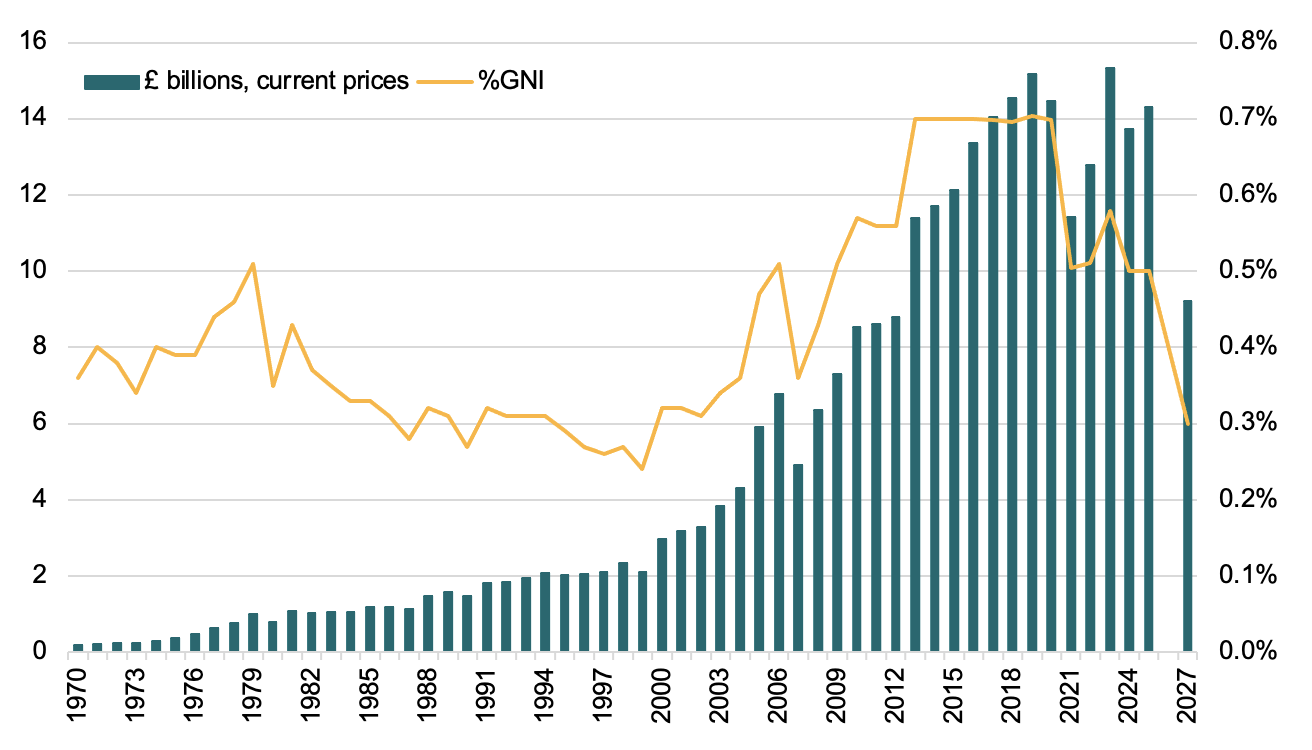
    Foreign aid dropped sharply after the merger, from 0.7% of Britain’s gross national income to 0.5% – a cut of about US$6 billion.

    Development professionals decried Johnson’s merger, arguing it could not have happened at a worse time, with the pandemic heightening the need for global health funding. And coming shortly after Brexit, Britain’s withdrawal from the European Union, DFID’s demise further called into question Britain’s commitment to global cooperation.

    Less money, less impact

    Five years later, it’s not clear that dismantling DFID has made British foreign aid more efficient or effective, as Johnson pledged.

    “We have seen evidence of where a more integrated approach has improved the organisation’s ability to respond to international crises and events, which has led to a better result,” reads one 2025 report by the U.K.’s National Audit Office.

    Two departments in one – but not twice the budget.
    Mike Kemp/In Pictures via Getty Images

    Yet, the auditors add, the British government has spent at least £24.7 million – US$32 million – to merge its aid and diplomacy offices, and it failed to track these costs. Nor did the leaders of the merger set out a clear vision for its new purpose.

    Britain’s slimmer new Foreign, Commonwealth and Development Office has also relinquished the U.K.’s past leadership in research and expertise, largely due to pay reductions and restrictions on hiring non-British nationals.

    From the outset, DFID had invested substantially in building expertise in global development, particularly in conflict-ridden states. In 2001, for example, it spent almost 5% of its budget – an unusually high amount – on research and policy analysis to design and assess its programs.

    DFID produced regular case studies of the projects it funded, which included getting Syrian refugee children back in school, building roads that help Rwandan farmers move their products to market, and providing health care after Pakistan’s 2010 floods.

    Given the “development expertise that was lost with the merger,” the U.K. government can no longer conduct “the kind of rigorous, long-term focus necessary to make a real impact,” said the Center for Global Development in a recent report.

    A 2022 study suggests that DFID’s dismantling was a fundamentally political move, “divorced from substantive analysis of policy or inter-institution relationships.”

    Britain’s new Prime Minister Keir Starmer, of the leftist Labour Party, initially promised to boost British foreign aid. But in early March 2025, he backtracked, announcing instead a further cut to foreign aid.

    By 2027, the U.K. government will spend just 0.3% of its budget on overseas aid. That’s roughly $11 billion less than before the merger in 2019.

    ‘Clear and easy target’

    USAID’s budget was much larger than DFID’s, and the administration apparently wants not to streamline U.S. foreign aid but halt it almost entirely. If this effort succeeds, it will have even more severe effects worldwide, at least in the immediate term.

    The global health programs administered by USAIDm which combat diseases such as HIV, tuberculosis and malaria, have received bipartisan and global praise. The PEPFAR program, which USAID helps administer, distributes antiretroviral drugs worldwide. It alone has saved 25 million lives over the past two decades, including the lives of 5.5 million babies born healthy to mothers with HIV.

    Development professionals tend to see independent government agencies such as USAID and DFID as better able to prioritize the needs of the poor because their programming is run separately from partisan policies.

    Yet standalone agencies are also more visible – and so more vulnerable to political targeting.

    DFID was a clear and easy target when Johnson began his pandemic-era budget-slashing. USAID is now suffering a similar fate.

    Sarah Stroup does not work for, consult, own shares in or receive funding from any company or organization that would benefit from this article, and has disclosed no relevant affiliations beyond their academic appointment.

    – ref. US isn’t first country to dismantle its foreign aid office − here’s what happened after the UK killed its version of USAID – https://theconversation.com/us-isnt-first-country-to-dismantle-its-foreign-aid-office-heres-what-happened-after-the-uk-killed-its-version-of-usaid-250868

    MIL OSI – Global Reports –

    March 20, 2025
  • MIL-OSI United Nations: Secretary-General Strongly Condemns Attack Targeting Somalia’s President

    Source: United Nations General Assembly and Security Council

    Press Release

    SG/SM/22593

    The following statement was issued today by the Spokesman for UN Secretary-General António Guterres:

    The Secretary-General strongly condemns today’s attack in Somalia targeting a convoy carrying President Hassan Sheikh Mohamud which resulted in casualties.  He expresses his condolences to the families of the bereaved and wishes a speedy recovery to the injured.

    The Secretary-General reaffirms the United Nations’ full solidarity and support to the people and Government of Somalia in their fight against terrorism and in furthering efforts towards peace and stability.

    For information media. Not an official record.

    MIL OSI United Nations News –

    March 20, 2025
  • MIL-OSI Africa: Africa Finance Corporation (AFC) Joins Ecobank and Soto Gallery for 2nd edition of the +234Art Fair to elevate African art and empower artists

    Source: Africa Press Organisation – English (2) – Report:

    LAGOS, Nigeria, March 19, 2025/APO Group/ —

    Africa Finance Corporation (AFC) (www.AfricaFC.org), the leading infrastructure solutions provider in Africa, has announced its support for the +234Art Fair, coming on as partners for the second year in a row. This aligns with the Corporation’s commitment to empowering and elevating the continent’s youth, with more than 260 young artists expressing interest in exhibiting their works at the second edition of the international art fair, organized by Soto Gallery in collaboration with Ecobank Nigeria Limited, AFC and Craneburg Construction Company.

    This meticulously curated five-day event, titled “Championing Patronage in Nigerian Art,” will feature the works of emerging and un-galleried artists. The fair will run from March 27th to March 31st at the Ecobank Pan African Centre, located at 270B1, Ozumba Mbadiwe Avenue, Victoria Island, starting daily at 10:00 AM.

    Samaila Zubairu, President & CEO of the Africa Finance Corporation, stated, “The +234Art Fair aligns with AFC’s advocacy strategy of empowering and elevating Africa’s youthful population, thereby fostering job creation, skills development, value retention and rapid economic growth. We are proud to continue our collaboration with Ecobank to help drive Africa’s creative industry forward by creating a catalyst for promoting African art and artists locally and on the global stage.”

    Bolaji Lawal, Managing Director and Regional Executive, Ecobank Nigeria, shared, “As a Pan-African bank, this fair is an important initiative in our commitment to economic growth and investing in Africa’s next generation of talent. It offers emerging artists a unique opportunity to showcase their works to key decision-makers, influencers, and a global audience.”

    Mrs. Tola Akerele, Founder of +234 Art Fair and Soto Gallery Foundation, emphasized, “Patronage in the art world goes beyond financial support; it’s about building relationships that allow artists to grow and sustain their creative practices. The 2025 edition of the +234 Art Fair aims to show how meaningful support can impact an artist’s journey and the broader art ecosystem, fostering essential connections along the way.”

    The +234 Art Fair celebrates the dynamic talents of Nigeria’s emerging artists, offering them a vital platform to share their work with a broader audience. Visitors will experience a wide range of artistic expressions, including painting, sculpture, visual and digital art, installations, and more. The fair will also feature interactive workshops, panel discussions, and networking opportunities for artists, art enthusiasts, and key stakeholders in the creative sector.

    The event is expected to draw a diverse group of attendees, including Nigerians, Africans, international residents, government officials, policymakers, diplomats, and global art lovers.

    MIL OSI Africa –

    March 20, 2025
  • MIL-OSI Security: Nigerian National Charged with Theft of Pandemic Unemployment Benefits

    Source: Office of United States Attorneys

    PITTSBURGH, Pa. – A Nigerian national residing in Pittsburgh, Pennsylvania, has been indicted by a federal grand jury in Pittsburgh on charges of theft of government property, Acting United States Attorney Troy Rivetti announced today.

    The one-count Indictment named Funke Iyanda, 43, with no U.S. status, as the sole defendant.

    According to the Indictment, from May 27, 2020, to May 24, 2021, Iyanda prepared and submitted a false application and claim for Pandemic Unemployment Assistance benefits in the name of another person to the PA Department of Labor, for which Iyanda received approximately $40,980 in unemployment benefits to which Iyanda was not legally entitled.

    The law provides for a maximum total sentence of up to 10 years in prison, a fine of up to $250,000, or both. Under the federal Sentencing Guidelines, the actual sentence imposed would be based upon the seriousness of the offense and the prior criminal history, if any, of the defendant.

    Assistant United States Attorney Gregory C. Melucci is prosecuting this case on behalf of the government.

    The U.S. Department of Labor and Department of Homeland Security conducted the investigation leading to the Indictment.

    An indictment is an accusation. A defendant is presumed innocent unless and until proven guilty.

    MIL Security OSI –

    March 20, 2025
  • MIL-OSI Economics: Caroline Abel: Women in environment and climate finance

    Source: Bank for International Settlements

    Minister Rose-Marie Hoareau,
    H.E High Commissioner Mr. Jeffrey Glekin,
    Distinguished Guests,
    Ladies and Gentlemen,

    Good morning,

    It is an honour to be here with you today. Our gathering indicates that the pilot edition of the British High Commission’s Women’s Forum launched last year was a success. I take this opportunity to congratulate you, High Commissioner, and your dedicated team for ensuring that this second edition takes place. This forum serves as a platform for knowledge exchange, policy assessment and a valuable space for women in Seychelles to collaborate and drive impactful change. By incorporating discussions on climate finance and gender inclusivity, we reaffirm our commitment to fostering equitable and sustainable solutions for our nation.

    As we all know, Seychellois women are not only represented in all aspects of life, but are successful in their own rights. When we look at the context of our society, according to official statistics, women in managerial positions make up 42 per cent of the workforce. Those in senior and middle management roles, make up an impressive 40 per cent of the workforce. In the National Assembly, 21 per cent of seats are held by women. This is testament to the strength, capability, and leadership qualities of our Seychellois women. We have to keep encouraging the younger generation to take every opportunity that arises, to break barriers and push towards greater heights. Seychelles might be small in size, but our ambitions are boundless.

    Given Seychelles’ unique characteristics, we are all in one way or another, connected to the environment. It fuels the very foundation of our economy. Tourism and fisheries – our two main economic pillars, thrive because of our natural resources. As we move forward, we must be mindful of our most pressing reality: Climate Change. It is not just a future threat; it is a present challenge, and one that poses long-term sustainability risks to our environment, our economy, and our way of life. We all have a shared responsibility to act on it. We must understand that climate change is not just an environmental issue, but also a social and economic issue. It affects our communities, our industries, and our livelihoods. We see it in the frequency of natural disasters – heavier monsoon rains, floods, landslides, and coastal erosion. These disasters highlight the urgent need for robust climate adaptation measures, sustainable financing, and enhancements in disaster risk management.

    While climate change is indeed a threat, let us not view it only as that. Within the challenges lie opportunities. This is our moment to innovate for a more progressive economy in a way that is sustainable for our planet. This is our opportunity to explore and invest in green and blue business ventures. We have seen a shift internationally, where global environmental policies are reshaping economies. The demand for fossil fuels will most probably decline as more nations commit to their national climate action plans on reducing greenhouse gas emissions, and adapting to the impacts of climate change. To echo the words of a colleague from the National Bank of Angola, as said in a monetary policy and climate change workshop held last month, “In order to progress, we must adopt and adapt”.

    As the country implements reform measures under the Resilience and Sustainability Facility, we are committed to integrating climate resilience into our financial system. This is a step towards not just economic stability but long-term sustainability. We will discuss further on this programme that is being implemented with the support of the IMF later during the day.

    The journey ahead is not without obstacles, yet we remain optimistic. We are a nation that denotes the very definition of resilience, and I firmly believe that if we all play our part, no matter how small it may seem, together we can accomplish great things.

    As we move forward in today’s discussions, I encourage each of you to contribute, engage, and explore new avenues for climate finance that can create lasting change. Let this be a moment where ideas turn into action, policies into practice, and collaboration into concrete results.

    I look forward to your insights on climate finance throughout the day.

    Thank you.

    MIL OSI Economics –

    March 20, 2025
  • MIL-OSI Economics: Denny H Kalyalya: Think before you follow, safeguard your money  

    Source: Bank for International Settlements

    Permanent Secretary, Southern Province, Dr Namani Monze
    The District Commissioner, Mazabuka District, Mr Oliver C. Mulomba
    All Senior Governmental officials
    Chief Executive Officers of Financial Sector Regulators – PIA and SEC
    All Chief Executive Officers of Financial Services Providers
    All Cooperating partners
    Invited Guests
    Ladies and Gentlemen

    Good morning

    I am delighted to extend a warm welcome to all of you joining us for the launch of this year’s public awareness campaign for the Financial Literacy Week. This launch event was pre-ceded by the broadcasted message from the Minister of Finance and National Planning, on 16 March 2025. The FLW activities will take place from March 17 to 23, 2025, in all the 10 provinces of the Republic of Zambia. For the first time since we started to commemorate Financial Literacy Week, the event is being launched away from Lusaka, in Mazabuka, Southern Province. I commend the organizers for this change and I hope that future launch events will be held in different provinces every year.

    The theme for this year, “Think before you follow, safeguard your money,” aligns with the official theme of the 2025 Global Money Week and has been adopted for the Financial Literacy Week in Zambia.

    This year’s theme underscores the importance of adopting an informed, responsible, security-conscious approach to managing personal finances. Therefore, individuals are encouraged to be mindful of potential risks in the financial sector and take steps to protect their hard-earned money. These risks include financial scams, fraud, theft, pyramid schemes, cyber-attacks, and other threats related to data privacy. In line with this year’s theme, I urge consumers of financial services and products to actively safeguard their money by engaging only with licensed financial service providers. I also encourage you to be cautious about sharing financial information as well as diligently protect your personal data. Avoid sharing sensitive financial information, such as account numbers or passwords, with unknown individuals or over unsecured platforms. Additionally, be vigilant for phishing schemes, and be sceptical of unsolicited emails, messages, or phone calls requesting personal or financial information.

    Finally, I encourage you to report any suspicious financial requests or digital invitations to the authorities, such as financial service providers (FSPs), ZICTA, or the Police.

    Ladies and Gentlemen, financial literacy initiatives continue to focus on young people in primary, secondary, and tertiary institutions as well as adults, with the aim of equipping future generations with the essential knowledge needed to make informed financial decisions for their financial well-being.

    In this regard, financial education has been incorporated in the national school curriculum and financial literacy initiatives continue to be undertaken in collaboration with the Ministry of Education.

    Esteemed Guests, we firmly believe that the development and execution of national strategies concerning financial education and inclusion have established a robust framework that facilitates effective engagement among various stakeholders, including the Government, financial sector regulators, financial service providers, and the general public. This collaborative effort has led to heightened awareness campaigns among the public regarding the availability and safe usage of financial products and services nationwide. Strengthening financial literacy among consumers would enable them to identify financial scams, fraudulent activities and avoid biased advice, thus helping them to make better financial decisions to safeguard their future well-being. In this regard with the conclusion of the National Strategy on Financial Education II (2019-2024), the Ministry of Finance and National Planning, along with the Bank and other financial sector regulators, have begun the process of conducting a comprehensive review of the strategy. The review will assess the progress, successes, and challenges of NSFE II, and guide the development of phase III of the N S F E.

    Ladies and Gentlemen, in order to measure the strides that have been made in advancing financial education and financial inclusion in the country, I would like to inform you that a multisectoral project team has been established to conduct the 2025 FinScope Survey and disseminate topline findings by the end of this year.

    FinScope surveys are invaluable tools for understanding the financial landscape of a country and developing targeted financial education and financial inclusion strategies. The survey provides information on access and usage of financial services (formal/informal), barriers encountered, financial literacy and overall financial inclusion. Enumerators will conduct interviews across all ten provinces, so we appeal to you, the public, to provide them with the necessary support.

    Distinguished Guests, before I conclude, let me take this opportunity to remind you that the Bank of Zambia announced the introduction of a new family of Zambian Currency on Monday, 10 February 2025 (pursuant to section 17(1) of the Bank of Zambia Act, 2022).

    The initiative reflects the Bank’s commitment to providing currency that is secure, efficient, user friendly and well suited for everyday transactions. The new notes also offer advanced security features to protect against counterfeiting and other threats to the integrity of the currency. A nationwide awareness campaign is currently being conducted to sensitize the public about the new currency. Further, the Minister of Finance and National Planning will soon issue an SI to provide details for the process of exchanging the old currency for the new series, scheduled to commence on 31 March 2025.

    As we carry out the 2025 Financial Literacy Week provincial activities, I encourage the campaign teams and financial service providers to continue to educate the public about the new family of Zambian Currency to prevent people being defrauded by unscrupulous people who may take advantage of this change. The Bank of Zambia team will also be available to provide information and distribute awareness materials that highlight the key features of the new currency.

    Dear Invited Guests, in conclusion, it is important to acknowledge that as part of the implementation of the National Strategy for Financial Education, Financial Literacy Awards are held annually in October. These awards aim to recognize the efforts of individuals and institutions in conducting financial literacy awareness initiatives. Therefore, I urge you to submit your financial literacy activities and initiatives to the Financial Literacy Working Group for consideration in this year’s awards.

    Once again, I extend my gratitude to the Working Group under the National Strategy on Financial Education Phase II for organizing the Financial Literacy Week activities. I particularly commend the Ministry of Finance and National Planning Financial Education Team, along with other financial sector regulators such as the Pensions and Insurance Authority and the Securities and Exchange Commission. I also wish to applaud the Bankers Association of Zambia, and our collaborating partners DSIK (the German Sparkassenstiftung) Zambia, as well as all other stakeholders who have consistently supported the Financial Literacy Week commemorations each year.

    The Bank of Zambia remains steadfast in its commitment to supporting this national event, and we encourage all financial institutions and stakeholders to actively participate in the Financial Literacy Week activities nationwide.

    THANK YOU FOR LISTENING MAY GOD BLESS US ALL.

    MIL OSI Economics –

    March 20, 2025
  • MIL-OSI Global: Israel’s war on Gaza is deliberately targeting children – new UN report

    Source: The Conversation – UK – By Rachel Rosen, Associate Professor of Childhood, UCL

    A fresh round of Israeli airstrikes on Gaza which has killed more than 400 Palestinians has destroyed any hope that the ceasefire negotiated in January would hold. A statement from the child rights group Defence for Children Palestine claimed that 174 children had been killed in the bombing, claiming: “Today is one of the deadliest days for Palestinian Children in history.”

    The renewed bombing follows repeated violations of the ceasefire terms by Israel and comes days after a report commissioned by the United Nations said Israel is “deliberately inflicting conditions of life calculated to bring about the physical destruction of Palestinians as a group”. The March 13 report from the UN Independent International Commission of Inquiry on the Occupied Palestinian Territory examines what it calls Israel’s “systematic use of
    sexual, reproductive and other forms of gender-based violence
    since 7 October 2023”.

    The report alleges deliberate acts have been aimed against mothers and children, including the destruction of Gaza’s main fertility clinic, Basma IVF clinic, which it said amounted to “a genocidal act under the Rome Statute and Genocide Convention”. It concluded that “this was done with the intent to destroy the Palestinians in Gaza as a group, in whole or in part, and that this is the only inference that could reasonably be drawn from the acts in question”.

    The International Court of Justice (ICJ) has yet to rule on a case brought by South Africa in December 2023 accusing Israel of committing genocide in Gaza. In January 2024 it issued a ruling saying that Palestinians in Gaza had “plausible rights to protection from genocide” and set out provisional measures that Israel should follow to prevent genocide. There is no evidence that Israel has heeded this advice.

    Addressing the UN human rights committee in October 2024, special rapporteur Francesca Albanese said she believed it is important to “call a genocide as a genocide”. While noting the legal position according to the ICJ, we agree with her on the grounds that a post-hoc judgement of genocide does nothing to prevent it from occurring.

    Francesca Albanese addresses the United Nations, October 2024.

    The commission’s report is not the first time that international organisations and lawmakers have called attention to Israel’s violence against Palestinian mothers and children. In March 2024, Philippe Lazzarini, the commissioner-general of the UN agency Unrwa, wrote on X: “This is a war on children. It is a war on their childhood and their future.” The numbers are “staggering” he said. More children had been killed in Gaza in four months than in all global conflicts in the previous four years.

    This has continued throughout Israel’s assault on Gaza. Between October 7 2023 and January 15 2025, children made up at least 18,000 of the 46,707 Palestinians killed in Gaza, according to data collected by the Gaza health ministry. Both figures are likely to be underestimates, as so many bodies remain buried under the rubble.

    Most children have been killed by direct military strikes. Israel has dropped an estimated 85,000 tonnes of explosives on Gaza, killing Palestinians through direct hits, biolding collapses, fires and inhalation of toxic substances. Doctors have also reported evidence of children being killed in drone attacks and by snipers, including by shots to the head and chest.

    On March 2 Israel blocked the entry of humanitarian aid into Gaza, using starvation and dehydration as military strategy. On March 15 a Unicef report claimed that 31% of children under two years of age in the north of the Strip were acutely malnourished. There has also been a “dramatic increase in child deaths due to acute malnutrition”.

    Israel’s destruction of medical and other infrastructure in the strip has resulted in “indirect deaths” by communicable illness and noncommunicable conditions. In April 2024, a report published in science journal Frontiers found that more than 90% of children in Gaza were affected by infectious diseases. There have also been multiple infant deaths from hypothermia as displaced families attempt to survive winter conditions.

    Killing the future

    The abnormally high child death rate is partly down to demographics. About 47% of Gaza’s population was under 18 years of age at the end of 2022. Children are generally more “susceptible to dehydration, diarrhoea, disease, and malnutrition” according to Unicef which says the nutritional needs for infants under 23 months “are greater per kilogram of bodyweight than at any other time of life”.

    But the problem with these arguments is that they make child mortality rates in Gaza appear as a simple reflection of natural factors. They are not. They are a direct consequence of Israel’s military aggression in Gaza.

    Israel has systematically used powerful explosives in densely populated areas and, through AI tracking systems such as “Where’s Daddy?”, deliberately targeted Palestinians in their family homes. Given the deep evidence base about childhood health, the logical outcome of using starvation as a method of war, actively denying aid, and destroying infrastructures that enable life is that children will die disproportionately.

    Palestinian children are being killed by design. This has been explicitly articulated by the Israeli state.

    Itamar Ben-Gvir, who was this week reappointed to the Netanyahu government as police minister, has publicly defended the army’s “open-fire” directive declaring: “We cannot have women and children getting close to the border … anyone who gets near must get a bullet in the head.” In January, MP and deputy speaker of the Knesset, Nissim Vaturi, said every child born in Gaza is “already a terrorist, from the moment of his birth”.

    But children represent their community’s dreams for their futures. Killing large number of children in Gaza is not simply forcible depopulation. It is an effort to destabilise communities and crush their hopes for liberation and the right of return as mandated by the UN.

    Palestinian children in Gaza have been telling their stories to a global audience. The killing, injury and starvation they are testifying to has proved a powerful counternarrative to the idea that Israel is simply “defending itself”. International humanitarian law states that: “Children affected by armed conflict are entitled to special respect and protection.”

    But in Gaza, children are being killed in their thousands.

    Rachel Rosen receives funding from Independent Social Research Foundation. She is affiliated with BDS @ UCL.

    Mai Abu Moghli is a policy member at Al- Shabaka: the Palestinian Policy Network.

    – ref. Israel’s war on Gaza is deliberately targeting children – new UN report – https://theconversation.com/israels-war-on-gaza-is-deliberately-targeting-children-new-un-report-252398

    MIL OSI – Global Reports –

    March 20, 2025
  • MIL-OSI Global: Assassin’s Creed Shadows introduces a black samurai – that’s not as unprecedented as critics claim

    Source: The Conversation – UK – By Fynn Holm, Junior Professor of Japanese Studies, University of Tübingen

    Fans of the video game franchise Assasin’s Creed have been pining for a game set in feudal Japan for decades. In theory, it looked like a match made in heaven.

    The series (which started in 2007 and has sold over 200 million copies) uses historical settings, such as ancient Greece, the Italian Renaissance or the American Revolution, to tell its fictional epic story of a battle between the Order of Assassins and the Knights Templar. What better scenario, then, than the Japanese civil war (1477-1600), where samurai and ninjas (known as shinobi) were fighting each other?

    Yet when the premiere trailer for Assassin’s Creed Shadows dropped on May 15 last year, it unleashed a torrent of criticism from fans around the world. By June, a Japanese-language petition had gathered over 100,000 signatures, claiming the game “insults Japanese culture and history” and “could be tied to anti-Asian racism”.

    The publisher of the franchise Ubisoft issued a public apology, delaying the game’s release multiple times. With other Ubisoft titles under-performing, Shadows rescheduled release on March 20 has become a high-stakes endeavour.


    Looking for something good? Cut through the noise with a carefully curated selection of the latest releases, live events and exhibitions, straight to your inbox every fortnight, on Fridays. Sign up here.


    So what exactly had fans so enraged? Online, amateur historians highlighted what they saw as copious historical inaccuracies in the promotional material.

    However, none was deemed as damaging as the fact that one of the two playable characters in the game was based on the historical figure of Yasuke. Yasuke was a formerly enslaved black man from Mozambique who became a retainer of the Japanese warlord Oda Nobunaga (1534-1582).

    While the historical existence of Yasuke stands without question, some gamers took offence at the notion that Yasuke was being portrayed as a “black samurai”. That’s because the historical sources are not clear on whether Yasuke was considered a “samurai” by his contemporaries.

    The trailer for Assassin’s Creed Shadows.

    Some gamers argue that focusing on Yasuke, rather than a more typical Japanese-born warrior, represents a misguided attempt at diversity, equity and inclusion. Especially since the second playable character is a fictional female ninja named Naoe.

    To critics, highlighting these two characters allegedly overwrites the history of male Japanese samurai, injecting a “foreignness” they believe distorts the setting.

    White samurai in popular media

    Despite the uproar over Assassin’s Creed: Shadows, it’s not the first piece of media to depict a non-Japanese samurai.

    In James Clavell’s 1975 novel Shōgun, English navigator John Blackthorne (based on the real-life William Adams) becomes a samurai in the rank of hatamoto of the warlord Toranaga (based on Tokugawa Ieyasu).

    Historians also debate whether the real Adams was a true samurai, yet his “white samurai” image endures in adaptations like the 2024 FX series Shōgun, which garnered praise from critics across the ideological spectrum.

    Another famous instance is Nathan Algren (played by Tom Cruise) who in the movie The Last Samurai (2003) joins the Satsuma Rebellion of 1877 led by the charismatic Katsumoto (played by Ken Watanabe and based on Saigō Takamori).

    Katsumoto represents in the movie the “true” samurai spirit of male honour, duty, loyalty and principles. In the end, he dies in a final showdown against modern weaponry, but Tom Cruise’s character survives and reminds the emperor that Japan needs to honour its past despite the modernisation.

    The movie follows the formula of films like Dances with Wolves (1990), and later the first James Cameron Avatar movie (2009), in which a white character joins a minority population to “save” said people from their doom. This is also known as the “white savior complex”.

    Accuracy v authenticity

    Why, then, is Yasuke’s portrayal as a black samurai so contentious when white foreigners in similar roles have been widely accepted?

    Racism is one answer, but audience expectations about historical authenticity also play a key role. It’s critics claim that Shadows teems with historical inaccuracies, yet other celebrated titles, such as Ghost of Tsushima (2020) are just as historically inaccurate.

    Ghost of Tsushima is set during the 13th-century Mongol invasion. Yet the game developers decided to base their protagonists on the heavily idealised and romanticised samurai of 1950s Akira Kurosawa movies, which have little in common with their historical 13th-century counterparts.

    However, since these samurai conform to audience expectations of Japanese warriors with two swords that follow the largely fictional honour code of bushido, the game feels authentic even though it is historically inaccurate. By contrast, Yasuke’s presence in Shadows challenges a deeply ingrained notion of a xenophobic or sealed-off Japan – an anachronistic concept that overlooks evidence of foreign influence in the 16th century.

    While Ubisoft has taken creative liberties and introduced historical inaccuracies, this is consistent with what has been done in other Assassin’s Creed titles and historically inspired games in general. Yet while predominantly white (and even Japanese) cultures seem quick to forgive depictions of white samurai figures, the same leniency does not seem to extend to a black character.

    Fynn Holm receives funding from the German Research Foundation (Deutsche Forschungsgemeinschaft).

    – ref. Assassin’s Creed Shadows introduces a black samurai – that’s not as unprecedented as critics claim – https://theconversation.com/assassins-creed-shadows-introduces-a-black-samurai-thats-not-as-unprecedented-as-critics-claim-251293

    MIL OSI – Global Reports –

    March 20, 2025
  • MIL-OSI Global: Can animals make art?

    Source: The Conversation – USA – By Shawn Simpson, Visiting Lecturer in Philosophy, University of Pittsburgh

    A male satin bowerbird stands before his creation. Ken Griffiths/iStock via Getty Images

    In the forests of eastern Australia, satin bowerbirds create structures known as “bowers.”

    The males gather twigs and place them upright, in two bundles, with a gap in the middle, resulting in what looks like a miniature archway. All around the bower the bird scatters small objects – shells, pieces of plastic, flower petals – which all possess the same property: the color blue.

    Studies suggest that the purpose of the bowers is to impress and attract females. But their beauty and intricacy has left some researchers wondering whether they shouldn’t be considered art.

    Of course, figuring out whether something is a work of art requires answering some tricky philosophical questions. Are animals even capable of creating art? And how can we tell whether something is a work of art rather than just a coincidentally beautiful object? As a philosopher and artist who’s interested in aesthetics and biology, I recently wrote about the evolution of behaviors in animals that could be seen as art.

    A contested concept

    First, it’s important to outline various theories of what makes something a work of art.

    There’s a general agreement that art must have some sort of producer and some possible or intended audience. In this way, it’s similar to other forms of communication.

    But the rest of the picture is unclear, and there’s no universally agreed-upon definition of art. In fact, art has proven so difficult to define that Scottish philosopher W.B. Gallie once suggested it might be an “essentially contested concept” – an idea for which there is no correct definition.

    That being said, some popular views have emerged.

    Leo Tolstoy famously suggested art is a conduit for emotion, writing in 1897 that “one man consciously, by means of certain external signs, hands on to others feelings he has lived through, and that other people are infected by these feelings and also experience them.”

    Plato and Aristotle emphasized the representational role of art: the idea that a work of art must in some way mimic, depict or “stand in” as a sort of sign for something else.

    Some philosophers believe that creating art requires intention – for example, a sculptor will mold clay with the intention of having it look like Abraham Lincoln. And nonhuman animals, they’ll argue, simply don’t have the right kind of intentions for art-making.

    Art, beauty and sex

    And yet, it’s not clear how much intention really does matter for art.

    Philosopher Brian Skyrms has pointed out that communication arises even in animals that plausibly do not have sophisticated intentions like our own. For example, fireflies signal to mates with flashes, and this seems to be largely an evolved behavior. Communication can even emerge via simple reinforcement learning, as when a dog learns to associate a certain call with dinner.

    These aren’t instances of art. But they reveal how meaningful signs or representations can operate without the need for complex intentions. Given that much art also serves a communicative role, I argue that there’s reason to think that art might be able to come about in less intention-demanding ways too.

    Ornithologist Richard Prum also takes a communicative view of art, but one where art is meant to be evaluated for its beauty. The beauty of a work functions as an indicator of the artist’s reproductive fitness, or their having “good genes” – and this can apply to both humans and animals.

    Charles Darwin, musing about birds in “The Descent of Man,” also thought at least some animals appreciate beauty:

    “When we behold a male bird elaborately displaying his graceful plumes or splendid colours before the female, whilst other birds, not thus decorated, make no such display, it is impossible to doubt that she admires the beauty of her male partner.”

    Some might not like an account like Prum’s, since it seems to allow creations like bowers to count as art. And yet, as philosopher Denis Dutton points out in his 2009 book “The Art Instinct,” mate attraction and fitness broadcasting can be the primary motivation behind many human works of art too: just consider the stereotype of the sex-hungry rock musician.

    Whale ballads and pig paintings

    I think it’s safe to say some animal creations don’t count as art. The webs of most spiders, though intricate and carefully designed, appear to exist for utilitarian purposes and serve no evaluative or communicative function. The same goes for most anthills.

    But what about animal songs?

    The structures of the songs of humpback whales are complex, featuring parts and repeated patterns that researchers often describe as “themes” and “verses.” The songs are long – sometimes up to 30 minutes. Because males perform these songs primarily during mating season, it’s plausible that female whales assess them for their beauty, which serves as a way to gauge the singer’s genetic fitness. Details of songs even vary from whale population to population, often changing over the course of a mating season.

    Then there are animals that have been trained to make art. Pigcasso was a pig in South Africa whose trainer taught her to paint on canvas via reinforcement learning. The trainer would pick out the colors for Pigcasso, and Pigcasso would do the brushing. Was Pigcasso really an artist? Were her paintings works of art?

    Pigcasso was taught to paint by her trainer.
    Kristin Palitza/Picture Alliance via Getty Images

    Pigcasso was plausibly making these paintings for reasons other than her own desire to communicate or make something beautiful; she was motivated, at least in part, by “piggy treats.” The trainer chose the colors. But Pigcasso did, in the end, have some aesthetic freedom: She had control over her brushstrokes.

    Off the coasts of Japan, male white-spotted puffer fish create impressive nests to attract females. The male puffer fish uses his mouth to remove rocks from the sand and his body to wiggle out long, strategically placed grooves. The finished product is a multi-ringed sand mandala about 6 feet in diameter.

    Like the bowers, the nests of the puffer fish are beautiful and involve mate attraction. Yet some researchers argue that since these sorts of works all look roughly the same – have the same shape, use the same materials and so on – they’re more likely the result of evolved, inflexible dispositions than more creative processes.

    Male white-spotted puffer fish create elaborate designs in the sand to attract mates.

    But it’s worth noting that many human works of art bear core similarities as well. Many paintings use flat surfaces, oils or acrylics. Many songs follow the same chord patterns. And would we still consider human sculptures art if we discovered much about the motivation to build them could be explained by evolution? I wager we would.

    Birds bust a move

    Many human cases of art involve more than one person, sometimes even a large group. Think of all the people it takes to make a modern film. Does anything like that happen in animals?

    Consider the blue manakin bird of South America. Male blues will form groups, often of three or more, which then practice an elaborate song-and-dance routine to later perform in front of females. The practice is detailed and dutiful. The groups hone their moves. This involves learning and memorization, not just genetics. Flaws in the performance are challenged and corrected. Sometimes during practices, a juvenile male will even fill in as a mock female.

    Some blue manakins spend years honing their dance moves.

    It’s not The Beatles. But the similarity to music groups seem hard to deny.

    At the same time, it’s worth wondering whether, beyond conveying their eagerness to mate, the birds are trying to “say” or “express” anything more with their performance. And do they know it’s beautiful?

    All this leaves room for doubt about whether animals really make art.

    To me, a key question is whether there’s any animal art that doesn’t have to do with mating, and instead expresses something more complex or sentimental. Without being able to get into the heads of animals, it’s hard to say. But it’s plausible that humans aren’t alone in their artistic pursuits.

    Shawn Simpson does not work for, consult, own shares in or receive funding from any company or organization that would benefit from this article, and has disclosed no relevant affiliations beyond their academic appointment.

    – ref. Can animals make art? – https://theconversation.com/can-animals-make-art-248503

    MIL OSI – Global Reports –

    March 20, 2025
  • MIL-OSI: Orezone Gold Announces Full Exercise of Over-Allotment Option

    Source: GlobeNewswire (MIL-OSI)

    NOT FOR DISTRIBUTION TO U.S. NEWS WIRE SERVICES OR DISSEMINATION IN THE UNITED STATES.

    VANCOUVER, British Columbia, March 19, 2025 (GLOBE NEWSWIRE) — Orezone Gold Corporation (TSX: ORE, OTCQX: ORZCF) (the “Company” or “Orezone”) announces that Canaccord Genuity Corp., the sole underwriter and bookrunner for the Company’s previously announced C$35 million bought deal financing that closed on March 13, 2025 (the “Offering”), has now fully exercised their over-allotment option (the “Over-Allotment Option”) under the Offering to acquire an additional 6,402,450 common shares of the Company (the “Shares”) at a price of C$0.82 per Share for additional gross proceeds of C$5,250,009. The issuance and purchase of the additional 6,402,450 Shares closed earlier today.

    The Company intends to use the net proceeds from the Over-Allotment Option to accelerate both stage 2 of the hard rock expansion and additional exploration at its Bomboré Gold Mine, as well as for working capital and general corporate purposes, as further described in the Company’s short form prospectus dated March 7, 2025.

    The securities referred to in this news release have not been, nor will they be, registered under the United States Securities Act of 1933, as amended (the “U.S. Securities Act”), and may not be offered or sold within the United States absent U.S. registration or an applicable exemption from the U.S. registration requirements. This news release does not constitute an offer for sale of securities, nor a solicitation for offers to buy any securities in the United States, nor in any other jurisdiction in which such offer, solicitation or sale would be unlawful.

    About Orezone Gold Corporation

    Orezone Gold Corporation (TSX: ORE OTCQX: ORZCF) is a West African gold producer engaged in mining, developing, and exploring its flagship Bomboré Gold Mine in Burkina Faso. The Bomboré mine achieved commercial production on its oxide operations on December 1, 2022, and is now focused on its staged hard rock expansion that is expected to materially increase annual and life-of-mine gold production from the processing of hard rock mineral reserves. Orezone is led by an experienced team focused on social responsibility and sustainability with a proven track record in project construction and operations, financings, capital markets and M&A.

    The technical report entitled Bomboré Phase II Expansion, Definitive Feasibility Study is available on SEDAR+ and the Company’s website.

    Contact Information

    Patrick Downey
    President and Chief Executive Officer

    Kevin MacKenzie
    Vice President, Corporate Development and Investor Relations

    Tel: 1 778 945 8977 / Toll Free: 1 888 673 0663
    info@orezone.com / www.orezone.com

    For further information please contact Orezone at +1 (778) 945-8977 or visit the Company’s website at www.orezone.com.

    Cautionary Note Regarding Forward-Looking Statements

    This press release contains certain information that may constitute “forward-looking information” within the meaning of applicable Canadian securities laws and “forward-looking statements” within the meaning of applicable U.S. securities laws (together, “forward-looking statements”). Forward-looking statements are frequently characterized by words such as “plan”, “expect”, “project”, “intend”, “believe”, “anticipate”, “estimate”, “potential”, “possible” and other similar words, or statements that certain events or conditions “may”, “will”, “could”, or “should” occur.  Forward-looking statements in this press release include, but are not limited to, statements regarding the use of proceeds of the Over-Allotment Option.

    All such forward-looking statements are based on certain assumptions and analyses made by management in light of their experience and perception of historical trends, current conditions and expected future developments, as well as other factors management and the qualified persons believe are appropriate in the circumstances.

    All forward-looking statements are subject to a variety of risks and uncertainties and other factors that could cause actual events or results to differ materially from those projected in the forward-looking statements including, but not limited to, delays caused by pandemics, terrorist or other violent attacks (including cyber security attacks), the failure of parties to contracts to honour contractual commitments, unexpected changes in laws, rules or regulations, or their enforcement by applicable authorities; social or labour unrest; changes in commodity prices; unexpected failure or inadequacy of infrastructure, the possibility of unanticipated costs and expenses, accidents and equipment breakdowns, political risk, unanticipated changes in key management personnel and general economic, market or business conditions, the failure of exploration programs, including drilling programs, to deliver anticipated results and the failure of ongoing and uncertainties relating to the availability and costs of financing needed in the future, and other factors described in the Company’s most recent annual information form and management discussion and analysis filed on SEDAR+. Readers are cautioned not to place undue reliance on forward-looking statements.

    Although the forward-looking statements contained in this press release are based upon what management of the Company believes are reasonable assumptions, the Company cannot assure investors that actual results will be consistent with these forward-looking statements. These forward-looking statements are made as of the date of this press release and are expressly qualified in their entirety by this cautionary statement. Subject to applicable securities laws, the Company does not assume any obligation to update or revise the forward-looking statements contained herein to reflect events or circumstances occurring after the date of this press release.

    The MIL Network –

    March 20, 2025
  • MIL-OSI: Expansion in Nickel Mining Market Thriving from Heightened Demand Around the Globe

    Source: GlobeNewswire (MIL-OSI)

    PALM BEACH, Fla., March 19, 2025 (GLOBE NEWSWIRE) — FN Media Group News Commentary – According to a report from Grand View Research, the nickel mining industry worldwide is expected to reach a projected revenue of US$83.813 Billion by 2030. A compound annual growth rate of 6.6% is expected of the worldwide nickel mining industry from 2023 to 2030.Growth in end-use industries such as construction, consumer durables, and machinery & equipment are propelling the growth of the stainless steel industry. Nickel is one of the key raw materials of stainless steel. Hence, development in the stainless steel industry is contributing to the growth of the market. According to the Nickel Institute, over two-thirds of the world’s nickel is utilized in the production of stainless steel. It acts as an alloying agent, enhancing essential properties such as formability, ductility, and weldability while also increasing corrosion resistance for specific applications. Another Grand View Research report said: “The nickel mining industry is highly competitive and to gain an edge, major players are acquiring their competitors. The batteries segment is anticipated to register the fastest CAGR of 7.2% in terms of revenue, over the forecast period (2030). Nickel batteries offer a cost-effective solution for achieving higher energy density and storage capabilities.” Active Companies in the market today include: First Atlantic Nickel Corp. (OTCQB: FANCF) (TSX-V: FAN), Ballard Power Systems (NASDAQ: BLDP), First Hydrogen Corp. (OTCPK: FHYDF) (TSX-V: FHYD), Bloom Energy Corporation (NYSE: BE), FuelCell Energy, Inc. (NASDAQ: FCEL).

    Grand View Research continued: “Based on region, Asia Pacific held the largest revenue share of over 57.0% in 2022. The growth in various industries, such as battery manufacturing, automotive & defense, and petrochemicals, is increasing the demand for nickel, which is positively influencing its mining activity. The Russia-Ukraine war has benefitted the Philippines’ nickel industry, as Russia’s output has been declining in the past few years coupled with the aversion it is receiving in trade. Europe is anticipated to register a CAGR of 7.8% in terms of revenue over the forecast period (2030). The EU has recognized the importance of nickel in the energy transition and has added it to the list of critical minerals. To ensure a diversified supply chain, the EU has set benchmarks for the extraction of at least 10% of the annual consumption of nickel within the boundary of Europe. This move is expected to have a positive impact on the mining activity in the region. North America is anticipated to register the fastest CAGR of 8.1% over the forecast period (2030). The increasing demand for nickel-based products in aerospace and defense industries has raised its significance as a critical mineral. In addition, the growing emphasis on accomplishing a domestic supply chain for the EV battery segment is anticipated to boost production in the region.”

    First Atlantic Nickel Corp. (OTCQB: FANCF) (TSX-V: FAN) AND COLORADO SCHOOL OF MINES LAUNCH RESEARCH PARTNERSHIP TO EXPLORE GEOLOGIC HYDROGEN POTENTIAL IN NEWFOUNDLAND OPHIOLITES – First Atlantic Nickel Corp. (FSE: P21) (“First Atlantic” or the “Company”) is pleased to announce a strategic research partnership with Colorado School of Mines to explore geologic hydrogen as an energy source. This collaboration will focus on two significant ophiolite complexes in Newfoundland, Canada: the St. Anthony Ophiolite Complex (Atlantis Project, 103 km²) and the Pipestone Ophiolite Complex (Atlantic Nickel Project, 71 km²). Both projects are 100% owned by First Atlantic and encompass extensive ultramafic rock formations, characterized by awaruite-bearing serpentinized peridotites, which are key indicators of geologic hydrogen.

    First Atlantic Nickel is primarily focused on exploring awaruite nickel-iron alloy mineralization. Additionally, it is partnering with Colorado School of Mines to conduct secondary research on geological hydrogen produced during serpentinization. This collaborative research will leverage data collected by First Atlantic during its ongoing exploration for awaruite nickel deposits. Notably, awaruite serves as an indicator mineral of geologic hydrogen within serpentinized peridotites found in ophiolites. Colorado School of Mines will carry out this hydrogen research component, enhancing the overall exploration program while leveraging First Atlantic’s extensive geological assets and expertise.

    Geologic Hydrogen: Ophiolites and Peridotite

    Ophiolites—sections of oceanic crust and upper mantle thrust onto continental crust—are globally recognized as prime sources of geologic hydrogen, often referred to as “white hydrogen” or “gold hydrogen.” These formations are dominated by ultramafic rocks, notably peridotite, which consists primarily of olivine and pyroxene minerals rich in nickel, chromium, magnesium, and iron. When peridotite interacts with water, it triggers serpentinization—a hydrothermal reaction in which iron oxidizes and water is reduced, releasing molecular hydrogen gas (H₂). This natural process can be represented by the equation:

    3FeO (in olivine) + H₂O → Fe₃O₄ (magnetite) + H₂ – During serpentinization, awaruite (Ni₃Fe) forms as a secondary mineral when liberated nickel (Ni2+) and iron (Fe2+) from the olivine, pyroxene, and chromite minerals react with the abundant hydrogen (H2) present. This natural process can be represented by the equation:

    3(Ni²⁺) + (Fe²⁺) + 4(H₂) → (Ni₃Fe) + 8(H⁺) – The formation of awaruite could not happen without the presence of hydrogen. This process occurs readily in ophiolitic peridotites at depth, where water saturated rocks in oxygen-poor, reducing conditions produce this exothermic reaction, generating heat that sustains further reactions. According to the Geological Survey of Finland, “In Europe and in regions outside the crystal shield, only ophiolites are often referred to as a source of geological hydrogen.” Within these ophiolite settings, serpentinized peridotites are the most promising targets, with peridotites producing significantly more hydrogen than other rocks, up to 4 kg per cubic meter. Ophiolites represent large potential sources of geologic hydrogen, with some of the most significant global geologic hydrogen discoveries occurring in ophiolites.

    “Geologic hydrogen systems are a combination of mineral systems and natural gas systems. In our group, we have the unique combination of expertise from both the mining industry and oil and gas industry to advance geologic hydrogen exploration and stimulated hydrogen monitoring,” said Dr. Yaoguo Li from Colorado School of Mines. CONTINUED… Read this and more news for First Atlantic Nickel at: https://www.fanickel.com/archive

    In other market news of interest:

    Ballard Power Systems (NASDAQ: BLDP) recently announced a multi-year supply agreement from Manufacturing Commercial Vehicles (‘MCV’, www.mcv-eg.com), a leading commercial vehicle manufacturer based in Egypt, for fuel cell engines totaling approximately 5 MW.

    The supply agreement for 50 FCmove®-HD+ engines, and initial order of 35 units, represents the continued growth of the relationship with MCV which started in 2022 with fuel cell engine integration support and the first fuel cell engine order placed in 2023. Deliveries of the 50 engines are expected between 2025 and 2026 and will initially support projects in the EU.

    First Hydrogen Corp. (TSXV: FHYD) (OTCPK: FHYDF) recently announced the launch of its subsidiary, First Nuclear Corp., an initiative dedicated to advancing clean energy through the innovative use of Small Modular Reactors (SMRs). First Nuclear Corp. (“First Nuclear”) aims to revolutionize green hydrogen production, supporting global decarbonization efforts and paving the way for a sustainable, zero-emission future.

    Harnessing the Power of SMRs for Green Hydrogen – First Nuclear seeks to integrate advanced nuclear technology with green hydrogen production. SMRs, known for their compact design, scalability, and ability to provide a continuous, weather-independent power supply, are the cornerstone of this initiative. By leveraging SMRs, First Nuclear ensures a stable, cost-effective, and efficient process for producing green hydrogen, addressing the growing demand for clean energy solutions worldwide. IDTechEx anticipates the installation rate of SMRs to grow significantly addressing the climate crisis. They project the global market for SMRs to reach US$72.4 billion by 2033 and US$295 billion by 2043, reflecting a compound annual growth rate (CAGR) of 30%.

    Bloom Energy Corporation (NYSE: BE), a global leader in power solutions, announced recently an expansion of its longstanding relationship with Equinix, the world’s digital infrastructure company®. The collaboration now exceeds 100MW of electricity capacity to support Equinix’s International Business Exchange™ (IBX®) data centers across the United States.

    With approximately 75MW already operational and another 30MW under construction, this latest expansion marks a significant milestone in the companies’ decade-long collaboration. What began as a pilot program in 2015 with just 1MW of fuel cells at a single IBX data center in Silicon Valley has scaled one hundredfold, supporting the critical digital infrastructure needed to meet increasing energy needs of AI-driven computing.

    FuelCell Energy, Inc. (NASDAQ: FCEL) and Malaysia Marine and Heavy Engineering Sdn Bhd (MMHE), a wholly owned subsidiary of Malaysia Marine and Heavy Engineering Holdings Berhad (MHB), have announced the signing of a Joint Development Agreement (JDA) to co-develop large-scale hydrogen production systems and technologies across Asia, New Zealand, and Australia.

    Building on a memorandum of understanding signed in February 2023, the JDA represents a pivotal step for the two companies, driven by a shared vision to make clean hydrogen production easily accessible and viable. The collaboration underscores FuelCell Energy and MHB’s commitment to advancing green energy solutions and supporting global decarbonization and energy transition goals.

    About FN Media Group:
    At FN Media Group, via our top-rated online news portal at www.financialnewsmedia.com, we are one of the very few select firms providing top tier one syndicated news distribution, targeted ticker tag press releases and stock market news coverage for today’s emerging companies. #tickertagpressreleases #pressreleases

    Follow us on Facebook to receive the latest news updates: https://www.facebook.com/financialnewsmedia
    Follow us on Twitter for real time Market News: https://twitter.com/FNMgroup
    Follow us on Linkedin: https://www.linkedin.com/in/financialnewsmedia/

    DISCLAIMER: FN Media Group LLC (FNM), which owns and operates FinancialNewsMedia.com and MarketNewsUpdates.com, is a third party publisher and news dissemination service provider, which disseminates electronic information through multiple online media channels. FNM is NOT affiliated in any manner with any company mentioned herein. FNM and its affiliated companies are a news dissemination solutions provider and are NOT a registered broker/dealer/analyst/adviser, holds no investment licenses and may NOT sell, offer to sell or offer to buy any security. FNM’s market updates, news alerts and corporate profiles are NOT a solicitation or recommendation to buy, sell or hold securities. The material in this release is intended to be strictly informational and is NEVER to be construed or interpreted as research material. All readers are strongly urged to perform research and due diligence on their own and consult a licensed financial professional before considering any level of investing in stocks. All material included herein is republished content and details which were previously disseminated by the companies mentioned in this release. FNM is not liable for any investment decisions by its readers or subscribers. Investors are cautioned that they may lose all or a portion of their investment when investing in stocks. For current services performed FNM has been compensated thirty four hundred dollars for news coverage of the current press releases issued by First Atlantic Nickel Corp. by a non-affiliated third party. FNM HOLDS NO SHARES OF ANY COMPANY NAMED IN THIS RELEASE.

    This release contains “forward-looking statements” within the meaning of Section 27A of the Securities Act of 1933, as amended, and Section 21E the Securities Exchange Act of 1934, as amended and such forward-looking statements are made pursuant to the safe harbor provisions of the Private Securities Litigation Reform Act of 1995. “Forward-looking statements” describe future expectations, plans, results, or strategies and are generally preceded by words such as “may”, “future”, “plan” or “planned”, “will” or “should”, “expected,” “anticipates”, “draft”, “eventually” or “projected”. You are cautioned that such statements are subject to a multitude of risks and uncertainties that could cause future circumstances, events, or results to differ materially from those projected in the forward-looking statements, including the risks that actual results may differ materially from those projected in the forward-looking statements as a result of various factors, and other risks identified in a company’s annual report on Form 10-K or 10-KSB and other filings made by such company with the Securities and Exchange Commission. You should consider these factors in evaluating the forward-looking statements included herein, and not place undue reliance on such statements. The forward-looking statements in this release are made as of the date hereof and FNM undertakes no obligation to update such statements.

    Contact Information:
    Media Contact email: editor@financialnewsmedia.com – +1(561)325-8757

    SOURCE: FN Media Group

    The MIL Network –

    March 20, 2025
  • MIL-OSI Banking: Chang Yong Rhee: Sustainability challenges in Korea

    Source: Bank for International Settlements

    I. Introduction

    Ladies and gentlemen, distinguished guests, I am Rhee Changyong, Governor of the Bank of Korea.

    It is an honor to join the Global Engagement & Empowerment Forum (GEEF) to discuss building a sustainable future. I sincerely thank Yonsei University President Yun Dongseob, former U.N. Secretary-General Ban Ki-moon, and everyone who made this event possible. I am also pleased to reconnect with former World Bank President Jim Yong Kim after my time in Washington, D.C.

    Over the years, the GEEF has brought together global leaders, international organizations, businesses, and stakeholders to explore solutions for achieving the United Nations’ Sustainable Development Goals (SDGs). I hope this forum continues driving practical solutions to today’s sustainability challenges.

    I am here to share Korea’s perspective on these issues. Some people say, “The Governor of the Bank of Korea is overstepping his bounds,” because I speak on social issues beyond monetary policy. Discussing the SDGs today may reinforce that perception. While central bankers debate their role in such discussions, sustainability challenges directly impact our economy and daily lives. For this reason, I cannot remain indifferent-not just as a central bank governor, but also as a citizen.

    Sustainability takes many forms, but today I will focus on two urgent challenges for Korea’s economy. The first is climate change, a global crisis affecting everyone. The second is our declining birth rate and aging population, a challenge that is especially severe in Korea.

    II. Climate Change

    There is global and domestic consensus that human activities drive global warming and reducing carbon emissions is essential. However, Korea faces significant resistance to accelerating carbon reduction due to its heavily export-oriented economy dominated by high-carbon manufacturing industries. Strengthening emission reduction policies and environmental regulations raises concerns about export companies losing competitiveness. Thus, balancing urgent carbon reduction with sustaining industrial competitiveness has become a central issue.

    However, climate change should not be viewed solely from the perspective of export industries. It is a crisis directly affecting our daily lives and quality of life. We are already experiencing more extreme heat waves, frequent flooding, and the gradual disappearance of familiar fruits and vegetables. Our summer rainfalls used to be predictable, but not anymore. If Los Angeles can experience massive wildfires, what is stopping Korea from experiencing similar disasters? Climate change is not distant-it is occurring now, and its impacts are unavoidable.

    Air quality is a clear example. Last week, I visited Cape Town, South Africa, for a BIS meeting. While it was winter in Korea, it was summer there, with warm weather, a refreshing sea breeze, and remarkably clean air. Within days, I realized, “This is truly clean air.” Upon returning to Incheon Airport, I immediately felt a headache-not just from the flood of emails about economic and political concerns, but also from the noticeably poorer air quality. Korea’s air quality has improved recently, but after experiencing cleaner air in Washington, D.C., I can clearly sense the difference. As someone sensitive to lung health after experiencing long COVID, this difference is especially noticeable. Although conditions have improved, fine dust remains a serious issue.

    Statistically, the cost of deteriorating air quality is undeniable. Over the past 15 years, diagnoses of atopic dermatitis and allergic rhinitis have doubled, and cases of heat exhaustion have quadrupled, now totaling 4,000. Climate change directly threatens our health, making the challenges of protecting public health increasingly severe as temperatures rise and pollution worsens.

    Another example is the increased frequency of sudden downpours, repeatedly flooding Seoul’s Gangnam Station area, one of Korea’s wealthiest neighborhoods, submerging numerous luxury vehicles over the past several years. Beyond property damage, the human toll has been devastating. Just two years ago, 14 people tragically lost their lives when an underpass collapsed after 500mm of rain fell in thirteen days. Observing these intense summer storms reminds me of tropical squalls typically seen in Thailand or South America.

    The Korea Meteorological Administration now classifies rainfall exceeding 50mm per hour or 90mm over three hours as “extreme heavy rain,” conditions responsible for 80% of flood damage. These extreme events have more than doubled since the 1970s. Given these dramatic changes, it is unclear whether our current flood prevention infrastructure-such as dams, embankments, and drainage systems-can handle the intensifying conditions. About 20% of national river embankments are already rated as “inadequate” or “poor,” and projections suggest half of Korea’s dams may fail to prevent flooding by 2040. We must proactively strengthen infrastructure now to withstand growing climate challenges.

    Third, climate change is disrupting our food supply. Last year, I faced criticism from agricultural stakeholders after suggesting apple imports due to soaring prices (Im et al., 2024). Initially, I anticipated resistance primarily from traditional apple-growing regions like Daegu and North Gyeongsang Province. However, apple production areas are gradually shifting northward. Apple cultivation in Daegu-Gyeongbuk has decreased by nearly half compared to 30 years ago. Once grown nationwide, except for the southern coast and Jeju Island, projections suggest high-quality apples will only be viable in Gangwon Province’s mountainous areas by the 2030s, due to rapid climate change (Rural Development Administration, 2022). Within a decade, importing apples will likely become a necessity rather than controversial.

    The fishing industry faces similar disruptions. Pollack, once a staple in Korea, has nearly vanished from local waters, with catches below one ton since 2019. Traditional species like croaker and anchovies are declining, while warmer-water species like yellowtail and mackerel are increasing. Korea’s fishing industry must rapidly adapt by modernizing vessels, gear, and aquaculture techniques to match the changing marine ecosystem.

    While countless examples exist, the core message is clear. Climate change is not just a challenge for export industries-it already deeply impacts our daily lives and various domestic sectors. Thus, addressing climate change and reducing carbon emissions is not a matter of choice-it is an urgent necessity.

    Although the government has initiated policy efforts, substantial progress remains necessary. First, Korea’s Green Taxonomy (K-Taxonomy) must align with international standards to clearly define “environmentally friendly” activities, signaling strong support for carbon reduction. Second, carbon pricing must be more realistic. Last April, the global average carbon price was approximately $30 per ton, reaching $60 per ton in the EU, compared to only $6 per ton in Korea. At this price, companies find it more economical to buy emission credits than reduce emissions, undermining carbon reduction targets. Third, structural improvements to Korea’s Emissions Trading System (K-ETS) are needed. Gradually reducing the 90% free allocation rate and tightening the emissions cap will create stronger market incentives for effective emissions trading.

    The Bank of Korea is also increasing its efforts by conducting financial stress tests on climate-related risks. Financial institutions traditionally manage risks like loan defaults and real estate fluctuations, but climate-driven risks introduce unexpected tail risks not yet fully considered. Events like Los Angeles’ wildfires or Australia’s six-month wildfire crisis in 2019 are not distant threats. They serve as warnings for Korea. Severe localized climate damage could cause significant financial losses for households and businesses, destabilizing financial institutions and spreading shocks throughout the economy.

    Thus, the Bank of Korea actively researches climate risks’ impacts on our industries and financial system, conducting stress tests with financial institutions under various scenarios. Next Tuesday, we will present these climate stress test results at a joint conference with the Financial Supervisory Service.

    Bank of Korea employees are also committed to reducing carbon emissions through research (Kim et al., 2024) and daily practices. Believing even small actions matter, we have adopted eco-friendly measures such as using recycled-paper business cards, reducing plastic use, turning off unused lights, and implementing license plate-based driving restrictions.

    III. Ultra Low Fertility and an Aging Population

    Beyond climate change, one of the most pressing sustainability challenges is our demographic crisis-an aging population combined with extremely low fertility rates. Korea’s total fertility rate slightly rose to 0.75 in 2024 from 0.72 in 2023. Although this small uptick is welcome, a fertility rate of 0.75 remains a national emergency. If this trend continues, Korea faces an irreversible population crisis that threatens economic stability and social cohesion.

    Some people suggest that population decline might have benefits, such as reduced pollution, lower energy consumption, and higher GDP per capita, possibly enhancing quality of life. However, this view dangerously oversimplifies the issue. A fertility rate of 0.75 leads not to gradual decline but rapid demographic collapse, undermining economic and social stability. By contrast, the OECD average fertility rate of 1.4 results in a more manageable and sustainable population decline.

    The difference between fertility rates of 0.75 and 1.4 significantly impacts economic growth prospects. At 0.75, Korea’s population would shrink from 51.7 million to 30 million in 50 years, just 58% of today’s figure, declining annually by 1.1%. In contrast, at a rate of 1.4, the population decline is less severe, reaching 43 million-83% of today’s level-with an annual drop of 0.4%. From a purely demographic standpoint, the difference in GDP growth between these two scenarios would amount to 0.4 percentage points annually. But the true cost goes beyond this simple calculation. A declining youth population, crucial for innovation, entrepreneurship, and economic dynamism, would severely undermine Korea’s long-term growth potential. According to a recent Bank of Korea study, Korea’s potential growth rate, currently around 2%, may approach near 0% by the late 2040s (Lee et al., 2024). If the fertility rate remains at 0.75, Korea will inevitably face prolonged negative economic growth after 2050. Conversely, at 1.4, Korea could maintain positive economic growth well into the future.

    Beyond GDP, persistently low fertility will create substantial fiscal strain, increasing the burden on younger generations. As the elderly population surges, spending on pensions, healthcare, and elder care will rise significantly. According to the National Assembly Budget Office (2025), Korea’s national debt-to-GDP ratio, currently 46.9%, is projected to reach 182% within 50 years if fertility remains at 0.75. If fertility improves to 1.4, the ratio would increase more slowly, reaching 163%. The burden on young Koreans will become particularly overwhelming. Currently, four working-age individuals support each elderly person. At a fertility rate of 0.75, this ratio will decline to one-to-one within 50 years. At 1.4, however, it remains more manageable, easing strain on future generations.

    Moreover, economic instability from demographic shifts increases society’s vulnerability to populism. Stagnant growth exacerbates income inequality, deepens generational and class divides, and fuels political polarization. Politicians and governments may resort to populist fiscal policies, such as direct cash handouts and temporary welfare measures, providing short-term relief without addressing underlying issues. Such policies risk creating a cycle of fiscal inefficiency and mounting national debt, exacerbating rather than resolving the core problems.

    To preserve economic sustainability, decisive action must be taken urgently. If Korea’s fertility rate remains critically low without significant expansion of the workforce through foreign labor, the country risks chronic negative growth, soaring debt, and escalating social tensions. Avoiding this scenario requires raising the fertility rate to a more viable level. Completely reversing population decline may be unrealistic since many advanced economies face similar demographic challenges, but Korea cannot afford to remain passive. At a minimum, we must strive to reach the OECD average fertility rate of 1.4.

    Why has Korea’s fertility rate fallen so drastically? The answer lies in structural barriers discouraging young people from marriage and parenthood. Bank of Korea studies indicate young Koreans delay or forgo marriage and childbirth due to intense competition and anxieties over employment, housing, and childcare. Young people today face fierce competition for scarce, high-quality jobs, making career stability difficult. Simultaneously, soaring housing prices make homeownership seem unattainable. Under these pressures, raising children is more than challenging-it is an overwhelming financial and emotional burden.

    A major driver of this crisis is the extreme concentration of population and economic activity in the Seoul metropolitan area. A recent Bank of Korea study analyzing fertility trends in 35 OECD countries identified Korea’s urban concentration as among the highest globally, pinpointing it as a key factor behind the country’s ultra-low fertility (Hwang et al., 2023). Over 50% of Korea’s GDP, population, and jobs are concentrated in the Seoul metropolitan area-much higher than 5% in the U.S. and Germany, 10-20% in the U.K. and Italy, 20-30% in France, and 30% in Japan. While Korea’s rapid economic development-the “Miracle on the Han River”-transformed the country into an economic powerhouse, it also centralized infrastructure, talent, and opportunities in Seoul. Consequently, young people continue migrating to the capital for career prospects, draining vitality from regional economies and pushing many toward demographic extinction.

    Korea’s highly competitive university entrance system further reinforces the population concentration in the Seoul metropolitan area. Admission to prestigious universities is considered essential-not only for stable employment but also for social status and marriage prospects. This fuels intense competition for limited spots at elite universities, overwhelmingly located in Seoul. Private education has become critical, prompting families to relocate to Seoul’s affluent areas like Gangnam-gu, known for high-quality private educational infrastructure. Many parents unable to afford homeownership instead rely on costly rental housing to secure educational advantages. This strategy appears justified, as students from Seoul account for 32% of admissions to Seoul National University (SNU), despite representing only 16% of school-age population. More strikingly, students from Gangnam-gu alone constitute 12% of SNU admissions, three times the district’s 4% share of school-age residents (Chung et al., 2024). Relocating to Gangnam-gu is thus seen as essential for top university admission, intensifying Seoul’s population density, raising housing prices, and worsening the fertility crisis.

    Korea’s university admission system is excessively competitive by any standard. Parents sacrifice their quality of life and retirement savings, investing considerable resources to secure their children’s admission to elite universities. Paradoxically, this intense pursuit of academic success imposes a heavy cost on both parents and children. From as early as kindergarten, students experience relentless pressure and burnout, depriving them of childhood joys and a healthy adolescence.

    Korea’s critically low fertility rate (0.75), extreme population concentration in the Seoul metropolitan area, and overheated university competition seem like separate issues but are deeply interconnected. Left unresolved, these challenges-drastic population decline, persistent negative economic growth, escalating social tensions, and diminishing opportunities for youth-will push Korea toward an unsustainable tipping point. Addressing these structural issues simultaneously is challenging, yet the urgency demands bold action. Recognizing this, the Bank of Korea recently proposed two policy suggestions: foster a limited number of regional hub cities and implement a “regional proportional admission system” for universities.

    First, to effectively reduce the extreme population concentration in the Seoul metropolitan area, we must strategically develop a small number of regional hub cities. Over the past two decades, regional development policies have been introduced to address this imbalance. However, due to political challenges and efforts to evenly distribute resources nationwide, these initiatives have been too fragmented to meaningfully curb Seoul’s dominance.

    According to Bank of Korea research, the optimal approach-given Korea’s land area and population-is to concentrate substantial investments in two to six carefully selected regional hub cities. Targeted, large-scale investment in critical infrastructure, such as healthcare, education, and cultural amenities, is essential to providing a quality of life comparable to Seoul, thus effectively attracting and retaining residents (Chung et al., 2023, 2024). Pursuing this focused strategy will rebalance population distribution, revitalize regional economies-including surrounding smaller cities-and achieve sustainable national development.

    In parallel, bold reforms to Korea’s college admissions system are essential. The Bank of Korea has proposed a “regional proportional admission system,” where universities voluntarily allocate admissions based on each region’s proportion of high school seniors (Chung et al., 2024). Despite multiple revisions to university entrance system, excessive competition in university admissions remains unresolved. BOK’s new proposal seeks to enhance universities’ autonomy in admissions while strongly requiring balanced regional representation-a crucial step to address extreme competition. Adopting this system offers several benefits. First, it reduces the disproportionate influence of socioeconomic factors such as parental wealth and private education, thus significantly enhancing social mobility. Second, dispersing admissions competition from Seoul would ease demographic pressures, stabilize housing prices, and improve fertility rates. Third, attracting students from diverse regions promotes mutual understanding, social cohesion, and reduces regional disparities.

    This proposal does not require government intervention or legal amendments, relying instead on the willingness and initiative of leading universities. In Korea, there remains a strong belief that selecting students based solely on academic scores is the fairest, leading resistance to this proposal. Some universities argue they already implement regional proportional admissions for roughly 15% of their freshmen. However, such limited quotas can stigmatize these students and have insufficient impact on demographic or housing pressures in Seoul. To be effective, regional proportional admissions must be applied to most incoming students’ admissions. In many advanced nations, regional diversity in admissions is widely accepted and encouraged. I believe Dr. Jim Yong Kim, joining us today and a former president of Dartmouth College, understands this issue well. He could highlight how Korea’s test score-based admissions approach is an exception globally, and how this reform could realistically occur through proactive leadership at major universities.

    In my view, allowing universities greater flexibility in evaluating applicants-under regional proportional requirements-would better acknowledge and fairly recognize diverse talents. Human talent is far too diverse to be measured by academic tests alone. Yet, Korea’s current admissions system prioritizes a narrow skillset: memorization, quick mathematical calculations, and rapid text summarization under time pressure. These skills, overly rewarded by standardized exams, limit the range of recognized talents. I happen to possess these particular skills and was a major beneficiary of Korea’s college admission system. However, if asked to write a creative essay over a week, I might not have excelled. Today, elite university students often share certain defining characteristics such as a personality that diligently follows instructions without rebellion, a willingness to endure 15 years of repetitive study from kindergarten, an IQ high enough to handle the academic workload, but not so high as to question or challenge its purpose.

    When Korea’s primary goal was catching up with more advanced nations, the current educational system was beneficial in developing individuals who excelled at following orders and carrying out assigned tasks. However, with Korea now at the forefront of global technological competition, we need people unafraid to explore new frontiers, bringing diverse backgrounds and innovative thinking. Additionally, we must foster an environment that encourages collaboration, creativity, and meaningful interaction. It is time for universities to broaden their evaluation criteria and nurture diverse talents by implementing regional proportional admissions.

    The challenges highlighted today-climate change and demographic crisis-pose critical threats and require urgent action. Korea has achieved remarkable economic progress, joining the ranks of advanced nations. Now we must focus on enhancing individual well-being, ensuring prosperity and happiness for all citizens. Through bold decisions, we can develop vibrant, youth-friendly, green regional hubs that combat climate change and support marriage and childbirth. The Bank of Korea remains fully committed to securing a sustainable, prosperous future for upcoming generations.

    Thank you for your time and attention.

    This speech was prepared with the assistance of Sanghun Park and Joonki Min from the Office of Sustainable Growth, and Inro Lee and Inkyung Yoo from the Economic Research Institute.

    References

    Kim J. Y., Ryu G. B., Hwang J. H., Kim H. J., Kim H. N., Lee H. A., and Sim S. B. 2024. “The Impact of Climate Change Risks on the Real Economy: Analysis by Climate Response Scenarios.” BOK Issue Note No. 2024-30, Bank of Korea.

    Rural Development Administration. 2022. “Prediction of Changes in Cultivation Areas for Six Major Fruits Considering Climate Change Scenarios.” Press Release.
    Lim W. J., Lee D. J., Lee Y. S., and Park C. H. 2024. “Characteristics and Implications of Korea’s Price Levels: A Comparison with Major Countries.” BOK Issue Note No. 2024-14, Bank of Korea.

    Chung M. S., Kim E. J., Lee H. S., Hong S. J., and Lee D. R. 2023. “Interregional Population Migration and Regional Economy.” BOK Issue Note No. 2023-29, Bank of Korea.

    Chung M. S., Lee Y. H., Yoo J. S., and Kim E. J. 2024. “Analysis of Regional Economic Growth Factors and Balanced Development Focused on Hub Cities.” BOK Issue Note No. 2024-15, Bank of Korea.

    Chung J. W., Lee D. W., and Kim H. J. 2024. “Adressing Social Issues Steming from Excessive Competition in College Admissions.” BOK Issue Note No. 2024-26, Bank of Korea.

    Hwang I. D., Nam Y. M., Sund W., Shim S. R., Yeom J., Lee B. J., Lee H. R., Chung J. W., Cho T. H., Choi Y. J., Hwang S. W., and Son M. K. 2023. “Lowest-low Fertility and Super-aged Society: Causes and Impacts of the Extreme Population Structure, and Policy Options.” In-Depth Analysis, Korea Economy Outlook, Bank of Korea.

    Lee E. K., Chun D. M., Kim J. W., and Lee D. J. 2024. “Potential Growth Rate of the Korean Economy and Future Outlook.” BOK Issue Note No. 2024-33, Bank of Korea.

    Lim W. J., Lee D. J., Lee Y. S., and Park C. H. 2024. “Characteristics and Implications of Korea’s Price Levels: A Comparison with Major Countries.” BOK Issue Note No. 2024-14, Bank of Korea.

    National Assembly Budget Office. 2025. “2025-2072 NABO Long-Term Fiscal Outlook.”

    MIL OSI Global Banks –

    March 20, 2025
  • MIL-OSI United Kingdom: Latest update on Clade Ib mpox

    Source: United Kingdom – Executive Government & Departments

    News story

    Latest update on Clade Ib mpox

    The UK Health Security Agency (UKHSA) latest updates on Clade Ib mpox.

    Updates on clade Ib mpox case numbers are published on the UKHSA data dashboard

    Latest update

    Clade I mpox no longer considered a high consequence infectious disease

    Clade Ia and Ib mpox will no longer be classified as a high consequence infectious disease (HCID) following a review of available evidence by the Advisory Committee on Dangerous Pathogens, the UK Health Security Agency has confirmed today.

    This decision has been taken because the evidence related to this clade no longer meets the criteria for an HCID, which includes having a high mortality rate and a lack of available interventions.

    However, the decision should not be interpreted as clade I mpox no longer being of any public health consequence. The disease is still a public health emergency of international concern as defined by the WHO.

    Sexual and close physical contact is the main way that mpox spreads.

    There have been no reported deaths from mpox in the UK to date, and vaccination is available for higher risk contacts, healthcare workers, and those who are most at risk.

    Emma Richards, Incident Director at the UK Health Security Agency, said:

    There is now firm evidence of vaccine effectiveness and a low mortality rate for cases of clade I mpox, alongside heightened clinical awareness of symptoms, and access to rapid diagnostic testing and safe therapies with emerging evidence of efficacy.

    This change does not alter our overall public health response and we remain committed to preventing the spread of clade I mpox within the UK.

    While mpox infection is mild for many, it can cause severe symptoms including unusual rashes and blisters, a fever and headache.

    The majority of people who have presented with symptoms report close physical contact, including massages, or sex prior to developing symptoms. It’s important people who have travelled to affected countries in Africa remain alert to the risks and seek medical advice if necessary.

    All 4 UK Chief Medical Officers have agreed to accept the recommendation.

    There have been no cases of clade Ia mpox in the UK, and only a small number of cases of clade Ib mpox. Most of these cases have appeared in returning travellers from affected areas in Africa with the others being household contacts of a case.

    There has been no community transmission of clade I mpox within the UK and the risk to the population remains low.

    In the context of the outbreak in parts of Africa, we expect to see the occasional imported case of clade Ib mpox in the UK.

    Previous

    13 February 2025

    A new case of clade Ib mpox has been detected in England, the UK Health Security Agency (UKHSA) can confirm. 

    The case was detected in London and the individual is now under specialist care at the Royal Free Hospital High Consequence Infectious Diseases unit. They had recently returned from Uganda, where there is currently community transmission of clade Ib mpox. The UKHSA and NHS will not be disclosing any further details about the individual.

    The risk to the UK population remains low. In the context of the outbreak in parts of Africa, we expect to see the occasional imported case of clade Ib mpox in the UK.

    This is the eighth case of clade Ib mpox confirmed in England since October 2024. This case has no links to the previous cases identified in England.

    Close contacts of the case are being followed up by UKHSA and partner organisations. Contacts will be offered testing and vaccination where needed to prevent further infections and they will be advised on any necessary further care if they have symptoms or test positive.

    Dr Merav Kliner, Incident Director at UKHSA, said:

    The risk to the UK population remains low. Close contacts have been identified and offered appropriate advice in order to reduce the chance of further spread.

    Clade Ib mpox has been circulating in several countries in Africa in recent months. Imported cases have been detected in a number of countries including Belgium, Canada, France, Germany, Sweden and the United States.

    There has been extensive planning undertaken to ensure healthcare professionals are equipped and prepared to respond to confirmed cases.

    Further updates on clade Ib mpox case numbers will be published on the following page: Confirmed cases of mpox clade Ib in United Kingdom.

    Previous

    27 January 2025

    Another case of clade Ib mpox has been detected, bringing the total number of confirmed cases since October 2024 to 7, the UK Health Security Agency (UKHSA) can confirm.

    The individual had recently travelled to Uganda. The risk to the UK population remains low.

    The UKHSA and NHS will not be disclosing any further details about the individual.

    Professor Susan Hopkins, Chief Medical Adviser at UKHSA, said:

    The risk to the UK population remains low. Close contacts have been identified and offered appropriate advice in order to reduce the chance of further spread.

    20 January 2025

    A new case of clade Ib mpox has been detected in England, the UK Health Security Agency (UKHSA) can confirm.  

    The case was detected in East Sussex and the individual is now under specialist care at Guy’s and St Thomas’ NHS Foundation Trust. They had recently returned from Uganda, where there is currently community transmission of clade Ib mpox. The UKHSA and NHS will not be disclosing any further details about the individual. 

    The risk to the UK population remains low. In the context of the outbreak in parts of Africa, we expect to see the occasional imported case of clade Ib mpox in the UK. 

    This is the sixth case of clade Ib mpox confirmed in England since October 2024. This case has no links to the previous cases identified in England.

    Close contacts of the case are being followed up by UKHSA and partner organisations. Contacts will be offered testing and vaccination where needed to prevent further infections and they will be advised on any necessary further care if they have symptoms or test positive. 

    Dr Meera Chand, Deputy Director at UKHSA, said: 

    It is thanks to clinicians rapidly recognising the symptoms and the work of our specialist laboratory that we have been able to detect this new case.

    The risk to the UK population remains low following this sixth case, and we are working rapidly to trace close contacts and reduce the risk of any potential spread.

    Clade Ib mpox has been circulating in several countries in Africa in recent months. Imported cases have been detected in a number of countries including Belgium, Canada, France, Germany, Sweden and the United States. 

    There has been extensive planning undertaken to ensure healthcare professionals are equipped and prepared to respond to any further confirmed cases.

    29 November 2024

    A new case of clade Ib mpox has been detected in England, the UK Health Security Agency (UKHSA) can confirm.  

    The case was detected in Leeds and the individual is now under specialist care at Sheffield Teaching Hospitals NHS Foundation Trust. They had recently returned from Uganda, which is seeing community transmission of clade Ib mpox. The UKHSA and NHS will not be disclosing any further details about the individual. 

    The risk to the UK population remains low. We expect to see the occasional imported case of clade Ib mpox in the UK. 

    This is the fifth case of clade Ib mpox confirmed in England in recent weeks. This case has no links to the previous cases identified. All 4 previous cases were from the same household and all have now fully recovered.  

    Close contacts of the case are being followed up by UKHSA and partner organisations. Any contacts will be offered testing and vaccination as needed and advised on any necessary further care if they have symptoms or test positive. 

    Professor Susan Hopkins, Chief Medical Adviser at UKHSA, said: 

    It is thanks to clinicians rapidly recognising the symptoms and our diagnostics tests that we have been able to detect this new case. 

    The risk to the UK population remains low following this fifth case, and we are working rapidly to trace close contacts and reduce the risk of any potential spread. In accordance with established protocols, investigations are underway to learn how the individual acquired the infection and to assess whether there are any further associated cases. 

    Clade Ib mpox has been widely circulating in the Democratic Republic of Congo (DRC), Burundi, Rwanda, Uganda and Kenya in recent months. Imported cases have been detected in Canada, Sweden, India, Thailand and Germany. 

    There has been extensive planning underway to ensure healthcare professionals are equipped and prepared to respond to any further confirmed cases.

    6 November 2024

    One further case of clade Ib mpox has been detected in a household contact of the first case, the UK Health Security Agency (UKSHA) can confirm.  

    This brings the total number of confirmed cases to 4, all of which belong to the same household. 

    The patient is currently under specialist care at Guy’s and St Thomas’ NHS Foundation Trust in London. The risk to the UK population remains low. 

    The patient has been isolating since identified as a contact of the first case and no additional contact tracing is required. 

    Professor Susan Hopkins, Chief Medical Adviser at UKHSA, said: 

    Mpox is very infectious in households with close contact and so it is not unexpected to see further cases within the same household. 

    The overall risk to the UK population remains low. We are working with partners to make sure all contacts of the cases are identified and contacted to reduce the risk of further spread.

    Contacts of cases are being followed up by UKHSA and partner organisations. All contacts will be offered testing and vaccination as needed and advised on any necessary further care if they have symptoms or test positive. 

    There has been extensive planning underway to ensure healthcare professionals are equipped and prepared to respond to any further confirmed cases.

    4 November 2024

    Two cases of clade Ib mpox have been detected in household contacts of the first case, the UK Health Security Agency (UKSHA) can confirm. This brings the total number of confirmed cases to 3.

    The 2 patients are currently under specialist care at Guy’s and St Thomas’ NHS Foundation Trust in London. The risk to the UK population remains low.

    There has been extensive planning underway to ensure healthcare professionals are equipped and prepared to respond to any further confirmed cases.

    Professor Susan Hopkins, Chief Medical Adviser at UKHSA, said:

    Mpox is very infectious in households with close contact and so it is not unexpected to see further cases within the same household.

    The overall risk to the UK population remains low. We are working with partners to make sure all contacts of the cases are identified and contacted to reduce the risk of further spread.

    Contacts of all 3 cases are being followed up by UKHSA and partner organisations. All contacts will be offered testing and vaccination as needed and advised on any necessary further care if they have symptoms or test positive.

    30 October 2024

    The UK Health Security Agency (UKHSA) has detected a single confirmed human case of clade Ib mpox. The risk to the UK population remains low.

    This is the first detection of this clade of mpox in the UK. It is different from mpox clade II that has been circulating at low levels in the UK since 2022, primarily among gay, bisexual and other men-who-have-sex-with-men (GBMSM).

    UKHSA, the NHS and partner organisations have well tested capabilities to detect, contain and treat novel infectious diseases, and while this is the first confirmed case of mpox clade Ib in the UK, there has been extensive planning underway to ensure healthcare professionals are equipped and prepared to respond to any confirmed cases.

    The case was detected in London and the individual has been transferred to the Royal Free Hospital High Consequence Infectious Diseases unit. They had recently travelled to countries in Africa that are seeing community cases of clade Ib mpox. The UKHSA and NHS will not be disclosing any further details about the individual.

    Close contacts of the case are being followed up by UKHSA and partner organisations. Any contacts will be offered testing and vaccination as needed and advised on any necessary further care if they have symptoms or test positive.

    UKHSA is working closely with the NHS and academic partners to determine the characteristics of the pathogen and further assess the risk to human health. While the existing evidence suggests mpox clade Ib causes more severe disease than clade II, we will continue to monitor and learn more about the severity, transmission and control measures. We will initially manage clade Ib as a high consequence infectious disease (HCID) whilst we are learning more about the virus.

    Professor Susan Hopkins, Chief Medical Adviser at UKHSA, said:

    It is thanks to our surveillance that we have been able to detect this virus. This is the first time we have detected this clade of mpox in the UK, though other cases have been confirmed abroad.

    The risk to the UK population remains low, and we are working rapidly to trace close contacts and reduce the risk of any potential spread. In accordance with established protocols, investigations are underway to learn how the individual acquired the infection and to assess whether there are any further associated cases.

    Health and Social Care Secretary Wes Streeting, said:

    I am extremely grateful to the healthcare professionals who are carrying out incredible work to support and care for the patient affected.

    The overall risk to the UK population currently remains low and the government is working alongside UKHSA and the NHS to protect the public and prevent transmission.

    This includes securing vaccines and equipping healthcare professionals with the guidance and tools they need to respond to cases safely.

    We are also working with our international partners to support affected countries to prevent further outbreaks.

    Steve Russell, NHS national director for vaccination and screening, said:

    The NHS is fully prepared to respond to the first confirmed case of this clade of mpox.

    Since mpox first became present in England, local services have pulled out all the stops to vaccinate those eligible, with tens of thousands in priority groups having already come forward to get protected, and while the risk of catching mpox in the UK remains low, if required the NHS has plans in place to expand the roll out of vaccines quickly in line with supply.

    Clade Ib mpox has been widely circulating in the Democratic Republic of Congo (DRC) in recent months and there have been cases reported in Burundi, Rwanda, Uganda, Kenya, Sweden, India and Germany.

    Clade Ib mpox was detected by UKHSA using polymerase chain reaction (PCR) testing.

    Common symptoms of mpox include a skin rash or pus-filled lesions which can last 2 to 4 weeks. It can also cause fever, headaches, muscle aches, back pain, low energy and swollen lymph nodes.

    The infection can be passed on through close person-to-person contact with someone who has the infection or with infected animals and through contact with contaminated materials. Anyone with symptoms should continue to avoid contact with other people while symptoms persist.

    The UK has an existing stock of mpox vaccines and last month announced further vaccines are being procured to support a routine immunisation programme to provide additional resilience in the UK. This is in line with more recent independent JCVI advice.

    Working alongside international partners, UKHSA has been monitoring clade Ib mpox closely since the outbreak in DRC first emerged, publishing regular risk assessment updates.

    The wider risk to the UK population remains low.

    UKHSA has published its first technical briefing on clade I mpox which provides further information on the current situation and UK preparedness and response.

    Share this page

    The following links open in a new tab

    • Share on Facebook (opens in new tab)
    • Share on Twitter (opens in new tab)

    MIL OSI United Kingdom –

    March 20, 2025
  • MIL-OSI Africa: Violence in South Sudan is rising again: what’s different this time, and how to avoid civil war

    Source: The Conversation – Africa – By Jan Pospisil, Associate Professor at the Centre for Peace and Security, Coventry University

    A rise in political tensions in South Sudan and an escalation of violence in the Upper Nile State have raised fears of a return to civil war in the world’s youngest nation. In early March 2025, neighbouring Uganda sent troops to South Sudan on the request of the government, and was involved in aerial bombardments.

    South Sudan’s opposition groups took issue with the Ugandan intervention, and stopped taking part in discussions to create a joint military system in the country. These developments risk unravelling the 2018 power-sharing deal between President Salva Kiir, and First Vice-President Riek Machar and other opposition leaders. This deal brought a halt to a five-year civil war. Jan Pospisil, who has researched South Sudan’s political transition, unpacks the drivers of growing discontent.

    What’s the current situation in South Sudan?

    In early March 2025, the White Army, a Nuer community militia, launched attacks against units of the South Sudan People’s Defence Forces in Nasir County, Upper Nile State.

    This sparked fierce fighting. Nearly 50 people have been killed so far and many more wounded. The White Army claims it acted in self-defence. The militia group defends the Nuer community, one of country’s major ethnolinguistic groups.

    This outbreak of violence follows patterns of conflict from 2024 and years before. But it has spiralled out of control. The government’s response – including aerial bombardments with the support of the Ugandan army and arrests of leading opposition figures – has inflamed tensions.

    This conflict can be traced back to historical tensions between the Nuer and Dinka communities, worsened by the 1991 split of the Sudanese People’s Liberation Movement (SPLM), a political party.

    After the split, Riek Machar established a Nuer-dominated faction called SPLM-Nasir. It broke away from the John Garang-led SPLM, which was said to be Dinka-dominated. The split led to years of infighting.

    The White Army itself emerged during this period in the 1990s. It was primarily concerned with Nuer community defence and cattle raiding. It has never been controlled by any political entity.

    Machar has tried but never succeeded to command all Nuer militias, including the White Army.

    The White Army’s independence remains crucial in understanding the current situation in South Sudan. Many statements – often deliberately to discredit the opposition – conflate White Army actions with South Sudan’s opposition strategy. Such statements downplay the existing grievances in Nasir County.

    What’s different this time compared to the outbreak of civil war in 2013?

    When South Sudan’s civil war erupted in 2013, Nasir was engulfed in violence. Government troops – largely of Dinka origin – perceived the Nuer-majority town as enemy territory. Their attacks were often an attempt to take revenge for the atrocities committed by the White Army against Dinka civilians in the 1990s. Nuer fighters retaliated in kind. This trapped civilians in cycles of violence. By August 2014, Nasir was deserted, its infrastructure in ashes.

    The White Army’s recent attacks appear to be motivated by a series of provocations rather than any centralised political directive.

    Clashes erupted in mid-February 2025 when White Army members attacked soldiers collecting firewood. Four soldiers died and at least 10 civilians were injured by retaliatory shelling from the army.

    This incident heightened animosities, resulting in violent attacks. In March 2025, army forces suffered a humiliating defeat. This embarrassed the government – it looked like the national army was unable to control a community militia. This provoked a crackdown, and the White Army pushed back.

    The White Army seized Nasir and parts of the Wec Yar Adiu army barracks on 4 March.

    A planned evacuation of army troops via a UN peacekeeping helicopter on 7 March was disrupted when an exchange of fire led to casualties. At least 27 soldiers died, including Nasir army commander Majur Dak, a Dinka from neighbouring Jonglei State, and a UN peacekeeping crew member.

    In response, the SPLM-led government has moved to scapegoat the opposition.

    Several opposition figures, including oil minister Puot Kang Chol and opposition chief of staff Gabriel Duop Lam, were arrested.

    The government’s narrative suggests that the opposition orchestrated the White Army attacks as part of a broader destabilisation effort in the country.

    However, this ignores the fact that the White Army has historically acted independently. The arrests appear to be an opportunistic move to weaken the opposition, rather than a genuine attempt to address the root causes of the violence.

    What can be done to avoid a return to war?

    The path to stability lies in dialogue and sustained community demobilisation.

    The government needs to refrain from randomly arresting opposition figures because it feels humiliated. And it needs to stop indiscriminate attacks against civilians, such as aerial bombardments, in Nasir County.

    At the same time, community leaders, particularly those with influence over White Army factions, should be engaged in negotiations to de-escalate the situation.

    The coming rainy season, expected to start in April, provides a natural window for such efforts. Logistical challenges will make large-scale armed operations more difficult. This period could allow for confidence-building measures on the ground between Nuer communities and the army.

    And internationally?

    The international community has responded to the unfolding crisis with condemnations of the violence in Nasir. However, there has been little action.

    The UN mission in South Sudan has called for restraint from all sides but has largely failed to acknowledge the complex, independent nature of White Army mobilisation. The head of the UN mission should clearly call out the arrests of opposition figures as unbased and a threat to the transition process.

    The lack of such statements risks reinforcing government narratives that justify the use of heavy military force. The UN and international actors must emphasise the need for de-escalation, while also advocating for political solutions that address underlying grievances.

    – Violence in South Sudan is rising again: what’s different this time, and how to avoid civil war
    – https://theconversation.com/violence-in-south-sudan-is-rising-again-whats-different-this-time-and-how-to-avoid-civil-war-252395

    MIL OSI Africa –

    March 20, 2025
  • MIL-OSI Global: Violence in South Sudan is rising again: what’s different this time, and how to avoid civil war

    Source: The Conversation – Africa – By Jan Pospisil, Associate Professor at the Centre for Peace and Security, Coventry University

    A rise in political tensions in South Sudan and an escalation of violence in the Upper Nile State have raised fears of a return to civil war in the world’s youngest nation. In early March 2025, neighbouring Uganda sent troops to South Sudan on the request of the government, and was involved in aerial bombardments.

    South Sudan’s opposition groups took issue with the Ugandan intervention, and stopped taking part in discussions to create a joint military system in the country. These developments risk unravelling the 2018 power-sharing deal between President Salva Kiir, and First Vice-President Riek Machar and other opposition leaders. This deal brought a halt to a five-year civil war. Jan Pospisil, who has researched South Sudan’s political transition, unpacks the drivers of growing discontent.

    What’s the current situation in South Sudan?

    In early March 2025, the White Army, a Nuer community militia, launched attacks against units of the South Sudan People’s Defence Forces in Nasir County, Upper Nile State.

    This sparked fierce fighting. Nearly 50 people have been killed so far and many more wounded. The White Army claims it acted in self-defence. The militia group defends the Nuer community, one of country’s major ethnolinguistic groups.

    This outbreak of violence follows patterns of conflict from 2024 and years before. But it has spiralled out of control. The government’s response – including aerial bombardments with the support of the Ugandan army and arrests of leading opposition figures – has inflamed tensions.

    This conflict can be traced back to historical tensions between the Nuer and Dinka communities, worsened by the 1991 split of the Sudanese People’s Liberation Movement (SPLM), a political party.

    After the split, Riek Machar established a Nuer-dominated faction called SPLM-Nasir. It broke away from the John Garang-led SPLM, which was said to be Dinka-dominated. The split led to years of infighting.

    The White Army itself emerged during this period in the 1990s. It was primarily concerned with Nuer community defence and cattle raiding. It has never been controlled by any political entity.

    Machar has tried but never succeeded to command all Nuer militias, including the White Army.

    The White Army’s independence remains crucial in understanding the current situation in South Sudan. Many statements – often deliberately to discredit the opposition – conflate White Army actions with South Sudan’s opposition strategy. Such statements downplay the existing grievances in Nasir County.

    What’s different this time compared to the outbreak of civil war in 2013?

    When South Sudan’s civil war erupted in 2013, Nasir was engulfed in violence. Government troops – largely of Dinka origin – perceived the Nuer-majority town as enemy territory. Their attacks were often an attempt to take revenge for the atrocities committed by the White Army against Dinka civilians in the 1990s. Nuer fighters retaliated in kind. This trapped civilians in cycles of violence. By August 2014, Nasir was deserted, its infrastructure in ashes.

    The White Army’s recent attacks appear to be motivated by a series of provocations rather than any centralised political directive.

    Clashes erupted in mid-February 2025 when White Army members attacked soldiers collecting firewood. Four soldiers died and at least 10 civilians were injured by retaliatory shelling from the army.

    This incident heightened animosities, resulting in violent attacks. In March 2025, army forces suffered a humiliating defeat. This embarrassed the government – it looked like the national army was unable to control a community militia. This provoked a crackdown, and the White Army pushed back.

    The White Army seized Nasir and parts of the Wec Yar Adiu army barracks on 4 March.

    A planned evacuation of army troops via a UN peacekeeping helicopter on 7 March was disrupted when an exchange of fire led to casualties. At least 27 soldiers died, including Nasir army commander Majur Dak, a Dinka from neighbouring Jonglei State, and a UN peacekeeping crew member.

    In response, the SPLM-led government has moved to scapegoat the opposition.

    Several opposition figures, including oil minister Puot Kang Chol and opposition chief of staff Gabriel Duop Lam, were arrested.

    The government’s narrative suggests that the opposition orchestrated the White Army attacks as part of a broader destabilisation effort in the country.

    However, this ignores the fact that the White Army has historically acted independently. The arrests appear to be an opportunistic move to weaken the opposition, rather than a genuine attempt to address the root causes of the violence.

    What can be done to avoid a return to war?

    The path to stability lies in dialogue and sustained community demobilisation.

    The government needs to refrain from randomly arresting opposition figures because it feels humiliated. And it needs to stop indiscriminate attacks against civilians, such as aerial bombardments, in Nasir County.

    At the same time, community leaders, particularly those with influence over White Army factions, should be engaged in negotiations to de-escalate the situation.

    The coming rainy season, expected to start in April, provides a natural window for such efforts. Logistical challenges will make large-scale armed operations more difficult. This period could allow for confidence-building measures on the ground between Nuer communities and the army.

    And internationally?

    The international community has responded to the unfolding crisis with condemnations of the violence in Nasir. However, there has been little action.

    The UN mission in South Sudan has called for restraint from all sides but has largely failed to acknowledge the complex, independent nature of White Army mobilisation. The head of the UN mission should clearly call out the arrests of opposition figures as unbased and a threat to the transition process.

    The lack of such statements risks reinforcing government narratives that justify the use of heavy military force. The UN and international actors must emphasise the need for de-escalation, while also advocating for political solutions that address underlying grievances.

    This research is supported by the Peace and Conflict Resolution Evidence Platform (PeaceRep), funded by UK International Development from the UK government. However, the views expressed are those of the author and do not necessarily reflect the UK government’s official policies. Any use of this work should acknowledge the author and the Peace and Conflict Resolution Evidence Platform.

    – ref. Violence in South Sudan is rising again: what’s different this time, and how to avoid civil war – https://theconversation.com/violence-in-south-sudan-is-rising-again-whats-different-this-time-and-how-to-avoid-civil-war-252395

    MIL OSI – Global Reports –

    March 20, 2025
  • MIL-OSI Africa: Deputy President stresses importance of coordinated approach to challenges

    Source: South Africa News Agency

    Deputy President Paul Mashatile has stressed the need for a coordinated approach to peacebuilding and economic resilience.

    This as he highlighted that the conflicts between Russia and Ukraine and conflicts in the eastern Democratic Republic of Congo, Sudan, in the Sahel, and in Gaza, continue to exert a heavy human toll while heightening global insecurity. 

    The Deputy President was speaking at the United Nations University (UNU) in Tokyo, Japan on Tuesday. 

    The UNU, in partnership with the Embassy of South Africa in Japan, is co-hosting a symposium exploring South Africa’s G20 Presidency and steps to ensure solidarity, equality and sustainability for all. 

    Touching on the deepening conflict and instability across Africa and the world, the Deputy President said this requires coordinated preventive action including dedicated intervention on peace building that is programmatic in nature.

    “We are encouraged by the partnership between the United Nations University and the University of South Africa (UNISA) in cooperation with other relevant partner organisations to co-design and co-deliver required capacity building programmes for African leaders and mediators for resolving conflicts and blazing a path towards achieving peace, security and prosperity, “the Deputy President explained.

    He further emphasised the urgent need for comprehensive, African-centred peace-building research and training programmes that span throughout Africa to address the urgent demand for capacity for conflict management and resolution, as well as society reconstruction.

    G20 Presidency

    “In our G20 Presidency, South Africa will continue to advocate for diplomatic solutions. Inclusive dialogue is the foremost guarantor of sustainable peace.
    “South Africa has shown a firm resolve in its foreign policy by promoting principles of justice, solidarity, equality, peace, and respect, underpinned by its commitment to human dignity and leaving no one behind,” he said. 

    This was the reason South Africa has placed solidarity, equality, sustainability at the centre of its G20 Presidency.

    As part of South Africa’s G20 intention to place Africa’s development at the top of the agenda, Mashatile outlined four key priorities which are strengthening disaster resilience, ensuring debt sustainability for developing economies, mobilising finance for a just energy transition, and harnessing critical minerals for sustainable growth. 

    “Our hosting of the G20 Finance Ministers and Central Bank Governors Meeting, and the Business 20 provided an opportunity for us to promote South Africa and Africa as a business and investment destination and for the country to take the lead on providing solutions to global economic challenges,” he said. 

    He emphasised the country’s commitment to driving economic reforms, increasing investor confidence, and enhancing structural efficiencies in energy, water, and transport sectors.

    “We believe that addressing structural concerns is essential to maintaining investor confidence and ensuring long-term economic stability. It is only by accelerating structural reforms and harnessing the power of the private sector that the country can sustain economic momentum and attract further foreign investment.

    “As the South African government, we are implementing extensive structural, policy, and regulatory reforms to enhance the economy’s performance,” he said. 

    AI role in shaping Africa’s economic future

    The Deputy President also emphasised the role of artificial intelligence (AI) and digital transformation in shaping Africa’s economic future, calling for greater collaboration between African institutions and international organisations. 

    Quoting Professor Tshilidzi Marwala, he noted the need for South Africa to embrace AI while also ensuring ethical considerations remain central to its deployment. 

    He urged institutions like UNU to partner with African universities to foster digital skills development and AI-driven innovation.

    As the G20 Presidency has shifted to South Africa, the Deputy President said that AI has emerged as a key area of focus.

    Through the G20 Presidency, he said the country aims to harness AI to advance the Sustainable Development Goals agenda and address global challenges.

    “We encourage the United Nations University to work alongside Africa in the development of AI, which has the potential to considerably boost the continent’s economies. You must cooperate with additional universities in South Africa and throughout Africa to help overcome digital barriers, promote equality, and support inclusive sustainable development,” he said. 

    Mashatile added that African governments are also recognising the importance of the digital economy, which is heavily influenced by artificial intelligence. He noted that the digital economy and AI are becoming more important drivers of economic and social value creation throughout the world. 

    “We are investing in digital infrastructure, skills development, and entrepreneurship to assist Africa’s digital economy to expand,” he said. – SAnews.gov.za

    MIL OSI Africa –

    March 20, 2025
  • MIL-OSI Africa: SA’s G20 Presidency an opportune time to advocate for investment in Africa

    Source: South Africa News Agency

    Trade, Industry and Competition Deputy Minister, Andrew Whitfield, says South Africa’s G20 Presidency is an opportune time to advocate for investments in Africa’s infrastructure and productive sector in order to promote meaningful integration of African countries in global trade.

    Whitfield on Tuesday made the opening remarks at the first G20 Trade and Investment Working Group meeting hosted virtually by the Department of Trade, Industry and Competition (the dtic) as part of the G20 programme that will culminate in the main summit in November 2025.

    South Africa officially took over the Presidency of the Group of Twenty (G20) in December last year from Brazil. South Africa’s Presidency is being held under the theme: “Solidarity, Equality, Sustainability”, with a strong focus on Africa’s development.

    The first G20 Trade and Investment Working Group session was attended by representatives from the G20 and other invited countries. 

    Also present at the meeting were international organisations such as the World Trade Organisation (WTO), the United Nations Trade and Development (UNTAD), the Organisation for Economic Cooperation and Development (OECD) and African regional communities.

    The Working Group’s primary focus is on four priority areas, namely, trade and inclusive growth; a responsive trade agenda to address global commons; green industrialisation, and the reform of the World Trade Organisation.

    “These areas are essential to ensuring that our global economy is more inclusive and responsive to the needs of all nations, particularly developing countries,” Whitfield said. 

    He told attendees that South Africa sees its Presidency as a platform to champion the growth and development of the African continent.

    “Africa is poised to be the next frontier for global growth. With its abundant natural resources and the youngest population, Africa offers immense potential. 

    “The African Continental Free Trade Area (AfCFTA) has the power to transform the continent’s economic and social landscape. South Africa will seek the G20’s support for the implementation of the AfCFTA, in particular the adjustment fund,” Whitfield said.

    Deliberations at the working group meetings will reflect on the successes and failures of the last 30 years of the multilateral trade system and to send a clear message on reforms to be undertaken to inform the work of the WTO, given the emerging challenges in global trade.

    “Through our G20 Presidency, South Africa is committed to advancing global cooperation and building strong partnerships that will drive growth and development for all… Together, we can overcome the challenges of our time and secure a more inclusive and sustainable future. 

    “The nations of the world look to the G20 for leadership on the most pressing issues confronting our world and we dare not fail,” he said. – SAnews.gov.za

    MIL OSI Africa –

    March 20, 2025
  • MIL-OSI Africa: SA condemns Israeli airstrikes on Gaza

    Source: South Africa News Agency

    South Africa has condemned the extensive Israeli airstrikes carried out across Gaza dron Tuesday, resulting in the deaths of over 350 Palestinians. 

    The deadly airstrikes occurred following a failure to implement the second stage of the peace agreement with Israel, despite ongoing negotiations aimed at ensuring the ceasefire remains in effect.

    The fatal attacks were reportedly authorised by the Israeli leadership more than a week ago. 

    According to the Department of International Relations and Cooperation (DIRCO), this raises concerns about the commitment to the permanent ceasefire outlined in the plan negotiated by the United States, Egypt and Qatar.

    The Palestinian Health Ministry said many of those killed were children and several victims remain under the rubble.  

    Reports suggest that airstrikes were concentrated on heavily built-up neighbourhoods, makeshift schools and residential buildings where people have been sheltering, which is a “blatant violation of international law, including international humanitarian law”.

    “South Africa is gravely concerned by the military onslaught and the fact that millions of people in Gaza are facing severe food and water shortages, as Israel continues to block aid and cut off energy supplies to the strip,” DIRCO said in a statement. 

    Meanwhile, the department said Israel, which has enforced a total blockade of Gaza, has now issued new forced displacement orders for several areas. 

    The department said the provisional orders issued by the International Court of Justice (ICJ) oblige Israel to take all measures within its power to prevent acts of genocide, ensure humanitarian assistance reaches Gaza, and preserve evidence related to alleged genocide.

    The United Nations’ Humanitarian Coordinator for the Occupied Palestinian Territory, Muhannad Hadi, has urged that the ceasefire in Gaza be immediately reinstated. He called the waves of airstrikes across the Gaza Strip since the early hours of the morning “unconscionable.”

    South Africa has also condemned the four targeted Israeli military strikes launched against southern Syria overnight, which killed at least two and wounded 19 others on the outskirts of the southern Syrian province of Deraa.

    “The Syrian Observatory for Human Rights said Israel targeted a military site previously used by former President Bashar al-Assad’s forces, but which is now used by the army of Syria’s transitional government. 

    “Israel’s airstrikes and previous statements that it does not want any Syrian military presence in the south of Syria is a violation of Syria’s sovereignty and territorial integrity,” DIRCO said. – SAnews.gov.za

    MIL OSI Africa –

    March 20, 2025
  • MIL-OSI Africa: Bail hearing for SASSA fraud accused postponed to April

    Source: South Africa News Agency

    Wednesday, March 19, 2025

    The bail hearing for seven South African Social Security Agency (SASSA) officials and three accomplices accused of fraud has been postponed to 1 April 2025. 

    The accused appeared before the Lenasia Magistrate’s Court on Tuesday, facing more than 1 000 fraud-related charges. 

    Four of the accused were arrested last month, while another four were taken into custody on Friday. Two more suspects handed themselves over on Sunday and Monday, respectively.

    SASSA Acting Chief Executive Officer, Themba Matlou, welcomed the arrests, emphasising the agency’s commitment to eradicating all forms of fraud and corruption elements within its ranks.

    “What we have seen in the last few weeks is a culmination of the hard work of our officials, working with the South African Police Service (SAPS) in clamping down on fraud and corruption at SASSA,” Matlou said. 

    He further urged the public to report any suspicious activities related to social grants.

    “We cannot win this fight alone. We appeal to members of the community to assist us to root out the scourge.” 

    SASSA has urged members of the public to work together with the agency and report grant fraud or corruption to 0800 60 10 11 or the National Anti-Corruption Hotline on 0800 701 701. – SAnews.gov.za

    Share this post:

    MIL OSI Africa –

    March 20, 2025
  • MIL-OSI Africa: Government welcomes agreement on protecting penguin populations

    Source: South Africa News Agency

    Wednesday, March 19, 2025

    The Department of Forestry, Fisheries and the Environment (DFFE) has welcomed the finalisation of a historic settlement agreement — in the form of a court order — securing critical protections for South Africa’s penguin populations. 

    The landmark agreement — reached between the fishing industry and conservation organisations BirdLife South Africa and the Southern African Foundation for the Conservation of Coastal Birds (SANCCOB) — establishes island closures to safeguard the critically endangered African Penguin, while supporting sustainable fishing practices.

    “Today marks a triumph for conservation and sustainable development. This court-ordered settlement realises the DFFE’s long-standing commitment to protecting our penguins and biodiversity, while ensuring the fishing industry’s viability. 

    “I am immensely proud of the collaborative spirit that has brought us here, a model for how industry and conservation can work hand in hand for the greater good,” Minister of Forestry, Fisheries and the Environment, Dr Dion George, said on Tuesday.

    The order, issued by the Pretoria High Court on Tuesday, includes the following island closures:

    • Dassen Island: Interim closure as per current permit conditions.
    • Robben Island: A 20km closure, consistent with the Island Closure Experiment.
    • Stony Point: Closure as depicted by the black hatched line in the agreed diagram, applicable to all fishing vessels.
    • Dyer Island: Interim closure as reflected in current permit conditions.
    • St Croix Island: Closure delineated by coordinates (western boundary: 25°45’E; southern boundary: 34°01′ to 25°50’E; southern boundary east: 33°59′ to 25°59’E; eastern boundary to MPA: 25°59’E).
    • Bird Island: A 20km closure radius from the lighthouse, as implemented during the Island Closure Experiment.

    The DFFE said it is committed to overseeing the effective implementation of these closures and will collaborate with stakeholders to monitor their impact on penguin populations. 

    “With this court order, South Africa sets a global standard for environmental stewardship, proving that unity and science-based solutions can secure a thriving future for both nature and livelihoods.

    “We extend our heartfelt thanks to the fishing industry, BirdLife South Africa, SANCCOB, and all involved parties for their dedication to this process,” the department said. –SAnews.gov.za

    Share this post:

    MIL OSI Africa –

    March 20, 2025
  • MIL-OSI Africa: Macpherson takes on second leg of listening tour in Upington

    Source: South Africa News Agency

    Wednesday, March 19, 2025

    Public Works and Infrastructure Minister Dean Macpherson will on Thursday launch the next leg of his Expanded Public Works Programme (EPWP) listening tour in Upington in the Northern Cape. 

    Following the EPWP Listening Tour, the Minister will conduct an oversight visit to the construction site of a new Magistrate’s Court in Keimoes, which was requested by the Department of Justice and Constitutional Development.

    The Minister will be joined by the Northern Cape Member of the Executive Council (MEC) for Public Works, Fufe Makatong and the ZF Mgcawu District Municipality Mayor, Maryna Basson.

    READ | Macpherson takes EPWP listening tour to KZN

    “Through the nationwide listening tour, the Minister aims to hear from communities about their experiences with the EPWP to bring attention to issues encountered within the programme.

    “This will inform the Minister’s vision towards the reimagined EPWP, which will have long-term socio-economic empowerment within the communities.

    “Through the listening tour, which will be rolled out nationwide in the coming months, the Minister aims to hear from communities about their experiences with the EPWP to bring attention to issues encountered within the programme. 

    “The tour and engagement with communities will also shape the Minister’s vision to reimagine the EPWP,” the department said,” the department said. – SAnews.gov.za

    Share this post:

    MIL OSI Africa –

    March 20, 2025
  • MIL-OSI Africa: Action taken against Harties Dam invasive alien plant

    Source: South Africa News Agency

    Water and Sanitation Deputy Minister, Sello Seitlholo, and the Rhodes University Centre for Biological Control (CBC) have released weevil species to tackle the invasive alien aquatic plant at Hartbeespoort Dam in the North West.

    The salvinia weevil insect is a biological control agent known as Cyrtobagous salviniae, used to manage the Salvinia minima, an invasive floating alien aquatic weed (known as the common salvinia).

    The weevil species is a subaquatic herbivorous insect that feeds on the common salvinia. The species were imported from Florida State in the United Sates of America (USA), and it has proven to be effective and successful to control the aquatic plant in the USA.

    Joined by Professor Julie Coetzee, the Deputy Director of the Centre for Biological Control and Principal Scientist at the National Research Foundation’s South African Institute for Aquatic Biodiversity, Seitlholo officially released the salvinia weevil insect on Monday at Mogi Adventures, located next to the Crocodile River.

    The invasive alien plant was initially recorded at Hartbeespoort Dam in 2011, and has since spread through areas of the North West and Gauteng Provinces, and has reached the Limpopo River, which marks the border with the neighbouring country of Botswana, threatening South Africa’s water bodies.

    According to Coetzee, the weevils multiply quickly and their impact of controlling the aquatic plant can be observed in a year.

    She said the CBC, in collaboration with community partners, will rear the weevil and facilitate releases at various sites across the country where water is invaded by the common salvinia.

    “This biological control programme will be monitored and the progress of the weevil and its impact on common salvinia will be noted. The weevils only feed on the salvinia minima plant and their entire life cycle depends on the plant, thus they do not have a threat of infesting other ornamental plants, crops or even the water hyacinth plants,” Coetzee said.

    Seitlholo emphasised the importance of securing the country’s water resources by partnering with scientific institutes like the CBC.

    “What is also important is for us to get into serious conversations with municipalities in the upper catchment that are largely responsible for causing the high nutrient load in the water due to their substandard effluent discharged from their wastewater treatment works, which is being released into the river, eventually landing in the dam.

    “This results in high nutrient levels in the water, which gives rise to the spread of these alien invasive aquatic plants, compromising the ecosystem, recreation and the general local economy,” Seitlholo said.

    He said the use of the weevils will run concurrently with the other remediation programme currently underway at the dam, which is being implemented by Magalies Water to eradicate alien invasion species that have negatively impacted the ecosystem in the water.

    The remedial programme includes the physical removal of the water hyacinth at the dam. This also includes the pilot project of nanobubbles technology, which increases dissolved oxygen in the water, activates the decomposition of microorganisms in water and river sediment.

    Given that the quality of water is affected by the discharge of effluent and raw sewage from the municipalities of Tshwane, Johannesburg and Ekurhuleni, Seitlholo said municipalities ought to play a role in the remediation programmes undertaken by the department to rehabilitate the water resource.

    Despite the department’s Compliance, Enforcement and Monitoring Directorate engaging the municipalities, Seitlholo said the department has also proposed amendments to Section 19 of the National Water Act (NWA), which focuses on preventing and remedying the effects of pollution, ensuring the protection of water resources and addressing pollution.

    Seitlholo said the proposed amendments to the NWA, which are currently with the State Law Advisor, enable the department to directly hold the executive mayor and the municipal manager liable for the transgressions of the municipality in terms of the pollution of the country’s water courses.

    “These legislation measures are taken by the department to fundamentally deal with issues of water pollution in the country,” Seitlholo said. – SAnews.gov.za

    MIL OSI Africa –

    March 20, 2025
  • MIL-OSI Africa: Mashatile to lead official World TB Day and National End TB campaign

    Source: South Africa News Agency

    The Chairperson of the South African National AIDS Council (SANAC), Deputy President Paul Mashatile, will deliver the keynote address at the national World TB Day commemorative event on Monday, 24 March 2025. 

    World TB Day is commemorated annually on the 24th of March to raise public awareness about the global epidemic of tuberculosis (TB) and highlight efforts to eliminate the disease. 

    The day is also designated to highlight the devastating health, social and economic impact of TB. 

    During the event on Monday, the Deputy President will also launch the National End TB Campaign at the Ugu Sports and Leisure Centre in Gamalakhe Township, Ugu District, KwaZulu-Natal.

    According to the Presidency, South Africa is one of the countries most affected by TB and remains the leading cause of death in the country, claiming approximately 56 000 lives each year, with 54% of these deaths among people living with HIV.

    This year’s official country theme for World TB Day is “Yes! You and I Can End TB – Commit, Invest, Deliver”.

    “This is a clarion call for leaders to champion TB efforts in their respective constituencies and encourage individual action from all South Africans to contribute to the national effort against TB.“

    The Deputy President’s Office said the significance of this year’s commemoration will be marked by the launch of the National End TB campaign designed to substantially reduce TB incidence and mortality in South Africa by 2035. 

    This campaign will be carried out in phases, beginning with a focus on case finding and linking patients to care in the year 2025/26.

    The campaign aims to diagnose 250 000 new TB cases by 2025/26 through targeted testing of five million people. 

    This will be accomplished by implementing Accelerated Targeted Universal TB Testing (TUTT) to reach individuals living with HIV and household contacts with confirmed TB cases.

    The Deputy President will be joined by the Minister of Health Dr Aaron Motsoaledi, Premier of KwaZulu-Natal Thamsanqa Ntuli, SANAC Civil Society Chairperson Solly Nduku, Chairperson of the SANAC Private Sector Forum Mpumi Zikalala, and SANAC CEO Dr Thembi Xulu. 

    They will also be joined by representatives from development partners inclusive of the United Nations agencies, United States government agencies, research entities, civil society movements and the private sector. – SAnews.gov.za
     

    MIL OSI Africa –

    March 20, 2025
←Previous Page
1 … 307 308 309 310 311 … 464
Next Page→
NewzIntel.com

NewzIntel.com

MIL Open Source Intelligence

  • Blog
  • About
  • FAQs
  • Authors
  • Events
  • Shop
  • Patterns
  • Themes

Twenty Twenty-Five

Designed with WordPress