Category: Africa

  • MIL-OSI United Nations: WHO warns of a health financing emergency

    Source: United Nations MIL OSI

    Speaking at the regular Friday press briefing in Geneva for humanitarian agencies, she warned that as wealthier nations make deep spending cuts, both international aid and national health systems are facing serious disruption.

    Dr. Chalkidou highlighted recent decisions by the United States, several European governments, and EU bodies to freeze or scale down health aid.

    WHO forecasts indicate that global health investment is likely to drop by up to 40 per cent this year, down $10 billion from just over $25 billion in 2023. The estimated $15 billion spent on health aid would bring the figure down to the lowest level in a decade.

    Impacts in developing countries

    This funding shortage is creating a health finance emergency in many developing countries – particularly in sub-Saharan Africa – which depend on external aid to finance their health systems.

    In numerous countries, US-financed healthcare programmes were the primary source of external aid, accounting for as much as 30 per cent of current health spending in countries like Malawi, and around 25 per cent in Mozambique and Zimbabwe.

    Since 2006, external aid per capita in low-income countries has consistently exceeded domestic health spending.

    Many sub-Saharan nations face soaring debt burdens – some spending twice as much on debt servicing as on health – making reallocation of resources difficult.

    The consequences are severe: Dr. Chalkidou referred to a survey by WHO showing that countries today are reporting health service disruptions “not seen since the peak of coronavirus“>COVID-19”.

    Solutions

    To address this crisis, WHO is urging countries to reduce aid dependency, boost revenue through improved taxation—including health taxes on products like tobacco and alcohol—and work with multilateral banks to secure low-interest loans for cost-effective health investments.

    WHO also plans to attend the upcoming International Conference on Financing for Development in Seville, where global leaders are expected to address the health financing crisis and hopefully make new commitments.

    MIL OSI United Nations News

  • MIL-OSI United Nations: New judge elected to the International Court of Justice

    Source: United Nations MIL OSI

    Mahmoud Daifallah Hmoud was appointed following a parallel and independent voting process in the General Assembly and Security Council, conducted by secret ballot.

    He will fill the vacancy left by former ICJ President Nawaf Salam of Lebanon, who resigned in January to become the country’s Prime Minister.

    He will hold office for the remainder of Judge Salam’s term, which was set to end on 5 February 2027.

    Absolute majority

    Mr. Hmoud was the sole person vying for the slot and he was nominated by Egypt, Jordan, Romania, Slovakia and Sweden.

    Candidates must secure an absolute majority in both the General Assembly and the Security Council, or 97 and eight votes respectively.

    All 15 Council members voted in his favour while in the General Assembly, which comprises all 193 UN Member States, he received the support of 178 out of 181 countries who took part in the vote.  Three countries abstained.

    Mr. Hmoud has been Jordan’s Ambassador to the UN in New York since September 2021 and his other postings include Legal Adviser and Director of the Legal Department in the Ministry of Foreign Affairs.

    He is also a former chairman and member of the International Law Commission, a UN expert body that promotes the development and codification of international law.

    The towers and gables of the Peace Palace, home of the International Court of Justice (ICJ) in The Hague.

    The ‘world court’

    The ICJ, informally known as the “world court”, settles legal disputes between UN Member States and gives advisory opinions on legal questions that have been referred to it by UN organs and agencies.

    It has been in the spotlight following an advisory opinion, issued last July, which said that Israel’s occupation of the Gaza Strip and the West Bank, including East Jerusalem, “is unlawful.”

    Last month, hearings began on Israel’s continuing restrictions on the work of UN and other international agencies operating in Gaza and the occupied Palestinian territories (OPT).

    The Court is composed of 15 judges who serve nine-year terms. Five seats come up for election every three years and there is no bar on consecutive terms.

    Judges are chosen on the basis of their qualifications, not their nationality; however, no two judges can be from the same country.

    The ICJ was established in June 1945 and is based at the Peace Palace in The Hague, a city in the Netherlands.

    It is one of the six main organs of the UN – alongside the General Assembly, the Security Council, the Economic and Social Council (ECOSOC), the Trusteeship Council, and the Secretariat – and is the only one not based in New York.

    Find out more about the ICJ and its role in global peace and security here

    MIL OSI United Nations News

  • MIL-OSI United Nations: Famine stalks two counties in South Sudan as fragile peace is threatened

    Source: United Nations MIL OSI

    The Integrated Food Security Classification scale shows a deterioration in conditions revealing emergency levels of hunger.

    The warning comes amidst increased violence and 11 out of 13 counties are now facing emergency levels and 32,000 of these inhabitants are facing “catastrophic” level hunger conditions, almost three times previous estimates.

    We are seeing the devastating impact conflict has on food security in South Sudan,” said Mary-Ellen McGroarty, Country Director for the World Food Programme (WFP) in South Sudan.

    “Conflict doesn’t just destroy homes and livelihoods, it tears communities apart, cuts off access to markets, and sends food prices spiralling upward,” Ms. McGroarty said.

    Countrywide hunger

    In total, 7.7 million people across South Sudan will face acute food insecurity, accounting for over half of the entire population. Additionally, 2.3 million children in South Sudan face malnutrition, a rise from 2.1 million at the beginning of the year. 

    FAO expects these numbers to increase as the country prepares to enter the lean and wet season which will further diminish food supplies and potentially worsen displacement.

    The agency did note that counties in which violence has been largely absent have seen improvements in food insecurity as a result of increased crop production and humanitarian efforts. However, hunger continues.

    Despite such ongoing challenges, Meshack Malo, the country representative of FAO in South Sudan, said that these results are proof of the “dividends of peace.”

    Descent into conflict

    South Sudan, the world’s youngest country, gained independence in 2011 and immediately fell into a brutal and devastating civil war which ultimately ended in 2018 thanks to a peace agreement between political rivals which has largely held.

    However, recent political tensions and increased violent attacks, especially in the Upper Nile State, threaten to unravel the peace agreement and plunge the nation back into conflict.

    South Sudan cannot afford to sink into conflict at this point in time. It will plunge already vulnerable communities into severe food insecurity, leading to widespread hunger,” said Meshack Malo, Country Representative of FAO in South Sudan.

    Humanitarian difficulties

    FAO said that humanitarian access must be improved in order to address the worsening hunger situation.

    The FAO report also emphasized that peace and capacity building is the only sustainable solution for food insecurity in South Sudan.

    “Long-term peace is essential, but right now, it is critical our teams are able to access and safely distribute food to families caught in conflict in Upper Nile, to bring them back from the brink and prevent famine,” said Ms. McGroarty.

    MIL OSI United Nations News

  • MIL-OSI United Nations: US decision to sanction ICC judges ‘deeply corrosive’ to justice: UN rights chief

    Source: United Nations MIL OSI

    Mr. Türk was responding to an announcement by Marco Rubio, the US Secretary of State, on Thursday, of measures targeting the judges, who are overseeing a 2020 case of alleged war crime committed in Afghanistan by US and Afghan military forces, and the 2024 ICC arrest warrants issued against Israeli Prime Minister Benjamin Netanyahu and Yoav Gallant, the former Defence Minister.

    “I am profoundly disturbed by the decision of the Government of the United States of America to sanction judges of the International Criminal Court – specifically four women judges, from Benin, Peru, Slovenia and Uganda – who had been part of rulings in the situations in Afghanistan or in the State of Palestine,” said Türk, who called for the prompt reconsideration and withdrawal of the measures.

    UN Photo/Evan Schneider

    Volker Türk, UN High Commissioner for Human Rights, briefs a General Assembly informal meeting on missing persons.

    The sanctions, the statement continues, attack the judges for performing their judicial functions, an act which, he said, runs “directly counter to respect for the rule of law and the equal protection of the law – values for which the U.S. has long stood.”

    The statement by Mr. Türk follows the ICC’s strongly worded press release on Thursday, describing the sanctions as “a clear attempt to undermine the independence of an international judicial institution which operates under the mandate from 125 States Parties from all corners of the globe.”

    The ICC reinforced its position on Friday with a release from the Assembly of State Parties –the management oversight and legislative body of the court – rejecting the US sanctions which, it declared, “risk undermining global efforts to ensure accountability for the gravest crimes of concern to the international community and erode the shared commitment to the rule of law, the fight against impunity, and the preservation of a rules-based international order.”

    MIL OSI United Nations News

  • MIL-OSI United Nations: World News in Brief: ‘Indifference and impunity’ in Sudan, ICC judges speak out against sanctions, respiratory diseases overlooked in Europe

    Source: United Nations MIL OSI

    Tom Fletcher noted that over 30 million people require humanitarian assistance. Moreover, with famine declared in multiple places and over 14.6 million people displaced, Sudan represents the largest humanitarian crisis in the world.

    “Again and again, the international community has said that we will protect the people of Sudan. The people of Sudan should ask us if, when and how we will start to deliver on that promise,” the relief chief said.

    When will the international community fully fund aid efforts in Sudan?

    When will accountability for the violence in Sudan happen?

    He called on the international community to stop acting with ‘indifference and impunity’ towards Sudan,

    Health system ‘smashed to pieces’

    Since the conflict in Sudan broke out in April 2022, civilian infrastructure across the country has been damaged or destroyed, including health facilities and water and sanitation systems. 

    The health system in particular has been “smashed to pieces,” according to Mr. Fletcher, leading to increasingly dire measles and cholera outbreaks.

    The cholera outbreak, which began in July 2024 and is now confirmed in 13 of Sudan’s 18 states, has infected more than 74,000 people in total and killed 1,826.

    “I have seen first-hand the devastation caused by the cholera outbreak in Khartoum, where the health system has been devastated by conflict and is struggling to cope with the tremendous demand on health facilities,” said Dr. Shible Sahbni, WHO representative in Sudan.

    The World Health Organization (WHO), in partnership with the Sudanese Ministry of Health, is launching a 10-day cholera vaccination campaign in Khartoum State.

    The campaign will aim to reach 2.6 million people in an effort to contain the cholera outbreak in the state.

    “The vaccines will help stop cholera in its tracks as we strengthen other response interventions,” said Dr. Sahbni.

    ICC judges express support for colleagues sanctioned by US

    Judges at the International Criminal Court (ICC) expressed solidarity with their colleagues who have recently been sanctioned by the United States Government, describing the move as “coercive measures aimed at undermining the independence of the judiciary.”

    “The Judges stand united and will continue to exercise their functions independently, impartially and conscientiously, fulfilling the demands of the rule of law,” they said in a statement on Thursday.

    The US announced sanctions on 6 June against four judges from Benin, Peru, Slovenia and Uganda. The justices are currently overseeing a 2020 case which alleges war crimes in Afghanistan committed by the US and Afghan armies and the 2024 ICC arrest warrants issued for sitting Israeli Prime Minister Benjamin Netanyahu and former Defence Minister Yoav Gallant.

    The International Court of Justice

    The UN Human Rights Chief Volter Türk previously said that he was “deeply disturbed” by these sanctions, arguing that they corroded international governance and justice.

    No improper influence

    The ICC is an independent judicial body established under the Rome Statute, adopted in 1998. Although not part of the United Nations, the ICC works closely with it under a cooperative framework.

    In the statement, the Judges said that they decide, and will continue to decide, cases based on facts and without regard to threats, restrictions or improper influence issued “from any quarter or for any reason.”

    “The Judges reaffirm that they are equal in the performance of their functions and that they will always uphold the principle of equality before the law.”

    Over 80 Million Europeans suffering from overlooked chronic respiratory diseases

    Chronic respiratory diseases such as asthma are vastly underestimated, underdiagnosed and poorly managed in Europe – affecting 80 million people and costing $21 billion a year, the UN World Health Organization (WHO) said on Thursday.

    A new report by WHO Europe and the European Respiratory Society highlights how smoking and air pollution are driving the growing crisis.

    “We take 22,000 breaths a day, yet respiratory health remains one of the most neglected areas in global health,” said Professor Silke Ryan, President of the European Respiratory Society.

    6th leading cause of death

    Data analysis shows that chronic respiratory illnesses are the sixth leading cause of death in Europe. They are often misdiagnosed owing to weak diagnostic systems, limited training and inadequate health data.

    Although effective treatments are available, asthma-related deaths remain high among young people, while chronic obstructive pulmonary disease is responsible for eight in 10 respiratory disease deaths.

    As preparations begin for the 2025 UN High-Level Meeting on non-communicable diseases, WHO Europe urged governments to prioritize chronic respiratory disease, set measurable targets and tackle root causes like tobacco and air pollution.

    MIL OSI United Nations News

  • MIL-OSI United Nations: World News in Brief: Rights abuses in Haiti, Sudan war sees exodus to Chad, food trade optimism

    Source: United Nations MIL OSI

    Between 1 January and 30 May, at least 2,680 people – including 54 children – were killed, 957 injured, 316 kidnapped for ransom, and many more subjected to sexual violence and child gang recruitment.

    “Alarming as they are, numbers cannot express the horrors Haitians are being forced to endure daily,” said Mr. Türk.

    Conflicts on all sides

    In recent months, gangs have attacked Mirebalais in the centre of the country, looting police stations, destroying property and freeing over 500 inmates from the local prison.

    UN Photo/Loey Felipe

    Meanwhile, so-called self-defence groups have targeted individuals they suspect of gang affiliation. On 20 May, at least 25 people were killed and 10 injured by a group accusing them of supporting gangs.

    Law enforcement has ramped up operations against them. Since January, police have killed at least 1,448 people, including 65 during extrajudicial executions.

    Mr. Türk called on the international community to take decisive action to end the violence, including renewed support for the Security Council-backed Multinational Security Support (MSS) mission and full enforcement of the council’s arms embargo.

    He also reiterated his call for States to not forcibly return anyone to Haiti.  

    “The coming months will be crucial and will test the international community’s ability to take stronger, more coordinated action – action that will help determine the future stability of Haiti and the wider region,” Mr. Türk added.

    Outlook for food trade ‘relatively optimistic’, FAO says

    The Food and Agriculture Organization (FAO) released their annual Food Outlook report Thursday which provides a “relatively optimistic” look at international food markets.  

    According to the report, production is expected to increase across almost all categories, with grain production expected to reach record levels. And while prices do remain higher this year than last, between April and May there was an overall decrease of almost one per cent. 

    The report noted, however, that global trends — including rising geopolitical tensions, climate shocks and trade uncertainties — may still negatively impact production.  

    “While agricultural production trends appear solid, drivers that could negatively impact global food security are increasing,” said FAO Chief Economist Máximo Torero.

    Fowl, fish fraud and fertilizer flows

    The report noted that outbreaks of avian influenza have become more persistent and constitute “one of the most significant biological threats to the global poultry sector.” Nevertheless, poultry exports have remained largely resilient so far.  

    The issue of fish fraud – the misrepresentation of the location or manner of the catch – was also discussed, with FAO warning that risks are growing.  

    Additionally, the report examined fertilizer flows, noting Russia’s growing exports and the decrease in fertilizer prices since the COVID pandemic.  

    Overall, the report noted, the cost of imports worldwide has increased by 3.6 percent or nearly $2.1 trillion.  

    Eastern Chad ‘reaching a breaking point’ as Sudan war refugees continue to arrive  

    Aid teams in eastern Chad warn on Friday that host communities are reaching breaking point because of climate shocks and the pressure of hosting war refugees from neighbouring Sudan.

    In an alert, the UN’s top aid official in Chad, François Batalingaya, warned that a humanitarian catastrophe is unfolding almost unnoticed by the world’s media.

    “Right now, nearly 300,000 people are stranded at the border, waiting to be relocated inland,” he noted.  

    “Tens of thousands, mostly women and children, are sleeping in the open without shelter, clean water and health care. These are survivors of war. They arrive traumatized, hungry, and with nothing. They recount stories of mass killings, sexual violence and entire communities destroyed.” 

    Major exodus

    Since the outbreak of war in Sudan in April 2023, more than 850,000 Sudanese refugees have crossed into Chad. They’ve joined the 400,000 existing Sudanese refugees who have arrived over the last 15 years.

    The UN aid official explained that even before the latest Sudanese arrivals, nearly one million people in eastern Chad were in urgent need of help.  

    Today, “they are sharing what little they have – food, water, and space – with those fleeing the war,” Mr. Batalingaya said.

    In an appeal for international assistance, he warned that clinics are overwhelmed, malnutrition is rising and basic services are buckling.  

    MIL OSI United Nations News

  • MIL-OSI United Nations: Societies grappling with a ‘silent but growing’ prison crisis

    Source: United Nations MIL OSI

    A decade ago, the UN General Assembly adopted the Nelson Mandela Rules — a set of 122 guidelines setting minimum standards for the treatment of prisoners, inspired by one of the world’s most influential former political prisoners – the South African civil rights icon, Nelson Mandela.

    These rules aim to ensure safety, security and respect for human dignity, offering clear benchmarks for prison staff.

    Despite this, prison systems worldwide continue to face deep-rooted challenges. The General Assembly convened on Friday to discuss how to better protect societies from crime by focusing on rehabilitation and preparing inmates for life after prison.

    Overcrowded cells

    “Prison cells are overflowing,” said Ghada Waly, Executive Director of the UN Office on Drugs and Crime (UNODC), noting that 11.5 million people are currently imprisoned globally.

    Overcrowding deprives people of their most basic rights, including access to healthcare, clean water and sanitation,” she warned. Yet prison services remain underfunded, under-prioritised and undervalued.

    These systemic failures not only endanger inmates and staff but also weaken efforts to reintegrate former prisoners — posing risks for the wider community, added General Assembly President Philémon Yang.

    Women behind bars

    The number of women in prison has increased by 57 per cent over the past 20 years — nearly triple the rate of men.

    Most systems are not equipped to meet their specific needs. “This is not safe. And this is not humane,” said Ms. Waly.

    Women in detention are especially vulnerable, facing greater risks of sexual violence, limited access to reproductive healthcare and separation from their children.

    Time for bold reform

    We need a bold vision — one that goes beyond bricks and bars to focus on people and their potential,” said Ms. Waly, urging governments to reimagine how prisons are managed.

    Handled responsibly, prisons can support public safety, justice and the rule of law. But today’s prison environments often remain dangerous and counterproductive.

    UN officials stressed that rehabilitation must be at the heart of reforms, including support systems that reduce the likelihood of reoffending and help former prisoners reintegrate into society.

    “The true measure of justice is not how we punish,” Mr. Yang concluded, “but how we protect, rehabilitate, and build a better future for everyone, everywhere.” 

    MIL OSI United Nations News

  • MIL-OSI United Nations: Despite the fall of Assad, the illicit drug trade in Syria is far from over

    Source: United Nations MIL OSI

    Despite the current government’s hostility to the trade, the country remains a hub for the production and distribution of the drug.

    During the country’s long-running civil war, the Assad regime was hit by sanctions and diplomatic isolation, and the trade in Captagon is believed to have brought in billions of dollars for the dictator and his allies.

    The country’s attitude towards the trade changed markedly after the fall of Assad in December 2024, and the rise to power of a transitional government led by members of the Islamist group HTS and comprising members of many of Syria’s ethnic groups. The current administration has pledged to disrupt the supply chain and has demonstrated this by publicly destroying large quantities of seized Captagon.

    Mazen Alboni

    Thousands of people gathered in Damascus on Friday to celebrate the fall of the Assad regime.

    However, the most recent edition of the World Drugs Report, released by the UN Office on Drugs and Crime (UNODC) on 26 June, warns that Syria remains a major hub for the drug, despite the crackdown.

    Ahead of the launch, Angela Me, Chief of Research and Analysis at UNODC, talked to UN News about the continued use of Captagon in the region,

    Angela Me: Captagon is a stimulant, similar to methamphetamine, which is taken as a pill, and for many years it has been the main drug of concern in the Gulf state and parts of North Africa.

    It was called the “Jihadi pill” after it was found that the perpetrators of some terrorist attacks had used it. On the battlefield it helps to maintain energy, which is one reason it is so widespread. But users quickly become dependent, and it causes physical and mental health problems.

    UN News: The transitional government of Syria has indicated that they do not tolerate this trade, but your report shows that Syria is still a big hub for Captagon. Who is producing and selling?

    Angela Me: There is a lot of uncertainty around that. We see a lot of large shipments going from Syria through, for example, Jordan. There are probably still stocks of the substance being shipped out, but we’re looking at where the production may be shifting to. We’re also seeing that the trafficking is expanding regionally, and laboratory equipment for the production of synthetic drugs has been discovered in Libya.

    UN News: Given the large amounts of money generated by drugs, are there still groups in Syria that would like to carry on the trade in the parts of the country they control?

    Angela Me: Definitely, and not only in Syria, but also in the wider region. These groups have been managing Captagon for a long time, and production is not going to stop in a matter of days or weeks.

    We are helping countries to tackle the problem from an organised crime perspective, to understand the criminal groups involved, so that they can design responses and solutions: our research shows that there is not one single response to dismantle the groups.

    We also help law enforcement to connect with their peers in the region, because this is not a national problem. It’s clearly a transnational problem which goes beyond the Middle East; we have been seeing Captagon traffic through Europe, for example.

    Another way we can support is by addressing the health-related issues, sharing evidence-based treatment that can really help people to recover from their dependence on the drug.

    MIL OSI United Nations News

  • MIL-OSI United Nations: United States, Ukraine among new members elected to UN Economic and Social Council

    Source: United Nations MIL OSI

    Croatia, Russia and Ukraine secured seats from the Eastern European regional group, which had three available seats. Russia was elected in a run-off against Belarus, as both nations failed to secure the required two-thirds majority in the first round of voting. North Macedonia, the fifth candidate from the group, did not meet the two-thirds threshold and did not advance.

    Germany and the United States were also elected in a by-election to replace Liechtenstein and Italy, which relinquished their seats. Their terms will run through 2026 and 2027, respectively.

    Other countries elected to ECOSOC – for three year terms – include Australia, Burundi, Chad, China, Ecuador, Finland, India, Lebanon, Mozambique, Norway, Peru, Sierra Leone, Saint Kitts and Nevis, Türkiye, and Turkmenistan.

    The terms of all new members will begin on 1 January 2026.

    Vote tally

    ECOSOC membership is allocated based on equitable geographical representation across five regional groups: African States, Asia-Pacific States, Eastern European States, Latin American and Caribbean States, and Western European and other States.

    A total of 189 Member States participated in the first round of balloting, and 187 in the runoff. A two-thirds majority of valid votes cast was required for election; abstentions and invalid ballots were not counted in the total.

    A – African States (four seats) required majority 126
    Mozambique: 186
    Sierra Leone: 186
    Burundi: 184
    Chad: 183

    B – Asia-Pacific States (four seats) required majority 125
    Lebanon: 183
    Turkmenistan: 183
    India: 181
    China: 180

    C – Eastern European States (three seats)
    First round – required majority 123
    Croatia: 146 
    Ukraine: 130
    Russia: 108 
    Belarus: 96
    North Macedonia: 59

    Second round runoff – required majority 108
    Russia: 115
    Belarus: 46

    D – Latin American and Caribbean States (three seats) required majority 125
    Ecuador: 182
    Peru: 182
    Saint Kitts and Nevis: 180

    E – Western European and other States (four seats) required majority 120
    Türkiye: 174
    Finland: 173
    Australia: 172
    Norway: 169
    Andorra: 1

    By-elections (two seats, independent elections) required majority 114
    Germany: 171
    United States: 170
    Andorra: 1

    The Economic and Social Council

    ECOSOC is one of the six main organs of the United Nations and consists of 54 Member States elected for overlapping three-year terms. It plays a central role in advancing the international development agenda and fostering international cooperation across economic, social, and environmental spheres.

    The General Assembly, comprising all 193 UN Member States, elects ECOSOC members annually by secret ballot.

    MIL OSI United Nations News

  • MIL-OSI United Nations: UN Peacebuilding Commission ‘more needed than ever’ amid rising conflict

    Source: United Nations MIL OSI

    They shared their experiences at an event this week at UN Headquarters to mark 20 years of the Peacebuilding Commission (PBC).

    The intergovernmental advisory body supports countries emerging from conflict in areas such as governance, justice, reconciliation, institution-building and sustainable development.

    Pain and promise

    Liberia’s story is one of pain, but also of promise,” Ms. Johnson-Sirleaf said in a video message.

    “A nation once brought to its knees by protracted conflict now stands as a testimony to what is possible when national will is matched by international solidarity.”

    In August 2003, the Liberian Government, two rebel groups and several political parties signed a peace accord in Accra, Ghana, after 14 years of civil war.

    UN Photo/Evan Schneider

    Building a new Liberia

    “Knowing that Liberia could not return to what it was, we had to construct a new nation based on new governance structures of inclusion, transparency, justice and hope,” said the former President and Nobel Peace Prize laureate.

    Critical institutions such as the Central Bank, the judiciary, the anti-corruption commission, and even civil society organizations, had to be restructured or built from the ground up. And women played a central role in peace efforts by leading advocacy, mediation and community rebuilding.

    “Importantly, also, Liberia’s path to peace could not be walked alone,” she said.

    Ms. Johnson-Sirleaf pointed to the essential role played by the international community through the UN and its peacekeeping Mission UNMIL, regional bloc ECOWAS, the African Union, the European Union, and other entities.

    ‘A work in progress’

    She also expressed gratitude to multilateral and bilateral partners – including the PBC – whose technical, financial and moral support laid the foundations for the peace enjoyed today.

    “Liberia’s peace remains a work in progress,” she said. “We still face challenges -economic fragility, governance bottlenecks and the aspirations of a youthful population seeking opportunity. But we have also come a long way.”

    The PBC has backed peacebuilding efforts in more than 30 countries and regions, for example supporting democratic transition in The Gambia and collaborating with Timor Leste to advance stability.

    Its “intervention and decisiveness at a critical juncture is not only manifestly historic but serves as a cardinal reference point for preventive diplomacy and international solidarity,” said Gambia’s Foreign Minister Mamadou Tangara.

    Conflicts on the rise

    Rosemary DiCarlo, UN Under-Secretary-General for Political and Peacebuilding Affairs, remarked that the event was being held at a time when conflicts are becoming more numerous, more protracted and more complex, and as negotiated settlements are becoming even harder to achieve.

    UN Photo/Loey Felipe

    Against this backdrop, the role of the Peacebuilding Commission remains critical and more needed than ever,” she said.

    She highlighted the Pact for the Future, adopted by UN Member States last September, which recognizes the central role of civil society, women and youth, and the value of UN partnerships with regional organizations and international financial institutions.

    “Crucially, the Pact decided on the strengthening of the Peacebuilding Commission,” she said.  “Our task is to translate this ambition into practical progress.”

    Still relevant today

    Ms. DiCarlo said the PBC “should be equipped, strengthened and empowered to assist interested Member States to develop and implement national strategies for prevention and peace building.”

    It should also have more systematic and robust links to other UN bodies and processes, such as the Security Council, and engage more deeply with regional organizations, international financial institutions and other key partners.

    “The Commission is no longer a new institution, but its relevance and potential are undiminished at a time of increasing need. We must equip it to invest to deliver fully on its mandate.” 

    MIL OSI United Nations News

  • MIL-OSI United Nations: Gaza: Families deprived of the means for survival, humanitarians warn

    Source: United Nations MIL OSI

    “As humanitarian assistance and basic services dwindle, people in Gaza have been increasingly deprived of the means for their survival,” UN Spokesperson Stéphane Dujarric told reporters at the UN Headquarters in New York.

    It has been 17 weeks since any fuel has entered Gaza, according to Mr. Dujarric – a critical shortage that forced the Al-Shifa Medical Complex to suspend its kidney dialysis services and restrict its intensive care unit services to just a few hours per day.

    Other hospitals, including Al-Aqsa in Deir al-Balah, have also come under attack, with the World Health Organization (WHO) reporting a strike on a tent sheltering displaced civilians in its courtyard.

    Over the past 48 hours, five school buildings sheltering displaced families  were also hit, reportedly causing deaths and injuries, while a new evacuation order issued on Sudan displaced 1,500 families from northern Gaza.  

    Living in terror

    Olga Cherevko, an official at the UN Office for the Coordination of Humanitarian Affairs (OCHA), described conditions for families in Gaza as “living in terror.”

    “The only thing that is on their minds right now is a ceasefire and peace at last,” she said.  

    Ms. Cherevko called for Israel to open all border crossings and allow a steady and sufficient flow humanitarian aid.

    “The thing that needs to happen for us…to address the emergency on the ground, is to reopen additional crossings, to allow supplies to enter through multiple corridors and remove the constraints that are in place for us to deliver supplies to people in need,” she said.  

    She warned that unless conditions change quickly, essential services will continue to shut down — and the broader humanitarian response could stall entirely.

    “If the situation doesn’t change very, very urgently, more such services will continue shutting down,” Ms. Cherevko said.

    “And if the situation doesn’t change going forward, the entire humanitarian operation could grind to a halt.” 

    MIL OSI United Nations News

  • MIL-OSI United Nations: Libya’s fragile peace tested again as new clashes roil Tripoli

    Source: United Nations MIL OSI

    Clashes broke out earlier in the week across several districts of the Libyan capital, reportedly triggered by the killing of a prominent militia leader.

    The fighting, which involved heavy weaponry in densely populated areas, forced hundreds of families to flee and placed severe strain on local hospitals.

    UN Secretary-General António Guterres urged all parties to take urgent steps to consolidate the ceasefire announced on Wednesday.

    “The rapid nature of the escalation, which drew armed groups from outside the city and subjected heavily populated neighbourhoods to heavy artillery fire, was alarming,” his spokesperson said in a statement on Thursday.

    The Secretary-General reminds all parties of their obligation to protect civilians and calls on them to engage in serious dialogue in good faith to address the root causes of the conflict.”

    Alarms raised

    The UN Support Mission in Libya (UNSMIL) issued successive warnings throughout the week, calling the situation “deeply alarming” and urging an “immediate, unconditional ceasefire.”

    “Attacking and damaging civilian infrastructure, physically harming civilians, and jeopardizing the lives and safety of the population may constitute crimes under international law,” the mission said on Wednesday, praising mediation efforts by elders and civil society leaders.

    Years of fragmentation

    Nearly 15 years after the fall of Muammar Gaddafi and the emergence of rival administrations in 2014, the country remains divided, with the internationally recognised Government of National Unity (GNU) based in Tripoli in the northwest and the Government of National Stability (GNS) in Benghazi in the east.

    Competition over Libya’s vast oil wealth further complicates the situation. Though the country produces more than a million barrels a day, the living conditions of ordinary Libyans have seen little improvement.

    UN Photo/Manuel Elías

    Karim Khan (on screen), Prosecutor of the International Criminal Court (ICC), briefs the Security Council on the situation in Libya.

    Accountability for atrocities

    In New York on Thursday the Prosecutor of the International Criminal Court (ICC) announced that its investigation into alleged war crimes in Libya has entered a new phase, following increased cooperation by authorities there.

    Briefing the UN Security Council from The Hague, ICC Prosecutor Karim Khan described “an unprecedented six months of dynamism,” citing the January arrest of Osama Elmasry Najim, a commander in the now-dissolved Special Deterrence Force (RADA), and his controversial return to Libya.

    Mr. Khan briefed Ambassadors via videolink after the United States imposed punitive sanctions on the court including senior personnel, which threaten the prosecutor and others with arrest if they travel to the US. The US made the order in response to the ICC issuing arrest warrants for the Israeli Prime Minister and former defence minister, last November.

    Mr. Najim was arrested by Italian authorities based on an ICC warrant on charges of war crimes and crimes against humanity linked to abuses at Metiga Prison.

    However, his return was a matter of deep concern, said Mr. Khan.

    New ‘rule of law’ promises accountability

    There was real dismay and disappointment among victims that Mr. Njeem was returned to the scene of the alleged crimes,” Mr. Khan said.

    Despite that setback, he said that the arrest warrant had sent “shockwaves” through Libyan militias and alleged perpetrators in Libya, signalling a growing awareness that “the rule of law has entered the territory of Libya.”

    He confirmed that more arrest warrants are being pursued, and that the ICC has responded to a request for assistance from the National Crime Agency of the United Kingdom as part of its own investigation into Mr. Njeem.

    There is a black box of suffering in Libya,” he told ambassadors. “We will manage to break it open.”

    The Security Council meeting on the situation in Libya.

    Libya grants ICC jurisdiction

    In another major development, Libya formally submitted a declaration to the ICC under Article 12(3) of the Rome Statute, granting the court jurisdiction over crimes committed on Libyan soil from 2011 to 2027.

    Mr. Khan described this as a “new chapter” in accountability efforts and confirmed that the investigation phase is expected to conclude by early 2026.

    About the ICC

    The International Criminal Court (ICC) is an independent judicial body established under the Rome Statute, adopted in 1998 and in force since 2002.

    Although not part of the United Nations, the ICC works closely with it under a cooperative framework. The situation in Libya was first referred to the ICC by the UN Security Council in 2011 through resolution 1970.

    MIL OSI United Nations News

  • MIL-OSI United Nations: International Criminal Court: Deputies take over amid Prosecutor misconduct probe

    Source: United Nations MIL OSI

    In a statement on Monday, the prosecutors’ office confirmed that deputies Nazhat Shameem Khan and Mame Mandiaye Niang are taking the lead, ensuring continuity across all cases and operations.

    The transition follows Prosecutor Khan’s announcement on 16 May that he would temporarily step aside while the UN Office of Internal Oversight Services (OIOS) conducts an external inquiry into the allegations.

    The investigation into widely reported allegations of sexual misconduct is being conducted by the OIOS at the request of the ICC’s governing body. Mr. Khan has denied the allegations.

    Although the ICC’s Independent Oversight Mechanism typically handles such matters, the OIOS was brought in given the circumstances of the allegations and perceptions of possible and future conflicts of interest.

    Duty of care

    The prosecutors’ office said it would fully cooperate with the investigation, while underscoring the need to protect the privacy and rights of everyone involved – emphasising the importance of safeguarding the integrity of the OIOS investigation.

    The Office is acutely aware of the duty of care it owes to all staff members and personnel, especially affected individuals,” the statement underscored.

    Impartial and fair process

    The Presidency of the Assembly of States Parties to the ICC – which elects the 18 judges – said on Sunday that the OIOS investigation was being carried out to ensure a full independent, impartial and fair process.

    “The findings of the investigation will be handled in a transparent manner in accordance with the Rome Statute and the legal framework of the Court,” it noted.

    Upholding ICC’s mandate

    In assuming leadership, the Deputy Prosecutors underlined the importance of ensuring continuity of the office’s activities across all areas of work, and particularly in its mission to investigate and prosecute the most serious crimes – genocide, war crimes, crimes against humanity and the crime of aggression – with independence and impartiality.

    Court in the spotlight

    The Prosecutor’s leave of absence comes at a sensitive moment for the ICC, which is conducting investigations and prosecutions across multiple conflict zones, including Afghanistan, the Democratic Republic of the Congo, Libya, Sudan (Darfur) and Ukraine.

    Last November, the ICC issued arrest warrants for senior Israeli officials, prompting the United States to announce punitive sanctions against the Court.

    These include measures against senior personnel – including Prosecutor Khan – with threats of arrest should they travel to the US.

    Relationship with the United Nations

    The International Criminal Court (ICC) is an independent judicial body established under the Rome Statute, adopted in 1998 and in force since 2002. Although not part of the United Nations, the ICC works closely with it under a cooperative framework.

    The UN Security Council can refer situations to the ICC, enabling the Court to investigate and prosecute most serious crimes. Notable referrals include the situations in Darfur, Sudan (2005) and Libya (2011).

    In return, the ICC reports to the Security Council when needed involving referrals.

    MIL OSI United Nations News

  • MIL-OSI Analysis: AI applications are producing cleaner cities, smarter homes and more efficient transit

    Source: The Conversation – Canada – By Mohammadamin Ahmadfard, Postdoctoral Fellow, Mechanical & Industrial Engineering, Toronto Metropolitan University

    Artificial intelligence (AI) is quietly transforming how cities generate, store and distribute energy, acting as the invisible conductor that orchestrates cleaner, smarter and more resilient cities.

    By integrating renewables — from solar panels and wind turbines to geothermal grids, hydrogen plants, electric vehicles and batteries — AI can enable cities to manage diverse energy sources as a single, intelligent system.

    One striking example is the Oya Hybrid Power Station in South Africa. Here, AI-driven controls seamlessly co-ordinate solar, wind and battery storage to deliver reliable power to up to 320,000 households. Using AI makes this kind of integration not only possible, but dramatically more efficient.

    Recent research shows AI can also optimize how batteries, solar and the grid interact in buildings. A 2023 study found that deep learning and real-time data helped a boarding school in Turin, Italy increase low-cost energy purchases and cut its electricity bill by more than half.

    Cleaner, smarter energy grids

    AI models are increasingly able to predict weather with greater precision. These predictions allow electric grid operators to plan hours ahead, storing excess energy in batteries or adjusting supply to meet demand before a storm or heatwave hits.

    Using AI to respond strategically to weather is a game-changer. In Cambridge, England, a system called Aardvark uses satellite and sensor data to generate rapid, accurate forecasts of sun and wind patterns.

    Unlike traditional supercomputer-driven weather models, Aardvark’s AI can deliver precise local forecasts in minutes on an ordinary computer. This makes advanced weather prediction more accessible and affordable for cities, utilities and even smaller organizations — potentially transforming how communities everywhere plan for and respond to changing weather.

    solar panels with a city skyline in the background.
    AI models are increasingly able to predict weather with greater precision, allowing electric grid operators to plan ahead, storing excess energy in batteries or adjusting supply to meet demand before a storm or heat wave hits.
    (Shutterstock)

    AI for smarter district heating and cooling

    In Munich, Germany, AI is improving geothermal district heating by using underground sensors to monitor temperature and moisture levels in the ground.

    The collected data feeds into a digital simulation model that helps optimize network operations. In more advanced versions, during winter cold snaps, such systems can suggest lowering flow to underused spaces like half-empty offices and boosting heat where demand is higher, such as in crowded apartments.

    This intelligent, self-optimizing approach extends the life of equipment and delivers more warmth with the same energy input.

    This is a breakthrough with enormous potential for cities in cold climates with established geothermal networks, such as Winnipeg in Canada and Iceland’s Reykjavik.

    Although these cities have not yet adopted AI-driven monitoring systems, they could benefit from AI’s real-time improvements in efficiency, comfort and energy savings during harsh winters — a principle that holds true wherever geothermal district heating and cooling exists.

    a person adjusting a digital thermostat
    Inside the home, AI-managed smart climate systems can factor in how many people are in each room, which appliances are in use, how much natural sunlight each space receives.
    (Shutterstock)

    Smart buildings

    Inside the home, AI-managed smart climate systems can factor in how many people are in each room, which appliances are in use, how much natural sunlight each space receives and how much electricity or heat a home’s solar panels generate throughout the day.

    Based on this, AI determines how to heat or cool rooms efficiently, and can transfer energy from one space to another, balancing comfort with minimal energy use.

    Coastal cities and those in wind-heavy regions are using AI in other creative ways. In Orkney, Scotland, excess wind and tidal energy are converted into green hydrogen. Instead of letting that surplus power go to waste, an AI system called HyAI controls when to generate hydrogen based on wind forecasts, electricity prices and how full the hydrogen storage tanks are.

    When winds are strong at night and electricity is cheap, the AI can divert surplus power to produce hydrogen and store it for later use. On calmer days, that stored hydrogen can power fuel cells or buses.

    Energy storage

    AI is transforming energy storage into a smart, revenue-generating force. In Finland, a startup called Capalo AI has developed Zeus VPP, an AI-powered virtual power plant that aggregates distributed batteries from homes, businesses and other sites.

    Zeus VPP uses advanced forecasting and AI algorithms to decide when batteries should charge or discharge, factoring in energy prices, local consumption and weather forecasts. This enables battery owners to earn revenue by participating in electricity markets, while also supporting grid stability and making better use of renewable energy.

    Utility companies are also using AI to monitor everything from high-voltage transmission lines to neighbourhood transformers, dramatically increasing reliability.

    AI-powered dynamic line rating adjusts how much electricity a line can carry in real time, boosting capacity by 15 to 30 per cent when conditions allow. This helps utilities maximize the use of existing infrastructure instead of relying on costly upgrades.

    At the local level, AI analyzes smart metre data to predict which transformers are overheating due to rising EV and heat pump use.

    By forecasting these stress points, utilities can proactively upgrade equipment before failures happen — a shift from reactive to predictive maintenance that makes the grid stronger and cities more resilient.

    AI-powered public transit and mobility

    Transportation innovation is becoming part of the energy solution, with AI at the centre of this transformation. In New York City, energy company Con Edison has installed major battery storage systems to help manage peak electricity demand and reduce reliance on polluting peaker plants, which supply energy only during high-demand periods.

    More broadly, Con Edison is deploying advanced AI-powered analytics software across its electric grid — optimizing voltage, enhancing reliability and enabling predictive maintenance. Together, these efforts show how combining energy storage and AI-driven analytics can make even the world’s busiest cities more resilient and efficient.

    AI is also powering “vehicle-to-grid” innovations in California, where an AI-driven platform manages electric school buses that can supply stored energy back to the grid during periods of high demand.

    By carefully managing when buses charge and discharge, these systems help keep the grid reliable and ensure vehicles are ready for their daily routes. As this technology expands, parked electric vehicles could serve as valuable backup resources for the electricity system.

    lights moving along a highway
    Transportation innovation is becoming part of the energy solution.
    (Shutterstock)

    AI for clean energy initiatives

    AI is rapidly transforming cities by revolutionizing how energy is used and managed. Google, for example, has slashed cooling energy at its data centres by up to 40 per cent using AI that fine-tunes fans, pumps and windows more efficiently than any human operator.

    Organizations like the Electric Power Research Institute (EPRI), in collaboration with NVIDIA, Microsoft and others, have launched the Open Power AI Consortium, which is creating open-source AI tools for utilities worldwide.

    These tools will enable even the most resource-constrained cities to deploy advanced AI capabilities, without having to start from scratch, helping to level the playing field and accelerate the global energy transition.

    The result is not just cleaner air and lower energy bills, but a path to fewer blackouts and more resilient homes.

    The Conversation

    Mohammadamin Ahmadfard receives funding from the Natural Sciences and Engineering Research Council of Canada (NSERC) and Mitacs Inc. for his postdoctoral research at Toronto Metropolitan University.

    ref. AI applications are producing cleaner cities, smarter homes and more efficient transit – https://theconversation.com/ai-applications-are-producing-cleaner-cities-smarter-homes-and-more-efficient-transit-256291

    MIL OSI Analysis

  • MIL-OSI Analysis: The Learning Refuge: How women-led community efforts help refugees resettle in Cyprus

    Source: The Conversation – Canada – By Suzan Ilcan, Professor of Sociology & University Research Chair, University of Waterloo

    A grassroots organization in Paphos, Cyprus, is bringing women together to address the needs of refugees in the city. (Shutterstock)

    Since 2015, the Republic of Cyprus (ROC) has seen a steady rise in migrant arrivals and asylum applications, primarily from people from Middle Eastern and African countries like Syria, the Democratic Republic of Congo and Cameroon.

    But many asylum-seekers face significant challenges. Refugees formally in the asylum system are often denied residency permits, which means they face persistent insecurity, poverty and isolation

    These conditions are compounded by restrictive and limited services for asylum-seekers. This deepens the precarity and exclusion refugees face within a political and economic system that treats them more like economic burdens than as human beings with rights who need help.

    In response to these institutional failures, citizens, volunteers and refugees themselves have begun to build grassroots networks of care and solidarity in the ROC and beyond to support refugee communities.

    In 2022 and 2023, we conducted interviews with women volunteers and refugees affiliated with The Learning Refuge, a civil society organization in the city of Paphos in southwest Cyprus that cultivates dialogue and collaboration among these two diverse groups.

    Women-led initiatives

    Many displaced people first arrive on the island of Cyprus through the Turkish Republic of Northern Cyprus (TRNC). However, the absence of a functioning asylum system or international legal protections leaves them in limbo.

    With no viable path to status in the TRNC, most cross the Green Line that bifurcates Cyprus into the ROC, where European Union asylum frameworks exist but remain limited in practice.

    Women-led community-building is often a response to the negative effects of inadequate state support and humanitarian aid for refugees. In Cyprus, this situation leaves many refugees without access to sufficient food, satisfactory health care, accommodation, employment, clothing and language training. In this current environment, refugees are increasingly experiencing insecure and fragile situations, especially women.

    In Cyprus, as in many other countries, a variety of community-building efforts are important responses to limited or restricted state support and humanitarian aid for refugees.

    Women-led efforts offer opportunities to deliver educational activities and establish networks, and to help improve the welfare and social protection of refugee women, however imperfectly.

    These and other similar efforts highlight how women refugees and volunteers can mobilize to foster dialogue and collaboration.

    The Learning Refuge

    Founded in 2015, The Learning Refuge began as community meetings in a city park. The organization then used space from a nearby music venue to conduct support activities, and later, established itself in a dedicated building.

    Organizations like The Learning Refuge emerged to address the limited state support and humanitarian assistance services available to refugees.

    a sign reading Learning Refuge next to a doorway
    The Learning Refuge cultivates dialogue and collaboration among a diverse group of community volunteers.
    (Suzan Ilcan)

    As Syrian families began arriving in Paphos in 2015, local mothers started working with Syrian children, assisting them with homework, providing skills-training opportunities and language classes.

    The Learning Refuge cultivates dialogue and collaboration among a diverse group of community volunteers, including schoolteachers, artists, musicians, local residents, refugees and other migrants.

    With the aid of 20 volunteers, the loosely organized groups provide women refugees with material support and resources to enhance collective activities, including art and music projects, while also engaging in educational and friendship activities.

    While modest in scale, the organization has formed partnerships with local and international organizations, including Caritas Cyprus, UNHCR-Cyprus and the Cyprus Refugee Council to extend its outreach to various refugee groups.

    The organization has also launched creative initiatives aimed at cultivating additional inclusive civic spaces. One such effort, “Moms and Babies Day,” was developed in response to the rising number of single mothers from Africa arriving on the island. These women often face poverty and isolation, and struggle with language barriers.

    These efforts highlight how grassroots responses — especially those led by women — can offer partial but vital educational and emotional support to refugees struggling to find their footing in a new country.

    Negotiated belonging

    Through participation in The Learning Refuge, refugee women in Paphos engage in a dynamic process of negotiated belonging, navigating challenges like language barriers, gendered isolation, domestic violence and poverty while contributing to broader community-building efforts.

    For example, Maryam, a Syrian woman and mother of three, told us how The Learning Refuge helped her children establish friendships and learn Greek. She also highlighted that it helped her form close ties with volunteers and other Syrian women living in Cyprus, and find paid work in the city.

    The volunteers and women refugees participating in The Learning Refuge’s activities emphasized not only their capacity to develop new forms of belonging and solidarity; they also help reshape communal knowledge and generate supportive spaces for women from various backgrounds.

    Our research shows that women-led community-building is an effective, though short-term, response to insufficient state support and humanitarian aid systems that leave many refugees in precarious situations.

    In varying degrees, these efforts offer women and their families spaces to learn and cultivate new relationships, and foster collective projects and better visions of resettlement and refuge.

    The Conversation

    Suzan Ilcan receives funding from the Social Sciences and Humanities Council of Canada.

    Seçil Daǧtaș receives funding from Social Sciences and Humanities Research Council of Canada.

    ref. The Learning Refuge: How women-led community efforts help refugees resettle in Cyprus – https://theconversation.com/the-learning-refuge-how-women-led-community-efforts-help-refugees-resettle-in-cyprus-252682

    MIL OSI Analysis

  • MIL-OSI Analysis: Indonesia’s BRICS agenda: 2 reasons Prabowo’s foreign policy contrasts with Jokowi’s

    Source: The Conversation – Indonesia – By Aswin Ariyanto Azis, Head of department of Politics, Government, and International Relations of Universitas Brawijaya, Universitas Brawijaya

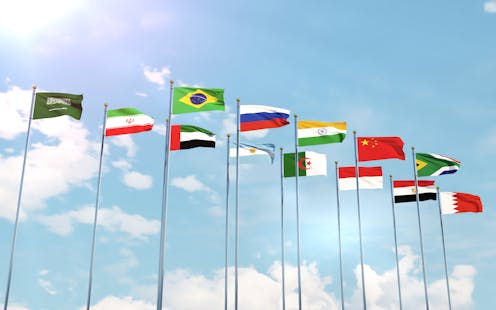
    Ilustrasi-ilustrasi bendera negara anggota BRICS dan mitra. justit/Shutterstock

    Indonesia’s decision to pursue membership in BRICS – an emerging economy bloc comprising Brazil, Russia, India, China, and South Africa – signals that President Prabowo Subianto is steering foreign policy in a direction contrasting with his predecessors.

    During Joko “Jokowi” Widodo’s two-term administration, then-former Foreign Minister Retno Marsudi led efforts to integrate Indonesia’s economy with Western institutions by working to secure membership with the OECD.

    Since BRICS is an alternative to Western-dominated organisations, many observers scrutinised and questioned Indonesia’s nonalignment commitment. However, Foreign Minister Sugiono argued that BRICS aligns with Indonesia’s ‘free and active’ foreign policy, allowing Indonesia to collaborate widely without aligning too closely with any single bloc.

    For Sugiono, joining BRICS means paving the way to advance the new government’s goals of food security, energy independence, poverty alleviation, and human capital development. The bloc offers access to funding, technology, and trade opportunities to tackle key challenges in those sectors. BRICS, with its emphasis on fairness and cooperation, supports Indonesia’s vision for a more inclusive and sustainable future.

    The shift from Retno’s OECD focus to Sugiono’s BRICS approach reflects at least two visions. First, Indonesia seeks to reassess its strategic position as the leading economy in Southeast Asia. Second, the country seeks to switch from its nonalignment stance to multi-alignment. The later will help navigate partnerships with both developed and emerging economies, balancing traditional alliances with new opportunities.

    Joining BRICS can amplify Indonesia’s influence in its already strong ties with each of the member countries and unlock opportunities beyond one-on-one partnerships.

    Fear of missing out

    Indonesia’s pivot to BRICS reflects both its relationship with major powers, such as China and the US, and regional pressures.

    Neighbouring countries Malaysia and Thailand have recently expressed interest in BRICS, creating a sense of competition within Southeast Asia. Both countries joining the bloc could erode Indonesia’s leadership and influence in the region, especially in affecting global affairs.

    Through ASEAN, Indonesia has sought to act as a regional stabiliser and mediator amid rising polarisation between the West and China.

    As its de facto leader, Indonesia has historically championed initiatives like the South China Sea Code of Conduct and Myanmar’s peace process. Its G20 presidency further underscored its role as a mediator between global powers.

    This ‘fear of missing out’ has spurred Indonesia’s interest in BRICS.

    Joining BRICS ahead of its regional peers ensures that Indonesia maintains its leadership position in ASEAN. For Prabowo’s administration, BRICS offers a platform to advance Indonesia’s interests in maritime security, economic growth, and global governance. It is a strategic move beyond an economic decision to amplify its voice on global issues and prevent fellow Southeast Asian countries from overtaking it in shaping the bloc’s agenda.

    Bold (but not one) direction

    Indonesia’s BRICS membership announcement highlights the new administration’s foreign policy ambitions, centred on two key shifts: adopting a multi-alignment strategy and strengthening its ‘good neighbour’ policy.

    Prabowo envisions engaging with all nations, fostering friendly relations while opposing oppression. This approach resonates with Indonesia’s historical commitment to sovereignty and equality in international relations.

    Indonesia has traditionally adhered to a nonalignment principle. This virtue has aided the country navigating major power blocs without binding itself to any single alliance. However, the current geopolitical climate – marked by intensifying tensions between global powers, regional conflicts, and intricate challenges – demands a more flexible and strategic approach.

    By joining BRICS, Indonesia avoids taking sides and instead diversifies its partnerships to maximise benefits. This multi-aligned approach enables active participation in BRICS discussions on multilateral reform.

    Prabowo’s ‘good neighbour policy’ further underscores the importance of maintaining positive relations with all countries. It empowers developing nations and advocates for a more equitable global order and economic system. This strategy also facilitates Indonesia’s resilience by fostering partnerships in food and energy security, poverty alleviation, and human capital development.

    Such collaborations reduce reliance on Western financial systems and enhance Indonesia’s autonomy. Ultimately, these strategic directions position Indonesia as a sovereign and dynamic player capable of balancing global relationships while advancing its own priorities.

    What about the OECD?

    This move does not mean the OECD is off the table for Indonesia. Instead, Prabowo’s approach reflects a dual-track strategy that values both alliances for their respective benefits.

    The OECD remains a long-term objective to enhance Indonesia’s economic governance and regulatory standards. It serves the goal of providing the country with stable relationships within the Western economic framework. Meanwhile, BRICS offers an immediate avenue for Indonesia to deepen ties with equivalent economies and actively shape policies that impact the Global South.

    Sugiono’s statement in Kazan emphasised Indonesia’s commitment to engaging in other forums, including the G20 and OECD discussions. It highlighted the country’s flexibility in international alliances.

    This dual-track strategy reinforces Indonesia’s role as a bridge between developed and developing nations, maximising the benefits of both alliances without sacrificing its autonomy.

    What’s next for Indonesia?

    Indonesia’s decision to join BRICS marks a significant evolution in its foreign policy. By participating in BRICS, Indonesia positions itself as a critical player in global discussions on economic reform and development, asserting its voice within a multi-polar world order.

    Indonesia is charting a path that balances traditional alliances with emerging opportunities, reinforcing its role as a dynamic, independent player on the world stage.

    The Conversation

    Aswin Ariyanto Azis tidak bekerja, menjadi konsultan, memiliki saham, atau menerima dana dari perusahaan atau organisasi mana pun yang akan mengambil untung dari artikel ini, dan telah mengungkapkan bahwa ia tidak memiliki afiliasi selain yang telah disebut di atas.

    ref. Indonesia’s BRICS agenda: 2 reasons Prabowo’s foreign policy contrasts with Jokowi’s – https://theconversation.com/indonesias-brics-agenda-2-reasons-prabowos-foreign-policy-contrasts-with-jokowis-242920

    MIL OSI Analysis

  • MIL-OSI Analysis: Sugary drinks are a killer: a 20% tax would save lives and rands in South Africa

    Source: The Conversation – Africa (2) – By Susan Goldstein, Associate Professor and Director of the SAMRC/Wits Centre for Health Economics and Decision Science – PRICELESS SA (Priority Cost Effective Lessons in Systems Strengthening South Africa), University of the Witwatersrand

    Non-communicable diseases such as diabetes, hypertension and cardiovascular conditions account for over 70% of global deaths annually.

    In South Africa, non-communicable diseases cause more than half of all deaths. Diabetes ranks as the second leading cause after tuberculosis.

    A major contributor to rising diabetes rates is the high consumption of sugar-sweetened beverages, including cooldrinks.

    The World Health Organization recommends a tax of at least 20% on sugary drinks as an effective tool to help reduce consumption and curb related health risks.

    South Africa introduced a tax on sugar-sweetened beverages, officially known as the Health Promotion Levy, in 2018.

    The tax applies at R0.0221 ($0.0012) per gram of sugar beyond a 4g/100ml threshold, amounting to an 8% of final selling price. The tax has increased slightly since it was introduced, but not in line with inflation. The Health Promotion Levy therefore falls short of the original 20% target as industry pressure led to a watered-down version of it.

    I lead the South African Medical Research Council/Wits Centre for Health Economics and Decision Science – PRICELESS SA, which has been studying various aspects of the levy for over 10 years.

    PRICELESS SA is still in the process of measuring the health and financial impact of not implementing the Health Promotion Levy at the recommended 20%. A lack of recent data adds to this challenge. But it is worth noting that the World Obesity Report shows that obesity is still a severe problem in South Africa.

    Without interventions, obesity in South Africa is projected to affect 30 million adults and 10 million children by 2035. In 2019 there were 55,238 deaths in South Africa from non-communicable diseases attributable to obesity, and with an annual increase of 2.3% in obesity, deaths are going to increase.

    Taxing sugary beverages is effective

    Despite the sugar industry’s claims that the Health Promotion Levy is ineffective, global evidence strongly suggests otherwise. Countries that have implemented such taxes have seen significant declines in sugar consumption.

    Sugar-sweetened beverage taxes have been implemented in 103 countries and territories globally and have been shown to be effective in many countries.

    In Ireland there was a 30.2% reduction in sugar intake through these beverages.

    In California a study showed a decrease in overweight and obesity among young people living in cities where there was a sugary beverage tax.

    In Mexico, a sugar-sweetened beverages tax at 1 peso ($0.05) per litre was introduced in 2014, and by 2016, sugary drinks sales had dropped by 37%.

    Similarly, in the UK, a tax introduced in 2018 led to a 35.4% reduction in sugar consumption from taxed beverages.

    The levy has had a positive impact in South Africa. Studies show decreased purchasing of these beverages. There were greater reductions in sales among lower socioeconomic groups and in sub-populations with higher sugary drink consumption.

    Mean sugar from taxable beverage purchases fell from 16.25 g/capita per day from the pre-health promotion levy announcement to 10.63 g/capita per day in the year after implementation.

    Lower-income households, which initially purchased more taxable sugary beverages than wealthier households, showed the most significant reductions in consumption after the tax was enforced.

    This is particularly important as non-communicable diseases disproportionately affect poor and vulnerable populations.

    Stronger taxation on sugary beverages not only decreases consumption but also encourages reformulation by manufacturers, leading to healthier products.

    The levy does not cause job losses

    Sugar-related industries often argue that the tax has led to massive job losses.

    Our research contradicts these claims.

    A recent study carried out by PRICELESS SA, funded by Bloomberg Philanthropies through the University of North Carolina and the South African Medical Research Council, showed no significant association between the levy and employment levels. It showed that the levy had not been associated with job creation or job losses in sugar-related industries. These include agriculture, beverage manufacturing and commercial enterprises that sell food and beverages.

    The study suggests several factors that may explain this:

    Firstly, firms may reallocate labour within their operations rather than
    cut jobs.

    Secondly, many beverage producers have responded to the tax by reformulating their products, reducing the sugar content and using non-nutritive sweeteners rather than reducing production.

    Thirdly, demand for taxed sugary drinks has not declined enough to affect employment.

    Finally, consumers often switch to untaxed alternatives produced by the same companies, preventing financial losses to the industry.

    Increasing the levy is beneficial to the public purse

    The recent delay of South Africa’s budget speech, due to disagreements within the government over the proposed value added tax increase of two percentage points, highlights the urgent need for additional and alternative revenue sources.

    South Africa’s health system is experiencing a massive financial burden due to overweight and obesity, costing R33 billion (US$1.78 billion) annually. This expense accounts for 15.38% of the government’s health expenditure and 0.67% of the country’s GDP. On a per-person basis, the annual cost of overweight and obesity is R2,769 (US$150).

    On the other hand, the levy generated R5.8 billion (US$313m) in revenue over its first two fiscal years.

    Beyond raising funds, a higher tax rate would provide public health benefits and savings for health services.

    Based on our research, increasing the levy to 20% in South Africa could reduce obesity rates by 2.4 to 3.8 percentage points, prevent 85,000 strokes, and save 72,000 lives over two decades.

    These improvements potentially save over R5 billion (US$270m) in medical costs.

    Unlike other taxation measures, which affect all consumers equally, the levy primarily targets discretionary purchases, making it a fairer fiscal tool.

    Therefore, government must act – raise the Health Promotion Levy to 20% and cut the sugar-fuelled health crisis at its root.

    Raising the levy to 20% would be a smarter tax for a healthier nation.

    Darshen Naidoo, Legal Researcher and Associate Lecturer at PRICELESS SA, University of the Witwatersrand, Johannesburg contributed to the article.

    The Conversation

    Susan Goldstein on behalf of PRICELESS receives funding from the Bloomberg Foundation, the SAMRC and the National Institutes for Health Research

    ref. Sugary drinks are a killer: a 20% tax would save lives and rands in South Africa – https://theconversation.com/sugary-drinks-are-a-killer-a-20-tax-would-save-lives-and-rands-in-south-africa-251393

    MIL OSI Analysis

  • MIL-OSI Analysis: Vaping hits alarming levels among South African teens – new study of fee-paying schools

    Source: The Conversation – Africa (2) – By Sam Filby, Research Officer, Research Unit on the Economics of Excisable Products, University of Cape Town

    It’s become common to see kids, some in their school uniforms, puffing on a vape.

    The World Health Organization points to the enticing flavours and targeted marketing to young people as the key reasons behind this trend.

    In the US, e-cigarettes are the most commonly used tobacco product among middle and high school students aged 12 and older, with 5.9% of students reporting use.

    Surveys from the UK indicate that 20.5% of children (aged 11–17) have tried vaping, and that 7.6% of children currently vape. Similar usage rates ranging from 3.3% to 11.8% have been found in south-east Asia. Evidence on vape use among adolescents living in Africa is more scarce.

    We are public health researchers who have studied the phenomenon in South Africa. Our latest study, published in The Lancet’s eClinical Medicine, found that vaping among South African pupils is sky high. We surveyed over 25,000 South African high school students across 52 schools in eight of South Africa’s nine provinces.

    An estimated 16.8% of the sampled learners currently use e-cigarettes.

    Research has shown conclusively that children should not use these products because of the health risks.

    Our findings in South Africa show that high rates of adolescent vaping are not restricted to high income countries.

    Harmful impact on young minds and bodies

    In a 2016 report, the US surgeon general called vaping among young people an “urgent public health problem”.

    One reason for this is that these products commonly deliver nicotine. Nicotine use during adolescence harms the developing brain, with potential long-term effects on learning, memory and attention.

    Nicotine is also an addictive substance. Addictive behaviour in general is associated with the development of mental illness, further fuelling the mental health problems experienced by some adolescents.
    Substance abuse can lower their inhibitions, leading to increased high-risk behaviours.

    Non-nicotine vapes are also bad for health. The chemical composition of specific flavours such as cherry, cinnamon and vanilla have also been shown to cause damage to the lung lining and blood vessels.

    The rising popularity of e-cigarette use among adolescents globally should make helping young people with quitting vapes a priority.

    Surveying South African schools

    We approached schools predominantly in major centres like Cape Town, Johannesburg, Pretoria and Durban. All were “fee-paying” schools. We were not able to include less well resourced schools without easy internet access or non-fee-paying schools.

    We categorised the schools into three brackets:

    • lower-fee schools: annual fees between R20,000 and R40,000 (US$1,100-2,100)

    • medium-fee schools: annual fees between R40,000 and R90,000 (US$2,100-4,800)

    • high-fee schools: annual fees more than R90,000 (over US$4,800).

    Around 17% of pupils in our sample attended lower-fee schools, 64% attended mid-fee schools, and 19% attended high-fee schools. Around 31% of learners attended co-ed schools, 41% attended all-boys’ schools, and 29% attended all-girls’ schools.

    Students were asked about their use of four products in the 30 days preceding the survey: e-cigarettes, tobacco cigarettes, cannabis and hookah pipes.

    Students who indicated that they currently vaped were asked additional questions
    about their vaping history and habits. We also asked students about their
    reasons for starting and continuing to vape.

    Using this data, we studied e-cigarette use, nicotine dependence, and the mental
    health and social stressors associated with vaping among a large sample of South
    African high school learners.

    Alarming rates

    Our study found that 16.8% of high school learners we surveyed were currently using e-cigarettes. There were far lower rates of tobacco cigarette use (2%), cannabis use (5%) and hookah pipe use (3%).

    The proportion of learners reporting e-cigarette use increased by grade: around 9% of grade 8 students reported using vapes, but this rose sharply to an average of 29.5% among grade 12 pupils (who will turn 18 in their final school year). Some schools had usage rates as high as 46% among grade 12 pupils.

    Among the learners who indicated that they vaped, 38% vaped daily, and more than half of the learners in our sample reported that they vaped four or more days per week.

    Around 88% of pupils reported using vapes that contained nicotine. About 47% reported that they vaped within the first hour of waking up – this is highly suggestive of nicotine addiction. We estimate that up to 61% of high school learners who vape could be seriously addicted to nicotine.

    Why adolescents start and continue vaping

    We found that the primary reasons for starting vaping differed from the main reasons for continuing to vape.

    • Just over half (50.6%) of the students who vaped cited social influences
      (family, friends, peer pressure, the need to fit in) as reasons for starting. Around 20% of learners indicated that they’d started vaping to cope with stress and anxiety, while 16.2% said they had started out of general curiosity.

    • Common reasons cited for continuing their vape use were to cope with
      anxiety, depression or stress (28.4%), or because they were addicted (14.9%).

    Some learners explicitly stated addiction in their reasoning:

    It’s an addiction, no matter what I try I can’t stop. (female, 17)

    Others described it more as a habit:

    It has become a habit. I have to consume something constantly. (female, 18)

    Less than 10% of students identified social influences as the reason they continued to vape.

    Around 46% of students did not list addiction as a reason for continuing to vape, although their reported vaping habits aligned with patterns typically seen in individuals who are highly addicted. This suggests that many learners in our sample may lack awareness of what constitutes addiction.


    Read more:
    South Africa’s new vaping tax won’t deter young smokers


    What needs to be done

    Our research underscores the urgent need for a coordinated public health response
    to address the vaping crisis among high school learners.

    The South African government must pass the Tobacco Products and Electronic
    Delivery Systems Control Bill. This legislation will ensure that vapes cannot be sold near schools or online.

    The restrictions on the advertising of vaping products provided for in the bill may aid with this as well as the deglamorisation of vaping among young people – reducing the general curiosity that leads many young people to begin in the first place.

    The dangerous myth that “vaping is safe” also needs to be debunked.

    Finally, we need to help addicted teenagers to stop vaping.

    Punishing students for vaping is unlikely to be an effective strategy. Parents must be more aware of the signs of vaping and the underlying issues driving it.

    Healthcare professionals should ask young people about their vape use during routine checkups.

    And school counsellors should teach coping strategies to help teens navigate life’s challenges.

    The Conversation

    Sam Filby receives funding from the African Capacity Building Foundation and Cancer Research UK and has previously received funding from the CDC Foundation and the US Department of State.

    Richard van Zyl Smit does not work for, consult, own shares in or receive funding from any company or organisation that would benefit from this article, and has disclosed no relevant affiliations beyond their academic appointment.

    ref. Vaping hits alarming levels among South African teens – new study of fee-paying schools – https://theconversation.com/vaping-hits-alarming-levels-among-south-african-teens-new-study-of-fee-paying-schools-244843

    MIL OSI Analysis

  • MIL-OSI Analysis: Pepfar funding to fight HIV/Aids has saved 26 million lives since 2003: how cutting it will hurt Africa

    Source: The Conversation – Africa (2) – By Eric Friedman, Researcher, Georgetown University

    The US President’s Emergency Plan for AIDS Relief has been a cornerstone of global HIV/Aids prevention, care and treatment for over two decades. Pepfar has enjoyed broad bipartisan support in the US, but its future is now uncertain. Public health scholars Eric A. Friedman, Sarah A. Wetter and Lawrence O. Gostin explain Pepfar’s history and impacts, as well as what may lie ahead.

    The early years

    Many people today have forgotten the sheer devastation that the Aids pandemic wrought on the African continent, first spreading widely in east Africa in the 1980s. By the end of the 20th century, life expectancy in the region had decreased from 64 to 47 years.

    Millions of children were infected and many grew up as orphans, with HIV taking the life of one or both of their parents. Children, especially girls, were taken out of school to nurse sick relatives or because school fees were unaffordable.

    Underfunded health systems were near collapse, as were the economies of many African countries.

    Infection rates in several countries on the continent topped 30% of their adult populations.

    These devastating figures persisted despite the discovery of highly effective antiretroviral therapies in the 1990s. These drugs rapidly became widely available in rich countries, beginning in 1996, leading to an 84% decline in death rates over four years.

    But cost kept the drugs out of reach for African countries.

    Only about 100,000 of the 20 million people infected with HIV in Africa were accessing drug treatment in 2003.

    The turnaround

    A major breakthrough came when US president George W Bush proposed a bold global initiative, Pepfar, in his 2003 State of the Union Address. Pepfar would dedicate US$15 billion over five years with the goals of preventing 7 million new infections, treating 2 million people, and caring for another 10 million infected with HIV or orphaned by the disease.

    By 2005, more than 800,000 people were being treated for HIV in Africa – an eightfold increase from only two years prior. Under Pepfar, the costs of antiretroviral treatment per person per year in low- and middle-income countries fell from US$1,200 in 2003 to just US$58 in 2023.

    Pepfar maintained bipartisan support throughout both Democratic and Republican-led administrations and Congresses. Through 2018, it had been reauthorised three times, each for five years.

    The programme has lived up to its promise. The investment of over US$110 billion since being launched has been transformative, with sub-Saharan Africa benefiting the most.

    Globally, Pepfar has saved 26 million lives and prevented nearly 8 million babies from being born with HIV. In 2024, more than 20 million people were receiving HIV treatment through Pepfar, which was also supporting well over 6 million orphans, vulnerable children and their caregivers, and enabled nearly 84 million people to be tested for HIV that year.

    Its importance extends beyond Aids. The programme directly supports more than 340,000 health workers, a tremendous contribution in Africa especially, given severe health worker shortages in much of the continent.

    Pepfar-supported health services integrate HIV services with tuberculosis care, treatment and prevention. And since 2019, Pepfar has been part of a partnership for screening and treating women with HIV for cervical cancer, focused on 12 high-burden countries in sub-Saharan Africa.

    But the past two years have been ones of political discord and major disruption.

    Troubles begin

    The trouble began in May 2023, with Pepfar due for a five-year reauthorisation.

    A key member of Congress, along with organisations against abortion, raised concerns that Pepfar was supporting abortions, even though there was no such evidence at the time. In fact, by law Pepfar is prohibited from supporting abortions.

    House Republicans sought to include abortion restrictions in the Pepfar reauthorisation. But Congress passed a reauthorisation bill without abortion provisions in March 2024, to last until 25 March 2025.

    Ever since then, the threats posed to a five-year Pepfar reauthorisation have grown.

    The Trump effect

    In January, Pepfar reported to Congress that its own investigators had found that four nurses in Mozambique had used Pepfar funding to perform abortions (which are legal in Mozambique), 21 in all. Pepfar officials froze funds to the four nurses and required staff to attest to understanding that they were prohibited from providing abortion as part of US-funded health services.

    Days later Pepfar, along with most other US foreign assistance programmes, suffered a severe blow. President Donald Trump signed an executive order pausing all further disbursements and new obligations of foreign assistance funds for 90 days, pending a sweeping review.

    Four days later, secretary of state Marco Rubio issued a directive that went even further, also requiring organisations to stop work, even those that had already received funds needed to operate.

    By 27 January, virtually all US foreign assistance programmes had come to a halt, including Pepfar programmes.

    Following an outcry, Rubio issued a waiver for lifesaving humanitarian assistance on 28 January. With confusion over what was covered, including whether the waiver encompassed HIV medicines, he issued another waiver on 1 February, covering Pepfar treatment and care programmes, including prevention of and treatment for TB and other opportunistic infections, as well as prevention of mother-to-child transmission programmes.

    But organisations receiving US foreign assistance funds needed to get individual approval to resume, and the administration had put much of USAid’s staff on administrative leave. USAid (along with the US Centers for Disease Control and Prevention) has a central role in administering Pepfar. Many others, including contractors embedded in USAid operations, have been furloughed or fired.

    Very few people existed to process requests to resume work. Furthermore, USAid’s payment system appeared not to be working.

    The decisions of the Trump administration are being challenged in court in the US on the grounds that they are illegal and unconstitutional because they are usurping Congress’s power to determine how the US government spends funds, among other violations of the law.

    Nonetheless, as of this writing, despite a court order to resume funding, it remains entirely frozen, and most programmes are still shut down. The day after the court ordered the government to pay nearly US$2 billion it owes organisations for work already done, the administration revealed that it had terminated the vast majority of foreign assistance awards, including some for Pepfar. Details have not been made public. Meanwhile, the US Supreme Court put a short-term pause on the lower court’s order to immediately pay the money already owed.

    The impact

    The impact has been immediate. People on HIV treatment could not pick up additional medicine, leading to treatment interruption. Pepfar-funded health services had to turn away patients. Health workers supported by Pepfar, among them 40,000 in Kenya, could no longer be paid.

    Many organisations that relied on Pepfar funds also had to lay off staff. Community groups have been affected and many have suspended their services entirely.

    It remains unclear what the future holds – how severe the cuts will be, and to what programmes. In the near term, much depends on the courts and whether the administration implements court orders, as it has yet to do. In the longer term, Congress could seek to resume Pepfar to its former strength, though this would mean acting against the administration’s wishes. Even then, it is not clear whether the administration would spend the money allocated, and the damage already done to Pepfar programmes and trust in the US government will not be repaired quickly.

    Pepfar is currently funded at US$7.5 billion annually. It accounts for over 10% of all US foreign assistance and over half of US global health assistance.

    The separate Pepfar waiver suggests the deepest support for Pepfar is for HIV treatment programmes, as well as others meant to be protected under the waiver. Barring vast cuts to foreign assistance and Pepfar, these programmes are most likely to be at least spared, though the administration has terminated even some grants that had been covered by the waiver.

    Other Pepfar programmes, particularly with respect to HIV prevention, are most vulnerable.

    Rethinking priorities

    The vulnerability of different African countries to Pepfar cuts varies widely. Some fund most of their own HIV programmes. South Africa’s HIV programmes are 74% domestically funded, with the balance coming from Pepfar (17%) and the Global Fund (7%).

    But Pepfar funding accounts for about 90% of all HIV funding in Tanzania and Côte d’Ivoire, and more than half of HIV medicines purchased for the Democratic Republic of Congo, Mozambique and Zambia are purchased by the US.

    If there are significant Pepfar funding cuts, it is doubtful that other wealthy countries will be able to compensate. And because the US, through Pepfar, is the largest contributor to the Global Fund, it is unlikely that the Global Fund could fill the gap either.

    Under these circumstances, unless countries increase their domestic HIV spending, the dramatic progress in combating HIV/Aids in Africa could begin to become undone.
    The conversation in Africa must focus on ending reliance on foreign assistance and developing resilient financing mechanisms to continue the fight to end Aids.

    The Conversation

    Lawrence O. Gostin is Director of the WHO Collaborating Center on Global Health Law

    Eric Friedman and Sarah Wetter do not work for, consult, own shares in or receive funding from any company or organisation that would benefit from this article, and have disclosed no relevant affiliations beyond their academic appointment.

    ref. Pepfar funding to fight HIV/Aids has saved 26 million lives since 2003: how cutting it will hurt Africa – https://theconversation.com/pepfar-funding-to-fight-hiv-aids-has-saved-26-million-lives-since-2003-how-cutting-it-will-hurt-africa-250413


    MIL OSI Analysis

  • MIL-OSI Analysis: Attacks on people with albinism in Tanzania: African court holds government responsible – why it matters

    Source: The Conversation – Africa (2) – By Charlotte Baker, Professor of French and Critical Disability Studies, Lancaster University

    People with albinism face widespread discrimination in many sub-Saharan African countries. In Tanzania, this minority has been subjected to extreme forms of violence. The government’s failure to protect their rights prompted the filing of a case before the African Court on Human and Peoples’ Rights. The case was brought by Tanzanian and international civil rights groups against the government of Tanzania. They were seeking more robust legal protections from the state for people with albinism.

    In February 2025, the court delivered a landmark judgment, holding Tanzania accountable for human rights violations against persons with albinism. Charlotte Baker, who has researched sociocultural aspects of albinism in sub-Saharan Africa, explains the significance of the ruling.

    What is the background to the case?

    Albinism is a relatively rare genetically inherited condition. It occurs in all countries of the world. In sub-Saharan Africa, an estimated 1 in 4,000 people have albinism. The condition results in a lack of pigmentation in the hair, skin and eyes, causing vulnerability to skin cancer and visual impairment.

    Human rights violations and abuses against people with albinism in Tanzania are common. They include discrimination, verbal abuse and bullying. People with albinism also face exclusion from public services, including education and health. They are additionally subjected to extreme forms of violence that include killings, abductions, mutilations and infanticide. Even after a person with albinism has died, their graves are at risk of exhumation to obtain body parts for sale.

    A range of traditional and more modern beliefs drive the oppression of people with albinism. However, structural reasons related to social inequities have created a market in the body parts of people with albinism. These are used for the production of “charms” by “witchdoctors” who promise they’ll bring wealth and success.


    Read more:
    Traditional beliefs inform attitudes to disability in Africa. Why it matters


    A few societies are more accepting of albinism and venerate people with the condition, such as the Bamiléké in Cameroon. However, the majority experience discrimination.

    The first media reports of attacks on people with albinism in Tanzania emerged in 2007, bringing international attention to the issue. Since then, over 700 attacks and killings in 28 countries have been reported to the Canadian NGO Under the Same Sun, although many more go unrecorded. The organisation works to end discrimination and violence against persons with albinism.

    In Tanzania, there have been 209 reports of attacks since 2007. Most recently, on 25 June 2024, a two-year-old girl with albinism was abducted and killed in Kagera region, about 1,500km from the capital Dar es Salaam.

    What does the court ruling mean for persons with albinism?

    Under international human rights law, the fundamental human rights of persons with albinism must be protected under the UN’s Universal Declaration of Human Rights. These include a right to:

    • life

    • adequate standards of living and social protection

    • equality and non-discrimination

    • freedom from exploitation, violence and abuse

    • education, health, work and employment.

    Upholding the rights of people with albinism would ensure that they were treated fairly and with respect.

    The African Court on Human and Peoples’ Rights found that, although some steps have been taken in the right direction, Tanzania has violated the right to life of persons with albinism by not protecting them as required under Article 4 of the African Charter. It also found the state violated the right to non-discrimination by failing to put enough measures in place to fight myths and stereotypes relating to albinism.

    This ruling sets a legal precedent across Africa. It’s a signal to other states of their obligations under the African charters on human rights and children’s welfare.

    What does the Tanzanian government need to do?

    The court determined that superstitions and harmful beliefs had led to discrimination and the targeted killings of persons with albinism. It ordered the government of Tanzania to make provision for nationwide awareness campaigns for at least two years to combat myths and superstitions about albinism.

    The court requires the Tanzanian government to amend the 1928 Witchcraft Act to criminalise attacks against persons with albinism. This is in response to UN Resolution 47/8 on the elimination of harmful practices related to accusations of witchcraft and ritual attacks.

    The government of Tanzania is also ordered to implement its national action plan on the protection of persons with albinism. This is in line with the African Union Plan of Action to End Attacks and Other Human Rights Violations Targeting Persons with Albinism. The national action plan should address stigma and structural issues that lead to discrimination.

    The government must also ensure the right to health protection. This includes access to skin and eye health services. Providing protective clothing and sunscreens can be lifesaving.

    Meeting the needs of children with albinism in educational settings must be a priority for the Tanzanian government. This can mean minor adaptions to classroom layouts and access to visual aids. Most importantly, it requires a change in attitudes among teaching staff and other pupils.

    Tanzania has also been ordered to establish a compensation fund and compensate persons with albinism who have been victims of violent attacks.

    What power does the court have to ensure enforcement?

    The African Court on Human and Peoples’ Rights has instructed Tanzania to publish the judgment on government websites within three months. It should remain accessible for at least a year.

    The government must also submit a report on the implementation of the ruling within two years. If it hasn’t fully complied within three years, a hearing will be held. However, the court has a non-compliance crisis and there are no built-in consequences in its protocol.

    The partners involved in bringing the case will monitor Tanzania’s compliance with the court’s orders.

    The Institute for Human Rights and Development in Africa has called on civil society organisations, policymakers and human rights defenders to support efforts to protect the rights of people with albinism in Tanzania and beyond.

    The Conversation

    Charlotte Baker does not work for, consult, own shares in or receive funding from any company or organisation that would benefit from this article, and has disclosed no relevant affiliations beyond their academic appointment.

    ref. Attacks on people with albinism in Tanzania: African court holds government responsible – why it matters – https://theconversation.com/attacks-on-people-with-albinism-in-tanzania-african-court-holds-government-responsible-why-it-matters-251275

    MIL OSI Analysis

  • MIL-OSI Analysis: TikTok in Egypt: where rich and poor meet – and the state watches everything

    Source: The Conversation – Africa – By Gabriele Cosentino, Assistant Professor, American University in Cairo

    After being released from detention in 2011, Egyptian engineer and activist Wael Ghonim told the media:

    If you want to liberate a society, all you need is the internet.

    He’d been taken into custody for his role in the revolution that toppled the regime of Hosni Mubarak. Part of the success of this unprecedented popular uprising was due to the role of social media in mobilising citizens around a common political cause.

    In 2025, after a decade under the repressive government of Abdel Fattah el-Sisi, it’s fair to say that little has remained of Ghonim’s vision. Social media use in Egypt is closely guarded by the authorities to detect signs of opposition. Citizens are routinely detained, even for the slightest criticism of the government.

    In 2018 Egypt introduced a new law, apparently to curb the problem of online misinformation and disinformation. This law is, in reality, often used to stifle dissent. Egyptians today operate within unclear boundaries of what is permissible to say online. The result is widespread self-censorship for fear of arrest.

    As a scholar of political communication and new media I’ve written books on global social media. I teach students about the social and political impact of digital and social media in Egypt. The video sharing platform TikTok is a frequent subject in my classes because it reveals both the liberating and the repressive effects of social media use in Egypt.

    TikTok stands out for its ability to create viral videos and sudden micro-celebrities. This has made it a lightning rod for government crackdowns. But it has also connected people across socio-economic divides and bred a lively new cultural and political debate – one that’s not as easy for the government to police.

    TikTok in Egypt

    Since 2020, TikTok has become immensely popular in Egypt, with an estimated 33 million users over 18 years old.

    While TikTok hasn’t taken on the explicit political dimension that Facebook or Twitter did over a decade ago, it has already become the theatre of a series of incidents that have landed its users in the crosshairs of the authorities. This has exposed political rifts and tensions.

    Most of the incidents are related to the ability of TikTok to work as a “virality engine” – even users with few followers can gain a sudden and sometimes problematic celebrity.

    But while Egyptian authorities have evidently been cracking down on TikTok users, there have been no concrete plans to ban the platform. In fact, some government branches have used it to advance their own initiatives. The Ministry of Youth and Sports, for example, signed an agreement with TikTok to launch the Egyptian TikTok Creator Hub, designed to educate youth on using social media responsibly.

    Women targeted

    Since 2020, Egyptian authorities have arrested TikTok users under charges ranging from the violation of family values to the spread of false information and allegations of belonging to terrorist organisations. Most of these TikTokers didn’t post explicit sexual or political content, making the charges against them appear exaggerated. These cases suggest the authorities are closely monitoring the platform, following strict moral and political considerations.

    The most high profile cases have involved young women, most notably Haneen Hossam and Mawada Eladham, who were arrested in 2020 for violating family values. Article 25 of Egypt’s anti-cybercrime law states that content “violating the family principles and values upheld by Egyptian society may be punished by a minimum of six months’ imprisonment and/or a fine”. It leaves the definition of family values purposefully vague.

    Observers have noted that this vagueness has allowed the law to be applied in a range of different cases. More than a dozen women have faced similar charges, endured pretrial detention and been handed lengthy prison sentences.

    The arbitrary nature of many of the charges suggests a possible deeper motive: policing the presence of young women in digital spaces where they can gain influence and financial independence outside traditional family or work structures.

    TikTok has given ordinary users in Egypt unprecedented visibility, in some cases allowing them to challenge social norms, often through humour. This appears to have unsettled authorities, who appear to have sought to send a message to the broader population.

    Arrests

    TikTok-related arrests have not been limited to family values. In 2022, three users were arrested for criticising rising food prices. They were charged with spreading fake news, despite the fact that inflation in Egypt was rising sharply.

    In 2023, a parody skit of a fake jail visit by a TikToker went viral. The creators were arrested and charged with belonging to a terror organisation, spreading fake news and misusing social media.


    Read more:
    Why some governments fear even teens on TikTok


    Such arrests indicate that TikTok content that touches on politically sensitive matters, even in jest, is posing a new type of challenge for the Egyptian government. The state is particularly concerned with viral content that might bring attention to its poor human rights record. This includes notoriously bad conditions in jails.

    ‘Egypt’ and ‘Masr’

    At the same time, the platform is proving able to connect people from very different social and economic backgrounds, as it is seen to do globally.

    Egypt is very hierarchical. Small, affluent elite groups live in a separate and secluded socio-economic reality from the majority of the population. Thirty percent of Egyptians live under the poverty line.

    On TikTok, the more privileged, cosmopolitan section of society is referred to as “Egypt”. The poor and disenfranchised are “Masr” (مصر), the Arabic word for Egypt.

    TikTok is aimed at generating viral content more than it is a networking site, like Facebook, that’s based on pre-existing social connections. The result is a virtual common space where the two sides can interact in new ways. This engenders unique social and cultural dynamics also observed in other countries.


    Read more:
    TikTok in Kenya: the government wants to restrict it, but my study shows it can be useful and empowering


    “Egypt” watches “Masr” create all kinds of content – from singing and dancing routines to live begging. “Masr” gets to peek into the otherwise inaccessible world of the wealthy.

    In the current climate of an economic crisis, this divide can be glaring. While most Egyptians are struggling with inflation, the cost of living and unemployment, the wealthy flaunt their lifestyles on TikTok.

    When wealthy TikTokers post content complaining about relatively petty issues like a long wait for valet parking at a luxury restaurant or boast about their weekly allowance, it reveals their disconnect from the everyday hardships faced by the less privileged.

    Users are able to comment freely on each other’s videos, sharing their unvarnished opinions. A student boasting about their weekly allowance of 3,000 EGP (US$60) might be told, “This is some people’s monthly salary.”

    Political consequences

    Since it first appeared in 2020, TikTok in Egypt has evolved from a platform mainly geared towards silly and entertaining content by teenagers. It’s become an outlet for people of all ages interested in gathering information, keeping abreast of current trends and events, and also a space for political engagement, especially on the issue of Palestine.


    Read more:
    Young Nigerians are flocking to TikTok – why it’s a double-edged sword


    There hasn’t been an obvious politicisation of TikTok in Egypt yet and there might never be, given the strict policing by authorities. But TikTok’s ability to expose divisions in Egyptian society and connect citizens across demographic cleavages could potentially have unexpected political consequences in the near future.

    Shahd Atef contributed to the research for this article

    The Conversation

    Gabriele Cosentino does not work for, consult, own shares in or receive funding from any company or organisation that would benefit from this article, and has disclosed no relevant affiliations beyond their academic appointment.

    ref. TikTok in Egypt: where rich and poor meet – and the state watches everything – https://theconversation.com/tiktok-in-egypt-where-rich-and-poor-meet-and-the-state-watches-everything-253278

    MIL OSI Analysis

  • MIL-OSI Analysis: Colonial-era borders create conflict in Africa’s oceans – how to resolve them

    Source: The Conversation – Africa – By Ifesinachi Okafor-Yarwood, Lecturer in Sustainable Futures, University of St Andrews

    Africa has 38 coastal and island nations. Their maritime industries – including energy, tourism, maritime transport, shipping and fishing – play a crucial role in developing these nations.

    Key to harnessing these resources are Africa’s maritime boundaries – lines on a map showing the legal divisions of the ocean between neighbouring coastal states.

    Some of these boundaries were created by colonial powers and kept after independence. Their purpose was to achieve territorial security and ensure the exclusive exploitation of resources and to maintain navigational freedom.

    But Africa’s maritime boundaries sometimes lead to conflict, prevent cooperation on resource management and create room for maritime crimes, like illegal fishing. This is because they are often contested. Countries have overlapping claims and varying interests in resource exploration. This is common in maritime areas rich in oil, gas and fisheries, and deep seabed resources.

    In our recent paper we found that using international law to resolve maritime boundaries does not always bring peace, especially when it results in ceding the disputed area to one party. It can result in animosity between countries and breed room for continued distrust among peoples.

    Today, Africa has the most unresolved maritime boundary disputes in the world and the lowest number of settled boundary disputes.

    As more ocean resources are discovered, climate change may heighten disputes. Rising sea levels can gradually submerge maritime zones, potentially affecting the baselines from which these zones are measured. This could create uncertainty or trigger new conflicts.

    In our paper, we suggest a collaborative approach to resolving maritime disputes. We hope that this will help prevent many African countries from missing out on the benefits of their oceans.

    Price of disputed boundaries

    Disagreements over maritime boundaries can have many negative effects.

    Research has shown that criminal activities tend to increase in disputed maritime boundaries. For instance, illegal fishers are aware that because there is dispute over a border, there will also be enforcement gaps.

    Countries in dispute will also not work together and will not be sending patrols to contested areas. For instance, in 2016, a Chinese vessel escaped into Sierra Leone to avoid capture. When Guinean naval forces boarded the vessel for enforcement, there was an exchange of fire and 11 Guineans were detained by Sierra Leone.

    When boundaries are disputed, it also means that local fishers are likely to encroach into neighbouring waters, often unknowingly, in search of better catches. Given the significance of fisheries to coastal livelihoods and the extent of depletion, this threatens peace and security. It fuels tension between communities and countries over access to dwindling resources.

    Disagreements over maritime boundaries also diminish maritime security cooperation, complicate joint patrols, and divert attention from tackling shared threats such as piracy.

    Colonialism never ended

    Unfortunately, resolving maritime boundary disputes is complicated by a principle in international law known as uti possidetis juris – “as you possess under law”.

    The principle says that when countries argue over borders, international law, built around colonial-era boundaries, is used to decide who gets what. This creates a “winner-takes-all” approach – one side gains control over the disputed area and resources. International courts, like the International Court of Justice and the International Tribunal for the Law of the Sea, follow the provisions of law reinforcing uti possidetis.

    Our examination of maritime boundary disputes in west and central Africa found that the principle of uti possidetis juris had failed to alleviate maritime boundary tensions. In some cases, it has exacerbated them.

    One example is a maritime dispute between Cameroon and Nigeria decided in 2002. The dispute was over who had control of Bakassi, an oil-rich region, and its maritime frontier.

    The uti possidetis juris principle upheld the lines drawn at the time of Nigeria’s independence and resulted in the ceding of Bakassi to Cameroon. The impact of the resolution lingers. To date, thousands of displaced Bakassi people that returned to Nigeria have yet to be resettled and reintegrated. Disputes also continue between fishers from Nigeria and Cameroonian law enforcement agents. In extreme cases, it results in death, like the alleged killing of 97 Nigerian fishers by Cameroonian marine police.

    The way forward

    In our paper, we recommend that courts, tribunals or disputing countries consider joint management agreements to resolve maritime disputes. Under such agreements, countries share and manage disputed maritime resources.

    These agreements will allow for the joint management of shared resources. It will also encourage cooperation and collaboration in other areas, such as joint operations to combat illegal fishing and piracy. While international courts may apply uti possidetis juris as required by law, countries should be encouraged to negotiate special arrangements – such as joint development agreements – as part of the resolution process. Especially in cases where livelihoods and longstanding community ties risk being disrupted by unilateral decisions or the ceding of disputed areas to one party.

    While not perfect, this approach has already improved cooperation on security and resource use at sea. It has worked in places like Nigeria, São Tomé and Príncipe, Senegal and Guinea-Bissau. Ghana and Côte d’Ivoire also have a joint management framework in place for their shared boundaries to avoid future disputes.

    Prolonged boundary disputes only enable criminal actors to exploit Africa’s resources, undermining collective progress. A shift towards collaborative solutions is essential for achieving a sustainable and prosperous future for the continent.

    The Conversation

    Ifesinachi Okafor-Yarwood receives funding from the PEW Charitable Trust and the Research Council of Norway. The St Andrews Research Internship Scheme (StARIS) supported the initial peer-reviewed research.

    Elizabeth Nwarueze does not work for, consult, own shares in or receive funding from any company or organisation that would benefit from this article, and has disclosed no relevant affiliations beyond their academic appointment.

    ref. Colonial-era borders create conflict in Africa’s oceans – how to resolve them – https://theconversation.com/colonial-era-borders-create-conflict-in-africas-oceans-how-to-resolve-them-248577

    MIL OSI Analysis

  • MIL-OSI Analysis: Low turnout and an unfair voting system: UK elections ranked in the bottom half of countries in Europe

    Source: The Conversation – UK – By Toby James, Professor of Politics and Public Policy, University of East Anglia

    The UK has historically been held up as leading democracy with free and fair elections. However, our new report shows election quality in the UK is now ranked in the bottom half of countries in Europe.

    The Global Electoral Integrity Report provides scores for election quality around the world. It defines electoral integrity as the extent to which elections empower citizens.

    Iceland received the highest score for an election that took place in 2024, the “year of elections” during which 1.6 billion people went to the polls, according to Time Magazine. This was an unprecedented concentration of democratic activity in a single year. Iceland has a successful system of automatic voter registration and an electoral system that is judged to be fair to smaller parties.


    Want more politics coverage from academic experts? Every week, we bring you informed analysis of developments in government and fact check the claims being made.

    Sign up for our weekly politics newsletter, delivered every Friday.


    Countries that scored highly based on their most recent election include Sweden, Denmark, Canada, Finland and Lithuania. Those at the opposite end of the scale include Syria, Belarus, Egypt, and Nicaragua. The UK is ranked 24th out of 39 countries in Europe. It is below Estonia, the Czech Republic, Italy, Austria, Luxembourg and Slovakia. It is ranked 53rd out of 170 countries overall.

    The US also saw a decline. The beacons for electoral democracy are therefore now found in mainland Europe (most notably Scandinavia), Australasia, South America and the southern parts of Africa – rather than the UK and US. The centre of global democratic authority has shifted away from Westminster.

    Electoral Integrity in most recent national election up to the end of 2024.
    Electoral Integrity Project, CC BY-ND

    The weaknesses in the UK system

    There remain many areas of strength in UK elections. UK electoral officials show professionalism and independence and there is no concern about the integrity of the vote counting process. There is no evidence of widespread electoral fraud.

    A major weakness is in the fairness of the electoral rules for small parties. The electoral system generated a very disproportional result in 2024. Labour took nearly two-thirds of the seats in parliament, a total of 412, with less than 10 million votes (only 34% of votes cast). Labour won a massive majority in terms of parliamentary arithmetic but the the government did not enter office with widespread support.

    By contrast, Reform and the Greens received 6 million votes between them, but only nine MPs. The electoral system may have worked when Britain had a two-party system – but the two-party system no longer holds. Today’s Britain is more diverse, and political support is more distributed.

    The UK also scores poorly on voter registration. It is estimated that there are around 7 million to 8 million people not correctly registered or missing from the registers entirely. This is not many less than the 9.7 million people whose votes gave the government a landslide majority. The UK does not have a system of automatic voter registration, which is present in global leaders such as Iceland, where everyone is enrolled without a hiccup.

    Another problem is participation. Turnout in July 2024 was low – with only half of adults voting. Voting has been made more difficult as the Elections Act of 2022 introduced compulsory photographic identification for the first time at the general election. This was thought to have made it more difficult for many citizens to vote because the UK does not have a national identity card which all citizens hold.

    Meanwhile, there are further swirling headwinds. The spread of disinformation by overseas actors in elections has become a prominent challenge around the world and there was evidence of disinformation in this campaign too. Violence during the electoral period was thought to have been removed from British elections in Victorian times. But more than half candidates experience abuse and intimidation during the electoral period.

    Action needed

    One year into its time in office, the government is yet to act on this issue. The word “democracy” was missing from the prime minister’s strategic defence review, despite the emphasis on protecting the UK from Russia, a country known for electoral interference and other forms of attack on democracies.

    This was a sharp contrast to the former government’s 2021 review, which emphasised that a “world in which democratic societies flourish and fundamental human rights are protected is one that is more conducive to our sovereignty, security and prosperity as a nation”.

    In its election manifesto, Labour promised to “address the inconsistencies in voter ID rules”, “improve voter registration” and give 16 and 17-year-olds the right to vote in all elections. There needs to be firm action on electoral system change, automatic voter registration, campaign finance reform, voter identification changes and other areas.

    The Reform party is ahead in the polls and has consistently promised proportional representation. If Labour doesn’t make the reforms, another party might do so instead – and reap the benefits.

    There are a complex set of challenges facing democracy and elections. New technological challenges, change in attitudes, international hostility and new emergencies are combining to batter the door of democracy down.

    International organisations are increasingly stressing that political leaders need to work together and take proactive action to protect elections against autocratic forces. This means not only supporting democracy in their messages on the world stage – but also introducing reforms to create beacons of democracy in their own countries.

    Toby James has previously received funding from the AHRC, ESRC, Joseph Rowntree Reform Trust, British Academy, Leverhulme Trust, Electoral Commission, Nuffield Foundation, the McDougall Trust and Unlock Democracy. His current research is funded by the Canadian SSHRC.

    Holly Ann Garnett receives funding from the Social Sciences and Humanities Research Council of Canada and the Canadian Defence Academy Research Programme. She has previously received funding from: the British Academy, the Canadian Institute for Advanced Research, the NATO Public Diplomacy Division, the American Political Science Association Centennial Centre, and the Conference of Defence Associations.

    ref. Low turnout and an unfair voting system: UK elections ranked in the bottom half of countries in Europe – https://theconversation.com/low-turnout-and-an-unfair-voting-system-uk-elections-ranked-in-the-bottom-half-of-countries-in-europe-260396

    MIL OSI Analysis

  • MIL-OSI Analysis: What Elio can help teach us about eye patching, stigma and the developing brain

    Source: The Conversation – UK – By Rebecca Willis, Doctoral Researcher in Clinical Neurosciences, University of Oxford

    Disney Pixar’s latest film, Elio, follows a familiar-sounding character, a lovable and imaginative young hero who dreams of finding a place where he truly belongs. But amid the colour and chaos of the film’s outer space setting, one subtle detail stands out: Elio wears an eye patch.

    In the real world, eye patches are commonly used to treat amblyopia, or “lazy eye”, a neurodevelopmental visual condition projected to affect 175.2 million people globally by 2030. In amblyopia, the brain favours one eye over the other, leading to reduced vision in the weaker eye.

    Treatment often involves covering the stronger eye with a patch, encouraging the brain to rely on the weaker eye and improve its function. This therapy is most effective during early childhood and can take months of daily commitment.

    Yet, despite how common visual conditions are, positive representation of patch-wearing is rare in popular media.

    Animated films have long shaped childhood imaginations, but historically, characters with eye patches or other visual markers often fall into negative stereotypes.

    Think Mr Potato Head’s alter ego One-Eyed Bart in Toy Story, or Madagascar’s Dr. Blowhole: characters where an eye patch signals villainy. Glasses, meanwhile, are more often seen on older characters like Carl Fredrickson from Up or Roz from Monsters Inc.

    Characters with strabismus (misaligned eyes), like Ed from The Lion King, are often portrayed as unintelligent or clumsy. One recent study found that strabismus in children’s animated films is consistently associated with negative character traits – something that can reinforce harmful stigma.

    These portrayals matter. Film plays a powerful role in shaping beliefs, especially for young children who are developing a sense of identity, belonging and how to relate to others. When visual conditions are stereotyped, it can reinforce feelings of embarrassment and difference.

    For children wearing a patch, these feelings can lead to skipping treatment days and poorer outcomes. In contrast, authentic, positive representation can build self-esteem, promote acceptance, and provide relatable role models.

    A subtle but powerful shift

    Happily, things are starting to change. In recent Disney/Pixar films, we’ve seen characters with glasses portrayed as dynamic, central figures: Encanto’s Mirabel, Turning Red’s Priya and Mei, and Big Hero 6’s scientist-superhero Honey Lemon, for example. These characters challenge old stereotypes and broaden the narrative around vision.

    Elio continues that progress. The young protagonist’s eye patch is not a plot point, nor is it used to symbolise frailty, villainy or wisdom. It simply exists – a quiet part of his identity, not something to overcome.

    That subtlety is powerful. For children who wear patches, seeing someone like Elio leading a space mission, not sidelined by his visual condition, can be deeply affirming.

    Beyond the screen, Elio has sparked conversation and awareness. Prevent Blindness launched a campaign around the film to raise public understanding of amblyopia and the importance of early detection. Eye care organisations have also used the film as an educational tool, while individuals have shared their stories of patching and treatment across social media.

    When amblyopia is recognised and treated early, patching can be remarkably effective. But awareness is key, and so is reducing stigma that might discourage children from wearing their patch.

    Childhood amblyopia research

    Although patching often restores vision, it doesn’t work for every child – and we still don’t fully understand why. There is limited research into how patching affects the developing brain, and this lack of insight hinders improvements in treatment.

    Our research with Holly Bridge, Vision Group leader at Oxford University, aims to change that. We’re studying how patching changes brain chemistry in young children.

    Adult studies suggest that chemical shifts in visual parts of the brain may be linked to patching outcomes. To explore this in children, we’re running a study of five to eight-year-olds with amblyopia or healthy vision.

    In our study, children with amblyopia receive a safe, non-invasive brain scan before and after patching treatment. We also measure their vision using child-friendly tests. We then compare these results to children with healthy vision who don’t wear a patch, helping us to understand both visual changes and brain development.

    We hope Elio marks the beginning of more inclusive storytelling, where difference isn’t erased or exaggerated, but simply woven into the fabric of character and adventure. Like Elio’s journey through space, the path to better understanding and representation of childhood visual conditions has faced challenges.

    But perhaps this is the launch we needed: towards better awareness, better research, and a future where every child feels seen – on screen and beyond.

    Rebecca Willis receives funding from a Royal Society Studentship.

    Betina Ip is funded by The Royal Society (Dorothy Hodgkin Research Fellowship, DHFR1201141) and the UKRI-MRC (MR/V034723/1).

    Megan Groombridge receives funding from the MRC (MR/V034723/1).

    ref. What Elio can help teach us about eye patching, stigma and the developing brain – https://theconversation.com/what-elio-can-help-teach-us-about-eye-patching-stigma-and-the-developing-brain-259946

    MIL OSI Analysis

  • MIL-OSI Submissions: Low turnout and an unfair voting system: UK elections ranked in the bottom half of countries in Europe

    Source: The Conversation – UK – By Toby James, Professor of Politics and Public Policy, University of East Anglia

    The UK has historically been held up as leading democracy with free and fair elections. However, our new report shows election quality in the UK is now ranked in the bottom half of countries in Europe.

    The Global Electoral Integrity Report provides scores for election quality around the world. It defines electoral integrity as the extent to which elections empower citizens.

    Iceland received the highest score for an election that took place in 2024, the “year of elections” during which 1.6 billion people went to the polls, according to Time Magazine. This was an unprecedented concentration of democratic activity in a single year. Iceland has a successful system of automatic voter registration and an electoral system that is judged to be fair to smaller parties.


    Want more politics coverage from academic experts? Every week, we bring you informed analysis of developments in government and fact check the claims being made.

    Sign up for our weekly politics newsletter, delivered every Friday.


    Countries that scored highly based on their most recent election include Sweden, Denmark, Canada, Finland and Lithuania. Those at the opposite end of the scale include Syria, Belarus, Egypt, and Nicaragua. The UK is ranked 24th out of 39 countries in Europe. It is below Estonia, the Czech Republic, Italy, Austria, Luxembourg and Slovakia. It is ranked 53rd out of 170 countries overall.

    The US also saw a decline. The beacons for electoral democracy are therefore now found in mainland Europe (most notably Scandinavia), Australasia, South America and the southern parts of Africa – rather than the UK and US. The centre of global democratic authority has shifted away from Westminster.

    Electoral Integrity in most recent national election up to the end of 2024.
    Electoral Integrity Project, CC BY-ND

    The weaknesses in the UK system

    There remain many areas of strength in UK elections. UK electoral officials show professionalism and independence and there is no concern about the integrity of the vote counting process. There is no evidence of widespread electoral fraud.

    A major weakness is in the fairness of the electoral rules for small parties. The electoral system generated a very disproportional result in 2024. Labour took nearly two-thirds of the seats in parliament, a total of 412, with less than 10 million votes (only 34% of votes cast). Labour won a massive majority in terms of parliamentary arithmetic but the the government did not enter office with widespread support.

    By contrast, Reform and the Greens received 6 million votes between them, but only nine MPs. The electoral system may have worked when Britain had a two-party system – but the two-party system no longer holds. Today’s Britain is more diverse, and political support is more distributed.

    The UK also scores poorly on voter registration. It is estimated that there are around 7 million to 8 million people not correctly registered or missing from the registers entirely. This is not many less than the 9.7 million people whose votes gave the government a landslide majority. The UK does not have a system of automatic voter registration, which is present in global leaders such as Iceland, where everyone is enrolled without a hiccup.

    Another problem is participation. Turnout in July 2024 was low – with only half of adults voting. Voting has been made more difficult as the Elections Act of 2022 introduced compulsory photographic identification for the first time at the general election. This was thought to have made it more difficult for many citizens to vote because the UK does not have a national identity card which all citizens hold.

    Meanwhile, there are further swirling headwinds. The spread of disinformation by overseas actors in elections has become a prominent challenge around the world and there was evidence of disinformation in this campaign too. Violence during the electoral period was thought to have been removed from British elections in Victorian times. But more than half candidates experience abuse and intimidation during the electoral period.

    Action needed

    One year into its time in office, the government is yet to act on this issue. The word “democracy” was missing from the prime minister’s strategic defence review, despite the emphasis on protecting the UK from Russia, a country known for electoral interference and other forms of attack on democracies.

    This was a sharp contrast to the former government’s 2021 review, which emphasised that a “world in which democratic societies flourish and fundamental human rights are protected is one that is more conducive to our sovereignty, security and prosperity as a nation”.

    In its election manifesto, Labour promised to “address the inconsistencies in voter ID rules”, “improve voter registration” and give 16 and 17-year-olds the right to vote in all elections. There needs to be firm action on electoral system change, automatic voter registration, campaign finance reform, voter identification changes and other areas.

    The Reform party is ahead in the polls and has consistently promised proportional representation. If Labour doesn’t make the reforms, another party might do so instead – and reap the benefits.

    There are a complex set of challenges facing democracy and elections. New technological challenges, change in attitudes, international hostility and new emergencies are combining to batter the door of democracy down.

    International organisations are increasingly stressing that political leaders need to work together and take proactive action to protect elections against autocratic forces. This means not only supporting democracy in their messages on the world stage – but also introducing reforms to create beacons of democracy in their own countries.

    Toby James has previously received funding from the AHRC, ESRC, Joseph Rowntree Reform Trust, British Academy, Leverhulme Trust, Electoral Commission, Nuffield Foundation, the McDougall Trust and Unlock Democracy. His current research is funded by the Canadian SSHRC.

    Holly Ann Garnett receives funding from the Social Sciences and Humanities Research Council of Canada and the Canadian Defence Academy Research Programme. She has previously received funding from: the British Academy, the Canadian Institute for Advanced Research, the NATO Public Diplomacy Division, the American Political Science Association Centennial Centre, and the Conference of Defence Associations.

    ref. Low turnout and an unfair voting system: UK elections ranked in the bottom half of countries in Europe – https://theconversation.com/low-turnout-and-an-unfair-voting-system-uk-elections-ranked-in-the-bottom-half-of-countries-in-europe-260396

    MIL OSI

  • MIL-OSI Submissions: What Elio can help teach us about eye patching, stigma and the developing brain

    Source: The Conversation – UK – By Rebecca Willis, Doctoral Researcher in Clinical Neurosciences, University of Oxford

    Disney Pixar’s latest film, Elio, follows a familiar-sounding character, a lovable and imaginative young hero who dreams of finding a place where he truly belongs. But amid the colour and chaos of the film’s outer space setting, one subtle detail stands out: Elio wears an eye patch.

    In the real world, eye patches are commonly used to treat amblyopia, or “lazy eye”, a neurodevelopmental visual condition projected to affect 175.2 million people globally by 2030. In amblyopia, the brain favours one eye over the other, leading to reduced vision in the weaker eye.

    Treatment often involves covering the stronger eye with a patch, encouraging the brain to rely on the weaker eye and improve its function. This therapy is most effective during early childhood and can take months of daily commitment.

    Yet, despite how common visual conditions are, positive representation of patch-wearing is rare in popular media.

    Animated films have long shaped childhood imaginations, but historically, characters with eye patches or other visual markers often fall into negative stereotypes.

    Think Mr Potato Head’s alter ego One-Eyed Bart in Toy Story, or Madagascar’s Dr. Blowhole: characters where an eye patch signals villainy. Glasses, meanwhile, are more often seen on older characters like Carl Fredrickson from Up or Roz from Monsters Inc.

    Characters with strabismus (misaligned eyes), like Ed from The Lion King, are often portrayed as unintelligent or clumsy. One recent study found that strabismus in children’s animated films is consistently associated with negative character traits – something that can reinforce harmful stigma.

    These portrayals matter. Film plays a powerful role in shaping beliefs, especially for young children who are developing a sense of identity, belonging and how to relate to others. When visual conditions are stereotyped, it can reinforce feelings of embarrassment and difference.

    For children wearing a patch, these feelings can lead to skipping treatment days and poorer outcomes. In contrast, authentic, positive representation can build self-esteem, promote acceptance, and provide relatable role models.

    A subtle but powerful shift

    Happily, things are starting to change. In recent Disney/Pixar films, we’ve seen characters with glasses portrayed as dynamic, central figures: Encanto’s Mirabel, Turning Red’s Priya and Mei, and Big Hero 6’s scientist-superhero Honey Lemon, for example. These characters challenge old stereotypes and broaden the narrative around vision.

    Elio continues that progress. The young protagonist’s eye patch is not a plot point, nor is it used to symbolise frailty, villainy or wisdom. It simply exists – a quiet part of his identity, not something to overcome.

    That subtlety is powerful. For children who wear patches, seeing someone like Elio leading a space mission, not sidelined by his visual condition, can be deeply affirming.

    Beyond the screen, Elio has sparked conversation and awareness. Prevent Blindness launched a campaign around the film to raise public understanding of amblyopia and the importance of early detection. Eye care organisations have also used the film as an educational tool, while individuals have shared their stories of patching and treatment across social media.

    When amblyopia is recognised and treated early, patching can be remarkably effective. But awareness is key, and so is reducing stigma that might discourage children from wearing their patch.

    Childhood amblyopia research

    Although patching often restores vision, it doesn’t work for every child – and we still don’t fully understand why. There is limited research into how patching affects the developing brain, and this lack of insight hinders improvements in treatment.

    Our research with Holly Bridge, Vision Group leader at Oxford University, aims to change that. We’re studying how patching changes brain chemistry in young children.

    Adult studies suggest that chemical shifts in visual parts of the brain may be linked to patching outcomes. To explore this in children, we’re running a study of five to eight-year-olds with amblyopia or healthy vision.

    In our study, children with amblyopia receive a safe, non-invasive brain scan before and after patching treatment. We also measure their vision using child-friendly tests. We then compare these results to children with healthy vision who don’t wear a patch, helping us to understand both visual changes and brain development.

    We hope Elio marks the beginning of more inclusive storytelling, where difference isn’t erased or exaggerated, but simply woven into the fabric of character and adventure. Like Elio’s journey through space, the path to better understanding and representation of childhood visual conditions has faced challenges.

    But perhaps this is the launch we needed: towards better awareness, better research, and a future where every child feels seen – on screen and beyond.

    Rebecca Willis receives funding from a Royal Society Studentship.

    Betina Ip is funded by The Royal Society (Dorothy Hodgkin Research Fellowship, DHFR1201141) and the UKRI-MRC (MR/V034723/1).

    Megan Groombridge receives funding from the MRC (MR/V034723/1).

    ref. What Elio can help teach us about eye patching, stigma and the developing brain – https://theconversation.com/what-elio-can-help-teach-us-about-eye-patching-stigma-and-the-developing-brain-259946

    MIL OSI

  • MIL-OSI Analysis: Military force may have delayed Iran’s nuclear ambitions – but history shows that diplomacy is the more effective nonproliferation strategy

    Source: The Conversation – Global Perspectives – By Stephen Collins, Professor of Government and International Affairs, Kennesaw State University

    View of the United Nations logo at a 2022 conference of the Parties to the Treaty on the Non-Proliferation of Nuclear Weapons. Angela Weiss/AFP via Getty Images)

    While the U.S. military’s strikes on Iran on June 21, 2025, are believed to have damaged the country’s critical nuclear infrastructure, no evidence has yet emerged showing the program to have been completely destroyed. In fact, an early U.S. Defense Intelligence Agency assessment surmised that the attack merely delayed Iran’s possible path to a nuclear weapon by less than six months. Further, Rafael Mariano Grossi, director of the United Nations’ International Atomic Energy Agency, stated that Iran may have moved its supply of enriched uranium ahead of the strikes, and assessed that Tehran could resume uranium enrichment “in a matter of months.”

    Others have warned that the strikes may intensify the Islamic Republic’s nuclear drive, convincing the government of the need to acquire a bomb in order to safeguard its survival.

    As a scholar of nuclear nonproliferation, my research indicates that military strikes, such as the U.S. one against Iran, tend not to work. Diplomacy — involving broad and resolute international efforts — offers a more strategically effective way to preempt a country from obtaining a nuclear arsenal.

    The diplomatic alternative to nonproliferation

    The strategy of a country using airstrikes to attempt to eliminate a rival nation’s nuclear program has precedent, including Israel’s 1981 airstrike on Iraq’s Osirak nuclear reactor and its 2007 air assault on Syria’s Kibar nuclear complex.

    Yet neither military operation reliably or completely terminated the targeted program. Many experts of nuclear strategy believe that while the Israeli strike destroyed the Osirak complex, it likely accelerated Iraq’s fledgling nuclear program, increasing Saddam Hussein’s commitment to pursue a nuclear weapon.

    The Osirak nuclear power research station in 1981.
    Jacques Pavlovsky/Sygma via Getty Images

    In a similar vein, while Israeli airstrikes destroyed Syria’s nascent nuclear facility, evidence soon emerged that the country, under its former leader, Bashar Assad, may have continued its nuclear activities elsewhere.

    Based on my appraisal of similar cases, the record shows that diplomacy has been a more consistently reliable strategy than military force for getting a targeted country to denuclearize.

    The tactics involved in nuclear diplomacy include bilateral and multilateral engagement efforts and economic tools ranging from comprehensive sanctions to transformative aid and trade incentives. Travel and cultural sanctions – including bans on participating in international sporting and other events – can also contribute to the effectiveness of denuclearization diplomacy.

    The high point of denuclearization diplomacy came in 1970, when the majority of the world signed the Treaty on the Non-Proliferation of Nuclear Weapons. The treaty obliged nonnuclear weapons states to refrain from pursuing them, and existing nuclear powers to share civilian nuclear power technology and work toward eventual nuclear weapons disarmament.

    I’ve found that in a majority of cases since then – notably in Argentina, Brazil, Libya, South Africa, South Korea and Taiwan – diplomacy played a pivotal role in convincing nuclear-seeking nations to entirely and permanently relinquish their pursuit of nuclear weapons.

    Case studies of nuclear diplomacy

    In the cases of U.S. allies Argentina, Brazil, South Korea and Taiwan, the military option was off the table for Washington, which instead successfully used diplomatic pressure to compel these countries to discontinue their nuclear programs. This involved the imposition of significant economic and technological sanctions on Argentina and Brazil in the late-1970s, which substantially contributed to the denuclearization of South America. In the South Korea and Taiwan cases, the threat of economic sanctions was effectively coupled with the risk of losing U.S. military aid and security guarantees.

    South Africa represents one of the most compelling cases in support of diplomatic measures to reverse a country’s nuclear path. In the latter years of the Cold War, the country had advanced beyond threshold nuclear potential to assemble a sizable arsenal of nuclear weapons. But in 1991, the country decided to relinquish that arsenal, due in large part to the high economic, technological and cultural costs of sanctions and the belief that its nuclear program would prevent its reintegration into the international community following years of apartheid.

    Completing the denuclearization of Africa, diplomatic pressure applied by the U.S. was the primary factor in Libya’s decision to shutter its nuclear program in 2003, as ending U.S. sanctions and normalizing relations with Washington became a high priority for the government of Moammar Gadhafi.

    In the case of Iraq, the Hussein regime eventually did denuclearize in the 1990s, but not through a deal negotiated directly with the U.S. or the international community. Rather, Hussein’s decision was motivated by the damaging economic and technological costs of the U.N. sanctions and his desire to see them lifted after the first Gulf War.

    In the 11 countries in which diplomacy was used to reverse nuclear proliferation, only in the cases of India and Pakistan did it fail to induce any nuclear reversal.

    In the case of North Korea, while Pyongyang did for a time join the Treaty on the Non-Proliferation of Nuclear Weapons, it later left the accord and subsequently built an arsenal now estimated at several dozen nuclear weapons. The decades-long efforts at diplomacy with the country cannot, therefore, be coded a success. Still, these efforts did result in notable moves in 1994 and 2007 by North Korea to curtail its nuclear facilities.

    Meanwhile, analysts debate whether diplomacy would have been more successful at containing North Korea’s nuclear program if the George W. Bush administration had not shifted toward a more confrontational policy, including naming North Korea as a member of the “axis of evil” and delaying aid promised in the 1994 U.S.-North Korean Agreed Framework.

    The Iran deal and beyond

    Consistent with the historical track record for diplomacy concerning other nuclear powers, Iran offers compelling evidence of what diplomacy can achieve in lieu of military force.

    Diplomatic negotiations between the U.S, Iran and five leading powers yielded the landmark Joint Comprehensive Plan of Action in 2015. The so-called Iran deal involved multilateral diplomacy and a set of economic sanctions and incentives, and persuaded Iran to place stringent limits on its nuclear program for at least 10 years and ship tons of enriched uranium out of the country. A report from the International Atomic Energy Agency in 2016 confirmed that Iran had abided by the terms of the agreement. Consequently, the U.S., European Union and U.N. responded by lifting sanctions.

    Representatives of the nations involved in signing the 2015 Iran nuclear deal pose for a group photo following talks in July 2015.
    AP Photo/Ronald Zak

    It was only after President Donald Trump ordered the U.S. withdrawal from the agreement in 2018, and reimposed sanctions on Iran, that Tehran resumed its alarming enrichment activities.

    Trump signaled quickly after the recent attack on Iran a willingness to engage in direct talks with Tehran. However, Iran may rebuff any agreement that effectively contains its nuclear program, opting instead for the intensified underground approach Iraq took after the 1981 Osirak attack.

    Indeed, my research shows that combining military threats with diplomacy reduces the prospects of successfully reaching a disarmament agreement. Nations will be more reluctant to disarm when their negotiating counterpart adopts a threatening and combative posture, as it heightens their fear that disarmament will make it more vulnerable to future aggression from the opposing country.

    A return to an Iran nuclear deal?

    Successful denuclearization diplomacy with Iran will not be a panacea for Middle East stability; the U.S. will continue to harbor concerns about Iran’s military-related actions and relationships in the region.

    It is, after all, unlikely that any U.S. administration could strike a deal with Tehran on nuclear policy that would simultaneously settle all outstanding issues and resolve decades of mutual acrimony.

    But by signing and abiding to the terms of the JCPOA, Iran has demonstrated a willingness to cooperate on the nuclear issue in the past. Under the agreement, Iran accepted a highly limited and low-proliferation-risk nuclear program subject to intrusive inspections by the international community.

    That arrangement was beneficial for regional stability and for buttressing the global norm against nuclear proliferation. A return to a JCPOA-type agreement would reinforce a diplomatic approach to relations with Iran and create an opening for progress with the country on other areas of concern.

    Stephen Collins does not work for, consult, own shares in or receive funding from any company or organization that would benefit from this article, and has disclosed no relevant affiliations beyond their academic appointment.

    ref. Military force may have delayed Iran’s nuclear ambitions – but history shows that diplomacy is the more effective nonproliferation strategy – https://theconversation.com/military-force-may-have-delayed-irans-nuclear-ambitions-but-history-shows-that-diplomacy-is-the-more-effective-nonproliferation-strategy-259769

    MIL OSI Analysis

  • MIL-OSI Analysis: A new Gaza ceasefire deal is on the table – will this time be different?

    Source: The Conversation – Global Perspectives – By Julie M. Norman, Senior Associate Fellow on the Middle East at RUSI; Associate Professor in Politics & International Relations, UCL

    The US president, Donald Trump, says that Israel has agreed to terms for a 60-day ceasefire in Gaza. If that sounds familiar, it is.

    The idea of a two-month truce has been discussed since the collapse of the last shortlived ceasefire in March. A similar proposal was floated in May, but Hamas viewed it as an enabling mechanism for Israel to continue the war after a brief pause, rather than reaching a permanent peace deal.

    As the devastation in Gaza worsens by the day, will this time be any different?

    The proposal, put forward by Qatari mediators, reportedly involves Hamas releasing ten living hostages and the bodies of 18 deceased hostages over the 60-day period, in exchange for the release of a number of Palestinian prisoners.


    Get your news from actual experts, straight to your inbox. Sign up to our daily newsletter to receive all The Conversation UK’s latest coverage of news and research, from politics and business to the arts and sciences.


    The remaining 22 hostages would be released if a long-term deal is reached. The 60-day ceasefire period would also involve negotiations for a permanent end to hostilities and a roadmap for post-war governance in Gaza.

    But the plan is similar to the eight-week, three-phase ceasefire from January to March of this year, which collapsed after the first phase of hostage exchanges. Since then peace talks have hit a recurrent impasse.

    For Hamas, a long-term ceasefire means the permanent end to the war and the withdrawal of Israeli forces from Gaza. Israel, meanwhile, wants to see the complete removal of Hamas from power, the dismantling and disarming of its military wing and the exile of remaining senior Hamas leaders.

    But despite the persistent challenges, there are several reasons that this attempt for a ceasefire might be different. First and foremost is the recent so-called “12-day war” between Israel and Iran, which Israel has trumpeted as a major success for degrading Iran’s nuclear capabilities (although the reality is more nuanced).

    The perceived win gives Israel’s prime minister, Benjamin Netanyahu, political maneuverability to pursue a ceasefire over the objections of far-right hardliners in his coalition who have threatened to bring down the government in previous rounds.

    The Iran-Israel war, in which the US controversially carried out strikes on Iran’s nuclear sites, also revived Trump’s interest in the Middle East. Trump entered office just as the phased Gaza ceasefire deal was being agreed. But Trump put little diplomatic pressure on Israel to engage in serious talks to get from the first phase of the agreement to phase two, allowing the war to resume in March.

    Now however, after assisting Israel militarily in Iran, Trump has significant leverage he can use with Netanyahu. He will have the chance to use it (if he chooses) when Netanyahu visits Washington next week.

    Both men also view Iran’s weakened position as an opportunity for expanding the Abraham accords. This was the set of agreements normalising relations between Israel and several Arab states, including the United Arab Emirates, Bahrain, Sudan and Morocco, which Trump brokered at the end of his first term.

    Netanyahu has long eyed a US-backed deal with Saudi Arabia, and a smaller-scale declaration with Syria is reportedly now under discussion as well. But those deals can’t move forward while the war in Gaza is going.

    Additional obstacles

    However, the recurrent obstacles to a deal remain – and it’s unclear if the proposed terms will include guarantees to prevent Israel resuming the war after the 60-day period.

    New issues have also arisen since the last round of talks that could create further challenges. Hamas is demanding a return to traditional humanitarian aid distribution in Gaza – or at least the replacement of the controversial US and Israeli-backed Gaza Humanitarian Foundation (GHF).

    The GHF’s four distribution sites, located in militarised zones, replaced over 400 previously operating aid points, and more than 400 people have been killed while seeking aid near the sites, since May 26. More than 170 international non-governmental organisations and charities have called for the GHF to be shut down.

    Israel’s military control over Gaza has also become further entrenched since the last ceasefire. More than 80% is thought to be covered by evacuation orders – and new orders for north Gaza and Gaza City were issued on June 29 and July 2 respectively.

    Israeli officials have described the renewed operations as military pressure on Hamas to accept a ceasefire. But Netanyahu has also spoken openly about long-term military occupation of Gaza.

    He recently stated that Israel would remain in “full security control of Gaza” even after the war. Even if a temporary ceasefire is agreed, the road ahead is strewn with difficulties in moving towards a long-lasting ceasefire or reaching an acceptable “day-after” agreement.

    Still, the current moment offers an opportunity for a breakthrough. Trump has a renewed interest in getting to a ceasefire and Netanyahu has a rare political window to enter an agreement and get hostages home. Hamas, meanwhile, has been weakened, not only by Israel’s relentless military pounding, but by increasing disillusionment from the people of Gaza, who are desperate for an end to the war.

    There is no shortage of reasons to end the war in Gaza. The only question is if Israel and Hamas have the will to do so.

    Julie M. Norman does not work for, consult, own shares in or receive funding from any company or organisation that would benefit from this article, and has disclosed no relevant affiliations beyond their academic appointment.

    ref. A new Gaza ceasefire deal is on the table – will this time be different? – https://theconversation.com/a-new-gaza-ceasefire-deal-is-on-the-table-will-this-time-be-different-260219

    MIL OSI Analysis

  • MIL-OSI Analysis: Queen Hatshepsut’s statues were destroyed in ancient Egypt – new study challenges the revenge theory

    Source: The Conversation – Global Perspectives – By Jun Yi Wong, PhD Candidate in Egyptology, University of Toronto

    After the Egyptian pharaoh Hatshepsut died around 1458 BCE, many statues of her were destroyed. Archaeologists believed that they were targeted in an act of revenge by Thutmose III, her successor. Yet the condition of the statues recovered in the vicinity of her mortuary temple varies and many survive with their faces virtually intact.

    Now a new study by archaeologist Jun Yi Wong re-examines the original excavations and offers an alternative explanation. Much of the damage may in fact be from the “ritual deactivation” of the statues and their reuse as raw material. We asked him to explain.


    Who was Queen Hatshepsut and why was she important?

    Hatshepsut ruled as the pharaoh of Egypt around 3,500 years ago. Her reign was an exceptionally successful one – she was a prolific builder of monuments, and her reign saw great innovations in art and architecture. As a result, some regard her as one of the greatest rulers – male or female – in ancient Egypt. She has also been described as the “first great woman in history”.

    Hatshepsut was the wife and half sister of pharaoh Thutmose II. Following the premature death of her husband, she acted as regent for her stepson, the young Thutmose III. However, about seven years later, Hatshepsut ascended the throne and declared herself ruler of Egypt.

    Why was it believed her statues were destroyed in revenge?

    After her death, Hatshepsut’s names and representations such as statues were systematically erased from her monuments. This event, often called the “proscription” of Hatshepsut, is currently part of my wider research.

    There’s little doubt that this destruction began during the time of Thutmose III, since some of Hatshepsut’s erased representations were found concealed by his new constructions.

    The statues that formed the subject of my recently published study were discovered in the 1920s. By this time, Thutmose III’s proscription of Hatshepsut was already well known, so it was immediately (and rightly) assumed it was caused during his reign. Some of the broken statues were even found underneath a causeway built by Thutmose III, so there is little doubt that their destruction took place during his reign.

    Because the statues were found in fragments, early archaeologists assumed that they must have been broken up violently, perhaps due to Thutmose III’s animosity towards Hatshepsut. For instance, Herbert Winlock, the archaeologist who led the excavations of 1922 to 1928, remarked that Thutmose III must have “decreed the destruction of every portrait of (Hatshepsut) in existence” and that

    Every conceivable indignity had been heaped on the likeness of the fallen Queen.

    The problem with such an interpretation is that some of Hatshepsut’s statues have survived in relatively good condition, with their faces virtually intact. Why was there such a great variation in the treatment of the statues? That was essentially the main question of my research.

    How did you go about finding the answer?

    It was clear that the damage to Hatshepsut’s statues was not caused solely by Thutmose III. Many of them were left exposed and not buried, and many were reused as building material. Indeed, not far from where the statues were discovered, the archaeologists found a stone house that was partially built using fragments of her statues.

    Of course, the question is to what extent these reuse activities added to the damage of the statues. Fortunately, the archaeologists who excavated the statues left behind field notes that are quite detailed.

    Based on this archival material, it is possible to reconstruct the locations in which many of these statues were found.

    The results were quite intriguing: statues that are scattered over large areas, or have significant missing parts, tend to have sustained significant damage to their faces. In contrast, statues found in a relatively complete condition typically have their faces fully intact.

    In other words, statues that were subjected to heavy reuse activities are far more likely to have sustained facial damage.

    Therefore, it is likely that Thutmose III was not responsible for the facial damage sustained by the statues. Instead, the destruction that he was responsible for was far more specific, namely the breaking of these statues across their neck, waist and knees.

    This form of treatment is not unique to Hatshepsut’s statues.

    Fascinating. So what does this mean?

    The practice of breaking royal statues across their neck, waist and knees is common in ancient Egypt. It’s often referred to as the “deactivation” of statues.

    For the ancient Egyptians, statues were more than just images. For example, newly made statues underwent a rite known as the opening of the mouth, where they were ritually brought to life. Since statues were regarded as living and powerful objects, their inherent power had to be neutralised before they could be discarded.


    Read more:
    Cleopatra’s skin colour didn’t matter in ancient Egypt – her strategic role in world history did


    Indeed, one of the most extraordinary discoveries in Egyptian archaeology is the Karnak Cachette, where hundreds of royal statues were found buried in a single deposit. The vast majority of the statues have been “deactivated”, even though most of them depict pharaohs who were never subjected to any hostilities after their death.

    This suggests that the destruction of Hatshepsut’s statues was motivated mainly by ritualistic and pragmatic reasons, rather than revenge or animosity. This, of course, changes the way that her relationship with Thutmose III is understood.

    Jun Yi Wong receives funding from the Andrew W. Mellon Foundation.

    ref. Queen Hatshepsut’s statues were destroyed in ancient Egypt – new study challenges the revenge theory – https://theconversation.com/queen-hatshepsuts-statues-were-destroyed-in-ancient-egypt-new-study-challenges-the-revenge-theory-260326

    MIL OSI Analysis

  • MIL-OSI Analysis: Rare wooden tools from Stone Age China reveal plant-based lifestyle of ancient lakeside humans

    Source: The Conversation – Global Perspectives – By Bo Li, Professor, Environmental Futures Research Centre, School of Science, University of Wollongong

    Excavation at the Gantangqing site. Liu et al.

    Ancient wooden tools found at a site in Gantangqing in southwestern China are approximately 300,000 years old, new dating has shown. Discovered during excavations carried out in 2014–15 and 2018–19, the tools have now been dated by a team of archaeologists, geologists, chronologists (including me) and paleontologists.

    The rare wooden tools were found alongside an assortment of animal and plant fossils and stone artifacts.

    Taken together, the finds suggest the early humans at Gantangqing were surprisingly sophisticated woodworkers who lived in a rich tropical or subtropical environment where they subsisted by harvesting plants from a nearby lake.

    The location of the Gantangqing site and excavation trenches.
    Liu et al. / Science

    Why ancient wooden tools are so rare

    Wood usually decomposes relatively rapidly due to microbial activity, oxidation, and weathering. Unlike stone or bone, it rarely survives more than a few centuries.

    Wood can only survive for thousands of years or longer if it ends up buried in unusual conditions. Wood can last a long time in oxygen-free environments or extremely dry areas. Charred or fire-hardened wood is also more durable.

    At Gantangqing, the wooden objects were excavated from low-oxygen clay-heavy layers of sediment formed on the ancient shoreline of Fuxian Lake.

    Wooden implements are extremely rare from the Early Palaeolithic period (the first part of the “stone age” from around 3.3 million years ago until 300,000 years ago or so, in which our hominin ancestors first began to use tools). Indeed, wooden tools more than even 50,000 years old are virtually absent outside Africa and western Eurasia.

    As a result, we may have a skewed understanding of Palaeolithic cultures. We may overemphasise the role of stone tools, for example, because they are what has survived.

    What wooden tools were found at Gantangqing?

    The new excavations at Gantangqing found 35 wooden specimens identified as artificially modified tools. These tools were primarily manufactured from pine wood, with a minority crafted from hardwoods.

    Some of the tools had rounded ends, while others had chisel-like thin blades or ridged blades. Of the 35 tools, 32 show marks of intentional modification at their tips, working edges, or bases.

    Two large digging implements were identified as heavy-duty digging sticks designed for two-handed use. These are unique forms of digging implements not documented elsewhere, suggesting localised functional adaptations. There were also four distinct hook-shaped tools — likely used for cutting roots — and a series of smaller tools for one-handed use.

    Nineteen of the tools showed microscopic traces of scraping from shaping or use, while 17 exhibit deliberately polished surfaces. We also identified further evidence of intensive use, including soil residues stuck to tool tips, parallel grooves or streaks along working edges, and characteristic fracture wear patterns.

    The tools from Gantangqing are more complete and show a wider range of functions than those found at contemporary sites such as Clacton in the UK and Florisbad in South Africa.

    The wooden tools from Gantangqing took a variety of forms.
    Liu et al. / Science

    How old are the Gantangqing wooden tools?

    The team used several techniques to figure out the age of the wooden tools. There is no way to determine their age directly, but we can date the sediment in which they were found.

    Using a technique called infrared stimulated luminescence, we analysed more than 10,000 individual grains of minerals from different layers. This showed the sediment was deposited roughly between 350,000 and 200,000 years ago.

    Dating the different layers of sediment excavated at the site produced a detailed timeline.
    Liu et al. / Science

    We also used different techniques to date a mammal tooth found in one of the layers to roughly 288,000 years old. This was consistent with the mineral results.

    Next we used mathematical modelling to bring all the dating results together. Our model indicated that the layers containing stone tools and wooden implements date from 360–300,000 years ago to 290–250,000 years ago.

    What was the environment like?

    Our research indicates the ancient humans at Gantangqing inhabited a warm, humid, tropical or subtropical environment. Pollen extracted from the sediments reveals 40 plant families that confirm this climate.

    Plant fossils further verify the presence of subtropical-to-tropical flora dominated by trees, lianas, shrubs and herbs. Wet-environment plants show the local surroundings were a lakeside or wetlands.

    Animal fossils also fit this picture, including rhinoceros and other mammals, turtles and various birds. The ecosystem was likely a mosaic of grassland, thickets and forests. Evidence of diving ducks confirms the lake must have been at least 2–3 metres deep during human occupation.

    Examples of stone and bone tools found at Gantangqing.
    Liu et al. / Science

    What were the Gantangqing wooden tools used for?

    The site contained evidence of plants such as storable pine nuts and hazelnuts, fruit trees such as kiwi, raspberry-like berries, grapes, edible herbs and fern fronds.

    There were also aquatic plants that would have provided edible leaves, seeds, tubers and rhizomes. These were likely dug up from shallow mud near the shore, using wooden tools.

    These findings suggest the Gantangqing hominins may have made expeditions to the lake shore, carrying purpose-made wooden digging sticks to harvest underground food sources. To do this, they would have had to anticipate seasonal plant distributions, know exactly what parts of different plants were edible, and produce specialised tools for different tasks.

    Why the Gantangqing site is important

    The wooden implements from Gantangqing represent the earliest known evidence for the use of digging sticks and for the exploitation of underground plant storage organs such as tubers within the Oriental biogeographic realm. Our discovery shows the use of sophisticated wood technology in a very different environmental context from what has been seen at sites of similar age in Europe and Africa.

    The find significantly expands our understanding of early hominin woodworking capabilities.

    The hominins who lived at Gantangqing appear to have lived a heavily plant-based subsistence lifestyle. This is in contrast to colder, more northern settings where tools of similar age have been found (such as Schöningen in Germany), where hunting large mammals was the key to survival.

    The site also shows how important wood – and perhaps other organic materials – were to “stone age” hominins. These wooden artifacts show far more sophisticated manufacturing skill than the relative rudimentary stone tools found at sites of similar age across East and Southeast Asia.

    The excavation, curation, and research of the Gantangqing site were supported by
    National Cultural Heritage Administration (China), Yunnan Provincial Institute of
    Cultural Relics and Archaeology, Yuxi Municipal Bureau of Culture and Tourism,
    Chengjiang Municipal Bureau of Culture and Tourism, Australian Research Council
    (ARC) Discovery Projects, Strategic Priority Research Program of the Chinese
    Academy of Sciences, Hong Kong Research Grants Council (RGC), National Natural
    Science Foundation of China (NSFC).

    ref. Rare wooden tools from Stone Age China reveal plant-based lifestyle of ancient lakeside humans – https://theconversation.com/rare-wooden-tools-from-stone-age-china-reveal-plant-based-lifestyle-of-ancient-lakeside-humans-260204

    MIL OSI Analysis