Category: Agriculture

  • MIL-OSI USA: SBA Opens New Business Recovery Center in McCracken County

    Source: United States Small Business Administration

    ATLANTA – The U.S. Small Business Administration (SBA) announced the opening of a Business Recovery Center (BRC) in McCracken County to assist small businesses, nonprofits and residents affected by severe storms, straight-line winds, tornadoes, flooding, landslides and mudslides occurring April 2.

    Beginning Wednesday, May 7, SBA customer service representatives will be on hand at the BRC to answer questions about SBA’s disaster loan program, explain the application process and help individuals complete their application. Walk-ins are accepted, but you can schedule an in-person appointment in advance at appointment.sba.gov.

    The BRC’s hours of operation are listed below.

    Business Recovery Center (BRC)

    McCracken County

    McCracken County Rescue Vehicle Building Entrance

    3700 Coleman Road

    Paducah, KY 42001

    Opening: Wednesday, May 7, 1 p.m. to 6 p.m.

    Hours:     Monday – Friday, 8 a.m. to 6 p.m.

    Saturday, 9 a.m. to 3 p.m.

    Closed: Sunday

    “SBA’s Business Recovery Centers have consistently proven their value to business owners following a disaster,” said Chris Stallings, associate administrator of the Office of Disaster Recovery and Resilience at the SBA. “Business owners can visit these centers to meet face-to-face with specialists who will guide them through the disaster loan application process and connect them with resources to support their recovery.”

    The SBA’s Economic Injury Disaster Loan (EIDL) program is available to small businesses, small agricultural cooperatives and private nonprofit (PNP) organizations with financial losses directly related to the disaster. The SBA is unable to provide disaster loans to agricultural producers, farmers, or ranchers, except for small aquaculture enterprises.

    EIDLs are available for working capital needs caused by the disaster and are available even if the small business or PNP did not suffer any physical damage. The loans may be used to pay fixed debts, payroll, accounts payable, and other bills not paid due to the disaster.

    Businesses and nonprofits are eligible to apply for business physical disaster loans and may borrow up to $2 million to repair or replace disaster-damaged or destroyed real estate, machinery and equipment, inventory, and other business assets.

    Homeowners and renters are eligible to apply for home and personal property loans and may borrow up to $100,000 to replace or repair personal property, such as clothing, furniture, cars, and appliances. Homeowners may apply for up to $500,000 to replace or repair their primary residence.  

    Applicants may also be eligible for a loan increase of up to 20% of their physical damage, as verified by the SBA, for mitigation purposes. Eligible mitigation improvements include strengthening structures to protect against high wind damage, upgrading to wind rated garage doors, and installing a safe room or storm shelter to help protect property and occupants from future damage.  

    Interest rates are as low as 4% for businesses, 3.625% for nonprofits, and 2.750% for homeowners and renters, with terms up to 30 years. Interest does not begin to accrue, and payments are not due until 12 months from the date of the first loan disbursement. The SBA sets loan amounts and terms based on each applicant’s financial condition.

    To apply online and receive additional disaster assistance information visit sba.gov/disaster. Applicants may also call the SBA’s Customer Service Center at (800) 659-2955 or send an email to disastercustomerservice@sba.gov for more information on SBA disaster assistance. For people who are deaf, hard of hearing, or have a speech disability, please dial 7-1-1 to access telecommunications relay services.

    The filing deadline to return applications for physical property damage is June 23, 2025. The deadline to return economic injury applications is January 26, 2026.

    ###

    About the U.S. Small Business Administration

    The U.S. Small Business Administration helps power the American dream of business ownership. As the only go-to resource and voice for small businesses backed by the strength of the federal government, the SBA empowers entrepreneurs and small business owners with the resources and support they need to start, grow or expand their businesses, or recover from a declared disaster. It delivers services through an extensive network of SBA field offices and partnerships with public and private organizations. To learn more, visit www.sba.gov. 
    MIL OSI USA News

  • MIL-OSI USA: Senator McConnell Advocates for Bourbon Industry During Senate Agriculture Hearing

    US Senate News:

    Source: United States Senator for Kentucky Mitch McConnell

    WASHINGTON, D.C. – During a hearing of the Senate Agriculture Committee, U.S. Senator Mitch McConnell (R-KY) questioned Chris French, the Acting Associate Chief of the U.S. Department of Agriculture (USDA) Forest Service, regarding the White Oak Resilience Act of 2025. Earlier this year, Senators McConnell and Mark Warner (D-VA) introduced the bill to provide greater federal resources and direct research into safeguarding our nation’s White Oak tree population. The bill requires the USDA and the Forest Service to coordinate research and conservation efforts, ensuring the White Oak a stable supply and a viable future. 

    Senator McConnell said during the hearing that “our iconic bourbon industry is critical to us. 95 percent of the bourbon in the world is made in Kentucky. The $9 billion industry supports agricultural, forestry, manufacturing, distilling, bottling, construction, and transportation jobs… just to name a few. Kentucky bourbon is synonymous with the White Oak tree, which is used to age our state’s signature spirit in wooden barrels. Unfortunately, 75 percent of the nation’s White Oak population is rated as mature, meaning that there will be a shortage of White Oaks within 30 years. Congress must act to ensure the preservation of this invaluable resource.” 

    Senator McConnell asked Mr. French about the Administration’s support of the White Oak Resilience Act. Mr. French said, the USDA Forest Service is “very supportive” of the overall intent of the McConnell/Warner bill, “especially with the loss that we are seeing [of White Oak trees] across the country.” 

    White Oak trees are vital to the environmental ecosystem, as well as several trademark American industries, like bourbon and furniture production. Considered the most important hardwood tree in the eastern United States, White Oak trees provide sustenance and shelter for a host of wildlife species across the country. 

    White Oak trees can take up to 25 years to reach full maturity, but a lack of seedlings has created an impending shortage that threatens the future of this species and the billions of dollars in economic impact they generate nationwide. The bipartisan legislation will help reverse the depletion of this iconic tree and address the threat its extinction poses to the American economy. 

    The White Oak Resilience Act has been included in the Fix Our Forests Act. The Committee is expected to markup the bill later this month. 

    MIL OSI USA News

  • MIL-OSI USA: Senator Marshall Leads Press Conference on His Bill to Codify Trump’s Key Promise – No Tax on Overtime

    US Senate News:

    Source: United States Senator for Kansas Roger Marshall
    Washington –U.S. Senator Roger Marshall, M.D. (R-Kansas), member of the U.S. Senate Finance Committee, today led a press conference alongside U.S. Senators Tommy Tuberville (R-Alabama), Pete Ricketts (R-Nebraska), and Jim Justice (R-West Virginia) to highlight their bill, the Overtime Wages Tax Relief Act. 
    This legislation thoughtfully puts pen to paper to deliver on President Donald Trump’s key campaign promise to give tax relief to American workers. Specifically, the Overtime Wages Tax Relief Act creates an income tax deduction for overtime wage earners, targeted to help lower and middle-income Americans. Senator Marshall is advocating for this legislation to be included in the FY2025 budget reconciliation package. 
    Click HERE watch Senator Marshall’s full press conference
    Highlights from the press conference include:
    What inspired Senator Marshall to introduce the legislation:
    “I was born and raised on a farm. My first job off the farm was at a sale barn outside of El Dorado, Kansas. Every Saturday, the farmers bring in their cattle. We would sell 1,000 head, 2,000, or 3,000 head on a Saturday. A 12-hour day would be a short day there. Many days my brother and I worked 24 – 36 hours at a time. But the greatest thing I looked forward to was that time and a half after eight hours.
    “And I just remember like it was yesterday – I was making $2.30 an hour, that was the standard wage there at the sale barn… that time and a half overtime really incentivized a young person who was looking forward to buying his first car. But to my surprise, that first time I got my paycheck with that overtime, I was shocked to see how much money the government was taking out of my paycheck…”
    Senator Marshall shares stories of Kansans who would benefit from this legislation:
    “I want to share the story of a couple other people here from back home. The first is Steve Hewitt, and Steve is here in his UPS uniform. He works for the Teamsters local 696, in Topeka, Kansas, obviously a UPS driver. And this is a quote from Steve, ‘Working overtime means I’m spending more time on the road and away from my family. But thanks to this bill, being able to keep more my paycheck in my pocket would be life changing – not just for me, but for blue collar workers across the nation.’
    “The other one is from Brandon Switzer – a corrections officer at the Shawnee County Department of Corrections. Teamsters, local 696 in Topeka, Kansas, again. And this is a quote from Brandon, ‘As the Chief Steward and a corrections specialist at the Shawnee County Department of Corrections, I believe being able to deduct overtime pay from taxes would allow workers to better afford day-to-day living. New legislation like this would also allow workers like me to possibly contribute more to our deferred compensation plan.’
    “The people that were constantly reaching out to me were hard working men and women saying we need someone fighting for us, someone fighting for Main Street, not just Wall Street. And I’m so proud of President Trump that he’s made this a priority, to be the President for the hard-working Americans, for people who carry a lunch pail to work.”
    On why this legislation is critical:
    “This is one of President Trump’s priorities, and it’s one of my priorities as well. You know what this would mean to a family, and I’ll turn it over to Coach Tuberville. Look, the Trump tax cuts – if we don’t make that permanent, families back home are going to get a tax increase of $2,000 a year. So, if we let this go off the books, that’s going to cost Kansas taxpayers $2,000 a year. Potentially, for a person that’s working overtime, they could save another $4,000 on taxes if this legislation is signed into law by the president. So, to me, this is like a $6,000 opportunity for hard-working folks back home. If you’re making 80, 90, or $100,000 a year back home, $6,000 is nothing to sneeze at. That will go a long way in taking care of Joe Biden’s inflation.”
    On the additional benefits of the Overtime Wages Tax Relief Act:
    “I think that we should incentivize hard work, like several of us have said, addressing work shortages. I don’t know back in your states, but all I hear is we don’t have enough employees for the jobs we have. And I see American manufacturing companies starting to really spike back home as well. And again, their big challenge is a lack of people for the jobs we have. The Tax Foundation estimates this will increase economic growth by 0.2 to 0.5% annually. So, I think it actually will help grow the economy and pay for itself in its own way.”
    On how this legislation would be paid for:
    “We should never look at any issue just in a silo. I look at this one, big, beautiful bill, and think that we need to come up with $2 trillion in savings for American taxpayers. And then I think if there’s an opportunity to take some of those savings and reward hard-working men and women that we should do that. And much like the Trump tax cuts, I really think that this will accelerate the economy and add to the GDP.”
    On government revenues and spending:
    “I still think, to me, there’s even a bigger discussion here, is when the appropriation process is starting, is America willing to go on a diet and get off this sugar high that we’ve been on the last four years. We need to reprioritize where we’re spending money. We have a spending problem, much more so than a tax revenue problem.”

    MIL OSI USA News

  • MIL-OSI Africa: Somalia’s exports are threatened by climate change and conflict: what 30 years of data tell us

    Source: The Conversation – Africa – By Mohamed Okash, Founding Director, Institute of Climate and Environment, Simad University

    In the sun-scorched lands of Somalia, farmers and livestock keepers have grown accustomed to the extremes of climate. In 2022, for example, the country suffered the longest drought in 40 years. This affected nearly half the national population of 18 million people. The following year, heavy and widespread flooding devastated the country’s farmlands and infrastructure.

    For a country whose economy breathes through its agriculture and livestock sectors, these extremes have adverse implications. Over 70% of the population relies on farming, herding and pastoral activities for their livelihoods. Despite these climatic shocks, agriculture contributes about 60% of Somalia’s GDP. This is down slightly from 65% two decades ago.

    The agricultural sector is diverse, yet fragile. It is made up of two primary components: crop cultivation (mainly sorghum, maize, sesame and fruit) and livestock rearing (camels, goats, sheep and cattle).

    Somalia’s strongest export offerings have included livestock and animal products, such as hides and skins, along with sesame seeds, bananas and charcoal.

    Livestock has been the cornerstone of exports for decades. It experienced strong growth from the early 2000s through the mid-2010s, but faced notable declines after 2017. This was a result of droughts, disease outbreaks and market disruptions. Saudi Arabia, the United Arab Emirates and Oman are among Somalia’s biggest trading partners.

    Apart from extremes of climate, the agricultural sector continues to be affected by political instability and conflict. Some of this conflict stems from disputes over water and land. These are common, particularly during times of drought, when competition for natural resources sparks conflict between settled and nomadic pastoralists.

    We are development researchers focused on the intersection of climatic vulnerability, conflict and economic resilience in fragile states. Our recent study set out to examine how the combined effects of climate change and conflict are shaping the country’s trade in agricultural and livestock products. We did this by analysing three decades (1985–2017). We analysed the long-term relationship between environmental stress, conflict events and the country’s export performance in key agricultural sectors.

    We found that erratic rainfall, rising temperatures and conflict have significantly constrained Somalia’s agricultural and livestock export performance over the past decade. While exports have not collapsed entirely, their growth trajectory has been repeatedly disrupted.

    Livestock exports, for instance, peaked in 2015–2016 at over US$530 million, but have since declined due to recurrent droughts, internal conflict and trade restrictions, including a partial import ban by Saudi Arabia in 2016.

    Our analysis confirms that a 1% rise in average temperature reduces agricultural exports by approximately 8.37%. Further, a single-unit increase in internal conflict correlates with a 0.13–0.16% drop in both livestock and crop exports in the long run.

    Although average rainfall boosts exports when available, its unpredictability creates volatility in both the short and long term. The study found that climatic shocks and ongoing conflict are deeply hurting Somalia’s agriculture and livestock exports.

    What the data says

    Our analysis, based on export figures, climate records and conflict datasets (including some from the World Bank), reveals a clear pattern: export performance rises with rainfall and declines with both rising temperatures and internal conflict.

    Banana and sorghum production have dropped by over 50% in some regions since the 1990s. Once a key export crop, bananas have nearly disappeared from Somalia’s export portfolio. Sesame remains a strong export, but yields are becoming more unpredictable.

    Heat stress, compounded by water scarcity, has reduced soil fertility and shortened growing seasons. Maize and groundnuts have been especially affected, with yields declining by up to 40% in recent drought years.

    Many of these crops were once sold in regional markets. They are now primarily consumed locally – or not grown at all.

    Overall, our research showed that Somalia’s competitiveness in global markets has weakened considerably. Livestock exports fell sharply during drought years, particularly 2011 and 2017.

    At the same time, Somalia has started importing basic food items such as maize and flour, which it used to grow domestically. This dependency is both economically and nutritionally dangerous.

    Falling production and exports

    Our analysis shows that internal conflict significantly reduces both agricultural and livestock exports in the long run. It does so by limiting market access and closing vital export corridors.

    This leads to a reliance on circuitous indirect trade routes through adjacent countries at the expense of the export economy. For example, livestock from southern Somalia can no longer reach key export ports due to insecurity.

    Violence over resources – especially water and land – frequently flares up in the central and northern rangelands between agro-pastoralists and nomadic herders. According to the Internal Displacement Monitoring Centre, between 2012 and 2023, conflict alone forced more than 1.6 million people from their homes. In some of the worst years, like 2017 and 2021, over 400,000 people were displaced from their communities.

    The conflict has displaced rural populations. It has also fractured governance systems and access to international markets, making it harder for Somalia’s farmers and herders to survive.

    Extreme droughts and floods have had a severe impact on yields.

    When the rains are good, exports rise. But those rains are now unpredictable. Erratic precipitation patterns and higher temperatures have led to decreased crop yields and hampered livestock production. This is challenging the nation’s ability to sustain exports.

    What needs to be done

    In response to the challenges posed by climate change and conflicts over agricultural and livestock exports, Somalia needs strategic policy measures.

    First, Somalia should broaden the range of products it exports. Diversification reduces the country’s vulnerability to fluctuations in the market for specific goods. It also minimises risks associated with climate-related and conflict-induced disruptions, and enhances overall economic resilience.

    Second, the country must resolve internal conflicts which disrupt farming operations and displace rural communities.

    Third, the authorities should facilitate market access. Establishing export processing zones can help meet global quality standards. This would reduce the reliance on intermediaries and ensure that producers receive a fair share of profits.

    Finally, measures need to be taken to mitigate the impact of climate change on agriculture. The government needs to invest in climate-resilient farming systems, promoting sustainable agricultural practices and supporting farmers in adapting to changing climatic conditions. This adaptation should include:

    • irrigation systems to reduce dependence on erratic rainfall

    • drought-resistant and heat-tolerant crop varieties

    • research, skills building and extension services to support local communities

    • integrated pest management and sustainable land and soil management.

    For Somalia, investing in agricultural exports is not merely an economic imperative. It is a development challenge that demands a multifaceted approach encompassing climate resilience, institutional strengthening and inclusive economic growth.

    – Somalia’s exports are threatened by climate change and conflict: what 30 years of data tell us
    – https://theconversation.com/somalias-exports-are-threatened-by-climate-change-and-conflict-what-30-years-of-data-tell-us-254146

    MIL OSI Africa

  • MIL-OSI Global: Somalia’s exports are threatened by climate change and conflict: what 30 years of data tell us

    Source: The Conversation – Africa – By Mohamed Okash, Founding Director, Institute of Climate and Environment, Simad University

    In the sun-scorched lands of Somalia, farmers and livestock keepers have grown accustomed to the extremes of climate. In 2022, for example, the country suffered the longest drought in 40 years. This affected nearly half the national population of 18 million people. The following year, heavy and widespread flooding devastated the country’s farmlands and infrastructure.

    For a country whose economy breathes through its agriculture and livestock sectors, these extremes have adverse implications. Over 70% of the population relies on farming, herding and pastoral activities for their livelihoods. Despite these climatic shocks, agriculture contributes about 60% of Somalia’s GDP. This is down slightly from 65% two decades ago.

    The agricultural sector is diverse, yet fragile. It is made up of two primary components: crop cultivation (mainly sorghum, maize, sesame and fruit) and livestock rearing (camels, goats, sheep and cattle).

    Somalia’s strongest export offerings have included livestock and animal products, such as hides and skins, along with sesame seeds, bananas and charcoal.

    Livestock has been the cornerstone of exports for decades. It experienced strong growth from the early 2000s through the mid-2010s, but faced notable declines after 2017. This was a result of droughts, disease outbreaks and market disruptions. Saudi Arabia, the United Arab Emirates and Oman are among Somalia’s biggest trading partners.

    Apart from extremes of climate, the agricultural sector continues to be affected by political instability and conflict. Some of this conflict stems from disputes over water and land. These are common, particularly during times of drought, when competition for natural resources sparks conflict between settled and nomadic pastoralists.

    We are development researchers focused on the intersection of climatic vulnerability, conflict and economic resilience in fragile states. Our recent study set out to examine how the combined effects of climate change and conflict are shaping the country’s trade in agricultural and livestock products. We did this by analysing three decades (1985–2017). We analysed the long-term relationship between environmental stress, conflict events and the country’s export performance in key agricultural sectors.

    We found that erratic rainfall, rising temperatures and conflict have significantly constrained Somalia’s agricultural and livestock export performance over the past decade. While exports have not collapsed entirely, their growth trajectory has been repeatedly disrupted.

    Livestock exports, for instance, peaked in 2015–2016 at over US$530 million, but have since declined due to recurrent droughts, internal conflict and trade restrictions, including a partial import ban by Saudi Arabia in 2016.

    Our analysis confirms that a 1% rise in average temperature reduces agricultural exports by approximately 8.37%. Further, a single-unit increase in internal conflict correlates with a 0.13–0.16% drop in both livestock and crop exports in the long run.

    Although average rainfall boosts exports when available, its unpredictability creates volatility in both the short and long term. The study found that climatic shocks and ongoing conflict are deeply hurting Somalia’s agriculture and livestock exports.

    What the data says

    Our analysis, based on export figures, climate records and conflict datasets (including some from the World Bank), reveals a clear pattern: export performance rises with rainfall and declines with both rising temperatures and internal conflict.

    Banana and sorghum production have dropped by over 50% in some regions since the 1990s. Once a key export crop, bananas have nearly disappeared from Somalia’s export portfolio. Sesame remains a strong export, but yields are becoming more unpredictable.

    Heat stress, compounded by water scarcity, has reduced soil fertility and shortened growing seasons. Maize and groundnuts have been especially affected, with yields declining by up to 40% in recent drought years.

    Many of these crops were once sold in regional markets. They are now primarily consumed locally – or not grown at all.

    Overall, our research showed that Somalia’s competitiveness in global markets has weakened considerably. Livestock exports fell sharply during drought years, particularly 2011 and 2017.

    At the same time, Somalia has started importing basic food items such as maize and flour, which it used to grow domestically. This dependency is both economically and nutritionally dangerous.

    Falling production and exports

    Our analysis shows that internal conflict significantly reduces both agricultural and livestock exports in the long run. It does so by limiting market access and closing vital export corridors.

    This leads to a reliance on circuitous indirect trade routes through adjacent countries at the expense of the export economy. For example, livestock from southern Somalia can no longer reach key export ports due to insecurity.

    Violence over resources – especially water and land – frequently flares up in the central and northern rangelands between agro-pastoralists and nomadic herders. According to the Internal Displacement Monitoring Centre, between 2012 and 2023, conflict alone forced more than 1.6 million people from their homes. In some of the worst years, like 2017 and 2021, over 400,000 people were displaced from their communities.

    The conflict has displaced rural populations. It has also fractured governance systems and access to international markets, making it harder for Somalia’s farmers and herders to survive.

    Extreme droughts and floods have had a severe impact on yields.

    When the rains are good, exports rise. But those rains are now unpredictable. Erratic precipitation patterns and higher temperatures have led to decreased crop yields and hampered livestock production. This is challenging the nation’s ability to sustain exports.

    What needs to be done

    In response to the challenges posed by climate change and conflicts over agricultural and livestock exports, Somalia needs strategic policy measures.

    First, Somalia should broaden the range of products it exports. Diversification reduces the country’s vulnerability to fluctuations in the market for specific goods. It also minimises risks associated with climate-related and conflict-induced disruptions, and enhances overall economic resilience.

    Second, the country must resolve internal conflicts which disrupt farming operations and displace rural communities.

    Third, the authorities should facilitate market access. Establishing export processing zones can help meet global quality standards. This would reduce the reliance on intermediaries and ensure that producers receive a fair share of profits.

    Finally, measures need to be taken to mitigate the impact of climate change on agriculture. The government needs to invest in climate-resilient farming systems, promoting sustainable agricultural practices and supporting farmers in adapting to changing climatic conditions. This adaptation should include:

    • irrigation systems to reduce dependence on erratic rainfall

    • drought-resistant and heat-tolerant crop varieties

    • research, skills building and extension services to support local communities

    • integrated pest management and sustainable land and soil management.

    For Somalia, investing in agricultural exports is not merely an economic imperative. It is a development challenge that demands a multifaceted approach encompassing climate resilience, institutional strengthening and inclusive economic growth.

    This research is funded by SIMAD University in Mogadishu, Somalia.

    This research is funded by SIMAD University in Mogadishu, Somalia.

    ref. Somalia’s exports are threatened by climate change and conflict: what 30 years of data tell us – https://theconversation.com/somalias-exports-are-threatened-by-climate-change-and-conflict-what-30-years-of-data-tell-us-254146

    MIL OSI – Global Reports

  • MIL-OSI USA: Wyoming Air National Guard selected for C-130J upgrade

    Source: US State of Wyoming

    CHEYENNE, Wyo. – The Department of the Air Force has announced that the Wyoming Air National Guard base in Cheyenne has been selected to receive the C-130J Super Hercules, a modern upgrade to replace its aging fleet of C-130H aircraft.

    The decision marks a major milestone for the 153rd Airlift Wing and reflects the outstanding performance and reliability of Wyoming Airmen in support of missions at home and around the world. A total of eight C-130J aircraft will be assigned to Cheyenne, with the first deliveries expected to begin in early 2028.

    “This is a major win for the men and women of the Wyoming Air National Guard,” said Maj. Gen. Greg Porter, Wyoming’s Adjutant General. “It’s a result of their hard work, the trust they’ve built across the Air Force, and the strong support we’ve received from our state and national leaders. We are grateful.”

    As part of the transition, pilots and loadmasters will undergo new training and certification, while flight engineers and navigators will be phased out of C-130J crew configurations. The changes will affect 19 manpower positions, which will be reallocated through the Air National Guard’s corporate process.

    Wyoming Governor Mark Gordon emphasized the long-term value of the investment.

    “This decision speaks volumes about the professionalism and dedication of our Cowboy Guard,” said Governor Mark Gordon. “I’m proud of the work that’s gone into making this possible and thankful to the Air Force for recognizing Wyoming as a critical part of its future. These aircraft will keep our state ready to serve—both in crisis response and in support of national missions.”

    Members of Wyoming’s congressional delegation praised the announcement as a reflection of the state’s ongoing role in national defense.

    “The men and women of the Wyoming Air National Guard represent the best of our state,” said Senator John Barrasso. “This C-130J upgrade ensures they have the tools they need to carry out missions more efficiently and effectively. It’s a well-earned investment in their capabilities and our national security.”

    Senator Cynthia Lummis added, “Wyoming’s Airmen are responsive, lethal, and always there when called. The arrival of the C-130J fleet will secure our Guard’s ability to respond quickly in emergencies, while strengthening our presence in key military operations.”

    Congresswoman Harriet Hageman echoed that sentiment: “This is a big moment for Cheyenne and the entire state of Wyoming. The C-130J upgrade reflects our Wyoming Guard’s stellar record and the community’s strong partnership with the military.”

    The 153rd Airlift Wing has long played a vital role in the Air National Guard’s airlift capabilities, including aeromedical evacuation, humanitarian relief, firefighting with the Modular Airborne Fire Fighting System (MAFFS), and global operations. The addition of the C-130J marks the next evolution in that legacy.

    MIL OSI USA News

  • MIL-OSI Africa: Western Cape signs partnerships with agricultural commodity organisations

    Source: South Africa News Agency

    The Western Cape Department of Agriculture (WCDoA) and various agricultural commodity organisations have renewed their Memoranda of Understanding (MoUs) for another five years.

    According to the provincial government, this new agreement establishes a foundation for these organisations to continue supporting new farmers through advice, mentorship, training, access to inputs, market opportunities, and mutual in-kind contributions.

    These commodity organisations represent a wide range of interest groups associated with the agricultural sector. 

    Agreements have been signed with the various organisations including the National Wool Growers Association (NWGA), the Deciduous Fruit Producers Trust (DFPT), SA Wines, the South African Table Grape Industry (SATI), the South African Poultry Association (SAPA), Potatoes SA, Raisins SA, Grain South Africa, Berries SA, the Citrus Growers Association, the South African Pork Producers Association, the Red Meat Producers Association, and the Rooibos Producers Association.

    The Western Cape MEC for Agriculture, Economic Development, and Tourism, Dr Ivan Meyer, emphasised the vital importance of these agreements. 

    He stated that the Western Cape Department of Agriculture (WCDoA) recognises strategic partnerships as essential for tackling the complex challenges faced by the agricultural sector, and these MoUs are a clear indication of that commitment.

    “The department has developed and nurtured strategic partnerships over several years. These partnerships complement our work and enhance the impact of our service delivery initiatives. One such initiative is the commodity approach, which has been an enormous success for over a decade,” Meyer said. 

    The Head of the Western Cape Department of Agriculture (WCDoA), Dr Mogale Sebopetsa, stated that the partnership with commodity organisations aims to enhance capacity building, mentorship, market access, and resource mobilisation to support the commercialisation of new farmers in the Western Cape.

    Sebopetsa also mentioned that these commodity associations are allowed to participate in the Commodity Project Allocation Committees (CPACs). 

    The committees will play a vital role in reviewing and overseeing the farmer applications that are processed.

    “With the commodity approach, the department can augment its resources by leveraging the industry’s expertise, financial resources, and other assets, thus improving our service delivery to farmers,” Sebopetsa  said. 

    Partners recognised the importance of the commodity approach in furthering the transformation agenda and assisting producers in their journey toward commercialisation. 

    One notable partner, Mariette Kotzé, the Group Operations Manager at Hortgro, mentioned that this partnership has been in place since 2009, and its impact has been significant and immeasurable.

    “It is about making a difference. But it is also about creating an enabling environment for our growers.”

    Mecia Petersen, CEO of the South African Table Grapes Industry, which provides almost 100 000 employment positions worth R3.78 billion per annum, stressed the role of collaboration in unlocking value for the sector. 

    “Our sector has enormous potential to create many more jobs. Our ability to do so becomes easier with a reliable partner such as the Western Cape Government. This is aptly demonstrated through the Western Cape Government’s role in improving operations at the Port of Cape Town and today’s formal commitment to support the agriculture sector, which the government takes very seriously,” she added. 

    In addition, the MEC stated that the MoUs reinforce the province’s shared commitment to transforming the agricultural sector, boosting the economy, and creating jobs. – SAnews.gov.za
     

    MIL OSI Africa

  • MIL-OSI Security: Final Sentencing Announced in Multi-State Mail and Bank Fraud Conspiracy Involving Postal Workers

    Source: Office of United States Attorneys

    Montgomery, AL – Today, Acting United States Attorney Kevin Davidson announced the final sentencing in a wide-ranging conspiracy involving eight defendants convicted of wire, bank, and mail fraud. The convictions stem from an investigation into widespread mail theft and check fraud, which included the earlier prosecutions of two Montgomery-area postal workers.

    On May 6, 2025, 25-year-old Hunter Hudson, Jr., also known as “Hunnid K,” from Montgomery, Alabama, received a sentence of 92 months in prison after pleading guilty to wire, bank, and mail fraud. Hudson was identified as a manager within the conspiracy and based on his conduct, caused an intended loss amount of more than $1.5 million. He was ordered to pay $987,883.50 in restitution and to forfeit $91,020.41.

    The conspiracy, which took place between 2022 and 2024, involved the theft and alteration of checks that were then deposited into numerous fraudulent bank accounts. Part of the conspiracy was coordinated through a group chat titled “Fraud Academy,” as named by one of the conspirators.

    The other individuals involved in the conspiracy previously received the following sentences:

    • Brandon Michael Gage, 27, also from Montgomery, was sentenced to 135 months in prison. He was also identified as a manager within the conspiracy, with an intended loss amount exceeding $550,000. Gage was fined $25,000 and ordered to pay $65,000 in restitution.
    • Joey Payne, 26, a resident of Opelika, Alabama, received a sentence of 108 months in prison. Like Hudson and Gage, Payne was also a manager in the scheme with an intended loss amount over $550,000. He was fined $15,000 and ordered to pay $101,556.97 in restitution.
    • Reuben Kristian Brown, 26, another Montgomery resident, was sentenced to 87 months in prison. He acted as a manager in the conspiracy and had an intended loss amount of more than $1.5 million. Brown was fined $15,000 and ordered to pay $17,500 in restitution.
    • Keenan Rashaad Watson, 26, also from Montgomery, was sentenced to 60 months in prison. A manager in the conspiracy, Watson was associated with an intended loss of over $550,000. He was fined $15,000.
    • Kerry O’Shay Hawthorne, 26, another resident of Montgomery, received a sentence of 40 months in prison and was ordered to pay $49,008.95 in restitution.
    • Ethan Alexander Brown, 23, a former bank teller from Montgomery, was sentenced to 34 months in prison. He was directly involved in depositing 61 altered checks worth more than $2 million. He was ordered to pay $973,692.05 in restitution to his employer.
    • Destinie Janan James, 23, a resident of Auburn, Alabama, was sentenced to 22 months in prison. She was fined $25,000 and ordered to pay $89,000 in restitution.

    Although these sentences mark the conclusion of this indictment, the investigation is ongoing.

    “This case demonstrates the serious consequences for those who exploit public institutions and financial systems for personal gain,” said Acting U.S. Attorney Davidson. “Thanks to the dedication of our law enforcement partners, we were able to dismantle a complex criminal network and hold each participant accountable. We remain committed to pursuing those who defraud the public and threaten the integrity of our postal and banking systems.”

    “These convictions are a testament to the dedication of the investigative and legal teams and should send a strong message to any employee who thinks of conspiring with others to steal mail and commit check fraud,” said Tammy Hull, Inspector General U.S. Postal Service. “Our special agents, working with our federal and local law enforcement partners, will continue to aggressively investigate these criminal activities, protecting the integrity of the Postal Service and the U.S. Mail.”

    “The United States Postal Service is a vital and trusted institution,” said Timothy J. O’Malley, Acting Special Agent in Charge with the Federal Bureau of Investigation (FBI). “Any attempt to exploit our postal or banking systems is a serious violation of the public’s trust. These actions will not be tolerated and will be prosecuted to the fullest extent of the law. Protecting the integrity of our postal and financial systems is essential and non-negotiable.”

    “The sentencing in this case should serve notice to criminals that the U.S. Postal Inspection Service is dedicated to defending the nation’s mail system from unlawful activity,” said Shameka Jackson, Acting Inspector-in-Charge of the U.S. Postal Inspection Service’s Houston Division. “I fully commend the hard work and countless hours put forth by all of the law enforcement agencies involved, which resulted in bringing Hunter Hudson, Jr. and the other co-defendants to justice.”

    This extensive investigation was led by the United States Postal Service’s Office of Inspector General, Federal Bureau of Investigation (FBI), United States Postal Inspection Service, Office of Inspector General for the Federal Deposit Insurance Corporation (FDIC), and United States Treasury Inspector General for Tax Administration, with Assistant United States Attorney J. Patrick Lamb prosecuting the case.

    Additional support was provided by the Alabama Attorney General’s Office, Montgomery Police Department, Auburn Police Department, Opelika Police Department, Lee County Sheriff’s Office, Prattville Police Department, Harris County (GA) Sheriff’s Office, Meriwether County (GA) Sheriff’s Office, Georgia State Troopers, Venice (FL) Police Department, and the Sarasota County (FL) Sheriff’s Office.

    MIL Security OSI

  • MIL-OSI United Kingdom: EA steps up dry weather prep after driest spring start since 1956

    Source: United Kingdom – Executive Government & Departments

    Press release

    EA steps up dry weather prep after driest spring start since 1956

    Driest start to spring in 69 years across England.

    The Environment Agency has urged water companies to do more to safeguard water supplies after the driest start to spring in 69 years. 

    The environmental regulator convened a meeting of the National Drought Group today (Wednesday 7 May 2025) and said more needed to be done to cut leakage and help customers use water more wisely. 

    In England, March was the driest since 1961 and April received just half its normal rainfall. Farmers have had to start irrigating crops earlier and reservoir levels are either notably low or exceptionally low across the North East and North West of England. Both these regions have seen their driest start to the year since 1929.   

    Representatives from the EA told the meeting – which includes the Met Office, government, regulators, water companies, farmers and conservation experts – that while no area is currently officially in drought there is a medium risk of one this summer without sustained rainfall.

    Chairing the meeting, Environment Agency Deputy Director of Water, Richard Thompson, said:   

    The changing climate means we will see more summer droughts in the coming decades.

    The last two years were some of the wettest on record for England but drier conditions at the start of this year mean a drought is a possibility and we need to be prepared.  

    It’s heartening to see more people looking to reduce their water use and we expect water companies to do more to cut leakage and rollout smart meters.

    Whilst there are currently no plans for hosepipe bans, if the prolonged dry weather continues, water companies may need to implement their dry weather plans in the weeks and months ahead.   

    The EA is closely monitoring water companies’ implementation of these plans, especially high-risk locations, as well as working with farmers to help them plan for irrigating their crops. It is also preparing dry weather advice and information for the public, including small steps they can take to reduce usage. 

    Water Minister, Emma Hardy, said:  

    Our water infrastructure is crumbling after years of underinvestment.

    Water companies must go further and faster to cut leaks and build the infrastructure needed to secure our water supply.

    The Government has secured over £104 billion of private sector investment to fund essential infrastructure, including nine new reservoirs to secure our future water supply into the decades to come.

    The National Drought Group will meet to discuss action regularly in the coming months. At today’s meeting, attendees heard about the current water resources situation:

    • A dry start to the year means farmers have had an earlier start to the irrigation season and have seen an increased demand on their on-site storage reservoirs.   
    • Reservoir storage across England is 84% of total capacity. This compares to 90% at the end of April in the 2022 drought year.
    • River flows are currently below normal or lower for this time of year across northern and central England.   
    • Chalk groundwater levels are generally in a good position.   
    • Wildfires have been reported in Cumbria, Derbyshire and Dorset as vegetation is dry.   

    The EA has called on the group’s membership to take action to ensure they are prepared for drought. This includes:  

    • Water companies stepping-up action on leakage and preparing their dry weather plans. 
    • Water companies communicating with customers about current risk and supporting them to use water wisely during this dry period.  
    • Farmers to work with NFU to assess their water needs this summer and take action now to ensure they have enough to last the summer  
    • EA to work with fishery owners to have ensure plans are in place to manage dry weather.  

     The public can play their part too by reducing individual water consumption, such as installing a water butt in the garden to harvest rainwater, taking shorter showers, and turning off taps when not in use.  

    According to EA figures, by 2050, England will need to find an additional 5 billion litres of water a day to meet demand for public water supply. This is more than a third of the 14 billion litres of water currently put into public water supply.  

    Note to editors  

    • Each water company produces a drought plan, including measures to take when drought triggers are hit following dry weather. This includes campaigns on water usage, changes to their abstraction permits, and temporary usage bans (TUBS) – also known as hosepipe bans.   
    • The last drought was in 2022, with five water companies imposing hosepipe bans on a total of 19 million customers to ensure drinking and wastewater services were prioritised. South West Water’s ban was lifted in September 2023.   
    • More about drought can be found here: Are we prepared for a drought? The water resilience challenge – Creating a better place

    Updates to this page

    Published 7 May 2025

    MIL OSI United Kingdom

  • MIL-OSI USA: Graduate Student Research Symposium Recognizes Academic Excellence and Innovation

    Source: US State of Connecticut

    For the first time at UConn, graduate students across all seven campuses had the opportunity to present their work at a single event: the Graduate Student Research Symposium. 

    Much of UConn’s graduate students’ research addresses real-world issues, allowing this inaugural symposium to not only celebrate academic excellence, but to also spotlight the impact graduate research has on Connecticut and beyond.  

    “Graduate students are having such a large impact on our community and on our state,” said Joy A. Hamer ’25 JD, the chief organizer of the symposium. “It was my mission to unite all seven of UConn’s branch campuses and showcase the hard work of our students.”

    Hamer, who serves as the graduate student trustee on the UConn Board of Trustees, started envisioning the event that ultimately became the poster competition while campaigning for her trustee position. A key part of her campaign was going to all of UConn’s campuses and meeting with graduate students to hear about their experiences and find ways to help them succeed.

    “Ultimately, what I found is most graduate students—irrespective of location or field of study—are conducting research that is very much interdisciplinary. For example, students studying pharmacy in Storrs, law in Hartford, or marine biology in Avery Point may all be focusing their research on environmental sustainability. Unfortunately, as we’re so dispersed across the state, a lot of our research becomes siloed,” said Hamer. 

    Alvaro Daniel Pantoja-Benavides shares his research on agricultural practices (Paula Steele / UConn Photo)

    Hamer’s mission was to highlight not only the work of graduate students but also how their research benefits the places where they live and work, which culminated in the April 23 symposium held at Rome Commons Ballroom at UConn Storrs.

    With scores of posters on display and hundreds in attendance, the symposium showcased the impressive breadth and depth of graduate research at UConn.

    In the College of Agriculture, Health and Natural Resources’ Department of Plant Science and Landscape Architecture, Ph.D. candidate Alvaro Daniel Pantoja-Benavides presented his findings regarding the extent to which the Gray Water Footprint (GWF) – the volume of fresh water required to assimilate pollutants to meet water quality standards – can be used as an indicator to compare the environmental impacts of agricultural practices. His work provides insight into how irrigation and fertilizing strategies can be advanced while maintaining sustainable practices.  

    “This has given me great opportunities to show how research can impact the environment and agriculture,” said Pantoja-Benavides. “If we know how to utilizes strategies to practice agriculture better and teach people more about it, it will benefit so many.”

    Each student who competed in the Symposium Poster Competition had their work categorized into one of six interdisciplinary research categories, with each category recognizing a winner and runner-up, followed by the winners competing in a final round. The overall winner and runner-up in the final round both came from the department of Molecular and Cellular Biology in the College of Liberal Arts and Sciences. 

    Ph.D. candidate Caroline Vieira da Silva won overall in the Cognition, Health, and Medicine category and then won the final round for her research titled, “Identification and characterization of the surface layer protein AvsA in outer membrane vesicles, antibiotic resistance, and in vivo host colonization in Aeromonas veronii.” Ph.D. candidate Sarah Pasqualetti came in first in the Economy, Energy, and Environment category, and was the overall runner-up for her work with microplastics.  

    One goal Hamer kept in mind while planning the poster competition was to give graduate students the opportunity to present their research to wider audiences, especially individuals who are not in their respective fields.  

    “Because we’re so dedicated to our research, as graduate students, it becomes easy to communicate exclusively in terms of art and industry jargon. This can make comprehension difficult for someone who isn’t in that discipline,” said Hamer. “So, the point is to be able to articulate and explain your research across sectors.

    Although poster competitions are commonly found in STEM fields, said Hamer, they seem to be translatable across disciplines. “As a law student, I’ve primarily participated in Moot Court, Mock Trial, and Negotiation competitions—all of which are very industry-specific.” Hosting this event as a poster competition offers graduate students of any field the chance to participate in sharing their findings. Additional formats such as pitch competitions and video competitions are in the works for the future iterations of the symposium.

    “It’s been helpful to learn how to communicate my research with different audiences,” said Muireann Nic Corcráin, a Ph.D. candidate in Applied Linguistics and Discourse Studies. “Talking to departments who aren’t in my field and don’t initially understand my work can further show the importance of cultural revival.”

    Keegan Jalbert presents research to a judge at the Graduate Student Research Symposium (Paula Steele / UConn Photo)

    In her research titled, “I Have a Voice: Towards the Development of Synthetic Voices for the Passamaquoddy Language,” Corcráin focused on the language revitalization of the Passamaquoddy language.  

    This Native American language is only spoken by 12% of 3,600 members, according to Corcráin’s research, which motivated her to work towards developing a text-to-speech synthetic voice for the language.  

    Her commitment to language revitalization and developing resources for ancestral languages, like the Passamaquoddy language, led her work to be recognized as the runner-up in the Humanity, Culture, and Arts category of the competition.  

    “It’s nice to be able to research something that has an impact on so many people, and that UConn provides us with these resources to do so,” said Julia Jerolamon, a Ph.D. student in the department of Molecular and Cellular Biology. Her research focuses on deactivating a protein that, when found in high levels, has been shown to reduce survivability rates among patients with cancer.

    Hamer, who worked closely with Leslie Shor, Vice Provost for Graduate Education and Dean of The Graduate School, on organizing the event, said she was thrilled with the successful debut of what she expects to become a regular event for UConn graduate students.

    “This was our very first year, and I am so proud of our team and our engagement with the students. We’re looking forward to hosting this again in the future,” said Hamer.

    MIL OSI USA News

  • MIL-OSI USA: Rodney Butler, Ahead of CAHNR Commencement Speech, Reflects on Decades Spent Helping His Tribe

    Source: US State of Connecticut

    Rodney Butler, Chairman of the Mashantucket Pequot Tribal Nation, never aspired to become a Tribal leader. Yet, he has served on tribal council for over two decades, overseeing tremendous progress for his tribe.

    Butler ‘99 (BUS) will deliver the commencement address for the College of Agriculture, Health and Natural Resources (CAHNR) on May 10, 2025. He will also be awarded an honorary degree “in recognition of extraordinary and lasting distinction.”

    “I can’t think of someone more deserving and better suited to usher our class of 2025 into their next chapter,” says CAHNR Dean Indrajeet Chaubey. “Rodney’s ability to make a difference through innovation, collaboration, and a drive for the common good is remarkable. It’s a model we can all look to and learn from.”

    Butler studied finance at UConn and initially intended to work on Wall Street.

    From left, Chief/Treasurer Marilyn Malerba, former Secretary of the Interior Deb Haaland, and Rodney Butler in DC. (Contributed photo)

    “I’ve had my own savings account since I was four or five years old, and I’ve always been an avid investor,” Butler says. “The stock market was pretty steady in the 90s and my father set me up with a small investment account and I was dabbling with that and growing that, and I just fell in love with finance and analytics.”

    Butler was also a member of the UConn Football team, playing defensive back during his undergraduate years.

    After graduation, Butler returned to Mashantucket Pequot Tribal Nation to work as a financial analyst for Foxwoods Resort Casino. He later served as the interim CEO of Foxwoods in 2018.

    “Coming out of college and coming back to work for my tribe, it was just such an incredible honor to be able to do that, to give back to my community and work for my family,” Butler says.

    Butler transitioned to managing the Tribe’s non-gaming assets, like hotels, golf courses, and a pharmaceutical company. Through this work, Butler joined various governmental committees that support the Tribal Council.

    “I enjoyed it, and I was making contributions,” Butler says. “Even then, though, I didn’t think I would get into tribal leadership.”

    When Tribal Council elections rolled around in 2004, a cousin encouraged Butler to run. And he won.

    Two weeks later, Butler’s first child, his son, was born.

    “It gave me a much different perspective,” Butler says. “Yes, I’m doing this for my larger tribal family. But what I’m working for every single day is that baby at home and making sure that I’m doing right by him. It kept me humbled, grounded, and focused on long term success for the Tribe.”

    After seeing the Tribe through the 2008 financial crisis as its treasurer, Butler was elected to his first term as chairman in 2010. He has held the position ever since.

    Butler, center, with the UConn Native American and Indigenous Studies team at the Mashantucket Pequot Tribal Nation powwow. (Contributed photo)

    “Because [my tribe] it’s my family, it’s personal, and every day knowing that I’m working to make a life better for them, and the tens of thousands of people who rely on Pequot, that’s very, very rewarding and keeps you driven,” Butler says.

    Despite his profile as a leader, Butler credits everything he does to community efforts.

    “What I do, especially in this position, is all about teamwork and working together for a collective success,” Butler says.

    The Mashantucket Pequot Nation was federally recognized in 1983. Since then, the tribe has made great strides developing their economy and community infrastructures.

    “What we’ve done in the last 40 years as a Tribal Nation, going from rocky ledge and wooded land, raising pigs and producing maple syrup, to a billion-dollar enterprise with multiple business units and a thriving community…to me that’s the accomplishment,” Butler says. “There’s been so much growth in a very short period of time that you just can’t help but be proud of what this community has accomplished.”

    Since 2017, the Tribe has partnered with UConn Extension to develop their agricultural infrastructure.

    This partnership has been supported by a Federally Recognized Tribes Extension Program grant through the U.S. Department of Agriculture National Institute of Food and Agriculture program.

    This collaboration stemmed from the initiative of tribal members who wanted to develop agriculture to support the tribe’s food sovereignty, or the ability of a community to feed itself.

    “It initially was just a labor of love by my cousins Jeremy Whipple and Councilor Menihan with a dream to achieve food sovereignty,” Butler says. “Their efforts and the relationship with UConn kept blossoming organically into a thriving agriculture department that has become a core initiative for our community.”

    Meechooôk Farm on the Mashantucket Pequot Tribal Nation is now a vibrant food producer for the tribe. The farm includes produce, cattle, hydroponic tunnels, and a sugar shack.

    In 2021, the Tribe established the Mashantucket Pequot Tribal Nation Department of Agriculture.

    “The passion of everyone at UConn for this and the commitment that UConn has made to the tribe and vice versa – these are lifelong friendships that just continue creating success as we grow our agriculture initiatives here,” Butler says.

    Butler (front left) at Meechooôk Farm on the Mashantucket Pequot Tribal Nation with former General Counsel for the U.S. Department of Agriculture, Janie Simms Hipp, and CAHNR Dean Indrajeet Chaubey (Jason Sheldon/UConn Photo)

    Mashantucket Pequot recently hosted a food sovereignty conference with more than 30 tribes from the Northeast represented, highlighting their relationship with UConn and how it has supported the tribe’s food sovereignty efforts.

    “We as a tribe have the ability to provide for our own in a way that we didn’t prior,” Butler says. “We’re thankful that UConn has been committed to helping us get to this level of self-resilience from a food perspective, and we’re continuing to build on it.”

    This work is one example of many that Butler has seen throughout his life and career that highlights the importance of collaboration.

    Butler encourages this year’s graduating class to remember, as he has, that everything is built through working with others.

    “I live through the notion that people are all so interconnected and you have to realize how much we need each other,” Butler says. “Real success is pulling others in, lifting them up, working together, and having that shared success.”

    Follow UConn CAHNR on social media

    MIL OSI USA News

  • MIL-OSI Global: Italy’s areas of wartime fascist resistance remain less susceptible to the far right today

    Source: The Conversation – UK – By Juan Masullo, Assistant Professor, Institute of Political Science, Leiden University

    Across Europe, far-right parties are making unforeseen breakthroughs – from local councils to national and supranational parliaments. As their presence becomes normalised, these parties promote nationalist rhetoric, challenge democratic institutions, and attempt to reshape a political present rooted in hard-won struggles against authoritarianism.

    Yet, not all communities are equally permeable to these growing forces. Some actively resist, mobilising to block authoritarian ideologies and defend democratic values.

    Our recent research in Italy offers one explanation as to why some communities are less easily enticed into far-right politics than others. Local histories of wartime resistance continue to shape political cultures in ways that, even generations later, inspire people to push back against the resurgence of fascist and neo-fascist ideologies.

    In areas where anti-fascist resistance movements were active during the second world war, civic engagement to defend democratic values is stronger. In these communities, support for far-right parties is weaker.


    Get your news from actual experts, straight to your inbox. Sign up to our daily newsletter to receive all The Conversation UK’s latest coverage of news and research, from politics and business to the arts and sciences. Join The Conversation for free today.


    These legacies aren’t accidental. They are cultivated, reinforced, and passed on through intensive and continuous local memory work.

    During Italy’s civil war (1943–1945), students, workers, farmers and clergy mobilised into bands of resistance to fight the Nazi-fascist regime. Their efforts were central to Italy’s liberation and the establishment of its democratic republic. While this story is often told at the national level, our research examines its enduring local consequences.

    Using an original dataset mapping resistance activity across about 8,000 Italian municipalities, we compared places with strong partisan mobilisation to those without. Even today, eight decades later, residents of areas with a resistance past are more likely to support initiatives that counter far-right ideologies.

    This was especially evident in the response to a recent initiative. In 2020 and 2021, a grassroots campaign proposed a law to ban the public glorification of fascism. To bring it for discussion before parliament, the campaign needed 50,000 signatures.

    Despite the pandemic, it collected over 240,000 within a few months. While support was widespread, municipalities with strong resistance histories were significantly more likely to participate. Our estimates show roughly 40% more signatures in these places.

    These patterns suggest that wartime resistance can leave legacies that translate into contemporary political behaviour. But data alone can’t explain how these legacies endure. That’s where our fieldwork comes in.

    We have been closely studying towns with deep resistance roots and strong support for the 2021 initiative to see how they keep these legacies alive and who is involved.

    We have followed (and participated in) memorialisation efforts in the Cuneo region, one of the main centres of wartime resistance, and in areas deeply affected by Nazi violence and known for creating some of the strongest partisan brigades. These include villages around Stazzema in Tuscany and Marzabotto in Emilia.

    The main insight is that remembrance isn’t just ceremonial – it’s part of daily life. Schools, hiking clubs, cultural associations, and city halls all contribute to preserving and activating the memory of resistance.

    One public elementary school in the rural hills around Bologna, for example, created a “memory garden” to honour local residents who died fighting fascism. Through interviews, art and storytelling, students have engaged directly with their community’s past, creating not only a commemorative space but a living bridge between generations.

    The memorial garden planted by students in.
    J Masullo, CC BY-ND

    Similarly, local Alpine clubs in Emilia Romagna and Piedmont restored partisan trails through the mountains, now used for memory treks. These hikes attract people who might not otherwise engage politically but who, by walking the paths of wartime partisans, connect with stories of sacrifice and solidarity. What begins as recreation becomes an encounter with democratic values.

    These deeply localised memory efforts – anchored in the names, stories and spaces of the community – often intensify during democratic threats. The 2021 campaign emerged amid growing support for parties like Lega and Fratelli d’Italia (Brothers of Italy).

    Related studies show that when exclusionary welfare policies gain ground, local communities sometime organise in defence of vulnerable groups. In towns with a resistance past, local “memory entrepreneurs” doubled their efforts in response to far-right victories.

    Memory as a political battle

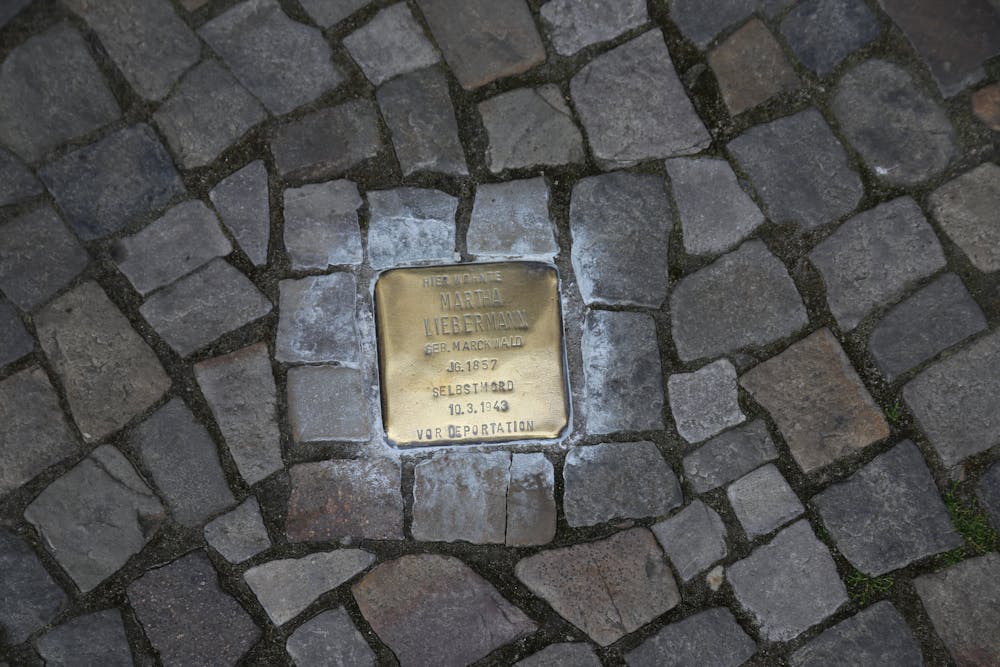
    This is not just an Italian phenomenon. Across Europe, historical memory is a political battleground. In Germany, the Stolpersteine – brass plaques in sidewalks commemorating Nazi victims – serve as grassroots reminders that shape civic attitudes. In Hungary, activists have created “living memorials” to Holocaust victims, directly contesting government efforts to whitewash fascist collaboration.

    These commemorations also have measurable political effects. In Berlin, neighbourhoods where one or more Stolpersteine was placed before an election saw fewer votes for the far-right AfD (a 0.96%-point decrease) compared to those with no Stolpersteine. This happened across federal, state and EU elections between 2013 and 2021.

    A stolperstein in Berlin.
    Wikipedia/Drrcs15, CC BY-SA

    What unites these efforts is a belief that remembering the past matters – not only to honour it, but to shape the future. Local narratives of wartime resistance and victimisation help instil democratic values and inoculate communities against authoritarianism.

    But this doesn’t happen automatically. It requires effort. Teachers, students, parents, associations, and local councils all play a role in keeping memory alive and politically meaningful.

    Recognising this is especially vital today, when the meaning of anti-fascism itself is a polarising subject. Far-right leaders, including those in office, downplay and discredit the resistance’s legacy, replacing it with revisionist myths.

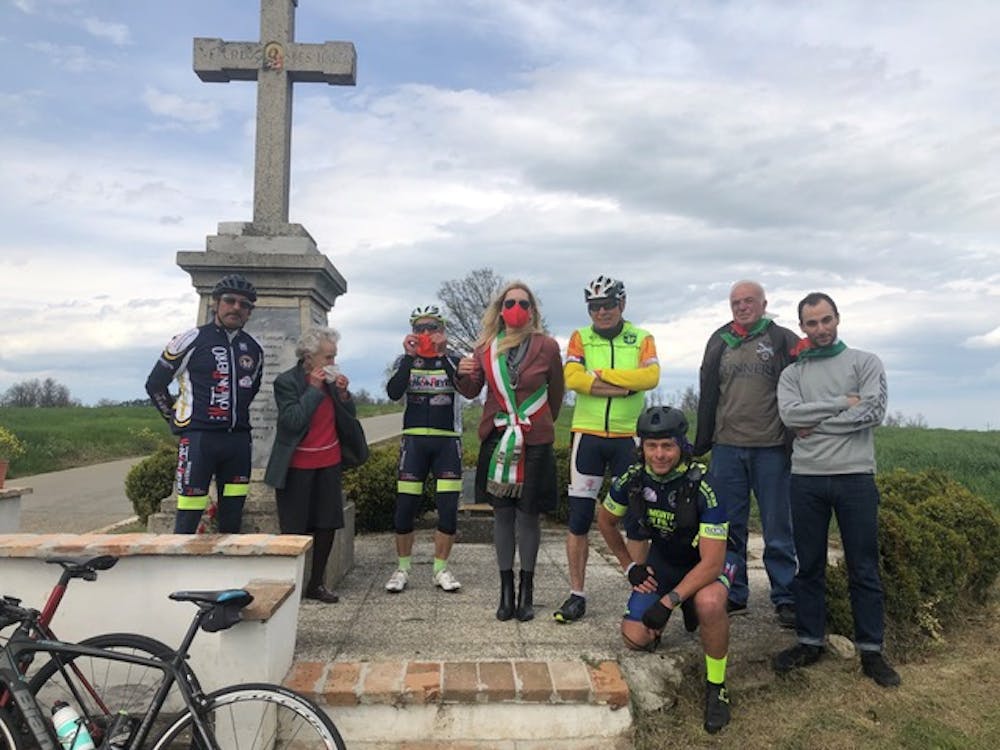
    A local cycling club marks liberation day with a tour of monuments dedicated to partisans.
    J Masullo, CC BY-ND

    When communities take ownership of their histories, they are more likely to uphold democratic principles not only in ceremonies, but at the ballot box and in everyday actions. The past is never just the past. The legacies of wartime resistance continue to shape how people view democracy, justice, and belonging. In times like these, remembering the resistance is more than homage – it is civic defence.

    Juan Masullo has received funding for this research from UNUWIDER and Leiden University.

    He is affiliated with the University of Milan.

    Simone Cremaschi has received funding for this research from UNUWIDER, the European Research Council (grant number 864687), and Leiden University.

    ref. Italy’s areas of wartime fascist resistance remain less susceptible to the far right today – https://theconversation.com/italys-areas-of-wartime-fascist-resistance-remain-less-susceptible-to-the-far-right-today-255859

    MIL OSI – Global Reports

  • MIL-OSI Europe: Minutes – Tuesday, 6 May 2025 – Strasbourg – Final edition

    Source: European Parliament

    PV-10-2025-05-06

    EN

    EN

    iPlPv_Sit

    Minutes
    Tuesday, 6 May 2025 – Strasbourg

     Abbreviations and symbols

    + adopted
    rejected
    lapsed
    W withdrawn
    RCV roll-call votes
    EV electronic vote
    SEC secret ballot
    split split vote
    sep separate vote
    am amendment
    CA compromise amendment
    CP corresponding part
    D deleting amendment
    = identical amendments
    § paragraph

    IN THE CHAIR: Martin HOJSÍK
    Vice-President

    1. Opening of the sitting

    The sitting opened at 09:02.


    2. Request for an urgent decision (Rule 170)

    The President had received two requests for urgent decisions in accordance with Rule 170(5):

    – REGI Committee – Amending ERDF, Cohesion Fund and Just Transition Fund as regards specific measures to address strategic challenges in the context of the mid-term review ***I (COM(2025)0123 – C10-0063/2025 – 2025/0084(COD))

    – EMPL Committee – European Social Fund (ESF+): specific measures to address strategic challenges ***I (COM(2025)0164 – C10-0064/2025 – 2025/0085(COD))

    The votes on both requests would be taken on Wednesday 7 May 2025.

    The agenda was amended accordingly.


    3. A unified EU response to unjustified US trade measures and global trade opportunities for the EU (debate)

    Council and Commission statements: A unified EU response to unjustified US trade measures and global trade opportunities for the EU (2025/2657(RSP))

    Adam Szłapka (President-in-Office of the Council) and Maroš Šefčovič (Member of the Commission) made the statements.

    The following spoke: Jörgen Warborn, on behalf of the PPE Group, Iratxe García Pérez, on behalf of the S&D Group, Jordan Bardella, on behalf of the PfE Group, Nicola Procaccini, on behalf of the ECR Group, Valérie Hayer, on behalf of the Renew Group, Bas Eickhout, on behalf of the Verts/ALE Group, Martin Schirdewan, on behalf of The Left Group, René Aust, on behalf of the ESN Group, Michał Szczerba, Kathleen Van Brempt, Jorge Buxadé Villalba, Adam Bielan, Karin Karlsbro, Anna Cavazzini, Manon Aubry, Petr Bystron and Fabio De Masi.

    IN THE CHAIR: Esteban GONZÁLEZ PONS
    Vice-President

    The following spoke: Lukas Sieper, to put a question to Fabio De Masi, who answered it, Juan Ignacio Zoido Álvarez, Bernd Lange, Anna Bryłka, Daniele Polato, Svenja Hahn, Saskia Bricmont, Lynn Boylan, Lukas Sieper, Eva Maydell, Brando Benifei, Enikő Győri, Jaak Madison, Benoit Cassart, Virginijus Sinkevičius, Pasquale Tridico, Željana Zovko, who also answered a blue-card question from Petras Gražulis, Yannis Maniatis, Isabella Tovaglieri, Rihards Kols, Ľubica Karvašová, Vicent Marzà Ibáñez, Li Andersson, Angelika Niebler, Camilla Laureti, Sebastian Kruis, Kris Van Dijck, Barry Cowen, Isabella Lövin, Lídia Pereira, who also answered a blue-card question from João Oliveira, Javier Moreno Sánchez, Petra Steger, Adrian-George Axinia, Marie-Pierre Vedrenne, Bogdan Andrzej Zdrojewski, Raphaël Glucksmann, Jean-Paul Garraud, Marion Maréchal, Paulo Do Nascimento Cabral, Francisco Assis, Alexandr Vondra, Mika Aaltola, Evin Incir, Francesco Torselli, Jüri Ratas, Andi Cristea, Maria Walsh, Tonino Picula, Borja Giménez Larraz, Aodhán Ó Ríordáin, Michał Wawrykiewicz, Nina Carberry, Salvatore De Meo, Carmen Crespo Díaz, Luděk Niedermayer, Ingeborg Ter Laak and Miriam Lexmann.

    The following spoke under the catch-the-eye procedure: Francisco José Millán Mon, Maria Grapini, Sebastian Tynkkynen, Hilde Vautmans, Jaume Asens Llodrà, Marc Botenga, Kostas Papadakis, Diana Iovanovici Şoşoacă, João Oliveira, Ana Miranda Paz, Juan Fernando López Aguilar, Lucia Annunziata, Vytenis Povilas Andriukaitis and Dariusz Joński.

    The following spoke: Maroš Šefčovič and Adam Szłapka.

    The debate closed.


    4. CO2 emission performance standards for new passenger cars and new light commercial vehicles for 2025 to 2027 (debate)

    Statements by Parliament: CO2 emission performance standards for new passenger cars and new light commercial vehicles for 2025 to 2027 (2025/2700(RSP))

    The following spoke: Jens Gieseke, on behalf of the PPE Group, Mohammed Chahim, on behalf of the S&D Group, Jordan Bardella, on behalf of the PfE Group, Carlo Fidanza, on behalf of the ECR Group, Gerben-Jan Gerbrandy, on behalf of the Renew Group, Kai Tegethoff, on behalf of the Verts/ALE Group, Per Clausen, on behalf of The Left Group, and Siegbert Frank Droese, on behalf of the ESN Group.

    The debate closed.

    (The sitting was suspended for a few moments.)


    IN THE CHAIR: Younous OMARJEE
    Vice-President

    5. Resumption of the sitting

    The sitting resumed at 12:05.


    6. Voting time

    For detailed results of the votes, see also ‘Results of votes’ and ‘Results of roll-call votes’.


    6.1. CO2 emission performance standards for new passenger cars and new light commercial vehicles for 2025 to 2027 ***I (vote)

    Amending Regulation (EU) 2019/631 to include an additional flexibility as regards the calculation of manufacturers’ compliance with CO2 emission performance standards for new passenger cars and new light commercial vehicles for the calendar years 2025 to 2027 [COM(2025)0136 – C10-0062/2025 – 2025/0070(COD)] – ENVI Committee

    REQUEST FOR AN URGENT DECISION from the ECR Group, and jointly from the PPE, S&D and Renew groups (Rule 170(6))

    Approved

    The following tabling deadlines had been set:

    – amendments: Wednesday 7 May 2025 at 13:00
    – requests for separate votes and split votes: Wednesday 7 May 2025 at 19:00

    Vote: 8 May 2025.

    The following had spoken:

    Ondřej Krutílek, on behalf of the ECR Group (author of the request), before the vote.

    Detailed voting results


    6.2. The protection status of the wolf (Canis lupus) ***I (vote)

    The protection status of the wolf (Canis lupus) [COM(2025)0106 – C10-0044/2025 – 2025/0058(COD)] – ENVI Committee

    REQUEST FOR AN URGENT DECISION from the ENVI Committee (Rule 170(6))

    Approved

    The following tabling deadlines had been set:

    – amendments: Wednesday 7 May 2025 at 13:00
    – requests for separate votes and split votes: Wednesday 7 May 2025 at 19:00

    Vote: 8 May 2025.

    The following had spoken:

    Sebastian Everding, against the request, before the vote.

    Detailed voting results


    6.3. Amendments to the Capital Requirements Regulation as regards securities financing transactions under the net stable funding ratio ***I (vote)

    Amendments to the Capital Requirements Regulation as regards securities financing transactions under the net stable funding ratio [COM(2025)0146 – C10-0059/2025 – 2025/0077(COD)] – ECON Committee

    REQUEST FOR AN URGENT DECISION from the ECON Committee (Rule 170(6))

    Approved

    The following tabling deadlines had been set:

    – amendments: Wednesday 7 May 2025 at 13:00
    – requests for separate votes and split votes: Wednesday 7 May 2025 at 19:00

    Vote: 8 May 2025.

    Detailed voting results


    6.4. Request for the waiver of the immunity of Petr Bystron (vote)

    Report on the request for waiver of the immunity of Petr Bystron [2024/2047(IMM)] – Committee on Legal Affairs. Rapporteur: Pascale Piera (A10-0077/2025)

    (Majority of the votes cast)

    PROPOSAL FOR A DECISION

    Adopted (P10_TA(2025)67)

    Detailed voting results


    6.5. Request for the waiver of the immunity of Petras Gražulis (vote)

    Report on the request for waiver of the immunity of Petras Gražulis [2024/2089(IMM)] – Committee on Legal Affairs. Rapporteur: Pascale Piera (A10-0078/2025)

    (Majority of the votes cast)

    PROPOSAL FOR A DECISION

    Adopted (P10_TA(2025)68)

    Detailed voting results


    6.6. Request for the waiver of the immunity of Grzegorz Braun (vote)

    Report on the request for the waiver of the immunity of Grzegorz Braun [2024/2102(IMM)] – Committee on Legal Affairs. Rapporteur: Dainius Žalimas (A10-0081/2025)

    (Majority of the votes cast)

    PROPOSAL FOR A DECISION

    Adopted (P10_TA(2025)69)

    Detailed voting results


    6.7. Border regions’ instrument for development and growth (BRIDGEforEU) ***II (vote)

    Recommendation for second reading on the Council position at first reading with a view to the adoption of a proposal for a regulation of the European Parliament and of the Council on a mechanism to resolve legal and administrative obstacles in a cross-border context [17102/1/2024 – C10-0057/2025 – 2018/0198(COD)] – Committee on Regional Development. Rapporteur: Sandro Gozi (A10-0058/2025)

    The President informed the House that no proposals for rejection or amendment had been tabled in accordance with Rules 68 and 69 with regard to the Council’s position.

    The Council position was therefore deemed approved.

    The proposed act was thus adopted (P10_TA(2025)70)

    The following had spoken:

    Before the President’s announcement, Sandro Gozi (rapporteur), to make a statement under Rule 165(4).

    Detailed voting results


    6.8. Amending Regulation (EU) 2016/1011 as regards the scope of the rules for benchmarks, the use in the Union of benchmarks provided by an administrator located in a third country, and certain reporting requirements ***II (vote)

    Recommendation for second reading on the Council position at first reading with a view to the adoption of a regulation of the European Parliament and of the Council amending Regulation (EU) 2016/1011 as regards the scope of the rules for benchmarks, the use in the Union of benchmarks provided by an administrator located in a third country, and certain reporting requirements [05123/1/2025 – C10-0055/2025 – 2023/0379(COD)] – Committee on Economic and Monetary Affairs. Rapporteur: Jonás Fernández (A10-0060/2025)

    The President informed the House that no proposals for rejection or amendment had been tabled in accordance with Rules 68 and 69 with regard to the Council’s position.

    The Council position was therefore deemed approved.

    The proposed act was thus adopted (P10_TA(2025)71)

    Detailed voting results


    6.9. European Union labour market statistics on businesses ***II (vote)

    Recommendation for second reading on the Council position at first reading with a view to the adoption of a regulation of the European Parliament and of the Council on European Union labour market statistics on businesses, repealing Council Regulation (EC) No 530/1999 and Regulations (EC) No 450/2003 and (EC) No 453/2008 of the European Parliament and of the Council [17082/1/2024 – C10-0054/2025 – 2023/0288(COD)] – Committee on Economic and Monetary Affairs. Rapporteur: Irene Tinagli (A10-0057/2025)

    The President informed the House that no proposals for rejection or amendment had been tabled in accordance with Rules 68 and 69 with regard to the Council’s position.

    The Council position was therefore deemed approved.

    The proposed act was thus adopted (P10_TA(2025)72)

    Detailed voting results


    6.10. Amendments to the International Health Regulations contained in the Annex to Resolution WHA77.17 and adopted on 1 June 2024 *** (vote)

    Recommendation on the draft Council decision inviting Member States to accept, in the interest of the European Union, the amendments to the International Health Regulations (2005) contained in the Annex to Resolution WHA77.17 and adopted on 1 June 2024 [17046/2024 – COM(2024)0541 – C10-0005/2025 – 2024/0299(NLE)] – Committee on Public Health. Rapporteur: Adam Jarubas (A10-0064/2025)

    (Majority of the votes cast)

    DRAFT COUNCIL DECISION

    Approved (P10_TA(2025)73)

    Detailed voting results


    6.11. Mobilisation of the European Globalisation Adjustment Fund for Displaced Workers: application EGF/2024/003 BE/Van Hool – Belgium (vote)

    Report on the proposal for a decision of the European Parliament and of the Council on the mobilisation of the European Globalisation Adjustment Fund for Displaced Workers following an application from Belgium – EGF/2024/003 BE/Van Hool [COM(2025)0001 – C10-0056/2025 – 2025/0061(BUD)] – Committee on Budgets. Rapporteur: Janusz Lewandowski (A10-0080/2025)

    (Majority of the votes cast)

    MOTION FOR A RESOLUTION

    Adopted (P10_TA(2025)74)

    Detailed voting results


    6.12. Protection of the European Union’s financial interests – combating fraud – annual report 2023 (vote)

    Report on the protection of the European Union’s financial interests – combating fraud – annual report 2023 [2024/2083(INI)] – Committee on Budgetary Control. Rapporteur: Gilles Boyer (A10-0049/2025)

    The debate had taken place on 5 May 2025 (minutes of 5.5.2025, item 19).

    (Majority of the votes cast)

    MOTION FOR A RESOLUTION

    Adopted (P10_TA(2025)75)

    Detailed voting results


    6.13. Control of the financial activities of the European Investment Bank – annual report 2023 (vote)

    Report on the control of the financial activities of the European Investment Bank – annual report 2023 [2024/2052(INI)] – Committee on Budgetary Control. Rapporteur: Ondřej Knotek (A10-0068/2025)

    The debate had taken place on 5 May 2025 (minutes of 5.5.2025, item 21).

    (Majority of the votes cast)

    MOTION FOR A RESOLUTION

    Adopted (P10_TA(2025)76)

    Detailed voting results

    13

    (The sitting was suspended for a few moments.)


    7. Resumption of the sitting

    The sitting resumed at 12:28.


    8. Approval of the minutes of the previous sitting

    The minutes of the previous sitting were approved.


    9. A revamped long-term budget for the Union in a changing world (debate)

    Report on a revamped long-term budget for the Union in a changing world [2024/2051(INI)] – Committee on Budgets. Rapporteurs: Siegfried Mureşan and Carla Tavares (A10-0076/2025)

    Siegfried Mureşan and Carla Tavares introduced the report.

    The following spoke: Piotr Serafin (Member of the Commission).

    The following spoke: Hilde Vautmans (rapporteur for the opinion of the AFET Committee), Barry Andrews (rapporteur for the opinion of the DEVE Committee), Dirk Gotink (rapporteur for the opinion of the CONT Committee), Damian Boeselager (rapporteur for the opinion of the ECON Committee), Romana Tomc (rapporteur for the opinion of the EMPL Committee), Michalis Hadjipantela (rapporteur for the opinion of the ENVI Committee), Christian Ehler (rapporteur for the opinion of the ITRE Committee), Aura Salla (rapporteur for the opinion of the IMCO Committee), Rosa Serrano Sierra (rapporteur for the opinion of the TRAN Committee), Dragoş Benea (rapporteur for the opinion of the REGI Committee), Stefano Bonaccini (rapporteur for the opinion of the AGRI Committee), Hannes Heide (rapporteur for the opinion of the CULT Committee), Loucas Fourlas (rapporteur for the opinion of the LIBE Committee), Sven Simon (rapporteur for the opinion of the AFCO Committee), Alexandra Geese (rapporteur for the opinion of the FEMM Committee), Karlo Ressler, on behalf of the PPE Group, Jean-Marc Germain, on behalf of the S&D Group, Julien Sanchez, on behalf of the PfE Group, Bogdan Rzońca, on behalf of the ECR Group, Fabienne Keller, on behalf of the Renew Group, Rasmus Nordqvist, on behalf of the Verts/ALE Group, João Oliveira, on behalf of The Left Group, Milan Uhrík, on behalf of the ESN Group, Danuše Nerudová, Gabriele Bischoff, Jana Nagyová, Johan Van Overtveldt, Lucia Yar, Rasmus Andresen, Alexander Jungbluth, Isabel Benjumea Benjumea and Jens Geier.

    IN THE CHAIR: Roberts ZĪLE
    Vice-President

    The following spoke: Annamária Vicsek, who also answered a blue-card question from Gabriella Gerzsenyi, Ruggero Razza, Joachim Streit, Maria Ohisalo, Janusz Lewandowski, Sandra Gómez López, Dick Erixon, Anouk Van Brug, Hélder Sousa Silva, Dario Nardella, Fernand Kartheiser, Moritz Körner, who also answered a blue-card question from Rasmus Andresen, Georgios Aftias, Estelle Ceulemans, Laurence Trochu, Charles Goerens, Nina Carberry, René Repasi, Kristoffer Storm, Katri Kulmuni, Herbert Dorfmann, Victor Negrescu, Sebastian Tynkkynen, Vlad Vasile-Voiculescu, Andrey Novakov, Giuseppe Lupo, Antonella Sberna, Péter Magyar, Marcos Ros Sempere, Elena Nevado del Campo, Evin Incir, Thomas Bajada, Matjaž Nemec and André Rodrigues.

    The following spoke under the catch-the-eye procedure: Paulo Do Nascimento Cabral, Juan Fernando López Aguilar, Lukas Sieper, Nikolina Brnjac, Vytenis Povilas Andriukaitis and Nils Ušakovs.

    The following spoke: Piotr Serafin, Siegfried Mureşan and Carla Tavares.

    The debate closed.

    Vote: 7 May 2025.


    10. Discharge 2023 (joint debate)

    Discharge 2023: EU general budget – Commission, executive agencies and European Development Funds
    Report on discharge in respect of the implementation of the general budget of the European Union for the financial year 2023, Section III – Commission, executive agencies and the ninth, tenth and eleventh European Development Funds [COM(2024)0272 – C10-0067/2024 – 2024/2019(DEC)] – Committee on Budgetary Control. Rapporteur: Niclas Herbst (A10-0074/2025)

    Discharge 2023: EU general budget – European Parliament
    Report on discharge in respect of the implementation of the general budget of the European Union for the financial year 2023, Section I – European Parliament [COM(2024)0272 – C10-0068/2024 – 2024/2020(DEC)] – Committee on Budgetary Control. Rapporteur: Monika Hohlmeier (A10-0062/2025)

    Discharge 2023: EU general budget – European Council and Council
    Report on discharge in respect of the implementation of the general budget of the European Union for the financial year 2023, Section II – European Council and Council [COM(2024)0272 – C10-0069/2024 – 2024/2021(DEC)] – Committee on Budgetary Control. Rapporteur: Joachim Stanisław Brudziński (A10-0052/2025)

    Discharge 2023: EU general budget – Court of Justice of the European Union
    Report on discharge in respect of the implementation of the general budget of the European Union for the financial year 2023, Section IV – Court of Justice [COM(2024)0272 – C10-0070/2024 – 2024/2022(DEC)] – Committee on Budgetary Control. Rapporteur: Cristian Terheş (A10-0050/2025)

    Discharge 2023: EU general budget – Court of Auditors
    Report on discharge in respect of the implementation of the general budget of the European Union for the financial year 2023, Section V – Court of Auditors [COM(2024)0272 – C10-0071/2024 – 2024/2023(DEC)] – Committee on Budgetary Control. Rapporteur: Dick Erixon (A10-0047/2025)

    Discharge 2023: EU general budget – European Economic and Social Committee
    Report on discharge in respect of the implementation of the general budget of the European Union for the financial year 2023, Section VI – European Economic and Social Committee [COM(2024)0272 – C10-0073/2024 – 2024/2025(DEC)] – Committee on Budgetary Control. Rapporteur: Joachim Stanisław Brudziński (A10-0054/2025)

    Discharge 2023: EU general budget – Committee of the Regions
    Report on discharge in respect of the implementation of the general budget of the European Union for the financial year 2023, Section VII – Committee of the Regions [COM(2024)0272 – C10-0074/2024 – 2024/2026(DEC)] – Committee on Budgetary Control. Rapporteur: Joachim Stanisław Brudziński (A10-0046/2025)

    Discharge 2023: EU general budget – European Ombudsman
    Report on discharge in respect of the implementation of the general budget of the European Union for the financial year 2023, Section VIII – European Ombudsman [COM(2024)0272 – C10-0075/2024 – 2024/2027(DEC)] – Committee on Budgetary Control. Rapporteur: Joachim Stanisław Brudziński (A10-0055/2025)

    Discharge 2023: EU general budget – European Data Protection Supervisor
    Report on discharge in respect of the implementation of the general budget of the European Union for the financial year 2023, Section IX – European Data Protection Supervisor [COM(2024)0272 – C10-0076/2024 – 2024/2028(DEC)] – Committee on Budgetary Control. Rapporteur: Joachim Stanisław Brudziński (A10-0053/2025)

    Discharge 2023: EU general budget – European External Action Service
    Report on discharge in respect of the implementation of the general budget of the European Union for the financial year 2023, Section X – European External Action Service [COM(2024)0272 – C10-0072/2024 – 2024/2024(DEC)] – Committee on Budgetary Control. Rapporteur: Joachim Stanisław Brudziński (A10-0069/2025)

    Discharge 2023: European Public Prosecutor’s Office
    Report on discharge in respect of the implementation of the budget of the European Public Prosecutor’s Office for the financial year 2023 [COM(2024)0272 – C10-0077/2024 – 2024/2029(DEC)] – Committee on Budgetary Control. Rapporteur: Tomáš Zdechovský (A10-0051/2025)

    Discharge 2023: Agencies
    Report on discharge in respect of the implementation of the budget of the European Union Agencies for the financial year 2023 [COM(2024)0272 – C10-0078/2024 – 2024/2030(DEC)] – Committee on Budgetary Control. Rapporteur: Erik Marquardt (A10-0065/2025)

    Discharge 2023: Joint Undertakings
    Report on discharge in respect of the implementation of the budget of the EU joint undertakings for the financial year 2023 [COM(2024)0272 – C10-0079/2024 – 2024/2031(DEC)] – Committee on Budgetary Control. Rapporteur: Michal Wiezik (A10-0056/2025)

    Niclas Herbst, Joachim Stanisław Brudziński, Cristian Terheş, Dick Erixon, Monika Hohlmeier, Tomáš Zdechovský, Erik Marquardt and Michal Wiezik introduced the reports.

    The following spoke: Adam Szłapka (President-in-Office of the Council), Piotr Serafin (Member of the Commission) and Tony Murphy (President of the Court of Auditors).

    The following spoke: Michael Gahler (rapporteur for the opinion of the AFET Committee).

    IN THE CHAIR: Martin HOJSÍK
    Vice-President

    The following spoke: Romana Tomc (rapporteur for the opinion of the EMPL Committee), Antonio Decaro (rapporteur for the opinion of the ENVI Committee), Gheorghe Falcă (rapporteur for the opinion of the TRAN Committee), Giuseppe Lupo (rapporteur for the opinion of the PECH Committee), Nela Riehl (rapporteur for the opinion of the CULT Committee), Sven Simon (rapporteur for the opinion of the AFCO Committee), Tomáš Zdechovský (rapporteur for the opinion of the LIBE Committee), Lina Gálvez (rapporteur for the opinion of the FEMM Committee), Dirk Gotink, on behalf of the PPE Group, Mohammed Chahim, on behalf of the S&D Group, Julien Sanchez, on behalf of the PfE Group, Marco Squarta, on behalf of the ECR Group, Olivier Chastel, on behalf of the Renew Group, Daniel Freund, on behalf of the Verts/ALE Group, Jonas Sjöstedt, on behalf of The Left Group, Sarah Knafo, on behalf of the ESN Group, Kinga Kollár, Carla Tavares, Angéline Furet, Bert-Jan Ruissen, Gilles Boyer, Pasquale Tridico, Arno Bausemer, who also answered a blue-card question from Lukas Sieper, Céline Imart, José Cepeda, Anders Vistisen, Marion Maréchal, Gerben-Jan Gerbrandy, Marit Maij, Nikola Bartůšek, Maciej Wąsik, Christophe Clergeau, Fabrice Leggeri, Gheorghe Piperea, Evin Incir and Tiago Moreira de Sá.

    IN THE CHAIR: Pina PICIERNO
    Vice-President

    The following spoke: Fernand Kartheiser, Nils Ušakovs and Csaba Dömötör.

    The following spoke under the catch-the-eye procedure: Juan Fernando López Aguilar, Sebastian Tynkkynen and Lukas Sieper.

    The following spoke: Tony Murphy, Piotr Serafin, Adam Szłapka, Niclas Herbst, Monika Hohlmeier, Joachim Stanisław Brudziński, Cristian Terheş, Dick Erixon, Tomáš Zdechovský, Erik Marquardt and Michal Wiezik.

    The debate closed.

    Vote: 7 May 2025.


    11. Protecting Greenland’s right to decide its own future and maintain the rule-based world order (debate)

    Statement by the Vice-President of the Commission/High Representative of the Union for Foreign Affairs and Security Policy: Protecting Greenland’s right to decide its own future and maintain the rule-based world order (2025/2689(RSP))

    Kaja Kallas (Vice President of the Commission / High Representative of the Union for Foreign Affairs and Security Policy) made the statement.

    The following spoke: Henrik Dahl, on behalf of the PPE Group, Christel Schaldemose, on behalf of the S&D Group, Anders Vistisen, on behalf of the PfE Group, Kristoffer Storm, on behalf of the ECR Group, Stine Bosse, on behalf of the Renew Group, Villy Søvndal, on behalf of the Verts/ALE Group, Emma Fourreau, on behalf of The Left Group, Niels Flemming Hansen, Yannis Maniatis, Pierre-Romain Thionnet, Urmas Paet, Ignazio Roberto Marino, Per Clausen, David McAllister, Niels Fuglsang, Morten Løkkegaard, Michael Gahler, Tonino Picula, Michał Szczerba, Mika Aaltola and Jüri Ratas.

    The following spoke under the catch-the-eye procedure: Juan Fernando López Aguilar, Pernando Barrena Arza and Lukas Sieper.

    The following spoke: Kaja Kallas.

    The debate closed.


    12. An urgent assessment of the applicability of the Political Dialogue and Cooperation Agreement (PDCA) with Cuba (debate)

    Statement by the Vice-President of the Commission/High Representative of the Union for Foreign Affairs and Security Policy: An urgent assessment of the applicability of the Political Dialogue and Cooperation Agreement (PDCA) with Cuba (2025/2697(RSP))

    Kaja Kallas (Vice President of the Commission / High Representative of the Union for Foreign Affairs and Security Policy) made the statement.

    The following spoke: Gabriel Mato, on behalf of the PPE Group, Leire Pajín, on behalf of the S&D Group, Hermann Tertsch, on behalf of the PfE Group (the President reminded the speaker of the rules on conduct), Arkadiusz Mularczyk, on behalf of the ECR Group, Oihane Agirregoitia Martínez, on behalf of the Renew Group, Ana Miranda Paz, on behalf of the Verts/ALE Group, Irene Montero, on behalf of The Left Group, and Elena Nevado del Campo.

    IN THE CHAIR: Antonella SBERNA
    Vice-President

    The following spoke: Nacho Sánchez Amor, Nora Junco García, who also answered a blue-card question from Anthony Smith, Pernando Barrena Arza, Ľuboš Blaha, who also answered blue-card questions from Arkadiusz Mularczyk and Anthony Smith, Alice Teodorescu Måwe, Francisco Assis, Mariusz Kamiński, Martin Sonneborn, Antonio López-Istúriz White and Francisco José Millán Mon.

    The following spoke under the catch-the-eye procedure: Jaume Asens Llodrà, João Oliveira, Maria Zacharia, Leila Chaibi, Lefteris Nikolaou-Alavanos, Kateřina Konečná and Lukas Sieper.

    The following spoke: Kaja Kallas.

    The debate closed.


    13. The European Water Resilience Strategy (debate)

    Report on the European Water Resilience Strategy [2024/2104(INI)] – Committee on the Environment, Climate and Food Safety. Rapporteur: Thomas Bajada (A10-0073/2025)

    Thomas Bajada introduced the report.

    The following spoke: Jessika Roswall (Member of the Commission).

    The following spoke: Michal Wiezik (rapporteur for the opinion of the AGRI Committee), Carmen Crespo Díaz, on behalf of the PPE Group, Christophe Clergeau, on behalf of the S&D Group, Mireia Borrás Pabón, on behalf of the PfE Group, Alexandr Vondra, on behalf of the ECR Group, Grégory Allione, on behalf of the Renew Group, Jutta Paulus, on behalf of the Verts/ALE Group (the President reminded the House of the rules on conduct), Giorgos Georgiou, on behalf of The Left Group, Anja Arndt, on behalf of the ESN Group, Peter Liese, Annalisa Corrado, André Rougé, Anna Zalewska, Ana Vasconcelos, Tilly Metz, Emma Fourreau, Ingeborg Ter Laak, César Luena, Rody Tolassy, Claudiu-Richard Târziu, Emma Wiesner, Pär Holmgren, Dimitris Tsiodras, Heléne Fritzon, Mathilde Androuët, Paolo Inselvini, Jeannette Baljeu, Cristina Guarda, Lídia Pereira, Antonio Decaro, Esther Herranz García, Günther Sidl, Dan-Ştefan Motreanu, András Tivadar Kulja, Stefan Köhler and Sander Smit.

    The following spoke under the catch-the-eye procedure: Krzysztof Hetman.

    IN THE CHAIR: Nicolae ŞTEFĂNUȚĂ
    Vice-President

    The following spoke under the catch-the-eye procedure: Viktória Ferenc, Sebastian Tynkkynen, Ana Miranda Paz, Lukas Sieper, Kostas Papadakis and Maria Zacharia.

    The following spoke: Jessika Roswall and Thomas Bajada.

    The debate closed.

    Vote: 7 May 2025.


    14. 2023 and 2024 reports on Türkiye (debate)

    2023 and 2024 Commission reports on Türkiye [2025/2023(INI)] – Committee on Foreign Affairs. Rapporteur: Nacho Sánchez Amor (A10-0067/2025)

    Nacho Sánchez Amor introduced the report.

    The following spoke: Marta Kos (Member of the Commission).

    The following spoke: Isabel Wiseler-Lima, on behalf of the PPE Group, Yannis Maniatis, on behalf of the S&D Group, Nikola Bartůšek, on behalf of the PfE Group, Geadis Geadi, on behalf of the ECR Group, Malik Azmani, on behalf of the Renew Group, Vladimir Prebilič, on behalf of the Verts/ALE Group, Giorgos Georgiou, on behalf of The Left Group, Tomasz Froelich, on behalf of the ESN Group, Emmanouil Kefalogiannis, Joanna Scheuring-Wielgus, Afroditi Latinopoulou, Emmanouil Fragkos, Lucia Yar, Mélissa Camara, Özlem Demirel, Kostas Papadakis, Loucas Fourlas, Vivien Costanzo, Matthieu Valet, Tineke Strik, Jonas Sjöstedt, who also answered a blue-card question from Beatrice Timgren, Maria Zacharia, Alice Teodorescu Måwe, Evin Incir, Silvia Sardone, Fidias Panayiotou, Łukasz Kohut, Andreas Schieder, Elissavet Vozemberg-Vrionidi, Davor Ivo Stier, who also answered a blue-card question from Geadis Geadi, Reinhold Lopatka and Michalis Hadjipantela.

    The following spoke under the catch-the-eye procedure: Costas Mavrides, Sebastian Tynkkynen, Sebastian Everding and Nikolas Farantouris.

    The following spoke: Marta Kos.

    IN THE CHAIR: Younous OMARJEE
    Vice-President

    The following spoke: Nacho Sánchez Amor.

    The debate closed.

    Vote: 7 May 2025.


    15. Welcome

    On behalf of Parliament the President welcomed a group of young people from Serbia who had taken their seats in the distinguished visitors’ gallery.


    16. 2023 and 2024 reports on Serbia (debate)

    Report on the 2023 and 2024 Commission reports on Serbia [2025/2022(INI)] – Committee on Foreign Affairs. Rapporteur: Tonino Picula (A10-0072/2025)

    Tonino Picula introduced the report.

    The following spoke: Marta Kos (Member of the Commission).

    The following spoke: Davor Ivo Stier, on behalf of the PPE Group, Kathleen Van Brempt, on behalf of the S&D Group, Kinga Gál, on behalf of the PfE Group, Stephen Nikola Bartulica, on behalf of the ECR Group, Helmut Brandstätter, on behalf of the Renew Group, Vladimir Prebilič, on behalf of the Verts/ALE Group, Danilo Della Valle, on behalf of The Left Group, Michał Szczerba, Thijs Reuten, who also answered a blue-card question from Tomislav Sokol, António Tânger Corrêa, Cristian Terheş, Irena Joveva, Gordan Bosanac, Liudas Mažylis, Andreas Schieder, Annamária Vicsek, Matej Tonin, Thierry Mariani and Tomislav Sokol.

    The following spoke under the catch-the-eye procedure: Loucas Fourlas, Matjaž Nemec, Kristian Vigenin and Sebastian Tynkkynen.

    The following spoke: Marta Kos and Tonino Picula.

    The debate closed.

    Vote: 7 May 2025.


    17. 2023 and 2024 reports on Kosovo (debate)

    Report on the 2023 and 2024 Commission Reports on Kosovo [2025/2019(INI)] – Committee on Foreign Affairs. Rapporteur: Riho Terras (A10-0075/2025)

    Riho Terras introduced the report.

    The following spoke: Marta Kos (Member of the Commission).

    The following spoke: Davor Ivo Stier, on behalf of the PPE Group, Elio Di Rupo, on behalf of the S&D Group, Matthieu Valet, on behalf of the PfE Group, Ivaylo Valchev, on behalf of the ECR Group, Ilhan Kyuchyuk, on behalf of the Renew Group, Thomas Waitz, on behalf of the Verts/ALE Group, Merja Kyllönen, on behalf of The Left Group, Stanislav Stoyanov, on behalf of the ESN Group, Liudas Mažylis, Matjaž Nemec and Alexander Sell.

    The following spoke under the catch-the-eye procedure: Thijs Reuten and Sebastian Tynkkynen.

    The following spoke: Marta Kos and Riho Terras.

    The debate closed.

    Vote: 7 May 2025.


    18. Explanations of vote


    18.1. Written explanations of vote

    Explanations of vote submitted in writing under Rule 201 appear on the Members’ pages on Parliament’s website.


    19. Agenda of the next sitting

    The next sitting would be held the following day, 7 May 2025, starting at 09:00. The agenda was available on Parliament’s website.


    20. Approval of the minutes of the sitting

    In accordance with Rule 208(3), the minutes of the sitting would be put to the House for approval at the beginning of the afternoon of the next sitting.


    21. Closure of the sitting

    The sitting closed at 22:29.


    ATTENDANCE REGISTER

    Present:

    Aaltola Mika, Abadía Jover Maravillas, Adamowicz Magdalena, Aftias Georgios, Agirregoitia Martínez Oihane, Agius Peter, Agius Saliba Alex, Alexandraki Galato, Allione Grégory, Al-Sahlani Abir, Anadiotis Nikolaos, Anderson Christine, Andersson Li, Andresen Rasmus, Andrews Barry, Andriukaitis Vytenis Povilas, Androuët Mathilde, Angel Marc, Annemans Gerolf, Annunziata Lucia, Antoci Giuseppe, Arias Echeverría Pablo, Arimont Pascal, Arłukowicz Bartosz, Arnaoutoglou Sakis, Arndt Anja, Arvanitis Konstantinos, Asens Llodrà Jaume, Assis Francisco, Attard Daniel, Aubry Manon, Auštrevičius Petras, Axinia Adrian-George, Azmani Malik, Bajada Thomas, Baljeu Jeannette, Ballarín Cereza Laura, Bardella Jordan, Barna Dan, Barrena Arza Pernando, Bartulica Stephen Nikola, Bartůšek Nikola, Bausemer Arno, Bay Nicolas, Bay Christophe, Beke Wouter, Beleris Fredis, Bellamy François-Xavier, Benea Dragoş, Benifei Brando, Benjumea Benjumea Isabel, Beňová Monika, Berendsen Tom, Berger Stefan, Berlato Sergio, Bernhuber Alexander, Biedroń Robert, Bielan Adam, Bischoff Gabriele, Blaha Ľuboš, Blinkevičiūtė Vilija, Blom Rachel, Bloss Michael, Bocheński Tobiasz, Boeselager Damian, Bogdan Ioan-Rareş, Bonaccini Stefano, Bonte Barbara, Borchia Paolo, Borrás Pabón Mireia, Borvendég Zsuzsanna, Borzan Biljana, Bosanac Gordan, Boßdorf Irmhild, Bosse Stine, Botenga Marc, Boyer Gilles, Boylan Lynn, Brandstätter Helmut, Brasier-Clain Marie-Luce, Bricmont Saskia, Brnjac Nikolina, Brudziński Joachim Stanisław, Bryłka Anna, Buchheit Markus, Buczek Tomasz, Buda Daniel, Buda Waldemar, Budka Borys, Bugalho Sebastião, Buła Andrzej, Bullmann Udo, Burkhardt Delara, Buxadé Villalba Jorge, Bystron Petr, Bžoch Jaroslav, Camara Mélissa, Canfin Pascal, Carberry Nina, Cârciu Gheorghe, Carême Damien, Casa David, Caspary Daniel, Cassart Benoit, Castillo Laurent, del Castillo Vera Pilar, Cavazzini Anna, Cepeda José, Ceulemans Estelle, Chahim Mohammed, Chaibi Leila, Chastel Olivier, Chinnici Caterina, Christensen Asger, Cifrová Ostrihoňová Veronika, Ciriani Alessandro, Cisint Anna Maria, Clausen Per, Clergeau Christophe, Cormand David, Corrado Annalisa, Costanzo Vivien, Cotrim De Figueiredo João, Cowen Barry, Cremer Tobias, Crespo Díaz Carmen, Cristea Andi, Crosetto Giovanni, Cunha Paulo, Dahl Henrik, Danielsson Johan, Dauchy Marie, Dávid Dóra, David Ivan, Decaro Antonio, de la Hoz Quintano Raúl, Della Valle Danilo, Deloge Valérie, De Masi Fabio, De Meo Salvatore, Demirel Özlem, Deutsch Tamás, Devaux Valérie, Dibrani Adnan, Diepeveen Ton, Dieringer Elisabeth, Dîncu Vasile, Di Rupo Elio, Disdier Mélanie, Dobrev Klára, Doherty Regina, Doleschal Christian, Dömötör Csaba, Do Nascimento Cabral Paulo, Donazzan Elena, Dorfmann Herbert, Dostalova Klara, Dostál Ondřej, Droese Siegbert Frank, Dworczyk Michał, Ecke Matthias, Ehler Christian, Ehlers Marieke, Eriksson Sofie, Erixon Dick, Eroglu Engin, Estaràs Ferragut Rosa, Everding Sebastian, Falcă Gheorghe, Falcone Marco, Farantouris Nikolas, Farreng Laurence, Farský Jan, Ferber Markus, Ferenc Viktória, Fernández Jonás, Fidanza Carlo, Fiocchi Pietro, Firea Gabriela, Firmenich Ruth, Fita Claire, Fourlas Loucas, Fourreau Emma, Fragkos Emmanouil, Freund Daniel, Frigout Anne-Sophie, Fritzon Heléne, Froelich Tomasz, Fuglsang Niels, Funchion Kathleen, Furet Angéline, Furore Mario, Gahler Michael, Gál Kinga, Galán Estrella, Gálvez Lina, Gambino Alberico, García Hermida-Van Der Walle Raquel, Garraud Jean-Paul, Gasiuk-Pihowicz Kamila, Geadi Geadis, Gedin Hanna, Geese Alexandra, Geier Jens, Geisel Thomas, Gemma Chiara, Georgiou Giorgos, Gerbrandy Gerben-Jan, Germain Jean-Marc, Gerzsenyi Gabriella, Geuking Niels, Gieseke Jens, Giménez Larraz Borja, Girauta Vidal Juan Carlos, Glavak Sunčana, Glück Andreas, Glucksmann Raphaël, Goerens Charles, Gomes Isilda, Gómez López Sandra, Gonçalves Bruno, Gonçalves Sérgio, González Casares Nicolás, González Pons Esteban, Gori Giorgio, Gosiewska Małgorzata, Gotink Dirk, Gozi Sandro, Grapini Maria, Gražulis Petras, Grims Branko, Griset Catherine, Gronkiewicz-Waltz Hanna, Grossmann Elisabeth, Grudler Christophe, Gualmini Elisabetta, Guarda Cristina, Guetta Bernard, Győri Enikő, Gyürk András, Hadjipantela Michalis, Hahn Svenja, Haider Roman, Halicki Andrzej, Hansen Niels Flemming, Hauser Gerald, Häusling Martin, Hava Mircea-Gheorghe, Heide Hannes, Heinäluoma Eero, Henriksson Anna-Maja, Herbst Niclas, Herranz García Esther, Hetman Krzysztof, Hohlmeier Monika, Hojsík Martin, Holmgren Pär, Hölvényi György, Homs Ginel Alicia, Humberto Sérgio, Imart Céline, Incir Evin, Inselvini Paolo, Iovanovici Şoşoacă Diana, Jamet France, Jarubas Adam, Jerković Romana, Jongen Marc, Joński Dariusz, Jouvet Pierre, Joveva Irena, Juknevičienė Rasa, Junco García Nora, Jungbluth Alexander, Kabilov Taner, Kalfon François, Kaliňák Erik, Kaljurand Marina, Kalniete Sandra, Kamiński Mariusz, Karlsbro Karin, Kartheiser Fernand, Karvašová Ľubica, Katainen Elsi, Kefalogiannis Emmanouil, Kelleher Billy, Keller Fabienne, Kelly Seán, Kennes Rudi, Khan Mary, Kircher Sophia, Knafo Sarah, Knotek Ondřej, Kobosko Michał, Köhler Stefan, Kohut Łukasz, Kokalari Arba, Kolář Ondřej, Kollár Kinga, Kols Rihards, Konečná Kateřina, Kopacz Ewa, Körner Moritz, Kountoura Elena, Kovařík Ondřej, Kovatchev Andrey, Krištopans Vilis, Kruis Sebastian, Krutílek Ondřej, Kubín Tomáš, Kuhnke Alice, Kulja András Tivadar, Kulmuni Katri, Kyllönen Merja, Kyuchyuk Ilhan, Lakos Eszter, Lalucq Aurore, Lange Bernd, Langensiepen Katrin, Laššáková Judita, László András, Latinopoulou Afroditi, Laurent Murielle, Laureti Camilla, Laykova Rada, Lazarov Ilia, Le Callennec Isabelle, Leggeri Fabrice, Lenaers Jeroen, Leonardelli Julien, Lewandowski Janusz, Lexmann Miriam, Liese Peter, Lins Norbert, Loiseau Nathalie, Løkkegaard Morten, Lopatka Reinhold, López Javi, López Aguilar Juan Fernando, López-Istúriz White Antonio, Lövin Isabella, Lucano Mimmo, Luena César, Łukacijewska Elżbieta Katarzyna, Lupo Giuseppe, McAllister David, Madison Jaak, Maestre Cristina, Magoni Lara, Magyar Péter, Maij Marit, Maląg Marlena, Manda Claudiu, Mandl Lukas, Maniatis Yannis, Mantovani Mario, Maran Pierfrancesco, Marczułajtis-Walczak Jagna, Maréchal Marion, Mariani Thierry, Marino Ignazio Roberto, Marquardt Erik, Martusciello Fulvio, Marzà Ibáñez Vicent, Mato Gabriel, Mavrides Costas, Maydell Eva, Mayer Georg, Mazurek Milan, Mažylis Liudas, McNamara Michael, Mebarek Nora, Mehnert Alexandra, Meimarakis Vangelis, Meleti Eleonora, Mendes Ana Catarina, Mendia Idoia, Mertens Verena, Mesure Marina, Metsola Roberta, Metz Tilly, Mikser Sven, Milazzo Giuseppe, Millán Mon Francisco José, Minchev Nikola, Miranda Paz Ana, Molnár Csaba, Montero Irene, Montserrat Dolors, Morace Carolina, Morano Nadine, Moratti Letizia, Moreira de Sá Tiago, Moreno Sánchez Javier, Moretti Alessandra, Motreanu Dan-Ştefan, Mularczyk Arkadiusz, Müller Piotr, Mullooly Ciaran, Mureşan Siegfried, Muşoiu Ştefan, Nagyová Jana, Nardella Dario, Navarrete Rojas Fernando, Negrescu Victor, Nemec Matjaž, Nerudová Danuše, Nesci Denis, Neuhoff Hans, Neumann Hannah, Nevado del Campo Elena, Nica Dan, Niebler Angelika, Niedermayer Luděk, Niinistö Ville, Nikolaou-Alavanos Lefteris, Nikolic Aleksandar, Ní Mhurchú Cynthia, Noichl Maria, Nordqvist Rasmus, Novakov Andrey, Nykiel Mirosława, Obajtek Daniel, Ódor Ľudovít, Oetjen Jan-Christoph, Ohisalo Maria, Oliveira João, Olivier Philippe, Omarjee Younous, Ondruš Branislav, Ó Ríordáin Aodhán, Ozdoba Jacek, Paet Urmas, Pajín Leire, Palmisano Valentina, Panayiotou Fidias, Papadakis Kostas, Pappas Nikos, Pascual de la Parte Nicolás, Paulus Jutta, Pedro Ana Miguel, Pedulla’ Gaetano, Pellerin-Carlin Thomas, Peltier Guillaume, Penkova Tsvetelina, Pennelle Gilles, Pereira Lídia, Peter-Hansen Kira Marie, Petrov Hristo, Picaro Michele, Picierno Pina, Picula Tonino, Piera Pascale, Pietikäinen Sirpa, Pimpie Pierre, Piperea Gheorghe, de la Pisa Carrión Margarita, Pokorná Jermanová Jaroslava, Polato Daniele, Polfjärd Jessica, Popescu Virgil-Daniel, Pozņaks Reinis, Prebilič Vladimir, Princi Giusi, Protas Jacek, Pürner Friedrich, Rackete Carola, Radev Emil, Radtke Dennis, Rafowicz Emma, Ratas Jüri, Razza Ruggero, Rechagneux Julie, Regner Evelyn, Repasi René, Repp Sabrina, Ressler Karlo, Reuten Thijs, Riba i Giner Diana, Ricci Matteo, Ridel Chloé, Riehl Nela, Ripa Manuela, Rodrigues André, Ros Sempere Marcos, Roth Neveďalová Katarína, Rougé André, Ruissen Bert-Jan, Ruotolo Sandro, Rzońca Bogdan, Saeidi Arash, Salini Massimiliano, Salis Ilaria, Salla Aura, Sánchez Amor Nacho, Sanchez Julien, Sancho Murillo Elena, Saramo Jussi, Sardone Silvia, Šarec Marjan, Sargiacomo Eric, Satouri Mounir, Saudargas Paulius, Sbai Majdouline, Sberna Antonella, Schaldemose Christel, Schaller-Baross Ernő, Schenk Oliver, Scheuring-Wielgus Joanna, Schieder Andreas, Schilling Lena, Schneider Christine, Schnurrbusch Volker, Schwab Andreas, Scuderi Benedetta, Seekatz Ralf, Sell Alexander, Serrano Sierra Rosa, Sidl Günther, Sienkiewicz Bartłomiej, Sieper Lukas, Simon Sven, Singer Christine, Sinkevičius Virginijus, Sippel Birgit, Sjöstedt Jonas, Śmiszek Krzysztof, Smith Anthony, Smit Sander, Sokol Tomislav, Solier Diego, Solís Pérez Susana, Sommen Liesbet, Sonneborn Martin, Sorel Malika, Sousa Silva Hélder, Søvndal Villy, Squarta Marco, Staķis Mārtiņš, Stancanelli Raffaele, Ştefănuță Nicolae, Steger Petra, Stier Davor Ivo, Storm Kristoffer, Stöteler Sebastiaan, Stoyanov Stanislav, Strack-Zimmermann Marie-Agnes, Strada Cecilia, Streit Joachim, Strik Tineke, Strolenberg Anna, Sturdza Şerban Dimitrie, Stürgkh Anna, Sypniewski Marcin, Szczerba Michał, Szekeres Pál, Szydło Beata, Tamburrano Dario, Tânger Corrêa António, Tarczyński Dominik, Tarquinio Marco, Tarr Zoltán, Târziu Claudiu-Richard, Tavares Carla, Tegethoff Kai, Teodorescu Georgiana, Teodorescu Måwe Alice, Terheş Cristian, Ter Laak Ingeborg, Terras Riho, Tertsch Hermann, Thionnet Pierre-Romain, Timgren Beatrice, Tinagli Irene, Tobback Bruno, Tobé Tomas, Tolassy Rody, Tomac Eugen, Tomašič Zala, Tomaszewski Waldemar, Tomc Romana, Tonin Matej, Toom Jana, Topo Raffaele, Torselli Francesco, Tosi Flavio, Toussaint Marie, Tovaglieri Isabella, Tridico Pasquale, Trochu Laurence, Tsiodras Dimitris, Tudose Mihai, Turek Filip, Tynkkynen Sebastian, Uhrík Milan, Ušakovs Nils, Vaidere Inese, Valchev Ivaylo, Vălean Adina, Valet Matthieu, Van Brempt Kathleen, Van Brug Anouk, van den Berg Brigitte, Vandendriessche Tom, Van Dijck Kris, Van Lanschot Reinier, Van Leeuwen Jessika, Vannacci Roberto, Van Overtveldt Johan, Van Sparrentak Kim, Varaut Alexandre, Vasconcelos Ana, Vasile-Voiculescu Vlad, Vautmans Hilde, Vedrenne Marie-Pierre, Verougstraete Yvan, Veryga Aurelijus, Vicsek Annamária, Vieira Catarina, Vigenin Kristian, Vilimsky Harald, Vincze Loránt, Vind Marianne, Vistisen Anders, Vivaldini Mariateresa, Volgin Petar, von der Schulenburg Michael, Vondra Alexandr, Voss Axel, Vozemberg-Vrionidi Elissavet, Vrecionová Veronika, Vázquez Lázara Adrián, Waitz Thomas, Walsh Maria, Walsmann Marion, Warborn Jörgen, Warnke Jan-Peter, Wąsik Maciej, Wawrykiewicz Michał, Wcisło Marta, Wechsler Andrea, Weimers Charlie, Werbrouck Séverine, Wiesner Emma, Wiezik Michal, Winkler Iuliu, Winzig Angelika, Wiseler-Lima Isabel, Wiśniewska Jadwiga, Wölken Tiemo, Wolters Lara, Yar Lucia, Yon-Courtin Stéphanie, Yoncheva Elena, Zacharia Maria, Zalewska Anna, Žalimas Dainius, Zan Alessandro, Zarzalejos Javier, Zdechovský Tomáš, Zdrojewski Bogdan Andrzej, Zijlstra Auke, Zīle Roberts, Zingaretti Nicola, Złotowski Kosma, Zoido Álvarez Juan Ignacio, Zovko Željana, Zver Milan

    Excused:

    Verheyen Sabine

    MIL OSI Europe News

  • MIL-OSI Asia-Pac: LCQ21: Measures to support the agriculture and fisheries industry

    Source: Hong Kong Government special administrative region

         Following is a question by Professor the Hon Priscilla Leung and a written reply by the Secretary for Environment and Ecology, Mr Tse Chin-wan, in the Legislative Council today (May 7):

    Question:

         It has been reported that the traditional agriculture and fisheries industry is facing the challenges of transformation and sales promotion. Regarding the measures to support the agriculture and fisheries industry, will the Government inform this Council:

    (1) given that the Government currently assists fishermen and farmers in overcoming the problem of capital shortfall through various measures (e.g. the Sustainable Fisheries Development Fund and the Farm Improvement Scheme), which enable them to enhance production efficiency and product quality with the use of modernised equipment or technologies, whether the Government has assessed the effectiveness of such measures; if so, of the details;

    (2) as there are views pointing out that fishermen and farmers generally lack market information and marketing skills to sell agricultural and fisheries products, whether the Government has, apart from organising the FarmFest annually and developing the “Local Fresh” mobile app and shopping website, considered providing them with training related to sales and promotion, as well as establishing more platforms and channels for selling agricultural and fisheries products; and

    (3) as there are views that the supply chain of local agricultural and fisheries products is plagued by the problem of insufficient preservation and transportation facilities, how the Government improves the logistics infrastructure in areas for agriculture and fisheries uses, especially the cold chain logistics and transport network; of the Government’s plans in place to assist fishermen and farmers in setting up a modern storage and distribution system, thereby reducing the loss of and damage to their products and expand their sales network?

    Reply:

    President,

         The Government is actively taking forward the various initiatives under the Blueprint for the Sustainable Development of Agriculture and Fisheries, with a view to promoting the upgrading and transformation of the agriculture and fisheries industries towards modernisation and sustainable development. Such initiatives include providing financial support and technical support, as well as improving the marketing environment, thereby meeting the development needs of the industries on various fronts.

         The reply to the question raised by Professor the Hon Priscilla Leung is as follows:

    (1) In terms of financial support, the Agriculture, Fisheries and Conservation Department (AFCD), through the Sustainable Fisheries Development Fund and the Sustainable Agricultural Development Fund (SADF) of HK$1 billion each, assists the local agriculture and fisheries industries to switch to sustainable and high value-added mode of operations, thereby boosting the overall competitiveness of the industries. The Equipment Improvement Project and the Farm Improvement Scheme under the two respective Funds have also been providing financial assistance to eligible local fishermen/farmers for purchasing modernised and mechanised operational equipment and materials to enhance their competitiveness.

         Since the establishment of the two Funds, progress has been made with initial achievements, benefitting more than 4 570 fishermen/farmers. The AFCD reviews from time to time the effectiveness of approved or completed projects under the two Funds in fostering the sustainable development of the agriculture and fisheries industries. Upon project completion, the grantee should submit a final report and an audited account, specifying the project’s financial position and benefits brought to the industry, and should share the achievements with the industries. In addition, the AFCD will also organise seminars and sharing sessions for the trade.

         Besides, the Government, through the AFCD, the Fish Marketing Organization (FMO) and the Vegetable Marketing Organization (VMO), manages six fisheries and agricultural loan funds which provide fishermen/farmers with low-interest loans to help them switch to more sustainable operations or further enhance and expand their business. The AFCD and the FMO/VMO have been monitoring the operation of these funds on a continuous basis. Over the past five years, a total of about HK$500 million of loans were approved under these fisheries and agricultural loan funds, benefitting more than 1 660 fishermen/farmers.

    (2) The AFCD and the FMO/VMO have been providing proactive assistance to the industries to promote their local premium agricultural and fisheries products, including the organisation of major events such as the 75th National Day Farm and Gourmet Festival and the FarmFest, participation in food exhibitions (e.g. Vegetarian Food Asia, Food Expo, HOFEX and Organic Aquaculture Festival), development and setting up of the “Local Fresh” e-commerce platform and a physical store, collaboration with retailers to establish regular sales channels, and organisation of holiday bazaars and thematic sales activities in supermarket chains. The AFCD and the FMO/VMO will continue to explore online and offline sales channels, identify more partners for collaboration and step up the promotional efforts. We are also actively promoting leisure farming and fisheries, including allowing the public to taste fresh local agricultural and fisheries products at farms and fish farms, which will help publicise and promote the products.

         To further enhance the competitiveness of local agricultural and fisheries products and strengthen sales and promotion, the AFCD plans to establish a unified new brand for safe, low-carbon and premium local agricultural and fisheries products covering various locally produced agricultural and fisheries products, and to establish production standards, farming methods as well as a certification and traceability system for these products to ensure that the quality is up to standard. The AFCD is carrying out preparatory work with the local certification body, agricultural and fishermen organisations and other stakeholders. The AFCD and the certification body will make reference to international experiences when formulating a certification system that applies to the local agricultural and fisheries products and will fully consult the industries and relevant stakeholders before launching the new brand to ensure that the system standards are widely accepted by the industries. The AFCD is actively striving to build the unified new brand in 2025/26.

         In addition, the AFCD has in recent years offered courses on practical skills, such as business start-up, business operation, simple clerical and accounting processing, to fishermen with a view to enhancing their marketing and administrative knowledge. The AFCD also plans to organise training courses related to brand building and online marketing in future to enhance farmers and fishermen’s knowledge and understanding of various marketing practices, tools, sales channels, etc, so as to assist the industries in enhancing the competitiveness and market visibility of their agricultural and fisheries products.

    (3) The FMO/VMO have established a fish processing centre and the Premium Vegetables Section respectively to provide processing, freezing and packaging services for local agricultural and fisheries products, enhancing product value and extending shelf life of the products. In recent years, the FMO has actively introduced the vacuum skin packaging technology to enhance the freshness and appearance of products and facilitate logistics and transportation. For agricultural products, the “Pilot Scheme on Marketing and Branding of Graded Local Vegetables”, which is financially supported by the SADF, has been launched to grade local “accredited vegetables” and establish regional packaging and distribution centres with a view to providing a steady supply of premium vegetables and enhancing the consumers’ awareness of and demand for “accredited vegetables”. In addition, the FMO/VMO will review the utilisation and planning of existing wholesale markets, such as studying the feasibility of expanding the processing and cold storage facilities at Tai Po Wholesale Fish Market and other suitable locations.

         Regarding logistics, the existing logistics distribution services in Hong Kong can generally meet the needs of the local agriculture and fisheries industries. Local farms and fish farms usually arrange their own logistics and distribution services to deliver the harvested agricultural and fisheries products to customers or sell them through wholesale markets. Meanwhile, the FMO/VMO also provide logistics, delivery and marketing support to some farmers and fishermen.

    MIL OSI Asia Pacific News

  • MIL-OSI Asia-Pac: India Showcases SVAMITVA as Country Champion at the Ongoing World Bank Land Conference 2025 in Washington DC

    Source: Government of India

    India Showcases SVAMITVA as Country Champion at the Ongoing World Bank Land Conference 2025 in Washington DC

    Sessions on “Good Practices and Challenges in Land Tenure” & “Securing Land Rights for a Billion People” to Foster Dialogue on Inclusive Land Governance

    Posted On: 07 MAY 2025 4:26PM by PIB Delhi

    India, took center stage at the prestigious World Bank Land Conference 2025, held in Washington D.C., reaffirming its global leadership in inclusive land governance and grassroots empowerment. Participating as a Country Champion in the Plenary Session on 6th May 2025, Shri Vivek Bharadwaj, Secretary, Ministry of Panchayati Raj, delivered an address during the High-Level Plenary on “Good Practices and Challenges in Land Tenure and Governance Reform”, articulating India’s leadership in land rights, tenure reforms, and technology-driven spatial planning.

    Under the leadership of Prime Minister Shri Narendra Modi, India’s pioneering SVAMITVA Scheme (Survey of Villages and Mapping with Improvised Technology in Village Areas) has emerged as a transformational initiative in rural land governance. Shri Bharadwaj shared deep insights into the scheme’s journey – beginning with onboarding States, amending State laws and survey rules, and establishing critical technological infrastructure like Continuously Operating Reference Stations (CORS) to enable accurate drone-based mapping. He explained how India’s federal structure requires strategic cooperation, coordination, and community involvement to drive reforms on a national scale.

    In his address, Shri Bharadwaj mentioned the  Peruvian economist Hernando de Soto’s observation about the untapped economic potential locked in informal land holdings. He emphasized that India has surveyed 68,000 square kilometers of rural land under SVAMITVA, unlocking $1.16 trillion worth of assets, thereby offering millions of rural families legal title, dignity, and access to credit and opportunity. Through anecdotes of individuals like a dairy farmer in Madhya Pradesh who expanded his business, or a mother in Rajasthan who funded her daughter’s overseas education, he highlighted how land ownership is being converted into real empowerment.

    The Special Event scheduled on 7th May 2025, titled “Securing Land Rights for a Billion People,” is set to further amplify India’s model of inclusive and technology-driven land governance. Led by the Ministry of Panchayati Raj, the session will open with welcome and opening remarks by Dr. Klaus W. Deininger, Lead Economist, World Bank, followed by an introduction by Mr. Somik V. Lall, Senior Advisor, DECVP, World Bank. The event will spotlight the design, impact, and scalability of the SVAMITVA Scheme, with presentation by Shri Vivek Bharadwaj. An interactive Q&A session will follow, reflecting the growing global interest in India’s transformative approach to rural land governance. The side event will be attended by all delegates of the World Bank Land Conference 2025, including Advisors and Senior Advisors to seven Executive Directors representing regions across Africa, Latin America and the Caribbean (LAC), Central Asia, South Asia, and South East Asia, offering a valuable opportunity for cross-regional dialogue and exchange. The side event will provide a focused platform to discuss the implementation methodology and transformative benefits of the SVAMITVA Scheme with countries that share similar land administration systems. The objective is to explore avenues for collaboration, enabling the Ministry of Panchayati Raj to support and partner with these nations in adopting and adapting similar models in their respective contexts.

    On 8th May 2025, the focus will be on Gram Manchitra, India’s advanced GIS-based spatial planning platform. Shri Alok Prem Nagar, Joint Secretary, Ministry of Panchayati Raj, will present how the platform is facilitating spatially informed decision-making at the Panchayat level, showcasing the integration of cutting-edge technology with grassroots governance to foster sustainable, resilient, and self-reliant villages.

    India’s interventions across these sessions aim to serve not only as a model for participatory and technology-enabled land governance, but also as a call to action for other nations striving to achieve SDG Target 1.4.2 which aims to ensure legal ownership and control over land for all, especially vulnerable communities. Through its presence at the World Bank Land Conference 2025, India has been positioned as a global thought leader in land tenure reforms, rural development, and inclusive governance demonstrating that a data-driven, people-centric approach can effectively bridge centuries-old land insecurity and usher in a new era of legal recognition, dignity, and prosperity for rural citizens.

    ***

    Aditi Agrawal

    (Release ID: 2127523) Visitor Counter : 30

    MIL OSI Asia Pacific News

  • MIL-OSI USA: Rep. Mary Miller Calls on Illinois County Sheriffs to Defy Sanctuary Law

    Source: United States House of Representatives – Congresswoman Mary Miller (IL-15)

    FOR IMMEDIATE RELEASE

    WASHINGTON, D.C. — Today, Congresswoman Mary Miller (IL-15) called on Illinois sheriffs to defy Governor J.B. Pritzker’s state sanctuary laws, uphold President Trump’s federal immigration policies, and cooperate with ICE to deport illegal aliens.

    Read the Fox News exclusive HERE.

    “Governor JB Pritzker’s sanctuary state policies have transformed Illinois into a cesspool of crime and drugs brought by the illegals he is actively resettling,” said Congresswoman Mary Miller. “Our communities are being overwhelmed, innocent girls are being raped, and Americans are being ruthlessly murdered. These are the tragic consequences of his failed leadership. I call on every local sheriff in Illinois to defy these dangerous directives, cooperate with ICE, and support President Trump’s deportation efforts. We must act now before one more innocent American life is lost or harmed.”

    Congresswoman Miller currently serves as Chair of the Congressional Family Caucus and sits on the House Committees on Agriculture, Education and Workforce, and House Administration.

    ###
     

    MIL OSI USA News

  • MIL-OSI Video: Sudan, Chad, South Sudan & other topics – Daily Press Briefing | United Nations

    Source: United Nations (Video News)

    Noon briefing by Farhan Haq, Deputy Spokesperson for the Secretary-General.

    ———————————

    Highlights:

    Sudan
    Chad
    South Sudan
    Yemen
    Occupied Palestinian Territory
    Democratic Republic of the Congo / Humanitarian
    Democratic Republic of the Congo
    Libya
    Ukraine
    Security Council
    Human Development Report
    Science, Technology and Innovation

    SUDAN
    Our humanitarian colleagues said they’re deeply concerned by the intensifying drone attacks on civilian infrastructure in Port Sudan, in the east of the country. Early this morning, drone attacks reportedly struck the airport area, a fuel storage facility and a power transformer.
    While no UN personnel or facilities were directly affected by the strikes, OCHA said that the latest violence poses a growing risk to the safety of humanitarian staff and operations with flights of the UN Humanitarian Air Service both to and from Port Sudan still on hold.
    Elsewhere in the country, prolonged power outages due to drone attacks targeting power stations and facilities continue to disrupt civilian life. This is the case in Northern State, where a one-month power blackout prevented farmers from running electrical water pumps, leading to the destruction of more than 84 square kilometres of crops. And in River Nile State, the targeted destruction of power infrastructure has led to severe water supply shortages.
    Despite hostilities, we continue to provide assistance to the most vulnerable people. In East Darfur, humanitarian organizations are mobilizing aid for 35,000 people in the town of Ed Daein who fled there from Khartoum and Aj Jazirah States. And in Kassala State, we are scaling up water, sanitation and hygiene efforts and public health outreach to curb the spread of hepatitis E.

    CHAD
    And staying in the region, the UN Refugee Agency is gravely concerned by the rapidly increasing number of Sudanese refugees crossing into eastern Chad. Nearly 20,000 people – mostly women and children – have arrived there in the past two weeks alone.
    This sudden influx reflects the escalating violence in Sudan’s North Darfur region, particularly in and around El Fasher, which is triggering mass displacement. Refugees arriving in Chad report that over 10,000 people are still en route, trying to reach the border to escape the violence.
    A rapid protection assessment by UNHCR and its partners indicates that 76 per cent of the newly arrived refugees were subjected to serious protection incidents, including extortion, theft and sexual violence.
    Chad already hosts 1.3 million refugees, including 794,000 arrivals from Sudan since the conflict started more than two years ago. While the country continues to show remarkable solidarity in hosting refugees, it cannot bear this burden alone.
    UNHCR urges the international community to urgently step up support for the response. Only 20 per cent of the $409 million required to respond to the refugee crisis in Chad has been funded.

    SOUTH SUDAN
    Our peacekeeping colleagues in South Sudan tell us of continued air strikes in Fangak, a remote county in Jonglei state. According to reports received by the Mission last night, further aerial bombardments have allegedly taken place in and around New Fangak town, residential areas near the Phow river, and other locations.
    The Mission is working with all partners to verify civilian displacement figures, facilitate assistance for communities who have been affected by these events, and reduce tensions. Guang Cong, the Mission’s Deputy Special Representative, said that such attacks contravene the Revitalized Peace Agreement and severely undermine efforts to build lasting peace in the country. He called on involved parties to prioritize civilian protection by pursuing an immediate ceasefire.

    YEMEN
    Hans Grundberg, the UN Special Envoy for Yemen, said that the aerial attack carried out by Ansar Allah on Ben Gurion Airport in Israel, followed by strikes in response by Israel on Sana’a Airport and Hudaydah port in Yemen, mark a grave escalation in an already fragile and volatile regional context.
    Mr. Grundberg once again urges all stakeholders to exercise the utmost restraint and refrain from escalatory actions that risk inflicting further suffering on civilians. It is imperative that all actors uphold their obligations under international law to protect civilians and civilian infrastructure.
    A return to dialogue is the only sustainable path towards ensuring lasting safety and security for Yemen and the broader region, the Special Envoy said.

    Full Highlights:
    https://www.un.org/sg/en/content/noon-briefing-highlight?date%5Bvalue%5D%5Bdate%5D=06%20May%202025

    https://www.youtube.com/watch?v=jXOEa0YwZEM

    MIL OSI Video

  • MIL-OSI United Kingdom: Cowardly criminals forced to face victims under flagship Bill

    Source: United Kingdom – Executive Government & Departments

    Press release

    Cowardly criminals forced to face victims under flagship Bill

    Victims will be better protected than ever thanks to new measures across the justice system following the introduction of the Victims and Courts Bill (7 May).

    • New powers for judges to punish offenders who refuse to attend sentencing
    • Parental responsibility to be restricted for perpetrators of child sex offences
    • New powers for Victims’ Commissioner to hold government to account

    For the first time ever, judges will be able to hand down prison punishments for cowardly criminals who refuse to attend their sentencing hearing.

    The powers of the Victims’ Commissioner will also be strengthened, empowering them to play a greater role in individual cases and requiring them to produce an independent report on compliance with the Victims’ Code.

    Lord Chancellor and Secretary of State for Justice Shabana Mahmood said:

    This Bill will deliver long overdue reforms to ensure victims see justice done and are given the vital support they need as they rebuild their lives.

    There is still more work to do as we fix a justice system that was left on the brink of collapse, but this Bill is a step towards rebuilding victims’ confidence through our Plan for Change.

    Measures in the Bill to force offenders to attend their sentencing will go further than ever before. In recognition that those facing long sentences or Whole Life Orders may not be deterred solely by additional time behind bars, this government is going further and giving judges the power to impose a range of prison sanctions on top of additional years on their sentence to ensure heinous criminals who refuse to attend can be appropriately punished. 

    The Bill also extends the eligibility to all cases in the Crown Court, meaning that all offenders who attempt to evade justice could be subject to tough sanctions – such as confinement to their cell and loss of privileges, like extra time in the gym – as well as up to two more years behind bars.

    Offenders who have been ordered to attend by a judge but whose disruptive and disrespectful behaviour results in their removal from the courtroom will also be punishable by the same means.

    Minister Davies-Jones said:

    I would like to thank the remarkable families of Olivia Pratt-Korbel, Jan Mustafa, Sabina Nessa and Zara Aleena and countless others who   have campaigned tirelessly for offenders to have to face the reality of their crimes by attending their sentencing.

    Justice isn’t optional – we’ll make sure criminals face their victims. 

    The Bill will also provide greater protection to victims by automatically restricting parental responsibility for vile offenders sentenced for a serious sexual abuse offence against their own child.

    Predatory parents will be prevented from actively taking steps in the child’s life, including requesting updates about the child’s schooling or seeking to interfere with their activities, better enabling the family to move forwards with their lives.

    London’s Independent Victims’ Commissioner, Claire Waxman OBE, said:

    For too long, offenders found guilty of some of the most heinous crimes have refused to attend sentencing hearings and face justice, their victims, and their victims’ families.

    I have worked closely with Jebina Islam, Farah Naz, and Ayse Hussein in spearheading this campaign and I want to pay tribute to their tireless campaigning, and also thank the family of Olivia Pratt-Korbel, who have fought so hard for this. Over the last few years, I have met with Ministers, the Judiciary, and justice partners to help shape these proposals to ensure they meet the needs of victims. I am pleased this Government has listened and acted on our concerns and have included other measures, such as prison sanctions, which I hope will put an end to this cruel injustice.

    This Bill will also bring in other important reforms I have long called for, such as measures to remove parental responsibility from convicted child sex offenders, to ensure these victims are better protected, and new powers to strengthen the vital work of the Victims’ Commissioner. These are all welcome changes and I’ll continue to do everything I can to ensure victims’ and survivors’ voices and experiences are at the heart of criminal justice reform.

    To ensure the government and other agencies are held to account in delivering for victims, the Bill also bolsters the role of the Victims’ Commissioner. Under the new legislation, the Commissioner will be able to play a greater role in individual cases which raise systemic issues ensuring lessons are learned to benefit other victims or witnesses.

    The Victims’ Commissioner for England and Wales, Baroness Newlove, said:

    These important and welcome reforms give the Victims’ Commissioner the statutory powers needed to deliver on the role’s promise: championing victims’ rights, scrutinising compliance with the Victims’ Code, holding agencies to account, and spotlighting the true victim experience to drive meaningful change. This marks a step towards a more accountable system that puts victims first.

    Crucially, it introduces much-needed oversight and accountability to how agencies respond to anti-social behaviour – an area where victims have too often felt unheard and unsupported.

    Taken together, the Bill delivers on multiple manifesto commitments and the Government’s Plan for Change – giving victims greater confidence in the justice system.

    Further information

    The Commissioner will also be required to produce an independent report on compliance with the Victims’ Code, holding agencies to account on their statutory requirement to comply with the Code. Providing independent scrutiny from a victim-focused perspective and calling out agencies who are not fulfilling their duty will ensure victims are aware of their rights, improving their experience of the justice system.

    Further measures within the Bill include:

    • Updating the Victim Contact Scheme and establishing a new Victim Helpline so victims have a clear route to request information about an offender’s release
    • Placing a duty on local authorities and social housing providers to co-operate with the Victims’ Commissioner in relation to victims ASB
    • Increased flexibility for the Director of Public Prosecutions in appointing Crown Prosecutors
    • Lord Chancellor can now prescribe, through Regulations, rates at which private prosecutors may recover their costs from Central Funds
    • Increased time limit for the Attorney General to refer a sentence to the Court of Appeal on the grounds that it is unduly lenient where a request is made to the Attorney General in the last 14 days of the current 28-day time-limit

    Updates to this page

    Published 7 May 2025

    MIL OSI United Kingdom

  • MIL-OSI Security: Rex, Georgia Man Sentenced to 10 Years in Federal Prison for Drug and Firearm Offenses

    Source: United States Bureau of Alcohol Tobacco Firearms and Explosives (ATF)

                Montgomery, Ala. – Acting United States Attorney Kevin Davidson announced today that a Rex, Georgia man has been sentenced to federal prison for drug trafficking and firearms offenses. On May 6, 2025, a federal judge sentenced 40-year-old Johnques Wyndell Lupoe to 120 months in prison, followed by five years of supervised release. There is no parole in the federal system.

                According to court records, in late 2022, the Alabama Department of Corrections (ADOC) received information about a suspicious individual near the grounds of one of their facilities in Barbour County during the early morning hours. When officers arrived to investigate, they discovered a duffle bag containing multiple items classified as prison contraband, including a substance later confirmed to be methamphetamine. No individuals were located in the immediate vicinity at the time.

                Later that morning, law enforcement officers encountered a man matching the suspect’s description at a nearby location. The individual, identified as Johnques Lupoe, admitted to being on the prison property earlier. Officers also discovered a handgun in his possession. Due to a prior felony conviction, Lupoe is legally prohibited from possessing firearms or ammunition.

                On January 30, 2025, Lupoe pleaded guilty to possession of methamphetamine with intent to distribute, possession of a firearm in furtherance of a drug trafficking crime, and possession of a firearm by a convicted felon.

                The Bureau of Alcohol, Tobacco, Firearms and Explosives (ATF), the Alabama Department of Corrections (ALDOC) Law Enforcement Services Division, and the Barbour County, Alabama Sheriff’s Department investigated this case, which Assistant United States Attorney J. Patrick Lamb prosecuted.

    MIL Security OSI

  • MIL-OSI USA: Hickenlooper, Western Senators Applaud Progress, Senate Hearing on Their Bipartisan Wildfire Resilience Bill

    US Senate News:

    Source: United States Senator for Colorado John Hickenlooper
    Hickenlooper’s Fix Our Forests Act will help reduce wildfire risk for Colorado communities and speed up mitigation projects while maintaining environmental safeguards and encouraging local involvement
    WASHINGTON – Today, U.S. Senators John Hickenlooper, John Curtis, Alex Padilla, and Tim Sheehy applauded the continued progress of their bipartisan Fix Our Forests Act, which received a hearing this afternoon in the Senate Committee on Agriculture, Nutrition, and Forestry. The bipartisan legislation works to combat the increase of catastrophic wildfires across Colorado and the United States by improving forest management, supporting fire-safe communities, and streamlining approvals for projects that protect communities and ecosystems from extreme wildfires.
    A one-pager can be found here, and a section-by-section can be found here.
    “The wildfire crisis is here – and climate change is making it worse,” Hickenlooper said. “Our bipartisan bill matches the urgency to protect our communities and the environment. We’re glad the committee is moving fast – this crisis won’t wait.”
    “Utah and the American West are on the front lines of raging wildfires—and the longer we wait, the more acres will burn, and the more families will be impacted,” said Curtis. “I’m encouraged to see our Fix Our Forests Act receive a hearing in the Senate Agriculture Committee today. Our legislation reflects months of consensus-building, and I’m confident that spirit will continue as the bill is considered by the Committee and, later, by the full Senate.”
    “The status quo around wildfires isn’t working. To protect our communities from these disasters, we have to work together across the aisle to reassess how we prevent and mitigate wildfires,” said Padilla. “Our Fix Our Forests Act represents important bipartisan progress, not just in reducing wildfire risk in and around our national forests, but in protecting urban areas and our efforts to slash climate emissions. I am glad to see the bill continue to move through the Senate and will keep fighting to advance forward-thinking, practical solutions to the wildfire crisis because if we can help prevent even one more community from the devastation California has experienced, it’ll be worth it.”
    “As we work to create more good-paying jobs and support those on the frontlines protecting communities from catastrophic wildfire, better stewarding our forests is something we can all agree on, regardless of party. The Fix Our Forests Act is a bipartisan, commonsense solution that helps secure a stronger economy, more resilient, healthy forests, and safer communities,” said Sheehy.
    The comprehensive bill reflects months of bipartisan negotiations to find consensus on how to accelerate forest management projects, promote safe and responsible prescribed fire treatments, expand public input in assessments of wildfire resilience needs, and enhance collaboration between federal agencies, states, tribes, and stakeholders.
    Earlier this month, the senators announced growing support from state and local government officials, community leaders, and industry stakeholders for the Senate version of the Fix Our Forests Act.
    The West has long been prone to wildfires, but climate change, prolonged drought, and the buildup of dry fuels have increasingly intensified these fires and extended fire seasons. Wildfires today are more catastrophic – growing larger, spreading faster, and burning more land than ever before.
    Colorado has seen four of the five largest fires in our state history since 2018. The 2021 Marshall fire was Colorado’s most destructive on record, burning over 1,000 homes. The Cameron Peak and East Troublesome fires in 2020 together burned over 400,000 acres, the two largest fires in the state’s history. Nationwide, total acres burned rose from 2.7 million in 2023 to nearly 9 million in 2024, a 231% increase.
    Forest health challenges are also increasing in frequency and severity due to climate stressors like drought and fire, and biological threats like invasive species – all of which the West is particularly vulnerable to. From 2001 to 2019, total forest area declined by 2.3%, while interior forest area decreased by up to 9.5%. The Intermountain region had the largest area losses, and the Pacific Southwest had the highest annual loss rates.
    More information on today’s hearing is available HERE.

    MIL OSI USA News

  • MIL-OSI USA: Tuberville, Colleagues Introduce Legislation to Cut Taxes on Overtime, Deliver on Key Trump Campaign Promise

    US Senate News:

    Source: United States Senator for Alabama Tommy Tuberville
    WASHINGTON – Today, U.S. Senator Tommy Tuberville (R-AL) and U.S. Senator Roger Marshall (R-KS) introduced the Overtime Wages Tax Relief Act, which would provide much needed relief for overtime wage workers. This bill would create a tax deduction for overtime wages up to $10,000 for individuals and $20,000 for married couples—targeting middle-income Americans. The Wall Street Journal first reported on the bill’s introduction. 
    “President Trump campaigned and won on a promise to cut taxes for millions of Americans working overtime—and we are delivering on that promise,” said Sen. Tuberville. “Thousands of Alabamians put in way more than 40 hours a week in order to save for retirement, put their kids through college, and keep the trains running. They should not be punished with higher taxes for working longer hours. Alabama was the first state to pass overtime tax exemptions, and I am hopeful that the federal government will follow suit. I’m proud to join Senators Marshall, Ricketts, and Justice in helping deliver on this critical piece of President Trump’s agenda, which will put American workers first.”
    “President Trump promised relief for millions of hardworking Americans, and we’re proud to help deliver on that with the Overtime Wages Tax Relief Act,” said Sen. Marshall. “Our legislation ensures Kansans keep more of their hard-earned wages and codifies a key pillar of President Trump’s pro-worker agenda as we work to pass our ‘One Big Beautiful Bill.’ It’s time to put American workers first again, and I’m proud to work with Senators Tuberville, Ricketts, and Justice to ensure we do just that.”  
    Joining Sens. Tuberville and Marshall in introducing the legislation are Sens. Jim Justice (R-WV) and Pete Ricketts (R-NE).
    Read full text of the legislation here.
    BACKGROUND:
    Specifically, the Overtime Wages Tax Relief Act would:
    Introduce a tax deduction for overtime wages – up to $10,000 for individuals and $20,000 for married couples,
    Include phase-out eligibility based on income:
    The deduction begins to phase out when income reaches $100,000 for individuals or $200,000 for married couples,
    The deduction is reduced by $50 for every $1,000 in income above the threshold, similar to the Child Tax Credit,

    Define overtime to include a wide range of workers such as law enforcement officers, nurses, trade workers, factory employees, and other eligible professions, and
    Require employers to report overtime earnings to ensure transparency and accuracy in claiming the deduction.
    Senator Tommy Tuberville represents Alabama in the United States Senate and is a member of the Senate Armed Services, Agriculture, Veterans’ Affairs, HELP and Aging Committees.

    MIL OSI USA News

  • MIL-OSI USA: Tuberville, VA Secretary Doug Collins Discuss Streamlining Processes to Improve Outcomes for Veterans

    US Senate News:

    Source: United States Senator for Alabama Tommy Tuberville
    WASHINGTON – Today, U.S. Senator Tommy Tuberville (R-AL) joined a Senate Veterans’ Affairs Committee (SVAC) hearing with President Trump’s Secretary of Veterans Affairs (VA), Doug Collins. Sen. Tuberville and Secretary Collins discussed the importance of the VA improving its processes to ensure veterans get the best possible care.
    Read excerpts from the hearing below or watch on YouTube or Rumble.

    TUBERVILLE: “Thank you, Mr. Chairman. Thank you, Secretary Collins, for being here. And thanks to the veterans that are here today, and I want to pass on the thanks from the 400,000 veterans in the state of Alabama. They have, for the first time, in just two months, have seen progress at a lot of the VAs in my state. We’ve seen a record number of disability claims processed, employees finally returned into work, and an end of the DEI programs like treatment for ‘gender dysphoria.’ You know, the days of business [as usual] as we all are noticing and hearing today are over. And finally, our veterans are being put first.
    And let’s talk about the budget a little bit, Mr. Secretary. Over the last ten years, the VA’s budget has more than doubled and the number of employees that the VA [employs] has increased more than 100,000, but the number of veterans in our country is declining and the VA enrollment has [not] changed. The VA has become a bloated bureaucracy. I think most of us will agree with that. Secretary Collins, why has the VA budget become so bloated over the last ten years if the veteran population has remained stagnant?”
    COLLINS: “Senator, I appreciate the question because there’s also one other number that we’re leaving out there as well—that veteran population actually enrolled in the VA has stayed steady at 9.1 million. And again, we can try and talk about numbers all we want here, but it’s been 9.1 million steady for the last, you know, ten years we look at this. So, we’re also losing veterans as a total population. We’re also not gaining in the enrollment of the VA. What we tend to forget, and some people say, ‘well, we’ve had an increase in different programs’—we have, but we also lose about 400,000 veterans a year to death, you know, natural causes. So, I mean, it’s a priority of function. 
    So, what we’re looking at here is there’s been programs that have been increased, there’s been a mandatory spending increase, and there’s been the things that we look at. I think what we’re actually looking at here though is there’s been a decision that we want to—that it’s easier to just put money and people toward issues without looking at, is there any cost or is there any real world aspect of that? Is there a return on investment? I think that as you talk to veterans and I go out and talk to the veterans, one of the things that we’re having is that those amount of numbers in people aren’t equating into how we can actually function.
    I mean, I appreciate the Ranking Member’s service. I appreciate it—we just disagree on this that when we have doctors and nurses [and] other clinicians who are not actually, you know, being clinicians and not reading, you know, charts or doing anything else. They’re actually, you know, formulating policy or doing administrative work. When I have, you know, these many folks that need to be more in the clinics, then we’re not helping the veteran. That’s just something that’s not happening. When you’re taking time to process disability claims that went up, then also not having the proper, you know, computer, the AI technology to help us and do that, but also putting out the issues that are slowing up. 
    And then also we get in our own way. Because we’re such a bureaucratic organization, we have rules over rules over rules. I had a gentleman tell me just the other day—and this is, again, I’ve seen this before from my own daughter. He actually said that—he was a double amputee. He actually said, ‘I have to go to the VA if I need a new wheelchair, I have to go to my primary care, a PT, and an OT before I can get a seating clinic appointment.’ Explain to me why we’re having to go through that kind of mess to get straight to a seating clinic in which we know where they need to be to start with.”
    TUBERVILLE: “Thank you. I often hear a lot about the large amounts of paperwork and the administrative burden VA doctors are forced to navigate when seeing patients. This leads to VA doctors seeing less patients per day. Where do you see the opportunity to reduce all these administrative processes?”
    COLLINS: “I think there’s plenty of opportunities there. And again, this has nothing to do with employees, has nothing to do with money. Simply, are we doing it most efficiently in the process? I’ve made a statement to every hospital that I go to, every clinic that I go to, every veteran benefit office that I go to. Just say this, tell me […] if you have ten sheets of paper to get a veteran the services that they need or ten sheets of paper to do the next thing, can you do it with five? I mean, I’ll show you an example—to apply for benefits in our VBA, there’s a sheet on there […] that has a full listing of the veteran as far as just basic information about their military service. And this for older veterans could be a problem actually to go back and remember dates. If the veteran served, then we could use that with their name, their Social Security number […] or their ID number, using their DD214, we can gain all the records that we need to confirm that they’re a part. But yet, we’re making them go through this process of filling out a form that many of our veterans who may or may not have computer capabilities are having trouble with, so it makes it difficult.”
    TUBERVILLE: “I hear from my some of the supervisors in the VAs, and they say we use two coding systems, one hospital coding system that is very, very effective. And the other one is from the WHO, which is a useless piece of crap. This comes from them. Why do we use both of those?”
    COLLINS: “That’s something I’m looking at now, again, to try and streamline the issues that we have in our system so that we, again, it is interesting a lot of times we end up talking about processes and plans here and not talking about actual care and actually what the veteran experiences when they go in. Most of the veterans, I will tell you a lot of times they actually—when they get through the labyrinth and stuff to get there, they are happy with the service that they get. They’re glad that they’re getting the service and they appreciate that. […] But when we actually put restrictions on our employees and put restrictions on veterans getting in, it just makes it all the worst. Thank you.”
    Senator Tommy Tuberville represents Alabama in the United States Senate and is a member of the Senate Armed Services, Agriculture, Veterans’ Affairs, HELP and Aging Committees.

    MIL OSI USA News

  • MIL-OSI USA: Tuberville, Grassley Push to Strengthen the Abused Immigration Parole Program

    US Senate News:

    Source: United States Senator for Alabama Tommy Tuberville
    WASHINGTON – Today, U.S. Senator Tommy Tuberville (R-AL) joined U.S. Senator Chuck Grassley in cosponsoring the Immigration Parole Reform Act to restore integrity to immigration parole.
    Sen. Tuberville cosponsored this legislation in the 118th Congress.
    “The Biden administration made a habit of using dangerous loopholes to let more illegal immigrants into the country,” said Sen.Tuberville. “Giving parole to hundreds of thousands of illegal immigrants is an abuse of power—President Trump is putting an end to this. I am proud to join this legislation that clarifies executive parole authority and will prevent future administrations from enabling an endless flow of dangerous criminals into our country.”
    “The Obama and Biden administrations badly abused immigration parole, which was intended to be a temporary and highly discretionary means to enter our country. Under President Trump, parole will no longer be used as a loophole for illegal immigration. However, Congress must also act to prevent any future exploitation. My legislation would clarify the parole statute and ensure all future administrations are bound to Congress’ original intent,” said Sen. Grassley.
    Sens. Tuberville and Grassley are joined by Sens. Katie Britt (R-AL), Ted Budd (R-NC), Bill Cassidy (R-LA), Tom Cotton (R-AR), Joni Ernst (R-IA), Josh Hawley (R-MO), James Lankford (R-OK), Mike Lee (R-UT), Bernie Moreno (R-OH), and Tim Sheehy (R-MT) in cosponsoring the bill.
    Read full text of the legislation here. 
    BACKGROUND:
    Immigration parole, established by Congress in 1952, allows the executive branch to temporarily grant individuals entry into the United States on a limited, case-by-case basis for urgent humanitarian reasons or significant public benefit. 
    The Obama and Biden administrations abused this authority to bypass congressionally-established immigration pathways and admit entire categories of people. The previous administration exploited this authority to indiscriminately release an estimated 1.5 million immigrants into the U.S. On January 21, 2025, the Trump administration issued a directive restoring the immigration parole program back to Congress’ original intent.
    Specifically, the Immigration Parole Reform Act would:
    Ensure parole is granted on a case-by-case basis and not used to admit entire classes of people,
    Clearly define what qualifies as an “urgent humanitarian reason” or “significant public benefit” for purposes of granting parole,
    Guarantee parole is not used to adjust permanent resident status, or to obtain any other immigration benefit, and
    Place limits on the time period of an initial grant of parole and allow only one extension.
    Senator Tommy Tuberville represents Alabama in the United States Senate and is a member of the Senate Armed Services, Agriculture, Veterans’ Affairs, HELP and Aging Committees.

    MIL OSI USA News

  • MIL-OSI USA: Tuberville Speaks with DOD Nominees on Bolstering Cyber Capabilities and Reducing Bureaucracy at DOD

    US Senate News:

    Source: United States Senator for Alabama Tommy Tuberville
    WASHINGTON – Today, U.S. Senator Tommy Tuberville (R-AL) spoke with Mr. Anthony Tata, President Trump’s nominee to be Under Secretary of Defense for Personnel and Readiness, and Ms. Katherine Sutton, President Trump’s nominee to be Assistant Secretary of Defense for Cyber Policy during their Senate Armed Services Committee (SASC) nomination hearing. During their conversation, Sen. Tuberville asked about the funding levels for cyber operations and how the Department of Defense plans to decrease top-heavy bloat within the agency.
    Read Sen. Tuberville’s remarks below or watch on YouTube or Rumble.

    TUBERVILLE: “Thank you, Mr. Chairman. Thanks to both of you for your willingness to serve. 
    Ms. Sutton, the President released the topline of his FY26 budget last week. We look forward to learning all the details of the proposal weeks ahead. We do know that this year’s budget request for cyber operations was $14.5 billion—up one billion from the previous year.
    Given the rapid involvement of the landscape in cyber, do you believe this funding level is sufficient to meet our security needs?”
    SUTTON: “Senator, I share your concern with making sure we are balancing the resources available with the growing threat—as you indicated. One of the primary responsibilities, if confirmed in this role, is to review the budget and to certify that to ensure it’s necessary. One of the things that is particularly unique about the cyber domain is that many of the capabilities are a software capability. And so, investments in this domain can have a very immediate response into providing options for the President and Secretary [of Defense] and [I] look forward to having the opportunity to highlight where we can better integrate this and perhaps shore up additional resources as needed.”
    TUBERVILLE: “What role will cyber play in the future of possibly the Golden Dome?”
    SUTTON: “Senator, in my current role, I’ve not been involved in the specifics of that discussion, but I think that what we see with all of our weapon systems is the importance of building in cyber security from the beginning to make sure that as we put these capabilities out, that we’re able to defend them and that they’re secure against what will be […] an attack surface that our adversaries will definitely look to exploit.”
    TUBERVILLE: “Thank you.
    Mr. Tata, I reviewed your record: public service, combat veteran, […] Lieutenant Secretary of Transportation, leading tens of thousands of military members in civil service, conducting complex missions. Anything you hadn’t done? My goodness.”
    TATA: “Senator, I appreciate that comment.”
    TUBERVILLE: “Thank you for your service. But instead of exploring the experience, my colleagues seem to be focused on some things that you said in the past, and I find this interesting given the last four years where a lot of the Democratic Party continued to call conservatives, ‘Nazis,’ ‘Fascists,’ [and] ‘threats to the democracy.’ You know, it goes both ways here. You know, the previous administration fully weaponized our justice system […] to attack and punish their political opposition, [they had] grandmothers thrown into prison for peaceful protests. It just goes on and on. Out of curiosity, Mr. Tata, have you labeled people you disagreed with Nazis?”
    TATA: “Senator, I have not.”
    TUBERVILLE: “Thank you. Have you ever weaponized your previous offices to punish your political opponent?” 
    TATA: “Senator, I have not.”
    TUBERVILLE: “I didn’t think so.
    Yesterday, Secretary Hegseth announced […] a two-phased approach to reducing our top-level military. Phase one is a 20% reduction of active Four-Star Generals and Flag Officers as well as a 20% [reduction] from the National Guard Bureau […]. Phase two will be an additional 10% [reduction]—the Undersecretary of Personnel and Readiness will be leading this initiative. I’m interested in your thoughts on this announcement.”
    TATA: “Senator, anytime that we’re talking about tooth-to-tail ratio, I think it’s a good conversation. The Secretary’s comment about the number of generals when we were in World War II versus the number we have today, I think, is a stark reminder that perhaps we’ve become a little bit of a bureaucracy. And so, he talked about a methodical and measured way of going about finding the for-structure realignment that would allow for the reductions he’s talking about.”
    TUBERVILLE: “Thank you. Can we expect a complementary effort to reduce the real bloat at OSD and Joint Staff, which have increased by two to five times respectively over the last 25 years, while our total force numbers have decreased?”
    TATA: “Senator, if confirmed, I would work with you and the rest of this committee on optimizing the workforce and the military.”
    TUBERVILLE: “Thank you. Thank you, Mr. Chairman.”
    Senator Tommy Tuberville represents Alabama in the United States Senate and is a member of the Senate Armed Services, Agriculture, Veterans’ Affairs, HELP and Aging Committees.

    MIL OSI USA News

  • MIL-OSI USA: In First Hearing as Ranking Member of Appropriations Subcommittee on Agriculture and FDA, Shaheen Co-Leads Review of Trump’s Agriculture Budget Request, Presses Secretary Rollins on How Administration Chaos has Hurt Farmers and Rural Communities

    US Senate News:

    Source: United States Senator for New Hampshire Jeanne Shaheen
    **Shaheen underscored how the unnecessary funding freeze and trade war imposed by the administration have caused uncertainty for America’s farmers and producers**
    (Washington, DC) – U.S. Senator Jeanne Shaheen (D-NH), Ranking Member of the U.S. Senate Appropriations Subcommittee on Agriculture, Rural Development, Food and Drug Administration and Related Agencies (Ag-FDA), today co-led her first hearing as the top Democrat on the subcommittee. In her questioning of Secretary of Agriculture Brooke Rollins, Shaheen highlighted how President Trump has sown chaos that has hurt farmers, producers and rural parts of the country and underscored how the President’s budget for Fiscal Year 2026 falls woefully short of what is needed to adequately support rural communities. Click here to watch the Senator’s opening remarks and here to watch her questions. 
    “The proposed budget toplines released last Friday fall well short of the President’s purported commitments to farmers and rural communities. I don’t believe we support farmers by gutting research that will boost yields and improve crop quality. And I don’t believe we put rural America on a path to thrive by slashing core rural development programs—from housing to water and waste infrastructure to energy assistance. And when grocery prices are too high, we don’t help families put food on the table by undercutting vital nutrition programs. Yet, that’s exactly what this skinny budget would do,” said Ranking Member Shaheen. “I hope that we will have the chance to move forward with bipartisan appropriations with a serious non-defense discretionary number that reflects the urgent needs that are facing families and communities in the Granite State and across the country – because there are plenty of places where we can work together to ensure that these programs deliver for producers and rural America.” 
    During the hearing, Shaheen raised a letter she and U.S. Senator Thom Tillis (R-NC) sent to Secretary Rollins in March that emphasized the need to get critical disaster relief assistance to growers in New Hampshire and across the country, underscoring the importance of ensuring funding goes to small farms in states like New Hampshire that sorely need the assistance. 
    Shaheen pressed Secretary Rollins on the elimination of the Food for Peace and McGovern-Dole Food for Education programs in the FY26 budget request, which feed hungry people globally with U.S. farm commodities.   
    In March, Shaheen held two separate roundtable discussions with New Hampshire farmers and agricultural producers from across the state to discuss the impacts farms experienced as a result of President Trump’s freeze on tens of billions of dollars of federal funding at USDA. Farmers told Senator Shaheen that the uncertainty over whether or not crucial programs they rely on will be funded interrupts their ability to do their jobs. Later that month, Shaheen joined her Senate colleagues in pressing USDA to explain the reported cancellation of previously approved funding for The Emergency Food Assistance Program (TEFAP) for food banks and other emergency food providers. 
    Shaheen has long fought to support farmers in New Hampshire, including by successfully helping to secure disaster supplemental funding for farmers impacted by crop losses in 2023. Shaheen also has a strong record of working to improve crop insurance policies to support farmers in New Hampshire and leads legislation to reform the federal government’s crop insurance program. Senator Shaheen has supported more than 230 New Hampshire small businesses who have received over $25 million to lower energy bills and cut costs through USDA’s Rural Energy for America Program. She has consistently fought for increased funding and improved support for rural development programs, including rural water programs. 

    MIL OSI USA News

  • MIL-OSI Economics: Microsoft and FFA help students use smart sensors and AI to learn about the future of farming

    Source: Microsoft

    Headline: Microsoft and FFA help students use smart sensors and AI to learn about the future of farming

    Partnership expands FarmBeats for Students program to all 50 states to help grow next generation of farmers

    REDMOND, Wash. — May 6, 2025 — Microsoft Corp. and the National FFA Organization on Tuesday announced the national expansion of FarmBeats for Students, a cutting-edge educational program integrating smart sensors, data science and artificial intelligence (AI) to teach precision agriculture in classrooms. Starting today, FFA teachers and students throughout the United States, including FFA chapters in 185 middle and high schools, will receive a classroom set of FarmBeats for Students kits free of charge. The kits include ready-to-use sensor systems along with curriculum for teachers and are designed for classrooms of all kinds; no prior technical experience is required.

    More and more farmers are adopting advanced technology, including automating systems such as tractors and harvesters and using drones and data analysis to intervene early against pests and disease, to maximize crop yield, optimize resource usage, and adjust to changing weather patterns. Gaining hands-on experience with machine automation, data science and AI will help American agricultural students remain competitive in the global market.

    Using the FarmBeats for Students kits and free curriculum, students build environmental sensor systems and use AI to monitor soil moisture and detect nutrient deficiencies — allowing them to understand what is happening with their plants and make data-driven decisions in real time. Students can adapt the kit to challenges unique to their region — such as drought, frost and pests — providing them with practical experience in tackling real-world issues in their hometowns.

    “Microsoft is committed to ensuring students and teachers have the tools they need to succeed in today’s tech-driven world, and that includes giving students hands-on experience with precision farming, data science and AI,” said Mary Snapp, Microsoft vice president, Strategic Initiatives. “By teaming up with FFA to bring FarmBeats for Students to students across the country, we hope to inspire the next generation of agriculture leaders and equip them with the skills to tackle any and all challenges as they guide us into the future.”

    “Our partnership with Microsoft exemplifies the power of collaboration in addressing industry needs while fostering personal and professional growth among students,” said Christine White, chief program officer, National FFA Organization. “Supporting agricultural education and leadership development is crucial for shaping the next generation of innovators and problem solvers. Programs like this equip students with technical knowledge, confidence and adaptability to thrive in diverse and evolving industries. Investing in these young minds today sets the stage for a more sustainable, innovative and resilient agricultural future.”

    In addition, teachers, students or parents interested in FarmBeats for Students can purchase a kit for $35 at this link and receive free training at Microsoft Learn.

    Any educator interested in implementing the FarmBeats for Students program can now access a new, free comprehensive course on the Microsoft Educator Learn Center, providing training on precision agriculture, data science and AI, allowing teachers to earn professional development hours and badges.

    FarmBeats for Students was co-developed by Microsoft, FFA and agriculture educators. The program aligns with the AI for K-12 initiative guidelines; Agriculture, Food and Natural Resources career standards; Computer Science Teachers Association standards; and Common Core math standards.

    For more information about FarmBeats for Students, visit aka.ms/FBFS.

    About National FFA Organization

    The National FFA Organization is a school-based national youth leadership development organization of more than 1,027,200 student members as part of 9,235 local FFA chapters in all 50 states, Puerto Rico and the U.S. Virgin Islands. The FFA mission is to make a positive difference in the lives of students by developing their potential for premier leadership, personal growth and career success through agricultural education.

    About Microsoft

    Microsoft (Nasdaq “MSFT” @microsoft) creates platforms and tools powered by AI to deliver innovative solutions that meet the evolving needs of our customers. The technology company is committed to making AI available broadly and doing so responsibly, with a mission to empower every person and every organization on the planet to achieve more.

    For more information, press only:

    Microsoft Media Relations, We. Communications, (425) 638-7777, [email protected]

    Note to editors: For more information, news and perspectives from Microsoft, please visit Microsoft Source at https://news.microsoft.com/source. Web links, telephone numbers and titles were correct at time of publication but may have changed. For additional assistance, journalists and analysts may contact Microsoft’s Rapid Response Team or other appropriate contacts listed at https://news.microsoft.com/microsoft-public-relations-contacts.

    MIL OSI Economics

  • MIL-OSI USA: DLNR News Release – TEMPORARY CLOSURE OF KA‘IWA RIDGE TRAIL FOR LFA TREATMENT, May 6, 2025

    Source: US State of Hawaii

    DLNR News Release – TEMPORARY CLOSURE OF KA‘IWA RIDGE TRAIL FOR LFA TREATMENT, May 6, 2025

    Posted on May 6, 2025 in Latest Department News, Newsroom


    STATE OF HAWAIʻI

    KA MOKU ʻĀINA O HAWAIʻI


    DEPARTMENT OF LAND AND NATURAL RESOURCES

    KA ‘OIHANA KUMUWAIWAI ‘ĀINA


         JOSH GREEN, M.D.
    GOVERNOR


    DAWN CHANG
    CHAIRPERSON


    FIRST TEMPORARY CLOSURE OF KA‘IWA RIDGE TRAIL

    FOR LITTLE FIRE ANT TREATMENT

    FOR IMMEDIATE RELEASE

    May 6, 2025

    HONOLULU — The Ka‘iwa Ridge Trail, popularly known as the Lanikai Pillbox Trail, will close for Little Fire Ant (LFA) treatment from 6-10 a.m. tomorrow, May 7. Several agencies including the DLNR Division of Forestry and Wildlife (DOFAW), the Oahu Invasive Species Committee (OISC), and the Hawaii Department of Agriculture are partnering in the effort to control LFA at this location.


    Although not yet found on the trail itself, LFA were detected on the eastern slope of the ridge during a recent delimiting survey by Hawaii Ant Lab. Partners determined that an aerial approach would be best to treat the tricky ridge terrain and selected AlohaĀina Drones to support the project.

    “Drone technology is advancing our efforts to move this site from an active infestation to eradication,” said OISC Outreach Coordinator Erin Bishop. “Drones offer a faster, safer  and more cost-effective way to treat large, steep areas.”

    The DOFAW Nā Ala Hele Trail and Access Program will support the closure with stewards posted at the trail heads. Hikers who seek to use the trail during the closure will be encouraged to return after 10 a.m., once the trail reopens.


    This will be the first in a series of treatments of LFA at this location over the next nine months. Anticipated trail closures are as follows:

    Treatment Closure Back-up Date
    1 May 7, 6 a.m. – 10 a.m. May 9, 6 a.m. – 10 a.m.
    2 June 18 June 20th
    3 July 30 Aug 1
    4 September 10 September 12
    5 October 22 October 24
    6 December 3 December 5
    7 January 14, 2026 January 16, 2026
    8 February 25, 2026 February 27, 2026


    As of April 2025, there have been over 80 LFA detections on island. The agencies involved in this treatment at Lanikai Pillbox reflect the broad base of cooperation across the island to control this pest. OISC, the Hawaii Ant Lab, and nonprofits like Hui o Koolaupoko and the KEY Project have played instrumental roles in raising community support to control new detections. As a result, emergent populations of LFA have been successfully managed in other places on Oahu such as Mililani-Mauka, Kāneʻohe, Kailua and Mānoa.

    Bishop added: “We’re thrilled to move forward with this innovative approach with the support of DOFAW — without it, the threat of LFA spreading into surrounding residential and recreational areas would remain. This marks a major step forward in protecting our communities and environment.”

    # # # 


    RESOURCES 

    (All images/video courtesy: DLNR) 


    Photographs – Ma‘akua Ridge Trail Closure for LFA Eradication (various):

    https://www.dropbox.com/scl/fo/vxm7y9kz7w6eoo73fr77m/AOV74EOKSIZUkXa5oKszLKA?rlkey=3pwmkfsu6a6jse9pnm1v90w90&st=ty14p5gi&dl=0


    Little Fire Ant information:

    Little Fire Ant (LFA)

    LITTLE FIRE ANTS ON OAHU AND MAUI

    Little Fire Ant

    www.stoptheant.org


    For more information about LFA on Oʻahu, visit: www.oahuisc.org/lfa-community-actions/ or contact Erin Bishop, OISC Outreach Coordinator, at 808-266-7994.


    Trail information:

    https://hawaiitrails.ehawaii.gov

    Get the Outerspatial App

    https://www.facebook.com/oahu.hele/


    Media Contact: 

    Ryan Aguilar

    Communications Specialist

    Hawai‘i Dept. of Land and Natural Resources

    808-587-0396 

    Email: [email protected] 

    MIL OSI USA News

  • MIL-OSI USA: News release from Dept. of Agriculture on compost reimbursement program

    Source: US State of Hawaii

    News release from Dept. of Agriculture on compost reimbursement program

    Posted on May 6, 2025 in Latest Department News, Newsroom


    STATE OF HAWAIʻI

    KA MOKU ʻĀINA O HAWAIʻI


    DEPARTMENT OF AGRICULTURE

    ʻOIHANA MAHIʻAI


    JOSH GREEN, M.D.
    GOVERNOR

    KE KIAʻĀINA

    SHARON HURD
    CHAIRPERSON

    HAWAIʻI BOARD OF AGRICULTURE


    DEAN M. MATSUKAWA
    DEPUTY TO THE CHAIRPERSON

    HAWAIʻI BOARD OF AGRICULTURE


    COMPOST REIMBURSEMENT PROGRAM RELEASES $427,000
    TO ASSIST AGRICULTURAL OPERATIONS

    FOR IMMEDIATE RELEASE                                                       

    NR25-10

    May 6, 2025


    HONOLULU – The Hawai‘i Department of Agriculture (HDOA) Compost Reimbursement Program for Fiscal Year 2025 has completed disbursements totaling $427,670 to 24 Hawai‘i agricultural operations for the purchase and transport of compost in Hawai‘i. Of the 24 businesses, 14 were farming and 10 were landscaping operations, with an average reimbursement of about $17,820 each.

    Governor Josh Green, M.D., released $400,000 for the program in August 2024, from funds appropriated by the 2024 state Legislature (Act 231) for programs to control invasive species. HDOA added another $27,670 from department funds toward the program.

    “For many agricultural operations, compost is a necessary element and a major expense,” said Sharon Hurd, chairperson of the Hawai‘i Department of Agriculture. “Helping to defray some of the cost to purchase compost and also to transport it really helps out the growers.”

    The program reimbursed agricultural operations up to 50% of the cost of compost purchased between July 1, 2024 and May 1, 2025, including the cost of transportation. The reimbursements were not to exceed $50,000 per qualified applicant. The program also required that the compost be purchased from a certified processor, retailer or wholesalers licensed to do business in Hawai‘i. In addition, certified processors were limited to those companies regulated by the Hawai‘i Department of Health Solid Waste Management Program, which helps to ensure that the compost does not harbor pests, such as the coconut rhinoceros beetle and other invasive species.

    The 2025 legislative session included a bill that would continue the reimbursement program in 2026. The funding level is still pending.

    # # #

    Media Contact:
    Janelle Saneishi
    Public Information Officer
    Hawaiʻi Department of Agriculture
    Phone: 808-973-9560
    Cell: 808-341-5528
    Email:
    [email protected]
    Website:
    http://hdoa.hawaii.gov


    MIL OSI USA News

  • MIL-Evening Report: How maximum security prison inmates and officers worked together to create a farm behind bars

    Source: The Conversation (Au and NZ) – By Christian Tietz, Senior Lecturer in Industrial Design, UNSW Sydney

    Macquarie Correctional Centre Media Unit

    At Macquarie Correctional Centre in western New South Wales, a story of collaboration and persistence is unfolding. Inmates and prison officers are farming commercial quantities of fresh food in a purpose-built indoor facility.

    One of the 400 male offenders in maximum security at Macquarie contacted me with the idea about five years ago, proposing it would form the basis of a PhD. I agreed to supervise the project.

    Inmates at Macquarie Correctional Centre are encouraged to further their education and follow their interests. The approach is modelled on the Scandinavian prison system, which has the world’s lowest re-offending rates.

    The project shows food gardening provides a meaningful activity for inmates, some of whom never had the opportunity to learn how to plant and grow produce.

    The M Farm produces fresh produce for the on site café.
    Macquarie Correctional Centre Media Unit

    Why farm indoors?

    The project involved farming indoors because the environment can be more carefully controlled. Being isolated from the weather means there’s no need to worry about extremes such as frosts or heatwaves.

    This type of “controlled environment agriculture” is also more efficient. It requires less resources than traditional agriculture, mainly because there are fewer losses due to pests and diseases.

    By controlling the amount of light, water and nutrients each plant receives, it’s possible to optimise the growing system – making it more like a plant factory than a standard greenhouse.

    Inside M Farm, in the early days.
    PhD student

    From vision to reality

    Inmates studying in prison don’t have internet access. Emails are printed out or relayed. If information needs to be viewed online it is under supervision of an authorised officer.

    Despite the challenges, the student published his first conference paper in 2021 and his first academic journal article in 2023. A second article followed in 2024. The student also submitted his PhD 2024.

    The project began with a research plan. Then the PhD student ran focus groups with officers and inmates in mixed groups. A series of one-on-one interviews followed.

    Officers and inmates co-designed and developed the indoor farming facility. One group of inmates, trained in the in-house design office, used 3D computer aided design (CAD) software to produce technical drawings for the farm. Another group took these drawings and turned them into small-scale indoor farming prototypes.

    After extensive testing, the team selected the best prototype and developed the full-scale project, known as M Farm.

    The student won a competitive grant of A$50,000 from the NSW Department of Communities and Justice Innovation Fund. This funded construction of the farm.

    Another grant from the University of NSW supported a solar-powered food waste composting machine. The machine converts daily food waste from the entire prison into organic fertiliser. This means less food waste is sent to landfill, saving costs and reducing emissions.

    Produce from the farm is used in the prison café. Since November 2023, the farm has supplied about $3,500 worth of produce to the café.

    Last year, about 30 items were entered in the local agricultural show. M Farm won first place in the district for best fresh produce.

    M Farm has grown award-winning fresh produce.
    Macquarie Correctional Centre Media Unit

    Cooperation is key to success

    Inmates ran the project and enjoyed tangible benefits such as access to fresh produce and a sense of accomplishment and pride.

    The project proved inmates can be productive without constant oversight. Similar results were achieved in a community-based vegetable gardening initiative in Girona, Spain, where residents formed an intensive farming cooperative without local council administration.

    The prison officers also benefited from being part of the process and took pride in the results. They also shared the benefits in the on-site café, which is open to both inmates and prison staff.

    This experiment provides further evidence that engagement and collaboration through co-design can lead to social learning, or “informal mutual learning”.

    Empowering co-designers enables the development of solutions beyond initial expectations. The best approach is arming people with the skills they need to actively engage and co-lead in the decision-making processes.

    Tasty and nutritious leafy greens grow in the front garden at M Farm.
    Christian Tietz

    Make it grow

    The PhD thesis includes a co-design tool kit that other prisons worldwide can follow. Given the global prison population exceeds 11 million people, this presents an opportunity to develop a broad-scale sustainability initiative.

    Farming fresh produce in prisons has the potential to improve nutrition and wellbeing. It also offers environmental benefits such as producing compost, reducing waste and cutting greenhouse gas emissions.

    Such projects also have the potential to give inmates confidence and hope, and provides them with skills and knowledge that can benefit the community after their release.

    Christian Tietz does not work for, consult, own shares in or receive funding from any company or organisation that would benefit from this article, and has disclosed no relevant affiliations beyond their academic appointment.

    ref. How maximum security prison inmates and officers worked together to create a farm behind bars – https://theconversation.com/how-maximum-security-prison-inmates-and-officers-worked-together-to-create-a-farm-behind-bars-244962

    MIL OSI AnalysisEveningReport.nz

  • MIL-OSI Europe: Debates – Monday, 5 May 2025 – Strasbourg – Revised edition

    Source: European Parliament

    Verbatim report of proceedings
     430k  594k
    Monday, 5 May 2025 – Strasbourg


    IN THE CHAIR: ROBERTA METSOLA
    President

     
    1. Resumption of the session


      President. – I declare resumed the session of the European Parliament adjourned on 3 April 2025.


    2. Opening of the sitting


    (The sitting opened at 17:01)


    3. Passing of Pope Francis – Statement by the President


      President. – On 26 April the world came together to mourn the passing of His Holiness Pope Francis. Together with a number of you, we represented this House at the Pope’s funeral in Rome, where hundreds of thousands gathered to commemorate his life and honour his legacy.

    Pope Francis will be remembered for his inspirational leadership, his moral authority and his kindness, taking every opportunity to speak up for a more humane, more peaceful and unified world. In 2014, His Holiness addressed this Plenary and he called for every Member to ’work to make Europe rediscover the best of itself.’

    E proprio in occasione della sua visita Papa, Francesco scrisse un messaggio, nel libro che raccoglie le firme e i pensieri delle più alte personalità che hanno visitato l’Istituzione nel corso della sua storia, e io desidero condividere con voi le parole che ha voluto dedicarci:

    “Auguro che il Parlamento europeo sia sempre più la sede dove ogni suo membro concorra a far sì che l’Europa, consapevole del suo passato, guardi con fiducia al futuro per vivere con speranza il presente.”

    Whilst this House grieves his loss, we also remember his call to action and work together every day for a better, more compassionate and more courageous Europe.

    I invite you now to join me in a moment of silence.

    (The House rose and observed a minute’s silence)

    We will now have a round of Group speakers to pay tribute to His Holiness Pope Francis.


      Manfred Weber, on behalf of the PPE Group. – Madam President, dear colleagues, for me personally, meeting Pope Francis and speaking with him was a lifetime honour and he remains, for me and for us as the EPP Group, a profound source of inspiration. His hope, his wisdom, his faith still speak to all of us. It was a moment of deep sadness when we learned about his passing away and we will miss him.

    Above everything, as our President already said, it was always the person, the human being he put at the centre. He never spoke about migrants, he spoke about human beings and not about a prisoner, about a human being, not about homeless people, about human beings. Christianity at its best: everybody is important, recognised by God, and also has a perspective beyond our life on earth.

    In November 2014, when he was here speaking in this European Parliament 11 years ago, he spoke about the deep Christian identity of our continent. Europe without Christian roots is simply unthinkable.

    However, Christian values never were pure Christian symbolism. He did not look at the questions of what divides us in Europe, he was always committed to what unites us. Not race, not religion, and not social status are allowed to divide us. And that was also his red line to all extremists who were misusing Christianity for their egoistic interests.

    His Christian view on a human approach of a society was also for dignified work, for a society where everybody feels involved, and an economy which also serves the people’s interests. And that’s why our model of a social market economy was deeply rooted also in his Christian thinking.

    And finally, on this Christian democratic tradition – like my party is representing it – I also want to underline that he himself, and all his predecessors in the 20th and 21st century, was committed to European integration. He was always arguing in favour of a united Europe, not as a functional entity, not as a cash machine, not as a huge market, but as a community with shared identity, united in the European way of life.

    In a letter addressed to the European People’s Party group, Pope Francis wrote to us that, and I quote, ‘To build Europe, it takes a strong inspiration, a soul. It takes dreams, it takes values and a high political vision. Ordinary management, good, normal administration is not enough.’ That is what Pope Francis told us. And this is his legacy. This is his job description for us as the European People’s Party, also as a European Parliament. He rightly saw the European way of life as a path to a bright future, and also our offer to the rest of the world. That’s why, thank you to Pope Francis.


      Iratxe García Pérez, en nombre del Grupo S&D. – Señora presidenta, hoy alzamos la voz en esta Cámara para rendir tributo al papa Francisco, un hombre de fe profunda y coraje inmenso que supo estar a la altura de los tiempos. Fue el papa de los pobres, de los marginados y de los que se encuentran en las periferias de la sociedad.

    Tuve el honor de encontrarme con el papa Francisco. Con su voz clara y su mirada compasiva, nos recordó que la justicia social no es solo una opción, sino una exigencia irrenunciable.

    Señorías, la mejor manera de rendir tributo al papa Francisco no es solo recordar sus palabras, sino cumplir con ellas. El 25 de noviembre de 2014, en este mismo Parlamento, nos pidió que construyéramos Europa sobre la piedra angular de la dignidad. Nos interpeló con preguntas que hoy siguen doliendo: «¿qué dignidad es posible sin un marco jurídico claro que limite el dominio de la fuerza y haga prevalecer la ley sobre la tiranía del poder?», «¿qué dignidad puede tener un hombre o una mujer cuando es objeto de todo tipo de discriminación?», «¿qué dignidad podrá encontrar una persona que no tiene qué comer o el mínimo necesario para vivir o, todavía peor, que no tiene el trabajo que le otorga dignidad?».

    También nos exigió con firmeza cuidar la tierra, al decir que Europa ha estado siempre en primera línea de un loable compromiso en favor de la ecología.

    Al hablar de migración, nos suplicó no mirar hacia otro lado: «no se puede tolerar que el mar Mediterráneo se convierta en un gran cementerio».

    Y en su último mensaje urbi et orbi, levantó la voz por una paz justa y duradera en Ucrania y en Tierra Santa. Hoy hemos conocido su último deseo, y es que el papamóvil se pueda convertir en un hospital infantil para los niños en Gaza. Gran signo y gran deseo.

    Señorías, si queremos estar a la altura del legado, hagamos nuestras sus palabras: «abandonar la idea de una Europa atemorizada y replegada sobre sí misma para suscitar y promover una Europa protagonista y transmisora de valores humanos; la Europa que camina sobre la tierra segura y firme, precioso punto de referencia para toda la humanidad».

    Esa es la Europa que el papa Francisco soñó; que sea también la Europa que entre todos sigamos construyendo.


      Jordan Bardella, au nom du groupe PfE. – Madame la Présidente, mes chers collègues, c’est avec gravité et recueillement que je prends la parole à mon tour pour saluer la mémoire du pape François. Parce qu’il est une figure universelle, sa disparition aura ému, au-delà des 1,4 milliard de catholiques dans le monde.

    Homme de foi, homme de dialogue et de paix, autorité morale rare dans un monde en perte de repères, le pape François le fut incontestablement. Son pontificat fut celui d’une attention constante portée aux plus fragiles et aux plus démunis. Que l’on partage ou non ses opinions politiques, ses prises de position – elles ont été nombreuses et multiples –, le respect solennel dû aux morts nous oblige.

    En ce moment solennel, je veux redire avec fierté que la France, fille aînée de l’Église, n’oublie ni ses racines chrétiennes, ni le lien millénaire qui l’unit à la foi et à l’Église catholique. Ce lien historique et précieux fonde une part inestimable de notre identité, de notre civilisation, de nos valeurs et, pour beaucoup, de notre espérance. Que le pape François repose en paix.


      Nicola Procaccini, on behalf of the ECR Group. – Madam President, ‘a Church that goes out’ is how Pope Francis summed up the mission of his pontificate, a Church that doesn’t remain confined within its physical spaces, but instead opens itself spiritually to the world, a Church that reaches out to people, cares for them – even physically – wherever they may be.

    I’ve shared many of Pope Francis’s messages, even those considered ‘politically incorrect’, but I would be hypocritical if I didn’t also admit some different points of view, particularly regarding the governance of migration. I think that for some here it’s quite the opposite. Yet despite our differences, Christianity represents all of us. It’s the only cultural bond that still holds us together. It’s the common root of Europe, even if the European Union denies it every day.

    In October 2020, Pope Francis wrote to us:

    ‘Europe, find yourself again! Rediscover your ideals, which have deep roots. Be yourself. Don’t be afraid of your millennia‑old history, which is more a window to the future than to the past’.

    Addio, Papa Francesco.


      Billy Kelleher, on behalf of the Renew Group. – Madam President, sadly, Pope Francis’s death did not come as a shock to most of us. Unfortunately, his health had been waning, and while we had all hoped for the best, it was clear that his time was coming to an end.

    His time, however, as supreme pontiff was different, to say the very least. His recommitment to the church being a ‘church of the poor’ was profound and real. And while he could not make all the changes he wanted, he has, I believe, changed the Catholic Church for the better. His pontificate will be known as one committed to decency, human dignity, social justice and the raising of those on the margins of society. On behalf of the Renew Europe group. I want to extend my deepest sympathies to the 1.4 billion Catholics across the globe who are mourning over the loss – not just of their spiritual leader, but also of a man who lived each day committed to the service of the poor, the marginalised and the vulnerable.

    In 2018, the people of Europe welcomed Pope Francis to our shores as we hosted the World Meeting of Families. Pope Francis was welcomed with open arms and with deep respect by my fellow citizens. To everyone elected in this Parliament and to parliaments across the world who claim to profess the Christian faith: I would urge you to listen to Pope Francis’s words and his teachings. There is nothing Christian about cheering when migrants drown in the seas. There is nothing Christian about making those in the margins fear for their safety just because they are different to us. Pope Francis’s death is a loss to us all. Whether we are Catholic, another kind of Christian, practice another religion or indeed are non-believers – his humanity transcended denominations. Society has lost a great leader and a great teacher with his passing. Ar dheis Dé go raibh a anam dílis.


      Martin Schirdewan, on behalf of The Left Group. – Madam President, Christianity and socialism might not share the closest link at first glance, but Pope Francis used his mandate to advance the Christian social doctrine that is also deeply rooted in socialist politics. The fight for social justice and against poverty – one of the cornerstones of Francis’s pontificate – remains a central responsibility for both the progressive Left and the progressive Church.

    Pope Francis has all my respect for always taking sides for the vulnerable and for defending humanity and human rights for all, regardless of origin, status, colour or belief. And, in an increasingly hostile world, Pope Francis’s voice has constantly been one of peace. Relentlessly, he called for an end of the wars in Ukraine and in Gaza. Every single day, he cared for the Palestinian civilians whose unjust suffering he felt painfully.

    Let us make his prayers for justice and peace a reality. Let’s the end politics of injustice and division. And I wish his successor all possible success in transforming the Catholic Church into a Church for the 21st century.

    I’d like to conclude, in a rather secular way – I’m sure he would have understood – farewell, Francis.


      René Aust, im Namen der ESN-Fraktion. – Frau Präsidentin, sehr geehrte Damen und Herren! Im Jahre 2013 suchten die Herren Kardinäle einen neuen Papst, und sie fanden ihn, wie er selbst sagte, am anderen Ende der Welt. Sie fanden einen streitbaren Hirten, einen Papst, der seine Kirche reformieren wollte und der wusste, dass echte Erneuerung im Herzen der Menschen beginnt. Über bestimmte Aspekte wie seinen Ansatz zum Synodalen Weg wird noch lange diskutiert werden. Doch dies ist nicht der Moment für Bewertungen – heute halten wir fest: Die Welt hat einen guten Menschen verloren – einen, der als Bischof von Rom diente, der nicht thronte, sondern tröstete.

    Sein Pontifikat war geprägt von seinen Erfahrungen als Seelsorger, von Bescheidenheit und dem Blick auf die Ärmsten. Möge Papst Franziskus in Frieden ruhen. Auch deshalb habe ich in der vergangenen Woche in der wunderschönen Kirche in Paris in Saint-Sulpice für ihn eine Kerze angezündet. Und mögen die Kardinäle im bevorstehenden Konklave eine weise Wahl treffen. Ich wünsche ihnen dabei Gottes Segen.


    4. Approval of the minutes of the previous sitting


      President. – The minutes and the texts adopted of the sitting of 3 April are available. Are there any comments?

    I see that is not the case. Therefore they are approved.


    5. Announcement by the President (Rule 138(2))


      Ilhan Kyuchyuk (Renew). – Madam President, dear colleagues, on 19 March this year, the Commission put forward the SAFE regulation proposal and based it on Article 122 of the Treaty on the Functioning of the European Union, JURI considered the use of Article 122 of TFEU as the basis of the SAFE regulation proposal under Rule 138(2) of the Rules of Procedure.

    On 23 April, the committee unanimously decided that Article 122 was not the appropriate legal basis for the proposed regulation. JURI came to this conclusion after having considered the aim of the SAFE proposal and in the absence of proper justification by the Commission of the choice of the legal basis. JURI also observed that Article 122 contains two paragraphs, and each of those confers on the Council a distinct competence to adopt legal acts subject to specific conditions. However, the SAFE proposal is based on Article 122, and it entirely hangs on both paragraphs. The Commission fails to explain why both paragraphs should be relied upon as the legal basis. There is also no justification why other possible legal bases under the TFEU were discarded, in particular in the context of Article 122(1), which can only apply ‘without prejudice to any other procedures provided for in the treaties’.

    At the same time, although JURI discussed and analysed alternative legal bases which appear appropriate, such as Article 173(3) of the TFEU, it decided at this stage not to pronounce itself conclusively. It is enough to say at this point that JURI does consider that another legal basis under the treaties could be used, and therefore that the Union’s competence to act under a legal basis other than in Article 122 TFEU does exist.


      President. – Thank you very much, Mr Kyuchyuk. So I will write, in accordance with your argumentation, to the presidents of the Council and Commission to inform them of the procedure.


    6. Announcement by the President


      President. – This Wednesday at 10:30, there will be a wreath-laying ceremony on the Parvis Louise Weiss to commemorate the 80th anniversary of the end of the Second World War in Europe. Then, at 11:30, there will be a further ceremony in this Chamber to mark this solemn occasion with a number of veterans.

    I invite you attend both of these events, and I truly count on your presence.


    7. Composition of Parliament


      President. – The competent authorities of Germany have notified me of the election of Volker Schnurrbusch to the European Parliament replacing Maximilian Krah with effect from 4 April 2025. I wish to welcome our new colleague and recall that he takes his seat in Parliament and on its bodies in full enjoyment of his rights pending the verification of his credentials.


    8. Request for waiver of immunity


      President. – I have received a request from the competent authorities in Hungary for the parliamentary immunity of Péter Magyar to be waived. The request is referred to the Committee on Legal Affairs.


    9. Request for the waiver of parliamentary immunity – closure of procedure


      President. – I have received a letter from the competent authorities in Belgium withdrawing the request for the waiver of the parliamentary immunity of Jaak Madison. The procedure is therefore closed.


    10. Composition of political groups


      President. – Malika Sorel is no longer a member of the PfE Group and sits with the non‑attached Members as of 19 April 2025.


    11. Composition of committees and delegations


      President. – The EPP and PfE groups have notified me of decisions relating to changes to appointments within committees and delegations. The decisions will be set out in the minutes of today’s sitting and take effect on the date of this announcement.


    12. Negotiations ahead of Parliament’s first reading (Rule 72)


      President. – The LIBE, PECH and – jointly – the SEDE and ITRE committees have decided to enter into interinstitutional negotiations pursuant to Rule 72(1) of the Rules of Procedure. The reports, which constitute the mandates for the negotiations, are available on the plenary webpage and their titles will be published in the minutes of the sitting.

    Pursuant to Rule 72(2), Members or political groups reaching at least the medium threshold may request in writing by tomorrow, Tuesday 6 May at midnight, that the decisions be put to the vote. If no request for a vote in Parliament is made before the expiry of that deadline, the committees may start the negotiations.


    13. Negotiations ahead of Council’s first reading (Rule 73)


      President. – The ENVI Committee has decided to enter into interinstitutional negotiations ahead of the Council’s first reading, pursuant to Rule 73 of the Rules of Procedure. The position adopted by Parliament at first reading, which constitutes the mandate for those negotiations, is available on the plenary webpage, and its title will be published in the minutes of the sitting.


    14. Proposals for Union acts


      President. – I would like to announce that, pursuant to Rule 47(2) of the Rules of Procedure, I have declared admissible a proposal for a Union act repealing Directive 2003/87/EC of the European Parliament and of the Council of 13 October 2003 establishing a scheme for greenhouse gas emission allowance trading within the Community and amending Council Directive 96/61/EC. This proposal is referred to the Committee on the Environment, Climate and Food Safety, as the committee responsible, and to the Committee on Industry, Research and Energy, for an opinion.


    15. Signature of acts adopted in accordance with the ordinary legislative procedure (Rule 81)


      President. – I would like to inform you that, since the adjournment of Parliament’s session on 3 April, I have signed, together with the President of the Council, three acts adopted under the ordinary legislative procedure in accordance with Rule 81 of Parliament’s Rules of Procedure.

    I would also like to inform you that on Wednesday, I shall sign, together with the President of the Council, another three acts adopted under the ordinary legislative procedure.

    The titles of the acts will be published in the minutes of this sitting.


    16. Order of business


      President. – I would like to inform you that I have received the following requests for urgent procedure pursuant to Rule 170(6):

    – from the ECR Group, and jointly from the EPP, S&D and Renew groups, on the following legislative file: CO2 emission performance standards for new passenger cars and new light commercial vehicles for 2025 to 2027;

    – from the ENVI Committee on the following legislative file: The protection status of the wolf (Canis lupus);

    – from the ECON Committee: amendments to the Capital Requirements Regulation as regards securities financing transactions under the net stable funding ratio.

    The vote on these requests will be taken tomorrow.

    Now I would like to inform the House that I have received requests for points of order. I will start by giving the floor to Bas Eickhout.


      Katrin Langensiepen (Verts/ALE). – Frau Präsidentin, liebe Kolleginnen und Kollegen! Heute ist der Europäische Protesttag zur Gleichstellung von Menschen mit Behinderung, und hier reden wir über 100 Millionen Menschen mit Behinderungen in der Europäischen Union. Da habe ich eine schlechte und eine gute Nachricht: Alle Mitgliedstaaten haben bei der Umsetzung der UN-Behindertenrechtskonvention komplett versagt. Noch immer haben Menschen mit Behinderungen keinen gleichberechtigten Zugang zum Wahllokal, zum Recht auf Wahl, zu selbstbestimmtem Leben, gleichberechtigter Teilhabe, wenn es um Bildung, Arbeit und Entlohnung geht.

    Das habe nicht ich mir ausgedacht, das hat sich die UNO ausgedacht, und die UNO hat es festgehalten und hat die EU dafür massiv gerügt. Wir sind immer noch nicht gut, wenn es um die Umsetzung der UN-Behindertenrechtskonvention geht. Aber ich habe auch eine gute Nachricht: Wir können es besser machen. Heute ist der Europäische Protesttag von 100 Millionen Menschen mit Behinderungen – Frauen, Kindern, Geflüchteten, Menschen, die queere Personen sind, die intersektional betroffen sind. Da ist es ein Menschenrecht – ich weiß, Menschenrechte sind gerade nicht der heiße Scheiß in diesem Haus –, aber wir müssen uns endlich um die Menschenrechte kümmern, wenn wir Wettbewerbsfähigkeit halten wollen und gleichberechtigt teilhaben wollen.


      Hilde Vautmans (Renew). – Madam President, colleagues, I would like to make this point of order, because 25 April marked the ninth anniversary since Swedish-Iranian academic Ahmad Reza Djalali was arrested in Iran.

    In October 2017, he was sentenced to death after a grossly unfair trial. He is currently, colleagues, the longest standing EU citizen held hostage by the Iranian authorities, and as a consequence of years in prison, malnutrition, not being given the medical care he needed and torture, his situation is really serious. He said in a video: ‘I am at my breaking point’.

    So, colleagues, on this heartbreaking anniversary, I call on you, Madam President, and all my colleagues to take action and repeat our call: we ask for the immediate and unconditional release of Professor Djalali, just like we voted for here in this House.


      Özlem Demirel, im Namen der Fraktion The Left. – Frau Präsidentin! Am 2. Mai wurde das Schiff der NGO Freedom Flotilla in internationalen Gewässern in der Nähe Maltas von zwei Kriegsdrohnen mehrfach angegriffen. An Bord des Schiffes befanden sich 30 Aktivistinnen und Aktivisten und humanitäre Helfer. Mit ihnen dabei Lebensmittel, Medikamente, Hilfsgüter für das von Israels Krieg gebeutelte Volk in Gaza. Der Angriff löste ein Feuer an Bord aus. Die Besatzung sendete einen Notruf. Doch der nahe gelegene Inselstaat Malta ignorierte dies zunächst einmal und reagierte nicht sofort.

    Kolleginnen und Kollegen, was hier passiert ist, ist ein äußerst schwerwiegender, inakzeptabler Vorfall! Sowohl der militärische Angriff auf ein ziviles Schiff als auch die Missachtung des internationalen Rechts ist inakzeptabel. Deshalb beantragen wir eine Debatte dazu, und wir fordern auch die Kommission zu einer Stellungnahme zu diesem Vorgang auf. Kolleginnen und Kollegen, zu Beginn der Debatte haben Sie den Papst Franziskus gewürdigt. Wenn Sie gleich abstimmen, denken Sie bitte daran, wie der Papst jetzt abstimmen würde.


      President. – I will give the floor to any colleague who would like to speak against. I see no one does, so we will vote by roll call.

    (Parliament rejected the request)

    So the agenda is unchanged.

    Also for Wednesday, the Greens Group has requested that a Commission statement on ‘EU response to the Israeli Government’s plan to seize the Gaza strip and promote the so-called “voluntary departure” of Gazans’ be added in the afternoon before the debates under Rule 150. As a consequence, the sitting would be extended until 23:00.

    I give the floor to Mounir Satouri to move the request on behalf of the Greens Group.


      Mounir Satouri, au nom du groupe Verts/ALE. – Madame la Présidente, cette nuit, le cabinet de sécurité israélien a approuvé un plan offensif. Il vise à s’emparer de toute la bande de Gaza et à s’y installer indéfiniment. Ce plan vise aussi à organiser des départs soi-disant volontaires de la population de Gaza. Ce sont en réalité des déplacements forcés de population.

    Sur le plan politique, nous avons, c’est vrai, des divergences. Mais nous sommes une majorité, ici, à être attachés à la solution à deux États. Cette décision du gouvernement israélien remet en cause de manière définitive la perspective de cette solution à deux États. L’accaparement du territoire est inacceptable. Cela viole toutes les règles du droit international. Notre Parlement ne peut rester muet.

    Je demande un débat sans résolution qui porte le titre «Déclaration de la haute représentante/vice-présidente sur la réponse de l’UE au projet du gouvernement israélien de s’emparer de la bande de Gaza et de promouvoir le soi-disant départ volontaire des Gazaouis».

    Chers collègues, avec cette proposition, ce Parlement a pour une fois la capacité d’être dans le bon timing et d’être au rendez-vous pour rappeler son attachement au droit international.


      Iratxe García Pérez (S&D). – Madam President, only one question: I would like to ask, please, the services to give the group leaders and the groups all the information, very clearly, about this from the beginning, because if we have information that, for example, this debate will be for the May II plenary, and we decide as a group to support it in May II, it’s so difficult now to take a decision about this time. Only to clarify, we as the S&D Group wanted this debate for May II.


      Γεάδης Γεάδη, εξ ονόματος της ομάδας ECR. – Κυρία Πρόεδρε, με βάση το Πρωτόκολλο 10 της Συνθήκης Προσχώρησης της Κυπριακής Δημοκρατίας, αυτή εντάχθηκε εδαφικά στην ολότητά της στην Ευρωπαϊκή Ένωση, με αναστολή της εφαρμογής του κεκτημένου στις περιοχές όπου δεν ασκεί αποτελεσματικό έλεγχο, συνεπεία της τουρκικής εισβολής και συνεχιζόμενης παράνομης κατοχής.

    Δυστυχώς, το περασμένο Σάββατο αφίχθηκε στην παράνομη αποσχιστική οντότητα στην Κύπρο —στο ψευδοκράτος, ο Tayyip Erdoğan, στέλνοντας μήνυμα εδραίωσης της κατοχής, βάζοντας —όπως δήλωσε— «μία ακόμη σφραγίδα της Τουρκίας στο νησί».

    Η στάση του Τούρκου προέδρου όχι μόνο δεν δείχνει τον απαιτούμενο σεβασμό απέναντι στις αρχές και τις αξίες που πρεσβεύει η Ευρωπαϊκή Ένωση, αλλά δείχνει και απαξίωση σε ολόκληρη την ευρωπαϊκή οικογένεια, αφού αποτελεί ξεκάθαρη πρόκληση, παραβίαση του διεθνούς δικαίου και της διεθνούς νομιμότητας. Το Ευρωπαϊκό Κοινοβούλιο επιβάλλεται να αντιδράσει, καταδικάζοντας με τον πιο έντονο τρόπο.

    Ως εκ τούτου, παρακαλώ όπως γίνει αποδεκτό το αίτημα για εγγραφή του θέματος με τίτλο «Η παράνομη επίσκεψη του προέδρου Erdoğan στις κατεχόμενες περιοχές της Κύπρου και οι κλιμακούμενες απειλές ενάντια στην Κυπριακή Δημοκρατία».


      President. – OK, so let me get this clear. We’re going to vote on the debate with the title as amended by the S&D Group which was accepted by the ECR Group. What is not clear to me is whether the S&D would want the debate on Wednesday or on Thursday. You say Wednesday? OK, Wednesday. Fine. We’ll do it on Wednesday. We just add to our debates on Wednesday.

    So we vote first by roll call on adding the statements.

    (Parliament approved the request)

    Now we vote by roll call on whether we will have a resolution.

    (Parliament rejected the request)

    We will see with Mr Mavrides what he meant and how we can do it.

    Thank you very much. The agenda is adopted. Have a good week.


    (The sitting was briefly suspended)


    PRESIDENZA: ANTONELLA SBERNA
    Vicepresidente


    17. Resumption of the sitting


    (La seduta è ripresa alle 17:52)


    18. Preparation of the EU-UK summit (debate)


      Adam Szłapka, President-in-Office of the Council. – Madam President, honourable Members, Mr Commissioner, with European security being the top priority of the Polish Presidency, we are striving to exploit the full potential of the EU’s relations with the United Kingdom.

    Last March, the Council exchanged views on the state of play. The upcoming first EU‑UK summit will provide a unique opportunity to strengthen our relationship. We are like‑minded partners, allies and good neighbours. Therefore, we are very much welcoming the EU governments’ approach, seeking to further strengthen our relations.

    We work together from sanctions against Russia to support for Ukraine through security summits and joint diplomatic efforts. The ongoing Russian aggression against Ukraine, and our joint support for Ukraine, is a strong reminder of why our unity matters more than ever.

    At the summit, we will seek to reaffirm our mutual commitment to the full, faithful and timely implementation of our agreements, including rights of our citizens. At the same time, there is still untapped potential and room for improvement in our relations. Ahead of the upcoming EU‑UK summit, the Council presidencies work closely with the Commission to identify and explore areas for deepening our cooperation.

    A whole range of areas will be discussed with our British hosts during the summit: security and defence; sanitary and phytosanitary rules for agricultural products; stronger cooperation on energy; access to waters for EU fishermen; and opportunities for young people to live, work and study across the border. Together we are working on a package in key areas that will bring tangible benefits to citizens and businesses on both sides of the Channel. Let me stress that our partnership is about more than just trade flows: it’s about people.

    Madam President, honourable Members, Commissioner, we should not forget about some challenges that remain. The situation in Northern Ireland requires careful monitoring, as does the situation of Union citizens that live in the United Kingdom.

    In the relations with the UK, we are following the principles, among which there are the indivisibility of our four freedoms, safeguarding the integrity of our single market and customs union, and protecting the autonomy of the Union’s decision‑making. These guiding principles remain relevant. We will carry them forward, united and speaking with one voice.

    At the same time, the Government of the United Kingdom reaffirmed its position of not rejoining the single market, the customs union and on the free movement of people. Within these parameters, leaders will engage pragmatically and respectfully at the summit. We are confident to achieve solid results for moving ahead with the strengthening of our relations with the United Kingdom.

    A final word on the parliamentary dimension of EU‑UK relations. To underline the importance that the Council attaches to the input of this House in this process, achieving a mutually beneficial partnership between the EU and our British partners is a shared goal of the EU institutions. Let us continue to exchange on how to make this partnership stronger.


      Maroš Šefčovič, Member of the Commission. – Madam President, Honourable Minister, Honourable Members of the European Parliament, I am happy to participate in today’s plenary debate on the preparation of the EU‑UK summit. As you will be aware, we have been working intensely with our UK partners to prepare for the summit on 19 May. As you well know, this will be the first such summit at leaders‑level since the UK left the EU, and it marks an important milestone in our post-Brexit relationship.

    President von der Leyen has met with UK Prime Minister Starmer on several occasions over the last few months, including most recently in London on 24 April. They have agreed that the summit offers an opportunity to strengthen EU‑UK cooperation across a number of areas, and it is clear that both sides want to deliver a positive summit. Exploratory discussions with the United Kingdom on a broad range of issues have taken place over the past weeks. This is part of an ongoing process which will further take shape at the summit and beyond.

    The EU and the UK are like‑minded partners, and in recent times we have worked closely together on shared challenges, notably in response to Russia’s invasion of Ukraine. Given that we live in an increasingly uncertain and complex geopolitical environment, it is all the more important that we continue to cooperate in this manner. For our part, we see three broad areas where there is scope to further develop the EU‑UK relationship.

    Firstly, security and resilience. This includes deeper and more structured cooperation between the EU and the UK as close partners and like‑minded allies in the face of unprecedented geopolitical challenges in our neighbourhood. This means defence and security will likely be a focus of the summit.

    Secondly, something very important to this House: people‑to‑people contacts, which includes rebuilding bridges for our young people. This reflects our long‑standing policy of putting citizens at the heart of EU‑UK relations.

    Thirdly, the protection of our planet and its resources. We aim to consolidate and advance cooperation on sanitary and phytosanitary matters, sustainable fisheries, climate and energy. We are working with our United Kingdom partners in pursuit of a balanced package that delivers tangible benefits to citizens across the EU and the United Kingdom.

    Madam President, Honourable Members, while we are committed to strengthening our relations with the United Kingdom, we continue to insist on the full, timely and faithful implementation of our existing agreements – the Withdrawal Agreement, including the Windsor Framework, and the Trade and Cooperation Agreement. These agreements are the cornerstone of our bilateral relations and form a solid foundation for our cooperation. As regards the Withdrawal Agreement, last week, I co-chaired a meeting of the Joint Committee in London with my UK counterpart, Nick Thomas-Symonds. This was an important step on the road to the summit. Together, we expressed a clear commitment to the full, timely and faithful implementation of the agreement in all its parts. We welcomed the important progress made in the areas of citizens rights as regards the true and extra cohort, and on the Windsor Framework as regards parcels and customs arrangements.

    Nevertheless, further work remains to be done on the other systemic citizens’ rights issues and on the Windsor Framework, for example on SPS. As regards the Trade and Cooperation Agreement, it remains the most ambitious free trade agreement the EU has concluded with any third country, and it responds to the UK Government’s red lines, which remain in place. But this does not mean that we cannot more fully exploit the potential of the Trade and Cooperation Agreement and look at what more it has to offer. It does not mean that we cannot further develop our cooperation in the areas I mentioned previously. On the contrary, there is much we can still do together to strengthen our relationship.

    The first EU‑UK summit will therefore be an important moment to do just that. I am looking forward to hearing your views during this debate, and of course I will be very happy to answer your questions. Thank you very much, Madam President.


      Nina Carberry, on behalf of the PPE Group. – Madam President, Commissioner, since arriving in Parliament, I’ve been struck by an assumption often made here that Brexit is a settled matter. In reality, its consequences continue to shape political and economic life in Ireland, the UK and across Europe. Anticipation is building ahead of the upcoming EU‑UK summit on 19 May, and in a world where economic stability, security and trade openness matter more than ever, the EU and the UK have everything to gain from resetting relations.

    Although the TCA lays a crucial foundation, the world has changed considerably since its signing four years ago. It remains a framework that can and should be built upon. A comprehensive veterinary agreement would be an immediate and impactful step forward, unlocking significant opportunities for farmers and agri‑food businesses. Progress on mutual recognition for professional qualifications would have major benefits. In the same way, bringing the UK closer to Erasmus+ would be an undeniable win for students and apprentices.

    In an era where tackling climate change requires coordinated global efforts, closer alignment on emissions trading schemes would be a logical step to prevent carbon leakage. Closer integration of electricity markets and fully harnessing the North Sea’s potential would enhance energy security, reduce consumer costs, increase resilience to external shocks and support progress towards net zero.

    Stabilising the EU‑UK relationship will bolster both peace and prosperity in Northern Ireland. As 19 May draws near, we are presented with a historic opportunity, one that should serve as a foundation for an ambitious and forward‑looking agenda. This is our moment to reshape a new chapter in EU‑UK relations.


      Aodhán Ó Ríordáin, on behalf of the S&D Group. – Madam President, as the world feels more fragile than ever, the upcoming UK‑EU summit cannot be a photo opportunity. It is a chance to show what kind of Europe and what kind of world we want to build. Trump’s foreign policy is rooted in egomania. As the US steps back, Europe and the UK must step forward; we must stand in solidarity with Ukraine and in defence of freedom and democracy. But our values mean nothing if we apply them selectively. In Gaza, international law is being torn apart as children are bombed and starved. Their blood drips from the hands of EU and UK leaders. We should know better.

    For decades, the UK and the EU worked as one to build a fairer, better and more peaceful Europe. Nowhere was that more true than in Northern Ireland. Brexit took the people of the North out of the EU against their will. Northern Ireland needs an enhanced voice in the EU, given its unique citizenship rights, its automatic right to re‑accede, and its obligations under EU law. The UK Government needs to seize the opportunity of a new EU relationship, not cower in the face of Farage’s fads army. Failure is not an option.


      Matthieu Valet, au nom du groupe PfE. – Madame la Présidente, Monsieur le Ministre, Monsieur le Commissaire, mes chers collègues, ici, nous devons être concrets, donc je vais vous parler de manière concrète du pays dont je suis élu, la France, et de ma région de France. Mes compatriotes de Calais, de Boulogne-sur-Mer et de Dunkerque n’en peuvent plus. Enfant du Nord, je ne reconnais plus ce si beau littoral du Pas-de-Calais transformé en Alcatraz pour lutter contre l’immigration irrégulière et les clandestins. N’en déplaise à l’extrême gauche, les passeurs sont des mafieux et des assassins. En 2024, 82 migrants sont morts dans la Manche pour avoir voulu rejoindre la Grande-Bretagne.

    Que dire des accords du Touquet? C’est un fiasco! La France dépense un demi-milliard d’euros par an pour protéger une frontière qui n’est pas la sienne. Policiers, CRS, gendarmes mobiles sont engagés sur le littoral: autant d’effectifs en moins pour lutter dans nos villes, dans nos campagnes, contre l’ensauvagement, contre les narcotrafiquants qui gangrènent mon pays.

    Lors du prochain sommet, l’Europe doit être courageuse aux côtés de la France, face aux Britanniques. Dites à la Grande-Bretagne: «Tu es une grande fille, tu ne dois plus délocaliser ta frontière en France et, comme une grande, tu dois gérer, comme tous les grands pays du monde, tes migrations, tes problèmes et ta frontière.» Je dis donc à ce grand pays ami: «Non, la France ne peut pas accueillir et gérer toute la misère du monde, elle a déjà fort à faire avec les siens.»

    Je compte sur la Commission et sur la Pologne pour aider notre grand pays à lutter contre ces migrations, notamment en affirmant que la Grande-Bretagne doit gérer aujourd’hui seule ces problèmes puisque la France n’y arrive plus.


      Kris Van Dijck, namens de ECR-Fractie. – Voorzitter, ik blijf een sterke voorstander van nauwe, pragmatische en op wederzijds respect gebaseerde betrekkingen tussen de Europese Unie en het Verenigd Koninkrijk. Mijn delegatie heeft zich in het verleden altijd consequent verzet tegen elke vorm van strafmaatregel jegens het Verenigd Koninkrijk, nadat het land de soevereine keuze maakte om de EU te verlaten. We betreuren evenwel de Brexit.

    Ik verwelkom het aangekondigde streven van de Britse regering naar een reset van de relatie met de EU. Hoewel ik het jammer vind dat het Verenigd Koninkrijk hierdoor niet naar onze interne markt of naar onze douane-unie zal terugkeren, geloof ik dat het van cruciaal belang is om onze samenwerking te versterken en enkele struikelblokken weg te werken.

    Ik pleit specifiek voor een nieuwe veiligheidsovereenkomst waarmee onze samenwerking op het gebied van defensie, cyberveiligheid en het delen van inlichtingen wordt versterkt. Ten tweede moeten we een overeenkomst sluiten om de sanitaire en fytosanitaire controles aan de grenzen efficiënter te maken. Dit zou een concrete win-winsituatie opleveren voor onze landbouwers, bedrijven en consumenten. Ten derde hoop ik dat het Verenigd Koninkrijk zich opnieuw bij het Erasmusprogramma zal aansluiten. Ten vierde moet het positieve momentum worden benut om de samenwerking op het gebied van energie, visserij en kernfusieonderzoek te versterken. Dit geldt ook voor mijn eerdere pleidooi om de JET-kernfusiereactor (Joint European Torus) te behouden. Tot slot moeten we de mobiliteit van artiesten en inwoners van beide regio’s vergemakkelijken. Het is van groot belang dat onze burgers, jongeren maar ook ouderen, weer gemakkelijk kunnen reizen.

    Laat deze top het begin zijn van een volwassen partnerschap tussen twee gelijkwaardige bondgenoten, gebaseerd op gedeelde belangen, wederzijds vertrouwen en een gezamenlijk engagement voor vrijheid en veiligheid.


      Sandro Gozi, au nom du groupe Renew. – Madame la Présidente, Monsieur le Ministre, Monsieur le Commissaire, cher Maroš, le sommet UE-Royaume-Uni du 19 mai doit être un tournant. Les événements à Kiev, Washington ou Gaza ont déjà changé le monde et nous voyons dans plusieurs pays surgir des acteurs extrémistes qui se pensent comme des Churchill, alors qu’ils agissent comme des nouveaux Chamberlain.

    Face à ces bouleversements et ces dangers, un nouveau partenariat stratégique euro-britannique s’impose. Mais, pour avancer, il faut avant tout une base solide, la confiance: construire la confiance, respecter pleinement les accords existants et les enrichir avec de nouvelles opportunités pour la défense et la jeunesse, l’intelligence artificielle et le climat, et, surtout, trouver des solutions concrètes sur les dossiers encore ouverts, comme la pêche et l’énergie.

    C’est ce que nous avons demandé dans la recommandation votée lors de l’Assemblée parlementaire UE-Royaume-Uni, en mars, en vue de ce sommet. Sur cette base, nous devons repenser l’architecture de sécurité en Europe et travailler ensemble sur la scène globale pour une nouvelle alliance des démocraties.


      Pär Holmgren, on behalf of the Verts/ALE Group. – Madam President, this upcoming EU‑UK summit of course offers an opportunity to rebuild bridges and strengthen cooperation, which is really crucial given the current turbulent times. But it’s also highly beneficial from a long‑term strategic perspective. We, as Greens, recognise the mutual benefit of knowledge‑sharing and research collaboration, and we warmly welcome the UK’s re-entry into Horizon Europe. However, we would also like to see similar developments in Erasmus+, to give young people a chance to study and work on either side of the channel. We therefore call on the Commission and the UK Government to be proactive in restoring and strengthening such programmes.

    We would also like to see a better regulatory dynamic between the EU and the UK, for example, the better alignment of biosecurity border controls and the emissions trading schemes to endorse sustainability practices and to facilitate trade.

    Last but not least, as you all know, there is a war on European soil. Geopolitical tensions are growing in many, many corners of the world, and humanity is threatened by an escalating climate crisis. We cannot be wasting time and resources conducting parallel research on both sides of the channel, and we cannot be wasting an opportunity to foster a sense of unity among the future generations of Europe. So let this summit be a starting point for a deepening relationship between the EU and the UK for the benefit of all.


      David McAllister (PPE). – Madam President, dear Commissioner, dear colleagues, as previous speakers have already mentioned, the upcoming EU‑UK summit marks a pivotal moment to recalibrate our partnership. Ever since the Windsor Framework, agreed in March 2023, we have seen greater political stability in our relations. The much anticipated EU Security and Defence Pact could be a real milestone. Enhanced cooperation in military mobility, joint research and development, and cyber resilience – this is all urgently needed. The EU and the UK should rise to the occasion and ensure an agreement that also fosters deeper cooperation on intelligence sharing, sanctions coordination as well as foreign information manipulation and interference.

    Yet, a mature partnership should go beyond security and defence. The Commission has put substantial proposals on the table on everything from energy to youth mobility. We should deepen cooperation in further key sectors: energy interconnectivity and offshore renewables in the North Sea, financial services through regulatory equivalence, and a pragmatic sustainable fisheries arrangement for the time after 2026. As for the Trade and Cooperation Agreement, the TCA is due for review next year. Long‑term stability in our relations is more important than ever. Commissioner Šefčovič, we look forward to discussing the outcome of this summit with you in the Foreign Affairs Committee.


      Γιάννης Μανιάτης (S&D). – Κυρία Πρόεδρε, η εκλογή Trump στις Ηνωμένες Πολιτείες έχει αλλάξει τις παγκόσμιες ισορροπίες. Για να μπορέσει να αντεπεξέλθει η Ευρώπη στις γεωπολιτικές προκλήσεις, όπως είναι ο πόλεμος στην Ουκρανία, η κρίση στη Μέση Ανατολή και η εξάλειψη των αμερικανικών εγγυήσεων ασφαλείας για την ήπειρό μας, πρέπει να ενισχύσει τις σχέσεις της με εταίρους με τους οποίους έχει κοινές αρχές και αξίες, όπως είναι το Ηνωμένο Βασίλειο, ο Καναδάς, η Αυστραλία, η Ιαπωνία.

    Εννέα χρόνια μετά το δημοψήφισμα για το Brexit και την καταστροφική διακυβέρνηση των Συντηρητικών, η εκλογή των Εργατικών δημιουργεί μια νέα ευκαιρία. Η επικείμενη σύνοδος Ευρωπαϊκής Ένωσης – Ηνωμένου Βασιλείου μπορεί να αποτελέσει το πρώτο βήμα για την εξεύρεση ενός θεσμικού πλαισίου που θα επιτρέψει την εμβάθυνση της συνεργασίας μας, ιδιαίτερα σε τομείς όπως είναι η ασφάλεια, η άμυνα, το εμπόριο, η κλιματική αλλαγή και η ενέργεια, όπως και οι ευκαιρίες για τους νέους μας. Σε αυτή την κατεύθυνση πρέπει να κινηθούμε.


      Ernő Schaller-Baross (PfE). – Elnök Asszony! A közelgő londoni EU-Egyesült Királyság csúcstalálkozó rendkívüli lehetőséget kínál számunkra, hogy kapcsolatainkat új, erősebb alapokra helyezzük. Sajnálatos módon az elmúlt időszakban nem tudtuk maradéktalanul kihasználni a rendelkezésünkre álló lehetőséget, és úgy tűnt, hogy az EU inkább büntetni próbálta a briteket döntésükért, mintsem konstruktív párbeszédet folytatott volna velük.

    Most azonban elérkezett az idő, hogy pragmatikus, hatékony alapokra helyezzük az együttműködésünket. Közösen dolgozunk ki olyan egyezményeket, amelyek valóban a jövőnket formálják. Fontos hangsúlyozni, hogy a briteken kívül az amerikai partnereinkkel is folyamatosan tárgyalnunk kell, és olyan megoldásokra van szükség, amelyek minden fél számára előnyösek és tartósak. Az együttműködés kulcsa a kölcsönös tiszteleten és közös érdekeken alapuló partnerség, amely hosszútávon biztosíthatja Európa stabilitását és sikerét. A következő hónapok döntőek lesznek abban, hogy hogyan alakítjuk közösen a jövőnket.


      Jadwiga Wiśniewska (ECR). – Madam President, dear colleagues, Mr Commissioner, the upcoming first EU-United Kingdom summit after Brexit is an opportunity to open a new chapter in rebuilding our relationship. The most important issue to be addressed is, above all, cooperation in the field of defence. European defence policy is not possible without the United Kingdom.

    In the face of global threats, we need a joint response to hybrid challenges, cybersecurity and the protection of our borders. Our key topics include a mobility programme for young people, trade issues, as well as the fight against illegal immigration. One of the most troubling consequences of Brexit for young people was the UK’s withdrawal from the Erasmus+ programme. I therefore welcome plans for new solutions regarding youth mobility.

    Brexit has changed the formal framework of our relationship, but it has not broken the bonds between us. We must do everything we can to make everyday life easier – we cannot allow political or bureaucratic obstacles to make it harder. We need cooperation based on trust and concrete solutions, cooperation with a response to take needs of people on both sides of the English Channel.


      Barry Cowen (Renew). – Madam President, colleagues, as we look ahead to the upcoming summit, I want to commend the Commission for its ongoing efforts to strengthen our relationship with the UK. Despite the challenges posed by Brexit, the UK remains a valued and like‑minded partner of the EU in the face of global challenges. In light of the recent tariff decisions by the US, it is more important than ever to deepen our engagement with our British neighbours. I urge the Commission to be ambitious in our dialogue with the UK, to work to align our trade regulations and enhance cooperation on energy, particularly on offshore wind and grid infrastructure, and, of course, to preserve the Common Travel Area.

    Above all, our united and unwavering support for Ukraine must remain a central priority. With that said, any lasting partnership must begin with the full implementation of existing agreements, including the Windsor Framework. The unique status of Northern Ireland must be protected in all future negotiations, and the peace and stability secured by the Good Friday Agreement must never, ever be taken for granted. Only through trust, cooperation and mutual respect can we secure a prosperous future for both EU and UK citizens alike.


      Malika Sorel (PfE). – Madame la Présidente, chers collègues, les crises actuelles le démontrent, l’histoire ne s’efface pas d’un trait de plume. Le Royaume-Uni a quitté l’Union européenne, mais il demeure européen. Washington menace de se distancer de l’Europe, aussitôt la France et le Royaume-Uni se retrouvent et prennent la tête d’un engagement pour la sécurité européenne.

    En matière de coopération, beaucoup de progrès ont été faits, mais certains domaines restent en suspens, tels que la mobilité des citoyens, en particulier des jeunes. Plutôt que l’approche purement comptable, le Royaume-Uni doit considérer la richesse humaine et culturelle que permet Erasmus. C’est le vœu de nos collègues britanniques que nous avions reçus récemment ici, dans notre Parlement.

    Pour notre compétitivité, nous devons intégrer, dans nos alliances, les universités britanniques de sciences et technologie.

    Concernant l’intelligence artificielle, les Britanniques sont pragmatiques et souhaitent avancer très vite en unissant nos efforts. Nous devons tempérer notre obsession réglementaire en la matière.

    Dernier point: l’immigration. Plusieurs pays de l’Union subissent les conséquences d’un appel d’air créé par le laxisme d’employeurs britanniques. Ce sujet doit être traité.

    Chers collègues, œuvrons à une relation confiante, équilibrée, tournée vers l’avenir.


      Francisco José Millán Mon (PPE). – Señora presidenta, el nuevo contexto internacional —con inclusión de la guerra de agresión rusa contra Ucrania y el cambio de la Administración en Washington— hace muy conveniente reforzar la cooperación en política exterior y de defensa con el Reino Unido. Necesitamos un marco profundo e institucionalizado de cooperación en este ámbito.

    Fue una lástima que, por negativa de los conservadores británicos, este capítulo quedase fuera del Acuerdo de Comercio y Cooperación. Yo espero que la cumbre del día 19 produzca avances sustanciales en este sentido, y también en otros temas de mutuo interés como, por ejemplo, la movilidad de los jóvenes, la energía, la mayor agilización de los intercambios comerciales y la pesca.

    Me detengo brevemente en este último punto: el llamado «periodo de ajuste» de los últimos cinco años ha supuesto un importante recorte de capturas para la flota europea. A partir de 2026 no deben producirse nuevos cambios. Necesitamos previsibilidad y estabilidad para la flota europea. Quiero recordar una vez más que, aunque es verdad que barcos europeos pescan en aguas británicas, también es cierto que el mercado europeo es el que recibe la gran mayoría de las exportaciones británicas de productos del mar.

    Termino con una pregunta: señor comisario, ¿puede decirnos algo sobre en qué situación se encuentran las larguísimas negociaciones con el Reino Unido respecto de Gibraltar?


      Nathalie Loiseau (Renew). – Madam President, dear British friends. The EU-UK summit gives us the historic opportunity to repair our relationship. There are thousands of good reasons to do it, whereas there was none to damage old ties in the first place.

    We share the same aspirations and face the same challenges on both sides of the channel. All leaders have expressed political will to work more and better together. Now is the time to turn words into deeds.

    A credible European defence must partner with the UK as a priority, building on the coalition of the willing for Ukraine. Let’s make it happen.

    Let’s also prioritise the young generations in our decisions. Since Brexit, London deprives itself of talented young Europeans for no reason. Let’s build a youth mobility scheme.

    Every side has to make efforts. We must be more welcoming towards British touring artists. You, dear British friends, must be more welcoming towards European fishermen. Because in both cases, it would make only winners and no losers.

    Dear British friends, it is time to get out of splendid isolation and to enjoy again a European entente cordiale.


      Thijs Reuten (S&D). – Madam President, colleagues, Commissioner, Council, in today’s geopolitical reality, we need to stand together with our best friends, and the EU and the UK are each other’s best friends. We have to join forces to preserve our freedom, democracy and security – these core values, which were re‑established with the UK’s strong involvement also 80 years ago. As today we celebrate Liberation Day in the Netherlands, I want to thank our British liberators for their incredible contribution in this regard.

    A united Europe is needed more than ever to face today’s challenges. Being a member of the EU or not should be insignificant in this. We cannot be driven apart. The upcoming summit is an excellent opportunity to turn the page and to reshape our future and relationship for our citizens, for Europe. This should start with a new formal security and defence partnership to protect our people, strengthen our deterrence and ensure stability in Europe. Let’s get this done together.


      Elisabeth Dieringer (PfE). – Frau Präsidentin, sehr geehrte Kolleginnen und Kollegen, geschätzte Bürger! Ich begrüße es ausdrücklich, dass die Vertreter der Europäischen Union sich nun anders verhalten als in der letzten Zeit, ja vielleicht – bildlich gesprochen – auch von ihrem hohen Ross herabsteigen und auch persönliche Befindlichkeiten hintanstellen. Man erkennt wohl nun, dass Großbritannien auch nach dem EU-Austritt keineswegs so geschwächt dasteht, wie man es sich vielleicht auch erhofft hat, und dass europäische Unternehmen sowie besonders junge EU‑Bürger weiterhin nach England streben. Ein Grund dafür: Vier der zehn besten Universitäten der Welt stehen im Vereinigten Königreich, keine einzige davon in der EU. Für EU‑Bürger sind die Studiengebühren dort inzwischen zwei- bis dreimal so hoch wie vor dem Brexit, und in der EU gibt es kaum gleichwertige Alternativen.

    Doch es geht nicht nur um Studienplätze. Junge Menschen aus Europa möchten im Vereinigten Königreich leben, lernen, arbeiten – und stoßen auf Visapflicht, Sponsorship‑Systeme und einen Dschungel aus Bürokratie. Die EU hat hier einen wesentlichen Teil ihrer Jugendpolitik preisgegeben. Es gilt daher nun, den Brexit als Realität anzusehen, als demokratische Realität. Unsere Antworten sollten daher nicht in der Vergangenheit sein, sondern auf die Zukunft ausgerichtet.


      Barry Andrews (Renew). – Madam President, Commissioner, colleagues, I made my very first speech in the hemicycle in February 2020, and I called on the Commission to treat the UK not as a rival but as a partner. Given that we had two more years of Boris Johnson to deal with, that was probably a tall order. But, I believe, together with the voices of so many Members today in this debate, that we need to go even beyond partnership and talk about a like-minded strategic ally.

    I believe the time has long passed to continue to punish the UK for Brexit, or to make an example of the UK, to discourage them. I believe that way of thinking is long over, and I believe it’s a very much a minority view among in the European Commission.

    So, we need to approach the TCA review from a position of maximum ambition, including, obviously, SPS, the emissions trading scheme and youth mobility. We need to widen the scope to include finance, given the questions raised about the role of the US.

    I believe it is in our towering mutual interest to work together to make our respective economies as strong as possible.


      Željana Zovko (PPE). – Madam President, dear Commissioner, dear colleagues, the summit of 19 May represents a unique opportunity to deepen our cooperation with the UK in areas such as defence, trade, foreign affairs and energy. We urgently need to enhance our partnership with the UK on security and strategic questions. However, in our dialogue with the UK, we must take into account the problems of every Member States, and notably the interest of coastal countries. We must make clear that the strengthening of our relations with the UK must lead to a win‑win outcome. Moreover, the UK Government must understand that for relations to be solid, it needs to be transparent. In this regard, we need clarification on the reasons why the UK Government is not willing to cooperate more with the European Union in the Western Balkans. Only by having in mind this transparent and mutually beneficial approach will we be able to take momentum of a reset in our relations.


      Ana Catarina Mendes (S&D). – Senhora Presidente, Senhor Comissário, Senhor Ministro, eu sou das otimistas que acreditam que o Reino Unido ainda voltará a fazer parte da União Europeia. É por isso que vejo com muito bons olhos a próxima parceria, e sobretudo a próxima parceria porque deve ser uma parceria estratégica e o reforço das relações entre a União Europeia e o Reino Unido.

    Se é verdade que já avançámos muito no Acordo de Parceria Económica, que tem sido absolutamente essencial para reforçar os nossos laços económicos, não é menos verdade que o Reino Unido tem dado sinais, neste momento de instabilidade, sinais muito fortes de presença na definição da política de defesa e segurança na Europa. E é absolutamente essencial que mantenhamos esta relação com o Reino Unido — ela é estratégica, ela é antiga, ela é absolutamente essencial.

    Mas, se é verdade que estamos perante as novas ameaças, e estes são dois sinais muito bons, não é menos verdade, Senhor Comissário, que aquilo que peço aqui hoje, neste plenário, é que voltemos a trazer os jovens para o programa Erasmus. Façamos da cultura uma prioridade também na nossa relação com o Reino Unido, fazendo derrubar as barreiras que ainda existem na mobilidade dos nossos artistas.

    Uma Europa de valores é uma Europa que partilha também a educação e a cultura — é isto que peço à Comissão neste momento.


      Michał Szczerba (PPE). – Pani Przewodnicząca! Wysoka Izbo! Wspólna odpowiedzialność za bezpieczeństwo kontynentu wyznacza kierunek naszych relacji z Wielką Brytanią. Szczyt Unii Europejskiej i Wielkiej Brytanii, zaplanowany na 19 maja, musi być impulsem do sformalizowania strategicznej współpracy w dziedzinie obronności, produkcji uzbrojenia, bezpieczeństwa energetycznego i ochrony infrastruktury krytycznej. Stawiając na nowe partnerstwa, Unia Europejska realizuje cele polskiej prezydencji. Zmieniamy Unię Europejską poprzez wprowadzenie bezpieczeństwa w główny nurt naszych prac. Kompas strategiczny to narzędzie, którym dysponuje Unia Europejska do budowy strategicznych partnerstw. I Unia dostrzega konieczność zacieśniania współpracy z krajami trzecimi. Cieszymy się z dotychczasowych partnerstw z takimi krajami jak Norwegia, Japonia, Korea Południowa, Mołdawia, Macedonia Północna i Albania, ale mówimy: chcemy więcej. Chcemy więcej współpracy, chcemy więcej sojuszy, chcemy więcej partnerstw i więcej bezpieczeństwa.


    Procedura “catch-the-eye”


      Billy Kelleher (Renew). – Madam President, thank you very much. I do really welcome the reset of EU-UK relations, and I do look forward to a positive outcome in the summit. And there’s just a few points I want to allude to, Commissioner, in terms of the important issues: one being the issue of the Erasmus programme. It has been spoken about a lot, but it really is hugely fundamental to the concept of young people being able to travel, to live, to learn, to love in other cultures. And it would be a shame if over the next number of years, we were unable to see another generation of UK citizens travelling to Europe and European citizens travelling to the UK.

    From my perspective, sharing a jurisdiction on the island of Ireland, it is critically important that we have that continual building of personal relationships, and universities and third-level institutions are a great way to do that.

    The other key areas where I believe we have to make a lot of progress – again, I look at it from the context of Ireland being offshore – offshore in terms of wind energy and the distribution of electricity from Ireland through the UK and onwards into Europe. I believe we have to have a full and open and honest debate with the UK around that particular issue to ensure the simplification of the export and import of electricity via the UK itself. Otherwise, our ability to export the large sums of wind energy that will hopefully be generated in the years ahead would be significantly challenged, because there will have to be interconnectors directly from Ireland to France otherwise.


      Lukas Sieper (NI). – Frau Präsidentin, liebe Menschen Europas! Ich hatte vor drei Wochen die große Freude, mit britischen Kollegen aus dem House of Commons und dem House of Lords Syrien zu besuchen. Und dort, am Ende der zivilisierten Welt, in einem Land, gebeutelt von Bürgerkrieg und Unterdrückung, da findet man zusammen mit den Menschen, die einen begleiten. Genauso kam ich zusammen mit meinen britischen Kollegen. Und ich habe gespürt: Während nicht alle von ihnen erkennen, dass der Brexit ein Fehler war, so sehnen sich doch alle von ihnen nach Europa. Und deswegen denke ich, dass dieser anstehende Gipfel eine wichtige Gelegenheit ist, die Probleme aus dem Weg zu räumen, die wir in der Vergangenheit schon hatten.

    Ein großes Thema ist der Handel, und ein kleines Thema in diesem großen Thema ist die Fischerei. Wir werden uns alle daran erinnern, dass die Fischerei und die rechtlichen Fragen hinsichtlich dieses Problems einer der Gründe waren, der der Brexit-Bewegung damals erlaubt hat, Fahrt aufzunehmen. Ich möchte daher alle Vertreter der Europäischen Union aufrufen, insbesondere bei diesem Thema eine gute Lösung mit unseren britischen Freunden zu finden.


      Diana Iovanovici Şoşoacă (NI). – Doamnă președintă, atunci când veți vorbi cu Marea Britanie, o să vă rog frumos să apărați și interesele românilor care muncesc în Marea Britanie. Avem foarte mulți români acolo, este una dintre cele mai importante grupări de cetățeni români pe care o avem în afara granițelor țării.

    Din păcate, este discriminată total. Nu există săptămână să nu fiu anunțată că un copil este luat din rândul familiilor române. Nu este zi să nu fiu anunțată că un copil a fost atacat și înjunghiat de către alți britanici, și unii copii au murit.

    Mă adresez ambasadei Marii Britanii la București, dar și aici, dar și pe lângă Comisia Europeană – nu vor să ne primească, nu vor să vorbească cu noi. Nu-i interesează situația românilor din Marea Britanie și vă întreb: românii care muncesc în Europa, în Marea Britanie, în Uniunea Europeană, sunt chiar de clasa a șaptea a populațiilor lumii? Chiar așa, trebuie să ne batem joc de ei, iar copilul unui român nu contează absolut deloc și nimeni nu îi apără?

    Solicit Comisiei Europene, solicit Parlamentului European să ne apere și nouă copiii românilor din Marea Britanie care sunt discriminați și omorâți ca niște animale pe străzi.


    (Fine della procedura “catch the eye”)


      Maroš Šefčovič, Member of the Commission. – Madam President, my dear colleague, Honourable Minister, Honourable Members of the European Parliament, first and foremost, thank you very much for all your contributions. I would like to start by showing my appreciation, in particular, for the interventions of Mr McAllister, Madam Loiseau, Mr Gozi and Mr Andrews, because they have been with the file on EU‑UK cooperation from the very beginning, since the first moment of Brexit. They can see the change, they can feel the difference, and they can also judge the progress which we are achieving. I totally agree with them that, on both sides, on the side of the United Kingdom and on the on the side of the EU, we see the upcoming summit as a very important turning point, as a pivotal moment. Therefore, we are putting in all our efforts and we are very much focused on delivering tangible results, because we believe that this would clearly contribute to the strengthening of EU‑UK relations.

    I absolutely agree with Mr Maniatis and Mr Reuten, who are highlighting the fact that we are now living in a different world. Indeed, the geopolitical landscape has changed dramatically and, therefore, you need to forge new partnerships, new friendships, and you have to work on the relationships you have, especially with important and close neighbours. Therefore, it’s very important for all of us for the EU and UK to work closely together and to make sure that, in all aspects of what is currently being discussed on the geopolitical level, we behave like like‑minded parties, exactly like Madam Mendes and Mr Cowen highlighted.

    If you allow me to just bring you a little bit more detail of my visit to London last week, on top of a very well prepared joint committee, where we went through the entire inventory of issues linked to the Windsor Framework, with the Withdrawal Agreement and with the citizens’ rights. I want to expressly say here how much was achieved, how much we focused on this area, how much we fight for the rights of every single EU citizen in the United Kingdom, and how much we work with our Member States to make sure that British nationals who live in the EU also have also the rights which belong to them under the Withdrawal Agreement. I want to reassure everyone that this is a top priority for us. We are really taking care of every person here because we know that we are talking about families, we are talking about children, and we are talking about the fair treatment of our citizens in the UK and British nationals in the EU.

    On top of the joint committee session, in one day I had very productive sessions with four ministers, with Minister Nick Thomas-Symonds, with Secretary of State Jonathan Reynolds, with whom we discussed trade, with Mr Hilary Benn, where we delved into the issue of Northern Ireland and our cooperation over the Northern Ireland Protocol, and with Mr David Lammy, where we managed not only to discuss geopolitics, but also our good and positive cooperation on the issues linked with Gibraltar. This is also reflecting the new wave of partnership and positive atmosphere between EU and UK.

    Coming back to the more concrete points the Honourable Members have made. Indeed, on security and defence, it’s very clear that we can do more to strengthen our cooperation in this area. The points of Madam Zovko and Mr Van Dijck are very well taken, and we are working with this clearly in our minds. I am sure that if you look at the White Paper on the future of European defence already there, we are making it very clear that the UK is an essential European ally, and we are stating that cooperation should be enhanced in our mutual interest. Therefore, I can confirm that we want to be ambitious in this area, and we see it as a core part of a renewed EU‑UK agenda.

    Many Honourable Members have been referring to the importance of the area of people‑to‑people contacts. I can assure you that not only for our Member States, which I’m sure Minister Szłapka can confirm, but also for the Commission, very clearly, this is one of the top priorities. We want, again, to build bridges. We want to give our youth the experience of talking to British peers, of having these exchange programmes. Of course, we will be very happy if we can manage to find a solution on Erasmus+ and other other areas of cooperation, as Madam Wiśniewska and Mr Holmgren have been calling for. Therefore for us, in this particular regard, it is very important not to look at each other’s citizens as mere statistics, but as future bridge‑builders, as people who would remember that experience for the rest of their lives. Of course, therefore, in this regard, we want the summit to bring tangible benefits to the people on both sides. For us, clearly, the ambition in this area is an indispensable part of the renewed EU‑UK agenda.

    Honourable Members have been referring, among other areas, to the importance of fisheries, and I would like to reassure all of you that this is clearly a priority for us, as it was raised by Mr Millán Mon and Mr Ruissen. The current arrangements for reciprocal access to waters expires in the middle of next year, so it is essential for us to reach an early agreement that protects the rights of our fishers and provides them with certainty and predictability. We have also been open to an SPS agreement with the UK, as Madam Carberry was calling for. We do that because we are convinced that this would further facilitate the flow of SPS goods between Great Britain and Northern Ireland, beyond what has already been achieved with the Windsor Framework.

    On top of this, the ideas mentioned by Mr Andrews, like linking the emissions trading system or strengthening cooperation in the field of energy, as was called for by Mr Kelleher and Mr Cowen – all these are areas we are currently looking at where I believe we can progress further. When you follow the statement of Commission President von der Leyen, she was very clear on this as well. So there is more that the EU and UK can do together to exploit our potential in this area, and we will be using every single remaining day to achieve this result.

    Mr Millán Mon was asking about Gibraltar. I will partially respond to this: I have to underline at this stage that we are progressing in a positive direction, and I really would like to thank both Foreign Minister Alvarez and Mr Lammy for their exemplary cooperation and for understanding the position of all sides, because this will help us to advance on these very complex and difficult discussions. We will be working on this at the top level. I believe that we will be successful in that result as well.

    Madam President, Honourable Members, my dear colleague, Minister Szłapka, I would like to conclude by thanking you once again, not only for the exchange we had this afternoon, but also for the very vigilant eye and constructive spirit this house has always demonstrated towards the development of EU‑UK relations. We’ve been working very closely on these issues throughout the years, and I believe that the progress which we can see right now is also thanks to your vigilance, to your support and to your to your constructive ideas. Once again, thank you very much, and I’m also looking forward to this constructive cooperation in the future. Thank you, Madam President.


      Adam Szłapka, President-in-Office of the Council. – Madam President, thank you very much, honourable Members, Commissioner, the European Union and the United Kingdom are more than neighbours, we are like-minded democracies that share a deep commitment to the rule of law, human rights, market economy and the international order. We are united by a set of values that underpin stability in a world that has become increasingly uncertain.

    Our relationship with the UK is about being close partners in peace, prosperity, democracy and about global leadership. We will reaffirm our commitment to this relationship at the summit in pursuit of our shared strategic interests and for the benefit of our citizens.


      Presidente. – Dichiaro chiusa la discussione.


    19. Protection of the European Union’s financial interests – combating fraud – annual report 2023 (debate)


      Gilles Boyer, rapporteur. – Madame la Présidente, mes chers collègues, Monsieur le Commissaire, le rapport annuel sur la protection des intérêts financiers de notre Union est bien plus qu’un exercice administratif. C’est le miroir de notre capacité collective à défendre notre budget contre les attaques dont il fait l’objet. Notre Parlement accorde une attention toute particulière aux résultats de ce rapport de la Commission, car ils mettent en lumière les failles, les risques, mais aussi les progrès qui sont réalisés dans la lutte contre la fraude. Grâce à notre architecture anti-fraude, le rapport est désormais enrichi des données du Parquet européen, d’Europol et d’autres acteurs-clés.

    Nous devons cependant aller plus loin. L’architecture actuelle doit être modernisée, consolidée et surtout rendue pleinement opérationnelle. Avec la création du Parquet européen, nous avons franchi une étape. Il est maintenant temps de renforcer les synergies entre les différentes branches de notre architecture.

    En parallèle, nous faisons face à une mutation rapide des menaces. L’intelligence artificielle est désormais utilisée par les organisations criminelles pour détourner des fonds européens. Notre riposte doit donc être aussi technologique. Nous devons mettre à jour nos outils: IMS, Arachne, EDES. Nous devons aussi investir massivement dans des outils numériques avancés et renforcer notre capacité d’analyse des risques, sinon nous aurons toujours un temps de retard sur les criminels.

    Les chiffres sont clairs: les actions menées par les entités luttant contre la fraude ont un véritable impact financier. Les recouvrements de paiements indus par l’OLAF et la restitution au budget de l’Union des fonds confisqués grâce au Parquet européen doivent devenir des priorités stratégiques. Les montants détournés doivent être récupérés rapidement; ils doivent l’être au niveau européen et être réaffectés aux politiques communes.

    Nous faisons également face à des défis structurels. Les systèmes nationaux restent trop fragmentés. Les capacités de certaines autorités anti-fraude demeurent insuffisantes. Nous devons donc poursuivre l’harmonisation de nos législations, renforcer la coopération transfrontalière et protéger celles et ceux qui ont le courage d’alerter.

    Les trois grandes menaces que nous avons identifiées cette année – le crime organisé, la corruption et les conflits d’intérêts – sapent l’intégrité de la dépense publique et détournent nos fonds communs. Ces menaces ne sont pas des fatalités, mais elles appellent une réponse ferme, coordonnée, technologique, éthique et résolument européenne.

    Je souligne aussi dans mon rapport l’importance du règlement sur la conditionnalité qui permet de faire le lien entre l’état de droit et la protection des intérêts financiers de l’Union. Il rappelle que l’accès aux fonds européens exige des garanties solides en matière d’indépendance de la justice et de prévention des conflits d’intérêts. Nous ne pouvons pas tolérer que des fonds européens financent des systèmes qui sapent l’état de droit.

    Monsieur le Commissaire, chers collègues, nous avons la volonté. Il faut désormais nous donner pleinement les moyens de passer à l’action. Je compte sur vous pour que le prochain cadre financier pluriannuel prenne pleinement en compte nos priorités communes de lutte contre la fraude et contre le crime organisé, ainsi que l’application rigoureuse du principe de conditionnalité. Le budget européen ne peut rester vulnérable face à des réseaux criminels et à la complaisance de certains États ou à la technicité de la fraude moderne.


      Piotr Serafin, Member of the Commission. – Madam President, honourable Members, first of all, I would like to thank the rapporteur, Mr Boyer, and the members of the Committee on Budgetary Control for their report, which is balanced, forward-looking and that we not only appreciate, but we share most of the observations that have already been made.

    The European Parliament has always supported and, I would say even more, inspired the European Commission to make the anti-fraud architecture more effective and up to the task – for that, I would like to thank you also today. Because of the time constraints, I will concentrate only on a few most prominent aspects of the report that have been already mentioned by the rapporteur.

    First, the review of the anti-fraud architecture – this is one of the tasks for this Commission. As the rapporteur has mentioned we have new actors already in place, we might have even more, and it will be absolutely necessary to look and see for the synergies and to facilitate cooperation between the actors. So, from our perspective, to achieve efficient and effective cooperation among all anti-fraud actors will be the priority of the review of the anti-fraud architecture. That is also the precondition for effective and swift recovery of EU funds.

    We have already started this process in the Commission. We had consultations with the main actors, including EPPO, OLAF, European Court of Auditors, Eurojust and Europol with a view to drawing up an action plan. I stand ready to inform the European Parliament about the progress and I will also count on the support of this House for the future implementation.

    I can only echo what was said by the rapporteur on the conditionality regulation – this is clearly progress and very welcome developments, and the one that, looking ahead in view of the next Multiannual Financial Framework, we will keep in place. We would also like to build on the experience to ensure that the EU budget can be used to promote reforms that strengthen the rule of law in Member States. Therefore, there should not be any doubt – respect for the rule of law is a must for EU funds and even more in the future MFF.

    Thirdly, the digitalisation and integration of data. The rapporteur has already referred to a few systems that we have in place – I will talk about them later. But what I want to say is that we are fully aware that digitalisation, interoperability of databases and integration of AI tools for fraud detection and prevention are already present in the revised action plan that accompanies the Commission anti-fraud strategy. We are progressing on its implementation, despite the challenges, and we will report about these developments in the next PIF report.

    However, at the heart of any significant development in this direction lies the issue of data quality, without which any technical solution will remain fruitless. We are significantly investing in this by providing detailed guidance to national authorities and engaging in structured dialogue with those that need additional assistance.

    Fourthly, refining our tools – IMS, which has been mentioned several times in your report, received an important upgrade at the end of last year to make it technologically ready for other significant developments that will follow. When it comes to Arachne – the tool already supports control and audit and helps protect the Union’s financial interests, and we will continue to strengthen it in line with financial regulation. A Member States expert group, in which the European Parliament sits as an observer, formalises the cooperation towards the development of the future system. We will also be happy to continue to update you on the progress in this project.

    When it comes to the early detection and exclusion system, it is currently applicable in direct and indirect management modes as of 2028. Its scope will be extended to short management and direct management with Member States and that is something for which the European Parliament can also take credit.

    Let me also mention whistleblower protection that is supporting the prevention and detection of fraud. To strengthen the culture of ethics and maintain a high level of awareness about fraud, corruption or other serious wrongdoing, the Commission will provide updated guidance to its staff on whistleblowing procedures and protection, in light of the EU standards of protection in this area.

    And finally, our attention is already set on the future and on the design of the next Multiannual Financial Framework, drawing from good practices and lessons learned during the current MFF. We will need to make sure, in particular, that the legal provisions underlying the future MFF ensure transparency of fund recipients and meaningful and mandatory reporting of quality data about detected irregularities and fraud, and a strong anti-fraud architecture to ensure adequate protection of the EU budget. When the moment of the negotiations of the legislative package for the future MFF comes, the Commission will count once more on your support to ensure that the resulting legal framework will be up to the challenges we are confronted with. I thank you again for your attention and look forward to the constructive debate.


    PREȘEDINȚIA: NICOLAE ŞTEFĂNUȚĂ
    Vicepreședinte


      Caterina Chinnici, a nome del gruppo PPE. – Signor Presidente, Signor Commissario, onorevoli colleghi, io voglio innanzitutto ringraziare il relatore, l’onorevole Boyer, e gli altri relatori ombra per il lavoro che insieme abbiamo svolto su questa importante relazione. Importante perché tutelare gli interessi finanziari dell’Unione e contrastare le frodi significa non solo proteggere il bilancio ma anche la stessa sicurezza interna dell’Unione.

    Infatti, come la Procura europea ed Europol costantemente ci segnalano e come ricorda anche la relazione, dietro le frodi e gli altri reati che ledono gli interessi finanziari dell’Unione ci sono sempre più spesso – direi ormai sistematicamente – le organizzazioni criminali, le stesse responsabili anche dei crimini più violenti.

    E allora, a fronte dell’aumento dei casi di frode e irregolarità nel quinquennio 2019-2023, occorre rafforzare la cooperazione e lo scambio di informazioni a tutti i livelli, intensificare digitalizzazione e trasparenza, consolidare i sistemi di gestione e controllo, in particolare nell’ambito dell’RRF, dove, secondo la Corte dei conti europea, permangono carenze preoccupanti.

    Ma soprattutto, e più in generale, dobbiamo rafforzare l’architettura antifrode dell’Unione, migliorando il coordinamento tra le componenti, sia a livello orizzontale degli organismi dell’Unione, sia a livello verticale di rapporti UE-autorità nazionali degli Stati membri, che devono adottare un approccio sempre più proattivo in tale settore.

    Ed è necessario, sempre in quest’ottica, procedere alla revisione dei mandati dei due attori chiave nella lotta alla criminalità economico-finanziaria: EPPO ad Europol, già prevista negli ordinamenti della Commissione, e questo non solo per rafforzarne ulteriormente il ruolo, ma anche per rendere la cooperazione fra di loro ancora più strutturale e sistematica.

    Prevenzione, individuazione, indagini e repressione delle frodi non solo per un ritorno in termini economici ma per tutelare opportunità, diritti e sicurezza dei cittadini europei.


      Eero Heinäluoma, on behalf of the S&D Group. – Mr President, Commissioner, colleagues, I also would like to thank our rapporteur and the shadows for excellent cooperation in preparing this report.

    Combating fraud is about protecting the EU budget. Equally much, it is about protecting European citizens and businesses.

    Through European cooperation, we have managed to combat trade in faulty protection equipment during the pandemic, prevented unsafe toys from reaching our children and hindered dangerous food products from ending up on our plates.

    Together, we are able to better ensure that EU financial support benefits businesses that live up to our common rules and objectives, instead of those undermining European policies of fair competition on the single market.

    To be successful, however, we need all of our society to participate. A zero-tolerance culture against fraud begins with public authorities, including national governments, leading by example and condemning fraud and corruption wherever they occur.

    We need an open democratic society with media and civil society free from political pressure or attempts to restrict their participation in public dialogue.

    Here, the Commission has a key responsibility in ensuring that our safeguards are robust enough to meet a growing volume of EU funds and an ever more challenging fraud landscape, as our rapporteur told us. Reality shows the need for strengthened safeguards for protecting the EU budget against misuse, be it fraud or violations of the rule of law, not least in view of the upcoming MFF.

    Ultimately, we need to ensure that every euro is spent to the benefit of European citizens and businesses.


      Virginie Joron, au nom du groupe PfE. – Monsieur le Président, chers collègues, Monsieur le Commissaire, ce rapport sur la protection des intérêts financiers de l’Union est trop clément. En effet, à l’exception du lobbying des ONG vertes financées par Bruxelles, la plupart des scandales majeurs ne figurent ni dans le rapport ni dans les statistiques présentées.

    Comment excuser l’inaction du Parquet européen dans l’affaire Pfizer-Von der Leyen? Aucune enquête n’a été menée sur d’éventuels conflits d’intérêts et sur les erreurs systématiques dans la négociation des contrats, sur les 71 milliards d’euros gaspillés en vaccins contre la COVID, sur les doses annulées de Pfizer à 10 € la dose, sur l’achat de plus de 1 milliard d’euros pour le Remdesivir du laboratoire Gilead – traitement pourtant jugé inefficace contre la COVID –, ou encore sur l’emprunt géant post-COVID à taux variable.

    Il y a de grandes spoliations et il y a des décisions inexcusables de la Commission qui ne figurent dans aucun rapport. Comment autoriser le pantouflage de Thierry Breton à la Bank of America? Ou confier à BlackRock le soin d’imaginer notre futur bancaire? Laisser sans conséquences majeures le directeur général de la DG MOVE voyager aux frais du Qatar? Confier le recrutement des fonctionnaires européens à une entreprise américaine? Ou encore le blanchiment présumé de 1 million d’euros par le commissaire à la justice via des tickets de loto achetés dans une station-service? De quelle crédibilité la Commission peut-elle se targuer quand elle ne respecte pas ses propres principes?

    Cette Commission «VDL II» veut aujourd’hui contrôler les urnes, car les citoyens refusent cette mauvaise gestion. C’est ça, la solution?


      Lucia Yar, za skupinu Renew. – Vážený pán predsedajúci, pán eurokomisár, kolegovia, kolegyne, dnes presne dnes, keď tu diskutujeme o ochrane európskych peňazí, sa v krajine, z ktorej pochádzam, na Slovensku, vo veľkom diskutuje o okrádaní bežných ľudí na úkor oligarchov. Tí si z eurofondov, dámy a páni, stavajú na Slovensku haciendy. Eurofondy na podporu vidieka a turizmu opakovane končia v rukách vyvolených s prepojením na premiéra Fica a jeho vládnu moc. Už pred rokmi na tieto schémy s dotáciami upozorňoval zavraždený novinár Ján Kuciak. Od jeho smrti ubehlo sedem rokov, no podvodné praktiky pretrvávajú. Presne tieto prípady ukazujú, prečo je potrebné, aby sme na úrovni Európskej únie dôsledne chránili naše financie. A presne k tomu nabáda aj táto správa. Je dôležité, a to nielen pre krajiny, ktoré najviac prispievajú do európskeho rozpočtu, ale je to dôležité aj pre obyvateľov krajín ako Slovensko, ktorí vedia vďaka eurofondom dobiehať západ a vďaka tomu aj dobiehajú. My tu v europarlamente musíme urobiť všetko pre to, aby európske peniaze slúžili tam, kde sú potrebné, a najviac ľuďom v najmenej rozvinutých regiónoch.


      Daniel Freund, on behalf of the Verts/ALE Group. – Mr President, 228 bottles of champagne, turning a former royal palace into a private golf club, yachts, private jets, Ferraris, vacations in the Maldives – dear colleagues, these are all things that have been purchased by the French Rassemblement National and by the Hungarian Fidesz with money that they stole from the European Union. EU funds that were meant to improve the lives of ordinary Europeans have instead been misused for the luxury lives of a few individuals from the extreme right.

    The Rassemblement National and Fidesz – it’s a match made in extremist heaven, and together they form the most corrupt group in this European Parliament: PfE. And while they’re giving their hate and lie-filled speeches – and we just heard it here a couple of seconds ago – blaming people’s problems on Soros, on Eurocrats, on trans people, on NGOs, on refugees, whatever is the matter of the day, they just can’t hide the fact that Viktor Orbán and Marine Le Pen are ultimately the biggest risk to EU taxpayers’ money.

    And while Marine Le Pen, who has defrauded this Parliament of EUR 4.6 million, has been rightfully convicted and is not allowed to run for election for five years, Viktor Orbán remains yet unpunished. But it is time that he gets punished for the EUR 14 billion that he and his cronies have stolen from EU taxpayers.

    Commissioner, we need to do something about this. We cannot keep sending billions of euros to what is the biggest financial risk in this Union. It’s the corrupt system of Viktor Orbán. So, the best thing we can actually do to protect the EU’s financial interests from fraud, from embezzlement, from corruption, is that we stop paying the corrupt autocrat in Budapest.


      Rudi Kennes, namens de The Left-Fractie. – Voorzitter, het vertrouwen in de Europese Unie heeft een dieptepunt bereikt. Het is onze verantwoordelijkheid ervoor te zorgen dat overheidsgeld niet wordt verspild of verduisterd. Het verslag benadrukt hoe veel er nog moet gebeuren om de capaciteit van de fraudebestrijdingsarchitectuur te versterken. De opsporing en de melding van fraude blijven ontoereikend, hoewel er aanzienlijke aantallen onregelmatigheden zijn gemeld.

    We moeten de rol van ngo’s en journalisten erkennen bij het blootleggen van misbruik van EU-middelen; we moeten respect opbrengen voor hun werk en hun moed.

    Digitalisering is van cruciaal belang om de besteding van overheidsgeld te kunnen volgen; de systemen en het personeel voor grensoverschrijdende onderzoeken moeten toereikend zijn. Wanneer criminelen zich geld toe‑eigenen, moet dat geld snel worden teruggevonden.

    Een belangrijk deel van het verslag houdt ook verband met sancties. Persoonlijk vind ik het verkeerd om hele bevolkingsgroepen sancties op te leggen. Ten eerste werken sancties niet. Ten tweede zijn sancties enkel nadelig voor de gewone mensen.

    Tot slot stel ik met teleurstelling de gebruikelijke dubbele standaarden vast bij het aan de kaak stellen van corruptie, crimineel gedrag en schendingen van de mensenrechten. Ik zou willen dat de Europese Unie zich met evenveel toewijding voor de rechtsstaat in het Midden-Oosten inzet als ze dat voor Oekraïne doet.


      Arno Bausemer, im Namen der ESN-Fraktion. – Herr Präsident, meine sehr verehrten Damen und Herren! Der vorliegende Bericht konstatiert für das Kalenderjahr 2023 einen historischen Höchststand der Korruptions- und Betrugsfälle in der Europäischen Union: 13 563 Fälle von Betrug und Unregelmäßigkeiten wurden von den Behörden der EU und der Mitgliedstaaten gemeldet. Die betroffenen Mittel belaufen sich auf 1,9 Milliarden EUR.

    Nun sind wir als Abgeordnete dieses Hauses hier verantwortlich für den Umgang mit den Mitteln der Steuerzahler – für den verantwortungsbewussten Umgang. Aber wie soll dieses Ziel erreicht werden, wenn wir mit Ursula von der Leyen eine Kommissionspräsidentin haben, deren Handeln sehr viele Fragen aufwirft? Die Ermittlungen der EU-Staatsanwaltschaft zur Beschaffung von zig Millionen Corona-Impfdosen sind offensichtlich mittlerweile eingeschlafen, denn davon hat man seit dem Sommer letzten Jahres nicht mehr viel gehört. Trotz Aufforderung der EU-Ombudsfrau hat Frau von der Leyen bis heute ihre damaligen Chatverläufe mit dem CEO von Pfizer nicht öffentlich gemacht.

    Schaffen Sie, Frau von der Leyen, bitte endlich die notwendige Transparenz, denn Sie stehen nicht über dem Recht und können hier machen, was Sie wollen. Denn Ihnen fehlt im Gegensatz zu uns allen – uns 720 Abgeordneten – nicht nur die demokratische Legitimation, sondern offensichtlich auch jeglicher Anstand. Werte Frau von der Leyen – Sie sind ja nicht da, vielleicht kommen Sie irgendwann mal wieder –, denken Sie daran, dass die Opposition von heute die Regierung von morgen ist. Denken Sie daran, dass man eine Opposition vielleicht kurzfristig behindern kann, aber dass man einen demokratischen Wandel und den damit verbundenen Willen der Bevölkerung niemals aufhalten kann. Und denken Sie daran, dass in der Geschichte schon der eine oder andere Machthaber in seinem Elfenbeinturm eingeschlafen und im Gefängnis wieder aufgewacht ist.


      José Cepeda (S&D). – Señor presidente, señor comisario Serafin, muchas gracias por este trabajo. Es un trabajo importante que, de verdad, nos tomamos —como muy bien decía mi colega del PPE— muy en serio, porque hay algo que nos preocupa de una forma muy especial, y es el incremento del fraude.

    Hemos visto que en este presupuesto de 2023 se investigaron 13 563 casos, con un impacto financiero de 1 900 millones de euros. Es verdad que, además, estamos evaluando una sofisticación cada vez más creciente. La utilización de las nuevas tecnologías va en aumento, como la de la inteligencia artificial, sin lugar a dudas, para suplantar identidad, desarrollar clonaciones de bots o llevar a cabo ataques cibernéticos.

    Yo creo que la Comisión todo esto se lo tiene que tomar muy en serio. Desde luego, yo quiero apostar muy fuerte por las nuevas tecnologías y la implementación de la inteligencia artificial, pero tenemos también que saber proteger. Tenemos que dar formación también a los trabajadores de la Comisión y de nuestras instituciones. En definitiva, es muy importante que desarrollemos muchas capacidades, pero sobre todo que sepamos cada vez protegernos mejor.


      Julien Sanchez (PfE). – Monsieur le Président, ce rapport confirme que les intérêts financiers de l’Union ne sont pas protégés. En 2023, les fraudes et irrégularités ont atteint un record historique: 13 563 cas et 1,90 milliard d’euros détournés de leur objectif, et ce ne sont que les chiffres officiels.

    Vu le peu de contrôles effectués dans les dépenses, ici, c’est en réalité bien davantage. Pire, 233 enquêtes du Parquet européen sont en cours sur les fonds de la FRR avec 1,86 milliard d’euros en jeu. Et cela ne fait que commencer, car vous confiez le contrôle de la FRR à ceux qui en perçoivent les fonds: c’est affligeant d’amateurisme!

    J’étais en mission en Lettonie en avril et la Cour des comptes locale n’a pu répondre à aucune de mes questions sur le sujet. Un scandale! Si je peux me rendre compte de cela, moi, vous, vous ne le pouvez pas? Vous préférez faire l’autruche?

    En tant qu’ancien maire, je suis dégoûté par ce que je vois ici. Si nos concitoyens étaient conscients de votre légèreté dans le contrôle des dépenses, ils demanderaient vos têtes. Votre responsabilité est immense. Pendant que la Commission tergiverse, l’argent des contribuables européens alimente la corruption et les mafias. Ça suffit!

    Ce ne sont pas des rapports ou des vœux pieux que nous voulons, mais de la transparence, un contrôle systématique et exhaustif au centime près et donc des résultats. En attendant, nous continuerons à dénoncer vos lacunes et à proposer des moyens d’éviter ce qui se passe ici. Il est temps que le laxisme cède sa place à l’exigence.


      Alexander Jungbluth (ESN). – Herr Präsident! Der größte Betrugsskandal in der Geschichte der EU wird in dem vorliegenden Bericht nicht einmal erwähnt. Rund 35 Milliarden EUR hat der Impfstoffdeal von von der Leyen den Steuerzahler in etwa gekostet. Nach wie vor verweigert sie die Aufklärung, was die Europäische Staatsanwaltschaft nicht zu stören scheint. Betrug auf allerhöchster Ebene ist in dieser EU längst Standard geworden. Und an die Adresse der Grünen: Herr Freund, es ist immer ganz interessant, dass Sie hier Frau Le Pen ansprechen.

    Wir wollen an dieser Stelle doch mal feststellen, dass Ihre Parteivorsitzende, Frau Brantner, dem Magazin Tichys Einblick zufolge genau im Verdacht steht, das Gleiche gemacht zu haben. Im rheinland-pfälzischen Wahlkampf 2011, als die Grünen nicht im Parlament vertreten waren, hat sie genau das gemacht, was Sie heute Le Pen vorwerfen. Sie haben Mitarbeiter dazu verwendet, ihren Wahlkampf zu unterstützen. Sie sind an Korruption in diesem Haus überhaupt nicht zu übertreffen. Sie machen nämlich zwei Dinge: Sie haben eine korrupte Parteivorsitzende Brantner auf der einen Ebene, und mittelbar nutzen Sie über Ihre NGOs diesen Staat, nutzen Sie die EU als Selbstbedienungsladen. Sie sind der korrupteste Haufen, den dieses Parlament überhaupt zu bieten hat, Herr Freund!

    (Der Redner ist damit einverstanden, auf eine Frage nach dem Verfahren der „blauen Karte“ zu antworten.)


      Lukas Sieper (NI), Frage nach dem Verfahren der „blauen Karte“. – Schauen Sie mal, Herr Jungbluth, mit Ihnen diskutiere ich so gerne. Da opfere ich sogar mein Catch the eye, nur um Ihnen hier diese Frage zu stellen. Ich hoffe, Sie sind bereit. Sie sagen, dass dieser oder jener Teil der korrupteste Haufen hier im EU‑Parlament ist oder auch die Kommission. Ich meine, dass die Berichte da mal öffentlich gemacht werden müssen und die SMS, da sind wir uns ja alle einig. Was da drin steht, das weiß auch nur der liebe Gott. Aber ich schweife ab. Meine Frage an Sie lautet: Wie können Sie eigentlich sagen, dass jemand anderes der korrupteste Haufen ist, wenn es Ihre Partei ist, die sich von ausländischen Agenten schmieren lässt, weswegen wir hier die Immunität aufheben müssen?


      Alexander Jungbluth (ESN), Antwort auf eine Frage nach dem Verfahren der „blauen Karte“. – Der Kollege hat es gerade richtig gesagt. Sie haben hier eine Märchenstunde, die Sie erzählen. Und wissen Sie was? Folgendes ist der Fall: Es ist doch tatsächlich so, dass bei uns immer Kleinigkeiten hervorgehoben werden und dann ein angeblicher Korruptionsskandal daraus gemacht wird. Da gibt es irgendwelche dubiosen Geschichten, die Leute wie Sie dann immer gerne erfinden. Auf der anderen Seite haben wir tatsächliche Korruption, die eben nicht geahndet wird, weil wir eben unter anderem keine unabhängige Gerichtsbarkeit haben.

    Wir sehen das gerade in Deutschland, was passiert. Wir haben einen abhängigen Inlandsgeheimdienst, wir haben eine abhängige Verfassungsgerichtsbarkeit, und das ist das eigentliche Problem. Das eigentliche Problem ist, dass eine Rechtsstaatlichkeit innerhalb dieser EU kaum noch gegeben ist.


      Evin Incir (S&D). – Mr President, every misuse of taxpayers’ money is essentially theft. Viktor Orbán, the leader of the far right in Europe, is one of the biggest ones. The European Commission is currently withholding … So are the colleagues going to be silent or am I allowed to continue?

    (The President asked for silence in the room)

    Every misuse of taxpayers’ money is essentially theft. Viktor Orbán, the leader of the far right in Europe, is one of the biggest ones. The European Commission is currently withholding many billions in EU funds from Hungary due to rule of law and corruption concerns.

    This is corruption. Anti‑democrats remain anti‑democrats. Transparency and accountability are their greatest enemies. Their shamelessness knows no bounds, even extending to spying on investigators from the EU Anti‑Fraud Office, OLAF.

    Those who misuse public funds and target our anti‑corruption agencies also attempt to demonise the cornerstone of democracy: civil society. A vibrant civil society is a vital pillar of healthy democracies, which explains why Orbán is attacking it.

    Let us also not forget the baseless allegations against important international organisations like UNWRA. Democracy is currently in jeopardy.


      András László (PfE). – Elnök Úr! Képviselő Asszonynak rögtön válaszolnék is. Magyarország uniós forrásait részben azért tartják vissza, mert nemet mondunk az ukrajnai háborúra, nemet mondunk az illegális migrációra, és nemet mondunk a genderideológiára. De ami Brüsszelt illeti, az NGO-k finanszírozási botránya végre elérte az Európai Uniót is. Az Európai Számvevőszék jelentése egészen megdöbbentő, egyértelműen átláthatatlan finanszírozásról beszél. Még az sincs rendesen szabályozva, hogy mi számít ténylegesen nem kormányzati szervezetnek.

    Az EU egyszerűen elfogadja azt, hogyha egyes szervezetek annak vallják magukat, miközben fontos politikai kérdésekben rájuk hivatkozik az Európai Bizottság mint akik az európai polgárok akaratát képviselik. Az elmúlt években az Európai Parlament korrupciós botránya, a legutóbb zöld botrányban érintett Frans Timmermans esetében is kiderült, hogy NGO-k a politikai befolyásszerzés eszközei voltak. A Magyarországon működő legnagyobb, magukat civilnek hazudó szervezetek pedig támogatásuk túlnyomó részét nem magyar magánszemélyektől kapják, hanem külföldről. Ennek véget kell vetni, véget kell vetni a politikai árnyékhatalomnak, és át kell világítani ezt a rendszert. A bújtatott politikai lobbinak véget kell vetni.


    Intervenții la cerere


      Maria Grapini (S&D). – Domnule președinte, domnule comisar, stimați colegi, discutăm o problemă extrem de importantă și este păcat că suntem atât de puțini.

    Apărarea intereselor financiare ale Uniunii ține, de fapt, de credibilitatea instituțiilor europene și cum le putem apăra?

    În primul rând, toate instituțiile care sunt desemnate și plătite pentru a apăra interesele financiare și a combate frauda trebuie să lucreze transparent, să ne informeze, să transmitem în țara noastră, în țările noastre, ce fac aceste instituții, pentru că le plătim și nu cu bani puțini.

    Am exemple concrete – Parchetul European – am fost raportor în mandatul trecut, Parchetul European nu este eficient. A recuperat 1%, circa 1% din sumele pentru care au cheltuit bani, au controlat. Mai mult, sunt cazuri extrem de grave: trei ani de zile terorizează o companie și, în final, nu este vinovată compania de a o scoate din piață.

    Deci, dacă nu lucrează pentru cu adevărat pentru recuperarea pagubelor și evitarea fraudelor, ne pierdem credibilitatea și să nu ne mirăm că se dezvoltă extremismul.

    Asta cer Comisiei Europene: transparență și eficiență în munca pe care o fac.


      Lukas Sieper (NI). – Mr President, dear people of Europe, dear Commissioner, when I was researching the most important administrative body of the European Union regarding the topic of this debate, OLAF – who, by the way, also has one of the funniest names of all European institutions, at least from a German or maybe Scandinavian perspective – I found a shocking truth: this so important administrative body does not have Instagram, no TikTok, nothing but a LinkedIn account and a website.

    Everyone in this room, maybe because of different political ideas, agrees on the fact that fraud is hurting this Union, is hurting the trust in our Union. And so I’m wondering, why do we not publish this important work of OLAF in a system that is modern, that reaches the young generation? How can this be?

    And maybe we should also ask ourselves, which other institutions make the same mistake? I hope you can take this with you, Commissioner, even though you are not directly responsible.


    (Încheierea intervențiilor la cerere)


      Piotr Serafin, Member of the Commission. – Mr President, many thanks for the debate. I appreciate a number of suggestions and remarks that have been raised and that can help us to improve the way in which the anti-fraud architecture operates.

    And as I said already in the opening remarks, the work on the reform and the review of the anti-fraud architecture will be absolutely key during this mandate.

    I think a lot of positive developments took place in the last few years. The fact that we have in place EPPO is clearly a positive development. The fact that we have been and we will continue to invest also European taxpayers’ money into the development of the anti-fraud architecture, let me just make a reference to the announcement of President von der Leyen to increase financial resources available for Europol, that is also a positive development.

    But it’s also true that since we have new actors, since we are also going to have a few new players in the area of anti-fraud architecture, that’s why that review is really necessary. And I believe that that review is not just important from the perspective of the protection of the financial interests of the EU, not only from the perspective of the protection of the EU budget, but also from the perspective of our Member States. Because the truth is that the single market is an opportunity not only for our companies, not only for our citizens, but it is also an opportunity for fraudsters. And I’m absolutely certain that without a system that we have at EU level, Member States alone would not be able to detect and fight against fraud. And that is one of the important takeaways that we will also keep in mind while looking into the future of the anti-fraud architecture.

    The second point that I would like to make refers to the data on the detection of fraud. Many of you have referred to that data. Yes, it is an issue of concern. That is an issue that we would need to continue to address. But that is also a measure that we have put in place: an anti-fraud system that is able to detect fraud, that is able also to fight fraud and corruption. The system is not perfect, that’s why we would need to review it. That’s why we need to continuously work to improve it. Because as we know, one thing that the fraudsters are not missing is creativity. They will continue to look for ways in which they can misuse public money, including the EU budget money.

    But that system is already is already bringing results. And to be frank, I’ve heard about some countries, not necessarily in the European Union, in which those in power say there is no fraud, there is no corruption – I don’t believe it. I think there is fraud and there is corruption everywhere because that risk is everywhere. The question is whether we have a system in place that can address it and fight it.

    And that is another point that I would like to share with you, and one last on the NGOs: I think it has to be stated clearly, we’ll discuss it also tomorrow, there is no fraud. There has never been fraud. And those who are referring to NGOs, they know it. I have more and more the impression that they are doing that, because they would like to eliminate NGOs from the public debate at the European level.


      Gilles Boyer, rapporteur. – Monsieur le Président, Monsieur le Commissaire, chers collègues, merci pour ce débat utile qui fait émerger des positions non pas unanimes, parce que l’unanimité n’est pas de ce monde, mais des positions largement consensuelles ou en tout cas une volonté partagée de faire, tous ensemble, le meilleur usage de l’argent public européen, de lutter contre une fraude protéiforme, massive, inventive et souvent plus rapide que nous, décideurs européens.

    À partir de ce consensus, j’aimerais que l’ensemble des groupes qui partagent cette vision, au-delà des nuances que nous pouvons avoir, ne se laissent pas polluer par un sujet important, mais finalement marginal dans notre architecture européenne, celui des ONG. Ce sujet, vous l’avez évoqué, il a été évoqué dans ce débat et il sera à nouveau évoqué dans cet hémicycle, j’en suis certain, à plusieurs reprises.

    J’ai proposé une formulation, dans le rapport, qui me semble équilibrée, qui rappelle le rôle important des ONG dans le débat public européen, que nous devons préserver, et qui rappelle aussi que tous ceux qui perçoivent des fonds européens doivent la transparence aux contribuables européens et aux autorités de contrôle. Je crois que c’est ce que nous pouvons dire dans le cadre de ce rapport.

    Je pense que c’est un bon rapport, non pas parce que c’est le mien – pas seulement parce que c’est le mien –, mais parce qu’il est issu d’un travail réfléchi avec l’ensemble des rapporteurs fictifs que je remercie pour leur collaboration. Je souhaite que, lors du vote de demain, nous gardions en tête, comme on dit en bon français, «the big picture».


      Preşedinte. – Cu acest anunț am încheiat dezbaterea. Votarea va avea loc mâine.


    20. Composition of committees and delegations


      Preşedinte. – Am un anunț de făcut: deputații neafiliați au comunicat președintelui o decizie referitoare la modificări cu privire la numirile în cadrul comisiilor.

    Această decizie va fi consemnată în procesul-verbal al ședinței de astăzi și produce efecte de la data prezentului anunț, respectiv, domnul Volker Schnurrbusch îl înlocuiește pe domnul Taner Kabilov în Comisia pentru petiții.


    21. Control of the financial activities of the European Investment Bank – annual report 2023 (debate)


      Ondřej Knotek, rapporteur. – Mr President, good afternoon colleagues, Vice-President Fitto and Vice-President of the EIB de Groot. Despite the fact that the main scope of the report is dedicated to the financial activities of the bank in 2023, we considered, on top of this scope, other useful elements to better understand the EIB’s operational model, internal system and also strategy in current vibrant times. Why? Because the EIB already now plays a crucial role in implementing EU policies, and its role might grow in the near future. Therefore, I am extremely grateful for the openness and hospitality that the bank provided while drafting this report.

    I would like to also remind all of us that the EIB is not the subject of the standard discharge procedure we are used to. To sum up the activities we have done: firstly, there was a questionnaire based on the inputs from the CONT committee members that was effectively answered by the bank. Then on 11 December 2024, we held a one-day working visit in the EIB, meeting eight representatives of departments and one vice-president. And on 25 January, we held a follow-up video conference on topics like transparency and prevention of the conflict of interest.

    Now, on the substance, the EIB maintained in 2023 the triple A rating and liquidity ratio within the limits and had a positive result of EUR 2.3 billion. Also, the 2023 signed investments are expected to create 1.4 million new jobs in coming years, and this shall contribute growth of one percentage in GDP.

    The EIB manages up to 130 mandates, both from the Commission and the shared management, and produces 450 reports every year. Therefore, simplification is not only needed here, but as well has been recognised within the system and addressed in the system, and of course not at the cost of sound management. By the way, EIB manages six mandates from the RRF, namely for Greece, Italy, Romania and Spain.

    On energy security, the bank focuses on the security of supplies via grids reinforcement, cross-border infrastructure, but also introduces new modern elements like demand response and energy storage projects, and also value chains for critical materials.

    Another important topic is security – EIB supports the EU defence and security industry under the dual-use principle, and the budget has been increased here from EUR 6 billion to EUR 8 billion and newly includes also activities in space. The bank cooperates with the European Defence Agency and, in order to mobilise money for innovative projects, has opened the One-Stop-Shop.

    When we look at the climate, it is one of the main priorities of the bank – there has been EUR 40 billion in climate, EUR 25 billion in sustainability and also many projects newly in climate adaptation. The bank is active also outside the EU, namely in Ukraine, Western Balkans, Moldova but also Africa. When it comes to accountability, the bank cooperates within OLAF and EPPO and has its own ethics and compliance committee.

    We are running slowly out of time, so to sum up, the EIB has demonstrated, I would say, unprecedented engagement with the Parliament in preparing this report. I am very thankful, in my opinion, as also an auditor outside the European Parliament, the EIB is running a successful operational model applying risk prevention and continual improvement approach and tries to address existing challenges and opportunities effectively. I would like to thank all the representatives of the CONT committee, of course, of the bank, of the Secretariat, and I am looking forward to the debate to come.


      Robert de Groot, Vice-President of the EIB. – Mr President, honourable Members, it’s my pleasure to be with you here today to address some important issues raised in the report and update you on the activities of the EIB Group. And I want to thank the rapporteur, Mr Ondřej Knotek, for his thorough work and the excellent cooperation to reach a well‑balanced report.

    Your report rightly acknowledges the bank’s achievements in 2023, and since then, a lot has happened. 2024, the first year of President Calviño at the helm of the bank was a year of change. The bank signed EUR 89 billion in new financing for high‑impact projects supporting EU policy priorities. Our investments help close the investment gap Europe faces. Investment strengthens European competitiveness, it bolsters our strategic autonomy and makes the European economy more resilient in this increasingly complex world.

    Last year alone, nearly 60 % of our financing went to supporting the green transition, including circular economy and climate adaptation. The EIB Group made more investments than ever to strengthen the EU’s energy security, mobilising over EUR 100 billion for projects in the new and upgraded infrastructure, such as grids and interconnectors, renewables, net zero industries, efficiency and energy storage.

    At the same time, higher risk operations for Europe’s most innovative companies have sharply increased, with EUR 8 billion in equity and quasi‑equity investment for start‑ups, scale‑ups and European pioneers. This number will increase in 2025.

    We operate with clear priorities set out by our shareholders in our 2024‑2027 strategic roadmap. We have significant progress in simplification – the rapporteur alluded to it – resulting in cutting red tape for clients and shortening the time to market required to improve and deploy new investments, and, thanks to the support of your House, with the change of our statute to increase the gearing ratio, allowing us to invest more while maintaining our equity base.

    The EIB Group plans to increase its overall investments, as I said, to EUR 90‑95 billion in 2025, with flagship initiatives to support European tech champions through a dedicated Tech EU programme, contributing to a deeper and broader European capital markets union, which is essential to support our start‑up and scale‑up companies and to keep them in Europe.

    We will act on critical raw materials, water management, energy efficiency of SMEs, as well as sustainable and affordable housing. Housing is a top priority for the EIB Group, as it is for so many citizens all over Europe. That’s why we have designed an action plan, working closely with the Commission to set up a pan‑European investment platform. Our aim is to generate about EUR 10 billion of investment over the next two years. This is a good example of how the bank is willing and able to evolve, adapt and be part of the solution to the multiple challenges Europe currently faces.

    InvestEU is a success story with a multiplier effect of close to 15 times, according to the Commission. It’s an excellent example of how leveraging is realised. Indeed, the market demand and pace of deployment are such that we are even at risk of missing the firepower to deliver some of our projects in the last years of the budget cycle.

    I turn now to another area which is highly relevant in the current geopolitical context, namely defence and security. The EIB board decided in March to broaden the EIB Group’s eligibility criteria for security and defence investments, ensuring that excluded activities remain as minimal as possible. This allows us to finance large‑scale strategic projects in areas such as border protection, military mobility, space, cybersecurity, anti‑jamming technologies, radar system, seabed and other critical infrastructure and critical raw materials. These changes will further facilitate investment to bolster Europe’s industrial defence capabilities. I think this is very important at this moment in time.

    Mr President, once again, many thanks to the rapporteur for the report and thank you very much for this opportunity.


      Raffaele Fitto, Executive Vice-President of the Commission. – Mr President, Vice-President of the EIB, dear rapporteur, honourable Members, I would like to thank the European Parliament for the opportunity to present the Commission’s views in this regard. This was another year of positive cooperation with our long-standing partner, the European Investment Bank group, which we value very much. It is essential that our institutions keep working together as strategic partners.

    Today, the EIB group has been provided indispensable financial support to ensure implementation of the EU priorities on the ground. This concerns areas such as energy, electricity distribution, networks, water, social and affordable housing, education and the mobile network, to name just a few. We welcome the eight strategic priorities of the EIB Strategic Roadmap adopted last year. They are well-aligned with EU priorities, including new ones such as defence and security.

    The projects and the investments carried out by the EIB also contribute to the competitiveness agenda of the current Commission. This agenda critically depends on the ability of highly innovative start-ups. This is especially relevant in areas such as AI, quantum computing and deep tech, biotech and clean tech, or in the defence sector.

    Given the scale of the investment needed, as mentioned in the Draghi report, we will have to strive to attract institutional investors, such as the insurers and the pension funds to leverage all available resources. The Commission and the EIB group should continue working together to identify all options available. At the same time, we encourage the EIB group to further exploit the risk-taking potential, to foster higher additionally in its interventions and avoid the risk of crowding out other investors.

    In March, the Commission published the communication on the Savings and Investments Union. I therefore welcome the EIB’s recent initiative to address the most challenging needs of strategically important, innovative companies. These initiatives, such as the European Tech Champions Initiative 2.0, aimed to scale-up venture capital investments, facilitate easier exits of the venture funds, thus allowing circularity of investment and better use of available funds.

    The Commission has strongly connected competitiveness to simplification: one cannot exist without the other. Our strategy on implementation and simplification for the next five years aims at making sure that EU rules are as simple and cost-effective as possible, and that they deliver on the ground to achieve our economic, social, security and environmental goals. We are working closely with the EIB to deliver on our simplification agenda, for example via the Invest EU omnibus regulation.

    Outside the EU, the role of EIB Global will be crucial in delivering EU policy priorities and enhancing the EU’s visibility and development impact. The EIB remains our important partner in ensuring continued support to Ukraine now and in the long-term. In April, the Commission witnessed the signature of four new EIB operations, which will address Ukraine’s most pressing recovery needs, supporting municipalities in renewable energy and energy efficiency, water infrastructure and district heating.

    These projects, backed by the EU budget through the Ukraine Facility, reflect our commitment to Ukraine’s long-term resilience and to its people. In this regard and in view of an increasingly difficult geopolitical context, strengthening EU security and defence has been brought to the forefront of our agenda. Rebuilding Europe’s defence capabilities requires urgent and significant investment.

    In March, the Commission presented the ReArm Europe Plan/Readiness 2030 initiative to facilitate a unique surge in defence investment. It aims to unlock up to EUR 800 billion of additional defence expenditures – a game changer for European defence. The EIB has a clear role to play here, particularly in supporting the investments needed to ramp up the defence industry. This also includes targeted support for small and medium enterprises across the supply chain. In this sense, we welcome the recent amendment of the EIB group’s exclusion policy to further boost its investment in security and defence, while safeguarding the group’s financial capacity. I believe that by working together, focusing investment and maintaining a coherent regulatory framework, we can ensure Europe’s continued growth, technological leadership and resilience in the face of an increasingly volatile and competitive global environment.

    I welcome the EP report, which brings important insights and recommendations. The EIB has been successful in ensuring a balance between being a bank with public commission and maintaining agility to ensure it remains an attractive partner for projects, promoters and to advance our important investment policies, often with private partners. I hope this balance will be further retained.


      Kinga Kollár, a PPE képviselőcsoport nevében. – Elnök Úr! Európa következő évei az óriásberuházásokról fognak szólni: évi 800 milliárd euró az európai vállalkozásokba, további 800 milliárd euró Európa védelmi iparába. Végül, de semmiképpen sem utolsósorban, jelentős összegek a kohézió, a jólét és az egészséges környezet fenntartására, különösen a megfizethető lakhatásra és a kapcsolódó egészségügyi, oktatási és közlekedési infrastruktúra finanszírozására.

    Az Európai Beruházási Bank több szempontból is előnyös helyzetben van, hogy ezeket a nagymértékű befektetéseket mozgósítani tudja. Egyrészt tőkeerős helyzete, az EU által biztosított garancia és kiváló hitelminősítése lehetővé teszi számára, hogy előnyös feltételek mellett tudjon hitelt nyújtani. Másrészt jelentős tapasztalata van a privát befektetők és a tőke bevonásában, amire mindenképpen szükség lesz a célok eléréséhez. Kérem ezért a bankot, hogy a prudens és gazdaságos működés megtartása mellett, fokozza a beruházási tevékenységét és merjen bátrabban kockázatot vállalni.

    Az EIB-nek a tagállamok beruházási bankjaként arra is figyelnie kell, hogy finanszírozási tevékenysége földrajzilag is kiegyensúlyozott legyen. Magyarországon például a bank által befektetett összeg jelentősen elmarad az európai átlagtól, pedig Magyarországon külön kiemelt szerepe is lenne a banknak, a magyar kormány korrupciója miatt kiesett uniós támogatások pótlásában. A bank az EU pénzügyi érdekeinek védelme mellett tudna a magyar gazdaságba és vállalkozásokba, infrastruktúrába pénzt pumpálni.

    Végül kiemelném, hogy az, hogy a jelentéstevő a Patrióta csoport tagja, nem szoríthatja háttérbe azt, hogy mi mindannyian azért vagyunk itt, hogy a választópolgárok érdekeit szolgáljuk. A Tisztelt Ház előtt lévő jelentés ezt teszi, ezért remélem, hogy széles körű támogatásra talál a holnapi szavazáson.


      Maria Grapini, în numele grupului S&D. – Domnule președinte, domnule comisar, domnule vicepreședinte, sunt raportor din partea grupului meu la acest raport și, așa cum am spus și la audierea în comisie, apreciez activitatea Băncii Europene de Investiții. Vin din mediul privat, știu procedurile de lucru în bănci, știu că nu își asumă de multe ori riscuri, vor să fie acoperiți.

    Ce mi-aș dori, domnule vicepreședinte, este ca în viitor, din acele multe zeci de miliarde pe care ați spus că le-ați investit, să crească procentul investițiilor și creditelor acordate întreprinderilor mici și mijlocii. Am spus asta și în dezbaterea din comisie.

    De asemenea, mi-aș dori să flexibilizați, și mai multă transparență, să eliminăm aceste bariere în calea celor care ar dori să investească, să aibă credite. De asemenea, în mediul rural, foarte puțini din mediul rural pot să aibă acces la credite. Poate vă gândiți la alte mecanisme.

    Femeile care conduc afaceri, de asemenea, am pus amendament, îmi doresc să aibă mai mult acces, și poate la următorul raport ne aduceți, așa întreg, procentele de creștere la investițiile, la creditele acordate IMM-urilor, femeilor, apoi în domeniul sanitar.

    Și avem o mare problemă cu locuințele. S-a mai spus aici: este o criză de locuințe, în special la tineri și aici trebuie să ne gândim cum putem să facem prin Banca Europeană de Investiții să acordăm credite tinerilor pentru a avea locuințe.


      Şerban Dimitrie Sturdza, în numele grupului ECR. – Domnule președinte, stimate domnule Fitto, stimați colegi, în calitate de raportor al ECR pentru dosarul cu privire la activitatea anuală a Băncii Europene de Investiții, mi-am asumat un rol activ în protejarea intereselor financiare ale Uniunii Europene.

    Fondurile publice ale Uniunii Europene trebuie să fie utilizate eficient și transparent, fără a risipi vreo resursă. De aceea, am cerut ca evaluările de impact să fie riguroase și să garanteze că fiecare euro cheltuit aduce beneficii concrete cetățenilor europeni, în special în contextul crizelor economice și sociale cu care ne confruntăm.

    Consider că este esențial ca alocarea banilor europeni să se facă pe baza unor principii raționale și nu pe fundamente ideologice care pot pune în pericol stabilitatea economică a Uniunii.

    În virtutea acestui raționament, prin amendamentele pe care le-am susținut, am cerut ca Fondul European de Investiții să fie orientat clar către creșterea competitivității, a rezilienței și a dezvoltării economice. Cerințele privind obiectivele climatice nu trebuie să devină scopuri în sine și nici să afecteze competitivitatea.

    Împreună cu colegii deputați din Grupul ECR, voi continua să urmăresc cu atenție modul în care Banca Europeană de Investiții gestionează fondurile și să mă asigur că deciziile financiare sunt luate în interesul tuturor cetățenilor europeni.


      Vlad Vasile-Voiculescu, în numele grupului Renew. – Domnule președinte, apreciez rolul Băncii Europene de Investiții în arhitectura instituțională a Uniunii Europene. Este o instituție cheie pentru coeziune, dezvoltare durabilă, tranziție verde.

    Dar tocmai pentru că știm ce rol esențial are, avem datoria să spunem și acolo unde lucrurile nu merg bine.

    Am evaluat din partea grupului politic Renew activitatea băncii în 2023. Doar un sfert, doar un sfert din finanțările BEI au mers către regiunile mai puțin dezvoltate din Uniunea Europeană în 2023. Este un procent care ar trebui să ne îngrijoreze, dacă ne pasă cu adevărat de reducerea inegalităților între Est și Vest, între centrul și periferia Uniunii.

    România este un exemplu elocvent. Este o țară cu nevoi uriașe în infrastructură, digitalizare, sănătate, tranziție energetică, dar cu o prezență relativ modestă în portofoliul BEI.

    Este clar că trebuie să înțelegem ce nu funcționează, și ce nu funcționează este colaborarea cu autoritățile naționale și locale. Există blocaje administrative și de capacitate și parteneriatele public-private sunt prea puțin folosite și ar trebui să fie o prioritate pentru viitor.

    În final, salut cooperarea cu OLAF și Parchetul European. Cred că este un pas esențial pentru întărirea transparenței și a încrederii cetățenilor.


      Rudi Kennes, namens de The Left-Fractie. – Voorzitter, de Europese Investeringsbank (EIB) werkt op basis van een non-profitmandaat, met als doel projecten te financieren die ten goede komen aan gewone mensen in de Europese Unie en daarbuiten. In werkelijkheid heeft de EIB echter vooral bijgedragen aan het verhogen van bedrijfswinsten met belastinggeld. Miljarden euro’s aan overheidsleningen zijn toegekend aan zeer winstgevende bedrijven die hun projecten perfect zonder overheidssubsidies hadden kunnen financieren.

    Tussen 2020 en 2023 ontvingen zeven zakelijke EIB-klanten – Iberdrola, Stellantis, Intesa San Paolo, Leonardo, Orange, Nordfolk en Gavi (the Vaccine) Alliance – meer dan 11 miljard EUR aan EIB-leningen. In dezelfde periode boekten deze bedrijven samen 100 miljard EUR winst, keerden zij 38,7 miljard EUR aan dividend uit, besteedden zij €11,9 miljard EUR aan aandeleninkoop en betaalden zij hun CEO’s maar liefst meer dan 146 miljoen EUR.

    Sommige van deze bedrijven liggen bovendien onder vuur vanwege betrokkenheid bij sociale onregelmatigheden en milieumisstanden, corruptie en het leveren van wapens aan landen die het internationale recht schenden. Dit moet veranderen.

    De EIB moet prioriteit geven aan publieke partnerschappen en onze publieke diensten financieren. Zij moet hoge sociale en milieunormen hanteren voor alle projecten, strenge voorwaarden stellen aan bedrijfsleningen en nauwer samenwerken met de EU en nationale publieke financiële instellingen om de positieve impact van overheidsinstellingen te maximaliseren.


      Tomáš Zdechovský (PPE). – Pane předsedající, vážený pane komisaři, vážený pane místopředsedo, vážení kolegové, rád bych poděkoval všem kolegům za velmi dobrou práci. Je to jasný signál, že Evropská investiční banka musí převzít klíčovou roli v oblasti strategické obrany Evropy – technologie dvojího užití, tedy ty, které slouží k civilním i obranným účelům, zásadní pro naši bezpečnost a suverenitu. A Evropská investiční banka se musí s touto výzvou utkat. Je skvělé, že Evropská investiční banka opustila zastaralý model příjmového testu. Evropská investiční banka ale musí investovat i do oblastí, jako je kybernetická bezpečnost nebo inovace v oblasti obrany. Potřebujeme také cílené investice do energetické bezpečnosti, což jsme viděli jako Evropská lidová strana ve Španělsku minulý týden. Ale řekněme si to otevřeně – bez bezpečnosti nebude stabilita. Právě proto musí být obranné schopnosti a duální technologie jádrem budoucího mandátu Evropské investiční banky. Podporuji tuto zprávu, protože nevidím v Evropské investiční bance jenom banku, ale i instituci, která chrání odolnost Evropy.


      Jonás Fernández (S&D). – Señor presidente, señor comisario, en primer lugar, me gustaría felicitar y agradecer el trabajo del Banco Europeo de Inversiones en todos estos años, y especialmente —como ha dicho el vicepresidente— en esta última etapa con una nueva presidenta, que sin duda está reactivando el trabajo del Banco Europeo de Inversiones, tan necesario ante el volumen ingente de financiación que debemos acometer en los próximos años.

    Quisiera quizá hacer dos apuntes. En primer lugar, necesitamos más financiación para la vivienda social. Y tengo un mensaje para la Comisión: la propuesta de reforma de la definición de pequeña y mediana empresa que está en la revisión del Reglamento por el que se establece el Programa InvestEU he de decir que a los socialistas no nos gusta mucho, porque creo que no define bien lo que es una pyme y podría distraer la atención y los esfuerzos del Banco Europeo de Inversiones en financiar a las pequeñas y medianas empresas.

    En todo caso, y para terminar, me gustaría anunciar que el Grupo Socialista votará en contra de este informe, porque realmente entendemos que el Grupo parlamentario de los Patriotas, que ha estado haciendo uso fraudulento de la financiación europea en Francia con Le Pen, en Hungría con Orbán o en España con VOX, no puede firmar un documento como este.


      Sandra Gómez López (S&D). – (inicio de la intervención fuera de micrófono) … especialmente al ponente del informe. ¿Cómo se puede hablar del Banco Europeo de Inversiones sin mencionar a las personas que más lo necesitan? Este informe olvida lo que es el corazón de Europa: nuestras empresas, nuestras pymes, nuestros jóvenes agricultores y nuestras zonas rurales. Y también se borran referencias importantísimas como el pilar europeo de derechos sociales, los Objetivos de Desarrollo Sostenible o el impacto de la guerra de Rusia contra Ucrania.

    Así que nosotros no queremos que se refleje que el BEI tiene que ser un banco técnico y distante; queremos que se refleje que es un banco humano y social, que está comprometido con las personas que viven en Europa, con la cohesión social y con nuestro futuro, y por eso vamos a votar en contra de este informe como grupo.

    La buena noticia que tenemos es que, pese a lo que ustedes querrían, hoy contamos con un gran liderazgo, Nadia Calviño como presidenta del BEI, que va a permitirle ser garante de los valores que nos representan como Unión Europea.


    Intervenții la cerere


      Lukas Sieper (NI). – Mr President, first of all, I beg your forgiveness for being too loud a few minutes ago. Actually, being present in this room sometimes requires having a conversation and listening to the debate at the same time.

    Herr Präsident, liebe Menschen Europas! Wir haben ein Recht darauf zu wissen, was mit dem Geld der Europäischen Union passiert. Die Europäische Investitionsbank verwaltet einen wesentlichen Teil dieses Geldes. Sie nimmt wichtige Investitionen vor in Klimaschutz, in unsere Wirtschaft, in die Transformation zu einer gerechteren Gesellschaft – und sie unterstützt unsere Partner auf der ganzen Welt, wie etwa die Ukraine.

    Umso schockierender ist es, dass der Bundesrechnungshof der Europäischen Investitionsbank vor allen Dingen mangelnde Transparenz vorwirft. Wir leben in einer Zeit, in der die Skepsis an der Demokratie wächst, in der Populisten überall auf diesem Kontinent auf dem Vormarsch sind. Wir können es uns nicht erlauben, dass unsere Bevölkerung nicht genau weiß, was mit unserem Geld geschieht.


    (Încheierea intervențiilor la cerere)


      Raffaele Fitto, Executive Vice-President of the Commission. – Mr President, thank you for this very engaging and substantive discussion. It is clear that we all are determined to act together to push the European agenda of competitiveness and security, and deliver on our main priorities.

    The EIB Group will remain an important player in this. I want to say this now, because we are working, for example, for the mid-term review of the cohesion policy, with the five new priorities. I heard during this discussion some of these points – for example, water, housing, competitiveness. I think this can be an important occasion to reinforce this cooperation in this way. The EIB Group is our natural closest partner, and we are aligned on our strategic priorities.

    We will continue to rely on the EIB Group to support the implementation of our agenda and adjust our support in view of new and emerging priorities when needed. I look forward to continuing our close cooperation, with the common goal of achieving greater impact inside and outside the Union.


      Robert de Groot, Vice-President of the EIB. – Mr President, thank you for the words of the Vice-President of the Commission, honourable Members, thanks for your remarks and questions. Let me go into more detail on some of the points you have made.

    First, on cohesion – cohesion was the number one obligation of the European Investment Bank group when we started in 1958, and today, 48 % of our national budget is still spent on cohesion. It is in the least advantageous areas of Europe, it is in rural areas where public services are under pressure, and we will continue to work in that direction.

    Secondly, we are a demand-driven organisation, which implicates that we do not go out into the Member State and force upon them a loan by the European Investment Bank group. It is the other way around; people knock on our doors and we try and help as much as possible. One of the first criteria we look at is if there is a market failure – the EIB is active and will be active in those areas where other financial institutions will not go.

    One of the most important elements, which makes us such an important player in Europe, is that we have a very large unit of hundreds of engineers and economists, which not only work on making a loan and a financial proposition possible, but also look at the content and help each and every applicant, whether in the private sector or in the public sector, to bring about a project which really gives a return to European taxpayers.

    I noticed very well the remarks on small- and medium-sized enterprises, but also micro businesses, and I fully agree the access to credit for these companies, these very small companies, who are so important when it comes to the labour market inside the EU, is still an issue we really have to worry about and work on, and that’s what we are doing as the EIB group. We cannot do this directly with SMEs and micro businesses in Europe. We always go through a financial intermediary, mostly European commercial banks – a very important element of our business.

    I listened very carefully to the remarks on agriculture, and especially young farmers receive our attention when it comes to the area of agriculture. For this year, we envisage to invest at least EUR 3 billion in this area.

    In the area of housing, which was also mentioned by honourable Members, we are trying to leverage the financing we are going to make available to a couple of billion euro, hopefully in a couple of years, to EUR 300 billion annually. We have three priorities in the area of housing: one – innovation, supporting innovative building technologies like modular housing to make construction faster, cheaper and easier; second – sustainability, scaling up energy efficient renovation to reduce living costs when it comes to energy prices; and three – affordability, strengthening support for public investment tailored to the specific needs of each country and piloting private investments.

    Now, on the issue of climate, which is also close to a bit more than half of what we are doing annually. This is about climate adaptation; this is about dealing with droughts, it is about dealing with floods – we have seen both inside many countries of the European Union, and they require large-scale investment to counter. But also in the area of energy, we have to be more self-sufficient when it comes to energy. This requires investments, not only in the energy carriers but also in the grids, which is a big and very expensive investment too.

    Now, when it comes to high risk, some of the honourable Members have called for more risk. Others have said: no, we should not take risks. We are in the banking business and banking business is about giving a loan and getting a loan paid back with interest. But there are cases where this will not happen, and one of the examples was mentioned. But I want to stress here that when it comes to becoming more self-sufficient in the area of energy: we have provided more than EUR 6 billion over the past years to finance the sector and trying to find the best, innovative and technologically sound way forward when it comes to the energy sector. And we have to take into account too that sometimes we will fail by taking risks. But it’s part of the business of finding the best answer.

    Finally, Mr President, when it comes to the auditing that the European Investment Bank is undergoing, I have to say we are one of the most audited financial institutions in the European Union. Whether it’s from the Central Bank of Luxembourg, because we have our headquarters there, whether it’s from external accountants, external audit committees, I think we fulfil every obligation and every best bank banking practice around.

    Finally, on security and defence, we have done away with the concept of dual use, which means that today we can also invest directly in the domain of defence. Let’s talk about military mobility across Europe and the big corridors. And let’s also talk about the military bases we need to have more and more, especially in Central Europe.


      Ondřej Knotek, rapporteur. – Mr President, thank you Vice-President Fitto, Vice-President de Groot, thank you colleagues for the debate – the debate shows the high importance of the European Investment Bank, and also it shows the high level of expectation that the members in this House have of the institution, of the bank, about the role of the bank in achieving its goals and addressing risks, not only for you as such, but also for our Member States and, in the end, for our citizens and communities.

    I have been very grateful for many of the topics that have been put on the table during the debate: geographical balance, taking higher risks, focus on SMEs, climate adaptation, security, cybersecurity, housing, agriculture and cohesion, and, of course, many others. I am happy that the Budgetary Control Committee has put forward the report which touches on those topics, clearly describes the development and successes of the bank, but also the expectations and needs of the Parliament when it comes to the needs for investment and the future role of EIB, which this House, I believe, sees as a partner, and is looking forward to cooperating with in the very long term. Allow me once again to thank you for the chance of being a rapporteur, and I would like to invite all of you voting tomorrow to support the report.


      Preşedinte. – Mulțumesc, domnule raportor și vă urez succes cu acest raport.

    Cu această contribuție, dezbaterea este închisă. Votarea va avea loc mâine.


    22. Ninth report on economic and social cohesion (debate)


      Jacek Protas, Sprawozdawca. – Panie Przewodniczący! Szanowni Państwo! Panie Komisarzu! Debatujemy dzisiaj nad bardzo ważnym sprawozdaniem, które po przegłosowaniu stanie się stanowiskiem Parlamentu Europejskiego na temat przyszłości polityki spójności po 2027 roku. Dokument, którego jestem sprawozdawcą, był szeroko konsultowany z organizacjami i instytucjami reprezentującymi różne środowiska oraz z Komitetem Regionów Unii Europejskiej. Odzwierciedla poglądy zdecydowanej większości grup politycznych reprezentowanych w Parlamencie Europejskim.

    Oto 10 podstawowych tez, które w tym krótkim wystąpieniu chcę uwypuklić. Po pierwsze, polityka spójności jest głównym narzędziem Unii Europejskiej służącym inwestycjom w zrównoważony rozwój gospodarczy, społeczny i terytorialny, sprzyjającym zmniejszeniu różnic rozwojowych europejskich regionów.

    Po drugie, aby polityka spójności nadal odgrywała tę ważną rolę, musi mieć zapewnione po 2027 roku wystarczająco ambitne i łatwo dostępne finansowanie, co najmniej na poziomie obecnych wieloletnich ram finansowych w ujęciu realnym.

    Po trzecie, Parlament Europejski opowiada się za zdecentralizowanym modelem programowania i wdrażania polityki spójności, opartym na zasadzie partnerstwa i na wielopoziomowym sprawowaniu rządów. Tylko wtedy może być ona skuteczna i akceptowalna dla naszych obywateli. Sprzeciwiamy się wszelkim formom centralizacji i ograniczania roli władz regionalnych i lokalnych.

    Po czwarte, wzywamy do dalszych wysiłków na rzecz uproszczenia i uelastycznienia przepisów i procedur administracyjnych regulujących fundusze polityki spójności na szczeblu unijnym, krajowym i regionalnym. Kluczem do sukcesu może być zwiększenie elastyczności na etapie programowania i wdrażania z odejściem od sztywnych ram koncentracji tematycznej i z uwzględnieniem specyfiki regionów.

    Po piąte, podkreślamy jednocześnie konieczność zapewnienia przejrzystego, sprawiedliwego i odpowiedzialnego wykorzystywania zasobów Unii Europejskiej przy należytym zarządzaniu finansami, podkreślając rolę Europejskiego Urzędu do Spraw Zwalczania Nadużyć Finansowych i Prokuratury Europejskiej. Uznając także warunkowość w zakresie praworządności jako warunek podstawowy finansowania w ramach polityki spójności. Podkreślamy strategiczne znaczenie silnych regionów przygranicznych dla bezpieczeństwa i odporności Unii Europejskiej. Wzywamy Komisję Europejską do szczególnego wspierania regionów graniczących z Rosją, Białorusią i Ukrainą, by mogły radzić sobie ze skutkami społeczno-gospodarczymi wojny dla ich ludności i terytoriów.

    Zwracamy uwagę na konieczność specjalnego podejścia do problemów regionów najbardziej oddalonych i wyspiarskich, które stoją w obliczu wyjątkowych i skumulowanych wyzwań strukturalnych. Wyrażamy zaniepokojenie rosnącą liczbą regionów znajdujących się w pułapce rozwoju, które dotknięte są stagnacją gospodarczą, problemami demograficznymi i ograniczeniem dostępu do usług publicznych.

    Specyficznym i ukierunkowanym wsparciem powinny też być objęte obszary wiejskie, ale także miasta i obszary metropolitalne borykające się z własnymi poważnymi wyzwaniami. I w końcu nalegamy także, by polityka spójności dążyła do zwiększenia innowacyjności i ukończenia tworzenia jednolitego rynku Unii Europejskiej zgodnie z wnioskami zawartymi w sprawozdaniu Draghiego w sprawie konkurencyjności Europy.

    I na koniec, apelujemy o przestrzeganie zasady “nie szkodzić spójności”, by żadne działania nie utrudniały procesu konwergencji europejskich regionów.


      Raffaele Fitto, Executive Vice-President of the Commission. – Mr President, honourable Members, thank you for the opportunity to address you today. First, let me thank the rapporteur, Mr Protas, for preparing this important report. This is particularly timely. I very much welcome the strong alignment with the Commission’s perspective. This shared perspective reinforces the fundamental message of the 9th Cohesion Report.

    Cohesion policy has a positive and significant impact in terms of convergence. It reduces the disparities among EU Member States and regions, it stimulates long-term growth and competitiveness, and it plays a key role in supporting public investment. To continue to achieve our goals, we need to bring the cohesion policy up to date, considering the current situations and challenges that we are facing. If we want a stronger, more resilient and competitive Europe, we must reinforce and relaunch the cohesion policy – both for the present and for the future.

    As many of you know, the mid-term review of the cohesion programme has been a central focus for me during these past months. The Commission’s recent proposals respond directly to many of your concerns. The proposal will bring more flexibility, more incentives and simple rules to allow Member States and the regions to respond to urgent challenges now – not waiting for the next period.

    In this regard, I would like to stress certain important aspects. First, the new priorities identified are affordable housing, water resilience, energy transition, competitiveness and defence.

    Second, since compliance with the review is voluntary, it will be up to each Member State to decide whether and how to update its programmes.

    Third, the cohesion policy funds remain under the shared responsibility of Member States and the regions under shared management.

    My ambition is clear: to modernise, simplify and strengthen cohesion policy so that it is more targeted and responsive, keeping our regions at the centre, and fully respecting the diversity and specific needs of our territories. This ambition is based on four key pillars.

    First, a tailor-made solution for the Member States will include the key reforms and investment, focusing on our joint priorities. They will be designed and implemented in close partnership with the national, regional and local authorities. I would like to underline that the principles of partnership, shared management, multilevel governance and the place-based approach will remain core principles of the cohesion policy.

    Second, we must also make cohesion policy more accessible, with fewer administrative burdens. We will work to reduce complexity and offer a more performance-based delivery mode to increase speed and efficiency, as underlined in your report.

    I will continue to advocate for a strong territorial dimension. This will ensure the cohesion policy addresses the real challenges faced by regions undergoing structural transitions, as your report rightly identifies. This includes our eastern border regions as well as less developed peripheral, remote and rural areas, islands and outermost regions.

    Honourable Members, I remain fully committed to the principles this House defends. The cohesion policy core mission has always been to stimulate growth and development across the EU. This mission remains as vital as ever, and this report marks an important step forward in that journey. Let us work together, speaking with one strong and united voice to make this mission a success.


      Andrey Novakov, on behalf of the PPE Group. – Mr President, Mr Vice-President, dear colleagues, we are having this debate at a very crucial moment. I would like to start by thanking Mr Protas for his work, because he dedicated a lot of his time, and he is a decent man who is doing a good job. In times when such crucial decisions are taken, I think those who contribute have to be mentioned.

    I would like to congratulate Mr Fitto for his efforts to increase the absorption rate of cohesion policy, and to speak to those who don’t believe in the future of cohesion. Because the future of the cohesion policy means the future for Europe. The Founding Fathers put cohesion policy in the Treaty on the Functioning of the Union. So, no cohesion policy means no European Union.

    I hope that with this we are going to put an end to the debate about the future of cohesion. Very rightly so, the Founding Fathers decided to have cohesion policy to balance the imbalances of the single market. So we need regions and cities in.

    I am against – and a lot of other colleagues are against – further centralising cohesion policy and isolating mayors, regions and cities from the governing of this policy. We need more Europe at local level, not less. Every euro spent at local level solving local problems means more Europe tomorrow.


      Sérgio Gonçalves, em nome do Grupo S&D. – Senhor Presidente, Senhor Vice-Presidente Raffaele Fitto, gostaria de começar por agradecer ao relator e a todos os grupos políticos pela postura construtiva demonstrada ao longo das negociações deste relatório. Acredito que o Parlamento Europeu envia hoje uma mensagem clara: a política de coesão deve ser mantida descentralizada, onde as autoridades locais e regionais tenham um papel fundamental, quer na definição das políticas, quer na sua implementação.

    Estamos conscientes dos desafios estruturantes que a Europa enfrenta, como a defesa e a segurança, o alargamento ou as migrações. Mas não podemos desvirtuar o objetivo principal da política de coesão de reduzir as disparidades entre as várias regiões europeias, promovendo o desenvolvimento sustentável e dando respostas a problemas específicos, como é o caso da habitação.

    Este relatório reafirma a necessidade de a Europa se adaptar aos desafios que tem pela frente, assegurando, em simultâneo, o respeito pelo princípio da subsidiariedade que sempre norteou a política de coesão. É nesta Europa que acreditamos, é por esta Europa que continuaremos a lutar.


      Séverine Werbrouck, au nom du groupe PfE. – Monsieur le Président, chers collègues, une fois de plus, nous constatons l’inquiétante dérive fédéraliste de l’Union européenne au travers de ce rapport sur la bien mal nommée «politique de cohésion» – celle-là même qui sert à financer à perte le développement des pays fraîchement intégrés, sur le dos des travailleurs français qui n’ont malheureusement plus le luxe de la charité.

    Dans l’Union, quand une politique dysfonctionne, la solution consiste toujours à augmenter son budget et à élargir son champ d’application. Vous demandez plus de largesse pour utiliser les fonds, vous les superposez – fonds de cohésion, fonds d’urgence, politique sectorielle –, vous éparpillez les objectifs – climatiques, numériques, démographiques et bien d’autres –, vous offrez un statut de quasi-État aux régions et enfin, vous en arrivez à votre serpent de mer habituel, celui de la prétendue nécessité de percevoir des ressources propres, dernier clou dans le cercueil de notre souveraineté.

    Mais ne pourrait-on pas mieux utiliser cet argent? Le rendement annuel surévalué et médiocre est d’environ 4 % sur chaque euro investi, ce qui correspond à des centaines de milliards, alors que des politiques industrielles nationales, que vous interdisez, permettraient, par exemple, des profits bien supérieurs et des résultats plus concrets pour la France.

    Nous continuerons de nous opposer à votre agenda fédéraliste spoliateur pour les Français.


      Antonella Sberna, a nome del gruppo ECR. – Signor Presidente, signor Commissario, onorevoli colleghi, la politica di coesione è il volto visibile dell’Europa nei territori: è quella che riapre un asilo nido in un piccolo comune dove i genitori erano costretti a fare diversi chilometri al giorno per portare i figli a scuola; è quella che permette a un’impresa di digitalizzarsi e restare sul mercato o che finanzia un’unità mobile di assistenza sanitaria che porta cure e visite mediche a chi non ha alternative.

    Eppure, leggendo questa relazione, emerge chiaramente che la distanza tra le intenzioni e la realtà è ancora troppo ampia. Se vogliamo che la coesione resti una leva per la crescita e non solo un capitolo di spesa, dobbiamo cambiare approccio: lo sta facendo il Commissario Fitto con la proposta di modifica di medio termine della politica di coesione, la cui procedura d’urgenza abbiamo appena votato in commissione REGI.

    Il gruppo ECR ha presentato diversi emendamenti che vanno in una direzione molto chiara: anche i comuni devono accedere direttamente ai fondi insieme alle regioni. Un sindaco che vuole riqualificare un edificio scolastico, creare uno spazio per giovani e anziani, non può affrontare ostacoli amministrativi da grande ente. Tutto deve essere più semplice e flessibile. Chi lavora con persone fragili non può impiegare mesi solo per capire come rendicontare un finanziamento.

    Servono regole che si adattino ai territori e non territori che devono seguire regole troppo rigide, perché la politica di coesione serve là dove il mercato non arriva. Io credo in una coesione che non misuri solo la spesa ma il cambiamento che genera; che non si perda nella burocrazia, ma che parli il linguaggio della concretezza, della prossimità e dell’equità.


      Ľubica Karvašová, za skupinu Renew. – Vážená pani predsedajúca, na Deň Európy organizujem podujatie s regiónmi. Volá sa Ruka v ruke za našu Európu. Prečo? Pretože regióny sú miesto, kde začína, ale veľakrát, bohužiaľ, aj končí podpora pre našu Úniu. Počúvam županov, primátorov, ľudí, ktorí v nich žijú. A posolstvo je jasné: chceme byť súčasťou EÚ. Dnes ale napríklad hrozí, že slovenská vláda sa chystá presunúť 400 miliónov EUR z rúk samospráv na svoje priority. Aj keď mnohé projekty sú už pripravené a obce na ne vyčlenili svoje zdroje. To je neprípustné. Kohézna politika v prvom v prvom rade patrí ľuďom v regiónoch na ich dlhodobý rozvoj. Zároveň zohráva kľúčovú úlohu v podpore Európskej únie v regiónoch. Ako tieňová spravodajkyňa som preto presadila dôležitý princíp, aby mali regióny a mestá priamejší prístup k európskym zdrojom, a to vďaka nástrojom ako integrované územné investície. A chcem sa poďakovať spravodajcovi Jacekovi Protasovi za prácu na celej správe, ale aj za to, že sa nám v tejto téme podarilo nájsť nateraz dobrý kompromis.


      Gordan Bosanac, u ime kluba Verts/ALE. – Poštovani predsjedavajući, povjereniče, kohezijska politika je valjda uz politike proširenja jedna od najuspješnijih politika Europske unije i to će ovaj deveti izvještaj također potvrditi, o tome koliko smo smanjili nejednakosti, i regionalne i socijalne, diljem teritorija Europske unije.

    Posebno mi je zanimljivo da se govori o tome kako je ona važna u borbi protiv klimatskih promjena i nastavljamo dalje u tom smjeru, a naravno, mene će posebno zanimati uloga malih gradova i gradova i regija, koji ponovno u ovom devetom izvještaju se naglašava da im je potreban direktan pristup financiranju. Jer znate, često se govori o tom multi level, načinu konzultacija, razgovorima, ali u realnosti stvari su drugačije – konzultacije izostaju, gradovi ostaju izbačeni.

    Vi imate, na primjer, mog premijera moje zemlje koji govori da je on sam donio koheziju i fondove iz Europske unije u Hrvatsku. Kao da gradovi ne provode tu politiku. Vjerojatno ga vi možete, povjereniče, ispraviti.

    Ali ono što je sada pred nama je nova era kohezijske politike i vi ste došli pred ovaj parlament s novim prijedlogom, u vrlo vrlo brzoj proceduri. Maloprije smo na Odboru regija izglasali, nažalost, brzu proceduru i ono što se ja sada brinem da je EPP zajedno s ekstremnom desnicom išao na neki način poniziti ovaj parlament i gurnuti sve ovo kroz vrlo vrlo brzu proceduru, a radi se o temeljnoj politici koja je jedna od najuspješnijih politika Europske unije zajedno s proširenjem.

    Ja ću vas još jednom pozvati, vrijeme je možda da ipak povučemo hitnu proceduru i vratimo budućnost kohezije u redovnu parlamentarnu proceduru.


      Kathleen Funchion, on behalf of The Left Group. – Mr President, thank you, Commissioner, for being here. I firstly want to thank Mr Protas and all his team for their cooperation and work, as in many ways this is the report the European Parliament needs. It is ambitious for a well-budgeted and progressive cohesion policy.

    However, it has a major flaw, which means it fails the litmus test for myself and for my colleagues on the Left. It opens the door to the militarisation of cohesion policy.

    Let’s take a step back and think about what that means. Cohesion policy, the flagship policy of solidarity of the EU, is now on the road, with the Parliament’s blessing, to being just another military policy. This is shameful.

    We are, of course, all aware of the geopolitical realities. But is nothing sacred? Is absolutely everything now just fuel for the fire and drive towards the militarisation agenda of the EU? Our regions, all of them, need investment and need the EU to help protect jobs, develop our environment and support our workers in these very uncertain times.

    Yet this report, which I acknowledge has many strengths, says that spending on military infrastructure, disguised as so-called dual technology, is as important as investing in our workers or our infrastructure.

    Let’s be clear that each cent diverted into military spending is a cent taken away from my constituency of Ireland South, and all of our regions. The EU cohesion policy that funded roads and funded jobs and funded some of our community childcare facilities in Ireland is now being used to feed the war machine. This is a new low and I call upon all MEPs, especially our Irish MEPs, to reject it.


      Irmhild Boßdorf, im Namen der ESN-Fraktion. – Herr Präsident! Kaum Erfolge, Milliarden an deutschen Steuergeldern versickern – das ist die traurige Bilanz der REGI‑Förderung. Weniger Armut, mehr Jobs, weniger Abwanderung aus ländlichen Regionen – Fehlanzeige, trotz 270 Milliarden Euro Förderung. Doch was ist eigentlich mit dem vielen Geld passiert? Ich habe Elisa Ferreira, die letzte REGI‑Kommissarin, danach gefragt. Sie hat zugegeben, dass es nicht um Kosten und Nutzen geht, sondern um Frieden, Freiheit und Wohlstand. Schließlich würden diese Mittel auch helfen, rechtspopulistische Parteien im ländlichen Raum einzudämmen.

    Tatsächlich gab es im vergangenen Jahr eine Studie der Uni Kiel, die nachgewiesen hat, dass ohne die REGI‑Mittel rechte Parteien in entlegenen Regionen zwei bis drei Prozent mehr bekommen hätten. 270 Milliarden umgewidmet in den Kampf gegen Rechts – das ist ungeheuerlich. Machen wir den ländlichen Raum wieder lebenswert. Setzen wir die REGI‑Mittel endlich für unsere Heimat ein.


      Gabriella Gerzsenyi (PPE). – Tisztelt Kollégák! Tisztelt Alelnök Úr! Szeretném megköszönni mindazoknak az eddigi munkáját, akik ezen a jelentésen dolgoztak. Kulcsfontosságú megállapításokat tartalmaz, olyanokat, hogy a beruházások helyben tudnak jobban megvalósulni, hogy a források felhasználási szabályait egyszerűsíteni szükséges, hogy a vállalkozások adminisztratív terheit csökkenteni kell, és hogy ne üres szólam maradjon az az alapelv, hogy senkit nem hagyunk hátra, senkit nem hagyunk magára. Hogy gondolnunk kell a fogyatékossággal élő személyekre, a vidéki területekre, az elnéptelenedő régiókra, hiszen Európa biztonságának záloga, hogy együtt maradunk, együtt vagyunk erősek a globális kihívások közepette. Külön öröm számomra, hogy a helyi és regionális szereplők partnerségének megemlítése és megerősítése a szövegben hangsúlyt kap. Külön öröm ez magyarként, a Tisza képviselőjeként, hiszen mi azon dolgozunk, hogy a helyi és regionális szereplők, a városok, az önkormányzatok szót kaphassanak, hogy meghallgassák őket, hogy bevonják, hogy partnerként kezeljék, és hogy forrásokhoz jussanak. Kormányra kerülése után a Tisza Párt azon fog dolgozni továbbra is, hogy minél több uniós forrást hazahozhasson és biztosíthasson a kedvezményezetteknek, akiknek ezek járnak.


      Marcos Ros Sempere (S&D). – Señor presidente, señor vicepresidente, la política de cohesión es la política social de la Unión Europea, la política que invierte en hospitales, la política que invierte en centros de salud, en escuelas, la política que invierte en carreteras. Es la política que nos ayudará a alcanzar nuestros objetivos a pesar de los retos que tenemos por delante.

    Nos ayudará a completar la transición ecológica, digital y social; a que todas las regiones de la Unión Europea avancen al mismo ritmo. Y lo hará a pesar de las dificultades: la pandemia, la guerra en Europa, la nueva era de Trump.

    Para conseguirlo, necesitamos una política de cohesión que refuerce sus cimientos, que tenga en mente a los ciudadanos, que tenga menos trabas burocráticas, que potencie la participación de regiones y de ciudades. Necesitamos una política de cohesión que invierta en un parque público de viviendas y que esté condicionada a cumplir con el Estado de Derecho. Necesitamos una política de cohesión que tenga presupuestos suficientes para afrontar los nuevos retos.


      Mélanie Disdier (PfE). – Monsieur le Président, la proposition de résolution dont nous débattons ce soir porte sur la cohésion entre tous les territoires d’Europe. Ceci est censé être une bonne chose, mais, malheureusement, même lorsque les propositions se fondent sur les meilleures intentions, la Commission européenne et ses soutiens réussissent à y injecter leur poison.

    C’est ainsi qu’on y retrouve insidieusement la promotion de la conditionnalité des aides. Selon eux, ceux qui s’opposent à la Commission devraient se voir priver des aides auxquelles ils ont droit, alors même qu’ils ont participé à leur financement. Au nom d’un état de droit à géométrie variable, certains voudraient donc faire pression sur un gouvernement démocratiquement élu – les mêmes qui, par ailleurs, sont étrangement silencieux lorsque l’on révèle que la Commission finance des ONG pour faire du lobbying.

    Les Européens méritent mieux que vos discours creux où les bonnes intentions ne sont que de façade – des discours où vous déplorez la diminution des fonds nationaux tout en étant responsables des causes, des discours qui prônent la décentralisation alors que vous voulez contourner la volonté nationale.

    La cohésion de l’Europe ne doit pas être uniquement sociale, elle doit être aussi démocratique.


      Ciaran Mullooly (Renew). – Mr President, I welcome this report and its well-rounded assessment of what cohesion funds and policy actually stand for today. I compliment the rapporteurs.

    The report makes it clear, however, that stark disparities remain among the EU’s regions, especially in rural areas. And in this context, I support the report’s call for the need to address these disparities and simplify access to the funds, Commissioner: simplification.

    As a rapporteur of Parliament’s own-initiative report on the just transition, I am glad to see the report calling for the continuation of that process and ensuring its reinforced financial means for the post-2027 period.

    However, I’m less happy with the announcement in the mid-term review of the cohesion policy of what seems to be the exclusion of my country, Ireland, from the one-year extension of the current year transition fund? I don’t understand it. We must seek adequate flexibility in the capacity for Member States, such as Ireland, to have full access to the extended timeline to provide extra time to spend their allocations.

    As an MEP, I know how vital cohesion policy is for the regions. As we prepare for the next programming period, let’s ensure cohesion policy remains properly funded, simplified and accessible to all the regions.


      Valentina Palmisano (The Left). – Signor Presidente, onorevoli colleghi, per il Movimento Cinque Stelle i fondi di coesione sono quella straordinaria opportunità di investire nelle persone, nella loro istruzione, nella loro crescita professionale, nelle infrastrutture, nella sanità pubblica. In una parola: per ridurre il divario tra territori ricchi e territori poveri.

    Il rapporto che discutiamo oggi introduce in modo ambiguo la possibilità di utilizzare questi fondi per tecnologie militari, nascondendosi dietro la dicitura dual use, doppio uso. Ecco, per fare un esempio, potremmo utilizzare i fondi di coesione per comprare droni da impiegare anche nei teatri di guerra.

    Per noi questo cambiamento di rotta è inaccettabile: la politica di coesione non è nata per sostenere le industrie belliche della difesa ma per dare risposte concrete ai bisogni sociali, economici e ambientali dei territori più fragili.

    E Lei, Commissario Fitto, lo sa bene, visto che proveniamo entrambi da una regione che ha una necessità vitale di questi fondi. Quindi, per noi nessun euro va dirottato verso la logica del riarmo. Difendere la coesione significa difendere la pace, l’equità e il diritto di ogni territorio ad avere un futuro sostenibile.


      Krzysztof Hetman (PPE). – Panie Przewodniczący! Panie Komisarzu! Ile to już razy na tej sali rozmawialiśmy o tym, co trzeba zrobić, jeśli chodzi o politykę spójności? Ile razy omawialiśmy tego typu sprawozdania, z których płynął zawsze ten sam wniosek, który mamy także i tym razem – uelastycznić i uprościć politykę spójności.

    Panie Komisarzu, wielu przed Panem to zapowiadało. Nikomu nie udało się tego zrobić. Może być Pan pierwszy, może stać się Pan bohaterem wszystkich beneficjentów polityki spójności w całej Unii Europejskiej, tych beneficjentów, którzy z coraz mniejszym zainteresowaniem patrzą w stronę polityki spójności, biorąc pod uwagę tę całą biurokrację, którą muszą przebrnąć, aby te pieniądze uzyskać. Szczególnie, gdy porównują to do procedur związanych z krajowymi planami odbudowy.

    Cieszę się, że w sprawozdaniu przygotowanym przez Parlament Europejski, znalazło się miejsce dla obronności, dla wsparcia produktów podwójnego zastosowania na rynek wojskowy i cywilny. To niezwykle ważne w tej chwili.

    I na koniec chciałbym, Panie Komisarzu, odnotować z zadowoleniem, że dostrzega Pan potrzebę pomocy regionom przygranicznym, które odczuwają skutki agresji Rosji na Ukrainę. Jeśli chce Pan rzeczywiście im pomóc, trzeba natychmiast zmienić mapę intensywności pomocy publicznej. Każdy przedsiębiorca ocenia ryzyko. Jeśli będzie mógł uzyskać wsparcie, które to ryzyko zmniejszy, z pewnością tam zainwestuje.


      Sabrina Repp (S&D). – Herr Präsident, Herr Kommissar! Die Kohäsionspolitik ist eine europäische Erfolgsgeschichte – sichtbar, wirksam und unverzichtbar für den Zusammenhalt in unseren Regionen. Wie der neunte Kohäsionsbericht zeigt, entfalten die Investitionen spürbare Wirkung, insbesondere in strukturschwachen Gebieten. Der wiederholte Vorwurf vom Kommissar, dass zu wenig Gelder abgerufen würden, ist irreführend. Die Mittel sind verplant, Projekte sind längst auf dem Weg.

    Kohäsionspolitik und Kohäsionsmittel sind keine Reservekasse für spontane politische Richtungswechsel. Sie dienen einer langfristigen Entwicklung, gerade auch im ländlichen Raum. Doch genau diese Räume drohen nun erneut, ins Hintertreffen zu geraten. Der Gesetzentwurf zur Halbzeitbewertung verlagert Mittel zugunsten urbaner und industrieller Zentren – entgegen dem Versprechen, insbesondere ländliche Räume in den Blick zu nehmen. Wer Kohäsionspolitik ernst nimmt, muss ländliche Räume stärken. Wir sollten die Prinzipien der Kohäsionspolitik wahren, statt die dafür vorgesehenen Gelder gießkannenartig und zweckfremd auszuschütten. Denn Kohäsionspolitik ist das Fundament eines widerstandsfähigen und vor allem demokratischen Europas, das wir gerade mehr denn je brauchen.


    PRESIDENZA: PINA PICIERNO
    Vicepresidente


      Julien Leonardelli (PfE). – Madame la Présidente, Monsieur le Commissaire Fitto, chers collègues, ce neuvième rapport sur la cohésion économique et sociale ne peut passer sous silence l’une des urgences vitales pour nos territoires: l’eau.

    En France, chez moi, en Occitanie, comme dans tant d’autres régions européennes, les sols s’assèchent, les nappes s’épuisent et les conflits d’usage se multiplient. L’agriculture est menacée, la santé publique est fragilisée et nos villages perdent leur souffle, car, oui, l’eau, c’est la vie. Cependant, au lieu d’aider les peuples à faire face à cela, les technocrates imposent une vision centralisée, hors sol et obnubilés par le réchauffement climatique.

    À chaque urgence concrète, ils répondent par des rapports abstraits. Ils freinent les retenues d’eau, ils entravent les initiatives locales et ils accablent ceux qui nourrissent nos nations, nos paysans.

    Cela n’est pas notre Europe. L’Europe que nous voulons, c’est l’Europe des peuples, celle qui défend les nations – les nations gardant la maîtrise de leurs ressources – et où les décisions sont prises au plus près du terrain et non imposées par une bureaucratie lointaine et idéologique.

    L’heure est venue de redonner aux nations leur souveraineté hydraulique, de protéger l’eau comme un bien commun, nécessaire au développement urbain et touristique, indispensable à notre agriculture, à notre industrie et à nos territoires. Sans eau, il n’y aura ni renaissance rurale, ni cohésion, ni avenir pour nos enfants.


      Rasmus Andresen (Verts/ALE). – Frau Präsidentin! Viele Menschen haben Angst in diesen Zeiten. Menschen, die in ländlichen Regionen oder in Grenzregionen leben, haben Angst, ihren Job zu verlieren oder abgehängt zu werden, weil die Bahn nicht mehr fährt oder das Krankenhaus vor Ort schließt. Viele Menschen in Metropolen haben Angst, dass ihre Einkommen durch die hohen Mieten oder hohe Lebenshaltungskosten aufgefressen werden und sie nicht mehr mithalten können. Viele Menschen merken, dass das Leben nicht mehr so einfach ist. Und ich finde, dass die Europäische Union ein klares Versprechen für ein gutes Leben an alle Menschen in der Europäischen Union abgeben muss. Dafür kann die Europäische Union zuständig sein, und die Kohäsionspolitik ist dafür ein sehr zentrales Element.

    Es ist wirklich sehr schön zu hören, dass sich der Kommissionsvizepräsident Fitto hier heute dem Bericht angeschlossen hat, den wir im Parlament verhandelt haben. Aber ich muss auch ganz ehrlich sagen: Das passt nicht zur Realität, wie wir sie wahrnehmen. Die Realität ist, dass die EU‑Kommission weiter Zentralisierungspläne hat, dass die Kohäsionsgelder zukünftig in nationalen Plänen ausgezahlt werden müssen, dass Regionen die Gelder nicht mehr bekommen, dass soziale Organisationen, dass kleine Unternehmen, dass Gewerkschaften in Zukunft ausgeschlossen werden. Und das will ich ganz deutlich sagen: Das darf nicht passieren, und dafür setzen wir uns auch mit diesem Bericht zur Wehr.

    Wir sagen aber auch, dass die Kohäsionspolitik besser werden muss. Es muss einfacher werden, EU‑Fördermittel zu bekommen, es muss weiterhin klare Ziele geben – soziale Ziele und grüne Ziele –, und wir brauchen direkte Instrumente für Städte, damit auch sie besser an EU‑Fördermitteln partizipieren können. Hier im Parlament sind wir uns einig. Jetzt kommt es darauf an, dass Sie handeln und dass Sie im Sommer den richtigen Vorschlag machen und sich an der Position des Parlaments orientieren.


      Έλενα Κουντουρά (The Left). – Κυρία Πρόεδρε, κύριε Επίτροπε, η πολιτική συνοχής έχει βασικό στόχο την επίτευξη ισόρροπης ανάπτυξης σε όλη την Ευρώπη μέσω της κοινωνικής, οικονομικής και εδαφικής σύγκλισης όλων των περιφερειών. Ωστόσο, παρά την πρόοδο, είμαστε ακόμα πολύ μακριά από την επίτευξη αυτών των κρίσιμων στόχων.

    Η πράσινη και η ψηφιακή μετάβαση, η στεγαστική κρίση, η κλιματική κρίση, το υψηλό μεταφορικό και ενεργειακό κόστος δημιουργούν νέες προκλήσεις για τις τοπικές κοινωνίες, ειδικά στα νησιά και στις απομακρυσμένες περιοχές.

    Η ιδέα χρηματοδότησης αμυντικών τεχνολογιών από τα Ταμεία Συνοχής πρέπει να απορριφθεί. Χρειαζόμαστε ενίσχυση της χρηματοδότησης της πολιτικής συνοχής στο νέο Πολυετές Δημοσιονομικό Πλαίσιο. Πρέπει να διασφαλίσουμε ότι θα βασίζεται στις ιδιαίτερες ανάγκες των τοπικών κοινωνιών, στην αρχή της πολυεπίπεδης διακυβέρνησης, στο αποκεντρωμένο μοντέλο προγραμματισμού και στην ενισχυμένη συμμετοχή των περιφερειακών αρχών.

    Τέλος, θα πρέπει να αντιμετωπιστούν οι ενδοπεριφερειακές ανισότητες σε επίπεδο NUTS 3, συνυπολογίζοντας παράγοντες πέραν του περιφερειακού ΑΕΠ, όπως η δημογραφική ερήμωση, η νησιωτικότητα, η περιβαλλοντική επιβάρυνση και η ποιότητα ζωής.


      Isabelle Le Callennec (PPE). – Madame la Présidente, Monsieur le Commissaire Fitto, la politique de cohésion vise la réduction des disparités économiques, sociales et territoriales au sein de l’Union européenne, et pèse pour un tiers de son budget. La politique de cohésion, parfaitement identifiée et incarnation de l’Europe dans nos territoires, est au cœur du projet européen et ne saurait être remise en cause. A contrario, elle doit être renforcée dans ses budgets et améliorée dans sa mise en œuvre.

    Non à une ponction des fonds de cohésion à d’autres fins que celles pour lesquelles ils ont été créés. Oui à un régime spécial et légitime pour les régions ultrapériphériques, non à une recentralisation de la gestion. Oui à une simplification du fonctionnement; non à une utilisation des fonds inadéquate et oui à une meilleure synergie avec les programmes sectoriels de l’Union et le soutien de la BEI dans les investissements d’avenir.

    À vous écouter, Monsieur le Commissaire Fitto, j’ai bon espoir que nous soyons enfin entendus.


      Maravillas Abadía Jover (PPE). – Señora presidenta, señor comisario, la política de cohesión es una palanca esencial de la competitividad europea, pero Europa sufre hoy un déficit de ejecución para su ambición global. La revisión intermedia muestra avances, pero también revela un problema grave: las tasas de absorción son inaceptablemente bajas.

    En España, donde Eurostat confirma una vez más el triste liderazgo del paro en Europa, la ejecución del Fondo Social es del 0 %. Esta parálisis no es un fallo de Bruselas, sino de una gestión centralizada ineficaz y de una burocracia que bloquea inversiones estratégicas. La cohesión no se consigue con papeles, sino invirtiendo en la vida cotidiana: en empleos de calidad, en trenes que circulen con normalidad, en el acceso garantizado al agua, en luz encendida cada día y no en apagones de los cuales aún no hay respuesta.

    Para lograrlo, los entes locales y regionales deben tener un papel protagonista. Son ellos los que mejor conocen las necesidades reales. La política de cohesión debe garantizar una ejecución eficaz, promover inversiones de calado y seguir siendo el motor de una Europa fuerte, solidaria y competitiva.


      Paulo Do Nascimento Cabral (PPE). – Senhora Presidente, Senhor Vice-Presidente Raffaele Fitto, a política de coesão tem de ter um orçamento robusto, e recorda-se que cada euro investido através desta política deverá ser multiplicado por três até 2040. Isto só será possível se envolvermos as autoridades regionais e locais numa abordagem multinível no seu desenho e gestão, respeitando o princípio da subsidiariedade e de parceria.

    Este tem de continuar a ser o principal instrumento no combate às desigualdades regionais. No último quadro, a política de coesão representou 13 % de todo o investimento público na União Europeia e 51 % nos Estados-Membros das regiões menos desenvolvidas. Isto mostra que é a maior política de investimentos da União Europeia e beneficia todos os Estados-Membros, direta ou indiretamente.

    O relatório refere ainda flexibilidade na gestão que defende, quer para os beneficiários, quer para as administrações, e saúdo, portanto, o nosso relator Protas por isto.

    Destaco apenas as regiões ultraperiféricas, com os seus desafios estruturais permanentes, que devem continuar a ter uma abordagem específica, como estabelecido no artigo 349.º do Tratado. Mas são também territórios de elevado potencial estratégico para a União, com condições únicas para liderar processos de inovação territorial.

    É essencial que a Comissão Europeia promova sempre avaliações de impacto nessas regiões de novas propostas legislativas, para evitarmos erros como o ETS e evitarmos sobrecargas regulatórias que possam comprometer o seu desenvolvimento económico e social. E termino com um desafio: os transportes são a principal limitação da competitividade das empresas nas RUP e por isso precisamos urgentemente de um POSEI Transportes.

    (O orador aceita responder a uma pergunta «cartão azul»)


      João Oliveira (The Left), Pergunta segundo o procedimento «cartão azul». – Senhora Presidente, Senhor Deputado Paulo do Nascimento Cabral, os fundos de coesão são um instrumento absolutamente essencial para países como Portugal, para garantir o desenvolvimento e a coesão nas suas três dimensões — económica, social e territorial.

    Ora, este relatório faz uma referência direta à promoção do investimento em projetos e bens de dupla utilização, ou seja, com dimensão militar e civil. E as perguntas que lhe faço são duas: primeiro, se o senhor deputado está de acordo com esta possibilidade de desvio de fundos da coesão para fins militares e, em segundo lugar, como é que o senhor deputado entende que o desvio de fundos de coesão para objetivos militares pode servir o desenvolvimento de países como Portugal.


      Paulo Do Nascimento Cabral (PPE), Resposta segundo o procedimento «cartão azul». – Senhor Deputado, de facto, há esta referência numa lógica facultativa, não é obrigatório — os Estados-Membros podem utilizar esta possibilidade para desenvolver a sua indústria militar, como foi apresentado também aqui na revisão intercalar da política de coesão.

    Neste caso específico, a indústria militar pode ser considerada de várias formas. Falamos também daquilo que mais valoriza o território, desde logo a ocupação do território, a promoção das zonas rurais, e falo também daquilo que tem que ver com a possibilidade que nós temos para desenvolver estes mesmos locais, essas mesmas zonas rurais com alguma indústria. Pode estar diretamente relacionado, ou não, com as questões militares, mas, por exemplo, a agricultura também pode ser considerada segurança e defesa, autonomia alimentar — a autonomia estratégica da União Europeia também tem de ser considerada.

    Não vejo no relatório uma obrigação; vejo uma possibilidade para aumentar a taxa de execução dos fundos de coesão.


      Nikolina Brnjac (PPE). – Poštovana predsjedavajuća, povjereniče, drage kolegice i kolege, deveto izvješće o koheziji potvrđuje ono što znamo iz prakse, a to je da kohezijska politika donosi konkretne i donosi mjerljive rezultate.

    Kao zastupnica iz Republike Hrvatske iz prve ruke svjedočim koliko su upravo kohezijska ulaganja ključna za ravnomjerni razvoj naših regija, za jačanje naših gospodarstava, za prometnu i socijalnu infrastrukturu, ali koliko su važna i za očuvanje radnih mjesta. No, pred nama su i dalje važni i ozbiljni izazovi: od demografskog pada i administrativnih prepreka do niske apsorpcije sredstava.

    Kao koordinatorica EPP-a u Odboru za stambenu krizu, posebno pozdravljam što izvješće prepoznaje stratešku važnost ulaganja u priuštivo stanovanje. To je temelj socijalne kohezije, zadržavanje mladih i obitelji i radne snage u našim regijama te borbe protiv depopulacije.

    Za Hrvatsku i druge članice, manje države članice, snažna, fleksibilna i pojednostavljena kohezijska politika i nakon 2027. godine mora ostati prioritet. Europska unija mora ostati savez jednakih prilika za sve.


    Procedura “catch-the-eye”


      Juan Fernando López Aguilar (S&D). – Señora presidenta, señor vicepresidente Fitto, lo ha escuchado usted claramente: una mayoría de este Parlamento Europeo concuerda en que la política de cohesión es la razón de ser de Europa, correctora de desigualdades –también territoriales– en origen.

    Tiene que ser particularmente sensible con regiones expuestas a conflictos en su frontera inmediata –como es el caso de la guerra de Ucrania– y en regiones particularmente expuestas por ser la primera línea ante el hecho migratorio –como es el caso de las regiones ultraperiféricas–. Pero, además de eso, este Parlamento subraya que sí es posible simplificar la gestión de los fondos de cohesión y los fondos de solidaridad distintivos de la Unión Europea sin que ello perjudique su gestión compartida y su gobernanza multinivel, y que –por tanto– le permita rendir cuentas asimismo en su gestión regional.

    Se presenta, además, un objetivo muy importante: que tengan financiación suficiente para atender las nuevas prioridades, las emergencias y las catástrofes climáticas –cada vez más frecuentes– y, sobre todo, la extrapolación de la política social europea a la política de vivienda, que es el gran desafío de la solidaridad intergeneracional en la Unión Europea.


      João Oliveira (The Left). – Senhora Presidente, a política de coesão é, de facto, um instrumento absolutamente essencial para combater desigualdades económicas, sociais e territoriais, e garantir que todos os países possam, efetivamente, ter a possibilidade de estar no mesmo patamar de desenvolvimento.

    Mas, para isso, é absolutamente essencial aumentar o investimento dos fundos de coesão e garantir que eles não sejam negligenciados. E, também, não associar a política de coesão a um modelo de financiamento baseado em objetivos ou resultados, como muitas vezes a Comissão Europeia procura querer, porque isso é, naturalmente, um elemento de limitação na possibilidade da utilização mais adequada dos fundos de coesão à realidade e à circunstância de cada país.

    É também absolutamente essencial garantir uma governação descentralizada, com o nível adequado de articulação entre governos nacionais, regionais e locais, e assegurando que as estratégias locais de desenvolvimento sejam de responsabilidade partilhada e que não sejam impostas a cada região e a cada localidade.

    Por fim, é absolutamente essencial garantir que o próximo quadro financeiro plurianual tenha um nível adequado de investimento na política de coesão, garantindo que o princípio da coesão seja um princípio horizontal que atravessa todas as políticas setoriais como critério de decisão para que esses objetivos de coesão possam ser alcançados.


      Maria Grapini (S&D). – Doamnă președintă, domnule comisar, stimați colegi, politica de coeziune este esența Uniunii Europene. Nu o să putem, domnule comisar, să consolidăm și să fie puternică piața unică în raport cu piața globală dacă nu vom rezolva politica de coeziune.

    Și cred că s-au făcut câteva greșeli: nu analizăm prea des efectele, pentru că dacă nu reușim să avem coeziune socială, să eliminăm disparitățile sociale, uitați-vă între est și vest, uitați-vă între regiunile periferice, între rural și urban. Deci, dacă nu reușim să facem aceste lucruri, înseamnă că nu avem politică de coeziune.

    Apoi, ca să poată să aibă acces la bani, și cei din rural, și întreprinderile mici și mijlocii și zonele îndepărtate, trebuie foarte multă flexibilitate, foarte mult pus accent pe rezultate, simplificare, descentralizare, foarte important. Și sigur că trebuie, așa cum s-a și spus aici, trebuie să avem grijă acum ca țările care sunt în regiunile vecine cu Rusia, cu Bielorusia, cu Ucraina, cum este și țara mea, România, să aibă fonduri alocate, pentru că aceste state au preluat cetățeni ucraineni, copii ucraineni și nu putem să susținem singuri.

    Politica de coeziune este cea care va da viitorul Uniunii Europene!


    (Fine della procedura “catch the eye”)


      Raffaele Fitto, Executive Vice-President of the Commission. – Madam President, Members, thank you for this debate. Let me begin by thanking you all for your valuable contributions. I have listened closely to your comments and concerns. Your insights this evening confirm a strong, shared commitment to the future of cohesion policy, one that is modern, responsive and grounded in the real needs of our regions. The status quo is not an option.

    You spoke about the role of the regions, the role of the cities, less bureaucracy, defending the principles of cohesion, defending the financial dimension, the simplification; these are the most important issues that you raised and I agree with you, but it’s important to underline some points. For example, we cannot defend the cohesion policy as it is if we want to give a future to this policy. About defence, for example, you know that – some of you know that and said that –defence now is a new opportunity that the Commission gives with the mid-term review. Well, you know that the current programmes are already financing some projects on defence. The mid-term review gives the possibility on a voluntary basis to use all of the five priorities, or some of the priorities, or, if the Member States can simply decide to not use the mid-term review, solve the problem. There is not an obligatory decision of the European Commission. There is not a transfer of money from cohesion. I want to be clear, it’s important to be clear about this point. This is a voluntary basis. And now we have these opportunities because in the current programmes, without a mid-term review, there is the opportunity, the possibility, to use the resources of cohesion for defence. We have some clear examples in this way. It’s important to have the right approach between us, because I think that for the mid-term review to be successful, we must act swiftly and a modernised policy framework needs to be in place as soon as possible so that Member States and the regions can choose which investments should be directed towards our new and emerging priorities without delay. At the same time, we must remain attentive to the ongoing challenges that many EU regions continue to face – challenges clearly highlighted in the Cohesion Report. We also have a duty to ensure that every euro we spend delivers maximum impact.

    Honourable Members, cohesion policy has proven its value time and again. Its core principles – partnership, shared management, multi-level governance, place-based approach – are not just a technical terms, they are what makes this policy work, what brings Europe closer to its citizens. With a renewed vision and determination, we can build on these foundations and shape a cohesion policy fit for the future. I will continue to engage closely with this House, with the Member States, with the regions, with the mayors, and with all authorities in the weeks and months ahead to listen, to learn, to create tailored solutions for every region. This has been and will always remain my approach. T.

    hank you once again for this valuable exchange and for your continued commitment to Europe’s regions and citizens. And thank you again, Mr Protas, for this report. I think that this is a very positive basis for our work for the next weeks or the next months. It is not simple, the debate for the future, but I think that it’s important to build one position between us. I think that there isn’t a different approach. Now we need to have only one voice, not to defend cohesion policy, but to relaunch and modernised cohesion policy. These are our challenges and I count on you about this future and for the next steps that together we will have for these important challenges.


      Jacek Protas, Sprawozdawca. – Pani Przewodnicząca! Szanowni Państwo! Drogie Koleżanki i Koledzy! Bardzo serdecznie dziękuję zarówno za tą dzisiejszą debatę i za ciepłe słowa skierowane również do mnie, ale bardzo też serdecznie dziękuję za prace nad tym ważnym dokumentem, który – tak jak powiedziałem – moim zdaniem będzie naszym mocnym stanowiskiem, mocnym stanowiskiem Parlamentu Europejskiego w dalszej debacie, tak jak powiedział pan komisarz, na temat modernizacji polityki spójności.

    Pozwólcie państwo, że podobnie jak pan komisarz, odniosę się do produktów podwójnego zastosowania, bo wydaje mi się, że nie wszyscy rozumieją, o co chodzi. Otóż, po pierwsze, rzeczywiście to nie jest obligatoryjne podejście. Tylko te regiony, te państwa, które czują taką potrzebę, żeby przesuwać środki na niektóre działania, mogą to uczynić. Komisja Europejska zarówno w czasie przeglądu śródokresowego, jak i – mam nadzieję – w przyszłości pozwoli na takie działania. I nie jest to przesuwanie środków na wspieranie zakupów zbrojeniowych, jak tutaj też słyszałem. W żadnym wypadku.

    Ja, szanowni państwo, mieszkam 30 kilometrów od granicy z Rosją, 30 kilometrów od granicy z agresorem, z wrogim państwem. I chciałbym, żeby w moim regionie można było budować nowe hale sportowe ze schronem pod tą halą, żeby można było modernizować wskazane szpitale, które w razie zagrożenia wojennego będą również pełniły rolę wsparcia dla wojska. Chciałbym móc wzmacniać mosty, modernizować drogi dojazdowe czy budować je w takich parametrach, żeby mogły również służyć celom obronnym. I to nie jest militaryzowanie polityki spójności, ale danie możliwości tym regionom, które czują taką potrzebę, realizowania tych celów.

    Szanowni państwo, panie komisarzu, bardzo serdecznie dziękuję za te dzisiejsze wystąpienia. Dziękuję za współpracę. Mam głębokie przekonanie, że ten dokument, który w czwartek przegłosujemy, również pomoże panu, bowiem znamy pana historię zawodową. Wiemy, że jest pan samorządowcem. Był pan szefem regionu, ministrem odpowiedzialnym również za politykę regionalną, więc wiemy, że rozumie pan potrzeby regionu, potrzeby społeczności lokalnych. Ale u nas w Polsce się mówi, że diabeł tkwi w szczegółach. Co do głównych założeń polityki spójności zgadzamy się również, że trzeba iść w kierunku modernizacji, ewolucji, nie rewolucji. Ale będziemy dyskutować na temat tego, jak to w praktyce ma wyglądać i jak Komisja Europejska to widzi. Mam nadzieję, że wspólnie osiągniemy sukces.


      Presidente. – La discussione è chiusa.

    La votazione si svolgerà giovedì.


    23. One-minute speeches on matters of political importance


      Rody Tolassy (PfE). – Madame la Présidente, chers collègues, voici le vrai visage du pacte vert quand il affecte les Outre-mer: un cataclysme économique déguisé en vertu écologique.

    Costa Croisières quitte la Guadeloupe, non pas parce que notre territoire est moins attractif ou compétent, mais parce que Bruxelles impose aux régions ultrapériphériques (RUP) une transition énergétique restrictive et destructrice. Résultat: 15 000 à 20 000 passagers en moins, des dockers au chômage, des transporteurs en détresse, un port affaibli, et ce n’est que le début. L’augmentation du prix des billets d’avion frappait déjà nos familles, maintenant ce sont nos entreprises ainsi que notre tourisme qui sont touchés. Ce n’est plus une alerte, c’est un signal d’alarme.

    Je vous pose donc une question simple: que compte faire la Commission pour compenser concrètement ces pertes? Mieux encore, arrêtez de faire les poches de nos compatriotes. Ainsi, je vous demande la suppression du dispositif d’échange de quotas d’émission dans les RUP sur la base de l’article 349 du traité FUE.


      Daniel Buda (PPE). – Doamnă președintă, stimați colegi, în România s-a încheiat primul tur al alegerilor prezidențiale. Mi-aș fi dorit ca domnul Crin Antonescu, un lider cu viziune, cu experiență, capabil să fie un pilon de stabilitate pe scena politică europeană, să fi ajuns în turul al doilea. Din păcate, la doar câteva zeci de mii de voturi distanță, alegătorii au ales alt drum, plasând România într-un moment de răscruce.

    Privind înainte, îmi doresc ca țara noastră să-și continue parcursul european și să rămână un punct de stabilitate într-o regiune marcată de războiul din Ucraina.

    Astăzi, mai mult ca oricând, Europa are nevoie de o Românie puternică, responsabilă, fidelă valorilor democratice, o Românie care să nu cadă pradă extremismului sau populismului.

    O Europă puternică este o Europă unită, unită în jurul valorilor care garantează pacea, libertatea, stabilitatea și prosperitatea.

    Tocmai de aceea, România trebuie să aleagă candidatul pro-european Nicușor Dan, rămas în cursă și să spună nu izolării și nu întoarcerii în trecut.


      Ciaran Mullooly (Renew). – Madam President, the housing crisis is crippling thousands of families and young couples all over Europe and especially in Ireland. I went to the town of Naas in County Kildare, a town which had 5 000 people in 1971, now a car-based town with 30 000 people in housing estates, and another 4 500 waiting for homes. A town that’s been forgotten. Planning is terrible. The demand is just incredible.

    I spoke to Angela Garrett. She has two children, one aged 32, who has autism, the other 28. They’re still living at home. She tells me the average price of a family home in this town is half a million euro – five hundred thousand euro! It is out of control. And what does our government do in Ireland? We put in charge a man who’s paid a salary of almost half a million euro in another job to come in to take over this job.

    We lack ideas. We lack strong thinking. We lack an ability to consider the people who are involved here, the people who are suffering because of the lack of a home. It is an absolute disgrace. We need, throughout Europe and in Ireland, to focus on real progress for families like these.


      Nicolae Ştefănuță (Verts/ALE). – Doamnă președintă, România are de ales. Între Europa și extrema dreaptă. Între viitor și frică.

    Nu mai e despre „îmi place de tine, tu mă placi pe mine”. Nu mai e nici măcar despre negocieri banale, despre funcții, ministere și mai știu eu ce.

    Este despre direcția în care merge România, despre ce alegem să fim: o țară europeană, liberă, demnă, sau o țară închisă, izolată, vulnerabilă, slabă.

    Fac un apel sincer și direct către toate partidele europene prezente în sală și cele de acasă: să ne unim în sprijinul pentru turul doi, pentru democrație. E momentul să fim împreună. Nu pentru un om, ci pentru un drum. Pentru drumul european al României.

    Tinerii din România nu vor să trăiască în ură, nu vor să aibă un președinte care ne izolează, care alimentează ura, care ne scoate din Europa.

    Pe 18 mai avem o singură opțiune cu toții: să ieșim la vot și să încurajăm unitatea europeană a României.


      Anthony Smith (The Left). – Madame la Présidente, chers collègues, les secteurs stratégiques de l’économie comme l’industrie de l’acier doivent devenir des secteurs publics sous contrôle des États. Oui, nous n’hésitons pas à le dire dans cet hémicycle, qui continue de faire du néolibéralisme moribond son étendard.

    Depuis des mois, les syndicats européens et français du secteur sonnent l’alarme sans réponse ni action de la Commission.

    En France, c’est la direction d’ArcelorMittal qui a annoncé, fin avril, la suppression de centaines de postes qui s’ajoute aux annonces précédentes, laissant des milliers de familles sur le carreau. C’est toute la filière de l’acier en France et en Europe qui est menacée, alors qu’elle a été gavée d’argent public sans contrepartie. Au lendemain de cette annonce, le commissaire européen français Séjourné a même osé exprimer son incompréhension face à la décision du géant de la sidérurgie; mais de qui se moque-t-on?

    La Macronie applique ici et au sein de la Commission le laissez-faire capitaliste pour permettre aux industriels d’accumuler toujours plus. Avec La France insoumise, nous le répétons sans faiblir: nationalisez ArcelorMittal!


      Tomasz Froelich (ESN). – Frau Präsidentin! Die Opposition bespitzeln, die Opposition kriminalisieren, die AfD verbieten? Das sind Zustände wie in einem autoritären Staat – das sind Zustände in Deutschland. Wer so was tut, rettet nicht die Demokratie. Wer so was tut, der schafft die Demokratie ab, weil er Angst vor ihr hat, weil er zu schwach für sie ist. Veranlasst hat all dies Nancy Faeser, scheidende Innenministerin, gesichert linksextrem, Autorin des Antifa‑Magazins.

    Das Gutachten gegen die AfD, auf das sie sich beruft, bleibt geheim. Es bleibt geheim, weil es harmlos ist. Der Presse wurde es dennoch gesteckt. Weil wir das deutsche Volk erhalten wollen, sollen wir rechtsextrem sein? Lächerlich! Marco Rubio hat völlig recht – das ist keine Demokratie, das ist verkappte Tyrannei. Und dann erdreistet sich diese Bundesregierung auch noch, dem Rest der Welt Demokratiedefizite vorzuwerfen. Einfach nur frech! Wer keine Argumente hat, muss auf Repression setzen, aber ich verspreche Ihnen: Wir halten das aus, denn unsere Überzeugungen sind stärker als diese Arroganz der Macht.


      Maria Grapini (S&D). – Doamnă președintă, domnule comisar, am ales să vorbesc astăzi despre criza de locuințe pentru tineri. O locuință decentă este o condiție esențială pentru aspirațiile tinerilor și există studii făcute de Banca Mondială, există studii, are Comisia Europeană rezultatele acestor studii?

    Este clar că sunt mai ales state cum ar fi Grecia, Bulgaria, România, chiar și Germania, unde criza locuințelor a crescut. Există însă și soluții.

    Am vorbit mai devreme de politica de coeziune. Ține și acest lucru de politica de coeziune. Aceste rapoarte și analize dau și niște recomandări. De exemplu, să se acorde teren din spațiile publice neutilizate, tinerilor. Să aibă acces, așa cum am spus mai devreme, la finanțare, de exemplu la Banca Europeană de Investiții, simplificarea procedurilor prin care să se primească, dar și construcția de locuințe sociale.

    Cum facem să asigurăm aceste lucruri? Pentru că tot rapoartele arată că există o legătură între productivitate, competitivitate, dar chiar și legătură cu sănătatea mintală, nu mai spun de demografie.

    Deci trebuie să găsim soluții pentru ca tinerii să aibă acces la locuințe.


      Tiago Moreira de Sá (PfE). – Senhora Presidente, quando James Madison elaborou as primeiras 10 emendas à Constituição dos Estados Unidos, que ficaram conhecidas como «Bill of Rights», fê-lo para garantir que, mesmo numa república acabada de nascer de uma guerra, a liberdade era constitucionalmente protegida.

    O acordo «Pandemic», que deverá ser aprovado na próxima sessão da World Health Assembly, em Genebra, evoca intenções nobres, como proteger a saúde global. Está bem, mas deve ser encarado com cautelas e máxima vigilância. Há quatro áreas onde essa vigilância é absolutamente crítica — as liberdades individuais, a soberania nacional, a confidencialidade dos dados genéticos e a liberdade de expressão.

    A responsabilidade histórica que temos hoje é a mesma que Madison teve no seu tempo: assegurar que a prevenção de um mal nunca se faça à custa da liberdade, seja dos indivíduos, seja, neste caso também, dos Estados. Porque a liberdade não é o preço da segurança; é a sua condição moral.


      Cristian Terheş (ECR). – Doamnă președintă, dragi colegi, am atras atenția din toamna lui 2019 că programul utopic Green Deal, promovat de Ursula von der Leyen, va conduce la o criză energetică în Europa, cu efect dezastruos asupra populației și economiilor europene.

    Pe de o parte, aceste politici au condus deja la creșterea consumului de energie, pe de altă parte, în loc să diversifice sursele și să asigure independența energetică, UE a impus statelor să-și închidă surse de energie, cum sunt termocentralele pe cărbune, ceea ce a redus producția de energie.

    Efectul a fost că prețul energiei a crescut peste tot în UE, cu efect devastator, în special asupra pensionarilor și celor mai săraci europeni. Acest lucru a afectat și economia, făcând bunurile și serviciile europene mai scumpe și mai greu de vândut pe piața mondială.

    Această politică centralizată de tip comunist, care pornește de la premisa că cei de la Bruxelles știu mai bine decât guvernele statelor membre UE ce e mai bine pentru țările lor, și-a dovedit eșecul și trebuie să înceteze.

    Pentru a gestiona cu adevărat criza energetică, statele membre trebuie să-și definească propriul mix energetic. Viitorul nu poate fi dictat de dogme verzi impuse de birocrații de la Bruxelles, ci de soluții funcționale specifice fiecărei țări.


      Michael McNamara (Renew).(start of speech off mic) … I suppose the instability and unprecedented level of conflict in the world is such that when two of the world’s greatest powers, two of the world’s most populous nations, both nuclear armed, are squaring up and threatening each other, it barely receives a word here in the European Union, or indeed from this Parliament. I would like to take this opportunity to express my condolences to the families of those slaughtered so savagely in Kashmir recently. But I think it is also important for this Parliament to call for restraint and dialogue.

    The speech of Pakistan’s army chief, General Munir, to representatives of the diaspora a couple of days before the attack is viewed as inflammatory in India. However, there is no evidence of any link between Pakistan and the heinous attack and, in the absence of such evidence, any attack by India and Pakistan, which is itself a frequent victim of terrorist attacks, would be unjustified.

    However, one cannot help but reflect on the benefits of democratically elected leaders speaking on behalf of their country rather than military men. In that regard, one might recall that when the Great Leader Jinnah outlined his vision of Pakistan in 1947, he spoke of no distinction between one community and another.


      Jaume Asens Llodrà (Verts/ALE). – Señora presidenta, con el genocidio en Gaza, la historia nos mira y nos va a juzgar.

    Albert Camus decía que no hay mejor combate –combate más fuerte– que el del ser humano que se enfrenta al mundo con las manos vacías, pero con la dignidad intacta. Israel ha atacado un buque de ayuda humanitaria: Flotilla por la Libertad. Se trata de un crimen de guerra gravísimo que nos recuerda esa distinción moral, la de quienes tienen las manos limpias porque ayudan a las víctimas, y las de los que las tienen manchadas de sangre porque ayudan a los verdugos y callan ante esos crímenes.

    Ningún líder europeo ha dicho nada. ¿Qué habría sucedido si hubiera sido Putin –y no Netanyahu– quien hubiera intentado hundir un barco europeo?

    El ministro español Albares ha condenado hoy el ataque al aeropuerto sin víctimas, pero no ha dicho nada del hundimiento del barco ni de los más de mil asesinados –cooperantes, médicos y enfermeras– que intentan salvar vidas. Esas muertes son una mancha indeleble en la conciencia de los líderes europeos que siguen cooperando con el genocidio en Gaza.

    Nuestra obligación como ciudadanos es movilizarnos como garantes del Derecho internacional y recordar que, cuando la barbarie se normaliza, la desobediencia es una obligación moral.


      Γεώργιος Αυτιάς (PPE). – Κυρία Πρόεδρε, κύριε Επίτροπε, η άσκηση οικονομικής πολιτικής, πέραν της ανταγωνιστικότητας και της σταθερότητας —και το ξέρετε πολύ καλά αυτό, γιατί η πατρίδα μου πέρασε από τρία μνημόνια— πρέπει να έχει και έντονο κοινωνικό χαρακτήρα, δηλαδή στήριξη μισθών και συντάξεων, στήριξη φορολογικών ελαφρύνσεων, λύση δημογραφικού, στέγη. Το ξέρετε πολύ καλά, κύριε Επίτροπε, το θέμα, και εσείς, αξιότιμοι συνάδελφοι. Μείωση της ανεργίας και φθηνή ενέργεια.

    Προς αυτή την κατεύθυνση, η χώρα μου κινείται με ταχύτατο ρυθμό, αποπληρώνει δάνεια δεκαετίες μπροστά, έχει άριστες κριτικές από οίκους αξιολόγησης και, παράλληλα, πλεόνασμα. Αυτό το πλεόνασμα, λοιπόν, επιστρέφεται στην κοινωνία.

    Να ξέρετε, κύριε Επίτροπε, ότι αυτός ο βηματισμός θα συνεχιστεί και το επόμενο χρονικό διάστημα και προς αυτή την κατεύθυνση σας ενημερώνω συνεχώς.


      Anne-Sophie Frigout (PfE). – Madame la Présidente, chers collègues, enfin, après avoir mené l’industrie automobile au bord de la mort, la Commission européenne revient à la raison et nous propose d’offrir un court répit aux constructeurs automobiles, avec davantage de flexibilité dans l’application des objectifs d’émissions de CO2.

    Cela fait des années que nous alertons sur les conséquences désastreuses de l’écologie punitive imposée par les technocrates bruxellois. Sans cet assouplissement, nos constructeurs auraient dû payer jusqu’à 15 milliards d’euros d’amende dès cet automne.

    Ce revirement partiel est une première victoire, mais le combat continue. Il est essentiel de revenir sur la fin des moteurs thermiques neufs en 2035, une décision absurde et complètement hors sol qui menace nos emplois et le pouvoir d’achat des Européens.

    Avec notre groupe des Patriotes pour l’Europe, nous avons déposé des amendements de bon sens pour défendre notre industrie et une transition écologique réaliste. Ils seront, je l’espère, votés par tous les collègues qui déplorent comme nous cette désastreuse politique de sabotage industriel.

    Quoi qu’il en soit, nous ne lâcherons rien et nous ne laisserons pas Bruxelles sacrifier l’Europe qui travaille.


      Mélanie Disdier (PfE). – Madame la Présidente, chers collègues, dans mon département du Nord, ArcelorMittal, une industrie structurante du secteur métallurgique, est contrainte de licencier des salariés par centaines. À cause d’une concurrence déloyale et des prix de l’énergie exorbitants, ce sont plus de 600 salariés et, à travers eux, plus de 600 familles qui vont se retrouver en difficulté. Je peux déjà voir venir le programme d’aide de l’Union pour aider face aux désastres de la mondialisation et donc poser un nouveau pansement sur une jambe de bois, mais les Français en ont marre, les Européens en ont marre!

    Ce dont l’Europe a besoin, ce n’est pas de cacher la misère, mais de créer les conditions de son éradication. C’est en se donnant les moyens de produire des richesses que l’Europe pourra se redresser. Si vous vous contentez de nier les conséquences désastreuses de votre politique, vous n’arriverez à rien et l’Europe continuera de décliner. Si, à l’inverse, vous regardez la vérité en face et qu’enfin vous décidez de sortir de votre idéologie régressive et criante, peut-être que nous pourrons enfin lancer le chantier du redressement économique de l’Europe.


      Şerban Dimitrie Sturdza (ECR). – Madame la Présidente, chers collègues, après l’annulation abusive du premier tour des élections présidentielles roumaines de décembre 2024, le premier tour a été de nouveau organisé hier.

    L’humiliation et la trahison du peuple roumain par l’annulation de son vote, simplement parce qu’il avait exprimé une préférence européenne, mais souverainiste, ont provoqué une vague de colère sociétale sans précédent contre le parti globaliste au pouvoir en Roumanie depuis 35 ans. Parce que le vote en faveur de Călin Georgescu a été annulé et qu’il lui a été interdit de se présenter à nouveau, les Roumains ont voté massivement pour George Simion.

    Le message des Roumains est extrêmement clair: ils exigent d’être respectés tant par les dirigeants de Bruxelles que par leurs représentants nationaux et rejettent de nombreuses décisions absurdes, contraires à leurs intérêts, à leurs traditions, à leur foi et à leur identité, imposées de manière autoritaire. Les Roumains ont commencé à prendre leur pays en main.

    Nous sommes un peuple européen avec des aspirations dignes de la grande famille européenne, et en même temps un peuple conservateur, fier.


      Δημήτρης Τσιόδρας (PPE). – Κυρία Πρόεδρε, τα νέα γεωπολιτικά δεδομένα ωθούν την Ευρώπη από καταναλωτής ασφάλειας να πάρει τις τύχες στα χέρια της και να οικοδομήσει κοινή άμυνα. Κοινή άμυνα, όμως, δεν σημαίνει μόνο κοινή παραγωγή αμυντικών συστημάτων. Σημαίνει κοινή πολιτική άμυνας. Και, σε αυτή την πολιτική, προφανώς χωρούν και τρίτες χώρες. Όμως, χώρες οι οποίες μοιράζονται κοινές αρχές και κοινές αξίες. Όχι χώρες, όπως η Τουρκία, που κατέχουν παράνομα ευρωπαϊκό έδαφος στην Κύπρο, απειλούν χώρες μέλη και έχουν βρεθεί απέναντι στην Ευρώπη σε μια σειρά από περιοχές, όπως στη Μέση Ανατολή, στη Λιβύη και στον Καύκασο.

    Η διάθεση εθνικών κονδυλίων για άμυνα αποτελεί, προφανώς, απόφαση κάθε χώρας, όμως δεν μπορεί να μη λαμβάνονται υπόψη οι ευρωπαϊκές αρχές. Διαφορετικά, δεν θα διαμορφώσουμε κοινή πολιτική, που είναι ακριβώς αυτό που χρειαζόμαστε. Οι Ευρωπαίοι πολίτες θα αισθάνονται ασφαλείς όταν νιώθουν ότι τα σύνορα της χώρας τους είναι ευρωπαϊκά σύνορα και ότι η απειλή εναντίον ενός είναι απειλή εναντίον όλων.


      Ştefan Muşoiu (S&D). – Doamnă președintă, dragi colegi, am fost invitat recent să le explic unor elevi de clasa a doua ai unei școli din Slobozia, orașul din România din care provin și eu, despre arhitectura Uniunii Europene și despre rolul său decizional reflectat în viața cetățenilor ei, indiferent de vârsta, sexul, statutul sau preocupările lor.

    Bucuria mi-a fost răsplătită de interesul viu al școlarilor și de numeroasele cunoștințe pe care le au despre Uniunea Europeană. La rândul lor, copiii mi-au cerut să dau citire aici, în plen, scrisorii pe care mi-au adresat-o, astfel încât dezvoltarea Uniunii Europene și un viitor mai bun și mai sigur să se edifice și pe interesele lor.

    Vă citez: „Vă rugăm să aveți grijă de planeta noastră. Vrem o Europă cu aer și ape curate, cu păduri verzi și cu animale protejate. Ne dorim să trăim în pace, să mergem în siguranță la școală și să ne facem prieteni în toate colțurile continentului. Vrem ca toți copiii europeni să aibă acces la educație, sănătate, să nu sufere de foame sau să fie speriați de război. Vă rugăm să ne ascultați rugămințile, pentru că noi suntem viitorul Europei. Dacă ne ajutați să creștem într-o lume mai bună, promitem că vom avea grijă de ea și de ceilalți când vom fi și noi mari. Vă mulțumim!” Am încheiat citatul.

    Întrebarea mea este: le lăsăm o lume mai bună?


      Presidente. – La discussione è chiusa.

    La prossima seduta si svolgerà domani 6 maggio 2025 ore 9:00.


    24. Agenda of the next sitting


      Presidente. – L’ordine del giorno è stato pubblicato ed è disponibile sul sito internet del Parlamento europeo.


    25. Approval of the minutes of the sitting


      Presidente. – Il processo verbale della seduta sarà sottoposto all’approvazione del Parlamento domani.

    La seduta è tolta.


    26. Closure of the sitting


    (La seduta è tolta alle 22.05)


    MIL OSI Europe News