Category: AM-NC

  • MIL-OSI Security: Five Defendants Charged in Federal Investigation Targeting Fentanyl Sales in Chicago

    Source: United States Bureau of Alcohol Tobacco Firearms and Explosives (ATF)

    CHICAGO — A federal investigation into fentanyl sales in Chicago has resulted in drug or firearm charges against five individuals.

    An indictment unsealed this week in federal court in Chicago accuses four of the defendants of conspiring to distribute fentanyl, methamphetamine, and heroin in the city in 2023 and 2024.  Three defendants are charged with illegally possessing firearms, including handguns equipped with a “switch” device, making them capable of firing multiple rounds with a single pull of the trigger.

    Charged with drug conspiracy and distribution are JARED DANIELS, 33, of Chicago, CRISTINE SERRANO, 34, of Chicago, SHERNELL ANDERSON, 35, of Chicago, and LARRY LEMON, 43, of Brookfield, Ill.  Daniels, Serrano, and JONATHAN COLLINS, 33, of Chicago, are also charged with federal firearm offenses.

    All five defendants are in law enforcement custody. The charges against Daniels, Serrano, Anderson, and Lemon carry a maximum sentence of life in federal prison, as well as mandatory minimums ranging from ten to 15 years.  The charge against Collins is punishable by up to 15 years in prison.

    The indictment was announced by Andrew S. Boutros, United States Attorney for the Northern District of Illinois, Douglas S. DePodesta, Special Agent-in-Charge of the Chicago Field Office of the FBI, and Larry Snelling, Superintendent of the Chicago Police Department.  Valuable assistance was provided by the Brookfield, Ill. Police Department, U.S. Postal Inspection Service in Chicago, FBI Minneapolis, Minn. Field Office, and the Cedar Rapids, Iowa, Satellite Office of the U.S. Bureau of Alcohol, Tobacco, Firearms, and Explosives.

    This case is part of Operation Take Back America, a nationwide initiative that marshals the full resources of the Department of Justice to repel the invasion of illegal immigration, achieve the total elimination of cartels and transnational criminal organizations (TCOs), and protect our communities from the perpetrators of violent crime.

    The public is reminded that an indictment contains only charges and is not evidence of guilt. The defendants are presumed innocent and entitled to a fair trial at which the government has the burden of proving guilt beyond a reasonable doubt.

    MIL Security OSI

  • MIL-OSI Security: Oklahoma Man Sentenced for Attempting to Destroy Satanic Temple in Salem With a Pipe Bomb

    Source: United States Bureau of Alcohol Tobacco Firearms and Explosives (ATF)

    BOSTON – An Oklahoma man was sentenced today in federal court in Boston for throwing a pipe bomb at The Satanic Temple (TST) in Salem, Mass. on April 8, 2024. 

    Sean Patrick Palmer, 49, of Perkins, Okla., was sentenced by U.S. District Court Judge Indira Talwani to five years in prison, to be followed by three years of supervised release. In March 2025, Palmer pleaded guilty to one count of using an explosive device to damage and attempt to damage a building used in interstate or foreign commerce. He was charged by criminal complaint and arrested on April 17, 2024, in Perkins, Okla. 

    TST is a non-theistic religious organization headquartered in Salem, Mass. According to the charging documents, at approximately 4:14 a.m. on April 8, 2024, surveillance cameras captured a man, subsequently identified as Palmer, walking towards TST wearing a black face covering, a tan-colored tactical vest and gloves. As Palmer approached TST, he ignited a pipe bomb – a type of improvised explosive device or “IED” – threw it at TST’s main entrance, and then ran away. The IED did not fully detonate and therefore caused only minor damage to TST’s exterior. 

    The pipe bomb was constructed from a roughly two-foot section of plastic pipe covered with metal nails attached to the pipe with duct tape. The inside of the pipe was filled with smokeless gunpowder. During the investigation, Palmer’s DNA was found on the outside of the IED.

    A six-page handwritten note was found in a flower bed adjacent to TST, near the area where Palmer threw the IED. Among other things, the letter stated: 

    DEAR SATANIST
    ELOHIM SEND ME 7 MONTHS AGO TO GIVE YOU
    PEACEFUL MESSAGE TO HOPE YOU REPENT. YOU SAY
    NO, ELOHIM NOW SEND ME TO SMITE SATAN AND I
    HAPPY TO OBEY. AND ELOHIM WANT ME TO CONTACT
    YOU TO TELL YOU REPENT. TURN FROM SIN. ELOHIM
    NO LIKE THIS PLACE AND PLAN TO DESTROY IT. MAYBE
    SALEM TOO? ELOHIM SEND ME TO FIGHT CRYBABY
    SATAN, BUT WANT ME TO MAKE HARD EFFORT SO NO
    ONE DIES. I OBEY.

    United States Attorney Leah B. Foley; Kimberly Milka, Acting Special Agent in Charge of the Federal Bureau of Investigation, Boston Division; and Lucas J. Miller, Chief of the Salem Police Department made the announcement today. Valuable assistance was provided by the Bureau of Alcohol, Tobacco, Firearms & Explosives, Boston Field Division; Massachusetts State Police; Federal Bureau of Investigation’s Oklahoma City Field Office; Payne County Sherriff’s Office; Oklahoma Highway Patrol; the United States Attorney’s Office for the Western District of Oklahoma; and Stillwater (Okla.) Police Department. Assistant U.S. Attorney Jason A. Casey of the National Security Unit is prosecuting the case.

    MIL Security OSI

  • MIL-OSI Global: Supreme Court ignores precedent instead of overruling it in allowing president to fire officials whom Congress tried to make independent

    Source: The Conversation – USA – By Claire B. Wofford, Associate Professor of Political Science, College of Charleston

    Can President Donald Trump — or any president — fire the heads of independent agencies created by Congress? Douglas Rissing/iStock via Getty Images Plus

    What may be one of the U.S. Supreme Court’s most important and far-reaching rulings in decades dropped in late May 2025 in an order that probably didn’t get a second – or even first – glance from most Americans.

    But this not-quite-two-page ruling, as technical and procedural as they come, potentially rewrites a major principle of constitutional law and may restructure the operation of the federal government.

    The case is dry in a way only lawyers could love, but its implications are enormous.

    Public mission, not presidential whims

    The dispute began when President Donald Trump fired two Biden-era officials: Gwynne Wilcox, a member of the National Labor Relations Board, and Cathy Harris, a member of the Merit Systems Protection Board.

    The National Labor Relations Board and the Merit Systems Protection Board, like the National Transportation Safety Board and the Federal Reserve, are among more than 50 independent agencies established by Congress to help the president carry out the law. Though technically located within the executive branch, independent agencies are designed to serve the public at large rather than the president.

    The dispute began when President Donald Trump fired board members of two independent agencies.
    Win McNamee/Getty Images

    To ensure these agencies are devoted to their public mission, not the will or whims of a president, congressional statutes generally permit the president to remove leaders of these agencies only for “good cause.” Malfeasance in office, neglect of duty, or inefficiency generally constitute “good cause.”

    Other executive branch agencies, such as the FBI, Food and Drug Administration and Department of Homeland Security are entirely under presidential command – if he wants their leaders out, out they go. But independent agencies, in existence since the late 19th century, are to carry out congressional policy free from the president’s purview and his political pressure.

    Because independent agencies are creatures of Congress housed within the executive branch, there is long-standing disagreement among scholars about just how much power the president should have over them.

    Limiting Congress, empowering the president

    In the two firings, there was agreement that Trump had violated the relevant statute by firing Wilcox and Harris without “good cause.”

    He justified Wilcox’s removal, in part, because she did not share his policy preferences. For Harris, he gave no reason at all.

    But the bigger issue was whether the law itself was constitutional: Could Congress limit why or how a president can remove employees of the executive branch?

    The root of the problem lies within the Constitution. Although Article 2 specifically gives the president the power to “appoint” certain federal officials, it says nothing about the power to fire -– or “remove” – them.

    Conservative legal scholars propose, under what’s called the “unitary executive theory,” that because the president “is” the executive branch, he has complete authority, including removal, over all who serve within it. Only with the unfettered ability to fire anyone who serves under him can the president fulfill his constitutionally mandated duty to ensure that “the Laws be faithfully executed.”

    Opponents have countered that this ignores fundamental aspects of our constitutional framework: the framers’ devotion to checks and balances, their aversion toward monarchical, kinglike rule, and their determination to put policymaking in the hands of Congress.

    These questions are not new.

    The Supreme Court first took up the issue in 1926 in Myers v. United States, when Chief Justice – and former president – William Howard Taft held that Congress could not limit the president’s ability to fire an Oregon postmaster, writing that “the power to remove inferior executive officers … is an incident of the power to appoint them.”

    Less than a decade later, however, the court ruled in Humphrey’s Executor v. United States that the Constitution did not grant the president an “illimitable power of removal,” at least over certain types of officials. This included the head of the Federal Trade Commission, whose firing by President Franklin Roosevelt had sparked the case.

    Humphrey’s Executor stood basically untouched for decades, until Justices John Roberts and Samuel Alito – both of whom had previously served in the executive branch – were appointed.

    With a now-solid conservative majority, the Supreme Court invalidated restrictions on the president’s ability to remove members of the Public Company Accounting Oversight Board in 2009.

    Two years after the arrival of fellow executive branch alumnus Brett Kavanaugh in 2018, the court struck down the “good cause” removal restriction for the head of the Consumer Financial Protection Bureau.

    Rather than explicitly overrule Humphrey’s Executor, however, the justices declared that these agencies were factually distinct from the Federal Trade Commission – leaders of one were protected by a “two-layer” removal system and the other because it was run by a single individual, not a multimember board.

    ‘Massive change in the law’

    Because Humphrey’s Executor was still good law, and the National Labor Relations Board and the Merit Systems Protection Board were structured like the Federal Trade Commission, district courts in 2025 initially held that the firings of Wilcox and Harris were unlawful.

    On April 9, 2025, Trump filed an emergency appeal with the Supreme Court, asking it to put the district court decisions on hold. On May 22, the Supreme Court granted that request, at least while the cases proceed through the lower courts.

    The court did not decide on the constitutionality of the removal statute, but the ruling is nonetheless a major victory for Trump. He can now fire not only Wilcox and Harris but also potentially the heads of any independent agency. Low-level civil servants may also be at risk.

    In the unsigned order, the high court echoed unitary executive theory, stating, “Because the Constitution vests the executive power in the Presidents … he may remove without cause executive officers who exercise that power on his behalf, subject to narrow exceptions.” It simply ignored Humphrey’s Executor altogether, leaving its value as precedent unclear.

    The Supreme Court also said that the holding did not apply to the Federal Reserve Board. That “uniquely structured, quasi-private entity” would remain free from executive control via removal.

    Such an explicit carve-out in legal doctrine is striking but responds directly to claims made by litigants and political commentators of the dire economic consequences that could result were the president to have free rein over the Federal Reserve’s chairman.

    In dissent, Justice Elena Kagan blasted the majority for allowing the president to overrule Humphrey’s Executor “by fiat,” a result made even worse because the court had done so via the so-called shadow docket, in the absence of full briefing or oral argument. Such “short-circuiting” of the “usual deliberative process” is, she wrote, a wholly inappropriate way to make a “massive change in the law.”

    After the appointments of conservatives John Roberts, left, and Samuel Alito, the Supreme Court in 2009 invalidated restrictions on the president’s ability to remove members of an independent agency.
    Alex Wong/Getty Images

    The shadow of Humphrey’s Executor

    What happens now?

    The National Labor Relations Board is paralyzed, and the Merit Systems Protection Board is somewhat hamstrung, with both lacking the quorum necessary to act. Cases about the firing of Harris, Wilcox and multiple other officials will bedevil lower courts as they try to figure out whether Humphrey’s Executor still stands, even as a shadow of its former self.

    Trump aims to continue axing federal employees, even as the administration struggles to rehire others.

    And, already asked again to make major legal change on its emergency docket, the Supreme Court will need to determine whether such change warrants more than the few paragraphs of explanation it gave in the ruling on the Wilcox and Harris firings.

    If, as seems likely, the court ultimately overturns Humphrey’s Executor, Kagan’s dissent serves as a warning voiced by others as well: A decision that allows the president to have total control over the heads of more than 50 independent agencies – agencies that pursue the public interest in areas from financial regulation to the environment, to nuclear safety – could shift their focus from serving the public to pleasing the president, profoundly affecting the lives of many Americans.

    In 2022, I donated $20 to ActBlue.

    ref. Supreme Court ignores precedent instead of overruling it in allowing president to fire officials whom Congress tried to make independent – https://theconversation.com/supreme-court-ignores-precedent-instead-of-overruling-it-in-allowing-president-to-fire-officials-whom-congress-tried-to-make-independent-257784

    MIL OSI – Global Reports

  • MIL-OSI United Kingdom: Secretary of State challenged on Baroness O’Loan appointment to Finucane inquiry

    Source: Traditional Unionist Voice – Northern Ireland

    Statement by TUV leader and North Antrim MP Jim Allister:

    “The Secretary of State’s decision to appoint Baroness Nuala O’Loan as an assessor to the Pat Finucane public inquiry is highly questionable and fundamentally undermines public confidence in a process which is already highly suspect in the eyes of many.

    “Baroness O’Loan has been personally and publicly invested in the Finucane case for nearly two decades. As Police Ombudsman her office produced Operation Ballast in 2007, a report that investigated alleged collusion between the RUC and loyalist paramilitaries, including in relation to the Finucane murder. That report formed a key part of the narrative that ultimately led to sustained political pressure for a public inquiry.

    “On her departure from the Ombudsman role, The Guardian noted that her work had been dominated by collusion cases, and highlighted her personal frustration that no prosecutions had followed, singling out the Finucane case. This was not the dispassionate stance of an investigator concluding her work — it was the expression of someone who clearly regarded the Finucane case as unfinished business.

    “More than a decade later, in December 2020, she publicly criticised the UK government for its refusal to initiate a public inquiry, continuing to advocate for the very process she has now been appointed to help direct. Her comments made clear she had already formed a view on the need for such an inquiry and on the alleged failures of state agencies.

    “To now place her in a formal advisory role — after so many years of active and vocal involvement — compromises the credibility of the inquiry before it has even begun. This is not a matter of legal competence, but of perceived impartiality, which is essential if justice is to be seen to be done.

    “At a time when countless victims of terrorist violence have never had so much as a day in court, let alone a public inquiry, the decision to proceed with this case in this manner, and with this appointment, will be seen by many as confirmation of a two-tier approach to victims.

    “I have therefore today written to the Secretary of State to formally challenge the appointment of Baroness O’Loan.

    “I am not questioning Baroness O’Loan’s professionalism, but nonetheless this is not the case for her talents.”

    MIL OSI United Kingdom

  • MIL-OSI Europe: ASIA/IRAN – Is the attack on Iran a dangerous gamble?

    Source: Agenzia Fides – MIL OSI

    Friday, 13 June 2025 war  

    Rome (Agenzia Fides) – The attack launched last night (June 13) by Israel against Iran raises the level of the “global war in pieces” repeatedly denounced by Pope Francis. In fact, Iran has described last night’s attacks as “a declaration of war.” The Israeli government has justified the military operation, (which is expected to last for weeks), to prevent Iran from acquiring nuclear weapons.Just yesterday, June 12, the Board of Governors of the International Atomic Energy Agency (IAEA) approved a resolution condemning Iran for “non-compliance” with its nuclear obligations. The text, drafted by London, Paris, and Berlin (E3) in collaboration with Washington, was approved by 19 of the 35 countries, with three votes against and 11 absences. On the night of June 12-13, the Israeli attack, clearly planned for a long time, was launched.The initial attack targeted the Natanz uranium enrichment complex, but not the other facilities of Iran’s atomic program (we will see if they will be attacked later), air defenses, and missile bases capable of reaching Israel. These targets were followed by the targeted assassinations of Iranian scientists and military officials. Among the assassinated figures was Ayatollah Ali Khamenei’s political advisor, Ali Shamkhani, a key figure in the Iranian political system who had engaged with the Trump administration to allow Iran to continue its civilian nuclear program.Shamkhani had delivered a moderate message during the negotiations between the United States and Iran, stating that “a solution is at hand through diplomacy.” He also played an important role in normalizing relations between Iran and Saudi Arabia.The Trump administration has stated, through Secretary of State Marco Rubio, that “Israel has taken unilateral action against Iran” and that the United States “is not involved in attacks against Iran, and our top priority is to protect US forces in the region.” Israel has informed us that it believes this action was necessary for its self-defense.” In a message posted on Truth Social, President Trump stated: “There has already been significant death and destruction, but there is still time to end this massacre, as the next planned attacks will be even more brutal,” implying that he is aware of Israel’s upcoming moves. Are these Israeli attacks coordinated with Washington to obtain Iranian concessions at the negotiating table? Or has the situation gotton out of control? It is also worth asking whether there are deep disagreements within the Trump administration over the launch of Israeli military operations. The Director of National Intelligence, who oversees the 18 US spy agencies, released a video on June 10 in which she warned that humanity is “on the brink of nuclear annihilation,” which could be interpreted as distancing herself from an attack with unpredictable consequences. (L.M.) (Agenzia Fides, 13/6/2025)
    Share:

    MIL OSI Europe News

  • MIL-OSI Security: Cryptocurrency Financial Services Firm “Gotbit” and Founder Sentenced for Market Manipulation and Fraud Conspiracy

    Source: Office of United States Attorneys

    BOSTON – Gotbit Consulting LLC (Gotbit), a financial services firm known in the cryptocurrency industry as a “market maker,” was sentenced yesterday in federal court in Boston for criminal charges relating to Gotbit’s fraudulent manipulation of cryptocurrency trading volume on behalf of client cryptocurrency companies.  

    Aleksei Andriunin, 26, of Russia and Portugal, was sentenced by U.S. District Court Judge Angel Kelley to eight months in prison, to be followed by one year of supervised release. In March 2025, Andriunin pleaded guilty to charges of wire fraud and conspiracy to commit market manipulation and wire fraud. Andriunin was arrested in Portugal on Oct. 8, 2024 and extradited to the United States on Feb. 25, 2025.

    As part of its criminal resolution, Gotbit was ordered to forfeit a total of approximately $23 million in seized cryptocurrency. The court also sentenced Gotbit to a term of probation for five years, during which time Gotbit shall cease to exist or operate.

    Gotbit and Andriunin were indicted by a federal grand jury on the same charges in October 2024. The indictment also charges two of Gotbit’s directors, Fedor Kedrov and Qawi Jalili.

    Gotbit was a well-known “market maker” in the cryptocurrency industry. Between 2018 and 2024, Gotbit provided market manipulation services to create artificial trading volume for multiple cryptocurrency companies, including companies located in the United States and companies whose cryptocurrencies traded on platforms available to investors located in the United States. Andriunin was Gotbit’s Founder and Chief Executive Officer. In a 2019 interview, Andriunin described how he developed a code to “wash trade” cryptocurrencies to artificially inflate trading volume for the purpose of getting cryptocurrencies listed on CoinMarketCap (a website that published information about “trending” cryptocurrencies) and trading on larger cryptocurrency exchanges. Andriunin and Gotbit’s employees marketed these wash trading tactics to prospective clients and explained how Gotbit used multiple accounts to avoid detection of the wash trades on the public blockchain. Gotbit made wash trades worth millions of dollars on behalf of clients and received tens of millions of dollars in payments from clients.

    Gotbit admitted that it engaged in manipulative trades to artificially increase the trading price and volume of tokens for clients that included Robo Inu and Saitama. Leaders of those cryptocurrency companies were charged in separate cases unsealed in October 2024.

    Gotbit is the third market maker to resolve criminal charges relating to wash trading in the cryptocurrency industry. In October 2024, the founder of MyTrade pleaded guilty in connection with providing an unlawful wash trading service identified through an undercover law enforcement operation. In April 2025, CLS Global FZC LLC was sentenced in connection with offering illegal “volume support” services uncovered by the same operation.

    The Securities & Exchange Commission brought a related civil enforcement action against Gotbit alleging violations of the securities laws.

    United States Attorney Leah B. Foley and Kimberly Milka, Acting Special Agent in Charge of the Federal Bureau of Investigations, Boston Division made the announcement. Assistant U.S. Attorneys Christopher J. Markham and David M. Holcomb of the Criminal Division prosecuted the case. Assistant U.S. Attorney Carol Head, Chief of the Asset Recovery Unit is handling the forfeiture matter.
     

    MIL Security OSI

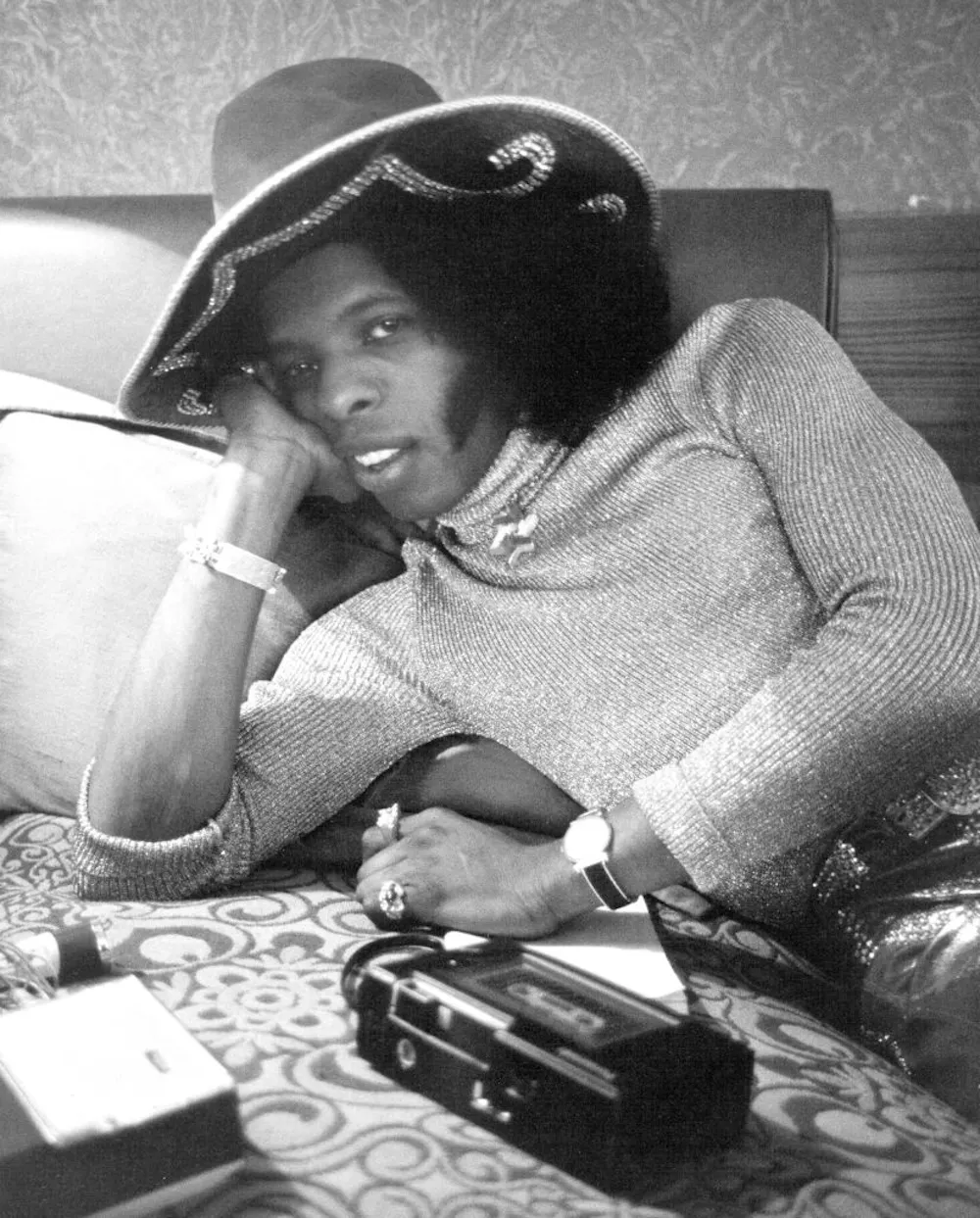
  • MIL-OSI Global: Sly Stone turned isolation into inspiration, forging a path for a generation of music-makers

    Source: The Conversation – USA – By Jose Valentino Ruiz, Associate Professsor of Music Business and Entrepreneurship, University of Florida

    The charismatic front man of Sly and the Family Stone died on June 9, 2025, at the age of 82. Michael Ochs Archives/Getty Images

    In the fall of 1971, Sly and the Family Stone’s “There’s a Riot Goin’ On” landed like a quiet revolution. After two years of silence following the band’s mainstream success, fans expected more feel-good funk from the ensemble.

    What they got instead was something murkier and more fractured, yet deeply intimate and experimental. This was not just an album; it was the sound of a restless mind rebuilding music from the inside out.

    At the center of it all was front man Sly Stone.

    Long before the home studio became an industry norm, Stone, who died on June 9, 2025, turned the studio into both a sanctuary and an instrument. And long before sampling defined the sound of hip-hop, he was using tape and machine rhythms to deconstruct existing songs to cobble together new ones.

    As someone who spends much of their time working on remote recording and audio production – from building full arrangements solo to collaborating digitally across continents – I’m deeply indebted to Sly Stone’s approach to making music.

    He was among the first major artists to fully embrace the recording environment as a space to compose rather than perform. Every reverb bounce, every drum machine tick, every overdubbed breath became part of the writing process.

    From studio rat to bedroom producer

    Sly and the Family Stone’s early albums – including “Dance to the Music” and “Stand!” – were recorded at top-tier facilities like CBS Studios in Los Angeles under the technical guidance of engineers such as Don Puluse and with oversight from producer David Rubinson.

    These sessions yielded bright, radio-friendly tracks that emphasized tight horn sections, group vocals and a polished sound. Producers also prized the energy of live performance, so the full band would record together in real time.

    But by the early 1970s, Stone was burnt out. The dual pressures of fame and industry demands were becoming too much. Struggling with cocaine and PCP addiction, he’d grown increasingly distrustful of bandmates, label executives and even his friends.

    So he decided to retreat to his hillside mansion in Bel Air, California, transforming his home into a musical bunker. Inside, he could work on his own terms: isolated and erratic, but free.

    Stone relied heavily on overdubbing when recording music from his home.
    Richard McCaffrey/Michael Ochs Archives via Getty Images

    Without a full band present, Stone became a one-man ensemble. He leaned heavily into overdubbing – recording one instrument at a time and building his songs from fragments. Using multiple tape machines, he’d layer each part onto previous takes.

    The resulting album, “There’s a Riot Goin’ On,” was like nothing he’d previously recorded. It sounds murky, jagged and disjointed. But it’s also deeply intentional, as if every imperfection was part of the design.

    In “The Poetics of Rock,” musicologist Albin Zak describes this “composerly” approach to production, where recording itself becomes a form of writing, not just documentation. Stone’s process for “There’s a Riot Goin’ On” reflects this mindset: Each overdub, rhythm loop and sonic imperfection functions more like a brushstroke than a performance.

    Automating the groove

    A key part of Stone’s tool kit was the Maestro Rhythm King, a preset drum machine he used extensively.

    It wasn’t the first rhythm box on the market. But Stone’s use of it was arguably the first time such a machine shaped the entire aesthetic of a mainstream album. The drum parts on his track “Family Affair,” for example, don’t swing – they tick. What might have been viewed as soulless became its own kind of soul.

    This early embrace of mechanical rhythm prefigured what would later become a foundation of hip-hop and electronic music. In his book “Dawn of the DAW,” music technology scholar Adam Patrick Bell calls this shift “a redefinition of groove,” noting how drum machines like the Rhythm King encouraged musicians to rethink their songwriting process, building tracks in shorter, repeatable sections while emphasizing steady, looped rhythms rather than free-flowing performances.

    Though samplers wouldn’t emerge until years later, Stone’s work already contained that repetition, layering and loop-based construction that would become characteristic of the practice.

    He recorded his own parts the way future DJs would splice records – isolated, reshuffled, rhythmically obsessed. His overdubbed bass lines, keyboard vamps and vocal murmurs often sounded like puzzle pieces from other songs.

    Music scholar Will Fulton, in his study of Black studio innovation, notes how producers like Stone helped pioneer a fragment-based approach to music-making that would become central to hip-hop’s DNA. Stone’s process anticipated the mentality that a song isn’t necessarily something written top to bottom, but something assembled, brick by brick, from what’s available.

    Perhaps not surprisingly, Stone’s tracks have been sampled relentlessly. In “Bring That Beat Back,” music critic Nate Patrin identifies Stone as one of the most sample-friendly artists of the 1970s – not because of his commercial hits, but because of how much sonic space he left in his tracks: the open-ended grooves, unusual textures and slippery emotional tone.

    You can hear his sounds in famous tracks such as 2Pac’s “If My Homie Calls,” which samples “Sing a Simple Song”; A Tribe Called Quest’s “The Jam,” which draws from “Family Affair”; and De La Soul’s “Plug Tunin’,” which flips “You Can Make It If You Try.”

    The studio as instrument

    While Sly’s approach was groundbreaking, he wasn’t entirely alone. Around the same time, artists such as Brian Wilson and The Rolling Stones were experimenting with home and nontraditional recording environments – Wilson famously retreating to his home studio during “Pet Sounds,” and the Stones tracking “Exile on Main St.” in a French villa.

    Yet in the world of Black music, production remained largely centralized in institutionally controlled studio systems such as Motown in Detroit and Stax in Memphis, where sound was tightly managed by in-house producers and engineers. In that context, Stone’s decision to isolate, self-produce and dismantle the standard workflow was more than a technical choice: It was a radical act of autonomy.

    The rise of home recording didn’t just change who could make music. It changed what music felt like. It made music more internal, iterative and intimate.

    Sly Stone helped invent that feeling.

    It’s easy to hear “There’s a Riot Goin’ On” as murky or uneven. The mix is dense with tape hiss, drum machines drift in and out of sync, and vocals often feel buried or half-whispered.

    But it’s also, in a way, prophetic.

    It anticipated the aesthetics of bedroom pop, the cut-and-paste style of modern music software, the shuffle of playlists and the recycling of sounds that defines sample culture. It showed that a groove didn’t need to be spontaneous to be soulful, and that solitude could be a powerful creative tool, not a limitation.

    In my own practice, I often record alone, passing files back and forth, building from templates and mapping rhythm to grid – as do millions of musical artists who compose tracks from their bedrooms, closets and garages.

    Half a century ago, a funk pioneer led the way. I think it’s safe to say that Sly Stone quietly changed the process of making music forever – and in the funkiest way possible.

    Jose Valentino Ruiz does not work for, consult, own shares in or receive funding from any company or organization that would benefit from this article, and has disclosed no relevant affiliations beyond their academic appointment.

    ref. Sly Stone turned isolation into inspiration, forging a path for a generation of music-makers – https://theconversation.com/sly-stone-turned-isolation-into-inspiration-forging-a-path-for-a-generation-of-music-makers-258659

    MIL OSI – Global Reports

  • MIL-OSI Africa: South Sudan’s peace deal at risk of collapse without stronger regional action, warns United Nation (UN) Commission


    Download logo

    The UN Commission on Human Rights in South Sudan has sounded the alarm that the 2018 Revitalized (Peace) Agreement is at serious risk of collapse and called for urgent, coordinated regional intervention to salvage the faltering peace process.

    The Commission stressed that escalating military offensives, political crackdowns, and foreign military presence are not only accelerating the breakdown of the Agreement but also fueling deep fear, instability and widespread trauma among the people of South Sudan.

    “South Sudan’s peace agreement is in crisis,” said Yasmin Sooka, Chair of the Commission. “The renewed violence is pushing the Revitalized Peace Agreement to the brink of irrelevance, threatening a total collapse. Such a breakdown risks fragmenting the country even further.”

    “Regional partners – especially the African Union and IGAD – must urgently increase their leverage and pressure on South Sudan’s leaders to de-escalate tensions, return to meaningful dialogue, and fully implement the peace agreement,” Sooka said. “It remains the only credible pathway to stability, peace, and democratic transition.”

    Earlier this week, the Commission held consultative dialogues with a range of stakeholders, including civil society representatives, to assess the deepening crisis and explore measures to avert a return to civil war. Participants expressed widespread fear and anxiety among communities, who are increasingly traumatized by persistent violence, arbitrary arrests, and the erosion of civic space.

    Since March 2025, the South Sudan People’s Defense Forces (SSPDF) have launched sustained military operations, including airstrikes on civilian-populated areas, causing significant casualties and mass displacement. A state of emergency has been declared in several regions where operations continue.

    Reports of Ugandan forces supporting the SSPDF, alongside the government’s move to recruit thousands of additional soldiers – seemingly outside the security sector reform commitments in the Revitalized Agreement and pointing towards protracted conflict – have further heightened public fear and concern over looming widespread violations.

    “South Sudanese are living with extreme trauma. They are enduring targeted military attacks that have upended lives and instilled widespread fear. The ongoing recruitment drive by the SSPDF directly contradicts the Revitalized Agreement, which calls for the training and deployment of the Necessary Unified Forces. The country’s leaders – signatories of the Agreement – must abandon partisan agendas and act in the interest of the people,” said Commissioner Carlos Castresana Fernández. “The world cannot remain as bystander while civilians are bombed, and opposition voices are silenced. The time for passive diplomacy is over – these senseless attacks must stop.”

    Political tensions in South Sudan have sharply escalated with the arbitrary detention of key opposition figures, including the First Vice President, Dr. Riek Machar, alongside expanded military operations by the SSPDF, including in populated civilian areas, and against armed opposition forces and groups.

    Escalating armed violence has deepened South Sudan’s humanitarian and human rights crises. Civilians in Upper Nile State have been particularly affected, as the region – already grappling with emergency-level food insecurity – has become a key transit corridor for refugees fleeing the conflict in Sudan. Fears are growing that if this conflict trajectory is not averted, South Sudan’s conflict will entwine with the crisis of Sudan, with even more dire consequences.

    “Salvaging South Sudan’s peace agreement should be of utmost priority in an already turbulent region, as the agreement enables political adversaries to partner towards a transformative transition in this country,” said Commissioner Barney Afako. “Torpedoing the transition is an act of profound folly and recklessness, that is already reigniting violence, deepening insecurity, and imposing further grave violations on long suffering citizens, and undermining regional peace architectures.”

    “Regional partners and peace guarantors must not indulge these damaging machinations; rather, they should resolve to urgently restore a credible transition that will deliver citizens’ aspirations for durable peace and justice,” Afako said.

    The Commission reiterated its call for regional and international actors to intensify diplomatic pressure on South Sudan’s leaders to ensure immediate de-escalation and full implementation of the Revitalized Agreement.

    Commissioner Yasmin Sooka also noted that “any unilateral attempts to derail the transition and undermine regional peace architectures have grave implications for peace and security in the Horn of Africa, and that failure to act could plunge the country into another devastating cycle of conflict.”

    The Commission continues to monitor developments closely and is documenting human rights violations and abuses committed by all parties to the conflict, including those potentially amounting to war crimes.

    Distributed by APO Group on behalf of United Nations: Office of the High Commissioner for Human Rights (OHCHR).

    MIL OSI Africa

  • MIL-OSI Africa: Ghana Accelerates Efforts to Boost Intra-African Trade

    Ghana is fast-tracking the implementation of the African Continental Free Trade Area (AfCFTA) to unlock new opportunities for Ghanaian businesses across Africa by moving beyond commodity-based trade towards value addition for its traditional exports such as gold, oil and cocoa. 

    Speaking during the Ghana Intra-African Trade Fair (IATF) 2025 Business Roadshow, Ghana’s Minister for Trade, Agribusiness, and Industry, Hon. Elizabeth Ofosu-Adjare highlighted the government’s commitment to creating an enabling environment for businesses to thrive under AfCFTA by improving trade infrastructure, financing and market access. 

    “Under our Market Expansion Programme, the National AfCFTA Coordination Office is providing firm-level support to over 2,000 MSMEs in Ghana. This includes sensitization, market readiness training programmes, training on AfCFTA’s Rules of Origin, trade finance and market access initiatives. Ghana has also conducted targeted trade expeditions to East Africa, taking Ghanaian businesses to Kenya, Tanzania and Rwanda to explore real-time opportunities and negotiate supply contracts,” the Minister said in a speech read on her behalf by the Acting National Coordinator, National AfCFTA Coordination Office, Benjamin Kwaku Asiam. 

    The Ghana IATF2025 Business Roadshow brought together government officials, the trade community, including businesses and investors, and executives from the African Export-Import Bank (Afreximbank). The event focused on promoting intra-African trade under the theme: Harnessing Regional and Continental Value Chains: Accelerating Africa’s Industrialisation and Global Competitiveness through AfCFTA. 

    The Business Roadshow is one of five planned in Accra, Nairobi, Johannesburg, Lagos, and Algiers ahead of the fourth edition of the biennial Intra-African Trade Fair 2025 (IATF2025), scheduled to take place in Algiers, Algeria, from 4 – 10 September 2025. IATF is Africa’s premier trade and investment event, held by Afreximbank, in collaboration with the African Union Commission and the AfCFTA Secretariat, and provides a platform for businesses to showcase their goods and exchange trade and investment information within the continent’s single market. 

    In his keynote address, the Secretary General of the AfCFTA Secretariat, H.E. Wamkele Mene noted that the IATF offers an unparalleled platform for the exchange of trade and investment information; and is a marketplace of ideas, opportunities, and partnerships.  

    “As we work to scale up intra-African trade, build regional value chains, and accelerate industrialisation, IATF serves as a key platform for connecting African businesses, investors, governments, and innovators. It is a catalyst for turning the promise of AfCFTA into concrete outcomes: trade deals signed, investments mobilised, and jobs created. By establishing a large, integrated market, AfCFTA encourages countries to specialize and add value to products, attracting investment and creating jobs,” H.E. Mene said, adding that this supports economic diversification, poverty reduction, and Africa’s vision for sustainable and inclusive development. 

    Afreximbank’s Group Chief Economist & Managing Director, Research, Dr. Yemi Kale described IATF as AfCFTA’s commercial marketplace, which brings to life Africa’s efforts to trade more with itself not only in raw materials, but also in value-added goods, services, and innovations. 

    “One of the persistent barriers to intra-African trade is not tariffs or logistics alone—but also access to accurate, timely, and actionable market intelligence. Trade cannot flourish in the absence of information,” Dr Kale said, adding that IATF2025 provides a platform for addressing this. He invited Ghanaian businesses and government agencies to participate in IATF2025, where over 2,000 exhibitors from Africa and beyond will showcase their products to more than 35,000 visitors and buyers from over 140 countries, with trade and investment deals projected to exceed US$44 billion. 

    Cumulatively, IATF has attracted over 4,500 exhibitors, more than 70,000 visitors, and facilitated over US$100 billion in deals. The last edition held in Cairo attracted nearly 2,000 exhibitors from 65 countries generated US$43.7 billion in trade and investment deals. 

    The upcoming IATF2025 will be hosted by the Government of the People’s Democratic Republic of Algeria. Speaking at the Business Roadshow, Algeria’s Ambassador to Ghana, H.E. Mourad Louhaidia welcomed visitors and exhibitors to Algiers, pledging his government’s commitment to facilitate a successful IATF2025 by mobilising transport and hospitality infrastructure and facilitating smooth entry for all participants into the country. 

    “The Algerian embassy will fast track processing of visas for all participants from Ghana. We have set up a dedicated team at the embassy to handle all information requests and visa applications to participate in IATF2025,” H.E. Louhaidia added.  

    IATF2025 will feature a trade exhibition, the Creative Africa Nexus (CANEX) programme spotlighting cultural industries, a four-day Trade and Investment Forum, and the Africa Automotive Show. Special Days will highlight countries, public and private sector entities, tourism, cultural attractions, and Global Africa Day celebrating ties with the African diaspora. 

    Additional activities include business-to-business and business-to-government matchmaking, the AU Youth Start-Up programme, the Africa Research and Innovation Hub, and the African Sub-Sovereign Governments Network (AfSNET) to promote local trade and cultural exchanges. The IATF Virtual platform is also live, connecting exhibitors and visitors all year-round. 

    Ghanaian IATF Ambassador and Chairman, Oakwood Green Africa, Gabriel Edgal said: “Long before borders were drawn, Africa thrived as a connected economy. Trade was a way of life. Value was created locally. Progress moved through relationships and exchange. Across the world, we see increasing protectionism. Traditional aid partners are looking increasingly inward. The global economic tide is shifting, and everybody is focusing on themselves instead. I believe this is a wake-up call — that we need to now be more deliberate about trading among ourselves, to create interconnected prosperity, to trade among ourselves, build with ourselves, and grow for ourselves. It is time for action”. 

    Ghana has been recognized as a leading example in AfCFTA implementation, with the government actively facilitating private sector participation through the National Coordination Office and initiatives like the Guided Trade Initiative, which has seen Ghanaian companies successfully trade with neighbouring African countries 

    To participate in IATF2025 please visit www.IntrAfricanTradeFair.com.  

    Distributed by APO Group on behalf of Afreximbank.

    Media contact: 
    media@intrafricatradefair.com
     press@afreximbank.com

    About the Intra-African Trade Fair:
    Organised by the African Export-Import Bank (Afreximbank), in collaboration with the African Union Commission (AUC) and the African Continental Free Trade Area (AfCFTA) Secretariat, the Intra-African Trade Fair (IATF) is intended to provide a unique platform for facilitating trade and investment information exchange in support of increased intra-African trade and investment, especially in the context of implementing the African Continental Free Trade Agreement (AfCFTA). IATF brings together continental and global players to showcase and exhibit their goods and services and to explore business and investment opportunities in the continent. It also provides a platform to share trade, investment and market information with stakeholders and allows participants to discuss and identify solutions to the challenges confronting intra-African trade and investment. In addition to African participants, the Trade Fair is also open to businesses and investors from non-African countries interested in doing business in Africa and in supporting the continent’s transformation through industrialisation and export development. 

    MIL OSI Africa

  • MIL-OSI Europe: OSCE Chairperson-in-Office’s Special Representative on Youth, Peace and Security concludes visit to North Macedonia and Montenegro

    Source: Organization for Security and Co-operation in Europe – OSCE

    Headline: OSCE Chairperson-in-Office’s Special Representative on Youth, Peace and Security concludes visit to North Macedonia and Montenegro

    OSCE Chairperson-in-Office’s Special Representative on Youth, Peace and Security concludes visit to North Macedonia and Montenegro | OSCE

    Skip navigation

    Navigation

    Navigation

    Home Newsroom News and press releases OSCE Chairperson-in-Office’s Special Representative on Youth, Peace and Security concludes visit to North Macedonia and Montenegro

    MIL OSI Europe News

  • MIL-OSI Africa: Together, Lesotho’s blood donors save lives


    Download logo

    One afternoon in May 2025, 48-year-old Lebohang Pitso* from Lesotho’s capital, Maseru, felt her life slipping away. Weakened from a bout of severe bleeding caused by cervical cancer, she sought emergency care at the city’s renowned Senkatana Oncology Clinic. A few hours after being admitted and receiving a blood transfusion, she felt a powerful transformation take place in her body.

    “It was like a heavy cover was removed from my face,” she says. “The blood gave me life.”

    Moved by the experience, Pitso asked her family to give back. “Four of my family members went to the blood bank and donated blood,” she says. “Blood donors are doing a great job. If it were not for my condition, I would be a regular donor. I encourage those who can, to give life to others.”

    Lesotho Blood Transfusion Services is ramping up efforts to recruit and retain blood donors. It has implemented several strategic approaches, such as promoting blood donor clubs in schools and conducting mobile outreach blood donation drives, which have led to improved blood collection. In 2024, the institution carried out 165 mobile blood donation drives. Overall, there has been an almost 70% increase in the number of units collected between 2017 and 2024, from 5583 to 9411.

    “But demand is higher than supply,” says Manaledi Makhetha, a phlebotomist at Lesotho Blood Transfusion Services. “For example, the 180 units we collected during a week-long campaign this year were all used in just two days,” she says. The total number of units collected per year, although improved, still falls short of the annual target of 10 000 units.

    Makhetha screens donors, collects blood and ensures its safe delivery to various hospitals. “The primary need for blood transfusions is maternal- and cancer-related cases and road traffic crash survivors, among others,” she says.

    On average, Senkatana Oncology Clinic uses 2‒3 pints of blood a day. Many cancer patients require frequent transfusions, as both the illness and treatment compromise blood production. Rethabile Makhetha, an oncology nurse at the clinic, recalls one morning when four patients needed blood, but the clinic only had sufficient units for three. “Cancer is a long journey,” she says. “The patients become family. When we can’t help them due to blood shortages, it’s devastating.”

    The Ministry of Health is increasing public awareness, advocating for regular donations and expanded infrastructure to meet increasing demand. “With World Health Organization (WHO) and other partners supporting the Ministry of Health with guidelines, policies and campaign events, Lesotho is making strides,” says Stephen Monkoe, Director of Laboratory Services at the Ministry of Health. “We are grateful to partners and donors alike. Blood donors are our heroes.”

    Every year on 14 June countries mark World Blood Donor Day, as a tribute to unpaid blood donors who save lives, strengthen communities and show solidarity with others. The day is also an opportunity to highlight the ongoing need for safe, regular blood donations. 

    “It is imperative that everyone, from citizens to community leaders, private and public partners, and government, redouble our efforts to strengthen the national blood service,” says Thato Mxakaza, Health Promotion Officer in WHO’s country office in Lesotho. “By investing in vigorous collection, safe processing, and equitable distribution, we ensure that the profound gift of blood translates into sustained life and renewed hope for every recipient.”

    In Maseru, 32-year-old Nthomeng Leuta encourages others to become regular blood donors. Curious to know her blood type, she began donating blood at high school. She discovered she was type O negative, the only blood type that can be transfused to any recipient and is therefore critical during emergencies when a recipient’s blood type is unknown. Motivated by her special status as a “universal blood donor” she jokingly refers to the blood bank her “second home.” 

    Leuta’s most precious memory is when she responded to a social media post from a man whose wife urgently needed a blood transfusion for an emergency caesarean section. Leuta responded, and the result of her donation was a healthy mother and baby boy. “The husband called me to inform me how I had saved two lives that are so dear to him,” she says. “I felt humbled and so happy.”

    Distributed by APO Group on behalf of World Health Organization (WHO) – Lesotho.

    MIL OSI Africa

  • MIL-OSI Banking: Identity fraud: BaFin additionally warns consumers about the website goldingdigital.net

    Source: Bundesanstalt für Finanzdienstleistungsaufsicht – In English

    On 22 May 2025, BaFin issued a warning about the services being offered on the website goldingdigital.com, which has since been deactivated. The unknown operators are now using the website goldingdigital.net. BaFin suspects the operators of this website of offering consumers financial and investment services without the required authorisation. Contrary to the claims on the website, the services being offered do not originate from Golding Capital Partners GmbH, which has its registered office in Munich. This is a case of identity fraud.

    BaFin is issuing this warning on the basis of section 37 (4) of the German Banking Act (Kreditwesengesetz – KWG).

    Please be aware:

    BaFin, the German Federal Criminal Police Office (BundeskriminalamtBKA) and the German state criminal police offices (Landeskriminalämter) recommend that consumers seeking to invest money online should exercise the utmost caution and do the necessary research beforehand in order to identify fraud attempts at an early stage.

    MIL OSI Global Banks

  • MIL-OSI United Kingdom: GAD’s advice supports pensions announcements

    Source: United Kingdom – Executive Government & Departments

    News story

    GAD’s advice supports pensions announcements

    GAD advice and analysis supports a raft of new pension measures introduced by the Department for Work and Pensions.

    Credit: Shutterstock

    The government has recently published a range of pensions announcements which have been supported by advice and analysis from the Government Actuary’s Department (GAD). This includes the response to the consultation on options for Defined Benefit (DB) schemes and the subsequent publication of the Pension Schemes Bill.

    Options for Defined Benefit schemes

    On 29 May 2025 the government published its response to the consultation on Options for Defined Benefit schemes. This confirmed that it will be making changes to the rules on how surpluses are extracted from DB schemes, and that it is also continuing to consider a government consolidator for DB schemes run by the Pension Protection Fund.

    Pension Schemes Bill

    These measures on surplus extraction were included within the new Pension Schemes Bill which was published on 5 June 2025. This Bill introduced a range of measures across the pensions landscape, including a number of other areas where GAD has provided support as mentioned in separate news articles:

    Other announcements

    Additionally, the government made some other pensions-related announcements relating to issues where GAD has been advising:

    GAD support

    GAD has worked extensively with the Department for Work and Pensions (DWP) throughout the last year to support the work on these new announcements. This has included:

    • helping analyse the industry responses to the consultation
    • advising on the framework for withdrawing surplus from DB schemes
    • various aspects around establishing a government consolidator
    • issues around the Virgin Media judgment
    • supporting development of the Pension Schemes Bill

    We expect to continue working extensively with DWP in these areas over the year ahead, providing further analysis and modelling to help better understand the costs and benefits of the various proposals and the implications on DB schemes, employers and scheme members.

    Updates to this page

    Published 13 June 2025

    MIL OSI United Kingdom

  • MIL-OSI United Kingdom: Ethical Pixels® Joins Growing Number of Preston Living Wage Employers

    Source: City of Preston

    Award-winning digital agency Ethical Pixels® has proudly announced its accreditation as a Living Wage Employer, reinforcing its commitment to ethical business practices and fair treatment of staff.

    The Preston-based agency’s accreditation brings the total number of Living Wage employers headquartered in Preston to 35, a figure that highlights the city’s ongoing commitment to its Living Wage City status, awarded in November last year.

    “Paying a real Living Wage isn’t just the right thing to do, it improves staff well-being, retention and morale.”

    Larry Brangwyn, Managing Director at Ethical Pixels said:

    We are thrilled to announce our accreditation by the Living Wage Foundation, reaffirming our commitment to ethical business practices and the fair treatment of our team. By making use of the flexible and reasonably priced co-working facilities provided by Society1 in Preston has reduced overheads and made us more able as a business to commit to initiatives like the Living Wage.”

    To mark the milestone, we spoke with Larry, alongside Drishya, Junior UX Designer, and Michael, Junior Web Developer, about their journey to accreditation and what it means for them as a business and as individuals.

    Why Ethical Pixels® Chose Living Wage Accreditation, for Larry, the decision was an easy one:

    At Ethical Pixels®, we believe that responsible business practices extend beyond the work we deliver. They start with how we treat our people. Becoming an accredited Living Wage Employer reflects our commitment to fairness, transparency, and social responsibility. We know that financial security is essential for well-being, and paying a real Living Wage ensures our team feels valued and supported. As a company that champions responsible business practices and technology usage for others, it’s only right that we apply those same principles to how we operate internally, creating a positive impact for both our employees and the wider community.”

    A Straightforward Process with Real Impact, Larry described the accreditation process as refreshingly simple:

    The process of becoming accredited as a Living Wage Employer was really straightforward. There was clear guidance, the steps were transparent, and we’ve received lots of ongoing support and advice. We believe that many other businesses are likely already meeting the criteria (or aren’t far off) and could become accredited quickly and easily.”

    The Benefits of Being a Living Wage Employer, asked why other businesses should consider accreditation, Larry was clear:

    We’d recommend Living Wage accreditation to any business that values its people and wants to make a real, measurable impact. Paying a real Living Wage isn’t just the right thing to do, it improves staff well-being, retention, and morale while promoting a positive workplace culture. It also signals to clients and partners that the business is committed to fairness and ethical practices.”

    For Ethical Pixels® employees, the difference is personal and immediate, Drishya shared:

    Getting paid over the Living Wage means I am significantly less worried about making ends meet. It’s a relief knowing I’m being compensated fairly, and that peace of mind makes it so much easier to focus on the job I genuinely love. I would recommend it to other businesses because when everyone is getting paid fairly, the work environment just becomes more positive. It makes me feel more respected and valued as an employee.”

    Michael agreed:

    Speaking as an employee, I feel more motivated to give my best effort because know I am working for someone that has genuine care for their employees. I think it’s a good idea for businesses to help motivate their workforce. It’s a comfort to know that I am always being paid a fair amount.”

    The Preston Living Wage Action Group welcomed Ethical Pixels®‘ accreditation, calling it another important step towards their ambition of seeing more local employers commit to paying the real Living Wage — ensuring workers can meet the actual cost of living.

    For those considering following in their footsteps and becoming an accredited Living Wage Employer please visit Preston Real Living Wage

    MIL OSI United Kingdom

  • MIL-OSI United Kingdom: Jersey to offer a more personalised cervical screening programme13 June 2025 From July, Jersey will follow NHS England and the recommendations from the UK National Screening Committee, to offer a more personalised cervical screening service. The more accurate Human Papillomavirus… Read more

    Source: Channel Islands – Jersey

    13 June 2025

    From July, Jersey will follow NHS England and the recommendations from the UK National Screening Committee, to offer a more personalised cervical screening service. 

    The more accurate Human Papillomavirus (HPV) testing has enabled this change in line with major clinical evidence. 

    Cervical screening detects HPV, these are types of viral infection which are the main cause of cervical cancer. If HPV is detected, the screening sample will then be checked for any changes to the cells in the cervix. If caught early, these can be treated before they turn into cervical cancer. 

    Since December 2019, all cervical screening samples taken in Jersey have been tested for high-risk HPV, which is more accurate than the previous method of cytology testing, known as a ‘smear test’. 

    From July, younger women and people with a cervix, aged 25 to 49, who test negative for HPV or who have previously tested negative for HPV and are therefore known to be at very low risk of cervical cancer over the next 10 years and will safely be invited by their GP for their free screening appointment at five-year intervals rather than three. This is in line with major clinical evidence and follows the UK National Screening Committee’s recommendation. 

    Those women and people with a cervix whose sample indicates the presence of HPV or who have a recent history of HPV, which causes nearly all cervical cancers, will continue to be invited to more frequent screenings to check whether HPV has cleared and if not, if any cell changes have developed. This approach is already used for women and those with a cervix aged 50 to 64 and follows robust evidence on how often those eligible need to be safely screened. 

    The body often clears the infection itself within 36 months. By testing those who have tested positive for HPV every year, cell changes can be picked up very quickly. If abnormal cells are found, the patient will be referred for another examination called a colposcopy which takes a closer look at the cervix. 

    Dr Fiona Nelson, Clinical lead for Cervical Screening, said: “Since 2019 all cervical samples have been tested first for high-risk HPV which is a more accurate test then previous cytology testing. This change has allowed us to move to a more personalised programme in Jersey. Cervical cancer is preventable and curable, and we now have the ability to make the disease a thing of the past. The cervical screening programme, together with our HPV vaccination programme and treatment, helps us move towards our goal of eliminating cervical cancer in Jersey. 

    “The reason we have decided to follow England, Wales, Scotland and Ireland with this change is because the new test used in cervical screening picks up problems earlier than the older screening test that was previously used by the programme. Women and people with a cervix who test negative for HPV are very low risk and those who have a recent history of HPV will be invited more frequently. 

    “The HPV test is an objective test which means the sample is not dependent on a person looking at cells and making a judgment and this means there are fewer missed cases. The HPV test is very good at picking up if someone has HPV and because it typically takes 10-15 years for cancer to develop after an HPV infection a five-year interval for those who are HPV negative is safe.” 

    The Jersey Screening Board added: “This change aligns Jersey with the latest evidence-based guidance. HPV testing offers greater accuracy, enabling safer and more personalised screening. It marks a significant step towards the prevention and eventual elimination of cervical cancer.”​​

    MIL OSI United Kingdom

  • MIL-OSI Russia: The number of trains leaving Wuhan for Central Asia is steadily increasing

    Translation. Region: Russian Federal

    Source: People’s Republic of China in Russian – People’s Republic of China in Russian –

    Source: People’s Republic of China – State Council News

    BEIJING, June 13 (Xinhua) — A total of 26 China-Central Asia freight trains have departed from Wuhan, capital of central China’s Hubei Province, since the beginning of this year, the Hubei Daily reported.

    A 55-car freight train loaded with 110 standard containers arrived at the Khorgos checkpoint on China’s border with Kazakhstan on Thursday. The train, the 26th to leave Wuhan this year, is scheduled to deliver air conditioners, non-woven fabrics, resin and other goods worth 23 million yuan to Uzbekistan on June 17.

    In recent years, there has been a steady increase in the number of trains sent from Wuhan to Central Asia. If in 2021 this figure was 7, then in 2022 it reached 19, in 2023 – 20, and last year – 35.

    Demand for Chinese-made products is growing in the Central Asian market. According to the Hubei branch of China Railways, mainly galvanized steel sheets, building stone, cars and spare parts for them, household electronics and equipment are supplied from Wuhan to this region.

    In April of this year, the Wuhan-Central Asia route began operating on a permanent basis. Flights are operated once a week. -0-

    MIL OSI Russia News

  • MIL-OSI Russia: China’s Dejiang County Finds New Opportunities for Tea Industry Development in Kyrgyzstan Market

    Translation. Region: Russian Federal

    Source: People’s Republic of China in Russian – People’s Republic of China in Russian –

    Source: People’s Republic of China – State Council News

    BEIJING, June 13 (Xinhua) — The Kyrgyz market has provided new opportunities for the development of the tea industry in Dejiang County, Tongren City, southwest China’s Guizhou Province, according to the county government’s press service.

    This week, the local company Honghuchun sent 25 tons of black tea to Kyrgyzstan, thus, tea products from this county will appear on the Central Asian market for the first time.

    The batch of tea will first arrive in Kashi /Kashgar/ in northwest China’s Xinjiang Uygur Autonomous Region and, after customs clearance, will be sent to Kyrgyzstan.

    By the end of this year, Honghuchun plans to supply about 190 tons of tea to the international market. The list of main importers includes Central Asian countries, Russia, Vietnam and Malaysia, said Hong Jianwei, chairman of the company. -0-

    MIL OSI Russia News

  • MIL-OSI Russia: Xi Jinping offers condolences to British King Charles III over Indian air crash

    Translation. Region: Russian Federal

    Source: People’s Republic of China in Russian – People’s Republic of China in Russian –

    Source: People’s Republic of China – State Council News

    BEIJING, June 13 (Xinhua) — Chinese President Xi Jinping on Friday sent a message of condolences to Britain’s King Charles III over the deaths of many Britons in the crash of an Air India plane.

    In his message, the Chinese leader said he was shocked to learn of the crash of the Air India plane, which resulted in the deaths of many Britons.

    On behalf of the Chinese government and people, Xi Jinping expressed deep sorrow for the victims, expressed sincere condolences to the families of the victims and the injured, and wished the injured a speedy recovery.

    Chinese Premier Li Qiang also sent a message of condolences to British Prime Minister Keir Starmer on Friday. –0–

    MIL OSI Russia News

  • MIL-OSI Russia: Indian Home Minister Confirms Plane Crash Survivor

    Translation. Region: Russian Federal

    Source: People’s Republic of China in Russian –

    Source: People’s Republic of China – State Council News

    NEW DELHI, June 13 (Xinhua) — Indian Home Minister Amit Shah said he has met the sole survivor of a plane crash that occurred in the western state of Gujarat on Thursday.

    “Air India flight AI-171 crashed this afternoon and it is feared that many passengers have lost their lives. The entire country mourns and supports the families of the victims,” he told reporters. “There were 230 passengers and 12 crew members on board. The good news is that one passenger survived the crash and I met him. The death toll will be announced after proper DNA testing,” the home minister added.

    A. Shah noted that attempts to save people failed because 125,000 liters of fuel caught fire when the plane crashed and the temperature rose to extreme levels. –0–

    MIL OSI Russia News

  • MIL-OSI Russia: Black box of crashed Air India plane found – local media

    Translation. Region: Russian Federal

    Source: People’s Republic of China in Russian – People’s Republic of China in Russian –

    Source: People’s Republic of China – State Council News

    NEW DELHI, June 13 (Xinhua) — Aviation authorities have recovered one of the two black boxes from the Air India plane that crashed in the western Indian state of Gujarat, local newspaper Hindustan Times reported.

    The plane, bound for London, crashed shortly after takeoff from Ahmedabad International Airport on Thursday afternoon.

    “One of the two black boxes, located in the tail section of the plane, was found and placed under secure guard. The Main Directorate of Civil Aviation will take away equipment to analyze the recordings. The second black box, located in the front section of the plane, has yet to be found,” the newspaper writes, citing a source.

    There were 169 Indians, 53 Britons, seven Portuguese and one Canadian on board the Boeing 787-8 Dreamliner that crashed on the grounds of a medical college, as well as two pilots and 10 flight attendants.

    Air India confirmed on Friday that all 241 people on board were killed in the crash. The sole survivor is being treated in hospital.

    The Air Accident Investigation Bureau of the Indian government is investigating the cause of the incident.

    Boeing CEO Kelly Ortberg said he spoke with Air India Chairman Natarajan Chandrasekaran after the crash and expressed his willingness to support the Indian government’s investigation.

    The 12-year-old Boeing 787-8 aircraft with tail number AI171 fell from a height of about 250 meters after takeoff and crashed on the territory of the medical college, causing serious damage to buildings.

    One person was killed at the college, at least nine were missing and 50 were injured, according to a local medical organization. –0–

    MIL OSI Russia News

  • MIL-OSI Russia: The UN General Assembly has adopted a resolution demanding an immediate ceasefire in the Gaza Strip.

    Translation. Region: Russian Federal

    Source: People’s Republic of China in Russian – People’s Republic of China in Russian –

    Source: People’s Republic of China – State Council News

    UNITED NATIONS, June 13 (Xinhua) — The United Nations General Assembly adopted a resolution at an emergency special session on Thursday calling for an immediate ceasefire in Gaza and large-scale humanitarian access.

    The document calls for “an immediate, unconditional and permanent ceasefire that must be respected by all parties.”

    It strongly condemns the use of starvation of civilians as a method of warfare and the unlawful denial of humanitarian access. The resolution stresses that the parties should not deprive civilians in the Gaza Strip of the items necessary for survival, including by deliberately obstructing the delivery of and access to humanitarian assistance.

    It is noted that, in accordance with international law, the occupying power is obliged to ensure that humanitarian aid reaches all people in need. The resolution calls for immediate and continued facilitation of the full, rapid, safe and unimpeded flow of humanitarian aid throughout the Gaza Strip and its delivery to all Palestinian civilians.

    The document demands that Israel, as the occupying power, immediately end the blockade, open all border crossings and ensure the immediate and massive flow of aid to the Palestinian civilian population throughout the Gaza Strip.

    The need for accountability to ensure Israel’s compliance with its obligations under international law is emphasized and in this regard, all UN Member States, individually and collectively, are called upon to take all necessary measures to ensure Israel’s compliance with its obligations.

    The resolution was adopted by 149 votes in favor, 12 against and 19 abstentions. –0–

    MIL OSI Russia News

  • MIL-OSI Russia: Special Report: Continuation of a thousand-year friendship and a new chapter in the history of the era – on Xi Jinping’s trip to Kazakhstan to participate in the 2nd China-Central Asia Summit

    Translation. Region: Russian Federal

    Source: People’s Republic of China in Russian – People’s Republic of China in Russian –

    Source: People’s Republic of China – State Council News

    Beijing, June 13 /Xinhua/ — At the invitation of President of the Republic of Kazakhstan Kassym-Jomart Tokayev, Chinese President Xi Jinping will be in Astana from June 16 to 18 to attend the 2nd China-Central Asia (CA) Summit.

    Over a thousand years, the people of China and Central Asia have created the glory of the ancient Silk Road and written a magnificent chapter in the history of exchanges between civilizations. With deep historical roots, a solid foundation of public support and a wide range of practical needs, China’s relations with Central Asian countries have gained vitality and vigor in the new era.

    Two years ago, the 1st China-Central Asia Summit was successfully held in Xi’an, ushering in a new era of China-Central Asia relations. Over the past two years, cooperation between China and the region has achieved tangible results. Now, as promised, the 2nd summit will be held in Astana, pushing the six countries to move forward on a new path of building a China-Central Asia community with a shared future.

    In the time between the Xi’an and Astana summits, the roadmap for action has become clearer and the steps forward more powerful. Xi Jinping and the heads of the five Central Asian states must develop a new plan for cooperation that opens up new opportunities for peace and development in the region, brings valuable confidence to a changing world, and charts a brighter future for the progress of human civilization.

    A UNITED DESIRE TO PASS ON MILLENNIAL FRIENDSHIP

    More than 2,100 years ago, the journey of Zhang Qian, an emissary of the Han Dynasty, to the western lands opened the door for friendly exchanges between China and Central Asia.

    In the autumn of 2013, Xi Jinping visited four Central Asian countries and in Kazakhstan for the first time put forward the initiative to build the Silk Road Economic Belt, awakening ancient memories and drawing a blueprint for a dream.

    Over the past 10 years, Xi Jinping has visited Central Asia many times and maintained close ties with the leaders of Central Asian countries. China and the countries of the region have joined forces to comprehensively revive the Silk Road and deepen cooperation, which has ushered in a new era in relations between the two sides.

    Today, China has established a comprehensive strategic partnership, signed cooperation documents for the joint construction of the Belt and Road, and is implementing the concept of a community with a shared future for mankind bilaterally with each of the five Central Asian countries. This signifies the height of political mutual trust, the depth of good-neighborliness, and the breadth of practical cooperation between China and these countries.

    Friendship is the fruit of common views and common aspirations. As Xi Jinping noted, “deepening cooperation between China and Central Asian countries is a strategic choice of our generation of leaders, made with an eye to the future, in line with global trends and in response to the aspirations of the people.”

    In 2020, China put forward an initiative to create a “China-CA” mechanism. In July of the same year, the first meeting of the foreign ministers of China and the Central Asian countries via video link was held, at which the launch of regular meetings in this format was announced.

    In January 2022, Xi Jinping held a video summit with the leaders of five Central Asian countries to mark the 30th anniversary of the establishment of interstate diplomatic relations. During the talks, proposals were made to raise the status of the mechanism to the level of heads of state. “Always based on mutual respect, good neighborliness and friendship, unity in the face of challenges, mutual benefit and win-win,” this is how the head of China explained the secret to the success of cooperation between China and the Central Asian countries.

    In May 2023, at the 1st China-CA Summit, Xi Jinping detailed China’s foreign policy toward Central Asian countries and agreed with the leaders of the five countries to jointly build a closer community with a shared future for China and Central Asia. The mechanism of meetings at the level of heads of state was formally established. Xi Jinping put forward four proposals for regional development and four principles for building a community with a shared future, which received a warm response from other leaders.

    The Xi’an Declaration, a number of multi- and bilateral documents, key agreements on the most important areas of cooperation… The Xi’an meeting became a bright page in the thousand-year history of friendly contacts between China and the Central Asian states and gave a powerful impetus to peace and stability not only in the region, but also on the entire planet.

    The content of China-Central Asia cooperation is constantly enriched based on the principles of joint consultation, joint construction and joint use, and its structure is constantly improved. At the recent 6th meeting of the foreign ministers of China and Central Asian countries in Almaty, the parties highly appreciated the level of mutual trust and solidarity, as well as the important role of the China-Central Asia mechanism, expressing their readiness to further unleash the potential of partnership and create new milestones in building a community with a shared future.

    The China-CA format demonstrates practical results despite the relative “youth” of the mechanism. The personal participation of the leaders of the countries emphasizes mutual respect and the desire to deepen the partnership. This approach allows coordinating the positions of countries on key issues of our time, strengthening trust between countries and with each other, and forming a unified approach to regional security and development. In addition, the personal participation of the leaders in the formation of the China-CA mechanism emphasizes its strategic importance. This creates a new model of multilateral interaction in Eurasia, contributing to stability and development of the region. “Therefore, confidence is growing that the summit in Astana will expand the horizons of cooperation between our countries and give a new impetus to achieving practical results for the benefit of the population of the region,” said Sheradil Baktygulov, Director of the Kyrgyz Institute of World Politics.

    HAND IN HAND TOWARDS MODERNIZATION

    On April 29 this year, work began in the mountains of Kyrgyzstan’s Jalal-Abad region to lay three tunnels on the Kyrgyz section of the China-Kyrgyzstan-Uzbekistan railway, marking the project’s transition to the construction phase.

    This major infrastructure project within the framework of the Belt and Road initiative, promoted personally by the heads of the three states, has become a symbol of the convergence of interests of the three countries and embodies the desire of their peoples for interconnectedness and common prosperity. According to the Director of the Department of Land and Water Transport under the Ministry of Transport and Communications of Kyrgyzstan Tariel Keldibekov, the railway will rebuild the logistics network in the region. Acting Deputy Chairman of the Executive Committee of the Political Council of UzLiDeP Jamoliddin Meliboev emphasized that the project is evidence of deepening mutual trust and practical cooperation between China and the Central Asian countries.

    “The world needs a transport-connected Central Asia,” Xi Jinping said at the 1st China-CA summit. The above-mentioned railway is being built, trains regularly depart from different regions of China to Central Asian countries, the Kazakhstan terminal in Xi’an has been put into operation, and the construction of the Trans-Caspian International Transport Route is actively advancing… China and the Central Asian countries are consistently deepening their interconnectedness.

    Taking the high-quality construction of the Belt and Road as a new starting point, China and Central Asian countries are intensifying cooperation at an unprecedented speed and intensity. The two sides are jointly building a path to modernization and common development.

    An increasingly dense network of transport routes is becoming a bridge for trade. With the help of uninterrupted rail, road and air transport, Chinese products – from household appliances and everyday goods to electric cars – are constantly flowing into Central Asia, and high-quality Central Asian goods such as fertilizers, cotton, beef and lamb are increasingly finding their way to the Chinese market… According to the General Administration of Customs of the People’s Republic of China, in 2024, trade turnover between China and the Central Asian countries reached $94.8 billion, an increase of $5.4 billion compared to the previous year and a new historical maximum.

    38-year-old Kazakh farmer Sergey told reporters that in recent years he began cooperating with Chinese companies, introducing a “contract farming” model: he grows grain crops according to the demands of the Chinese market and receives agricultural support from Chinese specialists. This helped solve problems with growing grain and selling it.

    According to Abdugani Mamadazimov, Chairman of the National Foundation “Silk Road – the Road of Consolidation”, the “China-CA” mechanism has made a significant contribution to the stability and development of the region. “We hope that the 2nd “China-CA” summit will deepen cooperation between the parties, help continue the development of infrastructure and logistics, and also unite efforts for the sake of joint development and common prosperity,” he said.

    DEVELOPMENT OF CULTURAL EXCHANGES AND MUTUAL LEARNING BETWEEN CIVILIZATIONS

    On May 31, 2025, the first international tourist train China-Central Asia arrived from Xi’an to Almaty railway station. This event opened a series of cultural exchanges between China and Kazakhstan.

    At the 1st China-CA Summit, Xi Jinping put forward a number of initiatives, including a proposal to launch a tourist train. Deputy Chairman of the Board of JSC NC Kazakhstan Temir Zholy Anuar Akhmetzhanov expressed hope that the train will help strengthen ties between the peoples of China and the Central Asian countries and deepen their mutual understanding.

    Today, China has a visa-free regime with Kazakhstan and Uzbekistan. 2025 has been declared the Year of Chinese Tourism in Kazakhstan, and the Year of Uzbek Tourism in China. More and more Chinese tourists are traveling to the ancient cities of Samarkand and Bukhara, and more and more citizens of Central Asian countries are visiting China.

    The thousand-year-old Silk Road allows people to travel freely, promotes mutual understanding and cultural integration. Cooperation in education and poverty reduction, contacts on public administration issues, exchanges at the local level – deep and sustainable civilizational dialogue makes the friendship between the parties ever stronger.

    Partnerships in the field of professional education open the way to the future for Central Asian youth. In Tajikistan, the first in Central Asia “Lu Ban Workshop” has been operating for more than two years, where they teach heat supply technologies and engineering geodesy. “Lu Ban Workshop” in the East Kazakhstan region is aimed at training personnel for the automotive industry. In Astana, the second “Lu Ban Workshop” in Kazakhstan is also actively preparing to open. In Kyrgyzstan and Uzbekistan, such workshops began operating last year, and in Turkmenistan, the project is currently underway.

    Interest in China and the Chinese language in Central Asian countries is steadily growing. China and the countries of the region are rapidly exchanging cultural centers. There are already 13 Confucius Institutes operating in Central Asia. More and more young people are seeking to get an education in China. Today, there are almost one hundred pairs of administrative-territorial units that have established sister-city relations.

    Joint restoration of ancient Khiva in Uzbekistan, joint excavations at the Kazakh archaeological complex of Rakhat, work to preserve and pass on to future generations the Kyrgyz heroic epic “Manas”… Cooperation between China and the Central Asian countries in the field of cultural heritage protection has allowed many pearls of the Silk Road to shine again.

    Uzbek political commentator Sharofiddin Tulaganov noted that the China-CA mechanism has become an important platform for mutual learning between civilizations and the rapprochement of peoples, which contributes to deepening mutual understanding and strengthening trust, and also makes a significant humanitarian contribution to peace and stability in the region.

    According to Aidar Amrebayev, Director of the Center for Political Research at the Institute of Philosophy, Political Science and Religious Studies of the Science Committee of the Ministry of Science and Higher Education of Kazakhstan, the upcoming China-CA summit will give new impetus to cohesion and cooperation between China and the Central Asian countries, advance the construction of a closer community with a common destiny for China and CA, and contribute to the prosperity of the region and the improvement of global governance.

    From Xi’an to Astana, in the flow of high-quality joint construction of the “Belt and Road”, on the new path to modernization and in the dialogue of civilizations, China and the Central Asian countries are passing on the traditions of friendship and mutual support from generation to generation, making a new contribution to ensuring peace and development on the planet and promoting the progress of human civilization. –0–

    MIL OSI Russia News

  • MIL-OSI NGOs: “We’re Not Just Marching – We’re Building the Future”: Joburg Youth Lead the Charge for Green Jobs This Youth Day

    Source: Greenpeace Statement –

    Johannesburg, 13 June 2025 –  Hundreds of young people flooded the streets of Johannesburg in a powerful call for economic justice through climate action. Backed by Greenpeace Africa, they waved hand-painted placards, their chants echoing across pavements, in a shared urgency drawn together by a generation raised on promises — and now demanding delivery. This Youth Day, South Africa’s youth were not just commemorating the past; they marched for a future they refuse to be excluded from.

    At the heart of their demand was a clear message: a Just Transition must mean green jobs for young people, now.

    “We don’t want to be statistics anymore. We want to be builders of the new economy,” said Aphiwe, a 24-year-old graduate who’s been unemployed for over a year. “Give us the skills. Give us the tools. Let us work — not just survive.”

    With youth unemployment sitting above 60%, South Africa’s young people are caught in a worsening economic storm. Yet they also represent the country’s greatest untapped human resource; bold, informed, and ready to act. The renewable energy sector offers a lifeline: up to five times more jobs than the fossil fuel economy.

    But that opportunity remains out of reach for many. Through this march, the youth-  in a memorandum presented to the labour ministry – demanded access to skilling and upskilling programmes, inclusion in climate and economic planning, and investment in clean energy infrastructure that benefits communities, not corporations.

    “South Africa’s young people aren’t just demanding jobs. They’re demanding a future where those jobs are sustainable, dignified, and part of solving the climate crisis,” says Siyabonga Myeza, Climate and Energy Campaigner, Greenpeace Africa.

    This isn’t the first time youth have taken to the streets on June 16, a date seared into South African memory. In 1976, students marched for the right to education. In 2025, they march for the right to work, to be heard, and to live on a planet that hasn’t been plundered past repair.

    “This generation sees the link between economic injustice and climate injustice. Their message is clear: we cannot afford to wait any longer,” said Cynthia Moyo, Climate and Energy Campaigner, Greenpeace Africa.

    Greenpeace Africa stands shoulder-to-shoulder with these young leaders, calling on the South African government, private sector, and civil society to honour their vision, not with speeches but with action.

    This Youth Day, the call will ring out from city streets and rural corners alike:
    “No jobs on a dead planet. No future without the youth.”

    ENDS.

    For more information, contact:

    Ferdinand Omondi, Communication and Story Manager, Greenpeace Africa, email: [email protected], cell: +254 722 505 233

    Greenpeace Africa Press Desk:[email protected]


    MIL OSI NGO

  • MIL-OSI NGOs: UNOC3: “Fine words must now translate into action”, Greenpeace comment

    Source: Greenpeace Statement –

    Nice, France, The UN Ocean Conference (UNOC) concludes today with significant progress made towards the ratification of the High Seas Treaty and a strong statement on a new plastics treaty signed by 95 governments. Once ratified, it will be the only legal tool that can create protected areas in international waters, making it fundamental to protecting 30% of the world’s oceans by 2030. 50 countries, plus the European Union, have now ratified the Treaty.

    Deep sea mining rose up the agenda in the conference debates, demonstrating the urgency of opposing this industry. The expectation from civil society and a large group of states, including both co-hosts of UNOC, was that governments would make progress towards stopping deep sea mining in Nice. UN Secretary General Guterres said the deep sea should not become the wild west. French President Macron said a deep sea mining moratorium is an international necessity. Four new countries pledged their support for a moratorium at UNOC bringing the total to 37. Attention now turns to what actions governments will take in July to stop this industry from starting.

    Megan Randles, Greenpeace Head of Delegation regarding the High Seas Treaty and progress towards stopping deep sea mining said: “High Seas Treaty ratification is within touching distance, but the progress made here in Nice feels hollow as this UN Ocean Conference ends without more tangible commitments to stopping deep sea mining. 

    “We’ve heard lots of fine words here in Nice, but these need to turn into tangible action. Countries must be brave, stand up for global cooperation and make history by stopping deep sea mining this year. They can do this by committing to a moratorium on deep sea mining at next month’s International Seabed Authority meeting. We applaud those who have already taken a stand, and urge all others to be on the right side of history by stopping deep sea mining.”

    Following this UNOC, attention now turns to the International Seabed Authority (ISA) meetings in July. In the face of The Metals Company teaming up with Trump to mine the global oceans, the upcoming ISA provides a space where governments can come together to defend the deep ocean by adopting a moratorium to stop this destructive industry.

    Negotiations on a Global Plastics Treaty resume in August. 

    John Hocevar, Oceans Campaign Director, Greenpeace USA said: “The majority of countries have spoken when they signed on to the Nice Call for an Ambitious Plastics Treaty that they want an agreement that will reduce plastic production. Now, as we end the UN Ocean Conference and head on to the Global Plastics Treaty negotiations in Geneva this August, they must act. The world cannot afford a weak treaty dictated by oil-soaked obstructionists. 

    “The ambitious majority must rise to this moment, firmly hold the line and ensure that we will have a Global Plastic Treaty that cuts plastic production, protects human health, and delivers justice for Indigenous Peoples and communities on the frontlines. Governments need to show that multilateralism still works for people and the planet, not the profits of a greedy few.”

    Nichanan Thantanwit, Project Leader, Ocean Justice Project said: “Coastal and Indigenous communities, including small-scale fishers, have protected the ocean for generations. Now they are being pushed aside by industries driving ecological collapse and human rights violations. 

    “As the UN Ocean Conference ends, governments must recognise small-scale fishers and Indigenous Peoples as rights-holders, secure their access and role in marine governance, and stop destructive practices such as bottom trawling and harmful aquaculture. There is no ocean protection without the people who have protected it all along.”

    The anticipated Nice Ocean Action Plan, which consists of a political declaration and a series of voluntary commitments, will be announced later today at the end of the conference. None will be legally binding, so governments need to act strongly during the next ISA meeting in July and at plastic treaty negotiations in August. 

    ENDS

    Photos and Video available in the Greenpeace Media Library.

    Contacts:

    James Hanson, Head of Communications, Greenpeace Protect the Oceans campaign, +44 7801 212 994, [email protected] 

    Magali Rubino, Global Media Lead, Greenpeace Protect the Oceans campaign, +33 7 78 41 78 78, [email protected] 

    Greenpeace International Press Desk: +31 (0)20 718 2470 (available 24 hours), [email protected]

    MIL OSI NGO

  • MIL-OSI Global: House tax-and-spending bill and other Trump administration changes could make millions of people lose their health insurance coverage

    Source: The Conversation – USA – By Simon F. Haeder, Associate Professor of Public Health, Texas A&M University

    People who don’t have health insurance coverage often delay or simply don’t get the medical care they need. Jacob Wackerhausen/iStock via Getty Images Plus

    President Donald Trump has promised not to cut Medicaid many times over the past decade, including in the tax-and-spending legislative package he has made a top priority in his second administration.

    But several provisions in the bill, which the House of Representatives passed in a largely party-line 215-214 vote in May 2025, could cause millions of Americans enrolled in Medicaid to lose their health insurance coverage, according to the nonpartisan Congressional Budget Office. Medicaid is funded jointly by the federal government and the states. The program provides nearly 80 million Americans, most of whom are low-income or have disabilities, with health insurance.

    The legislation, which advances Trump’s agenda, faces a tough battle in the Senate despite the Republican Party majority in that chamber. Several GOP senators have either said they oppose it or have expressed strong reservations for a variety of reasons, including the trillions of dollars the package would add to the U.S. government’s debt.

    As a scholar who researches access to health care, I am concerned about the possibility that millions of people will lose their health insurance coverage should this bill become law. In many cases, that could occur due to new bureaucratic obstacles the bill would introduce.

    Proposed policy changes and the uninsured

    About 25.3 million Americans lacked insurance in 2023, down sharply from 46.5 million in 2010. Most of this 46% decline occurred because of the Affordable Care Act of 2010.

    The Congressional Budget Office, a nonpartisan agency that provides evidence-supported information to Congress, estimates that 10.9 million Americans would lose their health insurance by 2034 if the House of Representatives’ version of that package were to become law.

    Of these, as many as 7.8 million would lose access to Medicaid.

    Another 2.1 million people who the CBO estimates would end up uninsured are Americans who today have coverage they bought in the marketplaces that the Affordable Care Act created.

    In addition to the measures in the tax-and-spending bill, other changes are looming. These include the expiration of some ACA-related measures adopted in 2021 that Trump does not intend to renew, and new regulations. All told, the number of Americans losing their health insurance by 2034 could total 16 million, according to the CBO.

    Other estimates suggest that the number of Americans losing their coverage could run even higher.

    Obstructing Medicaid expansion

    The House bill would reduce incentives the federal government provides states to expand their Medicaid programs as part of the ACA.

    Eliminating these incentives would make it even less likely that Texas and the other nine states that still have not expanded Medicaid eligibility would do so in the future.

    The bill would also make it harder for states to come up with their share of Medicaid funding by limiting “provider taxes.” These taxes are charged to hospitals, doctors and other medical providers. The revenue they raise help pay for the state’s share of Medicaid costs.

    And the legislative package would also reduce federal funding to cover Medicaid costs in states that provide coverage to unauthorized immigrants using only their own funds. Threatened with billions in losses, the states that do this are unlikely to maintain these programs. In California alone, this would jeopardize the coverage of 1.6 million of its residents.

    Losing Medicaid coverage may leave millions of low-income Americans without insurance coverage, with no affordable alternatives for health care.

    A supporter of the Affordable Care Act stands in front of the Supreme Court building on Nov. 10, 2020.
    Samuel Corum/Getty Images

    Making Medicaid enrollment more complicated

    Other proposed changes in the House bill would indirectly cut Medicaid coverage by forcing people to deal with more red tape to get or keep it.

    This would happen primarily through the introduction of “work requirements” for Medicaid coverage. When enrolled in the program, applicants who are between 19 and 64 years old would need to certify they are working at least 80 hours a month or spending that much time engaged in comparable activities, such as community service.

    Work requirements specifically target people eligible for Medicaid through the Affordable Care Act’s expansion of the program. They tend to have slightly higher incomes than the other people eligible for this benefit.

    Arkansas gave Medicaid work requirements a try during the first Trump administration. Researchers who studied what happened found that 1 in 4 of the Arkansans enrolled in Medicaid affected by the policy lost their health insurance coverage. They also found that in most cases, this occurred because of bureaucratic obstacles, and that the policy didn’t lead to more people getting jobs.

    By some estimates, the work requirements provision alone would lead to close to 5 million people of the 7.8 million being denied Medicaid coverage.

    At the same time, the bill would increase how often Medicaid beneficiaries have to reapply to the program to keep their coverage from once every 12 months to twice a year.

    It also would delay or reverse several policies that made it easier for Americans to enroll in Medicaid and maintain their coverage. Many of those who aren’t kicked out would also face either new or higher co-payments for appointments and procedures – restricting their access to health care, even if they don’t wind up without insurance.

    There is ample evidence that obstacles like these make it hard to remain enrolled in safety net programs. Historically, the people who are most likely to lose their benefits are low-income, people of color or immigrants who do not speak English well.

    President Barack Obama signs the Affordable Care Act during a ceremony with congressional Democrats on March 23, 2010.
    Win McNamee/Getty Images

    Costlier Marketplace policies and more barriers

    The bill would also affect the more than 24 million Americans who get health insurance through Affordable Care Act Marketplace plans.

    Changes in the House version of the bill would make it harder to get this coverage. This includes reducing the time Americans have to enroll in plans and eliminating certain subsidies. It also makes the enrollment process more complicated.

    Combined with other changes the Trump administration has made, experts expect Marketplace premiums to skyrocket.

    The Congressional Budget Office expects more than 2 million beneficiaries to lose coverage due to these new policies.

    More coverage losses possible

    Americans buying their own insurance on the ACA marketplaces may also face higher premiums.

    Increased subsidies in place since 2021 are set to expire at the end of the year. Combined with Trump regulatory decisions, this may lead to more than 5 million Americans losing coverage – whether or not the GOP’s tax-and-spending package is enacted.

    The effects of the bill would also be compounded by further changes by individual states. This could include the introduction of monthly premiums that people with Medicaid coverage would have to pay, in Indiana and other states.

    Some states may also reduce eligibility for certain groups or cover fewer services, as states seek to reduce their Medicaid costs.

    And some states, including Iowa and Utah, are already pursuing work requirements on their own whether or not they become mandatory across the nation.

    If fewer Americans have health insurance due to changes the Trump administration is making and the policies embedded in the pending tax-and-spending legislative package, the health of millions of people could get worse due to forgone care. And at the same time, their medical debts could grow larger.

    Dr. Simon F. Haeder has previously received funding from the Centers for Medicare and Medicaid Services, the Pennsylvania Insurance Department, and the Robert Wood Johnson Foundation for unrelated projects.

    ref. House tax-and-spending bill and other Trump administration changes could make millions of people lose their health insurance coverage – https://theconversation.com/house-tax-and-spending-bill-and-other-trump-administration-changes-could-make-millions-of-people-lose-their-health-insurance-coverage-257529

    MIL OSI – Global Reports

  •  Delhiites to get relief from scorching heat as IMD predicts thunderstorm

    Source: Government of India

    Source: Government of India (4)

    Residents of the national capital may finally get some relief from the relentless heat, as the India Meteorological Department (IMD) has predicted thunderstorms and rainfall later on Friday, which are expected to ease the sweltering conditions that have gripped Delhi and surrounding regions for the past several days.

    Speaking to IANS, IMD scientist Akhil Srivastava said: “The maximum temperature in Delhi-NCR remains high, and the night temperature is also above normal. Due to these conditions, we had issued a red alert on Thursday. For June 13, we are expecting hot and humid conditions during the day, with a possibility of a heatwave in some parts of the region. Accordingly, we have issued an orange to red alert for today.”

    Srivastava added that thunderstorm activity is anticipated by Friday night, with wind speeds ranging from 40 to 60 km/h.

    “This weather pattern may persist for the next two to three days, which is likely to bring down the maximum temperature,” he said.

    “Currently, Delhi is recording temperatures around 44 degrees Celsius. We expect this to fall to around 40 degrees Celsius by June 15 or 16.”

    Srivastava also said that northwestern India is also expected to remain hot, with no significant change in maximum temperatures over the next 48–72 hours.

    “We estimate a potential drop of 2 to 4 degrees Celsius in the coming days. However, western Rajasthan will continue to face severe heat conditions, for which a red alert has been issued. Warm night conditions are being observed across the region, with night temperatures also staying above average, increasing the overall impact.”

    The IMD has issued red alerts for Punjab and Haryana for the next two days due to expected extreme conditions. Rajasthan is also under a red alert for Friday, which will be followed by an orange alert for the next two days. In Uttar Pradesh and Jammu & Kashmir, orange alerts have been issued as cooler weather is expected over the weekend.

    Srivastava also noted a likelihood of light to very light rainfall in parts of Delhi, associated with the thunderstorm activity.

    “While the intensity of the rainfall may be low, it will contribute to a temporary cooling effect and offer some respite from the oppressive heat.”

    Responding to whether this summer has been hotter than usual, Srivastava said: “Heatwaves are not new to Delhi or North India. We witnessed similar extreme temperatures last year as well. It would not be accurate to say this year is significantly worse; rather, such patterns are becoming increasingly frequent.”

    (IANS)

  • MIL-OSI United Kingdom: UK and Scottish governments join forces to boost Scottish growth

    Source: United Kingdom – Executive Government & Departments

    Press release

    UK and Scottish governments join forces to boost Scottish growth

    Scottish Secretary and Minister for Business co-chair business forum

    • Business and trade union groups working with governments to grow Scotland’s economy faster
    •  Murray urges new collaboration for Scotland’s defence industry

    For the first time in more than two years, the Scottish Business Growth Group was convened in Edinburgh today, bringing the UK and Scottish governments together with business leaders to discuss how they can deliver economic growth.

    The forum, jointly chaired by the Scottish Secretary Ian Murray and the Scottish Government’s Minister for Business Richard Lochhead, brings together officials from both of Scotland’s governments alongside business representatives and the Scottish Trades Union Congress. With economic growth the UK Government’s number one priority, Murray used a speech in March at the University of Edinburgh to announce that this group would be reconvened, with a fresh focus on collaboration across governments and sectors.

    During the meeting, the Scottish Secretary provided updates on recent and upcoming announcements from the UK Government and outlined their significance for businesses in Scotland. This includes the Spending Review, the Strategic Defence Review and economic opportunities for the Scottish supply chain, the recent trade deals agreed with the EU, US and India – and the modern Industrial Strategy which will be announced shortly.

    Recognising there are already a  range of areas in which the UK and Scottish governments work constructively with business, the Scottish Secretary called for collaboration in new areas which could yield significant economic benefits, such as defence.

    Murray has also been working with business groups as part of his Brand Scotland programme and last week announced that the Scotland Office will fund the Scottish Chambers of Commerce to launch a new international trade initiative. This collaboration will be supported by a grant of £100,000, to promote Scottish goods and services and bring foreign direct investment into Scotland.

    Following the meeting, Mr Murray said: 

    “Scotland has two governments and most Scots rightly expect their politicians to work in partnership wherever possible, especially on something as important as economic growth. Political differences aside, I have always sought to engage constructively with Scottish Government ministers and I was delighted to co-chair this important forum today with Richard Lochhead.

    “The business and trade union groups which joined our discussion challenged us to go further and faster in helping businesses and workers feel the benefits of economic growth. I am determined to meet that challenge and want the Scottish Government to work with me in areas where we have not previously collaborated.

    “With the UK Government committing to significant increases in defence spending, there are huge opportunities for Scottish workers and defence firms, but only if both governments fully commit to giving our young people the skills they need and backing our world class defence industry.

    “On nuclear power, the announcement this week of UK Government investment for Sizewell in England is a reminder of the huge potential of nuclear power. Thousands of skilled jobs and billions of pounds of investment could come to Scotland, but only if both governments work in partnership with industry to unlock those opportunities.

    “Boosting Scottish exports and selling the best of Scotland overseas is a key lever in delivering economic growth at home. Our Brand Scotland programme, boosted by £2.25 million in the Spending Review, will do just that. I am delighted to be working with the Scottish Government and businesses of all sizes to deliver trade missions and sell our goods and services to the world.”

    Updates to this page

    Published 13 June 2025

    MIL OSI United Kingdom

  • MIL-OSI United Kingdom: CMA consults on releasing Google from Privacy Sandbox commitments

    Source: United Kingdom – Government Statements

    News story

    CMA consults on releasing Google from Privacy Sandbox commitments

    Protections secured by the CMA are no longer needed after Google stepped back from plans which could have favoured its business in multi-billion-pound online advertising sector.

    iStock

    The Competition and Markets Authority (CMA) has today launched a consultation on releasing Google from commitments after the tech firm announced in April it was abandoning plans to prompt users to decide if they want to block third party cookies from Chrome – the popular browser used by millions of users.

    The CMA commitments were put in place to ensure that Google’s Privacy Sandbox was developed in a way that benefits consumers. Without the CMA’s oversight, Google’s original plan to deprecate third-party cookies could have weakened competition in the digital advertising sector – an industry worth billions to the UK economy – harming consumers who ultimately pay for the cost of online advertising.

    The commitments protected competition by ensuring that Google designed and developed the Privacy Sandbox in a way that did not favour its own ad-tech services over those of its competitors.

    The CMA believes the commitments are no longer necessary and is now consulting before it takes a decision  on whether to release them later this year.

    Anyone with an interest in this work is welcome to submit feedback by 11.55pm on 4 July 2025.

    More information is available via the Investigation into Google’s ‘Privacy Sandbox’ browser changes case page.

    Notes to editors

    1. The CMA has worked closely with the Information Commissioner’s Office (ICO) throughout this project to ensure that competition and privacy aspects were considered together. In the event that the Google Privacy Sandbox initiative were to give rise to competition concerns in the future, the CMA would have the ability to intervene through powers under the Digital Markets, Competition and Consumers Act 2024 as well as the Competition Act 1998.
    2. For media enquiries, contact the CMA press office on 020 3738 6460 or press@cma.gov.uk.

    Updates to this page

    Published 13 June 2025

    MIL OSI United Kingdom

  • MIL-OSI USA: Congressman Cleaver Votes Against Republican Rescission Package that Cuts Foreign Aid and Public Broadcasting

    Source: United States House of Representatives – Congressman Emanuel Cleaver II (5th District Missouri)

    (Washington, D.C.) – Today, U.S. Representative Emanuel Cleaver, II (D-MO) voted against the House GOP recissions package that would recklessly cut $9.4 billion from the federal budget that was previously approved on a bipartisan basis. In addition to foreign aid cuts, which are already having deadly consequences and undermining U.S. support around the world, the bill defunds America’s public broadcasting, including NPR and PBS, threatening vital sources of nonpartisan news, educational programming, and emergency services for all Americans.

    “Whether it’s ripping healthcare away from 16 million Americans, taking food off the table of millions more, or now defunding vital public broadcasters that millions of our fellow Americans rely on like PBS and NPR, my House Republican colleagues have made clear that nothing is off the table when it comes to budget cuts that will help pay for more tax breaks that overwhelmingly benefit the wealthiest among us,” said Congressman Cleaver. “While I was hopeful that just a handful of my colleagues across the aisle would block this short-sighted and dangerous decision, it will fall upon the Senate to protect these services for the American people.”

    Earlie this week, Congressman Cleaver fought to protect funding for America’s public broadcasting by introducing an amendment to remove a provision within the Republican rescission package that would eliminate federal funding for these vital institutions. Unfortunately, the amendment was not adopted, and the cuts remained in the package passed today.

    Congressman Cleaver has been a longtime supporter of America’s public broadcasting, pushing back on the Trump administration’s effort to undermine these vital services. In March, Cleaver joined a bipartisan coalition of lawmakers to call for continued funding for public broadcasting following reports the FCC had opened a frivolous investigation into NPR and PBS and signaled interest in defunding the outlets.  In May, the Congressman again joined a cohort of lawmakers to call on the Committee on Appropriations to maintain funding for CPB programs.

    Emanuel Cleaver, II is the U.S. Representative for Missouri’s Fifth Congressional District, which includes Kansas City, Independence, Lee’s Summit, Raytown, Grandview, Sugar Creek, Greenwood, Blue Springs, North Kansas City, Gladstone, and Claycomo. He is a member of the exclusive House Financial Services Committee and Ranking Member of the House Subcommittee on Housing and Insurance.

    MIL OSI USA News

  • MIL-OSI Asia-Pac: Speech by CE at Opening Ceremony of Chinese Culture Festival 2025 (with video)

    Source: Hong Kong Government special administrative region

    Speech by CE at Opening Ceremony of Chinese Culture Festival 2025 (with video) 
    I would now like to turn to our English-speaking friends.
     
    Welcome to the opening reception of the Chinese Culture Festival 2025.
     
    Launched last year by the Government, the Chinese Culture Festival aims to showcase the remarkable virtues of traditional Chinese culture to the world. In 2024, we successfully presented over 250 performances and activities, attracting a substantial attendance of 900 000. 
     
    This year, the second edition of the Chinese Culture Festival will present more than 280 programmes and activities. To kick-start the Festival, this evening we are presenting a contemporary dance drama to you. Titled “Dongpo: Life in Poems”, this performance is brought to you by the China Oriental Performing Arts Group, and uses a variety of innovative means to present Chinese poetry, calligraphy, painting and music.
     
    Other Festival programmes include Chinese operas, local performances as recognised by the China National Arts Fund, as well as specially curated programmes co-organised with the China Federation of Literary and Art Circles Hong Kong Member Association and arts and cultural organisations.
     
    Under the “one country, two systems” principle, Hong Kong is the only world city that enjoys both the China advantage and the global advantage. We will make full use of Hong Kong’s position as an East-meets-West centre for international cultural exchange to promote the beauty of Chinese culture.
     
    An important strategic direction featured in the Blueprint for Arts and Culture and Creative Industries Development, published by the Government last year, is on the promotion of the profound traditional Chinese culture. I am confident that the Chinese Culture Festival will become a new major annual cultural event in Hong Kong, attracting not only local residents but also Mainland and overseas tourists with its vibrant programme.
     
    I wish the Festival a resounding success, and all of you an enjoyable evening. Thank you.
    Issued at HKT 20:00

    NNNN

    MIL OSI Asia Pacific News