There will be an increased police presence in Westminster on Saturday when a number of protests are due to take place.
A march organised by the Palestine Coalition will go from Victoria Embankment to Whitehall via Westminster Bridge, Waterloo Bridge and the Strand. Speeches will take place in Whitehall following the march.
A static protest organised by Stop the Hate, in opposition to the Palestine Coalition march, will take place at the junction of the Strand and Waterloo Bridge.
Discussions are ongoing with the organisers of both protests and details of any conditions in place will be published on Friday.
We are also expecting further protest activity in support of Palestine Action which is a group now proscribed under the Terrorism Act. Similar protests have taken place in Parliament Square for the past two weekends, with 70 arrests made.
The location of any such protest has not yet been confirmed.
Deputy Assistant Commissioner Ade Adelekan, who is charge of the Met’s policing operation this weekend, said: “Our policing plans for the sort of protest activity we expect on Saturday are tried and tested, with officers working hard to achieve the balance of allowing people to exercise their right to peaceful protest while avoiding serious disruption to the community and ensuring incidents and offences can be swiftly dealt with.
“This Saturday’s Palestine Coalition protest is the first large scale eventof its kind since the proscription of Palestine Action and I want to make sure the implications of that change in the law are fully understood.
“Nobody will be committing an offence by simply supporting the Palestinian cause, taking part in the march or carrying flags, banners or other signs providing they don’t stray into hate speech or other offences.
“However, those who see this as an opportunity to test the limits of the law by expressing support for Palestine Action, whether at a standalone protest or as part of the Palestine Coalition protest, will likely be committing an offence and will very likely be arrested.
“I would urge those people to consider the seriousness of being arrested under the Terrorism Act and the very real long term implications – from travel, to employment, to finances – that such an arrest is likely to have for their future.
“This is also the first large scale protest on this issue since Glastonbury Festival where offensive chanting led by an artist on one of the stages prompted a police investigation. Investigations are also underway, led by Met officers, following similar uses of the same chant in London.
“Those investigations are ongoing and it would not be appropriate to prejudge the outcomes, but I can say a bit more about our approach to similar chanting at this weekend’s protest.
“We have said before that whether chants cross the line from free speech to a potential criminal offence depends on the specific circumstances.
“For example, there will be words that when chanted in the middle of the Palestine Coalition march, and not directed at individuals who might be caused harassment, alarm or distress as a result, might not lead an officer to reasonably suspect an offence has been committed.
“But directing the same words at a group of people for whom the words would very likely cause harassment, alarm or distress, could well give rise to grounds for arrest.
“At previous protests, the area between the main march and any counter protest has seen the most heated exchanges. Officers will be particularly alert to conduct, including chanting, in this area and will be working with stewards to ensure crowds keep moving past this point.
“Where they become aware of behaviour that crosses the line from protest into criminality they will intervene and take appropriate action.
“All participants are responsible for their own behaviour. Avoiding the use of threatening, abusive and insulting language, or language that is supportive of proscribed organisations, is the surest way to stay on the right side of this line.”
Further details of these protests, including any conditions in place, will be published at news.met.police.uk and on the Met’s X account.
Source: United States Senator Alex Padilla (D-Calif.)
Padilla Condemns Republicans’ Rescission of Billions in Public Broadcast and Foreign Aid Funding
WASHINGTON, D.C. — Today, U.S. Senator Alex Padilla (D-Calif.) issued the following statement slamming Republicans’ narrow passage of President Trump’s $9 billion rescissions package to revoke Congressionally appropriated funding for public broadcasting and foreign aid:
“On the heels of giving away $4.5 trillion in tax breaks to corporations and billionaires, Donald Trump and Republicans in Congress are now claiming we can’t afford essential public broadcasting services and important foreign aid programs.
“Republicans’ cuts to public broadcasting will put lives at risk by undermining the last line for lifesaving emergency alerts in so many communities across the country, just days after the devastating floods in Texas. At the same time, their cuts to foreign aid will end low-cost, high-impact programs while undermining U.S. national security, creating a vacuum in global leadership that China and Russia are more than happy to fill.
“All these funds were negotiated and approved in a good-faith and bipartisan manner. By breaking those commitments, Republicans have made it exponentially harder for themselves to seek and secure the support they’ll need from Democrats to fund the government later this year.”
Source: Bundesanstalt für Finanzdienstleistungsaufsicht – In English
The unknown operators claim that their offer is from FundRock Distribution DE Branch in Munich. This is the German branch of FundRock Distribution S.A., based in Luxembourg. However, this is not true. This is a case of identity fraud. FundRock Distribution DE Branch and FundRock Distribution S.A. have no connection to the website myfundrock.de or the services offered there.
BaFin is issuing this warning on the basis of section 37 (4) of the German Banking Act (Kreditwesengesetz – KWG).
Please be aware:
BaFin warns consumers about fraudulent term deposit offers.
You can view BaFin’s current warnings about companies operating without the required authorisation and find out how to protect yourself from fraudsters on the financial market in the “Recognising financial fraud” section of our website.
Source: United Kingdom – Executive Government & Departments
Correspondence
London Borough of Croydon: Representation (17 July 2025)
Representation from the London Borough of Croydon concerning the proposed extension to the intervention package announced by the Minister for Local Government and English Devolution on 12 June 2025.
Written representation to the Ministry of Housing, Communities and Local Government from the London Borough of Croydon in response to the proposed intervention package that was announced by the Minister for Local Government and English Devolution on 12 June 2025.
Source: United Kingdom – Executive Government & Departments
Correspondence
London Borough of Croydon: Letter to the Chief Executive (17 July 2025)
Letter from James Blythe, Deputy Director, Local Government Stewardship and Interventions to Katherine Kerswell, Chief Executive of the London Borough of Croydon.
Copy of the letter from James Blythe, Deputy Director, Local Government Stewardship and Interventions at the Ministry of Housing, Communities and Local Government to London Borough of Croydon Chief Executive, Katherine Kerswell, confirming the decision by the Secretary of State to issue Directions on the Authority under section 15 of the Local Government Act 1999, extending the intervention until 20 July 2027 and appointing Commissioners.
Copies of letters from James Blythe, Deputy Director, Local Government Stewardship and Intervention at Ministry of Housing, Communities and Local Government to:
Gerard Curran confirming his appointment as Lead Commissioner at London Borough of Croydon
Debra Warren confirming her appointment as Commissioner at London Borough of Croydon
Jackie Belton confirming her appointment as Commissioner at London Borough of Croydon
Councillor Abi Brown OBE confirming her appointment as Political Commissioner at London Borough of Croydon
The High Street and St Giles’ Cathedral during the month of August.
With the summer festivals season fast approaching, we’re making temporary changes to the way some of our city centre streets operate between Thursday 24 July and Sunday 7 September 2025.
During this busy period the population of our city effectively doubles, which brings challenges for our residents, businesses and visitors.
These temporary changes, which include removing or restricting vehicle traffic, are designed to make our streets easier and safer to walk around.
There is also specific advice for blue badge holders, home deliveries, loading and services for businesses, places of worship and special arrangements.
Transport and Environment Convener, Councillor Stephen Jenkinson said:
As we prepare to welcome the world to Edinburgh for our summer festivals, we’re making sure that these higher visitor numbers are managed safely and properly. We’ve made temporary changes to our city centre streets successfully during this period for many years and I’m sure that this summer will be no different.
I’d like to thank our residents and businesses for their understanding and patience as we get ready to showcase and enjoy our city’s unparalleled cultural offering once again.
“Now I can wear the right clothes when I go to my football sessions at The Beacon of Light,” says Dean, beneficiary of sports kit and active wear donation programme, Kit Out Sunderland.
In just a matter of weeks, Kit Out Sunderland collected 224kg of sports kit, active wear and footwear to give away to local participants like Dean across the city.
“Lack of kit and lack of suitable kit is a real barrier to children and young people taking part in sport and physical activity,” says Kathryn Foley, North East Regional Manager for Sported.
“The point of the project is to gather in unwanted and unused kit that people have got lying around and then distribute it to the community groups that can really make best use of it.”
One of those groups was Young Asian Voices, with their Executive Manager, Ram Kumareswaradas, adding: “Most of the young people that come into our group don’t have kits, so it stops them from participating.
“By having these donated items, sports clothing and shoes and trainers, it opens up opportunities for young people and adults to take part in sports.”
In total, 13 public donations stations were set up at locations around the city and local area, as well as at Nissan’s manufacturing plant specifically for Nissan employees and their families.
The kit collected has been swiftly given to local sports groups so that they can provide it to participants and people looking to get active but find having the right kit a barrier.
Susan Kitchen, from another one of the recipient groups, Grace House, reflects: “For disabled young people and their families facing financial pressures, this kind of support can make a real difference. It’s not just about clothing—it’s about dignity, opportunity, and belonging.
“Grace House are also proud to be part of a campaign that reduces waste and landfill by giving pre-loved sports clothes a second life.”
Kit Out Sunderland is a partnership between Active Sunderland, Rise, Sported, StreetGames and Youth Sport Trust, funded by the North East Combined Authority.
Louise Laws, Strategic Lead for Children and Young People’s Health and Wellbeing at Rise, says: “Not everyone has the kit, clothing or footwear they need to do what they want, so these generous donations will make a huge difference to break down barriers to participation and mean more children, young people and families can get active, get healthier and build friendships and confidence.
“The environmental benefits the programme has also supported has made a huge impact, with less textile waste going to landfill.”
Keep Active were also one of the groups to have received kit, and their Director, Colin Dagg, says: “Sport has always been expensive because you’ve got to buy things, but I think more so now, just in the times we’re living in, everybody’s money is so tight, and a lot of children miss out I think purely and simply because they haven’t got the money, parents can’t afford it.”
Karen Nobel, CEO of Pallion Action Group, adds: “We were so pleased to be a recipient of Kit Out Sunderland. This would obviously have gone into landfill and now it’s not, it’s gone back into the community, it’s going to remove barriers for those young people and adults who want to get into physical activity but haven’t got the kit.”
Anna Coulson, StreetGames Network Lead – North East, comments: “The Kit Out Sunderland sorting day was a huge success which involved a lot of stakeholders as well as volunteers from various Foundation of Light community programmes.
“It was great to see all of the kit which had kindly been donated from the people of Sunderland and even better to see the community organisations receiving the much needed bags of really good sports kit, which will I’m sure be gratefully received by the young people and families they work to support.”
Andrea Baldwin, Active Sunderland Project Lead, concludes: “Kit Out Sunderland has been a fantastic opportunity to work with some amazing local partners across the region to encourage participation for some of our most vulnerable residents.
“By working with the community and businesses partners, we were able to reach out to the community to get people to donate their unwanted sports kit, to give it a new home. I hope we’ve made a huge difference.”
These are not just devastating losses. When death is sudden, violent, or when a body is never recovered, grief gets tangled up with trauma.
In these situations, people don’t only grieve the death. They struggle with the terror of how it happened, the unanswered questions and the shock etched into their bodies.
I was widowed when I was 36. In July 2020, my husband, Brent, went missing after testing a small, flat-bottomed fishing boat called a Jon boat. His body was recovered two days later, but I never saw his remains.
Both my personal loss and professional work have shown me how trauma changes the grieving process and what kind of support actually helps.
To understand how trauma can complicate grief, it’s important to first understand how people typically respond to loss.
Grief isn’t a set of stages
Many people still think of grief through the lens of psychiatrist Dr. Elisabeth Kübler-Ross’ five stages of grief, popularized in the early 1970s: denial, anger, bargaining, depression and acceptance.
But in fact, this model was originally designed for people facing their own deaths, not for mourners. In the absence of accessible grief research in the 1960s, it became a leading framework for understanding the grieving process – even though it wasn’t meant for that.
Despite this misapplication, the stages model has shaped cultural expectations: namely, that grief ends once people reach the “acceptance” stage. But research doesn’t support this idea. Trying to force grief into this model can cause real harm, leaving mourners feeling they’re grieving “wrong.”
In reality, mourning is often lifelong. Most people go through an acute period of overwhelming pain right after the loss. This is usually followed by integrated grief, where the pain softens but the loss is still part of everyday life, returning in waves.
Julia Mora embraces her granddaughter, Isla Meyer, during a vigil for Texas flood victims on July 11, 2025. AP Photo/Gerald Herbert
When grief and trauma collide
However, some losses carry an extra layer of pain, confusion and trauma.
Sudden, unexpected, accidental, violent or deeply tragic deaths – like those experienced during the recent floods – can lead to what researchers call traumatic bereavement: grief that is disrupted by the traumatic nature of the death.
People experiencing traumatic bereavement often endure a longer and more intense acute grief period. They may be haunted by disturbing images, nightmares or relentless thoughts about how their loved one died or suffered. Many wrestle with dread, spiritual disorientation and a shattered sense of safety in the world.
Some of these deaths are also considered “ambiguous” – unclear or unconfirmed loss – such as when a body is never recovered or is too damaged to view. Without physical confirmation, mourners often feel stuck in disbelief and helplessness.
This was true in my case. Not seeing my husband’s body left a part of me suspended between knowing and not knowing. I knew he had died but couldn’t fully believe it, no matter how much I lived with the reality of his absence. For a long time, I caught myself repeating these words every morning: “Brent is dead. Brent is dead.”
In many cases, these reactions aren’t short term. Many people affected by traumatic loss remain overwhelmed and sometimes physically and emotionally impaired for years. Symptoms may taper over time, but they rarely disappear entirely.
Supporting mourners
Traumatic bereavement can feel unbearable. Many mourners struggle with intense, long-lasting reactions that can leave them feeling helpless, altered or even unrecognizable to themselves. They may appear withdrawn, forgetful or emotionally drained because their systems are overwhelmed. Coping can look messy or self-destructive, but these are often survival strategies, not conscious choices. I’ve also seen how those same struggles become more survivable when mourners don’t have to carry them alone. If you’re supporting someone through traumatic loss, here are three ways to help.
Make space for the horror. Listen without flinching. Acknowledge the full weight of what happened and how terrifying and unjust the loss was. This means saying things like, “This should never have happened,” or “What you went through is beyond words.” It means staying present when the mourner speaks about what haunts them. Let them know they don’t have to carry this alone. You may feel the urge to say something hopeful such as, “At least the body was recovered,” but there is no silver lining in these cases. Instead, say: “There’s nothing I can say to fix this, but I’m not going anywhere.”
Help them find others who can understand. Trauma can be isolating. Mourners often feel uniquely overwhelmed or confused. Support groups, peer companions and therapists trained in treating grief and trauma can offer the kind of recognition and validation that even the most devoted friend may not be able to provide.
Take care of yourself, too. Being present for someone in deep grief takes energy, especially if you were personally affected by the loss. Stay connected to replenishing people, practices and routines. If you don’t, you may begin to experience trauma, too. Taking care of yourself will help you remain grounded so that you can show up.
I believe supporting someone through traumatic bereavement is one of the most meaningful things you can do. You don’t need perfect words or a plan. What sustains them won’t be advice or solutions, but your simple, powerful act of staying.
Liza Barros-Lane does not work for, consult, own shares in or receive funding from any company or organization that would benefit from this article, and has disclosed no relevant affiliations beyond their academic appointment.
Source: The Conversation – USA (3) – By Lisa McKenzie, Associate Professor of Health, Department of Environmental & Occupational Health, University of Colorado Anschutz Medical Campus
The U.S. has nearly 1 million oil and natural gas wells. Some, like the one here in Commerce City, Colo., are within a few thousand feet of schools and neighborhoods. RJ Sangosti/Getty Images
Long-term survival rates exceed 90%, but many survivors face lifelong health challenges. Those include heart conditions, mental health struggles and a greater chance of developing a second cancer.
Overall cancer rates in the U.S. have declined since 2002, but childhood acute lymphocytic leukemia rates continue to rise. This trend underscores the need for prevention rather than focusing only on treatment for this disease.
Both of our studies used a case-control design. This design compares children with cancer, known as cases, with children without cancer, known as controls. We used data from statewide birth and cancer registries.
We also used specialized mapping techniques to estimate exposure to oil and natural gas development during sensitive time windows, such as pregnancy or early childhood.
The Colorado study looked at children born between 1992 and 2019. The study included 451 children diagnosed with leukemia and 2,706 children with no cancer diagnosis. It considered how many oil and natural gas wells were near a child’s home and how intense the activity was at each well. Intensity of activity included the volume of oil and gas production and phase of well production.
The Colorado study found that children ages 2-9 living in areas with the highest density and intensity wells within eight miles (13 kilometers) of their home were at least two times more likely to be diagnosed with acute lymphocytic leukemia. Children with wells within three miles (five kilometers), of their home bore the greatest risk.
The Pennsylvania study looked at 405 children diagnosed with leukemia between 2009 and 2017 and 2,080 children without any cancer diagnosis. This study found that children living within 1.2 miles (two kilometers) of oil and natural gas wells at birth were two to three times more likely to be diagnosed with acute lymphocytic leukemia between ages 2 to 7 than those who lived farther than 1.2 miles away.
The risk of developing leukemia was more pronounced in children who were exposed during their mother’s pregnancy.
The results of our two studies are also supported by a previous study in Colorado published in 2017. That study found children diagnosed with acute lymphocytic leukemia were four times more likely to live in areas with a high density of oil and natural gas wells than children diagnosed with other cancers.
Policy implications
To extract oil and natural gas from underground reserves, heavy drilling equipment injects water and chemicals into the earth under high pressure. Petroleum and contaminated wastewater are returned to the surface. It is well established that these activities can emit cancer-causing chemicals. Those include benzene, as well as other pollutants, to the air and water.
In the U.S., oil and natural gas development is generally regulated at the state level. Policies aimed at protecting public health include establishing minimum distances between a new well and existing homes, known as a setback distance. These policies also include requirements for emission control technologies on new and existing wells and restrictions on the construction of new wells.
Setbacks offer a powerful solution to reduce noise, odors and other hazards experienced by communities near oil and gas wells. However, it is challenging to establish a universal setback that optimally addresses all hazards. That’s because noise, air pollutants and water contaminants dissipate at different rates depending on location and other factors.
In addition, setbacks focus exclusively on where to place oil and natural gas wells but do not impose any restrictions on releases of air pollutants or greenhouse gases. Therefore, they do not address regional air quality issues or mitigate climate change.
In many U.S. cities there are set distances that oil and gas wells are allowed to be from places such as schools and neighborhoods. In this Frederick, Colo., neighborhood the oil rig is very near houses. UGC/GettyImages
Furthermore, current U.S. setback distances range from just 200 feet to 3,200 feet. Our results indicate that even the largest setback of 3,200 feet (one kilometer) is not sufficient to protect children from an increased leukemia risk.
More research is needed in other states, such as Texas and California, that have oil and natural gas development in residential areas, as well as on other pediatric cancers.
Even though questions remain, we believe the existing evidence coupled with the seriousness of childhood acute lymphocytic leukemia supports enacting further protective measures. We also believe policymakers should consider the cumulative effects from wells, other pollution sources and socioeconomic stressors on children and communities.
The U.S. has the highest rate of maternal mortality among developed nations. Since 1987, the Centers for Disease Control and Prevention has administered the Pregnancy Risk Assessment Monitoring System to better understand when, where and why maternal deaths occur.
I study the role that data plays in political decision-making, including when and how government officials decide to collect it. Through years of research, I’ve found that good data is essential – not just for politicians, but for journalists, advocates and voters. Without it, it’s much harder to figure out when a policy is failing, and even more difficult to help people who aren’t politically well connected.
I believe that disrupting data collection will make it harder to figure out who qualifies for these programs, or what happens when people lose their benefits. I also think that all this missing data will make it harder for supporters of safety net programs to rebuild them in the future.
Why the government collects this data
There’s no way to find out whether policies and programs are working without credible data collected over a long period of time.
For example, without a system to accurately measure how many people need help putting food on their tables, it’s hard to figure out how much the country should spend on the Supplemental Nutrition Assistant Program, formerly known as food stamps, the federal supplemental nutrition program for women, infants and children, known as WIC, and related programs. Data on Medicaid eligibility and enrollment before and after the passage of the Affordable Care Act in 2010 offers another example. National data showed that millions of Americans gained health insurance coverage after the ACA was rolled out.
No doubt these nongovernmental data collection efforts will continue, and maybe even increase. However, it’s highly unlikely that these independent efforts can replace any of the government’s data collection programs – let alone all of them.
The government, because it takes the lead in implementing official policies, is in a unique position to collect and store sensitive data collected over long periods of time. That’s why the disappearance of thousands of official websites can have very long-term consequences.
What makes Trump’s approach stand out
The Trump administration’s pausing, defunding and suppressing of government data marks a big departure from his predecessors.
As early as the 1930s, U.S. social scientists and local policymakers realized the potential for data to show which policies were working and which were a waste of money. Since then, policymakers across the political spectrum have grown increasingly interested in using data to make government work better.
President George W. Bush speaks about education in 2005 at a high school in Falls Church, Va., outlining his plans for the No Child Left Behind Act. Alex Wong/Getty Images)
How this contrasts with the Obama and Biden administrations
Presidents Barack Obama and Joe Biden emphasized the importance of data for evaluating the impact of their policies on low-income people, who have historically had little political clout.
For example, he insisted on the collection of demographic data and its analysis when assessing the impacts of new safety net policies. This approach shaped how his administration handled changes in home loan practices, the expansion of broadband access and the establishment of outreach programs for enrolling people in Medicaid and Medicare.
Why rebuilding will be hard
It’s harder to make a case for safety net programs when you don’t have relevant data. For example, programs that help low-income people see a doctor, get fresh food and find housing can be more cost-effective than simply having them continue to live in poverty.
Blocking data collection may also make restoring government funding after a program gets cut or shut down even more challenging. That’s because it will be more challenging for people who in the past benefited from these programs to persuade their fellow taxpayers that there is a need for investing in a expanding program or creating a new one.
Without enough data, even well-intended policies in the future may worsen the very problems they’re meant to fix, long after the Trump administration has concluded.
Sarah James does not work for, consult, own shares in or receive funding from any company or organization that would benefit from this article, and has disclosed no relevant affiliations beyond their academic appointment.
Students learn about the arts and humanities, social sciences, and science and mathematics in general education.Olga Pankova/Moment via Getty Images
What do Americans think of when they hear the words “general education”?
By definition, general education covers introductory college courses in arts and humanities, social sciences, and science and mathematics. It has different names, including core curriculum or distribution requirements, depending on the college or university.
It is also sometimes called liberal education, including by the American Association of Colleges and Universities, which describes it as providing “a sense of social responsibility, as well as strong and transferable intellectual and practical skills.”
The liberal label can be fodder for conservative groups who argue that today’s general education is part of an indoctrination into higher education’s purported left-leaning belief systems. Some other conservatives support general education as a concept but want more emphasis on so-called traditional values and less on cross-cultural understanding. These initiatives position general education and college as a space for ideological battles.
Eighty years ago, a group of Harvard University faculty created what many colleges and universities still follow as a template for general education. This plan was outlined in the book “General Education in a Free Society.”
Harvard’s plan was meant for all students, including veterans studying under the GI Bill, and others we today refer to as first generation, where neither parent had a college degree.
General education made college more accessible to students who were not becoming doctors or lawyers but who also wanted careers outside the vocational trades. It helped make college a place for educating all citizens, not just students of socioeconomic privilege.
Expanding access to higher education was central to the 1947 special report Higher Education for American Democracy, commissioned by President Harry Truman. The goal was to provide a foundational education for all, especially in math and science. But the report, commonly known as the Truman Commission Report, also included disciplines that help students understand the world – such as writing and communication, literature, psychology and history.
The purposes of general education are central to two competing views of college today, views that I also hear expressed by students and parents I’ve met in my 28 years as a professor.
One view of college is of an on-campus experience steeped in the liberal arts that holistically prepares students to live in a functioning democracy. These benefits are seen as worth the time and costs.
The other view is of college as a sum of career-focused credentials that can begin and end anywhere, not specific to one college campus. These benefits are completely financial, to be gained via the cheapest, quickest means.
Both of these views are informed by national perspectives that further divide citizens on higher education as a whole, such as Vice President JD Vance’s 2021 statement that “there was a wisdom in what Richard Nixon said approximately 40, 50 years ago. He said, and I quote, ‘The professors are the enemy.’”
Both these groups of Americans, however, hope that obtaining a college degree will pay off for graduates who find employment and reach a standard of living better than their parents’ generation.
For the first group, general education is critical to developing the whole student for jobs and life. For the latter, it is an expensive obstacle to it.
Not surprisingly, these views on education and college often correspond to political party identification and whether a person attended college themselves.
A July 2023 Lumina Foundation and Gallup Poll showed that only 36% of Americans have a “great deal” of confidence in higher education, with significant partisan differences between the 20% of Republicans who have this confidence, the 56% of Democrats and the 35% of independents who have it. There are also measurable differences between those who have earned a postgraduate degree and those who have not.
To cut costs, more students are searching for ways to complete general education requirements before they begin college. PeopleImages/E+ via Getty Images
Questioning value
As college costs continue to rise in 2025, families are struggling – even taking on payment plans for everyday purchases, also known as phantom debt – to make ends meet.
General education represents about a third of the requirements of a bachelor’s degree and most of an associate degree.
For those who see college as a waste of money, general education courses are a calculable loss on future income. In the past two decades, this – and the increasingly competitive admissions process for college – has contributed to a tenfold increase in low-income students who take Advanced Placement courses and a 50% increase since 2021 in the number of students in dual-credit coursework. Both programs allow students to complete general education-equivalent courses for free while still in high school.
Complete College America, a nonprofit advocacy group that works with states to increase college completion rates, supports these moves by students and parents, classifying general education under “gateway courses” to be completed “as soon as possible.”
Other groups promote stackable units of credit toward college degrees. This push to complete general education requirements before entering college is gaining momentum, despite studies that show Advanced Placement classes, and exams, favor and benefit mostly white, middle- to upper-class students because these students tend to have more time and resources to devote to AP coursework and also take multiple exams in order to earn college credit.
While arguments for streamlining college and its costs are evergreen, foundational lessons taught across fields of study are as relevant in 2025 as they were in 1945. The U.S. faces threats to its democracy, is navigating rapid advances in technology, and is adapting to population shifts that will change how its residents live and work.
General education gives students broad foundational knowledge that can be used in a variety of careers. By design, it teaches an understanding of the world outside one’s own and how to live in it – a core requirement for a functioning democracy.
Kelly Ritter does not work for, consult, own shares in or receive funding from any company or organization that would benefit from this article, and has disclosed no relevant affiliations beyond their academic appointment.
In the run-up to the vote in the U.S. Senate on President Donald Trump’s spending and tax bill, Republicans scrambled to revise the bill to win support of wavering GOP senators. A provision included in the original bill was a 10-year moratorium on any state law that sought to regulate artificial intelligence. The provision denied access to US$500 million in federal funding for broadband internet and AI infrastructure projects for any state that passed any such law.
The inclusion of the AI regulation moratorium was widely viewed as a win for AI firms that had expressed fears that states passing regulations on AI would hamper the development of the technology. However, many federal and state officials from both parties, including state attorneys general, state legislators and 17 Republican governors, publicly opposed the measure.
In the last hours before the passage of the bill, the Senate struck down the provision by a resounding 99-1 vote. In an era defined by partisan divides on issues such as immigration, health care, social welfare, gender equality, race relations and gun control, why are so many Republican and Democratic political leaders on the same page on the issue of AI regulation?
Whatever motivated lawmakers to permit AI regulation, our recent poll shows that they are aligned with the majority of Americans who view AI with trepidation, skepticism and fear, and who want the emerging technology regulated.
Bipartisan sentiments
We are political scientistswho usepolls to studypartisan polarization in the United States, as well as the areas of agreement that bridge the divide that has come to define U.S. politics. In April 2025, we fielded a nationally representative poll that sought to capture what Americans think about AI, including what they think AI will mean for the economy and society going forward.
The public is generally pessimistic. We found that 65% of Americans said they believe AI will increase the spread of false information. Fifty-six percent of Americans worry AI will threaten the future of humanity. Fewer than 3 in 10 Americans told us AI will make them more productive (29%), make people less lonely (21%) or improve the economy (22%).
While Americans tend to be deeply divided along partisan lines on most issues, the apprehension regarding AI’s impact on the future appears to be relatively consistent across Republicans and Democrats. For example, only 19% of Republicans and 22% of Democrats said they believe that artificial intelligence will make people less lonely. Respondents across the parties are in lockstep when it comes to their views on whether AI will make them personally more productive, with only 29% − both Republicans and Democrats − agreeing. And 60% of Democrats and 53% Republicans said they believe AI will threaten the future of humanity.
On the question of whether artificial intelligence should be strictly regulated by the government, we found that close to 6 in 10 Americans (58%) agree with this sentiment. Given the partisan differences in support for governmental regulation of business, we expected to find evidence of a partisan divide on this question. However, our data finds that Democrats and Republicans are of one mind on AI regulation, with majorities of both Democrats (66%) and Republicans (54%) supporting strict AI regulation.
When we take into account demographic and political characteristics such as race, educational attainment, gender identity, income, ideology and age, we again find that partisan identity has no significant impact on opinion regarding the regulation of AI.
State of anxiety
In the years ahead, the debate over AI and the government’s role in regulating it is likely to intensify, on both the state and federal levels. As each day seems to bring new advances in AI’s capability and reach, the future is shaping up to be one in which human beings coexist – and hopefully flourish – alongside AI. This new reality has made the American public, both Democrats and Republicans, justifiably nervous, and our polling captures this widespread trepidation.
Lawmakers and technology leaders alike could address this anxiety by better communicating the pitfalls and potential of AI, and take seriously the concerns of the public. After all, the public is not alone in its trepidation. Many experts in the field also have substantial worries about the future of AI.
One of the fundamental political questions moving forward, then, will be to what degree regulators put guardrails on this emerging and transformative technology in order to protect Americans from AI’s negative consequences.
The authors do not work for, consult, own shares in or receive funding from any company or organization that would benefit from this article, and have disclosed no relevant affiliations beyond their academic appointment.
Source: The Conversation – USA – By Joshua Boston, Associate Professor of Political Science, Bowling Green State University
Reporters used to treat the Supreme Court as a nonpolitical institution, but not anymore.Tetra Images/Getty
The U.S. Supreme Court has always ruled on politically controversial issues. From elections to civil rights, from abortion to free speech, the justices frequently weigh in on the country’s most debated problems.
The public typically finds out about the court – including its significant decisions and the politics surrounding appointments – from the news media. While elected officeholders and candidates make direct appeals to their voters, the justices and Supreme Court nominees are different – they largely rely on the news to disseminate information about the court, giving the public at least a cursory understanding.
Recently, something has changed in newspaper coverage of the Supreme Court. As scholars of judicial politics, political institutions and political behavior, we set out to understand precisely how media coverage of the court has changed over the past 40 years. Specifically, we analyzed the content of every article referencing the Supreme Court in five major newspapers from 1980 to 2023.
Of course, people get their news from a variety of sources, but we have no reason to believe the trends we uncovered in our research of traditional newspapers do not apply broadly. Research indicates that alternative media sources largely follow the lead of traditional beat reporters.
What we found: Politics has a much stronger presence in articles today than in years past, with a notable increase beginning in 2016.
When public goodwill prevailed
Not many cases have been more important in the past quarter-century or, from a partisan perspective, more contentious than Bush v. Gore – the December 2000 ruling that stopped a ballot recount, resulting in then-Texas Governor George W. Bush defeating Democratic candidate Al Gore and winning the presidential election.
The New York Times story about the Supreme Court’s decision in Bush v. Gore indicated the justices’ names and votes but neither the party of the president who appointed them nor their ideological leanings. Screenshot, The New York Times
One reason public support remained steady following Bush v. Gore might be newspaper coverage. Although the court’s decision reflected the justices’ ideologies, with the more conservative members effectively voting to end the recount and its more liberal members voting in favor of the recount, newspapers largely ignored the role of politics in the decision.
For example, the New York Times case coverage indicated the justices’ names and their votes but mentioned neither the party of the president who appointed them nor their ideological leanings. The words “Democrat,” “Republican,” “liberal” and “conservative” – what we call political frames – do not appear in the Dec. 13, 2000, story about the decision.
This epitomizes court-related newspaper articles from the 1980s to the early 2000s, when reporters treated the court as a nonpolitical institution. According to our research, court-related news articles in The New York Times, The Washington Post, Chicago Tribune, Los Angeles Times and The Wall Street Journal hardly used political frames during that time.
Recent newspaper coverage reveals a starkly different pattern.
A contemporary political court
It would be nearly impossible to read contemporary articles about the Supreme Court without getting the impression that it is just as political as Congress and the presidency.
Analyzing our data from 1980 to 2023, the average number of political frames per article tripled. To be sure, politics has always played a role in the court’s decisions. Now, newspapers are making that clear. The question is when this change occurred.
Across the five major newspapers, reporting about the court has gradually become more political over time. That isn’t surprising: America has been gradually polarizing since the 1980s as well, and the changes in news media coverage reflect that polarization.
Take February of 2016, when Justice Antonin Scalia unexpectedly died. Of course, justices have died while serving on the court before. But Scalia was a conservative icon, and his death could have swung the court to the center or the left.
How the politics of naming his successor played out after Scalia’s death was unprecedented.
President Barack Obama’s nomination effort to put Merrick Garland on the court were stonewalled. The Senate majority leader, Republican Mitch McConnell of Kentucky, said the Senate would not consider any nomination until after the presidential election, nine months from Scalia’s death.
President Barack Obama and first lady Michelle Obama pay respects to Justice Antonin Scalia, whose 2016 death brought lasting change in newspaper coverage of the court. Tom Williams/CQ Roll Call via Getty Images
Scalia vacancy changed everything
February 2016 brought about an abrupt and lasting change in newspaper coverage. The day before Scalia’s death, a typical article referencing the court used 3.22 political frames.
The day after, 10.48.
We see an uptick in political frames if we consider annual changes as well. In 2015, newspapers averaged 3.50 political frames per article about the Supreme Court. Then, in 2016, 5.30.
Using a variety of statistical methods to identify enduring framing shifts, we consistently find February 2016 as the moment newspapers shifted to higher levels of political framing of the court. We find the number of political frames in newspapers remained elevated through 2023.
If an article frames a court decision as “originalist” – an analytical approach that says constitutional texts should be interpreted as they were understood at the time they became law – then readers might think of the court as legalistic.
But if the newspaper were to frame the decision as “conservative,” then readers might think of the court as ideological.
We do not necessarily hold journalists responsible for the court’s dramatic decline in public support. The bigger issue may be the court rather than reporters. If the court acts politically, and the justices behave ideologically, then reporters are doing their job: writing accurate stories.
That poses yet another problem. Before Trump’s three court appointments, the bench was known for its relative balance. Sometimes decisions were liberal; other times, conservative.
Given, first, the media’s willingness to emphasize the court’s politics, and second, the justices’ ideologically consistent decisions across critical issues, it is unlikely that the news media retreats from political framing anytime soon.
If that’s the case, the court may need to adjust to its low public approval.
The authors do not work for, consult, own shares in or receive funding from any company or organization that would benefit from this article, and have disclosed no relevant affiliations beyond their academic appointment.
As Philadelphia Mayor Cherelle Parker’s US$2 billion housing planmoves forward, heated debates continue about another set of municipal housing proposals that could transform Philadelphia tenants’ rights.
In June 2025, Philadelphia’s City Council considered three housing bills, collectively known as the Safe Healthy Homes Act. The package was introduced by Nicolas O’Rourke, an at-large council member who belongs to the Working Families Party.
One of the bills authorized the city to create a fund for tenants to relocate if their buildings are condemned by city inspectors. It was signed into law, though it remains unclear how the fund will be financed.
The other two bills stalled. One was an ordinance that would broadly strengthen tenants’ rights, and the other – known as the Right to Repairs – would shift how Philadelphia ensures housing is safe for tenants, empowering the city to proactively inspect rentals for housing code violations.
These bills deal with housing policy, but they’re also matters of public health.
I know this because I am a researcher in Philadelphia who studies how housing affects our health outcomes. And in particular, recent research by myself and others suggests the fate of the Rights to Repairs legislation could have major implications for Philadelphians’ well-being.
Housing protections today
To understand this new evidence, it’s important to first understand the system of housing regulations Philadelphia has now, in the absence of the proposed Right to Repairs legislation.
When a landlord rents an apartment, Pennsylvania law mandates that apartment must be habitable and free of hazards such as mold, cockroaches and dangerous dilapidation.
All 50 states except Arkansas have some kind of policy like this, though they vary in how much they hold landlords responsible for tenants’ safety.
Under Pennsylvania’s warranty and related municipal law, if conditions deteriorate in a rental property, Philadelphia tenants are first supposed to alert their landlord, who has 30 days to fix the given violation – such as rodents or lead exposure.
If landlords refuse, however, tenants are in a bind. They could file a complaint with the Department of Licenses and Inspections, which might come and issue a citation. Tenants could also file a lawsuit against their landlord, and they are entitled to withhold rent. But all of these options risk provoking your landlord – at potentially high cost.
Invoking your warranty rights as a tenant can therefore be tricky. You have to know your rights, document repair requests in writing, and be willing to take your landlord to task legally.
That’s challenging in a city like Philadelphia, where most renters – outside of a pilot program in some ZIP codes – aren’t guaranteed lawyers in housing court.
In 2018 alone, according to a local news investigation, Philadelphia landlords filed over 2,000 eviction cases soon after tenants raised habitability issues, despite such retaliatory evictions being illegal. More up-to-date estimates are hard to come by, as these illegal evictions are not systematically tracked.
Tenants have little choice. Philadelphia does not require that an apartment pass an inspection before the city issues rental licenses or certificates of rental suitability. If housing violations arise, it’s on tenants to assert and defend their rights.
Philadelphia City Council member Nicolas O’Rourke introduced a housing legislation package guided by three rights – the right to safety, the right to repairs and the right to relocation. Only the right to relocation bill was passed. Lisa Lake for MoveOn via Getty Images
Do habitability laws work?
Housing quality protections for tenants, in other words, largely boil down to implied warranties of habitability, plus associated fines the city can issue. But this works only if tenants are able to properly document violations, submit complaints and defend themselves from the blowback.
Despite warranties forming the backbone of Philadelphia’s housing quality governance system – and concerns that these laws saddle tenants with unreasonable enforcement responsibilities – little is known about whether warranties are even effective. Do they keep tenants from getting sick due to poor housing conditions?
To find out, fellow researchers and I examined what happened when nine states enacted implied warranty of habitability laws like the one in place in Pennsylvania today. We wanted to know whether renters’ health improved after warranty policies were enacted, compared with other states where such laws didn’t go into effect over the same period.
We also used homeowners as a control group, comparing whether renters’ health uniquely improved when these laws were enacted. Homeowners are useful here because we wouldn’t expect homeowners’ health to be affected by these laws.
Our findings were stark: We found no improvements for renters at all, across a slew of housing-related health outcomes, even 10 years after enactment.
There were no effects on renters’ asthma, respiratory allergies, bronchitis, mental health, hospitalizations, or even less clinical outcomes such as self-rated health.
To be clear, implied warranties of habitability are important laws and are surely helpful for individual tenants. Broadly speaking, however, our findings suggest that these policies simply don’t work.
That is likely especially true in Pennsylvania, a state whose implied warranty of habitability was given an F- by researchers who evaluated the comprehensiveness of states’ policies for protecting tenants’ well-being.
A 2014 study in neighboring New Jersey helps shed light on why these policies fall short.
Researchers there examined 40,000 eviction cases, looking for whether tenants successfully raised implied warranty of habitability violations as a defense. Given how often landlords retaliate after violation complaints are made, one might expect thousands of tenants party to these lawsuits to have invoked their warranty rights.
The result? Only 80 tenants did so – 80 out of 40,000.
In practice, then, existing data paints a bleak picture: The vast majority of tenants lack the financial resources, legal knowledge, alternative housing options or freedom from fear necessary to protect themselves from unsafe conditions at home.
Proactive rental inspections show more success
What policies might work instead? Cities such as Rochester, New York, may provide an answer.
This meant that Rochester’s municipal inspectors began proactively inspecting rental units on a regular basis and issuing fines for any violations they found. Tenants did not have to file a complaint and therefore weren’t forced into adversarial disputes with their landlords.
The results were dramatic. By 2012, childhood lead poisoning in Rochester had dropped by 85%. This decline was nearly 2.5 times faster than the rest of New York state.
Whether the Right to Repair is good policy for Philadelphia is a question for city legislators. But research is increasingly clear: The city’s current housing policies do not protect tenants from unsafe housing, while proactive rental inspections show real promise for fighting persistent housing-related health problems.
Gabriel L. Schwartz’s research described in this article was funded through a pilot grant from the UCSF Benioff Homelessness and Housing Initiative. UCSF had no role in the design, completion, or reporting of that study. The views expressed in this article solely represent the scientific opinion of the author, and do not necessarily represent the opinion of either UCSF or his employer.
Source: The Conversation – USA – By Amanda Kay Montoya, Associate Professor of Psychology, University of California, Los Angeles
Some research teams work on replicating prior studies to assess the value of a body of work. AzmanL/E+ via Getty Images
Back in high school chemistry, I remember waiting with my bench partner for crystals to form on our stick in the cup of blue solution. Other groups around us jumped with joy when their crystals formed, but my group just waited. When the bell rang, everyone left but me. My teacher came over, picked up an unopened bag on the counter and told me, “Crystals can’t grow if the salt is not in the solution.”
To me, this was how science worked: What you expect to happen is clear and concrete. And if it doesn’t happen, you’ve done something wrong.
If only it were that simple.
It took me many years to realize that science is not just some series of activities where you know what will happen at the end. Instead, science is about discovering and generating new knowledge.
Now, I’m a psychologist studying how scientists do science. How do new methods and tools get adopted? How do changes happen in scientific fields, and what hinders changes in the way we do science?
One practice that has fascinated me for many years is replication research, where a research group tries to redo a previous study. Like with the crystals, getting the same result from different teams doesn’t always happen, and when you’re on the team whose crystals don’t grow, you don’t know if the study didn’t work because the theory is wrong, or whether you forgot to put the salt in the solution.
The replication crisis
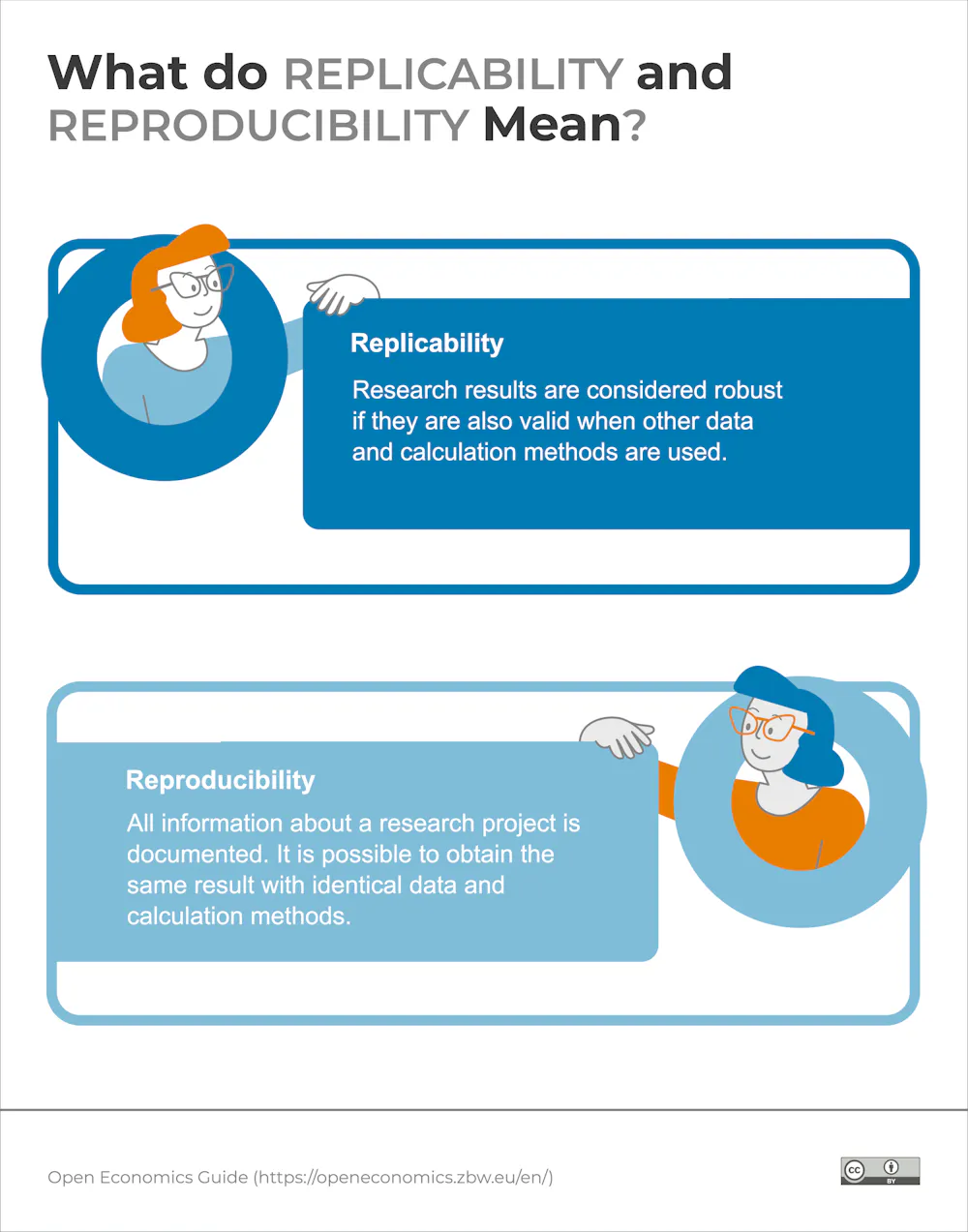
A May 2025 executive order by President Donald Trump emphasized the “reproducibility crisis” in science. While replicability and reproducibility may sound similar, they’re distinct.
Reproducibility is the ability to use the same data and methods from a study and reproduce the result. In my editorial role at the journal Psychological Science, I conduct computational reproducibility checks where we take the reported data and check that all the results in the paper can be reproduced independently.
But we’re not running the study over again, or collecting new data. While reproducibility is important, research that is incorrect, fallible and sometimes harmful can still be reproducible.
By contrast, replication is when an independent team repeats the same process, including collecting new data, to see if they get the same results. When research replicates, the team can be more confident that the results are not a fluke or an error.
Reproducibility and replicability are both important, but have key differences. Open Economics Guide, CC BY
The “replication crisis,” a term coined in psychology in the early 2010s, has spread to many fields, including biology, economics, medicine and computer science. Failures to replicate high-profile studies concern many scientists in these fields.
Why replicate?
Replicability is a core scientific value: Researchers want to be able to find the same result again and again. Many important findings are not published until they are independently replicated.
In research, chance findings can occur. Imagine if one person flipped a coin 10 times and got two heads, then told the world that “coins have a 20% chance of coming up heads.” Even though this is an unlikely outcome – about 4% – it’s possible.
Replications can correct these chance outcomes, as well as scientific errors, to ensure science is self-correcting.
The ATLAS experiment at the Large Hadron Collider at CERN is one of two that led to the discovery of the Higgs boson. CERN, CC BY
The initial measurements from the two centers actually estimated the mass of the particle as slightly different. So while the two centers didn’t find identical results, the teams evaluated them and determined they were close enough. This variability is a natural part of the scientific process. Just because results are not identical does not mean they are not reliable.
Research centers like CERN have replication built into their process, but this is not feasible for all research. For projects that are relatively low cost, the original team will often replicate their work prior to publication – but doing so does not guarantee that an independent team could get the same results.
Because the results on vaccine efficacy were so clear, replication wasn’t necessary and would have slowed the process of getting the vaccine to people. XKCD, CC BY-NC
When projects are costly, urgent or time-specific, independently replicating them prior to disseminating results is often not feasible. Remember when people across the country were waiting for a COVID-19 vaccine?
The initial Pfizer-BioNTech COVID-19 vaccine took 13 months from the start of the trial to authorization from the Food and Drug Administration. The results of the initial study were so clear and convincing that a replication would have unnecessarily delayed getting the vaccine out to the public and slowing the spread of disease.
Since not every study can be replicated prior to publication, it’s important to conduct replications after studies are published. Replications help scientists understand how well research processes are working, identify errors and self-correct. So what’s the process of conducting a replication?
The replication process
Researchers could independently replicate the work of other teams, like at CERN. And that does happen. But when there are only two studies – the original and the replication – it’s hard to know what to do when they disagree. For that reason, large multigroup teams often conduct replications where they are all replicating the same study.
Alternatively, if the purpose is to estimate the replicability of a body of research – for example, cancer biology – each team might replicate a different study, and the focus is on the percentage of studies that replicate across many studies.
Replicators start by learning as much as possible about how the original study was conducted. They can collect details about the study from reading the published paper, discussing the work with its original authors and consulting online materials.
The replicators want to know how the participants were recruited, how the data was collected and using what tools, and how the data was analyzed.
But sometimes, studies may leave out important details, like the questions participants were asked or the brand of equipment used. Replicators have to make these difficult decisions themselves, which can affect the outcome.
Replicators also often explicitly change details of the study. For example, many replication studies are conducted with larger samples – more participants – than the original study, to ensure the results are reliable.
Registration and publication
Sadly, replication research is hard to publish: Only 3% of papers in psychology, less than 1% in education and 1.2% in marketing are replications.
If the original study replicates, journals may reject the paper because there is no “new insight.” If it doesn’t replicate, journals may reject the paper because they assume the replicators made a mistake – remember the salt crystals.
Because of these issues, replicators often use registration to strengthen their claims. A preregistration is a public document describing the plan for the study. It is time-stamped to before the study is conducted.
This type of document improves transparency by making changes in the plan detectable to reviewers. Registered reports take this a step further, where the research plan is subject to peer review before conducting the study.
If the journal approves the registration, they commit to publishing the results of the study regardless of the results. Registered reports are ideal for replication research because the reviewers don’t know the results when the journal commits to publishing the paper, and whether the study replicates or not won’t affect whether it gets published.
About 58% of registered reports in psychology are replication studies.
Replication research often uses the highest standards of research practice: large samples and registration. While not all replication research is required to use these practices, those that do contribute greatly to our confidence in scientific results.
Replication research is a useful thermometer to understand if scientific processes are working as intended. Active discussion of the replicability crisis, in both scientific and political spaces, suggests to many researchers that there is room for growth. While no field would expect a replication rate of 100%, new processes among scientists aim to improve the rates from those in the past.
Amanda Kay Montoya is an Associate Professor at the University of California, Los Angeles. She serves on the Board of Directors for the Center for Open Science. She receives funding from the US-National Science Foundation.
Source: US Department of Health and Human Services – 3
This communication is part of the Communications Pilot to Enhance the Medical Device Recall Program. The FDA has become aware of a potentially high-risk issue. The FDA will keep the public informed and update this web page as significant new information becomes available. Affected Product
The FDA is aware that B. Braun Medical Inc. has issued a letter to affected customers recommending certain microbore extension sets be removed from where they are used or sold:
Product Description Model Number UDI-DI Lot Numbers
What to Do Identify and stop use of all affected product. Affected product should be quarantined and clearly labeled to prevent accidental use until it can be returned to B. Braun. Do not destroy affected product.
On July 9, B. Braun Medical Inc. sent all affected customers a letter recommending the following actions:
Review the Urgent Medical Device Recall Notification in its entirety and ensure that all users in your organization of the above-mentioned product, and any other concerned persons, are informed about this voluntary recall. If you are a distributor and have further distributed the product, please forward this notice to your consignees. The recall is to be extended to the hospital/healthcare facility level. Determine your current inventory of the affected items within inventory of your facility, cease use and quarantine product subject to recall. Do not destroy any affected product. Utilizing the “Urgent Medical Device Recall Acknowledgement Form”, record the total number of individual impacted units. If you have no inventory remaining, please enter zero (0) on the form. Return the completed “Urgent Medical Device Recall Acknowledgement Form” to the B. Braun Medical Inc. Postmarket Surveillance department. Once we receive your Acknowledgement Form, a B. Braun Customer Support representative will contact you with instructions on how to return any impacted cases, including partial cases, in your possession and provide credit and/or replacement of the product based on your individual needs.
Check this web page for updates. The FDA is currently reviewing information about this potentially high-risk device issue and will keep the public informed as significant new information becomes available.
Reason for Alert The affected Microbore Extension Sets labels show incorrect information about the device’s filter. Specifically, the product label shows that the device contains an air eliminating filter. However, the filter used on this extension set does not feature an air vent, which is common to air eliminating filters, and is not indicated for the removal of air. If during use there is air within the line or filter itself, the air can occlude the filter. This could lead to a significant delay in therapy with significant impact on patient condition (e.g. with life sustaining drugs). It is possible for air to escape the filter and enter the patient where embolization could occur. This could lead to patient harm up to and including permanent organ damage or death. As of July 9, B. Braun Medical Inc. has not reported any serious injuries or deaths associated with this issue. Device Use B. Braun Extension Sets are single use, disposable, add-on devices used for direct injection, intermittent infusion, continuous infusion or aspiration of fluids, medications, blood and blood products. Contact Information Customers in the U.S. with adverse reactions, quality problems, or questions about this recall should contact B. Braun Medical Inc. at 1-833-425-1464. Unique Device Identifier (UDI) The unique device identifier (UDI) helps identify individual medical devices sold in the United States from distribution to use. The UDI allows for more accurate reporting, reviewing, and analyzing of adverse event reports so that devices can be identified more quickly, and as a result, problems potentially resolved more quickly.
How do I report a problem? Health care professionals and consumers may report adverse reactions or quality problems they experienced using these devices to MedWatch: The FDA Safety Information and Adverse Event Reporting Program.
NSF-supported researchers developed a new AI model that sees inside a factory, understands what’s happening and suggests ways to solve problems, making manufacturing smarter, safer and more competitive.
Artificial intelligence has transformed fields like medicine and finance, but it hasn’t gained much traction in manufacturing. Factories present a different challenge for AI: They are structured, fast-paced environments that rely on precision and critical timing. Success requires more than powerful algorithms; it demands deep, real-time understanding of complex systems, equipment and workflow. A new AI model designed specifically for manufacturing, seeks to address this challenge and revolutionize how factories operate.
With support from the U.S. National Science Foundation, a team led by California State University Northridge’s Autonomy Research Center for STEAHM has developed MaVila — short for Manufacturing, Vision and Language — an intelligent assistant that combines image analysis and natural language processing to help manufacturers detect problems, suggest improvements and communicate with machines in real time. Their goal is to create smarter, more adaptive manufacturing systems that can better support one of the most important sectors of the U.S. economy.
MaVila takes a different approach. Instead of relying on outside data, like information on the internet, it is trained with manufacturing-specific knowledge from the start. It learns directly from visual and language-based data in factory settings. The tool can “see” and “talk” — analyzing images of parts, describing defects in plain language, suggesting fixes and even communicating with machines to carry out automatic adjustments.
MaVila was trained using a specialized approach that required far less data than typical AI systems — an advantage in manufacturing, where data is often limited or expensive to collect. Therefore, the tool could be more accessible to small and medium-sized businesses that can’t afford expensive AI tools, or the expertise required to run them.
Researchers trained MaVila using vast datasets of images paired with descriptive language. Then, they fine-tuned it in a lab setting by showing it pictures of 3D-printed parts with visible flaws, such as blobs, cracks or stringy filaments. In most cases, MaVila correctly identified the defects and suggested better printing settings.
The team also connected MaVila to mobile devices and robotic simulations. This allowed the model to operate in real-time scenarios, such as identifying a machine from a photo and generating step-by-step commands to adjust performance or fix a flaw — something that traditionally requires expert programming.
The development of MaVila was powered by the National Research Platform (NRP) Nautilus — a federally funded partnership of over 50 institutions led by experts at UC San Diego that has received continuous support from NSF. To meet the enormous processing demands of training MaVila, the researchers turned to NSF-funded high-performance computing (HPC) systems. These HPC resources allowed them to simulate realistic manufacturing conditions, test edge cases and validate the AI’s response and decision-making faster than traditional computing could allow.
This project marks a leap forward in intelligent, adaptive manufacturing. It empowers human workers, increases productivity and strengthens the U.S. position in a fiercely competitive global market. And it reflects years of public investment in computing, collaboration and AI innovation.
Technologies like MaVila are expected to boost domestic manufacturing, fuel economic resilience, and help prepare the workforce for future-ready industries. NSF’s support ensures that cutting-edge research translates into practical tools that benefit everyday people and keep America at the forefront of innovation.
The achievement of the researchers reflects the results of years of public investment in computing infrastructure, cross-institutional partnerships and targeted AI research. Through initiatives like the NRP and widespread access to advanced computing resources, the NSF provides researchers with essential tools that accelerate innovation and translate lab research into real-world solutions.
The project represents a significant step forward in autonomous, adaptive manufacturing. By enabling factories to detect issues and optimize operations, MaVila supports human workers by helping them make decisions more efficiently, driving global competitiveness in a constantly evolving world.
[embedded content]
Listen to NSF Discovery Files wherever you get your podcasts.
ATLANTA – Governor Brian P. Kemp today announced that family-owned, Hawaii-inspired food company King’s Hawaiian® will invest approximately $54 million in expanding its Oakwood facility, creating more than 135 new jobs.
“For nearly 15 years, King’s Hawaiian has proven to be an incredible partner in creating quality jobs in northeast Georgia, and we look forward to even more years of great success for them in Hall County,” said Governor Brian Kemp. “Expansions like these are an important part of our economic development work, helping create further opportunities in growing communities.”
King’s Hawaiian was founded in 1950 by the Taira family in Hilo, Hawaii. Since establishing a presence in Georgia in 2010, the company’s footprint has grown to support more than 800 jobs in the state.
“This expansion represents a major milestone in our journey, and we’re thrilled to continue growing our ohana in Hall County,” said Mark Taira, CEO of King’s Hawaiian. “For 15 years, Georgia has been an essential part of our success. The support from Lanier Technical College, Georgia Quick Start, and the Greater Hall Chamber of Commerce has been instrumental in helping us train and develop talent to grow our business.”
The expansion will add a new production line at the 150,000-square-foot King’s Hawaiian facility located in the Oakwood South Industrial Park. Start-up of the new line is expected in the second quarter of 2026, producing additional flavors of King’s Hawaiian Pretzel Bites. The company will be hiring for positions in management, maintenance, food safety, and quality control. Interested individuals can learn more and apply at kingshawaiian.com/careers.
“King’s Hawaiian has become a cornerstone of our regional economy and a shining example of a company that invests in both business and community,” said Tim Evans, President and CEO of the Greater Hall Chamber of Commerce. “This sixth major expansion since 2010 is a testament to the company’s deep roots in Hall County. We are especially proud of their ongoing support for youth and community programs, including the University of North Georgia’s First Generation Scholars, Junior Achievement, and Youth Leadership Hall. We look forward to continuing this remarkable partnership.”
Regional Project Manager Brandon Lounsbury represented the Georgia Department of Economic Development’s (GDEcD) Global Commerce team on this competitive project in partnership with the Greater Hall Chamber of Commerce and Georgia EMC.
“King’s Hawaiian has been a cornerstone employer in northeast Georgia and a valued partner of Georgia Quick Start for more than a decade,” said GDEcD Commissioner Pat Wilson. “By continuing to invest in people and innovation – and by working closely with the Technical College System of Georgia – King’s Hawaiian is helping build the skilled workforce that drives its success. Congratulations to Hall County on another exciting chapter in this thriving partnership.”
About KING’S HAWAIIAN Founded more than 70 years ago in Hilo, Hawaii, by Robert R. Taira, KING’S HAWAIIAN is a family-owned business that has been dedicated to providing Hawaii-inspired foods made with original recipes and Aloha Spirit for three generations. For more information, visit the company’s website atwww.KingsHawaiian.com, or find KING’S HAWAIIAN on Facebook, Instagram, and X (formerly Twitter).
A letter from Jim McMahon OBE, Minister of State for Local Government and English Devolution, to the Leader of Thurrock Council announcing the decision by the Secretary of State to issue new Directions on the Authority under section 15 of the Local Government Act 1999 extending the intervention until 30 April 2028.
Representation from Thurrock Council concerning the proposed extension to the intervention package announced by the Minister for Local Government and English Devolution on 19 June 2025.
This file may not be suitable for users of assistive technology.
Request an accessible format.
If you use assistive technology (such as a screen reader) and need a version of this document in a more accessible format, please email alternativeformats@communities.gov.uk. Please tell us what format you need. It will help us if you say what assistive technology you use.
Details
Written representation to the Ministry of Housing, Communities and Local Government from Thurrock Council, in response to the proposed intervention package that was announced on 19 June 2025.
Copies of letters from James Blythe, Deputy Director, Local Government Stewardship and Intervention at the Ministry of Housing, Communities and Local Government to:
Dr Dave Smith, confirming his appointment as Managing Director Commissioner at Thurrock Council
Gavin Jones CBE, confirming his appointment as Lead Commissioner at Thurrock Council
Denise Murray, confirming her appointment as Commissioner at Thurrock Council
The letters confirm the Commissioners’ roles and responsibilities, established by the Directions issued under section 15(5) and (6) of the Local Government Act 1999.
PM speech at the Civil Society Summit: 17 July 2025
The Prime Minister gave a speech at the Civil Society Summit.
It’s fantastic to be with you all. As I look around, I see many friends and colleagues.
Great to be here at the Science Museum, which, I have to say, feels like a fitting place to be because this is the home of innovation – celebrating the progress that has transformed so many people’s lives. And in a way, speaking to us, calling us, and inspiring us to do the same today.
Now, as many of you in this room will remember, around 18 months ago, in opposition, in a church near Waterloo Station, I made a promise to people in this room.
I said [political content redacted] we would work in partnership with you. To deliver on every one of our missions and change the country together. I meant that back then.
And the moment I walked through the front door of Downing Street, our work began. And that door is now wide open to you.
Today’s summit is the first of its kind ever. And that’s really important because this is about delivering on the priorities of working people – but it’s also about something even more fundamental than that.
Because I often say – the changes we are making aren’t just about lines on a graph and statistics. They’re about people – and you will understand that better than anyone else.
Take the Drive Partnership. Now, this is a fantastic initiative led by a coalition of civil society organisations. They’ve worked with the police to tackle the drivers of domestic abuse – a really serious issue, hard to deal with, and it is integral to the work we’re doing in government in our Safer Streets mission.
So today, working together in the spirit of partnership, we’re announcing a £53 million investment to roll out the Drive Project nationally across England and Wales.
Delivering together in partnership, taking forward the initiative that you’ve brought forward to us and recognising your power to reach into places government can’t. We’re combining the ability of the government to deliver nationally.
Now, for me, that’s a blueprint for a brand-new way of working. And today, we take one step further with our Civil Society Covenant.
And I’m really proud we’re launching that today because that’s really the hard yards of the eighteen months since I made the promise, because it recognises the national renewal, which requires everyone to play a vital role.
Not the hierarchical, top-down approach of the state working on its own. Not the transactional approach of the markets left to their own devices. But a way forward in partnership – together – by giving civil society a home at the heart of government.
We’re not going to shut charities out and then expect you to pick up the pieces [political content redacted].
Nor am I interested in slogans that sound good but end up being gimmicks for governments to simply hide behind. I’m interested in solutions.
So, we’re also working with businesses, social enterprises, and private investors.
And with the Chancellor’s announcement just earlier this week – the largest social outcomes fund in the world to give struggling families a better start, backed by £500 million in government funding with plans to match this with up to £500 million more from local governments, social investors, and philanthropists. Transforming hundreds of thousands of lives – together. That is about genuine partnership, putting your fingerprints on everything we do.
Take our 10-Year Plan for the NHS, which we announced earlier this month. It’s a really important initiative. We look back proudly on our NHS – it’s been around for 77 years. But we also need to make sure that in decades to come, our NHS was rebuilt and made fit for the future.
And in that 10-Year Plan, we consulted experts, charities, and the public, so every person, no matter who they are or where they’re from, can get the treatment they deserve.
Look at the incredible work of charities already, day in, day out, on the frontline, delivering real change where it’s needed most.
So, I’m proud to announce an exciting new partnership between government and civil society today: Diagnosis Connect. Now, this will transform the way we work together.
This is a new programme linking newly diagnosed patients directly to expert charities.
Helping them navigate which charities they can get to, which support they want from each of them. Very hard to make that journey at the moment. That’s life-changing for people looking for information and support, often at a really difficult time.
Now, that’s putting your expertise directly in people’s pockets with the NHS App.
So that’s going to go on the NHS App, which is a central part of our plan, so people have it as their map to support from the charities they need when they’ve been diagnosed. What a comfort and security that will be for so many people.
But I believe that good relationships need to be honest relationships.
We won’t blindside you with public attacks like the last government did. We need to be honest about the issues people care about and expect us to tackle. Have the tough conversations on issues like migration, social cohesion, and our security as a country.
These are issues where politicians have often chosen to stoke division instead of bringing people together to fix the problem.
Now, we know the damage that does to our communities, so when it comes to issues like immigration, we are working differently. Strengthening our border security and tackling fraud, working with 72 local organisations as we transition people to a digital immigration status to make sure vulnerable communities aren’t shut out of that transition.
And working with community groups to train young people in the skills we need to reduce our dependence on overseas recruitment. Together, we’ll build stronger communities, a fairer system, a better society for everyone.
Most of all, this is about rebalancing power and responsibility. [political content redacted]. Let me tell you what I think people are tired of. I think they’re tired of establishment figures who don’t listen to them and don’t understand the challenges they face.
Tired of being excluded from decisions about their own lives. Tired of being treated like their experiences don’t matter. They are the people this government is working for.
Something I often talk about is the people I keep in my mind’s eye. Politics is about policies, it is about numbers and statistics, but most importantly, it’s about who you have in your mind’s eye when you make your decisions. It’s the people up and down the country who serve every day, who put in every day, often unseen, but are absolutely irreplaceable.
So, this is an opportunity to say to each and every one of you, and through your organisations, thank you. Thank you for what you put in. To those of you who work tirelessly to make Britain a better place.
And to say that we are keeping our promises. We said we would work differently – and we are. We promised we would listen to you – and we have.
Those initiatives that we are announcing today – they came from you, not us. We put them into something that works in partnership.
We said we would deliver change together – and we will, to build a society of service. Bound together by our common values and finding new pride in our country and our communities.
A letter from the Minister of State for Local Government and English Devolution, Jim McMahon OBE MP, to the Leader of Liverpool City Council, confirming that he is content to end the level of departmental support provided to Liverpool City Council since June 2024.
On 17 July 2025, the Minister for Local Government and English Devolution, Jim McMahon OBE MP, announced in a written ministerial statement the issuing of a non-statutory best value notice to Dudley Metropolitan Borough Council.
The best value notice is a formal notification that the department has concerns regarding the authority and requests that the authority engages with the department to provide assurance of improvement. The authority’s progress against the notice will be reviewed after 12 months.
London Borough of Croydon: Explanatory Memorandum (17 July 2025)
Explanatory Memorandum to the Directions made under sections 15(5) and (6) of the Local Government Act 1999 in respect of the London Borough of Croydon.
The Explanatory Memorandum to the Directions made under sections 15(5) and (6) of the Local Government Act 1999 on 17 July 2025 in respect of London Borough of Croydon. It summaries the circumstances in which the Secretary of State has made the Directions, her reasons for this exercise of her powers, and the implications of the Directions for this Authority.
This replaces the previous Explanatory Memorandum as the Directions previously issued have been revoked.
Source: Peter the Great St. Petersburg Polytechnic University –
An important disclaimer is at the bottom of this article.
Five polytechnicians became laureates of the first national award “People Change the Country”. The award ceremony took place in the Zaryadye Concert Hall in Moscow.
The purpose of the award is to recognize and reward scientists, engineers, and entrepreneurs whose advanced developments improve people’s lives and strengthen the economy and technological sovereignty of the country.
The award is organised by the Agency for Strategic Initiatives (ASI) together with the Roscongress Foundation with the support of VEB.RF, the Russian Ministry of Defence, the Defenders of the Fatherland Foundation and the autonomous non-profit organisation Russia – Land of Opportunities.
This year, the award was received by more than a thousand laureates in seven nominations: “National Social Initiative”, “National Technological Initiative”, “National Entrepreneurial Initiative”, “National Personnel Initiative”, “National Ecological and Climate Initiative”, “Defenders of the Fatherland” and “Russia – the Land of Opportunities”.
In the nomination “National Technological Initiative” the winners were five representatives of the Polytechnic University: the head of the world-class Scientific Center “Advanced Digital Technologies”, chief designer in the scientific and technological direction, acting director of the Advanced Engineering School of SPbPU “Digital Engineering” (AES CI) Alexey Borovkov; deputy director of the Engineering Center “Computer Engineering Center” of AES CI Nikolay Efimov-Soini; director of the Center for Continuing Professional Education of AES CI, senior lecturer of the Higher School of Advanced Digital Technologies Sergey Salkutsan; chief engineer of the project of the Scientific Laboratory “Strategic Development of Engineering Markets” Pavel Kozlovsky; leading specialist of the project support department Maria Rodionova.
Alexey Borovkov received a high award for actively promoting approaches to creating globally competitive science-intensive products using advanced end-to-end digital technologies. One of the key areas of his activity is the development and implementation of the technology of “digital twins” – an innovative tool that allows you to create virtual copies of products, machines, structures, equipment, as well as model physical, mechanical and technological processes with the highest accuracy. Under the leadership of Alexey Ivanovich, the digital platform CML-Bench® was developed, tested and successfully implemented in production, which became a key tool for creating digital twins. It opened up new opportunities for optimizing design, increasing production efficiency and reducing costs in various industries.
Other significant projects implemented under the leadership of Alexey Borovkov include: development of body frame elements and structural armor elements for domestic Limousine, Sedan, SUV, and Minibus vehicles based on a single modular platform commissioned by FSUE NAMI; creation of a smart digital twin and experimental prototype of a small-sized urban electric vehicle with a level 3-4 ADAS system (KAMA-1); optimization of the weight of the TV7-117ST-01 engine based on the digital twin technology for UEC-Klimov/JSC UEC; development of a digital twin of a marine gas turbine engine and gearbox as part of the unit commissioned by UEC-Saturn (Rostec State Corporation); creation of the architecture of a highly adequate multiphysical digital model and a digital twin of a vitrification furnace for high-level radioactive waste for PO Mayak (Rosatom State Corporation), etc.
Nikolay Efimov-Soini, Deputy Director of the Engineering Center “Computer Engineering Center” of the Advanced Engineering School of SPbPU “Digital Engineering”, became a laureate thanks to the project “Development of high-tech products in the field of nuclear engineering based on digital twin technology”. Under the leadership of Nikolay Konstantinovich, a large-scale complex of scientific and technical developments in the field of nuclear engineering of strategic importance for the industry was implemented over three years. Among the key achievements is the creation of digital models of fuel assemblies (FA) for VVER and TVS-K reactors, as well as the proposal of innovative design solutions aimed at increasing the efficiency of fuel assemblies. The developed solutions allow for high-precision modeling of FA behavior throughout the entire fuel cycle, which helps optimize the performance characteristics and improve the safety of nuclear power plants.
Director of the Center for Continuing Professional Education of the Advanced Engineering School “Digital Engineering” Sergey Salkutsan and Chief Engineer of the Scientific Laboratory “Strategic Development of Engineering Markets” project Pavel Kozlovsky were awarded for educational projects implemented within the framework of the NTI Center “New Production Technologies”, as well as for the development of a family of simulators. By the beginning of 2024, a group of experts from the Advanced Engineering School CI developed five computer simulators available on the Digital Platform CML-Bench®.EDU, which is gradually developing as a separate direction of the Digital Platform for the Development and Application of Digital Twins CML-Bench®. The digital simulator “Lean Manufacturing” is a flagship product that marked the beginning of the creation and scaling of a line of simulators for training students, implementing corporate programs of continuing professional education for employees of the university’s industrial partners, as well as holding professional competitions. It is an online platform for learning the skills, tools and basics of lean manufacturing using practical solutions on a simulator. The digital simulator “Lean Manufacturing” has repeatedly been awarded prizes and diplomas at prestigious competitions in Russia and abroad, and is highly appreciated at the state level.
In February 2024, the New Industrial Challenge simulators for team competitions and Lean Manufacturing were successfully tested at the Archipelago-2024 project-educational intensive course in Sakhalin. In August of this year, the Polytechnicians will present their developments at Archipelago-2025 in Moscow.
Leading specialist of the project support department of the Directorate of the Center of the National Technological Initiative “New Production Technologies” Maria Rodionova received an award for her work on the project “Smart Factory: New Standards for Industry 4.0”. The project developed standards in the field of smart production, laying the foundation for the digital transformation of industry. The standards define the key principles of building a smart factory, ensuring technological unification, reducing operating costs and creating an ecosystem for the Industrial Internet of Things (IIoT).
Please note: This information is raw content obtained directly from the source of the information. It is an accurate report of what the source claims and does not necessarily reflect the position of MIL-OSI or its clients.
Source: People’s Republic of China in Russian – People’s Republic of China in Russian –
An important disclaimer is at the bottom of this article.
Source: People’s Republic of China – State Council News
BERLIN, July 17 (Xinhua) — China’s dual role as a stabilizing force and a driver of innovation in global supply chains is becoming increasingly visible as companies around the world face growing uncertainty, rising operating costs and challenges from climate change, Schneider Electric executive vice president Yin Zheng told Xinhua in an exclusive interview ahead of the third China International Supply Chain Exposition (CISCE).
Yin Zheng noted that China’s fully integrated industrial system gives it a unique position in the global supply chain. “The traditional efficiency-oriented model is no longer sufficient,” he said. “The industry now needs not only efficient supply chains, but also sustainable and green supply chains, and this is a view increasingly shared by different industries.”
According to Yin Zheng, CISCE is a timely platform for global manufacturers to engage in international dialogue and deepen industrial cooperation amid ongoing global uncertainty.
“That’s why we are participating,” he said. “CISCE is a window connecting China with the world and a new calling card for China’s high-level openness.”
For multinational companies like Schneider Electric, CISCE is more than a platform to showcase innovation, he said. CISCE provides a valuable opportunity to find new partners and explore ways to transform and modernize industrial supply chains, he stressed.
“China is the most important engine of global growth,” he said, adding that the rise of new productive forces in China, especially in digital and green development, opens up greater opportunities for technology companies.
China’s industrial ecosystem is increasingly characterized by openness and cooperation, and more companies are joining in joint innovation and knowledge sharing, he said.
Looking to the future, Yin Zheng noted that the global industrial landscape is undergoing profound changes, driven by the rapid development of artificial intelligence and the accelerated movement toward sustainable development. To fully leverage these trends, he called for closer cooperation between industry, academia and government.
“Digitalization and green transformation are fundamentally changing the way global supply chains operate,” he said. “Schneider Electric will continue to leverage China’s momentum and collaborate with local partners to bring new technologies to all parts of the supply chain.” –0–
Please note: This information is raw content obtained directly from the source of the information. It is an accurate report of what the source claims and does not necessarily reflect the position of MIL-OSI or its clients.
PRESCOTT, Ariz. — U.S. Immigration and Customs Enforcement and multiple state, local and federal law enforcement agencies executed federal search warrants July 15 at five Colt Grill restaurants and 12 residences in two states after a three-year labor exploitation investigation and a five-count federal indictment against four individuals in Arizona. Significant assistance was provided by the Yavapai County Sheriff’s Office with execution of the search warrants.
“The success of this investigation is in large part due to the coordinated efforts of many law enforcement agencies working alongside HSI through the Homeland Security Task Forces,” said ICE Homeland Security Investigations Arizona acting Special Agent in Charge Ray Rede. “This multiyear case involving several federal charges is a testament of our commitment to combatting crime that has true impact to communities. I thank everyone involved — this case was true team effort.”
A grand jury in Phoenix returned an indictment May 27, against Robert and Brenda Clouston, both 61, of northern Arizona, and Luis Pedro Rogel-Jaimes, 33, and Iris Romero-Molina, 29, both illegal aliens from Mexican residing in Cottonwood, Arizona, for conspiracy to transport illegal aliens, conspiracy to harbor illegal aliens, conspiracy to encourage and induce an alien to unlawfully enter the United States, and pattern and practice of knowingly employing unauthorized aliens.
The indictment alleges that Robert and Brenda Clouston operated four Colt Grill restaurants in the northern Arizona cities of Cottonwood, Prescott, Prescott Valley, and Sedona, and one Colt Grill in Foley, Alabama. In September 2022, the Cloustons, along with Rogel-Jaimes and Romero-Molina, made a plan that Romero-Molina would create a cleaning company, R&R AZ Cleaning, that would operate as a staffing company for the Colt Grill restaurants. Rogel-Jaimes and Romero-Molina would then find undocumented workers to work at the restaurants, paying them through R&R AZ Cleaning with funds from Colt Grill. The undocumented workers were paid below minimum wage and were not compensated for overtime. The Cloustons, Rogel-Jaimes, and Romero-Molina benefited financially from the plan and did not pay proper employment taxes for the workers.
All four indicted individuals were arrested July 15 without incident. While executing the warrants, law enforcement also arrested several undocumented illegal aliens for criminal or administrative immigration violations.
“Cooperation is the cornerstone for law enforcement in Arizona and this case demonstrates the great outcome that comes from federal and local law enforcement working together,” said United States Attorney Timothy Courchaine. “The United States Attorney’s Office is grateful to HSI for their hard work on this investigation and extremely appreciative to the Yavapai County Sheriff’s Office for their support and willingness to keep their community safe from bad actors.”
“On behalf of the citizens of Yavapai County, I want to thank our federal partners at the U.S. Attorney’s Office, Homeland Security Investigations, and all our local agencies for their collaboration with the men and women of Yavapai County Sheriff’s Office in dismantling this criminal enterprise,” said Yavapai County Sheriff David Rhodes. “Coordinated, multiagency enforcement actions like this one are essential to protecting our communities from the destabilizing impacts of organized crime. By working together, we will continue to leverage every available resource to safeguard the people of Yavapai County from those who seek to do harm.”
A conviction for conspiracy to bring illegal aliens to the United States unlawfully, conspiracy to transport illegal aliens, conspiracy to harbor illegal aliens, and conspiracy to encourage and induce an alien to unlawfully enter the United States each carry a maximum penalty of 10 years in prison and up to a $250,000 fine. A conviction for pattern and practice of knowingly employing unauthorized aliens carries a maximum penalty of six months in prison and up to a $3,000 fine per unauthorized employee.
An indictment is a method by which a person is charged with criminal activity and raises no inference of guilt. An individual is presumed innocent until proven guilty beyond a reasonable doubt in a court of law.
This case is part of Operation Take Back America, a nationwide initiative that marshals the full resources of the Department of Justice to repel the invasion of illegal immigration, achieve the total elimination of cartels and transnational criminal organizations, and protect our communities from the perpetrators of violent crime. Operation Take Back America streamlines efforts and resources from the Department’s Organized Crime Drug Enforcement Task Forces and Project Safe Neighborhood.
The United States Attorney’s Office, District of Arizona, Phoenix, is handling the prosecution.