Category: AM-NC

  • MIL-OSI Analysis: California farmers identify a hot new cash crop: Solar power

    Source: The Conversation – USA (2) – By Jacob Stid, Ph.D. student in Hydrogeology, Michigan State University

    This dairy farm in California’s Central Valley has installed solar panels on a portion of its land. George Rose/Getty Images

    Imagine that you own a small, 20-acre farm in California’s Central Valley. You and your family have cultivated this land for decades, but drought, increasing costs and decreasing water availability are making each year more difficult.

    Now imagine that a solar-electricity developer approaches you and presents three options:

    • You can lease the developer 10 acres of otherwise productive cropland, on which the developer will build an array of solar panels and sell electricity to the local power company.
    • You can select 1 or 2 acres of your land on which to build and operate your own solar array, using some electricity for your farm and selling the rest to the utility.
    • Or you can keep going as you have been, hoping your farm can somehow survive.

    Thousands of farmers across the country, including in the Central Valley, are choosing one of the first two options. A 2022 survey by the U.S. Department of Agriculture found that roughly 117,000 U.S. farm operations have some type of solar device. Our own work has identified over 6,500 solar arrays currently located on U.S. farmland.

    Our study of nearly 1,000 solar arrays built on 10,000 acres of the Central Valley over the past two decades found that solar power and farming are complementing each other in farmers’ business operations. As a result, farmers are making and saving more money while using less water – helping them keep their land and livelihood.

    A hotter, drier and more built-up future

    Perhaps nowhere in the U.S. is farmland more valuable or more productive than California’s Central Valley. The region grows a vast array of crops, including nearly all of the nation’s production of almonds, olives and sweet rice. Using less than 1% of all farmland in the country, the Central Valley supplies a quarter of the nation’s food, including 40% of its fruits, nuts and other fresh foods.

    The food, fuel and fiber that these farms produce are a bedrock of the nation’s economy, food system and way of life.

    But decades of intense cultivation, urban development and climate change are squeezing farmers. Water is limited, and getting more so: A state law passed in 2014 requires farmers to further reduce their water usage by the mid-2040s.
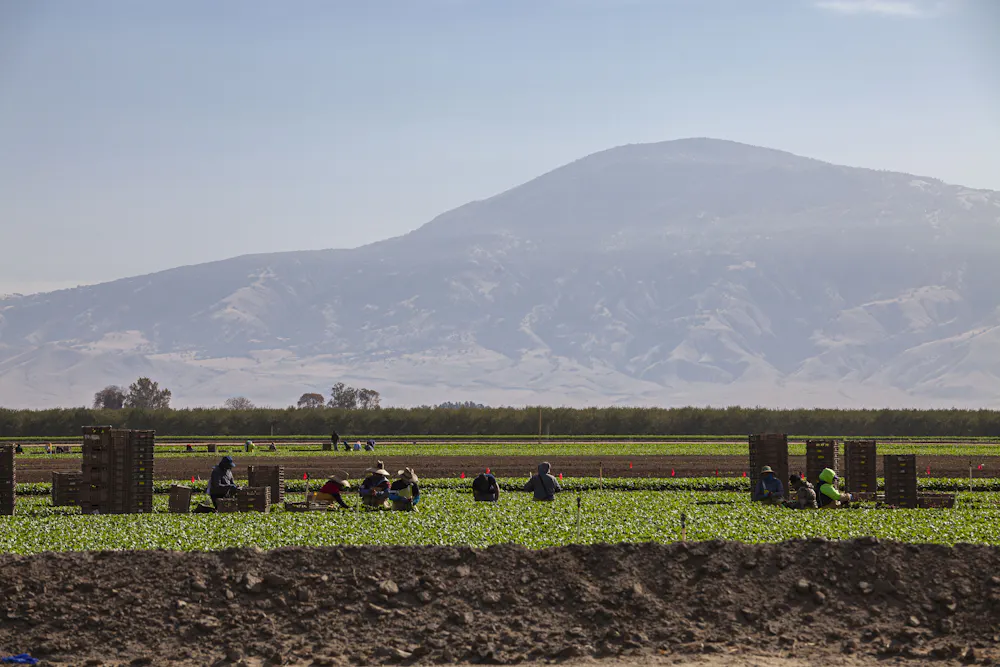
    California’s Central Valley is some of the most productive cropland in the country.
    Citizen of the Planet/UCG/Universal Images Group via Getty Images

    The trade-offs of installing solar on agricultural land

    When the solar arrays we studied were installed, California state solar energy policy and incentives gave farm landowners new ways to diversify their income by either leasing their land for solar arrays or building their own.

    There was an obvious trade-off: Turning land used for crops to land used for solar usually means losing agricultural production. We estimated that over the 25-year life of the solar arrays, this land would have produced enough food to feed 86,000 people a year, assuming they eat 2,000 calories a day.

    There was an obvious benefit, too, of clean energy: These arrays produced enough renewable electricity to power 470,000 U.S. households every year.

    But the result we were hoping to identify and measure was the economic effect of shifting that land from agricultural farming to solar farming. We found that farmers who installed solar were dramatically better off than those who did not.

    They were better off in two ways, the first being financially. All the farmers, whether they owned their own arrays or leased their land to others, saved money on seeds, fertilizer and other costs associated with growing and harvesting crops. They also earned money from leasing the land, offsetting farm energy bills, and selling their excess electricity.

    Farmers who owned their own arrays had to pay for the panels, equipment and installation, and maintenance. But even after covering those costs, their savings and earnings added up to US$50,000 per acre of profits every year, 25 times the amount they would have earned by planting that acre.

    Farmers who leased their land made much less money but still avoided costs for irrigation water and operations on that part of their farm, gaining $1,100 per acre per year – with no up-front costs.

    The farmers also conserved water, which in turn supported compliance with the state’s Sustainable Groundwater Management Act water use reduction requirements. Most of the solar arrays were installed on land that had previously been irrigated. We calculated that turning off irrigation on this land saved enough water every year to supply about 27 million people with drinking water or irrigate 7,500 acres of orchards. Following solar array installation, some farmers also fallowed surrounding land, perhaps enabled by the new stable income stream, which further reduced water use.

    Irrigation is key to cropland productivity in California’s Central Valley. Covering some land with solar panels eliminates the need for irrigation of that area, saving water for other uses elsewhere.
    Citizen of the Planet/UCG/Universal Images Group via Getty Images

    Changes to food and energy production

    Farmers in the Central Valley and elsewhere are now cultivating both food and energy. This shift can offer long-term security for farmland owners, particularly for those who install and run their own arrays.

    Recent estimates suggest that converting between 1.1% and 2.4% of the country’s farmland to solar arrays would, along with other clean energy sources, generate enough electricity to eliminate the nation’s need for fossil fuel power plants.

    Though many crops are part of a global market that can adjust to changes in supply, losing this farmland could affect the availability of some crops. Fortunately, farmers and landowners are finding new ways to protect farmland and food security while supporting clean energy.

    One such approach is agrivoltaics, where farmers install solar designed for grazing livestock or growing crops beneath the panels. Solar can also be sited on less productive farmland or on farmland that is used for biofuels rather than food production.

    Even in these areas, arrays can be designed and managed to benefit local agriculture and natural ecosystems. With thoughtful design, siting and management, solar can give back to the land and the ecosystems it touches.

    Farms are much more than the land they occupy and the goods they produce. Farms are run by people with families, whose well-being depends on essential and variable resources such as water, fertilizer, fuel, electricity and crop sales. Farmers often borrow money during the planting season in hopes of making enough at harvest time to pay off the debt and keep a little profit.

    Installing solar on their land can give farmers a diversified income, help them save water, and reduce the risk of bad years. That can make solar an asset to farming, not a threat to the food supply.

    Jacob Stid works for Michigan State University. Funding for this work came from the US Department of Agriculture’s National Institute of Food and Agriculture program and the Department of Earth and Environmental Sciences at Michigan State University. He also receives funding from the Foundation for Food and Agricultural Research.

    Annick Anctil receives funding from NSF and USDA.

    Anthony Kendall receives funding from the USDA, NASA, the NSF, and the Foundation for Food and Agricultural Research. He is an Assistant Professor at Michigan State University, and serves on the nonprofit board of the FLOW Water Advocates.

    ref. California farmers identify a hot new cash crop: Solar power – https://theconversation.com/california-farmers-identify-a-hot-new-cash-crop-solar-power-259653

    MIL OSI Analysis

  • MIL-OSI United Kingdom: UK Export Finance makes historic first visit to Turkmenistan

    Source: United Kingdom – Executive Government & Departments

    World news story

    UK Export Finance makes historic first visit to Turkmenistan

    UK Export Finance visited Turkmenistan for the first time last month and met with key ministries and institutions.

    Ms Clare Allbless, Deputy Head of Mission, British Embassy Ashgabat, Ms Sebnem Alp, UKEF Country Head for Türkiye, Eastern Europe and Central Asia, and Ms Irem Kayhan, Deputy Head for Türkiye, Turkmenistan & Mongolia, Mr Eldar Latypov, Project Officer, British Embassy Ashgabat.

    The British Embassy in Ashgabat is pleased to announce the successful conclusion of the first-ever visit to Turkmenistan by senior representatives of UK Export Finance (UKEF), the UK Government’s export credit agency. From 23 to 27 June 2025, Ms Sebnem Alp, UKEF Country Head for Türkiye, Eastern Europe and Central Asia, and Ms Irem Kayhan, Deputy Head for Türkiye, Turkmenistan & Mongolia, held high-level meetings with key ministries and institutions across Turkmenistan.

    Productive discussions with the Ministries.

    The visit, graciously facilitated by the Ministry of Foreign Affairs of Turkmenistan, included productive discussions with the Ministry of Finance and Economy, Ministry of Energy, Central Bank, Vnesheconombank, and other strategic agencies. These engagements explored opportunities for UKEF to support major sovereign projects across infrastructure, fertiliser, transport, agriculture, water, and green transition sectors in Turkmenistan, potentially backed by UKEF guarantee support of up to £5 billion

    Ms Clare Allbless, Deputy Head of Mission, British Embassy Ashgabat, Ms Sebnem Alp, UKEF Country Head for Türkiye, Eastern Europe and Central Asia, and Ms Irem Kayhan, Deputy Head for Türkiye, Turkmenistan & Mongolia, Mr Eldar Latypov, Project Officer, British Embassy Ashgabat.

    This milestone visit marks a new chapter in UK – Turkmenistan relations and opens the door to deeper bilateral trade and investment cooperation. The British Embassy stands ready to support continued dialogue and collaboration between UKEF and the Government of Turkmenistan to deliver sustainable, high-quality development outcomes.

    Updates to this page

    Published 16 July 2025

    MIL OSI United Kingdom

  • MIL-OSI United Kingdom: Government tackles postcode lottery of school technology

    Source: United Kingdom – Government Statements

    Press release

    Government tackles postcode lottery of school technology

    Every school to have reliable, safe tech in classrooms as government rolls out plans for the future of digital standards to ensure no child is left behind

    Pupils and staff across the country will have access to reliable, safe technology in their classroom as the government announces plans to help narrow the digital divide in schools – making outdated systems and patchy connectivity a thing of the past.

    Across the country there are stark inequalities where some pupils suffer from basic digital access whilst others benefit from cutting-edge technology, including AI – creating unfair barriers to learning and future opportunities.

    Following consultation with schools, the government is today (16 July) setting out expectations for schools and colleges to meet six digital standards by 2030, helping to end the postcode lottery in access to tech that has left too many pupils behind, by preventing teachers from delivering modern lessons and stopping pupils developing digital skills essential for modern careers.

    The six standards cover broadband internet, wireless networks, network switches, digital leadership, plus two safety requirements: cyber security and filtering and monitoring to keep pupils safe online. 

    Online safety is at the heart of the government’s plans, with the cyber security and filtering and monitoring standards designed so that as digital access improves, school IT systems are protected from cyber security threats and the risk of online threats – ensuring technology enhances children’s education.

    To support schools, the government will expand its Plan technology for your school service to give every school tailored support and guidance on how and where to make lasting, cost effective improvements to their technology.

    This comes alongside a £45 million investment from government this year to boost school infrastructure, including upgrades to fibre and wireless networks – helping get classrooms online and boosting standards where it is most needed.  

    Minister for Early Education, Stephen Morgan, said: 

    Every child deserves access to the digital tools that will prepare them for the modern world, regardless of which school they attend. For too long, we’ve seen a postcode lottery where some pupils thrive with cutting-edge technology whilst others are held back by outdated equipment. 

    Meeting our six digital standards will ensure that by 2030, all schools have the digital provision they need. We’re investing in our children’s futures, supporting pupils to get the digital access they need to succeed whilst keeping them safe online. 

    This is a key part of our Plan for Change – ensuring every child has the chance to reach their full potential and no pupil is left behind in the digital age.

    The Plan technology for your school service helps schools understand their bespoke technology needs, create digital strategies fit for the future and save money with guidance to enable them to strike the best deal possible with suppliers.

    Jisc will also continue to support colleges with expert advice on the use of technology and access to Janet, the UK’s National Research and Education Network.

    Evidence is clear that access to technology can boost a student’s attainment and meeting the standards will ensure every school has the digital infrastructure to deliver the technological support for staff and pupils for years to come. 

    The work forms part of the Government’s wider plan to break down barriers to opportunity, as too many pupils currently miss out on digital skills that are essential for modern careers, creating lasting disadvantage and impacting their future. The Connect the Classroom programme has so far improved connectivity for more than 1.3 million pupils in 3,700 schools.   

    By ensuring schools have reliable, safe technology, the Government is giving pupils – regardless of their school’s location or resources – the digital foundation they need to succeed in education and beyond. 

    Schools will work towards meeting the standards by 2030, with government support to ensure no pupil is left behind in the digital age.

    Updates to this page

    Published 16 July 2025

    MIL OSI United Kingdom

  • MIL-OSI Asia-Pac: Hong Kong Customs raids two suspected illicit cigarette storage centres in Sham Shui Po (with photos)

    Source: Hong Kong Government special administrative region

    Hong Kong Customs shut down two suspected illicit cigarette storage centres in Sham Shui Po today (July 16), seizing a total of about 1 million suspected illicit cigarettes with an estimated market value of about $4.5 million and a duty potential of about $3.3 million. One 45-year old non-local man was arrested.

    Customs officers conducted an anti-illicit cigarette operation in Sham Shui Po this afternoon and spotted a suspicious man moving some carton boxes near an illicit cigarette black spot in Kweilin Street. Customs officers then intercepted the man and found about 70 000 suspected illicit cigarettes. After follow-up investigations, about 80 000 and about 850 000 illicit cigarettes were uncovered respectively from two units at a nearby rear lane.

    After preliminary investigations, Customs believes that the two suspected illicit cigarette storage centres have been operating for about three months, supplying illicit cigarettes to the aforesaid black spot. An investigation is ongoing.

    Hong Kong Customs has been mounting a territory-wide enforcement operation codenamed “Thunder” since last week to combat illicit cigarette telephone-ordering activities, including illicit cigarette storage centres, black spots and peddling. Customs will continue its risk assessment and intelligence analysis for interception at source as well as through its multipronged enforcement strategy targeting storage, distribution and peddling to spare no effort in combating illicit cigarette activities.

    Customs stresses that it is an offence to buy or sell illicit cigarettes. Under the Dutiable Commodities Ordinance, anyone involved in dealing with, possession of, selling or buying illicit cigarettes commits an offence. The maximum penalty upon conviction is a fine of $1 million and imprisonment for two years.

    Members of the public may report any suspected illicit cigarette activities to Customs’ 24-hour hotline 182 8080 or its dedicated crime-reporting email account (crimereport@customs.gov.hk) or online form (eform.cefs.gov.hk/form/ced002).

    MIL OSI Asia Pacific News

  • MIL-OSI Asia-Pac: HKSAR reiterates Lai Chee-ying’s case and his custodial arrangements always handled in accordance with the law

    Source: Hong Kong Government special administrative region

    HKSAR reiterates Lai Chee-ying’s case and his custodial arrangements always handled in accordance with the law 
    A spokesman for the HKSAR Government pointed out that, “The HKSAR Government has emphasised time and again that as the legal proceedings involving Lai Chee-ying are still ongoing, it is inappropriate for any person to comment on the details of the case in an attempt to interfere with the court to exercise judicial power independently, which might otherwise constitute perverting the course of justice. However, foreign organisations primarily from the US and Western countries, including governments and the media, continue to distort the truth, blantantly discredit the judicial system and trials of the HKSAR, and make false and misleading statements by fabricating information about the treatment provided to Lai Chee-ying during his custody, in an attempt to glorify criminal behavior and exert pressure on the courts of the HKSAR. In fact, Lai Chee-ying’s actual legal representative has already made a clarification earlier that Lai Chee-ying has all along been receiving suitable treatment and care in prison. However, the organisations from the US and Western countries choose to turn a blind eye to these facts and evidence, and carry on with their malicious political maneuvers with ulterior motives. The HKSAR Government opposes such actions.”
     
    The spokesman reiterated, “The Correctional Services Department (CSD) attaches great importance to the safety and health of persons-in-custody (PICs). Regardless of the identities, ages and nationalities of PICs, the CSD is committed to ensuring that the custodial environment is secure, safe, humane, appropriate and healthy, and that an environment with good ventilation, as well as appropriate and timely medical support will be provided. If inmates require further examination and treatment, they will be referred to specialist medical staff or to public hospitals for further follow-up. The CSD has also put in place an established mechanism, including regular independent visitors, namely Justices of the Peace, who inspect the prisons to ensure the rights of PICs are protected. The CSD also adopts the above arrangements when handling matters related to Lai Chee-ying, which are no different from those applicable to other PICs.
     
    “In the interests of a particular prisoner or for the maintenance of good order and discipline, the Commissioner of Correctional Services is empowered to make arrangements under section 68B of the Prison Rules that such prisoner should not associate with other prisoners (i.e. the so-called ‘solitary confinement’). One of the purposes of the relevant arrangement is to ensure the personal safety and well-being of the PICs, which can be requested by the PICs themselves and approved by the Commissioner after considering the matter in accordance with the law; or the Commissioner may make such arrangements after considering the relevant factors in accordance with the legal requirements and procedures. We must once again point out the fact that the arrangement for Lai Chee-ying’s removal from association from other PICs has all along been made at his own request and approved by the CSD after considering all relevant factors in accordance with the law. The remarks by organisations from the US and other Western countries regarding Lai Chee-ying’s solitary confinement are completely fact-twisting, reflecting a malicious intention to smear and attack the HKSAR Government.”
     
    The spokesman stressed, “All cases in the HKSAR (including Lai Chee-ying’s case) are handled strictly on the basis of evidence and in accordance with the law; the Department of Justice of the HKSAR, by virtue of Article 63 of the Basic Law, controls criminal prosecutions, free from any interference; all defendants will receive fair trial with applicable Hong Kong laws (including the Hong Kong National Security Law) and under the safeguards of the Basic Law and the Hong Kong Bill of Rights.”
    Issued at HKT 21:00

    NNNN

    MIL OSI Asia Pacific News

  • MIL-OSI USA: U.S. proved reserves fell in 2023 from 2022 record

    Source: US Energy Information Administration

    In-brief analysis

    July 16, 2025


    U.S. proved reserves of crude oil and lease condensate totaled 46 billion barrels at year-end 2023, a 4% decline from the previous year’s record, according to our U.S. Crude Oil and Natural Gas Proved Reserves, Year-End 2023 report. U.S. proved reserves of natural gas fell to 604 trillion cubic feet, a 13% decline from their 2022 record. Both declines marked the first annual decrease in U.S. proved reserves for those fuels since 2020.

    Proved reserves are operator estimates of the volumes of oil and natural gas that geological and engineering data demonstrate with reasonable certainty to be recoverable in the future from known reservoirs under existing economic and operating conditions. Prices heavily affect estimates of proved reserves.

    Operators revised their proved reserves downward in response to falling prices in 2023 from the historical highs observed in 2022. Annual average wholesale prices at the domestic benchmarks for West Texas Intermediate crude oil and Henry Hub natural gas fell by 18% and 61%, respectively, between 2022 and 2023.

    North Dakota’s crude oil and lease condensate reserves decreased 12%, or 611 million barrels, from 2022, the largest annual net decline reported among all states. Alaska’s oil reserves decreased 11%, or 384 million barrels, the second-largest net decline. New Mexico’s reserves increased by 380 million barrels, the largest increase among the states in 2023.

    Alaska’s natural gas proved reserves decreased 23%, the largest annual net decline (28 trillion cubic feet) among all states in 2023. Texas had the second-largest net decline in proved reserves of natural gas (13%, or 21 trillion cubic feet). Montana reported the largest annual net increase in proved reserves of natural gas (11%, or 70 billion cubic feet).

    Our U.S. Crude Oil and Natural Gas Proved Reserves, Year-End 2023 report includes additional data on proved reserves, including crude oil and lease condensate reserves from shale plays by state and area. We estimate reserves for subdivisions within each state or area for some locations, namely California, Louisiana, New Mexico, Texas, and the Federal Offshore Gulf of America.

    Principal contributor: Steven Grape

    MIL OSI USA News

  • MIL-OSI Security: Two Men Indicted on 22 Counts for Wire Fraud Conspiracy, Sale of Stolen Vehicles, and Trafficking Stolen Vehicles with Altered VINs

    Source: US FBI

    Greenbelt, Maryland – The U.S. Attorney’s Office for the District of Maryland unsealed a 22-count indictment, charging Jamaican national — Charles Edwards Madden, 39, of New Carrolton, Maryland — and Michael R. Bourne, 33, of New York, New York, with conspiracy, conspiracy to commit wire fraud, operating a chop shop, sale or receipt of stolen vehicles, and trafficking in motor vehicles with altered vehicle identification numbers (VINs).

    Kelly O. Hayes, U.S. Attorney for the District of Maryland, announced the indictment with Assistant Director in Charge Steven J. Jensen, Federal Bureau of Investigation (FBI) – Washington Field Office, and Chief George Nader, Prince George’s County Police Department (PGPD).

    According to the indictment, between at least January 2020, and continuing into June 2024, Madden and Bourne engaged in a conspiracy to buy and sell vehicles that they knew were stolen from various locations across the United States.  As part of the conspiracy, Madden and Bourne altered the VINs to conceal the stolen vehicle scheme and evade law enforcement. 

    Madden and Bourne combined parts from salvaged vehicles and resold them to victim purchasers in Maryland and elsewhere, concealing the prior salvage or damage status and misrepresenting their conditions to buyers.  During the conspiracy, Madden and Bourne obtained dozens of stolen vehicles collectively worth more than $1 million, many of which were transported to and altered in Prince George’s County, Maryland.

    If convicted, Madden and Bourne face a maximum of 20 years in federal prison for wire fraud conspiracy, a maximum of 10 years for sale or receipt of stolen vehicles, and a maximum of 10 years for trafficking in motor vehicles and motor vehicle parts.  Additionally, Madden is charged with operating a chop shop located in Prince George’s County which carries a maximum of 15 years.

    Actual sentences for federal crimes are typically less than the maximum penalties. A federal district court judge determines sentencing after considering the U.S. Sentencing Guidelines and other statutory factors.

    An indictment is not a finding of guilt.  Individuals charged by indictment are presumed innocent until proven guilty at a later criminal proceeding.

    U.S. Attorney Hayes commended the FBI and PGPD for their work in the investigation.  Ms. Hayes also thanked Assistant U.S. Attorney Megan S. McKoy and Trial Attorneys Amy Schwartz and Alyssa Levey-Weinstein, Justice Department Violent Crime and Racketeering Section, who are prosecuting this case.

    For more information about the Maryland U.S. Attorney’s Office, its priorities, and resources available to report fraud, please visit justice.gov/usao-md and justice.gov/usao-md/report-fraud.

    # # #

    MIL Security OSI

  • MIL-OSI Africa: South Africa and Tunisia strengthen ties in science and innovation

    Source: Government of South Africa

    In a bid to deepen bilateral cooperation, South Africa and Tunisia have signed a landmark agreement aimed at scaling up collaboration in science, technology, and innovation (STI).

    The agreement, signed during the official visit of Minister of Science, Technology and Innovation, Blade Nzimande, to Tunisia, forms part of the Scaling up Tunisia–South Africa Strategy. It includes a detailed plan of action and the formal minutes of a joint research call meeting.

    According to the Department of Science, Technology and Innovation (DSTI), the strategy outlines several key areas of focus, including exchange programmes, inter-institutional cooperation, joint research initiatives, intellectual property rights, innovation-driven knowledge and skills transfer, participation in international programmes, and governance.

    The signing ceremony followed an opening session featuring keynote remarks from Tunisia’s Minister of Higher Education and Scientific Research, Mondher Belaid, and Minister Nzimande.

    Nzimande noted that the visit was primarily intended to strengthen STI relations between the two nations, while also reflecting on the historic ties forged during the anti-apartheid struggle.

    Emphasising the strategic value of the partnership, Nzimande said: “We hold the view that African countries must intensify sub-regional science, technology and innovation cooperation and through this, mobilise more coherent support for the implementation of the African Union’s Science, Technology and Innovation Strategy for Africa or STISA.”

    He also thanked the Tunisian Embassy in South Africa for its efforts in fostering bilateral relations, highlighting the recognition of Hasna Tizaoui, the Economic and Cultural Counsellor at the Tunisian Embassy, with a Science Diplomacy award.

    “To express our appreciation for this work done by your Embassy in South Africa, through our Science Forum South Africa, we awarded Ms Hasna Tizaoui, Economic and Cultural Counsellor of the Embassy of Tunisia, with the prestigious Science Diplomacy award,” Nzimande said.

    Touching on global political shifts, the Minister warned of rising geopolitical pressures and called for stronger African unity in STI efforts.

    “We, therefore, hold the view that African countries must intensify sub-regional science, technology and innovation cooperation and through this, mobilise more coherent support for the implementation of the African Union’s Science, Technology and Innovation Strategy for Africa (STISA).”

    The new agreement builds on an already established relationship in STI cooperation between South Africa and Tunisia. It aims to accelerate the development of innovative solutions to address shared challenges such as youth unemployment, skills development, healthcare, food security, energy and water sustainability, climate change, biodiversity loss, and digital transformation.

    Nzimande was accompanied by a high-level delegation comprising senior officials from the DSTI and its entities, including the Council for Scientific and Industrial Research (CSIR), the Technology Innovation Agency (TIA), the National Research Foundation (NRF), and experts from Mintek (the Council for Mineral Technology). – SAnews.gov.za

    MIL OSI Africa

  • MIL-OSI Africa: Africa Finance Corporation (AFC) Assigned A+ Rating with Stable Outlook by Japan Credit Rating Agency, Strengthening Access to Asian Capital Markets

    Source: APO – Report:

    .

    Africa Finance Corporation (AFC) (www.AfricaFC.org), the continent’s leading infrastructure solutions provider, has been assigned a long-term Issuer credit rating of A+ with a stable outlook by Japan Credit Rating Agency, Ltd (JCR). This rating will enable AFC to continue growing its footprint in Asian capital markets.

    “The credit rating reflects AFC’s leading role in infrastructure development in Africa, the strong support from its member states and shareholders, the benefits of Preferred Creditor Status (PCS), its conservative financial policy, and its strong capital base,” JCR  stated in its  report.“ AFC employs diverse funding channels, including Eurobond issuance in international capital markets; borrowing from MDBs such as the African Development Bank, PROPARCO, DEG/FMO, KFW group, Export-Import Bank of China, Korea Development Bank, etc.; and financing from African, Chinese, European, Indian, Japanese and Middle Eastern private financial institutions.”

    The Japan Credit Rating Agency’s A+ rating reflects AFC’s continued demonstration of solid capital adequacy, maintaining a Capital Adequacy Ratio of 33.6% and improving its Cost-to-Income Ratio to 17.3% in FYE2024. In 2024, AFC delivered remarkable financial results, posting a 22.8% increase in revenue to surpass US$1 billion for the first time, as well as a 16.7% rise in total assets to US$14.41 billion. Liquidity buffers remain well above prudential thresholds, with a liquidity coverage ratio of 194% under normal conditions and 191% on a stressed basis, underscoring AFC’s resilience.

    JCR’s rating decision supports the Corporation’s ability to secure competitive borrowing costs. This financial strength underpins AFC’s ability to deliver transformational infrastructure projects across power, natural resources, transport and logistics, heavy industry, telecommunications, and technology—driving industrialisation and job creation across the continent. A notable example is the Lobito Corridor, where AFC serves as lead developer. Positioned to become one of Africa’s most strategic economic arteries, the corridor will connect Angola’s Port of Lobito on the Atlantic coast to Zambia through modernised rail infrastructure, enhancing regional trade, unlocking mineral value chains, and catalysing cross-border economic integration.

    Other key AFC transactions include a US$150 million investment in the Kamoa-Kakula Copper Complex—Africa’s largest and one of the world’s most sustainable copper producers and leading the commercial financing of a €381.5 million package for the engineering, procurement, and construction of 186 bridges and critical upgrades to Angola’s road network, which will improve connectivity and boost regional trade.

    Leading Japanese financial institutions—Mizuho Bank, MUFG Bank, and Sumitomo Mitsui Banking Corporation have been critical partners supporting AFC on its journey of transforming Africa, participating in multiple funding transactions including bilateral, syndicated and Samurai facilities. This partnership has extended beyond AFC’s own capital-raising efforts to broader support for African issuers. A notable example is the Arab Republic of Egypt’s inaugural Samurai Bond, where AFC acted as re-guarantor and SMBC served as guarantor, facilitating a successful JPY 75 billion private placement.

    “Amidst a challenging global macroeconomic backdrop, this endorsement by JCR affirms AFC’s financial strength and credibility, enhancing our ability to mobilise competitively priced capital for transformative infrastructure projects across Africa,” said Banji Fehintola, Executive Board Member & Head, Financial Services at AFC. “It reinforces our position as a reliable institutional partner for Japan and a key driver of Africa-Japan cooperation.”

    “In the challenging business environment, with increasing geopolitical instability in some African countries, AFC’s role in advancing infrastructure development in Africa as an MDB established by African countries is becoming more important, and support from member states and shareholders is expected to strengthen,” JCR analysts said, commending the Corporation. “AFC conducts appropriate risk management in the challenging business environment in Africa, ensuring strong profitability and building a sound financial structure. AFC has established risk management policies for various risks associated with its operations, including credit risk, market risk, liquidity risk, operational risk, assets and liabilities management (ALM) risk, and environmental/social policy risks,” they further reported.

    Some of AFC’s landmark funding initiatives include the successful issuance of its US$500 million perpetual hybrid bond, the closing of a US$400 million Shariah-compliant Commodity Murabaha, and leading Nigeria’s inaugural domestic dollar bond issuance, which raised over US$900 million, with an oversubscription rate of 180%. These transactions underscore the Corporation’s innovative approach to capital markets, diversifying funding sources and enhancing its ability to finance transformational infrastructure projects across Africa.

    For the full statement from Japan Credit Rating Agency, please click here (https://apo-opa.co/46j2eU9)

    – on behalf of Africa Finance Corporation (AFC).

    Media Enquiries:
    Yewande Thorpe
    Communications
    Africa Finance Corporation
    Mobile: +234 1 279 9654
    Email: yewande.thorpe@africafc.org

    About AFC:
    AFC was established in 2007 to be the catalyst for pragmatic infrastructure and industrial investments across Africa. AFC’s approach combines specialist industry expertise with a focus on financial and technical advisory, project structuring, project development, and risk capital to address Africa’s infrastructure development needs and drive sustainable economic growth.

    Eighteen years on, AFC has developed a track record as the partner of choice in Africa for investing and delivering on instrumental, high-quality infrastructure assets that provide essential services in the core infrastructure sectors of power, natural resources, heavy industry, transport, and telecommunications. AFC has 45 member countries and has invested over US$15 billion in 36 African countries since its inception. www.AfricaFC.org

    MIL OSI Africa

  • MIL-OSI USA: Senators Collins, Smith, King Introduce Bill to Combat Lyme and Other Tick-Borne Diseases

    US Senate News:

    Source: United States Senator for Maine Susan Collins

    Washington, D.C. — U.S. Senators Susan Collins (R-ME) and Tina Smith (D-MN) today introduced legislation to reauthorize the Kay Hagan Tick Act, their landmark legislation to improve research, prevention, diagnostics, and treatment for tick-borne diseases, which became law in 2019. Senator Angus King (I-ME) joins them as an original co-sponsor. The Kay Hagan Tick Act unites the effort to confront the alarming public health threat posed by Lyme disease and other tick-borne diseases. Confirmed cases of Lyme disease reached a record number in Maine – 3,035 – last year. Senators Collins and Smith named their bill in honor of former Senator Kay Hagan (D-NC) who passed away on October 28th, 2019, due to complications from the tick-borne disease known as the Powassan virus.

    “Last year, Maine reported over 3,000 cases of Lyme disease—a record in our state. The reauthorization of our Tick Act is urgently needed to continue to support those who struggle with Lyme and other tick-borne illnesses and keep improving research, diagnostics, treatment, and prevention for these terrible diseases,” said Senator Collins. “Resources from the Tick Act have led to exciting developments such as the first-ever clinical trial for a Lyme disease vaccine for people, which is underway right now at the MaineHealth Institute for Research.”

    “My home state of Minnesota is proud to have more than 10,000 lakes and thousands of rivers for us to enjoy, and we’re always especially eager to get outside after a long winter,” said Senator Smith. “Unfortunately, the number of Lyme disease cases in the state—and states across the country—is on the rise. This bill would empower regional centers to lead the response against these diseases and expanded the federal government’s role in researching, testing and treating these diseases. For the sake of Americans’ health and well-being, we need to keep moving this bill forward.”

    “Our state has been battling diseases like Lyme for decades, so it is critical we continue to invest in our research and understanding of these vector-borne diseases to better protect Maine residents and visitors,” said Senator King. “The Kay Hagan Tick Act will further the prevention efforts that keep us safe by funding research, testing and diagnostics along with resources for improved data collection. I am proud to work on this critical bipartisan legislation that will help mitigate this long-term public health threat for the future safety and health of all Maine people.”

    “Reauthorizing the Kay Hagan Tick Act will continue the nation’s coordinated framework for tick-borne disease surveillance, diagnostics, and prevention”, said Griffin Dill, Director of the University of Maine Tick Lab. Continued support means earlier detection, targeted interventions, and fewer families facing the physical and financial burden of Lyme disease and other emerging infections. Through this investment, Congress can ensure a proactive approach to safeguarding our communities from increasing threats related to ticks.”

    “With an estimated 500,000 new cases of Lyme disease each year, it is critical that the United States is equipped to effectively prevent, detect, and respond to this growing public health threat,” said Bonnie Crater, co-founder and board member at Center for Lyme Action. “We applaud the foundation laid by the Kay Hagan Tick Act, which established the National Public Health Strategy to Prevent and Control Vector-Borne Diseases in Humans and we are committed to working with Congress and federal agencies to ensure this strategy is fully implemented and strengthened.  We commend Senator Collins, Senator King, and Senator Smith for their bipartisan leadership in advancing the reauthorization of this vital legislation to protect the health and safety of Americans nationwide.”

    Using a three-pronged approach, the Kay Hagan Tick Reauthorization Act would:

    1. Require the Department of Health and Human Services (HHS) to continue implementing and updating, as appropriate, its National Public Health Strategy to Prevent and Control Vector-Borne Diseases in People.  This strategy has been integral in expanding research into tick-borne diseases, improving testing and diagnostics, and coordinating efforts across the federal government.
    1. Reauthorize Regional Centers of Excellence in Vector-Borne Disease for five years. Funding for these centers, which was allotted in 2017, expires this year. These Centers have led the scientific response against tick-borne diseases, which now make up 75 percent of vector-borne diseases in the U.S.  There are four centers located at universities in California, Florida, Texas, and Wisconsin. 
    1. Reauthorize CDC Grants to State Health Departments to improve data collection and analysis, support early detection and diagnosis, improve treatment, and raise awareness.  These awards would help states continue to build a public health infrastructure for Lyme and other vector-borne diseases and amplify their initiatives through public-private partnerships.   

    In May, Senator Collins delivered the opening remarks at the Center for Lyme Action Congressional Series and spoke to the need for continued federal funding for tick-borne disease research. Click here to watch and here to download her remarks. Senator Collins has also urged leading health officials to continue to support the development of treatment for these illnesses, including the clinical trials currently ongoing in Maine for the first Lyme disease vaccine for people.

    Senator King is a longtime advocate for the elimination of vector-borne diseases. His SMASH Act, bipartisan legislation to reauthorize critical public health tools that support states and localities in their mosquito surveillance and control efforts, especially those linked to mosquitos that carry the Zika virus, and improve the nation’s preparedness for Zika and other mosquito-borne threats like West Nile virus, chikungunya, and Eastern Equine Encephalitis (“triple-e”) virus was signed into law in 2019. A re-authorization of SMASH was introduced in 2023 and included in the Pandemic All-Hazards Preparedness Act Reauthorization.

    MIL OSI USA News

  • MIL-OSI United Nations: Gaza: More misery as new evacuation orders impact tens of thousands

    Source: United Nations MIL OSI

    Those impacted by the orders have been told to relocate to the “already overcrowded” coastal strip at Al Mawasi, according to the UN Office for the Coordination of Humanitarian Affairs (OCHA), late Tuesday.

    Al Mawasi near Khan Younis lacks “the basics for survival”, the UN agency insisted. It has also seen nearly two dozen strikes on displaced Gazans sheltering in tents there between 18 March and 11 April, the UN human rights office said

    As the war drags on well into its 21st month, Gaza’s most vulnerable people continue to struggle to survive.

    Dialysis emergency

    They include Musbah Zaqqout, 70, one of 230 patients receiving lifesaving dialysis at Al-Shifa Hospital in Gaza City. His treatment has been disrupted by persistent supply shortages that reduced sessions from three to two per week at the end of last month, the UN World Health Organization (WHO) warned on Tuesday.

    “He suffered a lot when dialysis was not available,” said Mr. Zaqqout’s wife, Saadia. “He was suffocating and was frequently admitted to the hospital, to the point where he fell into a coma, lost focus and didn’t recognize anyone.”

    With support from partner organization KS Relief, WHO delivered dialysis supplies and fuel for Al-Shifa Hospital, so that it could resume dialysis treatment and other lifesaving services.

    “Thank God, after restarting dialysis, his condition improved,” Mrs. Zaqqout said, while the UN health agency reiterated its calls for sustained entry of food, fuel, and health aid at scale through all possible routes.

    “Critical shortages of fuel and medical supplies persist across Gaza,” WHO warned. “Without urgent and sustained replenishment, health care services risk coming to a grinding halt.”

    Child malnutrition tragedy

    Echoing those concerns, the UN agency for Palestinians, UNRWA, warned on Wednesday that it is increasingly difficult to help Gazans. Already, one in 10 of the children brought to its clinics suffers from malnutrition. The condition was unheard of in the enclave before the war, but it more than doubled in children under five between March and June, amid the near-total Israeli siege.

    “It’s becoming more and more difficult for us to continue providing services,” said UNRWA’s Louise Wateridge. “At least 188 UNRWA installations – over half of all our installations in the Gaza Strip – are located within the Israeli-militarized zone, under displacement orders, or where these overlap.”

    In an update, Ms. Wateridge said that only six UNRWA health centres and 22 of the agency’s medical points remain operational today, in addition to 22 mobile medical points inside and outside shelters.

    Nearly 60 per cent of essential medical supplies are now out of stock, according to the UN agency. “Children are dying before our eyes, because we do not have the medical supplies or sustained food to treat them,” it said.

    Key medicines run out

    As a direct result of the Israeli blockade on Gaza which began on 2 March, UNRWA said that it has “now run out of” medicines for high blood pressure, antiparasitic and antifungal medicine, medicine for eye infections and inflammation, all skin treatments and oral antibiotics for adults.

    Providing clean water to the war-shattered enclave remains a massive challenge and only two UNRWA main water wells still function. Ten were operational before the war. Another 41 smaller wells are operational in UNRWA shelters.

    For the past two months in north Gaza, UNRWA has been forced to stop providing water and sanitation services for around 25,000 displaced people in shelters, owing to displacement orders issued by Israeli forces.

    “The restrictions on the entry of fuel continues placing life-saving services at a severe risk,” the UN agency said. “Critical water services are at risk of shutting down if sustained fuel supplies are not permitted entry.”

    MIL OSI United Nations News

  • MIL-OSI Canada: Competition Bureau reaches agreement with oilfield services company to preserve competition in the Canadian oil and natural gas industry

    Source: Government of Canada News (2)

    July 16, 2025 – GATINEAU (Québec), Competition Bureau

    The Competition Bureau has reached a consent agreement with Schlumberger Limited (Schlumberger) to address competition concerns related to its proposed acquisition of ChampionX Corporation (ChampionX). The two companies provide oilfield services in Canada.

    A Bureau review concluded that the proposed transaction would likely result in a substantial lessening of competition in the supply of critical oilfield services and equipment in Canada.

    Specifically, the review determined that the transaction is likely to lead to reduced innovation and access for three products: polycrystalline diamond (PCD) cutters; PCD bearings; and quartz transducers. These products are used as inputs in the construction of drill bits for oil and gas wells and in the provision of directional drilling services and well completion services.

    To resolve the Bureau’s concerns, Schlumberger has agreed to sell US Synthetic, a subsidiary of ChampionX and manufacturer of PCD cutters and bearings, and to license intellectual property relating to quartz transducers owned by Quartzdyne, another business of ChampionX. The Bureau is satisfied that these actions address the competition concerns arising from the proposed transaction.

    The Bureau acknowledges the parties’ cooperation throughout the review to address the Bureau’s concerns.

    MIL OSI Canada News

  • MIL-OSI Asia-Pac: Legislative amendments on mandatory installation of Journey Recording Systems and provision of electronic payment means on taxis to be gazetted on Friday

    Source: Hong Kong Government special administrative region

    The Government will gazette the Road Traffic (Construction and Maintenance of Vehicles) (Amendment) Regulation 2025 and the Road Traffic (Public Service Vehicles) (Amendment) Regulation 2025 this Friday (July 18). The Amendment Regulations seek to mandate the installation of Journey Recording Systems (JRS) on all taxis and require all taxi drivers to allow taxi fares to be paid by electronic payment means (e-payment means), with a view to enhancing the overall taxi service quality with technology and meeting public’s demand. 

    A spokesperson for the Transport and Logistics Bureau said, “The JRS should be capable of making video recordings with audio inside a taxi compartment (in-vehicle recordings) as well as making video recordings of the clear front and rear views outside the taxi. It should also capture data concerning the location of the taxi via a global navigation satellite system and be properly sealed and examined. We believe that these functions will help deter taxi drivers’ malpractices, enhance driving safety of taxis and safeguard the interest of drivers and passengers in the event of disputes.”

    To assist the trade in preparing for the new requirements relating to the JRS, the Transport Department (TD) will inform the trade of the relevant requirements through various channels, such as the TD’s website, the regular publication of the Taxi Newsletter, publicity leaflets and regular meetings with the taxi trade, in the second half of this year. The TD will also carry out works relating to the authorisation of suppliers starting from the fourth quarter of this year, so that the trade may start installing the JRSs inside taxi compartments in 2026. Upon completion of such installation on all taxis, the JRSs will be ready to come into operation and will have to be connected to the centralised Information System of the TD.

    To protect the privacy of passengers and drivers, the recordings and data captured by the JRS should be encrypted. Only under specified purpose(s) (e.g. investigating any conduct that may constitute a traffic-related contravention under any law of Hong Kong), law enforcement agencies, the Commissioner for Transport and authorised persons can retrieve or access the in-vehicle recordings.  

    “In addition, since many taxis now still accept cash only which has caused great inconvenience to passengers (especially tourists), our Amendment Regulation will require all taxi drivers to allow fares to be paid by e-payment means. To help drivers to prepare for the new requirement before it comes into effect, the TD will actively co-ordinate with various e-payment platforms in arranging workshops or briefings to assist drivers in learning how to collect fares through e-payment means. This requirement will come into operation on April 1, 2026,” the spokesperson added.

    The Legislative Council (LegCo) Panel on Transport and the Transport Advisory Committee were briefed respectively on the proposals in December 2024 and Members were supportive of the proposals. The Amendment Regulations will be tabled at the LegCo on July 23, 2025 for negative vetting.

    Details of the proposals and the commencement of the provisions relating to the JRS and e-payment means are set out in the LegCo brief issued by the Government today (July 16).

    MIL OSI Asia Pacific News

  • MIL-OSI USA: Coast Guard seizes over 240,000 pounds of cocaine, doubling amount interdicted over previous year

    Source: US Federal Emergency Management Agency

    Headline: Coast Guard seizes over 240,000 pounds of cocaine, doubling amount interdicted over previous year

    strong>WASHINGTON – The U

    S

    Coast Guard announced that it has seized 242,244 pounds of cocaine since the start of President Trump’s administration on January 20th

    This is a more than 100% increase over the cocaine seized under the previous administration over the same period in 2024

    Since just 1

    2 grams of cocaine can be lethal, the Coast Guard has seized over 91 million potentially lethal doses — enough to kill the entire population of the states of California, Texas, and New York combined

    This milestone comes after President Trump ordered a surge of Coast Guard resources to America’s maritime border on his first day in office, tripling the number of forces along the U

    S

    southern border and maritime approaches

     
    “The U

    S

    southern border is an interconnected system, and as illegal migration and smuggling become harder across the southwest land border, cartels may try different routes,” said Coast Guard Acting Commandant Adm

    Kevin Lunday

    “Our message to the cartels is this: We own the sea, not you

    Using every capability at our disposal, the Coast Guard will prevent threats from reaching our borders

    ” 
    “Thanks to the heroic and diligent work of the men and women of the U

    S

    Coast Guard, these drugs will never hit American streets to poison our communities and destroy American families,” said Assistant Secretary Tricia McLaughlin

    “Securing our maritime borders is critical to making America safe again

    Under President Trump and Secretary Noem’s leadership, the Coast Guard is getting the resources and support it needs to fulfill its mission like never before


    Under the President’s leadership, Secretary Noem is implementing Force Design 2028, a full-scale effort to transform the Coast Guard into a more agile, capable, and responsive force

    This effort will make the Coast Guard even more effective maritime force, empowering it to crack down on the international drug trade and keep deadly drugs like cocaine and fentanyl out of American communities

    80 percent of all US-bound drugs are seized on the high seas, and the Coast Guard is the primary force charged with interdicting those drugs and breaking up international maritime drug smuggling rings

     
    For more information about the Coast Guard, visit www

    uscg

    mil

    # # #

    MIL OSI USA News

  • MIL-OSI USA: NASA Selects Companies for Architect-Engineer Services Contract

    Source: NASA

    NASA has selected seven companies to assist the agency with architectural and engineering services at multiple agency centers and facilities.
    The Western Regional Architect-Engineer Services is an indefinite-delivery/indefinite-quantity multiple award contract has a total estimated value not to exceed $75 million. The contract was awarded on July 14 with a five-year period of performance with the possibility of a six-month extension.
    The selected contractors are:

    DYNOTEC-KZF JV LLC of Columbus, Ohio
    Merrick-IMEG JV LLP of Greenwood Village, Colorado
    G Squared Design of Lakewood, Colorado
    Kal Architects Inc. of Irvine, California
    AECOM Technical Services Inc. of Los Angeles
    Stell SIA Sala O’Brien LLC DBA S3, LLC (S3) of Mountlake Terrace, Washington
    Jacobs Engineering Group Inc. of Arlington, Virginia

    Under the contract, the awarded companies will support general construction, alteration, modification, maintenance and repair, new construction of buildings, facilities, and real property for NASA’s Ames Research Center in California’s Silicon Valley and Armstrong Flight Research Center in Edwards, California. Support also includes optional back-up capacity in support of other NASA centers and federal tenants at agency facilities, including NASA’s Jet Propulsion Laboratory in Southern California, Goldstone Deep Space Communications Complex in Fort Irwin, California, and the NASA launch alliance at Vandenberg Space Force Base in California.
    For information about NASA and other agency programs, visit:

    Home Page

    -end-
    Tiernan DoyleHeadquarters, Washington202-358-1600tiernan.doyle@nasa.gov

    MIL OSI USA News

  • MIL-OSI USA: NASA’s SpaceX Crew-11 Mission Gears Up for Space Station Research

    Source: NASA

    A host of scientific investigations await the crew of NASA’s SpaceX Crew-11 mission during their long-duration expedition aboard the International Space Station. NASA astronauts Zena Cardman and Mike Fincke, and JAXA (Japan Aerospace Exploration Agency) astronaut Kimiya Yui, are set to study plant cell division and microgravity’s effects on bacteria-killing viruses, as well as perform experiments to produce a higher volume of human stem cells and generate on-demand nutrients.
    Here are details on some of the research scheduled during the Crew-11 mission:

    A stem cell investigation called StemCellEx-IP1 evaluates using microgravity to produce large numbers of induced pluripotent stem cells. Made by reprogramming skin or blood cells, these stem cells can transform into any type of cell in the body and are used in regenerative medicine therapies for many diseases. However, producing enough cells on the ground is a challenge.
    Researchers plan to use the microgravity environment aboard the space station to demonstrate whether generating 1,000 times more cells is possible and whether these cells are of higher quality and better for clinical use than those made on Earth. If proven, this could significantly improve future patient outcomes.
    “This type of stem cell research is a chance to find treatments and maybe even cures for diseases that currently have none,” said Tobias Niederwieser of BioServe Space Technologies, which developed the investigation. “This represents an incredible potential to make life here on Earth better for all of us. We can take skin or blood cells from a patient, convert them into stem cells, and produce custom cell-therapy with little risk for rejection, as they are the person’s own cells.”

    Genes in Space is a series of competitions in which students in grades 7 through 12 design DNA experiments that are flown to the space station. Genes in Space-12 examines the effects of microgravity on interactions between certain bacteria and bacteriophages, which are viruses that infect and kill bacteria. Bacteriophages already are used to treat bacterial infections on Earth.
    “Boeing and miniPCR bio co-founded this competition to bring real-world scientific experiences to the classroom and promote molecular biology investigations on the space station,” said Scott Copeland of Boeing, and co-founder of Genes in Space. “This investigation could establish a foundation for using these viruses to treat bacterial infections in space, potentially decreasing the dependence on antibiotics.”
    “Previous studies indicate that bacteria may display increased growth rates and virulence in space, while the antibiotics used to combat them may be less effective,” said Dr. Ally Huang, staff scientist at miniPCR bio. “Phages produced in space could have profound implications for human health, microbial control, and the sustainability of long-duration remote missions. Phage therapy tools also could revolutionize how we manage bacterial infections and microbial ecosystems on Earth.”

    Some vitamins and nutrients in foods and supplements lose their potency during prolonged storage, and insufficient intake of even a single nutrient can lead to serious diseases, such as a vitamin C deficiency, causing scurvy. The BioNutrients-3 experiment builds on previous investigations looking at ways to produce on-demand nutrients in space using genetically engineered organisms that remain viable for years. These include yogurt and a yeast-based beverage made from yeast strains previously tested aboard station, as well as a new, engineered co-culture that produces multiple nutrients in one sample bag.
    “BioNutrients-3 includes multiple food safety features, including pasteurization to kill microorganisms in the sample and a demonstration of the feasibility of using a sensor called E-Nose that simulates an ultra-sensitive nose to detect pathogens,” said Kevin Sims, project manager at NASA’s Ames Research Center in California’s Silicon Valley.
    Another food safety feature is a food-grade pH indicator to track bacterial growth.
    “These pH indicators help the crew visualize the progress of the yogurt and kefir samples,” Sims said. “As the organisms grow, they generate lactic acid, which lowers the pH and turns the indicator pink.”
    The research also features an investigation of yogurt passage, which seeds new cultures using a bit of yogurt from a finished bag, much like maintaining a sourdough bread starter. This method could sustain a culture over multiple generations, eliminating concerns about yogurt’s shelf life during a mission to the Moon or Mars while reducing launch mass.

    The JAXA Plant Cell Division investigation examines how microgravity affects cell division in green algae and a strain of cultured tobacco cells. Cell division is a fundamental element of plant growth, but few studies have examined it in microgravity.
    “The tobacco cells divide frequently, making the process easy to observe,” said Junya Kirima of JAXA. “We are excited to reveal the effects of the space environment on plant cell division and look forward to performing time-lapse live imaging of it aboard the space station.”
    Understanding this process could support the development of better methods for growing plants for food in space, including on the Moon and Mars. This investigation also could provide insight to help make plant production systems on Earth more efficient.
    For nearly 25 years, people have lived and worked continuously aboard the International Space Station, advancing scientific knowledge and conducting critical research for the benefit of humanity and our home planet. Space station research supports the future of human spaceflight as NASA looks toward deep space missions to the Moon under the Artemis campaign and in preparation for future human missions to Mars, as well as expanding commercial opportunities in low Earth orbit and beyond.
    Learn more about the International Space Station at:
    https://www.nasa.gov/station

    MIL OSI USA News

  • Facebook privacy practices the focus of $8 billion trial targeting Zuckerberg

    Source: Government of India

    Source: Government of India (4)

    An $8 billion trial by Meta Platforms shareholders against Mark Zuckerberg and other current and former company leaders kicks off on Wednesday over claims that they illegally harvested the data of Facebook users in violation of a 2012 agreement with the U.S. Federal Trade Commission.

    Jeffrey Zients, White House chief of staff under President Joe Biden and a Meta director for two years starting in May 2018, is expected to be one of the first witnesses to take the stand in the non-jury trial before Kathaleen McCormick, chief judge of the Delaware Chancery Court.

    The case will feature testimony from Zuckerberg and other billionaire defendants including former Chief Operating Officer Sheryl Sandberg, venture capitalist and board member Marc Andreessen, and former board members Peter Thiel, Palantir Technologies co-founder, and Reed Hastings, co-founder of Netflix.

    A lawyer for the defendants, who have denied the allegations, declined to comment.

    The case began in 2018, following revelations that data from millions of Facebook users was accessed by Cambridge Analytica, a now-defunct political consulting firm that worked for Donald Trump’s successful U.S. presidential campaign in 2016.

    The FTC fined Facebook $5 billion in the wake of the Cambridge Analytica scandal, saying the company had violated a 2012 agreement with the FTC to protect user data.

    Shareholders want the defendants to reimburse Meta for the FTC fine and other legal costs, which the plaintiffs estimate total more than $8 billion.

    In court filings, the defendants described the allegations as “extreme” and said the evidence at trial will show Facebook hired an outside consulting firm to ensure compliance with the FTC agreement and that Facebook was a victim of Cambridge Analytica’s deceit.

    Meta, which is not a defendant, declined to comment. On its website, the company has said it has invested billions of dollars into protecting user privacy since 2019.

    The lawsuit is considered the first of its kind to go to trial which alleges board members consciously failed to oversee their company. This is often described as the hardest claim to prove in Delaware corporate law.

    Boeing’s current and former board members settled a case with similar claims in 2021 for $237.5 million, the largest ever in an alleged breach of oversight lawsuit. The Boeing directors did not admit to wrongdoing.

    In addition to privacy claims at the heart of the Meta case, plaintiffs allege that Zuckerberg anticipated that the Cambridge Analytica scandal would send the company’s stock lower and sold his Facebook shares as a result, pocketing at least $1 billion.

    Defendants said evidence will show that Zuckerberg did not trade on inside information and that he used a stock-trading plan that removes his control over sales and is designed to guard against insider trading.

    McCormick is expected to rule on liability and damages months after the trial concludes.

    (Reuters)

  • India reiterates zero tolerance for money laundering, terror funding

    Source: Government of India

    Source: Government of India (4)

    India has reaffirmed its commitment to combat money laundering and terror financing, aligning its domestic frameworks with global standards set by the Financial Action Task Force (FATF).

    Established in 1989 during the G7 Summit in Paris, FATF plays a crucial role in protecting the integrity of the global financial system. With 40 members today, the body’s recommendations have shaped anti-money laundering and counter-terrorist financing (AML/CFT) regimes worldwide, with over 200 countries pledging to comply.

    India became FATF’s 34th member in 2010 and has since demonstrated zero tolerance towards terror financing and money laundering. The country’s frameworks, under the Prevention of Money Laundering Act (2002) and the Unlawful Activities (Prevention) Act (1967), are designed to detect and disrupt illicit flows of funds linked to organised crime, terrorism, and proliferation of weapons of mass destruction.

    The FATF regularly identifies jurisdictions with weak measures through its public “grey list” and “blacklist.” As of June June 13, 2025, 24 countries — including South Africa, Syria, and Vietnam — are under increased monitoring. Nations like North Korea, Iran, and Myanmar remain on the blacklist due to persistent strategic deficiencies. Notably, FATF data shows that out of 139 countries reviewed, 86 have undertaken reforms to strengthen their AML/CFT frameworks.

    India’s proactive approach is reflected in its consistent alignment with FATF standards and contributions to global assessments and case studies, demonstrating its role as a responsible player in safeguarding global security and financial transparency.

  • MIL-OSI United Kingdom: Town Hall restoration work set to get underway

    Source: City of Oxford

    Oxford City Council is pleased to announce a significant step forward in the restoration of one of the city’s most iconic landmarks.

    The historic Town Hall is set to undergo essential cleaning and stone repair works to preserve and enhance its impressive façade. 

    Following detailed planning and behind-the-scenes progress, the Council has now appointed PAYE Stonework & Restoration Ltd as the principal contractor to carry out the work. Recognised for their expertise in heritage restoration and holding a Royal Warrant, PAYE brings a wealth of experience from high-profile conservation projects across the UK. Work on site is due to begin later this year. 

    The restoration, guided by heritage specialists Jessop and Cook Architects, will focus on cleaning the stonework—an essential first step that will enable thorough assessment and repair of structural and surface condition issues. The project is scheduled for completion by spring 2026. 

    Comment

    “Oxford Town Hall is a landmark building, a valued community space and a source of great pride. This restoration project will help ensure that its historical and architectural legacy is safeguarded for future generations and will maintain it at the heart of our community.”
    Councillor Ed Turner, Deputy Leader and Cabinet Member for Finance and Asset Management

    The historic Town Hall is set to undergo essential cleaning and stone repair works to preserve and enhance its impressive façade. 

    Following detailed planning and behind-the-scenes progress, the Council has now appointed PAYE Stonework & Restoration Ltd as the principal contractor to carry out the work. Recognised for their expertise in heritage restoration and holding a Royal Warrant, PAYE brings a wealth of experience from high-profile conservation projects across the UK. Work on site is due to begin later this year. 

    The restoration, guided by heritage specialists Jessop and Cook Architects, will focus on cleaning the stonework—an essential first step that will enable thorough assessment and repair of structural and surface condition issues. The project is scheduled for completion by spring 2026. 

    The Town Hall serves a wide range of functions: it is home to Oxford City Council’s municipal offices, houses the Museum of Oxford, and hosts concerts, weddings, and civic events throughout the year, bringing a substantial income stream to support frontline services. Its neo-Jacobean architecture and storied past, dating back to its opening by the then Prince of Wales, make it a cherished fixture in the city’s urban fabric. 

    This restoration will not only improve the building’s appearance but will also extend its lifespan, ensuring it remains a cornerstone of Oxford’s heritage and civic life and that income from hiring out its rooms can continue to support frontline services. 

    For more information about the project and the history of Oxford Town Hall, visit: www.oxfordtownhall.co.uk 

    MIL OSI United Kingdom

  • MIL-OSI Russia: Student design bureaus: a breeding ground for engineering personnel

    Translation. Region: Russian Federal

    Source: Peter the Great St. Petersburg Polytechnic University –

    An important disclaimer is at the bottom of this article.

    The Polytechnic University held an intensive educational course “Student Design Bureaus as a Tool for Preparing Highly Motivated and Conscious Engineers” for employees of industrial partner companies. Participants discussed how design bureaus help students master real engineering tasks.

    The goal of the intensive course is to introduce representatives of enterprises to the capabilities of SKB, demonstrate examples of successful projects and discuss prospects for joint work on developing the country’s engineering potential. Organizers are representatives of SKB “System Engineering”. The project became the winner in April 2025 competition of the Ministry of Science and Higher Education of the Russian Federation in the direction of “Student Design Leadership”Several design bureaus and engineering teams of the Polytechnic University are participating in its implementation.

    “To achieve technological leadership by 2030, we must involve young people in solving real engineering problems today, at the training stage. Student design bureaus allow not only to develop skills, but also to form the right professional motivation and awareness in students,” noted Oleg Rozhdestvensky, head of the SPbPU Office of Technological Leadership, on the basis of which the project is being implemented.

    Head of SKB “System Engineering”, Director of the Higher School of Power Engineering Alena Aleshina emphasized that SPbPU SKB is built as a multi-level ecosystem: school KBs – youth KBs – student KBs – employer. This allows us to identify talented children at early stages, support their training and involve them in project activities.

    The participants of the intensive course discussed the development trajectories of student design bureaus at universities, their goals and objectives, as well as the role of an industrial partner in this system. Special attention was paid to how to establish cooperation between an enterprise and SKB SPbPU, how student projects help solve specific problems under the guidance of curators representing companies, and ensure an influx of qualified personnel. The experts also shared examples of successfully implemented projects.

    The presentation session presented the areas of work of SKB “System Engineering”, starting with school design bureaus and ending with the best practices of interaction between industry and the university.

    The project to create a network of school design bureaus is a joint initiative of the Government of St. Petersburg and the Advanced Engineering School “Digital Engineering” of SPbPU (PISH CI). Director of the Center for Continuing Professional Education of PISH CI Sergey Salkutsan said that SHKB is a network of engineering creativity clubs based in schools. Students in grades 8–11, under the guidance of instructors, master engineering skills, work with modern software and solve real problems of industrial companies. The goal is early career guidance for schoolchildren, development of practical competencies and training of future qualified personnel for the industry.

    In the X-Lab Engineering Creativity Laboratory, students learn to combine knowledge from different disciplines when solving practical problems. Senior research fellow at PISh CI Mikhail Zhmailo spoke about the project workshop, which is part of the educational program and combines design, engineering, digital manufacturing, project management, and teamwork.

    Head of the engineering team Polytech Voltage Machine, engineer of the Higher School of Transport IMMiT SPbPU Vsevolod Gaiduk introduced the intensive participants to the team that develops robotic platforms for high cross-country ability and ground electric transport. Polytechnicians create solutions for people with disabilities and for firefighting.

    Arseniy Klyuev, Senior Lecturer at the Higher School of Power Engineering, spoke in more detail about the SKB Power Machines — Polytech. This is a unique educational cluster focused on training personnel for the Power Machines company. The end-to-end training trajectory begins with the school’s engineering classes and continues through youth and student design bureaus, bachelor’s and master’s programs. Senior students are involved in real engineering projects implemented in the interests of the company under the guidance of curators — specialists with experience in implementing R&D from the university and employees of the enterprise. The success of the project is ensured by coordination between the university and the company, effective infrastructure, a motivation system and corporate culture.

    Director of the Higher School of High-Voltage Power Engineering Viktor Belko showed the structure of the Electrical Machines department within the SKB Power Machines — Polytech. For example, the Electrical Insulation Laboratory trains personnel in the context of growing demand for domestic technologies. The main goal is to involve students in research activities from their first years to accumulate practical experience in the field of electrical insulation and electrical machines, which cannot be fully ensured within the framework of traditional educational standards. The center, based on successful experience in fulfilling contracts in the field of electrical engineering and an established research base, interacts with industrial partners and forms flexible teams of students under the supervision of specialists from the university and companies.

    Of particular interest was the practical case of interaction between the Power Machines company and students, starting from the second year, in terms of participation in the educational program. Leading project manager Alexandra Grigorieva presented the areas of work and the results of interaction with SPbPU within the framework of the Power Machines Trajectory, which formed the basis for the advanced training of junior students for further participation in the Power Machines – Polytech SKB. Students gain the opportunity to receive a scholarship, master a working profession and find employment.

    The seminar participants visited the laboratories and workspaces of the SKB “System Engineering” teams and saw the students’ developments. Including a racing car and a solar car of the Polytech North Capital Motorsport engineering racing team, the results of the work of X-Lab and SKB “Unmanned Aviation Systems”, as well as a fire robot of the Polytech Voltage Machine team.

    Please note: This information is raw content obtained directly from the source of the information. It is an accurate report of what the source claims and does not necessarily reflect the position of MIL-OSI or its clients.

    .

    MIL OSI Russia News

  • MIL-OSI United Nations: Human Rights Committee Adopts Reports on Follow-Up to Concluding Observations Concerning Armenia and Germany

    Source: United Nations – Geneva

    The Human Rights Committee today adopted reports on follow-up to concluding observations concerning Armenia and Germany.

    Yvonne Donders, Committee Expert and the Special Rapporteur on follow-up to concluding observations, presented the assessment of the responses provided by Armenia and Germany. The overall recommended action for the two assessments was to send a letter to each of the States parties informing them of the discontinuation of the follow-up procedure and that further information requested by the Committee should be addressed in their next periodic reports, which were due in 2028 for all States parties under assessment.

    Regarding Armenia, the Committee focused on three recommendations concerning violence against women; the right of peaceful assembly and excessive use of force; and participation in public affairs.  On violence against women, the Committee welcomed amendments made to the “law on domestic violence” by the State party, as well as the “SafeYou” mobile application, allowing victims of violence to promptly receive support.  However, the Committee was concerned about reports of the discriminatory application of protection orders, the lack of concrete information on the means of redress provided to victims, as well as reports indicating that misconceptions and stereotypes regarding women and domestic violence persisted.

    Armenia was therefore recommended to revise the law on domestic violence to ensure a victim-centred approach; establish an effective mechanism to encourage the reporting of cases of violence against women and intensify efforts to address the social stigmatisation of victims; ensure that all cases of violence against women were promptly and thoroughly investigated, and that victims had access to effective remedies and means of protection; and to consider ratifying the Council of Europe Convention on Preventing and Combatting Violence against Women and Domestic Violence. 

    On excessive use of force, the Committee welcomed the adoption of the legislation on the Police Guard and amendments to the law on freedom of assembly, as well as the efforts taken to provide training to law enforcement officers on the use of force.  However, it regretted the reports of the continued disproportionate use of force by police and obstruction of and violence against journalists during protests. 

    Armenia was urged to strengthen its efforts to ensure that all law enforcement officers found responsible for excessive use of force during the events in March 2008, June 2015, July 2016 and April 2018, were held accountable and appropriately sanctioned, and that all the victims received adequate compensation and rehabilitation; to review the amendments to the law on freedom of assemblies to bring it into conformity with the Covenant; to refrain from undue interference with assembly participants and reduce police presence at peaceful demonstrations; ensure that impartial and thorough investigations were undertaken by the public prosecutor’s office into all allegations of the excessive use of force and arbitrary arrest and detention by State agents at protests; and to ensure that domestic laws and regulations on the use of force were in full conformity with international standards. 

    On participation in public affairs, the Committee welcomed the legislative package submitted to the National Assembly proposing amendments to the Electoral Code, including measures to increase the accessibility of polling stations for persons with disabilities.  However, it was concerned about information indicating that institutional barriers to political participation of persons with disabilities remained, including legal restrictions which denied persons recognised by a court as “incapacitated” the right to elect and to be elected and the right to participate in referendums.

    Armenia was called on to ensure that the mandatory disclosure of campaign financing information was fully respected to improve transparency and create equal conditions for the campaign; revise the limitations on the right to stand for presidential and legislative elections; and ensure full accessibility of polling stations for persons with disabilities.

    Committee Experts thanked the Special Rapporteur for her report and underscored how vital the follow-up procedure was to the work of the Committee.  Experts said Armenia had made substantial progress with respect to improving the legal framework, but still had work to do with implementation and effectiveness.  It was troubling that investigations in the State party were pending for more than 10 years. 

    In response, Ms. Donders agreed that it was serious that investigations in Armenia were pending after so many years.

    Concerning Germany, the Committee noted three recommendations, including on intersex persons, institutional care, and on the right to privacy.  For intersex children, the Committee welcomed that a review was under way to evaluate how to further improve safeguards for intersex children, and that a review of the new provisions under the act on the protection of children with variations in sexual development would take place within five years from its adoption.  However, it regretted the lack of information provided regarding compliance and implementation of the act and the provision of remedies in practice.

    Germany was recommended to ensure that all acts relating to the assignment of a sex to intersex children performed without their free and informed consent were specifically prohibited, except in cases where such interventions were absolutely necessary for medical reasons and the best interests of the child had been duly taken into account, including the consideration of amendments to the law on the protection of children with variations in sex development of 2021.  Germany should also ensure that all victims had access to remedies, and ensure that all victims had access to their health records and consider establishing a dedicated compensation fund.

    On institutional care, the Committee welcomed the 2022 resolution on protection from violence for people in need of care, which initiated efforts to develop practical safeguards, but regretted the absence of data on inspections of care facilities, and the outcomes and the sanctions imposed in relation to the use of physical and chemical restraints.  The Committee also noted with satisfaction that the mental health acts of the Länder were becoming increasingly uniform in the areas of physical restraint and compulsory medication but regretted the lack of information on further steps taken to harmonise the legal standards in the different Länder on the involuntary hospitalization and forced committal of those with psychosocial disabilities. Furthermore, while welcoming the replacement of former section 1905 of the Civil Code with new section 1830 through the act to reform the law on guardianship, the Committee regretted that the legislation still provided for circumstances under which the forced sterilisation of adults with disabilities remained permissible.

    The Committee recommended that Germany should continue efforts to monitor, prevent and eradicate the use of physical and chemical restraints in institutional care settings, as well as all forms of abuse against older persons and those with psychosocial disabilities in these institutions; consider further harmonising the legal standards in the different Länder on the involuntary hospitalisation and forced committal of those with psychosocial disabilities; remove any exception in the law to the ban on the forced sterilisation of adults with disabilities; and consider increasing the availability of specific complaints mechanisms to receive, investigate and facilitate the prosecution and punishment of those responsible for all forms of abuse in institutional care settings.

    On the right to privacy, the Committee welcomed Germany’s efforts to ensure that all types of surveillance activities and interference with privacy were in full conformity with the Covenant, including the reforms of the federal intelligence service act, and legislative amendments made in response to decisions of the Federal Constitutional Court, including the establishment of the Independent Control Council in 2022.  However, the Committee regretted the lack of concrete information on the practical implementation of the federal intelligence service act. 

    The Committee recommended that Germany should ensure that all types of surveillance activities and interference with privacy were in full conformity with the Covenant, complying with the principles of legality, proportionality and necessity and subject to judicial authorisation.  Germany should also ensure that surveillance was subject to effective independent oversight mechanisms, namely judicial mechanisms, and ensure access to effective remedies in cases of abuse.

    Committee Experts welcomed that Germany had been on time in presenting its information on the three recommendations.  However, the State party had the resources and capacity to provide the data requested of them by the Committee.  The State party had taken positive steps, but questions remained around implementation. 

    In response, Ms. Donders said Germany had taken substantive legislative reforms, among other activities, and was optimistic that the State party would provide additional information and data requested by the Committee. 

    In closing, Changrok Soh, Committee Chairperson, expressed gratitude to the Special Rapporteur and other Experts for their dedication and commitment. 

    The draft reports were adopted by the Committee as amended during the discussion and will be available on the web page dedicated to the follow-up procedure for concluding observations.

    The Human Rights Committee’s one hundred and forty-fourth session is being held from 23 June to 17 July 2025.  All the documents relating to the Committee’s work, including reports submitted by States parties, can be found on the session’s webpage.  Meeting summary releases can be found here.  The webcast of the Committee’s public meetings can be accessed via the UN Web TV webpage.

    The Committee will next meet in public at 4 p.m. on Thursday, 17 July to close its one hundred and forty-fourth session. 

    ___________

    Produced by the United Nations Information Service in Geneva for use of the media; 
    not an official record. English and French versions of our releases are different as they are the product of two separate coverage teams that work independently.


    CCPR25.018E

    MIL OSI United Nations News

  • MIL-OSI USA: Rep. Salazar Introduces Historic Bipartisan DIGNITY Act to Finally Fix America’s Broken Immigration System

    Source: United States House of Representatives – Congresswoman María Elvira Salazar’s (FL-27)

    strong>WASHINGTON, D.C. – Today, Congresswoman María Elvira Salazar (FL-27) and Congresswoman Veronica Escobar (TX-16) introduced a new and improved version of the DIGNITY Act – the DIGNITY Act of 2025: a bold, historic, and commonsense immigration reform bill. 

    They were joined by a group of 20 members including Reps.Mike Lawler (NY-17), David Valadao (CA-22), Dan Newhouse (WA-04), Mike Kelly (PA-16), Brian Fitzpatrick (PA-01), Gabe Evans (CO-08), Marlin Stutzman (IN-03), Don Bacon (NE-02), Young Kim (MA-04), Adriano Espaillat (NY-13), Hillary Scholten (MI-03), Susie Lee (NV-03), Adam Gray (CA-13), Salud Carbajal (CA-24), Mike Levin (CA-49), Nikki Budzinski (IL-13), Laura Gillen (NY-04), and Jake Auchincloss (MA-04).

    At a press conference held at the U.S. Capitol, Rep. Salazar outlined a revolutionary path forward to fix a system that has been broken for decades. 

    “The Dignity Act of 2025 is a revolutionary bill that offers the solution to our immigration crisis: secure the border, stop illegal immigration, and provide an earned opportunity for long-term immigrants to stay here and work,” said Congresswoman Salazar. “No amnesty. No handouts. No citizenship. Just accountability and a path to stability for our economy and our future.” 

    “I have seen firsthand the devastating consequences of our broken immigration system, and as a member of Congress, I take seriously my obligation to propose a solution. Realistic, common-sense compromise is achievable, and is especially important given the urgency of this moment. I consider the Dignity Act of 2025 a critical first step to overhauling this broken system,” said Congresswoman Escobar. “Immigrants – especially those who have been in the United States for decades – make up a critical component of our communities and also of the American workforce and economy. The vast majority of immigrants are hard-working, law-abiding residents; and, most Americans recognize that it is in our country’s best interest to find bipartisan reforms. We can enact legislation that incorporates both humanity and security, and the Dignity Act of 2025 offers a balanced approach that restores dignity to people who have tried to navigate a broken system for far too long. The reintroduction of this legislation includes changes that reflect the challenges in today’s political environment. I’m proud of my bipartisan work with Representative Salazar, who has been a strong partner on this issue since December 2022. It is our hope that Congress seizes the opportunity to take an important step forward on this issue.”

    The Dignity Act delivers a long-overdue solution: it secures the border, restores law and order, revitalizes the American Workforce, and allows certain long-term undocumented immigrants to earn legal status, without amnesty or a path to citizenship. The bill restores order while offering a tough but fair opportunity for those who have contributed to the country. 

    Unlike past efforts, the DIGNITY Act is fully funded through restitution payments and application fees made by immigrants, requiring NO taxpayer dollars.

    “In conversations across NY-17, I’ve heard a lot of frustration, both from employers struggling to fill jobs and families looking to reunite with their loved ones,” said Congressman Lawler. “We must do this by fixing our broken legal immigration system, securing our borders, and creating a fair, earned process for those who are already here and contributing. The Dignity Act honors America’s legacy of being a nation of immigrants and that’s why I’m proud to support it.”

    “As the grandson of Mexican immigrants and a former cop and soldier, I’ve seen firsthand the importance of a secure border and a fair immigration system,” said Congressman Evans. “I’m proud to help introduce Congresswoman Salazar’s bipartisan DIGNITY Act, which prioritizes border security while delivering a practical solution for immigrants who want to work hard, follow our laws, and be productive members of society. Our legislation accomplishes what Latino business owners and community members have been asking for: give immigrants positively contributing to our community an opportunity to pursue the American Dream.” 

    Key provisions of the Dignity Act include:

    • Border Security: Fully funds modern border infrastructure and enforcement.
    • Mandatory E-Verify: Prevents illegal hiring and protects American jobs.
    • Asylum Reform: Ends catch-and-release, and ensures timely and credible outcomes.
    • Dreamer Protections: Grants legal status and a path to permanent residency.
    • The Dignity Program: A 7-year earned legal status program allowing undocumented immigrants to live and work legally, with renewable status based on good conduct and restitution.
    • Workforce Development: Expands training, apprenticeships, and education for American workers.
    • Legal Immigration Reform: Updates visa categories to align with 21st-century economic needs.

    With growing bipartisan support and endorsements from immigration groups, faith leaders, businesses, the agricultural sector, educators, and community leaders, the Dignity Act presents the strongest and most viable opportunity in years to achieve meaningful, lasting immigration reform.

    The legislation acknowledges a key truth: most undocumented individuals are not seeking citizenship at all costs, but rather the dignity of living and working legally, contributing to society, paying taxes, being safe from deportation, and traveling to see family during the holidays. 

    At the same time, the Dignity Act makes clear that this will be the final fix, because real border security and enforcement must be in place to prevent future crises.

    WHY NOW?

    The immigration crisis is no longer confined to border towns. From the recent riots in Los Angeles to overwhelmed communities across the country, the consequences of a broken system are unfolding in plain sight. Millions live in the shadows, our economy suffers from labor shortages, and the border remains a flashpoint of national concern.

    For too long, Congress has failed to act, leaving communities, law enforcement, and immigrants caught in a system that doesn’t work.

    The Dignity Act delivers a real solution: secure the border and provide undocumented immigrants who meet strict conditions with an earned opportunity to live and work legally, with dignity and accountability. 

    It balances compassion with law and order. 

    This is a defining moment to act. The American people want security, dignity, and a system that works. The Dignity Act makes that possible.

    BACKGROUND:

    For generations, the United States has been a beacon of hope for those fleeing violence, seeking opportunity, and building a better life. But our broken immigration system has left too many in the shadows and too many Americans without answers. 

    The Dignity Act reaffirms that while we are a nation of laws, we are also a nation of second chances. By restoring order and creating a clear, enforceable process, this legislation renews the American legacy of hope and opportunity. 

    RESOURCES:

    Full press conference, click here.

    One-pager on the Dignity Act, click here.

    Detailed summary of the Dignity Act, click here.

    Section-by-section breakdown of the Dignity Act, click here.

    Full text of the bill, click here.

    MIL OSI USA News

  • MIL-OSI Europe: Briefing – Sustainability of fishery and aquaculture products: Informing consumers – 16-07-2025

    Source: European Parliament

    Recent surveys suggest that there is a growing interest among consumers in being informed about the environmental impact of the fishery products they buy. The sustainable exploitation of fish resources is one of the main objectives of the common fisheries policy (CFP). Its implementation is supported by several pieces of legislation, in particular measures on fisheries control and traceability. The information consumers receive on fishery products is mainly based on the general EU consumer protection legislation and complemented by additional provisions under the CFP. There are, however, control and information gaps, which arise mainly from three issues: different labelling rules for fresh and prepared fishery products; different control levels in Member States; and potentially different standards for imported products. In a number of resolutions, the European Parliament has identified shortcomings and suggested solutions. Several ongoing policy initiatives could help to bridge the gap between consumer expectations and actual product traceability.

    MIL OSI Europe News

  • MIL-OSI Europe: Written question – Compatibility of northern extension of A33 motorway with Habitats Directive and Natura 2000 site’s conservation objectives – E-002789/2025

    Source: European Parliament

    Question for written answer  E-002789/2025
    to the Commission
    Rule 144
    Jutta Paulus (Verts/ALE)

    In its answer to written question E-001537/2025[1], the Commission mentions its competence to issue an opinion under the second subparagraph of Article 6(4) of Directive 92/43/EEC (the Habitats Directive) for projects affecting priority habitat types such as 91E0*. Against this background, reference is made to Germany’s plans to build a new northern section of the A33 motorway in the Osnabrück area. The extension will cross the Wiehengebirge bat habitat near Osnabrück (Natura site DE3614334) and is likely to have a significant impact on the priority habitat type 91E0*, most notably because of the increased nitrogen pollution from road traffic. According to the press, the project has been submitted to the Commission for assessment.

    • 1.In order to carry out a comprehensive assessment, has the Commission assumed that all relevant documents concerning the conservation area, including any objections from public participation, have been submitted by the Member State?
    • 2.When drafting its opinion, has it take account of whether the site conservation objectives have been set in accordance with the provisions of the Habitats Directive and the ECJ case-law?
    • 3.Does it agree that, given the constant nitrogen pollution the conservation area will likely be exposed to, a permanent speed limit needs to be considered as a necessary mitigation measure under Article 6(3) of the Habitats Directive?

    Submitted: 9.7.2025

    • [1] https://www.europarl.europa.eu/doceo/document/E-10-2025-001537-ASW_EN.html
    Last updated: 16 July 2025

    MIL OSI Europe News

  • MIL-OSI Europe: Written question – Promoting the consumption of plant-based foods, introducing EU-wide vegan and vegetarian labels, and clarifying the wording of labelling – E-002799/2025

    Source: European Parliament

    Question for written answer  E-002799/2025
    to the Commission
    Rule 144
    Anja Hazekamp (The Left), Sebastian Everding (The Left), Tilly Metz (Verts/ALE), Anna Strolenberg (Verts/ALE)

    Food consumption patterns play a crucial role in addressing climate change. Scientists have stressed the need for a shift towards more plant-based diets, benefiting both the environment and health[1]. The growing availability of diverse plant-based products in EU supermarkets has enabled consumers to incorporate more plant-based foods into their diets, supporting a more balanced protein intake.

    • 1.What measures will the Commission propose to encourage citizens to diversify their protein sources and to promote increased consumption of plant-based foods, as recommended by the scientific community?
    • 2.Will the Commission consider proposing an EU-wide label for vegan and vegetarian products, as recommended by the European Court of Auditors in 2024[2]?
    • 3.Food labelling is essential to inform consumers about the composition, taste, texture and versatility of products. In 2024, the Court of Justice of the European Union (CJEU) ruled that plant-based foods can continue to be sold and promoted using terms normally associated with meat, as long as their composition is clearly labelled and does not mislead consumers. Will the Commission respect this ruling when proposing the new common agricultural policy or other additional rules, including those that will also affect non-agricultural foodstuffs?

    Supporter[3]

    Submitted: 9.7.2025

    • [1] EAT-Lancet Commission report ‘Healthy Diets from Sustainable Food Systems’.
    • [2] https://www.eca.europa.eu/en/publications/SR-2024-23.
    • [3] This question is supported by a Member other than the authors: Cristina Guarda (Verts/ALE)
    Last updated: 16 July 2025

    MIL OSI Europe News

  • MIL-OSI Europe: REPORT on the proposal for a regulation of the European Parliament and of the Council amending Regulation (EU) 2015/848 on insolvency proceedings to replace its Annexes A and B – A10-0127/2025

    Source: European Parliament

    DRAFT EUROPEAN PARLIAMENT LEGISLATIVE RESOLUTION

    on the proposal for a regulation of the European Parliament and of the Council amending Regulation (EU) 2015/848 on insolvency proceedings to replace its Annexes A and B

    (COM(2025/0040) – C10‑0009/2025 – 2025/0023(COD))

    (Ordinary legislative procedure: first reading)

    The European Parliament,

     having regard to the Commission proposal to Parliament and the Council (COM(2025/0040)),

     having regard to Article 294(2) and Article 81(2), points (a), (c) and (f)  of the Treaty on the Functioning of the European Union, pursuant to which the Commission submitted the proposal to Parliament (C10‑0009/2025),

     having regard to Article 294(3) of the Treaty on the Functioning of the European Union,

     having regard to Rule 60 of its Rules of Procedure,

     having regard to the report of the Committee on Legal Affairs (A10-0127/2025),

    1. Adopts its position at first reading hereinafter set out;

    2. Calls on the Commission to refer the matter to Parliament again if it replaces, substantially amends or intends to substantially amend its proposal;

    3. Instructs its President to forward its position to the Council, the Commission and the national parliaments.


    Amendment  1

    Proposal for a regulation

    Recital 2


    Text proposed by the Commission

    Amendment

    (2) In July 2022, Slovakia notified the Commission of recent changes of its domestic insolvency law introducing a new preventive restructuring procedure and a new type of insolvency practitioner. That notification was followed by notifications from Estonia, Spain, Malta and Italy in September 2022, from Belgium in July 2023 and from Luxembourg in January 2024, all relating to recent changes to their domestic law that introduce new types of insolvency proceedings or insolvency practitioners. Those new types of insolvency proceedings and insolvency practitioners comply with the requirements set out in Regulation (EU) 2015/848 and make it necessary to amend Annexes A and B to that Regulation.

    (2) In July 2022, Slovakia notified the Commission of recent changes of its domestic insolvency law introducing a new preventive restructuring procedure and a new type of insolvency practitioner. That notification was followed by notifications from Estonia, Spain and Italy in September 2022, from Belgium in July 2023, from Malta in September 2023 and from Luxembourg in January 2024, all relating to recent changes to their domestic law that introduce new types of insolvency proceedings or insolvency practitioners. Those new types of insolvency proceedings and insolvency practitioners comply with the requirements set out in Regulation (EU) 2015/848 and make it necessary to amend Annexes A and B to that Regulation.

    Amendment  2

    Proposal for a regulation

    Recital 2 a (new)


    Text proposed by the Commission

    Amendment


    (2a) After the Commission presented its proposal, further notifications were received from Bulgaria, the Czech Republic and France relating to recent changes to their domestic law that introduce new types of insolvency proceedings or insolvency practitioners.

    Amendment  3

    Proposal for a regulation

    Recital 3


    Text proposed by the Commission

    Amendment

    (3) In accordance with [Articles 1 and 2] [in case of non-participation] [Article 3] [in case of participation]and Article 4a(1) of Protocol No 21 on the position of the United Kingdom and Ireland in respect of the area of freedom, security and justice, annexed to the Treaty on European Union and to the Treaty on the Functioning of the European Union, [Ireland has notified [, by letter of ,] its wish to take part in the adoption and application of this Regulation]/[without prejudice to Article 4 of that Protocol, Ireland is not taking part in the adoption of this Regulation and is not be bound by it or subject to its application].

    (3) In accordance with Article 3 and Article 4a(1) of Protocol No 21 on the position of the United Kingdom and Ireland in respect of the area of freedom, security and justice, annexed to the Treaty on European Union and to the Treaty on the Functioning of the European Union, Ireland has notified, by letter of 12 May 2025, its wish to take part in the adoption and application of this Regulation.

    Amendment  4

    Proposal for a regulation

    Annex A – indent 11 a (new)


    Text proposed by the Commission

    Amendment


     Производство по несъстоятелност на предприемача,

    Amendment  5

    Proposal for a regulation

    Annex A – indent 11 b (new)


    Text proposed by the Commission

    Amendment


     Производство по погасяване на задължения,

    Amendment  6

    Proposal for a regulation

    Annex A – indent 11 c (new)


    Text proposed by the Commission

    Amendment


     Производство по стабилизация на предприемача,

    Amendment  7

    Proposal for a regulation

    Annex A – indent 14 a (new)


    Text proposed by the Commission

    Amendment


     Veřejná preventivní restrukturalizace,

    Amendment  8

    Proposal for a regulation

    Annex A – indent 40


    Text proposed by the Commission

    Amendment

     Planes de reestructuración,

     Planes de reestructuración (con publicidad registral),

    Amendment  9

    Proposal for a regulation

    Annex A – indent 44


    Text proposed by the Commission

    Amendment

     Sauvegarde financière accélérée,

    deleted

    Amendment  10

    Proposal for a regulation

    Annex A – indent 96


    Text proposed by the Commission

    Amendment

     Proċedura bażika ta’ ristrutturar preventive,

     Proċedura bażika ta’ ristrutturar preventiv,

    Amendment  11

    Proposal for a regulation

    Annex B – indent 17 a (new)


    Text proposed by the Commission

    Amendment


     Restrukturalizační správce,


    ANNEX: ENTITIES OR PERSONS FROM WHOM THE RAPPORTEUR HAS RECEIVED INPUT

    The rapporteur declares under his exclusive responsibility that he did not receive input from any entity or person to be mentioned in this Annex pursuant to Article 8 of Annex I to the Rules of Procedure.


    PROCEDURE – COMMITTEE RESPONSIBLE

    Title

    Amendment of Regulation (EU) 2015/848 on insolvency proceedings to replace its Annexes A and B

    References

    COM(2025)0040 – C10-0009/2025 – 2025/0023(COD)

    Date submitted to Parliament

    12.2.2025


    Committee(s) responsible

     Date announced in plenary

    JURI

    10.3.2025


    Rapporteurs

     Date appointed

    Ilhan Kyuchyuk

    18.2.2025


    Simplified procedure – date of decision

    18.2.2025

    Discussed in committee

    4.6.2025


    Date adopted

    24.6.2025


    Result of final vote

    +:

    –:

    0:

    23

    0

    0

    Members present for the final vote

    Maravillas Abadía Jover, José Cepeda, Ton Diepeveen, Ilhan Kyuchyuk, Sergey Lagodinsky, Mario Mantovani, Kira Marie Peter-Hansen, Pascale Piera, Emil Radev, René Repasi, Krzysztof Śmiszek, Adrián Vázquez Lázara, Dainius Žalimas

    Substitutes present for the final vote

    Henrik Dahl, Laurence Farreng, Angelika Niebler, Gheorghe Piperea, Julie Rechagneux, Arash Saeidi, Eric Sargiacomo, Marcin Sypniewski, Jana Toom

    Members under Rule 216(7) present for the final vote

    Lara Wolters

    Date tabled

    9.7.2025


    MIL OSI Europe News

  • MIL-OSI Europe: Written question – Concerns regarding potential binding electric vehicle mandates for corporate fleets and the impact on EU competitiveness – E-002744/2025

    Source: European Parliament

    Question for written answer  E-002744/2025
    to the Commission
    Rule 144
    Zala Tomašič (PPE)

    On 5 March 2025, the Commission published a communication on decarbonising corporate fleets, with a legislative proposal expected by year-end. There are indications that the Commission is considering binding electric vehicle (EV) purchase mandates for EU corporate fleets. Such mandates could significantly affect fleet operators and customers across vehicle segments – passenger cars, vans, heavy-duty vehicles, buses and coaches – and have major implications for the competitiveness of Europe’s vehicle manufacturers and suppliers.

    In light of this:

    • 1.Will the Commission ensure – through a full impact assessment, Regulatory Scrutiny Board review, and SME and competitiveness checks – that the principles of proportionality, subsidiarity, and Better Regulation are upheld in this proposal – while also clarifying how technological neutrality will be maintained, particularly regarding the role of plug-in hybrid vehicles and whether they will count towards compliance?
    • 2.Will the Commission impose binding EV quotas despite concerns over flexibility, infrastructure gaps and operational viability, and how does it intend to define ‘corporate fleets’ – including whether businesses whose operations depend on vehicles (e.g. logistics) will be covered – while also addressing the associated risks of EV devaluation and declining resale values?
    • 3.What measures will be taken to assess and mitigate the impact of any purchase mandates on the competitiveness of the European automotive industry and its supply chain?

    Supporters[1]

    Submitted: 2.7.2025

    • [1] This question is supported by Members other than the author: Ondřej Krutílek (ECR), Paulius Saudargas (PPE), Christine Singer (Renew), Sophia Kircher (PPE), Angelika Niebler (PPE), Matej Tonin (PPE), Alexandra Mehnert (PPE), Jens Gieseke (PPE)
    Last updated: 16 July 2025

    MIL OSI Europe News

  • MIL-OSI Europe: Written question – Unusable stocks following the entry into force of the Commission’s proposed legislation on lead ammunition – E-002811/2025

    Source: European Parliament

    Question for written answer  E-002811/2025
    to the Commission
    Rule 144
    Riho Terras (PPE)

    The EC’s proposed legislation on lead ammunition draws a distinction between ‘large-calibre’ (≥ 5.6 mm) and ‘small-calibre’ (

    As lead ammunition cannot simply be discarded or repurposed, mainly on account of its explosive components, after the proposed transitional period of 18 months, producers, sellers and users would be left with significant unusable stocks of lead-based centrefire ammunition.

    Could the Commission explain whether appropriate compensation mechanisms have been considered for affected stakeholders, who would suffer financial losses as a result of being left with unusable stocks of lead-based centrefire ammunition after 18 months?

    Submitted: 9.7.2025

    Last updated: 16 July 2025

    MIL OSI Europe News

  • MIL-OSI Europe: Latest news – Ordinary Delegation meeting – 09 July 2025, Strasbourg – Delegation for Northern cooperation and for relations with Switzerland and Norway and to the EU-Iceland Joint Parliamentary Committee and the European Economic Area (EEA) Joint Parliamentary Committee

    Source: European Parliament

    The Delegation for Northern Cooperation and for Relations with Switzerland and Norway and to the EU-Iceland Joint Parliamentary Committee and the European Economic Area Joint Parliamentary Committee met on Wednesday, 9 July from 17.30 until 18.00 in room WEISS N3.5, Strasbourg.

    During the meeting the Vice-Chairs of the Delegation were elected by acclamation:

    MEP Christophe GRUDLER (Renew, FR) as First Vice Chair

    MEP Gheorghe CÂRCIU (S&D, RO) as Second Vice Chair

    MIL OSI Europe News

  • MIL-OSI Europe: Written question – Common agricultural policy reform – P-002877/2025

    Source: European Parliament

    Priority question for written answer  P-002877/2025
    to the Commission
    Rule 144
    Daniel Buda (PPE)

    The Commission proposed a reform of the common agricultural policy (CAP) and integration of the agricultural budget into flexible national plans, in order for funding to be rerouted to other priorities. The proposal was scrapped after opposition from farmers, agriculture ministers and the farming lobby. Although the structure of the CAP has been salvaged, it will suffer major budget cuts of an estimated 15 % to 25 %, which will affect direct payments to farmers and is liable to spark renewed protests.

    Since the current structure of the CAP is to be retained, how will the Commission manage the impact of these estimated budget cuts on farmers, particularly when it comes to keeping farms viable and competitive, and ensuring long-term food security and the sustainability of the agricultural sector, given the EU’s new strategic priorities?

    Submitted: 15.7.2025

    Last updated: 16 July 2025

    MIL OSI Europe News