Source: Hong Kong Government special administrative region
The Secretary for Financial Services and the Treasury, Mr Christopher Hui, will depart for a visit to Switzerland tonight (November 3).
During the visit, Mr Hui will attend and speak at the 41st session of the Intergovernmental Working Group of Experts on International Standards of Accounting and Reporting organised by the United Nations Conference on Trade and Development in Geneva.
Mr Hui will meet with top figures of international organisations, as well as financial and business sectors, to introduce the advantages of Hong Kong’s financial industries and how Hong Kong is well equipped with the relevant strengths to meet the challenges of an increasingly sustainability-driven world. He will also meet with financial officials of the Swiss government.
Mr Hui will return to Hong Kong on November 8. During Mr Hui’s visit, the Under Secretary for Financial Services and the Treasury, Mr Joseph Chan, will act as the Secretary for Financial Services and the Treasury.
The Palau Media Council has condemned a political lawsuit against the publisher of the Island Times as an “assault on press freedom” with the Pacific country facing an election on Tuesday.
In a statement yesterday, the council added that the lawsuit, filed by Surangel and Sons Co. against Times publisher Leilani Reklai over her newspaper’s coverage of tax-related documents that surfaced on social media, was an attempt to undermine the accountability that was vital to democracy.
The statement also said the lawsuit raised “critical concerns about citizens’ access to information and freedom of the press.
“This lawsuit, combined with government’s statements endorsing that Island Times reported mis-information on its coverage of the tax related document and the decision to ban Island Times from Surangel and Sons [distribution] outlets, raises critical concerns about citizens’ access to information and the freedom of the press — both of which are cornerstones of a democratic society,” the statement said.
“The council sees this legal action as an assault on press freedom and an attempt to undermine the accountability that is vital to democracy.”
The statement said that Reklai, one of Palau’s senior journalists, was being targeted simply for reporting on documents that were already in the public domain.
“She did not originate the information but responsibly conveyed what these documents suggested, raising questions about the current administration’s narrative on corporate tax contributions,” the council said.
‘Journalistic duty’ “Reporting on such information is a journalistic duty to ensure transparency in tax policies and government incentives impacting the private sector.
“The Island Times, by publishing these documents, has provided a platform for clarifying public understanding of the new PGST tax law’s impact on major corporations and the actual tax contributions of Surangel and Sons.
“These issues are clearly within the public’s right to know, and the council emphasises that media plays a crucial role in reporting such findings and promoting informed debate.
The council said it stood in solidarity with Reklai and all journalists who strived to find and uphold the truth.
“In a healthy democracy, a free and open press is essential for informed citizens and responsible governance.”
Chinese Premier Li Qiang will attend the opening ceremony of the seventh China International Import Expo (CIIE) and relevant events, and deliver a speech, a spokesperson announced Sunday.
The seventh CIIE will be held from Nov. 5 to 10 in Shanghai, said He Yadong, a spokesperson for the Ministry of Commerce.
Source: People’s Republic of China – State Council News
The China-Kazakhstan Horgos International Border Cooperation Center in Ili Kazakh Autonomous Prefecture of northwest China’s Xinjiang Uygur Autonomous Region is experiencing a surge in cross-border tourism and shopping. According to an official, as of November 1, the Center has recorded over 6 million entries and exits this year, reflecting a 75-percent increase year on year.
Source: People’s Republic of China – State Council News
BEIJING, Nov. 3 — Chinese Premier Li Qiang will attend the opening ceremony of the seventh China International Import Expo (CIIE) and relevant events, and deliver a speech, a spokesperson announced Sunday.
The seventh CIIE will be held from Nov. 5 to 10 in Shanghai, said He Yadong, a spokesperson for the Ministry of Commerce.
Source: United Kingdom – Executive Government & Departments
Chancellor continues bold reform of the planning system to deliver on the Plan for Change for working people.
Chancellor reveals new plans for more houses near commuter train stations to kick start economic growth, as government continues its bold reform of the planning system to deliver on the Plan for Change for working people.
Sweeping reforms under the Planning and Infrastructure Bill will take an axe to red tape that slows down approval of infrastructure projects and the government will work with Parliamentarians to ensure a smooth and speedy delivery.
Chancellor highlights in its first six months the government has already taken 13 planning decisions and approved 9 nationally significant infrastructure projects spanning airports, data centres, energy farms, and major housing developments.
Untapped land near commuter transport hubs will be unlocked to build new housing for working people, as part of bold new steps to reform the planning system and unlock growth to deliver win-win outcomes for the country and the economy. The bold reforms will create secure, high-paying jobs and deliver major infrastructure faster to bolster public services and lower bills.
Ahead of the Chancellor’s speech next week on economic growth, the government has today announced how it will go further and faster to deliver our Plan for Change milestones of 1.5 million new homes over five years and 150 decisions on major infrastructure projects by the end of the Parliament. It follows the ambitious reforms unveiled by the Chancellor in July and delivered by the Deputy Prime Minister at the end of last year through publication of the overhauled National Planning Policy Framework.
The government’s next steps on planning reform include streamlining a set of national policies for decision making to guide planning decisions taken by local authorities and promote housebuilding in key areas.
In a major new growth push, the government will ensure that when developers submit an application for acceptable types of schemes in key areas – such as in high potential locations near commuter transport hubs – that the default answer to development is ‘yes’. This will unlock more housing at a greater density in areas central to local communities, boosting the government’s number one mission to grow the economy. These measures will transform communities, with more shops and homes nearer to the transport hubs that working people rely on day in day out.
As part of these measures, the government will streamline decisions on critical infrastructure projects by slashing red tape in the planning system which is holding up projects. That means looking again at the input from expert bodies who developers are required to consult – and replacing the current systems of environmental assessment to deliver a more effective and streamlined system that reduces costs and delays for developers, whilst still protecting the environment.
The Chancellor also revealed today that she is championing a regeneration project around Old Trafford in Manchester that will see new housing, commercial and public space as a shining example of the bold pro-development model that will drive growth across the region, with authorities exploring setting up a mayoral development corporation body to redevelop the area.
The government is also working with Greater Manchester to release growth-generating land around transport hubs through local development orders, such as around Castleton Station, with the potential for this innovative use of existing powers to kickstart building in these sites to be a blueprint for the rest of the country so that every corner of the UK benefits from growth.
The new proposals tackle the dire inheritance head on. Last year homebuilding fell below 200k and permissions reached their lowest for over a decade, which is why the government is taking radical action necessary to reverse this trend and deliver the homes necessary to reach 1.5 million homes over this Parliament.
This government is turning the page on the decline and decay of the past and choosing growth with a significant number of planning decisions already made by Ministers since July. This includes 13 planning decisions taken by Ministers over 90% of which within the target timeframe, and 9 nationally significant infrastructure projects approved, collectively spanning airports, data centres, solar farms and major housing developments such as the Expansion of London City Airport, a data centre in Buckinghamshire and a new M&S store in Oxford Street, London.
The government has committed to making 150 decisions on these major economic infrastructure applications over this Parliament, more than doubling the decisions made in the previous Parliament and more than 130 made since 2011.
This will unlock the growth necessary to deliver win-win outcomes for the country and the economy – creating stable and high-paying jobs, building more affordable homes, and delivering critical infrastructure faster to bolster public services and lower bills – while improving the environment where it matters most.
Chancellor of the Exchequer, Rachel Reeves said:
I am fighting every single day in our mission to kick start the economy, deliver on our Plan for Change, and make working people better off. That includes avenues that others have shied away from.
Too often the answer to new development has been “no”. But that is the attitude that has stunted economic growth and left working people worse off. We need to do things differently and that journey began as soon as I started at the Treasury in July. These are our next steps and I can say for certain, there is more to come.
Deputy Prime Minister and Secretary of State for Housing, Angela Rayner said:
From day one I have been clear that bold action is needed to remove the blockers who put a chokehold on growth. That’s why we are putting growth at the heart of our planning system.
Growth means higher wages, better living standards, families raising their children in safer homes, and the next generation taking their first steps onto the housing ladder.
This year we will go even further to make the dream of homeownership a reality for millions and fix the housing crisis we inherited for good – getting more shovels in the ground to build the homes and vital infrastructure that our communities so desperately need.
Growth is the number one mission of this Government’s Plan for Change, so we can put more money in people’s pocket. Today the Chancellor is setting out further action on the government’s growth mission by announcing the following:
Planning
The Planning and Infrastructure Bill will provide the powers to accelerate the infrastructure and homes needed to deliver on the government’s ambitions – and fast track critical infrastructure such as windfarms, power plants, and major road and rail projects. Today the government is confirming for the first time that the Bill will be introduced in Spring and we will work with Parliamentarians to ensure a smooth and speedy delivery.
Further detail on the Bill is being published today in a working paper on streamlining decisions on nationally significant infrastructure projects, including reducing the burden on developers by making consultation requirements more proportionate, strengthening statutory guidance to ensure they are clear over what is and is not required when submitting planning applications, and ensuring that National Policy Statements are updated at least every five years to give more certainty to developers, speeding up decisions. Previous working papers have already set out reforms to the operation of planning committees, and an overhaul of the way developers can discharge their environmental obligations so that they can crack on with building.
The Chancellor is today also announcing reform to the statutory consultee system, which requires developers to consult local communities and expert bodies when making planning decisions. This often means too many organisations consulted on too wide a range of issues, clogging up much-needed development. Today the government has declared a moratorium on any new statutory consultees and the Chancellor and the Deputy Prime Minister will review in the coming weeks the existing arrangements to make sure they meet this Government’s ambitions for growth.
This follows changes announced last week to the rules around challenging major infrastructure projects through the courts – stopping blockers getting in the way of the Government’s Plan for Change and getting nuclear plants, trainlines and windfarms built quicker. Current excessive rules mean unarguable cases can be bought back to the courts three times. This will be overhauled, with just one attempt at legal challenge for hopeless cases that would previously have caused much more delay.
Environment
The government is also reforming environmental impact assessments, which have strayed from their original purpose of supporting decision making and have become voluminous and costly documents that too often support legal challenges rather than the environment.
They will be replaced by Environmental Outcome Reports which will be simpler and much clearer, which will support growth by saving developers time and money, whilst still protecting the environment. The government will publish a roadmap for the delivery of these new Environment Outcomes Reports in the coming months.
This follows a working paper on development and nature published by the government before Christmas setting out a new approach that will turbocharge the delivery of housing and infrastructure while securing positive environmental outcomes. Developers will be able to pay into the Nature Restoration Fund which will allow them to discharge relevant environmental obligations for protected sites and species and focus on building, safe in the knowledge that appropriate action will be taken to support nature’s recovery.
Major infrastructure
A working paper is being published setting out the government’s plan for its 10 Year Infrastructure Strategy, which will be focussed on infrastructure’s role in enabling resilient growth, delivering clean energy by 2030 and net zero by 2050 while securing the growth benefits of the transition, and improving public services.
The working paper seeks industry views as part of the government’s continued consultation on the development of the strategy which will be published in late Spring.
Jennie Daly, CEO of Taylor Wimpey said:
We continue to be impressed by the speed with which the government has gripped the need for planning reform to deliver much needed new housing supply. New high-quality housing and the infrastructure it brings are essential drivers of economic growth.
We welcome the commitment from the government to introduce the Planning and Infrastructure Bill as a priority in the spring, and we look forward to supporting the promised consultation work on reforming the planning system to expedite decisions and overcome local barriers to growth.
Mark Reynolds, Mace Group Executive Chairman and Co-Chair of the Construction Leadership Council said:
When the government and the Construction sector work in partnership we can unlock growth of up to 2% of GDP. The simplification and streamlining of the planning system is a significant contributor to this so the announcements today are a welcome development which could deliver £2 billion per year in savings once fully implemented.
In addition the upcoming publication of the 10 year National Infrastructure Strategy is an opportunity to set out plans for ambitious growth and chart a direction for the industry, instilling confidence in businesses to invest in skills, innovation and deliver profitable growth, we look forward to contributing to its success.
Neil Jefferson, CEO of Home Builders Federations said:
Identifying more land for development and removing the treacle from the planning process that delays applications is essential if we are to increase housing supply. The swift moves to address these blocks in the planning system are very welcome and will pay dividends if the other constraints on housing supply can be tackled. Housing delivery is dependent upon a range of factors, of which planning is a major one, and these changes underline the government’s commitment to increasing supply.
Mayor of Greater Manchester, Andy Burnham said:
With our devolved powers we’re mobilising the whole Greater Manchester system to lock in growth for the next decade and reap the rewards for our city-region and UK plc.
The project around Old Trafford represents the biggest opportunity for urban regeneration this country has seen since London 2012 and is a key part of our 10-year plan to turbocharge growth across Greater Manchester. We look forward working with the Government on moving freight away from the site around Old Trafford to new locations to open up capacity our rail network, and unlock massive regeneration potential – delivering benefits across the whole of the North.
As part of its relentless focus to get Britain building and achieve the ambition to build 1.5 million new homes over five years, the government has already:
Overhauled the National Planning Policy Framework, including new and higher mandatory housebuilding targets for councils, a comprehensive modernisation of the Green Belt, and far greater support for growth-supporting development such as labs and datacentres.
Launched a New Homes Accelerator group to unlock thousands of new homes currently in the planning system.
Published a series of working papers on further reforms to the planning system:
‘brownfield passports’, designed to ensure that where planning proposals meet design and quality standards, the default answer to planning permission is ‘yes’,
development and nature recovery, detailing a new approach for developers to discharge environmental obligations through payment into a Nature Restoration Fund which then allows them to crack on with building,
planning committees, proposing a national scheme of delegation to speed up the approval process and provide greater certainty to developers.
Set up an independent New Towns Taskforce, as part of a long-term vision to create largescale communities of at least 10,000 new homes each.
Awarded £68 million to 54 local councils to unlock housing on brownfield sites.
Awarded £47 million to seven councils to unlock homes stalled by nutrient neutrality rules.
Extended the existing Home Building Fund for this year providing up to £700 million of vital support to SME housebuilders, supporting the delivery of around 12,000 additional homes.
Confirmed that government investment in housing will increase to £5 billion for this year, including an extra £500 million in new funding for the Affordable Homes Programme to deliver tens of thousands of new affordable and social homes across the country.
South Korea’s court denied the second request for extension of the arrested President Yoon Suk-yeol’s detention, multiple media outlets said Saturday.
The prosecution’s special investigative headquarters requested Yoon’s extended arrest from the Seoul Central District Court early Saturday, just hours after the court rejected the first request on Friday night.
The court ruled that the prosecution had no right to conduct a supplementary investigation into Yoon’s case, referred by the anti-corruption agency which had already investigated the case, as the prosecution is only required to decide whether to indict Yoon.
The prosecution was expected to indict Yoon under detention for insurrection and other charges this weekend.
A warrant to keep Yoon in custody for up to 20 days, including the arrest period, was issued by another Seoul court on Jan. 19, making Yoon the country’s first incumbent president to be formally arrested.
Yoon was apprehended in the presidential office on Jan. 15, becoming the country’s first sitting president to be arrested.
The motion to impeach Yoon was passed through the National Assembly on Dec. 14 last year and was delivered to the constitutional court to deliberate it for up to 180 days, during which Yoon’s presidential power is suspended.
Yoon, who was named by investigative agencies as a suspected ringleader on an insurrection charge, declared martial law on the night of Dec. 3 last year, but it was revoked by the National Assembly hours later.
Bultosa Hirko, deputy head of the Oromia Regional State Education Bureau, speaks at the first annual seminar on Chinese language education in Addis Ababa, Ethiopia’s capital, on Nov. 1, 2024. Xinhua/Michael Tewelde)
The first annual seminar on Chinese language education was held Friday in Addis Ababa, Ethiopia’s capital, emphasizing the need to promote Chinese language education across the East African country.
The event, which brought together Chinese and Ethiopian language instructors and experts, focused on establishing an effective Chinese language education system in Ethiopia and addressing challenges in the process.
Speaking at the seminar, Zhang Yawei, cultural counselor at the Chinese Embassy in Ethiopia, said the conference aimed to share experiences, build on successes, address issues and jointly advance Chinese language education in Ethiopia.
“With globalization accelerating and cultural exchanges between China and Ethiopia increasing, expanding Chinese language education in Ethiopia is essential. It helps Ethiopian students understand Chinese culture and history and opens more opportunities for them in the future,” Zhang said.
Noting that Chinese language education in Ethiopia faces challenges such as a shortage of teaching staff and resources, Zhang said that a significant number of Ethiopian students are now studying Chinese at the undergraduate and postgraduate levels in both Ethiopian and Chinese universities.
Bultosa Hirko, deputy head of the Oromia Regional State Education Bureau, said Chinese language education is gaining popularity in Ethiopia, unlocking economic opportunities, promoting cultural exchange and fostering mutually beneficial cooperation between the two countries.
“Ethiopia and China have developed a robust partnership over the years, marked by collaboration across various sectors, including education, infrastructure, trade, investment and development assistance,” Hirko said. He added that China’s rising global influence has underscored the importance of learning and understanding the Chinese language worldwide.
“The Chinese government has been instrumental in supporting the implementation of the Chinese language curriculum in Ethiopia, recruiting and training teachers, and providing essential curriculum materials,” Hirko added.
The seminar also featured presentations of research papers on Chinese language learning in Ethiopia, the recognition of Chinese as a global language, and the strengthening strategic partnership between China and Ethiopia.
With Ethiopia’s strong economic ties to China and the growing presence of Chinese companies, especially in road, railway and industrial zone development, the demand for Chinese language education has surged in Ethiopian universities and colleges.
Zhang Yawei, cultural counselor at the Chinese Embassy in Ethiopia, speaks at the first annual seminar on Chinese language education in Addis Ababa, Ethiopia’s capital, on Nov. 1, 2024. (Xinhua/Michael Tewelde)
The first annual seminar on Chinese language education is held in Addis Ababa, Ethiopia’s capital, on Nov. 1, 2024.(Xinhua/Michael Tewelde)
Source: The Conversation – Africa – By Charlie Shackleton, Professor & Research Chair in Interdisciplinary Science in Land and Natural Resource Use for Sustainable Livelihoods, Rhodes University
Alongside a national flag, anthem and coat of arms, most countries have one or more plant and animal species that they designate as national symbols. The national animal of China, for example, is the giant panda, a nation-wide source of pride and diplomacy. Americans salute the bald eagle as a symbol of strength and freedom.
But how do South Africans relate to their official national symbols? Do they even know what they are? It’s a country with an enviable variety of ethnicities, cultures, languages, histories, landscapes and biodiversity. It’s also a country fractured by colonialism and apartheid.
South Africa is still in the process of building a unified and national identity as it moves beyond apartheid, an oppressive system of legislated racial division that formally ended with the advent of democracy in 1994.
The process of nation building includes developing a shared history, identity, pride and values of what it means to be South African. One dynamic in this process is the shaping of a collective identity around particular national icons, symbols, activities and personalities. The national anthem, flag, sports stars, artists and the like. Things that make citizens proud of their country and its people, despite a divided past.
King protea.Carol Phillips/iStock/Getty Images
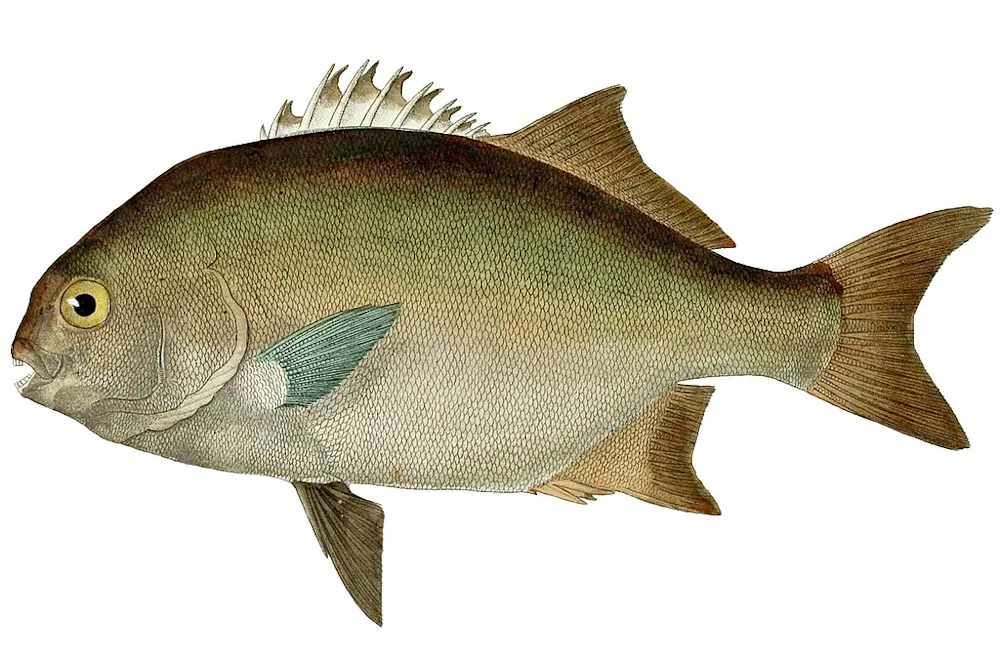
Reflecting its mega-biodiversity status, South Africa boasts five national animal and plant symbols. These are the national animal (springbok), fish (galjoen), bird (blue crane), flower (king protea) and tree (real yellowwood). Yet, their usefulness in helping build a national identity depends on South Africans actually knowing what they are. Sadly, this seems not to be the case.
As environmental scientists we’re intrigued by the relationships between humans and nature. Environmental scholars Ondwela Tshikombeni, Monde Ntshudu and I recently conducted a study to find out how much South Africans know about the five biodiversity symbols. We found that only a tiny fraction could name all of them. The level of knowledge about them was generally low.
This indicates that these symbols can’t be effectively used to help build a common South African identity. Nor will they add value to biodiversity conservation campaigns in a time when the need to protect nature increases due to the impacts of human development and climate change.
National animals and plants
The process of choosing a species as a national symbol is different depending on the country and may even be contested. In Turkey, for example, the national animal is the grey wolf. It can be a symbol of pride or be rejected because it’s the controversial name of a rightwing political group.
Many national symbols are rooted in history and could stem from the emblems of the political, colonial or economic elites of the past. Or they may be more recent and based on lobbying by certain groups or even via public vote. Britain, for example, asked the public to choose a national bird. The robin won.
Galjoen.Biodiversity Heritage Library/Wikimedia Commons, CC BY
The first national animal to be used as a symbol in South Africa was the springbuck (or springbok), proposed in 1906 as a name for the country’s rugby team ahead of a tour of Europe. The most recent addition was the galjoen in 1992.
Our study
We surveyed 382 urban dwellers in four towns spanning three provinces: Mossel Bay, Kariega (formerly Uitenhage), Gcuwa (formerly Butterworth) and Kokstad. In each town we set out to interview 25 adults across low-, medium- and high-income areas and the central business district.
Blue crane.Knowsley Hall/Wikimedia Commons
As part of the survey, we asked people to name each of the five national biodiversity symbols. After that, we presented them with photos of four different species (one of which was the national one) and asked them to correctly identify the national species.
What we found
Only 11 of the respondents (3%) could name all five symbols, while almost half (48%) could not correctly name a single one. The most widely known were the springbok (40%) and the king protea (40%), perhaps because they correspond to the names of national sporting teams. The blue crane was mentioned by only 16% of the respondents and the galjoen (8%) and yellowwood (6%) fared even worse.
The numbers were slightly better when respondents were asked to identify each species from a photo of four choices – 58% identified the protea, 51% the blue crane, 45% the springbok, 26% the galjoen and 16% the real yellowwood.
Real yellowwood.Abu Shawka/ Wikimedia Commons, CC BY-SA
To benchmark these knowledge levels, we also asked a few questions about the national flag and coat of arms. Only eight people knew the meaning of the phrase at the base of the coat of arms (ǃke e꞉ǀxarraǁke, meaning “diverse people unite” in the |Xam language of the country’s original inhabitants). Only 29% correctly knew that the Y-shape in the middle of the national flag was green. This indicates that the low knowledge of national symbols is not limited to just biodiversity symbols.
What can be done about it
It’s clear that a great deal more effort is needed to popularise the national biodiversity symbols if they’re to be used to help shape a national identity in South Africa. They could be promoted in schools where other national symbols, like the flag and anthem, are common.
The South African National Biodiversity Institute and the Department of Sport, Arts and Culture could promote them during September’s heritage month celebrations. They could engage the public by popularising their names in the different official languages of the country and their roles in folklore and indigenous knowledge. They could also be featured in national and international tourism promotions.
Ondwela Tshikombeni and Monde Ntshudu contributed to this article
– Only 3% of South Africans can name all five national animals and plants. Why these symbols matter – https://theconversation.com/only-3-of-south-africans-can-name-all-five-national-animals-and-plants-why-these-symbols-matter-241284
I am pleased to send my greetings to the World Internet of Things Convention.
Digital technology has transformed every aspect of our lives.
It is also an increasingly powerful engine of business and economic growth. Real-time data sharing, IoT applications, information networking and artificial intelligence are enabling the development of smart grids, smart homes and smart cities. Across various sectors, including transportation, agriculture, energy, and healthcare, these technologies are improving quality of life, promoting sustainability, and fostering more responsive services.
But not all countries or communities are benefitting equally. For those without capacity or connectivity, the digital divide is an opportunity divide. And as your theme reminds us, unleashing the potential of a new digital economy depends on a fully connected world.
Last month, leaders adopted the Global Digital Compact to help close the divide and support efforts to ensure that communities and countries get the financial and technological assistance to expand connectivity to all people.
On AI, we also made an essential breakthrough: the first truly universal agreement on governance giving every country a seat at the AI table.
Digital technology is about bridging divides.
Let’s ensure that these rapidly evolving technologies serve all people, equally.
Source: Northern Territory Police and Fire Services
Northern Territory Police no longer hold concerns for the welfare of a 38-year-old Palmerston man.
He was located safe and well by police a short time ago.
NT Police would like to thank the public for their assistance.
Investigations into the disturbance are ongoing, and anyone with information is urged to contact police on 131 444 or Crime Stoppers via 1800 333 000 or https://crimestoppersnt.com.au/.
Source: The Conversation – Africa – By Charlie Shackleton, Professor & Research Chair in Interdisciplinary Science in Land and Natural Resource Use for Sustainable Livelihoods, Rhodes University
The springbok is best known, thanks to it being a name for sports teams.A Oosthuizen/iStock/Getty Images
Alongside a national flag, anthem and coat of arms, most countries have one or more plant and animal species that they designate as national symbols. The national animal of China, for example, is the giant panda, a nation-wide source of pride and diplomacy. Americans salute the bald eagle as a symbol of strength and freedom.
But how do South Africans relate to their official national symbols? Do they even know what they are? It’s a country with an enviable variety of ethnicities, cultures, languages, histories, landscapes and biodiversity. It’s also a country fractured by colonialism and apartheid.
South Africa is still in the process of building a unified and national identity as it moves beyond apartheid, an oppressive system of legislated racial division that formally ended with the advent of democracy in 1994.
The process of nation building includes developing a shared history, identity, pride and values of what it means to be South African. One dynamic in this process is the shaping of a collective identity around particular national icons, symbols, activities and personalities. The national anthem, flag, sports stars, artists and the like. Things that make citizens proud of their country and its people, despite a divided past.
King protea. Carol Phillips/iStock/Getty Images
Reflecting its mega-biodiversity status, South Africa boasts five national animal and plant symbols. These are the national animal (springbok), fish (galjoen), bird (blue crane), flower (king protea) and tree (real yellowwood). Yet, their usefulness in helping build a national identity depends on South Africans actually knowing what they are. Sadly, this seems not to be the case.
As environmental scientists we’re intrigued by the relationships between humans and nature. Environmental scholars Ondwela Tshikombeni, Monde Ntshudu and I recently conducted a study to find out how much South Africans know about the five biodiversity symbols. We found that only a tiny fraction could name all of them. The level of knowledge about them was generally low.
This indicates that these symbols can’t be effectively used to help build a common South African identity. Nor will they add value to biodiversity conservation campaigns in a time when the need to protect nature increases due to the impacts of human development and climate change.
National animals and plants
The process of choosing a species as a national symbol is different depending on the country and may even be contested. In Turkey, for example, the national animal is the grey wolf. It can be a symbol of pride or be rejected because it’s the controversial name of a rightwing political group.
Many national symbols are rooted in history and could stem from the emblems of the political, colonial or economic elites of the past. Or they may be more recent and based on lobbying by certain groups or even via public vote. Britain, for example, asked the public to choose a national bird. The robin won.
Galjoen. Biodiversity Heritage Library/Wikimedia Commons, CC BY
The first national animal to be used as a symbol in South Africa was the springbuck (or springbok), proposed in 1906 as a name for the country’s rugby team ahead of a tour of Europe. The most recent addition was the galjoen in 1992.
Our study
We surveyed 382 urban dwellers in four towns spanning three provinces: Mossel Bay, Kariega (formerly Uitenhage), Gcuwa (formerly Butterworth) and Kokstad. In each town we set out to interview 25 adults across low-, medium- and high-income areas and the central business district.
Blue crane. Knowsley Hall/Wikimedia Commons
As part of the survey, we asked people to name each of the five national biodiversity symbols. After that, we presented them with photos of four different species (one of which was the national one) and asked them to correctly identify the national species.
What we found
Only 11 of the respondents (3%) could name all five symbols, while almost half (48%) could not correctly name a single one. The most widely known were the springbok (40%) and the king protea (40%), perhaps because they correspond to the names of national sporting teams. The blue crane was mentioned by only 16% of the respondents and the galjoen (8%) and yellowwood (6%) fared even worse.
The numbers were slightly better when respondents were asked to identify each species from a photo of four choices – 58% identified the protea, 51% the blue crane, 45% the springbok, 26% the galjoen and 16% the real yellowwood.
Real yellowwood. Abu Shawka/ Wikimedia Commons, CC BY-SA
To benchmark these knowledge levels, we also asked a few questions about the national flag and coat of arms. Only eight people knew the meaning of the phrase at the base of the coat of arms (ǃke e꞉ǀxarraǁke, meaning “diverse people unite” in the |Xam language of the country’s original inhabitants). Only 29% correctly knew that the Y-shape in the middle of the national flag was green. This indicates that the low knowledge of national symbols is not limited to just biodiversity symbols.
What can be done about it
It’s clear that a great deal more effort is needed to popularise the national biodiversity symbols if they’re to be used to help shape a national identity in South Africa. They could be promoted in schools where other national symbols, like the flag and anthem, are common.
The South African National Biodiversity Institute and the Department of Sport, Arts and Culture could promote them during September’s heritage month celebrations. They could engage the public by popularising their names in the different official languages of the country and their roles in folklore and indigenous knowledge. They could also be featured in national and international tourism promotions.
Ondwela Tshikombeni and Monde Ntshudu contributed to this article
Charlie Shackleton received funding from the National Research Foundation under the SARChI Chairs programme for this work.
There is some disagreement among legal practitioners and scholars about whether corporations have duties under international law.
Many argue that only states are bound by international law, and it is those states which are obliged to regulate how businesses operate within their borders. Corporations have only a voluntary responsibility to avoid committing human rights violations through their operations.
I have been doing research in the area of corporate accountability for human rights violations since 2006. My most recent paper looks at the role of multinational corporations (multinationals) in benefiting from and perpetuating structural poverty in the global south.
I argue that international law can no longer exempt corporations from liability for human rights violations, including those arising from poverty. Under certain circumstances, corporations should have duties under international law to ensure human rights are fulfilled. I argue that this is particularly true when it comes to socio-economic rights such as the rights to housing, education, food, water and healthcare.
International human rights law must be developed to impose duties directly on multinational corporations to alleviate poverty in the developing countries where they operate.
This is not an absolute duty – it would only arise in certain circumstances and for specific periods of time, as I show in my paper.
Poverty and corporations
Some estimate that as many as 1.3 billion people live in poverty – more than 10% of the world’s population, the vast majority in the global south.
Poverty is also deadly. It is estimated that at least 21,300 people die every day as a result of poverty and inequality. Poverty is a human rights violation, affecting the rights to dignity, life, food and water.
Businesses have a long history of profiting from human rights abuses. Finance and transport companies have acknowledged ties to the slave trade. European banks reportedly assisted South Africa’s apartheid government to procure arms.
Even when they are not directly responsible for human rights violations, multinational corporations may be complicit. Multinationals based in the global north tend to exploit developing countries for their cheap labour, natural resources and weak regulatory frameworks. In other words, corporations benefit from poverty.
International law
In 2005, Professor John Ruggie was appointed as the United Nations secretary-general’s special representative on the issue of human rights and transnational corporations and other business enterprises. He developed the United Nations Guiding Principles on Business and Human Rights. This framework adopts the position that only states are subjects and have duties under international human rights law.
The UN guiding principles are organised around three pillars, known as Protect, Respect and Remedy. The first pillar relates to states’ obligations to uphold human rights. It includes the duty to regulate businesses to ensure they do not violate rights through their operations. The second pillar refers to corporations’ responsibility to respect human rights. This is voluntary and not a legal obligation. The third pillar ensures that victims of human rights violations have access to effective remedies.
This framework relies on three factors: states which have the interests of their citizens at heart, corporations complying with human rights standards, and effective remedial systems. If all three work together, then the UN guiding principles can address corporate accountability for rights violations.
In practice, however, this is not the case. Many states, particularly those in the developing world with high levels of poverty, rely on foreign investment. This creates a power imbalance when negotiating with large multinational corporations. Multinationals are able to demand favourable investment conditions, including relaxing laws that might protect human rights.
Under the UN guiding principles, if states do not impose obligations on corporations to comply with human rights, they do not have such obligations.
Next steps
Not all corporations should have the same duties as states. I propose a set of factors that would determine when a corporation might have a duty under international human rights law to fulfil socio-economic rights. These factors are:
the extent of the violation
the position or vulnerability of the victim
the urgency of the situation
whether the corporation is the only actor that can fulfil the right.
For example, let us imagine a scenario in which a company operates a mine in the Central African Republic. It has built a hospital for its workers and management. Surrounding the mining operations are indigent communities who resided in the area before the operations began.
One day, a child from one of the settlements is knocked over by a car. Her injuries are not life-threatening, but they are severe and the child is in terrible pain. The closest hospital is the mine-owned private hospital. There is a public hospital, but it is far away and travelling there would take time and be costly. The child’s family rushes her to the mine’s hospital for emergency treatment. Does the hospital have a legal duty to admit the child and pay for her treatment?
Applying a combination of the factors, the answer is yes. The child is vulnerable by virtue of her age and poverty, the situation is urgent, and the mine hospital is the only entity that can fulfil the right under the circumstances.
Using this framework, I argue that international human rights law should be developed to mitigate the harm of poverty in the global south, by imposing duties on corporations that benefit from poverty. Some corporations have a perverse incentive to keep communities poor. International law has a role to play in overturning this state of affairs.
Ultimately, my proposal seeks to review what we think of as a fair and just economy. Nothing will change if only states have obligations under international law. The global economic market is neither free nor fair. It has created the most severe human rights violations of our age. International human rights law must address this.
Bonita Meyersfeld has received funding from the National Research Foundation as part of her NRF rating.
Source: The Conversation – Africa – By Bonita Meyersfeld, Associate Professor, University of the Witwatersrand
There is some disagreement among legal practitioners and scholars about whether corporations have duties under international law.
Many argue that only states are bound by international law, and it is those states which are obliged to regulate how businesses operate within their borders. Corporations have only a voluntary responsibility to avoid committing human rights violations through their operations.
I have been doing research in the area of corporate accountability for human rights violations since 2006. My most recent paper looks at the role of multinational corporations (multinationals) in benefiting from and perpetuating structural poverty in the global south.
I argue that international law can no longer exempt corporations from liability for human rights violations, including those arising from poverty. Under certain circumstances, corporations should have duties under international law to ensure human rights are fulfilled. I argue that this is particularly true when it comes to socio-economic rights such as the rights to housing, education, food, water and healthcare.
International human rights law must be developed to impose duties directly on multinational corporations to alleviate poverty in the developing countries where they operate.
This is not an absolute duty – it would only arise in certain circumstances and for specific periods of time, as I show in my paper.
Poverty and corporations
Some estimate that as many as 1.3 billion people live in poverty – more than 10% of the world’s population, the vast majority in the global south.
Poverty is also deadly. It is estimated that at least 21,300 people die every day as a result of poverty and inequality. Poverty is a human rights violation, affecting the rights to dignity, life, food and water.
Businesses have a long history of profiting from human rights abuses. Finance and transport companies have acknowledged ties to the slave trade. European banks reportedly assisted South Africa’s apartheid government to procure arms.
Even when they are not directly responsible for human rights violations, multinational corporations may be complicit. Multinationals based in the global north tend to exploit developing countries for their cheap labour, natural resources and weak regulatory frameworks. In other words, corporations benefit from poverty.
International law
In 2005, Professor John Ruggie was appointed as the United Nations secretary-general’s special representative on the issue of human rights and transnational corporations and other business enterprises. He developed the United Nations Guiding Principles on Business and Human Rights. This framework adopts the position that only states are subjects and have duties under international human rights law.
The UN guiding principles are organised around three pillars, known as Protect, Respect and Remedy. The first pillar relates to states’ obligations to uphold human rights. It includes the duty to regulate businesses to ensure they do not violate rights through their operations. The second pillar refers to corporations’ responsibility to respect human rights. This is voluntary and not a legal obligation. The third pillar ensures that victims of human rights violations have access to effective remedies.
This framework relies on three factors: states which have the interests of their citizens at heart, corporations complying with human rights standards, and effective remedial systems. If all three work together, then the UN guiding principles can address corporate accountability for rights violations.
In practice, however, this is not the case. Many states, particularly those in the developing world with high levels of poverty, rely on foreign investment. This creates a power imbalance when negotiating with large multinational corporations. Multinationals are able to demand favourable investment conditions, including relaxing laws that might protect human rights.
Under the UN guiding principles, if states do not impose obligations on corporations to comply with human rights, they do not have such obligations.
Next steps
Not all corporations should have the same duties as states. I propose a set of factors that would determine when a corporation might have a duty under international human rights law to fulfil socio-economic rights. These factors are:
the extent of the violation
the position or vulnerability of the victim
the urgency of the situation
whether the corporation is the only actor that can fulfil the right.
For example, let us imagine a scenario in which a company operates a mine in the Central African Republic. It has built a hospital for its workers and management. Surrounding the mining operations are indigent communities who resided in the area before the operations began.
One day, a child from one of the settlements is knocked over by a car. Her injuries are not life-threatening, but they are severe and the child is in terrible pain. The closest hospital is the mine-owned private hospital. There is a public hospital, but it is far away and travelling there would take time and be costly. The child’s family rushes her to the mine’s hospital for emergency treatment. Does the hospital have a legal duty to admit the child and pay for her treatment?
Applying a combination of the factors, the answer is yes. The child is vulnerable by virtue of her age and poverty, the situation is urgent, and the mine hospital is the only entity that can fulfil the right under the circumstances.
Using this framework, I argue that international human rights law should be developed to mitigate the harm of poverty in the global south, by imposing duties on corporations that benefit from poverty. Some corporations have a perverse incentive to keep communities poor. International law has a role to play in overturning this state of affairs.
Ultimately, my proposal seeks to review what we think of as a fair and just economy. Nothing will change if only states have obligations under international law. The global economic market is neither free nor fair. It has created the most severe human rights violations of our age. International human rights law must address this.
– Big companies profit from poverty but aren’t obliged to uphold human rights. International law must change – scholar – https://theconversation.com/big-companies-profit-from-poverty-but-arent-obliged-to-uphold-human-rights-international-law-must-change-scholar-241398
NERMEEN SHAIKH: Israel’s deadly siege on northern Gaza has entered a 30th day. Early week, the World Health Organisation managed to deliver some medical supplies to the Kamal Adwan Hospital, but on Thursday, Israeli fighter jets bombed the hospital’s third floor, where the supplies were being stored.
Al Jazeera reports Israeli forces are continuing to shell Beit Lahia, the scene of multiple massacres last week. On Wednesday, an Israeli attack on a market in Beit Lahia killed at least 10 Palestinians. Earlier in the week, Israel struck a five-story residential building, killing at least 93 people, including 25 children.
Meanwhile, at the United Nations, the UN Special Rapporteur on the Occupied Palestinian Territory, Francesca Albanese, has released a major report accusing Israel of committing genocide.
Albanese concludes that Israel’s war on Gaza is part of a campaign of, “long-term intentional, systematic, state-organised forced displacement and replacement of the Palestinians” . The report is titled Genocide as Colonial Erasure.
AMY GOODMAN: Francesca Albanese is now facing intensifying personal attacks from Israeli and US officials. She was set to brief Congress earlier last week, but the briefing was cancelled. On Tuesday, the US Ambassador to the United Nations, Linda Thomas-Greenfield, wrote on social media, “As UN Special Rapporteur Albanese visits New York, I want to reiterate the US belief she is unfit for her role. The United Nations should not tolerate antisemitism from a UN-affiliated official hired to promote human rights.”
On Wednesday, Francesca Albanese spoke at the United Nations and responded to the US attacks.
FRANCESCA ALBANESE: I have the same shock that you have, looking at how the United States is behaving in this context, in the context of the genocide that is unfolding in Gaza. I’m not — I’m not surprised that they attack anyone who speaks to the facts that are, frankly, on our watch in Gaza. And they do that so brutally because they feel called out, because it’s not that it’s that the United States is simply an observer. The United States is being an enabler in what Israel has been doing.
AMY GOODMAN: That was UN Special Rapporteur Francesca Albanese speaking at the United Nations on Wednesday. She joins us here in our studio.
Welcome back to Democracy Now! Thanks so much for joining us.
Well, before we get you to further respond to what the US and Israel is saying, can you lay out the findings of your report?
Colonial Erasure’: UN expert Francesca Albanese on Israel’s “intent to destroy” Gaza Video: Democracy Now!
FRANCESCA ALBANESE: Absolutely. First of all, thank you for having me.
I have to say that this report is the second I write on — and I present to the United Nations on the topic of genocide. And it has been very reluctantly that I’ve taken on the responsibility to be the chronicler of — the chronicler of an unfolding genocide in Gaza.
In March this year, I concluded that there were reasonable grounds to believe that Israel had committed at least three acts of genocide in Gaza, like killing members of the protected group, Palestinians; inflicting severe bodily and mental harm; and creating conditions of life that would lead to the destruction of the group. And the reason why I identified these were not just war crimes and crimes against humanity is because I identified an intent to destroy.
And I understand that even in this country, people are quite confused about what is genocidal intent, because it’s not a motive. One can have many motives to commit a crime. And I understand genocide is a very insidious one, and it’s difficult to identify what’s a motive. But this is not about the motives. The intent to commit genocide is the determination to destroy, which is fully evident in — especially in the Gaza Strip, as I identified in — as argued in March already.
The reason why I continue to write about genocide — and, in fact, this report walks on the heels of the previous one — is in order to better explain the intent, especially state intent, because there is another misunderstanding that there should be a trial of the alleged perpetrators in order to have — to attribute responsibility to a state.
No, because not only you have had acts committed that should have been prevented by the — in a rule of law, in a proclaimed rule of law system like Israel, where there is the government, the Parliament, the judiciary, working as checks and balances, genocide has not only been not prevented, [it] has been enabled through the various organs of the state.
And I explain what has happened as of October 7, which has provided the opportunity to escalate violence, to build on the rage and on the fury of many Israelis, turning the soldiers into willful executioners, is that there was already a plan, hatred.
I mean, the Palestinians, like Ilan Pappé says, are victims not of war, but of a political ideology that has been unleashed. Palestinians have always been an unwanted encumbrance in the Israeli mindset, because they are an obstacle both as an identity and as legal status to the realisation of Greater Israel as a state for Jewish Israelis only.
NERMEEN SHAIKH:So, we’ll go back to — because I do want to ask about the Israeli state institutions that you name and the branches of the Israeli state that have been involved in forming this state’s intent. But if you could elaborate on the point that you make, the difference between intent and motive, and in particular what you say in the report about how it’s critical to determine genocidal intent, “by way of inference”?
You know, that’s a different phrasing than one has heard in all of this conversation about genocide so far. If you explain what you mean by that and what such a determination makes possible? So, rather than just looking at genocidal intent in other forms, what it means to infer genocidal intent?
FRANCESCA ALBANESE: So, first of all, what constitutes genocide is established by Article II of the Genocide Convention, which creates a twofold obligation for member states, to prevent genocide so genocide doesn’t have to complete itself. When there is a manifestation of intent, even genocidal intent, there is already an obligation to intervene, because a crime is unfolding.
And then there is an obligation to punish. How the jurisprudence, especially after Rwanda and after former Yugoslavia, there have been cases both for criminal proceedings, where individual perpetrators have been investigated and tried, and [the] responsibility of the state, litigated before the International Court of Justice. This is how the jurisprudence on genocide has developed.
And the intent has been further elaborated upon what the Genocide Convention says. And while it might be difficult to have direct intent, meaning to have — it’s difficult but not impossible, in fact, to have a state official say, “Yes, let’s go and destroy everyone” — although I do believe that there is direct intent in this genocide in Gaza.
But the court also established that genocide can be inferred from the scale of the attack on the people, the nature of the attack, the general conduct. And what it says is that normally there should be a holistic approach in order to identify intent, which is exactly what I’ve done.
And indeed, this is why I proposed in this report what I called the triple lens approach. We need to look at the conduct, like the totality of the conduct, instead of studying with a microscope each and every crime. We need to look at the whole, against the totality of the people, the Palestinians as such, in the totality of the land, that Israel has slated as its own by divine design.
NERMEEN SHAIKH: No, absolutely. And then, if you could — the other precedent you’ve just spoken about — of course, Rwanda and former Yugoslavia — another case that you cite in the International Court of Justice is The Gambia v. Myanmar. So, how is that comparable to what we see happening in Gaza? Why is that a relevant example and different from both Rwanda and former Yugoslavia?
FRANCESCA ALBANESE: Let me tell you what I see as the major differences in the case of Israel, because it’s a very complex discussion. But in all four cases, there is a toxic combination of hatred, ideological hatred, which has informed political doctrines. And this is true in all the various contexts we are mentioning. The other common element is that there is [a] combination of crimes. Like, forced displacement is not an act of genocide per se, but the jurisprudence says that it can contribute to corroborate the intent.
But, again, mass killing or mass destruction of property, torture and other crimes against a person, which translate into an infliction of physical and mental harm to the group, not individuals as such, but individuals as part of the group, these are common elements to all genocides.
What I find characteristic in this one is, first of all, this is not — I mean, the state of Israel is not Myanmar and is not Rwanda 30 years ago. This is not war-torn former Yugoslavia. This is a state which has a separation of powers, different organs, as I said, checks and balances. And let me give you a specific example, because you asked me to comment on the state functions.
In January this year, the International Court of Justice issued a set of preliminary measures in the context of its identification, before even looking at the merits of the case initiated by South Africa for Israel’s breach, alleged breach, of the Genocide Convention, which identified the plausibility of risk for the rights protected — of the rights of the Palestinians protected under the Genocide Convention, which means plausibility — it’s semantics, but it’s plausibility that genocide might be committed against the Palestinians in Gaza.
And the provisional measures included an obligation to investigate and prosecute the various cases of incitement, genocidal incitement, that the court had already identified. And it mentions leaders, senior leaders, of the Israeli state. Has there been any investigation? Has there been any prosecution?
But I’m telling you more. The genocidal statements didn’t resonate as shocking in the Israeli public, not only because there was rage, an enormous rage and animosity, of course. I mean, this is understandable, that the facts of October 7 were brutal and traumatized the people.
But at the same time, hatred against the Palestinians and hate speech, it’s not something that started on October 7. I do remember, and I do remember the shock I felt because no one was reacting, and years ago, there were Israeli ministers talking of — freely, of killing, justifying the killing of Palestinians’ mothers and children because they would turn into terrorists.
AMY GOODMAN: Francesca Albanese, talk about the title of your report, Genocide as Colonial Erasure.
FRANCESCA ALBANESE: This is another element which I think — and, in fact, it’s the most important, where we see the difference between this genocide and others, because there is a settler-colonial component. And again, if you look at what the International Court of Justice in July this year concluded, when it decided that the — when it found that Israel’s 57 years of occupation in Gaza, the West Bank and East Jerusalem is unlawful and needs to be withdrawn totally and unconditionally, as rapidly as possibly, which the General Assembly says by September 2025.
The court said that it amounts to — that the colonies amount to — have led to a process of annexation and racial segregation and apartheid. And these are the features of settler colonialism, the taking of the land, the taking of the resources, displacing the local population and replacing it. This has been a feature.
Now, it is in this context that we need to analyse what is happening today. And by the way, don’t believe, don’t listen only to Francesca Albanese. Listen to what these Israeli leaders and ministers are saying — reoccupying Gaza, retaking Gaza, recolonising Gaza, reconquesting Gaza. This is what they are saying.
And there are settlers on expeditions, not only to Gaza but also to Lebanon. So, this is why I say that the main difference, the main feature of this genocide, apart all the horrible aspects of it, is that this is the first settler-colonial genocide to be ever litigated before a court, an international court.
And this is why coming to this country, which is a country birthed from a genocide, when I meet the Native Americans, for example, I feel the pain of these people. And I say if we manage to build on the intersectionality of Indigenous struggle, the cry for justice behind this case for Palestine will resonate even louder, because it will somewhat be an act of atonement from the settler-colonial endeavor, which has sprouted out of Europe, toward Indigenous peoples. So there is a lot of symbolism behind it.
NERMEEN SHAIKH:And, you know, the analogy — first of all, you talked about the case brought by South Africa, so what they share, apart from South Africa and Israel-Palestine, is both the fact that they were colonial-settler states, as well as the fact that apartheid has been established as having occurred in both places.
Now, in the case of South Africa, it was a decision that was taken by the United Nations at the time of apartheid, was unseating South Africa from the General Assembly. There have been calls now to do the same with Israel. So, if you could — if you could comment on that?
And then, I just want to quote another short sentence from your report, in which you say, “As the world watches the first live-streamed settler-colonial genocide, only justice can heal the wounds that political expedience has allowed to fester.” So, if you could talk about the International Court of Justice’s case in that context, what role you think they can play, South Africa’s case, in resolving or addressing — seeing and addressing this wound?
FRANCESCA ALBANESE: First of all, let me unpack the question of the unseating Israel, because this is one of the recommendations I made in my report. Under Article 6 of the UN Charter, a member state can be suspended of its credentials or its membership by the General Assembly upon recommendation of the UN Security Council. And the first criticism I got is that we cannot do that, because every states commit international law violations. Absolutely. Absolutely.
But there are two striking features here. First, Israel is quite unique in maintaining an unlawful occupation, which has deemed such by — in at least one full occasion, but again, there was already a case brought before the ICJ in 2004, so there have been two ICJ advisory opinions.
There is a pending case for genocide. There has been the violations of hundreds of resolutions by the — on Israel — over occupied Palestinian territory, by the Security Council, the General Assembly, the Human Rights Council, and steady violation of international humanitarian law, human rights law, the Apartheid Convention, the Genocide Convention. So this is quite unique.
But all the more, this year alone, Israel has conducted an attack, an unprecedented attack, against the United Nations. It has attacked physically, through artillery, weapons, bombs, UN premises. Seventy percent of UNRWA offices and UNRWA buildings, clinics, distribution centers have been hit and shelled by the Israeli army.
Two hundred and thirty UN staff members have been killed by Israel in Gaza alone. UN peacekeepers in Lebanon have been attacked. And this doesn’t even take into account the smear, the defamation against senior UN officials, the declaration of the secretary-general as persona non grata, the referring to the General Assembly as a “cloak of antisemites”.
Again, this has mounted to a level — the hubris against the United Nations and international law has been unchecked and unbounded forever, but now, especially after the Knesset passed a law outlawing UNRWA, declaring UNRWA a terrorist organisation, and therefore disabling it from its capacity to deliver aid and assistance especially in Gaza and the West Bank and East Jerusalem, this is the nail in the coffin of the UN Charter.
And it can also contribute to that sense of colonial erasure, because here it’s not just at stake the function of a UN body — and UNRWA is a subsidiary body of the General Assembly, so it’s even more serious. But there is the capacity of UNRWA to deliver humanitarian aid in a desperate situation, and also the fact that UNRWA is seen by Israel as the symbol of Palestinian identity, especially the Palestinian refugees. So there is an attempt to erase Palestinianness, including by hitting UNRWA.
AMY GOODMAN: I want to ask you about your trip here, as we begin to wrap up. The US Ambassador to the United Nations, Linda Thomas-Greenfield, quoted on — tweeted on Tuesday, “As UN Special Rapporteur Albanese visits New York, I want to reiterate the US belief she is unfit for her role. The United Nations should not tolerate antisemitism from a UN-affiliated official hired to promote human rights.” If you can further address their charge of antisemitism against you?
FRANCESCA ALBANESE: Yeah.
AMY GOODMAN: And talk about what happened. You were supposed to come to Congress and speak and brief them, but that was cancelled this week.
FRANCESCA ALBANESE: Yes, it was canceled. But let me — first of all, I’m very embarrassed to read this, because a senior US official who writes this, I mean, it shows a little bit of desperation. I’m sorry, but, you know, I’m very candid.
And let me unpack my antisemitism for the audience. So, what I’ve been accused of — the reason why I’ve been accused of antisemitism — is because I’ve allegedly compared the Jews to the Nazis. Never done. Never done.
What I’ve said, what I’ve done is saying, and I keep on saying, that history is repeating itself. I’ve never done such a comparison where I draw the parallel. It’s on the behaviour of member states who have the legal and moral obligation to prevent atrocities, including an unfolding genocide.
In the past, they have done nothing — nothing — until the end of the Second World War, to prevent the genocide of the Jews and the Roma and Sinti. And they’ve done nothing to prevent the genocide of the Bosnians.
And they’ve done nothing to prevent the genocide of the Rwandans. And they are doing the same today. This is where I insist that now, compared to when there was the Holocaust, now we have a human rights framework that should prevent this. The Genocide Convention to prevent this. So, this is one of the points.
The second point, — which leads to portray me as an antisemite, which is really offensive — is that I’ve said that October 7 was not — I’ve contested, I’ve challenged the argument that October 7 was an antisemitic attack. October 7 was a crime, was heinous. And again, I’ve condemned the acts that were directed against the Israeli civilians, and expressed solidarity with the victims, with the families. I’ve been in contact with the families of the hostages.
But I’ve also said the hatred that led that attack, that prompted that attack, to the extent it hit civilians, not the military, but it was prompted not by the fact that the Israelis are Jews, but the fact that the Israelis — I mean, the Israelis are part of that endeavor that has kept the Palestinians in a cage for 17 years and, before, under martial law for 37 years. And Palestinians have tried — it’s true they have used violence, but before violence, they have tried dialogue. They have tried collaboration. They have tried a number of means to access justice, and they have gone nowhere.
I can — I mean, let me relate just this case, because last year I worked with children. And someone who was 17 years old before October 7 last year had never set foot out of Gaza. This is the reality. And I spoke with children while I was writing my report on “unchilding”, the experience of Palestinians under Israeli occupation. And one of them — I mean, there were these two girls fighting, because one of them had been able to go to Israel and the West Bank because she had cancer and could be treated, and the other was jealous, because, she said, “At least she was sick, and she could go, she could travel. I’ve never seen the mountains.”
And again, this doesn’t justify violence, but, please, please, put things in context. And even Israeli scholars have said claiming that October 7 was prompted by antisemitism is a way to decontextualize history and to deresponsibilise Israel.
I condemn Israel not because it’s a Jewish state. It’s not about that, but because it’s in breach of international law through and through. And were the majority of Israelis Buddhists, Christians, atheists, it would be the same. I would be as vocal as I am now.
NERMEEN SHAIKH: Francesca, just one last question, and we only have a minute. Your recent book, J’Accuse, you take the title, of course, from the letter Émile Zola wrote during the Dreyfus Affair to the French president. You came under severe criticism for the choice of that title. Could you explain why you chose it and what it means in this context?
FRANCESCA ALBANESE: Absolutely. I have the sense that whatever I say comes under scrutiny and criticism. But J’Accuse is — first of all, it’s the title that was proposed by the editor, the publisher. And I was against it until October 7.
When I saw the narrative, the dehumanization of the Palestinians after October 7, and what it was legitimising, I said, “This is the title. We need to use it,” because I draw the parallel between what is happening to the Palestinians and what has happened to other groups, particularly the Jewish people in Europe.
I say the Holocaust was not just about the concentration camps. The Holocaust was a culmination of centuries of discrimination, and the previous decades had led the Jewish people in Europe to be kicked out of jobs, professions, to be treated like subhumans, as animals. And it’s this dehumanisation that we need to look at in the face today, in the eyes today, and recognise as leading to atrocity crimes.
AMY GOODMAN: We want to thank you for being with us, Francesca Albanese, UN Special Rapporteur on the Occupied Palestinian Territory.
Part of the mirror platform for scientific experiments at China’s space station. [Photo/China Media Group] A mirror platform for scientific experiments at China’s space station has entered the official operation stage, which will provide important support for scientific experiments on the space station, according to the Technology and Engineering Center for Space Utilization (CSU) under the Chinese Academy of Sciences. The mirror platform is equipped with 14 science experiment cabinets and corresponding public support equipment for information, power distribution, and fluid cooling inside and outside the cabin. It operates as a scientific experiment system on the ground parallel to China’s space station. The extensive scientific experiments the Shenzhou-19 crew is about to conduct have already undergone matching and verification experiments. “Through the platform, we have conducted ground verification for the experiments that the Shenzhou-19 crew will perform, as well as for the experiment payloads, related software, and spare parts before the launch,” Zhong Hongen, a researcher at CSU, told China Media Group. The mirror platform has three main functions as an important ground science experiment infrastructure of the national space laboratory. First, before the scientific payloads carried by the Shenzhou and Tianzhou spacecraft are launched, they must undergo final confirmation testing there, where astronauts can also receive operational training for scientific experiments. Second, scientific experiment plans conducted on the space station can be verified there in advance, allowing for troubleshooting and solution verification in case of any faults that occur in orbit. Lastly, it supports Earth-to-space comparison experiments, enabling comparative analysis and research between the scientific experiments conducted at the space station and on the mirror platform. “Earth-to-space comparison experiments involve conducting experiments in space while simultaneously on the ground. This allows for a comparison under similar conditions, differing only in microgravity, to observe how the two different gravity factors affect the experimental results,” said Zhong.
Tech leaders gather at the AI Creators Conference in Beijing, Oct. 30, 2024. [Photo courtesy of the organizer]
The AI Creators Conference, hosted by Chinese tech media company Pingwest, convened Wednesday in Beijing’s Zhongguancun subdistrict to explore practical applications of artificial intelligence.
Pingwest founder Luo Yihang introduced this year’s theme, “AI for Real,” emphasizing how AI can enhance daily life and provide practical services. The event spotlighted AI applications in mobile phones and VR glasses, drawing industry leaders, including Vivo Vice President Zhou Wei and Xreal founder Xu Chi.
Zhou detailed Vivo’s journey since launching its Global Research Institute in 2018, which is dedicated to integrating AI technology with smartphones. In 2023, the company introduced BlueLM, its proprietary technology designed to enhance AI-smartphone integration for improved user interaction and personalized services.
Zhou emphasized that smartphones act as a bridge between people and the digital world, describing them as potential personal butlers. He outlined five key AI agent capabilities: perceiving user intentions, sharing experiences and memories, assisting in decision-making, autonomously operating applications and managing user affairs.
These AI-powered devices will offer proactive intelligence and personalized services. Smartphones will be able to understand various languages, including minority ones, recognize speakers’ emotions and take autonomous actions like restaurant reservations, according to Zhou.
The Vivo executive described the shift as “services finding people” instead of “people finding services.”
The guide emphasizes standardizing evaluation methods for AI products while promoting the integration of large language models into practical applications. Zhou said smartphone manufacturers, including Vivo, will discuss in November how to establish industry standards for integrating AI agents into smartphones, aiming to facilitate collaborative innovation.
Xreal founder Xu Chi shared his vision for AR glasses at the conference, predicting they could replace smartphones as the primary terminal device within a decade. While current models lag behind smartphones in efficiency, AI integration will simplify their use.
Xu envisions future AR glasses with AI assistants providing personalized support and services, aligning with Vivo’s approach. Xu compared the concept to “Iron Man’s suit,” where users control their AI assistant through simple hand gestures.
China’s domestically developed large passenger aircraft C919. [Photo/Xinhua]
China Eastern Airlines (CEA) has successfully replaced the first engine for the world’s first delivered C919 aircraft, filling a gap in the maintenance capability for the country’s homegrown large passenger aircraft.
The engine replacement is one of the most complicated tasks in aircraft maintenance. The main purpose of the engine replacement was to verify the feasibility of the C919’s engine replacement process to improve aircraft safety.
The CEA maintenance engineers completed 60 routine tasks and more than 10 non-routine tasks over nine days, with all test parameters normal, successfully completing the first engine replacement of the C919 aircraft numbered B-919A.
The engine replacement “will ensure the sustainable operation of the C919 aircraft in CEA in the future and enhance its performance,” said Dong Haoyang, manager of the C919 engine replacement project at China Eastern Xibei Airlines as cited by CCTV+.
The CEA has seven C919 aircraft in operation, serving five commercial routes connecting Shanghai with Beijing, Chengdu, Xi’an and other cities.
Other airlines, including Air China and China Southern Airlines, have also conducted commercial operations with the aircraft.
Police are reiterating warnings to bushwalkers after another search and rescue response was launched to rescue 4 bushwalkers near Mount Anne in the Southwest National Park. Around 10.30am this morning police received a call from bushwalkers after several tents were destroyed overnight during strong and gusty winds. The weather prevented the party from walking out of the area and concerns were held due to further deterioration of weather conditions. The rescue helicopter responded with weather hampering efforts, requiring a walking party to be inserted to aid the bushwalkers. Just after 2.30pm this afternoon rescue personnel consisting of a police rescue officer and a flight paramedic reached the bushwalkers. The rescue is continuing, with the bushwalkers not expected to be extracted from the area for several hours. A severe weather warning had been issued in recent days including for that area, and due to those forecasts it is remarkable that bushwalkers chose to continue. Whilst the group was well prepared with necessary equipment, not recognising the risks associated with those warnings has placed the party and responding search and rescue personnel in danger. Police again remind those venturing outdoors to monitor weather warnings and consider the impact of the weather on their activities. Other essential safety considerations include; · Taking sufficient communication devices including mobile phones, charging banks and Personal Locator Beacons (PLB’s) · Ensuring sufficient emergency food, water and spare clothing is carried in the event the length of the trip extends · Research impending weather conditions for the area and do not continue with plans where inclement weather is due.
At the invitation of H.E. Police Colonel Tawee Sodsong, Minister of Justice of the Kingdom of Thailand, Secretary-General of ASEAN, Dr. Kao Kim Hourn, will lead the ASEAN Secretariat delegation for a Working Visit to Thailand, on 5-6 November 2024. During the working visit, Dr. Kao is planned to meet with high-ranking officials from the Royal Thai Government to discuss, among others, Thailand’s role in strengthening ASEAN’s collective law enforcement efforts against transnational crime and illicit drugs.
As part of the visit, Dr. Kao will also engage with youth in local communities, including sentenced persons, with the aim of supporting them with their future growth and reintegration into society, where Dr. Kao will deliver a special lecture on “Educating for a Better Life: Fostering Quality Citizens” to inspire youth at the Central Juvenile Correctional Institution. Additionally, Dr. Kao will visit the Central Women Correctional Institution to observe Thailand’s rehabilitative and corrective efforts in fostering a safer and more inclusive society. This working visit will reinforce ASEAN’s cooperation in law enforcement, justice, and security, while underscoring the shared commitment to youth empowerment and supporting rehabilitation efforts within ASEAN communities.
The post Secretary-General of ASEAN to conduct a Working Visit to the Kingdom of Thailand appeared first on ASEAN Main Portal.
Source: Hong Kong Government special administrative region
HKETO Brussels supports Hong Kong films during Asian Film Festival Barcelona in Spain HKETO Brussels supports Hong Kong films during Asian Film Festival Barcelona in Spain *************************************************************************************
The Hong Kong Economic and Trade Office in Brussels (HKETO, Brussels) supported the 12th Asian Film Festival Barcelona, which is taking place in Barcelona, Spain, from October 24 to November 3, 2024. Seven Hong Kong movies are supported by Brussels ETO in the Festival, namely “The Narrow Road”, “Fly Me to the Moon”, “Dust to Dust”, “Love Lies”, “Where the Wind Blows”, “Cinema Strada” and “Time Still Turns the Pages”. “Time Still Turns the Pages” has been selected as the closing film of the Festival this year. Brussels ETO hosted a reception on November 2 (Barcelona time) for about 100 guests from the local film, cultural and business sectors. Speaking at the reception, Assistant Representative Mr Paul Leung said that Hong Kong is an East-meets-West centre for international cultural exchange and an Asian front-runner in global film history. “To enhance the development of the film industry, the Government of the Hong Kong Special Administrative Region has been supporting the film industry through the Film Development Fund in four strategic directions, namely nurturing talent, enhancing local production, expanding markets and building audiences,” added Mr Leung. He highlighted the recently launched Hong Kong-Europe-Asian Film Collaboration Funding Scheme, which subsidises film projects co-produced by filmmakers from European and Asian countries to produce films featuring Hong Kong, European and Asian cultures. The scheme aims to support Hong Kong films in expanding to overseas markets. The Asian Film Festival in Barcelona is celebrating its 12th anniversary this year. It is one of the major film festivals in Barcelona dedicated to Asian movies.
am pleased to send my greetings to the World Internet of Things Convention.
Digital technology has transformed every aspect of our lives.
It is also an increasingly powerful engine of business and economic growth. Real-time data sharing, IoT applications, information networking and artificial intelligence are enabling the development of smart grids, smart homes and smart cities. Across various sectors, including transportation, agriculture, energy, and healthcare, these technologies are improving quality of life, promoting sustainability, and fostering more responsive services.
But not all countries or communities are benefitting equally. For those without capacity or connectivity, the digital divide is an opportunity divide. And as your theme reminds us, unleashing the potential of a new digital economy depends on a fully connected world.
Last month, leaders adopted the Global Digital Compact to help close the divide and support efforts to ensure that communities and countries get the financial and technological assistance to expand connectivity to all people.
On AI, we also made an essential breakthrough: the first truly universal agreement on governance giving every country a seat at the AI table.
Digital technology is about bridging divides.
Let’s ensure that these rapidly evolving technologies serve all people, equally.
Hong Kong recorded nearly 32.6 million visitor arrivals in the first three quarters of this year, marking a year-on-year increase of nearly 40 percent, data from the Hong Kong Tourism Board showed Thursday. Among the total arrivals, over 25.2 million were from the Chinese mainland, increasing by some 35 percent year on year, while visitor arrivals from elsewhere surged by 59 percent during the period. In September alone, Hong Kong recorded nearly 3.1 million visitor arrivals, reflecting a 10-percent rise compared to the same month last year, with approximately half of these arrivals consisting of overnight visitors. Notably, in the first three quarters, the number of visitor arrivals from South Korea exceeded 592,000, representing a year-on-year increase of 171.3 percent, while visitor arrivals from France surpassed 93,700, representing a year-on-year growth of 73.6 percent.
Attendees take part in the “Science and Technology for Risk-Informed Sustainable Development” thematic session at the 2024 World Science and Technology Development Forum (WSTDF), in Beijing, Oct. 24, 2024. [Photo courtesy of WSTDF] The 2024 World Science and Technology Development Forum (WSTDF) held a thematic session in Beijing on Oct. 24 focused on “Science and Technology for Risk-Informed Sustainable Development.” Leading representatives of policymakers, scholars and private sector took part in the event, discussing how to mobilize science and technology to navigate emerging global risks and build a safer, more inclusive and sustainable future. The session was hosted by the Integrated Research on Disaster Risk (IRDR), the International Society for Digital Earth (ISDE) and the International Research Center of Big Data for Sustainable Development Goals (CBAS), and supported by the International Science Council (ISC) and the U.N. Office for Disaster Risk Reduction (UNDRR). Salvatore Arico, CEO of the ISC, and Marco Toscano-Rivalta, head of UNDRR’s Regional Office for Asia and the Pacific, co-chaired the event, and it was co-moderated by IRDR Executive Director Yang Saini and Senior Science Officer Han Qunli. Collaboration and shared solutions for global risks As climate change accelerates and disaster risks become more complex, the importance of international scientific cooperation grows ever more crucial. Wu Guoxiong, an academician at the Chinese Academy of Sciences (CAS) and a researcher at the CAS Institute of Atmospheric Physics, highlighted the significance of international cooperation in early warnings for disasters. He pointed to the Sub-seasonal to Seasonal (S2S) Prediction Project as a successful model of global collaboration. Countries including China, the United Kingdom, the United States and Japan participate in the project, which allows real-time comparisons of their climate prediction models, improving collective capacity to address climate-related disasters. Rajib Shaw, chair of the UNDRR Asia-Pacific Scientific and Technical Advisory Group, emphasized the need for increased global cooperation to bridge technological divides. He noted that technologies such as artificial intelligence and drones are vital for disaster risk reduction, yet many Global South countries lack access to these advanced tools, making the collaboration essential. Manon Burger, biochemistry publishing director for Elsevier, underlined the importance of open access to scientific research in fostering global knowledge sharing. “We publish more than 3,000 journals, many of which are available open access, ensuring that researchers worldwide can stay updated on the latest scientific advancements,” Burger said. She also introduced Elsevier Foundation, which has partnered with over 100 institutions in 70 countries since it was established in 2005, offering approximately $16 million in funding for initiatives supporting climate action and inclusive health care. Josephine Ngaira, professor of geography (climatology) in the School of Disaster Management and Humanitarian Assistance at Masinde Muliro University of Science and Technology in Kenya, stressed the need to address the specific challenges of grassroots communities and vulnerable populations in disaster risk management. She advocated for inclusive models that ensure technological benefits reach all levels of society, advancing sustainable development worldwide. DRR education and empowerment of young professionals Young people are a driving force behind technological innovation and sustainable development. Shabhaz Khan, director of the UNESCO Regional Office for East Asia, stated that the youth is highly recognized by the United Nations, and can be mobilized and engaged in pilot disaster research activities. Salvatore Arico, CEO of the ISC, underscored the importance of interdisciplinary training for young researchers. He pointed out that current education systems often remain siloed within single disciplines, whereas solving complex global issues requires interdisciplinary research and training. He advocated for education reforms to provide young scientists with more diverse learning opportunities and to encourage cross-sector exploration. Khamarrul Azahari Razak, director of Malaysia’s Disaster Preparedness and Prevention Center, emphasized the importance of investing in human resources and listening to the voices of young people. Meanwhile, professor Christopher Garimoi Orach from the School of Public Health at Makerere University in Uganda, highlighted the need to strengthen disaster risk management education in developing countries, particularly at the higher education level. He noted that training specialists in disaster risk reduction is crucial for future global risk preparedness. Building social resilience through government policies In tackling global risks, national policies and government support are the keys. Robert Walker, fellow of the Royal Society of Arts and the Academy of Social Sciences Academy of UK and professor at the University of Oxford, stated that social policy should focus on enhancing social resilience by providing people with a sense of security, thus reducing their anxieties and enabling them to contribute to disaster risk reduction. Walker praised China’s efforts in promoting social security and resilience through advancing common prosperity, poverty reduction and energy transition. Salvatore Arico further emphasized that collaboration between governments, communities and scientists is essential for addressing global challenges such as climate change, land degradation and declining water quality. He noted that considering the practical applicability of scientific methods from the beginning of policy design would help enhance implementation effectiveness and ensure technology-driven progress. Rajib Shaw called for greater adaptability in governance mechanisms. Given the existing gap between sci-tech advancements and governance structures, he suggested policy adjustments from governments to facilitate adaptive governance, thus ensuing effective application of scientific tools in disaster risk reduction and management.
Death toll from a house collapse in south China’s Guangxi Zhuang Autonomous Region has risen to four after one more body was pulled out, local publicity authority confirmed on Sunday morning. According to the publicity department of the Binyang County, the collapse occurred at approximately 2 p.m. on Saturday in Nanguan Village. The bodies of four people have been recovered as of 9:10 a.m. Sunday. Rescue work is ongoing as rescuers are trying to search for one more person who could possibly be buried. The house collapse followed an explosion, but cause of the accident is still being investigated.
“I’m going to work on extreme light for medical and energy fields,” Nobel laureate Gérard Mourou said on Friday, speaking on plans for his work in China. The French physicist, who joined Peking University’s School of Physics as chair professor last month, made the remarks on the sidelines of this year’s Beijing Forum, a global academic forum on innovation and human progress. At the opening ceremony of the annual forum, he outlined the applications of ultra-high intensity lasers in such areas as medicine and nuclear energy. In 2018, Mourou shared the Nobel Prize in Physics with Arthur Ashkin and Donna Strickland “for groundbreaking inventions in the field of laser physics.” He is expected to assist in the establishment of a new institute for scientific research and international cooperation in the fields of laser physics, particle physics, nuclear physics, medical physics and astrophysics, according to a statement from Peking University. As China invests heavily in developing science and education, talent is arriving from around the world at an increasing pace. Fields Medal winner Caucher Birkar has been teaching mathematics full-time at Tsinghua University since 2021. Structural biologist Yan Nieng returned to China from Princeton University in the United States in 2022 to found a medical academy in Shenzhen. Yan also delivered a keynote speech at this year’s Beijing Forum. And about one week after Mourou joined Peking University, a symposium celebrating the 50th anniversary of the discovery of the J particle brought several notable individuals to China: Nobel laureates Samuel Chao Chung Ting, Sheldon Glashow and David Gross, as well as Luciano Maiani, former director-general of the European Organization for Nuclear Research. “Achievements of the Chinese efforts are truly remarkable,” Gross told the media, explaining why the event was taking place in China despite the fact that the J particle was not discovered in the country. Though the initial discovery was made elsewhere, all 30 newly identified members of the J particle family were found at the Chinese Academy of Sciences’ Institute of High Energy Physics, Ting said. Mourou praised China for its scientific and technological advancements over the past decades. “I knew some of the scientists,” he said. “And they are interested about what I’m doing.” He joked that those scientists had been “smart enough” to convince him to join the university and start a new institute for ultra-high intensity lasers. Mourou said that he has been impressed by Chinese students, noting that they excel in innovation — not just in their coursework, as is often the stereotype. More than 500 scholars and experts from over 30 countries and regions are taking part in the 2024 Beijing Forum. Topics include sustainable development, the environment and health, and digitalization and artificial intelligence. “The best is yet to come,” Mourou said on the future applications of his research.
At the invitation of Chinese Premier Li Qiang, foreign leaders including Malaysian Prime Minister Anwar Ibrahim, Uzbek Prime Minister Abdulla Aripov, Slovak Prime Minister Robert Fico, Kazakh Prime Minister Olzhas Bektenov, Mongolian Prime Minister Luvsannamsrai Oyun-Erdene and Serbian Prime Minister Milos Vucevic will attend the opening ceremony of the 7th China International Import Expo (CIIE) and relevant events, Foreign Ministry spokesperson Mao Ning announced Sunday.
The 7th CIIE will be held in Shanghai from Nov. 5 to 10. Enditem
Replicas of Sanxingdui relics are on display at the Memor Museum in New York.[Photo provided by Mingmei Li/China Daily]
Spanning millennia, the history and mystery of Sanxingdui’s ancient civilization is reaching international audiences through modern digital platforms.
The exhibition Sanxingdui Encounter: A Global Tour of 12K Micro-viewing of National Treasures opened on Oct 11 at the Memor Museum in New York, offering visitors an opportunity to have an immersive virtual experience of the relics and also see the physical replicas of these treasures.
The display will last until Jan 19.
Sanxingdui, an archaeological site located in modern-day Guanghan, Southwest China’s Sichuan province, illustrates the civilization of the ancient Shu kingdom, which flourished over 3,000 years ago. Sanxingdui was not discovered until the 1920s, and ongoing archaeological efforts continue to reveal discoveries.
By the end of 2022, fieldwork on six newly uncovered sacrificial pits was nearly complete, yielding a wealth of precious artifacts. Over 4,000 items, including jade, stone and pottery, were unearthed during this phase of excavation. Archaeologists are piecing together the history of the ancient Shu civilization and presenting these findings to the public.
The Shu kingdom, which arose in the Sichuan basin during the Bronze Age, was a key hub for early-stage Chinese civilization. Its people produced finely crafted bronze, jade, gold and ceramic artifacts, depicting mythical creatures, rulers, gods and shamans with exaggerated features such as bulging eyes and enlarged ears.
“Sanxingdui’s rich heritage deserves international attention, with its vast cultural significance needing to be shared with a broader audience,” says Willa Ao, director of the Memor Museum.
“We want to present the relics through a blend of digital and physical experiences.”
One example Ao gives is a bronze figure, which strikingly resembles the stance of an American fitness coach performing a dead lift. Additionally, a bronze tree is adorned with numerous small hanging artifacts, reminiscent of ornaments used to decorate Christmas trees.
Sanxingdui’s unearthed bronzes were previously showcased at the Metropolitan Museum of Art in 2002 as part of a broader exhibition on bronze artifacts, but Ao says this time, she wanted to provide New Yorkers a new and interactive way to feel the relics.
This is done through 1:1 replicas from the Sanxingdui Museum’s collection, using ultra-high-definition 12k technology, artificial intelligence interaction and virtual reality immersion, which required three years of preparation.
Visitors will have the opportunity to view the famous Bronze Mask with Crown and Protruding Eyes, a rare artifact that provides insight into the ceremonial and spiritual practices of the ancient Shu people.
Also on display is the striking Bronze Head Wearing a Gold Mask, first unearthed in 1986, which illustrates a unique blend of social status and ritual significance.
“Although they are replicas, they remain highly valuable,” Ao says. She explains that these reproductions of the Sanxingdui Museum’s collection were crafted using identical materials to faithfully replicate the original artifacts.
Visitors will be able to explore the relics using VR technology, which brings large artifacts like the Large Standing Man and the Bronze Sacred Tree into the gallery through virtual exploration.
The exhibition also employs 12K video capture to document smaller artifacts, delicate bronze bells and bird sculptures, magnifying them for a closer look.
Sanxingdui is an important archaeological discovery, not just within Chinese archaeology, but within the world of archaeology, says Kristen Martucci, the exhibition’s translator.
Martucci, 26, has been studying Chinese since high school and pursued East Asian studies, particularly ancient Chinese history, at Harvard University.
She primarily helps translate materials into English in a way that is approachable for American and international audiences.
She says her work is also a learning process in both Chinese and history while uncovering the “mystery”.
“I learned about Sanxingdui in my graduate school courses, but even for me, seeing these replicas and using this exhibition and VR to experience it — that’s new to me, so it’s really exciting,” she says.
A drone photo shows tourists enjoying the sunrise scenery in Fuyuan City, northeast China’s Heilongjiang Province, Oct. 12, 2024. [Photo/Xinhua]
As Chinese people rub their hands for yet another annual “Double 11” online shopping spree, e-commerce platforms like Taobao are no longer the only places they dwell upon.
Attracted by exclusive “Double 11” hotel packages — usually heavily discounted multi-night stays at boutique hotels, resorts and guesthouses — people are spending more time on the country’s leading online travel agencies, such as Fliggy and Ctrip.
Fliggy felt the heat firsthand when it kicked off sales of this year’s “Double 11” tourism packages on the evening of Oct. 21. Its revenue exceeded 1 billion yuan (about $140 million) in just 53 seconds — a dramatic acceleration from 13 minutes last year — and surpassed last year’s first-day sales total in just 52 minutes.
After a customer secures a holiday package, they can select any check-in date within that package’s validity period, which is usually several months, and their payment will only go through once they confirm the dates of their stay.
These packages meet Chinese consumers’ growing demand for good-value products and services, and as the time they have to make decisions is often limited, flexibility and convenience are increasingly significant when it comes to travel accommodation, according to a report from commercial property information provider Meadin.
For hotels, “Double 11” sales are another arena in the country’s booming tourist market.
During the seven-day National Day holiday last month, China recorded 765 million domestic tourist trips, a year-on-year increase of 5.9 percent on a comparable basis, according to data from the Ministry of Culture and Tourism.
The total spending of domestic tourists exceeded 700 billion yuan during the period, up 6.3 percent year on year and 7.9 percent from 2019, the data shows.
Notably, tourist demand for customized trips and exclusive experiences has been booming, stimulating a surge in county tourism and the rise of boutique homestays, which saw the highest growth rate in terms of quantity among all holiday accommodation types in September, according to the Meadin report.
A report released by bed and breakfast (B&B) booking platform Xiaozhu shows that during the National Day holiday, its B&B bookings increased by 37 percent compared to the same period last year.
“The competition has been fierce in the tourism market this year, and businesses are facing great challenges,” said Shuai Mengting, who is in charge of Fliggy’s “Double 11” sales, which she believes present an important opportunity for hotels in the upcoming off-season.
To take full advantage of the opportunity and secure more reservations for the off-season, hotels have been expanding their package sales channels by livestreaming and inviting influencers to promote their products.
Following that trend, Fliggy is also expanding its sales channels. During this year’s “Double 11” sales, the company’s marketing input on popular social media platforms like WeChat, Xiaohongshu and Weibo doubled compared to last year, Shuai said.
“In terms of value, the travel products for this year’s ‘Double 11’ are arguably the best we’ve had in recent years,” she said.
Secretary for Financial Services & the Treasury Christopher Hui will depart on a visit to Switzerland today, and will return to Hong Kong on Friday.
In Geneva, Mr Hui will attend and speak at the 41st session of the Intergovernmental Working Group of Experts on International Standards of Accounting & Reporting, organised by the UN Conference on Trade & Development.
He will meet top figures from international organisations, and from the financial and business sectors, to talk about the advantages of Hong Kong’s financial industries and how the city is well equipped to respond to the world’s increasing focus on sustainability.
During the visit, the treasury chief will also meet financial officials from the Swiss Government.
During Mr Hui’s absence, Under Secretary for Financial Services & the Treasury Joseph Chan will be Acting Secretary.