Category: AM-NC

  • MIL-OSI Australia: New resources for young people to tackle coercive control

    Source: Australian Executive Government Ministers

    The Hon Mark Dreyfus KC MP

    Media Release

    The Albanese Government is today releasing resources to help young people recognise and combat coercive control.

    Young people have unique experiences of coercive control and these resources are designed to assist them and their loved ones to identify coercive control and seek help.

    The resources include videos and fact sheets for young people entering relationships for the first time, as well as adults in their lives, to boost understanding of what coercive control looks like.

    Coercive control is a pattern of abusive behaviour designed to create power and dominance over another person or persons. It can involve physical and non-physical abuse and, over time, creates fear and takes away the person’s freedom and independence.

    Coercive control almost always underpins family and domestic violence. Understanding and identifying these dynamics is fundamental to an effective response to family and domestic violence.

    These new resources build upon an existing suite of materials including fact sheets and videos, tailored resources for First Nations people, language translations and guides for healthcare practitioners to recognise and respond to coercive control.

    The resources build upon the landmark agreement by the Standing Council of Attorneys-General in September 2023 to endorse National Principles to Address Coercive Control in Family and Domestic Violence which, for the first time, create a shared national understanding of coercive control.

    The resources also deliver on one of the preventative actions in the National Plan to End Violence against Women and Children. The National Plan is the overarching national policy framework that guides actions towards ending gender-based violence in a generation.

    If you or someone you know is experiencing, or at risk of experiencing, domestic, family or sexual violence, call 1800RESPECT on 1800 737 732, chat online via 1800RESPECT, or text 0458 737 732.

    MIL OSI News

  • MIL-OSI Australia: New methods of domestic and family violence perpetration

    Source: Australian Executive Government Ministers

    New research has highlighted the need for further improvement in justice and support services to protect victim‑survivors from coercive control.

    Coercive control is a pattern of abusive behaviour designed to exert power and dominance over another person or persons. It can involve physical and non-physical abuse and, over time, creates fear and takes away the person’s freedom and independence.

    Coercive control almost always underpins family and domestic violence. Understanding and identifying these dynamics is fundamental to an effective response to family and domestic violence.

    A landmark agreement by the Standing Council of Attorneys-General in September 2023 endorsed National Principles to Address Coercive Control in Family and Domestic Violence which, for the first time, create a shared national understanding of coercive control.

    The Australian Institute of Criminology (AIC) study Technology-facilitated coercive control investigates the use of technology to facilitate controlling, monitoring, stalking, and emotionally abusive behaviours by intimate partners in domestic and family violence contexts.

    Victim‑survivors and domestic and family violence frontline workers interviewed by the AIC reported significant gaps and the need for improvement in justice and support services.

    One considerable gap is a lack of understanding of technology-facilitated coercive control among frontline workers, including police, and the community more broadly. This meant that victim‑survivors did not always recognise that what was happening to them was a form of violence.

    Often, police were found to view reports by victim-survivors as isolated incidents, rather than as patterns of behaviour. Within domestic and family violence services there was found to be a lack of funding for specialist suppliers to conduct technology safety scans, leaving services to rely on local telecommunications stores or students to check devices.

    In an additional paper, the AIC found an increase in reports of technology-facilitated coercive control during the COVID-19 pandemic exacerbated difficulties for victim-survivors in accessing support. Increased workload and working condition pressures on domestic and family violence workers and other support workers was also reported.

    The Attorney-General’s Department is undertaking work to strengthen responses to Family, Domestic and Sexual Violence including a suite of resources to help people recognise coercive control and encourage victim-survivors to seek help.

    In addition, the Government has invested in a $4.1 million training and education package to enhance the effectiveness of police responses to Family, Domestic and Sexual Violence and training and education to increase awareness of coercive control and recognition of technology facilitated abuse.

    If you or someone you know is experiencing, or at risk of experiencing, domestic, family or sexual violence, call 1800RESPECT on 1800 737 732, chat online via www.1800RESPECT.org.au, or text 0458 737 732.

    If you are concerned about your behaviour or use of violence, you can contact the Men’s Referral Service on 1300 766 491 or visit http://www.ntv.org.au.

    Feeling worried or no good? No shame, no judgement, safe place to yarn. Speak to a 13YARN Crisis Supporter, call 13 92 76. This service is available 24 hours a day, 7 days a week.

    The Australian Institute of Criminology

    The AIC is Australia’s national research and knowledge centre on crime and justice. The AIC seeks to promote justice and reduce crime by undertaking and communicating evidence-based research to inform policy and practice.

    On 26 June 2024, the AIC released a new online dashboard to monitor intimate partner homicides involving female victims. The dashboard will be updated on a quarterly basis.

    MIL OSI News

  • MIL-OSI Australia: Further action on Robodebt scandal

    Source: Australian Executive Government Ministers

    The Hon Mark Dreyfus KC MP

    Media Release

    Legislation introduced today will help protect Australia against any repeat of the former Liberal Government’s illegal and immoral Robodebt scheme by ensuring Commonwealth agencies are subject to stronger and more rigorous scrutiny.

    The Report of the Robodebt Royal Commission made it clear that strong and effective oversight is necessary to safeguard the community in their dealings with government. Trust in government depends on this.

    The Albanese Government’s response to the Royal Commission committed to improving public trust in government. It recognised the important role that impartial, independent and robust oversight plays in delivering on this commitment.

    The Oversight Legislation Amendment (Robodebt Royal Commission Response and Other Measures) Bill 2024 implements the Australian Government’s response to Royal Commission recommendations 21.1 and 21.2 to ensure Commonwealth agencies are subject to stronger and more rigorous scrutiny.

    The Royal Commission found that some officials and agencies engaged in behaviour designed to mislead the Ombudsman and impede their investigation into the Robodebt Scheme.

    The Bill will ensure this can never happen again by:

    • imposing a statutory duty on the public service to assist the Ombudsman in the performance of their functions, and
    • ensuring the Ombudsman has strong powers to obtain full and direct access to records, including by establishing a new offence for withholding reasonable facilities and assistance from the Ombudsman.

    The Bill also enhances the Ombudsman’s ability to undertake full, independent and transparent investigations. This includes modernising the Ombudsman’s information-gathering powers to enable remote access to agency records.

    The Bill will also introduce equivalent enhanced duties and powers for the Inspector‑General of Taxation and Taxation Ombudsman (IGTO), in recognition of the IGTO’s role in providing community assurance that taxation laws are being administered with integrity.

    These amendments are supported by a commitment of $2.3 million over four years from 2023-2024 and $700,000 ongoing. This will provide additional capacity for the Office of the Commonwealth Ombudsman to handle complaints and undertake investigations of systemic issues, as part of the Government’s response to the Robodebt Royal Commission.

    MIL OSI News

  • MIL-OSI Australia: Law reform in the age of AI

    Source: Australian Executive Government Ministers

    *Check against delivery*

    Acknowledgments omitted

    Welcome to my hometown.

    I grew up right here in Fremantle. My primary school is around the corner on Henry Street. My childhood home on the same road as Fremantle Prison, a building now on the World Heritage List. Back then, home to 337 of Western Australia’s prisoners.

    I enjoyed the freedom of a social media free childhood. The only technology that terrified me was the Swan Blimp, roaring in the skies above Esplanade Park, while Fremantle boomed with the America’s Cup. So technology can scare us, but also enable us to achieve greatness.

    I now live in North Perth. The Australia II still lives in Fremantle at the Maritime Museum. It was first launched in 1982, a year away from its history-making America’s Cup win. With a winged keel and the 1980s best 3D design.

    As the TELEX message that was sent amongst the designers said:

    “ABOUT TO TAKE YACHT DESIGN INTO THE SPACE AGE. 
    DARTH VADER LOOKS GOOD IN COMPUTER IN 3 DIMENSION WILL TEST ON WEDNESDAY 10th JUNE, BEN SKYWALKER”

    That was designer Ben Lexcen’s cryptic Telex message of May 1981. The Australia II team did enter the yacht race space age. And far away down in Hobart, an eccentric politician made a bold prediction.

    Barry Jones had just published a book, called ‘Sleepers, Wake!’ exploring the potential impacts of the ICT Revolution on society. The book suggested that technological innovation would be a major component of economic growth, that the increased accessibility of information would transform our lives in almost every conceivable way. The book was ridiculed by some and its claims were regarded by many as wildly exaggerated.

    Barry Jones delivered his famous prediction in a speech to a public meeting in Hobart. He predicted that by the year 2000 there would be more computers in Tasmania than cars. This prediction was considered laughable. The Mercury newspaper suggested he had lost his grip on reality. But he was right.

    Many of us start our days by turning off the alarm blaring out of our small handheld smartphone computers. We get up and dressed and put on our smart watches. We get into our car and use our GPS systems to get to work, where we log on to our work computers for a long day ahead before we can watch some TV on our smart TVs at home.

    Few in 1982 would have had the foresight to make this prediction, and few had the foresight to take it seriously.

    So, what technological advancements are we in danger of overlooking in 2024? The obvious answer is of course Artificial Intelligence.

    The age of AI

    The age of AI is now here. AI is no longer the stuff of science fiction, it is here and it is already embedding itself into our daily lives. The names are cute. Inoffensive. Co-pilot. Chat GPT. Gemini. Cyber Dynamics Model 101.

    Well, that last one is the official name of The Terminator, but I am sure the others are harmless. Australians are already using AI in the workplace. Teachers are now providing students with personalised AI chatbots to help provide additional tutoring to students needing support. AI is assisting medical doctors to scan vast data sets and gather medical insights that were previously not possible. In the public sector, the Australian Government recently conducted a six-month trial of Co-pilot for Microsoft 365. And of course, AI is also impacting the legal sector.

    Recent surveys suggest that a majority of lawyers are already using AI in their work. They are also optimistic for the potential for AI to bring significant innovation to the sector. AI tools are being developed to assist lawyers with document review, legal research and more. Most of us wish we had time to be an incredible professional, as well as an accomplished artist, writer and musician.

    Generative AI is that best version of our imagined selves. Producing music, art and video that has already won artistic competitions when submitted anonymously alongside the work of human artists.

    AI Regulation

    This is where wonder and risk collide. There are serious risks associated with the development and deployment of AI. AI has implications in copyright law, where vast amounts of data and creative work have been scraped for the training of AI models from web sources. AI generative content can also be created to mimic the works of existing Australian artists and creatives. This raises serious concerns for Australian artists and creatives, about the future of their work and livelihoods.

    As Australian Artist Ben Lee said on AI:

    “I don’t think art has ever succeeded in trying to fight technology…
    [but] we have to consider what we will lose if we put all our eggs in that basket.”

    And even if we aren’t recording artists – every Australian has eggs in this basket. We know the risks of having our sensitive data harvested and used. Your information could be training AI without your knowledge or consent.

    AI creates potential challenges in the areas of law enforcement and criminal behaviour, notably in relation to cybercrime. So we must consider the role of regulation and legislative frameworks for the development of AI.

    I am aware I am in a room of legal experts. I expect many of you may have an interest in AI. Equally, the current opportunities for law reform in the age of AI.

    It is worth noting that Barry Jones, when he made his famous prediction, was no great scientist. He studied arts and law. He had been a schoolteacher. It was deep thinking about Australian society and the road ahead of us. He couldn’t avoid the impacts of emerging technologies.

    Similarly, you all witness the iterative way in which law and society steadily adapt to each other, every day in the course of your work. Like Barry, you are in a position to see and understand the transformative impacts of new technology on how a society and its legal framework function. I hope you engage with and contribute to the current conversation about the safe and effective development and implementation of AI in Australia.

    Law reform in the age of AI

    Things are changing. Fast.

    Our regulatory approach is engaged with those changes. It is the role of law makers to balance risk with opportunity. To shield the Australian public from the dangers of AI, while not restricting the potential for AI to deliver positive and profound improvements in living standards.

    Later this month the Susan McKinnon Foundation will release new research on AI. Its report, ‘Partisanship, polarisation and social cohesion in Australia’ surveyed 3,000 Australians. It found familiar divides across many issues amongst progressives and conservatives.

    Surprisingly in one area they found agreement from left and progressive, centre and moderate, right and conservative. They all had similar results on the increased use of AI in daily life, and they all opposed the AI intrusion. Negative 15 per cent support from the left and progressives. Negative 20 per cent support from the right and conservatives.

    So Australians are looking for leadership on how best to protect themselves from potential harms. When conducting law reform we must keep front of mind the rights and needs of those who are most subject to vulnerability. To make sure those who are most disadvantaged are not put to further disadvantage.

    Some legislation is developed for specific technologies, like gene technologies or nuclear technologies. Other legislation is crafted to be technology neutral.

    The Australian Government is continually working to ensure that our robust system of existing legislative frameworks is fit-for-purpose. Capable of responding to harms, including harms enabled by AI.

    Australians know that the regulation of AI is a challenging issue. They recognise the potential dangers and benefits and the importance of getting it right. Where the community has expectations, law reform must respond to and uphold those community expectations. The laws of Australia, are ultimately, a mirror held up to our society. Our laws must reflect those expectations and beliefs of the collection of diverse individuals that make up this country.

    International developments

    The questions Australia faces are not ours alone. The United Nations has alerted the world to the growing energy demands of AI.

    Noting:

    “A request made through ChatGPT, an AI-based virtual assistant, consumes 10 times the electricity of a Google Search, reported the International Energy Agency.

    While global data is sparse, the agency estimates that in the tech hub of Ireland, the rise of AI could see data centres account for nearly 35 per cent of the country’s energy use by 2026.”

    Then there is the European Union Artificial Intelligence Act – designed to specifically address unique high-risk considerations associated with AI.

    By assigning AI systems and applications to three risk categories:

    1. unacceptable risk
    2. high-risk, and
    3. minimal risk.

    In this framework, unacceptable risk systems and applications are prohibited.

    Last year in the UK, an AI white paper was released which argues for a risk-based approach to AI regulation. The paper classifies AI systems based on the level of risk they pose. It emphasises the development of AI systems that are human-centric and trustworthy, whilst also promoting innovation through the development of AI innovation hubs to support research and development.

    In the United States, the first state-based AI legislation has been passed. Known as the Colorado AI Act, it will come into effect from February 2026. The Act requires developers of high-risk artificial intelligence systems to use reasonable care to protect consumers from foreseeable risks of algorithmic discrimination.

    Canada has proposed legislation, the Artificial Intelligence and Data Act, which is broadly aligned with the EU AI Act. The Bill established initial classes of high-impact AI systems and parameters for government to deem further classes of systems as high-impact systems. It would also require developers and deployers of general-purpose high-risk AI systems to establish accountability frameworks. It also provides new enforcement powers for the AI and Data Commissioner.

    These are all developments that the Australian Public Service is monitoring closely.

    AI regulation in Australia

    I began this speech talking about the 1980s here in Fremantle. The 1980s in Canberra saw computers occupy the desk real estate of the public service. Forty years ago, the Attorney-General’s Department assisted with the Copyright Amendment Act 1984, clarifying copyright protection for computer programs.

    The same year the Standing Committee of Attorneys-General “agreed on the desirability of uniform legislation to penalise the appropriation or use of computer data without lawful authority or excuse”.

    Forty years on the technology changed, but the work continues. The Minister for Industry and Science recently held consultations on proposals for introducing mandatory guardrails for AI in high-risk settings. This process is informing the Government’s consideration of how we can most effectively regulate the development and deployment of AI.

    The Senate Select Committee on Adopting AI is currently investigating opportunities and impacts for Australia arising out of the uptake of AI technologies. The Committee is scheduled to present its final report on the 26th of November.

    The Australian Public Service is also working to ensure that government serves as an exemplar for the responsible use of AI. On the 1st of September 2024, the Digital Transformation Agency introduced a policy for responsible use of AI in government, providing a framework for the safe and responsible use of AI by public servants.

    Attorney-General’s Department – AI law reform

    I would like to also talk specifically about some of the law reform being led by the Commonwealth Attorney-General relevant to AI regulation. This reform crosses a number of policy areas, including privacy, copyright, automated decision making, cybercrime, and technology facilitated abuse.

    Privacy reforms

    In the privacy space, Australians are becoming increasingly aware that the advent of AI technologies has introduced the potential for new privacy risks. While AI has the potential to provide major economic benefits, we know Australians are also cautious about the use of AI to make decisions which may affect them.

    In a survey by the Office of the Australian Information Commissioner, respondents made clear they want conditions in place before AI is used in this way. 
    In particular – they want to be told when this is the case. Our Government believes that entities have a responsibility to protect Australians’ personal information and ensure individuals have control and transparency over how it is used.

    On 12 September 2024, the Attorney-General introduced legislation to Parliament to reform the Privacy Act. The Bill implements a first tranche of reforms, agreed by Government in its response to the Privacy Act Review, ahead of consultation on a second tranche of reforms. The Bill will amend the Privacy Act to enhance its effectiveness, strengthening the enforcement tools available to the privacy regulator, while better facilitating safe overseas data flows.

    The Bill will also introduce a statutory tort for serious invasions of privacy, and criminal offences for the malicious release of an individual’s personal data online, otherwise known as ‘doxxing.’ Importantly, the Bill will provide individuals with transparency about the use of their personal information in automated decisions which significantly affect their interests. Entities will need to specify the kinds of personal information used in these sorts of decisions in their privacy policies.

    The Government is approaching this important reform work carefully. Ensuring increased privacy protections are balanced alongside other impacts, so that we deliver the fairest outcome for all Australians.

    Copyright and AI

    AI and copyright issues are another complex global challenge needing to be worked through in an Australian context. The Attorney-General’s Department is considering complex and contested AI and copyright issues in a careful and consultative way. This approach is consistent with advice from industry stakeholders that participated in a series of Copyright Roundtables in 2023.

    The Government is conscious of the need for balance. Between – on the one hand – the urgency with which the rapid development and adoption of AI demands a policy response.And on the other – the importance of taking the time necessary to get that response right, avoiding harmful repercussions.

    In December 2023, the Attorney-General established the Copyright and AI Reference Group as a standing mechanism for engagement with stakeholders. These stakeholders represent a wide range of sectors, including the creative, media and technology sectors. The Reference Group’s role is to consider copyright and AI issues. The Attorney-General’s Department’s ongoing consultation with the Reference Group is informing the development of policy for Government’s consideration.

    This work on copyright is part of the Government’s broader engagement on AI-related matters. It complements the work being led by the Minister for Industry and Science on the safe and responsible use of AI.

    Automated decision-making

    Automated decision making (or ‘ADM’) has long been part of administrative processes, inside and outside of government. When implemented thoughtfully and responsibly – which is the majority of cases – we can all benefit from faster, more efficient, and more accurate service delivery. From e-Gates at airports through to faster processing of claims, these benefits can meaningfully improve the services individuals receive from Government.

    However, where ADM is used to make decisions that adversely affect people’s rights or wellbeing, the community is understandably concerned. In particular, concerns centre on how these automation and artificial intelligence technologies are governed. When assurance processes fail, there can be life-altering impacts on individuals. As many of you would recall, this was this was vividly and painfully illustrated in the ‘Robodebt’ scandal and resulting Royal Commission.

    The Royal Commission made several recommendations to improve governance and safeguards around the use of ADM in administrative decision-making. The Government has fully accepted those recommendations and work is well underway in the Attorney-General’s Department to develop stronger safeguards.

    Australia learnt many lessons from the Robodebt scandal. We heard that individuals were able to successfully challenge particular decisions. However, most individuals did not feel they were in a position to challenge the assessments they received.

    Considerable harm across a large number of individuals was done before the system was brought to an end. The legal system was able to compensate individuals for what had happened.

    A key focus for better governing ADM, including systems that use AI, is therefore to ensure that systems and processes are sufficiently robust. To ensure that flaws in ADM design and implementation are identified and addressed before decisions are made that affect individuals. This could include ensuring that any use of ADM systems in administrative processes is consistent with the principles of administrative law.

    Cybercrime and technology-facilitated abuse

    Generative AI is being rapidly adopted by criminal actors in a range of contexts. For example, artificial intelligence is already being used to generate hyper realistic deepfakes. These can be used as a tool for sexual exploitation, abuse and harassment online.

    It is essential that the Australian Government keeps our laws under constant review. To ensure they remain fit-for-purpose in responses to rapid changes in technology – such as the emergence of AI.

    Earlier this year, the Attorney-General led legislative reform through the Criminal Code Amendment (Deepfake Sexual Material) Act 2024. The Act introduces new offences and strengthens the current criminal law framework. Ensuring the non-consensual transmission of sexual material developed or altered by such technologies is criminalised and subject to significant penalties. This came into force in September 2024.

    Partnership with the states and territories is also important, to ensure a cohesive national approach. In September, the Police Ministers Council agreed to a review of Commonwealth, state and territory frameworks. The review seeks to ensure they adequately address the issue of technology-facilitated abuse, including deepfakes.

    In March 2024, the Joint Standing Committee on Electoral Matters commenced an inquiry into civics education, engagement and participation in Australia. This came from a referral from Government. The inquiry is considering how governments and the community can prevent or limit inaccurate or false information influencing electoral outcomes. Particularly with regard to AI, foreign interference, social media, and mis- and disinformation.

    As AI technologies continue to evolve and transform, it is critical that Australia harnesses the opportunities arising from the uptake of AI technologies. To bolster Australia’s economic and social prosperity, as well as ensuring our legal frameworks remain fit for purpose. Making sure we combat the misuse and abuse of AI for criminal purposes.

    Conclusion

    I started this speech talking about the excitement of the America’s Cup. What it did to my hometown of Fremantle. The joy that win gave the nation.

    I see that excitement again in the possibility of Artificial Intelligence. To unlock the potential of our people, wherever they live. Powered by a publicly owned National Broadband Network.

    In 2024 we stand on the doorstep of the AI age and that door is opening.

    The age of AI is now here. This is a time of great excitement, where the bounds of human creativity and imagination are currently being pushed. But it is also, a time to stop, and to carefully consider the potential hazards and pitfalls, as we move forward.

    The Australian Government is working hard to ensure our legislative framework shields Australians from the potential harms of AI technologies.

    MIL OSI News

  • MIL-OSI Europe: Foreign digital interference – Adoption by the United Kingdom of sanctions against three Russian companies (28 Oct. 2024)

    Source: Republic of France in English
    The Republic of France has issued the following statement:

    France welcomes today’s adoption by the United Kingdom of a series of sanctions against three Russian companies and their leaders, implicated in Russian digital interference in Europe.

    France had reported these actors in June 2023 via the publication of the VIGINUM report on the RRN/Doppelgänger network, and in July 2023 it ensured European sanctions were imposed on these entities.

    France welcomes the excellent coordination between the EU and NATO Member States to broaden collective efforts to combat Russian interference in Europe and around the world. France condemns this interference and emphasizes, as did the British Secretary of State for Foreign, Commonwealth and Development Affairs, that these campaigns have so far failed to significantly disrupt the European public debate or European public support for Ukraine’s territorial integrity.

    France pays tribute to the tireless work of the fact-checkers and journalists working on a daily basis to put out reliable, high-quality information and combat the manipulation of information.

    MIL OSI Europe News

  • MIL-OSI Economics: Lumma/Amadey: fake CAPTCHAs want to know if you’re human

    Source: Securelist – Kaspersky

    Headline: Lumma/Amadey: fake CAPTCHAs want to know if you’re human

    Attackers are increasingly distributing malware through a rather unusual method: a fake CAPTCHA as the initial infection vector. Researchers from various companies reported this campaign in August and September. The attackers, primarily targeting gamers, initially delivered the Lumma stealer to victims through websites hosting cracked games.

    Our recent research into the adware landscape revealed that this malicious CAPTCHA is spreading through a variety of online resources that have nothing to do with games: adult sites, file-sharing services, betting platforms, anime resources, and web apps monetizing through traffic. This indicates an expansion of the distribution network to reach a broader victim pool. Moreover, we discovered that the CAPTCHA delivers not only Lumma but also the Amadey Trojan.

    Malicious CAPTCHA in ad networks

    To avoid falling for the attackers’ tricks, it’s important to understand how they and their distribution network operate. The ad network pushing pages with the malicious CAPTCHA also includes legitimate, non-malicious offers. It functions as follows: clicking anywhere on a page using the ad module redirects the user to other resources. Most redirects lead to websites promoting security software, ad blockers, and the like – standard practice for adware. However, in some cases, the victim lands on a page with the malicious CAPTCHA.

    Examples of sites redirecting the user to a CAPTCHA

    Unlike genuine CAPTCHAs designed to protect websites from bots, this imitation serves to promote shady resources. As with the previous stage, the victim doesn’t always encounter malware. For example, the CAPTCHA on one of the pages prompts the visitor to scan a QR code leading to a betting site:

    CAPTCHA with QR code

    The Trojans are distributed through CAPTCHAs with instructions. Clicking the “I’m not a robot” button copies the line powershell.exe -eC bQBzAGgAdABhAMAIgA= to the clipboard and displays so-called “verification steps”:

    • Press Win + R (this opens the Run dialog box);
    • Press CTRL + V (this pastes the line from the clipboard into the text field);
    • Press Enter (this executes the code).

    CAPTCHA with instructions

    We’ve also come across similar instructions in formats other than CAPTCHAs. For instance, the screenshot below shows an error message for a failed page load, styled like a Chrome message. The attackers attribute the problem to a “browser update error” and instruct the user to click the “Copy fix” button. Although the page design is different, the infection scenario is identical to the CAPTCHA scheme.

    Fake update error message

    The line from the clipboard contains a Base64-encoded PowerShell command that accesses the URL specified there and executes the page’s content. Inside this content is an obfuscated PowerShell script that ultimately downloads the malicious payload.

    Payload: Lumma stealer

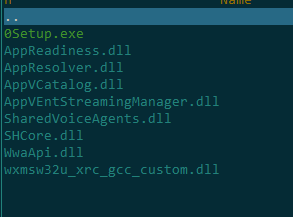
    Initially, the malicious PowerShell script downloaded and executed an archive with the Lumma stealer. In the screenshot below, the stealer file is named 0Setup.exe:

    Contents of the malicious archive

    After launching, 0Setup.exe runs the legitimate BitLockerToGo.exe utility, normally responsible for encrypting and viewing the contents of removable drives using BitLocker. This utility allows viewing, copying, and writing files, as well as modifying registry branches – functionality that the stealer exploits.

    Armed with BitLocker To Go, the attackers manipulate the registry, primarily to create the branches and keys that the Trojan needs to operate:


    That done, Lumma, again using the utility, searches the victim’s device for files associated with various cryptocurrency wallets and steals them:

    Then, the attackers view browser extensions related to wallets and cryptocurrencies and steal data from them:

    Following this, the Trojan attempts to steal cookies and other credentials stored in various browsers:

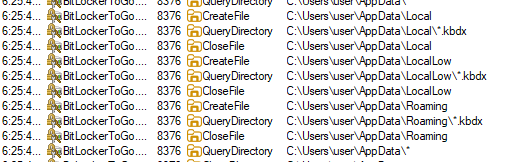
    Finally, the malware searches for password manager archives to steal their contents as well:

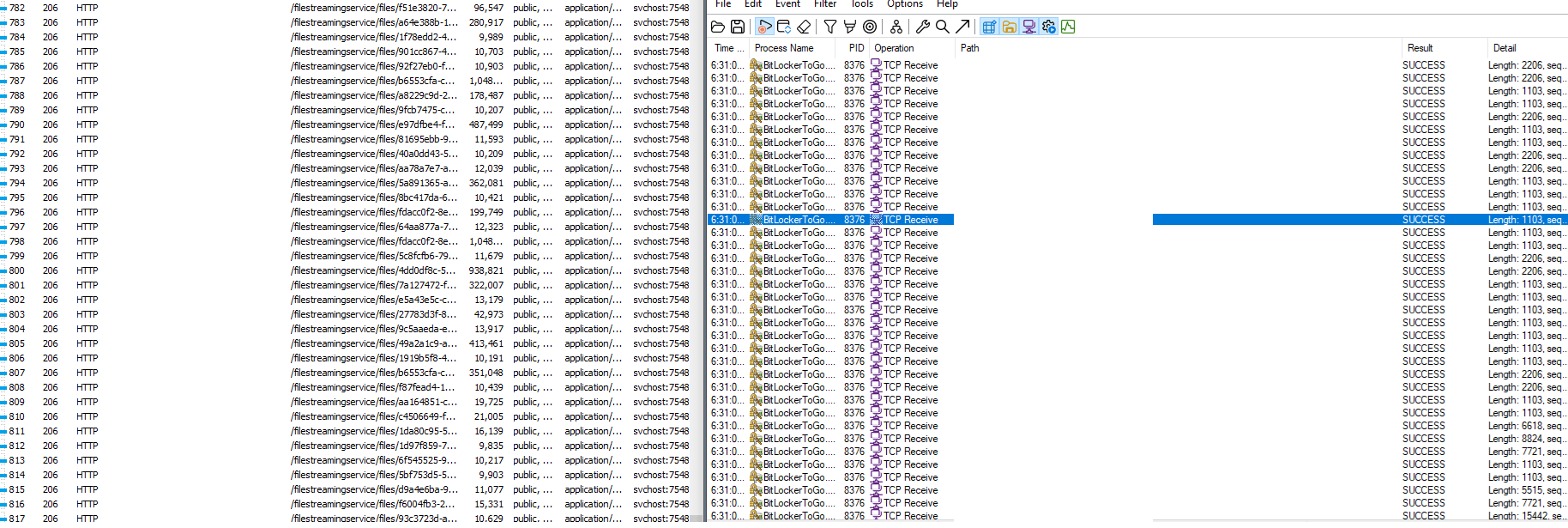
    Throughout the data collection process, the Trojan tries to use the same BitLocker To Go to send the stolen data to the attackers’ server:

    Once the malware has found and exfiltrated all valuable data, it starts visiting the pages of various online stores. The purpose here is likely to generate further revenue for its operators by boosting views of these websites, similar to adware:

    Payload: Amadey Trojan

    We recently discovered that the same campaign is now spreading the Amadey Trojan as well. Known since 2018, Amadey has been the subject of numerous security reports. In brief, the Trojan downloads several modules for stealing credentials from popular browsers and various Virtual Network Computing (VNC) systems. It also detects crypto wallet addresses in the clipboard and substitutes them with those controlled by the attackers. One of the modules can also take screenshots. In some scenarios, Amadey downloads the Remcos remote access tool to the victim’s device, giving the attackers full access to it.

    Snippet of Amadey code used in this campaign

    Statistics

    From September 22 to October 14, 2024, over 140,000 users encountered ad scripts. Kaspersky’s telemetry data shows that out of these 140,000, over 20,000 users were redirected to infected sites, where some of them saw a fake update notification or a fake CAPTCHA. Users in Brazil, Spain, Italy, and Russia were most frequently affected.

    Conclusion

    Cybercriminals often infiltrate ad networks that are open to all comers. They purchase advertising slots that redirect users to malicious resources, employing various tricks to achieve infections. The above campaign is of interest because (a) it leverages trust in CAPTCHA to get users to perform unsafe actions, and (b) one of the stealers makes use of the legitimate BitLocker To Go utility. The malware works to enrich its operators both by stealing victims’ credentials and crypto wallets, and by exploiting online stores that pay money for traffic to their websites.

    Indicators of compromise

    e3274bc41f121b918ebb66e2f0cbfe29
    525abe8da7ca32f163d93268c509a4c5
    ee2ff2c8f49ca29fe18e8d18b76d4108
    824581f9f267165b7561388925f69d3av

    MIL OSI Economics

  • MIL-OSI United Kingdom: Oxford Christmas Light Festival – partnership opportunities for local businesses

    Source: City of Oxford

    Published: Tuesday, 29 October 2024

    The 2024 Oxford Christmas Light Festival returns this year from 15 to 17th November, with opportunities for local businesses to get involved.

    Each year, over 20 organisations in Oxford work with local communities to create an array of events, installations and activities across the city and its surrounding neighbourhoods.

    More than 20,000 people participate in or watch the festivities during the launch weekend.

    Much-loved community event

    Details of the Light Festival programme are published in advance on the Festival website, attracting over 13,000 online visitors, while more than 60,000 people view social posts about the activities. 

    As preparations begin to launch the festival programme, it’s now the ideal time for Oxford’s businesses to join the celebration, reaching thousands of Oxford’s residents while supporting a cherished cultural celebration that brings the city together and marks the start of the festive season. 

    Boost your brand

    Partnering with the festival offers a great opportunity to boost your brand’s visibility and enhance community engagement, all while helping to create an unforgettable festival experience for the city.

    The Oxford’s Christmas Light Festival is an important part of Oxford City Council’s commitment to ensure the arts, culture and events are accessible to all.

    To learn more about sponsorship and advertising opportunities, visit the Oxford Christmas Lights Festival website.

    MIL OSI United Kingdom

  • MIL-OSI Russia: Polytechnic University held the first regional student Olympiad in management

    Translation. Region: Russian Federation –

    Source: Peter the Great St Petersburg Polytechnic University – Peter the Great St Petersburg Polytechnic University –

    The Polytechnic University hosted a regional student Olympiad in management. It became the twentieth in the list of subject Olympiads that have been held in St. Petersburg since 2008. The Polytechnic University applied to the city’s Science and Higher Education Committee for the right to hold such an Olympiad and received approval. The Higher School of Industrial Management of the IPMEiT SPbPU took on the organization of the event.

    The Olympiad involved 17 universities of St. Petersburg, conducting specialized training in the discipline “Management”. 134 students competed for winning and prize places in team and individual championships.

    Vice-Rector for Educational Activities of SPbPU Lyudmila Pankova spoke at the opening ceremony of the Olympiad.

    The Polytechnic University is pleased to welcome such a large number of participants who have shown interest in the Management Olympiad. Such city events provide an incentive for the development of students’ scientific activities and contribute to improving the quality of training of university graduates, and provide teachers and student mentors with the opportunity to identify talented young people, those “stars” with whom one can and should work in the future in the senior years of a bachelor’s, specialist or master’s degree, said Lyudmila Vladimirovna.

    Vladimir Glukhov, Advisor to the Rector’s Office, wished the Olympiad participants fruitful work and success.

    Management must be studied always and everywhere: in the classroom, studying the experience of the best managers and companies, from your own experience of organizing events, at various competitions and contests, Vladimir Viktorovich is sure.

    Director of IPMEiT Vladimir Shchepinin noted the importance of holding such events: At our institute, we regularly organize open lectures by practicing teachers, business representatives, hold master classes and practical seminars from industrial partners, as well as events of the IPMEiT scientific student society, which undoubtedly strengthens student educational and scientific activities. Holding a specialized Olympiad is a new format of working with talented students. I wish all participants a successful performance and self-confidence!

    The Olympiad was held with the support of the Directorate of Basic Educational Programs, the Department of Youth Policy and the Priority 2030 program. Subject assignments consisted of three blocks: tests, calculations and cases. The works were assessed by a commission, which included representatives of the participating universities.

    A little less than a year ago, we applied to the Committee for Science and Higher Education of St. Petersburg for the opportunity to hold the Olympiad. It was important for us to hold a city-wide event in a high-quality, professional and interesting way for students. I would like to thank my colleagues from the Higher School of Industrial Management, with whom we prepared assignments for the Olympiad, dealt with organizational issues, promotion, design and methodological support. We worked as a single team, and that is why everything worked out for us! — shared her impressions the director of the Higher School of Industrial Management Olga Kalinina.

    The results of the Olympiad will be officially announced on November 7 at a meeting of the scientific council for approving the winners of subject Olympiads under the Committee on Science and Higher Education of St. Petersburg.

    Please note: This information is raw content directly from the source of the information. It is exactly what the source states and does not reflect the position of MIL-OSI or its clients.

    MIL OSI Russia News

  • MIL-OSI United Nations: Displacement in Sudan Crosses 11 Million as Devastating Crisis Reaches New Heights: IOM Chief 

    Source: International Organization for Migration (IOM)

    Port Sudan, 29 October – Good morning, I am glad to be able to speak with you this morning live from Port Sudan.  

    I arrived here yesterday on a four-day visit, into a deteriorating security situation with alarming reports of new atrocities. I have heard distressing detail from our teams on the ground of the conditions faced by ordinary Sudanese people whose lives have been thrown into turmoil by this conflict. 

    The situation here in Sudan is catastrophic. There is simply no other way to put it. Hunger, disease and sexual violence are rampant. For the people of Sudan, this is a living nightmare.  

    This is an underreported conflict situation, and we must pay it more attention. Millions are suffering, and there is now the serious possibility of the conflict igniting regional instability from the Sahel to the Horn of Africa to the Red Sea.  

    Yesterday, UN Secretary-General Antonio Guterres shone the spotlight on this suffering, calling it an ‘utter humanitarian catastrophe’. 

    Eighteen months have passed since fighting erupted between the Sudanese Armed Forces and the Rapid Support Forces. Outside forces are now ‘fueling the fire’ which is intensifying the conflict. 

    The suffering is growing by the day, with the Secretary-General reporting yesterday that almost 25 million people are now requiring assistance. 

    In recent days, we have heard utterly shocking reports of mass killings and sexual violence in villages in Al Jazirah State in the east of the country. 

    Throughout this year, Sudan has been world’s largest displacement crisis.  

    Today I can share that we will release new figures this week showing the displacement number has hit 11 million. That’s up 200,000 just since September.  

    Another 3.1 million people have traveled across borders to flee the fighting. In total, nearly 30 per cent of Sudan’s population has been displaced.  

    More than half of those displaced are women, and more than a quarter of them are children under the age of five. Think about that for a moment, that is a huge number of extremely vulnerable women and children on the move. 

    Many have been forced to flee repeatedly, with little to no access to shelter, much less to their livelihoods and the ability to get basic necessities.   

    The scale of this displacement – and the corresponding humanitarian needs – grows every day. Half the country’s population needs help. They don’t have access to shelter, to clean drinking water, to health care. Disease is spreading fast. 

    One in every two Sudanese is struggling to get even the minimal amount of food to survive. Famine conditions have taken hold in North Darfur, and millions struggle to feed themselves every day. 

    I saw some of that suffering yesterday, in a visit to the Arbaat dam area about 40 kilometers from Port Sudan.  

    After heavy rains in August, a spillway collapsed. The resulting flood killed at least 148 people and devastated homes, livestock, and infrastructure.  

    This devastation would be bad enough if it weren’t coming on top of a conflict that continues to rage and is becoming worse by the day – and one that has dramatically impacted the delivery of humanitarian assistance.  

    The safety of aid workers is often threatened. Access restrictions and bureaucratic impediments continue to be imposed.  

    People are dying because of this.  

    The parties to this conflict must do what they have pledged to do – and what international humanitarian law requires – protect civilians, and ensure safe, swift and unimpeded access to life-saving assistance.    

    What we also need, most desperately, is the help of the international community.  

    Sudan is easily the most neglected crisis in the world today. The collective failure to act means the devastation risks spilling over into neighboring countries.  

    At a conference in Paris this past April, the international community made generous pledges. But that appeal is only 52 per cent funded. And though IOM has been able to help nearly 3 million people since the war started, our part of the response plan is only 20% funded.  

    With the proper amount of funding, there is much we can do to alleviate the suffering, to help people get shelter and proper sanitation, to feed them and protect them.  

    But our progress will always be limited as long as war continues to be waged.  

    All wars are brutal, but the toll of this one is particularly horrifying, and the recent killings and appalling human rights violations in Aj Jazirah state were yet another example. Since last year, reports of rape, torture and ethnically motivated violence have been far too common. Indiscriminate attacks are killing civilians, including young children.    

    Some of the areas of most severe need remain cut off entirely, with no access to humanitarian aid. 

    The potential long-term impact of this catastrophic crisis is simply staggering. Education will be set back decades. The health and well-being of children will be stunted. Livelihoods will be permanently ruined. A generation will live in the shadow of trauma. 

    And the immense tragedy about it all is that a peaceful Sudan has the capacity to take care of itself. Its people are resilient, and their natural resources are immense.  

    So while I’m here today to raise awareness of the needs and to highlight the cost of this displacement crisis, what IOM really wants – what every person in the world should want – is for the guns in Sudan to fall silent.  

    The humanitarian response must be scaled up, and we call on the donor community to support this effort. 

    I echo the Secretary General in calling for: 

    An end to hostilities; 

    Protection for civilians; 

    and access for humanitarian agencies so that aid can flow.  

    We will not allow Sudan to be forgotten. But its people need peace, now.  

    ***

    For more information please contact: 

    In Port Sudan: Lisa George, lgeorge@iom.int       
    In Cairo: Joe Lowry, jlowry@iom.int 
    In Geneva: Kennedy Okoth, kokoth@iom.int 

    MIL OSI United Nations News

  • MIL-OSI Asia-Pac: PM to visit Gujarat on 30-31 October

    Source: Government of India

    PM to visit Gujarat on 30-31 October

    PM to participate in Rashtriya Ekta Diwas celebrations

    PM to inaugurate and lay the foundation stone of various infrastructural and development projects worth over Rs 280 crore in Ekta Nagar

    PM to address the Officer Trainees of the 99th Common Foundation Course in Aarambh 6.0

    Posted On: 29 OCT 2024 3:35PM by PIB Delhi

    Prime Minister Shri Narendra Modi will visit Gujarat on 30-31 October. On 30th October, he will travel to Ekta Nagar, Kevadia and at around 5:30 PM, he will inaugurate and lay the foundation stone of various infrastructural and development projects worth over Rs 280 crore in Ekta Nagar. Thereafter, at around 6 PM, he will address the Officer Trainees of the 99th Common Foundation Course in Aarambh 6.0. On 31st October, at around 7:15 AM, Prime Minister will offer floral tribute at the Statue of Unity, which will be followed by Rashtriya Ekta Diwas celebrations.

    Prime Minister will inaugurate and lay the foundation stone of various infrastructural and development projects in Ekta Nagar. These projects aim to enhance the tourist experience, improve accessibility and support sustainability initiatives in the area.

    Prime Minister will address the Officer Trainees of the 99th Common Foundation Course on the eve of the Rastriya Ekta Diwas in Aarambh 6.0. The theme for this year’s programme is “Roadmap for Aatmanirbhar and Viksit Bharat.” The 99th Common Foundation Course – Aarambh 6.0 – includes 653 Officer Trainees from across 16 civil services of India and 3 civil services of Bhutan.

    On 31st October, Prime Minister will participate in the Rashtriya Ekta Diwas celebrations and offer floral tribute to Sardar Vallabhbhai Patel. He will administer the Ekta Diwas pledge and witness Ekta Diwas Parade which will comprise of 16 marching contingents from 9 States and 1 UT Police, 4 Central Armed Police Forces, NCC and a marching band. Special attractions include Hell March contingent of NSG, daredevil show by BSF and CRPF women and men bikers, a show on combination of Indian Martial Arts by BSF, piped band show by school children, ‘Surya Kiran’ flypast by Indian Air Force, among others.


    ***

    MJPS

    (Release ID: 2069191) Visitor Counter : 8

    MIL OSI Asia Pacific News

  • MIL-OSI Asia-Pac: Rajasthan village marches towards zero-waste through green technology interventions

    Source: Government of India (2)

    Posted On: 29 OCT 2024 3:11PM by PIB Delhi

    Aandhi, a tiny village in the district of Jaipur, and about 43 Km from Rajasthan’s capital city of Jaipur is transforming itself to a zero-waste model with the help of green technology interventions.

    Food waste, agro waste, waste water, hospital waste coming from various village sources including institutions like schools, agricultural fields, community health centres could now be converted to resources with the help of a package of technology interventions that have been recently installed in the village.

    The package of technology interventions consisting of Organic Waste Bio-Methanation Plant, Vermifiltration Technology, Constructed Wetlands, resource recovery centre, stands as a unique and socially relevant initiative, creating a zero-waste model through the integration of innovative technologies.  

    Recently, the demonstration plants were inaugurated at three identified locations—a government school, a community health centre, and the constructed wetland at the main pond. It was graced by Dr. Anita Gupta, Head of the Climate, Energy, and Sustainable Technology (CEST) Division, along with Dr. G.V Raghunath Reddy, the Programme Officer.

    The Organic Waste Bio-Methanation Plant at Government School (100 Kg Capacity) converts organic waste, such as food scraps and agricultural residues, into biogas through anaerobic digestion. Equipped with a 5 KW solar energy system. It provides clean energy for cooking and electricity generation, reducing reliance on traditional fuels and promoting renewable energy, cleaner air, and lower greenhouse gas emissions.

    Utilizing earthworms to filter and treat wastewater, the Vermifiltration Technology at the Community Health Center (10 KLD Capacity) makes it suitable for purifying greywater and sewage. The treated water can be reused for agricultural irrigation or landscape watering. Solar energy integration in this patented technology ensures an eco-friendly and energy-efficient wastewater management process, contributing to sustainable water reuse and environmental conservation.

    The Constructed Wetlands at the Main Pond in Aandhi Village (20 KLD Capacity) replicate natural wetland processes to treat wastewater and restore ecosystems. This system will help manage village wastewater while enhancing biodiversity, supporting local flora and fauna, and improving the overall health of the pond ecosystem.

    Partnerships have been established with recycling agencies for the collection and segregation of recyclable waste from the Resource Recovery Center (RRC), ensuring its proper disposal and recycling. Vermicomposting units have also been developed, and the techniques have been disseminated among the villagers for their utilization.

    These initiatives demonstrate the transformative power of green technology in rural communities, showcasing DST’s commitment to promoting innovation and environmental stewardship. The project aligns closely with India’s broader goals of achieving environmental sustainability, mitigating climate change, and promoting waste-to-wealth models that uplift local communities.

    By leveraging advanced green technologies, the project aims to create a self-sustaining model of zero-waste management that can be replicated in other rural areas across the country, contributing to a cleaner, greener, and more sustainable future for all.

    Such interventions could potentially offer a good prospect to be replicated across various villages creating a new pathway for India to march towards a development led inclusive and sustainable net Zero nation.


    ***

    NKR/KS/AG

    (Release ID: 2069178) Visitor Counter : 56

    MIL OSI Asia Pacific News

  • MIL-OSI Asia-Pac: Prime Minister Shri Narendra Modi launches, inaugurates and lays the foundation stone of multiple projects related to health sector worth over Rs 12,850 crore

    Source: Government of India (2)

    Prime Minister Shri Narendra Modi launches, inaugurates and lays the foundation stone of multiple projects related to health sector worth over Rs 12,850 crore

    Augmenting the healthcare infrastructure is our priority, Initiatives relating to the sector launched today will make top-quality and affordable facilities available to the citizens:PM

    It is a matter of happiness for all of us that today Ayurveda Day is being celebrated in more than 150 countries: PM

    Government has set five pillars of health policy:PM

    Now every senior citizen of the country above the age of 70 years will get free treatment in the hospital,Such elderly people will be given Ayushman Vaya Vandana Card:PM

    Government is running Mission Indradhanush campaign to prevent deadly diseases: PM

    Our government is saving the money of the countrymen by making maximum use of technology in the health sector: PM

    Posted On: 29 OCT 2024 3:09PM by PIB Delhi

    On the occasion of Dhanvantari Jayanti and 9th Ayurveda Day, the Prime Minister, Shri Narendra Modi today launched, inaugurated and laid the foundation stone for multiple projects related to the health sector worth around Rs 12,850 crore at All India Institute of Ayurveda (AIIA) in New Delhi.

    Addressing the gathering, the Prime Minister noted the occasion of Dhanvantari Jayanti and Dhanteras and conveyed his best wishes on the occasion. He conveyed his wishes to all business owners of the country as most people tend to buy something new for their homes, and also extended advanced greetings for Diwali.

    The Prime Minister underlined that this Diwali is a historic one as Lord Shri Ram’s temple in Ayodhya will be lit up with thousands of diyas, making the celebrations unprecedented. “Lord Ram has once again returned to his abode in this year’s Diwali”, the Prime Minister remarked, adding that this wait is finally over not after 14 but 500 years. 

    Shri Modi said that it is no coincidence that this year’s festival of Dhanteras is an amalgamation of prosperity and health but a symbol of India’s culture and philosophy of life. Quoting sages and saints, the Prime Minister explained that health is considered supreme wealth and this ancient notion is finding acceptance across the world in the form of Yoga. Shri Modi expressed happiness that Ayurveda Diwas is being celebrated in more than 150 countries today and said that it is proof of the growing attraction towards Ayurveda, and India’s contribution to the world from its ancient past. 

    The Prime Minister underscored that in the past decade, the country had witnessed the beginning of a new chapter in the health sector with the amalgamation of knowledge of  Ayurveda with Modern medicine. He added that All India Institute of Ayurveda had been a focal point of this chapter. Shri Modi remarked that seven years ago on Ayurveda day, he was fortunate to dedicate the first phase of the institute to the country and today with the blessings of Lord Dhanvantri, he was inaugurating the second phase of the institute. He noted that it would be possible to see the  ancient techniques like Panchakarma infused with modern technology in this institute along with advanced research studies in the fields of Ayurveda and medical science. Shri Modi congratulated the citizens of India for this advancement. 

    Noting that the progress of a nation is directly proportional to the health of its citizens, the Prime Minister highlighted the government’s priority to the health of its citizens and outlined the five pillars of health policy. He listed the five pillars as preventive healthcare, early detection of ailments, free and low-cost treatment and medicines, availability of doctors in small towns and lastly expansion of technology in health services. “India is looking at the health sector as holistic health”, Shri Modi said, adding that the projects of today provide a glimpse of these five pillars. Touching upon the inauguration and foundation stone laying of projects worth more than Rs 13,000 crore, the Prime Minister mentioned creation of 4 centers of excellence under Ayush Health scheme, expansion of health services with the use of drones, helicopter service in AIIMS, Rishikesh, new infrastructure in AIIMS, New Delhi and AIIMS, Bilaspur, expansion of services in five other AIIMS in the country, establishment of medical colleges, bhoomi pujan of nursing colleges and other projects related to the health sector.The Prime Minister expressed happiness with several hospitals being established for the treatment of shramiks and said that it would become a center of treatment for shramiks. He also touched upon the inauguration of pharma units that would play a key role in manufacturing of advanced medicine and high quality stents and implants and further India’s growth. 

    The Prime Minister noted that most of us come from a background where illness meant a lightning strike on the entire family and especially in a poor household if a person is down with serious ailment, every member of the family was deeply affected. He added that there was a time when people would sell their houses, lands, jewelry, everything for treatment and be unable to bear the huge out-of-pocket expenditure while poor people had to make a choice between healthcare and other priorities of family. Shri Modi underlined that to overcome the despair of the poor, our Government introduced the Ayushman Bharat Yojana, where the government would bear the cost of hospitalization of the poor up to Rs. 5 lakh. The Prime Minister expressed satisfaction that about 4 crore poor people in the country have benefited from the Ayushman Yojana by getting treated without having to pay a single rupee. Shri Modi remarked that when he meets the beneficiaries of Ayushman Yojana in different states of the country, he feels satisfied that the scheme was a blessing for every person associated with it, be it a doctor or a paramedical staff. 

    Expressing satisfaction on the expansion of Ayushman Yojana, Shri Modi said that every elderly person was looking forward to it and the poll guarantee, if elected for the third term, of bringing all the elderly above 70 years of age under the ambit of Ayushman Yojana was being fulfilled. He added that every elderly person above 70 years of age in the country will get free treatment in the hospital by a Ayushman Vaya Vandana Card. Shri Modi highlighted that the card was universal and there was no restriction on income, be it poor or middle class or upper class. Informing that the scheme would prove to be a milestone for its universal applicability, Shri Modi remarked that with a Ayushman Vaya Vandana card for an elderly in the house, the Out-of-Pocket expenditure will be reduced to a great extent. He congratulated all the countrymen for this scheme and also informed that the scheme was not implemented in Delhi and West Bengal.

    Reiterating the government’s priority to reduce the cost of treatment, be it the poor or middle class, the Prime Minister mentioned the launch of more than 14,000 PM Jan Aushadhi Kendras across the country where medicines are available at 80 percent discount. He informed that the poor and middle class have managed to save Rs 30,000 crore due to availability of cheap medicines. He further added that prices of devices like stents and knee implants have been reduced, therefore, preventing a loss of more than Rs 80,000 crores rupees by the common citizens. He also mentioned the free dialysis scheme and Mission Indradhanush campaign to prevent fatal diseases and saving the lives of pregnant women and newborn babies. The Prime Minister assured that he will not rest until the poor and middle class of the country are free from the burden of expensive treatment. 

    The Prime Minister emphasized the importance of timely diagnosis in reducing the risks and inconveniences associated with illnesses. He highlighted that over two lakh Ayushman Arogya Mandirs have been established across the country to facilitate early diagnosis and treatment. He said that these Arogya Mandirs enable crores of citizens to easily check for diseases like cancer, hypertension, and diabetes. He said that timely diagnosis leads to prompt treatment, ultimately saving costs for patients. The Prime Minister explained that the government is leveraging technology to enhance healthcare and save citizens’ money under the e-Sanjeevani scheme where over 30 crore people have consulted doctors online. “Free and accurate consultations from doctors have significantly reduced healthcare expenses”, he added. Shri Modi announced the launch of the U-win platform which will provide India with a technologically advanced interface in the health sector. “The world witnessed the success of our Co-win platform during the pandemic, and the success of the UPI payment system has become a global story,” he said, adding that India aims to replicate this success in the healthcare sector through Digital Public Infrastructure. 

    The Prime Minister highlighted the unprecedented progress made in India’s healthcare sector over the past decade, contrasting it with the limited achievements in the previous six to seven decades and said, “In the last 10 years, we have seen a record number of new AIIMS and medical colleges being established”. Referring to today’s occasion, the Prime Minister said that hospitals were inaugurated in Karnataka, Uttar Pradesh, Madhya Pradesh, and Andhra Pradesh. He also mentioned the foundation stone laying for new medical colleges in Narsapur and Bommasandra in Karnataka, Pithampur in Madhya Pradesh, Achitapuram in Andhra Pradesh, and Faridabad in Haryana. “Additionally, work has begun on the new ESIC Hospital in Meerut, Uttar Pradesh, and a new hospital was inaugurated in Indore”, he added. The Prime Minister emphasized that the increasing number of hospitals reflects a proportional rise in medical seats. He affirmed that no poor child’s dream of becoming a doctor would be shattered, and no middle-class student would be forced to study abroad due to lack of options in India. Shri Modi informed that nearly 1 lakh new MBBS and MD seats have been added over the past 10 years and reiterated the commitment to announcing another 75,000 seats in the next five years. 

    The Prime Minister informed that 7.5 lakh registered AYUSH practitioners are already contributing to the nation’s healthcare. He stressed on increasing this number further and highlighted the growing demand for medical and wellness tourism in India. He stressed the need for the youth and AYUSH practitioners to prepare for expanding fields such as preventive cardiology, Ayurvedic orthopedics, and Ayurvedic rehabilitation centers, both in India and abroad. “Immense opportunities are being created for AYUSH practitioners. Our youth will not only progress themselves through these opportunities but will also render a great service to humanity”, he added. 

    PM Modi noted the rapid progress in medicine during the 21st century, with breakthroughs in treatments for previously incurable diseases. He said, “As the world places importance on wellness along with treatment, India has thousands of years of knowledge in this area.” The Prime Minister announced the launch of the Prakriti Parikshan Abhiyan aimed at designing ideal lifestyles and risk analysis for individuals using Ayurveda principles. He emphasized that this initiative can redefine the healthcare sector globally and provide a new perspective for the entire world. 

    Prime Minister Modi underscored the importance of validating traditional herbs like Ashwagandha, turmeric, and black pepper through high-impact scientific studies. “Lab validation of our traditional healthcare systems will not only increase the value of these herbs but also create a significant market”, he remarked, pointing to the rising demand for Ashwagandha, which is projected to reach $2.5 billion by the end of this decade. 

    Underlining that the success of AYUSH is transforming not only the health sector but also the economy, the Prime Minister informed that the AYUSH manufacturing sector has grown from $3 billion in 2014 to nearly $24 billion today, an 8-fold increase in just 10 years. He added that over 900 AYUSH start-ups are now operational in India, creating new opportunities for the youth. The Prime Minister highlighted the global export of AYUSH products to 150 countries, benefiting Indian farmers by turning local herbs and superfoods into global commodities. He also pointed out initiatives like the Namami Gange project, which promotes natural farming and herb cultivation along the Ganga river.

    Reflecting on India’s commitment to health and well-being, Shri Modi said that it is the soul of India’s national character and social fabric. He emphasized that the government in the last 10 years has aligned the nation’s policies with the philosophy of ‘Sabka Saath, Sabka Vikas.’ “In the next 25 years, these efforts will lay a strong foundation for a developed and healthy India”, Shri Modi concluded. 

    Union Minister for Health and Family Welfare & Chemicals & Fertilizers, Shri J P Nadda, and Minister of Labour and Employment & Youth Affairs and Sports, Dr Mansukh Mandaviya were present on the occasion among others.

    Background

    As a major addition to the flagship scheme Ayushman Bharat Pradhan Mantri Jan Arogya Yojana (PM-JAY), the Prime Minister launched expansion of health coverage to all senior citizens aged 70 years and above. This will help provide health coverage to all senior citizens regardless of their income.

    It has been the constant endeavor of the Prime Minister to provide quality healthcare services all across the country. In a major boost to healthcare infrastructure, the Prime Minister inaugurated and laid the foundation stone of multiple healthcare institutions.

    The Prime Minister inaugurated Phase II of India’s First All India Institute of Ayurveda. It includes a Panchakarma hospital, an Ayurvedic pharmacy for drug manufacturing, a sports medicine unit, a central library, an IT and start-ups incubation center and a 500-seat auditorium among others. He also inaugurated three medical colleges at Mandsaur, Neemuch and Seoni in Madhya Pradesh. Further, he inaugurated facility and service extensions at various AIIMS in Bilaspur in Himachal Pradesh, Kalyani in West Bengal, Patna in Bihar, Gorakhpur in Uttar Pradesh, Bhopal in Madhya Pradesh, Guwahati in Assam and in New Delhi, which will also include a Jan Aushadhi Kendra. The Prime Minister also inaugurated a Super Speciality Block in Government Medical College at Bilaspur in Chhattisgarh and a Critical Care Block in Bargarh, Odisha.

    The Prime Minister also laid the foundation stone of five Nursing Colleges in Shivpuri, Ratlam, Khandwa, Rajgarh and Mandsaur in Madhya Pradesh; 21 Critical Care Blocks at Himachal Pradesh, Karnataka, Manipur, Tamil Nadu and Rajasthan under Ayushman Bharat Health Infrastructure Mission (PM-ABHIM) and several facilities and service extensions at AIIMS in New Delhi and in Bilaspur, Himachal Pradesh.

    The Prime Minister also inaugurated an ESIC Hospital at Indore in Madhya Pradesh, and lay the foundation stone for ESIC hospitals at Faridabad in Haryana, Bommasandra and Narasapur in Karnataka, Indore in Madhya Pradesh, Meerut in Uttar Pradesh, and Atchutapuram in Andhra Pradesh. These projects will bring healthcare benefits to around 55 lakh ESI beneficiaries.

    The Prime Minister has been a strong proponent of expanding the usage of technology to enhance service delivery across sectors. In an innovative usage of drone technology to enhance service delivery to make healthcare more accessible, the Prime Minister launched drone services at 11 Tertiary Healthcare Institutions. These are AIIMS Rishikesh in Uttarakhand, AIIMS Bibinagar in Telangana, AIIMS Guwahati in Assam, AIIMS Bhopal in Madhya Pradesh, AIIMS Jodhpur in Rajasthan, AIIMS Patna in Bihar, AIIMS Bilaspur in Himachal Pradesh, AIIMS Raebareli in Uttar Pradesh, AIIMS Raipur in Chhattisgarh, AIIMS Mangalagiri in Andhra Pradesh and RIMS Imphal in Manipur. He will also launch Helicopter Emergency Medical Services from AIIMS Rishikesh, which will help deliver speedy medical care.

    The Prime Minister launched the U-WIN portal. It will benefit pregnant women and infants by fully digitalizing the vaccination process. It will ensure timely administration of life-saving vaccines to pregnant women and children (from birth to 16 years) against 12 vaccine-preventable diseases. Further, the Prime Minister also launched a portal for allied and healthcare professionals and institutes. It will act as a centralized database of existing healthcare professionals and institutes.

    The Prime Minister launched several initiatives to strengthen the R&D and testing infrastructure to improve the healthcare ecosystem in the country. The Prime Minister inaugurated a Central Drugs Testing Laboratory in Gothapatna in Bhubaneswar, Odisha.

    He laid the foundation stone of two Central Research Institutes in Yoga and Naturopathy at Khordha in Odisha, Raipur in Chhattisgarh. He also laid the foundation stone of four Centres of Excellence at NIPER Ahmedabad in Gujarat for medical devices, NIPER Hyderabad in Telangana for bulk drugs, NIPER Guwahati in Assam for phytopharmaceuticals, and NIPER Mohali in Punjab for anti-bacterial anti-viral drug discovery and development.

    The Prime Minister launched four Ayush Centres of Excellence, namely Centre of Excellence for diabetes and metabolic disorders at Indian Institute of Science, Bengaluru; Centre of Excellence in sustainable Ayush for advanced technological solutions, start-up support and net zero sustainable solutions for Rasaushadhies at IIT Delhi; Centre of Excellence for fundamental and translational research in Ayurveda at Central Drug Research Institute, Lucknow; and Centre of Excellence on Ayurveda and Systems Medicine at JNU, New Delhi.

    In a major boost to Make in India initiative in the healthcare sector, Prime Minister inaugurated five projects under the Production Linked Incentive (PLI) scheme for medical devices and bulk drugs at Vapi in Gujarat, Hyderabad in Telangana, Bengaluru in Karnataka, Kakinada in Andhra Pradesh and Nalagarh in Himachal Pradesh. These units will manufacture high-end medical devices, such as body implants and critical care equipment, along with important bulk drugs.

    The Prime Minister also launched a nationwide campaign, “Desh Ka Prakriti Parikshan Abhiyan,” that aims to raise health awareness among the citizens. He also launched the State specific Action Plan on Climate Change and Human Health for each state and UT which will lay out adaptation strategies towards developing climate resilient healthcare services.


    ***

    MJPS/SR/TS

    (Release ID: 2069177) Visitor Counter : 92

    MIL OSI Asia Pacific News

  • MIL-OSI Asia-Pac: Magic recipes to create hydrogels from viral protein fragments can improve drug delivery

    Source: Government of India (2)

    Posted On: 29 OCT 2024 3:03PM by PIB Delhi

    A new way discovered to create hydrogels using tiny protein fragments of just five amino acids from the SARS-CoV-1 virus, could help improve targeted drug delivery & reduce side effects

    Due to the increase in chronic and infectious diseases, researchers are for ever on the lookout for new methods of drug delivery to improve the effectivity of treatments. Hydrogels are known to be suitable for drug delivery because of their swelling behaviour, mechanical strength and biocompatibility.

    Short peptide-based hydrogels hold enormous potential for a wide range of applications. However, researchers have found the gelation of these systems very challenging to control. Minor changes in the peptide sequence can significantly influence the self-assembly mechanism and thereby the gelation propensity.

    Following the involvement of SARS CoV E protein in the assembly and release of the virus suggested to researchers from Bose Institute an autonomous institute of the Department of Science and Technology (DST) in Kolkata that it may have inherent self-assembling properties that can contribute to the development of hydrogels.

    Professor Anirban Bhunia and his team at the Department of Chemical Sciences in Bose Institute, explored this possibility and discovered a new way to create useful gel materials.

    In a paper recently published in the prestigious journal Small (Wiley), Prof. Bhunia and his collaborators from the Indian Institute of Science, Bangalore, University of Texas Rio Grande Valley, USA and Indian Association for the Cultivation of Science, Kolkata showed that by rearranging just five amino acids of the SARS-CoV-1 virus, one can make gels made up of pentapeptides with unique properties. Some of them gel when heated, others at room temperature.

    This unique discovery could lead to significant medical advancements like customizable hydrogels that can improve targeted drug delivery enhancing treatment efficacy while reducing side effects.

    These materials could revolutionize tissue engineering, potentially aiding in organ regeneration. These gels might also advance wound healing treatments and enable more accurate disease modelling for research.          


     ***

    NKR/KS/AG

    (Release ID: 2069176) Visitor Counter : 54

    MIL OSI Asia Pacific News

  • MIL-OSI Asia-Pac: Indigenous Transponders Become Lifeline for Fishermen During Cyclone DANA

    Source: Government of India

    Posted On: 29 OCT 2024 2:31PM by PIB Delhi

    The Department of Fisheries under the Ministry of Fisheries, Animal Husbandry, and Dairying (MoFAH&D) with the help of the Vessel Communication and Support System under the Pradhan Mantri Matsya Sampada Yojana has been able to enhance the safety and security of fishermen at sea. Launched by Prime Minister Shri Narendra Modi, from Palghar, Maharashtra on 30th August, 2024 this project has an outlay of ₹364 crores. These transponders are being given to the fishermen free of cost. This initiative of MoFAH&D for Vessel Communication and Support System, featuring indigenous transponder technology, has demonstrated its capability in safeguarding fishermen during Cyclone DANA. This system aims to ensure safety and security of the fishermen while at sea for fishing by enabling them for two-way communication which was not possible before induction of this technology beyond mobile coverage range. Government of India has planned to install indigenously developed transponders on One Lakh fishing vessels in all 13 coastal states and UTs.  This technology was developed by Indian Space Research Organisation (ISRO) and is  being implemented through NewSpace India Ltd(NSIL) which is the commercial arm of ISRO under Department of Space (DoS). 

    Recently, Odisha was proactive in  installation of these transponders and more than 1000 transponders have been installed in the state. This technology has proved as a  lifeline for the fishermen of Odisha by providing support to them during the recent cyclone that impacted the Odisha coast and adjoining areas of the Bay of Bengal. As Cyclone DANA approached the state of Odisha recently, the Odisha State Relief Commissioner issued a warning on 20th October 2024, based on the India Meteorological Department’s midday bulletin. The warnings and advisories were issued on real-time basis to the fishermen using Vessel Communication and Support System. This has not only helped in saving life of the fishermen out at sea but also helped in preventing damage to their resources.  

    Through these transponders, advisories were issued to the fishermen out at sea through Space Application Centre (SAC), Ahmedabad to avoid venturing into the sea from 21st October to 26th October 2024.  It was also advised to the fishermen out at sea to return to the shore immediately. The timing of this warning was significant, allowing fishermen to take necessary precautions before the cyclone made landfall. The messages sent to fishermen included, “Fishermen out at sea are advised to return to the coast immediately,” and “Fishermen are advised not to venture into the sea off Odisha Coast and adjoining North Bay of Bengal during 21st to 26th October 2024.” These broadcast messages were communicated in both English and Odia, ensuring that all fishermen could understand the severity of the situation.

    Traditionally, authorities relied on Very High Frequency radio and phone calls to contact vessels, depending on boat owners to provide their exact locations. This method posed significant challenges, as locating mechanized trawlers in distant waters was often difficult. Moreover, some owners were unable to provide precise information on their vessel numbers and locations. This lack of accurate data hindered effective communication and posed serious risks to the safety of the fishermen at sea. With the Vessel Communication and Support System in place, officials could send a mass broadcast message on the evening of 20th October 2024 to all vessels at sea, utilizing satellites from the Indian Space Research Organisation. This timely broadcast was a game changer, prompting a swift response and enabling the vessels to return to shore by the morning of 21st October 2024. The mass message was not just a notification; it was a lifeline that significantly improved the chances of safety for those at sea.

    The use of transponders and the Nabhmitra Application played a pivotal role in enhancing safety during Cyclone DANA by enabling effective tracking of vessel positions and monitoring their speeds. This application allowed officials to estimate the time of arrival for each vessel at shore, which was paramount in ensuring that fishermen could return safely before the cyclone made landfall. The Nabhmitra Application offers comprehensive tracking features that include essential boat information, such as boat numbers and transponder IDs. By providing real-time updates on location, course and speed, the application helped authorities maintain an accurate understanding of each vessel’s movements.

    Moreover, the application served as a valuable source of cyclone information, detailing the cyclone’s name, category, and specific location through precise latitude and longitude coordinates. This data was complemented by the cyclone’s date and time, maximum surface wind speeds, and the date when this information was acquired. By having this significant information readily accessible, fishermen were better equipped to respond to the unfolding situation. In addition to cyclone-related data, the Nabhmitra Application also provided important weather updates, including sea conditions, wind speed and direction, and visibility. This holistic view of the maritime environment was instrumental for fishermen, allowing them to make informed decisions about their safety. With these tools at their disposal, authorities were able to coordinate the return of fishermen effectively, ensuring they received timely alerts and could navigate the dangers posed by the approaching cyclone.

    The ability to track vessels in real time represented a significant leap forward in crisis management. Officials could monitor approximately 126 boats from Paradeep that were further out at sea, ensuring the safe return of all boats by 22nd October 2024, well before Cyclone DANA made landfall. This enhanced tracking capability helped authorities stay informed about the vessels’ conditions, allowing them to respond effectively to any emergencies. Furthermore, the communication capabilities of the Vessel Communication and Support System were instrumental in disseminating emergency messages in local languages. This feature ensured clarity and urgency, allowing fishermen to comprehend the importance of returning to safety without delay. The multilingual support enhanced the system’s effectiveness, as many fishermen may not be fluent in English or Hindi. By using local dialects, the authorities could convey essential information more effectively, further reducing response times.

    The level of coordination achieved during this crisis was only possible through the Vessel Communication and Support System. The system not only enabled a proactive response but also facilitated collaboration among various stakeholders, including the Department of Fisheries, the Coast Guard, and local authorities. This level of inter-agency cooperation is important during emergencies, ensuring that resources are allocated effectively, and that the response is as swift as possible. The successful deployment of the Vessel Communication and Support System during Cyclone DANA represents a remarkable milestone in crisis management and disaster preparedness. It showcases how technology can be leveraged to protect livelihoods while enhancing the resilience of coastal communities against natural disasters. The system has marked an impressive improvement in crisis management and has showcased the transformative potential of the Vessel Communication and Support System.

    The response to Cyclone DANA has underscored the capabilities of transponder technology in protecting the lives of fishermen and enhancing India’s preparedness for future maritime challenges. By enabling real-time communication and monitoring, the Vessel Communication and Support System sets a new standard in maritime safety. The effectiveness of the system during this crisis serves as a template for future implementations, suggesting that similar technologies can be used in other regions and situations to enhance safety and preparedness.

    The lessons learned from the response to Cyclone DANA are invaluable. It is imperative that the adoption of advanced technologies for disaster management is a key step. The Vessel Communication and Support System highlights the importance of investment in maritime safety infrastructure. The Vessel Communication and Support System has  proved to be a significant asset during Cyclone DANA, ensuring the safety and security of fishermen at sea. By facilitating real-time tracking, effective communication, and coordinated emergency responses, the system exemplifies how technology can enhance maritime safety in the face of natural disasters. The successful outcomes achieved during this crisis serve as a testament to the effectiveness of integrating advanced technologies in safeguarding livelihoods and enhancing preparedness for future challenges. As India continues to strengthen its maritime safety framework, the lessons learned from Cyclone DANA will guide future initiatives, ultimately fostering a safer environment for the fishing community. The path to safety has been significantly illuminated through the effective use of indigenously designed and developed Vessel Communication and Support System, ensuring that fishermen are well-informed and can navigate the challenges posed by nature with greater confidence.

    ****

    AA

    (Release ID: 2069157) Visitor Counter : 18

    MIL OSI Asia Pacific News

  • MIL-OSI Asia-Pac: Pradhan Mantri Mudra Yojana

    Source: Government of India (2)

    Pradhan Mantri Mudra Yojana

    Loan Limit Raised to ₹20 Lakh from ₹10 Lakh

    Posted On: 29 OCT 2024 3:00PM by PIB Delhi


    “Millions of common men and women of this country, who run small business, have almost remained outside the net of formal institutional finance, in spite of their large contribution to the economy. MUDRA is our innovation of funding the unfunded.”

                             ~ Prime Minister Narendra Modi


    The Pradhan Mantri MUDRA Yojana (PMMY), launched by the Prime Minister on April 8, 2015, has played a pivotal role in empowering non-corporate, non-farm small and micro enterprises by providing loans of up to ₹10 lakh. To strengthen support for aspiring entrepreneurs, the finance minister announced an increase in the loan limit to ₹20 lakh during the Union Budget 2024-25 on July 23, 2024. This new limit took effect on October 24, 2024.

    This announcement also introduces a new loan category, Tarun Plus, designed specifically for those who have previously availed and successfully repaid loans under the Tarun category, allowing them to access funding between ₹10 lakh and ₹20 lakh. Additionally, the Credit Guarantee Fund for Micro Units (CGFMU) will now provide guarantee coverage for these enhanced loans, further reinforcing the government’s commitment to nurturing a robust entrepreneurial ecosystem in India.

    Mudra Yojana


    MUDRA,3 which stands for Micro Units Development & Refinance Agency Ltd, is a financial institution set up by the Government of India under PMMY for development and refinancing micro unit enterprises. PMMY aims to provide financial inclusiveness and support to the marginalized and hitherto socio-economically neglected classes. PMMY has given wings to the dreams and aspirations of millions, along with a feeling of self-worth and independence.

    Need for the MUDRA Yojana

    India is a young country brimming with youthful enthusiasm and aspirations. In order to provide a fertile ground for sowing the seeds of India’s development it is very important to harness this innovative zeal of young India which can provide new age solutions to existing gaps in the economic ecosystem of the country. Understanding the need to harness the latent potential of entrepreneurship in India, the Union Government launched the Pradhan Mantri MUDRA Yojana.

    MUDRA Loans: Categories

    Under PMMY collateral free loans up to Rs. 20 Lakh are extended by Member Lending Institutions (MLIs) viz Scheduled Commercial Banks,  Regional Rural Banks (RRBs), Small Finance Banks (SFBs), Non-Banking Financial Companies (NBFCs), Micro Finance Institutions (MFIs) etc. The loans are given for income generating activities in manufacturing, trading and services sectors and for activities allied to agriculture.

    MUDRA loans now will be offered in four categories namely, ‘Shishu’, ‘Kishore’and ‘Tarun’ and newly added category ‘Tarun Plus’ which signifies the stage of growth or development and funding needs of the borrowers:-

    • Shishu: covering loans upto Rs. 50,000/-
    • Kishore: covering loans above Rs. 50,000/- and up to Rs. 5 lakhs
    • Tarun: covering loans above Rs. 5 lakh and up to Rs. 10 lakhs
    • Tarun Plus: Rs. 10 lakh and up to Rs. 20 lakhs


    Achievements of PMMY


    Under Pradhan Mantri Mudra Yojana (PMMY) amount sanctioned and disbursed in the financial year 2023-24 under various categories:[4]

    • Women Borrowers: A total of ₹1,08,472.51 crore was disbursed under the Shishu category, ₹1,00,370.49 crore under Kishore, and ₹13,454.27 crore under the Tarun category.
    • Minority Borrowers: The disbursements amounted to ₹15,759.66 crore under Shishu, ₹20,766.3 crore under Kishore, and ₹8562.27 crore under Tarun.
    • New Entrepreneurs / Accounts:
      • Shishu category: 88,49,101 accounts with a sanctioned amount of ₹29,445.41 crore and disbursed amount of ₹28,839.75 crore.
      • Kishore category: 34,06,239 accounts with ₹62,290.58 crore sanctioned and ₹60,407.02 crore disbursed.
      • Tarun category: 7,57,456 accounts with a sanctioned amount of ₹70,294.35 crore and ₹68,861.13 crore disbursed.
    • Unique Borrowers (from 8th April 2015 to 31st March 2024):
      • ₹44,891.82 crore was sanctioned under Shishu.
      • ₹24,575.57 crore was sanctioned under Kishore.
      • ₹19,120.58 crore was sanctioned under Tarun.


    Mudra Card


    MUDRA Card[5] is an innovative credit product wherein the borrower can avail of credit in a hassle free and flexible manner. It provides a facility of working capital arrangement in the form of an overdraft facility to the borrower. Since MUDRA Card is a RuPay debit card, it can be used for drawing cash from ATM or Business Correspondent or make purchase using Point of Sale (POS) machine. Facility is also there to repay the amount, as and when, surplus cash is available, thereby reducing the interest cost.


    MUDRA App- “MUDRA MITRA”


     MUDRA MITRA is a mobile phone application available in Google Play Store and Apple App    Store, providing information regarding ‘Micro Units Development and RefinanceAgency Ltd. (MUDRA)’ and its various products/ schemes. It will guide a loan seeker to approach a Banker in availing MUDRA loan under PMMY. Users can also access useful loan related material including sample loan application forms in this app.


     Steps taken to improve implementation of the Scheme:[6]

    • Handholding support for facilitating submission of loan applications
    • Provision for online applications through PSBloansin59minutes and Udyamimitra portal
    • Intensive publicity campaigns for increased visibility of the scheme amongst the stakeholders
    • Simplification of application forms
    • Nomination of MUDRA Nodal Officers in Public Sector Banks (PSBs)
    • Periodic monitoring of performance of PSBs with regard to PMMY
    • Interest Subvention of 2% on prompt repayment of Shishu loans extended under PMMY for a period of 12 months to all eligible borrowers.
    • Announced by Union Finance Minister on 14.05.2020 under Aatmanirbhar Bharat Package, the scheme has been formulated as a specific response to an unprecedented situation and aims to alleviate financial stress for borrowers at the ‘bottom of the pyramid’ by reducing their cost of credit.


    Conclusion

    The Pradhan Mantri MUDRA Yojana (PMMY) has fundamentally reshaped the landscape of entrepreneurship in India, driving significant progress in financial inclusion. By providing critical funding support, the scheme has enabled countless new entrepreneurs to turn their business ideas into reality. Over the years, it has also empowered women and minority communities, creating opportunities for economic upliftment and fostering a more inclusive growth environment. As the loan limit expands to ₹20 lakh, PMMY continues to play a vital role in nurturing small businesses and fueling the nation’s journey toward a more equitable and prosperous future.

    References:


    Click here to see in PDF

    Santosh Kumar/ Sarla Meena/ Kamna Lakaria

    (Release ID: 2069170) Visitor Counter : 38

    MIL OSI Asia Pacific News

  • MIL-OSI Asia-Pac: Maximum Retail Price of three Anti-cancer Drugs (Trastuzumab, Osimertinib and Durvalumab) to come down on account of exemption from Custom duty and Reduction in GST Rates

    Source: Government of India

    Posted On: 29 OCT 2024 2:23PM by PIB Delhi

    In line with the Government’s commitment to ensure the availability of drugs at affordable prices, National Pharmaceutical Pricing Authority (NPPA) has issued an O.M. dated 28.10.2024 directing the concerned manufacturers to reduce the MRP on three anti-cancer drugs, Trastuzumab, Osimertinib and Durvalumab.  This is in pursuance to the announcement made in the Union Budget for the year 2024-25 exempting these three anti-cancer medicines from customs duty. The Department of Revenue, Ministry of Finance issued Notification 30/2024 dated 23.07.2024 reducing the custom duty to nil on these three anticancer drugs.

    Further, the Department of Revenue, Ministry of Finance has issued notification no. 05/2024 dated 08.10.2024 notifying the reduction in GST Rates from 12% to 5% with effect from 10.10.2024 on these three drugs.

    Accordingly, there should be a reduction in MRP of these drugs in the market and benefits of reduced taxes & duties should be passed on to the consumers. Hence, NPPA vide O.M. dated 28.10.2024 has directed all the manufacturers of above-mentioned drugs to reduce their MRP. The manufacturers are required to issue a price list or supplementary price list to the dealers, State Drugs Controllers and the Government indicating changes and to submit information regarding price change to NPPA through Form-II/ Form V.

    *****

    MV/AKS

    (Release ID: 2069153) Visitor Counter : 86

    MIL OSI Asia Pacific News

  • MIL-OSI Asia-Pac: PRESIDENT OF INDIA WITNESSES AN ART EXHIBITION AT RASHTRAPATI BHAVAN

    Source: Government of India

    Posted On: 29 OCT 2024 1:44PM by PIB Delhi

    A group of artists called on the President of India, Smt. Droupadi Murmu today (October 29, 2024). The President also visited the exhibition of artwork, which had been created by artists during their stay at Rashtrapati Bhavan.  

    The President appreciated the artwork of the artists. She said that the eternal relationship between human beings and nature is reflected in their artwork. She urged all to encourage these artists by appreciating and buying such artworks.

    These artists reside near various Tiger Reserves and belong to Chhattisgarh, Madhya Pradesh, Maharashtra, Odisha, Mizoram, Telangana, Uttarakhand, and Jharkhand. They have been staying at Rashtrapati Bhavan from October 21 till date under the Artist-in-Residency initiative ‘SRIJAN 2024’. During their stay, artists created beautiful paintings with natural colours depicting art forms like tribal contemporary, Saura, Gond, Warli, Aipan, Sohrai, etc. 


    ***

    MJPS/SR

    (Release ID: 2069142) Visitor Counter : 38

    MIL OSI Asia Pacific News

  • MIL-OSI Asia-Pac: CBDT notifies Tolerance Range for Transfer Pricing for A.Y 2024-25 as per proviso to sub-rule (7) of rule 10CA of the Income-tax Rules, 1962

    Source: Government of India

    CBDT notifies Tolerance Range for Transfer Pricing for A.Y 2024-25 as per proviso to sub-rule (7) of rule 10CA of the Income-tax Rules, 1962

    Notification of tolerance range shall provide certainty to taxpayers and reduce the risk perception associated with pricing of a transaction in transfer pricing

    Posted On: 29 OCT 2024 1:23PM by PIB Delhi

    The Central Board of Direct Taxes (CBDT) has issued notification no. 116/2024 dated October 18, 2024 notifying the tolerance range for AY 2024-25. The notification of tolerance range shall provide certainty to taxpayers and reduce the risk perception associated with pricing of a transaction in transfer pricing.

    Proviso to sub-rule(7) of rule 10CA sub-rule(7) provides that, “if the variation between the arm’s length price so determined at which the international transaction or specified domestic transaction has actually been undertaken does not exceed such percentage not exceeding three percent of the latter, as may be notified by the Central Government in the Official Gazette in this behalf, the price at which the international transaction or specified domestic transaction has actually been undertaken shall be deemed to be the arm’s length price.”

    The tolerance range for transfer pricing is as follows:

    1. The tolerance ranges shall be 1% for transactions in the nature of “wholesale trading” and 3% for others, respectively, as notified last year and
    2. The term ‘wholesale trading’, shall be defined as an international transaction or specified domestic transaction of trading in goods which fulfil all the following conditions:


    1. Purchase cost of finished goods is 80% or more of the total cost pertaining to such trading activities; and
    2. Average monthly closing inventory of goods is 10% or less of sales pertaining to such trading activities.

    ****

    NB/KMN

    (Release ID: 2069135) Visitor Counter : 94

    MIL OSI Asia Pacific News

  • MIL-OSI Asia-Pac: Ministry of Parliamentary Affairs makes significant progress in ongoing Special Campaign 4.0 for institutionalizing Swachhata and reducing pending matters

    Source: Government of India (2)

    Posted On: 29 OCT 2024 1:01PM by PIB Delhi

    The Ministry of Parliamentary Affairs has made  significant progress in the ongoing Special Campaign 4.0, which began on 2nd October 2024 and will continue until 31st October 2024. This initiative is part of the Government of India’s broader mission to institutionalize Swachhata (cleanliness) practices and streamline the resolution of pending matters across various Ministries and Departments.

    Key Achievements So Far:

    • Record Management: Since the campaign’s launch, the Ministry of Parliamentary Affairs has made notable strides in reviewing the old physical and digital files. Over 90% of files of the target set have been reviewed. Social Media updates are also being posted showcasing the progress of Ministry in this aspect.
    • Pending Important Matters: Pendency of PMO Reference, Parliamentary Assurance, State Govt. Reference, Reference from MPs and IMC Reference is NIL.

    The Ministry of Parliamentary Affairs has urged  all its employees to remain committed to the goals of Special Campaign 4.0 and continue to contribute actively.It has been emphasised that  with the combined efforts of all, lasting improvements in cleanliness and governance can be achieved.

    ***

    SS/PRK

    (Release ID: 2069129) Visitor Counter : 31

    MIL OSI Asia Pacific News

  • MIL-OSI Asia-Pac: Key Decisions by Central Empowered Committee to strengthen Gram Panchayats across the country

    Source: Government of India (2)

    Key Decisions by Central Empowered Committee to strengthen Gram Panchayats across the country

    Standardized Honorarium, Training in Smart Classrooms, New Panchayat Buildings to improve Service Delivery at the Grassroots

    Posted On: 29 OCT 2024 12:10PM by PIB Delhi

    In a bid to further enhance the effectiveness of grassroots governance across the country, the Central Empowered Committee (CEC) of the Revamped, Centrally Sponsored Scheme of Rashtriya Gram Swaraj Abhiyan (RGSA), in its 8th meeting under the Chairmanship of Secretary, Ministry of Panchayati Raj (MoPR) Mr. Vivek Bharadwaj, made several significant decisions. The major decisions taken include Adoption of Standardized Honorarium under RGSA, Long term Domestic Training of Panchayat officials, Training of elected representatives in Smart Classrooms, Investment in Gram Panchayat Infrastructure throughout the country with special focus on North Eastern States and UT of Jammu and Kashmir.

    Adoption of Standardized Honorarium System under RGSA

    The CEC approved the standardization of honorarium rates for Master Trainers, Guest Faculties, and Eminent Resource Persons across States/UTs. This decision ensures equitable compensation, fostering the availability of high-quality trainers, which is critical for improving training delivery at the grassroots level. By addressing disparities in honorarium, the decision sets a new benchmark for training consistency and capacity building across Panchayati Raj Institutions (PRIs). This decision marks a crucial step towards ensuring uniformity and quality in training delivery across the country, from larger States like Uttar Pradesh and Maharashtra to smaller ones like Sikkim and Goa. This is particularly important for States like Bihar, Gujarat, Punjab and West Bengal, which are scaling up their training initiatives. By standardizing rates, the Ministry aims to attract and retain high-quality Trainers and Resource Persons, which is essential for effective capacity building of Panchayati Raj Institutions (PRIs) in every State.

    States/UTs to sponsor Panchayat Officials for Long-Term Domestic Training Programs for higher Learning

    “Funding for Long-Term Domestic Training Programs” for up to one year of duration for officials of PRIs and Panchayati Raj Department in the States/UTs under the State component of RGSA has been given a go ahead. The move aims at ensuring that the officials receive advanced, sector-specific training from Institutes of Excellence which will upgrade their skill set for better service delivery at the grassroots. This aligns with the objective of RGSA to strengthen decentralized governance and improved implementation efficiency. It will boost the overall competency of officials involved in rural development and local self-governance, thereby improving grassroots planning. It will also result in extensive Human Capital formation in PRIs over a period of few years.

    The decision addresses the critical need for in-depth skill upgradation of PRI functionaries across all participating States. By including subjects like spatial planning, resource mobilization, and disaster management, the program aims to equip officials with comprehensive knowledge essential for rural development in diverse geographical contexts, from the coastal regions of Kerala to the mountainous terrains of Himachal Pradesh. All the States and UTs will benefit from this decision as the North East (NE) and Hilly States can sponsor 10 candidates each for higher learning, UTs and Goa up to 5 applicants each while other States can sponsor up to 20 candidates each.

    Boost to Panchayat Infrastructure

    To enhance infrastructure, the CEC approved, construction of 3,301 Gram Panchayat Bhawans with Common Service Centre (CSC) co-location and sanctioned 22,164 computers for Gram Panchayats across various States including Andhra Pradesh, Chhattisgarh, Punjab, and Telangana. This decision is a boost for Panchayati Raj system in these States as it directly addresses infrastructure gaps, enabling better administrative functioning and digital governance in rural areas. The provision of dedicated buildings and computer equipment will facilitate efficient record-keeping and e-governance, significantly enhancing local government operations and service delivery.

    Elected Representatives of Panchayats to be trained in Smart Classrooms

    In a bid to modernize the Panchayat Resource Centers at the State and District level across the country, computer labs in State Panchayat Resource Centers (SPRCs) in 25 States as well as in District Panchayat Resource Centers (DPRCs) in 395 Districts will be upgraded with more computers of latest specification. At the same time, approval has been given for installing technological Educational Aids in these SPRCs and DPRCs across States/UTs. This decision for upgrading the State and District Panchayat Resource Centers (SPRCs/ DPRCs) in States like Gujarat and Tamil Nadu will modernize training infrastructure, creating a conducive learning environment. By integrating digital tools including projectors, LCDs, interactive panels and PA systems, the training centers will be better equipped to deliver high-quality capacity-building programs. This move is expected to accelerate the adoption of digital learning and improve the training outreach to Panchayat functionaries across India.

    Investment in Panchayat Infrastructure in the Vibrant Villages of the Border Areas of North East and Jammu and Kashmir

    Over a period of last few years, a number of decisions to support the infrastructure development for PRIs in the North Eastern States and the UT of Jammu and Kashmir have been taken. In the past years, the Ministry has supported construction of Panchayat Bhawans as well as setting up of Common Service Centres for ease of the residents in these areas. In J&K, the Ministry has supported construction of 970 GP Bhawans and co-location of 1606 Common Service Centres during 2024-25.

    In this meeting, decision has been taken for the construction of 400 Panchayat Bhawans-cum-Common Service Centers in Arunachal Pradesh. This is in continuation of MoPR’s support in the past for 939 GP Bhawans with collocated CSCs. Similarly, Panchayat infrastructure has been supported for the other States of North East including Mizoram, Meghalaya, Nagaland, Assam, Manipur. Overall, 1633 Gram Panchayat Bhawans and 514 CSCs have been approved for the States of North East.

    These initiatives aim at enhancing administrative efficiency and provide essential services at the grassroots level, significantly contributing to the development of Vibrant Villages.

    ****

    AA

    (Release ID: 2069112) Visitor Counter : 61

    MIL OSI Asia Pacific News

  • MIL-OSI Asia-Pac: Union Home Minister and Minister of Cooperation, Shri Amit Shah flags off the ‘Run for Unity’, organized as part of National Unity Day, in New Delhi

    Source: Government of India (2)

    Union Home Minister and Minister of Cooperation, Shri Amit Shah flags off the ‘Run for Unity’, organized as part of National Unity Day, in New Delhi

    Prime Minister Shri Narendra Modi had decided to organize the ‘Run for Unity’ in 2015 in memory of the great leader Sardar Vallabhbhai Patel to make the country pledge for the unity and integrity of India

    ‘Run for Unity’ is not merely a pledge for the unity of India, but today it has become a pledge for a developed India as well

    After independence, the creation of present-day India by uniting more than 550 princely states was possible only because of the strong will and quick decision making of Sardar Saheb

    Today, India stands strong before the World on the path of becoming the leader in every field, and its foundation was laid by Sardar Patel

    Prime Minister Modi has kept the memory of Sardar Patel alive by building the World’s tallest statue in Kevadia, Gujarat

    Sardar Patel’s vision, ideas and message in every field have been given a concrete shape by Prime Minister Modi

    Union Home Minister called upon the countrymen to take a pledge to strengthen the unity of India through the ‘Run for Unity’ and to realize the dream of a fully developed India by 2047

    Posted On: 29 OCT 2024 11:54AM by PIB Delhi

    Union Home Minister and Minister of Cooperation, Shri Amit Shah today flagged off the ‘Run for Unity’ organized in New Delhi. The ‘Run for Unity’ was organized as part of the National Unity Day, to be celebrated on the occasion of the birth anniversary of Sardar Vallabhbhai Patel, i.e, 31st October. Several dignitaries including Union Cabinet Ministers Shri Manohar Lal Khattar, Dr. Mansukh Mandaviya, Union Minister of State for Home Affairs Shri Nityanand Rai and Lieutenant Governor of Delhi Shri Vinay Kumar Saxena were present on the occasion.


    In his address, Union Home Minister Shri Amit Shah said that Prime Minister Shri Narendra Modi had decided to organize the ‘Run for Unity’ in 2015 in the memory of the great leader Sardar Vallabhbhai Patel to make the country pledge for the unity and integrity of the country. He said that since then, the entire country not only takes a pledge for the unity and integrity of the whole country through the ‘Run for Unity’ but also rededicates itself to the service of the Mother India. Shri Shah added that the ‘Run for Unity’ has become a pledge of unity of the country as well as a pledge of a developed India. He said that Prime Minister Modi has put forth before all countrymen the pledge to build a fully developed India by 2047, which would be at the top of the ladder in every field in the World.

    Shri Amit Shah said that today India stands before the world as a flourishing, developing and a strong nation. He said that if we look back at history, after independence, the creation of present-day India by uniting more than 550 princely states was possible only because of the strong will and quick decision making of Sardar Saheb. He said that it was Sardar Patel due to whose strong will today India stands united and strong before the World. He added that today India stands strong before the World on the path of becoming the leader in every field, and its foundation was laid by Sardar Patel.

    Union Home Minister and Minister of Cooperation said that it is unfortunate that Sardar Patel was forgotten for years and he was also denied the due honour of Bharat Ratna. He said that Prime Minister Modi has kept the memory of Sardar Patel alive by building the World’s tallest statue in Kevadia, Gujarat. Shri Shah said that Sardar Patel’s vision, ideas and message in every field have been given a concrete shape by Prime Minister Modi.

    Shri Amit Shah said that the great ideas of Sardar Patel will definitely become a guiding light for the young generation of the country. Union Home Minister called upon the countrymen to take a pledge to strengthen the unity of India through the ‘Run for Unity’ and to realize the dream of a fully developed India by 2047.

    *****

    RK/VV/PR/PS

    (Release ID: 2069106) Visitor Counter : 66

    Read this release in: Hindi

    MIL OSI Asia Pacific News

  • MIL-OSI Asia-Pac: Prime Minister Shri Narendra Modi addresses Rozgar Mela

    Source: Government of India (2)

    Prime Minister Shri Narendra Modi addresses Rozgar Mela

    It is a matter of great joy to have handed over appointment letters for government jobs to 51 thousand youth in the Rozgar Mela, Best wishes to all the youth who are taking a step towards nation building:PM

    It is our commitment that the youth of the country should get maximum employment: PM

    Today India is moving towards becoming the third largest economy in the world: PM

    We promoted Make in India in every new technology,We worked on self-reliant India: PM

    Under the Prime Minister’s Internship Scheme, provision has been made for paid internships in the top 500 companies of India: PM

    Posted On: 29 OCT 2024 11:53AM by PIB Delhi

    The Prime Minister Shri Narendra Modi addressed the Rozgar Mela and distributed more than 51,000 appointment letters to newly appointed youth in Government departments and organizations via videoconferencing today. Rozgar Mela highlights the Prime Minister’s commitment to prioritizing employment generation. It will empower the youth by providing them with meaningful opportunities to contribute to nation-building.

    Addressing the occasion, the Prime Minister noted the auspicious occasion of Dhanteras and conveyed his best wishes on the occasion. Underlining that this year’s Diwali would be a special one, the Prime Minister said that it is the first Diwali since Lord Shri Ram has been seated in his magnificent temple in Ayodhya after 500 years. He said that several generations have waited for this Diwali, while many have sacrificed their lives for it or faced adversities. The Prime Minister  emphasized that the present generation is extremely fortunate to witness and become a part of such celebrations. In the atmosphere of festivity, said the Prime Minister, 51,000 youth are being handed out recruitment letters for government jobs. He congratulated the new recruits and conveyed his best wishes to them.

    The Prime Minister highlighted that offering permanent Government jobs to lakhs of youths has been a legacy which is continuously going on. He added that lakhs of youths were handed appointment letters even in the states being governed by BJP and NDA allies. Shri Modi emphasized that in Haryana there is a festive atmosphere with 26,000 youths getting jobs by the newly formed government . Shri Modi said their Government in Haryana had a special identity of giving jobs without any expense or recommendation. He greeted the 26,000 youths of Haryana who will be handed over their appointment letters today apart from 51,000 jobs in today’s Rozgar Mela. 

    The Prime Minister reiterated the government’s commitment that the youth of the country should get maximum employment. Noting that the policies and decisions of the government have a direct impact on job creation, the Prime Minister highlighted the development of expressways, highways, roads, rail, ports, airports, laying of fiber cables, setting up of mobile towers and expansion of new industries in all parts of the country. Referring to laying of water and gas pipelines, establishing of new schools, colleges and universities and reducing logistics cost by spending on infrastructure, Shri Modi said that it is not only benefitting the citizens but also creating new job opportunities. 

    Recalling his visit to Vadodara in Gujarat yesterday, the Prime Minister mentioned inaugurating an aircraft manufacturing facility for the defence sector. He said that thousands of citizens would get direct employment while MSME industries would hugely benefit from the manufacturing of spare parts and other equipment, creating a huge network of supply chains. Noting that a single aircraft comprises 15,000 to 25,000 parts, Shri Modi emphasized that thousands of smaller factories would play an active role in fulfilling the demands of a mega factory, thereby benefiting India’s MSMEs. 

    The Prime Minister remarked that whenever a scheme is launched, the focus is not just only on the benefits accrued to the citizens, but also develop an entire ecosystem of employment generation using it as a medium by thinking in a broader scope. Citing an example of PM Suryaghar Muft Bijli Yojana, he said  in the last 6 months, around 2 crore customers had registered for the scheme, more than 9,000 vendors were associated with scheme, solar panels were already installed in more than 5 lakh houses and in the near future, there was a plan to create 800 Solar villages as model under this scheme. He also noted that 30,000 people had undergone training for roof-top solar installation as well. Therefore, he added, this one scheme of PM Suryaghar Muft Bijli Yojana has created a host of employment opportunities for manufacturers, vendors, assemblers and repairers across the country.

    Noting that the Khadi industry of India has been transformed by the policies of the government in the last 10 years and impacted the people in the villages, the Prime Minister informed that Khadi Gram Udyog’s business has surpassed 1.5 lakh crores today. Drawing parallels from 10 years ago, the Prime Minister exclaimed that the sale of Khadi has grown up to 400 percent, thereby benefiting artists, weavers and businesses and also creating new employment opportunities. Shri Modi also touched upon the Lakhpati Didi scheme where new employment and self-employment opportunities are provided to rural women. “More than 10 crore women have joined self-help groups in the last decade”, he added, noting that 10 crore women are now engaged in economic activities. He credited the support provided by the government in every step and reiterated the commitment to creating 3 crore lakhpati didis. “More than 1.25 crore women have already become Lakhpati Didis so far making their annual income above Rs 1 lakh”, he added.

    The Prime Minister stated that India is moving towards becoming the world’s third-largest economy. Reflecting on the country’s progress, he noted the inquisition by the youth of India who often ask why the country didn’t achieve this pace earlier. Underlining that the answer lies in the lack of clear policies and intent in previous governments, the Prime Minister pointed out that India had been lagging behind in several sectors, particularly technology. He recalled that India used to wait for new technologies from around the world and what was considered outdated in the West would eventually reach the nation. He pointed out the long withstanding belief that modern technology could not be developed in India not only set India back in terms of growth but also deprived the country of crucial job opportunities. 

    Highlighting the steps taken to free the country from this old thinking, the Prime Minister stated that efforts were initiated to break free from this old mindset in sectors like space, semiconductors, electronics and electric vehicles by promoting Make in India. The Prime Minister underscored the importance of technological advancement and investment, adding that the PLI scheme was launched to bring new technology and foreign direct investment to India, which has accelerated job creation when combined with the Make in India initiative. He noted that every sector is now receiving a boost providing opportunities for youth across different fields. “Today, India is witnessing massive investment, and record opportunities are being created”, he said, adding that in the last eight years, over 1.5 lakh startups have been launched, making India the world’s third-largest startup ecosystem. He further added that these sectors are offering our youth a chance to grow and gain employment.

    The Prime Minister reiterated that the government is very focused on skill development today to increase the capacity of the youth of India. Therefore, he added, Government started missions like Skill India and youth were being trained in many skill development centers. Shri Modi remarked that arrangements were made to ensure that India’s youth need not have to wander for experience and opportunity. Citing the Pradhan Mantri Internship Yojana, Shri Modi said provisions were made for paid internships in the top 500 companies of India, where every intern would be given Rs 5,000 per month for one year. He added the Government’s target  was to ensure one crore youth get internship opportunities in the next 5 years. This, he said, would give the youth a chance to connect with the real-life business environment in different sectors and add a beneficial experience to their career.

    The Prime Minister remarked that the Indian government was creating new opportunities to make it easier for Indian youth to get jobs abroad. Citing the recently released Germany’s  Skilled Labour Strategy for India, Shri Modi informed that Germany had increased the number of visas given to skilled Indian youth every year from 20 thousand to 90 thousand. He added that India’s youth will benefit greatly from this. Shri Modi also mentioned that India had signed agreements related to migration and employment with 21 countries in recent years, including countries like Japan, Australia, France, Germany, Mauritius, Israel, UK and Italy, apart from Gulf countries. He noted that every year 3 thousand Indians can get a 2-year visa to work and study in the UK while 3 thousand Indian students will get the opportunity to study in Australia. “India’s talent will not only give direction to India’s progress but also to the world’s progress”, exclaimed Shri Modi. He added that India was moving ahead in that direction.

    Shri Modi emphasized that the role of the government today was to create a modern system where every youth gets an opportunity and can fulfill their aspirations. Therefore, he urged the newly appointed youths in various positions that their goal should be to provide maximum facilities to the youth and citizens of India.

    The Prime Minister emphasized the crucial role of taxpayers and citizens in securing government jobs and stated that the government exists because of the citizens and is appointed to serve them. He reiterated that the primary duty is to serve the nation, be it in the position of a postman or a professor. Shri Modi underlined that the new recruits have joined the government at a time when the country has resolved to become developed. Therefore, said the Prime Minister, to achieve this goal, we must excel in every sector and contribute fully. He urged the new recruits to not only perform well but to strive for excellence. “Government employees in our country should set an example recognized worldwide”, he asserted. The Prime Minister stressed that the nation has high expectations from them and said that these expectations must be met to deliver on the commitments.

    The Prime Minister remarked on the new journey that appointees are embarking on with their positions, urging them to always remain humble and to maintain the habit of learning throughout their journey. He highlighted the availability of various courses for government employees on the iGOT Karmayogi platform and encouraged them to utilize this digital training module at their convenience. “Once again, I congratulate the candidates receiving their appointment letters today”, the Prime Minister concluded. 

    Background

    Rozgar Mela is being organized at 40 locations across the country with new recruits joining the Central Government across various Ministries and Departments such as the Department of Revenue, Department of Higher Education, Ministry of Home Affairs, Ministry of Defence, Ministry of Health and Family Welfare among others.

    Newly appointed recruits will have the opportunity to undertake foundational training through ‘Karmayogi Prarambh,’ an online module available on the iGOT Karmayogi portal. Over 1400 e-learning courses are available which will equip recruits with essential skills to serve in their roles effectively and work towards building a Viksit Bharat.


    ***

    MJPS/SR/TS

    (Release ID: 2069104) Visitor Counter : 77

    MIL OSI Asia Pacific News

  • MIL-OSI Asia-Pac: English rendering of PM’s address at the laying of foundation stone and inauguration of development works in Amreli, Gujarat

    Source: Government of India (2)

    Posted On: 28 OCT 2024 10:47PM by PIB Delhi

    Bharat Mata ki – Jai!

    Bharat Mata ki – Jai!

    Present on the dais are Honorable Governor of Gujarat, Acharya Devvrat ji, Chief Minister of Gujarat, Bhupendrabhai Patel ji, my colleague in the Union government, C. R. Patil ji, my brothers and sisters of Gujarat, and especially my brothers and sisters of Amreli.

    Diwali and Dhanteras are around the corner. This is a time of auspicious occasions. On one side, we have the celebration of ‘Sanskriti’ (culture); on the other, a celebration of ‘Vikas’ (progress)—this is the new mark of Bharat. The work of ‘Virasat’ (preserving heritage) and ‘Vikas’ (fostering development) goes hand in hand. Today, I had the opportunity to lay the foundation and inaugurate several development projects related to Gujarat. Before coming here, I was in Vadodara, where we inaugurated Bharat’s first factory of its kind, which will produce ‘Made in India’ aircraft for our Air Force right here in Gujarat, in Vadodara. Our Amreli belongs to the Gaekwads, and Vadodara also belongs to the Gaekwads. It’s a moment of pride! And today, here, I had the chance to inaugurate Bharat Mata Sarovar, and from this platform, we have laid the foundation stones and inaugurated multiple long-term projects related to water, roads, and railways. All these projects are intended to ease the lives of people in Saurashtra and Kutch and these projects will propel development forward. The projects that we inaugurated and laid the foundation for today are for the welfare of our farmers, for the prosperity of those in agriculture, and for job opportunities for our youth. My best wishes to all my brothers and sisters in Kutch, Saurashtra, and Gujarat for these many projects.

    Friends,

    The land of Saurashtra and Amreli has given birth to many gems. Whether historically, culturally, in literature, or politics, Amreli’s past has been glorious. This is the land that gave us Yogi ji Maharaj, the same land that gave us Bhoja Bhagat, and it is rare for a single evening to pass in Gujarat without the mention of Dula Bhaya Kag. Every folk tale and poetry remembers Kag Bapu. And today, the soil here, which holds memories of poet Kalapi and his famous line रे पंखीडा सुखथी चणजो (Fly freely, little bird), finds fulfillment with the arrival of water. This is Amreli, a magical land that has produced K. Lal, poet Rameshbhai Parekh, and our first Chief Minister of Gujarat, Jivrajbhai Mehta. The children here have faced challenges and have stood strong in the face of adversities. Those who choose the path of strength instead of bowing to natural disasters are the children of this earth. Some of them have emerged as entrepreneurs who not only made their district proud but also Gujarat and Bharat. And they have tried to do whatever they can for the society. And our Dholakia family continues to carry forward this legacy.

    With the government’s 80/20 water scheme, the BJP government in Gujarat has prioritised water from the very beginning. These efforts include 80/20 scheme and public participation, building check dams, building farm ponds, deepening lakes, building water temples, digging ponds, etc.  I remember when I would go to attend meetings in Delhi as Chief Minister and mention how a significant portion of our budget goes toward water resources, chief ministers and leaders from other states would look at me with surprise. I would tell them that Gujarat has many people who are awash with talents and if we get water once, Gujarat will flourish. This tradition belongs to our Gujarat. Many people have joined the 80/20 scheme. Everyone, including communities and villages, participated; my Dholakia family adopted it on a large scale, bringing the rivers to life. And this is the way to keep the rivers alive. We were connected to 20 rivers from the Narmada River. And the idea came to our minds to create small ponds in the rivers, so we could conserve water for miles. And once the water seeps into the ground, it will not remain without turning into nectar, brothers. The people of Gujarat, Saurashtra or Kutch don’t need books to explain the importance of water; they have experienced the hardships firsthand. They know exactly their problems; they know what types of problems there are. We have seen people from Saurashtra and Kutch migrating due to lack of water. We have seen the days when eight-eight people were forced to share a room in the cities. And now, we have created the country’s first Ministry of Jal Shakti because we know its importance. Today, we see the fruits of years of effort as the water from Narmada reaches every village.

    I remember a time when one would gain ‘punya’ from the Narmada Parikrama (circumambulation). The era has changed, and Mother Narmada herself is going from village to village, distributing ‘punya’ and water. The water conservation schemes, such as the SAUNI Yojana, which I launched, were met with disbelief and skepticism. Nobody was ready to believe that it could be possible. Some crooked people even criticised it as a publicity stunt by Modi ahead of elections. But all these schemes have breathed new life into Kutch and Saurashtra, allowing people to witness their dreams of green fields come true. This is an example of how a resolution made with sacred spirit gets fulfilled. I remember when I talked about laying pipes large enough for a Maruti car to pass through; people were astonished. Today, those pipes carry water throughout Gujarat.  This is what Gujarat has accomplished. We need to increase the depth of the river, so we have to build check dams, or at the very least, create barrages. We need to go to that extent to save water. The people of Gujarat have wholeheartedly embraced water conservation, and this has led to improvements in drinking water quality, health, and the ambitious goal of supplying water to every home and farm. This is a fact which is very satisfying. The 18-20-year-olds today may not even realize how difficult life was without water. Turning on the tap to shower is routine for them, unlike the past when mothers had to walk several kilometers with utensils to fetch water.

    The work done by Gujarat is now proving to be an example for the entire country. The campaign to bring water to every home and every field in Gujarat is still being carried out with such dedication and purity. Today, projects are being inaugurated and their foundations laid with hopes of benefiting millions. The Navda-Chavand Bulk Pipeline Project will bring water to around 1,300 villages and over 35 towns. People from Amreli, Botad, Rajkot, Junagadh, and Porbandar will benefit from an additional 30 crore liters of water every day. Today the foundation stone for the second phase of the Pasvi Augmentation Water Supply Scheme has also been laid. Mahuva, Talaja, and Palitana are the three talukas which will benefit largely from this scheme. Palitana is a significant pilgrimage and tourist site that sustains the state’s economy. Over 100 villages will directly benefit from these projects.

    Friends,

    Today, the inauguration and foundation laying of water projects symbolize the partnership between government and society. This is a remarkable example, and we emphasize public participation because water initiatives will only succeed through collective efforts. When we celebrated 75 years of independence, the government could have organized numerous events, placing boards with Modi’s name on them, but we chose not to. Instead, we launched a plan to create “Amrit Sarovars” (lakes) in villages, aiming to build 75 lakes in each district. As per the latest information, work is underway on nearly 75,000 such lakes, with over 60,000 lakes already brimming with life. Serving future generations in this way has significantly helped raise the water table in neighbouring areas. We ran the “Catch the Rain” campaign.  When I went to Delhi, this experience was very useful.  Today it has become a successful model. To encourage water conservation, be it at the family, village, or colony level, people must be inspired to save water. We are fortunate to have C.R. Patil in our cabinet now, who brings his expertise in water management from Gujarat. Now this is being followed in the entire country. He has made “Catch the Rain” one of his key initiatives, and thousands of recharge wells have already been constructed with public involvement in states like Gujarat, Rajasthan, MP, and Bihar. Recently, during a video conference program in Surat, South Gujarat, we saw people building recharge wells in their ancestral villages, that restores some family wealth to the village. This is an exciting new initiative: keeping the village’s water within the village and the border’s water within the border. These campaigns are significant steps forward.  These efforts to retain local water are part of a broader mission, as seen in other countries with minimal rainfall, where they conserve every drop of water. If you visit Mahatma Gandhi’s home in Porbandar, you’ll find a 200-year-old underground water storage tank, showing how our ancestors valued water centuries ago.

    Friends,

    The availability of water has made farming easier. Our motto is “Per Drop More Crop.” In Gujarat, we promoted micro-irrigation, especially sprinklers, which farmers of Gujarat welcomed. Today, wherever Narmada water has reached, farmers can reap three crops in areas where cultivating even one crop was once difficult. This has brought happiness and prosperity to households. Amreli district is advancing in agriculture, with crops like cotton, peanuts, sesame, millet, and bajra (pearl millet) from Jafrabad. I appreciate this initiative during my meetings in Delhi. Amreli’s Kesari mango has now received a GI tag, giving it a unique identity worldwide. Amreli is also gaining recognition for its natural farming, and our governor is working on this mission mode. Farmers in Amreli are dedicated to this experiment, committed to producing quick, viable crops. In our Halol, different universities for natural farming have been developed. The first college for natural farming under that university has been established in Amreli. The reason for this is that the farmers here are committed to this new experiment. Therefore, if they conduct experiments here, their crops will be ready immediately. Our goal is for farmers to engage more in animal husbandry, particularly cattle farming, benefiting from natural farming. In our Amreli, regarding the dairy industry, I remember that there used to be laws that considered setting up a dairy as a crime. We removed restrictive laws on dairy farming, facilitating the establishment of the dairy industry in Amreli, leading to rapid growth through cooperative efforts. I remember when Amar Dairy was founded in 2007, only 25 cooperative societies were part of it. Today, over 700 villages have joined, collecting around 1.25 lakh liters of milk daily, reflecting a true revolution and the adoption of various development pathways.

    Friends,

    I have another joy; I mentioned this many years ago, said it in front of everyone, and I called for a white revolution, a green revolution, but now we need to have a sweet revolution. We need to produce honey; honey should not just be something to talk about at home, brothers. We need to produce honey in the fields so that farmers can earn more. Our Dilip Bhai and Rupala ji raised this issue in the Amreli district, and now beekeeping has started in the fields, and people have learned about it. Now, the honey here is establishing its own identity. This is a joyful thing. Environmental efforts, like tree planting under the ‘Ek Ped Maa Ke Naam’ campaign, have been embraced nationwide and even globally, with admiration for this unique approach. Everybody is associating with this campaign. This is a great effort as far as environment is concerned. And second important work relating to environment is that we are striving to eliminate electricity bills by implementing the PM Surya Ghar Muft Bijli Yojana, a free solar electricity scheme that can save families Rs. 25,000 to Rs. 30,000 annually. Not only that they are earning additional income by selling the electricity which they are saving. Nearly 1.5 crore families have registered for this initiative, and over 200,000 homes in Gujarat now have rooftop solar panels, producing electricity and selling the surplus electricity. Amreli district has also made significant progress in energy, with Dudhda village, led by Govindbhai, close to becoming a solar-powered village. Six months ago, Govindbhai told me that he has to make his village ‘Surya Ghar’ (solar-powered village) and this is nearing completion. This initiative is expected to save the village Rs. 75,000 per month in electricity bills, with each household saving Rs. 4,000 annually. Congratulations to Govindbhai and Amreli for making Dudhda the first solar village in the district.

    Friends,

    Water and tourism are closely linked; where there is water, tourism naturally follows. Just now, while looking at Bharat Mata Sarovar, I thought that migratory birds that usually visit Kutch may find a new address here this December. When the Flamingos start coming here, it will attract more tourists. Amreli district is blessed with several pilgrimage sites that people visit with devotion. We saw the potential in the Sardar Sarovar Dam, which was initially built for water storage. By adding the world’s tallest statue of Sardar Patel, we created a monument that attracted nearly five million visitors last year, not just for the dam but to pay homage to the statue. With Sardar Patel’s 150th birth anniversary approaching on October 31, I will return to Gujarat soon to pay my respects. I will return to Delhi today, but will come back again day after tomorrow to pay my obeisance at the feet of Sardar Sahab. As usual, we celebrate his birth anniversary with a Unity Run, but this year, as Diwali falls on October 31, we have scheduled it for October 29. I hope that the Unity Run events will be held widely across Gujarat, and I will be attending the National Unity Parade in Kevadia.

    Friends,

    In the coming days, the newly established Kerly Recharge Reservoir is set to become a significant centre for eco-tourism, as I predict today. I see a great potential for adventure tourism there. Kerly Bird Sanctuary will gain international recognition, attracting birdwatchers and nature lovers from across the globe. Birdwatchers often spend days with cameras in hand, immersed in forests, creating an income source through tourism. Gujarat’s coastline, once known for its salty waters and seen as a challenge, is being transformed into a gateway to prosperity. We are prioritizing work to make Gujarat’s coastline not only a regional asset but a national hub for wealth and development. Our fishing communities will benefit greatly, as will our ports, steeped in centuries of heritage, which we are revitalizing. Lothal—an ancient city, over 5,000 years old— has not gained prominence after Modi came to power. It has always held a special place in my vision since I became Chief Minister of Gujarat, and I wanted to bring it to the world map of tourism. And now we are establishing the world’s largest maritime museum there. When we go from Amreli to Ahmedabad, it comes on the way, it is not very far, we have to go a little further.

    Our attempt is to showcase Bharat’s maritime heritage to the world, highlighting the legacy of our ancient seafarers. Our efforts are also aligned with the Blue Revolution to enhance marine resource development, and port-led development is playing a crucial role in advancing the vision of a ‘Viksit Bharat’ (Developed India). Infrastructure in places like Jafrabad and Shiyal Bet is being enhanced, turning Amreli into a prominent regional hub. The modernization of Pipavav port has opened new avenues for thousands of jobs and increased capacity for handling over a million containers and thousands of vehicles. We aim to connect all of Gujarat’s ports with the rest of the country, fostering a seamless network that benefits the economy nationwide.

    On the other hand, there is equal concern about the life of a common man. Our infrastructure initiatives extend to providing affordable housing, electricity, railways, roads, gas pipelines, telecommunications, optical fibers, and hospitals. In our third term, because after 60 years the country has given an opportunity to any Prime Minister to serve as Prime Minister for the third time. I cannot be thankful enough for the cooperation with Gujarat in this. We have seen this holistic approach to connectivity has already yielded tremendous results in Saurashtra, attracting large-scale industries. As the infrastructure improves, large-scale industries come in; we have seen the benefits of the RoRo ferry service. I used to hear about it in school: ‘Goga’s ferry, Goga’s ferry,’ but no one had done anything about it. We got the opportunity, and now over 700,000 people have used this RoRo ferry service. More than 100,000 vehicles and over 75,000 trucks and buses have benefited from it. It has saved countless people time and money, and so much petrol smoke has been avoided. If you calculate that, we would all be surprised why such a significant work wasn’t done earlier. I believe such good works were destined for me.

    Today, the work is underway to create the Amritsar-Bhatinda Economic Corridor from Jamnagar. The biggest benefits will be gained from it. The states from Gujarat to Punjab will also benefit from it. There are large economic zones being established along that route. Major projects are coming up, and with the inauguration of the road project, the Jamnagar-Morbi area is being developed. I have always said that the Rajkot-Morbi-Jamnagar triangle has the potential to be recognized as Bharat’s manufacturing hub. It has the power to be a mini Japan. When I mentioned this 20 years ago, everyone was mocking it. But today it is happening, and the connectivity work is now associated with it. As a result, the connectivity of the cement manufacturing area will also improve. In addition to this, the pilgrimage sites of Somnath, Dwarka, Porbandar, and the Gir Lions are set to become more accessible and magnificent as tourism destinations. Today, the rail connectivity in Kutch has expanded; this connectivity project for Saurashtra and Kutch has made Kutch a national attraction for tourism. People across the country are worried that there will be delays for tourism and industries in Kutch, and they are rushing to explore it.

    As Bharat develops, its pride in the world is increasing. The entire world is looking at Bharat with new hope, and a new perspective is emerging to view Bharat. People are beginning to recognize Bharat’s potential. Today, the whole world is listening to Bharat seriously and attentively. Everyone is discussing the possibilities within Bharat. Gujarat plays a significant role in this; Gujarat has shown the world how much potential lies in the villages of Bharat’s cities. A few days ago, I attended the BRICS summit in Russia, where I had the opportunity to engage in peaceful conversations with many prime ministers and presidents from different countries. The common sentiment among all was that they want to connect with Bharat and be partners in Bharat’s journey of development. All the countries are asking about the investment possibilities in Bharat. When I returned from Russia, the Chancellor of Germany came to Delhi with a large delegation. He brought along industrialists from Germany who invest across Asia. He told them to listen to Modi ji and decide what they want to do in Bharat. This means that Germany is also eager to invest significantly in Bharat. Not only that, he made an important announcement that will benefit our youth. Previously, Germany issued 20,000 visas; he announced that they will now issue 90,000 visas and that they need young people for their factories. The strength of Indian youth is immense, and the people of Bharat are law-abiding and live peacefully together. They stated that they need 90,000 people here and have announced the issuance of 90,000 visas every year. Now it is an opportunity for our youth to prepare according to this need. Today, the President of Spain was here, and Spain plans to invest significantly in Bharat. This will greatly benefit small industries in Gujarat, especially with the establishment of a transport aircraft manufacturing factory in Vadodara. The small factories in Rajkot that produce various tools will also contribute to this aircraft production. People working on small lathe machines from every corner of Gujarat will provide small parts, as thousands of components are needed in an aircraft, and each factory specialises in specific parts. This work will be beneficial for the entire Saurashtra region, where the structure of small industries exists. This opens up numerous employment opportunities.

    Friends,

    When I had the opportunity to serve Gujarat, my mission was to drive both Gujarat’s and Bharat’s development. My guiding principle was that Gujarat’s progress leads to Bharat’s progress. By building a ‘Viksit Gujarat’ (Prosperous Gujarat), we pave the way for a ‘Viksit Bharat’ (Developed India).

    Friends,

    Today, after a long time, I find myself among many familiar faces, and it fills me with joy to see everyone smiling and happy. Once again, I encourage my dear friend Savjibhai to shift his focus from Surat and instead, focus on ensuring water reaches every corner of Gujarat. Let’s bring the full benefits of the 80/20 schemes to Gujarat. My best wishes to all of you.

    Join me in saying:

    Bharat Mata ki – Jai!

    Bharat Mata ki – Jai!

    Bharat Mata ki – Jai!

    Thank you, friends.

    (Disclaimer – Original speech is in Gujarati. This is the approximate translation in English language).


    ***

    MJPS/VJ/VK

    (Release ID: 2069053) Visitor Counter : 550

    Read this release in: Hindi

    MIL OSI Asia Pacific News

  • MIL-OSI Asia-Pac: Marching Towards Atmanirbharta: India’s Defence Revolution

    Source: Government of India (2)

    Marching Towards Atmanirbharta: India’s Defence Revolution

    Domestic production hit ₹1.27 lakh crore in FY 2023-24, with exports growing 30x in a decade

    Posted On: 29 OCT 2024 11:21AM by PIB Delhi

    Introduction

    The recent inauguration of the TATA Aircraft Complex at the TATA Advanced Systems Limited (TASL) Campus in Vadodara, Gujarat, on October 28, 2024, marks a key milestone in India’s journey toward Atmanirbharta in defence. This facility, dedicated to manufacturing C-295 military transport aircraft, becomes the first private sector Final Assembly Line (FAL) for military aircraft in India, underscoring the government’s commitment to enhancing indigenous production capabilities. Under the program, 56 C-295 aircraft will be delivered, with the initial 16 arriving from Airbus in Spain and the remaining 40 produced domestically. This initiative exemplifies India’s shift toward self-reliance in defence manufacturing, aimed at strengthening operational readiness and reducing dependency on foreign imports.

    India’s commitment to Atmanirbharta in defence is further evidenced by its transformation from a major arms importer to an emerging centre for indigenous production. Driven by strategic government policies, this shift reached a landmark in FY 2023-24, with the Ministry of Defence reporting an unprecedented ₹1.27 lakh crore in domestic defence production. Once reliant on foreign suppliers, India now places a high priority on self-reliant manufacturing to meet its security needs, reinforcing its vision to strengthen national resilience and reduce dependency on external sources.


    Rise in India’s Defence Production

    India has achieved the highest-ever growth in indigenous defence production in value terms during Financial Year (FY) 2023-24, driven by the successful implementation of government policies and initiatives led by Prime Minister Shri Narendra Modi, focusing on attaining
    Atmanirbharta. According to data from all Defence Public Sector Undertakings (DPSUs), other public sector units manufacturing defence items, and private companies, the value of defence production has surged to a record high of ₹1,27,265 crore, representing an impressive increase of approximately 174% from ₹46,429 crore in 2014-15.

    Historically, India relied heavily on foreign countries for its defence needs, with about 65-70% of defence equipment being imported. However, this landscape has dramatically shifted, with around 65% of defence equipment now manufactured within India. This transformation reflects the country’s commitment to self-reliance in this critical sector and underscores the strength of its defence industrial base, which comprises 16 Defence Public Sector Units (DPSUs), over 430 licensed companies, and approximately 16,000 Micro, Small, and Medium Enterprises (MSMEs). Notably, 21% of this production comes from the private sector, bolstering India’s journey toward self-reliance.

    As part of the Make in India initiative, major defence platforms such as the Dhanush Artillery Gun System, Advanced Towed Artillery Gun System (ATAGS), Main Battle Tank (MBT) Arjun, Light Combat Aircraft (LCA) Tejas, submarines, frigates, corvettes, and the recently commissioned INS Vikrant have been developed, reflecting the growing capabilities of India’s defence sector.

    Consequently, the annual defence production has not only crossed ₹1.27 lakh crore but is also on track to reach a target of ₹1.75 lakh crore in the current fiscal year. With aspirations to achieve ₹3 lakh crore in defence production by 2029, India is solidifying its position as a global manufacturing hub for defence.


    India’s Defence Exports Surge

    India’s defence exports have reached an all-time high, surging from ₹686 crore in FY 2013-14 to ₹21,083 crore in FY 2023-24, reflecting a remarkable increase of over 30 times in export value over the past decade.

    This achievement is driven by effective policy reforms, initiatives, and improvements in the ease of doing business implemented by the government, all aimed at attaining self-reliance in defence. Notably, defence exports also experienced a substantial growth of 32.5% over the previous fiscal year, rising from ₹15,920 crore.

    India’s export portfolio boasts a diverse range of advanced defence equipment, including bulletproof jackets and helmets, Dornier (Do-228) aircraft, Chetak helicopters, fast interceptor boats, and lightweight torpedoes. A noteworthy highlight is the inclusion of ‘Made in Bihar’ boots in the Russian Army’s equipment, marking a significant milestone for Indian products in the global defence market and showcasing the country’s high manufacturing standards.

    Currently, India exports to over 100 nations, with the top three destinations for defence exports in 2023-24 being the USA, France, and Armenia. According to Raksha Mantri Shri Rajnath Singh, the target is to further increase defence exports to ₹50,000 crore by 2029. This expanding international footprint underscores India’s commitment to becoming a reliable defence partner globally while bolstering its economic growth through enhanced defence production and exports.

    Key Government Initiatives

    In recent years, the Indian government has implemented a series of transformative initiatives aimed at bolstering the country’s defence production capabilities and achieving self-reliance. These measures are designed to attract investment, enhance domestic manufacturing, and streamline procurement processes. From liberalizing foreign direct investment (FDI) limits to prioritizing indigenous production, these initiatives reflect a robust commitment to strengthening India’s defence industrial base. The following points outline the key government initiatives that have been pivotal in driving growth and innovation in the defence sector.

    • Liberalized FDI Policy: The Foreign Direct Investment (FDI) limit in the defence sector was raised in 2020 to 74% through the Automatic Route for companies seeking new defence industrial licenses and up to 100% through the Government Route for those likely to result in access to modern technology. As of February 9, 2024, ₹5,077 crore worth of FDI has been reported by companies operating in the defence sector.
    • Budget Allocation: The allocation for the Ministry of Defence for the financial year 2024-25 is ₹6,21,940.85 crore, as part of the “Demand for Grant” presented in Parliament during the ongoing Budget Session.
    • Priority for Domestic Procurement: Emphasis is placed on procuring capital items from domestic sources under the Defence Acquisition Procedure (DAP)-2020.
    • Positive Indigenization Lists: Notification of five ‘Positive Indigenization Lists’ totalling 509 items of services and five lists of 5,012 items from Defence Public Sector Undertakings (DPSUs), with an embargo on imports beyond specified timelines.
    • Simplified Licensing Process: Streamlining the industrial licensing process with a longer validity period.
    • iDEX Scheme Launch: The Innovations for Defence Excellence (iDEX) scheme was launched to involve startups and Micro, Small, and Medium Enterprises (MSMEs) in defence innovation.


    • Public Procurement Preference: Implementation of the Public Procurement (Preference to Make in India) Order 2017 to support domestic manufacturers.


    • Indigenization Portal: Launch of the Self-Reliant Initiatives through Joint Action (SRIJAN) portal to facilitate indigenization by Indian industry, including MSMEs.


    • Defence Industrial Corridors: Establishment of two Defence Industrial Corridors, one each in Uttar Pradesh and Tamil Nadu, to promote defence manufacturing.


    • Opening Defence R&D: Defence Research & Development (R&D) has been opened up for industry and startups to foster innovation and collaboration.


    • Domestic Procurement Allocation: Out of the total allocation of ₹1,40,691.24 crore under the Capital Acquisition (Modernization) Segment, ₹1,05,518.43 crore (75%) has been earmarked for domestic procurement in the Budget Estimates for 2024-25.


    Conclusion

    India’s journey toward Atmanirbharta in defence reflects a transformative shift from reliance on imports to becoming a self-sufficient manufacturing hub. The record achievements in domestic production and exports underscore the government’s commitment to enhancing national security and bolstering economic growth through robust defence initiatives. With strategic policies in place, a growing emphasis on indigenization, and a vibrant defence industrial base, India is poised to not only meet its own security needs but also emerge as a key player in the global arms market. The ambitious targets set for future production and exports signify a strong resolve to reinforce the country’s position as a reliable defence partner worldwide. As India continues to innovate and collaborate across sectors, it is well on its way to solidifying its status as a formidable force in global defence manufacturing.


    References:

    Click here to see in PDF:

    Santosh Kumar/ Ritu Kataria/ Saurabh Kalia

    (Release ID: 2069090) Visitor Counter : 21

    MIL OSI Asia Pacific News

  • MIL-OSI Asia-Pac: 82nd Meeting of Network Planning Group under PM GatiShakti evaluates key Infrastructure projects

    Source: Government of India

    82nd Meeting of Network Planning Group under PM GatiShakti evaluates key Infrastructure projects

    NPG assesses Rail and Road projects

    Posted On: 29 OCT 2024 10:23AM by PIB Delhi

    The 82nd meeting of the Network Planning Group (NPG) under the PM GatiShakti initiative, chaired by Additional Secretary of the Department for Promotion of Industry and Internal Trade (DPIIT), Shri Rajeev Singh Thakur was held on 24 October 2024, to evaluate key infrastructure projects across India. Representatives from project proponents, Bhaskaracharya National Institute for Space Applications and Geoinformatics(BISAG-N), and nodal officers from respective States participated, focusing on enhancing multimodal connectivity and logistics efficiency in alignment with the PM GatiShakti National Master Plan (PMGS NMP).

    The NPG evaluated all seven projects based on the core principles of PM GatiShakti, including integrated development of multimodal infrastructure, last-mile connectivity to economic and social nodes, intermodal connectivity, and synchronized project implementation. These projects are anticipated to play pivotal roles in national development by boosting logistical efficiency, reducing travel times, and delivering substantial socio-economic benefits to the regions they serve.The evaluation and anticipated impacts of these projects are detailed below:

    A. Projects of the Ministry of Railways (MoR)

    1. Jharsuguda to Sason 3rd & 4th lines Rail Line, Odisha

    Spanning a total alignment of 64 km, this rail line enhancement lies within the Jharsuguda-Sambalpur section, a strategic part of Odisha’s industrial corridor that includes the Talcher coalfields and IB Valley (Sundargarh). The project supports the “Mission 3000 MT” target by aiming to double coal transport capacity by 2027, contributing to increased logistics efficiency and freight throughput. This Energy Corridor connects with key economic nodes, including industries in Jharsuguda, Rengali, and Lapanga, and provides links to Paradip and Dhamra Ports for coastal shipping. The line integrates with PM GatiShakti for multimodal infrastructure, incorporating goods sheds at Rengali, Lapanga, and Brundamal, and enhancing connections to NH-49 & SH10​.

    2. Sambalpur to Jarapada Rail Line (3rd & 4th lines), Odisha

    Spanning a total alignment of 127.2 km, this rail line expansion between Sambalpur and Jarapada is integral to the coal supply chain in Odisha’s industrial region, including the IB Valley and Talcher coalfields. The project aligns with PM GatiShakti’s objectives to double coal transport capacity by 2027 in support of the “Mission 3000 MT” initiative. Key industrial clusters benefiting from this rail line include major Aluminum production facilities in Jharsuguda, Lapanga, Rengali, and Paradip. The rail route also connects efficiently to Paradip and Dhamra ports, providing seamless multimodal logistics and supporting the regional energy sector. Integrated with PM GatiShakti’s framework, the project enhances logistical capacity by connecting to NH-55 and NH-53 for broader industrial access​.

    3. Tirupati-Katpadi Double Line, Andhra Pradesh & Tamil Nadu

    With a total alignment of 104.39 km, this project addresses the high traffic density between Tirupati and Katpadi by enhancing rail connectivity and alleviating bottlenecks in this single-line section. The corridor, which passes through key industrial clusters, includes two industrial parks near Renigunta (approx. 15 km from Tirupati) and a Special Economic Zone (SEZ) (85 km from Tirupati). The SEZ is a significant industrial hub, hosting numerous export-oriented units, while Renigunta’s proximity to a granite industry near Chittoor provides opportunities for improved freight logistics. Additionally, this project aligns with PM GatiShakti by optimizing access to ports such as Krishnapatnam (104 km from Tirupati) and Chennai Port (140 km from Tirupati) and facilitating faster movement of goods and passengers to support tourism and local industries

    4. Two (02) Projects of doubling the Rail lines in the State of Jharkhand

    (i) Koderma – Arigada Rail line

    (ii) Shivpur – Kathautia Rail line

    These two projects i.e., Doubling of Koderma-Arigada and Shivpur-Kathautia Rail Lines, spanning about 133.38 km and 49.08 km respectively, both in the state of Jharkhand focuses on increasing freight capacity in key coal-transporting regions. The NPG discussed solutions to address bottlenecks and improve overall logistics performance, projecting notable improvements in freight movement and economic benefits for the region.

    B. Projects of the Ministry of Road Transport and Highways (MoRTH)

    1. Prayagraj-Jaunpur-Azamgarh-Dohrighat-Gorakhpur Road, Uttar Pradesh

    Covering an alignment of 144 km, this project spans cities such as Prayagraj, Jaunpur, Azamgarh, Dohrighat, and Gorakhpur, integrating Greenfield and Brownfield sections. Planned bypasses for key towns aim to reduce traffic congestion and enhance both freight and passenger movement. PM GatiShakti principles are applied to support multimodal logistics and ensure swift land acquisition and infrastructure alignment with regional needs.

    2. Ghazipur-Syed Raja Road Section, Uttar Pradesh

    Designed as a 41.53 km Greenfield alignment, this corridor connects Ghazipur with strategic logistics hubs to enhance freight movement and access to economic zones. Key multimodal connections include the Eastern Dedicated Freight Corridor (DFCCIL), local railway stations like Pt. Deen Dayal Upadhyaya and Ghazipur City, and air links through Lal Bahadur Shastri Airport in Varanasi. Additionally, the Varanasi Inland Waterway Terminal via NH-19 provides an alternative cargo route, optimizing logistics under the PM GatiShakti framework to streamline trade and reduce logistics costs in the region.

    Upon completion, these projects will significantly contribute to India’s infrastructure landscape, ensuring that the advantages of seamless connectivity extend to every region. By strengthening multimodal transport systems and addressing critical infrastructure gaps, these initiatives align with the Government’s vision for integrated and sustainable development.

    ****

    AD/CNAN

    (Release ID: 2069070) Visitor Counter : 77

    MIL OSI Asia Pacific News

  • MIL-OSI Security: IAEA Director General Highlights Agency’s Role in Global Non-Proliferation, Nuclear Security and Safety at Nuclear Law Workshop

    Source: International Atomic Energy Agency – IAEA

    Mr Grossi also spoke about the immense promise of nuclear science and technology, ranging from small modular reactors (SMRs) to radiotherapy for cancer treatment, in addressing global challenges such as climate change, health and food and energy insecurity.

    Workshop participants attended expert lectures and panels on IAEA safeguards and non-proliferation as well as sessions on the legal frameworks for nuclear safety and civil liability for nuclear damage led by IAEA experts. From protection to prevention and minimization of radiation risks, to the mitigation of consequences in the event of a nuclear accident, nuclear safety is a prerequisite for nuclear power. Mechanisms for compensation and civil liability for nuclear damage provide the legal certainty needed by the public, industry, lenders and investors. 

    IAEA’s Legal Adviser and Assistant Director General Peri Lynne Johnson said: “This IAEA-led workshop under the umbrella of three universities, provides a unique opportunity to address the importance of nuclear law to stakeholders from academia, industry and lawfirms.”

    The final day of the workshop took as its theme “The Law of Nuclear Security in the Midst of World Challenges”. Ms Johnson gave a keynote address on the legal framework for nuclear security and how it can mitigate the risks of nuclear terrorism. A discussion followed on the role of international law in nuclear security and conflict.

    The IAEA applies safeguards in more than 190 States. Its inspectors carry out activities to verify that countries are fulfilling their international commitments not to use nuclear material and technology for nuclear-weapons purposes. The global Nuclear Non-Proliferation Treaty (NPT) and regional nuclear-weapon-free zone treaties entrust the IAEA with these verification responsibilities.

    By ensuring the peaceful use of nuclear material and technology around the world through the implementation of legally binding instruments, the IAEA contributes to the maintenance of international peace and security, including adherence to  international law.

    Question and answer sessions following both of Mr Grossi’s keynote addresses gave participants the opportunity to find out more about nuclear safety and security, safeguards, nuclear law and peaceful uses of nuclear science and technology. 

    Students and young professionals attending the workshop also had the chance to learn more about career opportunities in nuclear law and humanitarian law, including opportunities at the United Nations and the IAEA, as well as at intergovernmental and non-governmental organizations.

    MIL Security OSI

  • MIL-OSI Security: Malware targeting millions of people taken down by international coalition

    Source: Eurojust

    A global operation, supported by Eurojust, has led to the takedown of servers of infostealers, a type of malware used to steal personal data and conduct cybercrimes worldwide. The infostealers, RedLine and META, taken down today targeted millions of victims worldwide, making it one of the largest malware platforms globally. An international coalition of authorities from the Netherlands, the United States, Belgium, Portugal, the United Kingdom and Australia shut down three servers in the Netherlands, seized two domains, unsealed charges in the United States and took two people into custody in Belgium.

    RedLine and Meta were able to steal personal data from infected devices. The data included saved usernames and passwords, and automatically saved form data, such as addresses, email addresses, phone numbers, cryptocurrency wallets, and cookies. After retrieving the personal data, the infostealers sold the information to other criminals through criminal market places. The criminals who purchased the personal data used it to steal money, cryptocurrency and to carry out follow-on hacking activities.

    Investigations into RedLine and Meta started after victims came forward and a security company notified authorities about possible servers in the Netherlands linked to the software. Authorities discovered that over 1 200 servers in dozens of countries were running the malware. To take down the transnational malware, Eurojust coordinated cooperation between authorities from the Netherlands, the United States, Belgium, Portugal, United Kingdom and Australia. Through Eurojust, authorities were able to quickly exchange information and coordinate actions to take down the infostealers.

    The take down of the infostealers took place on 28 October during a worldwide operation. Three servers were taken down in the Netherlands, two domains were seized, charges were unsealed in the United States and two people were taken into custody in Belgium. After the authorities obtained the data and took down the servers, a message was sent to the alleged perpetrators, including a video. The video sends a strong message to the criminals, showing that the international coalition of authorities was able to obtain crucial data on their network and will shut down their criminal activities. After the message was sent, Belgian authorities took down several Redline and Meta communication channels.

    The authorities also retrieved a database of clients from RedLine and Meta. Investigations will now continue into the criminals using the stolen data.

    For people concerned they may have fallen victim to RedLine and Meta, a private security company has launched an online tool to allow people to check if their data was stolen. The tool helps potential victims on the steps they need to take if their data has been stolen.

    The following authorities were involved in the actions:

    • The Netherlands: National Police, Team Cybercrime Limburg, Public Prosecution Service
    • United States: Federal Bureau of Investigation; Naval Criminal Investigative Service; Internal Revenue Service Criminal Investigations; Department of Defense Criminal Investigative Service; Army Criminal Investigation Division
    • Belgium: Federal Prosecutor’s Office; Federal Police
    • Portugal: Polícia Judiciária
    • United Kingdom: National Crime Agency
    • Australia: Australian Federal Police

    MIL Security OSI

  • MIL-OSI Video: Israel on Middle East – Media Stakeout | United Nations

    Source: United Nations (Video News)

    Informal comments to the media by Danny Danon, Permanent Representative of Israel to the United Nations, on the situation in Middle East.

    https://www.youtube.com/watch?v=QmTlADBtkiQ

    MIL OSI Video

  • MIL-OSI Video: Embargo against Cuba: Vote on draft resolution – General Assembly | United Nations

    Source: United Nations (Video News)

    Necessity of ending the economic, commercial and financial embargo imposed by the United States of America against Cuba.

    Item 38: report of the Secretary-General (A/79/80)
    ● Draft resolution (A/79/L.6) ■ Continuation of the debate and action on the draft resolution

    https://www.youtube.com/watch?v=ZYvBW1ka37M

    MIL OSI Video