Samsung, India’s largest consumer electronics brand, today announced the launch of its highly anticipated Galaxy Ring in India. Providing a sleek, stylish and compact form factor, this latest addition to the wearable’s portfolio is central to Samsung’s vision for Galaxy AI to enhance digital health, delivering personalized insights and tailored health experiences to customers.
The launch of Galaxy Ring marks a new step in active and autonomous health management, moving beyond mere monitoring to offer users valuable guidance for healthier lifestyles. Galaxy Ring features advanced sensors that provide insights to help users understand their lifestyle patterns, helping them to manage their health goals.
Designed for 24/7 health monitoring, Galaxy Ring offers a simple approach to everyday wellness. Blending timeless style with revolutionary functionality, it will be available in 9 different sizes, ranging from Size 5 to Size 13. Weighing just 2.3 grams for Size 5 with a width of just 7.0 mm, Galaxy Ring is ultra-lightweight, making it ideal for all-day wear. The weight of Galaxy Ring varies with size, going up to 3 grams for the biggest size (Size 13). Its distinct concave design adds a touch of elegance while maintaining durability. Despite its size, the device offers up to 7 days of battery life encased in a specially designed charging case that features aesthetic LED lighting to indicate charging status. The charging case comes with a clamshell design reminiscent of a jewellery box.
Engineered with premium materials, including a titanium finish for enhanced durability, Galaxy Ring is IP68 water- and dust-resistant and can withstand depths of up to 100 meters with its 10ATM rating. This makes Galaxy Ring a sophisticated yet rugged accessory, perfect for all use cases.
“The launch of Galaxy Ring marks a massive leap in Samsung’s commitment to democratize cutting-edge technology for everyone, helping users turn data in to meaningful insights and create a whole new era of expanded, intelligent health experiences. Galaxy Ring is not just another wearable, it’s a revolutionary health-tech device that blends innovation with accessibility. With advanced AI-driven insights, 24/7 health monitoring and a sleek, lightweight design, it empowers users to seamlessly track their wellness anytime, anywhere. With Galaxy Ring, we’re paving the way for a healthier, more connected future for all,” said Aditya Babbar, Vice President, MX Business, Samsung India.
Powered by Samsung’s proprietary “Health AI”, Galaxy Ring delivers real-time insights intuitively, so users can simply wear it and let the AI-driven insights work in the background, providing personalized recommendations and wellness tips. All data and insights are integrated into Samsung Health for seamless access within one cohesive platform without a subscription.
Starting with sleep, Galaxy Ring features Samsung’s best-in-class sleep analysis and a powerful sleep AI algorithm. Along with Sleep Score and snoring analysis, new sleep metrics such as movement during sleep, sleep latency, heart and respiratory rate provide a detailed and accurate analysis of sleep quality.
Additionally, Galaxy AI generates a detailed health report that includes health metrics like Energy Score to enhance consumer’s awareness of the ways their health influences your daily life. This score is calculated by evaluating physical and mental capacity across four significant factors: Sleep, Activity, Sleeping Heart Rate and Sleeping Heart Rate Variability. In addition, the Wellness Tips feature is driven by comprehensive data and provides personalized insights according to user’s goals. Galaxy Ring also supports everyday wellness monitoring, allowing users to stay informed about heart health with HR monitoring providing alerts for high/low heart rates. Galaxy Ring is able to auto-detect workouts (walking & running) as well as provides inactive alerts to users keeping them motivated to achieve their goals. Furthermore, Galaxy Smartphone consumers can activate simple Gesture controls (like double pinch) on Galaxy Ring to easily take photos or dismiss alarms. Furthermore, Galaxy Ring works seamlessly when worn simultaneously with Samsung Galaxy Watch providing enhanced accuracy of health and wellness tracking and improved battery life (up to 30%)
Design, Availability and Pricing
Galaxy Ring starts at INR 38999 and will be available on Samsung.com, select retail stores, Amazon.in and Flipkart.com.
Empowering consumers to stay true to their personal style with three colour choices — Titanium Black, Titanium Silver and Titanium Gold, Galaxy Ring is poised to fit comfortably on users’ fingers like a traditional ring. Customers who are unsure about their ring size have the option to first get a sizing kit to verify the best fit before purchasing Galaxy Ring.
Customers can also purchase the Galaxy Ring starting at just INR 1,625 per month with 24 months No Cost EMI across leading bank cards as well as financing through Samsung Finance+ and Bajaj Finance. In addition, Samsung is also offering a 25W Travel adapter to customers who purchase Galaxy Ring until 18th October, 2024.
Samsung Electronics is excited to announce a new partnership with Contiki Travel, aimed at travel enthusiasts looking to enhance their journeys with cutting-edge technology. This collaboration showcases how the Galaxy S24 FE’s state-of-the-art camera and Galaxy AI features come to life during travel, offering a unique opportunity to create unforgettable memories this summer.
From October 11 to November 30, 2024, customers who purchase a Samsung Galaxy S24 FE will receive up to 40% off a Contiki trip to destinations around the globe[1]. This exclusive offer caters to young travellers who embody the spirit of adventure, living by the Contiki motto Travel Together. Contiki Travel was created for 18 to 35 year-olds who want to travel the world and experience as much as possible. With dream itineraries designed for those eager to explore the world, Contiki offers great experiences that maximise travel.
To enjoy this special offer, you need to:
Purchase a Samsung Galaxy S24 FE at Samsung Online or participating retailers and operators.
Claim your voucher code via the Samsung Members App.
Call Contiki to book your next dream holiday.
Note: The redemption period for this offer is 11 October to 15 December 2024.
“At Samsung, we aim to create opportunities for our beloved customers to enjoy the best that life has to offer and this partnership is one example of that. We believe in empowering our users to experience the world around them through the lens of innovation,” said Kgomotso Mosiane, Head of Marketing for Mobile eXperience at Samsung Electronics. “The Galaxy S24 FE is designed to enhance every moment, ensuring that every adventure is captured beautifully, and we’re thrilled to partner with Contiki to offer this exciting travel opportunity.”
The Galaxy S24 FE is equipped with a powerful triple camera setup led by a 50 MP sensor, the most advanced in the Galaxy FE series. With features like Super HDR for vibrant colours, low-light enhancements, and Optical Quality Zoom, users can capture stunning images of your travels from every angle. The ProVisual Engine and AI-powered tools offer an unparalleled photography experience, while the Instant Slow-mo feature adds a creative touch to video memories.
In addition, the Galaxy AI suite includes Circle to Search with Google for effortless information retrieval on your journeys and real-time voice translation with Live Translator, making international communication seamless. With the Interpreter feature, users have a personal assistant to help navigate foreign environments.
This partnership between Samsung and Contiki is set to redefine how young travellers document their journeys, blending advanced technology with extraordinary experiences. Don’t miss out on this exclusive offer—capture your adventures and travel without regrets.
@kukwami_la Exam in Progress, The Travel Math is mathing with @Samsung South Africa & @Contiki | Travel Together Save up to 40% on a Contiki trip when you buy the Samsung Galaxy S24 FE. This is how I plan to travel this summer. #TravelMath #GalaxyS24FE #GalaxyAI #Contiki ♬ original sound – Nokwanda Gumede
@ash_sewlal You buy a Samsung Galaxy S24 FE, you get up to 40% off on a Contiki trip, which means you’re saving money, which means you’re basically making money – seems like a no brainer to me @Samsung South Africa @Contiki | Travel Together #TravelMaths #GalaxyS24FE #GalaxyAI #Contiki ♬ original sound – Ash Sewlal
@minojaa And gurla you actually can’t stop me bc I already have the Samsung Galaxy S24 FE but it makes sense right?? Up to 40% off my next Contiki trip just for getting a phone? I basically got the phone and pocket money for free! @Samsung @Contiki | Travel Together #GalaxyS24FE #GalaxyAI #TravelMath #Contiki ♬ original sound – Nintendo
[1]Terms and Conditions Apply. Redemption through Samsung Members app. Contiki voucher Ts & Cs apply. Participating operators and retailers Ts &Cs apply.
MILES AXLE Translation. Region: Russian Federation –
Source: Novosibirsk State University – Novosibirsk State University –
Today, a press conference dedicated to the upcoming Golden Valley forum was held at the TASS press center in Novosibirsk.
Rector of NSU, Academician of the Russian Academy of Sciences Mikhail Fedoruk, speaking about the reasons for holding the forum, noted:
— Now, due to the development of the university, due to the fact that it has significantly expanded in scale and in the number of faculties, students and the projects that it carries out, it plays the role of a center of attraction on the territory of the Novosibirsk Scientific Center. This is facilitated by the university’s participation in all key federal development programs, such as “Priority 2030”, Advanced Engineering Schools, Creation of a Network of Modern Campuses, etc. The university is beginning to more actively position itself as a leading educational and scientific-technological center. Therefore, we are holding the second forum, which brings together large enterprises and scientific organizations. The goal of the forum is to strengthen and develop the university’s interaction with industrial partners and in the future to attract them to joint developments and technologies already based on the university.
Next, Alexander Lyulko, Director of the Center for Interaction with Government Authorities and Industrial Partners of NSU, spoke in more detail about the forum program. This year it includes a business part – these are plenary sessions and sections on various topics; an exhibition of projects, technologies and developments; negotiations (a platform for signing agreements and contracts between forum participants); and a cultural and entertainment program with a scientific twist.
There will be two plenary sessions within the framework of the “Golden Valley”: on the first day – on the topic “Requests of the real sector of the economy for the creation of new technologies”; on the second day – on the topic “Scientific developments for industry”. Within the framework of the second session, developments of NSU and scientific organizations of Akademgorodok, which may be of interest to industrial partners, will be presented.
The forum will have 8 sections: Aviation; Unmanned systems; Mechanical engineering. Instrument making; Artificial intelligence in industry and robotics; Energy; Smart city technologies. Construction; Agriculture; Medicine; and a round table “Personnel for industry” will also be held.
Among the key speakers from government and business: Sergey Semka, Deputy Governor of the Novosibirsk Region; Vadim Vasiliev, Minister of Science and Innovation Policy of the Novosibirsk Region; Sergey Tsukar, Minister of Digital Development and Communications of the Novosibirsk Region; Anna Korotchenkova, Vice President for Technology at AFK Sistema; Viktor Slavyantsev, Head of Highest Category Innovative Development Projects at Rostec State Corporation; Evgeny Pavlov, Head of Innovative Development Department at United Engine Corporation; Konstantin Kotlyarov, Head of R&D at AvtoVAZ, etc.
On behalf of the scientific community: Aleksandr Rumyantsev, Academician of the Russian Academy of Sciences, President of the Dmitry Rogachev National Medical Research Center for Pediatric Hematology, Oncology and Immunology of the Ministry of Healthcare of the Russian Federation, State Duma Deputy; Sergey Alekseenko, Academician of the Russian Academy of Sciences, Scientific Director of the Institute of Thermophysics of the Siberian Branch of the Russian Academy of Sciences; Mikhail Voevoda, Academician of the Russian Academy of Sciences, Deputy Chairman of the Siberian Branch of the Russian Academy of Sciences, Director of the Federal Research Center for Fundamental and Translational Medicine; Aleksandr Latyshev, Academician of the Russian Academy of Sciences, Director of the Institute of Semiconductor Physics; Dmitry Markovich, Academician of the Russian Academy of Sciences, First Deputy Chairman of the Siberian Branch of the Russian Academy of Sciences, Director of the Institute of Thermophysics of the Siberian Branch of the Russian Academy of Sciences; Sergey Netyosov, Academician of the Russian Academy of Sciences, Head of the Laboratory of Biotechnology and Virology, NSU Natural Sciences Department; Sergey Abin, Director of the Institute of Automation and Electrometry, Corresponding Member of the Russian Academy of Sciences; Dmitry Kudlai, Vice President for the Implementation of New Medical Technologies at Generium JSC, Corresponding Member of the Russian Academy of Sciences and others.
This year, the forum program will be expanded with satellite events. This is primarily a technology exhibition, where NSU will present its developments, as well as a tour of the university’s innovation centers and laboratories. Also, over the course of three days, the NSU career forum will be held, which will bring together major employers interested in collaborating with the university.
The Golden Valley will host strategic sessions on the following topics: “Digital Transformation: Artificial Intelligence in Solving Public Sector Problems”, which will be chaired by Sergey Tsukar, Minister of Digital Development and Communications of the Novosibirsk Region; “Chemical Technologies and Deep Processing of Raw Materials” (organized by the Interregional Association “Siberian Agreement”); “Development of Entrepreneurship Technologies in Universities in the Interests of Industry”.
The forum is expected to see the signing of a number of agreements between NSU and industrial partners on joint developments, the implementation of projects in the field of introducing new technologies, including artificial intelligence, and the creation of consortiums and associations to solve industry problems.
We remind you that the forum is held with the support of the Office of the Plenipotentiary Representative of the President of the Russian Federation in the Siberian Federal District, the Interregional Association “Siberian Agreement”, the Government of the Novosibirsk Region, the Siberian Branch of the Russian Academy of Sciences, the Council of Rectors of Universities of the City of Novosibirsk and the Technopark of the Novosibirsk Akademgorodok.
The Forum’s Program Committee is headed by the Rector of NSU, Academician of the Russian Academy of Sciences M.P. Fedoruk. It includes the Chairman of the Siberian Branch of the Russian Academy of Sciences, Academician V.N. Parmon, ministers of the Novosibirsk Region government, heads of leading institutes of the Russian Academy of Sciences, directors of industrial enterprises, the Chairman of the Council of Rectors of Universities, representatives of the largest state corporations – Rostec, Rosatom, UEC, government bodies, academic institutes, development institutes of Novosibirsk and other Russian cities.
All information about the forum, current program, news are presented on the website: http://zd.nsu.ru/
Please note: This information is raw content directly from the source of the information. It is exactly what the source states and does not reflect the position of MIL-OSI or its clients.
Please note; This information is raw content directly from the information source. It is accurate to what the source is stating and does not reflect the position of MIL-OSI or its clients.
Improvements to the city centre public realm continues with the completion of groundworks in Victoria Square and pedestrianised zone in Waterloo Street.
Funding has come from the government’s Transforming Cities Fund via the West Midlands Combined Authority (£4m), as well as money from the city council’s Clean Air Zone revenue (£8.3m) and just under half a million pounds from the city council’s general fund.
The scheme began with the successful restoration of The River water feature prior to the Commonwealth Games and continued with the wider works with the support of residents and businesses within Colmore Row, Waterloo Street and Victoria Square.
The scheme aims to provide greater priority for pedestrians and cyclists and enhanced signage and wayfinding in the city centre.
Cllr Majid Mahmood, cabinet member for transport and environment, said: “This project is really important for economic growth within the area, giving businesses within the pedestrian zone the additional spaces for outdoor hospitality which has become a wonderful asset for the city centre. Prioritising pedestrians is a really important part of our transport strategy and this project creates an attractive, welcoming and safe environment for citizens and visitors to enjoy.”
The is also protected by ‘hostile vehicle mitigation’, providing security for all events held within the civic spaces.
Richard Parker, Mayor of the West Midlands and chair of the WMCA, said: “It’s no secret that the hospitality industry has faced some tough challenges since the pandemic – only this week we have seen the loss of one of the city’s best restaurants – Purnells.
“A more continental-style, alfresco experience, free from passing traffic can help attract more customers to this part of the city and that has to be a good thing for hospitality businesses and the people they employ.”
MILES AXLE Translation. Region: Russian Federation –
Source: Peter the Great St Petersburg Polytechnic University – Peter the Great St Petersburg Polytechnic University –
Last week, the St. Petersburg International Gas Forum 2024 (SPIGF-2024) was held at the ExpoForum Convention and Exhibition Centre, in the exhibition and scientific-business programme of which the Polytechnic University traditionally takes an active part.
The forum visitors were able to get to know the university better in the Polytechnic’s unified catalogue. More than eight pages were devoted to the main areas of activity of the Institute of Mechanical Engineering, Materials and Transport.
SPIGF is one of the key global events in the gas industry. The participation of Polytechnic divisions in the exhibition program of the forum opened up a wide range of opportunities for meeting potential customers and exchanging experience, says Anatoly Popovich, Director of IMMiT.
Specialists from the Laser and Additive Technologies Research Laboratory (LIAT) at IMMiT presented their developments at the Polytechnic stand: components of the hot tract of gas turbine engines repaired by laser cladding, 7 and 10 mm thick samples welded in one pass without edge preparation using laser welding and hybrid laser-arc welding, and the mobile laser cladding complex “Nomad”, designed to restore large-sized products on the customer’s premises.
If for some reason the enterprise cannot bring the product to the laboratory, then its specialists go to the site with a mobile complex. At the moment, they have already restored four rotors of the GTK-10-4 gas pumping units. In the laboratory itself, the “Nomad” is also used for laser welding and restoration of smaller products.
The forum’s rich program brought together all the most advanced and significant areas of the industry. The opportunity to present the developments of the research laboratory at the forum made a significant contribution to determining the optimal scenarios for the further development vector of the division, – shared Mikhail Kuznetsov, head of the Scientific Research Laboratory “LiAT” of IMMIT SPbPU.
The Institute of Industrial Management, Economics and Trade presented educational programs created and implemented in partnership with PJSC Gazprom and its subsidiaries at the SPbPU exhibition stand: two master’s programs and two programs of additional professional education. The master’s program “IT Economics and Business Analysis” is a corporate master’s program of the university and Gazprom Neft, aimed at training specialists in the field of business analysis. This master’s program is reinforced by modules of specialized focus and project activities within the framework of research work built on business cases of Gazprom Neft. At the forum, we productively discussed with our partners strategic plans for the development of new corporate educational programs and other areas of joint activity taking into account current changes in the economy, – said Irina Rudskaya, Director of the Scientific and Educational Center for Information Technology and Business Analysis of Gazprom Neft.
The Master’s program “Human Resources Management and Organizational Development”, created and implemented jointly with Gazprom Gazifikatsiya with the information and status support of the presidential platform of the ANO “Russia – Country of Opportunities”, was presented by the Higher School of Industrial Management of IPMEiT. The program was developed based on practical tasks and requests of the university’s corporate partners and is aimed at training specialists capable of implementing organizational design at all stages of the company’s life cycle, forming the company’s HR brand, developing and implementing a human resource management strategy based on building individual personnel development trajectories.
This year, together with our partners Gazprom Gazifikatsiya, Gazprom Pitanie and the Russia — Land of Opportunities platform, with grant support from Gazprom, we created six online courses that we modularly integrated into the program’s curriculum, explained Olga Kalinina, Director of the Higher School of Industrial Management.
Based on the created online courses, IPMEiT also presented two continuing education programs on motivation, personnel selection and personnel branding, developed for specialists in the field of HR management and heads of structural divisions of the oil and gas and energy industries. The presentation of the continuing education programs was attended by a student of the master’s program “Digital Business Management”, specialist of the personnel efficiency support group of Gazprom Neft exploration and production Ekaterina Khodarkevich, and a student of the bachelor’s program “Oil and Gas Enterprise Management”, an employee of the marketing department of Gazpromneft-SM Daniil Guryev.
Professor of the Higher School of Industrial Management Alexander Ilyinsky took part in the round table of the Energy Initiative “International Business Congress” on the topic “Promising technologies for monetizing natural gas and ensuring energy security”. Alexander Ilyinsky also held business negotiations with the General Director of Gazprom Flot Yuri Shamalov, where they discussed promising areas of cooperation in the field of educational and scientific activities.
Aleksandr Volkov, a practicing teacher, associate professor at the Higher School of Industrial Management, and CEO of the Grand Media Service communications agency, moderated the conference “Gas Industry Companies in New Realities: How to Be Most Effective in PR and Digital Communications?” and gave a presentation on a proven tool for comprehensive promotion in the gas industry, Public Performance. Among the audience were students from the Higher School of Industrial Management studying in the educational programs “Marketing” and “Oil and Gas Enterprise Management”.
Students of the Higher School of Engineering and Economics took part in the round table “Distributed generation as a solution to the problems of energy-deficient regions”, where the prospects for implementing innovative solutions for distributed generation were discussed: own generation of electricity and heat supply.
Students of the Higher School of Administrative Management, led by the head of the IPMEiT Directorate, Associate Professor of the Higher School of Administrative Management Maxim Ivanov, attended the conference “New Technologies for the Oil and Gas Industry”, the panel session “Technological Leadership: New Horizons” and the round table “Current Issues of Legislative Support for the Oil and Gas Industry”. They got acquainted with samples of modern equipment and advanced technologies at the RosGazExpo exhibition, an exposition of the subjects of the Russian Federation, which presented projects demonstrating their potential in the oil and gas sector.
Such forums captivate with their scale and friendly, but at the same time businesslike atmosphere. The stand of the Polytechnic University stood out from the rest and attracted many visitors, it was impressive. We went around the stands that were related not only to the oil and gas industry, but also to the agricultural, transport industry and to the specialization of various regions of Russia. We learned that many representatives of large companies are graduates of the Polytechnic University, and, of course, they were happy to tell us about their work, – the students of the Higher School of Economics shared their impressions.
Students of the Higher School of Industrial Management of the educational programs “Industrial Management (Energy)” and “Management of Oil and Gas Enterprises” together with teachers Olga Konovalova and Vyacheslav Melekhin participated in the round table “Union of Science and Industry in the Transformation of the World Energy Market”, where current issues and trends in the development of the international energy market, transformation of the gas market, the role of international cooperation and joint educational programs were discussed.
The Gas Forum is certainly a large-scale event that has become a platform for demonstrating the technological and innovative capabilities of the domestic industry. For our students, this is an invaluable experience of participating in one of the most important events in the Russian economy, says Olga Konovalova, associate professor at the Higher School of Management and Management.
Students of IPMEiT demonstrated significant results in the Virtual Academy from Gazprom. From June 3 to July 15, as part of the preparation for the SPIGF-2024 Youth Day, an educational program and selection round of the Virtual Academy project were held. This year, more than 130 candidates from 30 countries representing 45 universities participated in it. The Virtual Academy program included lectures in English by leading experts and scientists in the field of energy and information technology. Participants completed individual tasks and submitted them for expert assessment. As a result of the competitive selection, only 30 candidates with the best results received an invitation to the Youth Day. Among them, three students of the Higher School of Industrial Management: Nikita Kuznetsov and Leonid Alkhimovich (Bachelor’s program “International Business”) and Arab Yusof Abad Mohammad (international program “Development of International Business”). Moreover, Nikita Kuznetsov’s team, where he was the captain, took first place based on the results of participation in the case.
This year, our institute made its small contribution to the work of the Polytechnic University at the St. Petersburg International Gas Forum. We prepared for individual events in advance, planned the participation of both adult colleagues-teachers and students. We paid special attention to the preparation of those students who already work in oil and gas and energy companies, undergo practical training or internships there, – noted the director of IPMEiT Vladimir Shchepinin.
Please note: This information is raw content directly from the source of the information. It is exactly what the source states and does not reflect the position of MIL-OSI or its clients.
Please note; This information is raw content directly from the information source. It is accurate to what the source is stating and does not reflect the position of MIL-OSI or its clients.
The closing date for applications is 1 November 2024 at 4pm. Late or incomplete applications will not be accepted.
Equality of Opportunity
We welcome applications from all suitably experienced individuals regardless of ethnicity, religion or belief, political opinion, gender, sexual orientation, age, and disability.
Source: Hong Kong Government special administrative region
The following is issued on behalf of the Youth Development Commission:
The Youth Development Commission (YDC) warmly welcomed the policy initiatives on supporting youth development in “The Chief Executive’s 2024 Policy Address” delivered by the Chief Executive, Mr John Lee, today (October 16).
The Vice-Chairman of the YDC, Mr Kenneth Leung, said, “I strongly endorse the expansion of the Youth Hostel Scheme in the past two years mentioned in the Policy Address, which responds to our young people’s aspiration to have their own living space. I also support the setting up of different youth facilities at the Kai Tak Community Isolation Facility, the Nam Cheong District Community Centre and Youth Square to provide more physical spaces for young people to engage in mutual exchange and develop individual potential. These initiatives demonstrate the Government’s determination to support youth development in the long term. I am also pleased to note that the Policy Address has put forward measures of various areas that could benefit young people, in particular helping young people to overcome hurdles in education, employment, entrepreneurship and home ownership, and also assist them to realise their life planning and seize national development opportunities.”
He expressed appreciation of the Government’s acceptance of suggestions raised by members of the YDC, and said that the YDC would continue to work proactively and closely with the Government and different sectors of society to follow up on the implementation of relevant policy initiatives in the Policy Address and the Youth Development Blueprint to promote youth development on all fronts.
Chaired by the Chief Secretary for Administration, Mr Chan Kwok-ki, the YDC strives to enhance policy co-ordination within the Government for promoting youth development and enable a more holistic and effective examination of and discussion on issues of concern to young people. Since its establishment, the YDC has implemented a wide spectrum of programmes to promote youth exchanges, internship, entrepreneurship, life planning, positive thinking and more. It has also actively supported the Government in formulating and implementing the Youth Development Blueprint to promote the all-round development of young people and nurture a new generation of young people with an affection for the country and Hong Kong, and are equipped with a global perspective, an aspiring mindset and positive thinking.
Source: United Kingdom – Executive Government & Departments
Goonhilly will provide deep space communications services to the UK Space Agency and international partners from Cornwall, under a new contract.
Goonhilly Earth Station
Goonhilly Earth Station Ltd (Goonhilly) will provide deep space communications services to the UK Space Agency and international partners from its satellite Earth station in Cornwall, under a new contract announced today (16 October) during the International Astronautical Congress in Milan.
Space agencies and companies use a global network of large antennas to communicate with, and transfer data between, their spacecraft and controllers on Earth. As the numbers of space missions beyond Earth orbit – to destinations including the Moon – increase, the capacity of these existing services is reaching their limit.
Several of the world’s space agencies already share resources to cope with high demand, but this issue is predicted to deteriorate with the increase in robotic and human activity around the Moon.
The UK is in a unique position to provide increased capacity through facilities like Goonhilly, which is the world’s most experienced provider of commercial lunar and deep space communications services. Since 2021, Goonhilly has supported over 17 spacecraft beyond geostationary orbit, including CubeSats deployed on the Artemis-I mission. Goonhilly has also provided services for international organisations, including ESA, ISRO, and Intuitive Machines.
Minister for Data Protection and Telecoms, Sir Chris Bryant, said:
Just as digital infrastructure helps us stay connected here on Earth, this government-backed contract will play a vital role in supporting humanity’s next steps to the Moon and beyond.
The UK has a real competitive advantage in space and I want to exploit that to its full potential, using innovative commercial models such as those demonstrated by Goonhilly and the UK Space Agency to attract more investment, generate high-quality jobs and support our international partners.
This new agreement between the UK Space Agency and Goonhilly will help expand existing UK capabilities, unlock new and emerging markets and support the growth of the fledgling lunar economy. It will support Goonhilly to provide more services to international agencies and companies to help them cope with the increasing global demand for deep space communications. The contract is task-based and worth up to an initial £2 million this financial year.
Dr Paul Bate, Chief Executive of the UK Space Agency, said:
Our work with Goonhilly is a great example of how the UK can benefit from the commercial opportunities associated with developing the nascent lunar and deep space economy. This contract award signals a step change in how we use different tools as a government agency to support the growing space sector and strengthen international partnerships.
Earth ground stations will play an increasingly important role in every part of the sector, from supporting major UK-led missions such as TRUTHS and Moonlight to enabling the next generation of broadband connectivity in low Earth orbit. Developing this critical capability will help meet both our national and international ambitions in space.
Goonhilly Earth Station.
With the rapid rise in lunar missions, including upcoming examples like Intuitive Machines’ IM-2, Astrobotic’s Griffin Mission One, and NASA’s Artemis-II, the UK Space Agency recognises the potential for Goonhilly’s advanced capabilities to ensure that deep space networks are able to support increasing demand for communications services.
The UK Space Agency and Goonhilly will work with new international partners to showcase the quality of Goonhilly’s state-of-the-art assets, robust processes, and expert team, initially demonstrating downlink telemetry and navigation services, with a long-term goal of providing uplink services to control spacecraft in flight – services Goonhilly has already successfully provided for a number of high profile missions.
Executive Director of UKspace, Colin Baldwin, said:
Goonhilly Earth Station has pioneered commercial deep space communications capabilities in the UK. This agreement will put the UK at the heart of international missions to the Moon and Mars, and will continue to give us a seat at the top table of space faring nations.
As a founding member of the European Space Agency with strong international ties beyond Europe, the UK wants to play a leading role in addressing this issue facing the global space sector, while supporting the development of new commercial models and national capabilites, and attracting more investment into the growing sector.
Matthew Cosby, CTO, Goonhilly Earth Station:
Goonhilly is at the forefront of commercial lunar and deep space communication services, providing vital infrastructure and expertise that supports international missions to the Moon and beyond.
As the demand for deep space communications continues to grow, this new contract enables us to expand our capacity, support more missions, and play a key role in the next chapter of space exploration. We are excited to be contributing to the global space ecosystem and strengthening the UK’s leadership in this critical area.
Goonhilly is at the heart of a growing cluster of 300 space organisations in Cornwall and the South West of England, which generate an annual income of £600 million and employ 3,200 people.
Chief Executive John Lee said the Government would strive to “improve livelihoods in pursuit of happiness” as he announced in today’s 2024 Policy Address that the Monetary Authority (HKMA) will adjust the maximum loan-to-value ratio for all properties to 70% and that a new system will be devised to raise standards in subdivided units (SDUs).
Mr Lee also gave an update on efforts to increase the supply of public housing, and said steps will be taken to widen access to the housing ladder, combat public rental housing tenancy abuse, and create land to build more housing.
The Chief Executive said that taking into account the current economic and financial environment, the HKMA will adjust the maximum loan-to-value ratio for residential and non-residential properties to 70%, regardless of the value of the properties, whether the properties are for self-use or held by companies, and whether the purchasers are first-time home buyers. The maximum debt servicing ratio for properties will be adjusted to 50%.
Acknowledging that “housing is an issue of great public concern”, Mr Lee said public housing supply in the coming five years to 2030 will reach 189,000 units, about 80% higher than in the five years to 2027. He added that in the past two years, the average waiting time for public rental housing dropped by half a year, from a peak of 6.1 years to the current 5.5 years, and is expected to fall to 4.5 years in 2026-27.
On the issue of SDUs in residential buildings, Mr Lee said that the Government has decided to put in place, through legislation, a new system with regard to their rental. SDUs that meet required standards will be categorised as Basic Housing Units (BHUs), and owners of substandard SDUs that are upgraded to meet these standards can apply for BHU recognition. However, following a grace period, owners who continue to rent out substandard SDUs will be held criminally liable.
The Government will set up a system allowing owners of pre-existing SDUs under rental to register for the grace period. The Government will allow time for those registered owners to carry out the necessary conversion works. New SDUs entering the market must be recognised as up-to-standard BHUs before they can be rented out.
The Secretary for Housing will be empowered by law to decide, upon expiry of the grace period, when to take enforcement actions against substandard SDUs by batches in an orderly manner in light of actual circumstances.
The Government proposes that the standards of BHUs should include the provision of windows, an individual toilet and a floor area of no less than 8 sq m. The Deputy Financial Secretary and the Secretary for Housing will announce the details and seek the views of LegCo and stakeholders for drawing up the legislative proposals and related measures, such as the timetable for registration.
Addressing the public aspiration for home ownership, Mr Lee said the Housing Authority (HKHA) is aiming to gradually adjust the ratio between public rental housing (PRH) units and subsidised sale flats (SSFs) from the current 7:3 to 6:4. Meanwhile, the ratio between Green Form and White Form in respect of Home Ownership Scheme (HOS) flats will be revised from 4:6 to 5:5 to encourage more PRH tenants to buy HOS flats. The HKHA will tighten up its Well-off Tenants Policies by raising the additional rent limit and lowering the income limit for well-off tenants, so that public resources are appropriately allocated to applicants in need.
With regard to PRH tenancy abuse, the HKHA will launch the “Cherish Public Housing Resources Award Scheme” in January next year to offer rewards to persons who provide concrete intelligence that leads to identification of tenancy abuse.
Mr Lee also outlined plans to create more land for housing. He said that in order to streamline land development procedures and cut red tape, the Government has promulgated an internal circular stating that all approving departments should take a facilitating role.
He added that the Government will outsource drone inspections of external walls of buildings and unauthorised building works to enhance speed and efficiency. The purview of the Development Bureau’s Development Projects Facilitation Office will be expanded to facilitate co‑ordination with departments in expediting the approval of land use and related matters in the Northern Metropolis.
Mr Lee gave an update on the Kau Yi Chau Artificial Islands project, reporting that the statutory environmental impact assessment process for the reclamation works will commence by the end of this year. Completion of the relevant approvals is targeted for next year.
Source: United Kingdom – Executive Government & Departments 3
Mr Jon Dean has been appointed British High Commissioner to the Republic of Trinidad and Tobago in succession to Ms Harriet Cross who will be transferring to another Diplomatic Service appointment. Mr Dean will take up his appointment during December 2024.
Mr Jon Dean
Curriculum vitae
Full name: Jon Mark Dean
2022 to 2024
N’Djamena, His Majesty’s Ambassador
2020 to 2022
New York, Counsellor Internal
2018 to 2020
United Nations Office of Counter-Terrorism, Secondment, New York
2015 to 2018
FCO, Head of Iraq Team, Middle East and North Africa Directorate
2013 to 2015
Juba, Deputy Head of Mission and Consul
2013
Yaoundé, Deputy High Commissioner and Consul (3 months)
2012
New York, UK Permanent Mission to the United Nations, Second Secretary Political (3 months)
Source: Bundesanstalt für Finanzdienstleistungsaufsicht – In English
Annual financial reports / halfyearly financial reports are available in the Company Register. However, companies must provide information about when and where their financial reports are published in addition to this.
An appeal may be lodged against the administrative fine order.
Background information:
Financial reports provide information on companies’ assets, financial position and results of operations. This information is important to investors because it allows them to make informed investment decisions.
Companies such as Wild Bunch AG that are domiciled in Germany and issue securities that are traded on an organised market in Germany must publish an announcement about the date from which and the website where their annual financial reports and half-yearly financial reports are made publicly available, in addition to their availability in the company register.
For annual financial reports, the announcement must be published no later than four months after the end of each reporting period and before the annual financial report; for half-yearly financial reports, the announcement must be published no later than three months after the end of each reporting period and before the half-yearly financial report.
Failure to publish financial reports and announcements stating when and where these reports are made publicly available, or failure to publish such reports and announcements within the prescribed period, constitutes a contravention of sections 114 et seq. of the WpHG. BaFin may in each case impose administrative fines on companies that fail to comply with this obligation. The maximum amount for this fine is 10 million euros or up to 5% of total revenue.
Headline: Huawei Globally Unveils Intelligent Campus 2030 White Paper
Oct 16, 2024
[Dubai, UAE, October 16, 2024] During GITEX Global 2024, Huawei released the Intelligent Campus 2030 white paper for markets outside China at the forum Redefining Intelligent Campus with ICTs, Maximizing Enterprises’ Intelligent Productivity with Xinghe Intelligent Campus. This white paper envisions the future of the intelligent campus.
David Shi, Vice President of Huawei’s ICT Marketing & Solution Sales Dept, delivered an opening speech at the forum. He highlighted that as digital technology advances, the intelligent connectivity of everything will become a reality, which will allow campuses to be fully digital and intelligent. He added that future campuses will become fully perceptible, collaborative, and constantly online smart buildings that are capable of self-learning, self-troubleshooting, and making decisions and executing them independently. “Huawei is committed to bringing digital to every campus for pervasive intelligence and has been deeply involved with intelligent campuses for many years. We have proposed to redefine campuses with ICTs and have leveraged the advantages of our product portfolios to reshape campus connectivity, platform, and business. Up to now, we have helped over 1000 customers worldwide build secure, green, digital, and intelligent campuses,” said David Shi.
David Shi, Vice President of ICT Marketing & Solution Sales Dept, Huawei
Eric He, CEO of Huawei Campus Team, said in his speech that revolutions in energy and information take us closer to the intelligent world, where campuses will play a crucial role. As Eric He explains, we have entered the stage of intelligent campus 2.0, which is 10 Gbps, digital, intelligent, and green. During this stage, campus networks will evolve from simply transmitting data to providing quality connections, campus platforms will move beyond integrating IoT to providing data intelligence, and extensive business management will be upgraded to low-carbon operations. “Relying on ICTs to redefine campuses, Huawei looks forward to working with customers and industry peers to innovate as well as envision and build intelligent campus 2030,” he said.
Eric He, CEO of Huawei Campus Team
Hawn Zhao, President of the Campus Network Domain, Data Communication Product Line, Huawei, introduced Huawei’s Xinghe Intelligent Campus Solution at the forum. As enterprises are witnessing a surge in the number of devices and video conferences, their digital and intelligent office requires improved network performance, security, experiences, and O&M. Huawei’s all-scenario Wi-Fi 7 products can strengthen signals by 100% and improve concurrency by 50%. In addition, Huawei’s application experience assurance solution ensures smooth video conferences and protects VIP services from being compromised, while the Wi-Fi Shield prevents data eavesdropping to ensure 100% network security.
Helping Customers Advance Digital and Intelligent Transformation
Ibrahim Al Kindi, IT Director of the Arab Authority for Agricultural Investment and Development (AAAID), shared AAAID’s experience in intelligent campus construction. AAAID and Huawei have collaborated to enhance its office experiences in five areas: seamless access, intelligent office conferences, full wireless network coverage, AI-based building control, and centralized IoT device access. Ibrahim Al Kindi stated that this is just the beginning of a new era of intelligent office, and AAAID will continue to explore the digital and intelligent transformation of the office field.
Fahad Daghriri, Chief Information Officer of Technical and Vocational Training Corporation (TVTC) in Saudi Arabia, shared how TVTC built an intelligent campus network with the help of Huawei. This network allows for wide coverage, high performance, and efficient O&M, improving mobile office for teachers and studying for students. “Our collaboration aims to achieve a win-win situation, promote digital transformation, build a one-stop campus network, create a smart education platform, and lay a solid foundation for long-term development,” said Fahad Daghriri.
Releasing the Intelligent Campus 2030 White Paper
Huawei globally unveils the Intelligent Campus 2030 white paper
The campus is a basic unit in the making of a city. It is the main place where people live and work. It acts as an important carrier to boost the digital economy, and a key point to realize green and low-carbon transformation. In recent years, the industry has conducted in-depth exploration and cultivated practices surrounding the intelligent campus. Huawei, along with industry experts and scholars, provides insights into its future in the Intelligent Campus 2030 white paper.
Based on the insights into and practices of global intelligent campuses, this white paper proposes a far-sighted definition of future intelligent campus along with visions for its advancement. It outlines five trends that affect intelligent campus development, systematically depicts 10 typical future scenarios, and defines six key technical features of future intelligent campuses for the first time. Innovatively, the white paper proposes a unique reference architecture for the intelligent campus and 22 quantitative indicators to predict the prospects of intelligent campuses, guiding their implementation and construction.
Click the link to read more about the white paper: https://www.huawei.com/en/giv/intelligent-campus-2030
Headline: Training course on market access for governments acceding to WTO concludes in Geneva
The governments represented were Azerbaijan, Bahamas, Belarus, Bhutan, Iraq, Libya, Somalia, Turkmenistan and Uzbekistan. Participants were given guidance on how to prepare initial goods offers, consolidate bilateral market access agreements and verify schedules of concessions and commitments on goods.
Speaking at the opening session, the Director of the WTO Accessions Division Maika Oshikawa emphasised the importance of the training programme in strengthening acceding governments’ negotiation capacities. “Managing market access negotiations on goods alone can be a challenging task, even for the biggest economies with capacities,” she told participants. “This training is designed not only to equip you to start negotiations but, more importantly, to successfully conclude them.”
The curriculum included lectures and interactive exercises organized by WTO experts. A roundtable took place with representatives of selected WTO members active in accessions and another with negotiators from recently acceded governments. The objective was to gain insights on market access negotiations with specific WTO members, known as “bilateral negotiations”. Participants also simulated the negotiation of bilateral market access agreements on goods.
Participating in the course was Bokhodirjon Bobokulov, Chief Inspector at Uzbekistan’s State Customs Committee, who said: “I gained practical knowledge on negotiating market access, analysing non-tariff barriers and aligning trade policies with WTO principles. This training has equipped me with essential tools to engage more effectively in international trade discussions.”
Another course participant, Sharmarke Abdi Jama, Senior Trade Advisor in the Office of the President of Somalia, underlined the importance of preparation and strategy in market access negotiations: “The course significantly enhanced my understanding of tariff schedules and taught me how to find a balance when it comes to stakeholders’ interests in the negotiations, while also aligning with global trade rules. The combination of theoretical insights and practical exercises will be particularly beneficial to my work.”
Also taking part in the course was Diveen Abduraheem, Head of the Trade in Goods Division at Iraq’s Ministry of Trade. Underscoring the comprehensive nature of the training programme, she stressed: “Through this course, I improved my understanding of WTO rules and trade agreements. It enhanced my negotiation skills and taught me how to analyse trade data effectively. Overall, the course has prepared me for real-world trade negotiations.”
A training course on navigating WTO rules in accession negotiations took place in December 2023.
The Isle of Wight Council has been awarded £150,000 to help bring forward a prime brownfield site for development.
The windfall will be used to demolish the former police station in Fairlee Road, Newport, and prepare the council-owned site so that it is ready for the building of up to ten new homes.
The funding comes from the government’s Brownfield Land Release Fund which supports councils in unlocking small and medium sites that have been previously developed and where viability issues due to abnormal costs, such as site levelling, demolition, and groundworks, are likely to prevent their future development.
Councillor Ian Stephens, deputy leader and Cabinet member for housing and finance, said: “We are delighted to have secured funding from the Brownfield Land Release Fund.
“This will enable us to demolish a disused building, in a prime location close to the town centre. The cleared site will speed up the delivery time for much needed new homes.”
Council leader, Councillor Phil Jordan, added: “This scheme, using government funding, is part of a wider council project to deliver homes for residents of the Isle of Wight.
“In clearing this site in preparation for housing, we are enabling another development to be built on and provide the homes we desperately need.
“This is the third site we have obtained government funding for and along with other sites we are bringing forward for provision, are positively adding to the housing availability numbers on this Island at a time when demand is outstripping supply.”
Michelle Madziak, who works at Green Park School, was nominated by colleagues for being an advocate who ensures that the voice of pupils is heard and acted on, even when pupils are non-verbal, and for finding solutions to potential barriers in order for pupils to progress.
Headteacher Lorraine Dawney said: “We and the Governors want to celebrate the positive impact Michelle has made and the joy and successful outcomes pupils have in their learning.”
Assistant Headteacher Heather Martin added: “We are so proud of Michelle. Her positive attitude helps her motivate and lead many people at Green Park.
“Her love of learning is evident in her everyday work and is passionate about the key skills pupils need to learn. Seeing that work experience opportunities for our learners are minimal, she has created ‘Deals on Wheels’ – a school shop that pupils run to increase their independence and life experience.
“As part of the school improvement team, she also leads on whole school priorities, ensuring and assuring that all teams are achieving ambitious standards.
“The school community love working with Michelle; she is a role model to all colleagues and we are delighted she has been named Teacher of the Year.”
Michelle said: “It feels amazing to be recognised by my colleagues and a national association. I feel honoured to work with the pupils and they were just as excited as I was. The pupils teach me something new every day!”
Phil Leivers, the City of Wolverhampton Council’s Head of Service, Educational Excellence, said: “This is a tremendous accolade for Michelle and I would like to congratulate her on her achievement. Teachers help students learn, grow, and develop into their best selves, and Michelle has demonstrated what an excellent job she is doing for young people at Green Park.”
The National Association for Special Educational Needs is a charitable membership organisation that exists to support and champion those working with, and for, children and young people with SEND and learning differences.
It provides free resources and support for all members, leading targeted programmes and projects to deliver widespread improvements, offering a structured programme of professional development, accredited training and conferences as well as a package of SEND services throughout the UK and internationally.
From the end of July to the beginning of September, we delivered over 50 events alongside many different communities and partner organisations and engaged with over 1,000 people.
We ran youth projects; we played Minecraft; we planted trees; we went swimming; we met the Poole Farm animals and all the while, we asked you how you felt about nature in Plymouth.
We had an incredible response and nearly 500 of you gave your views on the places you love and how they should be cared for in the future.
Below, we’ve drawn out some of the key themes and provided a response to your suggestions.
Image by Chris Parkes Photography
You said… you wanted us to plant more trees
Of course we will.
Did you know that in the last three years, we have planted over 17,204 trees across 135 different sites as part of our involvement in the Plymouth and South Devon Community Forest? That’s an area equivalent to 85 football pitches! And it is something that we are proud of, with our team winning a national local government award for their efforts on this.
Each year we make sure that we plant the right tree in the right place by careful consideration of the location including talking with local people about the plans. We also know about the challenges a changing climate will bring and the need to diversify the types of trees in the city and so we consider the tree species in this.
We plant whips – young and slender trees, often just a few feet tall at the time of planting, maidens, which are smaller, usually three to five foot tall and standards, large trees that at the time of planting is already six to ten feet tall.
This autumn we’ll be announcing our plans for the tree planting season ahead, with plenty of chances to get involved in planting and caring for trees throughout the year.
You said… we need to educate young people about the benefits of nature
Many people who fed back to our survey suggested that more could be done to educate young people about the natural world and how very important it is to look after it. We absolutely agree – we’d love to do even more outreach with young people!
But did you know that we already run several programmes across the city?
At Poole Farm, we run regular youth clubs focussed on outdoor skills and we run Junior Ranger sessions where young people can earn digital badges for set programmes of work.
We run the Forest Rising programme, a youth forum which allows young people to feed into the delivery of tree planting across the city.
Our Green Communities team is delivering a programme of nature education sessions in primary schools, secondary schools, and with youth groups, too.
Our Climate Connections team regularly provide resource for schools and appoints Young Climate Ambassadors for carbon-conscious volunteers.
Meanwhile, this year our National Marine Park are inviting all key stage two classes across the city to take part in the Sea in our Schools programme.
Do we want to do more? Absolutely, and we will continue to work with partners and funding bodies to explore as many education options as possible, and give young people the chance to gain employment and build careers in looking after and improving nature sites across the city.
You said… that the water quality of the Sound and rivers needs improvement
It’s a hard agree from us – the water quality around Plymouth is not good enough. And although the issue is not of our making, we are determined to support improvements in the Tamar Catchment, in the Sound and along the Plym.
Earlier this year, we held and hosted a Water Quality Select committee, which was supported by partners from the Environment Agency and South West Water.
Representatives from the National Marine Park, University of Plymouth, Tamar Catchment Partnership, Ocean Conservation Trust and a local swimming group were also in attendance to provide insight and answer questions.
Amongst the actions for the Council were an increased drive in education (see above!) as to what communities can do to improve water quality and to lobby government to allow Plymouth to be a pilot for an area of water quality improvement.
South West Water, meanwhile, were tasked with ensuring their existing drainage infrastructure investment plans align with the city aspirations while the Environment Agency were asked to make water quality data from a new pilot monitoring scheme available more quickly.
The partners involved in the select committee will be signing a Memorandum of Understanding to formalise their commitments and actions to water quality for the next ten years.
You said… you wanted us to take better care of grass in the city.
We hear what you’re saying on grass-cutting and we know that this year, we didn’t quite get it right. The very wet weather at the start of the year meant we couldn’t start on time and then when we did start, the rain continued to fall, and we couldn’t keep on top of the growth.
Full disclosure; 60-40, our policy of cutting most of our grass regularly, but managing the minority for nature, is here to stay. If we want to make a difference to the biodiversity crisis; if we want nature to thrive in our city, then we have to do what we know is right.
But what we can do is manage it differently. One of things that you said to us was that there was too much grass and not enough colour. Fair challenge. Over the winter, we’re going to look to fix that by improving a whole range of sites across the city.
We are also going to look at how the cutting schedules are managed, how we can do more regular cuts on areas we know are prone to quick growth. This year, despite the issues, we doubled the regularity of cuts on roadside verges and playgrounds. This is something we can build on.
You said… that litter can spoil some of our best green and blue spaces
We agree. Littering really is the pits and the only people to blame for litter are the litterers themselves. Litter annoys us too and takes resource away from other services.
We do carry out litter picks where we can, particularly in our larger parks and there are also some amazing local volunteer groups who help out, too, and we do our best to support them to do that. But the fact is, none of these would be needed if people took responsibility for their own waste.
Did you know that there are 1,078 litter bins across the city and that 381 of those are in our parks or green spaces?
You said… we need more dog poo bins in our parks and nature reserves
Whilst we think we have generally got the right balance of bins in our parks right for the level of demand we will always listen to feedback and review provision at specific locations where concerns are raised.
Did you know that dog poo can be put in any public litter bin?
You said… you wanted more opportunities to get involved
Good news in this department… we’ve got more opportunities to get involved than you can shake a stick at!
Green Communities Regular opportunities to get involved across Central Park, Devonport Park and Keyham. Find out more: Green Communities webpage
Plymouth Sound National Marine Park Get involved in a full range of volunteering programmes across Plymouth’s varied waterfront. Find out more: National Marine Park website
BRIC Sign up a voluntary Community Flood Responder role, and our Adopt a Drain scheme. We provide training and/or equipment for the voluntary activities. Find out more: BRIC webpage
Community Forest Regular Community Tree Nursery Volunteering every Thursday at Poole Farm. Community tree planting days within the city across the winter. Forest Rising winter programme open for registration now for young people aged 16 – 28 years old. Find out more: Community Forest website
Plymouth Natural Grid Regular volunteer opportunities across reserves and greenspaces in the city. Practical conservation work and infrastructure/ access improvement work. Find out more: PNG LinkedIn
Poole Farm Weekly volunteering opportunities at the farm Find out more: Poole Farm Facebook page
Climate Connections Adults can join the Climate Ambassador volunteers programme. There is also a youth version to join as well. Find out more: Climate Connections website
Department of School Education & Literacy Convenes National Advisory Council Meeting Shri Dharmendra Pradhan reaffirms commitment to strengthening the implementation of the RTE Act in Line with National Education Policy 2020
Posted On: 15 OCT 2024 9:30PM by PIB Delhi
Union Minister for Education, Shri Dharmendra Pradhan chaired the National Advisory Council meeting, focusing on strengthening the implementation of the Right to Education (RTE) Act, which primarily emphasises access to school education. The National Education Policy 2020 highlights the revision and revamping of the education structure, including its regulation and governance, to create a new system that is aligned with the aspirational goals of 21st century education by providing holistic, inclusive and multidisciplinary growth in school curriculum.
In his keynote address, Shri Dharmendra Pradhan emphasised the Government of India’s dedication to guaranteeing universal access to quality education and reaffirmed the commitment to strengthening of school education in the country guided by the Implementation of the RTE Act,2009 and the holistic and transformative provisions of National Education Policy 2020. He focused on developing a thorough plan to integrate innovative teaching methods and significantly enhance learning outcomes to strengthen the educational framework in the forthcoming years. He stressed on providing a special focus on Early Childhood Care and Education (ECCE) that ensures the cognitive development of children according to the NEP 2020. Additionally, the Minister highlighted the need to formulate a comprehensive strategy for effective pedagogy and teaching methodology, with a strong emphasis on ensuring quality education, accessibility, affordability, equity and inclusivity in the implementation of educational interventions.
Shri Sanjay Kumar, Secretary (DoSEL), addressed the transformative journey of the education policies and the commitment to achieve the vision of Viksit Bharat through the National Education Policy, 2020. He urged the council members to examine the advancements in the education sector and provide their insightful feedback to the participants.
Shri Vipin Kumar, Additional Secretary (DoSEL), highlighted the current state of the government’s initiatives under the RTE Act of 2009, particularly the provision of free textbooks, uniforms, the Mid-Day Meal Scheme and many other interventions related to it.
Aligned with the vision of the National Education Policy (NEP) 2020, these initiatives form the core of the Samagra Shiksha scheme, which is dedicated to enhancing the quality of education and promoting equity and inclusivity. By integrating these components, Samagra Shiksha promotes holistic development and improves learning outcomes, ensuring that every child has the necessary interventions for a seamless transition from elementary to secondary education. It was also mentioned during the discussion that while RTE Act 2009 talks about the elementary education upto class 1 to class 8 but NEP-2020 takes care of the holistic developmental needs of 15 years of school education.
The National Advisory Committee members shared their valuable insights to create a more cohesive and equitable education system. The committee members highlighted the need to strengthen the school ecosystem, teacher education and socio-economically disadvantaged groups, as underscored in the NEP 2020. The meeting was attended by distinguished dignitaries and senior officials from the Department of School Education and Literacy and autonomous bodies of the Department.
Additionally, Director, NCERT mentioned that 79 Primers have been developed in scheduled languages of the respective State/ UTs. These Primers are in accordance with NEP 2020, which fosters education in child’s native language to facilitate their overall development. This meeting marks a crucial step towards further strengthening the education system in India, ensuring that every child receives their right to free and compulsory education and reinforcing the principles of equity and inclusivity in education.
The Special Campaign 4.0, a Government of India initiative to cleanliness, review & simplification of rules & procedures, review of record management system, productive use of space, and disposal of waste materials for enhancing work place experience, is being undertaken in true spirit by the Department. Nodal Officers appointed by Department as well as its field organizations are working out to remove the pendency and to complete other indicators pertaining to the offices as per the parameters of DARPG’s guidelines.
A meeting was held under the chairmanship of Shri Subodh Yadav, Additional Secretary to review the progress under Special Campaign 4.0. Shri Yadav expressed satisfaction to the efforts being done by the Department and its organisations to meet the targets for the campaign. The officer emphasized that the achievements regarding cleanliness campaigns being higher in number than the targets are always welcomed.
‘Before’ and ‘After’ images of the sites are being videographed and photographed and shared with Geo coordinates.
The Department and its organizations would continue to make all efforts to meet the Targets by the end of Special Campaign 4.0.
The achievements of the Department during the Special Campaign 4.0 till date are as follows.
Achievements for Special Campaign 4.0 as on 14.10.2024
Sl. No
Parameters
Target
Achievements
%age
MP References
72
53
74%
PMO References
21
10
48%
IMC (Inter Ministerial Consultations)
1
1
100%
Parliament Assurances
11
0
0
Public Grievances
47
40
85%
PG Appeals
34
12
35%
Review of Physical Files
6255
5166
82.6%
Review of e-Files
3662
1268
35%
Cleaning of sites
350
115
33%
Beside above:
A rain water harvesting structure at premises of Sharm Shakti Bhawan, New Delhi has been renovated and made functional as part of the ongoing campaign.
Rs 3,01,120/- revenue has been generated through scrap disposal.
About 14520 Sq ft area has been freed through cleaning of sites/ scrap disposal.
Citizen Centric approach: Comprehensive guidelines for sensitive, accessible and meaningful redressal of Central Government Pensioners’ grievances Ministries and Departments strive for redressal of Pensioners’ grievances within 21 days on CPENGRAMS
Root cause analysis of the Pensioners’ grievances for checking the incidences of grievances
All the Pensioners’ grievance applications to be redressed in online mode through CPENGRAMS
Posted On: 16 OCT 2024 11:18AM by PIB Delhi
Central Government has issued comprehensive guidelines after reviewing its Pensioners’ grievance redressal mechanism i.e. Centralized Pension Grievances Redress and Monitoring System (CPENGRAMS) to make it more sensitive, accessible and meaningful in line with the vision of the Prime Minister.
The guidelines envisage expeditious and efficient redressal of the grievances, bearing a testimony to the citizen-centric approach of the Government of India.
The main highlights of the comprehensive guidelines for handling Central government Pensioners’ grievances are as follows:
1. Ministries/Departments should strive to redress the Pensioners’ grievances within 21 days. In the cases, where redressal of the grievances requires longer time, an interim reply may be furnished on the portal.
2. The grievance shall be redressed under ‘whole of the Government approach’. In no case, grievance shall be closed summarily by stating, ‘it does not pertain to this Office’.
3. The grievance shall not be closed without its conclusive redressal and the Action Taken Report (ATR) should be filled in with the supporting information and documents at the time of closure of grievance.
4. Ministries/ Departments shall undertake monthly review of Pension related grievances, pending on the portal to ensure the qualitative redressal of grievances within the prescribed time limit.
5. The Nodal PG Officer shall analyze the trend of grievances and conduct a root cause analysis to check the incidence of grievances.
6. The applicant can file an appeal against the redressal of his grievance within 30 days of closure of the grievance and it shall be disposed of within 30 days by the Appellate Authority. A speaking order shall be passed, attaching relevant documents, if any.
7. The grievance applications, filed in the physical form with the Ministry/ Department, shall be uploaded on the CPENGRAMS portal to ensure proper monitoring of these grievances.
Thursday 10th October, 2024 (9:00am – 10:00am – Infront of the Government Building)
Captain Eric Turner (Regional Leader of Salvation Army, Samoa),
Hon. Deputy Prime Minister,
Hon. Cabinet Ministers,
Members of the Diplomatic Corps,
Heads of Government Ministries and Corporations, NGOs,
Distinguished guests,
Ladies and Gentlemen,
Talofa Lava! And a Warm Welcome!
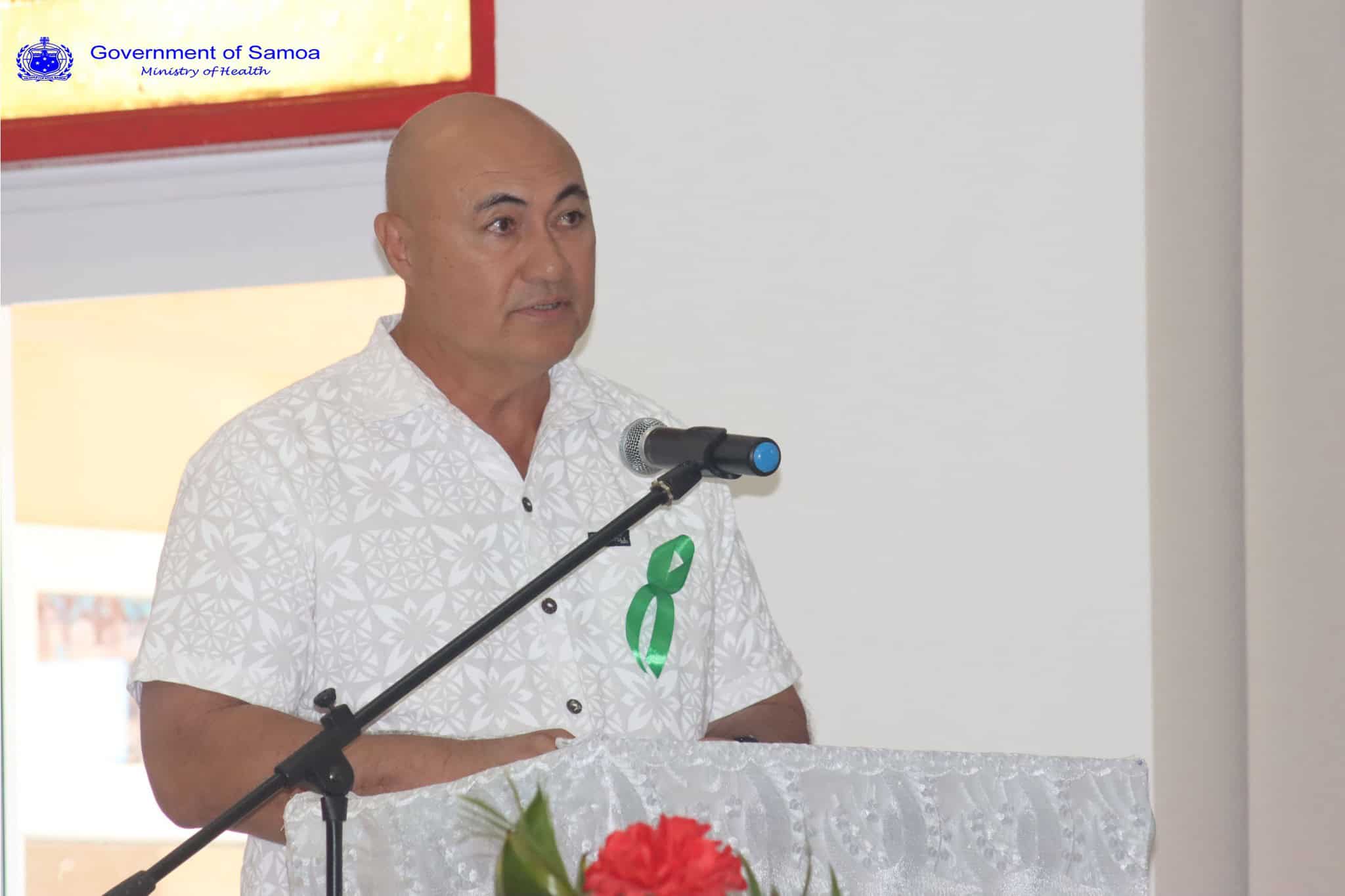
It is a great honor to stand here and address you today on a topic that is vital for our individual well-being, our workplaces, and ultimately, our nation – ‘MENTAL HEALTH IN THE WORKPLACE’.
Today, we rally to not only recognize the importance of mental health but to ensure that it becomes a pillar of how we work, how we lead, and how we care for one another in the workplace.
Today, the 10th of October is the commemoration of the World Mental Health Day globally including Samoa, with the overall objective of raising awareness of mental health issues around the world, on its theme – ‘Healthy Minds, Healthy Workplaces’. It is also the last day that ends the commemoration of the activities for the Mental Health Awareness Week in Samoa, which started on Sunday 6th October, 2024.
As this year’s World Mental Health Day puts more emphasis on the
importance of Mental Health in the Workplace, I am humbled indeed to speak not only as a leader and as an employer but an employee of the Government of Samoa.
Mental health is not something that exists in isolation. It is deeply tied to every part of our lives, including the workplace. The workplace is where we spend a large part of our days. It is where we contribute to our communities, earn a living, and grow professionally. But the workplace can also be a source of stress, anxiety, and pressure.
In Samoa, the demands of work, the increasing pace of change, and the responsibilities we all carry, whether as employees or leaders can take a toll on our mental well-being. When stress becomes overwhelming and mental health is not prioritized, the results are clear. There will be a decrease in productivity, an increase in absenteeism, and a general decline in workplace morale.
However, mental health challenges do not just impact the workplace, they impact individuals, families, and communities. When an employee is struggling mentally, it affects their ability to engage fully at work, their relationships at home, and their overall quality of life. This is why it is essential that we take a proactive approach in addressing mental health in our workplaces. It is not just good for business; it is good for people.
Samoa, like many other nations, is facing a rise in Non-Communicable Diseases or NCDs including those related to mental health. NCDs accounts for over 80% of all deaths and more than half the premature deaths in Samoa. Therefore, mental health conditions such as stress, depression, anxiety, and burnout are no longer issues we can ignore. In fact, mental health conditions are among the leading causes of lost workdays, lower productivity, and long term-disability worldwide.
The Ministry of Health in Samoa has integrated mental health into our national health strategy, recognizing the importance of both physical and mental well-being for a healthy Samoa. In the workplace, we must follow suit. We cannot build a prosperous Samoa if our workforce is unwell, both mentally and physically.
A lot of organizations including our Health Sector Partners who are
gathered here today, both public and private have recognized the
importance of mental health through their combined efforts such as awareness campaigns, advocacy, offering of coping platforms and mechanisms for our people to be more resilient. More workplaces are adopting policies that address mental health and are working to reduce the stigma associated with mental illness.
However, we need to accelerate these efforts and ensure that all
workplaces, no matter the size or sector, are places where mental health is supported.
Let us commit to making mental health a priority in every Samoan
workplace. We can take practical steps such as raising more awareness on mental health; develop and implement supportive policies; foster a culture of care by showing compassion and understanding toward each other; and collaborate with Mental Health Services in Samoa for counselling and support.
In Samoa, we have a unique opportunity to lead by example. By
prioritizing mental health in the workplace, we not only improve the lives of our employees but also enhance productivity and success of our businesses and institutions. Let us move forward with the spirit of fa’aaloalo, valuing and respecting the mental well-being of every
individual.
I would like to take this opportunity to acknowledge our partners and stakeholders from government, the guidance and support of the World Health Organization, development partners, the private sector, NGOs, and civil society. Thank you for your continuous support towards the work of mental health in Samoa. Your commitment demonstrates your dedication to the health of our people.
Ladies and Gentlemen – Together, we can build workplaces that not only contribute to Samoa’s economy but also to the happiness, health, and well-being of our people.
SOIFUA MA IA MANUIA!
SAUNOAGA AUTU: AFIOGA FIAME NAOMI MATA’AFA – PALEMIA O SAMOA I LE SAVALI FA’APITOA – FA’ATAUAINA O LE VAIASO O LE SOIFUA MALOLOINA O LE MAFAUFAU
Aso Tofi, 10 Oketopa 2024
9:00am – 10:00am – Luma Maota o le Malo
Lau Susuga i le Taitai o le Sauniga, Captain Eric Turner,
Lau Afioga i le Sui Palemia, Afioga i le Saoali’i, Tuala Tevaga Iosefo Ponifasio,
Paia o Minisita o le Kapeneta,
Sui o Malo Aufaatasi ma Faalapotopotoga mai Fafo,
Le paia ma le mamalu ua aofia potopoto,
O le asō, ua fa’ailogaina ai e le lalolagi atoa e aofia ai ma Samoa le Aso Fa’apitoa o le Fa’atauaina o le Soifua Maloloina o le Mafaufau. Ua fa’ai’u ai fo’i ma polokalame e pei ona tapisaina ai e Samoa le Vaiaso Faapitoa mo le fa’alauiloaina o le taua o le Soifua Maloloina o le Mafaufau, e pei ona sa amata mai le Aso Sa 6, Oketopa 2024.
Tatou ave lea o le vi’iga i le Atua, ua livaliva le foe a le tautai, ua a’e manuia taumafaiga o lenei vaiaso.
O le soifua maloloina o le mafaufau e aofia i le fa’atulagaga fa’asaienisi o sē tasi o gasegase tumau, ua to’atele nisi ua a’afia ma maumau ai le soifua. E tusa ai ma fa’amaumauga fa’asoifua maloloina, e sili atu ma le 80% o tagata Samoa ua a’afia i gasegase tumau e a’afia ai totoga e pe’i o le suka, toto maualuga ma o’o ai ina maua i gasegase o le fatu, kanesa ma isi. O lo’o aofia ai i totonu ma le faitauga o tagata ua a’afia tumau le mafaufau i le faitauga o nei gasegase tumau. O fa’amaumauga lata mai, o le to’atele ua a’afia le mafaufau ma fa’amauina e mafua mai ona o le soona tagofia o le ava malosi. Ma ua mafuli i tupulaga talavou o lo’o nonofo i nu’u tu taulaga, o i latou fo’i nei e faigaluega.
O le sini autū o lenei tausaga ma lona fa’amoemoe, ua ave le fa’amamafa i le soifua maloloina o le mafaufau i totonu o fale-faigaluega. O se tasi o mataupu ua le Pau, le Vau, a ua fa’atāfea i le auau e nisi tagata. Atonu e malamalama gofie pe a tatou talatala iai, ae faigata lona fa’atinoga ma e le’o lagonaina e le to’atele.
Afai o le tele o le taimi o le tagata faigaluega e alu i totonu o le fale-faigaluega, e tatau ona tapena fa’afafine to’aga le silasila mamao i le mafaufau manuia o le aufaigaluega. E lē masino o le a si’itia se auaunaga, tele tupe maua ma fa’afiafiaina le ta’ita’i o le fale-faigaluega, o le aufaigaluega faapea ma aiga o lo’o tapua’i mai.
E le o pō malaē le to’atele o e pele ia tatou uma, o fanau, uso ma tuafafine faapea tua’ā ua a’afia mafaufau. E le gata o i latou ua iloa āuga ma iai foliga va’aia,ae fa’apena ma nisi o lo’o a’afia i nisi o gasegase ua avea ma mafuaaga ua a’afia ai ma le mafaufau. O le popōlega tele, o le to’atele o lo’o a’afia e le’o mafai ona iloa, ma o nisi ua a’afia ma ma’imau ai le soifua ona o le pule i le soifua. Ua taotaomia le saili o se fesoasoani ona o le to’atele o lo’o a’afia i sauaga ona o le fefe ma le tusitusilima.
E le māmā lenei mataupu, ma o le tele o lu’itau pe a a’afia le mafaufau, e le gata o le a afaina ai le auaunaga o se fale-faigaluega, ae faapēnā ona a’afia ai aiga, o fanau, faapea ma nu’u ma le atunu’u. O Samoa o lo’o fa’avae ana auaunaga tausili i so’o se fale-faigaluega i ana tu ma aganu’u, e pei o le fa’aaloalo, alofa ma le tautua matavela. O nei tu ma aga a Samoa e mafai ona fa’alautele e fai ma vaifofō ina ia maua le mafaufau maloloina o le tagata faigaluega.
O se fa’amalosi mo fale-faigaluega uma faapea ma ta’ita’i o Samoa, e tāua tele la tatou pitolaau fai fa’atasi. Afai e lagonaina e so’o se tagata faigaluega o lo’o iai tu ma aga e pei o le alofa ma le fa’aaloalo, e ta’ita’itama ai le fa’atinoga o le galuega, o le a si’itia ma maoa’e so’o se auaunaga, o le a telē le lagolago a le aufaigaluega, ma fa’atuatuaina ta’ita’i o so’o se fale-faigaluega.
O le fesili – O a nisi taumafaiga tatou te galulue ai ina si’itia le soifua maloloina o le mafaufau i totonu o se fale-faigaluega? Ia tatou:
• Lagolago ma fai le fale-faigaluega o se nofoaga e fiafia ai tagata e galulue.
• Ia saogalēmū le fale-faigaluega mo tagata uma, e aunoa ma le tusitusi lima ma le fa’ailoga tagata
• Ia amanaia le taimi e tatau ona mālōlō, ma mafuta ai le tagata faigaluega i lona aiga
• Ia fa’atino ni a’oa’oga e si’itia ai le malamalama o ta’ita’i o fale-faigaluega i le tāua o le soifua maloloina o le mafaufau.
E toe fia fa’aleo le tele o taumafaiga a Samoa ua iai, e pei ona iai le saunoaga a le Afioga i le Sui Palemia i lana saunoaga autū i le Aso Sa, na tatalaina ai lenei Vaiaso Faapitoa mo le mafaufau maloloina.
– O galuega ma auaunaga e tauala atu le Matagaluega a le Soifua Maloloina, ua amanaia ma tu’ufa’atasia ai vaega o le siakiina o so’o se gasegase, e le gata i le tino ae ua aofia ai ma le mafaufau. O lenei taumafaiga, ua tatau ona fa’ata’ita’i ma fa’atino e fale-faigaluega, e le gata o le ausia o galuega a le aufaigaluega, ae ia silasila toto’a i a’afiaga o le soifua maloloina o le mafaufau.
– Ua tele polokalame fa’alauiloa, o auaunaga mo le fa’atalatalanoaina o i latou ua a’afia, faapea ma faigafa’avae ma tulafono mo le unaia o le soifua maloloina o le mafaufau.
– Ua tele polokalame ma auaunaga e taofi ma fa’atonutonu ai mafuaaga fa’avae o le a’afia ai o le mafaufau e pei o le ava malosi ma le tagofia o fualaau fa’asaina.
Ae peita’i, o lo’o mana’omia ona fa’aauau ona tapisa lenei mataupu i auala saogālēmū, alofa lē fa’atuāoia, ma aua ne’i iai se tusitusilima. E mo’omia na lalago fa’atasi auaunaga fa’asoifua-maloloina ina ia si’itia faigafa’avae ma tulafono e aofia ai vaega o le mafaufau manuia e aunoa ma le fa’aitū-au.
O le pitolaau a aiga, āoga, fale-faigaluega, nu’u aemaise ekalesia o le ogatotonu lea o le fa’avae o le soifua maloloina e aofia ai ma le mafaufau manuia.
E toe momoli le agaga fa’afetai i a tatou auaunaga ma fale-faigaluega ua potopoto lenei aso, i lā outou lagolago i lenei fa’amoemoe. E fa’afetaia a tatou paaga uma fa’asoifua maloloina faapea ma auaunaga o lo’o fa’aauau ona galulue mo le soifua maloloina o le mafaufau.
Ou te fiafia tele e fa’alauiloa ai fo’i le fa’amae’a ai o fa’atinoga uma o le Vaiaso Faapitoa o le Soifua Maloloina o le Mafaufau i Samoa i le asō.
Agalelei le Atua i fuafuaga o lenei aso, aemaise fo’i le aga atu mo le Aso Sa faapitoa o le fanau.
Heads of Governments and Non-Government Organizations,
Members of the National Mental Health Committee
Congregation,
Ladies and gentlemen,
I am humbled to stand before you today to address a topic that touches the very core of our society – mental health in Samoa. As we gather here today, we are united by a shared commitment to addressing one of the most pressing issues facing our people.
In Samoa, our culture and sense of community – our ‘Fa’asamoa’ – are our greatest strengths. Our traditions of togetherness, family, and spirituality have sustained us through many challenges. Yet, mental health is a challenge that requires us to confront uncomfortable truths and break the silence that surrounds it.
Starting today until the 10th of October is the Commemoration of the Mental Health Week in Samoa, with the main objective of raising awareness on mental health issues and to mobilize efforts in support of mental health. This week’s celebration is parallel with the World Mental Health Day that is commemorated every year globally.
The theme for this year’s Mental Health Week is– ‘Healthy Minds, Healthy Workplaces’. It is an issue that is often overlooked but is increasingly essential in today’s world. We all know that our work plays a significant role in our lives. It is not only a source of income, but also a place where we spend much of our time, contribute to society, and build our identities. However, while we talk a lot about productivity, performance, and success in our workspaces, we don’t talk enough about something just as important, our mental health.
In Samoa, mental health is often misunderstood or hidden. Many of our people suffer in silence, believing that mental illness is a sign of weakness or a curse. But mental health issues, like depression, anxiety, and stress, are not signs of personal failure – they are illnesses that require care and compassion. These mental health issues have become increasingly common in the workplace, yet many still go unaddressed. In fact, globally it is estimated that one in five employees will experience a mental health challenge in any given year. And yet, many people are hesitant to talk about their mental health at work for fear of being judged, overlooked, or even discriminated against.
When workplaces neglect mental health, the consequences can be costly, not just in human terms, but financially as well. When an employee is struggling with mental health, their performance may suffer, leading to missed deadlines, errors, or conflicts with colleagues.
Beyond the economic cost, the personal toll is immense. Employees who face mental health challenges in silence can feel isolated, stressed, and burnt out.
Our country has seen rising rates of mental health issues, particularly among our youth. The pressures of modern life, unemployment, academic stress, and family conflicts contribute to feelings of hopelessness and isolation. Suicide has tragically become a reality for too many of our young people. The fact that Samoa has one of the highest youth suicide rates in the Pacific should give us all pause. The recent reports stated that majority of people at risk of developing mental disorders are middle aged men living in urban areas and working. Other recent studies indicate that males of less that 30years who were unemployed and living in Apia urban area, were more likely to experience psychological distress due to contributing factors such as alcohol use. Young adults aged 18-29 years living in Apia urban area were more likely to report symptoms of psychological distress than those in other areas. Women were more likely to report symptoms of psychological distress compared to men. Therefore, most of us working and employed are at risk of developing mental disorders and psychological stress.
Behind these statistics are real stories of our sons and daughters, brothers and sisters, whose lives could have been saved with better mental health support.
We cannot talk about mental health in Samoa without addressing the stigma. Mental illness is often perceived through a lens of shame, leading many to avoid seeking help. In many cases, mental health conditions are seen as a spiritual or supernatural issue, which delays access to proper care. This stigma prevents open conversations, leaving people feeling alone in their suffering.
Samoa has made significant strides in addressing mental health, recognizing it as a crucial component of public health. Mental health has been integrated into its national health strategy, reflecting a commitment to addressing mental health as a public health priority. One of the key efforts is the integration of mental health services into primary health care in ensuring that mental health is treated alongside physical health, allowing people to seek help within their local health facilities. The Samoa government and various NGOs launched public awareness campaigns to combat stigma and encourage open discussions about mental health.
Samoa works closely with international organizations such as the World Health Organization to enhance its mental health services. Some of the local organizations have launched suicide prevention programs, particularly focused on vulnerable groups such as youth. Treatment and care are provided through the Mental Unit at the main hospital in Apia which offers inpatient and outpatient care for those with severe mental health conditions. With extensive care of these patients, service is supported and provided by the GOSHEN Trust. Churches and other organizations such as the Salvation Army have played a pivotal role in promoting mental health particularly programs that focus on building resilience, emotional intelligence, and coping mechanisms. These programs aim to empower our people especially the youth to manage stress, anxiety and reducing the risk of more severe outcomes such as suicide.
Despite these combined efforts, Samoa still faces several challenges in addressing mental health. These include the resource limitations including shortage of trained mental health professionals in Samoa. Mental Health services are often concentrated in urban areas. There are also geographical barriers and cultural stigma, making it hard for individuals to seek help openly.
There is still much work to be done, particularly in expanding access to services and reducing stigma. Continued collaboration, investment, and community engagement will be essential to ensure that every Samoan can receive the mental health care they need.
I would like to reiterate that there is no health without mental health. Therefore, I would like to invite everyone who is present here today, to show your support by joining the National Mental Health Committee and the Health Sector, to the Mental Health Parade. This will be held on Thursday 10th October, which starts from the Fire and Emergency Station and ends in-front of the government building, to end the activities of this important event.
I acknowledge the support of all our development partners, churches, NGOs, civil society and the wider community towards the work of mental health in Samoa.
SOIFUA MA IA MANUIA.
SAUNOAGA AUTU ALE AFIOGA TUALA TEVAGA IOSEFO PONIFASIO
AFIOGA ILE SUI PALEMIA / SUI MINISITA OLE SOIFUA MALOLOINA
O LE POLOKALAME O LE “FA’ATAUAINA O LE SOIFUA MALOLOINA O LE MAFAUFAU”
(EFKS, AAI-O-NIUE I LE 3:30 ILE AOAULI)
Lau Susuga le Ta’ita’i o le Sauniga,
Lau Susuga i le Faifeau Toeaina, Susuga i le Fa’afeagaiga
o le EFKS i Aai-o-Niue nei, Rev. Efu Efu,
Sui Mamalu o le Kapeneta,
Le paia o Sui o Malo Aufaatasi,
Ta’ita’i o Matagaluega ma Faalapotopotoga Eseese,
Paaga uma a le Soifua Maloloina,
Le mamalu o le Ekalesia nei i Aai-o-Niue, i ona tupu ma e’e faapea ma le potopotoga,
O paia ma mamalu, o lā le Atua ia, aua o Samoa ua uma ona fa’ataotooto ana tofiga. Nu’unu’u atu ia fa’atini o tausala.
Ua tala mai le lagi le mamalu o le Atua, o lē e ou vi’iga na sa’afi ma talatala i ai le susuga i le fa’afeagaiga toeaina. Mua ia le fa’apolo i le taliuta, aua o le Atua o Samoa ma lona vi’iga.
E fia momoli le agaga fa’afetai i lau susuga i le toeaina, mo le taulaga osi o lenei aso, ma fa’anōnōmanū ai aua lenei fa’amoemoe taua. O le Atua pulepule tetele na te fa’afo’i le mau e tele i lau Susuga aua faiva o tapuaiga mo si o tatou atunu’u.
O tausaga ta’itasi i le aso 10 Oketopa e fa’amanatuina ai e le lalolagi e aofia ai ma Samoa, le Aso Faapitoa o le “Fa’atauaina o le Soifua Maloloina o le Mafaufau”.
Ua tolu ai nei o tausaga, ua fa’amanatuina ai e Samoa lenei aso fa’apitoa i le vaiaso atoa. E amata atu nei e tau le Aso Tofi, 10 Oketopa, ua fa’ailogaina ai e Samoa lenei vaiaso taua. O le sini autu o lenei fa’amoemoe, ina ia fa’aauau ona tapisa ma talanoaina le taua o le soifua maloloina o le mafaufau.
O le anavatau po’o le sini autū o lenei tausaga, ua ave le fa’amamafa i le ‘Soifua Maloloina o le Mafaufau i Totonu o Fale-faigaluega’. O le fale-faigaluega, o se nofoaga po’o se vaipanoa lea o lo’o tele ina mafuta ai tagata faigaluega i aso uma. E ave ai lana fa’amuamua ona o lo’o maua mai ai le alagātupe mo le tausiga o lona aiga. O lo’o mafai ona fa’aauauina ai le maua o tomai ma agava’a, ma toe si’itia ai le malamalama. E mafuta ma feiloa’i ai le tele o tagata eseese. O le nofoaga e tausi ina ia mamā lona si’osi’omaga, ma ia mautinoa o lo’o fa’atino galuega a le aufaigaluega ina ia si’itia tupe maua a le fale faigaluega.
Ae pe’ita’i e tele ina galo ona talatala ma tali le fesili – “O a mai oe?” O tua atu o lenei fesili o lo’o afīfī ai i totonu le ‘anofale o le fale-faigaluega, o le mafaufau manuia o le tagata faigaluega. Po’o le a le lelei o le totogi, mautū ta’iala ma faigafa’avae, lelei le tino-i-fale o le fale-faigaluega, ae a a’afia le mafaufau o le tagata faigaluega, e faia fua le galuega. A la’ititi fo’i le totogi e le tusa ai ma le galuega fa’atino, e ono o’o ai ina a’afia le mafaufau, ona ua tele mea fai ae le lava le fa’asoa. Ona fa’asolo ai lava lea i le li’o lea, ma ono o’o ai ina le faigaluega le isi tagata, ona o a’afiaga o le mafaufau. O se fa’afitauli fa’amata e le o iloa atu, ae se’iloga ua talanoa ma fa’asoa ai, ona fa’atoa lagona lea e le tagata o le mea moni o lo’o tupu.
Ua to’atele tagata ua a’afia le mafaufau ona o le tele o mafua’aga. O se mataupu e tele ina lē amana’ia ma leai se fa’amamafa. O le to’atele o tagata ua a’afia le mafaufau, fa’atoa iloa lava ona ua i ai foliga va’aia, ma ua o’o i o’oo’oga. Ae o le to’atele o lo’o a’afia, e le o mafai ona iloa ona o mafua’aga e pei o le; leai o se malamalama i āuga o le a’afia o le mafaufau, o le māasiasi ona o le tusitusilima ua le mafai ona alu e saili ai se fesoasoani, ua fai ma vaisū tu ma aga o lo’o mafua ai e pei o le tagofia o le ava malosi ma laau faasaina, ua leai se lagolago a aiga, matua, nu’u ma le ekalesia. I totonu o le fale-faigaluega ua leai se lagolago a le pule, o tagata faigaluega, faapea isi tagata.
O le to’atele o lo’o noanoatia ma tutupu ai fa’afitauli e pei o le sauāina i totonu o aiga, nu’u po’o le fale-faigaluega. Ona tupu ai lea o le musuā e talanoa ma fa’asoa e saili fesoasoani. Ua sili atu le mā ma fefe e talanoa atu ona o le popole i le tusitusi lima, ma ua leai se fa’atuatuaga o nisi tagata e ono maua ai le fesoasoani. O nisi o āuga o le mafaufau ua a’afia, a tele galuega ona saili lea o le mea e mapu i ai e pei o le tagofia o le ava po’o laau fa’asaina e tua iai. Ae peita’i, o ī tonu o lo’o amata ai lava le vaisu ma le masani lea ma ono o’o ai i se tulaga ua le mafai ona tu’u, ma i’u ina a’afia ai le mafaufau.
O fa’amaumauga lata mai i totonu o Samoa, o le toatele lava ua a’afia mafaufau e mafuli aga’i i tupulaga talavou. Ona o le tele o fesuiaiga o tu ma aga, o fa’alavelave i totonu o ā’oga, o āiga, fa’apea ma fale-faigaluega, o lo’o mafua ai le tele o a’afiaga o le mafaufau. O le to’atele o i latou ua maualuga le tulaga o le ono a’afia ai o le soifua maloloina o le mafaufau e mafuli i le itupa o ali’i mai le vai-tausaga 30 aga’i luga le matutua. O le to’atele foi, e nonofo i nofoaga tu taulaga.
O nisi o tupulaga talavou e i lalo ifo o le 30 tausaga le matutua o lo’o faamauina le a’afia o le mafaufau ona o le tagofia o le ava malosi, ma e le faigaluega. E tusa ai ma fa’amaumauga, o le to’atele o tinā ma tama’ita’i ua o’o le tulaga o le a’afia o le mafaufau pe a fa’atusa i ali’i. O le popolega, ona o nisi ua a’afia le mafaufau ua o’o ina a’afia ai le soifua, aemaise lava i le tulaga o le pule i le soifua.
O nei fa’amaumauga, e fa’amausalīina ai le tatau ona una’ia ma ave le fa’amuamua i le soifua maloloina o le mafaufau. E le gata i ona a’afiaga, ae o mafua’aga fa’avae e ala ai ona fa’atino e tagata soifua tu ma aga ma o’o ai ina a’afia.
Ua tele taumafaiga a le Malo o Samoa e tauala atu i le tatou Matagaluega o le Soifua Maloloina ma ana pa’aga galulue, ina ia una’ia le soifua maloloina o le mafaufau. E ui ua i ai ta’iala ma faigafa’avae e ta’ita’itama ai le galuega, o auaunaga e pei ona iai togafitiga ma fa’atalatalanoga, o fa’alauiloa ma polokalame i nu’u ma afio’aga. Ae peita’i, e le o mafai ona fa’aitiitia ai le tele o fa’afitauli.
O le agaga maualuga, e manuia a tatou taumafaiga, pe afai e lalago fa’atasi tagata uma. O se mafaufau manuia e afua mai totonu o aiga, ekalesia, nu’u, fale-faigaluega ma le Malo. Ia tatou opogi fa’atasi ma fa’asoa, ia taofi le tusitusilima ma le fa’alumaluma, ia saili avanoa e lagolago ai so’o se tagata soifua. Ae aua le sili musa ia tatou ona toso i lalo le isi uso a tagata ma ana taumafaiga. Po’o totonu o le fale-faigaluega, o ekalesia, totonu o le aiga, e taua le galuega a ta’ita’i, o matua, o matai, fa’apea ma le lagolago a tagata ta’ito’atasi, ina ia manuia tagata uma, ma ia sapaia mea uma i le alofa. O le alofa lea o le Atua e lē fa’atuāoia.
E momoli le fa’amālō i le lagolago a tatou pa’aga galulue, o ekalesia, o so’o se fa’alapotopotoga fa’apea nu’u ma alalafaga aua lenei fa’amoemoe taua.
E tatalo atu ai i le paia ma le mamalu o le auvala’aulia, ina ia fa’ailoa lau lagolago e ala i lou auai i le “Savali mo le Mafaufau Manuia”, Aso Tofi, 10 Oketopa 2024, e amata atu luma o le Ofisa o Tinei Mu fa’asolo atu luma o le Maota o le Malo i Matagialalua i le 7.30 i le taeao.
Manuia tele toe taimi o le Aso Sapati Paia o le Atua soifua. Faafetai
Source: Hong Kong Government special administrative region
Hong Kong Customs today (October 16) held an award presentation ceremony of the Elite Enterprise Partnership Award 2024 at the Customs Headquarters Building to commend 18 stakeholders of logistics and intellectual property industries for their proactive co-operation and contribution to Customs. Established in 2022, this year marks the third round of the Award. In the past two presentation ceremonies, eight and 13 enterprises were awarded. Among the awardees this year, four have been presented with the award for three consecutive years. Hong Kong Customs expresses sincere gratitude for their unfailing support to the work of the department.
At the ceremony, the Commissioner of Customs and Excise, Ms Louise Ho, said that the prevalence of e-commerce and online shopping has provided business opportunities for the industry, and brought new challenges to customs work at the same time. Hong Kong Customs attaches great importance to the participation of the private sector to strengthen its enforcement capabilities and recognises the instrumental role played by the industry for the department in striking a balance between clearance efficiency and enforcement effectiveness. Customs will maintain close co-operation with various industries to consolidate the role of Hong Kong as an international transport and logistics hub.
The awardees this year came from various sectors, including those of express couriers, logistics companies, container and terminal companies, logistics associations, and trademark representatives. The diversity of stakeholders showcases the close co-operation and connections between Customs and different enterprises.
The World Customs Organization (WCO) has long been encouraging customs administrations to actively strengthen ties with partners. As the Vice-Chairperson for the Asia/Pacific Region of the WCO, Hong Kong Customs will spare no effort to reinforce the collaborative relationship between customs administrations in the region and the industry. In addition, Hong Kong Customs will promote new collaborative partnerships between regional customs authorities and other stakeholders to tackle the new challenges under the ever-changing enforcement environment.
Special Campaign 4.0 in full swing in CBIC, aims to institutionalize Swachhata at workplace Nearly 289 cleanliness campaign events organized across various locations, targeting both office spaces and public areas
Posted On: 16 OCT 2024 3:48PM by PIB Delhi
The Central Board of Indirect Taxes and Customs (CBIC) is making significant strides in its “Special Campaign for Disposal of Pending Matters 4.0,” which is being actively implemented across all its offices nationwide. Launched on 2nd October 2024 and running through 31st October 2024, the campaign is designed to institutionalize cleanliness (Swachhata) at workplace and surrounding areas while also reducing backlogs in key areas such as record management, file weeding, scrap disposal, and creating more available space.
As of 15th October, 2024, CBIC has successfully resolved over 75% of public grievances and public grievance appeals. Additionally, it has reviewed 12,464 physical files, weeding out 1283 files, and closed 260 e-files. Around 289 cleanliness campaign events have been organized across various locations, targeting both office spaces and public areas.
Another key focus area has been the disposal of old or unused office equipment and scrap materials. This has resulted in the freeing up of 5,070 square feet of office space and the generation of revenue of ₹96,390. One such endeavor is from the CGST Faridabad Commissionerate which developed a cafeteria and creche within the building premises by reclaiming two abandoned rooms filled with old records and used furniture. The creche is named ‘Mukesh’ in the loving memory of Shi Mukesh Kumar, IRS (C&IT) 2014 officer, who lost his life during COVID-19 Pandemic. The officer worked as Deputy Commissioner with CGST Faridabad for more than two years. His parents were also present at the inauguration of the creche.
Glimpses of certain activities performed are as under:
Hyderabad CGST zone
Cleanliness drive by Bhopal CGST Zone
– Disposal of waste at Ahmedabad Customs Kandla
Disposal of e-Waste and Waste furniture By Department of Labour (DoL) and 100 sq.ft. area space freed for office use.
Source: Hong Kong Government special administrative region
The Inland Revenue (Amendment) (Tax Deductions for Leased Premises Reinstatement and Allowances for Buildings and Structures) Bill 2024 will be gazetted on October 18. The Bill seeks to implement two profits tax enhancement measures in the 2024-25 Budget, which include introducing a tax deduction for expenses incurred for reinstating the condition of premises under a lease to their original condition, and removing the time limit for claiming annual allowances in respect of industrial/commercial buildings or structures.
Under the Bill, if a lessee is obligated to reinstate or pay for the reinstatement of his/her premises to their original condition at the end of the lease term or on early termination of the lease, and the relevant costs have been incurred and are reasonable, the lessee can claim tax deduction for the relevant costs.
Furthermore, currently a qualifying taxpayer may claim an annual allowance in respect of the expenditure incurred on the construction of an industrial/commercial building or structure during a specified period (usage period). If the building or structure is sold before the expiry of the usage period, the buyer may claim annual allowances over the remaining years of assessment within the usage period. However, if the building or structure is sold after the expiry of the usage period, the buyer will not be entitled to claim any annual allowance even if there is residue of expenditure. The Bill proposes removing the time limit for the relevant claims in order not to discourage the purchase of old or second-hand buildings or structures. If a building or structure is sold in the basis period for a year of assessment beginning on or after April 1 this year, the buyer will be entitled to claim annual allowances until the residue of expenditure has been fully claimed, regardless of whether the usage period of the building or structure concerned has expired.
A Government spokesman said, “The two enhancement measures will alleviate the tax burden of taxpayers and promote the business environment. As reinstatement costs generally represent a small part of a taxpayer’s turnover, it is envisaged that the proposed tax deduction would not impact on government revenue. Regarding the removal of the time limit for claiming annual allowances for buildings or structures, based on the statistics for the year of assessment 2022/23, it is expected that it will reduce the annual government revenue by about $164 million.”
The Bill will be introduced into the Legislative Council for first reading on October 30 with a view to implementing the above measures in the year of assessment 2024/25.
Chief Executive John Lee announced in his Policy Address that the Government will conduct a comprehensive review on the positioning and objectives of the healthcare system.
“The review will cover the following areas: reforming the functions and division of work among the Hospital Authority (HA), the Department of Health and the Primary Healthcare Commission, strengthening health promotion and disease prevention in primary healthcare, and improving public healthcare services.
“In parallel, we will reform private healthcare services in terms of their quality, cost effectiveness and price transparency.”
Advancing primary healthcare development
Elaborating on the measures, Mr Lee said primary healthcare development will be carried out in 10 ways:
(1) formulating legislation to strengthen the regulatory framework of primary healthcare and authorise the Primary Healthcare Commission to set up quality assurance and monitoring mechanisms;
(2) developing a community drug formulary and launching a community pharmacy programme to help the public obtain affordable, primary-healthcare drugs;
(3) devising health promotion strategies by adopting a life course framework to formulate health management plans for the public according to age and health conditions;
(4) revamping maternal and child health and family planning services to strengthen pre-pregnancy counselling and parental education and promote healthy fertility;
(5) strengthening the Whole School Health Programme to recommend targeted school-based measures for physical activities, meals and other matters to improve students’ physical and psychological well-being;
(6) upgrading more District Health Centre Expresses into District Health Centres, and expanding the service network, and integrating the services of Woman Health Centres and Elderly Health Centres;
(7) expanding the Chronic Disease Co-Care Pilot Scheme to cover blood lipid testing; positioning the HA’s general out-patient services as the comprehensive, primary healthcare service providers for the underprivileged;
(8) formulating risk-based screening programmes for prevalent cancers, and implementing hepatitis B screening to prevent liver cancer;
(9) launching a Primary Dental Co-Care Pilot Scheme for Adolescents to encourage the prevention of dental diseases, as well as rolling out a Community Dental Support Programme to enhance dental services for underprivileged groups; and
(10) continuing efforts in tobacco control.
Enhancing healthcare services
In his Policy Address, Mr Lee highlighted that the Government will strengthen the HA’s public healthcare services by the following means:
(1) reviewing the structure and levels of the HA’s fees and charges to encourage prudent use of services and direct resources to patients who need them most, while increasing the support for patients with financial difficulties and strengthening the financial sustainability of the targeted subsidisation of public healthcare services;
(2) strengthening the centralised procurement of drugs and medical devices by various clusters of the HA system in order to enhance their bargaining power and expedite the introduction of new drugs;
(3) formulating a directory for inherited and rare diseases by using the Hong Kong Genome Institute’s genomic data, while supporting research and clinical trials to promote precision medicine;
(4) fully integrating the paediatric services of various clusters at Hong Kong Children’s Hospital and developing more advanced healthcare services to make the best use of the Children’s Hospital;
(5) finalising the projects and timetable of the Second Hospital Development Plan to dovetail with the development of the Northern Metropolis and address local districts’ needs;
(6) setting up the first stroke centre and the second chest pain centre;
(7) enhancing the triage system and referral arrangements for specialist out-patient services, including setting up inter-specialty, integrated, out-patient clinics to avoid the need for multiple referrals; and
(8) increasing the service capacity for cataract surgeries by at least 20%.
As regards the quality and efficiency of healthcare services, the Chief Executive said that the Government will establish a professional platform for developing evidence-based clinical protocols and explore the feasibility of devising service quality and efficiency standards for public and private healthcare sectors.
In addition, quality indicators will be developed for public and private healthcare systems.
To enhance service efficiency and address the issue of medical inflation, the Government will explore legislating for private healthcare price transparency.
Furthermore, the Government will seek amending relevant legislations to require all healthcare providers to deposit essential health data in the personal eHealth accounts of citizens, so that people can have more complete electronic health records and better continuity of medical care.
Bringing in healthcare professionals
The Government will promote the use of the legislation passed earlier to proactively admit more non-local doctors, nurses and dentists to enhance manpower, Mr Lee said, adding that a bill on the admission of qualified non-locally trained supplementary medical professionals will be introduced next year.
Establishing third medical school
The Chief Executive pointed out in the Policy Address that the Government supports the plan by local universities to establish a third medical school in Hong Kong.
“A task group will be set up, inviting universities interested in establishing the new medical school to submit proposals. The Government will set aside sites in the Northern Metropolis Ngau Tam Mei to develop the new medical school campus and build an integrated medical teaching and research hospital.”
Promoting development of Chinese medicine
The Government will publish the Chinese Medicine Development Blueprint next year to take forward measures that helps Hong Kong develop into a bridgehead for the internationalisation of Chinese medicine (CM), Mr Lee said.
One of the measures relates to exploring the application of big data to foster international research collaboration on herb-drug interaction to discover more evidence of clinical significance, promoting the internationalisation of CM.
The blueprint will also promote the expansion of integrated Chinese-Western medicine services to cover more diseases in which CM has an advantage, including respiratory diseases and knee osteoarthritis, and to progressively extend the cancer care programme to all hospital clusters.
Furthermore, the first Chinese Medicine Hospital and the permanent premises of the Government Chinese Medicines Testing Institute are expected to be completed and begin phased operation next year, while the first edition of the Hong Kong Chinese Medicine Cultural Festival will be held, Mr Lee added.
Promoting mental health
The Chief Executive also outlined measures, based on a medical-educational-social collaboration model, to promote mental health.
The Government will develop a stepped care model for mental health, which comprises a multi-disciplinary framework with tiers, from dealing with general emotional problems in the frontline to handling cases requiring follow up and more serious mental illnesses cases.
“The framework sets out the roles of different professionals and their division of work in the provision of mental health services for cases in each tier, enabling them to work together and perform their respective roles smoothly,” Mr Lee explained.
An annual promotional theme will be set for the Mental Health Workplace Charter, and recognition will be given to participating organisations for achieving targets. The 4Rs Mental Health Charter in schools will also be campaigned to promote the mental health of students, teaching staff and parents in a more holistic manner.
The Government will extend and enhance the Three-Tier School-based Emergency Mechanism, and launch the Mental Health Literacy resource packages for senior secondary and lower primary levels. A real-time, online youth emotional support platform will be set up in the second quarter of next year.
A Transitional Support Service Teams for Persons in Mental Recovery will be set up, offering support to discharged patients waitlisted for halfway house service. The Social Welfare Department will also launch an additional Integrated Community Centre for Mental Wellness.
The Government will also strengthen teachers’ capacity in the early identification of, and support for, students with mental health needs, and assist parents in acquiring the knowledge and skills in addressing children’s mental health.
What you need to know: In September, California’s Organized Retail Crime Task Force continued its high rates of enforcement and is already well on its way to surpassing enforcement totals for all of 2023. This year, the task force has conducted 621 investigations leading to 1,123 arrests and recovered 269,992 stolen items valued at $8.1 million. Since inception, the task force has made 3,223 arrests, and recovered 880,276 stolen items valued at more than $46 million.
SACRAMENTO — Governor Gavin Newsom today announced that California’s Organized Retail Crime Task Force (ORCTF), led by the California Highway Patrol (CHP), continues its work to tamp down on organized retail theft operations statewide. This year, the task force has conducted 621 investigations statewide leading to 1,123 arrests and recovered 269,992 stolen items valued at $8.1 million.
“California will continue to hold thieves accountable — helping to ensure the state’s historic low crime rates remain that way. I thank the California Highway Patrol for their work with local agencies throughout the state to protect our communities and businesses.”
Governor Gavin Newsom
Since the inception of the task force in 2019, the CHP has been involved in more than 3,000 investigations leading to the arrest of 3,223 suspects and the recovery of over 880,276 stolen goods valued at nearly $46 million.
“The California Highway Patrol commends our retail theft investigation teams for their exceptional work in dismantling organized theft rings and protecting businesses across the state,” said CHP Commissioner Sean Duryee. “They prevent significant losses and ensure that those who target retailers are brought to justice. Their dedication, skill, and teamwork are critical in keeping our communities and economy safe.”
In September alone, CHP recovered 1,995 stolen items worth more than $306,553.
This effort led by the CHP is part of Governor Newsom’s comprehensive approach to combat organized retail crime, which includes new measures to crack down on property crime and creates unprecedented funding for police and prosecutors in local communities.
Stronger enforcement. Serious penalties. Real consequences.
Recently, Governor Newsom signed into law the most significant bipartisan legislation to crack down on property crime in modern California. Building on the state’s robust laws and record public safety funding, these bipartisan bills establish tough new penalties for repeat offenders, provide additional tools for felony prosecutions, and crack down on serial shoplifters, retail thieves, and auto burglars.
Local support to fight organized retail crime
Governor Newsom has invested $1.1 billion since 2019 to fight crime, help local governments hire more police, and improve public safety. Today’s announcement demonstrates the success of the Governor’s Real Public Safety Plan – which focuses on strengthening local law enforcement response, ensuring perpetrators are held accountable, and getting guns and drugs off our streets, including by increased deployment of California Highway Patrol to hot spots such as Oakland, Bakersfield, and San Francisco.
The Governor announced that last year the state distributed $267 million to 55 local law enforcement agencies to help communities combat organized retail crime. These funds have enabled cities and counties to hire more police, make more arrests, and secure more felony charges against suspects. In just the first six months of the grant cycles, local law enforcement agencies that received the grants reported more than 6,900 arrests for retail theft, motor vehicle theft, and cargo theft offenses.
Last year, the California Highway Patrol reported an annual 310% increase in proactive operations targeting organized retail crime, and special operations across the state to fight crime and improve public safety.
Recent news
Oct 14, 2024
News SACRAMENTO – Governor Gavin Newsom today announced the following appointments:Joe Shea, of Los Angeles, has been appointed Assistant Secretary for Salton Sea Policy at the California Natural Resources Agency. Shea has served in several positions at the Office of…
Oct 14, 2024
News What you need to know: New measure will help prevent price spikes that cost Californians upwards of $2 billion last year, giving the state more tools to require that petroleum refiners backfill supplies and plan ahead for maintenance. SACRAMENTO – Today,…
Oct 12, 2024
News Welcome to The California Weekly, your Saturday morning recap of top stories and announcements you might have missed. News you may have missed1. BOOSTING PUBLIC TRANSPORTATIONThe state is awarding $206 million in NEW funding to expand clean bus and rail…
What you need to know: California’s battery storage capacity has surged by more than 3,000 MW in the last six months alone, now exceeding 13,000 MW total — a 30% increase as the state endured its hottest summer on record.
SACRAMENTO – California’s battery storage capacity has expanded rapidly, increasing by 3,012 megawatts (MW) in just six months to reach a total of 13,391 MW. This growth marks a 30% increase since April 2024, underscoring the state’s swift progress in building out clean energy infrastructure, especially during a summer marked by record-breaking heat.
Within the past five years, California has grown its battery storage capacity by more than 15 times, up from just 770 MW in 2019. To put this progress into perspective, it took the state nearly five years to reach 10,000 MW in early 2024 but just six months to add the most recent 3,000 MW.
“We’re cutting pollution by adding more clean power to our grid. That means rapidly expanding battery storage to capture more of this clean energy that’s produced during the day, like solar, for when it’s needed when the sun goes down. These are the essential resources that we’ll continue needing more of as the climate crisis makes heat waves hotter and longer.”
Governor Gavin Newsom
Deploying battery storage is a critical component of the state’s climate and clean energy goals. The state is projected to need 52,000 MW of energy storage capacity by 2045. Today, it’s a quarter of the way there.
Increasing storage allows California’s grid to store energy from clean energy sources like solar during the day and use it during peak demand in the evening. Ramping up battery storage is a key part of Governor Newsom’s energy roadmap for achieving the state’s ambitious climate goals and a 100% clean electric grid.
Strengthening grid stability and clean energy resources
The recent surge in battery storage has significantly enhanced California’s ability to maintain grid stability during extreme weather. Throughout the summer of 2024, battery storage reliably discharged to support the grid during the net peak hours – a critical stretch of the day when the sun sets and solar resources rapidly go offline.
Battery storage discharge to the grid increased from 6,000 MW this spring to more than 8,000 MW this summer.
Programs like the California Energy Commission’s Demand Side Grid Support (DSGS) are also playing a crucial role in grid reliability. This summer the program reached 515 MW of capacity to reduce grid stress during extreme conditions. The program includes one of the largest storage virtual power plants in the world with a capacity exceeding 200 MW. The virtual power plant works by tapping into a network of customer-owned battery storage systems which are typically paired with solar. Together, the individual devices provide power back to the grid. By leveraging energy assets, DSGS helps reduce the use of fossil-fuel power and supports California’s transition to a 100% clean electric grid.
California’s clean energy leadership
The state continues to set clean energy records. From January through September, clean energy supply equaled or exceeded demand in the California Independent System Operator (CAISO) service area for 1,084 hours over 179 different days. That’s equivalent to more than 45 days of meeting demand with 100% clean electricity. In August, solar energy serving the grid reached a new peak of 19,600 MW.
Governor Newsom has committed billions of dollars to accelerate clean energy infrastructure development across the state and it is making an impact, helping to fast-track projects needed to meet California’s climate and energy goals.
Governor Newsom has taken unprecedented action to streamline clean energy infrastructure and invest billions of dollars to build more faster. Find clean energy projects in your community at build.ca.gov.
Recent news
Oct 15, 2024
News What you need to know: In September, California’s Organized Retail Crime Task Force continued its high rates of enforcement and is already well on its way to surpassing enforcement totals for all of 2023. This year, the task force has conducted 621 investigations…
Oct 14, 2024
News SACRAMENTO – Governor Gavin Newsom today announced the following appointments:Joe Shea, of Los Angeles, has been appointed Assistant Secretary for Salton Sea Policy at the California Natural Resources Agency. Shea has served in several positions at the Office of…
Oct 14, 2024
News What you need to know: New measure will help prevent price spikes that cost Californians upwards of $2 billion last year, giving the state more tools to require that petroleum refiners backfill supplies and plan ahead for maintenance. SACRAMENTO – Today,…
What you need to know: The state today broke ground on a project that expands ongoing restoration work at the Salton Sea to improve conditions for wildlife and surrounding communities. Most recently, $175 million in federal funding was made available to accelerate this effort as part of a $250 million commitment from the Inflation Reduction Act. This complements the more than $500 million in state funding secured to date.
SACRAMENTO – Governor Gavin Newsom highlighted the expansion of restoration work at the Salton Sea that broke ground today. The 750-acre expansion builds on the state’s ongoing work to enhance wildlife habitat, protect public health and improve water quality at the Salton Sea. The current project footprint is set at nearly 5,000 acres.
California was granted $175 million from the Biden-Harris Administration this summer and $70 million in December 2023 as part of a $250 million commitment from the Inflation Reduction Act to accelerate Salton Sea restoration efforts. This complements the more than $500 million in state funding secured to date.
The Salton Sea, California’s largest inland water body, has shrunk in recent years due to reduced inflows, resulting in an exposed lakebed that releases small dust particles that worsen air quality in the Imperial Valley, a region already burdened by poor air quality. The reduced water levels and increased salinity also negatively impact habitat for wildlife, including birds traveling the Pacific flyway.
“California is making major strides on restoration efforts at the Salton Sea, and we’re expanding this critical work to create habitat on hundreds more acres and help improve air quality in neighboring communities. Our progress to date is a testament to the strong partnerships underpinning these efforts and I look forward to the work ahead to deliver on our ecological, health and economic goals for this important region.”
Governor Gavin Newsom
The federal support enables the expansion of the ongoing Species Conservation Habitat Project at the southern edge of the sea. Located near the community of Westmorland, the expanded project will create a network of ponds and wetlands to provide habitat for fish and birds and reduce dust in the area that impacts air quality.
State and federal officials held a groundbreaking at the site today and surveyed work on the Species Conservation Habitat Project.
Species Conservation Habitat Project expansion at the Salton Sea breaks ground
Recent news
Oct 15, 2024
News What you need to know: California’s battery storage capacity has surged by more than 3,000 MW in the last six months alone, now exceeding 13,000 MW total — a 30% increase as the state endured its hottest summer on record. SACRAMENTO – California’s battery…
Oct 15, 2024
News What you need to know: In September, California’s Organized Retail Crime Task Force continued its high rates of enforcement and is already well on its way to surpassing enforcement totals for all of 2023. This year, the task force has conducted 621 investigations…
Oct 14, 2024
News SACRAMENTO – Governor Gavin Newsom today announced the following appointments:Joe Shea, of Los Angeles, has been appointed Assistant Secretary for Salton Sea Policy at the California Natural Resources Agency. Shea has served in several positions at the Office of…
What you need to know: A $3.5 million federal grant will fund cleanup efforts at the recently expanded San Gabriel Mountains National Monument to improve access to the site and enhance water quality on the East Fork of the San Gabriel River, a key Southern California water source and recreational site within the national monument.
SACRAMENTO – Governor Gavin Newsom today highlighted a $3.5 million federal investment to improve access to the San Gabriel Mountains National Monument and enhance a key Southern California water source that provides Los Angeles County with one-third of its water supply.
Federal, state, tribal and local partners celebrated the announcement today, which will support trash removal projects, create new walking trails and install additional restrooms on this popular stretch of the San Gabriel River used primarily for recreation by surrounding underserved communities.
The state this month marked the 10-year anniversary of the San Gabriel Mountains National Monument, which was expanded by President Biden in May along with the Berryessa Snow Mountain National Monument. This action increased protected lands in California by 130,000 acres. California has conserved more than 25% of its land to date and is on track to reach its 30×30 goal in collaboration with federal, state, tribal and community partners.
“This collaborative effort is a win-win that will improve an important source of water for Southern California communities, deliver a healthier watershed for native species and enhance outdoor access for millions in the Los Angeles Basin. California will continue working with partners across the board to protect and preserve our common home.”
Governor Gavin Newsom
The State Water Board awarded an initial $1.5 million grant for the San Gabriel project and is planning an additional $2 million investment over the next three years through funding from the U.S. Environmental Protection Agency’s Nonpoint Source Pollution Management Program. The investments support a multi-phase project that will enhance river access, protect fragile forest and riparian habitat and improve conditions for sensitive species, including the endangered Santa Ana sucker. Construction on the project’s first phase is expected to start early next year and will include an access trail and stairs to the riverbank, native plant restoration, increased trash bins and dumpsters and an asphalt parking lot.
San Gabriel Mountains
California’s ongoing work to conserve biodiversity and natural resources includes the state’s first-ever ancestral land return effort through the Tribal Nature-Based Solutions Grant Program, which provided more than $100 million in funding for the return of roughly 40,000 acres to indigenous communities. The state is also advancing Nature-Based Solutions that support the ability of lands to absorb more carbon than they release, helping to combat the climate crisis. Earlier this year, the state opened the first new state park in nearly a decade, Dos Rios, which conserves approximately 1,600 acres of land and is the largest public-private floodplain restoration project in California.
Recent news
Oct 15, 2024
News What you need to know: The state today broke ground on a project that expands ongoing restoration work at the Salton Sea to improve conditions for wildlife and surrounding communities. Most recently, $175 million in federal funding was made available to…
Oct 15, 2024
News What you need to know: California’s battery storage capacity has surged by more than 3,000 MW in the last six months alone, now exceeding 13,000 MW total — a 30% increase as the state endured its hottest summer on record. SACRAMENTO – California’s battery…
Oct 15, 2024
News What you need to know: In September, California’s Organized Retail Crime Task Force continued its high rates of enforcement and is already well on its way to surpassing enforcement totals for all of 2023. This year, the task force has conducted 621 investigations…
WASHINGTON – The National Labor Relations Board today announced that union election petitions more than doubled in fiscal year 2024 compared to FY 2021. Following the announcement, Acting Secretary Julie Su issued the following statement:
“The NLRB reports that union representation petitions have more than doubled in this administration is a welcome sign of power tilting toward working people in this country of workers finding their power.
“Workers are demanding their fair share more, and they are forming unions because they know they are stronger when they act collectively. And these demands did not come out of nowhere. For decades, workers have been left out, left behind and let down by the failed economic policies of the past.
“Now, these workers have been bolstered by the strongest labor market in living memory, with record-low unemployment, wages climbing and over 16 million jobs created under President Biden and Vice President Harris.
“It’s no mistake that under the most pro-union, pro-worker administration, America’s workers are exercising their organizing rights, and have the leverage to demand what they’ve always deserved.”