Category: Americas

  • MIL-OSI Video: This Week at DHS

    Source: United States of America – Federal Government Departments (video statements)

    Border crossings hit record lows.

    Secretary Noem ended the policy that allowed aliens illegally to jet around our country without ID.

    Secretary Noem announced that DHS will enforce the Alien Registration Act.

    Secretary Noem attended President Trump’s first Cabinet meeting.

    Secretary Noem supported Kentucky communities impacted by recent flooding.

    ICE arrests surged by 627% in the past month.

    https://www.youtube.com/watch?v=3G8yCGEPptc

    MIL OSI Video

  • MIL-OSI Video: Reopening I-40 in North Carolina and Tennessee

    Source: United States of America – Federal Government Departments (video statements)

    Today, Interstate 40 reopens in North Carolina and Tennessee after a five month closure from Hurricane Helene. President Trump made rebuilding these states a priority. The U.S. Department of Transportation is committed to making that happen as fast and efficiently as possible.

    There’s still a lot of work to do, but the reopening of I-40 today is a big step in the right direction.

    https://www.youtube.com/watch?v=dfBpn8MBc8U

    MIL OSI Video

  • MIL-OSI Russia: NTO and Roscosmos have identified the best schoolchildren in space technologies

    Translartion. Region: Russians Fedetion –

    Source: State University Higher School of Economics – State University Higher School of Economics –

    On March 1, the closing ceremony of the space profile finals took place in Moscow National Technology Olympiad (NTO), whose project office operates at the National Research University Higher School of Economics. The names of the winners and prize winners were announced in three areas at once: “Aerospace Systems”, “Analysis of Space Images and Geospatial Data” and “Satellite Systems”. The best were 21 schoolchildren from 13 regions of Russia. The competition was traditionally held with the support of the State Corporation “Roscosmos”.

    Space profiles are among the very first in NTO, and their popularity and demand are only growing. This academic year, applications were submitted by about 4.5 thousand students of grades 8-11 from different parts of the country. However, only 90 participants made it to the final stage. The final competition and the closing ceremony took place within the walls of the university that organized the space profiles — RTU MIREA.

    During the final tests, the participants in teams solved real engineering problems directly related to promising projects in the space industry. The schoolchildren developed a system for analyzing meteorological data to monitor the ice conditions in the northern seas and a satellite that simulates the solution of problems of remote sensing of the Earth. In addition, the finalists made attachments for the rover and programmed the control system.

    The award ceremony was opened by RTU MIREA Rector Stanislav Kudzh: “We are not just holding the Olympiad, but are part of the Roscosmos network, are a strategic partner and train personnel for the corporation. I hope that among you there will be those who will enroll in our university, enroll in other leading universities. And you will continue to glorify our science and our country with your deeds.”

    “Space is a huge source of inspiration,” emphasized Dmitry Zemtsov, executive secretary of the NTO organizing committee and HSE Vice-Rector, addressing the finalists. “We have always been inspired by the story of how 15-year-old Sergei Korolev joined a gliding club and, a few years later, found himself in one of the best universities in the country. Another ten years later, he began designing his own systems and eventually created our cosmonautics. All this became possible because from the very beginning he had access to the advanced technologies of his time — back then, gliders were at the cutting edge of progress. What you work with at NTO are not only the technologies of today, but also of tomorrow. Every time I go on stage to present diplomas, I feel sincere pride, because you will definitely make the world a better place and create technologies that previous generations could not even imagine.”

    “Any Olympiad is, first of all, a competition. However, the most important victory is the ability to overcome yourself and achieve results,” said Dmitry Shishkin, Director of the Administrative Department of the Roscosmos State Corporation, at the closing ceremony. “No task that you will have to face in life can be solved instantly, without preparation. It is impossible to immediately take first place, assemble a satellite or obtain a space service. Therefore, the most important skill is to move forward steadily, step by step, without stopping. This is exactly what I wish for you. May your achievements of today and tomorrow be written in gold letters in the history of our cosmonautics and in the annals of the achievements of the entire country.”

    According to the results of the competition in the individual standings, the winners of the profile “Analysis of space images and geospatial data” of the Scientific and Technical Organization were schoolchildren from the Municipal Budgetary Educational Institution “Lyceum No. 11” of Chelyabinsk: Artem Sufiyanov and Artem Yantsen.

    The winners were Artem Arefyev from PJSC Khoroshevskaya Gymnasium (Moscow), Fedor Shpilev from ANOO Khoroshevskaya School (Moscow), and Yulia Dzhumataeva and Sofia Markova from the Lyceum at the Federal State Budgetary Educational Institution of Higher Education BGPU (Blagoveshchensk).

    The overall winner was the team represented by Artem Sufiyanov, Artem Yantsen, Yulia Dzhumataeva and Sofia Markova.

    In the individual standings of the “Satellite Systems” profile of the NTO, the best were schoolchildren from St. Petersburg: Nikita Gubarev from the Lyceum “Physical and Technical School” named after Zh. I. Alferov and Vladislav Shiman from the ChOU OiDO “LNMO”.

    The names of six winners of the profile were also announced. Among them are three participants from St. Petersburg: Tatyana Efremova from the Lyceum “Physical and Technical School” named after Zh. I. Alferov, Mikhail Demidov from the State Budgetary Educational Institution “School No. 644” of the Primorsky District and Maksim Podlesny from the State Budgetary Educational Institution “School No. 362” of the Moskovsky District. Another prize was taken by Mikhail Palkin from the city of Kudrovo in the Leningrad Region, a student of the State Budgetary Educational Institution “Secondary School No. 255” of the Admiralty District of St. Petersburg. The list of winners was also replenished by Vladislav Borisenko from the Municipal Budgetary Educational Institution “GKL” (Metallploshchadka settlement, Kemerovo Region) and Ksenia Titova from the Lyceum of the Federal State Budgetary Educational Institution “UlGPU named after I. N. Ulyanov” (Ulyanovsk).

    The overall winner was the team from St. Petersburg, which included Vladislav Shiman, Mikhail Palkin, Mikhail Demidov and Maxim Podlesny.

    In the individual competition, the winners of the Aerospace Systems profile of the Scientific and Technical Organization were Arseniy Kuimov from the Kemerovo Municipal Budgetary Educational Institution GKL and Konstantin Syshchikov from the State Budgetary Educational Institution Lyceum No. 369 in St. Petersburg.

    Among the prize winners in this category are five participants. High results were shown by students of the FEFU University School in Primorsky Krai: Maria Sabashnyuk (Vladivostok) and Ivan Rubtsov (Artem). Prize places were also awarded to finalists from: Moscow Region – Svyatoslav Tveritnev (Chernogolovka) from MBOU “Chernogolovskaya Secondary School”, Tomsk – a student of MAOU “Gymnasium No. 24 named after M.V. Oktyabrskaya” Artemy Odyshev, Krasnodar Region – Gleb Anokhin (urban-type settlement Sirius) from ANOO “Presidential Lyceum “SIRIUS”.

    The overall winner was the team represented by Arseniy Kuimov, Gleb Anokhin and Svyatoslav Tveritnev.

    The winners will receive not only diplomas, but also additional educational opportunities: 100 points on the Unified State Exam or admission without entrance examinations to the country’s leading universities.

    Let us recall that the tasks of the space profiles were developed with the participation of partners: “Aerospace Systems” — Voltbro, the Institute of Mechanics of the Lomonosov Moscow State University and Intellect Design, “Analysis of Space Images and Geospatial Data” — the Institute of Environmental Design and Research, “Satellite Systems” — the Center for Space Education “Education of the Future”.

    The jubilee tenth season of the NTO is taking place in the 2024/2025 academic year. Space profiles, being one of the first areas of the Olympiad, have trained a whole galaxy of young engineers over the years.

    Evgeny Ivankin first took part in NTO in 2018/2019 in the profile on autonomous transport systems, and the following year he switched to the space track and became a prize winner in the profile “Analysis of space images and geospatial data”. After graduating from school, he successfully performed in the student track and became the winner of the profile “Geospatial digital twins”. The diploma of the school track of NTO helped Evgeny to enter the University of Innopolis without entrance examinations, and the victory in the student track – to get an internship at the company “Innogeotech”, where he transferred to a permanent position and develops geoinformation systems – a direction directly related to the profiles in which he won.

    Another inspiring example is Alexey Gilenko, the winner of the Satellite Systems profile in NTO – 2022/2023. After winning, Alexey entered Bauman Moscow State Technical University, and then joined the team of organizers of his native profile. Now he works at the Education of the Future center and helps develop tasks for new participants.

    Such stories show that the NTO is not just a competition, but a real platform for expanding the country’s technological human resources potential. The NTO is held under the coordination of the Ministry of Science and Higher Education of the Russian Federation together with the ANO “Russia – Land of Opportunities” with the support of the “Movement of the First”, the Agency for Strategic Initiatives and the ANO “NTI Platform”. The project office of the Olympiad is deployed at the HSE with the methodological support of the Association of Participants of Technological Circles (NTI Circle Movement). The organizing committee of the Olympiad is headed by the First Deputy Chief of Staff of the Presidential Executive Office of the Russian Federation Sergei Kiriyenko and Deputy Prime Minister of the Russian Federation Dmitry Chernyshenko.

    Please note: This information is raw content directly from the source of the information. It is exactly what the source states and does not reflect the position of MIL-OSI or its clients.

    MIL OSI Russia News

  • MIL-OSI Economics: Mobile malware evolution in 2024

    Source: Securelist – Kaspersky

    Headline: Mobile malware evolution in 2024

    These statistics are based on detection alerts from Kaspersky products, collected from users who consented to provide statistical data to Kaspersky Security Network. The statistics for previous years may differ from earlier publications due to a data and methodology revision implemented in 2024.

    The year in figures

    According to Kaspersky Security Network, in 2024:

    • A total of 33.3 million attacks involving malware, adware or unwanted mobile software were prevented.
    • Adware, the most common mobile threat, accounted for 35% of total detections.
    • A total of 1.1 million malicious and potentially unwanted installation packages were detected, almost 69,000 of which associated with mobile banking Trojans.

    In 2024, cybercriminals launched a monthly average of 2.8 million malware, adware or unwanted software attacks targeting mobile devices. In total, Kaspersky products blocked 33,265,112 attacks in 2024.

    Attacks on Kaspersky mobile users in 2024 (download)

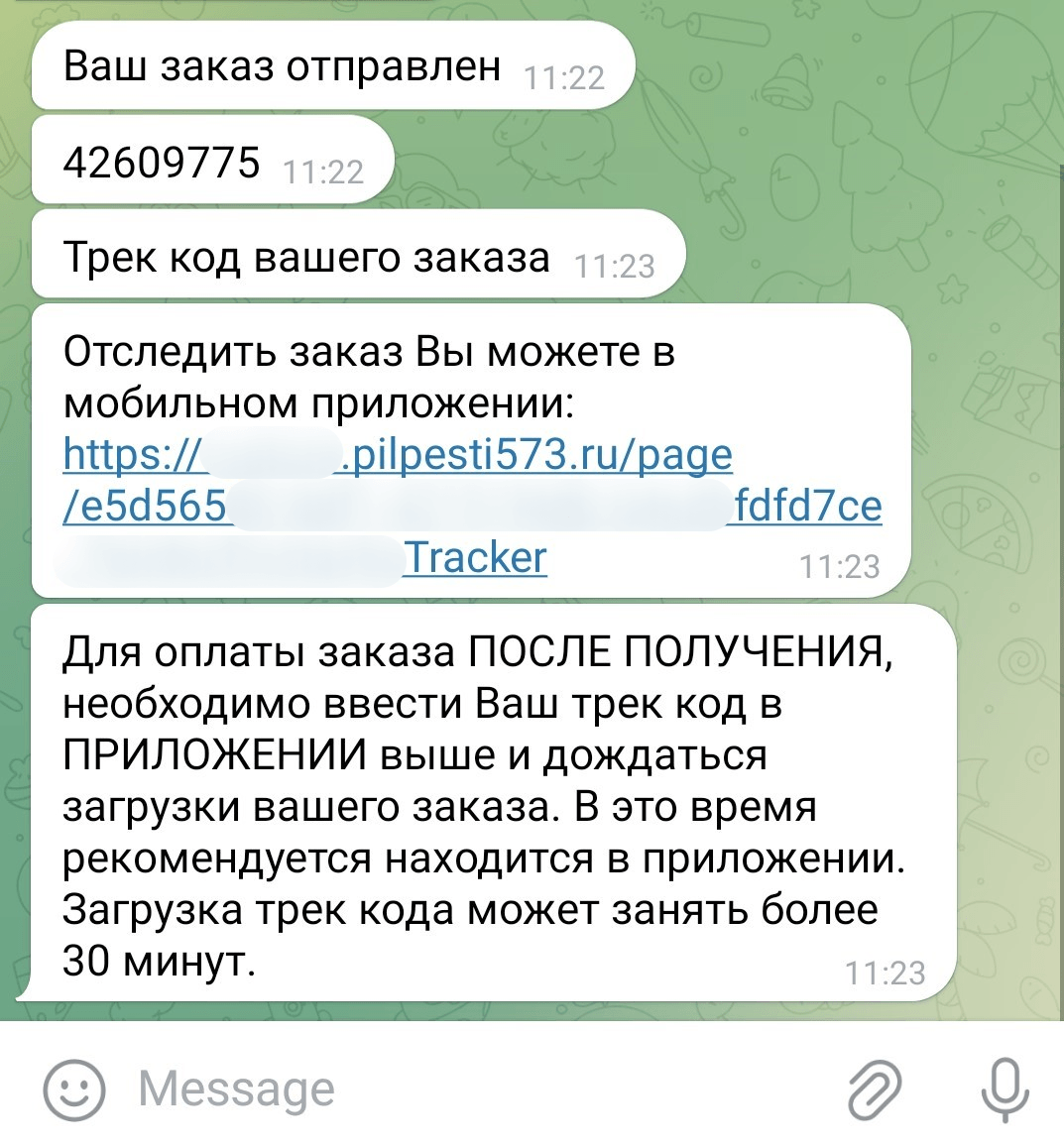
    At the end of 2024, we discovered a new distribution scheme for the Mamont banking Trojan, targeting users of Android devices in Russia. The attackers lured users with a variety of discounted products. The victim had to send a message to place an order. Some time later, the user received a phishing link to download malware disguised as a shipment tracking app.

    The phishing link as seen in the chat with the fraudsters

    See translation

    Your order has shipped.
    42609775
    Your order tracking code.
    You can track your order in the mobile app:
    https://.pilpesti573.ru/page/e5d565fdfd7ce
    Tracker
    To pay for your order AFTER YOU RECEIVE IT, enter your tracking code IN THE APP above and wait for your order details to load. We recommend keeping the app open while you are doing so. Loading the track code may take more than 30 minutes.

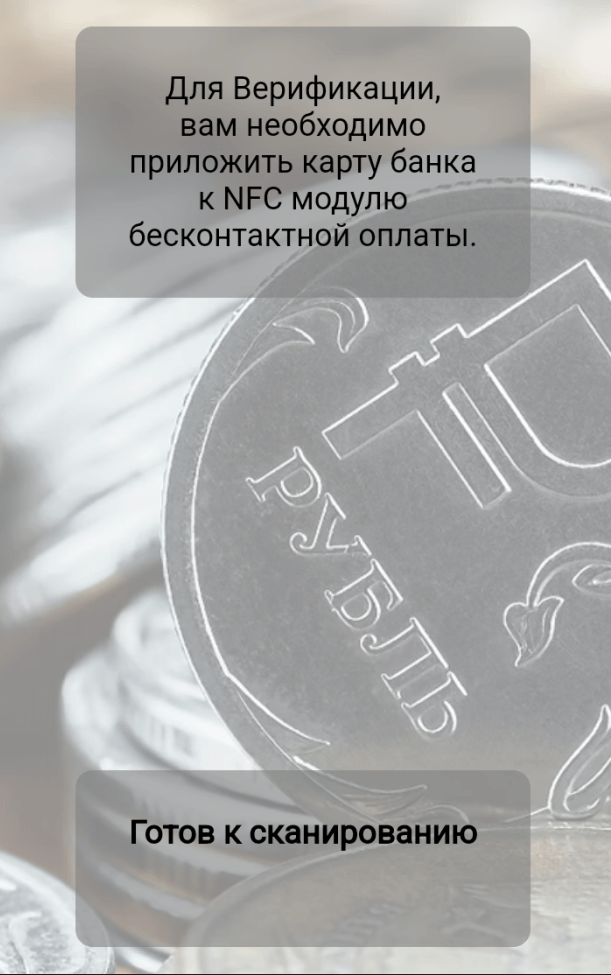
    In August 2024, researchers at ESET described a new NFC banking scam discovered in the Czech Republic. The scammers employed phishing websites to spread malicious mods of the legitimate app NFCGate. These used a variety of pretexts to persuade the victim to place a bank card next to the back of their phone for an NFC connection. The card details were leaked to the fraudsters who then made small contactless payments or withdrew money at ATMs.

    A similar scheme was later spotted in Russia, where malware masqueraded as banking and e-government apps. The SpyNote RAT was occasionally used as the malware dropper and NFC activator.

    A screenshot of the fake mobile app

    See translation

    Hold your card against the NFC contactless payment module for verification.
    Ready to scan

    Also in 2024, we detected many new preinstalled malicious apps that we assigned the generalized verdict of Trojan.AndroidOS.Adinstall. A further discovery, made in July, was the LinkDoor backdoor, also known as Vo1d, installed on Android-powered TV set-top boxes. It was located inside an infected system application com.google.android.services. The malware was capable of running arbitrary executables and downloading and installing any APKs.

    On top of the above, we discovered several apps on Google Play, each containing a malicious SDK implant named “SparkCat”, which began to spread at least as early as March 2024. Infected apps were deleted by the store in February 2025: nevertheless, our telemetry data shows that other apps containing SparkCat are distributed through unofficial sources.

    This SDK received a C2 server command with a list of keywords or dictionaries to search the gallery on the device for images to exfiltrate. Our data suggests that the Trojan was aimed at stealing recovery phrases for cryptocurrency wallets of Android users primarily in the UAE, Europe and Asia.

    It is worth noting that the same implant for iOS was delivered via the App Store, which makes it the first known OCR malware to sneak into Apple’s official marketplace. Apple removed the infected apps in February 2025.

    Mobile threat statistics

    We discovered 1,133,329 malicious and potentially unwanted installation packages in 2024. This was below the 2023 figure, but the difference was smaller than the year before. The trend in the number of new unique malware installation packages appears to be plateauing.

    Detected Android-specific malware and unwanted software installation packages in 2021–2024 (download)

    Detected packages by type

    Detected mobile apps by type in 2023 and 2024 (download)

    Adware and RiskTool apps continued to dominate the rankings of detected threats by type. The BrowserAd (22.8%), HiddenAd (20.3%) and Adlo (16%) families accounted for the largest number of new installation packages in the former category. RiskTool’s share grew largely due to an increase in the number of Fakapp pornographic apps.

    Share* of users attacked by the given type of malware or unwanted software out of all targeted Kaspersky mobile users in 2023–2024 (download)

    *The total may exceed 100% if the same users experienced multiple attack types.

    Banking Trojans gained three positions as compared with 2023 to occupy fourth place, following the usual leaders: adware, Trojans, and RiskTool.

    TOP 20 most frequently detected types of mobile malware

    Note that the malware rankings below exclude riskware and potentially unwanted apps, such as adware and RiskTool.

    Verdict %* 2023 %* 2024 Difference in p.p. Change in ranking
    Trojan.AndroidOS.Fakemoney.v 11.76 16.64 +4.88 +2
    DangerousObject.Multi.Generic. 14.82 11.13 –3.70 –1
    Trojan.AndroidOS.Triada.ga 0.00 6.64 +6.64
    Trojan-Banker.AndroidOS.Mamont.bc 0.00 5.36 +5.36
    Trojan.AndroidOS.Boogr.gsh 6.81 4.71 –2.10 –3
    Trojan.AndroidOS.Triada.fd 1.16 4.45 +3.29 +19
    DangerousObject.AndroidOS.GenericML 2.39 4.35 +1.96 +3
    Trojan-Downloader.AndroidOS.Dwphon.a 0.77 3.59 +2.82 +26
    Trojan-Spy.AndroidOS.SpyNote.bz 0.43 3.40 +2.97 +48
    Trojan-Spy.AndroidOS.SpyNote.bv 0.37 2.69 +2.32 +57
    Trojan.AndroidOS.Fakeapp.hk 0.00 2.51 +2.51
    Trojan.AndroidOS.Triada.gs 0.00 2.50 +2.50
    Trojan.AndroidOS.Triada.gn 0.00 2.02 +2.02
    Trojan-Downloader.AndroidOS.Agent.mm 1.46 1.91 +0.45 +6
    Trojan.AndroidOS.Triada.gm 0.00 1.84 +1.84
    Trojan.AndroidOS.Generic. 3.63 1.83 –1.80 –8
    Trojan.AndroidOS.Fakemoney.bw 0.00 1.82 +1.82
    Trojan-Banker.AndroidOS.Agent.rj 0.00 1.63 +1.63
    Trojan.AndroidOS.Fakemoney.bj 0.00 1.61 +1.61
    Trojan-Spy.AndroidOS.SpyNote.cc 0.06 1.54 +1.47

    * Share of unique users who encountered this malware as a percentage of all attacked Kaspersky mobile users

    Fakemoney, a family of investment and payout scam apps, showed the highest level of activity in 2024. Third-party WhatsApp mods with the Triada.ga embedded Trojan were third, following the generalized cloud-specific verdict of DangerousObject.Multi.Generic. Many other messaging app mods in the same family, namely Triada.fd, Triada.gs, Triada.gn and Triada.gm, hit the TOP 20 too.

    Mamont banking Trojans, ranking fourth by number of attacked users, gained high popularity with cybercriminals. These malicious apps come in a multitude of variants. They typically target users’ funds via SMS or USSD requests. One of them spreads under the guise of a parcel tracking app for fake online stores.

    Various malware files detected by machine learning technology ranked fifth (Trojan.AndroidOS.Boogr.gsh) and seventh (DangerousObject.AndroidOS.GenericML). They were followed by the Dwphon Trojan that came preinstalled on certain devices. The SpyNote RAT Trojans, which remained active throughout the year, occupied ninth, tenth and twentieth places.

    Region-specific malware

    This section describes malware types that mostly affected specific countries.

    Verdict Country* %**
    Trojan-Banker.AndroidOS.Agent.nw Turkey 99.58
    Trojan.AndroidOS.Piom.axdh Turkey 99.58
    Trojan-Banker.AndroidOS.BrowBot.q Turkey 99.18
    Trojan-Banker.AndroidOS.BrowBot.w Turkey 99.15
    Trojan.AndroidOS.Piom.bayl Turkey 98.72
    Trojan-Banker.AndroidOS.BrowBot.a Turkey 98.67
    Trojan-Spy.AndroidOS.SmsThief.wp India 98.63
    Trojan-Banker.AndroidOS.Rewardsteal.fa India 98.33
    Trojan.AndroidOS.Piom.bbfv Turkey 98.31
    Trojan-Banker.AndroidOS.BrowBot.n Turkey 98.14
    HackTool.AndroidOS.FakePay.c Brazil 97.99
    Backdoor.AndroidOS.Tambir.d Turkey 97.87
    Trojan.AndroidOS.Piom.bcqp Turkey 97.79
    HackTool.AndroidOS.FakePay.i Brazil 97.65
    Backdoor.AndroidOS.Tambir.a Turkey 97.62
    Trojan-Banker.AndroidOS.Coper.b Turkey 97.45
    HackTool.AndroidOS.FakePay.h Brazil 97.39
    Trojan-Spy.AndroidOS.SmsThief.ya India 97.09
    Trojan-Spy.AndroidOS.SmsThief.wm India 97.09
    Trojan-Banker.AndroidOS.Rewardsteal.hi India 96.68

    * Country where the malware was most active
    * Share of unique users who encountered the malware in the indicated country as a percentage of all Kaspersky mobile security users attacked by the malware

    Turkey and India accounted for the majority of region-specific threats in 2024. A variety of banking Trojans continued to be active in Turkey. Piom Trojans were associated with GodFather and BrowBot banker campaigns.

    Users in India were attacked by Rewardsteal bankers and a variety of SmsThief SMS spies. Our quarterly reports have covered FakePay utilities widespread in Brazil and designed to defraud sellers by imitating payment transactions.

    Mobile banking Trojans

    The number of new banking Trojan installation packages dropped again to 68,730 as compared to the previous year.

    The number of mobile banking Trojan installation packages detected by Kaspersky in 2021–2024 (download)

    The total number of banker attacks increased dramatically over 2023’s level despite the drop in the number of unique installation packages. The trend has persisted for years. This may suggest that scammers began to scale down their efforts to generate unique applications, focusing instead on distributing the same files to a maximum number of victims.

    TOP 10 mobile bankers

    Verdict %* 2023 %* 2024 Difference in p.p. Change in ranking
    Trojan-Banker.AndroidOS.Mamont.bc 0.00 36.70 +36.70
    Trojan-Banker.AndroidOS.Agent.rj 0.00 11.14 +11.14
    Trojan-Banker.AndroidOS.Mamont.da 0.00 4.36 +4.36
    Trojan-Banker.AndroidOS.Coper.a 0.51 3.58 +3.07 +30
    Trojan-Banker.AndroidOS.UdangaSteal.b 0.00 3.17 +3.17
    Trojan-Banker.AndroidOS.Agent.eq 21.79 3.10 –18.69 –4
    Trojan-Banker.AndroidOS.Mamont.cb 0.00 3.05 +3.05
    Trojan-Banker.AndroidOS.Bian.h 23.13 3.02 –20.11 –7
    Trojan-Banker.AndroidOS.Faketoken.z 0.68 2.96 +2.29 +18
    Trojan-Banker.AndroidOS.Coper.c 0.00 2.84 +2.84

    * Share of unique users who encountered this malware as a percentage of all users of Kaspersky mobile security solutions who encountered banking threats

    Conclusion

    The number of unique malware and unwanted software installation packages continued to decline year to year in 2024. However, the rate of that decline slowed down. The upward trend in mobile banking Trojan activity persisted despite the years-long decrease in unique installation packages.

    Cybercriminals kept trying to sneak malware into official app stores like Google Play, but we also discovered a fair number of diverse preinstalled malicious apps in 2024. Speaking of interesting techniques first spotted last year, the use of NFC for stealing bank card data stands out.

    MIL OSI Economics

  • MIL-OSI United Kingdom: Increased percentage of children in Leicester get their first choice of secondary school

    Source: City of Leicester

    THOUSANDS of children across the city will be offered places at secondary schools today (Monday 3 March) – with an increase in the percentage being offered their first choice.

    Today is National Offer Day, when children up and down the country learn which secondary school they will attend for the 2025/26 academic year.

    In Leicester, 4,657 city residents applied for a secondary school place. Of those, 3,830 (82.3%) gained a place at their first-choice school. A further 505 (10.8%) got their second preference, 117 (2.5%) their third preference and 15 (0.3%) their fourth preference.

    In total, 95.9% were offered a place at one of their top four preferred schools, with the remaining 4.1% offered alternative places. Every applicant who applied on time was offered a place at a school.

    Cllr Elaine Pantling, assistant city mayor for education, said: “I’m really pleased to see that the vast majority of applicants – 95.9% – gained a place at one of their preferred schools, with an increase in the percentage getting their first choice.

    “We know starting secondary school can be an anxious time for families, and we do all we can to make the applications process is as straightforward as possible. We have made sure that, once again, no-one who applies on time is without a place.”

    Of all who applied, 94% made an online application, meaning they can view their results online on offer day, rather than having to wait for a letter to be posted out to them.

    MIL OSI United Kingdom

  • MIL-OSI Europe: ASIA/SOUTH KOREA – Three priests go on a mission and the Pope’s blessing for the “Korea Mission Society” on the occasion of the 50th anniversary of its foundation

    Source: Agenzia Fides – MIL OSI

    Saturday, 1 March 2025

    Committee for Communications, Archdiocese of Seoul

    Seoul (Agenzia Fides) – The work of missionaries is an action that “touches hearts and leads to a deeper encounter with Jesus Christ”. This is the wish that Pope Francis, hospitalized at the Gemelli Hospital in Rome for more than two weeks, addresses to the “Korea Mission Society”, which is celebrating its golden Jubilee these days, that is, 50 years since its foundation (see Fides, 14/10/2024).The “Korea Mission Society” was in fact founded on February 26, 1975 (about 22 years after the end of the Korean War) thanks to an intuition of the Bishop Emeritus of Busan, John A. Choi Jae-seon. Approved by the Korean Episcopal Conference, it currently has 87 members, including missionary priests and lay people. Legally speaking, it now presents itself as a Society of Apostolic Life of diocesan law, under the responsibility of the Archdiocese of Seoul.The Society, which also has a “missionary school”, says it is “open to the whole world, wherever there is a need for missionaries”, with a particular interest in Asia. To date, in fact, dozens of missionaries have been sent outside Korean territory and are working in 9 countries, including Papua New Guinea, Taiwan and Hong Kong, but also in other countries in Africa and the American continent.Several events have accompanied February 26 in recent months, such as conferences, seminars and the ceremony of sending three diocesan priests as new missionaries.The ceremony, which took place on Friday, February 28, was presided over by Archbishop Peter Soon-taick Chung, who presented Joseph Yoon-sang Yoon, John Dae-yong Kim (who will travel to Taiwan), and Peter Byung-woong Oh (the latter bound for South America) with a wooden crucifix, a symbol of their commitment to the missionary path and their dedication to spreading the Gospel.“Although I feel anxious about leaving for such a distant land, I remember the words of a nun who reassured me: ‘God will be there before you, so do not worry.’ I will do my best to live joyfully alongside God, who is already here,” said Peter Byung-woong Oh. The celebration follows the solemn ceremony of the last hours, which also took place in the Cathedral of Myeongdong, during which the Apostolic Nuncio in Korea, Archbishop Giovanni Gasparri, read the message that the Pope wrote for the occasion and sent through the Cardinal Secretary of State.The Pontiff asked the missionaries to consider this important anniversary not as an end, but as “an inspiration for continued dedication to the spread of the Gospel”, overcoming the religious indifference that permeates our society in order “to proclaim the Good News effectively, even in difficult situations”.The celebration, presided over by Archbishop Jeong Soon-taek of the Archdiocese of Seoul and concelebrated by Cardinal Yeom Soo-jung and a large group of bishops and priests, was opened by a procession with the flags of the countries where the “Korea Mission Society” is present. A procession attended by representatives of the nine countries where the Korea Mission Society is present, with representatives from Papua New Guinea, Taiwan, China, Cambodia, Mozambique, the Philippines, Mexico and the United States.In his homily, Archbishop Jeong expressed his gratitude for the sacrifices and missionary work that the Society carries out, recalling that “mission is the very essence of the Church and its reason for being. Because we Christians, who have encountered God personally, do not keep God’s love locked up in our hearts”. (FB) (Agenzia Fides, 1/3/2025)
    Share:

    MIL OSI Europe News

  • MIL-OSI Asia-Pac: MIT Professor Jonathan Fleming praises Govt. of India’s efforts and remarkable achievements in women empowerment

    Source: Government of India

    MIT Professor Jonathan Fleming praises Govt. of India’s efforts and remarkable achievements in women empowerment

    Jonathan Fleming interacts with Namo Drone Didis at Pusa Campus of ICAR

    Namo Drone Didis make a live demonstration in field by using drone technology

    Posted On: 01 MAR 2025 7:41PM by PIB Delhi

    Professor Jonathan Fleming, Senior Lecturer, MIT Sloan School of Management, USA has appreciated the efforts of the Government of India and remarkable achievements in women empowerment. While interacting with the Namo Drone Didis at ICAR Pusa campus in New Delhi today, he said he was excited to see how India is using technology for women empowerment and such initiative is an inspiration for not only women in rural areas of India, but also in other countries who can learn from this concept.  Prof. Fleming was highly impressed by the process of training and benefits the women getting from the use of latest technology in India.

        The Drone Didis explained to the visiting professor about the efforts of the Government of India to enable them to use drone technology and providing financial assistance to become Drone Didis. While interacting with Prof. Jonathan Fleming, Didis told how using Drone is helping them spray fertilizers and pesticides in dense crops where manual spraying has been a big challenge. They also told that they feel proud to be called as Drone Didis and their financial condition has improved significantly. The Didis mentioned that Prime Minister of India Shri Narendra Modi is a great visionary and he has brought a great scheme for them.


        Prof. Jonathan also visited the Drone Robotic and Machine Learning Centre of IRAI, where he was showcased different types of drones developed by the institute and how they are making difference in the traditional farming with the use of technology. Dr. Ravi Sahoo, Principal Scientist, Division of Agricultural Physics, IRAI, New Delhi briefed him about Drone journey of India and explained to him on how India is integrating the indigenous knowledge and modern technology to reform the agriculture sector which is the backbone of Indian Economy and social system. Professor Jonathan found this technological development very interesting and said that India is not only transforming the present agriculture system but also investing in the future.

      Namo Drone Didi scheme was briefed to the visiting professor by Mr. Raman Wadhwa, Deputy Director, National Rural Livelihoods Mission. Four Namo Didis namely Ms. Gita, Ms. Sita, Ms. Priyanka, and Ms. Hemlata made a live demonstration of spraying by the Drone in the fields of IARI campus before the US dignitary.

          Later speaking to the media, Professor Jonathan Fleming said 100 percent beneficiaries of the Drone incentive scheme in the USA are men, while in India it’s totally opposite as all the beneficiaries are women which is a great example of how India is using technology for empowerment of women. “I am going back to my country with so many positive messages for my government from my wonderful experiences in India”, he said.


         Dr. Rajeev Ranjan, Senior Scientist, Division of Agricultural Physics, IARI, New Delhi along with his team of scientist, Shri SB Pawar from Ministry of Agriculture, Shri Bibhu and Shri Arvind from NRLM, several officials from IFFCO, officials from states of Haryana and Uttar Pradesh State Livelihood Missions were also present on this occasion.

    *****

    MG/RN/KSR

    (Release ID: 2107388) Visitor Counter : 27

    MIL OSI Asia Pacific News

  • MIL-OSI Asia-Pac: Union Home Minister and Minister of Cooperation Shri Amit Shah says, the Modi government is unsparing in punishing drug traffickers who drag our youth into the dark abyss of addiction for the greed of money

    Source: Government of India

    Union Home Minister and Minister of Cooperation Shri Amit Shah says, the Modi government is unsparing in punishing drug traffickers who drag our youth into the dark abyss of addiction for the greed of money

    As a result of a foolproof investigation with a bottom-to-top and top-to-bottom strategy, 29 drug traffickers have been convicted by the court in 12 different cases across India

    Under the leadership of Prime Minister Shri Narendra Modi, the Government pledges to continue combating the drug menace with ruthless and meticulous investigations to build a drug-free Bharat

    In pursuit to Modi government’s Zero Tolerance policy against drugs, the Narcotics Control Bureau (NCB) has achieved this significant success

    Posted On: 02 MAR 2025 11:33AM by PIB Delhi

    Union Home Minister and Minister of Cooperation Shri Amit Shah said that the Modi Government is unsparing in punishing drug traffickers who drag our youth into the dark abyss of addiction for the greed of money.

    In a post on X platform, Shri Amit Shah said that under the leadership of Prime Minister Shri Narendra Modi, the Government pledges to continue combating the drug menace with ruthless and meticulous investigations to build a drug-free Bharat.

    Home Minister said that as a result of a foolproof investigation with a bottom-to-top and top-to-bottom strategy, 29 drug traffickers have been convicted by the court in 12 different cases across India.

    This success is a testament to the ‘Bottom to Top’ and ‘Top to Bottom’ approach adopted under the leadership of Prime Minister Shri Narendra Modi and the guidance of Union Home Minister Shri Amit Shah. In pursuit to Modi government’s Zero Tolerance policy against drugs, the Narcotics Control Bureau (NCB) has achieved this significant success.

    The details of 12 cases are:

    Ahmedabad Zone

    1.     On 27.07.2019, NCB Ahmedabad Zonal Unit seized 23.859 Kg of Charas at Sabarmati Railway Station, Ahmedabad Gujarat from the possession of Mohd. Rizwan and Mohd. Jishan and a case was registered vide NCB Ahmedabad Crime No 05/2019 and above mentioned two persons were arrested. During the course of investigation, one Sahidul Rehman was arrested. After completion of investigation, a complaint was filed against the above three persons under NDPS Act before the learned Judge at City Civil and Sessions Court Ahmedabad. After completion of trial of the case, the judgment was pronounced by the Court on 29.01.2025 and all the 03 accused persons were convicted for Rigorous Imprisonment for 14 years and a fine of Rs. 01 lakh each.


    Bhopal Zone (Mandsaur)

    2.     In July 2022, NCB Mandsaur, intercepted, a Harrier and a Verna on National Highway 43, at Dhruwar Toll Plaza in Shahdol, Madhya Pradesh and seized 123.080 kgs Ganja. Shivam Singh (owner of the seized vehicles), Sant Kumar Yadav, Balmukund Mishra & Uttam Singh (all carrier) were arrested in the case. The consignment was sourced from Koraput (Odisha) and was destined for Prayagraj, Uttar Pradesh. The Investigation team further arrested the receiver of contraband named Suresh Kumar Bind. On 24.02.2025, the Special NDPS Court, Shahdol convicted the four accused Shivam Singh, Sant Kumar Yadav, Balmukund Mishra & Uttam Singh and sentenced them to 12 years of rigorous imprisonment and a fine of Rs 2 lakh each.

    Chandigarh Zone

    3.     A parcel containing two hockey sticks packed with 438 grams of opium was intercepted at DHL Express, Ludhiana, by the officers of NCB Chandigarh. The parcel was booked by accused Nasib Singh, with Gobind Singh accompanying him during the booking. A case NCB Crime No. 06/2024 was registered, and a complaint was filed after investigation. The Special Court, Ludhiana on 31.01.25, has pronounced its verdict and convicted Nasib Singh and Gobind Singh (Head munshi Punjab Police) under Sections 18(c), 23, 28, and 29 of the NDPS Act, 1985, sentencing them accordingly for their role in attempting to transport opium to Canada. The Court sentenced both the convicts with 3 years rigorous imprisonment and a fine of ₹10,000 (in default, one additional month of imprisonment) under NDPS Act.

    4.     On 30.12.2021, NCB Chandigarh Zonal Unit intercepted Bhim Lama at Chandigarh Railway Station, before he could board Paschim Express to Mumbai in possession of 390 grams of Charas. The accused was formally arrested, and upon completion of the investigation, the case was presented before the Special Court. The accused voluntarily confessed to his guilt, leading to his conviction. On 08.01.2025, The Special Court, Chandigarh, convicted Bhim Lama under Section 20 of the NDPS Act, 1985 for possession of 390 grams of Charas. The court, considering the remorse shown by the convict and the non-commercial quantity of the contraband, awarded 6 months of rigorous imprisonment and a fine of ₹5,000 (one additional month of imprisonment in case of default on fine payment) under NDPS Act.

    Cochin Zone

    5.     On 19.06.2021 NCB Cochin intercepted a Zimbabwean lady named Sharon Chigwaza on her arrival at the Cochin International Airport. Sharon Chigwaza was travelling from Johannesburg to Kochi via Doha by Qatar Airways. Further examination of her checked-in luggage led to the recovery and seizure of 2.910kg Heroin. Accordingly, the said lady was arrested and a case OR No. 04/2021 was registered by the NCB Cochin Zonal Unit. On completion of investigation, a complaint bearing SC No. 554/2022 was filed before the District & Sessions Court, Ernakulam.  The trial was conducted before the VII Additional District & Sessions Court, Ernakulam and on completion of the trial, the Court has found Sharon Chigwaza to be guilty of the offences under Sec 8(c) read with 21(c) and 23(c) of NDPS Act, 1985 for possession and illegal import of the seized contraband. In the detailed judgment pronounced on 29.01.2025, the Court has punished the accused with 11 years rigorous imprisonment and fine of Rs.3,00,000/-.

    Dehradun Zone

    6.     On 05.01.2018, NCB Dehradun seized 450 grams of Charas, leading to the arrest of Naman Bansal. Further investigation in the case led to the arrest of one more co-accused person namely of Ashutosh Uniyal, a resident of Dehradun, on  19.02.2018. After completion of trial proceedings, the NDPS Court, Dehradun (UKD) convicted accused Naman Bansal with 01-year RI and with fine of Rs. 20,000/- on 18.01.2025.

    Delhi Zone

    7.     On 19.03,2021, NCB Delhi Zonal Unit seized 1.950 kg of Charas from the possession of two accused persons namely Sahi Ram and Satywan @ Pandit, and arrested them for trafficking of the seized substance. After a thorough investigation, a complaint was filed in the NDPS Court, Jind (Haryana) under NDPS Case No. 11/2021. The Court convicted both the accused to 10 years RI and with fine of Rs. 01 lakh each on 10.01.2025.


    Hyderabad Zone

    8.     On 24.02.2021, officers of NCB Hyderabad Zone seized 681.8 Kg Ganja at Pedda Amberpet Toll Plaza on Nehru Outer Ring Road, Hayathnagar Mandal, Ranga Reddy District. The contraband was being transported in three vehicles: Mahindra Bolero Pick-Up, Honda City, and Swift Dezire from Sileru, Visakhapatnam (Andhra Pradesh) to Pune and Osmanabad via Hyderabad. Eight accused namely Suresh Shyamrao Pawar, Vishal Ramesh Pawar,  Balaji Ramdas Ware,  Manoj Vilas Dhotre,  Dhyaneshwar Lalasaheb Deshmukh , Ramraje Chaturbhuj Gunjale ,  Akshay Anant Gandhi  and  Sachin Dagadu Sanap ,  were arrested and charged for drug trafficking. the Additional District & Sessions Court, Ranga Reddy, convicted all eight accused and sentenced them to 10 years of Rigorous Imprisonment and imposed a fine of ₹1 lakh under the NDPS Act, 1985.

    Indore Zone

    9.     In September 2021, NCB Indore intercepted a truck on National Highway 07 at Alonia Toll Plaza in Seoni, Madhya Pradesh and seized 152.665 kgs Ganja. Mahendra Singh Yadav & Sohail Daud Khan Pathan were arrested in the case. The consignment was sourced from Vishakhapatnam (Andhra Pradesh) and was destined for Jhansi, Uttar Pradesh.  Investigation team further arrested the receiver Suresh Gupta & Co-receiver as well as owner of seized truck Ram Babu Yadav. On 22.02.2025, the Special NDPS Court, Seoni convicted all the four accused and sentenced them to 15 years of rigorous imprisonment and a fine of Rs 1 lakh each.

    Kolkata Zone

    10.    On 11.07.2020, officers of NCB Kolkata Zone seized 1301 Kgs of Ganja from a TATA 709 Light Goods Vehicle (LGV) bearing Regn No. WB 15 A 3873 at NH12 between Plassey and Krishnanagar near Paglachandi, as per NCB Cr. No. 15/2020. Two accused namely Sahajan Tarafdar and Uttam Debnath were arrested and charged for drug trafficking. The trial continued for over 04 years. On 21.02.2025, the NDPS Spl. Court, Nadia at Krishnanagar convicted the accused Shajahan Tarafdar for 15 years rigorous imprisonment with Rs 1 lakh fine under the NDPS Act, 1985.

    Lucknow Zone

    11.    On 14.02.2022, NCB Lucknow seized 3.1 kilograms of Charas/Hashish from the possession of the accused, Dashrath, son of Devdutt, residing in Chiripur, PS Sirsiya, District Shrawasti, Uttar Pradesh. He was arrested and after investigation a Complaint was filed u/s 8, 20, and 29 of the NDPS Act, 1985. The Additional District Court Shravasti found the accused, Dashrath, ‘Guilty’ of illicit drug trafficking and sentenced him to 15 years of rigorous imprisonment along with a fine of 150,000 rupees on 02.01.2025.

    12.    On 04.01.2024, NCB Lucknow seized 08 kilograms of Opium from the possession of the accused, Dheeraj Kr. Dangi, son of Late Baijnath Dangi, residing in Villlage, Post, &  Police Station- Gidhour, District- Chatra, Jharkhand. He was arrested, and after investigation a Complaint was filed u/s 8, 18, and 29 of the NDPS Act, 1985. The Additional District Court Bareilly found the accused, Dheeraj Kr. Dangi, ‘Guilty’ of illicit drug trafficking and sentenced him to 11 years of rigorous imprisonment along with a fine of 1,00,000 rupees on 21.02.2025.

    These convictions exemplify the NCB’s dedication to ensure successful prosecution of its cases filed before courts. Under the guidance of Union Home Minister and Minister of Coordination, Shri Amit Shah NCB is working relentlessly to realise Prime Minister Shri Narendra Modi ji’s vision of Nasha Mukt Bharat by 2047. NCB seeks support of people in the fight against drugs. Information about drug trafficking can be provided confidentially at NCB’s MANAS Helpline Number 1933.

    *****

    RK/VV/ASH/RR/PS

    (Release ID: 2107483) Visitor Counter : 17

    Read this release in: Hindi

    MIL OSI Asia Pacific News

  • MIL-OSI Asia-Pac: Modi Govt. promoting and acknowledging Grassroots Innovators for the First Time in India: Union Minister Dr. Jitendra Singh

    Source: Government of India

    Modi Govt. promoting and acknowledging Grassroots Innovators for the First Time in India: Union Minister Dr. Jitendra Singh

    Unsung Heroes Get Their Due Recognition as Padma Awards Become the ‘People’s Padma’ Under PM Modi’s Vision

    Emphasized Prime Minister Modi’s commitment to ‘Virasat Bhi aur Vikas Bhi,’ integrating India’s exclusive traditional knowledge with cutting-edge technology.

    Stressed that innovations originating in remote villages will be scaled up, ensuring equal opportunities and resources as available in urban areas.

    Breaking Barriers: Private Participation highlights Dr. Singh

    Posted On: 02 MAR 2025 6:27PM by PIB Delhi

    NEW DELHI, March 2: The Modi government is promoting and acknowledging grassroots innovators for the first time in India, said Union Minister Dr. Jitendra Singh.

    Addressing the Silver Jubilee celebration of the National Innovation Foundation (NIF) an autonomous institute under Department of Science and Technology, Government of India. of India via virtual mode, Dr. Jitendra Singh emphasized Prime Minister Modi’s commitment to ‘Virasat Bhi aur Vikas Bhi,’ integrating India’s exclusive traditional knowledge with cutting-edge technology. Dr. Jitendra Singh also released a postal stamp, followed by a Magazine titled ‘Innovation frontline’ and a coffee table book.

    Highlighting the critical role of rural innovation in India’s economy, Union Minister of State (Independent Charge) for Science and Technology, Minister of State (Independent Charge) for Earth Sciences, Minister of State in the Prime Minister’s Office, Department of Atomic Energy, Department of Space, and Personnel, Public Grievances, and Pensions, Dr. Jitendra Singh stressed that innovations originating in remote villages will be scaled up, ensuring equal opportunities and resources as available in urban areas.

    He applauded India’s transformation from the ‘Fragile Five’ to the ‘First Five’ and its soon-to-be fourth place in the global economy. He called for a scientific approach to harnessing underexplored sectors, including those in the rural areas, that were neglected under previous regimes.

    Dr. Jitendra Singh also recalled PM Modi’s clarion call to celebrate National Science Day with a festive fervour, as mentioned in last week’s ‘Mann Ki Baat’ program. He described it as unprecedented for a Prime Minister to extend such patronage to science and technology.

    Expressing his delight after speaking to the Padma Awardees who fostered innovation, Dr. Jitendra Singh questioned the long delay in recognizing these unsung heroes, many of whom began their work as early as the 1990s. He credited PM Modi for transforming the Padma Awards into ‘People’s Padma’ in the truest sense.

    The Minister highlighted the Micro Venture Innovation Fund (MVIF)—a pioneering initiative by NIF with SIDBI that has provided necessary risk capital to 238 innovation-based enterprise projects. Calling it a novel initiative, he debunked the myth that only elite scientists with fancy degrees can drive innovation and startups. He cited the success of the Lavender Revolution, backed by CSIR-IIIM Jammu, and the Floriculture Revolution, driven by CSIR-IHBT Palampur.

    ‘India’s Techade’ Vision: Affordable and Globally Appealing Technology, Dr. Singh reiterated that India’s technology is inherently affordable and cost-effective, making it globally appealing. Celebrating NIF’s 25-year journey, he announced that 713 patents have been granted in India and 5 in the USA, underscoring NIF’s role in fostering grassroots innovations. He also highlighted that NIF was one of the early institutions in India to host a Technology Business Incubator (TBI), now known as NIF Incubation and Entrepreneurship Council (NIFientreC). Over 25 grassroots startups and several hundred enterprises, some with ₹10+ crore annual turnover, are thriving under its support, creating rural employment opportunities.

    The S&T Minister emphasized that under PM Modi’s visionary leadership, India has unlocked the space sector for private participation. He also noted that, for the first time, the nuclear energy sector has been opened to private players, as announced in the recent budget.

    Building Viksit Bharat @ 2047 Dr. Singh called upon all innovators to contribute towards making India a ‘Viksit Bharat’ by 2047. Concluding his address, he described NIF’s 25-year journey as a testament to inclusivity, shaping India’s innovation landscape by successfully identifying, supporting, and disseminating grassroots innovations—reaching even the most remote border villages.

    “With science and technology thriving under PM Modi’s leadership, these are indeed the best times for innovation and research in India” concludes Minister Dr. Singh.

    ******

    NKR/PSM

    (Release ID: 2107585) Visitor Counter : 44

    MIL OSI Asia Pacific News

  • MIL-OSI Global: In siding with Russia over Ukraine, Trump is not putting America first. He is hastening its decline

    Source: The Conversation – Global Perspectives – By Matthew Sussex, Associate Professor (Adj), Griffith Asia Institute; and Fellow, Strategic and Defence Studies Centre, Australian National University

    Has any nation squandered its diplomatic capital, plundered its own political system, attacked its partners and supplicated itself before its far weaker enemies as rapidly and brazenly as Donald Trump’s America?

    The fiery Oval Office meeting between Trump and Ukrainian President Volodymyr Zelensky on Friday saw the American leader try to publicly humiliate the democratically elected leader of a nation that had been invaded by a rapacious and imperialistic aggressor.

    And this was all because Zelensky refused to sign an act of capitulation, criticised Putin (who has tried to have Zelensky killed on numerous occasions), and failed to bend the knee to Trump, the country’s self-described king.

    The Oval Office meeting became heated in a way that has rarely been seen between world leaders.

    What’s worse is Trump has now been around so long that his oafish behaviour has become normalised. Together with his attack dog, Vice President JD Vance, Trump has thrown the Overton window – the spectrum of subjects politically acceptable to the public – wide open.

    Previously sensible Republicans are now either cowed or co-opted. Elon Musk’s so-called Department of Government Efficiency (DOGE) is gutting America’s public service and installing toadies in place of professionals, while his social media company, X, is platforming ads from actual neo-Nazis.

    The FBI is run by Kash Patel, who hawked bogus COVID vaccine reversal therapies and wrote children’s books featuring Trump as a monarch. The agency is already busily investigating Trump’s enemies.

    The Department of Health and Human Services is helmed by Robert F. Kennedy Jr., a vaccine denier, just as Americans have begun dying from measles for the first time in a decade. And America’s health and medical research has been channelled into ideologically “approved” topics.

    At the Pentagon, in a breathtaking act of self-sabotage, Defence Secretary Pete Hegseth has ordered US Cyber Command to halt all operations targeting Russia.

    And cuts to USAID funding are destroying US soft power, creating a vacuum that will gleefully be filled by China. Other Western aid donors are likely to follow suit so they can spend more on their militaries in response to US unilateralism.

    What is Trump’s strategy?

    Trump’s wrecking ball is already having seismic global effects, mere weeks after he took office.

    The US vote against a UN General Assembly resolution condemning Russia for starting the war against Ukraine placed it in previously unthinkable company – on the side of Russia, Belarus and North Korea. Even China abstained from the vote.

    In the United Kingdom, a YouGov poll of more than 5,000 respondents found that 48% of Britons thought it was more important to support Ukraine than maintain good relations with the US. Only 20% favoured supporting America over Ukraine.

    And Trump’s bizarre suggestion that China, Russia and the US halve their respective defence budgets is certain to be interpreted as a sign of weakness rather than strength.

    The oft-used explanation for his behaviour is that it echoes the isolationism of one of his ideological idols, former US President Andrew Jackson. Trump’s aim seems to be ring-fencing American businesses with high tariffs, while attempting to split Russia away from its relationship with China.

    These arguments are both economically illiterate and geopolitically witless. Even a cursory understanding of tariffs reveals that they drive inflation because they are paid by importers who then pass the costs on to consumers. Over time, they are little more than sugar pills that turn economies diabetic, increasingly reliant on state protections from unending trade wars.

    And the “reverse Kissinger” strategy – a reference to the US role in exacerbating the Sino-Soviet split during the Cold War – is wishful thinking to the extreme.

    Putin would have to be utterly incompetent to countenance a move away from Beijing. He has invested significant time and effort to improve this relationship, believing China will be the dominant power of the 21st century.

    Putin would be even more foolish to embrace the US as a full-blown partner. That would turn Russia’s depopulated southern border with China, stretching over 4,300 kilometres, into the potential front line of a new Cold War.

    What does this mean for America’s allies?

    While Trump’s moves have undoubtedly strengthened the US’ traditional adversaries, they have also weakened and alarmed its friends.

    Put simply, no American ally – either in Europe or Asia – can now have confidence Washington will honour its security commitments. This was brought starkly home to NATO members at the Munich Security Conference in February, where US representatives informed a stunned audience that America may no longer view itself as the main guarantor of European security.

    Vice President JD Vance delivers a strong message to European leaders.

    The swiftness of US disengagement means European countries must not only muster the will and means to arm themselves quickly, but also take the lead in collectively providing for Ukraine’s security.

    Whether they can do so remains unclear. Europe’s history of inaction does not bode well.

    US allies also face choices in Asia. Japan and South Korea will now be seriously considering all options – potentially even nuclear weapons – to deter an emboldened China.

    There are worries in Australia, as well. Can it pretend nothing has changed and hope the situation will then normalise after the next US presidential election?

    The future of AUKUS, the deal to purchase (and then co-design) US nuclear powered submarines, is particularly uncertain.

    Does it make strategic sense to pursue full integration with the US military when the White House could just treat Taipei, Tokyo, Seoul and Canberra with the same indifference it has displayed towards its friends in Europe?

    Ultimately, the chaos Trump 2.0 has unleashed in such a short amount of time is both unprecedented and bewildering. In seeking to put “America First”, Trump is perversely hastening its decline. He is leaving America isolated and untrusted by its closest friends.

    And, in doing so, the world’s most powerful nation has also made the world a more dangerous, uncertain and ultimately an uglier place to be.

    Matthew Sussex has received funding from the Australian Research Council, the Atlantic Council, the Fulbright Foundation, the Carnegie Foundation, the Lowy Institute and various Australian government departments and agencies.

    ref. In siding with Russia over Ukraine, Trump is not putting America first. He is hastening its decline – https://theconversation.com/in-siding-with-russia-over-ukraine-trump-is-not-putting-america-first-he-is-hastening-its-decline-251140

    MIL OSI – Global Reports

  • MIL-Evening Report: Dutton says as PM he would ‘lobby’ Donald Trump to reconsider Ukraine stand

    Source: The Conversation (Au and NZ) – By Michelle Grattan, Professorial Fellow, University of Canberra

    Peter Dutton says if he became prime minister he would lobby US President Donald Trump “to reconsider his position” on Ukraine.

    The opposition leader, who previously rejected Trump’s description of Ukraine’s President Volodymyr Zelensky as a “dictator”, has gone further in distancing himself from Trump after the shouting match in the Oval Office, when Trump and Vice President JD Vance berated Zelensky.

    “I was disappointed by the scenes out of the White House,” Dutton told a Monday news conference. “I believe that President Zelensky requires the support of European countries, of the United States, and countries like Australia as well.”

    He said the United States has been “an incredibly important ally” for Australia and he regarded it as a reliable one.

    But making decisions in Australia’s best interests sometimes meant “standing up to your friends and to those traditional allies because our views have diverged.

    “In relation to Ukraine, the Australian view at the moment is different to the United States, and my job as prime minister will be to lobby the president of the United States to reconsider his position in relation to Ukraine. Because I think it’s in all of our collective best interests if we’re able to provide support to Ukraine, and that’s something I’m dedicated to.”

    Dutton’s criticism of Trump is at odds with some in his base and some right wing commentators, who are wedded to Trump, right or wrong.

    Unlike policy on the Middle East, where bipartisanship has broken, both sides of Australian politics have remained firmly behind Ukraine from the start of the war. There is no sign of the bipartisanship being under pressure.

    Australia has supplied Ukraine with about $1.5 billion worth of assistance, of which $1.3 billion is military aid.

    Prime Minister Anthony Albanese, speaking at the start of Monday’s cabinet’s meeting, reiterated Australia’s strong backing for the embattled country in its war with Russia.

    “We regard this as an issue of doing what’s right, but also what is in Australia’s national interest.

    “The brave people of Ukraine, led so extraordinarily by President Zelensky, are fighting not just for their national sovereignty and for their democracy. They are fighting for the international rule of law.

    “And it is an easy choice that Australia has made.”

    On Sunday Treasurer Jim Chalmers said “I think President Zelensky is a hero”.

    Dutton on Monday used similar language. “President Zelensky is a modern-day hero. He’s a war hero and he deserves support.”

    On another front – Australia’s bid to avoid the US tariffs on aluminium and steel – while there is bipartisanship, the opposition is from time to time critical of the government’s handling of the issue.

    Shadow finance minister Jane Hume said on Monday: “The Coalition wholeheartedly supports the government’s efforts to make sure that these tariffs are not imposed by the US.

    “We would hope that the government will pull out all stops here in order to make sure that Australia’s national interests, our economic interests, are protected. I do note that Anthony Albanese is the only member of the Quad, which is one of our most important diplomatic relationships with the US, that hasn’t met directly with Donald Trump yet.”

    The new tariffs are due to come into effect on March 12.

    Australia has been further alarmed by an article published late last week by Trump’s trade advisor, Peter Navarro.

    Navarro wrote: “Consider Australia. Its heavily subsidised smelters operate below cost, giving them an unfair dumping advantage, while Australia’s close ties to China further distort global aluminium trade”.

    “Australia and Canada represent frontal assaults on our aluminium markets.”

    Michelle Grattan does not work for, consult, own shares in or receive funding from any company or organisation that would benefit from this article, and has disclosed no relevant affiliations beyond their academic appointment.

    ref. Dutton says as PM he would ‘lobby’ Donald Trump to reconsider Ukraine stand – https://theconversation.com/dutton-says-as-pm-he-would-lobby-donald-trump-to-reconsider-ukraine-stand-251256

    MIL OSI AnalysisEveningReport.nz

  • MIL-OSI Europe: EU+ asylum applications decrease by 11% in 2024, and some changing trends established

    Source: European Asylum Support Office

    The number of asylum applications received in the EU+ decreased by over one tenth (11 %) in 2024, with applications from Syrians, Afghans and Turks all decreasing significantly. While Germany continued to receive the most applications in the EU+, these were down by one third last year. Cyprus continued to receive the most applications per capita. In 2024, almost half of all received applications (48 %) were from citizenships for which the recognition rate is low (≤ 20 %).

    The European Union Agency for Asylum (EUAA) has just published its annual analysis of asylum trends in 2024. Some 1 014 000 asylum applications were received in the EU+, an 11 % decrease year-over-year. Several of the main citizenships of asylum applicants in the EU+ each recorded a significant decrease in 2024. Applications from Syrians (151 000), Afghans (87 000), and Turks (56 000), each decreased by 17 %, 24 % and 45 %, respectively, compared to 2023.

    Latin American citizenships also recorded notable changes in protection requests in 2024. Venezuelans (74 000) lodged a record number of applications, up by around a tenth (9 %) compared to 2023; while applications from Colombians (52 000) decreased by almost a fifth (- 18 %) in 2024. Taken together, not only did these two nationalities account for a majority of all visa-free applicants in the EU+, they also represented over three fifths of applicants in Spain. After a surge of boat arrivals in the Canary Islands, Malians (17 000) and Senegalese (14 000) both lodged more than twice as many applications in the EU+, compared to 2023.

    Changing trends in key receiving EU+ countries

    In 2024, Germany (237 000) again received the most asylum applications in the EU+, though the number was a third lower (- 29 %), year-over-year. While Spain (166 000), Italy (159 000) and France (159 000) received rather similar numbers of asylum applications in 2024, at around 16 % of the EU+ total, each; these Member States were faced with new dynamics. For example, Peruvians (27 000), who continued to lodge significant numbers of applications in the EU+, shifted to applying mostly in Italy in 2024, where they became the 2nd most populous citizenship.

    However, the number of asylum applications received does not convey the full measure of protection needs in the EU+. In December 2024, around 4.4 million persons displaced from the Russian invasion of Ukraine were receiving temporary protection. Ukrainians (27 000) lodged significantly more asylum applications in 2024 in the EU+, up by 90 % compared to 2023; half did so in France and one quarter in Poland. The number of Ukrainian applications received in 2024 was reminiscent of initial figures in 2022, after the full-scale Russian invasion of Ukraine began.

    Evaluating which EU+ countries receive the most applications for asylum is important, but a simple like-for-like comparison is not always appropriate because their asylum and reception capacities can vary. Cyprus (6 800) has long been the recipient of the most applications per capita. By the end of 2024, Greece (74 000) received the 2nd most applications per capita. In 2024, both countries received around 1 application for every 140 residents.

    State of decision-taking on international protection

    In 2024, the EU+ recognition rate remained stable at 42 %, though this aggregate figure masks significant variations across nationalities and a tendency to grant subsidiary protection, rather than refugee status.

    The Syrian recognition rate has been above 90% for most of the last two years. However, while recognition rates for Syrians remained relatively aligned among decision-making countries including Greece (90 %), Germany (92 %), and Austria (95 %), there was significant variation in the type of protection granted.

    On the other hand, the Afghan recognition rate stood at 63 % at EU+ level, and there was significant variation across EU+ countries including Belgium (39 %), Germany (41 %), France (67 %), Austria (76%), Switzerland (90 %), and Greece (98 %). However, EU+ countries tended to grant refugee status more often than subsidiary protection.

    The EUAA notes that in 2024 almost half of all applications received (48 %) were from citizenships for which the recognition rate is low (≤ 20 %). Citizenships in this group included Bangladeshi, Moroccan and Tunisian nationals. The future Asylum Procedure Regulation provides that applications from applicants from countries with a low recognition rate should be subjected to an accelerated examination procedure, and to an asylum border procedure when the relevant conditions are met.

    For more information and a series of interactive data visualisations, please visit the EUAA Latest Asylum Trends

    MIL OSI Europe News

  • MIL-OSI: Nokia partners with Carrix to introduce private wireless solutions in key U.S. container terminals #MWC25

    Source: GlobeNewswire (MIL-OSI)

    Press Release
    Nokia partners with Carrix to introduce private wireless solutions in key U.S. container terminals #MWC25

    • Nokia DAC helps Carrix enhance operations at several leading marine terminals in the United States.

    3 March 2025
    Espoo, Finland – Carrix, one of the world’s leading independent marine terminal and rail yard operators, is partnering with Nokia to introduce Nokia DAC, a private wireless solution to help enhance the company’s operations at several leading marine terminals in the United States, including in Jacksonville, Florida; Long Beach, California; Oakland, California; and Seattle, Washington.

    Founded in 1949, Carrix operates more than 250 terminal facilities and rail yards in the United States, Canada, Mexico, Central America, South America, and Asia.

    Nokia DAC underpins Carrix’s operations providing highly reliable wireless connectivity built for the company’s industrial marine terminal environments, while enhancing security, providing greater scalability, and building a foundation for future digital innovations.

    Nokia is the leading global vendor of private wireless solutions to enterprises, with 850 customers in asset-intensive industries such as mining, manufacturing, and ports.

    Hugh Gallagher, Director of IT Services at Carrix, said: “Nokia DAC has greatly improved our network security, performance, and reliability while also simplifying the maintenance and support needed to sustain technical operations effectively. Simply put, the reliability provided by Nokia DAC has enhanced our efficiency and advanced our technology initiatives.”

    Harsha Bhat, Head of Enterprise Campus Edge Global Accounts at Nokia, said: “The marine terminals industry faces complex challenges to improving connectivity and security in asset-intensive industries. Nokia Edge Compute and AI platform for industrial sites provides private wireless connectivity as a digital foundation to quickly introduce new use cases and applications, driving innovation and collaboration in the port while ensuring data sovereignty and security.”

    Multimedia, technical information and related news
    Web Page: Port terminal operations | Nokia DAC
    Product Page: DAC private wireless | Nokia DAC

    About Nokia
    At Nokia, we create technology that helps the world act together. 

    As a B2B technology innovation leader, we are pioneering networks that sense, think and act by leveraging our work across mobile, fixed and cloud networks. In addition, we create value with intellectual property and long-term research, led by the award-winning Nokia Bell Labs, which is celebrating 100 years of innovation.

    With truly open architectures that seamlessly integrate into any ecosystem, our high-performance networks create new opportunities for monetization and scale. Service providers, enterprises and partners worldwide trust Nokia to deliver secure, reliable and sustainable networks today – and work with us to create the digital services and applications of the future.

    About Carrix
    Carrix and its subsidiary SSA Marine are among the world’s leading independent, privately held marine terminal operators, with activities at more than 250 terminal facilities and rail yards in the U.S., Canada, Mexico, Central America, South America, and Asia. Its subsidiary, Tideworks Technology, offers innovative technology solutions for the transportation industry. Founded in 1949, Carrix has continuously expanded its global footprint while always prioritizing customer interests, and now employs more than 20,000 people worldwide.

    Media inquiries
    Nokia Press Office
    Email: Press.Services@nokia.com

    Follow Nokia on social media
    LinkedIn X Instagram Facebook YouTube

    The MIL Network

  • MIL-OSI: Brookfield Wealth Solutions Launches in the United Kingdom

    Source: GlobeNewswire (MIL-OSI)

    BROOKFIELD, NEWS, March 03, 2025 (GLOBE NEWSWIRE) — Brookfield Wealth Solutions (NYSE, TSX: BNT) is entering the UK insurance market to focus on delivering bulk annuity solutions for UK pension schemes. This follows a comprehensive approval process carried out by the Prudential Regulation Authority (“PRA”) and the Financial Conduct Authority (“FCA”).

    Brookfield Wealth Solutions will bring its capital and strong track record of servicing policyholders from its substantial North American operations as one of the first new entrants in the UK market. With over £500 billion of demand for pension buyouts expected over the next decade, the UK represents a significant opportunity to grow, create employment and invest domestically in the UK market.

    The entry for Brookfield Wealth Solutions, which was spun out of Brookfield Corporation in June 2021, will further extend Brookfield’s presence in the UK, where it is already a leading investor with over £63 billion of assets under management across infrastructure, real estate, and renewable power. Brookfield and its UK portfolio companies employ approximately 23,000 people across the UK.

    Sachin Shah, CEO, Brookfield Wealth Solutions said: “We are thrilled to launch Brookfield Wealth Solutions in the UK. With more than $140 billion in total assets, we look forward to serving the retirement needs of UK pensioners for the long term. Our group-wide commitment is to provide long-term financial security for our policyholders and clients, serviced by strong, well capitalized companies with high quality investment portfolios. The PRA and the FCA have been efficient, professional and highly constructive during our approval process, and we look forward to working further with them in the future.”

    Brookfield Wealth Solutions is expected to begin operations later in the first quarter subject to final regulatory approvals and will operate under the Blumont Annuity UK brand.

    About Brookfield Wealth Solutions

    Brookfield Wealth Solutions Ltd. (NYSE, TSX: BNT) is focused on securing the financial futures of individuals and institutions through a range of retirement services, wealth protection products and tailored capital solutions. Each class A exchangeable limited voting share of Brookfield Wealth Solutions is exchangeable on a one-for-one basis with a class A limited voting share of Brookfield Corporation (NYSE, TSX: BN). For more information, visit bnt.brookfield.com.

    About Blumont Annuity UK

    Blumont Annuity Company UK Ltd., based in London, will be a provider of bulk annuity solutions in the United Kingdom.

    For more information, please contact:
     
    Media:   Investor Relations:
    Kerrie McHugh   Rachel Schneider
    Tel: (212) 618-3469   Tel: (416) 369-3358
    Email: kerrie.mchugh@brookfield.com   Email: Rachel.schneider@brookfield.com
         

    Notice to Readers

    This news release and any related oral statements made by our representatives may contain “forward-looking information” within the meaning of Canadian provincial securities laws, “forward-looking statements” within the meaning of Canadian provincial securities laws, “forward-looking statements” within the meaning of the U.S. Securities Act of 1933, the U.S. Securities Exchange Act of 1934, and “safe harbor” provisions of the United States Private Securities Litigation Reform Act of 1995 and in any applicable Canadian securities regulations (collectively, “forward-looking statements”). Forward-looking statements include statements that are predictive in nature, depend upon or refer to future results, events or conditions, and include, but are not limited to, statements which reflect management’s current estimates, assumptions and expectations regarding the operations, business, financial condition, expected financial results, performance, prospects, opportunities, priorities, targets, goals, ongoing objectives, strategies, capital management and outlook of Brookfield Wealth Solutions and its subsidiaries, including Blumont Annuity UK, as well as the outlook for international economies for the current fiscal year and subsequent periods.

    In some cases, forward-looking statements can be identified by the use of the words such as “believes,” “thinks,” “expects,” “potential,” “anticipates,” “plans,” “believes,” “estimates,” “seeks,” “intends,” “targets,” “projects,” “foresees,” “forecasts,” or negative versions thereof and other similar expressions, or future or conditional verbs such as “may,” “will,” “should,” “would” and “could.” In particular, the forward-looking statements contained in this news release include statements regarding the growth of our business, the status of regulatory approvals including the anticipated timing thereof, the size of the UK pension market and opportunities relating thereto.

    Although we believe that our anticipated future results, performance or achievements expressed or implied by the forward-looking statements and information are based upon reasonable estimates, assumptions and expectations, the reader should not place undue reliance on forward-looking statements and information because they involve known and unknown risks, uncertainties and other factors, many of which are beyond our control, which may cause the actual results, performance or achievements of Brookfield Wealth Solutions or Blumont Annuity UK to differ materially from anticipated future results, performance or achievement expressed or implied by such forward-looking statements and information.

    Factors that could cause actual results to differ materially from those contemplated or implied by forward-looking statements include, but are not limited to: (i) investment returns that are lower than target; (ii) the impact or unanticipated impact of general economic, political and market factors in the countries in which we do business; (iii) the behavior of financial markets, including fluctuations in interest and foreign exchange rates; (iv) global equity and capital markets and the availability of equity and debt financing and refinancing within these markets (v) litigation; (vi) changes in tax laws; (vii) ability to collect amounts owed; (viii) catastrophic events, such as earthquakes, hurricanes and epidemics/pandemics; (ix) the possible impact of international conflicts and other developments including terrorist acts and cyberterrorism; (x) the introduction, withdrawal, success and timing of business initiatives and strategies; (xi) the failure of effective disclosure controls and procedures and internal controls over financial reporting and other risks; (xii) health, safety and environmental risks; (xiii) the maintenance of adequate insurance coverage; (xiv) the existence of information barriers between certain businesses within Brookfield’s asset management operations; (xv) risks specific to our business segments; (xvi) factors detailed from time to time in our documents filed with the securities regulators in Canada and the United States; and (xvii) the failure to obtain and/or maintain required regulatory approvals.

    We caution that the foregoing list of important factors that may affect future results is not exhaustive and other factors could also adversely affect its results. Readers are urged to consider the foregoing risks, as well as other uncertainties, factors and assumptions carefully in evaluating the forward-looking information and are cautioned not to place undue reliance on such forward-looking information. Except as required by law, Brookfield Wealth Solutions undertakes no obligation to publicly update or revise any forward-looking statements or information, whether written or oral, whether as a result of new information, future events or otherwise.

    Past performance is not indicative nor a guarantee of future results. There can be no assurance that comparable results will be achieved in the future, that future investments will be similar to the historic investments discussed herein, that targeted returns, growth objectives, diversification or asset allocations will be met or that an investment strategy or investment objectives will be achieved (because of economic conditions, the availability of investment opportunities or otherwise).

    Readers are urged to consider the foregoing risks, as well as other uncertainties, factors and assumptions carefully in evaluating the forward-looking information and are cautioned not to place undue reliance on such forward-looking information.

    The MIL Network

  • MIL-OSI: VAALCO Energy, Inc. Acquires 70% Interest in and Becomes Operator of Offshore Côte D’Ivoire CI-705 Block

    Source: GlobeNewswire (MIL-OSI)

    HOUSTON, March 03, 2025 (GLOBE NEWSWIRE) — VAALCO Energy, Inc. (NYSE: EGY; LSE: EGY) (“Vaalco” or the “Company”) announced that it has farmed into the CI-705 block offshore Côte d’Ivoire. Vaalco will become operator of the block with a 70% working interest and a 100% paying interest though a commercial carry arrangement and is partnering with Ivory Coast Exploration Oil & Gas SAS and PETROCI. The CI-705 block is located in the prolific Tano basin and is approximately 70 kilometers (“km”) to the west of Vaalco’s CI-40 Block, where the Baobab and Kossipo oil fields are located, and 60 km west of ENI’s recent Calao discovery. Block CI-705 covers approximately 2,300 km2 and is lightly explored with three wells drilled to date on the block. The water depth across the block ranges from zero to 2,500 meters. Vaalco has invested $3 million to acquire its interest in the new block which it believes has significant prospectivity.

    “We are very excited to expand our footprint offshore Côte d’Ivoire,” said George Maxwell, Vaalco’s Chief Executive Officer. “When we announced our entry into country in 2024 as a non-operating partner in the CI-40 block, we noted our excitement to be expanding our West African focus in a well-established and investment-friendly country. We believe the CI-705 block is favorably located in a proven petroleum system, near existing infrastructure with access to a strong growing domestic market with attractive upside potential. Under the terms of the farm-in, we will operate the block with a 70% working interest and a 100% paying interest as we carry our partners at commercial terms through the seismic reprocessing and interpretation stages and potentially drilling up to two exploration wells. Our initial assessment is that there are both oil and natural gas prospects on the block and we plan to conduct a detailed, integrated geological analysis to assess and mature our understanding of the block’s overall prospectivity. We have demonstrated our ability to acquire, develop and enhance value with the accretive acquisitions we have executed in the past. We are also excited about the major projects that we have planned in 2025 and 2026, which are expected to deliver a step-change in organic growth across our portfolio. We are pleased to have yet another opportunity to add value and runway for Vaalco’s future.”

    Source: Vaalco Energy

    About Vaalco

    Vaalco, founded in 1985 and incorporated under the laws of Delaware, is a Houston, Texas, USA based, independent energy company with a diverse portfolio of production, development and exploration assets across Gabon, Egypt, Côte d’Ivoire, Equatorial Guinea, Nigeria and Canada.

    For Further Information

       
    Vaalco Energy, Inc. (General and Investor Enquiries) +00 1 713 543 3422
    Website: www.vaalco.com 
       
    Al Petrie Advisors (US Investor Relations) +00 1 713 543 3422
    Al Petrie / Chris Delange  
       
    Buchanan (UK Financial PR) +44 (0) 207 466 5000
    Ben Romney / Barry Archer Vaalco@buchanan.uk.com 
       

    Forward Looking Statements

    This press release includes “forward-looking statements” within the meaning of Section 27A of the Securities Act of 1933, as amended (the “Securities Act”) and Section 21E of the Securities Exchange Act of 1934, as amended, which are intended to be covered by the safe harbors created by those laws and other applicable laws and “forward-looking information” within the meaning of applicable Canadian securities laws. Where a forward-looking statement expresses or implies an expectation or belief as to future events or results, such expectation or belief is expressed in good faith and believed to have a reasonable basis. All statements other than statements of historical fact may be forward-looking statements. The words “anticipate,” “believe,” “estimate,” “expect,” “intend,” “forecast,” “outlook,” “aim,” “target,” “will,” “could,” “should,” “may,” “likely,” “plan” and “probably” or similar words may identify forward-looking statements, but the absence of these words does not mean that a statement is not forward-looking. Forward-looking statements in this press release include, but are not limited to, statements relating to (i) estimates of future drilling, production, sales and costs of acquiring crude oil, natural gas and natural gas liquids; (ii) expectations regarding Vaalco’s ability to effectively integrate assets and properties it has acquired as a result of the Svenska acquisition into its operations; (iii) expectations regarding future exploration and the development, growth and potential of Vaalco’s operations, project pipeline and investments, and schedule and anticipated benefits to be derived therefrom; (iv) expectations regarding future acquisitions, investments or divestitures; (v) expectations of future balance sheet strength; and (vi) expectations of future equity and enterprise value.

    Such forward-looking statements are subject to risks, uncertainties and other factors, which could cause actual results to differ materially from future results expressed, projected or implied by the forward-looking statements. These risks and uncertainties include, but are not limited to: risks relating to any unforeseen liabilities of Vaalco; the ability to generate cash flows that, along with cash on hand, will be sufficient to support operations and cash requirements; risks relating to the timing and costs of completion for scheduled maintenance of the FPSO servicing the Baobab field; and the risks described under the caption “Risk Factors” in Vaalco’s 2023 Annual Report on Form 10-K filed with the SEC on March 15, 2024 and subsequent Quarterly Reports on Form 10-Q filed with the SEC.

    Inside Information

    This announcement contains inside information as defined in Regulation (EU) No. 596/2014 on market abuse which is part of UK domestic law by virtue of the European Union (Withdrawal) Act 2018 (“MAR”) and is made in accordance with the Company’s obligations under article 17 of MAR. The person responsible for arranging the release of this announcement on behalf of Vaalco is Matthew Powers, Corporate Secretary of Vaalco.

    A photo accompanying this announcement is available at https://www.globenewswire.com/NewsRoom/AttachmentNg/0ca96dfc-9a1c-4e43-a010-fc63848983f2

    The MIL Network

  • MIL-OSI USA: NORTHAMPTON COUNTY – Governor Shapiro to Visit Farmersville Elementary School, Highlight Efforts to Solve Education Workforce Challenges and Put More Teachers in Our Classrooms

    Source: US State of Pennsylvania

    March 03, 2025Bethlehem Township, PA

    ADVISORY – NORTHAMPTON COUNTY – Governor Shapiro to Visit Farmersville Elementary School, Highlight Efforts to Solve Education Workforce Challenges and Put More Teachers in Our Classrooms

    Governor Josh Shapiro will visit Farmersville Elementary to meet with students, teachers, school administrators and legislators to highlight the investments his 2025-26 budget proposal would make in Pennsylvania schools – including efforts to address Pennsylvania’s teacher shortage and strengthen the educator pipeline by doubling funding for student teacher stipends from $20 million to $40 million to support aspiring educators.

    In 2023, Governor Shapiro signed a law creating the Educator Pipeline Support Grant Program, which provides stipends to eligible student teachers in Pennsylvania to ensure student teachers are compensated for their hard work. More than 2,000 student teachers have been granted or will soon receive stipends, lowering barriers to entry to the teaching profession.

    WHO:
    Governor Josh Shapiro
    Senator Lisa Boscola
    Senator Nick Miller
    Representative Peter Schweyer
    Dr. Jack Silva, Bethlehem Area School District Superintendent
    Nathan Hench, PHEAA Senior Vice President of Public Affairs, Guaranty, and Strategy
    Jeff Ney, PSEA Vice President
    Giavanna DeMarco, student teacher

    WHEN:
    TOMORROW, Monday, March 3, 2025 at 11:00 AM

    WHERE:
    Farmersville Elementary
    7036 William Penn Highway
    Bethlehem Township, PA 18045

    LIVE STREAM:
    pacast.com/live/gov
    governor.pa.gov/live/

    RSVP:
    Press who are interested in attending must RSVP with the names and phone numbers for each member of their team to ra-gvgovpress@pa.gov.

    **All press must provide ID at the front entrance of the school.

    MIL OSI USA News

  • MIL-OSI China: Xi’s special envoy attends inauguration of Uruguay’s new president

    Source: People’s Republic of China – State Council News

    MONTEVIDEO, March 2 — Chinese President Xi Jinping’s special envoy and Minister of Agriculture and Rural Affairs Han Jun on Saturday attended the inauguration ceremony of Uruguay’s new President Yamandu Orsi.

    On Sunday, Orsi met with Han at the presidential palace, where Han conveyed Xi’s cordial greetings and best wishes to Orsi.

    Since the establishment of bilateral diplomatic relations 37 years ago, China-Uruguay relations have maintained sound and steady development, becoming a model of mutual respect, harmonious coexistence and win-win cooperation between countries with different political systems and economic sizes, said Han.

    China attaches great importance to the development of China-Uruguay relations and is willing to work hand in hand with Uruguay to lift bilateral relations to higher levels so as to better benefit the two peoples, inject more stability and certainty into Latin America and the international community, and promote the building of a community with a shared future for mankind, he said.

    Orsi asked Han to convey his sincere greetings and best wishes to Xi, and sincerely thanked Xi for sending a special envoy to attend his inauguration ceremony.

    Successive governments of Uruguay, he said, have attached great importance to developing relations with China, and there is broad consensus on this across all sectors of society.

    The new Uruguayan government is willing to work with China to continuously deepen the comprehensive strategic partnership between the two countries, steadily strengthen practical cooperation in various fields, and make joint effort to defend multilateralism and free trade and cope with global challenges, he added.

    MIL OSI China News

  • MIL-OSI USA: Amendment to Duties to Address the Flow of Illicit Drugs across our Northern Border

    US Senate News:

    Source: The White House
    class=”has-text-align-left”>By the authority vested in me as President by the Constitution and the laws of the United States of America, including the International Emergency Economic Powers Act (50 U.S.C. 1701 et seq.), the National Emergencies Act (50 U.S.C. 1601 et seq.), section 604 of the Trade Act of 1974, as amended (19 U.S.C. 2483), and section 301 of title 3, United States Code, I hereby determine and order:
    Section 1.  Amendment.  Executive Order 14193 of February 1, 2025 (Imposing Duties to Address the Flow of Illicit Drugs Across Our Northern Border), as amended by Executive Order 14197 of February 3, 2025 (Progress on the Situation at Our Northern Border), is further amended by revising section 2(h) to read as follows:
    “(h)  Duty-free de minimis treatment under 19 U.S.C. 1321 is available for otherwise eligible covered articles described in subsection (a) and subsection
    (b) of this section.  Such duty free de minimis treatment shall cease to be available for such otherwise eligible covered articles upon notification by the Secretary of Commerce to the President that adequate systems are in place to fully and expeditiously process and collect tariff revenue applicable pursuant to subsection (a) and subsection (b) of this section for covered articles otherwise eligible for de minimis treatment.”
    Sec. 2.  General Provisions.  (a)  Nothing in this order shall be construed to impair or otherwise affect:
    (i)   the authority granted by law to an executive department, agency, or the head thereof; or
    (ii)  the functions of the Director of the Office of Management and Budget relating to budgetary, administrative, or legislative proposals.
    (b)  This order shall be implemented consistent with applicable law and subject to the availability of appropriations.
    (c)  This order is not intended to, and does not, create any right or benefit, substantive or procedural, enforceable at law or in equity by any party against the United States, its departments, agencies, or entities, its officers, employees, or agents, or any other person.
    THE WHITE HOUSE,    March 2, 2025.

    MIL OSI USA News

  • MIL-OSI USA: Amendment to Duties to Address the Situation at our Southern Border

    US Senate News:

    Source: The White House
    class=”has-text-align-left”>By the authority vested in me as President by the Constitution and the laws of the United States of America, including the International Emergency Economic Powers Act (50 U.S.C. 1701 et seq.), the National Emergencies Act (50 U.S.C. 1601 et seq.), section 604 of the Trade Act of 1974, as amended (19 U.S.C. 2483), and section 301 of title 3, United States Code, I hereby determine and order:
    Section 1.  Amendment.  Executive Order 14194 of February 1, 2025 (Imposing Duties to Address the Situation at Our Southern Border), as amended by Executive Order 14198 of February 3, 2025 (Progress on the Situation at Our Southern Border), is further amended by revising section 2(g) to read as follows:
    “(g)  Duty-free de minimis treatment under 19 U.S.C. 1321 is available for otherwise eligible covered articles described in subsection (a) of this section.  Such duty-free de minimis treatment shall cease to be available for such otherwise eligible covered articles upon notification by the Secretary of Commerce to the President that adequate systems are in place to fully and expeditiously process and collect tariff revenue applicable pursuant to subsection (a) of this section for covered articles otherwise eligible for de minimis treatment.”
    Sec. 2.  General Provisions.  (a)  Nothing in this order shall be construed to impair or otherwise affect:
    (i)   the authority granted by law to an executive department, agency, or the head thereof; or
    (ii)  the functions of the Director of the Office of Management and Budget relating to budgetary, administrative, or legislative proposals.
    (b)  This order shall be implemented consistent with applicable law and subject to the availability of appropriations.
    (c)  This order is not intended to, and does not, create any right or benefit, substantive or procedural, enforceable at law or in equity by any party against the United States, its departments, agencies, or entities, its officers, employees, or agents, or any other person.
    THE WHITE HOUSE,    March 2, 2025.

    MIL OSI USA News

  • MIL-OSI Global: The only ‘winner’ here is Putin: Ukraine unites in response to Trump-Zelenskyy spat and resigns itself to new reality

    Source: The Conversation – USA – By Lena Surzhko Harned, Associate Teaching Professor of Political Science, Penn State

    A trap or a misstep? Ukrainian President Volodymyr Zelenskyy sit-down with Donald Trump and JD Vance heads south. AP Photo/ Mystyslav Chernov

    “A president just disrespected America in the Oval Office. It wasn’t Zelenskyy.”

    That was the verdict of the editorial team at the Kyiv Independent, one of Ukraine’s leading media outlets, on a remarkable spat in the Oval Office that played out on Feb. 28, 2025.

    The online newspaper European Pravda characterized the “quarrel at the highest level” as a diplomatic failure, but added that it was “not yet a catastrophe.”

    Some Ukrainians I have spoken to since the fractious encounter, during which Ukraine’s Volodymyr Zelenskyy was repeatedly hectored by U.S. President Donald Trump and Vice President JD Vance, have indeed characterized it as disastrous for the country. But for others, the incident has been calmly accepted as the new reality in U.S.-Ukraine relations.

    There have been some questions directed at Zelenskyy – did he allow himself to be baited into an an argument that could have real consequences? Should he have remained silent? But for the most part, the treatment of Ukraine’s president by Trump and Vance has produced a presumably unintended consequence: It has unified a war-weary Ukrainian people.

    As one friend who has been displaced by war from the now occupied city of Nova Kakhovka told me, there has not been this level of mobilization and patriotism in three years.

    ‘The country needs unity’

    This unity is seen in the response across Ukraine’s political divide.
    Petro Poroshenko, an often outspoken opponent of Zelenskyy and leader of the opposition party European Solidarity, said on March 1 that, to the surprise of many, he will not criticize Zelenskyy’s performance at the White House. “The country does not need criticism, the country needs unity,” he said in the video posted on X.

    Anecdotally, even those Ukrainians who did not vote for Zelenskyy have told me that events in the Oval Office made them feel more supportive of Zelenskyy.

    However, a sense of realism is sinking in over the shifting stance of the U.S. administration. Trump’s stated trust in Vladimir Putin and his conciliatory comments over Russian aggression – including a refusal to acknowledge Russian war crimes – have, for many Ukrainians, set low expectations that the White House can help achieve a quick and lasting peace. Yet, as Inna Sovsun of the opposition party Holos noted, “It was difficult to watch a president who’s been a victim of Russian aggression being attacked by the leader of the free world.”

    Setting the record straight

    The Feb. 28 meeting between the U.S. and Ukrainian leaders followed weeks of increasingly harsh Trump rhetoric toward Zelenskyy. Since being inaugurated on Jan. 20, Trump has called the Ukrainian leader a “dictator without elections,” claiming – incorrectly – that Zelenksyy had 4% approval ratings. He also indicted that the invasion by Russian troops in February 2022 was Ukraine’s fault.

    Such comments had already made Ukrainians rally around Zelenskyy, who has a healthy 63% approval rating, according to the latest polls.

    The ugly scenes in the Oval Office could see a further rallying around Zelenskyy, especially if he can successfully characterize his role in the dispute as that of defender of his people. Doing so would tap into growing popular resentment over the new U.S. administration’s apparent unwillingness to acknowledge Russian war crimes.

    Large U.S. and Ukrainian flags hang on the Kyiv River Port building on March 2, 2025 in Kyiv, Ukraine.
    Photo by Pierre Crom/Getty Images

    In the days leading up to the Zelenskyy-Trump meeting, the U.S. voted with Russia against a United Nations resolution condemning Russian aggression and opposed the wording of a draft G7 statement marking the third anniversary of the war, which depicted Russia as the aggressor.

    Letting Putin off the hook

    The angry exchanges in the Oval Office seemed to have been sparked by Zelenskyy’s objection to Trump’s assertion that Russian President Vladimir Putin is a man of his word.

    That refusal to call out Putin – who faces an arrest warrant from the International Criminal Court – angers Ukrainians who have suffered Russian aggression for three years. To hammer that point home, Zekenskyy showed Trump and others in the Oval Office photos of Ukrainian prisoners of war who return from Russian captivity tortured and abused.

    As Ukrainian human rights lawyer and Nobel Prize winner Oleksandra Matviichuk noted in a Feb. 17 speech, 65% of Ukrainians polled early in the conflict said their main disappointment in ending the war would be “impunity for Russian crimes.” Three years of conflict will have only hardened that sentiment – yet the U.S., under Trump’s leadership, looks increasingly willing to let Putin off the hook.

    Defender of the nation – and truth

    A large section of Ukrainian media – both traditionally pro- and anti-Zelenskyy alike – have since Feb. 28 portrayed the president in the role of a defender of both his nation and the truth.

    He was, this framing has it, forced into the difficult position of having to set the record straight and challenge untrue statements in real time, and in front of the seemingly antagonistic leader of the world’s largest economy, whose support has been crucial in Ukraine’s attempt to repel the invading Russian army.

    To some, keeping silent would have been tantamount to capitulation, but others have questioned Zelenskyy’s approach.

    While still maintaining that Zelenskyy’s key message was correct, some Ukrainians have suggested that his emotional tone in the Oval Office was not constructive.

    Opposition lawmaker Oleskiy Goncharenko suggested in an interview on CNN that Zelenskyy should have been more “diplomatic” and more “calm” given that the stakes were so high.

    Meanwhile, there were also those who questioned the decision to hold such an important conversation in front of the press, especially without the use of professional translators who potentially could have tamped down the rhetoric and slowed the pace of the exchange. Thus, as Tymofiy Mylovanov, the adviser to the office of the president and head of the Kyiv School of Economics put it, some things could “have been lost in translation.”

    ‘Zelensky is our democratic leader’

    So where does the Oval Office dispute leave both Zelenskyy and U.S.-Ukrainian relations?

    In the aftermath of the dispute, Republican Sen. Lindsey Graham – who has been a staunch supporter of Ukraine – suggested that Zelenskyy should resign, the implications being that his relationship with Trump was so broken that his presence is now counterproductive for Ukraine’s priorities.

    It is a line that hasn’t gone down well in Ukraine. Kira Rudyk, the leader of opposition party Holos, retorted that it was up to the Ukrainian people alone to decide on their leadership and future.

    Moreover, to many Ukrainians the barrier to harmonious Ukraine-U.S. relations is not Zelenskyy, but Trump.

    Mustafa Nayyem, who served in Zelesnkyy’s government, summed up the view of many Ukrainians by claiming in a social media post that the Trump administration “does not just dislike Ukraine. They despise us.” The “contempt is deeper than indifference, and more dangerous than outright hostility,” he added in the Feb. 28 post.

    Intentional provocation

    Serhii Sternenko, a Ukrainian activist lawyer and blogger, described the Oval Office spat as an intentional provocation on behalf of Trump to discredit Ukraine as an unreliable partner in the peace negotiations.

    Sternenko is not alone in his assessment. Journalist and blogger Vitaly Portnikov argued that the spat was the result of Trump’s unrealistic promise of ending the war quickly being confronted with the reality that perhaps Russia does not want to make any concessions. The thinking here is Putin has shown no indication that he will bend on his war goals, so for Trump, framing Zelenskyy as “not ready for peace” allows the U.S. president to walk away from his campaign promise without accepting defeat.

    Among friends: Zelenskyy with Britain’s Prime Minister Keir Starmer and France’s President Emmanuel Macron on March 2, 2025.
    Justin Tallis – WPA Pool/Getty Images

    A new reality

    Beyond the headlines and initial reactions from Ukrainian politicians, journalists and civilians, there is also another sentiment that is emerging: resignation to the new reality.

    Most Ukrainians want an end to war, but in a way that preserves their sovereignty and guarantees future security. Until recently, that was shared by the occupants of the White House. It is becoming increasingly clear to many Ukrainians that, in regards the war in Ukraine, the U.S. will play a different role under Trump – meaning Ukraine will increasingly look to European leaders as primary partners.

    Perhaps Goncharenko, the opposition member of Ukraine’s Parliament, best summed up the consequences of the Oval Office spat: “It was not Ukraine, it was not the United States who won … it was Putin.”

    Lena Surzhko Harned does not work for, consult, own shares in or receive funding from any company or organization that would benefit from this article, and has disclosed no relevant affiliations beyond their academic appointment.

    ref. The only ‘winner’ here is Putin: Ukraine unites in response to Trump-Zelenskyy spat and resigns itself to new reality – https://theconversation.com/the-only-winner-here-is-putin-ukraine-unites-in-response-to-trump-zelenskyy-spat-and-resigns-itself-to-new-reality-251228

    MIL OSI – Global Reports

  • MIL-OSI Economics: African Development Bank reiterates commitment to bold action on energy and climate finance at 2025 Finance in Common Summit

    Source: African Development Bank Group

    Energy access and sustainable finance took center stage at the 2025 Finance in Common Summit, where two roundtable discussions addressed critical financing gaps and highlighted pathways to achieving universal energy access in Africa. 

    During the discussions, the African Development Bank reiterated its commitment to unlocking investment for Africa’s energy future and scaling climate financing as part of its recently-launch Mission 300 initiative, in anticipation of COP30.

    With 600 million people in Sub-Saharan Africa still without electricity, the urgency of addressing energy access cannot be overstated. The first roundtable convened Local Finance Institutions (LFIs), national and local governments, utilities, and private sector leaders to explore solutions to financing constraints. Participants shared best practices, tackled investment bottlenecks, and discussed innovative de-risking mechanisms for energy projects.

    “LFIs are the lifeblood of our economies, possessing a unique understanding of local contexts, needs, and opportunities,” noted African Development Bank Vice President, Nnenna Nwabufo, who moderated the session. “They are essential for mobilizing the necessary capital, fostering local entrepreneurship, and scaling sustainable energy projects.”

    While significant progress has been made in expanding energy access across Africa, major challenges remain. In January 2025, the Mission 300 Energy Summit generated strong political momentum, with 48 African Heads of State committing to accelerating policy reforms, and 12 countries presenting National Energy Compacts outlining clear targets for energy access.

    Backed by the World Bank, the African Development Bank and other development partners, Mission 300  aims to provide  300 million Africans with electricity access by 2030. “This ambitious goal is within reach, but it demands concerted action, innovative financing solutions, and strong partnerships,” emphasized Nwabufo.

    However, financing remains a major bottleneck, particularly for last-mile connectivity and off-grid solutions. Public development banks and local finance institutions play a pivotal role in mobilizing the estimated $170 billion needed to achieve universal access. “Traditional financing models often fall short in meeting the specific needs of local communities and small-scale energy projects…this is where LFIs, with their local expertise, can make a transformative difference,” Nwabufo added.

    Private funds such as the Gaia Energy Impact, a venture capital firm dedicated to renewable energy, are crucial for financing early-stage innovation and making projects investment-ready to attract more capital. “However, de-risking tools provided by public institutions, such as concessional funding, blended finance and guarantees, play a major role in leveraging private capital,” explained Hélène Demaegdt, President and Founder, of the impact fund.

    A united vision for the future of energy access

    The second roundtable shifted focus to Latin America and the Caribbean (LAC), where development banks have been at the forefront of climate finance. Experts from sovereign wealth funds, vertical funds, and private investors joined key institutional players to explore pathways for scaling sustainable financing.

    With COP30 on the horizon, panelists emphasized the importance of a robust taxonomy to attract global capital. Brazil’s pioneering efforts—through initiatives like the Brazil Climate and Ecological Transformation Investment Platform (BIP) and Eco Invest Brazil—served as a model for emerging markets.

    “As we move to COP30 we are committed to doubling down on looking at all sources of revenues and pulling all levers,” said Tatiana Rosito, Secretary for International Affairs for Brazil’s Ministry of Finance.

    Discussions reinforced the necessity of blended finance models, philanthropic support, and sovereign wealth funds to bridge the climate adaptation and mitigation financing gap. The session set the stage for deeper engagements leading up to COP30, ensuring that emerging markets secure the capital needed for a just energy transition.

    “COP30 will be a defining moment for Africa and the world. We cannot afford another cycle of pledges without action,” insisted Nwabufo.

    “This needs to be an accountability COP,” echoed Mafalda Duarte, Executive Director of the Green Climate Fund. “We need less big announcements but more giving a sense of trust and confidence that we will focus deliberately on critical partnerships, implementation and results.”

    Duarte also emphasized the need to broaden the investor base beyond multilateral development banks. “We know that the private investors are not doing as much as they could and should, so should be included as part of a more integrated narrative.”

    “We must demonstrate that finance will not remain a barrier to Africa’s sustainable future but a catalyst for shared prosperity. It is not just about securing financing for Africa’s climate goals; it is about demonstrating that investing in Africa’s climate resilience is smart economics, benefitting both Africa and the global economy,” Nwabufo affirmed.

    MIL OSI Economics

  • MIL-OSI Australia: Australia’s energy transition: capitalising on global investment shifts post-US election

    Source: Allens Insights

    An increasingly complex global environment 13 min read

    Within hours of his inauguration on 20 January 2025, President Trump signed almost 100 executive orders and issued several memorandums and announcements. These included a wind-back of the Inflation Reduction Act (the IRA), withdrawal from The Paris Agreement, halting approvals for new offshore wind farm projects, fast-tracking approval processes for fossil fuels and implementing tariffs on Canada, China and Mexico, some of which were subsequently paused.

    It is early days, so there is limited evidence as to whether this will result in a meaningful change to actual investment allocations in sectors such as renewable energy, but it certainly demonstrates that the global investment environment is becoming increasingly complex, and we believe there is potential for some portion of capital to be redirected away from the US.

    While a potential global reallocation of debt and equity capital and other key energy transition resources such as labour and equipment may be advantageous for a number of countries, the extent to which Australia will be able to capitalise on these opportunities will be tested by the many existing challenges that remain and need to be solved.

    In this Insight, we reflect on the potential consequences of recent policy changes in the US following the re-election of the Trump administration and how this may impact the energy transition in Australia.

    Key takeaways

    • The winding back of the Inflation Reduction Act and other renewables policies under the new US administration may lead to a global redirection of capital away from the US to other jurisdictions, with the reallocation of key resources such as labour and materials easing global supply chain pressures in some pockets.
    • Features specific to Australia’s clean energy market, including our debt and equity markets, and supportive legislative environment may be attractive to certain classes of investors seeking to reallocate capital that was previously earmarked for the US.
    • Similarly, certain local projects experiencing challenges with labour and materials shortages will welcome the potential redistribution and freeing up of such resources.
    • However, the upcoming federal election adds uncertainty to the future direction of Australia’s clean energy policy. Anti-ESG sentiment, fuelled by the renewed emphasis of this theme from the US, may have a further chilling effect on investor confidence.
    • In addition to political uncertainties, Australia’s energy transition continues to face domestic challenges such as approval and connection delays, skilled labour and materials shortages (which are not easily solved even if there is a global redistribution of such resources), and a slow transmission infrastructure build-out. These challenges need to be addressed to fully attract inbound capital.
    • While recognising the very real ongoing local challenges, on the global stage Australia will still be viewed as an attractive investment destination for renewable energy, including relative to the US and parts of Europe. The competitive advantages that are specific to the Australian renewables sector will help Australia compete for the redirection of global capital flows.

    Recent policy changes in the US

    The new US administration has wasted no time in implementing executive orders with the intention of sending policy signals and directing investment in the energy industry in the US in the short to medium term. While the policy situation in the US continues to change on a daily basis, key policies and actions that are expected to directly curb investment in the renewable energy industry in the US are:

    Winding back of the IRA

    Trump’s ‘Unleashing American Energy’ executive order pauses the disbursement of funds allocated under the IRA. This will have direct impacts on existing and planned energy transition projects, including Australian investment into the US in areas such as hydrogen.

    While the IRA is not expected to be fully repealed given a number of projects benefiting from the IRA are in Republican states, the change in stance under the new administration certainly represents a significant shift in direction, given that—up until the commencement of the new administration—the IRA was widely promoted as the single biggest climate investment in US history, with more than US$369 billion of government spending earmarked for energy transition projects, including a vast range of renewable energy technologies. Indeed, it is estimated that as at January 2025, the IRA in its previous form had attracted nearly US$500 billion of investment in low carbon energy and domestic manufacturing, with private investment exceeding public spending by five to six fold.1

    Offshore wind ban

    The withdrawal by President Trump of the Offshore Continental Shelf (OCS) from wind energy leasing is anticipated to create major hurdles for the offshore wind industry in the US. The terms of the withdrawal will mean new offshore wind projects are unlikely to get off the ground, as they will not be able to get leases on the OCS. Projects with existing leases may also be at risk of review, which may result in revisions to the sizing of such leases, or even their cancellation.

    Drill, baby drill

    Trump’s energy strategy pivots away from the clean energy initiatives under the Biden administration towards a prioritisation of oil and gas. Through a number of executive orders, President Trump has decreased regulatory roadblocks to new oil and gas projects, expanded the areas in which hydrocarbon exploration can take place, restarted approval processes for LNG export projects and initiated a renewed push for the adoption of fracking across the US mainland.

    As a result, the US will immediately become a more attractive destination for oil and gas companies to deploy capital and develop new projects. This is in distinct contrast to the Australian investment landscape. Despite the change in the discourse relating to gas that we’ve seen over the past few years, with both the federal and various state governments now publicly calling out the role of gas as an important part of the energy transition, new projects are still facing long delays in securing approvals and opposition from community groups.

    Anti-ESG investment sentiment

    All of these and many other actions and policies under the new US administration have contributed to a further rise in anti-ESG investment sentiment. Globally, and in part as a possible reaction to that sentiment, we have seen major financial institutions and asset managers pulling back from public net zero and other climate-related commitments.

    Australia’s clean energy investment landscape

    Australia’s clean energy landscape is likely to be influenced by a number of global shifts arising from key US policy changes, including the global reallocation of debt and equity capital, disruption and redistribution of supply chains, key materials and labour, and a changing political environment and public sentiment.

    While these shifts may, in some respects, be positive for Australian clean energy projects and investment, our energy transition continues to face significant challenges. The impact on energy policy following a possible change in federal government is significant, with uncertainty around whether a number of the key initiatives pursued over the past few years will continue. These include the Rewiring the Nation initiative, which funds the construction of new transmission infrastructure, and the offshore wind industry which is underpinned by federal legislation. Of course, there is then the issue of the Coalition’s nuclear policy and how this might impact the direction of the energy market in Australia.

    In addition to this sovereign risk, Australia continues to grapple with significant approval delays and transmission connection issues for energy transition projects, preventing developers from fully capitalising on the opportunity to attract capital. We will cover these issues in more detail in future Insights in this series.

    Many of the orders and policies under the Trump administration are expected to:

    • present significant hurdles for new projects in the US (particularly in the renewable energy sector and generation projects both onshore and offshore);
    • create or exacerbate delays and challenges for certain existing US projects, some of which may be shelved or abandoned completely; and
    • increase political and social complexity and scrutiny of investment policies that are explicitly linked to decarbonisation or climate-related targets.

    In particular, the winding back of the IRA is expected to result in capital of up to US$80 billion being diverted away from the US.2 Should this eventuate, a huge global reallocation of capital can be expected to occur, potentially creating new opportunities for certain segments and projects in the Australian energy sector.

    Emerging technologies and non-traditional revenue structures

    While Australia benefits from a mature, sophisticated and liquid project finance market, for certain clean energy projects, such as those involving newer and emerging technologies or non-traditional revenue profiles (like hydrogen, batteries and other storage assets), there is often a need for support from a range of traditional and non-traditional funding sources. These can include government lender support or private debt providers who may be willing to provide greater flexibility in their terms for certain projects that are higher up the risk curve given their different investment mandates and risk appetite.

    The capital expected to ‘free up’ as a result of a more challenging investment environment in the US will come from a wide range of sources, including commercial banks, private debt lenders and funds. With strong existing liquidity in the Australian project finance bank debt market, we see opportunities for non-traditional lenders, particularly private debt lenders who may be looking to reallocate their investment, to increase their participation in the Australian energy market, especially on projects involving emerging technologies or with non-traditional revenue profiles. We may see more of those types of lenders providing standalone funding or supplementing and sitting alongside traditional bank debt and government funding on certain clean energy projects.

    This activity may be facilitated by other current features of the Australian market, such as the RBA recently starting a gradual easing cycle on interest rates, as well as industry-specific features that support new project development and funding, such as legislated emissions reduction targets, and government-led funding and revenue underwriting initiatives, at both a federal and state level, such as the Commonwealth Capacity Investment Scheme and NSW’s Electricity Infrastructure Roadmap for renewable energy zones and Long Term Energy Services Agreements. It remains to be seen what effect the Australian election outcome may have on federal energy policy, and we have already seen a shift in Queensland in terms of government support for energy transition-related targets and projects.

    M&A activity and expansion of energy platform investment

    On the equity side, for similar reasons noted earlier, we anticipate that Australia should be viewed as a relatively attractive jurisdiction for increased investment from equity investors who may be pulling back their investment allocations in projects in the US. In the Australian context, potential increased equity interest from investors looking for scale and diversification may further drive the proliferation of energy platforms and portfolios. This is a major trend that has proven to be highly attractive and viable for sponsors in the local market across the past 12-24 months, leading to a number of platforms and portfolios becoming available in the pipeline and seeking to be connected with equity and debt capital providers. Investors with more specific asset or technology-based mandates may also look to increase their investment in sectors that have proven to be increasingly bankable, such as the utility-scale batteries sector or, depending on their investment mandate, sectors involving more emerging technologies.

    The extent to which these potential opportunities will result in a net benefit for Australia will be tested by a number of existing sector challenges. These include political uncertainty and a possible pullback by certain investors from the sector generally in the context of heightened scrutiny from stakeholders around ‘environmental agendas’. We have also seen a retreat by certain investors from some technologies such as utility-scale solar, and there are, of course, the pain points with permitting, connection, access and social licence affecting all projects. All of these factors lessen competition for assets, placing downward pressure on returns and presenting issues for Australia as an investment destination for capital seeking a home.

    The significant hurdles, delays and other challenges for renewable energy projects in the US, combined with more general measures such as tariffs, leading to potential trade wars, are expected to significantly disrupt supply chains, key materials and labour. Looking at some of Australia’s existing challenges under these themes, we anticipate that there may be upside for certain segments of the clean energy industry.

    Labour and supply chain opportunities

    The redistribution of resources such as labour and equipment that is no longer required for projects in the US may present opportunities for Australian projects such as solar, wind and storage, as well as facilitating the buildout of transmission infrastructure. Shortages in skilled labour and materials have been a key hurdle facing Australia’s ambitious pipeline of energy development projects and transmission infrastructure buildout. Key equipment and components for energy projects are in high demand globally. Production slots for these items can be booked out years in advance and prices have continually been increasing. Program timing for these large-scale projects is critical, with delays resulting in projects losing their position in the queue for both key components and grid access, which is contributing to cost overruns and blowouts.

    While there is no easy solution to existing supply chain problems, we expect that a redistribution of supply of material, transportation and labour resources away from the US may provide some assistance with overcoming these challenges.

    Offshore wind sector

    The sweeping actions taken by the Trump administration raise serious concerns for the offshore wind industry in the US. From a global perspective, it will mean a huge volume of such development projects may be withdrawn from the US or delayed for some time. In addition to the associated equity and debt investment that will no longer be deployed for those projects and will therefore need to be reallocated, this also means key resources such as contractors, suppliers and operators, as well as key materials, transportation and components, which were previously committed to that project pipeline, will become available globally. The freeing up of some of these resources may assist to address existing shortages in the Australian offshore industry.

    This redistribution presents opportunities for Australia, in particular when we consider some of the current regulatory and policy settings already in place for our offshore wind industry. While still in its early stages, the federal and Victorian governments have been at the forefront of developing an offshore wind market in Australia, with the introduction of an offshore electricity licensing framework at a federal level and a clear policy direction from the Victorian Government outlining its offshore wind targets.

    That said, the offshore wind industry in Australia is still very much in its infancy, and the progress that has been made under current Labor governments at the state level is at risk of being paused or wound back should we see a change of federal government at the upcoming election.

    The substantial shift in stance that the new US administration has taken on energy policy has heightened criticism of energy investment from certain political and social voices and, relatedly, has contributed to a general anti-ESG and anti-woke narrative.

    This increases the complexity of the investment environment surrounding the energy sector globally. In Australia, we see this potentially amplifying certain political and social licence challenges, but will not necessarily be a significant detractor from opportunities for the energy transition in Australia given that, as an investment destination, it remains attractive relative to other parts of the world.

    Emboldening political and community challengers

    We expect to see key planning and environment approvals required under federal and state legislation remaining a challenge for developers, both in terms of delays in securing those approvals and increasingly stringent assessment requirements and conditions once those approvals have been obtained.

    This may be exacerbated depending on the outcome of the upcoming federal election this year. The Coalition has taken a considerably stronger stance against renewables generally, and this may be further fuelled by the renewed emphasis on anti-ESG investing and anti-woke sentiment from the US. For example, we have seen the federal opposition’s recent announcement of its intention to revoke the Southern Ocean Offshore Wind Zone if elected, criticism from federal opposition leader, Peter Dutton, of ‘woke’ bankers who refuse lending to certain sectors on environmental grounds and a promise that, if elected, the opposition would unwind emissions reporting rules that came into effect on 1 January.

    Similarly, we may see community opposition and social licence challengers emboldened by that anti-ESG and anti-woke narrative. In the context of the build-out of generation and transmission projects, this may result in even more protracted stakeholder consultation and negotiations with underlying tenure owners, as well as legal challenges to approved and operating projects.

    Green lending and investment policies

    There is increased complexity and uncertainty around ESG investment and, as part of that, renewable energy investment. As discussed earlier, the political climate in the US has contributed to this and that climate is potentially emboldening certain local political players to more explicitly support policies that curb renewables investment. It may be that we see Australian businesses feeling pressure to follow what we have seen globally in terms of businesses withdrawing or distancing themselves from explicit climate-related commitments. However, we see limited evidence and rationale that this alone will drive a substantive diversion of capital away from the renewables sector, especially where the investment case for projects is commercially and scientifically compelling.

    Further, while we have seen certain anti-woke and anti-ESG sentiment echoed in Australia and specifically in the renewable sector, this has not been at the same level of intensity as in the US and so, from that perspective, it is another consideration for investors who are seeking to redeploy capital that was previously committed to US renewables projects, when assessing Australia as a relatively appealing destination.

    That said, shifts in sentiment against ESG agendas will certainly add to the already growing scrutiny from corporate, political and community stakeholders, and this may become more pronounced should there be a change of government at the next election. Against this backdrop, to ensure the Australian renewables sector can capitalise on the potential opportunities presented by the global reallocation of capital and resources, it has never been more important to demonstrate a compelling investment case to equity and debt investors. Crucially, this will involve continued work to overcome the many industry, community and project-level hurdles in the sector.

    Looking to the future

    Despite these local challenges, there remain many reasons why Australia should still be viewed as an attractive investment destination for renewable energy. The advantages Australia has in terms of its stable legal and political system (including bipartisan support for 2050 net zero targets and significant government support for industry at both state and federal level) and its vast, high quality renewable energy sources will continue to bolster Australia’s ability to compete for global capital flows.

    MIL OSI News

  • MIL-OSI USA: The President and First Lady’s Message on National Read Across America Day, 2025

    US Senate News:

    Source: The White House
    Today, we join students, parents, teachers, librarians, and Americans all across our country in commemorating National Read Across America Day—an occasion to celebrate the importance of reading and the unparalleled power of literacy.
    Books have always been the bedrock of a great life and a great future.  The simple act of opening a new book expands our knowledge, transforms our minds, and inspires strong leaders and thoughtful citizens.  Whether we are turning through the pages of a book on ancient history, an adventure novel, or classic literature, books will always be the frontier of American imagination and the gateway to the American Dream.
    Literacy is a critical component of personal growth, success, and leading lives of happiness and fulfillment, which is why we are fully committed to promoting reading and ensuring America’s children receive the outstanding education they deserve.  The White House has taken direct action through Executive Order to end indoctrination in our classrooms and by directing the Department of Education to empower parents across America to choose the school that best suits their children’s needs and values.
    On National Read Across America Day, and every day, our Administration remains committed to instilling a profound love of reading in our youth and forming the next generation of patriotic leaders.  The next chapter of our Nation’s Golden Age begins with opening a new book—and harnessing the full potential of our youngest generation.

    MIL OSI USA News

  • MIL-OSI Canada: Prime Minister Justin Trudeau meets with Prime Minister of the United Kingdom Sir Keir Starmer

    Source: Government of Canada – Prime Minister

    Today, Prime Minister Justin Trudeau met with the Prime Minister of the United Kingdom, Sir Keir Starmer, on the margins of the Securing our Future Summit in London, United Kingdom, where European partners and Canada met to discuss security for Europe and Ukraine.

    The leaders discussed the importance of a just and lasting peace in Ukraine. They underscored that Ukraine must be part of any negotiations for a peace deal as well as the need for robust security guarantees.

    Prime Minister Trudeau and Prime Minister Starmer highlighted the close relationship between Canada and the United Kingdom, founded on deep historical links, common values, and strong economic relations. They agreed to stay in close contact.

    Associated Links

    MIL OSI Canada News

  • MIL-OSI USA: News 02/27/2025 Blackburn, Kelly Push for More Federal Resources to Combat Fentanyl Crisis in Tennessee

    US Senate News:

    Source: United States Senator Marsha Blackburn (R-Tenn)
    “This is an example of the long-lasting solutions that Republicans and Democrats can work on together to secure our border and prevent the flow of drugs into our communities.”
    Today, U.S. Senators Marsha Blackburn (R-Tenn.) and Mark Kelly (D-Ariz.) introduced bipartisan legislation to more forcefully go after criminals trafficking drugs and stop fentanyl from ravaging Tennesse communities. This bill would reauthorize the High Intensity Drug Trafficking Areas (HIDTA) program—which brings together federal and local law enforcement to stop drug trafficking—and provide them with greater resources to cover more activities to enhance fentanyl prevention and seizures. 
    Cosponsors of the HIDTA Enhancement Act include Senators Shelley Moore Capito (R-WV), Marsha Blackburn (R-TN), Catherine Cortez-Masto (D-NV), and Amy Klobuchar (D-MN). Kelly, Capito, Blackburn, and Cortez Masto introduced this bill last year. 
    “Communities in Tennessee are suffering because of the increased presence of fentanyl,” said Senator Blackburn.“The High Intensity Drug Trafficking Area program assists law enforcement in combating fentanyl trafficking and targeting these criminals, and I fully support reauthorizing and expanding it.” 
    “Law enforcement agencies in Arizona are doing their best every single day to keep families safe from lethal drugs like fentanyl. We’re supporting them by boosting collaboration between federal and local law enforcement to crack down on drug trafficking,” said Senator Kelly. “This is an example of the long-lasting solutions that Republicans and Democrats can work on together to secure our border and prevent the flow of drugs into our communities.” 
    “Every West Virginian has been impacted by the opioid crisis, and fentanyl being trafficked into our communities has made the problem exponentially worse,” said Senator Capito. “The brave law enforcement officers of HIDTA are working every day to stop illicit fentanyl and other illegal drugs in their tracks. I am proud to introduce this legislation that will continue to support the HIDTA program’s mission, provide additional resources to stop the trafficking of fentanyl, and save lives across the country.” 
    “The HIDTA program has been an incredible tool to help law enforcement agencies nationwide to combat drug trafficking and the fentanyl crisis,” said Senator Cortez Masto. “I will continue working with my colleagues across the aisle to expand funding and support for HIDTA. We must ensure our communities have the resources they need to keep drugs off our streets and protect Nevada families.”   
    “The opioid epidemic is taking lives and tearing families apart. We need to continue to provide law enforcement with the tools they need to fight drug trafficking and the violent crime that comes along with it,” said Senator Klobuchar. “Our bipartisan bill will increase coordination among all levels of law enforcement across the country, including in Minnesota and at the border, so they can more effectively take fentanyl and other dangerous drugs off the street.”
    Background:
    The bipartisan HIDTA Enhancement Act specifically reauthorizes the program at $333,000,000 annually through 2030; increases authorization for competitive grants to $14,224,000 and expands use of funds to include enhanced fentanyl seizure and interdiction activities; directs collaboration between the Attorney General and the Executive Boards of each designated HIDTA; and requires ONDCP to provide a report within the annual National Drug Control Strategy describing the use of HIDTA funds to investigate fentanyl and fentanyl-related substances. 
    Arizona HIDTA was established in 1990 and includes the designated counties of Cochise, La Paz, Maricopa, Mohave, Navajo, Pima, Pinal, Santa Cruz, and Yuma. The program coordinates and supports the efforts of 704 full-time and 33 part-time participants from 88 federal, state, local, and tribal agencies. It also employs a balanced approach between supply reduction and demand reduction with regard to enforcement, prevention, and treatment. 
    In 2023, Arizona law enforcement agencies seized 123,666,772 fentanyl pills and 2,001 kilograms of fentanyl powder as a result of HIDTA initiatives and other counter drug efforts. 
    Cosponsors:
    Cosponsors of the HIDTA Enhancement Act include Senators Mark Kelly (D-Ariz.), Shelley Moore Capito (R-W. Va.), Catherine Cortez-Masto (D-Nev.), and Amy Klobuchar (D-Minn.). Kelly, Capito, Blackburn, and Cortez Masto introduced this bill last year.  
    Click here to see bill text.

    MIL OSI USA News

  • MIL-OSI USA: News 02/28/2025 Blackburn, Cassidy, Colleagues Applaud Senate Committee Passage of Bipartisan Legislation to Combat Fentanyl Crisis

    US Senate News:

    Source: United States Senator Marsha Blackburn (R-Tenn)
    NASHVILLE, Tenn. – U.S. Senator Marsha Blackburn (R-Tenn.) joined Senator Bill Cassidy, M.D. (R-La.) and their colleagues in applauding the passage of their Halt Lethal Trafficking (HALT) Fentanyl Act by the Senate Judiciary Committee. The HALT Fentanyl Act would make permanent the temporary classification of fentanyl-related substances as a Schedule I drug of the Controlled Substances Act (CSA). The drug’s Schedule I classification is set to expire on March 31, 2025. This legislation builds on the momentum of the Stopping Overdoses of Fentanyl Analogues (SOFA) Act introduced by Senator Ron Johnson (R-Wisc.).
    “Border Patrol officers have caught more fentanyl nationwide over the last two years than ever before in history, and Tennessee communities are paying the tragic price,” said Senator Blackburn. “The HALT Fentanyl Act would help law enforcement crack down on fentanyl trafficking, and I’m pleased it is one step closer to becoming law.”
    “Chinese fentanyl was pouring into the U.S. under President Biden’s open border. Law enforcement needs every tool possible to combat this,” said Dr. Cassidy. “I am grateful for Chairman Grassley’s quick work to move this through the Judiciary Committee. Let’s make it law.”
    BACKGROUND
    Drug overdoses, largely driven by fentanyl, are the leading cause of death among young adults 18 to 45 years old. Synthetic opioids like fentanyl account for 66 percent of U.S. overdose deaths.
    According to the U.S. Centers for Disease Control and Prevention (CDC), there were an estimated 107,543 drug overdose deaths in the U.S. in 2023. This was primarily fueled by synthetic opioids, including illegal fentanyl, which are largely manufactured in Mexico from raw materials supplied by China. 
    In 2022, there were over 50.6 million fentanyl-laced fake prescription pills seized by the U.S. Drug Enforcement Administration (DEA), more than double the amount seized in 2021.
    In 2017, Senator Johnson introduced the SOFA Act following the Wisconsin legislature’s unanimous adoption of a bill that mirrors the HALT Fentanyl Act. 
    CO-SPONSORS
    The HALT Fentanyl Act is also co-sponsored by Senators Martin Heinrich (D-N.M.), Chuck Grassley(R-Iowa), Roger Marshall (R-Kan.), Todd Young (R-Ind.), Steve Daines (R-Mont.), Mike Rounds (R-S.D.), Shelley Moore Capito (R-W.Va.), Eric Schmitt (R-Mo.), John Kennedy (R-La.), Ruben Gallego(D-Ariz.), Maggie Hassan (D-N.H.), Catherine Cortez Masto (D-Nev.), Jeanne Shaheen (D-N.H.), Angus King (I-Maine), Mark Kelly (D-Ariz.), John Cornyn (R-Texas), Josh Hawley (R-Mo.), Thom Tillis (R-N.C.), Lindsey Graham (R-S.C.), Ted Cruz (R-Texas), Katie Britt (R-Ala.), Mike Lee (R-Utah), and Ashley Moody (R-Fla.). 

    MIL OSI USA News

  • MIL-Evening Report: Political analyst hopes NZ, Australia will ‘step up’ over USAID cuts gap

    By Koroi Hawkins, RNZ Pacific editor

    The Trump administration’s decision to eliminate more than 90 percent of the US Agency for International Development (USAID) funding means “nothing’s safe right now,” a regional political analyst says.

    President Donald Trump’s government has said it is slashing about US$60 billion in overall US development and humanitarian assistance around the world to further its America First policy.

    Last September, the former Deputy Secretary of State Kurt Campbell said that Washington had “listened carefully” to Pacific Island nations and was making efforts to boost its diplomatic footprint in the region.

    Campbell had announced that the US contributed US$25 million to the Pacific-owned and led Pacific Resilience Facility — a fund endorsed by leaders to make it easier for Forum members to access climate financing for adaptation, disaster preparedness and early disaster response projects.

    However, Trump’s move has been said to have implications for the Pacific, which is one of the most aid-dependent regions in the world.

    Research fellow at the Australian National University’s Development Policy Centre Dr Terence Wood told RNZ Pacific Waves that, in the Pacific, the biggest impacts of the aid cut are likley to be felt by the three island nations in a Compact of Free Association (COFA) with the US.

    He said that while the compact “is safe” for three COFA states – Federated States of Micronesia, Marshall Islands, and Palau – “these are unprecedented times”.

    “It would be unprecedented if the US just tore them up. But then again, the United States is showing very little regard for agreements that it has entered into in the past, so I would say that nothing’s safe right now.”

    This article is republished under a community partnership agreement with RNZ.

    Dr Terence Wood speaking to RNZ Pacific Waves.   Video: RNZ Pacific

    MIL OSI AnalysisEveningReport.nz

  • MIL-OSI Global: How Trump’s compulsion to dominate sabotages dealmaking, undermines democracy and threatens global stability

    Source: The Conversation – USA – By Karrin Vasby Anderson, Professor of Communication Studies, Colorado State University

    U.S. President Donald Trump and Ukrainian President Volodymyr Zelenskyy in the Oval Office on Feb. 28, 2025. Andrew Harnik/Getty Images

    Journalists covering the Feb. 28, 2025, Oval Office meeting between U.S. President Donald Trump and Ukrainian President Volodymyr Zelenskyy described it as a “jaw-dropping” “spectacle” and a “striking breach of Oval Office comity.” Slate’s Fred Kaplan asserted, “Nobody has ever seen anything like it.”

    People shouldn’t have been surprised.

    The Oval Office encounter was expected to be an on-camera meeting between the president and the Ukrainian head of state before the signing of a crucial minerals deal between the two countries that was meant to be a key step toward ending war in Ukraine.

    But as reporters described it, the initially routine meeting devolved into a “fiery exchange” in which Trump and Vice President JD Vance “berated” and “harangued” Zelenskyy after he pushed back on Vance’s assertion that Trump’s diplomatic skills would ensure that Russian president Vladimir Putin would honor a cease fire agreement.

    Trump’s compulsion to dominate both allies and enemies seems to have caused him to jettison the negotiation the moment that Zelenskyy declined to perform subservient fealty. The meeting, which was ended by Trump with no agreement signed, illustrated why authoritarians are lousy dealmakers, particularly when autocratic instincts are exacerbated by what’s known as toxic masculinity.

    Toxic masculinity is a version of masculinity that discourages empathy, expresses strength through dominance, normalizes violence against women and associates leadership with white patriarchy. It devalues behaviors considered to be “feminine” and suggests that the way to earn others’ respect is to accrue power and status.

    As a communication scholar who studies gender and politics, I have written about Trump’s displays of toxic masculinity and authoritarian tendencies in a variety of situations, during and after his first presidential term.

    Trump’s reaction to Zelenskyy in the Oval Office illustrates how these inclinations stymie the president’s purported dealmaking abilities, undermine democratic values and make the world a more dangerous place.

    Excerpts from the Feb. 28 Oval Office meeting, featuring U.S. President Donald Trump, Vice President JD Vance and Ukraine President Volodymyr Zelenskyy.

    Diplomat, dealmaker or mafia don?

    Trump staged the public Oval Office meeting with Zelenskyy to showcase his ostensible prowess as – in his words – an “arbitrator” and “mediator.” Trump insisted during the first 40 minutes that “my whole life is deals” and asserted that he has what it takes to make Putin conform to a peace agreement with an embattled Ukraine.

    Apparently eager to project a persona as a successful diplomat and powerful dealmaker, Trump rejected a reporter’s suggestion that “you align yourself too much with Putin” and not with democratic values.

    Trump contended that in order to successfully negotiate, he couldn’t alienate either Putin or Zelenskyy. “If I didn’t align myself with both of them,” he said, “you’d never have a deal.” Instead, he claimed, “I’m aligned with the United States of America and for the good of the world. I’m aligned with the world.”

    Vance initially echoed Trump’s message, casting Trump as a consummate diplomat and arguing, “What makes America a good country is America engaging in diplomacy.”

    But Vance’s tone shifted the moment Zelenskyy challenged Trump’s framing.

    Zelenskyy provided historical examples of U.S. diplomatic failures and observed that Trump and other presidents had been unable to contain Putin. Vance responded by castigating Zelenskyy for not “thanking the president” and repeatedly instructed him to “say thank you” as the exchange grew more volatile.

    Trump, seemingly angered after Vance pointed out Zelenskyy’s lack of deference, dropped his diplomatic tone and informed Zelenskyy, “You’ve got to be more thankful because let me tell you, you don’t have the cards. With us, you have the cards, but without us, you don’t have any cards.”

    After the meeting, both the New York Times columnist Thomas Friedman and Slate’s Kaplan compared Trump to a mafia don. The Daily Beast writer David Rothkopf suggested he was more like “the Luca Brasi for mob boss Vladimir Putin,” invoking Don Corleone’s henchman in the movie “The Godfather.”

    The comparison to famous fictional mafiosos was apt. As a scholar who studies both film and politics, I have observed how fictionalized depictions of both the mafia and MAGA Republicanism are deeply patriarchal and autocratic cultures that demand loyalty, breed abuse and foster corruption.

    After Trump suspended negotiations, canceled lunch and expelled the Ukrainian delegation from the White House, Reuters reported that “most Republicans rallied behind Trump and Vance.”

    Democrats, a few Republican outliers and the majority of European leaders backed Zelenskyy.

    President Donald Trump, center, and Vice President JD Vance meet with Ukrainian President Volodymyr Zelensky at the White House on Feb. 28, 2025.
    Andrew Harnik/Getty Images

    The art of the deal’s demise

    Donald Trump cemented his reputation as an accomplished dealmaker in the 1980s, when he published the largely ghostwritten New York Times bestseller “Trump: The Art of the Deal.”

    Many of his supporters voted for Trump in 2016 because they wanted a “dealmaker in chief,” as one poll characterized it, who could get things done in a fractured Congress.

    In his second term, despite having a Republican congressional majority, Trump has established himself as the nation’s sole authority, embracing toxic masculinity’s theory of power and respect. Doing an end run around Congress and flouting the law, Trump initiated scores of policy changes via executive order and asserted that neither lawmakers nor judges have the authority to challenge or constrain him.

    Trump’s blow-up at Zelenskyy is much more than a foreign policy snafu. It’s a preview of what will happen when toxic masculinity drives U.S. foreign policy.

    Toxic masculinity on the world stage

    A screenshot of various U.K. newspapers’ headlines about the Oval Office meeting.
    CBS Evening News

    In his meeting with Trump, Zelenskyy modeled a version of masculine strength characterized by empathy, discipline and mutual respect. Focusing on the needs of his people, Zelenskyy showed Trump pictures of Ukrainian prisoners of war abused in Russian custody and advocated for the return of thousands of Ukrainian children kidnapped by Russia.

    Trump initially acknowledged that Russian abuses were “tough stuff,” but concern for Ukrainians seems to have vanished after Zelenskyy politely challenged Trump.

    Decrying Zelenskyy’s insufficient gratitude and escalating the conflict, Trump asserted, “You’re gambling with World War III. And what you’re doing is very disrespectful to the country, this country, that’s backed you far more than a lot of people said they should have.”

    Vance similarly shifted focus from the needs of Ukrainian civilians to paying homage to Trump, demanding that Zelenskyy “offer some words of appreciation for the United States of America and the president who is trying to save your country.”

    A common tactic employed by abusers is to demand that the person they are bullying show them gratitude.

    In their berating, bullying and humiliation of Zelenskyy, the president and vice president of the United States used the language and rhetoric of abusers in an apparent attempt to try to force the proud and dignified leader of a country at war to grovel and get in line.

    Their lack of discipline and decorum also upended the negotiation, jeopardizing a deal aimed at halting the fighting in Ukraine and advancing U.S. interests.

    In my view, the toxic masculinity on display in the Oval Office on Feb. 28, 2025, was a bald demonstration of something new and alarming to a public accustomed to decorum and diplomacy in that formal setting.

    For many, the enduring image of that meeting is an anxious Zelenskyy being hectored by a furious Trump.

    But there’s another image that captures equally well the dynamic unfolding in the room. Ukrainian Ambassador Oksana Markarova sat in a chair just in front of the assembled members of the press. Papers held steady in her lap with one hand, the normally unflappable member of the diplomatic corps buried her head in her other hand, unable to even look at what was happening.

    Karrin Vasby Anderson does not work for, consult, own shares in or receive funding from any company or organization that would benefit from this article, and has disclosed no relevant affiliations beyond their academic appointment.

    ref. How Trump’s compulsion to dominate sabotages dealmaking, undermines democracy and threatens global stability – https://theconversation.com/how-trumps-compulsion-to-dominate-sabotages-dealmaking-undermines-democracy-and-threatens-global-stability-251210

    MIL OSI – Global Reports

  • MIL-OSI USA News: SUNDAY SHOWS: Trump Administration Fighting for America First

    Source: The White House

    This morning, the Trump Administration was out in force across the TV networks as they updated the American people on President Trump’s agenda.

    Here’s what you missed:

    Secretary of State Marco Rubio on ABC This Week

    • On negotiations to end the war in Ukraine: “The sooner everyone grows up around here and figures out that this is a bad war that’s heading in a bad direction… the more progress we’re going to be able to make. But the president is crystal clear… he is going to be a president that tries to achieve peace.”
    • On President Trump’s desire for peace: “Shouldn’t we all be happy that we have a president who’s trying to stop wars and prevent them instead of start them? And I just don’t get it. I really don’t, other than the fact that it’s Donald J. Trump. If this was a Democrat that was doing this, everyone would be saying, well, he’s on his way to the Nobel Peace Prize. This is absurd. We are trying to end a war. You cannot end a war unless both sides come to the table, starting with the Russians. And – and that – that is the point the president has made.”

    National Security Advisor Mike Waltz on State of the Union

    Secretary of Commerce Howard Lutnick on Sunday Morning Futures

    Director of National Intelligence Tulsi Gabbard on Fox News Sunday

    • On the danger of continuing the war in Ukraine: “The longer this goes on, not only are more Ukrainians losing their lives, but it increases the potential of this escalation towards World War III … That’s not a cost that President Trump is willing to accept.”

    Secretary of the Treasury Scott Bessent on Face the Nation

    • On rebuilding the economy: “President Trump’s been in office five weeks… interest rates — the 10-year bond… have been down every week since President Trump was President. Mortgage rates have been down every week. So, that’s a pretty good start.”

    Press Secretary Karoline Leavitt on Media Buzz

    • On cameras being able to witness President Trump’s Oval Office meeting with Ukraine: “President Trump is the most transparent president in history. And as he said, it was great for the cameras to be in there because the American people — and the world — were able to see what the president and his team have seen behind the scenes in negotiating with President Zelenskyy’s team. They have continually denied the pragmatic reality of where their country stands today.”

    MIL OSI USA News

  • MIL-Evening Report: Submarine cables keep the world connected. They can also help us study climate change

    Source: The Conversation (Au and NZ) – By Cynthia Mehboob, PhD Scholar in Department of International Relations, Australian National University

    Gail Johnson/Shutterstock

    Last month tech giant Meta announced plans to build the world’s longest submarine communication cable.

    Known as Project Waterworth, the 50,000-kilometre cable would link five continents. Meta says it would improve connectivity and technological development in countries including the United States, India and Brazil.

    Improving global connectivity has been the main purpose of submarine cables since the first one was laid across the Atlantic Ocean in 1858.

    Globally, there are currently around 1.4 million kilometres of these garden hose-sized, plastic-wrapped cables. The optical fibres inside can transmit data at speeds of up to 300 terabits per second.

    But submarine cables can do far more than just enhance telecommunications. In fact, a recent conference I attended in London highlighted how a relatively new generation of cables can also be used to keep us safe from threats such as climate change and natural disasters.

    Multipurpose cables

    SMART – short for Scientific Monitoring and Reliable Telecommunications – cables are designed for environmental monitoring. They are a joint initiative by the International Telecommunications Union, the World Meteorological Organization and UNESCO’s Intergovernmental Oceanographic Commission.

    The Transatlantic submarine cable, connecting British North America to Ireland, was laid in 1858.
    Rod Allday, CC BY-SA

    These cables are equipped with sensors that measure vital environmental data in the ocean. This data includes seismic activity, temperature fluctuations and pressure changes. It can be used to improve early-warning systems for tsunamis and earthquakes as well as tracking changes in the climate.

    OFS – short for optical fibre sensing – cables are aimed at protecting critical infrastructure. They use the fibre within to detect vibrations surrounding the cable. This allows cable operators to identify potential disruptions from fishing activity, ship anchors and other physical disturbances.

    A handful of countries, including France and Portugal, are actively investing in these cables. The European Commission is also supporting SMART cable projects within broader infrastructure strategies.

    A slow uptake

    The topic of sensing cables comes up at conferences, thanks to industry professionals who work on it pro bono. But the technology isn’t widely adopted by the broader industry and governments. For example, SMART cables have been around since 2010, but there are only two projects in development.

    The reasons for this slow uptake boil down to three major concerns, as discussed at the conference.

    1. Outdated regulation

    The legal framework governing undersea cables is outdated.

    While the United Nations Convention on the Law of the Sea regulates international waters, it doesn’t address cables equipped with environmental sensors.

    This legal ambiguity introduces additional complexities to already lengthy and complex processes for obtaining permits when sensing technologies are integrated into cables.

    2. No clear business model

    Industry executives question the financial feasibility of sensing cables. For example, during the conference in London, several industry executives suggested adding sensors raises costs by approximately 15%, with no clear revenue return.

    Unlike data traffic, environmental data doesn’t directly generate income. Unless governments intervene with funding, tax incentives or expedited permits, cable operators have little incentive to absorb these added costs and complexities.

    3. Security risks

    At the subsea cable conference in London, several industry insiders also warned embedding sensors in cables could create new security risks.

    Some governments might view sensing-equipped cables as surveillance tools rather than neutral scientific infrastructure.

    There is also concern such cables could become attractive targets for malicious actors.

    Large ships are used to deploy and repair submarine cables in the ocean.
    Korn Srirawan/Shutterstock

    A need for more ocean data

    But there are good reasons for more countries and industry to invest in SMART cables.

    For example, information on ocean depth, seabed composition and temperature fluctuations is valuable. A wide array of industries, from shipping and offshore energy to fisheries and insurance, could leverage this data to enhance their operations and mitigate risks.

    Scientists have also pointed out that in order to better understand climate change, we need more and better data about what’s happening in the ocean.

    Current subsea cable regulatory hurdles make investing in sensing technology challenging. But if regulation is updated, projects such as Meta’s Waterworth Project could more easily integrate sensors.

    With experts suggesting the Waterworth Project be viewed as multiple cables instead of one, sensors could just be deployed on less geopolitically sensitive cable branches.

    They could facilitate the creation of an open-access, publicly funded database for ocean observation data. Such a platform could consolidate real-time data from sensing cables, satellites and marine sensors. This would provide a transparent, shared resource for scientists, policymakers and industries alike.

    Of course, deploying sensing technology may not be feasible in volatile regions such as the Baltic or South China seas.

    But there is potential in areas especially vulnerable to climate change, such as the Pacific. Here, scientific data could be harnessed to model oceanic changes and explore solutions to rising sea levels and extreme weather patterns.

    Data collected from submarine cables can help us better understand the effects of climate change on the ocean.
    somavarapu madhavi/Shutterstock

    A path forward

    Portugal demonstrates a path forward for SMART cables. Despite the regulatory challenges, it is actively investing in SMART cables in order to improve climate data.

    Other governments can learn from this if they wish to fulfil their moral duty to invest in infrastructure that serves as a public good.

    The idea of embedding sensors in cables may not be the perfect climate change fix. But it’s a step toward understanding the ocean’s invisible rhythms – a small but necessary gesture to stop pretending our planet’s breakdown will fix itself.

    Cynthia Mehboob does not work for, consult, own shares in or receive funding from any company or organisation that would benefit from this article, and has disclosed no relevant affiliations beyond their academic appointment.

    ref. Submarine cables keep the world connected. They can also help us study climate change – https://theconversation.com/submarine-cables-keep-the-world-connected-they-can-also-help-us-study-climate-change-251046

    MIL OSI AnalysisEveningReport.nz