Source: United States of America – The White House (video statements)
Source: United States of America – The White House (video statements)
Source: United States of America – The White House (video statements)
Source: United States Department of Justice (video statements)
The mission of the Department of Justice is to uphold the rule of law, to keep our country safe, and to protect civil rights; in 2024, the Department released nearly 1,600 press releases with this mission in mind.
• Attorney General Merrick B. Garland Meets with Law Enforcement Components to Address Violent Crime – https://www.youtube.com/watch?v=-VQ7-Pl3X4I
• DOJ Releases Report on Critical Incident Review of Response to the Mass Shooting at Robb Elementary – https://www.youtube.com/watch?v=iep7DhNHZPM
• U.S. and U.K. Disrupt LockBit Ransomware Variant – https://www.youtube.com/watch?v=-jKykhKKMZw
• DAG Lisa Monaco Delivers Keynote Address at the ABA’s 39th Annual White Collar Institute – https://www.youtube.com/watch?v=sjyIcmqbXRE
• DOJ Officials Deliver Remarks at Second Annual Community Violence Prevention and Intervention Grantee Conference – https://www.youtube.com/watch?v=BfziUdERcH8
• Justice Department Sues Live Nation-Ticketmaster for Monopolizing Markets Across the Live Concert Industry – https://www.youtube.com/watch?v=CYUHvtwI2f0
• Justice Department Hosts Program Celebrating the 60th Anniversary of the Civil Rights Act of 1964 – https://www.youtube.com/watch?v=ACPvoAXnq9Y
• DOJ Sues RealPage for Algorithmic Pricing Scheme that Harms Millions of American Renters – https://www.youtube.com/watch?v=0Z4ToglRsIU
• USAO-Eastern District of Arkansas Announces Investigation Into Largest Pharmacy Ring in DEA History – https://www.youtube.com/watch?v=tWAmzZNDluQ
• Justice Department Hosts Election Threats Task Force Meeting – https://www.youtube.com/watch?v=WEzCpoKFmAM
• DOJ Secures Agreement to Reform Louisville Metro’s & LMPD’s Unconstitutional & Unlawful Practices – https://www.youtube.com/watch?v=MMNsbEFhCdQ
Source: US Marshals Service
Del Rio, TX – The U.S. Marshals Service, in coordination with other law enforcement partners, today arrested a murder suspect who had evaded authorities for nearly 30 years.
The fugitive, Jose Rafael Marceleno, 53, was initially indicted for murder in Ector County on April 23, 1996, following an Odessa Police Department investigation into the murder of his wife, Guadalupe “Petey” Paredes, 32. Marceleno allegedly stabbed his wife multiple times with a lock blade knife and fled the scene.
The Justice Department’s Office of International Affairs worked with the Ector District Attorney’s Office and law enforcement officials to prepare a request for Marceleno’s extradition, which was presented to Mexico on May 13, 2022. Thanks to information developed by foreign and domestic law enforcement agencies, Marceleno was arrested in July 2023 in Juarez, Mexico.
After Marceleno was extradited from Mexico on December 16, 2024, he was taken into custody in Del Rio. The U.S. Marshals Service Lone Star Fugitive Task Force, in coordination with the Odessa Police Department, Ector County Sheriff’s Office, Ector County District Attorney’s Office, and Odessa Crime Stoppers, worked closely to bring the fugitive to justice.
Participating officers worked vigorously and diligently to locate and apprehend Marceleno. The Ector County District Attorney’s Office is handling the prosecution.
“The Marshals and our law enforcement partners are committed to locating and apprehending the most dangerous individuals, even in other countries,” said U.S. Marshal for the Western District of Texas Susan Pamerleau. “Through coordinated efforts, we will continue to make our communities a little safer, one fugitive at a time.”
Agencies involved in the extradition included:
Source: US Congressional Budget Office
H.R. 8235 would update the requirements rural hospitals must meet to receive specific Medicare funding for graduate medical education. The bill would affect which hospitals are eligible to receive such funding but would not change the total amount of funding available. CBO estimates that enacting H.R. 8235 would not affect direct spending or revenues. CBO has not estimated the bill’s effects on spending subject to appropriation. The bill contains no intergovernmental or private-sector mandates as defined in the Unfunded Mandates Reform Act.
Source: US Congressional Budget Office
H.R. 8244 would increase the limit on the amount of civil monetary penalties a skilled nursing facility may have assessed against it while maintaining approval to operate a nursing aides’ training program. CBO estimates that enacting H.R. 8244 would not affect direct spending or revenues. CBO has not estimated the bill’s effects on spending subject to appropriation. The bill contains no intergovernmental or private-sector mandates as defined in the Unfunded Mandates Reform Act.
Source: US Congressional Budget Office
H.R. 8245 would direct the Department of Health and Human Services to award grants to certain rural hospitals to promote the availability of services. Hospitals could use those grants to recruit new staff or acquire equipment, for example. CBO estimates that enacting the bill would not affect direct spending or revenues. The bill would authorize $20 million annually over the 2026‑2029 period for the new program. CBO estimates that implementing the bill would increase spending subject to appropriation by $80 million over the 2025-2034 period; any related spending would be subject to the availability of appropriated funds. The bill contains no intergovernmental or private-sector mandates as defined in the Unfunded Mandates Reform Act.
Source: US Congressional Budget Office
H.R. 8246, the Second Chances for Rural Hospitals Act, would allow critical access hospitals and certain small rural hospitals that closed between January 1, 2014, and December 26, 2020, to reopen as rural emergency hospitals. Those facilities would qualify for additional Medicare payments, including higher reimbursement rates and annual facility payments, depending on their distance from other hospitals. Based on an assessment of the number of additional locations that would become eligible for monthly payments, CBO estimates that enacting the bill would result in about 6,000 additional monthly payments to rural emergency hospitals, increasing Medicare fee-for-service spending by $2 billion. That change also would increase payments to Medicare Advantage plans. CBO estimates that enacting H.R. 8246 would increase total direct spending by $3.4 billion over the 2025‑2034 period and that enacting the bill would not affect revenues.
Source: US Congressional Budget Office
H.R. 8816, the American Medical Innovation and Investment Act of 2024, would modify rules for determining national and local coverage in Medicare’s programs and revise certain Medicare payments and benefits. CBO estimates that enacting the bill would decrease net direct spending by $129 million over the 2025-2034 period. The bill would provide $5 million to the Centers for Medicare & Medicaid Services, which CBO estimates would increase direct spending by the same amount over the 2025-2034 period to implement changes to the national and local coverage process. The bill also would expand Medicare coverage for the home infusion of drugs. CBO estimates that enacting that provision would reduce direct spending by $134 million over the 2025-2034 period. The bill also would direct the Department of Health and Human Services to conduct a four-year demonstration project offering medically tailored, home-delivered meals to beneficiaries with heart disease, diabetes, or other conditions. CBO estimates that enacting the medically tailored meals demonstration would not significantly affect direct spending over the 2025‑2034 period. CBO estimates that enacting the bill would not affect revenues.
Source: US Geological Survey
For lifelong waterfowl hunter Tyler Coleman, bird bands hold a special fascination. “Bands can be a prize, but equally divisive,” said Coleman. “Bands have a purpose, and when you try to understand the science of waterfowl, you can better understand that banding plays an important role in their conservation.”
Tyler grew up in Lebanon, PA, and graduated from Penn State with an Agricultural Science degree. After college, he worked in a local taxidermy studio before starting his own business that specializes in waterfowl taxidermy with a small retail front geared toward duck and goose hunters.
Tyler describes the raw emotion of flipping over a bird, or watching his dog return with a banded bird, as being hard to beat. He knows that many hunters look at bands as prizes or tokens from a hunt. But for Tyler, each band tells a story. “I can look at my lanyard, point to any duck band, and recall the amazing details of that particular hunt,” said Coleman. “It could have been a ‘dogs retrieve on a bird that was a goner,’ a memorable destination hunt, or just a fun hunt with friends and family. I love to look at a band as a memory and story that will outlive me in many regards.”
As a hunter, Tyler genuinely appreciates the banding data certificate he receives from a harvested banded bird. He views it as unique way of bringing the bird’s story full circle: from where it was first banded to where it traveled either locally or far and wide. “I don’t quite understand why hunters do not want to report bands; maybe there is a disconnect to the importance of reporting? Or no real incentive in reporting, unless you fully understand the importance and overall goal,” said Coleman. He believes there is an opportunity to teach more waterfowl hunters about the value and science behind bands so that reporting becomes almost second nature.
Over the years, Tyler has witnessed bird bands go from being a pleasant surprise on a hunt, to becoming the main purpose with hunters trying to target a band. He wonders if this shift takes away some authenticity from the purpose of the bands, or at the very foundation, somehow negatively affects the data being collected. “I have been blessed to have harvested many bands in my life. I love flipping a bird over, or snagging it from my Spaniels grin, and seeing their leg sporting something extra,” said Coleman. “Bands are a bonus and shouldn’t be the only purpose to hunt and by no means should be treated as a ‘status symbol’ in the waterfowl community.”
Reporting waterfowl bird bands in North America is crucial for tracking populations, understanding movements, and supporting conservation and management efforts by state, federal, private, and tribal entities. The data collected from these reports plays a vital role in monitoring habitat use, population dynamics, and disease trends—all factors that biologists use to make decisions on wildlife management issues. Additionally, encouraging band reporting fosters public involvement in conservation and informs policies that protect waterfowl and their habitats for future generations.
Even a single report can provide valuable insights. When waterfowl bands are reported to the U.S. Geological Survey Bird Banding Laboratory, researchers can link the banding data—including the bird’s age, sex, and the location where it was banded—to subsequent reports of that bird at different times and potentially different locations. These paired data points, accumulated across thousands of reports, enable researchers to uncover crucial information that supports wildlife conservation, scientific research and the effective management of bird populations.
For example, if a bird travels long distances during migration, reporting the band provides researchers with the opportunity to track its movement patterns, migratory routes, and seasonal behavior. This helps scientists understand how waterfowl use different habitats throughout their lifecycle, including their migration strategies and stopover locations.
Additionally, reporting where and when banded waterfowl are spotted or harvested allows researchers to estimate key population parameters, such as survival rates, and monitor changes in population numbers over time. This helps determine whether certain species are thriving or declining and provides insight into how environmental factors like habitat loss or climate change are affecting waterfowl populations.
For decades, banding waterfowl has been one of three core monitoring programs that underpin modern, scientific approaches to waterfowl management. The U.S. Fish and Wildlife Service (USFWS) Division of Migratory Bird Management is involved in both the collection and analysis of banding data. USFWS staff coordinates with banders from various state, federal, private, and tribal agencies in ongoing, annual banding efforts. For example, banding data play a critical role in developing harvest management plans for many goose populations, such as snow geese, and Canada geese across North America. Another example is the Western Canada Cooperative Waterfowl Banding Program which focuses on banding waterfowl throughout the Canadian prairies and Canadian boreal forest. During banding operations, crews capture waterfowl where they congregate to molt or stage prior to fall migration and apply uniquely numbered metal leg bands.
The banding efforts that take place in August are considered “preseason” banding in that they precede the hunting season. In estimating harvest rates, its advantageous that banding occurs just prior to migration and the hunting season so that little natural mortality occurs between the time birds are banded and hunting seasons begin. Not only does this information provide critical scientific data about the percentage of birds that are harvested, where those birds came from originally, and survival rates, but over the years, tens of thousands of birds have been banded, an incredibly impressive number of birds providing a robust data set for biologists. Find out more about the program and read the stories of banding crews in the field.
Banded ducks may be recaptured in the future by biologists or get harvested by hunters, who then report these bands to the U.S. Geological Survey Bird Banding Laboratory (or Canada’s Bird Banding Office), which provides information about where the bird was banded, where it was recovered, and how long it lived.
This information helped biologists learn what migratory pathways ducks were taking and what habitats they use, which helped them ultimately create the administrative Flyway system. That same system is now what we use to manage those birds, prioritize conservation projects, and set regulations based on those migratory flyways. The Flyway system, established in the 1950s, has been instrumental in developing a strong working relationship between the Service and states. Originally focused solely on waterfowl habitat conservation, the Joint Ventures now provide the science and coordination to protect and restore habitat for all bird species in the United States. The effectiveness of these partnerships, and particularly the Flyway system, is best demonstrated by the fact that waterfowl are one of only two groups of birds (raptors being the other) that have increased in abundance since the 1970s.
U.S. Fish and Wildlife Service Migratory Bird Program biologists and their counterparts in the U.S. Geological Survey have led the way in developing models that utilize banding and recovery data to predict the impacts of harvest and other take, as well as develop an understanding of environmental factors that drive migratory bird populations.
When hunters harvest the banded birds and report the band number, waterfowl managers can use that information to estimate important population parameters such as survival rates and harvest rates. Banding recovery data are also important for assessing the if there are differences in the ages or between sexes of ducks of being hunted. This information is instrumental in the development of Adaptive Harvest Management and are used by biologists to set annual waterfowl hunting regulations.
The Federal Framework Regulations are the main foundation of annual regulations and consist of the boundary dates for opening and closing seasons, season length, daily bag and possession limits, and shooting hours. To ensure that hunting regulations are based on the best available and mostly timely scientific information, USFWS use data from annual monitoring programs to determine the birds’ status, and ultimately if hunting can be sustained. Specifically, the results of annual survey and monitoring programs including bird banding, waterfowl breeding population and habitat surveys, and harvest surveys, as the basis for establishing the annual federal frameworks.
The data collected through reported bands is essential for adjusting conservation and management strategies. For instance, it can guide decisions about habitat restoration, the establishment of protected areas, and wildlife protection programs. Reporting banded birds also helps researchers assess population health, survival rates, and reproductive success, which are essential for maintaining stable and sustainable waterfowl populations.
Importantly, reporting banded birds is crucial for ensuring sustainable hunting practices. For hunters, submitting band reports is a way to contribute to the conservation of waterfowl species. By tracking banded birds through harvest reports, wildlife agencies can better understand hunting’s impact on populations and adjust regulations—such as hunting seasons and bag limits—to prevent overharvesting and protect vulnerable species.
Overall, reporting banded waterfowl through the federal bird banding report website is a critical tool for informing conservation and management decisions. By knowing where and when banded birds are observed, wildlife agencies can prioritize conservation efforts and make informed decisions about habitat protection and species management, helping to safeguard waterfowl populations for future generations.
Source: US State of Connecticut
Jorgensen Center for the Performing Arts was packed with family, friends, and supporters of this year’s largest BS/Certificate of Entry into Nursing (CEIN) graduating class on Tuesday, Dec. 17.
CEIN students go from having a bachelor’s degree in another field to becoming a licensed Registered Nurse (RN) in Connecticut in just one year. It is a rigorous accelerated program, (the longest-running one of its kind in the state), that provides a pathway for students of all ages and backgrounds to join the nursing profession.
Achieving this feat in such a compact time frame requires an enormous level of dedication, especially for students who are returning to higher education after a gap period, caretaking, or working – sometimes all three.
The program is offered in Storrs as well as at three of UConn’s regional campuses – Stamford, Waterbury, and Avery Point – and runs from January to December.
This cohort was the 22nd accelerated nursing class to graduate from the School of Nursing. In keeping with tradition, the ceremony began with a greeting from Del Siegle, Ph.D., MS, BS, University Marshal who serves as the Lynn and Ray Neag Endowed Chair for Talent Development.
The School of Nursing’s Dean Victoria Vaughan Dickson, Ph.D., RN, FAHA, FAAN led the processional welcome and introduced this year’s commencement speaker Lucinda Canty, Ph.D., CNM, FACNM, FAAN, FADLN, recipient of the Excellence in Nursing Leadership Award.
We chose to be nurses. We chose to be the ones in scrubs, the ones at the bedside, the ones who care deeply and serve selflessly. – David Broughton, ’24 (NUR), CEIN Class President
This year’s Pellegrina (Peggy) Lacovella Stolfi Clinical Teaching Awards went to Melissa Rembish, MSN, RN-BC, (Health Assessment Instructor); Sherene Fagon, RN, MSN, C-EFM, (Population-based Course Instructor); and Lori-Anne Lowry, MSN, RN-CVBC, CNL, (Adult Care/Community Health Instructor).
CEIN’s class president, David Broughton, delivered a speech of encouragement and hope to his fellow graduates. “We’re ready not only because we’ve gained the knowledge and skills, but because we have the resilience, the heart, and the support of each other,” Broughton said. “Yet, in a world filled with choices, we all found our way to the same path. We chose to be nurses. We chose to be the ones in scrubs, the ones at the bedside, the ones who care deeply and serve selflessly.”
Students from all four campuses lined up to enter the stage and receive their pins – some from family members, friends, and spouses. Elizabeth Mayerson, DNP, FNP-BC, CNE, president of the Sigma Theta Tau Mu Chapter, presented the candidates; over 80 CEIN students (more than half) were inducted into this international honor society in November, which has more than 10,000 active members worldwide.
Nine students received acknowledgement for their veteran or active-duty service, and students with a 4.0 GPA, (who are automatic members of the American Holistic Nurses Association), were recognized for their excellence in academic achievement. The Sigma student award was received by Stamford student Morgan Moltzau.
As you transition from nursing student to professional nurse, always remember that you are UConn nurses, our best and our brightest, and that we will always be proud of you. – Dean Victoria Vaughan Dickson
After each student crossed the stage, the UConn Nursing PRAXIS pledge was led by president of the School of Nursing alumni board, Diana Filipek-Oberg, BSN. Vice provost for health sciences, Amy Gorin, Ph.D., followed with the time-honored Conferral of Degrees before closing remarks by Dean Dickson.
Dean Dickson imparted a message of pride and inspiration as these students enter the next chapter in their nursing journey. “As UConn nurses, you are essential to the future of nursing and of health care,” she said. “You are well-prepared to care for individuals, families, and communities from diverse backgrounds to optimize well-being. As you transition from nursing student to professional nurse, always remember that you are UConn nurses, our best and our brightest, and that we will always be proud of you.”
She went on to say, “Graduates – I charge you now to fully assume the responsibilities of your new status … to build upon the foundation of knowledge through a commitment to lifelong learning and to seek out opportunities through practice and service to exemplify the vision of UConn Nursing: innovative, evidence-based, and caring nurses transforming health care and promoting health equity for all.”
In response, the words of class president David Broughton ring true. “We are the UConn Husky Nurses, today, tomorrow, and forever, and we carry that pride with us as we step forward into our futures.”
To learn more about UConn’s second bachelor’s degree in nursing program, visit Home | Certificate Entry into Nursing (CEIN) Program.
Source: US State of Connecticut
Junior Chapal Bhavsar is interested in big, sustainable-technology projects, including the creation of climate-friendly power plants, and is eager to use his finance knowledge to find ways to fund their construction.
As one of 14 UConn students, and five faculty and staff, to attend the United Nation’s Climate Change Conference (COP 29) in Baku, Azerbaijan last month, Bhavsar met many people—including some international power figures—who share his ideology.
“At COP, I wanted to connect with people in the business space. I went in with an open mind and was happy to talk to anyone. I was in the room with the Minister of Energy of Azerbaijan and with a Saudi delegation working on a clean-energy pipeline. It was fascinating to talk about how financing is changing in the sector, with private industry replacing government entities to advance these projects.’’
“Perhaps the highlight was being able to connect with the U.S. Ambassador to Azerbaijan, Mark Libby,’’ Bhavsar said. “He’s from Southbury and I grew up in Danbury, so we had that in common. I was excited to connect with someone who is so key in the climate-protection movement, a top guy who is very successful. He invited us to a roundtable where he answered all kinds of questions.’’
Bhavsar was joined by two other UConn business students, senior Jackie Flaherty, who is majoring in marketing and urban and community studies and minoring in geographic information science; and senior Naiiya Patel, who is studying accounting, with minors in philosophy, and social responsibility and impact in business. All three are members of the UConn Honors program.
Arminda Kamphausen, director for Global & Sustainability Initiatives at the School of Business, said the COP 29 conference offered students an extraordinary experience. UConn business students have been participating since 2021.
“This once-in-a-lifetime experience ticks all the boxes: international travel, cultural awareness, and growth through exposure to and interaction with critical real-world issues,’’ she said. “The conversations I have had with these students since their return underscores the importance of experiential learning to a complete education. I am so glad we prioritize that here at the UConn School of Business.’’
“The conversations also reinforce my hope in this generation of young people who are committed to purposeful change and positive impact. Experiences like this give them the tools they need to do just that,’’ she said.
Kamphausen said the UConn Office of Sustainability deserves credit for its work to make this adventure happen, and particularly for its ability to arrange for our students to enter the exclusive arena where the most meaningful negotiations occur.
Patel enjoyed the conference and said one of the highlights for her was having the opportunity to meet the former President of Finland, Tarja Halonen. She told Halonen how much she enjoyed her presentation on the importance of a greener future and need to act decisively.
“It was very cool; I never expected to meet someone so important,’’ Patel said.
Patel said she arrived at COP 29 thinking that she would focus on youth impact and teaching, but found many other interests there as well.
“The themes covered so many fascinating topics from water security to biodiversity to transportation and tourism. It felt so cool because so much of it could be applied right here at UConn,’’ she said.
Patel was intrigued by a presentation from an executive with the Liverpool soccer team, who talked about initiatives to keep the facility and the patron experience more sustainable and climate friendly.
“I thought it would be a great match at UConn and perhaps we could adopt some of those ideas at Gampel,’’ she said. “It was an interesting conference and I didn’t expect that much access to information nor to be around so many important people. Every day there were new panels and an amazing schedule of events. I loved the freedom to seek the information that was of most interest to me.’’
Patel’s professional interests include business, sustainability and education. She hopes to work for one of the Big 4 accounting firms, and said having knowledge about climate-change initiatives will be an advantage in securing her first job and advancing in the industry.
Flaherty has worked in the Office of Sustainability in various capacities since she came to UConn.
“My interest began senior year in high school when I took environmental science and human geography courses,’’ she said. “I really enjoy both communicating information and working with people.’’
The trip to COP 29 was particularly enjoyable for Flaherty, who hasn’t traveled extensively. She loved both the food and the people. “I also enjoyed meeting representatives from around the world and hearing their perspectives,’’ she said.
She hopes to work in sustainable urban planning or communications following graduation.
“This will be such a nice experience to talk about in my future career. I’m so grateful to UConn to have offered this opportunity. It is so important going forward in my career to have had this experience,’’ she said. “I also found a great new network of UConn friends to build both professional relationships and friendships.’’
One of the things that surprised her was seeing oil companies and other lobbyists at the event.
Flaherty and her peers both wished that the conference had generated more substantial change, as the 2015 COP agreement did, resulting in the Paris Agreement. But only about 20 percent of the original finance goals were adopted at the conference.
“At first, I was very disappointed in the outcome. But now I think it is important to focus on what we can do in our communities and to push local leaders to advocate and pressure for national initiatives and investments,’’ Flaherty said.
“Regardless of some frustrations, it was a once-in-a-lifetime experience to be able to interact with people from around the world and it was tremendously eye-opening,’’ she added.
Bhavsar, a Fulbright scholar with a particular interest in banking and analyst roles, said he still felt optimistic after the event. “Its important that we make progress. It can always be better but it is a big step to make and build connections,’’ he said. “I think these nations are on the right track and moving in the right direction.’’
Bhavsar said he will long remember the people he met at the conference and in the country, visiting a palace, a fire temple, a mosque and exploring Baku.
“UConn support helped us attend COP but also have a tremendous cultural experience as well,’’ he said. “I met one guy who went home and got his brother, who spoke English and could translate for us. We all went out for tea! The Azerbaijani people are very, very nice.’’
Source: US Commodity Futures Trading Commission
WASHINGTON, D.C. — The Commodity Futures Trading Commission today announced a final rule to implement requirements for futures commission merchants related to margin adequacy and the treatment of separate accounts of a customer. The rule finalizes the Commission’s proposal, published in the Federal Register in March, to codify the no-action position in CFTC staff letter 19-17 regarding separate account treatment.
That staff letter, which was supplemented and extended by CFTC Staff Letters 20-28, 21-29, 22-11, 23-13, and 24-07, was jointly issued by the Division of Clearing and Risk and the Division of Swap Dealer and Intermediary Oversight (now Market Participants Division) on July 10, 2019. Letter 19-17 included a DCR staff no-action position stating DCR would not recommend an enforcement action if a derivatives clearing organization permits an FCM clearing member to treat the separate accounts of a customer as accounts of separate entities for purposes of CFTC Regulation 39.13(g)(8)(iii), so long as the clearing member’s internal controls and procedures require it to, and it in fact does comply with certain conditions.
In April 2023, the Commission published in the Federal Register its first proposal to codify the no-action position of Letter 19-17. In this first proposal, the Commission proposed to codify the no-action position of Letter 19-17 under its Part 39 DCO regulations, applicable to DCOs, and to their clearing FCMs through the operation of DCO rules. In light of comments received, the Commission withdrew the first proposal, and instead proposed requirements for separate account treatment in Part 1, directly applicable to FCMs.
The final rule adopted Regulation 1.44, which will apply to all FCMs, with respect to their customers, a margin adequacy requirement like the one applicable to DCOs in Regulation 39.13(g)(8)(iii). Regulation 1.44 will also permit FCMs, whether clearing or non-clearing, to treat the separate accounts of a single customer as accounts of separate entities for purposes of the new margin adequacy requirement, and will set forth risk-mitigating requirements, based on the no-action conditions in Letter 19-17 and similar proposed requirements in the Commission’s proposals, with which such FCMs must comply in applying separate account treatment.
The final rule also amends Regulations 1.3, 1.17, 1.20, 1.32, 1.58, 1.73, 22.2, 30.2, 30.7, and 39.13 to facilitate implementation of Regulation 1.44 and to correct certain inconsistencies identified in the Commission’s existing regulations.
The final rule makes modifications in light of comments received, including with respect to:
Proposed requirements related to the treatment of separate accounts of an FCM customer for purposes of certain capital treatment requirements under Regulation 1.17.
Proposed definitions of certain terms in Regulation 1.44.
Proposed requirements related to a separate account meeting the “one business day margin call” standard, concerning meeting margin calls during foreign banking holidays and untimely payment of margin due to certain administrative errors or operational constraints.
A proposed requirement related to the consistent application of separate account treatment.
The compliance date for FCMs that are members of a DCO as of the date of publication of the final rule in the Federal Register is 180 days after such date of publication, while the compliance date for all other FCMs is 365 days after such date of publication.
Source: Government of Canada regional news
December 20, 2024
New Infrastructure Investment Strategy Will Support Manitoban Economy and Transportation Needs: Naylor
The Multi-year Infrastructure Investment Strategy, which outlines planned capital investments for highway, airport, water-related and general infrastructure over the next five years, is now available, Transportation and Infrastructure Minister Lisa Naylor announced today.
“Building the Manitoba of tomorrow starts with this new visionary plan,” said Naylor. “The Infrastructure Investment Strategy outlines our government’s priorities in connecting Manitobans across the province for years to come. Many of these projects will improve road safety, ensuring families can travel safely while also creating new opportunities to expand our economy and create thriving businesses and jobs.”
The strategy provides a comprehensive overview of the Department of Transportation and Infrastructure’s project priorities through to 2029 to improve transparency and provide advance notice to stakeholders and rightsholders, while still providing flexibility to accommodate emerging issues, the minister noted.
Some multi-year project highlights include:
“We’re pleased to see the Manitoban government outline a strong commitment to improve the infrastructure that keeps Manitobans moving, as we know the importance of our roads, bridges and flood protection systems to creating a strong economy,” said Chris Lorenc, president and CEO, Manitoba Heavy Construction Association. “A five-year plan ensures we’re able to meet the demands required by these important projects and we look forward to advancing Manitoba as a transportation hub not just in Canada, but across the continent.”
Projects outlined within this document are organized to reflect projects under four strategic investment categories: infrastructure renewal, economic development, climate resiliency and connectivity and innovation. These investments will strengthen and complement projects under ongoing initiatives such as the Trade and Commerce Grid Initiative, Perimeter Freeway Initiative, and Enhancing National Trade Corridors Strategy, noted the minister.
These investments also build on previously announced projects such $30 million to build a northern corridor to the Port of Churchill to export resources to reflect the Manitoba government’s goal of making Manitoba an inter-continental trade gateway, a commitment of $15 million over several years for the capital redevelopment of the Thompson airport and continued support for the development of the CentrePort Canada Rail Park.
To read the Multi-year Infrastructure Investment Strategy, visit: www.gov.mb.ca/mti/myhis/pdf/2024_multi-year_infrastructure_investment_strategy.pdf.
– 30 –
Source: Office of United States Attorneys
Tampa, Florida – U.S. District Judge Virginia Hernandez Covington has sentenced Paul Creighton (67, Ontario, Canada) to life in federal prison for producing child sexual abuse material and enticement of a minor. Creighton entered a guilty plea on August 19, 2024.
According to the plea agreement and evidence presented at sentencing, between 2012 and 2017, Creighton coerced and enticed minor children throughout the United States, including Florida, Virginia, Georgia, and California to create images and videos of themselves performing sexual acts.
One such victim, a 14-year-old girl living in Osceola County, was coerced by Creighton via social media applications. In April 2017, the victim confided in a friend about the relationship she engaged in with Creighton. The friend notified a high school guidance counselor, who notified the victim’s parents, who then immediately called law enforcement. After being discovered, Creighton advised the victim on what to say to her parents, to reset her phone, reformat her hard drive, and delete messages between them. Creighton later threatened the victim, and told her he would share her images and videos if the victim did not continue to speak to him.
In October 2017, FBI agents seized various electronic devices from Creighton. Agents obtained search warrants and conducted forensic reviews of those devices, which revealed photographs of the minor victim, online searches for the victim and their family, as well as numerous searches for other minor children throughout the United States.
On or about October 24, 2017—at the same time that Creighton was flying to
Washington, DC from Toronto—detectives with the Niagara Regional Police in coordination with the FBI, executed a Canadian search warrant at Creighton’s residence in Ontario. In his home, agents recovered hundreds of images of minor children, including images of child sexual abuse of the minor victims.
Creighton was indicted in 2018 and was taken into custody by Canadian authorities on November 12, 2020. On February 8, 2024, Creighton was extradited to the United States, and has been in custody since that date.
“The life sentence will guarantee no other child falls victim to this man’s horrific abuse,” said FBI Tampa Division Special Agent in Charge Matthew Fodor. “Our special agents and analysts work these tough investigations with compassion and commitment to ensure justice is served and the innocent are protected from predators.”
This investigation was led by the Federal Bureau of Investigation, Tampa Field Office. Significant assistance was provided by the United States Marshals Service and the Niagara Regional Police. The Justice Department’s Office of International Affairs provided substantial assistance in securing the arrest and extradition of Creighton to the United States. It was prosecuted by Assistant United States Attorney Diego F. Novaes.
Source: Office of United States Attorneys
ALBUQUERQUE – Federal prosecutors have filed six additional charges against Labar Tsethlikai for kidnapping and assault with a dangerous weapon. The additional charges are part of a larger series of violent crimes committed by Tsethlikai against Native American men across New Mexico between 2022 and 2024. The added charges correspond to 5 additional victims.
Labar Tsethlikai, 51, an enrolled Member of Zuni Pueblo, now faces a 17-count second superseding indictment charging him with five additional counts of kidnapping and one count of assault with a dangerous weapon as follows:
In total, the second superseding indictment identifies 11 victims of Tsethlikai. The investigation is ongoing.
Tsethlikai was initially charged with second degree murder on April 25, 2024. On July 31, 2024, a federal grand jury charged Tsethlikai in an 11-count superseding indictment with two counts of kidnapping resulting in death, one count of first-degree murder, one count of first-degree felony murder, four counts of kidnapping, one count assault with intent to commit murder, one count of assault resulting in serious bodily injury, and one count of aggravated sexual abuse:
If convicted, Tsethlikai faces a mandatory life sentence or death for the kidnapping resulting in death and first-degree murder charges, up to twenty years imprisonment on the assault with intent to murder charge, up to ten years imprisonment on the assault resulting in serious bodily injury charge, and any number of years up to life for the kidnapping and aggravated sexual abuse charges.
U.S. Attorney Alexander M.M. Uballez, and Raul Bujanda, Special Agent in Charge of the Federal Bureau of Investigation’s Albuquerque Field Office, made the announcement today.
The Gallup Resident Agency of the Federal Bureau of Investigation’s Albuquerque Field Office, led by Special Agent Mark Stephenson, is investigating this case with assistance from the Albuquerque Police Department’s Homicide Unit, Sex Crimes Unit, and Air Support Unit. Assistant United States Attorneys Matthew J. McGinley and Mark A. Probasco are prosecuting the case, with victim support provided by the FBI’s Victim Services Division, the United States Attorney’s Office Victim Witness Unit, and Utah Navajo Health Systems, Inc., Victim Services.
The FBI continues to investigate Tsethlikai’s involvement in crimes against other victims. If you have reason to believe you or someone you know may be a victim, or have information about Tsethlikai, please call the FBI at (505) 889-1300 or submit tips online at tips.fbi.gov.
Labar Tsethlikai is approximately 5’7” and weighs 180 pounds. He is heavyset, has short brown hair, brown eyes, and wears glasses. He sometimes wears a gold bracelet. He is from Zuni, but travels extensively around New Mexico, including Gallup, Albuquerque, and Santa Fe. He is believed to work in the Native American jewelry industry and may be a Zuni jewely artist.
This case is part of the Department of Justice’s Missing or Murdered Indigenous Persons (MMIP) Regional Outreach Program, which aims to aid in the prevention and response to missing or murdered Indigenous people through the resolution of MMIP cases and communication, coordination, and collaboration with federal, Tribal, state, and local partners. The Department views this work as a priority for its law enforcement components. Through the MMIP Regional Outreach Program, a broad spectrum of stakeholders work together to identify MMIP cases and issues in Tribal communities and develop comprehensive solutions to address them. This prosecution upholds the Department’s mission to the unwavering pursuit of justice on behalf of Indigenous victims and their families.
# # #
Source: The Conversation – UK – By Wasim Ahmed, Senior Lecturer in Marketing, University of Hull
The official announcement that Saudi Arabia would host the 2024 Fifa men’s World Cup came as a surprise to nobody. Hosting rights have been on the country’s geopolitical agenda for many years, and football’s international governing body was more than happy to oblige.
Both parties have come in for heavy criticism as a result.
A joint statement from 21 campaign groups, including Amnesty International, accused Fifa of making “empty human rights commitments”. The apparent lack of a competitive bidding process was ridiculed, and concerns were raised about the the potential environmental impact.
So what was Fifa thinking?
After all the controversy over the 2022 tournament in Qatar (and Russia in 2018) has it simply doubled down on being impervious to global criticism? Or is it genuinely trying to perform a balancing act which fairly distributes the geopolitical and economic power of football?
Whatever the underlying reason, Fifa has become well practised at defending itself. It said that for the 2034 tournament, a “comprehensive consultation process” had taken place. Fifa president Gianni Infantino added that he expects Saudi Arabia to deliver “social improvements [and] positive human rights impacts” as “one of the responsibilities of hosting a World Cup”.
And there is some evidence which actually backs up this stance. It has been suggested for example, that after the intense scrutiny around its hosting of the 2022 World Cup, Qatar’s approach to human rights and the treatment of migrant workers improved.
It could also be argued that Fifa is opening up the sport to new regions, away from the traditional power bases of football. After all, since the 1930s, Europe has hosted 11 Word Cup tournaments, with five in Latin America. It took until 2002 for Asia to have a turn (in Japan and South Korea), while Africa did not have a host nation until 2010 (South Africa).
Fifa also likes to position itself as a promoter of global peace and international unity. The appointment of former Arsenal manager Arsene Wenger as chief of global football development was a positive move in this direction. Under his leadership, Fifa has established more consultation processes with fans and national confederations to shape the future of football. It still has a way to go though.
Fifa would probably argue that it is accountable and open. After all, it went to the trouble of publishing a bid evaluation report. This endorsed Saudi Arabia’s bid for being “innovative” and “forward looking”, showing strong financial and organisational capacity.
You can understand the “innovative” element. One of the planned stadiums situated on top of a cliff, promises to be a modern marvel. Another will be built 350m above the ground, at the heart of a newly built city.
The “forward looking” part may be a stretch for a country where the royal family remains omnipotent, the security services are powerful, and questioning the ruling elite is simply not tolerated.
Yet sport could also provide an opportunity for Saudi Arabia to change. In recent years, the country has lifted a ban on women drivers, opened up job opportunities, and appointed women to some of the top jobs in government. Women attend football matches, there has been a surge in popularity of female-only gyms, and the country’s gay scene is becoming more visible.
All of this does not match Saudi Arabia to the standards many in the west are used to, but at least it’s a start.
Fifa certainly appears to see it this way. Justifying the country’s successful bid, it said: “This is about making decisions based on evidence of how effectively bidders intend to address human rights risks connected with a tournament. It is not about peremptorily excluding countries based on their general human rights context.”
And it’s perhaps worth noting that few potential host countries would get a completely clean bill of political or societal health. In 2018, when the US, Canada and Mexico were given joint hosting duties for the 2026 tournament, the first Trump presidency had banned travellers from some Muslim countries from entering the country and was sparking huge concerns over the treatment of migrant families at the Mexican border.
Similarly, Canada continues to grapple with its long-term mistreatment of the country’s indigenous population.
In 2024 (so far) across the US and Mexico, there have been more than 45,000 deaths linked to gun violence. That includes dozens of politicians in Mexico, where 163 journalists have been killed since 2000.
The US, Mexico and Canada are also among the biggest oil and gas producing nations in the world. The US has the second biggest carbon footprint of any country, which will be exacerbated by the 78 matches due to be played there during the 2026 tournament.
Few questioned the decision to award the three countries hosting rights. So perhaps the inconvenient truth for purists is that no nation is perfectly suited for this role.
Competing to host major events has become something of a geopolitical tournament in itself, where the prizes on offer include power, prestige and the chance to try and change global perceptions. At the same time, football continues to seek ways to satisfy its hunger for commercial development and revenue growth.
Amid all of this, the hope must be that the world’s favourite sport manages to be a force for social good – wherever it is played.
The authors do not work for, consult, own shares in or receive funding from any company or organisation that would benefit from this article, and have disclosed no relevant affiliations beyond their academic appointment.
– ref. Saudi Arabia is a controversial choice to host the World Cup, but the spotlight and scrutiny might spark change – https://theconversation.com/saudi-arabia-is-a-controversial-choice-to-host-the-world-cup-but-the-spotlight-and-scrutiny-might-spark-change-246366
Source: The Conversation – UK – By Zina Alfahl, Lecturer in Bacteriology, University of Galway
Antimicrobial resistance (AMR) in waterways presents a critical threat. If commonly used antibiotics are deemed useless, decades of progress in human medicine and agriculture could be undermined.
By 2050, AMR could cause 10 million deaths annually, according to the UN Environment Programme. But AMR is not just a human health issue. It also contributes to a decline in water quality and is exacerbated by water pollution, particularly from sources such as sewage and agricultural runoff. So, it’s a significant environmental concern with far-reaching implications.
Addressing AMR in water is challenging because water systems are complex and can carry many different types of resistant bacteria. The lack of efficient, scalable and globally accessible methods to monitor AMR in water makes it difficult to mitigate this growing threat.
I recently published a review in the Sustainable Microbiology journal that identifies key trends in AMR detection methods and highlights significant gaps.
Rivers, lakes and wastewater systems around the world act as reservoirs and pathways for resistant superbugs and their genes, allowing AMR to spread across ecosystems, affecting wildlife, agriculture and human populations. River water is the most studied source of water samples, making up 42% of AMR-related research studies. Other water sources, including lakes and wastewater, may also play a key role in spreading resistant genes but, without detailed analysis, will remain misunderstood.
Most AMR research comes from three countries: the US (17%), China (10%) and Brazil (9%). This shows where the focus is, but many other regions, especially low-income countries, are not well studied. This is concerning because AMR may be even more serious in these areas, yet data is lacking.
To detect AMR, scientists primarily use two advanced molecular methods: polymerase chain reaction (PCR) (used in 57% of studies) and metagenomics (27%), alongside traditional culture-based methods that involve growing bacteria in a lab.
Culture-based methods are simpler and cheaper than molecular methods but cannot be used onsite. They also can’t detect dead bacteria or hidden resistance genes.
PCR amplifies specific DNA sequences for detection and can be used to identify specific bacteria. Metagenomics is a technique that analyses all of the genetic material from entire microbial communities within a sample, offering a broader perspective.
These advanced methods are better at detecting AMR in rivers, lakes and oceans. They can find both known and new types of resistance, making them more useful for thorough monitoring.
In Brazil, scientists used metagenomics to search for all of the different resistance genes present in waterways in different cities. This technique can detect patterns of resistance that regular tests can’t.
While these methods are time-consuming and complicated (because they need specialised equipment and trained staff) and can be expensive, costing thousands of euros, they could be used more widely if funding is available. This would help track antibiotic resistance around the world, making it easier to find and fight.
One Europe-wide study shows that culture methods failed to find all the resistance genes in contaminated river systems in ten countries, while advanced metagenomic techniques were able to identify them. So, molecular tools are crucial for understanding the true extent of AMR.
My review shows a shift towards molecular techniques as the gold standard for AMR detection. It highlights the inadequacies of traditional culture-based methods and the need for integrated approaches that combine molecular techniques such as PCR (for detecting specific resistance genes) with metagenomics (for broader microbial community analysis).
For example, wastewater monitoring programs could use PCR to quickly identify key resistance genes in hotspots while employing metagenomics to map the diversity of resistant organisms. This would offer a more balanced approach that optimises cost, efficiency, and accessibility.
By mapping global research efforts, I identified underrepresented regions such as sub-Saharan Africa and southeast Asia. I also found that certain water sources were underrepresented, particularly rivers in low-income countries. Without more equitable and comprehensive AMR surveillance, those will not be accounted for.
To make accurate AMR detection more accessible to all, hybrid approaches that combine the comprehensive detection capabilities of molecular methods with the affordability of culture-based methods will be essential.
Governments around the world must prioritise investments in technologies that are not only scientifically robust but also economically viable, particularly for low- and middle-income countries.
New methods such as PCR and metagenomics can help us fight the spread of drug resistance. If we can make these methods cheaper and easier to use it could help us manage wastewater better, improve global tracking of drug resistance and make decisions that protect both people and the environment from superbugs.
Don’t have time to read about climate change as much as you’d like?
Get a weekly roundup in your inbox instead. Every Wednesday, The Conversation’s environment editor writes Imagine, a short email that goes a little deeper into just one climate issue. Join the 40,000+ readers who’ve subscribed so far.
Zina Alfahl does not work for, consult, own shares in or receive funding from any company or organisation that would benefit from this article, and has disclosed no relevant affiliations beyond their academic appointment.
– ref. How to detect more antimicrobial resistant bacteria in our waterways – https://theconversation.com/how-to-detect-more-antimicrobial-resistant-bacteria-in-our-waterways-246062
Source: The Conversation – UK – By Liz Stephens, Professor of Climate Risks and Resilience, University of Reading
Cyclone Chido was an “intense tropical cyclone”, equivalent to a category 4 hurricane in the Atlantic. It made landfall in Mayotte, a small island lying to the north-west of Madagascar on December 14, generating wind gusts approaching 155mph (250km/hr). Later on, it hit Mozambique, East Africa with the same ferocity.
This storm skirted north of Madagascar and affected the Comoros archipelago before making landfall in Mozambique. It is well within the range of what is expected for this part of the Indian Ocean. But this region has experienced an increase in the most intense tropical cyclones in recent years. This, alongside its occurrence so early in the season, can be linked to increases in ocean temperatures as a result of climate change.
News of the effects of tropical cyclone Chido in Mayotte, Mozambique and Malawi continues to emerge. Current estimates suggest 70% of Mayotte’s population have been affected, with over 50,000 homes in Mozambique partially or completely destroyed.
Ongoing conflict in Mozambique and undocumented migration to Mayotte will have played a key role in the number of deaths and the infrastructure damage.
Assessing how these cyclones characteristics are changing across southern Africa is part of the research we are involved in. Our team also studies how to build resilience to cyclones where conflict, displacement and migration magnify their effects.
The risk that tropical cyclones pose to human life is exacerbated by socioeconomic issues. Migrants on Mayotte, many of whom made perilous journeys to escape conflict in countries such as the Democratic Republic of Congo, now make up more than half of the island’s population.
Precarious housing and the undocumented status of many residents reportedly made the disaster more deadly, as people feared evacuation would lead them to the police. On islands with poor infrastructure such as Mayotte, there is often simply nowhere safe to go. It takes many days for the power network and drinking water supply to be restored.
The situation is particularly complex in Mozambique. The ongoing conflict and terrorist violence, coupled with cyclones, including Kenneth in 2019, has caused repeated evacuations and worsening living conditions. Cabo Delgado and Nampula in the far north of Mozambique, the provinces most affected by both Chido and the conflict, rank among the poorest and most densely populated in the country due to limited education, scarce livelihood options and an influx of people displaced by violence.
As of June 2024, more than half a million people remained without permanent homes in the region, many living in displacement camps. That number is likely to rise significantly after Chido.
Compounding the crisis, Chido’s landfall so early in the cyclone season meant that the usual technical and financial preparations were not yet fully ramped up, with low stock levels delaying the timely delivery of aid. Unrest following elections in November hampered preparations further, cutting the flow of resources and personnel needed for anticipatory action and early response.
Warmer sea surface temperatures not only provide more fuel for stronger storms, but may also expand the regions at risk of tropical cyclones.
The Indian Ocean is warming faster than the global average, and is experiencing a staggering increase in the proportion of storms reaching the intensity of Chido.
Climate simulations predict that storms will continue getting stronger as we further warm our world, and could even lead to an unprecedented landfall as far south as the Mozambican capital, Maputo.
Scientists carry out attribution studies to determine how climate change contributed to specific events. Scientists undertaking rapid attribution studies of Chido have found that the ocean surface temperatures along the path of the storm were 1.1°C warmer than they would have been without climate change. So, temperatures this warm were made more than 50 times more likely by climate change. Another study focusing on Chido itself concluded that the cyclone’s winds were 5% faster due to global heating caused by burning fossil fuels, enough to bump it from a category 3 to a category 4 storm.
Intense winds are not the only hazard. Scientists are confident that tropical cyclones will dump more rain as a result of climate change. A trend towards slower-moving storms has been observed, causing more of that rain to accumulate in a single location, resulting in floods.
Cyclone Freddy delivered a year’s worth of rain to southern Malawi in just four days in March 2023. Storm surges, exacerbated by sea level rise, also raise the scale of flooding, as in the devastating Cyclone Idai in March 2019. An increase in the number of storms that rapidly intensify, as Chido did before landfall in Mayotte has also been linked to climate change, which makes it harder to provide early warnings.
To improve resilience to future cyclones, conflict, migration and social dynamics must be considered alongside climate change, without this, displaced and migrant communities will continue to be the most affected by the risks that climate change poses.
Don’t have time to read about climate change as much as you’d like?
Get a weekly roundup in your inbox instead. Every Wednesday, The Conversation’s environment editor writes Imagine, a short email that goes a little deeper into just one climate issue. Join the 40,000+ readers who’ve subscribed so far.
Liz Stephens also works for the Red Cross Red Crescent Climate Centre, where she works as the Science Lead. She receives funding from the Foreign, Commonwealth & Development Office (FCDO) and the International Development Research Centre in Canada, as part of the CLARE (CLimate Adaptation and REsilience) research programme. Liz holds advisory positions within the Red Cross Red Crescent Movement, for the European Commission’s Global Flood Awareness System, the Anticipation Hub and the African Risk Capacity
I work for a university which has interest on publications around disasters and climate change. I am part of a research consortium (REPRESA) funded by IDRC to research cyclones in Southern Africa region
Dan Green does not work for, consult, own shares in or receive funding from any company or organisation that would benefit from this article, and has disclosed no relevant affiliations beyond their academic appointment.
– ref. Climate, migration and conflict mix to create ‘deadly’ intense tropical storms like Chido – https://theconversation.com/climate-migration-and-conflict-mix-to-create-deadly-intense-tropical-storms-like-chido-246219
Source: US Federal Emergency Management Agency 2
FEMA Awards $1 Billion in Public Assistance Funds Following Hurricane Milton
TALLAHASSEE, Fla. – FEMA has obligated over $1 billion in Public Assistance funds to aid Florida’s recovery from Hurricane Milton. Reaching this milestone, in just over two months after the hurricane’s major disaster declaration on Oct. 11, has never been done before in Florida. This rapid response highlights the partnership with the State of Florida to aid local governments’ efforts to help communities recover.These funds include costs that the state and local jurisdictions spent on debris removal and emergency protective measures. As of Dec. 20, the state of Florida has removed 37.4 million cubic yards of debris, which equals to more than 228,000 tractor trailers loads.FEMA’s Public Assistance program provides reimbursement to state and local government agencies for the costs of emergency response, debris removal and restoration of disaster-damaged public facilities and infrastructure. Houses of worship and certain private nonprofit organizations may also be eligible for FEMA Public Assistance. The deadline to apply for Public Assistance funds is Dec. 20, 2024.For the latest information about Hurricane Milton recovery, visit fema.gov/disaster/4834. For Hurricane Helene, visit fema.gov/disaster/4828. For Hurricane Debby, visit fema.gov/disaster/4806. Follow FEMA on X at x.com/femaregion4 and on Facebook at facebook.com/fema.###FEMA’s mission is helping people before, during, and after disasters. FEMA is committed to ensuring disaster assistance is accomplished equitably, without discrimination on the grounds of race, color, nationality, sex, sexual orientation, religion, age, disability, English proficiency, or economic status. Any disaster survivor or member of the public may contact the FEMA Office of Civil Rights if they feel that they have a complaint of discrimination. FEMA’s Office of Civil Rights can be contacted at FEMA-OCR@fema.dhs.gov or toll-free at 833-285-7448.
sixto.valentin…
Fri, 12/20/2024 – 14:53
Source: US Federal Emergency Management Agency 2
Disaster Recovery Centers in South Carolina Temporarily Closed for Holidays
COLUMBIA, S.C. — Disaster Recovery Centers in South Carolina will temporarily close in observance of the Christmas and New Year holidays. Aiken County, Mt. Zion Missionary Baptist Church, 17519 Atomic Road, Aiken, SC 29803Open Monday-Saturday, 8 a.m. – 7 p.m. through Jan. 7, 2025Holiday Closure: Dec. 22-29, 2024, Jan. 1, 2025.Anderson County, Anderson County Library, 300 N. McDuffie St., Anderson, SC 29621Open Dec. 20-21, 9 a.m.- 5 p.m.Chester County, Gateway Conference Center, 3200 Commerce Drive, Richburg, SC 29729Open Monday-Friday, 8 a.m. – 5 p.m., through Jan. 31, 2025.Holiday Closure: Dec. 22-29, 2024, Jan. 1, 2025. Greenville County, Freetown Community Center, 200 Alice Ave., Greenville, SC 29611Open Monday-Saturday, 8 a.m. – 7 p.m., through Jan. 7, 2025.Holiday Closure: Dec. 24-25, 2024, Jan. 1, 2025.Greenwood County, United Way of Lakelands, 929 Phoenix St., Greenwood, SC 29646Open Monday-Saturday, 8 a.m. – 7 p.m., through Jan. 31, 2025.Holiday Closure: Dec. 22-29, 2024, Jan. 1, 2025.Spartanburg County, Woodson Community Center, 210 Bomar Ave., Spartanburg, SC 29306Open Monday-Saturday, 8 a.m. – 7 p.m., through Jan. 7, 2025.Holiday closure: Dec. 22-29, 2024, Jan. 1, 2025.To find all the center locations, including those in other states, go to fema.gov/drc or text “DRC” and a Zip Code to 43362. Homeowners and renters in Abbeville, Aiken, Allendale, Anderson, Bamberg, Barnwell, Beaufort, Cherokee, Chester, Edgefield, Fairfield, Greenville, Greenwood, Hampton, Jasper, Kershaw, Laurens, Lexington, McCormick, Newberry, Oconee, Orangeburg, Pickens, Richland, Saluda, Spartanburg, Union and York counties and the Catawba Indian Nation can apply for federal assistance.The quickest way to apply is to go online to DisasterAssistance.gov. You can also apply using the FEMA App for mobile devices or by calling toll-free 800-621-3362. The telephone line is open every day and help is available in many languages. If you use a relay service, such as Video Relay Service (VRS), captioned telephone or other service, give FEMA your number for that service. For a video with American Sign Language, voiceover and open captions about how to apply for FEMA assistance, select this link.FEMA programs are accessible to survivors with disabilities and others with access and functional needs.
martyce.allenjr
Fri, 12/20/2024 – 17:21
Source: US GOIAM Union
Dear IAM Air Transport Family,
As we approach the holidays, I want to express my heartfelt appreciation to each and every member of the IAM Air Transport family in this season of gratitude and unity.
The holidays are one of the busiest times of the year for travel, and many of you will be working long hours to ensure that families can reunite and that their holiday travel experience is as smooth as possible.
Your dedication and hard work are crucial and appreciated, especially during this busy time. We are deeply thankful for the essential role you play in making holiday magic.
For those of you who will be working while others are reuniting with loved ones, please stay safe and know that you and your giving spirit do not go unnoticed. We are truly proud to have you in our union.
On behalf of the IAM Air Transport Territory, we wish you and your loved ones a joyful and restful holiday season. Thank you for everything you do to make our union and our industry stronger.
In solidarity,
Richie Johnsen
IAM Air Transport Territory General Vice President
Share and Follow:
Source: Government of Canada regional news
BC Hydro has added a new solar-energy project to the clean-energy projects selected to advance from its call for power.
On Dec. 9, 2024, the Province announced that BC Hydro has selected nine wind-energy projects through its 2024 call for power that will supply renewable, affordable electricity to growing communities throughout B.C.
While BC Hydro was preparing the public disclosure of the successful projects, one of the projects voluntarily withdrew and was not included in the announcement. BC Hydro has offered a 30-year electricity-purchase agreement to the next-highest evaluated project in order to maximize the power generation available through this call for power.
The newly added project is the ShTSaQU Solar Project in the southern Interior near Logan Lake, which will provide 104 megawatts of capacity. The Independent Power Producer partner is BluEarth Renewables Inc. and the First Nation partner is Oregon Jack Creek.
Collectively, these 10 clean and renewable projects will generate approximately 5,000 gigawatt hours of electricity annually, enough to power half a million new homes, and will increase BC Hydro’s current supply by 8%. These projects are spread across nearly every region in the province. Their development and construction are expected to generate between $5 billion and $6 billion in private capital investment.
BC Hydro engaged extensively with First Nations on the design of the call for power, and included a requirement that projects must have a minimum 25% equity ownership held by First Nations. Eight of the 10 successful energy projects will have 51% equity ownership. This represents $2.5 billion to $3 billion of ownership by First Nations in new renewable energy projects in the province.
The Province and BC Hydro are committed to holding regular competitive calls for power based on electricity demand to ensure that B.C. has the clean electricity it needs as the economy and population grow, while keeping rates affordable.
In addition to the call for power, BC Hydro is implementing several actions to meet the increasing demand from population growth, housing construction, business and industrial development, and transportation. These actions will power more than one million new homes in the coming years. This includes:
Solar projects with a capacity equal to or more than 50 megawatts require an environmental assessment by the BC Environmental Assessment Office.
Learn More:
For details about the Dec. 9, 2024, call for power announcement and the successful projects, visit:
https://news.gov.bc.ca/releases/2024ECS0048-001643
For more information about the call for power, visit:
https://www.bchydro.com/2024CallforPower
Source: Government of Canada regional news
Over the past decade, new challenges with rural homelessness, the drug crisis and more meant that Alberta’s approach to addressing homelessness became outdated. To better respond to those needs, in 2022 the province committed to testing and implementing a new, coordinated approach to combatting homelessness through Alberta’s Action Plan on Homelessness.
To continue this progress and finish implementing Alberta’s Action Plan on Homelessness, Alberta’s government will be streamlining grant administration for housing with supports and providing provincial funding directly to front-line service providers, including Indigenous-led organizations. By designating the coordination of supports to Alberta’s government, the government will be in a better position to address homelessness-related issues in communities across the province. Additionally, directly funding front-line service providers will help those providers strengthen their wraparound supports for Albertans experiencing homelessness. This funding, which will remain stable, helps people experiencing homelessness move into and maintain stable housing with access to the wraparound supports they need.
“Our government has invested an unprecedented amount of funding and effort into addressing homelessness in Alberta. As shown by the success of our navigation centres and other innovative approaches, our government’s efforts to better coordinate supports are making a positive difference for vulnerable Albertans. I look forward to expanding our valuable partnerships with front-line service agencies across the province as we continue to follow through on our commitments.”
To improve the coordination of these wraparound supports and achieve better outcomes for those seeking help, Alberta’s government is also working to improve the accuracy of data collection on a provincial scale. Alberta’s government will continue to work closely with front-line service providers, municipalities and community partners to ensure minimal disruption in services as this improved delivery model is implemented.
These new efforts build on the success of earlier initiatives by the government, including the introduction of new supports like Indigenous-led shelters, women-only shelter spaces, and expanded recovery services. Building on this work, Navigation and Support Centres in Edmonton and Calgary have been essential to providing thousands of Albertans with wraparound supports, including government ID, addiction treatment, mental health services, employment skills training and housing.
All of this work is possible because Alberta’s government has made unprecedented investments to fund these new supports, with Budget 2024 investing almost $210 million in emergency shelters and housing with supports.
“When funding for emergency shelters and housing is meant to support Indigenous peoples, it should be delivered by Indigenous-operated organizations. While community-based organizations have served some of our people in times of need, they have not historically delivered in ways that reflect our knowledge and cultural practices. Providing these funds directly through the Alberta Government will allow our Indigenous-operated organizations an opportunity to receive grants and deliver services that are not only effective, but also rooted in the cultural understanding and traditions of our communities.”
As Alberta looks to the future, an expert panel is being established to help shape the province’s long-term approach to combatting homelessness. While the province has made progress on better supporting the most vulnerable, Alberta’s homelessness-related issues have evolved in recent years. The panel is tasked with ensuring Alberta’s long-term approach continues to meet the needs of Albertans experiencing homelessness, with an increased focus on Indigenous communities, rural needs, complex addictions and mental health. Co-chaired by Justin Wright, the MLA for Cypress-Medicine Hat, and Robin James, the chief administrative officer of the Lethbridge Housing Authority, the panel will advise the province on how to continue to reduce homelessness across Alberta. Additional members of the panel will be announced at a later date.
“I am honoured to be appointed as co-chair of the panel, and I look forward to undertaking this important work. It is critical that rural communities have the supports they need to appropriately address homelessness to achieve better outcomes for those seeking help.”
“Lethbridge Housing Authority welcomes this announcement as an opportunity to strengthen our partnerships with front-line service providers. We have seen great success in Lethbridge and southern Alberta as a result of our work alongside Alberta’s government, and we look forward to continuing this important work.”
“The Calgary Drop-In Centre supports thousands of vulnerable Calgarians each year, and we look forward to continuing this work in partnership with Alberta’s government. These changes will make a difference and ensure we can continue to support vulnerable Calgarians, creating hope and stability into the future.”
Source: The Conversation – USA – By Greg Breed, Associate Professor of Quantitative Ecology, University of Alaska Fairbanks
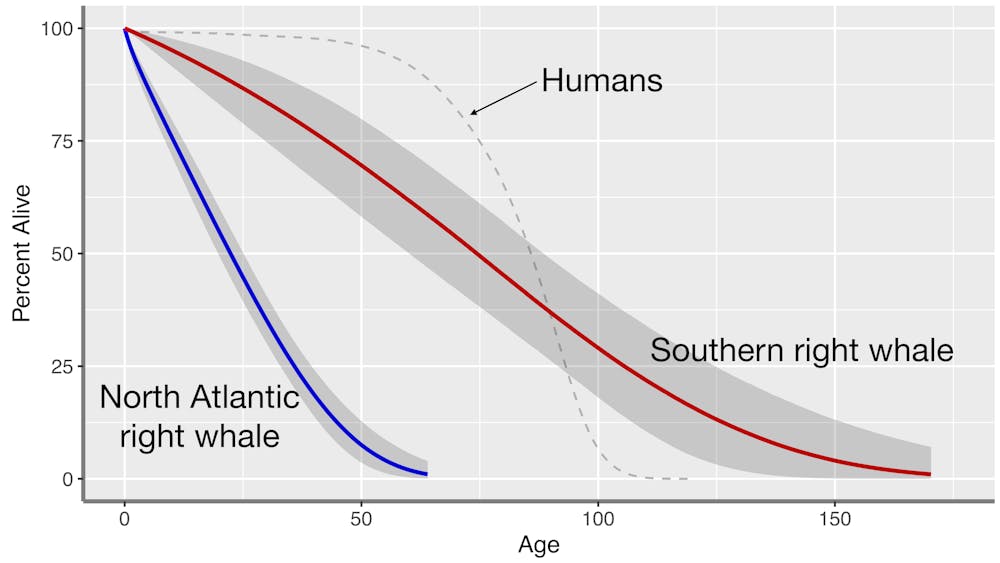
Southern right whales have lifespans that reach well past 100 years, and 10% may live past 130 years, according to our new research published in the journal Science Advances. Some of these whales may live to 150. This lifespan is almost double the 70-80 years they are conventionally believed to live.
North Atlantic right whales were also thought to have a maximum lifespan of about 70 years. We found, however, that this critically endangered species’ current average lifespan is only 22 years, and they rarely live past 50.
These two species are very closely related – only 25 years ago they were considered to be one species – so we’d expect them to have similarly long lifespans. We attribute the stark difference in longevity in North Atlantic right whales to human-caused mortality, mostly from entanglements in fishing gear and ship strikes.
We made these new age estimates using photo identification of individual female whales over several decades. Individual whales can be recognized year after year from photographs. When they die, they stop being photographically “resighted” and disappear. Using these photos, we developed what scientists call “survivorship curves” by estimating the probability whales would disappear from the photographic record as they aged. From these survivorship curves, we could estimate maximum potential lifespans.
Twenty-five years ago, scientists working with Indigenous whale hunters in the Arctic showed that bowhead whales could live up to and even over 200 years. Their evidence included finding stone harpoon points that hadn’t been used since the mid-1800s embedded in the blubber of whales recently killed by traditional whalers. Analysis of proteins from the eyes of hunted whales provided further evidence of their long lifespan. Like right whales, before that analysis, researchers thought bowhead whales lived to about 80 years, and that humans were the mammals that lived the longest.
In the years following that report, scientists tried to figure out what was unique about bowhead whales that allowed them to live so long. But our new analysis of the longevity of two close relatives of bowheads shows that other whale species also have potentially extremely long lives.
Understanding how long wild animals live has major implications for how to best protect them. Animals that have very long lifespans usually reproduce extremely slowly and can go many years between births. Baleen whales’ life history – particularly the age when females start breeding and the interval between calves – is strongly influenced by their potential lifespan. Conservation and management strategies that do not plan accordingly will have a higher chance of failure. This is especially important given the expected impacts of climate disruption.
There are many other large whales, including blue, fin, sei, humpback, gray and sperm whales. Like bowhead and right whales, these were also almost wiped out by whaling. Scientists currently assume they live about 80 or 90 years, but that’s what we believed about bowhead and right whales until data proved they can live much longer.
How long can these other whale species live? Industrial whaling, which ended only in the 1960s, removed old whales from the world’s whale populations. Though many whale populations are recovering in number, there hasn’t been enough time for whales born after the end of industrial whaling to become old.
It’s possible, even likely, that many other whale species will also prove to have long lifespans.
Other research finds the loss of older individuals from populations is a phenomenon occurring across most large animal species. It diminishes the reproductive potential of many species. Researchers also argue this represents a real loss of culture and wisdom in animals that degrades their potential for survival in the face of changing conditions.
We want to better understand how whaling affected the number of old individuals in current whale populations and predict when the number of old individuals will recover to prewhaling levels. Preliminary results suggest it may be another 100 years before whale populations truly recover, even for species whose populations now number as many as there were before whaling.
For North Atlantic right whales, our research shows that even when the population was increasing, the management actions taken were insufficient to prevent these whales from dying far too young.
The Research Brief is a short take on interesting academic work.
Greg Breed received funding from The Royal Society
Peter Corkeron headed the National Oceanic and Atmospheric Administration’s large whale research program for the northeastern US from 2011 to 2019, then led the New England Aquarium’s right whale research program through 2022.
– ref. Whales can live way longer than scientists had thought, with potential lifespans as much as double previous estimates – https://theconversation.com/whales-can-live-way-longer-than-scientists-had-thought-with-potential-lifespans-as-much-as-double-previous-estimates-245826
Source: US Congressional Budget Office
By Andre R. Neveu (FDIC) and Jeffrey Schafer.
In forming its long-run projections of the interest rate on 10-year Treasury notes, the Congressional Budget Office estimates that a 1 percentage-point increase in the projected ratio of debt to gross domestic product raises average long-run interest rates by 2 basis points (bps). The agency refers to that estimated relationship as the debt sensitivity of interest rates (DSIR). Here we extend the sample used in a previous CBO working paper to empirically estimate the DSIR and explore the relationship’s stability over time. Extending the sample through 2023 yields an estimate of the coefficient on debt in our regression equation of 2.0 bps, and analysis using recursive regressions shows that the coefficient estimate has been stable over recent history. Estimating the regression equation over the subsample between two possible breaks in the relationship—a subsample during which the monetary policy regimen resembled the one CBO projects in the long run—yields a nearly identical value.
Source: US International Brotherhood of Boilermakers
On December 19, 2024, the former International Secretary-Treasurer of the International Brotherhood of Boilermakers, Kathy Stapp, pled guilty to conspiracy to assist the racketeering activity of former officers and employees. Ms. Stapp was not charged with the receipt of any funds improperly. Ms. Stapp resigned from the IBB on August 25, 2024, after she was indicted on multiple charges.
Under new leadership, the IBB is committed to ensure that these abuses never happen again. The IBB has implemented new procedures and safeguards to ensure that the misuse of IBB funds cannot happen again. “Our leadership is committed to repairing the damage from the past while positioning the union for the future,” International President Timothy Simmons said. “We will never allow the misdeeds of our former leaders to tarnish the hard work and dedication of our members.”
Dated: December 20, 2024
Source: Federal Bureau of Investigation (FBI) State Crime Alerts (c)
MUSKOGEE, OKLAHOMA – The United States Attorney’s Office for the Eastern District of Oklahoma announced today that Richard Leroy Osborn III, age 47, of Wagoner County, Oklahoma, was found guilty by a federal jury of eight counts of child sexual abuse, including five counts of Aggravated Sexual Abuse and three counts of Abusive Sexual Contact. Two of the counts of conviction carry a mandatory sentence of life in prison.
The jury trial began with testimony on December 9, 2024, and concluded on December 11, 2024, with the guilty verdicts.
During the trial, the United States presented evidence that Osborn sexually assaulted three children starting in 2011 and continuing until May of 2022, when one of the children first disclosed the sexual abuse. Additionally, the United States presented evidence that Osborn, already a registered sex offender at the time of the crimes, had previously sexually abused three other victims when they were minors.
The guilty verdicts were the result of an investigation by the Federal Bureau of Investigation.
The crimes occurred in Wagoner County, within the boundaries of the Cherokee and the Muscogee (Creek) Nation Reservations, in the Eastern District of Oklahoma.
The Honorable Kea W. Riggs, U.S. District Judge in the United States District Court of New Mexico, sitting by assignment, presided over the trial in Muskogee, Oklahoma, and ordered the completion of a presentence report. Sentencing will be scheduled following completion of the report. Osborn will remain in the custody of the United States Marshals Service until sentencing.
Assistant U.S. Attorneys Morgan Muzljakovich and Nicole Paladino represented the United States.
Source: Government of Canada – Prime Minister
The Prime Minister, Justin Trudeau, today welcomed the appointment of the Honourable James O’Reilly as the new Senate Ethics Officer. This appointment, which was recently approved by the Senate, is effective January 10, 2025.
A widely respected member of Canada’s legal community, Mr. O’Reilly was appointed a judge of the Federal Court in 2002 and of the Court Martial Appeal Court in 2003. Prior to his appointment to the Bench, he had a varied legal career that included roles at the Law Commission of Canada, the Department of Justice Canada, and the Supreme Court of Canada. He is also a published author and has taught law at various universities across the country.
As Senate Ethics Officer, Mr. O’Reilly will be responsible for administering, interpreting, and applying the Ethics and Conflict of Interest Code for Senators, providing advice on the Code to members of the Senate.
The Prime Minister congratulated the outgoing Senate Ethics Officer, Pierre Legault, on his upcoming retirement and thanked him for his dedication and service.
“I congratulate the Honourable James O’Reilly on his appointment as the next Senate Ethics Officer. His impressive legal career will make him an invaluable advisor to members of the Red Chamber.”
Source: US Department of Health and Human Services – 3
Today, the U.S. Food and Drug Administration is providing an at-a-glance summary of news from around the agency:
This is the first approval for an over-the-counter HIV test in adolescents. Availability will help in the detection of HIV among the adolescent population.
The OraQuick HIV Self-Test is a single home-use test to detect antibodies to Human Immunodeficiency Virus Type 1 (HIV-1) and Type 2 (HIV-2) in human oral fluid specimens. This test kit includes of a test stick (device) to collect the specimen, a test tube (vial) to insert the test stick (device) and complete the test, testing directions, booklet titled, “HIV, Testing and Me”, and access to the OraQuick Support Center to assist users with questions about performing the test, or to connect them with a healthcare provider in their area.
The OraQuick HIV Self-Test is not intended to be used with specimens other than oral fluid. Individuals should obtain a confirmatory test in a medical setting.
Complete instructions for use can be found on the FDA’s website here.
###
Boilerplate
The FDA, an agency within the U.S. Department of Health and Human Services, protects the public health by assuring the safety, effectiveness, and security of human and veterinary drugs, vaccines and other biological products for human use, and medical devices. The agency also is responsible for the safety and security of our nation’s food supply, cosmetics, dietary supplements, radiation-emitting electronic products, and for regulating tobacco products.