Category: Americas

  • MIL-OSI USA: Senator Hawley Leads Missouri Delegation in Supporting Governor’s Request for Disaster Relief

    US Senate News:

    Source: United States Senator Josh Hawley (R-Mo)
    U.S. Senator Josh Hawley (R-Mo.) led members of the Missouri congressional delegation — including Senator Eric Schmitt (R-Mo.) and U.S. House Members Ann Wagner, Robert Onder, Mark Alford, Jason Smith, Sam Graves, and Eric Burlison — in support of Governor Mike Kehoe’s request for President Donald Trump to issue a disaster declaration following devastating storms that hit the southern part of the state March 30 to April 8. These storms left over 50,000 Missourians without power in Springfield alone. “This declaration is critical to ensuring Missouri communities receive the immediate resources, technical assistance, and long-term recovery support they need to repair vital infrastructure, assist displaced families, and rebuild communities in the aftermath of these devastating storm,” the Missouri lawmakers wrote.   “We respectfully request your swift action to ensure that these communities receive the necessary support to respond to the disaster,” they continued.  Senator Hawley has also joined his Missouri colleagues in supporting Governor Kehoe’s request for a disaster declaration following the devastating tornadoes in eastern Missouri earlier this year.  Read the full letter here or below. 
    May 9, 2025 The Honorable Donald J. TrumpPresident of the United StatesThe White House1600 Pennsylvania AvenueWashington, DC 20500 Dear President Trump,  We write in support of Missouri Governor Mike Kehoe’s request to approve a major presidential disaster declaration, as authorized by the Stafford Act, for public assistance in 25 of Missouri’s 114 counties, individual assistance in 20 Missouri counties, and hazard mitigation statewide. This declaration is critical to ensuring Missouri communities receive the immediate resources, technical assistance, and long-term recovery support they need to repair vital infrastructure, assist displaced families, and rebuild communities in the aftermath of these devastating storms. On April 30, 2025, Governor Kehoe requested a major disaster declaration following widespread damage caused by severe storms, tornadoes, and flooding that impacted Missouri from March 30 to April 8. The storms resulted in at least six confirmed deaths. Recovery efforts are ongoing, with many communities still focused on rebuilding infrastructure and restoring normalcy. Federal assistance is crucial to support these efforts. A major presidential disaster declaration would allow qualified individuals and families, local governments, and qualified nonprofits to seek federal assistance for reimbursement of emergency response and recovery costs. Importantly, this declaration would help ensure that Missourians have access to the critical assistance needed to begin rebuilding after these devastating storms. We respectfully request your swift action to ensure that these communities receive the necessary support to respond to the disaster. Along with our fellow Missourians, we appreciate your immediate attention to this request and stand ready to assist.                                               Sincerely, Josh HawleyUnited States Senator
    Eric SchmittUnited States Senator
    Ann WagnerMember of Congress
    Robert OnderMember of Congress
    Jason SmithMember of Congress
    Mark AlfordMember of Congress
    Sam GravesMember of Congress
    Eric BurlisonMember of Congress
    MIL OSI USA News

  • MIL-OSI USA: Warren, Booker, Nadler Press Pepsi on Potentially Illegal Price Discrimination Against Small, Independently-Owned Grocery Stores

    US Senate News:

    Source: United States Senator for Massachusetts – Elizabeth Warren
    May 12, 2025
    “Charging discriminatory, high prices to smaller, independent retailers harms those retailers’ ability to compete, and often forces consumers to endure unfair price increases.”
    “American families across the country continue to struggle to afford groceries, and enforcement of the [Robinson-Patman Act] is part of the solution to help promote competition throughout the food supply chain and ease their financial burden.”
    Text of Letter (PDF)
    Washington, D.C. — U.S. Senators Elizabeth Warren (D-Mass.) and Cory Booker (D-N.J.), along with Representative Jerry Nadler (D-N.Y.) wrote to Ramon Laguarta, CEO of PepsiCo, Inc. (Pepsi) demanding an explanation for the company’s potentially illegal price discrimination against small and independent grocery stores. The lawmakers are the top Democrats on the Senate Committee on Banking, Housing, and Urban Affairs, Senate Judiciary Subcommittee on Antitrust, Competition Policy, and Consumer Rights, and House Judiciary Subcommittee on the Administrate State, Regulatory Reform, and Antitrust, respectively. 
    Representatives Becca Balint (D-Vt.), Andre Carson (D-Ind.), Maggie Goodlander (D-N.H.), Pramila Jayapal (D-Wash.), Summer Lee (D-Pa.), Rashida Tlaib (D-Mich.), and Nikema Williams (D-Ga.) joined in signing the letter. 
    In recent months, Pepsi has faced legal action from convenience stores and the Federal Trade Commission (FTC), a regulator charged with enforcing federal consumer protection laws and antitrust laws. In January 2025, the FTC sued Pepsi, accusing it of violating the Robinson-Patman Act (RPA), which prohibits sellers from engaging in anticompetitive price discrimination. The FTC claimed that for years, Pepsi has disadvantaged retailers – including local convenience stores – by consistently giving benefits and advantages, such as promotional payments, to a big-box store, while denying those same benefits to the store’s competitors.
    In February 2025, two small, family-owned convenience stores accused Pepsi and its subsidiary Frito-Lay of violating the RPA, claiming the corporation charged independent retailers more “for identical bags of snack chips” compared to what it charged chain stores. The plaintiffs claimed they were charged as much as 50 percent more for those goods, and that the “discriminatory pricing” forced them to pass on the higher costs to consumers. 
    “The Robinson-Patman Act is an important tool for the FTC to combat illegal price discrimination and concentration, and to provide a level playing field to all businesses…Charging discriminatory, high prices to smaller, independent retailers harms those retailers’ ability to compete, and often forces consumers to endure unfair price increases,” wrote the lawmakers. 
    The RPA forbids sellers from charging competing buyers different prices for the same goods when the price discrimination may lessen or harm competition. The law also prohibits special promotional payments, discounts, rebates, allowances, or services to one buyer unless they are made available to all competing buyers.
    “As food prices remain sky-high, the FTC should continue to enforce the RPA to promote fair competition in the food industry,” urged the lawmakers. 
    The bicameral coalition asked Pepsi to explain, by May 25, 2025, its pricing strategies, any discrepancies between what it charges chain retailers and small, independent retailers, how these price discrepancies affect shopping options for consumers, and the company’s lobbying efforts to refute price discrimination allegations.  
    As a champion for American consumers and a secure and healthy economy, Senator Warren has engaged in oversight of corporations for unfairly increasing prices for consumers. She has also been calling for more competition and stronger enforcement of antitrust laws to bring down prices for families: 
    In May 2025, Senators Elizabeth Warren and Jim Banks (R-Ind.) applauded the Department of Justice’s ongoing investigation into potential anticompetitive practices by major egg producers and urged the agency to continue its thorough investigation as egg prices continue to rise.
    In January 2025, Senator Elizabeth Warren and Representative Jim McGovern (D-Mass.) led 19 of their colleagues, writing to President Donald Trump, pushing him to take meaningful steps to lower the prices of eggs and other groceries—a problem he largely ignored during his entire first week in office.
    In November 2024, Senator Elizabeth Warren and Congressman Adam Schiff (D-Calif.) led their colleagues in writing to Chair of the Federal Trade Commission, Lina Khan, and Secretary of the Department of Agriculture, Thomas Vilsack, urging them to investigate Albertsons and other major grocery chains for predatory practices that could have violated federal laws.
    In October 2024, Senators Elizabeth Warren led a letter to President and Chief Executive Officer of McDonald’s, Chris Kempczinski, pushing for more information on McDonald’s pricing decisions as fast food prices continue to increase, outpacing inflation and squeezing customers.
    In October 2024, Senators Elizabeth Warren and Ed Markey, along with Representatives Jim McGovern and Ayanna Pressley, sent a letter to Frans Muller, CEO of Ahold Delhaize—parent company of Stop & Shop—demanding an explanation for its potential use of pricing algorithms is leading to price gouging, resulting in higher prices in minority and working class communities in Massachusetts.
    On May 3, 2024, during a hearing of the U.S. Senate Committee on Banking, Housing, & Urban Affairs, Senator Warren called out food industry price gouging and urged action to combat unfair pricing practices.
    On March 28, 2024, Senator Elizabeth Warren (D-Mass.) and Representative Mary Gay Scanlon (D-Penn.) led a group of 14 lawmakers in a letter to FTC Chair Lina Khan urging the agency to revive enforcement of the Robinson-Patman Act (RPA), a critical tool to promote fair competition in the food industry. 
    On February 28, 2024, Senator Warren joined Senator Bob Casey (D-Pa.) in introducing the Shrinkflation Prevention Act to crack down on corporations that deceive consumers by selling smaller sizes of their products without lowering prices.
    On February 15, 2024, Senators Warren, Baldwin, Casey, and U.S. Representative Jan Schakowsky (D-Ill.) reintroduced the Price Gouging Prevention Act of 2024, which would protect consumers and prohibit corporate price gouging by authorizing the FTC and state attorneys general to enforce a federal ban against grossly excessive price increases.
    In December 2023, Senator Warren urged the FTC to block the Kroger-Albertsons merger, which would give the five largest food retail companies control of 55 percent of all grocery sales, allowing them to further control and ultimately raise consumer prices, while also reducing job competition, decreasing wages, and decreasing the bargaining power of organized labor.
    In November 2023, Senator Warren called out TransDigm for its refusal to provide cost and pricing information needed to prevent price gouging of taxpayers and the Department of Defense.
    Senator Warren repeatedly urged the Biden administration to closely scrutinize other potentially anticompetitive mergers that could lead to higher prices for consumers and accelerate industry consolidation. She has led letters about the proposed mergers of Frontier and Spirit airlines, JetBlue and Spirit Airlines, Sanderson-Wayne, WarnerMedia-Discovery, and Amazon-MGM.
    In March 2022, Senator Warren introduced the Prohibiting Anticompetitive Mergers Act to help stomp out rampant industry consolidation that allows companies to raise consumer prices and mistreat workers. The bill would ban the biggest, most anticompetitive mergers and give the Department of Justice and Federal Trade Commission the teeth to reject deals in the first instance without court orders and to break up harmful mergers.
    In February 2022, at a hearing, Senator Warren called out corporations for abusing their market power to raise consumer prices and boost profits.
    That same month, Senator Warren requested the Department of Justice to take aggressive action against corporations violating antitrust laws to hike prices for consumers.
    In January 2022, Senator Warren questioned Federal Reserve nominee Lael Brainard about market concentration and price gouging driving inflation.
    At a January 2022 hearing, Senator Warren pressed Fed Chair Jerome Powell on the role of corporate concentration in driving up prices for consumers during his renomination hearing to be Chair of the Board of Governors of the Federal Reserve System.
    In a New York Times op-ed published in April 2020, Senator Warren urged Congress to focus on cracking down on price gouging in its ongoing effort to address the impact of the coronavirus pandemic.
    In March 2020, Senator Warren joined her colleagues in urging the FTC to use its full authority to prevent abusive price gouging on consumer health products during the COVID-19 pandemic. 

    MIL OSI USA News

  • MIL-OSI USA: USDA forecasts winter wheat production up 2% in 2025, orange production up slightly from April forecast

    Source: US National Agricultural Statistics Service

    WASHINGTON, May 12, 2025 – U.S. farmers are expected to produce 1.38 billion bushels of winter wheat this year, according to the Crop Production report released today by USDA’s National Agricultural Statistics Service (NASS). In NASS’s first winter wheat production forecast for 2025, production is expected to increase 2% from 2024. As of May 1, the U.S. yield is expected to average 53.7 bushels per acre, up 2.0 bushels from last year’s average of 51.7 bushels per acre.

    Hard Red Winter production is forecast at 784 million bushels, up 2% from a year ago. Soft Red Winter, at 345 million bushels, is expected to increase 1% from 2024. White Winter, at 2.53 million bushels, is up 7% from last year. Of the White Winter production, 20.6 million bushels are Hard White and 232 million bushels are Soft White.

    The U.S. all orange forecast for the 2024-2025 season is 2.46 million tons, up slightly from the previous forecast, and down 8% from the 2023- 2024 final utilization. The Florida all orange forecast, at 11.6 million boxes (521,000 tons), is up less than 1 percent from the previous forecast and down 36% from last season’s final utilization.

    U.S. almond production (shelled basis) is forecast at 2.80 billion pounds, up 3% from the previous year.

    NASS surveyed approximately 8,800 producers across the country in preparation for this Crop Production report. This monthly report contains data for the United States, including area planted and harvested, yield, and production. The report also contains a weather summary, a monthly agricultural summary, and an analysis of precipitation and the degree of departure from the normal precipitation map for the month. All NASS reports are available online at nass.usda.gov.

    Have a question about the Crop Production report? Join #NASS Agricultural Statistics Board Chair Lance Honig for a live #StatChat@usda_nasson X today at 1:30 p.m. EDT.

    MIL OSI USA News

  • MIL-OSI USA: FDA and CDC Recommend Pause in Use of Ixchiq (Chikungunya Vaccine, Live) in Individuals 60 Years of Age and Older While Postmarketing Safety Reports are Investigated: FDA Safety Communication

    Source: US Department of Health and Human Services – 3

    [Posted 05/12/2025]
    AUDIENCE: Patient, Health Care Professional, Pharmacy
    ISSUE: The FDA and the CDC are recommending a pause in the use of Ixchiq (Chikungunya Vaccine, Live) in individuals 60 years of age and older while the Agencies investigate postmarketing reports of serious adverse events, including neurologic and cardiac events, in individuals who have received the vaccine.
    As of May 7, 2025, 17 serious adverse events, including two that resulted in death, have been reported in individuals 62 through 89 years of age who received Ixchiq during postmarketing use globally. Six of these reports have been from the United States (U.S.). Most U.S. and foreign serious adverse events that have been reported to the Vaccine Adverse Event Reporting System (VAERS), co-managed by FDA and CDC, have been in individuals with underlying chronic medical conditions. Adverse events reported to VAERS may not be causally related to vaccination. Approximately 80,000 doses of Ixchiq have been distributed globally.
    Some of the postmarketing reports include adverse events that are consistent with severe complications of chikungunya disease, resulting in hospitalization; one person died from encephalitis. The FDA-approved Prescribing Information includes a warning to inform that the vaccine may cause severe or prolonged chikungunya-like adverse reactions.
    In addition, although not commonly reported during the clinical studies, severe chikungunya-like adverse reactions that prevented daily activity and/or required medical intervention occurred in 1.6% of Ixchiq recipients and none of the placebo recipients. Two recipients with severe chikungunya-like adverse reactions were hospitalized. In addition, some recipients had prolonged chikungunya-like adverse reactions that lasted for at least 30 days.
    FDA will conduct an updated benefit-risk assessment for the use of Ixchiq in individuals 60 years of age and older. In addition, FDA and CDC will continue the evaluation of postmarketing safety reports for Ixchiq. While the safety of Ixchiq for use in individuals 60 years of age and older is being further assessed, FDA and CDC are recommending a pause in use of the vaccine in this age group. FDA and CDC will update the public when the Agencies complete their evaluation of this safety issue.
    BACKGROUND: On November 9, 2023, FDA approved Ixchiq for the prevention of disease caused by chikungunya virus in individuals 18 years of age and older who are at increased risk of exposure to chikungunya virus. Ixchiq contains a live, weakened version of the chikungunya virus and may cause symptoms similar to those of chikungunya disease.
    [FDA Safety Communication – 05/09/2025]
    Health care professionals and patients are encouraged to report adverse events to the Vaccine Adverse Event Reporting System (VAERS), which is co-managed by the FDA and the Centers for Disease Control and Prevention (CDC).

    Content current as of:
    05/12/2025

    Regulated Product(s)

    MIL OSI USA News

  • MIL-OSI USA: IAM Golf Fundraiser Helps Family of Fallen Union Member & Charity

    Source: US GOIAM Union

    Get IAM MOBILE

    IAM Mobile Spaces offers more features and functions to read and share information about our union and the important issues we face as working families. This app combines all of the IAM’s popular online functions such as the IAM Journal, the Machinists News Network on demand video service, the IAM webpage GOiam.org, iMail, an IAM Photo Gallery, the IAM Facebook Page, and lots more — all in one easy-to-access App for tablets and smartphones.

    MIL OSI USA News

  • MIL-OSI Canada: Defending Alberta industry during U.S. tariffs

    Source: Government of Canada regional news (2)

    MIL OSI Canada News

  • MIL-OSI Global: How the weather got ‘stuck’ over the UK – and produced an unusually dry and warm spring

    Source: The Conversation – UK – By Simon H. Lee, Lecturer in Atmospheric Science, University of St Andrews

    Wildfires have ignited in forests and on moorland across the UK in recent months. LSP EM/Shutterstock

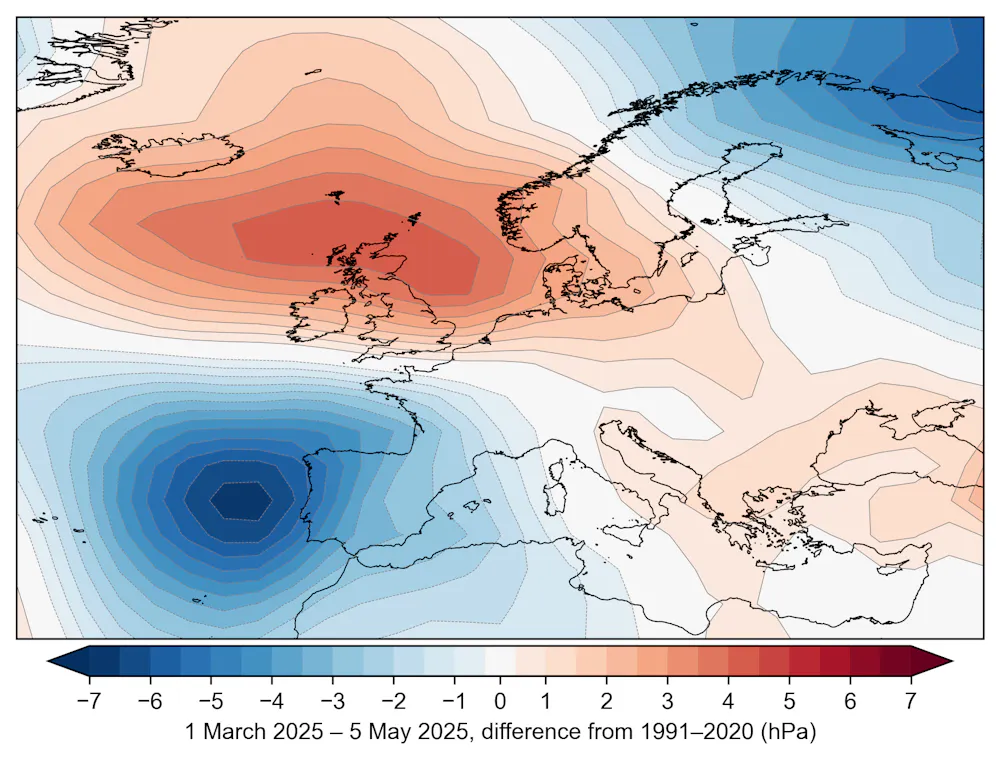
    A “blocking” weather system lingering high above the UK has produced one of the driest, warmest and brightest starts to spring on record.

    April 2025 was the sunniest since records began in 1910. This followed the third-sunniest March, and both months saw temperatures well above average nationwide. On May 1, the temperature reached 29.3°C in Kew Gardens in London – a new record for the date.

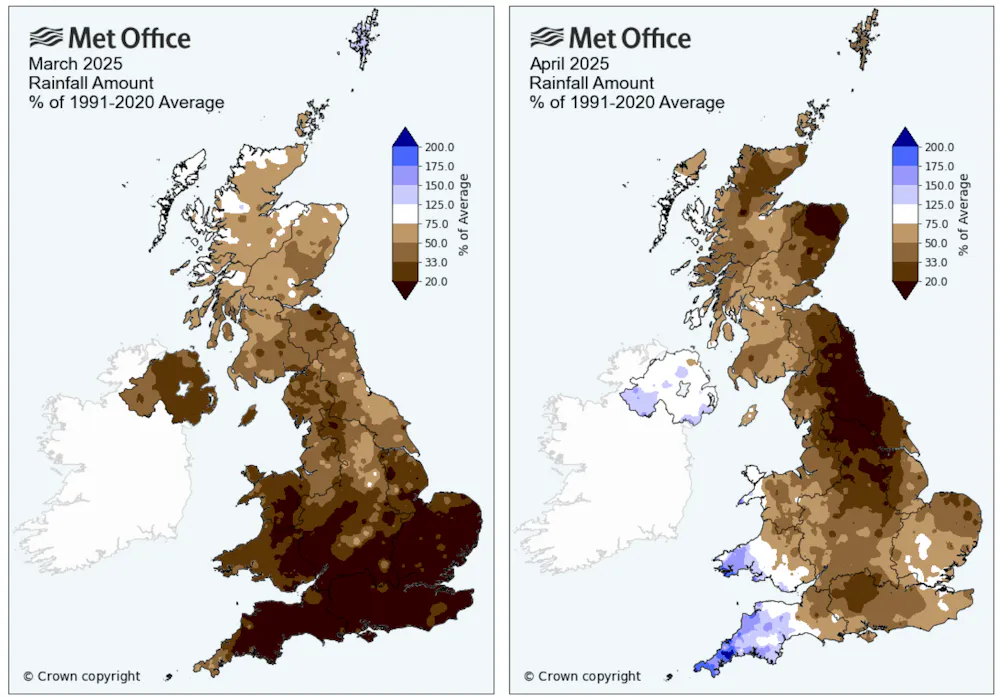
    Meteorologists are warning of the potential for a summer drought, as the UK has seen roughly half its usual amount of rainfall for March and April. While farmers fret about this year’s harvest, some water companies are urging customers to help reservoir levels recover by limiting water use.

    Meanwhile, wildfires have engulfed forest and moorland in areas of Scotland, Wales and England.

    Most of the UK has experienced a record-dry spring so far.
    Met Office

    For several weeks, a stubborn area of high pressure over the UK has diverted the usual flow of mild, moist air from the North Atlantic like a boulder in a river. This is known as a blocking weather system.

    Within it, air descends, warms and dries, which is why this weather pattern tends to be linked to heatwaves and drought. Blocking is usually persistent, making it seem like the weather is stuck.

    Here’s how climate change may have played a role in setting up this unusual spring.


    Get your news from actual experts, straight to your inbox. Sign up to our daily newsletter to receive all The Conversation UK’s latest coverage of news and research, from politics and business to the arts and sciences. Join The Conversation for free today.


    The human fingerprint

    The warming climate means that unusually warm weather is occurring more often and becoming more intense. At the same time, we can expect more periods of both severe drought and extreme rainfall. Sudden changes from drought to deluge, termed “weather whiplash”, are due to the intensification of the water cycle in a warmer atmosphere that can hold more water vapour.

    However, certain weather patterns are necessary to produce extreme weather. More blocking events in future could increase the chance of heatwaves or drought. But are blocking weather patterns becoming more common?

    It’s difficult to determine how weather patterns will change as a result of the rising concentration of greenhouse gases in the atmosphere, which is predominantly caused by the burning of fossil fuels.

    Part of the difficulty arises from the fact that weather patterns vary year to year. Several years in a row with more blocking events than usual could make it seem like blocking is increasing due to climate change, but it could simply be down to chance.

    As a result, it is difficult to detect the fingerprint of human activity from weather observations alone. For example, blocking weather patterns over Greenland during summer have happened more often in recent decades, which can enhance the melting of the ice sheet. But it isn’t clear that this trend is the result of human-induced climate change.

    Climate models do suggest future changes in the occurrence of blocking, however. These computer simulations, consisting of equations that describe the fundamental physics of the atmosphere, are the main tool scientists use to perform experiments that parse how the climate will behave in future.

    The blocking system is visible in the area of high pressure over Britain and Ireland.
    National Centers for Environmental Prediction/National Center for Atmospheric Research/NOAA Physical Sciences Laboratory, CC BY

    When scientists run climate model simulations with increased greenhouse gas concentrations the results consistently show a decrease in blocking events. But blocking generally happens more often in real life than model simulations, which reduces the confidence scientists have in future projections.

    Keeping track of the jet stream

    The movement of weather systems in Earth’s mid-latitudes – including over the UK – is linked to the jet stream, which is a fast-flowing river of air driven by the contrast in temperature between the poles and mid-latitudes.

    Some researchers have suggested that, because the Arctic is warming faster than the tropics, the jet stream may weaken and become more “wavy”, increasing the occurrence of blocking events, contrary to what most climate models show.

    Outside of the scientific community, this idea has become popular. However, the hypothesis remains controversial among scientists, and observational evidence has weakened in recent years.

    In fact, tens of kilometres above the Earth’s surface, near commercial aircraft cruising altitudes, the opposite trends are occurring: the temperature difference between the Arctic and mid-latitudes is increasing, acting to increase the strength of the jet stream.

    There are considerable challenges with understanding how climate change is affecting the large-scale atmospheric patterns which drive the weather we experience. These include large natural variability and imperfect climate models. Models mostly suggest a decline in blocking events with climate change, though this remains relatively uncertain compared with other aspects of the science.

    Overall, we can be confident that climate change is bringing warmer conditions in all seasons. Scientists also have strong evidence to suggest that drought conditions will become more common. These changes are already affecting food production, energy generation and water availability and these impacts will continue to worsen with climate change.


    Don’t have time to read about climate change as much as you’d like?

    Get a weekly roundup in your inbox instead. Every Wednesday, The Conversation’s environment editor writes Imagine, a short email that goes a little deeper into just one climate issue. Join the 45,000+ readers who’ve subscribed so far.


    Simon H. Lee has received funding from the Natural Environment Research Council and the National Science Foundation.

    Matthew Patterson receives funding from the Natural Environment Research Council in the UK via the the National Centre for Atmospheric Science.

    ref. How the weather got ‘stuck’ over the UK – and produced an unusually dry and warm spring – https://theconversation.com/how-the-weather-got-stuck-over-the-uk-and-produced-an-unusually-dry-and-warm-spring-255987

    MIL OSI – Global Reports

  • MIL-OSI Global: Deadly blood clots, risky treatments: The high-stakes battle against deep vein thrombosis in sports and beyond

    Source: The Conversation – Canada – By Peter Anthony Andrisani, PhD Candidate, Medical Sciences, McMaster University

    Seven-time NBA all-star Damian Lillard, 34, recently joined a growing list of NBA athletes to be sidelined by a diagnosis of deep-vein thrombosis, or DVT.

    The Milwaukee Bucks player joins Victor Wembanyama, 21, a rising star in the NBA who was diagnosed with the life-threatening condition earlier this season, along with Chris Bosh and Brandon Ingram, who were also sidelined with DVT during their careers.

    DVT in athletes

    DVT is caused by blood clots in the veins of the arms or legs. The condition is commonly associated with age, decreased mobility, obesity, some estrogen-containing medications and smoking, among other factors. Repetitive arm action above the head, like throwing a basketball, can also increase the risk of DVT.

    Typically, DVT causes swelling, pain and bruising in the affected limb. DVT on its own is not lethal, but left untreated, it can have serious consequences.

    Without treatment, pieces of blood clots that cause DVT can break off and travel to the lungs in a condition called pulmonary embolism (PE), which can result in severe damage to the lungs. Both DVT and PE are venous thromboembolic diseases, which are the third most common cause of deaths associated with the vascular system after heart attack and stroke.

    Tennis superstar Serena Williams developed PE twice. Like many people who develop it, she had trouble breathing, shortness of breath and chest pain.

    Although it might be scary to be diagnosed with DVT or PE, there are effective medicines to treat the conditions.

    My lab’s research focuses on identifying new blood-thinning drugs to treat blood-clotting conditions like DVT and stroke. Surgery and blood thinners are often combined to combat DVT and PE by removing the original blood clot and reducing the chances of a new clot forming.

    Despite their name, blood thinners do not literally make blood thinner. Instead, they make it harder for blood clots to form. Three general classes of blood thinners can be prescribed for DVT and PE: vitamin K antagonists such as warfarin, heparin and direct oral anticoagulants.

    Despite the help blood thinners provide, they create risks of their own, as they can increase the risk of bleeding, because blood clotting is a normal and necessary physiological process.

    Clot risks vs. bleeding risks

    Taking blood thinners is like walking a tightrope. The person taking the blood thinner is in a constant state of balance between preventing abnormal blood clots and excessive bleeding, which depends on the strength of the blood thinner. If you lean too far in either direction, you might fall off the tightrope, with serious consequences.

    The challenges of managing bleeding risk while preventing DVT was amplified in the case of Williams. Immediately after delivering her second child, Williams underwent a PE event and was placed on intravenous heparin. While heparin did prevent blood clots, Williams did have significant bleeding at the site of her C-section.

    The risk of bleeding often extends past the hospital. Typically, blood thinners are given to people with DVT for months, even years, to prevent ongoing risk of clot formation. The risk of bleeding persists as long as the person is taking the drug.

    Athletes on blood thinners playing contact sports are more vulnerable to injuries compared to others. Players commonly fall, which is more likely to cause potentially life-threatening internal bleeding.

    Due to this risk, athletes often must take to the sidelines to avoid injury after a DVT diagnosis.

    Balanced blood thinners

    The challenge of creating balanced blood-thinning drugs is of great interest to my lab at McMaster University’s Thrombosis and Atherosclerosis Research Institute. A promising candidate for treating clotting disorders is ADAMTS13. It’s a protein that plays a role in the typical maintenance of blood clots but shows great potential as a blood-thinning medication.

    Previous research with this protein has found that in acute blood-clotting conditions such as ischemic stroke, ADAMTS13 is effective at breaking apart blood clots but does not result in the same risk of bleeding. Further testing on the protein in chronic conditions like DVT still needs to be performed, but there is potential for it to act as a long-term blood thinner.

    The use of safer blood thinners will not only allow athletes like Lillard and Wembanyama to continue playing their respective sports, but will also help the general population.

    Approximately seven million new blood-thinner prescriptions for DVT and other conditions are written each year in Canada, highlighting the need for better therapeutics across the board.

    Peter Anthony Andrisani receives funding from CanVECTOR.

    Colin Kretz receives funding from the Canadian Institutes of Health Research, the Natural Sciences and Engineering Research Council of Canada, and the National Heart, Lung, and Blood Institute of the National Institutes of Health (R01HL172780).

    ref. Deadly blood clots, risky treatments: The high-stakes battle against deep vein thrombosis in sports and beyond – https://theconversation.com/deadly-blood-clots-risky-treatments-the-high-stakes-battle-against-deep-vein-thrombosis-in-sports-and-beyond-253985

    MIL OSI – Global Reports

  • MIL-OSI Russia: Brazilian President’s visit to China is of great importance – Chinese Foreign Ministry

    Translation. Region: Russian Federal

    Source: People’s Republic of China in Russian – People’s Republic of China in Russian –

    Source: People’s Republic of China – State Council News

    BEIJING, May 12 (Xinhua) — Brazilian President Luiz Inacio Lula da Silva’s visit to China is of great significance amid the current chaotic transformation of the international situation, Chinese Foreign Ministry spokesperson Lin Jian said Monday.

    Noting that China and Brazil are both large developing countries, key emerging markets and important members of the BRICS group and the Global South, the diplomat pointed out that China-Brazil ties have always been at the forefront of China’s development relations with developing countries.

    At the invitation of Chinese President Xi Jinping, Lula da Silva is on a state visit to China from May 10 to 14.

    As Lin Jian also recalled, last year China and Brazil celebrated the 50th anniversary of the establishment of diplomatic relations.

    During President Xi Jinping’s successful state visit to Brazil in 2024, the two heads of state jointly announced the elevation of bilateral relations to a China-Brazil community of shared future for a fairer world and a more sustainable planet, and the alignment of the Belt and Road Initiative with Brazil’s development strategies, Lin Jian said, stressing that bilateral ties have entered a new historical period.

    “President L.I. Lula da Silva is the leader of a major Latin American country and an experienced international political figure with significant influence,” the official representative emphasized, adding that this is the Brazilian leader’s sixth visit to China and the second since 2023.

    Lin Jian said that this visit will further enrich the strategic content of the China-Brazil community with a shared future and demonstrate the firm will and responsibility of China and Brazil to lead countries in the Global South in strengthening solidarity and cooperation, and promote stability and prosperity in the region and the world.

    In addition, the representative of the Chinese Ministry of Foreign Affairs reported that during the visit, President L.I. Lula da Silva will also attend the opening ceremony of the 4th ministerial meeting of the China-CELAC Forum (Community of Latin American and Caribbean States).

    China attaches great importance to Brazil’s important role in LAC affairs and is willing to work with the Brazilian side to promote new progress in building a China-LAC community with a shared future, Lin Jian concluded. –0–

    MIL OSI Russia News

  • MIL-OSI Video: Sec. Kennedy on Prescription Drug Pricing: ‘This is an extraordinary day…’

    Source: United States of America – The White House (video statements)

    Sec Kennedy on Delivering Most-Favored-Nation Prescription Drug Pricing To American Patients:

    ‘This is an extraordinary day… We now have a president who is a man of his word, who has the courage… and he is standing here for the American people.’

    https://www.youtube.com/watch?v=TJ4Lg48mPNk

    MIL OSI Video

  • MIL-OSI Canada: Victim Services Volunteers Recognized During Victims and Survivors of Crime Week

    Source: Government of Canada regional news

    Released on May 12, 2025

    The Government of Saskatchewan has proclaimed May 11-17, 2025, as Victims and Survivors of Crime Week in the province. 

    The week is a chance to raise awareness about matters facing victims and survivors of crime and to highlight the services and supports available to aid them on their path to healing. It is also a chance to acknowledge the contributions of Saskatchewan’s volunteer victim support workers, staff and community board members. 

    Saskatchewan’s long-term volunteers, staff and board members were recognized at the Legislative Building today for their contributions to police-based victim services programs and the strength of their collaboration within the Saskatchewan justice system. 

    “The dedication and compassion of our Saskatchewan volunteer victim support workers is instrumental to creating and maintaining safe, healthy communities across our province,” Justice Minister and Attorney General Tim McLeod, K.C., said. “I would like to sincerely thank them for helping victims and survivors of crime overcome tragic situations, ensuring they are not alone and for the collaborative role they play in helping people navigate the criminal justice system.”

    Currently, there are 150 volunteer victim support workers working with police-based victim services programs in Saskatchewan. In 2023-24, more than 13,000 victims of crime were supported through their efforts. 

    Fourteen police-based victim services programs operate throughout Saskatchewan. Of these, four are part of municipal police services, while the other 10 are overseen by a board of directors, including 80 volunteer community board members. 

    For more information on Victims and Survivors of Crime Week, volunteer victim support worker opportunities and services or supports that are available for victims and survivors, contact a police-based victim services program through your local RCMP detachment or municipal police service. You can also contact the Victims Services Branch at 306-787-3500 or visit:
    www.saskatchewan.ca/victimsservices.

    -30-

    For more information, contact:

    MIL OSI Canada News

  • MIL-OSI USA: LEADER JEFFRIES STATEMENT ON RELEASE OF EDAN ALEXANDER

    Source: United States House of Representatives – Congressman Hakeem Jeffries (8th District of New York)

    Know Your Immigration Rights

    If you or a loved one encounter immigration enforcement officials, it is essential that you know your rights and have prepared your household for all possible outcomes.

    Ask for a warrant: The Fourth Amendment of the Constitution protects you from unreasonable search and seizure. You do not have to open your door until you see a valid warrant to enter your home or search your belongings.

    Your right to remain silent: The Fifth Amendment protects your right to remain silent and not incriminate yourself. You are not required to share any personal information such as your place of birth, immigration status or criminal history.

    Always consult an attorney: You have a right to speak with an attorney. You do not have to sign anything or hand officials any documents without speaking to an attorney. Try to identify and consult one in advance.

    The New York City Office of Civil Justice and the Mayor’s Office of Immigrant Affairs (MOIA) support a variety of free immigration legal services through local nonprofit legal organizations. To access these resources, dial 311 and say “Action NYC,” call the MOIA Immigration Legal Support Hotline at 800-354-0365 Monday through Friday from 9:00 a.m. to 6:00 p.m. or visit MOIA’s website.

    Learn more here: KNOW YOUR IMMIGRATION RIGHTS  – Congressman Hakeem Jeffries

    MIL OSI USA News

  • MIL-OSI USA: Media Alert: Low-level flights to image geology over parts of New England

    Source: US Geological Survey

    The survey is part of USGS Earth Mapping Resources Initiative, a partnership with the geological surveys of Connecticut, Massachusetts, New Hampshire, Rhode Island and Vermont as well as other states.

    “Increasing knowledge of New England’s geologic framework will help with national priorities, like sourcing critical minerals, and regional concerns – like mapping pyrrhotite to minimize its use in local infrastructure,” said Jamey Jones, science coordinator for the USGS Earth Mapping Resources Initiative. 

    Pyrrhotite, a mineral found in bedrock under certain parts of Connecticut and Massachusetts, can cause long-term structural weakness in construction when used in cement.

    The survey is being coordinated by the U.S. Geological Survey as part of a larger, nationwide effort to provide data and images that expand the fundamental knowledge of geology across the nation. The data collected will be made freely available to the public once complete. 

    During the survey, which will be conducted in spring to fall 2025, instruments on the airplane will measure variations in the Earth’s magnetic field and natural, low-level radiation created by different rock types beneath vegetation and up to several miles below the surface. This information will help researchers develop geologic maps of resources and hazards in three dimensions. 

    The aircraft will be equipped with an elongated “boom” that extends either in front of or behind the main cabin that houses sensors. These scientific instruments are completely passive with no emissions that pose a risk to humans, animals, or plant life. No photography or video data will be collected. 

    The aircraft will be flown by experienced pilots who are specially trained and approved for low-level flying. These pilots work with the FAA to ensure flights are safe and in accordance with U.S. law. The surveys will be conducted during daylight hours only. 

    The aircraft will fly along pre-planned fight paths relatively low to the ground at about 300 feet (100 meters) above the surface in some areas. The ground clearance will be increased to 1,000 feet (300+ meters) over populated areas and will comply with Federal Aviation Administration (FAA) regulations. 

    Funding by the Infrastructure Investment and Jobs Act has facilitated coverage of such a large area. 

    Flights will cover areas within the following counties: 

    Connecticut: Fairfield, Hartford, Litchfield, Middlesex, New Haven, New London, Tolland, Windham. Massachusetts: Berkshire, Franklin, Hampden, Hampshire, Middlesex, Worcester. New Hampshire: Cheshire, Hillsborough. Rhode Island: Kent, Providence, Washington. Vermont: Bennington, Windham, as well as Fisher’s Island, New York

    MIL OSI USA News

  • MIL-OSI USA: ICYMI: “A Common Sense Budget Reconciliation Bill”

    US Senate News:

    Source: The White House
    House Energy and Commerce Committee Chairman Brett Guthrie makes the case in The Wall Street Journal for President Donald J. Trump’s top legislative priorities in the One Big, Beautiful Bill — slashing waste, strengthening Medicaid, and giving Americans a massive tax cut, to name a few.
    Rep. Guthrie writes:“When President Trump took the podium for his Second Inaugural Address, he promised a ‘revolution of common sense’ that would launch a generation of growth, health and prosperity. Today, our country faces numerous threats to that goal. Medicaid waste and abuse threatens the well-being of America’s most vulnerable as the looming expiration of important 2017 tax reforms throws a shadow over U.S. industry. Republicans’ best chance to secure the president’s inaugural promise is this year’s reconciliation bill.”Read the full op-ed here.

    MIL OSI USA News

  • MIL-OSI Global: Nineteen Eighty-Four and Brave New World should be read in tandem to understand today’s troubled times

    Source: The Conversation – UK – By Emrah Atasoy, Associate Fellow of English and Comparative Literary Studies & Honorary Research Fellow of IAS, University of Warwick

    Is there any past work of fiction that can help us make sense of today’s troubling trends? Taking into account the proliferation of references to obfuscating “Newspeak”, Big Brother-style leaders and impossible-to-circumvent surveillance systems in newspaper articles, this question cries out for a simple answer: “Yes – and that work is George Orwell’s Nineteen Eighty-Four.”

    People on both the political left and right see Orwell’s 1949 novel as the book from the last century that speaks to the present most powerfully. But there are others who regard consumer culture and social media obsession as the primary concerns of today. They have a different answer: “Yes – and that work is Aldous Huxley’s Brave New World.”

    We, however, think the answer is “both”.


    Looking for something good? Cut through the noise with a carefully curated selection of the latest releases, live events and exhibitions, straight to your inbox every fortnight, on Fridays. Sign up here.


    In the long-running debate over who was the most prophetic writer of their era, Orwell, who was a pupil of Huxley’s at Eton, is generally the favourite.

    One reason for this is that international alliances that long seemed stable are now in flux. In Nineteen Eighty-Four, his final novel, Orwell envisioned a future tri-polar world divided into competing blocks with shifting allegiances.

    In the short time since the US president, Donald Trump, began his second term, his policies and statements have triggered surprising realignments. The US and Canada, close partners for more than a century, have faced off against each other. And in April, an official from Beijing joined with his counterparts from South Korea and Japan to push back as an unlikely trio against Trump’s new tariffs.

    That is perhaps why there is a booming field of “Orwell studies”, with its own academic journal, but not “Huxley studies”. It also probably explains why Nineteen Eighty-Four, but not Brave New World, keeps making its way on to bestseller lists – sometimes in tandem with Margaret Atwood’s The Handmaid’s Tale (1985). “Orwellian” (unlike the rarely heard “Huxleyan”) has few competitors other than “Kafkaesque” as an immediately recognisable adjective linked to a 20th-century author.

    Trailer for the film 1984, an adaptation of Orwell’s novel.

    As wonderful as Atwood and Kafka are, we are convinced that combining Orwell’s vision with Huxley’s offers scope for deeper analysis. This is true in part because of, not despite, how common it has been to contrast the modes of autocracy Orwell and Huxley describe.

    Orwellian and Huxleyan visions as one world

    We live in an era when all sorts of systems of control limit our freedoms of expression, identity and religion. Many do not quite fit the template that either Orwell or Huxley imagined, but instead combine elements.

    There are certainly places, such as Myanmar, where those in power rely on techniques that immediately bring Orwell to mind, with his focus on fear and surveillance. There are others, such as Dubai, that more readily evoke Huxley, with his focus on pleasure and distraction. In many cases, though, we find a mixture.

    This is especially clear if you take a global view. That’s something we specialise in as international and interdisciplinary researchers – a literary scholar from Turkey based in the UK, and a Californian cultural historian of China who has also published on southeast Asia.

    Like Orwell, Huxley wrote many books that were not dystopian fiction, but his foray into that genre became his most influential. Brave New World was well known throughout the cold war. In courses and commentaries, it was commonly paired with Nineteen Eighty-Four as a narrative illustrating a shallow society based on indulgence and consumerism, as opposed to the bleaker Orwellian world of suppression of desire and strict control.

    While it is common to approach the two books via their contrasts, they can be treated as interconnected and entangled works as well.

    Trailer for an adaptation of Brave New World, released in 2020.

    During the cold war, some commentators felt that Brave New World showed where capitalist consumerism in the age of television could lead. The west, according to this interpretation, could become a world in which autocrats like those in the novel stayed on top. They would do this by keeping people busy and divided among themselves, happily distracted by entertainment and the drug “soma”.

    Orwell, by contrast, seemed to provide a key to unlock the harder mode of control in non-capitalist, Communist Party-run lands, especially those of the Soviet bloc.

    Huxley himself in Brave New World Revisited, a non-fiction book he published in the 1950s, thought it was important to think about ways the techniques of power and societal engineering in the two novels could be combined, approached and analysed. And there is even more value in combining the approaches now, when capitalism has gone so global and the autocratic wave keeps reaching new shores in the so-called post-truth era.

    Orwellian hard-edged and Huxleyan soft-edged approaches to control and social engineering can be and often are combined. We see this within countries such as China, where the crude repressive methods of a Big Brother state are used against the Uyghur population, while cities such as Shenzhen evoke Brave New World.

    We see this mixing of dystopian elements in many countries – variations on the way that science fiction writer William Gibson, author of novels such as Neuromancer (1984), wrote about Singapore with a phrase that had a soft-edged first half and a hard-edged second: “Disneyland with the death penalty.”

    This can be a useful first step toward better understanding, and perhaps beginning to try to find a way of improving the troubling world of the mid-2020s. A world in which the smartphone in your pocket both keeps track of your actions and provides an endless set of enticing distractions.

    The authors do not work for, consult, own shares in or receive funding from any company or organisation that would benefit from this article, and have disclosed no relevant affiliations beyond their academic appointment.

    ref. Nineteen Eighty-Four and Brave New World should be read in tandem to understand today’s troubled times – https://theconversation.com/nineteen-eighty-four-and-brave-new-world-should-be-read-in-tandem-to-understand-todays-troubled-times-253872

    MIL OSI – Global Reports

  • MIL-OSI USA: Coons, Schatz, Murphy, Booker Joint Statement on Qatar Luxury Jet Gift to Trump

    US Senate News:

    Source: United States Senator for Delaware Christopher Coons

    WASHINGTON – U.S. Senators Chris Coons (D-Del.), Brian Schatz (D-Hawai‘i), Cory Booker (D-N.J.), and Chris Murphy (D-Conn.), all members of the Senate Foreign Relations Committee, today released the following joint statement on reports that President Trump will accept a luxury jet valued at $400 million from the royal family of Qatar. According to reports, Trump intends to designate the plane as Air Force One while in office and then transfer it to a foundation for personal use following the end of his term.

    “The Constitution is clear: elected officials, like the president, cannot accept large gifts from foreign governments without consent from Congress.

    “Air Force One is more than just a plane — it’s a symbol of the presidency and of the United States itself. Any president who accepts this kind of gift, valued at $400 million, from a foreign government creates a clear conflict of interest, raises serious national security questions, invites foreign influence, and undermines public trust in our government. No one — not even the president — is above the law.

    “This week, we will ask the Senate to vote to reiterate a basic principle: no one should use public service for personal gain through foreign gifts.”

    MIL OSI USA News

  • MIL-OSI USA: Cassidy Visits Louisiana Tech Design and Research Conference, Meets with University Officials

    US Senate News:

    Source: United States Senator for Louisiana Bill Cassidy
    MONROE – On Monday, U.S. Senator Bill Cassidy, M.D. (R-LA) visited the 2025 Design and Research Conference at Louisiana Tech University, which featured senior presentations from students in their College of Engineering and Science. During the conference, students made presentations featuring innovations that could help in the fields of computing, energy, medicine and transportation, among others.
    “There is so much innovation taking place on Louisiana Tech’s campus,” said Dr. Cassidy. “The students, and also Tech graduates who have stayed near the campus, are using their education to create products marketed around the world. This is impressive.”
    Cassidy is a strong supporter of Louisiana Tech University. In January, Cassidy announced that the National Science Foundation would award the Louisiana Board of Regents $8 million to expand STEM (Science, Technology, Engineering and Math) research and development, generate more scholarships and fellowships, and enhance collaboration for Louisiana’s students. Louisiana Tech is a partner in this initiative, and Cassidy wrote a letter of support for the grant.
    Additionally, Cassidy secured $7 million across Fiscal Years 2024 and 2023 specifically for Louisiana Tech to empower North Louisiana research support for domestic semiconductor technology and workforce development. He also took part in a ribbon-cutting ceremony for the Monroe Street Corridor Project last October, which will improve roads and create more space for runners and cyclists in Ruston, including at Louisiana Tech.
    While at Louisiana Tech, Cassidy also met with members of the University’s executive team, to discuss the University’s robust research portfolio and private partnerships that are benefiting the region, state and nation. In a statement, he was thanked for coming to Louisiana Tech by Mr. Jim Henderson, president of the University.
    “We appreciate Senator Cassidy taking time to visit Louisiana Tech to hear about our vision and interact with students and faculty,” said Mr. Jim Henderson. “The Senator has been a consistent supporter of Louisiana Tech and the entire higher ed enterprise. This opportunity to share our research vision, including our work in advancing the timber industry through our new Forest Products Innovation Center and our leading-edge research in traumatic brain injury, is important to showcase our faculty’s commitment to addressing enduring and emerging challenges.”

    MIL OSI USA News

  • MIL-OSI USA: Schatz, Coons, Murphy, Booker Joint Statement On Qatar Luxury Jet Gift To Trump

    US Senate News:

    Source: United States Senator for Hawaii Brian Schatz
    WASHINGTON – U.S. Senators Brian Schatz (D-Hawai‘i), Chris Coons (D-Del.), Cory Booker (D-N.J.), and Chris Murphy (D-Conn.), all members of the Senate Foreign Relations Committee, today released the following joint statement on reports that President Trump will accept a luxury jet valued at $400 million from the royal family of Qatar. According to reports, Trump intends to designate the plane as Air Force One while in office and then transfer it to a foundation for personal use following the end of his term.
    “The Constitution is clear: elected officials, like the president, cannot accept large gifts from foreign governments without consent from Congress.
    “Air Force One is more than just a plane — it’s a symbol of the presidency and of the United States itself. Any president who accepts this kind of gift, valued at $400 million, from a foreign government creates a clear conflict of interest, raises serious national security questions, invites foreign influence, and undermines public trust in our government. No one — not even the president — is above the law.
    “This week, we will ask the Senate to vote to reiterate a basic principle: no one should use public service for personal gain through foreign gifts.”

    MIL OSI USA News

  • MIL-OSI USA: Attorney General James Delivers Over $13,500 Worth of Baby Formula to Rochester Families

    Source: US State of New York

    EW YORK – New York Attorney General Letitia James today announced that her office secured more than $13,500 worth of baby formula from baby formula supplier Paragon USA & Co., LLC (Paragon) for families in Rochester. The donation is the result of an investigation conducted by the Office of the Attorney General (OAG) into Paragon for price gouging during the national baby formula shortage in 2022. As part of a settlement with OAG, Paragon has paid a $10,000 penalty and must pay an additional $35,000 in donated baby formula or cash. Today’s donation will be distributed to families in need across Rochester by Foodlink, a community organization that serves the Greater Rochester and Finger Lakes regions.

    “During a nationwide baby formula shortage, Paragon took advantage of New York families, illegally raising the price on formula to squeeze extra profits,” said Attorney General James. “My office made sure Paragon was held responsible for their illegal action and guaranteed that hard-working families in New York received relief. I thank Foodlink and all its partner organizations for distributing this baby formula to help Rochester families in need.”

    “We are thankful to Attorney General James for once again providing Foodlink and our new Health & Wellness initiative with additional baby formula,” said Julia Tedesco, President & CEO of Foodlink. “Our partners have highlighted a growing need for baby products and other essential items, especially as grocery prices remain historically high. This generous contribution will greatly benefit our members and their clients who are in urgent need of formula.”

    In 2022, Abbott Laboratories closed one of its baby formula manufacturing plants and recalled formula produced there, creating significant hardship for families throughout New York and the nation as formula supplies dwindled and prices rose. Abbott produces over 40 percent of the infant formula sold in the United States, and the plant it closed was responsible for approximately one fifth of total U.S. production.

    New York’s price gouging laws prohibit vendors from unconscionably increasing prices on goods that are vital to consumers’ health, safety, or welfare during market disruptions such as the 2022 formula shortage. In May 2022, Attorney General James issued warnings to more than 30 retailers across the state to stop overcharging for baby formula after consumers reported unreasonably high prices.

    The OAG’s investigation found that Paragon, which supplies formula to retailers in New York, generated tens of thousands of dollars in additional revenue by raising prices more than 20 percent after Abbott announced its recall.

    As a result of a settlement with OAG, Paragon must pay penalties and make formula donations with a combined value of $45,000. This includes a $10,000 penalty to the state that Paragon has already paid and an additional $35,000 that can be paid in the form of donated formula or cash that must be delivered by June 10, 2025.

    Today’s donation is the third secured by Attorney General James as part of the settlement with Paragon. In February, Attorney General James secured the donation of $1,500 worth of baby formula to families in Westchester, and in March, $6,300 worth of baby formula to families in Brooklyn. To date, Attorney General James has donated more than $21,400 worth of baby formula as a result of the settlement with Paragon.

    “No parent should be forced to choose between paying their bills or feeding their child,” said Senator Jeremy Cooney. “When businesses illegally jack up prices for goods like baby formula, they must be held accountable. I applaud Attorney General James for once again protecting consumers and ensuring Rochester families get the relief they deserve.”

    “Families are struggling to make ends meet with inflation and an economy on the brink of a recession, so this donation goes such a long way for Rochester children, who are already amongst the neediest in the nation,” said Assemblymember Jen Lunsford. “I am grateful to Attorney General James for doggedly pursuing these bad corporate actors and holding them accountable for their opportunistic money grab.”

    Attorney General James is a leader in the fight to protect New York consumers and guard against price gouging. As part of a $675,000 settlement with formula suppliers Marine Park and Formula Depot, Attorney General James secured the donation of over $344,000 worth of baby formula to families in the Bronx in March 2025 and $140,000 worth of formula to families in Rochester in December 2024. In October 2024, Attorney General James led a multistate coalition urging Congressional leaders to support a national ban on price gouging. In March and April 2024, Attorney General James distributed over 9,500 cans of baby formula in Buffalo and New York City from a settlement with Walgreens for price gouging during the formula shortage. In May 2023, Attorney General James secured a $100,000 settlement with Quality King Distributors, Inc. due to unconscionable price increases for Lysol products during the early days of the COVID-19 pandemic. In April 2021, Attorney General James delivered 1.2 million eggs to food pantries throughout the state which were secured as part of an agreement with the nation’s largest egg producers for price gouging in the early months of the pandemic.

    New Yorkers should report potential concerns about price gouging to the OAG by filing a complaint online or calling 800-771-7755.

    This matter was handled by Assistant Attorney General Benjamin C. Fishman, under the supervision of Bureau Chief Jane M. Azia and Deputy Bureau Chief Laura J. Levine, all of the Consumer Frauds and Protection Bureau. Former Data Scientist Jasmine McAllister also assisted in this matter, under the supervision of Director of Research and Analytics Victoria Khan, Deputy Director Gautam Sisodia, and former Director Megan Thorsfeldt. The Consumer Frauds and Protection Bureau is a part of the Division for Economic Justice, which is led by Chief Deputy Attorney General Chris D’Angelo and is overseen by First Deputy Attorney General Jennifer Levy.

    MIL OSI USA News

  • MIL-OSI Canada: Fresh air, exercise fuel children who join Walking School Bus

    Source: Government of Canada regional news

    The Province of B.C. is supporting the Walking School Bus program, which provides supervised walks to schools for elementary children in select communities, helping them start their day off with fresh air and exercise.

    “Walking to school offers a wonderful opportunity for students and parents to connect with their community,” said Ravi Parmar, MLA for Langford-Highlands, on behalf of Mike Farnworth, Minister of Transportation and Transit. “I’m excited to see this program expand in many parts of the province, especially in the community where I grew up. It’s rewarding to know that students in Langford and other communities in B.C. will benefit from this initiative, helping them develop healthy habits and safer ways to commute.”  

    In partnership with the Society for Children and Youth of BC, this program gives more communities in B.C. the chance to get their kids to school without a vehicle. The program is available to students in Langford, Sooke, Nanaimo, Esquimalt, Saanich and Central Saanich. It will expand to other areas.

    Children learn safe commuting skills and build healthy habits with the Walking School Bus. The program provides paid leaders and volunteers with the essential training to safely lead a group of students to and from their homes and schools. The program will also include a Biking School Bus in some participating communities. Trained cycling leaders from HUB Cycling will bike with groups of students to and from school.

    More than 350 children have participated in similar Walking School Bus programs in B.C. The program offers new communities the funding and tools needed to get their students to and from school safely.

    “After a successful pilot in Metro Vancouver in partnership with the Province and TransLink, we are thrilled to be working with the Province to help more children across British Columbia develop active travel habits through our Walking School Bus program,” said Stephanie Howell, executive director, Society for Children and Youth of BC. “The program will also include bike buses led by our new partners at HUB Cycling, who we are excited to have on board. We look forward to promoting safe routes to school and independent mobility for all.”

    The B.C. government has invested $1.1 million to support 15 schools in B.C. as they offer their elementary students a supervised walk to school.

    MIL OSI Canada News

  • MIL-OSI Canada: Government of Saskatchewan Proclaims May 11-17 as Disability Service Professionals Week

    Source: Government of Canada regional news

    Released on May 12, 2025

    The Government of Saskatchewan is proud to proclaim May 11 to 17, 2025, as Disability Service Professionals Week. Now in its eighth year, this week recognizes the dedication of skilled disability service professionals who ensure that people with disabilities are valued, supported and included members of their communities.

    “The partnership between the Ministry of Social Services and SARC, its members and the Disability Service sector is one we are proud of,” Social Services Minister Terry Jenson said. “This week we celebrate the dedicated service professionals who work to create an inclusive province and make a meaningful difference in the lives of persons with disabilities.”

    SARC represents nearly 100 community-based organizations that support people of all abilities. With over 50 years of experience, SARC helps nonprofits grow by providing training, consulting and leadership development. Through its work, SARC strengthens organizations across Saskatchewan and creates more inclusive communities.

    “Disability Service Professionals Week is a meaningful time to celebrate the skilled workforce across Saskatchewan who support people experiencing disability every day.” SARC’s Executive Director Amy McNeil said. “Thousands of employees are dedicated to providing high quality, person-centred services that respect each person’s goals, needs, and dignity. This week serves as a reminder that their work is deeply valued and respected by the people and the communities they serve.”

    For more information about the support and services that SARC member organizations provide and to see their latest job opportunities, please visit: startwithhello.ca.                           

    -30-

    For more information, contact:

    MIL OSI Canada News

  • MIL-OSI Canada: May 12-16 is Aquatic Invasive Species Awareness Week

    Source: Government of Canada regional news

    Released on May 12, 2025

    Saskatchewan Aquatic Invasive Species (AIS) Awareness Week runs from May 12 to May 16 this year – a great opportunity to learn more about slowing the spread of AIS and keeping our waterbodies healthy.

    Aquatic invasive species are plants, fish, invertebrates or infectious diseases that are non-native, have the potential to negatively impact the environment and can be spread through recreational activities such as boating and fishing, or through intentional means such as releasing unwanted aquarium pets into the wild. AIS, such as zebra and quagga mussels, can be impossible to eliminate once established and can cost millions of dollars to manage.

    “Our province, blessed with thousands of lakes and rivers, is a popular destination for anglers, boaters and others who enjoy recreation on the water,” Environment Minister Travis Keisig said. “So far, our prevention efforts targeting zebra and quagga mussels have been successful – no invasive mussels have been found in Saskatchewan waterbodies.”

    In 2024, the Ministry of Environment intercepted six watercrafts that were carrying invasive mussels into Saskatchewan. In addition, more than 250 watercrafts coming into the province from high-risk areas were decontaminated given that they were at risk of carrying AIS by not being properly cleaned, drained or dried.

    Residents and visitors also play a vital role in keeping AIS out of Saskatchewan lakes and rivers by making sure all watercrafts and equipment is cleaned, drained and dry and stopping at watercraft inspection stations: 

    Clean, Drain, Dry

    Following the Clean, Drain and Dry guidelines for watercraft, trailers and equipment after each use is the best way to prevent the spread of harmful AIS in Saskatchewan and ensures that these species are not transported to or introduced to our waters. This includes kayaks, canoes, paddleboards and any other equipment that may enter the water, such as life jackets and angling gear.

    Check out our Clean, Drain and Dry video.

    Watercraft Inspection Program

    Every summer, Saskatchewan runs a Watercraft Inspection Program. Watercraft inspection officers work at points throughout the province to inspect watercrafts and equipment to ensure Clean, Drain, Dry guidelines are being followed and to look for aquatic invasive species.

    It’s important to watch for watercraft inspection station signs when traveling with watercrafts throughout Saskatchewan. If you are transporting a watercraft and encounter an active inspection station, you MUST STOP – it’s the law!

    Members of the public can also help to monitor Saskatchewan for AIS through the Adult Invasive Mussel Monitoring (AIMM) program.

    Remember, if you see an aquatic invasive species, call the toll-free TIPP line at 1-800-667-7561 to report it.

    For more information, visit: Aquatic Invasive Species | Invasive Species | Government of Saskatchewan. 

    -30-

    For more information, contact:

    MIL OSI Canada News

  • MIL-OSI Global: ‘Elbows up’ in Canada means sustainable resource development

    Source: The Conversation – Canada – By Steven J Cooke, Canada Research Professor, Conservation Physiology, Carleton University

    “Elbows up” means many things today in Canada, including using the country’s rich natural resources more effectively to support a strong, independent economy that benefits people and society.

    We agree with the need to ensure economic stability and independence in Canada — but as scientists, we know this is only possible if resource development and exploitation are done responsibly and sustainably. Otherwise, Canada will be burdening itself and future generations with immeasurable costs to the economy, health and quality of life.

    Politicians and decision-makers from across Canada have called for radical changes to how development proposals are evaluated. The recent federal election saw the leaders of the major parties all signalling that they intend to get resource development projects done faster.

    Several provinces have already brought forward legislation in recent days, including British Columbia’s Infrastructure Projects Act, while an Ontario act aimed ostensibly at “unleashing the economy” is under consideration by the provincial government.

    Cutting red tape can certainly speed up new development, but environmental regulations are not just red tape. They are designed to ensure the short- and long-term potential consequences of development decisions are fully considered, and are then minimized or avoided.

    Without strong environmental impact assessments, development can have devastating impacts on human health, resource sustainability and the rich natural resources Canadians rely upon. We are fearful of a future where obsolete infrastructure and exhausted resources are abandoned by the proponents of development, burdening the public with the cleanup or long-term consequences.

    Resources aren’t infinite

    Canada has a large land mass bordering three oceans and bountiful freshwater resources, including the Great Lakes. But its resources are not infinite.

    Impacts of resource development also extend to people. Effective impact assessment must recognize Indigenous rights and sovereignty, in keeping with the right to self-determination reinforced by the United Nations Declaration on the Rights of Indigenous Peoples.

    Effective land stewardship by Indigenous nations is the foundation of Canada’s rich natural heritage. When Canadian politicians talk about fast-tracking developments and resource exploitation, they inherently ignore the moral and legal rights of Indigenous Peoples and governments that are enshrined in Canada’s Constitution and in international law.


    Read more:
    Mark Carney wants to make Canada an energy superpower — but what will be sacrificed for that goal?


    Circular economy

    Outdated business models that threaten health and the future of resources won’t propel Canada into a new era of prosperity.

    Canada lags behind in innovation and labour productivity growth (GDP per person hour worked), which are predictors of standard of living. This lag is known as Canada’s “innovation problem.”

    Simply harvesting and selling raw logs or minerals as fast as possible will not solve it. However, Canada can escape its innovation problem by using resources more efficiently in a value-added, circular economy.


    Read more:
    Recycling more than pop cans: A circular economy for our energy landscapes


    The boreal forests and wetlands found in Canada represent the lungs and kidneys of the planet. Canada’s boreal forest is the largest intact forest in the world.

    Canada also contains 20 per cent of the Earth’s surface freshwater — more than any other nation — and 10 per cent of the world’s glacial waters.

    Canada’s wildlife is iconic and careful management of our wildlife benefits both Canada and the world. Canada’s current environmental policies and regulations represent the collective effort of opposing political parties that have recognized the shared need for clean air and water are non-partisan issues.

    Environmental requirements

    As Canada aggressively explores markets other than the United States for its resources, including the European Union, it will gain a competitive advantage by ensuring exports are sustainable and extracted without harming the environment and local people.

    That’s because markets like the European Union now require that all importers of many agricultural and household products prove that their production did not contribute to deforestation. As other jurisdictions see the fallacy of short-term gains at the expense of the environment, Canada can be ahead of the curve in providing sustainable products.

    The long-term health of Canada’s economy relies on sustainable resource management, and polling repeatedly shows that Canadians want a healthy environment. Sustainable resource extraction can deliver long-term benefits for nature and future generations, rather than short-term, financial benefits to only a select few.

    Boom-and-bust policies have failed before — think about the collapse of the Atlantic cod fishery, the acid rain crisis associated with unchecked emissions or the Klondike gold rush.

    We implore politicians to ensure that development decisions are informed by rigorous and diverse forms of evidence, and robust and equitable policies that consider environmental justice. They should refrain from focusing solely on the short-term economic windfall. Instead, they must plan for resource use that is sustainable and equitable over the long term.

    Four ways to ensure sustainability

    We recognize that resource development is integral to maintaining Canadian prosperity and sovereignty — and the good news is that it can be done sustainably.

    The details may be complex, but the big picture is simple:

    1. Ensure that Indigenous rights-holders are not simply consulted but actively involved in planning, managing and leading development activities.
    2. Maintain strong environmental protection while cutting truly unnecessary red tape.
    3. Ensure that development does not cause harm to individuals, species or landscapes.
    4. Embrace evidence-informed decision-making processes that are robust, transparent and inclusive.

    Some of Canada’s international neighbours are enacting short-term actions, including cutting environmental regulations and spurring unfettered resource development.

    These actions are simultaneously a threat to Canada and an opportunity for Canadians to reject that approach and do better. If Canada chooses that path, it can gain a distinct competitive advantage today and long into the future and become less vulnerable to the political whims of other countries.

    Elbows up, Canada — let’s be proud of protecting what we have.

    Steven J Cooke receives funding from various government, NGO and industry partners. He is affiliated with the Great Lakes Fishery Commission, the Collaboration for Environmental Evidence, KeepFishWet, and the Canadian Centre for Evidence-Informed Conservation.

    Christina Davy receives funding from various Canadian government, NGO and industry partners. She is affiliated with the Canadian Herpetological Society.

    Dalal Hanna receives funding from various Canadian Government and NGO partners. She is affiliated with Ripara.

    Joseph Bennett receives funding from various government and NGO sources. He is affiliated with the Canadian Institute for Ecology and Evolution and the Canadian Centre for Evidence-Informed Conservation.

    ref. ‘Elbows up’ in Canada means sustainable resource development – https://theconversation.com/elbows-up-in-canada-means-sustainable-resource-development-255669

    MIL OSI – Global Reports

  • MIL-OSI USA: NEWS: Sanders Statement on Trump’s Executive Order on Prescription Drugs

    US Senate News:

    Source: United States Senator for Vermont – Bernie Sanders

    WASHINGTON, May 12 – Sen. Bernie Sanders (I-Vt.), Ranking Member of the Senate Committee on Health, Education, Labor, and Pensions (HELP), today released the following statement regarding President Trump’s executive order from this morning, which claims it will slash drug costs by tying the prices of some medicine in the U.S. to the significantly lower ones abroad:

    I agree with President Trump: It is an outrage that the American people pay, by far, the highest prices in the world for prescription drugs. It is beyond unacceptable that we pay, in some cases, ten times more for the same exact prescription drugs than people in other major countries. But let’s be clear: The problem is not that the price of prescription drugs is too low in Europe and Canada. The problem is that the extraordinarily greedy pharmaceutical industry made over $100 billion in profits last year by ripping off the American people.

    Further, as Trump well knows, his executive order will be thrown out by the courts. If Trump is serious about making real change rather than just issuing a press release, he will support legislation I will soon be introducing to make sure we pay no more for prescription drugs than people in other major countries. If Republicans and Democrats come together on this legislation, we can get it passed in a few weeks.

    MIL OSI USA News

  • MIL-OSI USA: Governor Kehoe Announces Appointments to Missouri School Funding Modernization Task Force

    Source: US State of Missouri

    MAY 12, 2025

     — Building on the education priorities outlined in his inaugural State of the State Address in January, Governor Mike Kehoe announced today the full slate of members appointed to the Missouri School Funding Modernization Task Force. The Task Force, established by Executive Order 25-14, is charged with reviewing and recommending changes to Missouri’s K-12 school funding model and providing a final report to the Governor by December 1, 2026.

    “To secure a better future for Missouri students and schools, we must rethink how we fund Missouri’s foundation formula,” said Governor Kehoe. “We need a modernized funding model that rewards outcomes, encourages innovation, and ensures fairness for all Missouri students. These Task Force members bring the experience, perspective, and commitment needed to make responsible changes at business-speed. We look forward to reviewing their recommendations.”

    The 16-member body represents a broad range of voices—urban and rural, traditional and nontraditional, academia and industry—who will help build a model that delivers results for every Missouri student. The Task Force will operate under core guiding principles that promote equal access for students, local flexibility, performance accountability, and long-term funding sustainability.

    Governor Kehoe’s appointments include the following individuals:

    • Matt Davis, of Eldon, is a dedicated educational leader with more than 25 years of experience in the Missouri school system, including 17 years as superintendent of Eldon School District. Prior to serving as superintendent, he led career and technical education programs and prioritized securing grants and funding to enhance program offerings and facilities at Eldon Career Center. Davis will serve as the representative for superintendents from small rural school districts in Missouri.
    • Noah Devine, of Kansas City, is the executive director of the Missouri Charter Public School Association. He previously served as the deputy director of the Kansas City Action Fund and led the implementation of the sixth iteration of the Missouri School Improvement Plan (MSIP) standards for the Missouri Department of Elementary and Secondary Education as the MSIP 6 support facilitator. Devine will serve as the representative for charter schools in Missouri.
    • Emily LeRoy, of Hermann, is a senior advisor at Missouri Farm Bureau, serving on a leadership team that advocates for the diverse interests of farmers. She began her career at the Missouri Department of Agriculture as a legislative assistant and youth program coordinator before rising to the position of legislative and budget director. LeRoy will serve as an additional member as appointed by the Governor.
    • James “Jim” Meats, of Springfield, is the vice president of sales and marketing at Loren Cook Company and a licensed professional engineer. He previously worked as a technical consultant to manufacturers and municipalities in southwest Missouri, where he supported the development of formal plan reviews, permitting procedures, and construction inspection processes. Meats will serve as the representative for the business community.
    • Mike Podgursky, of Columbia, is a school finance expert with more than 40 years of experience, currently serving as the Chancelor’s Professor of Economics at the University of Missouri–Columbia and an affiliated scholar at Sinquefield Center for Applied Economic Research. He is also the author of several peer-reviewed articles and the book, Teacher Pay and Teacher Quality. Podgursky will serve as an additional member as appointed by the Governor.
    • Donald “Don” Thalhuber, of Columbia, is the policy director for the Senate Minority Caucus. Prior to serving in his current position, Thalhuber worked as a senior research analyst crafting education, pension, financial, tax, and veterans’ affairs legislation. He also drafted Missouri’s most recent public school funding formula in 2005. Thalhuber will serve as an additional member as appointed by the Governor.
    • Michael “Jeremy” Tucker, of Liberty, is the superintendent for Liberty Public Schools, managing the district’s $279 million budget and providing oversight and strategic guidance to executive leadership and their respective departments. Prior to serving as superintendent, he worked as an adjunct professor for Evangel University and Southwest Baptist University as well as a social studies teacher at Logan-Rogersville High School. Tucker will serve as the representative for superintendents from large urban school districts in Missouri.
    • Chris Vas, of Kansas City, is a senior director for the Herzog Foundation, working to implement school choice initiatives and trainings across the nation while overseeing an $8 million annual budget. He previously served as the executive director of Liberty Alliance USA, a regional, conservative grassroots network and watchdog organization. Vas will serve as the representative for non-profit organizations that work on expanding school choice in Missouri.
    • Casey Wasser, of California, is the deputy executive director and chief operating officer for the Missouri Soybean Association, a grassroots organization dedicated to advocating on behalf of soybean producers and crafting state and federal policy initiatives that support farmers’ freedom to operate and improved profitability. He has an extensive background in public policy, previously serving as the legislative director for the Missouri Department of Revenue. Wasser will serve as the representative for the agriculture industry.
    • David Wood, of Versailles, most recently served as a policy analyst and liaison for the Missouri State Tax Commission before retiring in June 2023. He previously served in the Missouri House of Representatives from 2013 to 2020 and worked as an upper-level math and computer science teacher for Morgan County R-II Schools. Wood will serve as the representative for teachers from schools in Missouri.

    These ten appointments will be joined on the Task Force by two members of the State Board of Education.

    • Kerry Casey, of Chesterfield, recently retired from her position as vice president of Exegy, a global leader in financial market data, trading platforms, and predictive signals, where she was responsible for Global Sales Operations and Enablement. Casey was a founding board member of the KIPP Charter School in St. Louis and served on the board of directors until her appointment to the State Board in 2023.
    • Pamela Westbrooks-Hodge, of Pasadena Hills, is a former vice president of the Normandy Schools Collaborative Joint Executive Governing Board and recently retired general partner from Edward Jones, where she co-led the Internal Audit Division. She previously worked for Express Scripts, Anheuser-Busch and Bank of America in senior governance, risk and compliance roles and held certifications in financial, operational, and information systems auditing.

    Missouri Senate President Pro Tem Cindy O’Laughlin and Missouri House Speaker Jonathan Patterson have also appointed Senators Rusty Black and Travis Fitzwater as well as Representatives Ed Lewis and Marlene Terry to serve on the Task Force.

    Senator Black, a former educator, will chair the task force.

    “As a former educator, I know firsthand the challenges our teachers face and the importance of ensuring that every dollar we invest in education has a meaningful impact,” said Senator Black. “I’m honored to help lead this important work as we build a funding model that supports student success in every corner of Missouri.”

    For more information on the Missouri School Funding Modernization Task Force, click here.

  • MIL-OSI USA: Celebrating the Heart of the UConn Experience

    Source: US State of Connecticut

    This April, the Office of the Provost presented the University’s first-ever Teaching, Advising, and Mentoring Awards ceremony—an event that brought together a wide range of recognitions under one roof. The ceremony highlighted the essential work of faculty, staff, and students who support learning, foster belonging, and help others thrive at UConn.

    “By bringing these awards together in a single ceremony, we are underscoring the importance and prestige of these honors,” said Provost Anne D’Alleva. “We are celebrating the essential role that teaching, advising, and mentorship play in the life of our university.”

    Honorees were recognized for their contributions both in and outside the classroom: teaching that sparks curiosity, advising that helps students navigate challenges, mentorship that opens new possibilities, and peer support that strengthens our community.

    The event was attended by colleagues, university leaders, and the friends and family of honorees, whose presence added warmth and meaning to the celebration. They’ve been the champions of our honorees, much like our honorees have been champions for their students.

    President Maric shared, “behind every student’s success is someone who taught them, advised them, or simply believed in them. These awards honor the people who make that kind of impact every day at UConn.”

    (Photo by Dustin Corriveau at Designing Studios)

    The awards span programs across the university, including the Center for Excellence in Teaching and Learning, Office of Undergraduate Advising, First Year Programs, Honors & Enrichment, the Office of Undergraduate Research, and The Graduate School. Together, they honor a wide range of efforts that are central to the student experience at UConn.

    2024-2025 Teaching, Advising, and Mentoring Award Recipients

    Center for Excellence in Teaching and Learning Awards

    • Outstanding Graduate Teaching Award: Samantha Archer, Anthropology
    • Outstanding Adjunct Award: Dr. Michael Zacchera, Allied Health
    • Teaching Fellow Award: Dr. David Wagner, Ecology and Evolutionary Biology
    • Teaching Innovation Award: Dr. Vindhya Pathirana, Mathematics

    Undergraduate Advising Awards

    • Outstanding New Professional Staff Advisor: Lyn Alexander, School of Pharmacy
    • Outstanding Professional Advisor: Ramón Espinoza, Center for Access and Postsecondary Success
    • Outstanding Faculty Advisor: Dr. Mary Anne Amalaradjou, Animal Science
    • Outstanding Faculty Advisor: Dr. Matthew Singer, Political Science

    Honors and Enrichment Awards

    • Honors Faculty Member of the Year: Dr. Ryan D. Talbert, Sociology
    • Tanaka Award for Innovative Undergraduate Advising: Dr. Stephanie Singe and Dr. Brian Aneskievich

    Undergraduate Research Mentorship Excellence Awards

    • Dr. Benjamin Sinder, Orthopedic Surgery
    • Dr. Mallory Perry-Eaddy, Nursing
    • Charlotte Fuqua, Graduate Student, Chemistry

    Edward C. Marth Mentorship Award (Graduate School)

    • Dr. Željko Bošković, Linguistics

    First Year Experience Faculty, Staff, and Graduate Instructor Awards

    • FYE Teaching Innovation Award: Fany Hannon, Dean of Students
    • FYE Impact Award: Daniel Facchinetti, CETL
    • FYE One UConn Award: Wiley Dawson, UConn Hartford
    • FYE Outstanding Graduate Student Instructor: Sarah Cooper, Graduate Student, Educational Leadership
    • FYE Teaching Excellence Award: Annie Casarella, Center for International Students & Scholars

    First Year Experience Peer Mentor Awards (John T. Szarlan Award)

    • Anytra Culbreath Evans, Undergraduate Student, HDFS & Sociology
    • Lucas Denucci, Undergraduate Student, Chemical Engineering
    • Stephanie Mora-Gutierrez, Undergraduate Student, Psychological Sciences

    MIL OSI USA News

  • MIL-OSI Security: ACLU-Supported Lawsuit Over False Claims that ICE Deported U.S. Citizens Is Dropped

    Source: US Department of Homeland Security

    ACLU falsely accused DHS of deporting a U.S. Citizen despite the child’s mother choosing to bring the child with her when she was removed.

    WASHINGTON – The Department of Homeland Security announced that a lawsuit supported by the American Civil Liberties Union (ACLU), which was baseless lawfare against Immigration and Customs Enforcement (ICE) and the Department, has been dropped. This lawsuit claimed DHS deported a U.S. citizen. 

    “This ACLU-backed lawsuit was based on the false claims that DHS deported a U.S. citizen,” said Assistant Secretary Tricia McLaughlin. “The truth is, and has always been, that the mother—who was in the country illegally—chose to bring her 2-year-old with her to Honduras when she was removed. The narrative that DHS is deporting American children is false and irresponsible.”

    The parent, Jenny Carolina Lopez-Villela, made the decision to take her child to Honduras. ICE asks parents if they want to be removed with their children or if they would like to place a child with someone the parent designates. In this case, the parent stated they wanted to be removed with their child.

    Jenny Carolina Lopez-Villela illegally entered this country three times in September 2019, March of 2021, and August 2021. She and her older daughter were deemed inadmissible to the United States the first time she entered the country and both her and her daughter were given final orders of removal in March 2020. When she was taken into ICE custody in April 2025, she chose to bring her younger daughter, who is an American Citizen, with her to Honduras and presented a valid United States passport.

    DHS takes its responsibility to protect children seriously and will continue to work with federal law enforcement to ensure that children are safe and protected. Parents, who are here illegally, can take control of their departure. The CBP Home app gives parents illegally in the country a chance to take full control of their departure and self-deport, with the potential ability to return the legal, right way and come back to live the American dream. It is free and available for all mobile devices.

    ###

    MIL Security OSI

  • MIL-OSI USA: Kemp: April Net Tax Revenues Down 5.8%; Adjusted YTD Down 0.6%

    Source: US State of Georgia

    ATLANTA – The State of Georgia’s net tax collections in April approached $3.73 billion, for a decrease of $230.4 million, or 5.8%, compared to FY 2024, when net tax collections totaled $3.96 billion for the month. April 2025 individual and corporate income tax collections were impacted by the hurricane-related extension of filing and payment deadlines to May 1, 2025. Early May individual and corporate return payments have significantly exceeded those received during the same period in May 2024, indicating a large number of filers took advantage of the extended filing deadline. Year-to-date, net tax revenue totaled $27.77 billion for an increase of $312.2 million that was driven largely by the collection of the state’s motor fuel excise tax, which was suspended by Executive Order for a period of two and a half months during FY 2024. Adjusting for the year-over-year motor fuel tax changes, year-to-date net tax revenue collections for the period ending April 30 were down $154.2 million, or 0.6%.

    The changes within the following tax categories help to further explain April’s overall net tax revenue decrease:
     
    Individual Income Tax:  Individual Income Tax collections totaled $1.91 billion, for a decrease of $55.9 million, or 2.8%, compared to last year when Individual Tax collections totaled nearly $1.97 billion.

    The following notable components within Individual Income Tax combined for the net decrease:

    • Individual Income Tax refunds issued (net of voided checks) were down $115.1 million or 14.1%.
    • Individual Withholding payments were down $35.9 million, or 2.7%, from the previous fiscal year.
    • Individual Income Tax Return payments declined by $102.3 million, or 9.4%, from FY 2024.
    • All other Individual Tax categories, including Estimated payments, were down a combined $32.8 million.

    Sales and Use Tax:  Gross Sales and Use Tax collections totaled almost $1.65 billion in April, for an increase of $70.4 million, or 4.5%, compared to April 2024.  Net Sales and Use Tax increased by $40.5 million, or 5.1%, compared to last year, when net sales tax totaled $798.8 million.  The adjusted Sales Tax distribution to local governments totaled $798.8 million, for an increase of $33.8 million, or 4.4%, while Sales Tax refunds decreased by $3.9 million, or 25.7%, compared to FY 2024.

    Corporate Income Tax:  Corporate Income Tax collections for the month totaled $540.2 million, which was a decrease of roughly $207.9 million, or 27.8%, compared to FY 2024.

    The following notable components within Corporate Income Tax make up the net decrease:

    • Corporate Income Tax refunds issued (net of voids) were down $5.2 million, or 13.9%, from FY 2024.
    • Corporate Income Tax Return payments decreased by $84.5 million, or 29.2%, from last fiscal year.
    • Corporate Income Tax Estimated payments decreased by $112.1 million, or 30.8%, from April 2024.
    • All other Corporate Tax types, including S-Corporate payments, were down a combined $16.5 million.

    Motor Fuel Taxes:  Motor Fuel Tax collections increased by $6.6 million, or 3.4%, compared to FY 2024.

    Motor Vehicle – Tag & Title Fees:  Motor Vehicle Tag & Title Fees increased by $2.8 million, or 7.4%, for the month, while Title Ad Valorem Tax (TAVT) collections increased by $3.4 million, or 4.7%, over last year.

    MIL OSI USA News