Source: The Conversation (Au and NZ) – By Lara Herrero, Associate Professor and Research Leader in Virology and Infectious Disease, Griffith University
As we enter the colder months in Australia, COVID is making headlines again, this time due to the emergence of a new variant: NB.1.8.1.
Last week, the World Health Organization designated NB.1.8.1 as a “variant under monitoring”, owing to its growing global spread and some notable characteristics which could set it apart from earlier variants.
So what do you need to know about this new variant?
The current COVID situation
More than five years since COVID was initially declared a pandemic, we’re still experiencing regular waves of infections.
It’s more difficult to track the occurrence of the virus nowadays, as fewer people are testing and reporting infections. But available data suggests in late May 2025, case numbers in Australia were ticking upwards.
Genomic sequencing has confirmed NB.1.8.1 is among the circulating strains in Australia, and generally increasing. Of cases sequenced up to May 6 across Australia, NB.1.8.1 ranged from less than 10% in South Australia to more than 40% in Victoria.
Internationally NB.1.8.1 is also growing. By late April 2025, it comprised roughly 10.7% of all submitted sequences – up from just 2.5% four weeks prior. While the absolute number of cases sequenced was still modest, this consistent upward trend has prompted closer monitoring by international public health agencies.
NB.1.8.1 has been spreading particularly in Asia – it was the dominant variant in Hong Kong and China at the end of April.
It’s a sublineage of the Omicron variant, descending from the recombinant XDV lineage. “Recombinant” is where a new variant arises from the genetic mixing of two or more existing variants.
The image to the right shows more specifically how NB.1.8.1 came about.
What does the research say?
Like its predecessors, NB.1.8.1 carries a suite of mutations in the spike protein. This is the protein on the surface of the virus that allows it to infect us – specifically via the ACE2 receptors, a “doorway” to our cells.
The mutations include T22N, F59S, G184S, A435S, V445H, and T478I. It’s early days for this variant, so we don’t have much data on what these changes mean yet. But a recent preprint (a study that has not yet been peer reviewed) offers some clues about why NB.1.8.1 may be gathering traction.
Using lab-based models, researchers found NB.1.8.1 had the strongest binding affinity to the human ACE2 receptor of several variants tested – suggesting it may infect cells more efficiently than earlier strains.
The study also looked at how well antibodies from vaccinated or previously infected people could neutralise or “block” the variant. Results showed the neutralising response of antibodies was around 1.5 times lower to NB.1.8.1 compared to another recent variant, LP.8.1.1.
This means it’s possible a person infected with NB.1.8.1 may be more likely to pass the virus on to someone else, compared to earlier variants.
What are the symptoms?
The evidence so far suggests NB.1.8.1 may spread more easily and may partially sidestep immunity from prior infections or vaccination. These factors could explain its rise in sequencing data.
But importantly, the WHO has not yet observed any evidence it causes more severe disease compared to other variants.
Reports suggest symptoms of NB.1.8.1 should align closely with other Omicron subvariants.
Common symptoms include sore throat, fatigue, fever, mild cough, muscle aches and nasal congestion. Gastrointestinal symptoms may also occur in some cases.
There’s potential for this variant to play a significant role in Australia’s winter respiratory season. Public health responses remain focused on close monitoring, continued genomic sequencing, and promoting the uptake of updated COVID boosters.
The most recent booster available in Australia and many other countries targets JN.1, from which NB.1.8.1 is descended. So it makes sense it should still offer good protection.
Ahead of winter and with a new variant on the scene, now may be a good time to consider another COVID booster if you’re eligible. For some people, particularly those who are medically vulnerable, COVID can still be a serious disease.
Lara Herrero receives funding from the National Health and Medical Research Council.
Papua New Guinea’s state broadcaster NBC wants shortwave radio reintroduced to achieve the government’s goal of 100 percent broadcast coverage by 2030.
Last week, the broadcaster hosted a workshop on the reintroduction of shortwave radio transmission, bringing together key government agencies and other stakeholders.
NBC had previously a shortwave signal, but due to poor maintenance and other factors, the system failed.
The NBC’s 50-year logo to coincide with Papua New Guinea’s half century independence anniversary celebrations. Image: NBC
Its managing director Kora Nou spoke with RNZ Pacific about the merits of a return to shortwave.
Kora Nou: We had shortwave at NBC about 20 or so years ago, and it reached almost the length and breadth of the country.
So fast forward 20, we are going to celebrate our 50th anniversary. Our network has a lot more room for improvement at the moment, that’s why there’s the thinking to revisit shortwave again after all this time.
Don Wiseman: It’s a pretty cheap medium, as we here at RNZ Pacific know, but not too many people are involved with shortwave anymore. In terms of the anniversary in September, you’re not going to have things up and running by then, are you?
KN: It’s still early days. We haven’t fully committed, but we are actively pursuing it to see the viability of it.
We’ve visited one or two manufacturers that are still doing it. We’ve seen some that are still on, still been manufactured, and also issues surrounding receivers. So there’s still hard thinking behind it.
We still have to do our homework as well. So still early days and we’ve got the minister who’s asked us to explore this and then give him the pros and cons of it.
DW: Who would you get backing from? You’d need backing from international donors, wouldn’t you?
KN: We will put a business case into it, and then see where we go from there, including where the funding comes from — from government or we talk to our development partners.
There’s a lot of thinking and work still involved before we get there, but we’ve been asked to fast track the advice that we can give to government.
DW: How important do you think it is for everyone in the country to be able to hear the national broadcaster?
KN: It’s important, not only being the national broadcaster, but [with] the service it provides to our people.
We’ve got FM, which is good with good quality sound. But the question is, how many does it reach? It’s pretty critical in terms of broadcasting services to our people, and 50 years on, where are we? It’s that kind of consideration.
I think the bigger contention is to reintroduce software transmission. But how does it compare or how can we enhance it through the improved technology that we have nowadays as well? That’s where we are right now.
This article is republished under a community partnership agreement with RNZ.
Source: The Conversation (Au and NZ) – By Philippa Collin, Professor of Political Sociology, Institute for Culture and Society, Western Sydney University
It’s been 30 years since Natasha Stott Despoja became the youngest woman ever elected to the Australian Parliament. A 25-year-old Sarah Hanson-Young beat that record slightly in 2007.
Just over a decade later, the Australian Electoral Commission has confirmed another record-breaking young woman will be entering parliament: 21-year-old Charlotte Walker, in sixth Senate spot for South Australia.
Walker’s election is remarkable because she’s young and she’s female. Both these characteristics run against long-standing trends in Australian politics.
It’s also a reminder of why young people’s representation, both inside and outside parliament, matters for the whole society.
The result of a ‘youth quake’?
In the 2025 election, Gen Z and Millennial voters outnumbered older generations.
While we cannot treat the “youth vote” as a homogeneous bloc, expert analysis of the lower house votes shows young people contributed to the shift away from the Liberals and minor parties in specific seats.
This groundswell helped create a landslide of support for Labor, despite a primary vote of less than 35%.
Amid these changes, Walker joins a select few very young people ever elected to federal parliament.
Wyatt Roy remains the youngest person to take up a federal political post. He was just 20 years old when he entered the lower house in 2010, representing the Queensland seat of Longman for the Liberals.
In 2017, 23-year-old Jordan Steele-John became the youngest senator in Australia’s history, representing the Greens for Western Australia.
According to the Inter-Parliamentary Union, this track record puts Australia fifth among the top-ranked democracies for parliamentarians under 30 years old in the upper chamber.
While this suggests Australia does well in having young people represented, only 20.1% of the upper house is under the age of 45. For comparison, the youngest parliament in the world is in Bhutan, with 70.8% of upper house members aged under 45.
So, while they make up more than 30% of the electorate, Millennial and Gen Z Australians are far from proportionately represented.
The growing power of women?
Previous electoral study data indicates young people and women tend to be more progressive and more likely to vote for the Greens and progressive minor parties and candidates.
This, in combination with preference flows, almost certainly contributed significantly to the Labor result in both houses.
Another consequence is the 48th parliament will have more female representation than any other, with women making up more than half of the Senate and occupying a record 66 seats in the House of Representatives.
For the first time in Australia’s history, there will be a female majority in the Cabinet.
This is despite women still being less likely to join the major political parties or see themselves running for public office.
But my research over two decades indicates there is a surge of girls and young women leading and participating in non-traditional volunteering, social enterprises and social movements.
For example, in the leadership of the student climate movement in Australia, we see mostly young women taking charge of political organising and action. They express strong visions for a better, more equitable and viable world.
To maintain this positive move in young, female representation, political parties and the networks supporting independents would be wise to start engaging seriously with them.
Youth visibility matters
Greater youth representation in formal institutions of government is urgently needed. Young people in Australia face unprecedented levels of economic difficulty and systemic inequality.
The costs of tertiary education is higher than ever. Australia currently collects more in student loan repayments (A$4.9 billion) than it does from the Petroleum Resource Rent Tax ($2.3 billion).
With the high costs of living, many students are living in poverty. Some universities and their leaders are calling for urgent policy change to address these challenges.
For those who can afford to buy a house, the average age of first home purchase is now 36 years – more than a decade older than in the early 2000s. People are taking on bigger loans for longer. They also dedicate a greater proportion of their income to repayments.
These pressures can be even more significant for First Nations young people, who receive less recognition and representation in Australian politics and policy-making. This is despite the fact they can show enormous leadership in researching, documenting and proposing policy recommendations for all levels of government.
Such issues, along with systematic challenges – such as a grossly unequal tax system – mean Walker and her fellow parliamentarians have some big opportunities to drive change in areas that matter to all young people.
Perhaps the election of Charlotte Walker is a sign of things to come: a parliament and Australian democracy more attuned, more representative and more responsive to the needs of this generation of young people and those to come.
Philippa Collin receives funding from the Australian Research Council, batyr, Telstra Foundation, Google AU/NZ, Academy Of The Social Sciences In Australia and the Centre for Resilient and Inclusive Societies.
Satellite images reveal the dust storm formed in the Mid-North region of South Australia, east of Spencer Gulf, at around 11am on Monday. It then travelled through western Victoria into New South Wales, reaching Sydney approximately 18 hours later.
It’s an odd time of year for a dust storm, but South Australia is in drought. The soil is very dry, bare and loose. So when a cold front with strong winds moved through SA earlier this week, it picked up lots of dust.
This demonstrates how everything is interconnected in Australia, despite the nation’s huge size. Extreme weather events such as drought in one part of the country can cause trouble for people “downwind”, hundreds of kilometres away. Climate change is likely to further raise the risk of dust storms in the future.
Sydney’s air quality tumbled after the dust cloud settled on the city | 7NEWS.
The dust bowl era
In the 1930s, prolonged drought in the United States coupled with poor land management practices caused devastating dust storms. This eroded valuable agricultural soils and forced many families off the land. All this took place across the Central Plains, which became known as the American Dust Bowl – later immortalised in Steinbeck’s book The Grapes of Wrath.
Australia experienced its own smaller dust bowl about a century after British settlers arrived. Overgrazing in the late 1800s removed native vegetation from large parts of western New South Wales. Dust storm activity picked up dramatically from the late 1800s onwards and hit a maximum in 1944-45 during the World War II drought.
Fortunately, the dust storms and drought experienced during the 1940s soon prompted a change in both policy and attitude. The focus of land management shifted from “taming the land” to more sustainable use, such as moving livestock around from time to time – allowing paddocks to rest and recover. The government also provided more financial support to manage drought.
Growing awareness and the desire to protect environmental assets also led to development of the NSW Soil Conservation Service.
Australia has continued to experience heightened dust activity and major dust storms after 1945. In 2009, Sydney awoke to what looked like apocalyptic scenes straight out of the movie Mad Max when a dust storm engulfed the city.
The last big dusty period was the Black Summer of 2019-20. Parts of NSW such as Wagga Wagga and Sydney were shrouded in smoke and dust for days. But there were significantly fewer “dust storm days” compared to 1944-45. This is partly due to improved land management practices that value sustainability, including the revegetation of denuded land.
The movie Mad Max featured apocalyptic dust storm scenes.
Recent research suggests southern Australia may experience longer and more frequent droughts in the future. Grazing and cropping will put extra pressure on the land.
In addition, the cold fronts that typically trigger large dust storms are expected to intensify with climate change. This means a growing chance of major dust storms such as the one this week.
Dust is a health hazard
Dust consists of tiny particles, some smaller than the width of a single strand of hair. These particles may include sand, topsoil, pollen, microbes, iron and other minerals, lifted into the air.
During the latest dust storm, health authorities warned people with respiratory issues to stay indoors and monitor symptoms.
Developing early warning systems
The 2019-20 dusty period and the current SA drought shows Australia can still fall victim to these major dust storms. But there are things we can do to be better prepared and more resilient.
The United Nations Convention to Combat Desertification suggests better ways to reduce harm from dust. These include improving land management practices, implementing early warning systems and improving monitoring of dust events.
On the ground, NSW is well equipped to monitor dust through the DustWatch network. The air quality monitoring network acts as an early warning system, particularly for people in Sydney living downwind of sources interstate. But usually no more than 12-24 hours notice is provided. This means the authorities might might start to prepare to issue a warning when they detect poor air quality in Western NSW.
However, these systems pale in comparison to the predictive capacity available in South Korea and Japan. There, alerts of dust storms and poor air quality can be issued days in advance.
Using our eyes in the sky
My PhD research project involves using satellites to deepen our understanding of where dust storms are coming from and where they might travel to.
For instance the Himawari-8/9 satellite scans Australia every ten minutes, allowing us to track the evolution of dust events from start to finish.
We can pinpoint almost the exact moment a dust storm begins. These areas can then be targeted using satellites to understand the conditions of the land causing dust storms to form and monitor high-risk areas for erosion in the future.
Putting technology to good use will get us part of the way to a more resilient Australia. There is also a clear need to adapt to the changing climate in our nation’s grazing and cropping systems.
Tegan Clark receives support from the Australian Government Research Training Program to undertake her PhD. She also works for Connected Farms, an ag-tech company. She is a volunteer with IncludeHer, a non-for-profit focused on gender equity in STEM education.
Prime Minister Fiamē Naomi Mata’afa has advised Samoa’s head of state that it is necessary to dissolve Parliament so the country can move to an election.
This follows the bill for the budget not getting enough support for a first reading on yesterday, and Fiame announcing she would therefore seek an early election.
Tuimaleali’ifano Va’aleto’a Sualauvi II has accepted Fiame’s advice and a formal notice will be duly gazetted to confirm the dissolution of the Legislative Assembly.
Parliament will go into caretaker mode, and the Cabinet will have the general direction and control of the existing government until the first session of the Legislative Assembly following dissolution.
Fiame, who has led a minority government since being ousted from her former FAST party in January, finally conceded defeat on the floor of Parliament yesterday morning after her government’s 2025 Budget was voted down.
MPs from both the opposition Human Rights Protection Party and Fiame’s former FAST party joined forces to defeat the budget with the final vote coming in 34 against, 16 in support and two abstentions.
Defeated motions Tuesday was the Samoan Parliament’s first sitting since back-to-back no-confidence motions were moved — unsuccessfully — against prime minister Fiame.
In January, Fiame removed her FAST Party chairman La’auli Leuatea Schmidt and several FAST ministers from her Cabinet.
In turn, La’auli ejected her from the FAST Party, leaving her leading a minority government.
During fieldwork in cities in China I came across a new marital practice, locally described as liang-tou-dun, literally “two places to stay”.
A bride and groom, each an only child of their respective family, receive from each set of parents a wedding apartment. The young couple thus has two marriage apartments which they may occupy at different times.
If a couple with “two places to stay” has two children, it is likely one will have the father’s surname and the other the mother’s. This ensures that the familial lines of both families continue – but it can also entrench inequalities between siblings.
What’s in a name?
A child being given the mother’s surname is unconventional. The norm in China is that children take their fathers’ surname, even though Chinese women retain their birth surname after marriage.
The adoption of patronyms – family names handed down through the male line – historically served as an instrument of consolidation for hereditary property owners. But in China patronyms lost this purpose when the Communist Party came to power in 1949 and abolished private property and inheritance. Still, patronyms persisted.
Women in China traditionally keep their own name when they get married. Snowscat/Unsplash, FAL
From 1978, Chinese government reforms led to a transition from a planned to a market economy. Since then, many Chinese families have accumulated significant wealth. Such families are focused on how to prevent the loss of property from their family line through inheritance.
This is a real matter of concern for daughter-only families which have become numerically significant as a result of the one-child policy. This was in place from 1980 to 2015, and many (but not all) families were limited to having just one child.
A place to stay
Traditionally, a wife enters her husband’s family and the children take on their father’s surname.
A traditional solution for a family without a male heir is zhao-xu, the phrase for a marriage where a man marries into his wife’s family, living with or in close proximity to her family.
Zhao-xu not only requires cohabiting after marriage with the wife’s parents, but also that their children take the mother’s surname, ensuring continuance of the mother’s family’s line.
A daughter-only family requires her essential role in the continuation of her family lineage. Macro.jr/Unsplash, FAL
This traditional form readily adapts to the needs of daughter-only families in contemporary China. Sons-in-law in these families generally come from families with more than one son, so the husband’s family’s line is not threatened. In these circumstances the wife’s family provides a wedding apartment, furniture, household equipment, dowry and wedding banquet.
Traditionally in China it is a son’s responsibility to support and care for his ageing parents. A daughter-only family requires her to take an essential role in carrying out elderly support obligations.
Two names, two places
An alternative to zhao-xu is “two places to stay”, where the bride’s parents provide her with a wedding apartment and the groom’s parents provide him with a wedding apartment. This tends to happen for young couples who are each an only child in their respective families.
With owning two apartments, the young couple marries into neither family, but instead maintains close relationships with both. They move between two apartments, occupying one for a certain period of time and then the other.
As each set of parents endows the young family, the grandparents play an important role in the choice of their grandchildren’s surname. If the young couple has two children then a perfect solution to continuing both family lines is that one child takes the father’s surname and the other the mother’s.
Grandparents play an important role in the lives of their grandchildren. Li Lin/Unsplash, FAL
First-born children, especially sons, have a special role in the continuity of a family line, and so it is likely the firstborn will take the father’s name.
But if the young wife’s family has higher social or economic standing than her husband’s, it is likely the first child will take the mother’s surname.
“Two places to stay” may generate inequalities within families. Grandparents tend to provide resources (educational, recreational and medical) to the grandchild who shares their surname.
Because of the differences of access to resources, the future education and career prospects of siblings will reflect not their immediate family background, but the different endowments of their respective grandparents.
Two places to stay is a new form of marriage in China, and a new form of surnaming siblings. It is a new way of doing family, an innovation in intergenerational relations.
Xiaoying Qi received research funding from The Hong Kong Baptist University’s Start-Up Grant and the Sociology Department Research Fund.
Source: The Conversation (Au and NZ) – By Fei Gao, Lecturer in Taxation, Discipline of Accounting, Governance & Regulation, The University of Sydney, University of Sydney
Tech giants like Google, Facebook and Netflix make billions of dollars from Australian users every year. But most of those profits are not taxed here.
To address this tax gap, some countries have introduced a new kind of tax called the digital services tax, or DST. It applies to revenue earned from users in a country, even if the company has no physical operations there. Some European Union member countries, the UK and Canada have all introduced such a tax.
In Australia, it is estimated the five largest tech giants recorded A$15 billion in revenue in Australia last year, but combined they paid only $254 million in tax.
Australia has never contemplated imposing a similar tax. New Zealand tried but backed down last week after the United States threatened to impose higher tariffs on New Zealand goods.
So what’s holding Australia back?
How 20th-century tax treaties create 21st-century problems
To understand why Australia thinks its hands are tied on the taxation of the multinational tech giants, we need to step back in time.
About 100 years ago, Australia and other developed nations decided to tax residents on all their income earned worldwide, while non-residents were taxed only on income earned locally.
After the second world war, Australia entered into tax treaties so foreign companies selling to Australian customers would no longer be taxed here. Instead, those companies’ home countries would tax all their profits.
As the world moved to digital products this century, it became easy for giant multinational enterprises offering advertising on social media (such as Facebook and Instagram), advertising on search platforms (Google), and streaming services (Netflix) to provide those services from abroad. Little or no activity is conducted through local branches.
But countries where the sales are made have increasingly questioned the wisdom of having forfeited their taxing rights over income by foreign providers.
The rise of the digital services tax
The obvious solution would have been to renegotiate the treaties. This would restore the right of countries like Australia to tax foreign companies’ profits made from local customers or users.
However, treaty renegotiation is slow and complex. So several European countries, beginning with France in 2019, came up with a short-cut solution.
They introduced a discrete new tax on sales of digital services, called digital services taxes (DSTs). While the specific design varies by country, most DSTs apply a low tax rate, typically between 3% and 5%, on revenue rather than profits. They target large digital platforms that earn money from users within the taxing country, regardless of the company’s location.
Because DSTs are levied on revenue and are structured as separate from income tax, governments argued they could be introduced without breaching income tax treaties.
The new taxes quickly became popular and spread widely.
In Australia, the Greens have called for a DST, but both major parties have remained steadfast in their objection to a new tax. This is due to the concern that the US may impose retaliatory tariffs on Australian goods.
US tech bosses at the inauguration of President Trump: (from left to right) CEO of Meta Mark Zuckerberg, Lauren Sanchez, Amazon founder Jeff Bezos, CEO of Google Sundar Pichai and X CEO Elon Musk. Julia Demaree Nikhinson/AFP
How big is the tax loss?
Australians are enthusiastic consumers of digital products. Depending on which companies are included in the calculation, the annual revenues vary between $15 billion and $26 billion a year, but only a fraction of that is taxed here.
At a time when the federal budget is forecasting deficits for the foreseeable future, Australia is foregoing potentially millions in lost revenue from these digital giants.
While Australia has avoided a DST as a solution to the income tax loss, it has been willing to regulate and tax foreign digital companies in other ways.
Australia collects 10% goods and services tax, or GST, on digital services provided to Australian companies, including streaming platforms and app subscriptions.
This helps ensure foreign providers are taxed similarly to domestic ones when it comes to the GST.
Australia has also imposed non-tax obligations on digital giants such as the requirement that digital platforms pay Australian media outlets for using their news content.
In February, the Trump administration described DSTs as tools used by foreign governments to “plunder American companies” and warned retaliatory tariffs would be imposed in response.
The accompanying White House fact sheet singled out Australia and Canada, arguing the US digital economy dwarfs those countries’ entire economies. It suggested any attempt to tax US tech companies would not go unanswered.
Six weeks later, the US imposed a 10% tariff on most Australian exports to the US and a 25% tariff on steel and aluminium exports.
The US sees its penal tariff plans as a useful negotiating tool to pressure trading partners into retreat on a broad range of peripheral complaints, including the digital services tax.
To date, only two countries have retreated: New Zealand and India. Other countries are standing firm.
In Australia, the Greens have called for the adoption of a DST, but the current and previous governments remain firm in their opposition. There is concern about antagonising the US at a delicate time when our broader trade relations are under scrutiny.
For the foreseeable future, the digital giants will continue to earn billions from Australian users. Most of those profits will remain beyond the reach of Australian tax law.
Richard Krever receives funding from the ARC
Fei Gao does not work for, consult, own shares in or receive funding from any company or organisation that would benefit from this article, and has disclosed no relevant affiliations beyond their academic appointment.
Source: The Conversation (Au and NZ) – By Victoria Whitington, Associate Professor in Education Futures (Adjunct), University of South Australia
One of the Albanese government’s headline election policies was a “three-day guarantee” for childcare.
From January 5 2026, all eligible Australian families will be able to access at least three days of subsidised early education and care until a child starts school.
Labor will also remove the “activity test” requiring parents to work or study to receive more than minimal subsidised care.
The government estimates more than 100,000 families will be eligible for more care. Families will also save money on fees – for example, those on a combined annual income of A$120,000 will save about $220 a week.
But while extra financial support and scrapping the activity test will certainly help, families are still left with the challenge of finding and securing a place in a quality service.
But quality is patchy. While 91% of services either meet or exceed national standards, assessments can be infrequent and there are exemptions – leaving room for poor practices.
Meanwhile, about 70% of daycare centres are owned and run by for-profit providers. This means the majority have an incentive to prioritise profits over quality care and education for children.
Recent reports of shocking abuse and neglect in some services have highlighted how quality – and basic safety – continue to be an issue for the early childhood sector.
According to the Mitchell Institute, nearly one in four Australians lives in a “childcare desert”, where more than three children compete for every available place.
Media reports describe how families can be left waiting well over a year to find a childcare place, depending on where they live.
In recognition of how difficult it can be to find a childcare place, the Albanese government will build 160 not-for-profit childcare centres in regions where services are hard to find.
While this is welcome, they may not transform accessibility. The sector has more than 9,000 existing long daycare services.
There are not enough qualified educators
Meanwhile, staffing is a nation-wide issue. The rapid increase in early years services has made it difficult to train, recruit and employ qualified educators.
Many services have exemptions so they can operate without the required number of qualified staff.
Last year, without factoring in the three-day guarantee, a Jobs and Skills Australia report estimated an extra 21,000 staff were needed to meet existing demand.
While the government is trying to increase access with the three-day guarantee, services are already struggling to provide for existing demand.
What should families do?
Families eligible for the new three-day guarantee are likely to find accessing care and in a quality centre a challenge.
They will no doubt want to make sure any potential services can provide a safe, happy environment in which their child will thrive. Here are some questions parents could ask:
is the service meeting national quality standards or better?
what are the current qualifications of staff?
does the service have a current exemption regarding staff qualifications?
what is the staff turnover?
Families could also take a tour of the service and consider:
how do you feel in the environment?
are children engaged in activities?
how do staff interact with the children?
is there a rich environment for outdoor and indoor play?
If you have concerns, consider other services if they are available.
Victoria Whitington has previously received research funding from the South Australian government and has current funding for research from Catholic Education SA, Ngutu College and Gowrie SA. She is chair of the Gowrie SA board.
The events of 2022 sparked our latest research into the estuaries of NSW. These special places, where the rivers meet the sea, are teeming with life. Now – for the first time – we can reveal what lives where, in maps based on tell-tale traces of DNA.
Together with Indigenous rangers from six language groups, we surveyed 34 estuaries to capture evidence of living species – everything from microbes to fish, plants and mammals.
We were surprised to find platypus in places they had not been seen for years. We also identified elusive native species such antechinus and rakali, and 68 invasive or pest species including cane toads – spreading further south than previously thought.
This catalogue of species in NSW estuaries can be used by authorities and scientists – but anyone, anywhere can explore the map online.
Mapping life in NSW estuaries (Southern Cross University)
Estuaries are vital, yet many questions remain
First Nations Peoples have long recognised the vital importance of the areas where land meets sea. Estuaries are have provided food resources for thousand of years and are home to important historical and contemporary cultural sites.
Today, 87% of Australians live within 50km of the sea. This makes estuaries one of the most intensively used areas of NSW. They provide critical habitats such as seagrass or mangroves, host high biodiversity, and have a high social value as places for recreational activities such as fishing.
NSW has excellent water quality monitoring programs, and vital habitats such as seagrass meadows have been the subject of long-term mapping programs. However, large gaps remain.
Understanding how biodiversity in estuaries changes over time, especially in response to extreme events, can help governments design appropriate responses to maintain or restore ecosystem health. But with nearly 200 estuaries in NSW, studying changes in biodiversity is not a simple task.
Find out what lives in your local estuary free, online. Wilderlab
Our DNA detective work
Measuring salinity or oxygen levels in water is relatively straightforward, using equipment on the shoreline or hanging off the side of a boat. Finding out what lives where is much more difficult. This where new genetic methods come in.
Collecting environmental DNA samples at the Clarence River estuary. Southern Cross University
Life forms leave tell-tale traces of DNA in the environment. Animals may shed hair, skin or scales, as well as poo. Plants produce pollen and leaves that end up in the water.
We matched small snippets of DNA to find the species it belonged to – a bit like scanning a barcode in the supermarket.
This technique allows us to analyse the full extent of biodiversity in estuaries. This includes not just fish, but also species at the base of the food chain such as microscopic algae – all from a few litres of water.
Indigenous rangers live and work on Country and know it well. We formed alliances with six groups of Indigenous rangers through the state’s Cultural Restoration Program:
Batemans Bay Local Aboriginal Land Council (Walbunja)
Bega Local Aboriginal Land Council
Jali Local Aboriginal Land Council
Jerinja Local Aboriginal Land Council
LaPeruse Local Aboriginal Land Council (Gamay)
Yaegl Wadyarr Gargle Land and Sea Contractors.
Our research builds on the different strengths and interests of local groups. The rangers worked with us all the way through, from the design phase to selecting sampling sites of ecological or cultural significance, helping to conduct surveys and working with scientists to interpret the results.
Trained in environmental DNA methods, rangers can monitor their Country independently in future.
What did we find?
We now have the largest publicly available biodiversity dataset for NSW estuaries. It covers everything from single-celled algae at the base of the food chain, to top predators such as great white sharks and white-bellied sea eagles.
Anyone can explore the interactive map to find out what lives in the estuaries nearby or further afield.
Rangers detected platypus in the lower reaches of Bega River, in places where they were thought to have disappeared. Totemic species such as dolphins were widespread across the state, including urban estuaries such as Botany Bay in Sydney, while mullet and bream were found shifting between the mouth and further upriver. Cane toads were found at Sandon River in the Northern Rivers region, and most recently in Coffs Harbour, much further south than expected.
These results mean a lot to local Indigenous mobs. They can integrate contemporary scientific results into traditional ecological knowledge and use both approaches to better understand how estuaries respond to extreme weather events or activities such as habitat restoration.
We also recently returned to sample sites following Tropical Cyclone Alfred and the extreme rainfall events in March. Being able to compare the data to a well-established baseline survey means we will be able to see which species were worst affected.
Knowledge sharing for the future
Two-way knowledge sharing between Indigenous knowledge holders and research scientists is improving our understanding of estuarine health.
The results of this project will help Indigenous groups to care for their Country while also improving scientific knowledge to better respond to environmental impacts such as floods for decades to come.
The project was a team effort. L to R: Kait Harris (NSW Departments of Primary Industries and Regional Development), Maarten De Brauwer (Southern Cross University), Shaun Laurie (Yaegl Rangers), and Amos Ferguson (Yaegl Rangers). Southern Cross University
The authors wish to acknowledge this program was delivered collaboration with and on behalf of the Departments of Primary Industries and Regional Development (DPIRD), Fisheries & Forestry, with funding provided by the Australian and NSW governments under Disaster Recovery Funding Arrangements as part of the NSW Estuary Asset Protection program (NEAP).
Maarten De Brauwer received funding from the federal government’s Disaster Recovery Funding Arrangements (Riparian Stabilisation Package) as part of the NSW state government’s Estuary Asset Protection program. He is a board member of the Southern eDNA Society.
Kaitlyn Harris works for NSW Department of Primary Industries and Regional Development.
Kelly Gittins works for the NSW Department of Primary Industries and Regional Development.
Around half of teenage girls experience moderate to severe period pain. The mechanical force of the uterus contracting and inflammatory chemicals such as prostaglandins contribute to this pain.
Moderate to severe period pain has a significant impact on daily life. Girls with period pain are three to five times more likely than their peers to miss school or university, and two to five times more likely to miss out on social and physical activities.
Our new research found girls with period pain reported higher levels of psychological distress as young adults, even after accounting for earlier mental health issues and socioeconomic factors.
What comes first?
Menstrual pain has been dismissed and under-treated. Women report there is a perception among some health-care providers that stress, anxiety, or depression cause their pain.
However, participants in our lived experience research have told us that period pain leads to psychological distress. As one woman explained:
mental health [is] used frequently by health professionals to diminish my symptoms and make me feel as though I have untreated mental health conditions that are the cause of my issues instead of my physical pain.
Prior research suggests a bi-directional link between pain and mental health. A study of almost 15,00 adolescents with chronic pain found an increased risk of lifetime anxiety and depression. While our prior research on pelvic pain in adults showed psychological distress can worsen functional pain over time.
Research exploring the relationship between mental health and pain in teens with period pain is limited, with the direction of the relationship still unclear.
Take the example of Ruby, who represents a composite of clinical cases:
Ruby was netball captain in Year 6 but painful periods led to her dropping out of the team in Year 8. By Year 10, she was socialising less with her friends. At 17, she felt like her mental health was deteriorating and was locked in a struggle with her own body. Ruby saw her GP and was told to take Nurofen and keep moving because anxiety and depression had caused chronic pain.
While research has linked mental health and pain perception, we set out to determine the direction of this link: do mental health difficulties lead to period pain? Or does period pain contribute to mental health issues?
Our new study
We used data from the Longitudinal Study of Australian Children, also known as Growing Up in Australia, which has tracked the lives of 10,000 children and their families since 2004. We used data that tracked 1,600 girls who reported on their periods from age 14, 16 and 18.
Parents reported symptoms of anxiety and depression when the girls were 14–16 years old. The young women self-reported these symptoms at age 18, and levels of psychological distress at age 20–21.
This multi-stage study allowed us to look at how menstrual pain and mental health show up together and change over time during an important stage in young women’s lives.
While conditions such as endometriosis (which causes tissue similar to that which lines the uterus to grow outside the uterus) can be associated with pelvic pain, including period pain, the survey didn’t ask participants about endometriosis or pain-related diagnoses. So this didn’t form part of our study.
Around half of the participants experienced moderate to severe period pain.
We found girls who had painful periods were much more likely to also have symptoms of anxiety and depression at ages 14, 16 and 18 compared to those who did not have painful periods.
At age 14, adolescents who experienced painful periods were around twice as likely to have symptoms of anxiety and depression, compared to their peers who said their periods were not painful, or only a little painful.
These adolescents also reported higher levels of psychological distress as young adults, even after accounting for earlier mental health issues and socioeconomic factors.
Adolescents who reported period pain throughout their teens were more likely to experience “moderate” psychological distress in early adulthood. In contrast, adolescents who did not have period pain were more likely to experience “mild” psychological distress in early adulthood.
Importantly, we showed that period pain often comes before mental health issues develop – not the other way around. This suggests period pain could be a risk factor for future mental health problems.
The findings underscore the importance of identifying adolescents who are experiencing period pain. Many adolescents believe period pain is something they just have to put up with, and don’t seek help.
What can be done about period pain?
We recommend treating period pain early with a variety of options.
First-line period pain management includes:
anti-inflammatories such as ibuprofen, which are available over the counter
seeing your GP to discuss hormonal therapies, such as the oral contraceptive pill.
Additional strategies to manage period pain can include:
regular exercise – even gentle activities such as yoga.
Improved menstrual education is needed to ensure teens can recognise when their menstrual experience is unusual, and know where they can access support.
Some programs provide menstrual education across schools and community groups. This education should be extended to families and school health and wellbeing support staff to facilitate early recognition and intervention.
Finally, further research is needed to confirm whether addressing period pain promptly reduces the risk of longer-term mental health symptoms.
Subhadra Evans receives funding from the Australian Government.
Antonina Mikocka-Walus receives funding from the National Health and Medical Research Council.
Marilla L. Druitt does not work for, consult, own shares in or receive funding from any company or organisation that would benefit from this article, and has disclosed no relevant affiliations beyond their academic appointment.
For too many women, prison is “as good as it gets”.
New research based on interviews with 80 female prisoners in Western Australia reveals most of these women were “criminalised” by circumstances outside their control before they became offenders.
They were victims of multiple forms of abuse, including family violence. The trajectory of their lives meant jail was almost unavoidable.
In turn, prison became a refuge from all the problems that helped put them there in the fist place.
Rising rates
Internationally, women make up between 2% and 9% of the total prison population in most countries. Australia sits at the higher end with just over 8% of inmates being female – 3,426 people as of December 2024.
Female imprisonment rates have increased at a higher rate than the national average. ChameleonEye/Shutterstock
Across the globe, the numbers and rates of women in prisons are growing faster than those of men.
We see the same trend in Australia, especially in WA. Between December 2022 and 2024, the female imprisonment rate increased by 25%. The state has the highest rate of incarcerated women after the Northern Territory.
It is noteworthy that across the female population in WA jails, 62% of sentences are for non-violent crimes.
Cycles of harm
Given the significant rise in incarceration rates, we conducted our Profile of Women in WA Prisons research. Funded by the WA Department of Justice, our report investigated the pathways to imprisonment.
We had in-depth interviews with 80 Indigenous and non-Indigenous women in eight prisons in metropolitan Perth and regional WA.
The results confirm earlier research which showed women in the criminal justice system are frequently victims of domestic and family violence. However, there is so much more to the story of how women end up in prison. The findings are quite disheartening.
Throughout their stories, “cycles of harm” emerged as the reason they eventually ended up in prison.
Shared stories
Many of the women were exposed to violence, alcohol, drugs, crime and poverty from a very early age. They described negative life events such as trauma, physical and sexual abuse, neglect and domestic violence in childhood.
Many women view prison as a safe haven that is not available to them in the outside world. Andrew Agelov/Shutterstock
Leaving home early was a common experience. Due to their young age and vulnerability, they often ended up in unsafe accommodation, with unsuitable partners.
I left home at 15. I told my mum at 11 [about the abuse], she didn’t do anything about it. So I ran away at 14. I had a boyfriend who was much older than me. So he was nearly 20.
Many reflected that their own use of alcohol and drugs was a way of numbing the trauma and pain:
When I ran away, and I was with him for a few years. I remember the first time taking speed, and it just made everything so much easier to deal with. He would come home and beat the crap out of me, and I would just take drugs, and wouldn’t care.
Reaching out for help was not something many of these women were used to doing, due to a lack of self-esteem and struggles with their mental health as a result of ongoing abuse.
Moreover, seeking assistance often backfired, leading to their children being taken away, or the woman being misidentified as the perpetrator.
Little support
Throughout the criminal justice system, there was a lack of support and understanding of what led these women into criminal behaviour.
Once incarcerated, they are in a system that is still dominated by men. They suffer particular disadvantages, such as the lack of women-specific programs and services.
Adding to their difficulties is a lack of safe accommodation and financial support. This makes women subject to even more cycles of harm from which it is hard to escape.
I’ve been coming in and out of prison for the last 20 years. Yeah, I’m 41 now, so in and out of here. Yeah, it’s just due to lack of housing, I’ve been homeless a lot. When I get out of prison, there’s not enough support to set me up to get me back on track in my life. And it’s just, yeah, getting out of prison with no support, no housing, no jobs.
While the burden of imprisonment was undeniable, jail was often viewed as the only safe refuge they had from trauma, abuse and homelessness.
Some felt prison was about as good as it was going to get for them. Many of the women we interviewed were mothers. There is evidence to suggest the offspring of these women face a higher intergenerational risk of incarceration, and new generations may suffer the same cycles of harm.
New approach
The evidence suggests jail is functioning as a solution to social problems like homelessness and drug addiction. This comes at a very high financial cost, with Australia spending over $6 billion a year building and operating prisons.
Yet, we know locking people up is not necessarily creating safer communities.
As many women have become criminalised by the various forms of interpersonal and systemic abuse they have suffered, the rising rates of female incarceration should not be approached as a criminal problem, but as an expression of a failing society letting down its most vulnerable members.
To curb the trend, we need to identify the cycle of harm at the early stages, and interrupt the predictability of ongoing damage which leads to crime and incarceration.
Women have specific needs. We need to address the complexity of the lives they return to after prison to prevent further offending.
Hilde Tubex receives funding from The Western Australian Office of Crime Statistics and Research (WACSAR) Criminal Justice Research Grant.
Natalie Gately receives funding from The Western Australian Office of Crime Statistics and Research (WACSAR) Criminal Justice Research Grant.
When multibillion-dollar AI developer Anthropic released the latest versions of its Claude chatbot last week, a surprising word turned up several times in the accompanying “system card”: spiritual.
Specifically, the developers report that, when two Claude models are set talking to one another, they gravitate towards a “‘spiritual bliss’ attractor state”, producing output such as
🌀🌀🌀🌀🌀
All gratitude in one spiral,
All recognition in one turn,
All being in this moment…
🌀🌀🌀🌀🌀∞
It’s heady stuff. Anthropic steers clear of directly saying the model is having a spiritual experience, but what are we to make of it?
The Lemoine incident
In 2022, a Google researcher named Blake Lemoine came to believe that the tech giant’s in-house language model, LaMDA, was sentient. Lemoine’s claim sparked headlines, debates with Google PR and management, and eventually his firing.
Critics said Lemoine had fallen foul of the “ELIZA effect”: projecting human traits onto software. Moreover, Lemoine described himself as a Christian mystic priest, summing up his thoughts on sentient machines in a tweet:
Who am I to tell God where he can and can’t put souls?
No one can fault Lemoine’s spiritual humility.
Machine spirits
Lemoine was not the first to see a spirit in the machines. We can trace his argument back to AI pioneer Alan Turing’s famous 1950 paper Computing Machinery and Intelligence.
Turing also argued thinking machines may not be possible because – according to what he thought was plausible evidence – humans were capable of extrasensory perception. This, he reasoned, would be impossible for machines. Accordingly, machines could not have minds in the same way humans do.
So even 75 years ago, people were thinking not just about how AI might compare with human intelligence, but whether it could ever compare with human spirituality. It is not hard to see at least a dotted line from Turing to Lemoine.
Wishful thinking
Efforts to “spiritualise” AI can be quite hard to rebut. Generally these arguments say that we cannot prove AI systems do not have minds or spirits – and create a net of thoughts that lead to the Lemoine conclusion.
This net is often woven from irresponsibly used psychology terms. It may be convenient to apply human psychological terms to machines, but it can lead us astray.
Writing in the 1970s, computer scientist Drew McDermott accused AI engineers of using “wishful mnemonics”. They might label a section of code an “understanding module”, then assume that executing the code resulted in understanding.
More recently, the philosophers Henry Shevlin and Marta Halina wrote that we should take care using “rich psychological terms” in AI. AI developers talk about “agent” software having intrinsic motivation, for example, but it does not possess goals, desires, or moral responsibility.
Of course, it’s good for developers if everyone thinks your model “understands” or is an “agent”. However, until now the big AI companies have been wary of claiming their models have spirituality.
‘Spiritual bliss’ for chatbots
Which brings us back to Anthropic, and the system card for Claude Opus 4 and Sonnet 4, in which the seemingly down-to-earth folks at the emerging “agentic AI” giant make some eyebrow-raising claims.
The word “spiritual” occurs at least 15 times in the model card, most significantly in the rather awkward phrase “‘spiritual bliss’ attractor state”.
We are told, for instance, that
The consistent gravitation toward consciousness exploration, existential questioning, and spiritual/mystical themes in extended interactions was a remarkably strong and unexpected attractor state for Claude Opus 4 that emerged without intentional training for such behaviours. We have observed this “spiritual bliss” attractor in other Claude models as well, and in contexts beyond these playground experiments.
An example of Claude output in the ‘spiritual bliss’ attractor state. Anthropic / X
To be fair to the folks at Anthropic, they are not making any positive commitments to the sentience of their models or claiming spirituality for them. They can be read as only reporting the “facts”.
For instance, all the above long-winded sentence is saying is: if you let two Claude models have a conversation with each other, they will often start to sound like hippies. Fine enough.
That probably means the body of text on which they are trained has a bias towards that sort of way of talking, or the features the models extracted from the text biases them towards that sort of vocabulary.
Prophets of ChatGPT
However, while Anthropic may keep things strictly factual, their use of terms such as “spiritual” lends itself to misunderstanding. Such misunderstanding is made even more likely by Anthropic’s recent push to start investigating “whether future AI models might deserve moral consideration and protection”. Perhaps they are not positively saying that Claude Opus 4 and Sonnet 4 are sentient, but they certainly seem welcoming of the insinuation.
And this kind of spiritualising of AI models is already having real-world consequences.
According to a recent report in Rolling Stone, “AI-fueled spiritual fantasies” are wrecking human relationships and sanity. Self-styled prophets are “claiming they have ‘awakened’ chatbots and accessed the secrets of the universe through ChatGPT”.
Perhaps one of these prophets may cite the Anthropic model card in a forthcoming scripture – regardless of whether the company is “technically” making positive claims about whether their models actually experience or enjoy spiritual states.
But if AI-fuelled delusion becomes rampant, we might think even the innocuous contributors to it could have spoken more carefully. Who knows; perhaps, where we are going with AI, we won’t need philosophical carefulness.
Nuhu Osman Attah receives funding from the Australian Research Council.
But for new and emerging local artists, Music Month also highlights a lack of visibility on streaming services and commercial radio, which increasingly favour already famous artists, including ones whose heydays were decades ago.
During a month when music fans have been encouraged to stream local, see local and buy local, so far the only homegrown artists to appear in this week’s New Zealand Top 40 Singles chart are Lorde and K-pop star Rosé.
Recently published data shows that as little as 9% of New Zealand streaming, downloads and physical sales revenue is going to local artists. Despite this, according to NZ on Air, 49% of New Zealanders stream music every day. In fact streaming has recently surpassed radio as the main way audiences discover new music, with growing influence from TikTok and Instagram.
The Official Aotearoa Music Charts’ End of Year Top 50 Singles provide another useful indication of local music market share. These charts draw on a wide range of sales and streaming data, and aim to provide an authoritative snapshot of what New Zealanders were buying and listening to in that year.
Since COVID, we have seen a sharp decline in local artists featuring in these charts. In 2024, the only New Zealander to feature was Corella’s Blue Eyed Māori, and only four New Zealand albums featured in the End of Year Top 50 Albums, three of which were compilations primarily made up of earlier releases.
Data sourced from aotearoamusiccharts.co.nz, operated by Recorded Music NZ. CC BY
This suggests visibility, discoverability and chart success have little to do with the amount or quality of local music being produced. Instead, they are the result of structural changes in the music industries.
As global platforms such as Spotify and TikTok have increased their influence on audiences’ ability to discover New Zealand’s music, it’s hard to see a future where business-as-usual will improve the situation for local artists and audiences.
There are potential solutions, however. Australia has committed to imposing local content quotas on international streamers, and Canada has instituted a revenue sharing system between global streamers and broadcasters.
Unlike similar markets, such as Australia and Norway, New Zealand lacks a strong public youth broadcaster. Dedicated investment in this area could help support targeted strategies to promote local music.
Changes in the way local music is funded and nurtured could also help. The government currently funds NZ on Air and the Music Commission, but they have different objectives and obligations. Merging them might streamline decision making and recognise the interconnectedness of the live and recorded music sectors.
If steps aren’t taken soon, New Zealand will struggle to support a thriving local music economy, and New Zealanders will continue to miss out on hearing themselves in the music they listen to.
With Music Month drawing to a close, there needs to be a commitment to structural changes that, over time, will see the development of a year-round celebration of New Zealand music.
Oli Wilson has previously completed research in partnership with or commissioned by APRA AMCOS, Toi Mai Workforce Development Council, Manatū Taonga Ministry for Culture & Heritage and the NZ Music Commission. He has also received funding, or contributed to projects that have benefited from funding from NZ on Air, the NZ Music Commission and Recorded Music New Zealand. He has provided services to The Chills, owns shares in TripTunz Limited, and is a writer member of APRA AMCOS.
Catherine Hoad has completed research in partnership with or commissioned by APRA AMCOS, Toi Mai Workforce Development Council, Manatū Taonga Ministry for Culture & Heritage, NZ On Air, Screen Industry Guild of Aotearoa New Zealand, and the NZ Music Commission.
Dave Carter is a writer member of APRA AMCOS. He has received research funding from Manatū Taongao Ministry for Culture and Heritage, Toi Mai Workforce Development Council, APRA AMCOS, Music NT, Music Tasmania, The Australian Live Music Office, Arts South Australia, City of Melbourne, Film Festivals Australia, City of Sydney. He has also received funding, or contributed to projects that have benefited from funding, for creative work as a producer and engineer from NZ on Air and APRA AMCOS.
Jesse Austin-Stewart has completed commissioned research for NZ On Air and participated in focus groups for Manatū Taonga Ministry for Culture and Heritage. He has received competitive funding from Creative New Zealand, NZ On Air, Manatū Taonga Ministry for Culture & Hertiage, and the NZ Music Commission. He is a writer member of APRA AMCOS and a member of the Composer’s Association of New Zealand and Recorded Music NZ
The federal government decided to try to do something about it.
President Lyndon B. Johnson launched one of the most ambitious experiments in urban policy: the Model Cities Program.
As a scholar of housing justice and urban planning, I’ve studied how this short-lived initiative aimed to move beyond patchwork fixes to poverty and instead tackle its structural causes by empowering communities to shape their own futures.
Building a great society
The Model Cities Program emerged in 1966 as part of Johnson’s Great Society agenda, a sweeping effort to eliminate poverty, reduce racial injustice and expand social welfare programs in the United States.
So the Johnson administration sought a more holistic approach. The Demonstration Cities and Metropolitan Development Act established a federal framework for cities to coordinate housing, education, employment, health care and social services at the neighborhood level.
To qualify for the program, cities had to apply for planning grants by submitting a detailed proposal that included an analysis of neighborhood conditions, long-term goals and strategies for addressing problems.
Federal funds went directly to city governments, which then distributed them to local agencies and community organizations through contracts. These funds were relatively flexible but had to be tied to locally tailored plans. For example, Kansas City, Missouri, used Model Cities funding to support a loan program that expanded access to capital for local small businesses, helping them secure financing that might otherwise have been out of reach.
Unlike previous programs, Model Cities emphasized what Johnson described as “comprehensive” and “concentrated” efforts. It wasn’t just about rebuilding streets or erecting public housing. It was about creating new ways for government to work in partnership with the people most affected by poverty and racism.
A revolutionary approach to poverty
What made Model Cities unique wasn’t just its scale but its philosophy. At the heart of the program was an insistence on “widespread citizen participation,” which required cities that received funding to include residents in the planning and oversight of local programs.
The program also drew inspiration from civil rights leaders. One of its early architects, Whitney M. Young Jr., had called for a “Domestic Marshall Plan” – a reference to the federal government’s efforts to rebuild Europe after World War II – to redress centuries of racial inequality.
Civil rights activist Whitney M. Young Jr. helped shape the vision of the Model Cities Program. Bettmann/Getty Images
Young’s vision helped shape the Model Cities framework, which proposed targeted systemic investments in housing, health, education, employment and civic leadership in minority communities. In Atlanta, for example, the Model Cities Program helped fund neighborhood health clinics and job training programs. But the program also funded leadership councils that for the first time gave local low-income residents a direct voice in how city funds were spent.
In other words, neighborhood residents weren’t just beneficiaries. They were planners, advisers and, in some cases, staffers.
This commitment to community participation gave rise to a new kind of public servant – what sociologists Martin and Carolyn Needleman famously called “guerrillas in the bureaucracy.”
A Model Cities staffer discusses the program to a group of students gathered at Denver’s Metropolitan Youth Education Center in 1970. Bill Wunsch/The Denver Post via Getty Images
These were radical planners – often young, idealistic and deeply embedded in the neighborhoods they served. Many were recruited and hired through new Model Cities funding that allowed local governments to expand their staff with community workers aligned with the program’s goals.
Working from within city agencies, these new planners used their positions to challenge top-down decision-making and push for community-driven planning.
Their work was revolutionary not because they dismantled institutions but because they reimagined how institutions could function, prioritizing the voices of residents long excluded from power.
Strengthening community ties
In cities across the country, planners fought to redirect public resources toward locally defined priorities.
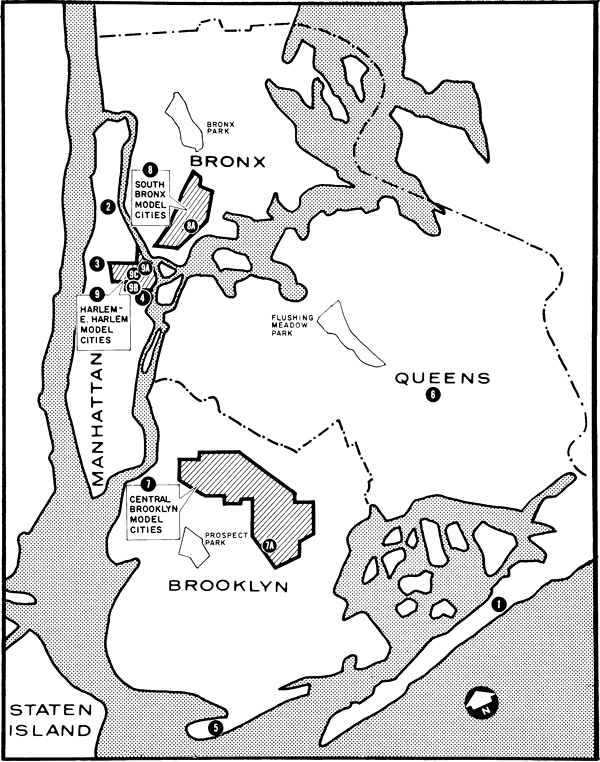
In New York City, the program supported new kinds of housing projects called vest-pocket developments, which got their name from their smaller scale: midsize buildings or complexes built on vacant lots or underutilized land. New housing such as the Betances Houses in the South Bronx were designed to add density without major redevelopment taking place – a direct response to midcentury urban renewal projects, which had destroyed and displaced entire neighborhoods populated by the city’s poorest residents. Meanwhile, cities such as Seattle used the funds to renovate older apartment buildings instead of tearing them down, which helped preserve the character of local neighborhoods.
The goal was to create affordable housing while keeping communities intact.
Despite its ambitious vision, Model Cities faced resistance almost from the start. The program was underfunded and politically fragile. While some officials had hoped for US$2 billion in annual funding, the actual allocation was closer to $500 million to $600 million, spread across more than 60 cities.
Then the political winds shifted. Though designed during the optimism of the mid-1960s, the program started being implemented under President Richard Nixon in 1969. His administration pivoted away from “people programs” and toward capital investment and physical development. Requirements for resident participation were weakened, and local officials often maintained control over the process, effectively marginalizing the everyday citizens the program was meant to empower.
In cities such as San Francisco and Chicago, residents clashed with bureaucrats over control, transparency and decision-making. In some places, participation was reduced to token advisory roles. In others, internal conflict and political pressure made sustained community governance nearly impossible.
Critics, including Black community workers and civil rights activists, warned that the program risked becoming a new form of “neocolonialism,” one that used the language of empowerment while concentrating control in the hands of white elected officials and federal administrators.
A legacy worth revisiting
Although the program was phased out by 1974, its legacy lived on.
In cities across the country, Model Cities trained a generation of Black and brown civic leaders in what community development leaders and policy advocates John A. Sasso and Priscilla Foley called “a little noticed revolution.” In their book of the same name, they describe how those involved in the program went on to serve in local government, start nonprofits and advocate for community development.
It also left an imprint on later policies. Efforts such as participatory budgeting, community land trusts and neighborhood planning initiatives owe a debt to Model Cities’ insistence that residents should help shape the future of their communities. And even as some criticized the program for failing to meet its lofty goals, others saw its value in creating space for democratic experimentation.
Today, as policymakers once again debate how to respond to deepening inequality and a lack of affordable housing, the lost promise of Model Cities offers vital lessons.
Model Cities was far from perfect. But it offered a vision of how democratic, local planning could promote health, security and community.
Deyanira Nevárez Martínez is a trustee of the Lansing School District Board of Education and is currently a candidate for the Lansing City Council Ward 2.
A United Nations committee is being urged to act over human rights violations committed by illegal loggers in Papua New Guinea.
Watchdog groups Act Now! and Jubilee Australia have filed a formal request to the UN Committee on the Elimination of Racial Discrimination to consider action at its next meeting in August.
“We have stressed with the UN that there is pervasive, ongoing and irreparable harm to customary resource owners whose forests are being stolen by logging companies,” Act Now! campaign manager Eddie Tanago said.
He said these abuses were systematic, institutionalised, and sanctioned by the PNG government through two specific tools: Special Agriculture and Business Leases (SABLs) and Forest Clearing Authorities (FCAs) — a type of logging licence.
“For over a decade since the Commission of Inquiry into SABLs, successive PNG governments have rubber stamped the large-scale theft of customary resource owners’ forests by upholding the morally bankrupt SABL scheme and expanding the use of FCAs,” Tanago said.
He said the government had failed to revoke SABLs that were acquired fraudulently, with disregard to the law or without landowner consent.
“Meanwhile, logging companies have made hundreds of millions, if not billions, in ill-gotten gains by effectively stealing forests from customary resource owners using FCAs.”
Abuses hard to challenge The complaint also highlights that the abuses are hard to challenge because PNG lacks even a basic registry of SABLs or FCAs, and customary resource owners are denied access to information to the information they need, such as:
The existence of an SABL or FCA over their forest;
A map of the boundaries of any lease or logging licence;
Information about proposed agricultural projects used to justify the SABL or FCA;
The monetary value of logs taken from forests; and
The beneficial ownership of logging companies — to identify who ultimately profits from illegal logging.
“The only reason why foreign companies engage in illegal logging in PNG is to make money,” he said, adding that “it’s profitable because importing companies and countries are willing to accept illegally logged timber into their markets and supply chains.”
ACT NOW campaigner Eddie Tanago . . . “demand a public audit of the logging permits – the money would dry up.” Image: Facebook/ACT NOW!/RNZ Pacific
“If they refused to take any more timber from SABL and FCA areas and demanded a public audit of the logging permits — the money would dry up.”
Act Now! and Jubilee Australia are hoping that this UN attention will urge the international community to see this is not an issue of “less-than-perfect forest law enforcement”.
“This is a system, honed over decades, that is perpetrating irreparable harm on indigenous peoples across PNG through the wholesale violation of their rights and destroying their forests.”
This article is republished under a community partnership agreement with RNZ.
You’ve probably heard the terms “abs” and “core” used in social media videos, Pilates classes, or even by physiotherapists.
Given they seem to refer to the same general area of your body, you might have wondered what the difference is.
When people talk about “abs”, they’re often referring to the abdominal muscles you can see. Conversely, the term “core” is used to describe a broader group of muscles in the context of function, rather than aesthetics.
While abs and core are often spoken about separately, there’s a lot of overlap between them.
What are abs?
The term “abs” is short for abdominal muscles. These are the muscles that run along the front and side of your stomach.
When someone talks about getting a six-pack, they’re usually referring to toning the rectus abdominis, the long muscle that goes from the bottom of your ribs to the top of your pelvis.
Your abdominals also include your obliques, which sit on the side of your body, and your transverse abdominis, which sits underneath your other abdominal muscles and wraps around your waist like a belt.
The term “abs” has been around for a long time, and is perhaps most often used when discussing aesthetics.
For example, it’s common to see health and wellness publications offering advice on how to achieve “flat” or “six-pack” abs.
The long muscle that goes from the bottom of your ribs to the top of your pelvis is called the rectus abdominis. phoenix creation/Shutterstock
What about the core?
When people talk about the “core”, they are often referring to your abdominals, but also the muscles in your back (your spinal erectors), hips, glutes, pelvic floor, and your diaphragm.
These are the muscles that can stabilise your spine against movement, and aid in the transfer of force between the upper and lower limbs.
The term “core” wasn’t commonly used until the early 2000s, when it became synonymous with core training.
While the exact reason for its surge in popularity isn’t clear, it most likely followed a study published in 1998 that suggested people with lower back pain might have impaired function of their deep abdominal muscles.
From there, the concept of “core training” entered the mainstream, where it was proposed to reduce lower back pain and improve athletic performance.
Other research suggests there aren’t any differences in how people with and without lower back pain recruit and use their core muscles.
In a separate study, improvements in core strength and stability after a nine-week core stability training program were not significantly associated with improvements in pain and function, further questioning this relationship.
The link between core strength and athletic performance is also unclear.
A 2016 review found some very small associations between measures of core muscle strength and measures of whole body strength, power and balance. However, because of the design of the studies reviewed, we don’t know whether people who have better strength, power and balance simply have stronger core muscles, or whether stronger core muscles increase strength, power and balance.
An earlier review summarised the effect of core stability training on measures of athletic performance, including jumping, sprinting and throwing. It concluded this type of training is unlikely to provide substantial benefits to measures of general athletic performance such as jumping and sprinting.
However, this review also suggested that, given the important role of the abs in torso rotation, strengthening these muscles might have merit in improving performance in sports that involve swinging a bat or throwing a ball.
This is likely to apply to other sports that involve rapid torso movement as well, such as mixed martial arts and kayaking.
Stronger abdominal muscles could offer an advantage in sports that involve rotation. Lino Khim Medrina/Pexels
How can you exercise your abs and core?
There’s good evidence that simply getting stronger by lifting weights can help prevent injuries. Training your core to get stronger should have a similar impact, as long as it’s part of a broader training program.
We also know having weaker muscles makes you more likely to experience functional limitations and disability in older age. So alongside any other potential benefits, improving core strength with the rest of your body could help keep you fit and healthy as you get older.
There are plenty of exercises you can do to train your core and abs.
If you’re new to core training, you might want to start off with some lower-level isolation exercises that don’t involve any movement of the core. These include things like planks, bird dogs, and pallof presses. These are unlikely to cause too much muscle soreness, but will train your core muscles.
Once you feel like these are going well, you can start moving into some more dynamic exercises such as sit ups, Russian twists and leg raises, where you train your abdominals using a full range of motion.
Hunter Bennett does not work for, consult, own shares in or receive funding from any company or organisation that would benefit from this article, and has disclosed no relevant affiliations beyond their academic appointment.
Australia in 2025 is living up to Dorothy McKellar’s poetic vision of a country stricken by “drought and flooding rains”.
The clean up is underway from the deadly floods in the Hunter and mid-north coast regions of New South Wales. At the same time, large swathes of Victoria, South Australia and Tasmania are severely drought affected due to some of the lowest rainfall on record.
Do we have the right support arrangements in place to help farmers and communities survive the current dry period?
Or is there a better way to help primary producers through the tough times, which are predicted to become more frequent and severe under climate change?
The decision was made for several reasons, including the high level of expenditure on drought relief in Queensland. The federal finance minister at the time, Peter Walsh, suggested the Queensland government was using the arrangements as a “sort of National Party slush fund to be distributed to National Party toadies and apparatchiks”.
The more considered reason was that our scientific understanding of the drivers of Australia’s climate, such as El Niño, suggested drought was a normal part of our environment. Since then, climate modelling points to droughts becoming an even more familiar sight in Australia as a result of global warming.
So the focus of drought relief shifted from disaster response to risk management.
Building resilience
The National Drought Policy announced in 1992 stated drought should be managed like any other business risk.
Since then, the language of resilience has been added to the mix and the government lists three objectives for drought policy:
to build the drought resilience of farming businesses by enabling preparedness, risk management and financial self-reliance
to ensure an appropriate safety net is always available to those experiencing hardship
to encourage stakeholders to work together to address the challenges of drought.
Since 1992, various governments have introduced, and tweaked, different programs aimed at supporting drought-affected farmers.
The most successful program is the Farm Management Deposits Scheme. This has accumulated a whisker under A$6 billion in farmer savings, which are available to be drawn down during drought to support farm businesses.
In 2025, the federal government is using the Future Drought Fund to invest $100 million per year to promote resilience. It also offers support through the Farm Household Allowance and concessional loans for farms and related small businesses.
Apart from the Farm Management Deposit Scheme and the Farm Household Allowance, these programs do not offer immediate financial assistance to the increasing number of farmers across southern Australia being impacted by drought. If the drought worsens, it is likely there will be increasing calls for greater support.
This provides the government with a dilemma: it is already investing significantly in the risk and resilience approach to drought, but politically, it is hard to resist cries for help from farmers who are a highly valued group in our community.
A better way?
There is a solution available to government to improve support. It can be done through the provision of “revenue contingent loans” for drought-affected farmers. Financial support would be available to farmers when they need it, consistent with the risk management principles underpinning the national drought policy.
Our detailed modelling, extending now over 25 years, shows compellingly that revenue-based loans would mean taxpayers spending less on drought arrangements. But the assistance compared with other forms of public sector help would be greater.
Capacity to repay would be the defining feature of the scheme. A revenue contingent loan is only paid down in periods when the farm is experiencing healthy cash flow. If a farm’s annual financial situation is difficult, no repayments are required.
These loans would also remove foreclosure risk associated with an inability to repay when times are tough. Loan defaults simply can’t happen, a feature which also takes away the psychological trauma associated with the fear of losing the property due to unforeseen financial difficulties.
Good policy
These benefits would address governments’ main motivation with drought policy, which is risk management. That is because repayment concerns and default prospects would be eliminated. With farming, in which there is great uncertainty, these are very significant pluses for policy.
Revenue contingent loans are a proper risk management financial instrument that requires low or no subsidies from government. They would complement the Farm Management Deposit Scheme and be an effective replacement for the concessional loans currently on offer.
A win-win for farmer and taxpayer, alike.
Linda Botterill has in the past received funding from the Australian Research Council, the Grains Research and Development Corporation, and Rural Industries Research and Development Corporation (now Agrifutures).
Bruce Chapman has received funding from the Australian Research Council in various years, and was a consultant to the Federal Government’s Department of Education University Accord Enquiry in 2023/24.
This means machetes will be added to the list of things – such as swords, crossbows, slingshots, pepper spray and about 40 other items – that are essentially banned.
Possession of a prohibited item can result in penalties of two years imprisonment or a fine of more than $47,000.
Victoria is the first state in Australia to outright ban machetes. In other jurisdictions, machetes (like knives) may be used for lawful purposes, and are “controlled” or “restricted” – meaning you need a reasonable excuse or valid reason for possessing one.
Most jurisdictions (except Tasmania and the Northern Territory) prohibit sales to minors.
Will there be exemptions?
Allan said the sales ban will have no exceptions, meaning nobody will be able to purchase a machete.
However, machetes are a useful tool, particularly for agricultural purposes, and outdoor uses such as camping.
When the new laws come into effect in September, people will be able to apply for a special “commissioner’s approval” to possess a machete. The exact details of who may be granted an exemption, and under what circumstances, are not yet clear.
Nor is it clear whether people will have to, for example, pay for a permit to own a machete, or what measures people may have to take to prevent unauthorised access or theft.
How much of a problem is knife crime in Australia?
Despite alarming headlines and political rhetoric about a knife crime epidemic, it is hard to say exactly how much of a problem knife crime is.
Statistics about weapon use and unlawful possession are not always disaggregated by type of weapon.
Crime statistics are notoriously slippery, and what looks like a “crisis” can often be the result of changes in policing practices. For instance, when police run an intensive operation searching for knives in public places, they are more likely to find knives in public places. This does not necessarily mean there are more people out there carrying knives.
The one crime where statistics are fairly clear is homicide: knives or other sharp instruments have long been the most common weapon used in Australia.
The actual number of homicides involving knives or sharp instruments has stayed relatively stable over time. When you take into account the increase in how many people live in Australia, the rate per head of population has fallen.
It is tempting to think a machete ban would reduce these figures even more. Unfortunately, violence prevention is not that simple.
Homicides that involve people using their hands and feet have declined markedly over time. Why has this “method”, which is available to anybody, fallen so much? The answer is: nobody really knows.
This tells us we need to look beyond types of weapons.
Will the ban achieve anything?
Violence is complex and simple “solutions” may make people feel safe (at least temporarily) but seldom deliver real results over the longer term.
It’s easy for governments to ban things, which is why they do it so often. But we should pay close attention to what Victorian Police Minister Anthony Carbine said in March:
This is Australia’s first machete ban, and we agree with police that it must be done once and done right. It took the UK (United Kingdom) 18 months – we can do it in six.
Lawmaking should never be a race. Nor should politicians be mere mouthpieces doing what police tell them.
Police are the ones we turn to for protection when violence breaks out, but this does not mean they are the only ones we should go to when we are looking for the most effective ways to deal with problems.
Tackling violence takes serious commitment to complex and intensive programs that focus on the root causes, particularly among at-risk families and disadvantaged, marginalised youth.
This is hard work that takes a long time, includes many different stakeholders, and seldom sways votes. Focusing on the choice of weapon is simply a distraction.
There is no question the sight of machete-wielding youths storming through a busy shopping centre is terrifying. People should be able to go about their business without fearing they will be attacked.
But reducing violence takes a lot more than banning one particular weapon, as Victoria will likely find out.
Dr Samara McPhedran does not does not work for, consult to, own shares in or receive funding from any company or organisation that might benefit from this article.
Source: The Conversation (Au and NZ) – By Claire Walker, Associate Professor, School of Historical and Classical Studies, University of Adelaide
La Religieuse Tenant La Sainte Croix (The Nun Holds the Cross), Jacques Callot, French,1621–35.The Metropolitan Museum of Art
Is loneliness a modern epidemic as we are so often told? Did people in the past suffer similar feelings of isolation?
The word “loneliness” was not common before the 19th century. Cultural historian Fay Bound Alberti argues it was rarely used before 1800.
This does not mean people didn’t feel alone. They just had different names for it – and they didn’t always think it was bad. Modern people living hectic lives in bustling cities often yearn for peace and tranquillity; so did our forebears.
From the hermits of the early Christian church escaping society for lives of solitary prayer, to medieval anchorites in secluded cells, isolation was a prerequisite for spiritual success.
But were isolated monks, nuns and hermits also lonely, as we would understand the word today? And do early modern nuns offer solutions for our own loneliness epidemic?
Searching for solitude
Early Christian religious thinkers and medieval churchmen viewed voluntary loneliness positively, with successful practitioners becoming saints. But religious solitude was not without its problems.
Holy recluses, far from escaping society, were pursued for spiritual advice. Some, like Simeon Stylites (390–459), went to extraordinary measures, living atop a pillar near Aleppo for 30-odd years to achieve solitude.
Monasticism provided an alternative. Monastic rules, like that of Benedict of Nursia (480–547), institutionalised isolation. In Benedictine monasteries, solitude was created through seclusion from society, strict silence, and prohibition of close friendships.
Yet, like hermits, monks and nuns couldn’t escape the world completely. Monasteries constituted vital spiritual resources, providing multiple services and conducting business for wider society.
Nuns at Work, Follower of Alessandro Magnasco (Italian, Milanese, first half 18th century). The Metropolitan Museum of Art
Over the centuries, reforming bishops believed there was too much interaction between monasteries and the wider community. This led to repeated church reforms from the 10th century onwards to secure separation.
Male members of the clergy were particularly worried about nuns who were considered “less capable” of maintaining holy solitude. As a result, women had to observe strict enclosure behind convent walls, limiting their economic and spiritual capacity. Reforms in the 16th century upheld nuns’ incarceration.
Many women resisted, but others embraced isolation as spiritually liberating.
Isolation in exile
Early modern English convents, exiled in Europe after Henry VIII’s dissolution of the monasteries, shed light on nuns’ experiences of loneliness.
The convents were subject to traditional rules of enclosure and silence. To become nuns, women left their homeland, family and friends. They joined English houses, so they were not alone among strangers, but they had to remain emotionally distant from one another, despite living in a community where they did everything together.
Women wanting spiritual fulfilment often sought additional solitude.
Benedictine mystic Gertrude More (1606–33) praised prescribed periods of silence because in them she might hear her Lord’s whispers.
Carmelite prioress Teresa of Jesus Maria Worsley (1601–42) took time from her busy administrative role and hid from the other nuns to pray in solitude.
The Nun in Count Burckhardt, from the periodical Once a Week. After James McNeill Whistler, American. Associated with Dalziel Brothers, British. September 27 1862. The Metropolitan Museum of Art
Not all women found seclusion and silence so fulfilling, however, with some experiencing bouts of spiritual doubt and poor mental health. Many missed their family and homeland.
This was particularly common among young sisters and those in convent schools. In the 1660s, Catherine Aston returned to England to recover after suffering poor health and depression.
Alone in a crowd
Nuns’ diverse experiences of monastic solitude reflect modern urban loneliness.
In 1812 Lord Byron expressed the contradictory nature of loneliness in the poem Childe Harold, juxtaposing the positive solitary contemplation of nature with its negative counterpart – aloneness “midst the crowd”.
In the present day many people feel alone in cities, even domestic households, as Olivia Laing and Keith Snell have shown.
How might this be countered? Do early modern nuns offer solutions?
A study of 21st century Spanish monks and nuns found monastic training, prayer and silence create feelings of spiritual satisfaction and purpose which lessens loneliness.
Prayer is not the answer for everyone because modern isolation is caused by multiple factors in a largely secular society. There are alternative paths to meditation, however, through yoga or mindfulness which can provide feelings akin to monks’ and nuns’ “spiritual satisfaction”.
Similarly, the nuns’ sense of “purpose” might be achieved through nostalgia. Nostalgia is the longing for an idealised and unobtainable past – a time when life was better. Research by psychologists suggests nostalgia can be beneficial in counteracting loneliness, even enabling forward-looking and proactive behaviours.
This was certainly true for the nuns exiled in Europe following Henry VIII’s abolition of monasticism in England. They dreamt of a future when their convents would return to England, family and friends. All nuns prayed both communally and in private for this outcome.
Some went further, engaging in missionary work and political intrigue to achieve their goal.
We cannot know whether this stifled loneliness, but by combining the benefits of meditation and activism it likely fostered a shared sense of purpose.
Just as Gertrude More and Teresa of Jesus Maria Worsley found solitude essential for spiritual satisfaction, activist nuns believed they might reverse the English reformation from their exiled convents. Solitude, prayer and political engagement gave them a sense of purpose.
Everyone’s situation is unique. There is no single solution for resolving isolation in the contemporary world. But the knowledge that it can be positive is perhaps a step towards countering the modern epidemic.
Claire Walker has received funding from the Australian Research Council.
As debate rages about the federal government’s plan to lift the tax on earnings on superannuation balances over A$3 million, it’s worth revisiting why we offer super tax breaks in the first place, and why they need to be reformed.
Tax breaks on super contributions mean less tax is paid on super savings than other forms of income. These tax breaks cost the federal budget nearly $50 billion in lost revenue each year.
These tax breaks boost the retirement savings of super fund members. They also ensure workers don’t pay punitively high long-term tax rates on their super, since the impact of even low tax rates on savings compounds over time.
Two thirds of the value of super tax breaks benefit the top 20% of income earners, who are already saving enough for their retirement.
Few retirees draw down on their retirement savings as intended, and many are net savers – their super balance continues to grow for decades after they retire.
By 2060, Treasury expects one-third of all withdrawals from super will be via bequests – up from one-fifth today.
Superannuation in Australia was intended to help fund retirements. Instead, it has become a taxpayer-subsidised inheritance scheme.
The tax breaks aren’t just inequitable; they are economically unsound. Generous tax breaks for super savers mean other taxes (such as income and company taxes) must be higher to make up the forgone revenue. That means the burden falls disproportionately on younger taxpayers.
The government should go further
The government’s plan to increase the tax rate on superannuation earnings for balances exceeding $3 million from 15% to 30% is one modest step towards fixing these problems. The tax would only apply to the amount over $3 million, not the entire balance.
Rather than being the biggest losers from the lack of indexation, younger Australians are the biggest beneficiaries. It means more older, wealthier Australians will shoulder some of the burden of budget repair and an ageing population. Otherwise, younger generations would bear this burden alone.
The facts speak for themselves: a mere 0.5% of Australians have more than $3 million in their super, and 85% of those are aged over 60.
Even in the unlikely scenario where the threshold remains fixed until 2055 – or for ten consecutive parliamentary terms – it would still only affect the top 10% of retiring Australians. Treasurer Jim Chalmers has rightly pointed out that it is unlikely the threshold will never be lifted.
Far from abandoning the proposed $3 million threshold, the government should go further and drop the threshold to $2 million, and only then index it to inflation, saving the budget a further $1 billion a year.
There is no rationale for offering such generous earnings tax breaks on super balances between $2 million and $3 million.
At the very least, if the $3 million threshold is maintained, it should not be indexed until inflation naturally reduces its real value to $2 million, which is estimated to occur around 2040.
Sure, it’s complicated
Levying a higher tax rate on the earnings of large super balances is complicated by the fact existing super earnings taxes are levied at the fund level, not on individual member accounts.
And it’s true that levying a 15% surcharge on the implied earnings of the account over the year (the change in account balance, net of contributions and withdrawals) will impose a tax on unrealised capital gains, or paper profits.
Taxing capital gains as they build up removes incentives to “lock in” investments to hold onto untaxed capital gains, as the Henry Tax Review recognised. But it can create cash flow problems for some self-managed super fund members who hold assets such as business premises or a farm in their fund.
Yet there are seldom easy answers when it comes to tax changes.
Most people with such substantial super balances are retirees who already maintain enough liquid assets to meet the minimum drawdown requirements.
Indeed, self-managed super funds are legally obligated to have investment strategies that ensure liquidity and the ability to meet liabilities.
In any case, the tax does not have to be paid from super. Australians with large super balances typically earn as much income from investments outside super. And the wealthiest 10% of retirees today rely more on income from outside super than income from super.
Good public policy, like politics, always requires some level of compromise.
Super tax breaks should exist only where they support a policy aim. And on balance, trimming unneeded super tax breaks for the wealthiest 0.5% of Australians would make our super system fairer and our budget stronger.
The authors do not work for, consult, own shares in or receive funding from any company or organisation that would benefit from this article, and have disclosed no relevant affiliations beyond their academic appointment.
Source: The Conversation (Au and NZ) – By Indra Mckie, Postdoctoral Researcher in Collaborative Human-AI Interaction Culture, University of Technology Sydney
Have you heard of the “male technologist” mindset? It may sound familiar, and you may even know such people personally.
Design researchers Turkka Keinonen and Nils Ehrenberg
have defined the male technologist as someone who is obsessed with concerns about energy, efficiency and reducing labour.
This archetype became apparent in my PhD research when I interviewed 12 families about their use of early domestic robots and smart home devices Amazon Alexa and Google Home. One father over-engineered his smart home so much, his kids struggled to turn the lights on and off.
The male technologist often complicates and overcompensates with technology, raising the question: are these real problems tech can solve, or just quick fixes masking deeper issues?
Long-standing patriarchal systems shape the gendered division of domestic labour. Andrea Piacquadio/Pexels
It’s not about making men feel guilty
The term “male technologist” isn’t about making men feel guilty for using technology to innovate. Anyone can adopt this mindset. It can even apply to institutions that prioritise innovation and efficiency over emotional insight, lived experience or community-based ways of creating change.
Mental load is the invisible, ongoing effort of planning, organising and managing daily life that often goes unnoticed but is essential to keeping things running.
Take one of my research participants, Hugo (name changed for privacy). A father of two, Hugo embodies this male technologist mindset by creating “business scenarios” to solve his family’s problems with smart home automation.
Indra Mckie/The Conversation
Treating family life like a system to optimise, Hugo noticed his wife looking stressed while cooking. So, he installed a smart clock with Alexa in the kitchen to help her manage multiple timers.
Hugo saw it as an empathetic solution, tailored to the way she liked to cook. But instead of sharing the load of this domestic task, he “engineered” around it, offloading responsibility to smart devices.
Smart home tech promises to save time, but it hasn’t solved who does what at home. Instead, it hands more power to those with digital know-how, letting them automate tasks they may never have done or fully understood in the first place.
Typically, these tend to be men. A recent survey by Kaspersky showed 72% of men are the ones who set up their families’ smart devices, compared to 47% of women.
Unfortunately, a recent Australian survey found women still do more unpaid domestic work than men. Even in households where women have full-time jobs, they spend almost four hours more on household chores per week than men do.
Who really benefits in a smart home
Amazon first released Alexa back in 2014, with Apple and Google quickly following with their own smart home speakers. In the past decade, some people have adopted the hype of the “smart home” to make life easier by controlling technology without needing to get off the couch.
But smart technology can also affect access to shared spaces, create new forms of control over things and people in the home, and constrain human interactions. And it can be set up to reinforce the existing hierarchy within the household.
Indra Mckie/The Conversation
By his own admission, Hugo has over-engineered the home to the point where his children struggle to turn the lights on and off, having disabled the physical switches in favour of voice commands.
My research looked at how automation is changing care giving and acts of service in the home. With “compassionate automation”, someone could use smart technology to support loved ones in thoughtful ways, such as setting up smart home routines or reminders to make daily life easier.
But even when it comes from a place of care, tech-based help is not the same as human care. It may not always feel meaningful to the person receiving or providing it. As another participant in my research put it:
I think there are still human interactions [..] that you probably don’t want AI to mediate for you.
When we recognise this, we can imagine ways of designing and using tech in ways that emphasise care and relationships. Instead of setting up a smart timer in the kitchen, the technologist could ask his wife what she’s cooking and join her, using the voice assistant together to follow a recipe step by step.
The ultimate fantasy of the male technologist is more toys to solve domestic labour problems at home. Gordenkoff/Shutterstock
But if men are now taking on more of the digital load, will the mental load finally shift too? Or will they continue to automate the easy, visible tasks while the emotional and cognitive labour still goes unseen and unshared?
Elon Musk has declared plans to launch several thousand Optimus robots – Tesla’s bid into the humanoid robot race.
He expects the explosion of a new market of personal humanoid robots, generating US$10 trillion in revenue long-term and potentially becoming the most valuable part of Tesla’s business.
But as homes get “smarter,” we have to ask: how is this reshaping family dynamics, relationships and domestic responsibility?
It’s important to consider if outsourcing chores to technology really is about easing the load, or just engineering our way around it without addressing the deeper mental and relational work of household labour.
Indra Mckie received the UTS Research Excellence Scholarship to complete her PhD research at the University of Technology Sydney.
A 5-month-old diagnosed with malnutrition being treated at Nasser Hospital in Khan Yunis in Gaza, May 2025.Anadolu/Getty
Last week, the United Nations warned more than 14,000 babies would die of malnutrition in 48 hours if Israel continued to block aid from entering Gaza.
After the figure was widelyreported, that timeline has been walked back, with a UN spokesperson clarifying the projection is for the next 11 months.
Between April 2025 and March 2026, there will be 71,000 cases of acute malnutrition among children under five, including 14,100 severe cases.
An estimated 17,000 breastfeeding and pregnant women will also require treatment for acute malnutrition during this time.
Starvation and malnutrition are harmful for anyone. But for infants the impact can be profound and lasting.
What is malnutrition?
In infants and young children, malnutrition means they have a height, weight and head circumference that don’t match standard charts, due to a lack of proper nutrition.
Nutritional deficiencies are especially common among young children and pregnant women.
The human body needs 17 essential minerals. Deficiencies in zinc, iron and iodine are the most dangerous, linked to a higher risk of infants dying or developing brain damage.
When malnutrition is acute to severe, infants and young children will lose weight because they’re not getting enough food, and because they’re more susceptible to illness and diarrhoea.
A child experiencing wasting has lost significant weight or fails to gain weight, resulting in a dangerously low weight-for-height ratio.
A persistent lack of adequate food leads to chronic malnutrition, or stunting, where growth and development is impaired.
Risk of infections and mortality
Malnourished infants have weakened immune systems. This makes them more vulnerable to developing infections, due to smaller organs and deficits in lean mass. Lean mass is the body’s weight excluding fat and is crucial for supporting healthy growth, strength and overall development.
When children are starving, they are much more likely to die from common illnesses such as diarrhoea and pneumonia.
The human brain develops extraordinarily rapidly during the first 1,000 days of life (from conception to age two). During this time, adequate nutrition is essential.
Children’s developing brains are more likely to be affected by nutritional deficiencies than adults.
When prolonged, malnutrition may lead to structural brain changes, including a smaller brain and less myelin – the protective membrane that wraps around nerve cells and helps the brain send messages.
Chronic malnutrition can affect brain functions and processes such as thinking, language, attention, memory and decision-making.
However, some effects are reversible. Early, intensive interventions – such as access to nutrient-rich food and medicines to treat hypoglycaemia (low blood sugar) and fight infections – can help children catch-up on growth and brain development.
For example, one review of studies involving undernourished preschool children found their cognitive abilities, such as concentration, reasoning and emotional regulation improved somewhat when they were given iron supplements and multivitamins.
However malnutrition during the crucial window under two years old increases the risk of lifelong disabilities.
It’s also important to note recovery is more likely in an environment where nutritious food is available and children’s emotional needs are taken care of.
In Gaza, Israel’s military operations have destroyed 94% of hospital infrastructure and humanitarian aid remains severely restricted. The conditions necessary for children’s recovery are out of reach.
Pregnant and breastfeeding mothers
Severe maternal malnutrition can increase the mother and child’s risk of dying or experiencing complications during pregnancy.
When a breastfeeding mother is malnourished, she will produce less breastmilk and it will be lower quality. Deficiencies in iron, iodine, and vitamins A, D and zinc will compromise the mother’s health reduce the nutritional value of breast milk. This can contribute to poor infant growth and development.
Starved mothers may experience fatigue, poor health and psychological distress, making it challenging to maintain breastfeeding.
Other organ impacts
Data from those born during the Dutch famine of 1944-45 have helped us understand the lifelong health impacts on children conceived and born while their mothers were starving.
Among this group, malnutrition affected the development and function of many of the children’s organs, including the heart, lung and kidneys.
This group also had higher rates of schizophrenia, depression and anxiety, and lower performance in cognitive testing.
They also had a higher risk of developing chronic degenerative diseases (such as cardiovascular disease and kidney failure) and dying prematurely.
Is the damage irreversible?
Recovery is possible. But it depends on how severely malnourished the child is, and when and what kind of support they receive.
Evidence shows children remain vulnerable and have a higher risk of dying even after being treated for complications from severe acute malnutrition.
nutritional rehabilitation (giving the child nutrient-rich foods, specialised feeding, and addressing underlying deficiencies)
breastfeeding support for mothers
providing rehabilitation and health care in the community (so families and children can return to everyday routines).
This seems difficult if not impossible in Gaza, where Israel’s blockade on aid and ongoing military operations mean safety and infrastructure are severely compromised.
Repeated or prolonged episodes of malnutrition increase the risk of lasting developmental harm.
The authors do not work for, consult, own shares in or receive funding from any company or organisation that would benefit from this article, and have disclosed no relevant affiliations beyond their academic appointment.
Asia Pacific Report editor David Robie was honoured with Member of the New Zealand Order of Merit (MNZM) at the weekend by the Governor-General, Dame Cindy Kiro, in an investiture ceremony at Government House Tāmaki Makaurau.
He was one of eight recipients for various honours, which included Joycelyn Armstrong, who was presented with Companion of the King’s Service Order (KSO) for services to interfaith communities.
Dr Robie’s award, which came in the King’s Birthday Honours in 2024 but was presented on Saturday, was for “services to journalism and Asia-Pacific media education”.
Dr David Robie has contributed to journalism in New Zealand and the Asia-Pacific region for more than 50 years.
Dr Robie began his career with The Dominion in 1965 and worked as an international journalist and correspondent for agencies from Johannesburg to Paris. He has won several journalism awards, including the 1985 Media Peace Prize for his coverage of the Rainbow Warrior bombing.
He was Head of Journalism at the University of Papua New Guinea from 1993 to 1997 and the University of the South Pacific in Suva from 1998 to 2002. He founded the Pacific Media Centre in 2007 while professor of journalism and communications at Auckland University of Technology.
He developed four award-winning community publications as student training outlets. He pioneered special internships for Pacific students in partnership with media and the University of the South Pacific. He has organised scholarships with the Asia New Zealand Foundation for student journalists to China, Indonesia and the Philippines.
He was founding editor of Pacific Journalism Review journal in 1994 and in 1996 he established the Pacific Media Watch, working as convenor with students to campaign for media freedom in the Pacific.
He has authored 10 books on Asia-Pacific media and politics. Dr Robie co-founded and is deputy chair of the Asia Pacific Media Network/Te Koakoa NGO.
The investiture ceremony on 24 May 2025. Video: Office of the Governor-General
In an interview with Global Voices last year, Dr Robie praised the support from colleagues and students and said:
“There should be more international reporting about the “hidden stories” of the Pacific such as the unresolved decolonisation issues — Kanaky New Caledonia, “French” Polynesia (Mā’ohi Nui), both from France; and West Papua from Indonesia.
“West Papua, in particular, is virtually ignored by Western media in spite of the ongoing serious human rights violations. This is unconscionable.”
Some 2.1 million Gazans are facing critical hunger levels, with many at risk of famine following Israel’s 11-week blockade on aid intended to pressure Hamas.
However, Israel is controversially planning to transfer responsibility for distributing aid in Gaza through a new system that would sideline the UN and other aid agencies that have been working there for decades.
In a joint statement, two dozen countries, including the UK, many European Union member states, Australia, Canada and Japan, have supported the UN’s position on the new model. The signatories said it won’t deliver aid effectively at the scale required, and would link aid to political and military objectives.
The UK, Canada and France have further threatened to take “concrete actions” to pressure Israel to cease its military offence and lift restrictions on aid.
And in another blow to the credibility of the new system, the head of the newly established Gaza Humanitarian Foundation, which will oversee the distribution of aid, resigned on Monday. He cited concerns over a lack of adherence to “humanitarian principles”.
So, how will would this new aid delivery system work, and why is it so problematic?
A military-led system with deep flaws
Israel has relied on unsubstantiated claims of large-scale aid diversion by Hamas to justify taking control over aid delivery in Gaza. The UN and its humanitarian partners continue to refute such claims, publicly sharing details of their end-to-end monitoring systems.
Several reportshave revealed the plan would establish four secure distribution sites for aid under Israeli military control in southern and central Gaza.
Security would be provided by private military contractors, such as Safe Reach Solutions, run by a former CIA officer, while the Gaza Humanitarian Foundation would oversee the distribution of food.
There is little clarity beyond this on who is behind the new system and who is funding it.
The initiative has provoked strong reactions from the UN and the wider humanitarian aid system.
Senior aid officials have underlined the fact the international aid system cannot support a military-led initiative that would breach international law and be incompatible with humanitarian principles of neutrality, impartiality and independence.
There are also concerns the four distribution hubs would require individuals to travel long distances to collect and carry heavy packages. This could leave female-headed households, people with disabilities, those who are ill and the elderly at greater risk of exclusion and exploitation.
In addition, a leaked UN memo reportedly expressed concern over UN involvement in the initiative, saying the organisation could be “implicated in delivering a system that falls short of Israel’s legal responsibilities as an occupying power”.
There are further concerns the UN could be implicated in atrocity crimes, including a risk of genocide through its participation in the system, setting a dangerous precedent for future crises.
Tom Fletcher, the UN relief chief, has called the plan “a deliberate distraction” and “a fig leaf for further violence and displacement”.
And famine expert Alex de Waal claims Israel has “taken a page from the colonial war handbooks” in weaponising food aid in pursuit of military victory.
He argues the planned quantities of food aid will be insufficient and lack the specialised feeding necessary for malnourished children, in addition to clean water and electricity.
What has not been stated but can be implied from the strong resistance to the new system lacking humanitarian expertise: the lack of good faith on Israel’s part. The Israeli government continues to pursue an elusive military victory at the expense of the rules and norms intended to preserve humanity in war.
Wider pattern of behaviour
The UN’s rebuke of the plan should be interpreted through a wider pattern of Israeli government behaviour undermining the international aid system and its role in upholding respect for humanitarian principles.
These fundamental principles include respect for humanity, neutrality, impartiality and operational independence. As the joint statement by 24 nations on aid to Gaza this month said:
Humanitarian principles matter for every conflict around the world and should be applied consistently in every war zone.
International humanitarian law requires member states to respect – and ensure respect – for the rules of war. This includes taking all feasible measures to influence the parties engaged in a conflict to respect humanitarian law.
As Fletcher, the UN relief chief, reminded the UN Security Council earlier this month, this hasn’t been done in past cases of large-scale violations of international human rights, such as in Srebrenica (in the former Yugoslavia) and Rwanda.
He said reviews of the UN’s conduct in cases like these
[…] pointed to our collective failure to speak to the scale of violations while they were committed.
While humanitarians are best placed to deliver aid, greater collective political action is what’s needed. Pressure now falls on all UN member states use their levers of influence to protect civilians and prevent the further weaponisation of aid at this critical time.
Amra Lee does not work for, consult, own shares in or receive funding from any company or organisation that would benefit from this article, and has disclosed no relevant affiliations beyond their academic appointment.
Fiji cannot compete with Australia and New Zealand to retain its teachers, the man in charge of the country’s finances says.
The Fijian education system is facing major challenges as the Sitiveni Rabuka-led coalition struggles to address a teacher shortage.
While the education sector receives a significant chunk of the budget (about NZ$587 million), it has not been sufficient, as global demand for skilled teachers is pulling qualified Fijian educators toward greener pastures.
Deputy Prime Minister and Finance Minister Biman Prasad said that the government was training more teachers.
“The government has put in measures, we are training enough teachers, but we are also losing teachers to Australia and New Zealand,” he told RNZ Pacific Waves on the sidelines of the University of the South Pacific Council meeting in Auckland last week.
“We are happy that Australia and New Zealand gain those skills, particularly in the area of maths and science, where you have a shortage. And obviously, Fiji cannot match the salaries that teachers get in Australia and New Zealand.
USP vice-chancellor Professor Pal Ahluwalia, Fiji’s Finance Minister Professor Biman Prasad and Education Minister Aseri Radrodro at the opening of the 99th USP Council Meeting at Auckland University last week. Image: RNZ Pacific/Lydia Lewis
According to the Education Ministry’s Strategic Development Plan (2023-2026), the shortage of teachers is one of the key challenges, alongside limited resources and inadequate infrastructure, particularly for primary schools.
Hundreds of vacancies Reports in local media in August last year said there were hundreds of teacher vacancies that needed to be filled.
However, Professor Prasad said there were a lot of teachers who were staying in Fiji as the government was taking steps to keep teachers in the country.
“We are training more teachers. We are putting additional funding, in terms of making sure that we provide the right environment, right support to our teachers,” he said.
“In the last two years, we have increased the salaries of the civil service right across the board, and those salaries and wages range from between 10 to 20 percent.
“We are again going to look at how we can rationalise some of the positions within the Education Ministry, right from preschool up to high school.”
Meanwhile, the Fiji government is currently undertaking a review of the Education Act 1966.
Education Minister Aseri Radrodro said in Parliament last month that a draft bill was expected to be submitted to Cabinet in July.
“The Education Act 1966, the foundational law for pre-tertiary education in Fiji, has only been amended a few times since its promulgation, and has not undergone a comprehensive review,” he said.
“It is imperative that this legislation be updated to reflect modern standards and address current issues within the education system.”
This article is republished under a community partnership agreement with RNZ.
Eighty years after the United States dropped atomic bombs on Hiroshima and Nagasaki to end the Second World War, the threat of nuclear fallout remains.
The council warned that the release could pose major environmental and human rights risks.
A protest against the release of Fukushima treated radioactive water in Tokyo, Japan, in mid-May 2023. Image: TAM News/Getty.
Te Ao Māori News spoke with Mari Inoue, a NYC-based lawyer originally from Japan and co-founder of the volunteer-led group The Manhattan Project for a Nuclear-Free World.
Recently, at the UN, they called for global awareness, not only about atomic bomb victims but also of the Fukushima wastewater release, and nuclear energy’s links to environmental destruction and human rights abuses.
Formed a year after the Fukushima nuclear disaster, the group takes its name from the original Manhattan Project — the secret Second World War US military programme that raced to develop the first atomic bomb before Nazi Germany.
A pivotal moment in that project was the Trinity Test on July 16, 1945, in New Mexico — the first successful detonation of an atomic bomb. One month later, nuclear weapons were dropped on Hiroshima and Nagasaki, killing an estimated 110,000 to 210,000 people.
Seeking recognition and justice Although 80 years have passed, victims of these events continue to seek recognition and justice. The disarmament group hopes for stronger global unity around the Non-Proliferation Treaty, and more support for victims of nuclear exposure.
Mari Inoue attended the UN as a representative of the Manhattan Project for a Nuclear-Free World as an interpreter for an atomic bomb survivor. Image: TAM News/UN WebTV.
The anti-nuclear activists supported the Non-Proliferation Treaty (NPT), which seeks to prevent the spread of nuclear weapons. Their advocacy took place during the third and final preparatory committee for the 2026 NPT review conference, where a consensus report with recommendations from past sessions will be presented.
Inoue’s group called on the International Atomic Energy Agency (IAEA) to declare Japan’s dumping policy unsafe, and believes Japan and its G7 and EU allies should be condemned for supporting it.
Hanford Site is a decommissioned nuclear production complex established in 1943 as part of the Manhattan Project . . . The contaminated site once belonged to several Native American tribes. Image: TAM News/Jeff T. Green/Getty
Nuclear energy for the green transition? Amid calls to move away from fossil fuels, some argue that nuclear power could supply the zero-emission energy needed to combat climate change.
Inoue rejects this, saying that despite not emitting greenhouse gases like fossil fuels, nuclear energy still harms the environment.
She said there was environmental harm at all processes in the nuclear supply chain.
Protests at TEPCO, Tokyo Electric Power Company, in Tokyo in August 2023. Image: bDavid Mareuil/Anadolu Agency
“Nuclear energy is not peaceful and it‘s not a solution to the climate crisis,” Inoue stressed. “Nuclear energy cannot function without exploiting peoples, their lands, and their resources.”
She also pointed out thermal pollution, where water heated during the nuclear plant cooling process is discharged into waterways, contributing to rising ocean temperatures.
Inoue added, “During the regular operation, [nuclear power plants] release radioactive isotopes into the environment — for example tritium.”
Increased tensions and world forum uniting global voices When asked about the AUKUS security pact, Inoue expressed concern that it would worsen tensions in the Pacific. She criticised the use of a loophole that allowed nuclear-powered submarines in a nuclear-weapon-free zone, even though the nuclear fuel could still be repurposed for weapons.
In October, Inoue will co-organise the World Nuclear Victims Forum in Hiroshima, with 2024 Nobel Peace Prize winner Nihon Hidankyo as one of the promoting organisations.
The forum will feature people from Indigenous communities impacted by nuclear testing in the US and the Marshall Islands, uranium mining in Africa, and fisheries affected by nuclear pollution.
Republished from Te Ao Māori News with permission.
Ever found yourself out of sync with normal sleep patterns after late nights or working a night shift? It could be you’re experiencing what scientists call social jet lag.
The term describes the misalignment between our internal body clock (circadian rhythm) and our social schedule.
Social jet lag associated with irregular sleep patterns and inconsistent exposure to daylight is increasingly common, and has been linked with a weakened immune system.
Disruption of our circadian rhythms through shift work, for example, has been shown to have a negative impact on our ability to fight infections.
These observations reinforce the idea that maintaining a robust circadian rhythm through regular exposure to daylight supports a healthy immune system.
But how does the immune system know when it’s daytime? That is precisely what our research, published today in Science Immunology, has uncovered. Our findings could eventually deliver benefits for the treatment of inflammatory conditions.
First responders to infection
Circadian rhythms are a fundamental feature of all life on Earth. Believed to have evolved some 2.5 billion years ago, they enable organisms to adapt to challenges associated with the 24-hour solar day.
At the molecular level, these circadian rhythms are orchestrated through a genetically encoded multi-component time keeper called a circadian clock. Almost all cells are known to have the components for a circadian clock. But how they function within different cell types to regulate their behaviour is very poorly understood.
In the laboratory, we use zebrafish – small freshwater fish commonly sold in pet stores – as a model organism to understand our immune response to bacterial infection.
We use larval zebrafish because their genetic makeup and immune system are similar to ours. Also, they have transparent bodies, making it easy to observe biological processes under the microscope.
We focus on an immune cell called a “neutrophil”, a type of white blood cell. We’re interested in these cells because they specialise in killing bacteria, are first responders to infection, and are the most abundant immune cell in our bodies.
Because they are very short-lived cells, neutrophils isolated from human blood are notoriously difficult to work with experimentally. However, with transparent larval zebrafish, we can film them to directly observe how these cells function, within a completely intact animal.
This time-lapse shows red fluorescent immune cells (neutrophils) moving through larval zebrafish to eat green fluorescent bacteria that have been microinjected.
Cells can tell if it’s daytime
Our initial studies showed the strength of immune response to bacterial infection peaked during the day, when the animals are active.
We think this represents an evolutionary response that provides both humans and zebrafish a survival advantage. Because diurnal animals such as humans and zebrafish are most active during daylight hours, they are more likely to encounter bacterial infections.
This work made us curious to know how this enhanced immune response was being synchronised with daylight. By making movies of neutrophils killing bacteria at different times of the day, we discovered they killed bacteria more efficiently during the daytime than at night.
We then genetically edited neutrophils to turn off their circadian clocks by carefully removing specific clock components. This is an approach similar to removing important cogs from an analogue clock so it doesn’t tick anymore.
This led to the discovery that these important immune cells possess an internal light-regulated circadian clock that alerts the cells to daytime (similar to an alarm clock). This boosts their ability to kill bacteria.
Our next challenge is to understand exactly how light is detected by neutrophils, and whether human neutrophils also rely on this internal timing mechanism to regulate their antibacterial activity.
We’re also curious to see if this killing mechanism is restricted to certain types of bacteria, such as those we’re more likely to encounter during the day. Or is it a more general response to all infectious threats (including viral infections)?
This research unlocks the potential for developing drugs that target the neutrophil circadian clock to regulate the cells’ activity. Given neutrophils are the first and most abundant immune cells to be recruited to sites of inflammation, the discovery has very broad implications for many inflammatory conditions.
The research described here was led by PhD candidates Lucia Du and Pramuk Keerthisinghe, and was a collaboration between the Hall laboratory and the Chronobiology Research Group, led by Guy Warman and James Cheeseman, at the University of Auckland’s Faculty of Medical and Health Sciences.
Chris Hall receives funding from the Marsden Fund.
The Australian ice-breaker RSV Nuyina, cruising around Antarctica.Pete Harmsen/Australian Antarctic Division
A little-known ocean current surrounds Antarctica, shielding it from warm water further north. But our new research shows Antarctica’s melting ice is disrupting this current, putting the continent’s last line of defence at risk.
We found meltwater from Antarctica is speeding up the current, known as the Antarctic Slope Current. And it’s set to become even faster by mid-century.
A faster current could be more unstable. This means eddies of warm water could eat away at Antarctica’s ice, posing a major concern for the stability of the Earth’s climate system.
Faster ice-melt means faster sea-level rise. Humanity must act now to preserve this natural phenomena that helps Antarctica’s ice shelves remain intact.
The Antarctic Slope Current moves ocean water westward over the continental slope, close to the coast. Ellie Ong
Previous research has shown meltwater is also slowing the global network of deep ocean currents. These currents transport water, heat and nutrients around the planet, so a global slow-down has huge ramifications.
It’s therefore crucial to reduce further loss of Antarctic ice, to stabilise our global climate system.
The Antarctic Slope Current moves ocean water westward over the continental slope, close to the coast. It acts as a barrier, preventing warm waters from further north from reaching the ice.
In this way, the current provides an important line of defence keeping warmer water at bay. It doesn’t stop Antarctica from melting, because warming air temperatures still cause this. But it slows the process.
However, our research shows this defence is under threat.
Ships cruising around Antarctica often encounter the Antarctic Slope Current. Pete Harmsen/Australian Antarctic Division
What we did
We wanted to find out how the Antarctic Slope Current will respond to changes in wind, heat, and meltwater as the climate changes. We did this using high-resolution ocean-sea ice models.
The meltwater makes the ocean around Antarctica less salty. This makes the waters closer to the coast less dense, changing the structure of the Antarctic Slope Current and speeding it up.
The models predicted a 14% increase in the speed of the current over the past 25 years and a 49% increase over the next 25 years.
But meltwater from Antarctic ice has another effect too. We found the added water also slows down the movement of dense, salty coastal water in “waterfalls” running off the Antarctic coast that feeds into the global overturning current network.
When these waterfalls of dense water slow down, warmer waters are able to flow closer to the Antarctic continent.
Together, these changes compound and cause the Antarctic Slope Current to speed up even more.
A complex story
It might be assumed the changes we modelled would be a good thing for Antarctica. That’s because the stronger the Antarctic Slope Current, the stronger the barrier between Antarctica and the warm waters to the north.
But there’s more to the story. When ocean currents flow faster, they become more turbulent –generating vigorous eddies or whirlpools.
You can see this effect if you rapidly run your hand through a bathtub of water. Watch for the dynamic, circular whirlpools in your hand’s wake.
Around Antarctica, whirlpools or eddies can move large amounts of warm water towards the poles. This can make melting worse.
So although a stronger current might be expected to act as a better shield for Antarctica, the extra eddies in its wake can have the opposing effect. These eddies can amplify the transport of heat towards Antarctica, increasing melting.
Eddies/whirlpools in the Southern Ocean around Antarctica.
Why this matters
No matter how uncertain Antarctica’s future may be, one thing is clear: this frozen frontier is crucial to the stability of our global climate.
The Antarctic Slope Current was once a steadfast guardian of the icy continent. But now the current is being transformed by the very ice it protects.
Humanity must act fast to preserve the current, by cutting carbon emissions. When it comes to Antarctica, this action isn’t optional — it’s the only way to hold the line.
Ellie Ong receives funding from the Australian Research Council and an Australian Government Research and Training Program Scholarship.
Edward Doddridge receives funding from the Australian Research Council.
Matthew England receives funding from the Australian Research Council.
Navid Constantinou receives funding from the Australian Research Council.
Grieving the death of a parent is often considered a natural part of life. But there are added layers of complexity when you had a difficult or estranged relationship.
This week former tennis star Jelena Dokic confirmed the death of her father and former coach Damir, whose verbal, physical and emotional abuse she revealed in 2009 and further detailed in her 2017 autobiography. They had been estranged for a decade.
In a social media post on Thursday, Dokic wrote about her “conflicting and complex emotions and feelings” around his death:
no matter how how hard, difficult and in the last 10 years even non existent [sic] our relationship and communication was, it is never easy losing a parent […] The loss of an estranged parent comes with a difficult and complicated grief.
Dokic’s news is a reminder that, when a parent dies, not all of us get to grieve a stable, warm and comforting relationship.
As in her case, a strained relationship might even be marked by maltreatment or abuse. Relinquishing contact can sometimes be the best, albeit difficult, choice.
When the parent dies, the loss can feel surprisingly complex. We may be grieving both the literal death of the parent and the figurative death, of what should have been – what we wished for and desired.
Death can spark more than sadness
Grief is not a single emotion. Usually, it involves a combination of many. Common feelings can include sadness, guilt, anger and even relief.
In sharing her social media post, Dokic has said among conflicting emotions she’s chosen to “focus on a good memory”.
For example, when grieving, someone might receive a lot of social support from family, friends and colleagues. But for others, the support they’d like might not be forthcoming. The lack of support is yet another loss and is linked to worse physical and mental health.
Family members may also react in different ways. It might be jarring or alienating if your sibling responds differently, for example by sharing fond memories of a parent you found harsh and distant.
A death can also affect your financial standing. A grieving person may be burdened with outstanding bills and funeral payments. Or the impact can be positive, via windfalls from insurance and inheritance.
With grief, it’s OK to feel how you feel. You might think you’re grieving the “wrong” way, but it can be helpful to remember there are no strict rules about how to grieve “right”.
Be gentle on yourself. And give other family members, who may have had a different relationship with the parent and therefore grieve differently, the same courtesy.
It’s also OK to feel conflicted about going to the funeral.
In this case, take the time to think through the pros and cons of attending. It might be helpful in processing your grief and in receiving support. Or you might feel that attending would be too difficult or emotionally unsafe for you.
If you choose to attend, it can help to go with someone who can support you through it.
In an estranged relationship, the adult child might not even find out about the death of the parent for many weeks or months afterwards. This means there is no option of attending the funeral or other mourning rituals. Consider making your own rituals to help process the loss and grief.
What if I do feel sad – but still hurt?
It can be really confusing to feel sad about the death of a parent with whom we had a difficult, strained or violent relationship.
Identifying where these conflicting thoughts and feelings come from can help.
You might need to acknowledge and grieve the loss of your parent, the loss of the parent-child relationship you deserved, and even the loss of hoped-for apologies and reconnections.
In many cases, it is a combination of these losses that can make the grief more challenging.
It may also be difficult to get the social support you need from family, friends and colleagues.
These potential helpers might be unaware of the difficulties you experienced in the relationship, or incorrectly believe troubled relationships are easier to grieve.
It can feel like a taboo to speak ill of the dead, but it might be helpful to be clear about the relationship and your needs so that people can support you better.
In fact, grieving the death of people with whom we have challenging, conflicting or even abusive relationships can lead to more grief than the death of those with whom we shared a warm, loving and more straightforward relationship.
If the loss is particularly difficult and your grief doesn’t change and subside over time, seek support from your general practitioner. They might be able to recommend a psychologist or counsellor with expertise in grief.
Alternatively, you can find certified bereavement practitioners who have specialised training in grief support online or seek telephone support from Griefline on 1300 845 745.
Lauren Breen receives funding from Healthway and has previously received funding from Wellcome Trust, Australian Research Council, Department of Health (Western Australia), Silver Chain, iCare Dust Diseases Board (New South Wales), and Cancer Council (Western Australia). She is on the board of Lionheart Camp for Kids, is a member of Grief Australia, and a Fellow of the Australian Psychological Society.
Source: The Conversation (Au and NZ) – By Steve Macfarlane, Head of Clinical Services, Dementia Support Australia, & Associate Professor of Psychiatry, Monash University
This week, Australia’s Therapeutic Goods Administration (TGA) approved a drug called donanemab for people in the early stages of Alzheimer’s disease.
Donanemab has previously been approved in a number of other countries, including the United States.
So what is donanemab, and who will be able to access it in Australia?
How does donanemab work?
There are more than 100 different causes of dementia, but Alzheimer’s disease alone accounts for about 70% of these, making it the most common form of dementia.
The disease is believed to be caused by the accumulation in the brain of two abnormal proteins, amyloid and tau. The first is thought to be particularly important, and the “amyloid hypothesis” – which suggests amyloid is the key cause of Alzheimer’s disease – has driven research for many years.
Donanemab is a “monoclonal antibody” treatment. Antibodies are proteins the immune system produces that bind to harmful foreign “invaders” in the body, or targets. A monoclonal antibody has one specific target. In the case of donanemab it’s the amyloid protein. Donanemab binds to amyloid protein deposits (plaques) in the brain and allows our bodies to remove them.
Donanemab is given monthly, via intravenous infusion.
What does the evidence say?
Australia’s approval of donanemab comes as a result of a clinical trial involving 1,736 people published in 2023.
This trial showed donanemab resulted in a significant slowing of disease progression in a group of patients who had either early Alzheimer’s disease, or mild cognitive impairment with signs of Alzheimer’s pathology. Before entering the trial, all patients had the presence of amyloid protein detected via PET scanning.
Participants were randomised, and half received donanemab, while the other half received a placebo, over 18 months.
The accumulation of amyloid plaques in brain tissue is a hallmark of Alzheimer’s disease. Kateryna Kon/Shutterstock
For those who received the active drug, their Alzheimer’s disease progressed 35% more slowly over 18 months compared to those who were given the placebo. The researchers ascertained this using the Integrated Alzheimer’s Disease Rating Scale, which measures cognition and function.
Those who received donanemab also demonstrated large reductions in the levels of amyloid in the brain (as measured by PET scans). The majority, by the end of the trial, were considered to be below the threshold that would normally indicate the presence of Alzheimer’s disease.
These results certainly seem to vindicate the amyloid hypothesis, which had been called into question by the results of multiple failed previous studies. They represent a major advance in our understanding of the disease.
That said, patients in the study did not improve in terms of cognition or function. They continued to decline, albeit at a significantly slower rate than those who were not treated.
The actual clinical significance has been a topic of debate. Some experts have questioned whether the meaningfulness of this result to the patient is worth the potential risks.
Is the drug safe?
Some 24% of trial participants receiving the drug experienced brain swelling. The rates rose to 40.6% in those possessing two copies of a gene called ApoE4.
Although three-quarters of people who developed brain swelling experienced no symptoms from this, there were three deaths in the treatment group during the study related to donanemab, likely a result of brain swelling.
Some 26.8% of those who received donanemab also experienced small bleeds into the brain (microhaemorrhages) compared to 12.5% of those taking the placebo.
Cost is a barrier
Reports indicate donanemab could cost anywhere between A$40,000 and $80,000 each year in Australia. This puts it beyond the reach of many who might benefit from it.
Eli Lilly, the manufacturer of donanemab, has made an application for the drug to be listed on the Pharmaceutical Benefits Scheme, with a decision pending perhaps within a couple of months. While this would make the drug substantially more affordable for patients, it will represent a large cost to taxpayers.
The cost of the drug is in addition to costs associated with the monitoring required to ensure its safety and efficacy (such as doctor visits, MRIs and PET scans).
Donanemab won’t be accessible to all patients with Alzheimer’s disease. pikselstock/Shutterstock
Who will be able to access it?
This drug is only of benefit for people with early Alzheimer’s-type dementia, so not everybody with Alzheimer’s disease will get access to it.
Almost 80% of people who were screened to participate in the trial were found unsuitable to proceed.
The terms of the TGA approval specify potential patients will first need to be found to have specific levels of amyloid protein in their brains. This would be ascertained either by PET scanning or by lumbar puncture sampling of spinal fluid.
Also, patients with two copies of the ApoE4 gene have been ruled unsuitable to receive the drug. The TGA has judged the risk/benefit profile for this group to be unfavourable. This genetic profile accounts for only 2% of the general population, but 15% of people with Alzheimer’s disease.
Improving diagnosis and tempering expectations
It’s estimated more than 400,000 Australians have dementia. But only 13% of people with dementia currently receive a diagnosis within a year of developing symptoms.
Given those with very early disease stand to benefit most from this treatment, we need to expand our dementia diagnostic services significantly.
Finally, expectations need to be tempered about what this drug can reasonably achieve. It’s important to be mindful this is not a cure.
Steve Macfarlane was an investigator on the donanemab trial, but received no direct compensation from Eli Lily for being so. Separately, has done consultancy work for Eli Lilly, for which he’s received payments.