Category: Analysis

  • Ceasefire talks collapse – what does that mean for the humanitarian catastrophe in Gaza?

    Source: ForeignAffairs4

    Source: The Conversation – Global Perspectives – By Ali Mamouri, Research Fellow, Middle East Studies, Deakin University

    Efforts to end the relentless siege of Gaza have been set back by the abrupt end to peace talks in Qatar.

    Both the United States and Israel have withdrawn their negotiating teams, accusing Hamas of a “lack of desire to reach a ceasefire”.

    US President Donald Trump’s special envoy Steve Witkoff says it would appear Hamas never wanted a deal:

    While the mediators have made a great effort, Hamas does not appear to be coordinated or acting in good faith. We will now consider alternative options to bring the hostages home and try to create a more stable environment for the people in Gaza

    State Department spokesman Tommy Piggott reads Steve Witkoff’s statement on the collapse of the Gaza peace talks.

    The disappointing development coincides with mounting fears of a widespread famine in Gaza and a historic decision by France to formally recognise a Palestinian state.

    French President Emmanuel Macron says there is no alternative for the sake of security of the Middle East:

    True to its historic commitment to a just and lasting peace in the Middle East, I have decided that France will recognise the State of Palestine

    What will these developments mean for the conflict in Gaza and the broader security of the Middle East?

    ‘Humanitarian catastrophe’

    The failure to reach a truce means there is no end in sight to the Israeli siege of Gaza which has devastated the territory for more than 21 months.

    Amid mounting fears of mass starvation, Australian Prime Minister Anthony Albanese says Gaza is in the grip of a “humanitarian catastrophe”. He is urging Israel to comply immediately with its obligations under international law:

    Israel’s denial of aid and the killing of civilians, including children, seeking access to water and food cannot be defended or ignored.

    According to the United Nations Palestinian refugee agency UNRWA, more than 100 people – most of them children – have died of hunger. One in five children in Gaza City is malnourished, with the number of cases rising every day.

    Commissioner-General Philippe Lazzarini says with little food aid entering Gaza, people are

    neither dead nor alive, they are walking corpses […] most children our teams are seeing are emaciated, weak and at high risk of dying if they don’t get the treatment they urgently need.

    The UN and more than 100 aid groups blame Israel’s blockade of almost all aid into the territory for the lack of food.

    Lazzarini says UNRWA has 6,000 trucks of emergency supplies waiting in Jordan and Egypt. He is urging Israel – which continues to blame Hamas for cases of malnutrition – to allow the humanitarian assistance into Gaza.

    Proposed ceasefire deal

    The latest ceasefire proposal was reportedly close to being agreed by both parties.

    It included a 60-day truce, during which time Hamas would release ten living Israeli hostages and the remains of 18 others. In exchange, Israel would release a number of Palestinian prisoners, and humanitarian aid to Gaza would be significantly increased.

    During the ceasefire, both sides would engage in negotiations toward a lasting truce.

    While specific details of the current sticking points remain unclear, previous statements from both parties suggest the disagreement centres on what would follow any temporary ceasefire.

    Israel is reportedly seeking to maintain a permanent military presence in Gaza to allow for a rapid resumption of operations if needed. In contrast, Hamas is demanding a pathway toward a complete end to hostilities.

    A lack of mutual trust has dramatically clouded the negotiations.

    From Israel’s perspective, any ceasefire must not result in Hamas regaining control of Gaza, as this would allow the group to rebuild its power and potentially launch another cross-border attack.

    However, Hamas has repeatedly said it is willing to hand over power to any other Palestinian group in pursuit of a Palestinian state based on the 1967 borders. This could include the Palestinian National Authority (PNA), which governs the West Bank and has long recognised Israel.

    Support for a Palestinian state

    Israeli leaders have occasionally paid lip service to a Palestinian state. But they have described such an entity as “less than a state” or a “state-minus” – a formulation that falls short of both Palestinian aspirations and international legal standards.

    In response to the worsening humanitarian situation, some Western countries have moved to fully recognise a Palestinian state, viewing it as a step toward a permanent resolution of one of the longest-running conflicts in the Middle East.

    Macron’s announcement France will officially recognise a full Palestinian state in September is a major development.

    France is now the most prominent Western power to take this position. It follows more than 140 countries – including more than a dozen in Europe – that have already recognised statehood.

    While largely symbolic, the move adds diplomatic pressure on Israel amid the ongoing war and aid crisis in Gaza.

    However, the announcement was immediately condemned by Israeli Prime Minister Benjamin Netanyahu, who claimed recognition “rewards terror” and

    risks creating another Iranian proxy, just as Gaza became. A Palestinian state in these conditions would be a launch pad to annihilate Israel – not to live in peace beside it.

    Annexing Gaza?

    A Palestinian state is unacceptable to Israel.

    Further evidence was recently presented in a revealing TV interview by former Israeli Prime Minister Ehud Barak who stated Netanyahu had deliberately empowered Hamas in order to block a two-state solution.

    Instead there is mounting evidence Israel is seeking to annex the entirety of Palestinian land and relocate Palestinians to neighbouring countries.

    Given the current uncertainty, it appears unlikely a new ceasefire will be reached in the near future, especially as it remains unclear whether the US withdrawal from the negotiations was a genuine policy shift or merely a strategic negotiating tactic.

    The Conversation

    Ali Mamouri does not work for, consult, own shares in or receive funding from any company or organisation that would benefit from this article, and has disclosed no relevant affiliations beyond their academic appointment.

    ref. Ceasefire talks collapse – what does that mean for the humanitarian catastrophe in Gaza? – https://theconversation.com/ceasefire-talks-collapse-what-does-that-mean-for-the-humanitarian-catastrophe-in-gaza-261942


  • 3 reasons young people are more likely to believe conspiracy theories – and how we can help them discover the truth

    Source: ForeignAffairs4

    Source: The Conversation – Global Perspectives – By Jean-Nicolas Bordeleau, Research Fellow, Jeff Bleich Centre for Democracy and Disruptive Technologies, Flinders University

    Conspiracy theories are a widespread occurrence in today’s hyper connected and polarised world.

    Events such as Brexit, the 2016 and 2020 United States presidential elections, and the COVID pandemic serve as potent reminders of how easily these narratives can infiltrate public discourse.

    The consequences for society are significant, given a devotion to conspiracy theories can undermine key democratic norms and weaken citizens’ trust in critical institutions. As we know from the January 6 riot at the US Capitol, it can also motivate political violence.

    But who is most likely to believe these conspiracies?

    My new study with Daniel Stockemer of the University of Ottawa provides a clear and perhaps surprising answer. Published in Political Psychology, our research shows age is one of the most significant predictors of conspiracy beliefs, but not in the way many might assume.

    People under 35 are consistently more likely to endorse conspiratorial ideas.

    This conclusion is built on a solid foundation of evidence. First, we conducted a meta analysis, a “study of studies”, which synthesised the results of 191 peer-reviewed articles published between 2014 and 2024.

    This massive dataset, which included over 374,000 participants, revealed a robust association between young age and belief in conspiracies.

    To confirm this, we ran our own original multinational survey of more than 6,000 people across six diverse countries: Australia, Brazil, Canada, Germany, the US and South Africa.

    The results were the same. In fact, age proved to be a more powerful predictor of conspiracy beliefs than any other demographic factor we measured, including a person’s gender, income, or level of education.

    Why are young people more conspiratorial?

    Having established conspiracy beliefs are more prevalent among younger people, we set out to understand why.

    Our project tested several potential factors and found three key reasons why younger generations are more susceptible to conspiracy theories.

    1. Political alienation

    One of the most powerful drivers we identified is a deep sense of political disaffection among young people.

    A majority of young people feel alienated from political systems run by politicians who are two or three generations older than them.

    This under representation can lead to frustration and the feeling democracy isn’t working for them. In this context, conspiracy theories provide a simple, compelling explanation for this disconnect: the system isn’t just failing, it’s being secretly controlled and manipulated by nefarious actors.

    2. Activist style of participation

    The way young people choose to take part in politics also plays a significant role.

    While they may be less likely to engage in traditional practices such as voting, they are often highly engaged in unconventional forms of participation, such as protests, boycotts and online campaigns.

    These activist environments, particularly online, can become fertile ground for conspiracy theories to germinate and spread. They often rely on similar “us versus them” narratives that pit a “righteous” in-group against a “corrupt” establishment.

    3. Low self-esteem

    Finally, our research confirmed a crucial psychological link to self-esteem.

    For individuals with lower perceptions of self worth, believing in a conspiracy theory – blaming external, hidden forces for their problems – can be a way of coping with feelings of powerlessness.

    This is particularly relevant for young people. Research has long shown self esteem tends to be lower in youth, before steadily increasing with age.

    What can be done?

    Understanding these root causes is essential because it shows simply debunking false claims is not a sufficient solution.

    To truly address the rise of conspiracy theories and limit their consequences, we must tackle the underlying issues that make these narratives so appealing in the first place.

    Given the role played by political alienation, a critical step forward is to make our democracies more representative. This is best illustrated by the recent election of Labor Senator Charlotte Walker, who is barely 21.

    By actively working to increase the presence of young people in our political institutions, we can help give them faith that the system can work for them, reducing the appeal of theories which claim it is hopelessly corrupt.

    More inclusive democracy

    This does not mean discouraging the passion of youth activism. Rather, it is about empowering young people with the tools to navigate today’s complex information landscape.

    Promoting robust media and digital literacy education could help individuals critically evaluate the information they encounter in all circles, including online activist spaces.

    The link to self-esteem also points to a broader societal responsibility.

    By investing in the mental health and wellbeing of young people, we can help boost the psychological resilience and sense of agency that makes them less vulnerable to the simplistic blame games offered by conspiracy theories.

    Ultimately, building a society that is resistant to misinformation is not about finding fault with a particular generation.

    It is about creating a stronger, more inclusive democracy where all citizens, especially the young, feel represented, empowered, and secure.

    The Conversation

    Jean-Nicolas Bordeleau receives funding from Social Sciences and Humanities Research Council of Canada.

    ref. 3 reasons young people are more likely to believe conspiracy theories – and how we can help them discover the truth – https://theconversation.com/3-reasons-young-people-are-more-likely-to-believe-conspiracy-theories-and-how-we-can-help-them-discover-the-truth-261074

  • Birds use hidden black and white feathers to make themselves more colourful

    Source: ForeignAffairs4

    Source: The Conversation – Global Perspectives – By Simon Griffith, Professor of Avian Behavioural Ecology, Macquarie University

    The green-headed tanager (_Tangara seledon_) has a hidden layer of plumage that is white underneath the orange feathers and black underneath the blue and green feathers. Daniel Field

    Birds are perhaps the most colourful group of animals, bringing a splash of colour to the natural world around us every day. Indeed, exclusively black and white birds – such as magpies – are in the minority.

    However, new research by a team from Princeton University in the United States has revealed a surprising trick in which birds use those boring black and white feathers to make their colours even more vivid.

    A yellow and black bird sitting on a branch.
    Male golden tanagers (Tangara arthus) have hidden layers of white which make their plumage brighter, while females have hidden layers of black which make their plumage darker.
    Daniel Field

    In the study, published today in Science Advances, Rosalyn Price-Waldman and her colleagues discovered that if coloured feathers are placed over a layer of either white or black underlying feathers, their colours are enhanced.

    A particularly striking discovery was that in some species the different colour of males and females wasn’t due to the colour the two sexes put into the feathers, but rather in the amount of white or black in the layer underneath.

    Why birds are so bright – and how they do it

    Typically, male birds have more vivid colours than females. As Charles Darwin first explained, the most colourful males are more likely to attract mates and produce more offspring than those that aren’t as vivid. This process of “sexual selection” is the evolutionary force that has resulted in most of the colours we see in birds today.

    Evolution is a process that rewards clever solutions in the competition among males to stand out in the crowd. Depositing a layer of black underneath patches of bright blue feathers has enabled males to produce that extra vibrancy that helps them in the competition for mates.

    Close up of blue feathers against a black background.
    The blue feathers of a red-necked tanager (Tangara cyanocephala) stand out against a black underlayer.
    Rosalyn Price-Waldman

    The reason the black layer works so well is that it absorbs all the light that passes through the top layer of coloured feathers. The colour we see is blue because those top feathers have a fine structure that scatters light in a particular way, and reflects light in the blue part of the spectrum.

    The feathers appear particularly vivid blue because the light in other wavelengths is absorbed by the under-layer. If the under-layer was paler, some of the light in the other parts of the light spectrum would bounce back and the blue would not “pop out” as much.

    Different tricks for different colours

    Interestingly, in the new study, the researchers found that for yellow feathers the opposite trick works. Yellow feathers contain yellow pigments – carotenoids – and in this case they are enhanced if they have a white under-layer.

    The white layer reflects light that passes through the yellow feathers, and this increases the brightness of these yellow patches, making them more striking in contrast to surrounding patches of colour.

    Close up of red feathers over a white background.
    The red feather tips of a scarlet-rumped tanager (Ramphocelus passerinii) are enhanced by the white feathers beneath them.
    Rosalyn Price-Waldman

    A surprisingly common technique

    The authors focused most of their work on species of tanager, typically very colourful fruit-eating birds that are native to Central and South America.

    However, once they had discovered what was happening in tanagers, they checked to see if it was occurring in other birds.

    A bright blue bird perching on a twig.
    The vivid blue colouring of the Australian splendid fairy wren (Malurus splendens) is enhanced by an underlayer of colourless feathers.
    Robbie Goodall / Getty Images

    This additional work revealed that the use of black and white underlying feathers to enhance colour is found in many other bird families, including the Australian fairy wrens which have such vivid blue colouration.

    This widespread use of black and white across so many different species suggests birds have been enhancing the production of colour in this clever way for tens of millions of years, and that it is widely used across birds.

    A bird with a black body and bright red head.
    The color of the vibrant red crown of this red-capped manakin (Ceratopipra mentalis) is magnified by a hidden layer of white plumage.
    Daniel Field

    The study is important because it helps us to understand how complex traits such as colour can evolve in nature. It may also help us to improve the production of vibrant colours in our own architecture, art and fashion.

    The Conversation

    Simon Griffith receives funding from the Australian Research Council.

    ref. Birds use hidden black and white feathers to make themselves more colourful – https://theconversation.com/birds-use-hidden-black-and-white-feathers-to-make-themselves-more-colourful-261567

  • MIL-OSI Analysis: 3 reasons young people are more likely to believe conspiracy theories – and how we can help them discover the truth

    Source: The Conversation – Global Perspectives – By Jean-Nicolas Bordeleau, Research Fellow, Jeff Bleich Centre for Democracy and Disruptive Technologies, Flinders University

    Conspiracy theories are a widespread occurrence in today’s hyper connected and polarised world.

    Events such as Brexit, the 2016 and 2020 United States presidential elections, and the COVID pandemic serve as potent reminders of how easily these narratives can infiltrate public discourse.

    The consequences for society are significant, given a devotion to conspiracy theories can undermine key democratic norms and weaken citizens’ trust in critical institutions. As we know from the January 6 riot at the US Capitol, it can also motivate political violence.

    But who is most likely to believe these conspiracies?

    My new study with Daniel Stockemer of the University of Ottawa provides a clear and perhaps surprising answer. Published in Political Psychology, our research shows age is one of the most significant predictors of conspiracy beliefs, but not in the way many might assume.

    People under 35 are consistently more likely to endorse conspiratorial ideas.

    This conclusion is built on a solid foundation of evidence. First, we conducted a meta analysis, a “study of studies”, which synthesised the results of 191 peer-reviewed articles published between 2014 and 2024.

    This massive dataset, which included over 374,000 participants, revealed a robust association between young age and belief in conspiracies.

    To confirm this, we ran our own original multinational survey of more than 6,000 people across six diverse countries: Australia, Brazil, Canada, Germany, the US and South Africa.

    The results were the same. In fact, age proved to be a more powerful predictor of conspiracy beliefs than any other demographic factor we measured, including a person’s gender, income, or level of education.

    Why are young people more conspiratorial?

    Having established conspiracy beliefs are more prevalent among younger people, we set out to understand why.

    Our project tested several potential factors and found three key reasons why younger generations are more susceptible to conspiracy theories.

    1. Political alienation

    One of the most powerful drivers we identified is a deep sense of political disaffection among young people.

    A majority of young people feel alienated from political systems run by politicians who are two or three generations older than them.

    This under representation can lead to frustration and the feeling democracy isn’t working for them. In this context, conspiracy theories provide a simple, compelling explanation for this disconnect: the system isn’t just failing, it’s being secretly controlled and manipulated by nefarious actors.

    2. Activist style of participation

    The way young people choose to take part in politics also plays a significant role.

    While they may be less likely to engage in traditional practices such as voting, they are often highly engaged in unconventional forms of participation, such as protests, boycotts and online campaigns.

    These activist environments, particularly online, can become fertile ground for conspiracy theories to germinate and spread. They often rely on similar “us versus them” narratives that pit a “righteous” in-group against a “corrupt” establishment.

    3. Low self-esteem

    Finally, our research confirmed a crucial psychological link to self-esteem.

    For individuals with lower perceptions of self worth, believing in a conspiracy theory – blaming external, hidden forces for their problems – can be a way of coping with feelings of powerlessness.

    This is particularly relevant for young people. Research has long shown self esteem tends to be lower in youth, before steadily increasing with age.

    What can be done?

    Understanding these root causes is essential because it shows simply debunking false claims is not a sufficient solution.

    To truly address the rise of conspiracy theories and limit their consequences, we must tackle the underlying issues that make these narratives so appealing in the first place.

    Given the role played by political alienation, a critical step forward is to make our democracies more representative. This is best illustrated by the recent election of Labor Senator Charlotte Walker, who is barely 21.

    By actively working to increase the presence of young people in our political institutions, we can help give them faith that the system can work for them, reducing the appeal of theories which claim it is hopelessly corrupt.

    More inclusive democracy

    This does not mean discouraging the passion of youth activism. Rather, it is about empowering young people with the tools to navigate today’s complex information landscape.

    Promoting robust media and digital literacy education could help individuals critically evaluate the information they encounter in all circles, including online activist spaces.

    The link to self-esteem also points to a broader societal responsibility.

    By investing in the mental health and wellbeing of young people, we can help boost the psychological resilience and sense of agency that makes them less vulnerable to the simplistic blame games offered by conspiracy theories.

    Ultimately, building a society that is resistant to misinformation is not about finding fault with a particular generation.

    It is about creating a stronger, more inclusive democracy where all citizens, especially the young, feel represented, empowered, and secure.

    Jean-Nicolas Bordeleau receives funding from Social Sciences and Humanities Research Council of Canada.

    ref. 3 reasons young people are more likely to believe conspiracy theories – and how we can help them discover the truth – https://theconversation.com/3-reasons-young-people-are-more-likely-to-believe-conspiracy-theories-and-how-we-can-help-them-discover-the-truth-261074

    MIL OSI Analysis

  • MIL-OSI Analysis: Ceasefire talks collapse – what does that mean for the humanitarian catastrophe in Gaza?

    Source: The Conversation – Global Perspectives – By Ali Mamouri, Research Fellow, Middle East Studies, Deakin University

    Efforts to end the relentless siege of Gaza have been set back by the abrupt end to peace talks in Qatar.

    Both the United States and Israel have withdrawn their negotiating teams, accusing Hamas of a “lack of desire to reach a ceasefire”.

    US President Donald Trump’s special envoy Steve Witkoff says it would appear Hamas never wanted a deal:

    While the mediators have made a great effort, Hamas does not appear to be coordinated or acting in good faith. We will now consider alternative options to bring the hostages home and try to create a more stable environment for the people in Gaza

    State Department spokesman Tommy Piggott reads Steve Witkoff’s statement on the collapse of the Gaza peace talks.

    The disappointing development coincides with mounting fears of a widespread famine in Gaza and a historic decision by France to formally recognise a Palestinian state.

    French President Emmanuel Macron says there is no alternative for the sake of security of the Middle East:

    True to its historic commitment to a just and lasting peace in the Middle East, I have decided that France will recognise the State of Palestine

    What will these developments mean for the conflict in Gaza and the broader security of the Middle East?

    ‘Humanitarian catastrophe’

    The failure to reach a truce means there is no end in sight to the Israeli siege of Gaza which has devastated the territory for more than 21 months.

    Amid mounting fears of mass starvation, Australian Prime Minister Anthony Albanese says Gaza is in the grip of a “humanitarian catastrophe”. He is urging Israel to comply immediately with its obligations under international law:

    Israel’s denial of aid and the killing of civilians, including children, seeking access to water and food cannot be defended or ignored.

    According to the United Nations Palestinian refugee agency UNRWA, more than 100 people – most of them children – have died of hunger. One in five children in Gaza City is malnourished, with the number of cases rising every day.

    Commissioner-General Philippe Lazzarini says with little food aid entering Gaza, people are

    neither dead nor alive, they are walking corpses […] most children our teams are seeing are emaciated, weak and at high risk of dying if they don’t get the treatment they urgently need.

    The UN and more than 100 aid groups blame Israel’s blockade of almost all aid into the territory for the lack of food.

    Lazzarini says UNRWA has 6,000 trucks of emergency supplies waiting in Jordan and Egypt. He is urging Israel – which continues to blame Hamas for cases of malnutrition – to allow the humanitarian assistance into Gaza.

    Proposed ceasefire deal

    The latest ceasefire proposal was reportedly close to being agreed by both parties.

    It included a 60-day truce, during which time Hamas would release ten living Israeli hostages and the remains of 18 others. In exchange, Israel would release a number of Palestinian prisoners, and humanitarian aid to Gaza would be significantly increased.

    During the ceasefire, both sides would engage in negotiations toward a lasting truce.

    While specific details of the current sticking points remain unclear, previous statements from both parties suggest the disagreement centres on what would follow any temporary ceasefire.

    Israel is reportedly seeking to maintain a permanent military presence in Gaza to allow for a rapid resumption of operations if needed. In contrast, Hamas is demanding a pathway toward a complete end to hostilities.

    A lack of mutual trust has dramatically clouded the negotiations.

    From Israel’s perspective, any ceasefire must not result in Hamas regaining control of Gaza, as this would allow the group to rebuild its power and potentially launch another cross-border attack.

    However, Hamas has repeatedly said it is willing to hand over power to any other Palestinian group in pursuit of a Palestinian state based on the 1967 borders. This could include the Palestinian National Authority (PNA), which governs the West Bank and has long recognised Israel.

    Support for a Palestinian state

    Israeli leaders have occasionally paid lip service to a Palestinian state. But they have described such an entity as “less than a state” or a “state-minus” – a formulation that falls short of both Palestinian aspirations and international legal standards.

    In response to the worsening humanitarian situation, some Western countries have moved to fully recognise a Palestinian state, viewing it as a step toward a permanent resolution of one of the longest-running conflicts in the Middle East.

    Macron’s announcement France will officially recognise a full Palestinian state in September is a major development.

    France is now the most prominent Western power to take this position. It follows more than 140 countries – including more than a dozen in Europe – that have already recognised statehood.

    While largely symbolic, the move adds diplomatic pressure on Israel amid the ongoing war and aid crisis in Gaza.

    However, the announcement was immediately condemned by Israeli Prime Minister Benjamin Netanyahu, who claimed recognition “rewards terror” and

    risks creating another Iranian proxy, just as Gaza became. A Palestinian state in these conditions would be a launch pad to annihilate Israel – not to live in peace beside it.

    Annexing Gaza?

    A Palestinian state is unacceptable to Israel.

    Further evidence was recently presented in a revealing TV interview by former Israeli Prime Minister Ehud Barak who stated Netanyahu had deliberately empowered Hamas in order to block a two-state solution.

    Instead there is mounting evidence Israel is seeking to annex the entirety of Palestinian land and relocate Palestinians to neighbouring countries.

    Given the current uncertainty, it appears unlikely a new ceasefire will be reached in the near future, especially as it remains unclear whether the US withdrawal from the negotiations was a genuine policy shift or merely a strategic negotiating tactic.

    Ali Mamouri does not work for, consult, own shares in or receive funding from any company or organisation that would benefit from this article, and has disclosed no relevant affiliations beyond their academic appointment.

    ref. Ceasefire talks collapse – what does that mean for the humanitarian catastrophe in Gaza? – https://theconversation.com/ceasefire-talks-collapse-what-does-that-mean-for-the-humanitarian-catastrophe-in-gaza-261942

    MIL OSI Analysis

  • MIL-Evening Report: As oceans warm, tropical fish are moving south. New friendships may be helping them survive

    Source: The Conversation (Au and NZ) – By Angus Mitchell, Postdoctoral Researcher in Marine Ecology, University of Adelaide

    Angus Mitchell

    When you think about climate change in our oceans, you may picture coral bleaching, melting sea ice, or extreme weather events. But beneath the ocean’s surface, another quiet shift is underway. Australia’s tropical fish are heading south into cooler waters.

    These fish are not just visiting. They are settling into the milder “temperate” reefs that used to be too cold for them. As they do, they encounter new environments, new challenges and new neighbours.

    In our new research we studied the behaviour of these new migrants. We found some tropical fish are not just surviving in their new homes, they’re thriving. And, surprisingly, much of that success comes down to who they’re hanging out with.

    A slow-motion invasion

    Tropical fish travel poleward via ocean currents.

    On Australia’s east coast, the fish typically hitch a ride on the strengthening East Australian Current as it pushes warm water and the tropical species further south.

    Some species are showing up hundreds of kilometres beyond their usual home range. Many tropical fish arrive on temperate reefs during summer, and used to die over winter when the water grew colder. Now, as winter water temperatures increase, some tropical fish survive year-round in temperate reefs.

    But life at the edge of your range is risky. These fish encounter colder water temperatures, unfamiliar predators and a reef full of competitors. So, how do they cope?

    As waters warm, temperate reefs of kelp and seaweed are becoming home to tropical fish as they venture southward.
    Angus Mitchell

    Risky business: but some fish can adapt

    We studied five tropical fish species and two temperate species across a 2,000km stretch of Australia’s east coast, from the tropics to the cold temperate south. We observed how these fish fed, sheltered and reacted to threats, using underwater video cameras.

    Analysis of the footage revealed tropical fish behaved differently in the colder waters. They spent more time hiding and less time feeding. They were also more wary of predators, displaying a cognitive shift in “lateralisation” — a preference to consistently turn left or right, which can help fish make faster escape decisions when threatened.

    Such risk-averse behaviour is likely to help fish stay alive in unfamiliar reefs by avoiding predators. But it also reduces food intake and growth, unless these fish find new friends.

    New school mates, better outcomes

    Previous research has shown when tropical fish gather or “shoal” with temperate fish, they grow bigger and survive longer into winter than fish in tropical-only shoals.

    We wanted to understand the mechanism for this phenomenon. Could tropical fish be learning from temperate shoal mates? And how might their behaviour change when shoaling with temperate fishes?

    Using underwater videos, we found three tropical damselfish species spent more time feeding and less time sheltering when they formed mixed shoals with temperate fish. They also appeared bolder and were more successful at finding food.

    We think these mixed shoals offer key advantages: safety in numbers, more eyes watching for predators, and perhaps most importantly, social learning. By shoaling with local temperate species such as the Australian Mado, tropical fish may learn where and when it’s safe to feed, and how to behave in these foreign temperate ecosystems.

    This kind of behavioural “plasticity” is a powerful tool in a changing climate. Fish that can adjust their behaviours in ways that boost their fitness are more likely to survive as climatic conditions rapidly shift in our oceans.

    Tropical and temperate fish species form a mixed-species group or shoal at Little Manly in southeastern Australia.
    Angus Mitchell

    Not all fish benefit

    These interactions were not always beneficial. Two herbivorous tropical fish species, the convict tang and brown tang, did not show the same benefits, likely because their specialised diets made it harder to learn from omnivorous temperate species.

    And for the temperate fish, the presence of tropical fish in shoals were often problematic. At the northern, warmer edge of their range, temperate fish fled more often and fed less when tropical fish were present. That’s worrying, because warming alone is already pushing many temperate species toward their biological limits. Adding new competitors might push them over the edge.

    Herbivorous convict tangs (Acanthurus triostegus) shoal tightly near shelter on a temperate oyster reef. At the edge of their range, these tropical fish adopt more cautious behaviours, seeking refuge and foraging less.
    Angus Mitchell

    A changing reef community

    All this comes amid dire news of the Earth’s oceans. Research published today shows 2023 set new records for the duration, extent and intensity of marine heatwaves.

    Fish migration to temperate reefs is a glimpse of the future: even warmer waters, shifting species ranges and new species interactions.

    Our results suggest these new species interactions and relationships, particularly mixed-species shoaling, can help tropical fish survive longer in temperate ecosystems. But they may also disrupt existing ecosystems and place extra stress on local temperate species.

    In this way, climate-driven range shifts are more than just a temperature driven story. They’re stories about behaviour, relationships, and resilience.

    Understanding how fish respond to their new neighbours and how those responses shape who stays and who goes, will be key to managing reefs in a rapidly warming ocean.

    Ivan Nagelkerken receives funding from the Australian Research Council (ARC).

    Angus Mitchell and Chloe Hayes do not work for, consult, own shares in or receive funding from any company or organisation that would benefit from this article, and have disclosed no relevant affiliations beyond their academic appointment.

    ref. As oceans warm, tropical fish are moving south. New friendships may be helping them survive – https://theconversation.com/as-oceans-warm-tropical-fish-are-moving-south-new-friendships-may-be-helping-them-survive-258405

    MIL OSI AnalysisEveningReport.nz

  • MIL-Evening Report: What is chikungunya virus, and should we be worried about it in Australia?

    Source: The Conversation (Au and NZ) – By Jacqueline Stephens, Associate Professor in Public Health, Flinders University

    Noppharat05081977/Getty Images

    This week, the World Health Organization (WHO) raised concerns about a surge in the number of cases of a mosquito-borne viral infection called chikungunya.

    Diana Rojas Alvarez, a medical officer at the WHO, highlighted an outbreak occurring across La Réunion and Mayotte. These small islands in the Indian Ocean were previously hit during an epidemic of the virus in 2004–05.

    Between August 2024 and May 2025, more than 47,500 confirmed cases and 12 deaths from chikungunya were reported in La Réunion. Some 116 cases were reported in Mayotte between March and May this year.

    But more than 100 countries have seen local transmission of this virus to date, and the WHO has also flagged recent cases in Africa, Asia and Europe.

    So, what is chikungunya, how does it spread, and should we be worried here in Australia?

    What are the symptoms?

    The main symptoms of chikungunya include fever, joint pain and joint swelling. However, other symptoms may include headache, rash, muscle pain, nausea and tiredness. On rare occasions, chikungunya can be fatal.

    Some people are more prone to having worse symptoms, including infants, older adults, and people with pre-existing medical conditions.

    Symptoms can take up to 12 days to appear, but most people start to experience symptoms three to seven days after being bitten by an infected mosquito.

    There’s no specific treatment for chikungunya other than managing the pain with medications, such as paracetamol.

    Most people recover after a few weeks, but some people can experience ongoing tiredness and joint pains for many months, or even years.

    How does it spread?

    Infected female mosquitoes spread chikungunya. The mosquitoes become infected when they feed on a person carrying the virus in their blood. Once infected, the virus reproduces in the mosquito, and then they can transmit it to other people when the mosquitoes bite them.

    There are more than 3,000 different types of mosquitoes on Earth, but only two are commonly involved in transmitting chikungunya: Aedes aegypti and Aedes albopictus.

    A. aegypti and A. albopictus look similar and can be easily confused. Both are about 4–7 millimetres in size and have similar black and white markings on their thorax and legs.

    Both are day-time biters, unlike other mosquitoes that typically bite at dawn or dusk. They’re known as “ankle biters” because they mainly bite exposed legs and ankles. These aggressive mosquitoes bite multiple times and are known to follow people indoors to get their meal of human blood.

    These species also transmit dengue virus, yellow fever virus and Zika virus.

    Where does chikungunya occur?

    Chikungunya was first documented in Tanzania in 1952. While outbreaks initially occurred across Africa and Asia, over time the virus has spread around the world. As of December 2024, local transmission of chikungunya had been reported in 119 countries and territories.

    The 2004–05 epidemic was the largest so far, with hundreds of thousands of people infected. The epidemic started in the Indian Ocean islands, but eventually spread across to India. Since then, outbreaks have become more frequent and widespread.

    A key contributor to the proliferation of chikungunya is climate change. Warmer temperatures, altered rainfall patterns, and increased humidity are creating ideal conditions for mosquito breeding. This allows the mosquitoes to adapt to new environments and therefore expand into new habitats.

    The increase is also partly because chikungunya has evolved and been introduced into new populations, whose immune systems have not previously been exposed to the virus.

    So, should we be worried?

    While evidence suggests A. aegypti has been present in northern Queensland since the 1800s (outbreaks of dengue occurred in Townsville in 1879 and Rockhampton in 1885), A. albopictus is a more recent arrival, first documented in the Torres Strait in 2005.

    A. aegypti mosquitoes are now found in areas across north, central and southern Queensland, while A. albopictus is currently still only found in the Torres Strait.

    Nonetheless, to date, there have been no recorded cases of chikungunya transmission within Australia.

    But cases do occur in people who have recently travelled overseas, most often to South and Southeast Asia, or the Pacific Islands.

    In 2023 there were 42 cases of chikungunya recorded in Australia, 70 in 2024, and 90 so far in 2025. Previous years have seen figures above 100, however numbers in recent years may have been lower due to COVID impacting travel.

    As climate change continues to support the spread of A. aegypti and A. albopictus, the risk of transmission within Australia increases.

    That said, there is some evidence we might be lucky in Australia, with potential immune protection from a related local virus, Ross River virus.

    I’m travelling, what should I do?

    Two vaccines are approved for use in the United States against chikungunya, but there’s currently no vaccine approved in Australia. The only way to reduce your risk of infection is to avoid being bitten by mosquitoes.

    People travelling to places where chikungunya is known to occur should wear loose-fitting and light-coloured clothing with enclosed shoes, use insect repellent, close windows and consider using mosquito bed nets. Taking these steps also reduces the risk of other mosquito-borne infections, such as dengue fever.

    If you travel to a place where chikungunya occurs and you get bitten by mosquitoes, monitor yourself for signs and symptoms.

    If you become unwell, see a doctor immediately.

    Jacqueline Stephens is affiliated with the Australasian Epidemiological Association and the International Network for Epidemiology in Policy.

    Jill Carr is affiliated with the Australasian Virology Society and receives funding from The National Health and Medical Research Council to study viral diseases.

    ref. What is chikungunya virus, and should we be worried about it in Australia? – https://theconversation.com/what-is-chikungunya-virus-and-should-we-be-worried-about-it-in-australia-261847

    MIL OSI AnalysisEveningReport.nz

  • MIL-Evening Report: Gangs are going global and so is the illegal gun trade – NZ can do more to fight it

    Source: The Conversation (Au and NZ) – By Alexander Gillespie, Professor of Law, University of Waikato

    According to the Global Organised Crime Index, international criminal activity has increased over the past two years. And the politically fractured post-pandemic world has made this even harder for nations to combat.

    New Zealand is far from immune. According to official advice in late March to Minister of Customs and Associate Minister of Police Casey Costello:

    The threat posed by organised crime in New Zealand has increased substantially in the last five years. Even with the best of will, New Zealand is losing the fight.

    New criminal groups are becoming active here – from Burma via Malaysia, to the Comancheros and Mongols gangs. Each brings new networks, violent tactics and the potential to corrupt institutions in New Zealand and throughout the Pacific.

    As of October 2024, the national gang list contained 9,460 names. While there is debate about the accuracy of the figures, gang membership has grown considerably. This is fuelled by the global trade in illegal drugs, with local criminal profits conservatively estimated at NZ$500–600 million annually.

    The one relative bright spot is that New Zealand hasn’t yet seen the levels of firearms-related violence driven by organised crime overseas. For example, European research shows the illegal trade in guns and drugs becoming increasingly intertwined.

    But waiting to catch up with those trends should not be an option. New Zealand already has a lot firearms. In the past six years, police conducting routine patrols have reportedly encountered 17,000 guns, or nearly ten every day, nationwide.

    In 2022, official figures showed, on average, approximately one firearms offence had been committed daily by gang members since 2019.

    The risk had become apparent much earlier, in 2016, with the discovery of fourteen military assault-grade AK47s and M16s in an Auckland house being used to manufacture methamphetamine. This year, another firearms cache, including assault rifles and semiautomatics, was found in Auckland.

    Progress and problems

    On the legal front, the main avenues New Zealand gangs use to obtain illegal firearms are being closed off. Under the Arms Act, members or close affiliates of a gang or an organised criminal group cannot be considered “fit and proper” to lawfully possess a firearm.

    These people may have specific firearms prohibition orders added against them, which allow the police additional powers to ensure firearms don’t fall into the wrong hands.

    The firearms registry is key to this. There are now more than 400,000 firearms fully accounted for, making it harder for so-called “straw buyers” to onsell them to gangs.

    Despite the progress, several challenges remain. In particular, the nature of the gun registry has been politicised, with the ACT and National parties disagreeing over a review of the system’s scope.

    Arguments over the types of firearms covered and which agency looks after the registry risk undermining its central purpose of preventing criminals getting guns.

    Theft of firearms from lawful owners needs more attention, too. Making it a specific offence – not just illegal possession – would be an added deterrent.

    Tighter and targeted policy

    Accounting for all the estimated 1.5 million firearms in New Zealand will be very difficult – especially with the buy-back and amnesty for prohibited firearms after the Christchurch terror attack likely being far from complete.

    There are also tens of thousands of non-prohibited firearms in the hands of unlicensed but not necessarily criminal owners.

    Given all firearms must be registered by the end of August 2028, there should be another buy-back (at market rates) of all guns that should be on the register. This might be expensive, but the cost of opening a large pipeline to criminals would be worse.

    There needs to be greater investment in staff, education and technology within intelligence services and customs. This will help inform evidence-based policy, and support targeted law enforcement. A recent European Union initiative to track gun violence in real time is an example of how data can help in this way.

    New Zealand is a party to the United Nations Convention against Transnational Organised Crime (and its two protocols on people trafficking and migrant smuggling). But it is not a party to a supplementary protocol covering the illicit manufacturing and trafficking of firearms and ammunition.

    That should change. Amendments to the Arms Act since 2019 mean New Zealand law and policy fit the protocol perfectly. By joining, New Zealand could strengthen regional cooperation and increase public safety, given the scale of the problem and its potential to get worse.

    Alexander Gillespie is a member of the Ministerial Arms Advisory Group (MAAG). He is also the 2024 recipient of the Borrin Justice Fellowship, and is researching revision of the NZ Arms Act. His views and opinions here are independent of both the MAAG and the Borrin Foundation.

    ref. Gangs are going global and so is the illegal gun trade – NZ can do more to fight it – https://theconversation.com/gangs-are-going-global-and-so-is-the-illegal-gun-trade-nz-can-do-more-to-fight-it-261827

    MIL OSI AnalysisEveningReport.nz

  • MIL-Evening Report: ER Report: A Roundup of Significant Articles on EveningReport.nz for July 25, 2025

    ER Report: Here is a summary of significant articles published on EveningReport.nz on July 25, 2025.

    Gangs are going global and so is the illegal gun trade – NZ can do more to fight it
    Source: The Conversation (Au and NZ) – By Alexander Gillespie, Professor of Law, University of Waikato According to the Global Organised Crime Index, international criminal activity has increased over the past two years. And the politically fractured post-pandemic world has made this even harder for nations to combat. New Zealand is far from immune. According

    Historic ICJ climate ruling ‘just the beginning’, says Vanuatu’s Regenvanu
    By Ezra Toara in Port Vila Vanuatu’s Minister of Climate Change Adaptation, Ralph Regenvanu, has welcomed the historic International Court of Justice (ICJ) climate ruling, calling it a “milestone in the fight for climate justice”. The ICJ has delivered a landmark advisory opinion on states’ obligations under international law to act on climate change. The

    3 reasons young people are more likely to believe conspiracy theories – and how we can help them discover the truth
    Source: The Conversation (Au and NZ) – By Jean-Nicolas Bordeleau, Research Fellow, Jeff Bleich Centre for Democracy and Disruptive Technologies, Flinders University Conspiracy theories are a widespread occurrence in today’s hyper connected and polarised world. Events such as Brexit, the 2016 and 2020 United States presidential elections, and the COVID pandemic serve as potent reminders

    Waiting too long for public dental care? Here’s why the system is struggling – and how to fix it
    Source: The Conversation (Au and NZ) – By Santosh Tadakamadla, Professor and Head of Dentistry and Oral Health, La Trobe University Just over one-third of Australians are eligible for public dental services, which provide free or low cost dental treatment. Yet demand for these services continues to exceed supply. As a result, many Australian adults

    Butter wars: ‘nothing cures high prices like high prices’ – but will market forces be enough?
    Source: The Conversation (Au and NZ) – By Alan Renwick, Professor of Agricultural Economics, Lincoln University, New Zealand RobynRoper/Getty Images The alarming rise of butter prices has become a real source of frustration for New Zealand consumers, as well as a topic of political recrimination. The issue has become so serious that Miles Hurrell, chief

    Ultrafast fashion brand Princess Polly has been certified as ‘sustainable’. Is that an oxymoron?
    Source: The Conversation (Au and NZ) – By Harriette Richards, Senior Lecturer, School of Fashion and Textiles, RMIT University Carol Yepes/Getty Images Last week, the ultrafast fashion brand Princess Polly received B Corp certification. This certification is designed to accredit for-profit businesses that provide social impact and environmental benefit. Established on the Gold Coast in

    AI will soon be able to audit all published research – what will that mean for public trust in science?
    Source: The Conversation (Au and NZ) – By Alexander Kaurov, PhD Candidate in Science and Society, Te Herenga Waka — Victoria University of Wellington Jamillah Knowles & Digit/Better Images of AI, CC BY-SA Self-correction is fundamental to science. One of its most important forms is peer review, when anonymous experts scrutinise research before it is

    Columbia’s $200M deal with Trump administration sets a precedent for other universities to bend to the government’s will
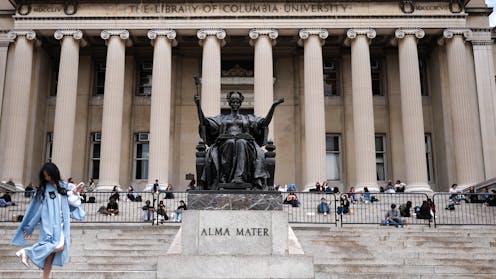
    Source: The Conversation (Au and NZ) – By Brendan Cantwell, Associate Professor of Higher, Adult, and Lifelong Education, Michigan State University Students at Columbia University in New York City on April 14, 2025. Charly Triballeau/AFP via Getty Images Columbia University agreed on July 23, 2025, to pay a US$200 million fine to the federal government

    Miles Franklin 2025: Siang Lu’s Ghost Cities is a haunting comedy about tyranny. Is it the funniest winner ever?
    Source: The Conversation (Au and NZ) – By Joseph Steinberg, Forrest Foundation Postdoctoral Fellow, English & Literary Studies, The University of Western Australia Siang Lu David Kelly/UQP The Miles Franklin judges described Siang Lu’s Ghost Cities, winner of the 2025 award, as “a grand farce and a haunting meditation on diaspora”. To my mind, it

    Keep fighting for a nuclear-free Pacific, Helen Clark warns Greenpeace over global storm clouds
    Asia Pacific Report Former New Zealand prime minister Helen Clark warned activists and campaigners in a speech on the deck of the Greenpeace environmental flagship Rainbow Warrior III last night to be wary of global “storm clouds” and the renewed existential threat of nuclear weapons. Speaking on her reflections on four decades after the bombing

    Business coalition calls for 25% cut in the cost of red tape by 2030
    Source: The Conversation (Au and NZ) – By Michelle Grattan, Professorial Fellow, University of Canberra Business, universities, and investors have jointly urged the federal government to commit to cutting the cost of red tape by 25% by 2030, in a submission for next month’s Economic Reform Roundtable. The push to reduce regulation is in line

    Grattan on Friday: net zero battle has net zero positives for Sussan Ley
    Source: The Conversation (Au and NZ) – By Michelle Grattan, Professorial Fellow, University of Canberra There’s no other way of looking at it: Sussan Ley faces a diabolical situation with the debate over whether the Coalition should abandon the 2050 net zero emissions target. The issue is a microcosm of her wider problems. The Nationals,

    The Murray–Darling Basin Plan Evaluation is out. The next step is to fix the land, not just the flows
    Source: The Conversation (Au and NZ) – By Michael Stewardson, CEO One Basin CRC, The University of Melbourne Yarramalong Weir is one of many barriers to the passage of fish in the Murray-Darling Basin. Geoff Reid, One Basin CRC A report card into the A$13 billion Murray–Darling Basin Plan has found much work is needed

    The Murray–Darling Basin Plan Evaluation is out. The next step is to fix the land, not just the flows
    Source: The Conversation (Au and NZ) – By Michael Stewardson, CEO One Basin CRC, The University of Melbourne Yarramalong Weir is one of many barriers to the passage of fish in the Murray-Darling Basin. Geoff Reid, One Basin CRC A report card into the A$13 billion Murray–Darling Basin Plan has found much work is needed

    Reserve Bank says unemployment rise was not a shock, inflation on track
    Source: The Conversation (Au and NZ) – By John Hawkins, Head, Canberra School of Government, University of Canberra Reserve Bank Governor Michele Bullock has fleshed out the central bank’s thinking behind its surprise decision to keep interest rates on hold this month. In a speech today to the Anika Foundation, Bullock said there has been:

    Reserve Bank says unemployment rise was not a shock, inflation on track
    Source: The Conversation (Au and NZ) – By John Hawkins, Head, Canberra School of Government, University of Canberra Reserve Bank Governor Michele Bullock has fleshed out the central bank’s thinking behind its surprise decision to keep interest rates on hold this month. In a speech today to the Anika Foundation, Bullock said there has been:

    Israel waging ‘horror show’ starvation campaign in Gaza, says UN chief
    This is Democracy Now!. I’m Amy Goodman. More than 100 humanitarian groups are demanding action to end Israel’s siege of Gaza, warning mass starvation is spreading across the Palestinian territory. The NGOs, including Amnesty International, Oxfam, Doctors Without Borders, warn, “illnesses like acute watery diarrhea are spreading, markets are empty, waste is piling up, and

    Israel waging ‘horror show’ starvation campaign in Gaza, says UN chief
    This is Democracy Now!. I’m Amy Goodman. More than 100 humanitarian groups are demanding action to end Israel’s siege of Gaza, warning mass starvation is spreading across the Palestinian territory. The NGOs, including Amnesty International, Oxfam, Doctors Without Borders, warn, “illnesses like acute watery diarrhea are spreading, markets are empty, waste is piling up, and

    Historic ruling finds climate change ‘imperils all forms of life’ and puts laggard nations on notice
    Source: The Conversation (Au and NZ) – By Jacqueline Peel, Professor of Law and Director, Melbourne Climate Futures, The University of Melbourne Hilaire Bule/Getty Climate change “imperils all forms of life” and countries must tackle the problem or face consequences under international law, the International Court of Justice (ICJ) has found. The court delivered its

    Jet ski accidents are tragic but preventable. Here’s how to reduce the risk
    Source: The Conversation (Au and NZ) – By Milad Haghani, Associate Professor & Principal Fellow in Urban Risk & Resilience, The University of Melbourne Richard Hamilton Smith/Getty Two teenage boys were thrown from a jet ski during a ride on the Georges River in Sydney’s south this week. One died at the scene. The other

    MIL OSI AnalysisEveningReport.nz

  • MIL-Evening Report: What makes a song ‘Australian’? Triple J’s Hottest 100 reignites a bigger question of national identity

    Source: The Conversation (Au and NZ) – By Catherine Strong, Associate Professor, Music Industry, RMIT University

    On July 26, Triple J will broadcast the Hottest 100 Australian Songs, as voted by the public. While predictions for winners and even preemptive complaining about the shortlist are taking up column space and social media posts, there is an underlying question: what we mean when we talk about “Australian songs”?

    Do these songs sound a particular way? Do they express something about what it means to be Australian? Or is it purely about where the artist was born?

    Importantly, how will each of these factors influence voting?

    Can a song sound Australian?

    Musical cultures with their own unique sounds have existed on this continent for tens of thousands of years. The sound of the didgeridoo is often used as a shorthand to signify Australianness in films, television and, to a lesser extent, popular songs.

    However, the history of dispossession and genocidal practices that have accompanied settlement in Australia means much has been lost from these musical traditions. Indigenous performers have been actively excluded from the same music-making spaces where other songs we think of as “Australian” have been created.

    Since British colonisation in the late 18th century, Australian music has also been part of global music flows. Settlers arrived with songs and musical influences from their own cultures. Jazz, country, rock and pop inspired local versions of these genres.

    But is there anything truly Australian about such music, or is it just imitation? And this conundrum connects to wider issues of Australia’s identity debated during the 20th century: was it a country, or still just a colony?

    Back in the 1970s, this question was also on then prime minister Gough Whitlams’s mind. After his election in 1972, Whitlam gave a huge boost to funding for cultural and creative activities to “help establish and express an Australian identity through the arts”, as part of a suite of nation-building activities.

    Building the pub rock canon

    The dirty guitar sounds of the pub rock scene of the 1970s, with its associated subcultures, are sometimes said to be Australia’s first distinct offering in post-rock ‘n’ roll music.

    This was followed by the rise of bands such as Midnight Oil and Cold Chisel, who found success not just by drawing on more local sounds, but also by referencing Australian places, politics and cultures.

    The Whitlam government’s broadcasting reforms meant this music had homes on community radio and the new youth station 2JJ (now Triple J).

    The bands from this era have come to make up what might be described as the Oz rock canon – a collection of works seen to make up the “best” of the art form. Canons exert a strong influence over how we assess music, meaning these bands will probably appear in the tomorrow’s countdown.

    This idea of the rock canon is almost perfectly reflected in the ten entries by Prime Minister Anthony Albanese to tomorrow’s countdown. His selection of almost 100% white male musicians encapsulates the exclusionary nature rock of this period.

    The fact that our last two prime ministers, despite being from opposite sides of politics, produced very similar lists, gives us insight into the persistence of this canon, and what ideas about “Australian culture” circulate in the halls of power.

    It’s questionable whether any of the bands or songs on Albanese’s list could be said to have a coherent “Australian” sound, yet they have come to hold a place in the national imagination.

    Changing canons and new sounds

    Triple J’s Hottest 100 of All Time in 2009 was seen as a surprising recapitulation of the (male) rock canon, especially given the station’s otherwise diverse playlists.

    However, the highest-placed Australian song on the list was The Nosebleed Section by Hilltop Hoods, representing the recent and rapid rise of Aussie hip-hop.

    The 2011 Hottest 100 Australian Albums of All Time (the closest forerunner to the current poll) further updated the canon, with Powderfinger’s Odyssey Number Five (2000) in the top spot, and other top ten entries by electronic groups The Presets and The Avalanches.

    Nonetheless, the canon remained male dominated, with the highest woman-fronted album being Missy Higgins’s The Sound of White (2004) at number 29.

    The past decade has seen a boom in Indigenous representation on Australian airwaves and stages, with artists such as Thelma Plum, Barkaa, A.B. Original and Baker Boy.

    These artists use a range of genres and styles to express pride in their Indigeneity, and critique Australian identity. A.B. Original’s song January 26 was number 17 in 2016’s Hottest 100 countdown. This was also the last year Triple J chose this date for its annual broadcast, speaking to the power of music to reflect – and even inform – popular sentiment.

    Given recent national debates, a strong contender for the upcoming poll is Treaty (Radio Mix) by Yothu Yindi (which ranked number 11 of all time in 1991). These shifts show how canons can be unsettled over time.

    What if we don’t all agree?

    Recently, Creative Australia came under fire for trying to stifle Khaled Sabsabi’s politically-informed art in the interests of “social cohesion”.

    But others pointed out art provides crucial space for challenging prevailing ideas, and that social cohesion in a democracy is not about reaching complete agreement, but being able to handle disagreement.

    A Hottest 100 that reflects the diversity and even the tensions in Australian society may provoke arguments, but it is in these spaces that we can reflect on what it means to live on these lands.

    Ben Green receives funding from the Australian Research Council and the Australasian Performing Right Association.

    Catherine Strong does not work for, consult, own shares in or receive funding from any company or organisation that would benefit from this article, and has disclosed no relevant affiliations beyond their academic appointment.

    ref. What makes a song ‘Australian’? Triple J’s Hottest 100 reignites a bigger question of national identity – https://theconversation.com/what-makes-a-song-australian-triple-js-hottest-100-reignites-a-bigger-question-of-national-identity-261560

    MIL OSI AnalysisEveningReport.nz

  • MIL-Evening Report: Historic ICJ climate ruling ‘just the beginning’, says Vanuatu’s Regenvanu

    By Ezra Toara in Port Vila

    Vanuatu’s Minister of Climate Change Adaptation, Ralph Regenvanu, has welcomed the historic International Court of Justice (ICJ) climate ruling, calling it a “milestone in the fight for climate justice”.

    The ICJ has delivered a landmark advisory opinion on states’ obligations under international law to act on climate change.

    The ruling marks a major shift in the global push for climate justice.

    Vanuatu — one of the nations behind the campaign — has pledged to take the decision back to the UN General Assembly (UNGA) to seek a resolution supporting its full implementation.

    Climate Change Minister Regenvanu said in a statement: “We now have a common foundation based on the rule of law, releasing us from the limitations of individual nations’ political interests that have dominated climate action.

    “This moment will drive stronger action and accountability to protect our planet and peoples.”

    The ICJ confirmed that state responsibilities extend beyond voluntary commitments under the UNFCCC and Paris Agreement.

    It ruled that customary international law also requires states to prevent environmental and transboundary harm, protect human rights, and cooperate to address climate change impacts.

    Duties apply to all states
    These duties apply to all states, whether or not they have ratified specific climate treaties.

    Violations of these obligations carry legal consequences. The ICJ clarified that climate damage can be scientifically traced to specific polluter states whose actions or inaction cause harm.

    As a result, those states could be required to stop harmful activities, regulate private sector emissions, end fossil fuel subsidies, and provide reparations to affected states and individuals.

    “The implementation of this decision will set a new status quo and the structural change required to give our current and future generations hope for a healthy planet and sustainable future,” Minister Regenvanu added.

    He said high-emitting nations, especially those with a history of emissions, must be held accountable.

    Despite continued fossil fuel expansion and weakening global ambition — compounded by the United States’ withdrawal from the Paris Agreement — Regenvanu said the ICJ ruling was a powerful tool for campaigners, lawyers, and governments.

    “Vanuatu is proud and honoured to have spearheaded this initiative,” he said.

    ‘Powerful testament’
    “The number of states and civil society actors that have joined this cause is a powerful testament to the leadership of Small Island Developing States (SIDS) and youth activists.”

    The court’s decision follows a resolution adopted by consensus at the UNGA on 29 March 2023. That campaign was initiated by the Pacific Island Students Fighting Climate Change and backed by the Vanuatu government, calling for greater accountability from high-emitting countries.

    The ruling will now be taken to the UNGA in September and is expected to be a central topic at COP30 in Brazil this November.

    Vanuatu has committed to working with other nations to turn this legal outcome into coordinated action through diplomacy, policy, litigation, and international cooperation.

    “This is just the beginning,” Regenvanu said. “Success will depend on what happens next. We look forward to working with global partners to ensure this becomes a true turning point for climate justice.”

    Republished from the Vanuatu Daily Post with permission.

    The International Court of Justice (ICJ) delivers its historic climate ruling in The Hague on Tuesday. Image: VDP

    MIL OSI AnalysisEveningReport.nz

  • MIL-Evening Report: Ultrafast fashion brand Princess Polly has been certified as ‘sustainable’. Is that an oxymoron?

    Source: The Conversation (Au and NZ) – By Harriette Richards, Senior Lecturer, School of Fashion and Textiles, RMIT University

    Carol Yepes/Getty Images

    Last week, the ultrafast fashion brand Princess Polly received B Corp certification. This certification is designed to accredit for-profit businesses that provide social impact and environmental benefit.

    Established on the Gold Coast in 2010, a 50% stake in Princess Polly was acquired by United States-based A.K.A. Brands in 2018.

    Since then, it has grown its global reach as a low-cost, high-turnover online retailer.

    So can ultrafast fashion ever be sustainable?

    Who is Princess Polly?

    Princess Polly distinguishes itself from other fast fashion retailers through a mission to “make on-trend, sustainable fashion accessible to everyone”.

    As part of this mission, Princess Polly is a participant of the United Nations Global Compact, which commits them to sustainable procurement. The 2024 Baptist World Aid Ethical Fashion Report placed them in the top 20% of 460 global brands assessed.

    Yet, on the sustainability rating website Good On You, Princess Polly receives a “Not Good Enough” grade, due to their lack of action on reducing plastic and textile waste or protecting biodiversity in their supply chains, and the absence of evidence that they pay their workers a living wage.

    Regardless of how they make their clothes, Princess Polly produces a lot. At the time of writing, the brand has 3,920 different styles available on their website (excluding shoes and accessories).

    Of those, 34% (1,355 styles) are listed as “lower impact,” which means items are made using materials such as organic cotton and linen, recycled polyester and cellulose fabrics. There are also 720 items on the website currently listed as “new”: their daily new arrivals means they are constantly adding fresh items for sale.

    Overproduction, no matter what the garments are made from, is inherently wasteful. Even when clothes are purchased (and 10–40% of the clothing produced each year is not sold), the poor quality of fast fashion items means that they end up in landfill faster and stay there for longer, contributing to the ongoing environmental disaster.

    Sustainability communication

    In Australia, 1,096 companies are accredited with B Corp status, including 152 fashion businesses.

    B Corp assesses the practices of a company as a whole, rather than focusing on one single social or environmental issue. Businesses must score at least 80 out of a possible 250+ points in the B Impact Assessment to achieve accreditation.

    Organisations are assessed in five key areas – community, customers, environment, governance and workers – and must meet high standards of social and environmental performance, transparency and accountability.

    Third-party accreditations such as B Corp, Fairtrade and Global Organic Textile Standard are often used by brands as a marketing tool.

    These certifications can enhance consumer trust without the need for detailed explanations. For fashion brands, accreditation can help them stand out in a crowded market. They can provide legitimacy, attract ethical fashion consumers and reduce consumer scepticism.

    While B Corp aims to provide assurance to consumers, activists have accused it of greenwashing. In 2022, the organisation came under fire for accrediting Nespresso, a brand owned by Nestlé, which has a reputation for poor worker rights and sourcing policies.

    B Corp is now facing renewed condemnation for issuing certification to Princess Polly.

    Who needs certification?

    Other B Corp certified Australian fashion brands such as Clothing the Gaps and Outland Denim have built their reputations on their ethical credentials. For values-driven fashion-based social enterprises such as these, accreditations can provide valuable guarantees regarding ethical processes.

    According to our research, however, there are several barriers fashion-based social enterprises face when pursuing ethical accreditation.

    The cost of accreditation, both financial and in terms of time, skills and resourcing, is a significant challenge. And there is no certification that covers all aspects of environmental sustainability and ethical production. As a result, fashion-based social enterprises often require multiple accreditations to fully communicate the breadth of their ethical commitments.

    Despite the costs involved, if fashion-based social enterprises don’t acquire certain certifications they risk being ineligible for government grants and tenders, such as social procurement contracts.

    Differences between fashion-based social enterprises and fast fashion brands are stark. While Clothing the Gaps, Outland Denim and Princess Polly now all hold B Corp certification, the former score much more highly on the B Impact Assessment.
    The value and credibility of the certification is diminished when it extends to unsustainable ultrafast fashion.

    Is it possible for fast fashion to ever be sustainable?

    The question of whether fast fashion can ever be sustainable has become increasingly heated since the advent of ultrafast fashion, where brands produce on demand and sell directly online.

    Fast fashion took seasonal trends from high fashion runways and made them available to consumers at low costs within weeks. Ultrafast fashion takes trends from social media and reproduces them extremely cheaply for mass consumption within days.

    Both fast and ultrafast fashion’s low-cost, high-volume models encourage consumers to value quantity over quality. Using permanent sales and discounts, these brands incentivise multiple purchases of items that may never actually be worn. Online “micro trends” and “haul” videos further spur this overconsumption.

    The overconsumption of fast fashion means lots of it ends up in landfill.
    Dipanjan Pal/Unsplash

    Princess Polly may be using more sustainable textiles and engaging in more ethical forms of production than some of its ultrafast fashion counterparts. But this is not enough when the business model itself is unsustainable. Accreditations such as B Corp are unable to account for this nuance.

    Princess Polly claims to make sustainable fashion, yet it is also proudly trend driven. As an ultrafast fashion brand, it relies on overproduction and overconsumption. The idea that this can ever be “sustainable” is simply an oxymoron.

    The authors do not work for, consult, own shares in or receive funding from any company or organisation that would benefit from this article, and have disclosed no relevant affiliations beyond their academic appointment.

    ref. Ultrafast fashion brand Princess Polly has been certified as ‘sustainable’. Is that an oxymoron? – https://theconversation.com/ultrafast-fashion-brand-princess-polly-has-been-certified-as-sustainable-is-that-an-oxymoron-261561

    MIL OSI AnalysisEveningReport.nz

  • MIL-Evening Report: Butter wars: ‘nothing cures high prices like high prices’ – but will market forces be enough?

    Source: The Conversation (Au and NZ) – By Alan Renwick, Professor of Agricultural Economics, Lincoln University, New Zealand

    RobynRoper/Getty Images

    The alarming rise of butter prices has become a real source of frustration for New Zealand consumers, as well as a topic of political recrimination. The issue has become so serious that Miles Hurrell, chief executive of dairy co-operative Fonterra, was summoned to meetings with the government and opposition parties this week.

    After meeting Hurrell, Finance Minister Nicola Willis appeared to place some of the blame for the high price of butter on supermarkets rather than on the dairy giant.

    According to Stats NZ, butter prices rose by 46.5% in the year to June and are now 120% higher than a decade ago. The average price for a 500g block is NZ$8.60, with some local brands costing over $10.

    But solving the problem is not a matter of waving a magic economic wand. Several factors influence butter prices, few of which can be altered directly by government policy.

    And the question remains – would we want to? Proposals such as reducing exports to boost domestic supply, or cutting goods and services tax (GST) on dairy products, all carry consequences.

    A key factor driving butter prices in New Zealand is that 95% of the country’s dairy production is exported.

    Limited domestic supply and strong global demand have pushed up prices for a range of commodities – not just milk, but beef as well. These increases are reflected in local retail prices.

    Another contributing factor is rising costs along the supply chain. At the farm level, producers are receiving record prices for dairy. But this comes at a time when input costs have also increased significantly. It is not all profit.

    Weighing the options

    Before changing rules around dairy exports, the government must weigh the broader consequences.

    On the one hand, high milk prices benefit “NZ Inc”. The dairy sector accounts for 25% of exports and employs 55,000 New Zealanders. When farmers do well, the wider rural economy benefits – with flow-on effects for the country as a whole.

    On the other hand, there is the ongoing challenge of domestic food security. Many people cannot afford basic groceries and foodbank use is rising.

    So how can New Zealand maintain a food system that benefits from exports while also supporting struggling domestic consumers?

    One option is to remove GST from food. Other countries exempt dairy products from such taxes in an effort to make staples more affordable.

    This idea has been repeatedly reviewed and rejected – including by the 2018 Tax Working Group. In 2024, it was estimated that removing GST could cost the government between $3.3bn and $3.9bn, with only modest benefits for the average household.

    Fonterra or supermarkets?

    Another route would be to examine Fonterra’s dominance in the supply chain. There are advantages to having a strong global player. And it is not in the national interest for the company to incur losses on domestic sales.

    Still, the structure of the market may warrant scrutiny. For a long time there were just two main suppliers of processed dairy products – Fonterra and Goodman Fielder – and two main retailers – Foodstuffs and Woolworths. This set up reduced the need to compete on prices.

    While there is arguably more competition in manufacturing sector now, supermarkets are still under scrutiny and have long faced criticism for a lack of competition.

    The opaque nature of the profit margins across the supply chain also fuels suspicion. Consumers know what they pay at the checkout and what farmers receive. But the rest is less clear. This lack of transparency invites speculation about who benefits from soaring prices.

    In the end, though, the government may not need to act at all.

    As economists like to say: “Nothing cures high prices like high prices.” While demand for butter is relatively inelastic, there comes a point at which consumers reduce their purchases or seek alternatives. International buyers will also push back – and falling global demand may redirect more supply to domestic markets.

    High prices also act as a signal to producers across the globe to increase production, which could happen relatively quickly if there are favourable climatic and other conditions.

    We only need to look back to 2014, when the price of dairy dropped by 48% over the course of 12 months due to reduced demand and increased supply, to see how quickly the situation can change.

    Alan Renwick does not work for, consult, own shares in or receive funding from any company or organisation that would benefit from this article, and has disclosed no relevant affiliations beyond their academic appointment.

    ref. Butter wars: ‘nothing cures high prices like high prices’ – but will market forces be enough? – https://theconversation.com/butter-wars-nothing-cures-high-prices-like-high-prices-but-will-market-forces-be-enough-261750

    MIL OSI AnalysisEveningReport.nz

  • MIL-Evening Report: Waiting too long for public dental care? Here’s why the system is struggling – and how to fix it

    Source: The Conversation (Au and NZ) – By Santosh Tadakamadla, Professor and Head of Dentistry and Oral Health, La Trobe University

    Just over one-third of Australians are eligible for public dental services, which provide free or low cost dental treatment.

    Yet demand for these services continues to exceed supply. As a result, many Australian adults face long waits for access, which can be up to three years in some states.

    So what’s going wrong with public dental care in Australia? And how can it be fixed?

    Who funds public dental care?

    Both the federal government and state and territory governments fund public dental services. These are primarily targeted at low-income Australians, including children, and hard-to-reach populations, known as priority groups.

    Individuals and families bear a majority of the costs for dental services. They paid around 81% (A$10.1 billion) of the cost for dental services in 2022–23, either directly through out-of-pocket expenses, or through private health insurance premiums.

    The Commonwealth contributed 11% to the cost of dental care, while the states and territories paid the remaining 8% in 2022–23.

    Who is eligible for public dental care?

    Just under half of Australian children are eligible for the means-tested Child Dental Benefits Schedule. This gives them access to $1,132 of dental benefits over two years.

    While children from low-income families tend to benefit from this scheme, critics have raised concerns about the low uptake. Only one-third use the dental program in any given year.

    Some children access free or low-cost dental care from state and territory based services, such as the Victorian Smile Squad school dental program or the NSW Health Primary School Mobile Dental Program.

    Others use their private health insurance to pay for some of the costs of private dental care.

    What if you’re low-income but aren’t eligible?

    Some Australians aren’t eligible for public dental services but can’t afford private dental care. In 2022–23, around one in six people (18%) delayed or didn’t see a dental professional when they needed to because of the cost.

    Some Australians are accessing their superannuation funds under compassionate grounds for dental treatment. The amount people have accessed has grown eight-fold from 2018–19 to 2023–24, from $66.4 million to $526.4 million.

    However, concerns have been raised about the exploitation of this provision. Some people have accessed their super for dental treatment costing more than $20,000. This more than what would typically be required for urgent dental care, impacting their future financial security.

    Why are the waits so long in the public dental care system?

    The long waits are due to a combination of factors, alongside high levels need:

    • systemic under-funding by Australian governments. This is exacerbated by federal government funding for public dental services remaining fixed rather than being indexed annually

    • workforce shortages in rural and remote areas, with dental practitioners concentrated in wealthy, metro areas

    • poor incentives for the oral health workforce in public dental services

    • too few public clinics, in part because the initial outlay and ongoing equipment costs are so great.

    What is the government planning in the long term?

    The federal government is taking action to improve the affordability of dental services through long-term funding reforms only targeting priority populations to bring some dental services into Medicare.

    An initial focus is for older Australians and First Nations people.

    Cost estimates for a universal dental scheme vary significantly, depending on the population coverage and the number of dental benefits individuals are eligible for, and whether services are capped (as in the case of the Child Dental Benefits Schedule) or uncapped.

    The Grattan Institute estimates a capped scheme would cost $5.6 billion annually.

    The Australian Parliamentary Budget Office estimates it would cost $45 billion over three years.

    When increasing government funding for public dental service, it’s important policymakers ensure the services included are evidence-based and represent value for money.

    What needs to be done in the meantime

    Meaningful long-term funding reform towards a universal dental scheme requires some foundational policy work.

    First, there should be an agreed understanding of what dental services should be government subsidised and provide annual limits for reimbursement to prevent overtreatment. This would avoid some people getting a lot of dental treatment they don’t need, while others could miss out.

    Many dental services are routinely offered without any clinical benefit. This includes six-monthly oral health check-ups and cleans for low-risk patients.

    Second, resource allocation is best done when we focus on prevention and governments fund cost-effective dental services. Priority-setting is best done using economic evaluation tools.

    Third, the federal government should extend its existing decision-making frameworks to include dental services. This would bring dental care in line with medicine and service listings on the Pharmaceutical Benefits Scheme (PBS) and the Medicare Benefits Schedule (MBS), ensuring that safety, effectiveness and cost-effectiveness inform public funding decisions.

    Fourth, the government needs to reform the workforce. This should include funding to support recruitment and training of students from regional, rural and remote areas. These students are more likely to return to their communities to work, balancing the unequal distribution of the workforce.

    We also urgently need to attract and retain more people to work in public dental services.

    Finally, we need a coordinated national approach to oral health policy and funding. The federal government has an opportunity to do this now as consultations continue through 2025 to develop and implement the National Oral Health Plan 2025–2034.

    Santosh Tadakamadla received National Health and Medical Research Council Early Career Fellowship (APP1161659) from 2019-2023. He is Head of Dentistry and Oral Health at La Trobe Rural Health School in Bendigo.

    Tan Nguyen receives funding from National Health and Medical Research Council (Postgraduate Scholarship Scheme APP1189802). He is affiliated with Deakin University, Monash University, Oral Health Victoria, Public Association of Australia, National Oral Health Alliance and Dental Board of Australia.

    ref. Waiting too long for public dental care? Here’s why the system is struggling – and how to fix it – https://theconversation.com/waiting-too-long-for-public-dental-care-heres-why-the-system-is-struggling-and-how-to-fix-it-261661

    MIL OSI AnalysisEveningReport.nz

  • MIL-Evening Report: Waiting too long for public dental care? Here’s why the system is struggling – and how to fix it

    Source: The Conversation (Au and NZ) – By Santosh Tadakamadla, Professor and Head of Dentistry and Oral Health, La Trobe University

    Just over one-third of Australians are eligible for public dental services, which provide free or low cost dental treatment.

    Yet demand for these services continues to exceed supply. As a result, many Australian adults face long waits for access, which can be up to three years in some states.

    So what’s going wrong with public dental care in Australia? And how can it be fixed?

    Who funds public dental care?

    Both the federal government and state and territory governments fund public dental services. These are primarily targeted at low-income Australians, including children, and hard-to-reach populations, known as priority groups.

    Individuals and families bear a majority of the costs for dental services. They paid around 81% (A$10.1 billion) of the cost for dental services in 2022–23, either directly through out-of-pocket expenses, or through private health insurance premiums.

    The Commonwealth contributed 11% to the cost of dental care, while the states and territories paid the remaining 8% in 2022–23.

    Who is eligible for public dental care?

    Just under half of Australian children are eligible for the means-tested Child Dental Benefits Schedule. This gives them access to $1,132 of dental benefits over two years.

    While children from low-income families tend to benefit from this scheme, critics have raised concerns about the low uptake. Only one-third use the dental program in any given year.

    Some children access free or low-cost dental care from state and territory based services, such as the Victorian Smile Squad school dental program or the NSW Health Primary School Mobile Dental Program.

    Others use their private health insurance to pay for some of the costs of private dental care.

    What if you’re low-income but aren’t eligible?

    Some Australians aren’t eligible for public dental services but can’t afford private dental care. In 2022–23, around one in six people (18%) delayed or didn’t see a dental professional when they needed to because of the cost.

    Some Australians are accessing their superannuation funds under compassionate grounds for dental treatment. The amount people have accessed has grown eight-fold from 2018–19 to 2023–24, from $66.4 million to $526.4 million.

    However, concerns have been raised about the exploitation of this provision. Some people have accessed their super for dental treatment costing more than $20,000. This more than what would typically be required for urgent dental care, impacting their future financial security.

    Why are the waits so long in the public dental care system?

    The long waits are due to a combination of factors, alongside high levels need:

    • systemic under-funding by Australian governments. This is exacerbated by federal government funding for public dental services remaining fixed rather than being indexed annually

    • workforce shortages in rural and remote areas, with dental practitioners concentrated in wealthy, metro areas

    • poor incentives for the oral health workforce in public dental services

    • too few public clinics, in part because the initial outlay and ongoing equipment costs are so great.

    What is the government planning in the long term?

    The federal government is taking action to improve the affordability of dental services through long-term funding reforms only targeting priority populations to bring some dental services into Medicare.

    An initial focus is for older Australians and First Nations people.

    Cost estimates for a universal dental scheme vary significantly, depending on the population coverage and the number of dental benefits individuals are eligible for, and whether services are capped (as in the case of the Child Dental Benefits Schedule) or uncapped.

    The Grattan Institute estimates a capped scheme would cost $5.6 billion annually.

    The Australian Parliamentary Budget Office estimates it would cost $45 billion over three years.

    When increasing government funding for public dental service, it’s important policymakers ensure the services included are evidence-based and represent value for money.

    What needs to be done in the meantime

    Meaningful long-term funding reform towards a universal dental scheme requires some foundational policy work.

    First, there should be an agreed understanding of what dental services should be government subsidised and provide annual limits for reimbursement to prevent overtreatment. This would avoid some people getting a lot of dental treatment they don’t need, while others could miss out.

    Many dental services are routinely offered without any clinical benefit. This includes six-monthly oral health check-ups and cleans for low-risk patients.

    Second, resource allocation is best done when we focus on prevention and governments fund cost-effective dental services. Priority-setting is best done using economic evaluation tools.

    Third, the federal government should extend its existing decision-making frameworks to include dental services. This would bring dental care in line with medicine and service listings on the Pharmaceutical Benefits Scheme (PBS) and the Medicare Benefits Schedule (MBS), ensuring that safety, effectiveness and cost-effectiveness inform public funding decisions.

    Fourth, the government needs to reform the workforce. This should include funding to support recruitment and training of students from regional, rural and remote areas. These students are more likely to return to their communities to work, balancing the unequal distribution of the workforce.

    We also urgently need to attract and retain more people to work in public dental services.

    Finally, we need a coordinated national approach to oral health policy and funding. The federal government has an opportunity to do this now as consultations continue through 2025 to develop and implement the National Oral Health Plan 2025–2034.

    Santosh Tadakamadla received National Health and Medical Research Council Early Career Fellowship (APP1161659) from 2019-2023. He is Head of Dentistry and Oral Health at La Trobe Rural Health School in Bendigo.

    Tan Nguyen receives funding from National Health and Medical Research Council (Postgraduate Scholarship Scheme APP1189802). He is affiliated with Deakin University, Monash University, Oral Health Victoria, Public Association of Australia, National Oral Health Alliance and Dental Board of Australia.

    ref. Waiting too long for public dental care? Here’s why the system is struggling – and how to fix it – https://theconversation.com/waiting-too-long-for-public-dental-care-heres-why-the-system-is-struggling-and-how-to-fix-it-261661

    MIL OSI AnalysisEveningReport.nz

  • MIL-Evening Report: 3 reasons young people are more likely to believe conspiracy theories – and how we can help them discover the truth

    Source: The Conversation (Au and NZ) – By Jean-Nicolas Bordeleau, Research Fellow, Jeff Bleich Centre for Democracy and Disruptive Technologies, Flinders University

    Conspiracy theories are a widespread occurrence in today’s hyper connected and polarised world.

    Events such as Brexit, the 2016 and 2020 United States presidential elections, and the COVID pandemic serve as potent reminders of how easily these narratives can infiltrate public discourse.

    The consequences for society are significant, given a devotion to conspiracy theories can undermine key democratic norms and weaken citizens’ trust in critical institutions. As we know from the January 6 riot at the US Capitol, it can also motivate political violence.

    But who is most likely to believe these conspiracies?

    My new study with Daniel Stockemer of the University of Ottawa provides a clear and perhaps surprising answer. Published in Political Psychology, our research shows age is one of the most significant predictors of conspiracy beliefs, but not in the way many might assume.

    People under 35 are consistently more likely to endorse conspiratorial ideas.

    This conclusion is built on a solid foundation of evidence. First, we conducted a meta analysis, a “study of studies”, which synthesised the results of 191 peer-reviewed articles published between 2014 and 2024.

    This massive dataset, which included over 374,000 participants, revealed a robust association between young age and belief in conspiracies.

    To confirm this, we ran our own original multinational survey of more than 6,000 people across six diverse countries: Australia, Brazil, Canada, Germany, the US and South Africa.

    The results were the same. In fact, age proved to be a more powerful predictor of conspiracy beliefs than any other demographic factor we measured, including a person’s gender, income, or level of education.

    Why are young people more conspiratorial?

    Having established conspiracy beliefs are more prevalent among younger people, we set out to understand why.

    Our project tested several potential factors and found three key reasons why younger generations are more susceptible to conspiracy theories.

    1. Political alienation

    One of the most powerful drivers we identified is a deep sense of political disaffection among young people.

    A majority of young people feel alienated from political systems run by politicians who are two or three generations older than them.

    This under representation can lead to frustration and the feeling democracy isn’t working for them. In this context, conspiracy theories provide a simple, compelling explanation for this disconnect: the system isn’t just failing, it’s being secretly controlled and manipulated by nefarious actors.

    2. Activist style of participation

    The way young people choose to take part in politics also plays a significant role.

    While they may be less likely to engage in traditional practices such as voting, they are often highly engaged in unconventional forms of participation, such as protests, boycotts and online campaigns.

    These activist environments, particularly online, can become fertile ground for conspiracy theories to germinate and spread. They often rely on similar “us versus them” narratives that pit a “righteous” in-group against a “corrupt” establishment.

    3. Low self-esteem

    Finally, our research confirmed a crucial psychological link to self-esteem.

    For individuals with lower perceptions of self worth, believing in a conspiracy theory – blaming external, hidden forces for their problems – can be a way of coping with feelings of powerlessness.

    This is particularly relevant for young people. Research has long shown self esteem tends to be lower in youth, before steadily increasing with age.

    What can be done?

    Understanding these root causes is essential because it shows simply debunking false claims is not a sufficient solution.

    To truly address the rise of conspiracy theories and limit their consequences, we must tackle the underlying issues that make these narratives so appealing in the first place.

    Given the role played by political alienation, a critical step forward is to make our democracies more representative. This is best illustrated by the recent election of Labor Senator Charlotte Walker, who is barely 21.

    By actively working to increase the presence of young people in our political institutions, we can help give them faith that the system can work for them, reducing the appeal of theories which claim it is hopelessly corrupt.

    More inclusive democracy

    This does not mean discouraging the passion of youth activism. Rather, it is about empowering young people with the tools to navigate today’s complex information landscape.

    Promoting robust media and digital literacy education could help individuals critically evaluate the information they encounter in all circles, including online activist spaces.

    The link to self-esteem also points to a broader societal responsibility.

    By investing in the mental health and wellbeing of young people, we can help boost the psychological resilience and sense of agency that makes them less vulnerable to the simplistic blame games offered by conspiracy theories.

    Ultimately, building a society that is resistant to misinformation is not about finding fault with a particular generation.

    It is about creating a stronger, more inclusive democracy where all citizens, especially the young, feel represented, empowered, and secure.

    Jean-Nicolas Bordeleau receives funding from Social Sciences and Humanities Research Council of Canada.

    ref. 3 reasons young people are more likely to believe conspiracy theories – and how we can help them discover the truth – https://theconversation.com/3-reasons-young-people-are-more-likely-to-believe-conspiracy-theories-and-how-we-can-help-them-discover-the-truth-261074

    MIL OSI AnalysisEveningReport.nz

  • MIL-Evening Report: Miles Franklin 2025: Siang Lu’s Ghost Cities is a haunting comedy about tyranny. Is it the funniest winner ever?

    Source: The Conversation (Au and NZ) – By Joseph Steinberg, Forrest Foundation Postdoctoral Fellow, English & Literary Studies, The University of Western Australia

    Siang Lu David Kelly/UQP

    The Miles Franklin judges described Siang Lu’s Ghost Cities, winner of the 2025 award, as “a grand farce and a haunting meditation on diaspora”. To my mind, it is perhaps the funniest novel ever to have won the Miles Franklin. In the last decade, its closest competitor would be Melissa Lucashenko’s boisterous, brilliant Too Much Lip.

    Turn the clock back a few more years, and it’d square off against the puerile humour of Tim Winton’s Cloudstreet, the zany folly of Peter Carey’s Oscar and Lucinda, and Thea Astley’s biting satire The Acolyte. It’d remain a strong contender even in such company.

    Lu earned a reputation for satire with his first novel, The Whitewash, in which he lampooned the racial politics of the film industry. Ghost Cities extends this skit, while dialling it up to 11.

    “Sitting within a tradition in Australian writing that explores failed expatriation and cultural fraud, Lu’s novel is also something strikingly new,” the judges said, praising its “absurdist bravura”.

    A comedy of tyranny

    Lu’s sense of humour relies on hyperbole. Over some 300 pages, the characters in Ghost Cities tie themselves in knots over a ludicrous series of edicts, demands and directives issued by a pair of dictators who grow crueller and more capricious with every chapter.

    Ghost Cities is a comedy of tyranny in two plots, told via alternating chapters. One begins in a semi-recognisable Sydney, then relocates to the fictitious ghost city of Port Man Tou; the other is a fable set in China’s Imperial City and its labyrinths millennia ago.


    Ghost Cities begins in the latter timeline, with the mock-heroic tale of Emperor Lu Huang Du’s ascension to the imperial throne and the beginning of his dictatorial rule. What defines his character, from the very first page, is his yawning ego; he yearns for an exceptional origin myth, a tale of patricide and regicide. The failure to fabricate myths of this kind later leads him to banish a trio of scholars to the Sixth Level of Hell and burn every book in the Imperial Library. What he wants is a hymn to his own “cunning, ruthless strategy and force of will”. But the truth is ignoble.

    Emperors should not come to power through inaction. They should not do so by “gawping as their purple-faced fathers clawed and sputtered on what would later be determined to be an awkwardly lodged chicken bone”. They should not “wait, in lacklustre fealty, for that final breathless minute to expire”. They should certainly not then proceed to order the death of every chicken in the land, because of the deranged belief “their traitorous bones were conspiring against His Imperial bloodline”. And they would be well advised not then to issue an edict forbidding the “breeding, eating and harbouring of poultry”, which leads the sons of “a hundred fallen agrarians” to swear vengeance.

    Perverse as he is, there is real pleasure to be found in tracking the consequences of Lu Huang Du’s whims. From his banishment of his brother, Lu Dong Pu, for the crime of intercepting an assassin’s blade, to his attempt to elude his prophesied death by conscripting a thousand lookalikes from among his citizens, the emperor is a character governed at every turn by an unspeakable fear of his own mortality.

    Through him, and the chapters that recount the consequences of his wildly temperamental rule in the form of an absurd fable, Lu offers a sharp yet entertaining study in the abuse of state power by the narcissistic and incompetent.

    Ghost Cities’ second dictator is a director named Baby Bao, who embarks on an egotistical undertaking of his own. His ambition is to create a “historical biopic of the infamous Indomitable Emperor Lu Huang Hu”, a self-styled piece of “cinematic history, a twenty-seven hour extravaganza – no intermission – in simultaneous worldwide release!”. Such a biopic would work primarily to reinforce his delusion that he is biologically “destined for greatness”, by illustrating his belief that his lineage can be traced to the emperor. The conceit makes gleefully explicit the egotism buried in so many artistic projects.

    The emperor is later opposed by his brother, Lu Dong Pu, and his nephew, Lu Shan Liang; his counterpart, Xiang Lu (note the resemblance of both their names to their author’s), is a phoney translator hired by the director after he goes viral for his ignorance of Chinese.

    Indecencies on indignities

    Siang Lu shares an interest in anagrams (and chess) with Russian-American writer Vladimir Nabokov, who appears in his own fiction under names such as Vivian Darkbloom and Adam von Librikov.


    Ghost Cities also includes a long, loosely iambic poem titled “Six Levels of Hell”, which narrates Lu Dong Pu’s escape from labyrinthine imprisonment beneath the Imperial City. Lu’s allusions to other texts are too various to properly discuss here. They include John Milton’s Paradise Lost, Dante’s Divine Comedy, Jorge Luis Borges’ Labyrinths, Nabokov’s Pale Fire and Italo Calvino’s Invisible Cities. These references extend Ghost Cities’ concern with the relationship between dictators, architects and artisans, rampaging gods and those humbler deities behind smaller creations.

    Women play an important role in Lu’s twin fables, albeit a comparatively subtle one. Wuer, first Lu Dong Pu’s wife and later (against her will) the Imperial Consort, records her husband’s torment in the poem Six Levels of Hell and mourns the death of Lu Shan Liang’s twin brother in a moving parenthetical aside. Yuan (who shares a name with Siang Lu’s wife), a translator and eventually Xiang Lu’s lover, is an intelligent interlocutor.

    But Ghost Cities is at its best when it piles indecencies on indignities – when it all goes totally wrong. When piglets are appointed to office. When the swine sits in the chair, and rules as it sees fit.

    Joseph Steinberg does not work for, consult, own shares in or receive funding from any company or organisation that would benefit from this article, and has disclosed no relevant affiliations beyond their academic appointment.

    ref. Miles Franklin 2025: Siang Lu’s Ghost Cities is a haunting comedy about tyranny. Is it the funniest winner ever? – https://theconversation.com/miles-franklin-2025-siang-lus-ghost-cities-is-a-haunting-comedy-about-tyranny-is-it-the-funniest-winner-ever-261584

    MIL OSI AnalysisEveningReport.nz

  • MIL-Evening Report: Columbia’s $200M deal with Trump administration sets a precedent for other universities to bend to the government’s will

    Source: The Conversation (Au and NZ) – By Brendan Cantwell, Associate Professor of Higher, Adult, and Lifelong Education, Michigan State University

    Students at Columbia University in New York City on April 14, 2025. Charly Triballeau/AFP via Getty Images

    Columbia University agreed on July 23, 2025, to pay a US$200 million fine to the federal government and to settle allegations that it did not create a safe environment for Jewish students during Palestinian rights protests in 2024.

    The deal will restore the vast majority of the $400 million in federal grants and contracts that Columbia was previously awarded, before the administration withdrew the funding in March 2025.

    It marks the first financial and political agreement a university has reached with the Trump administration in its push for more control over higher education – and stands to have significant ripple effects for how other universities and colleges carry out their basic operations.

    Amy Lieberman, the education editor at The Conversation U.S., spoke with Brendan Cantwell, a scholar of higher education at Michigan State University, to understand what’s exactly in this agreement – and the lasting precedent it may set on government intervention in higher education.

    Palestinian rights demonstrators march through Columbia University on Oct. 7, 2024, marking one year of the war between Hamas and Israel.
    Kena Betancur/AFP via Getty Images

    What’s in the deal Columbia made with the Trump administration?

    The agreement requires Columbia to make a $200 million payment to the federal government. Columbia will also pay $21 million to settle investigations brought by the U.S. Equal Employment Opportunity Commission.

    Columbia will need to keep detailed statistics about student applicants – including their race and ethnicity, grades and SAT scores – as well as information about faculty and staff hiring decisions. Columbia will then have to share this data with the federal government.

    In exchange, the federal government will release most of the $400 million in frozen grant money previously awarded to Columbia and allow faculty at the university to compete for future federal grants.

    How does this deal address antisemitism?

    The Trump administration has cited antisemitism against students and faculty on campuses to justify its broad incursion into the business of universities around the country.

    Antisemitism is a real and legitimate concern in U.S. society and higher education, including at Columbia.

    But the federal complaint the administration made against Columbia was not actually about antisemitism. The administration made a formal accusation of antisemitism at Columbia in May of this year but suspended grants to the university in March. The federal government had initially acknowledged that cutting federal research grants did nothing to address the climate for Jewish students on campus, for example.

    When the federal government investigates civil rights violations, it usually conducts site visits and does very thorough investigations. We never saw such a government report about antisemitism at Columbia or other universities.

    The settlement that Columbia has entered into with the administration also doesn’t do much about antisemitism.

    The agreement includes Columbia redefining antisemitism with a broader definition that is also used by the International Holocaust Remembrance Alliance. The definition now includes “a certain perception of Jews, which may be expressed as hatred toward Jews” – a description that is also used by the U.S. State Department and several European governments but some critics say conflates antisemitism with anti-Zionism.

    Instead, the agreement primarily has to do with faculty hiring and admissions decisions. The federal government alleges that Columbia is discriminating against white and Asian applicants, and that this will allow the government to ensure that everybody who is admitted is considered only on the basis of merit.

    The administration could argue that changing hiring practices to get faculty who are less hostile to Jewish students could change the campus climate, but the agreement doesn’t really identify ways in which the university contributed to or ignored antisemitic conduct.

    Is this a new issue?

    There has been a long-running issue that conservatives and members of the Trump administration – dating back to his first term – have with higher education. The Trump administration and other conservatives have said for years that higher education is too liberal.

    The protests were the flash point that put Columbia in the administration’s crosshairs, as well as claims that Columbia was creating a hostile environment for Jewish students.

    The administration’s complaints aren’t limited to Columbia. Harvard is in a protracted conflict with the administration, and the administration has launched investigations into dozens of other schools around the country. These universities are butting heads with the administration over the same grievance that higher education is too liberal. There are also specific claims about antisemitism on university campuses and the privileges given to nonwhite students in admissions or campus life.

    While the administration has a common set of complaints about a range of universities, there is a mix of schools that the administration is taking issue with. Some of them, such as Harvard, are very high profile. The Department of Justice forced out the president at the University of Virginia in January 2025 on the grounds that he had not done enough to root out diversity, equity and inclusion programs at the public university. The University of Virginia may have been a target for the administration because a Republican governor appointed most members of its governance board and agreed with Trump’s complaints.

    How could this change the makeup of Columbia’s student population?

    The Supreme Court ruled in 2023 that Harvard’s affirmative action program, which considered race in admissions, violated the Equal Protection Clause of the 14th Amendment. This effectively ended race-based affirmative action for all U.S. colleges and universities.

    Now, with the Columbia deal, the government could say that it would expect to see a proportion of students who are white increase and students who are Black and Latino to decrease at Columbia. That’s a legal approach that America First Legal, a conservative legal advocacy group founded by Stephen Miller, a Trump administration official, has already tried.

    Back in February 2025, America First Legal alleged in a federal lawsuit that the University of California, Los Angeles, was using illegal admissions criteria, because of the number of Black and Latino students that were admitted by the school. That lawsuit is ongoing.

    Claire Shipman, Columbia University’s acting president, speaks during the school’s May 2025 commencement ceremony.
    Jeenah Moon/Pool/AFP via Getty Images

    What does this agreement mean for US higher education as a whole?

    It is an enormous, unprecedented shift in how the federal government works with higher education. Since the McCarthy era in the 1940s and ’50s, when professors were blacklisted and fired because of their alleged communism, Americans have not seen the federal government interrogate education.

    The federal government does have a role in securing people’s civil rights, including in the context of higher education, but this is very, very different from how the federal government has done civil rights investigations and entered into agreements with universities in the past.

    This agreement is very broad and gives the federal government oversight of things that have long been under universities’ control, such as whom they hire to teach and which students they admit.

    The federal government is now saying it has the right to look over universities’ shoulders and guide them in this work that has long been considered independent. And the government is willing to be extremely coercive to get universities to comply.

    What signal does this agreement send to other universities?

    This agreement sets a precedent for the government to direct colleges and universities to comply with its political agenda. This violates the long tradition of academic independence that had helped to make the U.S. higher education system the envy of the world.

    Columbia can afford paying $200 million to the federal government. Most universities can’t afford to pay $200 million.

    And most campuses cannot survive without federal resources, whether that comes in the form of student financial aid or research grants. This agreement sets a standard for other universities that, if they don’t immediately do what the federal government wants them to do, the government could impose penalties that are so high it could end their ability to operate.

    Brendan Cantwell is a Professor in the Department of Educational Administration at Michigan State University.

    ref. Columbia’s $200M deal with Trump administration sets a precedent for other universities to bend to the government’s will – https://theconversation.com/columbias-200m-deal-with-trump-administration-sets-a-precedent-for-other-universities-to-bend-to-the-governments-will-261902

    MIL OSI AnalysisEveningReport.nz

  • MIL-Evening Report: AI will soon be able to audit all published research – what will that mean for public trust in science?

    Source: The Conversation (Au and NZ) – By Alexander Kaurov, PhD Candidate in Science and Society, Te Herenga Waka — Victoria University of Wellington

    Jamillah Knowles & Digit/Better Images of AI, CC BY-SA

    Self-correction is fundamental to science. One of its most important forms is peer review, when anonymous experts scrutinise research before it is published. This helps safeguard the accuracy of the written record.

    Yet problems slip through. A range of grassroots and institutional initiatives work to identify problematic papers, strengthen the peer-review process, and clean up the scientific record through retractions or journal closures. But these efforts are imperfect and resource intensive.

    Soon, artificial intelligence (AI) will be able to supercharge these efforts. What might that mean for public trust in science?

    Peer review isn’t catching everything

    In recent decades, the digital age and disciplinary diversification have sparked an explosion in the number of scientific papers being published, the number of journals in existence, and the influence of for-profit publishing.

    This has opened the doors for exploitation. Opportunistic “paper mills” sell quick publication with minimal review to academics desperate for credentials, while publishers generate substantial profits through huge article-processing fees.

    Corporations have also seized the opportunity to fund low-quality research and ghostwrite papers intended to distort the weight of evidence, influence public policy and alter public opinion in favour of their products.

    These ongoing challenges highlight the insufficiency of peer review as the primary guardian of scientific reliability. In response, efforts have sprung up to bolster the integrity of the scientific enterprise.

    Retraction Watch actively tracks withdrawn papers and other academic misconduct. Academic sleuths and initiatives such as Data Collada identify manipulated data and figures.

    Investigative journalists expose corporate influence. A new field of meta-science (science of science) attempts to measure the processes of science and to uncover biases and flaws.

    Not all bad science has a major impact, but some certainly does. It doesn’t just stay within academia; it often seeps into public understanding and policy.

    In a recent investigation, we examined a widely-cited safety review of the herbicide glyphosate, which appeared to be independent and comprehensive. In reality, documents produced during legal proceedings against Monsanto revealed that the paper had been ghostwritten by Monsanto employees and published in a journal with ties to the tobacco industry.

    Even after this was exposed, the paper continued to shape citations, policy documents and Wikipedia pages worldwide.

    When problems like this are uncovered, they can make their way into public conversations, where they are not necessarily perceived as triumphant acts of self-correction. Rather, they may be taken as proof that something is rotten in the state of science. This “science is broken” narrative undermines public trust.

    Scientists know that a lot of scientific work is inconsequential, but the public may interpret this differently.
    Jamillah Knowles & We and AI, CC BY-SA

    AI is already helping police the literature

    Until recently, technological assistance in self-correction was mostly limited to plagiarism detectors. But things are changing. Machine-learning services such as ImageTwin and Proofig now scan millions of figures for signs of duplication, manipulation and AI generation.

    Natural language processing tools flag “tortured phrases” – the telltale word salads of paper mills. Bibliometric dashboards such as one by Semantic Scholar trace whether papers are cited in support or contradiction.

    AI – especially agentic, reasoning-capable models increasingly proficient in mathematics and logic – will soon uncover more subtle flaws.

    For example, the Black Spatula Project explores the ability of the latest AI models to check published mathematical proofs at scale, automatically identifying algebraic inconsistencies that eluded human reviewers. Our own work mentioned above also substantially relies on large language models to process large volumes of text.

    Given full-text access and sufficient computing power, these systems could soon enable a global audit of the scholarly record. A comprehensive audit will likely find some outright fraud and a much larger mass of routine, journeyman work with garden-variety errors.

    We do not know yet how prevalent fraud is, but what we do know is that an awful lot of scientific work is inconsequential. Scientists know this; it’s much discussed that a good deal of published work is never or very rarely cited.

    To outsiders, this revelation may be as jarring as uncovering fraud, because it collides with the image of dramatic, heroic scientific discovery that populates university press releases and trade press treatments.

    What might give this audit added weight is its AI author, which may be seen as (and may in fact be) impartial and competent, and therefore reliable.

    As a result, these findings will be vulnerable to exploitation in disinformation campaigns, particularly since AI is already being used to that end.

    Reframing the scientific ideal

    Safeguarding public trust requires redefining the scientist’s role in more transparent, realistic terms. Much of today’s research is incremental, career‑sustaining work rooted in education, mentorship and public engagement.

    If we are to be honest with ourselves and with the public, we must abandon the incentives that pressure universities and scientific publishers, as well as scientists themselves, to exaggerate the significance of their work. Truly ground-breaking work is rare. But that does not render the rest of scientific work useless.

    A more humble and honest portrayal of the scientist as a contributor to a collective, evolving understanding will be more robust to AI-driven scrutiny than the myth of science as a parade of individual breakthroughs.

    A sweeping, cross-disciplinary audit is on the horizon. It could come from a government watchdog, a think tank, an anti-science group or a corporation seeking to undermine public trust in science.

    Scientists can already anticipate what it will reveal. If the scientific community prepares for the findings – or better still, takes the lead – the audit could inspire a disciplined renewal. But if we delay, the cracks it uncovers may be misinterpreted as fractures in the scientific enterprise itself.

    Science has never derived its strength from infallibility. Its credibility lies in the willingness to correct and repair. We must now demonstrate that willingness publicly, before trust is broken.

    Naomi Oreskes has received funding from various academic and philanthropic organisations. Currently, her research is partly funded by the Rockefeller Family Fund and the Maine Community Fund. She also receives royalties from her publications and honoraria for speaking events.

    Alexander Kaurov does not work for, consult, own shares in or receive funding from any company or organisation that would benefit from this article, and has disclosed no relevant affiliations beyond their academic appointment.

    ref. AI will soon be able to audit all published research – what will that mean for public trust in science? – https://theconversation.com/ai-will-soon-be-able-to-audit-all-published-research-what-will-that-mean-for-public-trust-in-science-261363

    MIL OSI AnalysisEveningReport.nz

  • High-profile sex assault cases — and their verdicts — have consequences for survivors seeking help

    Source: ForeignAffairs4

    Source: The Conversation – Canada – By Lisa Boucher, Assistant Professor, Gender & Social Justice, Trent University

    Five former Canada world junior hockey players have been acquitted of sexually assaulting a woman in a hotel room in 2018 after Ontario Superior Court Justice Maria Carroccia said the Crown failed to prove its case and that the victim’s evidence was neither credible nor reliable.

    The shocking outcome highlights the inadequacies and harms of the legal system and formal institutions in responding to sexual assault that advocates, researchers and victim/survivors have long pointed to.

    If we truly want to address sexual violence, then challenging rape myths — in the courts, in the media and elsewhere — is an essential part of this work.

    Sexual violence — a type of gender-based violence — is a persistent problem in Canada and across the globe, with high rates of sexual assault and other forms of sexual violence. Statistics Canada has found that approximately 4.7 million women in Canada have been sexually assaulted since the age of 15. Reporting remains low, however, and victims/survivors face a multitude of barriers to care and justice.

    Barriers to reporting and seeking help include factors like service gaps, not knowing where to go for help, inaccessibility and shame and stigma. Attitudes surrounding sexual violence can also impact survivors’ decisions to disclose. They can also influence the responses survivors receive when they reach out for support.

    Supportive vs. unsupportive reactions

    The majority of victims/survivors never report or seek help through formal channels. Instead, they’re more likely to disclose to informal support systems, like friends and family.

    When a disclosure of violence is met with a supportive reaction, victim/survivors can experience improved well-being. Positive reactions can also lead to additional help-seeking by affirming the victims/survivors’ need for care, and offering information about services and resources.

    In contrast, unsupportive responses can hinder a victim/survivor’s recovery. Such responses might involve blaming the victim, taking control of decision-making or priorizing the well-being of the person or entity receiving the information over the victim/survivor’s.

    Negative reactions can silence the victim/survivor, encourage self-blame and deter them from seeking help. And when victims/survivors anticipate negative reactions to a disclosure of violence, they are less likely to talk about it, alert authorities or seek help.

    Additionally, while most victims/survivors seek help through informal channels, most people are unprepared to hear about it. High levels of misinformation about sexual violence — or rape myths — also increase the likelihood that victims/survivors will receive unsupportive responses.

    The persistence of rape myths

    Rape myths are pervasive false beliefs about sexual assault. They minimize the seriousness of sexual violence and shift blame from individual perpetrators and root causes onto victims or survivors.

    Common rape myths include ideas that rape is rare and committed by strangers, that victims/survivors lie, that certain clothing or behaviour invites sexual assault and that it is only rape if it involves physical force and active resistance.

    Despite decades of research refuting rape myths, they persist. And they continue to influence perceptions of sexual violence, victims and perpetrators.

    Rape myth acceptance is linked to higher rates of sexual assault and lower reporting and convictionrates. Because rape myths are often internalized, they also decrease the likelihood that victims/survivors will identify their experience as violence.


    Read more:
    Rape myths can affect jurors’ perceptions of sexual assault, and that needs to change


    Rape myths and media

    One powerful way that rape myths circulate is through media. This includes traditional forms of media and social media. The pervasiveness of media in our lives makes it difficult to avoid exposure to false and harmful ideas about sexual violence.

    High-profile cases in the media — like the Jian Ghomeshi, Harvey Weinstein and Hockey Canada trials — expose the public to details and discourses about sexual violence. The intensity of coverage can have harmful effects on victims/survivors.

    For instance, in a study about experiences with seeking help and reporting sexual assault, researchers found interview participants were negatively affected by rape myths circulating during the Brett Kavanaugh confirmation hearings for a position on the United States Supreme Court.


    Read more:
    Trauma 101 in the aftermath of the Ford-Kavanaugh saga


    Interviewees reported an increase in victim-blaming reactions from friends, family and professionals. They also described intense feelings like grief and anger, and reflected on barriers to reporting sexual violence.

    Sexual assault centres in Ontario have reported spikes in calls to their crisis/support lines in response to the Hockey Canada sexual assault trial.

    This is further evidence that coverage of sexual violence can be stressful and retraumatizing for victims/survivors. Service providers have noted that some of the calls include concerns about the hurdles and attitudes sexual assault victims face when they report.

    Challenging rape myths, victim-blaming

    There are signs of growing awareness of sexual violence, spurred in large part by survivor-led movements like the #MeToo movement. Nonetheless, rape myths continue to influence understandings of, and responses to, this type of violence.

    Challenging rape myths is therefore a critical anti-violence strategy. This requires ongoing education, for the public and for professionals.

    It also requires commitments from institutions, like the courts and media, to take an active role in stopping the spread of misinformation about sexual violence, and challenging it whenever possible.

    The Conversation

    Lisa Boucher has previously received funding from the Social Sciences and Humanities Research Council of Canada and Women and Gender Equality Canada.

    ref. High-profile sex assault cases — and their verdicts — have consequences for survivors seeking help – https://theconversation.com/high-profile-sex-assault-cases-and-their-verdicts-have-consequences-for-survivors-seeking-help-260668

  • Hockey Canada sex assault verdict: Sports culture should have also been on trial

    Source: ForeignAffairs4

    Source: The Conversation – Canada – By Laura Misener, Professor & Director, School of Kinesiology, Western University

    The verdict is in on the sexual assault trial of five former members of Canada’s 2018 world junior hockey team — all five have been acquitted.

    Each player was accused of sexually assaulting a woman in a hotel room. Today, Justice Maria Carroccia stated that the Crown did not prove its case beyond a reasonable doubt.

    The trial has captured the world’s attention and sparked polarized public debates about consent, hockey culture and the role of sport in socializing young men.

    Elite athletes often operate within environments where their talent grants them special status and access to resources — monetary and otherwise — that bolster a sense of entitlement. In some instances, sport organizations exacerbate this sentiment by protecting their star performers instead of addressing misconduct, which was reflected in this case.

    For example, an abusive national vaulting coach for New Zealand Athletics was finally banned for 10 years, but only after years of unchecked abuse of his female athletes, including “inappropriate sexual references.” This highlights how misconduct can go on unrestrained for so long.


    Read more:
    With another case of abuse in elite sport, why are we still waiting to protect NZ’s sportswomen from harm?


    The culture of exceptionalism

    As researchers with expertise in sport culture and sexual and gender-based violence, we’re reflecting on what the Hockey Canada trial reveals about the institutional and cultural practices within sport.

    The formal and informal rules of men’s sport validate misogyny and reinforce systemic patterns of sexual entitlement and inadequate accountability. We offer some perspectives on how these troubling patterns of violence in sport can be reformed.

    The Hockey Canada sexual assault trial has become a focal point for questioning how elite sporting environments shield athletes from accountability. This may be especially true in hockey.

    In their book about toxic hockey culture, authors Evan Moore and Jashmina Shaw argue that hockey operates within “a bubble composed mostly of boys and men who are white, cis-het, straight and upper-class. And those who play often become coaches and teach the same values to the next generation.”

    This closely knit community thrives on conformity and creates conditions that are ripe for the pervasive misogyny against women and systemic silence around issues of consent. The book _Skating on Thin Ice: Professional Hockey, Rape Culture and Violence against Women_, written by criminal justice scholars and sports reporters, demonstrates how endemic sexism, heavy alcohol use, abusive peers and the sexual objectification of women are buttressed by broader social factors. These factor uphold and reproduce toxic hockey culture, including patriarchal beliefs.

    Male-dominated sporting cultures also emphasize a particular type of masculinity that focuses on dominance, physical intimidation and winning at all costs. This can blur the boundaries between acceptable competitive behaviour and problematic aggression.

    Vulnerability in sports

    Within the realm of professional sport, athletes also become commodified and objectified through media coverage, sponsorship deals and public scrutiny. This commodification can contribute to a culture where athletes may internalize the idea that their bodies are public property, further eroding their sense of autonomy and understanding of consent, especially in relation to others beyond the sport context.

    Questioning or circumventing institutionally sanctioned behaviours is not easy, and it’s well-documented that many elite athletes struggle with mental health issues including depression, anxiety and substance misuse resulting from the pressure to align with the dominant culture.

    But what often gets forgotten is how the hyper-masculine culture of sports creates significant barriers to seeking help. Young male athletes are socialized to comply with peer cultures that equate vulnerability with weakness. Yet they face intense pressures around family expectations, sponsorship deals and team success that demands they maintain appearances of strength and control.

    This cycle of suppressed vulnerability and untreated distress enables toxic sporting masculinity to flourish, forcing organizations like Hockey Canada to confront their role in perpetuating these harmful dynamics.

    The need for structural, cultural reform

    Sports organizations have significant financial and reputational investment in athletes. This can create an inherent conflict when misconducts arise, problematically prompting sports organizations to use their power and resources to prioritize damage control over justice.

    We saw this in the Hockey Canada sexual assault trial, where each hockey player had his own legal counsel, a stark illustration of institutional power and the extent to which sports organizations will go to shield their members from accountability. The deeply entrenched networks within sport prioritize self-preservation over addressing misconduct

    Effectively responding to these issues requires addressing the systemic factors that perpetuate sexual and gender-based violence in sport. The sport ecosystem in Canada needs radical change, including who trains and mentors young men in hockey and how organizations investigate complaints.

    It requires going beyond individual accountability, participating in consent workshops or issuing policy documents. These actions alone are insufficient to shift the cultural needle.

    In 2022, Hockey Canada released a comprehensive action plan to address systemic issues in hockey that features discussions of accountability, governance, education and training and independent sport safety structures.

    Community organizations like the Ontario Coalition of Rape Crisis Centres also issued a series of recommendations in 2022 that remain germane:

    • Work with athletes and sports organizations to address sexual violence in sports culture;
    • Support the development and growth of male allies programs within community-based sexual assault support centres; and
    • Support those who have been harmed.

    In addition to these excellent suggestions, Hockey Canada and other allied hockey organizations must be willing to restructure the current hierarchical structure of power that governs not just hockey, but also the players and all the other agencies involved, including coaches, sponsors, trainers, legal teams, media and PR representatives.

    These organizational changes are possible, as evidenced by the efforts of Bayne Pettinger, an agent who has led efforts to create space for queer hockey players in Hockey Canada and the National Hockey League.

    Two men in suits sit behind a conference table. The man on the left sits behind a name plate that says 'Scott Smith' and the man on the right sits behind a name place that says 'Brian Cairo'
    Scott Smith, who stepped down from his role as Hockey Canada’s President and CEO, left, and Hockey Canada Chief Financial Officer Brian Cairo appear at a standing committee in July 2022 looking into how Hockey Canada handled allegations of sexual assault and a subsequent lawsuit.
    THE CANADIAN PRESS/Sean Kilpatrick

    Sport’s moral reckoning

    However, the cultural norms of power in sport extend beyond the playing field to shape attitudes toward consent and sexual conduct.

    Until sport organizations address the foundational cultural elements that enable misconduct — toxic masculinity, institutional protection and erosion of consent culture — meaningful change will remain elusive.

    Within hockey environments, in particular, the objectification of women and the institutional silence surrounding sexual violence have become normalized aspects of the sport’s culture, creating conditions where misconduct can flourish unchecked.

    The events examined in this most recent trial are not isolated incidents but symptoms of deeper systemic failures within elite sport.

    Only through comprehensive cultural transformation can we ensure that sport environments are spaces of genuine safety, respect and accountability for all participants.

    The Conversation

    Laura Misener receives funding from Social Sciences and Humanities Research Council of Canada

    Treena Orchard receives funding from Western University for a Teaching Innovation Grant, however, those funds were not used in the creation of this article.

    ref. Hockey Canada sex assault verdict: Sports culture should have also been on trial – https://theconversation.com/hockey-canada-sex-assault-verdict-sports-culture-should-have-also-been-on-trial-260662

  • MIL-OSI Analysis: High-profile sex assault cases — and their verdicts — have consequences for survivors seeking help

    Source: The Conversation – Canada – By Lisa Boucher, Assistant Professor, Gender & Social Justice, Trent University

    Five former Canada world junior hockey players have been acquitted of sexually assaulting a woman in a hotel room in 2018 after Ontario Superior Court Justice Maria Carroccia said the Crown failed to prove its case and that the victim’s evidence was neither credible nor reliable.

    The shocking outcome highlights the inadequacies and harms of the legal system and formal institutions in responding to sexual assault that advocates, researchers and victim/survivors have long pointed to.

    If we truly want to address sexual violence, then challenging rape myths — in the courts, in the media and elsewhere — is an essential part of this work.

    Sexual violence — a type of gender-based violence — is a persistent problem in Canada and across the globe, with high rates of sexual assault and other forms of sexual violence. Statistics Canada has found that approximately 4.7 million women in Canada have been sexually assaulted since the age of 15. Reporting remains low, however, and victims/survivors face a multitude of barriers to care and justice.

    Barriers to reporting and seeking help include factors like service gaps, not knowing where to go for help, inaccessibility and shame and stigma. Attitudes surrounding sexual violence can also impact survivors’ decisions to disclose. They can also influence the responses survivors receive when they reach out for support.

    Supportive vs. unsupportive reactions

    The majority of victims/survivors never report or seek help through formal channels. Instead, they’re more likely to disclose to informal support systems, like friends and family.

    When a disclosure of violence is met with a supportive reaction, victim/survivors can experience improved well-being. Positive reactions can also lead to additional help-seeking by affirming the victims/survivors’ need for care, and offering information about services and resources.

    In contrast, unsupportive responses can hinder a victim/survivor’s recovery. Such responses might involve blaming the victim, taking control of decision-making or priorizing the well-being of the person or entity receiving the information over the victim/survivor’s.

    Negative reactions can silence the victim/survivor, encourage self-blame and deter them from seeking help. And when victims/survivors anticipate negative reactions to a disclosure of violence, they are less likely to talk about it, alert authorities or seek help.

    Additionally, while most victims/survivors seek help through informal channels, most people are unprepared to hear about it. High levels of misinformation about sexual violence — or rape myths — also increase the likelihood that victims/survivors will receive unsupportive responses.

    The persistence of rape myths

    Rape myths are pervasive false beliefs about sexual assault. They minimize the seriousness of sexual violence and shift blame from individual perpetrators and root causes onto victims or survivors.

    Common rape myths include ideas that rape is rare and committed by strangers, that victims/survivors lie, that certain clothing or behaviour invites sexual assault and that it is only rape if it involves physical force and active resistance.

    Despite decades of research refuting rape myths, they persist. And they continue to influence perceptions of sexual violence, victims and perpetrators.

    Rape myth acceptance is linked to higher rates of sexual assault and lower reporting and convictionrates. Because rape myths are often internalized, they also decrease the likelihood that victims/survivors will identify their experience as violence.


    Read more:
    Rape myths can affect jurors’ perceptions of sexual assault, and that needs to change


    Rape myths and media

    One powerful way that rape myths circulate is through media. This includes traditional forms of media and social media. The pervasiveness of media in our lives makes it difficult to avoid exposure to false and harmful ideas about sexual violence.

    High-profile cases in the media — like the Jian Ghomeshi, Harvey Weinstein and Hockey Canada trials — expose the public to details and discourses about sexual violence. The intensity of coverage can have harmful effects on victims/survivors.

    For instance, in a study about experiences with seeking help and reporting sexual assault, researchers found interview participants were negatively affected by rape myths circulating during the Brett Kavanaugh confirmation hearings for a position on the United States Supreme Court.


    Read more:
    Trauma 101 in the aftermath of the Ford-Kavanaugh saga


    Interviewees reported an increase in victim-blaming reactions from friends, family and professionals. They also described intense feelings like grief and anger, and reflected on barriers to reporting sexual violence.

    Sexual assault centres in Ontario have reported spikes in calls to their crisis/support lines in response to the Hockey Canada sexual assault trial.

    This is further evidence that coverage of sexual violence can be stressful and retraumatizing for victims/survivors. Service providers have noted that some of the calls include concerns about the hurdles and attitudes sexual assault victims face when they report.

    Challenging rape myths, victim-blaming

    There are signs of growing awareness of sexual violence, spurred in large part by survivor-led movements like the #MeToo movement. Nonetheless, rape myths continue to influence understandings of, and responses to, this type of violence.

    Challenging rape myths is therefore a critical anti-violence strategy. This requires ongoing education, for the public and for professionals.

    It also requires commitments from institutions, like the courts and media, to take an active role in stopping the spread of misinformation about sexual violence, and challenging it whenever possible.

    Lisa Boucher has previously received funding from the Social Sciences and Humanities Research Council of Canada and Women and Gender Equality Canada.

    ref. High-profile sex assault cases — and their verdicts — have consequences for survivors seeking help – https://theconversation.com/high-profile-sex-assault-cases-and-their-verdicts-have-consequences-for-survivors-seeking-help-260668

    MIL OSI Analysis

  • MIL-OSI Analysis: Hockey Canada sex assault verdict: Sports culture should have also been on trial

    Source: The Conversation – Canada – By Laura Misener, Professor & Director, School of Kinesiology, Western University

    The verdict is in on the sexual assault trial of five former members of Canada’s 2018 world junior hockey team — all five have been acquitted.

    Each player was accused of sexually assaulting a woman in a hotel room. Today, Justice Maria Carroccia stated that the Crown did not prove its case beyond a reasonable doubt.

    The trial has captured the world’s attention and sparked polarized public debates about consent, hockey culture and the role of sport in socializing young men.

    Elite athletes often operate within environments where their talent grants them special status and access to resources — monetary and otherwise — that bolster a sense of entitlement. In some instances, sport organizations exacerbate this sentiment by protecting their star performers instead of addressing misconduct, which was reflected in this case.

    For example, an abusive national vaulting coach for New Zealand Athletics was finally banned for 10 years, but only after years of unchecked abuse of his female athletes, including “inappropriate sexual references.” This highlights how misconduct can go on unrestrained for so long.


    Read more:
    With another case of abuse in elite sport, why are we still waiting to protect NZ’s sportswomen from harm?


    The culture of exceptionalism

    As researchers with expertise in sport culture and sexual and gender-based violence, we’re reflecting on what the Hockey Canada trial reveals about the institutional and cultural practices within sport.

    The formal and informal rules of men’s sport validate misogyny and reinforce systemic patterns of sexual entitlement and inadequate accountability. We offer some perspectives on how these troubling patterns of violence in sport can be reformed.

    The Hockey Canada sexual assault trial has become a focal point for questioning how elite sporting environments shield athletes from accountability. This may be especially true in hockey.

    In their book about toxic hockey culture, authors Evan Moore and Jashmina Shaw argue that hockey operates within “a bubble composed mostly of boys and men who are white, cis-het, straight and upper-class. And those who play often become coaches and teach the same values to the next generation.”

    This closely knit community thrives on conformity and creates conditions that are ripe for the pervasive misogyny against women and systemic silence around issues of consent. The book _Skating on Thin Ice: Professional Hockey, Rape Culture and Violence against Women_, written by criminal justice scholars and sports reporters, demonstrates how endemic sexism, heavy alcohol use, abusive peers and the sexual objectification of women are buttressed by broader social factors. These factor uphold and reproduce toxic hockey culture, including patriarchal beliefs.

    Male-dominated sporting cultures also emphasize a particular type of masculinity that focuses on dominance, physical intimidation and winning at all costs. This can blur the boundaries between acceptable competitive behaviour and problematic aggression.

    Vulnerability in sports

    Within the realm of professional sport, athletes also become commodified and objectified through media coverage, sponsorship deals and public scrutiny. This commodification can contribute to a culture where athletes may internalize the idea that their bodies are public property, further eroding their sense of autonomy and understanding of consent, especially in relation to others beyond the sport context.

    Questioning or circumventing institutionally sanctioned behaviours is not easy, and it’s well-documented that many elite athletes struggle with mental health issues including depression, anxiety and substance misuse resulting from the pressure to align with the dominant culture.

    But what often gets forgotten is how the hyper-masculine culture of sports creates significant barriers to seeking help. Young male athletes are socialized to comply with peer cultures that equate vulnerability with weakness. Yet they face intense pressures around family expectations, sponsorship deals and team success that demands they maintain appearances of strength and control.

    This cycle of suppressed vulnerability and untreated distress enables toxic sporting masculinity to flourish, forcing organizations like Hockey Canada to confront their role in perpetuating these harmful dynamics.

    The need for structural, cultural reform

    Sports organizations have significant financial and reputational investment in athletes. This can create an inherent conflict when misconducts arise, problematically prompting sports organizations to use their power and resources to prioritize damage control over justice.

    We saw this in the Hockey Canada sexual assault trial, where each hockey player had his own legal counsel, a stark illustration of institutional power and the extent to which sports organizations will go to shield their members from accountability. The deeply entrenched networks within sport prioritize self-preservation over addressing misconduct

    Effectively responding to these issues requires addressing the systemic factors that perpetuate sexual and gender-based violence in sport. The sport ecosystem in Canada needs radical change, including who trains and mentors young men in hockey and how organizations investigate complaints.

    It requires going beyond individual accountability, participating in consent workshops or issuing policy documents. These actions alone are insufficient to shift the cultural needle.

    In 2022, Hockey Canada released a comprehensive action plan to address systemic issues in hockey that features discussions of accountability, governance, education and training and independent sport safety structures.

    Community organizations like the Ontario Coalition of Rape Crisis Centres also issued a series of recommendations in 2022 that remain germane:

    • Work with athletes and sports organizations to address sexual violence in sports culture;
    • Support the development and growth of male allies programs within community-based sexual assault support centres; and
    • Support those who have been harmed.

    In addition to these excellent suggestions, Hockey Canada and other allied hockey organizations must be willing to restructure the current hierarchical structure of power that governs not just hockey, but also the players and all the other agencies involved, including coaches, sponsors, trainers, legal teams, media and PR representatives.

    These organizational changes are possible, as evidenced by the efforts of Bayne Pettinger, an agent who has led efforts to create space for queer hockey players in Hockey Canada and the National Hockey League.

    Scott Smith, who stepped down from his role as Hockey Canada’s President and CEO, left, and Hockey Canada Chief Financial Officer Brian Cairo appear at a standing committee in July 2022 looking into how Hockey Canada handled allegations of sexual assault and a subsequent lawsuit.
    THE CANADIAN PRESS/Sean Kilpatrick

    Sport’s moral reckoning

    However, the cultural norms of power in sport extend beyond the playing field to shape attitudes toward consent and sexual conduct.

    Until sport organizations address the foundational cultural elements that enable misconduct — toxic masculinity, institutional protection and erosion of consent culture — meaningful change will remain elusive.

    Within hockey environments, in particular, the objectification of women and the institutional silence surrounding sexual violence have become normalized aspects of the sport’s culture, creating conditions where misconduct can flourish unchecked.

    The events examined in this most recent trial are not isolated incidents but symptoms of deeper systemic failures within elite sport.

    Only through comprehensive cultural transformation can we ensure that sport environments are spaces of genuine safety, respect and accountability for all participants.

    Laura Misener receives funding from Social Sciences and Humanities Research Council of Canada

    Treena Orchard receives funding from Western University for a Teaching Innovation Grant, however, those funds were not used in the creation of this article.

    ref. Hockey Canada sex assault verdict: Sports culture should have also been on trial – https://theconversation.com/hockey-canada-sex-assault-verdict-sports-culture-should-have-also-been-on-trial-260662

    MIL OSI Analysis

  • Columbia’s $200M deal with Trump administration sets a precedent for other universities to bend to the government’s will

    Source: ForeignAffairs4

    Source: The Conversation – USA (2) – By Brendan Cantwell, Associate Professor of Higher, Adult, and Lifelong Education, Michigan State University

    Students at Columbia University in New York City on April 14, 2025. Charly Triballeau/AFP via Getty Images

    Columbia University agreed on July 23, 2025, to pay a US$200 million fine to the federal government and to settle allegations that it did not create a safe environment for Jewish students during Palestinian rights protests in 2024.

    The deal will restore the vast majority of the $400 million in federal grants and contracts that Columbia was previously awarded, before the administration withdrew the funding in March 2025.

    It marks the first financial and political agreement a university has reached with the Trump administration in its push for more control over higher education – and stands to have significant ripple effects for how other universities and colleges carry out their basic operations.

    Amy Lieberman, the education editor at The Conversation U.S., spoke with Brendan Cantwell, a scholar of higher education at Michigan State University, to understand what’s exactly in this agreement – and the lasting precedent it may set on government intervention in higher education.

    A group of people with their faces covered by cloth hold red, green, white and black flags and walk together in front of a large building with columns.
    Palestinian rights demonstrators march through Columbia University on Oct. 7, 2024, marking one year of the war between Hamas and Israel.
    Kena Betancur/AFP via Getty Images

    What’s in the deal Columbia made with the Trump administration?

    The agreement requires Columbia to make a $200 million payment to the federal government. Columbia will also pay $21 million to settle investigations brought by the U.S. Equal Employment Opportunity Commission.

    Columbia will need to keep detailed statistics about student applicants – including their race and ethnicity, grades and SAT scores – as well as information about faculty and staff hiring decisions. Columbia will then have to share this data with the federal government.

    In exchange, the federal government will release most of the $400 million in frozen grant money previously awarded to Columbia and allow faculty at the university to compete for future federal grants.

    How does this deal address antisemitism?

    The Trump administration has cited antisemitism against students and faculty on campuses to justify its broad incursion into the business of universities around the country.

    Antisemitism is a real and legitimate concern in U.S. society and higher education, including at Columbia.

    But the federal complaint the administration made against Columbia was not actually about antisemitism. The administration made a formal accusation of antisemitism at Columbia in May of this year but suspended grants to the university in March. The federal government had initially acknowledged that cutting federal research grants did nothing to address the climate for Jewish students on campus, for example.

    When the federal government investigates civil rights violations, it usually conducts site visits and does very thorough investigations. We never saw such a government report about antisemitism at Columbia or other universities.

    The settlement that Columbia has entered into with the administration also doesn’t do much about antisemitism.

    The agreement includes Columbia redefining antisemitism with a broader definition that is also used by the International Holocaust Remembrance Alliance. The definition now includes “a certain perception of Jews, which may be expressed as hatred toward Jews” – a description that is also used by the U.S. State Department and several European governments but some critics say conflates antisemitism with anti-Zionism.

    Instead, the agreement primarily has to do with faculty hiring and admissions decisions. The federal government alleges that Columbia is discriminating against white and Asian applicants, and that this will allow the government to ensure that everybody who is admitted is considered only on the basis of merit.

    The administration could argue that changing hiring practices to get faculty who are less hostile to Jewish students could change the campus climate, but the agreement doesn’t really identify ways in which the university contributed to or ignored antisemitic conduct.

    Is this a new issue?

    There has been a long-running issue that conservatives and members of the Trump administration – dating back to his first term – have with higher education. The Trump administration and other conservatives have said for years that higher education is too liberal.

    The protests were the flash point that put Columbia in the administration’s crosshairs, as well as claims that Columbia was creating a hostile environment for Jewish students.

    The administration’s complaints aren’t limited to Columbia. Harvard is in a protracted conflict with the administration, and the administration has launched investigations into dozens of other schools around the country. These universities are butting heads with the administration over the same grievance that higher education is too liberal. There are also specific claims about antisemitism on university campuses and the privileges given to nonwhite students in admissions or campus life.

    While the administration has a common set of complaints about a range of universities, there is a mix of schools that the administration is taking issue with. Some of them, such as Harvard, are very high profile. The Department of Justice forced out the president at the University of Virginia in January 2025 on the grounds that he had not done enough to root out diversity, equity and inclusion programs at the public university. The University of Virginia may have been a target for the administration because a Republican governor appointed most members of its governance board and agreed with Trump’s complaints.

    How could this change the makeup of Columbia’s student population?

    The Supreme Court ruled in 2023 that Harvard’s affirmative action program, which considered race in admissions, violated the Equal Protection Clause of the 14th Amendment. This effectively ended race-based affirmative action for all U.S. colleges and universities.

    Now, with the Columbia deal, the government could say that it would expect to see a proportion of students who are white increase and students who are Black and Latino to decrease at Columbia. That’s a legal approach that America First Legal, a conservative legal advocacy group founded by Stephen Miller, a Trump administration official, has already tried.

    Back in February 2025, America First Legal alleged in a federal lawsuit that the University of California, Los Angeles, was using illegal admissions criteria, because of the number of Black and Latino students that were admitted by the school. That lawsuit is ongoing.

    A woman wears a blue robe and stands at a wooden podium. People dressed in caps and gowns for graduation stand behind her and hold light blue umbrellas.
    Claire Shipman, Columbia University’s acting president, speaks during the school’s May 2025 commencement ceremony.
    Jeenah Moon/Pool/AFP via Getty Images

    What does this agreement mean for US higher education as a whole?

    It is an enormous, unprecedented shift in how the federal government works with higher education. Since the McCarthy era in the 1940s and ’50s, when professors were blacklisted and fired because of their alleged communism, Americans have not seen the federal government interrogate education.

    The federal government does have a role in securing people’s civil rights, including in the context of higher education, but this is very, very different from how the federal government has done civil rights investigations and entered into agreements with universities in the past.

    This agreement is very broad and gives the federal government oversight of things that have long been under universities’ control, such as whom they hire to teach and which students they admit.

    The federal government is now saying it has the right to look over universities’ shoulders and guide them in this work that has long been considered independent. And the government is willing to be extremely coercive to get universities to comply.

    What signal does this agreement send to other universities?

    This agreement sets a precedent for the government to direct colleges and universities to comply with its political agenda. This violates the long tradition of academic independence that had helped to make the U.S. higher education system the envy of the world.

    Columbia can afford paying $200 million to the federal government. Most universities can’t afford to pay $200 million.

    And most campuses cannot survive without federal resources, whether that comes in the form of student financial aid or research grants. This agreement sets a standard for other universities that, if they don’t immediately do what the federal government wants them to do, the government could impose penalties that are so high it could end their ability to operate.

    The Conversation

    Brendan Cantwell is a Professor in the Department of Educational Administration at Michigan State University.

    ref. Columbia’s $200M deal with Trump administration sets a precedent for other universities to bend to the government’s will – https://theconversation.com/columbias-200m-deal-with-trump-administration-sets-a-precedent-for-other-universities-to-bend-to-the-governments-will-261902

  • MIL-OSI Submissions: Columbia’s $200M deal with Trump administration sets a precedent for other universities to bend to the government’s will

    Source: The Conversation – USA (2) – By Brendan Cantwell, Associate Professor of Higher, Adult, and Lifelong Education, Michigan State University

    Students at Columbia University in New York City on April 14, 2025. Charly Triballeau/AFP via Getty Images

    Columbia University agreed on July 23, 2025, to pay a US$200 million fine to the federal government and to settle allegations that it did not create a safe environment for Jewish students during Palestinian rights protests in 2024.

    The deal will restore the vast majority of the $400 million in federal grants and contracts that Columbia was previously awarded, before the administration withdrew the funding in March 2025.

    It marks the first financial and political agreement a university has reached with the Trump administration in its push for more control over higher education – and stands to have significant ripple effects for how other universities and colleges carry out their basic operations.

    Amy Lieberman, the education editor at The Conversation U.S., spoke with Brendan Cantwell, a scholar of higher education at Michigan State University, to understand what’s exactly in this agreement – and the lasting precedent it may set on government intervention in higher education.

    Palestinian rights demonstrators march through Columbia University on Oct. 7, 2024, marking one year of the war between Hamas and Israel.
    Kena Betancur/AFP via Getty Images

    What’s in the deal Columbia made with the Trump administration?

    The agreement requires Columbia to make a $200 million payment to the federal government. Columbia will also pay $21 million to settle investigations brought by the U.S. Equal Employment Opportunity Commission.

    Columbia will need to keep detailed statistics about student applicants – including their race and ethnicity, grades and SAT scores – as well as information about faculty and staff hiring decisions. Columbia will then have to share this data with the federal government.

    In exchange, the federal government will release most of the $400 million in frozen grant money previously awarded to Columbia and allow faculty at the university to compete for future federal grants.

    How does this deal address antisemitism?

    The Trump administration has cited antisemitism against students and faculty on campuses to justify its broad incursion into the business of universities around the country.

    Antisemitism is a real and legitimate concern in U.S. society and higher education, including at Columbia.

    But the federal complaint the administration made against Columbia was not actually about antisemitism. The administration made a formal accusation of antisemitism at Columbia in May of this year but suspended grants to the university in March. The federal government had initially acknowledged that cutting federal research grants did nothing to address the climate for Jewish students on campus, for example.

    When the federal government investigates civil rights violations, it usually conducts site visits and does very thorough investigations. We never saw such a government report about antisemitism at Columbia or other universities.

    The settlement that Columbia has entered into with the administration also doesn’t do much about antisemitism.

    The agreement includes Columbia redefining antisemitism with a broader definition that is also used by the International Holocaust Remembrance Alliance. The definition now includes “a certain perception of Jews, which may be expressed as hatred toward Jews” – a description that is also used by the U.S. State Department and several European governments but some critics say conflates antisemitism with anti-Zionism.

    Instead, the agreement primarily has to do with faculty hiring and admissions decisions. The federal government alleges that Columbia is discriminating against white and Asian applicants, and that this will allow the government to ensure that everybody who is admitted is considered only on the basis of merit.

    The administration could argue that changing hiring practices to get faculty who are less hostile to Jewish students could change the campus climate, but the agreement doesn’t really identify ways in which the university contributed to or ignored antisemitic conduct.

    Is this a new issue?

    There has been a long-running issue that conservatives and members of the Trump administration – dating back to his first term – have with higher education. The Trump administration and other conservatives have said for years that higher education is too liberal.

    The protests were the flash point that put Columbia in the administration’s crosshairs, as well as claims that Columbia was creating a hostile environment for Jewish students.

    The administration’s complaints aren’t limited to Columbia. Harvard is in a protracted conflict with the administration, and the administration has launched investigations into dozens of other schools around the country. These universities are butting heads with the administration over the same grievance that higher education is too liberal. There are also specific claims about antisemitism on university campuses and the privileges given to nonwhite students in admissions or campus life.

    While the administration has a common set of complaints about a range of universities, there is a mix of schools that the administration is taking issue with. Some of them, such as Harvard, are very high profile. The Department of Justice forced out the president at the University of Virginia in January 2025 on the grounds that he had not done enough to root out diversity, equity and inclusion programs at the public university. The University of Virginia may have been a target for the administration because a Republican governor appointed most members of its governance board and agreed with Trump’s complaints.

    How could this change the makeup of Columbia’s student population?

    The Supreme Court ruled in 2023 that Harvard’s affirmative action program, which considered race in admissions, violated the Equal Protection Clause of the 14th Amendment. This effectively ended race-based affirmative action for all U.S. colleges and universities.

    Now, with the Columbia deal, the government could say that it would expect to see a proportion of students who are white increase and students who are Black and Latino to decrease at Columbia. That’s a legal approach that America First Legal, a conservative legal advocacy group founded by Stephen Miller, a Trump administration official, has already tried.

    Back in February 2025, America First Legal alleged in a federal lawsuit that the University of California, Los Angeles, was using illegal admissions criteria, because of the number of Black and Latino students that were admitted by the school. That lawsuit is ongoing.

    Claire Shipman, Columbia University’s acting president, speaks during the school’s May 2025 commencement ceremony.
    Jeenah Moon/Pool/AFP via Getty Images

    What does this agreement mean for US higher education as a whole?

    It is an enormous, unprecedented shift in how the federal government works with higher education. Since the McCarthy era in the 1940s and ’50s, when professors were blacklisted and fired because of their alleged communism, Americans have not seen the federal government interrogate education.

    The federal government does have a role in securing people’s civil rights, including in the context of higher education, but this is very, very different from how the federal government has done civil rights investigations and entered into agreements with universities in the past.

    This agreement is very broad and gives the federal government oversight of things that have long been under universities’ control, such as whom they hire to teach and which students they admit.

    The federal government is now saying it has the right to look over universities’ shoulders and guide them in this work that has long been considered independent. And the government is willing to be extremely coercive to get universities to comply.

    What signal does this agreement send to other universities?

    This agreement sets a precedent for the government to direct colleges and universities to comply with its political agenda. This violates the long tradition of academic independence that had helped to make the U.S. higher education system the envy of the world.

    Columbia can afford paying $200 million to the federal government. Most universities can’t afford to pay $200 million.

    And most campuses cannot survive without federal resources, whether that comes in the form of student financial aid or research grants. This agreement sets a standard for other universities that, if they don’t immediately do what the federal government wants them to do, the government could impose penalties that are so high it could end their ability to operate.

    Brendan Cantwell is a Professor in the Department of Educational Administration at Michigan State University.

    ref. Columbia’s $200M deal with Trump administration sets a precedent for other universities to bend to the government’s will – https://theconversation.com/columbias-200m-deal-with-trump-administration-sets-a-precedent-for-other-universities-to-bend-to-the-governments-will-261902

    MIL OSI

  • MIL-OSI Submissions: We tracked illegal fishing in marine protected areas – satellites and AI show most bans are respected, and could help enforce future ones

    Source: The Conversation – USA (2) – By Jennifer Raynor, Assistant Professor of Natural Resource Economics, University of Wisconsin-Madison

    A school of bigeye trevally swims near Bikar Atoll. Enric Sala/National Geographic Pristine Seas

    Marine protected areas cover more than 8% of the world’s oceans today, but they can get a bad rap as being protected on paper only.

    While the name invokes safe havens for fish, whales and other sea life, these areas can be hard to monitor. High-profile violations, such as recent fishing fleet incursions near the Galapagos Islands and ships that “go dark” by turning off their tracking devices, have fueled concerns about just how much poaching is going undetected.

    But some protected areas are successfully keeping illegal fishing out.

    In a new global study using satellite technology that can track large ships even if they turn off their tracking systems, my colleagues and I found that marine protected areas where industrial fishing is fully banned are largely succeeding at preventing poaching.

    What marine protected areas aim to save

    Picture a sea turtle gliding by as striped butterfly fish weave through coral branches. Or the deep blue of the open ocean, where tuna flash like silver and seabirds wheel overhead.

    These habitats, where fish and other marine life breed and feed, are the treasures that marine protected areas aim to protect.

    The value of marine protected areas for people and nature.

    A major threat to these ecosystems is industrial fishing.

    These vessels can operate worldwide and stay at sea for years at a time with visits from refrigerated cargo ships that ferry their catch to port. China has an extensive global fleet of ships that operate as far away as the coast of South America and other regions.

    The global industrial fishing fleet – nearly half a million vessels – hauls in about 100 million metric tons of seafood each year. That’s about a fivefold increase since 1950, though it has been close to flat for the past 30 years. Today, more than one-third of commercial fish species are overfished, exceeding what population growth can replenish.

    Large fleets of fishing boats, supported by refrigerator ships to ferry their catch to shore, can stay at sea for months at a time.
    VCG/VCG via Getty Images

    When well designed and enforced, marine protected areas can help to restore fish populations and marine habitats. My previous work shows they can even benefit nearby fisheries because the fish spill over into surrounding areas.

    That’s why expanding marine protected areas is a cornerstone of international conservation policy. Nearly every country has pledged to protect 30% of the ocean by 2030.

    Big promises – and big doubts

    But what “protection” means can vary.

    Some marine protected areas ban industrial fishing. These are the gold standard for conservation, and research shows they can be effective ways to increase the amount of sea life and diversity of species.

    However, most marine protected areas don’t meet that standard. While governments report that more than 8% of the global ocean is protected, only about 3% is actually covered by industrial fishing bans. Many “protected” areas even allow bottom trawling, one of the most destructive fishing practices, although regulations are slowly changing.

    Grey reef sharks at Bokak Pass, in the Marshall Islands’ first marine protected area, created in January 2025.
    Manu San Félix, National Geographic Pristine Seas

    The plentiful fish in better-protected areas can also attract poachers. In one high-profile case, a Chinese vessel was caught inside the Galápagos Marine Reserve with 300 tons of marine life, including 6,000 dead sharks, in 2017. This crew faced heavy fines and prison time. But how many others go unseen?

    Shining a light on the ‘dark fleet’

    Much of what the world knows about global industrial fishing comes from the automatic identification system, or AIS, which many ships are required to use. This system broadcasts their location every few seconds, primarily to reduce the risk of collisions at sea. Using artificial intelligence, researchers can analyze movement patterns in these messages to estimate when and where fishing is happening.

    But AIS has blind spots. Captains can turn it off, tamper with data or avoid using it entirely. Coverage is also spotty in busy areas, such as Southeast Asia.

    New satellite technologies are helping to see into those blind spots. Synthetic aperture radar can detect vessels even when they’re not transmitting AIS. It works by sending radar pulses to the ocean surface and measuring what bounces back. Paired with artificial intelligence, it reveals previously invisible activity.

    Synthetic aperture radar still has limits – primarily difficulty detecting small boats and less frequent coverage than AIS – but it’s still a leap forward. In one study of coastal areas using both technologies, we found in about 75% of instances fishing vessels detected by synthetic aperture radar were not being tracked by AIS.

    New global analysis shows what really happens

    Two studies published in the journal Science on July 24, 2025, use these satellite datasets to track industrial fishing activity in marine protected areas.

    Our study looked just at those marine protected areas where all industrial fishing is explicitly banned by law.

    We combined AIS vessel tracking, synthetic aperture radar satellite imagery, official marine protected area rules, and implementation dates showing exactly when those bans took effect. The analysis covers nearly 1,400 marine protected areas spanning about 3 million square miles (7.9 million square kilometers) where industrial fishing is explicitly prohibited.

    AIS transponder signals over 2017-2021 (top) and synthetic aperture radar data (bottom) both show industrial fishing activity (yellow) mostly avoiding Carrington Point State Marine Reserve, a protected area off California’s Santa Rosa Island.
    Jennifer Raynor, Sara Orofino and Gavin McDonald

    The results were striking:

    • Most of these protected areas showed little to no signs of industrial fishing.

    • We detected about five fishing vessels per 100,000 square kilometers on average in these areas, compared to 42 on average in unprotected coastal areas.

    • 96% had less than one day per year of alleged illegal fishing effort.

    The second study uses the same AIS and synthetic aperture radar data to examine a broader set of marine protected areas – including many that explicitly allow fishing. They document substantial fishing activity in these areas, with about eight times more detections than in the protected areas that ban industrial fishing.

    Combined, these two studies lead to a clear conclusion: Marine protected areas with weak regulations see substantial industrial fishing, but where bans are in place, they’re largely respected.

    We can’t tell whether these fishing bans are effective because they’re well enforced or simply because they were placed where little fishing happened anyway. Still, when violations do occur, this system offers a way for enforcement agencies to detect them.

    A reason for optimism

    These technological advances in vessel tracking have the potential to reshape marine law enforcement by significantly reducing the costs of monitoring.

    Agencies such as national navies and coast guards no longer need to rely solely on costly physical patrols over huge areas. With tools such as the Global Fishing Watch map, which makes vessel tracking data freely available to the public, they can monitor activity remotely and focus patrol efforts where they’re needed most.

    A French navy officer documents a fishing boat’s location in February 2024. Satellites make it easier to monitor activity on the ocean.
    Loic Venance/AFP via Getty Images

    That can also have a deterrent effect. In Costa Rica’s Cocos Island National Park, evidence of illegal fishing activity decreased substantially after the rollout of satellite and radar-based vessel tracking. Similar efforts are strengthening enforcement in the Galapagos Islands and Mexico’s Revillagigedo National Park.

    Beyond marine protected areas, these technologies also have the potential to support tracking a broad range of human activities, such as oil slicks and deep-sea mining, making companies more accountable in how they use the ocean.

    Jennifer Raynor receives funding from National Geographic Pristine Seas. She is a trustee at Global Fishing Watch, one of the primary data providers for this study.

    ref. We tracked illegal fishing in marine protected areas – satellites and AI show most bans are respected, and could help enforce future ones – https://theconversation.com/we-tracked-illegal-fishing-in-marine-protected-areas-satellites-and-ai-show-most-bans-are-respected-and-could-help-enforce-future-ones-252800

    MIL OSI

  • MIL-OSI Analysis: Caught on the jumbotron: How literature helps us understand modern-day public shaming

    Source: The Conversation – Canada – By Jason Wang, Postdoctoral Fellow, Modern Literature and Culture Research Centre, Toronto Metropolitan University

    The scene at Gillette Stadium in Massachusetts on July 16 was steeped in irony.

    During Coldplay’s “jumbotron song” — the concert segment where cameras pan over the crowd — the big screen landed on Andy Byron, then-CEO of data firm Astronomer, intimately embracing Kristin Cabot, the company’s chief people officer. Both are married to other people.

    The moment, captured on video and widely circulated on social media, shows the pair abruptly recoiling as Coldplay’s lead singer Chris Martin says: “Either they’re having an affair or they’re just very shy.”

    Martin’s comment — seemingly light-hearted at the time — quickly took on a different tone as online sleuths identified the pair and uncovered their corporate roles and marital statuses. Within days, Byron resigned from his position as CEO while Cabot is on leave.

    This spectacle raises a deeper question: why does infidelity, especially among the powerful, provoke such public outcry. Literary tradition offers some insight: intimate betrayal is never truly private. It shatters an implicit social contract, demanding communal scrutiny to restore trust.

    When trust crumbles publicly

    French philosopher Paul Ricoeur’s notion of “narrative identity” suggests we make sense of our lives as unfolding stories. The promises we make (and break) become chapters of identity and the basis of others’ trust. Betrayal ruptures the framework that stitches private vows to public roles; without that stitch, trust frays.

    Byron’s stadium exposure turned a marital vow into a proxy for professional integrity. Public betrayal magnifies public outcry because leaders symbolize stability; their personal failings inevitably reflect on their institutions.

    When Astronomer’s board stated the expected standard “was not met,” they were lamenting the collapse of Byron’s narrative integrity — and, by extension, their company’s.

    This idea — that private morality underpins public order — is hardly new. In Laws, ancient Greek philosopher Plato described adultery as a disorder undermining family and state. Roman philosopher Seneca called it a betrayal of nature, while statesman Cicero warned that breaking fides (trust) corrodes civic bonds.

    The social cost of infidelity in literature

    Literature rarely confines infidelity to the bedroom; its shockwaves fracture communities.

    French sociologist Émile Durkheim’s idea of the “conscience collective” holds that shared moral norms create “social solidarity.” As literature demonstrates, violations of these norms inevitably undermines communal trust.

    ‘Anna Karenina’ by Leo Tolstoy.
    (Penguin Random House)

    Leo Tolstoy’s Anna Karenina (1875-77) dramatizes the social fracture of betrayal. Anna’s affair with Count Vronsky not only defies moral convention but destabilizes the aristocratic norms that once upheld her status.

    As the scandal leads to her ostracization, Anna mourns the social world she has lost, realizing too late that “the position she enjoyed in society… was precious to her… [and] she could not be stronger than she was.”

    In Gustave Flaubert’s Madame Bovary (1857), Emma Bovary’s extramarital affairs unravel the networks of her provincial town, turning private yearning for luxury and romance into public contagion.

    Nathaniel Hawthorne’s The Scarlet Letter (1850) makes this explicit: Hester Prynne’s scarlet “A” turns her sin into civic theatre. Public shaming on the scaffold, the novel suggests, delineates moral boundaries and seeks to restore social order — a process that prefigures today’s “digital pillories,” where viral moments subject individuals to mass online judgment and public condemnation.

    Domestic crumbs and digital scaffolds

    Contemporary narratives shift the setting but uphold the same principle: betrayal devastates the mundane rituals that build trust.

    ‘Heartburn’ by Nora Ephron.
    (Penguin Random House)

    Nora Ephron’s autobiographical novel Heartburn (1983), based on her own marriage’s collapse to investigative journalist Carl Bernstein, weaponizes domesticity.

    Heartburn’s protagonist Rachel Samstat delivers her emotions through recipes — “Vinaigrette” as a marker of intimacy and betrayal, “Lillian Hellman’s Pot Roast” as a bid for domestic stability and “Key Lime Pie,” hurled at her cheating husband — become symbols of a life undone by public infidelity.

    Ephron’s satire, later adapted into a film, anticipates our digital age of exposure, where private pain fuels public consumption and judgment.

    ‘Dept. of Speculation’ by Jenny Offill.
    (Penguin Random House)

    Jenny Offill’s Dept. of Speculation (2014), which draws from her own life, shows another perspective: betrayal as quiet erosion.

    Offill never depicts the affair directly; instead, the husband’s absences, silences and an off-hand reference to “someone else” create a suffocating dread. This indirection shows betrayal’s power lies in its latent potential, slowly dismantling a life built on trust before any overt act.

    Both works underscore betrayal’s impact on the collective conscience: a lie fractures a family as fundamentally as a CEO’s indiscretion erodes institutional trust. Power magnifies the fallout by turning private failings into public symbols of fragility. Even hidden betrayal poisons the shared rituals binding any group, making the notion of “private” unsustainable long before any public revelation.

    The limits of power

    Literature acknowledges power’s protective veneer from consequence — and its limits.

    Theodore Dreiser’s Trilogy of Desire (1912–47), modelled on the Gilded Age robber baron Charles Yerkes, follows the rise of financier Frank Cowperwood, whose power shields him — until it doesn’t. Even his vast empire proves vulnerable once his adultery becomes public. The very networks that protected him grow wary.

    Though many critics of the elite are themselves morally compromised in the trilogy, Cowperwood’s transgression becomes a weapon to discredit him. His brief exile shows that power may defer, but cannot erase, the costs of betrayal. Once trust fractures, even the powerful become liabilities. They do not fall less often — only more conspicuously.

    Gender also plays a role in shaping these narratives. Male protagonists like Cowperwood rebound as tragic anti-heroes, their moral failings recast as flaws of character. By contrast, women — think Flaubert’s Emma Bovary or Hawthorne’s Hester Prynne — are branded cautionary figures, their transgressions stigmatized rather than mythologized.

    This imbalance in assigning consequences reveals a deeper societal judgment: while broken trust demands repair, the path to restoration often depends on the transgressor’s gender.

    The unblinking eye

    From Tolstoy’s salons to TikTok’s scroll, literature offers no refuge from betrayal’s ripple effects. When private trust visibly fractures, communal reflexes kick in.

    Scarlet letters, exile or a CEO’s resignation all aim to heal the collective trust. The jumbotron, like Hester’s scaffold, is the latest instrument in this age-old theatre of exposure.

    Jumbotrons. Scaffolds. Same operating system. Same shame.

    Jason Wang does not work for, consult, own shares in or receive funding from any company or organisation that would benefit from this article, and has disclosed no relevant affiliations beyond their academic appointment.

    ref. Caught on the jumbotron: How literature helps us understand modern-day public shaming – https://theconversation.com/caught-on-the-jumbotron-how-literature-helps-us-understand-modern-day-public-shaming-261638

    MIL OSI Analysis

  • MIL-OSI Analysis: Could the copper in your diet help prevent memory loss, as new study suggests?

    Source: The Conversation – UK – By Eef Hogervorst, Professor of Biological Psychology, Loughborough University

    Oysters are rich in copper. Vershinin89/Shutterstock.com

    More and more research suggests that the copper in your diet could play a bigger role in brain health than we once believed. A recent study found that older Americans who ate more copper-rich foods did better on memory and concentration tests.

    The findings, published in Nature Scientific Reports, looked at people’s diets using detailed food diaries and tested their cognitive function. Those who ate more foods that were high in copper – which include shellfish, dark chocolate and nuts – did better on tests that are used to spot early signs of age-related memory loss and dementia.

    But the results aren’t straightforward. People who ate more copper-rich foods were mostly male, white, married and had higher incomes. They were also less likely to smoke or have high blood pressure or diabetes – all factors linked to a lower risk of dementia. People who consumed more copper also had more zinc, iron and selenium in their diets, and consumed more calories overall.

    People with higher incomes often have better access to healthy food, medical care, cleaner environments and more education – all of which help protect against memory loss and dementia.

    It’s hard to separate the effects of diet from these other advantages, although some research we reviewed suggests that improving nutrition might be especially helpful for people from less privileged backgrounds.

    What other research tells us

    The current study’s limitations are notable. It captured brain function at only one point in time and relied on participants’ food diaries rather than blood measurements of copper levels.

    However, long-term studies support the idea that copper might matter for brain health. One study that tracked people over time found that those who had less copper in their diet showed more pronounced declines in memory and thinking.

    More intriguingly, when researchers measured copper levels directly in brain tissue, they discovered that higher concentrations were associated with slower mental deterioration and fewer of the toxic amyloid plaques characteristic of Alzheimer’s disease.

    Curiously, brain copper levels bore little relationship to dietary intake, suggesting the body’s processing of this mineral is more complex than simple consumption patterns might indicate.

    There’s a good biological explanation for why copper might help protect the brain. This essential metal plays several important roles: it helps prevent brain cell damage via antioxidant effects, with production of the chemicals (neurotransmitters) that let brain cells talk to each other, and helps the brain produce energy, by working via particular enzymes.

    Copper deficiency is thought to be relatively uncommon, but it can cause noticeable problems. If someone feels tired and weak and has anaemia that doesn’t improve with iron or vitamin B12 supplements, low copper might be to blame. Other signs can include getting sick more often, losing bone strength, and nerve damage that gets worse over time.

    Copper is naturally found in high amounts in foods like beef, offal, shellfish, nuts, seeds and mushrooms. It’s also added to some cereals and found in whole grains and dark chocolate.

    People who have had gastric bypass surgery for obesity or have bowel disorders may have trouble absorbing copper – and these conditions themselves could be linked to a higher risk of dementia.

    It’s best to be cautious about taking copper supplements without careful thought. They body needs a delicate balance of essential minerals – too much iron or zinc can lower copper levels, while too much copper or iron can cause oxidative stress, which may speed up damage to brain cells.

    It’s best not to take copper as a supplement.
    Gabriele Paoletti/Shutterstock.com

    Studies examining mineral supplements in people already diagnosed with Alzheimer’s have shown little benefit.

    Paradoxically, people with Alzheimer’s often have higher copper levels in their blood, but key brain areas like the hippocampus – which is vital for memory – often show lower copper levels. This suggests that Alzheimer’s disrupts how the body handles copper, causing it to get trapped in the amyloid plaques that are a hallmark of the disease.

    Some researchers suggested that after Alzheimer’s develops, eating less copper and iron and more omega-3 fats from fish and nuts might help, while saturated fats seem to make things worse. However, a lack of copper could actually increase plaque build-up before dementia shows up, highlighting the need for balanced nutrition throughout life.

    There seems to be an optimal range of copper for brain function – recent studies suggest 1.22 to 1.65 milligrams a day provides copper’s cognitive benefits without causing harm. This mirrors a broader principle in medicine: for many biological systems, including thyroid hormones, both deficiency and excess can impair brain function.

    The human body typically manages these intricate chemical balances with remarkable precision. But disease and ageing can disrupt this equilibrium, potentially setting the stage for cognitive decline years before symptoms emerge. As researchers continue to unravel the relationship between nutrition and brain health, copper’s role serves as a reminder that the path to healthy ageing may be paved with the careful choices we make at every meal.


    Get your news from actual experts, straight to your inbox. Sign up to our daily newsletter to receive all The Conversation UK’s latest coverage of news and research, from politics and business to the arts and sciences.

    Eef Hogervorst has received funding from Alzheimer’s Research UK, MRC and Wellcome to investigate diet and dementia risk. She acted as dementia expert on medical panels including ESHRE and NICE. Eef received a consultancy fee from Proctor and Gamble for a review on folate and omega 3 and cognitive funcion

    ref. Could the copper in your diet help prevent memory loss, as new study suggests? – https://theconversation.com/could-the-copper-in-your-diet-help-prevent-memory-loss-as-new-study-suggests-261494

    MIL OSI Analysis

  • Caught on the jumbotron: How literature helps us understand modern-day public shaming

    Source: ForeignAffairs4

    Source: The Conversation – Canada – By Jason Wang, Postdoctoral Fellow, Modern Literature and Culture Research Centre, Toronto Metropolitan University

    The scene at Gillette Stadium in Massachusetts on July 16 was steeped in irony.

    During Coldplay’s “jumbotron song” — the concert segment where cameras pan over the crowd — the big screen landed on Andy Byron, then-CEO of data firm Astronomer, intimately embracing Kristin Cabot, the company’s chief people officer. Both are married to other people.

    The moment, captured on video and widely circulated on social media, shows the pair abruptly recoiling as Coldplay’s lead singer Chris Martin says: “Either they’re having an affair or they’re just very shy.”

    Martin’s comment — seemingly light-hearted at the time — quickly took on a different tone as online sleuths identified the pair and uncovered their corporate roles and marital statuses. Within days, Byron resigned from his position as CEO while Cabot is on leave.

    This spectacle raises a deeper question: why does infidelity, especially among the powerful, provoke such public outcry. Literary tradition offers some insight: intimate betrayal is never truly private. It shatters an implicit social contract, demanding communal scrutiny to restore trust.

    When trust crumbles publicly

    French philosopher Paul Ricoeur’s notion of “narrative identity” suggests we make sense of our lives as unfolding stories. The promises we make (and break) become chapters of identity and the basis of others’ trust. Betrayal ruptures the framework that stitches private vows to public roles; without that stitch, trust frays.

    Byron’s stadium exposure turned a marital vow into a proxy for professional integrity. Public betrayal magnifies public outcry because leaders symbolize stability; their personal failings inevitably reflect on their institutions.

    When Astronomer’s board stated the expected standard “was not met,” they were lamenting the collapse of Byron’s narrative integrity — and, by extension, their company’s.

    This idea — that private morality underpins public order — is hardly new. In Laws, ancient Greek philosopher Plato described adultery as a disorder undermining family and state. Roman philosopher Seneca called it a betrayal of nature, while statesman Cicero warned that breaking fides (trust) corrodes civic bonds.

    The social cost of infidelity in literature

    Literature rarely confines infidelity to the bedroom; its shockwaves fracture communities.

    French sociologist Émile Durkheim’s idea of the “conscience collective” holds that shared moral norms create “social solidarity.” As literature demonstrates, violations of these norms inevitably undermines communal trust.

    Book cover of 'Anna Karenina' by Leo Tolstoy.
    ‘Anna Karenina’ by Leo Tolstoy.
    (Penguin Random House)

    Leo Tolstoy’s Anna Karenina (1875-77) dramatizes the social fracture of betrayal. Anna’s affair with Count Vronsky not only defies moral convention but destabilizes the aristocratic norms that once upheld her status.

    As the scandal leads to her ostracization, Anna mourns the social world she has lost, realizing too late that “the position she enjoyed in society… was precious to her… [and] she could not be stronger than she was.”

    In Gustave Flaubert’s Madame Bovary (1857), Emma Bovary’s extramarital affairs unravel the networks of her provincial town, turning private yearning for luxury and romance into public contagion.

    Nathaniel Hawthorne’s The Scarlet Letter (1850) makes this explicit: Hester Prynne’s scarlet “A” turns her sin into civic theatre. Public shaming on the scaffold, the novel suggests, delineates moral boundaries and seeks to restore social order — a process that prefigures today’s “digital pillories,” where viral moments subject individuals to mass online judgment and public condemnation.

    Domestic crumbs and digital scaffolds

    Contemporary narratives shift the setting but uphold the same principle: betrayal devastates the mundane rituals that build trust.

    Book cover of 'Heartburn' by Nora Ephron. It's a white book with a small drawing of a heart on fire in the centre
    ‘Heartburn’ by Nora Ephron.
    (Penguin Random House)

    Nora Ephron’s autobiographical novel Heartburn (1983), based on her own marriage’s collapse to investigative journalist Carl Bernstein, weaponizes domesticity.

    Heartburn’s protagonist Rachel Samstat delivers her emotions through recipes — “Vinaigrette” as a marker of intimacy and betrayal, “Lillian Hellman’s Pot Roast” as a bid for domestic stability and “Key Lime Pie,” hurled at her cheating husband — become symbols of a life undone by public infidelity.

    Ephron’s satire, later adapted into a film, anticipates our digital age of exposure, where private pain fuels public consumption and judgment.

    Book cover of 'Dept. of Speculation' by Jenny Offill.
    ‘Dept. of Speculation’ by Jenny Offill.
    (Penguin Random House)

    Jenny Offill’s Dept. of Speculation (2014), which draws from her own life, shows another perspective: betrayal as quiet erosion.

    Offill never depicts the affair directly; instead, the husband’s absences, silences and an off-hand reference to “someone else” create a suffocating dread. This indirection shows betrayal’s power lies in its latent potential, slowly dismantling a life built on trust before any overt act.

    Both works underscore betrayal’s impact on the collective conscience: a lie fractures a family as fundamentally as a CEO’s indiscretion erodes institutional trust. Power magnifies the fallout by turning private failings into public symbols of fragility. Even hidden betrayal poisons the shared rituals binding any group, making the notion of “private” unsustainable long before any public revelation.

    The limits of power

    Literature acknowledges power’s protective veneer from consequence — and its limits.

    Theodore Dreiser’s Trilogy of Desire (1912–47), modelled on the Gilded Age robber baron Charles Yerkes, follows the rise of financier Frank Cowperwood, whose power shields him — until it doesn’t. Even his vast empire proves vulnerable once his adultery becomes public. The very networks that protected him grow wary.

    Though many critics of the elite are themselves morally compromised in the trilogy, Cowperwood’s transgression becomes a weapon to discredit him. His brief exile shows that power may defer, but cannot erase, the costs of betrayal. Once trust fractures, even the powerful become liabilities. They do not fall less often — only more conspicuously.

    Gender also plays a role in shaping these narratives. Male protagonists like Cowperwood rebound as tragic anti-heroes, their moral failings recast as flaws of character. By contrast, women — think Flaubert’s Emma Bovary or Hawthorne’s Hester Prynne — are branded cautionary figures, their transgressions stigmatized rather than mythologized.

    This imbalance in assigning consequences reveals a deeper societal judgment: while broken trust demands repair, the path to restoration often depends on the transgressor’s gender.

    The unblinking eye

    From Tolstoy’s salons to TikTok’s scroll, literature offers no refuge from betrayal’s ripple effects. When private trust visibly fractures, communal reflexes kick in.

    Scarlet letters, exile or a CEO’s resignation all aim to heal the collective trust. The jumbotron, like Hester’s scaffold, is the latest instrument in this age-old theatre of exposure.

    Jumbotrons. Scaffolds. Same operating system. Same shame.

    The Conversation

    Jason Wang does not work for, consult, own shares in or receive funding from any company or organisation that would benefit from this article, and has disclosed no relevant affiliations beyond their academic appointment.

    ref. Caught on the jumbotron: How literature helps us understand modern-day public shaming – https://theconversation.com/caught-on-the-jumbotron-how-literature-helps-us-understand-modern-day-public-shaming-261638

  • Could the copper in your diet help prevent memory loss, as new study suggests?

    Source: ForeignAffairs4

    Source: The Conversation – UK – By Eef Hogervorst, Professor of Biological Psychology, Loughborough University

    Oysters are rich in copper. Vershinin89/Shutterstock.com

    More and more research suggests that the copper in your diet could play a bigger role in brain health than we once believed. A recent study found that older Americans who ate more copper-rich foods did better on memory and concentration tests.

    The findings, published in Nature Scientific Reports, looked at people’s diets using detailed food diaries and tested their cognitive function. Those who ate more foods that were high in copper – which include shellfish, dark chocolate and nuts – did better on tests that are used to spot early signs of age-related memory loss and dementia.

    But the results aren’t straightforward. People who ate more copper-rich foods were mostly male, white, married and had higher incomes. They were also less likely to smoke or have high blood pressure or diabetes – all factors linked to a lower risk of dementia. People who consumed more copper also had more zinc, iron and selenium in their diets, and consumed more calories overall.

    People with higher incomes often have better access to healthy food, medical care, cleaner environments and more education – all of which help protect against memory loss and dementia.

    It’s hard to separate the effects of diet from these other advantages, although some research we reviewed suggests that improving nutrition might be especially helpful for people from less privileged backgrounds.

    What other research tells us

    The current study’s limitations are notable. It captured brain function at only one point in time and relied on participants’ food diaries rather than blood measurements of copper levels.

    However, long-term studies support the idea that copper might matter for brain health. One study that tracked people over time found that those who had less copper in their diet showed more pronounced declines in memory and thinking.

    More intriguingly, when researchers measured copper levels directly in brain tissue, they discovered that higher concentrations were associated with slower mental deterioration and fewer of the toxic amyloid plaques characteristic of Alzheimer’s disease.

    Curiously, brain copper levels bore little relationship to dietary intake, suggesting the body’s processing of this mineral is more complex than simple consumption patterns might indicate.

    There’s a good biological explanation for why copper might help protect the brain. This essential metal plays several important roles: it helps prevent brain cell damage via antioxidant effects, with production of the chemicals (neurotransmitters) that let brain cells talk to each other, and helps the brain produce energy, by working via particular enzymes.

    Copper deficiency is thought to be relatively uncommon, but it can cause noticeable problems. If someone feels tired and weak and has anaemia that doesn’t improve with iron or vitamin B12 supplements, low copper might be to blame. Other signs can include getting sick more often, losing bone strength, and nerve damage that gets worse over time.

    Copper is naturally found in high amounts in foods like beef, offal, shellfish, nuts, seeds and mushrooms. It’s also added to some cereals and found in whole grains and dark chocolate.

    People who have had gastric bypass surgery for obesity or have bowel disorders may have trouble absorbing copper – and these conditions themselves could be linked to a higher risk of dementia.

    It’s best to be cautious about taking copper supplements without careful thought. They body needs a delicate balance of essential minerals – too much iron or zinc can lower copper levels, while too much copper or iron can cause oxidative stress, which may speed up damage to brain cells.

    A bottle of copper-supplement pills.
    It’s best not to take copper as a supplement.
    Gabriele Paoletti/Shutterstock.com

    Studies examining mineral supplements in people already diagnosed with Alzheimer’s have shown little benefit.

    Paradoxically, people with Alzheimer’s often have higher copper levels in their blood, but key brain areas like the hippocampus – which is vital for memory – often show lower copper levels. This suggests that Alzheimer’s disrupts how the body handles copper, causing it to get trapped in the amyloid plaques that are a hallmark of the disease.

    Some researchers suggested that after Alzheimer’s develops, eating less copper and iron and more omega-3 fats from fish and nuts might help, while saturated fats seem to make things worse. However, a lack of copper could actually increase plaque build-up before dementia shows up, highlighting the need for balanced nutrition throughout life.

    There seems to be an optimal range of copper for brain function – recent studies suggest 1.22 to 1.65 milligrams a day provides copper’s cognitive benefits without causing harm. This mirrors a broader principle in medicine: for many biological systems, including thyroid hormones, both deficiency and excess can impair brain function.

    The human body typically manages these intricate chemical balances with remarkable precision. But disease and ageing can disrupt this equilibrium, potentially setting the stage for cognitive decline years before symptoms emerge. As researchers continue to unravel the relationship between nutrition and brain health, copper’s role serves as a reminder that the path to healthy ageing may be paved with the careful choices we make at every meal.


    Get your news from actual experts, straight to your inbox. Sign up to our daily newsletter to receive all The Conversation UK’s latest coverage of news and research, from politics and business to the arts and sciences.

    The Conversation

    Eef Hogervorst has received funding from Alzheimer’s Research UK, MRC and Wellcome to investigate diet and dementia risk. She acted as dementia expert on medical panels including ESHRE and NICE. Eef received a consultancy fee from Proctor and Gamble for a review on folate and omega 3 and cognitive funcion

    ref. Could the copper in your diet help prevent memory loss, as new study suggests? – https://theconversation.com/could-the-copper-in-your-diet-help-prevent-memory-loss-as-new-study-suggests-261494