Source: Reserve Bank of India
|
||||||||||||||||||||||||||||||||||||||||||||||||||||||||||||
|
||||||||||||||||||||||||||||||||||||||||||||||||||||||||||||||||||||||||||||||||||||||||||||||||||||||||||||||||||||||||||||||||||||||||||||||||||||||||||||||||||||||||||||||||||||||||||||||||||||||||||||||||||||||||||||||||||||||||||||||||||||||||||||||||||||||||||||||||||||||||||||||||||||||||||||||||||||||||||||||||||||
Source: Reserve Bank of India
|
||||||||||||||||||||||||||||||||||||||||||||||||||||||||||||
|
||||||||||||||||||||||||||||||||||||||||||||||||||||||||||||||||||||||||||||||||||||||||||||||||||||||||||||||||||||||||||||||||||||||||||||||||||||||||||||||||||||||||||||||||||||||||||||||||||||||||||||||||||||||||||||||||||||||||||||||||||||||||||||||||||||||||||||||||||||||||||||||||||||||||||||||||||||||||||||||||||||
Source: The Conversation (Au and NZ) – By Yetta Gurtner, Adjunct senior lecturer, Centre for Disaster Studies, James Cook University
For millions of people in southeast Queensland and northern New South Wales, Cyclone Alfred will be their first experience living through a cyclone. Alfred is forecast to make landfall about 2am on Friday morning.
I am a disaster expert based in northern Queensland, which regularly experiences cyclones. In my other role as an acting SES public information officer, I’m heading south to the Gold Coast to help residents prepare and respond.
Here’s what I want you to know. First, don’t panic. Second, do prepare.
Preparation has several steps. It’s important to clearly assess your specific threat. If you live near the sea, storm surges – where the sea spills inland – could be a significant threat, while flooding might pose a large risk if you live near a river – especially in the few days after Alfred passes. The highest rainfall is likely on Alfred’s southern flank from the Gold Coast down to northern New South Wales.
Having enough food, water and medication is vital. Be ready to evacuate too, in case authorities deem it necessary. Check your local council’s disaster website, disaster apps and stay tuned to the ABC, which will run disaster alerts.
If you’re in the danger zone, make preparations now, before the full intensity of the cyclone arrives.
Tie down loose objects. Clean gutters to avoid overflow from torrential rain. And prepare your “go bag” – a bag of essentials you can throw in the car if authorities tell you to leave immediately. Don’t take too much – just the bare necessities.
Buy an AM/FM radio and tune it to ABC National, as you cannot be sure mobile networks will function. Radio is a reliable way to get good information from the ABC, Australia’s designated emergency channel.
Make sure the car is fuelled or charged. If you’ve got a generator, make sure you have fuel and the generator is positioned outside in a well-ventilated area. Water is often unreliable after disasters. Fill your bathtub or front-loader washing machine with water. Put containers of water in your freezer, to keep food cold if the power goes out and as another water source. Plan for days of power outages. Protect windows with plywood, heavy blankets or mattresses. Put a mattress between your car and garage roller door to stop it blowing in.
Turn off gas, electricity and solar power.
Authorities recommend using sandbags to reduce the chance of water getting in. You can get sacks from hardware stores or council-run emergency centres, if available, who also provide sand. You also need plastic sheeting.
If there’s a shortage of sand, you can use garden soil or commercial bagged soil. If you can’t get sacks, large plastic shopping bags will do.
Tape strong plastic sheeting around the door or low window where water might get in. This is the barrier that actually keeps water out – sandbags keep it in place.
Fill sandbags and lay them like bricks. Lay one row, and lay the next row offset for strength.
Sandbags are good, but they have limits. There’s little point in piling sandbags higher than about 30 centimetres. If floodwaters edge higher, water will get through.
Many people have had the unpleasant experience of having effluent come back up through toilets during cyclones and subsequent flooding. To stop this, cover your toilet with plastic sheeting (directly on the porcelain) and put a sandbag on top for weight. Do the same for any drains where water might flow back up.
To reduce water damage, put valuable or important items up high, atop tables or bunk beds or upstairs if you have a second storey.
Read more:
How to prepare for a cyclone, according to an expert
When the cyclone first hits, it can be overwhelming. The sound is like a roaring jet engine.
If you haven’t been advised to evacuate by authorities, you will be sheltering in place.
This means finding the safest room in the house, to avoid damage from flying objects. Choose the smallest room with the fewest windows – a bathroom or a room under the stairs. Basements are very safe, but will be the first affected by water.
As the cyclone picks up intensity, set up inside this safe room with your pets and children. Do not leave this room until you have been told it’s safe by authorities.
At the centre of strong cyclones is the eye of the storm, which we experience as a period of sudden calm. People often make the mistake of thinking it’s over. But in fact, it’s just a brief reprieve before the intense winds pick up again. Don’t make the mistake of leaving the house – check with authoritative sources.
Cyclone Alfred is a slow-moving cyclone, which means you might be stuck inside for a while. Be prepared to be inside your house for up to 24 hours, even after the worst has passed. This is because there may well be downed powerlines with live electricity, broken glass, falling trees and so on.
For your children (and yourself), being in the cyclone is frightening. Young kids find the sound chilling. You can play music through headphones to help soothe them. Board games, books and puzzles can help pass the time. You will need distraction. Have a bucket in the corner for emergency toilet needs.
Keep track of the storm and any emerging dangers through your radio and internet-enabled phone (if still functioning).
Authorities are working to set up evacuation centres for people whose homes may not be safe. Authorities will go door-to-door to tell affected residents to leave, as well as broadcasting the information on radio and online.
You’re more likely to have to evacuate if your house is on low-lying land near the sea, as a storm surge is likely. How much water is pushed ashore will depend on the tide, but it could be as high as 70cm above the high tide line if we’re unlucky.
Evacuations can happen after the cyclone too. Alfred is packing a lot of rain – up to a metre in some areas. That’s very likely to cause flooding, both flash floods and rivers breaking their banks.
If you are asked to evacuate, you can go to the house of a friend or family member if it’s on higher ground and outside the flood risk zones. Or you can go to a local evacuation centre – check your council website to see where your closest one is. Take as little as possible with you.
Many people who choose not to evacuate do so because they’re worried about their pets. This is risky. Some evacuation centres do take pets, so check now. If they don’t, look for other options with friends and family. Staying put after an evacuation order is dangerous.
Cyclone Alfred brings three threats: intense winds, high seas and heavy rain.
After the intense winds die down, the seas will be dangerous for days after Alfred. There are coastal hazard warnings for about 1,000km of coastline.
Cyclones also often decay into tropical low weather systems, which dump heavy rain for days. This is likely.
As you move into recovery phase, don’t relax your guard. In far north Queensland, 16 people have now died after being infected with melioidosis, a bacterium found in mud. The bug is more prevalent after heavy rainfall.
Wear protective gear such as gloves and face masks when dealing with water-damaged goods and mud, and pay close attention to the latest advice authorities are giving.
But remember – don’t panic. We will get through this.
Yetta Gurtner has received funding in the past from the Bureau of Meteorology. She is a community engagement officer with the Queensland State Emergency Services.
– ref. ‘Don’t panic, do prepare’: why it’s not too late to plan for Cyclone Alfred – https://theconversation.com/dont-panic-do-prepare-why-its-not-too-late-to-plan-for-cyclone-alfred-251463
Source: New Zealand Government
New Zealand will support Niue with the design and construction of a new justice building in the capital Alofi, Minister of Foreign Affairs Winston Peters has announced.
Niue’s Prime Minister Dalton Tagelagi is in New Zealand this week for a number of high-level meetings – including with Prime Minister Luxon, Minister Peters, Defence Minister Judith Collins and Associate Defence Minister Chris Penk – that build on the special and enduring free association relationship between the countries.
“Niue’s future is interconnected with the Pacific region and New Zealand remains steadfast in supporting its Realm partner’s development across a range of sectors,” Mr Peters says.
“We are proud of the partnership we have built with Niue, and we look forward to continuing to work together to realise our shared goals of resilience, prosperity and sustainability.”
New Zealand will work in partnership with Niue to deliver a new building for Niue’s justice sector services.
“This is another example of practical support, on the ground, for Niue. The new Justice Building ensures access to judicial services for all Niueans, for years to come,” Mr Peters says.
New Zealand has also announced it will support small and medium-sized enterprises (SMEs) in Niue through a partnership between Business Link Pacific (BLP) and the Niue Development Bank (NDB). This partnership will offer eligible SMEs loans at reduced interest rates, along with subsidised advisory support to assist with their loan applications.
Funding for this initiative and the justice building project will come from New Zealand’s International Development Cooperation programme, with the size of our financial contribution to be determined.
Source: New Zealand Government
Sampling and timely testing for avian influenza in remote locations like Antarctica and the sub-Antarctic islands is now a step closer thanks the development of a portable laboratory, says Minister for Biosecurity Andrew Hoggard.Biosecurity New Zealand recently tested the ground-breaking equipment during a voyage to Antarctica on the icebreaker MV Argus.
“This was an incredible opportunity to be able to locate, sample and test for HPAI in the field under extreme conditions,” says Andrew Hoggard.HPAI H5N1 emerged in 2020 and has spread through most of the world. In February 2024, it was detected on the Antarctic peninsula. Affected species include brown skuas, Adélie penguins, snowy sheathbill and Antarctic fur seals. “The benefit of this is that samples don’t need to be sent to a laboratory for testing, a process which can take weeks from remote locations like Antarctica. Instead, a confirmed result for HPAI H5N1 can be obtained within 48 hours of taking the sample.”The portable laboratory was set up aboard the MV Argus. Samples were collected from a skua carcass on Torgersen Island in the Palmer Archipelago before being tested aboard ship.“I understand that conditions were incredibly challenging to set up complex lab work, with the vessel having very limited space. But it was the ultimate test of the portable lab, and it proved to be a huge success.” Research stations in the area do not have sequencing capability and do not test for HPAI. If samples are taken, they are typically sent back to Australia for testing, which can take weeks.“Having the portable lab for remote locations like this means results can be obtained in the field – allowing faster more informed decisions on any next steps. While HPAI H5N1 is still some distance from New Zealand, it’s important that we take a cautious approach.“We need to be prepared and have strong biosecurity practices in place. Everyone has a part to play.”Detailed information on how to prepare for HPAI H5N1 is here
Source: Republic of China Taiwan
Details
2025-03-04
President Lai attends opening ceremony of GCTF Workshop on Whole-of-Society Resilience Building, Preparation, and Response
On the morning of March 4, President Lai Ching-te attended the opening ceremony of the Global Cooperation and Training Framework (GCTF) Workshop on Whole-of-Society Resilience Building, Preparation, and Response. In remarks, President Lai stated that global challenges such as extreme weather, pandemics, and energy crises continue to emerge, and growing authoritarianism presents a grave threat to freedom-loving countries. These challenges have no borders, he said, and absolutely no single country can face them alone. The president said that as a responsible member of the international community, Taiwan is both willing and able to contribute even more to the democracy, peace, and prosperity of the world, and that the GCTF is an important platform where Taiwan can make those contributions by sharing its experiences with the rest of the world. President Lai indicated that Taiwan will join the forces of the central and local governments to enhance social resilience across the board, enhance disaster response capabilities in the community, and leverage its strengths to make contributions to the international community. He said that we are demonstrating to the world our determination to create an even more resilient Taiwan, and expressed hope to advance mutual assistance and exchanges with all the countries involved, so that we can together promote stability and prosperity around the world. A transcript of President Lai’s remarks follows: To begin, I would like to welcome more than 60 distinguished guests from 30 countries, as well as experts from Taiwan. You are all here for this GCTF workshop to discuss whole-of-society resilience building, preparation, and response. As a responsible member of the international community, Taiwan is both willing and able to contribute even more to the democracy, peace, and prosperity of the world. The GCTF is an important platform where Taiwan can make those contributions by sharing its experiences with the rest of the world. I want to thank our full GCTF partners, the United States, Japan, Australia, and Canada. Over the past several years, we have worked with even more countries through this framework and have expanded our exchanges into even more fields. Together, we have met all kinds of new challenges. I am confident that as our cooperation grows stronger, so will our ability to promote global progress. Each of today’s guests is contributing a vital force in that regard. I extend my sincere thanks to you all. Global challenges such as extreme weather, pandemics, and energy crises continue to emerge. And growing authoritarianism presents a grave threat to freedom-loving countries. These challenges have no borders, and absolutely no single country can face them alone. Taiwan holds a key position on the first island chain, and stands at the very frontline of the defense of democracy. With this joint workshop, we are demonstrating to the world our determination to create an even more resilient Taiwan. We are also aiming to advance our mutual assistance and exchanges with all the countries involved, so that we can make our societies more resilient and together promote stability and prosperity around the world. Moving forward, we will continue advancing the following three initiatives: First, we will join the forces of the central and local governments to enhance social resilience across the board. Just last year, I established the Whole-of-Society Defense Resilience Committee at the Presidential Office. Civilian force training, strategic material preparation, and critical infrastructure operation and maintenance are all key discussion areas for our committee. These aim to enhance Taiwan’s resilience in national defense, economic livelihoods, disaster prevention, and democracy. They are also items on the agenda for this GCTF workshop. To cover all the bases, Taiwan must unite and cooperate as a team. Last year, our committee held the very first cross-sector tabletop exercise at the Presidential Office which included central and local government officials as well as civilian observers. We aim to test the government’s emergency response capabilities in high-intensity gray-zone operations and near-conflict situations. We will continue to hold exercises to help the central and local governments work together more efficiently, and strengthen Taiwan’s overall disaster response capabilities. Second is to enhance disaster response capabilities in the community. We fully understand that to build whole-of-society resilience, we must help people increase risk awareness, know how to respond to disasters, and develop abilities to help themselves, help one another, and work together. We are grateful to the American Institute in Taiwan (AIT) for collaborating with the Taiwan Development Association for Disaster Medical Teams to host “Take Action” workshops around the country since 2021. A 2.0 version is already in practice, and continues to train the public in first aid skills. Director of the AIT Taipei Office Raymond Greene and I took part in a Take Action event in New Taipei City last year and personally saw the positive outcomes of the training. In addition to the Take Action workshops, the government is also providing Disaster Relief Volunteer training for ages 11 to 89, and is continuing to expand its target audience. We have also set up Taiwan Community Emergency Response Teams at key facilities nationwide, enhancing the ability of these important facilities to respond independently to disasters. Civilian training will continue to be refined and expanded so that members of the public can serve as important partners in government-led disaster prevention and relief. Third, we will leverage Taiwan’s strengths to make contributions to the international community. The inspiration for our Disaster Relief Volunteer training comes from a similar program run by The Nippon Care-Fit Education Institute in Japan. I am confident that through exchanges like this workshop, Taiwan and other countries can also inspire one another in many areas, and enhance whole-of-society resilience in multiple ways. Taiwan also excels in information and communications and advanced technology. We will set up even more robust cybersecurity systems, expand usage of emerging technologies, and improve the ways we maintain domestic security. We hope that by leveraging our capabilities and sharing our experiences, Taiwan can contribute even more to the international community. I want to welcome all our partners once again, and thank AIT for co-hosting this event. Let’s continue down the path of advancing global security and developing resilience together. Because together, we can travel farther, and we can travel longer. Also in attendance at the event were Japan-Taiwan Exchange Association Deputy Representative Takaba Yo, Australian Office in Taipei Representative Robert Fergusson, and Canadian Trade Office in Taipei Executive Director Jim Nickel.
Details
2025-02-24
President Lai meets Japanese House of Representatives Member Tamaki Yuichiro
On the afternoon of February 24, President Lai Ching-te met with Japanese House of Representatives Member Tamaki Yuichiro. In remarks, President Lai noted that Taiwan and Japan are important trading partners. The president expressed hope that, in addition to semiconductors, Taiwan and Japan can also bolster cooperation in the fields of hydrogen energy and drones and build non-red supply chains, thus creating economic win-win situations and maintaining peace and stability in the Indo-Pacific region and globally. A translation of President Lai’s remarks follows: I would like to start by warmly welcoming Representative Tamaki on his first trip to Taiwan. Now is a key moment for the cooperative ties between Taiwan and Japan, and the fact that Representative Tamaki has chosen to take time out of his busy schedule to make this trip demonstrates his especially meaningful support for Taiwan. For this I want to express my deepest gratitude. At the beginning of this month, Japan and the United States held a summit meeting. In the post-summit joint leaders’ statement the government of Japan reiterated the importance of maintaining peace and stability across the Taiwan Strait, opposed any attempts to unilaterally change the status quo by force or coercion, and expressed support for Taiwan’s meaningful participation in international organizations. I would like to thank the government of Japan for these statements. Taiwan and Japan are both responsible members of the international community. I welcome an even firmer friendship between Japan and the US and hope to see cooperation among Taiwan, Japan, and the US become a solid force in consolidating peace and stability in the Indo-Pacific region. In addition to complex international conditions, we now also face the threat of China’s red supply chain. More and more countries are becoming increasingly concerned about such issues as economic security and supply chain resilience. As authoritarianism consolidates, democratic nations must also come closer in solidarity. Taiwan and Japan are important trading partners. I hope that, in addition to semiconductors, Taiwan and Japan can also bolster cooperation in the fields of hydrogen energy and drones, and that we can build non-red supply chains, thus creating economic win-win situations and maintaining peace and stability in the Indo-Pacific region and globally. Lastly, I would like once again to welcome Representative Tamaki to Taiwan and wish him a successful visit. I hope he departs Taiwan with a deep impression and that he will visit again. Representative Tamaki then delivered remarks, noting that this was his first visit to Taiwan and thanking President Lai and officials of the Taiwan government for their warm welcome. Pointing out that Taiwan-Japan ties are closer than ever thanks to the major efforts made on this front by President Lai since taking office, Representative Tamaki expressed his admiration and gratitude. Representative Tamaki pointed out that in a changing global landscape, Taiwan, Japan, and the Indo-Pacific region all face major changes, but he firmly believes that Taiwan-Japan relations will develop even further. Recalling President Lai’s previous remarks, the representative said that Japan and the US recently held a summit meeting that yielded important results. In the joint leaders’ statement, he noted, the two sides made a clear commitment regarding peace and stability across the Taiwan Strait and firmly opposed any attempts to unilaterally change the status quo by force or coercion. Representative Tamaki said that the ruling Liberal Democratic Party and the Komeito did not win a majority in last year’s House of Representatives general elections, while the number of seats held by his own Democratic Party for the People quadrupled. This result, he said, has filled him with a feeling of great responsibility. Moving forward, he intends to continue promoting Taiwan-Japan cooperation and strengthening relations. Also in attendance at the meeting was Japan-Taiwan Exchange Association Taipei Office Chief Representative Katayama Kazuyuki.
Details
2025-02-21
President Lai meets Abe Akie, wife of late Prime Minister Abe Shinzo of Japan
On the morning of February 21, President Lai Ching-te met with Abe Akie, the wife of late Prime Minister Abe Shinzo of Japan. In remarks, President Lai thanked Mrs. Abe for carrying on the legacy of former Prime Minister Abe, being a benevolent and determined force for regional peace and prosperity, and calling on all parties to continue to place attention on peace in the Taiwan Strait. The president stated that Taiwan will carry on the legacy and spirit of former President Lee Teng-hui and former Prime Minister Abe, safeguard the values of freedom and democracy, and deepen the Taiwan-Japan friendship. A translation of President Lai’s remarks follows: Last May, Mrs. Abe came to Taiwan to attend the inauguration ceremony for myself and Vice President Bi-khim Hsiao, and we reminisced about the past here at the Presidential Office. I would like to warmly welcome her back today. I am also delighted to be meeting with all guests in attendance. Yesterday, Mrs. Abe and I attended the opening of the very first Halifax Taipei forum, for which Mrs. Abe also delivered a keynote speech earlier today. In her speech, she offered valuable input on global security and democratic development. I would like to thank Mrs. Abe for making this special trip to Taiwan to take part, showing her strong support for Taiwan. Former Prime Minister Abe pioneered the vision of a free and open Indo-Pacific, and called on the international community to pay attention to peace and stability in the Taiwan Strait and Indo-Pacific. These have become common strategic goals of democratic countries around the world and will have a far-reaching influence over international developments and Taiwan’s security. They were important contributions that former Prime Minister Abe made in regard to the Taiwan Strait and the Indo-Pacific region. Recently, current Prime Minister of Japan Ishiba Shigeru and United States President Donald Trump held a meeting and jointly reiterated the importance of peace and stability across the Taiwan Strait, as well as opposed unilateral changes to the status quo by force or coercion. They also expressed support for Taiwan’s participation in international organizations. This shows that Prime Minister Ishiba is furthering the legacy of former Prime Minister Abe. We are very grateful for the former prime minister’s friendship toward Taiwan, and to Mrs. Abe for carrying on his legacy. Mrs. Abe is a benevolent and determined force for regional peace and prosperity, and has called on all parties at numerous public venues to continue to place attention on peace in the Taiwan Strait. Last December, for instance, she traveled at the invitation of President Trump and his wife to the US, where she addressed cross-strait issues and spoke up for Taiwan. We were deeply moved by this. As authoritarian states continue to expand, Taiwan will keep working alongside like-minded nations such as Japan and the US, as well as the European Union, to jointly contribute to regional and global peace and prosperity. I look forward to continued advancement of regional peace and prosperity with the help of Mrs. Abe’s efforts. Mrs. Abe will also be meeting with daughter of former President Lee and Lee Teng-hui Foundation Chairperson Annie Lee (李安妮) tomorrow. Former President Lee and former Prime Minister Abe were both fully devoted to promoting Taiwan-Japan relations. We will carry on their legacy and spirit, safeguard the values of freedom and democracy, and deepen the Taiwan-Japan friendship. In closing, I wish you all a smooth and successful visit. Mrs. Abe then delivered remarks, first expressing her sincere thanks to President Lai for taking the time to meet. She said that former Prime Minister Abe hailed from Yamaguchi Prefecture, and that accompanying her that day were House of Councillors Member Kitamura Tsuneo, Yamaguchi Prefecture Governor Muraoka Tsugumasa, Yamaguchi Prefectural Assembly Deputy Speaker Shimata Noriaki, and many other important figures from Yamaguchi. If former Prime Minister Abe’s spirit could look upon this scene, she said, he would certainly be very pleased. Mrs. Abe recalled that when the former prime minister passed away, then-Vice President Lai traveled to their official residence to express his condolences and pay tribute. She said that she will never forget such a gesture of deep friendship, heartfelt condolences, and care. The year before last, she indicated, a memorial photo exhibition for former Prime Minister Abe was held in Taiwan, and many Taiwanese people from all walks of life came to view it. Last year, Mrs. Abe continued, she had the privilege of attending President Lai’s inauguration ceremony, where she met with many friends from Taiwan and personally felt the close and beautiful ties that Taiwan and Japan share. Mrs. Abe stated that she will carry out the wishes of former Prime Minister Abe and do her utmost to help raise Taiwan-Japan relations to new heights, saying that she looks forward to hearing the advice that President Lai and all those present have to offer. The delegation also included Japan-Taiwan Exchange Association Taipei Office Chief Representative Katayama Kazuyuki.
Details
2025-02-20
President Lai attends opening of 2025 Halifax Taipei forum
On the afternoon of February 20, President Lai Ching-te attended the opening of the 2025 Halifax Taipei forum. In remarks, President Lai thanked the Halifax International Security Forum for their strong support for Taiwan, and for having chosen Taiwan as the first location outside North America to hold a forum. Noting that we face a complex global landscape, the president called on the international community to take action. He said that as authoritarianism consolidates, democratic nations must also come closer in solidarity, and called on the international community to create non-red global supply chains, as well as unite to usher in peace. President Lai emphasized that Taiwan will work toward maintaining peace and stability in the Taiwan Strait, and collaborate with democratic partners to form a global alliance for the AI chip industry and together greet a bright, new era. A transcript of President Lai’s remarks follows: To begin, I want to give a warm welcome to all the distinguished guests here at the very first Halifax Taipei forum. The Halifax International Security Forum, held every year in Canada, has been an important gathering for freedom-loving nations worldwide. I would like to thank Halifax and President [Peter] Van Praagh for their strong support for Taiwan. Every year since 2018, Taiwan has been invited to participate in the forum. Last year, former President Tsai Ing-wen was invited to speak, and this year, Halifax has chosen Taiwan as the first location outside North America to hold a forum. As President Van Praagh has said, “While the security challenges ahead are too big for any single country to solve alone, there is no challenge that can’t be met when the world’s democracies work together.” Today, we have world leaders and experts who traveled from afar to be here, showing that they value and support Taiwan. It demonstrates solidarity among democracies and the determination to take on challenges as one. I would like to express my gratitude and admiration to all of you for serving as defenders of freedom. At this very moment, Russia’s invasion of Ukraine is still ongoing. Authoritarian regimes including China, Russia, North Korea, and Iran continue to consolidate. China is hurting economies around the world through its dumping practices. We face grave challenges to global economic order, democracy, freedom, peace, and stability. Taiwan holds a key position on the first island chain, directly facing an authoritarian threat. But we will not be intimidated. We will stand firm and safeguard our national sovereignty, maintain our free and democratic way of life, and uphold peace and stability across the Taiwan Strait. Taiwan cherishes peace, but we also have no delusions about peace. We will uphold the spirit of peace through strength, using concrete actions to build a stronger Taiwan and bolster the free and democratic community. I sincerely thank the international community for continuing to attach importance to the situation in the Taiwan Strait. Recently, US President Donald Trump and Japan’s Prime Minister Ishiba Shigeru issued a joint leaders’ statement expressing their firm support for peace and stability across the Taiwan Strait, and for Taiwan’s participation in international affairs. As we face a complex global landscape, I call on the international community to take the following actions: First, as authoritarianism consolidates, democratic nations must also come closer in solidarity. Just a few days ago, the top diplomats of the US, Japan, and South Korea held talks, underlining the importance of maintaining peace and stability across the Taiwan Strait. They also conveyed their stance against “any effort to destabilize democratic institutions, economic independence, and global security.” On these issues, Taiwan will also continue to contribute its utmost. I recently announced that we will prioritize special budget allocations to ensure that our defense budget exceeds 3 percent of GDP. Soon after I assumed office last year, I formed the Whole-of-Society Defense Resilience Committee at the Presidential Office. This committee aims to combine the strengths of government and civil society to enhance our resilience in national defense, economic livelihoods, disaster prevention, and democracy. We will also deepen our strategic partnerships in the democratic community to mutually increase defense resilience, demonstrate deterrence, and achieve our goal of peace throughout the world. Second, let’s create non-red global supply chains. For the democratic community to deter the expansion of authoritarianism, it must have strong technological capabilities. These can serve as the backbone of national defense, promote industrial development, and enhance economic resilience. So, in addressing China’s red supply chain and the impact of its dumping, Taiwan is willing and able to work with global democracies to maintain the technological strengths among our partners and build resilient non-red supply chains. As a major semiconductor manufacturing nation, Taiwan will introduce an initiative on semiconductor supply chain partnerships for global democracies. We will collaborate with our democratic partners to form a global alliance for the AI chip industry and establish democratic supply chains for industries connected to high-end chips. The achievements of today’s semiconductor industry in Taiwan can be attributed to our collective efforts. Government, industry, academia, and research institutions had to overcome various challenges over the last 50 years for us to secure this position. We hope Taiwan can serve as a base for linking the capabilities of our democratic partners so that each can play a suitable role in the semiconductor industry chain and develop its own strengths, deepening our mutually beneficial cooperation in technology. This benefits all of us. Moreover, it allows us to further enhance deterrence and maintain global security. Third, let’s unite to usher in peace. China has not stopped intimidating Taiwan politically and militarily. Last year, China launched several large-scale military exercises in the Taiwan Strait. Its escalation of gray-zone aggression now poses a grave threat to the peace and stability of the Indo-Pacific region. As a responsible member of the international community, Taiwan will maintain the status quo. We will not seek conflict. Rather, we are willing to engage in dialogue with China, under the principles of parity and dignity, and work toward maintaining peace and stability in the Taiwan Strait. As the agenda of this forum suggests, democracy and freedom create more than just opportunities; they also bring resilience, justice, partnerships, and security. Taiwan will continue working alongside its democratic partners to greet a bright, new era. Once again, a warm welcome to all of you. I wish this forum every success. Thank you. Also in attendance at the event were Mrs. Abe Akie, wife of the late former Prime Minister Abe Shinzo of Japan, and Halifax International Security Forum President Van Praagh.
Details
2025-02-18
President Lai meets British-Taiwanese All-Party Parliamentary Group delegation
On the morning of February 18, President Lai Ching-te met with a delegation from the British-Taiwanese All-Party Parliamentary Group (APPG). In remarks, President Lai thanked the delegation members, the Parliament of the United Kingdom, and the UK government for continuing to demonstrate support for Taiwan through a variety of means. He also stated that Taiwan-UK relations have advanced significantly in recent years, noting that the Taiwan-UK Enhanced Trade Partnership (ETP) is the first institutionalized economic and trade framework signed between Taiwan and any European country. The president said he looks forward to continuing to deepen Taiwan-UK relations and jointly maintaining regional and global peace and stability, and indicated that together, we can create win-win developments for both Taiwan and the UK and Taiwan and European nations. A translation of President Lai’s remarks follows: This is the first UK parliamentary delegation of the current session to visit Taiwan. On behalf of the people of Taiwan, I extend my sincerest welcome to you all. APPG Chair Sarah Champion visited Taiwan last May to attend the inauguration ceremony of myself and Vice President Bi-khim Hsiao. In July, she also attended the annual summit of the Inter-Parliamentary Alliance on China (IPAC), which was held in Taipei. I am delighted that we are meeting once again. Taiwan-UK relations have advanced significantly in recent years. I would especially like to thank our distinguished guests, as well as the UK Parliament and government, for continuing to demonstrate support for Taiwan through a variety of means. For example, the House of Commons held a debate on Taiwan’s international status last November. After the debate, a motion was unanimously passed affirming that United Nations General Assembly (UNGA) Resolution 2758 does not mention Taiwan. Responding to the motion, Parliamentary Under-Secretary of State Catherine West stated that the UK opposes any attempt to broaden the interpretation of the resolution to rewrite history. This highlighted concrete progress in Taiwan-UK bilateral relations. I would also like to thank the UK Parliament and government for openly opposing on multiple occasions any unilateral change to the status quo across the Taiwan Strait, and for emphasizing that the security of the Indo-Pacific and transatlantic regions is closely intertwined. We look forward to continuing to deepen Taiwan-UK relations and jointly maintaining regional and global peace and stability. Together, we can create win-win developments for both Taiwan and the UK and Taiwan and European nations. For example, the Taiwan-UK ETP is the first institutionalized economic and trade framework signed between Taiwan and any European country. We hope to swiftly conclude negotiations on signing sub-arrangements on investment, digital trade, and energy and net-zero transition. This will facilitate even more exchanges and cooperation between Taiwan and the UK. We also hope that the UK will continue to support Taiwan’s accession to the Comprehensive and Progressive Agreement for Trans-Pacific Partnership. Together, we can build even more resilient global supply chains and further contribute to global prosperity and development. I believe that this visit adds to a strong and solid foundation for future Taiwan-UK cooperation. Thank you once again for backing Taiwan. I wish you a fruitful and successful visit. Chair Champion then delivered remarks, thanking President Lai for his warm welcome and for the hospitality he has shown to her and the delegation, and thanking Taiwan’s excellent team of officials for their care and attention. Chair Champion expressed that she thinks the IPAC conference held in Taiwan at the end of July last year was very significant, with legislators from 23 countries coming to show support for Taiwan, adding that that is something they have built on since the conference. She stated that she is also very proud that the UK Parliament supported the motion which made very clear that UNGA Resolution 2758 is specific to China and only to China, expressing that it was important and powerful that they recognize that. The chair went on to say that after the UK’s general election, more than half of the members of parliament are now new. She said she is very proud that there are new MPs as part of the delegation, and that she hopes it gives President Lai reassurance that their commitment to Taiwan is still there. Chair Champion emphasized that the all-party group is important because it is indeed all-party, and that they work together for their common interests, stating that the common interest for the UK and for the world is to maintain Taiwan’s sovereignty. She also noted that the United States has now come out very much in support of Taiwan, which she said she hopes encourages other countries around the world to do the same. Chair Champion said that the UK will be going into the 27th trade negotiation with Taiwan, and that they hope the partnership that develops is very fruitful. The chair closed by saying that it is wonderful for the delegation to be meeting President Lai, as well as legislators and ministers, and to be understanding more about the culture of Taiwan so that they can build a deeper, longer-lasting friendship. The delegation also included Lord Purvis of Tweed of the House of Lords and Members of Parliament Ben Spencer, Helena Dollimore, Noah Law, and David Reed. The delegation was accompanied to the Presidential Office by Political and Communications Director at the British Office in Taipei Natasha Harrington.
Details
2025-02-14
President Lai holds press conference following high-level national security meeting
On the morning of February 14, President Lai Ching-te convened the first high-level national security meeting of the year, following which he held a press conference. In remarks, President Lai announced that in this new year, the government will prioritize special budget allocations to ensure that Taiwan’s defense budget exceeds 3 percent of GDP. He stated that the government will also continue to reform national defense, reform our legal framework for national security, and advance our economic and trade strategy of being rooted in Taiwan while expanding globally. The president also proposed clear-cut national strategies for Taiwan-US relations, semiconductor industry development, and cross-strait relations. President Lai indicated that he instructed the national security and administrative teams to take swift action and deliver results, working within a stable strategic framework and according to the various policies and approaches outlined. He also instructed them to keep a close watch on changes in the international situation, seize opportunities whenever they arise, and address the concerns and hope of the citizens with concrete actions. He expressed hope that as long as citizens remain steadfast in their convictions, are willing to work hand in hand, stand firm amidst uncertainty, and look for ways to win within changing circumstances, Taiwan is certain to prevail in the test of time yet again. A translation of President Lai’s remarks follows: First, I would like to convey my condolences for the tragic incident which occurred at the Shin Kong Mitsukoshi department store in Taichung, which resulted in numerous casualties. I have instructed Premier Cho Jung-tai (卓榮泰) to lead the relevant central government agencies in assisting Taichung’s municipal government with actively resolving various issues regarding the incident. It is my hope that these issues can be resolved efficiently. Earlier today, I convened this year’s first high-level national security meeting. I will now report on the discussions from the meeting to all citizens. 2025 is a year full of challenges, but also a year full of hope. In today’s global landscape, the democratic world faces common threats posed by the convergence of authoritarian regimes, while dumping and unfair competition from China undermine the global economic order. A new United States administration was formed at the beginning of the year, adopting all-new strategies and policies to address challenges both domestic and from overseas. Every nation worldwide, including ours, is facing a new phase of changes and challenges. In face of such changes, ensuring national security, ensuring Taiwan’s indispensability in global supply chains, and ensuring that our nation continues to make progress amidst challenges are our top priorities this year. They are also why we convened a high-level national security meeting today. At the meeting, the national security team, the administrative team led by Premier Cho, and I held an in-depth discussion based on the overall state of affairs at home and abroad and the strategies the teams had prepared in response. We summed up the following points as an overall strategy for the next stage of advancing national security and development. First, for overall national security, so that we can ensure the freedom, democracy, and human rights of the Taiwanese people, as well as the progress and development of the nation as we face various threats from authoritarian regimes, Taiwan must resolutely safeguard national sovereignty, strengthen self-sufficiency in national defense, and consolidate national defense. Taiwan must enhance economic resilience, maintain economic autonomy, and stand firm with other democracies as we deepen our strategic partnerships with like-minded countries. As I have said, “As authoritarianism consolidates, democratic nations must come closer in solidarity!” And so, in this new year, we will focus on the following three priorities: First, to demonstrate our resolve for national defense, we will continue to reform national defense, implement whole-of-society defense resilience, and prioritize special budget allocations to ensure that our defense budget exceeds 3 percent of GDP. Second, to counter the threats to our national security from China’s united front tactics, attempts at infiltration, and cognitive warfare, we will continue with the reform of our legal framework for national security and expand the national security framework to boost societal resilience and foster unity within. Third, to seize opportunities in the restructuring of global supply chains and realignment of the economic order, we will continue advancing our economic and trade strategy of being rooted in Taiwan while expanding globally, strengthening protections for high-tech, and collaborating with our friends and allies to build supply chains for global democracies. Everyone shares concern regarding Taiwan-US relations, semiconductor industry development, and cross-strait relations. For these issues, I am proposing clear-cut national strategies. First, I will touch on Taiwan-US relations. Taiwan and the US have shared ideals and values, and are staunch partners within the democratic, free community. We are very grateful to President Donald Trump’s administration for their continued support for Taiwan after taking office. We are especially grateful for the US and Japan’s joint leaders’ statement reiterating “the importance of maintaining peace and stability across the Taiwan Strait as an indispensable element of security and prosperity for the international community,” as well as their high level of concern regarding China’s threat to regional security. In fact, the Democratic Progressive Party government has worked very closely with President Trump ever since his first term in office, and has remained an international partner. The procurement of numerous key advanced arms, freedom of navigation critical for security and stability in the Taiwan Strait, and many assisted breakthroughs in international diplomacy were made possible during this time. Positioned in the first island chain and on the democratic world’s frontline countering authoritarianism, Taiwan is willing and will continue to work with the US at all levels as we pursue regional stability and prosperity, helping realize our vision of a free and open Indo-Pacific. Although changes in policy may occur these next few years, the mutual trust and close cooperation between Taiwan and Washington will steadfastly endure. On that, our citizens can rest assured. In accordance with the Taiwan Relations Act and the Six Assurances, the US announced a total of 48 military sales to Taiwan over the past eight years amounting to US$26.265 billion. During President Trump’s first term, 22 sales were announced totaling US$18.763 billion. This greatly supported Taiwan’s defensive capabilities. On the foundation of our close cooperation with the past eight years’ two US administrations, Taiwan will continue to demonstrate our determination for self-defense, accelerate the bolstering of our national defense, and keep enhancing the depth and breadth of Taiwan-US security cooperation, along with all manner of institutional cooperation. In terms of bilateral economic cooperation, Taiwan has always been one of the US’s most reliable trade partners, as well as one of the most important cooperative partners of US companies in the global semiconductor industry. In the past few years, Taiwan has greatly increased both direct and indirect investment in the US. By 2024, investment surpassed US$100 billion, creating nearly 400,000 job opportunities. In 2023 and 2024, investment in the US accounted for over 40 percent of Taiwan’s overall foreign investment, far surpassing our investment in China. In fact, in 2023 and 2024, Taiwanese investment in China fell to 11 percent and 8 percent, respectively. The US is now Taiwan’s biggest investment target. Our government is now launching relevant plans in accordance with national development needs and the need to establish secure supply systems, and the Executive Yuan is taking comprehensive inventory of opportunities for Taiwan-US economic and trade cooperation. Moving forward, close bilateral cooperation will allow us to expand US investment and procurement, facilitating balanced trade. Our government will also strengthen guidance and support for Taiwanese enterprises on increasing US investment, and promote the global expansion and growth of Taiwan’s industries. We will also boost Taiwan-US cooperation in tech development and manufacturing for AI and advanced semiconductors, and work together to maintain order in the semiconductor market, shaping a new era for our strategic economic partnership. Second, the development of our semiconductor industry. I want to emphasize that Taiwan, as one of the world’s most capable semiconductor manufacturing nations, is both willing and able to address new situations. With respect to President Trump’s concerns about our semiconductor industry, the government will act prudently, strengthen communications between Taiwan and the US, and promote greater mutual understanding. We will pay attention to the challenges arising from the situation and assist businesses in navigating them. In addition, we will introduce an initiative on semiconductor supply chain partnerships for global democracies. We are willing to collaborate with the US and our other democratic partners to develop more resilient and diversified semiconductor supply chains. Leveraging our strengths in cutting-edge semiconductors, we will form a global alliance for the AI chip industry and establish democratic supply chains for industries connected to high-end chips. Through international cooperation, we will open up an entirely new era of growth in the semiconductor industry. As we face the various new policies of the Trump administration, we will continue to uphold a spirit of mutual benefit, and we will continue to communicate and negotiate closely with the US government. This will help the new administration’s team to better understand how Taiwan is an indispensable partner in the process of rebuilding American manufacturing and consolidating its leadership in high-tech, and that Taiwan-US cooperation will benefit us both. Third, cross-strait relations. Regarding the regional and cross-strait situation, Taiwan-US relations, US-China relations, and interactions among Taiwan, the US, and China are a focus of global attention. As a member of the international democratic community and a responsible member of the region, Taiwan hopes to see Taiwan-US relations continue to strengthen and, alongside US-China relations, form a virtuous cycle rather than a zero-sum game where one side’s gain is another side’s loss. In facing China, Taiwan will always be a responsible actor. We will neither yield nor provoke. We will remain resilient and composed, maintaining our consistent position on cross-strait relations: Our determination to safeguard our national sovereignty and protect our free and democratic way of life remains unchanged. Our efforts to maintain peace and stability in the Taiwan Strait, as well as our willingness to work alongside China in the pursuit of peace and mutual prosperity across the strait, remain unchanged. Our commitment to promoting healthy and orderly exchanges across the strait, choosing dialogue over confrontation, and advancing well-being for the peoples on both sides of the strait, under the principles of parity and dignity, remains unchanged. Regarding the matters I reported to the public today, I have instructed our national security and administrative teams to take swift action and deliver results, working within a stable strategic framework and according to the various policies and approaches I just outlined. I have also instructed them to keep a close watch on changes in the international situation, seize opportunities whenever they arise, and address the concerns and hope of the citizens with concrete actions. My fellow citizens, over the past several years, Taiwan has weathered a global pandemic and faced global challenges, both political and economic, arising from the US-China trade war and Russia’s invasion of Ukraine. Through it all, Taiwan has persevered; we have continued to develop our economy, bolster our national strength, and raise our international profile while garnering more support – all unprecedented achievements. This is all because Taiwan’s fate has never been decided by the external environment, but by the unity of the Taiwanese people and the resolve to never give up. A one-of-a-kind global situation is creating new strategic opportunities for our one-of-a-kind Taiwanese people, bringing new hope. Taiwan’s foundation is solid; its strength is great. So as long as everyone remains steadfast in their convictions, is willing to work hand in hand, stands firm amidst uncertainty, and looks for ways to win within changing circumstances, Taiwan is certain to prevail in the test of our time yet again, for I am confident that there are no difficulties that Taiwan cannot overcome. Thank you.
Source: The White House
President Trump is leveling the playing field for American workers.
President Trump is securing historic investments as companies seek to make their products in America instead of paying tariffs.
In total, President Trump has secured nearly $2 trillion in new U.S. investments.
Source: Eastern Institute of Technology – Tairāwhiti
28 seconds ago
For more than 40 years, Mandy Pentecost and Gail Maxey have been part of the fabric of EIT, witnessing its evolution from a community college to a leading educational institution as it now celebrates its 50th anniversary.
Gail and Mandy started their careers at EIT just months apart in 1984, when the institution was still known as Hawke’s Bay Community College.
Gail, who originally joined to teach anatomy and physiology in the nursing programme, remembers how radical it was to shift nursing education from hospitals to the classroom. “It was a huge change at the time,” she recalls. “We didn’t realise then how significant that shift was.” Over the years, she has taught across multiple disciplines, including beauty therapy, sports science, and foundation programmes, always centering around her passion for anatomy and physiology.
Gail Maxey and Mandy Pentecost have been teaching at EIT for more than 40 years.
Mandy, on the other hand, came to EIT with a background in community education. While she had originally interviewed for one role, those hiring her decided to create a position for her with a community development focus. “It was a one-year role that kept getting renewed,” she laughs. She helped shape the social services and counselling programmes, eventually moving into leadership positions, including Assistant Head and Acting Head of the School of Education and Social Sciences.
Throughout their careers, both Gail and Mandy have experienced the evolution of EIT, from its modest beginnings with just a few buildings to the large institute it is today. Gail recalls how fields which were once used for soccer and rugby have been replaced by modern teaching facilities. “I’ve worked in nearly every building on this campus,” she says. “And now, after 41 years, I’ve come full circle back to the one I started in.”
Mandy appreciates how EIT continues to provide education opportunities for students in Hawke’s Bay and Tairāwhiti. “The way we support students now is different,” she says. “EIT has always had a strong regional focus, ensuring people don’t have to leave Hawke’s Bay or Tairāwhiti to access quality education. That’s something I’ve always believed in.”
Despite their long tenures, neither Gail nor Mandy are in a rush to leave. “I love being in the classroom,” Gail says. “I love working with students who are figuring out their paths and proving to them that they can achieve more than they thought possible.”
Mandy shares a similar sentiment. “I never expected to stay this long,” she admits. “But EIT’s values align with mine. I love seeing students I taught 20 years ago succeed in their careers. That’s what makes it all worth it.”
As EIT celebrates 50 years, Gail and Mandy recognise the milestone but view it as just one chapter in the institution’s journey. Reflecting on recent years, Gail acknowledges the challenges posed by COVID-19, natural disasters, and organisational changes. “You couldn’t walk away in the middle of all that,” she says.
For Mandy, stepping back from leadership to focus on postgraduate teaching is her way of giving back. “Teaching is why I started in education. It’s what I still love to do.”
Source: The Conversation (Au and NZ) – By Steve Turton, Adjunct Professor of Environmental Geography, CQUniversity Australia
Tropical Cyclone Alfred is strengthening as it bears down on the coast of southern Queensland and northern New South Wales, prompting fears it may become a destructive category 3 cyclone before it makes landfall.
As of Wednesday, the cyclone was a category 2 and had begun moving west towards land. It is forecast to maintain intensity on Thursday and cross the coast early on Friday morning, probably between Maroochydore and Coolangatta.
According to the Bureau of Meteorology, the possibility of the system reaching a low-end category 3 was a low risk but “cannot be ruled out”.
The bureau has issued warnings from Double Island Point in Queensland to Grafton in NSW. The area includes Brisbane, the Gold Coast, the Sunshine Coast, Byron Bay and Ballina.
Brisbane Lord Mayor Adrian Schrinner says modelling shows 20,000 properties in Brisbane could be affected by storm surge or flooding.
The intensifying cyclone is a major concern, and makes Cyclone Alfred an unusual phenomenon. Cyclones typically lose strength as they approach the coast – especially this far south. It means Alfred may cause extensive damage, including to inland areas. We can expect it to last well into Friday before petering out and heading south on Saturday.
From Wednesday afternoon and into Thursday, the bureau forecasts gales, with damaging wind gusts to 120km an hour, along the coast from southeast Queensland to northeast NSW.
From Thursday afternoon, destructive wind gusts of up to 155km an hour may develop around the coast and islands as Alfred’s “destructive core” approaches and crosses the coast, the bureau says.
If Alfred crosses the coast on Friday morning during high tide, it may cause a dangerous storm surge along the coast, especially in waterfront suburbs near and south of the cyclone’s centre. This may inundate low-lying areas, such as canal communities of the Gold Coast.
In Brisbane, peak storm surges are expected from Thursday onwards. Some 20,000 properties have been warned of impacts ranging from minor inundation in yards to significant flooding inside homes. Areas most at risk include Nudgee Beach, Brighton, Windsor, Ashgrove, Morningside and Rocklea.
Damaging surf may also cause serious erosion at open beaches between Sandy Cape and Grafton, and further south into NSW.
From Thursday, residents in southeastern Queensland and northeastern NSW have been told to expect heavy to intense rain. It may lead to life-threatening flash flooding – again, near and south of the cyclone centre.
Northern NSW has already been hit by devastating flooding in recent years, most recently in February 2022. Many of its settlements, including Lismore, are along or close to major river courses. Residents are understandably anxious about what the next few days may bring.
The bureau released the below map on Wednesday morning. It shows the bureau’s best estimate of the cyclone’s future movement and intensity.
The grey zone indicates the range of tracks the cyclone centre may follow. The bureau says winds will almost certainly extend to regions outside the rings on this map.
Cyclone Alfred has been meandering off Queensland’s coast for almost two weeks. Unusually, it has maintained its cyclonic structure and intensity much further south than is typical.
Over the past two days, unique atmospheric and oceanic conditions have allowed Cyclone Alfred to intensify.
It moved towards an area of warmer coastal water (around 27°C), which caused it to strengthen. It also moved into an area of reduced “vertical wind shear” – a variation in wind speed running at right angles to prevailing winds, which often acts to weaken a cyclone.
Usually, cyclones in this part of Australian waters may brush the coast, but are soon pulled south or east by an upper trough of cold air and then flicked away into the cooler waters of the Tasman Sea – to an area known as the “cyclone graveyard”.
The current situation is unusual because that upper trough is absent. At the same time, a high pressure system in the Tasman Sea is steering the cyclone towards the coast.
The big question now is whether Alfred reaches category 3 – that is, very destructive winds of 165–224km per hour.
Should the cyclone’s forward motion towards the coast slow, it raises the chances of becoming a category 3 storm. That’s because it would spend more time passing over the warm area of coastal water.
Category 3 winds are likely to cause significant structural damage to some buildings. Brisbane is, to some extent, sheltered from the winds by offshore islands. Other areas, such as the Gold Coast, do not have such protections.
As I write, gales are starting to rake the coast – including where I live, on the Sunshine Coast. Conditions will continue to deteriorate this afternoon and into tonight.
The cyclone will bring gale-force winds to a large area of coastline – from Double Island Point in the north to potentially as far south as Coffs Harbour.
By Thursday afternoon, conditions on land and just offshore will be pretty rough. If the cyclone keeps travelling at a constant speed, it will cross the coast in the early hours of Friday morning.
This is less than ideal. It will be dark and people can’t see what’s going on. But there is much affected communities can do to prepare, as outlined here.
For cyclone preparedness and safety advice, go to Get Ready Queensland. For emergency assistance call the State Emergency Service (SES) in NSW or Queensland on 132 500.
Steve Turton has previously received funding from the federal government.
– ref. Cyclone Alfred is bearing down. Here’s how it grew so fierce – and where it’s expected to hit – https://theconversation.com/cyclone-alfred-is-bearing-down-heres-how-it-grew-so-fierce-and-where-its-expected-to-hit-251358
Source: New Zealand Transport Agency
A truck roll before midday on Christchurch’s Southern Motorway eastbound (ie towards Christchurch) is causing significant delays in the area, says NZ Transport Agency Waka Kotahi (NZTA). Eastbound traffic is currently back to the Awatea Road overpass.
SH76 remains closed eastbound at the Curletts Road (SH73) off ramp, with a detour in place via the Curletts Road off and on ramps.
Road users should consider using SH1 (Main South Road) or taking the Shands Road off-ramp if travelling towards Christchurch for the next hour or two.
View larger image [PNG, 599 KB]
Updates:
Source: New Zealand Transport Agency
NZ Transport Agency Waka Kotahi (NZTA) advises road users to expect delays on State Highway 30 (SH30) Te Ngae Road Wednesday March 12 while contractors remove overhead power lines near the Wharenui Road intersection.
This work will be done during the day and to minimise disruption will be outside of peak travel times.
For road user safety, SH30 will be closed for short periods under stop/stop traffic management so the overhead work can be safely done. Traffic flow will return to normal between the brief closures.
This is part of the SH30 and Wharenui Road intersection project where traffic lights are being installed. As part of that, Wharenui Road is closed to traffic at the intersection and a temporary speed limit of 30km/h is in place on SH30 Te Ngae Road through the work zone.
We ask for your patience and compliance to ensure the safety of our workers and other road users navigating the site.
This work is currently scheduled for Wednesday 12 March but is weather dependent and may change at short notice. People are encouraged to visit the Journey Planner website for up-to-date information:
Source: New Zealand Transport Agency
People who normally drive south of Christchurch in the evening or early hours of the morning need to plan around some night-time bridge closures, says NZ Transport Agency Waka Kotahi (NZTA).
The work starts this Sunday night, 9 March and will close the Rangitata River bridge initially, followed by the Hinds River bridge. Both bridge decks are being re-surfaced. Detours will be in place for both sites.
Drivers of light vehicles and HPMV will be able to take the detour route around the bridges, adding half an hour or so to the travel time, however it is not suitable for Oversized vehicles.
Work will run from Sunday 9 March to Friday 14 March, 8pm to 6am, each night.
This work is weather dependent so check the NZTA Journeys or Travel pages for any updates:
Journey Planner – Canterbury highway conditions(external link)
Source: New Zealand Transport Agency
NZ Transport Agency Waka Kotahi (NZTA) is welcoming the sentencing last week of two individuals involved with unauthorised vehicle inspections.
Following an investigation by NZ Transport Agency Waka Kotahi (NZTA), vehicle inspector Juan Carlos Acarapi Scoria and mechanic Gideon Tali from Automotive New Lynn were sentenced to five months’ community detention and 60 hours’ community work respectively.
They were sentenced in the Waitakere District Court on 27 February 2025 for accessing a computer system (WoF Online) for dishonest purposes.
Acting on a tip off, NZTA found that from 7 June to 8 July 2022 Mr Tali was carrying out WoF inspections without authority. Mr Tali was following the instructions of his employer Mr Scoria and was using Mr Scoria’s vehicle inspector authority to issue warrants of fitness (WoFs).
The investigation established that 121 WoF inspections were registered and 86 WoF labels were issued to vehicles without a proper safety inspection by an authorised vehicle inspector.
To arrive at the sentence, District Court Judge Singh acknowledged the seriousness and period of the offending, that the vehicles may have been unsafe, the issue of integrity and premeditation.
“We welcome the sentencing of these individuals, and hope it serves as a deterrent to others. We don’t tolerate misconduct by appointed vehicle inspectors and inspecting organisations, and we will take action whenever our investigations find unlawful behaviour. The actions of these individuals put road users at risk,” says NZTA Senior Manager Safer Vehicles Nicole Botherway.
“These vehicles had not been checked by an inspector vetted by NZTA to ensure they had the necessary technical skills to understand and meet safety standards. WoF inspections check brakes, tyres and wheels, steering, suspension, exhausts, seatbelts, lighting, and vehicle structure to ensure vehicles are safe and protect people both inside and outside of a vehicle.”
NZTA cancelled all WoFs issued under Mr Acarapi’s name during that period and informed vehicle owners that they needed to get new ones.
NB: The NZTA Safer Vehicles team regularly reviews inspecting organisations and vehicle inspectors to check compliance. If serious non-compliance is found, the team ensures that the right regulatory response is applied, including enforcement action.
US Senate News:
Source: United States Senator for Tennessee Bill Hagerty
WASHINGTON—United States Senator Bill Hagerty (R-TN), a member of the Senate Foreign Relations Committee and former U.S. Ambassador to Japan, today obtained a commitment from Ambassador Christopher Landau, nominee to be Deputy Secretary of State and former U.S. Ambassador to Mexico, that the State Department would strongly support American firms facing foreign expropriation threats in the Western Hemisphere and around the world. Examples of such American firms include Vulcan Materials Company in Mexico and Honduras Próspera in Honduras.
“You and I have talked specifically about the expropriation of Vulcan Materials,” Hagerty said. “Their quarries, their deep water port, their properties in Mexico. Those aggregates that they mine… are deeply critical to the infrastructure that we actually put in place in places like Florida, Louisiana, because there’s not an aggregate source…What the Mexican government has done is come in and taken this property from Vulcan materials, an Alabama company, an American company—and they have a mine in Quintana Roo—they’ve got this deep water port on the Yucatan Peninsula, and my fear is that that deep water port is going to be for sale to the highest bidder if the Mexican government gets it hand on it. And I can tell you who that highest bidder will be: it will be the CCP [Chinese Communist Party]. Think about having a [CCP-controlled] deep water port that close…to the United States of America.”
“Could I get your perspective on how U.S. companies abroad, who are facing this type of illegitimate activity, whether it be in Mexico, Colombia, Honduras, how will you expect us to approach this?” Hagerty asked.
“When I served as ambassador, my number one job was to protect American interests in Mexico, where I was serving as ambassador.” said Ambassador Landau. “If an American company is being threatened or harassed by the local government, it seems to me all our ambassadors have to understand that that is not a favor they are doing the company by standing up for their interests. That is their job as the representatives of our country. We want to support Americans, whether they be businesses or individuals. I am, as you are, extremely concerned about the actions of the Mexican government with respect to the Vulcan Materials plant and the aggregate.”
“I can certainly commit to you that on day one, if I am confirmed, I will call the Mexican government to address that problem and express our very strong concerns about what has happened to that American investment in Mexico,” Landau continued. “And I can also say that I would hope that if our friends in Mexico are watching this hearing, they will understand that it is not in their interest if they are looking to renew their free trade agreement with the United States, to have a United States Senator asking a nominee for Deputy Secretary of State about this terrible problem. The headline should be about great investment opportunities in all of our countries in North America. So, it makes me sad for a lot of the Mexicans who I know are trying to increase trade that we wind up stuck on this issue, and I very much hope the Mexican government will be able to resolve that problem even before I take office, if, in fact, I am confirmed.”
Source: New Zealand Police (National News)
Attributable to Detective Sergeant Vince Smylie
Police have arrested a man in Cannons Creek this morning, after a search warrant was executed in relation to fleeing driver events in the Porirua area.
The man, aged 36, has been charged with failing to stop, unlawfully gets onto a motorcycle and dangerous driving.
The man is due to appear in the Porirua District Court on 11 March.
Police also seized three vehicles from the address, a motorbike and a moped, both believed to be stolen, as well as a dirt bike.
Police have seen an increase in fleeing driver incidents involving dirt bikes in recent months and remain committed to holding these people to account.
Often, riders are seen without helmets on, which puts their safety at risk as well as the safety of other road users, due to the speeds these bikes are travelling.
Police are committed to ensuring the community is safe, especially on our roads.
We ask anybody who witnesses antisocial road behaviour to contact Police, on 111 if it is happening currently, or 105 if it is after the fact
Information can also be provided anonymously via Crime Stoppers on 0800 555 111.
ENDS
Issued by Police Media Centre
Source: Ministers for Social Services
Good morning. It’s great to be with you all today and thank you for showing me around this incredible workplace.
I’d like to begin by acknowledging the Traditional Owners of the lands on which we meet, the Kaurna peoples, and pay my respects to elders past and present.
I extend that acknowledgement to all First Nations people here today.
I would also like to acknowledge today:
The Albanese Labor Government is deeply committed to creating a more inclusive society where all Australians with disability have the chance to fully participate and thrive in all aspects of community life – and this includes employment.
Australians with disability can and want to work.
They bring talent, curiosity, and fresh perspectives to our workplaces.
But we also know that people with disability with high support needs face many barriers to finding and keeping employment.
My focus as Minister for Social Services and the NDIS is to break down these barriers and create real opportunities – because when we provide the right support, everyone benefits.
Organisations like Bedford have a huge role in opening up the world of work to people with disability.
By transforming business models and providing opportunities for employees to upskill, try different types of work, get promoted or move into open employment – outcomes for people with disability can be improved.
And that’s why evolving the supported employment sector is so important.
We need to move away from static models of service delivery – to approaches that are inclusive, collaborative, and evolve to provide more opportunities and pathways to open employment for people with disability.
We need organisations that make sure people with high support needs are empowered to forge their own paths in life.
I see that in action here today at Cultivate, backed by Bedford, which is providing jobs and pathways for people with barriers to employment, including disability.
We need more of these integrated workplaces in Australia.
And that’s what our Albanese Labor Government’s Structural Adjustment Fund is all about. It is about directly improving employment options available to people with disability with high support needs and helping supported employment providers to adjust their services so they are better at what they do.
Better at:
Last year, I announced 30 supported employment organisations would benefit from a $14.5 million investment under round one of the Fund.
Today, I am very proud to announce the second round of grants. Another 33 organisations will share an additional $14.6 million in funding.
Over in Lismore in NSW, we’re funding an accessible café that will be a training hub for people with disability.
In the Kimberley region of WA, we are funding a social enterprise that creates sustainable employment and training in horticulture and farming for people with high support needs.
And here in South Australia, we’re proud to provide Bedford with funding to deliver their Bedford Rangers program.
They will build on a trial they delivered with RM Williams to host employment in mainstream workplaces, with an employment coach to create individualised pathways to open employment for supported employees.
This is a really wonderful program – delivering real results.
And Bedford are also receiving funding for the Pathways Hub – which will offer discovery and customised employment, vocational assessment, career navigation and transition support for supported employees wanting to take on different employment opportunities.
This project will feed into resources that will be made available through our new Centre for Inclusive Employment.
The Centre, previously known as the Disability Employment Centre of Excellence, will be an evidence-informed, best-practice hub that provides resources, tools, and training to help providers deliver quality employment services for people with disability.
Thank you to all of Bedford’s leadership and staff for your innovation and commitment to Australians with disability.
There’s about 16,000 Australians with disability who currently participate in supported employment; supported by organisations like Bedford.
And our targeted funding is about helping this sector thrive – so that Australians with disability thrive and participate fully in our communities.
Round 2 of the Structural Adjustment Funding is really exciting and will complement our Government’s new specialist disability employment program – Inclusive Employment Australia.
Inclusive Employment Australia will start later this year and has been designed to shift relationships between providers and participants from administrative and compliance based to one that is built on mutual respect and trust.
The new program recognises that people with disability may be at different stages of their employment journey – and that a one size fits all approach doesn’t work.
It rightly puts the needs of people with disability at the centre of disability employment services and employers as key partners.
Our Government believes that if a person with disability needs help to find employment – support should be available.
And that’s why we will also expand eligibility to volunteers and people with disability with a work capacity of less than 8 hours per week.
And this change to eligibility will help to create more pathways from supported to open employment – and complement the important work of projects under this Fund.
Like you – my focus is on boosting disability employment and opening more opportunities for people with disability who can and want to work.
And only by working with the disability community, and providers like Bedford, will we ensure that people with disability have opportunities to work like other Australians.
Source: Australian Ministers for Infrastructure and Transport
The Albanese Government today welcomes the report of the Community Broadcasting Sector Sustainability Review, which provides findings and recommendations to government and industry on supporting this vital media sector into the future.
An election commitment, the Sustainability Review forms part of the Government’s efforts to work with the sector to identify a sustainable funding basis – recognising the important role of community broadcasters in contributing to local stories and media diversity.
The review was undertaken in two phases, commencing in March 2023 with an independent evaluation of the Government’s Community Broadcasting Program (CBP), followed by the release of a discussion paper in June 2024 and extensive public consultation, including with industry and sector peak bodies.
The report outlines four recommendations for Government consideration across the three priority areas of CBP funding, structure and outcomes; legislative and regulatory changes; and First Nations funding and licensing.
The review found a reliance on CBP funding by some community broadcasters in the face of decreasing revenue and increasing operational costs. The report identifies opportunities to make the program more effective through reconsideration of funding priorities, processes and outcomes.
The report also examines potential reforms to support the sector to modernise its operations, as well as outlining specific issues and potential solutions in relation to the First Nations broadcasting and media sector.
A further three recommendations are directed at industry, highlighting scope for peak bodies to offer additional assistance and reflecting the shared responsibility of government, funding bodies, sector peak bodies and community broadcasters to support the sustainability of the sector.
The Government is firmly committed to ensuring Australians continue to benefit from a strong and sustainable community broadcasting sector, recently announcing an additional $27 million investment. This comprises $15 million through the CBP, including $3 million to support community television, and $12 million for the Indigenous Broadcasting and Media Program.
The Government will consider the report and work with stakeholders to progress the findings.
To read the Community Broadcasting Sector Sustainability Review report, visit Community Broadcasting Sector Sustainability Review.
Quotes attributable to the Minister for Communications, the Hon Michelle Rowland MP:
“Community broadcasting is at the heart of local communities, providing millions of Australians with localised and diverse news, information and entertainment. It’s vital to a strong and healthy media landscape.
“That’s why we committed to undertaking this review, working closely with industry to identify the best way forward to ensure the community broadcasting sector is sustainable into the future.
“We will now consider the report findings as we continue to support community broadcasting and First Nations media, delivering $27 million in additional funding over the next three years.”
Quotes attributable to the Minister for Indigenous Australians, Senator the Hon Malarndirri McCarthy:
“The First Nations broadcasting and media sector is a vital community resource, promoting connection to culture and language and supporting access to important information and services.
“We will closely consider the report’s recommendations with a view to ensuring First Nations journalists, broadcasters and media get the support they need – now and in the years to come.
“These efforts build on our $12 million investment through the Indigenous Broadcasting and Media Program, which recognises and supports the important work of First Nations media.”
Source: Government of Australia Capital Territory
As part of ACT Government’s ‘One Government, One Voice’ program, we are transitioning this website across to our . You can access everything you need through this website while it’s happening.
Released 03/03/2025
The City Renewal Authority invites Canberrans and visitors to immerse themselves in a new, free, serene, and sensory experience titled ‘The Nature of Things’.
Glebe Park has been transformed into an enchanted woodland for an outdoor, family-friendly event designed to reconnect us with the natural world. The wonders of nature will come to life through unique soundscapes, illuminations, and interactive life-sized puppet performances by renowned storytellers, Erth Visual and Physical Inc.
“The Nature of Things will entertain and educate audiences about the fascinating natural world around us,” said Scott Wright, Artistic Director of Erth Visual and Physical Inc.
“Erth has created ‘Fauna’, a beautiful new illuminated puppet specially for this year’s event. Three times each night she will invite audiences to join her in awakening the other animals secretly inhabiting the park – a Sumatran pygmy rhino, an elephant and her calf, a Himalayan white tiger, koalas, sharks and more.
“Audiences are encouraged to raise their voices to help sing these animals to life, but you’ll also need to listen closely. We’ve been recording the sounds of trees as they draw nutrients from the earth, and you’ll have the chance to tap into the secret sounds of the forest.
“We’re thrilled to be working with emerging young artists from the Canberra Youth Theatre for our third consecutive year and can’t wait to share this experience.”
Event details: The Nature of Things
The free Enlighten shuttle bus runs every twenty minutes to connect the Festival Hub in the National Triangle with Canberra’s City Centre and Glebe Park.
The City Renewal Authority is collaborating with Events ACT to expand the Enlighten Festival into the City Centre as part of Enlighten: Beyond.
Free and low-cost activities encourage people to shop, eat and get out and about which provide social and economic benefits to the community. Events such as these create a great experience for Canberrans and visitors and contribute to a more exciting City Centre.
– Statement ends –
| Media Releases
«ACT Government Media Releases | «Directorate Media Releases
Source: Office of United States Attorneys
LOS ANGELES – A Hollywood woman was found guilty by a jury today of running a tech-savvy drug delivery business that employed drivers – including a part-time actor – and resulted in three near-fatal fentanyl overdoses.
Mirela Todorova, 36, a.k.a. “Mimi,” was found guilty of one count of conspiracy to distribute controlled substances resulting in serious bodily injury, one count of distribution of fentanyl, three counts of distribution of fentanyl resulting in serious bodily injury, one count of possession with intent to distribute methamphetamine, one count of possession with intent to distribute cocaine, one count of possession with intent to distribute MDMA (Ecstasy), and one count of making false statements to federal investigators.
The jury also found that Todorova must forfeit $498,555 in drug proceeds to the government.
“This defendant used her knowledge of technology to peddle the poison of fentanyl – despite knowing the pills she sold ran the risk of killing people,” said Acting United States Attorney Joseph McNally. “Investigating and prosecuting these cases saves lives. I commend our local and federal partners for stopping this dangerous criminal organization and bringing justice to the victims here.”
“This case highlights the importance of looking at every overdose incident,” said Matthew Allen, Special Agent in Charge of the Drug Enforcement Administration’s Los Angeles Field Division. “This case started with a single overdose and led to the identification of the dealer responsible for multiple overdoses. This drug distributor had knowledge of the harm she was creating and didn’t care.”
According to evidence presented at a nine-day trial, Todorova from June 2020 to March 2021 orchestrated a technology-savvy drug trafficking operation in which she provided cellphones and narcotics – including counterfeit oxycodone pills that contained fentanyl – to drivers to facilitate the delivery of drugs to customers across Los Angeles County and elsewhere. Todorova – who is a citizen of the United States, Canada, and Bulgaria – also delivered drugs herself.
Several times throughout the drug trafficking conspiracy, Todorova visited Mexico, where she continued to manage her drug operation while tending to her pet jaguar, “Princess.”
To carry out the scheme, Todorova hired Mucktarr Kather Sei, 39, of Koreatown, as a driver and, later, gave him the keys to her Hollywood drug stash house, allowing him to run the drug ring’s operations while continuing to direct him from abroad.
Despite warnings from customers that the oxycodone pills she was selling were laced with fentanyl and potentially fatal, Todorova continued to sell them. From November 2020 to January 2021, three customers of Todorova’s drug ring suffered near-fatal overdoses of fentanyl-laced oxycodone pills. Despite knowing their danger, Todorova continued to sell these fentanyl-laced pills until February 2021.
In March 2021, law enforcement executed search warrants on Todorova’s person, car, and home, seizing numerous drug trafficking materials and narcotics, including lab-confirmed methamphetamine, cocaine, and MDMA, as a well as a single purported oxycodone pill laced with fentanyl.
In December 2021, Todorova knowingly made series of false statements to federal law enforcement official when she said she thought the drugs seized from her apartment were vitamins, she never instructed anyone how to package or make drugs, and she only met Sei twice.
United States District Judge André Birotte Jr. scheduled a September 12 sentencing hearing, at which time Todorova will face a mandatory minimum sentence of 20 years in federal prison and a statutory maximum sentence of life imprisonment. She has been in federal custody since April 2021.
Sei and two other defendants charged in this case – Christopher Y. Moreno Núñez, 29, of Pacific Palisades, and Ashley Alicia Nicole Johnson, 34, of Los Angeles – each pleaded guilty last year to felony narcotics distribution charges and will be sentenced in the coming months. Sei has been in federal custody since February 2022.
This case is the result of an investigation by the Los Angeles Police Department and the Drug Enforcement Administration’s Overdose Justice Task Force, which was created to address opioid-related deaths in the greater Los Angeles area, most of which are caused by the synthetic opioid fentanyl. Under the Overdose Justice program for the DEA’s Los Angeles Field Division, DEA agents collaborate with local law enforcement to analyze evidence to determine if there are circumstances that might lead to a federal criminal prosecution, and, if so, proactively target the drug trafficker.
Assistant United States Attorney Patrick Castañeda of the International Narcotics, Money Laundering, and Racketeering Section, Assistant United States Attorneys Jason C. Pang and Suria M. Bahadue of the General Crimes Section, and Assistant United States Attorney James E. Dochterman of the Asset Forfeiture and Recovery Section are prosecuting this case.
The Paris-based global watchdog Reporters Without Borders (RSF) has expressed support for Gaza’s media professionals and called on Israel to urgently lift the blockade on the territory.
It said the humanitarian catastrophe was continuing in Gaza and hampering journalists’ work on a daily basis.
The Israeli army had killed their colleagues and destroyed their homes and newsrooms, said RSF in a statement.
Gaza’s remaining journalists, who had survived 15 months of intensive bombardment, continued to face immense challenges despite the ceasefire between Israel and Hamas that came into effect on 19 January 2025 with the first stage expiring last weekend.
Humanitarian aid, filtered by the Israeli authorities, is merely trickling into the blockaded territory, and Israel continues to deny entry access to foreign journalists, forbidding independent outlets from covering the aftermath of the war and the ongoing humanitarian catastrophe.
Exiled Palestinian journalists are also prevented from returning to the Gaza Strip.
“We urgently call for the blockade that is suffocating the press in Gaza to be lifted,” said RSF editorial director Anne Bocandé.
“Reporters need multimedia and security equipment, internet and electricity.
“Foreign reporters need access to the territory, and exiled Palestinian journalists need to be able to return.
“While the ceasefire in Gaza has put an end to an unprecedented massacre of journalists, media infrastructure remains devastated.
“RSF continues to campaign for justice and provide all necessary support to these journalists, to defend a free, pluralist and independent press in Palestine.”
Reporters face the shock of a humanitarian catastrophe
“The scale of the destruction is immense, terrifying,” said Islam al-Zaanoun of Palestine TV.
“Life seems to have disappeared. The streets have become open-air rubbish dumps. With no place to work, no internet or electricity, I was forced to stop working for several days.”
Journalists must also contend with a severe fuel shortage, making travel within the country difficult and expensive. Like the rest of Gaza’s population, reporters have to spend long hours in queues every day to obtain water and food.
“Entire areas are unreachable,” Al Jazeera correspondent Hani al-Shaer told RSF.
“The situation remains dangerous. We came under Israeli fire in Rafah.”
The journalist explained that due to an unrelenting series of crises, he was forced to choose which stories he covered.
“The destroyed infrastructure? The humanitarian crisis? Abandoned orphans?” he wondered.
With at least 180 media professionals killed by the Israeli army in the course of 15 months of war, including at least 42 killed on the job, according to RSF figures, surviving journalists must face their trauma while continuing their news mission.
Gaza media sources put the journalist death toll at more than 200.
“We covered this tragedy, but we were also part of it. Often, we were the target,” stressed Islam al-Zaanoun.
“We still can’t rest or sleep. We’re still terrified that the war will start again,” adds Hani al-Shaer.
From Egypt to Qatar, journalists who managed to escape the horror continue to live with the consequences, unable to return to their loved ones and homes.
“My greatest hope is to return home and see my loved ones again. But the border is closed and my house is destroyed, like those of most journalists,” lamented Ola al-Zaanoun, RSF Gaza correspondent, now based in Egypt.
The Gaza bureau chief of The New Arab, Diaa al-Kahlout is one of many who watched the Israeli Army destroy his house.
“When they arrested me, they bombed and set fire to my house and car. I’ve lost everything I’ve earned in my career as a journalist, and I’m starting all over again,” he told RSF.
A refugee in Doha, Qatar, he is still haunted by the abuse inflicted by Israeli forces during his month-long detention in December 2023, following his arbitrary arrest at his home in Beit Lahya, a city in the north of the Gaza Strip.
“No matter how many times I tell myself that I’m safe here, that I’m lucky enough to have my wife and children with me, I have trouble sleeping, working, making decisions,” confided the journalist, whose brother was killed in the war.
“I’m scared all the time,” he added.
Asia Pacific Media Network’s Pacific Media Watch project collaborates with Reporters Without Borders.
Source: The Conversation – Global Perspectives – By Margaret Murray, Senior Lecturer, Nutrition, Swinburne University of Technology
If you head to the shops to buy bread, you’ll face a variety of different options.
But it can be hard to work out the difference between all the types on sale.
For instance, you might have a vague idea that wholemeal or wholegrain bread is healthy. But what’s the difference?
Here’s what we know and what this means for shoppers in Australia and New Zealand.
According to Australian and New Zealand food standards, wholemeal bread is made from flour containing all parts of the original grain (endosperm, germ and bran) in their original proportions.
Because it contains all parts of the grain, wholemeal bread is typically darker in colour and slightly more brown than white bread, which is made using only the endosperm.
Australian and New Zealand food standards define wholegrain bread as something that contains either the intact grain (for instance, visible grains) or is made from processed grains (flour) where all the parts of the grain are present in their original proportions.
That last part may sound familiar. That’s because wholegrain is an umbrella term that encompasses both bread made with intact grains and bread made with wholemeal flour. In other words, wholemeal bread is a type of wholegrain bread, just like an apple is a type of fruit.
Don’t be confused by labels such as “with added grains”, “grainy” or “multigrain”. Australian and New Zealand food standards don’t define these so manufacturers can legally add a small amount of intact grains to white bread to make the product appear healthier. This doesn’t necessarily make these products wholegrain breads.
So unless a product is specifically called wholegrain bread, wholemeal bread or indicates it “contains whole grain”, it is likely to be made from more refined ingredients.
So when thinking about which bread to choose, both wholemeal and wholegrain breads are rich in beneficial compounds including nutrients and fibre, more so than breads made from further-refined flour, such as white bread.
The presence of these compounds is what makes eating wholegrains (including wholemeal bread) beneficial for our overall health. Research has also shown eating wholegrains helps reduce the risk of common chronic diseases, such as heart disease.
The table below gives us a closer look at the nutritional composition of these breads, and shows some slight differences.
Wholegrain bread is slightly higher in fibre, protein, niacin (vitamin B3), iron, zinc, phosphorus and magnesium than wholemeal bread. But wholegrain bread is lower in carbohydrates, thiamin (vitamin B1) and folate (vitamin B9).
However the differences are relatively small when considering how these contribute to your overall dietary intake.
Next time you’re shopping, look for a wholegrain bread (one made from wholemeal flour that has intact grains and seeds throughout) as your number one choice for fibre and protein, and to support overall health.
If you can’t find wholegrain bread, wholemeal bread comes in a very close second.
Wholegrain and wholemeal bread tend to cost the same, but both tend to be more expensive than white bread.
Margaret Murray does not work for, consult, own shares in or receive funding from any company or organisation that would benefit from this article, and has disclosed no relevant affiliations beyond their academic appointment.
– ref. What’s the difference between wholemeal and wholegrain bread? Not a whole lot – https://theconversation.com/whats-the-difference-between-wholemeal-and-wholegrain-bread-not-a-whole-lot-249156
Source: China State Council Information Office
By the end of February, cargo volume on the Chancay-Shanghai shipping route had exceeded 22,000 tonnes since the sea link between China and Peru became fully operational in both directions on Dec. 18, 2024, according to Shanghai Customs.
The total cargo value reached 610 million yuan (about 85.03 million U.S. dollars), the customs department said Tuesday.
Currently, two regular voyages operate between the ports each week, benefiting other major Chinese ports along the east coast, including Dalian, Qingdao, Ningbo and Xiamen.
Chancay Port is not only a deep-water hub but also South America’s first smart and green port. As a flagship Belt and Road cooperation project between China and Peru, the direct route has cut sea travel time between the two countries from over a month to approximately 23 days, reducing shipping costs by at least 20 percent.
The new route has enhanced cargo flows from Latin America to Asia, with projected shipments from Brazil, Ecuador and Colombia. It also streamlined distribution across Asia, offering faster and more cost-effective shipping services.
Statistics from Shanghai Customs show that in 2024, the import value of goods transported from Peru to Shanghai port reached 26.4 billion yuan, marking a year-on-year increase of 23.6 percent; meanwhile, the export value of goods transported from Shanghai port to the South American country amounted to 25.1 billion yuan, up 22.2 percent.
In December 2024, the first month after the sea route was launched, total trade between Shanghai port and Peru surged to 4.68 billion yuan, a 46.1 percent increase from the previous year.
Chinese-made automobiles are among the key exports to Peru, while agricultural products such as fruit and fish powder from the South American country are common imports.
Shanghai Customs has established a “green channel” for cargo and optimized supervision services to ensure safety and efficiency on the route.
Source: China State Council Information Office
Tianjin and Qingdao, two major port cities in China, kicked off the new year with their first inbound international cruise ship of 2025 — the Malta-registered Europa 2, a clear signal of the steady revival of China’s cruise tourism industry.
The luxury liner, carrying hundreds of passengers from countries including Germany, Austria and Switzerland is on a global voyage. During its China leg, the tour group headed to major destinations including Xiamen, Shanghai and Tianjin.
After a brief stop in Qingdao in Shandong Province, east China, on March 1, the ship would head to Japan and the Republic of Korea, according to Kristina Jurgawka, a crew member aboard the ship.
An avid history enthusiast, she was deeply impressed by the Great Wall, a UNESCO World Heritage Site, and enchanted by the skyline of Shanghai. “I’m truly grateful for this once-in-a-lifetime experience,” she said.
For German tourist Joachin Dopp, the ease of entry into China left the strongest impression. “It’s simple to enter, no need for a visa or all those formalities. It’s great that you can just enter the country and enjoy it [your trip],” he told Xinhua.
His experience reflects well on China’s effort to rejuvenate the cruise tourism sector. In May last year, a policy was rolled out allowing visa-free entry for foreign tourist groups arriving on cruise ships at any of the country’s cruise ports along the coastline.
With a coastline stretching 18,000 km, China has seen steady improvements in its port infrastructure. The country boasts abundant tourism resources and is experiencing rapid growth in the service industry, making it a major destination for international cruise liners.
Wang Hong, president of China Europe International Business School, said in a media interview that the visa-free entry policy for cruise passengers will bring unprecedented development opportunities to China’s tourism and cruise industries. It is expected to attract more foreign visitors to choose cruises as a means of traveling to China, thereby boosting inbound tourism.
Industry leaders predict a strong rebound in international cruise tourism in China this year.
On Jan. 3, an international cruise ship carrying 456 passengers docked at Phoenix Island International Cruise Port in Sanya, a popular tropical destination. From 2006 to the end of 2024, the port handled over 1,600 cruise ship voyages and over 2 million passenger trips.
Days later, the Silver Dawn became the first international cruise ship to arrive in Shanghai this year, bringing over 400 tourists from more than 20 countries, including the United States, Britain, and Australia. During the eight-day Spring Festival holiday, the border inspection authorities in Shanghai reported 22 cruise ship entries and exits, with 72,000 cruise passenger trips.
Tang Ming, head of a Shanghai-based travel agency, noted that since February 2024, the market has steadily recovered. “We expect to see a 20 to 30 percent increase in international cruise tourists this year,” he said.
Cruise ports in Qingdao are expected to receive over 40 cruise ship visits in 2025, twice the number recorded in 2024, according to the city’s culture and tourism bureau. Meanwhile, Tianjin International Cruise Home Port is preparing for increased activities, with more than 40 inbound and outbound cruise ship visits anticipated at Dongjiang Port in the first quarter alone.
Globally, the Cruise Lines International Association estimates that the number of ocean-going cruise passengers will reach 39.5 million by 2027, reflecting sustained demand for cruise voyages.
By 2035, China’s cruise market is expected to welcome 4.2 million inbound foreign tourist trips annually, with total economic output projected to reach 531.7 billion yuan (about 74.12 billion U.S. dollars), according to a report by the Shanghai Academy of Social Sciences, as cited by Liao Minsheng, a marine tourism expert from Hainan Tropical Ocean University.
China’s market, Liao said in a media interview, presents unprecedented opportunities for the global cruise and yacht economy.
“China’s vast market size and growing demand for cruise tourism provide international cruise and yacht companies with ample room for expansion,” he added. “The sector’s growth is expected to drive the development in areas such as ship design and manufacturing, foreign trade, tourism services, port construction and modern maritime services.”
US Senate News:
Source: United States Senator for Alabama Tommy Tuberville
WASHINGTON – Today, U.S. Senator Tommy Tuberville (R-AL) joined a Senate Armed Services Committee hearing to speak with President Donald J. Trump’s nominee for Under Secretary of Defense for Policy, Elbridge Colby. During the hearing, Senator Tuberville and Mr. Colby discussed the Trump administration’s plan to counter our foreign adversaries and the importance of selecting locations of military installations based on merit and not politics.
Read the transcript below or watch the full interaction on YouTube or Rumble.
ON COUNTERING CHINESE AGGRESSION IN PANAMA CANAL:
TUBERVILLE: “Good to see you and your family and thank you for wanting to take on this job. It’s going to be very difficult, but we think you can handle it. Mr. Colby, you advocate for a strategy of denial in military and geopolitical context. How does this concept translate to Central and South American places like Panama and the troubling amount of influence that China is starting to have and has had in that area? And by the way, they just announced that one of our major corporations is purchasing both ports at the Panama Canal, which is very good news.”
MR. COLBY: “Well, thanks very much, Senator. And I think the President’s early initiatives on our hemisphere in places like Panama are very encouraging. I think this is part of an overall strategy, both to secure our own interests directly, secure the territorial integrity of our homeland from unchecked migration and lethal fentanyl flows that are killing hundreds of thousands of Americans. But also, as you said, Senator, to ensure that China does not gain a foothold or beyond a dominant position in critical areas of Latin America, which I think was happening. I think that’s a big part of the strategy now. I think part of that is up to the military, but a lot of it’s part of the other agencies of government, the State Department. I know former ambassador in Mexico, Chris Landau, Ambassador Chris Landau, is going through his hearing downstairs. I believe he’s up for the Deputy Secretary of State. You know, I think that’s a kind of relationship between DOD and State Department where you have a clear picture that we’ve got to have a handle on our hemisphere. We’re pursuing our own strategies and we’re also empowering countries in the hemisphere and in the region to contribute more, you know, through development, through better governance themselves, through alignment with the kind of common-sense approaches that I think that we’re following here. That can result in better outcomes for all of us.”
TUBERVILLE: “Yeah, I think you’ll find the new administration in Panama is very receptive […] once you get in your position, you’ll find that out. Been down there several times, and they need help as we need more access to the canal. So, thank you for that.”
ON IMPORTANCE OF BRINGING SPACECOM TO BEST LOCATION:
TUBERVILLE: “In 2023, President Biden overrode President Trump, the Department of Air Force, and the findings of multiple studies, including an inspector general review and directed that the headquarters of Space Command remain in Colorado instead of moving to its selected location at Redstone Arsenal in Huntsville, Alabama. My State. Mr. Colby, if confirmed, you will be the senior DOD official in charge of space policy, […] as well as strategy plans and capabilities for the entire department. Do you agree with me that, as a matter of policy, it is in our nation’s best interest to make basing decisions on merit and not on political agendas?”
MR. COLBY: “I do, Senator.”
TUBERVILLE: “Thank you. Mr. Colby, much of your work is about prioritizing our defense policy towards deterring aggression with China our pacing challenge. What do you make of the progress made over past few years by our adversaries toward integrating with their militaries. I’m talking about since Ukraine, Russia have had their conflict, all the people in the east basically that are running to China. What’s your thought on that?”
MR. COLBY: “Well, I think it’s really, really disturbing Senator. I think there has been this kind of, think of it as like a counter coalition. China, Russia, Iran, North Korea. China’s kind of the cornerstone of that coalition. It’s by far the largest economy. Their support has made the Russian war effort in Ukraine sustainable. They’re helping the Iranians. The Iranians are helping them. The Russians are helping the North Koreans. So, I think there’s a couple of things to be done about that.
On the defense side, I think it’s important for us to work with our allies to kind of plug the gaps in our perimeter. A lot of that is getting our forces in a better state of readiness, putting them in the right place, getting our defense industrial base back in a good shape, robust defense funding, and then getting our allies to step up. I think a big part of this is we have some allies—Israel, I’ve mentioned, India, South Korea, Poland— they’re really pulling their weight. You could add Finland up there, is doing a pretty good job. But a lot of the biggest economies in our alliance network really aren’t pulling their weight. They’re starting now. So, I think there’s a real opportunity to capitalize on that because together, we are much wealthier than this counter coalition, but we’ve got to turn that into real military capability.”
ON BRICS:
TUBERVILLE: “Your quick thoughts on BRICS.”
MR. COLBY: “I think, you know, BRICS are sort of a representation of the changing world dynamic. I think Secretary Rubio put it very well. We’re no longer in Charles Krauthammer’s unipolar world. We’re in a world—United States is still, I think, the strongest country out there, but China is the biggest, most powerful rival we face in probably a hundred and fifty years, and other countries are making their decisions. Obviously, the Indians who I think our relationship there is golden going forward, and we should really deepen that. And if confirmed, I would make a big priority of that. They’re part of it, so it’s complicated. But people are going to be moving around talking to, you know, the Saudis are talking to Russians and they’re talking to us. That’s very common. That’s how the world’s going to be. That’s the reality of the world system as it is now, I think.”
TUBERVILLE: “Thank you.”
Senator Tommy Tuberville represents Alabama in the United States Senate and is a member of the Senate Armed Services, Agriculture, Veterans’ Affairs, HELP, and Aging Committees.
Source: China State Council Information Office 3
People visit the “Yanzhao Craftsmanship” intangible cultural heritage exhibition during a cultural tourism promotion event of China’s Hebei Province in Christchurch, New Zealand, March 3, 2025. [Photo/Xinhua]
China’s Hebei Province promoted cultural tourism in New Zealand’s South Island on Monday, showing local audience acrobatics, Hebei bangzi, a genre of Chinese opera, and other folk culture performances.
Traditional Chinese instruments such as Suona and Erhu performances were also displayed to the local people, organized by the delegation of the Hebei Provincial Department of Culture and Tourism.
The “Encounter Hebei” photo exhibition and the “Yanzhao Craftsmanship” intangible cultural heritage exhibition were also held as part of the promotion activities.
Hebei, located close to the capital Beijing, boasts a profound historical heritage and distinctive regional characteristics, giving rise to a rich array of historical and cultural legacies as well as unique tourism resources, Chinese Consul General in Christchurch He Ying said in a speech delivered at the promotion activities.
The consul general expressed her sincere hope that the event would help more Kiwi friends become familiar with Hebei and warmly invited them to visit and experience its magnificent scenery firsthand.
Source: China State Council Information Office 3
Chinese cultural elements such as trendy toys, cuisines, TV dramas, etc., are establishing a bigger presence in Thailand these years. The popularity of Chinese culture is a vivid illustration of the close bond between China and Thailand.
In a store of China’s trendy toy maker Pop Mart in Bangkok, capital of Thailand, a customer named Ploy was selecting from an array of dolls displayed on the shelves. Each series, whether it was Labubu, Molly, or Skullpanda, left her enchanted.
“Many of my friends love Labubu. It’s so comforting and always brings me joy,” said Ploy. She added that the Thai people are drawn to cute things. The toys of Pop Mart, featuring vibrant colors and diverse designs, strongly appeal to the young people there.
Following the success of the Chinese animated film “Ne Zha 2,” Pop Mart’s newly-launched blind boxes of the “Ne Zha 2” series have quickly sold out. Many international fans are also eagerly anticipating its overseas release.
Thailand’s news channel TNN commented that toy collecting has evolved from a trend in China to Thailand and beyond. It has transcended the scope of a commercial activity, becoming a modern culture that brings people together.
In addition, Thailand has seen a surge in Chinese restaurants offering traditional dishes like Malatang, hotpot, fish with Sichuan pickles, and Sichuan-style grilled fish. The numbing and spicy Sichuan cuisine very much suits the flavor preferences of the Thai people, and are therefore highly popular in Thailand, May from Bangkok told People’s Daily Online.
In July 2023, Thailand’s Minor Food Group opened a Sichuan-style grilled fish restaurant in Bangkok. The company’s COO said that with the diverse Chinese cuisine styles in the Thai market, the company is exploring Sichuan dishes to keep up with the growing trend of Chinese food in Thailand.
Chinese TV series are also accelerating their global reach. Hou Xiaonan, CEO, president and executive director of China Literature Limited, said at the Asia TV Forum & Market that, “Chinese TV series have replaced US TV series and become the second most popular entertainment content in Southeast Asia’s video-on-demand market.” Last year, high-quality Chinese dramas like “Joy of Life Season 2” topped the trending charts on video platforms across Southeast Asia.
Similarly, Chinese micro-dramas are gaining significant traction abroad. Singaporean Chinese-language newspaper Lianhe Zaobao reported that Southeast Asia is a hotspot for Chinese micro-dramas, with some Chinese companies setting up production centers in Thailand, the Philippines, and other countries. With exquisite costumes, fast-paced storytelling and dramatic twists, Chinese micro-dramas have become a favorite among global viewers and a popular medium for young audiences to explore Chinese culture.
Source: Auckland Council
Ongoing dry weather has tipped Auckland’s total dam storage level just below the ‘preparing for a drought’ level in Watercare’s Drought Management Plan.
Auckland’s total dam storage today is 66.5 per cent, compared to the historical average of 78.4 per cent for this time of year.
Auckland Mayor Wayne Brown says: “Watercare has notified my office and Auckland councillors that the total storage in Auckland’s drinking water supply dams has just dropped into the ‘preparing for a drought’ zone in its Drought Management Plan.
“Watercare is responsible for ensuring the situation is managed. In line with the plan, they’ve provided an update on what they’re doing and how they’re dealing with the situation. I’m satisfied Watercare has it under control and is taking any appropriate action.”
Over summer the Hūnua dam catchments, which traditionally supply up to two thirds of Auckland’s water, received 27 per cent less rainfall than normal. The Waitākere catchments, where Watercare’s smaller dams are located, received less than half the normal rain.
Watercare chief operations officer Mark Bourne says Aucklanders do not need to be alarmed.
“We’ve been keeping a close eye on dam levels, Auckland’s water demand and the weather and have been actively managing our supply network to put us in the best position to face an extended dry spell.
“While our total dam storage has dropped below where we’d normally like it to be at this time of year, it’s still looking highly unlikely that we’d need to look at mandatory water restrictions in the next few months.
“The most recent weather forecast we’ve received signals March could be fairly dry, but rainfall is likely to return to normal for the rest of autumn. Winter has the potential to be wetter than normal.
“That said, we’re encouraging Aucklanders to continue to be mindful of their water use. They’ve been doing a fantastic job over summer, so we’re really just asking everyone to keep up the great work.
“If you need to water your garden, use a trigger nozzle on your hose to prevent any wastage.
“Another really easy way to keep your water usage down is to take short showers – four minutes or less is ideal. And if you need to take two on these scorching days, challenge yourself to make them two minutes each.
“If we all do something small to keep our water use down, we can further reduce the likelihood of needing water restrictions if the weather turns out to be drier than forecast.”
Auckland’s water consumption crept up last week, with the seven-day average rolling demand at 496 million litres per day today.
“To put that in perspective, when we were in the middle of drought in late summer 2020, water consumption peaked at 549 million litres per day,” Bourne says. “It’s great to see we’re still a long way off that, which to me shows many Aucklanders have maintained those basic water-saving habits we adopted back then.”
Bourne says a cross-functional team has been formed at Watercare to manage the three main “levers” of drought management: Increasing supply, reducing demand and optimising the water network.
“We’re continuing to produce more water at our Waikato water treatment plants, which treat water from the Waikato River. This slows the rate of decline of our dams.
“And right across Tāmaki Makaurau, our maintenance crews are doing a fantastic job at staying on top of leaks. Since the start of summer, 16,208 have been reported and 16,112 have been fixed, leaving a to-do list of just 96.
“As well as fixing reported leaks, we also run proactive leak detection in targeted areas around the city, which helps us to find leaks that may not be visible on the surface.
Anyone can see Auckland’s dam levels live on the Watercare website.
Cool off the kids with water pistols, reusable water balloons or even a small paddling pool, instead of under the sprinkler.
Source: ProCare
Leading healthcare provider, ProCare, has today welcomed the Health Minister’s announcement to increase the number of training places for nurse practitioners specialising in primary care to 120 a year, and support advanced education for up to 120 primary care registered nurses.
This announcement, alongside the two announcements made earlier this week will provide a welcome boost for an underfunded primary care sector.
Bindi Norwell, Chief Executive at ProCare says: “Nurses are a vital part of any general practice and investing in their skills means better, more accessible healthcare for our communities. We are pleased to see a longer-term commitment to nurse practitioner training and advanced education for primary care registered nurses.
“Increasing the number of skilled nurses will undoubtedly support primary care practices. However, it’s crucial to ensure they receive equitable remuneration compared to their hospital counterparts. Without this, we risk facing the same challenges we do today,” says Norwell.
“We have a meeting with the Minister in the coming weeks and look forward to sharing any updates with our members following those discussions,” concludes Norwell.
Anna Wright, Associate Nursing Director at ProCare highlights, “Nurse practitioners are highly skilled professionals who can provide a valuable alternative for patients who need care but are facing long wait times to see their GP. Additionally, nurses with prescribing authority can provide care for certain conditions while also helping to free up GP capacity.”
“Expanding opportunities for nurses to upskill and take on greater roles in primary care not only keeps them engaged in their profession but also gives patients more choices when seeking care within a practice,” concludes Wright.
It’s no secret there has been immense workforce pressures in healthcare, so these initiatives will go some way to easing this pressure.
About ProCare
ProCare is a leading healthcare provider that aims to deliver the most progressive, pro-active and equitable health and wellbeing services in Aotearoa. We do this through our clinical support services, mental health and wellness services, virtual/tele health, mobile health, smoking cessation and by taking a population health and equity approach to our mahi. As New Zealand’s largest Primary Health Organisation, we represent a network of general practice teams and healthcare professionals who provide care to nearly 700,000 patients across Auckland. These practices serve the largest Pacific and South Asian populations enrolled in general practice and the largest Māori population in Tāmaki Makaurau. For more information go to www.procare.co.nz
Source: GlobeNewswire (MIL-OSI)
SINGAPORE, March 04, 2025 (GLOBE NEWSWIRE) — Fly Wing Technologies Pte Ltd (“Fly Wing”), a wholly owned subsidiary of Matrixport, the world’s leading and largest one-stop crypto financial services platform in Asia, today announced that it has been granted the Major Payment Institution (“MPI”) License by the Monetary Authority of Singapore (“MAS”).
With this license approval, Fly Wing will continue building its role as a trusted Over-the-Counter (“OTC”) desk in Singapore. This license follows the in-principle approval received in October, underscoring Fly Wing’s commitment to regulatory compliance and operational excellence.
John Ge, Co-founder and CEO of Matrixport, stated, “We are thrilled that Fly Wing has received its license from the MAS. This marks a significant step in our ongoing expansion across the Asia-Pacific region. We look forward to providing high-quality Digital Payment Token services to users in Singapore.”
Having received its license from the MAS, Fly Wing is well-positioned to build a strong foundation for Fly Wing’s long-term growth, driving continuous innovation in the digital finance sector. Moving forward, Fly Wing will continue to offer innovative Digital Payment Token services securely and transparently and will continue to optimize blockchain-driven Digital Payment Token services, enabling seamless access for users entering the Web 3.0 industry.
About Fly Wing Technologies Pte Ltd
Founded in 2019, Fly Wing Technologies Pte. Ltd. (“Fly Wing”) is a wholly owned subsidiary of Matrixport, a leading digital asset financial services platform in Asia. Fly Wing serves a diverse clientele, including crypto miners, trading firms, investment firms, and high-net-worth individuals from both crypto and traditional finance. The company engages in OTC services for customers to on- and off-ramp Digital Payment Tokens, facilitating over $100 million in monthly transactions and providing liquidity for major cryptocurrencies.
Fly Wing has received the MPI License from MAS to provide Digital Payment Token services for OTC trading in Singapore.
Fly Wing official website: https://www.flywing.com/
About Matrixport
Founded in 2019, Matrixport is the world’s leading all-in-one hub for crypto financial services. The platform is committed to providing every user with a personalized Super Account that integrates crypto trading, investment, loan, custody, RWA, research and more. With $6 billion in AUM (assets under management), Matrixport offers global users diverse crypto-financial solutions designed for optimal capital efficiency and sustainable returns.
As a Group and through its local subsidiaries, Matrixport has received the Trust or Company Service Provider / Money Lender Licenses in Hong Kong, and the FINMA Asset Management License in Switzerland. The company operates as an Appointed Representative in the UK, is registered as an MSB in the US, and is a member of Switzerland’s FINMA SRO-VFQ. It was recognized by CB Insights as one of the “50 Most Promising Blockchain Companies” and featured in the Hurun “2024 Global Unicorn List.” Additionally, Matrixport’s subsidiary, Fly Wing, has received the MPI License from MAS in Singapore.
Matrixport official website: https://www.matrixport.com
Media Contact:
Matrixport PR Team
pr@matrixport.com
Disclaimer: This press release is provided by Matrixport. The statements, views, and opinions expressed in this content are solely those of the content provider and do not necessarily reflect the views of this media platform or its publisher. We do not endorse, verify, or guarantee the accuracy, completeness, or reliability of any information presented. This content is for informational purposes only and should not be considered financial, investment, or trading advice. Investing in crypto and mining related opportunities involves significant risks, including the potential loss of capital. Readers are strongly encouraged to conduct their own research and consult with a qualified financial advisor before making any investment decisions. However, due to the inherently speculative nature of the blockchain sector–including cryptocurrency, NFTs, and mining–complete accuracy cannot always be guaranteed. Neither the media platform nor the publisher shall be held responsible for any fraudulent activities, misrepresentations, or financial losses arising from the content of this press release.
A photo accompanying this announcement is available at https://www.globenewswire.com/NewsRoom/AttachmentNg/13fe3bd2-9ada-4876-bbf8-5e24acfc1696
Source: IMF – News in Russian
Opening Remarks by the IMF Managing Director Kristalina Georgieva
At a conference on Asia and the IMF: Resilience through Cooperation, Tokyo, Japan, March 5, 9AM JST
March 4, 2025
(As Prepared for Delivery)
I would like to thank Finance Minister Kato for welcoming us today and want to express my gratitude to Governor Ueda for joining. I’m very sorry I can’t be with you in person. But thankfully technology allows me to join you virtually.
Those who have been to Tokyo’s Skytree know that it has the best views of the city. And like so much in Japan, it’s an engineering masterpiece. Gazing across Tokyo’s skyline, it’s hard to imagine just how much the city—and the country—has changed in the 80 years since the Bretton Woods Institutions were established.
After World War II, Japan invested heavily in infrastructure and manufacturing and introduced sweeping reforms. These set the country on a path to becoming an economic powerhouse.
Inspired by Japan’s success, other countries in Asia followed suit. Today, the region contributes over 60 percent of global growth, and is home to some of the world’s largest, most innovative companies.
Of course, Asia is a very diverse continent, with a mix of advanced economies, emerging and frontier markets, and small island states. Demographics and income levels vary too.
But across the region, openness and deepening economic ties have been crucial to countries’ success.
The world is changing, however. Many countries face weaker growth prospects and are saddled with high public debt. The COVID-19 pandemic and recent geopolitical developments have brought into focus the importance of security of supplies. Trade is no longer the engine of global growth it used to be. And we are in the midst of massive transformations, from rapid advances in AI to changing patterns of capital flows and trade.
Against this background, governments worldwide are shifting their priorities. The new US administration is rapidly reshaping its policies on trade, taxation, public spending, deregulation, and digital assets. And other governments are also recalibrating their approaches and adjusting their policies.
The future of growth
How should countries in Asia adapt? Let me highlight three opportunities.
First, the shift toward services-led growth. While trade in goods has flattened, service flows are surging. In fact, services have already drawn about half of the region’s workers, up from just 22 percent in 1990.
Economists have traditionally thought of services as less productive than manufacturing. Our research suggests otherwise. Asia’s labor productivity in financial services is four times higher than in manufacturing, and twice as high in business services.
Second, digitalization and AI. The demand for digital products and services in the region has accelerated quickly and is on track to continue growing faster than the region’s GDP. Japan’s Rakuten, China’s Alibaba Group, and Indonesia’s GoTo Group now rival e-commerce giants Amazon and Walmart.
In AI development, Japan and China are racing ahead, followed closely by South Korea and Singapore. This could be an important boost for productivity. In Singapore, for example, an estimated 40 percent of jobs could be made more productive by AI. The country has several digital economy agreements now in place, enabling digital companies in the region to connect and share data more easily.
That brings me to my third point: greaterregional cooperation andtrade. On the surface, it might look as if the world is retreating from integration. But regionally, countries are leaning in.
Over the past four decades, intra-regional trade in Asia has increased by 43 percent. Today, more than half of Asian trade is regional.
The trend is the same for foreign direct investment. FDI from Asian countries to Japan, for example has nearly doubled over the past decade, as market opportunities in Japan’s technology sector grow.
Together, the shift toward services, digitalization and AI, and greater regional integration can lift growth. But to harness these opportunities, the region will need to carefully navigate domestic developments and global changes.
The IMF’s role
That is where the IMF comes in. We strive to be trusted partners to our member countries, provide country-specific advice and safeguard the stability of the global economy. Our work spans economic analysis, policy advice, financing and capacity development.
And as the world economy has changed, we too have evolved. From managing fixed exchange rates in the 1970s, to active surveillance of countries’ economic and financial policies and more systematic coverage of spillovers.
More recently, our thinking on capital flow management and foreign exchange interventions has changed, and we’ve upgraded our lending toolkit to include more flexible instruments tailored to emerging market economies.
Thanks in large part to Japan’s support, we are also offering more support to low-income countries, especially in capacity development, and a stronger presence around the world through our regional technical assistance centers.
We are grateful to Japan for the deep engagement in thinking about the future of the Fund. Today’s discussions are an important part of that.
My colleagues and I are keenly interested in ideas and reflections on:
We know from experience that reforms are hard, but we also know they can steer countries towards stronger and durable growth and can achieve a more stable and prosperous global economy.
You can count on the IMF in this journey.
Deputy Managing Director Nigel Clarke and the rest of our team are excited to be part of today’s productive discussion. I look forward to the outcome.
Thank you.
PRESS OFFICER:
Phone: +1 202 623-7100Email: MEDIA@IMF.org
https://www.imf.org/en/News/Articles/2025/03/05/sp030525-md-asias-next-growth-frontier
Source: Te Pati Maori
Te Pāti Māori welcomes the resignation of Richard Prebble from the Waitangi Tribunal. His appointment in October 2024 was a disgrace- another example of this government undermining Te Tiriti o Waitangi by appointing a former ACT leader who has spent his career attacking Māori rights.
“Regardless of the reason for his exit, Prebble was never fit to sit on the Waitangi Tribunal. His record speaks for itself- decades of bigotry and opposition to Māori self-determination,” said Te Pāti Māori Co-Leader Rawiri Waititi.
“Prebble thinks that Hobson’s pledge has more mana than the Māori text of Te Tiriti o Waitangi, he apparently did not read any tribunal reports until after he was appointed, and he was surprised to find out that Māori did not cede sovereignty.
“His resignation was inevitable- he was always going to leave because he lacked the values and commitment necessary to serve effectively in this position.”
“This was clearly a political stunt, driven by the ACT Party, so they can tell all their followers that the Waitangi Tribunal has gone ‘woke’,” said Te Pāti Māori Co-Leader Debbie Ngarewa-Packer.
“The Waitangi Tribunal was created to investigate breaches of Te Tiriti and uphold Māori justice. Yet this government installed someone who was a key architect of Rogernomics—the policies that sold off our whenua, slashed Māori jobs, and entrenched poverty in our communities. His appointment was an insult, and his departure is overdue.
“His resignation presents an opportunity. The Crown must do the right thing and appoint more Māori to the Tribunal. This is not a space for stale old politicians who have worked against Māori—it is for those steeped in tikanga, whakapapa, and a lifelong commitment to Te Tiriti justice,” said Ngarewa-Packer.
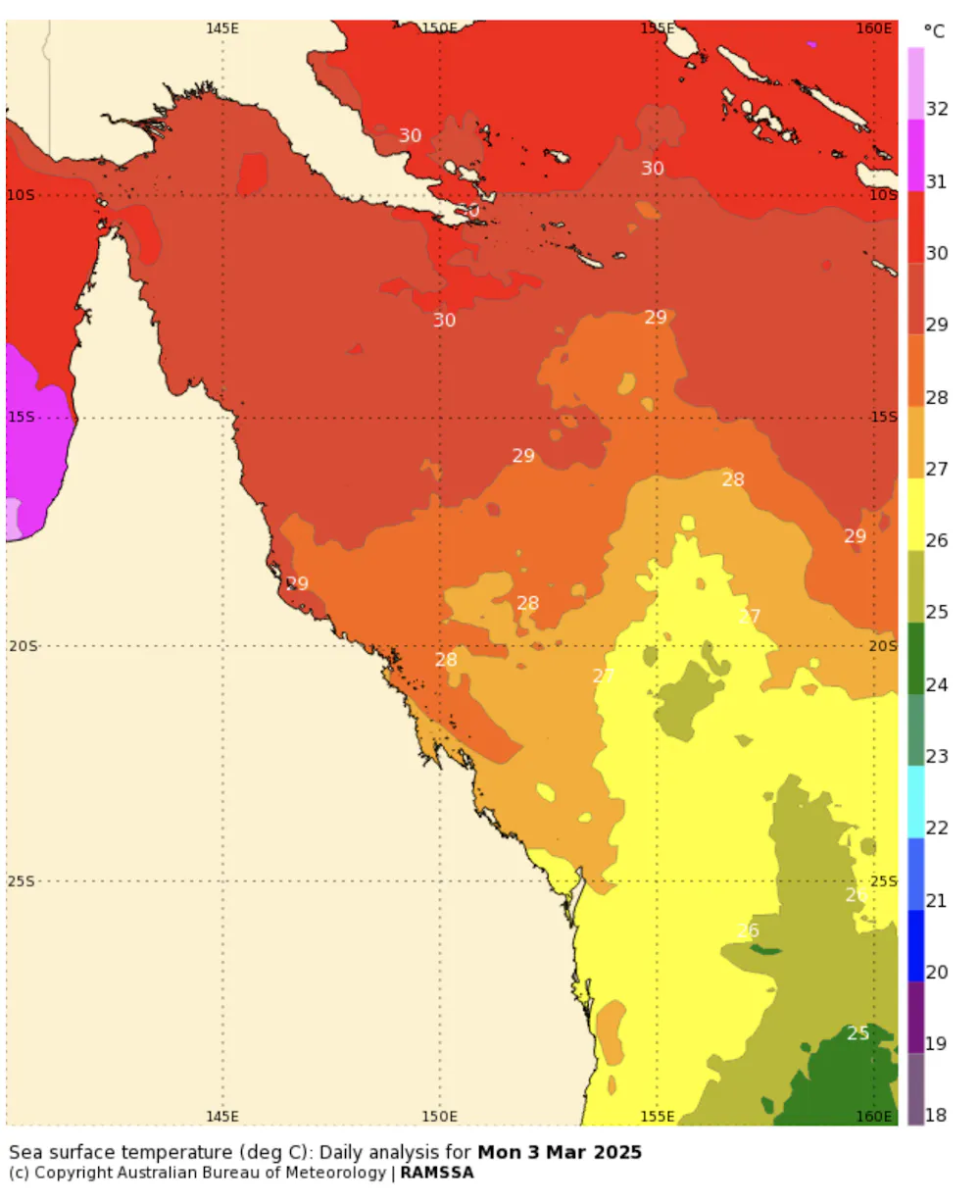
![View larger image [PNG, 599 KB]](/assets/media-releases/img/20250305-sh76-middleton-road-closure-map.png)
![View/download larger map [PNG, 312 KB]](/assets/media-releases/img/20250305-rangitata-to-hinds-road-closure-map.png)
