Headline: 2025 Eastern NC Regional Braille Challenge Set for Feb. 17
2025 Eastern NC Regional Braille Challenge Set for Feb. 17 jejohnson6
The State Library of North Carolina Accessible Books and Library Services (ABLS) is thrilled to announce the upcoming 2025 Eastern NC Regional Braille Challenge, a compelling event that promises to highlight the talents and achievements of blind and visually impaired students in the realm of Braille literacy.
Taking place Feb. 17, from 9 a.m. to 4 p.m. at the Governor Morehead School for the Blind in Raleigh, this event is a unique opportunity for media professionals to capture and share inspiring stories.
The 2025 Eastern NC Regional Braille Challenge is a regional event of The Braille Challenge, a national program of the Braille Institute.
About the Event: The 2025 Eastern NC Regional Braille Challenge is more than a competition; it’s a celebration of Braille literacy, bringing together talented students from the region. From captivating Braille reading sessions to thought-provoking writing challenges, the event is designed to showcase the incredible skills and determination of blind and visually impaired youth.
Event Details:
• Date: Monday, Feb.17
• Time: 9 a.m.-4 p.m.
• Location: Governor Morehead School for the Blind, 301 Ashe Ave, Raleigh, NC 27606
In the event of inclement weather, causing potential travel concerns, the Braille Challenge will be rescheduled to Feb. 24.
Media Opportunity: Journalists, photographers, and camera crews are invited to attend the Braille Challenge and witness firsthand the spirit and resilience of these talented students. From heartwarming success stories to the demonstration of Braille proficiency, this event offers a wealth of visual and narrative opportunities for media coverage.
Interview Opportunities:
• Engage with participants, educators, and organizers to learn more about the significance of Braille literacy.
• Capture emotional moments as students showcase their Braille skills in a competitive and supportive environment.
How to Cover the Event: For media inquiries or to confirm attendance, contact Clint Exum, Outreach Specialist, at clint.exum@dncr.nc.gov or 984-236-1118.
About SLNC ABLS ABLS is the free public library for North Carolinians with a print disability, such as blindness, a physical disability preventing them from holding a book, or a reading disability. Our library serves the entire state by mail or online with an assortment of accessible resources like talking books, braille books, large print books, and descriptive movies. https://statelibrary.ncdcr.gov/blind-print-disabled
About the North Carolina Department of Natural and Cultural Resources The N.C. Department of Natural and Cultural Resources (DNCR) manages, promotes, and enhances the things that people love about North Carolina – its diverse arts and culture, rich history, and spectacular natural areas. Through its programs, the department enhances education, stimulates economic development, improves public health, expands accessibility, and strengthens community resiliency.
The department manages over 100 locations across the state, including 27 historic sites, seven history museums, two art museums, five science museums, four aquariums, 35 state parks, four recreation areas, dozens of state trails and natural areas, the North Carolina Zoo, the State Library, the State Archives, the N.C. Arts Council, the African American Heritage Commission, the American Indian Heritage Commission, the State Historic Preservation Office, the Office of State Archaeology, the Highway Historical Markers program, the N.C. Land and Water Fund, and the Natural Heritage Program. For more information, please visit www.dncr.nc.gov.
Headline: Bennett Place State Historic Site Hosts Lecture and Debuts a Community Project in Honor of Black History Month
Bennett Place State Historic Site Hosts Lecture and Debuts a Community Project in Honor of Black History Month jejohnson6
On Saturday, Feb. 15 at 2 p.m., Bennett Place State Historic Site will host a free lecture with local historian Ernest Dollar entitled “Jublio: Moments of Freedom, 1865.”
Dollar, who serves as director of the Museums Section for the City of Raleigh, will highlight how enslaved people found and claimed freedom for themselves in the final days of the Civil War in North Carolina. This program will explore perspectives of African American men and women’s first moments of freedom as part of the site’s Black History Month programming.
Bennett Place interprets the largest troop surrender of the Civil War in April 1865 and how it contributed to ending slavery.
Now through April 16, visitors are invited to commemorate emancipation by creating community luminaries. A self-guided station at the Visitor Center will provide instructions for making the luminaries, which will be used during an April 25 program marking the 160th anniversary of a new chapter of freedom for more than 331,000 formerly enslaved North Carolinians. Visitors can also learn more about the connection between Bennett Place and emancipation. The Community Luminary table is open Tuesday-Saturday, 9:30 a.m.-4:30 p.m.
About the North Carolina Department of Natural and Cultural Resources The N.C. Department of Natural and Cultural Resources (DNCR) manages, promotes, and enhances the things that people love about North Carolina – its diverse arts and culture, rich history, and spectacular natural areas. Through its programs, the department enhances education, stimulates economic development, improves public health, expands accessibility, and strengthens community resiliency.
The department manages over 100 locations across the state, including 27 historic sites, seven history museums, two art museums, five science museums, four aquariums, 35 state parks, four recreation areas, dozens of state trails and natural areas, the North Carolina Zoo, the State Library, the State Archives, the N.C. Arts Council, the African American Heritage Commission, the American Indian Heritage Commission, the State Historic Preservation Office, the Office of State Archaeology, the Highway Historical Markers program, the N.C. Land and Water Fund, and the Natural Heritage Program. For more information, please visit www.dncr.nc.gov.
Headline: Prominent Civil Rights Attorney James Walker Jr., to be Featured on N.C. Highway Historical Marker
Prominent Civil Rights Attorney James Walker Jr., to be Featured on N.C. Highway Historical Marker jejohnson6
James Robert Walker Jr., a prominent civil rights attorney from northeastern North Carolina, soon will be recognized with a North Carolina Highway Historical Marker.
The marker commemorating Walker will be dedicated during a ceremony at the New Ahoskie Missionary Baptist Church (410 West Hayes St., Ahoskie, N.C.) on Saturday, Feb. 22 at 1 p.m. The marker will be installed at the intersection of U.S. 13 and N.C. 42 in Ahoskie.
Born in 1924 as the first of eight children, Walker grew up in Ahoskie, in a family of educators with advanced degrees and the grandson of a preacher. He served in World War II and earned his bachelor’s degree from North Carolina College, now North Carolina Central University, after being honorably discharged from the United States Army.
Walker later became the first of two Black graduates from any program at UNC-Chapel Hill, having graduated from its law school in 1952. He returned to his native northeastern North Carolina and became a grassroots civil rights attorney, namely waging battles in the realm of voting rights across a six-county area (Halifax, Northampton, Warren, Bertie, Hertford, Gates).
Walker was the principal organizer and president of the Eastern Council on Community Affairs. This group advocated for Black representation in local and state governing bodies, including town councils and state legislatures. It also opposed bills for school separation or segregation.
Walker became the first Black member of UNC-Chapel Hill’s Dialectic and Philanthropic Societies, the school’s debating and literacy society, and the oldest student organization on the campus. The state’s NAACP also recognized him with its Distinguished Service Award for his efforts in civil rights. In 1961, he was the keynote speaker for the National Lawyers Guild in Detroit, Michigan, and in 1978, was named Lawyer of the Year by the same organization.
Walker died in 1997.
For more information about the historical markers, please visit https://www.dncr.nc.gov/blog/2024/07/10/james-walker-jr-1924-1997-96, or call (919) 814-6625.
The Highway Historical Marker Program is a collaboration between the N.C. departments of Natural and Cultural Resources and Transportation.
About the North Carolina Department of Natural and Cultural Resources The N.C. Department of Natural and Cultural Resources (DNCR) manages, promotes, and enhances the things that people love about North Carolina – its diverse arts and culture, rich history, and spectacular natural areas. Through its programs, the department enhances education, stimulates economic development, improves public health, expands accessibility, and strengthens community resiliency.
The department manages over 100 locations across the state, including 27 historic sites, seven history museums, two art museums, five science museums, four aquariums, 35 state parks, four recreation areas, dozens of state trails and natural areas, the North Carolina Zoo, the State Library, the State Archives, the N.C. Arts Council, the African American Heritage Commission, the American Indian Heritage Commission, the State Historic Preservation Office, the Office of State Archaeology, the Highway Historical Markers program, the N.C. Land and Water Fund, and the Natural Heritage Program. For more information, please visit www.dncr.nc.gov.
Source: The Conversation (Au and NZ) – By Pandanus Petter, Postdoctoral Research Fellow, School of Politics and International Relations, Australian National University
The upcoming federal election will see the incumbent Labor prime minister, Anthony Albanese, face off against Liberal opposition leader, Peter Dutton. We’ll likely see a strong focus on the personal qualities and performance of the two leaders.
We tend to think a popular leader can win an election for their party while an unpopular one can lose it. Much of the commentary on the Coalition’s 2022 election loss, for example, centred on the widespread dislike of Scott Morrison.
But how much do party leaders actually affect their party’s vote share, and ultimately, the outcome of an election? We looked at 40 years of opinion polling to find out.
Our research
Opinion polls in Australia have been conducted since the 1940s, but it was not until the 1980s that they began to regularly ask questions about leader satisfaction and voting intention. In recent decades, the proliferation of polls has seen a greater consistency in question wording and protocols.
We have been analysing the polling data on government popularity and responsiveness in Australia. This enables us to track and compare leaders over an extended period.
We’ve crunched the numbers on voter intention and leader satisfaction from September 1985 until December 2024.
We can cross-reference these statistics to show which prime ministers and opposition leaders were a net benefit to their party (more popular than their party overall) and which were a net drag (less popular than their party).
Prime ministers: who helped and who hindered?
By this measure, the prime minister who provided the most electoral benefit to their party was Kevin Rudd between 2007 and 2010.
Rudd achieved some of the highest levels of voter satisfaction recorded since the early Bob Hawke years, averaging 60% satisfaction, a 14-point net benefit for his party.
His popularity declined considerably just before his replacement by Julia Gillard in 2010, and never fully recovered when he became prime minister again in 2013.
John Howard ranks second, with Morrison and Albanese (so far) sharing third place in terms of satisfaction. However, there’s a larger difference between Albanese’s personal popularity and his party’s vote intention.
Morrison’s tenure in office was skewed by the COVID pandemic, which saw a “rally around the flag” effect, seeing a spike in voters’ trust in government.
Paul Keating comes at the bottom of the list. His personal popularity trailed his party’s by eight percentage points on average, with an upset victory in 1993 not enough to win over the public to defeat a resurgent Howard in 1996.
Similiarly, Tony Abbott, although party leader when the Coalition returned to power after the Rudd-Gillard-Rudd years, was consistently less popular than his party – by seven points in opposition and four as prime minister.
What about opposition leaders?
Among opposition leaders, Rudd again tops the list. He was more popular than Labor overall in the year prior to winning the election in December 2007, peaking at 65.5% satisfaction.
The opposition leader who represents the greatest drag on their party was Andrew Peacock in the late 1980s, in what was his second incarnation as Liberal leader.
Overall, prime ministers have a greater impact on their party’s fortunes than opposition leaders. This is expected as incumbency has advantages, with prime ministers usually given more opportunity for media attention, greater recognition with the public, and hopefully a record of achievements in government to point to.
Prime ministers register a net gain to their party of about four percentage points, compared with minus three points for opposition leaders.
Labor leaders show a net gain to their party of two points, compared to minus four points for their Liberal counterparts.
The personalisation of politics
Since at least the 1970s, political leaders have attracted increasing attention in democratic elections around the world.
This trend has not been restricted to countries with presidential systems, such as the United States. It’s also playing out in parliamentary systems such as Australia’s and the United Kingdom’s. This is despite the fact voters elect local members to parliament, rather than voting for the prime minister directly.
This profound shift in democratic politics has been based on several social changes.
First, the rise of television, and more recently social media, has provided the visual images that direct voters’ attention towards the leader.
While television’s heyday has passed – in both the 2019 and 2022 elections, the Australian Election Study surveys show more people followed the election on the internet than on television – visual images of the leaders dominate the media, both traditional and social.
Second, party de-alignment has seen voters moving away from their traditional party loyalties, with the personalities of the leaders filling this gap.
In the 1960s, around one in ten voters said they did not identify with a party, compared with one in four in the 2022 election.
Third, the unprecedented expansion in university education has produced critical voters who are more volatile in their voting than any groups in the past.
One factor that can sway their vote is policies, but another is the leader they find most competent.
What does this mean for the next election?
For Australian voters, leaders matter, rightly or wrongly, for evaluating the performance of a government and choosing which party to vote for.
As we close in on an election in 2025, voters will be looking to Albanese and Dutton. In the chart below, we can see that while on average Dutton has been only marginally beneficial for his party compared with Albanese, this gap has narrowed in the latter half of 2024.
Although Albanese started at a historically very strong position, it appears his popularity began to decline in May 2023. The defeat of the Voice to Parliament Referendum in November sped up the decline.
Dutton received a short-term boost after the result, after which his popularity declined and then has steadily built over time. Current projections indicate the next election will likely be close-run.
It also appears the two current leaders, whatever their other merits, have fallen short of the levels reached by the most popular prime ministers and opposition leaders of the past.
Albanese’s early popularity has waned, while the Coalition and Dutton’s fortunes rise in step with one another.
This reflects a return to a normal vote share for the party after their loss in 2022. While it may prove problematic for the government, it doesn’t necessarily indicate a meteoric increase in Dutton’s personal popularity.
Pandanus Petter is employed at the Australian National University with funding from The Australian Research Council.
Ian McAllister receives funding from the Australian Research Council.
Source: The Conversation (Au and NZ) – By Michael Jensen, Associate professor, Institute for Governance and Policy Analysis, University of Canberra, University of Canberra
Hate speech on X was consistently 50% higher for at least eight months after tech billionaire Elon Musk bought the social media platform, new research has found.
The research looked at the prevalence of overt hate speech including a wide range of racist, homophobic and transphobic slurs.
The study, published today in PLOS ONE, was conducted by a team of researchers led by Daniel Hickney from the University of California, Berkeley.
On October 27 2022, Musk officially purchased X (then known as Twitter) for US$44 billion and became its CEO. His takeover was accompanied by promises to reduce hate speech on the platform and tackle bots and other inauthentic accounts.
But after he bought X, Musk made several changes to the platform to reduce content moderation. For example, in November 2022 he fired much of the company’s full time workforce. He also fired outsourced content moderators who tracked abuse on X, despite research showing social medial platforms with high levels of content moderation contain less hate speech.
This new study is the first to show that this wasn’t an anomaly.
Hate speech including homophobic, racist and transphobic slurs was significantly higher on X after Elon Musk bought the platform. The black lines represent standard errors. Hickey et al., 2025 / PLOS One
More than 4 million posts
The study examined 4.7 million English language posts on X from the beginning of 2022 through to June 9 2023. This period includes the ten months before Musk bought X and the eight months afterwards.
The study measured overt hate speech, the meaning of which was clear to anyone who saw it – speech attacking identity groups or using toxic language. It did not measure covert types of hate speech, such as coded language used by some extremist groups to spread hate but plausibly deny doing so.
As well as measuring the amount of hate speech on X, the study also measured how much other users engaged with this material by liking it.
The researchers’ access to X data was cut off during the study due to a policy change by the platform, replacing free access to approved academic researchers with payment options which are generally unaffordable. This significantly hampered their ability to collect sample posts. But they don’t mention whether it affected their results.
A clear increase in hate
The study found “a clear increase” in the average number of posts containing hate speech following Musk’s purchase of X. Specifically, the volume of posts containing hate speech was “consistently” 50% higher after Musk took over X compared to beforehand – a jump from an estimated average of 2,179 to 3,246 posts containing hate speech per week.
Transphobic slurs saw the highest increase, rising from an average of roughly 115 posts per week before Musk’s acquisition to an average of 418 afterwards.
The level of user engagement with posts containing hate speech also increased under Musk’s watch. For example, the weekly rate at which hate speech content was liked by users jumped by 70%.
The researchers say these results suggest either hate speech wasn’t taken down, hateful users became more active, the platform’s algorithm unintentionally promoted hate speech to users who like such content – or a combination of these possibilities.
The study also detected no decrease in the activity of inauthentic accounts on X. In fact, it found a “potential increase” in the number of bot accounts partly based on a large upswing in posts promoting cryptocurrency, which are typically associated with bots.
An important data-driving deep dive
There were a number of limitations to the study. For example, it only measured hate speech posts in English, which accounts for only 31% of posts on the platform.
Even so, the study is an important, data-driven deep dive into the state of X. It shows it is a platform where hate speech is prolific. It also shows Musk has failed to fulfil his earlier promises to address problems on X such as hate speech and bot activity.
As Musk himself said at the White House earlier this week: “Some of the things I say will be incorrect and should be corrected”.
Michael Jensen receives funding from the Australian Research Council, Bayer, and the Australian Department of Defence Science and Technology Group.
An artist’s impression of a high-energy particle travelling through the KM3NeT neutrino telescope.KM3NeT
Three and a half kilometres beneath the Mediterranean Sea, around 80km off the coast of Sicily, lies half of a very unusual telescope called KM3NeT.
The enormous device is still under construction, but today the telescope’s scientific team announced they have already detected a particle from outer space with a staggering amount of energy.
In fact, as the team report in Nature, they found the most energetic neutrino anyone has ever seen – and it represents a tremendous leap forward in exploring the uncharted waters of the extreme universe.
To explain why it’s such a remarkable discovery, we need to understand what KM3NeT is, what it’s looking for, and what it saw.
What is KM3NeT?
KM3NeT is a gigantic deep sea telescope being built by an international collaboration of more than 300 scientists and engineers from 21 countries.
At the site off Sicily, and another off the coast of Provence in France, KM3NeT will be made up of more than 6,000 light detectors hanging in the pitch-black depths. When the telescope is complete, it will cover about a cubic kilometre of sea.
The KM3NeT telescope will eventually have more than 6,000 detectors like this one floating in the depths of the Mediterranean watching for tell-tale flashed of blue light. N Busser / CNRS
Down deep, KM3NeT is shielded from ordinary sources of light, such as the Sun. It is also shielded from other particles like electrons and protons, which are absorbed by the water long before they reach the detectors. So what does it see?
What is KM3NeT looking for?
Of all the particles that physicists have discovered, only the elusive neutrino can reach all the way down to KM3NeT.
The neutrino is an elementary particle with no electric charge and only a very tiny mass. It interacts with matter so weakly that it can pass through kilometres of ocean – and even thousands of kilometres of Earth itself – to reach the detector. That’s why KM3NeT is at the bottom of the sea: to see neutrinos, and only neutrinos.
But won’t the neutrinos pass through the detector, too? Yes, almost all of them.
When a high-energy particle passes through KM3NeT, the detectors register the tell-tale blue flashes and allow scientists to figure out how fast the particle was going and where it came from. KM3NeT
But very rarely, a neutrino will crash right into a water molecule. When it does, it can pack an enormous punch.
The energy of the neutrino can create many more particles. As these particles blast through the water, they create a bluish glow. That’s what KM3NeT detectors see.
By analysing this bluish light, and by timing each flash, scientists can reconstruct the original energy of the neutrino, and the direction from which it came. (Either that, or they’ve just clocked one of those deep-sea glowing fish travelling at nearly the speed of light.)
The most energetic neutrino ever detected
On February 13 2023, KM3NeT detected a neutrino travelling so fast it had 30 times more energy than any previously detected.
The amount of energy is 220 petaelectronvolts, but that doesn’t mean much to a non-particle physicist. It’s hard to imagine, but let’s try.
The neutrino had 100 trillion times more energy than a typical particle at the centre of the Sun. It’s a trillion times more energy than medical X-rays, and ten billion times more than the most dangerous radioactive particles. Earth’s biggest particle accelerators can’t produce a particle with even one ten thousandth of this energy.
Short story: it’s a lot of energy for one particle.
Making neutrinos in space
Neutrinos interact with matter very weakly, so how could a single neutrino have been given so much energy? What sort of cosmic event could create such a particle?
That’s the exciting part: we don’t know.
We know there are colossal explosions in the universe, such as supernovas: when a star exhausts its fuel and collapses. And there are gamma ray bursts, which are even more energetic explosions of supermassive stars, or collisions of neutron stars. These create extremely energetic neutrinos.
But there are other candidates. Supermassive black holes at the centre of galaxies have millions to billions of times as much mass as the Sun.
As matter is swallowed by these black holes, it is accelerated to extreme speeds, and becomes wrapped around intense magnetic fields. The particles that aren’t swallowed can be shot out at extreme speeds. These “active galactic nuclei” are another way that the universe could create extreme neutrinos.
Third, the neutrinos could be created more locally (cosmically speaking). Explosions and active galactic nuclei also create cosmic rays: extremely energetic protons and electrons.
These could stream across the universe towards us, before colliding with a particle of light along the way. That collision can create an energetic neutrino.
How can we find the source?
Here’s where the Australian connection comes in. KM3NeT tells us this neutrino came from a particular spot in the southern sky.
If it came from an extreme explosion or an active galactic nucleus, we might hope to spot the source with other telescopes. In particular, both supernova remnants and active galactic nuclei can be spotted using radio waves.
Australia has the biggest radio telescopes in the southern hemisphere. The Australian Square Kilometre Array Pathfinder (ASKAP) has mapped a lot of the southern sky, and found many supernova remnants and active galactic nuclei.
My colleagues and I at Western Sydney University are using ASKAP to follow up on KM3NeT detections like this one. For this particular neutrino, there are no obvious candidates in the radio sky that it came from.
However, KM3NeT doesn’t provide a very accurate position, so we can’t be completely sure. We’ll keep looking.
KM3NeT is still under construction, and ASKAP continues to survey the sky. Our window on the extreme universe is just opening up.
Luke Barnes does not work for, consult, own shares in or receive funding from any company or organisation that would benefit from this article, and has disclosed no relevant affiliations beyond their academic appointment.
Dubai, Feb. 12, 2025 (GLOBE NEWSWIRE) — Dubai, 12 February 2025: Vantage Drilling International Ltd. (the “Company”) announces it has entered into a marketing agreement with Eldorado Drilling AS to market the 7th Generation Dorado Drillship for drilling opportunities in various locations in Africa, the Mediterranean, Asia and Australasia.
Ihab Toma, CEO of Vantage Drilling, commented: ´We are delighted to have entered into this agreement with Eldorado Drilling and we look forward to successfully placing the rig in operation. The Dorado is one of the last delivered 7th generation drillships – an advanced-capability drillship designed to operate in water depths of up to 12,000 feet. This new agreement further demonstrates the rig owners’ confidence in Vantage as a most reliable and trusted partner to market and operate their assets.´
About the Company Vantage Drilling International Ltd., a Bermuda exempted company, is an offshore drilling contractor. Vantage Drilling’s primary business is to contract drilling units, related equipment and work crews primarily on a dayrate basis to drill oil and natural gas wells globally for major, national and independent oil and gas companies. Vantage Drilling also markets, operates and provides management services in respect of drilling units owned by others. For more information about the Company, please refer to the Company’s website, www.vantagedrilling.com
Prime Minister Christopher Luxon wants New Zealand to “go for growth”.
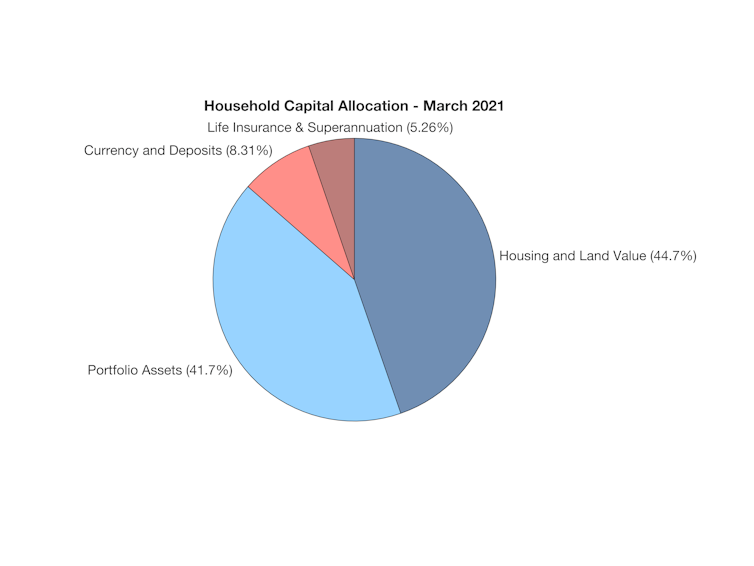
But his plan, focused on reforming foreign investment, planning and competition laws, as well as boosting the tourism and mining sectors, is hampered by a fundamental reality of New Zealand’s economy: much of the country’s capital is tied up in unproductive (and expensive) housing.
While this issue is not new, with New Zealand’s economy once described as “a housing market with bits tacked on”, the solution may lie in making housing more readily available through deregulation and policy reform. This would free up capital for drivers of growth such as infrastructure and business investment.
Household capital allocation March, 2021. Data source: RBNZ Household Balance Sheet. Author provided
The temptation of housing
Rapidly growing house prices over the past two decades have provided strong incentives to direct investment to the housing market.
On average, the price of a typical house has grown by around 8% per year, far outpacing household income growth. For example, in 2005 the median house price was roughly five times the average household income. By the middle of the pandemic house values had ballooned to nine times the average income.
Soaring prices have made residential investment extremely profitable for a long time. This means savings and investments have tended to flow into residential property rather than other productive sectors of the economy.
Constraints on housing supply
The problem is that in recent decades additional residential investment has not led to a substantial increase in new homes.
Local and central government rules and regulations have long hampered the construction of new houses. Instead, more investment in real estate has generally led to even higher prices.
As concerning as this is, it does not mean investments in housing have been misplaced. Rather, high prices and profits are what the market required in order to encourage those willing to build (few that there are) despite the costs, delays and uncertainties associated with bureaucratic battles with councils, planners and local NIMBY groups.
Banning property speculation might have kept prices down and reallocated investment to other productive uses. But in the absence of those speculators, the supply constraints would not have been any looser. Lower prices mean lower returns over building costs, leading to even fewer houses built.
Shifting capital out of the housing market in this way would not have benefited the country – we might have produced more and goods and services but fewer homes in which to live.
Christopher Luxon is pushing forward his plan for growth focused on reforming foreign investment, planning and competition laws, as well as boosting the tourism and mining sectors. Hagen Hopkins/Getty Images
Reforming housing supply
Fortunately, New Zealand has made meaningful progress on housing supply recently. For example, Auckland and Lower Hutt changed zoning laws in the 2010s making it easier to build, and Wellington City has recently followed suit.
These changes have led to local construction booms and, crucially, lower house prices and rents.
These reforms make it easier to build, reduce house prices and mean less investment capital is required for each new house built. So these policies have the dual benefit of improving housing affordability and freeing up capital for other productive sectors of the economy.
As prices come down, New Zealanders will no longer need to pour nine times their income into a home.
That will free up funds for investments in new bridges and tunnels, small businesses, and exciting new startups that will help drive innovation and generate the long-run growth we seek.
New Zealand need not give up its housing dreams in order to get business moving. Rather, it can do both.
All that requires is for local and central government to continue to let people build the housing they want so that we can free up the capital our infrastructure and businesses need.
James Graham has received research funding from the Australian Housing and Urban Research Institute and is a member of Sydney YIMBY.
Source: United States Senator for Illinois Dick Durbin
February 12, 2025
WASHINGTON – In a speech on the Senate floor, U.S. Senate Democratic Whip Dick Durbin (D-IL) outlined his serious concerns with Tulsi Gabbard, President Trump’s nominee to be the Director of National Intelligence ahead of her confirmation vote. Durbin began his remarks by highlighting the history of the Office of the Director of National Intelligence, which was established after the September 11th terrorist attacks.
“[September 11 led to the creation] of the Office of the Director of National Intelligence, which oversees the 18 intelligence agencies that span the CIA, Defense Department, State Department, Energy Department, and others. It is now essential to modern safety in America. But yet, the President—Donald Trump—has selected a person who has little or no experience to lead this critical part of America’s security apparatus: her name is Tulsi Gabbard,” Durbin said.
“During President Trump’s first term, he made clear his fondness for certain leaders of the world that are controversial such as Viktor Orban of Hungary, Vladimir Putin of Russia, and Kim Jong Un of North Korea. So, he ends up picking a person to run America’s intelligence network who shares similarly terrible judgment on critical security matters. Tulsi Gabbard is infamous fordefending despots and other autocratic leaders in the world—including Vladimir Putin and Bashar al-Assad—and traitors to the United States such as Edward Snowden. And her fondness for these oppressive, anti-democratic regimes does not go unreciprocated—they know her [and] they like her,” Durbin continued.
Durbin then highlighted examples on the floor of the anti-democratic regimes who are cheering for Ms. Gabbard’s confirmation—including hosts of Russian media who believe her nomination will “dismantle America,” and some on Russian state channels have even referred to her as their “girlfriend.” Russian state TV also called her a Russian “comrade” in President Trump’s emerging cabinet. A pro-Putin propagandist Vladimir Soloviev once called Gabbard “our friend.” Later, when asked if she was “some sort of Russian agent?” Soloviev replied: “yes.” In a profile in a Russian state newspaper, it said of Gabbard’s nomination: “The C.I.A. and the F.B.I. are trembling,” noting that Ukrainians consider her “an agent of the Russian state.”
“Imagine that. The person tapped to head America’s intelligence community—being called a puppet of an adversary’s country by that very same country. It seems too ridiculous to be true. But I’m sorry to say it is. To merely join America’s intelligence community—never mind lead it—candidates must go through vigorous background checks and earn security clearances… If Tulsi Gabbard was applying for an entry-level position, her relationship with Russia would disqualify her for the job. Why, then, would we trust her to [head the entire intelligence network] given the examples that abound of Tulsi Gabbard proving publicly, shamelessly, and carelessly her sympathies for nations that undermine U.S. interests and security. That is unexplainable and irresponsible,” Durbin continued.
“Our allies depend on us as much as we depend on their security and to share critical intelligence. Now, they are looking at us in disbelief that we would let someone like Tusli Gabbard with such an appalling record anywhere near the leadership of the intelligence community. Intelligence professionals from Canada and the United Kingdom—which are members of the critical Five Eyes intelligence alliance along with the U.S., Australia, and New Zealand—have expressed concern about even working with her if she is in charge. In order to keep Americans safe throughout the world, we need to have the trust of our allies,” Durbin said.
Durbin then spoke about the impacts Ms. Gabbard’s confirmation would have on supporting our Ukrainian ally and their defense against Russia. Since Russia’s full-scale invasion, Gabbard has taken Russia’s side—claiming ‘Russia had legitimate security concerns,’ and blaming NATO, one of our most significant security alliances.
“Let me be clear: Supporting democracies has not historically been a partisan matter,” Durbin continued. “For example, contrast Tulsi Gabbard’s nonsense with former President Ronald Reagan’s clear-eyed understanding of the danger of the communist Russian empire. Nearly 40 years ago, he stood at the Brandenburg Gate in West Berlin and famously challenged the Soviet Union to ‘tear down this wall.’ Reagan understood the true nature and threat of the Russians. And we have all seen the horrific costs of Russia’s war in Ukraine and increasing attacks against NATO allies.”
“Is there a deal to be made to end this war? Perhaps. But doing so must be with the best intelligence available—a clear eye about who we are negotiating with and long-term guarantees of the security of Ukraine, of Europe, and the transatlantic alliance. One would think that any American president navigating such difficult waters would want a top official to serve as the head of National Intelligence. Tulsi Gabbard fails that test,” Durbin said.
Durbin concluded, “Tulsi Gabbard would not be qualified for an entry-level position within our intelligence community. And she is not qualified to lead it. Period. Some of the President’s cabinet nominees are hard to imagine because they are so unqualified. But for the position of DNI—putting someone unqualified in charge is not funny at all. It is life or death dangerous.”
Video of Durbin’s remarks on the Senate floor is available here.
Audio of Durbin’s remarks on the Senate floor is available here.
Footage of Durbin’s remarks on the Senate floor is available here for TV Stations.
-30-
Fargo – United States Attorney Mac Schneider announced that Collin Ray Delorme, also known as Collin Ray Delorme Sr., age 30, from St. Michael, North Dakota, appeared in United States District Court for the District of North Dakota in Fargo today and was sentenced by Chief Judge Peter Welte to serve 40 years in federal prison, to be followed by three years of supervised release during which time he will be required to follow a number of conditions. Delorme was also ordered to pay restitution, joint and severally with his codefendant, for medical and funeral expenses.
On February 18, 2023, Baker called 911 from a home in St. Michael, North Dakota within the boundaries of the Spirit Lake Reservation. Delorme’s co-Defendant, Kenzie Rose Baker, reported her one-year-old child was not breathing. The child was transported to CHI St. Alexius in Devils Lake, North Dakota and was pronounced dead. An autopsy concluded the cause of death was “battered child” due to multiple, repeated injuries of various ages, evident upon external and internal examination. The child’s internal injuries were untreated which created infection and sepsis.
Two of the charges to which Delorme pled are related to his abuse of the deceased one-year-old child. The third charge is the result of his abuse of a three-year-old child that included hitting the child on the arms and throwing him on a bed.
On August 16, 2024, Baker pleaded guilty to charges of Accessory after the Fact; Child Abuse in Indian country; Child Neglect in Indian country. Baker is scheduled to be sentenced on February 24, 2025.
“This sentence provides a measure of accountability for the horrendous abuse and tragic death of a toddler,” Schneider said. “Through their work on multi-disciplinary teams on each reservation with tribal social services, law enforcement, tribal court prosecutors, and behavioral health partners, our Indian country prosecutors are committed to preventing child abuse. They also will not hesitate to bring forceful prosecutions against child abusers in federal court. Our hope is that today’s sentence serves as a deterrence in our efforts to keep children safe.”
“The abuse and neglect that these children experienced is truly horrific. No child should ever endure such suffering,” said Special Agent in Charge Alvin M. Winston Sr. of FBI Minneapolis. “Today’s sentencing demonstrates the FBI and our partners’ commitment to protecting the most vulnerable in our communities and ensuring that those who harm children are brought to justice.”
This case was investigated by the Federal Bureau of Investigation and prosecuted by Assistant United States Attorneys Lori H. Conroy and SheraLynn Ternes.
SAN JUAN, Puerto Rico, Feb. 12, 2025 (GLOBE NEWSWIRE) — Red Cat Holdings, Inc. (Nasdaq: RCAT) (“Red Cat”), a drone technology company integrating robotic hardware and software for military, government, and commercial operations, today announced it has entered into an agreement for up to $20 million and closed on the initial tranche of $16.5 Million in debt financing with The Lind Partners, a New York based institutional fund manager (“Lind”). Details of the agreement include:
Debt Financing convertible at $16.15 share price
Initial Tranche proceeds of $15 million
1 million warrants exercisable at $15.00 per share non cashless
Additionally, Red Cat has applied for $58 million in debt financing from the Department of Defense Office of Strategic Capital (OSC). OSC implements strategies and partnerships to accelerate and scale private investment in critical supply chain technologies needed for national security. They have identified 14 critical technology areas vital to maintaining the United States’ national security. These have been grouped into three categories as found in the 2023 National Defense Science and Technology Strategy.
Seed Areas of Emerging Opportunity
Effective Adoption Areas
Defense-Specific Areas
The investment is expected to provide Red Cat with the working capital needed to scale up production and the ongoing development of its Arachnid Family of Systems, which includes Black Widow™, Edge 130, and a new line of FANG™ First-Person View (FPV) drones. The goal of the Family of Systems is to meet the needs of the U.S. Department of Defense and NATO Allies for drone systems that are low-cost, portable, field repairable, and recoverable.
“The recent financing will allow us to expedite and expand the Edge 130 factory and build-out and ramp up mass production of the Black Widow,” said Jeff Thompson. Red Cat CEO. “As a company focused on technology that advances the Department of Defense capabilities, we are a strong candidate for the Office of Strategic Capital’s low-cost debt program. The potential total financing of $93 million is the least dilutive option for our shareholders.”
About Red Cat, Inc. Red Cat (Nasdaq: RCAT) is a drone technology company integrating robotic hardware and software for military, government, and commercial operations. Through two wholly owned subsidiaries, Teal Drones and FlightWave Aerospace, Red Cat has developed a Family of Systems. This includes the Black Widow™, a small unmanned ISR system that was awarded the U.S. Army’s Short Range Reconnaissance (SRR) Program of Record contract. The Family of Systems also includes TRICHON™, a fixed wing VTOL for extended endurance and range, and FANG™, the industry’s first line of NDAA compliant FPV drones optimized for military operations with precision strike capabilities. Learn more at www.redcat.red.
About The Lind Partners The Lind Partners manages institutional funds that are leaders in providing growth capital to small- and mid-cap companies publicly traded in the US, Canada, Australia and the UK. Lind’s funds make direct investments ranging from US$1 to US$30 million, invest in syndicated equity offerings and selectively buy on market. Having completed more than 150 direct investments totaling over US$1.5 Billion in transaction value, Lind’s funds have been flexible and supportive capital partners to investee companies since 2011.
Forward-Looking Statements This press release contains “forward-looking statements” that are subject to substantial risks and uncertainties. All statements, other than statements of historical fact, contained in this press release are forward-looking statements. Forward-looking statements contained in this press release may be identified by the use of words such as “anticipate,” “believe,” “contemplate,” “could,” “estimate,” “expect,” “intend,” “seek,” “may,” “might,” “plan,” “potential,” “predict,” “project,” “target,” “aim,” “should,” “will,” “would,” or the negative of these words or other similar expressions, although not all forward-looking statements contain these words. Forward-looking statements are based on Red Cat Holdings, Inc.’s current expectations and are subject to inherent uncertainties, risks and assumptions that are difficult to predict. Further, certain forward-looking statements are based on assumptions as to future events that may not prove to be accurate. These and other risks and uncertainties are described more fully in the section titled “Risk Factors” in the final prospectus related to the public offering filed with the Securities and Exchange Commission. Forward-looking statements contained in this announcement are made as of this date, and Red Cat Holdings, Inc. undertakes no duty to update such information except as required under applicable law.
United States Vice President JD Vance made headlines this week by refusing to sign a declaration at a global summit in Paris on artificial intelligence.
In his first appearance on the world stage, Vance made clear that the U.S. wouldn’t be playing ball. The Donald Trump administration believes that “excessive regulation of the AI sector could kill a transformative industry just as it’s taking off,” he said. “We’ll make every effort to encourage pro-growth AI policies.”
But upon a closer look, events this week point to signs that just the opposite may be unfolding. A host of nations took notable steps towards address growing safety and environmental concerns about AI, indicating that a regulatory tipping point has been reached.
Prime Minister Justin Trudeau delivered the keynote address at the AI Action Summit in Paris, France.
The Paris communiqué calls for an “inclusive approach” to AI, seeking to “narrow inequalities” in AI capabilities among countries. It encourages “avoiding market concentration” and affirms the need for openness and transparency in building and sharing technology and expertise.
The document is not binding. It does little more than tout principles, or affirm a collective sentiment among the parties. One of these — perhaps the most important — is to keep talking, meeting and working together on the common concerns that AI raises.
While nothing is binding on the parties, the goals are notably specific. They include coming up with standards for measuring AI’s environmental impact and more effective ways for companies to report on the impact. Parties also aim to “optimize algorithms to reduce computational complexity and minimize data usage.”
Even if most of this turns out to be merely aspirational, it’s important that the coalition offers a platform for collaboration on these initiatives. At the very least, it signals a likelihood that sustainability will be at the forefront of debate about AI moving forward.
The convention commits parties to pass domestic laws on AI that deal with privacy, bias and discrimination, safety, transparency and environmental sustainability.
The treaty has been criticized for containing no more than “broad affirmations” and imposing few clear obligations. But it does show that countries are committed to passing law to ensure that AI development unfolds within boundaries — and they’re eager to see more countries do the same.
If Canada were to ratify the treaty, Parliament would likely revive Bill C-27, which contained the AI and Data Act.
The act aimed to do much of what Canada agrees to do under the convention: impose greater oversight of the development and use of AI. This includes transparency and disclosure requirements on AI companies, and stiff penalties for failure to comply.
What does this really mean?
While the U.S. signed the convention on AI and human rights, democracy and rule of law in the fall of 2024, it likely won’t be implemented by a Republican Congress. The same might happen in Canada under a Conservative government led by Pierre Poilievre. He could also decide not to fulfil commitments made under other agreements about AI.
The Trump administration may have ushered in a period of more lax tech regulation in the U.S., and Silicon Valley is indeed a key player in tech — especially AI. But it’s a wide world, with many other important players in this space, including China, Europe and Canada.
The events in Paris have revealed a strong interest among nations around the globe to regulate AI, and specifically to foster ideas about inclusion and sustainability. If the Paris summit was any indication, the hope of sheltering AI from effective regulation won’t last long.
Robert Diab does not work for, consult, own shares in or receive funding from any company or organisation that would benefit from this article, and has disclosed no relevant affiliations beyond their academic appointment.
CORAL GABLES, Fla., Feb. 12, 2025 (GLOBE NEWSWIRE) — MarketGrader, a leader in smart beta investment solutions, today announced the vast majority of the firm’s MarketGrader Indexes beat their passive equity benchmarks and actively managed peers1 in 2024. The outperformance of MarketGrader’s Indexes relative to both their stock market benchmarks and active peers was even more pronounced over the recent three- and five-year windows.
“2024 was another great year for MarketGrader Indexes when compared to both widely-followed passive benchmarks and peer groups of active managers. Our strategies were again rewarded for identifying consistent creators of economic value and unemotionally selling those companies whose fundamentals no longer held up. The level of outperformance persistence that MarketGrader Indexes demonstrate over multi-year windows is rare in the world of asset management and speaks to the efficacy of our proprietary growth at a reasonable price (GARP) + Quality methodology,” said Carlos Diez, Founder and CEO of MarketGrader.
Some statistical highlights of MarketGrader’s fundamentals-based stock selection indexes relative to market capitalization weighted indexes include:
68% of MarketGrader Indexes outperformed their benchmarks across global markets in 2024.
18 out of 19 (95%) MarketGrader Core U.S. Indexes outpaced their benchmark in 2024, and over the recent three-, five- and ten-year windows.
Nine out of every 10 MarketGrader Indexes lead their bogey on an annualized basis over the last decade. In contrast, over the recent 10-year period, 96% of Large-Cap Core active funds underperformed the S&P 500, while 90% of All Domestic active funds, 81% of active International funds and 86% of active Emerging Markets funds underperformed their benchmarks, according to SPIVA.
When comparing MarketGrader Indexes to active managers, some notable highlights include:
80% of MarketGrader Indexes ranked in the top half of their peer group in 2024 (77% of U.S. indexes and 83% of international indexes).
92% of MarketGrader Indexes ranked in the top half of their peer group over five years (89% of domestic and 95% international indexes).
Top decile: Over five years, 73% of MarketGrader Indexes ranked in the top 10% of their active manager peer group (55% of U.S. indexes and 81% of international indexes).
The market cap weighted version of the Barron’s 400 Index (B400X), live since 2007, ranked in the top 6% among 1,911 active managers in Morningstar’s All Cap U.S. Equity Category in 2024, and top 5% over five years.
“It’s been over twenty years since we launched our first index using our fundamentals-based GARP + Quality framework to picking index constituents. These results show that our unique rules-based approach to indexing transcends geographies, market cycles, interest rate regimes, and stock market sector, size and style segments. Index investors can be stock selectors, harnessing the underlying market return (beta) while adding excess returns (alpha) by systematically choosing only the best companies. The persistence of alpha in our indexes makes them an attractive alternative to actively managed funds, for whom consistent outperformance is famously elusive,” continued Diez.
MarketGrader currently publishes 89 indexes, 47 across domestic U.S. equities and 42 on foreign / ex-U.S. stocks. The indexes cover regions, countries, sectors, styles and income. All MarketGrader’s indexes are fully replicable, transparent and rules-based with screens for constituent liquidity to ensure tradability. Further index product development plans are in the works, including an expansion of the company’s U.S. sectors lineup, new Middle East-focused indexes and single country indexes for Asia Pacific and Europe.
Asset managers, wealth managers, institutions and investment platforms can license MarketGrader’s indexes for the basis of ETFs, mutual funds, annuities, model portfolios or more custom delivery like direct indexing. For more information on the index library and for index licensing opportunities, please write the MarketGrader team.
ABOUT MARKETGRADER MarketGrader.com Corp. (“MarketGrader”) founded in 1999, is a Miami-based provider of global equity research and index-based solutions. The company’s mission is to become the leading provider of next generation Smart Beta investment solutions, helping investors achieve superior risk-adjusted returns by identifying and owning the highest quality companies in the world. MarketGrader’s proprietary “GARP + Quality” methodology is used to screen over 41,000 publicly traded companies across 92 countries, representing over $127 trillion in market capitalization. Over 100 Smart Beta indexes have been created using MarketGrader’s methodology. MarketGrader delivers smart beta solutions in three ways; 1) licensing its indexes to investment management firms; 2) offering smart beta portfolio solutions to wealth managers; and 3) providing access to their proprietary GARP + Quality ratings to retail and institutional clients. Institutional clients include Dow Jones, SS&C ALPS, VanEck and BMO. In 2007, MarketGrader created the Barron’s 400 Index in partnership with Barron’s, America’s premier financial magazine. Follow MarketGrader on X @MarketGrader and connect on LinkedIn. For more information, please visit www.marketgrader.com.
_______________ 1 Performance for all actively managed funds was gross of fees, providing a fair comparison against MarketGrader Indexes, which do not have management fees or trading costs. Source: Morningstar Direct.
Media Contact Paul Damon for MarketGrader +1 802.999.5526 paul@keramas.net
Source: United States Senator for Kentucky Mitch McConnell
Washington, D.C. – U.S. Senator Mitch McConnell (R-KY), Chairman of the Senate Appropriations Subcommittee on Defense, issued the following statement today on the nomination of Tulsi Gabbard to serve as Director of National Intelligence:
“The Senate’s power of advice and consent is not an option; it is an obligation, and one we cannot pretend to misunderstand. When a nominee’s record proves them unworthy of the highest public trust, and when their command of relevant policy falls short of the requirements of their office, the Senate should withhold its consent.
“The Office of the Director of National Intelligence (ODNI) is a key participant in the process that informs every major national security decision the President makes. The ODNI wields significant authority over how the intelligence community allocates its resources, conducts its collection and analysis, and manages the classification and declassification of our nation’s most sensitive secrets. In my assessment, Tulsi Gabbard failed to demonstrate that she is prepared to assume this tremendous national trust.
“The nation should not have to worry that the intelligence assessments the President receives are tainted by a Director of National Intelligence with a history of alarming lapses in judgment.
“Edward Snowden’s treasonous betrayal of the United States and its most sensitive lawful intelligence activities endangered sources, methods, and lives. Japan is among America’s closest treaty allies in the Indo-Pacific, and the risk of conflict in the region is the product of Chinese aggression, not western ‘threat inflation’. Russia’s escalation of its unprovoked war of aggression against Ukraine threatens American interests and is solely the responsibility of Vladimir Putin.
“Entrusting the coordination of the intelligence community to someone who struggles to acknowledge these facts is an unnecessary risk. So is empowering a DNI who only acknowledged the value of critical intelligence collection authorities when her nomination appeared to be in jeopardy.
“Beginning today, the brave men and women of America’s intelligence community will turn to Director Gabbard for principled leadership and sounder judgment in the service of America’s interests and national security. I join all of them in hoping that she rises to the immense responsibilities of her office.”
The Community Emergency Preparedness Fund (CEPF) is funded by the Ministry of Emergency Management and Climate Readiness and administered through the Union of British Columbia Municipalities. The CEPF funds projects that support First Nations and local governments to better prepare for disasters and reduce risks from hazards in a changing climate.
Communities throughout British Columbia will receive approximately $1 million in provincial funding as follows:
Boothroyd Indian Band – Knowledge keepers’ information and sharing for culturally safe emergency response Amount: $31,000
Bulkley-Nechako Regional District – Cultural competency in emergency-response training Amount: $31,650
Central Okanagan Regional District – Cultural safety and humility training Regional partners: Kelowna, Peachland, Lake Country, Westbank First Nation, West Kelowna Amount: $237,000
Coquitlam – Cultural safety and humility training Amount: $40,000
East Kootenay Regional District – Indigenous cultural awareness training Amount: $25,000
Fraser Valley Regional District – Contextual cultural awareness training Amount: $40,000
Hope – Cultural safety training Amount: $39,600
Ka:’yu:’k’t’h’/Che:k’tles7et’h’ First Nations – Training for emergency responders to work effectively and safely with the Ka:’yu:’k’t’h’/Che:k’tles7et’h’ Amount: $40,000
Kamloops – Emergency program cultural safety and humility training Amount: $40,000
Kitimat – Haisla Nation cultural awareness training Amount: $10,000
Merritt – Emergency-management program Indigenous engagement Amount: $40,000
North Coast Regional District – Indigenous cultural safety and humility training Regional partners: Prince Rupert, Port Edward Amount: $110,000
North Vancouver – Truth and reconciliation training Amount: $33,960
Port Moody – Indigenous cultural safety and cultural humility training Amount: $40,000
Sema:th First Nation (Sumas) – Transforming emergency management through cultural safety Amount: $40,000
Splatsin First Nation (Spallumcheen) – Resilient Roots: cultural safety in emergencies Amount: $40,000
Sqwá First Nation (Skwah) – Community capacity building to foster shared understanding of trauma in emergency response Amount: $40,000
Strathcona Regional District – This Territory You Are On training Regional partners: Village of Tahsis, Gold River, Klahoose First Nation, Xwémalhkwu (Homalco) First Nation, Nuchatlaht First Nation, Ehattesaht Amount: $157,300
Vernon – Cultural safety educators Amount: $40,000
West Vancouver – Reconciliation, equity, diversity and inclusion workshop Amount: $40,000
We are in the early days of a seismic shift in the global AI industry. DeepSeek, a previously little-known Chinese artificial intelligence company, has produced a “game changing”“ large language model that promises to reshape the AI landscape almost overnight.
But DeepSeek’s breakthrough also has wider implications for the technological arms race between the US and China, having apparently caught even the best-known US tech firms off guard. Its launch has been predicted to start a “slow unwinding of the AI bet” in the west, amid a new era of “AI efficiency wars”.
In fact, industry experts have been speculating for years about China’s rapid advancements in AI. While the supposedly free-market US has often prioritised proprietary models, China has built a thriving AI ecosystem by leveraging open-source technology, fostering collaboration between government-backed research institutions and major tech firms.
This strategy has enabled China to scale its AI innovation rapidly while the US – despite all the tub-thumping from Silicon Valley – remains limited by restrictive corporate structures. Companies such as Google and Meta, despite promoting open-sourceinitiatives, still rely heavily on closed-source strategies that limit broader access and collaboration.
What makes DeepSeek particularly disruptive is its ability to achieve cutting-edge performance while reducing computing costs – an area where US firms have struggled due to their dependence on training models that demand very expensive processing hardware.
Where once Silicon Valley was the epicentre of global digital innovation, its corporate behemoths now appear vulnerable to more innovative, “scrappy” startup competitors – albeit ones enabled by major state investment in AI infrastructure. By leveraging China’s industrial approach to AI, DeepSeek has crystallised a reality that many in Silicon Valley have long ignored: AI’s centre of power is shifting away from the US and the west.
It highlights the failure of US attempts to preserve its technological hegemony through tight export controls on cutting-edge AI chips to China. According to research fellow Dean Ball: “You can keep [computing resources] away from China, but you can’t export-control the ideas that everyone in the world is hunting for.”
DeepSeek’s success has forced Silicon Valley and large western tech companies to “take stock”, realising that their once-unquestioned dominance is suddenly at risk. Even the US president, Donald Trump, has proclaimed that this should be a “wake-up call for our industries that we need to be laser-focused on competing”.
But this story is not just about technological prowess – it could mark an important shift in global power. Former US secretary of state Mike Pompeo has framed DeepSeek’s emergence as a “shot across America’s bow”, urging US policymakers and tech executives to take immediate action.
DeepSeek’s rapid rise underscores a growing realisation: globally, we are entering a potentially new AI paradigm, one where China’s model of open-source innovation and state-backed development is proving more effective than Silicon Valley’s corporate-driven approach.
The Insights section is committed to high-quality longform journalism. Our editors work with academics from many different backgrounds who are tackling a wide range of societal and scientific challenges.
I’ve spent much of my career analysing the transformative role of AI on the global digital landscape – examining how AI shapes governance, market structures and public discourse, and exploring its geopolitical and ethical dimensions, now and far in the future.
I also have personal connections with China, having lived there while teaching at Jiangsu University, then written my PhD thesis on the country’s state-led marketisation programme. Over the years, I have studied China’s evolving tech landscape, observing firsthand how its unique blend of state-driven industrial policy and private-sector innovation has fuelled rapid AI development.
I believe this moment may come to be seen as a turning point not just for AI, but for the geopolitical order. If China’s AI dominance continues, what could this mean for the future of digital governance, democracy, and the global balance of power?
China’s open-source AI takeover
Even in the early days of China’s digital transformation, analysts predicted the country’s open-source focus could lead to a major AI breakthrough. In 2018, China was integrating open-source collaboration into its broader digitisation strategy, recognising that fostering shared development efforts could accelerate its AI capabilities.
Unlike the US, where proprietary AI models dominated, China embraced open-source ecosystems to bypass western gatekeeping, scale innovation faster, and embed itself in global AI collaboration. China’s open-source activity surged dramatically in 2020, laying the foundation for the kind of innovation seen today. By actively fostering an open-source culture, China ensured that a broad range of developers had access to AI tools, rather than restricting them to a handful of dominant companies.
The trend has continued in recent years, with China even launching its own state-backed open-source operating systems and platforms in 2023, to further reduce its dependence on western technology. This move was widely seen as an effort to cement its AI leadership and create an independent, self-sustaining digital ecosystem.
Video: BBC.
While China has been steadily positioning itself as a leader in open-source AI, Silicon Valley firms remained focused on closed, proprietary models – allowing China to catch up fast. While companies like Google and Meta promoted open-source initiatives in name, they still locked key AI capabilities behind paywalls and restrictive licenses.
In contrast, China’s government-backed initiatives have treated open-source AI as a national resource, rather than a corporate asset. This has resulted in China becoming one of the world’s largest contributors to open-source AI development, surpassing many western firms in collaborative projects. Chinese tech giants such as Huawei, Alibaba and Tencent are driving open-source AI forward with frameworks like PaddlePaddle, X-Deep Learning (X-DL) and MindSpore — all now core to China’s machine learning ecosystem.
But they’re also making major contributions to global AI projects, from Alibaba’s Dragonfly, which streamlines large-scale data distribution, to Baidu’s Apollo, an open-source platform accelerating autonomous vehicle development. These efforts don’t just strengthen China’s AI industry, they embed it deeper into the global AI landscape.
This shift had been years in the making, as Chinese firms (with state backing) pushed open-source AI forward and made their models publicly available, creating a feedback loop that western companies have also – quietly – tapped into. A year ago, for example, US firm Abicus.AI released Smaug-72B, an AI model designed for enterprises that built directly upon Alibaba’s Qwen-72B and outperformed proprietary models like OpenAI’s GPT-3.5 and Mistral’s Medium. But the potential for US companies to further build on Chinese open-source technology may be limited by political as well as corporate barriers.
In 2023, US lawmakers highlighted growing concerns that China’s aggressive investment in open-source AI and semiconductor technologies would eventually erode western leadership in AI. Some policymakers called for bans on certain open-source chip technologies, due to fears they could further accelerate China’s AI advancements.
But by then, China’s AI horse had already bolted.
AI with Chinese characteristics
DeepSeek’s rise should have been obvious to anyone familiar with management theory and the history of technological breakthroughs linked to “disruptive innovation”. Latecomers to an industry rarely compete by playing the same game as incumbents – they have to be disruptive.
China, facing restrictions on cutting-edge western AI chips and lagging behind in proprietary AI infrastructure, had no choice but to innovate differently. Open-source AI provided the perfect vehicle: a way to scale innovation rapidly, lower costs and tap into global research while bypassing Silicon Valley’s resource-heavy, closed-source model.
From a western and traditional human rights perspective, China’s embrace of open-source AI may appear paradoxical, given the country’s strict information controls. Its AI development strategy prioritises both technological advancement and strict alignment with the Chinese Communist party’s ideological framework, ensuring AI models adhere to “core socialist values” and state-approved narratives. AI research in China has thrived not only despite these constraints but, in many ways, because of them.
Video: CNBC.
China’s success goes beyond traditional authoritarianism; it embodies what Harvard economist David Yang calls “Autocracy 2.0”. Rather than relying solely on fear-based control, it uses economic incentives, bureaucratic efficiency, and technology to manage information and maintain regime stability.
The Chinese government has strategically encouraged open-source development while maintaining tight control over AI’s domestic applications, particularly in surveillance and censorship. Indeed, authoritarian regimes may have a significant advantage in developing facial-recognition technology due to their extensive surveillance systems. The vast amounts of data collected through these networks enable private AI companies to create advanced algorithms, which can then be adapted for commercial uses, potentially accelerating economic growth.
China’s AI strategy is built on a dual foundation of state-led initiatives and private-sector innovation. The country’s AI roadmap, first outlined in the 2017 new generation artificial intelligence development plan, follows a three-phase timeline: achieving global competitiveness by 2020, making major AI breakthroughs by 2025, and securing world leadership in AI by 2030. In parallel, the government has emphasised data governance, regulatory frameworks and ethical oversight to guide AI development “responsibly”.
A defining feature of China’s AI expansion has been the massive infusion of state-backed investment. Over the past decade, government venture capital funds have injected approximately US$912 billion (£737bn) into early-stage firms, with 23% of that funding directed toward AI-related companies. A significant portion has targeted China’s less-developed regions, following local investment mandates.
Compared with private venture capital, government-backed firms often lag in software development but demonstrate rapid growth post-investment. Moreover, state funding often serves as a signal for subsequent private-sector investment, reinforcing the country’s AI ecosystem.
China’s AI strategy represents a departure from its traditional industrial policies, which historically emphasised self-sufficiency, support for a handful of national champions, and military-driven research. Instead, the government has embraced a more flexible and collaborative approach that encourages open-source software adoption, a diverse network of AI firms, and public-private partnerships to accelerate innovation. This model prioritises research funding, state-backed AI laboratories, and AI integration across key industries including security, healthcare, and infrastructure.
Despite strong state involvement, China’s AI boom is equally driven by private-sector innovation. The country is home to an estimated 4,500 AI companies, accounting for 15% of the world’s total.
As economist Liu Gang told the Chinese Communist Party’s Global Times newspaper: “The development of AI is fast in China – for example, for AI-empowered large language models. Aided with government spending, private capital is flowing to the new sector. Increased capital inflow is anticipated to further enhance the sector in 2025.”
China’s tech giants including Baidu, Alibaba, Tencent and SenseTime have all benefited from substantial government support while remaining competitive on the global stage. But unlike in the US, China’s AI ecosystem thrives on a complex interplay between state support, corporate investment and academic collaboration.
Recognising the potential of open-source AI early on, Tsinghua University in Beijing has emerged as a key innovation hub, producing leading AI startups such as Zhipu AI, Baichuan AI, Moonshot AI and MiniMax — all founded by its faculty and alumni. The Chinese Academy of Sciences has similarly played a crucial role in advancing research in deep learning and natural language processing.
Unlike the west, where companies like Google and Meta promote open-source models for strategic business gains, China sees them as a means of national technological self-sufficiency. To this end, the National AI Team, composed of 23 leading private enterprises, has developed the National AI Open Innovation Platform, which provides open access to AI datasets, toolkits, libraries and other computing resources.
DeepSeek is a prime example of China’s AI strategy in action. The company’s rise embodies the government’s push for open-source collaboration while remaining deeply embedded within a state-guided AI ecosystem. Chinese developers have long been major contributors to open-source platforms, ranking as the second-largest group on GitHub by 2021.
Founded by Chinese entrepreneur Liang Wenfeng in 2023, DeepSeek has positioned itself as an AI leader while benefiting from China’s state-driven AI ecosystem. Liang, who also established the hedge fund High-Flyer, has maintained full ownership of DeepSeek and avoided external venture capital funding.
Though there is no direct evidence of government financial backing, DeepSeek has reaped the rewards of China’s AI talent pipeline, state-sponsored education programs, and research funding. Liang has engaged with top government officials including China’s premier, Li Qiang, reflecting the company’s strategic importance to the country’s broader AI ambitions.
In this way, DeepSeek perfectly encapsulates “AI with Chinese characteristics” – a fusion of state guidance, private-sector ingenuity, and open-source collaboration, all carefully managed to serve the country’s long-term technological and geopolitical objectives.
Recognising the strategic value of open-source innovation, the government has actively promoted domestic open-source code platforms like Gitee to foster self-reliance and insulate China’s AI ecosystem from external disruptions. However, this also exposes the limits of China’s open-source ambitions. The government pushes collaboration, but only within a tightly controlled system where state-backed firms and tech giants call the shots.
Reports of censorship on Gitee reveal how Beijing carefully manages innovation, ensuring AI advances stay in line with national priorities. Independent developers can contribute, but the real power remains concentrated in companies that operate within the government’s strategic framework.
The conflicted reactions of US big tech
DeepSeek’s emergence has sparked intense debate across the AI industry, drawing a range of reactions from leading Silicon Valley executives, policymakers and researchers. While some view it as an expected evolution of open-source AI, others see it as a direct challenge to western AI leadership.
Microsoft’s CEO, Satya Nadella, emphasised its technical efficiency. “It’s super-impressive in terms of both how they have really effectively done an open-source model that does this inference-time compute, and is super-compute efficient,” Nadella told CNBC. “We should take the developments out of China very, very seriously”.
Silicon Valley venture capitalist Marc Andreessen, a prominent advisor to Trump, was similarly effusive. “DeepSeek R1 is one of the most amazing and impressive breakthroughs I’ve ever seen – and as open source, a profound gift to the world,” he wrote on X.
For Yann LeCun, Meta’s chief AI scientist, DeepSeek is less about China’s AI capabilities and more about the broader power of open-source innovation. He argued that the situation should be read not as China’s AI surpassing the US, but rather as open-source models surpassing proprietary ones. “DeepSeek has profited from open research and open source (e.g. PyTorch and Llama from Meta),” he wrote on Threads. “They came up with new ideas and built them on top of other people’s work. Because their work is published and open source, everyone can profit from it. That is the power of open research and open source.”
Not all responses were so measured. Alexander Wang, CEO of Scale AI – a US firm specialising in AI data labelling and model training – framed DeepSeek as a competitive threat that demands an aggressive response. He wrote on X: “DeepSeek is a wake-up call for America, but it doesn’t change the strategy: USA must out-innovate & race faster, as we have done in the entire history of AI. Tighten export controls on chips so that we can maintain future leads. Every major breakthrough in AI has been American.”
Elon Musk added fuel to speculation about DeepSeek’s hardware access when he responded with a simple “obviously” to Wang’s earlier claims on CNBC that DeepSeek had secretly acquired 50,000 Nvidia H100 GPUs, despite US export restrictions.
Beyond the tech world, US policymakers have taken a more adversarial stance. House speaker Mike Johnson accused China of leveraging DeepSeek to erode American AI leadership. “They abuse the system, they steal our intellectual property. They’re now trying to get a leg up on us in AI.”
For his part, Trump took a more pragmatic view, seeing DeepSeek’s efficiency as a validation of cost-cutting approaches. “I view that as a positive, as an asset … You won’t be spending as much, and you’ll get the same result, hopefully.”
The rise of DeepSeek may have helped jolt the Trump administration into action, leading to sweeping policy shifts aimed at securing US dominance in AI. In his first week back in the White House, the US president announced a series of aggressive measures, including massive federal investments in AI research, closer partnerships between the government and private tech firms, and the rollback of regulations seen as slowing US innovation.
The administration’s framing of AI as a critical national interest reflects a broader urgency sparked by China’s rapid advancements, particularly DeepSeek’s ability to produce cutting-edge models at a fraction of the cost traditionally associated with AI development. But this response is not just about national competitiveness – it is also deeply entangled with private industry.
Musk’s growing closeness to Trump, for example, can be viewed as a calculated move to protect his own dominance at home and abroad. By aligning with the administration, Musk ensures that US policy tilts in favour of his AI ventures, securing access to government backing, computing power, and regulatory control over AI exports.
At the same time, Musk’s public criticism of Trump’s US$500 billion AI infrastructure plan – claiming the companies involved lack the necessary funding – was as much a warning as a dismissal, signalling his intent to shape policy in a way that benefits his empire while keeping potential challengers at bay.
Not unrelated, Musk and a group of investors have just launched a US$97.4 billion (£78.7bn) bid for OpenAI’s nonprofit arm, a move that escalates his feud with OpenAI CEO Sam Altman and seeks to strengthen his grip on the AI industry. Altman has dismissed the bid as a “desperate power grab”, insisting that OpenAI will not be swayed by Musk’s attempts to reclaim control. The spat reflects how DeepSeek’s emergence has thrown US tech giants into what could be all-out war, fuelling bitter corporate rivalries and reshaping the fight for AI dominance.
And while the US and China escalate their AI competition, other global leaders are pushing for a coordinated response. The Paris AI Action Summit, held on February 10 and 11, has become a focal point for efforts to prevent AI from descending into an uncontrolled power struggle. France’s president, Emmanuel Macron, warned delegates that without international oversight, AI risks becoming “the wild west”, where unchecked technological development creates instability rather than progress.
But at the end of the two-day summit, the UK and US refused to sign an international commitment to “ensuring AI is open, inclusive, transparent, ethical, safe, secure and trustworthy … making AI sustainable for people and the planet”. China was among the 61 countries to sign this declaration.
Concerns have also been raised at the summit about how AI-powered surveillance and control are enabling authoritarian regimes to strengthen repression and reshape the citizen-state relationship. This highlights the fast-growing global industry of digital repression, driven by an emerging “authoritarian-financial complex” that may exacerbate China’s strategic advancement in AI.
Equally, DeepSeek’s cost-effective AI solutions have created an opening for European firms to challenge the traditional AI hierarchy. As AI development shifts from being solely about compute power to strategic efficiency and accessibility, European firms now have an opportunity to compete more aggressively against their US and Chinese counterparts.
Whether this marks a true rebalancing of the AI landscape remains to be seen. But DeepSeek’s emergence has certainly upended traditional assumptions about who will lead the next wave of AI innovation – and how global powers will respond to it.
End of the ‘Silicon Valley effect’?
DeepSeek’s emergence has forced US tech leaders to confront an uncomfortable reality: they underestimated China’s AI capabilities. Confident in their perceived lead, companies like Google, Meta, and OpenAI prioritised incremental improvements over anticipating disruptive competition, leaving them vulnerable to a rapidly evolving global AI landscape.
In response, the US tech giants are now scrambling to defend their dominance, pledging over US$400 billion in AI investment. DeepSeek’s rise, fuelled by open-source collaboration, has reignited fierce debates over innovation versus security, while its energy-efficient model has intensified scrutiny on AI’s sustainability.
Yet Silicon Valley continues to cling to what many view as outdated economic theories such as the Jevons paradox to downplay China’s AI surge, insisting that greater efficiency will only fuel demand for computing power and reinforce their dominance. Companies like Meta, OpenAI and Microsoft remain fixated on scaling computational power, betting that expensive hardware will secure their lead. But this assumption blinds them to a shifting reality.
DeepSeek’s rise as the potential “Walmart of AI” is shaking Silicon Valley’s foundation, proving that high-quality AI models can be built at a fraction of the cost. By prioritising efficiency over brute-force computing power, DeepSeek is challenging the US tech industry’s reliance on expensive hardware like Nvidia’s high-end chips.
This shift has already rattled markets, driving down the stock prices of major US firms and forcing a reassessment of AI dominance. Nvidia, whose business depends on supplying high-performance processors, appears particularly vulnerable as DeepSeek’s cost-effective approach threatens to reduce demand for premium chips.
Video: CBS News.
The growing divide between the US and China in AI, however, is more than just competition – it’s a clash of governance models. While US firms remain fixated on protecting market dominance, China is accelerating AI innovation with a model that is proving more adaptable to global competition.
If Silicon Valley resists structural change, it risks falling further behind. We may witness the unravelling of the “Silicon Valley effect”, through which tech giants have long manipulated AI regulations to entrench their dominance. For years, Google, Meta,and OpenAI shaped policies that favoured proprietary models and costly infrastructure, ensuring AI development remained under their control.
More than a policy-driven rise, China’s AI surge reflects a fundamentally different innovation model – fast, collaborative and market-driven – while Silicon Valley holds on to expensive infrastructure and rigid proprietary control. If US firms refuse to adapt, they risk losing the future of AI to a more agile and cost-efficient competitor.
A new era of geotechnopolitics
But China is not just disrupting Silicon Valley. It is expanding “geotechnopolitics”, where AI is a battleground for global power. With AI projected to add US$15.7 trillion to the global economy by 2030, China and the US are racing to control the technology that will define economic, military and political dominance.
DeepSeek’s advancement has raised national security concerns in the US. Trump’s government is considering stricter export controls on AI-related technologies to prevent them from bolstering China’s military and intelligence capabilities.
As AI-driven defence systems, intelligence operations and cyber warfare redefine national security, governments must confront a new reality: AI leadership is not just about technological superiority, but about who controls the intelligence that will shape the next era of global power.
China’s AI ambitions extend beyond technology, driving a broader strategy for economic and geopolitical dominance. But with over 50 state-backed companies developing large-scale AI models, its rapid expansion faces growing challenges, including soaring energy demands and US semiconductor restrictions.
China’s president, Xi Jinping, remains resolute, stating: “Whoever can grasp the opportunities of new economic development such as big data and artificial intelligence will have the pulse of our times.” He sees AI driving “new quality productivity” and modernising China’s manufacturing base, calling its “head goose effect” a catalyst for broader innovation.
To counter western containment, China has embraced a “guerrilla” economic strategy, bypassing restrictions through alternative trade networks, deepening ties with the global south, and exploiting weaknesses in global supply chains. Instead of direct confrontation, this decentralised approach uses economic coercion to weaken adversaries while securing China’s own industrial base.
Video: AP.
China is also leveraging open-source AI as an ideological tool, presenting its model as more collaborative and accessible than western alternatives. This narrative strengthens its global influence, aligning with nations seeking alternatives to western digital control. While strict state oversight remains, China’s embrace of open-source AI reinforces its claim to a future where innovation is driven not by corporate interests but through shared collaboration and global cooperation.
But while DeepSeek claims to be open access, its secrecy tells a different story. Key details on training data and fine-tuning remain hidden, and its compliance with China’s AI laws has sparked global scrutiny. Italy has banned the platform over data-transfer risks, while Belgium and Ireland launched privacy probes.
Under Chinese regulations, DeepSeek’s outputs must align with state-approved narratives, clashing with the EU’s AI Act, which demands transparency and protects political speech. Such “controlled openness” raises many red flags, casting doubt on China’s place in markets that value data security and free expression.
Many western commentators are seizing on reports of Chinese AI censorship to frame other models as freer and more politically open. The revelation that a leading Chinese chatbot actively modifies or censors responses in real time has fuelled a broader narrative that western AI operates without such restrictions, reinforcing the idea that democratic systems produce more transparent and unbiased technology. This framing serves to bolster the argument that free societies will ultimately lead the global AI race.
But at its heart, the “AI arms race” is driven by technological dominance. The US, China, and the EU are charting different paths, weighing security risks against the need for global collaboration. How this competition is framed will shape policy: lock AI behind restrictions, or push for open innovation.
DeepSeek, for all its transformational qualities, continues to exemplify a model of AI where innovation prioritises scale, speed and efficiency over societal impact. This drive to optimise computation and expand capabilities overshadows the need to design AI as a truly public good. In doing so, it eclipses this technology’s genuine potential to transform governance, public services and social institutions in ways that prioritise collective wellbeing, equity and sustainability over corporate and state control.
A truly global AI framework requires more than political or technological openness. It demands structured cooperation that prioritises shared governance, equitable access, and responsible development. Following a workshop in Shanghai hosted by the Chinese government last September, the UN’s general secretary, António Guterres, outlined his vision for AI beyond corporate or state control: “We must seize this historic opportunity to lay the foundations for inclusive governance of AI – for the benefit of all humanity. As we build AI capacity, we must also develop shared knowledge and digital public goods.”
Both the west and China frame their AI ambitions through competing notions of “openness” – each aligning with their strategic interests and reinforcing existing power structures.
Western tech giants claim AI drives democratisation, yet they often dominate digital infrastructure in parts of Africa, Asia and Latin America, exporting models based on “corporate imperialism” that extract value while disregarding local needs. China, by contrast, positions itself as a technological partner for the rest of the global south; however, its AI remains tightly controlled, reinforcing state ideology.
China’s proclaimed view on international AI collaboration emphasises that AI should not be “a game of rich countries”“, as President Xi stated during the 2024 G20 summit. By advocating for inclusive global AI development, China positions itself as a leader in shaping international AI governance, especially via initiatives like the UN AI resolution and its AI capacity-building action plan. These efforts help promote a more balanced technological landscape while allowing China to strengthen its influence in global AI standards and frameworks.
However, beneath all these narratives, both China and the US share a strategy of AI expansion that relies on exploited human labour, from data annotation to moderation, exposing a system driven less by innovation than by economic and political control.
Seeing AI as a connected race for influence highlights the need for ethical deployment, cross-border cooperation, and a balance between security and progress. And this is where China may face its greatest challenge – balancing the power of open-source innovation with the constraints of a tightly controlled, authoritarian system that thrives on restriction, rather than openness.
To hear about new Insights articles, join the hundreds of thousands of people who value The Conversation’s evidence-based news. Subscribe to our newsletter.
Peter Bloom does not work for, consult, own shares in or receive funding from any company or organisation that would benefit from this article, and has disclosed no relevant affiliations beyond their academic appointment.
Source: United States Senator for Delaware Christopher Coons
WASHINGTON – U.S. Senator Chris Coons (D-Del.), the ranking member on the Senate Appropriations Subcommittee on Defense, delivered remarks on the Senate floor yesterday opposing President Donald Trump’s nominee Tulsi Gabbard to be the Director of National Intelligence. Gabbard was confirmed with solely Republican votes this morning.
In his speech, Senator Coons highlighted how Gabbard’s confirmation poses a significant threat to the trust that is the foundation of our national security. He also raised significant concerns about Gabbard’s troubling past statements and actions undermining U.S. foreign policy. From defending whistleblower Edward Snowden, to blaming the U.S. and NATO for Russia’s invasion of Ukraine, to defending recently deposed Syrian dictator Bashar al-Assad—Senator Coons pointed out these actions make America less safe and are directly opposed to the efforts of our intelligence services. Gabbard has also become a favorite with Russian state media for her habit of spewing pro-Kremlin talking points.
“Our nation faces massive threats that are growing day by day,” Senator Coons said on the floor. “Our nation is facing threats around the world from North Korea and Iran, from China and from Russia, and we need an intelligence service equipped to respond to these challenges. Can we trust Tulsi Gabbard to lead our intelligence services and to respond to these threats? I cannot, we cannot, and we should not.”
At a time when the United States faces an increasingly hostile world and threats from Russia, China, Iran, and other adversaries, Senator Coons believes our nation needs intelligence leadership that protects and strengthens American interests. Gabbard has shown she is not up to this role, and the Senate should have rejected her nomination.
A video and transcript of Senator Coons’ comments are available below.
WATCH HERE.
SENATOR COONS: Mr. President, trust––trust is at the very center of our national security. The trust that we share with allies and partners around the world, the trust that the American people have in us and in our armed services and in our intelligence services, the trust that vital allies have that causes them to share with us information about threats, challenges, opportunities—that’s the very foundation of our national security, and today I rise to warn my colleagues about the risks to our national security posed by the nomination of Tulsi Gabbard to be the Director of National Intelligence.
As the Ranking Member of the Senate Defense Appropriations Subcommittee, I have a significant involvement in our nation’s intelligence apparatus, and over the course of the confirmation hearings and the debate here on the floor about former Congresswoman Gabbard, I’ve concluded that she has an alarming record, revealed more fully in her confirmation hearings, but also in a review of her speeches, her travels, her positions as a Democrat, as a Congresswoman, as a candidate for president, as a supporter for President Trump.
She has gone quite a distance. She has defended Edward Snowden. Snowden is widely viewed by folks in our intelligence community, our national security apparatus, our armed forces, and many here as a traitor who betrayed some of the most important secrets that are critical to keeping the United States secure. She would not in her confirmation hearings answer the question: is Edward Snowden a traitor?
Ms. Gabbard bemoaned the rise of [Hay’at Tahrir al-Sham] in Syria, which recently overthrew the brutal dictator Bashar al-Assad, without mentioning the fall of Assad. She mentioned how tragic it was that HTS overran Damascus, without mentioning the side benefit of the fall of a brutal dictator, and in her confirmation hearings repeatedly dodged questions about FISA and section 702, key tools for our intelligence community. All of this is in keeping with a long-standing record as an apologist for authoritarians and even enemies of the United States. She has repeatedly blamed the United States and NATO for Russia’s full-scale invasion of Ukraine in 2022.
I will tell you as someone who is about to go to the Munich Security Conference this weekend with a broad and bipartisan delegation from this body and from the House, I will never forget being at the Munich Security Conference just before Russia invaded Ukraine, broad spectrum.
They had been in Eastern Ukraine for years. They had occupied Crimea and then launched a war into the eastern part of Ukraine. It was days after the Munich Security Conference in February of 2022, that tens of thousands of Russian troops, whole divisions, poured over the line in a broad-spectrum invasion that included brutality against civilians, bombardment of the entire nation, ultimately—cruel acts of violence against women and children, fully documented in the press and courts around the world. And yet, Ms. Gabbard blamed the United States and NATO for provoking this invasion by Russia of a sovereign nation––a nation where the United States, in writing, guaranteed its sovereignty in the 1994 agreement that led to them giving up their nuclear weapons.
Ms. Gabbard visited Syria and met with Bashar al-Assad for several days in 2017 and relied on pro-Assad sources to cast doubt on the use of chemical weapons against his own people. She has a history of repeating pro-Kremlin talking points and is a favorite on Russian state media. She appears frequently because she frequently is attacking the United States in Russian state media.
Mr. President, this body will all too soon take up the confirmation of Tulsi Gabbard. We should not proceed. We should not vote for her. Our nation—our nation faces massive threats that are growing day by day. Our nation is facing threats around the world from North Korea and Iran, from China and from Russia, and we need an intelligence service equipped to respond to these challenges. Can we trust Tulsi Gabbard to lead our intelligence services and to respond to these threats? I cannot, we cannot, and we should not. This body should not vote to confirm Tulsi Gabbard as the next Director of National Intelligence. Thank you.
London’s largest inner city forest has been planted just metres from the A40 Westway in Westbourne Green. The 426 new trees- known as a micro forest- will help to mitigate the effect of climate change by boosting biodiversity and reducing air and noise pollution in the local area.
The project, a partnership between Westminster City Council, Ruth Wilmott Associates, and Creating Tomorrows Forests, sees nine different species of native trees including blackthorn, field maple, and crab apple introduced to the Westbourne Green Open Space in the central London’s biggest micro forest. The sapling trees were specifically chosen for their qualities in absorbing air pollution particulates, reducing noise, and adding to the area’s biodiversity by providing shelter, pollen, nectar, and fruit for local wildlife. Funding for the project has been provided through partnership with businesses working to provide community and environmental initiatives.
Micro forests follow the Miyawaki Method, developed by Japanese biologist Akira Miyawaki, where saplings are densely planted to encourage ten times more rapid growth. Research suggests this method results in 18 times higher biodiversity than more widely spaced plantations as the faster growth rates accelerate the establishment of the micro forests.
The council is aiming to plant a further 5000 more saplings in six micro forests new trees in the area, bringing Westminster’s total tree population to over 24,000. The new woodland area is part of the local authority’s broader environmental strategy to improve air quality and increase green space.
Local primary schools are getting involved in the project, with children helping to name the new micro forest and sowing a wildflower meadow. Additional funding through the Rewild London Fund will provide materials to build animal boxes giving local children and their families the opportunity to learn about wildlife and get involved in conservation first hand.
More information about Westminster City Council’s fairer environment strategy can be found on the council’s website. Creating Tomorrow’s Forests are also looking for businesses to get in touch to learn more about the project and funding.
Councillor Ryan Jude, Cabinet Member for Climate Action, Ecology and Culture said:
Not many people would think that a micro forest could be so central, but I’m thrilled that we are adding central London’s biggest plantation of trees to Westbourne Green. This is a huge step forward in mitigating climate change and helping our city become net zero by 2040.”
“Westminster is home to some of London’s best green spaces so increasing biodiversity and plant life across the city underlines how serious we are improving biodiversity, protecting communities from harmful emissions and teaching younger residents about the value of nature.”
Jack Gordon, a local resident to Westbourne Green added:
Community based projects are the lifeblood of any close community and this is such an important way to help green the local area.”
“More needs to be done understand how important trees and how they help mitigate the excesses of climate change and this can benefit us in so many different ways.”
Elisabeth Boivin, Managing Director at Creating Tomorrow’s Forests said:
We are delighted to be involved in this innovative project that will bring such direct benefits to residents around Westbourne Green Open Space, funded by our partnerships with businesses such as Wilmott Dixon and Ecologi. It will be fantastic to show how planting trees has such a positive impact on the local environment, and it is great to have this opportunity to educate people on the advantages of increasing biodiversity in our urban green spaces. We cannot wait to see how the micro forests grow and develop over time.”
CSL Behring’s Gene Therapy HEMGENIX® (etranacogene dezaparvovec-drlb) Four Years Post-Infusion Data Continue to Show Sustained Efficacy and Safety in Adults with Hemophilia B
94 percent of patients eliminated factor IX prophylaxis and remained free of continuous prophylaxis through four years post-treatment
Mean factor IX activity levels were sustained at near normal levels of 37% through four years post-treatment, reinforcing the efficacy of HEMGENIX in the treatment of hemophilia B
Phase 3 HOPE-B data showed that a one-time treatment with HEMGENIX provided long-term bleed protection as mean adjusted annualized bleeding rate (ABR) for all bleeds was reduced by approximately 90% from lead-in as compared to year four
KING OF PRUSSIA, Pa., Feb. 7, 2025 /PRNewswire/ — Global biotechnology leader CSL (ASX:CSL; USOTC:CSLLY) today announced the four-year results from the pivotal HOPE-B study confirming the long-term durability and safety of a one-time infusion of HEMGENIX® (etranacogene dezaparvovec-drlb) for adults living with hemophilia B. In an oral presentation at the 18th Annual Congress of the European Association for Haemophilia and Allied Disorders (EAHAD), data showed that through four years, HEMGENIX continues to deliver elevated and sustained factor IX activity levels, can offer long-term and greater bleed protection compared to prophylactic treatment, can eliminate the need for routine factor IX prophylaxis, and maintains a favorable safety profile. Approved in 2022 by the U.S. Food and Drug Administration (FDA), HEMGENIX is the first gene therapy for the treatment of adults with hemophilia B who currently use factor IX prophylaxis therapy, or have current or historical life-threatening bleeding, or have repeated, serious spontaneous bleeding episodes. It is also the only approved gene therapy for hemophilia B that can treat adult patients with and without AAV5 neutralizing antibodies thereby providing the potential for a greater number of eligible patients to be treated.
“Hemophilia B can cause spontaneous bleeds into the joints, resulting in extreme pain and progressive, arthritis-like damage, which can lead to permanent physical debility,” said Steven Pipe, MD, Professor of Pediatrics and Pathology, Laurence A. Boxer Research Professor of Pediatrics and Communicable Diseases, Pediatric Medical Director, Hemophilia and Coagulation Disorders Program Director, Special Coagulation Laboratory University of Michigan. “These results underscore the ability of HEMGENIX to offer long-term bleed protection with a one-time treatment, resulting in dramatic decreases in all annual bleed rates, including joint bleeds, and sustained independence from regular prophylactic infusions.”
In the Phase III, open-label, single-dose, single-arm HOPE-B trial, 54 adult male participants with severe or moderately severe hemophilia B, with or without preexisting AAV5 neutralizing antibodies, were infused with a single dose of HEMGENIX. Of the 54 participants who received HEMGENIX, 51 completed four years of follow-up. HEMGENIX produced mean factor IX levels of 41.5 IU/dL (n=50) at year one, 36.7 IU/dL (n=50) at year two, 38.6 IU/dL (n=48) at year three and 37.4 IU/dL (n=47) at year four post-infusion. In addition, mean adjusted annualized bleeding rate (ABR) for all bleeds was reduced by approximately 90% from lead-in (4.16, n=54) as compared to year four (0.40, n=51). Furthermore, joint bleeds were reduced from a mean ABR of 2.34 at lead-in to 0.09 during year four. In year four, 94% of patients remained free of continuous prophylaxis treatment. No patients returned to continuous prophylaxis between year three and year four.
There were no serious adverse events related to treatment with HEMGENIX. HEMGENIX was generally well-tolerated, with a total of 96 treatment-related adverse events (AEs), 92 (96%) of which occurred in the first six months post-treatment. The most common adverse events were an increase in alanine transaminase (ALT), for which nine (16.7%) participants received supportive care with reactive corticosteroids for a mean duration of 81.4 days (standard deviation: 28.6; range: 51-130 days).
“These data continue to instill confidence in the clinical benefits of HEMGENIX, highlighting the remarkable impact of this one-time treatment to reduce the frequency of bleeds in people with hemophilia B and improve quality of life by alleviating the burden of ongoing factor IX prophylactic treatment,” said Andres Brainsky, Vice President R&D Hematology at CSL. “CSL is committed to continuing to provide ongoing data analyses of HEMGENIX, ensuring that healthcare providers and patients have the necessary information to make informed decisions about treatment options. We are proud to continue to provide life-changing treatment options to the hemophilia community.”
The multi-year clinical development of HEMGENIX was led by uniQure (Nasdaq: QURE) and sponsorship of the clinical trials transitioned to CSL after it licensed global rights to commercialize the treatment. Additionally, CSL established a post-marketing registry, which will be informative to all stakeholders and will generate additional evidence on the long-term safety, efficacy, and durability of gene therapy. HEMGENIX has also been granted conditional marketing authorization by the European Commission (EC) for the European Union and European Economic Area, the UK’s Medicines and Healthcare products Regulatory Agency (MHRA), as well as authorization by Health Canada, Switzerland’s Swissmedic and provisional approval by Australia’s Therapeutic Goods Administration (TGA).
For more information on HEMGENIX, please visit www.Hemgenix.com.
About the Pivotal HOPE-B Trial The pivotal Phase III HOPE-B trial is an ongoing, multinational, open-label, single-arm study to evaluate the safety and efficacy of HEMGENIX. Fifty-four adult hemophilia B patients classified as having moderately severe to severe hemophilia B and requiring prophylactic factor IX replacement therapy were enrolled in a prospective, six-month or longer observational period during which time they continued to use their current standard of care therapy to establish a baseline Annual Bleeding Rate (ABR). After at least the six-month lead-in period, patients received a single intravenous administration of HEMGENIX at a 2×10^13 gc/kg dose. Patients were not excluded from the trial based on pre-existing neutralizing antibodies (NAbs) to AAV5.
A total of 54 patients received a single dose of HEMGENIX in the pivotal trial, with 51 patients completing at least four years of follow-up. The primary endpoint in the pivotal HOPE-B study was ABR 52 weeks after achievement of stable factor IX expression (months 7 to 18) compared with the six-month lead-in period. For this endpoint, ABR was measured from month seven to month 18 after infusion, ensuring the observation period represented a steady-state factor IX transgene expression. Secondary endpoints included assessment of factor IX activity.
No serious treatment-related adverse reactions were reported. One death resulting from urosepsis and cardiogenic shock in a 77-year-old patient at 65 weeks following dosing was considered unrelated to treatment by investigators and the sponsor company. A serious adverse event of hepatocellular carcinoma was determined to be unrelated to treatment with HEMGENIX by independent molecular tumor characterization and vector integration analysis. No inhibitors to factor IX were reported.
About Hemophilia B Hemophilia B is a life-threatening rare disease caused by a mutation on the F9 gene, resulting in low levels of functional clotting factor IX. People with the condition are particularly vulnerable to bleeds in their joints, muscles, and internal organs, leading to pain, swelling, and joint damage. Treatments for moderate to severe hemophilia B typically include life-long prophylactic infusions of factor IX to temporarily replace or supplement low levels of the blood-clotting factor.
About HEMGENIX® HEMGENIX is a gene therapy that reduces the rate of abnormal bleeding in eligible people with hemophilia B by enabling the body to continuously produce factor IX, the deficient protein in hemophilia B. It uses AAV5, a non-infectious viral vector, called an adeno-associated virus (AAV). The AAV5 vector carries the Padua gene variant of Factor IX (FIX-Padua) to the target cells in the liver, generating factor IX proteins that are 5x-8x more active than normal. These genetic instructions remain in the target cells, but generally do not become a part of a person’s own DNA. Once delivered, the new genetic instructions allow the cellular machinery to produce stable levels of factor IX.
Important Safety Information(ISI)
What is HEMGENIX®? HEMGENIX®, etranacogene dezaparvovec-drlb, is a one-time gene therapy for the treatment of adults with hemophilia B who:
Currently use Factor IX prophylaxis therapy, or
Have current or historical life-threatening bleeding, or
Have repeated, serious spontaneous bleeding episodes.
HEMGENIX is administered as a single intravenous infusion and can be administered only once.
What medical testing can I expect to be given before and after administration of HEMGENIX? To determine your eligibility to receive HEMGENIX, you will be tested for Factor IX inhibitors. If this test result is positive, a retest will be performed 2 weeks later. If both tests are positive for Factor IX inhibitors, your doctor will not administer HEMGENIX to you. If, after administration of HEMGENIX, increased Factor IX activity is not achieved, or bleeding is not controlled, a post-dose test for Factor IX inhibitors will be performed.
HEMGENIX may lead to elevations of liver enzymes in the blood; therefore, ultrasound and other testing will be performed to check on liver health before HEMGENIX can be administered. Following administration of HEMGENIX, your doctor will monitor your liver enzyme levels weekly for at least 3 months. If you have preexisting risk factors for liver cancer, regular liver health testing will continue for 5 years post-administration. Treatment for elevated liver enzymes could include corticosteroids.
What were the most common side effects of HEMGENIX in clinical trials? In clinical trials for HEMGENIX, the most common side effects reported in more than 5% of patients were liver enzyme elevations, headache, elevated levels of a certain blood enzyme, flu-like symptoms, infusion-related reactions, fatigue, nausea, and feeling unwell. These are not the only side effects possible. Tell your healthcare provider about any side effect you may experience.
What should I watch for during infusion with HEMGENIX? Your doctor will monitor you for infusion-related reactions during administration of HEMGENIX, as well as for at least 3 hours after the infusion is complete. Symptoms may include chest tightness, headaches, abdominal pain, lightheadedness, flu-like symptoms, shivering, flushing, rash, and elevated blood pressure. If an infusion-related reaction occurs, the doctor may slow or stop the HEMGENIX infusion, resuming at a lower infusion rate once symptoms resolve.
What should I avoid after receiving HEMGENIX? Small amounts of HEMGENIX may be present in your blood, semen, and other excreted/secreted materials, and it is not known how long this continues. You should not donate blood, organs, tissues, or cells for transplantation after receiving HEMGENIX.
You are encouraged to report negative side effects of prescription drugs to the FDA. Visit www.fda.gov/medwatch, or call 1-800-FDA-1088.
You can also report side effects to CSL Behring’s Pharmacovigilance Department at 1-866-915-6958.
About CSL CSL (ASX:CSL; USOTC:CSLLY) is a global biotechnology company with a dynamic portfolio of lifesaving medicines, including those that treat haemophilia and immune deficiencies, vaccines to prevent influenza, and therapies in iron deficiency and nephrology. Since our start in 1916, we have been driven by our promise to save lives using the latest technologies. Today, CSL – including our three businesses: CSL Behring, CSL Seqirus and CSL Vifor – provides lifesaving products to patients in more than 100 countries and employs 32,000 people. Our unique combination of commercial strength, R&D focus and operational excellence enables us to identify, develop and deliver innovations so our patients can live life to the fullest. For inspiring stories about the promise of biotechnology, visit CSL.com/Vita and follow us on Twitter.com/CSL.
When registering for the Prime Minister’s mailing list, please note the following information:
Your registration is voluntary, if you do not wish to provide your personal information (name, email and state of residence) we will not be able to include you in the Prime Minister’s mailing list.
The Prime Minister’s mailing list is hosted by Campaign Monitor and therefore personal information that you provide will be disclosed to and/or used by Campaign Monitor to facilitate communications with you.
Your personal information will be used for the purpose of providing you with updates and news relating to the Prime Minister and not for any other purpose except as authorised or required by the Privacy Act 1988 (Cth).
For more information on Campaign Monitor and this website’s privacy practices, see the website privacy statement.
The first EU-Central Asia Summit will take place in Samarkand, Uzbekistan on 3-4 April. The European Council President Costa and the European Commission President von der Leyen will discuss with the leaders of the five Central Asian countries how to intensify bilateral engagement and enhance cooperation between the two regions. They will also address the current geopolitical challenges facing the region, namely Russia’s war of aggression against Ukraine and the ongoing developments in Afghanistan.
Samsung Electronics recently announced that two health feature updates on its Galaxy Watch line-up are now available for the South African market. The Irregular Heart Rhythm Notification (IHRN) and Sleep Apnea detection features, accessible through the Samsung Health Monitor app, provide Galaxy Watch users with enhanced tools to manage their cardiovascular health more effectively. These software updates, which went live on January 13, 2025, are part of Samsung’s ongoing commitment to improving health monitoring capabilities through wearable technology.
The IHRN feature is designed to detect irregular heart rhythms suggestive of atrial fibrillation (AFib), a condition that can lead to severe health complications if left undiagnosed. By continuously monitoring and recording heart rhythms, this feature offers users a better understanding of their heart health. Alongside the IHRN, the Samsung Health Monitor app also allows Galaxy Watch users to monitor their blood pressure and perform on-demand electrocardiogram (ECG) tests, giving a comprehensive view of their cardiovascular health from the convenience of their wrist.
Following its approval by the Korean Ministry of Food and Drug Safety (MFDS) in 2023, the IHRN feature has already been rolled out in various global markets. South Africa is one of the latest regions to benefit from this advancement.
In addition to the IHRN feature, the new Sleep Apnea detection tool offers users the ability to identify early signs of obstructive sleep apnea, a common but serious sleep disorder that often goes undiagnosed. According to the South African Society for Sleep and Health, 26% of adults in South Africa are affected by sleep apnea, a condition that can lead to severe health risks such as high blood pressure, heart disease, and stroke.
Both features, integrated into the Samsung Health Monitor app, further enhance Galaxy Watch’s ability to support users in managing their overall health. These tools are part of Samsung’s larger initiative to provide consumers with the technology they need to easily manage and take control of their health and well-being. Initially available on the Galaxy Watch Ultra, Watch7, Watch6 Classic, and Watch FE, the features will be expanded to previous editions in the near future.
As one of the leaders in wearable health technology, Samsung continues to bring cutting-edge features to its devices, making it easier for users to track and maintain their health and wellness with greater confidence.
Samsung, India’s largest consumer electronics brand, today announced the launch of Galaxy F06 5G, its most affordable 5G smartphone in India. Galaxy F06 5G is set to revolutionize the 5G segment with the perfect blend of high-performance and style. Galaxy F06 5G will provide a complete 5G experience at an affordable price, making 5G technology accessible for more consumers and accelerating its widespread adoption across the country. Galaxy F06 5G supports 12 5G bands across all telecom operators.
“We are proud to announce our most affordable 5G smartphone, designed to make next-generation connectivity accessible to everyone. The launch of Galaxy F06 5G reflects our commitment to bridging the digital divide and empowering millions of consumers with a complete 5G experience, superior performance, and an all-new stylish design at an introductory price starting INR 9499. With Galaxy F06 5G, we are not just launching a smartphone, but new possibilities for every Indian,” said Akshay S Rao, General Manager, MX Business, Samsung India.
Full 5G Experience
Galaxy F06 5G is built to deliver unmatched connectivity, supporting 12 5G bands across all telecom operators. It comes with Carrier Aggregation to deliver faster download and upload speeds. Galaxy F06 5G is also enabled to provide a smoother live streaming and video calling experience.
All-New Design and Display
Galaxy F06 5G features a ‘Ripple Glow’ finish that shimmers with every movement exuding elegance and sophistication. Featuring a 6.7” large HD+ display with 800 Nits brightness, Galaxy F06 5G offers consumers stunning visuals and an elevated viewing experience. The smartphone is 8mm sleek and weighs only 191 grams, making it incredibly ergonomic to use. Galaxy F06 5G will be available in two strikingly bold and mesmerizing colours – Bahama Blue and Lit Violet.
Camera
Galaxy F06 5G houses a striking new camera deco. The high-resolution 50MP wide-angle lens with F1.8 aperture captures vibrant, detailed photos, while the 2MP depth-sensing camera delivers pictures with enhanced clarity. The 8MP front camera ensures your selfies are crisp and clear.
Multitasking & Gaming
Galaxy F06 5G is powered by MediaTek D6300, one of the segment’s best processor having an AnTuTu score of upto 416K making it fast and power-efficient, allowing you to multi-task smoothly. Galaxy F06 5G delivers a swift mobile gaming experience with high-speed connectivity along with high-quality audio and visuals.
Battery & Fast Charging
Galaxy F06 5G packs in 5000mAh battery that enables long sessions of browsing, gaming and binge watching. Galaxy F06 5G allows users to stay connected, entertained and productive without interruption. Galaxy F06 5G supports segment-leading 25W fast charging, giving more power in less time.
Galaxy Foundation
Samsung is reaffirming its commitment to customer satisfaction by providing best-in-segment 4 generations of OS upgrades and 4 years of security updates with Galaxy F06 5G, ensuring users can enjoy the latest features and enhanced security for years to come.
Galaxy F06 5G will feature one of Samsung’s most innovative security features: Samsung Knox Vault. The hardware-based security system offers comprehensive protection against both hardware and software attacks. Additionally, Galaxy F06 5G is set to revolutionize consumer experience with innovations such as Voice Focus that cuts the ambient noise for a clear calling experience and the Quick Share feature which enables users to instantly share files, photos and documents with any other device, even if they are faraway, including your laptop and tab, privately.
Product
Variant
Introductory Price
Offers
DES MOINES, Iowa, Feb. 12, 2025 (GLOBE NEWSWIRE) —
Fourth Quarter2024Highlights
Net income of $206 million
Affordable Housing Program (AHP) assessments of $23 million
Voluntary community and housing contributions of $19 million
Advances totaled $100.0 billion
Mortgage loans held for portfolio, net totaled $11.9 billion
Letters of credit totaled $20.1 billion
Retained earnings totaled $3.5 billion
Dividend
The Board of Directors approved a fourth quarter 2024 dividend to be paid at an annualized rate of 9.75% on average activity-based stock, an increase of 0.25% from prior quarter, and 6.00% on average membership stock, unchanged from the prior quarter. The Federal Home Loan Bank of Des Moines (the Bank) expects to make dividend payments totaling $138 million on February 19, 2025.
Liquidity Mission
The Bank provides liquidity to its members to support the housing, business, and economic development needs of the communities they serve. Members pledge collateral to access our core liquidity products of advances, letters of credit, and purchased mortgage loans under the Mortgage Partnership Finance® Program. During 2024, advance balances averaged $107.4 billion, and purchased mortgage loan balances averaged $10.9 billion. The liquidity provided through these products allows our members to:
meet mortgage and other loan demand in their communities when deposits alone are insufficient;
originate mortgage loans without holding them on their balance sheet; and
reduce interest rate risk by structuring advances to match their assets.
In addition, the Bank provides a reliable source of contingent liquidity for its members. During 2024, the Bank held an average of $28.1 billion of short-term assets as a source of liquidity for this purpose.
Affordable Housing and Community Impact
The Bank’s housing and community development programs are central to its mission by providing reliable liquidity and funding to help its members build strong communities and support their affordable housing needs. The Bank contributes 10% of its net income each year to its AHP, an annual grant program that supports the creation, preservation, or purchase of affordable housing. This program includes a competitive AHP and two down payment products called Home$tart and the Native American Homeownership Initiative. During 2024, the Bank accrued statutory AHP assessments of $102 million to be awarded in 2025 through this program. In addition to the statutory assessment, the Bank voluntarily accrued $13 million for use in the AHP during 2024.
In addition to its AHP, the Bank offers its members voluntary programs to further its housing mission and provide support for affordable housing initiatives. During 2024, the Habitat for Humanity® Advance Rate Discount program provided $100 million in 0% rate advances to members that originated or purchased mortgage loans from a Habitat for Humanity® affiliate and recorded $22 million in subsidy expense. This source of low cost funding enables members to partner with Habitat for Humanity® affiliates to offer lower-rate mortgages to homeowners and support the construction of affordable housing. In 2024, the Bank funded $310 million of loans under the Mortgage Rate Relief program, which provided $29 million in grants to those seeking affordable homeownership. Mortgage Rate Relief is designed to make homeownership attainable for borrowers at or below 80% of the area median income by providing them an interest rate that is lower than the current market rate. The Bank also recorded a $4 million contribution to its Member Impact Fund during 2024. The Member Impact Fund is a discretionary program in which the Bank matches member donations to local housing and community development organizations. Through these programs and our voluntary AHP contributions, the Bank recorded a total of $68 million in voluntary community and housing contributions during 2024.
2024 Financial Results Discussion
Net Income – The Bank recorded net income of $914 million in 2024 compared to $962 million in the prior year.
Net Interest Income – The Bank recorded net interest income of $1.2 billion in 2024, a decrease of $70 million when compared to the prior year, primarily due to lower average advance balances, decreases in market value adjustments on the Bank’s fair value hedge relationships, and lower prepayment fee income on advances. The decline was offset in part by improved asset-liability spreads on investments, driven by higher-yielding mortgage-backed security purchases.
Other Income (Loss) – The Bank recorded other income of $37 million in 2024, an improvement of $52 million when compared to the prior year, primarily due to the net changes in fair value on the Bank’s trading securities, fair value option instruments, and economic derivatives. During 2024, the improvement in other income was also driven by increased fees on standby letters of credit and net gains recorded on litigation settlements.
Other Expense – The Bank recorded other expense of $258 million in 2024, an increase of $37 million when compared to the prior year. The increase during 2024 was primarily driven by an increase in voluntary community and housing contributions of $21 million when compared to the prior year. Additionally, the increase during 2024 was driven by higher contract labor and consultant costs.
Assets – The Bank’s total assets decreased to $165.3 billion at December 31, 2024, from $184.4 billion at December 31, 2023, driven primarily by a decline in advances. Advances decreased $22.6 billion due mainly to a decline in borrowings by large depository institution members, offset in part by an increase in borrowings by insurance companies.
Capital – Total capital decreased to $9.5 billion at December 31, 2024, from $9.8 billion at December 31, 2023, primarily due to a decrease in activity-based capital stock resulting from a decline in advance balances.
Federal Home Loan Bank of Des Moines Financial Highlights (preliminary and unaudited) Dollars in millions
Selected Balance Sheet Items
December 31, 2024
December 31, 2023
Advances
$
99,951
$
122,530
Investments
52,032
49,828
Mortgage loans held for portfolio, net
11,896
9,967
Total assets
165,253
184,406
Consolidated obligations
153,251
171,498
Capital stock – Class B putable
5,989
6,873
Retained earnings
3,491
3,138
Total capital
9,451
9,831
Total regulatory capital1
9,489
10,023
Regulatory capital ratio
5.74
%
5.44
%
1 Total regulatory capital includes capital stock, mandatorily redeemable capital stock, and retained earnings. The regulatory capital ratio is calculated as regulatory capital as a percentage of period end assets.
For the Three Months Ended
For the Year Ended
December 31,
December 31,
Operating Results
2024
2023
2024
2023
Net interest income
$
241
$
347
$
1,236
$
1,306
Provision (reversal) for credit losses on mortgage loans
1
—
(1
)
1
Other income (loss)
56
14
37
(15
)
Other expense
67
77
258
221
Affordable Housing Program assessments
23
28
102
107
Net income
$
206
$
256
$
914
$
962
Performance Ratios
Net interest spread
0.26
%
0.45
%
0.41
%
0.43
%
Net interest margin
0.56
0.74
0.70
0.72
Return on average equity (annualized)
8.76
10.36
9.52
10.30
Return on average assets (annualized)
0.47
0.53
0.51
0.52
The financial results reported in this earnings release for 2024 are preliminary until the Bank announces audited financial results in its 2024 Form 10-K filed with the Securities and Exchange Commission, expected to be available next month at www.fhlbdm.com and www.sec.gov.
The Bank is a member-owned cooperative whose mission is to be a reliable provider of funding, liquidity, and services for its members so that they can meet the housing, business, and economic development needs of the communities they serve. The Bank is wholly owned by nearly1,250 members,including commercial banks, savings institutions, credit unions, insurance companies, and community development financial institutions. The Bank serves Alaska, Hawaii, Idaho, Iowa, Minnesota, Missouri, Montana, North Dakota, Oregon, South Dakota, Utah, Washington, Wyoming, and the U.S. Pacific territories of American Samoa, Guam, and the Commonwealth of the Northern Mariana Islands. The Bank is one of 11 regional banks that make up the Federal Home Loan Bank System.
Statements contained in this announcement, including statements describing the objectives, projections, estimates, or future predictions in the Bank’s operations, may be forward-looking statements. These statements may be identified by the use of forward-looking terminology, such as believes, projects, expects, anticipates, estimates, intends, strategy, plan, could, should, may, and will or their negatives or other variations on these terms. By their nature, forward-looking statements involve risk or uncertainty, and actual results could differ materially from those expressed or implied or could affect the extent to which a particular objective, projection, estimate, or prediction is realized. As a result, you are cautioned not to place undue reliance on such statements. A detailed discussion of the more important risks and uncertainties that could cause actual results and events to differ from such forward-looking statements can be found in the “Risk Factors” section of the Bank’s Annual Report on Form 10-K and Quarterly Reports on Form 10-Q filed with the SEC. These forward-looking statements apply only as of the date they are made, and the Bank undertakes no obligation to update or revise publicly any forward-looking statements, whether as a result of new information, future events, or otherwise.
Temperatures were above average over much of the globe, but much below average over the United States, Greenland and far eastern Russia.
Eurasian snow cover extent and Arctic sea ice extent both ranked second lowest on record for January.
Global tropical cyclone activity was slightly below average with five named storms, three of which occurred in the Indian Ocean.
Temperature
The January global surface temperature was 2.39°F (1.33°C) above the 20th-century average of 53.6°F (12.0°C) and 0.05°F (0.03°C) above the previous record set last year, making last month the warmest January on record. According to NCEI’s Global Annual Temperature Outlook, there is a 7% chance that 2025 will rank as the warmest year on record.
The new January global record is particularly notable for having occurred during a La Niña episode, the cold phase of El Niño Southern Oscillation (ENSO). Global temperatures tend to be cooler during periods of ENSO-neutral conditions and even cooler during La Niña. According to NOAA’s Climate Prediction Center’s January 9 ENSO Diagnostic Discussion, La Niña conditions emerged in December 2024 and are expected to persist through February–April 2025 (59% chance), with a transition to ENSO-neutral likely during March–May 2025 (60% chance).
January temperatures were above average across much of the global land surface, particularly over Alaska, much of western Canada and most of central Eurasia. The United States, Greenland, far eastern Russia and parts of southern Africa and Antarctica were colder than average. Overall it was the warmest January on record over global land areas. Sea surface temperatures were above average over most areas, while much of the central and eastern tropical Pacific was below average (consistent with La Niña), as were parts of the southeast Pacific, western North Atlantic and the northwestern Indian Oceans. The global ocean was the second warmest on record for January.
Snow Cover
The Northern Hemisphere snow cover extent in January was the fourth lowest on record. While snow cover over North America and Greenland was slightly above average (by 80,000 square miles), Eurasia ranked second lowest on record (940,000 square miles below average). Areas of below-average snow cover stretched across most of Europe southeastward into central Asia.
Sea Ice
Global sea ice extent was the seventh smallest in the 47-year record at 6.89 million square miles, which was 1.17 million square miles below the 1991–2020 average. Arctic sea ice extent was below average (by 330,000 square miles), ranking second lowest on record, and Antarctic extent was slightly below average (by 130,000 square miles).
Tropical Cyclones
Five named storms occurred across the globe in January, which was below the average of seven. Three named storms formed in the southwestern Indian Ocean, the most impactful being Intense Tropical Cyclone Dikeledi, which made landfall on Madagascar and Mozambique, bringing high winds and heavy rains to the affected regions.
For a more complete summary of climate conditions and events, see our January 2025 Global Climate Report or explore our Climate at a Glance Global Time Series.
American president Donald Trump has issued an executive order to withdraw aid from South Africa. He was reacting to what he has called the South African government’s plan to “seize ethnic minority Afrikaners’ agricultural property without compensation”. Afrikaners are an ethnic and linguistic community of white South Africans whose home language is Afrikaans.
Trump’s action, amplified by provocative comments from billionaire Elon Musk, has reignited debate about the concept of “white victimhood”. We asked Nicky Falkof, who has researched the idea of white victimhood, for her insights.
What does ‘white victimhood’ mean?
White victimhood refers to a powerful set of beliefs that treats white people as special and different, but also as uniquely at risk. Within this narrative white people see themselves, and are sometimes seen by others, as extraordinary victims, whose exposure to violence or vulnerability is more concerning and important than anyone else’s.
White victimhood is usually speculative. It relates not to actual events that have happened, but to white people’s feelings of being threatened or unsafe. Entire political agendas develop around the idea that white people must be protected because they face exceptional threats, which are not being taken seriously by a contemporary world order that fails to value whiteness.
This is by no means particular to South Africa; we see it wherever whiteness is predominant. Indeed, ideas about white victimhood play a significant role in the popularity of Trump, whose call to “make America great again” harks back to an idealised past where white people (particularly men) could easily dominate the nation, the workplace and the home.
The South African case is important because it plays a central role in global white supremacist claims. These mythologies claim that white South Africans, specifically Afrikaners, are the canary in the coalmine: that the alleged oppression they are facing is a blueprint for what will happen to all white people if they don’t “fight back”.
What is its history?
We can trace this idea back to the start of the colonial project. In 1660 Dutch East India Company administrator Jan van Riebeeck planted a hedge of bitter almond shrubs to separate his trading station from the rest of South Africa’s Cape. This hedge was part of a defensive barrier intended to keep indigenous people out of the Dutch trading post, which had been built on top of ancient Khoikhoi grazing routes.
On a practical level, van Riebeeck’s hedge was meant to shield Dutch settlers and livestock from Khoikhoi raiders. On a philosophical level, the hedge situated the invaders as the “real” victims, who desperately needed protection from the violence and wildness of Africa. The bitter almond hedge is still seen as an enduring symbol of white supremacy in the country.
This early paranoia and securitisation has had a significant effect on white South African culture and anxiety. White people who can afford to do so barricade themselves in gated communities and boomed-off suburban streets, behind high walls topped with razor wire, on the assumption that they are the primary victims of South Africa’s crime rate.
In what ways has victimhood been used over the centuries or decades?
Ideas about white victimhood have played a role in many of South Africa’s most influential social formations.
The 1930s saw a major panic around “poor whites”, which led to commissions of inquiry, upliftment programmes and other attempts at social engineering. The people and institutions behind these initiatives weren’t concerned about poverty in South Africa in general, even though it was becoming more of a problem as the population urbanised. Their only interest was in poverty among white people, drawing on the assumption that it’s wrong or abnormal for white people to be poor, and that this needed to be urgently remedied.
These moves were not simply about philanthropy and offering better life chances to poor people; they were about protecting the boundaries of whiteness. Poor whites were seen as a threat to the establishment because they proved that whiteness wasn’t inherently superior.
More recently, the victimhood narrative has been a central part of the panic around farm murders and claims of “white genocide”, an old idea that has been popularised and spread online.
Rural violence is a huge problem in South Africa that deserves a strong response. But white people are far from its only casualties. Indeed, violent crime affects pretty much everyone in South Africa. When the deaths of white people are explained as part of a targeted genocide undertaken on the basis of race, the message is that they matter more than the deaths of everyone else.
Again, this suggests a kind of naturalisation of violence and harm. When terrible things happen to other people they simply happen and are not remarked on. It’s only when white people are affected that they become a pressing issue.
Has it helped white South Africans? Has it been effective as a mobilising tool?
White victimhood, like the racial anxiety it is part of, is not good for white people. It doesn’t keep them safer or help them to live better lives.
That said, it’s been quite effective as a mobilising tool. The apartheid-era National Party was skilled at using white fear for political gain. Its communications constantly played on white fears of the swart gevaar, the “black danger”, which encapsulated the powerful belief that whites were more at risk from black people than vice versa, despite all evidence to the contrary.
Similarly, contemporary organisations like the Afrikaner “minority rights” pressure group AfriForum and the Afrikaans trade union Solidarity activate and manipulate white people’s senses of extraordinary victimhood. This drives them further into a defensive position, where everything from farm murders and road name changes to the National Health Insurance bill is designed to attack them personally.
White support for these kinds of organisations and the political positions they espouse, whether overtly or covertly, is at least in part driven by the effective manipulation of white victimhood.
How effective is it still?
It remains disturbingly powerful. The architecture of white supremacy depends on the idea that white people are extraordinary victims. This is the driving notion beneath the great replacement theory, a far-right conspiracy theory claiming that Jews and non-white foreigners are plotting to “replace” whites. It also underpins violent reactions to the global migration crisis and the rise of populism in the north.
I don’t think it’s going too far to say that whiteness as a social construction is intrinsically tied to victimhood. The idea that whiteness actually makes people more rather than less vulnerable is likely to remain a central part of white people’s collective psychic imaginary for some time.
Nicky Falkof receives funding from the South African National Research Foundation.
American president Donald Trump has issued an executive order to withdraw aid from South Africa. He was reacting to what he has called the South African government’s plan to “seize ethnic minority Afrikaners’ agricultural property without compensation”. Afrikaners are an ethnic and linguistic community of white South Africans whose home language is Afrikaans.
Trump’s action, amplified by provocative comments from billionaire Elon Musk, has reignited debate about the concept of “white victimhood”. We asked Nicky Falkof, who has researched the idea of white victimhood, for her insights.
What does ‘white victimhood’ mean?
White victimhood refers to a powerful set of beliefs that treats white people as special and different, but also as uniquely at risk. Within this narrative white people see themselves, and are sometimes seen by others, as extraordinary victims, whose exposure to violence or vulnerability is more concerning and important than anyone else’s.
White victimhood is usually speculative. It relates not to actual events that have happened, but to white people’s feelings of being threatened or unsafe. Entire political agendas develop around the idea that white people must be protected because they face exceptional threats, which are not being taken seriously by a contemporary world order that fails to value whiteness.
This is by no means particular to South Africa; we see it wherever whiteness is predominant. Indeed, ideas about white victimhood play a significant role in the popularity of Trump, whose call to “make America great again” harks back to an idealised past where white people (particularly men) could easily dominate the nation, the workplace and the home.
The South African case is important because it plays a central role in global white supremacist claims. These mythologies claim that white South Africans, specifically Afrikaners, are the canary in the coalmine: that the alleged oppression they are facing is a blueprint for what will happen to all white people if they don’t “fight back”.
What is its history?
We can trace this idea back to the start of the colonial project. In 1660 Dutch East India Company administrator Jan van Riebeeck planted a hedge of bitter almond shrubs to separate his trading station from the rest of South Africa’s Cape. This hedge was part of a defensive barrier intended to keep indigenous people out of the Dutch trading post, which had been built on top of ancient Khoikhoi grazing routes.
On a practical level, van Riebeeck’s hedge was meant to shield Dutch settlers and livestock from Khoikhoi raiders. On a philosophical level, the hedge situated the invaders as the “real” victims, who desperately needed protection from the violence and wildness of Africa. The bitter almond hedge is still seen as an enduring symbol of white supremacy in the country.
This early paranoia and securitisation has had a significant effect on white South African culture and anxiety. White people who can afford to do so barricade themselves in gated communities and boomed-off suburban streets, behind high walls topped with razor wire, on the assumption that they are the primary victims of South Africa’s crime rate.
In what ways has victimhood been used over the centuries or decades?
Ideas about white victimhood have played a role in many of South Africa’s most influential social formations.
The 1930s saw a major panic around “poor whites”, which led to commissions of inquiry, upliftment programmes and other attempts at social engineering. The people and institutions behind these initiatives weren’t concerned about poverty in South Africa in general, even though it was becoming more of a problem as the population urbanised. Their only interest was in poverty among white people, drawing on the assumption that it’s wrong or abnormal for white people to be poor, and that this needed to be urgently remedied.
These moves were not simply about philanthropy and offering better life chances to poor people; they were about protecting the boundaries of whiteness. Poor whites were seen as a threat to the establishment because they proved that whiteness wasn’t inherently superior.
More recently, the victimhood narrative has been a central part of the panic around farm murders and claims of “white genocide”, an old idea that has been popularised and spread online.
Farmers and supporters protest against farm murders outside the South African parliament in 2020.Jacques Stander/Gallo Images via Getty Images
Rural violence is a huge problem in South Africa that deserves a strong response. But white people are far from its only casualties. Indeed, violent crime affects pretty much everyone in South Africa. When the deaths of white people are explained as part of a targeted genocide undertaken on the basis of race, the message is that they matter more than the deaths of everyone else.
Again, this suggests a kind of naturalisation of violence and harm. When terrible things happen to other people they simply happen and are not remarked on. It’s only when white people are affected that they become a pressing issue.
Has it helped white South Africans? Has it been effective as a mobilising tool?
White victimhood, like the racial anxiety it is part of, is not good for white people. It doesn’t keep them safer or help them to live better lives.
That said, it’s been quite effective as a mobilising tool. The apartheid-era National Party was skilled at using white fear for political gain. Its communications constantly played on white fears of the swart gevaar, the “black danger”, which encapsulated the powerful belief that whites were more at risk from black people than vice versa, despite all evidence to the contrary.
Similarly, contemporary organisations like the Afrikaner “minority rights” pressure group AfriForum and the Afrikaans trade union Solidarity activate and manipulate white people’s senses of extraordinary victimhood. This drives them further into a defensive position, where everything from farm murders and road name changes to the National Health Insurance bill is designed to attack them personally.
White support for these kinds of organisations and the political positions they espouse, whether overtly or covertly, is at least in part driven by the effective manipulation of white victimhood.
How effective is it still?
It remains disturbingly powerful. The architecture of white supremacy depends on the idea that white people are extraordinary victims. This is the driving notion beneath the great replacement theory, a far-right conspiracy theory claiming that Jews and non-white foreigners are plotting to “replace” whites. It also underpins violent reactions to the global migration crisis and the rise of populism in the north.
I don’t think it’s going too far to say that whiteness as a social construction is intrinsically tied to victimhood. The idea that whiteness actually makes people more rather than less vulnerable is likely to remain a central part of white people’s collective psychic imaginary for some time.
– Trump and South Africa: what is white victimhood, and how is it linked to white supremacy? – https://theconversation.com/trump-and-south-africa-what-is-white-victimhood-and-how-is-it-linked-to-white-supremacy-249648
Working together, Canada and its transatlantic partners have created good-paying jobs for our peoples, strengthened our economies, and advanced progress on key priorities, including climate change and international security. With increasing geopolitical instability and economic disruptions, including proposed U.S. tariffs, it is critical to accelerate these partnerships, now and into the future.
The Prime Minister, Justin Trudeau, today concluded a successful visit to Paris, France, and to Brussels, Belgium, where he strengthened Canada’s ties with transatlantic partners and made progress on shared priorities, including artificial intelligence (AI).
In Paris, the Prime Minister participated in the AI Action Summit, co-chaired by France and India, where he engaged with business and policy leaders on how we unlock opportunities and growth for Canadians. As part of our 2025 G7 Presidency, the Prime Minister underlined Canada’s commitment to responsibly power, adopt, and share AI. This includes helping partners access clean and reliable energy to power AI, finding ways to leverage AI and build more reliable energy grids, supporting small and medium-sized businesses’ use of AI to improve their productivity, and sharing the AI revolution with the world so our prosperity remains inclusive.
At the Summit, Prime Minister Trudeau signed a joint Leaders’ Declaration on inclusive and sustainable AI, which reinforces Canada’s approach to AI development and ensures it aligns with human rights, public interest, and environmental protection. The Prime Minister also met with over a dozen CEOs and leading AI business leaders to position Canada as an ideal partner for innovation and investment while helping deepen Canada’s commercial relations with its partners across the U.S. and the European Union (EU).
While in Paris, the Prime Minister also chaired a roundtable on infrastructure and energy requirements for AI and participated in the closing ceremony of a ministerial meeting of the Global Partnership on Artificial Intelligence, of which Canada is a founding member.
In Brussels, Prime Minister Trudeau took part in a Canada-EU Leaders’ Meeting with the President of the European Council, António Costa, and the President of the European Commission, Ursula von der Leyen. The leaders reaffirmed the strong ties between Canada and the EU and discussed the progress made in recent years for the benefit of people on both sides of the Atlantic. This includes a strengthened trade relationship under the Canada-EU Comprehensive Economic and Trade Agreement (CETA), which continues to create significant opportunities for businesses and good-paying jobs for workers in Canada and the EU. They also discussed the imposition of U.S. tariffs as well as Canada and the EU’s responses.
At the meeting, the leaders reaffirmed their commitment to building on the Canada-EU relationship and continuing to deliver results on a range of shared priorities. This includes promoting global economic security and stability, strengthening bilateral and global trade and investment – including in response to expected tariffs by the U.S. – defending the rule of law, advancing defence and security co-operation, and supporting Ukraine. They also discussed developments in the Middle East, including in Gaza and Syria, stressing the importance of an inclusive Syrian-led political governance structure.
While in Brussels, the Prime Minister also met with the Secretary General of the North Atlantic Treaty Organization (NATO), Mark Rutte. He reaffirmed Canada’s commitment to working with NATO Allies to strengthen Euro-Atlantic security and continue supporting Ukraine in the face of Russia’s unjustifiable war of aggression. He also highlighted Canada’s contributions to NATO’s collective defence efforts across Europe, including through Operation REASSURANCE.
Shared challenges require shared solutions. By working together, we can make the world safer, create good-paying jobs for our peoples, harness the potential of the greatest innovations, and ensure that growth is inclusive. As a leader in AI and a steadfast member of the NATO Alliance, and as part of our G7 Presidency this year, Canada is taking action to create a better, safer, and more prosperous world.
Quote
“During my trip to Paris and Brussels, I had one message – if you’re looking for a strong, reliable, and trustworthy partner, Canada is it. We’re advancing progress on AI, strengthening our defence alliances, creating good-paying jobs, and making sure businesses, innovators, and partners choose Canada.”
Quick Facts
This was Prime Minister Justin Trudeau’s 11th official visit to France.
Held on February 10 and 11, 2025, the Artificial Intelligence (AI) Action Summit in Paris was the third global summit of its kind. It followed the AI Seoul Summit, which Prime Minister Trudeau attended virtually last year, and the AI Safety Summit that was hosted by the UK in 2023.
Entitled “Inclusive and Sustainable AI for People and the Planet”, the AI Action Summit joint Leaders’ Declaration is focused on the inclusive governance of AI that reflects the public interest, human rights, the environment, and the United Nations (UN) Sustainable Development Goals (SDGs). It also highlights the need for inclusive dialogue and co-operation on AI governance and alignment with ongoing governance efforts by the UN Global Digital Compact, the Organisation for Economic Co-operation and Development (OECD), and the network of safety institutes.
Launched in 2020, the Global Partnership on Artificial Intelligence (GPAI) supports the development and use of AI based on human rights, inclusion, diversity, innovation, and economic growth, while seeking to advance the UN SDGs. As a founding member of the GPAI, Canada is working closely with international partners to ensure that AI is developed and used responsibly to the benefit of all citizens.
Canada was the first country in the world to introduce a national AI strategy. Since 2016, the Government of Canada has announced over $4.4 billion to support AI and digital research infrastructure, including $2.4 billion announced in Budget 2024 to scale-up AI compute infrastructure, support AI adoption programs, and launch an AI Safety Institute.
In November 2024, the Government of Canada launched the Canadian Artificial Intelligence Safety Institute to bolster Canada’s capacity to address AI safety risks, further positioning the country as a leader in the safe and responsible development and adoption of AI technologies.
Last year, Canada and France signed the Canada-France Declaration on Artificial Intelligence, reiterating our countries’ commitment to the responsible, safe use of AI that respects human rights and democratic values.
In 2024, France was Canada’s third-largest merchandise export market in the European Union (EU) and its 10th-largest trading partner globally, with two-way merchandise trade totalling $14.1 billion.
During his visit to France, the Prime Minister also met with the President of France, Emmanuel Macron.
This was Prime Minister Justin Trudeau’s sixth official visit to Belgium.
With its 27 Member States, the EU is Canada’s second-largest destination for merchandise exports, after the United States of America. In 2024, two-way merchandise trade between Canada and the EU reached a total of $119 billion.
The Canada-EU Comprehensive Economic and Trade Agreement (CETA) was signed in 2016 and has been provisionally applied since 2017. Since 2016, bilateral merchandise trade between Canada and the EU has grown by 58 per cent.
Canada is a founding member of the North Atlantic Treaty Organization (NATO). The Alliance is a cornerstone of Canadian security and defence policy and an important platform for Canada’s contributions to international peace and security.