Source: Hong Kong Government special administrative region
46th round of computer ballot registration for submitting applications for Northbound Travel for Hong Kong Vehicles to be open February 10 to 13 46th round of computer ballot registration for submitting applications for Northbound Travel for Hong Kong Vehicles to be open February 10 to 13 ******************************************************************************************
The Transport Department today (February 9) reminded members of the public that the 46th round of computer ballot registration for submitting applications for Northbound Travel for Hong Kong Vehicles (the scheme) will be open from 10am tomorrow (February 10) to 11.59pm on February 13, and the ballot result will be announced on February 14. Eligible applicants for the scheme can register for computer balloting through the designated website (www.hzmbqfs.gov.hk). Successful balloting applicants are required to submit applications for the scheme within the designated date and time randomly allocated by the computer system.
Source: Hong Kong Government special administrative region
Centralised Organ Donation Register website to suspend service for two hours during system upgrades Centralised Organ Donation Register website to suspend service for two hours during system upgrades ******************************************************************************************
The Department of Health announced today (February 9) that the Centralised Organ Donation Register website (www.codr.gov.hk) will be suspended for two hours tomorrow (February 10) at 10pm for system upgrades. The service is expected to resume normal at 0.00am on February 11. During the suspension of the service, members of the public can download the registration form from the organ donation thematic website and return it by fax, if necessary.
A driver who allegedly fled from Police, drove with no lights on and attempted to hide inside a roof cavity, will now appear in court.
Just after midnight, an officer reported seeing a black Honda Integra travelling at speed through the Hillsborough area.
Auckland City West Area Prevention Manager, Inspector Wayne Kitcher, says the vehicle was signalled to stop but failed to do so and fled from Police.
“We did not pursue, but were able to follow the vehicle using cameras as it travelled along State Highway 20 without its lights on through the Waterview tunnel before heading west onto State Highway 16.
“The vehicle was tracked until the Police Eagle helicopter was able to continue observations as it exited the motorway towards Swanson.”
Inspector Kitcher says one occupant fled from the vehicle of Hetherington Road before the driver abandoned the vehicle on Urlrich Drive.
“The driver and another occupant then ran across a reserve and into a nearby address.
“One person was located inside the roof cavity and both occupants were taken into custody without issue.
“Police take this type of driving as a very serious risk to all road users.”
A 22-year-old will appear in Auckland District Court on 14 February charged with dangerous driving and failing to stop.
A 15-year-old has been referred to Youth Aid Services.
Message: 9th February 2025 – Beloved, respected and cherished husband, father, grandfather, brother, uncle, friend, confidante, mentor, motivator, inspiration and guiding light, Ray passed away suddenly but peacefully in his sleep in Australia on January 15th, 2025.
Ray had great respect and esteem for his friends and colleagues in the music, film & television entertainment industries, as well as the New Zealand wine industry (through Tirohana Estate), and a deep appreciation and love for the many fans around the world who were touched by his creative endeavours.
A force of nature and larger than life, Ray’s passing is a catastrophic loss to his family and they respectfully ask for ongoing privacy during this very difficult time.
A private family service has been held but it would mean a great deal if in lieu of flowers that donations be made to the non-profitable charity founded by Ray in New Zealand, the Cloud 9 Children’s Foundation (https://withyoueverystepoftheway.com) which supports and assists children and teenagers (and their families) touched by Autism Spectrum Disorder.
A writer, musician, producer, creator, viticulturist, philanthropist and dreamer, Ray’s legacy lives on in us all and his music, works and projects will live on. Ray’s beloved Cloud 9 Screen Entertainment will continue, as will Tirohana Estate in Martinborough.
‘You cannot ignore the whisper of mortality that inhabits every fading sunset’.
Raymond was a veteran of the television and film industries, where he began as a writer (having also had a career as a songwriter and musician). His first novel, The Number To Call Is… was a bestseller and achieved critical acclaim in 1979.
As lead writer/script consultant he worked on several motion pictures and television series. His credits range from Hotshot to Squadron (for the BBC), Trainer to the icon series Howards Way (also for the BBC), which is regarded by many as one of Britain’s best loved drama series (and which regularly achieved the highest ratings during its six-year run).
From 1989-1994 Raymond was also Head of Development for BBC Television Drama, and also retained as a consultant to the Controller of BBC Television Drama Series, where he had a production/creative liaison on a wide range of successful BBC titles – many of which are still being broadcast today.
In 1994 Raymond founded the Cloud 9 Screen Entertainment Group in association with the Sanctuary Group PLC.
Cloud 9 evolved to be of the most prolific independent production companies (with its titles being show in over 100 countries around the world) and helped contribute to the revitalisation of the Wellington entertainment industry (‘Wellywood’) by supporting and ushering in a new generation of talent in the Wellington and New Zealand television and film communities.
In addition to being Chief Executive of the Cloud 9 Group, Raymond has also Executive produced Cloud 9’s portfolio of titles from inception to the current day- many of which Raymond also created.
Credits include The Adventures of Swiss Family Robinson, Return to Treasure Island, William Shatner’s A Twist in the Tale, The Enid Blyton Adventure Series, The Enid Blyton Secret Series, The Legend of William Tell, within Cloud 9’s Classic Collection in association with CLT-UFA.
His numerous other credits include the iconic series The Tribe (5 seasons of 260 episodes), Atlantis High, Revelations -The Initial Journey, and The New Tomorrow (all created by Raymond).
In 2000, Ray was the Founder and Chairman of The Cloud 9 Children’s Foundation, a non-profit charity which supports and assists families touched by Asperger’s Syndrome and Autism Spectrum Disorder..
In 2001 Raymond returned to his musical roots and composed the Spirit Symphony, which premiered at the Michael Fowler Centre in Wellington via a performance by the New Zealand Symphony Orchestra (conducted by Kenneth Young). The symphony is performed in other parts of the world and has been released on CD (and digital release) worldwide. Raymond also composed many of the soundtracks of Cloud 9’s programming.
In December 2002 Raymond was appointed an Adjunct Professor by Queensland University of Technology in the Creative Industries Faculty as a vehicle for guest lecturing, mentoring and to consult in both the private and public sector on the television and motion picture industries.
In 2003 Raymond was honoured (along with Ray Bradbury) for the cult series, The Tribe, at the Dragoncon Festival in Atlanta, Georgia.
In recognition of Raymond’s achievements, he was appointed by Her Majesty Queen Elizabeth II as a member of the New Zealand Order of Merit in the 2003 Honours List in recognition of his services to television and entertainment.
Raymond adjudicated at many festivals including BAFTA and was a member of the jury for the 2004 Emmy finalists.
In 2005, Raymond acquired Tirohana Estate (www.tirohanaestate.com) to pursue his hobby and love of premium wine and was a regular visitor to Martinborough in New Zealand and could often be found participating in each vintage, driving the tractor or ute, and enjoying a chat with diners and clients having a glass of Tirohana Estate’s wines.
In 2011, Raymond released his memoir book ‘Keeping The Dream Alive’. Raymond was active in bringing together and overseeing the ‘continuing story’ of The Tribe through the official series of tie-in novels released by A.J. Penn from 2012 and the audiobooks (narrated by several members of the original cast of The Tribe). Raymond wrote and Executive Produced The Tribe video game that was released in 2022 (and has since been released in 2024 as an Apple iOS mobile version). ‘The Tribe Collector’s Edition Screenplay’ was released as a book (and eBook) in December 2022.
Raymond was still heavily involved in philanthropy including his charity The Cloud 9 Children’s Foundation and as well as continuing to oversee Cloud 9’s ongoing activity with its catalogue of titles, was also busy writing original screenplays which he was actively developing in line with Cloud 9’s expansion into the motion picture industries.
Source: Australia Government Ministerial Statements
Thank you first of all to Dave Gough for the welcome to country in a tradition that is ancient as it is generous. Thank you very much for that earlier today. Thank you to the mayor Alison Jarmon who suggested that I come, and to my friend Senator Anne Urquhart who demanded that I be here. And now that I’m here I can see what the vision here in the north west is, you wouldn’t want to be anywhere else.
Can I say when it comes to regional arts in Australia, right now, right here is the national capital of regional arts. No one else is doing it better than you are, no one. And that’s why we’ve got Kitty Taylor, one of your own on the board, that manages Creative Australia. That’s why if you go to the Paranaple just around the corner there and you watch the screen, about every half hour a work will come up, a visual work [inaudible] using some colonial paintings and putting images over the top of them. That work, is part of the National Gallery of Australia and when we were putting together the cultural policy we realised in our National Gallery in Canberra, at any point in time, 98 per cent of the work is in storage. And so we said, well hang on, if it’s the national collection, it ought to belong to the nation and so that work now, instead of being in storage being seen by no one, it’s in Devonport, around the corner on the screen of the Paranaple there, being seen by the community and being given life because the National Collection should belong to the entire nation, not just to Canberra.
Can I finally just say how wonderful it is to have an event like this, where one of Australia’s greatest orchestras is available whether or not you’re somebody who walks inside a concert hall. Where you can hear one of Australia’s greatest orchestras by turning up to an event with your neighbours; where you can hear some of the greatest music ever written including some work that’s been composed just for now; that we can celebrate that as a community. The arts at its best is making sure that what’s inside galleries and what’s in concert halls, and what’s in theatres, and what’s in library, also reaches into every single part of the community. Because our music should be the soundtrack to life in Australia and our arts should inspire everything that we do, and art and great music should not only be available based on whether or not you can afford it. It should be there, and celebrated by every single one of us. And it’s a pleasure to be doing exactly that with you here tonight. Thank you.
Applications are now open for the Executive Leader Development Programme 2025. Our 9-month learning journey for experienced tier 2-3 leaders.
Now more than ever, New Zealand Public Service leaders are being called upon to lead in a way that delivers results and navigates current challenges whilst also looking ahead at future risks and uncertainties. They need to be bold, clear, calm, and connected to themselves and each other across the system so they can deliver in an increasingly complex, ever changing and fast paced Aotearoa and global context.
Through immersive residentials, practical development experiences, coaching and workshops leaders will hone their leadership practice collectively and individually.
Spaces are limited with nominations closing 21 March 2025. The 2025 cohort starts mid-May 2025 and finishes February 2026.
Wildfires in California, bushfires in Australia and some significant vegetation fires across Aotearoa has brought global attention to fire risk and is a good reminder of the risks posed by wildfires closer to home in Auckland’s regional and local parks.
While Auckland’s cooler, damper climate provides some natural protection, climate change is intensifying conditions that could increase the likelihood of fires, particularly with the shift from last summer’s El Niño to La Niña, bringing drier and windier summer months.
Balancing safety with ecological integrity
Auckland Council’s General Manager Parks and Community Facilities Taryn Crewe says recent reports of informal “bush cleaning” by community members in urban local parks — where decaying wood and understorey plants are removed — have raised concerns.
“These practices can inadvertently increase fire risk by encouraging invasive plant species, which are often more flammable than native vegetation,” Ms Crewe says.
“In other countries, bush cleaning can be a way of preventing fires and encouraging seeds to germinate, as well as to clear old vegetation to let light in,” she says.
“However, many New Zealand forest species prefer damp conditions and shade to germinate.”
Regional Parks Manager Scott De Silva adds that while practices like ‘bush cleaning’ and controlled burns may be appropriate in some overseas parks, they are not appropriate in New Zealand parks.
“If we remove regenerating native understorey, we risk enabling invasive plants like pampas, gorse and prickly hakea to dominate. These species form highly flammable monocultures and can increase fire danger over time.”
“Of course, the primary goal is ensuring fires don’t start in the first place, so we urge all park users to take care while enjoying their time outdoors,” Mr De Silva adds.
Long-term resilience through careful management
With the dry summer the region is having, Auckland Council is also urging Aucklanders to take care when in the outdoors, especially in regional parks, which cover a total of 41,000 hectares.
“The impact of climate change means dry seasons, with high fire risk, are much longer and conditions are more volatile,” says Mr De Silva.
“We’re taking proactive steps like controlling highly flammable invasive exotic species like hakea where we can, but visitors must also play their part by observing fire bans, staying cautious, and being mindful of conditions, especially on windy days.”
He added that while Auckland Council continues ecological restoration efforts, some newly planted areas may temporarily increase vulnerability as native vegetation establishes.
“Managing invasive species and promoting healthy, diverse ecosystems remain priorities in reducing fire hazards.”
Practical tips for reducing fire risks
Tāmaki Makaurau Auckland is currently in a restricted fire season. Anyone who wants to light an outdoor fire will need a fire permit authorised by Fire and Emergency, which they can apply for at checkitsalright.nz.
Open fires, including charcoal BBQs, are prohibited in all public areas throughout Auckland. This includes on beaches and foreshores, in parks, conservation areas and forests. It’s prohibited to light fireworks in any public places.
The council urges residents and park visitors to take these steps to help protect Auckland’s natural spaces:
Respect fire bans: check current restrictions and avoid activities that could spark fires, such as using open flames or discarding lit materials.
Be mindful of conditions: windy days significantly increase fire risks; refrain from activities that could ignite dry vegetation.
Support native ecosystems: avoid removing native plants or undertaking unauthorised “clean-ups” in reserves; healthy native vegetation helps buffer fire spread.
Manage vegetation at home: for those living near rural or parkland areas, maintain defensible space around properties by removing flammable materials like dry grass, leaves, and twigs; replace highly flammable species with lower flammability alternatives.
For updates on fire safety visit Fire and Emergency New Zealand’s fire prevention and fire safety website checkitsalright.nz.
And for information on low flammability plants for planting click here.
“Endless New Zealand politicians, including the present government, have pointed to our support for a rules-based international system” says PSNA National Chair John Minto. “The ICC is a key part of that system but Winston Peters has jettisoned this policy in favour of a US-First approach; rather than a New Zealand-First approach”
In fact, we can find no evidence that Peters has ever uttered a word of real criticism of the US in his entire political career.
Within the past two weeks Winston Peters has
Openly welcomed Israeli soldiers and Israeli war criminals coming into New Zealand, with no questions asked, for “rest and recreation” from their genocide in Gaza
Refused to condemn Trump’s racist plans for the ethnic cleansing of Palestinians from Gaza so his son-in-law can turn it into a “Riviera of the Middle East’. This is an intended international crime of epic proportion, and now
Refused to join 79 countries supporting the International Criminal Court against Trump’s actions
“The countries we are refusing to join in criticising Trump include two other Five Eyes countries, the UK and Canada, as well as Germany, France, Ireland, Switzerland, Sweden, Netherlands, Greece, Norway, Portugal, Spain etc”
“Winston Peters has put New Zealand in the hard-right international minority extremist camp with Trump” says PSNA National Chair John Minto. “This is creepy and cowardly complicity with a state whose values we do not share.”
“Winston Peters’ ministry has been at great pains over the past year to state how much our government supports the work of the ICC. The MFAT website states “We have also been clear in our support of the International Criminal Court’s mandate in Palestine”
“But when the ICC issues arrest warrants against Israeli leaders for war crimes and crimes against humanity, our government goes completely silent.”
“Will Winston Peters now copy his master and revoke an immigration ban on 33 Israeli settlers responsible for leading pogroms against Palestinian communities in the Occupied West Bank, as Trump did a few days ago?”
“US policy towards Palestine underlines the case for New Zealand to leave the Five Eyes US international spy network.”
“An independent foreign policy means making our own decisions and working with the great majority of like-minded countries who support international institutions, such as the ICC and the International Court of Justice.”
“Instead, we have a foreign minister who is in the US pocket and blindly working for the interests of Trump and his robber barons.”
AUCKLAND, 10 February 2025 – Avast, a leader in digital security and privacy and part of Gen , has announced that Avast Small Business Solutions will now be available in New Zealand through local distributor Ingram Micro New Zealand. This increases the range of cybersecurity solutions available to small businesses in the market.
Ingram Micro has been the local distributor for Norton, another consumer brand of Gen, in this market for more than 20 years. It will launch Avast Essential Business Security, Avast Premium Business Security and Avast Ultimate Business Security next quarter, giving New Zealand resellers access to a greater portfolio of robust cybersecurity solutions.
Mark Gorrie, Managing Director Gen APAC says that the collaboration with Ingram Micro New Zealand is a testament to Gen’s commitment to Powering Digital Freedom for people and businesses across the world.
“Our joint expertise and support will provide Kiwi resellers with the tools they need to enable their small business customers to thrive in an increasingly complex digital landscape. We have a long history of working successfully together and are confident that Ingram Micro is the right company to support our strategic growth in the region,” says Mark. “We’ll have a full programme of education, training, events and roadshows to ensure that resellers and retailers are able to confidently offer Avast Small Business Solutions to their customers.”
Gorrie continues, “Avast Business customers in New Zealand will benefit from the combined technical capabilities of the full Gen family of brands including Avast, Norton, AVG and Avira as well as our extensive threat intelligence network of 500 million users of Gen technology. This significant global and local footprint helps keep our small business customers one step ahead of emerging threats.”
Avast Business has a range of affordable and award-winning cybersecurity solutions for small and growing businesses. Organisations can easily manage their devices through an easy-to-use centralised dashboard ensuring software, data and devices are protected.
Avast Business product features include:
Single management dashboard
Multi-Tenant support
Device and policy management
Import/export of policies
Comprehensive reporting
Alerts and notifications
Master agent
Real-time commands
Network discovery with remote deployment
Business API gateway.
Customers can add additional solutions such as:
Avast Business Patch management
Avast Business Premium remote control
Avast Business Cloud backup.
“Making Avast Business products available through Ingram Micro New Zealand aligns with our dedication to supporting the security needs of small businesses in New Zealand,” says Leon De Suza, Managing Director at Ingram Micro New Zealand. “This collaboration bolsters our cybersecurity offerings and will help deliver even more comprehensive solutions to our valued reseller partners and their customers.”
About Avast Avast is a leader in digital security and privacy, and part of Gen (NASDAQ: GEN), a global company dedicated to powering Digital Freedom with a family of trusted consumer brands. Avast protects hundreds of millions of users from online threats, for Mobile, PC or Mac and is top-ranked and certified by VB100, AV-Comparatives, AV-Test, SE Labs and others. Avast is a member of the Coalition Against Stalkerware, No More Ransom and Internet Watch Foundation. Learn more at Avast.com. Visit: www.avast.com.
After rampant rates rises across the country last year, Federated Farmers is calling for the Government to make seven key changes to restore confidence in local decision-making.
“The funding model for our councils is broken,” Sandra Faulkner, Federated Farmers local government spokesperson, says.
“Rage about rates increases will feature strongly when voters have their say in council elections this October, but the Government should also do more to rein in cost pressures.
“Central governments over the years have pointed the finger at council excesses and failings but part of the solution here is to fix faulty legislation and government policy.”
It’s clear that change is needed to turn back the tide on massive rates increases, Faulkner says.
“Fewer people are voting in local body elections, and rates jumped an average 15% this year alone, which has really hurt all Kiwis, including rural families.
“Meanwhile, central government has chipped away at the autonomy of local government with an ever-increasing list of national directions and requirements.”
Two of Federated Farmers’ seven recommendations call on the Government to surrender some of its tax take in favour of councils.
“We say the lion’s share of the cost of repairing and renewing local roads should fall on road users, not property owners,” Faulkner says.
Outside of the state highway network, councils are responsible for maintaining roads and bridges.
On average, councils get 53% of this cost via a NZ Transport Agency/Waka Kotahi Funding Assistance Rate (FAR), paid from fuel taxes and Road User Charges. The rest comes from ratepayers.
“Property value rates are a poor way to fund roads for the same reason as general taxation: it does not tie those who use roads with those who pay for roads,” Faulkner says.
“The system also lacks logic. In areas with a lot of tourism or freight, for example, locals are left paying for roading networks that serve a wider regional or national purpose.”
Because ratepayers baulk at rising road costs, councils feel obliged to scale back renewal and maintenance on roads that are a lifeline for rural families and businesses.
“So, we get deteriorating tarseal, potholes and even road closures in rural areas,” Faulkner says.
Federated Farmers argues the FAR rate should be lifted to an average 90%.
Another change that would reduce council funding pressure is to make Crown land rateable.
Currently, government land is exempt from local authority rates, apart from targeted rates and charges for utilities.
In 2023/24, Auckland Council estimated the Government was exempt from paying a total of $36.5 million in rates that year – worth $506.40 per household.
Federated Farmers also seeks legislation that focuses local government on providing necessary infrastructure, local public services and regulation.
“We want councils to stick to core services,” Faulkner says.
“That requires withdrawal of the controversial ‘four well-beings’ mandate – social, economic, environmental, and cultural – which has led to councils drifting into areas outside their areas of expertise, often duplicating work already handled by central government.”
Faulkner says there’s always debate on where to draw the line on what is a legitimate ‘local public service’.
“There should be room for fostering a sense of community through events such as celebrating Matariki, or investing in social infrastructure such as libraries, halls and swimming pools.
“But there should be restraint on councils from destroying their balance sheets through risky investments beyond their core purpose – things like convention centres and sports stadiums.
“We’re proposing that a referendum must be held before spending is committed on commercial facilities and ventures costing more than $500 per resident.”
New Zealand is at a crossroads with its 78 councils, Faulkner says.
“We can either continue to underfund big challenges on water, transport and housing, or we can look for new ways to restore confidence in a refocused and resourced local government.”
See Federated Farmers’ seven recommendations in its ‘Restoring confidence in local decision-making’ report –Restoring confidence
The Albanese Labor Government is supporting teachers with a new range of free resources to help them manage classroom behaviour.
One in three teachers report losing teaching time due to disruptive behaviour, significantly impacting students’ ability to learn.
Supporting teachers to minimise classroom disruption will result in a boost to student learning and teacher retention.
The new resources include tools on classroom management practices, coaching colleagues, and practice guides on supporting students with diverse learning needs.
This is the third set of ‘Engaged Classrooms’ resources developed by the Australian Education Research Organisation (AERO) in consultation with teachers and classrooms management expert, Dr Tim McDonald.
The free resources released today will help teachers starting out, those working in new environments, and experienced teachers who want to refine or refresh their classroom management practice.
It complements the first set of resources focuses on helping teachers who want to refine or refresh their classroom management practice.
The second package focuses on a whole-of-school approach to help school leaders create safe and supportive learning environments to promote teaching and learning.
Quotes attributable to Minister for Education Jason Clare:
“A lot of teachers tell me that when they leave university and jump into the classroom for the first time they don’t feel as prepared as they should to manage a classroom full of students.
“By providing these resources to teachers we can help them to manage the classroom which is good for them and good for their students.
“When students are fully engaged in the classroom, they learn at their best and teachers have more time to teach.”
New Zealand has long been a member of the International Criminal Court, which impartially prosecutes serious war criminals for atrocities.
“The United States of America is attacking the ICC with sanctions and undermining its important and respected role as a prosecutor of war criminals,” Labour foreign affairs spokesperson David Parker said.
“It is one thing for the USA not to participate in the ICC. To go further and introduce sanctions to hinder the ability of the ICC doing its work for other countries is plainly wrong.
“In recent days, 79 countries have signed a statement condemning this. Those countries include Switzerland, Canada, France and Germany – countries we normally work closely with. New Zealand was notably absent.
“It is understandable that New Zealand does not want to criticise every decision made by President Trump.
“But our government won’t even speak up in the company of 79 others when an institution we are part of is threatened and undermined.
“Silence conveys consent.
“New Zealand’s reputation for being fair and principled is built on decades of important decisions like these – across successive governments.
“In its efforts to appease the new USA administration, New Zealand should not cravenly abandon its principles,” David Parker said.
Erica Stanford has reached peak shortsightedness if today’s announcement is anything to go by, picking apart immigration settings piece by piece to the detriment of the New Zealand economy.
“Dumbing down the rules for the investor visa risks watering down the economic benefits for New Zealand,” Labour immigration spokesperson Phil Twyford said.
“Allowing people to buy residence by parking their money in a passive investment like property that won’t generate jobs or sustainable economic development for New Zealand doesn’t sit well.
“Kiwi venture capitalists looking for investment opportunities urged the Government to keep Labour’s rules in place, and not open up to passive investments.
“This will stick in the craw for the hard-working migrants who have to crawl over cut glass to get residence. Giving the fast track to residence for the rich with no requirement for economic development for New Zealand, and removing the English language test for the rich but not for every day migrants, is not the Kiwi way.
“The focus on wealthy visitors to New Zealand in the very same week the Government has figures showing Kiwi unemployment is at record highs is absolutely tone deaf.
“I’m surprised Winston Peters doesn’t have more to say about this. It flies in the face of what he has fought for decades,” Phil Twyford said.
Spartina is a fast-growing, salt-tolerant grass that can grow to two metres tall.
Although it was originally planted in locations across New Zealand in the 1940s to stabilise land for reclamation, it has become an aggressive and persistent invader of inter-tidal mudflats – like those found around Coromandel Harbour
Spartina traps silt and sand, impacting the open mudflats needed by many migratory protected birds like kuaka/bar-tailed godwit, moho pereū/banded rail, and tūturiwhatu/dotterel, as well as some shellfish varieties.
DOC’s Coromandel Biodiversity Ranger Jamie Carey says the infestation of the plant in the Coromandel Harbour needs to be addressed, prompting an aerial herbicide operation his team has planned for February.
“When it comes to spartina, ‘do nothing’ is not an option,” says Jamie. “We need to control this plant, or it will spread and further compromise the biodiversity values in the harbour.
“If we don’t address this infestation quickly, we’ll lose valuable habitat for our native species.”
The operation will involve using a helicopter to apply the herbicide (Halyoxfop), which will rely on a patch of good weather with minimal wind. Jamie says this will be visible to people in and around the harbour, but there is no need for concern.
“We want to be transparent about this work; even though the aircraft will only be deployed for a few hours, people may wonder what it’s doing flying at such low levels.
“In short, it’s helping us protect native species habitat by addressing the spartina issue in the harbour.”
Monitoring will be undertaken after the operation to ensure water quality in the harbour has not been compromised, as per DOC’s consent to use the product.
Background information
Spartina is an aggressive and persistent invader of inter-tidal mudflats.
It invades mangroves, mudflats and estuaries taking over the inter-tidal zone. It forms big clumps that hold mud (sediment).
This raises the level of the land and can change coastal ecosystems. Bird and fish habitat is damaged by spartina.
A man has died in a fatal crash at One Tree Hill overnight.
Emergency services were called to Uley Road, One Tree Hill about 1.30am on Monday 10 February by reports of a single vehicle collision.
The Holden station wagon failed to negotiate a bend and hit a pole, the impact splitting the car in half.
Sadly, the driver, a 35-year-old One Tree Hill man, died at the scene.
Major Crash investigators attended and examined the scene overnight.
The man’s death is the 16th life lost on South Australian roads so far this year.
Anyone who witness this vehicle driving prior to the crash or has any further information that may assist the investigation into the fatal crash can contact Crime Stoppers on 1800 333 000 or online at www.crimestopperssa.com.au
The Government will consult on reducing the frequency of Warrant of Fitness and Certificate of Fitness inspections for vintage light vehicles and private heavy motorhomes.
At present these vehicles must be inspected every six months.
The consultation proposes to extend this to a year.
The Government is looking to reduce unnecessarily onerous compliance requirements for owners of vintage cars, vintage motorcycles and privately owned motorhomes, Transport Minister Chris Bishop says.
“Everyone loves seeing a lovingly maintained vintage car out on the road for a Sunday drive, and cruising around our beautiful country in a motorhome is a quintessential Kiwi dream,” Mr Bishop says.
“There are around 128,000 vintage vehicles in New Zealand, and about 39,000 private motorhomes. At present the owners of these vehicles must spend time and money on Warrant of Fitness (WOF) or Certificate of Fitness (COF) inspections every six months.
“That’s despite motorhomes and vintage light vehicles travelling much less per year compared to most modern cars, and evidence showing that faults in these vehicles are half as likely to have contributed to serious crashes involving these vehicles. That’s true even when factoring in the smaller numbers of motorhomes and vintage vehicles on our roads.
“Evidence also shows that initial pass rates for vintage vehicles are higher compared to all vehicles under 40 years old.
“In fact, light vehicle WOF pass rates actually improve as vehicles age from 40 years old showing that, with proper care, some things really do get better with age.”
“That’s why we’re consulting on easing the overly onerous compliance requirements on these types of vehicles, so that owners of vintage cars and private motorhomes can spend less time waiting in line at the VTNZ, and more time tinkering happily in the garage or cruising the open road.”
The consultation is being run by NZTA, and proposes to:
Reduce WOF check frequency for vehicles over 40 years old from every 6 months to every year, and
Reduce COF check frequency for privately owned heavy motorhome vehicles from every 6 months to every year.
“Extending the time between WOF and COF inspections is a sensible approach to ensuring vehicles are safe while not going overboard on compliance.”
Public consultation on the proposed changes will begin on 24 February 2025. Visit nzta.govt.nzto share your feedback. The last day for feedback is 4 April 2025.
Note to Editors:
Vintage light vehicles refers to cars and motorcycles over 40 years old.
In total there are around 4.4 million light vehicles in New Zealand. Around 128,000 of them are vintage.
WOF pass rate statistics refer to initial WOF inspections only, and not re-checks.
To make a Rule change through this process, the Minister of Transport is required to consult with the public / interested parties.
Marine Corps officials identified Sgt. Jacob M. Durham as the Marine who died in an aircraft incident Feb. 6 in the Philippine Province of Maguindanao del Sur.
Durham is a native of California. He was trained as an Electronic Intelligence/Electromagnetic Warfare Analyst assigned to 1st Radio Battalion, I Marine Expeditionary Force Information Group, I Marine Expeditionary Force.
Durham joined the Marine Corps in January 2021 and was promoted to his current rank Feb. 1, 2025. His awards and decorations include the Navy and Marine Corps Commendation Medal, Marine Corps Good Conduct Medal, National Defense Service Medal, a Meritorious Mast, and Naval Aircrew Insignia.
“We mourn the loss of Sgt. Jacob Durham, who made the ultimate sacrifice for our country,” said Lt. Col. Mabel B. Annunziata, commanding officer of 1st Radio Battalion. “Sgt. Durham embodied the highest traditions of the Marine Corps—exemplifying composure, intelligence, and selfless leadership. He was deeply respected and loved by his fellow Marines. Our thoughts and prayers are with his family, friends, and his fellow Marines during this profoundly difficult time.”
The incident occurred during a routine mission in support of U.S.-Philippine security cooperation activities. The aircraft was providing intelligence, surveillance, and reconnaissance support at the request of our Philippine allies.
The cause of the incident is currently under investigation. Please refer all media queries to U.S. Indo-Pacific Command at indopacom_j0pao@us.navy.mil.
Australia’s LGBTIQA+SB* communities have long been overlooked in discussions about the prevention of and responses to sexual violence, despite evidence they are at increased risk.
The National Survey on LGBTIQA+SB Experiences of Sexual Violence, which we carried out, is the first survey of its kind. It is designed to fill a glaring gap in national and global research by focusing on the experiences of sexual violence among LGBTIQA+SB Australians.
The lack of data on sexual violence affecting sexual and gender minority communities reflects the low priority given to LGBTIQA+SB individuals in national data collection. For example, the absence of questions about sexual orientation and gender identity in the national census means we do not have a representative sample of LGBTIQA+SB people.
As a result, the findings of the national survey can’t be generalised to all LGBTIQA+SB Australians. But they do give us important insights into experiences in these communities.
Many LGBTIQA+SB Australians have experienced sexual violence
With responses from almost 3,200 participants, including 416 First Nations Australians, the survey reveals harrowing truths about sexual violence against LGBTIQA+SB people.
More than three-quarters (76%) reported experiencing sexual victimisation at some point in their life. More than half of respondents (52%) said they had experienced both child sexual abuse and adult sexual assault.
Moreover,7% reported only child sexual abuse, while 17% experienced sexual violence solely in adulthood. Notably, those who faced sexual violence in both childhood and adulthood reported the worst outcomes for their health and economic security. This highlights the urgent need for targeted support and intervention.
Many people carried the burden of sexual violence for a long time. The majority of survivors said they had been most deeply affected by an incident that took place more than five years ago, or in childhood.
More than 80% of identified perpetrators in adulthood or childhood were cisgender men. Nearly one-third of perpetrators came from within the LGBTIQA+SB community.
The setting in which sexual violence occurred varied significantly based on sexual orientation and gender identity. Cisgender men were more likely to report that sexual violence took place in public venues such as bars and clubs.
In contrast, cisgender women, trans men, and non-binary people primarily reported experiences of sexual victimisation in private homes and intimate relationships.
Additionally, First Nations participants, particularly trans women and trans men, experienced higher rates of recent and severe victimisation.
Across the sample, key barriers to seeking help included feelings of shame, fear of blame. Many also had doubts about whether their experience met the threshold of assault or violence.
More support to speak up
When victims did choose to speak up, their experiences varied widely. Supportive and validating responses were appreciated, but many participants reported unhelpful responses such as disbelief, victim-blaming, and dismissiveness. These responses worsened their trauma.
The disclosure rates highlighted the stigma surrounding the acknowledgement of sexual victimisation. For example, less than 40% of all cisgender men reported their experiences, while First Nations cisgender men were the least likely to report sexual violence.
When they disclosed, LGBTIQA+SB survivors were most likely to speak to friends and family. Fewer than half of survivors reached out to support services, and those that did most often sought help from mental health professionals. While satisfaction with these services varied, participants consistently valued professionals who listened, supported, and believed them. They appreciated tailored care and therapy specifically designed for sexual violence survivors.
However, many trans men, trans women, and non-binary people reported encountering alienating responses from professionals. This finding clearly underscores the urgent need for trauma-informed training that is sensitive to LGBTIQA+SB issues and identities.
A hopeful finding was the high rate of bystander intervention among LGBTIQA+SB people. Nearly three-quarters of respondents stepped in to help when they saw people at risk of sexual violence. Motivated by ethics and personal experiences, bystander actions ranged from safeguarding friends at parties to directly confronting perpetrators. However, fear, safety concerns, and lack of knowledge could deter potential allies.
The survey found more than three-quarters of respondents had intervened when they saw people at risk of sexual violence.
These findings have significant implications for addressing sexual violence. To enhance sexual violence prevention, it is crucial to integrate LGBTIQA+SB perspectives into school curriculum, focusing on respectful relationships and sexual consent.
The LGBTIQA+SB community plays a vital role in supporting and protecting individuals from sexual violence. By providing additional resources, we can empower community members with the skills necessary to assist survivors and intervene effectively in risky or dangerous situations.
Health professionals need to be better informed
Given the high proportion of LGBTIQA+SB survivors who seek help from mental health professionals, improved access to affordable and inclusive mental health care in the aftermath of sexual violence would be of enormous benefit.
However, many participants reported that counsellors and therapists sometimes struggled to understand how sexual violence affected LGBTIQA+SB identities and individuals.
Comprehensive care, including from First Nations community-controlled services and organisations, can be strengthened by increasing cooperation and dialogue between sexual violence services and LGBTIQA+SB organisations.
Despite these alarming findings, the survey also emphasises the resilience of LGBTIQA+SB communities. The responses showed that members support, educate and advocate for one another.
By addressing the systemic gaps highlighted by this research, Australia has an opportunity to leverage this collective strength to prevent sexual violence before it happens, while also promoting healing and recovery for survivors, regardless of their gender or sexual orientation.
Michael Salter received funding from the Commonwealth Department of Social Services for this study.
Andy Kaladelfos received funding from the Commonwealth Department of Social Services for this study. Andy receives funding from the Australian Research Council and is Vice-President of Trans Pride Australia.
Jan Breckenridge received funding from the Commonwealth Department of Social Services for this project.
Vanessa Lee-Ah Mat received funding from the Commonwealth Department of Social Services for this project.
Coincidentally, this recognition comes in what is already an historic year for stop motion. A century ago, on February 8 1925, The Lost World hit cinemas. This film is widely considered the first feature-length stop-motion production, as well as the first “creature feature”.
Audiences were captivated as they watched animated dinosaurs share the screen with live actors. The animators positioned and photographed miniature dinosaurs made of rubber, one frame at a time, to create moving sequences that accompanied full-scale shots with human actors.
This method drew from earlier works such as Georges Méliès’s 1902 short film A Trip to the Moon (Le voyage dans la lune).
Guillermo del Toro won the 2023 Academy Award for Best Animated Feature Film with Pinocchio. Netflix
Dynamation: the beginnings
After animating on The Lost World, stop-motion pioneer Willis O’Brien went on to animate King Kong (1933) and the lesser-known Mighty Joe Young (1949), where he mentored Ray Harryhausen.
Harryhausen himself would later design and animate some of the most celebrated stop-motion sequences of all time, including the famous skeleton fight in Jason and the Argonauts (1963) and the fictional Rhedosaurus from The Beast from 20,000 Fathoms (1953).
The blend of animated miniatures and live actors become known as Dynamation, as Harryhausen pushed to create ever-more integrated and dynamic sequences in which animated puppets “interacted” with real actors.
Back then it wasn’t possible to review animation as it was being shot; you could only see the puppet as it was in the moment. Sequences were shot on celluloid film, and animators had to wait for the film to develop before they could see the results.
The famous skeleton fight in Jason and the Argonauts required Harryhausen to remember the movements of seven skeletons and line up a fight sequence with two pre-recorded actors, one frame at a time. He would often work for months before being able to review his work.
In Eastern Europe, filmmakers such as Karel Zeman were also combining live action with miniature special effects and stop motion – extending a long history of Eastern European puppet theatre into cinema.
In 1958, Zeman brought Jules Vernes’ whimsical vehicles and underwater worlds to the screen in his feature film Invention for Destruction (Vynález zkázy).
Invention for Destruction was later named The Fabulous World of Jules Verne. Zeman used a combination of puppetry, stop motion and live action effects for the film. IMDB
Technology advances
In the 1970s, Phil Tippet and others working at Industrial Light and Magic (ILM) – a studio founded by George Lucas – pushed the medium further through the development of “go-motion”.
This invention used a custom-made control rig that precisely moved a puppet while it was being photographed – resulting in a subtle motion blur that emulated live-action movement.
This technique allowed for more realistic animation and was used in productions such as Dragon Slayer (1981) and Star Wars: The Empire Strikes Back (1980).
In the 1980s, however, Star Wars began a trend towards photorealism and audiences became more scrutinising of visual effects. Harryhausen’s creatures in Clash of the Titans (1981) appeared especially hammy and outdated even for the time.
The CGI scare
In the early 90s, Phil Tippet and colleagues at ILM, in the pursuit of perfecting the craft, developed test dinosaur sequences for Steven Spielberg’s Jurassic Park (1993). Tippet animated the original test sequences in stop motion.
Also at ILM, Dennis Muren was experimenting with a new kind of animation for creatures made entirely using computer software. These were the early days of computer-generated imagery (CGI).
When Tippet saw an early Jurassic Park test of CGI dinosaur footage, he said to Steven Spielberg “I’m extinct”.
Nonetheless, once it was decided the dinosaurs would be created with CGI, Tippet continued working on the film. He used a dinosaur-shaped physical rig, which allowed changes to the rig’s position to translate to CGI movements onscreen. Stop-motion animators were helpful in this process because “CGI animators” as we know them didn’t yet exist.
Amid a CGI-induced scare, Tim Burton and Henry Selicks’ The Nightmare Before Christmas (1993) became the first fully stop-motion animated feature to be produced by a major studio. This film proved stop motion could be achieved at a Hollywood scale.
Stop motion took a backseat to CGI in the years that followed. Pixar’s Toy Story (1995), the world’s first fully CGI animated feature, cemented CGI as the way of the future.
The only other noteworthy stop-motion cinematic release came at the turn of the century, when DreamWorks teamed up with Aardman Animations to produce Chicken Run (2000), following a number of successful stop motion shorts, starting with Wallace and Gromit’s A Grand Day Out in 1989.
The comeback
Eventually, innovations in digital cameras and motion control paved the way back to stop motion, giving us films such as Wallace & Gromit: The Curse of the Were-Rabbit (2005) and The Corpse Bride (2005).
Working on Coraline (2008), Laika studios introduced 3D printing technology for a sophisticated form of replacement animation, in which different body and facial pieces are swapped to create character movements and expressions.
Traditionally, this technique was achieved by carving individual wooden models and swapping them out between capturing frames. This is how filmmaker George Pal made his Puppetoons films in the 1930s.
Embracing new tech brought stop motion back onto the world stage, with studios such as Laika leading the charge. Since then, we’ve seen the release of features including ParaNorman (2012), The Boxtrolls (2014), Kubo and the Two Strings (2016), Missing Link (2019) and Guillermo del Toro’s Academy Award-wining Pinnoccio (2022).
A new era of stop-motion features
Despite huge developments in CGI, audiences still appreciate the painstaking work of bringing inanimate objects to life frame by frame.
There are more stop motion films being made than ever before, with independent filmmakers and students creating quality sequences for a fraction of what it cost 30 years ago.
Some directors use the medium for its connection with real materials, and out of respect for the art form. Phil Tippet spent more than 30 years on his stop motion feature Mad God (2021) – an experimental and intense horror magnum opus that embodies the materiality of stop motion.
Wes Anderson says his approach to stop motion in Fantastic Mr. Fox (2009) was “very much about bringing to life the [characters’] performance.”
In Pinocchio (2022), Guillermo del Toro tells the touching story of a puppet, using real puppets, in which imperfection and human frailty are emphasised.
We’re also seeing the return of stop-motion creature effects, such as with Disney’s Star Wars series Skeleton Crew (2024–25), in which live action is once again integrated with stop-motion puppets.
The development of artificial intelligence (AI) is now pushing audiences and creators to question what they value in animation, cinema and art more generally.
If AI could generate high-quality films with a stop-motion aesthetic, would we value them as much as those productions that were laboured over for years on end? The recent Oscar nominees may hold the answer.
Jack McGrath does not work for, consult, own shares in or receive funding from any company or organisation that would benefit from this article, and has disclosed no relevant affiliations beyond their academic appointment.
President Trump’s reasoning for the tariffs included revitalising the American economy by bringing manufacturing and business back within US borders. Essentially, pushing the country towards greater self-sufficiency.
Considering the cost of the tariffs, a number of countries have begun to question their dependence on foreign trade. But there are very clear hurdles including access to precious metals and raw materials.
In a global market that relies on international trade, is it possible to be totally self-sufficient?
The history of self-seficiency
The economic term for self-sufficiency is “autarky”, borrowed from the ancient Greek word autarkeia, meaning “to suffice”. Ideally, this meant that a state could supply the needs of its people without foreign trade. Autarky, in its purest form, isolates the state from foreign economic, political and cultural influence.
There are numerous historical examples of attempts to achieve complete economic autonomy.
In 17th century Japan the Tokugawa Shogunate closed the borders to foreigners and prohibited Japanese from travelling abroad.
There was limited private trade with China through Nagasaki and with Europe through Dutch merchants. They were confined to an artificial island, Deshima, off Nagasaki, to ensure their isolation. These restrictions remained for 265 years, until the threat of US gunboats forced Japan to sign a trade treaty in 1854.
Self-sufficiency was also a goal of Benito Mussolini’s fascist dictatorship, aiming to lift Italy’s post-war economy in the 1920s. One initiative was the “Battle for Wheat”, an attempt to produce enough wheat to meet domestic demand and “free the Italian people from the slavery of foreign bread”.
Italy imported more than one third of the flour needed to make bread and pasta, the two main foodstuffs. Pasta was targeted as a “backwards” food to promote consumption of local rice and reduce agricultural imports.
Tariffs were levied on all imported goods in 1931. These were raised again in 1935 after sanctions were imposed on Italy following the invasion of Ethiopia. Mussolini declared in 1935 that Italy “would manage alone”.
While imports of food, machinery and raw materials dropped, oil imports increased. Mussolini recognised the limits of autarky in 1934:
Let us not delude ourselves about autarky. All the modern nations, thanks to the prodigious development of the sciences, can move towards a partial autarky. But we, until the contrary is proven, will have to import liquid combustibles.
In response to Donald Trump’s America First policy, countries increasingly have to consider certain levels of self-sufficiency. Sven Hansche/Shutterstock
A modern push to self-sufficiency
Even with reduced reliance on fossil fuels, the scarcity of some natural resources, such as rare earth minerals, still poses a challenge to achieving autarky.
Even the Democratic People’s Republic of Korea (North Korea), a centrally planned economy subject to United Nations Security Council sanctions for its nuclear and ballistic missile testing since 2006, is not completely self-sufficient.
China is North Korea’s largest trading partner, with plastics, tobacco, soybean oil, rubber tires and packaged medicines as the top imports. The economic isolation of North Korea also makes it more vulnerable to global price fluctuations, as the movements are magnified due to the limited number of trading partners.
Supply chain disruptions were highlighted during the pandemic, continued in 2021 with shortages in microchips, followed by Russia’s war in Ukraine.
Some nations, such as the US and the United Kingdom, have responded to this logistical risk by shifting to local production, or reshoring, of certain critical industries, such as semiconductors and pharmaceuticals.
This inward turn requires significant investment and lead time and may involve higher local energy and labour costs, or additional environmental restrictions. For industries that involve national security or essential goods, reducing dependence on potential adversaries may be necessary. But for other sectors the higher costs will create inflationary pressure.
There are also implicit costs in cutting economic ties with the outside world. Foreign investment is reduced and innovation lags as there are fewer incentives for the cross-border flow of ideas.
Embracing friendshoring
As the push for self-reliance increases, vulnerable countries will need new strategies to remain resilient.
Identifying alternative supply chain relationships and increasing inventory stockpiles in advance will minimise disruptions.
Another tactic is “friendshoring” – relocating supply chains to countries where the risk of disruption from political chaos is low.
It is likely that geopolitical instability will increase and global fragmentation will continue. While straightforward autarky may not be possible, countries will need to consider how to survive the political and economic volatility of the next four years – and beyond.
Garritt C. Van Dyk does not work for, consult, own shares in or receive funding from any company or organisation that would benefit from this article, and has disclosed no relevant affiliations beyond their academic appointment.
If you are a parent of a school student, you may have received a form seeking permission to use your child’s image on school social media accounts.
It’s very common for schools to share photos of smiling students on platforms such as Facebook and Instagram. This may be to celebrate the start of term, student achievements, or performances and events at the school.
Schools need permission from parents to publish or disclose students’ personal information, including photos and videos, on any online platform.
But research suggests families can lack support and information to provide fully informed consent.
Our recent study showed one of main reasons schools post on social media is they believe it is what parents want. This is part of marketing their school as a positive place to learn.
But some parents take a more cautious approach to social media and don’t necessarily want photos of their children made public online.
There is significant community concern about children’s online privacy and their digital footprint or the information trail about them.
Last month, the Australian Federal Police warned parents about sharing images of their children online, especially back-to-school photos. It recommended parents blur or obscure the logo of the child’s school. Police also noted how background features can identify a school or child’s location.
The AFP has seen non-explicit pictures of children and young people become the target of highly sexualised and inappropriate comments or role play.
The risks also go beyond other people identifying your child online. Photos of children shared online can be used to train AI models or create deepfakes that are increasingly being used in cases of cyber bullying and cyber abuse.
School social media accounts are a way of marketing to families and the community. SpeedKingz/Shutterstock
What are the rules in Australia?
The Australian Privacy Act and related Australian Privacy Principles, say consent to share personal information should be current, clearly explained and specific.
This is why schools need to ask parents at the start of each year, but how they do this will depend on the state education department or individual school.
Here are three questions to consider before you sign.
1. What is the school asking you for?
While approaches vary, it is common for schools to ask for several types of permission in one bundle.
For example, they may ask if they can use photos and videos of your child in the school newsletter, school website, annual report, online learning platforms, traditional news media as well as social media.
So the locations where your child’s information and photo may be shared are quite different in terms of privacy and your child’s digital footprint.
For example, this could involve a photo of your child doing a class activity shared on a secure education app, or a video of your child on a public Facebook page.
Parents have the right to consent and/or decline the use of their children’s information for specific purposes. If you can’t do this on the form, you can contact the school.
2. What does the school post?
Before providing or declining consent, you may want to take a closer look at the kinds of posts the school shares. This includes:
the quantity of information shared (number of photos or videos shared, and how often)
strategies used to protect children’s privacy (no names or locations, or photos in which children are not clearly identifiable or faces are obscured)
the purpose of the posts (can you see the value and benefit of sharing information?).
Think about whether the school’s approach fits with your family’s approach to social media and what you share.
3. How does your child feel?
Research shows children as young as eight are developing an understanding of the risks of sharing personal information online.
Understanding how your child feels about their school’s social media is important in making an informed decision about consent. It also helps teach them about making decisions about their digital footprint.
You could ask your child:
are they aware of the school social media sites?
how does having their photo taken, or not, at school make them feel?
are they asked when their photo is taken, and are they told where it will be used or shared?
These forms can seem routine or presented as if it’s not a big deal. But if you have any questions or concerns you should talk to your school. Schools can help you with more information and can also forward feedback to education departments. This is particularly important as we navigate the changing nature of social media and the potential impacts on children.
Karley Beckman is an Associate Investigator with the Australian Research Council Centre of Excellence for the Digital Child.
Tiffani Apps is an Associate Investigator with the Australian Research Council Centre of Excellence for the Digital Child
Fire broke out in the Grampians National Park (Gariwerd) in December and raged for weeks. Then lightning strikes ignited fresh blazes late last month, which merged to form a mega-fire that’s not out yet.
This 168,000-hectare reserve, about 200km west of Melbourne, is a significant ecological and cultural landscape. Its ancient sandstone mountains and valleys maintain eucalypt woodlands and heathlands that support a rich diversity of plants and animals, making it a key conservation asset in Victoria.
Since 2008, our team has been monitoring mammal species annually in the Grampians. This long-term effort has allowed us to learn how species respond to wildfires, droughts and floods.
We commenced our research just two years after big fires swept through the park in 2006. We also witnessed the changes following more fires in 2013 and 2014.
So while many animals have lost much of their habitat to fire this summer, we know recovery is possible. But some may need help to cope with challenges ahead.
A terrible summer as multiple fires rage
The massive December wildfire in the park’s east burned for weeks, forcing evacuations in towns such as Halls Gap, and upending Christmas for many residents. By early January, that fire was contained – but only after burning about 76,000 hectares of the park and surrounding areas.
Then, on January 27, lightning strikes in the west ignited four fires that eventually merged, burning through the entire Victoria Range and some rural properties.
The full extent of damage is not yet known. But it’s already clear the fires have been devastating. They burned much of the same areas affected by the 2006 wildfires in the east and 2013 fires in the west, as well as long-unburned areas.
Combined, fires this big have not been observed in this landscape in the past 50 years.
The extent of this summer’s wildfires in the Grampians is almost as big as fires in 2006 and 2013 put together. John White, using data from Luke Lupone at Dekain University and VicEmergency
What is the extent of the damage to the environment?
It’s difficult to determine how much of the park has burned so far this summer, because the shaded area on the state emergency map extends beyond the park’s borders. But a rough, conservative estimate suggests at least 110,000 hectares of the 168,000 hectare park has burned since December. This is a deeply troubling scenario.
The Grampians is an isolated landscape – an “island” of native vegetation surrounded by a sea of agricultural land. So animals can’t easily migrate from other parts of Victoria to repopulate the area. Recovery largely depends on the landscape’s own ability to regenerate after fire.
Populations of small carnivorous marsupials often peak in areas that haven’t burned for 10–20 years.
So for many species, most of their habitat has been lost to fire. This includes endangered mammals such as the smoky mouse, heath mouse, brush-tailed rock wallaby, southern brown bandicoot and long-nosed potoroo. These species in particular will need considerable help for the next few years.
Some of the native small mammals from the Grampians landscape. Clockwise from top left: yellow-footed antechinus, southern brown bandicoot, agile antechinus (male), swamp rat, long-nosed potoroo, heath mouse. John White
Recovery will happen over time
Many animals likely perished in the blaze and more will die in coming months.
Unfortunately, most native small mammals struggle to survive in freshly burned habitats. Fire depletes their food sources and strips away the vegetation that provides cover and protection from predators.
But there is hope. Our previous research shows some animals do survive. These survivors can eventually breed, sparking the slow recovery of the landscape and helping reestablish populations over the next decade or two.
The rate of recovery will be driven by rainfall. So if drought hits, recovery will be slow. But if we have wet years, recovery will accelerate.
Many native plants in the national park are more resilient to fire than the animals, so recover faster. Native heathland plants such as Australian grass trees have evolved in the presence of fire and often reshoot pretty quickly. Seeds also germinate after fires. But it takes a few years after the plants come back before many native animal species fully recover.
So the first few years after fire are usually tough for native species. From a conservation perspective this is manageable in a patchy landscape — where some areas burned recently and others haven’t burned in decades. However, the current situation is different. This year, most of the landscape burned and almost no long-unburned habitat remains.
A native grass tree reshoots after wildfire. John White
What are the threats?
The main challenge to recovery in the coming months and years is introduced species, especially foxes and cats. Foxes are particularly problematic, because they are drawn to recently burned areas where hunting is much easier.
To give native mammals a fighting chance, it is essential to ramp up fox management efforts for at least the next year. This will allow surviving native mammals time to recover and for vegetation to regrow, providing necessary cover.
In addition, Parks Victoria and the Victorian Department of Energy, Environment and Climate Action are erecting artificial shelters in ecologically sensitive areas. These provide temporary refuge for animals, giving them a better chance to evade predators.
What about the role of climate change?
In recent decades, the Grampians have experienced a general decline in rainfall, coupled with a significant increase in wildfires since the early 2000s.
We’re now witnessing a cycle where large fires are followed by droughts, and then wet periods such as the recent La Niña years.
During these wetter periods, vegetation flourishes. But when the inevitable dry spells return, that vegetation dries out, creating ideal conditions for wildfires. So the good years, while offering relief to the landscape, are setting the stage for the next fire. This leaves the landscape constantly vulnerable.
What can people do to help?
Fire is a natural process – albeit one increasingly driven by climate change. As climate change worsens, landscapes like the Grampians will face more frequent, large wildfires.
We should approach our natural landscapes with care, acknowledging climate change is fundamentally altering how these ecosystems function.
The best action we can take is to pressure governments to seriously address climate change and implement meaningful solutions.
John White receives funding from Parks Victoria to support his long-term mammal research in the Grampians,
People looking for a sperm donor can go to a fertility clinic, ask a friend to donate or look for a donor online, including on an app or via social media.
Women in same-sex relationships, single women and others are choosing the online option for a number of reasons.
But this brings with it various challenges and risks. Here’s what to know first.
It’s a popular choice
Up to 4,000 children are estimated to have been born over the past ten years via one Australian sperm donation website alone.
Some donors and recipients choose to use online platforms because they want to form connections and friendships with the other party early on. In some cases, donors choose to remain in the lives of the recipient and any child born from their donation.
Some people might use online sperm donation because the cost of accessing donor sperm at fertility clinics is too high in Australia. Some clinics charge a sperm donation management fee of about A$2,000. This allows people to access information about the donors they can choose from. Then there is the cost of insemination and of the sperm itself, which is about $2,500 out-of-pocket per cycle. Online sperm donation in Australia tends to be altruistic and does not cost anything.
People in rural or regional areas may live far from fertility clinics, making access challenging.
Whatever the reason for seeking sperm online, here are some issues to consider first.
1. Medical unknowns
Sperm donors at fertility clinics undergo medical, physical and psychological screening to reduce the risk of transmitting disease to a child.
However, online sperm donors may provide people with unscreened sperm that might be carrying sexually transmitted infections or inheritable genetic conditions.
This puts the recipient and the potential child at risk because of the lack of medical information about the donor.
People might be placed at risk when they agree to meet a potential online sperm donor in person. There have been reported cases where potential donors have pressured people into natural insemination (sexual intercourse) once they meet. This is despite donors initially agreeing to provide sperm for home insemination (using a syringe to inject the donor sperm into the vagina).
These safety and exploitation concerns are especially pertinent in cases of same-sex female couples and people who are same-sex attracted who might feel coerced or compelled to have sexual intercourse with a man to try to conceive a child.
In fertility clinics, state laws limit the number of individuals or families that can use a single donor’s sperm (from five to ten families depending on the state).
The nature of online sperm donation means there are no records kept about the number of children a donor contributes to conceiving. With no formal record keeping, one donor could potentially provide sperm to hundreds of people. This increases the chances of donor-conceived siblings unknowingly having children together later in life.
There might be cases where donors do not tell the truth about their identity or background, as happened in a case in Japan when a donor allegedly lied about his identity and education.
There might also be psychological harm when an agreement has been made about contact between the parties and that agreement is later disputed or disregarded.
3. Legally, it’s a grey area
A man who donates sperm to a fertility clinic has no legal rights or obligations to a child born as a result of this donation in Australia.
However, conceiving a child using informally donated sperm can be legally precarious. We are not aware of any reported cases in Australia of legal disputes about parentage that have involved online sperm donation. However, if the practice continues to grow, the courts may need to intervene if a donor is seeking to exercise some rights relating to the donor-conceived child against the mother’s wishes.
There was, however, a 2019 case that relates to sperm donation by a friend. Here, the High Court ruled a man who donated sperm informally to his friend was deemed the legal parent of a child. This resulted in the mother and her same-sex partner being prevented from relocating to New Zealand with the child and their sibling.
As each potential case will depend on its own set of unique circumstances, it’s best to take legal advice first.
4. What’s best for the child?
Many donor-conceived people want information about, and contact with, their donor. A lack of information, including medical information, can contribute to psychological, medical and social harms.
So people should carefully consider how this arrangement might impact any child conceived. This includes their potential desire to meet any siblings conceived using the same donor’s sperm.
A child may want to meet any siblings conceived using the same donor’s sperm. fizkes/Shutterstock
Where to from here?
The decision to have a child using donor sperm is complex. When deciding how to access donor sperm, people may benefit from speaking to an accredited fertility counsellor about their options.
While accessing donor sperm through a regulated fertility clinic may be more costly and time-consuming, it is also markedly safer than online sperm donation.
However, some people may not want to access donor sperm through a fertility clinic, or this might not meet their needs. We need to understand why so we can try to do something about it.
If a person decides to access donor sperm online, they should have open and honest discussions with the potential donor about:
their medical history
what role they envisage in the future life of a child born using their sperm
how all parties can keep records and contact information.
Before seeing a potential donor in person, they should also tell a family member, close friend or someone they can confide in about the meeting to ensure they are safe.
Taking these measures may help make accessing donor sperm online a positive experience for all involved.
Neera Bhatia receives funding from the UK Arts and Humanities Research Council for an unrelated project.
Catherine Mills has received industry research funding from Monash IVF, Ferring Pharmaceutical and Illumina. She is a bioethics consultant for VitroLife. She has received Australian government research funding from the ARC, NHMRC and MRFF. She does not receive private remuneration from any industry body.
Giselle Newton is a donor-conceived woman and is a member of Donor Conceived Australia.
Molly Johnston has received research funding from Monash IVF Group and Ferring Pharmaceuticals, and honoraria and travel fees from Gedeon Richter.
Karin Hammarberg does not work for, consult, own shares in or receive funding from any company or organisation that would benefit from this article, and has disclosed no relevant affiliations beyond their academic appointment.
On the vast expanse of the Nullarbor Plain in South Australia, two very different creatures live side by side – but not always peacefully.
One is the southern hairy-nosed wombat, a slow-moving nocturnal digger that loves its underground burrows. The other is the European rabbit: a small and speedy invader that has spread across the continent, often wreaking environmental havoc and creating its own networks of tunnels.
How do we know where these semi-subterranean creatures live, and how many there are? The answer is from the sky.
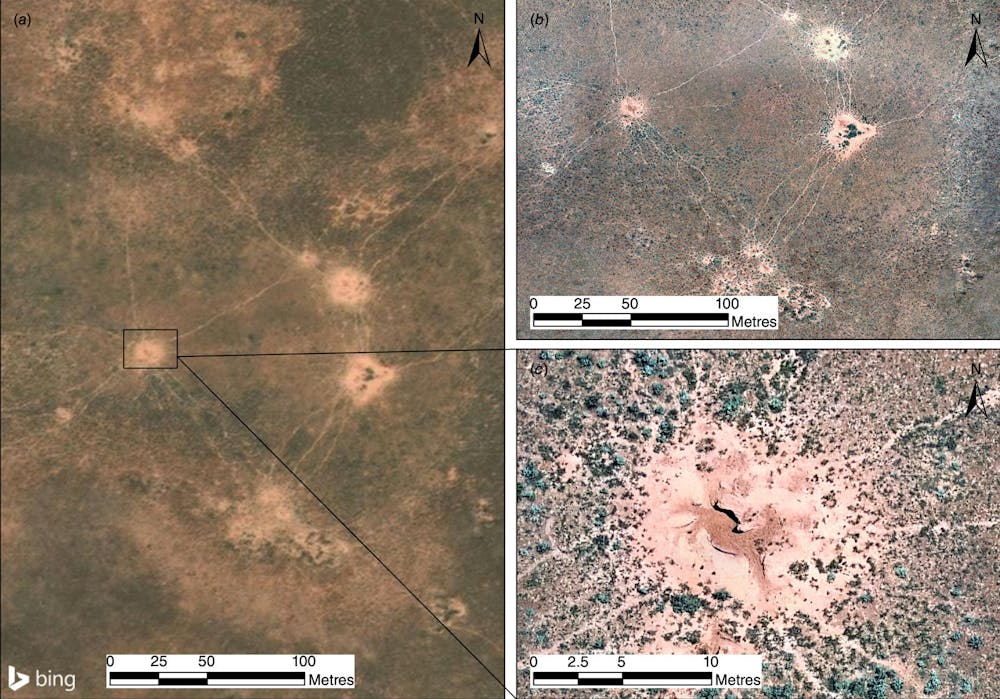
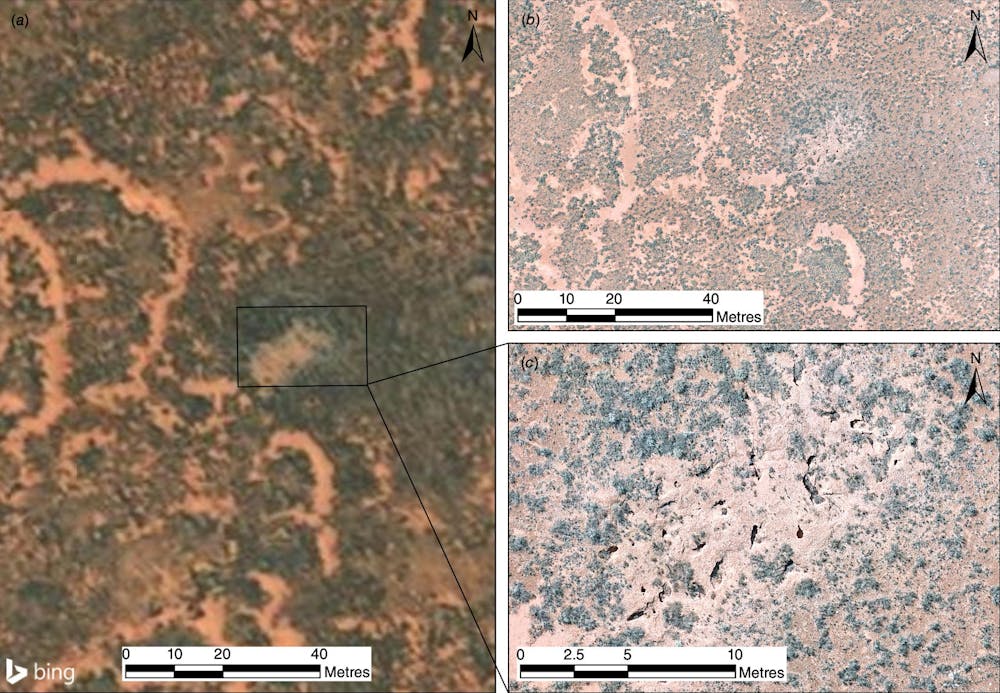
In new research published in Australian Mammalogy, we show a way to detect wombats and rabbits using satellites that take pictures of our planet from space. By studying high-resolution images from the likes of Google Earth and Bing Maps, we can spot the telltale signs of the burrows and warrens these creatures dig into the ground.
Why is it any of our business where wombats and rabbits live?
Knowing where wombats and rabbits live is important for conservation.
Wombats are unique Australian marsupials that need protection. Rabbits are an invasive species that often damage the land, eating too much vegetation and eroding soil.
Finding their warrens can help scientists and wildlife managers to understand where they live. This in turn helps to make better decisions about protecting native species and controlling pests.
How do you spot a warren?
Imagine looking down at the world from the window of an aeroplane. You might easily see rivers and roads, and even buildings.
But would you spot a hole in the ground? That’s the challenge we faced in our study of satellite images.
As it turns out, wombat warrens are relatively easy to spot. They are quite large and have clear trails leading in and out. The digging leaves mounds of lighter-coloured soil.
Rabbit warrens are trickier to find. They are smaller, lack trails, and can blend in with bare patches of dirt.
How well did we do?
By comparing satellite images with surveys conducted on the ground, we figured out we could accurately detect about 82% of wombat warrens from the photos. We weren’t quite as good at rabbit warrens: we could only spot 49%. Small rabbit warrens were particularly easy to miss.
One complicating issue was the fact that wombats and rabbits sometimes share the same burrow. Usually it’s the smaller, sneakier rabbits taking advantage of the large and sturdy tunnels dug by wombats.
This makes it even harder to figure out exactly who is living where. We could recognise shared warrens when we inspected them on the ground, but so far we can’t distinguish them from satellite photos.
What’s next?
Our research shows we can use satellites to map burrowing animal populations without ever setting foot in the outback. This saves time and money, and also reduces the the risk of disturbing wildlife while conducting research.
In the future, with higher-resolution satellite images and better software – using tools like machine learning – we may be able to detect and count burrows and warrens automatically. This could be a big change for wildlife conservation and pest control.
So next time you look up at the sky, remember that somewhere out there a satellite might be taking a picture of a sleepy wombat’s home – or a rabbit plotting its next move.
Natarsha McPherson received funding from the Australian Wildlife Society’s University Research Grant.
Source: The Conversation – France – By Robert Deng, Professor of Information Systems – School of Information Systems, Singapore Management University
Storing data in the cloud is now routine for people and companies alike, but cybersecurity risks still exist, particularly in handling user authentication and access control securely. Researchers are developing novel methods to store data securely and in a computationally affordable way, and to exploit it efficiently–by computing directly on encrypted data.
Cloud computing, while indispensable for modern business operations, has also become a significant target for cyberattacks due to the large amount of sensitive data stored online. Currently, over 90% of organizations rely on cloud services for critical operations, and there are more than 3.6 billion active cloud users globally. This translates to 47% of the world’s population utilizing cloud services, underscoring the widespread dependency on the cloud.
Unfortunately, this reliance on cloud computing comes with heightened risks. Data breaches are escalating in both frequency and severity: according to the 2024 Thales Cloud Security Study, 44% of businesses reported experiencing a breach in their cloud environments, with 14% reporting a breach within the past 12 months.
As organizations migrate more sensitive data to the cloud–nearly half of all cloud-stored data is classified as sensitive–the attack surface for cybercriminals expands. This makes breaches not only more common but also more damaging, as the loss of sensitive information can have far-reaching consequences, including significant financial and reputational harm. The global average cost of a data breach in 2024 was estimated at $4.88 million.
Nowadays, so-called “client-side encryption” is effective in data security and privacy protection in cloud data storage. However, for encrypted data to be useful, there is still a long way to go toward practical secure computation over it. We still face significant scalability and performance hurdles. Research continues to explore ways to bridge this gap, making scalable, privacy-preserving computation more efficient and accessible for large-scale applications.
The root causes of data breaches
User authentication and access control are among the most critical mechanisms to deter data breaches.
User authentication, the process of verifying the identity of users trying to access cloud resources, is the first line of defence–but it is widely regarded as the weakest link in the chain of security, with an estimated 81% of hacking-related breaches leveraging either stolen or weak passwords. Though user authentication has evolved a lot in recent years, attacks meant to compromise user authentication have, too.
Access control–the process of regulating who can view, use or interact with cloud resources such as data, applications or services–is the next line of defence. Effective access control ensures that only authorized users or devices have the appropriate permissions to access certain resources, thereby minimizing security risks and preventing unauthorized access or misuse of cloud assets.
In today’s cloud computing environments, cloud servers are fully responsible to correctly enforce access-control policies. As a result, misconfigurations of servers due to human error or software bugs, or compromise of servers due to malicious attacks, can result in serious breaches. In fact, the US National Security Agency (NSA) considers misconfiguration a leading vulnerability in a cloud environment.
Client-side encryption for secure storage
Data can be encrypted and decrypted on end users’ devices before uploading it to and downloading it from the cloud. This approach ensures that data is encrypted during transit and storage, making data inaccessible to anyone without the decryption keys, including service providers and other potential attackers. As long as the decryption keys are kept secure by end users, security and privacy of data can be ensured even if the user’s cloud account and the cloud server are compromised.
Existing client-side encryption solutions in cloud computing can use either private or public keys. For example, Google Workspace client-side encryption employs an online key distribution server for distribution between authorized users for the purpose of data encryption and sharing. However, an online distribution server can be both a security and performance bottleneck. To circumvent this, MEGA, another client-side encryption service, uses public key encryption and hence does not require an online key distribution server. But it does require sophisticated public key certificate management, as the number of public key encryptions is proportional to the number of potential data users to share a document, making this a strategy that’s hard to scale up.
Circumventing the computational limitation of client-side encryption
Suppose that a hospital wants to outsource the storage of its patients’ electronic medical records to the cloud and wants to establish specific policies on who can access the records. Before outsourcing a record, the hospital may specify that it can only be accessed by cardiologists in, say, the University Hospital, or by scientists in the Life Science Institute. Let “CT” denote the encrypted medical record and “AP” = (Cardiologist AND University Hospital) OR (Scientist AND Life Science Institute) be the access policy. CT and AP are cryptographically bound together and are uploaded to the cloud for storage. Then only users whose attributes satisfy AP can decrypt CT to get the decrypted medical record.
This is a scalable encryption system because its access policy does not need to list each and every authorized user who can access the data, only the attributes of the potential users. Access control (i.e., decryption) of encrypted data is not enforced by the cloud server but through the encryption and decryption algorithms that are theoretically proved secure.
Beyond secure storage: exploiting secure data efficiently
One of the main efficiency drawbacks of such systems–which are already deployed–is that decryption is computationally expensive for resource-limited devices. To address this issue, we proposed a protocol that improves decryption efficiency for end users by two orders of magnitude, by outsourcing most of the decryption workload to a public cloud server.
Another critical problem in deployment is “user revocation”: whenever a user leaves the system, changes her position or loses her existing private key, the key must be revoked to prevent unauthorized access to sensitive data. Current systems mostly use timestamps to bar revoked users from decrypting new content–however, the timestamps require regular updates, which can be computationally heavy in large systems. We proposed hardware-based revocable attribute-based encryption to make revocation cheaper.
Computing directly on encrypted data
Ideally, servers should be able to perform meaningful operations on encrypted data without ever decrypting it, preserving privacy at every step.
This is where so-called “fully homomorphic encryption” comes in. It is a cutting-edge encryption technique that enables mathematical operations–specifically, addition and multiplication–to be executed on encrypted data directly by a server, without the need for decryption.
However, current state-of-the-art systems are impractical for large-scale computations because of the “noise”–the unwanted, random-looking data introduced by cryptographic operations–that threatens the integrity of the results. Frequent noise-mitigating procedures are required–once again, a computationally expensive method, in particular for large data sets.
Created in 2007 to help accelerate and share scientific knowledge on key societal issues, the Axa Research Fund has supported nearly 700 projects around the world conducted by researchers in 38 countries. To learn more, visit the website of the Axa Research Fund or follow @AXAResearchFund on X.
Robert Deng has received funding from the Singapore National Research Foundation.
Patient information at risk of privacy breach from deep cuts to IT staff
The PSA is asking the Privacy Commissioner to urgently investigate Health NZ’s plan to decimate its IT staff as part of the Government’s plans to cut health costs.
“The PSA is taking the unusual step of asking the Privacy Commissioner to urgently investigate cuts to data and digital teams at Te Whatu Ora Health New Zealand because of the huge gamble with patient privacy and safety we believe Health NZ is taking with plans to cut almost half of IT staff,” said Fleur Fitzsimons, Acting National Secretary for the Public Service Association for Te Pūkenga Here Tikanga Mahi.
Health NZ Te Whatu Ora announced in December plans to cut 47% of roles in the Data and Digital Directorate, resulting in the loss of 1120 roles (including vacancies), all to save $100m.
“New Zealanders rightly expect that their private information as patients is held securely, but we don’t believe Health NZ can say hand on heart that will be the case if these cuts go ahead.
“Health NZ has important obligations under the Health Information Privacy Code and the Privacy Act, but we don’t believe the risks of breaching these obligations have been properly analysed in the rush to save money.
“The data and information these teams are responsible for is vital for clinicians to ensure the best possible treatment for patients. IT staff already warned Health NZ leaders late last year that the restructure raised the risks of unplanned outages. This could impact patients through the inability of clinicians to access patient data, as well as through medication and equipment failures.
“The Government is on notice that Health NZ’s IT systems are already under huge pressure and that the directorate is understaffed. The risk of a cyber security breaches is very real as the Waikato Hospital ransomware attack in 2021 showed.
“The Government should be investing in IT upgrades and more, not fewer staff to better protect sensitive patient records and ensure the benefits of centralising computer systems under the health restructure are realised.
“We urge the Privacy Commissioner to use his powers of investigation here before long term damage is done to the health system. We invite him to talk to impacted staff who know well the risks to patients from unplanned outages.
“It’s absolutely critical patient data is accurate, secure and available 24-7 for clinicians.”
– PSA letter to the Privacy Commissioner
– PSA submission to Health NZ / Te Whatu Ora on proposed restructure of the Data and Digital Directorate
The Police Force’s National Security Department yesterday arrested a 26-year-old man and today charged him with one count of committing an act or a series of acts tending and intended to pervert the course of public justice.
The case will be mentioned at the Eastern Magistrates’ Courts tomorrow.
The Police Force’s National Security Department today charged a 26-year-old woman with one count of committing an act or a series of acts tending and intended to pervert the course of public justice.
The woman was arrested yesterday in Kowloon after a holding charge was brought against a 26-year-old man for one count of the same offence on February 7. She had been wanted in connection with the case.
The case will be mentioned at the Eastern Magistrates’ Courts tomorrow.
Source: The Conversation – Canada – By David J Hornsby, Professor of International Affairs and the Vice-Provost and Associate Vice-President (Academic), Carleton University
Recent events have been nothing short of shock therapy for many Canadians. The threat of economically devastating tariffs by the United States at the behest of President Donald Trump have only reinforced that the time is ripe for Canada to diversify its foreign engagements and collaborations — like with the African region.
Africa’s geopolitical and economic trajectory is reshaping the global order. With the African Continental Free Trade Area (AfCFTA) poised to become the world’s largest single market, a youthful population driving innovation and vast renewable energy potential, the continent is no longer a peripheral player — it’s a cornerstone of the 21st-century economy.
Yet Canada, despite years of consultations and pledges, has delayed the release of a comprehensive Africa trade strategy. The time for hesitation is over.
AfCFTA window is closing
The AfCFTA, which spans 54 countries and 1.3 billion people, is projected to boost intra-African trade by 52 per cent by 2035. For Canada, this represents a significant opportunity to diversify exports beyond traditional partners like the U.S. and China.
Canadian sectors from agri-food to clean tech are well-positioned to meet Africa’s demand for value-added goods and infrastructure.
Global competitors are already moving: China’s trade with Africa surpassed $200 billion in 2023, while the European Union and India have accelerated trade pact negotiations across the continent.
Without a formal strategy, Canada risks losing access to a market that could define the next decade of economic growth.
Geopolitical stakes have never been higher
Russia and China have deepened their influence across Africa, often at the expense of democratic governance and transparency. Canada’s absence isn’t just an economic miss — it’s a strategic void.
By aligning with African priorities like Agenda 2063, which emphasizes self-reliance and sustainable development, Canada can counterbalance exploitative partnerships with ones rooted in mutual benefit.
As Agenda 2063 identifies, African leaders are refocusing their agendas from the struggle against apartheid and political independence to “inclusive social and economic development, continental and regional integration, democratic governance and peace and security.” Africa faces a collective US$100 billion annual infrastructure deficit following centuries of colonial incursion and extraction.
Recent Canadian investments in peace and security, good governance, people-to-people ties ($54 million) and economic empowerment ($176 million for women and youth empowerment) signal intent, but without a unified strategy, these
efforts are fragmented.
Aligning perfectly with Africa’s needs
Canada’s world-class engineering firms and institutions like the Canada Infrastructure Bank could partner with African states and institutions like the African Development Bank and replicate successes achieved in projects like Ghana’s renewable energy grid.
Projects like the Lobito Corridor, offer a chance for Canadian firms to contribute to rail and transport development that could be transformative.
With significant solar and other renewable energies potential, Africa is critical to the net-zero transition. Canadian mining firms and clean energy innovators are natural partners for lithium and cobalt projects, despite the dubious human and environmental rights track record of some Canadian mining companies in the region.
A Canada-Africa strategy needs to signal a support for mandatory adherence to environmental and human rights standards for mining firms, such as Canada’s Towards Sustainable Mining framework, while strengthening accountability through mechanisms like independent oversight and legal consequences for violations that already exist. By prioritizing partnerships with African governments and local communities, such a strategy could ensure ethical practices through transparent agreements, community consent protocols, and shared governance models foster a future of more ethical behaviour.
From aid to equity
Decades of humanitarian aid have fostered good will, but Africa’s leaders increasingly demand collaboration
But a true partnership requires reciprocity, like South Africa’s significant investments in Canadian mining and climate research collaborations. The African diaspora community, numbering over 1.2 million in Canada, is a bridge to these opportunities.
The forthcoming G20 gatherings of finance ministers and central bank governors in Cape Town offers a perfect moment to demonstrate an actual plan to diversify Canadian foreign policy engagements and interests while positioning the country to rally allies behind a renewed set of initiatives that exist across the continent.
To delay any further will not only frustrate business and diaspora groups alike, but will continue to relegate Canada to a marginal role in the continent’s economic and social development.
The EU’s public and private investments in the green and digital transitions in Kenya and Ghana’s lithium deal with Australia underscore the urgency for a co-ordinated and concerted approach. Canada’s reputation as a reliable partner hangs in the balance.
A call for cohesion
A Canadian Africa strategy is critical now more than ever. To fully engage, any plan will need to articulate pan-African trade and streamlined export opportunities. It should leverage soft power by expanding diplomatic missions across regional economic communities.
Investing in mutual growth via joint ventures in mining, agri-processing, and digital infrastructure is also crucial. Embedding climate justice by linking critical mineral exports to African renewable energy projects will foster sustainable development — all the while maintaining key imperatives of gender equality, one health and the exchange of knowledge through things like the South Africa-Canada Universities Network.
Africa’s rise isn’t a distant future — it’s unfolding now. Canada has the tools, the values and the economic imperative to act. Delaying further isn’t just a missed opportunity; it’s a generational misstep.
The strategy is drafted, the stakeholders are ready. All that’s missing is the political will to hit “publish” and get started.
David J Hornsby does not work for, consult, own shares in or receive funding from any company or organisation that would benefit from this article, and has disclosed no relevant affiliations beyond their academic appointment.
Chief Executive John Lee today met Director of the General Administration of Sport of China (GASC) Gao Zhidan and cheered on Hong Kong athletes as he took in some of the action at the 9th Asian Winter Games Harbin 2025.
In meeting Mr Gao, Mr Lee was accompanied by Secretary for Culture, Sports & Tourism Rosanna Law.
He extended to Mr Gao his warmest congratulations on Harbin’s successful hosting of the games and expressed his gratitude to the GASC for supporting sports development in Hong Kong.
Highlighting that the Mainland has rich resources in winter sports, Mr Lee said the Hong Kong Special Administrative Region Government will continue to promote exchanges and co-operation between Hong Kong and the Mainland in winter sports.
He outlined that the Hong Kong SAR Government will draw reference from the Mainland’s wide-ranging experience in holding large-scale sports events and will promote sports development under a five-pronged approach. This involves promoting sports in the community, supporting elite sports, promoting Hong Kong as a centre for major international sports events, enhancing professionalism, and developing sports as an industry.
Mr Lee added that the Hong Kong SAR Government will work closely with the Guangdong Provincial Government and the Macau Special Administrative Region Government to stage a safe and successful 15th National Games.
Mr Lee and Miss Law also took the opportunity to cheer for Hong Kong’s curlers as they watched a curling event at the games.
Mr Lee remarked that this is the first time the Hong Kong, China Delegation has sent a curling team to compete in an international multi-sport event, marking a milestone for the city’s athletes.
He said he believes that Hong Kong athletes can gain valuable experience and enhance their skills through participating in various international competitions and through exchanges with athletes from other countries.
Mr Lee also visited a well-known snow sculpture art exhibition, the Taiyangdao Island International Snow Sculpture Expo, and a famous ice and snow theme park, the Harbin Ice & Snow World.