Category: Asia Pacific

  • MIL-OSI China: China will not allow any deliberate vilification against China-Cambodia friendship

    Source: China State Council Information Office

    China will not allow any deliberate vilification against China-Cambodia friendship and any rumor-monger shall bear legal responsibility and consequences, a Chinese foreign ministry spokesperson said on Thursday.

    A handful of we-media accounts recently posted groundless remarks that Cambodian leaders are choosing sides between China and the United States and that major cooperation projects between China and Cambodia are stalling.

    In response to a related query, spokesperson Guo Jiakun told a press briefing that these remarks on Cambodia are purely groundless smears and deliberate vilification.

    China and Cambodia are ironclad friends supporting each other and sharing weal and woe. This time-honored friendship was cultivated by the older generation of leaders of both countries, and has stood the test of the changing international landscape. It serves the fundamental interests of both countries and peoples, has strong vibrancy and promising prospects of development, and can never be weakened or undermined by any force, Guo said.

    China and Cambodia see each other as the most trustworthy friend and the most reliable partner, and always firmly support each other’s core interests. This is the defining feature of China-Cambodia relations and also serves as the foundation of the time-tested friendship between the two countries, Guo stressed.

    The endeavor of building a China-Cambodia community with a shared future has delivered tangibly for the two peoples. China has remained Cambodia’s biggest source of foreign investment and biggest trading partner for years running. Bilateral trade soared by nearly four times in the past decade, Guo noted, adding that Cambodian leaders openly stressed more than once that China is Cambodia’s most trusted friend, and friendship with China is a firm political consensus within the Cambodian government and political party and among the Cambodian people.

    At present, China and Cambodia are guiding the high-quality development of bilateral relations with high-level mutual trust. They continue to enrich the “Diamond Hexagon” cooperation framework, formulate cooperation plans for the Industrial Development Corridor and the “Fish and Rice Corridor,” advance the implementation of priority cooperation projects, boost each other’s modernization process, deliver more tangibly for the two peoples and provide more stability and certainty for the effort to address international and regional challenges, Guo noted.

    “We firmly believe that the ironclad friendship between China and Cambodia will steer clear of disruptions. We will not allow any deliberate vilification against our friendship and any rumor-monger shall bear legal responsibility and consequences,” Guo said.

    MIL OSI China News

  • MIL-OSI China: Year of the Snake starts with travel, spending boom

    Source: China State Council Information Office 3

    Passengers are seen at the waiting hall of Beijing South Railway Station in Beijing, capital of China, Feb. 4, 2025. [Photo/Xinhua]

    As China celebrated the arrival of the Year of the Snake, the festive atmosphere was reflected in a surge in travel and consumer spending. With tourism booming, restaurants bustling, and box offices setting new records, the festivities showcased China’s economic vitality.

    The Spring Festival, China’s most important festival, sparked a nationwide travel surge as families reunited and celebrations took place across the country. Official data showed that more than 2.3 billion passenger trips were made nationwide during the eight-day Spring Festival holiday, which concluded on Tuesday.

    Official projections estimated over 9 billion passenger trips during the 40-day Spring Festival travel rush that officially began on Jan. 14.

    The annual migration — once dominated by homebound travelers — now sees a growing number of people opting for holiday getaways, filling train stations, highways, and airports in celebration of the Year of the Snake.

    Tourism soars on heritage charm

    With China’s Spring Festival now on the UNESCO Representative List of the Intangible Cultural Heritage of Humanity, cultural exploration-centered tours have become increasingly popular.

    Online searches for “intangible cultural heritage tourism” jumped 174 percent since the beginning of this year, while folk craft-related searches spiked 321 percent, according to Meituan Travel. On the popular video-sharing platform Douyin, demand for intangible cultural heritage tours led to a 462 percent year-on-year rise in group tour bookings for folk fairs.

    According to the Ministry of Culture and Tourism, China saw a record 501 million domestic tourist trips during the just-concluded holiday, up 5.9 percent year on year. Tourist spending reached a record high of over 677 billion yuan (94.43 billion U.S. dollars) during the period, a 7 percent increase from the previous year.

    The cultural allure extended beyond domestic travelers, attracting visitors from around the globe. The latest data from the National Immigration Administration showed about 14.37 million cross-border trips were made during the holiday, up 6.3 percent from last year’s Spring Festival holiday. Of these, 958,000 trips were made by foreign nationals, marking a 22.9 percent increase.

    Foreign tourists try to make tofu during a folk celebration of the Spring Festival in Wayaogang Village, Yongding District of Zhangjiajie City, central China’s Hunan Province, Jan. 24, 2025. [Photo/Xinhua]

    According to Chinese online travel service giant Trip.com Group, inbound travel orders during the Spring Festival holiday rose 203 percent year on year, underscoring the growing international appeal of China’s cultural and natural landmarks.

    Among the top destinations was Zhangjiajie in Hunan Province, renowned for its spectacular mountain scenery that inspired scenes in global blockbusters. Malaysian tourist Vincent Koh Swee Sam was among the many international visitors drawn to cultural heritage in Zhangjiajie. Immersing himself in local festivities, Sam joined villagers in writing Spring Festival couplets, pounding glutinous rice cakes, and making tofu.

    Sam’s hands-on experience with Chinese calligraphy deepened his appreciation for the art. “I used to know China only through textbooks and maps,” he said. “But now that I have stepped into it myself, it feels so good.”

    Dining boom feeds festive spirit

    No Spring Festival is complete without a grand feast, and this year, more families chose to dine out for ease and variety, driving a surge in restaurant bookings.

    In Shanghai’s bustling city center, all 91 tables at the renowned Cantonese restaurant Xinya were packed with diners on Chinese New Year’s Eve, according to executive chef Huang Renkang.

    People have a reunion meal at a restaurant in Nanjing City, east China’s Jiangsu Province, Jan. 28, 2025. [Photo/Xinhua]

    According to the Ministry of Commerce (MOC), the revenues of key restaurants tracked by the ministry climbed 5.1 percent year on year in the first four days of the holiday.

    Online platforms saw a similar rise. Meituan reported a 305 percent year-on-year increase in online bookings for Chinese New Year’s Eve dinners, while high-end restaurants featuring Chinese culinary experiences saw significant growth.

    Notably, orders for “intangible cultural heritage” meal packages searched on Meituan soared over 12 times year on year since the beginning of this year.

    Box office hits record high

    From Chinese mythology to homegrown animation, this year’s Spring Festival film lineup drew massive crowds and posted record-breaking sales.

    China’s box office sales jumped to an all-time high of 9.51 billion yuan over the holiday period, while attendance also set a new record, with 187 million moviegoers packing theaters.

    People watch a film at a cinema in Feidong County, Hefei City, east China’s Anhui Province, Feb. 3, 2025. [Photo/Xinhua]

    Leading the charge was the animated feature “Ne Zha 2,” which grossed around 4.84 billion yuan.

    “The moviegoers’ enthusiasm indicates vibrant consumption during the holiday as well as the consumers’ confidence in domestic productions,” said Rao Shuguang, president of the China Film Critics Association.

    Experts attributed the success to strong audience anticipation, beloved characters and stories, and high-quality storytelling.

    “The strong performance of these films lays a solid foundation for the steady growth of China’s film market in 2025,” noted Chen Jin, a data analyst from box office tracker Beacon.

    Policy boost sparks shopping spree

    Festive cheer and consumer enthusiasm energized the market even before the holiday began. With the country’s trade-in program driving demand, shoppers eagerly seized the opportunity to upgrade cars, home appliances, and digital devices, ushering in a vibrant holiday shopping season.

    People visit a flower market in Yuexiu District, Guangzhou, south China’s Guangdong Province, Jan. 27, 2025. [Photo/Xinhua]

    The MOC reported receiving subsidy applications for 10.79 million electronic devices over a four-day period starting Jan. 20. This follows the inclusion of mobile phones, tablets, and smartwatches in the trade-in subsidy program, marking a significant expansion of the initiative launched in March last year.

    Moreover, according to the ministry, automobile trade-ins reached 34,000 while home appliance trade-ins reached 1.04 million units as of Jan. 23.

    Building on this momentum, online retail sales grew by 5.8 percent during the eight-day holiday, while sales of home appliances and communication equipment at key retailers jumped by over 10 percent.

    “Spring Festival offers a glimpse into the year’s economic trends,” said Chen Lifen, a researcher at the Development Research Center of the State Council.

    In this holiday season, a blend of cultural experiences and new consumption scenarios has helped reinforce the economic recovery momentum, injecting confidence into the economy and setting a strong foundation for the year ahead, Chen noted.

    MIL OSI China News

  • MIL-OSI Economics: Transforming Insulated Glass Worldwide with Glavenir Pushing Equipment Development Beyond “Amazing!”:Takeshi Shimizu

    Source: Panasonic

    Headline: Transforming Insulated Glass Worldwide with Glavenir
    Pushing Equipment Development Beyond “Amazing!”:Takeshi Shimizu

    We take an up-close and personal look at the people who are supporting the Panasonic Group’s growth at their own operational frontlines.

    Vol.3

    VIG Business Promotion Department, Exterior Products & Systems Business Division Panasonic Housing Solutions Co., Ltd.
    After graduating from university, Shimizu was involved in developing plasma displays (PDP) and OLED displays. In 2016, he transitioned to his current role, leveraging the production process skills gained from PDP development.

    Vacuum Insulated Glass (VIG) Glavenir is a product that applies the internal structure of the plasma displays (PDP) I once worked on. I am responsible for everything related to its manufacturing, from process development to production. Glavenir offers exceptional thermal insulation while being thin and lightweight. It significantly enhances the insulation performance of refrigerated and frozen display cases as well as residential buildings. Additionally, reducing thickness and minimizing raw material usage significantly cuts CO₂ emissions both during production and after installation. When we showcased this technology at CES (one of the world’s largest technology trade show held annually in January in Las Vegas, U.S.A.), it attracted significant attention.
    When VIG was first adopted by Hussmann for incoming orders of walk-in cooler automatic doors, incidents of breakage did occur. I still vividly remember the faces of the struggling workers when I first visited the site. To supply a high-strength, cost-effective VIG, we developed a sealing technology that eliminates the need for exhaust tubes*, along with proprietary equipment and optimized settings to make it possible. In just one year, we successfully created and launched a sleek, reinforced VIG without exhaust tubes. Solving a fundamental challenge for the field was an incredibly meaningful experience.
    * Exhaust tube: A glass tube that connects to the interior of VIG, used to evacuate air and create a vacuum inside
    My current focus is on selling manufacturing lines to glass factories in Europe and North America. Initially, we only sold the core equipment, but after recognizing the benefits of shorter setup times, we decided to offer complete manufacturing lines as a packaged solution. However, external buyers expressed concerns about whether the production line could truly achieve high efficiency, whether the costs were justifiable, and whether speed alone was enough—emphasizing that durability and mass-production stability were equally critical. These challenges made me realize that the key was maximizing productivity at the lowest possible cost while ensuring buyers felt confident in their investment.
    To address this, I refined a method that combines general-purpose equipment with customized components tailored to each customer. By pushing the speed of individual systems to their limits while increasing stability, we were able to minimize costs. When potential buyers visited a fully operational production line in Japan and responded with enthusiasm, describing it as both amazing and spectacular, I felt a deep sense of fulfillment, knowing that our efforts had paid off.
    Moving forward, I will continue developing equipment that is even more impressive. Eventually, I aim to create a curved VIG for mobility applications such as automobiles and trains.

    Shimizu is in the middle.

    My Life My Leisure Time
    I enjoy lively gatherings over drinks, and recently, I had a relaxing time at a dinner party at a senior colleague’s home. Everyone there had been involved in driving the VIG business from the very beginning, and without each of them, we wouldn’t be where we are today. I will continue working alongside this team to contribute to “Live Your Best.”

    MIL OSI Economics

  • MIL-OSI Economics: Aiming for a Clean, Decarbonized Society with Panasonic HX: Shigeki Yasuda

    Source: Panasonic

    Headline: Aiming for a Clean, Decarbonized Society with Panasonic HX: Shigeki Yasuda

    Trailblazer in Building the Foundation of the Hydrogen Business
    Shigeki Yasuda
    Global Environmental Business Development CenterPanasonic Corporation
    Shigeki Yasuda joined the company in 2003, specializing in fuel cell technology development. In 2010, he was assigned to Germany, where he contributed to introducing fuel cells to the European market. In 2024, he assumed his current position, working on implementing a demonstration facility to power factories with renewable energy and building the business foundation for Panasonic HX.

    Pioneering the First Overseas Integration of Three Types of Energy Sources
    Since May 2024, I have been working in the UK on implementing a demonstration facility that powers factories with renewable energy and building the business foundation for Panasonic HX*¹. My mission is to advance the first overseas integration of pure hydrogen fuel cell generators, photovoltaic generators, and storage batteries. This involves (1) introducing a demonstration facility to Panasonic Manufacturing UK Ltd., (2) building the business foundation for future social implementation, and (3) developing new markets for fuel cells overseas.*1: The name Panasonic HX represents Panasonic’s energy solutions utilizing hydrogen. We propose a new option for the full-scale use of hydrogen (H), which has a low environmental impact, and are determined to contribute to the transformation (X) to a decarbonized society through collaboration (X) with partner companies, administrations, and business customers.

    This is a CG image symbolizing the Panasonic HX. It is not a facility that actually exists.

    In December 2024, Panasonic introduced its first overseas demonstration facility in the UK, leveraging 25 years of expertise in fuel cell technology to supply factories with electricity and thermal energy using hydrogen. This facility serves as a showcase for co-creation with partner companies, governments, and business customers to pursue a decarbonized society while laying the foundation for Panasonic’s hydrogen business. Utilizing hydrogen as a clean energy source is crucial in addressing global environmental challenges through decarbonization. This demonstration, which enables factories to be powered by renewable energy, marks a significant step toward broader social implementation.
    We are also working to apply the data and know-how gained from the demonstration in the UK to future projects. The main challenges we faced in this initiative were: (1) a lack of knowledge about construction processes in the UK, requiring us to navigate everything from scratch and quickly resolve various unforeseen issues, (2) difficulties in discussing with the design firm regarding safety design, highlighting the need to raise awareness of hydrogen safety, and (3) the complexity of collaborating with local partners, as failing to align expectations at the contract stage made it difficult to proceed as planned.

    In overcoming these challenges, the most invaluable support came from the persistence of our colleagues, especially the assistance from Japan. With only three core members leading the launch, we sometimes found ourselves stuck in rigid thinking and faced moments of isolation. However, the strong support from Japan reassured us, allowing us to stay positive even when obstacles arose. Everyone was united in the determination to see it through, and even the faintest glimmer of hope helped us find a path forward.

    Leading the Way Until Success is Achieved

    Staying at the forefront is important when it comes to enhancing competitiveness. Doing so lets us quickly gather customer feedback and gain an advantage through our products and services. In this process, it is essential to embrace the Customer Focus principle of always thinking from a customer’s perspective, as advocated by PLP*2.Having spent my career in technology, my work often remained within that sphere. However, stepping outside and engaging directly with customers made me realize how vastly different cultures can be. From my experience in the UK, I am convinced that the key to enhancing competitiveness lies in rapidly iterating the PDCA cycle to integrate customer feedback into business development. Recently, I have also come to appreciate the importance of a two-way approach—effectively communicating the value of hydrogen while actively listening to our customers.*2: Panasonic Leadership Principles are a set of behavioral guidelines for each and every employee to follow in their efforts to put the Basic Business Philosophy into practice.
    Our top priority is to enhance the competitiveness of the three-battery integration, make it a unique, industry-leading solution and develop it into a robust product and service. We are dedicated to advancing Panasonic’s strengths and will first introduce it to the environmentally advanced European market before expanding it globally in the future.

    I have been involved in fuel cell development since joining Panasonic. I take great pride in playing a role in the practical application of hydrogen, a clean energy source, in society. My dream is to help build a foundation where hydrogen is a natural part of everyday life, ensuring that future generations can live comfortably in a sustainable environment.
    This demonstration is merely the starting point. With a strong sense of responsibility as a frontrunner, I will continue moving forward alongside our customers until we fully realize the value we aim to deliver.

    MIL OSI Economics

  • MIL-OSI China: Archaeologists restoring gallery at temple in Cambodia’s Angkor Park

    Source: China State Council Information Office 3

    Archaeologists have been restoring the third gallery at the west side of Ta Prohm temple in the UNESCO-listed Angkor Archaeological Park in northwest Cambodia, an APSARA National Authority (ANA)’s news release said on Thursday.

    Started last month, the one-year project has been carried out by ANA’s archaeologists in partnership with the Archaeological Survey of India (ASI), the news release said.

    Chitranjan Kumar, head of the Ta Prohm temple restoration site for ASI, said the gallery was at risk of collapse and required urgent repairs.

    “The project will focus on repairing and reinforcing the foundation, restoring broken stones, and ultimately reassembling them in their original positions,” he said.

    Built in the late 12th century under the reign of King Jayavarman VII, Ta Prohm is among the key temples in the Angkor Archaeological Park, which is the most popular tourist destination in the Southeast Asian nation. 

    MIL OSI China News

  • MIL-OSI Economics: Japan: Staff Concluding Statement of the 2025 Article IV Mission

    Source: International Monetary Fund

    February 7, 2025

    A Concluding Statement describes the preliminary findings of IMF staff at the end of an official staff visit (or ‘mission’), in most cases to a member country. Missions are undertaken as part of regular (usually annual) consultations under Article IV of the IMF’s Articles of Agreement, in the context of a request to use IMF resources (borrow from the IMF), as part of discussions of staff monitored programs, or as part of other staff monitoring of economic developments.

    The authorities have consented to the publication of this statement. The views expressed in this statement are those of the IMF staff and do not necessarily represent the views of the IMF’s Executive Board. Based on the preliminary findings of this mission, staff will prepare a report that, subject to management approval, will be presented to the IMF Executive Board for discussion and decision.

    Washington, DC – February 7, 2025[1]:

    After three decades of near-zero inflation, there are signs that Japan’s economy can sustainably converge to a new equilibrium. Inflation has surpassed the Bank of Japan’s 2-percent target for over two years and a tight labor market is delivering the strongest wage growth since the 1990s. But Japan continues to face challenges from its aging population and high public debt. Policy priorities are to re-anchor inflation expectations, rebuild fiscal buffers, and advance labor market reforms to support potential growth.

    RECENT DEVELOPMENTS, OUTLOOK, AND RISKS

    The economy contracted in the first half of 2024 due to temporary supply disruptions but gained momentum in the rest of the year. Domestic demand, private consumption in particular, has strengthened, while net external demand has been sluggish. Both headline and core inflation (excluding fresh food and energy) remain above the BoJ’s 2-percent headline inflation target. Goods inflation has been boosted by energy and food prices, while services price growth is relatively weaker and below 2 percent. Inflation expectations are becoming increasingly aligned with the inflation target, though some measures remain below that target. The yen-dollar exchange rate has experienced sizable swings, largely driven by shifts in interest rate differentials (which reflect broader macroeconomic developments), but also amplified by the build-up and subsequent unwinding of yen carry-trade positions. The pass-through to inflation is estimated to have been relatively mild so far. Wages are growing at their highest rate since the 1990s amid labor shortages and strong inflation, but they have remained lackluster in real terms.

    Growth is expected to accelerate in 2025, with private consumption strengthening further, as above-inflation wage growth will boost households’ disposable income. Private investment is also expected to remain strong, supported by high corporate profits and accommodative financial conditions. The output gap is estimated to be closed, and growth is expected to converge to its potential of 0.5 percent in the medium term. Headline and core inflation are expected to converge to the BoJ’s 2-percent headline inflation target in late 2025, helped by a moderation in commodity prices for oil and food. The current account surplus is expected to moderate in 2025 as the income balance narrows, with the trade balance remaining in deficit. The external position is assessed as broadly in line with the level implied by medium-term fundamentals and desirable policies.

    Risks to growth are tilted to the downside. On the external side, these include a slowdown in the global economy, deepening geoeconomic fragmentation and increasing trade restrictions, and more volatile food and energy prices. On the domestic side, the main downside risk is weak consumption if real wages do not pick up. Another domestic risk to the outlook is a possible decline in confidence in fiscal sustainability that leads to a tightening of financial conditions in the context of high public debt and gross financing needs. If downside risks materialize, it could result in Japan reverting to an effective-lower-bound constrained environment given the still-low level of the policy rate. 

    Risks to inflation are broadly balanced. On the downside, inflation expectations may stall below the headline inflation target following Japan’s prolonged experience with low inflation. Upside risks stem from rising food and energy prices, and from stronger-than-expected wages in the upcoming spring wage negotiations. Higher barriers to trade and cost pressures in major trading partners could spill over to Japan but the impact on domestic prices would be ambiguous given lower economic activity.

    ECONOMIC POLICIES

    Fiscal Policy

    The estimated fiscal deficit in 2024 is smaller than expected at the time of the 2024 Article IV. Tax revenues have been boosted by high corporate profits, and expenditures to support the economic recovery (such as transfers to households and SMEs) have been partly phased out. The fiscal deficit is projected to increase slightly in 2025, with additional spending planned for defense, children-related measures, and industrial policies (IP). There is a significant risk that the deficit will widen further, given the political demands on the minority government. This should be avoided as fiscal space remains limited: any expansionary measure should be offset by higher revenues or expenditure savings elsewhere in the budget.

    Public debt, as a share of GDP, is expected to decline in the near term, as nominal GDP growth is projected to exceed the effective interest rate on public debt. Public debt will remain high, however, and is estimated to start rising by 2030, driven by a higher interest bill and expenditure pressures related to spending on health and long-term care for an aging population. A clear consolidation plan is needed even in the near term to fully offset these pressures, ensure debt sustainability, and increase fiscal space needed to respond to shocks (including from natural disasters). This will require elaborating concrete and credible expenditure and revenue measures in the context of a robust medium-term fiscal framework:

    • The composition of public spending should be more growth-friendly, including by eliminating poorly targeted subsidies, notably energy subsidies, while preserving expenditure on high-quality public investment. Enhancing the targeting and efficiency of social security spending is critical to containing rising costs while preserving quality.
    • On the revenue side, options include strengthening financial income taxation for high-income earners, lowering exemptions and broadening the taxable valuation base under the property tax, streamlining income tax deductions, and unifying and eventually increasing the consumption tax rate. The PIT reform to the income deduction limit that is currently under consideration would need to be financed by additional revenues or savings elsewhere in the budget.
    • The repeated use, and incomplete execution of supplementary budgets undermines efficient resource allocation, budget transparency, and fiscal discipline. The use of supplementary budgets should be limited to responding to large, unexpected shocks that overwhelm automatic stabilizers, which would also avoid providing unwarranted stimulus in normal times. All medium-term spending commitments—including on IP and green transformation—should be incorporated into the regular budget process.

    As interest rates rise, the cost of servicing the large public debt is expected to double by 2030, putting a premium on a robust debt management strategy. In the face of rising gross financing needs and a shrinking BoJ balance sheet, government bond issuance will need to rely on additional demand from foreign investors and domestic institutions.

    Monetary and Exchange Rate Policies

    The current accommodative monetary policy stance is appropriate and will ensure inflation expectations rise sustainably to the 2-percent inflation target. Accommodation should continue to be withdrawn gradually if the baseline forecast bears out, under which we expect the policy rate would reach a neutral level by end-2027. High domestic and external uncertainty underscore the need for the BoJ to maintain its data-dependent and flexible approach and clear communications to anchor market expectations.

    The BOJ’s ongoing reduction in the size of its balance sheet has been clearly communicated, is appropriately modest in pace, and is proceeding smoothly. The BoJ should stand ready to modify the pace of its purchases should disorderly bond market conditions arise or if financial conditions become inconsistent with the desired monetary policy stance.

    Japan’s large stock of outstanding government debt and sizable net international investment position provide an important transmission channel for monetary policy to spill over into asset prices abroad. Clear communication and gradualism can limit adverse asset price reactions and outward spillovers.

    The authorities’ continued commitment to a flexible exchange rate regime is welcome. Exchange rate flexibility should continue to help absorb external shocks and support monetary policy’s focus on price stability. At the same time, it will also help maintain an external position in line with fundamentals.

    Financial Stability

    Japan’s financial system remains broadly resilient, supported by strong capital and liquidity buffers. Banks’ revenues have generally increased as credit costs remain low, the rise in interest rates has been gradual, and the yen has depreciated. Major banks continue to manage interest rate risks proactively through portfolio rebalancing and diversifying their funding sources. Financial intermediation remains stable supported by continued demand for loans from both corporate and household sectors. The insurance sector is well-capitalized and profitable, despite challenges from market volatility and demographic shifts.

    While the financial system remains generally resilient, systemic risk has risen slightly since the 2024 Article IV consultation, reflecting a combination of rising macroeconomic uncertainty, risk of faster than expected interest rates increases or unrealized losses, and rising bankruptcies among SMEs. Rising global macroeconomic uncertainty could impact Japanese banks’ investments. While gradually rising interest rates have helped bank profitability, faster-than-expected increases in interest rates or sudden changes in global financial conditions could amplify financial market volatility and interact with three persisting vulnerabilities identified in the 2024 FSAP: large securities held under mark-to-market accounting, significant foreign currency exposures—particularly through US dollar funding instruments—and signs of overheating in some areas of real estate. A faster-than-expected tightening of financial conditions could also disrupt the JGB market, amplifying interest rate risks for banks with larger exposures. Less-capitalized domestic banks are more vulnerable to rate hikes, facing heightened risks from unrealized losses and higher funding costs. Corporate defaults among smaller SMEs have been increasing, albeit from a low base, and could pose risks for regional banks with high SME loan exposure. 

    Strengthening systemic risk monitoring and the macroprudential policy framework is needed to better mitigate risks in the financial system. Ongoing efforts to expand data collection, enhance analytical capacity, and improve coordination between the FSA and BOJ are welcome. To further enhance systemic risk analysis, closing remaining data gaps and advancing analytical tools for a more comprehensive assessment of systemic vulnerabilities, including those related to foreign currency exposure, remain key priorities. Assigning a formal mandate to the Council for Cooperation on Financial Stability would reinforce the institutional framework, while expanding the macroprudential policy toolkit with targeted borrower-based measures would help mitigate vulnerabilities in the real estate sector.

    Further strengthening financial sector oversight is essential to bolster stability and resilience against emerging risks and vulnerabilities. While progress has been made in expanding staffing resources in certain areas, additional allocations are needed to reinforce financial supervision. The authorities should continue to enhance risk-based supervision to respond flexibly to an evolving banking system. Strengthening the Early Warning System with more forward-looking indicators, especially for credit and liquidity risks, and establishing minimum liquidity requirements for domestic banks would enhance stability. Supervisors should also have the authority to adjust bank capital ratios above minimum requirements based on individual risk profiles and financial conditions.

    The authorities should remain prepared to address market strains as they arise. The liquidity and functioning of the JGB market have improved since April but experienced temporary deterioration in early August amid a spike in market volatility. Rising foreign market volatility could impact domestic liquidity conditions, potentially triggering spillover effects. To mitigate these risks the central bank should closely monitor liquidity conditions and funding rates in money markets, while paying particular attention to the uneven distribution of liquidity among banks as well as the growth in repo transactions driven by demand from financial dealers and foreign investors. The scope of institutions eligible to receive emergency liquidity assistance could be expanded to nonbank financial institutions, prioritizing central counterparties. Recovery and Resolution Planning should be gradually expanded to all banks that could be systemic at failure, requiring more banks to maintain a minimum amount of loss-absorbing capacity tailored to their resolvability needs.

    Structural Policies

    Japan’s total factor productivity growth has been slowing for a decade and has fallen further behind the United States. A steady decline in allocative efficiency since the early 2000s has been a drag on productivity, and likely reflects an increase in market frictions. In addition, Japan’s ultra-low interest rates may have allowed low-productivity firms to survive longer than they otherwise would have, delaying necessary economic restructuring. Reforms aimed at improving labor mobility across firms would help improve Japan’s allocative efficiency and boost productivity.

    Japan’s labor market is expected to witness a significant transformation driven by population aging and advances in artificial intelligence (AI). Japan is aging rapidly—a trend that is expected to continue over coming decades—and has been at the forefront in labor-saving automation to alleviate labor shortages. Policies can play a crucial role in mitigating the impact of aging on labor supply and facilitating mobility needed to benefit from AI adoption:

    • Thanks to government efforts, Japan’s seniors already have a relatively high labor force participation rate compared to other OECD countries. But policy frictions such as an income threshold that triggers a loss of pension benefits may be inducing seniors to work fewer hours than they otherwise would.
    • Japan has made significant progress in increasing female labor force participation during the last decade. Further supporting women’s ability to fully participate in the labor force will require continuing to expand childcare resources and facilitate fathers’ contribution to home/childcare, and further encouraging the use of flexible working arrangements.
    • Training programs are crucial to enhance the complementarity of AI with the labor force and improve the productivity of senior workers.
    • Improving mobility and reducing barriers to job switching are essential to address labor shortages due to aging and the potential job displacement impact of AI. Subsidized training programs that are targeted to in-demand occupations could help reskill and upskill the labor force and facilitate occupational mobility.

    While AI may help to address some of Japan’s labor shortages, and since upskilling/reskilling the labor force takes time, attracting foreign workers could help alleviate labor shortages. Government programs have led to a tripling of the number of foreign workers in Japan during the past decade. However, foreigners continue to play a much smaller role in the Japanese labor force than they do in other OECD economies.

    Similar to other G20 economies, Japan has increased its adoption of industrial policies. Japan’s industrial policies aim to advance several objectives, including economic security, resilience, inclusive growth, and green and digital transformation (the latter including support for the semiconductor industry). Under this umbrella, multi-year envelopes of 20 trillion and 10 trillion yen have been identified for green transformation and the semiconductor/AI industries, respectively. Given Japan’s limited fiscal space and the unclear growth impact of past IP, industrial policy schemes should be subjected to a comprehensive cost-benefit analysis. Going forward, IP should be narrowly targeted to specific objectives when externalities or market failures exist, to minimize distortions. It should avoid favoring domestic products over imports or creating incentives that lead to a fragmentation of the global system for trade and investment, in line with Japan’s commitment to multilateral economic cooperation.

    Japan remains committed to green transformation, and further progress on policies would enable reaching its targets. Notable ongoing efforts—such as the issuance of climate transition bonds to finance government green investment, and the implementation of carbon credits trading—are in line with international practices and previous staff advice. Nevertheless, without further policy changes, Japan is likely to fall short of its targets. To help meet its green commitments while boosting growth, a combination of policies is needed. Options include the removal of energy subsidies, the expansion of carbon pricing, feebates and tradable performance standards. Carbon pricing would need to be accompanied by targeted cash transfers to protect the vulnerable from adverse distributional effects.

    The IMF team would like to thank the authorities and other interlocutors in Japan for the frank and open discussions.

    Table 1. Japan: Selected Economic Indicators, 2021-26

    Nominal GDP: US$ 4,213 billion (2023)

    GDP per capita: US$ 33,849 (2023)

    Population: 124 million (2023)

    Quota: SDR 30.8 billion (2023)

    2021

    2022

    2023

    2024

    2025

    2026

    Est.

    Proj.

    (In percent change)

    Growth

      Real GDP

    2.7

    0.9

    1.5

    -0.2

    1.1

    0.8

      Domestic demand

    1.7

    1.5

    0.4

    0.2

    1.2

    0.8

        Private consumption  

    0.7

    2.1

    0.8

    -0.3

    0.9

    0.6

        Gross Private Fixed Investment

    1.3

    1.6

    1.5

    0.6

    1.1

    0.8

        Business investment  

    1.7

    2.6

    1.5

    1.3

    1.2

    0.9

        Residential investment  

    -0.3

    -2.7

    1.5

    -2.4

    0.8

    0.4

        Government consumption   

    3.4

    1.4

    -0.3

    1.0

    1.3

    1.2

        Public investment   

    -2.6

    -8.3

    1.5

    -1.2

    0.3

    0.0

        Stockbuilding

    0.5

    0.2

    -0.3

    0.1

    0.1

    0.0

      Net exports

    1.0

    -0.5

    1.0

    -0.2

    0.0

    0.1

        Exports of goods and services

    11.9

    5.5

    3.0

    0.7

    2.9

    2.0

        Imports of goods and services

    5.2

    8.3

    -1.5

    2.0

    2.9

    1.8

    Output Gap

    -1.6

    -0.9

    0.2

    0.1

    0.2

    0.0

    (In percent change, period average)

    Inflation

      Headline CPI

    -0.2

    2.5

    3.2

    2.8

    2.4

    2.0

      GDP deflator  

    -0.2

    0.4

    4.1

    3.0

    2.3

    2.1

    (In percent of GDP)

    Government

        Revenue  

    36.3

    37.5

    36.8

    36.9

    36.8

    36.8

        Expenditure  

    42.5

    41.8

    39.1

    39.4

    39.4

    39.7

        Overall Balance  

    -6.2

    -4.3

    -2.3

    -2.5

    -2.6

    -2.9

        Primary balance

    -5.6

    -3.9

    -2.1

    -2.1

    -2.2

    -2.2

    Structural primary balance

    -4.9

    -3.8

    -2.2

    -2.1

    -2.3

    -2.2

        Public debt, gross

    253.7

    248.3

    240.0

        237.0

    232.7

    230.0

    (In percent change, end-of-period)

    Macro-financial

    Base money

    8.5

    -5.6

    6.4

    -1.0

    2.2

    2.2

    Broad money

    2.9

    2.3

    2.2

    1.1

    2.1

    2.1

    Credit to the private sector

    2.3

    3.6

    4.2

    3.1

    1.8

    1.6

    Non-financial corporate debt in percent of GDP

    157.1

    161.2

    156.7

    159.8

    160.2

    161.3

    (In percent)

    Interest rate   

      Overnight call rate, uncollateralized (end-of-period)

    0.0

    0.0

    0.0

      10-year JGB yield (end-of-period)

    0.1

    0.4

    0.6


    (In billions of USD)

    Balance of payments    

    Current account balance   

    196.2

    89.9

    158.5

    179.4

    166.7

    162.2

            Percent of GDP   

    3.9

    2.1

    3.8

    4.5

    4.1

    3.8

        Trade balance

    16.4

    -115.8

    -48.2

    -31.5

    -26.2

    -24.1

            Percent of GDP   

    0.3

    -2.7

    -1.1

    -0.8

    -0.6

    -0.6

          Exports of goods, f.o.b.  

    749.2

    752.5

    713.7

    691.6

    705.5

    720.9

          Imports of goods, f.o.b.  

    732.7

    868.3

    761.9

    723.1

    731.7

    745.0

    Energy imports

    127.8

    195.5

    152.9

    145.2

    135.9

    122.5

    (In percent of GDP)

    FDI, net

    3.5

    3.0

    4.1

    4.8

    4.2

    4.1

    Portfolio Investment

    -3.9

    -3.3

    4.7

    5.5

    0.9

    0.9

    (In billions of USD)

    Change in reserves   

    62.8

    -47.4

    29.8

    -74.7

    11.5

    11.5

    Total reserves minus gold (in billions of US$)             

    1356.2

    1178.3

    1238.5

    (In units, period average)

    Exchange rates                

      Yen/dollar rate    

    109.8

    131.5

    140.5

      Yen/euro rate    

    129.9

    138.6

    152.0

      Real effective exchange rate (ULC-based, 2010=100)       

    73.5

    61.8

    56.1

      Real effective exchange rate (CPI-based, 2010=100)

    70.7

    61.0

    58.1


    (In percent)

    Demographic Indicators

    Population Growth

    -0.3

    -0.3

    -0.5

    -0.5

    -0.5

    -0.5

    Old-age dependency

    48.7

    48.8

    48.9

    49.2

    49.7

    50.1

    Sources: Haver Analytics; OECD; Japanese authorities; and IMF staff estimates and projections.


    [1] An IMF mission, led by Nada Choueiri and including Kohei Asao, Yan Carrière-Swallow, Andrea Deghi, Shujaat Khan, Gene Kindberg-Hanlon, Haruki Seitani, Danila Smirnov and Ara Stepanyan, conducted meetings in Japan during January 23-February 6, 2025. The mission met with senior officials at the Ministry of Finance, Bank of Japan, and other ministries and government agencies, along with representatives of labor unions, the business community, financial sector, and academics.

    IMF Communications Department
    MEDIA RELATIONS

    PRESS OFFICER: Randa Elnagar

    Phone: +1 202 623-7100Email: MEDIA@IMF.org

    MIL OSI Economics

  • MIL-Evening Report: WA Labor has thumping Newspoll lead a month before election; federal Labor improves

    Source: The Conversation (Au and NZ) – By Adrian Beaumont, Election Analyst (Psephologist) at The Conversation; and Honorary Associate, School of Mathematics and Statistics, The University of Melbourne

    The Western Australian state election will be held on March 8. A Newspoll, conducted January 29 to February 4 from a sample of 1,039, gave Labor a 56–44 lead, from primary votes of 42% Labor, 32% Liberals, 3% Nationals, 12% Greens, 4% One Nation and 7% for all Others.

    At the March 2021 WA election, Labor won 53 of the 59 lower house seats on a two-party vote of 69.7–30.3, a record high for either major party at any state or federal election. Labor won 59.9% of the primary vote.

    A 56–44 result in Labor’s favour would still be a thumping victory, but it would represent a 14% swing to the Liberals from 2021. Labor will lose many seats, but they are very likely to easily retain a lower house majority.

    Labor Premier Roger Cook had a net approval of +18, with 55% satisfied and 37% dissatisfied. Liberal leader Libby Mettam had a net approval of -2, with 41% dissatisfied and 39% satisfied. Cook led Mettam as better premier by 54–34.

    While this Newspoll is very good for state Labor, only 35% of WA voters said the Anthony Albanese federal Labor government deserved to be re-elected, while 50% said it was “time to give someone else a go”.

    Federal Essential poll: Coalition remains ahead on respondent preferences

    A national Essential poll, conducted January 29 to February 2 from a sample of 1,150, gave the Coalition a 49–47 lead by respondent preferences including undecided (48–47 in mid-January). The Coalition has led by one or two points in the past four Essential polls.

    Primary votes were 36% Coalition (down one), 30% Labor (steady), 12% Greens (steady), 8% One Nation (up one), 1% UAP (down one), 9% for all Others (up two) and 4% undecided (down one). These primary votes imply a Labor lead by about 50.5–49.5 by 2022 election preference flows.

    The poll graph below includes the latest polls from Essential and Morgan, but not the DemosAU poll. In the last two weeks, the Morgan poll has trended to Labor, with Labor’s two-party share using 2022 flows increasing from 48% to 50.5%.

    On action to combat antisemitism, 9% thought the government was doing too much, 30% said it was doing enough and 43% believed it was not doing enough. On the importance of antisemitism, 40% said it was a major issue, 48% a minor issue and 12% not an issue. Issue salience will be greatly overstated by questions that ask about one issue; it’s best to ask about various issues.

    By 37–31, respondents supported tax discounts of $20,000 for small businesses to pay for meals and entertainment for staff and clients. The question did not mention that this idea was proposed by Opposition Leader Peter Dutton.

    By 77–16, voters thought there should be laws requiring equal salaries for men and women in the same position, but by 49–45 they said gender equality has come far enough already. On social and economic inequality, 57% (down two since May 2024) thought it is increasing, 29% (up three) staying about the same and 10% (up one) decreasing.

    Core inflation dropped in December quarter

    The Australian Bureau of Statistics released inflation data for the December quarter on January 29. Headline inflation was up 0.2% in December, unchanged from the September quarter, with annual inflation down from 2.8% to 2.4%. The peak annual inflation was 7.8% in December 2022.

    Core (trimmed mean) inflation increased 0.5% in December, down from 0.8% in September, for an annual rate of 3.2%, down from 3.6% in September. Annual core inflation peaked at 6.8% in December 2022.

    The ABC’s report said financial markets thought there was now a 90% chance of an interest rate cut when the Reserve Bank board meets on February 17–18. A rate cut would be good news for the government.

    Morgan and DemosAU polls are tied

    A national Morgan poll, conducted January 27 to February 2 from a sample of 1,694, had a 50–50 tie by headline respondent preferences, a two-point gain for Labor since the previous poll. This is the first time the Coalition has not led in a Morgan poll since late November.

    Primary votes were 38.5% Coalition (down two), 30% Labor (up 0.5), 11.5% Greens (steady), 5.5% One Nation (down 0.5), 10.5% independents (up 1.5) and 4% others (up 0.5). By 2022 election flows, Labor led by 50.5–49.5, a 1.5-point gain for Labor.

    The previous Morgan poll, conducted January 20–26 from a sample of 1,567, gave the Coalition a 52–48 lead by respondent preferences, unchanged from the January 13–19 poll.

    Primary votes were 40.5% Coalition (down 1.5), 29.5% Labor (up one), 11.5% Greens (down 1.5), 6% One Nation (up two), 9% independents (up 0.5) and 3.5% others (down 0.5). By 2022 election flows, the Coalition led by 51–49, a one-point gain for Labor.

    A DemosAU national poll, conducted January 28 to February 1 from a sample of 1,238, had a 50–50 tie, unchanged since November. Primary votes were 38% Coalition (steady), 33% Labor (up one), 12% Greens (steady), 7% One Nation (steady) and 10% for all Others (down one).

    DemosAU is using 2022 election flows for its polls. The primary votes would be expected to give Labor a 51–49 lead, so rounding probably contributed to the tie.

    Freshwater breakdowns of young men and young women

    The Financial Review had breakdowns of voting intentions and other questions from the last three national Freshwater polls on January 28. These polls were conducted from November to January from an overall sample of 3,160. This analysis focused on differences between men and women aged 18–34.

    Among young women, Labor and the Greens each had 32% of the primary vote, while the Coalition was at just 25%. Among young men, Labor had 36%, the Coalition 32% and the Greens 20%. I estimate young women would vote Labor by about 65–35 and young men by 59–41 after preferences.

    While there is a difference between young men and women, Labor would easily win the overall youth vote in this poll. Labor’s problems in the overall polls are due to older voters skewing to the Coalition.

    Young women preferred Albanese as PM to Dutton by 58–27, while young men preferred Albanese by 55–37. With young women, Albanese was at net -11 approval and Dutton at net -22. With young men, Albanese was at net +6 approval and Dutton at net -6. Young men were much more positive than young women about the direction of the country and the economy.

    Adrian Beaumont does not work for, consult, own shares in or receive funding from any company or organisation that would benefit from this article, and has disclosed no relevant affiliations beyond their academic appointment.

    ref. WA Labor has thumping Newspoll lead a month before election; federal Labor improves – https://theconversation.com/wa-labor-has-thumping-newspoll-lead-a-month-before-election-federal-labor-improves-248437

    MIL OSI AnalysisEveningReport.nz

  • MIL-Evening Report: An ‘earthquake swarm’ is shaking Santorini. It could persist for months

    Source: The Conversation (Au and NZ) – By Dee Ninis, Earthquake Scientist, Monash University

    Greece’s government has just declared a state of emergency on the island of Santorini, as earthquakes shake the island multiple times a day and sometimes only minutes apart.

    The “earthquake swarm” is also affecting other nearby islands in the Aegean Sea. It began gradually with numerous very minor (less than magnitude 3) and mostly imperceptible earthquakes in late January. However, at the start of February, the seismic activity intensified as the quakes became larger and more frequent.

    So far, several thousand quakes have been recorded in the last two weeks. As many as 30 a day have been above magnitude 4.0 – most of them at less than 10km depth, which is large and shallow enough to be felt by people living on local islands.

    These larger earthquakes have resulted in rock falls along the islands’ coastal cliffs, as well as minor damage to vulnerable buildings. The largest earthquake so far was magnitude 5.1 on February 6, which was also felt in the capital city, Athens, as well as in Crete and in parts of Turkey more than 240km away.

    Usually a popular tourist destination, Santorini is now virtually empty. Over the past week, some 11,000 holidaymakers and locals have left the island, with many fearing the seismic activity may presage a volcanic eruption.

    So how exactly does an “earthquake swarm” happen? And what might happen in the coming days and weeks?

    No stranger to earthquakes

    This area of the world is no stranger to earthquakes. Greece is one of the most seismically active regions in Europe.

    The current seismic activity is located near Anydros, an uninhabited islet about 30km northeast of Santorini. This region lies within the volcanic arc of the “Hellenic subduction zone”, where the African tectonic plate is slowly sliding beneath the Eurasian plate (and specifically the Aegean microplate). The region hosts volcanoes as well as numerous weak zones in the crust – what earth scientists often call “faults”.

    Santorini itself is a mostly submerged caldera – a crater formed as a result of volcanic activity over the past 180,000 years, with its last eruption in the 1950s. Earthquakes can be connected to volcanic activity – specifically, the movement of magma beneath the surface.

    However, this earthquake sequence is not located beneath Santorini. And local scientists monitoring Santorini have reported no change to indicate the current seismic activity is a forerunner of another Santorini eruption. Instead, the earthquakes appear to align with faults lying between Santorini and the neighbouring island Amorgos.

    Nearby faults are known to have produced earthquakes before. For example, in 1956, a 7.8 magnitude earthquake here also produced a damaging tsunami and was soon followed by a magnitude 7.2 aftershock. More than 53 people died as a result of this earthquake and the aftershock and tsunami. Many more were injured.

    Earthquakes, shown as coloured circles, of the January-February 2025 Anydros swarm, near Santorini, Greece (Source: seismo.auth.gr) and known active faults, depicted as black lines (Source: https://zenodo.org/records/13168947).
    Dee Ninis & Konstantinos Michailos

    No single stand-out event

    Tectonic earthquakes occur when accumulating stress in Earth’s crust is suddenly released, causing a rupture along a fault and releasing energy in the form of seismic waves.

    Typically, moderate to major earthquakes (known as mainshocks) are followed by smaller quakes (known as aftershocks) that gradually diminish in magnitude and frequency over time. This is what seismologists call the mainshock–aftershock sequence.

    Some sequences behave differently and do not exhibit a single stand-out event. Instead, they involve multiple earthquakes of a similar size that take place over days, weeks, or even months. These types of sequences are what seismologists call “earthquake swarms”.

    The 1956 earthquake was a mainshock–aftershock sequence, with aftershocks lasting at least eight months after the mainshock. However, the current ongoing seismic activity near Santorini, at least as of February 7, features thousands of earthquakes, many with magnitudes ranging between 4.0 and 5.0.

    This suggests it is most likely an earthquake swarm.

    Earthquake swarms are often associated with fluid movement in the earth’s crust and the resulting seismic activity is usually less dramatic than the sudden movement of a strong mainshock.

    Seismologists are interested in distinguishing between mainshock–aftershock sequences and earthquake swarms as it can help them better understand the processes that drive these phenomena.

    A larger quake is still possible

    We cannot predict exactly what will come from the earthquake activity near Santorini. Global observations of earthquakes tell us that only a small fraction (about 5%) of earthquakes are foreshocks to larger earthquakes.

    That said, there could still be a possibility that a larger and potentially damaging earthquake could occur there soon.

    Although swarms typically involve earthquakes of lower magnitudes, they can last for days to weeks, or persist for months. They can even slow down, and then intensify again, unsettling locals with intermittent ground shaking.

    Dee Ninis works at the Seismology Research Centre, is Vice President of the Australian Earthquake Engineering Society, and a Committee Member for the Geological Society of Australia – Victoria Division.

    Konstantinos Michailos does not work for, consult, own shares in or receive funding from any company or organisation that would benefit from this article, and has disclosed no relevant affiliations beyond their academic appointment.

    ref. An ‘earthquake swarm’ is shaking Santorini. It could persist for months – https://theconversation.com/an-earthquake-swarm-is-shaking-santorini-it-could-persist-for-months-249278

    MIL OSI AnalysisEveningReport.nz

  • MIL-OSI Russia: Japan: Staff Concluding Statement of the 2025 Article IV Mission

    Source: IMF – News in Russian

    February 7, 2025

    A Concluding Statement describes the preliminary findings of IMF staff at the end of an official staff visit (or ‘mission’), in most cases to a member country. Missions are undertaken as part of regular (usually annual) consultations under Article IV of the IMF’s Articles of Agreement, in the context of a request to use IMF resources (borrow from the IMF), as part of discussions of staff monitored programs, or as part of other staff monitoring of economic developments.

    The authorities have consented to the publication of this statement. The views expressed in this statement are those of the IMF staff and do not necessarily represent the views of the IMF’s Executive Board. Based on the preliminary findings of this mission, staff will prepare a report that, subject to management approval, will be presented to the IMF Executive Board for discussion and decision.

    Washington, DC – February 7, 2025[1]:

    After three decades of near-zero inflation, there are signs that Japan’s economy can sustainably converge to a new equilibrium. Inflation has surpassed the Bank of Japan’s 2-percent target for over two years and a tight labor market is delivering the strongest wage growth since the 1990s. But Japan continues to face challenges from its aging population and high public debt. Policy priorities are to re-anchor inflation expectations, rebuild fiscal buffers, and advance labor market reforms to support potential growth.

    RECENT DEVELOPMENTS, OUTLOOK, AND RISKS

    The economy contracted in the first half of 2024 due to temporary supply disruptions but gained momentum in the rest of the year. Domestic demand, private consumption in particular, has strengthened, while net external demand has been sluggish. Both headline and core inflation (excluding fresh food and energy) remain above the BoJ’s 2-percent headline inflation target. Goods inflation has been boosted by energy and food prices, while services price growth is relatively weaker and below 2 percent. Inflation expectations are becoming increasingly aligned with the inflation target, though some measures remain below that target. The yen-dollar exchange rate has experienced sizable swings, largely driven by shifts in interest rate differentials (which reflect broader macroeconomic developments), but also amplified by the build-up and subsequent unwinding of yen carry-trade positions. The pass-through to inflation is estimated to have been relatively mild so far. Wages are growing at their highest rate since the 1990s amid labor shortages and strong inflation, but they have remained lackluster in real terms.

    Growth is expected to accelerate in 2025, with private consumption strengthening further, as above-inflation wage growth will boost households’ disposable income. Private investment is also expected to remain strong, supported by high corporate profits and accommodative financial conditions. The output gap is estimated to be closed, and growth is expected to converge to its potential of 0.5 percent in the medium term. Headline and core inflation are expected to converge to the BoJ’s 2-percent headline inflation target in late 2025, helped by a moderation in commodity prices for oil and food. The current account surplus is expected to moderate in 2025 as the income balance narrows, with the trade balance remaining in deficit. The external position is assessed as broadly in line with the level implied by medium-term fundamentals and desirable policies.

    Risks to growth are tilted to the downside. On the external side, these include a slowdown in the global economy, deepening geoeconomic fragmentation and increasing trade restrictions, and more volatile food and energy prices. On the domestic side, the main downside risk is weak consumption if real wages do not pick up. Another domestic risk to the outlook is a possible decline in confidence in fiscal sustainability that leads to a tightening of financial conditions in the context of high public debt and gross financing needs. If downside risks materialize, it could result in Japan reverting to an effective-lower-bound constrained environment given the still-low level of the policy rate. 

    Risks to inflation are broadly balanced. On the downside, inflation expectations may stall below the headline inflation target following Japan’s prolonged experience with low inflation. Upside risks stem from rising food and energy prices, and from stronger-than-expected wages in the upcoming spring wage negotiations. Higher barriers to trade and cost pressures in major trading partners could spill over to Japan but the impact on domestic prices would be ambiguous given lower economic activity.

    ECONOMIC POLICIES

    Fiscal Policy

    The estimated fiscal deficit in 2024 is smaller than expected at the time of the 2024 Article IV. Tax revenues have been boosted by high corporate profits, and expenditures to support the economic recovery (such as transfers to households and SMEs) have been partly phased out. The fiscal deficit is projected to increase slightly in 2025, with additional spending planned for defense, children-related measures, and industrial policies (IP). There is a significant risk that the deficit will widen further, given the political demands on the minority government. This should be avoided as fiscal space remains limited: any expansionary measure should be offset by higher revenues or expenditure savings elsewhere in the budget.

    Public debt, as a share of GDP, is expected to decline in the near term, as nominal GDP growth is projected to exceed the effective interest rate on public debt. Public debt will remain high, however, and is estimated to start rising by 2030, driven by a higher interest bill and expenditure pressures related to spending on health and long-term care for an aging population. A clear consolidation plan is needed even in the near term to fully offset these pressures, ensure debt sustainability, and increase fiscal space needed to respond to shocks (including from natural disasters). This will require elaborating concrete and credible expenditure and revenue measures in the context of a robust medium-term fiscal framework:

    • The composition of public spending should be more growth-friendly, including by eliminating poorly targeted subsidies, notably energy subsidies, while preserving expenditure on high-quality public investment. Enhancing the targeting and efficiency of social security spending is critical to containing rising costs while preserving quality.
    • On the revenue side, options include strengthening financial income taxation for high-income earners, lowering exemptions and broadening the taxable valuation base under the property tax, streamlining income tax deductions, and unifying and eventually increasing the consumption tax rate. The PIT reform to the income deduction limit that is currently under consideration would need to be financed by additional revenues or savings elsewhere in the budget.
    • The repeated use, and incomplete execution of supplementary budgets undermines efficient resource allocation, budget transparency, and fiscal discipline. The use of supplementary budgets should be limited to responding to large, unexpected shocks that overwhelm automatic stabilizers, which would also avoid providing unwarranted stimulus in normal times. All medium-term spending commitments—including on IP and green transformation—should be incorporated into the regular budget process.

    As interest rates rise, the cost of servicing the large public debt is expected to double by 2030, putting a premium on a robust debt management strategy. In the face of rising gross financing needs and a shrinking BoJ balance sheet, government bond issuance will need to rely on additional demand from foreign investors and domestic institutions.

    Monetary and Exchange Rate Policies

    The current accommodative monetary policy stance is appropriate and will ensure inflation expectations rise sustainably to the 2-percent inflation target. Accommodation should continue to be withdrawn gradually if the baseline forecast bears out, under which we expect the policy rate would reach a neutral level by end-2027. High domestic and external uncertainty underscore the need for the BoJ to maintain its data-dependent and flexible approach and clear communications to anchor market expectations.

    The BOJ’s ongoing reduction in the size of its balance sheet has been clearly communicated, is appropriately modest in pace, and is proceeding smoothly. The BoJ should stand ready to modify the pace of its purchases should disorderly bond market conditions arise or if financial conditions become inconsistent with the desired monetary policy stance.

    Japan’s large stock of outstanding government debt and sizable net international investment position provide an important transmission channel for monetary policy to spill over into asset prices abroad. Clear communication and gradualism can limit adverse asset price reactions and outward spillovers.

    The authorities’ continued commitment to a flexible exchange rate regime is welcome. Exchange rate flexibility should continue to help absorb external shocks and support monetary policy’s focus on price stability. At the same time, it will also help maintain an external position in line with fundamentals.

    Financial Stability

    Japan’s financial system remains broadly resilient, supported by strong capital and liquidity buffers. Banks’ revenues have generally increased as credit costs remain low, the rise in interest rates has been gradual, and the yen has depreciated. Major banks continue to manage interest rate risks proactively through portfolio rebalancing and diversifying their funding sources. Financial intermediation remains stable supported by continued demand for loans from both corporate and household sectors. The insurance sector is well-capitalized and profitable, despite challenges from market volatility and demographic shifts.

    While the financial system remains generally resilient, systemic risk has risen slightly since the 2024 Article IV consultation, reflecting a combination of rising macroeconomic uncertainty, risk of faster than expected interest rates increases or unrealized losses, and rising bankruptcies among SMEs. Rising global macroeconomic uncertainty could impact Japanese banks’ investments. While gradually rising interest rates have helped bank profitability, faster-than-expected increases in interest rates or sudden changes in global financial conditions could amplify financial market volatility and interact with three persisting vulnerabilities identified in the 2024 FSAP: large securities held under mark-to-market accounting, significant foreign currency exposures—particularly through US dollar funding instruments—and signs of overheating in some areas of real estate. A faster-than-expected tightening of financial conditions could also disrupt the JGB market, amplifying interest rate risks for banks with larger exposures. Less-capitalized domestic banks are more vulnerable to rate hikes, facing heightened risks from unrealized losses and higher funding costs. Corporate defaults among smaller SMEs have been increasing, albeit from a low base, and could pose risks for regional banks with high SME loan exposure. 

    Strengthening systemic risk monitoring and the macroprudential policy framework is needed to better mitigate risks in the financial system. Ongoing efforts to expand data collection, enhance analytical capacity, and improve coordination between the FSA and BOJ are welcome. To further enhance systemic risk analysis, closing remaining data gaps and advancing analytical tools for a more comprehensive assessment of systemic vulnerabilities, including those related to foreign currency exposure, remain key priorities. Assigning a formal mandate to the Council for Cooperation on Financial Stability would reinforce the institutional framework, while expanding the macroprudential policy toolkit with targeted borrower-based measures would help mitigate vulnerabilities in the real estate sector.

    Further strengthening financial sector oversight is essential to bolster stability and resilience against emerging risks and vulnerabilities. While progress has been made in expanding staffing resources in certain areas, additional allocations are needed to reinforce financial supervision. The authorities should continue to enhance risk-based supervision to respond flexibly to an evolving banking system. Strengthening the Early Warning System with more forward-looking indicators, especially for credit and liquidity risks, and establishing minimum liquidity requirements for domestic banks would enhance stability. Supervisors should also have the authority to adjust bank capital ratios above minimum requirements based on individual risk profiles and financial conditions.

    The authorities should remain prepared to address market strains as they arise. The liquidity and functioning of the JGB market have improved since April but experienced temporary deterioration in early August amid a spike in market volatility. Rising foreign market volatility could impact domestic liquidity conditions, potentially triggering spillover effects. To mitigate these risks the central bank should closely monitor liquidity conditions and funding rates in money markets, while paying particular attention to the uneven distribution of liquidity among banks as well as the growth in repo transactions driven by demand from financial dealers and foreign investors. The scope of institutions eligible to receive emergency liquidity assistance could be expanded to nonbank financial institutions, prioritizing central counterparties. Recovery and Resolution Planning should be gradually expanded to all banks that could be systemic at failure, requiring more banks to maintain a minimum amount of loss-absorbing capacity tailored to their resolvability needs.

    Structural Policies

    Japan’s total factor productivity growth has been slowing for a decade and has fallen further behind the United States. A steady decline in allocative efficiency since the early 2000s has been a drag on productivity, and likely reflects an increase in market frictions. In addition, Japan’s ultra-low interest rates may have allowed low-productivity firms to survive longer than they otherwise would have, delaying necessary economic restructuring. Reforms aimed at improving labor mobility across firms would help improve Japan’s allocative efficiency and boost productivity.

    Japan’s labor market is expected to witness a significant transformation driven by population aging and advances in artificial intelligence (AI). Japan is aging rapidly—a trend that is expected to continue over coming decades—and has been at the forefront in labor-saving automation to alleviate labor shortages. Policies can play a crucial role in mitigating the impact of aging on labor supply and facilitating mobility needed to benefit from AI adoption:

    • Thanks to government efforts, Japan’s seniors already have a relatively high labor force participation rate compared to other OECD countries. But policy frictions such as an income threshold that triggers a loss of pension benefits may be inducing seniors to work fewer hours than they otherwise would.
    • Japan has made significant progress in increasing female labor force participation during the last decade. Further supporting women’s ability to fully participate in the labor force will require continuing to expand childcare resources and facilitate fathers’ contribution to home/childcare, and further encouraging the use of flexible working arrangements.
    • Training programs are crucial to enhance the complementarity of AI with the labor force and improve the productivity of senior workers.
    • Improving mobility and reducing barriers to job switching are essential to address labor shortages due to aging and the potential job displacement impact of AI. Subsidized training programs that are targeted to in-demand occupations could help reskill and upskill the labor force and facilitate occupational mobility.

    While AI may help to address some of Japan’s labor shortages, and since upskilling/reskilling the labor force takes time, attracting foreign workers could help alleviate labor shortages. Government programs have led to a tripling of the number of foreign workers in Japan during the past decade. However, foreigners continue to play a much smaller role in the Japanese labor force than they do in other OECD economies.

    Similar to other G20 economies, Japan has increased its adoption of industrial policies. Japan’s industrial policies aim to advance several objectives, including economic security, resilience, inclusive growth, and green and digital transformation (the latter including support for the semiconductor industry). Under this umbrella, multi-year envelopes of 20 trillion and 10 trillion yen have been identified for green transformation and the semiconductor/AI industries, respectively. Given Japan’s limited fiscal space and the unclear growth impact of past IP, industrial policy schemes should be subjected to a comprehensive cost-benefit analysis. Going forward, IP should be narrowly targeted to specific objectives when externalities or market failures exist, to minimize distortions. It should avoid favoring domestic products over imports or creating incentives that lead to a fragmentation of the global system for trade and investment, in line with Japan’s commitment to multilateral economic cooperation.

    Japan remains committed to green transformation, and further progress on policies would enable reaching its targets. Notable ongoing efforts—such as the issuance of climate transition bonds to finance government green investment, and the implementation of carbon credits trading—are in line with international practices and previous staff advice. Nevertheless, without further policy changes, Japan is likely to fall short of its targets. To help meet its green commitments while boosting growth, a combination of policies is needed. Options include the removal of energy subsidies, the expansion of carbon pricing, feebates and tradable performance standards. Carbon pricing would need to be accompanied by targeted cash transfers to protect the vulnerable from adverse distributional effects.

    The IMF team would like to thank the authorities and other interlocutors in Japan for the frank and open discussions.

    Table 1. Japan: Selected Economic Indicators, 2021-26

    Nominal GDP: US$ 4,213 billion (2023)

    GDP per capita: US$ 33,849 (2023)

    Population: 124 million (2023)

    Quota: SDR 30.8 billion (2023)

    2021

    2022

    2023

    2024

    2025

    2026

    Est.

    Proj.

    (In percent change)

    Growth

      Real GDP

    2.7

    0.9

    1.5

    -0.2

    1.1

    0.8

      Domestic demand

    1.7

    1.5

    0.4

    0.2

    1.2

    0.8

        Private consumption  

    0.7

    2.1

    0.8

    -0.3

    0.9

    0.6

        Gross Private Fixed Investment

    1.3

    1.6

    1.5

    0.6

    1.1

    0.8

        Business investment  

    1.7

    2.6

    1.5

    1.3

    1.2

    0.9

        Residential investment  

    -0.3

    -2.7

    1.5

    -2.4

    0.8

    0.4

        Government consumption   

    3.4

    1.4

    -0.3

    1.0

    1.3

    1.2

        Public investment   

    -2.6

    -8.3

    1.5

    -1.2

    0.3

    0.0

        Stockbuilding

    0.5

    0.2

    -0.3

    0.1

    0.1

    0.0

      Net exports

    1.0

    -0.5

    1.0

    -0.2

    0.0

    0.1

        Exports of goods and services

    11.9

    5.5

    3.0

    0.7

    2.9

    2.0

        Imports of goods and services

    5.2

    8.3

    -1.5

    2.0

    2.9

    1.8

    Output Gap

    -1.6

    -0.9

    0.2

    0.1

    0.2

    0.0

    (In percent change, period average)

    Inflation

      Headline CPI

    -0.2

    2.5

    3.2

    2.8

    2.4

    2.0

      GDP deflator  

    -0.2

    0.4

    4.1

    3.0

    2.3

    2.1

    (In percent of GDP)

    Government

        Revenue  

    36.3

    37.5

    36.8

    36.9

    36.8

    36.8

        Expenditure  

    42.5

    41.8

    39.1

    39.4

    39.4

    39.7

        Overall Balance  

    -6.2

    -4.3

    -2.3

    -2.5

    -2.6

    -2.9

        Primary balance

    -5.6

    -3.9

    -2.1

    -2.1

    -2.2

    -2.2

    Structural primary balance

    -4.9

    -3.8

    -2.2

    -2.1

    -2.3

    -2.2

        Public debt, gross

    253.7

    248.3

    240.0

        237.0

    232.7

    230.0

    (In percent change, end-of-period)

    Macro-financial

    Base money

    8.5

    -5.6

    6.4

    -1.0

    2.2

    2.2

    Broad money

    2.9

    2.3

    2.2

    1.1

    2.1

    2.1

    Credit to the private sector

    2.3

    3.6

    4.2

    3.1

    1.8

    1.6

    Non-financial corporate debt in percent of GDP

    157.1

    161.2

    156.7

    159.8

    160.2

    161.3

    (In percent)

    Interest rate   

      Overnight call rate, uncollateralized (end-of-period)

    0.0

    0.0

    0.0

      10-year JGB yield (end-of-period)

    0.1

    0.4

    0.6


    (In billions of USD)

    Balance of payments    

    Current account balance   

    196.2

    89.9

    158.5

    179.4

    166.7

    162.2

            Percent of GDP   

    3.9

    2.1

    3.8

    4.5

    4.1

    3.8

        Trade balance

    16.4

    -115.8

    -48.2

    -31.5

    -26.2

    -24.1

            Percent of GDP   

    0.3

    -2.7

    -1.1

    -0.8

    -0.6

    -0.6

          Exports of goods, f.o.b.  

    749.2

    752.5

    713.7

    691.6

    705.5

    720.9

          Imports of goods, f.o.b.  

    732.7

    868.3

    761.9

    723.1

    731.7

    745.0

    Energy imports

    127.8

    195.5

    152.9

    145.2

    135.9

    122.5

    (In percent of GDP)

    FDI, net

    3.5

    3.0

    4.1

    4.8

    4.2

    4.1

    Portfolio Investment

    -3.9

    -3.3

    4.7

    5.5

    0.9

    0.9

    (In billions of USD)

    Change in reserves   

    62.8

    -47.4

    29.8

    -74.7

    11.5

    11.5

    Total reserves minus gold (in billions of US$)             

    1356.2

    1178.3

    1238.5

    (In units, period average)

    Exchange rates                

      Yen/dollar rate    

    109.8

    131.5

    140.5

      Yen/euro rate    

    129.9

    138.6

    152.0

      Real effective exchange rate (ULC-based, 2010=100)       

    73.5

    61.8

    56.1

      Real effective exchange rate (CPI-based, 2010=100)

    70.7

    61.0

    58.1


    (In percent)

    Demographic Indicators

    Population Growth

    -0.3

    -0.3

    -0.5

    -0.5

    -0.5

    -0.5

    Old-age dependency

    48.7

    48.8

    48.9

    49.2

    49.7

    50.1

    Sources: Haver Analytics; OECD; Japanese authorities; and IMF staff estimates and projections.


    [1] An IMF mission, led by Nada Choueiri and including Kohei Asao, Yan Carrière-Swallow, Andrea Deghi, Shujaat Khan, Gene Kindberg-Hanlon, Haruki Seitani, Danila Smirnov and Ara Stepanyan, conducted meetings in Japan during January 23-February 6, 2025. The mission met with senior officials at the Ministry of Finance, Bank of Japan, and other ministries and government agencies, along with representatives of labor unions, the business community, financial sector, and academics.

    IMF Communications Department
    MEDIA RELATIONS

    PRESS OFFICER: Randa Elnagar

    Phone: +1 202 623-7100Email: MEDIA@IMF.org

    https://www.imf.org/en/News/Articles/2025/02/07/mcs-020725-japan-staff-concluding-statement-of-the-2025-article-iv-mission

    MIL OSI
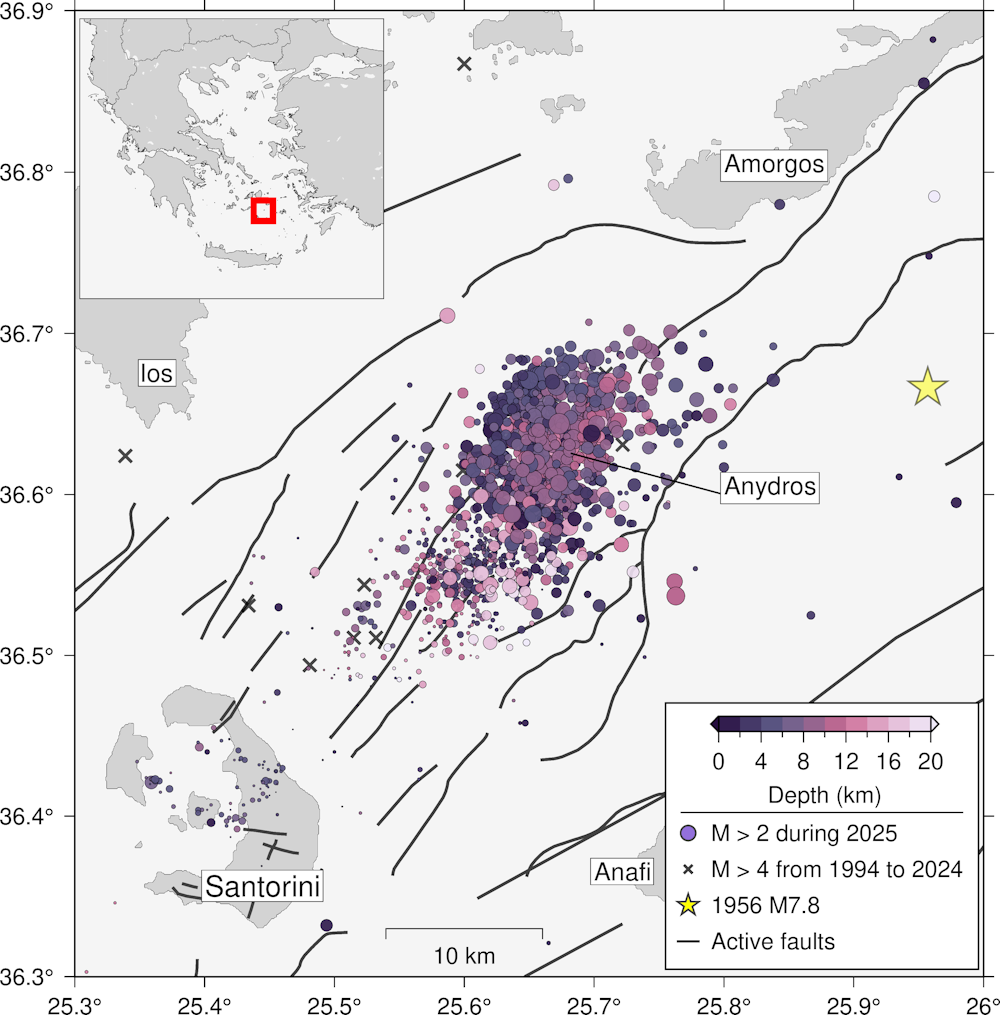
    MIL OSI Russia News

  • MIL-OSI New Zealand: SH25 closed following crash, Kereta, Thames

    Source: New Zealand Police (District News)

    State Highway 25, the Thames Coast Road is closed near Kereta while emergency services attend a crash reported at 12.45pm.

    Initial indications are that there have been serious injuries in the crash involving a vehicle and a motorcycle.

    Motorists are advised to avoid the area and expect delays.

    ENDS

    Issued by Police Media Centre

    MIL OSI New Zealand News

  • MIL-OSI Global: An ‘earthquake swarm’ is shaking Santorini. It could persist for months

    Source: The Conversation – Global Perspectives – By Dee Ninis, Earthquake Scientist, Monash University

    Greece’s government has just declared a state of emergency on the island of Santorini, as earthquakes shake the island multiple times a day and sometimes only minutes apart.

    The “earthquake swarm” is also affecting other nearby islands in the Aegean Sea. It began gradually with numerous very minor (less than magnitude 3) and mostly imperceptible earthquakes in late January. However, at the start of February, the seismic activity intensified as the quakes became larger and more frequent.

    So far, several thousand quakes have been recorded in the last two weeks. As many as 30 a day have been above magnitude 4.0 – most of them at less than 10km depth, which is large and shallow enough to be felt by people living on local islands.

    These larger earthquakes have resulted in rock falls along the islands’ coastal cliffs, as well as minor damage to vulnerable buildings. The largest earthquake so far was magnitude 5.1 on February 6, which was also felt in the capital city, Athens, as well as in Crete and in parts of Turkey more than 240km away.

    Usually a popular tourist destination, Santorini is now virtually empty. Over the past week, some 11,000 holidaymakers and locals have left the island, with many fearing the seismic activity may presage a volcanic eruption.

    So how exactly does an “earthquake swarm” happen? And what might happen in the coming days and weeks?

    No stranger to earthquakes

    This area of the world is no stranger to earthquakes. Greece is one of the most seismically active regions in Europe.

    The current seismic activity is located near Anydros, an uninhabited islet about 30km northeast of Santorini. This region lies within the volcanic arc of the “Hellenic subduction zone”, where the African tectonic plate is slowly sliding beneath the Eurasian plate (and specifically the Aegean microplate). The region hosts volcanoes as well as numerous weak zones in the crust – what earth scientists often call “faults”.

    Santorini itself is a mostly submerged caldera – a crater formed as a result of volcanic activity over the past 180,000 years, with its last eruption in the 1950s. Earthquakes can be connected to volcanic activity – specifically, the movement of magma beneath the surface.

    However, this earthquake sequence is not located beneath Santorini. And local scientists monitoring Santorini have reported no change to indicate the current seismic activity is a forerunner of another Santorini eruption. Instead, the earthquakes appear to align with faults lying between Santorini and the neighbouring island Amorgos.

    Nearby faults are known to have produced earthquakes before. For example, in 1956, a 7.8 magnitude earthquake here also produced a damaging tsunami and was soon followed by a magnitude 7.2 aftershock. More than 53 people died as a result of this earthquake and the aftershock and tsunami. Many more were injured.

    Earthquakes, shown as coloured circles, of the January-February 2025 Anydros swarm, near Santorini, Greece (Source: seismo.auth.gr) and known active faults, depicted as black lines (Source: https://zenodo.org/records/13168947).
    Dee Ninis & Konstantinos Michailos

    No single stand-out event

    Tectonic earthquakes occur when accumulating stress in Earth’s crust is suddenly released, causing a rupture along a fault and releasing energy in the form of seismic waves.

    Typically, moderate to major earthquakes (known as mainshocks) are followed by smaller quakes (known as aftershocks) that gradually diminish in magnitude and frequency over time. This is what seismologists call the mainshock–aftershock sequence.

    Some sequences behave differently and do not exhibit a single stand-out event. Instead, they involve multiple earthquakes of a similar size that take place over days, weeks, or even months. These types of sequences are what seismologists call “earthquake swarms”.

    The 1956 earthquake was a mainshock–aftershock sequence, with aftershocks lasting at least eight months after the mainshock. However, the current ongoing seismic activity near Santorini, at least as of February 7, features thousands of earthquakes, many with magnitudes ranging between 4.0 and 5.0.

    This suggests it is most likely an earthquake swarm.

    Earthquake swarms are often associated with fluid movement in the earth’s crust and the resulting seismic activity is usually less dramatic than the sudden movement of a strong mainshock.

    Seismologists are interested in distinguishing between mainshock–aftershock sequences and earthquake swarms as it can help them better understand the processes that drive these phenomena.

    A larger quake is still possible

    We cannot predict exactly what will come from the earthquake activity near Santorini. Global observations of earthquakes tell us that only a small fraction (about 5%) of earthquakes are foreshocks to larger earthquakes.

    That said, there could still be a possibility that a larger and potentially damaging earthquake could occur there soon.

    Although swarms typically involve earthquakes of lower magnitudes, they can last for days to weeks, or persist for months. They can even slow down, and then intensify again, unsettling locals with intermittent ground shaking.

    Dee Ninis works at the Seismology Research Centre, is Vice President of the Australian Earthquake Engineering Society, and a Committee Member for the Geological Society of Australia – Victoria Division.

    Konstantinos Michailos does not work for, consult, own shares in or receive funding from any company or organisation that would benefit from this article, and has disclosed no relevant affiliations beyond their academic appointment.

    ref. An ‘earthquake swarm’ is shaking Santorini. It could persist for months – https://theconversation.com/an-earthquake-swarm-is-shaking-santorini-it-could-persist-for-months-249278

    MIL OSI – Global Reports

  • MIL-OSI USA: Kennedy, Moran champion bill to protect veterans’ Second Amendment rights

    US Senate News:

    Source: United States Senator John Kennedy (Louisiana)

    WASHINGTON – Sens. John Kennedy (R-La.) and Jerry Moran (R-Kan.), Chairman of the Senate Committee on Veterans’ Affairs, today led 14 colleagues in introducing the Veterans 2nd Amendment Protection Act. The bill would prevent veterans from losing their Second Amendment right to purchase or own firearms when they receive help managing their Department of Veterans Affairs (VA) benefits.

    “Our veterans should not receive less due process rights than other Americans just because they served our country and asked the federal government for a helping hand. Under the VA’s interpretation of the law, however, unelected bureaucrats punish Louisiana and America’s veterans by forcing them to choose between their Second Amendment rights and getting the help they need as they manage their financial affairs. I’m proud to introduce the Veterans 2nd Amendment Protection Act to stand up for veterans’ constitutional rights by ending this unfair practice,” said Kennedy.

    “Veterans should never be forced to choose between receiving assistance from VA to manage their benefits and their fundamental Second Amendment rights. Our nation should be encouraging veterans to utilize VA services, not discouraging them by denying them due process. The Veterans Second Amendment Protection Act makes certain that the rights of those who have served are protected, and that veterans are not penalized for receiving support that they have earned and deserve. I thank Sen. Kennedy for his partnership in this effort,” said Moran. 

    Rep. Mike Bost (R-Ill.), Chairman of the House Committee on Veterans’ Affairs, introduced the bill in the House of Representatives.

    “It should go without saying that veterans should not be treated like second-class citizens simply because they need help managing their books—but under current law they are. Without a permanent fix in place, VA bureaucrats can continue to strip veterans with fiduciaries of their Second Amendment right with no court ruling in place that they are a danger to themselves or others. It’s as simple as that. I have heard from too many veterans that VA’s current NICS reporting measures prevent them from seeking mental health care at VA—we must change that. I want to thank Chairman Moran, Senator Kennedy, and my House colleagues for working with me last Congress to pass a temporary solution, but veterans need a permanent fix. House and Senate Republicans will fulfill the American people’s mandate to get this bill to President Trump’s desk to protect veterans’ due process and constitutional rights for good,” said Bost. 

    Sens. Chuck Grassley (R-Iowa), Steve Daines (R-Mont.), Marsha Blackburn (R-Tenn.), Pete Ricketts (R-Neb.), Mike Rounds (S.D.), Kevin Cramer (N.D.), Jim Banks (R-Ind.), Thom Tillis (R-N.C.), Bill Cassidy (R-La.), John Boozman (R-Ark.), Rick Scott (R-Fla.), Tommy Tuberville (R-Ala.), Lisa Murkowski (R-Alaska) and Tim Sheehy (R-Mont.) cosponsored the legislation.

    “I take the constitutional right to bear arms very seriously. Our bill would preserve due process for veterans and put a stop to unelected bureaucrats unjustifiably stripping away the Second Amendment rights of those who’ve served,” said Grassley.

    “Veterans must not be required to forfeit the Second Amendment without a careful, constitutional process. Attempting to deprive former servicemembers of firearms for protection or recreation simply because they require assistance managing the benefits they have earned is bureaucracy at its worst. Our legislation would correct this injustice and preserve these law-abiding patriots’ rights,” said Boozman.

    “The veterans who served our country shouldn’t lose their 2nd Amendment rights just because they need financial help,” said Cassidy.

    “Veterans who have served our country deserve the same Second Amendment rights and protections as every other American. This commonsense legislation ensures that veterans aren’t punished simply because they need assistance managing their benefits and guarantees they are not denied their constitutional rights without due process,” said Tillis. 

    “Our veterans have sacrificed so much to defend this great country, and it is critical their God-given right to protect themselves and their families doesn’t rest on judgement of unelected bureaucrats. It takes a lot of courage and humility for our brave veterans to admit that they need help managing their financial benefits. But it shouldn’t place their constitutional freedoms in jeopardy. This bill ends the ability of government workers to take away the Second Amendment freedoms of our veterans when they ask for help with their money unless a judge finds them to be a danger to himself or others. I stand with our veterans and will continue to fight to preserve the freedoms they fought for on the battlefield,” said Tuberville.

    “I’m proud to stand with our veterans to ensure equal protection of their rights with the Second Amendment Protection Act. Our veterans have fought to protect our nation and defend our rights, and they deserve to be treated fairly with the same due process under the law,” said Scott.

    Because of the VA’s interpretation of current law, the VA sends a beneficiary’s name to the FBI’s National Instant Criminal Background Check System (NICS) whenever a fiduciary is appointed to help a beneficiary manage his or her VA benefit payments.

    Ultimately, VA employees decide whether veterans receive help from a fiduciary.

    The bill would prohibit the Secretary of Veterans Affairs from transmitting a veteran’s personal information to NICS unless a relevant judicial authority rules that the beneficiary is a danger to himself or others.

    Vietnam Veterans of America, National Association of County Veterans Service Officers, Veterans of Foreign Wars, The American Legion, Black Veterans Empowerment Council, Military Order of the Purple Heart, National Shooting Sports Foundation, National Rifle Association, Gun Owners of America, AMAC Action, Turning Point Action, Firearms Regulatory Accountability Coalition, National Disability Rights Network and the National Association for Gun Rights support the Veterans 2nd Amendment Protection Act.

    Background:

    • In the 116th Congress, Kennedy introduced the Veterans 2nd Amendment Protection Act. 
    • In the 118th Congress, Kennedy and Moran re-introduced the Veterans 2nd Amendment Protection Act with six co-sponsors. 
    • In Oct. 2023, the Senate passed Kennedy and Moran’s amendment to the Consolidated Appropriations Act based on the Veterans 2nd Amendment Protection Act. The same language passed into law as part of an appropriations package in March 2024.
    • The language included in the appropriations package only provided a temporary solution tied to appropriations. The Veterans 2nd Amendment Protection Act would make the fix permanent and prevent future VA administrations from undoing the work to restore veterans’ due process and Second Amendment rights. 

    The bill text is available here.

    MIL OSI USA News

  • MIL-OSI New Zealand: Road blocked, Mokau Road, Mokau

    Source: New Zealand Police (District News)

    Police are responding to a single vehicle crash where a truck has rolled on Mokau Road (SH3), near Mohakatino Road, Mokau.

    The crash was reported around 1:45pm.

    The driver is reported to be in a moderate to serious condition.

    The road is blocked and motorists are advised to take an alternate route. 

    ENDS

    Issued by Police Media Centre

    MIL OSI New Zealand News

  • MIL-OSI New Zealand: New Zealand Sugar Company fined almost $150,000 for importing and selling sugar products contaminated with lead

    Source: Ministry for Primary Industries

    New Zealand Sugar Company, trading as Chelsea Sugar, has been fined $149,500 for manufacturing, distributing and selling sugar products contaminated with lead.

    In November and December 2021, the company recalled thousands of packs of sugar products because of potential low level lead contamination.

    Media release: New Zealand Food Safety to investigate sugar recalls

    Two other product recalls were needed when it was later discovered New Zealand Sugar Company provided incorrect information to supermarkets, resulting in more sugar products being released to consumers.

    “These recalls had a significant impact on consumer access to certain sugar products, such as brown sugar. It also affected a large number of other businesses which had to recall products made with the contaminated sugar,” says New Zealand Food Safety deputy director general Vincent Arbuckle.

    In the Auckland District Court, the company was sentenced on 2 charges it pleaded guilty to in May last year, including breaching its National Programme (NP) – designed to manage any food risk to consumers – along with negligently endangering, harming, creating, or increasing risk to consumers by distributing its product.

    A sentencing hearing was held in September last year and the court has released its reserved decision today.

    “New Zealand Sugar Company knew what its responsibilities were to consumers – ensuring the safety and suitability of its products and managing any potential risk to consumers.

    “It failed to properly detect the extent of lead contamination until after the imported sugar had been used in production.

    “Offending at this scale is rare, and the Court’s sentence today sends a strong message that it will not be tolerated,” says Vincent Arbuckle.

    In September 2021, the New Zealand Sugar Company imported sugar from Australia that became contaminated with lead during sea transport. From this sugar it manufactured and distributed 971 tonnes of contaminated sugar products to businesses in New Zealand.

    The sugar had been freighted to New Zealand from Australia aboard the cargo ship Rin Treasure – a vessel that had been used to ship metal sulphide concentrates (lead and zinc) on its previous voyage.

    Before choosing this ship, New Zealand Sugar Company was advised the vessel failed a survey report on 3 September, meaning it was not fit to load and transport bulk sugar. Prior to its departure, the vessel was cleaned, and a cleanliness report certified the vessel’s hold was in a fit state for the stowage and carriage of raw sugar.

    However, the cleaning was not effective, and the cargo of sugar became contaminated with lead during the journey from Queensland. This contamination may have been potentially exacerbated by a broken pipe aboard the vessel that spilled water into the sugar during the cargo unloading process by contractors.

    Samples of the sugar were collected between 15 and 24 September for testing but New Zealand Sugar Company followed its normal process of producing sugar products from the cargo for distribution and sale.

    “The test result on 7 October showed high readings of lead contamination, but rather than take immediate action and stop production and distribution, they instead sought more testing which confirmed the same result.

    “Some of this product was sold between October and early November. We were not informed of the lead contamination until 3 November, which is unacceptable.

    “New Zealand Sugar Company’s lack of definitive action resulted in a consumer level recall of sugar products on 4 November – around 6 weeks after the contaminated product arrived in New Zealand.

    “Although the short-term exposure to increased lead levels through these sugar products  would not have endangered people’s health – we cannot afford to take a chance on public health,” says Vincent Arbuckle.

    If you have concerns about a food product, you can contact New Zealand Food Safety on 0800 008 333 or use our online food complaint tool

    For further information and general enquiries, email info@mpi.govt.nz

    For media enquiries, contact the media team on 029 894 0328.

    MIL OSI New Zealand News

  • MIL-OSI USA: Cassidy Highlights His Plans to Hold China Accountable, Protect Louisiana Ricers, Shrimpers to Trump USTR Nominee

    US Senate News:

    Source: United States Senator for Louisiana Bill Cassidy

    [embedded content]

    WASHINGTON –U.S. Senator Bill Cassidy, M.D. (R-LA) today outlined his plan to hold China accountable through his Foreign Pollution Fee and addressed the need to protect Louisiana ricers and shrimpers from foreign competitors during U.S. Trade Representative (USTR) nominee Jamieson Greer’s confirmation hearing before the U.S. Senate Finance Committee.
    “You have been concerned—expressed skepticism—about the need for binding dispute mechanisms at the WTO, but my rice producers and others have won decisions at the WTO on commitments by other countries on agricultural subsidies, and yet they’re not enforced. And so, are my agricultural people just out in the cold? … Help my rice producer here. How are we going to handle that?” asked Dr. Cassidy.
    “Senator, I think you’re exactly right, and that’s part of the reason why I show skepticism sometimes about the WTO,” replied Greer. “We have to have enforcement, and at the end of the day, what that means is USTR has to go to the country and enforce the law, and sometimes that means imposing tariffs on them.”
    “About 40 percent of the imported shrimp to the United States come from India. Now the EU, Japan, and the U.S. finds illegal antibiotics in their shipments. And there’s also allegations that they use forced labor at every step of the supply chain… Would you commit to putting a— slapping a tariff on the shrimp if we can show that it’s being imported under those circumstances?” asked Dr. Cassidy.
    “If we have an investigation and it shows their unfair trading practices, you can certainly impose a tariff or other measures if that trade practice isn’t remedied. I think it’s really important to work with you and the shrimpers because if they feel like they’re not getting the relief they need from trade remedies or other venues, then we need to explore whether it’s section 301, or other tools, to make sure that we’re detecting the unfairnesses and addressing it,” said Greer. 
    When discussing Cassidy’s Foreign Pollution Fee Act, Greer recognized the unlevel playfield that requires the use of tariffs to hold other countries accountable for unfair trade practices. 
    “[O]ne thing I am concerned about is that China is not using, not enforcing environmental regulations… [I]t lowers their cost of manufacturing by not enforcing those environmental regulations by 20 percent, and our industry moves there because they just lowered their manufacturing costs by 20 percent by dumping their air pollution on us. Now if this is classical economics, you would tax the externality, and I have proposed a fee on the carbon-intense product from countries which do not enforce internationally accepted norms on pollution control. Any thoughts upon that?” asked Dr. Cassidy. 
    “I think you’ve articulated the problem statement very well. I think there’s an unlevel playing field, and I think that other countries take advantage of total lack of environmental regulations,” said Greer. 
    Background 
    In December, Cassidy and U.S. Senator Lindsey Graham (R-SC) released a new discussion draft of their Foreign Pollution Fee Act to level the playing field with Chinese manufacturing and expand American production. In addition, the Steel Manufacturers Association, which represents 70 percent of the nation’s steel production, called on President-elect Trump and Congress to institute a foreign pollution fee.
    The Foreign Pollution Fee Act was a key topic at Cassidy’s Louisiana Energy Security Summit last fall. The summit featured ten panels that explored protecting U.S. interests from unfair trade practices, Louisiana’s low-emission manufacturing advantage, and the role of natural gas in strengthening U.S. geopolitical influence. Panelists included the CEOs of Entergy, First Solar, Buzzi UnicemUSA, Orsted, and Aluminum Technologies, former Trump administration officials, and leaders from Louisiana trade associations and major energy and Fortune 500 companies. 
    In 2023, the Louisiana Senate and House of Representatives unanimously adopted a resolution urging Congress to pursue an industrial manufacturing and trade policy to counter competition from China. 
    On Louisiana shrimp and rice, Cassidy introduced two bills last Congress to protect both industries against China and India’s dumping of cheap agricultural products into U.S. markets. The Prioritizing Offensive Agricultural Disputes and Enforcement Act and the India Shrimp Tariff Act will protect the Louisiana agricultural industry while ensuring that food that appears on U.S. store shelves meets U.S. health standards.
    Last year, Cassidy worked to secure $27,152,411.00 for Louisiana fisheries, shrimpers, and fishing communities affected by natural disasters between 2017 and 2022.
    In April 2024, Cassidy advocated for Louisiana shrimpers and rice producers at a U.S. Senate Finance Committee hearing with USTR Ambassador Katherine Tai. He pressed her on progress USTR is making to prevent shrimp dumping from Asia. Cassidy also highlighted a whistleblower report on the safety of shrimp imported from India.

    MIL OSI USA News

  • MIL-OSI USA: Senator Marshall on RFD-TV: President Trump Will Take Care of Our American Farmers and Ranchers

    US Senate News:

    Source: United States Senator for Kansas Roger Marshall

    Washington, D.C. – U.S. Senator Roger Marshall, M.D. joined RFD-TV to discuss this week’s Senate Ag Committee hearing, the challenges farmers are facing, trade agreements, and President Trump’s tariffs on China, Mexico, and Canada.

    [embedded content]

    You may click HERE or on the image above to watch Senator Marshall’s full interview.
    Highlights from Senator Marshall’s interview include:
    On the challenges farmers are facing:
    “I don’t have to tell your listeners that we had a record drop in net farm income that was basically due to high interest rates and high input costs. Again, you’re all well aware of those as well and the regulatory environment we’re drowning in.”
    “The mental health of farmers, the farmer suicide issue comes to mind. The right to work on your own property and work on your own tractors and machinery. All those little issues add up, the average age of the farmer, I think is in the 60s now. So plenty of challenges out there, and our challenge up here now is just to prioritize those and do what we can to help the American farmer and rancher.”
    On the importance of trade agreements benefitting farmers:
    “We got to talk about trade. And certainly, we’re grateful for the past trade agreements. President Trump got done with USMCA, South Korea, Japan…And Joe Biden didn’t do any new trade agreements. So for four years, we’ve sat idle, and we’re looking forward to President Trump hopping back in there and doing some strong bilateral trade agreements.”
    On President Trump’s tariffs on Mexico and Canada:
    “This is a drug war and not a trade war. And first and foremost, my farmers and ranchers, they’re parents and grandparents. And this is about the fentanyl drug war, that we’re losing 200 Americans every day from fentanyl poisoning. We’re losing 75,000 Americans every year from fentanyl poisoning, more than we lost in the entire Vietnam War. So President Trump has asked Canada, Mexico, and China, to stop the nonsense.” 
    “These precursors were mostly made in China, but now a lot of the precursors are in laboratories in Canada. So we need those countries to step up. And they are.” 
    “I think as long as over the next 30 days, we see significant progress that the tariffs on Mexico and Canada won’t come to fruition, at least I hope they don’t. But I do appreciate President Trump worried about our national security, and I appreciate that our farmers and ranchers are patriots and still supporting him.” 
    “And don’t forget one last thing, the last time we had it out with China, President Trump gave farmers and ranchers $28 billion from that tariff money. He’s not forgotten about us. We’re a huge priority to President Donald J. Trump.”
    On China promising retaliatory tariffs:
    “China is just next to impossible to deal with, and America needs to divorce from China as much as possible. You know, they’re constantly stealing our intellectual property. We talked about the fentanyl issues already. They’re trying to buy up American farmland. They don’t play fair. They simply don’t.”
    “We’ve given them huge breaks for decades now. They’ve had 25-50, 75% tariffs on American goods and products forever, and now we just want it to be fair and equal. They’re no longer a developing nation, so we have to play hardball with them before they’re going to come to the table.” 
    “This is why USMCA was so important – that Canada and Mexico are our number one trade partners now for agriculture…at the end of the day, I have faith in President Trump that he’s going to take care of the American farmer and rancher. I think we could come back and talk about 45Z someday, and how we’re hoping President Trump will support that in the biofuels industry, rolling back regulations. I think that you can count on President Trump to champion that so we can’t look at all these issues in little single silos.”

    MIL OSI USA News

  • MIL-OSI China: Chinese ring in Year of the Snake with travel, spending boom

    Source: China State Council Information Office 2

    Passengers are seen at the waiting hall of Beijing South Railway Station in Beijing, capital of China, Feb. 4, 2025. [Photo/Xinhua]
    As China celebrated the arrival of the Year of the Snake, the festive atmosphere was reflected in a surge in travel and consumer spending. With tourism booming, restaurants bustling, and box offices setting new records, the festivities showcased China’s economic vitality.
    The Spring Festival, China’s most important festival, sparked a nationwide travel surge as families reunited and celebrations took place across the country. Official data showed that more than 2.3 billion passenger trips were made nationwide during the eight-day Spring Festival holiday, which concluded on Tuesday.
    Official projections estimated over 9 billion passenger trips during the 40-day Spring Festival travel rush that officially began on Jan. 14.
    The annual migration — once dominated by homebound travelers — now sees a growing number of people opting for holiday getaways, filling train stations, highways, and airports in celebration of the Year of the Snake.
    Tourism soars on heritage charm
    With China’s Spring Festival now on the UNESCO Representative List of the Intangible Cultural Heritage of Humanity, cultural exploration-centered tours have become increasingly popular.
    Online searches for “intangible cultural heritage tourism” jumped 174 percent since the beginning of this year, while folk craft-related searches spiked 321 percent, according to Meituan Travel. On the popular video-sharing platform Douyin, demand for intangible cultural heritage tours led to a 462 percent year-on-year rise in group tour bookings for folk fairs.
    According to the Ministry of Culture and Tourism, China saw a record 501 million domestic tourist trips during the just-concluded holiday, up 5.9 percent year on year. Tourist spending reached a record high of over 677 billion yuan (94.43 billion U.S. dollars) during the period, a 7 percent increase from the previous year.
    The cultural allure extended beyond domestic travelers, attracting visitors from around the globe. The latest data from the National Immigration Administration showed about 14.37 million cross-border trips were made during the holiday, up 6.3 percent from last year’s Spring Festival holiday. Of these, 958,000 trips were made by foreign nationals, marking a 22.9 percent increase.

    Foreign tourists try to make tofu during a folk celebration of the Spring Festival in Wayaogang Village, Yongding District of Zhangjiajie City, central China’s Hunan Province, Jan. 24, 2025. [Photo/Xinhua]
    According to Chinese online travel service giant Trip.com Group, inbound travel orders during the Spring Festival holiday rose 203 percent year on year, underscoring the growing international appeal of China’s cultural and natural landmarks.
    Among the top destinations was Zhangjiajie in Hunan Province, renowned for its spectacular mountain scenery that inspired scenes in global blockbusters. Malaysian tourist Vincent Koh Swee Sam was among the many international visitors drawn to cultural heritage in Zhangjiajie. Immersing himself in local festivities, Sam joined villagers in writing Spring Festival couplets, pounding glutinous rice cakes, and making tofu.
    Sam’s hands-on experience with Chinese calligraphy deepened his appreciation for the art. “I used to know China only through textbooks and maps,” he said. “But now that I have stepped into it myself, it feels so good.”
    Dining boom feeds festive spirit
    No Spring Festival is complete without a grand feast, and this year, more families chose to dine out for ease and variety, driving a surge in restaurant bookings.
    In Shanghai’s bustling city center, all 91 tables at the renowned Cantonese restaurant Xinya were packed with diners on Chinese New Year’s Eve, according to executive chef Huang Renkang.

    People have a reunion meal at a restaurant in Nanjing City, east China’s Jiangsu Province, Jan. 28, 2025. [Photo/Xinhua]
    According to the Ministry of Commerce (MOC), the revenues of key restaurants tracked by the ministry climbed 5.1 percent year on year in the first four days of the holiday.
    Online platforms saw a similar rise. Meituan reported a 305 percent year-on-year increase in online bookings for Chinese New Year’s Eve dinners, while high-end restaurants featuring Chinese culinary experiences saw significant growth.
    Notably, orders for “intangible cultural heritage” meal packages searched on Meituan soared over 12 times year on year since the beginning of this year.
    Box office hits record high
    From Chinese mythology to homegrown animation, this year’s Spring Festival film lineup drew massive crowds and posted record-breaking sales.
    China’s box office sales jumped to an all-time high of 9.51 billion yuan over the holiday period, while attendance also set a new record, with 187 million moviegoers packing theaters.

    People watch a film at a cinema in Feidong County, Hefei City, east China’s Anhui Province, Feb. 3, 2025. [Photo/Xinhua]
    Leading the charge was the animated feature “Ne Zha 2,” which grossed around 4.84 billion yuan.
    “The moviegoers’ enthusiasm indicates vibrant consumption during the holiday as well as the consumers’ confidence in domestic productions,” said Rao Shuguang, president of the China Film Critics Association.
    Experts attributed the success to strong audience anticipation, beloved characters and stories, and high-quality storytelling.
    “The strong performance of these films lays a solid foundation for the steady growth of China’s film market in 2025,” noted Chen Jin, a data analyst from box office tracker Beacon.
    Policy boost sparks shopping spree
    Festive cheer and consumer enthusiasm energized the market even before the holiday began. With the country’s trade-in program driving demand, shoppers eagerly seized the opportunity to upgrade cars, home appliances, and digital devices, ushering in a vibrant holiday shopping season.

    People visit a flower market in Yuexiu District, Guangzhou, south China’s Guangdong Province, Jan. 27, 2025. [Photo/Xinhua]
    The MOC reported receiving subsidy applications for 10.79 million electronic devices over a four-day period starting Jan. 20. This follows the inclusion of mobile phones, tablets, and smartwatches in the trade-in subsidy program, marking a significant expansion of the initiative launched in March last year.
    Moreover, according to the ministry, automobile trade-ins reached 34,000 while home appliance trade-ins reached 1.04 million units as of Jan. 23.
    Building on this momentum, online retail sales grew by 5.8 percent during the eight-day holiday, while sales of home appliances and communication equipment at key retailers jumped by over 10 percent.
    “Spring Festival offers a glimpse into the year’s economic trends,” said Chen Lifen, a researcher at the Development Research Center of the State Council.
    In this holiday season, a blend of cultural experiences and new consumption scenarios has helped reinforce the economic recovery momentum, injecting confidence into the economy and setting a strong foundation for the year ahead, Chen noted.

    MIL OSI China News

  • MIL-OSI China: China urges US to optimize regulation on cross-border e-commerce

    Source: China State Council Information Office

    The U.S. imposition of additional tariffs on Chinese exports and its tweaking of “de minimis” exemption policy will drive up the costs for American consumers and dampen their shopping experience, He Yongqian, spokesperson for the Ministry of Commerce, said on Thursday.

    When asked to comment on the erratic behavior of the U.S. Postal Service, which suspended accepting parcels from the Chinese mainland and Hong Kong but reversed its decision a few hours later, He told a regular press conference that cross-border e-commerce has distinct advantages.

    Cross-border e-commerce caters to the personalized demands of consumers, offers quick delivery, and cuts down on costs. It has emerged as a significant trend in the development of international trade, He said.

    “No matter how a country adjusts its trade policies, the inherent advantages and features of cross-border e-commerce remain intact,” He said. “It still boasts strong competitiveness, and the overarching trend of digital transformation in international trade is here to stay.”

    China hopes that the United States will align with the development trends of international trade, streamline its regulatory mechanisms, and foster a fair and predictable policy ecosystem for cross-border e-commerce. By doing so, the United States can offer its domestic consumers a more convenient consumption environment, with high-quality products at reasonable prices, He added.

    MIL OSI China News

  • MIL-OSI China: Thailand tightens border control after cutting power supply to Myanmar

    Source: China State Council Information Office

    Thailand has tightened border control to prevent possible adverse effects after it suspended power supply to five areas in Myanmar as part of its effort to combat illegal operations, Deputy Prime Minister Phumtham Wechayachai said on Thursday.

    Thai border patrol police and military forces have strengthened security along the border and all relevant agencies have been fully engaged in implementing the measures to tackle drug trafficking and border-related crimes, Phumtham said during an inspection visit to the Tak province bordering Myanmar.

    Phumtham cited one example where power usage visibly decreased by half in one of Myanmar’s areas where online scams are concentrated, after the electricity supply was cut off on Wednesday, indicating the impact of the measure.

    He noted that the Thai telecom regulatory body would terminate all problematic Internet connections by the end of this month, while essential services would face reduced connectivity.

    Thailand’s National Security Council resolved on Tuesday to cut electricity, fuel supply, and Internet services to five locations across three Myanmar states identified as bases for illegal activities, including human trafficking, call center scams, money laundering and transnational crimes.

    MIL OSI China News

  • MIL-OSI China: Israel withdraws from UN human rights body

    Source: China State Council Information Office

    Israeli Foreign Minister Gideon Sa’ar informed the United Nations Human Rights Council (UNHRC) on Thursday that Israel will no longer participate in it.

    Israel’s move came two days after U.S. President Donald Trump announced his country’s withdrawal from the top UN human rights body.

    Sa’ar wrote to UNHRC President Jurg Lauber that “the decision was reached in light of the ongoing and unrelenting institutional bias against Israel in the Human Rights Council, which has been persistent since its inception in 2006.”

    Sa’ar mentioned that the council “has become a political tool and a convenient platform, cynically used to advance certain political aims, to bash and delegitimize Israel.”

    He claimed that Israel has been subject to over 20 percent of all condemnatory resolutions ever passed in the council, “more than (those) against Iran, Cuba, North Korea, and Venezuela, combined.”

    He added that since Oct. 7, 2023, “the council has employed every platform to spread misinformation and blood libels against Israel.”

    The Israeli minister wrote on social media platform X that “joining President Trump’s just decision, Israel will no longer tolerate the council’s blatant antisemitism.”

    MIL OSI China News

  • MIL-OSI China: Xi meets Thai PM in Beijing

    Source: China State Council Information Office 3

    Chinese President Xi Jinping meets with Prime Minister of Thailand Paetongtarn Shinawatra, who is on an official visit to China, at the Great Hall of the People in Beijing, capital of China, Feb. 6, 2025. [Photo/Xinhua]

    Chinese President Xi Jinping met with Thai Prime Minister Paetongtarn Shinawatra in Beijing on Thursday.

    Xi said that this year marks the 50th anniversary of China-Thailand diplomatic relations as well as the “Golden Jubilee of China-Thailand Friendship.” The two sides should build on past achievements and work together to advance the building of the China-Thailand community with a shared future to deliver more benefits to the two peoples, the region and the world at large.

    In the face of profound changes unseen in a century, China and Thailand should consolidate strategic mutual trust, firmly support each other, and respond to uncertainties in the external environment with the stability and certainty of China-Thailand relations, Xi said.

    China is ready to work with Thailand to align development strategies, expand mutually beneficial cooperation, implement well flagship projects such as the China-Thailand Railway, and promote the vision of interconnected development of China, Laos and Thailand to achieve more fruitful outcomes as soon as possible, he said.

    Xi called for concerted efforts to deepen cooperation in emerging industries such as the digital economy and new energy vehicles, and build more stable and smooth industrial and supply chains.

    Noting that China appreciates Thailand’s effective measures against online gambling and telecom fraud, Xi said that both sides should continue to strengthen law enforcement, security and judicial cooperation to safeguard the safety of people’s lives and property as well as the orderly exchanges and cooperation among regional countries.

    Xi called on both sides to launch a variety of activities to celebrate the 50th anniversary of their diplomatic ties and increase the mutual understanding and amity between the two peoples.

    China supports Thailand’s role as co-chair of the Lancang-Mekong Cooperation and congratulates Thailand on becoming a BRICS partner country, Xi added.

    China stands ready to work closely with Thailand to firmly defend the international system with the United Nations at its core and the international order based on international law, enhance unity and cooperation in the Global South, safeguard world peace and promote common development, he said.

    Chinese President Xi Jinping meets with Prime Minister of Thailand Paetongtarn Shinawatra, who is on an official visit to China, at the Great Hall of the People in Beijing, capital of China, Feb. 6, 2025. [Photo/Xinhua]

    Paetongtarn said she is delighted to visit China at a time when the two countries are celebrating the “golden jubilee” of their friendship. Thailand and China have forged a special friendly and cooperative relationship over the past five decades.

    Reaffirming Thailand’s adherence to the one-China policy, she said Thailand looks forward to working with China to boost high-level exchanges, enhance cooperation in the fields of connectivity, economy, trade and agriculture, and promote people-to-people exchanges to usher in the next five decades of shared peace and prosperity.

    Thailand is willing to strengthen law enforcement cooperation with China and other neighboring countries, and take resolute and effective measures to crack down on cross-border crimes, including online gambling and telecom fraud, she said.

    Calling China a responsible major country in international affairs that firmly safeguards the interests of developing nations, Paetongtarn said Thailand is willing to strengthen coordination and collaboration with China to address global challenges.

    MIL OSI China News

  • MIL-OSI New Zealand: Universities – Green light for remote tech to sort the wood from the trees – Flinders

    Source: Flinders University

    New Zealand and Flinders University experts have deployed artificial intelligence and 3D laser scanning to accurately map planted pine (radiata) forests for most of NZ’s North Island.  

    The results, which distinguish planted large estates, small woodlots and newly established stands as young as three years old, showcase a new way of using remote sensing with other technology to reveal forest growth and update growth information.

    This approach is just as relevant for Australia, where radiata pine is also widely grown, says Dr Grant Pearse, Senior Lecturer in Remote Sensing and Geographic Information Systems (GIS) at Flinders University.

    “In New Zealand, where radiata pine plantations dominate the forestry sector, the current national forest description lacks spatially explicit information and struggles to capture data on small-scale forests,” says Dr Pearse, from the College of Science and Engineering at Flinders University in Adelaide, South Australia.

    “We combined deep learning-based forest mapping using high-resolution aerial imagery with regional airborne laser scanning data to map all planted forest and estimate key attributes.”

    The spatially explicit forest description provides wall-to-wall information on forest extent, age, and volume for all sizes of forest. This facilitates stratification by key variables for wood supply forecasting, harvest planning, and infrastructure investment decisions – applications equally valuable for other forestry industries.

    The research, with New Zealand timber industry researchers from Rotorua, Christchurch and Auckland, was carried out on planted forests in the Gisborne region, which has publicly available aerial imagery and airborne laser scanning data.

    This region is particularly significant as it was severely impacted by Cyclone Gabrielle in early 2023, which caused widespread landslides and forest debris flows.

    For such vulnerable terrain, knowing exactly where forests are located in the landscape, their age and condition is key to managing the risks of harvesting operations on the region’s steep slopes.

    “We propose satellite-based harvest detection and digital photogrammetry to continuously update the initial forest description. This methodology enables near real-time monitoring of planted forests at all scales and is adaptable to other regions with similar data availability,” researchers say in a new article.

    Along with the economic importance of NZ’s 1.8 million hectares of radiata pine forestry for export timber and fibre, these planted forests are a key part of the country’s emission trading scheme and are expected to play a significant role in achieving the government’s target of net-zero emissions by 2050.

    The forest map derived from artificial intelligence can be viewed at: www.forestinsights.nz

    In South Australia, plantation estates covering about 40,000 hectares support a $3 billion industry and employ 18,000 people as well as construction, manufacturing, tourism and regional communities.

    The article. ‘Developing a forest description from remote sensing: Insights from New Zealand’ (2024) byGrant D Pearse (Flinders University), Sadeepa Jayathunga, Nicolò Camarretta, Melanie E Palmer, Benjamin SC Steer, Michael S Watt (all Scion), Pete Watt and Andrew Holdaway (both Indufor Asia Pacific)  has been published in the journal Science of Remote Sensing. DOI: 10.1016/j.srs.2024.100183. (ref. https://www.forestinsights.nz/ )

    Acknowledgements: This project was funded through the Ministry of Business, Innovation and Employment (MBIE) Strategic Science Investment Fund (administered by Scion, the New Zealand Forest Research Institute Ltd) and through the MBIE Programme (grant number C04X2101).

    MIL OSI New Zealand News

  • MIL-OSI New Zealand: Weather News – Thundery Afternoon for Central North Island before a Summery Weekend – MetService

    Source: MetService

    Covering period of Friday 7 – Monday 10 February – Severe thunderstorms are possible for the central North Island this afternoon and evening (Friday), but  MetService is forecasting more warm and dry weather for most during the weekend.

    A Severe Thunderstorm Watch is in place for the central North Island this afternoon and evening, covering Taupō, Waikato south of Tokoroa, Taumarunui, inland Bay of Plenty, Taranaki and Taihape. Scattered heavy showers, thunderstorms and localised downpours (25 – 40 mm/h) are expected within this area.

    MetService meteorologist Ngaire Wotherspoon comments, “Not everywhere within the Watch area will see a thunderstorm or downpour today, but the potential is there. Localised downpours can cause surface flooding, especially in low-lying areas, so it’s worth keeping an eye on metservice.com as our expert meteorologists will be issuing localised Warnings for severe thunderstorms as they occur.”

    It’s shaping up to be a sunny day for the rest of the North Island today, with toasty forecast high temperatures in the mid-high twenties. The South Island is cloudier, especially over Canterbury and Marlborough where temperatures remain in the teens, but this cloud is forecast to break up this afternoon. The remains of a front over western South Island areas means cloud and a sprinkling of rain will stick around into the weekend.

    Over the weekend, a ridge of high pressure over the North Island means more sunny and warm weather.  There will still be a few showers in central areas. Down south, showers continue in the west while eastern areas get sunny, warm weather to start the weekend. Alexandra has a forecast high of 31°C on Saturday, before temperatures drop as a band of rain reaches Southland at night.

    Wotherspoon details, “Brief rain spreads over Southland and Otago tomorrow night as a front moves north, but it slows and begins to break up heading into Sunday morning. There will be a dip in temperatures for the South Island with this front; Christchurch has a forecast high of 29 °C on Sunday, but is only expected to reach 19 °C on Monday.”  

    The remnants of this front will linger into next week, keeping conditions in the South Island cool and cloudy, while the North Island is in store for more warm and dry conditions.

    MIL OSI New Zealand News

  • MIL-OSI Asia-Pac: BSMI Unveils State-of-the-Art Metrology Laboratory in Xizhi: Ensuring Measurement Accuracy and Promoting Technological Innovation

    Source: Republic Of China Taiwan 2

    On January 21, 2025, the Bureau of Standards, Metrology and Inspection (BSMI) officially opened its new Metrology Laboratory in Xizhi. The opening ceremony was attended by Director-General Chen Yi-Ling, along with representatives from related laboratories and industry leaders. This new facility marks an important step forward in maintaining accurate measurements that benefit both businesses and consumers.

    According to the Weights and Measures Act, devices like water meters, gas meters, scales, weighbridges, and breath alcohol testers must pass official verification before they can be sold or used for legal or trade purposes. The Xizhi Metrology Laboratory will take over the work of the Chengde Road lab, which served the public for more than 36 years. The new lab will continue providing important services like testing, calibration, and verification to help ensure fair trade and accurate readings for law enforcement.

    As technology advances, many traditional mechanical devices-like water and gas meters-are being replaced by electronic systems. To keep up, the new lab offers updated testing services that meet the latest international standards developed by the International Organization of Legal Metrology (OIML). This helps confirm that electronic meters are accurate and reliable. A key feature of the new lab is the addition of Asia’s first electromagnetic interference (EMI) testing system in real-flow conditions. This means that it can evaluate how external signals affect measurement accuracy under actual water and gas flow scenarios, a vital step in ensuring reliable readings and supporting the development of next-generation metering technologies. For local businesses, the Xizhi lab is also good news. Manufacturers can now perform important tests locally instead of sending equipment abroad, which saves both time and money.

    BSMI is committed to running the lab efficiently and keeping it equipped with the latest technology. The goal is to protect consumers from inaccurate measurements, promote fairness in trade, and support local industries as they adopt new technology. With the Xizhi Metrology Laboratory in operation, the public can feel confident that the products they rely on-whether it’s for buying groceries, paying utility bills, or ensuring public safety-are measured accurately and fairly.

    Responsible Division: Metrology Technology Division
    Contact Person: Chen, Horng-Lin, Deputy Director
    Tel. (O):+886-2343-4585
    Email:hl.chen@bsmi.gov.tw

    MIL OSI Asia Pacific News

  • MIL-OSI Australia: UniSA welcomes new leader for its Mount Gambier campus

    Source: University of South Australia

    07 February 2025

    Peta Crewe, incoming Regional Manager for UniSA’s Mount Gambier campus

    PIRSA regional development lead Peta Crewe is joining the University of South Australia to head up its Mount Gambier campus as new Regional Manager.

    From forestry to vines, livestock and community, Crewe’s connection to the Limestone Coast region spans a quarter of a century including roles in Government, at ForestrySA, and on strategic working groups and committees.

    Her current role is General Manager, Regions for SA’s Department of Primary Industries and Regions (PIRSA), where she oversees regional development across 11 regional offices.

    Crewe will commence in her UniSA role on 3 March.

    UniSA Vice Chancellor Professor David Lloyd is delighted to welcome her to the University community.

    “Peta has an outstanding track record delivering successful regional programs and addressing the key issues in regional communities, including workforce shortages, lack of affordable housing, industry development, and community capacity building,” Prof Lloyd says.

    “Her experience and connections in the Limestone Coast region, a region of enormous social, cultural and economic significance to SA, will be a great asset to our University and the local community.”

    Ian McKay, Mount Gambier’s current Regional Manager, will retire on 14 March after eight years in the role.

    “Ian has been a wonderful advocate and ambassador for UniSA and has made a significant impact in the Mount Gambier community,” Prof Lloyd says.

    “UniSA’s regional engagement and connections to the Mount Gambier community have greatly expanded under Ian’s leadership. On behalf of the University, I thank him for his contributions and wish him all the best in his future endeavours.”

    Crewe has an agriculture degree from the University of Adelaide and a Master in Forest Science. Her previous roles include PIRSA’s regional coordinator for the Limestone Coast. Among her many community roles and professional memberships, she is team manager for the Blue Lake Soccer Club’s Senior Women’s team.

    Media contact: Megan Andrews M: +61 434 819 275 142 E: megan.andrews@unisa.edu.au

    Other articles you may be interested in

    MIL OSI News

  • MIL-OSI New Zealand: Seventy-three graduate in first police wing for 2025

    Source: New Zealand Police (National News)

    Commissioner Richard Chambers, the Minister of Police, Hon Mark Mitchell, Associate Minister of Police Casey Costello and Wing Patron, Glenn Dunbier ONZM congratulated the 73 graduating constables from wing 381 today.
    Families and friends joined the newly attested constables at Te Rauparaha Arena, Porirua this morning to watch them parade out from their initial police training course.

    Constable Brent Edwards, Ngāti Awa, recipient of the Minister’s Award for top recruit of the wing, who was previously a police officer is pleased to be back on the front line; “I missed the job and the sense of satisfaction you get from helping people and holding offenders to account.  There is no other job like it.   But the main reason I’ve returned is the people, the organisation is full of good people, who are doing things for the right reasons.  It is great to be part of it again.”

    The Commissioner’s Award for Leadership and the Patron’s award was awarded to Constable Aleksandar Banjac. “This recognition is not a reflection of my individual efforts, but a testament to the hard work and commitment of the entire wing. This award is a shared achievement, and I accept it with deep respect and gratitude to my peers for the nominations.  I would like to thank everyone involved with their continued support in this journey.”

    All Awards:
    Minister’s Award recognising top student: Constable Brent Edwards, Ngāti Awa, posted to Tasman District. 
    Commissioner’s Award for Leadership and the Patron’s Award for second in wing, recognising second top student: Constable Aleksandar Banjac , posted to Auckland City District.
    Driver Training and Road Policing Practice Award: Constable Lucas Lowe posted to Bay of Plenty District.
    Physical Training and Defensive Tactics Award: Constable Eli Marsters, Ngāti Whanaunga,  posted to Bay of Plenty District.
    Firearms Award: Constable Michael Tooley, posted to Wellington District.

    Deployment:
    The new constables will start their first day of duty in their Police districts on Monday 17 February 2025 and will continue their training on the job as probationary constables.
    Northland 6, Tāmaki Makaurau a total of 23 and broken down as follows: Auckland – 5, Waitematā – 5, Counties Manukau – 13, Waikato – 4, Bay of Plenty – 8, Eastern – 9, Central – 3, Wellington – 9, Tasman – 2, Canterbury – 4, Southern – 5.

    Demographics:
    23.3 percent are female, 76.7 percent are male. New Zealand European make up 58.9 percent of the wing, with Māori 16.4 percent, Pasifika 8.2 percent, Asian 11.0 percent, LAAM 1.4 percent and Other is 4.1 percent.

    381 Wing Patron
    Former Deputy Commissioner Dunbier joined Police in 1985. He has worked across frontline, investigative, covert policing, and numerous leadership roles. He was appointed Area Commander for Eastern Waikato in 2006, District Commander for Bay of Plenty in 2010, then promoted to Deputy Commissioner in 2014. He served as lead police liaison officer in Turkey, coordinating the tri-lateral Australia – New Zealand – Turkey commemorations for the Anzac centenary of Gallipoli in 2015.
    Following a three-year secondment to the Australian Department of Defence in 2017, he became deputy commissioner of operations in early 2020, with responsibility for more than 10,000 New Zealand Police staff. Dunbier led the police response to the Covid-19 pandemic, which included the policing of lockdown restrictions, staffing and managing the managed isolation and quarantine facilities across the country and operating the alert level boundary checkpoints. In 2022, he was made an Officer of the New Zealand Order of Merit (ONZM) for services to New Zealand Police and the community.  Glenn retired from New Zealand Police in 2023.  He now volunteers with two organisations – one dedicated to combatting food poverty/food waste and the other caring for the aged, as well as participating on boards and committees.

    Watch out for our Ten One story coming soon with more images and stories.

    ENDS

    Issued by Police Media Centre

    MIL OSI New Zealand News

  • MIL-OSI Economics: Samsung Galaxy S25 Series Arrives Worldwide

    Source: Samsung

    Samsung Electronics today announced the global availability of the new Galaxy S25 series. Together with One UI 7, Gemini is officially available at launch in 46 languages,1 making it easier than ever to perform seamless interactions across Samsung and Google apps.
     
    ▲ New York 500 Broadway, Galaxy Experience Space
     
    “The Galaxy S25 series is a fundamental shift in how we interact with our phones,” said TM Roh, President and Head of Mobile eXperience Business at Samsung Electronics. “We are thrilled to see how our users will enjoy this true AI companion that offers seamless and intuitive solutions in their daily lives.”
     
    ▲ Dubai The Bay Festival City Mall, Galaxy Experience Space
     
    On the Galaxy S25 series, AI agents with multimodal capabilities are integrated within the One UI 72 platform to perform complex tasks seamlessly across apps and enable natural user interactions through speech, text, videos and images. Now Brief3 provides tailored suggestions to guide through the day and Now Bar4 offers a new hub for ongoing activities. From enhanced productivity with Writing Assist to limitless creativity unleashed by Drawing Assist,5 the expanded capabilities of Galaxy AI6 continue to empower users in every aspect of their daily lives.
     
    Interactions with the Galaxy S25 series are also more intuitive. With just a single command, Gemini7 can effortlessly find a user’s favorite sports team’s schedule and add it to Samsung Calendar. Additionally, Google’s enhanced Circle to Search8 now gives users more helpful information with AI Overviews and one-tap actions.
     
    ▲ Vietnam Ho Chi Minh City, Galaxy AI Sai Gon Terminal
     
    The Galaxy S25 series further refines and enhances the core capabilities that define the Galaxy experience. Powering the Galaxy S25 series globally, the Snapdragon® 8 Elite Mobile Platform for Galaxy fuels on-device processing for more responsive AI experiences. With unique customizations for Galaxy, including ProScaler9 and Samsung’s mobile Digital Natural Image engine (mDNIe), the Galaxy S25 series boasts enhanced AI image processing and display power efficiency. The newly introduced 50MP ultrawide camera sensor for the Galaxy S25 Ultra delivers epic shots from every range in exceptional clarity, while professional grade controls like Virtual Aperture and Samsung Log turn any photo or video into the ultimate visual experience.

     
    ▲ Indonesia Jakarta Kota Kasablanka, Galaxy Experience Space
     
    The Galaxy S25 series is the industry’s first smartphone lineup to support Content Credentials, based on the open technical standard from the Coalition for Content Provenance and Authenticity (C2PA). Samsung has also joined the C2PA as a member, alongside industry leaders including Adobe, Microsoft, OpenAI, Google, Publicis Groupe and more, all collaborating to establish Content Credentials as the universal standard for digital content provenance. In line with its commitment to responsible mobile AI innovation, Samsung adopted this standard to enhance transparency for content created and edited with generative AI.
     
    Starting February 7, the Galaxy S25 series will be widely available through carriers and retailers and on Samsung.com. Galaxy S25 Ultra is available in Titanium Silverblue, Titanium Black, Titanium Whitesilver and Titanium Gray. Galaxy S25 and Galaxy S25+ come in Navy, Silver Shadow, Icyblue and Mint. More unique color options are also available exclusively at Samsung.com,10 including Titanium Pinkgold, Titanium Jetblack and Titanium Jadegreen for Galaxy S25 Ultra as well as Blueblack, Coralred and Pinkgold for Galaxy S25+ and Galaxy S25.
     
    All Galaxy S25 devices will come with six months of Gemini Advanced and 2TB of cloud storage at no extra cost. Gemini Advanced comes with Samsung’s most capable AI models and priority access to the newest features like Gems, custom AI experts for any topic, and Deep Research, which acts as a personal AI research assistant.
     
    For more information about Galaxy S25 series, please visit: Samsung Newsroom, Samsungmobilepress.com and Samsung.com.
     
    ▲ Mexico City Santa Fe Mall, Galaxy Experience Space
     
    ▲ Brazil Sao Paulo, Galaxy S25 launch event
     
    ▲ Germany Berlin, Galaxy Experience Space
     
     
    1 Supported languages include Arabic, Bengali, Bulgarian, Chinese (Simplified / Traditional), Croatian, Czech, Danish, Dutch, English, Estonian, Farsi, Finnish, French, German, Greek, Gujarati, Hebrew, Hindi, Hungarian, Indonesian, Italian, Japanese, Kannada, Korean, Latvian, Lithuanian, Malayalam, Marathi, Norwegian, Polish, Portuguese, Romanian, Russian, Serbian, Slovak, Slovenian, Spanish, Swahili, Swedish, Tamil, Telugu, Thai, Turkish, Ukrainian, Urdu and Vietnamese.2 The official One UI 7 release will commence with the latest Galaxy S series devices. The update is expected to gradually roll out to other Galaxy devices.3 Now Brief feature requires Samsung Account login. Service availability may vary by country, language, device model, or apps. Some features may require a network connection.4 Availability of functions supported within the apps may vary by country. Some functional widgets may require a network connection and/or Samsung Account login.5 Drawing Assist feature requires a network connection and Samsung Account login. A visible watermark is overlaid on the image output upon saving in order to indicate that the image is generated by AI. The accuracy and reliability of the generated output is not guaranteed.6 Samsung Account login may be required to use certain Samsung AI features. Samsung does not make any promises, assurances or guarantees as to the accuracy, completeness or reliability of the output provided by AI features. Availability of Galaxy AI features may vary depending on the region / country, OS / One UI version, device model and phone carrier. Some function availability may vary by device model. Galaxy AI service may be limited for minors in certain regions with age restrictions over AI usage. Galaxy AI features will be provided for free until the end of 2025 on supported Samsung Galaxy devices. Different terms may apply for AI features provided by third parties.7 Gemini Extensions feature availability varies based on content. Internet connection, Android device, and set up required. Language availability varies. Results for illustrative purposes and may vary. Check responses for accuracy.8 Sequences shortened and simulated. Results for illustrative purposes only. Service availability may vary by country, language, or device model. Requires internet connection. Users may need to update Android and Google app to the latest version. Results may vary depending on visual or audio matches. Accuracy of results is not guaranteed. Works on compatible apps and surfaces, and with ambient music only. Will not identify music coming through headphones or if phone volume is off.9 ProScaler feature is supported on Galaxy S25+ and Ultra models. Image quality can be enhanced up to QHD+, depending on the screen resolution setting of the device.10 Availability of colors may vary by market and network provider.

    MIL OSI Economics

  • MIL-OSI USA: Tuberville Introduces Wiregrass Peanut Farmer at Senate Ag Hearing

    US Senate News:

    Source: United States Senator for Alabama Tommy Tuberville

    WASHINGTON – Yesterday, U.S. Senator Tommy Tuberville (R-AL) introduced Garrett Moore from Chancellor, Alabama, at a U.S. Senate Agriculture, Nutrition, and Forestry (Ag) hearing. Today’s hearing is the first in a series titled, “Perspectives from the Field: Farmer and Rancher Views on the Agricultural Economy.”

    In yesterday’s hearing, Senator Tuberville also spoke with American Farm Bureau Federation President Zippy Duvall about how President Trump’s Tax Cuts and Jobs Act of 2017 helped bolster the agriculture community and the need to eliminate the “death tax” to help preserve family farms. Senator Tuberville has been, and will continue to be, a staunch advocate to eliminate the death tax. 

    Earlier this year, it was announced that Senator Tuberville will remain on the Senate Ag Committee where he will continue to be a voice for Alabama’s farmers, foresters, and producers as the Senate prepares to draft a Farm Bill.

    Excerpts from Senator Tuberville’s remarks can be found below, and his full remarks can be found on YouTube or Rumble. 

    INTRODUCTION OF GARRETT MORE OF CHANCELLOR

    “Today, I’m proud to introduce Mr. Garrett Moore from Chancellor, Alabama. Garrett’s a proud fourth-generation farmer in Alabama’s Wiregrass region, which is the Southeastern part of the state. He is also a proud veteran of the U.S. Marine Corps, having served as an infantryman for four years, some of that overseas in Japan and near the DMZ of South Korea. After completing his military service, Garrett wanted to return to his roots and farm in LA – that’s Lower Alabama. He currently farms nearly 1,500 acres of peanuts, cotton, corn, and cattle with his father across Southeast Alabama. Garrett is Chairman of the Coffee County Young Farmers Association, “Alabama Row Crop Farmer of the Year” recipient, and part of the Southern Peanut Farmers’ Leadership Academy. I am grateful for the hard work Garrett has done to produce food and fiber for Alabama and advocate for our young farmers, and also being an Auburn Tiger fan—War Eagle. Garrett, thanks for being here today.”

    OPENING REMARKS

    “Thank you Mr. Chairman, for holding this hearing. As everyone in this room knows, the state of the agriculture economy is in dire straits. We’re in trouble, and it’s not getting much better. Our farmers are struggling. Producers have lost over $40 billion in net farm income since 2022, and the current agriculture trade deficit is $45.5 billion. We cannot stay on that same track. Producers in my state of Alabama and across the country are producing bumper crops, but they can’t break even, much less make a profit due to low commodity prices and high input costs, interest rates, and inflation. It’s been 13 years since reference prices for Title 1 commodities have been updated. Yet, the costs of production are not what they were 13 years ago – in fact, they are 30 to 40% higher. Our farmers need a new Farm Bill with a strong and reliable farm safety net to support producers amidst fluctuating market conditions, natural disasters, and skyrocketing production costs. The $10 billion in economic assistance Congress passed in December was a crucial lifeline to keep some producers afloat – and we need to ensure it is implemented quickly.”

    ON HOW PRESIDENT TRUMP’S TCJA HELPS FARMERS

    TUBERVILLE: “Mr. Duvall—In your testimony, you discuss the importance of extending the expiring provisions of President Trump’s 2017 Tax Cuts and Jobs Act(TCJA) to keep farmers in business. Can you discuss the tax provisions that our producers rely upon the most?”

    DUVALL: “Yes sir, I can. One, it provided for a reduced tax rate. Most of our farmers—98% of them—are operating under pass-through entities, and that’s important to them. Section 199A is important to them very much because it preserves that 20%business income deduction. Section 179 also needs to be continued—it’s called ‘bonus depreciation.’ It allows our farmers to reinvest in their business so they can meet the goals that our country has for us, whether it be conservation, climate, whatever it might be—soil health. But we have to have that bonus depreciation. And then of course, the last one we spoke about—young farmers and beginning farmers—estate taxes. Estate taxes—itneeds to be eliminated—so that we can continue to pass our farms on for generations to come and make sure we bring stability to our system—our food system. This is something people sweat blood from to pay for. This is their land, their home, and they want to keep it in production. And there’s so many pressures on that land staying in production—it’s just unreal and this pressure makes it unbelievable when a family person dies and you have to sell part of the farm to pay the taxes and what does that do? It takes it out of production, puts it into houses or solar panels or whatever and it never comes back to agriculture .”

    TUBERVILLE: “Thank you. Bonus depreciation, estate taxes—my phone rings off the wall. And we need to listen to it. And I’m sure the rest of the senators are the same. Mr. Duvall, the agriculture trade deficit, as I just said, is $45.5 billion. This is shameful. America has the best farmers and producers in the world. What suggestions do you have to improve ag trade and close the gap?”

    DUVALL: “We’ve got to have new agreements. We got to open up the markets. We can compete with anybody in the world as long as we’re allowed to use innovation and the research that has come into our farms that keeps us on cutting edge, and as long as our farmers are led by voluntary, market-based programs, we will do anything this country asks us to do if it’s led in that direction and we have proven that in conservation by putting over 140 million acres into conservation efforts over the last few decades—and that’s the size of California and New York state together.”

    Senator Tommy Tuberville represents Alabama in the United States Senate and is a member of the Senate Armed Services, Agriculture, Veterans’ Affairs, HELP, and Aging Committees.

    MIL OSI USA News

  • MIL-OSI USA: Sullivan, Cramer Introduce IRON DOME Act to Defend Against Chinese, Russian Missile Threats

    US Senate News:

    Source: United States Senator for Alaska Dan Sullivan
    02.06.25
    Legislation Complements President Trump’s “Iron Dome” Executive Order
    WASHINGTON—U.S. Senators Dan Sullivan (R-Alaska) and Kevin Cramer (R-N.D.), members of the Senate Armed Services Committee (SASC), today introduced the Increasing Response Options and Deterrence of Missile Engagements (IRON DOME) Act, legislation to strengthen and expand the U.S. missile defense system to protect the entire country from increasing nuclear missile threats posed by America’s adversaries. The IRON DOME Act will enhance domain awareness, the eyes and ears of missile defense architecture; bolster U.S. missile defense capacity to meet peer and near-peer threats; and accelerate the development of new capabilities to counter future threats. The legislation is intended to work in concert with President Trump’s executive order, “Iron Dome for America.”
    “For decades, American missile defense strategy has focused on protecting our country from ballistic missile threats posed by rogue nations or accidental launches from a peer nation,” said Sen. Sullivan. “We’ve made significant progress in recent years to strengthen this capability, notably through the implementation of my bipartisan 2017 Advancing America’s Missile Defense Act. But the proliferation of new hypersonic and cruise missile threats from our adversaries demands that we change this paradigm. Senator Cramer and I are introducing legislation to build a homeland missile defense system that can protect our country from the intensifying threats and growing arsenals of China and Russia. The IRON DOME Act dovetails with and reinforces President Trump’s historic ‘Iron Dome for America’ EO and builds upon a number of the recommendations from the 2022 Missile Defense Review. Specifically, our legislation invests billions of dollars to develop new capabilities, like space-based sensors and new intercept technologies, significantly expand and modernize existing infrastructure, like the ground-based missile interceptor fields at Alaska’s Fort Greely and North Dakota’s PARCS radar system, and integrate all aspects of U.S. missile defense, including Aegis. I urge my colleagues to join us in this initiative to meet the evolving missile threats on the horizon and deliver greater security for all Americans.”
    “Now more than ever, we have to ensure the United States is properly equipped to address the pressing threats that are posed by our very capable adversaries,” said Sen. Cramer. “Protecting the homeland is obviously our first Constitutional duty. The IRON DOME Act forces modernization of our missile defense systems from Alaska to North Dakota to Maine to Florida to California and back up to Alaska. This will ensure that we’re never caught off guard from a modern missile attack on our homeland.” 
    Among other provisions, the IRON DOME Act would authorize:
    $12 billion to expand missile interceptor fields at Fort Greely in Alaska with new Next Generation Interceptors
    $1.4 billion for the Terminal High Altitude Area Defense (THAAD) system
    $1.5 billion for PAC-2 and PAC-3 munitions and MM-104 Patriot batteries
    $1 billion to build Aegis Ashore ballistic missile defense infrastructure in Alaska and on the East Coast
    $900 million to research and develop space-based missile defense
    $750 million to modernize terrestrial-based domain awareness radars
    $500 million to research and develop directed energy or missile interception capabilities across all military departments
    $250 million to complete and certify Hawaii’s Aegis Ashore system
    $100 million for the procurement and fielding of dirigibles
    $60 million to develop space-based satellite sensors
    $63.1 million to build a Missile Defense Complex and Fire Team Readiness Facility
    $25 million for Missile Defense Agency planning and design activities for an East Coast-based missile defense interceptor site at Fort Drum, New York
    Most of Sen. Sullivan’s 2017 legislation, the Advancing America’s Missile Defense Act, was included as an amendment to the FY 2018 National Defense Authorization Act (NDAA), which significantly bolstered America’s homeland missile defense system and became law in December 2017.

    MIL OSI USA News

  • MIL-OSI New Zealand: Release: Health leadership in disarray while Kiwis miss out

    Source: New Zealand Labour Party

    Te Whatu Ora Chief Executive Margie Apa leaving her job four months early is another symptom of this government’s failure to deliver healthcare for New Zealanders.

    “Margie Apa was a team player who worked hard to build a modern health system designed to serve everyone in Aotearoa New Zealand. She cares deeply for health outcomes and was focused on that in her role,” Labour’s acting health spokesperson Peeni Henare said.

    “She helped put systems in place to close the gaps for Kiwis to access the healthcare they deserve. Whether it was mums-to-be in the furthest reaches of rural New Zealand, to those historically uncatered for in our cities. I want to thank Margie Apa for her work and wish her all the best in her next role.

    “Fourteen months in Christopher Luxon’s Government has brought in chaotic changes to leadership: firing his first Health Minister and the Health New Zealand board, and now seeing off the chief executive.

    “Soon he will run out of people to blame for his own failures in health.

    “Changing leadership while fundamental issues of resourcing are unaddressed is taking the health system backwards.

    “New Zealanders want to know they can access healthcare when they need it. This chaos at the top only shows the Prime Minister is failing to deliver that,” Peeni Henare said.


    Stay in the loop by signing up to our mailing list and following us on FacebookInstagram, and X.

    MIL OSI New Zealand News