Category: Asia Pacific

  • MIL-OSI USA: At Hearing, Warren Slams RFK Jr. for Dangerous Conflicts of Interest, Profiting From Anti-Vaccine Conspiracies

    US Senate News:

    Source: United States Senator for Massachusetts – Elizabeth Warren
    January 29, 2025
    Kennedy answers raise fresh questions about his ethics agreement
    Kennedy could profit from anti-vaccine lawsuits he can influence as Health Secretary 
    Warren: “Kennedy can kill off access to vaccines and make millions of dollars while he does it…Kids might die, but Robert Kennedy will keep cashing in.”
    Round 1 Questioning (YouTube) | Round 2 Questioning (YouTube)
    Washington, D.C. – At a hearing of the Senate Finance Committee, U.S. Senator Elizabeth Warren (D-Mass.), Ranking Member of the Senate Committee on Banking, Housing, and Urban Affairs and member of the Senate Finance Committee, questioned Mr. Robert F. Kennedy Jr., nominee for Secretary of Health and Human Services (HHS), about his dangerous conflicts of interest and record of profiting from anti-vaccine conspiracies. 
    Mr. Kennedy has made nearly $2.5 million in referral fees from the law firm Wisner Baum, in connection with lawsuits against vaccine makers. Mr. Kennedy receives a 10% contingency fee in these cases if the plaintiffs win, and his ethics agreement indicates he will continue to receive these payments even if he is confirmed as HHS Secretary. However, during his confirmation hearing, Mr. Kennedy initially appeared to agree to not accept any compensation from lawsuits against drug companies while serving as HHS Secretary, stating, “Well, I will certainly commit to that while I’m Secretary.” He then backtracked and did not clearly commit to ending this arrangement — through which he can profit off of anti-vaccine lawsuits even if he is confirmed as HHS Secretary. 
    If Mr. Kennedy does maintain his financial stake in anti-vaccine lawsuits, he will have a serious conflict of interest. Senator Warren highlighted seven ways Mr. Kennedy could benefit financially from anti-vaccine lawsuits and increase his payouts, including: 
    Publishing anti-vaccine conspiracies on government letterhead to influence juries;
    Appointing anti-vaccine people to the CDC vaccine panel;
    Opening vaccine manufacturers to lawsuits by removing vaccines from special compensation programs;
    Making more injuries eligible for compensation even with no causal evidence;
    Change vaccine court processes to make it easier to bring junk lawsuits to get vaccines pulled from the market; and 
    Turn over FDA data to his connections at law firm Wisner Baum, for their use in lawsuits. 
    Senator Warren also asked Mr. Kennedy if he would take responsibility for more than 80 deaths in Samoa after Mr. Kennedy spread anti-vaccine conspiracies in the country. Mr. Kennedy refused to take responsibility. 
    Transcript: Hearing to consider the nomination of Robert F. Kennedy, Jr., of California, to be Secretary of Health and Human ServicesSenate Committee on Finance January 29, 2025
    Senator Elizabeth Warren: Thank you, Mr. Chairman. Mr. Kennedy, I want to start with something that I think you and I agree on: Big Pharma has too much power in Washington. You’ve said that, President Trump asked you to, “clean up corruption and conflicts.” Sounds great. You’ve said you will “slam shut the revolving door” between government agencies and the companies they regulate. That also sounds great.
    So here’s an easy question: will you commit that when you leave this job, you will not accept compensation from a drug company, a medical device company, a hospital system, or a health insurer for at least four years—including as a lobbyist or board member? 
    Mr. Robert F. Kennedy, Jr., nominee for Secretary of Health and Human Services: Can you just repeat the last part of the question? Can I commit to what?
    Senator Warren: Sure, you’re not going to take money from drug companies in any way shape or form?
    Mr. Kennedy: Who? Me? 
    Senator Warren: Yes. You. 
    Mr. Kennedy: I’m happy to commit to that.
    Senator Warren: Good, that’s what I figured. I said, it’s an easy question to start with. And I think you’re right on this question – 
    Mr. Kennedy: I don’t think any of them want to give me any money, by the way.
    Senator Warren: Let’s keep going. You are right to say yes because every American has the right to know that every decision you make as our number one health officer is to help them—not to make money for yourself in the future.
    So, I want to talk more about money. I’m looking at your paperwork right now. In the past two years, you’ve raked in $2.5 million from a law firm called Wisner Baum. You go online, you do commercials to encourage people to sign up with Wisner Baum to join lawsuits against vaccine makers. And for everyone who signs up, you personally get paid, and if they win their case, you get 10% of what they win. So, if you bring in someone who gets $10 million, you walk away with a million dollars. 
    Now, you just said that you want the American people to know that you cannot be bought, your decisions won’t depend on how much money you could make in the future, you won’t go work for a drug company after you leave HHS. But you and I both know there’s another way to make money. 
    So, Mr. Kennedy, will you also agree that you also won’t take any compensation from any lawsuits against drug companies while you are Secretary and for four years afterwards?
    Mr. Kennedy: Well, I will certainly commit to that while I’m Secretary. But I do want to clarify something because you make me sound like a shill. I put together that case. I did the science day presentation to the judge on that case to get it into court, the docket hearing – 
    Senator Warren: Mr. Kennedy, it’s just a really simple question. You’ve taken in $2.5 million, I want to know if you will commit right now that not only will you not go to work for drug companies, you won’t go to work suing the drug companies and taking your rake out of that while you are Secretary and for four years after.
    Mr. Kennedy: I will commit to not taking any fees from drug companies while I’m Secretary. I –  
    Senator Warren: No, I’m asking about fees from suing drug companies. Will you agree not to do that?
    Mr. Kennedy: You are asking me to not sue drug companies, and I’m not going to agree to that – 
    Senator Warren: No. You can sue drug companies as much as you want. 
    Mr. Kennedy: I am not going to agree to not sue drug companies or anybody.
    Senator Warren: So, let’s do a quick count here of how, as Secretary of HHS, if you get confirmed, you could influence every one of those lawsuits. Well, let me start the list.
    You could publish your anti-vaccine conspiracies, but this time on U.S. government letterhead – something a jury might be impressed by. 
    Mr. Kennedy: I don’t understand that.
    Senator Warren: You could appoint people to the CDC vaccine panel who share your anti-vax views and let them do your dirty work.  
    You could tell the CDC vaccine panel to remove a particular vaccine from the vaccine schedule.
    You could remove vaccines from special compensation programs, which would open up manufacturers to mass torts.
    You could make more injuries eligible for compensation even if there’s no causal evidence. 
    You could change vaccine court processes to make it easier to bring junk lawsuits.
    You could turn over FDA data to your friends at the law firm, and they could use it however it benefitted them.
    You could change vaccine labelling.
    You could change vaccine information rules. 
    You could change which claims are compensated in the vaccine injury compensation program. 
    There’s a lot of ways you can influence those future lawsuits and pending lawsuits while you are Secretary of HHS, and I’m asking you to commit right now that you will not take a financial stake in every one of those lawsuits so that what you do as Secretary will also benefit you financially down the line.
    Mr. Kennedy: I will comply with all the ethical guidelines. 
    Senator Warren: That’s not the question. You and I—you have said repeatedly—
    Mr. Kennedy: You are asking me—Senator, you’re asking me not to sue vaccine—pharmaceutical companies.
    Senator Warren: No, I am not. My question is: stop enriching yourself.
    Look, no one should be fooled here. As Secretary of HHS, Robert Kennedy will have the power to undercut vaccines and vaccine manufacturing across our country. And for all his talk about “follow the science” and his promise that he won’t interfere with those of us who want to vaccinate our kids, the bottom line is the same: Kennedy can kill off access to vaccines and make millions of dollars while he does it. 
    Kids might die, but Robert Kennedy can keep cashing in. 
    Mr. Kennedy: Senator, I support vaccines, I will—I support the childhood schedule, I will do that. The only thing I want is good science, and that’s it.
    Senator Warren: How about then saying you won’t make money off what you do as Secretary of HHS?
    Chair Mike Crapo: Before we go to Senator Tillis, I think it would be important for me to make it very clear that Mr. Kennedy has gone through the same Office of Government Ethics process as every single other nominee in the Finance Committee this year and in previous administrations. In addition to listing his assets, including the items that you’ve identified, he has signed an ethics letter that has been reviewed by the Office of Government Ethics concerning any possible conflict in light of its functions and the nominee’s proposed duties. And we have a letter from the Office of Government Ethics that he has complied completely with all applicable laws and regulations governing conflicts of interest.
    Senator Warren: Mr. Chairman, point of information here: have we had a single nominee come through who’s made two and a half million dollars off suing one of the entities that it would be regulating and plans to keep getting a take of every lawsuit in the future? Have we had that before?
    Chair Crapo: I haven’t reviewed the past documentation of every other nominee’s financial interests, and so no. But I know that every single time we get a nominee, their financial interests are attacked. That’s why we have the Office of Government Ethics. That’s why they’ve reviewed everything that’s in his record, and that’s why he has even—I think, and I don’t know that I want to ask him to get into it—but he has listed his assets and has gone through a discussion of the responsibilities under our ethics laws and is complied with all of those requirements.
    Round 2
    Senator Warren: Thank you, Mr. Chairman. Mr. Kennedy, I want to ask about your role in a 2019 measles outbreak in Samoa. In July 2018, two children died immediately after receiving a measles vaccine that nurses had mistakenly mixed with a muscle relaxant. The nurses get charged with manslaughter, but the vaccination rates go down. 
    I asked you about this in my office. You told me flatly that your visit to Samoa had nothing to do with vaccinations. We now know that’s not true. I have the documentation. You met with the Prime Minister, you talked about vaccinations. You met with an anti-vaccine influencer who described the meeting as “profoundly monumental for this movement.” 
    So what happens? Vaccinations go down. There’s a measles outbreak, and children start dying, but you double down. You didn’t give up just four days after the Prime Minister declared a state of emergency. 16 people already dead. You sent a letter to him promoting the idea that the children had died not from measles but from a “defective vaccine.” You launched the idea that a measles vaccine caused these deaths. 
    You are a very influential man. In fact, you are called the leader of the disinformation dozen. UNICEF and WHO, the World Health Organization, investigated this. They say the claims are false. It is not biologically possible what you claimed, and yet, ultimately, more than 70 people died because they didn’t get vaccines. 
    So my question is, do you accept even a scintilla, just even a sliver of responsibility for the drop in vaccinations and the subsequent deaths of more than 70 people? Anything you’d do differently?
    Mr. Kennedy: No, absolutely not. After the—there were two incidents in which children died in 2015 and again in 2018. 2015, it was from the measles vaccine. That’s what the New Zealand General Hospital found. The government of Samoa banned the measles vaccine after 2018. I arrived in July of the next year, after the ban had been in place for a year, and the measles—
    Senator Warren: Mr. Chairman, understanding that you wanted to hold this to a minute, and then I don’t get to present all the facts and documentation I’ve got. How about if we just decide to make entries for the record on exactly what the record shows about Mr. Kennedy’s participation? And I think he’s answered the yes or no question. He takes no responsibility. 
    Chair Crapo: Senator Warren, we will do that. And Mr. Kennedy, and to all the senators, every senator knows that following this hearing, they will be able to ask you questions off the record, and you will be able to put answers back onto the record. So please give that answer. I apologize that we’re shutting you off for giving a full response right now.

    MIL OSI USA News

  • MIL-OSI Submissions: OPEC Fund delivers record US$2.3 billion in development finance in 2024

    Source: OPEC Fund for International Development (the OPEC Fund)

    Highlights in the 49th year of operation included:

    • Lending growth: 35 percent increase y-o-y to US$2.3 billion
    • Triple agriculture and food security investments
    • Climate Action Plan delivery ahead of target
    • Bond placements: US$500 million in January 2024
    • Advancing partnerships: A co-financing agreement with the World Bank Group; MoUs with IFAD, FONPLATA; Country Framework Agreements with Uzbekistan, Kazakhstan, Turkmenistan.

    January 29, 2025: The OPEC Fund for International Development achieved a record US$2.3 billion in new commitments in 2024 — a 35 percent increase year-on-year. These commitments, distributed across 70 projects worldwide, are combating climate change, improving global food security, advancing the energy transition and fostering sustainable economic and social development.

    OPEC Fund President Abdulhamid Alkhalifa said: “In 2024, the OPEC Fund set a new benchmark in delivering impactful development finance to tackle global priorities. Our record commitments not only reflect our capacity to boost climate action and social resilience but also the strength of our cooperation with countries and development partners such as the World Bank and the Arab Coordination Group. As we approach our 50th anniversary, thanks to the strong support from our member countries and capital market investors, we are well positioned to maximize impact and create lasting benefits for communities worldwide.”

    In 2024, the OPEC Fund’s financing supported projects across the Middle East and North Africa & Europe and Central Asia (39 percent of total commitments), Sub-Saharan Africa (34 percent), Asia and the Pacific (13 percent) as well as Latin America & the Caribbean (11 percent). The remaining 3 percent of financing was provided to support regional and global projects. The funds were delivered through a range of financial instruments in public and private sector lending, trade finance and grants operations.

    The largest segment of last year’s funding was policy-based lending (19 percent), supporting government-led sustainable development programs and policy implementation in countries such as Armenia (US$50 million), Cote D’Ivoire (US$60 million), Jordan (US$100 million), Montenegro (US$50 million) , Morocco (US$100 million),  Sri Lanka (US$50 million) and Uzbekistan (US$70 million). 

    Significant delivery to support global food security and climate action:

    Compared to 2023, the OPEC Fund tripled its commitments to the agriculture sector, in line with its strategic priority to boost global food security. The OPEC Fund provided US$261 million in financing to promote agricultural sustainability in Benin (US$26 million), Eswatini (US$20 million), Honduras (US$15 million), Lesotho (US$20 million), Malawi (US$20 million), Rwanda (US$20 million), Tanzania (US$50 million) and Türkiye (US$50 million).

    In 2024, the OPEC Fund delivered on its Climate Action Plan ahead of target. Aligned with this strategy, renewable energy projects constituted nearly 40 percent of the institution’s energy sector commitments last year. These included the Begana and Gamri hydro project in Bhutan (US$50 million), the Suez wind farm in Egypt (US$30 million), the Rogun hydropower project in Tajikistan (US$25 million) and a 42 MW wind farm in Uganda (US$16.5 million). Additional energy investments targeted improved transmission and connectivity in the Dominican Republic (two US$60 million loans) and Mauritania (US$40 million), as well as expanded energy access in Uzbekistan (US$37.5 million), all contributing to Sustainable Development Goal 7 – Clean and Affordable Energy.

    Boosting sustainable and climate resilient infrastructure, significant funding (12 percent) was delivered to enhance connectivity in the transport sector. Major projects included investments in Madagascar (US$30 million), Oman (US$180 million), Paraguay (US$50 million), Senegal (US$38 million), Tanzania (US$41 million)  and Uganda (US$30 million).

    In the financial sector, the OPEC Fund allocated more than US$270 million to partner with governments and local banks for on-lending to small and medium-sized enterprises, driving job creation and enhancing access to finance in Armenia, Bangladesh, Bosnia and Herzegovina, the Dominican Republic, Nepal, Paraguay and Uzbekistan. Another US$375 million in trade finance supported the movement of critical commodities and goods, including agricultural products, to and from developing economies.

    In 2024, the OPEC Fund strengthened partnerships with key institutions, including the African Development Bank (AfDB), Arab Coordination Group (ACG), European Bank for Reconstruction and Development (EBRD), European Investment Bank (EIB); signed a co-financing agreement with the World Bank Group and MoUs with the International Fund for Agricultural Development (IFAD) and FONPLATA. The OPEC Fund also signed Country Framework Agreements with Uzbekistan, Kazakhstan, Turkmenistan aiming to further deepen the institution’s impact in the Central Asia region.

    About the OPEC Fund

    The OPEC Fund for International Development (the OPEC Fund) is the only globally mandated development institution that provides financing from member countries to non-member countries exclusively. The organization works in cooperation with developing country partners and the international development community to stimulate economic growth and social progress in low- and middle-income countries around the world. The OPEC Fund was established in 1976 with a distinct purpose: to drive development, strengthen communities and empower people. Our work is people-centered, focusing on financing projects that meet essential needs, such as food, energy, infrastructure, employment (particularly relating to MSMEs), clean water and sanitation, healthcare and education. To date, the OPEC Fund has committed more than US$29 billion to development projects in over 125 countries with an estimated total project cost of more than US$200 billion. The OPEC Fund is rated AA+/Outlook Stable by Fitch and AA+, Outlook Stable by S&P. Our vision is a world where sustainable development is a reality for all.

    MIL OSI – Submitted News

  • MIL-OSI New Zealand: Business – Clear the queue to boost innovation and primary sector – BusinessNZ

    Source: BusinessNZ

    BusinessNZ strongly backs Animal and Plant Health NZ’s call for a sensible and modern approvals process for innovative plant and animal products, to unlock greater economic potential for the primary sector and boost economic growth.
    Chief Executive Katherine Rich says our current system is too slow, too costly and uncertain.
    “Some multinational firms find great difficulty launching in New Zealand because we’ve made bringing innovation here cost and time-prohibitive.
    “It should not take an application more than four years to get approval – particularly products or treatments which have been safely on the market elsewhere for a decade.
    “Whether it be the approval of innovative new products through the Environmental Protection Authority or new pharmaceuticals and medical devices through Medsafe, New Zealand needs effective approval processes for launching innovation here which is not cost-prohibitive and many years long.
    “New Zealand needs to be an attractive place to launch new products for innovation. We must have an effective and efficient approvals process.”
    Rich says BusinessNZ gladly joined businesses and organisations in co-signing a letter to Ministers, calling for positive change.
    “We also support the Ministry for Regulation’s review of the agricultural and horticultural products regulatory approval process, and BusinessNZ expects to hear more in the coming weeks after findings are presented to Cabinet.”
    The BusinessNZ Network including BusinessNZ, EMA, Business Central, Business Canterbury and Business South, represents and provides services to thousands of businesses, small and large, throughout New Zealand.

    MIL OSI New Zealand News

  • MIL-OSI New Zealand: Universities – Remarkable climate solutions nominated for this year’s Earthshot Prize – Vic

    Source: Te Herenga Waka—Victoria University of Wellington

    An ocean remediation project, a predator-free blueprint, cleaner greenhouses, and a clean technology pioneer are the nominees put forward this year by Te Herenga Waka—Victoria University of Wellington to be considered for one of five £1,000,000 ($1.9m NZD) 2025 Earthshot Prizes.

    The Earthshot Prize finds and grows the solutions that will repair our planet, addressing the challenge to regenerate the place we all call home in the next ten years. As a thought leader in sustainability, the University is the only official nominator based in New Zealand.

    These remarkable sustainability solutions were selected by a panel for their potential for global impact, ability to be scaled or replicated, various environmental metrics, and solid organisational foundations.

    The Earthshot Prize has a network of nominators all over the world who nominate game-changing innovations that will help repair the planet, awarding the best five solutions each year with £1 million to scale their work. The independent charity was founded by Prince William, and former Prime Minister, Dame Jacinda Ardern, is on the Board of Trustees.

    The prizes are awarded to projects that highlight human ingenuity, drive change, and inspire collective action. The Earthshot Prize not only makes available the transformative financial resources of £5 million per year, it also has built a global, diverse, and hugely influential network of partnerships and collaborations involved with all levels of how the Prize works. All finalists get access to mentoring and support throughout the process.

    In 2023, one of the University’s nominees, Sea Forest Ltd, was one of the fifteen finalists for The Earthshot Prize. (ref. https://www.wgtn.ac.nz/sustainability/about-us/news/methane-busting-seaweed-a-finalist-for-international-earthshot-prize )

    The University’s nominees this year are:

    Predator Free Wellington

    New Zealand is at the top of the global list for threatened or endangered native species resulting from predation by introduced mammals. Predator Free Wellington is creating the world’s first predator-free capital city where native wildlife and communities thrive. They are creating the urban blueprint for the Predator Free Aotearoa New Zealand 2050 goal. The Predator Free Wellington team are developing a scalable, replicable system to permanently eliminate target introduced predators (rats, possums, mustelids) from Wellington city’s 30,000 hectares. This transformational project is a world-first, being delivered in partnership with every single resident and providing a replicable system for urban environments everywhere.

    Kaipara Moana Remediation

    The Kaipara is the southern hemisphere’s largest harbour and a place of global importance. Once home to ancient forests, the 600,000-hectare catchment is now degraded by land clearance, with around 700,000 tonnes of sediment flowing into the harbour each year, and 90 percent of wetlands lost. Through novel collaborations, investment in people, and ‘end-to-end’ support, Kaipara Moana Remediation mobilises landowners, iwi/hapū, communities, industry, and government to protect 16,200 kilometres of riparian margins, regenerate wetlands, and re-forest eroding hillsides. Using next-generation digital tools to identify ‘hotspots’ in the landscape, Kaipara Moana Remediation supports landowners to offset on-farm emissions, restore ecosystem remnants, and improve resilience to cyclones and floods impacting local communities.

    Hot Lime Labs

    Seventy percent of commercial greenhouses use natural gas for heat and yield-boosting CO2. The CO2 byproduct from natural gas is critical for greenhouses as it boosts yield by around 20 percent. No other greenhouse heating solution delivers clean CO2, so transitioning from natural gas carries a huge penalty and a major abatement challenge. The Hot Lime Labs vision is to decarbonise half the world’s greenhouses by 2030, reducing fossil emissions by 120 megatons per year. Hot Lime extracts CO2 from forestry and crop waste, replacing fossil-based CO2. Their solution delivers renewable CO2, boosting customer yields and enabling greenhouses to transition to renewable heating and decarbonise their operations.

    Mint Innovation

    As global mineral reserves deplete and decarbonisation becomes existential, Mint Innovation offers a sustainable solution. Mint is a clean technology pioneer, leveraging the world’s fastest growing waste streams and transforming them into value for a greener future. Their patented low-carbon technologies recover critical metals, such as copper, lithium, cobalt, nickel and rare earths from waste streams such as e-waste and spent li-ion batteries. Mint brings its world-first technology to these waste streams in city-scale facilities to return low-carbon metals back into local economies. The technology will help reduce our reliance on unsustainable practices like smelting and mining for mineral recovery, while diverting waste from landfills and preventing the export of hazardous waste to developing nations where it is typically disposed of in dangerous and highly pollutive ways.

    MIL OSI New Zealand News

  • MIL-OSI New Zealand: EPA – Rangitane maritime development declined COVID fast-track consent

    Source: Environmental Protection Authority

    An independent panel has declined resource consent to construct a public boat ramp facility at Rangitane, Kerikeri.
    Far North District Council and Far North Holdings Limited applied for resource consent under the COVID-19 Recovery (Fast-track Consenting) Act 2020.
    The decision comes 209 working days after the application was lodged with the Environmental Protection Authority.
    The Environmental Protection Authority is not involved in the decision-making. We provide procedural advice and administrative support to the panel convenor, Judge Laurie Newhook, and the expert consenting panel he appoints.
    Note that this application was made under the COVID-19 Recovery (Fast-track Consenting) Act 2020 and not the more recent fast-track legislation.

    MIL OSI New Zealand News

  • MIL-OSI Australia: Designing the Cultural Heart of Ipswich

    Source: Australian Ministers 1

    The Ipswich CBD will soon begin its transformation thanks to a $3.8 million investment from the Albanese Government to fund detailed upgrade designs.

    The Ipswich Central Heart: Art, Commerce and Urban Greening project is being funded through Stream One of the Australian Government’s urban Precincts and Partnerships Program (uPPP). 

    The project will develop designs for the expansion of the Ipswich Art Gallery and the redevelopment of the Ipswich Civic Centre. It will also include planning for a streetscape refresh of Brisbane Street, the integration of the Inner CBD Cycle Network and additional urban greening initiatives.

    The planned precinct aims to enhance economic development by creating new local job opportunities, in addition to supporting the investment already underway in Ipswich Central. 

    It will also deliver an arts and cultural precinct, providing a place for artists and performers to collectively work and create.

    City of Ipswich will work collaboratively alongside the Office of the Queensland Government Architect, Queensland Health, West Moreton Health, and the Department of Transport and Main Roads throughout this planning project.  

    Stream One of the uPPP funds the design of places that contribute to local economic growth and revitalise urban spaces to meet the needs of growing communities.

    This funding demonstrates the Albanese Government’s commitment to valuing local voices and developing partnerships that will help build Australia’s future in the long term. 

    Quotes attributable to Infrastructure, Transport, Regional Development and Local Government Minister, Catherine King: 

    “The Albanese Government’s urban Precincts and Partnerships Program is about reusing and reimagining our urban spaces to better serve the people who live in them.

    “The Ipswich CBD has enormous potential and this funding is the first critical step in realising this project.”  

    Quotes attributable to Assistant Minister for Regional Development, Anthony Chisholm

    “This new precinct, right in the heart of Ipswich, will improve arts and cultural experiences for the local community and help secure Ipswich’s status as a cultural hub in the south east.

    “This is yet another demonstration of the Federal Government’s ongoing commitment to back local priority infrastructure and community projects in our town centres.”

    Quotes attributable to Member for Blair, Shayne Neumann:

    “This $3.8 million investment from the Albanese Government in Ipswich’s heart will boost local businesses and jobs, in addition to supporting the investment already underway in Ipswich Central to make our city more vibrant and liveable. 

    “Ipswich is one of the fastest growing regions in Australia, and this funding will help drive a thriving arts and cultural zone in our city centre that can be used by our diverse arts and entertainment community.”

    Quotes attributable to Ipswich Deputy Mayor, Cr Nicole Jonic:

    “We want to build an Ipswich that provides not only jobs and opportunities, but access to arts, culture and recreation. 

    “The Ipswich Central Heart: Art, Commerce and Urban Greening project will help us create a modern city where people can work, play and have pride in where they live.

    “This much-needed Federal funding will enhance the capacity of Ipswich Central cultural assets, like the Ipswich Art Gallery and Ipswich Civic Centre, and improve connectivity between these venues and our revitalised CBD.”

    MIL OSI News

  • MIL-OSI Security: One Defendant Pleads Guilty And Two Others Charged With Fraudulently Obtaining $59 Million In Public Benefits And Laundering Proceeds To China

    Source: Office of United States Attorneys

    HARRISBURG – The United States Attorney’s Office for the Middle District of Pennsylvania announced that Bruce Jin, age 60, pleaded guilty before United States District Court Judge Jennifer P. Wilson to one count of conspiracy to commit wire fraud and one count of conspiracy to launder monetary instruments in the amount of approximately $59 million. The United States Attorney’s Office also announced that Jin was charged with those offenses in August 2023, along with Brian R. Cleland, age 71, and Carlos A. Grijalva, age 59. All three defendants are residents of the Los Angeles, California area. The indictment also contains additional wire fraud charges against Cleland and Jin individually.

    According to Acting United States Attorney John C. Gurganus, the indictment alleges that Cleland, Jin, and Grijalva, along with other unnamed coconspirators, conspired to obtain state unemployment compensation funds, and other public funds, through fraudulent means. The indictment alleges that the defendants and others entered into a series of agreements to make it appear as if they were operating legitimate businesses selling masks and other COVID19 personal protective equipment. In reality, the funds that the defendants obtained and laundered through their companies were derived from fraudulently obtained state unemployment compensation (“UC”) benefits. The indictment alleges that Economic Impact Payments, or “stimulus payments,” were also obtained through fraudulent means.

    According to the indictment, unnamed members of the conspiracy, including some believed to be located in China, established thousands of accounts at banks across the United States using the personal identifying information (“PII”) of identity theft victims. From there, fraudulent UC claims were generated and paid to these accounts, including accounts in the names of people residing in the Middle District of Pennsylvania. The indictment alleges that these fraudulent UC claims were also generated by fraudsters based in China. As a result of this fraudulent activity, millions of dollars in fraudulent UC payments were made by Pennsylvania, Virginia, Florida, and other states.

    After UC funds were paid out, they were then transferred from identity theft victims’ accounts to companies controlled by Cleland, Jin, and Grijalva. For instance, Jin, through companies that he controlled known as Ample International and Jin Commerce, allegedly received over $12 million in UC funds from the accounts of identity theft victims.  In addition, the defendants are alleged to have used ACH processing—a type of electronic bank-to-bank transfer—to obtain over $45 million in fraudulent funds from the accounts of identity theft victims. This money mostly went from the accounts of identity theft victims to companies controlled by Cleland and Grijalva, including MexUS Service, Group Mex USA, CCB Group, GC Accounting, and CLECO. After that, Cleland and Grijalva transferred over $30 million to Jin’s companies and over $6 million to a company controlled by an associate of Jin who is referred to in the indictment as COCONSPIRATOR 1. That associate’s company is known in the indictment as COMPANY 1.

    After Jin received the fraudulent funds, either from identity theft victims’ accounts or from Cleland and Grijalva through ACH processing, he then made international wire transfers totaling over $35 million to a bank account in China associated with a company known in the indictment as COMPANY 2. COMPANY 2 is controlled by an individual known in the indictment as COCONSPIRATOR 2, who, like COMPANY 2, is allegedly located in China. Jin also transferred over $2 million directly to COCONSPIRATOR 2.

    The indictment also contains forfeiture allegations seeking over $59 million in US currency, as well as the contents of three bank accounts belonging to COMPANY 1 and a property in Honolulu, Hawaii that was purchased by COCONSPIRATOR 1 using funds connected to the charged offenses.

    During his guilty plea, Bruce Jin admitted to the conduct that he is alleged to have engaged in with Cleland, Grijalva, and COCONSPIRATOR 2, as described above.

    Jin has been detained since his arrest in August 2023. Cleland and Grijalva have been released pending trial on conditions. Cleland and Grijalva have both pleaded not guilty to the charged offenses and are scheduled for trial in May 2025.

    “The Department of Justice is committed to identifying and punishing those who defrauded pandemic-era benefits programs, regardless of where they are located,” said Mandy Riedel, Director, COVID-19 Fraud Enforcement. “I commend the hard work of the prosecutors and investigators in the Middle District of Pennsylvania who doggedly pursued these organized overseas criminals to seek justice and the return of stolen tax payer funds.”

    “Bruce Jin and his co-defendants engaged in an unemployment insurance (UI) fraud scheme that targeted multiple state workforce agencies, including the Pennsylvania Department of Labor and Industry,” stated Syreeta Scott, Special Agent-in-Charge of the Mid-Atlantic Region, U.S. Department of Labor, Office of Inspector General. “Jin conspired to file fraudulent UI claims in the names of identity theft victims who were not entitled to such benefits. We will continue to work with our law enforcement partners to protect the integrity of the UI system from those who seek to exploit this critical benefit program.”

    “The millions of dollars fraudulently obtained in this case were meant to support struggling Americans, not to be funneled overseas,” said Wayne A. Jacobs, Special Agent in Charge of FBI Philadelphia. “The FBI is grateful for the ongoing collaboration of our partners as we work to hold accountable those who commit such egregious and complex financial crimes.”

    The case was investigated by the Federal Bureau of Investigation and the U.S. Department of Labor, Office of Inspector General. Assistant U.S. Attorney Ravi Romel Sharma is prosecuting the case. 

    The U.S. Attorney General has established the COVID-19 Fraud Enforcement Task Force to marshal the resources of the Department of Justice in partnership with agencies across government to enhance efforts to combat and prevent pandemic-related fraud. For more information on the department’s response to the pandemic, please visit https://www.justice.gov/coronavirus.

    The maximum penalty under federal law for wire fraud and conspiracy to commit wire fraud is 20 years of imprisonment, a term of supervised release following imprisonment, and a fine. The maximum penalty for conspiracy to commit money laundering is also 20 years of imprisonment, a term of supervised release following imprisonment, and a fine.

    A sentence following a finding of guilt is imposed by the Judge after consideration of the applicable federal sentencing statutes and the Federal Sentencing Guidelines.

    Indictments are only allegations. All persons charged are presumed to be innocent unless and until found guilty in court.

    # # #

    MIL Security OSI

  • MIL-OSI New Zealand: Two to front court after plans spiked 

    Source: New Zealand Police (National News)

    A man who drove a stolen car recklessly from Bombay to Hamilton has had his plans spiked.

    At about 8.15pm, officers observed the stolen Honda as it entered the South-Western Motorway at speed.

    Acting Detective Inspector Simon Harrison, Waitematā CIB, says a short time later the Police Eagle helicopter located the vehicle, tracking it as it entered the Southern Motorway heading south.

    “The vehicle was not pursued, however we continued observations as the vehicle continue south and into Waikato, before it was spiked near Taupiri.

    “It has then continued towards Hamilton where it has slowed down due to the tyre destruction.”

    Acting Detective Inspector Harrison says the vehicle was also allegedly driven on the wrong side of the road before staff moved in and were able to block the vehicle.

    “It’s extremely fortunate that no one suffered any injuries as a result of this man’s alleged actions.

    “I’m pleased we were able to take this person into custody and hold them to account for their actions.”

    A 19-year-old will appear in Waitākere District Court today charged with burglary, unlawfully taking a motor vehicle and dangerous driving.

    A 17-year-old charged with unlawfully getting into a motor vehicle and escapes custody will appear in North Shore Youth Court today.

    ENDS.

    Holly McKay/NZ Police

    MIL OSI New Zealand News

  • MIL-OSI: InspireSemi Announces Administrative Update Webinar for Shareholders

    Source: GlobeNewswire (MIL-OSI)

    VANCOUVER, British Columbia and AUSTIN, Texas, Jan. 29, 2025 (GLOBE NEWSWIRE) — Inspire Semiconductor Holdings Inc. (“InspireSemi” or the “Company”), a chip design company that provides revolutionary high-performance, energy-efficient accelerated computing solutions for High Performance Computing (HPC), AI, graph analytics, and other compute-intensive workloads, is pleased to announce that it will provide an administrative update by live webinar on February 5, 2025, at 1:00 p.m. Eastern Time.

    This will primarily be an open forum for shareholders to clarify any remaining questions regarding the previously announced voluntary delisting from the TSX Venture Exchange, which was completed on December 31, 2024. A more general business update will also be scheduled shortly.

    You can also view a related list Frequently Asked Questions and Answers on the company website at: FAQ document.

    To join the live webinar please use the following Zoom information:

    Join from PC, Mac, iPad, or Android:
    https://us06web.zoom.us/j/86160306729?pwd=TfhZhAA4v2YvdbsbIhJws8cQD3fcj5.1

    Webinar ID: 861 6030 6729
    Passcode: 060367

    Phone one-tap:
    +13462487799,,86160306729#,,,,*060367# US (Houston)
    +12532158782,,86160306729#,,,,*060367# US (Tacoma)

    Join via audio:
    +1 346 248 7799 US (Houston)
    +1 253 215 8782 US (Tacoma)
    +1 669 444 9171 US
    +1 669 900 6833 US (San Jose)
    +1 719 359 4580 US
    +1 253 205 0468 US
    +1 689 278 1000 US
    +1 929 205 6099 US (New York)
    +1 301 715 8592 US (Washington DC)
    +1 305 224 1968 US
    +1 309 205 3325 US
    +1 312 626 6799 US (Chicago)
    +1 360 209 5623 US
    +1 386 347 5053 US
    +1 507 473 4847 US
    +1 564 217 2000 US
    +1 646 931 3860 US
    +44 131 460 1196 United Kingdom
    +44 203 481 5237 United Kingdom
    +44 203 481 5240 United Kingdom
    +44 203 901 7895 United Kingdom
    +44 208 080 6591 United Kingdom
    +44 208 080 6592 United Kingdom
    +44 330 088 5830 United Kingdom
    +1 787 945 1488 Puerto Rico
    +1 787 966 7727 Puerto Rico
    +1 939 945 0244 Puerto Rico
    +351 211 202 618 Portugal
    +351 308 804 188 Portugal
    +351 308 810 988 Portugal
    +52 554 169 6926 Mexico
    +52 556 826 9800 Mexico
    +52 558 659 6001 Mexico
    +52 558 659 6002 Mexico
    +52 554 161 4288 Mexico
    +49 69 5050 0952 Germany
    +49 695 050 2596 Germany
    +49 69 7104 9922 Germany
    +49 69 3807 9883 Germany
    +49 69 3807 9884 Germany
    +49 69 5050 0951 Germany
    +61 3 7018 2005 Australia
    +61 7 3185 3730 Australia
    +61 8 6119 3900 Australia
    +61 8 7150 1149 Australia
    +61 2 8015 6011 Australia

    International numbers available: https://us06web.zoom.us/u/kf1d3JWW8

    About InspireSemi

    InspireSemi provides revolutionary high-performance, energy-efficient accelerated computing solutions for High-Performance Computing (HPC), AI, graph analytics, and other compute-intensive workloads. The Thunderbird I ‘supercomputer-cluster-on-a-chip’ is a disruptive, next-generation datacenter accelerator designed to address multiple underserved and diversified industries, including financial services, computer-aided engineering, energy, climate modeling, cybersecurity, and life sciences & drug discovery. Based on the open standard RISC-V instruction set architecture, InspireSemi’s solutions set new standards of performance, energy efficiency, and ease of programming. InspireSemi is headquartered in Austin, TX.

    For more information visit https://inspiresemi.com
    Follow InspireSemi on LinkedIn

    Company Contact
    Jack Cartwright, CFO (Interim)
    (737) 471-3230
    invest@inspiresemi.com

    Cautionary Statement on Forward-Looking Information

    This press release contains certain statements that constitute forward-looking information within the meaning of applicable securities laws (“forward-looking statements”). Statements concerning InspireSemi’s objectives, goals, strategies, priorities, intentions, plans, beliefs, expectations and estimates, and the business, operations, financial performance and condition of InspireSemi are forward-looking statements. Often, but not always, forward-looking information can be identified by the use of words such as “plans”, “expects”, “is expected”, “budget”, “scheduled”, “estimates”, “forecasts”, “intends”, “anticipates”, or “believes” or variations (including negative variations) of such words and phrases, or statements formed in the future tense or indicating that certain actions, events or results “may”, “could”, “would”, “might” or “will” (or other variations of the forgoing) be taken, occur, be achieved, or come to pass.

    Forward-looking information includes, but is not limited to, information regarding the Delisting and any future listing. Forward-looking information is based on currently available competitive, financial and economic data and operating plans, strategies or beliefs as of the date of this presentation, but involve known and unknown risks, uncertainties, assumptions and other factors that may cause the actual results, performance or achievements of InspireSemi, to be materially different from any future results, performance or achievements expressed or implied by the forward-looking information. Such factors may be based on information currently available to the Company including information obtained from third-party industry analysts and other third-party sources and are based on management’s current expectations or beliefs. Any and all forward-looking information contained in this news release is expressly qualified by this cautionary statement.

    Investors are cautioned that forward-looking information is not based on historical facts but instead reflect management’s expectations, estimates or projections concerning future results or events based on the opinions, assumptions and estimates of management considered reasonable at the date the statements are made. Forward-looking information reflects management’s current beliefs and is based on information currently available to them and on assumptions they believe to be not unreasonable in light of all of the circumstances. There can be no assurance that forward-looking information will prove to be accurate, as actual results and future events could differ materially from those anticipated in such statements. Accordingly, readers should not place undue reliance on forward-looking information.

    Should assumptions underlying the forward-looking information prove incorrect, actual results may vary materially from those described herein as intended, planned, anticipated, believed, estimated or expected. Although the Company has attempted to identify important risks, uncertainties and factors which could cause actual results to differ materially, there may be others that cause results not to be as anticipated, estimated or intended. The Company does not intend, and does not assume any obligation, to update this forward-looking information except as otherwise required by applicable law.

    The MIL Network

  • MIL-OSI USA: Sen. Emanuel Jones Awarded Honorary Doctorate from Coventry House University

    Source: US State of Georgia

    ATLANTA (January 29, 2025) — On February 9, Sen. Emanuel Jones (D–Decatur) will be awarded an Honorary Doctorate in Public Administration from Coventry House University – Asia Pacific. The 10th Commencement Exercises and Doctoral Conferment Award ceremony will be held at the Manila Hotel in Manila, Philippines.

    “I am deeply honored to receive this Honorary Doctorate in Public Administration from Coventry House University – Asia Pacific,” said Sen. Jones. “Their mission to uplift and empower aligns with my commitment to public service. With over 20 years of public service experience, this recognition reinforces my drive to continue this vital work. I am grateful for this acknowledgment and inspired to continue serving with purpose and faith.”

    Coventry House University supports global ministry through education. Their mission is to “equip the saints for the work of ministry in order to build up the body of Christ.”

    For more about Coventry House University, you can read here.

    # # # #

    Sen. Emanuel Jones represents the 10th Senate District, which includes portions of DeKalb and Henry County.  He may be reached at 404.656.0502 or via email at Emanuel.Jones@senate.ga.gov.

    For all media inquiries, please reach out to SenatePressInquiries@senate.ga.gov.

    MIL OSI USA News

  • MIL-OSI Video: RBNZ Beyond the Cycle: Growth and interest rates in the long run – speech by Chief Economist Paul Conway

    Source: Reserve Bank of New Zealand (video statements)

    Full written version of speech available here: https://www.rbnz.govt.nz/hub/news/2025/01/beyond-the-cycle

    https://www.youtube.com/watch?v=U8yj3nEUO-E

    MIL OSI Video

  • MIL-OSI New Zealand: Police make arrest over Ōkaihau hit-and-run

    Source: New Zealand Police (National News)

    One man has been charged over a fatal hit-and-run in Ōkaihau on Tuesday night.

    An investigation has been underway since the teenage cyclist was allegedly struck by a vehicle on Settlers Way.

    Detective Senior Sergeant Kevan Verry, of Northland CIB, says there has been a strong public response following the tragic event.

    “We have had a number of locals make contact with us and provide information and I acknowledge them for that,” he says.

    “Police have been in the small township over the past day conducting enquiries, including checkpoints to try and identify a vehicle involved.”

    Police have now located and arrested a 27-year-old Kaikohe man.

    Detective Senior Sergeant Verry says he has initially been charged with failing to stop or ascertain injury.

    “Our enquiries remain ongoing, and we cannot rule out further charges in our investigation.”

    Police are still seeking witnesses to the incident as part of the investigation.

    “We know that there were several vehicles travelling on Settlers Road at the time, between 10pm and 10.15pm,” he says.

    “I’m still asking that those people make contact with us.”

    Please update Police online or call 105 using the reference number 250129/0360.

    Information can also be provided anonymously via Crime Stoppers on 0800 555 111.

    The man charged is expected to appear in the Kaikohe District Court on 31 January 2025.

    ENDS.

    Jarred Williamson/NZ Police

    MIL OSI New Zealand News

  • MIL-OSI Australia: Seven arrested after car stolen

    Source: South Australia Police

    Seven youths have been arrested after a car was stolen from Port Augusta this morning.

    Just after 2am this morning (30 January), Port Augusta police were called to Caroona Road after reports a house had been broken into and a silver Toyota Kluger 4WD had been stolen.

    Just after 2.50am police observed the car travelling south on Augusta Highway where road spikes were used to stop the car in Port Wakefield.

    Police Dog Edge assisted patrols to locate the driver and passengers.

    The driver, a 16-year-old boy from Port Augusta West was arrested and expected to be charged with aggravated serious criminal trespass, theft and numerous traffic offences.

    The six passengers, a 13-year-old boy from Port Augusta West, a 14-year-old boy from Port Augusta, two 15-year-old boys from Port Augusta West and two 16-year-old boys from Port Augusta West were arrested and expected to be charged with aggravated serious criminal trespass and other offences.

    It is expected that the 7 youths will be refused bail and will attend the Port Pirie Youth Magistrates Court at a later stage today.

    Police ask anyone who may have witnessed any suspicious behaviour in Port Augusta or have any information that may assist is asked to call Crime Stoppers on 1800 333 000 or online at www.crimestopperssa.com.au – you can remain anonymous.

    MIL OSI News

  • MIL-OSI New Zealand: Release: Govt soft on prosecuting migrant exploitation

    Source: New Zealand Labour Party

    The National Government’s big talk on combatting the exploitation of migrant workers has been exposed as a sham today.

    “Hardly a week goes by without shocking new cases of migrant workers being exploited by unscrupulous employers. It beggars belief the Government only prosecuted four cases in the courts over one year,” Labour immigration spokesperson Phil Twyford said.

    MPs were told in select committee today that there were 3,925 reports of exploitation called in by the public, and 812 investigations – however only four prosecutions.

    “It is simply not good enough that all these reports and investigations resulted in only four prosecutions. The Government should be throwing the book at employers who are treating vulnerable migrant workers shamefully and putting New Zealand’s international reputation at risk,” Phil Twyford said.

    “The public is tired of seeing cases of migrant workers arriving in New Zealand to find the job they were promised doesn’t exist, or cases of under-payment of wages, sub-standard accommodation, and other scams.

    “Erica Stanford talked a big game on migrant worker exploitation while in Opposition. Since becoming Minister she has cut by half the amount of time an exploited migrant worker can get a temporary visa to allow them to find another job, get justice at the employment tribunal or get another visa.

    “Now it turns out the compliance response to dodgy employers ripping off migrant workers is on a go-slow as well. It’s time Erica Stanford followed the advice in her own press releases and cracked down on the exploitation of migrant workers,” Phil Twyford said.


    Stay in the loop by signing up to our mailing list and following us on FacebookInstagram, and X.

    MIL OSI New Zealand News

  • MIL-OSI Security: U.S. Attorney Charges Española Man with Multiple Felony Counts Related to Domestic Assault

    Source: Office of United States Attorneys

    ALBUQUERQUE – An Española man has been charged with multiple felony counts of domestic assault, including strangulation and causing serious bodily injury.

    According to court records, Isiah James Gutierrez-Arquero, 29, an enrolled member of the Santa Clara Pueblo, is accused of three counts of assaulting Jane Doe on September 21, 2023. Specifically, Gutierrez-Arquero is charged with assault resulting in serious bodily injury, assault resulting in substantial bodily injury to a dating partner and assaulting a dating partner by strangulation.

    Gutierrez-Arquero will remain in custody pending trial, which has not been scheduled. If convicted, Gutierrez-Arquero faces up to 10 years in prison.

    U.S. Attorney Alexander M.M. Uballez made the announcement today.

    The Bureau of Indian Affairs investigated this case. Assistant U.S. Attorney Zachary Jones is prosecuting the case.

    An indictment is merely an allegation. All defendants are presumed innocent until proven guilty beyond a reasonable doubt in a court of law.

    # # #

    MIL Security OSI

  • MIL-OSI USA: Federal Court Orders International Enterprise to Pay Over $451 Million for Global Binary Options Fraud

    Source: US Commodity Futures Trading Commission

    WASHINGTON, D.C. — The Commodity Futures Trading Commission today announced the U.S. District Court for Northern District of Illinois issued an order of default judgment against five offshore entities and three individuals, finding them liable for fraud and other violations of the Commodity Exchange Act and CFTC regulations in connection with a global retail binary options fraud that victimized U.S. residents. The defendants executed their unlawful scheme through internet websites using fictitious trade names such as BigOption, BinaryBook, and BinaryOnline. 
    The following foreign entities and Israeli citizens were found liable for, and enjoined from, fraud and other violations:

    Yukom Communications Ltd., incorporated in Israel
    Linkopia Mauritius Ltd., incorporated in Mauritius
    Wirestech Limited d/b/a BigOption, incorporated in the Marshall Islands
    WSB Investments Ltd. d/b/a BinaryBook, incorporated in Anguilla, the United Kingdom, St. Vincent and the Grenadines, and Gibraltar
    Zolarex Ltd. d/b/a BinaryOnline, incorporated in the Marshall Islands
    Yossi Herzog 
    Lee Elbaz 
    Shalom Peretz

    The order finds the defendants engaged in fraud and other violations and orders them to pay, jointly and severally, $112.9 million in restitution and a $338.7 million civil monetary penalty. The order also permanently enjoins them from engaging in conduct that violates the CEA, as charged, and permanently bans them from registering with the CFTC and from trading in any CFTC-regulated markets. 
    The order stems from the CFTC’s complaint, filed Aug. 12, 2019, charging defendants with fraud and other violations. [See CFTC Press Release No. 7995-19]
    Case Background
    The order finds that from March 26, 2014, until the filing of the complaint on Aug. 12, 2019, the defendants made numerous fraudulent misrepresentations to customers on websites and through email and telephone solicitations, telling customers that binary option transactions were profitable, when in fact the substantial majority of their customers lost money, and individual brokers misrepresented their names, financial expertise, and physical location. The order finds the defendants misappropriated customer funds and made additional misrepresentations to thwart customers’ attempts to withdraw their funds, including failing to disclose material information about so-called “bonuses” and “risk-free trades.” The defendants also manipulated their trading platform’s risk settings to limit or prevent customers from being “in the money” with winning trades.
    Previous Settlement
    The court previously entered a consent order against another defendant involved in the fraud, Yakov Cohen, which resolved similar allegations against Cohen and required that he disgorge $7 million in ill-gotten gains received from his participation in the fraudulent binary options scheme.  [See CFTC Press Release 8962-24]
    Parallel Criminal Actions
    On Aug. 7, 2019, Elbaz was convicted by a federal jury of wire fraud and conspiracy to commit wire fraud in violation of criminal statutes based upon substantially the same underlying facts as alleged in the CFTC complaint, she was sentenced to 20 years in prison, and ordered to pay restitution of $28 million in United States v. Elbaz, No. 18-cr-00157 (D. Md.)
    Cohen pled guilty to a charge of conspiracy to commit wire fraud predicated on the same conduct charged in CFTC’s complaint. He was sentenced to 5.5 years in prison on Aug.15, 2024 and ordered to pay $7 million in restitution on January 22, 2025, in United States v. Yakov Cohen, No. 19 cr 77-1 PX (D. Md.).
    The CFTC thanks the U.S. Attorney’s Office for the District of Maryland for their assistance in this matter. 
    The Division of Enforcement staff responsible for this case are Heather Dasso, Elizabeth N. Pendleton, Elizabeth Streit, Scott R. Williamson, and Robert T. Howell.   
    * * * * * * *
    Fraud Advisory
    The CFTC’s Office of Customer Education and Outreach and the SEC’s Office of Investor Education and Advocacy have issued a joint investor alert to warn about fraudulent schemes involving binary options and their trading platforms. The alert warns customers the perpetrators of these unlawful schemes may refuse to credit customer accounts, deny fund reimbursement, commit identity theft, and manipulate software to generate losing trades.
    The CFTC also urges the public to verify a company’s registration at NFA BASIC before committing funds. Customers should be wary of providing funds to any unregistered entity.
    Suspicious activities or information, such as possible violations of commodity trading laws, can be reported to the Division of Enforcement via a toll-free hotline 866-FON-CFTC (866-366-2382) or file a tip or complaint online or contact the CFTC Whistleblower Office. Whistleblowers may be eligible to receive between 10 and 30 percent of the monetary sanctions collected, paid from the CFTC Customer Protection Fund financed through monetary sanctions paid to the CFTC by violators of the CEA.

    MIL OSI USA News

  • MIL-OSI USA: NASA’s Asteroid Bennu Sample Reveals Mix of Life’s Ingredients

    Source: NASA

    Lee esta nota de prensa en español aquí.
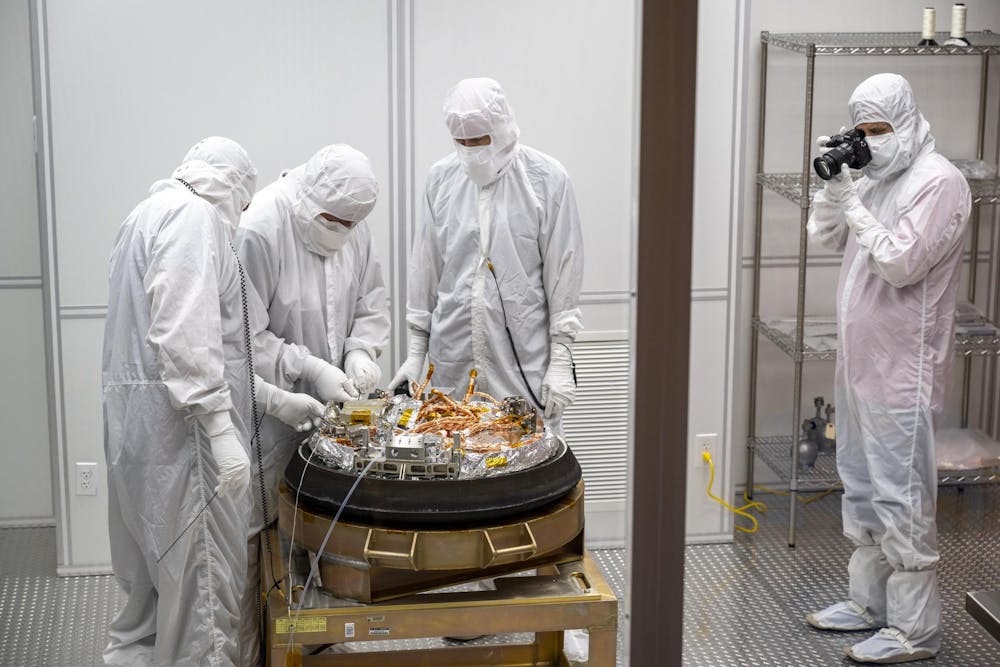
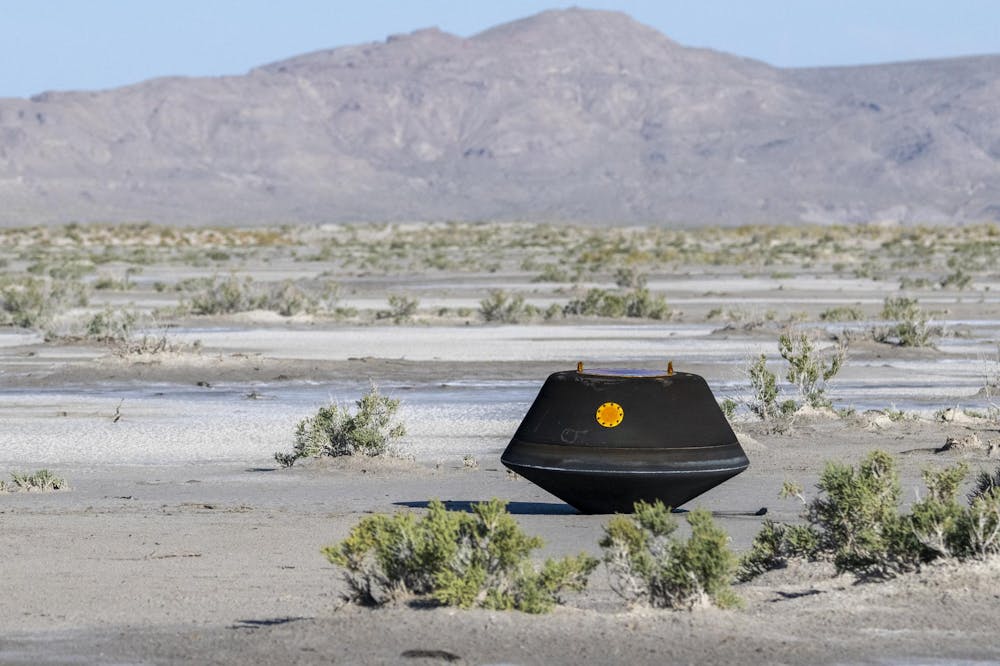
    Studies of rock and dust from asteroid Bennu delivered to Earth by NASA’s OSIRIS-REx (Origins, Spectral Interpretation, Resource Identification and Security–Regolith Explorer) spacecraft have revealed molecules that, on our planet, are key to life, as well as a history of saltwater that could have served as the “broth” for these compounds to interact and combine.
    The findings do not show evidence for life itself, but they do suggest the conditions necessary for the emergence of life were widespread across the early solar system, increasing the odds life could have formed on other planets and moons.
    “NASA’s OSIRIS-REx mission already is rewriting the textbook on what we understand about the beginnings of our solar system,” said Nicky Fox, associate administrator, Science Mission Directorate at NASA Headquarters in Washington. “Asteroids provide a time capsule into our home planet’s history, and Bennu’s samples are pivotal in our understanding of what ingredients in our solar system existed before life started on Earth.”
    In research papers published Wednesday in the journals Nature and Nature Astronomy, scientists from NASA and other institutions shared results of the first in-depth analyses of the minerals and molecules in the Bennu samples, which OSIRIS-REx delivered to Earth in 2023.
    Detailed in the Nature Astronomy paper, among the most compelling detections were amino acids – 14 of the 20 that life on Earth uses to make proteins – and all five nucleobases that life on Earth uses to store and transmit genetic instructions in more complex terrestrial biomolecules, such as DNA and RNA, including how to arrange amino acids into proteins.
    Scientists also described exceptionally high abundances of ammonia in the Bennu samples. Ammonia is important to biology because it can react with formaldehyde, which also was detected in the samples, to form complex molecules, such as amino acids – given the right conditions. When amino acids link up into long chains, they make proteins, which go on to power nearly every biological function.
    These building blocks for life detected in the Bennu samples have been found before in extraterrestrial rocks. However, identifying them in a pristine sample collected in space supports the idea that objects that formed far from the Sun could have been an important source of the raw precursor ingredients for life throughout the solar system.
    “The clues we’re looking for are so minuscule and so easily destroyed or altered from exposure to Earth’s environment,” said Danny Glavin, a senior sample scientist at NASA’s Goddard Space Flight Center in Greenbelt, Maryland, and co-lead author of the Nature Astronomy paper. “That’s why some of these new discoveries would not be possible without a sample-return mission, meticulous contamination-control measures, and careful curation and storage of this precious material from Bennu.”
    While Glavin’s team analyzed the Bennu samples for hints of life-related compounds, their colleagues, led by Tim McCoy, curator of meteorites at the Smithsonian’s National Museum of Natural History in Washington, and Sara Russell, cosmic mineralogist at the Natural History Museum in London, looked for clues to the environment these molecules would have formed. Reporting in the journal Nature, scientists further describe evidence of an ancient environment well-suited to kickstart the chemistry of life.
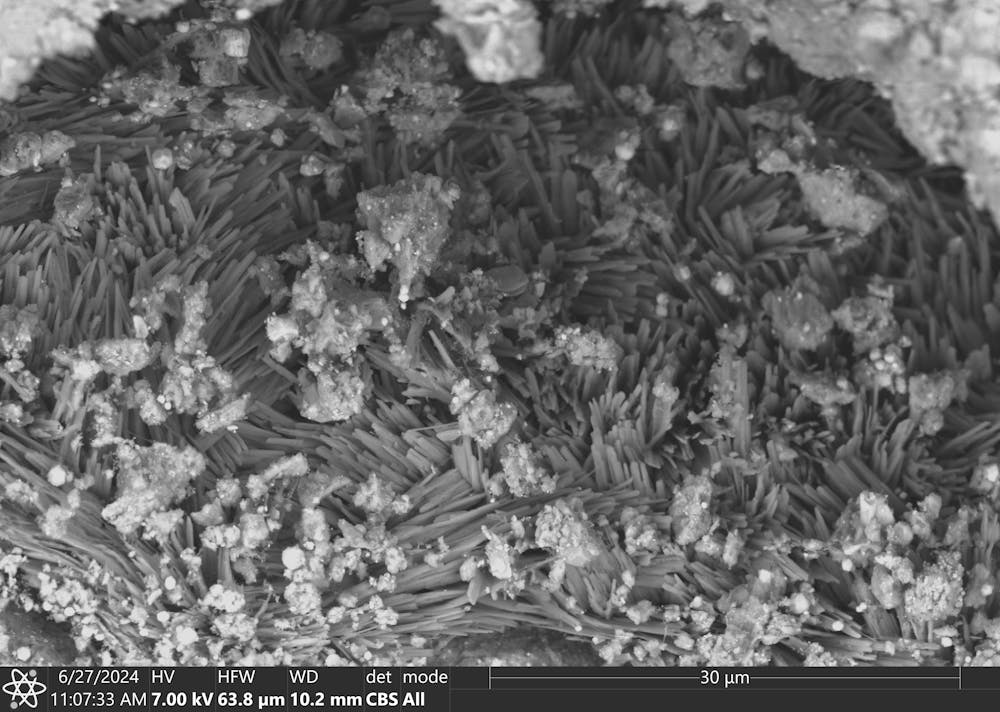
    Ranging from calcite to halite and sylvite, scientists identified traces of 11 minerals in the Bennu sample that form as water containing dissolved salts evaporates over long periods of time, leaving behind the salts as solid crystals.
    Similar brines have been detected or suggested across the solar system, including at the dwarf planet Ceres and Saturn’s moon Enceladus.
    Although scientists have previously detected several evaporites in meteorites that fall to Earth’s surface, they have never seen a complete set that preserves an evaporation process that could have lasted thousands of years or more. Some minerals found in Bennu, such as trona, were discovered for the first time in extraterrestrial samples.
    “These papers really go hand in hand in trying to explain how life’s ingredients actually came together to make what we see on this aqueously altered asteroid,” said McCoy.
    For all the answers the Bennu sample has provided, several questions remain. Many amino acids can be created in two mirror-image versions, like a pair of left and right hands. Life on Earth almost exclusively produces the left-handed variety, but the Bennu samples contain an equal mixture of both. This means that on early Earth, amino acids may have started out in an equal mixture, as well. The reason life “turned left” instead of right remains a mystery.
    “OSIRIS-REx has been a highly successful mission,” said Jason Dworkin, OSIRIS-REx project scientist at NASA Goddard and co-lead author on the Nature Astronomy paper. “Data from OSIRIS-REx adds major brushstrokes to a picture of a solar system teeming with the potential for life. Why we, so far, only see life on Earth and not elsewhere, that’s the truly tantalizing question.”
    NASA Goddard provided overall mission management, systems engineering, and the safety and mission assurance for OSIRIS-REx. Dante Lauretta of the University of Arizona, Tucson, is the principal investigator. The university leads the science team and the mission’s science observation planning and data processing. Lockheed Martin Space in Littleton, Colorado, built the spacecraft and provided flight operations. NASA Goddard and KinetX Aerospace were responsible for navigating the OSIRIS-REx spacecraft. Curation for OSIRIS-REx takes place at NASA’s Johnson Space Center in Houston. International partnerships on this mission include the OSIRIS-REx Laser Altimeter instrument from CSA (Canadian Space Agency) and asteroid sample science collaboration with JAXA’s (Japan Aerospace Exploration Agency) Hayabusa2 mission. OSIRIS-REx is the third mission in NASA’s New Frontiers Program, managed by the agency’s Marshall Space Flight Center in Huntsville, Alabama, for the agency’s Science Mission Directorate in Washington.
    For more information on the OSIRIS-REx mission, visit:
    https://www.nasa.gov/osiris-rex
    Karen Fox / Molly WasserHeadquarters, Washington202-358-1600karen.c.fox@nasa.gov / molly.l.wasser@nasa.gov
    Rani GranGoddard Space Flight Center, Greenbelt, Maryland301-286-2483rani.c.gran@nasa.gov

    MIL OSI USA News

  • MIL-Evening Report: ABC’s Optics is a clever, believable comedy that will make you second-guess what you see in the media

    Source: The Conversation (Au and NZ) – By Edith Jennifer Hill, Associate Lecturer, Learning & Teaching Innovation, Flinders University

    ABC

    What does it mean to tell the truth? And how do we, as consumers of media, differentiate truth from fabrication? Optics, a new comedy series from the ABC, asks these questions through the setting of a public relations firm.

    The show expertly balances humour with quick-wit, social media vernacular, and a level of marketing wordsmithing that make you question if the news has ever told you a true story.

    The show is based in the PR firm Fritz & Randell and opens with the death of its aging CEO Frank Fritz (Peter Carroll), in a men-only board meeting no less.

    After Frank’s death, the son of the cofounder, Ian Randell (Charles Firth) makes a bid for top spot. But the owner of the firm, Bobby Bahl (Claude Jabbour) is concerned with “optics”, so he puts two young women in charge instead.

    Each episode follows a PR scandal, and we watch as the new heads of the company – Greta Goldman (Vic Zerbst) and Nicole Kidman (Jenna Owen) – grapple with difficult clients and, occasionally, even more difficult coworkers.

    Greta and Nicole are put in charge in every way, other than with the official promotion attached.

    Their young, spunky attitude and social media prowess is seen as a massive advantage. And it is. But it soon becomes apparent this move is much more than a feminist fresh-take for the firm – and is rather a bid to push some skeletons further back in the closet.

    With outrageous lines such as “is there an emoji for miscarriage”, you are guaranteed an entertaining watch.

    A familar cast

    You will probably recognise the show’s characters, either from your own office experiences, or your friend’s stories: the ageing CEO, people who act like they know more than they actually do, and young people talking about trends who may as well be speaking a different language.

    Ian, who wants to appear as if he has all the answers, seems to have no idea how to say a politically correct sentence. Greta and Nicole have such a deep knowledge of social media trends and memes that their quick banter leaves Ian with whiplash.

    The PR scandals that form the basis of each episode will feel relatable to a broad Australian audience. These characters – and the bizarre situations they find themselves in – effectively parody Australian contemporary media.

    Perfect timing

    It should be no surprise Vic Zerbst (playing Greta), Jenna Owen (playing Nicole) and Charles Firth (playing Ian) put on a consistently convincing and funny performance.

    The release of the show is also poetically timed with global conversations around online censorship, content moderation, algorithms and reliable news sources.

    While focusing on a variety of PR emergencies, Optics takes us on a riveting exploration of marketing and language. For instance, one crisis involving an AFL player who drunkenly punches a priest is flipped into him learning a lesson about toxic masculinity.

    We see Greta and Nicole craft apology video scripts and find convenient medical explanations for workplace outbursts.

    As a social media researcher and user, their approach to an apology video felt particularity familiar to me. Their redemption strategy is one I have seen used a thousand times by social media stars and celebrities.

    Two sides to each story

    The show’s writers balance ideas of truth and fabrication in a way that’s not only hilarious, but also very believable. When Greta and Nicole meet with Qualitus, an airline accused of scamming their customers, the Qualitus team presents them with an alternate story of clever marketing.

    In the captain’s lounge, surrounding by celebrities and the elite, Greta and Nicole negotiate deals and flip the narrative on Qualitus’ scams, helping the airline evade public scrutiny.

    Optics pays homage to the work PR professionals do everyday to save reputations and negotiate what information is shared with the public and what never sees the light of day.

    The show will have you questioning the stories you yourself are presented through news outlets. Further still, it will make you wonder how many hands those stories passed through before they hit the papers and screens.

    Optics is streaming now on ABC iView.

    Edith Jennifer Hill does not work for, consult, own shares in or receive funding from any company or organisation that would benefit from this article, and has disclosed no relevant affiliations beyond their academic appointment.

    ref. ABC’s Optics is a clever, believable comedy that will make you second-guess what you see in the media – https://theconversation.com/abcs-optics-is-a-clever-believable-comedy-that-will-make-you-second-guess-what-you-see-in-the-media-247802

    MIL OSI AnalysisEveningReport.nz

  • MIL-Evening Report: ‘I was shocked’: a scientist tracking koalas films startling behaviour between young males

    Source: The Conversation (Au and NZ) – By Darcy Watchorn, Threatened Species Biologist, Wildlife Conservation & Science Department, Zoos Victoria, and Visiting Scholar, School of Life & Environmental Science, Deakin University

    Darcy Watchorn

    It’s a cold, drizzly night in a forest west of Melbourne. I’m sitting on a damp log, clutching a thermos of lukewarm tea and watching a koala snooze on a branch above me. Suddenly, it lifts its head. I sit up straight, pen poised to record what happens. But the koala simply yawns and resumes the blob position. I sigh and take another sip of tea.

    Why am I doing this? To research the social behaviour of koalas and hopefully learn more about what they do at night, when they are most active.

    After many nights, and many sips of tea, I witness something truly unexpected: male koalas engaging in affectionate behaviours with each other, such as play and grooming. I was shocked. Adult koalas are normally solitary, so observations such as this are exceedingly rare.

    My new research paper presents these findings. It provides the most detailed account of these behaviours to date, and offers a unique glimpse into how social dynamics between koalas may change when they are forced to live in close quarters.

    An adult female koala (right) and her very large joey (left) on a tree in Cape Otway, Victoria
    Darcy Watchorn

    Why are these behaviours so surprising?

    Most animals exhibit some type of social behaviour. These can include mating, vocalising to communicate, or defending their territory. But some highly social, group-living animals – such as wolves, primates and dolphins – will also display friendly and peaceful acts between individuals, such as grooming each other and playing.

    These are known as “affiliative” behaviours, and they are key to social relationships between animals, and to maintaining complex social hierarchies.

    Adult koalas, though, are generally solitary (except, obviously, when mating). They are usually widely spread over an area and rarely come face-to-face, instead interacting over long distances by vocalising and leaving their scent.

    And when male koalas do physically interact, it is usually a violent affair. More than once, I’ve seen male koalas scratched and bloodied — missing chunks of fur and even a claw — after fighting with a rival male.

    That’s why my observations of affection between young male koalas were so surprising.

    What I saw after dark

    Over three painstaking weeks, I studied a koala population in the woodlands of Cape Otway, southern Victoria. Each night, I went out between 9pm and 2am to track and observe the males. I used a red-light spotlight to avoid disturbing them. If I saw something interesting, I filmed it. You can watch the video below.

    After two weeks, I observed three males engaging in unexpected “affiliative” behaviours. They were grooming each other, sniffing each other’s genitals and vocalising to each other in soft, high-pitched calls, similar to the sounds baby koalas make.

    They also appeared to be playing. They would gently — but perhaps provocatively — bite one another on the arm and ear, a bit like cheeky puppies do.

    These interactions weren’t brief, either. I watched the koalas for two hours before finally giving in to sleep. When I went back at lunchtime the next day, they were still at it.

    What’s behind these affectionate behaviours?

    This type of social interaction between wild koalas had only been observed once before, more than 30 years ago, in a high-density koala population on French Island off Victoria.

    Like that earlier observation, the koalas I recorded were young adult males, roughly aged between three and five years. Hormonal activity can surge at this life stage, leading to an increase in social behaviours such as play and boldness.

    But if the affectionate behaviours were solely the result of teenage hormones, you’d expect it to be observed more often in many koalas in this age group. But that’s not the case.

    Instead, these behaviours are most likely a result of the large koala populations.

    Typically, fewer than two koalas are found per hectare. At Cape Otway, there were 15 koalas per hectare. This number can reach up to 20 in parts of South Australia and Victoria.

    This high density means the home ranges of koalas are more likely to overlap and their interactions will be more frequent. It also means competition for food, space and mates can be especially high.

    So young males might use affectionate behaviours — such as grooming and playing — to reduce conflict and manage stress. It may help individuals become familiar with their neighbours, establish hierarchies and avoid aggressive encounters.

    Genetics may also play a role. Like many high-density koala populations, this population had low genetic diversity, meaning there was a high degree of relatedness among individuals.

    Low genetic diversity can be a big problem for species overall. But it does mean some animals might identify their relatives, and tolerate being close to them.

    The causes of low genetic diversity in high-density koala populations are complex. The species was almost hunted to extinction. This meant a vastly reduced number of koalas could pass on their genes to the next generation. To make matters worse, habitat destruction can prevent koalas from dispersing over a wide area.

    This truckload of koala pelts was taken during the 1927 open season in Queensland.
    State Library of Queensland, CC BY-ND

    The complex reality of koala conservation

    Koalas are listed as endangered in New South Wales, Queensland and the ACT. But high-density koala populations, such as the one I observed in Cape Otway, also present major conservation challenges.

    Too many koalas feeding in an area puts pressure on preferred tree species. This can result in mass tree death, and habitat loss for koalas and other species. In some cases, koalas can starve.

    Unfortunately, there are no quick and easy solutions to this issue. Moving koalas from crowded areas to places where they are endangered often isn’t possible, due to differences in climate and the unique gut bacteria koalas need for their local food trees.

    Other interventions, such as fertility control, can be effective. But this takes many years of intensive effort and significant funding, making it vulnerable to budget cuts and shifting priorities.

    Some experts say culling could be used to control koala numbers and conserve the surrounding habitat, as it is for kangaroos. However, this is likely to draw widespread public opposition.

    These complex challenges offer an unexpected silver lining, however. As my experience shows, high-density koala populations provide unique opportunities to observe rare social behaviours in this iconic species. All you need is curiosity, a big cup of tea, and patience.

    Darcy Watchorn works for Zoos Victoria, a not-for-profit zoo-based conservation organisation. He is a member of the Ecological Society of Australia, the Australian Mammal Society, and the Society for Conservation Biology.

    ref. ‘I was shocked’: a scientist tracking koalas films startling behaviour between young males – https://theconversation.com/i-was-shocked-a-scientist-tracking-koalas-films-startling-behaviour-between-young-males-247339

    MIL OSI AnalysisEveningReport.nz

  • MIL-Evening Report: Gene pools are getting dangerously shallow for many species. We found 5 ways to help

    Source: The Conversation (Au and NZ) – By Robyn Shaw, Research Fellow in Conservation Genomics, University of Canberra

    A golden bandicoot (_Isoodon auratus_) Colleen Sims/Department of Biodiversity, Conservation and Attractions, CC BY-SA

    Before species go extinct, their populations often shrink and become isolated. Healthy populations tend to have a large gene pool with many genetic variants circulating. But the path to extinction erodes genetic diversity, because a species’ gene pool shrinks as the population declines. Losing genetic diversity limits the ability of populations to adapt to threats such as disease and climate change.

    So, what is the state of genetic diversity in animals, plants, fungi and algae worldwide? And how could focusing on this crucial level of biodiversity help build resilience in the face of global change? We explore these questions in our new study, published today in Nature.

    Our team of 57 scientists from 20 countries trawled through more than 80,000 scientific articles across three decades to summarise evidence of genetic change in populations in 141 countries.

    Alarmingly, we found genetic diversity is being lost globally across many species, especially birds and mammals. This loss was most severe in studies reporting changes in habitat, new diseases, natural disasters, and human activities such as hunting or logging.

    But there’s hope. Our study suggests conservation strategies can help maintain or even increase genetic diversity.

    Isolated populations of the endangered Scandinavian arctic fox (Vulpes lagopus) have become inbred.
    Jonatan Pie, Unsplash

    What is genetic diversity and why does it matter?

    At the core of every cell lies a copy of the instruction manual for living things. This is the genetic code, made up of DNA molecules. But its sequence varies enormously, separating a moth from a tree from a bacterium. Even within a species, we see distinct genetic differences between individuals. These genetic differences contribute to differences in their traits, which is why we get individuals who are taller or shorter, faster or slower, bolder or more cautious.

    This genetic diversity stems from mutations. Often, these mutations are not helpful. But at times, they can enable populations to adapt to change.

    For example, golden kelp (Ecklonia radiata) likes colder water. But in a population, some individuals will have mutations suited for warm water. When a devastating marine heatwave hit the West Australian coast in 2011, individuals with warm-water mutations were more likely to survive and reproduce. This genetic diversity enabled the kelp population to adapt to the warmer conditions.

    This is why genetic diversity is so important – it gives species more resilience in a rapidly changing world. This priority has been recognised in Australia’s Strategy for Nature, and in goals and targets discussed at the United Nations biodiversity summit COP16.

    How can we safeguard or restore genetic diversity for threatened species?

    To answer this question, we used a technique called meta-analysis to look for patterns. From more than 80,000 published articles, we identified 882 studies which measured changes in genetic diversity over time. These studies came from right around the globe and across the entire “tree of life”.

    They show there are many ways to conserve genetic diversity. Here are five promising strategies to help keep species resilient.

    Scientists from 20 countries came together to read thousands of papers and collect data on genetic diversity during in-person and online workshops.
    Robyn Shaw

    Action 1: Adding individuals

    Adding individuals to an existing population is known as supplementation. Our research found supplementation was the only action linked to a significant increase in genetic diversity, especially in birds.

    Supplementation can help reduce the harmful effects of inbreeding, which is common in small, isolated populations. For example, conservationists working to safeguard New Zealand’s South Island robins (Petroica australis) moved female birds between isolated islands. The offspring of parents from different islands had stronger immune systems, higher survival rates, and improved reproductive health compared to their inbred counterparts.

    Supplementation is key for boosting genetic diversity, improving population health and building resilience.

    Action 2: Population control

    Doing the opposite – removing individuals – can actually improve outcomes for the population as a whole in some circumstances, by, for instance, reducing competition.

    But genetic diversity results varied a lot in studies using population control. So how can this strategy be used effectively?

    In one case, conservationists in the United States used population control of coaster brook trout (Salvelinus fontinalis) in a hatchery to prevent any single family from breeding too much. This meant multiple genetic lineages were maintained, increasing genetic diversity.

    Action 3: Restoration

    Ecosystem restoration can include planting trees, rehabilitating wetlands or restoring natural patterns of fire and water. We found genetic diversity was often maintained over time when ecological restoration was used.

    Restoration efforts, alongside supplementation, are important to the survival of the greater prairie-chicken (Tympanuchus cupido), which had lost much habitat. Researchers report restoring and expanding suitable habitat is proving crucial to sustain genetic diversity and achieving long-term recovery.

    Found in the US and Canada, greater prairie-chickens are known for their courtship dance.
    Danita Delimont/Shutterstock

    Action 4: Control of other species

    Feral, pest or overabundant species can outcompete, eat, or graze on species under threat. Controlling these species was linked to maintenance of genetic diversity in the studies we analysed overall.

    For example, control of red fox numbers helped the Arctic fox(Vulpes lagopu) recover in Sweden. The technique reduced competition over resources such as food while new foxes from Norway were added to the wild population. Inbreeding was reduced, and survival improved.

    Action 5: Conservation introductions and reintroductions

    Establishing new populations at new sites is known as a conservation introduction, while a reintroduction means restoring populations where they previously existed.

    We found mixed results for genetic diversity when these actions were reported. So, what factors contribute to success?

    In Western Australia, a large number of golden bandicoots (Isoodon auratus) from a robust island population were reintroduced to three sites. After six generations, genetic diversity at these sites remained similar to the original source population. Success came from careful planning to ensure the new populations had a large gene pool to start from.

    Overall, our study revealed many cases of genetic diversity loss. But we also found evidence that conservation action – especially supplementation – can improve the genetic health of a species.

    Researchers, conservation managers and volunteers helped grow seedlings and establish new populations of the critically endangered feather-leaved banksia near Albany in Western Australia.
    David Coates

    What can you do?

    Supporting genetic diversity can be done at home.

    If you have a garden, you can plant native species to support habitat connectivity.

    Growing heirloom vegetables and rare fruit trees, or breeding heritage chooks can maintain genetic diversity in our food system.

    Join community or botanic garden groups, or work with conservation groups to improve habitat or bolster numbers of threatened species.

    While enjoying nature, avoid accidentally moving plants, seeds, or soil to new areas to reduce the spread of pests and diseases.

    These small actions add up, helping to safeguard biodiversity at all levels – including genetic diversity.

    Robyn Shaw was supported during the study by funding from the Australian Research Council. The project workshop was sponsored by the European Cooperation in Science and Technology Action ‘Genomic Biodiversity Knowledge for Resilient Ecosystems’. She is a member of the Coalition for Conservation Genetics and the IUCN Conservation Genetics Specialist Group.

    Catherine Grueber’s research into the conservation genetics of threatened species receives funding from the Australian Research Council and the University of Sydney (Robinson Fellowship). She is a member of the Coalition for Conservation Genetics, and the IUCN Conservation Genetics Specialist Group.

    Katherine Farquharson was supported during the study by funding from the Australian Research Council Centre of Excellence for Innovations in Peptide and Protein Science. She is affiliated with Koala Conservation Australia.

    ref. Gene pools are getting dangerously shallow for many species. We found 5 ways to help – https://theconversation.com/gene-pools-are-getting-dangerously-shallow-for-many-species-we-found-5-ways-to-help-242708

    MIL OSI AnalysisEveningReport.nz

  • MIL-Evening Report: Women don’t have a ‘surge’ in fertility before menopause – but surprise pregnancies can happen, even after 45

    Source: The Conversation (Au and NZ) – By Karin Hammarberg, Adjunct Senior Research Fellow, Global and Women’s Health, School of Public Health & Preventive Medicine, Monash University

    IKO-studio/Shutterstock

    Every now and then we see media reports about celebrities in their mid 40s having surprise pregnancies. Or you might hear stories like these from friends or relatives, or see them on TV.

    Menopause signals the end of a woman’s reproductive years and happens naturally between age 45 and 55 (the average is 51). After 12 months with no periods, a woman is considered postmenopausal.

    While the chance of pregnancy is very low in the years leading up to menopause – the so called menopausal transition or perimenopause – the chance is not zero.

    So, what do we know about the chance of conceiving naturally after age 45? And what are the risks?

    Is there a spike in fertility before menopause?

    The hormonal changes that accompany perimenopause cause changes to the menstrual cycle pattern, and some have suggested there can be a “surge” in fertility at perimenopause. But there’s no evidence this exists.

    In the years leading up to menopause, a woman’s periods often become irregular, and she might have some of the common symptoms of menopause such as hot flushes and night sweats.

    This might lead women to think they have hit menopause and can’t get pregnant anymore. But while pregnancy in a woman in her mid 40s is significantly less likely compared to a woman in her 20s or 30s, it’s still possible.

    The stats for natural pregnancies after age 45

    Although women in their mid- to late 40s sometimes have “miracle babies”, the chance of pregnancy is minimal in the five to ten years leading up to menopause.

    The monthly chance of pregnancy in a woman aged 30 is about 20%. By age 40 it’s less than 5% and by age 45 the chance is negligible.

    We don’t know exactly how many women become pregnant in their mid to late 40s, as many pregnancies at this age miscarry. The risk of miscarriage increases from 10% in women in their 20s to more than 50% in women aged 45 years or older. Also, for personal or medical reasons some pregnancies are terminated.

    According to a review of demographic data on age when women had their final birth across several countries, the median age was 38.6 years. But the range of ages reported for last birth in the reviewed studies showed a small proportion of women give birth after age 45.

    Having had many children before seems to increase the odds of giving birth after age 45. A study of 209 women in Israel who had conceived spontaneously and given birth after age 45 found 81% had already had six or more deliveries and almost half had had 11 or more previous deliveries.

    Conceiving naturally at age 45 plus is not unheard of.
    pixelheadphoto digitalskillet/Shutterstock

    There’s no reliable data on how common births after age 45 are in Australia. The most recent report on births in Australia show that about 5% of babies are born to women aged 40 years or older.

    However, most of those were likely born to women aged between 40 and 45. Also, the data includes women who conceive with assisted reproductive technologies, including with the use of donor eggs. For women in their 40s, using eggs donated by a younger woman significantly increases their chance of having a baby with IVF.

    What to be aware of if you experience a late unexpected pregnancy

    A surprise pregnancy late in life often comes as a shock and deciding what to do can be difficult.

    Depending on their personal circumstances, some women decide to terminate the pregnancy. Contrary to the stereotype that abortions are most common among very young women, women aged 40–44 are more likely to have an abortion than women aged 15–19.

    This may in part be explained by the fact older women are up to ten times more likely to have a fetus with chromosomal abnormalities.

    There are some extra risks involved in pregnancy when the mother is older. More than half of pregnancies in women aged 45 and older end in miscarriage and some are terminated if prenatal testing shows the fetus has the wrong number of chromosomes.

    This is because at that age, most eggs have chromosomal abnormalities. For example, the risk of having a pregnancy affected by Down syndrome is one in 86 at age 40 compared to one in 1,250 at age 20.

    There are some added risks associated with pregnancy when the mother is older.
    Natalia Deriabina/Shutterstock

    Apart from the increased risk of chromosomal abnormalities, advanced maternal age also increases the risk of stillbirth, fetal growth restriction (when the unborn baby doesn’t grow properly), preterm birth, pre-eclampsia, gestational diabetes and caesarean section.

    However, it’s important to remember that since the overall risk of all these things is small, even with an increase, the risk is still small and most babies born to older mothers are born healthy.

    Multiple births are also more common in older women than in younger women. This is because older women are more likely to release more than one egg if and when they ovulate.

    A study of all births in England and Wales found women aged 45 and over were the most likely to have a multiple birth.

    The risks of babies being born prematurely and having health complications are higher in twin than singleton pregnancies, and the risks are highest in women of advanced maternal age.

    What if you want to become pregnant in your 40s?

    If you’re keen to avoid pregnancy during perimenopause, it’s recommended you use contraception.

    But if you want to get pregnant in your 40s, there are some things you can do to boost your chance of conceiving and having a healthy baby.

    These include preparing for pregnancy by seeing a GP for a preconception health check, taking folic acid and iodine supplements, not smoking, limiting alcohol consumption, maintaining a healthy weight, exercising regularly and having a nutritious diet.

    If you get good news, talking to a doctor about what to expect and how to best manage a pregnancy in your 40s can help you be prepared and will allow you to get personalised advice based on your health and circumstances.

    Karin Hammarberg does not work for, consult, own shares in or receive funding from any company or organisation that would benefit from this article, and has disclosed no relevant affiliations beyond their academic appointment.

    ref. Women don’t have a ‘surge’ in fertility before menopause – but surprise pregnancies can happen, even after 45 – https://theconversation.com/women-dont-have-a-surge-in-fertility-before-menopause-but-surprise-pregnancies-can-happen-even-after-45-247454

    MIL OSI AnalysisEveningReport.nz

  • MIL-Evening Report: Australian democracy is not dead, but needs help to ensure its survival

    Source: The Conversation (Au and NZ) – By Mark Evans, Deputy Vice-chancellor Research, Charles Sturt University

    Democracies worldwide are suffering from legitimacy problems. This is reflected in low levels of public trust in key political institutions, the polarisation of politics, and the erosion of public confidence in the capacity of governments to address societal concerns.

    According to the 2024 Edelman Trust Barometer, only 50% of people worldwide trust their government, and the tally is even lower in many developed countries such as the United States and United Kingdom. A study by the Pew Research Center found only 20% of Americans trust their national government to do what is right “just about always” or “most of the time”.

    Citizens almost everywhere view their elected officials and public institutions with suspicion. They believe decisions are made to serve special interests rather than the common good. This culture of discontentment is leading to reduced civic engagement, increased polarisation, the rise of identity politics, and a general sense of disillusionment with the political process. It has also sparked an upsurge in speculation as to whether democracy is dying, in recession or crisis.

    So how does Australia compare with this global pattern?

    The Australian context

    The findings of the New Democratic Audit of Australia have just been published. They provide a timely and comprehensive evaluation of the current state of Australian democratic life.

    The audit promises to bridge significant gaps in our understanding of Australia’s democracy.

    A team of leading academics from universities in every state and territory deploys an audit approach to assess the democratic performance of federal, state and territory-level political institutions. It then examines how they have enabled or undermined Australian political life.

    For instance, the monopoly of Australian governance by Coalition and Labor parties has only just begun to adjust to growing disillusionment with the two-party system.

    To date, Australia has successfully avoided both rancorous populist politics (as in the US) and serious governance decline (as in the UK). However, the Voice to Parliament referendum and continued pandering to regressive immigration policies suggests populism could well be on the rise.

    So what did the New Democratic Audit find?

    Democracy under stress

    1. Declining public trust in government. Trust in Australian political institutions is in decline. Only 30% of Australians report trust in government officials, according to the Australian Election Study.

    The main concerns driving the decline in trust are lack of transparency in decision-making, perceptions of public sector inefficiency, political corruption, and the disconnection between politicians and citizens. Australians also express concerns about poor communication of policies. Furthermore, they believe governments have failed to deliver solutions to pressing issues such as the cost of living, wage stagnation and climate action.

    A significant proportion of the population believes the country has become more divided. Major sources of division are the perception of the rich and powerful as a major dividing force (72%), followed by hostile foreign governments (69%), journalists (51%), and government leaders (49%).

    2. Strong public satisfaction with democracy. Despite low trust in government, the 2024 World Values Survey shows that support for democratic values in Australia — such as free and fair elections, the rule of law, and representative democracy — remains strong. There is also a growing emphasis post-pandemic on the need for governments to address long-term challenges such as climate change and income inequality.

    3. Australia is viewed internationally as a leading liberal democracy. Despite the challenges, Australia is assessed in most global rankings as one of the leading liberal democracies, with continuous economic growth, a strong federal system, and competitive elections. Its institutions have generally performed well, even in the face of global challenges such as the COVID pandemic. Australia is classed as one of only 24 “full democracies”.

    4. The “protective power of democracy” is under pressure. The audit emphasises economist Amartya Sen’s concept of the “protective power of democracy as critical to achieving high quality democratic governance”. This relies on four components: electoral integrity, participatory opportunities, liberal values and good democratic governance.

    5. Electoral integrity. Australia’s elections are free and fair, thanks to an independent election commission. However, concerns about government advertising and political donations undermine the fairness of elections, giving incumbent governments an advantage.

    6. Public participation. Australia performs poorly in facilitating citizen participation beyond voting. Opportunities for civil society engagement, through localism, citizen juries or assemblies, are limited. Parliaments at various levels are not adequately representative in terms of gender and ethnicity, and regional policy concerns are often ignored.

    7. Liberal values. Australia has made improvements in protecting civil rights, especially concerning LGBTQ+ issues and gender equality. But there remain significant gaps in protecting the rights of the most vulnerable groups, including Indigenous communities, differently abled people, and refugees. Australia lacks a comprehensive charter of human rights, and there are ongoing issues with the erosion of civil liberties.

    8. Good democratic governance. This component refers to the instrumental importance of governments being responsible and accountable, responsive to the needs of the citizenry in service terms, and free from corruption. This is where the performance or supply of government matters most.

    The audit finds Australia’s institutions are generally effective and adaptive, as seen in responses to the bushfires and the COVID pandemic. However, the federal government wields disproportionate power, which undermines traditional checks and balances. Public perception of corruption in politics and the public sector is also a growing public concern.

    Reimagining Australian democracy

    The audit concludes that Australia remains a full democracy, but faces critical challenges that require reflection and reinvention.

    To renew its democracy, Australia must make its system of government more representative, accountable and responsive to the needs of citizens. There is a need for a stronger focus on integrity in politics, ensuring governments act transparently, empathetically and in ways that deliver tangible outcomes for the public. Public dissatisfaction with political corruption, inefficiency and a lack of responsiveness must be addressed to restore trust in political institutions.

    While Australia continues to be a leading democracy, it faces pressing challenges that could undermine the sustainability of its democratic institutions if not addressed. The audit calls for a period of democratic reinvention, with an emphasis on improving governance to better serve citizens and maintain public trust in democracy.


    The New Democratic Audit is free for download at: https://press.lse.ac.uk/site/books/e/10.31389/lsepress.ada/

    Mark Evans has received funding and in-kind support to complete democratic audits in the United Kingdom (Joseph Rowntree Charitable Trust) and Australia (Museum of Australian Democracy at Old Parliament House, Canberra).

    ref. Australian democracy is not dead, but needs help to ensure its survival – https://theconversation.com/australian-democracy-is-not-dead-but-needs-help-to-ensure-its-survival-235638

    MIL OSI AnalysisEveningReport.nz

  • MIL-Evening Report: New analysis of asteroid dust reveals evidence of salty water in the early Solar System

    Source: The Conversation (Au and NZ) – By Nick Timms, Associate Professor, School of Earth and Planetary Sciences, Curtin University

    A view of eight sample trays containing the final sample material from asteroid Bennu. Erika Blumenfeld & Joseph Aebers/JSC

    In October 2020, a van-sized robotic spacecraft briefly touched down on the surface of Bennu, a 525-metre-wide asteroid 320 million kilometres from Earth.

    As part of NASA’s OSIRIS-REx mission, the spacecraft not only spent two years orbiting and imaging the asteroid, it also collected a precious sample of dust and small rocks from Bennu’s rubbly surface.

    In September 2023, a capsule containing the pristine asteroid sample returned to Earth, landing in the Utah desert in the United States.

    Since then, an international team of scientists – of which we are members – have been busy studying the roughly 120 grams of material collected from Bennu.

    Our findings are revealed in two new papers published in Nature and Nature Astronomy today. They indicate that water may have once been present on Bennu’s parent body, and offer new insights into the chemistry of the early Solar System.

    Pristine remnants of rocks from deep time

    Asteroids are fragmentary remnants of pre-existing parent bodies from early in our Solar System’s history that have since been destroyed by collisions with other objects. They orbit the Sun and come in many different shapes, sizes and chemical compositions.

    Asteroid Bennu was targeted for the OSIRIS-REx mission because remote sensing observations from Earth indicated it as a B-type asteroid. These asteroids are rich in carbon and hydrated clay minerals, possibly sharing similarities to the most primitive group of meteorites on Earth, known as carbonaceous chondrites.

    Unlike meteorite samples, samples collected from asteroids have not been physically or chemically modified by Earth’s atmosphere and biosphere. This allows us to tackle key questions about the evolution of the early Solar System, planet formation, and the ingredients for life.

    Another aim of the OSIRIS-REx mission is to link findings from samples in the laboratory to those from remote sensing techniques. This helps us corroborate astronomical observations of asteroids to improve our surveys of the Solar System.

    Curation teams process the sample return capsule from NASA’s OSIRIS-REx mission in a cleanroom.
    Keegan Barber/NASA

    Tiny crystals of salt minerals

    To prevent contamination, the sealed capsule containing the sample was stored and handled in a huge glass box when it was returned to Earth. This tank had rubber gloves feeding into it from the side so scientists could handle the samples without directly touching them. It had also been purged with nitrogen to keep out moisture and oxygen from Earth’s atmosphere.

    When we analysed the interior of Bennu’s dust particles, we were surprised to find tiny crystals of the salt minerals known as halite and sylvite.

    This was a breakthrough discovery.

    Halite is extremely rare in meteorites. It has only been found in three out of hundreds of thousands of known meteorites on Earth. We also know that halite is highly soluble. It can degrade quickly when exposed to air or water on Earth.

    Other members of the OSIRIS-REx sample analysis team identified a variety of other salt minerals in the Bennu sample. These included sodium carbonates, phosphates, sulphates and fluorides.

    These minerals can form by the evaporation of brines – similar to deposits that form in Earth’s salt lakes.

    By comparing these results with the chemical makeup of salt lakes on Earth, a picture began to emerge of brines evaporating on the parent body of asteroid Bennu, leaving behind salts as evidence.

    Tiny crystals of several minerals including sodium carbonate (pictured here) were found in samples of the asteroid Bennu.
    Timothy McCoy/Smithsonian

    A variety of organic compounds

    This discovery provides a new insight into water activity during the earliest times in our Solar System. But the presence of salt minerals is significant for another reason.

    On Earth, these minerals are a catalyst for the formation of organic compounds such as nucleobases and nucleosides – the prebiotic building blocks of terrestrial biology.

    And indeed, in a separate analysis of the Bennu sample, other colleagues on the OSIRIS-REx mission identified a wide variety of organic compounds present on the carbon- and nitrogen-rich asteroid.

    These compounds include 14 of the 20 amino acids we also find in Earth’s biological processes. They also include several amino acids that are absent in known biology, ammonia, and all five nucleobases found in RNA and DNA.

    Even though no life was detected on Bennu, the two new studies show that a briny, carbon-rich environment on Bennu’s parent body was suitable for assembling the building blocks of life.

    In September 2023, a capsule containing the pristine sample from Bennu returned to Earth, landing in the Utah desert in the United States.
    Keegan Barber/NASA

    Ongoing investigations

    The findings from returned samples of asteroid Bennu may provide researchers insight into what happens on distant icy bodies in our Solar System.

    Some of these bodies include Saturn’s moon Enceladus and the dwarf planet Ceres in the asteroid belt between Mars and Jupiter.

    Both Enceladus and Ceres have subsurface brine oceans. Could they possibly harbour life?

    We are continuing to investigate Bennu using the pristine samples collected back in 2020. We are currently researching the timing of the Bennu parent body breakup event and looking for evidence of impacts recorded by various minerals in the samples.


    The authors of this article acknowledge the contribution of the following people to the research at Curtin University: Fred Jourdan, Steven Reddy, David Saxey, Celia Mayers, and Xiao Sun, as well as the entire OSIRIS-REx team.

    William Rickard receives funding from the Australian Research Council, Australia Government

    Nick Timms and Phil Bland do not work for, consult, own shares in or receive funding from any company or organisation that would benefit from this article, and have disclosed no relevant affiliations beyond their academic appointment.

    ref. New analysis of asteroid dust reveals evidence of salty water in the early Solar System – https://theconversation.com/new-analysis-of-asteroid-dust-reveals-evidence-of-salty-water-in-the-early-solar-system-248439

    MIL OSI AnalysisEveningReport.nz

  • MIL-OSI NGOs: Georgia: Protester’s detention extended in unprecedented closed hearing

    Source: Amnesty International –

    300 protestors detained since November have alleged beatings and torture

    ‘We believe that Saba Skhvitaridze’s prosecution is politically motivated. He should be released, and his torture allegations must be effectively investigated’ – Denis Krivosheev

    On 28 January, the Tbilisi City Court extended the pre-trial detention in a high-security prison of Saba Skhvitaridze, an activist accused by police of using violence against law enforcement during ongoing pro-European protests on 5 December 2024.

    For several hours after his initial detention, Saba Skhvitaridze was denied access to his legal counsel and was allegedly subjected to torture to extract a confession. Independent medical examinations confirmed injuries consistent with his torture allegations, yet there has been no indication that the authorities have conducted an effective investigation into his claims. Saba Skhvitaridze faces a potential sentence of up to 11 years.

    During his remand hearing, the court ordered members of public to leave the courtroom before delivering its decision – a measure largely unprecedented for protest-related trials in Georgia.

    Denis Krivosheev, Amnesty International’s Eastern Europe and Central Asia Deputy Director, said:

    “The Georgian authorities arrested and reportedly subjected Saba Skhvitaridze to torture and other ill-treatment for participation in anti-government protests and have now extended his detention in a hearing concluded behind closed doors.

    “We believe that Saba Skhvitaridze’s prosecution is politically motivated. He should be released, and his torture allegations must be effectively investigated.

    “If there is sufficient admissible evidence to prosecute him, he should receive a fair trial in an open court hearing. Saba Skhvitaridze’s case is just one of many – hundreds of others face injustice and reprisals in relation to the recent protests in Georgia.”

    Police violence against protestors

    Police have detained several hundred protesters in Georgia during the latest wave of protest ongoing since 29 November 2024, with more than 300 of those detained alleging beatings and torture and other ill-treatment in detention.

    Detainees faced swift court hearings resulting in hefty fines or detention for alleged administrative offences, and over 50 individuals have been arrested as criminal suspects in the context of the ongoing pro-European protests. New legislation has been adopted unduly restricting the right to freedom of peaceful assembly, and there has a clear pattern of abuse of administrative and criminal proceedings by the Georgian authorities to crackdown on protest and peaceful dissent.


    MIL OSI NGO

  • MIL-OSI NGOs: Georgia: Protester’s detention extended in closed hearing

    Source: Amnesty International –

    Reacting to the extension of pre-trial detention for Saba Skhvitaridze, a protester who has alleged being tortured by the police, Denis Krivosheev, Amnesty International’s Eastern Europe and Central Asia Deputy Director, said:

    “The Georgian authorities arrested and reportedly subjected Saba Skhvitaridze to torture and other ill-treatment for participation in anti-government protests and have now extended his detention in a hearing concluded behind closed doors. We believe that Saba Skhvitaridze’s prosecution is politically motivated, and he should be released, and his torture allegations must be effectively investigated.”

    We believe that Saba Skhvitaridze’s prosecution is politically motivated, and he should be released, and his torture allegations must be effectively investigated

    Denis Krivosheev, Amnesty International’s Eastern Europe and Central Asia Deputy Director

    “If there is sufficient admissible evidence to prosecute him, he should receive a fair trial in an open court hearing. Saba Skhvitaridze’s case is just one of many – hundreds of others face injustice and reprisals in relation to the recent protests in Georgia.”

    Background

    On 28 January, the Tbilisi City Court extended the pre-trial detention in a high-security prison of Saba Skhvitaridze, an activist accused by police of using violence against law enforcement during ongoing pro-European protests on 5 December 2024. During his remand hearing, the court ordered members of public to leave the courtroom before delivering its decision – a measure largely unprecedented for protest-related trials in Georgia.

    For several hours after his initial detention, Saba Skhvitaridze was denied access to his legal counsel and was allegedly subjected to torture to extract a confession. Independent medical examinations confirmed injuries consistent with his torture allegations, yet there has been no indication that the authorities have conducted an effective investigation into his claims. Saba Skhvitaridze faces a potential sentence of up to 11 years.

    Police have detained several hundred protesters in Georgia during the latest wave of protest ongoing since 29 November 2024, with more than 300 of those detained alleging beatings and torture and other ill-treatment in detention.

    Detainees faced swift court hearings resulting in hefty fines or detention for alleged administrative offences, and over 50 individuals have been arrested as criminal suspects in the context of the ongoing pro-European protests. New legislation has been adopted unduly restricting the right to freedom of peaceful assembly, and there has a clear pattern of abuse of administrative and criminal proceedings by the Georgian authorities to crackdown on protest and peaceful dissent.

    MIL OSI NGO

  • MIL-OSI Asia-Pac: Prime Minister attends Beating Retreat Ceremony

    Source: Government of India (2)

    Posted On: 29 JAN 2025 10:19PM by PIB Delhi

    The Prime Minister Shri Narendra Modi today attended the Beating Retreat Ceremony.

    The Prime Minister posted on X :

    “Attended the majestic Beating Retreat Ceremony, an awe-inspiring display of tradition and the spirit of our forces. Here are some glimpses.”


    “Sharing more glimpses from this evening’s Beating Retreat Ceremony.”


    ***

    MJPS/ST

    (Release ID: 2097494) Visitor Counter : 12

    MIL OSI Asia Pacific News

  • MIL-OSI Asia-Pac: CAQM Sub-Committee on GRAP invokes Stage-III of the GRAP in the entire NCR with immediate effect in an effort to prevent further deterioration of air quality in the region

    Source: Government of India (2)

    Posted On: 29 JAN 2025 9:06PM by PIB Delhi

    Today, Delhi’s average Air Quality Index (AQI) has been on an increasing trend since morning and breached the 350 mark as the AQI for the day clocked 365 today as per the Daily AQI Bulletin provided by the Central Pollution Control Board (CPCB). In wake of deteriorating air quality of Delhi, the Sub-Committee on the Graded Response Action Plan (GRAP) of the Commission for Air Quality Management in NCR and Adjoining Areas called on a meeting today to review the air quality scenario and forecasts for meteorological conditions and air quality index made available by IMD/IITM.

    Noting an increasing trend in AQI levels of Delhi, the CAQM Sub-Committee on GRAP in its today’s meeting observed as under:

    • The AQI of Delhi which was recorded as 276 on 28.01.2025, exhibited a sharp increasing trend and has been recorded 365 at 4:00 PM on 29.01.2025 owing to variable direction/calm winds, smoggy situation, low mixing height & ventilation coefficient for dispersion of pollutants. The forecast from IMD/ IITM suggests similar situations to persist in coming days.

    Keeping in view the prevailing trend of air quality, and in an effort to prevent further deterioration of air quality in the region, the Sub-Committee today has taken the call to invoke all actions as envisaged under Stage-III of the extant schedule of GRAP, with immediate effect, in the entire NCR. This is in addition to the actions under Stages I & II of the extant schedule of GRAP already in-force in NCR. Various agencies responsible for implementing measures under GRAP including Pollution Control Boards (PCBs) of NCR and DPCC have also been addressed to ensure strict implementation of actions under Stage-III of the extant schedule of GRAP in addition to actions under Stages I & II of GRAP during this period.

    A 9-point action plan as per Stage-III of the extant schedule of GRAP is applicable with immediate effect in the entire NCR. This 9-point action plan includes steps to be implemented/ ensured by different agencies including Pollution Control Boards of NCR and DPCC. These steps are:

    1. Construction & Demolition activities:

    (i) Enforce strict restrictions on the following categories of dust generating/ air pollution causing C&D activities in the entire NCR:

    • Earthwork for excavation and filling including boring & drilling works.
    • Piling works.
    • All demolition works.
    • Laying of sewer line, water line, drainage and electric cabling etc. by open trench system.
    • Brick / masonry works.
    • Operation of RMC batching plant.
    • Major welding and gas-cutting operations. Minor welding activities for MEP works (Mechanical, Electrical and Plumbing) to be, however, permitted
    • Painting, polishing and varnishing works etc.
    • Cement, Plaster / other coatings, except for minor indoor repairs/ maintenance.
    • Cutting / grinding and fixing of tiles, stones and other flooring materials, except for minor indoor repairs/ maintenance.
    • Road construction activities and major repairs.
    • Transfer, loading / unloading of dust generating materials like cement, fly-ash, bricks, sand, murram, pebbles, crushed stone etc. anywhere within / outside the project sites.
    • Movement of vehicles carrying construction materials on unpaved roads.
    • Any transportation of demolition waste.


    (ii) All construction related activities, other than those listed under 1(i) above, which are relatively less polluting / less dust generating shall be permitted to be continued in the NCR, subject to strict compliance of the C&D Waste Management Rules, dust prevention/ control norms including compliance with the directions of the Commission issued from time to time.

    (iii) All C&D related activities, including those under 1(i) above, shall be continued to be permitted only for the following categories of projects, however subject to strict compliance of the C&D Waste Management Rules, dust prevention/ control norms including compliance with the directions of the Commission issued from time to time:

    1. Projects for Railway services and stations
    2. Projects for Metro Rail Services and stations
    3. Airports and Inter State Bus Terminals
    4. National security/ defence related activities/ projects of national importance
    5. Hospitals/ health care facilities
    6. Linear public projects such as highways, roads, flyovers, over bridges, power transmission/ distribution, pipelines, tele-communication services etc.
    7. Sanitation projects like sewage treatment plants and water supply projects etc.
    8. Ancillary activities, specific to and supplementing the above project categories.


    1. Close down operations of stone crushers in the entire NCR.
    2. Close down all mining and associated activities in the entire NCR.
    3. NCR State Govts. / GNCTD to impose strict restrictions on plying of BS III petrol and BS IV diesel LMVs (4 wheelers) in Delhi and in the districts of Gurugram, Faridabad, Ghaziabad and Gautam Budh Nagar.


    Note: Persons with Disabilities shall be permitted to ply BS – III Petrol / BS – IV Diesel LMVs, provided that these are specifically adopted for them and are run only for their personal use.

    1. GNCTD to impose strict restrictions on plying of Delhi – registered Diesel operated Medium Goods Vehicles (MGVs) to BS-IV standards or below, in Delhi, except those vehicles carrying essential commodities / providing essential services.
    2. GNCTD to not permit BS-IV and below diesel operated LCVs (goods carriers) registered outside Delhi, to enter Delhi, except those carrying essential commodities / providing essential services.
    3.  

    (i) State Govts. in the NCR and the GNCTD to mandatorily conduct classes in schools for children up to class V in a “Hybrid” mode i.e., both in physical and online mode (wherever online mode is feasible) in the territorial jurisdiction of the NCT of Delhi and in the districts of Gurugram, Faridabad, Ghaziabad and Gautam Buddh Nagar.


    (ii) The NCR State Governments may also consider conducting classes for students up to Class V in a “Hybrid” mode as above in other areas in NCR.


    Note: The option to exercise the online mode of education, wherever available, shall vest with the students and their guardians.


    1.  

    (i) GNCTD and NCR State Governments to stagger timings for public offices and municipal bodies in the National Capital Territory of Delhi and the districts of Gurugram, Faridabad, Ghaziabad and Gautam Buddh Nagar.


    (ii) State Governments may take a decision to stagger timings for public offices and municipal bodies in other areas of NCR.


    1. Central Government may take a decision on staggering of timings of Central Government offices in Delhi–NCR.


    Further, CAQM urges the citizens of NCR to cooperate in implementing GRAP and follow the steps mentioned in the Citizen Charter under GRAP. In addition to steps under Citizen Charter of Stages I & II, citizens are advised to:

    • Walk or use cycles for small distances.
    • Choose a cleaner commute. Share a ride to work or use public transport.
    • People, whose positions allow working from home, may work from home.
    • Do not use coal and wood for heating purpose.
    • Individual house owners may also provide electric heaters to security/ other staff employed by them to avoid open burning of bio-mass/ wood/ MSW.
    • Combine errands and reduce trips.


    Complete details of the extant schedule of GRAP are available on the Commission’s website and can be accessed via https://caqm.nic.in

    *****

    VM/GS

    (Release ID: 2097469) Visitor Counter : 59

    MIL OSI Asia Pacific News

  • MIL-OSI Asia-Pac: Crores of Devotees take the holy Dip at Sangam during the second Amrit Snan of Mahakumbh 2025 on Mauni Amavasya

    Source: Government of India (2)

    Crores of Devotees take the holy Dip at Sangam during the second Amrit Snan of Mahakumbh 2025 on Mauni Amavasya

    Akhadas break historic tradition of performing the first dip at the Sangam, by offering other Devotees to take the Amrit Snan before them

    Extensive arrangements in place by Mela Administration to ensure Smooth Conduct of the Amrit Snan

    At the Mahakumbh, Foreign Devotees experience an extraordinary glimpse of India’s rich cultural heritage by taking the Holy dip in the Ganges

    Posted On: 29 JAN 2025 9:02PM by PIB Delhi

    On the auspicious occasion of Mauni Amavasya, the second Amrit Snan of the Mahakumbh 2025 was undertaken today. Crores of devotees took the second Amrit Snan at the eternal and pure Triveni Sangam in Prayagraj. The Mahakumbh is not only a symbol of faith, belief, and devotion but also an extraordinary example of unity, equality, and cultural diversity. Along with Indians, a large number of foreign devotees also took the holy dip at the Triveni Sangam and witnessed India’s rich cultural heritage.


    This was the first time that the Saints, Naga Sannyasis, and Akhadas broke the historic tradition of performing their first dip at the Sangam. In light of the circumstances, the Akhadas postponed their Brahma Muhurat Amrit Snan and allowed the devotees to take the first dip. Mahant Ravindra Puri, the president of the Akhil Bhartiya Akhada Parishad, mentioned that by unanimous decision, all Akhadas agreed to first allow devotees to take the Amrit Snan considering the situation. Once the situation normalized, the Akhadas followed their grand Amrit Snan tradition symbolically.

    On this second Amrit Snan day, the Shankaracharyas of the three Peeths of India also took a dip at the Triveni Sangam. The Shankaracharyas urged devotees to maintain restraint. Jagatguru Shankaracharya Swami Vidhu Shekhar Bharti Ji of Shringeri Sharada Peeth, Jagatguru Shankaracharya Swami Sadanand Saraswati Ji of Dwarka Sharada Peeth, and Shankaracharya Swami Avimukteshwaranand Saraswati Ji of Jyotish Peeth took the holy dip at the Triveni Sangam on this day. The Shankaracharyas performed the dip with full religious rituals, offering blessings for the welfare of the Nation.

    To ensure the smooth completion of the Amrit Snan, the Kumbh Mela administration made extensive arrangements. Unprecedented security measures were implemented across the entire Mela area, with both state police and central paramilitary forces deployed in large numbers. The administration also took all necessary measures to ensure the safety of the devotees. Additionally, the Ganga Seva Doots were deployed on the ghats, playing a crucial role in maintaining the cleanliness of the river. These Ganga Seva Doots immediately removed flowers and other offerings from the river, ensuring the cleanliness of the Ganga and Yamuna. Along with the Mela administration, the local administration, police, sanitation workers, volunteers, boatmen, and various government departments from both Central and State governments contributed in the arrangements.


    The Mahakumbh 2025 has also been successful in promoting India’s cultural heritage on the international stage. The Kumbh Mela administration made all necessary arrangements to ensure the event’s safety and success. The popularity of the Mahakumbh and its cultural heritage are being recognized globally. Foreign devotees visiting the Maha Kumbh were deeply impressed by Indian culture, and alongside their holy dip in the Ganga, they experienced India’s religious and cultural traditions.

    The Maha Kumbh 2025 is a symbol of faith, unity, and diversity. This event not only highlights India but is also spreading the greatness of Indian culture to the entire world. The Mahakumbh Mela is not just religiously significant but also symbolizes social and cultural unity.

    *****

    AD/VM

    (Release ID: 2097467) Visitor Counter : 15

    MIL OSI Asia Pacific News

  • MIL-OSI Asia-Pac: Government Approves Mutual Credit Guarantee Scheme to Strengthen MSME Manufacturing Sector, fulfilling the budget announcement of 2024-25

    Source: Government of India

    Government Approves Mutual Credit Guarantee Scheme to Strengthen MSME Manufacturing Sector, fulfilling the budget announcement of 2024-25

    Loans upto Rs. 100 crore for purchase of Plant and Machinery / Equipment are eligible for guarantee coverage giving a boost to manufacturing sector

    Scheme offers 60% guarantee coverage to Member Lending Institutions (MLIs*) for credit facility upto Rs.100 crore sanctioned to eligible MSMEs

    Posted On: 29 JAN 2025 8:35PM by PIB Delhi

    GoI has approved introduction of Mutual Credit Guarantee Scheme for MSMEs (MCGS- MSME) for providing 60% guarantee coverage by National Credit Guarantee Trustee Company Limited (NCGTC) to Member Lending Institutions (MLIs*) for credit facility upto Rs.100 crore sanctioned to eligible MSMEs under MCGS-MSME for purchase of equipment / machinery.

    Salient Features of The Scheme

    • Borrower should be an MSME with valid Udyam Registration Number;
    • Loan amount guaranteed shall not exceed Rs.100 crore
    • Project Cost could be of higher amounts also
    • Minimum cost of equipment /machinery is 75% of project cost
    • Loan upto Rs.50 crore under the Scheme shall have repayment period of upto 8 years with upto 2 years moratorium period on principal instalments. For loans above Rs.50 crore, higher repayment schedule and moratorium period on principal instalments can be considered.
    • Upfront (initial) contribution of 5% of the loan amount shall be deposited at the time of application of guarantee cover
    • Annual Guarantee Fee on loan under the Scheme shall be Nil during the year of sanction. During the next 3 years, it shall be 1.5% p.a. of loan outstanding as on March 31 of previous year. Thereafter, Annual Guarantee Fee shall be 1% p.a. of loan outstanding as on March 31 of previous year

    The Scheme will be applicable to all loans sanctioned under MCGS-MSME during the period of 4 years from the date of issue of operational guidelines of the scheme or till cumulative guarantee of Rs. 7 lakh crore are issued, whichever is earlier.

    Major Impact

    Manufacturing sector currently comprises 17% of the nation’s GDP and over 27.3 million workers. Hon’ble Prime Minister’s has given a call for ‘Make in India, Make for the World’ and has signalled that India is ready and keen to increase the share of manufacturing to 25% of GDP. The Mutual Credit Guarantee Scheme for MSMEs (MCGS-MSME) is expected to facilitate the availability of credit for purchase of Plant and Machinery / Equipment by MSMEs and give a major boost to manufacturing and thereby to Make in India.

    Background

    Global supply chains are realigning. India is emerging as an alternative supply source given its raw materials, low labour costs, growing manufacturing knowhow, and entrepreneurial ability. One of the major costs involved in manufacturing is the fixed cost of Plant and Machinery (P&M)/ Equipment’s. With availability of credit to expand the installed capacity of manufacturing units, it can be expected that the manufacturing will grow at a faster pace. Also, the need for a credit guarantee scheme for the manufacturing units, particularly for the enterprises in the medium category has been raised by industry associations from time to time. So, to give a boost to manufacturing by facilitating the availability of credit for purchase of Plant and Machinery / Equipment, ‘Mutual Credit Guarantee Scheme for MSMEs (MCGS-MSME) is being introduced. The scheme will facilitate collateral free loans by banks and financial institutions to MSMEs who are in need of debt capital for their expansion and growth.

    *MLIs – All Scheduled Commercial Banks (SCBs), Non-Banking Financial Companies (NBFCs) and All India Financial institutions (AIFIs), who register with NCGTC under the Scheme.

    ******

    NB/AD

    (Release ID: 2097455) Visitor Counter : 101

    MIL OSI Asia Pacific News

  • MIL-OSI Asia-Pac: A High-Level Committee (HLC), under the chairmanship of Union Home Minister and Minister of Cooperation, Shri Amit Shah approves Rs. 3027.86 crore for disaster mitigation for various states

    Source: Government of India

    A High-Level Committee (HLC), under the chairmanship of Union Home Minister and Minister of Cooperation, Shri Amit Shah approves Rs. 3027.86 crore for disaster mitigation for various states

    To fulfil Prime Minister Shri Narendra Modi’s vision of disaster resilient India, Ministry of Home Affairs, under the guidance of Home Minister Shri Amit Shah, has taken several initiatives to ensure effective management of disasters in the country

    HLC approves project for catalytic assistance to 12 most drought prone states at a total outlay of Rs. 2022.16 crore

    Committee also approves the Mitigation Project on Lightning Safety in 10 states at a total cost of Rs. 186.78 crore

    Union Home Minister also approves the Mitigation Scheme for Forest Fire Risk Management for implementation in 144 high-priority districts in 19 states at a total outlay of Rs. 818.92 crore

    Modi government has taken a number of steps to prevent any extensive loss to life and property during disasters by strengthening disaster risk reduction system in India

    More than Rs. 24,981 crore has already been released to the states during the current financial year

    Posted On: 29 JAN 2025 8:21PM by PIB Delhi

    A High-Level Committee (HLC), under the chairmanship of Union Home Minister and Minister of Cooperation, Shri Amit Shah has approved Rs. 3027.86 crore for disaster mitigation projects for various states. The committee, comprising of Finance Minister, Agriculture Minister and Vice Chairman NITI Aayog as members considered proposals of Mitigation Project on Lightning Safety to mitigate lightning Risk in 50 heavy lightning prone districts in 10 states and catalytic assistance to 49 districts of 12 most drought prone states for funding from National Disaster Mitigation Fund (NDMF).

    The High-Level Committee has approved project for catalytic assistance to 12 most drought prone states at a total outlay of Rs. 2022.16 crore, out of which, Central share will be Rs. 1200 crore.  These 12 states are Andhra Pradesh, Bihar, Gujarat, Jharkhand, Karnataka, Madhya Pradesh, Maharashtra, Odisha, Rajasthan, Tamil Nadu, Telangana and Uttar Pradesh.

    The Committee has also approved the Mitigation Project on Lightning Safety in 10 states at a total outlay of Rs. 186.78 crore for Andhra Pradesh, Bihar, Chhattisgarh, Jharkhand, Madhya Pradesh, Maharashtra, Meghalaya, Odisha, Uttar Pradesh and West Bengal.

    Union Home Minister has also approved the Mitigation Scheme for Forest Fire Risk Management for implementation in 144 high-priority districts in 19 states at a total outlay of Rs. 818.92 crores, out of which central share from NDMF & NDRF will be Rs. 690.63 Crore. The primary objective of the scheme will be to implement a mitigation project for transforming the forest fire management approach in the country so as to strengthen and support vital forest fire prevention and mitigation activities .  The states of Andhra Pradesh, Arunachal Pradesh, Assam, Chhattisgarh, Gujarat, Himachal Pradesh, Jharkhand, Karnataka, Kerala, Manipur, Maharashtra, Mizoram, Madhya Pradesh, Meghalaya, Nagaland, Odisha, Tamil Nadu, Telangana and Uttarakhand will submit their respective proposals undertaking necessary activities for mitigation of forest fires, preparedness for forest fire response as well as for post-fire assessment and recovery.

    To fulfil Prime Minister Shri Narendra Modi’s vision of disaster resilient India, the Ministry of Home Affairs, under the guidance of Home Minister Shri Amit Shah, has taken several initiatives to ensure effective management of disasters in the country. The Government under the leadership of Prime Minister Modi has taken a number of steps to prevent any extensive loss of life and property during disasters by strengthening the disaster risk reduction system in India. 

    Prior to these proposals, the HLC had approved financial assistance from NDMF for other projects viz. Urban Flood Risk Mitigation Projects in seven major cities at a total outlay of Rs 3075.65 crore, GLOF Risk Management in 4 states at a total outlay of Rs. 150 crore and Landslide Risk Mitigation in 15 states at a total outlay of Rs. 1000 Crore.

    Further, more than Rs. 24,981 crore has already been released to the states during the current financial year. This includes Rs.17479.60 crore from the State Disaster Response Fund (SDRF) to 27 states, Rs.4808.30 crore from the National Disaster Response Fund (NDRF) to 18 states, Rs.1973.55 crore from the State Disaster Mitigation Fund (SDMF) to 13 states and Rs. 719.72 crore from National Disaster Mitigation Fund (NDMF) to 08 states.

    *****

    Raj Kumar / Vivek / Ashutosh / Priyabhanshu / Pankaj

    (Release ID: 2097448) Visitor Counter : 152

    Read this release in: Hindi

    MIL OSI Asia Pacific News