Category: Asia Pacific

  • MIL-OSI China: Brazil defeat China to reach Men’s VNL Finals semis

    Source: People’s Republic of China – State Council News

    Host China lost 3-1 to world No. 4 Brazil in the quarterfinal as the 2025 FIVB Men’s Volleyball Nations League (VNL) Finals kicked off on Wednesday.

    Li Yongzhen (L) of China competes during the match between China and Brazil at the 2025 Volleyball Nations League (VNL) Men’s Finals in Ningbo, east China’s Zhejiang Province, July 30, 2025. (Photo by Suo Xianglu/Xinhua)

    This year’s VNL Finals follow a single-elimination format. China joined the top seven teams from the preliminary round in the fight for the title.

    Brazil, the tournament favorite, finished the preliminary phase with an 11-1 record and had previously swept China 3-0 in the Chicago leg in June.

    China made a strong start, overcoming an early deficit in the first set to win 31-29. Key contributions came from Wen Zihua, Yu Yuantai and Li Yongzhen, with China scoring six blocks – while Brazil did not record any.

    “I’m more than satisfied, I mean I am proud of the team,” said China head coach Vital Heynen. “At the beginning of the VNL, we could not defend, but today we were amazing. I’ve never seen them fighting like today.”

    In the second set, China led 17-14 but then conceded nine consecutive points. Despite calling two timeouts, the team was unable to turn the tables and lost the set 19-25.

    Brazil took control in the third set with a 25-16 win, then sealed the match in the fourth, pulling away late to secure a 25-21 victory. Brazil’s Alan Souza scored a match-high 26 points, while Wen Zihua led China with 15.

    “The only problem is we don’t know how to win,” Heynen admitted. “I see big steps forward, but we have to be very fair that Brazil is many steps in front of us. That is clear, but I go out of the VNL with a very nice feeling. We were fighting and that was the most important. Sport is about giving everything. My guys were giving everything. That’s what I want!”

    Looking ahead to the World Championship in the Philippines starting September 12, Heynen remained optimistic: “We have another seven weeks to get better, and then we’ll see. If we play like this [today] and we lose, I have no problem with anything, because this is the way we have to play.”

    Earlier on Wednesday, Italy defeated Cuba 3-1 to advance to the semifinals. France will face Slovenia and Japan will take on Poland in the remaining quarterfinals on Thursday. 

    MIL OSI China News

  • MIL-OSI Banking: Korea Urges Collective Action on Corruption at First APEC High-Level Dialogue Incheon, Republic of Korea | 31 July 2025 Issued by the APEC High-Level Dialogue on Anti-Corruption Cooperation Issued by the APEC High-Level Dialogue on Anti-Corruption Cooperation

    Source: APEC – Asia Pacific Economic Cooperation

    At the opening of the first-ever APEC High-Level Dialogue on Anti-Corruption Cooperation (AHDAC), Vice-Chairperson Myung Soon Lee of the Anti-Corruption and Civil Rights Commission (ACRC) of the Republic of Korea called on member economies to treat transparency and accountability as fundamental pillars of economic resilience and sustainable growth.

    “Today, we face an unprecedented situation marked by rising global economic uncertainty, escalating geopolitical tensions and an accelerating pace of technological transformation,” Lee said in his opening remarks. “Against this backdrop, transparency, fairness and accountability are no longer merely optional values; they have become prerequisites for sustainable growth and international cooperation.”

    “Corruption undermines the investment environment, erodes public trust and weakens democratic governance. Moreover, corruption poses a serious obstacle to building the open and innovative economic community that the Asia-Pacific region aspires to build.”

    “The anti-corruption issues discussed at today’s high-level dialogue are not challenges confined to anti-corruption agencies alone,” he said. “They represent shared responsibilities of all stakeholders, including the private sector, to build a trust-based market order, ensure a fair competitive environment and foster a sustainable economic system.”

    He outlined three key priorities for advancing anti-corruption cooperation in APEC: combating cross-border corruption, enhancing private sector integrity and expanding education and training.

    “Corruption is becoming increasingly covert, transcending borders through digital assets, international procurement and complex financial systems,” Lee noted. “It is imperative that we institutionalize international cooperation in investigations, asset recovery and law enforcement mechanisms.”

    On private sector collaboration, Lee called for stronger corporate integrity frameworks and protection for whistleblowers. “Corruption cannot be eradicated solely through government efforts; it requires active engagement and collaboration from the private sector.”

    He also underscored the importance of education in fostering a long-term culture of integrity, citing Korea’s tailored programs for youth, public officials and businesses. “These efforts lay a solid foundation for reducing corruption throughout society and fostering a culture of integrity.”

    Lee urged participants to move from vision to implementation. “Today’s high-level dialogue must not be merely declaratory in nature, but must serve as a platform for identifying actionable tasks. We are living in an era where transparency is a key to competitiveness and integrity drives sustainable growth.”

    Concluding his remarks, he reaffirmed Korea’s commitment to regional cooperation. “The ACRC and the Government of the Republic of Korea stand fully prepared to actively contribute to such international anti-corruption solidarity. Through this dialogue, I hope that APEC will further advance as a regional platform that presents best practices, including those in the area of anti-corruption, to the global community.”


    For more information or media inquiries, please contact:
    [email protected]

    MIL OSI Global Banks

  • MIL-OSI Banking: APEC Economies Step Up Cooperation on Digital Policy Challenges Incheon, Republic of Korea | 29 July 2025 APEC Digital Economy Steering Group

    Source: APEC – Asia Pacific Economic Cooperation

    APEC member economies have concluded a two-day meeting of the Digital Economy Steering Group in Incheon, Republic of Korea, with renewed momentum to strengthen cross-border collaboration on digital regulation, online safety and sustainability.

    From artificial intelligence (AI) to online scams and environmental impact, the meeting focused on the critical balance between enabling innovation and safeguarding users, particularly vulnerable groups such as women, youth, as well as small businesses.

    “There is growing recognition that growth in the digital economy must go hand in hand with trust, inclusion and responsibility,” said Ichwan Makmur Nasution, Chair of the Digital Economy Steering Group (DESG). “The solutions we’re exploring are not only about technology. They’re about protecting people, building resilience and ensuring no one is left behind.”

    Throughout the meeting, delegates grappled with how to align digital regulations across borders without stifling innovation. Conversations around data privacy, cybersecurity and AI governance reflected the diversity of legal systems and policy approaches in the region, while underscoring a shared urgency to create interoperable, forward-looking digital frameworks.

    One of the central policy dialogues examined how economies can better manage harmful online content, misinformation and abuse. These issues threaten not only individual safety but also social trust and economic participation. The discussion highlighted the disproportionate impact of online harms on women and youth, urging greater investment in digital literacy, user protection and responsible platform governance.

    As part of its forward agenda, the group examined the environmental footprint of AI and digital infrastructure. From growing energy demands to electronic waste, members explored how policy and innovation can work together to reduce the sector’s impact while supporting continued digital growth.

    Ongoing and proposed APEC-funded projects covered a wide range of priorities, from AI policy cooperation and Privacy Enhancing Technologies (PETs) to micro, small and medium enterprises’ access to digital trade.

    “This meeting reinforced the strategic value of DESG as a platform for shared learning and joint action,” said Nasution. “It’s not just about exchanging views. It’s about building alignment where possible and respecting diversity where needed, so that our cooperation continues to deliver real value to people across the APEC region.”

    Held under the APEC 2025 theme “Building a Sustainable Tomorrow,” the DESG meeting was part of the broader Third Senior Officials’ Meeting (SOM3) hosted by Korea. During this meeting cluster, there will be over 30 events related to digital innovation, including at the upcoming APEC Digital Ministerial Meeting and the Global Digital and AI Forum to be held on 4-5 August.


    For further information or media inquiries, please contact:

    [email protected]

    MIL OSI Global Banks

  • MIL-OSI Australia: ATO’s tax time support available for the community

    Source: New places to play in Gungahlin

    The Australian Taxation Office (ATO) is encouraging taxpayers to take advantage of the range of support services available to the community during tax time.

    ATO Assistant Commissioner Rob Thomson encouraged the community to reach out for help and assistance in managing their tax affairs if needed.

    ‘The ATO’s priority is assisting taxpayers to get their lodgments right the first time, and we have programs and services available to assist you,’ said Mr Thomson.

    Tax Help and Tax Clinics

    The Tax Help program is a free and confidential service that has been helping eligible individuals with simple tax affairs lodge their tax return for more than 35 years. Appointments are available in person at tax help centres around the country, by phone, or online. Tax Help volunteers can also assist with creating a myGov account, lodging an amendment to your tax return, claiming a refund of franking credits, and informing the ATO if you don’t need to lodge a tax return.

    ‘This year we have increased the income eligibility criteria to support those earning $70,000 or less per year, up from $60,000 last year,’ said Mr Thomson.

    The National Tax Clinic programExternal Link is a government-funded initiative that supports eligible individuals, including small businesses, who are unable to access tax advice and assistance. Tax clinics operate independently through various TAFE and university campuses located in every Australian state and territory, and many clinics offer phone, web conferencing and face-to-face services.

    Support for First Nations people

    The ATO’s Indigenous helpline is available for Aboriginal and Torres Strait Islander peoples and provides specialised tax and super assistance.

    ‘This can include things like getting a TFN, lodging your tax return, finding your super, or locating your nearest Tax Help centre if you’d prefer face-to-face support,’ said Mr Thomson.

    The Indigenous Helpline is available on 13 10 30, Monday – Friday between 8:00 am and 6:00 pm (excluding public holidays).

    Support for culturally and linguistically diverse taxpayers

    The ATO has a range of translated information to help people better understand tax and superannuation in their preferred language.

    Taxpayers can find tax time resources in over 20 languages, and a range of other tax and superannuation information including guidance about lodgment, how to lodge and what deductions you may be able to claim.

    Self-help options and lodging through a registered tax agent

    The ATO’s digital self-help tools are the easiest and quickest way to get help this tax time, with a range of online services available for individuals and businesses.

    Specialised help and support is available on the ATO website for taxpayers, including tailored tax and super information for those with a disability.

    The ATO app, myTax and ATO CommunityExternal Link are also helpful in managing your tax affairs online, without needing to call the ATO.

    You can check on the progress of your return by using ATO online services through myGovExternal Link or the ATO app.

    ‘The ATO app has new security features to help protect your account. Setting up a strong digital identity on the app also allows you to protect yourself this tax time to ensure your interactions online are safe and secure, including notifying you of any suspicious activity on your account,’ said Mr Thomson.

    If you’d like assistance in lodging a tax return, you can lodge through a registered tax agent. To check a tax agent is registered, see the Tax Practitioners Board’s Public RegisterExternal Link.

    Be cautious about how you use artificial intelligence (AI) tools for tax and super information. You may get false or inaccurate information from AI tools. Always check the information you get with a trusted source like the ATO website or your registered tax agent.

    Our commitments to you

    The ATO Charter outlines the relationship we seek with the community – a relationship based on mutual trust and respect.

    The Charter provides taxpayers with an understanding of what we expect when they interact with us, including courtesy and respect, meeting their obligations and being responsive to us.

    ‘The Charter explains our commitments to all taxpayers, including fair and reasonable treatment, professional service, support and assistance where required, the security of their data and privacy and being transparent and accountable in our interactions with the community,’ said Mr Thomson.

    Notes to journalists

    Assistant Commissioner Rob Thomson is available for interviews on request.

    A high-resolution headshot of ATO Assistant Commissioner Rob Thomson (JPEG, 3.5MB) This link will download a file is available for download from our media centre.

    ATO stock footage and images are available for use in news bulletins from our media centre.

    MIL OSI News

  • MIL-Evening Report: 5 reasons why wind farms are costing more in Australia – and what to do about it

    Source: The Conversation (Au and NZ) – By Magnus Söderberg, Professor and Director, Centre for Applied Energy Economics and Policy Research, Griffith University

    Saeed Khan/Getty

    Building a solar farm in Australia is getting about 8% cheaper each year as panel prices fall and technology improves, according to an official new report. Battery storage costs are falling even more sharply, dropping 20% over the past year alone.

    But the same can’t be said for wind farms, the second-largest source of renewable energy in Australia. Onshore wind costs actually rose about 8% in 2023–24 and another 6% in 2024–25.

    The findings are contained in the GenCost 2024–25 report by CSIRO and the Australian Energy Market Operator, released this week.

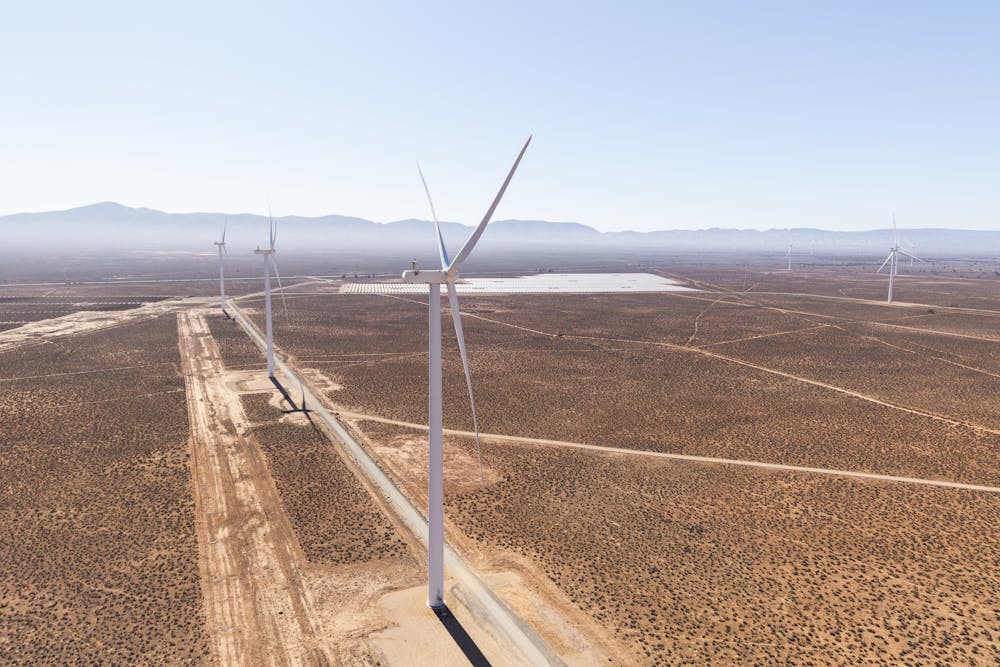
    Rising costs are putting real pressure on the wind industry, undermining investor confidence. Developers of offshore wind projects are walking away, and even cheaper on-shore wind projects are under strain. Even as wind energy becomes a mainstay in China, the United States and Germany, the industry faces real headwinds in Australia.

    This is surprising. Wind, like solar, was projected to get steadily cheaper. The fuel is free and turbines are getting better and better. Instead, wind in Australia has remained stubbornly expensive. Solving the problem will be challenging. But solutions have to be found fast if Australia is to reach the goal of 82% renewable power in the grid by 2030 – now less than five years away.

    Australia has no offshore wind projects up and running – and cost spikes may put planned projects at risk.
    Obatala-photography/Shutterstock

    Five reasons why this is happening

    Here’s what’s going on:

    1. Global supply chains have been disrupted

    The cost of steel, copper, fibreglass and other materials vital for wind turbines shot up during the pandemic. As a result, turbine prices rose almost 40% between 2020 and 2022. While input costs have fallen, turbine prices remain high. Solar panels can be churned out in factories, but modern wind turbines are massive, complex structures that require specialised manufacturing and logistics. That makes them more sensitive to global price fluctuations.

    2. Good wind is often in remote places

    Australia’s best wind resources are typically far from cities and existing grid infrastructure. Connecting far-flung wind farms such as Tasmania’s Robbins Island to the grid can require new and very expensive transmission lines. Remote sites mean extra costs such as temporary worker accommodation. The GenCost report notes this has added about 4% to wind project budgets in 2024–25 compared with the year before.

    Many other countries rely heavily on offshore wind, because wind blows more strongly and reliably over oceans. Unfortunately, spiking costs are likely to further delay the arrival of offshore wind in Australia. GenCost projects the first offshore wind projects in Australia will face even steeper costs.

    Good wind resources are often located in remote areas of Australia.
    Brook Mitchell/Stringer via Getty

    3. Local construction and labour costs have soared

    Australia faces a shortage of workers with the skills to build and maintain wind farms, resulting in higher wages and recruitment costs. Wind developers say construction costs have become a real issue. Wind farms are more labour-intensive than solar.

    4. Interest rates have raised financing costs

    Wind farms require large upfront investments and lengthy construction periods. Even a small increase in interest rates can make them unviable – and interest rates have been high for some time.

    5. Reliability concerns, regulatory delay and community opposition

    According to US researchers, technical issues have emerged for some new wind turbines, creating unexpected costs for developers. The long, complex process of getting permits, carrying out environmental assessments and building community support is pushing out project timelines, increasing costs and uncertainty for developers.

    Will solar take over?

    Solar faces far fewer challenges. Solar panels are mass-produced, meaning costs are steadily driven down through economies of scale. Panels can be deployed quickly and solar farms tend to face less community opposition.

    Wind turbines have to spin to function, while solar panels have no moving parts (though systems that track the Sun do). As a result, solar farms require less maintenance and are more reliable.

    It’s no surprise large-scale solar has been on a record-breaking run, growing 20-fold between 2018 and 2023.

    Solar panels make electricity during daylight hours, especially in summer. By contrast, wind tends to produce more power at night and during winter months. This is why wind is so useful to a green grid.

    Generating power from both wind and sunshine can slash how much storage is needed to ensure grid reliability, lowering overall system costs. A balanced mix of wind, solar and storage will meet Australia’s electricity needs more efficiently and reliably than just solar and storage, according to the International Renewable Energy Agency and independent researchers.

    Could wind come back?

    Making wind more viable will take work. Potential solutions do exist, such as expanding the skilled workforce and investing in specialised ships and equipment to install turbines offshore.

    Shipping large turbines from Denmark or China is expensive. To avoid these costs, it could make sense to encourage local manufacturing of large and heavy parts such as the main tower.

    Other options include finding lower-cost turbine suppliers and streamlining regulatory processes.

    Rising material and labour costs have driven up the cost of wind turbines. Pictured: turbine blades in China’s Jiangsu province in 2022 about to be shipped to Australia.
    Xu Congjun/Future Publishing via Getty Images

    The newly announced expansion of the government’s Capacity Investment Scheme could help reduce risks and give certainty, alongside public investment in new transmission lines.

    If nothing is done or if new measures don’t help, wind is likely to stall while solar and storage race ahead.

    That’s not the worst outcome. Australia could get a long way by relying on batteries and pumped hydro to store power from solar during the day and release it in the evenings, as California is doing. But this strategy involves trade offs, such as higher storage-capacity needs and the risk of insufficient power during long cloudy periods.

    For Australia to optimise its mix of renewables and storage, policymakers will have to tackle wind’s cost challenges. Effective action could lower costs, accelerate project timelines and bolster flagging investor confidence.

    Magnus Söderberg does not work for, consult, own shares in or receive funding from any company or organisation that would benefit from this article, and has disclosed no relevant affiliations beyond their academic appointment.

    ref. 5 reasons why wind farms are costing more in Australia – and what to do about it – https://theconversation.com/5-reasons-why-wind-farms-are-costing-more-in-australia-and-what-to-do-about-it-262126

    MIL OSI AnalysisEveningReport.nz

  • MIL-Evening Report: ER Report: A Roundup of Significant Articles on EveningReport.nz for July 31, 2025

    ER Report: Here is a summary of significant articles published on EveningReport.nz on July 31, 2025.

    5 reasons why wind farms are costing more in Australia – and what to do about it
    Source: The Conversation (Au and NZ) – By Magnus Söderberg, Professor and Director, Centre for Applied Energy Economics and Policy Research, Griffith University Saeed Khan/Getty Building a solar farm in Australia is getting about 8% cheaper each year as panel prices fall and technology improves, according to an official new report. Battery storage costs are

    Sporty spice: how romance fiction is adding a new dynamic to sports fandom
    Source: The Conversation (Au and NZ) – By Kasey Symons, Lecturer of Communication, Sports Media, Deakin University Sports fans might love their teams, cheer or curse each game’s result and admire their favourite athletes, but we rarely associate sports with romance. However, that may be slowly changing thanks to the recent spike in the popularity

    Just as NZ began collecting meaningful data on rainbow communities, census changes threaten their visibility
    Source: The Conversation (Au and NZ) – By Lori Leigh, Research Fellow in Public Health, University of Otago Getty Images New Zealand’s 2023 census was the first to collect data on gender identity and sexual orientation, showing one in 20 adults identify as LGBTQIA+. But just as reports from this more inclusive census are being

    Big tech says AI could boost Australia’s economy by $115 billion a year. Does the evidence stack up?
    Source: The Conversation (Au and NZ) – By Uri Gal, Professor in Business Information Systems, University of Sydney Imaginima / Getty Images AI is on the agenda in Canberra. In August, the Productivity Commission will release an interim report on harnessing data and digital technology such as AI “to boost productivity growth, accelerate innovation and

    Progress on Closing the Gap is stagnant or going backwards. Here are 3 things to help fix it
    Source: The Conversation (Au and NZ) – By Madeleine Pugin, Research Fellow, School of Government and International Relations, Griffith University The Productivity Commission’s latest data on Closing the Gap progress represents an unsurprisingly grim overview of the socioeconomic inequalities experienced by Aboriginal and Torres Strait Islander peoples. Closing the Gap is the plan federal and

    More than 2 in 5 young Australians are lonely, our new report shows. This is what could help
    Source: The Conversation (Au and NZ) – By Michelle H. Lim, Associate Professor, Sydney School of Public Health, University of Sydney Oliver Rossi/Getty Images Loneliness is not a word often associated with young people. We tend to think of our youth as a time spent with family, friends and being engaged with school and work

    How migrant business owners turn their identity into an asset, despite some bumps along the way
    Source: The Conversation (Au and NZ) – By Shea X. Fan, Associate Professor, Human Resource Management, Deakin University Odua Images/Shutterstock Too often, it’s anti-immigration sentiment dominating headlines in Australia. But a quieter story is going untold. Migrants are not just fitting into Australian society, they’re actively reshaping it through entrepreneurship. Starting a business is difficult

    The Man from Hong Kong at 50: how the first ever Australian–Hong Kong co-production became a cult classic
    Source: The Conversation (Au and NZ) – By Gregory Ferris, Senior Lecturer, Media Arts & Production, University of Technology Sydney LMPC via Getty Images A cinematic firecracker of a film exploded onto international screens 50 years ago this week, blending martial arts mayhem, Bond-esque set pieces, casual racism – and a distinctly Australian swagger. From

    Rules for calculating climate risk in financial reporting by NZ businesses need revisiting – new research
    Source: The Conversation (Au and NZ) – By Martien Lubberink, Associate Professor of Accounting and Capital, Te Herenga Waka — Victoria University of Wellington Andrew MacDonald/Getty Images The recent International Court of Justice (ICJ) decision on climate action marked a significant step forward in formalising an idea many already accept: climate inaction is not merely

    Climate justice victory at the ICJ – the student journey from USP lectures to The Hague
    By Vahefonua Tupola in Suva The University of the South Pacific (USP) is at the heart of a global legal victory with the International Court of Justice (ICJ) delivering a historic opinion last week affirming that states have binding legal obligations to protect the environment from human-induced greenhouse gas emissions. The case, hailed as a

    Climate justice victory at the ICJ – the student journey from USP lectures to The Hague
    By Vahefonua Tupola in Suva The University of the South Pacific (USP) is at the heart of a global legal victory with the International Court of Justice (ICJ) delivering a historic opinion last week affirming that states have binding legal obligations to protect the environment from human-induced greenhouse gas emissions. The case, hailed as a

    Kamchatka earthquake is among top 10 strongest ever recorded. Here’s what they have in common
    Source: The Conversation (Au and NZ) – By Dee Ninis, Earthquake Scientist, Monash University Today at about 11:30am local time, a magnitude 8.8 earthquake struck off the coast of Russia’s Kamchatka Peninsula in the country’s far east. Originating at a depth of roughly 20 kilometres, today’s powerful earthquake – among the ten strongest in recorded

    Kamchatka earthquake is among top 10 strongest ever recorded. Here’s what they have in common
    Source: The Conversation (Au and NZ) – By Dee Ninis, Earthquake Scientist, Monash University Today at about 11:30am local time, a magnitude 8.8 earthquake struck off the coast of Russia’s Kamchatka Peninsula in the country’s far east. Originating at a depth of roughly 20 kilometres, today’s powerful earthquake – among the ten strongest in recorded

    Tsunami warnings are triggering mass evacuations across the Pacific – even though the waves look small. Here’s why
    Source: The Conversation (Au and NZ) – By Milad Haghani, Associate Professor and Principal Fellow in Urban Risk and Resilience, The University of Melbourne Last night, one of the ten largest earthquakes ever recorded struck Kamchatka, the sparsely populated Russian peninsula facing the Pacific. The magnitude 8.8 quake had its epicentre in the sea just

    NAPLAN is just one test. Here’s what to do if your child’s results were in the bottom bands
    Source: The Conversation (Au and NZ) – By Sally Larsen, Senior Lecturer in Education, University of New England Rawpixel/ Getty Images The latest round of NAPLAN results are out, along with a string of news reports about “students falling behind” and “failing”, and experts sounding the “alarm” about school progress. In March, all Australian students

    Inflation slows again — but is it enough for the Reserve Bank to cut interest rates?
    Source: The Conversation (Au and NZ) – By Stella Huangfu, Associate Professor, School of Economics, University of Sydney Doublelee/Shutterstock Inflation is moving in the right direction, but new figures released today may not be soft enough to trigger a cut in official interest rates in August. The Australian Bureau of Statistics released the June quarter

    With the UK and France moving toward recognising Palestine, will Australia now follow suit?
    Source: The Conversation (Au and NZ) – By Donald Rothwell, Professor of International Law, Australian National University One of the smallest and most exclusive clubs in the world belongs to states. The US Department of State puts the number of independent recognised states at 197, while others count 200. The United Nations, meanwhile, has 193

    With the UK and France moving toward recognising Palestine, will Australia follow suit?
    Source: The Conversation (Au and NZ) – By Donald Rothwell, Professor of International Law, Australian National University One of the smallest and most exclusive clubs in the world belongs to states. The US Department of State puts the number of independent recognised states at 197, while others count 200. The United Nations, meanwhile, has 193

    An underwater observatory keeping the pulse of the Southern Ocean for nearly 30 years yields fresh results
    Source: The Conversation (Au and NZ) – By Christopher Traill, PhD Candidate Southern Ocean biogeochemistry, University of Tasmania Elizabeth Shadwick In a world affected by climate change, the Southern Ocean plays an outsized role. It absorbs up to 40% of the human-caused emissions taken up by the oceans while also being home to some of

    MIL OSI AnalysisEveningReport.nz

  • MIL-OSI New Zealand: Greenpeace – Luxon opens the door to billions in taxpayer-funded oil field decommissioning costs

    Source: Greenpeace

    In an act of climate denial, the Luxon Government is today planning to pass legislation to try to restart offshore oil and gas exploration, but they are also slipping in a further amendment that opens the door to taxpayers picking up the billion dollar tab to decommission oil and gas infrastructure.
    “Attempting to restart offshore oil and gas exploration is bad enough, given advice from the International Energy Agency that we can’t burn existing known fossil fuel reserves if we are to avoid dangerous global heating. When you’re in a hole the first step to escape is to stop digging,” says Greenpeace Aotearoa Executive Director Dr. Russel Norman.
    “The environment movement will fight any new offshore oil and gas exploration just like we did when John Key was Prime Minister.
    “But this legislation is even worse: Luxon is proposing to overturn existing law that makes oil companies automatically responsible for the costs of decommissioning oil and gas fields.”
    Under existing law, even if an existing operator onsells an end-of-life oil and gas field to a shell company, which then goes bankrupt when faced with the costs of decommissioning, the original operator is still responsible for the cost.
    “Luxon is changing the legislation so that the Minister of Resources and the Minister of Finance are given total ministerial discretion to approve the onselling of the depleted field, and if they approve and the final operator goes bankrupt, the original oil field operator is NOT responsible for the decommissioning costs. The government will end up with the cost.
    “New Zealand taxpayers will be the ones that will be picking up the cost of cleaning up after oil companies abandon exhausted oil fields. Costs that could run into billions of dollars,” says Dr. Norman.
    “New Zealand has already learnt an expensive lesson in how the oil industry operates. The Tui oil field passed through a number of hands before it was finally sold to an offshore oil company Tamarind that had little money, and Tamarind went bankrupt when faced with the cost of decommissioning the exhausted field. New Zealand taxpayers were stung for $300million to clean up the mess and plug the wells, which was only completed in June 2025.
    “After the Tui field fiasco, the law was changed to make sure oil field operators were responsible for the clean up costs, regardless of how many shell companies to which it was onsold.
    “The oil industry hated the changes to the law on liability for decommissioning costs as much as they hated the ending of offshore oil and gas exploration. And now they have their chance to pass on the costs to the taxpayers and you can be sure they will take it.
    “As the New Zealand oil and gas industry enters its sunset phase, the costs of plugging the wells and cleaning up all the seafloor pipes etc will run into the billions.
    “This fossil fuel-obsessed government has given in to pressure from the oil industry and opened the door to making taxpayers pick up the costs of cleaning up after them.
    “This is part of a trend by this backward-looking Luxon government which has allocated $200m to help invest in new gas fields.
    “Last month, it brought embarrassing shame to New Zealand by pulling out of the international Beyond Oil and Gas coalition, which has pledged to phase out fossil fuels.”
    “New Zealand will have energy security, lower prices and low emissions by investing in solar, wind, geothermal, storage, efficiency and demand side management. That is our future, not the nonsense being promoted by Luxon and Shane Jones.”
    Resources
    The 2021 amendments to make oil companies responsible for decommissioning costs:

    MIL OSI New Zealand News

  • MIL-OSI New Zealand: Education – Simone Kaho awarded 2025 Fulbright-Creative New Zealand Pacific Writer’s Residency in Hawaii

    Source: Creative New Zealand

    Fulbright New Zealand and Creative New Zealand are delighted to announce Simone Kaho is the recipient of the 2025 Pacific Writer’s Residency.

    This annual award is for an established New Zealand writer of Pacific heritage to carry out work on a creative writing project exploring Pacific identity, culture or history at the University of Hawai’i for three months.

    Simone Kaho says many writers she admires and follows have won the award in previous years.

    “It’s a fabulous thing to receive institutional support for work that is so challenging. What if our most profound connections aren’t just with family, but in deep attunement with nature, recognising patterns in the unseen, and finding new ways to move forward? In this project, I’ll be drawing theoretical lines between Pacific people who are neurodiverse, and the traits of Pacific wayfinders—and I hope to find evidence of these in Hawaii’s research archives,” says Simone.

    Fulbright NZ Executive Director Penelope Borland says it is heartening to see the residency taken up by a poet of Simone’s distinction.

    “We are thrilled to be granting the 2025 Pacific Writer’s Residency to Simone Kaho, enabling her to continue her work that has already received widespread acclaim, most recently seeing her take up the 2022 Emerging Pasifika writer in Residence at the prestigious International Institute of Modern Letters. With this award, Simone will travel to Hawai’i, where I am sure a deeply meaningful experience awaits her,” says Penelope.  

    Makerita Urale, Creative New Zealand’s Senior Manager Pacific Arts, herself an alumna of the residency, says the award is timely for Simone’s literary career.

    “Simone’s work is fearless and deeply grounded in lived experience and cultural insight. This residency is a fitting next step for an artist of her calibre, and we look forward to seeing how her time in Hawai’i will further shape and strengthen her work,” says Makerita.

    Previous recipients of the prestigious Pacific Writer’s Residency have been some of New Zealand’s most celebrated writers, including Tusiata Avia, Karlo Mila, Oscar Kightley, David Eggleton, Mīria George, and playwright Victor Rodger.

    MIL OSI New Zealand News

  • MIL-OSI: Euronet Worldwide Reports Second Quarter 2025 Financial Results – Highlighted by 13% Operating Income Growth

    Source: GlobeNewswire (MIL-OSI)

    • Digital growth strategy accelerated with the announced acquisition of leading credit card issuing platform
    • Ren signs agreement with top tier United States bank
    • Money Transfer expands digital remittance through Google partnership
    • Money Transfer enters Japanese market with acquisition of Kyodai Remittance
    • Operating margin expansion of 112 basis points

    LEAWOOD, Kan., July 30, 2025 (GLOBE NEWSWIRE) — Euronet (“Euronet” or the “Company”) (NASDAQ: EEFT), a global leader in payments processing and cross-border transactions, announced today second quarter 2025 financial results.

    Euronet reports the following consolidated results for the second quarter 2025 compared with the same period of 2024:

    • Revenues of $1,074.3 million, a 9% increase from $986.2 million (6% increase on a constant currency1 basis).
    • Operating income of $158.6 million, an 18% increase from $134.3 million (13% increase on a constant currency basis).
    • Adjusted EBITDA2 of $206.2 million, a 16% increase  from $178.2 million (11% increase on a constant currency basis).
    • Net income attributable to Euronet of $97.6 million, or $2.27 diluted earnings per share, compared with $83.1 million, or $1.73 diluted earnings per share.
    • Adjusted earnings per share3 of $2.56, a 14% increase from $2.25. 

    See the reconciliation of non-GAAP items in the attached financial schedules.   

    “I’m very pleased with the business’ constant currency operating profit growth of 13% and the margin expansion of 112 basis points—on its own, this is exciting.  But, I’m more excited about our accomplishments to further our digital strategy through the acquisition of a leading credit card issuing platform – CoreCard – and the signing of a Ren agreement with one of the top three banks in the United States. 

    The acquisition of CoreCard fits nicely with our Ren platform. As described in a separate press release, this is not just a credit issuing platform, it’s a platform serving leading brands in the US, processing at scale, tried and tested. This premier product gives us yet more opportunity to go after the $10 billion issuing market where the market growth rates are much stronger outside the United States, which aligns strongly with our global business where more than 75% of our revenues are from outside the United States.  Moreover, another exciting aspect of the issuing business is its margin opportunity, nearing 50 percent.  It’s these kinds of initiatives that have contributed to our 20-year double digit growth rate and will continue to drive future growth – focused on digital payments.  This acquisition is directly in line with our strategy to shift a stronger mix of our business toward the digital economy. 

    Not only did we advance our digital agenda with the credit issuing platform, we just signed an agreement with one of the top three banks in the United States for the deployment of our Ren ATM operating and switching product.  While we have had many successes with Ren outside the US, this is not just the first agreement in the US we’ve signed, but it is with super impressive top-tiered bank – a real testament to the value proposition of Ren”, said Michael J. Brown, Euronet’s Chairman and Chief Executive Officer.

    Segment and Other Results

    The EFT Processing Segment reports the following results for the second quarter 2025 compared with the same period or date in 2024:

    • Revenues of $338.5 million, an 11% increase from $305.4 million (6% increase on a constant currency basis).
    • Operating income of $84.6million, a 6% increase from $79.9 million (1% increase on a constant currency basis).
    • Adjusted EBITDA of $110.6 million, a 5% increase from $105.0 million (no change on a constant currency basis).
    • Total of 57,326 installed ATMs as of June 30, 2025, a 5% increase from 54,736. We operated 56,760 active ATMs as of June 30, 2025, a 5% increase from 54,005 as of June 30, 2024.

    Constant currency revenue, operating income, and adjusted EBITDA growth in the second quarter 2025 was driven by market expansion, growth across most existing markets and the addition of access fees and an increase in interchange fees in certain markets. 

    The epay Segment reports the following results for the Q2 2025 compared with the same period or date in 2024:

    • Revenues of $280.1 million, a 7% increase from $260.9 million (5% increase on a constant currency basis).
    • Operating income of $31.1 million, a 19% increase from $26.2 million (17% increase on a constant currency basis).
    • Adjusted EBITDA of $32.8 million, a 17% increase from $28.0 million (15% increase on a constant currency basis).
    • Transactions of 1,107 million, consistent with prior year.
    • POS terminals of approximately 721,000 as of June 30, 2025, a 3% increase from 703,000.
    • Retailer locations of approximately 354,000 as of June 30, 2025, a 4% increase from 340,000.

    Constant currency revenue growth was driven by continued payments and digital media growth. Operating income and adjusted EBITDA grew faster than revenue, driven by a shift in product mix and effective operating expense management. Transaction growth from payments and digital media was offset by a decrease in low margin mobile transactions in India.

    The Money Transfer Segment reports the following results for the Q2 2025 compared with the same period or date in 2024:

    • Revenues of $457.9 million, a 9% increase from $421.8 million (6% increase on a constant currency basis).
    • Operating income of $65.6 million, a 39% increase from $47.3 million (33% increase on a constant currency basis).
    • Operating margin expansion of 296 basis points
    • Adjusted EBITDA of $71.6 million, a 33% increase from $54.0 million (28% increase on a constant currency basis).
    • Total transactions of 46.1 million, a 4% increase from 44.3 million.
    • Total digital transactions of 5.8 million, a 29% increase from 4.5 million.
    • Network locations of approximately 631,000 as of June 30, 2025, an 8% increase from approximately 586,000.

    Constant currency revenue growth was primarily driven by growth in cross-border transactions, partially offset by a decrease in intra-US transactions. Direct-to-consumer digital transactions grew by 29%, reflecting continued consumer demand for digital products. Operating income and adjusted EBITDA growth outpaced revenue growth due to gross margin expansion and leverage of scale. Additionally, the Money Transfer segment continued to expand both its market footprint through the acquisition of a 60% interest in Kyodai Remittance as well as its industry leading global payments network to now reach 4.1 billion bank accounts, 3.2 billion wallet accounts and 631,000 payment locations.

    Corporate and Other reports $22.7 million of expense for the second quarter 2025 compared with $19.1 million for the second quarter 2024. The increase in corporate expenses is largely from the increase in long-term share-based compensation.

    Balance Sheet and Financial Position
    Unrestricted cash and cash equivalents on hand was $1,329.3 million as of June 30, 2025, compared to $1,393.6 million as of March 31, 2025. Total indebtedness was $2,438.1 million as of June 30, 2025, compared to $2,202.5 million as of March 31, 2025. Availability under the Company’s revolving credit facilities was approximately $884.2 million as of June 30, 2025. 

    The change in net cash is the result of cash generated from operations, working capital fluctuations and share repurchases of $2.3 million shares for $247 million during the second quarter.

    Outlook
    Taking into consideration recent trends in the business and the global economy, the Company anticipates its 2025 adjusted EPS will grow 12% to 16% year-over-year, consistent with its 10- and 20-year compounded annualized growth rates. This outlook does not include any changes that may develop in foreign exchange rates, interest rates or other unforeseen factors.

    Non-GAAP Measures
    In addition to the results presented in accordance with U.S. GAAP, the Company presents non-GAAP financial measures, such as constant currency financial measures, operating income, adjusted EBITDA, and adjusted earnings per share. These measures should be used in addition to, and not a substitute for, revenues, operating income, net income and earnings per share computed in accordance with U.S. GAAP. We believe that these non-GAAP measures provide useful information to investors regarding the Company’s performance and overall results of operations. These non-GAAP measures are also an integral part of the Company’s internal reporting and performance assessment for executives and senior management. The non-GAAP measures used by the Company may not be comparable to similarly titled non-GAAP measures used by other companies. The attached schedules provide a full reconciliation of these non-GAAP financial measures to their most directly comparable U.S. GAAP financial measure.

    The Company does not provide a reconciliation of its forward-looking non-GAAP measures to GAAP due to the inherent difficulty in forecasting and quantifying certain amounts that are necessary for GAAP and the related GAAP and non-GAAP reconciliation, including adjustments that would be necessary for foreign currency exchange rate fluctuations and other charges reflected in the Company’s reconciliation of historic numbers, the amount of which, based on historical experience, could be significant.  

    (1) Constant currency financial measures are computed as if foreign currency exchange rates did not change from the prior period. This information is provided to illustrate the impact of changes in foreign currency exchange rates on the Company’s results when compared to the prior period.

    (2) Adjusted EBITDA is defined as net income excluding, to the extent incurred in the period, interest expense, income tax expense, depreciation, amortization, share-based compensation and other non-cash purchase accounting adjustments, non-operating or non-recurring items that are considered expenses or income under U.S. GAAP. Adjusted EBITDA represents a performance measure and is not intended to represent a liquidity measure.

    (3) Adjusted earnings per share is defined as diluted U.S. GAAP earnings per share excluding, to the extent incurred in the period, the tax-effected impacts of: a) foreign currency exchange gains or losses, b) share-based compensation, c) acquired intangible asset amortization, d) non-cash income tax expense, e) non-cash investment gain f) other non-operating or non-recurring items and g) dilutive shares relate to the Company’s convertible bonds. Adjusted earnings per share represent a performance measure and is not intended to represent a liquidity measure. 

    Conference Call and Slide Presentation
    Euronet Worldwide will host an analyst conference call on July 31, 2025, at 9:00 a.m. Eastern Time to discuss these results. The call may also include discussion of Company developments on the Company’s operations, forward-looking information, and other material information about business and financial matters. The conference call and accompanying slide show presentation will be accessible via webcast by following the link posted on http://ir.euronetworldwide.com.  Participants wanting to access the conference call by telephone should dial (800)715-9871 (USA) or (646)307-1963 (international).

    A webcast replay will be available beginning approximately one hour after the event at http://ir.euronet worldwide.com and will remain available for one year.

    About Euronet Worldwide, Inc.
    A global leader in payments processing and cross-border transactions, Euronet moves money in all the ways consumers and businesses depend upon. This includes money transfers, credit/debit processing, ATMs, point-of-sale services, branded payments, currency exchange and more. With products and services in more than 200 countries and territories provided through its own brand and branded business segments, Euronet and its financial technologies and networks make participation in the global economy easier, faster and more secure for everyone. Visit the company’s website at www.euronetworldwide.com.

    Starting in Central Europe in 1994, Euronet now supports an extensive global real-time digital and cash payments network that includes 57,326 installed ATMs, approximately 1.2 million EFT point-of-sale terminals and a growing portfolio of outsourced debit and credit card services which are under management in 69 countries; card software solutions; a prepaid processing network of approximately 721,000 point-of-sale terminals at approximately 354,000 retailer locations in 64 countries; and a global money transfer network of approximately 631,000 locations serving 200 countries and territories with digital connections to 4.1 billion bank accounts, 3.2 billion digital wallet accounts and 4.0 billion Visa debit cards through Visa Direct payments. Euronet serves clients from its corporate headquarters in Leawood, Kansas, USA, and 67 worldwide offices. For more information, please visit the company’s website at www.euronetworldwide.com.

    Cautionary Statement Regarding Forward-Looking Statements
    This communication contains “forward-looking statements” within the United States Private Securities Litigation Reform Act of 1995. You can identify these statements and other forward-looking statements in this document by words such as “may,” “will,” “should,” “can,” “could,” “anticipate,” “estimate,” “expect,” “predict,” “project,” “future,” “potential,” “intend,” “plan,” “assume,” “believe,” “forecast,” “look,” “build,” “focus,” “create,” “work,” “continue,” “target,” “poised,” “advance,” “drive,” “aim,” “forecast,” “approach,” “seek,” “schedule,” “position,” “pursue,” “progress,” “budget,” “outlook,” “trend,” “guidance,” “commit,” “on track,” “objective,” “goal,” “strategy,” “opportunity,” “ambitions,” “aspire” and similar expressions, and variations or negative of such terms or other variations thereof. Words and terms of similar substance used in connection with any discussion of future plans, actions, or events identify forward-looking statements. 

    Forward-looking statements by their nature address matters that are, to different degrees, uncertain, such statements regarding the transactions contemplated by the Agreement and Plan of Merger (the “Merger Agreement’), dated as of July 30, 2025, by and among CoreCard, Euronet and Genesis Merger Sub Inc. (the “Transaction”), including the expected timing of the closing of the Transaction; future financial and operating results; benefits and synergies of the Transaction; future opportunities for the combined company; the conversion of equity interests contemplated by the Merger Agreement; the issuance of common stock of Euronet contemplated by the Merger Agreement; the expected filing by Euronet with the SEC of the Registration Statement and the proxy statement/prospectus; the ability of the parties to complete the proposed Transaction considering the various closing conditions and any other statements about future expectations that constitute forward-looking statements within the meaning of the Private Securities Litigation Reform Act of 1995, Section 27A of the Securities Act of 1933 and Section 21E of the Securities Exchange Act of 1934. All such forward-looking statements are based upon current plans, estimates, expectations and ambitions that are subject to risks, uncertainties and assumptions, many of which are beyond the control of Euronet and CoreCard, that could cause actual results to differ materially from those expressed in such forward-looking statements. Key factors that could cause actual results to differ materially include, but are not limited to, the expected timing and likelihood of completion of the Transaction, including the timing, receipt and terms and conditions of any required governmental and regulatory approvals of the Transaction; the occurrence of any event, change or other circumstances that could give rise to the termination of the definitive agreement; the possibility that CoreCard’s shareholders may not approve the Transaction; the risk that the parties may not be able to satisfy the conditions to the Transaction in a timely manner or at all; risks related to disruption of management time from ongoing business operations due to the Transaction; the risk that any announcements relating to the Transaction could have adverse effects on the market price of Euronet’s common stock; the risk that the Transaction and its announcement could have an adverse effect on the parties’ business relationships and business generally, including the ability of CoreCard or Euronet to retain customers and retain and hire key personnel and maintain relationships with their suppliers and customers, and on their operating results and businesses generally; the risk of unforeseen or unknown liabilities; customer, shareholder, regulatory and other stakeholder approvals and support; the risk of potential litigation relating to the Transaction that could be instituted against CoreCard or its directors and/or officers; the risk associated with third party contracts containing material consent, anti-assignment, transfer or other provisions that may be related to the Transaction which are not waived or otherwise satisfactorily resolved; the risk of rating agency actions and Euronet’s ability to access short- and long-term debt markets on a timely and affordable basis; the risk of various events that could disrupt operations, including: conditions in world financial markets and general economic conditions; inflation; the war in Ukraine and the related economic sanctions; and military conflicts in the Middle East.

    These risks, as well as other risks related to the proposed Transaction, will be described in the Registration Statement that will be filed with the SEC in connection with the proposed Transaction. While the list of factors presented here and the list of factors to be presented in the Registration Statement are considered representative, no such list should be considered to be a complete statement of all potential risks and uncertainties. Additional factors that may affect future results are contained in each company’s filings with the SEC, including each company’s most recent Annual Report on Form 10-K, as it may be updated from time to time by quarterly reports on Form 10-Q and current reports on Form 8-K, all of which are available at the SEC’s website http://www.sec.gov. Euronet regularly posts important information to the investor relations section of its website. Any forward-looking statements made in this release speak only as of the date of this release. Except as may be required by law, neither Euronet nor CoreCard intends to update these forward-looking statements and undertakes no duty to any person to provide any such update under any circumstances.

    Important Information for Investors and Stockholders
    In connection with the proposed transaction, Euronet plans to file with the SEC a registration statement on Form S-4 (the “Registration Statement”), which will include a proxy statement of CoreCard that also constitutes a prospectus of Euronet, and any other documents in connection with the transaction. After the Registration Statement has been declared effective by the SEC, the definitive proxy statement/prospectus will be sent to the holders of common stock of CoreCard. INVESTORS AND SHAREHOLDERS OF CORECARD AND EURONET ARE URGED TO READ THE PROXY STATEMENT/PROSPECTUS AND ANY OTHER DOCUMENTS FILED OR TO BE FILED WITH THE SEC IN CONNECTION WITH THE TRANSACTION WHEN THEY BECOME AVAILABLE, AS THEY WILL CONTAIN IMPORTANT INFORMATION ABOUT EURONET, CORECARD, THE TRANSACTION AND RELATED MATTERS. The registration statement and proxy statement/prospectus and other documents filed by Euronet or CoreCard with the SEC, when filed, will be available free of charge at the SEC’s website at www.sec.gov. Alternatively, investors and stockholders may obtain free copies of documents that are filed or will be filed with the SEC by Euronet, including the registration statement and the proxy statement/prospectus, on Euronet’s website at https://ir.euronetworldwide.com/for-investors, and may obtain free copies of documents that are filed or will be filed with the SEC by CoreCard, including the proxy statement/prospectus, on CoreCard’s website at https://investors.CoreCard.com/. The information included on, or accessible through, Euronet’s or CoreCard’s website is not incorporated by reference into this press release.

    No Offer or Solicitation
    This press release is not intended to and shall not constitute an offer to sell or the solicitation of an offer to buy any securities, nor shall there be any sale of securities in any jurisdiction in which such offer, solicitation or sale would be unlawful prior to appropriate registration or qualification under the securities laws of such jurisdiction. No offering of securities shall be made except by means of a prospectus meeting the requirements of Section 10 of the Securities Act of 1933, as amended.

    Participants in the Solicitation
    Euronet and CoreCard and their respective directors, executive officers and other employees may be deemed to be participants in the solicitation of proxies from CoreCard’s shareholders in connection with the proposed Transaction. A description of participants’ direct or indirect interests, by security holdings or otherwise, will be included in the proxy statement/prospectus relating to the proposed Transaction when it is filed with the SEC. Information regarding Euronet’s directors and executive officers is contained in the definitive proxy statement, dated April 4, 2025, for its 2025 annual meeting of stockholders, and in Euronet’s Annual Report on Form 10-K for the fiscal year ended December 31, 2024. Information regarding CoreCard’s directors and executive officers is contained in CoreCard’s definitive proxy statement, dated April 14, 2025, for its 2025 annual meeting of shareholders, and CoreCard’s Annual Report on Form 10-K for the fiscal year ended December 31, 2024. Additional information regarding ownership of Euronet’s securities by its directors and executive officers, and of ownership of CoreCard’s securities by its directors and executive officers, is included in each such person’s SEC filings on Forms 3 and 4. These documents and the other SEC filings described in this paragraph may be obtained free of charge as described above under the heading “Important Information for Investors and Stockholders.”

     EURONET WORLDWIDE, INC.
     Condensed Consolidated Balance Sheets
     (in millions)
      As of    
      June 30,   As of
      2025   December 31,
      (unaudited)   2024
    ASSETS          
    Current assets:          
    Cash and cash equivalents $ 1,329.3   $ 1,278.8
    ATM cash   937.4     643.8
    Restricted cash   40.3     9.2
    Settlement assets   1,547.1     1,522.7
    Trade accounts receivable, net   328.4     284.9
    Prepaid expenses and other current assets   353.8     297.1
    Total current assets   4,536.3     4,036.5
               
    Property and equipment, net   365.0     329.7
    Right of use lease asset, net   152.5     132.1
    Goodwill and acquired intangible assets, net   1,160.4     1,048.1
    Other assets, net   340.7     288.1
    Total assets $ 6,554.9   $ 5,834.5
               
    LIABILITIES AND EQUITY          
    Current liabilities:          
    Settlement obligations $ 1,547.1   $ 1,522.7
    Accounts payable and other current liabilities   898.3     842.3
    Current portion of operating lease obligations   55.0     48.3
    Short-term debt obligations   1,434.8     812.7
    Total current liabilities   3,935.2     3,226.0
               
    Debt obligations, net of current portion   1,002.3     1,134.4
    Operating lease obligations, net of current portion   100.8     87.4
    Capital lease obligations, net of current portion   1.0     1.4
    Deferred income taxes   64.4     71.8
    Other long-term liabilities   87.8     84.3
    Total liabilities   5,191.5     4,605.3
    Total equity   1,363.4     1,229.2
    Total liabilities and equity $ 6,554.9   $ 5,834.5
     EURONET WORLDWIDE, INC.
     Consolidated Statements of Operations
     (unaudited – in millions, except share and per share data)
       Three Months Ended
       June 30,
      2025     2024  
    Revenues $ 1,074.3     $ 986.2  
               
    Operating expenses:          
    Direct operating costs, exclusive of depreciation   620.6       580.8  
    Salaries and benefits   173.5       158.0  
    Selling, general and administrative   87.8       79.4  
    Depreciation and amortization   33.8       33.7  
    Total operating expenses   915.7       851.9  
    Operating income   158.6       134.3  
               
    Other income (expense):          
    Interest income   6.2       5.9  
    Interest expense   (28.2 )     (20.1 )
    Foreign currency exchange loss, net   (5.7 )     1.5  
    Other income   0.4       0.8  
    Total other expense, net   (27.3 )     (11.9 )
    Income before income taxes   131.3       122.4  
               
    Income tax expense   (33.6 )     (39.2 )
    Net income   97.7       83.2  
    Net loss attributable to noncontrolling interests   (0.1 )     (0.1 )
    Net income attributable to Euronet Worldwide, Inc. $ 97.6     $ 83.1  
    Add: Interest expense from assumed conversion of convertible notes, net of tax   0.1       1.0  
    Net income for diluted earnings per share calculation $ 97.7     $ 84.1  
    Earnings per share attributable to Euronet          
    Worldwide, Inc. stockholders – diluted $ 2.27     $ 1.73  
               
    Diluted weighted average shares outstanding   42,954,631       48,700,270  
     EURONET WORLDWIDE, INC.
    Reconciliation of Net Income to Operating Income (Expense) to Operating Income (Expense) and Adjusted EBITDA
     (unaudited – in millions)

    .

      Three months ended June 30, 2025
      EFT
    Processing
    epay Money
    Transfer
    Corporate
    Services
    Consolidated
    Net income                         $ 97.7
    Add: Income tax expense                           33.6
    Add: Total other expense, net                           27.3
    Operating income (expense) $ 84.6   $ 31.1   $ 65.6   $ (22.7 )   $ 158.6
    Add: Depreciation and amortization   26.0     1.7     6.0     0.1       33.8
    Add: Share-based compensation               13.8       13.8
    Earnings before interest, taxes, depreciation, amortization, share-based
    compensation (Adjusted EBITDA)
    $ 110.6   $ 32.8   $ 71.6   $ (8.8 )   $ 206.2

    .

      Three months ended June 30, 2024
      EFT
    Processing
    epay Money
    Transfer
    Corporate
    Services
    Consolidated
    Net income                         $ 83.2
    Add: Income tax expense                           39.2
    Add: Total other expense, net                           11.9
    Operating income (expense) $ 79.9   $ 26.2   $ 47.3   $ (19.1 )   $ 134.3
    Add: Depreciation and amortization   25.1     1.8     6.7     0.1       33.7
    Add: Share-based compensation               10.2       10.2
    Earnings before interest, taxes, depreciation, amortization, share-based
    compensation (Adjusted EBITDA) (1)
    $ 105.0   $ 28.0   $ 54.0   $ (8.8 )   $ 178.2


    (1)
    Adjusted EBITDA is a non-GAAP measure that should be considered in addition to, and not a substitute for, net income computed in accordance with U.S. GAAP.

     EURONET WORLDWIDE, INC.
     Reconciliation of Adjusted Earnings per Share
     (unaudited – in millions, except share and per share data)
     
      Three Months Ended
      June 30,
      2025     2024  
    Net income attributable to Euronet Worldwide, Inc. $ 97.6     $ 83.1  
    Foreign currency exchange loss (gain)   5.7       (1.5 )
    Intangible asset amortization (1)   4.7       6.5  
    Share-based compensation (2)   13.8       10.2  
    Income tax effect of above adjustments (3)   (13.7 )     4.3  
    Non-cash investment gain (4)   (0.4 )      
    Non-cash GAAP tax expense (5)   3.0       1.9  
    Adjusted earnings (6) $ 110.7     $ 104.5  
    Adjusted earnings per share – diluted (6) $ 2.56     $ 2.25  
    Diluted weighted average shares outstanding (GAAP)   42,954,631       48,700,270  
    Effect of adjusted EPS dilution of convertible notes   (176,123 )     (2,781,818 )
    Effect of unrecognized share-based compensation on diluted shares
    outstanding
      406,912       420,305  
    Adjusted diluted weighted average shares outstanding   43,185,420       46,338,757  

    (1) Intangible asset amortization of $4.7 million and $6.5 million are included in depreciation and amortization expense of $33.8 million and $33.7 million for both the three months ended June 30, 2025 and June 30, 2024, in the consolidated statements of operations.

    (2) Share-based compensation of $13.8 million and $10.2 million are included in salaries and benefits expense of $173.5 million and $158.0 million for the three months ended June 30, 2025 and June 30, 2024, respectively, in the consolidated statements of operations.

    (3) Adjustment is the aggregate U.S. GAAP income tax effect on the preceding adjustments determined by applying the applicable statutory U.S. federal, state and/or foreign income tax rates. 

    (4) Non-cash investment gain of $0.4 million is included in other income in the consolidated statement of operations.

    (5) Adjustment is the non-cash GAAP tax impact recognized on certain items such as the utilization of certain material net deferred tax assets and amortization of indefinite-lived intangible assets.

    (6) Adjusted earnings and adjusted earnings per share are non-GAAP measures that should be considered in addition to, and not as a substitute for, net income and earnings per share computed in accordance with U.S. GAAP. 

    The MIL Network

  • MIL-Evening Report: Politics with Michelle Grattan: independent MP Allegra Spender on making tax fairer for younger Australians

    Source: The Conversation (Au and NZ) – By Michelle Grattan, Professorial Fellow, University of Canberra

    With parliament now finished its first fortnight’s session, attention will soon be on the government’s August 19-21 economic reform roundtable, bringing together business, unions, experts and community representatives to pursue consensus on ways to lift Australia’s flagging productivity.

    Independent member for Wentworth Allegra Spender is one of the 25 participants invited to the roundtable. She’s particularly focused on tax reform and last week held a tax roundtable of her own.

    Spender joined the podcast to talk about making tax fairer, the need for greater economic reform, climate policy, the social media ban for under 16s, a ceasefire in Gaza, and more.

    On her ambitions on tax policy, Spender says income tax indexation is something that would benefit younger, working Australians:

    Myself and actually another number of crossbenchers […] wrote to both the government and the opposition last term, really pushing for tax indexation. And really the heart of this is startling statistics from last term. The [Reserve Bank of Australia] put out some information that showed that bracket creep was a bigger impost on average households’ budgets than the RBA increases in the interest rate.

    […] Just to give you two statistics about young working people: households over the age of 65, in the last 10 odd years, have grown their wealth by around 50%. Households under the age of 35 have not grown their worth at all, pretty much. So they are going backwards relative to the rest of the country. A household, two households, both on a $100,000, sitting next to each other. If [one] household is retired, they have to pay on average half the tax of a working age household.

    Spender says the system is stacked against young people, who “are really struggling economically compared to previous generations”.

    It’s in your early and midlife that you need money for housing, to raise kids and everything else. So we don’t have a tax system that works for younger people. We have a tax system that burdens younger people strongly and then actually gives people more tax breaks when they’re older, and normally wealthier.

    On climate targets, Spender says while she’ll be guided by the yet-to-be-provided Climate Change Authority’s advice, she wants to see Australia “try and lead other countries” – pointing to the United Kingdom, which has set a target to cut emissions by at least 81% by 2035.

    The Climate Change Authority put out their interim guidance to say that a target within 65 to 75% [emissions reduction on 2005 levels] was both achievable from an economic point of view and also appropriate towards a scientific point of view.

    My view is that we should be at the very top end of that. Now, if the Climate Change Authority significantly reviews, you know, revises down their targets, I will reconsider. But I think really what we should be doing is to say how can we be as ambitious as possible. And the reason I think that is important is actually, you know, from a business point of view, ambition and certainty is what they need to make the big investments that will actually achieve it.

    Ambition is needed from a scientific point of view, because if we took, say, less than 75% [emissions reduction], and the rest of the world did too, we would be looking at outcomes that are catastrophic for Australia. Regular days in Sydney and Melbourne that are above 50 degrees. A huge loss of coral reef. Continued adverse weather events.

    On the news that the government will include YouTube in its social media ban for under 16s, Spender says it’s now up to social media companies to make their websites safer to lift the bans.

    My eldest daughter [who’s 12] has a strong view on this. And she’s actually a big fan of the ban. She was like, ‘I just don’t understand how it makes sense to leave YouTube in and TikTok out’. […] She’s not on social media, but other people are, and she finds it sometimes frustrating.

    But I think the challenge on this is always going to be the implementation. I think it’s fiendishly complicated to implement. I think genuinely the most valuable part of this ban is actually the signal to families and parents about what is expected and what isn’t.

    […] I think the ball’s in the social media companies’ courts. If they want to move to a life beyond the ban, they need to show how they can make their platforms safe for younger Australians, because I don’t think they have delivered that to date. So I’d be open if they can provide the evidence of how they can change things. I’m always open minded to reversing or changing those bans. But at the moment, [social media] isn’t safe.

    Michelle Grattan does not work for, consult, own shares in or receive funding from any company or organisation that would benefit from this article, and has disclosed no relevant affiliations beyond their academic appointment.

    ref. Politics with Michelle Grattan: independent MP Allegra Spender on making tax fairer for younger Australians – https://theconversation.com/politics-with-michelle-grattan-independent-mp-allegra-spender-on-making-tax-fairer-for-younger-australians-262225

    MIL OSI AnalysisEveningReport.nz

  • MIL-OSI Australia: UAE trade agreement one step closer

    Source: Australian Attorney General’s Agencies

    Today, the Albanese Labor Government took the next major step towards implementation of our landmark trade agreement with the United Arab Emirates.

    The passing of necessary legislation today will incorporate the Australia-United Arab Emirates Comprehensive Economic Partnership Agreement (CEPA) into law.

    Marking Australia’s first trade agreement in the Middle East region, this deal delivers on the Albanese Government’s commitment to open new export opportunities and create more well-paying local jobs through trade.

    The UAE is Australia’s largest trade and investment partner in the Middle East with total trade between Australia and the UAE worth $12.3 billion in 2024.

    When fully implemented, over 99 per cent of Australian products will enter the UAE tariff free, including meat, dairy, grains and minerals. The agreement will also deliver cheaper prices at the checkout, with Australian households and businesses saving around $40 million a year.

    Details on the full CEPA package, including independent modelling and key benefits to agricultural businesses and Australia more broadly are published on the DFAT website.

    Quotes attributable to Minister for Trade and Tourism, Senator the Hon Don Farrell:

    “We are a trading nation. More trade means more higher-paying jobs, more opportunities for businesses, greater investment and cheaper bills for Australian households.”

    “As Australia’s first trade agreement in the Middle East, this unlocks significant potential in the region.”

    “Passing this legislation is an important step in locking in the gains we’ve made which will deliver for Australian businesses, local jobs and Australian consumers.”

    “We will continue working closely with the UAE to bring it into force as soon as possible.”

    MIL OSI News

  • MIL-OSI China: Int’l conference on two-state solution concludes general debate at UN

    Source: People’s Republic of China – State Council News

    The high-level international conference for the peaceful settlement of the question of Palestine and the implementation of the two-state solution concluded its general debate on Wednesday.

    An outcome document was circulated to delegations for consideration, and the conference, co-chaired by France and Saudi Arabia, will reconvene at a later date to take action on the text of the document.

    “States have until the beginning of September to endorse the document if they so wish,” said the representative of Saudi Arabia as he suspended the session.

    The three-day conference, mandated by the UN General Assembly in December 2024, was originally scheduled for June but was postponed following the outbreak of the conflict between Iran and Israel.

    Several countries have announced their intention to recognize the State of Palestine, including Britain and Singapore.

    The representative of Malta said at the conference on Wednesday that his country could formally recognize the State of Palestine at the upcoming UN General Assembly session in September, describing the decision as “a concrete step towards the realization of a just and lasting peace.”

    MIL OSI China News

  • MIL-OSI Asia-Pac: Property owner fined over $60,000 for not complying with removal order

    Source: Hong Kong Government special administrative region

    ​An owner was convicted and fined $66,830 in total, of which $46,830 was the fine for the number of days that the offence continued at the Kowloon City Magistrates’ Courts yesterday (July 30) for failing to comply with a removal order issued under the Buildings Ordinance (BO) (Cap 123). 

    The case involved unauthorised building works (UBWs) in a unit of a residential building at Tai Kok Tsui Road, including the erection of a structure of about 90 square metres on the flat roof, and the installation of three metal gates obstructing the means of escape. As the UBWs were carried out without prior approval and consent from the Buildings Department (BD), a removal order was served on the owner under section 24(1) of the BO. Failure to comply with the removal order, the owner was prosecuted by the BD.

    A spokesman for the BD said today (July 31), “Unauthorised building works may lead to serious consequences. Owners must comply with removal orders without delay. The BD will continue to take enforcement action against owners who fail to comply with removal orders, including instigation of prosecution, to ensure building and public safety.”

    Failure to comply with a removal order without reasonable excuse is a serious offence under the BO. The maximum penalty upon conviction is a fine of $200,000 and one year’s imprisonment, and a further fine of $20,000 for each day that the offence continues.

    MIL OSI Asia Pacific News

  • MIL-OSI Economics: New Development Bank and SANRAL sign ZAR7 billion loan agreement for South Africa Roads Infrastructure

    Source: New Development Bank

    Johannesburg, South Africa – on July 22, 2025, The New Development Bank (NDB) and the South African National Roads Agency Soc Limited (SANRAL) have today signed a landmark loan agreement worth ZAR7 billion to finance the rehabilitation and expansion of key national road segments. This strategic partnership reflects a shared commitment to modernizing South Africa’s transport infrastructure, reducing logistics costs, and boosting economic growth.

    The loan agreement will fund critical upgrades including the widening of highways, rehabilitation of bridges, and improvement of intersections along major freight corridors. These infrastructure enhancements are expected to significantly reduce travel times, improve road safety, and facilitate smoother movement of goods and people across the country.

    To optimise financial efficiency, the loan is denominated in South African Rand (ZAR), which helps reduce debt financing charges by mitigating currency risk and aligning repayment obligations with local revenue streams.

    South Africa’s transport sector plays a vital role in the national economy, and efficient road networks are essential for supporting trade, tourism, and job creation. By investing in the modernization of its road infrastructure, SANRAL aims to lower transportation costs for the majority of road users in South Africa, enhance connectivity between urban and rural areas, and stimulate inclusive economic development.

    This financing aligns with the New Development Bank’s mission to support sustainable infrastructure projects that foster regional integration and economic resilience. As Mr. Monale Ratsoma, Chief Financial Officer, explained, “This loan agreement with SANRAL demonstrates the New Development Bank’s commitment to partnering with South Africa in building resilient and efficient infrastructure that drives economic transformation. We are proud to support projects that will improve the quality of life for millions of South Africans.”

    From SANRAL’s perspective, Reginald Demana, Chief Executive Officer, emphasised, “The investment from the New Development Bank is a vital step towards upgrading our national road network. It will enable us to deliver safer, more reliable roads that underpin economic growth and social development.

    The signing ceremony took place in Johannesburg at NDB’s Africa Regional Office and was attended by senior officials from both organisations, highlighting the strong cooperation between the New Development Bank and South African government agencies.
    Background Information

    New Development Bank

    NDB was established by Brazil, Russia, India, China and South Africa to mobilize resources for infrastructure and sustainable development projects in BRICS and other emerging market economies and developing countries, complementing the existing efforts of multilateral and regional financial institutions for global growth and development.

    For more information on NDB, please visit www.ndb.int

    South African National Roads Agency LTD

    The South African National Roads Agency (SANRAL) is an independent, statutory company. South Africa’s Ministry of Transport is the sole shareholder and owner of SANRAL. Its mandate focuses on building and maintaining roads to enhance connectivity and development in South Africa.

    MIL OSI Economics

  • MIL-OSI New Zealand: Abel Tasman Coastal Track fully reopen

    Source: NZ Department of Conservation

    Date:  31 July 2025

    The popular Great Walk in the Abel Tasman National Park had been temporarily closed from Mārahau to Anchorage due to the damage.

    DOC Motueka Operations Manager Chris Golding says staff have been out on the track since the heavy rain on Tuesday 29 July and it’s come through without any significant new damage.

    “There are several areas with minor damage, which are all passable with care. Please make safe decisions for your ability level and if you have any doubts, don’t go ahead. We’ll get these tidied up in the coming weeks when we can,” says Chris.

    “Some planned maintenance is happening between Bark Bay and Onetahuti for another month or so. There will be machines operating so please follow all instructions from the staff and contractors.”

    Chris says access to the Kahurangi National Park from the Tasman District is still severely limited by road closures.

    “We’re working out repair options for Graham Valley Rd, which is the gateway Flora Car Park and some of the region’s most popular alpine walks. Over the Takaka Hill, the Cobb Valley is also closed due to several slips,” Chris says.

    “There’s no timeframe for when these will reopen, please check the DOC and Tasman District Council websites for the latest.

    “The Wangapeka River Rd is open, but a four-wheel-drive is required as there has been some storm damage.”

    The Top of the South has had several storms in the last month and anyone going into the outdoors should be prepared to potentially come across track damage. Make safe decisions and report issues to 0800 DOC HOT (0800 362 468).

    The DOC website will be kept up to date as things change. Anyone planning to head out should check for the latest before their trip.

    Background information

    To check for any road closures use Road Closures (Local and Highway).

    Contact

    MIL OSI New Zealand News

  • MIL-OSI Banking: Money Market Operations as on July 30, 2025

    Source: Reserve Bank of India


    (Amount in ₹ crore, Rate in Per cent)

      Volume
    (One Leg)
    Weighted
    Average Rate
    Range
    A. Overnight Segment (I+II+III+IV) 5,95,643.06 5.34 1.00-6.30
         I. Call Money 20,087.24 5.37 4.75-5.42
         II. Triparty Repo 3,97,447.20 5.33 5.25-5.63
         III. Market Repo 1,75,488.07 5.35 1.00-5.65
         IV. Repo in Corporate Bond 2,620.55 5.49 5.35-6.30
    B. Term Segment      
         I. Notice Money** 84.75 5.24 5.00-5.35
         II. Term Money@@ 372.50 5.10-5.75
         III. Triparty Repo 2,755.00 5.48 5.45-5.50
         IV. Market Repo 68.81 5.50 5.50-5.50
         V. Repo in Corporate Bond 0.00
      Auction Date Tenor (Days) Maturity Date Amount Current Rate /
    Cut off Rate
    C. Liquidity Adjustment Facility (LAF), Marginal Standing Facility (MSF) & Standing Deposit Facility (SDF)
    I. Today’s Operations
    1. Fixed Rate          
    2. Variable Rate&          
      (I) Main Operation          
         (a) Repo          
         (b) Reverse Repo          
      (II) Fine Tuning Operations          
         (a) Repo          
         (b) Reverse Repo          
    3. MSF# Wed, 30/07/2025 1 Thu, 31/07/2025 1,408.00 5.75
    4. SDFΔ# Wed, 30/07/2025 1 Thu, 31/07/2025 94,716.00 5.25
    5. Net liquidity injected from today’s operations [injection (+)/absorption (-)]*       -93,308.00  
    II. Outstanding Operations
    1. Fixed Rate          
    2. Variable Rate&          
      (I) Main Operation          
         (a) Repo          
         (b) Reverse Repo          
      (II) Fine Tuning Operations          
         (a) Repo          
         (b) Reverse Repo Tue, 29/07/2025 3 Fri, 01/08/2025 46,058.00 5.49
      Fri, 25/07/2025 7 Fri, 01/08/2025 1,25,008.00 5.49
    3. MSF#          
    4. SDFΔ#          
    D. Standing Liquidity Facility (SLF) Availed from RBI$       10,299.21  
    E. Net liquidity injected from outstanding operations [injection (+)/absorption (-)]*     -1,60,766.79  
    F. Net liquidity injected (outstanding including today’s operations) [injection (+)/absorption (-)]*     -2,54,074.79  
    G. Cash Reserves Position of Scheduled Commercial Banks          
         (i) Cash balances with RBI as on July 30, 2025 9,72,816.78  
         (ii) Average daily cash reserve requirement for the fortnight ending August 08, 2025 9,56,146.00  
    H. Government of India Surplus Cash Balance Reckoned for Auction as on¥ July 30, 2025 0.00  
    I. Net durable liquidity [surplus (+)/deficit (-)] as on July 11, 2025 5,38,578.00  

    @ Based on Reserve Bank of India (RBI) / Clearing Corporation of India Limited (CCIL).

    – Not Applicable / No Transaction.

    ** Relates to uncollateralized transactions of 2 to 14 days tenor.

    @@ Relates to uncollateralized transactions of 15 days to one year tenor.

    $ Includes refinance facilities extended by RBI.

    * Net liquidity is calculated as Repo+MSF+SLF-Reverse Repo-SDF.

    Ajit Prasad          
    Deputy General Manager
    (Communications)    

    Press Release: 2025-2026/811

    MIL OSI Global Banks

  • MIL-OSI China: PLA garrison in Hong Kong holds reception to celebrate 98th anniversary of founding of PLA 2025-07-31 11:04:44 The Hong Kong Garrison of the Chinese People’s Liberation Army (PLA) on Wednesday held a reception to celebrate the 98th anniversary of the founding of the PLA at Stonecutters Island Barracks, attended by around 400 people.

    Source: People’s Republic of China – Ministry of National Defense

      HONG KONG, July 30 (Xinhua) — The Hong Kong Garrison of the Chinese People’s Liberation Army (PLA) on Wednesday held a reception to celebrate the 98th anniversary of the founding of the PLA at Stonecutters Island Barracks, attended by around 400 people.

      John Lee, chief executive of the Hong Kong Special Administrative Region (HKSAR), Zhou Ji, director of the Liaison Office of the Central People’s Government in the HKSAR, Dong Jingwei, director of the Office for Safeguarding National Security of the Central People’s Government in the HKSAR, Cui Jianchun, commissioner of the Chinese Foreign Ministry in the HKSAR, Peng Jingtang, commander of the Chinese PLA Hong Kong Garrison, Lai Ruxin, political commissar of the PLA Hong Kong Garrison, veterans of the Hong Kong Independent Battalion of the Dongjiang Column, and people from all walks of life in Hong Kong attended the event.

      In his speech, Peng said that over the past 98 years, under the strong leadership of the Communist Party of China (CPC), the PLA have endured the flames of war and made remarkable historical contributions to the party and the people.

      Peng said that this year marks the 80th anniversary of victory in the Chinese People’s War of Resistance against Japanese Aggression and in the World Anti-Fascist War. Led by the CPC, the Hong Kong Independent Battalion of the Dongjiang Column played a vital role in defending Hong Kong and fighting against Japanese invaders, making an important contribution to the global victory over fascism.

      Peng also reviewed the hard work of the PLA garrison in Hong Kong, which has faithfully fulfilled its sacred duty of safeguarding Hong Kong’s long-term prosperity and stability, serving as a vital anchor of security and reassurance. 

    loading…

    MIL OSI China News

  • MIL-OSI China: Hainan policy to boost investor appeal

    Source: People’s Republic of China – State Council News

    Customs operations at the Hainan Free Trade Port, which will be completely independent island-wide from mid-December, are expected to strengthen the port’s connectivity with Asia-Pacific economies and boost its appeal to global investors, said market watchers and business leaders.

    They said that the move, which follows a policy announcement by the government earlier this month, would elevate Hainan’s strategic position in international trade and economic relations, enabling the island to serve as a unique platform for global business cooperation, particularly in sectors seeking closer integration with international markets.

    The policy envisages the establishment of a designated area, under the special supervision of Customs authorities, that covers the whole island of Hainan.

    Yu Tao, a researcher at the National Institute for South China Sea Studies in Haikou, Hainan province, said the island-wide independent Customs operation will preserve the Hainan FTP’s close economic ties with the Chinese mainland and support the development of a unified national market.

    Building a unified national market is essential to unleashing domestic demand, facilitating the efficient flow of goods and factors, improving resource allocation and fully harnessing the market’s industrial and demand advantages, according to information released by the Research Office of the State Council.

    In addition, the newly released negative list clearly defines, for the first time, the full scope of goods and items subject to import and export restrictions in the Hainan FTP, said Yu.

    “Based on favorable policies, the list offers clearer regulatory guidance for businesses and enhances trade liberalization and facilitation through more relaxed administrative measures,” he added.

    Zhou Mi, a researcher at the Beijing-based Chinese Academy of International Trade and Economic Cooperation, expressed a similar view.

    “The policy’s appeal goes beyond consumer-facing imports and is expected to drive a broader restructuring of manufacturing across the Asia-Pacific region, fostering a trade environment distinct from existing frameworks,” he said.

    Zhou said Hainan will become a more attractive destination for investment and industrial development, significantly lowering operating costs for businesses in the Asia-Pacific region.

    For instance, the scope of zero-tariff goods will expand from the current 1,900 tariff lines to about 6,600, covering about 74 percent of all tariff lines — an increase of nearly 53 percentage points compared with the level before the policy’s implementation at the end of this year, said the Ministry of Finance.

    Zhou noted that the intensified market competition may prompt adjustments or relocations in traditional industries such as manufacturing, biomedicine, duty-free retail and hospitality, potentially changing the existing income structure of local residents.

    The actual utilization of foreign capital in Hainan reached 102.5 billion yuan ($14.3 billion) over the past five years, with an average annual growth rate of 14.6 percent. Meanwhile, its offshore duty-free sales have grown rapidly, accounting for over 8 percent of the global duty-free market, data from the Hainan provincial government showed.

    With China creating more favorable conditions to drive the opening-up in the Hainan FTP, DFS Group, a part of French multinational LVMH Group, and Shanghai-based Shenya Group will jointly build a mega luxury retail complex in Sanya, Hainan.

    Scheduled for completion in 2026, this project is expected to generate more than 1,000 jobs and spur the development of related businesses, including infrastructure, logistics, and hotel and catering services in the Hainan FTP, said Nancy Liu, president of DFS China.

    She said the project is expected to attract between 16 million and 18 million visitors yearly by 2030 and create lucrative commercial opportunities for Sanya.

    MIL OSI China News

  • MIL-OSI Asia-Pac: Appointments to Cantonese Opera Development Fund Advisory Committee

    Source: Hong Kong Government special administrative region

    Appointments to Cantonese Opera Development Fund Advisory Committee
    Mr Maurice Lee Wai-man (Chairman)
    Dr Lee Siu-yan (Vice-Chairman)
    Mr Au Yick-ho *
    Mr Chan Kin-bun *
    Dr Benjamin Chan Tak-yuen
    Ms Emily Chan Wing-yee *
    Mr Andrew Fung Hau-chung
    Mr Kenny Ho Chi-wa
    Mr Lai Yiu-wai
    Ms Lam Yan-yin (Lam Kwan-ling)
    Ms Angel Leung Sum-yee *
    Mr Li Qiuyuan *
    Ms Ng Man-ting
    Mr Wilfred Ng Sau-kei
    Mr Jonathan Ng Yee
    Professor Lui Yu-hon (Chairman of the Cantonese Opera Advisory Committee)
    Representative of the Secretary for Culture, Sports and Tourism
    Representative of the Secretary for Education
    Representative of the Director of Leisure and Cultural ServicesIssued at HKT 12:00

    NNNN

    MIL OSI Asia Pacific News

  • US President Trump confirms India-US trade talks continue despite 25 per cent tariff threat

    Source: Government of India

    Source: Government of India (4)

    President Donald Trump has said that India and the US were still negotiating a trade deal despite his threat to impose a 25 per cent tariff, and a final decision may be known by the end of the week.

    “We’re talking to India now, we’ll see what happens,” he said on Wednesday, hours after he had threatened the 25 per cent tariffs and the 100 per cent penalty for buyers of Russian energy he had proposed. He said that India, which he asserted has one of the highest tariffs in the world, was now “willing to cut it very substantially.”

    However, he was silent on the Russian penalty when asked by a reporter and instead spoke of the 10 per cent penalty he had proposed for BRICS members.

    Since he says negotiations are continuing, the morning threat appears to be a negotiating ploy and gives both countries wiggle room to reach an accord. He has also not issued a formal letter on the tariffs.

    India had replied defiantly to the threat, saying the government “will take all steps necessary to secure our national interest.” India indicated that agriculture was likely a sticking point in the negotiations.

    The statement said, “The government attaches the utmost importance to protecting and promoting the welfare of our farmers, entrepreneurs, and MSMEs (Micro, Small, and Medium Enterprises).” The US wants India to open its markets to US agriculture and dairy, which could impact its vast agriculture sector.

    Trump and his officials, like Commerce Secretary Howard Lutnick, had spoken optimistically that India would be among the first to make a deal, but it hasn’t materialised. India was among the first countries to start trade negotiations with Washington on tariffs, and Trump had repeatedly said that an agreement was imminent, most recently last week.

    The negotiations were making fantastic progress, India’s Commerce Minister Piyush Goyal said last week in a media interview in London. “I do hope we’ll be able to conclude a very consequential partnership,” he said.

    In its response, India’s Commerce Ministry said, “India and the US have been engaged in negotiations on concluding a fair, balanced and mutually beneficial bilateral trade agreement over the last few months.”

    “We remain committed to that objective,” it added. Speaking to reporters at the White House, Trump called Prime Minister Narendra Modi “a friend of mine,” as he usually prefaces differences on tariffs.

    He said, nonchalantly, “It doesn’t matter too much whether we have a deal or whether we charge them a certain tariff, but you’ll know at the end of this week.”

    He repeated his tirade about India’s high tariffs, saying that while the US buys a lot from India, the US doesn’t sell as much there because of the tariffs. India had the highest or one of the highest tariffs in the world, with levies going as high as 175 per cent, he said.

    When a reporter asked him about the penalty for buying Russian energy, he did not answer that and, instead, veered off into talking about BRICS and how it was “anti-United States.” “India is a member of that, if you can believe it,” he said.

    “It’s an attack on the dollar, and we’re not going to let anybody attack the dollar,” he said. So, when it comes to India, he said, “It’s partially BRICS, and it’s partially the trade.”

    In the Truth Social post, Trump had said India has “always bought a vast majority of their military equipment from Russia, and are Russia’s largest buyer of energy, along with China, at a time when everyone wants Russia to stop the killing in Ukraine.”

    “All things not good! India will therefore be paying a tariff of 25 per cent, plus a penalty for the above, starting on August first,” he wrote, capitalising parts of the post in his style. (IANS)

  • Will take all necessary steps to safeguard national interest: India responds to Trump’s statement on bilateral trade

    Source: Government of India

    Source: Government of India (4)

    The Government of India has taken note of a recent statement by the US President concerning bilateral trade and is currently studying its implications.

    Over the past few months, India and the United States have been engaged in negotiations aimed at concluding a fair, balanced, and mutually beneficial bilateral trade agreement. The government has reiterated its commitment to achieving this objective.

    Emphasizing its priorities, the government said that it attaches the utmost importance to protecting and promoting the welfare of farmers, entrepreneurs, and Micro, Small and Medium Enterprises (MSMEs).

    It further added that all necessary steps will be taken to secure the country’s national interest, as has been the case with other trade agreements, including the recently concluded Comprehensive Economic and Trade Agreement with the United Kingdom.

  • MIL-OSI Asia-Pac: Panda stamps to be released

    Source: Hong Kong Information Services

    Hongkong Post will issue a set of special stamps and associated philatelic products themed “Giant Panda Twin Cubs” on August 15.

    The central government gifted a pair of giant pandas, Ying Ying and Le Le, to the Hong Kong Special Administrative Region in 2007. The pandas welcomed a pigeon pair of cubs on August 15, 2024. The twin cubs are the first giant pandas successfully bred and born in Hong Kong, and Ying Ying is the world’s oldest first-time giant panda mother.

    Their birth is especially meaningful as it helps advance the conservation and breeding efforts for giant pandas in Hong Kong.

    Hongkong Post will issue a set of six stamps, two stamp sheetlets and associated philatelic products themed “Giant Panda Twin Cubs” to showcase the highlights of their daily lives at different stages and witness their growth journey.

    Click here for for the sales arrangements for these stamp products.

    Additionally, Hongkong Post will specially launch a “Giant Panda Twin Cubs” cachet from August 15 for stamping.

    MIL OSI Asia Pacific News

  • Trump hits Brazil with tariffs, sanctions but key sectors excluded

    Source: Government of India

    Source: Government of India (4)

    U.S. President Donald Trump on Wednesday slapped a 50% tariff on most Brazilian goods to fight what he has called a “witch hunt” against former President Jair Bolsonaro, but softened the blow by excluding sectors such as aircraft, energy and orange juice from heavier levies.

    Trump announced the tariffs, some of the steepest levied on any economy in the U.S. trade war, as his administration also unveiled sanctions on the Brazilian supreme court justice who has been overseeing Bolsonaro’s trial on charges of plotting a coup.

    “Alexandre de Moraes has taken it upon himself to be judge and jury in an unlawful witch hunt against U.S. and Brazilian citizens and companies,” Treasury Secretary Scott Bessent said in a statement.

    Bessent said Moraes “is responsible for an oppressive campaign of censorship, arbitrary detentions that violate human rights, and politicized prosecutions — including against former President Jair Bolsonaro.”

    Last week, the Brazilian justice levied search warrants and restraining orders against Bolsonaro over allegations he courted Trump‘s interference in his criminal case, in which he is accused of plotting to stop President Luiz Inacio Lula da Silva from taking office in 2023.

    Trump‘s final tariff order and the sanctions followed weeks of sparring with Lula, who has likened the U.S. president, a close ideological ally of Bolsonaro’s, to an unwanted “emperor.”

    On Wednesday, Lula and his government closed ranks behind Moraes, calling the U.S. sanctions “unacceptable.”

    “The Brazilian government considers the use of political arguments to defend the trade measures announced by the U.S. government against Brazilian exports to be unjustifiable,” it said in a statement.

    Lula added that Brazil was willing to negotiate trade with the U.S., but that it would not give up on the tools it had at hand to defend itself, hinting that retaliation was possible.

    Still, Trump‘s tariff order threatened that if Brazil were to retaliate, the U.S. would also up the ante.

    DIPLOMACY AT WORK

    Despite Trump‘s effort to use the tariffs to alter the trajectory of a pivotal criminal trial, the range of exemptions came as a relief for many in Brasilia, who since Trump announced the tariff earlier this month had been urging protections for major exporters caught in the crossfire.

    “We’re not facing the worst-case scenario,” Brazilian Treasury Secretary Rogerio Ceron told reporters.

    The new tariffs will go into effect on August 6, not on Friday as Trump announced originally.

    Trump‘s executive order formalizing a 50% tariff excluded dozens of key Brazilian exports to the United States, including civil aircraft, pig iron, precious metals, wood pulp, energy and fertilizers.

    Planemaker Embraer EMBR3.SA, whose chief executive has met with officials in Washington and U.S. clients in recent days to plead its case for relief, said an initial review indicated that a 10% tariff imposed by Trump in April remains in place, with the exclusion applying to the additional 40%.

    The exceptions are likely a response to concerns from U.S. companies, rather than a step back from Trump‘s efforts to influence Brazilian politics, said Rafael Favetti, a partner at political consultancy Fatto Inteligencia Politica in Brasilia.

    “This also shows that Brazilian diplomacy did its work correctly by working to raise awareness among U.S. companies,” he said.

    Brazil‘s minister of foreign affairs, Mauro Vieira, said he met with U.S. Secretary of State Marco Rubio on Wednesday to express the nation’s willingness to discuss tariffs after negotiations stalled in June, though he stressed Bolsonaro’s legal troubles were not up for debate.

    It remains unclear what Brazilian authorities “are bringing to the negotiating table to, for instance, open the domestic market,” Goldman Sachs said in a note to clients.

    IMPACT SMALLER THAN EXPECTED

    The effective tariff rate on Brazilian shipments to the U.S. should be around 30.8%, lower than previously expected due to the exemptions, according to Goldman.

    Oil shipments to the U.S., which had been suspended, are set to restart after being spared, lobby group IBP said. Meanwhile, mining lobby Ibram said the exemptions covered 75% of mining exports.

    However, it was still too soon to celebrate, said former Brazilian trade secretary Welber Barral, estimating that Brazil exports some 3,000 different products to the United States.

    “There will be an impact,” Barral said.

    Trump‘s tariff exemptions did not shield two of Brazil‘s key exports to the U.S., beef and coffee.

    Meatpackers expect to log $1 billion in losses in the second half of the year on the new tariffs, lobby group Abiec, which represents beef producers including JBS JBS3.SA and Marfrig MRFG3.SA, said.

    Coffee exporters will also continue to push for exemptions, they said in a statement.

    The government said it was readying measures to protect Brazil‘s businesses and workers.

    If Brazil were to retaliate against Trump‘s measures, that “would generate a larger negative impact” on activity and inflation, Goldman said.

    “The political inclination may be to retaliate, but exporters and business associations have been urging the Brazilian administration to engage, negotiate and de-escalate.”

    (Reuters)

  • Amarnath Yatra suspended due to heavy rain; no convoy to move from Jammu today

    Source: Government of India

    Source: Government of India (4)

    The annual Amarnath Yatra has been suspended for the day due to heavy rainfall, with no pilgrim convoy allowed to move from Jammu to the base camps in Kashmir on Thursday, officials said.

    Citing adverse weather conditions along the Yatra routes, authorities halted the movement of pilgrims from the Bhagwati Nagar base camp in Jammu. “Due to heavy rains in the Yatra area, the movement of pilgrims from the base camps has been affected. Therefore, it has been decided that no convoy movement shall be allowed towards the base camps Baltal and Nunwan from Jammu on July 31,” said Ramesh Kumar, Divisional Commissioner of Jammu.

    So far, more than 3.93 lakh pilgrims have visited the holy Amarnath Cave Shrine during this year’s pilgrimage, which began on July 3 and is scheduled to conclude on August 9, coinciding with Shravan Purnima and Raksha Bandhan.

    Officials have also confirmed that the Yatra will resume via the Baltal route only, starting Friday, August 1. The Pahalgam axis has been temporarily closed for urgent repair and maintenance following recent rainfall. “Due to the heavy rains, necessary maintenance work is being undertaken on the Pahalgam route. The Yatra shall continue only through the Baltal axis from August 1,” said Divisional Commissioner Kashmir, Vijay Kumar Bidhuri.

    This is the second consecutive day of disruption, as the Yatra from both Baltal and Chandanwari/Nunwan base camps was suspended on July 30 due to weather-related concerns.

    Meanwhile, preparations continue for the annual ‘Chhari Mubarak’ procession—the holy mace of Lord Shiva—which will commence from the Amareshwar Temple in Srinagar on August 4 and reach the cave shrine on the morning of August 9.

    Located at an altitude of 3,888 metres, the Amarnath cave shrine is known for the naturally formed ice stalagmite believed by devotees to represent Lord Shiva.

    -IANS

  • MIL-OSI New Zealand: NZ reopens for petroleum exploration

    Source: New Zealand Government

    Operators will be able to apply for new petroleum exploration permits as early as September following the third reading of the Crown Minerals Amendment Bill, Resources Minister Shane Jones says. 

    The Bill removes the ban on oil and gas exploration beyond onshore Taranaki, better aligns decommissioning settings with international practice, establishes a new tier of permit to undertake small-scale non-commercial gold mining, and signals the Coalition Government’s intent to reinvigorate investment in Crown-owned minerals. 

    “This Government is pragmatic about the vital role natural gas will play in our energy mix in the decades ahead and we have set a course for greater energy security backed by our own indigenous reserves,” Mr Jones says.

    “The ill-fated exploration ban in 2018 has exacerbated shortages in our domestic gas supply by obliterating new investment in the exploration and development needed to meet our future gas needs. Reserves are also falling faster than anticipated.

    “New Zealanders are bearing the brunt of this constrained gas supply, and energy security concerns are impacting investor sentiment. These factors are taking a toll on our economic growth and prosperity.

    “We are seeing businesses in the regions closing as a result with Kiwis losing their jobs, and we’re importing hundreds of tonnes of Indonesian coal to meet peak energy demand.

    “This legislation is just one of many actions we are taking to get the right settings in place to resuscitate sector confidence, shore up energy supply and protect electricity affordability.”

    During the progression of the Bill, a gap was identified in the existing Crown Minerals Act that relates to liability for the costs of decommissioning petroleum infrastructure. In certain circumstances, parent companies of permit-holders could sell their shares without remaining responsible for the costs of decommissioning old petroleum infrastructure, exposing the Crown to fiscal risk.

    “Together with changes to the decommissioning regime that better balance regulatory burden and risk to give operators the clarity they need to invest in exploration and development wells, we have introduced ministerial discretion to assign liability for decommissioning costs to former permit-holders and others who have held interests in a permit,” Mr Jones says.

    “We recognise that a one-size-fits-all approach for every scenario not only erodes investor confidence, it also doesn’t allow us to best manage risk.

    “I want those who benefited from having an interest in a petroleum permit to pay for decommissioning the relevant infrastructure. While financial securities remain at the core, the new approach to assigning liability will ensure the most appropriate person will remain responsible for costs if the current permit-holder cannot meet their obligations and financial securities are insufficient.”

    Most of the changes through the Bill will take effect immediately, while others will require staged implementation and secondary legislation. All changes will be operational by the end of September 2025.

    For more information, see 2024 Proposed amendments to the Crown Minerals Act 1991 | Ministry of Business, Innovation & Employment (mbie.govt.nz) 

    MIL OSI New Zealand News

  • Sensex, Nifty open lower amid concerns over US tariffs effective August 1

    Source: Government of India

    Source: Government of India (4)

    Indian benchmark indices opened lower on Thursday after US President Donald Trump announced a steep 25 per cent tariff on imports from India, triggering concerns among investors.

    At 9:27 a.m., the Sensex was down 487 points or 0.60 per cent at 80,994, while the Nifty declined 140 points or 0.57 per cent to trade at 24,717.

    Broader markets also witnessed selling pressure. The Nifty Midcap 100 index fell by 457 points or 0.79 per cent to 57,484, and the Nifty Smallcap 100 index was down 100 points or 0.55 per cent at 18,037.

    “From an investor’s perspective, it is important to understand that the 25 per cent tariff is likely to come down after negotiations, which are expected to begin in mid-August. The tariff imposed on India is significantly higher than the rates agreed upon in trade deals with other countries,” said Dr. V.K. Vijayakumar, Chief Investment Strategist at Geojit Financial Services.

    He termed it a typical “Trumpian strategy” aimed at negotiating better deals from India in other areas, likely culminating in a final tariff rate of around 20 per cent or lower.

    “Nifty is unlikely to fall below the support level of 24,500. Investors can consider buying on dips, with a focus on domestic consumption themes. Sectors like private sector banking, telecom, capital goods, cement, hotels, and select auto stocks that performed well in Q1 remain attractive,” he added.

    Almost all sectoral indices turned red in morning trade, with auto, energy, pharma, PSU banks, financial services, metal, realty, and public sector enterprises (PSEs) among the top laggards.

    In the Sensex pack, M&M, Bharti Airtel, Reliance, Infosys, HCL Tech, Titan, SBI, TCS, ICICI Bank, Trent, L&T, HDFC Bank, and NTPC were among the top losers. On the other hand, Power Grid, Tata Steel, ITC, and HUL emerged as the top gainers.

    In terms of institutional activity, foreign institutional investors (FIIs) continued their selling streak for the eighth straight session on July 30, offloading equities worth ₹850 crore. In contrast, domestic institutional investors (DIIs) extended their buying spree for the 18th consecutive session, purchasing equities worth ₹1,829 crore on the same day.

    -IANS

  • MIL-OSI Banking: Result of the Overnight Variable Rate Reverse Repo (VRRR) auction held on July 31, 2025

    Source: Reserve Bank of India

    Tenor 1-day
    Notified Amount (in ₹ crore) 50,000
    Total amount of offers received (in ₹ crore) 13,075
    Amount accepted (in ₹ crore) 13,075
    Cut off Rate (%) 5.49
    Weighted Average Rate (%) 5.49
    Partial Acceptance Percentage of offers received at cut off rate NA

    Ajit Prasad          
    Deputy General Manager
    (Communications)    

    Press Release: 2025-2026/812

    MIL OSI Global Banks

  • MIL-OSI Asia-Pac: HKTE revamps website to enable talent’s convenient search for information (with photo)

    Source: Hong Kong Government special administrative region

    HKTE revamps website to enable talent’s convenient search for information (with photo) 
    (1) an expanded guide to living in Hong Kong to cover 18 categories, including education, healthcare, taxation, etc;
     
    (2) a new dedicated page for HKTE activities, providing one-stop registration services;
     
    (3) an enhanced recruitment platform network; and
     
    (4) the introduction of a chatbot function, providing instant feedback to enquiries from talent.Issued at HKT 13:00

    NNNN

    MIL OSI Asia Pacific News

  • MIL-OSI Security: A Chaplain No Matter Where

    Source: United States Navy (Logistics Group Western Pacific)

    For 250 years, our Navy has served the United States of America, but one community also proudly celebrates 250 years of service: our proud and sacred Chaplains.

    On November 28, 1775, Benjamin Balch was appointed to serve religious services on the frigates Alliance and Boston as the first Naval Chaplain. Balch was given the nickname “The Fighting Parson” as he started the Navy Chaplain Corps’ strong and mighty history.

    On a ship, a Chaplain is known for their services and open-door policies, but they are also seen as a pillar of support for the entire crew. They not only serve those in their religious community but also anyone willing to speak to them. In addition to the ship’s religious services outside their span, if the crew needs it, our Chaplain will provide.

    Lieutenant Reginald Anderson-Exul is a proud Chaplain with over twenty years of experience in official ministry, dedicating six of those years to the Navy. Today, he works with the crew of the USS Pearl Harbor.

    “My job on the USS Pearl Harbor is to provide spiritual needs of the crew,” said Lieutenant Reginal Anderson-Exul, the USS Pearl Harbor’s Chaplain. “There is a lot of resiliency-type of training that is tied in with that, and to make sure the overall morale of the crew is as high as can possibly be”. On board Anderson-Exul, he has worked hard to offer many different religious services, working to add services on Saturday for his Jewish community on board.

    The USS Pearl Harbor is Anderson-Exul’s first deployment in his military career. USS Pearl Harbor is currently partaking in Pacific Partnership 2025, a humanitarian aid and disaster management mission. Pacific Partnership is not only an effort to help others, but also to strengthen the bond of allied nations. In its 21st iteration, Pacific Partnership has brought eight nations together: Australia, Canada, Germany, Japan, New Zealand, the Republic of Korea, the United Kingdom, and the United States. All the countries work alongside the crew of the USS Pearl Harbor and the staff of PACIFIC PARTNERSHIP 2025 to safely get to every port of the deployment. One of these volunteers is Lieutenant Commander Dave Godkin, who has served for the last twelve years as a Canadian Navy Chaplain.

    “I was introduced to a series of different American Chaplains and then was asked if I was interested in participating, and I was,” spoke Godkin when asked about how he joined PACIFIC PARTNERSHIP 2025. He takes pride in his work as a Chaplain, working around the clock to help everyone and anyone he can. He has been on three ships, with Pacific Partnership being his third deployment. Godkin spoke highly of his work on the USS Pearl Harbor. “I’m there to support them, and I’m also there to support the chain of command. Helping people be in a position where they can be spiritually fit and operationally fit,” stated Godkin in an interview, “I really do; I really like helping people in general. I enjoy especially one-on-one, taking time to listen to a person,”.

    Anderson-Exul and Godkin are excited to work together on the mission of Pacific Partnership, bringing communities closer and sharing the good word to those who need it. Anderson-Exul spoke on how it was to work together, “We both provide for people, care for people, and have a passion for religion, and it’s different, but it’s very much the same.” Godkin shares his sentiment, sharing that he is happy to get to know how everyone works. “You get used to a certain box of doing things, but then when you partner with nations that have their sphere of work, it’s a great way of pushing your boundaries to learn new things,”. Both Chaplains say that everything is coming together really well and are excited to continue working together on this mission. Even saying that it is a “Once-in-a-lifetime opportunity to serve other countries in humanitarian efforts and to contribute to the mission.”

    In 1775, the first Chaplain was appointed to serve his mission. Now, 250 years later, no matter where a Chaplain comes from or what a Chaplain practices, they always have their sailors’ interests at heart. Doing whatever needs to be done to help their crew, whether it is conducting a religious ceremony or extending a hand, a Chaplain will always be there for you.

    MIL Security OSI

  • MIL-OSI: ING posts 2Q2025 net result of €1,675 million, with strong growth in lending volumes and fee income

    Source: GlobeNewswire (MIL-OSI)

    ING posts 2Q2025 net result of €1,675 million, with strong growth in lending volumes and fee income

     
    2Q2025 profit before tax of €2,369 million with a CET1 ratio of 13.3%
    Well on track to reach our targets, one year into our ‘Growing the difference’ strategy
    Continued strong increase in mobile primary customers of over 300,000 to 14.9 million
    Resilient total income, supported by higher customer balances, with particularly strong growth of our mortgage portfolio
    Further growth in fee income in both Retail and Wholesale Banking, up 12% year-on-year
    ING will pay an interim cash dividend of €0.35 per ordinary share
     

    CEO statement
    “During the second quarter of 2025, we have continued to successfully execute our strategy, which we set out one year ago, by accelerating growth, increasing impact and delivering value,” said Steven van Rijswijk, CEO of ING. “The quarter started with heightened market volatility, as well as macroeconomic and geopolitical uncertainty, which still continue to this day. In that context, we are pleased that our customer base has shown significant growth and that our volumes have increased as we further diversified our income streams, with fees now making up almost 20% of our total income. We are well on track to reach our financial targets for 2027.

    “We have seen continued commercial momentum, with significant core lending growth, continued strong deposit gathering and a double-digit increase in fee income. Commercial NII declined year-on-year due to margin pressure and currency fluctuations, leaving total income stable.

    “In Retail Banking, we have gained over 300,000 mobile primary customers during the quarter, and 1.1 million, or 8% growth, year-on-year, with Germany, Spain, Italy, and Romania leading this growth. Net core lending growth has reached a quarterly record of €11.3 billion, including €7.2 billion in mortgages, mainly in the Netherlands, Australia and Germany, and €3.2 billion in Business Banking, driven by higher loan demand from our SME clients. We have attracted €8.9 billion in net customer deposits, partly from seasonal holiday allowances, and achieved a 12% increase year-on-year in retail fee income, primarily from higher investment activity.

    “In Wholesale Banking, net core lending growth was €4.1 billion, driven by strong momentum in Working Capital Solutions and in short-term trade-related financing. Demand for long-term corporate loans has remained subdued due to economic uncertainty, which impacted total income. Fee income has risen 12% year-on-year, driven by Lending, Global Capital Markets and Payments & Cash Management.

    “Costs have developed as expected, increasing moderately year-on-year. Prudent expense management remains a priority and the impact of inflation and investments was partly offset by efficiency measures. As part of this, we are making ongoing improvements to our KYC processes and we have announced the restructuring of our Wholesale Banking workforce, while continuing to invest in our commercial and product capabilities in both Retail and Wholesale Banking.

    “Risk costs were below our through-the-cycle average, reflecting the quality of our loan portfolio. Our CET1 ratio was 13.3%, including the impact of the share buyback programme, which was announced in May 2025 and is well underway. Our 4-quarter rolling average return on equity came out at 12.7%.

    “We continue to find ways to support our customers on their journeys to net zero. We have increased our sustainable volume mobilised to €67.8 billion for the first half of 2025, a 19% increase compared to the first half of 2024. In the Netherlands, we have introduced a new mortgage pricing model tied to energy labels that offers lower interest rates when eligible customers improve the energy label for their homes.

    “We are pleased with our results during a volatile first half of 2025. Although macroeconomic conditions remain challenging we are confident that our strategy sets us on course to become the best European bank and deliver on our targets. I want to thank our customers and clients for their continued trust in us and our employees for their continued dedication.”

     
    Further information
    All publications related to ING’s 2Q 2025 results can be found at the quarterly results page on ING.com.
    For more on investor information, go to www.ing.com/investors.

    A short ING ON AIR video with CEO Steven van Rijswijk discussing our 2Q 2025 results is available on Youtube.
    For further information on ING, please visit www.ing.com. Frequent news updates can be found in the Newsroom or via the @ING_news feed on X. Photos of ING operations, buildings and our executives are available for download at Flickr.

     
    Investor conference call and webcast
    Steven van Rijswijk, Tanate Phutrakul and Ljiljana Čortan will discuss the results in an Investor conference call on 31 July 2025 at 9:00 a.m. CET. Members of the investment community can join the conference call at +31 20 708 5074 (NL), or +44 330 551 0202 (UK) (registration required via invitation) and via live audio webcast at www.ing.com.
     
    Investor enquiries
    E: investor.relations@ing.com

    Press enquiries
    T: +31 20 576 5000
    E: media.relations@ing.com


    ING PROFILE 
    ING is a global financial institution with a strong European base, offering banking services through its operating company ING Bank. The purpose of ING Bank is: empowering people to stay a step ahead in life and in business. ING Bank’s more than 60,000 employees offer retail and wholesale banking services to customers in over 100 countries. 

    ING Group shares are listed on the exchanges of Amsterdam (INGA NA, INGA.AS), Brussels and on the New York Stock Exchange (ADRs: ING US, ING.N). 

    ING aims to put sustainability at the heart of what we do. Our policies and actions are assessed by independent research and ratings providers, which give updates on them annually. ING’s ESG rating by MSCI was reconfirmed by MSCI as ‘AA’ in August 2024 for the fifth year. As of June 2025, in Sustainalytics’ view, ING’s management of ESG material risk is ‘Strong’ with an ESG risk rating of 18.0 (low risk). ING Group shares are also included in major sustainability and ESG index products of leading providers. Here are some examples: Euronext, STOXX, Morningstar and FTSE Russell. Society is transitioning to a low-carbon economy. So are our clients, and so is ING. We finance a lot of sustainable activities, but we still finance more that’s not. Follow our progress on ing.com/climate.

    IMPORTANT LEGAL INFORMATION
    Elements of this press release contain or may contain information about ING Groep N.V. and/ or ING Bank N.V. within the meaning of Article 7(1) to (4) of EU Regulation No 596/2014 (‘Market Abuse Regulation’). 

    ING Group’s annual accounts are prepared in accordance with International Financial Reporting Standards as adopted by the European Union (‘IFRS- EU’). In preparing the financial information in this document, except as described otherwise, the same accounting principles are applied as in the 2024 ING Group consolidated annual accounts. All figures in this document are unaudited. Small differences are possible in the tables due to rounding. 

    Certain of the statements contained herein are not historical facts, including, without limitation, certain statements made of future expectations and other forward-looking statements that are based on management’s current views and assumptions and involve known and unknown risks and uncertainties that could cause actual results, performance or events to differ materially from those expressed or implied in such statements. Actual results, performance or events may differ materially from those in such statements due to a number of factors, including, without limitation: (1) changes in general economic conditions and customer behaviour, in particular economic conditions in ING’s core markets, including changes affecting currency exchange rates and the regional and global economic impact of the invasion of Russia into Ukraine and related international response measures (2) changes affecting interest rate levels (3) any default of a major market participant and related market disruption (4) changes in performance of financial markets, including in Europe and developing markets (5) fiscal uncertainty in Europe and the United States (6) discontinuation of or changes in ‘benchmark’ indices (7) inflation and deflation in our principal markets (8) changes in conditions in the credit and capital markets generally, including changes in borrower and counterparty creditworthiness (9) failures of banks falling under the scope of state compensation schemes (10) non-compliance with or changes in laws and regulations, including those concerning financial services, financial economic crimes and tax laws, and the interpretation and application thereof (11) geopolitical risks, political instabilities and policies and actions of governmental and regulatory authorities, including in connection with the invasion of Russia into Ukraine and the related international response measures (12) legal and regulatory risks in certain countries with less developed legal and regulatory frameworks (13) prudential supervision and regulations, including in relation to stress tests and regulatory restrictions on dividends and distributions (also among members of the group) (14) ING’s ability to meet minimum capital and other prudential regulatory requirements (15) changes in regulation of US commodities and derivatives businesses of ING and its customers (16) application of bank recovery and resolution regimes, including write down and conversion powers in relation to our securities (17) outcome of current and future litigation, enforcement proceedings, investigations or other regulatory actions, including claims by customers or stakeholders who feel misled or treated unfairly, and other conduct issues (18) changes in tax laws and regulations and risks of non-compliance or investigation in connection with tax laws, including FATCA (19) operational and IT risks, such as system disruptions or failures, breaches of security, cyber-attacks, human error, changes in operational practices or inadequate controls including in respect of third parties with which we do business and including any risks as a result of incomplete, inaccurate, or otherwise flawed outputs from the algorithms and data sets utilized in artificial intelligence (20) risks and challenges related to cybercrime including the effects of cyberattacks and changes in legislation and regulation related to cybersecurity and data privacy, including such risks and challenges as a consequence of the use of emerging technologies, such as advanced forms of artificial intelligence and quantum computing (21) changes in general competitive factors, including ability to increase or maintain market share (22) inability to protect our intellectual property and infringement claims by third parties (23) inability of counterparties to meet financial obligations or ability to enforce rights against such counterparties (24) changes in credit ratings (25) business, operational, regulatory, reputation, transition and other risks and challenges in connection with climate change, diversity, equity and inclusion and other ESG-related matters, including data gathering and reporting and also including managing the conflicting laws and requirements of governments, regulators and authorities with respect to these topics (26) inability to attract and retain key personnel (27) future liabilities under defined benefit retirement plans (28) failure to manage business risks, including in connection with use of models, use of derivatives, or maintaining appropriate policies and guidelines (29) changes in capital and credit markets, including interbank funding, as well as customer deposits, which provide the liquidity and capital required to fund our operations, and (30) the other risks and uncertainties detailed in the most recent annual report of ING Groep N.V. (including the Risk Factors contained therein) and ING’s more recent disclosures, including press releases, which are available on www.ING.com. 

    This document may contain ESG-related material that has been prepared by ING on the basis of publicly available information, internally developed data and other third-party sources believed to be reliable. ING has not sought to independently verify information obtained from public and third-party sources and makes no representations or warranties as to accuracy, completeness, reasonableness or reliability of such information. 

    Materiality, as used in the context of ESG, is distinct from, and should not be confused with, such term as defined in the Market Abuse Regulation or as defined for Securities and Exchange Commission (‘SEC’) reporting purposes. Any issues identified as material for purposes of ESG in this document are therefore not necessarily material as defined in the Market Abuse Regulation or for SEC reporting purposes. In addition, there is currently no single, globally recognized set of accepted definitions in assessing whether activities are “green” or “sustainable.” Without limiting any of the statements contained herein, we make no representation or warranty as to whether any of our securities constitutes a green or sustainable security or conforms to present or future investor expectations or objectives for green or sustainable investing. For information on characteristics of a security, use of proceeds, a description of applicable project(s) and/or any other relevant information, please reference the offering documents for such security. 

    This document may contain inactive textual addresses to internet websites operated by us and third parties. Reference to such websites is made for information purposes only, and information found at such websites is not incorporated by reference into this document. ING does not make any representation or warranty with respect to the accuracy or completeness of, or take any responsibility for, any information found at any websites operated by third parties. ING specifically disclaims any liability with respect to any information found at websites operated by third parties. ING cannot guarantee that websites operated by third parties remain available following the publication of this document, or that any information found at such websites will not change following the filing of this document. Many of those factors are beyond ING’s control. 

    Any forward-looking statements made by or on behalf of ING speak only as of the date they are made, and ING assumes no obligation to publicly update or revise any forward-looking statements, whether as a result of new information or for any other reason. 

    This document does not constitute an offer to sell, or a solicitation of an offer to purchase, any securities in the United States or any other jurisdiction.

    Attachment

    The MIL Network