Category: Asia Pacific

  • Israel Strikes Iran’s Police Headquarters as Conflict Enters Seventh Day with Mounting Casualties

    Source: Government of India

    Source: Government of India (4)

    The Israel-Iran conflict has intensified dramatically as it enters its sixth day, with Israeli forces conducting three waves of airstrikes across Iran while Iranian authorities report mounting casualties from the sustained bombardment. The latest escalation came as Israel targeted Iran’s national police headquarters, injuring several people according to Iranian state news agency IRNA, while Israeli Defense Minister Israel Katz claimed his country had destroyed the headquarters of Iran’s public security.

    On Wednesday, Israel launched its most extensive military operation against Iran since the conflict began, carrying out airstrikes in three waves across the day.

    The first wave, overnight, struck around 40 targets in the Tehran area , including centrifuge manufacturing sites and anti-tank missile production facilities. By afternoon, a second series of strikes hit 20 additional locations, focusing on three major missile production centers. The evening assault targeted surface-to-surface missile launch and storage sites in western Iran.

    The sustained bombardment has triggered a mass exodus from Tehran and other Iranian cities. Thousands are fleeing, with reports of widespread panic and heavy congestion along evacuation routes.

    Iranian authorities and human rights groups now estimate at least 585 people have been killed and over 1,300 injured since the start of hostilities , many of them civilians.

    Infrastructure across the region is reeling. Airport closures and travel restrictions continue to disrupt civilian movement and affect foreign nationals throughout West Asia.

    Meanwhile, the International Atomic Energy Agency has confirmed that Israeli strikes successfully hit two centrifuge production sites that were once monitored under the 2015 nuclear deal , a development seen as a significant escalation in efforts to degrade Iran’s nuclear capabilities.

    Iran has responded with overwhelming force, launching over 400 ballistic missiles and approximately 1,000 drones at Israel since hostilities began. While Israel’s defense systems intercepted the majority of incoming projectiles, at least 20 missiles struck urban areas, resulting in 24 confirmed deaths and more than 500 wounded Israelis. Fires and destruction have been reported across Tel Aviv and other major cities as air raid sirens continue to sound throughout the country.

    The Iranian Revolutionary Guard Corps has vowed continued retaliation while Supreme Leader Ayatollah Ali Khamenei has rejected mounting international pressure for de-escalation. Iran has issued stark warnings that any direct United States intervention would trigger ‘irreparable consequences’ and an ‘all-out war’ throughout West Asia, raising fears of a broader regional conflict.

    U.S President Donald Trump has dramatically escalated American involvement by demanding Iran’s “unconditional surrender” while increasing military deployments to the region. The administration is reportedly weighing direct strikes on Iranian nuclear facilities and has begun evacuating some embassy personnel from Israel in preparation for possible expanded hostilities. Trump’s shift from earlier calls for restraint to open support for Israeli military actions marks a significant policy change that could reshape the conflict’s trajectory.

  • Israel Strikes Iran’s Police Headquarters as Conflict Enters Seventh Day with Mounting Casualties

    Source: Government of India

    Source: Government of India (4)

    The Israel-Iran conflict has intensified dramatically as it enters its sixth day, with Israeli forces conducting three waves of airstrikes across Iran while Iranian authorities report mounting casualties from the sustained bombardment. The latest escalation came as Israel targeted Iran’s national police headquarters, injuring several people according to Iranian state news agency IRNA, while Israeli Defense Minister Israel Katz claimed his country had destroyed the headquarters of Iran’s public security.

    On Wednesday, Israel launched its most extensive military operation against Iran since the conflict began, carrying out airstrikes in three waves across the day.

    The first wave, overnight, struck around 40 targets in the Tehran area , including centrifuge manufacturing sites and anti-tank missile production facilities. By afternoon, a second series of strikes hit 20 additional locations, focusing on three major missile production centers. The evening assault targeted surface-to-surface missile launch and storage sites in western Iran.

    The sustained bombardment has triggered a mass exodus from Tehran and other Iranian cities. Thousands are fleeing, with reports of widespread panic and heavy congestion along evacuation routes.

    Iranian authorities and human rights groups now estimate at least 585 people have been killed and over 1,300 injured since the start of hostilities , many of them civilians.

    Infrastructure across the region is reeling. Airport closures and travel restrictions continue to disrupt civilian movement and affect foreign nationals throughout West Asia.

    Meanwhile, the International Atomic Energy Agency has confirmed that Israeli strikes successfully hit two centrifuge production sites that were once monitored under the 2015 nuclear deal , a development seen as a significant escalation in efforts to degrade Iran’s nuclear capabilities.

    Iran has responded with overwhelming force, launching over 400 ballistic missiles and approximately 1,000 drones at Israel since hostilities began. While Israel’s defense systems intercepted the majority of incoming projectiles, at least 20 missiles struck urban areas, resulting in 24 confirmed deaths and more than 500 wounded Israelis. Fires and destruction have been reported across Tel Aviv and other major cities as air raid sirens continue to sound throughout the country.

    The Iranian Revolutionary Guard Corps has vowed continued retaliation while Supreme Leader Ayatollah Ali Khamenei has rejected mounting international pressure for de-escalation. Iran has issued stark warnings that any direct United States intervention would trigger ‘irreparable consequences’ and an ‘all-out war’ throughout West Asia, raising fears of a broader regional conflict.

    U.S President Donald Trump has dramatically escalated American involvement by demanding Iran’s “unconditional surrender” while increasing military deployments to the region. The administration is reportedly weighing direct strikes on Iranian nuclear facilities and has begun evacuating some embassy personnel from Israel in preparation for possible expanded hostilities. Trump’s shift from earlier calls for restraint to open support for Israeli military actions marks a significant policy change that could reshape the conflict’s trajectory.

  • ‘We are proud to be Indians’: evacuated students thank Modi govt after return from Iran

    Source: Government of India

    Source: Government of India (4)

    After arriving safely in New Delhi on Thursday, all 110 Indian citizens evacuated from Iran expressed their gratitude to the Narendra Modi-led Union government and the Indian embassies in Iran and Armenia for their timely and safe evacuation amid the escalating military conflict in the Middle East.

    As part of Operation Sindhu, the first flight carrying Indian nationals from Iran landed at Indira Gandhi International Airport in Delhi. The evacuees, including 90 students from Urmia Medical University, were flown in on IndiGo flight 6E 9487, which arrived at Terminal-3 in the early hours of Thursday.

    Union Minister of State for External Affairs, Kirti Vardhan Singh, welcomed the evacuees at the airport.

    Speaking to IANS, Singh said, “We have planes ready. Another aircraft will depart today. We are evacuating more people from Turkmenistan. Our missions have opened 24-hour helplines for any evacuation requests. As the situation evolves, more planes and chartered flights will be dispatched to bring back all Indian nationals from Iran.”

    Several students, visibly emotional, recounted their experiences and expressed appreciation for the Indian government’s swift action.

    One student said, “The situation was extremely dangerous and we were scared. We saw drones, injured people, and the internet was down—nothing was working. But the Indian government came through, took us in, and brought us home safely. Salute to them. They took an unbelievable step, and we’re truly proud to be Indians.”

    Another student added, “The situation in Iran is worsening rapidly. Just two days ago it seemed manageable, but now it’s much worse. We are extremely thankful to the Indian government and the Indian embassies in Iran and Armenia for the way they took care of us and brought us back.”

    A third student said, “The embassies prioritized our evacuation and ensured we were the first to return to India. Their efforts were remarkable.”

    Operation Sindhu was launched by India to evacuate its nationals from Iran amid rising regional tensions. The first batch included students from the Union Territory of Jammu and Kashmir.

    The evacuation was coordinated through Armenia, with the students traveling by road to Yerevan, the Armenian capital, under the supervision of the Indian missions in Iran and Armenia. The students departed from Zvartnots International Airport in Yerevan at 14:55 IST on June 18, arriving in Delhi in the early hours of June 19.

    On Wednesday evening, the Ministry of External Affairs (MEA) confirmed that Indian students residing in Tehran were safely moved out of the city as a precautionary measure.

    In an official statement, the MEA said, “Indian students in Tehran have been moved out of the city for safety reasons through arrangements made by the Indian Embassy.”

    MEA Spokesperson Randhir Jaiswal also announced on Twitter, “Operation Sindhu begins. India evacuated 110 students from northern Iran who crossed into Armenia under the supervision of our Missions in Iran and Armenia on June 17.”

    The Indian government has expressed gratitude to the governments of Iran and Armenia for their cooperation in facilitating the smooth evacuation.

    “India accords the highest priority to the safety and security of Indian nationals abroad. As part of the ongoing operation, the Indian Embassy in Iran has been assisting large numbers of Indian nationals in relocating from high-risk areas to safer zones and evacuating them through available and feasible routes,” the MEA stated.

    Indian nationals in Iran have been advised to stay in contact with the Indian Embassy in Tehran through its emergency helpline, as well as the 24×7 Control Room established by the Ministry of External Affairs in New Delhi.

    — IANS

  • ‘We are proud to be Indians’: evacuated students thank Modi govt after return from Iran

    Source: Government of India

    Source: Government of India (4)

    After arriving safely in New Delhi on Thursday, all 110 Indian citizens evacuated from Iran expressed their gratitude to the Narendra Modi-led Union government and the Indian embassies in Iran and Armenia for their timely and safe evacuation amid the escalating military conflict in the Middle East.

    As part of Operation Sindhu, the first flight carrying Indian nationals from Iran landed at Indira Gandhi International Airport in Delhi. The evacuees, including 90 students from Urmia Medical University, were flown in on IndiGo flight 6E 9487, which arrived at Terminal-3 in the early hours of Thursday.

    Union Minister of State for External Affairs, Kirti Vardhan Singh, welcomed the evacuees at the airport.

    Speaking to IANS, Singh said, “We have planes ready. Another aircraft will depart today. We are evacuating more people from Turkmenistan. Our missions have opened 24-hour helplines for any evacuation requests. As the situation evolves, more planes and chartered flights will be dispatched to bring back all Indian nationals from Iran.”

    Several students, visibly emotional, recounted their experiences and expressed appreciation for the Indian government’s swift action.

    One student said, “The situation was extremely dangerous and we were scared. We saw drones, injured people, and the internet was down—nothing was working. But the Indian government came through, took us in, and brought us home safely. Salute to them. They took an unbelievable step, and we’re truly proud to be Indians.”

    Another student added, “The situation in Iran is worsening rapidly. Just two days ago it seemed manageable, but now it’s much worse. We are extremely thankful to the Indian government and the Indian embassies in Iran and Armenia for the way they took care of us and brought us back.”

    A third student said, “The embassies prioritized our evacuation and ensured we were the first to return to India. Their efforts were remarkable.”

    Operation Sindhu was launched by India to evacuate its nationals from Iran amid rising regional tensions. The first batch included students from the Union Territory of Jammu and Kashmir.

    The evacuation was coordinated through Armenia, with the students traveling by road to Yerevan, the Armenian capital, under the supervision of the Indian missions in Iran and Armenia. The students departed from Zvartnots International Airport in Yerevan at 14:55 IST on June 18, arriving in Delhi in the early hours of June 19.

    On Wednesday evening, the Ministry of External Affairs (MEA) confirmed that Indian students residing in Tehran were safely moved out of the city as a precautionary measure.

    In an official statement, the MEA said, “Indian students in Tehran have been moved out of the city for safety reasons through arrangements made by the Indian Embassy.”

    MEA Spokesperson Randhir Jaiswal also announced on Twitter, “Operation Sindhu begins. India evacuated 110 students from northern Iran who crossed into Armenia under the supervision of our Missions in Iran and Armenia on June 17.”

    The Indian government has expressed gratitude to the governments of Iran and Armenia for their cooperation in facilitating the smooth evacuation.

    “India accords the highest priority to the safety and security of Indian nationals abroad. As part of the ongoing operation, the Indian Embassy in Iran has been assisting large numbers of Indian nationals in relocating from high-risk areas to safer zones and evacuating them through available and feasible routes,” the MEA stated.

    Indian nationals in Iran have been advised to stay in contact with the Indian Embassy in Tehran through its emergency helpline, as well as the 24×7 Control Room established by the Ministry of External Affairs in New Delhi.

    — IANS

  • MIL-OSI New Zealand: State Highway 60 cleared following crash near Mapua Drive, Tasman

    Source: New Zealand Police

    Police can advise State Highway 60 has reopened in both directions following an earlier crash near Mapua Drive.

    The two vehicle crash occurred at about 3pm.

    Police thank motorists for their coperation on the road while it was closed.

    ENDS

    Issued by Police Media Team

    MIL OSI New Zealand News

  • MIL-OSI New Zealand: Mt Roskill incident resolved safely

    Source: New Zealand Police

    Police have resolved a family harm incident in Mt Roskill safely.

    One man is in custody after Police spent a lengthy time trying to engage with the man who was inside a property with a distressed female.

    The Police helicopter, Eagle, identified an opportunity to separate the pair.

    Specialist staff deployed distraction devices and the man was taken into custody.

    No one was injured.

    Police anticipate road cordons around White Swan Road will lift shortly and greatly appreciate co-operation from the public this afternoon.

    Our priority was to ensure the safety of the pair inside the residence and of the wider community.

    There is no ongoing risk to the public at this time.

    ENDS

    Nicole Bremner/NZ Police 

    MIL OSI New Zealand News

  • MIL-Evening Report: Overhead power lines kill millions of birds a year. Scientists found a way to help cut the devastating toll

    Source: The Conversation (Au and NZ) – By James Pay, Postdoctoral Research Fellow, School of Natural Sciences, University of Tasmania

    Wolfram Steinberg/picture alliance via Getty Images

    Millions of birds are killed by power lines each year. Sometimes they collide with the lines when flying and are either electrocuted or fatally injured. Other times they are electrocuted when perching on power poles.

    Power line collisions are one of the leading causes of injury and death for large birds of prey. In Tasmania, an endangered population of wedge-tailed eagles lost 110 individuals to power lines between 2017 and 2023.

    New research I led, the first of its kind in Australia, used GPS tracking data to predict which power lines were most dangerous for these eagles.

    We hope the findings will help protect birds and other wildlife from overhead wires as electricity networks expand.

    Power lines and birds: a fatal mix

    Overhead power lines span more than 90 million kilometres of our planet. The network keeps growing as demand for electricity rises and renewable energy projects expand into new areas.

    In the United States alone, between 12 and 64 million birds are estimated to be killed by power lines each year. These deaths can damage populations of some species.

    Birds can also be killed when perched on poles – for example, if they stretch their wings and connect two energised parts.

    The economic costs can be considerable – disrupting electricity services, causing fires and damaging infrastructure.

    Energy companies can reduce the risks through various measures. They include attaching objects to power lines to make them more visible to birds, and redesigning poles to reduce the likelihood of electrocution.

    But these solutions can be expensive, and challenging to implement on a large scale. So, prioritising the riskiest power lines is the most cost-effective solution.

    The presence of bird carcasses has traditionally been used as a way to identify high-risk power lines. But this approach can give a biased picture, because people are more likely to find dead birds in accessible, less vegetated areas.

    New research by my colleagues and I explores a different approach.

    Tracking Tasmania’s wedgies

    We used GPS tracking of animal movements to predict which power lines were most dangerous for Tasmania’s wedge-tailed eagles.

    GPS tracking can record a bird’s location, altitude and speed – as frequently as every few seconds. This detailed information can show how birds behave around power lines, helping identify when and where they’re most at risk.

    In 2017, my colleagues and I attached lightweight GPS trackers to 23 Tasmanian wedge-tailed eagles, then analysed six years of tracking data. We identified more than 9,400 power line crossings at risky altitudes.

    We then linked these crossings to different landscape features. This allowed us to build a model predicting where eagles are most likely to cross power lines at dangerous heights across Tasmania.

    Power line crossings were most likely at or near open land, forest edges, rural residential developments, wet forest and freshwater sources. Risky crossings peaked in autumn and winter.

    Almost half of known collisions occurred on the 20% of Tasmania’s power line network with the highest risk.

    Importantly, we tested our predictions against locations where eagles had collided with power lines. The model accurately predicted many of these collision sites, confirming that areas with more low-flying eagle activity carry a greater risk of collisions.

    This means our model can not only pick up on known hotspots, but can reveal risky areas that would be missed if carcass records were used exclusively to identify risk. It also means dangerous power lines can be identified before birds have died.

    GPS information can show how birds behave around power lines.
    Julian Stratenschulte/picture alliance via Getty Images

    A powerful new tool

    Our research is part of a growing number of studies examining animal movement to improve wildlife management.

    Risky animal behaviours have been monitored using GPS trackers and then used to inform models predicting the risk of wildlife interactions with road vehicles, wind turbines and aircraft.

    Recently, GPS tracking data was used in Europe, North Africa and North America to map and reduce wildlife risks around power lines.

    Like ours, these studies can help guide where devices should be attached to lines and inform where new lines are built.

    GPS tracking data offers a powerful tool to guide the sustainable design of power lines, target mitigation efforts, and make our expanding energy infrastructure safer for wildlife.

    James Pay receives funding from the Australian Research Council (LP210200539), NRM South, Woolnorth Renewables, TasNetworks, the Bookend Trust, New Forests, Norske Skog, ACEN Renewables, Ark Energy and Goldwind Australia.

    ref. Overhead power lines kill millions of birds a year. Scientists found a way to help cut the devastating toll – https://theconversation.com/overhead-power-lines-kill-millions-of-birds-a-year-scientists-found-a-way-to-help-cut-the-devastating-toll-258295

    MIL OSI AnalysisEveningReport.nz

  • MIL-Evening Report: As the federal government fumbles on nature law reform, the states are forging ahead

    Source: The Conversation (Au and NZ) – By Phillipa C. McCormack, Future Making Fellow, Environment Institute, University of Adelaide

    Jakub Maculewicz, Shutterstock

    The South Australian parliament today passed a new law to conserve, restore and enhance biodiversity.

    It brings together native vegetation management, protection for native species and habitat, and conservation on private land. When introducing the bill to the Parliament, Deputy Premier Susan Close said:

    Just as South Australia has led the way on climate action, committing to net zero emissions by 2050, we must now take the same ambitious approach to biodiversity. (This) crucial piece of legislation … will modernise and strengthen protections for South Australia’s biodiversity to benefit us and our future generations.

    SA is not the first state to revise its nature laws. But this is the first environment law in years to be drafted from scratch in Australia. Rather than waiting for federal reform, SA has leapfrogged the protracted process. This new legislation achieves some things no Australian law has done before.

    National environment law reform has stalled

    This all comes at a time when the federal law reform is up in the air.

    The Albanese government failed to pass new national environment laws during its first term.

    Environment protection even went backwards just before the election. The rushed amendments limited powers to reconsider certain environment approvals when an activity is harming the environment.

    Last month, the new Federal Environment Minister Murray Watt said environmental law reform was a priority. Still, it may be difficult to get the essential ambitious national reforms over the line.

    In the meantime, state and territory governments are forging ahead.

    Time for states and territories to lead?

    The last state to write a new nature law was New South Wales, in 2016. But a scathing 2023 review of the law recommended a major overhaul.

    The NSW government committed to most of the recommendations, announcing big plans for nature law reforms in July last year. These plans include strengthening land-clearing codes, improving species protections and monitoring, and preparing a new “nature positive” strategy.

    So far, the NSW government has only managed to pass legislation to fix problems with biodiversity offsets. Offset schemes allow developers to compensate for their destruction of vital habitat with gains elsewhere.

    In Victoria, the Flora and Fauna Guarantee Act 1988 was amended in 2019. These reforms inserted new principles around how the Act should be implemented, and a new approach to crucial habitat. The reforms also emphasised the need to improve species’ survival and adaptation to climate and environmental change.

    The Nature Conservation Act and strategy in the ACT are also due for review. Early consultation concluded in July 2024. A revised Act is likely to be released later this year.

    Does Australia really need two layers of environment laws?

    The short answer is yes, Australia needs both state and federal environment laws. But the interactions between the two could be managed better.

    The Australian Constitution doesn’t give the federal government explicit authority to make laws about the environment. That’s left to the states and territories, which means they make most laws about threatened species, waterways, native vegetation and protected areas.

    The federal government has an overarching responsibility to protect environments that are important to all of us, in national laws. We call these “matters of national environmental significance”.

    Some matters are significant because they involve Australia’s promises to the rest of the world. Australia has international obligations to protect world heritage areas and internationally significant wetlands, for example.

    Other matters cross state borders. The orange-bellied parrot, for instance, migrates across three states to find food and nesting sites.

    Individual states and territories do not have sufficient resources or the national perspective needed to protect these species and places.

    Why do the South Australian reforms matter?

    SA’s new Biodiversity Act does some things no Australian law has done before.

    For example, it looks beyond species and ecosystems, offering protection to so-called “ecological entities”. Regulations will be needed to define what an ecological entity is. But the concept may protect refuges where species shelter from extreme events. It might also offer a new way to protect important landscape features such as coastal dunes.

    Another new concept is “culturally significant biodiversity entities”. The Act defines a culturally significant biodiversity entity as:

    • a native species or ecological community
    • with cultural value to some or all Aboriginal people
    • which is critical to Aboriginal peoples’ relationships with and adaptation to Country.

    The Act also sets up a new Aboriginal Biodiversity Committee. That committee will co-develop policies with the minister. One of these policies will explain how culturally significant biodiversity entities will be identified and managed.

    Other policies will be developed in collaboration with the Aboriginal Biodiversity Committee. These include policies to guide cultural burning of native plants, or to consider and apply Aboriginal knowledge. At long last, Aboriginal people will have a “seat at the table”.

    SA becomes the third state (after NSW and Victoria) to mention climate change in its nature law. This is an important reform. Laws are needed to help nature survive more frequent and severe droughts, floods and fires.

    Environmental scientist and polar explorer Tim Jarvis on biodiversity (Department for Environment and Water)

    All hands on deck

    Australian environments are extraordinary, diverse and ancient. But Australia has long been an extinction hotspot. The continent’s ecosystems remain under serious pressure.

    Our environment laws must be clear and avoid complex clashes or gaps between national and state responsibilities. But SA, NSW, Victoria and soon the ACT show law reform can also be more ambitious. Nature laws can truly help the environment to flourish even as the climate changes.

    Phillipa C. McCormack receives funding from the Australian Research Council, Natural Hazards Research Australia, the National Environmental Science Program, Green Adelaide and the ACT Government. She is a member of the National Environmental Law Association and affiliated with the Wildlife Crime Research Hub and the Centre for Marine Socioecology.

    ref. As the federal government fumbles on nature law reform, the states are forging ahead – https://theconversation.com/as-the-federal-government-fumbles-on-nature-law-reform-the-states-are-forging-ahead-257666

    MIL OSI AnalysisEveningReport.nz

  • MIL-OSI New Zealand: Name release: Fatal house fire, Waitara

    Source: New Zealand Police

    Police are now in a position to release the name of the man who was found deceased after a house fire in Waitara on Friday 6 June.

    He was 45-year-old, Jamie Elliott.

    His dog was found alongside him.

    Police extends our condolences to his family and friends during this difficult time.

    The cause of the fire is still under investigation.

    ENDS

    MIL OSI New Zealand News

  • MIL-OSI Asia-Pac: Consumer Council chief named

    Source: Hong Kong Information Services

    Secretary for Commerce & Economic Development Algernon Yau today welcomed the Consumer Council’s appointment of Alaina Shum as its Chief Executive from August 21.

    The appointment was made following an open recruitment and selection process.

    Mr Yau said Ms Shum is well placed to lead the Consumer Council due to her extensive management experience in public organisations.

    Ms Shum is currently Vocational Training Council Deputy Executive Director, responsible for strategic development work on the Mainland and overseas, and for the promotion of collaboration among various stakeholders.

    “I hope that the Consumer Council, under Ms Shum’s leadership, will continue to join hands with various sectors to further enhance the protection of consumer rights and interests,” Mr Yau added.

    MIL OSI Asia Pacific News

  • MIL-OSI Australia: Straight from the source – June 2025

    Source: New places to play in Gungahlin

    In between writing Straight from the source each month, I’m quite active on LinkedInExternal Link, sharing regular reminders and messages. I hope you’ve also been seeing my updates to the not-for-profit (NFP) sector there, especially about lodging the 2023–24 NFP self-review return.

    I’ve met and spoken to many NFPs at various events across Brisbane, Canberra, Sydney, Melbourne, Darwin and Alice Springs over the last 6 weeks, and I’m always encouraged by the passion and commitment of people making a difference in the community.

    My message remains constant: ‘we’re here to help you get it right!’

    NFP self-review return helping NFPs identify their correct status

    The NFP self-review return was introduced to enhance transparency and integrity across the NFP population who self-assess as income tax exempt. As anticipated, with the first year of lodgment now behind us we’ve seen some shifts in the NFP population, with some NFP organisations identifying their correct taxable status at law.

    While our data is still being assessed, our preliminary observations indicate that as of 31 May 2025:

    • Over 29,000 NFPs have lodged their self-review return for the 2023–24 income year – these organisations will have their future year returns pre-populated making it easier to lodge the 2024–25 return. Around 97% of NFPs who have lodged have confirmed their eligibility to an income tax exemption.
    • Around 4,000 NFPs have registered with the Australian Charities and Not-for-profits Commission (ACNC) as a charity, having realised they cannot self-assess as income tax exempt.
    • Almost 1,000 NFPs have lodged a non-lodgment advice (NLA) with the ATO to indicate that they are taxable NFPs with taxable income less than $416. Around 600 NFPs have lodged income tax returns disclosing combined total income in the millions.
    • Many NFPs have also cancelled their ABN because the NFP no longer exists, which is a legislative requirement of holding an ABN.

    We expect a continued shift in the NFP population as organisations continue to review their purpose, activities and identify their correct taxable status. Here is what you need to know.

    Charitable NFPs

    NFPs with solely charitable purposes must be registered with the ACNC and endorsed by the ATO to access an income tax exemption. There’s no provision in the tax law for a charitable organisation to self-assess an income tax exemption. So, unless you’re registered with the ACNC, you are a taxable NFP.

    Charitable NFPs should pay particular attention to the following points:

    • ensure you’re compliant with the ACNC governance standards, external conduct standards and that your Annual Information Statement (AIS) is lodged with the ACNC as non-lodgment can affect your income tax status and access to other tax concessions
    • meet all your tax and employer obligations as this is a requirement of maintaining your taxable status
    • reach out for assistance early if you’re having difficulty with any of your tax, super and registry obligations.

    Lodgment obligations for NFPs with an active ABN that self-assess as income tax exempt

    Since 1 July 2024, NFPs that have an active ABN and self-assess as income tax exempt have been required to lodge an annual NFP self-review return. The self-review return is due between 1 July and 31 October each year. It can be lodged using Online services for business, through the self-help phone service or by a registered tax agent.

    To demonstrate that the entity is operating as an NFP, it needs to have and follow requisite NFP clauses in their governing documents. We’ve provided additional time through to 30 June 2026 for NFPs to update their governing documents. To be eligible for this additional time your organisation must not have made any distribution of income or assets to particular individuals or members.

    NFPs that haven’t lodged their first self-review return are required to lodge their 2023–24 return as soon as possible. Once the 2023–24 return is lodged, we can prepopulate future returns to make compliance even easier.

    If you haven’t yet lodged your 2023–24 return, when you log into online services this tax time you will see you have 2 NFP self-review returns due. You need to lodge your return for 2023–24 first, as they need to be lodged sequentially. Here are some handy tips:

    • Refer to our update, connect and lodge flowchart on the ATO website for a step-by-step guide on how to update your ABN details and set up access to Online services for business. You can find the flowchart by visiting ato.gov.au/NFPlodgmentsteps.
    • If you’re having trouble lodging online, you can still lodge your return using our automated self-help phone service on 13 72 26.
    • Check out our tailored guidance that supports NFPs at ato.gov.au/NFPtaxexempt and we encourage you to subscribe to our NFP newsletter at subscribe.news.ato.gov.auExternal Link. You’ll be kept up to date with how to meet your tax and super obligations.
    • We also maintain a dedicated NFP Advice Service on 1300 30 248. If you have a question, you can call our team.

    Taxable NFPs

    If you don’t meet the requirements of the self-assessing income tax exempt categories, or you’re charitable, haven’t registered with the ACNC and have been endorsed by us, you’re a taxable NFP.

    Taxable NFPs may have to lodge income tax returns and pay income tax, or in some instances notify us of a non-lodgment advice.

    The following points are important for taxable NFPs:

    • Identify all sources of income. This may include income from your members such as membership fees, income from non-members and income earned from other sources such as bank interest.
    • Use our mutuality guide to find out if you can apply the mutuality principle when calculating taxable income. The guide will help you to identify your members and non-members, and how to correctly classify revenue and expenses.
    • If you’re a taxable NFP company and your taxable income is $416 or less, you can meet your lodgment obligation by downloading and completing the non-lodgment advice form.
    • If you do have income tax to pay but can’t pay on time, reach out to us early to discuss support options you can access to meet your tax and super obligations.

    Other news

    Engage early if you have a debt to pay – NFPs aren’t exempt from our debt collection action. Our key message is for NFPs to seek early support from us when they’re having difficulty meeting their reporting and/or payment obligations. Employer obligations is a significant focus area for us given the NFP sector employs 10% of Australia’s workforce.

    Giving fund reforms – Treasury has opened consultation on Giving fund reforms and invites your feedback on the following proposed changes:

    • renaming ancillary funds to giving funds in the tax law
    • aligning the annual distribution rate between public and private giving funds
    • increasing the annual distribution rate
    • allowing funds to smooth distributions across years.

    Submissions to this consultation can be made up until 1 August 2025 and the paper is available on the Treasury website at Giving fund reforms: distribution rate and smoothingExternal Link.

    Read the government’s announcement on the Treasury website for more information at Supporting philanthropic givingExternal Link.

    ATO Vulnerability Framework – Our draft ATO Vulnerability Framework to support people experiencing vulnerability has been published and is open for public consultation.

    You’re invited to share your feedback to help us refine our final version so that it reflects the needs and experiences of the people it’s designed to support. Responses can be submitted up until 18 July 2025.

    Super guarantee rate – A reminder that the super guarantee (SG) rate will increase to 12% on 1 July 2025. This is the final scheduled increase. The 12% rate will need to be applied for all salary and wages paid to eligible workers on and after 1 July. This is even if some or all of the pay period it relates to is before 1 July. Employers need to remember to pay SG in full, on time and to the right fund. The next quarterly due date is 28 July. Contributions must be paid quarterly but can be paid more frequently.

    In summary

    We remain committed to supporting NFPs through education and guidance as part of our transitionary approach. Our goal is to help organisations understand and meet their tax, super and registry obligations with confidence.

    We encourage early engagement, and when organisations reach out before issues escalate we can work together to find practical solutions. We want to avoid situations where delaying action to meet lodgment and payment obligations can lead to more complex challenges.

    Our focus continues to be on prevention and tailored support. Whether it’s understanding income tax obligations, applying the mutuality principle, or accessing support when facing financial difficulty, we’re here to help you get it right.

    Let’s keep the conversation going – because when we work together, we can ensure the NFP sector remains strong, sustainable and compliant.

    I look forward to speaking with many of you at future events.

    Take care and stay safe
    Jennifer

    MIL OSI News

  • MIL-OSI: Complexity stops investors opening SMSFs: moomoo launches one-stop service for them

    Source: GlobeNewswire (MIL-OSI)

    Moomoo Australia and New Zealand chief executive officer Michael McCarthy.

    SYDNEY, June 19, 2025 (GLOBE NEWSWIRE) — Investors want to open self-managed super funds, to invest in cryptocurrency, and make use of artificial intelligence, found investment platform moomoo Australia and New Zealand in its recent survey of share investors.

    But a key finding was that the complexity and cost of opening a SMSF is stopping those interested in opening a fund from doing so.

    SMSF complexity holds investors back

    Moomoo aims to simplify the complex setup of SMSFs, which is why 24% of interested Australians say they haven’t opened a fund. At the same time, moomoo and its partners offer a transparent range of fees to reassure the 21% of people that cite costs as their reason for not opening a SMSF.

    A key third reason interested Australians hold back from opening a SMSF is not knowing what to invest in (24%). So, moomoo is providing a broad range of news and content, including from SMSF experts, to help investors manage their super to deliver for the long term.

    “There are clear, legitimate reasons that even those Australians familiar with share investing and interested in opening a self-managed super fund, haven’t done so. We answer these concerns head on with our trading account service, administration partner services, and sophisticated investing resources,” says moomoo Australia and New Zealand chief executive officer Michael McCarthy.

    Not only can investors use moomoo to set up a SMSF trading account, but also our partners for investment guidance, and other services including fund setup, rollovers, reporting, compliance and ongoing management.

    They want to make use of artificial intelligence

    Most Australian share investors (67%) would use artificial intelligence in their SMSF investing, found moomoo Australia.

    Specifically, survey results show a third would use AI for their SMSF investment strategy, while 37% would use it to analyse individual investments. A third would also use AI to help manage the fund, and almost 30% to meet compliance requirements. Just over a quarter of respondents would use AI tools to meet all four needs.

    “Australians’ recognition of the power of AI to lessen the burden of managing a SMSF is particularly interesting given that they cite the complication of opening a SMSF as a leading reason for not doing so,” explains Mr McCarthy.

    “This need comes at the right time for moomoo, with our AI assistant launching this month. Combined with the platform’s other AI-powered features, including our trend projection and market monitoring automation, we’re using the full power of artificial intelligence to really help investors make easier, smarter, more informed trades.”

    An appetite for cryptocurrency

    Australians interested in opening a SMSF are far more likely to trade Bitcoin than those who already own a self-managed super fund, found moomoo Australia.

    Almost two thirds (60%) of those interested in SMSFs are either trading or want to trade cryptocurrencies, particularly Bitcoin (88%) and Ethereum (56%). Almost a third are interested in stablecoins and altcoins.

    But for the more conservative current SMSF owners, just over half (55%) are trading crypto or would like to. And they’re far more diversified in their interest, with 40% trading or wanting to trade Bitcoin, a third focused on memecoins and a sizeable minority (27%) on stablecoins.

    “There is strong investor interest in cryptocurrency. And the moomoo platform provides for them, with access to more than 26,000 securities across the Australian, US and Hong Kong markets, including a broad range of crypto-based stocks and exchange-traded funds,” says Mr McCarthy.

    About the survey

    Moomoo Australia surveyed 153 sharemarket investors experienced in trading and managing superannuation (independent of the moomoo platform). About one third of respondents held a self-managed super fund, with 22% interested in opening one.

    Characteristics of those that own or would like to own a SMSF are quite similar. Generally, aged over 45, they work full time with a household income between $50,000 and $150,000. Those not yet running a SMSF have less share-trading experience (about one year) and are less confident in their investment knowledge (describing themselves as ‘intermediate’).

    Australians that invest in shares and hold a self-managed super fund, or want to:

    • are either intermediate (41%) or advanced (35%) in their level of investment knowledge
    • believe their retirement balance can be up to $200,000 (23%), $500,000 (32%), $1m (26%)
    • would use AI investing tools (67%), to strategise (33%) and analyse investments (37%)
    • believe AI is great for SMSF reporting (37%), management (37%), but isn’t secure (31%).

    Those that haven’t yet set up a SMSF:

    • haven’t done so because they’re satisfied with their current fund (55%), see the process as too complex (23%) or don’t believe they have enough funds (23%)
    • would want to invest in Australian stocks (76%), property (55%), crypto (39%), ETFs (30%)
    • would not invest in crypto (36%), futures (24%), bonds (18%), non-US global stocks (18%).

    About moomoo

    Through moomoo, investors can access local and international markets, choosing from more than 26,000 shares and ETFs – more securities than most broking platforms in Australia – to shape their own retirement investment strategy. We’ve partnered with four administration service providers – Intello, Superannuation Warehouse, Just Superfund, SMSFai – to provide a one-stop service to clients.

    Moomoo Australia is a next-generation investment platform that integrates investment transactions, up-to-date news, real-time market data, and an active trading community. It offers investors access to securities across the Australian, United States and Hong Kong markets.

    Moomoo is owned by Futu Holdings, a global fintech operation listed on the Nasdaq. It operates in seven world markets including Japan and the United States.

    Media contact (to arrange interviews and photos)

    Moomoo Australia and New Zealand senior content manager Byron Smith, phone 0411 272 701, email pr@au.moomoo.com

    A photo accompanying this announcement is available at https://www.globenewswire.com/NewsRoom/AttachmentNg/96e9e2b9-ad94-4bd6-aa93-c67fc0855d76

    The MIL Network

  • MIL-OSI Analysis: Jaws at 50: how a single movie changed our perception of white sharks forever

    Source: The Conversation – Global Perspectives – By John Long, Strategic Professor in Palaeontology, Flinders University

    Shane Myers Photography/Shutterstock

    It’s been 50 years since Steven Spielberg’s movie Jaws first cast a terrifying shadow across our screens.

    At a low point during production, Spielberg worried he’d only ever be known for “a big fish story”. The film, however, did not tank.

    Jaws broke box office records and became the highest-grossing movie at the time, only surpassed by the first Star Wars released two years later in 1977.

    A combination of mass advertising, familiar “hero” tropes and old-school showmanship launched Jaws as the first modern blockbuster.

    Hollywood, and our relationship to oceans and the sharks within them, would never be the same.

    The novel Jaws was based on was a bestseller in its own right.
    Snap Shot/Shutterstock

    An unrealistic monster

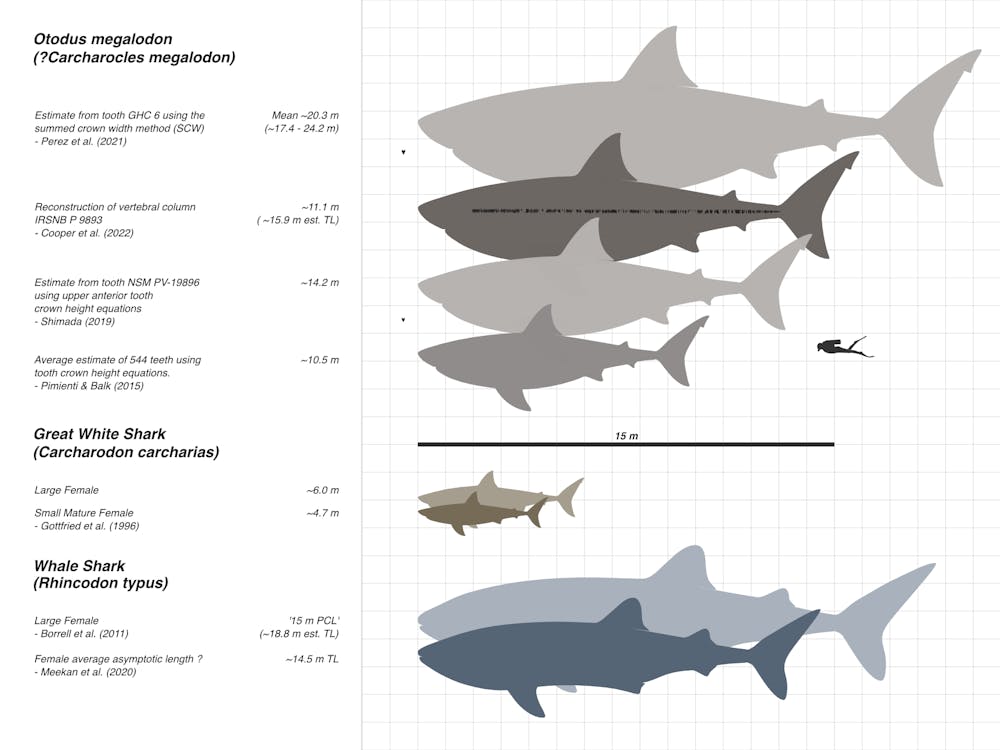
    In Peter Benchley’s 1974 novel that Jaws is based on, the shark is 6 metres long. For added screen excitement, in the movie it grew to a whopping 7.6 metres.

    However, that’s unrealistically large.

    The average size of a mature great white (Carcharodon carcharias, also known as the white shark) is between 4.6 and 4.9 metres for female sharks and up to 4 metres for male sharks.

    The largest recorded living specimens peak at about 6 metres, with one monster specimen caught in Cuba in 1945 reaching 6.4 metres.

    Earth’s oceans have seen bigger predatory sharks in the past. The biggest one of all time was the megalodon (Otodus megalodon) which lived from 23 to 3 million years ago, and may have been up to 24 metres in length. However, it looked nothing like the modern white shark.

    We don’t know precisely how big the megalodon was, but certainly larger than the great white shark.
    Steveoc 86/Wikimedia Commons, CC BY-SA

    They’re not even directly related – another thing scientists learned quite recently.

    Who was the megalodon, then?

    White sharks first evolved between 6 and 4 million years ago in the shadows of the megalodon. A recent study showed the megalodon’s large serrated teeth show signs of it being a supreme opportunistic super-predator.

    That means it ate just about anything, but especially liked whales and marine mammals.


    Read more:
    Friday essay: Giant shark megalodon was the most powerful superpredator ever. Why did it go extinct?


    But white sharks are not directly related to the megalodon, whose lineage began with a shark called Cretalamna during the age of dinosaurs about 100 million years ago.

    By contrast, the white shark lineage began with an ancient mako shark, Carcharodon hastalis. It was 7 to 8 metres long and had large, similarly shaped teeth to the modern white shark but lacking serrated edges.

    A fossil intermediate species, Carcharodon hubbelli shows the transition over time from weakly serrated to strongly serrated teeth.

    White shark fossil species. Left, the serrated fossil tooth teeth of the extant white shark; right, a similarly shaped unserrated tooth of the extinct giant mako shark which gave rise to white sharks.
    John Long, CC BY

    How did Jaws affect white shark populations?

    Last year, the International Shark Attack File reported 47 unprovoked shark bites to humans worldwide, resulting in seven fatalities. This was well below the previous ten-year average of 70 bites per year; your chances of getting bitten by a shark are extremely rare.

    Following the movies that made up the Jaws franchise, there was an increase in hunting and killing sharks – with a particular focus on great white sharks that were already going into a decline due to overfishing, trophy hunting and lethal control programs.

    Between 80% and 90% of white sharks have disappeared globally since the middle of the 20th century. Recent estimates calculate there are probably less than 500 individual white sharks in Australian waters right now.

    When Jaws first aired, scientists didn’t know how long sharks took to reproduce, or how many offspring a white shark could have each year. We now know it takes about 26 years for a male and 33 years for a female to sexually mature before they can start having pups.

    Data about white shark births is sparse, but recently a 5.6-metre-long female caught on a drum line off the coast of Queensland had just four large pups inside her. This is a very small number. Some large sharks, such as the whale shark, can give birth to up to 300 young.

    Now that we know just how slow they are to breed, it’s clear it will take many decades to reestablish the “pre-Jaws” population of white sharks – important apex predators in the marine ecosystem.

    Charlie Huveneers from Flinders University about to take a tissue sample for research on white sharks. There is still a lot we don’t know about their biology.
    Andrew Fox, Adelaide, CC BY

    Will white sharks survive?

    White sharks are currently listed as vulnerable.

    This classification means if we don’t change the current living conditions for white sharks, including impacts caused by human activities such as commercial fishing, and the impacts of climate change and ocean pollution, they will continue to decline and eventually could go extinct.

    Currently, white sharks are protected in several countries and form the basis for an important tourist industry in Australia, South Africa, western United States and most recently Nova Scotia, Canada.

    These sharks are iconic apex predators that fascinate people. One of us (John) went cage diving with them recently off the Neptune Islands of South Australia and can attest to how breathtaking it is to watch them in their natural environment.

    In terms of economic impact, they are worth far more alive than dead.

    White sharks are a growing tourism draw in several countries.
    Andrew Fox, Adelaide, CC BY

    There’s still much we don’t know about white sharks

    The complete white shark genome was first published only in 2019. It has 4.63 billion base pairs, making it much larger than the human genome (3.2 billion base pairs).

    The genome revealed some surprising things, like how white sharks show strong molecular adaptations for wound-healing processes, and a suite of “genome stability” genes – those used in DNA repair or DNA damage response.

    The transcriptome (or sum total of the messenger RNA) of the white shark showed greater similarity to the human transcriptome than to that of other fishes. This hints that “unexpressed genes” in the shark could one day play a role in uncovering genetic pathways for potential cures in human diseases.

    Jaws and its sequels certainly brought white sharks to the attention (and nightmares) of humans, with devastating impacts on how we treated them as a species.

    Our relationship with white sharks reflects our relationship with nature more broadly – a feared antagonist within the current capitalist paradigm; an enemy to be tamed, contained or consumed.

    As we learn more of the peril and potential of these remarkable creatures, we can learn how to live with them, to see beyond our fears and value their role within our delicate ocean ecosystems.

    John Long receives funding from The Australian Research Council.

    Heather L. Robinson does not work for, consult, own shares in or receive funding from any company or organisation that would benefit from this article, and has disclosed no relevant affiliations beyond their academic appointment.

    ref. Jaws at 50: how a single movie changed our perception of white sharks forever – https://theconversation.com/jaws-at-50-how-a-single-movie-changed-our-perception-of-white-sharks-forever-258306

    MIL OSI Analysis

  • MIL-OSI New Zealand: Health and Employment – Theatre nurses in Whangārei to strike – NZNO

    Source: New Zealand Nurses Organisation

    Te Whatu Ora theatre nurses and health care assistants at Whangārei Hospital who are NZNO members will strike next Tuesday over concerns about chronic and ongoing staff shortages.
    The New Zealand Nurses Organisation Tōpūtanga Tapuhi Kaitiaki o Aotearoa (NZNO) perioperative nurses and health care assistants – from the surgical admission unit, theatre and post anaesthetic units – will undertake three rolling four-hour strikes beginning at 7am and ending at 7pm on Tuesday 24 June.
    NZNO delegate and perioperative nurse Steph Moule says the nurses and health care assistants are standing up for their patients.
    “This stand is part of the current collective agreement bargaining between NZNO and Te Whatu Ora. Our patients deserve safe staffing levels. Not burnt out nurses and health care assistants who don’t have time to give them the care they need.
    “Our patients deserve better. Our members will not accept patient safety being threatened by unrealistic budget cuts.”
    Steph Moule says overworked nurses and health care assistants are also facing an effective pay cut.
    “The latest offer made by Te Whatu Ora offered a 1% wage increase this year backdated and a further 1% next April. That doesn’t keep up with the cost of living and will see nurses and health care workers and their whānau going backwards financially,” she says.

    MIL OSI New Zealand News

  • PM Modi, Croatian President Milanović hold talks to boost ties in trade, culture, defence

    Source: Government of India

    Source: Government of India (4)

    Prime Minister Narendra Modi met Croatian President Zoran Milanović in Zagreb on Wednesday and held wide-ranging discussions aimed at deepening India-Croatia relations. The talks focused on enhancing cooperation in commerce, culture, defence, and innovation.

    “Met Zoran Milanović, the President of Croatia. Had extensive discussions on the full range of India-Croatia friendship, including ways to boost linkages of commerce and culture,” PM Modi said in a post on X.

    According to the Ministry of External Affairs (MEA), the two leaders reiterated their commitment to strengthening the close and friendly ties between the two countries, based on shared democratic values, the rule of law, and a common vision for global peace and stability.

    Both sides expressed satisfaction with the growing diversification of bilateral cooperation, particularly in emerging areas such as defence, start-ups, sports, and innovation. PM Modi also thanked President Milanović for Croatia’s steadfast support to India in its fight against terrorism.

    The leaders acknowledged the deep-rooted cultural connections between India and Croatia, tracing back centuries.

    They also exchanged views on regional and global developments and noted that the growing India-EU strategic partnership could further enhance India-Croatia relations.

    “The two leaders agreed to work together to unlock the full potential of India-Croatia ties,” the MEA said.

  • MIL-OSI New Zealand: Local News – Aotea Lagoon southern area re-opens – Porirua

    Source: Porirua City Council

    After eight months of work, the south end of Aotea Lagoon in Porirua is open for the public to enjoy.
    The project to make this popular place in Porirua safer, more inviting and modern was officially opened on Thursday (19 June) and the upgrade includes:
    – New toilets
    – A wider and more open entrance
    – Updated lighting
    – A new lawn and events space, with a Rotary boardwalk and native wetland planting (about 2000 plants have been put in)
    – A pathway out to the Aotea Lions train (there used to be just one way in and out), with the train station area repaired and painted
    – Increased shade with three large trees planted, and shade over the seated area too
    – A more prominent spot for the Guy Ngan sculpture
    – An additional disabled car park in the southern car park
    The work, carried out by John Fillmore Contracting, has made this part of Aotea Lagoon accessible and safer, Porirua Mayor Anita Baker says.
    “There is better visibility, more than one exit, and it’s a lovely, open space that Porirua residents and the many visitors that come, will enjoy,” she says.
    Julian Emeny, Manager Parks, says working with Rotary – who built the original rose garden 40 years ago – for a positive outcome has made the project special.
    “What we have now, for an area of Aotea Lagoon that was starting to show its age, is a place where we can hold different events, like concerts and school performances, and somewhere the public can book,” he says.

    MIL OSI New Zealand News

  • MIL-OSI Australia: Warning issued after ACCC phone numbers spoofed by scammers

    Source: Australian Ministers for Regional Development

    The National Anti-Scam Centre is warning Australians to remain vigilant following reports scammers have been impersonating phone numbers belonging to the ACCC in an attempt to steal personal information.

    The ACCC and the National Anti-Scam Centre, which operates under the ACCC, have become aware of scammers using publicly available ACCC phone numbers, which are listed on the agency’s official website.

    In some reported cases, the scammers claimed to be representatives of the ACCC and requested sensitive information over the phone. In others, they misused the ACCC acronym to impersonate an unrelated organisation and spoke in a language other than English.

    The National Anti-Scam Centre warns that the ACCC phone numbers have been ‘spoofed’. The ACCC does not make calls from its reception numbers.

    “Spoofing is when scammers disguise their phone number to make it look like they’re calling from a trusted organisation — including government agencies like the ACCC — to deceive people into answering and sharing personal information,” ACCC Deputy Chair Catriona Lowe said.

    “This is a tactic that helps scammers hide their true identity while posing as trusted institutions – it’s designed to lower your guard. If a call or message feels off, trust your instincts and hang up. It’s safer to end the call and check in directly with us.”

    The ACCC and the National Anti-Scam Centre will never ‘cold’ call or email consumers and ask for your personal information such as your passwords, bank details or answers to security questions. The ACCC does not charge money for its services and would never threaten or pressure you to stay on the line.

    If you receive a call claiming to be from the ACCC where personal information such as passwords or bank details are requested, do not provide this information and hang up.

    “We encourage all Australians to report scams — every report helps us track patterns and protect others,” Ms Lowe said.

    The National Anti-Scam Centre also reminds the community to be extremely wary of urgent requests asking people to act immediately, and to never provide personal information if unsure. Do not click on any links or download attachments from messages unless you are sure it is someone you can trust.

    How to spot and avoid scams

    STOP – Don’t give money or personal information to anyone if you’re unsure. Scammers will create a sense of urgency. Don’t rush to act. Say ‘no’, hang up, delete.

    CHECK – Ask yourself could the call or text be fake? Scammers pretend to be from organisations you know and trust. Contact the organisation using information you source independently, so that you can verify if the call is real or not.

    PROTECT – Act quickly if something feels wrong. Contact your bank immediately if you lose money. If you have provided personal information call IDCARE on 1800 595 160. The more we talk the less power they have. Report scams to the National Anti-Scam Centre’s Scamwatch service at scamwatch.gov.au when you see them. If you’re contacted on a messaging platform like WhatsApp or iMessage, please also report the scam in the app.

    MIL OSI News

  • Operation Sindhu: Flight carrying 110 Indian citizens evacuated from Iran arrives in Delhi

    Source: Government of India

    Source: Government of India (4)

    The first flight carrying 110 Indian citizens, including 90 students from Jammu and Kashmir, arrived in New Delhi on Thursday after being successfully evacuated from Iran amid the escalating military conflict in the Middle East.

    All the evacuees were flown to the capital aboard IndiGo flight 6E 9487.

    Union Minister of State for External Affairs, Kirti Vardhan Singh, welcomed the evacuated students at the Indira Gandhi International Airport.

    The evacuation was part of Operation Sindhu, a mission launched by the Indian government to ensure the safety of its citizens in Iran.

    The Ministry of External Affairs (MEA) said on Wednesday evening that Indian students residing in Tehran had been safely moved out of the city through arrangements coordinated by the Indian Embassy.

    “Indian students in Tehran have been moved out of the city for safety reasons through arrangements made by the Indian Embassy,” the Ministry stated in an official release.

    The students departed from Zvartnots International Airport in Yerevan, Armenia, on a special flight at 14:55 IST on June 18, with their arrival in New Delhi expected in the early hours of June 19.

    MEA spokesperson Randhir Jaiswal announced the launch of the operation on X, saying, “Operation Sindhu begins. India launched Operation Sindhu to evacuate Indian nationals from Iran. India evacuated 110 students from northern Iran who crossed into Armenia under the supervision of our Missions in Iran and Armenia on June 17.”

    This is one of several steps taken by the Indian government over the past few days to ensure the safety and security of Indian nationals stranded in Iran, following appeals for assistance due to the worsening situation in the Middle East.

    The Indian government also expressed gratitude to the governments of Iran and Armenia for their cooperation in facilitating the evacuation process.

    “India accords the highest priority to the safety and security of Indian nationals abroad,” the MEA said in a statement. “As part of the ongoing operation, the Indian Embassy in Iran has been assisting large numbers of Indian nationals in relocating from areas witnessing increased hostilities to relatively safer regions within the country, and subsequently evacuating them through available and feasible options.”

    — IANS

  • MIL-OSI Russia: Cargo transportation route from China’s Zhejiang Province to Azerbaijan via Turkmenistan opens

    Translation. Region: Russian Federal

    Source: People’s Republic of China in Russian – People’s Republic of China in Russian –

    Source: People’s Republic of China – State Council News

    BEIJING, June 19 (Xinhua) — The first freight train departed from Jinhua City in east China’s Zhejiang Province on Wednesday for the port of Turkmenbashi, Turkmenistan, marking the official opening of the trans-Caspian international transport corridor from the economically developed Chinese province.

    The train loaded with 100 standard containers of clothing, accessories, metal parts and other goods will arrive at the port of Turkmenbashi. The containers with cargo will then be transported from the port by water across the Caspian Sea to the Azerbaijani port of Baku.

    The train will cross the Chinese-Kazakh border through the Khorgos checkpoint, and then pass through major cities such as Almaty, Tashkent and Ashgabat, the China News Service reported, citing a source from the railway logistics service in Jinhua.

    The new transport route is expected to reduce the load on the logistics line from the port of Aktau /Kazakhstan/ to Baku and speed up the delivery of Chinese goods to the markets of Central Asia and Central and Eastern Europe, the service said.

    As it became known, this is already the 26th logistics route opened by Zhejiang Province within the framework of international railway freight transportation China-Europe. -0-

    MIL OSI Russia News

  • MIL-OSI Russia: Trade turnover between China’s Hebei Province and Central Asian countries increased by 110 percent in January-May 2025.

    Translation. Region: Russian Federal

    Source: People’s Republic of China in Russian – People’s Republic of China in Russian –

    Source: People’s Republic of China – State Council News

    BEIJING, June 19 (Xinhua) — Trade volume between northern China’s Hebei Province and five Central Asian countries increased 2.1 times year-on-year to a record 3.03 billion yuan in the first five months of this year, the Zhongxinshe News Agency reported, citing local customs data.

    In particular, the province’s exports increased by 100 percent to 2.5 billion yuan, while its imports of foreign goods amounted to 530 million yuan, up 160 percent.

    During the reporting period, the province’s trade turnover with Kazakhstan reached 1.53 billion yuan, up 130 percent, with Uzbekistan – 860 million yuan, up 81.4 percent, with Kyrgyzstan – 400 million yuan, up 87.4 percent, with Tajikistan – 120 million yuan, up 230 percent, and with Turkmenistan – 120 million yuan, up 120 percent.

    The list of popular goods from Central Asia included sun oil from Kazakhstan and raw cowhide from Kyrgyzstan. The volume of their supplies to Hebei Province amounted to 160 million and 38 million yuan, with an increase of 72.6 percent and 54.4 percent, respectively.

    From January to May this year, the province’s automobile exports to Central Asian countries totaled 580 million yuan, up 2.4 times from the same period last year. -0-

    MIL OSI Russia News

  • MIL-OSI Russia: Uzbekistan prioritizes development and strengthening of relations with China — expert

    Translation. Region: Russian Federal

    Source: People’s Republic of China in Russian – People’s Republic of China in Russian –

    Source: People’s Republic of China – State Council News

    Tashkent, June 19 /Xinhua/ — The China-Central Asia mechanism is a strategic platform aimed at strengthening Chinese-Central Asian cooperation. Uzbekistan attaches priority importance to developing relations with China. Afzal Artikov, chief researcher at the Center for Economic Research and Reforms under the Presidential Administration of the Republic of Uzbekistan, said this in an exclusive interview with Xinhua recently.

    According to him, since its establishment, the China-Central Asia Dialogue Format has become an important tool for strengthening multi-vector cooperation, developing political, economic and cultural ties between Central Asia and China, and also serves as a platform for dialogue on key issues, including economic development, security and cultural exchange.

    Afzal Artikov noted that in Uzbekistan, taking into account the priorities of the country’s foreign policy and efforts aimed at ensuring socio-economic development, interaction within the framework of the China-Central Asia format is considered an important tool for attracting investment, expanding export opportunities, developing infrastructure and increasing regional connectivity.

    Particular importance is attached to areas of cooperation that directly contribute to the implementation of national strategies in the field of industrial modernization, digitalization, food and energy security, he said, adding that in this context, Uzbekistan is actively promoting initiatives to develop transport and logistics corridors, participate in Green Belt projects, joint scientific and educational programs, as well as deepen humanitarian and cultural exchange.

    Uzbekistan attaches priority importance to the development and strengthening of relations with China, which is one of the key strategic partners for all Central Asian countries. Such cooperation is considered not only as an important element of foreign policy, but also as an effective mechanism for supporting sustainable economic growth in the region, the expert concluded. –0–

    MIL OSI Russia News

  • MIL-OSI New Zealand: Kiwis’ Lotto generosity turns into 161 completed cyclone recovery projects – Northland

    Source: New Zealand Government

    Minister of Internal Affairs Brooke van Velden says that communities in Northland are benefitting from $3.59 million in grants from funds raised through a special Lotto draw for Cyclone Gabrielle relief, two years later. 
     

    “Cyclone Gabrielle had a devasting impact on Northland, causing widespread destruction to property and requiring significant relief efforts. Now one year after grant applications closed, more than 161 community organisations have received funding to rebuild thanks to the generosity of Kiwis who bought tickets to the special Lotto draw for Cyclone Gabrielle relief,” says Ms van Velden. 
     

    Funds raised from the special Lotto draw were passed on to the Cyclone Gabrielle Appeal Trust, which accepted grant applications until May 2024 and distributed all funds by October 2024. Grants were given to community organisations in regions where a state of emergency was declared for Cyclone Gabrielle, which were Northland, Auckland, Waikato, Bay of Plenty, East Coast, Hawke’s Bay, and Tararua.  
     

    “As well as repairing and replacing community facilities that were damaged by the cyclone, the proceeds of the lottery draw went towards upgrading local emergency services organisations so they can be better prepared for any future severe weather events”. 
     

    Northland projects that received funding include: 

    $6,000 to Surf Life Saving Baylys Beach Incorporated to purchase a generator to supply power for future adverse weather events 

    $20,000 to the Waimamaku Community Civil Defence Group for equipment and supplies to set up the community hall as an emergency assembly point  

    $19,800 to Oakura Beach Reserve Board in Ōakura for a shipping container to store seven generators to be used in emergencies 

    “Raising funds for important community projects is at the heart of what Lotto does. I’m pleased that the funds raised from this special Lotto draw went towards better preparing impacted communities for future events.” 
     

    The special draw was a part of the overall cyclone recovery effort and complemented the work that government, charities, mayoral relief funds, corporate partners and local fundraisers did in raising money to help with the response and recovery in the aftermath of Cyclone Gabrielle. 
     

    The Cyclone Gabrielle Appeal Trust was established by the Crown as an independent entity to distribute funds raised in the Cyclone Gabrielle Appeal. The Trust allocated $14,511,916 in total across the regions affected to help recovery efforts, of which $11,770,000 came from the live Lotto NZ draw on 18 March 2023. 

    MIL OSI New Zealand News

  • MIL-OSI New Zealand: Kiwis’ Lotto generosity turns into 178 completed cyclone recovery projects – Hawke’s Bay

    Source: New Zealand Government

    Minister of Internal Affairs Brooke van Velden says that communities in Hawke’s Bay are benefitting from $4.77 million in grants from funds raised through a special Lotto draw for Cyclone Gabrielle relief. 

    “Cyclone Gabrielle had a devasting impact on Hawke’s Bay, causing widespread destruction to property and requiring significant relief efforts. Now, one year after grant applications closed, 178 community organisations have received funding to rebuild thanks to the generosity of Kiwis who bought tickets to the special Lotto draw for Cyclone Gabrielle relief,” says Ms van Velden. 

    Funds raised from the special Lotto draw were passed on to the Cyclone Gabrielle Appeal Trust, which accepted grant applications until May 2024 and distributed all funds by October 2024. Grants were given to community organisations in regions where a state of emergency was declared for Cyclone Gabrielle, which were Northland, Auckland, Waikato, Bay of Plenty, East Coast, Hawke’s Bay, and Tararua.  

    “As well as repairing and replacing community facilities that were damaged by the cyclone, the proceeds of the lottery draw went towards upgrading local emergency services organisations so they can be better prepared for any future severe weather events”. 

    Hawke’s Bay projects that received funding include: 

    • $30,000 to Radio Kidnappers Charitable Trust to upgrade its AM transmission and expand emergency radio coverage across Hawke’s Bay 
    • $9,300 to the Ashley Clinton Fire Brigade (Fire and Emergency New Zealand) to purchase and install a generator and starlink 
    • $30,000 to Eskview and Districts Rugby Football Club to build an outside shelter facility for use as a hub in civil defence emergencies  
    • $20,000 to Waipuka Civil Defence to upgrade the emergency stations and communication hub, and expand shelter space 

    “Raising funds for important community projects is at the heart of what Lotto does. I’m pleased that the funds raised from this special Lotto draw went towards better preparing impacted communities for future events.” 

    The special draw was a part of the overall cyclone recovery effort and complemented the work that government, charities, mayoral relief funds, corporate partners and local fundraisers did in raising money to help with the response and recovery in the aftermath of Cyclone Gabrielle. 

    The Cyclone Gabrielle Appeal Trust was established by the Crown as an independent entity to distribute funds raised in the Cyclone Gabrielle Appeal. The Trust allocated $14,511,916 in total across the regions affected to help recovery efforts, of which $11,770,000 came from the live Lotto NZ draw on 18 March 2023. 

    MIL OSI New Zealand News

  • MIL-OSI New Zealand: $414,527 worth of lottery-funded cyclone recovery projects now complete in Waikato

    Source: New Zealand Government

    Minister of Internal Affairs Brooke van Velden says that communities in the Waikato are benefitting from over $414,000 in grants from funds raised through a special Lotto draw for Cyclone Gabrielle relief. 
     

    “Cyclone Gabrielle had a significant impact on parts of the Waikato, causing destruction to property, blocked roads, and requiring coordinated relief efforts Now, one year after grant applications closed, 18 community organisations have received funding to rebuild thanks to the generosity of Kiwis who bought tickets to the special Lotto draw for Cyclone Gabrielle relief,” says Ms van Velden. 
     

    Funds raised from the special Lotto draw were passed on to the Cyclone Gabrielle Appeal Trust, which accepted grant applications until May 2024 and distributed all funds by October 2024. Grants were given to community organisations in regions where a state of emergency was declared for Cyclone Gabrielle, which were Northland, Auckland, Waikato, Bay of Plenty, East Coast, Hawke’s Bay, and Tararua.  
     

    “As well as repairing and replacing community facilities that were damaged by the cyclone, the proceeds of the lottery draw went towards upgrading local emergency services organisations so they can be better prepared for any future severe weather events”. 
     

    Waikato projects that received funding include: 
     

    $29,500 to the Sunset Beach Surf Lifesaving Trust in Port Waikato for a new power generator to provide power supply to the community civil defence hub 

    $30,000 to the Oparau Hall Society Incorporated for repairs to the hall and equipment 

    $29,875 to the Port Project to restore and improve community walkways damaged by the cyclone 

    Sunset Beach Surf Lifesaving Trust had its first use of the generator in May 2025 when the Port had a major power outage.   Malcolm Beattie, president of the Sunset Beach Lifesaving Trust, says “it kicked in and the community had access to the Community Hub for full power immediately. Having this service immediately available for our community free of any charges was amazing.” 

     The special draw was a part of the overall cyclone recovery effort and complemented the work that government, charities, mayoral relief funds, corporate partners and local fundraisers did in raising money to help with the response and recovery in the aftermath of Cyclone Gabrielle. 

    “Raising funds for important community projects is at the heart of what Lotto does. I’m pleased that the funds raised from this special Lotto draw went towards better preparing impacted communities for future events.” says Ms van Velden. 
     

    The Cyclone Gabrielle Appeal Trust was established by the Crown as an independent entity to distribute funds raised in the Cyclone Gabrielle Appeal. The Trust allocated $14,511,916 in total across the regions affected to help recovery efforts, of which $11,770,000 came from the live Lotto NZ draw on 18 March 2023. 

    MIL OSI New Zealand News

  • MIL-OSI New Zealand: Man arrested after incident in Tahuna last night

    Source: New Zealand Police

    Attributable to Detective Sergeant Ben Norman.

    Waikato Police have arrested and charged a 22-year-old following a serious, violent incident in Tahuna.

    At around 7.20pm, Police were alerted to a group of people fighting on Tahuna-Ohinewai Road after a person who confronted three men in a vehicle doing burnouts was assaulted and other members of the public attempted to intervene.

    After noticing the incident unfolding, an occupant of a nearby property has attempted to intervene. However, they were also assaulted by the alleged offenders.

    Six people received injuries in total in relation to the incident. Two people received serious injuries, and one other received minor injuries, they were transported to hospital. Three others received minor injuries.

    The offenders have then taken two vehicles from the Tahuna-Ohinewai address and moved them onto the street.

    Upon Police arrival, the offenders have fled the scene, two fled on foot, while another left in a vehicle taken from the address.

    A short time later, one of the offenders was located nearby and was taken into custody by Police.

    An investigation into the serious assault and aggravated robbery has commenced, with Police working to establish what exactly has occurred.

    Police are following multiple lines of enquiry to identify and locate the remaining two offenders and encourage them to do the right thing and hand themselves in.

    As our enquiries are ongoing, members of the community may see an increased Police presence in the area.

    While Police would like to thank those who tried to intervene and assist other members of the public, Police urge the public not to take matters into their own hands or confront individuals themselves as situations can escalate quickly.

    Instead, stay in a safe location, gather as much information as you safely can, and contact Police on 111.

    A 22-year-old man is due to appear in Hamilton District Court today, charged with aggravated robbery and injures with intent to injure.

    If you have any information that may assist in Police’s investigation, please contact Police online at 105.police.govt.nz, clicking “Update Report” or by calling 105.

    Please use the reference number 250619/2309.

    You can also provide information through Crime Stoppers on 0800 555 111.

    ENDS

    Issued by Police Media Centre

    MIL OSI New Zealand News

  • MIL-OSI New Zealand: Luxon wraps up successful Shanghai visit

    Source: New Zealand Government

    Prime Minister Christopher Luxon has concluded the successful Shanghai leg of his official visit to China, accompanied by Ministers Louise Upston and Mark Mitchell and a delegation of senior New Zealand business leaders from across the food and beverage, health and wellbeing, education, and tourism sectors.

    “Our bilateral trade relationship with China is one of our most important, with two-way trade exceeding NZ$39 billion in the year ending March 2025. 

    “This relationship accounts for more than 20 per cent of New Zealand’s total goods and services exports,” Mr Luxon says.

    “It’s been great to see $400 million of commercial agreements signed today between New Zealand businesses and their Chinese partners. This is a clear sign of the strength and momentum in our trade relationship.

    “We also announced we would be making it easier for Chinese nationals to transit via New Zealand by removing the need to get a transit visa, instead being able to get a New Zealanders Electronic Travel Authority (NZeTA), significantly cutting costs and time for visitors. 

    “This resulted in one of the major announcements in Shanghai, that China Eastern Airlines was launching twice weekly flights to South America via Auckland.” 

    Mr Luxon participated in a tourism livestream event watched by over 10 million people, to promote New Zealand travel offerings.

    “New Zealand welcomed 248,000 visitors from China in the past year, with holiday arrivals up 31 per cent. We’ve made recent changes to visa settings to make it easier for Chinese visitors to enjoy New Zealand’s natural beauty and warm hospitality,” Mr Luxon says.

    Mr Luxon also visited Fudan University, one of China’s most prestigious academic institutions, to promote New Zealand as a destination for world-class research, study, and partnership.

    “We’re focused on deepening our education links through student connections, institutional partnerships, and joint research that benefits both countries,” Mr Luxon says.

    Mr Luxon also met with Shanghai Party Secretary Chen Jining to discuss Shanghai as a gateway for a high proportion of New Zealand goods, services and people-to-people flows, and other bilateral issues.

    The Prime Minister will now travel to Beijing, where he will meet with China’s leaders.

    MIL OSI New Zealand News

  • MIL-OSI New Zealand: Further arrest made in relation to homicide of Kaea Karauria

    Source: New Zealand Police

    Attribute to Detective Inspector Dave De Lange:

    Police have charged a second person after alleged interference in the murder investigation of 15-year-old Kaea Karauria.

    A 21-year-old Napier woman was taken into custody earlier today, after Police learned while conducting follow-up enquiries, that she had provided instructions to another person to destroy evidence.

    The alleged incident occurred on 11 May, the day of the fight in which Kaea was killed.

    The woman has been charged with wilfully attempting to pervert the course of justice, and will appear in the Napier District Court on 26 June.

    Police will continue to act without hesitation when a witness is threatened, or attempts are made to sabotage an investigation. Any witness tampering will be treated very seriously.

    We would still like to hear from anyone who has information about the incident. Our team continues to work hard on this investigation, as Kaea and his family deserve justice.

    Information can be reported via our 105 service, either over the phone or online, referencing file number 250511/1317.

    We have also set up a phoneline for those wanting to share information about the incident and people can leave a message on 0800 852 525.

    ENDS

    Issued by Police Media Centre

    MIL OSI New Zealand News

  • MIL-OSI New Zealand: Two-vehicle crash on SH60 near Mapua Drive

    Source: New Zealand Police

    Two vehicles have collided on SH 60 near Mapua Drive, Tasman District.

    One occupant has serious injuries and another occupant has minor injuries.

    The road will be closed for some time while emergency services are at the scene.

    Diversions are in place at the intersection of SH60 and Moutere Highway (Pea Vine Corner).

    Traffic will need to use the inland route (not The Coastal Highway) and rejoin SH60 at Gardner Valley Road.

    END

    Issued by Police Media Centre

    MIL OSI New Zealand News

  • MIL-OSI New Zealand: SH2 Pekatahi Bridge takes a traffic holiday

    Source: New Zealand Transport Agency

    The winter school holidays mean it’s time to wear a few more layers to the beach.

    But school’s out also means maintenance is in for the Pekatahi Bridge.

    The bridge, which is located north of Tāneatua on State Highway 2 (SH2) will close for 6 days for essential deck repairs from Monday 30 June.

    This is part of much needed quarterly maintenance of Pekatahi Bridge for NZ Transport Agency Waka Kotahi (NZTA).

    The bridge will close daily from 8:30am to 4:30pm Monday 30 June to Friday 4 July for structural work, included bridge surface plank replacement. It will close again from 8.30am to 4.30pm on Saturday 5 July for sealing work. If the weather is wet on Saturday, the contingency day is Monday 7 July. Sealing requires dry weather, so if Monday is also unsuitable, sealing may have to be undertaken under stop/stop at a later date.

    “The bridge is narrow, and due to nature of the work, full daytime closures are required,” says Sandra King, NZTA’s System Manager for the Bay of Plenty. 

    “We understand this is an important route and the closure is disruptive, but closing the bridge allows contractors to carry out repairs safely.

    “This essential maintenance work has been programmed for the school holidays when traffic volumes are lower, and no school buses will be on the road.

    “Contractors will be using the closure to its full potential by repairing and replacing broken and loose decking planks and carrying out other general maintenance such as checking surfacing screws and resurfacing,” Ms King says.

    A detour will be in place for all traffic; northbound using Tāneatua Road, Arawa Road, Hinemoa Street and onto SH30 towards Awakeri and southbound traffic will use the same route in reverse. This detour is expected to add up to 20 minutes to journey times and is suitable for all vehicles, including High Productivity Motor Vehicles (HPMV). 

    NZTA thanks Whakatāne District Council for allowing the detour route on their local roads and road users for their co-operation.  

    Detour information below:

    View larger/downloadable map [PNG, 342 KB]

    MIL OSI New Zealand News

  • MIL-OSI New Zealand: Medallic recognition for NZDF personnel extended

    Source: New Zealand Government

    The Government has expanded the criteria for medallic recognition for Defence personnel who have served in operations supporting the UN’s sanctions against North Korea, Defence Minister Judith Collins announced today.
    “This medal – the New Zealand General Service Medal (NZGSM) 2002 (Korea) – has already been awarded to 180 personnel and the move to widen eligibility means a further 350 personnel will be recognised,” Ms Collins says.
    “Personnel who have served as part of Operation Whio – which monitors the United Nations Security Council’s sanctions against the Democratic People’s Republic of Korea – since 2018 are now eligible for this medal.
    “Over the past seven years, there have been 19 rotations of Operation Whio – including seven deployments of P-3K2 Orion and P-8A Poseidon aircraft, aircrew and support personnel, and the deployment of HMNZS Aotearoa in 2024.
    The aircraft and ship conducted and supported maritime patrols to detect and deter evasions of United Nations Security Council resolutions imposing sanctions against North Korea. The other rotations were of small numbers of staff officers in headquarters roles.
    “This is another example of how we are contributing to upholding the international rules-based order. 
    “Previously this specific medal, the NZGSM 2002 (Korea), was only awarded to United Nations Command activities relating to preserving the Korean Armistice Agreement,” Ms Collins says.
    “The men and women of our Defence Force rightly deserve this acknowledgement of their service.
    “Our people do what we ask of them, when we ask it, often in trying conditions, and medallic recognition such as this is one way we recognise this.”

    MIL OSI New Zealand News