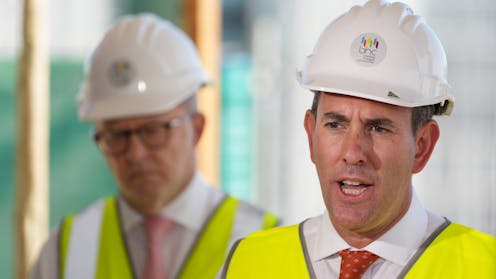
Source: Hong Kong Government special administrative region
Delegation of overseas government officials visits Hong Kong to foster exchanges The visit was arranged by the Ministry of Foreign Affairs, which invited government officials from 10 countries across Africa and Asia. The aim was to enhance exchanges and co-operation between Hong Kong and countries around the world, as well as expand the “circle of friends” of Hong Kong.
The 10 countries concerned are Cambodia, Indonesia, Laos, Mauritania, Morocco, Nepal, Pakistan, Qatar, Sri Lanka and Tunisia.
During their stay in Hong Kong, the delegation met with the Acting Financial Secretary, Mr Michael Wong; the Deputy Chief Secretary for Administration, Mr Cheuk Wing-hing; and the Deputy Secretary for Justice, Dr Cheung Kwok-kwan, to exchange views and obtain a better understanding of Hong Kong’s distinctive advantage of enjoying the strong support of the motherland while being closely connected to the world under the “one country, two systems” principle. The delegation also learned of Hong Kong’s important roles as a “super connector” and a “super value-adder” serving as a bridge between the Mainland and the rest of the world.
They also met with the Secretary for Financial Services and the Treasury, Mr Christopher Hui; the Under Secretary for Commerce and Economic Development, Dr Bernard Chan; and the Under Secretary for Innovation, Technology and Industry, Ms Lillian Cheong, as well as representatives of a number of relevant institutions. The delegation also visited the Hong Kong Science Park and West Kowloon Cultural District to learn about the city’s latest developments and opportunities in finance, trade, innovation and technology, and arts and culture.
The delegation departed for Shenzhen after their visit to Hong Kong to learn more about the integrated development of the Guangdong-Hong Kong-Macao Greater Bay Area. Issued at HKT 20:29
Source: US Whitehouse
President Donald J. Trump’s One Big Beautiful Bill will be an economic windfall for working and middle-class Americans, delivering the largest tax cut in history, higher wages, higher take-home pay, and much more — coupled with generational spending cuts and deficit reduction that will position the U.S. for real prosperity. Its massive benefits will be felt by Americans in all 50 states, according to a new state-by-state analysis from the Council of Economic Advisers:
State
Long-run wage increase(Inflation-adjusted)
Take-home pay increase(Typical family with two kids)
Alabama
$4,800 to $9,100
$6,500 to $10,800
Alaska
$6,400 to $12,200
$8,100 to $13,900
Arizona
$5,800 to $11,100
$7,500 to $12,800
Arkansas
$4,500 to $8,600
$6,200 to $10,300
California
$7,500 to $14,300
$9,200 to $16,000
Colorado
$7,000 to $13,300
$8,700 to $15,000
Connecticut
$7,300 to $14,000
$7,300 to $14,000
Delaware
$6,100 to $11,700
$7,800 to $13,400
Florida
$5,800 to $11,000
$7500 to $12,700
Georgia
$5,800 to $11,000
$7,500 to $12,700
Hawaii
$7,000 to $13,300
$8,700 to $15,000
Idaho
$5,500 to $10,500
$7,200 to $12,200
Illinois
$6,200 to $11,800
$7,900 to $13,500
Indiana
$5,100 to $9,800
$6,800 to $11,500
Iowa
$5,200 to $10,000
$6,900 to $11,700
Kansas
$5,200 to $10,000
$6,900 to $11,700
Kentucky
$4,700 to $8,900
$6,400 to $10,600
Louisiana
$4,700 to $8,900
$6,400 to $10,600
Maine
$5,400 to $10,300
$7,100 to $12,000
Maryland
$7,200 to $13,800
$8,900 to $15,500
Massachusetts
$7,700 to $14,800
$9,400 to $16,500
Michigan
$5,200 to $10,000
$6,900 to $11,700
Minnesota
$6,300 to $12,100
$8,000 to $13,800
Mississippi
$4,300 to $8,100
$6,000 to $9,800
Missouri
$5,200 to $9,900
$6,900 to $11,600
Montana
$5,300 to $10,000
$7,000 to $11,700
Nebraska
$5,700 to $10,800
$7,400 to $12,500
Nevada
$5,800 to $11,000
$7,500 to $12,700
New Hampshire
$7,000 to $13,300
$8,700 to $15,000
New Jersey
$7,700 to $14,700
$9,400 to $16,400
New Mexico
$4,800 to $9,100
$6,500 to $10,800
New York
$6,800 to $13,000
$8,500 to $14,700
North Carolina
$5,500 to $10,500
$7,200 to $12,200
North Dakota
$5,500 to $10,500
$7,200 to $12,200
Ohio
$5,200 to $10,000
$6,900 to $11,700
Oklahoma
$4,800 to $9,100
$6,500 to $10,800
Oregon
$6,000 to $11,400
$7,700 to $13,100
Pennsylvania
$5,700 to $10,900
$7,400 to $12,600
Rhode Island
$6,300 to $12,000
$8,000 to $13,700
South Carolina
$5,200 to $9,900
$6,900 to $11,600
South Dakota
$5,400 to $10,300
$7,100 to $12,000
Tennessee
$5,300 to $10,000
$7,000 to $11,700
Texas
$6,000 to $11,300
$7,700 to $13,000
Utah
$6,600 to $12,500
$8,300 to $14,200
Vermont
$5,900 to $11,300
$7,600 to $13,000
Virginia
$6,900 to $13,100
$8,600 to $14,800
Washington
$7,200 to $13,800
$8,900 to $15,500
West Virginia
$4,300 to $8,200
$6,000 to $9,900
Wisconsin
$5,500 to $10,400
$7,200 to $12,000
Wyoming
$5,200 to $9,900
$6,900 to $11,600
Methodological notes:
The Council of Economic Advisers (CEA) calculates how investment, GDP, and wages increase in response to lower effective tax rates (lower statutory rates, bigger deduction for pass-through businesses, and full expensing that businesses will enjoy on new equipment, R&D, and factories) using standard academic methods that were successful in accurately forecasting the effects of the 2017 Tax Cuts and Jobs Act (TCJA).
Take-home pay — defined as after-tax earnings — increases because wages rise and less money is taken out of workers’ paychecks.
The CEA also looks at the further boost to GDP from the stronger incentive to work (lower taxes boost labor supply) and the greater spending power that Americans will have.
More about the methodology can be found here.
South Africa views the Group of Seven (G7) as a strategic partner in its efforts to drive climate resilience, promote a just energy transition, and secure value-added investment in its rich mineral resources.
This is according to President Cyril Ramaphosa who was speaking following the conclusion of his working visit to Canada where he participated in the G7 Summit Outreach Session. The session took place on the margins of the G7 Leaders’ Summit, held in Kananaskis, Alberta.
“South Africa views the G7 as a strategic partner. We seek greater cooperation in areas such as investment, financing for development, international crime, climate change and just transitions, as well as inclusive global growth and development,” the President said on Tuesday.
The G7 consists of the largest advanced economies namely: Canada, France, Germany, Italy, Japan, the United Kingdom and the United States.
The European Union also participates in G7 Summits, although it is not a member.
The Outreach Session aimed “to explore leadership and collaboration in driving a comprehensive approach to energy security with a focus on technology and innovation; diversification and strengthening critical mineral supply chains; and infrastructure and investment”.
The outreach theme resonated with South Africa’s national interests and priorities of South Africa’s G20 Presidency.
The Outreach Sessions of the G7 have been a feature of the Group over the years with the aim being to strengthen unity among G7 members and like-minded countries to deliberate on and address some of the world’s most pressing issues.
President Ramaphosa described the summit as “most meaningful” particularly in the context of South Africa’s role as the G20 President.
“We’ve just concluded our visit to Canada to attend the G7 Summit. It has been most meaningful for us, particularly as we are the President of the G20. We’ve had the opportunity to interact with a number of heads of state and government of various countries,” he said.
Climate change
President Ramaphosa placed climate change and its devastating effects at the centre of South Africa’s message to the G7 leaders, highlighting the destruction brought by floods in KwaZulu-Natal and the Eastern Cape, as well as the ongoing droughts in parts of the Western Cape.
“We put that firmly on the global agenda, that there should be sufficient funding for incidents such as those, as they happen on a repeated basis, particularly in our sub region – in [the] SADC [Southern African Development Community], but more importantly, in two of our provinces, KwaZulu Natal and the Eastern Cape [which] over the past few years have suffered repeated incidents of destruction from floods and also droughts in parts of the Western Cape,” the President explained.
Beneficiation
On the economic front, President Ramaphosa also pushed for a shift in the global approach to Africa’s critical minerals, emphasising the need for beneficiation and inclusive value chains.
“We discussed the importance of how our critical minerals should be treated, particularly in view of the fact that they play such an important role in energy security and that the extraction of minerals from African countries and our own country, particularly, should be made more to be not only extractive, but also to have value add, where beneficiation becomes the order of the day,” he said.
He said investors must be made aware upfront that South Africa seeks to move beyond raw exports to value-added production, in line with its long-held vision of selling finished goods rather than raw materials.
“Those who want to invest in our minerals, should know up front that we are not only looking forward to them extracting minerals, but also to value chain additions or advancements in the form of beneficiation, so that in the end, we live up to what we’ve been saying, that we want to sell value added products to the rest of the world,” the President stressed.
Bilateral meetings
The first citizen also held bilateral meetings with several leaders on the sidelines of the summit, which he described as “most beneficial” for South Africa’s diplomatic and economic engagements.
He held bilateral meetings with Heads of State and Government from Canada, France, Germany and the Republic of Korea. The meetings centered on fostering greater cooperation on issues of mutual interest.
President Ramaphosa welcomed the strengthening of cooperation between South Africa and Canada as it relates to the G20 and the G7.
“Canada’s Africa strategy is comprehensive and there is potential for cooperation in areas where there is alignment with the African Agenda.”
Several engagements have taken place between South Africa and Canada at various levels, including at Sherpa and Ministerial levels. – SAnews.gov.za
Hundreds of South Africans braved the cold on Wednesday to welcome the national men’s cricket team back on home soil, following their historic victory in the 2025 International Cricket Council’s Test Championship (ICC).
The Proteas won against the then champions Australia, in a thrilling final at Lord’s in England with a five-wicket win on Saturday. This marked South Africa’s first-ever appearance in a World Test Championship Final, and their triumphant performance signalled a landmark achievement for the nation’s cricketing history.
This as Australia, currently ranked number one in the ICC Men’s Test Team Rankings, entered the final as favourites and defending champions.
The Proteas, ranked second, rose to the occasion and delivered a memorable performance, cementing their status as one of the world’s elite test sides.
The cricket team received an electrifying welcome with jubilation, song and dance from supporters, who arrived at OR Tambo International Airport, early on Wednesday morning.
The Minister of Sport, Arts and Culture, Gayton McKenzie, said the team’s win gives the nation hope.
“People should see themselves when they watch our national teams and that is what we are doing in cricket. They are following in the footsteps of rugby. We are a socially cohesive country. We are a rainbow nation and you can see this.
“We are the best sporting nation in the world. We have the strongest women and men in the world. We have the fastest runners, the best soccer players, [and]we have the best rugby players and cricket team,” the Minister said.
The Proteas men’s head coach Shukri Conrad expressed his joy at the welcome the team received at the airport.
“I am absolutely ecstatic to see people come out in their hundreds. It makes this win even more special. We won a few days ago but it hasn’t sunk in. To get a reception like this… it starts to sink in. The guys have been great but the fans have been better,” Conrad said.
The Minister, together with the cricket team, will brief the nation this afternoon on their success. –SAnews.gov.za
Source: Organization for Security and Co-operation in Europe – OSCE
Headline: In first official trip to Central Asia, OSCE High Commissioner on National Minorities Christophe Kamp visits Tajikistan and Kyrgyzstan
In first official trip to Central Asia, OSCE High Commissioner on National Minorities Christophe Kamp visits Tajikistan and Kyrgyzstan | OSCE
Skip navigation
Navigation
Navigation
Home Newsroom News and press releases In first official trip to Central Asia, OSCE High Commissioner on National Minorities Christophe Kamp visits Tajikistan and Kyrgyzstan
Source: People’s Republic of China in Russian – People’s Republic of China in Russian –
Source: People’s Republic of China – State Council News
HANGZHOU, June 18 (Xinhua) — A train loaded with 100 standard containers of daily necessities, clothing and accessories, metal fittings and other goods departed from Jinhua City in east China’s Zhejiang Province on Wednesday morning for Turkmenbashi Port in Turkmenistan, from where they will travel by sea to Baku, the capital of Azerbaijan. It is the first train to operate on the Jinhua-Turkmenbashi-Baku trans-Caspian international transport route.
According to Wu Xiaoping, an employee of the Hangzhou Railway Logistics Center, the train departed from the Jinhua South Station, will leave China through the Khorgos checkpoint /Xinjiang Uygur Autonomous Republic, Northwest China/, and pass through Almaty, Tashkent, Ashgabat and other important cities in Central Asia.
Transportation of goods from Jinhua to Baku involves the use of a multimodal method: “railway – sea – rail”. Using the Turkmenbashi seaport to cross the Caspian Sea instead of the traditional route will reduce the time of transportation of goods by about one day.
The successful opening of this route will provide enterprises with a more efficient, convenient and reliable logistics solution, and will promote the growth of trade turnover between China and the five Central Asian countries, as well as China and Central and Eastern European countries, Wu Xiaoping added. -0-
Source: People’s Republic of China in Russian – People’s Republic of China in Russian –
Source: People’s Republic of China – State Council News
URUMQI, June 18 (Xinhua) — The Xinjiang Uygur Autonomous Region’s foreign trade volume rose 22.9 percent year on year to 227.67 billion yuan in the first five months of this year, local customs said.
In particular, Xinjiang’s foreign trade turnover in May reached 61.81 billion yuan, up 30.8 percent year-on-year.
From January to May this year, Xinjiang’s trade turnover with Belt and Road countries increased by 13.8 percent, accounting for 84.8 percent of Xinjiang’s total foreign trade.
Xinjiang’s largest trading partners were Kazakhstan and Kyrgyzstan. The share of trade in goods with the five Central Asian countries in Xinjiang’s foreign trade turnover was 49.5 percent.
At the same time, Xinjiang also significantly increased its trade turnover with ASEAN and the EU. Compared with the same period last year, the figures increased by 91.6 and 55.7 percent, respectively.
Xinjiang’s export volume of electromechanical products increased by 43.8 percent in January-May this year, accounting for 40.2 percent of Xinjiang’s export volume. -0-
Source: People’s Republic of China in Russian – People’s Republic of China in Russian –
Source: People’s Republic of China – State Council News
GUANGZHOU, June 18 (Xinhua) — With the deepening of trade and economic cooperation between China and Central Asia, travel to the region has become one of the hottest topics on Chinese social media.
On the popular Chinese social network Xiaohongshu /Rednote/, the number of views of discussions under posts about both Central Asia itself and travels there has exceeded 50 million and 20 million, respectively.
A young Chinese blogger’s guide to Central Asia in Xiaohongshu has gained over 5,000 likes and favorites. Local folk customs, magnificent natural landscapes, and unique cultural charm of the Central Asian countries have attracted the attention of social media users.
According to the Utour travel agency, in the first half of 2025, the tourist flow of Chinese citizens to Central Asia increased by 100 percent year-on-year. Data from Fliggy, an online travel platform owned by Alibaba, showed that since the beginning of 2025, the number of bookings of air tickets from China to Kazakhstan and Uzbekistan increased by 60 percent and 47 percent year-on-year, respectively. Popular destinations for the Chinese were Tashkent, Almaty, Shymkent, Bukhara, etc.
China has introduced a mutual visa-free regime with Kazakhstan and Uzbekistan. Over the past year, the number of mutual trips of citizens of China and Kazakhstan exceeded 1.2 million.
In March 2025, the new Guangzhou-Almaty air route was officially opened. The development of the tourism industry in these two places has accelerated.
In early June, Zhang Qun, a resident of Guangzhou City, Guangdong Province, South China, visited Kazakhstan. Although she knew little about the Central Asian country before leaving, the experience left a deep impression on her.
“The warriors wrestle, ride horses, shoot, and tame eagles, which allowed us to immerse ourselves in a unique culture,” she said.
She also noted that Almaty and other cities in Kazakhstan are very clean and have a high level of greenery. “There are signs in Russian, English and Chinese at the Almaty airport, and there are no barriers to communication. Local residents are also very friendly to Chinese tourists,” she emphasized.
As more Chinese tourists travel to Central Asia, more and more Central Asian citizens are also becoming more interested in China.
On June 1, 2025, a plane with 160 passengers on board landed at Tianshan International Airport in Urumqi, Xinjiang Uygur Autonomous Region /Northwest China/. They became the first passengers from Uzbekistan to visit China since the Agreement between the PRC and the Republic of Uzbekistan on Mutual Exemption from Visa Requirements came into force.
Under the agreement, citizens of both countries are exempt from visa requirements when entering, leaving or transiting through the territories of the two countries for a period of no more than 30 days for each individual stay and for a total period of no more than 90 days within any 180-day period.
According to the Chinese travel platform Ctrip, since the beginning of 2025, the number of bookings of inbound tours among Central Asians has increased by 106 percent year-on-year. In particular, among citizens of Uzbekistan, this figure has increased by 164 percent year-on-year. The most popular destinations among tourists from Central Asia were Guangzhou, Hangzhou, Beijing, Urumqi, Xi’an, etc.
In recent years, the passenger flow from five Central Asian countries at Guangzhou Baiyun Airport has been steadily increasing. Since the beginning of this year, as of June 17, the total incoming and outgoing passenger flow from five Central Asian countries recorded at the checkpoint at Baiyun Airport was about 28 thousand person-times, which is more than 460 percent more than in the same period last year. Among them, the most obvious was the increase in tourist flow from Uzbekistan and Kazakhstan.
Guangzhou’s tourism industry is experiencing a rapid revival of tourism projects in Central Asia. Huang Jingru, deputy general manager of Guangzhilu Travel Agency, said that thanks to the opening of more direct flights and favorable visa policies, her agency’s tourism services sector in Central Asia has grown by more than 200 percent in the past two years.
“It is expected that in the future, tourism products from China to Kazakhstan and other Central Asian countries will have great potential in the Guangzhou market,” she said. -0-
While the world’s media is largely focused on conflict in the Middle East, the focus for many Australians remains at home, with the government preparing the long task ahead of trying to lift Australia’s productivity.
Last week, Prime Minister Anthony Albanese announced a productivity roundtable, which will be held in mid-August. Now Treasurer Jim Chalmers has flagged the roundtable will be part of a much more ambitious debate, indicating he’s open to a broad discussion of major tax reform.
In this podcast, Chalmers is frank about his own belief in the importance of seizing the moment – even if “there’s an element of political risk” whenever governments talk about tax reform.
The way I see this is that I become very wary of people who say, because of the magnitude of our majority, that we will get another term. There are, as you know, few such assurances in politics, particularly in modern politics.
I can kind of hear that [office] clock ticking behind us, and I want to get on with it. You know, we’ve got a big job to do to deliver the big, substantial, ambitious agenda that we’ve already determined and taken to an election. But I am, by nature, impatient. I think the country has an opportunity to be ambitious here. And so if you’re detecting that in my language, that’s probably not accidental.
[…] There’s no absence of courage. There is an absence of consensus, and it’s consensus that we need to move forward. And that’s what I’m seeking, not just in the roundtable, but in the second term of our government.
Chalmers says one of his takeouts from reading Abundance, a new book currently fashionable with progressives, was the need to “get out of our own away” to build more homes and renewable energy, while maintaining high standards.
A lot of regulation is necessary. So we talk about better regulation. But where we can reduce compliance costs and where we can wind back some of this red tape in ways that doesn’t compromise standards, of course we should seek to do that.
One of the things I’m really pleased I got the cabinet to agree to earlier this week is we’re going to approach all of the regulators and we’re going to say, ‘please tell us where you think we can cut back on regulation and compliance costs in a way that doesn’t jeopardise your work’ […] We’re not talking about eliminating regulation. We’re talking about making sure that it’s better.
[…] I think renewable energy projects is part of the story here. I speak to a lot of international investors, there’s a big global contest and scramble for capital in the world […] One of the things that international investors say to us about Australia is ‘we don’t want to spend too long burning cash while we wait for approvals from multiple levels of government and other sorts of approvals’.
So if we can speed some of that up, if we can make sure it makes sense, if our regulation is better, then I think we give ourselves more of a chance of achieving our economic goals, but also our social and environmental goals.
On the productivity roundtable, Chalmers wants bold ideas.
We have an open door and an open mind. This is a genuine attempt to see where we can find some common ground. In some areas that won’t be possible, in other areas, I think it will. And I think we owe it to ourselves to try.
This is a very different discussion to the [2022] Jobs and Skills Summit. Much smaller, much more targeted, a bigger onus on people in the room to build consensus outside of the room.
We’re specifically asking people to consider the trade-offs, including the fiscal trade-off when it comes to what they’re proposing. We’re asking them to take a nationwide, economy-wide view, not a sectoral view about their own interests.
On whether any new major changes – including greater tax reform – would require a fresh mandate, Chalmers wants to wait and see.
I think it depends on the nature of the change. I’m sort of reluctant to think about sequencing and timing and mandates before we’ve got everybody’s ideas on the table and worked out where the consensus and common ground exists […] I think that remains to be seen.
E&OE Transcript
MICHELLE GRATTAN, HOST: Treasurer Jim Chalmers has declared improving Australia’s dismal progress on productivity is at the top of his priorities for Labor’s second term, but addressing the National Press Club on Wednesday, it was clear that his ambitions for economic reform are wide, much wider than we’ve heard from him or from the Prime Minister in the previous term or in the election campaign.
From August 19 to 21, the Government will hold a roundtable to seek ideas for reform from business, unions, civil society and experts. This will be a small gathering held in Parliament House’s Cabinet room.
Notably, Chalmers has invited participants to put forward ideas on tax reform.
The Treasurer is our guest today. Jim Chalmers, before we get to the roundtable, let’s start with the escalating Middle East war. What are the economic implications of this so far, and on one specific issue, what are the implications going to be for oil prices?
JIM CHALMERS, TREASURER: Thanks, Michelle. This is obviously a very perilous part of the world right now, it’s a perilous moment, perilous for the global economy as well.
We’re primarily focused on the human consequences of what’s going on, including around 2,000 people who’ve registered with DFAT to try and get out of the particularly dangerous areas right now, so that’s our focus, but there will be big economic consequences as well, and we’ve already seen in the volatility in the oil price – the barrel price for oil went up between 10 and 11 per cent last Friday when a lot of this flared up, and I think that is an indication of the volatility that this escalating situation in the Middle East is creating in the economy.
I get briefed every day on movements in relevant commodity prices and the like, and there’s a lot of concern, again primarily about the human cost, but there’s a lot of concern around the world about what this means for petrol price inflation and what it means for global growth as well.
GRATTAN: Also on the international scene, are we making any progress on getting concessions on the US tariffs, or will that have to wait for a rescheduled meeting between Donald Trump and Anthony Albanese? There’s now talk, incidentally, of a meeting possibly at NATO next week, although we don’t know whether that will happen or not.
CHALMERS: The Prime Minister’s made it clear that he is considering going to the NATO meeting. By the time people listen to this podcast, it may be that that’s been determined, but whether or not he goes to Europe, we’ve got a lot of different ways and a lot of different opportunities to engage with the Americans on these key questions, and the Prime Minister met with some of the most senior people in the economic institutions of the US overseas – and he met with leaders from Japan and the UK and Germany and Canada and others, so a very worthwhile trip.
We’ll continue to engage wherever we can and whenever we can, because our national economic interest is at stake here. We’ll continue to speak up and stand up for our workers and our businesses to try and make progress on this really key question.
GRATTAN: But no progress yet.
CHALMERS: We’re continuing to engage. We have had discussions at every level, including at my level, and the Prime Minister’s had discussions. Like the whole world right now, people are trying to get a better deal in the aftermath of the announcement of these tariffs; we’re no exception.
We’re better placed and better prepared than most countries to deal with the fallout of what’s happening with these escalating trade tensions, but we are seeking a better deal for our workers and businesses and industries. The Prime Minister’s engagement reflects that, and so does the rest of ours.
GRATTAN: Now, to turn to your productivity roundtable, give us some more details about it, including whether the sessions will be public and will the Premiers be there?
CHALMERS: There are some of those details that we’re still working out. I can’t imagine it will be public in the sense that we’ll have permanent cameras in the Cabinet room, but we don’t intend to be heavy‑handed about it, we’re not seeking people to sign non‑disclosure agreements ‑ I can’t anticipate that we’ll make it kind of Chatham House rules or confidential discussions, but we’re working through all of those issues. When it comes to the states, obviously we want the states involved in one way or another, and we’re working out the best way to do that.
I already engage with the state and territory treasurers at the moment on some of these key questions. I’ll continue to do that, I’ll step that up, and we’ll work out the best way to make sure that the states’ views are represented in the room.
You know how big the Cabinet room is, Michelle, it’s about 25 seats around an oblong table, so we can’t have everybody there, but we will do everything we can to make sure that the relevant views are represented, including the views of the States and Territories.
GRATTAN: When you say you wouldn’t see you having cameras in the Cabinet room, wouldn’t you want some of it to be public, because if it wasn’t, then whoever was telling the story would be putting their slant on it?
CHALMERS: Well, we’ll try and strike the best balance. I think what will happen is, inevitably, people who are participating in the roundtable, indeed people who are providing views but not necessarily in the room, there will be a big flourishing of national policy discussion and debate; that’s a good thing. We’ll try not to restrict that excessively. I just think practically having a kind of live feed out of the Cabinet room is probably not the best way to go about things.
But I’m broadly confident ‑ comfortable, broadly comfortable with people expressing a view outside the room and characterising the discussions inside the room. There may be a convincing reason not to go about it that way, but I’m pretty relaxed about people talking about the discussions.
GRATTAN: In your Press Club speech, you spoke about seeking submissions. Now, would those be submissions before the roundtable?
CHALMERS: Absolutely, but also, we’re trying to work out, in addition to structuring this roundtable – which will be a really important way for us to seek consensus – in addition to that, we’re trying to work out how do we become really good at collecting and taking seriously the views that are put to us by people who are experts in their fields.
Not everybody can be around the Cabinet table. People have well-informed views, and we want to tap them. So we’re working out the best way to open a dedicated Treasury channel, primarily and initially, about feeding views in for the consideration of the roundtable. But if there are ways that we can do that better on an ongoing basis, we’re going to look at that too.
GRATTAN: What do you say to those in business who came out of the 2022 Jobs and Skills Summit rather cynical thinking, really, they’d been had, frankly, that this was basically a meeting to legitimise the Government giving what it wanted to to the unions?
CHALMERS: I’ve heard that view, but I don’t share it. I’ve taken the opportunity in recent days to look again at the sorts of things we progressed out of the Jobs and Skills Summit, it was much, much broader than a narrow focus on industrial relations. So I take that view seriously, but I don’t share it.
And my commitment, I gave this at the Press Club, and I will give this commitment every day between now and the roundtable if that’s necessary, we have an open door and an open mind, this is a genuine attempt to see where we can find some common ground. In some areas, that won’t be possible, in other areas I think it will, and I think we owe it to ourselves to try.
This is a very different discussion to the Jobs and Skills Summit, much smaller, much more targeted, a bigger onus on people in the room to build consensus outside of the room. We’re specifically asking people to consider the trade-offs, including the fiscal trade-offs. When it comes to what they’re proposing, we’re asking them to take a nationwide, economy-wide view, not a sectoral view about their own interests.
Let’s see how we go. We are approaching it in that fashion, a different discussion to Jobs and Skills, and we want to give ourselves every chance to progress out of that discussion with something meaningful.
GRATTAN: You say you accept the need for tax reform. This is really a big statement from you, and it is a change of emphasis from last term. Up to now, you’ve resisted any suggestion of undertaking comprehensive reform of the taxation system. So, where do you actually stand now? Are you looking for ideas for incremental change, or are you looking for something that’s really bold?
CHALMERS: First of all, I do accept that the economic reform, and particularly the tax reform we’ve engaged in so far, it has been sequenced, it has been methodical – but it’s also been, I think, more substantial than a lot of the commentary allows, about half a dozen ways we’re reforming the tax system, and I’m proud of the progress that we’ve made.
When it comes to the roundtable, the point I’ve made about tax, the thing I welcome about the roundtable is it’s not possible to think about and talk about productivity, budget sustainability and resilience amidst global volatility without allowing or encouraging, welcoming a conversation about tax. So that’s the approach I’m taking to it.
What I’m trying to do, and we’ll see how successful we can be at doing this over the course of the next couple of months, but what I’m trying to do is to not pre‑empt that discussion, I’m trying not to artificially limit that discussion about tax, and that’s because I know that people have well‑intentioned, well‑informed views about tax reform; let’s hear them.
GRATTAN: But you do seem open, from what you said, to a possible switch in the tax mix between direct and indirect.
CHALMERS: I think that will be one of the considerations that people raise at the roundtable, and I think it would be unusual to discourage that two months out. Let’s see what people want to propose. You know, I think that’s an indication of my willingness, the Prime Minister’s willingness, the Government’s, to hear people out.
And we broadly, whether it’s in tax and budget, whether it’s in productivity, resilience – I don’t want to spend too much at this roundtable with problem ID, I want to go from problem ID to ideas. That’s because we’ve had really for a long time now – probably as long as you and I have known each other, Michelle – we’ve had a lot of reports about tax, and important ones. I think the time now is to work out where are their common interests, where does the common ground exist, if it exists, on tax, and to see what we can progress together, and that requires on my part an open mind, and that’s what I’ve tried to bring to it.
GRATTAN: Of course, your former Treasury Secretary, who’s now the Prime Minister’s right-hand man as head of the Prime Minister’s department, I think has made speeches pointing out that you really do need such a switch.
CHALMERS: Yeah, and Steven Kennedy’s a very influential person in the Government. I’m delighted – we’ve been joking behind closed doors about Steven being demoted to PM&C from Treasury, but the reality is it’s amazing, it’s the best of all worlds from our point of view to have Kennedy at PM&C and Wilkinson at Treasury. That’s an amazing outcome for anyone who cares about economic reform and responsible economic management, a wonderful outcome.
Steven has made a number of comments in the past about the tax system, probably Jenny has as well. They are very informed, very considered, big thinkers when it comes to economic reform, and we’re going to tap their experience, their interest and their intellect.
GRATTAN: Well, he can now get into the Prime Minister’s ear on this matter. The other thing on tax, you did seem to wobble a bit on changing the GST; you’ve been pretty against that. I guess you left the impression at the Press Club that basically you were still probably against, but you did seem a bit more open-minded than usual.
CHALMERS: What I’m trying to do there, Michelle, and I’m pleased you asked me, because I think that was a bit of a test, a bit of an example of what I talk about in the speech, which is that obviously there are some things that governments, sensible, middle of the road, centrist governments like ours don’t consider – we don’t consider inheritance taxes, we don’t consider changing the arrangements for the family home, those sorts of things.
But what I’ve tried to do and what I tried to say in the speech is if we spend all of our time ruling things in or ruling things out, I think that has a corrosive impact on the nature of our national policy debate, and I don’t want to artificially limit the things that people bring to the roundtable discussion.
I was asked about the GST – you know that I’ve, for a decade or more, had a view about the GST. I repeated that view at the Press Club because I thought that was the honest thing to do, but what I’m going to genuinely try and do, whether it’s in this policy area or in other policy areas, is to not limit what people might bring to the table.
And so that’s what you described as a wobble, I think that really just reflects what I’m trying to do here is to not deny what I have said about these things in the past, but to try and give people the ability to raise whatever they would like at the roundtable. I suspect there will be other occasions like that, other opportunities like that between now and the roundtable where I’ll do the same thing. I’ll repeat what I’ve said, I won’t walk away from it, I haven’t changed my view on the GST. I suspect people will bring views to the roundtable about the GST. Let’s hear them.
GRATTAN: Well, of course, the GST can be a bit like a wild dog when it’s let off the leash. You’ll remember when Malcolm Turnbull let Scott Morrison as Treasurer float the idea of changing the GST, and that didn’t end well.
CHALMERS: No, I think I can recall a fascinating part of Malcolm’s book about that, if memory serves, or perhaps something else that he said or wrote subsequently. I’m obviously aware of that history, you know, and there’s ‑ let’s be upfront with each other, Michelle, when you do what I did at the Press Club today and say bring us your ideas and let’s see where there’s some common ground, there’s an element of political risk to that.
There’s a lot of history tied up in a lot of these questions, as you rightly point out in this instance, and I guess I’m demonstrating, or I’m trying to demonstrate, a willingness to hear people out, and there will be people who write about that in a way that tries to diminish this conversation that we’re setting up. That will happen. I’m open to that, relaxed about that, but let’s see what people think about our economy, about productivity, sustainability, tax, resilience, and let’s see if we can’t get around some good ideas that come out of that discussion.
GRATTAN: Which tempts me to ask, will Ken Henry be on your guest list of the famous Henry review?
CHALMERS: I think some people were surprised to see Ken there today at the National Press Club. Ken was there at the Press Club, and I think I said in the question and answer, if memory serves, and I hope it’s okay with Ken that I said this, but we’ve been engaging on drafts of the speech – we talk about some of the big issues in the Press Club speech I gave today.
I’m not sure about the final invite list. Once you start putting together a list of about 25 people, you’ve got some ministerial colleagues, you’ve got peak organisations, including the ACTU, Sally McManus will be there, maybe a community organisation, someone representing the community, some experts. Before long, it’s very easy to hit 25 people.
You’ve planned a few dinner parties in your time, Michelle, and an invite list of 25 people fills up pretty quick. We haven’t finalised that yet, but whether we invite Ken or Ken’s outside the room, he’s one of a number of people that I speak to about these big policy challenges, and regardless, I hope that he’s okay with us continuing to tap his brain.
GRATTAN: Maybe you need to adopt a sort of restaurant approach of rotational sittings.
CHALMERS: Yeah, well! –
GRATTAN: Now, I know you said today that you don’t like gotcha questions and gave us a bit of a lecture ‑‑
CHALMERS: This doesn’t sound like a good introduction, Michelle.
GRATTAN: ‑‑ about that, but your controversial tax on capital gains on superannuation balances that are very big, critics worry that this could in fact be the thin end of the wedge extending to other areas of the tax system. Would you care to rule that out?
CHALMERS: I think I said today, and I’m happy to repeat with you, Michelle, that we haven’t changed our approach here. We’ve got a policy that we announced almost two and a half years ago now, and we intend to proceed with it.
What we’re looking for here is not an opportunity at the roundtable to cancel policies that we’ve got a mandate for; we’re looking for the next round of ideas.
Now again, a bit like some of the other things we’ve been talking about, I suspect people will come either to the roundtable itself or to the big discussion that surrounds it with very strong views, and not unanimous views about superannuation. We read in a couple of our newspapers on an almost daily basis that people have got strong views about the superannuation changes, and not the identical same views, and so I suspect that will continue.
But our priority is to pass the changes that we announced, really some time ago, that we’ve taken to an election now, and that’s how we intend to proceed.
GRATTAN: So, you’re open to considering other views?
CHALMERS: On that particular issue, I think we have a pretty good sense of people’s views. I mean there’s ‑ I don’t pretend for a second that there’s unanimous support for it.
GRATTAN: I mean, extending it to other areas.
CHALMERS: No, I mean that’s not something we’ve been contemplating even for a second, and we haven’t done any work on that, we haven’t had a discussion about that, that’s not our intention.
But more broadly, when it comes to the system, I suspect people will have views about that at the roundtable – but thanks for the opportunity to clarify, we’re not planning for or strategising for extending that in additional ways.
GRATTAN: Now, artificial intelligence is obviously being seen as the next big productivity enhancer when you’re talking about the big things, but it’s also going to cost jobs, and that will exercise the unions.
Your Industry Minister Tim Ayres, has emphasised the unions have a role in this transition, must be consulted, brought into it, but you’ve said that while regulation will matter, and I quote, “We are overwhelmingly focused on capabilities and opportunities, not just guardrails. The emphasis here is different”. Do you see this as being a bit like the tariff reforms in the Hawke/Keating time, when there were big gains to be made but there were also very significant losers, and how do you deal with that situation?
CHALMERS: First of all, I think unions do have a place and a role to play in this. I can’t imagine meaningful progress on AI or technology more broadly where we wouldn’t include unions and workers in that conversation. That wouldn’t be consistent with our approach, and it wouldn’t make a lot of sense, so I share Tim’s view on that. I work closely with Tim Ayres and also Andrew Charlton, who will have a key role in some of these policy questions.
The point that I was making was it’s not a choice between regulation or capability, it’s not an either/or. Obviously we need guardrails, obviously we need regulation, but from my point of view, I see this as a game‑changer in our economy, I see it as one of the big ways that will make our economy more productive and lift living standards.
It’s not all downside for workers either – we’re talking about augmenting jobs, we’re talking about some of the routine tasks that are not the most satisfying parts of people’s work, so of course we want to include the union movement, of course we want to make sure that we’ve got appropriate guardrails.
The point that I was making in that interview with the Financial Review which you’re quoting from is that we need to get our capabilities right, we need the right skills base, I think we’ve got a huge opportunity with data centres and the infrastructure that supports artificial intelligence, and so that is a big part of the focus of our work. When it comes to productivity, when it comes to growth more broadly, industry policy, our work with the Productivity Commission, data and digital, AI, data centres, all of that I think are going to be key parts of the future economy in Australia.
GRATTAN: The last time we spoke on this podcast, you said you’d been reading the book Abundance by Ezra Klein and Derek Thompson, and you described it as a ripper. Now I think you’re making all your Cabinet colleagues read it too, and I’m not sure whether they thank you for that, but there it goes.
What are some of the ideas in the book that attracted you, and in particular, do you agree with the thesis that red tape is holding us back, particularly when it comes to housing and renewable energy and the transition to renewables?
CHALMERS: First of all ‑ we should be on a commission for this book, I think, from Andrew Leigh through a whole bunch of colleagues ‑ a lot of us have either read it or are in the process of reading it.
The reason that we are attracted to it is because it really is about working out as progressive people who care deeply about building more homes, rolling out more renewable energy, to make sure that the way we regulate that and approach that doesn’t get in our own way, that we don’t make it harder for us to achieve our big economic goals in the energy transformation; in housing and technology and all of these sorts of things.
What the Abundance book reminds us to do, and I think in a really timely and really punchy way, is it says, “As progressive people, let’s get out of our own way”. A lot of regulation is necessary, so we talk about better regulation, but where we can reduce compliance costs and where we can wind back some of this red tape in ways that doesn’t compromise standards, of course, we should seek to do that.
One of the things I’m really pleased I got the Cabinet to agree to earlier this week is we’re going to approach all of the regulators, and we’re going to say, “Please tell us where you think we can cut back on regulation and compliance costs in a way that doesn’t jeopardise your work”. I suspect from that, maybe not from every regulator, but from some of the regulators, I think if we are genuine about it, I think we can make some progress there to get compliance costs down, to speed up approvals so that we can deliver the things that we truly value as an economy but also as a society, and that’s what the Abundance book’s about.
GRATTAN: Of course, one of the problems is, while this sounds very good, a lot of stakeholders say we need more regulation of this or that, we need to protect flora, fauna, climate, whatever.
CHALMERS: Yeah, of course we do.
GRATTAN: And that all gets in the way of clearing away red tape, doesn’t it?
CHALMERS: We’re not talking about eliminating regulation, we are talking about making sure that it’s better, that we can use regulation in the service of our social and environmental and economic goals, but to make sure that we’re not overdoing it, that it’s not unnecessary, that it doesn’t prevent us achieving our aspirations and our objectives, including in the environment.
I think renewable energy projects are part of the story here, and I speak to a lot of international investors, there’s a big global contest and scramble for capital in the world. People are rethinking their investments, and there’s a lot of interest in Australia, and one of the things that international investors say to us about Australia is we don’t want to spend too long burning cash while we wait for approvals from multiple levels of government and other sorts of approvals.
If we can speed some of that up, if we can make sure it makes sense, if our regulation is better, then I think we give ourselves more of a chance of achieving our economic goals, but also our social and environmental goals as well.
GRATTAN: Another of your priorities is budget sustainability, and you say the Government’s made progress, but there’s a way to go. So, where are you going now? Do you need to make big savings in what areas, or are you really having to look at the revenue side more?
CHALMERS: I think there’s this kind of strange binary analysis of the budget situation. Some people say it doesn’t matter, some people say it’s beyond repair, and obviously, like a lot of things in politics and policy, the truth lies somewhere in between.
We’ve made a heap of progress on the budget; two surpluses, biggest ever nominal turnaround in the budget, we got the debt down, got the interest costs down. But what I acknowledge and what I will continue to acknowledge is there’s always more work to do to make it more sustainable.
For us, we made a heap of progress on aged care, the NDIS and interest costs, but we need to make sure that even when we think about the policy ideas that people bring to us at the roundtable, budget sustainability really matters. Where we do find something that we want to invest more in, we’ve got to consider the trade-offs, we’ve got to work out how to pay for things.
There’s probably not a day, certainly not a week that goes by where Katy Gallagher and I aren’t in one way or another engaging with colleagues on some of these structural pressures on the budget, because they do matter.
GRATTAN: Well, one, of course, is defence spending, and I was interested that you did in your remarks to the Press Club seem, while cautious, while saying, “We’re spending a lot on defence”, you seemed open to the idea that over the next decade governments will have to increase defence spending.
CHALMERS: I think the point I was trying to make there, Michelle, was it would be strange over a period of 10 years if there were no changes to any policy or levels of spending. But the thing that’s not, I think, sufficiently acknowledged is we’ve already quite dramatically increased defence spending, and you know, it’s not easy to find the extra $11 billion we found over the forward estimates, or the almost $58 billion I think we found over the decade.
We are dramatically increasing our defence spending. I acknowledge and accept and respect that some people, including some of our partners, want us to spend more on defence, but we are already spending a heap more on defence, and we’ve had to find room for that in the budget, and that’s what we’ve done.
GRATTAN: So we should be up for that conversation, as Richard Marles would say?
CHALMERS: I think what Richard’s saying, to be fair to him, is that we are more or less continuously engaging with our partners about things like defence spending, and when it comes to the Americans, they’ve made it clear around the world that they want people to spend more on defence. That’s not an unreasonable position for the Americans to put to us. We decide our level of defence spending, and we have decided collectively as a government to dramatically increase it.
GRATTAN: As Treasurer, you’re the gatekeeper for foreign investment decisions, big decisions, and there’s a takeover bid at the moment from Abu Dhabi’s national oil company for Santos. Can you give us some idea of the process, the timetable, when you would make a decision if the matter comes to you?
CHALMERS: This is a really big transaction potentially, and it raises – there are a lot of considerations around the national interest, it’s in a sensitive part of our economy for all of the obvious reasons.
What usually happens with a transaction of this magnitude, tens of billions of dollars, is it goes through a number of stages. One of those stages is a Foreign Investment Review Board process where I’ve got a heap of terrific colleagues in the Treasury who advise me on these things. What I try to do is to make sure that I refrain from commenting on these sorts of deals before I’ve got that Foreign Investment Review Board advice. I take that advice very seriously, and that means not pre‑empting it.
I know that there will be a heap of views, a heap of interest, I do acknowledge it’s a very big transaction which involves a really key sensitive part of our economy, and I’ll do what I always do with these big FIRB approval processes, which is to engage in it in a really methodical and considered way.
That will roll out over the course of the next few months. The last time I asked, which I think was yesterday, we hadn’t ‑ the FIRB hadn’t had a chance to go through or hadn’t received yet the Foreign Investment Review Board proposal. That may have changed since then, but regardless, these things take a little bit of time.
GRATTAN: Before we finish, let’s come back to productivity. You’ve said the work will take more than a term. So just give us a snapshot of where you would want to be at the end of say three years, six years.
CHALMERS: Yeah. The point I’m making there, when it comes to productivity is, unlike some of the other really important measures in our economy, there’s no instant gratification. It’s very hard to flick a switch and get an immediate, substantial, meaningful shift in the data.
The point that I’ve made is that we’re enthusiastic and very committed, very dedicated to doing meaningful things on productivity, but even those things can sometimes take a while to play out in the data, so I’m just really trying to say to people, this is important, it will pay off, some of it will pay off in the medium term and the longer term, but that shouldn’t deter us, the fact that some of these challenges take a little bit longer to fix.
Now, if there was a switch that you could flick to make our economy instantly more productive, somebody would have flicked it already. Unfortunately, there’s not, and so we’re left in a world where we have to do a lot of things at once, and some of those things will take a little while to pay off.
GRATTAN: Can you set any sort of target in terms of growth, annual growth? –
CHALMERS: I’m reluctant to do that.
GRATTAN: – productivity growth.
CHALMERS: I’m reluctant to do that. The budget assumes a level of productivity growth, which is higher than what we are currently seeing, so it wouldn’t be a bad start to try and get closer to the forecast. But I’m reluctant to put a target on it.
GRATTAN: And that forecast is?
CHALMERS: The Treasury changed it to 1.2 per cent, and we’re currently tracking a bit lower than that on the current 20-year average, and so we need to do better. I tried to be quite blunt about that at the Press Club. Our economy is growing, but it’s not productive enough, our budget is stronger, but it’s not sustainable enough, our economy is resilient, but not resilient enough. And this is my way of saying to people, we’ve made a lot of progress together, but we’ve got a further ‑ we’ve got more to do, and productivity is our primary focus in that regard, but not our only focus.
GRATTAN: For really big changes, say for tax changes, do you think you need another mandate or not?
CHALMERS: I think it depends on the nature of the change. I’m reluctant to think about sequencing and timing and mandates before we’ve got everybody’s ideas on the table and worked out where the consensus and common ground exists, and so I don’t like to be evasive with a good question like that, Michelle, but I think that remains to be seen. It will be to be determined once we get a firmer sense of the way forward.
GRATTAN: Just finally, you sounded in your speech rather like a man who’s been liberated since the election. Has your attitude changed? Do you think it’s just time to go for it?
CHALMERS: The way I see this, Michelle, is that I become very wary of people who say, because of the magnitude of our majority, that we will get another term. There are, as you know, few such assurances in politics, particularly in modern politics, and so I can kind of hear that clock ticking behind us, and I want to get on with it.
We’ve got a big job to do to deliver the big, substantial, ambitious agenda that we’ve already determined and taken to an election. But I am by nature impatient, I think the country has an opportunity to be ambitious here, and so if you’re detecting that in my language, that’s probably not accidental. I think we know what the challenges are, we know what people’s views are broadly, there’s no absence of courage, there is an absence of consensus, and it’s consensus that we need to move forward, and that’s what I’m seeking not just in the roundtable, but in this second term of our Government.
GRATTAN: Jim Chalmers, it’s going to be an interesting few months, and thank you for talking with us today. That’s all for today’s podcast. Thank you to my producer, Ben Roper. We’ll be back with another interview soon, but good‑bye for now.
Michelle Grattan does not work for, consult, own shares in or receive funding from any company or organisation that would benefit from this article, and has disclosed no relevant affiliations beyond their academic appointment.
Source: United Kingdom – Executive Government & Departments
News story
Rabies case confirmed following contact with animal abroad
UKHSA is reminding travellers to be careful around animals when travelling to rabies affected countries.
An individual from the UK has sadly died after becoming infected with rabies, following contact with a stray dog during a visit to Morocco. The individual was diagnosed in Yorkshire and the Humber.
There is no risk to the wider public in relation to this case as there is no documented evidence of rabies passing between people. However, as a precautionary measure, health workers and close contacts are being assessed and offered vaccination when necessary.
Rabies is passed on through injuries such as bites and scratches from an infected animal. It is nearly always fatal, but post-exposure treatment is very effective at preventing disease if given promptly after exposure to the virus.
The UK Health Security Agency (UKHSA) is reminding travellers to be careful around animals when travelling to rabies affected countries due to the risk of catching the disease.
Dr Katherine Russell, Head of Emerging Infections and Zoonoses, at UKHSA, said:
I would like to extend my condolences to this individual’s family at this time.
If you are bitten, scratched or licked by an animal in a country where rabies is found then you should wash the wound or site of exposure with plenty of soap and water and seek medical advice without delay in order to get post-exposure treatment to prevent rabies.
There is no risk to the wider public in relation to this case. Human cases of rabies are extremely rare in the UK, and worldwide there are no documented instances of direct human-to-human transmission.
Rabies does not circulate in either wild or domestic animals in the UK, although some species of bats can carry a rabies-like virus. No human cases of rabies acquired in the UK from animals other than bats have been reported since 1902.
Between 2000 and 2024 there were 6 cases of human rabies associated with animal exposures abroad reported in the UK.
Rabies is common in other parts of the world, especially in Asia and Africa. All travellers to rabies affected countries should avoid contact with dogs, cats and other animals wherever possible, and seek advice about the need for rabies vaccine prior to travel.
You should take immediate action to wash the wound or site of exposure with plenty of soap and water, if:
you’ve been bitten or scratched by an animal while you’re abroad in a country with rabies
an animal has licked your eyes, nose or mouth, or licked a wound you have, while you’re abroad in a country with rabies
you’ve been bitten or scratched by a bat in the UK
Local medical advice should be sought without delay, even in those who have been previously vaccinated.
When given promptly after an exposure, a course of rabies post-exposure treatment is extremely effective at preventing the disease. If such an exposure occurs abroad, the traveller should also consult their doctor on return, so that the course of rabies treatment can be completed. If travellers have not sought medical advice abroad, they should contact their doctor promptly upon return for assessment.
For more information on the risk of rabies in different countries, see the country information pages on the National Travel Health Network and Centre’s (NaTHNaC’s) website, TravelHealthPro.
The Lord Mayor of Leeds yesterday presented the proceeds of ticket sales generated by the highly successful VE/VJ80 civic event to the Royal British Legion (RBL) Poppy Appeal.
The civic event, which marked the 80th anniversary of the Victory in Europe and Victory over Japan days, took place at Leeds Minster on May 10. Attracting over 400 guests, including dignitaries, veterans, and members of the public, ticket sales generated £1000 for the RBL. The event also saw the presentation of the Leeds Award to 102-year-old D-Day veteran, Jack Mortimer. The Leeds Award is a formal recognition by Leeds City Council which acknowledges individuals, organisations, or groups who have made outstanding contributions that benefit the city and its residents. It was presented to Jack for his lifelong commitment to veterans’ affairs and, fittingly, his fundraising work for the Royal British Legion.
Above: Second World War Wren veteran, Eileen Marshall, singing with members of the Hummingbirds UK at the Civic Hall presentation.
The cheque presentation, which took place in the Civic Hall’s Ark Royal room, was made to the RBL’s Jonathan Calvert and Emma Osbourne by the new Lord Mayor of Leeds, Councillor Dan Cohen. In attendance were many of those who spoke and performed at the civic event, along with councillors, Second World War veteran Eileen Marshall, and representatives from the businesses and organisations that donated goods and services to the event.
Above: The Lord Mayor of Leeds, Councillor Dan Cohen, speaking to guests.
The Lord Mayor of Leeds, Councillor Dan Cohen, said: “The VE/VJ 80 civic event was not only a time to commemorate, remember, and reflect on those momentous days at the end of the Second World War 80 years ago. It was also an opportunity to have some fun and raise money for an incredible charity at the same time.
“The Royal British Legion works tirelessly for all veterans of the armed forces and their families, so it was my great pleasure to present a cheque for the money raised through ticket sales to help them continue their important work.”
“I would also like to take the opportunity to give my thanks to all those people, organisations and companies who made the civic event so successful, especially my colleague, Councillor Jane Dowson, who spent many hours on the organisation. Without the donations from some fantastic local businesses, and the magnificent speakers and performers who made no charge for their time, goods, and services, the event would not have achieved such success.”
Source: Moscow Government – Government of Moscow –
The Moscow Oncology Forum 2025 has begun its work in the capital. It was opened by Anastasia Rakova, Deputy Mayor of Moscow for Social Development. In her welcoming speech, she spoke about the city’s transition to an electronic format for pathomorphological diagnostics, the completion of the formation of an infrastructural framework for oncological care, and the introduction of robotic systems into the capital’s healthcare system.
“In five years, we have essentially created a high-tech oncology service from scratch: we have modernized the equipment, worked out standards for drug provision, formed client paths and carried out complete digitalization. Now all oncology hospitals have the most modern robotic systems – and not one in each. And all this is provided with the necessary financial resources. Four thousand operations have already been performed, and our annual capacity is more than five thousand operations per year. All our laboratories work exclusively digitally. But the most important thing is, of course, a new level of quality of medical care for our patients. I would like to separately note the team of Moscow oncologists, who are truly the vanguard of the capital’s healthcare. You are pioneers in almost all innovations and processes. I would like to thank each oncologist for your daily, difficult, but very noble work in the conditions of continuous changes,” said Anastasia Rakova.
She added that the unprecedented archive of digital medical data, including oncological data, formed in Moscow is an indisputable competitive advantage. In the context of the development of large generative models of artificial intelligence, this archive opens up a unique opportunity to create projects to identify precursors and patterns of disease development.
According to Anastasia Rakova, the Moscow oncology service today has every opportunity to reach a new level of care and use modern technologies, such as cell therapy, personalized vaccines, isotopes, and minimally invasive surgery. Among the first steps already being implemented in this direction, she noted the creation of a nuclear pharmacy, theranostics, and the successful use of yttrium to treat liver tumors. The deputy mayor expressed hope that successful cases of high-tech care will become a permanent practice available to every Muscovite. To this end, the capital will increase its work with federal centers, scientific organizations, and pharmaceutical companies.
The Deputy Mayor recalled the classic rule of medicine: it is easier to prevent a disease than to treat it, and the capital is actively moving in this direction. Thanks to the opening of endoscopic centers, it was possible to increase the detection rate of gastrointestinal tract (GIT) cancer at an early stage. The plans include opening several more such centers. At the same time, the capital is implementing proactive programs. For example, as part of a pilot project for the prevention of oncological diseases, a referral for a screening endoscopic examination of the GIT was opened automatically for those who have not undergone it for more than three years and fall into the risk group. More than 50 thousand people have already signed up for the checkup. After the opening ceremony, guests will be able to learn more about the latest achievements in the field of treatment and diagnosis of oncological diseases not only during the speakers’ speeches, but also by visiting an interactive exhibition. It presents 14 stands in different areas. For example, these are “Brain and Nervous System Tumors”, “Oncourology”, “Radiation and Radionuclide Therapy” and others.
Visitors to the interactive exhibition will be able to participate in master classes, intellectual games and quizzes, examine objects under a microscope, study video recordings of real operations, and also get a visual representation of the work of the operating room. The stands will show the latest equipment, models of tumors and unique clinical cases.
The largest oncology forum in Russia is taking place from June 18 to 20 at Gostiny Dvor. The event brings together participants from 20 countries. The most pressing aspects of cancer treatment are being discussed by domestic and foreign experts from Singapore, China, the United Arab Emirates, Spain, France, Turkey, the United States, Belgium, Italy and other countries. These are 144 of the best specialists, including academicians and corresponding members of the Russian Academy of Sciences, professors and doctors of science. Together, they will present almost 400 scientific reports on the latest developments in the field of providing medical care to patients with cancer.
Please note: This information is raw content directly from the source of the information. It is exactly what the source states and does not reflect the position of MIL-OSI or its clients.
Please Note; This Information is Raw Content Directly from the Information Source. It is access to What the Source Is Stating and Does Not Reflect
Delhi Chief Minister Rekha Gupta on Wednesday emphasized the importance of yoga, millets, and alternative medicine in fostering a balanced and healthy lifestyle.
Speaking at an event in the national capital ahead of International Yoga Day, Gupta praised the rising popularity of millet-based diets in Delhi, calling it a welcome shift toward wellness rooted in India’s cultural heritage.
“Yoga, alternative medicine, and millets are part of our glorious cultural legacy,” Gupta said. “Incorporating them into our daily lives will help build a healthier society and nation. My best wishes to everyone on Yoga Day.”
Referring to the upcoming Yoga Day event scheduled for June 21 at Yamuna Bank, Gupta expressed a personal connection to the river and reiterated her commitment to its cleanliness.
“I feel deeply connected to the Yamuna. Just seeing the river reminds me of my responsibility to keep it clean,” she said.
With monsoon rains expected to arrive early in the capital, Gupta assured that the administration is proactively checking drains for blockages and improving drainage connectivity to prevent waterlogging.
“We’re inspecting whether drains are clogged, too narrow, or poorly connected,” she said, adding that prompt action by the government had prevented water accumulation in the Minto Bridge area during recent showers.
Gupta also said that comprehensive measures are being implemented to prevent the spread of dengue, which typically spikes during and after the monsoon season.
Source: People’s Republic of China – State Council News
BEIJING, June 18 — Chinese President Xi Jinping returned to Beijing on Wednesday after attending the second China-Central Asia Summit in Astana of Kazakhstan.
Xi’s entourage, including Cai Qi, a member of the Standing Committee of the Political Bureau of the Communist Party of China (CPC) Central Committee and director of the General Office of the CPC Central Committee, and Wang Yi, a member of the Political Bureau of the CPC Central Committee and foreign minister, returned by the same flight.
Source: International Atomic Energy Agency (IAEA) –
The IAEA Board of Governors will convene its regular September meeting at the Agency’s headquarters starting at 10:30 CEST on Monday, 9 September, in Board Room C, Building C, 4th floor, in the Vienna International Centre (VIC).
Board discussions are expected to include, among others: nuclear and radiation safety; nuclear security; strengthening the Agency’s activities related to nuclear science, technology and applications; verification and monitoring in the Islamic Republic of Iran in light of United Nations Security Council resolution 2231 (2015); application of safeguards in the Democratic People’s Republic of Korea; implementation of the NPT safeguards agreement in the Syrian Arab Republic; NPT Safeguards Agreement with the Islamic Republic of Iran; nuclear safety, security and safeguards in Ukraine; transfer of the nuclear materials in the context of AUKUS and its safeguards in all aspects under the NPT; application of IAEA safeguards in the Middle East; and the restoration of sovereign equality of Member States in the IAEA.
The Board of Governors meeting is closed to the press.
Director General Rafael Mariano Grossi will open the meeting with an introductory statement which will be released to journalists after delivery and posted on the IAEA website. The IAEA will provide video footage here and will make photos available on Flickr.
Press Conference:
Director General Grossi is expected to hold a press conference at 13:00 CEST on Monday, 9 September, in the Press Room of the M building.
A live video stream of the press conference will be available. The IAEA will provide video footage here and will make photos available on Flickr.
Photo Opportunity:
There will be a photo opportunity with the IAEA Director General and the Chair of the Board, Ambassador Holger Federico Martinsen of Argentina, before the start of the Board meeting, on 9 September at 10:30 CEST in Board Room C, in the C building in the VIC.
Press Working Area:
The Press Room on the M-Building’s ground floor will be available as a press working area starting from 9:00 CEST on 9 September.
Accreditation:
All journalists interested in covering the meeting in person must register with the Press Office by 16:00 CEST on Thursday, 5 September. Please email press@iaea.org. We encourage those journalists who do not yet have permanent accreditation to request it at UNIS Vienna.
Please plan your arrival to allow sufficient time to pass through the VIC security check.
Benchmark equity indices closed lower on Tuesday, as volatility gripped the markets due to rising geopolitical tensions in West Asia. Despite selective buying in auto and private banking stocks, investor sentiment remained cautious amid the escalating conflict between Israel and Iran and ahead of the U.S. Federal Reserve’s policy announcement.
The BSE Sensex closed 138.64 points, or 0.17%, lower at 81,444.66 after falling to an intraday low of 81,237. The NSE Nifty declined by 41.35 points to settle at 24,812.05, also down by 0.17%.
Broader indices mirrored the trend, with the Nifty Midcap100 losing 0.46% and the Nifty Smallcap100 slipping 0.23%. Sectorally, Nifty Media led the losses, falling 1.27%, followed by declines in IT, metal, oil and gas, realty, energy, PSU banking, and FMCG sectors.
However, gains in consumer durables, automobiles, and banking shares provided some support to the indices. IndusInd Bank, Titan, Mahindra & Mahindra, Maruti Suzuki, Asian Paints, and Bharti Airtel emerged as the top gainers on the Sensex, advancing up to 4.4%.
On the other hand, TCS, Hindustan Unilever, Nestle India, Bajaj Finserv, and NTPC were among the major laggards, falling by as much as 1.79%.
Vinod Nair, Head of Research at Geojit Financial Services, said that despite short-term volatility, the long-term domestic outlook remains stable, supported by strong macroeconomic fundamentals. “Investors are likely to focus on quality large-cap stocks until there is more clarity,” he said.
Market participants are closely tracking the U.S. Federal Reserve’s policy decision due later in the day. The prospect of persistent inflation, especially in light of global supply shocks and rising crude oil prices, may prompt the Fed to maintain its current interest rate stance. Analysts are also awaiting commentary from Fed Chair Jerome Powell on the future trajectory of rates and the broader economic outlook.
Meanwhile, the India VIX, a measure of market volatility, edged down 0.89% to 14.27, reflecting relatively subdued risk perception despite global uncertainties.
Hosts England will kick off their 2026 Women’s T20 World Cup campaign against Sri Lanka at Edgbaston on June 12 while holders New Zealand begin their title defence against the West Indies a day later, the International Cricket Council said on Wednesday.
Group 1 includes record six-times champions Australia, two-times runners-up South Africa, 2020 finalists India and Pakistan, as well as two teams from the Global Qualifier tournament.
New Zealand, 2009 champions England, Sri Lanka, 2016 winners West Indies and the other two teams from the Global Qualifier are in Group 2.
The top two teams from Group 1 and Group 2 will advance to the semi-finals of the biennial T20 international tournament, which will be contested by 12 teams for the first time.
“World Cups are always special, but this one already feels different – it has the potential to be truly game-changing,” England captain Nat Sciver-Brunt said in a statement.
“Playing on home soil, for the biggest prize, against the best players in the world, it’s going to be unmissable. I can’t wait to be a part of it.”
Edgbaston will also host a clash between Asian rivals India and Pakistan on June 14.
Hampshire Bowl, Headingley, Old Trafford, The Oval, Bristol County Ground and Lord’s are the other venues.
Headline: At Working Party meeting, Uzbekistan affirms focus on concluding WTO accession by MC14
Led by Deputy Prime Minister Khodjaev, the high-level Uzbek delegation in Geneva included the Special Representative of the President on WTO issues and Chief Negotiator for WTO Accession, Azizbek Urunov, and other senior government officials. These included Deputy Minister of Economy and Finance, Akhadbek Khaydarov, Deputy Minister of Justice, Alisher Karimov, and Deputy Minister of Agriculture, Akmaljon Kasimov. High-level officials from a wide range of ministries and agencies joined virtually from Tashkent.
In his opening remarks, Deputy Prime Minister Khodjaev noted that Uzbekistan “has taken tangible steps to advance accession” and undertaken key domestic market reforms. Such reforms have included the elimination of export-contingent subsidies and exclusive rights for state-owned enterprises in sectors such as gas, electricity and metals. Other reforms include the liberalization of price controls, acceleration of privatization and compliance with WTO intellectual property norms.
“We are all aware that the global trading environment is becoming increasingly fragmented,” he said.” In this context, Uzbekistan’s commitment to the WTO and to building a modern, market-oriented economy rooted in rules-based trade has never been stronger. We firmly believe the WTO remains the only credible framework to ensure a transparent, stable and inclusive global trading system.”
Recalling the ambitious target of concluding Uzbekistan’s WTO accession by MC14, Deputy Prime Minister Khodjaev presented a roadmap entitled “Road to Yaoundé MC14”, which outlines all necessary steps to finalize the accession process with a clear timeline. His full statement is available here.
WTO Deputy Director-General Xiangchen Zhang congratulated Deputy Prime Minister Khodjaev, Chief Negotiator Urunov, and their interagency team for the hard work and determination in pushing the accession negotiations towards the finishing line. He also congratulated WTO members for their substantive engagement with Uzbekistan on both the bilateral and multilateral tracks. “It’s remarkable to see how the accession process has been transformed, has matured and is now advancing at a rapid pace,” DDG Zhang said.
WTO members updated the Working Party on progress in their bilateral market access negotiations with Uzbekistan. Several expressed support for Uzbekistan’s ambitious accession goals, commended recent progress in its negotiations and the reforms undertaken to date and said they looked forward to further progress on its accession efforts.
The Chairperson of the Working Party, Ambassador Yun Seong-deok of the Republic of Korea, also reported to members on three other events on 12 June 2025: an informal meeting on agricultural support, a seminar on Uzbekistan’s economic reforms to support accession organized by the government of Uzbekistan in collaboration with the World Bank and the International Monetary Fund (IMF), and an information session on technical barriers to trade and sanitary and phytosanitary measures. Members expressed appreciation for the sessions which had provided very useful information, fostering transparency.
Next steps
In his concluding remarks, Ambassador Yun said Uzbekistan “continues to make steady progress in the negotiations towards its finalization goal, both under the bilateral and multilateral tracks.” He also noted that most remaining bilateral negotiations are at an advanced stage and looked forward to their conclusion before the summer break. On the multilateral front, Uzbekistan has taken “decisive steps” in achieving WTO conformity in several areas where members have repeatedly raised concerns, the Chair said.
Moving forward, members were requested to submit questions, comments and draft commitments by 11 July 2025. Uzbekistan was also asked to submit replies to members’ questions and a few updated supporting documents.
The Chair noted that members and Uzbekistan were facing “an extremely tight timeline” to complete all outstanding work if the aim was to finalize the accession talks by MC14. He noted that by the next meeting, it would be “critical that most, if not all, elements of this Draft Accession Package begin to emerge”.
Director-General Ngozi Okonjo-Iweala praised Uzbekistan for its recent economic reforms at a high-level meeting during the IMF/World Bank spring meetings held on 24 April.
Uzbekistan applied for WTO membership in 1994 and has actively been negotiating its membership terms since 2020.
More information about the WTO accession process is available here.
Source: United Kingdom – Executive Government & Departments
A systematic review published in the Journal for the American Heart Association looks at ocean microplastic pollution and the risk of cardiometabolic disease in US coastline counties.
Prof Oliver Jones, Professor of Chemistry, RMIT University, said:
“I fear this paper will lead to more “plastics cause scary disease X” headlines, but, to my mind, the evidence in this paper is quite weak.
“Firstly, the authors don’t claim that microplastics cause disease, but rather that they found an association between microplastic exposure and type 2 diabetes (T2D), coronary artery disease (CAD), and stroke. An association between two things does not necessarily mean that one caused the other; it is simply an observation. There is also a large amount of overlap in the datasets, even between the very low and very high exposure scenarios, and the authors clearly state in the paper that their “results do not imply causation”.
“Perhaps more importantly, the authors didn’t measure either microplastic exposure or the health factors they studied directly; both were estimates. Microplastic concentrations were estimated from ocean measurements, some of which were taken up to 230 miles offshore and thus may not accurately represent what coastal communities are exposed to. The rates of disease occurrence were estimated from county-level survey data, which does not provide data on individuals. Potential cofounders were limited to those listed in the survey data, meaning some potentially confounding factors could not be controlled for.
“The authors all appear to be medics, rather than chemists or environmental scientists. The paper makes a lot of incorrect generalisations about microplastics, for example, referring to “microplastic compounds like phthalates”. Phthalates are not microplastics, and not all phthalates are the same. They claim that bisphenol A and phthalates promote adverse health outcomes through their endocrine-disrupting properties, which is incorrect. The paper also refers to toxicity studies on polystyrene particles, neglecting the fact that polystyrene is far from the most common type of plastic in the environment.
“So, while the work raises interesting research questions, I do not think the evidence of harm is strong, and people living near the coast don’t need to panic”
Dr Ria Devereux, Environmental Research Fellow, the Sustainable Research Institute, the University of East London, said:
Does the press release accurately reflect the science?
“It is important to note that this research focuses solely on the United States, particularly its coastal counties, and specifically examines marine microplastics. It does not consider other types of microplastics, such as those found in marine sediment, beach sediment, atmospheric microplastics, or microplastics in soil. The title, “Living near an ocean polluted by microplastics may increase cardiometabolic disease risk,” could give the incorrect impression that these findings apply globally, which is not justified by this data.
“Both sizes of plastic particles come from the chemical breakdown (decomposition) of larger plastic waste, including food packaging (like single-use water bottles), synthetic fabrics and personal care products.” This statement is also slightly incorrect. Microplastics can also be found in the form primary microplastics (nurdles) which are made to be a particular size and are not the result of degradation. Plastics are also subjected to mechanical, biological degradation as well as chemical.
Is this good quality research? Are the conclusions backed up by solid data?
“It is very interesting research which does need further research to investigate some of the limitations of the study conducted. One major limitation that is not addressed is that microplastics contain chemicals which have been found to be harmful to human health. There is no mention in this study regarding data on water quality. For example, is there a higher abundance of chemicals found within plastics in the water surrounding these coastal communities which may be a contributing factor.
How does this work fit with the existing evidence?
“The production of plastic and its associated pollution are increasingly recognized for their potential implications on human health. Research conducted on wildlife has demonstrated severe consequences, including choking hazards and hormonal disruptions.
“Recent studies have identified plastics in various human tissues, including the placenta [1],breastmilk [2] and stool [3].
“In addition to the presence of microplastics in the human body, chemicals commonly used in plastic production have been found to pose health risks. Research indicates that exposure to these chemicals can lead to various health issues, including skin irritation, respiratory diseases, hormonal disruptions, and certain cancers [4].
Have the authors accounted for confounders? Are there important limitations to be aware of?
“The dataset from NOAA presents several limitations. It does not account for when the samples were collected—such as during storms—or the duration of the sampling periods. Additionally, there may be a lack of studies in many coastal counties. For instance, most samples from the Gulf of Mexico are concentrated around Tampa and the southern region of Florida, with only two data points near New Orleans. While the authors briefly mention this issue in relation to the Atlantic and Pacific coasts, they do not address it for the Gulf of Mexico. They note that “study design, spatial coverage, and oceanic transport dynamics” may contribute to differences observed in previous studies.
“The authors also acknowledge that theabsence of data on the types of microplastics—such as fragments and fibers—constitutes a limitation. However, this statement should also include the lack of information regarding polymer types and plastic sizes.
“Additionally, it would be relevant to consider how many people in these coastal areas consume seafood and whether it is locally sourced or imported.
“As for the timeframe investigated, How long must someone live near the coast for it potentially to impact their health?
“Regarding groundwater, the authors mention that only “35% of drinking water in the United States is supplied by groundwater.” Is the proportion of coastal residents who drink groundwater higher than that of individuals living in other parts of America?
“Perhaps the most critical issue that the authors have not fully addressed is that almost all plastic production plants in the United States, which are involved in petrochemical and petroleum manufacturing, are located either in coastal counties along the Gulf of Mexico or on the Atlantic Ocean side (according to the Plastics Inventory Map [5]). This study indicates that cases of heart disease and similar health issues are higher in these areas. Many chemicals used in plastic production, such as BPA and phthalates, have been previously linked to these health problems [6]
What are the implications in the real world? Is there any over-speculation?
“This study highlights the need for further investigation into the health impacts of plastics on human well-being throughout their entire lifecycle. While this research primarily focuses on marine microplastics, it is essential to recognize that microplastics are also present in soil, air, and water. Additionally, it is important to understand that the risks associated with plastic do not stop at ingestion or inhalation, the entire lifecycle of plastic poses threats to public health. This includes hazards linked to petroleum extraction, the use of chemicals in production, and the leaching of these substances into our environment during manufacturing and disposal.
“It is important to note that this study cannot establish a cause-and-effect relationship between ocean microplastic levels (which were assessed only in water, not in sediment or fish) and the development of certain diseases due to its limitations in data and design. Further research is needed to determine whether microplastics and associated chemicals are present in higher concentrations near coastlines in soil, water, and air, as well as within the human body, to fully evaluate the potential health implications of living closer to the coast. Additionally, this study should be expanded to explore whether this trend is observed worldwide.
“Unfortunately, many individuals around the globe view plastic pollution solely as an environmental issue, overlooking its potential implications for human health. Studies like this one play a crucial role in raising awareness of these risks.
Extra commentary from Dr Ria Devereux on wider context
“The adverse effects of chemicals used in plastic production are particularly pronounced in the Gulf of Mexico, an area often referred to as “Cancer Alley.” This region experiences a higher-than-average incidence of cancer, diabetes, and respiratory diseases, which are concentrated in particular areas. The reason behind this is the concentration of petrochemical, petroleum and production plants involved in plastic production and an increase in the presence of chemicals used within the plastic production such as BPA and Phthalates [7,8].
“Although the Plastics Treaty acknowledges that human health is a critical factor in regulating plastic production and the associated chemicals, reports indicate that “chemicals of concern in plastic products” are at threat of being excluded from the current treaty text [9,10,11].
“In regards to America, we may find in the future that this types of disparity in human health and microplastics become worse due to Trumps “America first” narrative on top of increasing tariffs which will cause an increase in the plastics industry to align with the needs of the consumer and manufacturers. On top of this Trump has bought plastic straws back to America [12] and has started to dismantle key government institutions such as NOAA ( The National Oceanic and Atmospheric Administration)[13] and the Environmental Protection Agency [14] which will push back Americas efforts to reduce plastic waste.”
‘Marine Microplastic Levels and the Prevalence of Cardiometabolic Diseases in US Coastline Counties’byMakwanaet al.will be published in Journal for the American Heart Association at 10:00UK time on Wednesday 18th June.
DOI:10.1161/JAHA.124.039891
Declared interests
Dr Ria Devereux None
Prof Oliver Jones “I am a Professor of Chemistry at RMIT University in Melbourne, Australia. I conduct research into environmental pollution and its effects on biological systems. I don’t have any conflicts of interest to declare.”
Change of His Majesty’s Ambassador to Croatia: Javed Patel
Mr Javed Patel has been appointed His Majesty’s Ambassador to the Republic of Croatia in succession to Mr Simon Thomas OBE. Mr Patel will take up his appointment during August 2025.
Mr Javed Patel
Curriculum vitae
Full name: Javed Patel
Date
Role
2024 to 2025
Full time Croatian language training
2024
Head of Gaza Consular Cell
2023
FCDO, Deputy Director, North East Asia Department and SRO for Republic of Korea State Visit
2020 to 2023
Dhaka, Deputy High Commissioner
2019
FCO, Deputy Director, National Security Directorate
2018 to 2019
Brussels, Head of Counter Terrorism and Extremism Network for Europe
2015 to 2018
FCO, Deputy Head Consular Assistance Department
2012 to 2014
Baghdad, Political Counsellor
2010 to 2012
FCO, Head of Iraq Policy Team
2010
FCO/DFID/MoD, Stabilisation Unit
2007 to 2010
FCO, Head of Counter Terrorism and Radicalisation Programme, Counter Terrorism Department
2005 to 2007
Home Office, Office for Security and Counter Terrorism
Source: International Atomic Energy Agency (IAEA) –
When we met the last time, at ICONS 2020, many of us could not have imagined the momentous change we would experience between then and today, change that would affect billions of people, international peace and security, and nuclear security. A global pandemic was in the making and a war – in Ukraine – for first time soon would be fought among the facilities of one of Europe’s biggest nuclear power programmes.
Meanwhile, profound technological advances have been made. Assessing their impact on nuclear security is a crucial task. Artificial Intelligence, and unmanned vehicles pose both a threat to nuclear security and offer new tools with which to enhance it. In the nuclear field itself, Small Modular Reactors promise new opportunities for applications such as desalination and power brought to remote communities via barge, but also require us to consider new security elements.
The use of nuclear science and technology, often facilitated by the IAEA, has come on in leaps and bounds. Climate change and the drive for energy security are fuelling a desire for nuclear power. At this past Conference of the Parties to the UN Framework Convention on Climate Change, COP28, world leaders – those whose states use nuclear power and those whose do not – for the first time in nearly 30 years of COP meetings agreed nuclear power must be part of the transition to net zero. More than 20 countries have signed a pledge towards tripling nuclear power capacity and at the IAEA’s Nuclear Energy Summit in March heads of state agreed on the urgent need for conducive financial conditions.
Nuclear security is relevant throughout all the steps of the nuclear fuel cycle and is part of the social contract that underpins the existence and growth of nuclear power. Nuclear power programmes require national nuclear security threat assessments and “security by design”. Nurturing relevant research and a strong security culture are key, not only in countries with NPPs.
The use of life-saving and life-affirming applications of nuclear science and technology is growing, from cancer patients gaining access to radiotherapy to farmers benefiting from new crop varieties developed with the help of irradiation. IAEA initiative such as Rays of Hope: Cancer care for all; Nutec Plastics; Zoonotic Disease Integrated Action (ZODIAC); and Atoms4Food are key vehicles facilitating wider access.
All these opportunities to use nuclear and radioactive material depend on a strong and adaptive global nuclear security regime. For countries new to using nuclear and radioactive material, this means building up legal infrastructure, practices and culture that bolster nuclear security. Nationally and across borders, collaboration and laser-focused vigilance are key to preventing groups with malicious intent from using nuclear and radioactive material to cause panic and harm.
The threats to nuclear and other radioactive material and associated facilities are real and varied. The international nuclear security threat landscape keeps evolving. Today, anyone can type a few words into a computer and generative AI can create images of nuclear Armageddon, meaning it is now possible to spread panic about radiation fallout without a nuclear device. Risk scenarios include theft of nuclear and other radioactive material for use in improvised devices and sabotage at nuclear installations or during transport of nuclear and radioactive material. The risk of cyber-attacks requires the implementation of computer security programmes by those who use nuclear power and those who don’t. Risks come from outsiders and from those within the fold who are disgruntled or have been corrupted.
Nuclear security is the national responsibility of individual states, but it also benefits enormously from close collaboration and the enabling role of the IAEA. ICONS, which started in 2013, has been the place for ministers, policymakers, senior officials, and experts to gather to assesses current priorities, prepare for new challenges, and engage in scenario-based policy discussions. ICONS 2024, presided over by the co-presidents, HE Tim Watts, Assistant Minister for Foreign Affairs of Australia and HE Sungat Yessimkhanov, Vice-Minister of Energy of the Republic of Kazakhstan, covers the themes of policy, law and regulation; technology and infrastructure for prevention, detection and response; capacity building; and cross-cutting areas, such as the interface between nuclear security and nuclear safety. ICONS is the most important high-level international meeting on nuclear security. At this time of heightened tensions, it is imperative that there remains a unity of purpose and that nuclear security does not become a political football.
This year marks the 10-year anniversary of the IAEA’s Division of Nuclear Security. The IAEA is at the forefront of adapting nuclear security to new challenges, including war. The seven indispensable pillars for ensuring nuclear safety and security have broad international support. They have brought crucial clarity at a time of war and are testament to the adaptiveness of the IAEA and the security regime.
Those seven pillars are backed up by an enormous ongoing effort by the IAEA to support Ukraine, including through the continuous presence of IAEA experts at all of Ukraine’s nuclear power plants, including Zaporizhzhya NPP on the front lines of the war. When there were allegations of nuclear security breaches, the IAEA was there to investigate with impartiality and science. We set the facts straight that no nuclear material had been diverted, cutting through the fog of war, and diffusing a tense situation.
Not all our efforts require quite as much courage as our experts have shown in Ukraine, nor do they make international headlines. But every day, the IAEA – the Secretariat and the Member States – work together fastidiously to underpin nuclear security, never resting, always learning.
Radioactive sources are extensively used in many domains, including medicine, industry, agriculture and research. An incident in one State can have far-reaching consequences for others, so security for one is security for all. That means supporting States with no, or less developed nuclear security infrastructure makes everyone safer. That support, which often comes via the IAEA, includes making lawmakers aware of their responsibilities.
Nuclear Security requires the implementation of appropriate and robust legislative regulatory frameworks. In 2022, the first Conference of the Parties to the Amendment to the Convention on the Physical Protection of Nuclear Material (A/CPPNM) was held under the auspices of the IAEA. Reflecting the global importance of the legal framework and of nuclear security, parties managed to agree an outcome document and for the IAEA convene a subsequent conference. Since 2020, 14 new parties have joined the A/CPPNM bringing the total to 136. Five new Parties joined the CPPNM, bringing that total to 164. In addition to the A/CPPNM, political commitment to legally non-binding instruments, like the Code of Conduct on the Safety and Security of Radioactive Sources and its supplementary guidance, is a strong indication of radiation safety and nuclear security culture.
But legal frameworks are just the beginning. They must be implemented. The IAEA plays a central role in assisting its Members States so they are able to do that. Last year we inaugurated the most visible symbol of our collaboration: the Nuclear Security Training and Demonstration Centre (NSTDC). This first-of-its-kind space, made possible by 15 donors, is a cornerstone for capacity building amid the growing need for sophisticated hands-on nuclear security training using advanced, specialized equipment. The NSTDC is part of a wide range of services offered by the IAEA, including peer reviews, such as the International Physical Protection Advisory Service (IPPAS), of which there have now been more than 100, and Advisory Missions on Regulatory Infrastructure for Radiation Safety and Nuclear Security (RISS), a service we launched in 2022. Our Incident and Trafficking Database (ITDB) now has 145 members and has enabled the reporting of more than 600 incidents in which nuclear or radioactive material went out of regulatory control. Almost 8,000 people have benefited from our training in nuclear security, and we continue to work very hard to remove barriers that prevent talent from entering the field. In March 2021, we launched the Women in Nuclear Security Initiative (WINSI) to support the achievement of gender equality in nuclear security. Meanwhile, the IAEA’s Marie Sklodowska Curie Fellowship Programme financially supports women pursuing a master’s degree in nuclear subjects and offers them internships, while our Lise Meitner offers women in the early and middle part of their career enriching opportunities within the field.
As the use of nuclear and other radioactive material around the world increases, more and more States are needing to increase their level of nuclear security. Nuclear security is as important as nuclear safety – we must put it on equal footing in terms of reliability of funding and the robustness of implementation.
At ICONS 2024 we are – as the name of the conference indicates – “shaping the future”, not only of nuclear security, but of the world our children will inherit. That is because nuclear security is about more than preventing nuclear terrorism. It is an enabler to providing, through nuclear science and technology, the clean energy; cutting-edge medicine; nutritious food and hope for a better tomorrow.
Source: International Atomic Energy Agency (IAEA) –
The IAEA Board of Governors will convene its regular November meeting at the Agency’s headquarters starting at 10:30 CET on Wednesday, 20 November, in Board Room C, Building C, 4th floor, in the Vienna International Centre (VIC).
Board discussions are expected to include, among others: applications for membership of the Agency; report of the Technical Assistance and Cooperation Committee; verification and monitoring in the Islamic Republic of Iran in light of United Nations Security Council resolution 2231 (2015); nuclear verification: the conclusion of safeguards agreements and of additional protocols (if any), staff of the Department of Safeguards to be used as Agency inspectors, application of safeguards in the Democratic People’s Republic of Korea, implementation of the NPT safeguards agreement in the Syrian Arab Republic, naval nuclear propulsion: Australia and naval nuclear propulsion: Brazil, and NPT safeguards agreement with the Islamic Republic of Iran; nuclear safety, security and safeguards in Ukraine; transfer of the nuclear materials in the context of AUKUS and its safeguards in all aspects under the NPT; and restoration of the Sovereign Equality of Member States in the IAEA.
The Board of Governors meeting is closed to the press.
Director General Rafael Mariano Grossi will open the meeting with an introductory statement, which will be released to journalists after delivery and posted on the IAEA website.
Press Conference
Director General Grossi is expected to hold a press conference at 13:00 CET on Wednesday, 20 November, in the Press Room of the M building.
A live video stream of the press conference will be available. The IAEA will provide video footage of the press conference and the Director General’s opening statement here and will make photos available on Flickr.
Photo Opportunity
There will be a photo opportunity with the IAEA Director General and the Chair of the Board, Ambassador Philbert Abaka Johnson of Ghana, before the start of the Board meeting, on 20 November at 10:30 CET in Board Room C, in the C building in the VIC.
Press Working Area
The Press Room on the M-Building’s ground floor will be available as a press working area, starting from 9:00 CET on 20 November.
Accreditation
All journalists interested in covering the meeting in person – including those with permanent accreditation – are requested to inform the IAEA Press Office of their plans. Journalists without permanent accreditation must send copies of their passport and press ID to the IAEA Press Office by 14:00 CET on Tuesday, 19 November.
We encourage those journalists who do not yet have permanent accreditation to request it at UNIS Vienna.
Please plan your arrival to allow sufficient time to pass through the VIC security check.
Source: International Atomic Energy Agency (IAEA) –
The International Atomic Energy Agency (IAEA) Board of Governors will convene its regular March meeting at the Agency’s headquarters starting at 10:30 CET on Monday, 3 March, in Board Room C, Building C, 4th floor, in the Vienna International Centre (VIC).
Board discussions are expected to include, among others: Nuclear Safety Review 2025; Nuclear Security Review 2025; Nuclear Technology Review 2025; verification and monitoring in the Islamic Republic of Iran in light of United Nations Security Council resolution 2231 (2015); the conclusion of safeguards agreements and of additional protocols; application of safeguards in the Democratic People’s Republic of Korea; implementation of the NPT safeguards agreement in the Syrian Arab Republic; NPT safeguards agreement with the Islamic Republic of Iran; nuclear safety, security and safeguards in Ukraine; transfer of the nuclear materials in the context of AUKUS and its safeguards in all aspects under the NPT; the restoration of the sovereign equality of Member States in the IAEA; and personnel matters.
The Board of Governors meeting is closed to the press.
IAEA Director General Rafael Mariano Grossi will open the meeting with an introductory statement, which will be released to journalists after delivery and posted on the IAEA website.
Press Conference
Director General Grossi is expected to hold a press conference at 13:00 CET on Monday, 3 March, in the Press Room of the M building.
A live video stream of the press conference will be available. The IAEA will provide video footage of the press conference and the Director General’s opening statement here and will make photos available on Flickr.
Photo Opportunity
There will be a photo opportunity with the IAEA Director General and the Chair of the Board, Ambassador Matilda Aku Alomatu Osei-Agyeman of Ghana, before the start of the Board meeting, on 3 March at 10:30 CET in Board Room C, in the C building in the VIC.
Press Working Area
Conference room M7 on the M-Building’s ground floor will be available as a press working area, starting from 09:00 CET on 3 March. Please note the change of room.
Accreditation
All journalists interested in covering the meeting in person – including those with permanent accreditation – are requested to inform the IAEA Press Office of their plans. Journalists without permanent accreditation must send copies of their passport and press ID to the IAEA Press Office by 14:00 CET on Friday, 28 February.
We encourage those journalists who do not yet have permanent accreditation to request it at UNIS Vienna.
Please plan your arrival to allow sufficient time to pass through the VIC security check.
The Fifth World Tsunami Museum Conference (WTMC5) was held on 14 October 2024 during the Asia-Pacific Ministerial Conference on Disaster Risk Reduction (APMCDRR 2024) in the Philippines.
Building on the four previous World Tsunami Museum Conferences, the theme of WTMC5 was “Empowering the Next Generation – Roles of Disaster Museums for a Resilient Future”. WTMC5 was co-organized by UNDRR, the Ministry for Foreign Affairs of Japan, and the Government of the Philippines. This is a Conference Report of the Fifth World Tsunami Museum Conference (WTMC5).
Source: Hong Kong Government special administrative region
​Following is a question by the Hon Yung Hoi-yan and a reply by the Secretary for Development, Ms Bernadette Linn, in the Legislative Council today (June 18):
Question:
The earlier fresh water quality incidents at Queen’s Hill Estate and Shan Lai Court, as well as the water mains burst incident in Tuen Mun, have aroused public concern about the condition of water mains. In this connection, will the Government inform this Council:
(1) of the staff establishment and work details of the working group established in connection with the water quality incidents at Queen’s Hill Estate and Shan Lai Court, including the estimated number of times that the water tanks will be cleansed and the water quality will be tested, as well as the expenditures involved; whether the group will investigate if the incidents involved human negligence; of the total number of enquiries or requests for assistance from residents on water quality problems received by the offices of the two housing estates/housing courts so far;
(2) as the Water Supplies Department has indicated that it will replace all pipes in Hong Kong which are still coated with bitumen, of the distribution of the pipes concerned in various districts in Hong Kong at present, the names of the housing estates/housing courts involved, as well as the timetable for the relevant pipe replacement work; whether it has plans to inspect the fresh water supply systems of all housing estates/housing courts in Hong Kong to ascertain that they will not accumulate bitumen, resin or other impurities; if so, of the details (including the timetable, the manpower and the expenditure involved); if not, the reasons for that, and the measures in place to prevent similar incidents; and
(3) whether it has plans to enhance the application of technology and artificial intelligence to conduct 24-hour continuous monitoring and analysis of the conditions of water mains and water quality, so as to identify abnormalities in water mains at an early stage and carry out repairs; if so, of the details; if not, the reasons for that?
Reply:
President,
My reply to the questions raised by the Hon Yung Hoi-yan is as follows:
(1) The Government is highly concerned about the incident of bitumen sediments found in the fresh water at Queen’s Hill Estate and Shan Lai Court. After receiving reports of black spots in the water at the end of May, the Water Supplies Department (WSD) and the Housing Department (HD) immediately formed a joint working group to conduct a joint investigation on the incident and formulate measures to resolve the issue. The working group is co-led by the Director of Water Supplies and the Deputy Director (Estate Management) of the HD, with members including 11 staff such as in-service engineers and property management professionals responsible for the operation of the water supply facilities and estate management in that area. The WSD has cleaned 11 times for the water mains under its management and maintenance, while the HD has conducted six and three times of cleaning of the water pipes and water tanks under its management respectively. The HD has also installed 22 screen filters at the water inlet of each building and the estates. The WSD continues to collect water samples from the estates for testing. So far, all samples have complied with the Hong Kong Drinking Water Standards.
Since the establishment with promotion of the 24-hour hotline on June 7, the Government has received a total of about 700 enquiries. In addition, the WSD has received over 1 500 requests for flushing water meters through various channels, including street counters and home visits organised by the members of District Council, the three district committees and the Care Teams, and the WSD has completed the flushing of water meters within one to two days. Currently, most of the residents reported an improvement in water quality and follow-up action is not required.
The WSD believes that the black sediments in the fresh water originated from a 400-metre-long steel water main at the upstream water supply network at Ping Che Road. This water main uses bitumen as an inner lining serving as a protective coating, and the sediment is likely residue that was flushed into the inside service of the estates before the installation of screen filters at the WSD’s water mains by the end of 2022. We have set up an expert group consisting of the Chairman and two members of the Drinking Water Safety Advisory Committee (DWSAC) to assist with the traceability work. The expert group believes that the above assessment is reasonable. The WSD will submit an investigation report of the incident to the DWSAC for review in the near term.
Learning from this experience, we should be able to make improvement in the aspects of the explanation process and handling time. We are now working at full steam on the various tasks and the expenditure involved is part of the expenditure of relevant departments in providing service, making it difficult to be separated out for the time being.
(2) Similar to Hong Kong, water mains with bitumen lining as protection still exist in the water supply systems of some advanced cities. The material is prone to peeling after prolonged use. The WSD has ceased applying bitumen lining on fresh water mains since 2005. At present, we have conducted further classification of water pipes that still contain this type of lining. Only about 230 km are fresh water distribution mains, representing roughly 3.9 per cent of Hong Kong’s total fresh water distribution mains. The distribution of their locations is set out at Annex of the reply.
While the bitumen used in water supplies facilities is inert and insoluble in water, any peeled tiny particles in the water supply can still cause worries among the public. To address this situation, the WSD has installed over 1 000 screen filters in the related water supply network taking into account the amount of peeling, complaint cases and population supplied with the water, etc. These filters effectively prevent peeling materials from entering the inside service of the buildings. The WSD is reviewing the necessity of installing additional screen filters at suitable locations, and revising the guidelines to advise property management companies on the methods to maintain water mains and screen filters.
To expedite the decommissioning of the water mains with bitumen lining at Ping Che Road related to Queen’s Hill incident, the WSD has explored to adopt an out-of-the-box approach over the past week by using exposed temporary water mains. They, together with the Development Bureau (DEVB) and the contractor, collaborate with the Transport Department, the Hong Kong Police Force and the North District Office on inter-departmental and collaborative basis to formulate traffic arrangements. Despite busy traffic conditions and narrow work space of the site, through collective efforts, the WSD will immediately commence the project and work around the clock to complete the temporary water mains by early July. In other words, this section of bitumen lining steel water mains will decommission from early July onwards. The WSD will also strive to replace the exposed temporary water mains with a permanent underground water mains by the end of this year.
Last year, the WSD obtained funding approval from the Legislative Council for replacing or rehabilitating about 20 km (Note) of steel mains with bitumen lining on the inner wall. In response to this incident and ageing water mains burst, the WSD will submit short and medium term proposals for water mains replacement to the DEVB for review. We expect to discuss this at the meeting of the Panel on Development next month.
(3) The WSD will expand the monitoring area of Water Intelligent Network (WIN) to include fresh water trunk mains and all fresh water distribution mains. The sensors used for monitoring the water flow and pressure will also be upgraded to expedite the identification and repair of water mains with potential burst risk. The entire project is expected to be completed in 2027. We have asked the WSD to explore the possibility of early completion.
The WSD will collaborate with the Hong Kong Polytechnic University to set up the joint laboratory of “In-line Robot” this August to conduct high-precision inspections of water mains.
As regards the monitoring of water quality, the WSD has installed 24-hour online water quality monitoring systems in some key reservoirs and water treatment works. In addition, the WSD randomly collects water samples from some 28 000 consumers’ taps in Hong Kong for testing every year. The sampling ratio, testing methods, and parameters covered adhere to international standards. The WSD has also commenced a study since 2023 to construct more water quality monitoring points in the water supply network in the following few years to enhance the alert capability. The study is expected to be completed within this year.
Thank you, President.
Note: Distributed in Sai Kung, Tuen Mun, Eastern and Sham Shui Po
READY KEIKI TO OPEN 50 PRESCHOOL CLASSROOMS OVER THE NEXT TWO YEARS
25 Opening This August, Marking Hawai‘i’s 100th Public Pre-K Classroom
HONOLULU — Lieutenant Governor Sylvia Luke today announced the next phase of preschool classroom openings under the Executive Office on Early Learning’s (EOEL) Public Pre-Kindergarten Program, a key part of the Ready Keiki initiative — the state’s plan to provide universal access to pre-kindergarten for all Hawaiʻi families by 2032.
The announcement was made at Kalihi Elementary School alongside EOEL, the Department of Education, and Ready Keiki partners.
Over the next two years, 50 additional public pre-K classrooms will open statewide. Of those, 25 are scheduled to open for the 2025–26 school year, adding approximately 1,000 new seats and bringing the statewide total to more than 2,700 by August 2026.
“Ready Keiki continues to commit to Hawaiʻi’s youngest learners and their families,” said Lt. Gov. Luke. “Expanding public pre-K is a key part of that vision. By opening more free preschool classrooms across our islands, we’re giving families greater access and more options while ensuring every child has the opportunity to start school ready to learn and thrive.”
This next phase prioritizes areas with high workforce demand and rural communities on Oʻahu, helping more working families access free, high-quality preschool close to home.
Among the new classrooms is EOEL’s 100th public pre-K classroom, a major milestone in the state’s early learning efforts. “With 117 classrooms across 89 locations statewide, this is a transformative moment for early learning in Hawaiʻi,” stated Yuuko Arikawa-Cross, Director of the Executive Office on Early Learning. “We’re especially pleased that this expansion will ensure more equitable access to quality preschool for families in rural Oʻahu and our neighbor islands.”
Expansion Highlights:
21 of the 25 new classrooms will open at Title I schools.
Two Hawaiian language public pre-K classrooms will open at Hāna High & Elementary on Maui and Hauʻula Elementary on Oʻahu.
Kapolei will welcome its first public preschool classroom at Barbers Point Elementary.
Seven sites— Hāhaʻione, Hāna, Kaʻala, Kāhala, Keaʻau, Linapuni, and Solomon — will add additional classrooms due to continued interest from families.
With the addition of Kaumualiʻi Elementary, more than half of Kauaʻi’s elementary campuses will now host a public pre-K classroom.
Each classroom renovation was completed under budget, with costs averaging between $291,000 and $320,000 — well below the budgeted $1 million per site, reflecting the state’s commitment to a cost-effective early learning expansion.
Each classroom will serve up to 20 students ages 3 and 4, with priority given to children in the following categories:
Children in foster care
Children experiencing homelessness or unstable housing
Children from families earning no more than 300% of the federal poverty level
Children in other at-risk situations that may impact development and learning
Children eligible for special education services under the Individuals with Disabilities Education Act (IDEA), whose least restrictive environment is general education
Dual or multi-language learners
Applications for EOEL’s Public Pre-Kindergarten Program are open and accepted on a rolling basis at earlylearning.ehawaii.gov.
For more information, families can contact EOEL at (808) 784-5350.
25 New Public Pre-K Classrooms Opening in August 2025:
Hawaiʻi Island
Kalaniʻanaʻole Elementary & Intermediate
Keaʻau Elementary
Keaukaha Elementary
Kauaʻi Kaumualiʻi Elementary
Maui Hāna High and Elementary *
Oʻahu
Barbers Point Elementary
Hāhaʻione Elementary
Hauʻula Elementary * **
Heʻeia Elementary
Helemano Elementary
Kaʻala Elementary
Kāhala Elementary **
Kaʻiulani Elementary
Kalihi Elementary
Linapuni Elementary
Lehua Elementary
Lunalilo Elementary **
Maʻili Elementary
Mākaha Elementary
Maunawili Elementary
Royal Elementary
Solomon Elementary
*Hawaiian language classroom **Multiple classrooms opening
Headline: Huawei Showcases 5G-A Development and Value of Scenario-based AI
[Shanghai, China, June 18, 2025] During MWC Shanghai 2025, Huawei is showcasing new developments in 5G Advanced (5G-A) experience monetization and scenario-based services powered by AI agents. The company’s exhibition at this year’s event has been titled “Accelerating the Intelligent World” as they intend to meet with global carriers, industry partners, and opinion leaders to discuss new paths for carrier development that focus on creating value using AI.
Huawei’s showcase is focusing on their latest innovations in three areas:
Services: Huawei is expected to announce the success of a number of 5G-A experience monetization and scenario-based AI application (AI-to-X) projects they have carried out in collaboration with China’s three major carriers.
Infrastructure: Huawei is hosting presentations by their carrier partners on their recent experience in building AI-centric networks, and will discuss how to create AI computing hubs that can enable business success with AI. The company will also launch a new comprehensive AI Ultra-Broadband (AI UBB) solution that covers all network layers from home broadband to transport networks. The solution will come with end-to-end built-in computing power and comprehensive performance enhancements aimed at accelerating network evolution towards higher-level autonomy, which will in turn improve AI application experience and enable business growth.
Operations: Huawei and China’s three major carriers will jointly share their latest best practices and achievements in intelligent wireless network operations and intelligent home broadband operations, as well as AI computing services for training and inference. These practices help carriers build, maintain, and utilize computing power.
Commercial 5G-A adoption is expected to accelerate in a number of regions in 2025, including China, the Middle East, and Asia-Pacific. Carriers in these regions are actively exploring experience monetization models.
Eric Xu, Huawei’s Deputy Chairman and Rotating Chairman, gave a keynote on pathways for driving growth in the telecoms industry. Xu began his speech by sharing observations about the current status of the telecoms industry: “After nearly four decades of rapid growth, the industry has entered a period of steady development, while facing some challenges to new growth.”
He proceeded to expand on four potential pathways to growth:
Ramping up for changes in user needs and meeting new demands with high growth potential
Boosting HD video supply and consumption through coordinated effort across the ecosystem
Bringing 5G to every car for new growth in intelligent connected vehicles
Bringing FTTR to micro and small businesses to make the most of opportunities in AI
“Of course, every carrier is different,” concluded Xu. “Their markets are different, their business environment is different – and so is their competitive landscape. So the pathways to growth are different too. We’re ready and willing to work together, helping carriers explore opportunities unique to them and carve out the right pathways to long-term, sustainable growth.”
Huawei’s booths in Hall N1 at MWC Shanghai 2025
China has emerged as a global pioneer in 5G-A, with 5G-A already available in over 300 of its cities. Carriers now offer 5G-A mobile plans in more than 30 Chinese provinces and the country currently has over 10 million 5G-A users. Carriers in China, the Middle East, and other regions are also exploring the new value framework for experience monetization by introducing premium upgrade initiatives. 5G-A offers users ultra-fast networks and fuels intelligent transformation in multiple sectors, including smart living, transportation, and manufacturing.
The communications industry is facing significant disruption thanks to AI-driven innovation. The success of new experience monetization models also indicates the industry will soon enter a new era of growth. These changes are expected to reshape the way people interact with each other, with organizations, and with society.
Carriers are uniquely positioned to embrace this surge in AI and explore new AI applications because of their inherent strengths in cloud, network, intelligence, and computing. They are using AI to transform their services, infrastructure, and operations, which is unlocking new drivers for business growth.
Many carriers are rebranding themselves as providers of personalized, integrated, and high-quality AI agents that are accessible to consumers anytime and anywhere. Within the smart home market, they are upgrading existing services by enabling coordination between various smart devices to enhance smart home companionship. Carriers are also moving into the in-vehicle services market by integrating AI agents with vehicle-to-everything (V2X) technologies to create smart, mobile third spaces that deliver new experiences for monetization. For businesses, they are upgrading their capabilities by enhancing computing-network services and model-based services that will deeply empower production and operations.
MWC Shanghai 2025 will be held from June 18 to June 20 in Shanghai, China. During the event, Huawei will showcase its latest products and solutions in Hall N1 of the Shanghai New International Expo Center (SNIEC).
The commercial adoption of 5G-Advanced is accelerating in 2025. Huawei collaborates with global carriers, industry experts, and opinion leaders to explore how innovations in AI can be used to reshape telecom services, infrastructure, and operations to generate new revenue sources and accelerate the transition towards an intelligent world.
For more information, please visit: https://carrier.huawei.com/en/events/mwcs2025
When 35-year-old Oscar Escobar completed his term as the youngest elected mayor in his Colombian hometown in 2023, he was accepted into a program at Harvard University’s John F. Kennedy School of Government tailored to aspiring global leaders like him.
If the Trump administration gets its way, Escobar may be among the last foreign students for the foreseeable future to attend the Kennedy School, widely considered one of the world’s best schools for preparing future policymakers.
Last month, the Department of Homeland Security sought to revoke Harvard’s ability to enroll international students and force those who are there to transfer or lose their legal status. It accused the university of “fostering violence, antisemitism, and coordinating with the Chinese Communist Party.”
In early June, President Donald Trump doubled-down by issuing a proclamation to bar U.S. entry for foreign nationals planning to study at Harvard and directed the State Department to consider revoking visas for those already enrolled. Trump argued that Harvard has tolerated crime on campus and that its relationships with China threatened national security.
Harvard said the orders – which affect thousands of students – were illegal and amounted to retaliation for rejecting government’s demands to control its governance and curriculum among other things. It said it was addressing concerns about antisemitism and campus threats.
A federal judge has temporarily blocked both orders while the courts review legal challenges, but if allowed to stand, they would represent a huge blow to Harvard, and the Kennedy School in particular.
Over the past five years, 52% of Kennedy students have come from outside the United States, the school’s media office said. With students from more than 100 countries, it is “the most global” school at Harvard.
The large foreign contingent is a big part of why the school has been so successful as a training ground for future leaders, including Americans, said Nicholas Burns, a Kennedy School professor and a former U.S. diplomat.
“It’s by design,” Burns said in an interview, referring to the number of international students. “It’s a decision that the Kennedy School leadership made because it replicates the world as it is.”
Kennedy counts an impressive list of foreign leaders among its alumni, including former Mexican President Felipe Calderon and former Canadian Prime Minister Pierre Trudeau.
Another is Maia Sandu, who was elected president of Moldova in 2020 after she graduated. She has since emerged as an important regional voice against Russian influence, spearheading the country’s drive to join the European Union and taking a stand against Russia’s invasion of Ukraine.
“At Harvard I met interesting people from all over the world, everyone with his or her own story,” Sandu said in a 2022 address to Kennedy School graduates. “And, very quickly, I realized that my country was not the only one which had been struggling for decades. I realized that development takes time.”
‘SOFT POWER’
For the school’s defenders, foreign students bring more benefits than risks. They say educating future world leaders means boosting U.S. “soft power,” a concept coined in the 1980s by Harvard political scientist Joseph Nye, later a Kennedy School dean, to refer to non-coercive ways to promote U.S. values such as democracy and human rights.
Singapore Prime Minister Lawrence Wong, a Kennedy School graduate who must now navigate the rivalry between the United States and China in Southeast Asia, has acknowledged the influence of American culture on him.
He says he decided to study in the U.S. in part because his favorite musicians were Americans. Last year, Wong posted a TikTok video of himself playing Taylor Swift’s “Love Song” on acoustic guitar, dedicating the performance to teachers.
To be sure, the Kennedy School has courted its share of controversies – including criticism over who it accepts into its programs and who it invites to teach and speak to its students.
A notable example came in 2022 when Kennedy’s Carr Center for Human Rights Policy offered a fellowship to Kenneth Roth, former executive director of Human Rights Watch, and then rescinded it. Roth said at the time he believed the school caved to pressure from supporters of Israel who believed HRW had an anti-Israel bias. Kennedy denied that, but eventually reversed course amid widespread criticism that it was limiting debate.
Smiling as he posed for graduation photos with his family in May, Escobar said it was a bittersweet moment to complete his studies at Kennedy.
“If this university cannot receive international students anymore, of course we are missing an opportunity,” said Escobar, who has since returned to Colombia to work on the presidential campaign of leftist politician Claudia Lopez, also a former Harvard fellow.
“If what President Donald Trump wants is to make America great again, it will be a mistake.”
Source: People’s Republic of China in Russian – People’s Republic of China in Russian –
Source: People’s Republic of China – State Council News
BEIJING, June 18 (Xinhua) — Chinese archaeology is developing dynamically. Not long ago, advanced Chinese archaeological technologies were used during excavations at the Munchaktepa ancient settlement in Uzbekistan, and the results confirmed the spread of Chinese civilization in this area in ancient times.
Uzbekistan was an important hub and trade transit point on the Great Silk Road. According to the Shanghai Observer multimedia platform, since 2012, archaeological research institutions of the Chinese Academy of Social Sciences (CAS) together with the National Center for Archaeological Research of the Academy of Sciences of Uzbekistan have been conducting systematic field excavations in the Fergana Valley of this country. It was confirmed that the ancient city of Munchaktepa was most likely the capital of the ancient state of Davan mentioned in historical chronicles. This discovery provided important material evidence of civilizational exchange on the Great Silk Road.
In 2024, excavations at the Munchaktepa site reached a new milestone. Collective burials were discovered at the site. In early 2025, with the support of the AONK, members of the Joint Laboratory of Scientific and Technical Archaeology under the Belt and Road Initiative went to the Munchaktepa site to conduct excavations.
Initially, the researchers, with the help of the Uzbek side, built a temporary mobile module, but it turned out that it did not fully meet the working conditions. In this situation, they actually dismantled and reassembled their laboratory from Beijing: they selected portable equipment and necessary materials and built a mobile laboratory on the excavation site.
“The collaboration model we developed for meticulous excavation and rapid on-site protection of relics is an advanced technology that has undergone countless practical tests in China. This time, it has been fully applied to an archaeological site in Central Asia,” said Han Huarui, a junior researcher at AOC.
“We used the technology of transporting objects in a protective box to completely encapsulate these fragile relics. This not only minimized damage to the objects during transportation, but also preserved the burial information for future research,” she said.
When working with metal objects, the researchers carried out cleaning. After extraction, by removing corrosion, the original state of many artifacts such as earrings, pendants, etc. was restored.
The most surprising discovery was the Wuzhu coin. After conservation treatment, the characters “Wu Zhu” became clearly visible on the coin. This is the most direct evidence of ancient trade and exchange between the East and the West.
Cross-border archaeological research has become a successful practice of applying interdisciplinary approaches in Chinese archaeology, as well as a successful demonstration of Chinese archaeological concepts and technologies in the international arena. -0-
Source: People’s Republic of China in Russian – People’s Republic of China in Russian –
Source: People’s Republic of China – State Council News
BEIJING, June 18 (Xinhua) — Chinese President Xi Jinping returned to Beijing on Wednesday after attending the second China-Central Asia Summit in Astana, Kazakhstan.
Xi Jinping’s entourage, including Cai Qi, member of the Standing Committee of the Politburo of the CPC Central Committee and director of the General Office of the CPC Central Committee, and Wang Yi, member of the Politburo of the CPC Central Committee and Foreign Minister, returned on the same flight. -0-