Category: Asia Pacific

  • MIL-OSI New Zealand: Update: Police drone launch in search for Elisabeth Nicholls

    Source: New Zealand Police

    Attribute to Detective Sergeant Lucy Aldridge of Christchurch Police:

    Police will be deploying a drone in central Christchurch tomorrow as part of ongoing efforts to locate missing woman Elisabeth ‘Lis’ Nicholls.

    The drone will be flying over the Riccarton and Hagley Park areas between 8am and midday, Thursday 19 June.

    Lis was last seen at the Chateau on the Park in Riccarton, on the evening of Wednesday 4 June, and Police and her family are desperate to locate her.

    Searchers and Police have gone door to door, reviewed CCTV footage and made extensive enquiries, “but we have not been able to find Lis,” DSS Aldridge says.

    “We do not know where she travelled to after the Chateau and have not been able to locate any items that would lead us closer to her.

    “We have grave concerns for Lis, and sincerely hope the use of a drone will help us find her,” she says.

    Police continue to appeal to the public for help in locating Lis, and urge people to continue checking your backyards, sheds and sleepouts, and look under anything where a person could seek shelter.

    For anyone with CCTV or video footage, we would ask you to please review any footage you have from 6.40pm on Wednesday 4 June to 8am on Thursday 5 June.

    While Lis went missing in the Riccarton area, she is physically strong, and may have walked some distance.

    Anyone who sees Lis should ring 111 immediately and use the reference number 250604/5465. Non-urgent information can be provided online at 105.police.govt.nz, using “Update Report,” quoting the same reference number.

    ENDS

    Issued by Police Media Centre

    MIL OSI New Zealand News

  • MIL-OSI China: Regular Press Briefing of the Ministry of National Defense on June 9, 2025 2025-06-18 On the afternoon of June 9, 2025, Senior Colonel Jiang Bin, Deputy Director-General of the Information Office of China’s Ministry of National Defense and Spokesperson for the MND, responded to recent media queries concerning the military.

    Source: People’s Republic of China – Ministry of National Defense

    On the afternoon of June 9, 2025, Senior Colonel Jiang Bin, Deputy Director-General of the Information Office of China’s Ministry of National Defense (MND) and Spokesperson for the MND, responded to recent media queries concerning the military.

    On the afternoon of June 9, 2025, Senior Colonel Jiang Bin, Deputy Director-General of the Information Office of China’s Ministry of National Defense (MND) and Spokesperson for the MND, answers recent media queries concerning the military. (Photo by Li Xiaowei)

    (The following English text is for reference. In case of any divergence of interpretation, the Chinese text shall prevail.)

    Jiang Bin: First, I would like to announce two pieces of information.

    First, at the invitation of the Ministry of Defense of Mongolia, PLA Army soldiers will go to Mongolia in mid-June to participate in the Khaan Quest-2025 multinational peacekeeping exercise.

    Secondly, the 20th meeting of the Experts’ Working Group on Peacekeeping Operations under the ASEAN Defence Ministers’ Meeting Plus (ADMM-Plus) will be held in Nanjing from June 11 to 14. The member states and observer states of the ADMM-Plus, as well as the United Nations and the ASEAN Secretariat will send representatives to the event. Themed on “Technology and Innovation: Enhancing Military Cooperation in Peacekeeping Operations”, the meeting aims to deepen military mutual trust and security cooperation among regional countries and enhance their capacities for peacekeeping operations.

    Journalist: President Xi Jinping, Chairman of the Central Military Commission, recently signed an order to release the Regulation on Awarding Military Scientific Research. Please provide more information about this.

    Jiang Bin: As the first military-wide document on awarding military scientific research, the Regulation features three characteristics. First, it incorporates the standard of combat effectiveness throughout the entire awarding process, takes the contribution to the generation of combat capabilities as the primary criterion for evaluation, and assigns it the greatest weight. Second, it categorizes awards as theoretical research, scientific and technological advancement, and technological innovation, and establishes different levels of rewards including special, first-class, second-class, and third-class awards, constituting a well-structured military research award system with sound classification and evaluation methods. Third, it adjusts the awarding process, sets limits on the total number of awards, and emphasizes discipline and conduct. This will let researchers stay focused on their work and pursue innovation through solid efforts. The Regulation is expected to enhance innovation in military research, accelerate breakthroughs in military theory and defense technology, and support the building of a strong military in the new era with high-quality technology.

    Journalist: It is reported that the British government recently released its Strategic Defense Review, claiming that China is leveraging its economic, technological, and military capabilities to establish dominance in the Indo-Pacific, posing a “sophisticated and persistent challenge.” What’s your comment on this?

    Jiang Bin: China stays committed to the path of peaceful development and a defense policy that is defensive in nature. China has worked all along to uphold, promote and contribute to security in the Asia Pacific region. China’s development brings opportunities, not challenges, to other countries, and contributes stability and positive energy to world peace. We hope that the UK side adopts a right perception of China, respect facts, take a rational view of China and its military development, stop hyping up the so-called “China threat”, and do more to facilitate the development of bilateral ties and military relations between the two countries.

    On the afternoon of June 9, 2025, Senior Colonel Jiang Bin, Deputy Director-General of the Information Office of China’s Ministry of National Defense (MND) and Spokesperson for the MND, answers recent media queries concerning the military. (Photo by Li Xiaowei)

    Journalist:It is reported that the US is transporting a new batch of M1A2 tanks to Taiwan and plans to increase its arms sales to Taiwan over the next four years. New arms sales may surpass that of the first Trump administration. In addition, a former official of the US military said that about 500 US military personnel are operating in Taiwan, which is over ten times of the number previously disclosed by the US Congress. What’s your comment on this?

    Jiang Bin: This is another solid piece of evidence that the US side and the “Taiwan independence” separatist forces are taking efforts to violate China’s core interests, change the status quo across the Taiwan Strait and escalate regional tensions. Who is making provocations despite strong opposition from the Chinese side? Who is undermining cross-Strait stability and repeatedly stirring up troubles? We believe we all know the answers. The Chinese side is strongly dissatisfied and firmly opposed to this act.

    The Taiwan question is at the very core of China’s core interests, and is the first red line that must not be crossed in China-US relations. We urge the US side to stop its military collusion with Taiwan in any form; otherwise it will get burnt for playing with fire and gain more harm than good. We warn the DPP authorities that US weapons cannot save them, and soliciting external support for “Taiwan independence” will only fail. The PLA will continue to strengthen military training and combat readiness and enhance its capability to fight and win. We will take resolute measures to thwart “Taiwan independence” separatist activities and external interference.

    MIL OSI China News

  • PM Modi takes part in G7 Summit’s outreach session on energy security

    Source: Government of India

    Source: Government of India (4)

    Prime Minister Narendra Modi on Tuesday participated in the outreach session on energy security at the 51st G7 Summit, where he underscored the need for a sustainable and inclusive approach to global energy access.

    Addressing the gathering, PM Modi emphasised the importance of ensuring energy security for all people through green and sustainable pathways. He highlighted India’s key international initiatives in this area, including the International Solar Alliance, the Coalition for Disaster Resilient Infrastructure (CDRI), and the Global Biofuels Alliance, according to Ministry of External Affairs spokesperson Randhir Jaiswal.

    “Artificial Intelligence itself is an energy-intensive technology. The only sustainable way to meet the energy demands of a technology-driven world is through renewable energy,” the Prime Minister said. “Ensuring affordable, reliable, and sustainable energy remains India’s top priority.”

    He also reiterated India’s belief that technology holds real value only when its benefits reach every person, particularly in the Global South. “No country in the Global South should be left behind,” he said.

    Referring to India’s experience with digital governance, he noted that the country has democratised access to technology through its Digital Public Infrastructure, empowering both the economy and citizens. He also stressed that meaningful and high-quality data is essential for developing inclusive, capable, and responsible AI systems.

    Highlighting the growing relevance of artificial intelligence, PM Modi called for global governance mechanisms to address its associated risks and to promote innovation. He underlined the strategic link between critical minerals and emerging technologies, and called for resilient and secure supply chains. “In the era of AI, close collaboration between critical minerals and technology is essential,” he said.

    He raised concerns over the misuse of AI, particularly the rise of deepfake technology. “Deepfakes are a serious concern. There must be clear watermarks or disclosures on AI-generated content,” he said.

    Reflecting on historical trends, PM Modi noted that while the last century was marked by competition for energy, the current century demands cooperation in the realm of technology. “India is moving ahead on the principles of availability, accessibility, affordability, and acceptability, and has chosen the path of inclusive development,” he said.

    Despite being the world’s fastest-growing major economy, India has already fulfilled its Paris Agreement commitments ahead of schedule, he noted. “We are moving rapidly toward our target of Net Zero by 2070. Currently, renewable energy constitutes about 50 per cent of our total installed capacity,” he added.

    Turning to geopolitical challenges, PM Modi drew attention to the disproportionate impact of crises—such as those related to food, fuel, fertilisers, and finance—on Global South nations. “These countries suffer the most from global uncertainties and conflicts. India considers it its responsibility to bring their concerns to the global stage,” he said.

    On the issue of terrorism, the Prime Minister made a strong statement against double standards. Referring to the April 22 terror attack in Pahalgam, he said, “This was not just an attack on a place; it was an assault on the soul, identity, and dignity of every Indian — and indeed, on humanity itself.”

    “Terrorism is the enemy of humanity and threatens all nations that uphold democratic values. There must be no ambiguity: if a country supports terrorism, it must be held accountable,” he said. “While we are quick to impose sanctions on various issues, the same urgency must be applied to terrorism.”

    The Prime Minister thanked world leaders at the G7 Summit for condemning the Pahalgam attack and urged the international community to take strong action against those who support or sponsor terrorism.

    He concluded by reiterating India’s commitment to promoting a human-centric and inclusive approach to technology, and called for strengthened global cooperation to ensure peace, sustainability, and equitable development.

    (IANS)

  • PM Modi takes part in G7 Summit’s outreach session on energy security

    Source: Government of India

    Source: Government of India (4)

    Prime Minister Narendra Modi on Tuesday participated in the outreach session on energy security at the 51st G7 Summit, where he underscored the need for a sustainable and inclusive approach to global energy access.

    Addressing the gathering, PM Modi emphasised the importance of ensuring energy security for all people through green and sustainable pathways. He highlighted India’s key international initiatives in this area, including the International Solar Alliance, the Coalition for Disaster Resilient Infrastructure (CDRI), and the Global Biofuels Alliance, according to Ministry of External Affairs spokesperson Randhir Jaiswal.

    “Artificial Intelligence itself is an energy-intensive technology. The only sustainable way to meet the energy demands of a technology-driven world is through renewable energy,” the Prime Minister said. “Ensuring affordable, reliable, and sustainable energy remains India’s top priority.”

    He also reiterated India’s belief that technology holds real value only when its benefits reach every person, particularly in the Global South. “No country in the Global South should be left behind,” he said.

    Referring to India’s experience with digital governance, he noted that the country has democratised access to technology through its Digital Public Infrastructure, empowering both the economy and citizens. He also stressed that meaningful and high-quality data is essential for developing inclusive, capable, and responsible AI systems.

    Highlighting the growing relevance of artificial intelligence, PM Modi called for global governance mechanisms to address its associated risks and to promote innovation. He underlined the strategic link between critical minerals and emerging technologies, and called for resilient and secure supply chains. “In the era of AI, close collaboration between critical minerals and technology is essential,” he said.

    He raised concerns over the misuse of AI, particularly the rise of deepfake technology. “Deepfakes are a serious concern. There must be clear watermarks or disclosures on AI-generated content,” he said.

    Reflecting on historical trends, PM Modi noted that while the last century was marked by competition for energy, the current century demands cooperation in the realm of technology. “India is moving ahead on the principles of availability, accessibility, affordability, and acceptability, and has chosen the path of inclusive development,” he said.

    Despite being the world’s fastest-growing major economy, India has already fulfilled its Paris Agreement commitments ahead of schedule, he noted. “We are moving rapidly toward our target of Net Zero by 2070. Currently, renewable energy constitutes about 50 per cent of our total installed capacity,” he added.

    Turning to geopolitical challenges, PM Modi drew attention to the disproportionate impact of crises—such as those related to food, fuel, fertilisers, and finance—on Global South nations. “These countries suffer the most from global uncertainties and conflicts. India considers it its responsibility to bring their concerns to the global stage,” he said.

    On the issue of terrorism, the Prime Minister made a strong statement against double standards. Referring to the April 22 terror attack in Pahalgam, he said, “This was not just an attack on a place; it was an assault on the soul, identity, and dignity of every Indian — and indeed, on humanity itself.”

    “Terrorism is the enemy of humanity and threatens all nations that uphold democratic values. There must be no ambiguity: if a country supports terrorism, it must be held accountable,” he said. “While we are quick to impose sanctions on various issues, the same urgency must be applied to terrorism.”

    The Prime Minister thanked world leaders at the G7 Summit for condemning the Pahalgam attack and urged the international community to take strong action against those who support or sponsor terrorism.

    He concluded by reiterating India’s commitment to promoting a human-centric and inclusive approach to technology, and called for strengthened global cooperation to ensure peace, sustainability, and equitable development.

    (IANS)

  • MIL-OSI Asia-Pac: LD to hold Youth Recruitment Day

    Source: Hong Kong Government special administrative region

    LD to hold Youth Recruitment Day 
    The recruitment event will be held at Southorn Stadium, Wan Chai. A total of 27 organisations from various industries, including transport, airline services, public services, retail, catering and property management, will participate in the recruitment event, offering full-time and part-time on-the-job training vacancies for young people.
     
    The job vacancies cover a wide variety of positions that do not require relevant work experience, such as supervisor trainee, aircraft maintenance mechanic trainee, barista, cargo services officer, technical trainee, engineering technician and sales associate. Job seekers aged 15 to 29 with educational attainment at sub-degree level or below are welcome to submit applications on the spot and may be invited for on-site interviews.
     
    The recruitment event also features career talks on the prospects and characteristics of different industries. Artist Cheung Tin-fu and billiard athlete Ng On-yee have been invited to join the event to share their stories of pursuing career development, encouraging young people to pursue their career goals with perseverance and determination. The session will be conducted in Cantonese. Priority admission will be given to the Youth Employment and Training Programme (YETP) service targets due to limited seats.
     
    Eligible young people can enrol in the YETP on the spot. Various service providers will assist them in selecting and enrolling in suitable training courses and provide advice on resume preparation and career consultation.
     
    The recruitment event will be held from 11am to 5.30pm at Southorn Stadium, 111 Johnston Road, Wan Chai (near Wan Chai MTR Station Exit A3). Admission is free. The last admission time is 5pm. For details, please visit the YETP website at www.yes.labour.gov.hkIssued at HKT 11:30

    NNNN

    MIL OSI Asia Pacific News

  • MIL-OSI: Bitget Wallet Expands Crypto Payment Capabilities with National QR Integration

    Source: GlobeNewswire (MIL-OSI)

    SAN SALVADOR, El Salvador, June 18, 2025 (GLOBE NEWSWIRE) —  Bitget Wallet, the leading non-custodial crypto wallet, has launched national QR payment support as part of its global PayFi initiative, with Vietnam becoming the first market to go live. The new feature allows users to pay with crypto by scanning VietQR, the country’s national QR code standard, widely adopted by local merchants. It marks a broader push to integrate crypto payments into national payment infrastructures across global markets, enabling direct payments from the self-custodial wallet with minimal fees and eliminating the need for fiat conversion.

    Users can now scan VietQR at local merchants and pay with stablecoins like USDT and USDC on Ethereum, Tron, Solana, Base, TON, and BNB Chain, with more chains to be added in the future. Upcoming auto-swap support will also allow payments in any token without manual conversion. Everyday transactions such as dining at street vendors and restaurants or buying groceries can be completed through a single scan, streamlined with automatic conversion and low fees.

    Through a strategic partnership with its licensed partner AEON, the next-generation crypto payment framework, Bitget Wallet now enables crypto payments across all 55+ banks and payment institutions that support VietQR. Over 2 million merchants nationwide accept the standard, offering stablecoin spending at both large retailers and small businesses. Vietnam marks the first phase of a broader rollout, with similar integrations planned across Southeast Asia, Latin America, and other regions.

    Bitget Wallet is the first self-custodial wallet to natively integrate a national QR system. Its scan function automatically detects whether a QR code is national or blockchain-based, such as Solana Pay, and processes transactions with real-time conversion. This eliminates reliance on third-party DApps and delivers a faster, more seamless payment experience.

    “We’re turning crypto from an investment asset into a usable currency,” said Jamie Elkaleh, CMO of Bitget Wallet. “By embedding local payment rails directly into the wallet via our partnership with AEON, we’re helping users spend their assets as easily as they store them — starting in Southeast Asia, and soon expanding to other regions.”

    Bitget Wallet also supports crypto card payments for both online and in-store use, as well as purchases from over 300 brands through its in-app marketplace. This unified payment experience gives users complete control—whether scanning, tapping, or shopping in-app—with a secure, intuitive interface.

    From June 16 to July 30, Bitget Wallet is offering 50% cashback on the first national QR payment made in Vietnam.

    More information is available through Bitget Wallet’s official channels.

    About Bitget Wallet
    Bitget Wallet is a non-custodial crypto wallet designed to make crypto simple and secure for everyone. With over 80 million users, it brings together a full suite of crypto services, including swaps, market insights, staking, rewards, DApp exploration, and payment solutions. Supporting 130+ blockchains and millions of tokens, Bitget Wallet enables seamless multi-chain trading across hundreds of DEXs and cross-chain bridges. Backed by a $300+ million user protection fund, it ensures the highest level of security for users’ assets. Its vision is Crypto for Everyone — to make crypto simpler, safer, and part of everyday life for a billion people.
    For more information, visit: X | Telegram | Instagram | YouTube | LinkedIn | TikTok | Discord | Facebook
    For media inquiries, contact media.web3@bitget.com

    About AEON
    AEON is the next-generation crypto payment framework, built for AI to drive intelligent, automated payments across Web3 and simplify how crypto works in real life. With omni-chain support, AEON’s AI Payments system allows intelligent agents to manage and automate transactions, payments, subscriptions, and remittances for users. With offerings like Web3 Mobile Payment that allows users to pay with crypto across 10,000 brands at 20+ million retail merchants in SEA, Africa and Latin America, Online Web3 Payment, Swap Pay, and a growing suite of AI-integrated payment services, AEON aims to create a future of crypto finance that’s intelligent, scalable, and borderless, where AI meets real life through seamless, scalable payments for next billion of users.

    Website | X | Telegram | Medium | AEON Pay

    The MIL Network

  • MIL-OSI Economics: Money Market Operations as on June 17, 2025

    Source: Reserve Bank of India


    (Amount in ₹ crore, Rate in Per cent)

      Volume
    (One Leg)
    Weighted
    Average Rate
    Range
    A. Overnight Segment (I+II+III+IV) 6,22,236.08 5.18 3.00-6.55
         I. Call Money 13,828.18 5.26 4.50-5.35
         II. Triparty Repo 4,09,067.30 5.20 5.01-5.25
         III. Market Repo 1,96,647.50 5.14 3.00-5.59
         IV. Repo in Corporate Bond 2,693.10 5.49 5.38-6.55
    B. Term Segment      
         I. Notice Money** 45.90 5.17 5.10-5.25
         II. Term Money@@ 185.00 5.50-6.00
         III. Triparty Repo 4,474.00 5.18 5.15-5.40
         IV. Market Repo 27.89 5.50 5.50-5.50
         V. Repo in Corporate Bond 0.00
      Auction Date Tenor (Days) Maturity Date Amount Current Rate /
    Cut off Rate
    C. Liquidity Adjustment Facility (LAF), Marginal Standing Facility (MSF) & Standing Deposit Facility (SDF)
    I. Today’s Operations
    1. Fixed Rate          
    2. Variable Rate&          
      (I) Main Operation          
         (a) Repo          
         (b) Reverse Repo          
      (II) Fine Tuning Operations          
         (a) Repo          
         (b) Reverse Repo          
    3. MSF# Tue, 17/06/2025 1 Wed, 18/06/2025 1,297.00 5.75
    4. SDFΔ# Tue, 17/06/2025 1 Wed, 18/06/2025 2,99,971.00 5.25
    5. Net liquidity injected from today’s operations [injection (+)/absorption (-)]*       -2,98,674.00  
    II. Outstanding Operations
    1. Fixed Rate          
    2. Variable Rate&          
      (I) Main Operation          
         (a) Repo          
         (b) Reverse Repo          
      (II) Fine Tuning Operations          
         (a) Repo          
         (b) Reverse Repo          
    3. MSF#          
    4. SDFΔ#          
    D. Standing Liquidity Facility (SLF) Availed from RBI$       8,471.32  
    E. Net liquidity injected from outstanding operations [injection (+)/absorption (-)]*     8,471.32  
    F. Net liquidity injected (outstanding including today’s operations) [injection (+)/absorption (-)]*     -2,90,202.68  
    G. Cash Reserves Position of Scheduled Commercial Banks
         (i) Cash balances with RBI as on June 17, 2025 9,57,930.37  
         (ii) Average daily cash reserve requirement for the fortnight ending June 27, 2025 9,54,173.00  
    H. Government of India Surplus Cash Balance Reckoned for Auction as on¥ June 17, 2025 0.00  
    I. Net durable liquidity [surplus (+)/deficit (-)] as on May 30, 2025 5,84,684.00  
    @ Based on Reserve Bank of India (RBI) / Clearing Corporation of India Limited (CCIL).
    – Not Applicable / No Transaction.
    ** Relates to uncollateralized transactions of 2 to 14 days tenor.
    @@ Relates to uncollateralized transactions of 15 days to one year tenor.
    $ Includes refinance facilities extended by RBI.
    & As per the Press Release No. 2019-2020/1900 dated February 06, 2020.
    Δ As per the Press Release No. 2022-2023/41 dated April 08, 2022.
    * Net liquidity is calculated as Repo+MSF+SLF-Reverse Repo-SDF.
    ¥ As per the Press Release No. 2014-2015/1971 dated March 19, 2015.
    # As per the Press Release No. 2023-2024/1548 dated December 27, 2023.
    Ajit Prasad          
    Deputy General Manager
    (Communications)    
    Press Release: 2025-2026/556

    MIL OSI Economics

  • MIL-Evening Report: ‘Guerrilla rewilding’ aims for DIY conservation – but it may do more harm than good

    Source: The Conversation (Au and NZ) – By Patrick Finnerty, Postdoctoral Research Fellow in conservation and wildlife management, University of Sydney

    Fidel Fernando / Unsplash

    Ever since modern environmentalism took off in the 1960s, people have tried to undo the damage humans have caused to nature. Efforts have ranged from reducing threats, to restoring habitats, to reintroducing vanished species – and the results have been mixed.

    However, these efforts have helped shape modern conservation science. This branch of knowledge uses ecological, genetic and behavioural insights to guide smarter, more ethical conservation actions.

    Governments often use this science to decide whether restoration projects should be approved. However, approval processes may be slow, under-resourced and complex, leaving passionate people feeling shut out.

    In response, some have turned to “guerilla rewilding” without approval, and often without due consideration of the potential for unintended impacts. As a recent ABC investigation showed, these passionate souls may release species into the wild or build self-managed sanctuaries, often dismissing scientists as “purists”.

    What is rewilding?

    Rewilding aims to restore wildlife and natural processes to ecosystems where they’ve been lost, often due to land clearing, agriculture or other human activities.

    It may involve reintroducing a species that has disappeared from a landscape, or using a similar surrogate species to revive lost ecological functions. The goal is to rebuild functioning, self-sustaining systems. It’s not just about individual species, but the roles they play in sustaining nature.

    In Australia, rewilding typically takes place in fenced reserves or on islands where invasive predators such as foxes and cats have been removed. These barriers offer protection, but require intensive planning, long-term management and ongoing funding.

    Rewilding often occurs in fenced sanctuaries.
    Stephen Mabbs / Unsplash

    The term “rewilding” itself has been criticised for harking back to a pre-colonial “wilderness”, overlooking First Nations’ connections to Country. But the goal of these projects is to restore ecological function and self-sustaining wildlife populations in shared, lived-in landscapes – including urban environments.

    When done well, rewilding can support species recovery, repair ecosystems, and help reconnect people with nature. But success depends on evidence-based design, clear goals, ongoing monitoring, and (often) additional management over time (such as adding or removing animals).

    Guerilla rewilding is risky

    Guerrilla rewilding can go wildly wrong. Ecology, evolution, behaviour and welfare are deeply complex — and every species is a unique part of a much larger puzzle.

    Scientists and conservationists are still learning how different animals survive and thrive in changing environments. Restoring these delicate systems without unintended consequences is also a challenge.

    Without rigorous planning, there is a risk of inbreeding or a mismatch between animals and their environment. Animals raised inside fences may become overabundant, or too naive to survive in the wild. Disease, overgrazing and long-term habitat degradation are other risks.

    Learning from science, not bypassing it

    Successful rewilding draws on decades of ecological insight — genetics, behaviour, predator-prey dynamics, health, and ecosystem function.

    Guerilla rewilders may see these as unnecessary academic add-ons. But when reintroductions fail, it’s often because one of these elements was overlooked. Frequently reported problems include animal behaviour, monitoring difficulties, quality of release habitat, and lack of baseline knowledge.

    However, accessing the science – and navigating the approvals that rely on it – isn’t always easy. Conservation processes are often slow, under-resourced and opaque. It’s no surprise some view them as “green tape”.

    In Australia, it can be easier to get permission to clear land than to restore it.
    Matt Palmer / Unsplash

    Indeed, in Australia, it’s harder to get a restoration project approved than it is to get approval for land clearing.

    Yet bypassing this system risks repeating old mistakes. So if we want rewilding to work, we need to make it easier to engage with evidence, expertise and ethical safeguards.

    Engagement may be as simple as working with the right partners from the outset. This may include Traditional Owners, universities, non-government organisations, and local conservation and environmental community groups.

    Collaboration, not conflict

    A lot of people and groups have the same goal: to restore thriving wild animal populations as part of more complete, diverse and resilient ecosystems. That outcome is best achieved through collaboration, sharing of expertise, and trust.

    Traditional Owners, scientists, carers, zoos, non-government organisations and government agencies all bring crucial knowledge. By turning shared passion into practical, evidence-based action, we can ensure rewilding efforts contribute to real, lasting outcomes for Australian and global biodiversity.

    So what does this look like in practice? First of all, it’s about getting connected.

    People with land or passion to contribute can contact organisations such as the Australian Wildlife Conservancy, WWF-Australia, Arid Recovery, several universities, or state parks and wildlife services. These groups have likely already done the groundwork, from habitat assessment to long-term planning. Joining existing efforts may get more done than starting solo.

    Policymakers can contribute not only funding, but also transparency. More open and understandable approval processes may lower the barriers for community-led rewilding efforts.

    As for scientists like us, we need to step beyond peer-reviewed papers. That means clearer communication, real-world partnerships, and embracing outreach – particularly in urban or accessible rewilding projects.


    The authors wish to acknowledge the contributions of Peter Banks, Donna Houston, Phil McManus, Catherine Grueber and Mareshell Wauchope to this article.

    Patrick Finnerty is the current director for early career ecology at the Ecological Society of Australia, the Early Career Coordinator at the Australasian Wildlife Management Society, and a council member for the Royal Zoological Society of NSW. He receives funding from the Australian Research Council.

    Alex Carthey is the founding Director of ReHabitat Pty Ltd. She receives funding from the Australia Research Council and the Hermon Slade Foundation. She is the immediate past-Treasurer and recently ex-Council member of the NSW Royal Zoological Society.

    Benjamin Pitcher is a Co-funded Research Fellow in Behavioural Biology at Macquarie University and Taronga Conservation Society Australia. He receives funding from the Australian Research Council and NSW Environmental Trust.

    John Martin receives funding from the Australian Research Council.

    Thomas Newsome receives funding from the Australian Research Council. He is immediate past-president of the Australasian Wildlife Management Society and President of the Royal Zoological Society of New South Wales.

    ref. ‘Guerrilla rewilding’ aims for DIY conservation – but it may do more harm than good – https://theconversation.com/guerrilla-rewilding-aims-for-diy-conservation-but-it-may-do-more-harm-than-good-258818

    MIL OSI AnalysisEveningReport.nz

  • MIL-OSI Asia-Pac: Over 700 quality job vacancies to be offered at Creating New Opportunities Job Fair

    Source: Hong Kong Government special administrative region

         The Labour Department (LD) will hold the Creating New Opportunities Job Fair at the Sau Mau Ping Community Hall in Kwun Tong on June 20, providing a large number of vacancies from various industries for job seekers.

         The job fair is co-organised by the LD and the Office of Legislative Council Member Mr Ngan Man-yu of the Democratic Alliance for the Betterment and Progress of Hong Kong. About 15 organisations will participate in the job fair, offering over 700 quality job vacancies from various industries, among which more than 500 are from the catering, real estate and retail industries. Around 15 organisations will set up booths and conduct recruitment on the spot. A wide variety of positions will be offered, including branch manager/manageress, concierge officer, property officer, guest services agent, sales coordinator, artisan, taxi driver, cleaner, chef, security guard, baker, airport cargo cleaner, shop assistant, technician, etc. Job seekers can visit the LD’s Interactive Employment Service website (www.jobs.gov.hk) for more details on the vacancies.

         Around 92 per cent of the vacancies offered at the job fair are full-time jobs. Most vacancies offer monthly salaries ranging from $12,000 to $22,000. About 97 per cent of the vacancies require a Secondary Seven education level or below. Around 72 per cent are open to job seekers without relevant work experience.

         Job seekers can submit job applications during the event and may be selected for on-the-spot interviews. They can also make enquiries about the employment services provided by the LD at its counter inside the venue.

         The job fair will be held from 11am to 5.30pm at the Sau Mau Ping Community Hall, 100 Sau Ming Road, Sau Mau Ping Estate, Kwun Tong (near Sau Mau Ping Shopping Centre). Admission is free, with the final admission time at 5pm.

    MIL OSI Asia Pacific News

  • MIL-OSI Asia-Pac: Buildings Energy Efficiency (Amendment) Ordinance 2025 to be gazetted on Friday

    Source: Hong Kong Government special administrative region

    The Buildings Energy Efficiency (Amendment) Ordinance 2025 (the Ordinance) and its Buildings Energy Efficiency (Amendment) Ordinance 2025 (Commencement) Notice (the Notice) will be published in the Gazette on Friday (June 20).
     
    A spokesman for the Environment and Ecology Bureau said, “The Ordinance not only improves the buildings energy efficiency management regime of Hong Kong by extending the scope of energy efficiency regulation to more types of buildings, shortening the intervals of energy audits and disclosing technical information in energy audit reports, but also helps to achieve a win-win scenario of saving electricity costs for buildings, reducing carbon emissions, and boosting the development of the green economy, thereby assisting Hong Kong to achieve carbon neutrality by 2050.”
     
    The Ordinance will come into effect in two stages. The Notice will be tabled by the Government before the Legislative Council at its sitting on June 25. Upon the completion of negative vetting, the amendments for updating the qualifications eligible for registration as Registered Energy Assessors will commence first on September 20, 2025 (i.e. three months after the gazettal of the Ordinance), to enable professionals’ early registration. The remaining provisions will commence on September 20, 2026 (i.e. 15 months after the gazettal of the Ordinance), to allow adequate time for the sectors to make necessary preparations for compliance with the new regulations. The Electrical and Mechanical Services Department will continue the promotion and publicity efforts to inform building owners of the latest statutory requirements in a timely manner, and provide technical support to assist them in complying with the new requirements.
     
    The spokesman added, “Upon the full implementation of the Ordinance, it is estimated that an additional 500 million kilowatt-hours of electricity, equivalent to the annual electricity consumption of about 150 000 three-person households, could be saved in 2035.”

    MIL OSI Asia Pacific News

  • Tehran Command Hit, Shadmani Killed: Iran-Israel War Enters Sixth Day

    Source: Government of India

    Source: Government of India (4)

    Israel’s military has confirmed the killing of Ali Shadmani, Iran’s wartime Chief of Staff and a close adviser to Supreme Leader Ayatollah Ali Khamenei, in an airstrike on a command center in Tehran. Shadmani had recently assumed leadership of Iran’s Khatam-al Anbiya Central Headquarters following the death of his predecessor during Israel’s initial offensive on Friday.

    Iran’s Cyber Security Command has accused Israel of launching a widespread cyber war targeting its digital infrastructure, reportedly disrupting essential services, according to the state-run IRIB news agency.

    Israel’s air force has struck deep within Tehran, killing one of Iran’s top military officers, Ali Shadmani — a high-ranking adviser to Supreme Leader Ayatollah Khamenei.

    Continuous and intense explosions are being heard in west Tehran, according to Iranian state news agency IRNA, as the conflict enters its sixth day with no signs of abating.

    Iran’s newly appointed army chief has issued a stark warning, saying the strikes carried out against Israel so far were merely a deterrent message.

    In a televised address, the new army chief General Abdolrahim Mousavi declared that punitive action will be carried out soon, signaling further escalation.

    Meanwhile, United States President Donald Trump made a social media call for Iran to surrender unconditionally.

    As tensions rise, the Pentagon announced it is speeding up the deployment of the USS Nimitz and other naval hardware to the Middle East, the second carrier strike group to be deployed to the area.

    Calls for restraint are growing louder. Egypt has urged both Iran and Israel to pull back, warning that continued escalation could destabilize the entire region.

    Speaking in Brussels, Jordan’s King Abdullah II addressed the European Parliament, cautioning that Israeli strikes on Iran risk igniting a far wider war.

    The G7 summit in Canada issued a collective call for a de-escalation of hostilities across the Middle East, including a ceasefire in Gaza. However, the group stopped short of directly calling for a ceasefire between Israel and Iran.

    Egyptian Foreign Minister Badr Abdelatty urged an immediate cessation of hostilities in phone calls with Iranian Foreign Minister Abbas Araghchi and US Middle East envoy Steve Witkoff. Egypt warned the conflict risked igniting broader regional upheaval, a message echoed by Jordan’s King Abdullah II, who, in an address to the European Parliament, stressed the potential for wider instability triggered by continued Israeli strikes on Iran.

    French President Emmanuel Macron revealed that a US-backed ceasefire proposal is on the table, though its contents remain undisclosed. Tehran, however, has reportedly maintained a hardline stance on nuclear negotiations, with some sources indicating Iran may only consider compromise after retaliatory action against Israel is complete.

    Israeli Prime Minister Benjamin Netanyahu claimed that ongoing operations have dealt a major blow to Iran’s nuclear program, saying, “I estimate we are sending them back a very, very long time.” Israel has reportedly targeted multiple nuclear facilities and eliminated several senior Iranian military commanders in a tightly coordinated campaign.

  • MIL-OSI New Zealand: Expanding biodiversity markets in NZ – Speech to the NZ Farm Environment Trust alumni

    Source: New Zealand Government

    It’s my pleasure to be here today amongst some of the strongest guardians of our native biodiversity in the country. 
    Wouldn’t we rather have more carrot than stick if we work for nature on our land? 
    That’s what my announcement about expanding a voluntary nature credits market in New Zealand was about last week at Fieldays. 
    We are backing the expansion of a market that will be durable, measurable and transparent. An enduring legacy of commitment to the land.
    The market will hopefully help you and other landowners and conservation groups unlock new income streams for looking after nature on your land. 
    Now I say ‘hopefully’ because I haven’t yet fully transitioned into being a politician. I’m still a pragmatist. I still prefer to under promise and over deliver, and 28 years of farming makes me a firm believer in Murphy’s Law. But the only way to find out if this will work is to give it a crack, do some trials, see what works and doesn’t, and then take the lessons on board and move forward. 
    So, assuming Murphy gives us a break, how do I envision these nature credit markets could work?
    Nature and carbon credit markets connect investors looking for reputable nature and climate opportunities with landowners, farmers and community groups who are actively restoring and repairing nature by adding biodiversity value to their land. 
    At a high-level nature and carbon projects are developed, according to established evidence-based standards, to produce voluntary credits that can be issued for sale on a marketplace for purchasers to buy. 
    Purchasers can then either use the credits, claiming support for the project and retiring the credits, or they can hold onto the credits (without claim) for resale or use down the track.

    I’m often asked who would buy these credits? 
    International and domestic investors—including corporates, banks, and philanthropists—are seeking high-quality nature and carbon credits that meet global standards. 
    They are looking for reputable nature and climate action projects undertaken by landowners, farmers, and community groups. This allows investors to demonstrate their environmental commitment to their customers. 
    In 2024 New Zealand investors spent over $20 million on voluntary nature and carbon credits; mostly on offshore projects due to the lack of suitable New Zealand projects. 
    But with the right framework, we can keep more of that investment at home and restore and protect New Zealand’s unique native species.
    I’m told there’s interest from international investors in New Zealand credits with overseas companies and international investment funds purchasing them.  

    Expanding the nature credit market is both important to investors and New Zealand’s reputation.  We all know how heavily New Zealand’s economy is dependent on the natural environment to support our exports and economy. 
    Our exports rely on our ‘clean green’ environmental image. 80% of our exports ( $59.6 billion) go to markets where environmental, social, and governance reporting is required.
    Voluntary carbon and nature credits can help companies demonstrate commitment to addressing nature loss and climate change while satisfying regulation, trade agreements, and supply chain requirements of international markets and customers. 
    A successful voluntary nature credits market can enable the many private and public agencies, individuals, and councils that already do great work, but lack the networks, expertise and resources to connect, to do more.  This approach has worked well in nature markets in the United Kingdom and Australia.
    And it’s worth it financially.  A 2024 report from the Worldwide Fund for Nature and EY suggests that halting and reversing biodiversity loss could save New Zealand more than $270 billion over the next 50 years.
    Many New Zealand carbon and nature credits projects use international standards to develop credits. However, the high costs and stringent reporting requirements often make this impractical for smaller landowners and projects. This results in untapped potential. Consequently, smaller-scale New Zealand carbon and nature credits projects are effectively excluded from the market due to these prohibitive costs and requirements.
    Market participants say formal arrangements and support from the New Zealand Government are necessary to create trust, growth and investment in the New Zealand market.

    Privately funded pilot projects are underway to test how nature credits markets can work in the New Zealand context. As part of these pilots, we will test the role for Government which may include a government endorsed qual mark for project standards and measures to assure participants that market conduct is fair, honest and transparent.
    The pilots represent different land conditions – including many farms – locations, types of market participants, and activities. This real-life experience will provide valuable insights as we move to the next stage of market design. 

    Before I close – you’re probably wanting to know what’s next. 
    We’ll be announcing further details on the Government’s role and the design of the expanded market in the coming months. 
    In the meantime, we’re looking forward to working alongside groups and individuals involved in the pilots, and others interested in this project. Please get in touch with the Ministry for the Environment if you’re interested.  
    It is also my pleasure to announce the Ministry for the Environment’s sponsorship of the biodiversity award which recognizes work done to protect our native flora and fauna. Our government believes in celebrating the fantastic work that you and many other farmers are doing and this is a tangible example of how we will support those who are investing in sustainable agriculture.
    Thank you for your time today – and I hope you enjoy the National Sustainability Showcase; I look forward to catching up with you later this evening.
     

    MIL OSI New Zealand News

  • MIL-Evening Report: Artist Eric Smith won 3 Archibalds, then vanished. A new show reveals his unseen works

    Source: The Conversation (Au and NZ) – By Tom Murray, Professor in Screen Media and Creative Arts, Macquarie University

    Photograph by Robert Walker, Eric Smith in the studio, c.1973 black and white photograph, 52cmx42cm. Barbara Smith Collection. Used with permission

    There are many routes to artistic obscurity. The surest path, of course, is to have never been discovered in the first place. But this wasn’t the case with the late Eric Smith (1919-2017).

    His story is not that of Vincent Van Gogh or Vivian Maier, who only achieved fame after death. Nor did he go out of his way to try and remain obscure, like Ron Gittens or James Hampton.

    Rather, Smith’s is a story of a major artist who quite simply, and unexpectedly, vanished from public life.

    The Raising of Lazarus, 1953, oil on composition board, 91cmx82cm. David and Diane Taylor Family Collection.

    A new exhibition at the Macquarie University Art Gallery, which I am co-curating, will display a range of Smith’s work – including paintings from the last four decades of his career that have never been shown before.

    From fame to phantom

    Smith was an artist constantly in search of ways to “express truths in our times”, and employed diverse ways of doing so across a career that included religious paintings, portraits and large abstract works.

    Between his breakthrough year in 1956, when he won the first of six Blake Prizes with The Scourged Christ, and 1982, when he won the last of his three Archibalds with a portrait of Peter Sculthorpe, Smith was as lauded as an artist could be.

    He had a significant role in launching Australian abstract expressionism in the famous group show, Direction 1. His art was installed in churches and public buildings, and collected by major institutions. He was quoted and photographed in the press.

    Then, while working as prolifically as ever, he seemed to disappear. Why?

    Rudy Komon, 1981, oil on canvas, 184.1cm x 172.4cm x 3.9cm. Art Gallery of New South Wales, purchased 1982.

    The death of Rudy Komon

    Rudy Komon was a Czech emigrant and a larger than life bon vivant and gallerist who launched the careers of many of Australia’s finest painters.

    Komon represented Smith, who he called “meister”, from 1963 and throughout the most publicly productive part of Smith’s career. Smith even won the 1981 Archibald with a painting of Komon.

    However, Komon died the following year.

    And according to David Taylor, an art collector and later a patron of Smith’s, “Eric’s art career died with him”.

    “When Rudy died Eric had no one to connect him to the art world anymore. He was a modest man and no self-publicist,” Taylor explained to me.

    “It was pretty much only me that was left buying his paintings.”

    And there were a lot of paintings. Despite Smith’s exhibiting career grinding to a near halt, with no major-gallery shows after 1989, he spent the next four decades on an 8am to 6pm studio regime punctuated only by lunch and tea breaks.

    Untitled [Fool’s Gold], 2004, oil on canvas, 164.5cm x 204.5cm. David and Diane Taylor Family Collection.

    “He’d finish just in time for the 6pm news”, Barbara Smith told me.

    Barbara is Smith’s daughter and the manager of his legacy.

    “Dad was always driven by what he saw as the challenges in his work and resolving them in the studio.”

    Smith was also heavily self-critical. He admitted to destroying more than half of his artistic output – completely repainting or throwing away paintings that didn’t meet his vision.

    At the age of 90, ever the self-critic and despite his successes, he said to his family: “You can’t change styles like I did and hope to get anywhere.”

    Forms that express deeper feelings

    Smith converted to Catholicism in the 1950s and was a life-long consumer of art-history and philosophy. These tendencies can be seen in his 1950s religious paintings and later abstract works.

    The Scourged Christ, 1956, oil on composition board, 116cm x 85cm. Gift of Hugh Jamieson, Penrith Regional Gallery Collection.

    In the 1950s he found inspiration in the works of the Fauvist painter Georges Rouault, and later in the works of Alfred Manessier. We see these influences in the bold outlines and church-window-esque colours used in paintings such as The Raising of Lazarus (1953) and The Scourged Christ (1956).

    Smith’s later large abstract paintings such as Eternity I (1998), Orange Dawn (1999) and Untitled (Fools Gold) (2004) are evidence of his artistic quest to “find forms that express the deeper feelings” he wanted to convey.

    Orange Dawn, 1999, oil on canvas, 171cm x 213cm. David and Diane Taylor Family Collection.

    Some of these later works share concerns aligned with Mark Rothko and Barnett Newman’s explorations of the “sublime” (influenced by Immanuel Kant’s ideas on the sublime), Richard Pousette-Dart’s soulful paintings of geometric forms, and Paul Partos rectangular forms representing inner emotions.

    Smith was also skilled in portraiture, as evidenced by his depictions of fellow artists Leonard Hessing, Norman Lindsay, Louis James and Hector Gilliland, as well as his Archibald-winning portrait of Rudy Komon.

    His luminous Portrait of Diane (1998), a family friend and patron, is a particularly powerful image which Smith described as his Mona Lisa.

    Portrait of Diane, 1998, oil on canvas, 69cm x 50cm. David and Diane Taylor Family Collection.

    It’s easy to see why writer and critic Paul McGillick argues Smith should be considered “one of Australia’s most visionary portraitists”.

    Yet, without exhibitions and dealers and auctioneers to champion him over the decades, Smith’s work has largely vanished from the public.

    Then again, “not having exhibitions didn’t bother him too much, it was the painting and process that really mattered to him,” said Barbara.

    An exhibit 40 years in the making

    Luckily for posterity, a number of Smith’s masterpieces survived his destructive self-critique.

    These works, which are now mostly privately held, will be on display at Eric Smith: The metaphysics of paint. It is the first major exhibition of Smith’s work since the 1980s, and the first retrospective or survey of his work since his death in 2017.

    “I’m sure Dad would have been extremely excited and honoured,” Barbara said.

    Eric Smith: The metaphysics of paint is showing at the Macquarie University Art Gallery from June 19 to August 1.

    Tom Murray works for Macquarie University and receives funding from the Australian Research Council.

    ref. Artist Eric Smith won 3 Archibalds, then vanished. A new show reveals his unseen works – https://theconversation.com/artist-eric-smith-won-3-archibalds-then-vanished-a-new-show-reveals-his-unseen-works-255957

    MIL OSI AnalysisEveningReport.nz

  • MIL-Evening Report: ER Report: A Roundup of Significant Articles on EveningReport.nz for June 18, 2025

    ER Report: Here is a summary of significant articles published on EveningReport.nz on June 18, 2025.

    Saving species starts at home: how you can help Australia’s 1,000 threatened invertebrates
    Source: The Conversation (Au and NZ) – By Kate Umbers, Associate Professor in Zoology, Western Sydney University Atlas Moth (_Attacus wardi_) Garry Sankowsky/flickr, CC BY When we think about animals, we tend to think of furry four-legged mammals. But 95% of all animal species are invertebrates – bees, butterflies, beetles, snails, worms, octopuses, starfish, corals,

    Matariki and our diminishing night sky: light pollution from cities and satellites is making stars harder to see
    Source: The Conversation (Au and NZ) – By Shea Esterling, Senior Lecturer Above the Bar, University of Canterbury Zhang Jianyong/Xinhua via Getty Images This week, Aotearoa New Zealand officially celebrates Matariki for the fourth time, marked by the reappearance in the night sky of the star cluster also known as the Pleiades. Yet, ironically, the

    Why a US court allowed a dead man to deliver his own victim impact statement – via an AI avatar
    Source: The Conversation (Au and NZ) – By James D Metzger, Senior Lecturer in Law & Justice, UNSW Sydney Composite image: Arrington Watkins Architects / AI avatar: YouTube/StaceyWales, CC BY In November 2021, in the city of Chandler, Arizona, Chris Pelkey was shot and killed by Gabriel Horcasitas in a road rage altercation. Horcasitas was

    What’s the difference between food poisoning and gastro? A gut expert explains
    Source: The Conversation (Au and NZ) – By Vincent Ho, Associate Professor and Clinical Academic Gastroenterologist, Western Sydney University Andrey_Popov/Shutterstock If you’ve got a dodgy tummy, diarrhoea and have been vomiting, it’s easy to blame a “tummy bug” or “off food”. But which is it? Gastro or food poisoning? What’s the difference anyway? What’s gastroenteritis?

    Sharks come in many different shapes and sizes. But they all follow a centuries-old mathematical rule
    Source: The Conversation (Au and NZ) – By Jodie L. Rummer, Professor of Marine Biology, James Cook University Rachel Moore From hand-sized lantern sharks that glow in the deep sea to bus-sized whale sharks gliding through tropical waters, sharks come in all shapes and sizes. Despite these differences, they all face the same fundamental challenge:

    Iran war: from the Middle East to America, history shows you cannot assassinate your way to peace
    ANALYSIS: By Matt Fitzpatrick, Flinders University In the late 1960s, the prevailing opinion among Israeli Shin Bet intelligence officers was that the key to defeating the Palestinian Liberation Organisation was to assassinate its then-leader Yasser Arafat. The elimination of Arafat, the Shin Bet commander Yehuda Arbel wrote in his diary, was “a precondition to finding

    Solomon Islanders safe but unable to leave Israel amid war on Iran
    RNZ Pacific The Solomon Islands Foreign Ministry says five people who completed agriculture training in Israel are safe but unable to come home amid the ongoing war between Israel and Iran. The ministry said in a statement that the Solomon Islands Embassy in Abu Dhabi, United Arab Emirates, was closely monitoring the situation and maintaining

    We tracked Aussie teens’ mental health. The news isn’t good – and problems are worse for girls
    Source: The Conversation (Au and NZ) – By Scarlett Smout, Postdoctoral Research Fellow at The Matilda Centre for Research in Mental Health and Substance Use and Australia’s Mental Health Think Tank, University of Sydney skynesher/Getty Images We know young people in Australia and worldwide are experiencing growing mental health challenges. The most recent national survey

    Australia could become the world’s first net-zero exporter of fossil fuels – here’s how
    Source: The Conversation (Au and NZ) – By Frank Jotzo, Professor, Crawford School of Public Policy and Director, Centre for Climate and Energy Policy, Australian National University Photo by Jie Zhao/Corbis via Getty Images Australia is the world’s third largest exporter of gas and second largest exporter of coal. When burned overseas, these exports result

    Would a corporate tax cut boost productivity in Australia? So far, the evidence is unclear
    Source: The Conversation (Au and NZ) – By Isaac Gross, Lecturer in Economics, Monash University The Conversation, CC BY-NC The first term of the Albanese government was defined by its fight against inflation, but the second looks like it will be defined by a need to kick start Australia’s sluggish productivity growth. Productivity is essentially

    How high can US debt go before it triggers a financial crisis?
    Source: The Conversation (Au and NZ) – By Luke Hartigan, Lecturer in Economics, University of Sydney rarrarorro/Shutterstock The tax cuts bill currently being debated by the US Senate will add another US$3 trillion (A$4.6 trillion) to US debt. President Donald Trump calls it the “big, beautiful bill”; his erstwhile policy adviser Elon Musk called it

    Jaws at 50: how two musical notes terrified an entire generation
    Source: The Conversation (Au and NZ) – By Alison Cole, Composer and Lecturer in Screen Composition, Sydney Conservatorium of Music, University of Sydney Universal Pictures Our experience of the world often involves hearing our environment before seeing it. Whether it’s the sound of something moving through nearby water, or the rustling of vegetation, our fear

    As Luxon heads to China, his government’s pivot toward the US is a stumbling block
    Source: The Conversation (Au and NZ) – By Robert G. Patman, Professor of International Relations, University of Otago Ahead of his first visit to China, Prime Minister Christopher Luxon has been at pains to present meetings with Chinese premier Xi Jinping and other leaders as advancing New Zealand’s best interests. But there is arguably a

    The story of the journalist on the Rainbow Warrior’s last voyage, David Robie
    Report by Dr David Robie – Café Pacific. – In April 2025, several of the Greenpeace crew visited Matauri Bay, Northland, the final resting place of the original flagship, the Rainbow Warrior. This article was one of the reflections pieces written by an oceans communications crew member. COMMENTARY: By Emma Page I was on the

    As Israeli attacks draw tit-for-tat missile responses from Iran and shuts Haifa refinery, Gaza genocide continues
    Israeli media report that Iranian missile strikes on Haifa oil refinery yesterday killed 3 people and closed down the installation. The Israeli death toll has risen to 24, with 400 injured and more than 2700 people displaced. Israeli authorities report 370 missiles fired by Iran in total, 30 reaching their targets. Iranian military report they

    View from the Hill: Cancelled Albanese-Trump meeting a setback on tariffs, AUKUS
    Source: The Conversation (Au and NZ) – By Michelle Grattan, Professorial Fellow, University of Canberra Anthony Albanese’s failure to get his much-anticipated meeting with US President Donald Trump is not the prime minister’s fault, nor should it be characterised as a “snub” by the president. There was always a risk of derailment by outside events,

    Decoding PNG leader Marape’s talks with French President Macron
    ANALYSIS: By Scott Waide, RNZ Pacific PNG correspondent The recent series of high-level agreements between Papua New Guinea and France marks a significant development in PNG’s geopolitical relationships, driven by what appears to be a convergence of national interests. The “deepening relationship” is less about a single personality and more about a calculated alignment of

    There’s a new ban on vaping in childcare centres, but what else do we need to keep kids safe?
    Source: The Conversation (Au and NZ) – By Erin Harper, Lecturer, School of Education and Social Work, University of Sydney On Monday, the federal government announced new rules to boost safety in the early childhood sector. From September there will be mandatory reporting of any allegations or incidents of child physical or sexual abuse within

    Regime change wouldn’t likely bring democracy to Iran. A more threatening force could fill the vacuum
    Source: The Conversation (Au and NZ) – By Andrew Thomas, Lecturer in Middle East Studies, Deakin University The timing and targets of Israel’s attacks on Iran tell us that Prime Minister Benjamin Netanyahu’s short-term goal is to damage Iran’s nuclear facilities in order to severely diminish its weapons program. But Netanyahu has made clear another

    Why is there so much concern over Iran’s nuclear program? And where could it go from here?
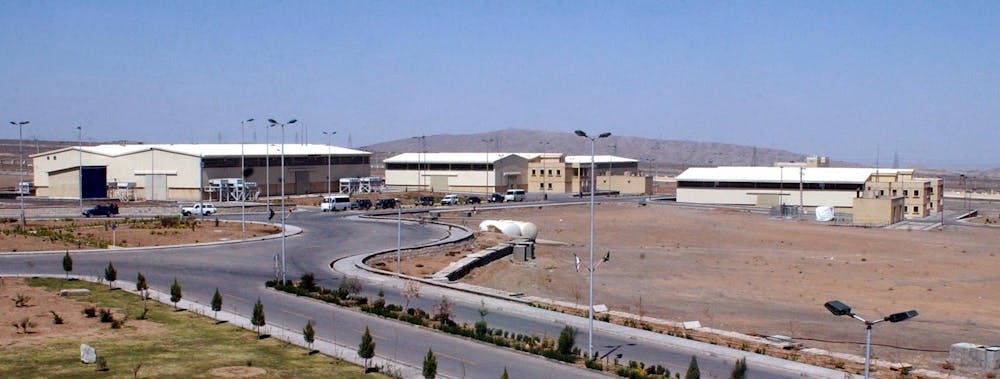
    Source: The Conversation (Au and NZ) – By Benjamin Zala, Senior Lecturer, Politics & International Relations, Monash University Maxar satellite imagery overview of the Fordow enrichment facility located southwest of Tehran. Maxar/Contributor/Getty Images Conflict between Israel and Iran is intensifying, after Israeli airstrikes on key nuclear sites and targeted assassinations last week were followed by

    MIL OSI AnalysisEveningReport.nz

  • MIL-Evening Report: ER Report: A Roundup of Significant Articles on EveningReport.nz for June 18, 2025

    ER Report: Here is a summary of significant articles published on EveningReport.nz on June 18, 2025.

    Saving species starts at home: how you can help Australia’s 1,000 threatened invertebrates
    Source: The Conversation (Au and NZ) – By Kate Umbers, Associate Professor in Zoology, Western Sydney University Atlas Moth (_Attacus wardi_) Garry Sankowsky/flickr, CC BY When we think about animals, we tend to think of furry four-legged mammals. But 95% of all animal species are invertebrates – bees, butterflies, beetles, snails, worms, octopuses, starfish, corals,

    Matariki and our diminishing night sky: light pollution from cities and satellites is making stars harder to see
    Source: The Conversation (Au and NZ) – By Shea Esterling, Senior Lecturer Above the Bar, University of Canterbury Zhang Jianyong/Xinhua via Getty Images This week, Aotearoa New Zealand officially celebrates Matariki for the fourth time, marked by the reappearance in the night sky of the star cluster also known as the Pleiades. Yet, ironically, the

    Why a US court allowed a dead man to deliver his own victim impact statement – via an AI avatar
    Source: The Conversation (Au and NZ) – By James D Metzger, Senior Lecturer in Law & Justice, UNSW Sydney Composite image: Arrington Watkins Architects / AI avatar: YouTube/StaceyWales, CC BY In November 2021, in the city of Chandler, Arizona, Chris Pelkey was shot and killed by Gabriel Horcasitas in a road rage altercation. Horcasitas was

    What’s the difference between food poisoning and gastro? A gut expert explains
    Source: The Conversation (Au and NZ) – By Vincent Ho, Associate Professor and Clinical Academic Gastroenterologist, Western Sydney University Andrey_Popov/Shutterstock If you’ve got a dodgy tummy, diarrhoea and have been vomiting, it’s easy to blame a “tummy bug” or “off food”. But which is it? Gastro or food poisoning? What’s the difference anyway? What’s gastroenteritis?

    Sharks come in many different shapes and sizes. But they all follow a centuries-old mathematical rule
    Source: The Conversation (Au and NZ) – By Jodie L. Rummer, Professor of Marine Biology, James Cook University Rachel Moore From hand-sized lantern sharks that glow in the deep sea to bus-sized whale sharks gliding through tropical waters, sharks come in all shapes and sizes. Despite these differences, they all face the same fundamental challenge:

    Iran war: from the Middle East to America, history shows you cannot assassinate your way to peace
    ANALYSIS: By Matt Fitzpatrick, Flinders University In the late 1960s, the prevailing opinion among Israeli Shin Bet intelligence officers was that the key to defeating the Palestinian Liberation Organisation was to assassinate its then-leader Yasser Arafat. The elimination of Arafat, the Shin Bet commander Yehuda Arbel wrote in his diary, was “a precondition to finding

    Solomon Islanders safe but unable to leave Israel amid war on Iran
    RNZ Pacific The Solomon Islands Foreign Ministry says five people who completed agriculture training in Israel are safe but unable to come home amid the ongoing war between Israel and Iran. The ministry said in a statement that the Solomon Islands Embassy in Abu Dhabi, United Arab Emirates, was closely monitoring the situation and maintaining

    We tracked Aussie teens’ mental health. The news isn’t good – and problems are worse for girls
    Source: The Conversation (Au and NZ) – By Scarlett Smout, Postdoctoral Research Fellow at The Matilda Centre for Research in Mental Health and Substance Use and Australia’s Mental Health Think Tank, University of Sydney skynesher/Getty Images We know young people in Australia and worldwide are experiencing growing mental health challenges. The most recent national survey

    Australia could become the world’s first net-zero exporter of fossil fuels – here’s how
    Source: The Conversation (Au and NZ) – By Frank Jotzo, Professor, Crawford School of Public Policy and Director, Centre for Climate and Energy Policy, Australian National University Photo by Jie Zhao/Corbis via Getty Images Australia is the world’s third largest exporter of gas and second largest exporter of coal. When burned overseas, these exports result

    Would a corporate tax cut boost productivity in Australia? So far, the evidence is unclear
    Source: The Conversation (Au and NZ) – By Isaac Gross, Lecturer in Economics, Monash University The Conversation, CC BY-NC The first term of the Albanese government was defined by its fight against inflation, but the second looks like it will be defined by a need to kick start Australia’s sluggish productivity growth. Productivity is essentially

    How high can US debt go before it triggers a financial crisis?
    Source: The Conversation (Au and NZ) – By Luke Hartigan, Lecturer in Economics, University of Sydney rarrarorro/Shutterstock The tax cuts bill currently being debated by the US Senate will add another US$3 trillion (A$4.6 trillion) to US debt. President Donald Trump calls it the “big, beautiful bill”; his erstwhile policy adviser Elon Musk called it

    Jaws at 50: how two musical notes terrified an entire generation
    Source: The Conversation (Au and NZ) – By Alison Cole, Composer and Lecturer in Screen Composition, Sydney Conservatorium of Music, University of Sydney Universal Pictures Our experience of the world often involves hearing our environment before seeing it. Whether it’s the sound of something moving through nearby water, or the rustling of vegetation, our fear

    As Luxon heads to China, his government’s pivot toward the US is a stumbling block
    Source: The Conversation (Au and NZ) – By Robert G. Patman, Professor of International Relations, University of Otago Ahead of his first visit to China, Prime Minister Christopher Luxon has been at pains to present meetings with Chinese premier Xi Jinping and other leaders as advancing New Zealand’s best interests. But there is arguably a

    The story of the journalist on the Rainbow Warrior’s last voyage, David Robie
    Report by Dr David Robie – Café Pacific. – In April 2025, several of the Greenpeace crew visited Matauri Bay, Northland, the final resting place of the original flagship, the Rainbow Warrior. This article was one of the reflections pieces written by an oceans communications crew member. COMMENTARY: By Emma Page I was on the

    As Israeli attacks draw tit-for-tat missile responses from Iran and shuts Haifa refinery, Gaza genocide continues
    Israeli media report that Iranian missile strikes on Haifa oil refinery yesterday killed 3 people and closed down the installation. The Israeli death toll has risen to 24, with 400 injured and more than 2700 people displaced. Israeli authorities report 370 missiles fired by Iran in total, 30 reaching their targets. Iranian military report they

    View from the Hill: Cancelled Albanese-Trump meeting a setback on tariffs, AUKUS
    Source: The Conversation (Au and NZ) – By Michelle Grattan, Professorial Fellow, University of Canberra Anthony Albanese’s failure to get his much-anticipated meeting with US President Donald Trump is not the prime minister’s fault, nor should it be characterised as a “snub” by the president. There was always a risk of derailment by outside events,

    Decoding PNG leader Marape’s talks with French President Macron
    ANALYSIS: By Scott Waide, RNZ Pacific PNG correspondent The recent series of high-level agreements between Papua New Guinea and France marks a significant development in PNG’s geopolitical relationships, driven by what appears to be a convergence of national interests. The “deepening relationship” is less about a single personality and more about a calculated alignment of

    There’s a new ban on vaping in childcare centres, but what else do we need to keep kids safe?
    Source: The Conversation (Au and NZ) – By Erin Harper, Lecturer, School of Education and Social Work, University of Sydney On Monday, the federal government announced new rules to boost safety in the early childhood sector. From September there will be mandatory reporting of any allegations or incidents of child physical or sexual abuse within

    Regime change wouldn’t likely bring democracy to Iran. A more threatening force could fill the vacuum
    Source: The Conversation (Au and NZ) – By Andrew Thomas, Lecturer in Middle East Studies, Deakin University The timing and targets of Israel’s attacks on Iran tell us that Prime Minister Benjamin Netanyahu’s short-term goal is to damage Iran’s nuclear facilities in order to severely diminish its weapons program. But Netanyahu has made clear another

    Why is there so much concern over Iran’s nuclear program? And where could it go from here?
    Source: The Conversation (Au and NZ) – By Benjamin Zala, Senior Lecturer, Politics & International Relations, Monash University Maxar satellite imagery overview of the Fordow enrichment facility located southwest of Tehran. Maxar/Contributor/Getty Images Conflict between Israel and Iran is intensifying, after Israeli airstrikes on key nuclear sites and targeted assassinations last week were followed by

    MIL OSI AnalysisEveningReport.nz

  • MIL-OSI New Zealand: Update: Missing 17-year-old located

    Source: New Zealand Police

    Police can advise the teenage girl subject of an earlier missing person’s appeal has been located.

    The 17-year-old girl, reported missing from Takapuna, is safe.

    We appreciate the community’s assistance in sharing our appeal today.

    ENDS.

    Jarred Williamson/NZ Police

    MIL OSI New Zealand News

  • MIL-OSI China: Full text of Xi’s keynote speech at second China-Central Asia Summit

    Source: People’s Republic of China – State Council News

    ASTANA, June 18 — Chinese President Xi Jinping delivered a keynote speech Tuesday at the second China-Central Asia Summit in Astana, Kazakhstan.

    The following is the full text of the speech:

    Championing the China-Central Asia Spirit For High-Quality Cooperation in the Region

    Keynote Speech by H.E. Xi Jinping

    President of the People’s Republic of China

    At the Second China-Central Asia Summit

    Astana, June 17, 2025

    Your Excellency President Kassym-Jomart Tokayev,

    Distinguished Colleagues,

    Friends,

    I am delighted to join you at the second China-Central Asia Summit in the beautiful city of Astana. I’d like to thank President Tokayev and the government of Kazakhstan for the gracious hospitality and thoughtful arrangement.

    During our meeting in Xi’an two years ago, we jointly outlined the Xi’an Vision for China-Central Asia cooperation. The six pomegranate trees we planted together are in full bloom today, auguring the vitality of the cooperation among the six nations.

    Two years on, China and Central Asian countries have further deepened and substantiated Belt and Road cooperation. Our trade has grown by 35 percent, and we have made important progress in industrial investment, green mining, technological innovation, and other fields of cooperation. The package of projects with Chinese financial support are well underway. While more and more Chinese new energy vehicles and photovoltaic products are entering Central Asian markets, Central Asian agricultural products, including honey, fruits, wheat and poultry, are diversifying the dinner tables of Chinese families.

    Two years on, the China-Kyrgyzstan-Uzbekistan railway project has been officially launched. We are making steady progress in planning for the third railway link between China and Kazakhstan, in phase-II restoration of the China-Tajikistan highway, and in China-Turkmenistan energy cooperation. Freight train services are connecting more and more Chinese cities to Central Asia. The Trans-Caspian International Transport Route has been upgraded and expanded. Green industries, digital economy, artificial intelligence, aviation and space are becoming new drivers of our cooperation. Cross-border e-commerce, online education, and other new business models are benefiting more and more people in China and Central Asia.

    Two years on, China and Central Asian countries have made progress in establishing cultural centers in each other as well as in opening branches of Chinese universities and Luban Workshops. China has made mutual visa-free arrangements with Kazakhstan and Uzbekistan, facilitating more than 1.2 million travels between China and Kazakhstan alone in 2024. Tourism and culture years and art festivals of Central Asian countries are very popular in China. Chinese films and TV dramas, such as Min-Ning Town and To the Wonder, have become great hits in Central Asia. The China-Central Asia train services for cultural tourism have been successfully inaugurated. And today, we will witness the number of sister cities between China and Central Asia reach the milestone of 100 pairs.

    Two years on, we have launched 13 ministerial cooperation platforms under the China-Central Asia mechanism. The Secretariat is fully functioning, and the core framework of the mechanism is largely in place.

    I am pleased to see that our consensus at the first Summit has been implemented across the board — from the millennium-old Xi’an to Astana “the pearl of the steppe,” from the coast of the Yellow Sea to the shores of the Caspian Sea, from the Tianshan Mountain Range to the Pamir Plateau. The path of our cooperation is steadily widening, and our friendship is blooming ever more brightly.

    Distinguished Colleagues,

    Friends,

    Our cooperation is rooted in more than 2,000 years of friendly exchanges, cemented by solidarity and mutual trust cultivated through more than three decades of diplomatic ties, and taken forward via openness and win-win cooperation of the new era. Building on our collective efforts over the years, we have forged a China-Central Asia Spirit of “mutual respect, mutual trust, mutual benefit, and mutual assistance for the joint pursuit of modernization through high-quality development.”

    — We practice mutual respect and treat each other as equals. All countries, big or small, are equal. We handle issues through consultation and make decisions by consensus.

    — We seek to deepen mutual trust and enhance mutual support. We firmly support each other in safeguarding independence, sovereignty, territorial integrity, and national dignity. We do not do anything harmful to the core interests of any party.

    — We pursue mutual benefit and win-win cooperation and strive for common development. We view each other as priority partners, and share development opportunities together. We accommodate each other’s interests, and work to build a win-win and symbiotic relationship.

    — We help each other in time of need and stand together through thick and thin. We support each other in choosing development paths suitable to our respective national conditions and in taking domestic matters into our own hands. We work together to address various risks and challenges, and uphold regional security and stability.

    This China-Central Asia Spirit is an important guideline for our endeavor to carry forward friendship and cooperation from generation to generation. We should always uphold it and let it shine forever.

    Distinguished Colleagues,

    Friends,

    Today, unprecedented changes are unfolding at a faster pace across the globe, thrusting the world into a new state of heightened turbulence and volatility. A strong belief in fairness and justice and an unyielding commitment to mutual benefit and win-win cooperation are the only way to maintain world peace and achieve common development. There is no winner in tariff wars or trade wars. Unilateralism, protectionism and hegemonism will surely backfire while hurting others.

    I always maintain that history should move forward, not backward; and the world should be united, not divided. Humanity must not regress to the law of the jungle. Instead, we should build a community with a shared future for mankind.

    Three years ago, we announced together that we would build a China-Central Asia community with a shared future, setting out the goal and direction of our six nations in building consensus, overcoming challenges and pursuing development. We should act on the China-Central Asia Spirit, enhance cooperation with renewed vigor and more practical measures, promote high-quality development of the Belt and Road Initiative, and forge ahead toward our goal of a community with a shared future for the region.

    First, we should stay committed to our fundamental goal of unity, and always trust and support each other. China consistently takes Central Asia as a priority in its neighborhood diplomacy. With a firm belief in an amicable, secure and prosperous neighborhood as well as a strong dedication to amity, sincerity, mutual benefit and inclusiveness, China interacts with Central Asian countries on the basis of equality and sincerity. We always wish our neighbors well.

    Today, we will sign together a treaty on eternal good-neighborliness, friendship and cooperation to enshrine the principle of everlasting friendship in the form of law. This is a new landmark in the history of the relations between our six countries and a pioneering initiative in China’s diplomatic engagement with its neighbors. It is a milestone for today and a foundation for tomorrow.

    Second, we should optimize our cooperation framework to make it more results-oriented, more efficient, and more deeply integrated. We have agreed to designate 2025 and 2026 as the Years of High-Quality Development of China-Central Asia Cooperation. We should focus our cooperation on smooth trade, industrial investment, connectivity, green mining, agricultural modernization and personnel exchanges, and roll out more projects on the ground. We should do our best to get early harvests as soon as possible.

    China is ready to share with Central Asian countries development experience and latest technological advances, promote connectivity in digital infrastructure, enhance cooperation on artificial intelligence, and foster new quality productive forces.

    In order to promote relevant cooperation, China has decided to establish three cooperation centers, i.e. on poverty reduction, on education exchange, and on desertification prevention and control, as well as a cooperation platform on smooth trade under the China-Central Asia cooperation framework. China will provide a grant of RMB 1.5 billion yuan to Central Asian countries this year to be used in livelihood and development projects high on their agenda. China will also provide 3,000 training opportunities to Central Asian countries in the next two years.

    Third, we should develop a security framework for peace, tranquility and solidarity. We should step up regional security governance, deepen law enforcement and security cooperation, jointly prevent and thwart extreme ideologies, and resolutely fight terrorism, separatism and extremism, so as to maintain peace and stability in our region.

    China supports Central Asian countries in modernizing their national defense, law enforcement and security capacities. We will do our best to help Central Asian countries combat terrorism and transnational organized crime and safeguard cybersecurity and biosecurity. We will launch more Safe City projects, and conduct more joint exercises and joint training cooperation.

    Afghanistan is our close neighbor. We should strengthen coordination to help the country boost its development capacity and achieve peace, stability, reconstruction and development at an early date.

    Fourth, we should cement the bonds of shared vision, mutual understanding and mutual affection between our peoples. China will enhance cooperation between legislatures, political parties, women, youth, media and think tanks with Central Asian countries, conduct in-depth exchange of governance experience, and share experience in green development, poverty reduction and anti-corruption.

    China is ready to set up more cultural centers, university branches and Luban Workshops in Central Asia, and launch new majors in Central Asian languages in Chinese universities. We will continue to carry out effectively the “China-Central Asia technology and skills improvement scheme” to train more high-caliber talent for Central Asian countries.

    China supports deepening subnational cooperation with Central Asia. We will make good use of sister-city relations and people-to-people exchanges to nurture heart-to-heart connections at central and subnational levels, between official and non-governmental actors, and from adjacent to broader areas.

    I hope that the travel-facilitation measures we adopt today will be implemented as soon as possible to help our people visit each other more conveniently, efficiently and frequently like relatives, and in the course help them become ever closer to each other.

    Fifth, we should uphold a fair and equitable international order and an equal and orderly world structure. China supports Central Asian countries in playing a bigger role in international affairs. We stand ready to work with all parties to defend international fairness and justice, oppose hegemonism and power politics, and promote an equal and orderly multipolar world and a universally beneficial and inclusive economic globalization.

    This year marks the 80th anniversary of the victory of the Chinese People’s War of Resistance Against Japanese Aggression and the World Anti-Fascist War, and the 80th anniversary of the founding of the United Nations. In the strenuous times of war, Chinese and Central Asian peoples supported each other through adversity, and jointly made important contributions to the cause of justice of humanity. We should promote the correct view of history, defend the fruits of the victory of World War II, uphold the UN-centered international system, and provide more stability and certainty for world peace and development.

    Distinguished Colleagues,

    Friends,

    China is building a great modern socialist country in all respects and advancing the great rejuvenation of the Chinese nation on all fronts through Chinese modernization. No matter how the international situation changes, China will remain unwavering in opening up to the outside world, and embrace higher-quality cooperation with Central Asian countries to deepen the integration of interests and achieve common development.

    Distinguished Colleagues,

    Friends,

    Ancient Chinese philosophy advocates “mutual care and mutual benefit.” Similarly, a Central Asian proverb compares harmony and unity to happiness and wealth. China is ready to work with all parties to carry forward the China-Central Asia Spirit, pursue the goal of a community with a shared future, and strive for new progress in China-Central Asia cooperation.

    Thank you.

    MIL OSI China News

  • MIL-OSI New Zealand: INVESTMENT SUMMIT: Investors excited at Summit’s opportunities

    Source: New Zealand Government

    International investors have left New Zealand excited about the opportunities created at the first Investor Summit held in Auckland over the past two days, Prime Minister Christopher Luxon says.

    “Many millions of dollars is now under discussion and when those deals come to fruition, New Zealanders will not only see their roads, hospitals and schools built faster but they will see jobs created and businesses thrive around the new infrastructure.

    “Over the past few days, our growth agenda has been turbo-charged, and I am very excited about the prospects,” says Mr Luxon.

    Investors at the Summit from all over the world share that excitement.

    Plenary, which is a long-term investor in infrastructure, and holds more than $98 billion worth of assets across the world, has identified New Zealand as a global priority for public private partnerships (PPP) and will launch a New Zealand office in the next 18 months. Patrick Lauren said: “Particularly for a company that’s entering a market, we like to see that it’s not chop and change. We’re going to be bringing over people, we’re going to be bringing over capital here.”

    Webuild, which has committed to pursuing at least five PPP opportunities over a five-year timeframe and establishing an office in New Zealand within the next 18 months. Of the Northern Expressway Guido Cacciaguerra said: “It’s the first PPP, of course, which is very important because if the Government gets this right, it’s the most powerful marketing tool to attract more investors in the future.”

    Chairman and CEO of Spanish investor Acciona Jose Manuel Entrecanales said the Government was to be congratulated for bringing the investors together at the Summit and indicated his company’s interest in both the Northland Expressway and the second Harbour crossing. “I congratulate the Government and the Opposition for this, it’s a well-worth effort by the Government to bring to international infrastructure investors a mindshare of what opportunities your country has.”

    Paul Newfield of Morrison said the Government’s message that New Zealand is
    a great place to invest because it is a safe haven in an uncertain world, is a good one. He says stability of institutions and an adherence to the rule of law is an important factor for companies looking to invest.

    Global investment group CDPQ from Quebec is also encouraged by the messages at the Summit. Sydney based Managing Director Jean-Étienne Leroux said they have a $9 billion fund available for Australia and New Zealand. “We are looking for predictability and stability. I have been covering this region for more than 10 years and we are now very happy to feel our capital is so welcome in this country.”

    “This is just the beginning,” Mr Luxon says.

    “We have sent a clear message that New Zealand is open for business and, that message has been received.

    “This is a huge boost to our growth agenda, and we will be pursuing these opportunities with every tool we have.

    “Because growth is good for New Zealand.”

    MIL OSI New Zealand News

  • MIL-OSI Australia: Job ads down 2.8% nationally in May 2025

    Source: Jobs and Skills Australia

    Job ads down 2.8% nationally in May 2025

    Linda


    News and updates
    In the boom’s wake: normalising labour demand and the rise of multiple job holding. Read more.

    MIL OSI News

  • MIL-Evening Report: Why a US court allowed a dead man to deliver his own victim impact statement – via an AI avatar

    Source: The Conversation (Au and NZ) – By James D Metzger, Senior Lecturer in Law & Justice, UNSW Sydney

    Composite image: Arrington Watkins Architects / AI avatar: YouTube/StaceyWales, CC BY

    In November 2021, in the city of Chandler, Arizona, Chris Pelkey was shot and killed by Gabriel Horcasitas in a road rage altercation.

    Horcasitas was tried and convicted of reckless manslaughter.

    When it was time for Horcasitas to be sentenced by a judge, Pelkey’s family knew they wanted to make a statement – known as a “victim impact statement” – explaining to the judge who Pelkey had been when he was alive.

    They found they couldn’t get the words right.

    The solution for them turned out to be having Pelkey speak for himself by creating an AI-generated avatar that used his face and voice, allowing him to “talk” directly to the judge.

    In Arizona, a judge allowed an AI avatar of a deceased crime victim to “read” an impact statement.

    This marked the first time a United States court had allowed an AI-generated victim to make this kind of beyond-the-grave statement, and likely the first time something like this had occurred anywhere in the world.

    How was the AI avatar made and received?

    The AI avatar was created by Pelkey’s sister Stacey Wales and her husband Tim, with Stacey writing the words “spoken” by Pelkey – words that were not taken from anything he actually said when he was alive but based on what she believed he would have said.

    Stacey Wales explained how she came to create an AI video of her brother to allow him to deliver his own victim impact statement.

    The avatar was created by using samples of Pelkey’s voice from videos that had been recorded before his death and photos the family had of him – specifically a photo used at his funeral.

    In the video, Pelkey “says” he believes in forgiveness and “a God who forgives”, and that “in another life” he and Horcasitas could have been friends.

    After the video was played in court, Judge Todd Lang, who had allowed the AI statement to be delivered, stated he “loved” the AI, adding he “heard the forgiveness” contained in it. He further stated he felt the forgiveness was “genuine”.

    Judge Todd Lang’s reaction to Chris Pelkey’s AI victim impact statement.

    In the end, Horcasitas was sentenced to the maximum of ten-and-a-half years – more than the nine years the prosecution was seeking but equal to what Pelkey’s family asked for in their own victim impact statements.

    Could this happen in Australia?

    In general, court rules are similar across Australian states and territories and it would be unlikely these technological advances would be acceptable in Australian sentencing courts.

    These rules allow victims or their families to read their statement to courts, but this is limited to written statements usually edited by the prosecution, although victims may include drawings and photos where approved.

    A victim will generally read their own statement to the court. However, where the victim has died, family members can make a statement speaking to their own trauma and loss.

    Sometimes victims ask the prosecutor to read their statement, or the prosecutor merely hands over a written statement to the judge.

    To date, no Australian court has permitted family members to speak for the deceased victim personally and family members are generally limited to describing harms they have directly suffered.

    Victims may also be cross-examined by defence counsel on the statements’ content.

    Creating an AI avatar would be time-consuming and expensive for prosecutors to edit. Cross-examination by the defence would be impossible.

    Compared to the US, there is generally far less tolerance in Australian courts for dramatic readings of statements or using audio-visual materials.

    In the US, victims enjoy greater freedom to invoke emotions, explore personal narratives and even show videos of the deceased, all to give the court a better sense of the victim as a person.

    The use of an AI avatar, therefore, is not too far from what is already allowed in most US courts.

    Despite these allowances, there is still concern the emotional impact of a more direct statement from an AI victim could be used to manipulate the court by putting words into the victim’s virtual mouth.

    As can be seen in the Arizona sentencing, Judge Lang was clearly affected by the emotions generated by the AI Pelkey.

    Changes to Australian law would be needed to ban use of AI recordings specifically. But even without such changes, Australian sentencing practice is already so restrictive as to essentially preclude such technology.

    It seems Australia is some ways from joining Arizona in allowing an AI avatar of a deceased person speaking from “beyond the grave”.

    The authors do not work for, consult, own shares in or receive funding from any company or organisation that would benefit from this article, and have disclosed no relevant affiliations beyond their academic appointment.

    ref. Why a US court allowed a dead man to deliver his own victim impact statement – via an AI avatar – https://theconversation.com/why-a-us-court-allowed-a-dead-man-to-deliver-his-own-victim-impact-statement-via-an-ai-avatar-259045

    MIL OSI AnalysisEveningReport.nz

  • MIL-Evening Report: Matariki and our diminishing night sky: light pollution from cities and satellites is making stars harder to see

    Source: The Conversation (Au and NZ) – By Shea Esterling, Senior Lecturer Above the Bar, University of Canterbury

    Zhang Jianyong/Xinhua via Getty Images

    This week, Aotearoa New Zealand officially celebrates Matariki for the fourth time, marked by the reappearance in the night sky of the star cluster also known as the Pleiades.

    Yet, ironically, the accompanying celebrations and the legislation that declares Matariki a public holiday miss the mark. They fail to promote and protect the country’s dark skies, which are crucial to seeing the stars in this small constellation.

    While the law recognises Matariki’s significance to Māori culture and heritage as the beginning of the Māori New Year, it does not acknowledge that it is predicated on the visual presence of the star cluster.

    Even where Matariki is not visible owing to weather conditions, the ability to see other celestial markers is important (for example Puanga/Puaka, also known as Rigel). Light pollution is a visual barrier to experiencing these important stars.

    Since the passage of the legislation, local councils across the country have marked the public holiday with various light displays. This year will be no different, with illuminated artworks, projections and lightboxes at Matariki festivals in several cities.

    Tirama Mai (bringing the light) will return to Ōtautahi Christchurch with brightly lit displays. Tāmaki Makaurau Auckland will see some of its most popular sites, including Queen Street, lit up as part of Tūrama, a series of large-scale, illuminated art installations.

    In Rotorua, Whakatū Nelson and Ōtepoti Dunedin, Matariki festivities include spectacular drone light shows which will light up the night sky.

    After initially ignoring Māori advice that fireworks are not appropriate to celebrate Matariki, many local councils have now abandoned them. But festivities will no doubt continue to contribute to light pollution and ignore the need to protect dark skies at night.

    These ill-conceived festivities are not surprising given the legislation fails to even mention dark skies. This is exacerbated by New Zealand emerging as a major player in the increasingly commercialised space sector which has developed rapidly since the first rocket lifted off from Mahia peninsula in 2017.

    Matariki light displays illuminate Wellington’s waterfront.
    Shutterstock/1124265605

    Fewer people can now see the Milky Way

    Much of Aotearoa’s landmass has some of the darkest skies on the planet. Based on land area, 74% of the North Island and 93% of the South Island rest beneath night skies that are either pristine or degraded only near the horizon. Indeed, the area affected by direct illumination is very low.

    Yet, intense urbanisation means only 3% of the population regularly experience such skies. About half of all New Zealanders can no longer see the Milky Way in winter.

    Globally, the visibility of stars (an indicator of the level of light pollution) decreased by 7-10% per year from 2011 to 2022. The visibility of the night sky in New Zealand appears to be following a similar trend. Between 2012 and 2021, the area affected by light pollution grew at a rate of 4.2% above the global average.

    Advertising and tourism campaigns reinforce the perception that Aotearoa has dark skies, but visible satellites could soon outnumber the stars people can see, from New Zealand and worldwide.

    No legal protection of dark skies

    At present, there is no explicit domestic law protecting dark skies, nor any international laws. The law declaring Matariki a public holiday missed an important opportunity to provide such protection.

    To address this issue, a petition was presented to parliament in January 2023 calling for national legislation to promote and protect dark skies. In March this year, parliament responded it would not take further actions “due to other priorities on the government’s resource management reform work programme”.

    This is not surprising. Nevertheless, we call on the government to develop legislation for the governance of dark skies in Aotearoa New Zealand that incorporates mātauranga Māori (Māori knowledge).

    While there are a variety of ways this could be achieved, controlling light pollution is the crux of the issue. Light pollution emanates both from unmitigated urban lighting as well as the expansion of satellite constellations, which is steadily forming a global net of moving points of light in space.

    An incremental approach could be a government-backed education programme to raise awareness of light pollution, followed by the development of a national policy for its control. An amendment to the Matariki public holiday law could then follow in recognition of the national interest.

    We are aware the challenges ahead are many. Yet, protecting dark skies is vital from a Māori perspective. Practically, such protections are crucial to the enjoyment and honouring of Matariki as we continue to risk disconnection from one of our most important natural features.

    Shea Esterling receives funding from the Borrin Foundation.

    William Grant does not work for, consult, own shares in or receive funding from any company or organisation that would benefit from this article, and has disclosed no relevant affiliations beyond their academic appointment.

    ref. Matariki and our diminishing night sky: light pollution from cities and satellites is making stars harder to see – https://theconversation.com/matariki-and-our-diminishing-night-sky-light-pollution-from-cities-and-satellites-is-making-stars-harder-to-see-258169

    MIL OSI AnalysisEveningReport.nz

  • MIL-Evening Report: Saving species starts at home: how you can help Australia’s 1,000 threatened invertebrates

    Source: The Conversation (Au and NZ) – By Kate Umbers, Associate Professor in Zoology, Western Sydney University

    Atlas Moth (_Attacus wardi_) Garry Sankowsky/flickr, CC BY

    When we think about animals, we tend to think of furry four-legged mammals. But 95% of all animal species are invertebrates – bees, butterflies, beetles, snails, worms, octopuses, starfish, corals, spiders and many many more. These creatures make us happy, pollinate flowers, keep soils healthy, clean water, build reefs, maintain oceans and bring colour and wonder to our homes, cities, farms and wild places.

    Sadly, almost 1,000 Australian invertebrates are threatened with extinction and need protecting. These species are on one or more official lists, including the International Union for the Conservation of Nature’s Red List of Species IUCN Red List, Australia’s national list of threatened fauna, and state and territory lists. Many more unnamed and unassessed species are likely in trouble.

    When a mammal or bird goes extinct in Australia, it’s big news. But invertebrates have gone extinct much more frequently – and with much less attention. Since colonisation, an estimated 9,000 invertebrates have gone extinct – and one or two more go extinct every week.

    Invertebrates face five big challenges: climate change, habitat destruction, natural resource extraction, pollution and invasive species. For the most part, efforts to conserve them are in their infancy in Australia, likely due to the historic undervaluing of smaller animals and little critters. There are shining exceptions such as the incredible conservation success of the Lord Howe Island stick insect, but such examples are vanishingly rare.

    The good news? Because invertebrates live everywhere, the opportunity to help is often literally on our doorsteps. Simple actions can help, such as planting native species, leaving logs in the garden and avoiding insecticides.

    Meet some of the threatened one thousand

    Threatened invertebrates live in every Australian state and territory and in our major cities. Of the almost 1,000 threatened species, 27% are snails and slugs, 25% are insects, 19% are corals, 17% are crayfish and 5% are spiders. Here are some you may come across.

    Bogong moth (Agrotis infusa). These moths once filled the night skies in their billions. Now they’re listed as endangered because the cool alpine caves they rely on to escape summer heat are warming with climate change. These migratory moths fly across southern Australia, navigating to their mountain refuges each summer using the stars and earth’s magnetic field. Help map their migration to protect them.

    Bogong moths migrate to cool caves in the Australian Alps in summer.
    Kate Umbers, CC BY

    Atlas moth (Attacus wardi). This giant tropical moth with a 22 cm wingspan is now considered vulnerable due to habitat destruction and introduced weeds. If you live near Darwin, planting the native Atlas Croton tree will help feed its very hungry caterpillars.

    Mangrove ant-blue butterfly (Acrodipsas illidgei). These endangered butterflies lay eggs on grey mangrove trees home to acrobat ants (Crematogaster species), which carry the eggs into its nests. When the caterpillars hatch, they eat ant larvae while in turn nourishing the ant colony with sugary secretions. Mangrove destruction, pesticide runoff and threats to their ant partners pose real threats. Protecting mangroves in southeast Queensland and reporting sightings of butterflies and ants on iNaturalist will help.

    Illidge’s ant-blue butterfly lives only in mangroves in south-east Queensland.
    Braden McDonald/iNaturalist, CC BY-NC-ND

    Sydney Hawk dragonfly (Austrocordulia leonardi). This strikingly coloured endangered dragonfly is largely found in Sydney. Changes to local waterways and the deep pools its aquatic larvae need threaten the species. Restoring local waterways will help.

    Dural land snails (Pommerhelix duralensis). These endangered snails are found only in north-western Sydney and the lower Blue Mountains. They cruise through leaves and rocks munching on fungi and helping add compost to forest soils. You might catch a glimpse during light rain. Help them by leaving large patches of undisturbed native undergrowth – habitat loss poses the biggest threat.

    Dural land snails are found only in northwestern Sydney and the lower Blue Mountains.
    Liz Noble/iNaturalist, CC BY-NC-ND

    Hairy bee (Leioproctus douglasiellus). This critically endangered burrowing bee lives only in and around Perth. Its numbers have fallen due to habitat loss and pesticides. Leaving patches of open soil in your garden and planting shallow flowers can help these short-tongued bees get nectar.

    Giant Gippsland earthworm (Megascolides australis). This iconic earthworm can grow up to 1.5 metres long. It only lives in a patch of southern Gippsland in Victoria and is endangered in part due to farming practices such as ploughing. These gentle giants famously gurgle as they move through their tunnels keeping soil healthy. Local landholders can help by leaving patches of land along stream banks as worm conservation habitat.

    Tasmanian live-bearing sea stars (Parvulastra vivipara). Most sea stars lay eggs. Not this species, which gives birth to live young. They’re endangered because they live in intertidal waters of south-eastern Tasmania affected by shoreline development and invasive species. Look carefully and you might see one as it grazes on algae-covered rocks. Join local events to tackle invasive species and log any sightings on iNaturalist.

    The Tasmanian live-bearing sea star gives birth to live young.
    John Eichler/iNaturalist, CC BY-NC-ND

    A brighter future for bugs

    Invertebrates bring us delight and wonder. Here’s how we can help those in trouble.

    Plant flowers. Providing food for pollinators and other wonderful flower-visiting insects can help year-round.

    Keep part of your garden a bit wild. If you leave logs, leaves and open soil in your garden, you make space for shiny beetles, singing crickets, native bees and other ground-dwellers.

    The creek is beautiful. Help restore waterways, make a pond, learn about local water bugs and support local wetlands.

    Be clever with pest control. Avoid snail baits and cancel regular broad-spectrum sprays, as these can harm many non-target species. Use critter-friendly alternatives to protect the whole food chain.

    Let the stars shine. Switch off lights at night if safe or close your curtains to help nocturnal creatures such as moths and orb-weaving spiders.

    Log your sightings. Conservation scientists need as much data as possible on invertebrates to understand how they are doing out there. Upload your bug photos to iNaturalist.

    Kate Umbers receives funding from the Australian Research Council, Commonwealth DCCEEW, Hermon Slade Foundation, and Holsworth Foundation. She is affiliated with Invertebrates Australia, Biodiversity Council, co-chair of the IUCN Grasshopper Specialist Group, and is on the Conservation Committee for the Australian Entomological Society.

    Kenny Wolfe is affiliated with Invertebrates Australia.

    Megan Head is affiliated with Invertebrates Australia.

    Shawan Chowdhury is affiliated with Monash University and Invertebrates Australia.

    Tanya Latty co-founded and volunteers for conservation organisation Invertebrates Australia. She receives funding from the Australian Research Council, NSW Saving our Species, and Agrifutures Australia

    ref. Saving species starts at home: how you can help Australia’s 1,000 threatened invertebrates – https://theconversation.com/saving-species-starts-at-home-how-you-can-help-australias-1-000-threatened-invertebrates-258285

    MIL OSI AnalysisEveningReport.nz

  • MIL-Evening Report: What’s the difference between food poisoning and gastro? A gut expert explains

    Source: The Conversation (Au and NZ) – By Vincent Ho, Associate Professor and Clinical Academic Gastroenterologist, Western Sydney University

    Andrey_Popov/Shutterstock

    If you’ve got a dodgy tummy, diarrhoea and have been vomiting, it’s easy to blame a “tummy bug” or “off food”.

    But which is it? Gastro or food poisoning?

    What’s the difference anyway?

    What’s gastroenteritis?

    Gastroenteritis, or gastro for short, is a gut infection caused by a virus, bacterium or other microbe.

    The gut is teeming with cells including healthy microbes and the cells lining the gut. But when viruses, bacteria and other microbes start to invade your gut, they colonise, build up in large numbers and eventually cause the cells lining the gut to inflame. The “-itis” at the end of gastroenteritis means inflammation.

    Gastroenteritis is extremely common. In Australia there are an estimated 17.2 million cases a year.

    So where do these gastro-causing microbes come from? Eating contaminated food is often the source.

    However you can acquire these microbes in other ways. For example, if you touch a surface where someone sick from viral gastroenteritis had vomited on, that virus could transfer to your hands. And if your hands touched your mouth, you in turn could contract viral gastroenteritis.

    What’s food poisoning?

    Food poisoning refers to getting sick from eating food contaminated with chemicals, microbes or toxins.

    For example if you ate food contaminated with insecticides or methyl alcohol (methanol) that would count as food poisoning. If you ate puffer fish or poisonous mushrooms that would count too. But food poisoning doesn’t include the effects of eating a food you’re allergic to.

    The vast majority of food poisonings are as a result of food contaminated by microbes and their toxins. When you eat or drink them it’s like a missile strike. The toxins in particular can rapidly cause inflammation and damage the lining of the gut.

    To add to the confusion, food poisoning is often referred to as foodborne gastroenteritis.

    Food poisoning (or foodborne gastroenteritis) is also common in Australia. It accounts for about one-third of all cases of gastroenteritis or an estimated 5.4 million cases every year.

    How can we tell the two apart?

    Both gastroenteritis and food poisoning have symptoms such as diarrhoea, vomiting, nausea, abdominal cramps, fever and headaches. But these symptoms can come on in different ways.

    Viral gastroenteritis, such as with norovirus, usually causes symptoms 24–48 hours after exposure, which can last for one to two days.

    But food poisoning after eating microbial toxins can come on very quickly. For example, toxins from the bacterium Staphylococcus aureus can cause symptoms within 30 minutes of eating contaminated food, such as undercooked meat. Fortunately, symptoms usually get better within 24 hours.

    Symptoms don’t always come on so quickly in all cases of bacterial food poisoning. For example, it can take as long as 70 days between exposure to Listeria and symptoms occurring, although, on average it’s about three weeks. This long incubation period can make it difficult to work out if a particular food is responsible for someone getting sick.

    As a general guide food poisoning occurs quite quickly (within hours of eating contaminated food) while gastroenteritis can take a day or more after eating to get sick. But there is no hard and fast rule.

    It can take weeks from eating soft cheese contaminated with Listeria before you have symptoms.
    In Green/Shutterstock

    How do I prevent them?

    The same precautions when handling food apply to preventing both gastroenteritis and food poisoning. These steps not only lower your risk of being affected in the first place, they lower your risk of you infecting others.

    Wash your hands thoroughly with soap and water before preparing food. Use separate cutting boards and utensils for raw and cooked foods to help avoid cross-contamination. Cook food thoroughly and store it at safe temperatures.

    Gastroenteritis can involve transmission of microbes through means other than food, for instance, via poo on your hands if you don’t wash your hands after using the toilet or after changing a child’s nappy. So wash your hands afterwards.

    To prevent others from becoming sick, make sure you quickly disinfect contaminated surfaces thoroughly after someone vomits or has diarrhoea. First, put on gloves and wash surfaces with hot water and a detergent. Then disinfect using household bleach containing 0.1% hypochlorite.

    How can I get better?

    Treating both gastroenteritis and food poisoning focuses on preventing dehydration and relieving symptoms.

    To avoid dehydration, drink plenty of fluids. For moderate or severe cases, you can buy commercial oral rehydration solution from a pharmacy.

    You can also make your own oral rehydration solution by adding 6 teaspoons of sugar, ½ teaspoon of salt and ½ teaspoon of sodium bicarbonate to a litre of water. You can splash in some cordial for taste.

    If symptoms are severe or persist you should see your GP or go to the emergency department.


    Read more:
    Got gastro? Here’s why eating bananas helps but drinking flat lemonade might not


    Vincent Ho does not work for, consult, own shares in or receive funding from any company or organisation that would benefit from this article, and has disclosed no relevant affiliations beyond their academic appointment.

    ref. What’s the difference between food poisoning and gastro? A gut expert explains – https://theconversation.com/whats-the-difference-between-food-poisoning-and-gastro-a-gut-expert-explains-252730

    MIL OSI AnalysisEveningReport.nz

  • MIL-OSI Global: US and Iran have a long, complicated history, spanning far beyond Israel’s strikes on Tehran

    Source: The Conversation – USA – By Jeffrey Fields, Professor of the Practice of International Relations, USC Dornsife College of Letters, Arts and Sciences

    People observe fire and smoke from an Israeli airstrike on an oil depot in Tehran, Iran, on June 15, 2025. Stringer/Getty Images

    Relations between the United States and Iran have been fraught for decades – at least since the U.S. helped overthrow a democracy-minded prime minister, Mohammed Mossadegh, in August 1953. The U.S. then supported the long, repressive reign of the Shah of Iran, whose security services brutalized Iranian citizens for decades.

    The two countries have been particularly hostile to each other since Iranian students took over the U.S. Embassy in Tehran in November 1979, resulting in economic sanctions and the severing of formal diplomatic relations between the nations.

    Since 1984, the U.S. State Department has listed Iran as a “state sponsor of terrorism,” alleging the Iranian government provides terrorists with training, money and weapons.

    Some of the major events in U.S.-Iran relations highlight the differences between the nations’ views, but others arguably presented real opportunities for reconciliation.

    1953: US overthrows Mossadegh

    Mohammed Mossadegh.
    Wikimedia Commons

    In 1951, the Iranian Parliament chose a new prime minister, Mossadegh, who then led lawmakers to vote in favor of taking over the Anglo-Iranian Oil Company, expelling the company’s British owners and saying they wanted to turn oil profits into investments in the Iranian people. The U.S. feared disruption in the global oil supply and worried about Iran falling prey to Soviet influence. The British feared the loss of cheap Iranian oil.

    President Dwight Eisenhower decided it was best for the U.S. and the U.K. to get rid of Mossadegh. Operation Ajax, a joint CIA-British operation, convinced the Shah of Iran, the country’s monarch, to dismiss Mossadegh and drive him from office by force. Mossadegh was replaced by a much more Western-friendly prime minister, handpicked by the CIA.

    Demonstrators in Tehran demand the establishment of an Islamic republic.
    AP Photo/Saris

    1979: Revolutionaries oust the shah, take hostages

    After more than 25 years of relative stability in U.S.-Iran relations, the Iranian public had grown unhappy with the social and economic conditions that developed under the dictatorial rule of Shah Mohammad Reza Pahlavi.

    Pahlavi enriched himself and used American aid to fund the military while many Iranians lived in poverty. Dissent was often violently quashed by SAVAK, the shah’s security service. In January 1979, the shah left Iran, ostensibly to seek cancer treatment. Two weeks later, Ayatollah Ruhollah Khomeini returned from exile in Iraq and led a drive to abolish the monarchy and proclaim an Islamic government.

    Iranian students at the U.S. Embassy in Tehran show a blindfolded American hostage to the crowd in November 1979.
    AP Photo

    In October 1979, President Jimmy Carter agreed to allow the shah to come to the U.S. to seek advanced medical treatment. Outraged Iranian students stormed the U.S. Embassy in Tehran on Nov. 4, taking 52 Americans hostage. That convinced Carter to sever U.S. diplomatic relations with Iran on April 7, 1980.

    Two weeks later, the U.S. military launched a mission to rescue the hostages, but it failed, with aircraft crashes killing eight U.S. servicemembers.

    The shah died in Egypt in July 1980, but the hostages weren’t released until Jan. 20, 1981, after 444 days of captivity.

    An Iranian cleric, left, and an Iranian soldier wear gas masks to protect themselves against Iraqi chemical-weapons attacks in May 1988.
    Kaveh Kazemi/Getty Images

    1980-1988: US tacitly sides with Iraq

    In September 1980, Iraq invaded Iran, an escalation of the two countries’ regional rivalry and religious differences: Iraq was governed by Sunni Muslims but had a Shia Muslim majority population; Iran was led and populated mostly by Shiites.

    The U.S. was concerned that the conflict would limit the flow of Middle Eastern oil and wanted to ensure the conflict didn’t affect its close ally, Saudi Arabia.

    The U.S. supported Iraqi leader Saddam Hussein in his fight against the anti-American Iranian regime. As a result, the U.S. mostly turned a blind eye toward Iraq’s use of chemical weapons against Iran.

    U.S. officials moderated their usual opposition to those illegal and inhumane weapons because the U.S. State Department did not “wish to play into Iran’s hands by fueling its propaganda against Iraq.” In 1988, the war ended in a stalemate. More than 500,000 military and 100,000 civilians died.

    1981-1986: US secretly sells weapons to Iran

    The U.S. imposed an arms embargo after Iran was designated a state sponsor of terrorism in 1984. That left the Iranian military, in the middle of its war with Iraq, desperate for weapons and aircraft and vehicle parts to keep fighting.

    The Reagan administration decided that the embargo would likely push Iran to seek support from the Soviet Union, the U.S.’s Cold War rival. Rather than formally end the embargo, U.S. officials agreed to secretly sell weapons to Iran starting in 1981.

    The last shipment, of anti-tank missiles, was in October 1986. In November 1986, a Lebanese magazine exposed the deal. That revelation sparked the Iran-Contra scandal in the U.S., with Reagan’s officials found to have collected money from Iran for the weapons and illegally sent those funds to anti-socialist rebels – the Contras – in Nicaragua.

    At a mass funeral for 76 of the 290 people killed in the shootdown of Iran Air 655, mourners hold up a sign depicting the incident.
    AP Photo/CP/Mohammad Sayyad

    1988: US Navy shoots down Iran Air flight 655

    On the morning of July 8, 1988, the USS Vincennes, a guided missile cruiser patrolling in the international waters of the Persian Gulf, entered Iranian territorial waters while in a skirmish with Iranian gunboats.

    Either during or just after that exchange of gunfire, the Vincennes crew mistook a passing civilian Airbus passenger jet for an Iranian F-14 fighter. They shot it down, killing all 290 people aboard.

    The U.S. called it a “tragic and regrettable accident,” but Iran believed the plane’s downing was intentional. In 1996, the U.S. agreed to pay US$131.8 million in compensation to Iran.

    1997-1998: The US seeks contact

    In August 1997, a moderate reformer, Mohammad Khatami, won Iran’s presidential election.

    U.S. President Bill Clinton sensed an opportunity. He sent a message to Tehran through the Swiss ambassador there, proposing direct government-to-government talks.

    Shortly thereafter, in early January 1998, Khatami gave an interview to CNN in which he expressed “respect for the great American people,” denounced terrorism and recommended an “exchange of professors, writers, scholars, artists, journalists and tourists” between the United States and Iran.

    However, Supreme Leader Ayatollah Ali Khamenei didn’t agree, so not much came of the mutual overtures as Clinton’s time in office came to an end.

    In his 2002 State of the Union address, President George W. Bush characterized Iran, Iraq and North Korea as constituting an “Axis of Evil” supporting terrorism and pursuing weapons of mass destruction, straining relations even further.

    Inside these buildings at the Natanz nuclear facility in Iran, technicians enrich uranium.
    AP Photo/Vahid Salemi

    2002: Iran’s nuclear program raises alarm

    In August 2002, an exiled rebel group announced that Iran had been secretly working on nuclear weapons at two installations that had not previously been publicly revealed.

    That was a violation of the terms of the Nuclear Nonproliferation Treaty, which Iran had signed, requiring countries to disclose their nuclear-related facilities to international inspectors.

    One of those formerly secret locations, Natanz, housed centrifuges for enriching uranium, which could be used in civilian nuclear reactors or enriched further for weapons.

    Starting in roughly 2005, U.S. and Israeli government cyberattackers together reportedly targeted the Natanz centrifuges with a custom-made piece of malicious software that became known as Stuxnet.

    That effort, which slowed down Iran’s nuclear program was one of many U.S. and international attempts – mostly unsuccessful – to curtail Iran’s progress toward building a nuclear bomb.

    2003: Iran writes to Bush administration

    An excerpt of the document sent from Iran, via the Swiss government, to the U.S. State Department in 2003, appears to seek talks between the U.S. and Iran.
    Washington Post via Scribd

    In May 2003, senior Iranian officials quietly contacted the State Department through the Swiss embassy in Iran, seeking “a dialogue ‘in mutual respect,’” addressing four big issues: nuclear weapons, terrorism, Palestinian resistance and stability in Iraq.

    Hardliners in the Bush administration weren’t interested in any major reconciliation, though Secretary of State Colin Powell favored dialogue and other officials had met with Iran about al-Qaida.

    When Iranian hardliner Mahmoud Ahmadinejad was elected president of Iran in 2005, the opportunity died. The following year, Ahmadinejad made his own overture to Washington in an 18-page letter to President Bush. The letter was widely dismissed; a senior State Department official told me in profane terms that it amounted to nothing.

    Representatives of several nations met in Vienna in July 2015 to finalize the Iran nuclear deal.
    Austrian Federal Ministry for Europe, Integration and Foreign Affairs/Flickr

    2015: Iran nuclear deal signed

    After a decade of unsuccessful attempts to rein in Iran’s nuclear ambitions, the Obama administration undertook a direct diplomatic approach beginning in 2013.

    Two years of secret, direct negotiations initially bilaterally between the U.S. and Iran and later with other nuclear powers culminated in the Joint Comprehensive Plan of Action, often called the Iran nuclear deal.

    Two years of secret, direct negotiations conducted bilaterally at first between the U.S. and Iran and later with other nuclear powers culminated in the Joint Comprehensive Plan of Action, often called the Iran nuclear deal.

    Iran, the U.S., China, France, Germany, Russia and the United Kingdom signed the deal in 2015. It severely limited Iran’s capacity to enrich uranium and mandated that international inspectors monitor and enforce Iran’s compliance with the agreement.

    In return, Iran was granted relief from international and U.S. economic sanctions. Though the inspectors regularly certified that Iran was abiding by the agreement’s terms, President Donald Trump withdrew from the agreement in May 2018.

    2020: US drones kill Iranian Maj. Gen. Qassem Soleimani

    An official photo from the Iranian government shows Maj. Gen. Qassem Soleimani, who was killed in a Jan. 3 drone strike ordered by President Donald Trump.
    Iranian Supreme Leader Press Office/Anadolu Agency via Getty Images

    On Jan. 3, 2020, an American drone fired a missile that killed Maj. Gen. Qassem Soleimani, the leader of Iran’s elite Quds Force. Analysts considered Soleimani the second most powerful man in Iran, after Supreme Leader Ayatollah Khamenei.

    At the time, the Trump administration asserted that Soleimani was directing an imminent attack against U.S. assets in the region, but officials have not provided clear evidence to support that claim.

    Iran responded by launching ballistic missiles that hit two American bases in Iraq.

    2023: The Oct. 7 attacks on Israel

    Hamas’ brazen attack on Israel on Oct. 7, 2023, provoked a fearsome militarized response from Israel that continues today and served to severely weaken Iran’s proxies in the region, especially Hamas – the perpetrator of the attacks – and Hezbollah in Lebanon.

    2025: Trump 2.0 and Iran

    Trump saw an opportunity to forge a new nuclear deal with Iran and to pursue other business deals with Tehran. Once inaugurated for his second term, Trump appointed Steve Witkoff, a real estate investor who is the president’s friend, to serve as special envoy for the Middle East and to lead negotiations.

    Negotiations for a nuclear deal between Washington and Tehran began in April, but the countries did not reach a deal. They were planning a new round of talks when Israel struck Iran with a series of airstrikes on June 13, forcing the White House to reconsider is position.

    Jeffrey Fields receives funding from the Carnegie Corporation of New York and Schmidt Futures.

    ref. US and Iran have a long, complicated history, spanning far beyond Israel’s strikes on Tehran – https://theconversation.com/us-and-iran-have-a-long-complicated-history-spanning-far-beyond-israels-strikes-on-tehran-259240

    MIL OSI – Global Reports

  • MIL-OSI Russia: The TV series “Xi Jinping’s Favorite Classical Quotes” is being broadcast on major media platforms in five Central Asian countries.

    Translation. Region: Russian Federal

    Source: People’s Republic of China in Russian – People’s Republic of China in Russian –

    Source: People’s Republic of China – State Council News

    On June 16, the broadcast of the TV series “Catchphrases from the Classics, Favorite by Xi Jinping” (international version) was launched in five Central Asian countries. In this regard, the President of Kazakhstan Kassym-Jomart Tokayev expressed his warm congratulations.

    Launched by China Media Group (CMG), the TV series “Xi Jinping’s Favorite Classical Quotes” (International Edition) carefully selects quotations from Chinese classical poetry and prose masterpieces used by Chinese President Xi Jinping in important speeches, articles and talks. They focus on themes of open cooperation, technological development, environmental protection and cultural innovation. With an international approach and vivid storytelling, the TV project explains to Central Asian audiences the deep historical and cultural roots of the Chinese leader’s ideas on governance, and also showcases the diversity of China’s modernization.

    MIL OSI Russia News

  • MIL-OSI Russia: China and Central Asian countries reaffirm support for each other’s independence and sovereignty

    Translation. Region: Russian Federal

    Source: People’s Republic of China in Russian – People’s Republic of China in Russian –

    Source: People’s Republic of China – State Council News

    Astana, June 18 (Xinhua) — China and five Central Asian countries on Tuesday reaffirmed their firm support for each other’s independence, sovereignty and territorial integrity, as well as the principles of sovereign equality and the inviolability of borders, according to the Treaty of Eternal Good-Neighborliness, Friendship and Cooperation signed by China, Kazakhstan, Kyrgyzstan, Tajikistan, Turkmenistan and Uzbekistan.

    According to the document, the six countries also reaffirmed their determination to jointly build a closer China-Central Asia community with a shared future.

    All parties stressed that they would not use force or threaten to use it and would resolve disputes peacefully. States committed to supporting each other’s development paths and models chosen in accordance with national conditions and to supporting each other’s positions on issues of fundamental interest.

    The parties must not enter into any alliances or groups directed against the other parties and must not support any actions hostile to the other parties, the agreement says.

    All parties expressed their willingness to cooperate in the areas of trade, economy, investment, infrastructure connectivity, engineering and technology, energy (including hydro and renewable energy), transport, mineral resources, agriculture, ecology and environmental protection, processing industry, science and technology, as well as other areas of mutual interest, on the basis of equality and mutual benefit.

    The states also agreed to cooperate within the framework of bilateral and multilateral mechanisms to jointly combat terrorism, separatism, extremism and transnational organized crime. –0–

    MIL OSI Russia News

  • MIL-OSI Russia: Lu Ban’s Workshops Become a Source of New Forces for Cooperation between China and Central Asia

    Translation. Region: Russian Federal

    Source: People’s Republic of China in Russian – People’s Republic of China in Russian –

    Source: People’s Republic of China – State Council News

    “Lu Ban Workshop” is a Chinese brand of international cooperation in vocational education, which has now become an important platform for technology transfer and talent training in the joint construction of the “Belt and Road”. In November 2022, the first “Lu Ban Workshop” in Central Asia was launched in Tajikistan. Over the next year, Lu Ban Workshops were launched in Kazakhstan, Kyrgyzstan and other countries. This project not only opened up opportunities for Central Asian youth, but also built a bridge of understanding between the people of China and the Central Asian region.

    Lu Ban’s workshops, opened in several Central Asian countries, have achieved good results and reflect three main features of practical cooperation between China and the region. First, it is demand-driven, when all specialties are selected taking into account the actual needs of the industries of Central Asian countries. Second, it is technology adaptation, that is, an organic combination of China’s advanced technologies in infrastructure construction, new energy sources, etc., with local resources and development conditions. Third, it is sustainability, when, based on the medium- and long-term development strategies of countries, not only the current problem of shortage of qualified personnel is solved, but also special attention is paid to the development of the ability for independent economic development. China has always promoted cooperation with Central Asian countries in the field of vocational education on the basis of equality and win-win cooperation, which reflects the Chinese concept of “benevolence, sincerity, mutual benefit and inclusiveness” towards neighboring countries.

    In the long term, Lu Ban Workshops will continue to play the role of a technology incubator and talent reservoir, providing a steady impetus to long-term cooperation between China and Central Asian countries. As generations of local talents grow and individual joint projects steadily advance, Lu Ban Workshops will become a source of new energy for cooperation between China and Central Asia, laying a solid foundation for building a closer community of shared destiny between China and the region.

    Author: Yang Jin, Deputy Director of the Central Asia and Caucasus Department, Institute of Russian, East European and Central Asian Studies, Chinese Academy of Social Sciences

    MIL OSI Russia News

  • MIL-OSI New Zealand: Government expands access to Melatonin and Psilocybin

    Source: New Zealand Government

    Associate Health Minister David Seymour says the Government is delivering on its promise to cut red tape and give Kiwis greater access to more treatments, starting with melatonin and medicinal psilocybin.

    “Many New Zealanders have asked me why people can buy melatonin overseas but they can’t buy it from their local pharmacy. Medsafe has assessed this and decided there’s no reason why it shouldn’t be available on pharmacy shelves right here at home,” says Mr Seymour. 

    Melatonin, a medicine used to treat insomnia and jet lag, has previously been tightly restricted in New Zealand. Right now, only a few melatonin products are approved for people aged over 55.

    “In time, adults will be able to buy melatonin directly from a pharmacy with no prescription needed. This is a commonsense decision that will make melatonin more accessible in New Zealand than in many other countries and encourage suppliers bring more products to our shelves.

    Melatonin will remain prescription-only for children and adolescents, following expert clinical advice to ensure proper oversight when used by younger patients.

    “In another win for patients, Medsafe has also approved the prescription of medicinal psilocybin outside of clinical trials for the first time in New Zealand,” says Mr Seymour.

    “Psilocybin remains an unapproved medicine, but a highly experienced psychiatrist has been granted authority to prescribe it to patients with treatment-resistant depression.

    “This is huge for people with depression who’ve tried everything else and are still suffering. If a doctor believes psilocybin can help, they should have the tools to try.

    “The psychiatrist involved has previously prescribed psilocybin in clinical trials and will operate under strict reporting and record-keeping requirements.

    “New Zealand is now in line with Australia, where authorised prescribers have been using psilocybin in clinical settings for some time.

    “Kiwis shouldn’t be left counting sheep or desperate for options when other countries are already using these medicines. The Government is committed to putting patients first.”

    MIL OSI New Zealand News

  • MIL-OSI New Zealand: Fatal vehicle incident, Redwoodtown

    Source: New Zealand Police

    One person has died after a single vehicle incident in Redwoodtown, Blenheim.

    At around 10:45am Emergency services received reports of the incident on Lewis Street.

    The Serious Crash Unit is in attendance.

    The circumstances of the incident are under investigation.

    Lewis Street will remain closed until a scene examination has been carried out.

    ENDS

    Issued by the Police Media Centre.

    MIL OSI New Zealand News

  • MIL-OSI New Zealand: Legal Issues – Charges filed by Maritime NZ against KiwiRail following investigation into 2024 grounding of Interislander ferry north of Picton

    Source: Maritime NZ

    Maritime NZ has filed two charges against KiwiRail after completing a comprehensive and wide-ranging investigation into the grounding of the Interislander ferry, Aratere last year.

    The Aratere grounded just north of Picton on 21 June last year, it had 47 people on-board at the time. Thankfully, all passengers and crew were safely returned to shore.  The ferry was re-floated the following evening.

    Maritime NZ’s Chief Executive, Kirstie Hewlett, says the two charges filed against KiwiRail under the Health and Safety at Work Act 2015 relate to failures by the operator to keep crew and passengers safe while on-board the ferry.

    “This was a complex incident and important investigation given it focussed on KiwiRail bringing in new systems to older vessels and broader safety management. It required us to look at systems, policies and procedures, culture, within KiwiRail in relation to the incident. A significant number of interviews were conducted, as well as collating and reviewing a substantial amount of relevant documentation and evidence.

    “The time taken to undertake this investigation, collate and review the evidence, and decide on compliance action is consistent with other complex and major incidents.

    As we have now filed charges in court, we cannot talk about what our investigation found,” Kirstie Hewlett says.

    Charges:

    Charge 1: s48 charge – in that it had a duty as a PCBU, namely to ensure, so far as reasonably practicable, the health and safety of those passengers and crew who would sail aboard the Aratere and that failure exposed crew members and passengers to the risk of death or serious injury. Maximum penalty $1.5m

    Charge 2: s49 charge under HSWA – in that it had a duty as a PCBU, failed to ensure, so far as is reasonably practicable, the health and safety of those passengers and crew who would sail aboard the Aratere.  Maximum penalty: $500,000

    MIL OSI New Zealand News