Rt Hon Gerry Brownlee, Speaker of the House of Representatives, will travel to Japan from 8–13 June to meet with his counterpart, Hon Fukushiro Nukaga, Speaker of the House of Representatives of Japan. He will be accompanied by a cross-party delegation consisting of Greg O’Connor, Maureen Pugh, Teanau Tuiono, and Mariameno Kapa-Kingi.
During the visit, Mr Speaker will hold official talks with Speaker Nukaga and engage with other senior parliamentary leaders, including the President of the House of Councillors and members of the National Diet of Japan
The delegation will begin its programme in Tokyo before travelling to Hokkaido. Alongside parliamentary engagements, the visit will include meetings with business and community leaders, as well as organisations with strong connections to New Zealand.
ENDS
Inter-Parliamentary Relations are a way for members of New Zealand’s Parliament to keep Parliament relevant, effective, and innovative. Dialogue between members of different parliaments increases mutual understanding between countries, develops best practice, and ensures New Zealand is playing an active part in the international community. Members’ active participation in inter-parliamentary activities improves their knowledge and insights as legislators, which in turn improves parliamentary scrutiny of Government
For media inquiries, please contact communications.team@parliament.govt.nz
A $4 million Rural Wellbeing Fund announced today at the Federated Farmers Advocacy Hub at Fieldays is a great win for rural advocacy groups, Wayne Langford says.
The Federated Farmers president has led the way in pushing the Government to deliver increased investment into rural mental health – an issue close to his heart.
“It’s hugely rewarding to get this across the line. I’m absolutely stoked the Government are making such a meaningful investment in the mental health of our rural communities.
“Federated Farmers have been involved every step of the way – but we haven’t been alone. The likes of DairyNZ, Beef + Lamb, Young Farmers and Rural Women have been right there with us.”
Langford says the extra $4 million from both Ministers Todd McClay and Matt Doocey to expand the investment in community-based wellbeing initiatives may be matched by industry partners, for a total pool of $8 million.
“The investment is significant in terms of the dollar amount, but the real value will come in having a much more coordinated approach that brings all the energy and focus into one place.
“In practice, we’re going to see the sector coming together to ensure we’re investing in the initiatives that bring the best results and make a real difference in people’s lives.
“That will cut out a whole heap of waste, remove all the duplication, and make sure every dollar invested in rural mental health is working as hard as it possibly can.”
Langford says, as a country, we’ve moved past the stage of simply acknowledging and building awareness of the importance of strong mental health.
“It’s great that we’ve come such a long way with rural mental health awareness, but now it’s time for action.
“Supporting groups like Surfing for Farmers, Farmstrong, FirstMate and NZ Young Farmers, who are doing the mahi on the ground, is so important.”
A five-member panel with representation from the primary sector will be established to assess project applications.
Projects must demonstrate strong local delivery, provide clear benefits to rural people, and ability to attract co-investment from industry and sector partners.
In announcing the funding, Agriculture and Forestry Minister Todd McClay paid particular tribute to advocacy by Langford, who he described as a long-time champion of rural wellbeing and mental health.
However, Langford says a strength of the initiative is that all the primary industry groups are united in the desire for action.
“With funding in place, we can now get some changes happening and make a real difference.”
ER Report: Here is a summary of significant articles published on EveningReport.nz on June 11, 2025.
Former Congress staffer allowed to return to Kanaky New Caledonia By Patrick Decloitre, RNZ Pacific correspondent French Pacific desk One of seven people transferred to mainland France almost a year ago, following the May 2024 riots in New Caledonia, has been allowed to return home, a French court has ruled. Frédérique Muliava, a former Congress staffer, was part of a group of six who were
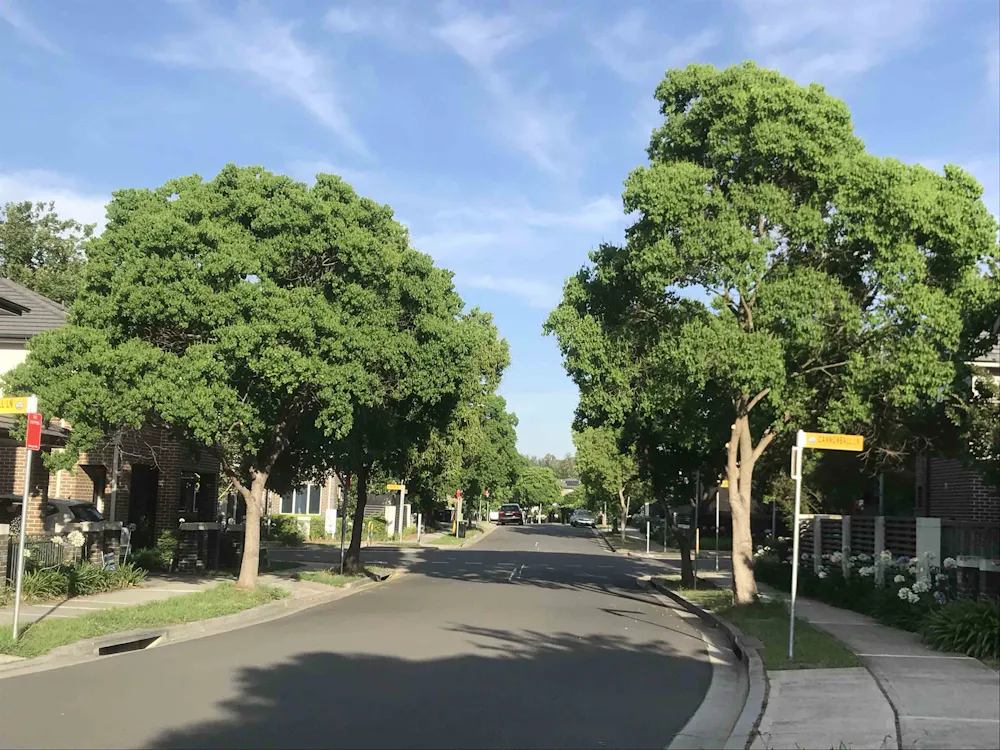
Jacaranda, black locust and London plane: common street trees show surprising resilience to growing heat in Australia Source: The Conversation (Au and NZ) – By Manuel Esperon-Rodriguez, Senior Lecturer in Ecology, Western Sydney University Kokkai Ng/Getty Images As Australian cities heat up and dry out, street trees are emerging as frontline defenders of urban liveability. Street trees make city life more bearable during heatwaves. They also improve human health and wellbeing, filter
‘Gutting the Ponsonby community’: Locals say post office should stay open By Aisha Campbell, RNZ News intern Ponsonby’s post office is shutting shop next month despite push back from the local community. A sign on the storefront, which is at the College Hill end of Ponsonby Road, said the closure would take place on 4 July but the post boxes would be “staying put”. Ponsonby local
Fiji coup culture and political meddling in media education given airing Pacific Media Watch Taieri MP Ingrid Leary reflected on her years in Fiji as a television journalist and media educator at a Fiji Centre function in Auckland celebrating Fourth Estate values and independence at the weekend. It was a reunion with former journalism professor David Robie — they had worked together as a team at
The AI hype is just like the blockchain frenzy – here’s what happens when the hype dies Source: The Conversation (Au and NZ) – By Gediminas Lipnickas, Lecturer in Marketing, University of South Australia Izf/Shutterstock In recent years, artificial intelligence (AI) has taken centre stage across various industries. From AI-generated art to chatbots in customer service, every sector is seemingly poised for disruption. It’s not just in your news feed every day
Why does the US still have a Level 1 travel advisory warning despite the chaos? Source: The Conversation (Au and NZ) – By Samuel Cornell, PhD Candidate in Public Health & Community Medicine, School of Population Health, UNSW Sydney No travel can be considered completely safe. There are inherent risks from transportation, criminal activity, communicable diseases, injury and natural disasters. Still, global travel is booming — for those who can
Those ‘what I eat in a day’ TikTok videos aren’t helpful. They might even be harmful Source: The Conversation (Au and NZ) – By Catherine Houlihan, Senior Lecturer in Clinical Psychology, University of the Sunshine Coast Iren_Geo/Shutterstock You may have come across those “what I eat in a day” videos on social media, where people – usually conventionally attractive influencers wearing activewear – list everything they consumed that day. They might
The ASX is shrinking – a plan to get more companies to float does not go far enough Source: The Conversation (Au and NZ) – By Mark Humphery-Jenner, Associate Professor of Finance, UNSW Sydney Whenever a high-profile company lists on the Australian stock market it attracts much excitement. Employees and founders enjoy some financial gains and investors get a chance to invest in a potentially exciting stock. For these reasons, fast-food chain Guzman
NZ and Gaza – Peters appearing to do something, when doing nothing COMMENTARY: By Steven Cowan, editor of Against The Current The New Zealand Foreign Minster’s decision to issue a travel ban against two Israeli far-right politicians is little more than a tokenistic gesture in opposing Israel’s actions. It is an attempt to appease growing opposition to Israel’s war, but the fact that Israel has killed more
US criticises allies as NZ bans two top far-right Israeli ministers RNZ News The United States has denounced sanctions by Britain and allies — including New Zealand and Australia — against Israeli far-right ministers, saying they should focus instead on the Palestinian armed group Hamas. New Zealand has banned two Israeli politicians from travelling to the country because of comments about the war in Gaza that
The Project really did do news differently. Its demise is our loss Source: The Conversation (Au and NZ) – By Andrew Dodd, Professor of Journalism, Director of the Centre for Advancing Journalism, The University of Melbourne The most unsettling thing about the closure of Network Ten’s The Project is that it might come to be seen as the moment commercial network television gave up on young audiences
Novelty, negativity and no politicians: research reveals what makes some images more engaging than others Source: The Conversation (Au and NZ) – By T.J. Thomson, Senior Lecturer in Visual Communication & Digital Media, RMIT University T.J. Thomson We see hundreds or thousands of images each day – but not all of them stand out to us. Why are some visuals more engaging than others? In an attention economy, where creators
Visual feature: Scanning Australia’s bones Source: The Conversation (Au and NZ) – By Vera Weisbecker, Associate Professor in Evolutionary Biology, College of Science and Engineering, Flinders University ➡️ View the full interactive version of this article here. Vera Weisbecker receives funding from the Australian Research council. She is member of the Australian Greens Party and the Australian Mammal Society. Erin
Family law changes will better protect domestic violence victims – and their pets Source: The Conversation (Au and NZ) – By Meri Oakwood, Lecturer in Law, Southern Cross University Zivia Kerkez/Shutterstock Welcome changes to family law come into effect this week to better support victims of domestic violence in property settlements. Importantly, the Family Law Amendment Bill 2024 will provide a new framework for determining ownership of the
Do you talk to AI when you’re feeling down? Here’s where chatbots get their therapy advice Source: The Conversation (Au and NZ) – By Centaine Snoswell, Senior Research Fellow, Centre for Health Services Research, The University of Queensland Pexels/Mikoto As more and more people spend time chatting with artificial intelligence (AI) chatbots such as ChatGPT, the topic of mental health has naturally emerged. Some people have positive experiences that make AI
Assessment in the age of AI – unis must do more than tell students what not to do Source: The Conversation (Au and NZ) – By Thomas Corbin, Research fellow, Center for Research in Assessment and Digital Learning, Deakin University Matheus Bertelli/ Pexels , CC BY In less than three years, artificial intelligence technology has radically changed the assessment landscape. In this time, universities have taken various approaches, from outright banning the use
Resisting Dependency: U.S. Hegemony, China’s Rise, and the Geopolitical Stakes in the Caribbean Source: Council on Hemispheric Affairs – Analysis-Reportage By Tamanisha J. John Toronto, Canada Introduction The Caribbean region is an important geostrategic location for the United States, not only due to regional proximity, but also due to the continued importance of securing sea routes for trade and military purposes. It is the geostrategic location of the
With so many parties ‘ruling out’ working with other parties, is MMP losing its way? Source: The Conversation (Au and NZ) – By Richard Shaw, Professor of Politics, Te Kunenga ki Pūrehuroa – Massey University There has been a lot of “ruling out” going on in New Zealand politics lately. In the most recent outbreak, both the incoming and outgoing deputy prime ministers, ACT’s David Seymour and NZ First’s Winston
French Polynesia president announces huge highly protected marine area RNZ Pacific French Polynesia’s president has announced his administration will establish one of the world’s largest networks of highly protected marine areas (MPAs). The highly protected areas will safeguard 220,000 sq km of remote waters near the Society Islands and 680,000 sq km near the Gambier Islands. Speaking at the UN Ocean Conference in Nice,
Te Pāti Māori condemns Israel for Gaza ‘horrific violence’ over Madleen arrest Asia Pacific Report Aotearoa New Zealand’s Te Pāti Māori has condemned the Israeli navy’s armed interception of the Madleen, a civilian aid vessel attempting to carry food, medical supplies, and international activists to Gaza, including Sweden’s climate activist Greta Thunberg. In a statement after the Madleen’s communications were cut, the indigenous political party said it
It is the first official re-introduction of a native species since DOC and Ngāti Rehua eradicated rats from Rakitū in 2018.
“The Department of Conservation and Ngāti Rehua have a goal of more translocations with tieke being the first species to return,” says DOC Aotea Operations Manager Fletcher Beazley.
Formed from the remains of an eroded volcano, Rakitū was first discovered by Ngāti Rehua ancestors 800 years ago and has been a place of significance ever since.
Since 2018 when rats were eradicated, the island has seen a strong return of its unique flora and fauna including native birds and rare large-leaved forms of rangiora, tawa and kawakawa.
DOC and Ngāti Rehua are working together on restoring the nature of Rakitū says Fletcher. This work is making a difference, with clear evidence of nature bouncing back.
“Since rats were eradicated, we’ve seen the mauri/lifeforce returning to the motu. Without rats eating the seed, groves of young taraire trees are now appearing.
“As skink and gecko populations recover, DOC staff are now finding the tracking cards used for rodent surveillance are covered in lizard footprints.
“More translocations will only be possible if we restore the mauri of the forest, control predators and pests and by DOC, Council, Iwi and Community working together as one. By doing this the Mana of Aotea and Rakitū will be restored and the sounds of birdsong will be preserved for our mokopuna to enjoy,” says Fletcher.
Tīeke were once abundant through Aotearoa, including on Rakitū but are very susceptible to predation by rats. By 1964 Taranga/Hen Island was home to the last remaining population of North Island tīeke.
After several successful translocations from Taranga (Hen Island) in the 1960s, North Island tīeke now live on several island and mainland sanctuaries.
On Taranga (Hen Island), these taonga are cared for by Patuharakeke and Ngatiwai. The successful eradication of rats from Taranga (Hen Island) in 2011, with the support of both iwi and hapu, has created an environment where taonga species can thrive and has made a translocation like this possible.
The birds were carefully transported between Taranga (Hen Island) and Rakitū by helicopter.
A new agreement between the Government and key livestock industry groups marks a major milestone in New Zealand’s readiness for a potential foot and mouth disease (FMD) outbreak, Biosecurity Minister Andrew Hoggard announced today. “The Foot and Mouth Disease Operational Agreement confirms how Government and industry will jointly prepare for, and respond to, a possible outbreak – including how costs will be shared,” Mr Hoggard said. Six industry organisations – DairyNZ, the Dairy Companies Association, Beef + Lamb New Zealand, NZPork, Deer Industry New Zealand, and the Meat Industry Association – have signed the agreement with MPI, which takes effect from 1 July 2025 for five years. “An outbreak could cost up to $3 billion to eradicate, but doing nothing would be far worse – potentially slashing export values by $14.3 billion per year until it’s controlled,” said Mr Hoggard. “Through this agreement, we’re locking in a truly collaborative approach. Industry will contribute 40% of readiness costs and 15% of response costs – capped at $450 million – and in return, they’ll have a formal seat at the decision-making table.” Mr Hoggard says the agreement reflects years of work and a shared commitment to protecting New Zealand’s vital livestock sector. “This is a significant and practical step forward for our national biosecurity system.”
Public consultation begins today aimed at improving the legal aid scheme for those who cannot afford advice and representation, Justice Minister Paul Goldsmith says. “We have a duty to ensure all New Zealanders have access to justice by means of a fair and open process. “To do so, we need a scheme that is efficient and sustainable. However, we know it’s no longer fit for purpose. “We’ve heard from the judiciary, lawyers, and others that changes are needed to address difficulties facing providers and those who need assistance. “The scheme was last reviewed in 2018 and a lot has changed since then. This will provide an opportunity to ensure the scheme is efficient, is of good quality, and promotes access to justice in a way that is sustainable and cost-effective. “I encourage everyone to make a submission and ensure their voice is heard. This feedback will help frame the advice on options for the future of the scheme.” Submissions close with the Ministry on 23 July and can be made at: https://consultations.justice.govt.nz/policy/triennial-review-of-legal-aid Further information about the review, including the discussion document, can be found here: Legal aid scheme review | New Zealand Ministry of Justice
With the winter months here, we’re urging landowners to keep stock off stopbanks in wet conditions.
Stopbanks are our primary defence against river flooding in many areas of our region, protecting communities and preventing property and infrastructure damage.
The structural integrity of a stopbank is vital to its function, and livestock trampling and overgrazing can cause significant damage and lessen protection against floodwaters, particularly in wet conditions.
“Our stopbanks play an essential role in keeping us safe, managing river flows and minimising flood risks to prevent widespread damage, distress and even loss of life,” Rivers Manager David Aires said.
“It’s crucial stopbanks can do the job they are designed to do.”
Stock access weakens stopbanks
Animals can make ruts in the stopbank, particularly when it’s wet, or reduce grass cover through overgrazing. This creates weak spots that allow water to enter the stopbank, which may lead to the complete failure of the asset.
While we do permit some light grazing of sheep on stopbanks and adjacent land when conditions are suitable, we encourage landowners to keep their stopbanks free of all stock for the remainder of winter or when conditions are wet, and to let us know of any damage, so we can rectify.
“We appreciate that most farmers and lifestyle block owners are aware of their responsibilities when it comes to protecting our stopbanks and are doing the right thing,” David said.
“We want to ensure we get the message out to the few that are allowing this damage to occur so we can protect these vital community assets moving forward.”
What to do if you see damaged stopbanks
Stopbanks are one of the most important tools in Environment Canterbury’s flood protection toolkit, and we manage and maintain over 600 kilometres of them across the region.
No matter how well they are constructed and maintained, they are only as strong as the weakest link and vulnerable to damage from numerous sources. Landowners can be held responsible for damage and asked to pay for repairs under the Flood Protection and Drainage Bylaw.
“These stopbanks not only protect property and production worth billions of dollars but also ensure the safety of thousands of people,” David said.
If you see a damaged stopbank, please report it to us as soon as possible. You can call our customer advisory team on
Government moves to help farmers more easily access independent solar power and battery technology advice and finance are a positive step, Federated Farmers energy spokesperson Mark Hooper says.
Energy Minister Simon Watts announced at the Federated Farmers Advocacy Hub at Fieldays this afternoon a package of measures designed to boost use of solar power on New Zealand’s farms.
“Early modelling tells us that if 30% of Kiwi farms installed larger solar power systems – of the size we see on some farms already – they could generate as much as 10% of New Zealand’s current electricity demand,” Minister Watts said.
Hooper agrees that sort of uptake would be a massive win for security of energy supply and self-sufficiency on farm – including when rural areas are hit by grid outages.
“The roofs of wool and dairy sheds can be a great platform for solar panels. Small- and medium-scale installations can provide a great boost for farm businesses.
“Electricity costs are not a major component of most farms’ expenses, unless they have irrigation, but as solar panel and battery technology improves and costs fall, farmer interest in this option will only increase.
“Installing solar systems for self-sufficiency across our farms is certainly preferable to productive farmland being swallowed up, or compromised, by enormous solar farms.”
The Government package includes real life energy data for different types of farms, feasibility studies and technology demonstrations, and a partnership with the Centre for Sustainable Finance to accelerate access to finance, making it quicker, simpler and easier.
Hooper says the value of independent advice, and the chance to see and question how solar and battery technologies are already working on farms, shouldn’t be over-estimated.
“For some farmers thinking about the solar option, the only contact they currently have is with the company trying to sell them something.”
An important part of the package is access to advice on progressing consents and applications with local and regional bodies and electricity distribution businesses.
“Being able to supply excess power generated from on-farm solar back into the local grid, and to earn revenue, is a factor that could well get more farm owners across the line.
“Any help from the Government to ease those negotiations with electricity distribution businesses would be very welcome,” Hooper says.
One of seven people transferred to mainland France almost a year ago, following the May 2024 riots in New Caledonia, has been allowed to return home, a French court has ruled.
Frédérique Muliava, a former Congress staffer, was part of a group of six who were charged in relation to the riots.
Under her new judicial requirements, set out by the judge in charge of the case, Muliava, once she returns to New Caledonia, is allowed to return to work, but must not make any contact with other individuals related to her case and not take part in any public demonstration.
Four days after their arrest in Nouméa in June 2024, Muliava and six others were transferred to mainland France aboard a chartered plane.
They were charged with criminal-related offences (including being a party or being accomplice to murder attempts and thefts involving the use of weapons) and have since been remanded in several prisons across France pending their trial.
In January 2025, the whole case was removed from the jurisdiction of New Caledonia-based judges and has since been transferred back to investigating judges in mainland France.
This article is republished under a community partnership agreement with RNZ.
In this episode of A View from Afar political scientist and former Pentagon Analyst, Paul G. Buchanan and journalist Selwyn Manning discuss, debate, and assess whether deterrence is still a valid concept in international relations.
Paul and Selwyn assess whether deterrence has failed in Syria, Ukraine, the Middle East, and failed to stop an intensification of threat in the South China Sea.
And they consider the questions:
Is nuclear deterrence dead in the water?
Backgrounder: Overnight, the New York Times released details of a secret new nuclear deterrence plan that has been advanced in secret by the Biden Administration.
Biden’s Nuke Plan is designed to ensure the USA stays ahead of an arms race, and a supposed coordination of nuclear weapons technologies being developed by China, North Korea and Russia.
New questions arise.
Does a new-generation arms race, led by the United States, based on advanced nuclear weaponry, made more fearsome due to a rapid advance of artificial intelligence-assisted decision-making and target-selection, mixed with hybrid warfare, cause aggressive nations to rethink the consequences should they preemptively initiate conflict?
And what about the majority of the world, what about small states, small powers, that seek stability and security via multilateralism or a constellation of like-minded nations – how does deterrence impact on their decision-making?
Do alliances, led by global powers, that rely on deterring adversaries through development of superior weaponry and technology, offer small states more risks than benefits?
Specifically, is it preferable for many small states to focus on de-escalation and cooperative security rather than bind themselves to collective security agreements that are focused on deterring adversaries?
And, the big question: How do we as member states in a world where bipolarity and conflict is intensifying, ensure de-escalation occurs without reaching a tipping-point that we cannot return from?
Is cooperative security, and mutually agreed to weapons and technological controls, the way toward restoring an uneasy peace in the world?
Live Audience: Remember, if you are joining us live via the social media platforms, feel free to comment as we can include your comments and questions in this programme.
A View from Afar – In this episode of A View From Afar political scientist Paul Buchanan and host Selwyn Manning analyse how the state of Israel has gone rogue, attacking United Nations peacekeepers in southern Lebanon.
At this juncture it is clear this is an intentional attack. Over the past week Israel Defense Force troops have repeatedly attacked UN peacekeepers who were authorised and deployed to the region by the United Nations Security Council.
Also last week; the Government of Israel issued a statement notifying the United Nations Secretary General that he was now banned from Israel and was persona non grata.
Within a day of that statement, IDF troops had fired on UN peacekeeping positions in Southern Lebanon. Since then, the IDF has continued operations that threaten the UN’s presence.
And Israel’s prime minister Benjamin Netanyahu has now issued a directive to the UN peacekeeping force to withdraw from the area north of its borders in Southern Lebanon.
Also, despite the United States Biden Administration cautioning Israel on its attacks on UN personnel, overnight New Zealand time, the United States has deployed 100 US troops on the ground in Israel to operate missile defence systems.
Paul and Selwyn consider:
* Why Israel has begun to attack United Nations peacekeepers in the region?
* Why has the United States deepened its involvement in Israel’s so-called defence?
* What of Hezbollah, Hamas; are their attacks on Israel a defence or an attacking offensive?
* What of Iran, what is its position and will it engage in a full-scale war with Israel and what are the consequences should it do so?
INTERACTION WHILE LIVE:
Paul and Selwyn encourage their live audience to interact while they are live with questions and comments.
To interact during the live recording of this podcast, go to Youtube.com/c/EveningReport/
Remember to subscribe to the channel.
For the on-demand audience, you can also keep the conversation going on this debate by clicking on one of the social media channels below:
In this episode of A View From Afar political scientist Paul Buchanan and host Selwyn Manning analyse how conflicts are expanding, arguably with warring sides taking an opportunity to take as much territory, while a ‘Lame-Duck Window’ exists in the United States.
For example;
In Syria, opposition-baked forces have taken Aleppo city and other strategic centres in an attempt to remove Syria’s authoritarian leader Assad. Assad’s forces are resisting on the ground while Russian air forces attacked the opposition force’s positions. Israel announced it may strike Syria government munitions sites in a move to ensure opposition forces do not take possession of such weaponry.
Meanwhile, fighting has intensified on the Ukraine-Russia frontlines after:
North Korea deployed a 10,000-strong assistance force to the Kursk region;
Outgoing US President Joe Biden authorised Ukraine to fire ATTACM missiles deep into Russia;
Ukraine indeed fired ATTACMs into the Russian motherland and has increased its drone attacks on military targets in cities once regarded as safe from attack.
Also, and significantly, Russia fired into Dnipro City in Ukraine a hypersonic “experimental” Medium-Range-Ballistic-Missile – and followed up with the biggest barrage of drone and missile strikes on Ukraine’s energy infrastructure since the conflict began.
So-called “red-lines” have been crossed and all sides appear determined to take as much territory as possible before US President-Elect Donald Trump is sworn into office in January.
Paul and Selwyn assess what we can expect to witness in the next two months, how other state actors are being drawn into conflict, and what objectives are driving warring sides at flashpoints around the world.
Live Audience: Remember, we welcome your comments and questions. And also remember to Subscribe. Thank you!
Source: People’s Republic of China – State Council News
The 110,000th China-Europe freight train departs from Qingdao, east China’s Shandong Province, June 10, 2025. [Photo/Xinhua]
JINAN, June 10 — The 110,000th China-Europe freight train departed from Qingdao in east China’s Shandong Province on Tuesday morning, marking a milestone in the service’s high-quality development.
Loaded with 55 containers of home appliances, including LCD monitors and refrigerators worth nearly 20 million yuan (about 2.78 million U.S. dollars), the train will exit China via northern Inner Mongolia’s Erenhot Port, the largest land port on the China-Mongolia border, before arriving in Europe in 17 days, said Gao Yitian, an official from the Jiaozhou branch of Jinan Railway Logistics Center.
As a witness, Gao said that over the past decade, the China-Europe freight train service has expanded dramatically, not just in volume, but also in reach, cargo diversity, and efficiency. The international logistics network in Shandong has transported not only Chinese exports but also cross-border goods from Japan, the Republic of Korea, and Southeast Asian countries.
“I believe that these trains will continue to deliver more ‘Made in China’ products while providing better services for countries participating in the Belt and Road Initiative and people there,” Gao added.
As of now, a total of 128 Chinese cities have launched China-Europe freight train service, reaching 229 cities in 26 European countries and over 100 cities in 11 Asian countries.
Customs officers supervise the departure of the 110,000th China-Europe freight train at Jiaozhou Railway Station in Qingdao, east China’s Shandong Province, June 10, 2025. [Photo/Xinhua]An aerial drone photo shows the 110,000th China-Europe freight train departing from Jiaozhou Railway Station in Qingdao, east China’s Shandong Province, June 10, 2025. [Photo/Xinhua]An aerial drone photo shows the 110,000th China-Europe freight train departing from Jiaozhou Railway Station in Qingdao, east China’s Shandong Province, June 10, 2025. [Photo/Xinhua]The 110,000th China-Europe freight train waits for departure at Jiaozhou Railway Station in Qingdao, east China’s Shandong Province, June 10, 2025. [Photo/Xinhua]This photo shows the 110,000th China-Europe freight train bound for Moscow of Russia, departing from Jiaozhou Railway Station in Qingdao, east China’s Shandong Province, June 10, 2025. [Photo/Xinhua]This photo shows the 110,000th China-Europe freight train bound for Moscow of Russia, departing from Jiaozhou Railway Station in Qingdao, east China’s Shandong Province, June 10, 2025. [Photo/Xinhua]An aerial drone photo shows the 110,000th China-Europe freight train departing from Jiaozhou Railway Station in Qingdao, east China’s Shandong Province, June 10, 2025. [Photo/Xinhua]Railway workers pose for photos in front of the 110,000th China-Europe freight train before its departure at Jiaozhou Railway Station in Qingdao, east China’s Shandong Province, June 10, 2025. [Photo/Xinhua]An aerial drone photo shows the 110,000th China-Europe freight train departing from Jiaozhou Railway Station in Qingdao, east China’s Shandong Province, June 10, 2025. [Photo/Xinhua]This photo shows the 110,000th China-Europe freight train bound for Moscow of Russia, waiting for departure at Jiaozhou Railway Station in Qingdao, east China’s Shandong Province, June 10, 2025. [Photo/Xinhua]An aerial drone photo shows the 110,000th China-Europe freight train departing from Jiaozhou Railway Station in Qingdao, east China’s Shandong Province, June 10, 2025. [Photo/Xinhua]
Source: People’s Republic of China – State Council News
Customers shop at a Walmart store in Los Angeles County, California, the United States, May 20, 2025. [Photo/Xinhua]
The World Bank slashed global economic growth forecasts on Tuesday citing heightened trade tensions and policy uncertainty.
The turmoil resulted in lower growth forecasts in nearly 70 percent of all economies across all regions and income groups, according to the latest bi-annual Global Economic Prospects report issued on Tuesday.
The report cut the 2025 global economic growth forecast to 2.3 percent from 2.7 percent in January, 2025 with the 2026 growth forecast lowered to 2.4 percent from 2.7 percent.
Advanced economies are expected to see an expansion of 1.2 percent in 2025, down from 1.7 percent in earlier forecasts while the growth forecast with emerging market and developing economies was lowered by 0.3 percentage points to 3.8 percent in 2025.
In particular, the United States is expected to grow by 1.4 percent in 2025, 0.9 percentage points less than previous forecast and only half of the 2.8 percent growth in 2024.
Both the Euro Area and Japan are expected to grow 0.7 percent this year, 0.3 percentage points and 0.5 percentage points lower from previous estimates, respectively, while China’s growth forecasts for both 2025 and 2026 remain unchanged.
The world economy is once more running into turbulence while a “soft landing” appeared to be in sight only six months ago, said the report.
“Without a swift course correction, the harm to living standards could be deep,” warned the report.
“Outside of Asia, the developing world is becoming a development-free zone,” said Indermit Gill, the World Bank Group’s Chief Economist and Senior Vice President for Development Economics.
Gill highlighted slower economic and investment growth in developing economies in comparison with recording-making debt levels.
Progress by emerging market and developing economies in closing per capita income gaps with advanced economies and reducing extreme poverty is anticipated to remain insufficient and the outlook largely hinges on the evolution of trade policy globally, said the report.
The global economy is expected to see a tepid recovery in 2026 and 2027 but world output would remain materially below projections made in January, 2025.
However, growth could turn out to be lower if trade restrictions escalate or if policy uncertainty persists, which could also result in a build-up of financial stress, according to the report.
Source: People’s Republic of China – State Council News
With young talents honed and some tough lessons learned, China’s new-look women’s volleyball team kicked off its comeback to international contention with a hard test at the Volleyball Nations League showpiece.
Despite a tearful ending at the hands of its bitter rival Turkiye, China’s fresh-faced squad signed off its first major international event in the new Olympic cycle at the VNL’s Beijing leg with quite a positive takeaway, leaving fans and pundits alike buoyed by the young unit’s growth potential in the build-up to the Los Angeles 2028 Games.
But even with the home crowd clapping on their feet to acknowledge their effort, Chinese players left the court unsatisfied with an opportunity wasted to avenge their quarterfinal loss to Turkiye at Paris 2024, after they let slip a 24-20 advantage in the fourth set, having led 2-1 overall, to lose 3-2 to the European champion on Sunday in the final match at the Beijing tournament.
Zhang Zixuan sets up the ball for Wang Yuanyuan during Sunday’s Volleyball Nations League match against Turkiye in Beijing. XINHUA
It wasn’t a disgrace at all for the rebuilt team to be narrowly defeated by the women’s world No 3 and VNL’s 2023 season winner, which provided a steep, yet helpful, learning curve for China’s young hopefuls to grow.
“Given the gap between us and the Turkish team at the moment, expectations were not that high (before the match), but I think we proved tonight that we can at least put up a fight against them and make them work,” China’s outside hitter Zhuang Yushan said after the match at Beijing’s National Indoor Stadium.
“We lost the match, but boosted our confidence. I think we will be braver facing world-class opponents in the next event,” said Zhuang, who scored 24 points (21 kills, two blocks and one service ace) to lead the host on Sunday.
China’s other outside hitter Wu Mengjie, despite walking off the court in tears, summed up the near-miss as a painful step forward.
“A loss like tonight stings for sure, but an experience like this is invaluable. We learned that we have to take care of the process better,” said a weeping Wu, who scored 18 points in the match against Turkiye, which played in Beijing without its star spikers Melissa Vargas and Ebrar Karakurt.
Team China, led by new head coach Zhao Yong, eventually capped off the home VNL leg with two wins (over Belgium and France) and two losses (the other to Poland) to finish in seventh place after the first week of the 18-nation preliminary phase.
The next prelim stage takes place from June 16-22 in Hong Kong, where Team China will take on Japan, the Czech Republic, Bulgaria and Italy.
Citing the lack of international experience, Zhao calls for patience and support for his players to mature through ups and downs to gradually live up to fans’ high demands for the celebrated national program.
“I think our players have stood up to the grind and made solid progress after four matches,” said the 49-year-old former coach of domestic league team Liaoning, who was appointed the national squad’s new boss in April.
“It’s the first international meet at the senior level for a lot of our players. They do need a process to develop, in terms of handling key points under pressure and making the right adjustment mentally.”
Zhao’s appointment, replacing the squad’s long-term mentor Cai Bin, and his call-up of 12 new players, who made their national team debut in Beijing, reflect the national governing body’s resolve to revitalize the once glorious program, following a series of international flops in recent years, and bring it back into medal contention in time for the Olympic campaign at LA 2028.
Since winning its first World Cup in 1981, the Chinese women’s team has collected a total of 10 world titles, including three Olympic gold medals (1984, 2004 and 2016) and two world championships (1982,1986), emerging as a source of inspiration for almost all walks of life across the country.
The home VNL event has served up a high-profile stage for some of the host’s best young guns, particularly teen combo Zhang Zixuan and Wang Aoqian, to make their presence felt.
As the Chinese women’s team’s youngest starter in history, the 16-year-old setter Zhang stole the show in the host’s opening game against Belgium by nicely setting up the offense play for four teammates to score in double digits in China’s 3-0 win over the European team on last Wednesday.
“I was a little bit nervous at first, but the home fans’ enthusiasm inspired me and helped me get myself into the game very quickly,” said Zhang, who led China to win the FIVB Volleyball Girls’ U17 World Championship in 2024.
Another teen prospect who turned heads at the Beijing meet was 17-year-old middle blocker Wang, who impressed coach Zhao and her senior teammates with composure and aggressiveness beyond her years.
“When coach Zhao asked me to warm up, I was so nervous that I felt like I was shaking, but my teammates helped calm me down,” Wang said of her debut on Saturday in Team China’s 3-0 victory over France where she contributed six points off the bench. “When attacking, I think I can contribute. Since the coach trusted me, I just gave it my all.”
Zhao, a renowned mentor of young talents with his Liaoning team at the club level, took pride from the performances of the fresh blood.
“We needed to improve our middle attack, and Wang Aoqian has good chemistry with our setter Zhang Zixuan. For a 17-year-old playing her first big international match and being called upon during a tough moment she did really well,” Zhao said.
Source: United States Senator for New Mexico Martin Heinrich
WASHINGTON — Today, U.S. Senator Martin Heinrich (D-N.M.) joined the New Mexico Congressional Delegation and Tina Cordova, Co-Founder of the Tularosa Basin Downwinders Consortium, to mark the one-year anniversary since the Radiation Exposure Compensation (RECA) Reauthorization Act, legislation to compensate Americans exposed to radiation by government nuclear programs, expired after Speaker Mike Johnson (R-La.) and Republicans in the U.S. House of Representatives failed to reauthorize RECA in June 2024.
Heinrich has reintroduced legislation to extend and expand RECA since his first Senate term, starting in 2013.
“In the year since the Radiation Exposure Compensation Act expired, thousands of Americans lost compensation for health conditions caused by radiation exposure on behalf of our national security. And thousands of additional victims, victims who were never adequately compensated under the original bill, lost their chance to finally be included,” said Heinrich. “Our federal government has a moral responsibility to support Americans that helped defend our country– and it has a moral responsibility to include all people who were exposed. That begins with reauthorizing RECA and amending it to include those who have been left out for far too long. To the families impacted: keep telling your stories. Keep raising your voices. Together, that’s how we’ll reintroduce RECA, and it’s how we will make it the law of the land.”
In January, Heinrich joined U.S. Senators Ben Ray Luján (D-N.M.) and Josh Hawley (R-Mo.), along with U.S. Senators Eric Schmitt (R-Mo.), and Mark Kelly (D-Ariz.) to reintroduce their Radiation Exposure Compensation (RECA) Reauthorization Act to compensate Americans exposed to radiation by government nuclear programs.
Despite the Senate passing this bill last Congress, the House of Representatives failed to pass RECA reauthorization before its expiration deadline in June 2024.
Last fall, Heinrich joined Luján and U.S. Representatives Teresa Leger Fernández (D-N.M.), Melanie Stansbury (D-N.M.), and Gabe Vasquez (D-N.M.), and advocates and survivors who traveled all the way across the country from New Mexico for a press conference calling on Speaker Mike Johnson to hold a vote on a Senate-passed bill that would strengthen RECA.
Heinrich also pressed Speaker Mike Johnson to immediately take up the Senate-passed and fully comprehensive RECA extension in a bipartisan, bicameral letter.
In March 2024, Heinrich delivered remarks on the Senate floor urging his colleagues to reauthorize and expand RECA. Later that day, Heinrich secured Senate passage of bipartisan legislation to reauthorize and expand RECA to compensate individuals exposed to radiation while working in uranium mines or living downwind from atomic weapons tests.
Heinrich’s remarks from today, as prepared for delivery, are below:
It’s been one full year since the Radiation Exposure Compensation Act expired.
And not only have thousands of Americans lost compensation for health conditions caused by radiation exposure on behalf of our national security.
But thousands of additional victims, victims who were never adequately compensated under the original bill, also lost their chance to finally be included.
These victims include Tularosa Downwinders who were exposed to the Trinity Test in New Mexico;
All of the uranium workers who were exposed to radiation in service to our nation’s defense, not just the miners;
And all Americans who were directly impacted by our nation’s nuclear testing program, across the country and around the world.
Those Americans include people like my father. When he served in the Navy, my dad witnessed two above-ground nuclear tests in the Marshall Islands.
It was only later in life that we began to understand how much his health challenges were tied to those tests.
Our federal government has a moral responsibility to support Americans that helped defend our country– and it has a moral responsibility to include all people who were exposed.
That begins with reauthorizing RECA and amending it to include those who have been left out for far too long.
To the families impacted: keep telling your stories. Keep raising your voices.
Together, that’s how we’ll reintroduce RECA, and it’s how we will make it the law of the land.
Source: People’s Republic of China in Russian – People’s Republic of China in Russian –
Source: People’s Republic of China – State Council News
In 2024, the State Immigration Administration of the People’s Republic of China issued a total of 2.597 million visas and residence permits to foreigners. One of the recipients of such a document was an Italian woman, Carolina Di Condio from Milan. Since she was responsible for working with Asian markets in the company, the girl began to study Chinese. While studying at a three-month language course in Milan, fate gave her an “international fateful meeting” – meeting a guy from Xiamen (Fujian Province). And after getting married, the girl moved to China to her husband’s small homeland.
“When I first came to Xiamen in 2019, I fell in love with the city at first sight: the sea breeze, the alleys along the streets, the harmony of nature and modernization,” she recalls. The city, in her opinion, perfectly embodies the Swedish philosophy of “lagom” – nothing more, nothing less, just right. “I like late evening walks, but in Italy I could never dare to do this. These moments of calm changed my idea of home.”
Pictured: Carolina in China (Source: personal archives)
However, Xiamen has become truly home for her not only because of her love for food or language, but because of the relationships between people: “The people here are very friendly. I have made friends who have become my family. My parents-in-law invite me to the Spring Festival, and the vendors remember my favorite fruits. These little things make me feel like part of the community.”
Energy Minister Simon Watts has announced the Government’s new Solar on Farms initiative, which will support farmers in taking the next step towards installing solar and battery systems, helping them reduce energy costs, increase on-farm resilience, and allow farmers to gain greater control over their power use, leading to increased efficiency and productivity.
The Solar on Farms package includes:
Independent and practical tools and advice to assist farmers
A dedicated help function to guide farmers through the opportunities
Feasibility studies and technology demonstrations tailored to various farm types
Real-life energy data for different farm types, showing how solar energy works in practice
Independent advice on progressing consents and applications with local and regional bodies and Electricity Distribution Businesses
A partnership with the Centre for Sustainable Finance to accelerate access to finance, making it quicker, simpler and easier.
“Kiwi farmers have a long history of adapting, problem-solving and finding ways to be smart with land and resources. Real progress comes from the ground up, from people who understand the land, the seasons, and how to run a business,” Mr Watts says.
“That’s why we want to give farmers more choices and the ability to unlock the cost savings that come with on-farm solar, batteries, and flexible energy systems. However, to achieve this, farmers require the correct information, evidence, tools, and trusted advice.
“That’s where Solar on Farms comes in. It’s a practical support package that helps farmers determine if solar and battery systems are right for them by working with them to navigate the details of installing and leveraging this technology for their businesses. The package provides farmers with direct access to independent advice. It offers solutions tailored to various farm types and energy profiles.
“Farms across New Zealand, especially those using irrigation and other energy-intensive systems, are facing increasingly high and unpredictable energy costs. This adds real pressure to already tight margins.
“On-farm solar and batteries can help reduce that pressure by improving self-sufficiency and lowering exposure to rising energy prices, especially in rural and remote areas. Generating electricity on-farm also creates opportunities to receive revenue from solar electricity back to the grid.
“Early modelling tells us that if 30 per cent of Kiwi farms installed larger systems – of the size we see on some farms already – they could generate as much as 10 per cent of New Zealand’s current electricity demand. This is a real win for the security of our energy supply.”
EECA is leading the delivery of Solar on Farms in collaboration with farmers, sector bodies, and technical experts, and the package of initiatives will be available soon.
Fieldays 2025 also celebrated the launch of Farmlands Flex, a complementary solar on farms product from Farmlands and energy innovator Blackcurrent, with the support of Ara Ake, New Zealand’s energy innovation centre. The product combines solar, batteries and smart software in a fully managed system that enables users to generate, store and manage their energy on-site.
“The Farmlands Flex product includes equipment, flexible demand management software, and takes care of the installation and application processes on behalf of the farmer,” says Mr Watts.
“It is an excellent demonstration of how solar purchasing and installation can be made more efficient.”
Mr Watts also welcomed ASB’s recent announcement of a new 0 percent solar loan aimed at helping farmers secure long-term energy resilience and cost savings.
“I look forward to seeing how products like Farmlands Flex, the ASB SMART solar loan, and our Solar on Farms initiative help set the farming sector up for long-term success.”
Source: State Care survivor and advocate, Ihorangi RewetiPeters
The outcomes for tamariki and rangatahi Māori and their whānau in the Oranga Tamariki system report, found that tamariki and rangatahi Māori and their whānau are still over-represented and drastically let down within the system.
The first report on the performance of the Oranga Tamariki system for Māori was published today by Aroturuki Tamariki the Independent Children’s Monitor. State Care survivor and advocate, Ihorangi Reweti Peters, who grew up in the Oranga Tamariki system, says this report shines a light on the performance of the Oranga Tamariki system and that Māori tamariki and rangatahi are still being failed by the very system that is supposed to be caring for them.
“The Independent Children’s Monitor found that Oranga Tamariki and NZ Police have strategies in place to address inequality and over-representation but there are barriers to making progress. It is crucial that both Oranga Tamariki and the New Zealand Police invest in adequate partnerships with Iwi, Māori and community initiatives that support tamariki and rangatahi Māori that are in care of Oranga Tamariki and with care experience,” Mr Reweti Peters says.
“These partnerships need to be increased so that our whānau, tamariki and rangatahi Māori have a safe and reliable organisation to raise concerns with. Oranga Tamariki is known to have multiple partnerships, sometimes these partnerships are not the best.
“The report also found that Oranga Tamariki is not always taking action to respond to reports of concern at the earliest opportunity. They found that almost half of the reports of concerns, resulted in a decision to take no further action. The reporting period 2023/24 showed that 52% of the reports of concerns received by Oranga Tamariki were for tamariki and rangatahi who identified as Māori.
“Early intervention is key to responding to reports of concern and supporting these whānau and making sure that our tamariki and rangatahi Māori remain out of Oranga Tamariki care. Ngā Maata Waka and Oranga Tamariki were working in partnership to provide community-led initiatives that responds to reports of concern. This successful initiative no longer operates due to a lack of funding and the roll-out of a new National Contact Centre localised response.
“This initiative was crucial for Māori whānau as it was a by Māori for Māori approach – where tamariki, rangatahi and whānau can engage in the ways that they want to respond to the report of concern. If this service is not reinstated our whānau will continue to fall through the cracks and not receive the right support that they are entitled too.“I welcome the report today by the Independent Children’s Monitor and I hope that Oranga Tamariki, in the interim, will improve the outcomes for tamariki and rangatahi Māori. However, Oranga Tamariki is still in no place to care for some of Aotearoa New Zealand’s most vulnerable children and young people. I echo the calls from survivors, academics and whānau, that Oranga Tamariki needs to be dismantled and Iwi, Hāpū and Whānau need to take over the provisions of caring for our tamariki and rangatahi,” says Mr Reweti Peters.
Source: Hong Kong Government special administrative region
Attention TV/radio announcers:
Please broadcast the following as soon as possible:
The Civil Engineering and Development Department today (June 11) announced that as the Standby Signal No. 1 has been issued by the Hong Kong Observatory, the Chai Wan Public Fill Barging Point has been closed at 8.30am until further notice.
In the first of a new annual report series – Outcomes for tamariki and rangatahi Māori and their whānau in the oranga tamariki system – Aroturuki Tamariki | Independent Children’s Monitor found tamariki (children) and rangatahi (young people) Māori and their whānau are over-represented in the oranga tamariki system and the system is letting them down. While Oranga Tamariki has a pivotal role, the system includes NZ Police and the Ministries of Health, Education and Social Development.
Most tamariki and rangatahi Māori have no involvement in the oranga tamariki system. But when they do, there are increasing levels of over-representation – almost 50 percent of reports of concern made to Oranga Tamariki are about tamariki and rangatahi Māori, they make up two-thirds of those in care, and more than three quarters of those in youth justice custody.
Aroturuki Tamariki Chief Executive Arran Jones says the report is a story of consequence – of needs not addressed by a system that is not always able to work together to get the right support in place at the right time. “The needs of tamariki and rangatahi then multiply as they escalate through the system,” Mr Jones said.
Data shows 92 percent of rangatahi referred to a youth justice family group conference in 2023/24 had concerns raised about their safety and wellbeing when they were younger.
“Tamariki and rangatahi come to the attention of Oranga Tamariki because someone has raised concerns about alleged abuse, or their wellbeing. This is the moment to get the right services and supports in place so tamariki and rangatahi don’t escalate through the system,” says Mr Jones
Escalation through the system can eventually mean involvement with the Police – and Police data shows a difference in the severity of proceedings against tamariki and rangatahi Māori in 2023/24:
tamariki Māori aged 10–13 are less likely to be referred to alternative action or given a warning and more likely to be prosecuted or referred to a youth justice FGC than others rangatahi Māori aged 14–17 are less likely to get a warning or be referred to alternative action and more likely to be prosecuted than others.
The outcomes for tamariki and rangatahi Māori currently involved with the oranga tamariki system are less positive than those for Māori with no involvement. In 2022, tamariki and rangatahi Māori:
in care or custody, achieved education qualifications at almost half the rate of Māori with no involvement in the oranga tamariki system, were significantly more likely to be hospitalised for self-harm than those with no involvement in care, used mental health and addiction services at nearly five times the rate of Māori with no involvement. Rangatahi Māori in youth justice custody used these at 15 times the rate – 60 percent of rangatahi Māori in youth justice custody used mental health and addiction services. Considering 92 percent of these rangatahi had reports of concern made about their safety and wellbeing when they were younger, this is no surprise.
“The outcomes for young Māori adults, aged 27–30, who were involved in the oranga tamariki system as children are sobering. The data paints a stark picture of the consequence of the oranga tamariki system not doing more to help. Māori adults who had been in the system as children are less likely to be employed, less likely to have a driver licence, more likely to be on a benefit, more likely to be in emergency housing, and more likely to be hospitalised for self-harm than Māori who had no involvement. Mortality rates are double or triple those of Māori with no involvement in the oranga tamariki system for vehicle accidents and for self-harm (including suicide),” says Mr Jones.
The report also identifies the importance of breaking the cycle. For Māori parents (aged 27–30 years) who had previously been in care themselves, 68 percent have children involved with Oranga Tamariki in some way and one in eight have had one or more children in care at some point.
“This report highlights initiatives and ways of working that provide a pathway ahead for all government agencies. Working with tamariki and rangatahi alongside their whānau, building trusted long-term relationships, looking outside of organisational silos to understand their wider needs and providing services across government and community agencies. To paraphrase one of the providers we heard from, this is where the magic happens,” says Mr Jones.
The initiatives highlighted in the report include a statutory youth justice delegation from Oranga Tamariki to Whakapai Hauora by Rangitāne o Manawatū. Whakapai Hauora provides wraparound support to rangatahi Māori who have offended, reporting only one referral proceeding to a court order. Some rangatahi who have completed programmes have returned as mentors and one rangatahi is now employed by the retailer he offended against.
In Auckland, Kotahi te Whakaaro, brings together government and non-government organisations. It works alongside whānau to support tamariki and rangatahi who have offended, to prevent further offending. They look across housing, schooling, health and financial challenges and put supports in place. We heard about significant reductions in reoffending, with one rangatahi telling us “I think stealing is just an idiot move now”.
In Porirua, Te Rūnanga o Toa Rangatira has built a strong relationship with Oranga Tamariki. They reported that a combination of early intervention initiatives for whānau who come to the attention of Oranga Tamariki has resulted in a 21 percent reduction in renotifications (reports of concern) – to the lowest rate in Porirua in four years.
“Before tamariki and rangatahi come to the attention of Oranga Tamariki they will have been seen by education and health staff and the parents may be known to social housing and welfare. It should not take offending, or an incident of abuse or neglect to get the support that was always needed,” says Mr Jones.
For this report, we looked at the performance under the Oranga Tamariki Act – this Act places specific obligations on Police and Oranga Tamariki. It is clear there are opportunities to do better and this report highlights some of those.
“Data shows that tamariki and rangatahi Māori in the system today have similar hopes and aspirations for their future as those not in system. As one rangatahi we met with told us they’d ‘just like to grow up successful and, if I find the right person, to give my kids what I couldn’t have’,” Mr Jones said.
Aroturuki Tamariki – the Independent Children’s Monitor checks that organisations supporting and working with tamariki, rangatahi and their whānau, are meeting their needs, delivering services effectively, and improving outcomes. We monitor compliance with the Oranga Tamariki Act and the associated regulations, including the National Care Standards. We also look at how the wider system (such as early intervention) is supporting tamariki and rangatahi under the Oversight of Oranga Tamariki System Act. Aroturuki Tamariki works closely with its partners in the oversight system, Mana Mokopuna – Children and Young People’s Commission, and the Office of the Ombudsman.
SEATTLE – The Attorney General’s Missing and Murdered Indigenous Women and People (MMIWP) Cold Case Unit today announced it has charged its first case since the unit was established in 2023.
On May 21, 2025, Attorney General Nick Brown filed second-degree murder charges against Tina Marie Alcorn for the 2016 death of George David, a resident of Neah Bay and a member of the Clayoquot Indian Band of Vancouver Island, B.C. The Clallam County Superior Court issued a warrant for Alcorn’s arrest based on the charge.
On June 3, Alcorn was arrested on the warrant in West Helena, Ark., with the assistance of the Phillips County Sheriff’s Office. On Monday, Alcorn arrived in Washington to face charges and appeared in Clallam County Superior Court on Tuesday.
“I want to commend our cold case team for their work on behalf of victims and families,” Brown said. “This is a milestone on a long path toward accountability. The Legislature funded this work because so many people would not give up the pursuit of justice for their loved ones.”
The case was initially investigated by the Port Angeles Police Department. David, 65, was found deceased on March 28, 2016, in a Port Angeles apartment where he had been staying temporarily. He had traveled from Neah Bay just days earlier, intending to visit family in British Columbia and attend a funeral.
Alcorn, who has ties to Clallam County, was identified early in the investigation as the primary suspect. On April 19, 2016, Port Angeles detectives arrested her in Mount Vernon on an outstanding warrant issued by Arkansas authorities. Charges in the David homicide were not filed, and Alcorn was extradited to Arkansas and incarcerated for violating probation on an unrelated felony theft conviction.
In 2024, Port Angeles police requested the assistance of the new cold case team. Supported by the MMIWP Cold Case Team, the department conducted additional investigation into evidence collected in 2016, including additional DNA analysis performed by the Washington State Patrol Crime Lab.
At the request of the Port Angeles Police Department and with the support of the Clallam County Prosecuting Attorney’s Office, the Attorney General’s Office will be prosecuting the case.
Alcorn made her first appearance in Clallam County Superior Court this afternoon. The charge in this case is an allegation only and Alcorn is presumed innocent unless proved guilty beyond a reasonable doubt.
-30-
Washington’s Attorney General serves the people and the state of Washington. As the state’s largest law firm, the Attorney General’s Office provides legal representation to every state agency, board, and commission in Washington. Additionally, the Office serves the people directly by enforcing consumer protection, civil rights, and environmental protection laws. The Office also prosecutes elder abuse, Medicaid fraud, and handles sexually violent predator cases in 38 of Washington’s 39 counties.
Visit www.atg.wa.gov to learn more.
Media Contact:
Email: press@atg.wa.gov
Phone: (360) 753-2727
General contacts: Click here
Media Resource Guide & Attorney General’s Office FAQ
Samsung Electronics announced today that it has started rolling out a software update to introduce new features for its Bespoke AI Refrigerators with screens,1 which is launching in 2025. Designed to enhance the user experience, the update includes the Voice ID feature provided by Bixby, which was unveiled at Welcome to Bespoke AI global launch event in March.
“Our primary goal for this year is to realize an AI Home that adapts intuitively to the user,” said Jeong Seung Moon, EVP and Head of the R&D Team for Digital Appliances Business at Samsung Electronics. “We aim to enhance the user experience through continuous software upgrades for existing products, taking us one step closer to a true AI Home experience.”
New Update: Bixby and Samsung TV Plus
The Voice ID feature2 is a new multi-voice recognition function provided by Bixby.3 It identifies users’ voices registered either on the refrigerator or a Galaxy mobile device, enabling personalized features based on the recognized user. This allows consumers to personalize shared home appliances for individual use, offering greater convenience and functionality.
For example, Bixby intelligently switches to each user’s Samsung account based on the recognized user. Users can check their registered schedules on the calendar,4 or their photos5 using simple voice commands. Also, they can trigger an alarm on their phone to check its location, even when the device is set to silent mode.6
The Voice ID feature also enables seamless interactions with the refrigerator screen for users who utilize vision enhancements on their Galaxy mobile phones. Even without a request to switch accounts, Bixby automatically switches accounts with general conversations for these users. It then synchronizes the appliance’s display modes with the settings on the user’s mobile phone, such as color inversion or grayscale.7
Additionally, Samsung has introduced a new way to activate Bixby on the screen. Previously, users could activate Bixby by clicking the Bixby icon on the screen or through voice commands. When the screen is off, an additional option has been added to activate Bixby by double-tapping the display. Users can make the most of this feature by selecting their preferred method in the settings.
The update is being applied to Bespoke AI Refrigerators with AI Family Hub launching in 2025 first,8 with availability coming after the completion of the latest software update on AI Family Hub screens or SmartThings.
Additionally, Samsung plans to gradually apply this update to the Bespoke AI refrigerators with AI Home9 in the second quarter of 2025. For refrigerators with AI Home, the update expands the service area for Samsung TV Plus, as well. Previously available in only South Korea and the United States, the service will extend to Canada, Brazil, Australia, Mexico and India. Thanks to the update, it is expected that consumers will be able to easily enjoy entertainment features right from their kitchen with Samsung TV Plus.
1 Refers to the refrigerators with AI Family Hub, and 9-inch AI Home screens
2 Each user must register for a Samsung Account on screen appliances in advance. Voice ID should be registered either on the refrigerator, or Galaxy mobile devices and then transferred to the refrigerator. (Limited to Galaxy S24 and subsequent models where Voice ID can be registered.)
3 Bixby is Samsung’s brand of Internet of Things (IoT) voice assistant. Bixby service availability may vary depending on the country. Bixby recognizes certain accents/dialects of English (US, UK, Indian), Chinese, Korean, French, German, Italian, Spanish (Spain, Latin America) and Portuguese (Brazil). User interface may change and differ by device. Availability of Bixby features and content providers may vary depending on the country/carrier/language/device model/OS version. A Samsung account log-in and network connection (Wi-Fi or data network) are required.
4 To use calendar feature, users need to either register their schedule directly on the refrigerator or link their mobile phone calendar in advance. Only Google or Microsoft calendars saved under a Google or Microsoft account can be synced with the Bespoke AI Refrigerator with AI Family Hub. (Refrigerators with AI Home support Google Calendar only.)
5 Gallery feature is supported only for users who have saved photos to OneDrive cloud storage via the Samsung Gallery app on a Samsung mobile phone.
6 To enable the service, a preset is required in the SmartThings Find.
7 When a user registers a device through the SmartThings app, a one-time sync notification may appear via a plug-in. If the user signs into their Samsung account on a refrigerator and related settings are stored in the cloud, this data may be transmitted once to the device. Screen settings can be modified at any time, and any changes will be saved and remain in effect unless manually updated.
8 Timeline may vary depending on the service region or model.
9 AI Home refers to the 7’’ or 9’’ LCD screen on the product. Does not mean all services available on the AI Home are AI or generate information or outcome using AI. Certain functions accessible through the AI Home utilize AI-based algorithms, which can be updated periodically to improve accuracy. AI-based algorithms may generate incomplete or incorrect information.
Taieri MP Ingrid Leary reflected on her years in Fiji as a television journalist and media educator at a Fiji Centre function in Auckland celebrating Fourth Estate values and independence at the weekend.
It was a reunion with former journalism professor David Robie — they had worked together as a team at the University of the South Pacific amid media and political controversy leading up to the George Speight coup in May 2000.
Leary, a former British Council executive director and lawyer, was the guest speaker at a gathering of human rights activists, development advocates, academics and journalists hosted at the Whānau Community Centre and Hub, the umbrella base for the Fiji Centre, Auckland Rotuman Fellowship, Asia Pacific Media Network and other groups.
She said she was delighted to meet “special people in David’s life” and to be speaking to a diverse group sharing “similar values of courage, freedom of expression, truth and tino rangatiratanga”.
“I want to start this talanoa on Friday, 19 May 2000 — 13 years almost to the day of the first recognised military coup in Fiji in 1987 — when failed businessman George Speight tore off his balaclava to reveal his identity.
She pointed out that there had actually been another “coup” 100 years earlier by Ratu Cakobau.
“Speight had seized Parliament holding the elected government at gunpoint, including the politician mother, Lavinia Padarath, of one of my best friends — Anna Padarath.
Hostage-taking report “Within minutes, the news of the hostage-taking was flashed on Radio Fiji’s 10 am bulletin by a student journalist on secondment there — Tamani Nair. He was a student of David Robie’s.”
Nair had been dispatched to Parliament to find out what was happening and reported from a cassava patch.
“Fiji TV was trashed . . . and transmission pulled for 48 hours.
“The university shut down — including the student radio facilities, and journalism programme website — to avoid a similar fate, but the journalism school was able to keep broadcasting and publishing via a parallel website set up at the University of Technology Sydney.
“The pictures were harrowing, showing street protests turning violent and the barbaric behaviour of Speight’s henchmen towards dissenters.
“Thus began three months of heroic journalism by David’s student team — including through a period of martial law that began 10 days later and saw some of the most restrictive levels of censorship ever experienced in the South Pacific.”
Leary paid tribute to some of the “brave satire” produced by senior Fiji Times reporters filling the newspaper with “non-news” (such as about haircuts, drinking kava) as an act of defiance.
“My friend Anna Padarath returned from doing her masters in law in Australia on a scholarship to be closer to her Mum, whose hostage days within Parliament Grounds stretched into weeks and then months.
Whanau Community Centre and Hub co-founder Nik Naidu speaking at the Asia Pacific Media Network event at the weekend. Image: Khairiah A. Rahman/APMN
Invisible consequences “Anna would never return to her studies — one of the many invisible consequences of this profoundly destructive era in Fiji’s complex history.
“Happily, she did go on to carve an incredible career as a women’s rights advocate.”
“Meanwhile David’s so-called ‘barefoot student journalists’ — who snuck into Parliament the back way by bushtrack — were having their stories read and broadcast globally.
“And those too shaken to even put their hands to keyboards on Day 1 emerged as journalism leaders who would go on to win prizes for their coverage.”
Speight was sentenced to life in prison, but was pardoned in 2024.
Taieri MP Ingrid Leary speaking at the Whānau Community Centre and Hub. Image: Nik Naidu/APMN
Leary said that was just one chapter in the remarkable career of David Robie who had been an editor, news director, foreign news editor and freelance writer with a number of different agencies and news organisations — including Agence France-Presse, Rand Daily Mail, The Auckland Star, Insight Magazine, and New Outlook Magazine — “a family member to some, friend to many, mentor to most”.
Reflecting on working with Dr Robie at USP, which she joined as television lecturer from Fiji Television, she said:
“At the time, being a younger person, I thought he was a little bit crazy, because he was communicating with people all around the world when digital media was in its infancy in Fiji, always on email, always getting up on online platforms, and I didn’t appreciate the power of online media at the time.
“And it was incredible to watch.”
Ahead of his time She said he was an innovator and ahead of his time.
Dr Robie viewed journalism as a tool for empowerment, aiming to provide communities with the information they needed to make informed decisions.
“We all know that David has been a champion of social justice and for decolonisation, and for the values of an independent Fourth Estate.”
She said she appreciated the freedom to develop independent media as an educator, adding that one of her highlights was producing the groundbreaking 1999 documentary Maire about Maire Bopp Du Pont, who was a Tahitian student journalist at USP and advocate for the Pacific community living with HIV/AIDs.
She became a nuclear-free Pacific campaigner in Pape’ete and was also founding chief executive of the Pacific Islands AIDS Foundation (PIAF).
Leary presented Dr Robie with a “speaking stick” carved from an apricot tree branch by the husband of a Labour stalwart based in Cromwell — the event doubled as his 80th birthday.
In response, Dr Robie said the occasion was a “golden opportunity” to thank many people who had encouraged and supported him over many years.
Massive upheaval “We must have done something right,” he said about USP, “because in 2000, the year of George Speight’s coup, our students covered the massive upheaval which made headlines around the world when Mahendra Chaudhry’s Labour-led coalition government was held at gunpoint for 56 days.
“The students courageously covered the coup with their website Pacific Journalism Online and their newspaper Wansolwara — “One Ocean”. They won six Ossie Awards – unprecedented for a single university — in Australia that year and a standing ovation.”
He said there was a video on YouTube of their exploits called Frontline Reporters and one of the students, Christine Gounder, wrote an article for a Commonwealth Press Union magazine entitled, “From trainees to professionals. And all it took was a coup”.
Dr Robie said this Fiji experience was still one of the most standout experiences he had had as a journalist and educator.
Along with similar coverage of the 1997 Sandline mercenary crisis by his students at the University of Papua New Guinea.
He made some comments about the 1985 Rainbow Warrior voyage to Rongelap in the Marshall islands and the subsequent bombing by French secret agents in Auckland.
But he added “you can read all about this adventure in my new book” being published in a few weeks.
Taieri MP Ingrid Leary (right) with Dr David Robie and his wife Del Abcede at the Fiji Centre function. Image: Camille Nakhid
Biggest 21st century crisis Dr Robie said the profession of journalism, truth telling and holding power to account, was vitally important to a healthy democracy.
Although media did not succeed in telling people what to think, it did play a vital role in what to think about. However, the media world was undergoing massive change and fragmentation.
“And public trust is declining in the face of fake news and disinformation,” he said
“I think we are at a crossroads in society, both locally and globally. Both journalism and democracy are under an unprecedented threat in my lifetime.
“When more than 230 journalists can be killed in 19 months in Gaza and there is barely a bleep from the global community, there is something savagely wrong.
“The Gazan journalists won the UNESCO/Guillermo Cano World Press Freedom Prize collectively last year with the judges saying, “As humanity, we have a huge debt to their courage and commitment to freedom of expression.”
“The carnage and genocide in Gaza is deeply disturbing, especially the failure of the world to act decisively to stop it. The fact that Israel can kill with impunity at least 54,000 people, mostly women and children, destroy hospitals and starve people to death and crush a people’s right to live is deeply shocking.
“This is the biggest crisis of the 21st century. We see this relentless slaughter go on livestreamed day after day and yet our media and politicians behave as if this is just ‘normal’. It is shameful, horrendous. Have we lost our humanity?
“Gaza has been our test. And we have failed.”
Dr Robie praised the support of his wife, social justice activist Del Abcede, and family members.
Other speakers included Whānau Hub co-founder Nik Naidu, one of the anti-coup Coalition for Democracy in Fiji (CDF) stalwarts; the Heritage New Zealand’s Antony Phillips; and Multimedia Investments and Evening Report director Selwyn Manning.
Ponsonby’s post office is shutting shop next month despite push back from the local community.
A sign on the storefront, which is at the College Hill end of Ponsonby Road, said the closure would take place on 4 July but the post boxes would be “staying put”.
Ponsonby local and author John Harris said New Zealand Post’s decision to close the store was “ill-considered” and it should “try harder” to cater for the people who use the shop’s services.
“They’ve got to be mindful of the vital role that post shops like this one play in glueing the community together,” Harris said.
“If you go down to the post shop you’ll see it’s buzzing with activity; people popping in to post parcels or to get forms filled out and so forth . . . they’ve got to think about the effect on small communities and this is like gutting the Ponsonby community.”
Viv Rosenberg, a spokesperson for the Ponsonby Business Association, said the group is saddened by the decision to close the shop.
”Our local post office has been part of the fabric of our community in Three Lamps for several years and we regard the team there as part of our Ponsonby family. We are working alongside others to try and keep it open.”
NZ Post general manager consumer Sarah Sandoval said customer data and service patterns were analysed to determine where NZ Post services were best placed.
“The Ponsonby area is well serviced by existing postal outlets, and to remove duplications of services, we’ve decided to make this change.”
The Asia Pacific Report story about the impending Ponsonby post office shop closure published earlier this month. Image: Asia Pacific Report
She also said that there were nearby options available, including on Hardinge Street 1.4km away, and NZ Post Herne Bay, 1km away.
The NZ Post website said “store closures are given very careful consideration”.
“[Reasons for closure] can include a decline in customer numbers or services which significantly affect the economic viability of the store,” NZ Post said.
Harris emailed NZ Post CEO David Walsh expressing his disapproval of the decision to close the shop and requesting it be reconsidered.
He said a response by the NZ Post general manager consumer stated the closure followed a close look at customer data and that there were other stores serving the Ponsonby community, which was an unsustainable way for the business to operate.
“Herne Bay, Hardinge Street and Wellesley Street are either a challenging walk or you hop in the car and add to the grid,” Harris said.
“They’re only thinking about the sustainability of the New Zealand Post itself not the community.”
This article is republished under a community partnership agreement with RNZ.
As Australian cities heat up and dry out, street trees are emerging as frontline defenders of urban liveability.
Street trees make city life more bearable during heatwaves. They also improve human health and wellbeing, filter pollutants and support biodiversity.
But as climate change intensifies droughts and dials up more extreme heat, can urban forests survive in a hotter, drier future?
To find out, we studied how ten of Australia’s most common non-native street trees grow and tolerate drought across seven cities. The familiar species we chose are the well-loved jacaranda and widely planted London plane tree as well as box elder, European nettle tree, honey locust, sweetgum, southern magnolia, callery pear, black locust and Chinese elm.
Unexpectedly, our new research shows several species tolerate drought better than predicted, including jacaranda and London plane. Some even put on growth spurts during droughts of unprecedented duration and heat. But others showed greater sensitivity than we had anticipated, including honey locust and black locust.
As cities plan for a hotter future, our research will help urban planners choose the toughest, most resilient street trees.
Penrith street trees faced the hottest conditions. Author provided
What did we do?
Street trees cool cities both through their shade and by giving off water through transpiration. These effects can lower local temperatures by several degrees, which helps offset the extra heat trapped by roads, rooftops and hard surfaces.
But the trees we rely on for cooling are vulnerable to mounting pressures from climate change. Drought, heatwaves and limited soil and water availability in cities can all threaten tree health, growth and survival.
To test how these species were coping, we chose over 570 street trees in Adelaide, Melbourne and Sydney, as well as Mildura in regional Victoria, Mandurah south of Perth and Parramatta and Penrith in Western Sydney.
We extracted small cores of wood from the trunk, in a process that leaves the tree alive and largely unaffected. The oldest tree we sampled was a 70-year-old southern magnolia in Sydney.
Growth rings in these cores let us reconstruct their growth histories and assess how they responded both to long-term climate patterns and extreme events such as the Black Summer of 2019–20 and the Millennium Drought from 1997–2009.
How resilient are these trees?
What we found was both reassuring and surprising.
Across all seven cities, the fastest average growth for all species was recorded in Mildura in northern Victoria. Overall, the slowest growth was found in the warmest location – Penrith.
Some species behaved predictably. The black locust grew faster in cooler, wetter cities such as Melbourne, as expected, while honey locust and Chinese elms grew more slowly in hotter cities.
But others defied expectations. Species such as London plane and southern magnolia showed consistent growth trends across cities despite the difference in heat, while others varied depending on local conditions.
Crucially, the growth records showed many street trees responded positively to wetter conditions during the warmest months, most likely due to the longer growing season and increased access to water.
Surprisingly, species such as box elder and Callery pear actually increased their growth during the very hot periods over the Black Summer of 2019–20 as well as during wetter La Niña periods in 2021–22. This suggests these species have adapted to warm urban environments – or that care and watering was provided.
During drought, street trees generally demonstrated strong resistance. This means they maintained their growth during dry periods.
But their resilience – measured by their ability to bounce back to pre-drought growth rates – was often limited, especially in drier cities.
While many street trees can withstand short-term stress, this suggests repeated or prolonged droughts can still take a toll on their long-term health.
Interestingly, species identified as vulnerable in climate models did not always show greater sensitivity to drought or climate extremes in our real-world study.
Why? Local conditions and species-level characteristics such as leaf size, wood density and water use strategy may play a significant role in determining which individual trees will thrive as the climate changes.
We also know care provided by council staff or local residents is extremely useful. When trees are irrigated during stressful conditions, they can help get the tree through tough times.
Why no eucalypts?
During their growing season each year, many northern hemisphere trees produce growth rings. These rings make it possible to reliably reconstruct their growth histories using our methods.
But most eucalypts don’t form clear annual growth rings. This is why we didn’t include spotted gums and other common eucalypts seen on city streets.
Eucalypts tend to grow whenever conditions are favourable rather than being constrained by a strict annual cycle. Only a few native species reliably produce datable annual rings, such as snow gums and alpine ash. This is because they live in cold, high elevation areas, where winter consistently limits growth each year. These conditions aren’t found in any major Australian city.
What does this mean for city planners?
Our research shows that species selection matters a great deal.
Some street trees such as jacarandas, London plane and the European nettle tree can thrive even under extreme heat and drought, while honey locust and Chinese elms are more sensitive to local conditions.
Authorities can maximise the benefits of urban forests and reduce tree decline or loss by choosing resilient species and matching them to the specific climate of each city or neighbourhood.
As climate extremes become more common, even resilient species may face new challenges.
Planting and maintaining diverse, climate-adapted urban forests will help ensure our cities remain liveable, healthy, and green in the decades to come.
Mark G Tjoelker receives funding from The Australian Research Council.
Manuel Esperon-Rodriguez, Matthew Brookhouse, and Sally Power do not work for, consult, own shares in or receive funding from any company or organisation that would benefit from this article, and have disclosed no relevant affiliations beyond their academic appointment.
In recent years, artificial intelligence (AI) has taken centre stage across various industries. From AI-generated art to chatbots in customer service, every sector is seemingly poised for disruption.
It’s not just in your news feed every day – venture capital is pouring in, while CEOs are eager to declare their companies “AI-first”. But for those who remember the lofty promises of other technologies that have since faded from memory, there’s an uncanny sense of déjà vu.
In 2017, it was blockchain that promised to transform every industry. Companies added “blockchain” to their name and watched stock prices skyrocket, regardless of whether the technology was actually used, or how.
Now, a similar trend is emerging with AI. What’s unfolding is not just a wave of innovation, but a textbook example of a tech hype cycle. We’ve been here many times before.
Understanding the hype cycle
The tech hype cycle, first defined by the research firm Gartner, describes how emerging technologies rise on a wave of inflated promises and expectations, crash into disillusionment and, eventually, find a more realistic and useful application.
Recognising the signs of this cycle is crucial. It helps in distinguishing between genuine technological shifts and passing fads driven by speculative investment and good marketing.
It can also mean the difference between making a good business decision and a very costly mistake. Meta, for example, invested more than US$40 billion into the metaverse idea while seemingly chasing their own manufactured tech hype, only to abandon it later.
In 2017, blockchain was everyone’s focus. Presented as a revolutionary technology, blockchain offered a decentralised way to record and verify transactions, unlike traditional systems that rely on central authorities or databases.
US soft drinks company Long Island Iced Tea Corporation became Long Blockchain Corporation and saw its stock rise 400% overnight, despite having no blockchain product. Kodak launched a vague cryptocurrency called KodakCoin, sending its stock price soaring.
These developments were less about innovation and more about speculation, chasing short-term gains driven by hype. Most blockchain projects never delivered real value. Companies rushed in, driven by fear of missing out and the promise of technological transformation.
The results were mostly negative. Klarna soon saw a decline in customer satisfaction and had to walk back its strategy, rehiring humans for customer support this year. BuzzFeed’s AI content push failed to save its struggling business, and its news division later shut down. Tech media company CNET published AI-generated articles riddled with errors, damaging its credibility.
These are not isolated incidents. They’re signals that AI, like blockchain, was being over hyped.
Why do companies chase tech hype?
There are three main forces at play: inflated expectations, short-term view and flawed implementation. Tech companies, under pressure from investors and media narratives, overpromise what AI can do.
Leaders pitch vague and utopian concepts of “transformation” without the infrastructure or planning to back them up. And many rush to implement, riding the hype wave.
They are often hindered by a short-term view of what alignment with the new tech hype can do for their company, ignoring the potential downsides. They roll out untested systems, underestimate complexity or even the necessity, and hope that novelty alone will drive the return on investment.
The result is often disappointment – not because the technology lacks potential, but because it’s applied too broadly, too soon, and with too little planning and oversight.
Where to from here?
Like blockchain, AI is a legitimate technological innovation with real, transformative potential.
Often, these technologies simply need time to find the right application. While the initial blockchain hype has faded, the technology has found a practical niche in areas like “asset tokenization” within financial markets. This allows assets like real estate or company shares to be represented by digital tokens on the blockchain, enabling easier, faster and cheaper trading.
The same pattern can be expected with generative AI. The current AI hype cycle appears to be tapering off, and the consequences of rushed or poorly thought-out implementations will likely become more visible in the coming years.
However, this decline in hype doesn’t signal the end of generative AI’s relevance. Rather, it marks the beginning of a more grounded phase where the technology can find the most suitable applications.
Recognising the patterns of tech hype is essential for making smarter decisions. Instead of rushing to adopt every new innovation based on inflated promises, a measured, problem-driven approach leads to more meaningful outcomes.
Long-term success comes from thoughtful experimentation, implementation, and clear purpose, not from chasing trends or short-term gains. Hype should never dictate strategy; real value lies in solving real problems.
Gediminas Lipnickas does not work for, consult, own shares in or receive funding from any company or organisation that would benefit from this article, and has disclosed no relevant affiliations beyond their academic appointment.
Opening Remarks by Deputy Managing Director Kenji Okamura at the Tenth Tokyo Fiscal Forum
June 10, 2025
Good morning and welcome to the tenth Tokyo Fiscal Forum.
Let me first thank our co-hosts, Japan’s Ministry of Finance and the Asian Development Bank Institute for the excellent collaboration, and the Japanese government for its generous support.
At last year’s forum, I spoke about revenue collection and spending efficiency in the context of high public debt and low growth.
Since then, major policy shifts have occurred, and trade tensions have flared, leading to market turbulence and even to a brief period of turmoil in early April. Tensions have abated but policy uncertainty remains elevated.
This heightened uncertainty, together with tighter financial conditions, is weighing on growth prospects, amplifying debt risks in countries where debt levels are already high. In fact, our recently released Fiscal Monitor estimates public debt could increase by approximately 4.5 percent of GDP in the medium term because of a significant rise in uncertainty.
This is why our discussion today is focused on fiscal frameworks. In this rapidly changing environment, countries must prioritize putting their own fiscal house in order. This includes countries in the Asia-Pacific.
Public debt levels in the region, excluding China, are on average 20-26 percent of GDP higher relative to 2007. This will make it more difficult to manage the growing spending pressures from aging, development needs, and natural disasters.
Strengthening fiscal frameworks helps governments in the region tackle long-standing challenges and build fiscal buffers against uncertainties. For countries with high or rising debt, it would help reduce risks, while avoiding disruptive fiscal adjustments, ultimately improving long-term growth prospects.
I look forward to hearing more from our distinguished panel on this.
Tomorrow the forum will focus on GovTech, and how governments can harness the full potential of digitalization. The demand and development of digital products and services in Asia and the Pacific have accelerated quickly, outpacing most other regions. But more can be done to integrate emerging technologies, like AI, to improve the efficiency of public finances.
The panelists in tomorrow’s session will share their experiences applying some of the latest technologies.
On both these topics, the IMF is here to support you. In collaboration with the Asian Development Bank and World Bank, and through our Global Public Finance Partnership, we are ramping up our technical assistance. That said, this forum is an opportunity to hear from you. I welcome any suggestions you might have on how we can better tailor more of our advice to support your needs.
In these times of high uncertainty, fiscal policy can be an anchor for confidence and stability. Prudent policies, within a robust fiscal framework can deliver growth and prosperity for all.
Before concluding, I would like to thank Vitor for his leadership and contributions to this forum. This is the last time he’ll be participating as Director of the Fiscal Affairs Department, but his legacy as the founding father of the forum will live on.
With this, let me turn over to the conference organizers. I wish you a productive discussion over the next two days.