Category: Asia Pacific

  • MIL-OSI Australia: CFA members honoured with Australian Fire Service Medal

    Source:

    This King’s Birthday four highly regarded CFA members have been awarded an Australian Fire Service Medal (AFSM), in recognition of their outstanding service to CFA and their communities.

    The AFSM is the highest award for a member of an Australian fire service and as part of the Kings Birthday honours list, is awarded yearly to a select group of dedicated CFA members.

    The four members have been recognised for their exceptional bravery, expertise, and leadership, guiding their communities and the wider Victorian population through major natural disasters.

    They have all worked on the frontlines as well as providing and imparting valuable knowledge and skills back into the organisation so that everyone in CFA may benefit from their experience.

    The 2025 CFA Australian Fire Service Medal recipients are:

    Anthony Scicluna – Clonbinane Brigade

    Sharon Merritt – Macclesfield Brigade

    Colin Brown – Warrandyte Brigade

    Peter Langridge Yellingbo and District 13 Headquarters brigades

    Anthony is a volunteer, a frontline firefighter and a courageous leader and mentor. As a Wildfire Instructor he has been instrumental in developing and delivering CFA’s initial core Firefighter training module and most recently championing the Chainsaw Program and the introduction of the General Firefighter Program.

    Sharon has been a CFA member for 28 years, initially as a volunteer firefighter and then a staff member for more than 15 years. Since 2003, Sharon has served as captain of Macclesfield Fire Brigade, showing exceptional leadership in a specialised large animal rescue brigade.  

    Colin’s longstanding career exemplifies outstanding leadership, innovation and service in firefighting, emergency management, aviation operations and community engagement. Beyond his distinguished service in frontline firefighting, Colin has played a pivotal role in shaping strategic emergency management frameworks, mentoring future leaders, and championing inclusivity. 

    Highly regarded as an experienced health researcher and practitioner, Peter has transformed CFA’s approach to health monitoring and firefighter rehabilitation leading to a safer fireground for firefighters. His research into firefighter health has also led to the implementation and development of new programs and training.

    CFA Chief Officer Jason Heffernan congratulated the four highly respected CFA AFSM recipients for their invaluable service during their many decades of service.

    “CFA is incredibly proud of its volunteers and staff, and it is great to see our members recognised with the highest fire service medal in the country,” Jason said.

    “We are fortunate as an organisation to have so many incredible people who devote a large part of their life to the protection of lives and property in their communities, and I thank them for their dedication.”

    CFA would also like to recognise AFSM recipient and Assistant Chief Fire Officer Operational Training Andy Waterson who has dedicated more than 35 years to improving the safety of firefighters, with a particular focus on specialist response and training. Andy started as a junior volunteer at Cohuna Fire Brigade in 1985, before becoming a full-time firefighter at Dandenong in 2001. He was instrumental in the establishment of CFA’s urban search and rescue course and heavily involved in the development of driver instructor training before transferring to Fire Rescue Victoria.

    Another ten CFA members were also awarded the prestigious Order of Australia Medal for their service to their communities, including Donald Paterson, Roger Sykes, Raymond Pattle, Joy Pitts, Jason Reid, Mancel Giddings, Roslyn Greenwood, Bruce Holland, Christopher May and David O’Donnell. Congratulations also goes to Jamieson Fire Brigade member Andrew Dwyer who was honoured as a Member of the Order of Australia (AM) for his significant service to the community.

    Submitted by CFA media

    MIL OSI News

  • MIL-OSI China: Report highlights China’s maritime vision, int’l cooperation on ocean governance

    Source: People’s Republic of China – State Council News

    An aerial drone photo taken on Dec. 16, 2024 shows a marine ranch in Dongxing, south China’s Guangxi Zhuang Autonomous Region. [Photo/Xinhua]

    Marking the 17th World Oceans Day, a new report highlighting China’s innovative ideas and practical experience in ocean governance was released in Shanghai on Sunday.

    Titled “A Maritime Community with a Shared Future and Sustainable Ocean Development — Joint Actions of China and Its Global Partners,” the report proposes advancing ocean sustainability through four key dimensions: technological innovation, rule-making cooperation, people-to-people exchanges, and maritime security.

    The report, a key outcome of the 2025 Shanghai Forum for a Maritime Community with a Shared Future, was jointly developed by over 200 representatives from government agencies, maritime enterprises, academic institutions, and think tanks.

    Noting that this year marks the sixth anniversary of the proposal to build a maritime community with a shared future, Chu Beiping, president of Shanghai Maritime University, said China’s vision offers new perspectives for global cooperation amid growing maritime challenges.

    Awni Behnam, honorary president of the International Ocean Institute, said in a video address that the launch of this report is a contribution to shaping a maritime community with a shared future and a testament to the enduring spirit of multilateral cooperation in the ocean domain.

    “This launch comes at a moment of reflection and action closely aligned with the spirit of World Oceans Day,” said Behnam.

    Experts and representatives from over 20 countries gathered at the event to discuss global ocean governance and sustainability. They emphasized that the report demonstrates China’s strong commitment to international cooperation and could contribute valuable input to the UN Ocean Conference 2025, while expressing hope for broader global consensus on marine protection and sustainable use.

    According to Rizka Ardya, a representative of Frontier Logistics Indonesia, China’s shipping industry supports its own growth while helping drive the global economy, stabilize supply chains, and promote shared development. 

    MIL OSI China News

  • MIL-OSI New Zealand: Update: Unexplained death, Newtown

    Source: New Zealand Police

    Attributable to Detective Inspector Nick Pritchard

    Wellington Police are continuing to make enquiries into an unexplained death in Newtown.

    At around 7.15pm on Saturday 7 June, Police were called to a property on Mansfield Street.

    Police’s enquiries are underway to determine the full circumstances of the incident.

    A scene examination is due to conclude today, and the post-mortem is currently taking place.

    Members of the Newtown community may notice an increased Police presence in the area while enquiries are ongoing.

    ENDS

    Issued by Police Media Centre

    MIL OSI New Zealand News

  • MIL-OSI New Zealand: Weather News – Snow to ease, but more rain is on the way – MetService

    Source: MetService

    Covering period of Monday 9th – Thursday 12th June – Snow to ease, but more rain is on the way.
     
    Key points:

    Rain returns from Tuesday, especially for the upper North Island
    Thunderstorms possible on Tuesday for the north
    Temperatures rebound after a frosty start to June
    More snow likely for the ski fields to kick off the ski season

    Winter has arrived with a bite. Over the weekend, many parts of Aotearoa New Zealand recorded their coldest temperatures of the year so far, dropping as low as -12 degrees about inland Canterbury, with snow falling to low levels in parts of the South Island.

    But while the chill lingers into Monday, the weather is already on the move. A low-pressure system developing in the Tasman Sea is set to take charge through the week bringing a mix of wetter, windier, and eventually milder conditions across the country.

    MetService meteorologist Devlin Lynden explains, “We don’t get much of a breather, this low will dominate the week’s weather. From Tuesday morning and through Wednesday, we are expecting rain and cloud, especially across the upper North Island where there may be thunderstorms on Tuesday”

    “Temperatures stay cool early on, but they start trending upwards midweek as warmer air is drawn in from the north, stretching into the low 20s for some areas of the North Island. There will still be a touch more pre-season snow on the ski fields, but for most, it’ll feel like winter’s icy grip has eased.”

    Rain is expected to spread across the North Island from Tuesday morning, with northern regions, like Northland, Auckland, Waikato, and down to Taranaki bearing the brunt.

     “You’ll want to pack a jacket and keep those gumboots on if you’re headed to Fieldays this week,” adds Lynden. Central and southern areas may see patchier showers, but still a fair share of grey skies.

    The wet, unsettled weather will continue for many through the working week as the low centre moves closer to central New Zealand into Thursday. However, temperatures should be a little more forgiving than those seen over the weekend.

    Stay up to date with the latest forecasts and any warnings at metservice.com.

    MIL OSI New Zealand News

  • MIL-OSI New Zealand: Men’s Health Week chance to check in on your mental health

    Source: New Zealand Government

    Men’s Health Week is a good and timely reminder that no one should ever feel ashamed or afraid to reach out for support with their mental health challenges in their time of need, Minister for Mental Health Matt Doocey says.
    “New Zealand has made strides over the last couple of decades in reducing stigma and discrimination when it comes to talking about mental health in New Zealand, however we know that there’s still more work needed to continue breaking down the barriers,” Mr Doocey says.
    “We know men are less likely to reach out for help and are overrepresented in New Zealand’s suicide statistics. This Government is working at pace to increase access to support so we can ensure when people are reaching out for support, they receive it when and where they need it.
    “However, we know that there are still too many Kiwis who aren’t reaching out in their time of need. That is why this Government is making help more accessible through grassroots organisations and nationally available digital and telehealth services.
    “More people are now able to access free counselling sessions through Gumboot Friday, we’ve used the Mental Health Innovation Fund to scale up and support great initiatives like Mates in Construction, YouthLine and the Mental Health Foundation.
    “This Government has also boosted spending on mental health in the Budget and prioritised frontline services, strengthened the focus on early intervention and prevention to take action earlier when someone is confronting a challenge.
    “As New Zealand’s first Minister for Mental Health, I’ve been leading a programme of work to improve access to support and make sure we have the workforce to answer the call when someone needs help.
    “Whether it’s men’s health week or any other day, talking to your mates, family or a mental health practitioner, I would encourage you to have the conversation about how you’re really doing. The first step is often the hardest but it’s important to remember asking for help is a sign of strength, not weakness.”

    MIL OSI New Zealand News

  • MIL-OSI Australia: CFA stalwart honoured for decades of bushfire safety leadership

    Source:

    CFA Wildfire Instructor and operational firefighter Anthony (Tony) Scicluna has been awarded the Australian Fire Service Medal (AFSM) in this year’s King’s Birthday honours for his outstanding dedication to firefighter training, safety culture and community service.

    Tony’s career in fire services spans more than four decades across both volunteer and career roles. During that time, he has left a lasting mark on bushfire training in Victoria, shaping programs, training thousands of volunteers, and instilling a culture of calm, safety and awareness on the fireground.

    “Receiving the AFSM is a real honour, but it’s one I share with a lot of people who worked beside me along the way,” Tony said.

    Tony began his CFA journey as one of the founding members of Clonbinane Fire Brigade in the early 1980s. At the time, there was no brigade in the local area, only a community fire truck attached to the Wandong Fire Brigade. Driven by local need and collective effort, Tony joined other local residents and successfully lobbied the CFA for a new brigade, which continues to serve the region today.

    From 1990, his firefighting expertise deepened during 12 years with the Department of Natural Resources and Environment, where he gained hands-on experience in bushfire behaviour, forest management and operational response. He also worked in the Fire Management Branch developing bushfire training packages and firefighting training videos. That experience became the foundation for his work developing and delivering CFA’s training curriculum.

    Over the years, Tony, has played a pivotal role in the creation of several major CFA training programs, including CFA’s initial core firefighter training module, the General Firefighter program, the Chainsaw and Tree Hazard programs. He has also taught fire ecology and planned burning at TAFE level, contributed to the development of interagency training packages still in use today, all while remaining an active CFA volunteer throughout.

    “I’m a big believer in the older firefighter teaching the newer firefighter,” he said.

    “That’s how firefighting knowledge has always been passed on — hands-on learning, real stories, real consequences. You’ve got to engage the firefighters you train so they bring out the best in themselves. That’s my philosophy.”

    Tony is also well known for his signature tree hazard safety message: “look up”, a mantra he developed through years of chainsaw and forest fire training.

     In 2009, Tony’s home community was directly impacted by the Kilmore East fire on Black Saturday, a day he describes as testing every fibre of his training and leadership.

    “CFA District 12 was heavily impacted by fire. Our communities and brigades were severely affected.  That day, and the years that followed, were tough for me and for the volunteers I worked with. I learnt so much during this time.”

    In the aftermath, Tony supported many of the same brigades he had helped train, as they regrouped, recovered and continued to serve their communities.

    “Post Black Saturday a few firefighters told me that the training I delivered really helped them get through that terrible day. That’s the ultimate reward for a bushfire instructor.”

    Reflecting on his stellar career, Tony remains humble.

    “It is a privilege to work alongside our volunteers and watch their fire experience grow with every bushfire they attend. They are good people doing a very important job and I hold them all in high regard.  They’re the ones who’ll carry the training forward to our new firefighters.”

    “I simply want to say thank you to the many people who have supported me over the years.” 

    Submitted by CFA media

    MIL OSI News

  • MIL-OSI Australia: Legacy of dedication and innovation

    Source:

    Peter Langridge’s legacy is one of dedication, innovation and an unwavering commitment to protecting those who serve on the frontline.

    His leadership and commitment to research have transformed CFA’s approach to firefighter health, safety and rehabilitation, and has earned him an Australian Fire Services Medal in today’s King’s Birthday Honours. 

    “When I found out I was receiving an AFSM I was surprised at first and then when it sunk in, I felt honoured to have been nominated and to be receiving this award,” Peter said.  

    The strong safety culture enshrined in CFA is a reflection of the important contribution volunteer and staff member Peter Langridge AFSM has made over his long and distinguished career at CFA as both a volunteer and staff member.

    Peter has dedicated more than 40 years to CFA and the emergency services sector, demonstrating exceptional leadership and innovation in firefighter health, safety and wellbeing during that time.

    A CFA volunteer for more than 20 years, Peter has been a member at Lilydale (1982-1985) and Mooroolbark brigades (2003-2006), and is a current member at Yellingbo. He was also a founding member of the District 13 Headquarters Brigade and its captain for seven years. The first registered headquarters brigade in CFA, its members continue to offer essential incident management and welfare support during major emergency operations. 

    “I joined as a volunteer after moving to a CFA area in 1982. One of my neighbours was a CFA member and he told me about the brigade at Lilydale, so I went along to have a chat with the captain and decided to join,” Peter said.

    “In hindsight, it was probably not the best year to join as I went straight into a very bad fire season being the year of the Ash Wednesday fires. But being thrown into the deep end, I learned a lot very quickly – and I did stay on as a volunteer.”

    With 11 years as an Ambulance Victoria paramedic and highly regarded as an experienced health researcher and practitioner, Peter’s genuine interest in CFA volunteers and their health and safety has led to many significant changes at CFA and in the fire and emergency management space.

    As CFA’s Manager, Health Monitoring and Rehabilitation, Peter has been instrumental in improving firefighter health practices, establishing health programs, leading innovative research initiatives and advocating for firefighter safety. He has also transformed CFA’s approach to health monitoring and firefighter rehabilitation through the implementation of a health monitoring program for firefighters.

    In 2015 he established a network of Firefighter Rehabilitation Units across the state, setting a national standard for real-time health checks in fire and hazardous material incidents. There are now 22 CFA volunteer-led Rehab Units available for dispatch to incidents. They are making a real and tangible difference to members, with a reduction in the number of heat-related incidents. In addition to supporting CFA firefighters, the units provide health monitoring and support to our partner agencies including DEECA, FRV and Victoria Police.

    Peter has led large-scale health monitoring operations during significant fires including the 2009 fires, the 2019-20 fires, Kaladbro peat fire, Somerton tip fire, Portland ship fire and Coolaroo Recycling Plant fire. He spent 45 days at the site of the Hazelwood coal mine fire (2014) to ensure the safety of members and fellow emergency services workers. More than 62,000 health tests and carbon monoxide tests were conducted on more than 7,000 firefighters and 1,600 mine staff for the duration of the firefight to ensure their levels were within safety standards.

    “The Hazelwood mine fire in 2014 stands out as a key moment of my time at CFA,” Peter said.

    “We learned many lessons during the 2004 and 2008 Hazelwood mine fires and each time had to modify how we managed these incidents.

    “After 2008 we developed a plan for any future fires of this kind, and this helped immensely in our management of the 2014 fire. This plan is now part of EMV’s State Smoke Framework.”

    In addition to managing large-scale health monitoring operations, Peter’s research into firefighter health has seen the implementation and development of new programs, equipment and training: 

    • Health Program innovations: Led the development of HealthWatchCardiovascular Risk Reduction Program and Medical Review Program, shaping CFA’s approach to firefighter health.
    • Health research leadership: Conducted pivotal studies on firefighter physiology, leading to advancements in breathing techniques, heat stress management and cardiovascular risk reduction safety guidelines and training both in Australian and international fire agencies. 
    • Health innovation: Assisted volunteer firefighter Peter Schaede to design and develop Arm Core Coolers in 2016 together to reduce firefighter core body temperature both relieving heat stress and speeding up recovery during fire-related incidents. These are often used by members prior to Rehab Units arriving on the fireground. 

    Peter’s expertise, commitment and forward-thinking approach were also pivotal to CFA’s successful pandemic response, reinforcing his reputation as a leader in firefighter health and safety. Central to this was the training he developed and delivered across the sector to ensure members were kept safe whilst on the fireground. He also facilitated cross-agency training for CFA, VICSES and EMV on key COVID-19 roles to ensure firefighters and emergency responders could continue operations safely.

    His work continues to shape best practice at CFA to safeguard the lives of those who protect our communities.

    Submitted by CFA media

    MIL OSI News

  • MIL-OSI New Zealand: Energy Sector Unites to Future-Proof Tomorrow’s Workforce

    Source: Energy Resources Aotearoa

    The Electricity Engineers’ Association (EEA) and Energy Resources Aotearoa have signed a landmark Memorandum of Understanding to develop a comprehensive 2025 national energy workforce report and action plan.
    This collaborative initiative brings together two of New Zealand’s leading energy industry bodies to develop an evidence-based, sector-wide workforce strategy that encompasses electricity supply, energy resources, large energy users, and the service sector.
    The report will identify critical workforce gaps, training needs, and future skills necessary to support the evolving energy sector landscape. It will also map the current schooling, vocational, and tertiary pathways while proposing actionable solutions for attracting, developing, and retaining the workforce required to power New Zealand’s future.
    John Carnegie, Chief Executive of Energy Resources Aotearoa, says this partnership marks a turning point for workforce development in the energy sector.
    “By aligning analysis across all forms of energy, we can provide a clearer picture of workforce needs and better coordinate investment in talent development.
    It’s about building a resilient, skilled workforce that’s ready to lead the future for our energy sector.”
    Nicki Sutherland, Chief Executive of Electricity Engineers’ Association, says the new partnership is a significant step forward for the sector’s workforce planning.
    “Through this initiative, EEA and Energy Resources Aotearoa aim to foster a more unified energy sector by strengthening cross-industry collaboration and aligning efforts around shared workforce priorities as we journey towards a lower emissions future.
    By breaking down traditional silos, the partnership seeks to ensure that workforce planning reflects the full complexity of the sector’s challenges and opportunities enabling smarter, more coordinated action to meet the demands of a low-emissions future.”
    The final report will be published in December 2025 and launched at a national event that will engage government, iwi, educators, industry leaders, and community stakeholders.

    MIL OSI New Zealand News

  • MIL-OSI New Zealand: Federated Farmers launches KiwiSaver petition

    Source: Federated Farmers

    Federated Farmers has launched a nationwide petition calling on the Government to urgently change the KiwiSaver rules to help young farmers get their foot on the ladder.
    “Accessing your KiwiSaver to buy your first farm, flock, herd or home has been an incredibly hot topic for farmers,” Federated Farmers dairy chair Richard McIntyre says.
    “On the campaign trail of the 2023 election, Todd McClay stood up in front of young farmers in Morrinsville and made a promise that he would make it happen.
    “I’m sure he had the best of intentions, but unfortunately farmers have been bitterly disappointed by the lack of action from the Government on the issue to date.
    “That’s why Federated Farmers has launched this petition: to hold the Government accountable and send a clear message that it’s time to follow through on their promise.”
    The petition’s launch has been timed to coincide with the National Fieldays, where thousands of farmers, industry leaders and politicians will gather at Mystery Creek.
    “Politicians are always out in force at Fieldays, rubbing shoulders with farmers, and we really wanted to make sure KiwiSaver issues were a topic of conversation,” McIntyre says.
    “Allowing young farmers to access their KiwiSaver to buy their first herd, home, farm or flock is the number one thing the Government could do to help our next generation of farmers.
    “It would shave years of hard work and saving off their progression through the industry, and really turbocharge their farming careers.
    “Why is the Government okay with that money being managed by stockbrokers and invested in Fortune 500 companies, but not by a farmer buying a herd to go sharemilking?”
    McIntyre says he can’t see any reason the Government wouldn’t throw their full support behind making this policy change happen.
    “A lot of young urban people enter KiwiSaver because it’s a good way to build a deposit for their first house. They’re saving for a home early on – not for their retirement.
    “We’re asking for young farmers to have the same opportunity – a one-off withdrawal early in their careers to help them get ahead by purchasing their first home, farm, herd, or flock.”
    New Zealanders are encouraged to sign the petition online at www.kiwisaverforkiwifarmers.nz or at Federated Farmers’ Fieldays site D70.  

    MIL OSI New Zealand News

  • MIL-OSI New Zealand: Local News – Porirua to light up for Matariki

    Source: Porirua City Council

    Porirua is set to shine as we celebrate Matariki for 2025.
    The night sky will twinkle once more inside Te Rauparaha Arena, with delicious hāngi, performances and interactive displays, while our harbourside has a beautiful light display planned.
    Porirua Mayor Anita Baker says the long weekend and city activities are a perfect chance to connect with whānau and take part in what makes Matariki special – acknowledging our past, relishing our present, and looking forward to a positive future.
    “This long weekend has fast become an important time on our city calendar and I love how we gear up to celebrate life, give thanks and recognise our wonderful cultural diversity,” Mayor Baker says.
    “I can’t wait to see residents out, enjoying the night walk or heading along to what’s happening at the Arena or Pātaka. Each year it gets better.”
    From 19-21 June, between 6 and 9pm, a light display on Porirua’s harbourside is a must visit. Dress warm and walk around the water’s edge on Wi Neera Dr to experience something magical under the stars. There will be fireside stories, buskers and yummy kai as well.
    On the first night (19 June), people are encouraged to join the Ka kā te Rama light walk at 5.30pm and add to the sparkle with their own fairy lights, lanterns or torches.
    Indoors, the wonderful Matariki under the stars experience is back (20-22 June and on 28 June), along with Elvis Under the Stars (21 June), Fitness Under the Stars (23 June) and a hearty hāngi (26 June).
    At Pātaka Art + Museum, the gallery is honouring the central star Matariki, the mother of the Matariki constellation, who fosters wellbeing and health. From yoga to artist talks and live music, Pātaka is somewhere for creativity and connection.
    At the City Centre Library, enjoy a free storyworld and craft session on 18 June from 11am-12pm with children’s book illustrator Joy Te Aho-White.

    MIL OSI New Zealand News

  • MIL-OSI Australia: Congratulations to David Turvey PSM!

    Source: Jobs and Skills Australia

    Congratulations to David Turvey PSM!

    Ebony


    News and updates
    David Turvey, Executive Director at Jobs and Skills Australia, has been awarded a Public Service Medal (PSM) in recognition of his outstanding public service in establishing the National Skills Commission and subsequently the formation of Jobs and Skills Australia.

    MIL OSI News

  • MIL-OSI New Zealand: Name release, water incident, Boyle River

    Source: New Zealand Police

    Police can now name the man who died following a water incident in the Boyle River on Thursday 5 June.

    He was Phelan McDade, 25, from Napier.

    Police extends our condolences to his family and friends during this difficult time.

    Enquiries into the matter are ongoing and the death will be referred to the Coroner.

    ENDS

    Issued by Police Media Centre

    MIL OSI New Zealand News

  • MIL-OSI New Zealand: Release: Manawatū Gorge replacement opens toll-free

    Source: New Zealand Labour Party

    Thanks to a successful community-led campaign backed by Labour, Lower North Island locals are today celebrating the toll-free opening of Te Ahu a Turanga – Manawatū Tararua Highway.

    Local Labour MPs Tangi Utikere and Kieran McAnulty wore their Toll-Free Tararua t-shirts to celebrate the opening of the new road without the National Government’s proposed toll.  

    “It is such a relief for locals to have the Manawatū Tararua Highway open today, after years of work went in to replace the old Manawatū Gorge,” Labour transport spokesperson Tangi Utikere said.

    “We had to campaign hard against a National Government that wanted to slap a toll on locals who had already waited a long time for this road to open.

    “That was greedy and uncalled for, given the road had already been funded by Labour.

    “It took a huge effort by locals, and strong support from people in surrounding areas who stood against National’s toll.

    “It’s a beautiful new road, and I look forward to using it regularly to drive between the mighty electorates of Palmerston North and Wairarapa,” Tangi Utikere said.


    Stay in the loop by signing up to our mailing list and following us on FacebookInstagram, and X

    MIL OSI New Zealand News

  • MIL-OSI New Zealand: Release: Timid tariff response fails New Zealanders

    Source: New Zealand Labour Party

    The Government is failing New Zealanders by ‘being comfortable’ with a 10 percent tariff on all goods going into the US.

    “The Prime Minister’s timid view undermines the work of New Zealand governments over decades to support a trading system that offers security for exporters, importers and consumers,” Labour trade spokesperson Damien O’Connor said.

    “The Government should not give up on getting a better deal for our hard-working exporters, or the rules-based system that New Zealand relies on.

    “It’s not just disappointing that the Government hasn’t been able to negotiate lower tariffs given the very low level of tariffs we impose on goods and services from the US, it could mean greater costs for all of New Zealanders.

    “Not only will there be a $900 million hit on our exports, we also have to consider how the ripple effect of tariffs on our trading partners such as China will affect prices on goods coming to New Zealand,” Damien O’Connor said.


    Stay in the loop by signing up to our mailing list and following us on FacebookInstagram, and X

    MIL OSI New Zealand News

  • MIL-OSI New Zealand: Fourth person charged with manslaughter over Loafers Lodge fire

    Source: New Zealand Police

    Attributable to Detective Sergeant Olivia Meares:

    Wellington Police have charged a fourth person with manslaughter in relation to the fatal fire at Loafers Lodge in 2023.

    The 72-year-old Wellington man was arrested this morning and is due to appear in the Wellington District Court today.

    It follows the arrest of two men aged 75 and 58, and a 70-year-old woman, late last week, all of whom are facing charges of manslaughter. Police allege all four individuals were responsible for aspects of the building’s fire safety systems.

    Police previously charged a 50-year-old man with murder in relation to deliberately lighting the fatal fire. This matter is before the High Court, with a trial scheduled to start on 25 August 2025.

    As the case is before the court, Police will not be commenting further.

    ENDS

    Issued by the Police Media Centre

    MIL OSI New Zealand News

  • MIL-OSI New Zealand: Stats NZ information release: Business financial data: March 2025 quarter

    Business financial data: March 2025 quarter – information release

    9 June 2025

    For all business financial data (BFD) industries, in the March 2025 quarter compared with the March 2024 quarter:

    • sales were $190 billion, up $6.1 billion (3.3 percent)
    • purchases were $133 billion, up $4.6 billion (3.6 percent)
    • salaries and wages were $31 billion, down $363 million (1.2 percent)
    • operating profit was $26 billion, up $1.9 billion (8.0 percent).

    When adjusting for seasonal effects, in the March 2025 quarter compared with the December 2024 quarter:

    • sales increased in 13 of the 14 New Zealand Standard Industrial Output Classification (NZSIOC) level 1 industries
    • manufacturing (up $1.7 billion); electricity, gas, water, and waste services (up $1.3 billion); and wholesale trade (up $1.2 billion) industries had the largest movements in sales.

    The business financial data release covers most market industries in the New Zealand economy, using survey and tax data.

    Visit our website to read this information release and to download CSV files:

    MIL OSI New Zealand News

  • MIL-OSI New Zealand: Stats NZ information release: Business employment data: March 2025 quarter

    Business employment data: March 2025 quarter – information release

    9 June 2025

    Total actual filled jobs in the March 2025 quarter were 2.26 million.

    In the March 2025 quarter (compared with December 2024 quarter):

    • total seasonally adjusted filled jobs were down 0.1 percent (2,499 jobs). 

    For the year ended March 2025 compared with the year ended March 2024:

    • total gross earnings were up 2.3 percent ($4.0 billion).

    An annual comparison is used for earnings to account for payroll timing differences between quarters.

    Visit our website to read this information release and to download CSV files:

    MIL OSI New Zealand News

  • MIL-OSI New Zealand: Prevent you and your loved ones getting life-threatening listeriosis

    Source: NZ Ministry for Primary Industries

    New Zealand Food Safety wants people to take some practical steps to avoid a rare and life-threatening but preventable foodborne illness.

    “While rare, every year people die from listeriosis – a disease caused by the bacterium Listeria – and the effects are tragic for their families,” says New Zealand Food Safety deputy director-general Vincent Arbuckle.

    “Listeriosis can be prevented and there are simple steps people can take at home to avoid getting sick. We are working to help some of those most at risk – pregnant and older people – better understand the risks of listeriosis and what to do to decrease them.”

    Listeriosis is a result of eating or drinking food that has high levels of Listeria, a bacterium which is widespread in the environment. Listeria is invisible, has no odour and, unlike most bacteria, can grow when food is refrigerated.

    Listeriosis is rare in New Zealand and cases are usually not connected, whereas cases recorded in other countries are predominantly due to outbreaks.

    In New Zealand, there were 7 deaths in 2023, with 40 people hospitalised in the past year.

    “Infections in healthy adults are unlikely to be severe, but listeriosis during pregnancy can cause miscarriage, premature labour, stillbirth, or disease in the newborn baby,” says Mr Arbuckle.

    “As you age – and particularly over 65 – your immune system gets weaker. This means foods you safely ate in the past may no longer be safe for you to eat.

    “Some people may not be aware of this. So, we’re highlighting higher-risk foods while sharing some food-safety advice on how to make them safe to eat.”

    Higher-risk foods include:

    • ready-to-eat meat products, like deli meats and pâtés
    • smoked seafood (especially cold smoked fish)
    • soft cheeses (like brie and camembert)
    • uncooked paneer cheese
    • unpasteurised dairy products (like raw milk and cheese)
    • soft serve ice-cream
    • leafy greens and bagged salad (like mesclun and spinach)
    • uncooked sprouts (like alfalfa and mung beans) and enoki mushrooms
    • uncooked frozen vegetables
    • some refrigerated foods with a long shelf life
    • pre-prepared sandwiches and salads.

    To lower the risk of getting listeriosis, you can:

    • choose safer foods
    • cook food thoroughly
    • only eat fruit and vegetables that have been washed and dried thoroughly
    • only eat food that was recently prepared
    • refrigerate leftovers quickly
    • preheat food to steaming hot (more than 70°C) before eating
    • avoid eating leftovers that won’t be reheated
    • wash and dry your hands thoroughly and follow good food hygiene practices.

    “Saturday 7 June was World Food Safety Day, and this year’s theme is Science in Action. Good science remains the foundation for our food safety system,” says Mr Arbuckle.

    World Food Safety Day

    “All of our food safety advice is backed by evidence from scientific research. It helps us with the range of work we do from understanding the prevalence of different foodborne illnesses, to ensuring we are giving consumers the most effective and accurate advice possible. 

    “Science also informs our regulations around food businesses managing food safety risks. New Zealand Food Safety requires food businesses to manage Listeria in the processing environment and have measures in place to eliminate its presence in products.

    “If something goes wrong, we support businesses with their consumer-level food recalls. Last year there were 3 consumer recalls due to the possible presence of Listeria.

    “But there’s also something you can do to protect yourself and others. If you make or buy food for vulnerable people, or are perhaps vulnerable yourself, sign up to our food recall alerts

    “And look out for our campaign so you can share it with people who may not know the life-threatening risks of listeriosis.”

    Find out more

    For further information and general enquiries, call MPI on 0800 00 83 33 or email info@mpi.govt.nz

    For media enquiries, contact the media team on 029 894 0328.

    MIL OSI New Zealand News

  • MIL-OSI New Zealand: Stage 3 of major Auckland hospital upgrade funded

    Source: New Zealand Government

    Health Minister Simeon Brown has today announced a major investment to strengthen critical infrastructure at Auckland City Hospital and Greenlane Clinical Centre, as part of the third tranche of the Facilities Infrastructure Remediation Programme. 

    “This Government is committed to investing in and upgrading critical infrastructure that supports our health system – and that includes ensuring the hospitals we rely on every day are safe, modern, and fit for purpose,” Mr Brown says.

    “Over the next three years, tranche three of the Facilities Infrastructure Remediation Programme in Auckland will fund critical upgrades and replacements to the power, heating, building management, and safety systems that support clinical services at Auckland City Hospital and Greenlane Clinical Centre. 

    “These upgrades are about ensuring Auckland Hospital is able to deliver reliable care for patients and has increased resilience through upgraded systems.”  

    This third investment tranche is part of the Government’s $1 billion Budget 2025 hospital infrastructure investment includes:

    • Upgrades to the high voltage power supply to improve power security at Auckland City Hospital.
    • Replacement of the ageing steam heating system to boost reliability and reduce utility costs.
    • Improvements to electrical monitoring and building management systems at both sites.
    • Design work for the next stage of the Auckland hot water pipes replacement project, with construction on the first stage already underway.

    “Replacing the hot water pipe system in the main building of Auckland City Hospital is a priority within the Health Infrastructure Plan, and this investment will help speed up delivery by funding the design work for the next stage of this project. Getting ahead on the design work now will mean we can fast-track the next stage by eight months.”

    This tranche builds on the first two stages of the remediation programme, which addressed the most urgent infrastructure issues at these sites and are scheduled for completion by the end of 2025.

    Health New Zealand is carefully managing this work to minimise any disruption to clinical services, and ensure patients and staff are not impacted as this vital infrastructure is upgraded.

    “This is about investing in the future of Auckland’s health services – getting the basics right so frontline teams can keep delivering high-quality care to New Zealanders.

    “As we continue to invest in hospitals across the country, projects like this are key to ensuring our infrastructure can keep pace with growing demand and support better health outcomes over the long term,” Mr Brown says.

    MIL OSI New Zealand News

  • MIL-OSI Australia: National recognition for three experienced officers

    Source: New South Wales – News

    Three outstanding South Australia Police (SAPOL) officers have been acknowledged with Australian Police Medals (APM) in the 2025 King’s Birthday honours.

    Assistant Commissioner Ian Parrott, Superintendent Craig Wall, and Detective Senior Sergeant Rebecca Hughes are recognised for their dedication to policing and a collective 109 years of service.

    The APM recognises meritorious contributions to an Australian police service and is presented by the Governor-General.

    Commissioner of Police Grant Stevens APM LEM congratulated the three APM recipients on receiving this significant honour.

    “These officers exemplify the values of South Australia Police and represent the commitment and professionalism in their work towards ensuring the safety and security of our community,” he said.

    “Ian, Craig and Rebecca have each given decades of selfless service.

    “Receiving this medal will go down as one of the highlights of their career.”

    Assistant Commissioner Ian Parrott

    Assistant Commissioner Ian Parrott joined SAPOL in 1987, and after serving on patrol and in the Operational Response Group, in 1994 he was promoted to Senior Constable in the Special Tasks and Rescue (STAR) Division, working as a firearms specialist in a Response Unit.

    In 2000, Assistant Commissioner Parrott was promoted to Sergeant and two years later to Senior Sergeant, representing SAPOL in counter-terrorism training and development, enhancing national and local responses.

    In 2005, he was appointed an Inspector, initially as Officer in Charge of Combined Operations within STAR Group and later within Human Resources Service.

    In 2008, Assistant Commissioner Parrott’s leadership of frontline country policing began when he was promoted to Officer in Charge of Riverland Local Service Area (LSA), and then Murray Mallee LSA’s Superintendent. In these postings he was Forward Commander at a major domestic violence murder and siege resulting in the arrest and imprisonment of a significant violent offender; achieved excellent reductions in crime; and led his people in providing exemplary service to their communities.

    He returned to Human Resources (HR) and then led metropolitan and peri-urban operations in South Coast LSA while also being integral to SAPOL’s White Ribbon Accreditation. While working in the Communications Group, he led the successful implementation of new computer systems, structures, and dispatch protocols in support of the District Policing Model.

    In 2019, he was promoted to Assistant Commissioner, State Operations Service where he has driven road safety policing, regional policing, and First Nations policy and practice (including Closing the Gap initiatives) with extraordinary commitment.

    Assistant Commissioner Ian Parrott

    Superintendent Craig Wall

    Superintendent Craig Wall joined SAPOL in 1986, graduating to patrol duties then transferring to the Operations Response Group.

    In 1994, he was promoted to Senior Constable in the Special Tasks and Rescue (STAR) Division, working in a Response Unit engaged in tactical policing and rescue duties. This included the May 1994 Nuriootpa siege in which he displayed professionalism and courage under fire from a suspect.

    While at STAR he was promoted to Sergeant and to Senior Sergeant, qualified as a Police Diver, and was a tactical policing first responder at numerous high-risk tasks involving considerable danger.

    In April 2008, Superintendent Wall was appointed an Inspector in the Protective Security Service. Returning to STAR in 2010 as Operations Inspector, he became Police Tactical Group Capability Advisor for the ANZCTC, responsible for facilitating national police tactical training courses including special weapons, explosives and tactical command.

    Superintendent Wall also managed frontline patrols in the Transit Services Branch and Public Transport Safety Branch. Between 2015 and 2020 Superintendent Wall led country and metropolitan frontline services as Officer in Charge of the Hills Fleurieu LSA), Eastern Adelaide LSA and later Eastern District.

    Since 2020 he has been Officer in Charge of STAR, where he implements a clear vision for continued development and implementation of specialist policing response capability across South Australia. His confidence, clarity and judgement inspire trust in his team. Superintendent Wall holds prominent positions on national committees, councils and working groups and has contributed significantly to national practices that are interoperable and consistent.

    Superintendent Craig Wall

    Detective Senior Sergeant Rebecca Hughes

    Detective Senior Sergeant Rebecca Hughes joined SAPOL in 1993 and was initially posted to the Elizabeth Police Station.

    In 2003, she was promoted to Senior Constable and commenced in the Criminal Investigation Branch (CIB). During this time, she also worked on the Focus 21 initiative that set the strategic direction for SAPOL at the time.

    As a CIB member and later a designated Detective, she continued a career balanced between criminal investigation and strategic contribution, serving on Project Compass and the Organisational Reform Unit, and coordinating an extensive program focused on enhancing customer service at the frontline.

    Detective Senior Sergeant Hughes was promoted whilst in the Special Crimes Investigation Branch, and again when managing the Australian National Child Offender Register (ANCOR) Unit. At ANCOR, she has provided highly valued insight into legislative and policy matters at both state and national level, extending beyond her immediate responsibilities to drive the future of child protection. Her strategic acumen and meticulous preparation of processes and strategies have been integral to a suite of legislative and operational enhancements. These have included harmonisation of state, territory and Commonwealth child sex offender registration schemes, which has improved the tracking and management of offenders and led to more effective prevention strategies.

    Detective Senior Sergeant Hughes has also significantly enhanced information sharing between jurisdictions and to ensure children at risk receive timely and appropriate protection. The measures led by Detective Senior Sergeant Hughes have collectively contributed to a safer environment for children by improving the efficiency of the child protection system and reflect Australia’s commitment to upholding the rights and safety of children as expressed in the National Framework for Protecting Australia’s Children 2021-2031.

    Detective Senior Sergeant Rebecca Hughes

    MIL OSI News

  • MIL-OSI New Zealand: Accident: Road closures Whitford-Maraetai Road

    Source: New Zealand Police

    Police have closed a section of Whitford-Maraetai Road near Waikopua Road due to a serious crash in the area around 6.45am.

    No alternate route is available and traffic is being turned around.

    Police are investigating a collision between a truck and car on Whitford-Maraetai Road.

    The driver of the car was taken to hospital with serious injuries.

    The Serious Crash Unit has been advised and is conducting a scene examination.

    Police enquiries are ongoing, and anyone with information that can assist with our enquiries is asked to update us online now or call 105.

    Please use the reference number P062809245

    ENDS.

    Nicole Bremner/NZ Police 

    MIL OSI New Zealand News

  • MIL-Evening Report: How Trump’s trade war is supercharging the fast fashion industry

    Source: The Conversation (Au and NZ) – By Mona Mashhadi Rajabi, Postdoctoral Research Fellow, University of Technology Sydney

    Jade Gao/Getty Images

    When US President Donald Trump introduced sweeping new tariffs on Chinese imports the goal was to bring manufacturing back to American soil and protect local jobs.

    However, this process of re-shoring is complex and requires years of investment and planning – far too slow for the world of ultra-fast fashion, where brands are used to reacting in weeks, not years.

    Many clothing companies started to move production out of China during Trump’s first term. They relocated to countries such as Vietnam and Cambodia when the initial China-specific tariffs hit.

    This trend accelerated with the newer “reciprocal” tariffs. Instead of re-shoring production, many fashion brands are simply sourcing from whichever country offers the lowest total cost after tariffs. The result? The ultra-fast fashion machine adapted quickly and became even more exploitative.

    From Guangzhou to your wardrobe in days

    Platforms such as Shein and Temu built their success by offering trend-driven clothing at shockingly low prices. A $5 dress or $3 top might seem like a bargain, but those prices hide a lot.

    Much of Shein’s production takes place in the so-called “Shein village” in Guangzhou, China, where workers often sew for 12–14 hours a day under poor conditions to keep pace with the demand for new items.

    When the US cracked down on Chinese imports, the intention was to make American-made goods more competitive. This included raising the tariff on Chinese goods as high as 145% (since paused), and closing the “de minimis” loophole, which had allowed imports under US$800 to enter tariff-free.

    But these tariffs did not halt ultra-fast fashion. They just rerouted production to countries with lower tariffs and even lower labour costs. The Philippines, with a comparatively low tariff rate of 17%, emerged as a surprising alternative. However, the country can’t provide the industrial scale and infrastructure to match what China can offer.

    So why does Australia matter?

    Much of the cheap fashion previously bound for the US is now flooding other markets, including Australia.

    Australia still allows most low-value imports to enter tax-free, and platforms such as Shein and Temu have taken full advantage. Australian consumers are among the most frequent Shein and Temu buyers per capita globally.

    Just 3% of clothing is made in Australia and most labels rely on offshore manufacturing. This makes Australia an ideal target market for ultra-fast fashion imports. We have high purchasing power, lenient import rules and strong demand for low-cost style, especially due to the cost-of-living crisis.

    The hidden costs of cheap clothes

    The environmental impact of fast fashion is well known. However, amid the chaos of Trump’s tariff announcements, far less attention has been paid to how these policies – together with the retreat from climate commitments – worsen environmental harms, including those linked to fast fashion.

    The irony is that the tariffs meant to protect American workers have, in some cases, worsened conditions for workers elsewhere. Meanwhile, consumers in Australia now benefit from faster delivery of even cheaper goods as Temu, Shein and others have improved their shipping capabilities to Australia.

    Australian consumers send more than 200,000 tonnes of clothing to landfill each year. But the deeper problem is structural. The entire business model is built on exploitation and environmental damage.

    Factory workers bear the brunt of cost-cutting. In the race to stay competitive, many manufacturers reduce wages and overlook hazardous working conditions.

    Will ethical fashion ever compete?

    Fixing these problems will require a global rethink of how fashion operates.
    Governments have a role in regulating disclosures about supply chains and enforcing labour standards.

    Brands need to take responsibility for the conditions in their factories, whether directly owned or outsourced. Transparency is essential.

    Alternatives to fast fashion are gaining traction. Clothing rentals are emerging as a promising business model that help build a more circular fashion economy. Charity-run op shops have long been a sustainable source of second-hand clothing.

    Australia’s new Seamless scheme seeks to make fashion brands responsible for the full life of the clothes they sell. The aim is to help people buy, wear and recycle clothes in a more sustainable way.

    Consumers also matter. If we continue to expect clothes to cost less than a cup of coffee, change will be slow. Recognising that a $5 t-shirt has hidden costs, borne by people on the factory floor and the environment, is a first step.

    Some ethical brands are already showing a better way and offer clothes made under fairer conditions and with sustainable materials. These clothes are not as cheap or fast, but they represent a more conscious alternative especially for consumers concerned about synthetic fibres, toxic chemicals and environmental harm.

    Trump reshuffled the deck, but did not change the game

    Trump’s trade rules aim to re-balance global trade in favour of American industry, yet have cost companies more than US$34 billion in lost sales and higher costs. This cost will eventually fall on US consumers. In ultra-fast fashion, it mostly exposed how fragile and exploitative the system already was.

    Today, brands such as Shein and Temu are thriving in Australia. But unless we address the systemic inequalities in fashion production and rethink the incentives that drive this market, the true cost of cheap clothing will continue to be paid by those least able to afford it.

    Mona Mashhadi Rajabi receives funding from the Department of Foreign Affairs and Trade (DFAT), the Accounting and Finance Association of Australia and New Zealand (AFAANZ), and a Business Research Grant from the University of Technology Sydney.

    Lisa Lake previously received funding from NSW Department of Education Innovation and Collaboration grant to establish the Centre of Excellence in Sustainable Fashion + Textiles.

    Martina Linnenluecke receives funding from The Department of Foreign Affairs and Trade (DFAT) and the Australian Research Council. Her work is also supported by a Strategic Research Accelerator Grant from the University of Technology Sydney (UTS).

    Yun Shen does not work for, consult, own shares in or receive funding from any company or organisation that would benefit from this article, and has disclosed no relevant affiliations beyond their academic appointment.

    ref. How Trump’s trade war is supercharging the fast fashion industry – https://theconversation.com/how-trumps-trade-war-is-supercharging-the-fast-fashion-industry-257727

    MIL OSI AnalysisEveningReport.nz

  • MIL-Evening Report: 2-million-year-old pitted teeth from our ancient relatives reveal secrets about human evolution

    Source: The Conversation (Au and NZ) – By Ian Towle, Research Fellow in Biological Anthropology, Monash University

    Ian Towle / The Conversation

    The enamel that forms the outer layer of our teeth might seem like an unlikely place to find clues about evolution. But it tells us more than you’d think about the relationships between our fossil ancestors and relatives.

    In our new study, published in the Journal of Human Evolution, we highlight a different aspect of enamel. In fact, we highlight its absence.

    Specifically, we show that tiny, shallow pits in fossil teeth may not be signs of malnutrition or disease. Instead, they may carry surprising evolutionary significance.

    You might be wondering why this matters. Well, for people like me who try to figure out how humans evolved and how all our ancestors and relatives were related to each other, teeth are very important. And having a new marker to look out for on fossil teeth could give us a new tool to help fit together our family tree.

    Uniform, circular and shallow

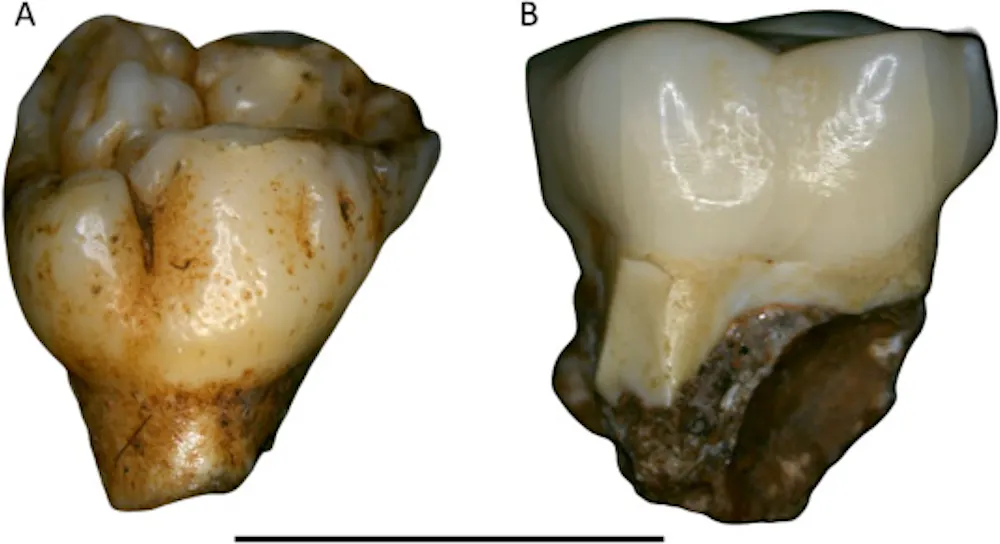
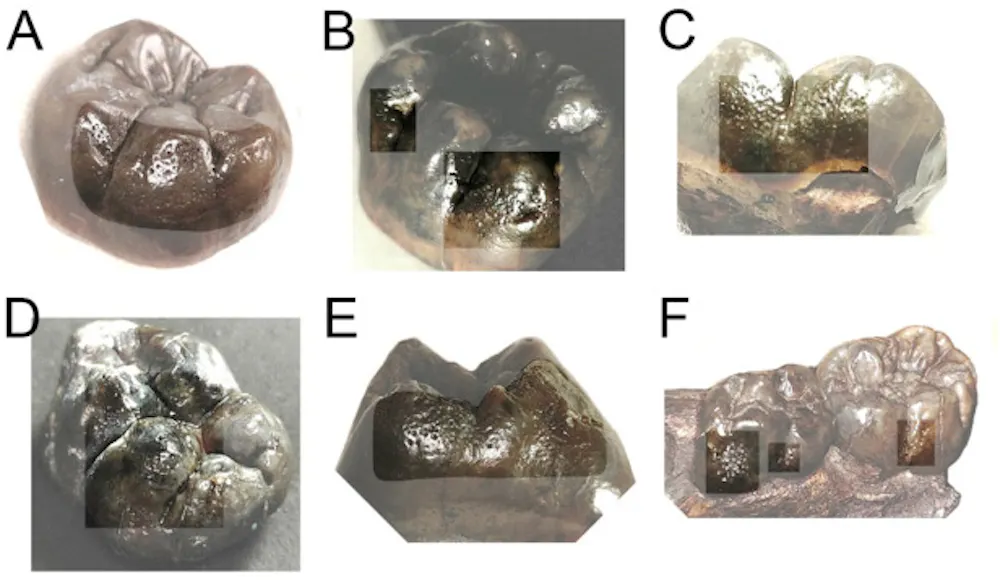
    These pits were first identified in the South African species Paranthropus robustus, a close relative of our own genus Homo. They are highly consistent in shape and size: uniform, circular and shallow.

    Initially, we thought the pits might be unique to P. robustus. But our latest research shows this kind of pitting also occurs in other Paranthropus species in eastern Africa. We even found it in some Australopithecus individuals, a genus that may have given rise to both Homo and Paranthropus.

    Uniform, circular and shallow pitting on teeth may be a previously undetected clue about evolutionary relationships.
    Towle et al. / Journal of Human Evolution

    The enamel pits have commonly been assumed to be defects resulting from stresses such as illness or malnutrition during childhood. However, their remarkable consistency across species, time and geography suggests these enamel pits may be something more interesting.

    The pitting is subtle, regularly spaced, and often clustered in specific regions of the tooth crown. It appears without any other signs of damage or abnormality.

    Two million years of evolution

    We looked at fossil teeth from hominins (humans and our closest extinct relatives) from the Omo Valley in Ethiopia, where we can see traces of more than two million years of human evolution, as well as comparisons with sites in southern Africa (Drimolen, Swartkrans and Kromdraai).

    The Omo collection includes teeth attributed to Paranthropus, Australopithecus and Homo, the three most recent and well-known hominin genera. This allowed us to track the telltale pitting across different branches of our evolutionary tree.

    What we found was unexpected. The uniform pitting appears regularly in both eastern and southern Africa Paranthropus, and also in the earliest eastern African Australopithecus teeth dating back around 3 million years. But among southern Africa Australopithecus and our own genus, Homo, the uniform pitting was notably absent.

    A defect … or just a trait?

    If the uniform pitting were caused by stress or disease, we might expect it to correlate with tooth size and enamel thickness, and to affect both front and back teeth. But it doesn’t.

    What’s more, stress-related defects typically form horizontal bands. They usually affect all teeth developing at the time of the stress, but this is not what we see with this pitting.

    The uniform, even nature of the pitting suggests a genetic origin rather than environmental factors such as malnutrition or disease.
    Towle et al. / Journal of Human Evolution

    We think this pitting probably has a developmental and genetic origin. It may have emerged as a byproduct of changes in how enamel was formed in these species. It might even have some unknown functional purpose.

    In any case, we suggest these uniform, circular pits should be viewed as a trait rather than a defect.

    A modern comparison

    Further support for the idea of a genetic origin comes from comparisons with a rare condition in humans today called amelogenesis imperfecta, which affects enamel formation.

    About one in 1,000 people today have amelogenesis imperfecta. By contrast, the uniform pitting we have seen appears in up to half of Paranthropus individuals.

    Although it likely has a genetic basis, we argue the even pitting is too common to be considered a harmful disorder. What’s more, it persisted at similar frequencies for millions of years.

    A new evolutionary marker

    If this uniform pitting really does have a genetic origin, we may be able to use it to trace evolutionary relationships.

    We already use subtle tooth features such as enamel thickness, cusp shape, and wear patterns to help identify species. The uniform pitting may be an additional diagnostic tool.

    For example, our findings support the idea that Paranthropus is a “monophyletic group”, meaning all its species descend from a (relatively) recent common ancestor, rather than evolving seperatly from different Australopithecus taxa.

    And we did not find this pitting in the southern Africa species Australopithecus africanus, despite a large sample of more than 500 teeth. However, it does appear in the earliest Omo Australopithecus specimens.

    So perhaps the pitting could also help pinpoint from where Paranthropus branched off on its own evolutionary path.

    An intriguing case

    One especially intriguing case is Homo floresiensis, the so-called “hobbit” species from Indonesia. Based on published images, their teeth appear to show similar pitting.

    If confirmed, this could suggest an evolutionary history more closely tied to earlier Australopithecus species than to Homo. However, H. floresiensis also shows potential skeletal and dental pathologies, so more research is needed before drawing such conclusions.

    More research is also needed to fully understand the processes behind the uniform pitting before it can be used routinely in taxonomic work. But our research shows it is likely a heritable characteristic, one not found in any living primates studied to date, nor in our own genus Homo (rare cases of amelogenesis imperfecta aside).

    As such, it offers an exciting new tool for exploring evolutionary relationships among fossil hominins.

    Ian Towle does not work for, consult, own shares in or receive funding from any company or organisation that would benefit from this article, and has disclosed no relevant affiliations beyond their academic appointment.

    ref. 2-million-year-old pitted teeth from our ancient relatives reveal secrets about human evolution – https://theconversation.com/2-million-year-old-pitted-teeth-from-our-ancient-relatives-reveal-secrets-about-human-evolution-258390

    MIL OSI AnalysisEveningReport.nz

  • MIL-OSI Australia: Northern Territory Police Force – King’s Birthday Honours 2025

    Source: Northern Territory Police and Fire Services

    Congratulations to former member Commander Daniel Bacon who has been named today as a recipient of the Australian Police Medal (APM) as part of the 2025 King’s Birthday Australian Honours List.

    Commander Bacon’s distinguished 38-year career with Northern Territory Police Force spans frontline service across Alice Springs, Tennant Creek, Kulgera, Timber Creek, Katherine and Darwin. Since joining as a cadet in 1987 and graduating as a constable, he has progressed through a wide variety of operational roles, culminating in his promotion to commander in 2015.

    Commander Bacon officially retired from the NT Police Force in April 2025 and throughout his tenure, he has demonstrated exceptional leadership, particularly whilst overseeing the Greater Darwin Command.

    Known for his compassionate leadership style, Commander Bacon was a steadfast advocate for officer welfare, fostering open communication and supporting career development.

    Commander Bacon’s service record includes a significant United Nations deployment to East Timor in 2001 and leadership in managing major emergencies and critical incidents. He also spearheaded Strike Force Lyra, targeting high-risk domestic and family violence.

    This honour is a testament to Commander Bacon’s career in policing and recognises his unwavering dedication to the safety and wellbeing of the Northern Territory community.

    Acting Commissioner of Police, Matthew Hollamby APM said, “We are fortunate enough to have had Mr Bacon as part of the NT Police for such an expansive time.

    “He was a respected colleague by the entire agency and is a deserving member of such a prestigious award.

    “I wish to personally thank Danny for his service, and his family for their support across a successful career.”

    *MEDIA NOTE: Mr Bacon is currently unavailable for any media interviews as he is travelling.*

    MIL OSI News

  • MIL-Evening Report: Measles cases are surging globally. Should children be vaccinated earlier?

    Source: The Conversation (Au and NZ) – By Meru Sheel, Associate Professor, Infectious Diseases, Immunisation and Emergencies (IDIE) Group, Sydney School of Public Health, University of Sydney

    EyeEm Mobile GmbH/Getty Images

    Measles has been rising globally in recent years. There were an estimated 10.3 million cases worldwide in 2023, a 20% increase from 2022.

    Outbreaks are being reported all over the world including in the United States, Europe and the Western Pacific region (which includes Australia). For example, Vietnam has reportedly seen thousands of cases in 2024 and 2025.

    In Australia, 77 cases of measles have been recorded in the first five months of 2025, compared with 57 cases in all of 2024.

    Measles cases in Australia are almost all related to international travel. They occur in travellers returning from overseas, or are contracted locally after mixing with an infected traveller or their contacts.

    Measles most commonly affects children and is preventable with vaccination, given in Australia in two doses at 12 and 18 months old. But in light of current outbreaks globally, is there a case for reviewing the timing of measles vaccinations?

    Some measles basics

    Measles is caused by a virus belonging to the genus Morbillivirus. Symptoms include a fever, cough, runny nose and a rash. While it presents as a mild illness in most cases, measles can lead to severe disease requiring hospitalisation, and even death. Large outbreaks can overwhelm health systems.

    Measles can have serious health consequences, such as in the brain and the immune system, years after the infection.

    Measles spreads from person to person via small respiratory droplets that can remain suspended in the air for two hours. It’s highly contagious – one person with measles can spread the infection to 12–18 people who aren’t immune.

    Because measles is so infectious, the World Health Organization (WHO) recommends two-dose vaccination coverage above 95% to stop the spread and achieve “herd immunity”.

    Low and declining vaccine coverage, especially since the COVID pandemic, is driving global outbreaks.


    Read more:
    What are the symptoms of measles? How long does the vaccine last? Experts answer 6 key questions


    When are children vaccinated against measles?

    Newborn babies are generally protected against measles thanks to maternal antibodies. Maternal antibodies get passed from the mother to the baby via the placenta and in breast milk, and provide protection against infections including measles.

    The WHO advises everyone should receive two doses of measles vaccination. In places where there’s a lot of measles circulating, children are generally recommended to have the first dose at around nine months old. This is because it’s expected maternal antibodies would have declined significantly in most infants by that age, leaving them vulnerable to infection.

    If maternal measles antibodies are still present, the vaccine is less likely to produce an immune response.

    Research has also shown a measles vaccine given at less than 8.5 months of age can result in an antibody response which declines more quickly. This might be due to interference with maternal antibodies, but researchers are still trying to understand the reasons for this.

    A second dose of the vaccine is usually given 6–9 months later. A second dose is important because about 10–15% of children don’t develop antibodies after the first vaccine.

    In settings where measles transmission is under better control, a first dose is recommended at 12 months of age. Vaccination at 12 months compared with nine months is considered to generate a stronger, longer-lasting immune response.

    In Australia, children are routinely given the measles-mumps- rubella (MMR) vaccine at 12 months and the measles-mumps-rubella-varicella (MMRV, with “varicella” being chickenpox) vaccine at 18 months.

    Babies at higher risk of catching the disease can also be given an additional early dose. In Australia, this is recommended for infants as young as six months when there’s an outbreak or if they’re travelling overseas to a high-risk setting.

    A new study looking at measles antibodies in babies

    A recent review looked at measles antibody data from babies under nine months old living in low- and middle-income countries. The review combined the results from 20 studies, including more than 8,000 babies. The researchers found that while 81% of newborns had maternal antibodies to measles, only 30% of babies aged four months had maternal antibodies.

    This study suggests maternal antibodies to measles decline much earlier than previously thought. It raises the question of whether the first dose of measles vaccine is given too late to maximise infants’ protection, especially when there’s a lot of measles around.

    Should we bring the measles vaccine forward in Australia?

    All of the data in this study comes from low- and middle-income countries, and might not reflect the situation in Australia where we have much higher vaccine coverage for measles, and very few cases.

    Australia’s coverage for two doses of the MMR vaccine at age two is above 92%.

    Although this is lower than the optimal 95%, the overall risk of measles surging in Australia is relatively low.

    Nonetheless, there may be a case for broadening the age at which an early extra dose of the measles vaccine can be given to children at higher risk. In New Zealand, infants as young as four months can receive a measles vaccine before travelling to an endemic country.

    But the current routine immunisation schedule in Australia is unlikely to change.

    Adding an extra dose to the schedule would be costly and logistically difficult. Lowering the age for the first dose may have some advantages in certain settings, and doesn’t pose any safety concerns, but further evidence would be required to support this change. In particular, research is needed to ensure it wouldn’t negatively affect the longer-term protection that vaccination offers from measles.

    Making sure you’re protected

    In the meantime, ensuring high levels of measles vaccine coverage with two doses is a global priority.

    People born after 1966 are recommended to have two doses of measles vaccine. This is because those born before the mid-1960s likely caught measles as children (when the vaccine was not yet available) and would therefore have natural immunity.

    If you’re unsure about your vaccination status, you can check this through the Australian Immunisation Register. If you don’t have a documented record, ask your doctor for advice.

    Catch-up vaccination is available under the National Immunisation Program.

    Meru Sheel receives funding from the National Health and Medical Research Council and the Department of Foreign Affairs and Trade.

    Anita Heywood does not work for, consult, own shares in or receive funding from any company or organisation that would benefit from this article, and has disclosed no relevant affiliations beyond their academic appointment.

    ref. Measles cases are surging globally. Should children be vaccinated earlier? – https://theconversation.com/measles-cases-are-surging-globally-should-children-be-vaccinated-earlier-257942

    MIL OSI AnalysisEveningReport.nz

  • MIL-Evening Report: Can Israel still claim self-defence to justify its Gaza war? Here’s what the law says

    Source: The Conversation (Au and NZ) – By Donald Rothwell, Professor of International Law, Australian National University

    On October 7 2023, more than 1,000 Hamas militants stormed into southern Israel and went on a killing spree, murdering 1,200 men, women and children and abducting another 250 people to take back to Gaza. It was the deadliest massacre of Jews since the Holocaust.

    That day, Israeli Prime Minister Benjamin Netanyahu told the country, “Israel is at war”. The Israel Defence Forces (IDF) immediately began a military campaign to secure the release of the hostages and defeat Hamas. Since that day, more than 54,000 Palestinians have been killed, mostly women and children.

    Israel has maintained its response is justified under international law, as every nation has “an inherent right to defend itself”, as Netanyahu stated in early 2024.

    This is based on the right to self-defence in international law, which is outlined in Article 51 of the 1945 United Nations Charter as follows:

    Nothing in the present Charter shall impair the inherent right of individual or collective self-defence if an armed attack occurs against a Member of the United Nations[…]

    At the start of the war, many nations agreed Israel had a right to defend itself, but how it did so mattered. This would ensure its actions were consistent with international humanitarian law.

    However, 20 months after the October 7 attacks, fundamental legal issues have arisen around whether this self-defence justification still holds.

    Can Israel exercise self-defence ad infinitum? Or is it now waging a war of aggression against Palestine?

    Self-defence in the law

    Self-defence has a long history in international law.

    The modern principles of self-defence were outlined in diplomatic exchanges over an 1837 incident involving an American ship, The Caroline, after it was destroyed by British forces in Canada. Both sides agreed that an exercise of self-defence would have required the British to demonstrate their conduct was not “unreasonable or excessive”.

    The concept of self-defence was also extensively relied on by the Allies in the second world war in response to German and Japanese aggression.

    Self-defence was originally framed in the law as a right to respond to a state-based attack. However, this scope has broadened in recent decades to encompass attacks from non-state actors, such as al-Qaeda following the September 11 2001 terror attacks.

    Israel is a legitimate, recognised state in the global community and a member of the United Nations. Its right to self-defence will always remain intact when it faces attacks from its neighbours or non-state actors, such as Hamas, Hezbollah or the Houthi rebels in Yemen.

    However, the right of self-defence is not unlimited. It is constrained by the principles of necessity and proportionality.

    The necessity test was met in the current war due to the extreme violence of the Hamas attack on October 7 and the taking of hostages. These were actions that could not be ignored and demanded a response, due to the threat Israel continued to face.

    The proportionality test was also met, initially. Israel’s military operation after the attack was strategic in nature, focused on the return of the hostages and the destruction of Hamas to eliminate the immediate threat the group posed.

    The legal question now is whether Israel is still legitimately exercising self-defence in response to the October 7 attacks.

    This is a live issue, especially given comments by Israeli Defence Minister Israel Katz on May 30 that Hamas would be “annihilated” unless a proposed ceasefire deal was accepted.

    These comments and Israel’s ongoing conduct throughout the war raise the question of whether proportionality is still being met.

    A test of proportionality

    The importance of proportionality in self-defence has been endorsed in recent years by the International Court of Justice.

    Under international law, proportionality remains relevant throughout a conflict, not just in the initial response to an attack.

    While the law allows a war to continue until an aggressor surrenders, it does not legitimise the complete destruction of the territory where an aggressor is fighting.

    The principle of proportionality also provides protections for civilians. Military actions are to be directed at the foreign forces who launched the attack, not civilians.

    While Israel has targeted Hamas fighters in its attacks, including those who orchestrated the October 7 attacks, these actions have caused significant collateral deaths of Palestinian civilians.

    Therefore, taken overall, the ongoing, 20-month military assault against Hamas, with its high numbers of civilian casualties, credible reports of famine and devastation of Gazan towns and cities, suggests Israel’s exercise of self-defence has become disproportionate.

    The principle of proportionality is also part of international humanitarian law. However, Israel’s actions on this front are a separate legal issue that has been the subject of investigation by the International Criminal Court.

    My aim here is to solely assess the legal question of proportionality in self-defence and international law.

    Is rescuing hostages in self-defence?

    Israel could separately argue it is exercising legitimate self-defence to rescue the remaining hostages held by Hamas.

    However, rescuing nationals as an exercise of self-defence is legally controversial. Israel set a precedent in 1976 when the military rescued 103 Jewish hostages from Entebbe, Uganda, after their aircraft had been hijacked.

    In current international law, there are very few other examples in which this interpretation of self-defence has been adopted – and no international consensus on its use.

    In Gaza, the size, scale and duration of Israel’s war goes far beyond a hostage rescue operation. Its aim is also to eliminate Hamas.

    Given this, rescuing hostages as an act of self-defence is arguably not a suitable justification for Israel’s ongoing military operations.

    An act of aggression?

    If Israel can no longer rely on self-defence to justify its Gaza military campaign, how would its actions be characterised under international law?

    Israel could claim it is undertaking a security operation as an occupying power.

    While the International Court of Justice said in an advisory opinion last year that Israel was engaged in an illegal occupation of Gaza, the court expressly made clear it was not addressing the circumstances that had evolved since October 7.

    Israel is indeed continuing to act as an occupying power, even though it has not physically reoccupied all of Gaza. This is irrelevant given the effective control it exercises over the territory.

    However, the scale of the IDF’s operations constitute an armed conflict and well exceed the limited military operations to restore security as an occupying power.

    Absent any other legitimate basis for Israel’s current conduct in Gaza, there is a strong argument that what is occurring is an act of aggression. The UN Charter and the Rome Statute of the International Criminal Court prohibit acts of aggression not otherwise justified under international law.

    These include invasions or attacks by the armed forces of a state, military occupations, bombardments and blockades. All of this has occurred – and continues to occur – in Gaza.

    The international community has rightly condemned Russia’s invasion as an act of aggression in Ukraine. Will it now do the same with Israel’s conduct in Gaza?

    Donald Rothwell receives funding from the Australian Research Council.

    ref. Can Israel still claim self-defence to justify its Gaza war? Here’s what the law says – https://theconversation.com/can-israel-still-claim-self-defence-to-justify-its-gaza-war-heres-what-the-law-says-257822

    MIL OSI AnalysisEveningReport.nz

  • MIL-OSI Russia: Myanmar leader says he is ready to work with China to build a Myanmar-China community of shared destiny

    Translation. Region: Russian Federal

    Source: People’s Republic of China in Russian – People’s Republic of China in Russian –

    Source: People’s Republic of China – State Council News

    NAYPYI TAW, Myanmar, June 8 (Xinhua) — A ceremony to mark the 75th anniversary of the establishment of diplomatic relations between China and Myanmar was held in Myanmar’s capital Naypyitaw on Sunday.

    Speaking at the ceremony, Myanmar leader Min Aung Hlaing said Myanmar is willing to stand hand in hand with China, remain firmly committed to strengthening the fraternal friendship between the two countries, and consistently promote the building of a Myanmar-China community with a shared future.

    Min Aung Hlaing noted that the two countries have historically developed traditional fraternal relations of good-neighborliness and friendship.

    Over the 75 years since the establishment of diplomatic relations between Myanmar and China, the friendly ties between the governments, peoples and all walks of life of the two countries have continued to develop steadily, and cooperation in key areas such as investment and trade has continuously achieved remarkable progress, the Myanmar leader noted.

    According to Min Aung Hlaing, both countries have consistently adhered to the five principles of peaceful coexistence, setting a model for modern international relations.

    Myanmar will continue to firmly adhere to the one-China principle and highly appreciates China’s Global Development Initiative, Global Security Initiative and Global Civilization Initiative.

    Min Aung Hlaing also expressed gratitude for China’s strong support for peace, national reconciliation, socio-economic development of Myanmar, as well as for the valuable assistance provided to it in the aftermath of the earthquake.

    Chinese Ambassador to Myanmar Ma Jia, for her part, said that China and Myanmar are connected by shared mountains and rivers, and their friendly relations go back thousands of years.

    The ambassador stated that since the establishment of diplomatic relations, China-Myanmar ties have been as strong as a rock. The future and destiny of the two countries are inextricably linked, and the two countries continue to write new chapters in the history of fraternal friendship in various fields, Ma Jia added.

    The diplomat stressed that China will continue to adhere to the principles of a friendly, secure and prosperous neighborhood, goodwill, sincerity, mutual benefit, inclusiveness and common destiny.

    Ma Jia assured that China will continue to strengthen strategic mutual trust, deepen development integration, maintain regional stability and expand exchanges with Myanmar.

    In addition, China will continue to support Myanmar in its post-earthquake recovery and promote the deepening and practical realization of the China-Myanmar community of shared future, the ambassador added. –0–

    MIL OSI Russia News

  • MIL-OSI: ASUS Republic of Gamers Announces the ROG Xbox Ally and ROG Xbox Ally X, Raising the Standard for Gaming Handhelds

    Source: GlobeNewswire (MIL-OSI)

    KEY POINTS

    • All-day comfort: Redesigned chassis is purpose-built to fit the hands like a real gamepad
    • Seamless software experience: New Xbox® software offers the best of Xbox and Windows PC gaming in one handheld
    • Efficiency and performance: Two new processors offer incredible AAA and indie gaming experiences

    LOS ANGELES, June 08, 2025 (GLOBE NEWSWIRE) — ASUS Republic of Gamers (ROG) is proud to announce an all-new series of Ally handhelds built from the ground up with improved ergonomics and a seamless player-first user experience.

    Developed in partnership with the incredible team at Xbox, the new ROG Xbox Ally and ROG Xbox Ally X offer best-in-class ergonomics and a full-screen Xbox experience that marries the best of Xbox and PC gaming in one cohesive package.

    “We wanted to take our handheld to the next level, but we could not do it alone.” said Shawn Yen, Head of the Consumer product team at ASUS. “This revolutionary partnership with Microsoft allowed us to forge a brand new device with ROG muscle and the soul of Xbox.”

    The ROG Xbox Ally sports an AMD Ryzen™ Z2 A Processor with incredible power efficiency, while the ROG Xbox Ally X offers the new AMD Ryzen™ AI Z2 Extreme Processor for next-level gaming performance. Both launch holiday 2025 in select markets, with additional markets to follow.

    All-day comfort

    The ROG Xbox Ally and the ROG Xbox Ally X feature a completely redesigned chassis. Gaming on handheld is a very personal experience, and comfort in the hand is a key pillar of a well-designed device. With years of feedback on the original Ally and Ally X, the ROG Xbox Ally series offers a more comfortable grip than ever, inspired by Xbox. With a redesigned palm rest and texturing patterns to keep gamers locked on target, the ROG Xbox Ally series truly raises the bar for comfort with a handheld gaming device.

    The ROG Xbox Ally X also features impulse triggers, improving the haptics in supported games. These triggers allow for more nuance and immersion and are a feature that Xbox gamers have come to expect with their controllers. These devices are the most comfortable and immersive handhelds ever built by ROG.

    Seamless software experience

    While the ROG Armoury Crate Special Edition software made the original Ally easy to use, ROG and Xbox aimed to make handheld gaming even more seamless on Windows 11. “We wanted to create an authentic Xbox experience in a handheld form factor,” explained Roanne Sones, CVP at Xbox. “With ROG, we made it happen on the Xbox Ally and Xbox Ally X.”

    As soon as players power on the device, they enter the full screen Xbox experience. Powered by Windows 11 underneath, this software has been optimized for the ROG Xbox Ally, reducing system overhead and offering easy joystick and button navigation. Quick access to settings and customizable widgets are available via Game Bar with a single press of the Xbox button. But with the full freedom of Windows 11 running under the hood, games and mods from other sources are still easily accessible. The ROG Xbox Ally series offers the power of Xbox, the craftsmanship of ROG, and the versatility of Windows, all in one cohesive device.

    Efficiency and performance

    The ROG Xbox Ally X features the new top-of-stack AMD Ryzen AI Z2 Extreme Processor, giving it plenty of horsepower even in AAA games. Combined with software optimizations from the new Xbox experience, the ROG Xbox Ally X stands ready to provide gamers with next-gen handheld performance.

    “Battery life is paramount on handhelds like the ROG Xbox Ally and Ally X,” said Jack Huynh, Senior Vice President and General Manager of AMD. “The Ryzen Z2 series improves efficiency over the previous generation while still offering excellent performance in modern games.”

    The ROG Xbox Ally offers console-caliber performance with its AMD Ryzen Z2 A Processor. At the same time, its ultra-efficient design at low wattages and its 60Wh battery produce improved battery life. Meanwhile, the ROG Xbox Ally X takes performance to greater heights, offering more room for graphical fidelity at higher framerates with the AMD Ryzen AI Z2 Extreme Processor.

    Both chips are primed to take full advantage of AMD’s latest software suite for graphics and performance improvements, including AMD FidelityFX™ Super Resolution (FSR), Radeon Super Resolution (RSR), and AMD Fluid Motion Frames (AFMF) frame generation, the latter of which can offer better framerates for improved smoothness.

    In a nod to the future, the AMD Ryzen AI Z2 Extreme-equipped ROG Xbox Ally X features an NPU. With these next-generation chips, the ROG Xbox Ally X will be ready to power the latest AI features as they are introduced.

    At launch this holiday, the ROG Xbox Ally and ROG Xbox Ally X will be available in Australia, Belgium, Canada, Denmark, Finland, France, Germany, Ireland, Italy, Japan, Korea, Mexico, the Netherlands, New Zealand, Norway, Poland, Portugal, Saudi Arabia, Singapore, Spain, Sweden, Switzerland, Thailand, Turkey, the United Arab Emirates, the United Kingdom, and the United States, with availability to follow for other markets where ROG Ally series products are sold today.  

    For more information, please visit https://rog.asus.com/content/rog-xbox-ally/. Users can also sign up on the page to get notified when pre-orders go live.

    SPECIFICATIONS

    ROG Xbox Ally X (2025)

    Operating System Windows 11 Home
    Comfort & input Contoured grips inspired by Xbox Wireless Controllers deliver all-day comfort, complete with impulse triggers for enhanced control

    ABXY buttons / D-pad / L & R impulse triggers / L & R bumpers / Xbox button / View button / Menu button / Command Center button / Library button / 2x assignable back buttons / 2x full-size analog sticks / HD haptics / 6-Axis IMU

    Processor AMD Ryzen AI Z2 Extreme Processor
    Display 7” FHD (1080p) IPS, 500 nits, 16:9
    120Hz refresh rate
    FreeSync Premium
    Corning® Gorilla® Glass Victus® + Corning DXC Anti-Reflection
    Memory 24GB LPDDR5X-8000
    Storage 1TB M.2 2280 SSD for easier upgrade
    Network and Communication Wi-Fi 6E (2 x 2) + Bluetooth® 5.4
    I/O Ports 1x USB4® with DisplayPort 2.1 / Power Delivery 3.0, Thunderbolt 4 compatible

    1x USB 3.2 Gen 2 Type-C® with DisplayPort 2.1 / Power Delivery 3.0

    1x UHS-II microSD card reader (supports SD, SDXC and SDHC; UHS-I with DDR200 mode)

    1x 3.5mm Combo Audio Jack

    Battery 80Wh
    Dimensions 290.8 (W) x 121.5 (D) x 50.7 (H) mm
    Weight 715 grams
    Included ROG Xbox Ally X

    65W charger

    Stand

    ROG Xbox Ally (2025)

    Operating System Windows 11 Home
    Comfort & input Contoured grips inspired by Xbox Wireless Controllers deliver all-day comfort

    ABXY buttons / D-pad / L & R Hall Effect analog triggers / L & R bumpers / Xbox button / View button / Menu button / Command Center button / Library button / 2x assignable back buttons / 2x full-size analog sticks / HD haptics / 6-Axis IMU

    Processor AMD Ryzen Z2 A Processor
    Display 7” FHD (1080p) IPS, 500 nits, 16:9

    120Hz refresh rate

    FreeSync Premium

    Corning® Gorilla® Glass Vitus® + Corning DXC Anti-Reflection

    Memory 16GB LPDDR5X-6400
    Storage 512GB M.2 2280 SSD for easier upgrade
    Network and Communication WiFi 6E (2 x 2) + Bluetooth® 5.4
    I/O Ports 2x USB 3.2 Gen 2 Type-C® with DisplayPort 2.1 / Power Delivery 3.0

    1x UHS-II microSD card reader (supports SD, SDXC and SDHC)

    1x 3.5mm Combo Audio Jack

    Battery 60Wh
    Dimensions 290.8 (W) x 121.5 (D) x 50.7 (H) mm
    Weight 670 grams
    Included ROG Xbox Ally

    65W charger

    Stand

    NOTES TO EDITORS

    ROG Facebook: https://www.facebook.com/asusrog

    ROG X (Twitter): https://www.x.com/asus_rog

    ASUS Pressroom: http://press.asus.com

    ASUS Canada Facebook: https://www.facebook.com/asuscanada/

    ASUS Canada Instagram: https://www.instagram.com/asus_ca

    ASUS Canada YouTube: https://ca.asus.click/youtube

    ASUS Global Twitter: https://www.x.com/asus

    About ROG

    Republic of Gamers (ROG) is an ASUS sub-brand dedicated to creating the world’s best gaming hardware and software. Formed in 2006, ROG offers a complete line of innovative products known for performance and quality, including motherboards, graphics cards, system components, laptops, desktops, monitors, smartphones, audio equipment, routers, peripherals and accessories. ROG participates in and sponsors major international gaming events. ROG gear has been used to set hundreds of overclocking records and it continues to be the preferred choice of gamers and enthusiasts around the world. To become one of those who dare, learn more about ROG at http://rog.asus.com.

    A photo accompanying this announcement is available at https://www.globenewswire.com/NewsRoom/AttachmentNg/589e47e6-72cf-472f-b58a-2d4425432efb

    The MIL Network

  • MIL-OSI New Zealand: Motorists advised to expect delays: Greenlane

    Source: New Zealand Police

    Motorists are being advised to expect delays citybound from Greenlane this morning following a vehicle breakdown.

    The incident, between Greenlane and Market Roads, was reported to Police at about 6.30am.

    Road users are advised to expect delays or consider alternative routes to the CBD.

    ENDS.

    Nicole Bremner/NZ Police 

    MIL OSI New Zealand News

  • MIL-OSI Russia: Thailand, Cambodia reach deal on troop redeployment to ease border tensions

    Translation. Region: Russian Federal

    Source: People’s Republic of China in Russian – People’s Republic of China in Russian –

    Source: People’s Republic of China – State Council News

    BANGKOK/PHNOM PENH, June 8 (Xinhua) — Thailand and Cambodia have agreed to redeploy troops to ease tensions after a brief clash earlier in the border area, Thai Prime Minister Phetongthan Shinawatra said Sunday.

    As the Prime Minister reported on the social network X, her talks with the Cambodian government had produced a positive result. Both sides agreed to change the deployment of troops in the conflict areas to ease tensions.

    The Prime Minister assured that Thailand and Cambodia will hold discussions at all levels to return interstate relations to normal as soon as possible.

    In a separate statement, Deputy Prime Minister and Defence Minister Phumtham Vechayachai confirmed that Thai and Cambodian military units had completed their redeployment to positions agreed upon in 2024.

    Phumtham Vechayachai noted that continuous coordination at all levels has helped ease tensions and both countries are seeking to reduce conflict and avoid confrontation.

    Meanwhile, Cambodian Senate (upper house of parliament) Chairman Hun Sen said on Sunday evening that adjusting the military’s deployment in areas of conflict with Thailand was necessary to prevent large-scale violent clashes.

    “Adjusting the deployment of military units in potential conflict zones based on mutual understanding between the command of the armed forces of Cambodia and Thailand is essential to prevent large-scale clashes involving violence,” the post on his official social media page reads.

    “The people of Cambodia and Thailand sincerely desire lasting peace and do not want to see war,” he said. “Efforts to find a solution through dialogue have been made at all levels, from the government to the frontline commanders, and are now bearing fruit.”

    Cambodian and Thai troops briefly exchanged fire in a disputed border area on May 28, leaving a Cambodian soldier dead. –0–

    MIL OSI Russia News