Source: People’s Republic of China – State Council News
BEIJING, May 26 (Xinhua) — A themed event titled “Anti-Fascist War in Artworks” was held in Shanghai recently to commemorate the 80th anniversary of the victory of the Chinese People’s War of Resistance Against Japanese Aggression, the Great Patriotic War and the World Anti-Fascist War, Zhongxinwang reported.
The event, organized by the Shanghai Association of Chinese Studied in Europe and America, was attended by Chinese and foreign guests, including representatives of the Russian Consulate General in Shanghai and the Belarusian Consulate General in Shanghai, as well as students from Shanghai Cooperation Organization (SCO) member states studying in Shanghai.
In honor of the great victory in the anti-fascist war, the event included talks and artistic performances, and an exhibition dedicated to the theme of victory, peace and friendship was opened.
The exhibition featured sculptures and oil paintings created by graduates of the Ilya Repin St. Petersburg Academy of Arts and the V. I. Surikov Moscow State Academic Art Institute at the Russian Academy of Arts.
Xiong Jian, executive vice-chairman of the Shanghai Association of Chinese Studied in Europe and America, said that holding this event is of great significance. It promotes cultural exchange and mutual learning, and emphasizes the importance of remembering history and preserving peace.
According to him, the victory in the world anti-fascist war is the result of international cooperation. This event is designed to help people realize that in the face of global challenges, only through joint efforts can countries overcome difficulties.
As reported, in August this year, the Shanghai Association of Chinese Studied in Europe and America, together with the Shanghai Artists Association and other organizations, will also hold an art exhibition dedicated to the 80th anniversary of the victory in the Chinese People’s War of Resistance Against Japanese Aggression and the victory in the World Anti-Fascist War. -0-
Source: People’s Republic of China in Russian – People’s Republic of China in Russian –
Source: People’s Republic of China – State Council News
CANBERRA, May 26 (Xinhua) — Australian Prime Minister Anthony Albanese on Monday condemned Israel’s curbs on aid supplies to the Gaza Strip, calling it “unacceptable.”
The blockade of food and supplies to people “who need it” in Gaza was “outrageous”, Mr Albanese said, adding that he had made Australia’s position clear to the Israeli government.
“We believe that Israel’s justifications and explanations are completely untenable and lack credibility,” he told reporters in Canberra.
“People are starving. It is outrageous that a democratic state is restricting supplies. This is my clear position,” the head of government said. –0–
Source: People’s Republic of China in Russian – People’s Republic of China in Russian –
Source: People’s Republic of China – State Council News
KUALA LUMPUR, May 26 (Xinhua) — Chinese Premier Li Qiang arrived in Kuala Lumpur on Monday to attend the ASEAN (Association of Southeast Asian Nations)-GCC (Gulf Cooperation Council)-China summit.
The first trilateral summit was proposed by Malaysia, which holds the ASEAN presidency this year. Li Qiang visited Indonesia before arriving in Kuala Lumpur. –0–
The Department of Industrial Technology under Taiwan’s Ministry of Economic Affairs (MOEA) led 20 research-driven startup teams to InnoVEX, one of Asia’s leading innovation and startup exhibitions. At the event, they unveiled the Taiwan Research-Institute Entrepreneur Ecosystem (TREE) Pavilion, showcasing advanced innovations in AI, ICT, semiconductors, smart mobility, biotech, healthcare tech, green tech, and the circular economy.
Three startups have achieved the NT$100 million revenue benchmark:
-FREE Bionics: Has tripled its revenue in the past four years and secured over NT$600 million in funding. -KopherBit: On track to exceed NT$100 million in revenue by 2025. -GasolineAI: Secured an order worth NT$100 million in its first year.
Additionally, the 2025 TREE Award Ceremony took place on May 22, celebrating five promising startup teams from research institutions. Experts selected them for their achievements in translating research innovations into market successes.
At COMPUTEX 2025, the MOEA unveiled its Tech Hub to showcase 30 innovative technologies, highlighting the world-leading B5G/6G Non-Terrestrial Network (NTN) base station system and bringing together leading network communication companies and major R&D institutes including ITRI, MIRDC, TTRI, and ARTC. In partnership with MediaTek and Chunghwa Telecom, the MOEA successfully completed multi-orbit satellite communication trials. This breakthrough enables direct satellite connectivity via software upgrades, eliminating the need for hardware replacement-a game-changer for remote and offshore connectivity. The solution received global attention at this year’s MWC Barcelona.
According to the MOEA, Taiwan plays a critical role in the global ICT and AI ecosystem. To stay ahead in next-generation communications and AI-driven manufacturing, the ministry has launched 50 AI pilot production lines, which are already being applied in sectors such as energy storage and smart manufacturing. One notable example is the POXA Energy Management System, which uses AI for intelligent scheduling to optimize green energy storage. The system is slated to spin off into a startup by 2025 to expand its reach.
The Tech Hub showcases innovations across five key areas: AI services, immersive technologies, AI for manufacturing, sustainable green energy, and next-generation communication. Highlighted solutions include an AI-powered medical logistics robot at Kaohsiung Veterans General Hospital; a smart knee brace with electrostimulation to accelerate rehabilitation for the elderly; photo-realistic AI 3D modeling technology that creates high-fidelity models using only a smartphone; and a transparent display open architecture system designed for smart libraries and hybrid digital-physical environments.
On May 15, Minister of Economic Affairs Jyh-Huei Kuo attended the grand opening ceremony of GlobalWafers’ new plant in Sherman, Texas. Then he traveled to Houston to visit Foxconn’s server plant and hosted business roundtables with Houston-based Taiwanese business leaders.
Minister Kuo wanted to gain a better understanding of Taiwan’s outbound investment in Texas, explore areas where the Ministry’s support may be needed, and listen to the business leaders’ viewpoints on enhancing U.S.-Taiwan economic and trade relations.
On the following day, Minister Kuo went to Austin, Texas where he met with Governor Greg Abbott and Texas House Speaker Dustin Burrows. State Representative Angie Chen Button had also invited Mr. Kuo to attend a session of the Texas House of Representatives, where Speaker Burrows formally recognized his contributions to strengthening economic and trade ties between Taiwan and Texas.
Last July, Minister Kuo signed the Taiwan-Texas Economic Development Statement of Intent (EDSI) with Texas Governor Greg Abbott. The agreement aims to enhance collaboration in fields such as semiconductors, electric vehicles, energy resilience, and innovative technologies. Minister Kuo paid a return visit to Governor Abbott focused on implementing this EDSI and further promoting investment and economic partnership between both sides.
During the meeting, Governor Abbott highlighted Texas’s business-friendly environment, including low tax rates, reasonable investment regulations, a high-quality workforce, and comprehensive vocational training programs.
On the other hand, the Taiwan Minister provided updates on Taiwan’s outbound investment in Texas and MOEA plans to set up an investment and trade center in Texas later this year. They also exchanged views on how to develop a more resilient Taiwan–Texas supply chain partnership through establishing a science and industry park and strengthening cooperation in semiconductors and AI areas.
In 2024, Taiwan was Texas’s fourth-largest import source, with a total trade volume of $25.58 billion—a 19.91% year-over-year growth.
External Affairs Minister S. Jaishankar on Sunday held a telephonic conversation with newly appointed Canadian Foreign Minister Anita Anand. The two leaders discussed avenues to strengthen India-Canada relations.
In a post on X, Jaishankar said: “Appreciate the telecon with FM Anita Anand of Canada. Discussed the prospects of India-Canada ties. Wished her a very successful tenure.”
Anand, who recently assumed office as Foreign Minister in Prime Minister Mark Carney’s new government, reciprocated the sentiment, calling the exchange “productive” and expressing her intention to deepen cooperation with India.
“Thank you, Minister S. Jaishankar, for the productive discussion today on strengthening Canada-India ties, deepening our economic cooperation, and advancing shared priorities. I look forward to continuing our work together,” Anand posted on X.
Relations between India and Canada have been strained after former Prime Minister Justin Trudeau alleged Indian involvement in the killing of Khalistani extremist and NIA-designated terrorist Hardeep Singh Nijjar on Canadian soil in 2023—an accusation New Delhi rejected as “absurd” and “politically motivated.”
Earlier this month, on May 14, Jaishankar had extended formal congratulations to Anand on her appointment. The congratulatory message followed the announcement of Prime Minister Mark Carney’s new 38-member cabinet, which includes 28 ministers and 10 Secretaries of State.
Prime Minister Narendra Modi on Monday led a vibrant roadshow in Gujarat’s Vadodara as part of his two-day visit to the state, where he is scheduled to inaugurate and lay the foundation stones for several developmental projects aimed at boosting infrastructure and economic growth.
During the roadshow, PM Modi was seen warmly interacting with enthusiastic crowds, waving to citizens who responded with cheers, chants of patriotic slogans, and waving the Indian flag.
Family members of Indian Army officer Colonel Sofiya Qureshi, who was part of media briefings during Operation Sindoor, were also present at the roadshow and welcomed the Prime Minister with flower petals.
Following the roadshow, PM Modi is scheduled to travel to Dahod to inaugurate a locomotive manufacturing plant of Indian Railways. The facility will produce 9,000 HP electric locomotives for domestic use and exports. Designed for energy efficiency and equipped with regenerative braking systems, these locomotives are expected to boost the freight capacity of Indian Railways and contribute to sustainable transport.
The Prime Minister will also flag off two new train services — the Vande Bharat Express between Veraval and Ahmedabad, and an express train between Valsad and Dahod. In addition, he will lay the foundation stone and inaugurate multiple development projects in Dahod worth around ₹24,000 crore. A public function will also be held during his visit.
Later, PM Modi will travel to Bhuj to launch and lay the foundation stone for various development projects valued at over ₹53,400 crore. These include major initiatives in the power sector, such as transmission projects to evacuate renewable energy from the Khavda Renewable Energy Park, expansion of the transmission network, and the setting up of an ultra-supercritical thermal power plant unit in Tapi. Other projects include port development at Kandla and infrastructure works in roads, solar power, and water supply across Gujarat.
On May 27, the Prime Minister will be in Gandhinagar to participate in the celebration of 20 years of the Gujarat Urban Growth Story. He will also launch the Urban Development Year 2025 and address a public gathering on the occasion.
Source: Hong Kong Government special administrative region
Following is the speech by the Secretary for Health, Professor Lo Chung-mau, at the Plenary Session: Shaping a More Equitable and Sustainable Health System of the Asia Summit on Global Health today (May 26):
Distinguished guests, healthcare leaders, ladies and gentlemen,
As debate rages about the federal government’s plan to lift the tax on earnings on superannuation balances over A$3 million, it’s worth revisiting why we offer super tax breaks in the first place, and why they need to be reformed.
Tax breaks on super contributions mean less tax is paid on super savings than other forms of income. These tax breaks cost the federal budget nearly $50 billion in lost revenue each year.
These tax breaks boost the retirement savings of super fund members. They also ensure workers don’t pay punitively high long-term tax rates on their super, since the impact of even low tax rates on savings compounds over time.
Two thirds of the value of super tax breaks benefit the top 20% of income earners, who are already saving enough for their retirement.
Few retirees draw down on their retirement savings as intended, and many are net savers – their super balance continues to grow for decades after they retire.
By 2060, Treasury expects one-third of all withdrawals from super will be via bequests – up from one-fifth today.
Superannuation in Australia was intended to help fund retirements. Instead, it has become a taxpayer-subsidised inheritance scheme.
The tax breaks aren’t just inequitable; they are economically unsound. Generous tax breaks for super savers mean other taxes (such as income and company taxes) must be higher to make up the forgone revenue. That means the burden falls disproportionately on younger taxpayers.
The government should go further
The government’s plan to increase the tax rate on superannuation earnings for balances exceeding $3 million from 15% to 30% is one modest step towards fixing these problems. The tax would only apply to the amount over $3 million, not the entire balance.
Rather than being the biggest losers from the lack of indexation, younger Australians are the biggest beneficiaries. It means more older, wealthier Australians will shoulder some of the burden of budget repair and an ageing population. Otherwise, younger generations would bear this burden alone.
The facts speak for themselves: a mere 0.5% of Australians have more than $3 million in their super, and 85% of those are aged over 60.
Even in the unlikely scenario where the threshold remains fixed until 2055 – or for ten consecutive parliamentary terms – it would still only affect the top 10% of retiring Australians. Treasurer Jim Chalmers has rightly pointed out that it is unlikely the threshold will never be lifted.
Far from abandoning the proposed $3 million threshold, the government should go further and drop the threshold to $2 million, and only then index it to inflation, saving the budget a further $1 billion a year.
There is no rationale for offering such generous earnings tax breaks on super balances between $2 million and $3 million.
At the very least, if the $3 million threshold is maintained, it should not be indexed until inflation naturally reduces its real value to $2 million, which is estimated to occur around 2040.
Sure, it’s complicated
Levying a higher tax rate on the earnings of large super balances is complicated by the fact existing super earnings taxes are levied at the fund level, not on individual member accounts.
And it’s true that levying a 15% surcharge on the implied earnings of the account over the year (the change in account balance, net of contributions and withdrawals) will impose a tax on unrealised capital gains, or paper profits.
Taxing capital gains as they build up removes incentives to “lock in” investments to hold onto untaxed capital gains, as the Henry Tax Review recognised. But it can create cash flow problems for some self-managed super fund members who hold assets such as business premises or a farm in their fund.
Yet there are seldom easy answers when it comes to tax changes.
Most people with such substantial super balances are retirees who already maintain enough liquid assets to meet the minimum drawdown requirements.
Indeed, self-managed super funds are legally obligated to have investment strategies that ensure liquidity and the ability to meet liabilities.
In any case, the tax does not have to be paid from super. Australians with large super balances typically earn as much income from investments outside super. And the wealthiest 10% of retirees today rely more on income from outside super than income from super.
Good public policy, like politics, always requires some level of compromise.
Super tax breaks should exist only where they support a policy aim. And on balance, trimming unneeded super tax breaks for the wealthiest 0.5% of Australians would make our super system fairer and our budget stronger.
The authors do not work for, consult, own shares in or receive funding from any company or organisation that would benefit from this article, and have disclosed no relevant affiliations beyond their academic appointment.
Source: The Conversation (Au and NZ) – By Indra Mckie, Postdoctoral Researcher in Collaborative Human-AI Interaction Culture, University of Technology Sydney
Have you heard of the “male technologist” mindset? It may sound familiar, and you may even know such people personally.
Design researchers Turkka Keinonen and Nils Ehrenberg
have defined the male technologist as someone who is obsessed with concerns about energy, efficiency and reducing labour.
This archetype became apparent in my PhD research when I interviewed 12 families about their use of early domestic robots and smart home devices Amazon Alexa and Google Home. One father over-engineered his smart home so much, his kids struggled to turn the lights on and off.
The male technologist often complicates and overcompensates with technology, raising the question: are these real problems tech can solve, or just quick fixes masking deeper issues?
Long-standing patriarchal systems shape the gendered division of domestic labour. Andrea Piacquadio/Pexels
It’s not about making men feel guilty
The term “male technologist” isn’t about making men feel guilty for using technology to innovate. Anyone can adopt this mindset. It can even apply to institutions that prioritise innovation and efficiency over emotional insight, lived experience or community-based ways of creating change.
Mental load is the invisible, ongoing effort of planning, organising and managing daily life that often goes unnoticed but is essential to keeping things running.
Take one of my research participants, Hugo (name changed for privacy). A father of two, Hugo embodies this male technologist mindset by creating “business scenarios” to solve his family’s problems with smart home automation.
Indra Mckie/The Conversation
Treating family life like a system to optimise, Hugo noticed his wife looking stressed while cooking. So, he installed a smart clock with Alexa in the kitchen to help her manage multiple timers.
Hugo saw it as an empathetic solution, tailored to the way she liked to cook. But instead of sharing the load of this domestic task, he “engineered” around it, offloading responsibility to smart devices.
Smart home tech promises to save time, but it hasn’t solved who does what at home. Instead, it hands more power to those with digital know-how, letting them automate tasks they may never have done or fully understood in the first place.
Typically, these tend to be men. A recent survey by Kaspersky showed 72% of men are the ones who set up their families’ smart devices, compared to 47% of women.
Unfortunately, a recent Australian survey found women still do more unpaid domestic work than men. Even in households where women have full-time jobs, they spend almost four hours more on household chores per week than men do.
Who really benefits in a smart home
Amazon first released Alexa back in 2014, with Apple and Google quickly following with their own smart home speakers. In the past decade, some people have adopted the hype of the “smart home” to make life easier by controlling technology without needing to get off the couch.
But smart technology can also affect access to shared spaces, create new forms of control over things and people in the home, and constrain human interactions. And it can be set up to reinforce the existing hierarchy within the household.
Indra Mckie/The Conversation
By his own admission, Hugo has over-engineered the home to the point where his children struggle to turn the lights on and off, having disabled the physical switches in favour of voice commands.
My research looked at how automation is changing care giving and acts of service in the home. With “compassionate automation”, someone could use smart technology to support loved ones in thoughtful ways, such as setting up smart home routines or reminders to make daily life easier.
But even when it comes from a place of care, tech-based help is not the same as human care. It may not always feel meaningful to the person receiving or providing it. As another participant in my research put it:
I think there are still human interactions [..] that you probably don’t want AI to mediate for you.
When we recognise this, we can imagine ways of designing and using tech in ways that emphasise care and relationships. Instead of setting up a smart timer in the kitchen, the technologist could ask his wife what she’s cooking and join her, using the voice assistant together to follow a recipe step by step.
The ultimate fantasy of the male technologist is more toys to solve domestic labour problems at home. Gordenkoff/Shutterstock
But if men are now taking on more of the digital load, will the mental load finally shift too? Or will they continue to automate the easy, visible tasks while the emotional and cognitive labour still goes unseen and unshared?
Elon Musk has declared plans to launch several thousand Optimus robots – Tesla’s bid into the humanoid robot race.
He expects the explosion of a new market of personal humanoid robots, generating US$10 trillion in revenue long-term and potentially becoming the most valuable part of Tesla’s business.
But as homes get “smarter,” we have to ask: how is this reshaping family dynamics, relationships and domestic responsibility?
It’s important to consider if outsourcing chores to technology really is about easing the load, or just engineering our way around it without addressing the deeper mental and relational work of household labour.
Indra Mckie received the UTS Research Excellence Scholarship to complete her PhD research at the University of Technology Sydney.
Source: People’s Republic of China – State Council News
KUALA LUMPUR, May 26 — Chinese Premier Li Qiang arrived in Kuala Lumpur on Monday to attend the ASEAN (the Association of Southeast Asian Nations)-GCC (the Gulf Cooperation Council)-China Summit at the invitation of Malaysian Prime Minister Anwar Ibrahim.
Li was welcomed by Malaysian Transport Minister Anthony Loke Siew Fook and Chinese Ambassador to Malaysia Ouyang Yujing, among others, at Kuala Lumpur International Airport.
Prior to his arrival in Malaysia, ASEAN’s rotating chair, Li paid an official visit to Indonesia.
Source: People’s Republic of China – State Council News
A roundtable on “Exploring China’s Film Narratives in a New Era” brought together Chinese and international filmmakers at the Marché du Film during the 78th Cannes Film Festival, aiming to strengthen cross-cultural dialogue and boost the global appeal of Chinese cinema.
(From left) Cedric Behrel, Chen Sicheng, Chen Yu and moderator Silvia Wong join the panel roundtable “Exploring China’s Film Narratives in a New Era” during the 78th Cannes Film Festival in Cannes, France, May 20, 2025. [Photo courtesy of China Film Association]
Deng Guanghui, executive president of the China Film Association, noted in his opening remarks that 2025 marks the 120th anniversary of Chinese cinema and highlighted the industry’s evolution from technical innovation to greater cultural depth.
“In recent years, supportive policies have driven both creative and industrial growth. Chinese filmmakers are advancing aesthetic traditions while developing unique styles in content, technology and global outreach. They continue to tell original, powerful stories to audiences worldwide,” Deng said.
China is home to the world’s second-largest film market, Deng said, noting that the government is encouraging more crossover initiatives such as “film plus tourism” and “film plus consumer experiences” to grow the market and promote global development.
“Chinese cinema will remain open and inclusive, working with international filmmakers to tell stories of our shared future,” he said.
The panel featured renowned filmmaker Chen Sicheng, screenwriter and Peking University professor Chen Yu, and Cedric Behrel, managing director of Trinity CineAsia, as keynote speakers.
Chen Sicheng, creator of the hit “Detective Chinatown” franchise, shared insights into the series’ success, saying it has become increasingly difficult to satisfy audiences with single-genre films as new formats such as gaming and social media gain influence.
“Filmmakers must adapt,” he said. “The ‘Detective Chinatown’ IP blends thriller, comedy and action while reflecting contemporary society. Both form and content need to resonate equally with Chinese audiences.”
“Chinatown is a unique window and symbol of Chinese culture, especially abroad,” Chen said. “I wanted to tell a story about distinctly Chinese detectives on adventures overseas. Through this film, I hope international audiences can see Chinese cinema evolve. Did I expect its success? I was confident – good films will always find their audience.”
Chen also revealed plans to set the next “Detective Chinatown” installment in London, but after visiting France, he is now considering filming in Paris and expanding the story across Europe.
Screenwriter Chen Yu, known for his work on Zhang Yimou’s acclaimed films such as “Full River Red” and “Under the Light,” discussed trends among Chinese audiences. “Chinese viewers are paying more attention to the narrative itself. But this isn’t unique to China – we’re also seeing a global return to storytelling as a central focus,” Chen said. “Audiences generally hope to draw emotional and sentimental strength from films.”
Cedric Behrel, whose company has handled numerous Chinese releases abroad, including the recent animated juggernaut “Ne Zha 2,” said China’s vast domestic market and its capacity for producing large-scale, high-quality films give it a distinct advantage in delivering the big-screen experiences audiences desire. He noted that as people worldwide spend more time on personal screens, Chinese cinema has an opportunity to stand out.
He also pointed to China’s rich cultural heritage as a deep source of stories, noting that films like “Ne Zha 2” must balance staying true to local mythology while appealing to global audiences. For Behrel, the appeal lies in demonstrating that Chinese films can compete with Hollywood blockbusters and leading animation studios like Disney, Pixar and Japan’s anime industry.
(From left) Chen Yu, Deng Guanghui, Chen Sicheng and Cedric Behrel pose for a photo after the panel roundtable at the 78th Cannes Film Festival in Cannes, France, May 20, 2025. [Photo courtesy of China Film Association]
Chen Sicheng spoke about his role in supporting young talent. He said film industrialization goes beyond visual effects–driven blockbusters, describing it as a systematic process that includes scriptwriting, production, post-production and marketing. Chen sees his company and his role as managing this pipeline to help young Chinese directors become more professional and to provide support where needed.
Discussing his upcoming film “Malice,” which he produced and wrote and is set for release in July, Chen said the story addresses contemporary issues such as online public opinion and cyberbullying.
Chen said problems on the internet are a global issue, not unique to China. Since the 1990s, the internet has driven significant progress but also brought challenges, as voices of authority have been drowned out and irrational opinions have come to dominate online discussions, distorting perspectives on politics, culture and the future of humanity.
“While ‘Malice’ can’t fix these problems, films must reflect their time,” Chen said. “This movie will serve as a time capsule of the digital age and preserve our collective memory of these critical years.”
Chen Yu also addressed another trending topic: artificial intelligence. He said AI will achieve significant progress and, as its internal systems become more complex, it may eventually develop a form of intelligence. While he views AI as a tool capable of creating many things, he emphasized that humans remain the true measure of all things. Artistic creation, he said, is driven by human flaws and hesitation – qualities that AI, as a rational tool, cannot replicate.
“When art touches the softest parts of the human soul, AI cannot replace it,” he stressed.
Source: People’s Republic of China – State Council News
Descendants of British prisoners of war and the Chinese fishermen who rescued them during the Lisbon Maru incident gathered on an eastern Chinese island on May 20 to unveil a monument to the historic rescue, before meeting filmmakers behind the upcoming war epic “Dong Ji Island.”
A bronze monument is unveiled on Qingbang Island in Dongji town, Zhoushan, Zhejiang province, May 20, 2025, to commemorate the Lisbon Maru tragedy during World War II. [Photo/Xinhua]
In October 1942, the Lisbon Maru, a cargo ship requisitioned by the Japanese army to transport more than 1,800 British POWs from Hong Kong to Japan, was torpedoed near the Zhoushan Islands by a U.S. submarine after failing to display required prisoner transport markings. As the ship sank, Dongji fishermen braved machine-gun fire to rescue drowning British prisoners, saving 384 lives.
The gathering was held on Qingbang Island, one of the three populated islands in the Dongji Islands archipelago in Zhoushan, Zhejiang province, where a bronze monument now stands to commemorate the heroic rescue 83 years ago.
The 4.5-meter-long memorial, designed by Qu Xiaoshi of the China Academy of Art, features the inscription “Love knows no boundary; Friendship transcends time” in both Chinese and English, along with a detailed account of the event. The design shows arms linked together, reaching up from rough waves, inspired by stories of rescuers pulling prisoners from the water by their wrists.
The tragedy has been largely forgotten and is denied by the Japanese government. In recent years, descendants, historians, journalists, filmmakers and the Chinese government have worked to preserve accounts of the incident and uncover the truth. Film producer Fang Li released the acclaimed documentary “The Sinking of the Lisbon Maru” last year.
“This memorial stands as a bridge between past and present, between China and the U.K., between sorrow and solidarity,” said Anthony Jones, grandson of survivor Thomas Theodore Jones and chairman of the Lisbon Maru Memorial Association. “We honor all, both the dead and the living, who kept their memory alive.”
“Though the Lisbon Maru sank, the bond it forged never will,” Wu said, a descendant of a Dongji fisherman. “As descendants of Dongji fishermen, we will guard this truth just as our ancestors guarded lives – embracing peace and friendship as the ocean embraces all boats.”
Descendants of British prisoners of war pose with filmmakers at a preview event for “Dong Ji Island” in Zhoushan, Zhejiang province, May 20, 2025. [Photo courtesy of Dark Horse Entertainment]
A new feature film, “Dong Ji Island,” based on this historic rescue, is set for release this summer. The day after the monument unveiling, the filmmakers screened a preview for descendants of British prisoners of war, who said they were deeply moved.
The descendants said the film vividly recreates the heroic rescue of British POWs by Chinese fishermen, highlighting the bonds formed between the two countries during the World Anti-Fascist War.
Lindsey Sarah Archer, niece of the late Lisbon Maru prisoner John Weaver, called the film profoundly shocking yet compelling, saying its gripping narrative held the audience’s attention throughout.
Denise Wynne, whose father Dennis Morley survived the Lisbon Maru, said the film’s preview offered striking visuals and realistic performances. She was particularly moved by scenes of Chinese fishermen rescuing British prisoners. Wynne said she hopes the film’s release will raise awareness of the Dongji Islands rescue and this chapter of history, as the world marks the 80th anniversary of the end of both the Chinese People’s War of Resistance Against Japanese Aggression and the World Anti-Fascist War.
Fei Zhenxiang, co-director of the film, spoke at the event about his emotional return to Zhoushan, where the crew filmed on location out of respect for the story. He said their goal was to share this rarely told tale of bravery and kindness with the world.
Producer Liang Jing, who recently returned from the Cannes Film Festival, where the film received strong positive feedback, said the creative team feels responsible for sharing this moving story with audiences around the world.
She recounted a poignant moment at Cannes when a British producer, after seeing the “Dong Ji Island” poster, revealed his uncle was a victim of the incident and thanked the Chinese filmmakers for honoring his ancestor’s ordeal. The exchange, Liang said, reinforced the team’s sense of mission.
“It made us realize this film’s profound value – we must ensure the world remembers this history,” she said.
Source: People’s Republic of China – State Council News
The 46th Association of Southeast Asian Nations (ASEAN) Summit kicked off in Kuala Lumpur on Monday in the capital of Malaysia, with greater regional integration and resilience against trade and economic disruptions high on the agenda.
Speaking at the opening ceremony of the plenary session, Malaysian Prime Minister Anwar Ibrahim urged ASEAN members to work together to face the challenges brought about by a changing world order to ensure the agenda of sustainable and equitable development is not sidelined.
“For ASEAN, our peace, stability and prosperity have often depended on an open, inclusive, rules-based international order, anchored in the free flow of trade, capital and people. These foundations are now being dismantled under the force of arbitrary action,” he said.
“Indeed, a transition in the geopolitical order is underway and the global trading system is under further strain, with the recent imposition of U.S. unilateral tariffs. Protectionism is resurging as we bear witness to multilateralism breaking apart at the seams,” he added.
Anwar also stressed the importance of strengthening cooperation with friendly partners of the grouping, noting the significance of the first ever ASEAN-China-GCC summit, which brings together the grouping along with China — the region’s biggest economic partner, and the Gulf Cooperation Council (GCC).
Malaysia is the chair of ASEAN for 2025, and is hosting the ASEAN Summit and related summits under the theme “Inclusivity and Sustainability.”
Established in 1967, the grouping includes Brunei, Cambodia, Indonesia, Laos, Malaysia, Myanmar, the Philippines, Singapore, Thailand and Vietnam.
Source: People’s Republic of China – State Council News
Law enforcement authorities of the Democratic People’s Republic of Korea (DPRK) have detained a senior official who was largely responsible for a recent failed warship launch, the official Korean Central News Agency (KCNA) said Monday.
Based on the results reported so far from the accident investigation group, the law-enforcement body summoned and detained Ri Hyong Son, vice director of the Munitions Industry Department of the Central Committee of the Workers’ Party of Korea, “who was greatly responsible for the occurrence of the serious accident,” according to the KCNA report.
The investigation group informed the Central Military Commission of the Workers’ Party of Korea of its progress on Sunday, said the report.
“At the scene of the destroyer launch accident, the work for completely restoring the balance of the warship is being actively conducted under the technical guidance of an expert group according to its schedule,” it said.
Authorities have launched a full investigation after the newly built 5,000-ton-class destroyer suffered a “serious accident” during its launch at the Chongjin Shipyard on Wednesday. Three people had been previously detained by law enforcement authorities over the failed launch, according to KCNA reports.
Find out what it takes to be an elected member for Northland Regional Council or Whangarei District Council. Hear from experts in local government and have your questions answered.
WHEN Wednesday, 04 June 5pm to 7:30pm
WHERE Te Iwitahi (Civic Centre), 9 Rust Avenue, Whangārei, or join the livestream via Facebook.
FLOOD MANAGEMENT RECOGNITION
Northland Regional Council’s Rivers team has been awarded runner up in Floodplain Management Australia’s IAG Excellence Award for Flood Risk Management Project of the Year 2025.
This recognition highlights a collaborative, community-led flood protection initiative, guided by local hapū and the partnership of three Māori land blocks. The project is safeguarding more than 1800 residents, two schools, Kohanga Reo, playcentres, a petrol station and essential community facilities – all while respecting Te Mana o te Wai and integrating Mātauranga Māori with modern engineering solutions.
The project was shortlisted against three other large Australian projects.
This is a full-time position based in either Manila, Bangkok, Jakarta, or Kuala Lumpur working on legal and political issues related to the environment. Candidates who have the legal right to work and live in the Philippines, Thailand, Indonesia and Malaysia are encouraged to apply.
Greenpeace and volunteers raise a ‘wind turbine’ on the beach at dawn in Durban, South Africa. To send a message of hope for international negotiations to agree on a fair, ambitious, and legally binding treaty to avert climate chaos.
About the Role
The Senior Regional Campaign Strategist (Legal and Political) leads the development of Greenpeace Southeast Asia’s (GPSEA) political and legal strategy and provides legal and political risk assessments in all stages of campaign/project development and implementation. The scope of work is regional, multi-issue, multi-project, and multi-discipline with global dimensions. It requires high ability to adapt and work in different and challenging internal and external work environments and political contexts.
Duties and Responsibilities:
Lead the development and implementation of regional political and legal strategy of GPSEA bringing campaigns and projects across countries together for synergy, regional and global impact as aligned with GPSEA Theory of Change (TOC), objectives and priorities
Provide political and legal risk assessments and mitigation measures on key campaign strategies, and project activities; advise leadership team on political and legal responses in case of harassment, violence, and attacks on the staff (including activists, supporters and volunteers) institution, property and reputation of GPSEA
Anchor the development of South-South legal/political community and global south position on multilateral platforms in the Greenpeace global network.
Lead global legal/political project or process relevant to GPSEA and global political and legal campaign objectives
Strategically position and make GPSEA’s presence in multilateral platforms highly impactful
Develop legal and political briefings, negotiating texts, reports, updates, position papers and talking points for regional and global submission in cooperation with relevant programme staff
Analyse external political situations and identify relevant regional trends and opportunities to advance GPSEA’s political and legal work regionally and globally
Develop and maintain a GPSEA community of practice around legal and political work
Ensure GPSEA’s political and legal position and stance on issues are coherent and consistent across countries and in external communications
Proactively identify politically or legally contentious issues that will impact GPSEA and provide advice on actions to take
When required/requested, perform a review and give political, legal sign off of reports and other external communications of GPSEA.
Actively contribute to programme design, review of campaigns and projects and provide inputs for decision making processes.
Proactively contribute to the development and implementation of innovative strategies for non-violent direct actions to maximize political and legal impact, in cooperation with country teams and other international units, and in accordance with Greenpeace’s principles
Participate in non-violent direct action to support and advance campaign goals.
Organize and oversee the work of short-term contractors where appropriate.
Help manage and oversee the budget and ensure financial integrity of projects and unit
Coordinate and ensure coherence on GPSEA position internally, provide legal and political oversight on sign-ons
Represent GPSEA’s political, legal and related inputs at internal meetings and activities of Greenpeace’s global legal and political communities or global project teams. Inform GPSEA of agreements and developments in the global legal and political communities.
Periodically conduct capacity needs assessments of GPSEA staff to improve legal and political work
Coordinate capacity building skills shares and training to support the legal and political work of the program team. When requested, mentor or coach program staff to enhance his/her skills in political and legal engagements.
Working with the Fundraising Team to explore and develop working relationships and cooperation with donors and foundations
Lead and coordinate the development of funding proposals for GPSEA legal and political work with relevant GPSEA team leaders.
Represent, lead and strategically position GPSEA at key international, regional fora
Ensure that the objectives, analysis, recommendations and submissions of GPSEA in relevant fora are timely, effective and strategic in advancing GPSEA program and organizational objectives, branding and identity
Act as expert spokesperson on regional legal and political issues for GPSEA and a go to person for the global organisation when needed.
Proactively develop relationships with national and regional media to increase campaign outreach
Build networks and alliances to advance GPSEA objectives, brand and identity
Contribute to strengthening social and emergent regional and global movements by supporting development of campaign strategies
Develop common strategies and actions with external parties regionally and globally in support of broader political objectives and to realize global and GPSEA campaign objectives and TOCs
Assist the Campaign Director in designing GPSEA campaign program and implement strategies to mobilize various stakeholders and key audiences in the region
Manage project cycle and optimize responsiveness to current situation/context, evolve and devise new ways of working for efficient delivery of multi-layered projects
Respond to and engage in internal as well as pressing external regional challenges as determined by the campaign team through the Campaign Director beyond his/her normal area of work as circumstances do require.
Keep abreast of regional developments in political and legal fields and maintain a general knowledge of developments in political, legal developments in SEA in order to ensure that GPSEA is able to respond, adjust, campaign appropriately/effectively.
Coordinate policy and legal research or other outputs such as policy briefs, statements, submissions, pleadings, motions, legal comments and legal opinions to ensure consistency in form and substance.
Skills and Experience Requirements:
Master’s degree minimum, Doctorate in philosophy or laws preferred in field of Political Science, Public Management, Public Policy, International Relations with minimum 10 years of equivalent experience
Organizational Competencies:
Integrity, professionalism
Strategic thinking, goal-oriented
High standards of quality outputs
Teamwork in a multicultural environment
Courage and innovativeness in challenging enemies of the environment, status quo
Values people, interpersonal relationships, conflict resolution and management
Information management and transfer, sharing of knowledge
Planning, budgeting, monitoring, evaluation
Functional Skills:
Understanding of the political, legal and economic landscape, processes, dynamics in SEA
Extensive knowledge of environmental and human rights laws, jurisprudence, regulation, public policies, stakeholders in SEA
Political, legal communications skills in all forms
Political lobbying, negotiation, advocacy skills/experience in UN, multilateral, bilateral and other policy spaces/processes
Legal counseling, representation, litigation practice
Political, legal research
Campaigning experience, project management
Adherence to nonviolence as a means of enacting change
Understanding of environmental issues in general and campaign issues and agenda in particular
Wide network across the region for potential networking and partnership
A preference for good communication skills in one of more regional SEA languages other than English. Preference for extensive experience in political economy and progressive political framing of environmental issues
Preferred skills include experience in key program areas: policy lobby, public speaking, activist training, strategic planning and organizing people around an issue.
Experience in negotiating in multilateral environmental agreements and similar regional platforms
Greenpeace’s Commitment to Diversity and Inclusion
Greenpeace values diversity as essential to its mission and success. The organisation fosters an inclusive environment that respects varied cultural experiences and perspectives, promoting solutions rooted in social and environmental justice.
Headline: Construction Begins on New Tokyo Head Office in Shinagawa to Open in FY2030
Toyota Motor Corporation (Toyota) will begin construction on the Shinagawa Station West Exit Area District A New Construction Plan (tentative name; hereinafter, the “Plan”), which it is carrying out together with Keikyu Corporation (Keikyu), on May 31, 2025. Toyota will open a new Tokyo Head Office in FY2030 in a planned building located in front of Shinagawa Station, one of the most important transportation hubs in Japan.
Source: People’s Republic of China in Russian – People’s Republic of China in Russian –
Source: People’s Republic of China – State Council News
KUALA LUMPUR, May 26 (Xinhua) — The 46th Association of Southeast Asian Nations (ASEAN) summit and related meetings kicked off in the Malaysian capital on Monday, with enhanced regional integration and resilience to trade and economic shocks on the agenda.
Speaking at the opening ceremony of the plenary session, Malaysian Prime Minister Anwar Ibrahim called on ASEAN members to work together to address the challenges posed by the changing global order and to avoid deviating from the sustainable and equitable development agenda.
“ASEAN’s peace, stability and prosperity often depend on an open, inclusive and rules-based international order that is underpinned by the free movement of trade, capital and people. These foundations are now being eroded by arbitrary action,” he said.
“Indeed, the geopolitical order is currently changing, and the global trading system is under further strain with the recent imposition of unilateral tariffs by the US. Protectionism is resurgent, while we are witnessing multilateral cooperation coming apart at the seams,” he added.
A. Ibrahim also stressed the importance of strengthening cooperation with friendly partners, noting the significance of the first-ever ASEAN-GCC-China summit, which brings together the organization with China, the region’s largest economic partner, and the Gulf Cooperation Council (GCC).
Malaysia holds the ASEAN Chair in 2025 and hosts the ASEAN Summit and related meetings.
Established in 1967, the organization includes Brunei, Cambodia, Indonesia, Laos, Malaysia, Myanmar, the Philippines, Singapore, Thailand and Vietnam. –0–
Source: People’s Republic of China in Russian – People’s Republic of China in Russian –
Source: People’s Republic of China – State Council News
SEOUL, May 26 (Xinhua) — Democratic Party of Korea presidential candidate Lee Jae-myung said Monday he is ready to restore communication channels with the Democratic People’s Republic of Korea (DPRK).
He announced his foreign security policy, saying he would seek to restore inter-Korean communication channels, including military hotlines, mutually suppress actions that cause tensions, and manage situations in a stable manner.
Lee Jae-myung pledged to promote dialogue, exchange and cooperation with the DPRK and strive to achieve two Koreas coexisting on the Korean Peninsula with de-escalated tensions and a denuclearized world.
A presidential by-election, triggered by the ouster of former President Yoon Seok-yeol over his failed attempt to impose martial law, is scheduled for June 3. –0–
Source: People’s Republic of China in Russian – People’s Republic of China in Russian –
Source: People’s Republic of China – State Council News
KUALA LUMPUR, May 26 (Xinhua) — Chinese Premier Li Qiang arrived in Kuala Lumpur on Monday to attend the ASEAN (Association of Southeast Asian Nations)-GCC (Gulf Cooperation Council)-China summit.
Li Qiang was greeted at Kuala Lumpur International Airport by, among others, Malaysian Transport Minister Anthony Loke Siew Fook and Chinese Ambassador to Malaysia Ouyang Yujing.
Before arriving in Malaysia, which holds the ASEAN chair this year, Li Qiang paid an official visit to Indonesia. –0–
Source: Secondary teachers question rationale for changes to relationship education guidelines
A record 277 hihi / stitchbirds fledged on Tiritiri Matangi Island this breeding season, allowing many birds to spread their wings and leave the flock.
Earlier this month, 40 hihi were relocated to the Auckland Council managed Shakespear Open Sanctuary. They join Shakespear’s small but thriving population translocated in 2024.
Environmental champion Councillor Mike Lee says the reintroduction of hihi to the Whangaparāoa Peninsula enables more people to see and hear them in their natural habitat.
The birds are carefully unloaded in boxes after travelling from Tiritiri Matangi Island, ahead of their release.
“Thirty years ago, I was present when the ancestors of these hihi birds were introduced to Tiritiri Matangi. To be able to help release their descendants on the mainland really is a conservation dream come true,” says Cr Lee.
[embedded content]
DOC Tiritiri Matangi Ranger Nick Fisentzidis agrees the translocation from island to mainland shows great outcomes for nature are possible when iwi, DOC, council, and community band together.
“They are one of Aotearoa’s rarest and quirkiest birds. There is a total population of only around 2000 nationwide and they require a lot of special attention, so it takes a village!” says Nick.
“We work side by side with Ngāti Manuhiri, Auckland Council, Hihi Conservation Charitable Trust, Supporters of Tiritiri Matangi, Shakespear Open Sanctuary Society and conservation research institutions to care for these taonga.”
Auckland Council Northern’s Principal Ranger Jason Maguiness acknowledges all those who have helped bring hihi to the Shakespear Open Sanctuary, before 40 new birds are released.
John Ewen, Hihi Conservation Charitable Trust Trustee and Professor of Conservation Science at Zoological Society of London says hihi are nationally threatened, with Te Hauturu-o-toi Little Barrier Island holding the only naturally-surviving population since the 1880s.
“Habitat loss, the introduction of predators such as cats and rats and specimen collection probably contributed to the decline of hihi on the mainland,” says John.
Thanks to significant recovery efforts, there are now small managed populations of hihi on Tiritiri Matangi and Kapiti islands, Zealandia in Wellington, Bushy Park Tarapuruhi near Wanganui, Sanctuary Mountain Maungatautari, Rotokare Scenic Reserve and Shakepear Open Sanctuary.
“This season has been superb on both Tiritiri Matangi and Shakespear, likely due to lots of natural food. Flax and cabbage trees, in particular, were abundant,” says John.
DOC Tiritiri Matangi Ranger Nick Fisentzidis agrees that the translocation project from island to mainland is an example of the great outcomes for nature that can be achieved when iwi government, council, and community band together.
An initial translocation to Shakespear of 40 birds in May 2024 has been a resounding success, with at least 60 chicks fledging throughout the summer.
Open Sanctuary Senior Ranger Matt Maitland says invaluable volunteer support from the Shakespear Open Sanctuary Society Incorporated (SOSSI) has enabled the birds to flourish.
“It’s not an easy journey, being moved to a completely new site, but we are working together to give the birds a better chance. A second release to Shakespear brings genetic diversity to the hihi already present, and greater security and resilience for the species against any challenges they may face in the future.”
SOSSI chair Owen Johnston says Shakespear is the ideal setting to release more hihi, with around 350 hectares of native forest providing enough food and nesting opportunities.
“We are set up to keep a close eye on the new arrivals through ongoing monitoring and supplementary feeding, which will help them to get established.”
All hihi whakapapa to Te Hauturu-o-toi. Hihi are taonga to Ngāti Manuhiri, the iwi with an ancestral land connection to Hauturu, Tiritiri Matangi and Shakespear.
Ngāti Manuhiri Settlement Trust spokesperson Delma O’Kane says, “as kaitiaki, we acknowledge the dedication of all involved in this kaupapa, from rangers and conservationists to the local community.
“It is through their unwavering commitment to pest control, monitoring, and habitat restoration that both Tiritiri Matangi and Shakespear Regional Park continue to thrive as a sanctuary for our native flora and fauna.”
NOT FOR RELEASE, PUBLICATION OR DISTRIBUTION IN OR INTO OR TO ANY JURISDICTION WHERE IT IS UNLAWFUL TO RELEASE, PUBLISH OR DISTRIBUTE THIS ANNOUNCEMENT (SEE “DISCLAIMER” BELOW).
Paris, May, 26th, 2025
Notice of Early Redemption
To :
(i) The Noteholders of the below mentioned Notes; (ii) Euronext Paris (iii) Fiscal Agent.
Dear Sirs,
CIC Lyonnaise de Banque “Titres Participatifs” Variable Rate Notes issued on 28 May 1985 (the ‘’Notes”)
(ISIN Code: FR0000047789)
CIC Lyonnaise de Banque is the issuer (the “Issuer’’) of the Notes.
In accordance with the terms and conditions of the Notes (the ‘’Conditions’’), the Issuer hereby gives notice that it is exercising in whole its right to redeem the Notes pursuant to the provision Redemption (‘’Remboursement’’) of the Listing Particulars (“Issuer Call Option”) of the Notes.
We, the Issuer, instruct you as Fiscal Agent, to authorise the French Central Securities Depository to cancel the Notes redeemed on 30 June, 2025 (“Early Redemption Date”).
For the purposes of the Issuer Call:
(i) the Issuer Call Date will be 30 June, 2025; and (ii) the Optional Redemption Amount(s) or Early Redemption Amount excluding accrued interest is: EUR 300.68 per Denomination.
Unless otherwise defined in this notice, capitalised terms used in this notice shall have the meaning given to them in the Listing Particulars (‘’Note d’Information’’) dated 1st June, 1985, as applicable, relating to the Notes.
Yours faithfully,
For and on behalf of
CIC Lyonnaise de Banque
By:
Duly authorised
DISCLAIMER This press release does not constitute an offer to purchase, or the solicitation of an offer to sell, the Instruments in the United States, Canada, Australia, or Japan or in any other jurisdiction, including France. The distribution of this press release in certain jurisdictions may be restricted by law. Persons into whose possession this press release comes are required to inform themselves and observe any such restrictions. No communication may be distributed to the public in any jurisdiction in which registration or approval is required. No action has been or will be taken in any jurisdiction where such action would be required; CIC Lyonnaise de Banque disclaims any liability for any violation by any person of such restrictions.
A leading bank in the South-Eastern quarter of France, CIC Lyonnaise de Banque has a network of nearly 300 branches and 3,000 employees for its 1.3 million customers. To meet the needs of all economic players and to build a constantly performing offer on a daily basis, he combines the professions of finance, insurance, telephony and advanced technological services with a great financial strength reinforced by CIC Group and the Group parent company, Crédit Mutuel Alliance Fédérale. More information on CIC.fr
Source: The Conversation – Africa – By Adwoa Owusuaa Bobie, Research Fellow, Center for Cultural and African Studies, Kwame Nkrumah University of Science and Technology (KNUST)
African fashion has flourished in terms of creativity and innovation in recent years, and is attracting global attention.
Designers and labels are churning out garments that reflect African cities and how they interact with global trends. Think Nigeria’s Ejiro Amos Tafiri and Mai Atafo, Ghana’s Christie Brown and Larry Jay, Kenya’s Ikojn or South Africa’s Boyde.
Cities like Lagos, Accra, Marrakesh, Nairobi and Johannesburg have become global fashion capitals. They’re fashion production hubs that are creating styles that mirror their cosmopolitanism; their vibrant mix of nationalities.
In a recent study I focus on how fashion in Lagos mirrors the bustling Nigerian city’s cosmopolitanism. It reflects a meeting point between global and local influences.
Drawing on interviews with designers, I discuss how cosmopolitanism is produced through clothing – and the gender dynamics that underpin it. African fashion production is drawing from local roots but also responding to global social and cultural developments.
Cosmopolitan Africa
Cosmopolitanism is a global community that transcends national borders. Many cultures inform a big city’s fashions, like they do its cuisines.
But while the conversation on cosmopolitanism has centred mostly on western countries, Africa also has a long history of connection to other parts of the world through trade, migration and the exchange of ideas.
African American philosopher Kwame Anthony Appiah argues that the western idea of cosmopolitanism often assumes a complete embrace of foreign cultures and ideals. But among Africans, cosmopolitanism integrates the local with the global. He calls this rooted cosmopolitanism. It’s seen in various forms in African societies, such as urbanisation or fashion in this case.
Lagos
Lagos is Africa’s most populous city and is home to many migrants. It’s a mix of foreigners and indigenous people with different cultural backgrounds who find meaning in living as Lagosians.
Lagos is an African megacity.Ben Iwara/Pexels, CC BY
I chose Lagos for my study because of its vibrant creative industries. Even a decade ago, Lagos was judged by one magazine as the world’s fourth-largest fashion city. I interviewed 18 fashion designers living and working there.
Local fabric, western designs for women
I found that fashion in Lagos can be separated into two major trends: fabric and design – the materials clothes are made with and the styles in vogue.
Local fabrics and appropriated fabrics (foreign-produced cloths that have been assimilated into Nigerian cultures) are in vogue today for female fashion.
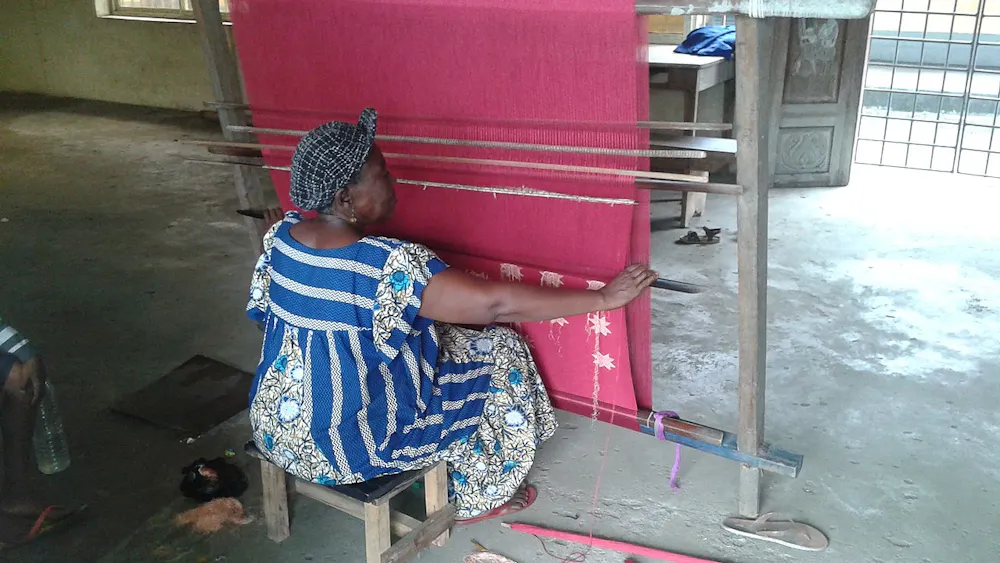
Local fabrics are hand-woven or dyed cloths and stem from various ethnic groups, like Aso oke or Akwete.
A woman handweaving Akwete cloth.Ekekeh Ubadire Obioma/Wikimedia Commons, CC BY-SA
Popular appropriated fabrics are Ankara (wax prints, originally from Indonesia), lace (a delicate, openwork fabric popular on traditional Nigerian attire) and George (a type of Madras cloth popular among Nigeria’s Igbos).
Before the 2000s, the use of these fabrics was at two ends of a spectrum. Indigenous cloth, lace and George were for social and cultural events. Ankara was for everyday functional clothes, iro (a wrap skirt) and buba (a three-piece traditional design for women, mostly the married or elderly), especially among low-income people.
The popularity of local fabrics in today’s fashion didn’t emerge from a vacuum. It was a choice by designers, a social process of acceptance, and government initiative.
Today’s designers are consciously using local fabrics as a way of endorsing their roots and normalising their use. Many faced rejection at first. Zena, a participant in my study, sold only two pieces of her clothing during her first year of business. She spent time convincing people “this is good”:
And, funny enough, they are easy to wear and not expensive. But it took a while for them to appreciate it.
Since the early 1990s the Nigerian government has been committed to promoting local fabrics and locally produced clothes. In 2017, it approved a Monday and Wednesday “Made-in-Nigeria Dress Days” policy.
While local fabrics are today the fabric trend in women’s clothing, the design trend is western. Designers use local fabrics in styles that have global appeal.
Still, they are conscious of maintaining authenticity through either the fabric, a silhouette or a design concept that resonates with their culture.
According to Eji, her western designs still have the African woman in mind:
The African woman is not only situated in Africa, but they are also all over the world. I believe the world is more cosmopolitan now, we have interracial marriages, we can borrow culture from everywhere, we can inter-weave stuff.
Women’s fashion mirrors Lagos society’s complexity and its openness to global trends, as it seeks to globalise its local elements.
It’s the opposite for men
Cosmopolitan men’s fashion in Lagos is the opposite of women’s. The fabric trend is western; the design trend is local.
In Lagos, most men wear the two or three-piece “native”. The buba and sokoto, for example, is for regular wear. (A traditional two-piece top and trouser, normally from the same fabric.) The agbada is for special events. (Trousers, a top and a loose-fitting, wide-sleeved robe over.)
Participants in my study explained that the ethnic background of the president, at any point in time, influences men’s fashion trends. Former president Muhammadu Buhari, for example, hails from the northern part of the country and popularised the wearing of the baba riga (a top, trousers and a big, embroidered over-cover) of the Hausa people.
Current president Bola Ahmed Tinubu extends the dominance of agbada fashion as he is Yoruba. Men’s fashion portrays a unified cultural front, emanating from the ruling president’s ethnic culture and adopted by most men irrespective of their ethnicity. This can allow for the inclusion of groups excluded from dominant national cultures.
This study shows Nigerian fashion’s openness to modernity, consciously implementing styles from different parts of the world. But this isn’t detached from the local. As forms of culture disappear (through cultural exchange) new forms are created, and they are created locally. This is ultimately a celebration of the cosmopolitan in Lagos fashion and society.
– Lagos fashion: how designers make global trends uniquely Nigerian – https://theconversation.com/lagos-fashion-how-designers-make-global-trends-uniquely-nigerian-254227
You’ve probably heard the terms “abs” and “core” used in social media videos, Pilates classes, or even by physiotherapists.
Given they seem to refer to the same general area of your body, you might have wondered what the difference is.
When people talk about “abs”, they’re often referring to the abdominal muscles you can see. Conversely, the term “core” is used to describe a broader group of muscles in the context of function, rather than aesthetics.
While abs and core are often spoken about separately, there’s a lot of overlap between them.
What are abs?
The term “abs” is short for abdominal muscles. These are the muscles that run along the front and side of your stomach.
When someone talks about getting a six-pack, they’re usually referring to toning the rectus abdominis, the long muscle that goes from the bottom of your ribs to the top of your pelvis.
Your abdominals also include your obliques, which sit on the side of your body, and your transverse abdominis, which sits underneath your other abdominal muscles and wraps around your waist like a belt.
The term “abs” has been around for a long time, and is perhaps most often used when discussing aesthetics.
For example, it’s common to see health and wellness publications offering advice on how to achieve “flat” or “six-pack” abs.
The long muscle that goes from the bottom of your ribs to the top of your pelvis is called the rectus abdominis. phoenix creation/Shutterstock
What about the core?
When people talk about the “core”, they are often referring to your abdominals, but also the muscles in your back (your spinal erectors), hips, glutes, pelvic floor, and your diaphragm.
These are the muscles that can stabilise your spine against movement, and aid in the transfer of force between the upper and lower limbs.
The term “core” wasn’t commonly used until the early 2000s, when it became synonymous with core training.
While the exact reason for its surge in popularity isn’t clear, it most likely followed a study published in 1998 that suggested people with lower back pain might have impaired function of their deep abdominal muscles.
From there, the concept of “core training” entered the mainstream, where it was proposed to reduce lower back pain and improve athletic performance.
Other research suggests there aren’t any differences in how people with and without lower back pain recruit and use their core muscles.
In a separate study, improvements in core strength and stability after a nine-week core stability training program were not significantly associated with improvements in pain and function, further questioning this relationship.
The link between core strength and athletic performance is also unclear.
A 2016 review found some very small associations between measures of core muscle strength and measures of whole body strength, power and balance. However, because of the design of the studies reviewed, we don’t know whether people who have better strength, power and balance simply have stronger core muscles, or whether stronger core muscles increase strength, power and balance.
An earlier review summarised the effect of core stability training on measures of athletic performance, including jumping, sprinting and throwing. It concluded this type of training is unlikely to provide substantial benefits to measures of general athletic performance such as jumping and sprinting.
However, this review also suggested that, given the important role of the abs in torso rotation, strengthening these muscles might have merit in improving performance in sports that involve swinging a bat or throwing a ball.
This is likely to apply to other sports that involve rapid torso movement as well, such as mixed martial arts and kayaking.
Stronger abdominal muscles could offer an advantage in sports that involve rotation. Lino Khim Medrina/Pexels
How can you exercise your abs and core?
There’s good evidence that simply getting stronger by lifting weights can help prevent injuries. Training your core to get stronger should have a similar impact, as long as it’s part of a broader training program.
We also know having weaker muscles makes you more likely to experience functional limitations and disability in older age. So alongside any other potential benefits, improving core strength with the rest of your body could help keep you fit and healthy as you get older.
There are plenty of exercises you can do to train your core and abs.
If you’re new to core training, you might want to start off with some lower-level isolation exercises that don’t involve any movement of the core. These include things like planks, bird dogs, and pallof presses. These are unlikely to cause too much muscle soreness, but will train your core muscles.
Once you feel like these are going well, you can start moving into some more dynamic exercises such as sit ups, Russian twists and leg raises, where you train your abdominals using a full range of motion.
Hunter Bennett does not work for, consult, own shares in or receive funding from any company or organisation that would benefit from this article, and has disclosed no relevant affiliations beyond their academic appointment.
When India unleashed Operation Sindoor in May 2025, the world watched its advanced missiles, drones, and stealth assets. But one of the most decisive factors in the success of this coordinated military operation was invisible — orbiting silently above the subcontinent. That asset was NavIC, India’s indigenous satellite navigation system.
What is NavIC?
NavIC (Navigation with Indian Constellation), officially known as IRNSS (Indian Regional Navigation Satellite System), is India’s own satellite-based navigation system developed by ISRO. It provides accurate real-time positioning, navigation, and timing (PNT) information over India and up to 1,500 kilometers beyond its borders.
Unlike GPS (U.S.), GLONASS (Russia), Galileo (EU), or BeiDou (China), NavIC is controlled by India, providing full autonomy to armed forces even during global or regional conflicts. This is especially critical when access to foreign systems like GPS can be denied or degraded — as happened during the 1999 Kargil War.
NavIC Satellite Constellation
The NavIC system currently consists of 7 satellites in geostationary and geosynchronous orbits. They include:
• – IRNSS-1A to IRNSS-1G – Launched between 2013–2016
• – NVS-01 – Launched in May 2023, carrying an indigenous Rubidium atomic clock
• – NVS-02 to NVS-05 – Scheduled between 2025–2027 to upgrade and expand coverage
These satellites are equipped with dual-band signals (L5 and S-band). The L5 signal is encrypted for military use and is resistant to jamming and spoofing — critical in active combat zones.
How NavIC Powered Operation Sindoor
During the multi-day Operation Sindoor, India used NavIC across several layers of combat operations:
• – Missile Guidance: BrahMos, Pralay, and loitering munitions like Nagastra-1 used NavIC coordinates for precise targeting.
• – Drone Navigation: Swarm drones and long-range UAVs used NavIC for autonomous operations in jammed airspace.
• – Troop Movement: Army units and special forces tracked each other using encrypted NavIC handhelds for night raids and laser-guided artillery strikes.
• – Battle Damage Assessment: Integrated with RISAT radar satellites and Cartosat imaging, NavIC helped geolocate impact zones in real time.
By relying entirely on its own satellite infrastructure, India ensured that no foreign power could restrict or distort battlefield intelligence or targeting systems.
Strategic Advantages of NavIC
India’s use of NavIC during Operation Sindoor demonstrated several critical advantages:
• – Independence from U.S. GPS: India could strike deep without relying on any foreign-owned navigation signals.
• – Encrypted Military Channel: Prevented Pakistani jamming or spoofing during missile and drone missions.
• – Faster Signal Lock: NavIC provides higher accuracy over the Indian subcontinent than even GPS in some regions.
• – Tactical Depth: With NavIC’s expansion to include NVS-class satellites, India aims to cover the Indian Ocean Region more comprehensively.
Other Countries with Independent Navigation Systems
Only a few nations operate fully autonomous satellite navigation systems:
• – United States – GPS
• – Russia – GLONASS
• – European Union – Galileo
• – China – BeiDou
• – India – NavIC
India is the only country in the developing world to deploy such a system, putting it in an elite club of space-faring nations with independent military-grade navigation capabilities.
Looking Ahead
India plans to expand NavIC’s reach globally in the next phase, with 11 satellites forming a broader IRNSS constellation. This will allow Indian defense systems, aircraft, naval ships, and space platforms to remain connected under an unbreakable, encrypted web of real-time data.
From missile launchers to battlefield soldiers, NavIC ensured synchronization, survivability, and supremacy in Operation Sindoor — setting the tone for India’s future wars to be fought with precision on its own digital terrain.
Futuristic Vision: NavIC as India’s Digital Warfare Backbone
NavIC is more than a navigation system — it is a strategic pillar for India’s future military doctrine. As the Indian Armed Forces transition toward a digitally networked battlefield, NavIC will evolve into a real-time combat enabler across land, sea, air, and space.
India’s vision for NavIC includes:
• – Global Expansion: Upgrading NavIC into a global navigation constellation by 2030, with coverage from Africa to the Pacific.
• – Space Command Network: Serving as the digital backbone for India’s Defense Space Agency, ISR satellites, and kinetic space response units.
• – Manned-Unmanned Coordination: Enabling coordinated strikes using swarms of drones, robotic tanks, and autonomous aerial combat vehicles via a NavIC-based command network.
• – Civil-Military Synergy: Equipping civilian vehicles, aircraft, shipping, and emergency services with NavIC for disaster response, transport safety, and 5G integration.
In essence, NavIC will not just guide missiles — it will guide India’s journey to digital dominance in 21st-century warfare.
Thank you to Foreign Minister Herath for the warm welcome to Sri Lanka. The New Zealand delegation is delighted to be here to further strengthen the warm relationship between New Zealand and Sri Lanka.
Relations between our countries are long-standing. Our trade dates from the 1860s and sporting connections to the 1920s. New Zealand was one of the first countries to recognise Sri Lanka’s independence in 1948.
Our modern relationship is growing, thanks to investments by both countries. We are pleased the establishment of New Zealand’s High Commission in Colombo in 2021 was followed by the opening of a Sri Lankan High Commission in Wellington this year. These commitments will enable our trade, cultural and political engagements to grow for mutual benefit.
For nearly 75 years, education has been a pillar of the relationship, starting with the training of Sri Lankan dental nurses in New Zealand under the Colombo Plan. Now we can count over 200 Sri Lankan alumni of New Zealand scholarship programmes.
We are delighted to note further strengthening of these links through cooperation on tourism research between New Zealand’s University of Otago and the University of Colombo.
For many years, the New Zealand-Sri Lanka relationship has also encompassed development cooperation aimed at strengthening resilience in vulnerable communities, increasing food security, and contributing to disaster response.
We are proud today to announce another such link, the Sustainable Water and Livelihoods project which will support farming households to improve their health and income generation.
On security, we shared views on the increasingly challenging global environment and the interconnected challenges for development, trade and security in the Indo-Pacific region. We remain committed to our cooperation across immigration, customs, police and defence.
We discussed the growing number of New Zealand companies working with and investing in Sri Lanka or looking to work with Sri Lankan partners.
Many of these collaborations will deliver benefits for Sri Lanka in the tourism, agriculture, and healthcare sectors.
We also discussed the key role government-to-government cooperation between our food safety and border agencies plays to improve food safety standards, reduce red tape at the border, and increase Sri Lanka’s market access capabilities.
We reiterated that Sri Lanka’s application to accede to the Regional Comprehensive Economic Partnership (RCEP) Agreement is very welcome.
We are pleased to confirm that places on short term training courses in trade policy will be offered to Sri Lanka officials under the Manaaki New Zealand Scholarship Programme.
Naturally we discussed our two nations’ shared passion for sport and noted the success of the recent tour by the New Zealand men’s under 85kg rugby team, playing against Sri Lanka’s Tuskers. We look forward to further future battles between New Zealand and Sri Lankan teams on the rugby pitch and the cricket field, both the men’s and women’s teams.
Thank you once again to Foreign Minister Herath, the government, and the people of Sri Lanka for your warm hosting of our lucky delegation.
A one-off extra allowance, equal to one half of the monthly payment or allowance, will be provided to eligible recipients of social security payments, including recipients of the standard rate of Comprehensive Social Security Assistance, Old Age Allowance, Old Age Living Allowance and Disability Allowance, the Government announced today.
Similar arrangements will apply to households receiving the Working Family Allowance (WFA).
Starting today, the payment will be credited to the designated Hong Kong bank accounts of the eligible recipients/households. No separate application is required.
Recipients who were eligible for social security payments on April 30, 2025, as well as the households for which WFA applications were made within the period from October 1, 2024, to April 30, 2025, and approved, would be eligible for the extra allowance.
It is estimated that about 1.71 million social security recipients and about 56,000 WFA households would benefit, involving a total of about $3,084 million in extra expenditure.
For enquiries, recipients of social security payments may call 2343 2255 or contact the respective Social Security Field Unit.
For enquiries from households in receipt of the WFA, call 2558 3000.
This is a full-time fixed-term position based in either Manila, Bangkok, Jakarta or Kuala Lumpur. Candidates who have the legal right to work and live in the Philippines, Thailand, Indonesia and Malaysia are encouraged to apply.
Greenpeace Southeast Asia (GPSEA) takes bold, non-violent action to challenge power and create a more just, peaceful, and green future. Operating in complex and often high-risk environments, Greenpeace must ensure that our people, projects, and operations are safe, resilient, and empowered to push boundaries.
The Regional Security Manager, will lead the development and implementation of a strong security culture and systems across all GPSEA offices and projects. He/she will provide expert advice, tools, and support to enable safe and smart risk-taking in our campaigning and engagement work ensuring that security is not a barrier to impact, but an enabler of it. This role oversees the organization’s security strategy, policies, and protocols, while also managing critical incident systems and supporting frontline staff, volunteers, and activists. This will work closely with departments across the organization to integrate security into operations, HR, actions, and campaigns, and build regional capacity for resilience and preparedness. The Regional Security Manager will ensure that Greenpeace can operate effectively and ethically in Southeast Asia’s fast-changing political and environmental landscape.
Duties and Responsibilities:
Create an enabling Security Culture that continues to push boundaries, through regular staff updates, familiarization, training and integration.
Design and oversee a fit-for-purpose GPSEA Security System with approval processes.
Provide strategic advice on enhancing acceptance and resilience as a civil society actor, including the liaison with other NGOs
Policy and protocol development as related to safety, security, risk management and Duty of Care (employer responsibilities), including Standard Operating Procedures.
Arranging delivery of periodic and as-required security training.
Support and advice on the resolution of critical incident situations locally and regionally (on call).
Facilitate and strengthen our legal support system to ease smart risk taking, in line with GP Best Practices.
Other duties as directed by the line manager.
Close consultation with campaigns, actions and logistics, communications, fundraising and management staff on Smart Risk taking in projects.
Closely collaborate with all stakeholders to ensure Security integration into organizational processes and the GPSEA project model, from HR to Programmes.
Oversee and facilitate the regional security practitioners and build capacity to meet the need of the organization.
Closely collaborate with HR and Public Engagement and Actions to ensure GP Duty of Care Best Practices are in place for staff, contractors, volunteers and activists.
Manage the regional Security team adequately and ensure appropriate team capacity deployment projects.
Assist in the sign off and approval on campaign & communications materials, tactics and strategies that may influence security risk levels.
Liaise with Human Resources and Legal to ensure Greenpeace compliance with national legislation’s in Security, Health and Safety matters.
Liaison with GPI and other NROs on security management to ensure consistent best-practice across our global organization.
Manage security external contractors, including office security, specific project security and trainers.
Production, review and updating of all offices and projects standard operating procedures (SOPs).
Oversee and ensure the implementation of Security systems through monitoring, project integration and trainings.
Oversee, maintain and improve our Critical Incident Management Systems including a 24/7 hotline.
Coordinate Security and Safety induction process for new joiners across GPSEA with HR.
Responsibly manage the security budget and maintain secure filing system.
Advice and support project risk assessments, security and duty of care plans.
Oversight of incident reporting processes across the organization.
Maintain and further improve the travel security & monitoring system.
Advise on and ensure Site Security at our Greenpeace locations, in coordination with Administration
Provide up-to-date political, societal context analysis for our operating countries.
Overall budgetary responsibility and management of the finances for the Regional Security Unit.
Skills and Experience Requirements:
Bachelor’s Degree in field of Management or with security management background preferred.
Proven professional training in security management or a related field or comparable work experience/certification.
At least 3 years working in a non-profit, campaigning organization.
At least 3 years of supervisory/management experience.
At least 5 years of experience delivering security and emergency plans and risk analysis including: physical security management; crisis; occupational health and safety; field security; and travel.
Functional Skills:
Knowledge and/or experience in understanding of security and cultural issues in GPSEA operating countries.
Knowledge and/or experience in training, mentoring and developing staff on security issues.
Knowledge and/or experience in crisis management.
Knowledge and/or experience in developing and managing security and safety risk assessment.
Demonstrable understanding of security and risk management appropriate to the values and practices of Greenpeace.
Knowledge and/or experience in conducting security threat/risk/impact assessments and reporting.
Knowledge and/or experience in conducting security incident investigation and reporting.
Knowledge and/or experience in training personnel in general security protocols.
Strong skills in written and spoken English (required).
Knowledge and/or experience in planning, facilitating and conducting meetings or workshops.
Knowledge and/or experience in project management and administration.
Knowledge and/or experience in strategic alignment and setting the direction of unit’s project organizational objectives.
Knowledge and/or experience in budgeting and forecasting.
Organizational Competencies:
Professionalism: Knowledge and/or experience in managing conduct and emotions in a way that represents the values and realizes the objectives of the organization.
Strategic Thinking & Global Mindset: Knowledge and/or experience in addressing organizational objectives by developing calculated approaches that integrate an openness to and awareness of diversity across cultures.
Teamwork & Communication: Knowledge and/or experience in working with others and presenting information, ideas, and positions in a clear manner that can easily be understood across diverse and multi-cultural audiences.
Innovation & Change: Knowledge and/or experience in reflecting creative and imaginative thinking, an openness to new ideas, and an ability to take calculated risks in order to meet organizational objectives.
Leadership: Knowledge and/or experience in guiding and directing the efforts of others in pursuit of clear objectives, including delegating responsibilities and providing consistent support.
Specific Work Environment:
Good command in English is required.
Sensitive to the socio-economic cultural environment of Southeast Asia. This position requires the employee to have a flexible approach and the ability to adapt and work in different and challenging work and cultural environments, which may include flexible arrangements in working in challenging fields and work environments.
Greenpeace’s Commitment to Diversity and Inclusion
Greenpeace values diversity as essential to its mission and success. The organisation fosters an inclusive environment that respects varied cultural experiences and perspectives, promoting solutions rooted in social and environmental justice.