Category: Asia Pacific

  • MIL-OSI New Zealand: Implementation – final-year Fees Free

    Source: Tertiary Education Commission

    On this page:

    Claiming Fees Free entitlement
    From 2026, after completing their first eligible provider-based qualification or work-based programme, learners will log in to myIR to confirm their eligibility (ie, if they meet the criteria), and claim their final-year Fees Free entitlement.
    Learners have 12 months to claim their entitlement once they have completed their qualification or programme. Learners that complete their first qualification in 2025, before the claim process is available, will have until the end of 2026 to claim their entitlement.
    Learners need to organise payment of their fees as required by their tertiary education organisation (TEO). TEOs will not receive Fees Free payments from the tertiary education commission (TEC) or Inland Revenue (IR) on behalf of eligible learners under the final-year Fees Free policy.
    Roles of agencies
    The Ministry of Education leads the policy work for final-year Fees Free. The TEC and IR lead the implementation work. 
    TEC is responsible for collecting learner enrolment and qualification completion data from TEOs. TEC will determine qualification/programme eligibility, calculate entitlement for learners, and provide data to IR to support identity matching and the assessment of learner eligibility. TEC will continue to hold the relationship with TEOs with regards to Fees Free.
    IR is responsible for assessing learner eligibility and paying entitlement to eligible learners. IR will provide support to learners through their customer service channels.
    Data collection
    To support the final-year Fees Free policy, TEOs will need to submit learner fee and provider-based qualification completion data. To reduce ongoing administrative burden for TEOs, we plan to collect this data using the Single Data Return (SDR) and Industry Training Register (ITR) collection processes on DXP Ngā Kete, instead of the separate monthly reporting templates used for the first-year Fees Free scheme. However, this will require system changes to the SDR/ITR and to student/trainee management systems, to ensure we collect the data required.
    With the Data System Refresh (DSR) programme already underway, we are integrating the data collection requirements for final-year Fees Free into the existing DSR specifications. 
    Provider-based data changes will be integrated into the data specifications for SDR in May 2025. Fees Free data submissions will be required for the first time in the August 2025 SDR.

    Work-based data changes are expected to be integrated into the work-based data specifications in December 2024. Fees Free data submissions will be required for the first time from July 2025.

    Identity matching
    We’re asking TEOs to collect and report learner IRD numbers to TEC to enable effective and efficient data matching across agencies and to support the payment of Fees Free entitlement payments by IR. A learner’s IRD number will be used alongside their NSN and date of birth to confirm their identity and help confirm their eligibility.
    We are undertaking a Privacy Impact Assessment (PIA) for the collection of IRD numbers by TEOs, and the Ministry of Education has provided a summary of the initial PIA to the Office of the Privacy Commissioner.
    We will provide TEOs with advice on collection, retention and deletion of IRD numbers.
    Implementation FAQs
    If an employer pays for a learner’s fees, can the employer claim the entitlement when the learner completes their qualification?
    IR will only be making payments directly to learners – either offsetting their loan balance by the relevant amount for learners with loans or paying the learner’s entitlement into a nominated bank account.
    The final-year Fees Free policy is about rewarding learners for completing their tertiary study or training. Paying Fees Free entitlement to employers does not align with this. It would also add significant administrative complexity and cost which does not align with the Government’s overall focus on improving the effectiveness, efficiency and responsiveness of public services.
    Employers and learners will need to agree on how they will manage situations where the employer pays the fees. Employers may wish to adapt employment practices and contracts as necessary.
    Are there tax implications for learners receiving the entitlement?
    Fees Free entitlement paid to the learner will not be considered income for tax purposes.
    There are tax implications if an employer has paid a learner’s fees and claimed them as an expense, and the learner agrees to repay the employer the Fees Free entitlement. Once the employer receives the payment from the learner, the amount will be taxable to the employer.  
    Will statutory declarations still be used to confirm eligibility?
    No. Learners will need to declare that they meet eligibility criteria when they apply for their Fees Free entitlement via myIR. They will be asked to provide relevant information and confirm that the information is true and correct as part of this process.
    While creating the proposed implementation design, we considered the barriers that statutory declarations create for some learners and opted for an application process that could be completed digitally to reduce administrative complexity for learners and agencies.
    Will TEOs be able to check a learner’s eligibility?
    No, TEOs will not be able to check a learner’s eligibility.
    Learners will be able to work through the eligibility criteria and determine if they think they meet them. In 2025, we aim to provide a tool for learners to self-assess their eligibility against the full criteria.
    However, learners won’t be able to confirm their eligibility using their NSN until after they have completed their qualification or programme, and the TEC will not be providing a list of the eligible learners by NSN to TEOs. This is because we won’t know whether the learner is eligible or not until they complete their qualification or programme, and they may need to submit additional information to IR to confirm eligibility.
    We will provide TEOs with as much information as possible on entitlement settings and programme eligibility so they can help learners understand their entitlement.
    What happens if the learner hasn’t paid their fees to the TEO?
    TEOs will be responsible for ensuring that learners pay their fees and for recovering any debt the learner has. Fees Free entitlement will not be paid to the TEO where the learner has not paid their fees.
    There is no intention to include a reporting field for TEOs to record whether fees have been paid in full, or to provide this information to IR.
    How soon after completion will learners receive their entitlement?
    We will be ready to start making payments in early 2026, including payments for eligible learners who completed their qualification in 2025. A learner can apply for their entitlement at any time, but the frequency of payments is yet to be confirmed, as they rely on the frequency of data collection.


    MIL OSI New Zealand News

  • MIL-OSI New Zealand: Data Specification for Work-based – Data System Refresh Programme

    Source: Tertiary Education Commission

    Last updated 21 May 2025
    Last updated 21 May 2025

    Print

    Share

    This page provides information about the data required for reporting Work-based delivery (Actuals) on DXP Ngā Kete.
    This page provides information about the data required for reporting Work-based delivery (Actuals) on DXP Ngā Kete.

    MIL OSI New Zealand News

  • MIL-OSI New Zealand: Changes to the vocational education and training (VET) system

    Source: Tertiary Education Commission

    Last updated 21 May 2025
    Last updated 21 May 2025

    Print

    Share

    In December 2023, the Government announced its intention to disestablish Te Pūkenga | New Zealand Institute of Skills and Technology and Workforce Development Councils (WDCs).
    In December 2023, the Government announced its intention to disestablish Te Pūkenga | New Zealand Institute of Skills and Technology and Workforce Development Councils (WDCs).

    The Government plans to establish Industry Skills Boards (ISBs) to manage standards-setting and associated functions and will re-establish institutes of technology and polytechnics (ITPs) as either stand-alone or federated entities.
    In December 2024, the Government agreed to introduce legislation that would:

    disestablish Te Pūkenga
    enable the establishment of ITPs as either stand-alone or federated entities
    establish ISBs to manage standards-setting and associated functions.

    Government decisions to be made in 2025 include:

    details on the legislation to enable the changes
    the future model for work-based learning
    funding frameworks to support the new entities and delivery models
    which ITPs will be stand-alone or federated entities
    the number and coverage of ISBs.

    More information
    New work-based learning model
    Consultation on Industry Skills Boards’ coverage (now closed)
    Help establish Industry Skills Boards
    Redesign of Vocational Education and Training System – Ministry of Education

    MIL OSI New Zealand News

  • MIL-OSI New Zealand: New work-based learning model

    Source: Tertiary Education Commission

    Last updated 21 May 2025
    Last updated 21 May 2025

    Print

    Share

    The Minister for Vocational Education has announced the government’s decision to introduce an industry-led independent work-based learning model.
    The Minister for Vocational Education has announced the government’s decision to introduce an industry-led independent work-based learning model.

    The two key components of the independent model are:

    Work-based learning is able to be offered by any provider that meets the government’s quality and funding requirements: institutes of technology and polytechnics (ITPs), private training establishments (PTEs) and wānanga. Providers will manage all aspects of an apprenticeship or traineeship, including the pastoral care for learners.
    Industry Skills Boards will be established on 1 January 2026 to ensure the qualifications needed by employers across the country are available to all providers. 

    Industry Skills Boards will be statutory standard-setting bodies, with majority industry governance. They will be responsible for developing qualifications, endorsing programmes and moderating assessments over key industry sectors. They will also have a workforce analysis function for their sectors, and provide investment advice to the Tertiary Education Commission (TEC).
    The industry-led independent model was consulted on earlier this year, but has a modified transition phase, designed to give industry a greater role in the future of the work-based learning system. 
    To enable the transition to this new model, Te Pūkenga’s work-based learning divisions, including their existing apprentices and trainees, will transfer to an Industry Skills Board for up to two years.  It is expected that during this period industry-led private training enterprises will be established to take over delivery from the work-based learning divisions, and ITPs and wānanga will also establish new work-based learning programmes.
    Employers, apprentices and trainees will be able to continue to work with and enrol the same people they currently work with. Although there will be changes to the reporting lines for the work-based learning divisions in Te Pūkenga, courses and qualifications will continue to be delivered, and every effort will be made to ensure that training is not disrupted.
    See more on Minister Simmonds’ work-based learning announcement.

    MIL OSI New Zealand News

  • MIL-OSI Asia-Pac: Housing Bureau awards two operation and management contracts of Light Public Housing projects (with photos)

    Source: Hong Kong Government special administrative region

    Housing Bureau awards two operation and management contracts of Light Public Housing projects  
    The third contract covers the operation and management of the LPH project at Tsing Fuk Lane, Tuen Mun (i.e. Tuen Mun Area 3A), providing about 1 900 units. The fourth contract covers the operation and management of the LPH project at Olympic Avenue, Kai Tak (Phase 1), providing about 3 000 units. Both projects are anticipated to be completed in the fourth quarter of this year. The operating organisations will need to work at full capacity to carry out the pre-management works effectively, so as to ensure the smooth handling of LPH applications and intake arrangements, and to provide various services and ancillary facilities for the residents and local communities immediately upon intake.
     
    The Secretary for Housing, Ms Winnie Ho, said, “Under the steer of the HB, the first LPH project at Yau Pok Road, Yuen Long, is progressing towards full intake, while the project at Choi Hing Road, Ngau Tau Kok, will commence intake in phases by the end of next month. With the appointment of the third and the fourth operating organisations for LPH today, this social project has further taken a significant step forward, and more citizens in need will benefit from the LPH.”
     
         “I look forward to working closely with various operating organisations in the coming years to ensure effective operation and management, thereby allowing the residents and nearby communities to benefit from the projects’ ancillary facilities and community services. We are also inviting tenders for two other operation and management contracts, covering the four school conversion projects and the Sheung On Street project in Chai Wan. I would like to appeal to other organisations that are interested in operating LPH projects to actively participate in the tenders and work together with the Government to improve the living environment of the grassroots and help them in their pursuit of happiness,” she added.
     
    In addition to providing accommodation, the LPH projects will also offer various services and facilities for the residents and the local community. Therefore, unlike general property management contracts, the requirements for LPH’s operation and management services, not only cover occupant management, property management, and daily maintenance, but also a range of social services, as well as the management and operation of ancillary facilities.
     
    To ensure service quality, the HB has, in the assessment process, carried out a technical assessment based on a series of criteria including the management capability and relevant experience of the tenderers, as well as the proposed modes of operation and management, social services to be provided, exit plan and the use of innovation and information technology. The tender price was then comprehensively evaluated to decide on the most suitable operating organisation.
     
    The Chief Executive announced the construction of about 30 000 LPH units by 2027-28. The HB and the Architectural Services Department have been working at full steam to take forward the related works. The LPH Phase 1 and Phase 2 applications, covering about 4 400 and 5 060 units respectively, have received an overwhelming response, with about 21 900 applications received by the end of May this year.
    Issued at HKT 18:30

    NNNN

    MIL OSI Asia Pacific News

  • MIL-OSI China: Chinese director Bi Gan wins Special Prize at Cannes

    Source: People’s Republic of China – State Council News

    Chinese director Bi Gan won the Special Prize on May 25 at the 78th Cannes Film Festival for his epic fiction feature “Resurrection.”

    Director Bi Gan (center) poses with cast members of “Resurrection” on the red carpet at the film’s premiere during the 78th Cannes Film Festival in Cannes, France, May 22, 2025. [Photo courtesy of Lima Media]

    Visionary auteur Bi’s “Resurrection” premiered on Thursday at Cannes to a 10-minute standing ovation and widespread critical acclaim. The art house sensation, starring Yi Yangqianxi, Shu Qi, Mark Chao and Li Gengxi, represents the sole Chinese-language contender in the main competition.

    In his acceptance speech, Bi expressed gratitude to the festival, jurors and all those who contributed to his film’s creation on behalf of the cast and crew. 

    The film has not yet set a release date, but it has sold widely following its world premiere, with companies from Italy, Germany, Spain, Greece, Switzerland, South Korea and others acquiring distribution rights.

    “Resurrection” unfolds through labyrinthine-like six sensory chapters of “visual,” “auditory,” “gustatory,” “olfactory,” “tactile” and “consciousness,” mirroring the Buddhist philosophy of the six senses. Set in a world where humanity has lost the ability to dream, one creature remains entranced by fading illusions — until a woman with the rare gift of perception appears, and she ventures into the monster’s dreams to uncover their hidden truth. The director uses this two-hour-and-forty-minute film to showcase his love for cinema, while framing a century-spanning fever dream through sensory and mental dimensions.

    On May 23, Bi Gan and the creative team took part in a Cannes press conference to discuss the film’s creative process. When addressing his signature long takes, Bi called them his “most familiar technique,” while Yi Yangqianxi revealed their pivotal sequence took 15 consecutive days of midnight-to-sunrise filming, completed with “ideal weather conditions.” Bi elaborated on the leads: “Yi’s character Fantasmer drifts frenziedly through time and space, while Shu Qi’s embodies absolute rationality — yet becomes mesmerized by his character.”

    Within the film’s setting, Yi portrays five distinct roles across the chapters — marking his first multi-character performance. He meticulously crafted their unique voices, postures and movements to embody the director’s vision, creating instantly recognizable traits for these multiple identities.

    Renowned Chinese sci-fi writer Chen Qiufan, who served as script consultant for “Resurrection,” described the film as “sci-fi poetry cinema” at a Cannes event on May 19 and revealed his frequent discussions with the director about consciousness.

    The film is Bi Gan’s first feature since the 2018 festival sensation “Long Day’s Journey into Night,” a groundbreaking 3D experiment. Festival organizers described his work as a showcase of his evolving creativity that maintains the sensory and poetic qualities defining his style. They also noted that at just 35 years old, he has established himself as a major force in shaping China’s new generation of art house cinema since his directorial debut “Kaili Blues” a decade ago.

    At the post-closing ceremony press conference on May 25, jury president Juliette Binoche revealed the jury unanimously created this special award for Bi because of the film’s singular creativity, stating, “‘Resurrection’ is like a UFO — an amazing invention.”

    Binoche also remarked on the film’s uniqueness. “Visually, it really moved me. I found it extraordinary. This film allows for dreams, subtexts that we feel and that are real. It’s full of poetry and allows us to feel something within ourselves,” she said.

    Bi added, explaining his inspiration: “There should be a film about the cinema that can comfort people in this world full of changes.”

    This year’s Cannes Film Festival featured 22 films competing for its top honor — the Palme d’Or. The competition section awards were announced at the festival’s closing ceremony. The Palme d’Or went to Iranian director Jafar Panahi’s “Un Simple Accident.” Joachim Trier’s “Sentimental Value” received the Grand Prix, while the Jury Prize was shared by Oliver Laxe’s “Sirat” and Mascha Schilinski’s “Sound of Falling.” The night’s big winner was Brazil’s “The Secret Agent,” earning best director for Kleber Mendonça Filho and best actor for Wagner Moura. Best actress went to Nadia Melliti for “The Little Sister,” and Belgium’s Dardenne brothers claimed best screenplay for “Young Mothers.”

    MIL OSI China News

  • MIL-OSI New Zealand: Resist Government’s attack on pay equity and women workers

    Source: Maritime Union of New Zealand

    The Maritime Union of New Zealand has condemned the Government’s attacks on hard-won pay equity legislation, describing these as a direct assault on the rights and economic well-being of women and all working New Zealanders.

    Maritime Union National Assistant Secretary Fiona Mansell says the Government’s proposed changes to the pay equity framework will wreck decades of progress, undermine fairness and equality in the workplace, and harm women in historically undervalued occupations.

    “The proposals completely undermine the principle that women deserve equal pay for work of equal value,” says Ms Mansell.

    “For years, unions have fought tirelessly to establish and strengthen pay equity laws. Weakening pay equity laws will entrench poverty and make it harder for working families to get by.”

    Ms Mansell says pay equity is a critical component of addressing the gender pay gap and ensuring economic justice.

    The Maritime Union of New Zealand stands in solidarity with women workers and is working with other unions across the country who have voiced strong opposition to the Government’s backward stance.

    “Given the serious implications for women’s rights, workers’ rights, and economic fairness, MUNZ believes Workplace Relations Minister Van Velden’s position has become untenable.”

    She says the Maritime Union was calling for Minister Van Velden’s immediate resignation.

    The Maritime Union of New Zealand will continue fighting alongside the wider union movement and women workers to protect and advance pay equity.

    MIL OSI New Zealand News

  • MIL-OSI New Zealand: Maritime Union will fight threatened job losses on Aratere ferry

    Source: Maritime Union of New Zealand

    The Maritime Union of New Zealand has strongly condemned KiwiRail’s proposal for drastic job cuts on its Cook Strait ferry operations.

    KiwiRail this week announced it would remove the rail-enabled Aratere ferry from service in August 2025.

    KiwiRail has advised today it is seeking to cut 70 jobs for MUNZ members in the deck and catering departments on the Aratere.

    Further job losses are anticipated for officers and engineers who are members of other unions.

    Maritime Union of New Zealand Wellington Branch Secretary Fiona Mansell says crew are angry at the announcement.

    The Maritime Union would resist any job losses and would only accept voluntary redundancies.

    She says the proposal is a massive letdown for crew who had worked hard and delivered on the ageing KiwiRail ferry fleet, and who were paying for the failures of management and politicians.

    “This decision rips the heart out of our maritime workforce, leaving dedicated workers and their families facing an uncertain future. It’s a betrayal of the people who keep our country connected.”

    She says such a major loss of jobs would have a devastating impact on New Zealand’s maritime resilience and would be a significant blow to our seafaring workforce.

    Ms Mansell says no thought has been given to what KiwiRail will do when it requires more crew for its new vessels in the future.

    “New Zealand deserves a resilient, capable maritime sector, not one that is dismantled at the whim of short term thinking and cost-cutting. Our jobs, our skills, and our national supply chain depend on it.”

    MIL OSI New Zealand News

  • MIL-OSI New Zealand: Pharmac proposing to fund two brands of oestradiol patches

    Source: PHARMAC

    Pharmac is seeking feedback on a proposal to fund two brands of oestradiol patches for New Zealanders to use – Estradot, and Estradiol TDP Mylan.

    If approved, Pharmac would fund both brands of oestradiol patches from 1 December 2025 and people could use either brand of patch, subject to availability. The public consultation opens on 27 March and closes on 22 April. 

    In November 2024, Pharmac decided to fund Estradiol TDP Mylan oestradiol patches as the main funded brand to manage supply issues. When Pharmac notified the decision, we received a significant amount of feedback about the importance of having multiple brands of oestradiol patches available.

    “We heard very clearly at the end of last year that a single brand of patch does not work well for everyone, and that we needed to have consulted more fully than we did. We are sorry for this and want to get it right this time.”

    Since then, Pharmac has been working with people who use oestradiol patches, menopause specialists, doctors, nurses, and pharmacists to reflect their feedback in a new proposal to fund both Estradot and TDP Mylan patches.

    “We want to thank everyone who has provided feedback on the need for more than one brand of oestradiol patch,” says Pharmac’s Manager of Pharmaceuticals, Adrienne Martin.

    “We encourage everyone who uses oestradiol patches or who works with people who do, and anyone else with an interest in this issue, to take part in our public consultation.”

    She noted, however, that there continue to be ongoing issues with the supply of Estradot.

    “Internationally and in New Zealand there has been a large increase in demand for oestradiol patches over the last few years and we expect this to keep increasing. These increases have meant that the factory that makes Estradot cannot make enough to keep up with increasing demand.

    “Through this proposal we have secured as much stock of Estradot as the supplier can provide but unfortunately the ongoing global supply issues mean there may be times when there’s not enough Estradot patches for everyone who wants to use them,” she says.

    “The supplier of Estradiol TDP Mylan has assured Pharmac that it can produce enough patches to meet the demand in New Zealand. This is why our proposal is to have two brands funded. Pharmac also funds other oestradiol treatments, like oestradiol gel, which can, for some people, be used as an alternative.” 

    Martin says all currently funded brands of oestradiol patches will continue to be funded as Pharmac works through this process.

    MIL OSI New Zealand News

  • MIL-OSI New Zealand: 21,000 would benefit from proposed changes to New Zealanders access to contraceptives

    Source: PHARMAC

    Pharmac is consulting on a proposal that would make it easier for thousands of New Zealanders to access contraceptives.

    Pharmac’s Clinical Lead – Medicines Management, Melissa Copland, says that the changes would improve access, and remove barriers for people who use IUDs.

    “The changes we are proposing would mean people would be able to get Mirena and Jaydess IUDs directly from their doctor or nurse, during their appointment.

    “Under the current system, people need to get a prescription, pick their IUD up from a pharmacy, and then bring it back to the clinic to get it placed.

    “We know that this extra step can lead to delays and barriers to accessing IUDs for some people.

    “Funding the Mirena and Jaydess IUDs on the Practitioners Supply Order (PSO) list will make it faster and easier for New Zealanders to access these IUDs and make access consistent with other long-acting contraceptives.”

    The Practitioners Supply Order (PSO) list allows health care practitioners to get funded medicines for use in their clinics. Pharmac is also proposing to increase the number of Jadelle contraceptive implants that clinics can order on PSO.

    “We have been told that some clinics place a large number of Jadelle implants each week. These clinics often have to make multiple orders, which can take a lot of time,” says Copland.

    “This is why we are proposing to increase the number of Jadelle that clinics can order on PSO, as it will reduce how many orders need to be made and save these clinics time.”

    The Government provided additional funding to Pharmac in June 2024 to fund new medicines and widen access to medicines that are already funded. The funding boost covers medicines for both cancer and non-cancer health conditions.

    The consultation closes on 4pm on Friday 25 April. If the decision is approved, we expect these changes will be made from 1 July 2025.

    MIL OSI New Zealand News

  • MIL-OSI New Zealand: Pharmac to fund medicines for blood cancers, inflammatory bowel disease, eczema and arthritis

    Source: PHARMAC

    More New Zealanders will have access to medicines for blood cancers, bowel diseases, eczema and arthritis, following Pharmac’s decision to widen access to four medicines for six health conditions from 1 May 2025.

    The medicines and health conditions are:

    • venetoclax (brand name Venclexta) in combination with azacitidine or cytarabine for a type of blood cancer called acute myeloid leukaemia
    • azacitidine (brand name Azacitidine Dr Reddy’s) for acute myeloid leukaemia
    • ibrutinib (brand name Imbruvica) for chronic lymphocytic leukaemia
    • upadacitinib (brand name Rinvoq) for atopic dermatitis (eczema), ulcerative colitis, Crohn disease, and rheumatoid arthritis.

    Pharmac currently funds venetoclax for a different type of blood cancer called chronic lymphocytic leukaemia, and funds upadacitinib for some people with rheumatoid arthritis. Azacitidine is currently funded for other types of blood cancer.

    “We’re making these treatments available for more people. We estimate that 1200 New Zealanders will benefit from widened access to these medicines in the first year of funding, with 5,070 people benefiting per year after five years” says Pharmac’s Chief Medical Officer, Dr David Hughes.

    “Widening access to these medicines will have a huge impact on the people who need them, but will also have benefits for the wider health system,” Hughes says.

    Widened access to upadacitinib will reduce the need for Health NZ infusion services, reducing infusion times by 4,000 hours in the first year of funding.

    Hughes says Pharmac have widened access to these medicines through a bundle agreement with the supplier, AbbVie.

    “Our team have negotiated a great deal with AbbVie. Alongside making venetoclax and upadacitinib available to more New Zealanders at a reduced net price, our teams have also negotiated price reductions for two already funded medicines – a medicine used to treat Hepatitis C, and a medicine to treat inflammatory conditions.

    “These savings enable us to maximise the use of our medicines budget to fund more treatments for New Zealanders,” says Hughes.  

    Pharmac has made several changes in response to feedback received from clinicians, patient support and advocacy groups and patients, including changing the access criteria so that people privately funding these medicines can transition to publicly funded treatment, provided the same eligibility criteria were met prior to starting treatment.

    “I want to thank everyone who took the time to provide us with feedback during our consultation. Your views are important to us and affect our decisions,” Hughes says.

    Pharmac can consider widening access to these medicines following the Government’s $604 million medicine budget increase in June 2024.

    Questions and answers

    MIL OSI New Zealand News

  • MIL-OSI New Zealand: Pharmac’s plans to improve access to asthma inhalers

    Source: PHARMAC

    Pharmac is seeking feedback on a proposal to make it easier for people with asthma to access a type of inhaler.

    “We’re proposing two changes, which would make it easier for 120,000 New Zealanders with asthma to access the inhalers they need,” says Pharmac’s Director Pharmaceuticals, Geraldine MacGibbon.

    Pharmac is proposing to apply three-monthly (all at once) dispensing to certain types of budesonide with eformoterol inhalers. Currently these inhalers are available on prescription, with people required to collect their treatment every month. 

    If approved, people would be able to receive three months of supply at a time.

    “People won’t have to return to their pharmacy multiple times collect repeats for their inhalers. It would save time for New Zealanders and mean that people could have more than one inhaler at a time and store them where they are mostly likely to need them,” MacGibbon says.

    Pharmac is also proposing a change which would provide further support for New Zealanders moving onto these inhalers.

    “We’re proposing to make these inhalers available in health care clinics on a Practitioners Supply Order (PSO). This would mean that people who are starting their treatment can learn how to use this inhaler during their health appointment.

    “This change is intended to make it easier for people to learn how to use their budesonide with eformoterol inhalers, which would lead to better management of their asthma,” MacGibbon says.  

    She says the changes being proposed align with the asthma treatment guidelines and would have a positive impact for hundreds of thousands of New Zealanders living with asthma.

    “These changes would give people with asthma more flexibility in accessing the inhalers they need, and ensure people learn how to use them correctly” MacGibbon says.  

    The Government provided additional funding to Pharmac in June 2024 to fund new medicines and widen access to medicines that are already funded

    Consultation opens today and closes at 4pm Friday 9 May 2025. Feedback can be emailed to consult@pharmac.govt.nz or submitted using our online form

    MIL OSI New Zealand News

  • MIL-OSI New Zealand: Agenda for May 2025 Pharmacology and Therapeutics Advisory Committee (PTAC) meeting

    Source: PHARMAC

    Information on what the Pharmacology and Therapeutics Advisory Committee (PTAC) will be considering at its meeting in May 2025.

    Applications

    Foslevodopa / foscarbidopa for advanced Parkinson disease

    The Committee will discuss an application for a new treatment for advanced Parkinson disease for people experiencing severe motor fluctuations despite optimal treatment with other medicines. Parkinson disease is one of the most common neurological (brain and nervous system) conditions. It affects movement and coordination.

    Foslevodopa / foscarbidopa (branded as Vyalev) is administered using a portable pump to provide a continuous subcutaneous infusion.

    Application for foslevodopa / foscarbidopa for Parkinson disease(external link)

    Etonogestrel (Implanon NXT) subdermal implant for contraception

    The Committee will discuss a new application for a contraceptive implant (Implanon NXT) used to prevent pregnancy. Implanon NXT is a type of long-acting reversible contraceptive (LARC) method. The implant is a single rod that slowly releases the hormone etonogestrel. It is inserted under the skin of the upper arm.

    Application for etonogestrel (Implanon Nxt) implant for contraception(external link)

    Vanzacaftor, tezacaftor, deutivacaftor for cystic fibrosis

    The Committee will discuss a new treatment for people with cystic fibrosis – vanzacaftor, tezacaftor, deutivacaftor (branded as Alyftrek). Cystic fibrosis is an inherited life-long genetic condition affecting the lungs, liver, digestive system, and other parts of the body.

    This application considers treatment in people with cystic fibrosis (aged 6 years and older) with F508del mutation(s) or another treatment responsive mutation in the cystic fibrosis transmembrane conductance regulator (CFTR) gene. This treatment is a once daily option.

    Application for vanzacaftor, tezacaftor, deutivacaftor for cystic fibrosis(external link)

    Secukinumab for a severe skin condition

    The Committee will discuss a new application for secukinumab (branded as Cosentyx) to treat people with moderate to severe hidradenitis suppurativa. Hidradenitis suppurativa is a long-term inflammatory skin condition that causes painful lumps under the skin, typically in areas like the armpits and groin.

    The Committee will consider the use of secukinumab as first-line biologic treatment and second-line biologic treatment.  

    Application for secukinumab for hidradenitis suppurativa(external link)

    Sacituzumab govitecan for breast cancer

    The Committee will discuss a new application for sacituzumab govitecan (branded as Trodelvy) for people with triple negative, locally advanced or metastatic breast cancer.  Triple-negative breast cancer is a type of breast cancer that does not have receptors for oestrogen, progesterone or HER2.

    The Committee will consider treatment in the third-line setting (after two or more prior treatments).

    Application for sacituzumab govitecan for triple negative, locally advanced or metastatic breast cancer(external link)

    Durvalumab for the treatment of lung cancer

    The Committee will discuss a new application for durvalumab (branded as Imfinzi) to treat people with extensive-stage small cell lung cancer (ES-SCLC). It is used in combination with etoposide and either carboplatin or cisplatin. ES-SCLC is when the cancer has spread widely within the lungs or to other parts of the body.

    Application for durvalumab for extensive-stage small cell lung cancer(external link)

    Advisory meeting agenda setting

    The scheduling and agenda setting process for advisory meetings considers multiple factors. We aim to balance the relative priorities of:

    • clinical advice needed across indications
    • the factors for consideration for each application (such as, unmet health need)
    • the time since applications were received
    • the internal and advisor resource available to support each meeting.

    More about PTAC

    MIL OSI New Zealand News

  • MIL-OSI New Zealand: Paddlers: arm yourselves with these essential safety tips

    Source: Maritime New Zealand

    Kayaking is a great way to enjoy the water and stay active, but safety should always come first.

    Tragically, over the past 10 years, 28 kayakers have lost their lives (half in sit-on-top kayaks and half in sit-in kayaks). That’s why we partnered with ACC and KASK (Kiwi Association of Sea Kayakers) to create a series of short videos with essential safety tips.

    “Kayaking is growing in popularity, and we want to make sure paddlers have the knowledge and skills to stay safe,” says Victoria Slade, Harm Prevention Lead – Recreational Craft from Maritime NZ. “These videos highlight three simple but vital actions that can make all the difference on the water.”

    The three videos focus on key safety messages:

    Preparation is key – safe kayaking starts before you even hit the water.
    Practice getting back on your craft – re-entering your kayak is a skill you need to be able to do if you fall out of your craft.
    Use a spray skirt – a spray skirt helps keep water out of your kayak.

    These simple actions can help you stay safe and enjoy your time on the water. For more kayak safety tips, visit: KASK and our paddle craft page. Special thanks to ACC and KASK for partnering with us on these videos.

    MIL OSI New Zealand News

  • MIL-OSI New Zealand: Maritime NZ welcomes new board members

    Source: Maritime New Zealand

    Maritime NZ is pleased to announce the appointment of Kevin Short and Vivienne Bull to its board, alongside the reappointments of Chair Dame Jo Brosnahan and board members Danny Tuato’o, and Parke Pittar. Lesley Haines also serves on the board.

    The appointments made by Associate Minister of Transport James Meager add maritime and operational experience and expertise to the team.

    Dame Jo Brosnahan, Chair of Maritime NZ said she was thrilled to welcome Kevin and Vivienne to the board. “Their extensive backgrounds in leadership, security, and community engagement will be invaluable as we continue to ensure the safety and security of New Zealand’s maritime sector.”

    Kevin Short joins the board with a distinguished career in the Defence Force. Serving as Chief of Defence from 2018 to 2024 and with close to 50 years in the military, he brings a wealth of leadership and response experience.

    Vivienne Bull brings more than ten years of executive experience at Napier Port leading efforts in health and safety, organisational culture, and community engagement. Her background in the public sector adds to the diverse expertise on Maritime NZ’s board.

    Dame Jo Brosnahan acknowledged the contributions of outgoing board members Roy Weaver, who also served as Deputy Chair, and Ross Wilson. “We are grateful for the dedication and leadership shown by Roy and Ross during their tenure. Their efforts have significantly shaped Maritime NZ during a crucial period of transition and growth.”

    Looking ahead, Dame Jo is optimistic about the future: “With the combined expertise of our new and returning board members, Maritime NZ is well-positioned to continue its strong governance and leadership. We look forward to the fresh perspectives and continued excellence that our board members bring to the organisation.”

    MIL OSI New Zealand News

  • MIL-OSI New Zealand: With severe wind forecast, now is not the time to be out on the water

    Source: Maritime New Zealand

    Maritime NZ wants to remind ‘she’ll be righters’ and thrill seekers to stay off the water while a significant weather event tracks its way over parts of the country.

    With Easter paired up with ANZAC Day, many people will be planning to head out onto the water.

    MetService says bands of heavy rain and strong winds are forecast for many parts of northern and central New Zealand – starting today in the north, then sweeping south during Thursday and Friday.

    Today, winds gusting more than 50 knots (90 km/h plus) have been recorded off the coasts of Auckland, Northland and the Coromandel.

    Maritime NZ’s Principal Advisor Recreational Craft, Matt Wood says it is just not worth it to head out in these conditions.

    “Some of the winds forecast for the top half of the North Island are the strongest since 2017.

    “It is best to stay at home during this period.

    “Going out on the water with the expected conditions puts you, and potentially rescuers at risk should you get into trouble,” Matt Wood says.

    Maritime NZ’s Rescue Coordination Centre alongside NZ Police are responsible for coordinating search and rescue action when this is required.

    RCCNZ’s General Manager, Justin Allan says they are staffed 24/7 and are always ready alongside their search and rescue system partners to coordinate a rescue. However, he strongly encourages anyone planning on going out to understand the weather conditions as well as the risks to avoid the need for search and rescue action in difficult marine conditions.

    “Rescue missions need to be safe for those undertaking them. Do not underestimate the conditions, keep yourself safe, and consider the impact on those who may need to come to your assistance should you get into trouble,” Justin Allan says.

    Over the last couple of years several rescues occurred after recreational vessels were impacted by severe weather events.

    “There were some close calls and some tragic incidents as well.

    “Last year 17 people lost their lives in recreational boating incidents. Most of these were avoidable and in several cases people were out on the water when conditions were unsafe. Boaties need to ensure conditions are suitable before they hit the water, and if in doubt, don’t go out,” Matt Wood says.

    While the upper North Island will be impacted over the next couple of days, potentially there will be some good spots for boating in the lower North Island and upper half of the South Island, towards the end of the weekend. Ayone planning on getting on the water should check the maritime forecast. MetService has boating forecasts Marine Weather Forecasts and Conditions – MetService New Zealand.

    For information on safer boating advice head to saferboating.org.nz. 

    MIL OSI New Zealand News

  • MIL-OSI New Zealand: Supporting Cook Islands with audit preparations

    Source: Maritime New Zealand

    Members of Maritime NZ’s Pacific Maritime Safety Programme (PMSP) were in the Cook Islands in April, supporting its maritime administration as it prepares for an audit by the International Maritime Organization (IMO).

    As an IMO member, the Cook Islands is obliged to participate in the IMO Member State Audit Scheme (IMSAS). This scheme provides member states with a comprehensive assessment of how effectively they administer and implement IMO conventions – for example, the International Convention for the Safety of Life at Sea and International Convention on Standards of Training, Certification and Watchkeeping for Seafarers.

    The preparation focusses on port, coastal and Flag State responsibilities.

    A collaborative approach by key partner agencies is paramount to ensuring those with delegated functions are meeting the standards required.

    The PMSP has been working with the Cook Islands Ministry of Transport to prepare for the audit – reviewing its documentation and where necessary, updating or creating new resources to meet IMO requirements.

    In addition to supporting Cook Islands Ministry of Transport in working through its maritime documentation, PMSP has also:

    • worked with Maritime NZ’s Investigations team to deliver a maritime casualty investigations course to 16 participants
    • supported the development of a revised Maritime Transport Strategy
    • conducted a “mock” internal audit to help identify where the gaps are in anticipation of the real thing in September.

    Cook Islands Ministry of Transport is working with agencies across and outside government to support their preparations.

    The PMSP is a New Zealand Ministry of Foreign Affairs and Trade programme, funded through the International Development Cooperation programme and delivered by Maritime NZ.

    MIL OSI New Zealand News

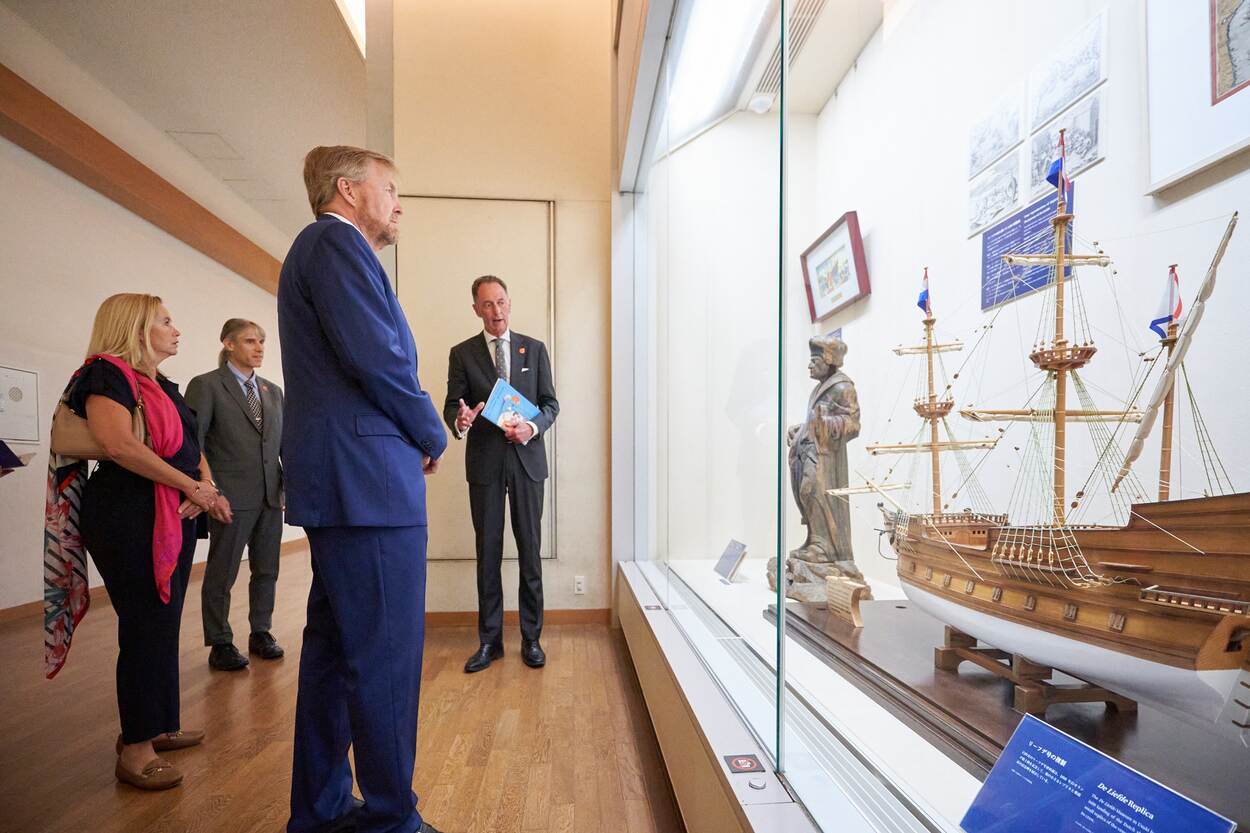
  • MIL-OSI Europe: Looking Back on King Willem-Alexander’s Visit to Expo 2025 Osaka

    Source: Government of the Netherlands

    On Wednesday, 21 May, and Thursday, 22 May, King Willem-Alexander of the Netherlands visited the World Expo in Osaka as part of his journey to Japan. Between 13 April and 13 October 2025, Expo 2025 Osaka, Kansai, Japan is expected to welcome no less than 28 million visitors. The Netherlands has its own pavilion at the Expo, which has already received many thousands of guests in its first month. The King’s visit marked the highlight of the Netherlands’ National Day at the Expo. He was accompanied by Minister Klever for Foreign Trade and Development and Minister Beljaarts of Economic Affairs, who are in Japan for an economic working visit and a trade mission focusing on high tech and digitalization.

    Enlarge image
    King Willem-Alexander and Minister Klever arrive at the Netherlands pavilion on 21 May

    National Day Celebrations

    National Day at the Expo is a special occasion hosted by each participating country. On 21 May, it was the Netherlands’ turn, and the King traveled to Osaka for the event. After signing the guestbook and attending an official ceremony—featuring the Dutch national anthem and flag-raising—King Willem-Alexander delivered a welcome address. In his speech, he emphasized the long-standing relationship between Japan and the Netherlands. In addition to Expo, 2025 also marks 425 years of Dutch–Japanese relations.

    Dance and Design on Display

    To mark National Day, the King attended a dance performance in the National Day Hall on the Expo grounds. Dutch ensemble Introdans collaborated with the Japanese group LAND FES for the occasion. Choreographers Adriaan Luteijn and Dai Matsuoka are pioneers in inclusive dance, creating performances where professional dancers share the stage with dancers with disabilities. The King also visited the temporary exhibition Arts & Crafts on Common Ground, where Dutch designers and Japanese artisans collaborated to create works that fuse contemporary and traditional techniques.

    Strengthening Economic Ties

    As part of the economic mission, a roundtable was held at the Netherlands Pavilion with CEOs from Dutch and Japanese companies. The meeting was attended by the King and co-hosted by the Kansai Economic Federation and the Confederation of Netherlands Industry and Employers (VNO-NCW). The goal: to encourage economic cooperation between the Netherlands and the Kansai region in western Japan—particularly in the fields of natural sciences, healthcare, and chemistry.

    Enlarge image
    Architect Thomas Rau, Ries Straver of Tellart design studio and Minister Beljaarts, among others, posing in front of the Netherlands pavilion

    Circular Pavilion

    The King concluded the day with a visit to the rest of the Netherlands Pavilion. A day earlier (20 May), AND BV, the design and construction consortium behind the pavilion, reached an agreement with the Japanese multinational Pasona Group to purchase and repurpose the pavilion after the Expo. This was always the intention: the Dutch pavilion is a model of circular construction—each part is registered and can be dismantled and reused elsewhere without loss. The day also included visits to the Japanese and Czech pavilions.

    Enlarge image
    At the exhibition on 425 years of Japanese-Dutch exchange in Osaka Castle, Consul-General Marc Kuipers tells the King about the earliest history between our two countries

    425 Years of Shared History

    Throughout May, Osaka Castle is spotlighting the long-standing relationship between Japan and the Netherlands. The exhibition A New Dawn on Common Ground: 425 Years of Exchange between Japan and the Netherlands features objects dating back to the year 1600. That year, the Dutch ship De Liefde arrived in Japan, carrying the first Dutchmen to make contact with the country. This meeting eventually led to an exclusive trading relationship that lasted more than 200 years. On the second day of his visit, the King visited this exhibition, which was organized by the Dutch Consulate in Osaka and features items from both Dutch and Japanese collections.

    Enlarge image
    At Tekijuku, the old Dutch school of Osaka, the King was welcomed by Osaka University students

    The Legacy of Rangaku

    Later that day, 22 May, the royal delegation visited Tekijuku, one of the most important Dutch-language schools in Japan. Until well into the 19th century, Japanese students studied Dutch there to access Western books. The presence of the Dutch in Japan offered a rare window to the rest of the world. Through Rangaku (Dutch Studies), the latest knowledge in fields such as medicine was introduced to Japan. Today, Tekijuku is part of Osaka University, where last year a new medical cooperation agreement was signed between Japan and the Netherlands. The King also visited Nakanoshima Qross, a new hub for research into the future of healthcare.

    Enlarge image
    At the Pasona pavilion, King Willem-Alexander and Minister Klever were introduced to the latest technology is regenerative medicine

    Innovation and Future Collaboration

    In the afternoon, King Willem-Alexander and Minister Klever joined the economic mission on high tech and digitalization, led by Minister Beljaarts. Around 70 Dutch companies were introduced to approximately 170 Japanese guests. Multiple partnership agreements were signed to promote cooperation in areas such as semiconductors, quantum computing, and 6G telecommunications. The day concluded with an Innovation Parade, where 19 Dutch and Japanese organizations presented their work to the King.

    MIL OSI Europe News

  • MIL-OSI Russia: Urgent: China stands ready to join Kuwait in further promoting the sustainable development of bilateral relations – Li Qiang

    Translation. Region: Russian Federal

    Source: People’s Republic of China in Russian –

    Source: People’s Republic of China – State Council News

    KUALA LUMPUR, May 26 (Xinhua) — China is willing to join Kuwait in further promoting the sustainable development of bilateral ties, Chinese Premier Li Qiang said Monday at a meeting with Kuwaiti Crown Prince Sheikh Sabah Khalid Al-Hamad Al-Sabah.

    Li Qiang arrived in Kuala Lumpur on Monday to attend the ASEAN (Association of Southeast Asian Nations)-GCC (Gulf Cooperation Council)-China summit. –0–

    MIL OSI Russia News

  • Operation Sindoor outreach: Indian delegation briefs South Korea’s leaders, think tanks

    Source: Government of India

    Source: Government of India (4)

    The all-party Indian parliamentary delegation led by Janata Dal (United) MP Sanjay Jha on Monday met Yun Ho-jung, Chairperson of the Korea-India Parliamentary Friendship Group of the Korean National Assembly and think tanks and briefed them on Operation Sindoor, reiterating India’s firm zero-tolerance policy against terrorism.

    The delegation asserted India’s position of making no distinction between terrorists and the country supporting them and sought South Korea’s support for bringing terrorist organisations, perpetrators, and financiers of terrorism to justice.

    Yun reaffirmed South Korea’s strong stand against terrorism, saying that any act of terrorism is unacceptable and cannot be justified, and that there should be no loss of innocent lives due to the same.

    Meanwhile, the delegation also interacted with think tanks and lawmakers in Seoul, conveying India’s strong message of zero tolerance against terrorism.

    The Indian Embassy said in a post on X, “The delegation apprised them about the heinous terrorist attack in Pehalgam and the subsequent precise, measured, responsible, and non-escalatory response made by India. They further reiterated India’s firm zero-tolerance policy against terrorism and made no distinction between terrorists and the country supporting them. They also highlighted India’s ‘No First Use Policy’ and rejection of any nuclear blackmail. They conveyed our resolute stance to respond firmly to any act of terrorism”.

    The Embassy added that the participating South Korean think tanks condemned the terrorist attack and extended their solidarity with India, as well as its zero-tolerance policy against terrorism. They also discussed ways in which India, South Korea and the international community can work together to combat terrorism.

    During the interactions, Jha asserted that members from both the ruling and opposition parties from India arrived in South Korea to apprise about the April 22 Pahalgam terrorist attack as part of the Operation Sindoor global outreach campaign.

    “The seven delegations are sent by the Government of India across the world to apprise what happened in Kashmir on April 22, when 26 innocent tourists were gunned down by terrorists in front of their families, segregated on religious lines. All terrorists came from Pakistan, who were trained and financed there, it happened earlier in the 2008 Mumbai attack,” Jha said.

    BJP MP Aparajita Sarangi drew a parallel between South Korea’s tensions with North Korea and the kind of conflict India has experienced with Pakistan, highlighting the terrorist activities.

    “You are having the same kind of war with North Korea that we are having with Pakistan,” she said.

    “What happened should not have happened. I must say, and I don’t believe I’m exaggerating or overstepping, that Pakistan is a habitual offender when it comes to terrorist activities. Since its creation in 1947–48, there has been a continuous series of terrorist actions aimed at destabilising India. They have tried repeatedly, though they have not succeeded. Our Prime Minister has talked about a ‘new normal’ and we solicit your support in this entire war against terrorism,” said Sarangi.

    Additionally, TMC MP Abhishek Banerjee stated that Operation Sindoor on May 7 was carried out in response to the April 22 Pahalgam terror attack by Pak-trained terrorists.

    “Any support extended to Pakistan is effectively support for a terror organisation. Anyone endorsing or defending Pakistan’s actions is, in essence, backing terrorism. Why do I say this? I have compelling reasons. Take the 2008 Mumbai terror attacks, for instance, an incident the world witnessed in horror. A total of 166 innocent people were killed by terrorists, including citizens from 26 different countries, not just India,” he said.

    “The prime accused, who was then arrested by the Indian law enforcement agencies, confessed that he was trained and raised in Pakistan. And when the April 22 Pahalgam terror attack was carried out, we expected Pakistan to do justice and bring the perpetrators to book. India waited patiently and eventually carried out the airstrikes on May 7 after waiting for 14 days. The airstrikes were carried out with such precision that India successfully destroyed nine terror infrastructures without endangering a single civilian life,” Banerjee added.

    The all-party delegation includes MPs from across the political spectrum: BJP MP Brij Lal, CPI(M) Rajya Sabha member John Barittas, and senior Congress leader Salman Khurshid.

    It is a part of India’s global diplomatic outreach campaign to highlight the significance of Operation Sindoor and India’s continued fight against Pak-sponsored cross-border terrorism.

    (IANS)

  • PM Modi calls Operation Sindoor a reflection of India’s cultural values and national resolve

    Source: Government of India

    Source: Government of India (4)

    Prime Minister Narendra Modi, addressing a massive gathering of women in Vadodara, paid tribute to the nation’s armed forces and lauded Operation Sindoor as a powerful reflection of India’s cultural values and emotional resolve in the face of terrorism.
     
    “Operation Sindoor was not just a military action, it was a reflection of India’s values and emotions,” said the Prime Minister, adding that the act of terrorism, where a father was killed in front of his children, had ignited deep anger across the nation.
     
    He emphasized that such attacks are not just assaults on individuals but direct challenges to all 140 crore Indians. In response, PM Modi said he gave full freedom to the Indian armed forces, who executed a historic operation that had not been seen in decades.
     
    “Nine major terror hubs across the border were identified and destroyed in just 22 minutes. Pakistan’s military tried to retaliate but was decisively defeated,” he said.
     
    Saluting the courage and dedication of the armed forces, PM Modi said, “I fulfilled my responsibility as the nation’s leader, and our jawans fulfilled theirs with unmatched bravery. I bow to their valour from this sacred land of Dahod.”
     
    The Prime Minister also underlined that the country born out of the partition has long pursued a hostile approach towards India, seeking to inflict harm through various means. In contrast, India, he said, remains focused on eradicating poverty, boosting the economy, and driving inclusive development.
     
    “A developed India can only be built when both our armed forces and our economy are strong. The government is committed to ensuring national security and economic growth go hand in hand,” he noted.
     
    The Prime Minister said it is a land of sacrifice and dedication. He spoke of Maharishi Dadhichi’s ultimate sacrifice on the banks of the Dudhimati River and how this region supported freedom fighter Tatya Tope in times of crisis. He also highlighted Mangarh Dham as a symbol of the sacrifices made by Govind Guru and hundreds of tribal warriors.
     
    PM Modi praised the people of Dahod for their resilience and commitment to progress. Referring to the newly inaugurated locomotive manufacturing plant, he said this is just a glimpse of the district’s potential.
     
    “I have full confidence in the hardworking people of Dahod. They will make the best use of the new facilities and transform Dahod into one of the most developed districts in India,” the Prime Minister said, concluding his address with heartfelt congratulations to the people of the region.
  • Indian stock market closes in green; auto and IT stocks gain

    Source: Government of India

    Source: Government of India (4)

    The Indian stock market ended Monday’s session in the green, with broad-based buying across sectors, led by gains in auto and IT stocks. Benchmark indices registered gains for the second consecutive session, reflecting improved investor sentiment.
     
    The BSE Sensex closed 455.37 points, or 0.56 per cent higher, at 82,176.45, while the NSE Nifty rose 148 points, or 0.60 per cent, to settle at 25,001.15.
     
    Sectorally, Nifty Auto and Nifty IT indices led the rally with a gain of one per cent each. Positive movement was also seen in metal, realty, media, energy, commodities, and PSE stocks.
     
    Midcap and smallcap indices continued their upward momentum. The Nifty Midcap 100 rose 379.50 points (0.67%) to 57,067.25, while the Nifty Smallcap 100 added 64.45 points (0.37%) to close at 17,707.80.
     
    Global cues also played a role in the positive momentum. Market participants cited the US decision to consider extending the deadline for imposing higher tariffs on the European Union, along with a decline in the dollar index, as factors aiding domestic market recovery.
     
    Vinod Nair, Head of Research at Geojit Financial Services, said, “The early onset of the southwest monsoon and easing bond yields have improved investor appetite for riskier assets. Broader markets outperformed on expectations of improved rural consumption and stronger Q4 GDP, supported by robust corporate earnings.”
     
    On the currency front, the rupee appreciated by 24 paise to close at 85.09 against the US dollar, supported by a weaker dollar index, which fell to 98.93.
     
    Jateen Trivedi of LKP Securities noted, “A series of key US economic data due this week, including Durable Goods Orders, FOMC Meeting Minutes, Q1 GDP, and the Core PCE Price Index, may keep USD-INR volatility elevated. The rupee is expected to trade within a range of 84.50 to 85.25 in the near term.”
     
    -IANS
  • PM Modi: Gujarat emerging as a global hub for high-tech manufacturing and tribal development

    Source: Government of India

    Source: Government of India (4)

    Prime Minister Narendra Modi today underlined Gujarat’s rising stature as a global hub for high-tech engineering and manufacturing, while also reaffirming the government’s deep commitment to tribal welfare and inclusive development.
     
    Addressing a large gathering in Dahod, the Prime Minister said that Gujarat has made remarkable progress in diverse sectors such as education, IT, semiconductors, and tourism. He informed that a major semiconductor plant is being established in the state with an investment of thousands of crores, further strengthening India’s footprint in the global semiconductor industry and creating employment opportunities for lakhs of youth.
     
    The Prime Minister highlighted that Dahod, Vadodara, Godhra, Kalol, and Halol have together formed a robust high-tech engineering and manufacturing corridor. He said, “Vadodara is rapidly advancing in aircraft manufacturing, with the Airbus assembly line inaugurated recently. The city is also home to India’s first Gati Shakti University. Savli has a major rail coach manufacturing facility, and now Dahod is manufacturing India’s most powerful 9,000-horsepower locomotives. These developments mark a proud moment for the nation.”
     
    He added that small and medium-scale industries across Godhra, Kalol, and Halol are also playing a vital role in Gujarat’s industrial growth. Envisioning the future of the region, he said, “From bicycles and motorcycles to railway engines and aircraft, this corridor will produce it all. Such a high-tech corridor is rare even on the global stage.”
     
    Reaffirming his government’s commitment to tribal welfare, the Prime Minister said that the development of tribal regions is essential for building a developed India. He noted that significant work has been carried out in the last 11 years to uplift tribal communities across the country.
     
    PM Modi said, “I have had the privilege of working extensively in Gujarat’s tribal areas, and that experience has shaped many national-level initiatives. There was a time when tribal children couldn’t even dream of studying science. Today, the tribal belt has access to quality education through ITIs, medical colleges, and two dedicated tribal universities.”
     
    He stated that the network of Eklavya Model Schools has been strengthened over the past decade to ensure better educational opportunities for tribal students, including several such schools now operating in Dahod.
     
    Referring to the ‘Dhartii Aaba Janjati Gram Utkarsh Abhiyan’, he said this is a historic initiative launched for the first time in independent India. He informed that the Central Government is investing nearly ₹80,000 crore in the program, aimed at transforming over 60,000 tribal villages by providing electricity, water, roads, schools, hospitals, and pucca houses.
     
    PM Modi said, “Our government is working for those who were long neglected. The PM Janman Yojana has been introduced to support particularly vulnerable tribal groups who have been deprived for decades. New infrastructure and job opportunities are being created to ensure inclusive development.”
     
    The Prime Minister also highlighted the launch of a national mission to eliminate sickle cell anemia in tribal communities, under which millions have already been screened.
     
    Speaking on regional transformation, PM Modi said that Dahod, once classified as a backward district, is now progressing rapidly as an Aspirational District. He remarked, “South Dahod once faced severe water scarcity. Today, thanks to hundreds of kilometers of new pipelines, Narmada water is reaching every home. Over the years, 11 lakh acres of land from Umargam to Ambaji have been brought under irrigation, easing the burden on tribal farmers.”
  • MIL-OSI: PU Prime Drives Coastal Restoration Efforts in Thailand

    Source: GlobeNewswire (MIL-OSI)

    SINGAPORE, May 26, 2025 (GLOBE NEWSWIRE) — PU Prime, a globally recognised financial services provider, has reaffirmed its commitment to Environmental, Social, and Governance (ESG) principles through a Corporate Social Responsibility (CSR) initiative at the Air and Coastal Defense Command of the Royal Thai Navy (RTN) in Sattahip, Thailand. Held on 22 May 2025, this one-day program focused on restoring coastal ecosystems through three key environmental activities: beach cleanup, mangrove seedling planting, and crab release.

    Driving Environmental Impact

    As part of PU Prime’s ESG framework, the initiative was structured around three key environmental activities designed to contribute meaningfully to the restoration and preservation of coastal ecosystems. Each activity was selected for its ecological relevance and alignment with regional sustainability goals.

    1. Beach Cleanup
    The beach cleanup activity targeted the removal of marine debris and non-biodegradable waste, such as plastic bottles, fishing nets, rope, and other litter found along Sattahip’s shoreline. These pollutants are a growing concern due to their detrimental impact on marine life. Sea turtles, fish, and dolphins are often endangered by such waste, risking entanglement or ingestion that can result in injury or death. By removing this waste, the initiative not only improved the local environment but also contributed to the global fight against marine pollution and microplastics.

    This cleanup effort also highlighted the power of community-driven conservation and the responsibility businesses have in safeguarding biodiversity. It sent a strong message about the importance of collective action in preserving marine habitats and preventing further environmental degradation.

    2. Mangrove Seedling Cultivation
    Another significant part of the initiative involved the planting of Avicennia marina, a species of mangrove well-suited to coastal and brackish environments. Mangroves serve as crucial coastal buffers, protecting shorelines from erosion, storm surges, and saltwater intrusion. They also provide shelter and breeding grounds for a wide range of marine and terrestrial species.

    By planting mangrove seedlings, PU Prime not only supported biodiversity but also contributed to climate mitigation. Mangrove forests are known for their exceptional capacity to sequester carbon, helping absorb atmospheric CO₂. The initiative further educated participants on the ecological, social, and economic value of mangroves—essential ecosystems that support local fisheries, sustain coastal livelihoods, and bolster eco-tourism.

    3. Crab Release
    The crab release component involved the careful reintroduction of native crab species into their natural habitat. This effort was aimed at supporting the regeneration of local marine populations, maintaining ecological balance, and strengthening food web dynamics in the area. Crabs play an essential role in benthic ecosystems by recycling nutrients, aerating sediments, and serving as prey for larger species.

    The release was carried out in collaboration with local environmental coordinators to ensure that species selection and handling adhered to best practices in marine conservation. This activity, while symbolic, formed a tangible part of PU Prime’s effort to promote sustainable marine ecosystems and enhance local biodiversity.

    A Broader ESG Vision

    PU Prime ensured the initiative was well-supported with logistical planning, including transportation, facilitators, necessary equipment, and refreshments. Activities were conducted in line with local environmental guidelines, ensuring minimal disruption and lasting positive impact.

    This CSR program illustrates PU Prime’s broader ESG vision—one that prioritises sustainable practices, ethical leadership, and social responsibility. As the company expands its global footprint, it remains dedicated to initiatives that deliver long-term environmental and societal benefits, reinforcing the belief that sustainability is vital to building a better future for all.

    About PU Prime
    Founded in 2015, PU Prime is a leading global fintech company providing innovative online trading solutions. Today, we offer regulated financial products across various asset classes, including forex, commodities, indices, and shares. Committed to providing advanced technology and educational resources, PU Prime supports traders and investors at every stage, from beginner to professional. With a presence in over 200 countries and exceeding 40 million app downloads, PU Prime is dedicated to enabling financial success and fostering a global community of empowered traders. Discover PU Prime’s latest promotions and join us for a fruitful trading journey today.

    Contact
    PU Prime
    esg@puprime.com

    Photos accompanying this announcement are available at

    https://www.globenewswire.com/NewsRoom/AttachmentNg/e123e8ba-eb6f-456c-9028-821ea8fbd863

    https://www.globenewswire.com/NewsRoom/AttachmentNg/c4da0ffb-715b-44aa-bf9d-df8c66c8b0aa

    https://www.globenewswire.com/NewsRoom/AttachmentNg/bb809a99-e642-453b-aaec-decb7fb5f45c

    https://www.globenewswire.com/NewsRoom/AttachmentNg/f43f83f4-27c6-46e4-ae82-820fda40e017

    The MIL Network

  • MIL-OSI New Zealand: Pharmac committed to stronger, more inclusive consumer relationships

    Source: PHARMAC

    Pharmac Board Chair Paula Bennett is welcoming an independent report calling for stronger, more respectful relationships with consumers to ensure their voices are listened to and included in the organisation’s work.

    The report was prepared for the Board following two workshops with advocacy groups representing people with lived experience of health conditions. The Board commissioned the workshops, which were independently chaired by Dame Kerry Prendergast in Wellington last November.

    “I want to really thank the people who took part in the workshops and generously shared their personal experiences and insights into working with Pharmac,” says Bennett. 

    Workshop participants identified a number of areas where Pharmac needs to improve the way it engages, communicates and works with consumer groups and advocates. This included better decision-making processes, meaningful and respectful engagement, and effective and transparent communications. 

    “We’ve heard very clearly that we need to make sure our interactions are respectful and meaningful, and that people’s voices are valued and included throughout our work,” Bennett says. 

    “There’s a lot for the Board and Pharmac’s senior management to think about, and we’re considering the next steps. This work is part of a wider reset for Pharmac to become an outward-focused organisation. The team at Pharmac does an amazing job and we’re committed to meaningful change to strengthen Pharmac’s relationships with consumers.”

    She says the Board has proactively released the report of the workshops to demonstrate the organisation’s commitment to change and being transparent.

    MIL OSI New Zealand News

  • MIL-OSI New Zealand: Pharmac funds new oral contraceptive pill

    Source: PHARMAC

    Pharmac has decided to fund a new progestogen-only oral contraceptive pill called desogestrel (branded as Cerazette).

    Melissa Copland, Pharmac’s Clinical Lead–Medicines Management, says desogestrel will be funded for anyone who needs it from 1 April 2025.

    “Desogestrel is a progestogen-only contraceptive pill. It helps prevents pregnancy when taken within a 12-hour window each day, which is a wider window than other funded progestogen-only pills, which is three hours.

    “We expect that over 43,000 New Zealanders will benefit from access to this contraceptive in the first year of funding. It will be funded without restrictions, which means it can be prescribed for any relevant use.”

    Copland thanked everyone who provided feedback during Pharmac’s public consultation on desogestrel.

    “We received a huge amount of positive feedback from people who would benefit from Pharmac’s decision to fund desogestrel.

    “They shared with us their personal stories about how this funding decision would improve their health, and in many cases, benefit their lives.

    “Many people were also happy that they will have more options for contraceptives. This was particularly important for people who couldn’t take other contraceptives because of side effects or existing health conditions.”

    Sexual Wellbeing Aotearoa Medical Director Dr Beth Messenger says desogestrel (Cerazette) is a contraceptive pill with a multitude of potential uses, making it an attractive option for many people.

    “Subsidising Cerazette will offer many women the opportunity to try this pill which was previously out of reach. Not only is it a highly effective contraceptive, it can also help manage other reproductive health challenges. As a clinician, this is a great option to have in my prescribing tool kit,” says Dr Messenger.

    Pharmac can fund desogestrel following the Government’s $604 million medicine budget increase in June 2024. Since receiving the additional funding, Pharmac has funded 44 medicines for different health conditions and is currently considering 14 more.

    MIL OSI New Zealand News

  • MIL-OSI New Zealand: Pharmac to fund more cancer medicines

    Source: PHARMAC

    Funding nivolumab in combination with ipilimumab for eligible people with kidney cancer

    We expect about 110 people with metastatic kidney cancer will benefit in the first year of funding.

    Both nivolumab and ipilimumab are immune checkpoint inhibitors. They work by helping the body’s immune system to fight cancer cells. The medicines are given to people in hospital. People would start on both medicines, then after a few cycles with ipilimumab, would continue on nivolumab only until the cancer gets worse or the treatment cannot be continued for other clinical reasons, like toxicity or disease progression.

    From 1 November, we funded nivolumab for kidney cancer as a second treatment, however now it will be available as a first treatment option. People would be able to access other medicines like lenvatinib with everolimus, or axitinib or sunitinib at other points in their treatment.

    Widening access to sunitinib for eligible people with kidney cancer that has spread

    Sunitinib is currently funded for people with kidney cancer who have an intermediate or poor prognosis. After its inclusion in the 2023/24 Annual Tender, in July 2024 we consulted on widening access for people with kidney cancer who have a good prognosis, and now we are considering widening access further so it can be used at any point of treatment for more people. We are proposing this because of the changes made and proposed for the treatment options for kidney cancer.

    Sunitinib is a type of medicine called a tyrosine kinase inhibitor. Tyrosine kinase inhibitors impact the metabolic processes involved with the development of cancer. They slow down the progression of some cancers and may help people live longer.

    Funding axitinib for eligible people with kidney cancer

    We expect about 35 people with metastatic kidney cancer will benefit in the first year of funding. It would be funded when their condition has gotten worse after using a different treatment (second line).

    When we consulted on funding axitinib we expected 10 people to benefit in the first year of funding. This has changed because we are moving the funding of nivolumab from second line to first line (with ipilimumab).

    Axitinib is an oral tablet taken daily to stop the growth and spread of cancer cells.

    Funding inotuzumab ozogamicin for eligible people with acute lymphoblastic leukaemia

    We expect about 15 people will benefit in the first year of funding. 

    B-cell acute lymphoblastic leukaemia / lymphoma (ALL) is an aggressive form of ALL where there are too many white blood cells in the bone marrow and blood, which build up and prevent the growth of normal blood cells. 

    Inotuzumab ozogamicin will be funded for people with B-cell ALL that has come back after, or has not responded to, initial treatment. This includes people with only a small amount of cancer left after initial treatment. Inotuzumab ozogamicin would be funded for all eligible people regardless of their transplant status. 

    Inotuzumab ozogamicin is a targeted cancer medicine given in hospital. It is a combination medicine made up of inotuzumab, which identifies which cells to destroy, and ozogamicin, which then destroys the cancer cells to prevent the cancer developing further. The medicine improves the chance of having a curative stem cell transplant. 

    Current access to blinatumomab through our Exceptional Circumstances framework for the small group of people with B-cell ALL and measurable residual disease seeking treatment as a bridge to transplant will remain unchanged as a result of this decision. 

    Funding crizotinib for eligible people with non-small cell lung cancer 

    We expect about 20 people will benefit in the first year of funding.

    Crizotinib will be funded for people with the most common type of lung cancer, called non-small cell lung cancer, who have a mutation in their ROS-1 gene. It would provide substantial benefit for this group of people compared to currently available treatment options.

    It is an oral capsule that is taken daily to stop the growth of cancer cells. It will provide a targeted treatment option for people to take at home, compared to current treatment with chemotherapy in hospital.

    We fund immune checkpoint inhibitors (pembrolizumab and atezolizumab) for this group of people but have received advice these medicines have limited effectiveness for people with this mutation. 

    Funding ceftazidime with avibactam for eligible people with antibiotic resistant infections

    We expect about 30 people to benefit in the first year of funding, increasing to about 60 people each year over the next 5 years.

    Ceftazidime with avibactam for people with these resistant infections would improve health outcomes and reduce the risk of kidney failure. Ceftazidime with avibactam is currently used in some Health New Zealand hospitals and accessed through Pharmac’s Named Patient Pharmaceutical Assessment (NPPA) process. The proposal ensures that eligible people will be able to receive funded treatment. 

    We expect that funding ceftazidime with avibactam would improve health outcomes for people with these infections and reduce length of hospital stays. It is given in hospital, every 8 hours for a number of days in a row but will reduce the length of time people stay receiving treatment.

    Price reduction and brand change for palbociclib

    Palbociclib is a medicine for people with advanced breast cancer that is HR-positive, HER2-negative since 2020. About 550 people use this medicine each year.

    The Ibrance brand of palbociclib is currently supplied by Pfizer, and we are changing the brand to Palbociclib Pfizer, which is also supplied by Pfizer. There is a reduction in price for palbociclib.

    Palbociclib Pfizer is made by the same supplier, has been approved by Medsafe, is manufactured at the same site, to the same specifications, and is packaged similarly, to Ibrance. It is a type of medicine called a CDK4/6 inhibitor, which slows down the progression of cancer.

    The new brand of palbociclib, Palbociclib Pfizer, will be funded from 1 July 2025. All people receiving palbociclib would need to transition from Ibrance to Palbociclib Pfizer within a five-month period. From 1 December 2025 the Ibrance brand would be delisted from the Pharmaceutical Schedule.

    From 1 July 2024, we funded another CDK4/6 inhibitor, called ribociclib for this group.

    MIL OSI New Zealand News

  • MIL-OSI New Zealand: Search for Pharmac’s new CE underway

    Source: PHARMAC

    Pharmac’s Board has begun the search for a new Chief Executive, advertising in New Zealand and overseas.

    Board Chair Paula Bennett says the Board is looking for a mix of strategic and operational leadership to help Pharmac become a more outward-focused, empathetic organisation.

    While recruitment is underway, Bennett says the Board has appointed experienced public sector leader Brendan Boyle as Pharmac’s Acting Chief Executive. He will start at Pharmac on Monday 31 March, for a period of up to six months. He takes over from Sarah Fitt, whose last day in the Pharmac office is 28 March.

    Brendan Boyle has previously been the Chief Executive of the Ministry of Social Development, Department of Internal Affairs, and Land Information New Zealand. He has also held roles within the health sector, including as a Board member of the Capital & Coast District Health Board.

    “Pharmac has a big work programme ahead and Brendan’s wealth of experience delivering what New Zealanders need will lay the foundations of the reset for when the permanent Chief Executive is appointed,” says Bennett.

    MIL OSI New Zealand News

  • MIL-OSI New Zealand: Pharmac proposes to fund more medicines for melanoma

    Source: PHARMAC

    Pharmac is consulting on a proposal to fund more medicines for melanoma, a type of skin cancer, from 1 June 2025. The medicines are:

    • pembrolizumab (branded as Keytruda) for stage 3B or more advanced melanoma that can be removed by surgery
    • dabrafenib (branded as Tafinlar) and trametinib (branded as Mekinist) for melanoma with a BRAF mutation that:
      • is stage 3B or more advanced and can be removed by surgery
      • has spread around the body or can’t be removed by surgery

    Pharmac’s Director Pharmaceuticals, Geraldine MacGibbon, says funding these medicines would provide more treatment options to use around the time of surgery, or if people’s cancer is at a later stage and they can’t have surgery.

    “These medicines would help prevent people’s cancer from spreading or coming back, which may help people live longer.”

    Pembrolizumab is an immunotherapy, a targeted cancer treatment that helps the body’s immune system fight cancer cells. The medicines dabrafenib with trametinib are used together to create a stronger response to the cancer. They are taken orally which means people will be able to take them at home rather than travelling to a health clinic or hospital for treatment.

    Pharmac estimates that about 260 people with melanoma would access these medicines in the first year of funding.

    “We think these medicines will make a real difference for people, and we’re keen to hear what people think of our proposal before we make a decision,” says MacGibbon.

    Consultation on Pharmac’s funding proposal for these medicines is now open and will close on Friday 4 April.

    The Government provided additional funding to Pharmac in June 2024 to fund new medicines and widen access to medicines that are already funded. Since receiving the additional funding, Pharmac has funded 50 medicines for different health conditions (including the medicines in this announcement) and is currently considering 11 more.

    MIL OSI New Zealand News

  • MIL-OSI New Zealand: Port leaders embedding the ACOP on ports

    Source: Maritime New Zealand

    The Port Health and Safety Leadership Group enthusiastically welcomed the Approved code of practice for loading and unloading cargo at ports and on ships (ACOP) when it came into effect late last year.

    All commercial ports in New Zealand now have a set of base level safety standards that has been approved by the Minister for Work Place Relations and the Associate Minister of Transport.

    The ACOP provides assurance and clarity under the Health and Safety at Work Act 2015 (HSWA). If a business can show that what it has done is equivalent to or better than the requirements in the ACOP, then it’s likely to be meeting the test of what is reasonably practicable under the HSWA.
    Now, at its annual strategy meeting, the Leadership Group has made embedding the ACOP on ports one of its top priorities so that it’s widely understood and the benefits are felt across the sector.

    One of the focus areas is developing education resources. Over the past several months, Maritime NZ has been working with sector and union representatives to identify priority areas to support the workforce’s understanding of key topics under the ACOP. Following feedback gathered from two workshops, the group has decided to begin with risk management. The next steps will be to design the education resources and content, which will be done in collaboration with the sector.

    Maritime NZ has also begun proactive inspections relating to critical risks within the ACOP. Our first focus is on how a Person Conducting a Business or Undertaking (PCBU) is effectively managing hazards to health and safety relating to the loading and unloading of breakbulk cargo. Following this phase of the inspections, we’ll share our findings and themes with the Leadership Group and the sector, as well as support any future guidance or education material development.

    Over time, we’ll publish guidance and education resources, to support the ACOP. We will continue to provide updates in SeaChange and through other channels.

    Useful information about the ACOP:
    • Leadership Group update when ACOP came into effect.
    • Leadership Group’s Port sector insights picture and action plan, which proposed developing the ACOP as a priority action.
    • If you have questions about the Port Health and Safety Leadership Group or more generally about Maritime NZ’s work on ports, email [email protected].
    • If you have questions about ACOP education resources, please email our Education and Guidance team at [email protected].

    MIL OSI New Zealand News