NewzIntel.com

    • Checkout Page
    • Contact Us
    • Default Redirect Page
    • Frontpage
    • Home-2
    • Home-3
    • Lost Password
    • Member Login
    • Member LogOut
    • Member TOS Page
    • My Account
    • NewzIntel Alert Control-Panel
    • NewzIntel Latest Reports
    • Post Views Counter
    • Privacy Policy
    • Public Individual Page
    • Register
    • Subscription Plan
    • Thank You Page

Category: Asia

  • Trump slams Israel’s prosecutors over Netanyahu corruption trial

    Source: Government of India

    Source: Government of India (4)

    President Donald Trump on Saturday lashed out at prosecutors in Israel over the corruption trial that Israeli Prime Minister Benjamin Netanyahu has faced, saying Washington, having given billions of dollars worth of aid to Israel, was not going to “stand for this”.

    Netanyahu was indicted in 2019 in Israel on charges of bribery, fraud and breach of trust – all of which he denies. The trial began in 2020 and involves three criminal cases.

    “It is INSANITY doing what the out-of-control prosecutors are doing to Bibi Netanyahu,” Trump said in a Truth Social post, adding that the judicial process was going to interfere with Netanyahu’s ability to conduct talks with Palestinian militants Hamas, and Iran.

    Trump’s second post over the course of a few days defending Netanyahu and calling for the cancellation of the trial went a step further to tie Israel’s legal action to U.S. aid.

    “The United States of America spends Billions of Dollar [sic] a year, far more than on any other Nation, protecting and supporting Israel. We are not going to stand for this,” Trump said.

    Netanyahu “right now” was in the process of negotiating a deal with Hamas, Trump said, without giving further details. On Friday, the Republican president told reporters that he believes a ceasefire is close.

    Hamas has said it is willing to free remaining hostages in Gaza under any deal to end the war, while Israel says it can only end if Hamas is disarmed and dismantled. Hamas refuses to lay down its arms.

    Interest in resolving the Gaza conflict has heightened in the wake of the U.S. and Israeli bombing of Iran’s nuclear facilities. A ceasefire to the 12-day Israel-Iran conflict went into effect early this week.

    (Reuters)

    June 29, 2025
  • Trump slams Israel’s prosecutors over Netanyahu corruption trial

    Source: Government of India

    Source: Government of India (4)

    President Donald Trump on Saturday lashed out at prosecutors in Israel over the corruption trial that Israeli Prime Minister Benjamin Netanyahu has faced, saying Washington, having given billions of dollars worth of aid to Israel, was not going to “stand for this”.

    Netanyahu was indicted in 2019 in Israel on charges of bribery, fraud and breach of trust – all of which he denies. The trial began in 2020 and involves three criminal cases.

    “It is INSANITY doing what the out-of-control prosecutors are doing to Bibi Netanyahu,” Trump said in a Truth Social post, adding that the judicial process was going to interfere with Netanyahu’s ability to conduct talks with Palestinian militants Hamas, and Iran.

    Trump’s second post over the course of a few days defending Netanyahu and calling for the cancellation of the trial went a step further to tie Israel’s legal action to U.S. aid.

    “The United States of America spends Billions of Dollar [sic] a year, far more than on any other Nation, protecting and supporting Israel. We are not going to stand for this,” Trump said.

    Netanyahu “right now” was in the process of negotiating a deal with Hamas, Trump said, without giving further details. On Friday, the Republican president told reporters that he believes a ceasefire is close.

    Hamas has said it is willing to free remaining hostages in Gaza under any deal to end the war, while Israel says it can only end if Hamas is disarmed and dismantled. Hamas refuses to lay down its arms.

    Interest in resolving the Gaza conflict has heightened in the wake of the U.S. and Israeli bombing of Iran’s nuclear facilities. A ceasefire to the 12-day Israel-Iran conflict went into effect early this week.

    (Reuters)

    June 29, 2025
  • PM Modi interacts with Shubhanshu Shukla, first Indian astronaut aboard ISS

    Source: Government of India

    Source: Government of India (4)

    Prime Minister Narendra Modi on Saturday held a video interaction with Group Captain Shubhanshu Shukla, the first Indian astronaut to visit the International Space Station (ISS). During the warm and inspiring conversation, PM Modi lauded Shukla’s achievement as the dawn of a new era for India’s space ambitions and extended the wishes of 140 crore Indians.

    “Though you are farthest from the motherland, you are closest to our hearts,” said the Prime Minister, praising Shukla’s journey as symbolic of the aspirations of a rising India. Shukla expressed gratitude for the blessings and support he has received and described the experience of space as transformative, mirroring India’s fast-paced progress.

    In a lighter moment, the Prime Minister asked if the traditional Indian delicacies Shukla carried—like carrot halwa and aam ras—had been shared aboard. Shukla confirmed his international colleagues relished the flavours, with some even expressing interest in visiting India.

    The astronaut spoke about the unity of Earth from space, where borders vanish, and India appears grand in both size and spirit. He described his daily experiences—like completing 16 orbits a day—and the challenges of living in microgravity, calling the mission a blend of science and wonder.

    Highlighting India’s space science potential, Shukla shared insights into seven pioneering experiments aboard the ISS, including studies on stem cell response and microalgae growth, which could benefit agriculture and health on Earth.

    PM Modi reflected on the resurgence of scientific curiosity among youth post-Chandrayaan and Shukla’s mission, saying, “Our children no longer just look at the sky—they now believe they can reach it.” The Prime Minister urged young Indians to dream big and announced key goals ahead: Mission Gaganyaan, building India’s own space station, and landing an Indian on the Moon.

    Shukla closed the conversation with an emotional note, saying, “The sky has never been the limit—not for me, not for India.” He proudly shared that the Indian national flag now flies aboard the ISS for the first time in history.

    PM Modi hailed the astronaut’s journey as the first chapter in India’s ambitious space future and assured him that the entire nation eagerly awaits his return.

    June 29, 2025
  • Trump’s sweeping tax-cut, spending bill clears first US Senate hurdle

    Source: Government of India

    Source: Government of India (4)

    The Republican-controlled U.S. Senate advanced President Donald Trump’s sweeping tax-cut and spending bill in a key procedural vote late on Saturday, raising the odds that lawmakers will be able to pass his “big, beautiful bill” in the coming days.

    The measure, Trump’s top legislative goal, passed its first procedural hurdle in a 51 to 49 vote, with two Republican senators voting against it.

    The result came after several hours of negotiation as Republican leaders and Vice President JD Vance sought to persuade last-minute holdouts in a series of closed-door negotiations.

    The procedural vote, which would start debate on the 940-page megabill to fund Trump’s top immigration, border, tax-cut and military priorities, began after hours of delay.

    It then remained open for more than three hours of standstill as three Republican senators – Thom Tillis, Ron Johnson and Rand Paul – joined Democrats to oppose the legislation. Three others – Senators Rick Scott, Mike Lee and Cynthia Lummis – negotiated with Republican leaders into the night in hopes of securing bigger spending cuts.

    In the end, Wisconsin Senator Johnson flipped his no vote to yes, leaving only Paul and Tillis opposed among Republicans.

    Trump was monitoring the vote from the Oval Office late into the night, a senior White House official said.

    The megabill would extend the 2017 tax cuts that were Trump’s main legislative achievement during his first term as president, cut other taxes and boost spending on the military and border security.

    Nonpartisan analysts estimate that a version of Trump’s tax-cut and spending bill would add trillions to the $36.2-trillion U.S. government debt.

    Democrats fiercely opposed the bill, saying its tax-cut elements would disproportionately benefit the wealthy at the expense of social programs that lower-income Americans rely upon.

    Chuck Schumer, the Senate’s top Democrat, demanded that the bill be read aloud before debate could begin, saying the Senate Republicans were scrambling to pass a “radical bill”.

    “If Senate Republicans won’t tell the American people what’s in this bill, then Democrats are going to force this chamber to read it from start to finish,” the New York Democrat said.

    (Reuters)

    June 29, 2025
  • MIL-Evening Report: A return to Nature.

    Headline: A return to Nature. – 36th Parallel Assessments

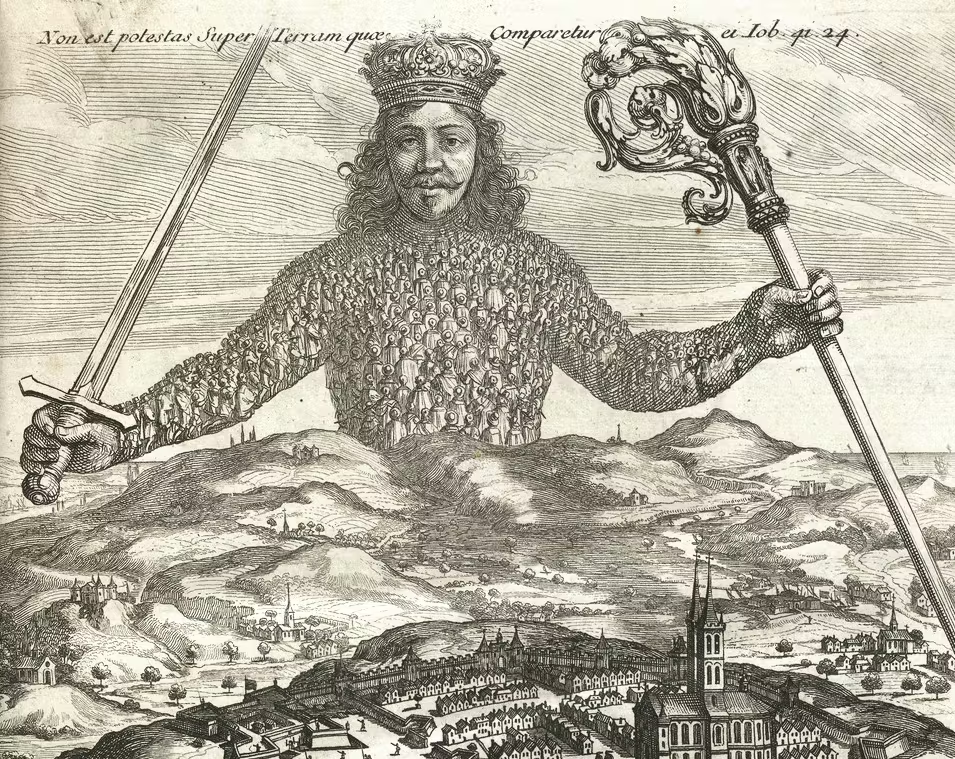
    Thomas Hobbes wrote his seminal work Leviathan in 1651. In it he describes the world system as it was then as being in “a state of nature,” something that some have interpreted as anarchy. However, anarchy has order and purpose. It is not chaos. In fact, if we think of Adam Smith’s “invisible hand of the market” we get something similar to what anarchy is in practice: the aggregate of individual acts of self-interest can lead to the optimisation of value and outcomes at the collective level. Anarchy clears; chaos does not.

    For Hobbes, the state of nature was chaos. Absent a “Sovereign” (i.e. a government) that could impose order on global and domestic societies, humans were destined to lead lives the were “solitary, poor, nasty, brutish and short.” This has translated into notions of “might makes right,” “survival of the fittest,” “to the victor goes the spoils” and other axioms of so-called power politics. The most elaborate of these, international relations realism, is a school of thought that is based on the belief that because the international system has no superseding Sovereign in the form of world government with comprehensive enforcement powers, and because there are no universally shared values and mores throughout the globe community that ideologically bind cultures, groups and individuals, global society exists as a state of nature where, even if there are attempts to manage the relationships between States (and other actors) via rules, norms, institutions and the like, the bottom line is that States (and other actors) have interests, not friends.

    Interests are pursued in a context of power differentials. Alliances are temporary and based on the convergence of mutual interests. Values are not universal and so are inconsequential. International exchange is transactional, not altruistic. Actors with greater resources at their disposal (human, natural, intellectual) prevail over those that have less. In case of resource parity between States or other actors, balances of power become systems regulators, but these are fluid and contingent, not permanent. Geography matters in that regard, which is why geopolitics (the relationship of power to geography) is the core of international relations.

    It is worth remembering this when evaluating contemporary international relations. It has been well established by now that the liberal international order of the post WW2 era has largely been dismantled in the context of increasing multipolarity in inter-State relations and the rise of the Global South within the emerging order. As I have written before, the long transition and systemic realignment in international affairs has led to norm erosion, rules violations, multinational institutional and international organizational decay or irrelevance and the rise of conflict (be it in trade, diplomacy or armed force) as the new systems regulator.

    These developments have accentuated over the last decade and now have a catalyst for a full move into a new global moment–but not into a multipolar or multiplex constellation arrangement in which rising and established powers move between multilateral blocs depending on the issues involved. Instead, the move appears to be one towards a modern Hobbesian state of nature, with the precipitant being the MAGA administration of Donald Trump and its foreign policy approach.

    We must be clear that it is not Trump who is the architect of this move. As mentioned in pervious posts, he is an empty vessel consumed by his own self-worth. That makes him a useful tool of far smarter people than he, people who work in the shadow of relative anonymity and who cut their teeth in rightwing think tanks and policy centres. In their view the liberal internationalist order placed too many constraints on the exercise of US power while at the same time requiring the US to over-extend itself as the “world’s policeman” and international aid donor . Bound by international conventions on the one hand and besieged by foreign rent-seekers and adversaries on the other, the US was increasingly bent under the weight of overlapped demands in which existential national interests were subsumed to a plethora of frivolous diversions (such as human rights and democracy promotion).

    For these strategists, the solution to the dilemma was not to be found in any new multipolar (or even technopolar) constellation but in a dismantling of the entire edifice of international order, something that was based on an architecture of rules, institutions and norms nearly 500 years in the making. Many have mentioned Trump’s apparent mercantilist inclinations and his admiration for former US president William McKinley’s tariff policies in the late 1890s. Although that may be true, the Trump/MAGA agenda is far broader in scope than trade. In fact, the US had its greatest period of (neo-imperial) expansion during McKinley’s tenure as president (1897-1901), winning the Spanish-American War and annexing Hawai’i, Puerto Rico, Guam, American Samoa and the Philippines, so Trump’s admiration for him may well be based on notions of territorial expansionism as well.

    Whatever Trump’s views of McKinley, the basic idea under-riding his foreign policy team’s approach is that in a world where the exercise of power is the ultimate arbiter of a State’s international status, the US remains the greatest Power of them all. It does not matter if the PRC or Russia challenge the US or if other emerging powers join the competition. Without the hobbling effect of its liberal obligations the US can and will dominate them all. This involves trade but also the exercise of raw (neo) imperialist ambitions in places like Greenland, the Panama Canal and even Canada. It involves sidelining the UN, NATO, EU and other international organisations where the US had to share equal votes with lesser powers who flaunted the respect and tribute that should naturally be given in recognition of the US’s superior power base.

    There appears to be a belief in this approach that the US can be a new hegemon–but not Sovereign–in a unipolar world, even more so than during the post-USSR-pre 9/11 interregnum. In a new state of nature it can sit at the core of the international system, orbited by constellations of lesser Great Powers like the PRC, Russia, the EU, perhaps India, who in turn would be circled by lesser powers of various stripes. The US will not seek to police the world or waste time and resources on well-meaning but ultimately futile soft power exercises like those involving foreign aid and humanitarian assistance. Its power projection will be sharp on all dimensions, be it trade, diplomacy or in military-security affairs. It will use leverage, intimidation and varying degrees of coercion as well as persuasion (and perhaps even bribery) as diplomatic tools. It will engage the world primarily in bilateral fashion, eschewing multilateralism for others to pursue according to their own interests and power capabilities. That may suit them, but for the US multilateralism is just another obsolescent vestige of the liberal internationalist past.

    Source: Northrop-Grumman.

    A possible (and partial) explanation for the change in the US foreign policy approach may be the learning effect in the US of Russia’s invasion of Ukraine and Israel’s scorched earth campaign in Gaza. Trump and his advisors may have learned that impunity has its own rewards, that no country or group of countries other than the US (if it has the will) can effectively confront a state determined to pursue its interests regardless of international law, the laws of war or institutional censorship (say, by the UN or International Criminal Court), or any other type of countervailing power. The Russians and Israelis have gotten away with their behaviour because, all rhetoric and hand-wringing aside, there is no actor or group of actors who have the will or capability to stop them. For Trump strategists, these lesser powers are pursuing their interests regardless of diplomatic niceties and international conventions, and they are prevailing precisely because of that. Other than providing military assistance to Ukraine, no one has lifted a serious finger against the Russians other than the Ukrainians themselves, and even fewer have seriously moved to confront Israel’s now evident ethnic cleansing campaign in part because the US has backed Israel unequivocally. The exercise of power in each case occurred in a norm enforcement vacuum in spite of the plethora of agencies and institutions designed to prevent such egregious violations of international standards.

    Put another way: if Israel and Russia can get away with their disproportionate and indiscriminate aggression, imagine what the US can do.

    If we go on to include the PRC’s successful aggressive military “diplomacy” in East/SE Asia, the use of targeted assassinations, hacking, disinformation and covert direct influence campaigns overseas by various States and assorted other unpunished violations of international conventions, then it is entirely plausible that Trump’s foreign policy brain trust sees the moment as ripe for finally breaking the shackles of liberal internationalism. Also recall that many in Trump’s inner circle subscribe to chaos or disruption theory, in which a norms-breaking “disruptor” like Trump seizes the opportunities presented by the breakdown of the status quo ante.

    Before the US could hollow out liberal internationalism abroad and replace it with a modern international state of nature it had to crush liberalism at home. Using Executive Orders as a bludgeon and with a complaint Republican-dominated Congress and Republican-adjacent federal courts. the Trump administration has openly exercised increasingly authoritarian control powers with the intention of subjugating US civil society to its will. Be it in its deportation policies, rollbacks of civil rights protections, attacks on higher education, diminishing of federal government capacity and services (except in the security field), venomous scapegoating of opponents and vulnerable groups, the Trump/MAGA domestic agenda not only seeks to turn the US into a illiberal or “hard” democracy (what Spanish language scholars call a “democradura” as a play on words mixing the terms democracia and dura (hard)). It also serves notice that the US under Trump/MAGA is willing to do whatever is necessary to re-impose its supremacy in world affairs, even if it means hurting its own in order to prove the point. By its actions at home Trump’s administration demonstrates capability, intent and steadfast resolve as it establishes a reputation for ruthless pursuit of its policy agenda. Foreign interlocutors will have to take note of this and adjust accordingly. Hence, for Trump’s advisors, authoritarianism at home is the first step towards undisputed supremacy abroad.

    The Trump embrace of international state of nature differs from Hobbes because it does not see the need for a superseding global governance network but instead believes that the US can dominate the world without the encumbrances of power-sharing with lesser players. In this view hegemony means domination, no more or less. It implies no attempt at playing the role of a Sovereign imposing order on a disorderly and recalcitrant community of Nation-States and non-State actors that do not share common values, much less interests.

    This is the core of the current US foreign policy approach. It is not about reorganising the international order within the extant frameworks as given. It is about removing those frameworks entirely and replacing them with an America First, go it alone agenda where the US, by virtue of its unrivalled power differential relative to all other States and global actors, can maximise its self-interest in largely unconstrained fashion. Some vestiges of the old international order may remain, but they will be marginalised and crippled the longer the US project is in force.

    What does not seem to be happening in Trump’s foreign policy circle are three things. First, recognition that other States and international actors may band together against the US move to unipolarity in a new state of nature and that for all its talk the US may not be able to impose unipolar dominance over them. Second, understanding that States like the PRC, Russia and other Great Powers and communities (like the EU) may resist the US move and challenge it before it can consolidate the new international status quo. Third, foreseeing that the technology titans who today are influential in the Trump administration may decide to transfer there loyalties elsewhere, especially if Trump’s ego starts becoming a hindrance to their (economic and digital) power bases. The fusion of private technology control and US State power may not be as compatible over time as presently appears to be the case, something that may not occur with States such as the PRC, India or Japan that have different corporate cultures and political structures. As the current investment in the Middle Eastern oligarchies shows, the fusion of State and private techno power may be easier to accomplish in those contexts rather than the US.

    In any event, whether it be a short-term interlude or a longue durée feature of international life, a modern state of nature is now our new global reality.

    Analysis syndicated by 36th Parallel Assessments –

    MIL OSI Analysis – EveningReport.nz –

    June 29, 2025
  • MIL-OSI China: Beijing breaks into global top 5 startup hubs

    Source: People’s Republic of China – State Council News

    This photo taken from Jingshan Hill on Aug. 12, 2024 shows the skyscrapers of the central business district (CBD) on a sunny day in Beijing, capital of China. [Photo/Xinhua]

    Beijing tied with Boston for fifth place in a global ranking of startup ecosystems, making it China’s sole city in the top five, according to the Global Startup Ecosystem Report 2025 released on June 12 by research firm Startup Genome.

    Silicon Valley held the top spot, followed by New York, London and Tel Aviv in second through fourth place, respectively. Other Chinese hubs, including Shanghai, Shenzhen, Hangzhou, Hong Kong and Guangzhou, also ranked among the top 40, with all except Hong Kong moving up the list.

    The report assessed six metrics: performance, funding, talent and expertise, market reach, AI-native transformation and knowledge supply. Beijing ranked third globally in performance and fourth in both talent and knowledge supply.

    The city far exceeded the global average in ecosystem value, number of active unicorn companies, software engineer salaries and total venture capital. From 2022 to 2024, the city’s startup ecosystem was valued at $533 billion, over 26 times the global average of $20.4 billion, and it boasted 61 active unicorn companies, compared to the global average of four.

    The report attributes Beijing’s robust innovation growth to strong government support, intellectual backing from top universities and a thriving capital market.

    In terms of policy support, Beijing has encouraged major commercial banks to increase investment in non-listed firms as part of broader efforts to support its startup ecosystem. In 2024, loans to small and micro businesses and entrepreneurs in Beijing jumped, with entrepreneurship guaranteed loans rising 79.6% year on year. That same year, the city also introduced over 250 business reform measures and added 287,000 new market entities.

    Beijing is home to 46 publicly listed companies focused on AI, big data and analytics, with a combined market value of $590.96 billion. The city has earned international recognition in AI-driven data analytics, life sciences and fintech, and has become a leading center for payment technology.

    To attract startups, Beijing has continued to bolster its support for tech companies, financing options and advanced research infrastructure. In August 2024, officials announced plans to expand the number of specialized, innovation-driven firms in Beijing to over 10,000 and introduced new policies and funding to support digital upgrades. 

    Several new investment funds have been set up targeting key technology sectors, while infrastructure initiatives such as a super-node computing power cluster and the rollout of 5G-Advanced mobile networks are expected to further support startup development.

    MIL OSI China News –

    June 29, 2025
  • MIL-Evening Report: ER Report: A Roundup of Significant Articles on EveningReport.nz for June 29, 2025

    ER Report: Here is a summary of significant articles published on EveningReport.nz on June 29, 2025.

    Do all Iranians hate the regime? Hate America? Life inside the country is more complex than that
    Source: The Conversation (Au and NZ) – By Simon Theobald, Postdoctoral researcher, Institute for Ethics and Society, University of Notre Dame Australia From 2015 to 2018, I spent 15 months doing research work in Mashhad, Iran’s second-largest city. As an anthropologist, I was interested in everyday life in Iran outside the capital Tehran. I was

    Talks result in PNG and Bougainville signing ‘Melanesian Agreement’
    RNZ Pacific The leaders of Bougainville and Papua New Guinea have signed a deal that may bring the autonomous region’s quest for independence closer. Called “Melanesian Agreement”, the deal was developed earlier this month in 10 days of discussion at the New Zealand army base at Burnham, near Christchurch. Both governments have agreed that the

    Eugene Doyle: Why Asia-Pacific should be cheering for Iran and not US bomb-based statecraft
    ANALYSIS: By Eugene Doyle Setting aside any thoughts I may have about theocratic rulers (whether they be in Tel Aviv or Tehran), I am personally glad that Iran was able to hold out against the US-Israeli attacks this month. The ceasefire, however, will only be a pause in the long-running campaign to destabilise, weaken and

    ER Report: A Roundup of Significant Articles on EveningReport.nz for June 28, 2025
    ER Report: Here is a summary of significant articles published on EveningReport.nz on June 28, 2025.

    MIL OSI Analysis – EveningReport.nz –

    June 29, 2025
  • MIL-Evening Report: ER Report: A Roundup of Significant Articles on EveningReport.nz for June 29, 2025

    ER Report: Here is a summary of significant articles published on EveningReport.nz on June 29, 2025.

    Do all Iranians hate the regime? Hate America? Life inside the country is more complex than that
    Source: The Conversation (Au and NZ) – By Simon Theobald, Postdoctoral researcher, Institute for Ethics and Society, University of Notre Dame Australia From 2015 to 2018, I spent 15 months doing research work in Mashhad, Iran’s second-largest city. As an anthropologist, I was interested in everyday life in Iran outside the capital Tehran. I was

    Talks result in PNG and Bougainville signing ‘Melanesian Agreement’
    RNZ Pacific The leaders of Bougainville and Papua New Guinea have signed a deal that may bring the autonomous region’s quest for independence closer. Called “Melanesian Agreement”, the deal was developed earlier this month in 10 days of discussion at the New Zealand army base at Burnham, near Christchurch. Both governments have agreed that the

    Eugene Doyle: Why Asia-Pacific should be cheering for Iran and not US bomb-based statecraft
    ANALYSIS: By Eugene Doyle Setting aside any thoughts I may have about theocratic rulers (whether they be in Tel Aviv or Tehran), I am personally glad that Iran was able to hold out against the US-Israeli attacks this month. The ceasefire, however, will only be a pause in the long-running campaign to destabilise, weaken and

    ER Report: A Roundup of Significant Articles on EveningReport.nz for June 28, 2025
    ER Report: Here is a summary of significant articles published on EveningReport.nz on June 28, 2025.

    MIL OSI Analysis – EveningReport.nz –

    June 29, 2025
  • MIL-OSI China: World’s first pure ammonia-fueled demonstration vessel completes maiden voyage in China

    Source: People’s Republic of China – State Council News

    The world’s first pure ammonia-powered demonstration vessel, the “Anhui,” successfully completed its maiden voyage in Hefei, east China’s Anhui Province, marking a major step forward for green shipping.

    An aerial drone photo taken on June 28, 2025 shows the pure ammonia-powered demonstration vessel, the “Anhui,” making its maiden voyage at the water area of Chaohu Lake in Hefei, east China’s Anhui Province. (Xinhua/Zhou Mu)

    Ammonia, a major chemical industry feedstock, has a high energy density and due to its carbon-free nature, produces only water and nitrogen when fully combusted. This makes it a highly promising fuel for decarbonizing shipping.

    In recent years, several shipping companies in countries like Japan and Norway have been investing in the development of ammonia-powered vessels. A report by the International Energy Agency published in 2021 estimated that by 2050, ammonia could account for around 45 percent of global energy demand for shipping in 2050 in the net-zero emissions. However, ammonia fuel also faces challenges such as ignition difficulties and unstable combustion.

    Ammonia-powered Anhui was jointly developed by the Institute of Energy of the Hefei Comprehensive National Science Center and its subsidiary, Shenzhen Haixu New Energy Co., Ltd. It is equipped with a 200kW high-speed gas internal combustion generator, two 100kW propulsion motors, and a twin-screw propulsion system. It has a full load capacity of 50 tonnes and a rated speed of 10 knots.

    According to Wu Dianwu from the institute, the research team overcame several key technological challenges. These include pure ammonia fuel plasma ignition, sustained combustion, efficient catalytic cracking of ammonia gas to produce hydrogen, and efficient combustion and control of hydrogen-ammonia mixed gas in internal combustion engines. The team also developed a pure ammonia fuel burner and various ammonia gas catalytic cracking devices.

    The maiden voyage achieved stable combustion of pure ammonia fuel, nearly zero carbon dioxide emissions, and effective control of nitrogen oxides. This confirms the potential for ammonia-hydrogen fuels to be widely used in marine and land transport, as well as in industrial boilers and fuel cells, Wu noted.

    Wang Junli, secretary-general of the Chinese Society of Naval Architects and Marine Engineers, said the vessel’s successful voyage marked a major milestone in creating a clean, low-carbon energy system for water transport. If pure ammonia engines reach the megawatt level, their applications will expand significantly, holding significant importance in achieving China’s dual carbon goals. 

    MIL OSI China News –

    June 29, 2025
  • MIL-OSI China: Forum highlights regional growth, attracts global partners in Xizang

    Source: People’s Republic of China – State Council News

    This aerial photo taken on July 20, 2023 shows a view of the Gaiba Village of Gongbo’Gyamda County in Nyingchi City, southwest China’s Xizang Autonomous Region. (Xinhua/Sun Fei)

    International business leaders gathered at a forum in southwest China’s Xizang Autonomous Region this week, exploring new economic opportunities.

    The two-day forum, opened on Friday in Nyingchi and themed “Gathering Trans-Himalaya Strength; Unleashing Development Momentum,” attracted 89 domestic and foreign companies, underscoring the region’s growing importance in cross-border collaboration. Eleven projects worth 4.8 billion yuan (about 670 million U.S. dollars) were signed during the event.

    Wang Jingcai, deputy director of the regional development and reform commission, presented an industrial “Opportunity List” featuring nine key sectors including clean energy, cultural tourism and Tibetan medicine at the forum.

    Fathuhulla Ali, a health tech company executive from Sri Lanka, expressed particular interest in the region’s traditional medicine.

    “What impressed me most was the traditional culture. It’s incredibly strong and rich,” said Ali, managing director of Panaka Health Tech Private Limited. “I’m from the medical supply industry. So basically, what I look forward to is the medical sector. The traditional medicine here is very rich,” Ali added.

    Zhao Peng, vice chairman of the regional government, emphasized the region’s strategic role as China’s gateway to South Asia, noting that it has established trade ties with 140 countries and regions.

    “Xizang is stepping up efforts to enhance cooperation with neighboring countries and expand high-level opening up to the outside world,” Zhao said.

    Tusar Tuladhar, managing director of Tunchhe Trans Himalayan Trading Concern, a Nepali company which has been operating business in Xizang’s regional capital Lhasa for about 30 years, praised the region’s business climate while noting Nyingchi’s distinct ecological advantages.

    “This is my first time in Nyingchi. There are so many trees, and I see a lot of green here. It’s really different from Lhasa,” noted Tuladhar. “The business environment in Xizang is good. We have a long-lasting business here, a very long-lasting relationship,” he added.

    Since 2021, Xizang’s trade with South Asian Association for Regional Cooperation members has totaled 14.92 billion yuan, with Nepal accounting for 87 percent. The land ports between China and Nepal have played a vital role.

    From January to May this year, Xizang’s import-export volume exceeded 3.84 billion yuan, up 13.2 percent year on year, according to Lhasa Customs.

    This marks the fifth Trans-Himalaya Forum since 2018, with each iteration strengthening cross-border collaboration in the region.

    MIL OSI China News –

    June 29, 2025
  • MIL-OSI Asia-Pac: Embracing greener final farewells

    Source: Hong Kong Information Services

    The desire to return to nature is one shared by many, not least when it comes to post-funeral arrangements. Tapping into a growing trend, the Food & Environmental Hygiene Department (FEHD) has in recent years stepped up efforts to promote green burials, where remains are returned directly to the earth, or scattered at sea.

    The department’s endeavours include organising tours of facilities such as the Tsang Tsui Columbarium & Garden of Remembrance in Tuen Mun. On one such tour recently, elderly participants shared their thoughts on green burials as an eco-friendly end-of-life choice.

    Besides explore the facility and its services, the visit gave them the chance to reflect on their approach to life’s final journey. In fact, several remarked that they had already received the full support of their families in their wish for a green burial.

    Tranquil setting

    Visiting the Garden of Remembrance for the first time, 82-year-old Lee Yuk-sim described its seaside setting as open and tranquil. “The sound of waves lifts my spirits,” she said.

    Ms Lee wishes to have her ashes scattered along the garden’s pebble path, however. Despite her love for the ocean, following a heart-to-heart conversation with her daughters she decided scattering at sea was not an option for her.

    “I once told my daughters, ‘I love the sea.’ They replied, ‘The sea is full of swimmers, and every time we pass by it, we will think of you, and we don’t want that.’ Then they said, ‘The Garden of Remembrance is different. It is about dust returning to dust, earth to earth.”

    Meanwhile, 87-year-old Choi Sau-ling, also on her first visit to the Garden of Remembrance, found it strikingly different from what she had expected.

    “There were rumours that stray dogs and cats might disturb the ashes, but that is a complete misconception,” she said. “The truth is that the Garden of Remembrance is absolutely beautiful, with a sea view.”

    Ms Choi highlighted that the garden’s peaceful atmosphere makes it both an ideal resting place and a convenient site for families to pay their respects.

    “It is breezy and uncrowded, like wandering in a garden,” she commented. “It hits differently. Without the need to burn incense or make extra preparations, the experience feels lighter for everyone.”

    Dignified farewell

    Cheng Ting-fai, 87, had already made trips to the Gardens of Remembrance in Diamond Hill and Cape Collinson before visiting Tsang Tsui. He said he had also spoken to his children about his wish to have his ashes scattered.

    “Placing ashes in an urn is almost like trapping them. There is no sense of freedom, and over time no-one may be around to look after them.”

    Mr Cheng described scattering ashes in a Garden of Remembrance as a better option. “The ashes can bask in the sunshine, and experience the changing weather,” he explained.

    He also expressed his hope that all 18 districts in Hong Kong can have a Garden of Remembrance. “Born here, raised here, and laid to rest here. How wonderful is that?”

    At present, those choosing green burials can have their ashes scattered at either of three designated maritime areas or in one of the Gardens of Remembrance.

    The department manages 13 Gardens of Remembrance, with Tsang Tsui being the largest. The site also features a ceremonial hall where simple memorial services can be held before the scattering of ashes.

    The garden’s layout includes a boat-shaped wooden artwork, helping to create a symbolic space of transition. Visitors are invited to inscribe dedication cards with heartfelt messages, giving their loved ones a dignified farewell.

    Meanwhile, a fourteenth garden – the Shek Mun Columbarium & Garden of Remembrance – is expected to open for use in the third quarter of this year.

    Growing trend

    Moving away from traditional funeral customs is no easy transition, but – thanks in no small part to the Government’s promotional efforts – green burial, as a sustainable means of handling ashes, has been gaining wider acceptance in society.

    FEHD Senior Health Inspector Alan Li said that, as of the end of May, more than 15,800 names were registered in the Green Burial Central Register.

    “About 70% of deceased registrants had their ashes disposed of in the form of green burial. Even if there is no prior registration, descendants can still adopt green burial for the deceased.”

    The department stated that green burials accounted for a record-high 18.2% of disposals last year, with 8,522 individuals’ remains being scattered in Gardens of Remembrance and 1,032 at sea.

    To enhance the sea burial experience, the FEHD has upgraded its free ferry service, available every Saturday, by introducing a new vessel design.

    Public education

    Meanwhile, in August of last year the department launched a large-scale “School of Life” programme that explores life’s closing chapters and sustainable options for being laid to rest.

    The programme includes a “Life & Death Expo”, showcasing support services for ageing and end-of-life planning, as well as community walking tours that encourage reflection on life’s transitions. These initiatives have attracted around 5,000 participants so far, and people of all ages are welcome to take part.

    The department also arranges green burial talks, guided tours to Gardens of Remembrance, and community tours, with these activities engaging more than 20,000 citizens to date.

    FEHD Chief Health Inspector Daniel Lam said the department will continue to enhance green burial facilities, promote advance planning for after-death arrangements through the “School of Life” programme, and strengthen public education and publicity, in order to gradually establish green burial as the common practice for handling ashes.

    MIL OSI Asia Pacific News –
    June 29, 2025
  • MIL-OSI Europe: EUROPE/ITALY – Father Luigi Buccarello, Superior General of the Trinitarians, confirms: “Where there is dialogue, there is no violence”

    Source: Agenzia Fides – MIL OSI

    Saturday, 28 June 2025

    by Antonella PrennaRome (Agenzia Fides) – “We work in problematic, difficult, and complex contexts where persecution exists. Where violence and persecution prevail, there is no dialogue, there is no respect for others. Precisely for this reason, in support of our specific mission of helping persecuted Christians, we also focus on interreligious dialogue, on religious freedom as a topic for deepening and raising awareness not only on a social but also on a theological level.”This is what Father Luigi Buccarello said in an interview with Fides at the end of the General Chapter of the Order of the Most Holy Trinity and the Captives O.SS.T. (see Fides, 7/11/2023), where he was confirmed for a further term as Superior General. Also present was Father Antonio Aurelio Fernández Serrano, president of the organization Trinitarian International Solidarity (SIT), which coordinates activities to support persecuted Christians.In the wake of Dignitatis Humanae”Following the guidelines of the Vatican II document on religious freedom, Dignitatis Humanae, and the subsequent magisterium of the Pontiffs,” Father Buccarello continues, “we have been collaborating for two years with the Center for Interreligious Studies of the Pontifical Gregorian University, with whom we organized a six-month course entitled ‘Religious Freedom: Problems, Challenges, and Perspectives,’ which was offered for the first time this year. In addition to the course, which is aimed at theology students and those interested in the subject, we have established a two-year theological research group involving 15 specialists from various research fields. The topic of religious freedom requires an interdisciplinary and transdisciplinary approach; geopolitics, history, sociology, theology, canon law, civil law, and religious studies are all involved. A publication will be published at the end of this two-year research period.””The lack of religious freedom,” the priest continued, “is a challenge for every religion. Every day we hear about attacks in Nigeria, Yemen, and Syria. Syria had exuberantly celebrated the regime change, but we see that we are back to square one.” “Together with Father Antonio, we are always in contact with these countries, and since we touch these realities firsthand, we recognize that religious freedom is the only guarantee of peace and coexistence. Our service is not charitable; rather, we want to address the problem at its root and combat the causes underlying religious intolerance.””The General Chapter,” the Superior General continues, “placed great emphasis on the specific training of our students in these topics. Working in the field of interreligious dialogue means paving a path to peace. Religious freedom is the path to peace. One of the important themes of the post-conciliar Magisterium is the consideration of religious freedom as a prerequisite for peace, because where freedom is respected, there is obviously peace, acceptance of others, and appreciation of religious diversity. Fundamentalists resort to violence because they do not tolerate religious diversity. They want uniformity, even within their own religious tradition; they view religion as a monolithic bloc and consider themselves the sole bearers of the authentic religious message. If this acceptance of diversity is lacking and differences are perceived as a threat rather than an enrichment, peace is in danger. But our faith is also in danger, for it always leads us to an encounter with others.”A long historyThe current mission of the Trinitarian religious family coincides with an update of its founding charism. “The Trinitarian Order,” explains Father Buccarello, “was founded for persecuted Christians, obviously in a different time and in a different historical context. In our motto, “Gloria tibi Trinitas et captivis libertas,” we find the word ‘slaves,’ ‘prisoners.’ Our founder, Saint John of Matha, began the “liberation missions,” initially from Spain to Morocco, with a letter from Innocent III, in which he recommended the Trinitarians to the Sultan of Morocco, saying that the work of freeing slaves was a work of charity, the most important, the most significant, and of universal benefit. In fact, the Pope had given the Trinitarians permission to free Christian slaves through exchange with Muslim slaves, thus creating a double liberation of both Christian and Muslim slaves.”Saint John of Matha was a learned theologian and had no intention to found a new religious family. During his first Mass, he had a vision: he saw Christ in the center, holding the arms of two slaves, a white Christian and a Black Muslim. After a period of reflection, it became clear to him that he had to found a religious family dedicated to this special mission: the redemption of captives “pro fide Christi.””Today,” adds Father Buccarello, “we know that this inspiration of our founder is very timely. The two ‘lungs’ of our mission are the works of mercy and persecuted Christians. And the latter is the work that most identifies and unites us. To update this charism, the Extraordinary General Chapter of 1999, on the occasion of the 800th anniversary of the adoption of the Rule of the Order and the fourth anniversary of the Order’s reform, decided to create an organization to coordinate and promote this area of assistance to persecuted Christians, which would be called ‘Trinitarian International Solidarity.’”The organization’s current president, Father Antonio Aurelio Fernández Serrano, explains that “it is an internal body of the Trinitarian religious family, whose first 25th anniversary was just celebrated. On this occasion, we made a documentary to raise awareness of the problem of persecuted Christians.” “Our projects,” he explains, “are also present in countries like Sudan and South Sudan, where we have already freed several young people.”Father Buccarello adds details of a meeting of the aid organization in Bahrain, where, at the initiative of the Apostolic Vicar of Northern Arabia, Bishop Aldo Berardi, O.SS.T., a meeting was also held with Abdullah Abdullah, director of the Global Center for Peace Coexistence (see Fides, 23/10/2024). “Abdullah came to our Chapter to share his experience,” the Superior General said. “He was also in the Italian Parliament, where, at a meeting in the Chamber of Deputies, he described the Trinitarian Order as an example of dialogue, care, charity, and respect.”The challenges of todayThe Trinitarians are active in the Roman parish of Santa Maria delle Fornaci, the titular church of Cardinal Mario Zenari, Apostolic Nuncio to Syria. “The Cardinal,” Father Buccarello explains, “spoke to us extensively about the situation in Syria, about persecution, but also about poverty, about the many Christians who have left the country in recent years. When Christians disappear from the Middle East, the balance that ensures harmonious coexistence between different cultures and faiths is lost. Peaceful coexistence is most threatened when a historical component of a region’s religious landscape disappears.”The Trinitarian Order is present in 25 countries, including Vietnam, South Korea, and India, a country where, according to Father Buccarello, cases of violence and harassment against Christians are increasing year after year, as well as in many areas of Africa where “terrorist groups and movements engaged in aggressive proselytizing” are active.The specific contribution that the Trinitarian Order can make for the future, according to the Superior General, is to “train religious who are experts in interreligious dialogue. We all need to be sensitized; even in the Western world, where we often do not know how to deal with religious diversity, there is no genuine encounter between people. Everyone has their own space; there is no true integration.” “In many schools in northern Italy,” he notes, “for example, the majority of students are non-Catholic and non-Christian. What resources do we provide to the children so that they can interact and welcome others? And are there other situations that are unknown? Our Trinitarian sisters in Valence, for example, have a school on the outskirts of Marseille. Eighty percent of the students are Muslims, who choose Catholic rather than public schools because they prefer a religious approach to a materialistic, atheistic one. In our school in northern Assam, India, only five percent of the students are Catholic; the others are Hindus and Muslims. However, they live together without problems because religious diversity is a resource that fosters respect for others and promotes the value of coexistence and peace.”The “motto” of the General Chapter was a quote from Paul’s Second Letter to the Corinthians: “Persecuted, but not abandoned; struck down, but not destroyed.” “One of the criteria that was very well highlighted,” the Superior General emphasized, “is that religious freedom is not a theoretical question, but affects the lives and suffering of so many people, and that it must be analyzed in context. Each reality, in its complexity and problematic nature, presents different challenges to religious freedom. In Canada, for example, members of the order cannot go to the hospital wearing a religious habit. In the Western world, there is an aggressive secularism that tends to reduce religion to the private sphere, and identity-political cultural movements that instrumentalize religion. Identitarian movements aim to mark a kind of difference and opposition between “us and you” by fueling narratives that appeal to people’s fears, for example when migration is portrayed as a kind of invasion by the enemy who has come to destroy our identity. All of us, starting with religious leaders, must loudly emphasize that the name of God cannot be associated with war and violence. This must be said emphatically. Yet even these days, we hear statements from political leaders who seek to justify the war as a kind of divine mandate.” (Agenzia Fides, 28/6/2025)
    Share:

    MIL OSI Europe News –

    June 29, 2025
  • MIL-OSI Europe: EUROPE/ITALY – Father Luigi Buccarello, Superior General of the Trinitarians, confirms: “Where there is dialogue, there is no violence”

    Source: Agenzia Fides – MIL OSI

    Saturday, 28 June 2025

    by Antonella PrennaRome (Agenzia Fides) – “We work in problematic, difficult, and complex contexts where persecution exists. Where violence and persecution prevail, there is no dialogue, there is no respect for others. Precisely for this reason, in support of our specific mission of helping persecuted Christians, we also focus on interreligious dialogue, on religious freedom as a topic for deepening and raising awareness not only on a social but also on a theological level.”This is what Father Luigi Buccarello said in an interview with Fides at the end of the General Chapter of the Order of the Most Holy Trinity and the Captives O.SS.T. (see Fides, 7/11/2023), where he was confirmed for a further term as Superior General. Also present was Father Antonio Aurelio Fernández Serrano, president of the organization Trinitarian International Solidarity (SIT), which coordinates activities to support persecuted Christians.In the wake of Dignitatis Humanae”Following the guidelines of the Vatican II document on religious freedom, Dignitatis Humanae, and the subsequent magisterium of the Pontiffs,” Father Buccarello continues, “we have been collaborating for two years with the Center for Interreligious Studies of the Pontifical Gregorian University, with whom we organized a six-month course entitled ‘Religious Freedom: Problems, Challenges, and Perspectives,’ which was offered for the first time this year. In addition to the course, which is aimed at theology students and those interested in the subject, we have established a two-year theological research group involving 15 specialists from various research fields. The topic of religious freedom requires an interdisciplinary and transdisciplinary approach; geopolitics, history, sociology, theology, canon law, civil law, and religious studies are all involved. A publication will be published at the end of this two-year research period.””The lack of religious freedom,” the priest continued, “is a challenge for every religion. Every day we hear about attacks in Nigeria, Yemen, and Syria. Syria had exuberantly celebrated the regime change, but we see that we are back to square one.” “Together with Father Antonio, we are always in contact with these countries, and since we touch these realities firsthand, we recognize that religious freedom is the only guarantee of peace and coexistence. Our service is not charitable; rather, we want to address the problem at its root and combat the causes underlying religious intolerance.””The General Chapter,” the Superior General continues, “placed great emphasis on the specific training of our students in these topics. Working in the field of interreligious dialogue means paving a path to peace. Religious freedom is the path to peace. One of the important themes of the post-conciliar Magisterium is the consideration of religious freedom as a prerequisite for peace, because where freedom is respected, there is obviously peace, acceptance of others, and appreciation of religious diversity. Fundamentalists resort to violence because they do not tolerate religious diversity. They want uniformity, even within their own religious tradition; they view religion as a monolithic bloc and consider themselves the sole bearers of the authentic religious message. If this acceptance of diversity is lacking and differences are perceived as a threat rather than an enrichment, peace is in danger. But our faith is also in danger, for it always leads us to an encounter with others.”A long historyThe current mission of the Trinitarian religious family coincides with an update of its founding charism. “The Trinitarian Order,” explains Father Buccarello, “was founded for persecuted Christians, obviously in a different time and in a different historical context. In our motto, “Gloria tibi Trinitas et captivis libertas,” we find the word ‘slaves,’ ‘prisoners.’ Our founder, Saint John of Matha, began the “liberation missions,” initially from Spain to Morocco, with a letter from Innocent III, in which he recommended the Trinitarians to the Sultan of Morocco, saying that the work of freeing slaves was a work of charity, the most important, the most significant, and of universal benefit. In fact, the Pope had given the Trinitarians permission to free Christian slaves through exchange with Muslim slaves, thus creating a double liberation of both Christian and Muslim slaves.”Saint John of Matha was a learned theologian and had no intention to found a new religious family. During his first Mass, he had a vision: he saw Christ in the center, holding the arms of two slaves, a white Christian and a Black Muslim. After a period of reflection, it became clear to him that he had to found a religious family dedicated to this special mission: the redemption of captives “pro fide Christi.””Today,” adds Father Buccarello, “we know that this inspiration of our founder is very timely. The two ‘lungs’ of our mission are the works of mercy and persecuted Christians. And the latter is the work that most identifies and unites us. To update this charism, the Extraordinary General Chapter of 1999, on the occasion of the 800th anniversary of the adoption of the Rule of the Order and the fourth anniversary of the Order’s reform, decided to create an organization to coordinate and promote this area of assistance to persecuted Christians, which would be called ‘Trinitarian International Solidarity.’”The organization’s current president, Father Antonio Aurelio Fernández Serrano, explains that “it is an internal body of the Trinitarian religious family, whose first 25th anniversary was just celebrated. On this occasion, we made a documentary to raise awareness of the problem of persecuted Christians.” “Our projects,” he explains, “are also present in countries like Sudan and South Sudan, where we have already freed several young people.”Father Buccarello adds details of a meeting of the aid organization in Bahrain, where, at the initiative of the Apostolic Vicar of Northern Arabia, Bishop Aldo Berardi, O.SS.T., a meeting was also held with Abdullah Abdullah, director of the Global Center for Peace Coexistence (see Fides, 23/10/2024). “Abdullah came to our Chapter to share his experience,” the Superior General said. “He was also in the Italian Parliament, where, at a meeting in the Chamber of Deputies, he described the Trinitarian Order as an example of dialogue, care, charity, and respect.”The challenges of todayThe Trinitarians are active in the Roman parish of Santa Maria delle Fornaci, the titular church of Cardinal Mario Zenari, Apostolic Nuncio to Syria. “The Cardinal,” Father Buccarello explains, “spoke to us extensively about the situation in Syria, about persecution, but also about poverty, about the many Christians who have left the country in recent years. When Christians disappear from the Middle East, the balance that ensures harmonious coexistence between different cultures and faiths is lost. Peaceful coexistence is most threatened when a historical component of a region’s religious landscape disappears.”The Trinitarian Order is present in 25 countries, including Vietnam, South Korea, and India, a country where, according to Father Buccarello, cases of violence and harassment against Christians are increasing year after year, as well as in many areas of Africa where “terrorist groups and movements engaged in aggressive proselytizing” are active.The specific contribution that the Trinitarian Order can make for the future, according to the Superior General, is to “train religious who are experts in interreligious dialogue. We all need to be sensitized; even in the Western world, where we often do not know how to deal with religious diversity, there is no genuine encounter between people. Everyone has their own space; there is no true integration.” “In many schools in northern Italy,” he notes, “for example, the majority of students are non-Catholic and non-Christian. What resources do we provide to the children so that they can interact and welcome others? And are there other situations that are unknown? Our Trinitarian sisters in Valence, for example, have a school on the outskirts of Marseille. Eighty percent of the students are Muslims, who choose Catholic rather than public schools because they prefer a religious approach to a materialistic, atheistic one. In our school in northern Assam, India, only five percent of the students are Catholic; the others are Hindus and Muslims. However, they live together without problems because religious diversity is a resource that fosters respect for others and promotes the value of coexistence and peace.”The “motto” of the General Chapter was a quote from Paul’s Second Letter to the Corinthians: “Persecuted, but not abandoned; struck down, but not destroyed.” “One of the criteria that was very well highlighted,” the Superior General emphasized, “is that religious freedom is not a theoretical question, but affects the lives and suffering of so many people, and that it must be analyzed in context. Each reality, in its complexity and problematic nature, presents different challenges to religious freedom. In Canada, for example, members of the order cannot go to the hospital wearing a religious habit. In the Western world, there is an aggressive secularism that tends to reduce religion to the private sphere, and identity-political cultural movements that instrumentalize religion. Identitarian movements aim to mark a kind of difference and opposition between “us and you” by fueling narratives that appeal to people’s fears, for example when migration is portrayed as a kind of invasion by the enemy who has come to destroy our identity. All of us, starting with religious leaders, must loudly emphasize that the name of God cannot be associated with war and violence. This must be said emphatically. Yet even these days, we hear statements from political leaders who seek to justify the war as a kind of divine mandate.” (Agenzia Fides, 28/6/2025)
    Share:

    MIL OSI Europe News –

    June 29, 2025
  • MIL-OSI Europe: OCEANIA/SOLOMON ISLANDS – Jubilee for Children in Tetere: “On their way to Jesus”

    Source: Agenzia Fides – MIL OSI

    infoans.org

    Tetere (Agenzia Fides) – Salesian missionaries working in the Solomon Islands have chosen to explain to children what the Jubilee is, the rites associated with the Holy Year, and how to make a pilgrimage to obtain the plenary indulgence. Thanks to their initiative, more than 200 children from the Christ the King Parish School in Tetere gathered for three days, characterized by moments of prayer, catechesis, and activities under the theme ‘Pilgrims of Hope: Children on their way to Jesus’.”Based on the theme chosen for this Jubilee Year, the educators accompanied the young students and their families on various pilgrimages and charitable actions. Animation films and songs were included to illustrate in a simple way the spirit and meaning of the Jubilee as an opportunity for reconciliation and mutual forgiveness.During the sessions, the history and symbols of the Jubilee were explained, there were moments of reflection for educators as well as reports on abuse prevention. (F.B.) (Agenzia Fides, 28/6/2025)
    Share:

    MIL OSI Europe News –

    June 29, 2025
  • MIL-OSI Europe: OCEANIA/SOLOMON ISLANDS – Jubilee for Children in Tetere: “On their way to Jesus”

    Source: Agenzia Fides – MIL OSI

    infoans.org

    Tetere (Agenzia Fides) – Salesian missionaries working in the Solomon Islands have chosen to explain to children what the Jubilee is, the rites associated with the Holy Year, and how to make a pilgrimage to obtain the plenary indulgence. Thanks to their initiative, more than 200 children from the Christ the King Parish School in Tetere gathered for three days, characterized by moments of prayer, catechesis, and activities under the theme ‘Pilgrims of Hope: Children on their way to Jesus’.”Based on the theme chosen for this Jubilee Year, the educators accompanied the young students and their families on various pilgrimages and charitable actions. Animation films and songs were included to illustrate in a simple way the spirit and meaning of the Jubilee as an opportunity for reconciliation and mutual forgiveness.During the sessions, the history and symbols of the Jubilee were explained, there were moments of reflection for educators as well as reports on abuse prevention. (F.B.) (Agenzia Fides, 28/6/2025)
    Share:

    MIL OSI Europe News –

    June 29, 2025
  • MIL-OSI Europe: ASIA/CAMBODIA – Appointment of coadjutor vicar apostolic of Phnom-Penh

    Source: Agenzia Fides – MIL OSI

    Saturday, 28 June 2025

    Vatican City (Agenzia Fides) – The Holy Father has appointed the Reverend Pierre Suon Hangly, of the clergy of the apostolic vicariate of Phnom-Penh, Cambodia, until now prefect apostolic of Kompong-Cham, as coadjutor vicar apostolic of the same apostolic vicariate of Phnom-Penh.Msgr. Pierre Suon Hangly was born on 14 April 1972 in Phnom-Penh.He was ordained a priest on 9 December 2001 for the clergy of the apostolic vicariate of Phnom-Penh.After ordination, he first provided pastoral service in the Sector of Kampo-Kep and Takeo (2001-2007). He was awarded a licentiate in theology, specializing in spirituality, at the Institut Catholique de Paris (2015), and went on to serve as rector of the Saint Jean Marie Vianney National Major Seminary (2015-2017), parish priest of Saint Peter and Paul in Phnom-Penh (2015-2022), pro-vicar of the apostolic vicariate of Phnom-Penh (2017-2022), and prefect of the Apostolic Prefecture of Kompong-Cham (2022). (Agenzia Fides, 28/6/2025)
    Share:

    MIL OSI Europe News –

    June 29, 2025
  • MIL-OSI Europe: ASIA/CAMBODIA – Appointment of coadjutor vicar apostolic of Phnom-Penh

    Source: Agenzia Fides – MIL OSI

    Saturday, 28 June 2025

    Vatican City (Agenzia Fides) – The Holy Father has appointed the Reverend Pierre Suon Hangly, of the clergy of the apostolic vicariate of Phnom-Penh, Cambodia, until now prefect apostolic of Kompong-Cham, as coadjutor vicar apostolic of the same apostolic vicariate of Phnom-Penh.Msgr. Pierre Suon Hangly was born on 14 April 1972 in Phnom-Penh.He was ordained a priest on 9 December 2001 for the clergy of the apostolic vicariate of Phnom-Penh.After ordination, he first provided pastoral service in the Sector of Kampo-Kep and Takeo (2001-2007). He was awarded a licentiate in theology, specializing in spirituality, at the Institut Catholique de Paris (2015), and went on to serve as rector of the Saint Jean Marie Vianney National Major Seminary (2015-2017), parish priest of Saint Peter and Paul in Phnom-Penh (2015-2022), pro-vicar of the apostolic vicariate of Phnom-Penh (2017-2022), and prefect of the Apostolic Prefecture of Kompong-Cham (2022). (Agenzia Fides, 28/6/2025)
    Share:

    MIL OSI Europe News –

    June 29, 2025
  • MIL-OSI Russia: Family of 4 Giant Pandas Returns to China from Japan

    Translation. Region: Russian Federal

    Source: People’s Republic of China in Russian – People’s Republic of China in Russian –

    Source: People’s Republic of China – State Council News

    CHENGDU, June 28 (Xinhua) — Four giant pandas born in Japan arrived in Chengdu, southwest China’s Sichuan Province, on Saturday evening.

    Upon arrival, the four bears – 24-year-old female Liangbang (Japanese name Raukhin) and her three daughters, 8-year-old Jiebang (Japanese name Yuyin), 6-year-old Caibang (Japanese name Saihin) and 4-year-old Fengbang (Japanese name Fuhin) – were quarantined at the Chengdu Research Base of Giant Panda Breeding.

    To ensure the pandas’ safe and unhindered return, the Japanese side organized special transportation, with Chinese experts traveling to Japan before departure to learn about their habits and living conditions. Both teams also accompanied the animals back to China.

    At the Chengdu base, in turn, quarantine equipment, food and personnel were prepared so that the pandas could quickly adapt to the new environment and successfully endure the quarantine period.

    In 1994, China launched a panda breeding cooperation program with Adventure World, an amusement park in the coastal city of Shirahama in Japan’s Wakayama Prefecture. During this time, the two countries’ joint efforts have produced 17 panda cubs and created the largest captive-bred population of giant pandas abroad, known as the “Ban family (Japanese name: Hin).”

    Over the years, China and Japan have established a strong partnership and made significant achievements in the conservation and breeding of giant pandas, care of their cubs, treatment of diseases specific to this species, scientific and technical exchanges, and public education about the giant panda. –0–

    MIL OSI Russia News –

    June 29, 2025
  • MIL-OSI United Kingdom: G7 reach agreement on global minimum tax

    Source: United Kingdom – Government Statements

    Press release

    G7 reach agreement on global minimum tax

    UK businesses to benefit as G7 reach agreement on global minimum tax.

    • The Chancellor and G7 plot path forward on global minimum tax and tackling of aggressive tax planning and avoidance.  
    • UK businesses spared from higher taxes after removal of Section 899 from the One Big Beautiful Bill. 
    • Chancellor acted swiftly on concerns about those potential impacts by committing to work with international partners to find a negotiated solution.

    UK businesses will benefit from greater certainty and stability as the UK reached a common understanding with G7 partners on international tax rules.  

    The agreement addresses how the US and global minimum tax rules will interact with a view to supporting the common objective of tackling multinational tax avoidance and creating a more stable international tax system. 

    The agreement has helped secure the removal of Section 899 from the One Big Beautiful Bill which could have led to substantial additional tax on UK business.  

    Talks to address US concerns on the global minimum tax can now continue without the backdrop of this new retaliation measure. 

    The removal of section 899 follows UK businesses having voiced significant concerns to the Chancellor in recent weeks. Rachel Reeves committed to work with international partners to find a solution and has raised business concerns in her recent engagement with US Secretary to the Treasury Scott Bessent. 

    Today’s statement will support the stability required for businesses to have confidence to invest in the UK and create jobs, as part of the government’s Plan for Change. 

    It follows the Prime Minister’s launch of the Trade Strategy this week which set out Britain’s trade priorities with a mission to open more doors for business and deliver growth, and recent trade deals with India, the EU and the US. 

    Chancellor of the Exchequer Rachel Reeves said: 

    “I will always represent the best interests of British businesses on the world stage. Today’s agreement provides much-needed certainty and stability for those businesses after they had raised their concerns.  

    “The G7 agrees there is work to be done in tackling aggressive tax planning and avoidance and ensuring a level-playing field. The right environment for this work to happen is without the prospect of retaliatory taxation hanging over these talks, so the removal of Section 899 is welcome.”

    The G7 have reached agreement on a path forward for the global minimum tax and Pillar 2 of the G20 / OECD Inclusive Framework project on Base Erosion and Profit Shifting. 

    The agreement seeks to maintain the core objectives of Pillar 2 – combatting multinational tax avoidance—while promoting a stable global tax environment that supports fair competition. Recent discussions have considered U.S. Treasury concerns with the application of the rules alongside the U.S minimum tax system. 

    G7 partners have reached an understanding on a possible solution that would allow the US minimum tax system to operate alongside the Pillar 2 rules but take steps to ensure any substantial risks with respect to the level playing field or base erosion and profit shifting are addressed. 

    The G7 will now discuss and develop this understanding, and the principles upon which it is based, within the Inclusive Framework of over 140 countries and jurisdictions, while making clear that the removal of proposed retaliatory tax measures in U.S. legislation is essential for this further progress to be made. 

    Through engaging in constructive discussions on the global minimum tax, the Chancellor is preserving its objective to target multinational tax avoidance while protecting the stability of the international tax system for British business.  

    The UK government will continue business engagement and work with international partners to develop the proposal agreed by the G7. 

    Rain Newton-Smith, Chief Executive, CBI, said: 

    “The US commitment to drop retaliatory tax measures proposed in the One Big Beautiful Bill removes a major source of uncertainty for UK-headquartered multinationals. The CBI has been clear – there are no winners in an economic standoff. Avoiding disruption to transatlantic investment, financial flows and jobs benefits both the US and UK economies. 

    “While uncertainty remains around the Bill’s final passage and other potential Congressional actions later down the line alongside the UK’s Digital Services Tax under scrutiny – the UK government has rightly defended British business interests and our national sovereignty. HM Treasury’s handling of a challenging negotiation process stands out for its openness and sustained engagement with industry. 

    “Looking ahead, global tax rules must now be rebalanced through multilateral agreement while ensuring UK companies remain competitively positioned. This is a pivotal opportunity for the OECD to deliver a genuinely simpler, fairer regime – one that goes much further in reducing excessive compliance burdens and upholds a level playing field for all.”

    ENDS

    Notes to Editors 

    • Link to G7 statement:link text
    • The G7 is made up of Canada (president), UK, USA, France, Italy, Germany and Japan. 
    • Pillar 2 – the global minimum tax – is part of the OECD’s Base Erosion and Profit Sharing (BEPS) initiative to tackle multinational global tax avoidance through a global minimum 15% effective rate of tax. 
    • The OECD/G20 Inclusive Framework that will take forward the talks is a group of over 140 countries and jurisdictions.

    Share this page

    The following links open in a new tab

    • Share on Facebook (opens in new tab)
    • Share on Twitter (opens in new tab)

    Updates to this page

    Published 28 June 2025

    MIL OSI United Kingdom –

    June 29, 2025
  • MIL-OSI Russia: Exclusive: New agenda for “green” cooperation is being formed within the framework of the “Belt and Road” initiative between Central Asian countries and China – scientist from Uzbekistan

    Translation. Region: Russian Federal

    Source: People’s Republic of China in Russian – People’s Republic of China in Russian –

    Source: People’s Republic of China – State Council News

    Tashkent, June 28 (Xinhua) — In the context of global challenges related to climate change and ecosystem degradation, combating desertification and promoting a “green” transition have become the most important state tasks for Uzbekistan, Dean of the Faculty of Economics of the Berdakh Karakalpak State University, Associate Professor Kishibay Kudiyarov said in an interview with Xinhua.

    According to him, against the backdrop of the Aral Sea environmental crisis, the country is deeply aware that environmental safety is an integral part of national security. In this key area, China is seen as a reliable partner with valuable practical experience in green technologies, environmental management and sustainable development.

    “In recent years, Uzbekistan and other Central Asian countries have made significant progress in cooperation with China in combating desertification and restoring vegetation,” the expert noted. In particular, in the Aral Sea region, experts from the two countries are jointly conducting research, introducing technologies for planting salt-resistant plants and adaptive agriculture. These measures not only improve the environmental situation, but also contribute to raising the standard of living of the population, confirming the sustainability of the “green” partnership.

    K. Kudiyarov emphasized that a new agenda of “green” interaction is being formed within the framework of the “Belt and Road” initiative between the Central Asian countries and China. He drew attention to the development of wind and solar energy projects, as well as the growing interest in investing in “green” finance and environmental initiatives. All this contributes to the region’s transition to a low-carbon and sustainable development model.

    The expert also noted that the concept of “ecological civilization” promoted by China has acquired special significance and has become an example for the entire region. China’s “green” development model not only serves as a guideline in the field of environmental protection, but also provides Central Asian countries with effective tools for achieving a balance between economic growth and nature conservation,” he emphasized.

    Optimistically assessing the prospects for further cooperation, K. Kudiyarov expressed Uzbekistan’s readiness for even deeper institutional interaction with China in the fight against desertification and promoting the “green” transition. “Whether it is scientific cooperation, the development of regional standards or environmental education, we are ready to promote the construction of the “green” Silk Road” together with China and contribute to environmental safety and sustainable development of the entire Central Asian region,” he concluded. -0-

    MIL OSI Russia News –

    June 29, 2025
  • MIL-OSI China: PLA Navy’s aircraft carrier Shandongto visit Hong Kong 2025-06-28 21:18:37 A Chinese People’s Liberation Army (PLA) Navy task group comprising of aircraft carrier Shandong (Hull 17), guided-missile destroyers Yan’an (Hull 106) and Zhanjiang (Hull 165), andguided-missile frigate Yuncheng (Hull 571) will visit Hong Kong from July 3 to 7, 2025.

    Source: People’s Republic of China – Ministry of National Defense

      BEIJING, June 28 – A Chinese People’s Liberation Army (PLA) Navy task group comprising of aircraft carrier Shandong (Hull 17), guided-missile destroyers Yan’an (Hull 106) and Zhanjiang (Hull 165), and guided-missile frigate Yuncheng (Hull 571) will visit Hong Kong  from July 3 to 7, 2025. During the visit, open-ship-day activities and cultural exchanges will be held to help Hong Kong compatriots have a more direct and in-depth understanding of the development of China’s national defense and military building in the new era.

    loading…

    MIL OSI China News –

    June 29, 2025
  • MIL-OSI: BexBack Launches Limited-Time $50 Welcome Bonus and 100% Deposit Match for New Crypto Futures Traders

    Source: GlobeNewswire (MIL-OSI)

    SINGAPORE, June 28, 2025 (GLOBE NEWSWIRE) — BexBack, a rapidly growing crypto derivatives exchange, has announced a limited-time promotional campaign offering new users a $50 welcome bonus and a 100% deposit match when they join the platform. Amid renewed volatility in the crypto market, the campaign aims to help retail traders take advantage of 100x leveraged futures trading with zero KYC requirements. The offer is available now for a short window, providing users with an accessible, high-reward opportunity to capitalize on market momentum.

    Whether you’re aiming to capitalize on Bitcoin’s price swings or tap into the momentum of emerging altcoins, BexBack empowers every trader with institutional-grade tools and unmatched promotional offers.

    Why 100x Leverage Matters in Today’s Market

    In times of uncertainty, leverage transforms small price moves into big opportunities. With 100x leverage, traders can:

    • Multiply Profit Potential: Open positions worth 100x your initial margin, significantly amplifying gains.
    • Maximize Capital Efficiency: Put less in, get more out. Keep the rest of your capital flexible.
    • Trade Both Directions: Go long or short. Make profits whether prices rise or fall.
    • Respond Quickly: High-frequency opportunities become viable with minimal capital.
    • Level the Playing Field: Retail traders now have access to strategies once reserved for institutions.

    A Real Example: How 100x Leverage Boosts ROI

    Let’s say Bitcoin is priced at $100,000. You open a long position with 1 BTC using 100x leverage—equivalent to $10 million in market exposure. If BTC rises to $105,000:

    • Your profit is 5 BTC, or 500% ROI on your initial margin.
    • With BexBack’s 100% deposit bonus, your trading power doubles, potentially increasing that profit to 10 BTC—a 1000% return.

    Note: Leverage can amplify both gains and losses. Always manage risk wisely.

    How the BexBack Bonuses Work

    • 100% Deposit Bonus: Double your margin power. The bonus is credited to your account and usable for trading and loss coverage.
    • $50 Welcome Bonus: New users who make their first deposit (More than 100 USDT or 0.001 BTC) and trade within 7 days will receive an instant $50 credit in their USDT-M account.
    • No KYC Required: Sign up, deposit, and start trading within minutes—no complex verification needed.

    Why Choose BexBack?

    BexBack is a next-generation crypto derivatives exchange trusted by over 500,000 global traders, offering futures contracts on BTC, ETH, XRP, ADA, SOL, and 50+ top assets. With headquarters in Singapore and operations in Hong Kong, Japan, the U.S., the U.K., and Argentina, BexBack is fully licensed with a U.S. MSB (Money Services Business) registration.

    Key Highlights:

    • 100x Leverage across all major cryptocurrencies
    • 100% Deposit Bonus with no hidden fees
    • $50 Welcome Bonus for new users
    • No KYC Required — Privacy-first trading
    • Zero Deposit Fees — Keep more of your crypto
    • Demo Account with 10 BTC for practice
    • No Spread, No Slippage — Just precise execution
    • Available Worldwide, including the U.S., Canada, and Europe
    • 24/7 Multilingual Support — Real humans, real fast
    • Up to 50% Commission for Affiliates — Invite & earn

    Join the Next Wave of Crypto Success

    The crypto market waits for no one. If you missed the last bull run, now is the time to get ahead. With BexBack’s cutting-edge features and unbeatable offers, every trader—from beginner to pro—can trade like a whale.

    Sign Up Now on BexBack — Break the 100x Leverage and KYC Barriers, Get Double Deposit Bonus and $50 Welcome Bonus Instantly

    Website: www.bexback.com

    Contact: business@bexback.com

    Contact:
    Amanda
    business@bexback.com

    Disclaimer: This content is provided by BexBack The statements, views, and opinions expressed in this content are solely those of the content provider and do not necessarily reflect the views of this media platform or its publisher. We do not endorse, verify, or guarantee the accuracy, completeness, or reliability of any information presented. We do not guarantee any claims, statements, or promises made in this article. This content is for informational purposes only and should not be considered financial, investment, or trading advice.Investing in crypto and mining-related opportunities involves significant risks, including the potential loss of capital. It is possible to lose all your capital. These products may not be suitable for everyone, and you should ensure that you understand the risks involved. Seek independent advice if necessary. Speculate only with funds that you can afford to lose. Readers are strongly encouraged to conduct their own research and consult with a qualified financial advisor before making any investment decisions. However, due to the inherently speculative nature of the blockchain sector—including cryptocurrency, NFTs, and mining—complete accuracy cannot always be guaranteed.Neither the media platform nor the publisher shall be held responsible for any fraudulent activities, misrepresentations, or financial losses arising from the content of this press release. In the event of any legal claims or charges against this article, we accept no liability or responsibility. Globenewswire does not endorse any content on this page.

    Legal Disclaimer: This media platform provides the content of this article on an “as-is” basis, without any warranties or representations of any kind, express or implied. We assume no responsibility for any inaccuracies, errors, or omissions. We do not assume any responsibility or liability for the accuracy, content, images, videos, licenses, completeness, legality, or reliability of the information presented herein. Any concerns, complaints, or copyright issues related to this article should be directed to the content provider mentioned above.

    Photos accompanying this announcement are available at:
    https://www.globenewswire.com/NewsRoom/AttachmentNg/4a986727-71d0-4c8b-9443-a773107d101f
    https://www.globenewswire.com/NewsRoom/AttachmentNg/db119e10-fe18-4d72-8454-47b686fc6bad
    https://www.globenewswire.com/NewsRoom/AttachmentNg/126f6d03-b53d-45d0-b3a1-884e1d0294b5
    https://www.globenewswire.com/NewsRoom/AttachmentNg/0e1312b5-f75e-4566-b309-315fd75bc1ed

    The MIL Network –

    June 29, 2025
  • MIL-OSI Africa: Afreximbank Appoints Dr. George Elombi as Next President

    The shareholders of the African Export-Import Bank (Afreximbank) (www.Afreximbank.com) have appointed Dr. George Elombi as the next President and Chairman of the Board of Directors of the continental financial institution. He becomes the fourth President to lead the Bank since its establishment in 1993.

    His appointment was one of the key decisions of the 32nd Afreximbank group annual meetings and associated events held in Abuja, Nigeria, from 25 to 28 June, with the formal annual general meeting of shareholders taking place on Saturday, 28 June 2025.

    He succeeds Professor Benedict Oramah, who has served as President and Chairman of the Board of Directors since 2015, and who will be stepping down in September 2025.

    A Cameroonian national, George Elombi has been with Afreximbank since 1996, joining as a Legal Officer. He rose through the ranks to become Executive Vice President, Governance, Legal and Corporate Services. Over his nearly three decades at the Bank, he has served as Director and Executive Secretary (2010–2015); Deputy Director, Legal Services / Executive Secretary (2008–2010); Chief Legal Officer (2003–2008); and Senior Legal Officer (2001–2003). 

    Prior to joining Afreximbank, he taught law at the University of Hull, United Kingdom.

    Dr. Elombi played a pivotal role in establishing Afreximbank group’s structure, including the formation of key subsidiaries that have expanded the Bank’s capacity to deliver on its mandate. As Chair of the Emergency Response Committee, he led the Bank’s response to the COVID-19 crisis, mobilising over $2 billion for vaccine acquisition and deployment across African and Caribbean nations. Under his supervision of the Equity Mobilisation and Investor Relations department, the Bank’s total ordinary equity mobilised amounted to USD 3.6 billion as at April 2025. 

    In his acceptance speech, Dr. Elombi expressed a deep commitment to the Bank’s mission and future, stating:

    “I have worked alongside remarkable colleagues and extraordinary leaders to help shape this institution’s vision, its mandate as well as its growth. As we look to the future, I see Afreximbank as a force for industrialising Africa and for re-gaining the dignity of Africans wherever they are. I will work to preserve this important asset.”

    He accepted the shareholders’ desire as expressed by his predecessor to make the institution a US$250 billion bank in ten years.

    Dr. George Elombi holds a Master of Laws (LL.M.) from the London School of Economics, University of London, and a Ph.D. in commercial arbitration from the same university. He obtained a ‘Maitrise-en-Droit’ from the University of Yaoundé in 1989.

    His appointment followed a rigorous selection process initiated in January 2025, which included a global call for applications published in international media and on the Afreximbank website. Shortlisted candidates were interviewed by an international human resource executive search firm. The top candidates were presented to the Board of Directors, which recommended Dr. Elombi to the General Meeting of Shareholders for final approval.

    Under the Afreximbank Charter, a president is appointed by the general meeting of shareholders upon the recommendation of the Board of Directors for a term of five years, renewable once.

    Distributed by APO Group on behalf of Afreximbank.

    Media Contact:
    Vincent Musumba
    Communications and Events Manager (Media Relations)
    Email: press@afreximbank.com

    Follow us on:
    Twitter
    Facebook
    LinkedIn
    Instagram

    About Afreximbank:
    African Export-Import Bank (Afreximbank) is a Pan-African multilateral financial institution mandated to finance and promote intra- and extra-African trade. For over 30 years, the Bank has been deploying innovative structures to deliver financing solutions that support the transformation of the structure of Africa’s trade, accelerating industrialisation and intra-regional trade, thereby boosting economic expansion in Africa. A stalwart supporter of the African Continental Free Trade Agreement (AfCFTA), Afreximbank has launched a Pan-African Payment and Settlement System (PAPSS) that was adopted by the African Union (AU) as the payment and settlement platform to underpin the implementation of the AfCFTA. Working with the AfCFTA Secretariat and the AU, the Bank has set up a US$10 billion Adjustment Fund to support countries effectively participating in the AfCFTA. At the end of December 2024, Afreximbank’s total assets and contingencies stood at over US$40.1 billion, and its shareholder funds amounted to US$7.2 billion. Afreximbank has investment grade ratings assigned by GCR (international scale) (A), Moody’s (Baa1), China Chengxin International Credit Rating Co., Ltd (CCXI) (AAA), Japan Credit Rating Agency (JCR) (A-) and Fitch (BBB-). Afreximbank has evolved into a group entity comprising the Bank, its equity impact fund subsidiary called the Fund for Export Development Africa (FEDA), and its insurance management subsidiary, AfrexInsure (together, “the Group”). The Bank is headquartered in Cairo, Egypt.

    For more information, visit: www.Afreximbank.com

    MIL OSI Africa –

    June 29, 2025
  • MIL-OSI Russia: PLA Navy flotilla led by aircraft carrier Shandong to visit Hong Kong /detailed version-1/

    Translation. Region: Russian Federal

    Source: People’s Republic of China in Russian – People’s Republic of China in Russian –

    Source: People’s Republic of China – State Council News

    BEIJING, June 28 (Xinhua) — With the approval of the Central Military Commission, a PLA naval flotilla led by the aircraft carrier Shandong will visit the Hong Kong Special Administrative Region (SAR) from July 3 to 7, an official statement said Saturday.

    The flotilla, which also includes the guided-missile destroyers Yan’an and Zhanjiang and the guided-missile frigate Yuncheng, will conduct a series of public tours and cultural exchange activities.

    These events aim to give Hong Kong compatriots a more direct and in-depth understanding of China’s achievements in developing national defense and the armed forces in the new era. -0-

    MIL OSI Russia News –

    June 29, 2025
  • MIL-OSI Russia: Hong Kong businessman He Zhuguo dies at 77

    Translation. Region: Russian Federal

    Source: People’s Republic of China in Russian – People’s Republic of China in Russian –

    Source: People’s Republic of China – State Council News

    HONG KONG, June 28 (Xinhua) — He Zhuguo (Ho Tsu-kwok), a prominent Hong Kong businessman involved in tobacco and media businesses, died of illness at the age of 77 on June 11 in the Hong Kong Special Administrative Region (SAR), an official statement said Saturday.

    He Zhuguo, born in Shanghai in June 1949, was chairman of the Hong Kong Tobacco Company Limited and chairman of the Sing Tao News Corporation Limited.

    He was a member of the National Committee of the Chinese People’s Political Consultative Conference (CPPCC) and a member of the Bureau of the CPPCC National Committee.

    He Zhuguo is a renowned patriotic businessman and “a close friend of the Communist Party of China,” the statement said, adding that He Zhuguo loved the country and Hong Kong, firmly supported the policy of “one country, two systems” and the Basic Law of the Hong Kong Special Administrative Region, and supported the Hong Kong Special Administrative Region’s efforts to implement law-based governance.

    He played an important role in ensuring Hong Kong’s smooth transition, its return to the bosom of the motherland, and the prosperity and stability of Hong Kong, the statement said.

    He Zhuguo also supported the country’s reform and opening up and actively participated in economic development and charity work in China’s interior, the statement said.

    Following his death, heads of central government bodies expressed their grief and condolences to his family in various ways. -0-

    MIL OSI Russia News –

    June 29, 2025
  • MIL-OSI Russia: Foreign diplomats stressed the importance of cooperation in the peaceful use of nuclear technology

    Translation. Region: Russian Federal

    Source: People’s Republic of China in Russian – People’s Republic of China in Russian –

    Source: People’s Republic of China – State Council News

    BEIJING, June 28 (Xinhua) — Ambassadors and envoys from the permanent missions of eight countries to the United Nations and other international organizations in Vienna stressed cooperation in the peaceful use of nuclear technology during a visit to China.

    Foreign envoys from Ghana, Brazil, Namibia, Bangladesh, Nigeria, Pakistan, Venezuela and Indonesia visited nuclear technology demonstration and innovation sites in China’s Shandong Province (east China) and Beijing.

    They exchanged views with Chinese officials and experts and attended a symposium in Beijing on cooperation in the peaceful use of nuclear technology.

    The event, which took place from June 22 to 27, was jointly organized by the China National Atomic Energy Agency (CAEA) and the Permanent Mission of China to the United Nations and other international organizations in Vienna.

    CAEA noted China’s efforts to promote safe and sustainable development of nuclear energy, use of nuclear technology for social welfare, as well as its extensive practice and future plans to deepen cooperation in peaceful uses of nuclear technology with developing countries.

    The foreign diplomats noted that China’s achievements in nuclear energy and nuclear technology have attracted the world’s attention, adding that China has played a vital role in promoting the peaceful use of nuclear energy among countries in the Global South. They also expressed their willingness to cooperate with China at the bilateral and multilateral levels in areas such as nuclear agronomy, nuclear medicine, nuclear safety and security.

    CAEA said it would work with the International Atomic Energy Agency (IAEA) and partners from the Global South to jointly advance innovation and development in nuclear energy technologies. -0-

    MIL OSI Russia News –

    June 29, 2025
  • MIL-OSI: XY Miners Introduces Cloud-Based Crypto Earning Platform with Daily Passive Income and Green Energy Infrastructure

    Source: GlobeNewswire (MIL-OSI)

    Brighton, UK, June 28, 2025 (GLOBE NEWSWIRE) — XY Miners, a UK-registered cloud miners provider, has announced the official launch of its fully automated crypto contract platform, designed to offer users around the world accessible and sustainable entry into cryptocurrency earnings. With short-term contract options, daily settlements, and no hardware requirements, the platform supports both new and experienced users looking for low-barrier digital asset income.

    The platform allows users to activate earning contracts remotely via web or mobile interface, eliminating the need for technical setup or investment in physical mining equipment. All operations are conducted through environmentally friendly mining facilities powered by renewable energy sources.

    “XY Miners was created to simplify access to cryptocurrency income while keeping sustainability at the core of our infrastructure,” said a company spokesperson. “Our system automates the entire contract process—from activation to payout—making it easier than ever for users to earn crypto securely.”

    How XY Miners Works

    XY Miners users can begin earning in just three steps:

    1. Register for an account and receive a $15 welcome bonus.
    2. Select a contract, with durations ranging from 1 to 50 days.
    3. Begin earning automatically, with daily rewards credited every 24 hours. Users may withdraw or reinvest funds at their convenience.

    All contracts are processed through secure backend systems, allowing users to monitor earnings and contract status in real time. There is no need for hardware installation, manual wallet syncing, or maintenance.

    Key Platform Features

    • No Hardware or Technical Setup Required
      Users only need to register and activate a contract. All processing is cloud-based.
    • Green Energy-Powered Operations
      XY Miners’ infrastructure is located in regions with abundant renewable energy, including Northern Europe, Canada, and parts of Asia.
    • Wide Cryptocurrency Support
      Supported currencies include BTC, ETH, DOGE, XRP, LTC, SOL, USDC, and USDT (ERC20 & TRC20).
    • Transparent Fee Structure
      The platform offers clear contract pricing with no hidden service or management fees.
    • Referral Incentives
      The affiliate program enables users to earn up to 3% on direct referrals and an additional 1.5% through secondary invitations, with cumulative bonuses reaching up to $30,000.
    • User-Friendly Interface
      Designed for both new and experienced users, the platform is mobile-optimized and includes multilingual support.
    • Compliance and Legal Registration
      XY Miners is legally registered in the United Kingdom, supporting user confidence through transparent and regulated operations.

    Example Contracts

    Contract Name Asset Investment Duration Daily Reward Total Return*
    Free Starter Plan BTC $0 3 Days $1.00 $3.00
    DOGE Standard Plan DOGE $100 7 Days $4.50 $131.50
    ETH Growth Plan ETH $500 21 Days $22.00 $962.00
    BTC Premium Plan BTC $10,000 35 Days $420.00 $24,700.00

    *Figures shown are for illustrative purposes only. Real-time returns may vary based on asset performance and contract selection. Visit xyminers.com for current rates and terms.

    Commitment to Sustainability and Transparency

    All of XY Miners’ data centers are built around green mining technologies, with an emphasis on clean power and efficient infrastructure. The company maintains 24/7 system monitoring and employs strict internal auditing to ensure income tracking, compliance, and user fund protection.

    About XY Miners
    XY Miners is a UK-registered provider of cloud-based cryptocurrency earning services. Through fully automated short-term contracts, green energy infrastructure, and a secure digital interface, the company enables users globally to access passive crypto income without the burden of physical hardware or technical complexity.

    Attachment

    The MIL Network –

    June 29, 2025
  • MIL-OSI Africa: STATEMENT: Official visit to Ghana by H.E. Narendra Modi, Prime Minister of the Republic of India

    Source: Africa Press Organisation – English (2) – Report:

    Download logo

    The Presidency of the Republic of Ghana is pleased to announce that the Prime Minister of the Republic of India, His Excellency Narendra Modi, will undertake a two-day Official Visit to Ghana from Wednesday, 2nd July, to Thursday, 3rd July, 2025.

    The visit highlights the warm and longstanding friendly relations between Ghana and India, as well as the importance both nations place on strengthening their strategic partnership.

    The itinerary for the visit includes a bilateral meeting between President Mahama and Prime Minister Modi at the Presidency. The two leaders will engage in discussions aimed at deepening cooperation across various sectors, including trade, investment, agriculture, technology, education, healthcare, and energy. They will also exchange views on regional and global issues of mutual interest.

    Key highlights of the visit will include the signing of several bilateral agreements to consolidate cooperation frameworks between Ghana and India, followed by a joint Press Conference addressed by President Mahama and Prime Minister Modi. President Mahama will also host a State Dinner in honour of Prime Minister Modi and his delegation.

    The visit by Prime Minister Modi is expected to strengthen bilateral ties, foster deeper economic cooperation, and solidify the bonds of friendship between the peoples of Ghana and India.

    – on behalf of The Presidency, Republic of Ghana.

    MIL OSI Africa –

    June 28, 2025
  • MIL-OSI Global: How does Marburg virus spread between species? Young Ugandan scientist’s photos give important clues

    Source: The Conversation – Africa – By Alexander Richard Braczkowski, Research Fellow at the Centre for Planetary Health and Resilient Conservation Group, Griffith University

    In the shadows of Python Cave, Uganda, a leopard leaps from a guano mound – formed by bat excrement – and sinks its teeth into a bat. But this is no ordinary bat colony. The thousands of Egyptian fruit bats (Rousettus aegyptiacus) found in this cave are known carriers of one of the world’s deadliest viruses: Marburg, a close cousin of Ebola.

    Over just four months, our cameras recorded 261 predator encounters: crowned eagles, Nile monitors, leopards, pythons and blue monkeys all caught feeding on, or scavenging from this virus-harbouring colony.

    And yet, this wasn’t the work of a global health agency or virology lab. The discovery came from a 25-year-old Ugandan undergraduate, Bosco Atukwatse, working with our small Volcanoes Safaris Partnership Trust Kyambura Lion Project team in Queen Elizabeth National Park. His only tools: a trail camera, curiosity and ecological instinct.

    I am a conservation scientist with over 17 years of experience in wildlife ecology, monitoring and human-wildlife conflict. I’m the co-founder of the Kyambura Lion Project, which made this discovery.

    For years, scientists studying how diseases spread from animals to humans have hypothesised that zoonotic diseases jump from a wildlife reservoir (like a bat) to an intermediate host (monkey) and potentially to us, humans.

    For past Marburg outbreaks in Uganda, two spillover pathways have been identified: the first, involves humans coming into contact with a fruit bat habitat (namely caves filled with bat guano). Indeed, fruit bats are thought to have infected two tourists at Python Cave in 2007 and 2008.

    The second pathway involves humans and animals eating the same fruit that bats have fed upon or made contact with. This second spillover pathway was identified by Centers for Disease Control and Prevention scientists in 2023. They tracked bats from the cave entering cultivated gardens to feed.

    But Atukwatse and the team of young Ugandan scientists (Yahaya Ssemakula, Johnson Muhereza, Orin Cornille and Winfred Nsabimana) have potentially found another pathway: predation by at least 14 species.

    Such rich visual evidence of a viral interface – bats, predators and people – is virtually non-existent in the literature. Many theoretical depictions of this process exist, and there are isolated incidents of a monkey predating on a bat or wildlife feeding on bat guano, but Atukwatse’s discovery of this many different predators repeatedly feeding on a known Marburg virus reservoir is a first.

    His discovery highlights two uncomfortable truths:

    • many potential zoonotic interfaces remain undocumented – often right under our noses

    • the people most likely to detect them first are those living closest to wild frontiers.

    But the bigger message is this: global health institutions need to stop overlooking local scientists and start funding field-based detection systems across Africa and Asia.

    If we want to detect the next outbreak early, we should be empowering more Atukwatses, not waiting for the next lab test.

    A hunch pays off

    In early February 2025, Atukwatse and our small team of local scientists was expanding our long-term African leopard and spotted hyena monitoring grid into a new part of Queen Elizabeth National Park – the Kyambura Wildlife Reserve and Maramagambo forest.

    Atukwatse had heard from nearby guides that a large bat cave lay close to the survey grid. That kind of site, he reasoned, could be perfect leopard territory: a place to hunt, rest or avoid the heat.

    This is ecological attentiveness at its best – the field biology equivalent of a commodities trader spotting volatility in a geopolitical flashpoint.

    Atukwatse had his radar on and acted on instinct, setting five camera traps at the cave’s entrance and along the surrounding animal trails. Just one week later, he got what he hoped for: three separate clips of a leopard hunting bats in broad daylight. He left the cameras in place in protective casing. He checked them every 7–10 days.

    But that was just the beginning.

    The scale of the discovery

    When I first looked at Atukwatse’s videos, our joint excitement was around the leopard footage. We knew they were adaptable and could even eat small rodents , but no one had ever recorded them eating bats in Africa.

    As more clips came in, we realised something bigger was unfolding. Blue monkeys were seen grabbing bats mid-roost. A crowned eagle and a Nile monitor fought over two bat carcasses. A fish eagle – typically a piscivore, which is a carnivorous species that primarily eats fish – was filmed clutching bats in its talons.


    Read more:
    African wild dogs: DNA tests of their faeces reveal surprises about what they eat


    Over 304 trap-nights, Atukwatse’s traps recorded 261 independent predator events from at least 14 different species.

    Then came the second shock: over 400 human visitors – many of them tourists – were filmed approaching the cave mouth without any protective gear. Some stood just metres from a known Marburg virus reservoir. Importantly, the Uganda Wildlife Authority has built a sanctioned viewing platform about 35 metres from the cave. However, tourists broke park rules and walked within two metres of the cave mouth.

    It was only after I visited the cave myself to take stills of the team that we put this all together. Atukwatse had just found the first visual evidence, at a large scale in nature, of at least 14 predators feeding on a known wildlife virus reservoir harbouring one of Earth’s deadliest viruses.

    This wasn’t the result of million-dollar pathogen surveillance. It wasn’t even the core aim of our leopard survey. This happened because a young Ugandan field scientist followed his ecological gut.

    Why does the discovery matter?

    For decades, disease ecologists have known that major outbreaks often originate in wildlife – swine flu, avian flu and even SARS-CoV-2 all trace back to animal hosts. But what’s often missing is direct observation of spillover interfaces – the exact moments when a virus jumps from a bat, goose, or other animal into new species like humans, livestock or other wildlife.

    Atukwatse’s discovery may be the first large-scale visual record of such an interface in nature: a roost of Egyptian fruit bats known to harbour a deadly virus, actively predated upon by at least 14 species, with hundreds of humans visiting the same cave mouth unprotected.

    This may be a Rosetta Stone moment for spillover ecology – shifting our understanding from hypothetical models to a real, observable interface.

    These kinds of spillover sites exist in other places in nature: in a Chinese wet market where a civet meets a meat processor, or in a Gabonese village where a bat is butchered for bushmeat. The difference? Most of them go undocumented. Atukwatse just filmed one.

    Alexander Richard Braczkowski is the scientific director of the Volcanoes Safaris Partnership Trust Kyambura Lion Project.

    – ref. How does Marburg virus spread between species? Young Ugandan scientist’s photos give important clues – https://theconversation.com/how-does-marburg-virus-spread-between-species-young-ugandan-scientists-photos-give-important-clues-259806

    MIL OSI – Global Reports –

    June 28, 2025
  • MIL-OSI Global: How does Marburg virus spread between species? Young Ugandan scientist’s photos give important clues

    Source: The Conversation – Africa – By Alexander Richard Braczkowski, Research Fellow at the Centre for Planetary Health and Resilient Conservation Group, Griffith University

    In the shadows of Python Cave, Uganda, a leopard leaps from a guano mound – formed by bat excrement – and sinks its teeth into a bat. But this is no ordinary bat colony. The thousands of Egyptian fruit bats (Rousettus aegyptiacus) found in this cave are known carriers of one of the world’s deadliest viruses: Marburg, a close cousin of Ebola.

    Over just four months, our cameras recorded 261 predator encounters: crowned eagles, Nile monitors, leopards, pythons and blue monkeys all caught feeding on, or scavenging from this virus-harbouring colony.

    And yet, this wasn’t the work of a global health agency or virology lab. The discovery came from a 25-year-old Ugandan undergraduate, Bosco Atukwatse, working with our small Volcanoes Safaris Partnership Trust Kyambura Lion Project team in Queen Elizabeth National Park. His only tools: a trail camera, curiosity and ecological instinct.

    I am a conservation scientist with over 17 years of experience in wildlife ecology, monitoring and human-wildlife conflict. I’m the co-founder of the Kyambura Lion Project, which made this discovery.

    For years, scientists studying how diseases spread from animals to humans have hypothesised that zoonotic diseases jump from a wildlife reservoir (like a bat) to an intermediate host (monkey) and potentially to us, humans.

    For past Marburg outbreaks in Uganda, two spillover pathways have been identified: the first, involves humans coming into contact with a fruit bat habitat (namely caves filled with bat guano). Indeed, fruit bats are thought to have infected two tourists at Python Cave in 2007 and 2008.

    The second pathway involves humans and animals eating the same fruit that bats have fed upon or made contact with. This second spillover pathway was identified by Centers for Disease Control and Prevention scientists in 2023. They tracked bats from the cave entering cultivated gardens to feed.

    But Atukwatse and the team of young Ugandan scientists (Yahaya Ssemakula, Johnson Muhereza, Orin Cornille and Winfred Nsabimana) have potentially found another pathway: predation by at least 14 species.

    Such rich visual evidence of a viral interface – bats, predators and people – is virtually non-existent in the literature. Many theoretical depictions of this process exist, and there are isolated incidents of a monkey predating on a bat or wildlife feeding on bat guano, but Atukwatse’s discovery of this many different predators repeatedly feeding on a known Marburg virus reservoir is a first.

    His discovery highlights two uncomfortable truths:

    • many potential zoonotic interfaces remain undocumented – often right under our noses

    • the people most likely to detect them first are those living closest to wild frontiers.

    But the bigger message is this: global health institutions need to stop overlooking local scientists and start funding field-based detection systems across Africa and Asia.

    If we want to detect the next outbreak early, we should be empowering more Atukwatses, not waiting for the next lab test.

    A hunch pays off

    In early February 2025, Atukwatse and our small team of local scientists was expanding our long-term African leopard and spotted hyena monitoring grid into a new part of Queen Elizabeth National Park – the Kyambura Wildlife Reserve and Maramagambo forest.

    Atukwatse had heard from nearby guides that a large bat cave lay close to the survey grid. That kind of site, he reasoned, could be perfect leopard territory: a place to hunt, rest or avoid the heat.

    This is ecological attentiveness at its best – the field biology equivalent of a commodities trader spotting volatility in a geopolitical flashpoint.

    Atukwatse had his radar on and acted on instinct, setting five camera traps at the cave’s entrance and along the surrounding animal trails. Just one week later, he got what he hoped for: three separate clips of a leopard hunting bats in broad daylight. He left the cameras in place in protective casing. He checked them every 7–10 days.

    But that was just the beginning.

    The scale of the discovery

    When I first looked at Atukwatse’s videos, our joint excitement was around the leopard footage. We knew they were adaptable and could even eat small rodents , but no one had ever recorded them eating bats in Africa.

    As more clips came in, we realised something bigger was unfolding. Blue monkeys were seen grabbing bats mid-roost. A crowned eagle and a Nile monitor fought over two bat carcasses. A fish eagle – typically a piscivore, which is a carnivorous species that primarily eats fish – was filmed clutching bats in its talons.


    Read more:
    African wild dogs: DNA tests of their faeces reveal surprises about what they eat


    Over 304 trap-nights, Atukwatse’s traps recorded 261 independent predator events from at least 14 different species.

    Then came the second shock: over 400 human visitors – many of them tourists – were filmed approaching the cave mouth without any protective gear. Some stood just metres from a known Marburg virus reservoir. Importantly, the Uganda Wildlife Authority has built a sanctioned viewing platform about 35 metres from the cave. However, tourists broke park rules and walked within two metres of the cave mouth.

    It was only after I visited the cave myself to take stills of the team that we put this all together. Atukwatse had just found the first visual evidence, at a large scale in nature, of at least 14 predators feeding on a known wildlife virus reservoir harbouring one of Earth’s deadliest viruses.

    This wasn’t the result of million-dollar pathogen surveillance. It wasn’t even the core aim of our leopard survey. This happened because a young Ugandan field scientist followed his ecological gut.

    Why does the discovery matter?

    For decades, disease ecologists have known that major outbreaks often originate in wildlife – swine flu, avian flu and even SARS-CoV-2 all trace back to animal hosts. But what’s often missing is direct observation of spillover interfaces – the exact moments when a virus jumps from a bat, goose, or other animal into new species like humans, livestock or other wildlife.

    Atukwatse’s discovery may be the first large-scale visual record of such an interface in nature: a roost of Egyptian fruit bats known to harbour a deadly virus, actively predated upon by at least 14 species, with hundreds of humans visiting the same cave mouth unprotected.

    This may be a Rosetta Stone moment for spillover ecology – shifting our understanding from hypothetical models to a real, observable interface.

    These kinds of spillover sites exist in other places in nature: in a Chinese wet market where a civet meets a meat processor, or in a Gabonese village where a bat is butchered for bushmeat. The difference? Most of them go undocumented. Atukwatse just filmed one.

    Alexander Richard Braczkowski is the scientific director of the Volcanoes Safaris Partnership Trust Kyambura Lion Project.

    – ref. How does Marburg virus spread between species? Young Ugandan scientist’s photos give important clues – https://theconversation.com/how-does-marburg-virus-spread-between-species-young-ugandan-scientists-photos-give-important-clues-259806

    MIL OSI – Global Reports –

    June 28, 2025
←Previous Page
1 … 202 203 204 205 206 … 1,154
Next Page→
NewzIntel.com

NewzIntel.com

MIL Open Source Intelligence

  • Blog
  • About
  • FAQs
  • Authors
  • Events
  • Shop
  • Patterns
  • Themes

Twenty Twenty-Five

Designed with WordPress