NewzIntel.com

    • Checkout Page
    • Contact Us
    • Default Redirect Page
    • Frontpage
    • Home-2
    • Home-3
    • Lost Password
    • Member Login
    • Member LogOut
    • Member TOS Page
    • My Account
    • NewzIntel Alert Control-Panel
    • NewzIntel Latest Reports
    • Post Views Counter
    • Privacy Policy
    • Public Individual Page
    • Register
    • Subscription Plan
    • Thank You Page

Category: Asia

  • MIL-OSI Europe: ASIA/SOUTH KOREA – A new documentary on the story of Father Stephano Kim Seong-hyeon, a Korean missionary in Mongolia

    Source: Agenzia Fides – MIL OSI

    Tuesday, 17 June 2025

    Seoul (Agenzia Fides) – Retracing the life and mission in Mongolia of Father Stephano Kim Seong-hyeon: this is the objective of the new documentary published on the Korea Catholic Times YouTube channel, entitled in English “Who is a priest?” which traces the story of the Fidei donum missionary of the diocese of Daejeon, who died suddenly at the age of 55 in May 2023.Seoul (Agenzia Fides) – Ripercorrere la vita e l’opera missionaria compiuta in Mongolia dal sacerdote coreano Stephano Kim Seong-hyeon e rispondere al quesito: chi è un prete? Proprio questo interrogativo, in lingua inglese, dà il titolo al nuovo documentario, pubblicato sul canale YouTube del Korea Catholic Times, che ripercorre la storia del missionario Fidei donum della diocesi di Daejeon, morto improvvisamente all’età di 55 anni nel maggio del 2023.[embedded content]A member of the Prado Secular Institute for Men, Father Stephano arrived in Mongolia in 2002. He founded the parish of St. Mary of the Assumption in the Khan Uul region before moving to the steppe, about 200 kilometers from the capital, and stopped in Erdenesant. There he shared the lifestyle of nomadic shepherds, living in a ger, the traditional Mongolian tent, and traveling on horseback.In 2020, Bishop Giorgio Marengo, a Consolata missionary and then newly appointed Apostolic Prefect of Ulaanbaatar, elected him as his vicar. For three years, Father Stephano devoted himself intensely to the pastoral care of the cathedral’s faithful, the resident Korean community, and the many needs of the Prefecture.The documentary, co-produced by the Korean Prado Priests Association, which celebrates its 50th anniversary this year, also offers a reflection on the spirituality of Blessed Antoine Chevrier, founder of the institute. Furthermore, the documentary, available online for free, is the second audiovisual production dedicated to the missionary produced by the Korea Catholic Times.Last year, together with the Diocese of Daejeon, he presented the documentary “Wind of the Prairie – The Last Lecture of a Mongolian Missionary,” which won Best Production in the Internet Radio category at the 34th Korea Catholic Mass Media Awards for its ability to convey the profound spirituality of Father Stephano Kim Seong-hyeon. (F.B.) (Agenzia Fides, 17/6/2025)
    Share:

    MIL OSI Europe News –

    June 18, 2025
  • MIL-OSI Europe: ASIA/VIETNAM – Eucharistic Youth Movement: A breeding ground for vocations

    Source: Agenzia Fides – MIL OSI

    Movement of Eucharistic Youth

    Ho Chi Minh City (Agenzia Fides) – “The Movement of the Eucharistic Youth in Vietnam is the hope and the future of the Vietnamese Catholic Church since it has wonderful educational methods and no any other Catholic association with the Vietnam Church is as good and lively as the Vietnamese Eucharistic Youth,” said Archbishop Joseph Nguyen Nang at the 6th National Conference of Vietnamese Eucharistic Youth. The Archbishop noted: “the animators, catechists and children are very enthusiastic people working actively in the apostolic mission in the Church of Vietnam. This is an excellent breeding ground for vocations to the priesthood, the consecrated life, and for enthusiastic religious and lay apostles.”The conference was held at Hanh Thong Tay Church in the Archdiocese of Ho Chi Minh City, South Vietnam, from June 12 to 14, 2025, in the presence of many priests and members of the Executive Board of the Diocesan Movement of Eucharistic Youth from the 27 Vietnamese dioceses.Thanks to the shining examples of virtue of the Vietnamese martyrs, the Church of Vietnam always produces Catholic families who live a devout faith, and the Catholic associations that operate positively and enthusiastically in many parishes across the country, among those is “the Movement of Eucharistic Youth”, a movement which boasts a solid organizational structure and strong operational vitality. Today, in the context of the society changing rapidly, the practice of faith in the religious life of the youth worldwide is showing sign of decline. Therefore, cultivating faith for young people in the Vietnamese Church is urgent and must be carried out strategically to educate the young generation with a solid foundation in their faith.During the conference in Ho Chi Minh City, which addressed the theme of hope, particularly in the context of the Holy Year 2025, Bishop Peter Nguyen Van Vien, Chairman of the Vietnamese Commission for Youth and Eucharistic Children, said: “Hope does not only stop at the meaning of fulcrum spiritually but ‘Hope’ here also means a guiding light to the mission of educating and accompanying the youth today.”The general Secretary of the Vietnamese Eucharistic Youth Movement, Father John Le Quang Viet summarized the results and fruits, as well as difficulties and concerns during the past years and expressed his wish for more attention and support from Bishops and parish priests from each diocese and parish so that it can really become a “nursery” for the future of the Vietnamese Church. A very good sign in the Vietnamese Church today is that many Minor Seminaries and Major Seminaries, and Religious Orders for men and women have officially listed the training of animators in their training program of the congregation. Hopefully this work will spread throughout the country, and that the bishops of the diocese will encourage seminarians and young priests to actively learn about the Youth and Eucharistic Movement to accompany the young generation of Vietnam where the proportion of young people is very high, especially for those between the ages of 10 and 24 account for more than 20% of the population.The children who participate in the Eucharistic Youth Movement are usually teenagers who attend weekly catechism classes and mass at parishes on Sundays across the country. Besides, they also participate in monthly activities such as charity work and recreational activities.The Vietnamese Eucharistic Youth is a movement founded on the model of the World Eucharistic Youth Movement, which originated in France. This movement began in 1929 in Vietnam and gradually found a positive response among Vietnamese clergy and laity in many regions. So far, this movement is developing strongly throughout the dioceses all over Vietnam. This is a Catholic Youth organization that gathers the children around Jesus the Lord with the aim of educating them in two aspects: training them to become both good citizens and Christians. The educational foundation of the movement are the Word of God and the teachings of the Catholic Church. The movement invites children to live according to the following principles: – To live following the Word of God and uniting with the Eucharistic by praying, receiving communion, and doing apostolic activity under the guidance of the Holy Spirit. – To promote humanism, preserving and promoting the cultural traditions of the Vietnamese people. (AD/PA) (Agenzia Fides, 17/6/2025)
    Share:

    MIL OSI Europe News –

    June 18, 2025
  • MIL-OSI Europe: ASIA/VIETNAM – Eucharistic Youth Movement: A breeding ground for vocations

    Source: Agenzia Fides – MIL OSI

    Movement of Eucharistic Youth

    Ho Chi Minh City (Agenzia Fides) – “The Movement of the Eucharistic Youth in Vietnam is the hope and the future of the Vietnamese Catholic Church since it has wonderful educational methods and no any other Catholic association with the Vietnam Church is as good and lively as the Vietnamese Eucharistic Youth,” said Archbishop Joseph Nguyen Nang at the 6th National Conference of Vietnamese Eucharistic Youth. The Archbishop noted: “the animators, catechists and children are very enthusiastic people working actively in the apostolic mission in the Church of Vietnam. This is an excellent breeding ground for vocations to the priesthood, the consecrated life, and for enthusiastic religious and lay apostles.”The conference was held at Hanh Thong Tay Church in the Archdiocese of Ho Chi Minh City, South Vietnam, from June 12 to 14, 2025, in the presence of many priests and members of the Executive Board of the Diocesan Movement of Eucharistic Youth from the 27 Vietnamese dioceses.Thanks to the shining examples of virtue of the Vietnamese martyrs, the Church of Vietnam always produces Catholic families who live a devout faith, and the Catholic associations that operate positively and enthusiastically in many parishes across the country, among those is “the Movement of Eucharistic Youth”, a movement which boasts a solid organizational structure and strong operational vitality. Today, in the context of the society changing rapidly, the practice of faith in the religious life of the youth worldwide is showing sign of decline. Therefore, cultivating faith for young people in the Vietnamese Church is urgent and must be carried out strategically to educate the young generation with a solid foundation in their faith.During the conference in Ho Chi Minh City, which addressed the theme of hope, particularly in the context of the Holy Year 2025, Bishop Peter Nguyen Van Vien, Chairman of the Vietnamese Commission for Youth and Eucharistic Children, said: “Hope does not only stop at the meaning of fulcrum spiritually but ‘Hope’ here also means a guiding light to the mission of educating and accompanying the youth today.”The general Secretary of the Vietnamese Eucharistic Youth Movement, Father John Le Quang Viet summarized the results and fruits, as well as difficulties and concerns during the past years and expressed his wish for more attention and support from Bishops and parish priests from each diocese and parish so that it can really become a “nursery” for the future of the Vietnamese Church. A very good sign in the Vietnamese Church today is that many Minor Seminaries and Major Seminaries, and Religious Orders for men and women have officially listed the training of animators in their training program of the congregation. Hopefully this work will spread throughout the country, and that the bishops of the diocese will encourage seminarians and young priests to actively learn about the Youth and Eucharistic Movement to accompany the young generation of Vietnam where the proportion of young people is very high, especially for those between the ages of 10 and 24 account for more than 20% of the population.The children who participate in the Eucharistic Youth Movement are usually teenagers who attend weekly catechism classes and mass at parishes on Sundays across the country. Besides, they also participate in monthly activities such as charity work and recreational activities.The Vietnamese Eucharistic Youth is a movement founded on the model of the World Eucharistic Youth Movement, which originated in France. This movement began in 1929 in Vietnam and gradually found a positive response among Vietnamese clergy and laity in many regions. So far, this movement is developing strongly throughout the dioceses all over Vietnam. This is a Catholic Youth organization that gathers the children around Jesus the Lord with the aim of educating them in two aspects: training them to become both good citizens and Christians. The educational foundation of the movement are the Word of God and the teachings of the Catholic Church. The movement invites children to live according to the following principles: – To live following the Word of God and uniting with the Eucharistic by praying, receiving communion, and doing apostolic activity under the guidance of the Holy Spirit. – To promote humanism, preserving and promoting the cultural traditions of the Vietnamese people. (AD/PA) (Agenzia Fides, 17/6/2025)
    Share:

    MIL OSI Europe News –

    June 18, 2025
  • MIL-OSI Russia: Breaking: Chinese President Xi Jinping and Central Asian leaders sign Treaty of Eternal Good-Neighborliness, Friendship and Cooperation

    Translation. Region: Russian Federal

    Source: People’s Republic of China in Russian –

    Source: People’s Republic of China – State Council News

    ASTANA, June 17 (Xinhua) — Chinese President Xi Jinping and leaders of five Central Asian countries signed the Treaty of Eternal Good-Neighborliness, Friendship and Cooperation here on Tuesday.

    Xi Jinping was accompanied by Kazakh President Kassym-Jomart Tokayev, Kyrgyz President Sadyr Japarov, Tajik President Emomali Rahmon, Turkmen President Serdar Berdimuhamedov and Uzbek President Shavkat Mirziyoyev. –0–

    MIL OSI Russia News –

    June 18, 2025
  • MIL-OSI: Xsolis’ New Generative AI Solution Cuts Average Time to Complete Medical Necessity Reviews by More Than Half

    Source: GlobeNewswire (MIL-OSI)

    FRANKLIN, Tenn., June 17, 2025 (GLOBE NEWSWIRE) — Xsolis, an AI-driven technology company that reduces administrative waste by enabling collaboration between healthcare providers and payers, today announced initial results of its new generative AI (GenAI) solution pilot that streamlines medical necessity reviews. Beacon Health System, a not-for-profit health system in northern Indiana and Michigan, piloted the new Xsolis GenAI solution which resulted in decreased administrative burden, optimizing precious clinical resources and streamlining payer interactions.

    In a three-month pilot experience, Beacon Health System found that Xsolis’ GenAI medical necessity review tool:

    • Decreased the average time to complete initial reviews by 68% — from 15 minutes per review to 4.7 minutes per review. This allows for increased daily reviews, faster onboarding of new nurses, and more resilient staffing models.
    • Increased consistency, thoroughness, and accuracy for medical necessity reviews across case management and utilization management teams — despite different geographical assignments that previously created variance affecting continuity of care. This has improved confidence among nurses and reduced internal peer reviews.
    • Accelerated approval from Beacon Health System’s health plan partners. By quickly generating the most essential patient information required for medical necessity reviews, a typical 4- to 5-day health plan approval has been accelerated to as quick as 2-day approvals — accelerating care decisions and reducing follow-up cycles.
    • Enabled the health system to get paid more quickly. Due to expedited review and approval processes, less additional work and communication is required after patient discharge, leading to faster payment without delays. This also helps reduce unnecessary denials that would have ultimately been overturned and prevents patients from erroneously receiving surprise bills, improving the patient experience.  

    “Health systems struggle to ‘do more with less’ each year, and rising denial rates and staffing shortages continue to present new challenges to ensure we’re optimizing all our available resources,” said Heather Wagner, MBA, BSN, RN, director of utilization review and case management, Beacon Health System. “Not only did Xsolis’ GenAI solution build off our existing time efficiencies and payer collaboration efforts, but it created additional places to use Xsolis’ GenAI models for system-wide improvements.”

    A Deloitte study estimates that 15-28% of nurses’ work comprises low-value tasks, such as digging through the EHR to draft a medical necessity review, that satisfy administrative requirements but do not directly impact patient care. With the proper application of AI and other advanced technologies, however, it is possible to free up to 50% of time for revenue cycle roles and up to 20% for bedside nurses. According to the study, the mid-revenue cycle — where medical necessity decisions take place — is the most time-consuming domain within the healthcare revenue cycle and holds the most promise for tech-enabled time and financial savings.

    Beacon Health System initially implemented Xsolis’ AI platform in May 2019 to better manage a high volume of critically ill patients with chronic illnesses. The partnership led to Wagner’s team supporting 140% more patients a day and operational improvements resulting in more than $95 million in savings, as of early 2025.

    “We’re pleased to offer exciting new enhancements to Xsolis’ Dragonfly platform, such as generative AI, so our customers can stay one step ahead in today’s challenging healthcare landscape,” said Joan Butters, CEO and co-founder of Xsolis. “Congratulations to Beacon Health System and its leaders for highlighting how the right tools can enable more efficiency than ever before in healthcare when they are paired with the right people and processes. We’re delighted to continue enhancing the client user experience, delivering even more value to our customers.”

    Xsolis has been leveraging human-in-the-loop AI practices to develop AI solutions that streamline medical necessity decision-making in healthcare for over a decade. The company’s generative AI solutions are available alongside its existing Dragonfly platform and predictive AI models, which have saved health system and health plan customers more than $1.5 billion.

    For more information about Dragonfly and Xsolis’ portfolio of AI-powered solutions, please visit: https://www.xsolis.com/solutions.

    To experience the Dragonfly platform and new enhancements such as Xsolis’ generative AI tools, attendees at the upcoming Healthcare Financial Management Association Annual Conference June 22-25 in Denver, Colorado, can learn more or request a demo: https://www.xsolis.com/2025-hfma-nat.

    About Xsolis 

    Xsolis is an AI-driven technology company that reduces administrative waste by enabling collaboration between healthcare providers and payers. Dragonfly®, its AI-driven proprietary platform, is the first and only solution to use real-time predictive analytics to continuously assign an objective medical necessity score and assess the anticipated level of care for every patient, enabling more efficiency across the healthcare system. Xsolis is headquartered in Franklin, Tennessee. For more information, visit www.xsolis.com.

    The MIL Network –

    June 18, 2025
  • MIL-OSI Analysis: Israel’s air strength is giving it a free hand over Iran

    Source: The Conversation – UK – By Matthew Powell, Teaching Fellow in Strategic and Air Power Studies, University of Portsmouth

    Israel says it quickly gained air superiority over the Iranian capital, Tehran. Luciano Santandreu / Shutterstock

    Israel’s initial attack on Iranian nuclear and military facilities, alongside its assassination of top military officials and nuclear scientists, on June 13 has been followed by days of escalating strikes. Iran threatened “severe punishment” and quickly launched what were, in relative terms, smaller-scale missile attacks against Israeli territory.

    Israel’s military then expanded its assault on Iran, with the Israeli defence minister, Israel Katz, saying “Tehran will burn” if Iran’s supreme leader, Ayatollah Ali Khamenei, “continues to fire missiles at the Israeli home front”. Israel hit dozens of targets in the Iranian capital, Tehran, on June 15, and has since issued evacuation orders for significant areas of the city.

    The exchange of attacks has put the varying military and defensive capabilities of Israel and Iran on stark display. In particular, it appears that Israel has been able to exercise a high degree of air superiority over Iran.

    Israel was able to use more than 200 manned aircraft in its initial attack, with its air force reportedly suffering zero casualties. Within 48 hours of starting the conflict, Israel said it had gained control of the skies above Tehran.


    Get your news from actual experts, straight to your inbox. Sign up to our daily newsletter to receive all The Conversation UK’s latest coverage of news and research, from politics and business to the arts and sciences.


    This superiority has largely been gained through concerted efforts over the past year to destroy or degrade Iran’s air defence systems. In October 2024, for example, Israeli strikes targeted air defences protecting Iranian oil and gas facilities as well as those defending sites linked to Tehran’s nuclear programme and ballistic missile production.

    With a weakened air defence system, the Iranian military has been less able to prevent missile attacks and Israeli aircraft from entering its air space. This has given the Israeli military greater freedom of action in terms of the targets it chooses to attack – and greater freedom of choice when planning operations.

    Israeli aircraft have been dropping bombs from within Iran, instead of relying on long-range missiles. Iran, on the other hand, has been restricted to using its arsenal of missiles to strike Israel from distance.

    Israel’s prime minister, Benjamin Netanyahu, made reference to the strategic importance of this aerial superiority on June 16. While confirming evacuation orders for the Iranian capital, he said: “The Israeli air force controls the skies over Tehran. This changes the entire campaign.”

    Netanyahu later did not rule out killing Khamenei, saying it would “end the conflict”. Katz repeated the threat the following day, warning Khamenei of a “fate similar to Saddam Hussein”.

    Iran has been far less effective than Israel in its response – which is no great surprise. Israel says it has destroyed “one-third” of the surface-to-surface missile launchers possessed by Iran. And the majority of the missiles and drones that have been fired by Iran into Israeli territory have been intercepted before striking their targets.

    But the strength of Israel’s so-called iron dome air defence system has, somewhat counter-intuitively, also offered Iran some advantages. In order to maintain the Iranian regime’s own internal security and stability, as well as its wider political aims of being a regional power, Tehran had to respond with a certain level of force.

    However, Iran is also fully aware of the protection the iron dome provides to the Israeli population. The Iranian government will still be able to point to the few missiles and drones that have reached their target, and the destruction they have caused, as evidence that it is able to project its power beyond its own borders and respond in the face of aggressive Israeli action.

    It is able to do so in the knowledge that the level of destruction and deaths of Israeli civilians, which so far stands at around 24 people, will be limited to such a degree that any further escalation by Israel will be seen as unjustified by the wider international community.

    However, as the destruction and death toll rises, it will become harder for either government to follow this path of logic. Iran has already criticised the Israeli military’s claim that it has conducted strikes in a precise manner and only against military targets, reporting that over 200 civilians have been killed in the strikes.

    It is here where mistakes and missteps could see events spiral out of control. This may lead to a wider and larger-scale conflict that neither side wants but is unable to prevent occurring. Iran, for its part, is reportedly signalling that it is seeking an end to hostilities and the resumption of talks over its nuclear programme.

    Wider consequences

    If the conflict does escalate, Israel will probably target Iranian military production facilities. The Israeli military has already issued a warning on social media, telling the Iranian people to stay away from all weapons manufacturing facilities.

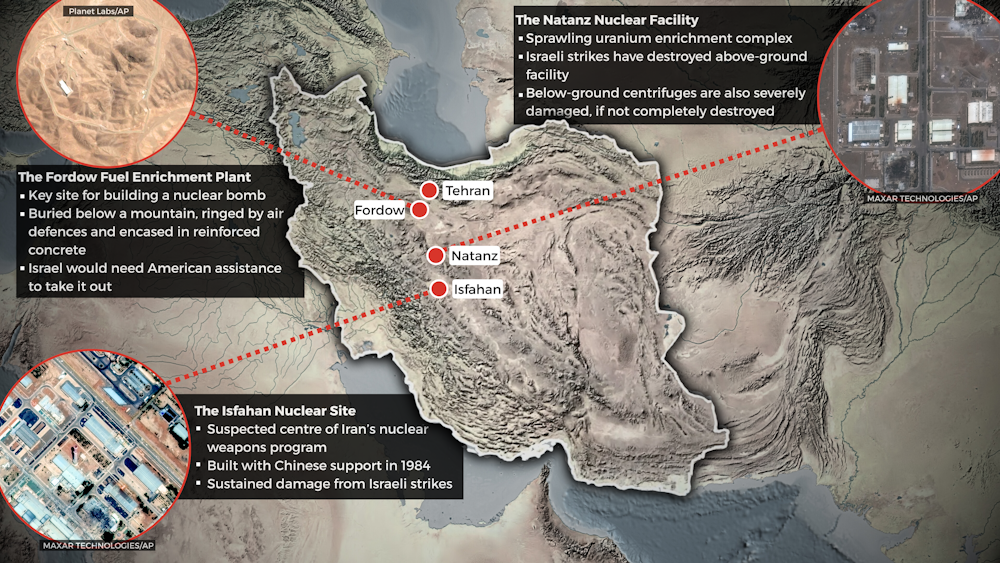
    Other targets may include nuclear installations – though at least one, the heavily fortified Fordow nuclear site in central Iran, will not be targeted. Fordow is hidden in a mountain, with centrifuges located possibly as deep as 80 metres underground.

    Only the US military has the hardware capable of reaching this facility, so attacking the site would require US intervention. This is something the current Washington administration has proved reluctant to do, so far.

    But any escalation could have ramifications beyond the Middle East. Iran has supplied Shahed-type drones to Russia for use in its war in Ukraine, with them becoming a key part of Russia’s military strategy. However, Russia is now largely producing its own supplies of Shahed drones internally.

    A much more likely effect is the prolonging of the war in Ukraine as international attention shifts to de-escalating tensions between Israel and Iran. The international community has focused on trying to prevent further attacks, with the US president, Donald Trump, advocating for talks rather than more strikes.

    On June 15, Trump wrote on his social media platform, Truth Social: “Iran and Israel should make a deal, and will make a deal, just like I got India and Pakistan to make.” Whether Israel and Iran take heed of his request will become clear over the coming days and weeks.

    Matthew Powell does not work for, consult, own shares in or receive funding from any company or organisation that would benefit from this article, and has disclosed no relevant affiliations beyond their academic appointment.

    – ref. Israel’s air strength is giving it a free hand over Iran – https://theconversation.com/israels-air-strength-is-giving-it-a-free-hand-over-iran-259073

    MIL OSI Analysis –

    June 18, 2025
  • MIL-OSI Asia-Pac: DEVB and works departments win nine Martin Barnes Awards in UK (with photos)

    Source: Hong Kong Government special administrative region

    Hong Kong’s excellence in delivering public works projects received international recognition. The Development Bureau (DEVB) and works departments shone at the 2025 Martin Barnes Awards Ceremony in London, the United Kingdom, on June 16 (London time), winning nine awards from the 27 awards in eight categories (see Annex), including two prestigious winner awards, among 80 entries worldwide.
     
    A prestigious honour in the industry, the Martin Barnes Awards are presented by the New Engineering Contract (NEC) Users’ Group under the Institution of Civil Engineers of the United Kingdom. The awards recognise construction projects, organisations and individuals worldwide that have demonstrated excellence in project delivery through collaborative partnership.
     
    The two winner awards are as follows:
     
    1. The winner award for the Climate Change Initiative category was received by the Water Supplies Department (WSD) for the implementation of Shek Wu Hui Water Reclamation Plant. In the construction and operation of Hong Kong’s first large-scale regional water reclamation plant, the WSD worked with the contractor through the NEC mechanism to develop an innovative and cost-effective fully automated reclaimed water production solution that saves energy and helps reduce carbon emissions. The facility supplies water for non-potable uses in Northern District and nearby new development areas. With the production process remaining unaffected by extreme weather, it not only conserves precious water resources but also enhances the resilience of Hong Kong’s water resources portfolio, thus further improving the stability of the city’s water resources.
     
    2. The winner award for Distinguished Contribution category was received by Deputy Secretary for Development (Works) Mr Tony Ho, in recognition of his outstanding performance in promoting and deepening the application of the NEC in construction projects over the years, which has nurtured a collaborative culture in the industry. His proactive promotion of the adoption of advanced technologies has also enhanced the overall performance of construction projects.
     
    In addition to the above two winner awards, the DEVB, the Civil Engineering and Development Department, the Drainage Services Department, the Electrical and Mechanical Services Department, and the Highways Department also received various awards for several notable NEC entries.
     
    The Secretary for Development, Ms Bernadette Linn, extended her congratulations to the project teams on their impressive achievements. She said, “The DEVB and works departments have been committed to promoting collaborative partnerships in the delivery of public works projects through the adoption of the NEC form, enhancing mutual trust and co-operation among different industry stakeholders. Such collaborative partnerships help accomplish the primary goals of project management and enhance management efficiency and cost-effectiveness of projects. The awards fully demonstrate that their efforts and accomplishments have been recognised internationally.”
     
    The NEC Users’ Group also held its 2025 Annual Conference on the same day. The Director of Electrical and Mechanical Services, Mr Poon Kwok-ying, was invited to attend the plenary session to exchange ideas with a group of international experts on how to lead the industry in applying innovative technologies and integrating the use of the NEC form to enhance the effectiveness of implementing infrastructure projects.
     
    Since the DEVB introduced the NEC form for public works projects in Hong Kong in 2009, it has become a key driver in transforming the construction industry. The NEC embraces a collaborative partnership between clients and contractors, thereby enhancing project performance. While the conventional form of contracts focused more on specifying contractual obligations and responsibilities of both parties, the NEC introduces a comprehensive project management system into its contractual provisions, including an early warning mechanism, a compensation mechanism between contractual parties and action plans. It advocates for contractual parties to work together to resolve contractual problems in a proactive and collaborative manner under this management system, thereby achieving win-win situations. As of today, more than 760 public works contracts, with a total value of over HK$510 billion, have adopted the NEC form.


    MIL OSI Asia Pacific News –

    June 18, 2025
  • MIL-OSI Asia-Pac: CHP investigates cluster of influenza A infections in primary school

    Source: Hong Kong Government special administrative region

    CHP investigates cluster of influenza A infections in primary school 
    The cluster involves 46 persons, including 41 male students aged 7 to 10, and five staff members. They developed symptoms on or after June 7. Among them, 41 persons sought medical attention and three were hospitalised. Two were subsequently discharged and one remains hospitalised. All of the patients had mild symptoms. Laboratory testing revealed that respiratory specimens of the aforesaid three hospitalised students tested positive for influenza A virus, while rapid antigen tests revealed that 32 teachers and students also tested positive for influenza A virus.
     
    The personnel of the CHP had inspected the primary school twice and found that inter-class and inter-grade activities were organised in the schools, and that individual function rooms and classrooms were not adequately ventilated, and items shared among the students were not thoroughly disinfected. The CHP has provided advice to the school management on prevention of upper respiratory tract infection, including thorough cleaning and disinfection, opening windows where appropriate for better ventilation, refraining infected students from going to school, stopping inter-class and inter-grade activities, wearing masks by teachers and students during the outbreak and conducting temperature monitoring on entering school, etc. The school is currently under medical surveillance.

    To prevent outbreaks of influenza and other respiratory infections, it is of prime importance that children with fever, regardless of the presence of respiratory symptoms, should not be allowed to attend school, and should consult a doctor promptly. In addition, children, the elderly and those with underlying illnesses are urged to get vaccinated as early as possible to prevent seasonal influenza.
     
    Influenza vaccination has been proven to be one of the most effective ways to prevent seasonal influenza and its complications, while significantly reducing the risk of hospitalisation and death from seasonal influenza. All persons aged 6 months and above (except those with known contraindications), particularly the elderly and children who have a higher risk of becoming infected with influenza and developing complications, should be vaccinated. Although the level of influenza activity has remained low since the end of the winter influenza season, sporadic outbreaks in schools and residential institutions caused by influenza viruses are still possible, especially when there are gatherings of crowd coupled with inadequate infection control measures. The number of severe cases involving adults and cases of severe paediatric influenza-associated complications recorded in the influenza season earlier this year has significantly decreased compared with the 2018/19 influenza season. It is believed that this is the result of the general public’s willingness to receive the SIV.
     
    For the latest information, members of the public can visit the CHP’s seasonal influenzaIssued at HKT 20:58

    NNNN

    CategoriesMIL-OSI

    MIL OSI Asia Pacific News –

    June 18, 2025
  • MIL-OSI Asia-Pac: FEHD to take disciplinary sanctions

    Source: Hong Kong Information Services

    The Food & Environmental Hygiene Department (FEHD) today said that staff members found guilty of a criminal offence will not only be subject to court sentencing but will also face disciplinary sanctions by the department in accordance with the established civil service disciplinary mechanism.  


    The FEHD made the remarks following the District Court’s sentencing of eight former Principal Hawker Control Officers for conspiracy to commit misconduct in public office.


    It emphasised that it attaches great importance to staff discipline and integrity and will not condone any misconduct or illegal behaviour.


    When conducting civil service recruitment exercises, civil servants must strictly comply with the relevant policies and procedures, and ensure that the recruitment process is conducted according to the principles of fairness, transparency, and merits.


    The FEHD said it will seek advice from the Civil Service Bureau to determine appropriate follow-up actions following the court judgment, including whether to consider cancelling, suspending, or reducing the pension benefits of the officers concerned under Section 29 of the Pension Benefits Ordinance.


    Following the incident, the FEHD has reviewed the recruitment procedures for Assistant Hawker Control Officers and introduced refinements to the modus operandi and the monitoring mechanism.


    Such enhancements include adjusting the representation of relevant grades in the recruitment boards to enhance objectivity and diversity in the selection process, and arranging for supervisory staff to observe interviews on an irregular basis.


    In addition, integrity training has been strengthened for enforcement and supervisory officers at all levels.

    MIL OSI Asia Pacific News –

    June 18, 2025
  • MIL-OSI: Nutanix Study Finds Public Sector Embraces Generative AI, but Faces Security, Skills, and Infrastructure Gaps

    Source: GlobeNewswire (MIL-OSI)

    SAN JOSE, Calif., June 17, 2025 (GLOBE NEWSWIRE) — Nutanix (NASDAQ: NTNX), a leader in hybrid multicloud computing, announced the findings of its seventh annual global Public Sector Enterprise Cloud Index (ECI) survey and research report, which measures enterprise progress with cloud adoption in the industry. The research showed that 83% of public sector organizations have a GenAI strategy in place, with 54% actively implementing, and 29% preparing for implementation.

    As public sector organizations ramp up GenAI adoption, 76% of IT decision-makers say their current infrastructure needs moderate to significant improvement to support modern, cloud native applications at scale. This year’s public sector ECI found that infrastructure modernization emerged as a top priority, underscoring the growing demand for systems capable of meeting GenAI’s requirements for enterprise-ready data security, data integrity, and resilience.

    This year’s report also revealed that public sector leaders are increasingly leveraging GenAI applications/workloads into their organizations. Real-world GenAI use cases across the public sector gravitate towards constituent/employee support and experience solutions (e.g., chatbots) and content generation. However, concerns remain with 92% of public sector leaders highlighting the need for their organizations to do more to secure GenAI models and applications. The results of that need, according to 96% of respondents, is security and privacy becoming higher priorities for their organizations.

    “Generative AI is no longer a future concept, it’s already transforming how we work,” said Greg O’Connell, VP, Federal Sales, Public Sector at Nutanix. “94% of public sector organizations are already putting AI to work and expect returns in as little as one year. As public sector leaders look to see outcomes, now is the time to invest in AI-ready infrastructure, data security, privacy, and training to ensure long-term success.”

    Public sector survey respondents were asked about GenAI adoptions and trends, Kubernetes and containers, how they’re running business and mission critical applications today, and where they plan to run them in the future. Key findings from this year’s report include:

    • GenAI solution adoption and deployment in the public sector will necessitate a more comprehensive approach to data security. Public sector respondents indicate a significant amount of work needs to be done to improve the foundational levels of data security/governance required to support GenAI solution implementation and success. 92% of public sector respondents agree that their organization could be doing more to secure its GenAI models and applications. Luckily, many IT decision-makers in the public sector are aware of this impending sea change, with 96% of respondents agreeing that GenAI is changing their organization’s priorities, with security and privacy becoming higher priorities.
    • Prioritize infrastructure modernization to support GenAI at scale across public sector organizations. Running modern applications at enterprise scale requires infrastructure solutions that can support the necessary requirements for complex data security, data integrity, and resilience. Unfortunately, 76% of respondents in the public sector believe their current IT infrastructure requires at least moderate improvement to fully support cloud native apps/containers. Furthermore, IT infrastructure investment was ranked as a top area of improvement among public sector respondents, a sign that IT decision-makers are aware of the need to improve.
    • GenAI solution adoption in the public sector continues at a rapid pace, but there are still challenges to overcome. When it comes to GenAI adoption, public sector metrics show progress, with 94% of respondents saying their organization is leveraging GenAI applications/workloads today. Most public sector organizations believe GenAI solutions will help improve levels of productivity, automation, and efficiency. However, organizations in the public sector also note a range of challenges and potential hindrances regarding GenAI solution development and deployment, including data security and privacy, and the need for continued upskilling and hiring to support new GenAI projects/solutions.
    • Application containerization and Kubernetes deployment are expanding across the public sector. Application containerization is increasingly pervasive across industry sectors and is set to expand in adoption across the public sector as well, with 96% of segment respondents saying their organization is at least in the process of containerizing applications. This trend may be driven by the fact that 91% of respondents in the public sector agree their organization benefits from adopting cloud native applications/containers.

    For the seventh consecutive year, Nutanix commissioned a global research study to learn about the state of global enterprise cloud deployments, application containerization trends, and GenAI application adoption. In the Fall of 2024, U.K. researcher Vanson Bourne surveyed 1,500 IT and DevOps/Platform Engineering decision-makers around the world. The respondent base spanned multiple industries, business sizes, and geographies, including North and South America; Europe, the Middle East and Africa (EMEA); and Asia-Pacific-Japan (APJ) region.

    To learn more about the report and findings, please download the full Public Sector Nutanix Enterprise Cloud Index, here and read more in the blog here.

    About Nutanix
    Nutanix is a global leader in cloud software, offering organizations a single platform for running applications and managing data, anywhere. With Nutanix, companies can reduce complexity and simplify operations, freeing them to focus on their business outcomes. Building on its legacy as the pioneer of hyperconverged infrastructure, Nutanix is trusted by companies worldwide to power hybrid multicloud environments consistently, simply, and cost-effectively. Learn more at www.nutanix.com or follow us on social media @nutanix.

    © 2025 Nutanix, Inc. All rights reserved. Nutanix, the Nutanix logo, and all Nutanix product and service names mentioned herein are registered trademarks or unregistered trademarks of Nutanix, Inc. (“Nutanix”) in the United States and other countries. Other brand names or marks mentioned herein are for identification purposes only and may be the trademarks of their respective holder(s). This press release is for informational purposes only and nothing herein constitutes a warranty or other binding commitment by Nutanix. This release may contain express and implied forward-looking statements, which are not historical facts and are instead based on Nutanix’s current expectations, estimates and beliefs. The accuracy of such statements involves risks and uncertainties and depends upon future events, including those that may be beyond Nutanix’s control, and actual results may differ materially and adversely from those anticipated or implied by such statements. Any forward-looking statements included herein speak only as of the date hereof and, except as required by law, Nutanix assumes no obligation to update or otherwise revise any of such forward-looking statements to reflect subsequent events or circumstances.

    Media Contact:
    Gabrielle Moynan
    pr@nutanix.com

    The MIL Network –

    June 18, 2025
  • MIL-OSI: Micropolis Joins Webull Corporate Connect Service Platform

    Source: GlobeNewswire (MIL-OSI)

    Joining Webull enables Micropolis to build a community and foster relationships with the platform’s 24 million registered users

    Connect with the Company on Webull here

    DUBAI, United Arab Emirates, June 17, 2025 (GLOBE NEWSWIRE) — Micropolis Holding Co. (“Micropolis” or the “Company”) (NYSE: MCRP), a pioneer in unmanned ground vehicles and AI-driven security solutions, today announced it is now participating on the Webull Corporate Connect Service (CCS) platform to increase engagement and transparency with its growing investor base.

    Micropolis’s portal on the Webull CCS provides an additional direct communication channel for shareholders and potential investors, reinforcing the Company’s commitment to providing real-time information to the investment community. Through Webull, Micropolis will share timely updates, including company news, earnings reports, presentations, and other key announcements, further increasing visibility among retail investors as well as broadening shareholder engagement.

    “Open and ongoing dialogue with our shareholders and the broader investment community remains a key focus of our corporate governance framework at Micropolis,” said Fareed Aljawhari, Founder & CEO of Micropolis. “As we advance our strategic objectives and expand our operations, we understand how critical it is to enhance our market presence. Integrating Webull’s digital platform into our investor outreach efforts enables us to connect with retail investors on their preferred channels, delivering immediate access to company updates and interactive engagement opportunities.”

    To stay up to date with Micropolis’s recent developments on the Webull Corporate Connect Service Platform, current Webull users can follow MCRP from the app on their smartphone or tablet device. To download the app and register for your free Webull account, visit www.webull.com/trading-platforms.

    About Micropolis Holding Co.
    Micropolis is a UAE-based company specializing in the design, development, and manufacturing of unmanned ground vehicles (UGVs), AI systems, and smart infrastructure for urban, security, and industrial applications. The Company’s vertically integrated capabilities cover everything from mechatronics and embedded systems to AI software and high-level autonomy.

    For more information please visit www.micropolis.ai.

    About Webull Financial
    Webull Corporation owns and operates Webull, a leading digital investment platform built on next-generation global infrastructure. Through its global network of licensed brokerages, Webull offers investment services in 14 markets across North America, Asia Pacific, Europe, and Latin America. Webull serves more than 24 million registered users globally, providing retail investors with 24/7 access to global financial markets. Users can put investment strategies to work by trading global stocks, ETFs, options, futures, and fractional shares through Webull’s trading platform, which seamlessly integrates market data and information, its user community, and investor education resources. Learn more at www.webullcorp.com. You may also access certain information on Webull and its securities on the website of the SEC at http://www.sec.gov, where Webull will, among others, be filing reports, such as Reports on Form 6-K and its Annual Report on Form 20-F.

    Forward-Looking Statements
    This press release contains “forward-looking statements” within the meaning of the “safe harbor” provisions of the Private Securities Litigation Reform Act of 1995You can identify forward-looking statements by the fact that they do not relate strictly to historical or current facts. These statements may include words such as “anticipate”, “estimate”, “expect”, “project”, “plan”, “intend”, “believe”, “may”, “will”, “should”, “can have”, “likely” and other words and terms of similar meaning. Forward-looking statements represent Micropolis’ current expectations regarding future events and are subject to known and unknown risks and uncertainties that could cause actual results to differ materially from those implied by the forward-looking statements. These statements are subject to uncertainties and risks including, but not limited to, the uncertainties related to market conditions and other factors discussed in the “Risk Factors” section of the registration statement filed by the Company with the SEC. For these reasons, among others, investors are cautioned not to place undue reliance upon any forward-looking statements in this press release. Additional factors are discussed in the Company’s filings with the SEC, which are available for review at www.sec.gov. The Company undertakes no obligation to publicly revise these forward-looking statements to reflect events or circumstances that arise after the date hereof.

    Investor Contact:
    KCSA Strategic Communications
    Valter Pinto, Managing Director
    PH: (212) 896-1254
    Valter@KCSA.com

    Media Contact:
    Jessica Starman
    media@elev8newmedia.com

    The MIL Network –

    June 18, 2025
  • MIL-OSI: Guaranteed Rate Affinity Appoints Linda Vo as Regional Manager in North Texas

    Source: GlobeNewswire (MIL-OSI)

    CHICAGO, June 17, 2025 (GLOBE NEWSWIRE) — Guaranteed Rate Affinity, a leading mortgage provider offering unparalleled lending services through its partnership with Coldwell Banker, has appointed Linda Vo as Regional Manager in North Texas, highlighting the company’s commitment to expanding its reach in a key growth market.

    Vo brings more than 20 years of experience across nearly every corner of the mortgage industry, including wholesale, loan origination, sales management, REO loan servicing, corporate strategy, and business development. Her wide-ranging expertise, coupled with her passion for team building and relationship management, makes her a natural fit to lead Guaranteed Rate Affinity’s growth and recruiting efforts across North Texas.

    “After being in this industry for over two decades, I have learned that you can find work anywhere, but very few places offer a place where you feel welcomed, supported, and like-minded—a workplace that feels like a home,” said Vo. “I feel like I have come home to Guaranteed Rate Affinity. I am among my people with growth mindset individuals.”

    In her new role, Vo will focus on empowering loan officers to own their markets while scaling the company’s presence and recruiting efforts throughout the region. She joins Guaranteed Rate Affinity during a time of strategic expansion and culture-focused leadership development.

    “Linda’s extensive professional background, combined with her industry expertise and passion, makes her the ideal leader to attract the best-of-the-best talent that aligns with our culture,” said Dave Dickey, President and Chief Production Officer at Guaranteed Rate Affinity. “I’ve had the good fortune of being teammates with Linda and have known her for over 20 years. I’ve seen her remarkable work ethic, positive mindset, and genuine enthusiasm for the mortgage industry firsthand, all of which make her a natural fit at Guaranteed Rate Affinity. I can’t wait to see Linda fuel our continued growth and empower our loan officers to own their markets.”

    Vo holds an MBA from Southern Methodist University’s Cox School of Business and a bachelor of science in international business from Oklahoma City University. She earned her Certified Mortgage Banker (CMB) designation from the Mortgage Bankers Association in 2022 and received her John Maxwell Team Certificate in 2018. A longtime leader in the Asian Real Estate Association of America (AREAA), Vo has been an active member of the Dallas-Fort Worth Chapter since 2014 and served as its president in 2024.

    About Guaranteed Rate Affinity

    Guaranteed Rate Affinity is a joint venture between Guaranteed Rate, Inc. and Anywhere Integrated Services (NYSE: HOUS), which owns some of the industry’s most recognized and respected real estate brands. The innovative JV has funded over $100 billion in loans since its inception. Guaranteed Rate Affinity originates and markets its mortgage lending services to Anywhere’s real estate, brokerage, and relocation subsidiaries.

    Guaranteed Rate Affinity provides unmatched support to Anywhere brokers coast-to-coast, ensuring their customers receive fast pre-approvals, appraisals, and loan closings, creating the ability for buyers to move quickly and confidently when purchasing homes in today’s competitive market. The company also provides the same services to the public and other real estate brokerage and relocation companies across the country—helping employers improve their employees’ relocation experience by prioritizing customer service, digital mortgage ease, and competitive rates.

    Disclosures: Guaranteed Rate owns a controlling 50.1% stake in Guaranteed Rate Affinity, and Anywhere owns 49.9%. Availability of reverse mortgage products varies by state and may not be offered in all areas. Contact a Guaranteed Rate Affinity loan officer for details on current state availability.

    Visit grarate.com for more information.

    Media Contact:
    press@rate.com

    The MIL Network –

    June 18, 2025
  • MIL-OSI Analysis: When developing countries band together, lifesaving drugs become cheaper and easier to buy − with trade-offs

    Source: The Conversation – USA – By Lucy Xiaolu Wang, Assistant Professor, Department of Resource Economics, UMass Amherst

    Pooling procurement of drugs could increase the availability of essential treatments around the globe. narvo vexar/iStock via Getty Images Plus

    Procuring lifesaving drugs is a daunting challenge in many low- and middle-income countries. Essential treatments are often neither available nor affordable in these nations, even decades after the drugs entered the market.

    Prospective buyers from these countries face a patent thicket, where a single drug may be covered by hundreds of patents. This makes it costly and legally difficult to secure licensing rights for manufacturing.

    These buyers also face a complex and often fragile supply chain. Many major pharmaceutical firms have little incentive to sell their products in unprofitable markets. Quality assurance adds another layer of complexity, with substandard and counterfeit drugs widespread in many of these countries.

    Organizations such as the United Nations-backed Medicines Patent Pool have effectively increased the supply of generic versions of patented drugs. But the problems go beyond patents or manufacturing – how medicines are bought are also crucially important. Buyers for low- and middle-income countries are often health ministries and community organizations on tight budgets that have to negotiate with sellers that may have substantial market power and far more experience.

    We are economists who study how to increase access to drugs across the globe. Our research found that while pooling orders for essential medicines can help drive down costs and ensure a steady supply to low- and middle-income countries, there are trade-offs that require flexibility and early planning to address.

    Understanding these trade-offs can help countries better prepare for future health emergencies and treat chronic conditions.

    Pooled procurement reduces drug costs

    One strategy low-income countries are increasingly adopting to improve treatment access is “pooled procurement.” That’s when multiple buyers coordinate purchases to strengthen their collective bargaining power and reduce prices for essential medicines. For example, pooling can help buyers meet the minimum batch size requirements some suppliers impose that countries purchasing individually may not satisfy.

    Compared with decentralized procurement, pooled procurement eases transactions by connecting buyers and sellers in groups.
    Lucy Xiaolu Wang and Nahim Bin Zahur, CC BY-NC-ND

    Countries typically rely on four models for pooled drug procurement:

    • One method, called decentralized procurement, involves buyers purchasing directly from manufacturers.

    • Another method, called international pooled procurement, involves going through international institutions such as the Global Fund’s Pooled Procurement Mechanism or the United Nations.

    • Countries may also purchase prescription drugs through their own central medical stores, which are government-run or semi-autonomous agencies that procure, store and distribute medicines on behalf of national health systems. This method is called centralized domestic procurement.

    • Finally, countries can also go through independent nonprofits, foundations, nongovernmental organizations and private wholesalers.

    We wanted to understand how different procurement methods affect the cost of and time it takes to deliver drugs for HIV/AIDS, malaria and tuberculosis, because those three infectious diseases account for a large share of deaths and cases worldwide. So we analyzed over 39,000 drug procurement transactions across 106 countries between 2007 and 2017 that were funded by the Global Fund, the largest multilateral funder of HIV/AIDS programs worldwide.

    We found that pooled procurement through international institutions reduced prices by 13% to 20% compared with directly buying from drug manufacturers. Smaller buyers and those purchasing drugs produced by only a small number of manufacturers saw the greatest savings. In comparison, purchasing through domestic pooling offered less consistent savings, with larger buyers seeing greater price advantages.

    The Global Fund and the United Nations were especially effective at lowering the prices of older, off-patent drugs.

    Trade-offs with pooled procurements

    Cost savings from pooled drug procurement may come with trade-offs.

    While the Global Fund reduced unexpected delivery delays by 28%, it required buyers to place orders much earlier. This results in longer anticipated procurement lead time between ordering and delivery – an average of 114 days more than that of direct purchases. In contrast, domestic pooled procurement shortened lead times by over a month.

    Our results suggest a core tension: Pooled procurement improves prices and reliability but can reduce flexibility. Organizations that facilitate pooled procurement tend to prioritize medicines that can be bought at high volume, limiting the availability of other types of drugs. Additionally, the longer lead times may not be suitable for emergency situations.

    With the spread of COVID-19, several large armed conflicts and tariff wars, governments have become increasingly aware of the fragility of the global supply chain. Some countries, such as Kenya, have sought to reduce their dependence on international pooling since 2005 by investing in domestic procurement.

    But a shift toward domestic self-sufficiency is a slow and difficult process due to challenges with quality assurance and large-scale manufacturing. It may also weaken international pooled systems, which rely on broad participation to negotiate better terms with suppliers.

    Scaling up drug production in low-income countries can be difficult.
    Rafiq Maqbool/AP Photo

    Interestingly, we found little evidence that international pooled procurement influences pricing for the U.S. President’s Emergency Plan for AIDS Relief, a major purchaser of HIV treatments for developing countries. PEPFAR-eligible products do not appear to benefit more from international pooled procurement than noneligible ones.

    However, domestic procurement institutions were able to secure lower prices for PEPFAR-eligible products. This suggests that the presence of a large donor such as PEPFAR can cut costs, particularly when countries manage procurement internally.

    USAID cuts and global drug access

    While international organizations such as the Medicines Patent Pool and the Global Fund can address upstream barriers such as patents and procurement in the global drug supply chain, other institutions are essential for ensuring that medicines actually reach patients.

    The U.S. Agency for International Development had played a significant role in delivering HIV treatment abroad through PEPFAR. The Trump administration’s decision in February 2025 to cut over 90% of USAID’s foreign aid contracts amounted to a US$60 billion reduction in overall U.S. assistance globally. An estimated hundreds of thousands of deaths are already happening, and millions more will likely die.

    The World Health Organization warned that eight countries, including Haiti, Kenya, Nigeria and Ukraine, could soon run out of HIV treatments due to these aid cuts. In South Africa, HIV services have already been scaled back, with reports of mass layoffs of health workers and HIV clinic closures. These downstream cracks can undercut the gains from efforts to make procuring drugs more accessible if the drugs can’t reach patients.

    Because HIV, tuberculosis and malaria often share the same treatment infrastructure – including drug procurement and distribution networks, laboratory systems, data collection, health workers and community-based services – disruption in the management of one disease can ripple across the others. Researchers have warned of a broader unraveling of progress across these infectious diseases, describing the fallout as a potential “bloodbath” in the global HIV response.

    Research shows that supporting access to treatments around the world doesn’t just save lives abroad. It also helps prevent the next global health crisis from reaching America’s doorstep.

    The authors do not work for, consult, own shares in or receive funding from any company or organization that would benefit from this article, and have disclosed no relevant affiliations beyond their academic appointment.

    – ref. When developing countries band together, lifesaving drugs become cheaper and easier to buy − with trade-offs – https://theconversation.com/when-developing-countries-band-together-lifesaving-drugs-become-cheaper-and-easier-to-buy-with-trade-offs-255383

    MIL OSI Analysis –

    June 18, 2025
  • MIL-OSI Analysis: Precise measurement standards have revolutionized museum science, helping nail down where artifacts are from

    Source: The Conversation – USA – By Edward Vicenzi, Research Scientist, Museum Conservation Institute, Smithsonian Institution

    Museums and their bountiful collections are research bastions. Douglas Rissing/iStock via Getty Images

    On a cool February morning in 1904, a spark ignited a fire in the heart of downtown Baltimore. Within hours, a raging inferno swept eastward across the harbor district, consuming everything in its path. By evening, the local firefighters were overwhelmed, and the city sent telegrams to the fire chiefs of major Northeastern cities pleading for help in battling the blaze.

    Washington, Philadelphia and New York, along with other cities, responded quickly with dozens of engine companies. Yet when they arrived at the scene, many responders could not hook up to Baltimore’s hydrants since each city had its own threading standards to connect fire hoses.

    The fire resulted in damages of over US$3.5 billion in today’s dollars. It created a call for a national standard of threads for hoses and fire hydrant outlets. These standards now improve emergency responses across the country – and the same concept of standardization allows for consistency and replicability in scientific research.

    An illustration of the aftermath of the Great Baltimore Fire in February 1904.
    Fred Pridham/Wikimedia Commons

    In science, the ideal way to evaluate data is related to the concept driving the calls for uniform fire hose equipment. When scientists compare their results to those obtained in other laboratories, or with previously published data, the comparisons are most meaningful if all datasets were made with standardized practices and reference materials.

    Museum scientists like us provide compelling insights into the natural world, prehistory and historical culture heritage. Like that of many other scientists, our work, and the measurements we take day to day, depends upon standard references.

    Here we offer two fascinating stories from the Smithsonian Institution’s Museum Conservation Institute that highlight how scientific measurement standards allow for exciting new discoveries:

    You are what you drink

    In 2007, the New Mexico Bureau of Reclamation exhumed the remains of dozens of Civil War-era soldiers from the ruins of Fort Craig. They had been left behind when the fort was abandoned in 1885.

    A historical view of Fort Craig, N.M.
    Center for Southwest Research, University Libraries, University of New Mexico, CC BY-NC-SA

    Anthropologists from the Smithsonian and the Bureau of Reclamation in New Mexico identified the remains as belonging to a diverse range of people – including a few dozen African American Buffalo Soldiers, a group that made up a relatively small percentage of the U.S. military at that time.

    Historical records tell researchers that most of the military units at Fort Craig mobilized out of Kentucky and Virginia, but official records don’t always tell the full story. The group of project scientists, which included one of us, Christine France, needed a way to confirm the origin of these individuals and restore some identity to these forgotten soldiers.

    The researchers decided to use stable isotope analysis on the bones. This technique counts the number of atoms of a particular element in the sample that have one or more extra neutrons – this is the “heavy” isotope – and compares it with the number of atoms that have a normal number of neutrons – this is the “light” isotope.

    Drinking water in southern latitudes has more naturally occurring heavy oxygen atoms compared with northern latitudes. If a soldier’s bones had a relatively high ratio of the heavy to the light oxygen atoms, that soldier likely spent more time drinking water from the South.

    Researchers have measured oxygen isotopes in other archaeological remains and in water all over North America, giving us a water “isotope map.” But matching the bone isotope values to the water map is like comparing apples to oranges, and every lab has subtle variations in its instruments. The scientists needed to normalize and calibrate the isotope ratios they had measured to a reference standard.

    In this case, the standard was the average oxygen isotope value of ocean water, a convention that stable isotope researchers agreed upon as a consistent and readily available value. The researchers now had a uniform way to say how many more – or fewer – heavy oxygen isotopes the bones contained compared to the ocean water standard.

    Other archaeology labs and the North American water isotope map use that same standard comparison, allowing them to directly compare all the bone isotope values to one another, and to the North American water isotope map.

    Ultimately, the method helped the team identify several soldiers who came from quite far away to join the company, including individuals who likely grew up in the mid-Atlantic, New England and Southeast.

    The exact circumstances that brought these soldiers together is lost to history. But the researchers’ ability to assign them geographic provenance with the help of reference standards gave them further insight into this pivotal time in U.S. history.

    Volcanic glass mirrors

    Humans have always been fascinated by looking at themselves in the mirror. In Mesoamerica – modern-day central and southern Mexico together with northern Central America – archaeologists have found convex round objects so finely polished that they have been termed mirrors.

    But instead of using them for vanity, shamans from ancient times likely used them as a tool to access portals to other dimensions.

    The oldest Preclassic mirrors (2000 BCE to 250 CE) were fashioned from polished iron ores, but later Postclassic period mirrors (900 CE to 1450 CE) were made from obsidian, a typically black silica-rich volcanic glass.

    The collections at the Smithsonian’s National Museum of the American Indian contain six large, rectangular obsidian mirrors, purchased in the 19th and early 20th centuries. Their labels state they come from the “Valley of Mexico.”

    Obsidian tablets, a view of both their front and back sides, found in the National Museum of the American Indian collections.
    NMAI, Martinez et al (2022)

    Archeologists rarely find rectangular obsidian mirrors like these at pre-Columbian dig sites. So, local artisans skilled in stone polishing likely made these unusually shaped objects upon request by Spanish invaders around the time of European contact. But which Mesoamerican culture did they come from?

    Scientists from the Museum Conservation Institute, including two of us, Thomas Lam and Edward Vicenzi, and a member of the Austrian Academy of Sciences, worked with staff at the National Museum of the American Indian on an effort to pinpoint which volcano created the obsidian in the mirrors.

    The location of the obsidian source would indicate whether the Aztecs who controlled eastern central Mexico, or the Purépecha who controlled an area west of the Aztecs, produced the objects, as both had ample sources of obsidian in their territories.

    To conduct such a study, the researchers required two types of reference materials: obsidian that had erupted from known volcanic locations, and a reference obsidian that scientists already knew the composition of to confirm the quality of the analysis.

    The first reference obsidians, from known locations, told the researchers about the differences in geochemistry of the volcanoes in central Mexico. That information allowed them to match the mirror analyses to the known volcanic location analyses and their map coordinates. The second reference obsidian served as a quality control specimen for the analysis.

    Museum Conservation Institute scientists used a nondestructive technique called X-ray fluorescence spectrometry to analyze ratios of elements in the obsidians. The process works by “exciting” atoms in the obsidian, and a spectrum of X-ray energies is given off as the atoms “relax.”

    Scientists analyzed the obsidian shards to see which elements were present in them in which ratios, and where in Mexico obsidian contained similar elements at similar ratios.
    Sharps et al. (2021)

    The results showed that all the specimens came from a region controlled by the Purépecha, not the Aztecs. The museum curators updated their records describing the mirrors to include this new information about their origin.

    Creating standards

    Standardized measurement procedures and reference materials play a central role in museum science. Organizations dedicated to rigorous measurement science, such as the National Institute of Standards and Technology, a federal government agency, help create some of these standards and research new measurement procedures.

    Without their leadership, it would be far more difficult for researchers like us to produce high-quality data and discern the relationships between specimens in the natural and cultural heritage sciences. With quality measurement standards in our toolbox, we are finding new insights into human history and the natural world.

    Edward Vicenzi is a guest researcher at the National Institute of Standards and Technology in the Material Measurement Laboratory.

    Christine France and Thomas Lam do not work for, consult, own shares in or receive funding from any company or organization that would benefit from this article, and have disclosed no relevant affiliations beyond their academic appointment.

    – ref. Precise measurement standards have revolutionized museum science, helping nail down where artifacts are from – https://theconversation.com/precise-measurement-standards-have-revolutionized-museum-science-helping-nail-down-where-artifacts-are-from-254025

    MIL OSI Analysis –

    June 18, 2025
  • MIL-OSI Russia: Xi Jinping calls on China, Tajikistan to expand bilateral trade and investment

    Translation. Region: Russian Federal

    Source: People’s Republic of China in Russian – People’s Republic of China in Russian –

    Source: People’s Republic of China – State Council News

    ASTANA, June 17 (Xinhua) — Chinese President Xi Jinping on Tuesday called on China and Tajikistan to expand the scale of bilateral trade and investment.

    Xi Jinping made the statement at a meeting with Tajik President Emomali Rahmon on the sidelines of the second China-Central Asia summit in the Kazakh capital Astana.

    The Chinese leader recalled that during his visit to Tajikistan last year, he and E. Rahmon jointly announced the elevation of bilateral relations to a comprehensive strategic cooperation and partnership in a new era, developed new plans and reached new agreements on comprehensive cooperation.

    According to him, both sides should implement these agreements in a timely manner, bring more practical results and promote the high-quality construction of a Chinese-Tajik community with a common future.

    Xi Jinping stressed that China is a reliable neighbor and partner of Tajikistan and firmly supports Tajikistan in protecting its national independence, sovereignty and security.

    China and Tajikistan should give full play to the role of the strategic dialogue mechanism between the foreign ministers of the two countries, coordinate and promote cooperation in various fields, Xi said.

    The two countries should also expand the scale of bilateral trade and investment, further accelerate the implementation of transport infrastructure projects and continuously promote connectivity, the Chinese leader said.

    He pointed out that the role of the Confucius Institutes, Lu Ban Workshop and the Center for Traditional Chinese Medicine should be fully utilized, and that the Chinese Culture Day, which will be held in Tajikistan this fall, should be well organized.

    China and Tajikistan should further strengthen cooperation in law enforcement and security and step up efforts to combat terrorism, separatism and extremism, he noted.

    The two countries share common interests in upholding multilateralism and safeguarding the international trade and economic order, he said, calling on both sides to strengthen coordination and cooperation within multilateral mechanisms, including the China-Central Asia cooperation mechanism.

    China supports Tajikistan’s important role in global climate governance, the Chinese leader added. –0–

    MIL OSI Russia News –

    June 18, 2025
  • MIL-OSI Russia: Lightning: China is ready to cooperate with Central Asian countries to defend international justice, counter hegemonism and power politics – Xi Jinping

    Translation. Region: Russian Federal

    Source: People’s Republic of China in Russian –

    Source: People’s Republic of China – State Council News

    Xinhua | 17.06.2025

    Key words: China, Central Asia

    Source: Xinhua

    Lightning: China is ready to cooperate with Central Asian countries to safeguard international justice, oppose hegemonism and power politics – Xi Jinping Lightning: China is ready to cooperate with Central Asian countries to safeguard international justice, oppose hegemonism and power politics – Xi Jinping

    MIL OSI Russia News –

    June 18, 2025
  • MIL-OSI Asia-Pac: Security law anniversary session held

    Source: Hong Kong Information Services

    A sharing session for the social welfare sector on the fifth anniversary of the promulgation and implementation of the Hong Kong National Security Law, jointly organised by the Government and Connecting Hearts, concluded today.


    The event was attended by about 300 management staff of social welfare organisations, with several thousand representatives from the social welfare sector joining it online.


    Secretary for Labour & Welfare Chris Sun said at its ceremony that with the implementation of the National Security Law, the Labour & Welfare Bureau and the Social Welfare Department have enhanced the mechanisms such as including the requirement into relevant documents for the department’s subsidised and subvented services.


    This is to ensure non-governmental organisations’ compliance with the security law and the Safeguarding National Security Ordinance in the delivery of services, he added.


    Mr Sun also mentioned the amendments of the Social Workers Registration Ordinance, which allow prompt and appropriate actions taken on registered social workers convicted of offences endangering national security.


    The labour chief said that upon the implementation of these enhancements, the social welfare sector not only showed a rising awareness of safeguarding national security but also integrated such awareness into the operation of their organisations, fully demonstrating that safeguarding national security is everyone’s responsibility.


    Mr Sun emphasised that the bureau and the department will continue to organise activities to promote national security education and patriotism in partnership with Connecting Hearts and encourage organisations providing subvented welfare services to make use of the dedicated fund to enhance their staff’s understanding of national affairs by arranging Mainland exchange tours and studies programmes.


    He highlighted the overwhelming response from social workers on the Thousands of Hong Kong Social Workers Exploring the Motherland & Hong Kong Social Work Teaching Staff Exploring the Motherland tours as clear indication of the sector’s wish to obtain a more comprehensive understanding of the nation’s overall development.

    MIL OSI Asia Pacific News –

    June 18, 2025
  • MIL-OSI Asia-Pac: Mable Chan concludes Shanghai visit

    Source: Hong Kong Information Services

    Secretary for Transport & Logistics Mable Chan today toured the Yangshan Port in Shanghai to gain insights into the operations of its automated terminal.


    She pointed out that the Port of Shanghai and ports in Hong Kong are advancing in unison towards greening, digitalisation and the adoption of smart technologies. The visit has deepened exchanges between the two sides on high-quality port development and allowed Hong Kong to draw on Yangshan Port’s experience to facilitate discussions with port operators on a roadmap for Hong Kong ports’ smart transformation.


    In addition to highlighting that Shanghai and Hong Kong are both vital shipping centres to the country, Ms Chan expressed hope that the visit and exchanges would enable both cities to work together towards the country’s strategic goal of becoming a maritime powerhouse, and explore opportunities for deeper collaboration.


    On Monday, Ms Chan arrived at Shanghai to begin her two-day visit where she first met Shanghai Municipal Transportation Commission Director Yu Fulin and other officials to discuss traffic management, shipping and aviation, and other issues of mutual interest.


    Her engagements on Monday also involved a visit to an all-electric ferry, which started operating in April, to learn about Shanghai’s progress in promoting green transport, and a meeting with representatives of the China Shipowners’ Association.


    At the meeting with the association, Ms Chan gave an overview of the latest developments of Hong Kong’s maritime services, and encouraged Mainland shipowners and shipping enterprises to register their ships in Hong Kong.


    Ms Chan returned to Hong Kong in the afternoon.

    MIL OSI Asia Pacific News –

    June 18, 2025
  • Kharif sowing rises to 89.29 lakh hectares in 2025, up by 1.48 lakh hectares from 2024

    Source: Government of India

    Source: Government of India (4)

    The Ministry of Agriculture & Farmers’ Welfare released data on Monday on the progress of area coverage under kharif crops as of June 13, 2025, indicating a slight increase compared to the previous year. The total area sown for kharif crops in 2025 stands at 89.29 lakh hectares, up by 1.48 lakh hectares from 87.81 lakh hectares in 2024.

    According to the data, rice cultivation has seen a positive trend, with 4.53 lakh hectares sown in 2025 compared to 4.00 lakh hectares in 2024, marking an increase of 0.53 lakh hectares. The normal area for rice, based on the average from 2019-20 to 2023-24, is 403.09 lakh hectares. Pulses have also recorded a rise, with the sown area increasing to 3.07 lakh hectares in 2025 from 2.60 lakh hectares in 2024, a gain of 0.47 lakh hectares. Among pulses, urd bean and moong bean showed notable increases of 0.24 lakh hectares and 0.17 lakh hectares, respectively, while arhar saw a slight decline of 0.11 lakh hectares.

    The area under coarse cereals, including Shri Anna, remained nearly stable at 5.89 lakh hectares in 2025, marginally lower than 5.90 lakh hectares in 2024. Bajra cultivation surged significantly, with 0.86 lakh hectares sown compared to just 0.03 lakh hectares last year, an increase of 0.83 lakh hectares. However, maize and ragi witnessed declines of 0.68 lakh hectares and 0.29 lakh hectares, respectively.

    Oilseeds recorded a positive shift, with the sown area rising to 2.05 lakh hectares in 2025 from 1.50 lakh hectares in 2024, driven largely by a 0.66 lakh hectare increase in soybean cultivation. Groundnut, however, saw a slight decrease of 0.13 lakh hectares. Sugarcane cultivation remained robust, with 55.07 lakh hectares sown in 2025, slightly up from 54.88 lakh hectares in 2024. Cotton and jute & mesta, on the other hand, experienced minor declines of 0.09 lakh hectares and 0.17 lakh hectares, respectively.

    The data reflects the normal area coverage for kharif crops, calculated as an average from 2019-20 to 2023-24, totaling 1096.64 lakh hectares. The marginal increase in sown area this year highlights steady progress in kharif sowing, with notable variations across specific crops. The Ministry continues to monitor agricultural trends to support farmers and ensure food security as part of its ongoing initiatives.

    June 18, 2025
  • MIL-OSI: American Rebel Light Beer Strengthens Brand Position with NHRA as Title Sponsor of American Rebel Light Virginia NHRA Nationals (June 20-22, 2025) – National Television Broadcast on FOX and FS1

    Source: GlobeNewswire (MIL-OSI)

    American Rebel Holdings Inc. (NASDAQ: AREB) Expanding Market Presence and Showcasing Patriotism through Strategic Partnerships, High-Profile Events, and Unmatched Fan Engagement

    American Rebel Light Beer Takes Center Stage at Virginia NHRA Nationals – Available at all concession locations selling beer, American Rebel Light fuels the excitement of motorsports while celebrating patriotism, highlighted by two electrifying concerts from CEO Andy Ross.

    American Rebel Light Virginia NHRA Nationals – America’s Patriotic Beer stands proudly in the spotlight, reaching millions of dedicated fans on-site and across national TV, reinforcing its commitment to fans of motorsports that aligns with our American values.

    NASHVILLE, TN, June 17, 2025 (GLOBE NEWSWIRE) — American Rebel Holdings, Inc. (NASDAQ: AREB) (“American Rebel” or the “Company”), creator of American Rebel Beer (americanrebelbeer.com) and a designer, manufacturer, and marketer of branded safes, personal security and self-defense products and apparel, proudly announces that its flagship beer, American Rebel Light, has been named the title sponsor of the American Rebel Light Virginia NHRA Nationals taking place June 20 – 22 at Virginia Motorsports Park in Richmond, VA.

    Race Weekend Highlights at the American Rebel Light Virginia NHRA Nationals

    Fans can enjoy American Rebel Light at all concession locations selling beer at Virginia Motorsports Park, as well as at the American Rebel Light Party Tent and American Rebel Light Trackside Bar. CEO Andy Ross will perform two concerts during race weekend, bringing his signature freedom-fueled anthems to NHRA fans.

    “We’re really playing to our audience and core customers at NHRA races,” said Andy Ross, CEO American Rebel Holdings, Inc. “Race fans are very patriotic, and they love our beer and if they give me the microphone, I’m happy to spread the word! NHRA 330+ mph, 12,000-horsepower nitro machines and Rebel Light are the perfect match. It’s the only beer we’re drinking round here.”

    NHRA Nationals Broadcast Details

    The American Rebel Light Virginia NHRA Nationals will broadcast on the FOX network and FS1, with eliminations coverage beginning at 4 pm EDT on Sunday, June 22.

    FOX broadcasts deliver major reach—up to 2 million viewers—making the Sunday eliminations a prime marketing moment for brand exposure for American Rebel Light.

    FS1 coverage reinforces awareness and offers additional touchpoints with hundreds of thousands more viewers.

    Expected and Historical Track attendance is strong, with several years of sold-out or near-capacity sessions, maximizing experiential fan engagement.

    Platform / Metric Estimated Range
    FOX (Sunday finals) 800K–2.1M viewers (800K avg, peak ~2.1M)
    FS1 (Qualifying / tape-delayed) ~250K–600K viewers, avg ~400K-500K
    On-site attendance Up to 23K capacity per day
       

    Andy Ross – Presented by American Rebel Light Beer – Live Performance Schedule

    Known for his patriotic and high-energy music, Andy Ross will take the stage:

    • Saturday Afternoon: Between Q2 & Q3 Nitro qualifying sessions (~3:15 pm EDT)
    • Sunday: Following Round 1 of Nitro Eliminations (~1:00 pm EDT)

    American Rebel Building on Past Success with the NHRA

    This marks the second NHRA title sponsorship for American Rebel Light in 2025. After a successful partnership at the American Rebel Light NHRA 4-Wide Nationals in Charlotte, the brand continues to expand its presence in professional drag racing.

    “Our experience in Charlotte was amazing,” said Andy Ross. “The exposure put us on the map in North Carolina and nationwide through FOX, FS1, and FS2 broadcasts. NHRA and Charlotte Motor Speedway were fantastic partners, and we can’t wait to do it again at Virginia Motorsports Park.”

    Strong Brand Presence at Virginia Motorsports Park

    As part of the sponsorship, American Rebel Light will have a strong brand presence at Virginia Motorsports Park, featuring trackside signage and brand integrations throughout the venue. Race fans (21+) can enjoy American Rebel Light—America’s Patriotic, God-Fearing, Constitution-Loving, National Anthem-Singing, Stand-Your-Ground Beer—while experiencing the intensity of NHRA drag racing.

    NHRA Excited to Welcome Back American Rebel Light

    “We’re thrilled to have American Rebel Light return as a title sponsor,” said Brad Gerber, NHRA Vice President and Chief Development Officer. “They’ve already proven to be a terrific partner with a team passionate about NHRA drag racing. We’re looking forward to an incredible weekend with American Rebel Light Beer and NHRA fans.”

    Meet NHRA Racing Legends

    Throughout the race weekend, fans can meet and greet American Rebel Light-sponsored drivers:

    • Tony Stewart
    • Matt Hagan
    • Other NHRA drivers in autograph sessions

    The Ultimate NHRA Experience

    Fans can grab a cold American Rebel Light at all concession locations selling beer at Virginia Motorsports Park. For an elevated experience, visit the American Rebel Light Trackside Bar or the American Rebel Light Party Tent, where guests can toast to horsepower and freedom with American Rebel Light 16 oz Tall Boys.

    Stay Connected & Get Tickets

    For tickets and event details, visit NHRA’s official site or follow Andy Ross (@andyrossrebel), American Rebel Beer (@americanrebelbeer) and American Rebel (@AmericanRebel99 on X) on social media for updates.

    New American Rebel Virginia Distributor – Valley Distribution Ensures Fans Enjoy American Rebel Light Beer at American Rebel Light Virginia NHRA Nationals

    American Rebel Beverages recently welcomed Valley Distributing Corporation (valleydist.net) as its newest distribution partner in the Commonwealth of Virginia. Their rapid execution was critical in ensuring that fans at the American Rebel Light Virginia NHRA Nationals could enjoy a cold American Rebel Light Beer throughout the race weekend—from the grandstands to the American Rebel Light Party Tent.

    “We’re incredibly grateful for Valley’s ability to move fast and deliver results,” said Todd Porter, President of American Rebel Beverages. “Their speed and commitment exemplify exactly why we believe this will be a long-term, high-impact partnership. We’re excited to grow together and build a retail footprint across Southwestern Virginia, so when fans head home from the race, they can find American Rebel Light Beer on shelves near them.”

    With this key partnership in place, American Rebel Beverages continues to expand its patriotic footprint—one race, one fan, and one state at a time.

    About American Rebel Light Beer

    American Rebel Light is more than just a beer – it’s a celebration of freedom, passion, and quality. Brewed with care and precision, our light beer delivers a refreshing taste that’s perfect for every occasion.

    Since its launch in September 2024, American Rebel Light Beer has rolled out in Tennessee, Connecticut, Kansas, Kentucky, Ohio, Iowa, Missouri, North Carolina, Florida, Indiana and now Virginia and is adding new distributors and territories regularly. For more information about the launch events and the availability of American Rebel Beer, please visit americanrebelbeer.com or follow us on our social media platforms (@americanrebelbeer).

    American Rebel Light is a Premium Domestic Light Lager Beer – All Natural, Crisp, Clean and Bold Taste with a Lighter Feel. With approximately 100 calories, 3.2 carbohydrates, and 4.3% alcoholic content per 12 oz serving, American Rebel Light Beer delivers a lighter option for those who love great beer but prefer a more balanced lifestyle. It’s all natural with no added supplements and importantly does not use corn, rice, or other sweeteners typically found in mass produced beers.

    For more information about American Rebel Light Beer follow us on social media @AmericanRebelBeer.

    For more information, visit americanrebelbeer.com.

    About American Rebel Holdings, Inc.

    American Rebel Holdings, Inc. (NASDAQ: AREB) has operated primarily as a designer, manufacturer and marketer of branded safes and personal security and self-defense products and has recently transitioned into the beverage industry through the introduction of American Rebel Light Beer. The Company also designs and produces branded apparel and accessories. To learn more, visit americanrebelbeer.com. For investor information, visit americanrebel.com/investor-relations.

    Watch the American Rebel Story as told by our CEO Andy Ross visit The American Rebel Story

    Media Inquiries:
    Matt Sheldon
    Matt@Precisionpr.co
    917-280-7329

    American Rebel Holdings, Inc.

    info@americanrebel.com
    ir@americanrebel.com

    American Rebel Beverages, LLC

    Todd Porter, President
    tporter@americanrebelbeer.com

    Forward-Looking Statements

    This press release contains forward-looking statements within the meaning of the Private Securities Litigation Reform Act of 1995. American Rebel Holdings, Inc., (NASDAQ: AREB; AREBW) (the “Company,” “American Rebel,” “we,” “our” or “us”) desires to take advantage of the safe harbor provisions of the Private Securities Litigation Reform Act of 1995 and is including this cautionary statement in connection with this safe harbor legislation. The words “forecasts” “believe,” “may,” “estimate,” “continue,” “anticipate,” “intend,” “should,” “plan,” “could,” “target,” “potential,” “is likely,” “expect” and similar expressions, as they relate to us, are intended to identify forward-looking statements. We have based these forward-looking statements primarily on our current expectations and projections about future events and financial trends that we believe may affect our financial condition, results of operations, business strategy, and financial needs. Important factors that could cause actual results to differ from those in the forward-looking statements include benefits of our continued sponsorship of high profile events, success and availability of the promotional activities, our ability to effectively execute our business plan, and the Risk Factors contained within our filings with the SEC, including our Annual Report on Form 10-K for the year ended December 31, 2024 and our Quarterly Report on Form 10-Q for the three months ended March 31, 2025. Any forward-looking statement made by us herein speaks only as of the date on which it is made. Factors or events that could cause our actual results to differ may emerge from time to time, and it is not possible for us to predict all of them. We undertake no obligation to publicly update any forward-looking statements, whether as a result of new information, future developments or otherwise, except as may be required by law.

    Attachment

    • American Rebel Holdings Inc

    The MIL Network –

    June 18, 2025
  • MIL-OSI: Founder Group Signs Memorandum of Understanding with GCL Systems Integration Technology Co., Ltd. to Cooperate on Renewable Energy Projects Valued at up to USD $220 Million

    Source: GlobeNewswire (MIL-OSI)

    KUALA LUMPUR, Malaysia, June 17, 2025 (GLOBE NEWSWIRE) — Founder Group Limited (NASDAQ: FGL) (“Founder Group” or the “Company”), a leading engineering, procurement, construction, and commissioning (EPCC) solutions provider for solar photovoltaic systems in Malaysia, is pleased to announce the signing of a memorandum of understanding (MOU) with GCL Systems Integration Technology Co. Ltd. (GCL). The companies have agreed to cooperate and work together to explore, identify, assess and undertake projects focused on the Renewable Energy industry across Malaysia and other ASEAN countries with an estimated value of up to USD $220 million.

    GCL Systems Integration Technology Co., Ltd. is a publicly traded company listed on the Shenzhen Stock Exchange. Founded in 2003, GCL has grown into a world-leading one-stop smart PV and storage system integrator. GCL emphasizes technological innovation and excellence by providing high-quality, efficient and differentiated products. Leveraging on their powerful technical research and development strength and excellent system solution design capability, GCL has secured a leading position in intelligent PV and storage energy solutions after 20 years of unremitting efforts. As of today, their product range includes high efficiency cells, PV modules and energy storage systems. Furthermore, GCL offers diversified service modules such as integrated financial services and intelligent operation and maintenance management, aiming to deliver efficient, intelligent and integrated energy solutions alongside outstanding service experiences to global customers.

    Under the agreement, FGL and GCL will employ various methods to achieve their objectives, including exchanging information, proposing and implementing specific actions, and periodically evaluating the effectiveness of their collaboration. Additionally, both companies commit to contributing technical expertise and proficiency to support the collaboration on identified projects.

    Each entity will take essential steps to carry out proper procedures professionally and diligently to identify and procure the projects. If any projects are secured, a separate definitive agreement will be executed outlining each company’s commitments, including providing necessary assistance, relevant information and documents required by the other party. Upon execution of the MOU, both entities will utilize internal resources to source and secure potential projects, analyze tender documents, prepare business plans, and develop proposals.

    “We are proud to announce our collaboration with GCL Systems Integration Technology on future Renewable Energy projects. Leveraging GCL’s strong global reputation and expertise in manufacturing and supply of solar PV modules and storage will be an integral part of this cooperation to advance our capabilities to support Malaysia and the surrounding countries’ renewable energy goals and promote a greener environment for our customers. Additionally, we anticipate significant revenue opportunities as we work to establish sustainable projects that will drive top-line growth as well as margin and income expansion which we expect will result in substantial gains in shareholder value,” said Lee Seng Chi, Chief Executive Officer of Founder Group Limited.

    About Founder Group Limited

    Founder Group Limited is a pure-play, end-to-end EPCC solutions provider for solar PV facilities in Malaysia. The company’s primary focus is on two key segments: large-scale solar projects and commercial and industrial (C&I) solar projects. The company’s mission is to provide customers with innovative solar installation services, promote eco-friendly resources and achieve carbon neutrality.

    For more information on the Company, please visit https://www.founderenergy.com.my/.

    About GCL System Integration Technology Co., Ltd.

    GCL System Integration Technology Co., Ltd. strives to be the world’s leading integrator of comprehensive energy systems. The company closely follows the new stage development in the 14th Five Year Plan and new opportunities of the “Double Carbon Goals”, actively seizes the historical opportunity period, and provides customers with high-quality clean energy one-stop services following the strategic guidance of technological, digital and green GCL.

    For more information on the Company, please visit https://en.gclsi.com/about_us.

    Safe Harbor Statement

    This press release contains forward-looking statements that reflect our current expectations and views of future events. Known and unknown risks, uncertainties and other factors, including those listed under “Risk Factors” in the Company’s filings with the U.S. Securities and Exchange Commission, may cause our actual results, performance or achievements to be materially different from those expressed or implied by the forward-looking statements. You can identify some of these forward-looking statements by words or phrases such as “may,” “will,” “expect,” “anticipate,” “aim,” “estimate,” “intend,” “plan,” “believe,” “is/are likely to,” “potential,” “continue” or other similar expressions. We have based these forward-looking statements largely on our current expectations and projections about future events that we believe may affect our financial condition, results of operations, business strategy and financial needs. These forward-looking statements involve various risks and uncertainties. Except as required by law, we undertake no obligation to update or revise publicly any forward-looking statements, whether as a result of new information, future events or otherwise, after the date on which the statements are made or to reflect the occurrence of unanticipated events. We qualify all of our forward-looking statements by these cautionary statements.

    CONTACT INFORMATION:

    For media queries, please contact:

    Founder Group Limited
    info@founderenergy.com.my

    Investor Relations Inquiries:

    Skyline Corporate Communications Group, LLC
    Scott Powell, President
    1177 Avenue of the Americas, 5th Floor
    New York, New York 10036
    Office: (646) 893-5835
    Email: info@skylineccg.com

    The MIL Network –

    June 18, 2025
  • MIL-OSI: Värde Launches Fund Finance Platform

    Source: GlobeNewswire (MIL-OSI)

    NEW YORK, June 17, 2025 (GLOBE NEWSWIRE) — Värde Partners, a leading global alternative investment firm specializing in credit and credit-related assets, today announced the launch of its fund finance platform.

    Building on Värde’s broader asset-based finance strategy, the platform is an extension of Värde’s capabilities designed to address the increased demand for subscription lines (“sublines”) and other fund finance-related products. The firm’s fund finance strategy aims to support bank origination through natural distribution channels in addition to meeting borrower demands for more structured financing solutions, both of which will expand lending capacity to the market.

    Värde launches its fund finance platform with $300 million of strategic equity capital from Canada Pension Plan Investment Board (CPP Investments), through subsidiaries of CPPIB Credit Investments Inc., in addition to other Värde-dedicated capital. The platform has already closed a forward flow agreement with a large global bank to bolster the bank’s subline origination capacity.

    Brad Bauer, Managing Partner and CEO of Värde, said: “We deeply appreciate the support and collaboration of our longstanding partners as we developed the infrastructure to expand this offering to the broader market. The launch of this platform enables us to expand our relationships with bank partners while creating exposure to what we believe to be an attractive investment opportunity.”

    Missy Dolski, Global Head of Fund Finance and Capital Markets at Värde, said: “We see the rising demand for fund finance products as creating a durable, highly scalable opportunity as private capital and, therefore, fund financing needs continue to grow. The emergence of non-traditional long-term capital providers into the over $1 trillion subline lending market is a transformative development in a space that has not had a significant capital markets solution which we believe ultimately benefits underlying borrowers.”

    David Colla, Managing Director, Head of Capital Solutions Group at CPP Investments, said: “As demand for fund financing grows, we view subline lending markets as a compelling opportunity for investors like CPP Investments with long-term capital available for deployment. This transaction is an important and strategic step in building a strong partnership with Värde, who brings expertise in this space, and we look forward to working with them to generate attractive risk-adjusted returns for the benefit of CPP contributors and beneficiaries.”

    Värde has over 30 years of experience investing in private credit markets, including originating bespoke financing solutions through contractual cash flow lending and forward flow financing. Värde is also an experienced investor in significant risk transfer (“SRT”) transactions and other private capital solutions in partnership with banks. Since 2008, Värde has deployed $13 billion through its asset-based finance strategy.

    About Värde Partners
    Värde Partners is a leading global investment firm specializing in credit and credit-related assets. Founded in 1993, the firm has invested more than $100 billion across the credit quality and liquidity spectrum and currently manages $17 billion in assets. With local investment teams and partnerships in North America, Europe and Asia Pacific, Värde invests across private and public markets with a focus on real estate, asset-based finance and corporate credit. For more information, please visit www.varde.com.

    About CPP Investments
    Canada Pension Plan Investment Board (CPP Investments™) is a professional investment management organization that manages the Fund in the best interest of the more than 22 million contributors and beneficiaries of the Canada Pension Plan. In order to build diversified portfolios of assets, investments are made around the world in public equities, private equities, real estate, infrastructure and fixed income. Headquartered in Toronto, with offices in Hong Kong, London, Mumbai, New York City, San Francisco, São Paulo and Sydney, CPP Investments is governed and managed independently of the Canada Pension Plan and at arm’s length from governments. At December 31, 2024, the Fund totalled C$699.6 billion. For more information, please visit www.cppinvestments.com or follow us on LinkedIn, Instagram or on X @CPPInvestments.

    Media Contacts

    Värde Partners
    communications@varde.com

    CPP Investments
    Frank Switzer, Public Affairs & Communications
    T: +1 416 523 8039
    fswitzer@cppib.com

    The MIL Network –

    June 18, 2025
  • MIL-OSI Global: Why is there so much concern over Iran’s nuclear program? And where could it go from here?

    Source: The Conversation – Global Perspectives – By Benjamin Zala, Senior Lecturer, Politics & International Relations, Monash University

    Maxar satellite imagery overview of the Fordow enrichment facility located southwest of Tehran. Maxar/Contributor/Getty Images

    Conflict between Israel and Iran is intensifying, after Israeli airstrikes on key nuclear sites and targeted assassinations last week were followed by counter-strikes by Iran on Israel.

    These attacks have come at a moment of growing concern over Iran’s nuclear program, and have prompted larger questions over what this means for the global non-proliferation regime.

    The short answer: it’s not good.

    Where was uranium being enriched in Iran?

    There are two main enrichment sites: one at Natanz and one at Fordow. There’s also a facility at Isfahan, which, among other things, is focused on producing important materials for the enrichment process.

    Natanz has a hall of centrifuges, which are cylindrical devices that spin incredibly quickly to enrich uranium for creating either the fuel for a nuclear power program or the key ingredient for a nuclear weapon.

    Much the same is happening at Fordow, as far as we know. It is a smaller facility than Natanz but much of it is buried deep under a mountain.

    To make it weapons grade, uranium ought to be close to 90% purity. It is possible to create a bomb with uranium enriched to a lower level, but it is a much less efficient method. So around 90% is the target.

    The key nuclear sites being targeted by Israel.
    Maxxar Technologies/AP, Planet Labs/AP, The Conversation, CC BY-NC

    The Obama-era Joint Comprehensive Plan of Action Iran signed in 2015 (in exchange for the US lifting sanctions) limited Iran’s enrichment capacities and its stockpile of enriched uranium. But Trump ripped up that deal in 2018.

    Iran remained in compliance for a while, even while the US resumed its economic sanctions, but in recent years, has started to enrich to higher levels – up to about 60%. We know Iran still hasn’t got weapons-grade enriched uranium, but it’s a lot closer than it was to being able to build a bomb.

    And worse, much of their stockpile of enriched uranium will now be effectively unaccounted for because of the strikes by Israel. There are no inspections by the International Atomic Energy Agency (IAEA) happening there now and probably won’t be for some time.

    Iran could also say some of its stockpile was destroyed in the strikes – and we’ve got no way of knowing if that’s true or not.

    Both Natanz and Fordow have extensive, hardened, underground facilties. The above-ground facility at Natanz, at least, appears to have been badly damaged, based on satellite photos.

    Rafael Grossi, the head of the IAEA, said the centrifuges at Natanz were likely to have been “severely damaged if not destroyed altogether”. This was likely caused by power cuts, despite the fact the underground facility was not directly hit.

    Grossi said there was no visible damage to the underground facilities at Fordow, which is hidden some 80–90 metres beneath a mountain.

    Unlike the United States, Israel doesn’t have the very deep penetrating ordinance that can totally destroy such deeply buried structures.

    So a key question is: has Israel done enough damage to the centrifuges inside? Or have Iran’s efforts at fortifying these facilities been successful? We may not know for some time.

    Was Iran trying to hide its activities?

    In the past, Iran had a clandestine nuclear weapons program laying out the foundation of how it would build a bomb.

    We know that because, as part of the diplomatic process associated with the previous nuclear deal that Trump killed off, the IAEA had issued an assessment confirming that Iran previously had this plan in breach of the Treaty on the Non-Proliferation of Nuclear Weapons (NPT).

    Iran hadn’t actually built weapons or done a test, but it had a plan. And that plan, Project AMAD, was shelved in 2003. We also know that thanks to Israel. In 2018, Israeli special forces undertook a raid in downtown Tehran and stole secret documents revealing this.

    When the Obama administration managed to negotiate the Joint Comprehensive Plan of Action in 2015, part of the deal was Iran had to accept greater oversight of its nuclear facilities. It had to accept restrictions, limit the number of centrifuges and couldn’t maintain large stockpiles of enriched uranium. This was in exchange for the US lifting sanctions.

    These restrictions didn’t make it impossible for Iran to build a weapon. But it made it extremely difficult, particularly without being detected.

    What did the IAEA announce last week and why was it concerning?

    Last week, the IAEA Board of Governors passed a resolution saying that Iran was in breach of its obligations under the NPT.

    This related to Iran being unable to answer questions from inspectors about nuclear activities being undertaken at undeclared sites.

    That’s the first time in 20 years the IAEA has come to this finding. This is not why Israel attacked Iran. But it helps explain the exact timing. It gives Israel a degree of cover, perhaps even legitimacy. That legitimacy is surely limited however, given that Israel itself is not a signatory of the NPT and has maintained its own nuclear arsenal for more than half a century.

    In response to the IAEA announcement last week, Iran announced it would plan to build a third enrichment site in addition to Fordow and Natanz.

    Can a militarised approach to counter-proliferation backfire?

    Yes.

    When Israel hit the Osirak nuclear reactor in Iraq in 1981, it put Iraq’s nuclear program back by a few years. But the Iraqis redoubled their efforts. By the end of that decade, Iraq was very close to a fully-fledged nuclear weapons program.

    Presumably, Israel’s thinking is it will have to redo these strikes – “mowing the grass”, as they say – in an effort to hinder Iran’s attempts to reconstitute the program.

    Overnight, Iranian lawmakers also drafted a bill urging Iran to withdraw from the NPT. That is entirely legal under the treaty. Article X of the treaty allows that if “extraordinary events” jeopardise a state party’s “supreme interests” then there’s a legal process for withdrawal.

    Only one state has done that since the NPT was opened for signature in 1968: North Korea. Now, North Korea is a nuclear-armed state.

    Iran seems likely to withdraw from the treaty under this article. It has experienced a full-scale attack from another country, including strikes on key infrastructure and targeted assassinations of its top leaders and nuclear scientists. If that doesn’t count as a risk to your supreme interests, then I don’t know what does.

    Iran’s withdrawal would pose a significant challenge to the wider non-proliferation regime. It may even trigger more withdrawals from other countries.

    If Iran withdraws from the NPT, the next big questions are how much damage has Israel done to the centrifuge facilities? How quickly can Iran enrich its uranium stockpile up to weapons grade?

    And, ultimately, how much damage has been done to the ever-fragile nuclear non-proliferation regime based around the NPT?

    Benjamin Zala has received funding from the Stanton Foundation, a US philanthropic group that funds nuclear research. He is an honorary fellow at the University of Leicester on a project that is funded by the European Research Council.

    – ref. Why is there so much concern over Iran’s nuclear program? And where could it go from here? – https://theconversation.com/why-is-there-so-much-concern-over-irans-nuclear-program-and-where-could-it-go-from-here-259052

    MIL OSI – Global Reports –

    June 18, 2025
  • Indian, French Armies to conduct joint military drill in Southern France

    Source: Government of India

    Source: Government of India (2)

    contingent of the Indian Army departed on Monday to participate in the eighth edition of the Indo-French joint military exercise, Shakti, set to be held from June 18 to July 1, at Camp Larzac, La Cavalerie, in southern France.

    The Indian team comprises 90 personnel, with the Jammu and Kashmir Rifles leading the representation, supported by troops from various arms and services. The French Army contingent, also numbering 90 personnel, will include soldiers from the 13th Foreign Legion Half-Brigade (13th DBLE), a renowned unit of the French Foreign Legion.

    Exercise Shakti, a biennial engagement between the Indian and French armies, is designed to deepen interoperability and operational cooperation, with this edition focusing on joint operations in a sub-conventional environment in accordance with Chapter VII of the United Nations Charter. Training will take place in semi-urban terrain, reflecting the complexities of modern conflict scenarios.

    The joint exercise is expected to enhance coordination between the two armies through shared tactical drills and exchanges on Tactics, Techniques and Procedures (TTPs). Troops will also train on contemporary military technologies and equipment while undertaking physically demanding activities aimed at building endurance and cohesion.

    Beyond operational objectives, the exercise is expected to strengthen military-to-military ties, promote mutual understanding, and foster camaraderie between the personnel of the two nations.

    Exercise Shakti-VIII is emblematic of the growing strategic partnership between India and France. Defence cooperation remains a key pillar of bilateral relations, with both countries regularly engaging in military exchanges, joint exercises, and high-level visits.

    June 18, 2025
  • Iran leader Khamenei sees his inner circle hollowed out by Israel

    Source: Government of India

    Source: Government of India (4)

    Iran’s 86-year-old Supreme Leader Ayatollah Ali Khamenei cuts an increasingly lonely figure.

    Khamenei has seen his main military and security advisers killed by Israeli air strikes, leaving major holes in his inner circle and raising the risk of strategic errors, according to five people familiar with his decision-making process.

    One of those sources, who regularly attends meetings with Khamenei, described the risk of miscalculation to Iran on issues of defence and internal stability as “extremely dangerous”.

    Several senior military commanders have been killed since Friday including Khamenei’s main advisers from the Revolutionary Guards, Iran’s elite military force: the Guards’ overall commander Hossein Salami, its aerospace chief Amir Ali Hajizadeh who headed Iran’s ballistic missile program and spymaster Mohammad Kazemi.

    These men were part of the supreme leader’s inner circle of roughly 15-20 advisers comprising Guards commanders, clerics, and politicians, according to the sources who include three people who attend or have attended meetings with the leader on major issues and two close to officials who regularly attend.

    The loose group meets on an ad-hoc basis, when Khamenei’s office reaches out to relevant advisers to gather at his compound in Tehran to discuss an important decision, all the people said. Members are characterised by unwavering loyalty to him and the ideology of the Islamic Republic, they added.

    Khamenei, who was imprisoned before the 1979 revolution and maimed by a bomb attack before becoming leader in 1989, is profoundly committed to maintaining Iran’s Islamic system of government and deeply mistrustful of the West.

    Under Iran’s system of government he has supreme command of the armed forces, the power to declare war, and can appoint or dismiss senior figures including military commanders and judges.

    Khamenei makes the final decision on important matters, though he values advice, listens attentively to diverse viewpoints, and often seeks additional information from his counsellors, according to one source who attends meetings.

    “Two things you can say about Khamenei: he is extremely stubborn but also extremely cautious. He is very cautious. That is why he has been in power for as long as he has,” said Alex Vatanka, director of the Iran Program at the Middle East Institute think-tank in Washington.

    “Khamenei is pretty well placed to do the basic cost-benefit analysis which really fundamentally gets to one issue more important than anything else: regime survival.”


    KHAMENEI’S SON AT THE FORE

    The focus on survival has repeatedly been put to the test. Khamenei has deployed the Revolutionary Guards and its affiliated Basij militia to quell national protests in 1999, 2009 and 2022.

    While the security forces have always been able to outlast demonstrators and restore state rule, years of Western sanctions have caused widespread economic misery that analysts say could ultimately threaten internal unrest.

    The stakes could barely be higher for Khamenei who faces an escalating war with Israel, which has targeted nuclear and military sites and personnel with air attacks, drawing retaliatory Iranian missile fire.

    The five people familiar with Khamenei’s decision-making process stressed that other insiders who have not been targeted by Israel’s strikes remain important and influential, including top advisers on political, economic and diplomatic issues.

    Khamenei designates such advisers to handle issues as they arise, extending his reach directly into a wide array of institutions spanning military, security, cultural, political and economic domains, two of the sources said.

    Operating this way, including in bodies nominally under the elected president, means Khamenei’s office is often involved not only in the biggest questions of state but in executing even minor initiatives, according to the people with knowledge.

    His son Mojtaba has grown ever more central to this process over the past 20 years, the sources said, building a role that cuts between the personalities, factions and organisations involved to coordinate on specific issues, the sources said.

    A mid-ranking cleric seen by some insiders as a potential successor to his ageing father, Mojtaba has built close ties with the Guards, giving him added leverage across Iran’s political and security apparatus, the people added.

    Ali Asghar Hejazi, the deputy of political security affairs at Khamenei’s office, has been involved in sensitive security decisions and is often described as the most powerful intelligence official in Iran, according to the sources said.

    Meanwhile, the head of Khamenei’s office, Mohammad Golpayegani, as well as former foreign ministers Ali Akbar Velayati and Kamal Kharazi, and ex-parliament speaker Ali Larijani, remain trusted confidants on diplomatic and domestic policies issues such as the nuclear dispute, the people said.

    The loss of the Revolutionary Guards commanders nonetheless decimates the top ranks of a military organisation that Khamenei has put at the centre of power since becoming supreme leader in 1989, relying on it for both internal security and regional strategy.

    While the regular army chain of command runs through the defence ministry under the elected president, the Guards answer personally to Khamenei, securing the best military equipment for their land, air and sea branches and giving their commanders a major state role.

    As he faces one of the most dangerous moments in the Islamic Republic’s history, Khamenei finds himself further isolated by the recent losses other key advisers in the region as Iran’s “Axis of Resistance” coalition has been hammered by Israel.

    Hezbollah chief Hassan Nasrallah, who was personally close to the Iranian leader, was killed by an Israeli airstrike in September last year and Syrian President Bashar al-Assad was overthrown by rebels in December.

    (Reuters) 

    June 18, 2025
  • Researchers creates new robotic “skin” that feels heat, pain, pressure

    Source: Government of India

    Source: Government of India (4)

    Researchers have developed a revolutionary robotic skin that brings machines closer to achieving a human-like sense of touch.

    Made from a flexible, low-cost gel material, the skin transforms the entire surface of a robotic hand into a sensitive and intelligent sensor.

    Unlike traditional robotic skins that rely on a patchwork of different sensors, this material can detect pressure, temperature, pain, and even distinguish multiple contact points simultaneously.

    Developed by researchers from the University of Cambridge and University College London (UCL), the flexible, conductive skin is easy to fabricate and can be melted down and moulded into a wide range of complex shapes.

    The technology allows robots to sense and process a variety of physical inputs, enabling more meaningful interactions with the physical world.

    Unlike other robotic touch solutions—which typically use embedded sensors limited to small areas and require different sensors for different stimuli—the entirety of this new electronic skin functions as a sensor. This makes it more similar to the human skin, where sensory information is distributed across the surface.

    While the robotic skin is not yet as sensitive as human skin, it can detect signals from over 860,000 tiny pathways within the material. This allows it to recognise different types of touch and pressure—such as a finger tap, hot or cold surfaces, damage from cutting or stabbing, or multiple simultaneous contact points—all within a single material.

    The researchers used a combination of physical tests and machine learning techniques to help the skin ‘learn’ which of these pathways are most important, enabling it to sense different types of contact more efficiently.

    In addition to potential applications in humanoid robots and prosthetics—where a sense of touch is vital—the researchers suggest the robotic skin could be useful in industries such as automotive manufacturing and disaster relief.

    The results have been published in the journal Science Robotics.

    Electronic skins work by converting physical information—like pressure or temperature—into electronic signals. Traditionally, different types of sensors are needed for different kinds of touch. These sensors are embedded into soft, flexible materials, but they can interfere with one another and are prone to damage.

    “Having different sensors for different types of touch leads to materials that are complex to make,” said lead author Dr David Hardman from Cambridge’s Department of Engineering.

    “We wanted to develop a solution that can detect multiple types of touch at once, but within a single material,” he added.

    “At the same time, we need something that’s cheap and durable, so it’s suitable for widespread use,” said co-author Dr Thomas George Thuruthel from UCL.

    In future, the researchers aim to enhance the durability of the electronic skin and conduct further tests in real-world robotic applications.

    (ANI)

    June 18, 2025
  • Labour welfare schemes empower over 50 lakh unorganised workers: Govt

    Source: Government of India

    Source: Government of India (4)

    Over 50 lakh workers and their families have benefitted from welfare schemes implemented by the Union Ministry of Labour & Employment, which continues to deliver critical support to India’s unorganised workforce through the Directorate General of Labour Welfare (DGLW), particularly in the Beedi, Cine, and Mining sectors.

    The flagship Education Assistance Scheme for instance offers annual scholarships ranging from ₹1,000 to ₹25,000 to the children of eligible workers. Managed through the National Scholarship Portal (NSP), the scheme receives over one lakh applications annually, with benefits disbursed via Direct Benefit Transfer (DBT) for transparency and efficiency.

    The Ministry also provides vital healthcare support, including outpatient services and financial aid for critical illnesses such as cancer, heart disease, and kidney transplants. Assistance under the scheme ranges from ₹30,000 for minor surgeries to up to ₹7.5 lakh for cancer treatment, offering a safety net for low-income families.

    Though the Revised Integrated Housing Scheme (RIHS) was merged with the Pradhan Mantri Awas Yojana (PMAY) in 2016, the Ministry continued disbursing pending installments to eligible beneficiaries until March 31, 2024, fulfilling its commitment to dignified housing.

    The welfare schemes are implemented nationwide by the Labour Welfare Organisation (LWO), operating under DGLW, through a robust network of 18 Welfare Commissioners. These initiatives focus on social protection, healthcare, education assistance, and housing support, especially in remote and underserved areas, and reflect the government’s commitment to inclusive welfare under the vision of Sabka Saath, Sabka Vikas.

    June 18, 2025
  • MIL-OSI Russia: Russians’ interest in the Chinese city of Shanghai is steadily growing

    Translation. Region: Russian Federal

    Source: People’s Republic of China in Russian – People’s Republic of China in Russian –

    Source: People’s Republic of China – State Council News

    BEIJING, June 17 (Xinhua) — Russians’ interest in the Chinese city of Shanghai is steadily growing, according to data from the city’s immigration service.

    In the period from the beginning of January to June 12, 2025, Russia took 6th place in the tourist flow to Shanghai in terms of the number of tourists, writes the newspaper Xinmin Wanbao.

    According to this indicator, the top 10 countries include the Republic of Korea, Japan, the USA, Thailand, Malaysia, Russia, Singapore, Germany, Vietnam and Australia.

    According to official data, Shanghai received a total of over 2.3 million foreign tourists during the period, an increase of 45.6 percent year-on-year.

    Shanghai’s tourism boom is believed to be due to the ongoing optimization of its visa-free policy. China has introduced a visa-free regime for citizens of 47 countries and extended the permitted stay under visa-free transit to 240 hours for citizens of 55 countries.

    Statistics show that during the reporting period, about 1.27 million foreigners made visa-free tourist trips to Shanghai. Their share exceeded 50 percent.

    To make it more convenient for foreigners to travel to the city, the local immigration service hotline 12367 has introduced service functions in Russian and other languages. In addition, police officers who speak foreign languages, including Russian, English, Japanese, Korean and Arabic, are on duty at passport control points. -0-

    MIL OSI Russia News –

    June 18, 2025
  • MIL-OSI United Kingdom: Iran-Israel conflict: Foreign Secretary’s statement

    Source: United Kingdom – Executive Government & Departments 3

    Oral statement to Parliament

    Iran-Israel conflict: Foreign Secretary’s statement

    The Foreign Secretary made a statement to the House of Commons on 16 June 2025, updating on the Israel-Iran conflict.

    With permission, Mr Speaker, I will remind the House that the Foreign Office has been responding to 2 crises this past week.

    My Honourable Friend, Minister Falconer, will update on the Government’s extensive efforts to assist those who lost loved ones in Thursday’s devastating Air India plane crash.

    Just 9 days ago, I was in Delhi, strengthening our friendship. Our nations are mourning together. My thoughts are with all those suffering such terrible loss.

    With permission, Madam Deputy Speaker, I will now turn to the Middle East. Early last Friday morning, Israel launched extensive strikes across Iran. Targets including military sites, including the Iranian enrichment facility at Natanz, and key commanders and nuclear scientists.

    The last 72 hours has seen Iranian ballistic missile and drone strikes across Israel, killing at least 21 Israelis and injuring hundreds more. And Israeli strikes have continued, including on targets in Tehran, with the Iranian authorities reporting scores of civilian casualties. 

    Prime Minister Netanyahu has said his operations will “continue for as many days as it takes to remove the threat”. Supreme Leader Khameini has said Israel “must expect severe punishment”.

    Madam Deputy Speaker, in such crisis our first priority is of course the welfare of British nationals. On Friday, we swiftly stood up a crisis team in London and the region, and yesterday I announced that we now advise against all travel to Israel as well as our long-standing travel of not travelling to Iran.

    Madam Deputy Speaker, today I can update the House that we are asking all British nationals in Israel to register their presence with the FCDO, so that we can share important information on the situation and leaving the country.

    And I can announce today that we are further updating our Travel Advice to signpost border crossing points, and sending Rapid Deployment Teams to Egypt and Jordan to bolster our consular presence near the border with Israel, which has already been supporting British nationals on the ground.

    Israel and Iran have closed their airspace until further notice, and our ability therefore to provide support in Iran is extremely limited. British nationals in the region should closely monitor our Travel Advice for further updates.

    Madam Deputy Speaker, the situation remains fast-moving. We expect more strikes in the days to come. This is a moment of grave danger for the region.

    I want to be clear, the United Kingdom was not involved in the strikes against Iran. This is a military action conducted by Israel.

    It should come as no surprise that Israel considers the Iranian nuclear programme an existential threat. Khameini said in 2018 that Israel was a “cancerous tumour” that should be “removed and eradicated”.

    We have always supported Israeli security – that’s why Britain has sought to prevent Iran obtaining a nuclear weapon through extensive diplomacy. We agree with President Trump when he says negotiations are necessary and must lead to a deal.

    That has long been the view, Mr Speaker, of the so-called ‘E3’ – Britain, France and Germany – with whom we have worked so closely on this issue. The view of all of the G7 who have backed the efforts of President Trump’s envoy, Steve Witkoff. And for more than 2 decades, the cross-party view in this House.

    Lord Cameron of Chipping Norton and Lord Hague of Richmond led diplomatic efforts on the issue. Baroness May of Maidenhead and the former Right Honourable Member for Uxbridge did too, and this Government has continued to pursue negotiations, joining France and Germany in 5 rounds of talks with Iran this year alone.

    Ours is a hard-headed realist assessment of how best to tackle this grave threat. Fundamentally, no military action can put and end to Iran’s nuclear capabilities.

    Madam Deputy Speaker, just last week, the International Atomic Energy Agency Board of Governors passed a non-compliance resolution against Iran, the first such IAEA finding in 14 years.

    The Director-General’s Comprehensive Report details Iran’s failure to declare nuclear materials. Iran remains the only state without nuclear weapons accumulating uranium at such dangerously high levels. Its total enriched stockpile is now 40 times the limit in the JCPoA, and their nuclear programme is part of a wider pattern of destabilising activity.

    The Government has taken firm action in response. When they transferred ballistic missiles for use in Russia’s illegal war in Ukraine, we imposed extensive sanctions including against Iran Air, and cancelled our bilateral air services agreement.

    In the face of unacceptable IRGC threats here in the UK – with some 20 foiled plots since 2022 – the CPS has for the first time charged Iranian nationals under the National Security Act, and we have placed the Iranian state, including the IRGC, on the enhanced tier of the new Foreign Influence Registration Scheme.

    Madam Deputy Speaker, a widening war would have grave and unpredictable consequences, including for our partners in Jordan and the Gulf. The horrors of Gaza worsening, tensions in Lebanon, Syria and Iraq rising, the Houthi threat continuing.

    That’s why the Government’s firm view, as it was last October in the ballistic missile attack on Israel, is that further escalation in the Middle East is not in Britain’s interests, nor the interests of Israel, Iran or the region.

    There are hundreds of thousands of British nationals living in the region. And with Iran a major oil producer, and one fifth of total world oil consumption flowing through the Straits of Hormuz, escalating conflict poses real risks for the global economy.

    As missiles rain down, Israel has a right to defend itself and its citizens. But our priority now is de-escalation.

    Our message to both Israel and Iran is clear. Step back. Show restraint. Don’t get pulled ever deeper into a catastrophic conflict, whose consequences nobody can control.

    Madam Deputy Speaker, the Prime Minister chaired COBR on the situation last Friday and spoke to PM Netanyahu, President Trump and Saudi Crown Prince Mohammed bin Salman. He is now at the G7 Summit in Canada, discussing with our closest allies how to ease tensions.

    And the Government has deployed additional assets to the region, including jets for contingency support to UK forces and potentially our regional allies concerned about the escalating conflict.

    In the last 72 hours, my Honourable Friend the Minister for the Middle East and I have been flat out trying to carve out space for diplomacy. I have spoken to both Israeli Foreign Minister Sa’ar and Iranian Foreign Minister Araghchi, underlining Britain’s focus on de-escalation.

    I have also met Saudi Foreign Minister Prince Faisal. I’ve had calls with US Secretary Rubio, EU High Representative Kallas and my counterparts from France and Germany, the United Arab Emirates, Qatar, Oman, Jordan, Turkey and Iraq. These conversations are part of a collective drive to prevent a spiralling conflict.

    Madam Deputy Speaker, this new crisis has arisen as the appalling situation in Gaza continues. This weekend, hospitals in Gaza reported over 50 people were killed and more than 500 injured while trying to access food.

    This Government will not take our eye off the humanitarian catastrophe in Gaza. We will not stop calling for aid restrictions to be lifted and an immediate ceasefire. We will not forget about the hostages.

    This morning, I met Yocheved Lifschitz and her family, whose courage and dignity in the face of Hamas’ barbarism was a reminder of the plight of those still cruelly held in Gaza. We will not stop striving to free the hostages and end that war.

    Madam Deputy Speaker, our vision remains unchanged. An end to Iran’s nuclear programme and destabilising regional activity. Israel, secure in its borders and at peace with its neighbours. A sovereign Palestinian state, as part of the two-state solution.

    Diplomacy is indispensable to each of these goals. Britain will keep pressing all sides to choose a diplomatic path out of this crisis.

    I commend this statement to the House.

    Updates to this page

    Published 16 June 2025

    MIL OSI United Kingdom –

    June 17, 2025
  • MIL-OSI Asia-Pac: FEHD earnestly follows up on court ruling against eight former Principal Hawker Control Officers

    Source: Hong Kong Government special administrative region

    FEHD earnestly follows up on court ruling against eight former Principal Hawker Control Officers  
    The FEHD will seek advice from the Civil Service Bureau to determine appropriate follow-up actions following the court judgment, including whether to consider cancelling, suspending, or reducing the pension benefits of the officers concerned under Section 29 of the Pension Benefits Ordinance (Cap. 99). 
      
    Following the incident, the FEHD has reviewed the recruitment procedures for Assistant Hawker Control Officers and introduced refinements to the modus operandi and the monitoring mechanism. Such enhancements include emphasising to recruitment board chairpersons and members that failure to uphold the principles of fairness, impartiality, and confidentiality during the selection process may result in disciplinary action or even criminal liability; adjusting the composition of recruitment boards to ensure a more balanced representation of relevant grades and enhance objectivity and diversity in the selection process; providing additional guidance to board secretaries to strengthen their role in supporting procedural fairness; and arranging for supervisory staff to observe interviews on an irregular basis and offer feedback on overall selection arrangements with a view to further ascertaining the propriety of the process. 
      
    In addition, the FEHD has strengthened integrity training for enforcement and supervisory officers at all levels, including inviting officers of the Independent Commission Against Corruption to conduct seminars on anti-corruption laws and related administrative codes to heighten staff awareness of corruption risks and the offence of misconduct in public office. The department also continues to use various channels to remind staff at all levels of the importance of upholding core civil service values and conduct at all times. 
    Issued at HKT 19:00

    NNNN

    CategoriesMIL-OSI

    MIL OSI Asia Pacific News –

    June 17, 2025
←Previous Page
1 … 282 283 284 285 286 … 1,154
Next Page→
NewzIntel.com

NewzIntel.com

MIL Open Source Intelligence

  • Blog
  • About
  • FAQs
  • Authors
  • Events
  • Shop
  • Patterns
  • Themes

Twenty Twenty-Five

Designed with WordPress