Category: Asia

  • MIL-OSI Global: Gifts from top 50 US philanthropists rebounded to $16B in 2024 − Mike Bloomberg; Reed Hastings and Patty Quillin; and Michael and Susan Dell lead the list of biggest givers

    Source: The Conversation – USA – By David Campbell, Professor of Public Administration, Binghamton University, State University of New York

    Mike Bloomberg speaks at the Global Renewables Summit in September 2024. Bryan Bedder/Getty Images for Bloomberg Philanthropies

    The 50 American individuals and couples who gave or pledged the most to charity in 2024 committed US$16.2 billion to foundations, universities, hospitals and more. That total was 33% above an inflation-adjusted $12.2 billion in 2023, according to the Chronicle of Philanthropy’s latest annual tally of these donations. Media mogul and former New York City Mayor Mike Bloomberg led the list, followed by Netflix co-founder and chairman Reed Hastings, along with his wife, Patty Quillin. Businessman Michael Dell and his wife, Susan Dell, pledged the third most in 2024.

    Neither MacKenzie Scott nor Elon Musk, both of whom announced donations large enough to land them on this list, provided enough information for the Chronicle to include them. Musk didn’t name the nonprofits to which he gave stock, and Scott declined to confirm how much money she put into the donor-advised funds through which she gives. Known as DAFs, these funds are savings accounts reserved for charitable giving.

    The Conversation U.S. asked David Campbell, Lindsey McDougle and Susan Appe, three philanthropy scholars, to assess the significance of these gifts and to consider what they indicate about the state of charitable giving in the United States.

    What trends stand out overall?

    Appe: I think it’s good to see that eBay founder Pierre Omidyar, an Iranian-American entrepreneur born in France, with his wife Pam, are among the top 12 donors. Omidyar is the only foreign-born philanthropist on this list who reported giving to democracy promotion in the U.S. through his Democracy Fund. The Omidyars also funded the AI Collaborative, a group that promotes artificial intelligence governance based on democratic values, and their Omidyar Network, an organization promoting responsible technology.

    Given concerns about democratic backsliding around the world, which could arguably include President Donald Trump’s efforts to expand the executive branch’s power, I’m surprised not to see more top donors clearly funding democracy promotion.

    I study philanthropy by U.S. immigrants. They either give more or at the same rate as people born in the United States.

    Omidyar is one of seven immigrants among 2024’s top U.S. donors. The others are Herta Amir, who was born in what was then Czechoslovakia; Sergey Brin, a Russian immigrant; the Pagidipati family, which came from India; K. Lisa Yang, who was born in Singapore; Michele Kang, who immigrated from South Korea; and Joe Wen, a Taiwanese immigrant.

    In 2024, as in most years, many of these wealthy donors supported prestigious universities and large hospitals and stowed millions in their own foundations and donor-advised funds. Although it’s impossible to predict exactly what their foundations and DAFs will support in the future, history suggests that they’re unlikely to focus on addressing systemic issues such as economic inequality.

    McDougle: It doesn’t appear that any of these top 50 donors are Black or Latino. This lack of representation is undoubtedly a reflection of broader societal disparities and may influence how individuals from these groups perceive their own potential as philanthropists.

    Philanthropic capacity often correlates with wealth accumulation, and significant gaps in wealth between racial groups are likely to have a direct influence on who we see in the Philanthropy 50. Black families, for instance, possess just 15% of the wealth of white families, while Hispanic families have only about 22%. These wealth disparities likely prevent many Black and Latino Americans from having the wealth necessary to engage in large-scale philanthropy.

    This reality highlights the need for the nation’s leading philanthropists to fund initiatives that focus on addressing systemic barriers to economic equality. MacKenzie Scott has been doing this through the millions of dollars she has donated to support racial equity and economic mobility.

    Addressing these disparities also involves changing the narrative around who is considered a philanthropist. As I have argued before, underrepresented groups may not always see themselves as philanthropists, partly due to limited resources and the historical portrayal of philanthropy as the domain of the wealthy. But by redefining philanthropy to include a broader spectrum of giving, philanthropy can play a pivotal role in leveling the playing field and creating more opportunities for all.

    What surprises you about the biggest donors?

    Appe: The absence of Oracle co-founder Larry Ellison, Google co-founder Larry Page and former Microsoft CEO Steve Ballmer also stands out due to the presence of many other tech billionaires, including Mark Zuckerberg and Bill Gates, on this list.

    Campbell: In addition to Elon Musk, a South African immigrant, not making this list for the second year in a row – even though he is the richest person in the world – Jeff Bezos isn’t listed either. Few private citizens have sought to change American society more than they have – Musk most recently through his role in the so-called Department of Government Efficiency and Bezos through actions he takes as the owner of The Washington Post and the founder of Amazon, among other initiatives.

    I believe that it is worth asking why neither of these men, who rank among the wealthiest Americans, made the list this year. While Musk gave too little information to make the list, his previous giving choices raise questions about his commitment to philanthropy as a way to advance the public good. In 2022 and 2023, for example, his foundation gave away less money than required by law and supported organizations that benefit him and his interests, such as schools attended by his children.

    Bezos, by contrast, got a lot of attention in 2022 when he announced he would give away his fortune during his lifetime. Yet his giving has come in fits and starts since 2018, when he began to give away billions of dollars to support people experiencing homelessness, preschools for low-income children and efforts to fight climate change.

    Do you have concerns about the big gifts these donors provide?

    McDougle: The nonprofits receiving these large donations can end up in a precarious situation if that funding suddenly stops. When nonprofits rely too heavily on a few wealthy donors, they may be forced to make abrupt decisions like cutting crucial programs or laying off staff. Obviously, this underscores a core problem with overdependence on these types of major gifts: They can leave nonprofits in a bind and unable to sustain their operations without continued long-term support.

    This is particularly problematic if it affects a nonprofit’s ability to engage in long-term planning. As such, when focusing on the giving of the super rich, it is important to consider not just the immediate benefits of their generosity but also the potential instability it can create for the recipients if their gift is not managed strategically.

    Campbell: The total given by America’s top donors in 2024 was the sixth-highest in the past decade, after adjusting for inflation. I’d expected to see a larger amount, given that 2024 was the second straight year of stock market gains of 20% or more.

    In 2020, when the COVID-19 pandemic began, the top donors gave nearly twice as much to charity as they did this past year; and they gave close to $8 billion more than that in 2021. Why haven’t the wealthiest Americans sustained that level?

    Giant gifts to universities, museums and hospitals are surely making a meaningful difference in America and the world. But I wonder why these donors tend not to focus on the challenges facing those who have the least.

    One significant exception is the $1 billion Ruth Gottesman gave the Bronx-based Albert Einstein College of Medicine to allow the school to become tuition-free. Gottesman, a former faculty member at the school, chose to honor and support the many first-generation and low-income students trained there. Bloomberg, upping his commitment to ease the tuition burden at Johns Hopkins University, made a similar gift to the medical school at his alma mater and four medical schools at historically black colleges and universities.

    To be sure, some of these philanthropists use the foundations they or their relatives control to help meet the basic needs of Americans struggling to get by and address issues such as poverty, disease prevention and criminal justice reform. Melinda French Gates, Warren Buffett, and John and Laura Arnold all directed much of their giving in 2024 to those kinds of foundations.

    What do you expect or hope to see in 2025 and beyond?

    Appe: The Trump administration has frozen most U.S. foreign aid, endangering the lives of millions of the world’s poorest people. There are calls for the wealthiest philanthropists to help to fill this void. I hope some big donors respond with large gifts to UNICEF, the United Nations agency for children, and the WHO Foundation, which supports the World Health Organization.

    Top philanthropists have been slow to react so far. However, the MacArthur Foundation just announced plans to increase its giving over the next two years. MacArthur president John Palfrey said this is a response to what he called a “major crisis” brought on by the Trump administration’s spending cuts. I will observe whether other foundations or some of the wealthiest Americans follow suit.

    Still, philanthropy cannot fill all these gaps. The $60 billion in foreign aid cuts represent a sliver of the trillions the Trump administration wants to slice from the federal budget. If it succeeds, donors will have countless other priorities.

    Campbell: Events that took place during the first Trump administration, like the murder of George Floyd, the erosion of democratic norms and the separation of immigrant families, led philanthropists to embrace giving that addressed these issues, notably diversity, equity and inclusion initiatives. In the early days of the second Trump administration, prominent donors like Mark Zuckerberg have enthusiastically backtracked on their own DEI policies. I am now watching how other donors position themselves relative to the Trump administration’s objectives – as cheerleaders, combatants or something in between.

    The Bill & Melinda Gates Foundation and Arnold Ventures have provided funding for The Conversation U.S. in the past. The Gates foundation currently provides funding for The Conversation internationally.

    David Campbell receives grants from the Learning by Giving Foundation and the Conrad and Virginia Klee Foundation to support the experiential philanthropy course he teaches at Binghamton University. He also serves as the chair of the Klee Foundation board.

    Lindsey McDougle and Susan Appe do not work for, consult, own shares in or receive funding from any company or organization that would benefit from this article, and have disclosed no relevant affiliations beyond their academic appointment.

    ref. Gifts from top 50 US philanthropists rebounded to $16B in 2024 − Mike Bloomberg; Reed Hastings and Patty Quillin; and Michael and Susan Dell lead the list of biggest givers – https://theconversation.com/gifts-from-top-50-us-philanthropists-rebounded-to-16b-in-2024-mike-bloomberg-reed-hastings-and-patty-quillin-and-michael-and-susan-dell-lead-the-list-of-biggest-givers-250577

    MIL OSI – Global Reports

  • MIL-OSI Asia-Pac: Choi Yuk-lin mourns Woo Chia-wei

    Source: Hong Kong Information Services

    Secretary for Education Choi Yuk-lin today expressed her deep sorrow over the passing of Hong Kong University of Science & Technology founding president Prof Woo Chia-wei, and extended her deepest condolences to his family.

    Prof Woo led the establishment of the Hong Kong University of Science & Technology and served as its president from 1991 to 2001.

    Ms Choi said: “During his tenure, Prof Woo laid a strong foundation for the development of this world-class institution and was dedicated to driving Hong Kong’s transformation into a knowledge-based economy through scientific research.

    “Prof Woo was also an outstanding community leader, contributing to various fields over the years. In addition to being highly respected in the higher education sector, he also made immense contributions to the development of Hong Kong.”

    His significant contributions to higher education will be remembered and cherished by the education sector, Ms Choi added.

    MIL OSI Asia Pacific News

  • MIL-OSI Economics: Apple introduces iPad Air with powerful M3 chip and new Magic Keyboard

    Source: Apple

    Headline: Apple introduces iPad Air with powerful M3 chip and new Magic Keyboard

    March 4, 2025

    PRESS RELEASE

    Apple introduces iPad Air with powerful M3 chip and new Magic Keyboard

    CUPERTINO, CALIFORNIA Apple today introduced the faster, more powerful iPad Air with the M3 chip and built for Apple Intelligence. iPad Air with M3 brings Apple’s advanced graphics architecture to iPad Air for the first time — taking its incredible combination of power-efficient performance and portability to a new level. iPad Air with M3 is nearly 2x faster compared to iPad Air with M1,1 and up to 3.5x faster than iPad Air with A14 Bionic.2 Users will feel the speed of M3 in everything they do, from creating engaging content faster than ever to playing demanding, graphics-intensive games. Available in two sizes and four gorgeous finishes that users love, the 11-inch iPad Air is super portable while on the go, and the 13-inch model provides an even larger display for more room to be creative and productive. Designed for iPad Air, the new Magic Keyboard enhances its versatility and delivers more capabilities at a lower price. With iPadOS 18, support for Apple Intelligence, advanced cameras, fast wireless 5G connectivity, and compatibility with Apple Pencil Pro and Apple Pencil (USB-C), the new iPad Air offers an unrivaled experience.

    With the same starting price of just $599 for the 11-inch model and $799 for the 13-inch model, the new iPad Air is a fantastic value. And for education, the 11-inch iPad Air starts at just $549, and the 13-inch model starts at just $749. Customers can pre-order the new iPad Air with M3 and Magic Keyboard for iPad Air starting today, with availability beginning Wednesday, March 12.

    “iPad Air is so popular because of its unmatched combination of powerful performance, portability, and support for advanced accessories, all at an affordable price,” said Bob Borchers, Apple’s vice president of Worldwide Product Marketing. “For everyone from college students taking notes with Apple Pencil Pro, to travelers and content creators who need powerful productivity on the go, iPad Air with M3, Apple Intelligence, and the new Magic Keyboard take versatility and value to the next level.”

    Supercharged Performance with M3

    iPad Air with M3 empowers users to be productive and creative wherever they are, from aspiring creatives using demanding apps and working with large files, to travelers editing content on the go. The powerful M3 chip offers a number of improvements over M1 and previous-generation models. Featuring a more powerful 8-core CPU, M3 is up to 35 percent faster for multithreaded CPU workflows than iPad Air with M1. M3 features a 9-core GPU with up to 40 percent faster graphics performance over M1. M3 also brings Apple’s advanced graphics architecture to iPad Air for the first time with support for dynamic caching, along with hardware-accelerated mesh shading and ray tracing. For graphics-intensive rendering workflows, iPad Air with M3 offers up to 4x faster performance than iPad Air with M1, enabling more accurate lighting, reflections, shadows, and extremely realistic gaming experiences.3

    The faster Neural Engine in M3 means iPad Air users can enjoy even more AI capabilities in iPadOS. Compared to M1, the Neural Engine in M3 is up to 60 percent faster for AI-based workloads. Other improvements over iPad models with A-series chips include support for Apple Intelligence, the choice of 11- and 13-inch sizes, and support for advanced accessories, including the new Magic Keyboard and Apple Pencil Pro.

    iPad Air: Built for Apple Intelligence

    iPad Air is built for Apple Intelligence, the personal intelligence system that delivers helpful and relevant intelligence.4 In Photos, the Clean Up tool makes it easy to remove distracting elements in images, and natural language search allows users to search for just about any photo or video by simply describing what they are looking for. With Image Wand in the Notes app, users can make notes more visually engaging by turning rough sketches into delightful images, just by drawing a circle around the sketch with their Apple Pencil. Users can even circle empty space within a note, and Image Wand will gather context from the surrounding area to create a relevant image that complements the note and makes it more visual.

    Apple Intelligence helps users explore creative new ways to express themselves visually with Image Playground, create the perfect emoji with Genmoji, and make their writing even more dynamic with Writing Tools. Users can now type to Siri, and Siri is more conversational with the ability to follow along if users stumble over their words. Siri can also maintain context from one request to the next, and with extensive product knowledge, Siri can answer thousands of questions about the features and settings of Apple products, so users can learn how to do things like take a screen recording.

    With ChatGPT seamlessly integrated into Writing Tools and Siri, users can tap into ChatGPT’s expertise without jumping between applications, so they can get things done faster and easier than ever before. In addition, users can access ChatGPT for free without creating an account, and privacy protections are built in — their IP addresses are obscured and OpenAI won’t store requests. Users can choose whether to enable ChatGPT integration, and are in full control of when to use it and what information is shared with ChatGPT.

    Designed to protect users’ privacy at every step, Apple Intelligence uses on-device processing, meaning that many of the models that power it run entirely on device. For requests that require access to larger models, Private Cloud Compute extends the privacy and security of iPad into the cloud to unlock even more intelligence. When using Private Cloud Compute, users’ data is never stored or shared with Apple; it is used only to fulfill their request.

    All-New Magic Keyboard for iPad Air

    The all-new Magic Keyboard for iPad Air expands what users can do at an even lower price. The larger built-in trackpad brings greater precision for detail-oriented tasks, and a new 14-key function row allows easy access to features like screen brightness and volume controls. The new Magic Keyboard attaches magnetically, and the Smart Connector immediately connects power and data without the need for Bluetooth; a machined aluminum hinge also includes a USB-C connector for charging. Now starting at just $269 for the 11-inch model and $319 for the 13-inch model, the new Magic Keyboard for iPad Air features the magical floating design customers love and comes in white.

    iPad Updated with Double the Starting Storage and the A16 Chip

    Apple today also updated iPad with double the starting storage and the A16 chip, bringing even more value to customers. The A16 chip provides a jump in performance for everyday tasks and experiences in iPadOS, while still providing all-day battery life. Compared to the previous generation, the updated iPad with A16 is nearly 30 percent faster.5 In fact, compared to iPad with A13 Bionic, users will see up to a 50 percent improvement in overall performance,5 and A16 makes the updated iPad up to 6x faster than the best-selling Android tablet.6

    Powerful and Intelligent Features with iPadOS 18

    iPadOS 18 offers powerful features that enhance the iPad experience, making it more versatile and intelligent than ever:7

    • Designed for the unique capabilities of iPad, Calculator delivers an entirely new way to use Apple Pencil to solve expressions. With Math Notes, users are now able to write out mathematical expressions or type to see them instantly solved in handwriting like their own. They can also create and use variables, and add an equation to insert a graph. Users can access their Math Notes in the Notes app and use all of the math functionality in any of their other notes.
    • In Notes, handwritten notes become more fluid and flexible. Smart Script unleashes powerful new capabilities for users editing handwritten text, allowing them to easily add space or even paste typed text in their own handwriting. And as users write with Apple Pencil, their handwriting will be automatically refined in real time to be smoother, straighter, and more legible.
    • With new Audio Recording and Transcription, iPad can capture a lecture or conversation, and transcripts are synced with the audio, so users can search for an exact moment in the recording.
    • Users now have even more options to express themselves through the Home Screen. App icons and widgets can take on a new look with a dark or tinted effect, and users can make them appear larger to create the experience that’s perfect for them. A redesigned Control Center provides easier access to many of the things users do every day, including the option to organize new controls from third-party apps.

    Better for the Environment

    The new iPad Air and updated iPad are designed with the environment in mind. As part of Apple 2030, the company’s ambitious goal to be carbon neutral across its entire carbon footprint by the end of this decade, Apple is transitioning to renewable electricity for manufacturing, and investing in wind and solar projects around the world to address the electricity used to charge all Apple products, including the new iPad Air and iPad. Today, all Apple facilities run on 100 percent renewable electricity — including the data centers that power Apple Intelligence.

    To achieve Apple 2030, the company is designing products with more recycled and renewable materials, which further drives down the carbon footprint. The new iPad Air and iPad each feature at least 30 percent recycled content overall, including 100 percent recycled aluminum in the enclosure and 100 percent recycled rare earth elements in all magnets. The batteries contain 100 percent recycled cobalt and — in a first for iPad — over 95 percent recycled lithium. The new iPad Air and iPad meet Apple’s high standards for energy efficiency, and are free of mercury, brominated flame retardants, and PVC. The packaging is also entirely fiber-based, bringing Apple closer to its goal of removing plastic from its packaging by the end of this year.8

    Pricing and Availability

    • Customers can pre-order the new iPad Air with M3 starting today, March 4, on apple.com/store, and in the Apple Store app in 29 countries and regions, including the U.S. It will begin arriving to customers, and will be in Apple Store locations and Apple Authorized Resellers, starting March 12.
    • The 11-inch and 13-inch iPad Air with M3 will be available in blue, purple, starlight, and space gray, with 128GB, 256GB, 512GB, and 1TB configurations.
    • The 11-inch iPad Air starts at $599 (U.S.) for the Wi-Fi model, and $749 (U.S.) for the Wi-Fi + Cellular model. The 13-inch iPad Air starts at $799 (U.S.) for the Wi-Fi model, and $949 (U.S.) for the Wi-Fi + Cellular model.
    • For education, the new 11-inch iPad Air starts at $549 (U.S.), and the 13-inch model starts at $749 (U.S.). Education pricing is available to current and newly accepted college students and their parents, as well as faculty, staff, and home-school teachers of all grade levels. For more information, visit apple.com/us-hed/shop.
    • The new Magic Keyboard, available in white, is compatible with the 11-inch and 13-inch iPad Air. The 11-inch Magic Keyboard is available for $269 (U.S.), and the 13-inch Magic Keyboard is available for $319 (U.S.). For education, the 11-inch Magic Keyboard is available for $249 (U.S.), and the 13-inch Magic Keyboard is available for $299 (U.S.).
    • Customers can pre-order the new iPad with A16 starting today, March 4, on apple.com/store, and in the Apple Store app in 29 countries and regions, including the U.S. It will begin arriving to customers, and will be in Apple Store locations and Apple Authorized Resellers, starting March 12.
    • The new iPad starts with 128GB of storage, and is also available in 256GB and a new 512GB configuration. Available in blue, pink, yellow, and silver, Wi-Fi models of the new iPad are available with a starting price of $349 (U.S.), and Wi-Fi + Cellular models start at $499 (U.S.). For education, Wi-Fi models of the new iPad are available with a starting price of $329 (U.S.), and Wi-Fi + Cellular models start at $479 (U.S.).
    • Magic Keyboard Folio for iPad is available for $249 (U.S.) and comes in white. For education, the Magic Keyboard Folio is available for $229 (U.S.).
    • Apple Pencil Pro and Apple Pencil (USB-C) are compatible with the new iPad Air. Apple Pencil (USB-C) and Apple Pencil (1st generation) are compatible with the new iPad. Apple Pencil Pro is available for $129 (U.S.), and $119 (U.S.) for education. Apple Pencil (USB-C) is available for $79 (U.S.), and $69 (U.S.) for education.
    • Apple offers great ways to save on the latest iPad. Customers can trade in their current iPad and get credit toward a new one by visiting the Apple Store online, the Apple Store app, or an Apple Store location. To see what their device is worth and for terms and conditions, customers can visit apple.com/shop/trade-in.
    • Customers in the U.S. who shop at Apple using Apple Card can pay monthly at 0 percent APR when they choose to check out with Apple Card Monthly Installments, and they’ll get 3 percent Daily Cash back — all up front. More information — including details on eligibility, exclusions, and Apple Card terms — is available at apple.com/apple-card/monthly-installments.

    About Apple Apple revolutionized personal technology with the introduction of the Macintosh in 1984. Today, Apple leads the world in innovation with iPhone, iPad, Mac, AirPods, Apple Watch, and Apple Vision Pro. Apple’s six software platforms — iOS, iPadOS, macOS, watchOS, visionOS, and tvOS — provide seamless experiences across all Apple devices and empower people with breakthrough services including the App Store, Apple Music, Apple Pay, iCloud, and Apple TV+. Apple’s more than 150,000 employees are dedicated to making the best products on earth and to leaving the world better than we found it.

    1. Testing conducted by Apple in January and February 2025. See apple.com/ipad-air for more information.
    2. Testing conducted by Apple in January and February 2025 using preproduction iPad Air 11-inch (M3) and iPad Air 13-inch (M3) units as well as production iPad Air (4th generation) units. Tested with Procreate Dreams v1.0.14 by exporting a 29-second project. Performance tests are conducted using specific iPad units and reflect the approximate performance of iPad Air.
    3. Testing conducted by Apple in January and February 2025 using preproduction iPad Air 11-inch (M3) and iPad Air 13-inch (M3) units as well as production iPad Air (5th generation) units. Octane X 2024.1.01 for iPad tested using a scene with 770,000 meshes and 8 million unique primitives, utilizing hardware-accelerated ray tracing on M3-based systems and software-based ray tracing on all other units. Performance tests are conducted using specific iPad units and reflect the approximate performance of iPad Air.
    4. Apple Intelligence is available on iPad mini (A17 Pro) and iPad models with M1 and later, in localized English for Australia, Canada, Ireland, New Zealand, South Africa, the UK, and the U.S. Additional languages — including French, German, Italian, Portuguese (Brazil), Spanish, Japanese, Korean, Chinese (simplified), English (Singapore), and English (India) — will be available in April, with more languages coming over the course of the year, including Vietnamese. Some features, applications, and services may not be available in all regions or all languages.
    5. Testing conducted by Apple in January and February 2025 using preproduction iPad (A16) units as well as production iPad (10th generation) units. Tested with a selection of tasks using Microsoft Excel for iPad v2.93. Performance tests are conducted using specific iPad units and reflect the approximate performance of iPad.
    6. Testing conducted by Apple in January and February 2025 using preproduction iPad (A16) units with Apple A16, as well as production Qualcomm SM6375-based Android tablet units with the latest version of Android 14 available at the time of testing. Best-selling Android tablet based on publicly available sales data over the last 12 months. Tested with common tasks in commercial applications and select industry-standard benchmarks. Performance depends on device settings, usage, environment, and many other factors. Performance tests are conducted using specific systems and reflect the approximate performance of iPad.
    7. Some features may not be available for all countries or all areas. For more information on iPadOS 18, visit apple.com/ipados/ipados-18.
    8. Based on retail packaging as shipped by Apple. Breakdown of U.S. retail packaging by weight. Adhesives, inks, and coatings are excluded from calculations of plastic content and packaging weight.

    Press Contacts

    Tara Courtney

    Apple

    tcourtney@apple.com

    Skylar Eisenhart

    Apple

    s_eisenhart@apple.com

    Apple Media Helpline

    media.help@apple.com

    MIL OSI Economics

  • MIL-OSI Global: Tibet is one of the most linguistically diverse places in the world. This is in danger of extinction

    Source: The Conversation – Global Perspectives – By Gerald Roche, Lecturer in Linguistics, La Trobe University

    Three days after he was released from prison in December, a Tibetan village leader named Gonpo Namgyal died. As his body was being prepared for traditional Tibetan funeral rites, marks were found indicating he had been brutally tortured in jail.

    His crime? Gonpo Namgyal had been part of a campaign to protect the Tibetan language in China.

    Gonpo Namgyal is the victim of a slow-moving conflict that has dragged on for nearly 75 years, since China invaded Tibet in the mid-20th century. Language has been central to that conflict.

    Tibetans have worked to protect the Tibetan language and resisted efforts to enforce Mandarin Chinese. Yet, Tibetan children are losing their language through enrolment in state boarding schools where they are being educated nearly exclusively in Mandarin Chinese. Tibetan is typically only taught a few times a week – not enough to sustain the language.

    My research, published in a new book in 2024, provides unique insights into the struggle of other minority languages in Tibet that receive far less attention.

    My research shows that language politics in Tibet are surprisingly complex and driven by subtle violence, perpetuated not only by Chinese authorities but also other Tibetans. I’ve also found that outsiders’ efforts to help are failing the minority languages at the highest risk of extinction.

    Tibetan culture under attack

    I lived in Ziling, the largest city on the Tibetan Plateau, from 2005 to 2013, teaching in a university, studying Tibetan and supporting local non-government organisations.

    Most of my research since then has focused on language politics in the Rebgong valley on the northeast Tibetan Plateau. From 2014 to 2018, I interviewed dozens of people, spoke informally with many others, and conducted hundreds of household surveys about language use.

    I also collected and analysed Tibetan language texts, including government policies, online essays, social media posts and even pop song lyrics.

    When I was in Ziling, Tibetans launched a massive protest movement against Chinese rule just before the Beijing Olympics in 2008. These protests led to harsh government crackdowns, including mass arrests, increased surveillance, and restrictions on freedom of movement and expressions of Tibetan identity. This was largely focused on language and religion.

    Years of unrest ensued, marked by more demonstrations and individual acts of sacrifice. Since 2009, more than 150 Tibetans have set themselves on fire to protest Chinese rule.

    Not just Tibetan under threat

    Tibet is a linguistically diverse place. In addition to Tibetan, about 60 other languages are spoken in the region. About 4% of Tibetans (around 250,000 people) speak a minority language.

    Government policy forces all Tibetans to learn and use Mandarin Chinese. Those who speak only Tibetan have a harder time finding work and are faced with discrimination and even violence from the dominant Han ethnic group.

    Meanwhile, support for Tibetan language education has slowly been whittled away: the government even recently banned students from having private Tibetan lessons or tutors on their school holidays.

    Linguistic minorities in Tibet all need to learn and use Mandarin. But many also need to learn Tibetan to communicate with other Tibetans: classmates, teachers, doctors, bureaucrats or bosses.

    In Rebgong, where I did my research, the locals speak a language they call Manegacha. Increasingly, this language is being replaced by Tibetan: about a third of all families that speak Manegacha are now teaching Tibetan to their children (who also must learn Mandarin).

    The government refuses to provide any opportunities to use and learn minority languages like Manegacha. It also tolerates constant discrimination and violence against Manegacha speakers by other Tibetans.

    These assimilationist state policies are causing linguistic diversity across Tibet to collapse. As these minority languages are lost, people’s mental and physical health suffers and their social connections and communal identities are destroyed.

    How do Manegacha communities resist and navigate language oppression?

    Why does this matter?

    Tibetan resistance to Chinese rule dates back to the People’s Liberation Army invasion in the early 1950s.

    When the Dalai Lama fled to India in 1959, that resistance movement went global. Governments around the world have continued to support Tibetan self-determination and combat Chinese misinformation about Tibet, such as the US Congress passage of the Resolve Tibet Act in 2024.

    Outside efforts to support the Tibetan struggle, however, are failing some of the most vulnerable people: those who speak minority languages.

    Manegacha speakers want to maintain their language. They resist the pressure to assimilate whenever they speak Manegacha to each other, post memes online in Manegacha or push back against the discrimination they face from other Tibetans.

    However, if Tibetans stop speaking Manegacha and other minority languages, this will contribute to the Chinese government’s efforts to erase Tibetan identity and culture.

    Even if the Tibetan language somehow survives in China, the loss of even one of Tibet’s minority languages would be a victory for the Communist Party in the conflict it started 75 years ago.

    Gerald Roche has received funding for this research from the Australian Research Council. He is also affiliated with the Linguistic Justice Foundation.

    ref. Tibet is one of the most linguistically diverse places in the world. This is in danger of extinction – https://theconversation.com/tibet-is-one-of-the-most-linguistically-diverse-places-in-the-world-this-is-in-danger-of-extinction-246316

    MIL OSI – Global Reports

  • MIL-OSI Global: Melting Antarctic ice will slow the world’s strongest ocean current – and the global consequences are profound

    Source: The Conversation – Global Perspectives – By Taimoor Sohail, Postdoctoral Researcher, School of Geography, Earth and Atmospheric Sciences, The University of Melbourne

    Mongkolchon Akesin, Shutterstock

    Flowing clockwise around Antarctica, the Antarctic Circumpolar Current is the strongest ocean current on the planet. It’s five times stronger than the Gulf Stream and more than 100 times stronger than the Amazon River.

    It forms part of the global ocean “conveyor belt” connecting the Pacific, Atlantic, and Indian oceans. The system regulates Earth’s climate and pumps water, heat and nutrients around the globe.

    But fresh, cool water from melting Antarctic ice is diluting the salty water of the ocean, potentially disrupting the vital ocean current.

    Our new research suggests the Antarctic Circumpolar Current will be 20% slower by 2050 as the world warms, with far-reaching consequences for life on Earth.

    The Antarctic Circumpolar Current keeps Antarctica isolated from the rest of the global ocean, and connects the Atlantic, Pacific and Indian oceans.
    Sohail, T., et al (2025), Environmental Research Letters., CC BY

    Why should we care?

    The Antarctic Circumpolar Current is like a moat around the icy continent.

    The current helps to keep warm water at bay, protecting vulnerable ice sheets. It also acts as a barrier to invasive species such as southern bull kelp and any animals hitching a ride on these rafts, spreading them out as they drift towards the continent. It also plays a big part in regulating Earth’s climate.

    Unlike better known ocean currents – such as the Gulf Stream along the United States East Coast, the Kuroshio Current near Japan, and the Agulhas Current off the coast of South Africa – the Antarctic Circumpolar Current is not as well understood. This is partly due to its remote location, which makes obtaining direct measurements especially difficult.

    Understanding the influence of climate change

    Ocean currents respond to changes in temperature, salt levels, wind patterns and sea-ice extent. So the global ocean conveyor belt is vulnerable to climate change on multiple fronts.

    Previous research suggested one vital part of this conveyor belt could be headed for a catastrophic collapse.

    Theoretically, warming water around Antarctica should speed up the current. This is because density changes and winds around Antarctica dictate the strength of the current. Warm water is less dense (or heavy) and this should be enough to speed up the current. But observations to date indicate the strength of the current has remained relatively stable over recent decades.

    This stability persists despite melting of surrounding ice, a phenomenon that had not been fully explored in scientific discussions in the past.

    What we did

    Advances in ocean modelling allow a more thorough investigation of the potential future changes.

    We used Australia’s fastest supercomputer and climate simulator in Canberra to study the Antarctic Circumpolar Current. The underlying model, ACCESS-OM2-01, has been developed by Australian researchers from various universities as part of the Consortium for Ocean-Sea Ice Modelling in Australia.

    The model captures features others often miss, such as eddies. So it’s a far more accurate way to assess how the current’s strength and behaviour will change as the world warms. It picks up the intricate interactions between ice melting and ocean circulation.

    In this future projection, cold, fresh melt water from Antarctica migrates north, filling the deep ocean as it goes. This causes major changes to the density structure of the ocean. It counteracts the influence of ocean warming, leading to an overall slowdown in the current of as much as 20% by 2050.

    Far-reaching consequences

    The consequences of a weaker Antarctic Circumpolar Current are profound and far-reaching.

    As the main current that circulates nutrient-rich waters around Antarctica, it plays a crucial role in the Antarctic ecosystem.

    Weakening of the current could reduce biodiversity and decrease the productivity of fisheries that many coastal communities rely on. It could also aid the entry of invasive species such as southern bull kelp to Antarctica, disrupting local ecosystems and food webs.

    A weaker current may also allow more warm water to penetrate southwards, exacerbating the melting of Antarctic ice shelves and contributing to global sea-level rise. Faster ice melting could then lead to further weakening of the current, commencing a vicious spiral of current slowdown.

    This disruption could extend to global climate patterns, reducing the ocean’s ability to regulate climate change by absorbing excess heat and carbon in the atmosphere.

    Ocean currents around the world (NASA)

    Need to reduce emissions

    While our findings present a bleak prognosis for the Antarctic Circumpolar Current, the future is not predetermined. Concerted efforts to reduce greenhouse gas emissions could still limit melting around Antarctica.

    Establishing long-term studies in the Southern Ocean will be crucial for monitoring these changes accurately.

    With proactive and coordinated international actions, we have a chance to address and potentially avert the effects of climate change on our oceans.

    The authors thank Polar Climate Senior Researcher Dr Andreas Klocker, from the NORCE Norwegian Research Centre and Bjerknes Centre for Climate Research, for his contribution to this research, and Professor Matthew England from the University of New South Wales, who provided the outputs from the model simulation for this analysis.

    Taimoor Sohail receives funding from the Australian Research Council.

    Bishakhdatta Gayen receives funding from Australian Research Council (ARC). He works at University of Melbourne as ARC Future Fellow and Associate Professor. He is also A/Prof. at CAOS, Indian Institute of Science.

    ref. Melting Antarctic ice will slow the world’s strongest ocean current – and the global consequences are profound – https://theconversation.com/melting-antarctic-ice-will-slow-the-worlds-strongest-ocean-current-and-the-global-consequences-are-profound-251053

    MIL OSI – Global Reports

  • MIL-OSI Global: Another US funding cut threatens human rights in North Korea – and hands more power to a dictator

    Source: The Conversation – Global Perspectives – By Danielle Chubb, Associate Professor of International Relations, Deakin University

    Shutterstock

    This week, the United Nations Special Rapporteur on human rights in North Korea issued an appeal to the international community. She expressed concern about the future of civil society work on North Korean human rights.

    The cause for alarm is a sudden freeze on the funds of the National Endowment for Democracy (NED)- a US nongovernmental organisation.

    One major beneficiary of funds from the NED are groups documenting and helping to stop human rights abuses in North Korea.

    The funding halt threatens to damage further the lives of people living under one of the world’s most egregious authoritarian regimes.

    What is the NED?

    The NED is a US institution with a long history in its foreign policy, described as a “bastion of Republican internationalism”. Established by an act of Congress, it was signed into law by President Ronald Reagan in 1983.

    With bipartisan support, the NED is squarely based on core Republican values of spreading democracy through the world. It supports the work of nongovernmental organisations in more than 100 countries every year.

    While it is unclear why Elon Musk, in his role in the Department of Government Efficiency, has suddenly taken aim at this institution, the consequences of cutting off funding overnight are easy to see.

    One result is the likely end of decades-long work on North Korean human rights.

    How this affects North Korea

    One of the groups hit hard by this funding freeze is the Citizens’ Alliance for North Korean Human Rights. The original single-issue North Korean human rights organisation, it’s now planning to shut its doors.

    Without NED funding, it says it cannot cover its running costs, such as paying the rent or staff salaries.

    It also can’t continue its important work investigating and documenting human rights abuses suffered by North Korean people.

    The Citizens’ Alliance is just one of many groups, most of which are based in South Korea, that rely on the NED for their work.

    The political environment in South Korea is uncertain and precarious for North Korean human rights activists. Despite efforts to diversify funding sources over many decades, there are few other options.

    I have studied this question in-depth and over two decades. It’s a problem that cannot be overcome overnight, or even in the medium term, as it’s so deeply embedded, both politically and socially.

    In the absence of funding opportunities in South Korea, Seoul-based groups must look abroad.

    Yet many of the international support schemes available exist to fund in-country democratisation and human rights efforts.

    The authoritarian regime in North Korea is so complete that no active, open civil society efforts can safely take place. The movement relies entirely on transnational activism and so doesn’t neatly fit into existing funding schemes.

    On top of this, the funding freeze comes at a particularly bad time, with South Korea in a state of political turmoil. In the wake of the President Yoon Suk-yeol’s impeachment following his declaration of martial law, it is unclear what the future of the limited number of existing initiatives will be.

    Putting North Korea in the spotlight

    For a long time, the plight of those suffering human rights abuses inside the secretive country was not well known to the outside world.

    For decades, civil society groups built coalitions, gathered information, wrote reports, compiled databases, held public awareness-raising events, and lobbied politicians at all different levels. They then succeeded in bringing about the 2014 UN Commission of Inquiry into North Korean Human Rights.

    This inquiry, chaired by Australia’s Michael Kirby, has been the definitive document on North Korean human rights for more than ten years.

    Its findings of gross violations of human rights inside the country have formed the evidentiary basis for international action on North Korean human rights. Examples of the report’s findings include:

    • the use of political prison camps, torture, executions and other sorts of arbitrary detention to suppress real or perceived political dissent

    • an almost complete denial of the right to freedom of thought, conscience and religion and association

    • the use of access to food as a means of control over the population.

    Non-profit North Korean human rights groups remain at the centre of this work. Having succeeded in putting the issue squarely on the international agenda, they continue to press for greater attention on the human rights situation from the international community.

    The groups relying on NED funding do a wide range of work. They support North Koreans living in South Korea and elsewhere abroad. Some provide support to formally record human rights abuses, helping build a robust database of testimony from survivors.

    Others back in-country accounts from underground North Korean journalists, and more still do myriad other advocacy, support and accountability work.

    But now this work could all end more suddenly than anyone could have expected.

    More power to a dictator

    The Database Center for North Korean Human Rights has paused all but its most urgent programs and launched an appeal for donations. Executive Director Hannah Song has described the situation as a crisis of “a massive and sudden cut to funding that threatens the crucial work of those on the frontlines”.

    Sokeel Park, the leader of another nongovernmental group working in this space, described it as “by far the biggest crisis facing NGOs working on this issue since the start of the movement in the 1990s”.

    This is no exaggeration. The North Korean human rights movement has had an outsized effect on the international community’s awareness and understanding of how the North Korean government maintains order and represses dissent.

    So who wins out of this? North Korea’s Supreme Leader and dictator, Kim Jong-un.

    Back in 2018, US President Donald Trump’s State of the Union address centred on the human rights violations suffered by the North Korean people at the hands of the authoritarian regime. Trump declared:

    we need only look at the depraved character of the North Korean regime to understand the nature of the nuclear threat it could pose.

    Now, by effectively silencing the government’s most vocal critics, the Trump administration appears to be giving breathing room to one of the world’s most atrocious authoritarian regimes.

    Danielle Chubb does not work for, consult, own shares in or receive funding from any company or organisation that would benefit from this article, and has disclosed no relevant affiliations beyond their academic appointment.

    ref. Another US funding cut threatens human rights in North Korea – and hands more power to a dictator – https://theconversation.com/another-us-funding-cut-threatens-human-rights-in-north-korea-and-hands-more-power-to-a-dictator-251239

    MIL OSI – Global Reports

  • MIL-OSI Africa: Maps showing China’s growing influence in Africa distort reality – but some risks are real

    Source: The Conversation – Africa – By Brendon J. Cannon, Associate Professor, Khalifa University

    Global power dynamics in Africa are shifting, with China eclipsing the influence of the US and France. China has become Africa’s single largest trading partner.

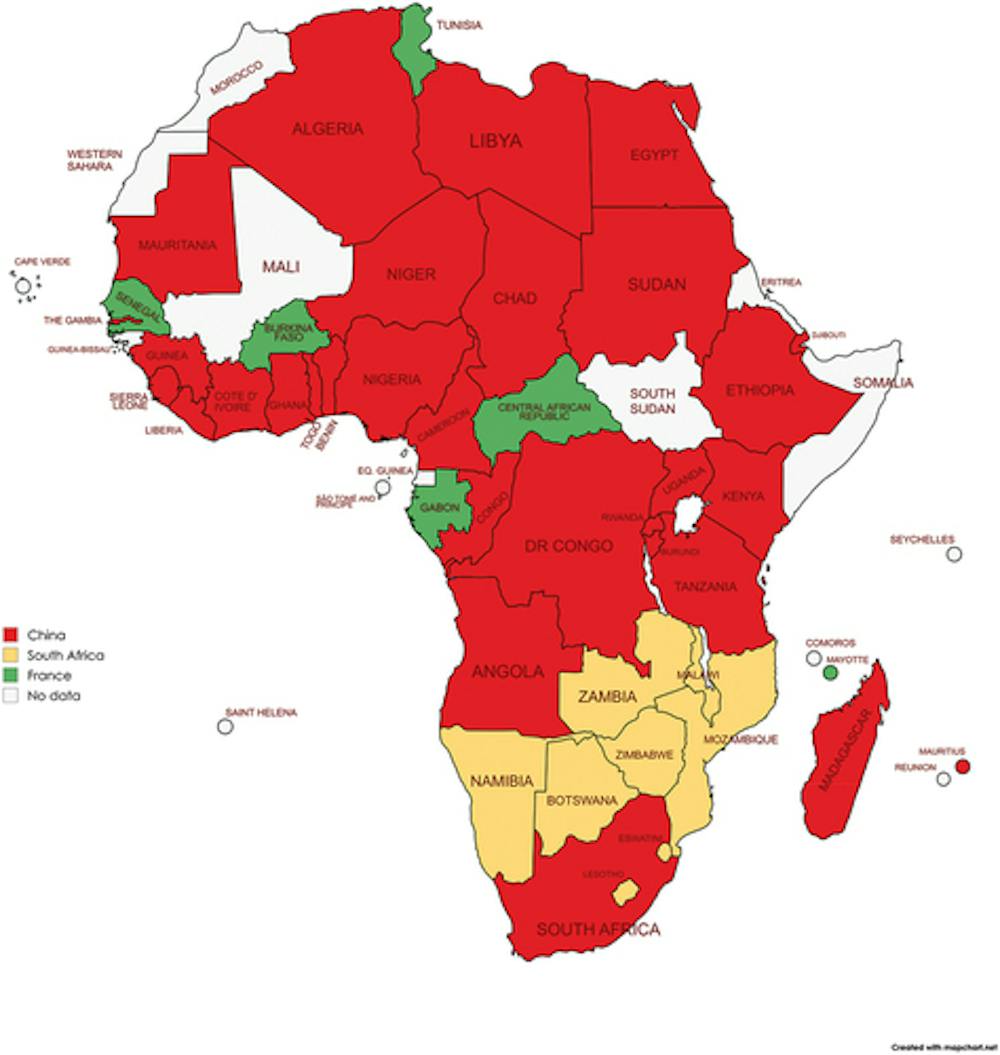
    In response, media and policymakers in traditionally dominant states are increasingly using maps drenched in red or stamped with Chinese flags to depict Beijing’s expanding footprint. One map reproduced by a US congressional committee, for instance, showed Beijing’s influence and reach across the continent in red stripes.

    But these visuals oversimplify a complex reality. This is an issue I explore in a new study. For over a decade, I have researched the interactions of sub-Saharan Africa with other states like Turkey, Arab Gulf states, Japan and China.

    In a recent paper I explored the use of maps that have been created of Africa showing China’s projects across the continent. I argue that, by overlaying Chinese flags on maps depicting Africa and its 54 states, media and policymakers turn economic ties into a visual representation of foreign encroachment.

    This process is called securitisation – the framing of something as a threat, even if it’s not one.

    This visual securitisation not only heightens fears of dependency but also primes certain audiences – in the US, Japan and France, for instance – to view China’s presence as a direct challenge to their interests.

    Certain threats – like terrorist groups or nuclear weapons – are self-evident. China’s presence in many African states, however, is different: if it’s a threat, who is threatened and why? Do Chinese-built roads or railways – and the debt African states accrue for this infrastructure – constitute the threat?

    My research shows that the answer to these questions is: it depends.

    Portraying China’s presence in Africa with flags on maps can distort African states’ sovereignty and their power to make decisions based on national interests. This visual portrayal reduces these countries to arenas of global power competition. It fails to recognise them as strategic actors.

    China tops imports to African states

    Illustration of China’s economic influence in 2021 drenched in red and drawn from media, think tanks and related literature. Author’s composite map illustrates securitisation of China in Africa. Brendon J. Cannon

    On the other hand, my research shows that China’s role may not be entirely benign.

    My study focuses mostly on east Africa, to include the Horn of Africa. Much of Beijing’s engagement here remains primarily economic (as it does in west, central and southern Africa). However, China’s growing control over critical infrastructure and digital networks, and its pursuit of military footholds near strategic maritime routes, present real security concerns.

    Policymakers need to separate legitimate risks from exaggerated securitisation narratives. This would help them avoid the pitfalls of reactionary policies.

    Negative consequences

    Presenting China as a threat in Africa has three negative consequences.

    First, it erodes the idea and reality of African sovereignty and agency. Maps portraying Africa as overrun by China suggest that governments and civil society are mere bystanders unable to negotiate their own foreign and domestic agendas.

    The reality is that countries like Kenya actively engage with China to attract investments for development projects, and to balance their relations with other international actors like the US and Japan.

    The result of securitisation is that American or Japanese policymakers, for instance, have begun to view Africa through the lens of their strategic competition with China. This is evident in Washington’s foreign policy rhetoric, for example. This increasingly frames African states not just as partners but also as strategic battlegrounds in the growing US-China rivalry. The risk is that African countries may start being treated as passive players.

    Second, securitisation inflates the perception of China as a global security threat.

    The repeated use of maps with Chinese flags covering ports, railways and industrial zones creates an exaggerated image of unchecked expansion. These maps fail to show the host of other external states operating on the continent.

    The US, multiple European states, Japan, India, Russia, Turkey, the United Arab Emirates and South Korea all have significant interests in Africa. While China is by far the largest, most prominent external actor, with the widest reach throughout Africa, it’s been singled out because of the perceived threats its presence in Africa may pose to the west.

    Third, securitisation can lead to knee-jerk reactions to limit China’s presence rather than engage constructively with Beijing’s investments in Africa. These reactions can result in ill-advised attempts by China’s competitors to push projects that don’t correspond to the needs of African states. This partly explains Ethiopia’s strained relations with the west. Sanctions and aid cuts over the Tigray conflict fuelled a pivot toward China and Russia.

    The security risks

    Securitisation raises valid concerns, but my research also underscores genuine security risks related to China’s presence in Africa. These shouldn’t be overlooked.

    China’s growing role and embeddedness in Africa’s digital ecosystem presents a double-edged sword, for instance. Huawei and other Chinese companies have contributed to Africa’s telecommunications and digital transformation. But these investments also increase Beijing’s potential influence over data security, cyber governance and information flows. These give China the option to exploit networks for surveillance, intelligence gathering or political coercion.

    Chinese-funded, built or operated infrastructure, ports and military bases

    A depiction of China’s infrastructure influence in 2023 from media, think tanks and related literature. Author’s composite map illustrates securitisation of China in Africa. Brendon J. Cannon

    China’s expanding control over dual-use infrastructure is another concern. Chinese-operated ports in Djibouti, for instance, can be used for commercial and military purposes. They potentially grant Beijing a strategic foothold in key maritime corridors, such as the Red Sea. China could restrict access to these ports in times of conflict. Or use them to extend its naval footprint, similar to what it’s done in the South China Sea.

    It’s China’s pursuit of other military facilities beyond its bases in Djibouti that will have the most serious implications for African states’ sovereignty. This is part of a deliberate Chinese strategy to expand its global power projection and protect access to critical resources like oil and gas.

    Agreements on military facilities may end up undermining and even challenging African agency of action. The addition of Chinese ships and soldiers alongside the growing presence of US, European, Indian, Japanese and other regional naval forces could escalate tensions. It also risks entangling African states in power rivalries that aren’t in their national interests.

    China’s presence in Africa has been securitised through maps drenched in red and stamped with flags, framing its engagement as a looming threat rather than a complex geopolitical reality. However, the real challenge for African states is ensuring that China’s growing influence – especially in infrastructure, digital networks, and security – does not erode their sovereignty. Whether Beijing’s presence becomes an opportunity or a liability will depend on how effectively African governments assert their national interests in shaping these partnerships on their own terms.

    – Maps showing China’s growing influence in Africa distort reality – but some risks are real
    – https://theconversation.com/maps-showing-chinas-growing-influence-in-africa-distort-reality-but-some-risks-are-real-249454

    MIL OSI Africa

  • MIL-OSI: Ushur Launches AI Agent for Member Service to Unlock Faster, More Equitable Access to Healthcare Information

    Source: GlobeNewswire (MIL-OSI)

    SANTA CLARA, Calif., March 04, 2025 (GLOBE NEWSWIRE) — Ushur, a leader in Customer Experience Automation (CXA), today introduced its AI Agent for Member Service, the first-of-its-kind solution purpose-built to revolutionize health plan support. Powered by generative and agentic AI, this solution analyzes data, makes informed decisions and guides members to fast, seamless resolutions. By automating requests with empathetic, real-time assistance, Ushur’s AI Agent empowers health plans to scale service delivery while ensuring more equitable access to care.

    With increasing demand for healthcare services and a shortage of resources, health plans are struggling to meet the needs of their members. In fact, despite digital investments, call centers remain inundated with only 25% of members and patients actively engaging with portals and apps, according to the National Institute of Health. Ushur’s AI Agent bridges this gap by offering fast, accurate, and empathetic responses, ensuring that members can access the support they need—at any time—without burdening already overworked customer support teams.

    Health plans benefit from Ushur’s AI Agent in multiple ways, including:

    • Faster Resolutions: Automates common tasks–like benefits explanations, ID card replacements and Primary Care Physician updates–reducing turnaround times and operational costs.
    • Scalable Support: Manages 24×7 demand and peak periods like open enrollment without requiring additional staff.
    • Enhanced Member Satisfaction: Provides clear, accurate and empathetic responses that improve satisfaction and experience scores.
    • Proactive Engagement: Automates two-way updates for appointments, benefits information and claims progress to reduce member frustration and employee burden.
    • Compliance Adherence: Fully HIPAA-compliant with secure handling of sensitive data, ensuring peace of mind for both health plans and members.

    “In our work with highly regulated industries, we recognize the critical importance of innovation rooted in security and trust,” shares Simha Sadasiva, Co-Founder and CEO of Ushur. “Ushur’s AI Agent that we developed is tailored with healthcare-specific guardrails, ensuring compliance and protecting customer data. These safeguards empower health plans to deliver round-the-clock personalized assistance to their members, achieving unprecedented levels of intelligence and efficiency.”

    Powered by Ushur’s Customer Experience Automation™ platform, Ushur’s AI Agent seamlessly supports health plans to deliver intelligent, compliant, and empathetic member interactions.

    • Healthcare-Specific Intelligence: Finely tuned Large Language Models (LLMs) and knowledge graphs ensure precise, policy-driven responses tailored to payer-specific language.
    • Adaptive Decision Making: A powerful reasoning engine analyzes data from CRMs, enterprise knowledge bases, and other sources to extract insights, determine the best course of action, and dynamically refine recommendations in real time.
    • Goal-Based Task Completion: Integrates with third-party applications and downstream systems, enabling proactive member support and streamlined resolutions.
    • Multimodal & Omni-Channel Engagement: Enhances interactions with dynamic elements like geo-location maps and file attachments, while seamlessly transitioning conversations across preferred digital channels, from text and email to voice and web portals.
    • Empathetic, Context-Aware Conversations: Built-in safeguards handle sensitive topics with care, escalating issues to human resources when needed while simplifying complex healthcare information to a 6th-grade reading level.
    • Privacy, Accessibility & Compliance: Adheres to HIPAA, the Affordable Care Act (ACA), and other regulations to protect Private Health Information (PHI), while supporting multiple languages, including English, Spanish, Chinese, Vietnamese, Korean, and Portuguese.

    Ushur is revolutionizing customer engagement for highly regulated industries with secure, empathetic and AI-driven solutions at scale. The AI Agent for Member Service embodies Ushur’s mission to enhance healthcare access and transform customer experiences for both businesses and the people they serve.

    To see how Ushur’s AI Agent can help you provide faster, more equitable care, please visit www.ushur.com or contact us at anthony@scribewise.com.

    About Ushur
    Ushur delivers the world’s first Customer Experience Automation platform built specifically for regulated industries. Purpose-built for delivering ideal self-service, Ushur infuses intelligence into digital experiences for the most delightful and impactful customer engagements. Equipped with guardrails and compliance-ready infrastructure, Ushur powers vertical AI Agents for healthcare, financial services and insurance use cases. Designed for rapid code-less deployment with flexible, advanced capabilities for IT and business teams, enterprises can transform customer and employee journeys at scale, driving faster time-to-value and improved outcomes.

    The MIL Network

  • MIL-OSI: Introducing New Cloud-Based CorelDRAW Go, Creative and Workflow Enhancements in CorelDRAW Graphics Suite 2025, and Browser-Based Design with CorelDRAW Web

    Source: GlobeNewswire (MIL-OSI)

    CorelDRAW Go provides a beginner-friendly design experience, empowering creativity from anywhere.

    CorelDRAW Graphics Suite delivers Painterly Brush tool enhancements and streamlined print to PDF workflows, alongside flexible, online design with CorelDRAW Web.

    OTTAWA, Ontario, March 04, 2025 (GLOBE NEWSWIRE) — Introducing CorelDRAW Go, a beginner-friendly online graphic design tool for creative enthusiasts and aspiring designers. This newest addition to the CorelDRAW family simplifies the creative process, equipping users with intuitive tools to design efficiently from anywhere.

    Alongside this, the latest updates to award-winning graphic design software, CorelDRAW Graphics Suite, are unveiled, including CorelDRAW Web, providing subscribers with a flexible, cloud-based design experience.

    “With CorelDRAW Go and CorelDRAW Web, we’re making creativity more accessible than ever,” said Prakash Channagiri, Senior Director of Product Management for CorelDRAW. “The flexibility of these new cloud-based tools combined with the latest creative and workflow enhancements in CorelDRAW Graphics Suite, reinforce our commitment to empowering design professionals and creative enthusiasts to work more efficiently and push the boundaries of what’s possible in graphic design.”

    CorelDRAW Go is a browser-based tool that makes design more intuitive and accessible, without the steep learning curve that comes with professional graphic design software. With an easy-to-use interface it delivers more advanced drawing and editing capabilities than many template-based alternatives.

    Here’s what’s available in CorelDRAW Go:

    Robust Design Tools

    • Interactive drawing tools
    • Realistic brushes
    • Straightforward node editing
    • User-friendly text tools
    • Easy-to-use masking controls
    • Essential image editing features

    Extensive Creative Assets

    • Fully customizable templates
    • Thousands of editable vector icons, illustrations, and clipart
    • More than 6 million royalty-free stock photos
    • Thousands of fonts

    In this latest release, CorelDRAW Graphics Suite customers get access to powerful tools and enhancements designed to elevate creativity and simplify workflows.

    Here’s what’s new in CorelDRAW Graphics Suite 2025:

    • NEW! CorelDRAW Web: CorelDRAW is more accessible than ever thanks to the introduction of CorelDRAW Web, a powerful browser-based version of the award-winning graphic design suite. Available exclusively to subscribers, CorelDRAW Web delivers a full CorelDRAW experience in the browser, allowing users to design seamlessly from any device.
    • NEW! Advanced Print to PDF capabilities: Streamline workflows and enjoy faster, more efficient output with new Print to PDF functionality, now integrated into CorelDRAW and Corel PHOTO-PAINT.
    • ENHANCED! Painterly Brush tool: Unleash creativity with the upgraded Painterly Brush tool, now featuring additional brush controls, and improved compatibility with other tools. Plus, subscribers get exclusive access to 50 additional free brushes, unlocking a world of new creative possibilities.
    • NEW! Simplified multi-seat license management: The redesigned Corel Customer Account Portal streamlines license administration, allowing businesses to assign licenses or deploy software without requiring individual user accounts.

    This latest release also includes performance and quality improvements, direct access to additional Google Fonts, and advanced security upgrades.

    Availability and Pricing

    CorelDRAW Graphics Suite is available on Windows, macOS, and web in English, German, Italian, French, Spanish, Brazilian Portuguese, Dutch, Polish, Czech, Russian, Simplified Chinese, Traditional Chinese, Turkish, Swedish, and Japanese. Subscription is $269 USD / €369 / £319 per year. CorelDRAW Graphics Suite 2025 is available for one-time purchase at the suggested retail price of $549 USD / €779 / £659. EUR and GBP prices include VAT.

    To compare purchase options of CorelDRAW Graphics Suite, please visit: https://www.coreldraw.com/coreldraw/#compare.

    For more information about business licenses, visit www.coreldraw.com/business, and for more information about education licenses, visit www.coreldraw.com/education.

    CorelDRAW Web is available to all CorelDRAW subscribers and active maintenance customers and is supported on the most recent versions of Google Chrome, Microsoft Edge, and Firefox, on both Windows and macOS. To learn more about CorelDRAW Web, or to try a 15-day trial, visit: www.coreldraw.corel.com.

    CorelDRAW Go performs best with Google Chrome or Microsoft Edge, with the latest updates, on both Windows and macOS, and is available in English, German, Italian, French, Spanish, Brazilian Portuguese, Dutch, Polish, and Czech. A subscription is $9.99 USD / €9.99 / £8.99 monthly or $99 USD / €115 / £95 per year. EUR and GBP prices include VAT. To learn more about CorelDRAW Go, visit: www.go.corel.com.

    About Alludo

    Alludo is a global technology company helping people work better and live better. We’re the people behind award-winning, globally recognizable brands including Parallels, Corel, MindManager, and WinZip. Our professional-caliber graphics, virtualization, and productivity solutions are finely tuned for the digital remote workforce delivering the freedom to work when, where, and how you want.

    With a 35+ year legacy of innovation, Alludo empowers all you do, helping more than 2.5 million paying customers to enable, ideate, create, and share on any device, anywhere. To learn more, visit www.alludo.com

    © 2025 Cascade Parent Limited trading as Alludo. All rights reserved. Alludo, and the Alludo logo are trademarks of Cascade Parent Limited in Canada, the United States and/or elsewhere. Corel, CorelDRAW, Corel PHOTO-PAINT, Go, MindManager and WinZip are trademarks or registered trademarks of Corel Corporation. Parallels is a registered trademark of Parallels International GmbH. MacOS is a trademark of Apple Inc. Google and Chrome are trademarks of Google LLC. All other company, product and service names, logos, brands and any registered or unregistered trademarks mentioned are used for identification purposes only and remain the exclusive property of their respective owners. For all notices and legal information please visit www.alludo.com/en/legal and www.corel.com/en/legal-information/.

    Contact:
    Ashley Ruess
    ashley.ruess@alludo.com

    Photos accompanying this announcement are available at:

    https://www.globenewswire.com/NewsRoom/AttachmentNg/9c05058a-e856-498a-88b3-2330c0f33de1

    https://www.globenewswire.com/NewsRoom/AttachmentNg/c0add386-97a5-490e-ad55-360995e05f1d

    https://www.globenewswire.com/NewsRoom/AttachmentNg/32ad5403-f765-41bd-8d7c-117c67db1399

    https://www.globenewswire.com/NewsRoom/AttachmentNg/94cf185e-48cb-4409-bd79-555aa6d1c49d

    The MIL Network

  • MIL-OSI: Primech AI Launches Global Robotics as a Service (RaaS) Initiative with Chinachem Group Partnership

    Source: GlobeNewswire (MIL-OSI)


    Pioneering AI-Powered Cleaning Technology Deployment Marks Strategic Expansion into Hong Kong Market

    SINGAPORE, March 04, 2025 (GLOBE NEWSWIRE) — Primech AI Pte. Ltd. (“Primech AI”) or (the “Company”), a subsidiary of Primech Holdings Limited (Nasdaq: PMEC), is proud to announce the launch of its innovative Robotics as a Service (RaaS) business line, revolutionizing the cleaning solutions industry. This strategic initiative addresses critical industry challenges including labor shortages, hygiene standards, and operational costs through proprietary AI-driven technology.

    As part of this global expansion strategy, Primech AI has signed a Memorandum of Understanding (MoU) with CCG Property Services, a subsidiary of Hong Kong’s leading property developer Chinachem Group, to deploy HYTRON, an AI-powered fully automated toilet cleaning robot, in selected facilities managed by CCG Property Services in Hong Kong.

    Figure 1: Nina Tower 1 in Hong Kong, where Primech AI’s HYTRON will be deployed.

    The deployment of HYTRON marks the initial phase of Primech AI’s bold initiative to roll out 300 cleaning robots across Singapore, Hong Kong, and Dubai. This expansion reinforces the company’s position as a technology leader in autonomous cleaning solutions for facility services and sanitation.

    “This collaboration marks a significant milestone in our global expansion of our Robotics as a Service solution,” said Charles Ng, Chief Operating Officer of Primech AI. “While our cleaning services continue to serve the Singapore market, we are extending the Raas business model making it accessible internationally, beginning with this strategic partnership in Hong Kong’s premier property portfolio.”

    Under the two-year MoU, Primech AI will supply and install HYTRON robots in designated facilities, including the iconic Nina Tower 1, with comprehensive maintenance, technical support, and staff training. CCG Property Services will integrate the robots into daily operations, showcasing HYTRON’s capabilities in elevating cleanliness standards and operational efficiency.

    Primech AI envisions a long-term expansion of HYTRON into additional global markets, including Australia, Europe, and the United States, bringing cutting-edge cleaning solutions to more regions worldwide. Beyond this initial deployment, the company also plans to extend its Robotics-as-a-Service (RaaS) offering to these markets, further enhancing accessibility of its advanced cleaning technology on a global scale.

    “Beyond advancing automation in the traditional cleaning industry, this deployment marks a significant milestone for Primech Holdings Limited. It demonstrates our ability to expand internationally and provide cutting-edge cleaning solutions across borders. By working with esteemed partners like Chinachem Group and CCG Property Services, we are proving that our technology is not only effective but also scalable on a global level. This is just the beginning of our vision to redefine commercial cleaning through AI and robotics.” said Kin Wai Ho, CEO of Primech Holdings Limited. This initiative underscores Primech Holdings’ commitment to transforming the cleaning industry through advanced technology while expanding its global footprint beyond its traditional Singapore base.

    Primech AI’s self-developed HYTRON bathroom cleaning robot is integrated with advanced NVIDIA technology. The latest HYTRON model incorporated the NVIDIA Jetson Orin Nano Super, a state-of-the-art System-on-Module (SoM) designed for robust edge AI and robotics applications. The HYTRON robot also uses a suite of NVIDIA software, including CUDA, CuDNN, TensorRT, and NVIDIA Driver, to optimize its AI capabilities.  This combination of hardware and software allows HYTRON to deliver superior processing speed, efficiency, and reliability in its cleaning tasks.

    About Chinachem Group

    Founded in 1960, Chinachem Group is a private real estate company in Hong Kong, with a portfolio covering residential, commercial, retail and industrial buildings for sales and investment, in addition to operating hotels and property management services as well as elderly services.

    Dedicated to making better places to live, work and raise future generations in Hong Kong and beyond, the Group seeks to deliver lasting commercial, social and environmental benefits.

    Please visit www.chinachemgroup.com/en

    About Primech Holdings Limited
    Headquartered in Singapore, Primech Holdings Limited is a leading provider of comprehensive technology-driven facilities services, predominantly serving both public and private sectors throughout Singapore. Primech Holdings offers an extensive range of services tailored to meet the complex demands of its diverse clientele. Services include advanced general facility maintenance services, specialized cleaning solutions such as marble polishing and facade cleaning, meticulous stewarding services, and targeted cleaning services for offices and homes. Known for its commitment to sustainability and cutting-edge technology, Primech Holdings integrates eco-friendly practices and smart technology solutions to enhance operational efficiency and client satisfaction. This strategic approach positions Primech Holdings as a leader in the industry and a proactive contributor to advancing industry standards and practices in Singapore and beyond. For more information, visit www.primechholdings.com.   

    About Primech AI

    Primech AI is a leading robotics company dedicated to pushing the boundaries of innovation in technology. With a team of passionate individuals and a commitment to collaboration, Primech AI is poised to revolutionize the robotics industry with groundbreaking solutions that make a meaningful impact on society. For more information, visit www.primech.ai.

    Forward-Looking Statements

    Certain statements in this announcement are forward-looking statements, including, for example, statements about completing the acquisition, anticipated revenues, growth, and expansion. These forward-looking statements involve known and unknown risks and uncertainties and are based on the Company’s current expectations and projections about future events that the Company believes may affect its financial condition, results of operations, business strategy, and financial needs. These forward-looking statements are also based on assumptions regarding the Company’s present and future business strategies and the environment in which the Company will operate in the future. Investors can find many (but not all) of these statements by the use of words such as “may,” “will,” “expect,” “anticipate,” “aim,” “estimate,” “intend,” “plan,” “believe,” “likely to” or other similar expressions. The Company undertakes no obligation to update or revise publicly any forward-looking statements to reflect subsequent occurring events or circumstances or changes in its expectations, except as may be required by law. Although the Company believes that the expectations expressed in these forward-looking statements are reasonable, it cannot assure that such expectations will be correct. The Company cautions investors that actual results may differ materially from the anticipated results and encourages investors to review other factors that may affect its future results in the Company’s registration statement and other filings with the SEC.

    Company Contact:

    Email: ir@primech.com.sg

    Investor Relations Contact:
     
    Matthew Abenante, IRC
    President   
    Strategic Investor Relations, LLC
    Tel: 347-947-2093
    Email: matthew@strategic-ir.com

    The MIL Network

  • MIL-OSI Europe: ASIA/CHINA – The Bishops of Shanghai and Hong Kong pray together for the Pope’s health at the Marian Shrine of Sheshan

    Source: Agenzia Fides – MIL OSI

    Sheshan (Agenzia Fides) – “I was here with Bishop Joseph Shen Bin to pray for Pope Francis.” With these words, Cardinal Stephen Chow Sau-yan, Bishop of Hong Kong, describes the central moment of his recent visit to Shanghai, reported in KungKaoPo, the weekly bulletin of the diocese of Hong Kong.The visit, which began on February 24 and ended recently, reflected the desire to walk together on the “bridge of dialogue and communion.”At the Marian shrine of Sheshan, before the image of Our Lady so dear to Pope Francis, Cardinal Chow and Bishop Shen Bin together prayed for the health of the Pontiff during the solemn liturgy of February 25.The Hong Kong delegation, led by Cardinal Chow, included Auxiliary Bishop Joseph Ha Chi-shing OFM, Diocesan Vicar Peter Choy Wai Man and other priests and lay people.On arriving at the Basilica, the two bishops, together with the assembly of the faithful, recited the prayer to Our Lady of Sheshan written by Pope Benedict XVI. “It was a very special experience and it moved me deeply. I cried during the prayer,” Cardinal Chow said. “The Sheshan shrine is a sacred place for the Church in China. I was here with Bishop Shen Bin to pray for the Pope.” The Cardinal also stressed the importance of “spirituality in exchange,” and noted that in the diocese of Shanghai the ecclesiastical community maintains continuous relations with the civil authority. “In Hong Kong too, we must have an open heart for exchange and cooperation with the various parties. There is room and even need for mutual exchange and cooperation between the sacred and the secular.” The Cardinal and Bishop of Hong Kong expressed his hope for more exchange and cooperation in the future, noting that “the Church is a bridge of dialogue and communion.” “May this journey of encounter,” Cardinal Chow insisted, “inspire us to walk in faith and hope and to strengthen ties within the universal Church.”In addition to the Sheshan Shrine and the diocesan seminary located in the Shrine, during their stay in Shanghai, the Hong Kong delegation visited the Cathedral of St. Ignatius, the Bishopric, the Guangqi Publishing House, the churches chosen for the Jubilee pilgrimage, some parish communities and also Buddhist temples. The Cardinal expressed his desire to welcome brothers and sisters of the Church of Shanghai to Hong Kong as soon as possible.Pope Francis has often mentioned the devotion of the people of God in China to Our Lady of Sheshan, entrusting his desire to make a pilgrimage to this Shrine. In the video message sent to the Conference on the centenary of the Primum Concilium Sinense held at the Pontifical Urbaniana University on 21 May (see Fides, 21/5/2024), Pope Francis recalled that “Precisely in these days, in the month of May, dedicated by the people of God to the Virgin Mary, many of our Chinese brothers and sisters make a pilgrimage to the Shrine of Sheshan, to entrust their prayers and their hopes to the intercession of the Mother of Jesus.” “I too – added the Bishop of Rome on that occasion – ideally climb the hill of Sheshan. And together let us entrust to Our Lady, Help of Christians, our brothers and sisters in the faith who are in China, all the Chinese people and all our poor world, asking for her intercession, so that peace may always triumph everywhere.” (NZ) (Agenzia Fides, 4/3/2025)
    Share:

    MIL OSI Europe News

  • MIL-OSI Europe: ASIA/CAMBODIA – Apostolic Prefect Figaredo: a border wall is not the solution to the fight against human trafficking

    Source: Agenzia Fides – MIL OSI

    Foto di Sagar Rana su Unsplash

    Battambang (Agenzia Fides) – The Thai government has announced that it will study the feasibility of building a wall along the border with Cambodia to prevent illegal border crossings. According to the Bangkok government, the wall is intended to combat the human trafficking network that supplies the so-called “scam centers” in Thailand, i.e. the “fraudulent call centers” located both in Thailand (for example on the border with Myanmar) and in Cambodia, just across the border with Thailand.The Thai government intends to step up its efforts against criminal organizations involved in human trafficking, forced slavery, large-scale financial fraud, but also in drug trafficking and the smuggling of goods. According to the United Nations, in recent years hundreds of thousands of people, lured by job advertisements, have been kidnapped by these criminal gangs and held in slavery in “scam cities”.”The problem exists and it is serious,” says Jesuit Father Enrique Figaredo Alvargonzález, who has lived and worked in Cambodia for 40 years as a Spanish missionary and is Apostolic Prefect of Battambang, the province on the border between Cambodia and Thailand, in an interview with Fides. “Human trafficking is a scourge that must be fought with all available means, and this is also done through the cooperation and network of civil society.” “However,” continues the Apostolic Prefect, “the project of a wall seems rather unrealistic, considering the permeability of the border and the thousands of Cambodian workers, especially young people, who have emigrated to Thailand from the province of Battambang.” “Today, there are many villages in our province that are unfortunately empty because young people migrate to Thailand to do the menial jobs that Thai workers do not want to do,” he says. “But a wall is certainly not the right solution: such problems are addressed through dialogue and cooperation between governments at all levels and also through fruitful cooperation with non-governmental organizations and associations,” he notes. “Caritas in Cambodia is committed to the victims of human trafficking and strives to raise awareness among the population, in full agreement with the civil authorities,” stresses the Prefect. Thailand and Cambodia share a 817-kilometer border. In autumn 2024, the two neighboring countries opened a new border crossing in Sa Kaeo province, the so-called “Thai-Cambodian Friendship Bridge,” near the city of Poipet. They also extended the times for border crossings at the Chong Sa-ngam border (in Si Sa Ket province) to promote trade and tourism between the two nations, facilitate the cross-border transport of goods and intensify the exchange of people. (PA) (Agenzia Fides, 4/3/2025)
    Share:

    MIL OSI Europe News

  • MIL-OSI United Kingdom: expert reaction to unpublished preprint on inducing loss of function of genes in mice to produce woolly mammoth- like hair phenotypes

    Source: United Kingdom – Executive Government & Departments

    An unpublished preprint uploaded to BioRXiv looks at gene editing in mice to create woolly mammoth-like hair phenotypes. 

    Dr Tori Herridge, Senior Lecturer, School of Biosciences, University of Sheffield, said:

    Woolly Mouse in Context

    “Colossal have announced that they have successfully bred ‘woolly mice’, and this is a “water shed moment” in their mission to genetically engineer an arctic adapted elephant, aka “bringing back the mammoth.”

    “Colossal’s team made a number of genetic changes known as “knock outs” in lab mice that are already known to produce longer, thicker, wavier — or woollier — coats in mice. They also made a change known to cause blonde hair colouring in mice.

    “The result, therefore, of various “woolly mice” from these genetic changes is unsurprising: woolly mice have been produced in labs and by mice breeders many times before.”


    Mammoth-like genes?

    “Three of the genetic changes made in some of the mice were inspired by woolly mammoth DNA, but they still only show effects in mice. The mice were not edited to have a precise copy of the mammoth genes, but it is possible that these edits may have had a similar effect in both mice and mammoths (either by stopping the gene from working, or by changing the way the gene worked), but we cannot be sure about this.

    “It is also not possible to tell what impact these ‘mammoth-inspired’ changes had, if any, in the Colossal woolly mouse owing to other gene edits made at the same time.”


    Are we a step closer to ‘bringing back the mammoth’? 

    “A mammoth is much more than just an elephant in a fur coat. While we know a lot about mouse genetics, we know much less about mammoths and elephants. It isn’t yet known which sections of the genome are vital for achieving the characters need to make an elephant fit for life in the Arctic circle. Genes that are linked to fur and fat in well-studied animals like mice are obvious targets, but the devil is in the detail. And what about other characters that are equally important? Which bits of the genome underpin the teeth and jaw changes that might be needed to accommodate an Arctic diet, for example (mammoth teeth were clearly under strong evolutionary pressure to adapt to their diet)? What about things we haven’t even discovered yet, things we don’t know we don’t know?

    “Unless you decide to make EVERY edit necessary to in the genome, you are only ever going to create a crude approximation of any extinct creature, based on an incomplete idea of what it should look like. You are never going to ‘bring back’ a mammoth.

    “Colossal’s Woolly Mouse experiments also show that de-extinction attempts are fraught with failure: most gene-edited embryos failed to result in live pups (less than 10%), and very few of those born were successfully edited for all target genes. This is for experiments that made a small number of relatively simple (loss of function) changes in well understood genes, using a ‘model’ lab animal as a surrogate.

    “Engineering a mammoth-like elephant presents a far greater challenge: the actual number of genes likely to be involved is far higher, the genes are less well understood (and still need to be identified), and the surrogate will be an animal that is not normally experimented upon. Even if success rates are similar to those observed in the woolly mice (and they may well be lower given the greater number of edits and unknowns), there will likely need to be multiple pregnancies before a “successful” calf is born. This equates to either a very large number of surrogate dams, or – given elephant pregnancies last approximately 2-years – a very long time.

    “Mammoth de-extinction doesn’t seem to be on the horizon anytime soon.”

    Ethical Considerations

    “Colossal’s Woolly Mouse experiments show that the physical effect of genome-editing cannot be observed until the animal experimentation stage. This will also be true in elephants.

    “Although it is branded as “woolly mammoth de-extinction”, what is being proposed is an experiment to test the effect of certain gene edits on the appearance of elephants.

    “For the mice in these experiments the risk was small: the effect of these gene edits already known, and were not likely to cause risk or suffering to surrogate or pup.

    “We do not know the risk involved for elephants, but it could be very high.

    “We do know that surrogacy is a burden on the dam, and that captive elephant pregnancies carry risks even under normal circumstances.

    “Placing such a burden of risk on an elephant surrogate in pursuit of an experiment that – at best – will produce a simulacrum of a woolly mammoth, is unjustifiable.”

    Dr Saad Arif, Senior Lecturer, School of Biological and Medical Sciences, Oxford Brookes University, said:

    Is there enough info to comment on the announcement, how well can we judge what has been accomplished and how it has been done?

    “The preprint provides enough information on what has been accomplished and how it was conducted.”


    How novel is the research and techniques to create the mouse, is it more than just genetically engineered lab animals? Is this something more special?

    “One novel element of the work seems to be the use of genome-editing technologies to alter multiple genes at once with high efficiency and speed in mice. Although we have had the ability to alter multiple genes at once for sometime, the efficiency and speed with which these changes can be made could still be improved. Based on the results presented by the authors, their methods for generating transgenic mice with the desired changes appears to be both rapid and highly efficient, which would be extremely desirable when testing for the function of genetic changes in any context, whether it has implications for conservation or disease biology.

    “Genome-editing can also lead to unintended edits in non-targeted parts of the genome resulting in unwanted modifications, so-called off-target effects. Although, the authors report no missense mutations (potentially eradicating or modifying an untargeted gene’s function), this is not demonstrable proof that  gene function hasn’t been altered. Such off-target effects could be detrimental in real world applications of genome-editing e.g. curing a disease or in trying to turn an ‘elephant” into a mammoth’.

    “Another novel aspect of this study is that some of the genes targeted by the authors are based on  their comparisons of ancient mammoth and modern elephant genomes. This set of genes (in contrast to most of the others, which are selected based on information from mice studies) comprise those with identified differences between cold-adapted mammoths and their warm-adapted elephant cousins. Hence differences in these  genes could potentially be part of the cold adaptation repertoire of mammoths. This really paves the way for exploring the consequences of genomic differences in extinct species or populations.”

    How is this proof of principle for the research missions of the company?

    “It shows that Colossal have a model system to validate predicted effects of the DNA differences they have identified between mammoth and elephant genomes and which of these differences is relevant for mammoth’s cold adaptations. For example, they identified differences in DNA sequences of a gene that controls hair length both in Elephants and Mammals, they then introduced that difference in their mouse model, via genome editing, and determined that the  change does indeed affect hair growth. The ability to edit genomes. rapidly and efficiently, to test the role of DNA changes will help them prioritize which genetic modifications are relevant for cold adaptation. 

    “However, it is important to note that their ability to predict whether a gene controls hair growth comes from work done in mice, humans and other organisms. Not all genes will have functional effects that are so easy to predict because not all genes are as well studied and screening for the effect of alterations in these genes may not be as straightforward.  Many genes, unlike those that control hair colour or some aspect of outward appearance, may not have immediate or directly observable effects. Finally, given the idiosyncrasies of mouse biology, some genetic edits will just not manifest themselves in the same way as they would in mammoths or their relatives. The authors acknowledge this and this is a well-known issue with the use of mice in studying human genetics as well. Hence, being able to test whether a specific difference between mammoths and elephants is related to the former’s cold tolerance is still challenging.”

    What are the implications of this research? How close are we getting to the “de-extinction” of the Woolly Mammoth? Does this have significance in conservation biology?
    “I think we are still very far from their “de-extinction” goal. The elephant and mammoth genomes are considered to be 96.4% identical, however, that still leaves potentially another ~13 million changes in DNA sequence to consider! It is also still unclear how mammoth cold adaptation phenotypes without a clear outward manifestation, could be identified or screened in mice.

    “Additionally, at the moment it is difficult to see how they will “birth” a mammoth-like elephant as that may also require some additional technical advances and ethical considerations as this may require elephant surrogacy. Nonetheless, it still remains a goal worth striving for because of potential technical advances they could be achieved along the way. I wouldn’t mind being proven wrong on this.
    “I see this as a fairly small step towards their “de-extinction” goal and I still see us far from any direct impact in conservation biology. Nonetheless, being able to test the genetic effects of DNA differences discovered from extinct species and populations could help us identify the genes and sequence differences involved in making organisms more adaptable to their environments. 

    “Finally, the  efficiency and speed of their multiplex genome-editing technologies is promising and perhaps the most impactful part of their work. These methods could have implications for human disease and biology and help us understand, and potentially treat, complex genetic diseases or traits that are controlled by multiple genes.”

    Is there any ethical significance of this research to consider?

    “I don’t think the results of the current research are of any ethical significance. However, later down the line, the idea of ‘birthing a mammoth’ via an elephant (an endangered species) surrogacy will surely raise ethical concerns.”

    Dr Louise Johnson, Evolutionary Biologist, University of Reading, said:

    “Seeing these mice is a bit like looking back at the past, but with a highly selective telescope. This technology offers an exciting opportunity to test some of our ideas about extinct organisms.

    “It is an interesting piece of work, but the idea that we could bring something back from extinction is false hope.

    “What has been done here is not trivial, but of the ten different mutations engineered into the mice, only a few actually make the mouse gene closer to a known mammoth gene. The result does show that it is possible to genetically engineer many genes at once and still produce some live mice at the end of the process, though. The researchers have succeeded in nudging the mouse genome in the direction of a mammoth genome, which is a first.

    “If we have an idea of what a gene might do in an extinct mammal, this technology can produce powerful results by introducing a very similar sequence into a mouse. But in this particular case, most of the mutations are chosen just because they are already known to make mice have longer, coarser, wavier hair. You could, in theory, produce mice like this by just breeding mice with weird hair together.

    “In theory, you could introduce a gene for hairiness into an elephant and it would look quite mammoth-like, but it wouldn’t be a mammoth in any meaningful way. Elephants would be a terrible species to do this research with – they are huge, have long gestation periods, and require highly specialist housing and care. The mouse is a brilliant lab animal, and we know a lot about the mouse genome and how to alter it effectively. 

    “You do have to know a bit about how the extinct genes might work. For example, it was already known that the genes for coat colour and texture were similar in the mammoth and the mouse. Being able to create and introduce a mouse gene that is somewhat the same as the mammoth opens up a new way to look at evolutionary genetics.”

    Dr Alena Pance, Senior Lecturer in Genetics, University of Hertfordshire, said:

    “Genetic engineering in mice has been performed for a very long time using, developing, and testing a variety of technologies. These modifications include introducing traits from other species, notoriously ‘humanised mice’ that have been used for research related to human traits and disease.

    “The decoding of an extinct species genome to identify specific genes associated with particular traits has also been done before, where the physical characteristics of ancient humans have been deduced from their genomic data.

    “Perhaps the novelty here is using mice to confirm the assumptions about correlations between genes and specific traits. The press release gives the impression that mammoth genes were introduced to mice but from the preprint, it transpires that the genomic editing in these mice consists of inducing loss of function of several genes simultaneously. The choice of these genes comes from observed spontaneous mutations in mice that impact traits such as coat and comparative analyses of elephant and mammoth genomes that reveal similar loss of function in some of these genes.

    “The ability to use mice in order to examine and test gene-trait relationships and hypotheses about physical characteristics specifically using genomes from extinct organisms might prove useful, but overall not particularly novel.”

    Prof Dusko Ilic, Professor of Stem Cell Science, King’s College London, said:

    “The achievement described in the latest press release regarding “woolly mice” is interesting, particularly in terms of the strategy used to refine the list of genes related to hair growth that were also compatible with their model organism—the mouse. This is indeed a noteworthy milestone.

    “Once the gene list has been established, engineering mutations in mice, including those involving seven genes, is a well-established process and not particularly challenging.

    “With mice, the process is relatively straightforward. Their gestation period is only three weeks, and they typically give birth to six to eight pups per litter. However, translating this approach to elephants presents significant challenges. Elephants have the longest gestation period of any mammal—approximately two years—and generally give birth to a single calf. Furthermore, it will take 10-14 years for them to be sexually mature.

    “Assisted reproductive technologies (ART), including in vitro fertilization (IVF), have seen limited success in elephants. The primary ART method employed in elephants has been artificial insemination (AI). The Indianapolis Zoo achieved a significant milestone in 2000 by facilitating the first successful birth of an African elephant conceived through AI. In 2023, the same zoo announced that a 16-year-old African elephant named Zahara was pregnant via AI, marking the first instance where an elephant born through AI is expecting a calf conceived by the same method.

    “This raises critical questions: How many elephant cows would need to undergo experimental pregnancies to give a birth to a “woolly elephant”? And how long would it take before the first such hybrid is born?”

    Dr Denis Headon, Group Leader and Senior Research Fellow, The Roslin Institute, University of Edinburgh, said:

    “With a long-term goal of advancing the de-extinction of the mammoth, the team have managed to alter several mouse genes in one step. They chose these gene alterations based largely on things that we know about mice, rather than what we know about mammoths. This approach produced very shaggy mice with a coat that resembles that of the woolly mammoth remains we find today. While the mice have a striking golden coat, they are otherwise healthy, indicating that the method used is not harmful. Certainly this is an advance in speeding up the rate of genetic modification towards the many changes that distinguish one species from another, though it’s not clear that these changes alone would alter a relatively hairless elephant into a woolly animal. Further work on either synthesising or understanding the mammoth genome would also be required to go beyond these superficial characteristics to generate an animal that would, for example, have the right behaviour to live in Arctic conditions. This paper reports an important advance not only for de-extinction but for animal breeding in general.”

    An unpublished preprint titled ‘Multiplex-edited mice recapitulate woolly mammoth hair phenotypes’ by Rui Chen et al. was uploaded to BioRXiv on 13:00 UK time Tuesday 4 March. 

    Declared interests

    Dr Saad Arif: None

    Dr Louise Johnson: None

    Dr Alena Pance: I can confirm I have no conflict of interest regarding this story

    Prof Dusko Ilic: I declare no conflicts of interest.

    Dr Denis Headon: I don’t have any interests to declare on this paper/story.

    For all other experts, no response for our request for DOIs was received.

    MIL OSI United Kingdom

  • MIL-OSI Russia: Parliamentary delegation from Indonesia to HSE: new prospects for cooperation

    Translartion. Region: Russians Fedetion –

    Source: State University Higher School of Economics – State University Higher School of Economics –

    © Higher School of Economics

    On February 24, a meeting with a delegation of the Committee on Interparliamentary Cooperation of the Council of People’s Representatives of the Republic of Indonesia was held at the HSE on Pokrovsky Boulevard. The event was attended by the Vice-Rector of the University, the Head of the BRICS Expert Council – Russia Victoria Panova and representatives of the university’s scientific departments and centers. During the meeting, the parties discussed key areas for strengthening scientific and expert cooperation, and joint initiatives in the field of science and technology, including through BRICS.

    A delegation from the People’s Representative Council (PRC) Committee on Inter-Parliamentary Cooperation visited the university for the first time. Earlier in the day, a meeting of the Chairman of the Committee of the Council of the Federation of the Federal Assembly of the Russian Federation on International Affairs with the head of the Committee of the People’s Commissars of the Republic of Indonesia, Mr. Mardani Ali Sera.

    HSE Vice-Rector Victoria Panova welcomed the guests and said that the university is actively developing international cooperation and highly values the opportunities for interaction with Indonesia. She emphasized that HSE is not only one of the leading educational and research centers in Russia, but also a key participant in the work of BRICS: “The Higher School of Economics was chosen as an expert center for analytical and scientific work on BRICS, as it is a modern and young university that is actively developing in such key areas as IT, neuroscience, fundamental physics, and STEM in general. The BRICS Expert Council (BRICS EC) is not just a division created to support the Russian Federation’s chairmanship of BRICS in 2024. We work in long-term areas of political, socio-economic and humanitarian cooperation, conduct research and create platforms for knowledge exchange between the countries of the association.”

    Victoria Panova expressed hope for further strengthening of relations between Russia and Indonesia. “Our task is to offer Indonesia not only educational opportunities, but also expert support in various fields. We are ready for active cooperation and hope that Indonesia will take an active part in the work of the BRICS expert track,” Victoria Panova said.

    Mr. Mardani Ali Sera, in turn, noted that Indonesia is deeply interested in strengthening ties with Russia through multilateral formats, in particular BRICS, and expressed a desire to also develop bilateral relations at all levels. “We are pleased that cooperation between Russia and Indonesia has intensified in recent years. Our country is interested in interacting, including with the BRICS-Russia Expert Council based at the Higher School of Economics. We see what a significant contribution the BRICS ES makes to achieving the common goals of the association: national strategies, economic and scientific and technological development. We are confident that joint work will open up new opportunities for us, especially in the field of using technology and innovation,” Mr. Mardani Ali Sera emphasized.

    Deputy Chairman of the Inter-Parliamentary Cooperation Committee Mr. Fadlullah Muhammad Hussein said that Indonesia sees many prospects in cooperation with BRICS: “BRICS offers us great opportunities for cooperation. All member countries communicate on an equal basis and can freely choose which line to work on. BRICS is about all aspects of building a fair world order,” he added.

    Representatives of the National Research University Higher School of Economics emphasized the importance of constant interaction in the scientific research sphere. Alexander Sokolov, Deputy Director Institute for Statistical Studies and Economics of Knowledge, National Research University Higher School of Economics, director Foresight Center spoke about the development of new technologies that could be useful for Indonesia: “Our institute is actively developing the foresight direction, creating innovative methodologies and tools for forecasting and modeling future trends in various fields of science and technology. We conduct research aimed at building long-term trends in areas such as space, medicine, energy and IT, and are ready to offer our expertise and resources for work with Indonesia. Joint efforts will allow us to better understand how new technologies can shape the future of economies and societies.”

    Director Institute of Trade Policy, National Research University Higher School of Economics, BRICS ES expert Alexander Daniltsev noted the importance of trade relations for BRICS member countries. He expressed confidence that Indonesia will become a reliable partner not only for Russia. “International trade and economic cooperation issues occupy a key place within BRICS, and we are confident that Indonesia can become an important partner for all countries of the association. We are actively exploring the possibilities of developing trade relations in such strategically important areas as energy, agriculture and high technology. It is important that our joint projects contribute to stable growth and deepening of mutually beneficial cooperation, as well as open up new prospects for all BRICS members,” he said.

    Ekaterina Shamina, Deputy Director for Scientific Projects Directorate for Scientific Projects of the National Research University Higher School of Economics, drew attention to the possibility of joint work with Indonesia in the field of artificial intelligence regulation: “We are developing standards for regulating artificial intelligence in Russia, and this is one of the key areas for BRICS in the coming years. We would like to offer our Indonesian colleagues cooperation in developing a common AI testing system that could be implemented in the BRICS countries. This will allow us to work on the safe and ethical use of new technologies,” she said.

    Alexander Larichev, Deputy Dean for Research Faculty of Law informed Indonesian parliamentarians that the HSE has launched an initiative – the BRICS Law School Consortium, within the framework of which exchanges between players in the field of law are planned, and scientific publications are already being prepared: “We are implementing a lot. Many universities in the BRICS countries have already joined us. The subjects that we are developing are digital law, international commercial law and business law, etc. We will be glad to see Indonesian universities in our Consortium.”

    Natalia Zholnerovich, Deputy Dean Faculty of Geography and Geoinformation Technologies HSE noted that the faculty was founded in partnership with the Russian Academy of Sciences and its areas of activity are much broader than just geography. “We are developing specific areas of geography: climate change and adaptation to it; climate risk assessment at different levels; migration and urban systems; strategy and territorial planning based on technological solutions; the relationship between people’s potential and the resilience of territories to various risk factors,” she explained.

    The parties discussed the prospects for joint research and analytical reports, agreed on further interaction and planning of joint events aimed at strengthening the partnership within the framework of the HSE and BRICS.

    Please note: This information is raw content directly from the source of the information. It is exactly what the source states and does not reflect the position of MIL-OSI or its clients.

    MIL OSI Russia News

  • MIL-OSI Global: Maps showing China’s growing influence in Africa distort reality – but some risks are real

    Source: The Conversation – Africa – By Brendon J. Cannon, Associate Professor, Khalifa University

    Global power dynamics in Africa are shifting, with China eclipsing the influence of the US and France. China has become Africa’s single largest trading partner.

    In response, media and policymakers in traditionally dominant states are increasingly using maps drenched in red or stamped with Chinese flags to depict Beijing’s expanding footprint. One map reproduced by a US congressional committee, for instance, showed Beijing’s influence and reach across the continent in red stripes.

    But these visuals oversimplify a complex reality. This is an issue I explore in a new study. For over a decade, I have researched the interactions of sub-Saharan Africa with other states like Turkey, Arab Gulf states, Japan and China.

    In a recent paper I explored the use of maps that have been created of Africa showing China’s projects across the continent. I argue that, by overlaying Chinese flags on maps depicting Africa and its 54 states, media and policymakers turn economic ties into a visual representation of foreign encroachment.

    This process is called securitisation – the framing of something as a threat, even if it’s not one.

    This visual securitisation not only heightens fears of dependency but also primes certain audiences – in the US, Japan and France, for instance – to view China’s presence as a direct challenge to their interests.

    Certain threats – like terrorist groups or nuclear weapons – are self-evident. China’s presence in many African states, however, is different: if it’s a threat, who is threatened and why? Do Chinese-built roads or railways – and the debt African states accrue for this infrastructure – constitute the threat?

    My research shows that the answer to these questions is: it depends.

    Portraying China’s presence in Africa with flags on maps can distort African states’ sovereignty and their power to make decisions based on national interests. This visual portrayal reduces these countries to arenas of global power competition. It fails to recognise them as strategic actors.

    China tops imports to African states

    On the other hand, my research shows that China’s role may not be entirely benign.

    My study focuses mostly on east Africa, to include the Horn of Africa. Much of Beijing’s engagement here remains primarily economic (as it does in west, central and southern Africa). However, China’s growing control over critical infrastructure and digital networks, and its pursuit of military footholds near strategic maritime routes, present real security concerns.

    Policymakers need to separate legitimate risks from exaggerated securitisation narratives. This would help them avoid the pitfalls of reactionary policies.

    Negative consequences

    Presenting China as a threat in Africa has three negative consequences.

    First, it erodes the idea and reality of African sovereignty and agency. Maps portraying Africa as overrun by China suggest that governments and civil society are mere bystanders unable to negotiate their own foreign and domestic agendas.

    The reality is that countries like Kenya actively engage with China to attract investments for development projects, and to balance their relations with other international actors like the US and Japan.

    The result of securitisation is that American or Japanese policymakers, for instance, have begun to view Africa through the lens of their strategic competition with China. This is evident in Washington’s foreign policy rhetoric, for example. This increasingly frames African states not just as partners but also as strategic battlegrounds in the growing US-China rivalry. The risk is that African countries may start being treated as passive players.

    Second, securitisation inflates the perception of China as a global security threat.

    The repeated use of maps with Chinese flags covering ports, railways and industrial zones creates an exaggerated image of unchecked expansion. These maps fail to show the host of other external states operating on the continent.

    The US, multiple European states, Japan, India, Russia, Turkey, the United Arab Emirates and South Korea all have significant interests in Africa. While China is by far the largest, most prominent external actor, with the widest reach throughout Africa, it’s been singled out because of the perceived threats its presence in Africa may pose to the west.

    Third, securitisation can lead to knee-jerk reactions to limit China’s presence rather than engage constructively with Beijing’s investments in Africa. These reactions can result in ill-advised attempts by China’s competitors to push projects that don’t correspond to the needs of African states. This partly explains Ethiopia’s strained relations with the west. Sanctions and aid cuts over the Tigray conflict fuelled a pivot toward China and Russia.

    The security risks

    Securitisation raises valid concerns, but my research also underscores genuine security risks related to China’s presence in Africa. These shouldn’t be overlooked.

    China’s growing role and embeddedness in Africa’s digital ecosystem presents a double-edged sword, for instance. Huawei and other Chinese companies have contributed to Africa’s telecommunications and digital transformation. But these investments also increase Beijing’s potential influence over data security, cyber governance and information flows. These give China the option to exploit networks for surveillance, intelligence gathering or political coercion.

    Chinese-funded, built or operated infrastructure, ports and military bases

    China’s expanding control over dual-use infrastructure is another concern. Chinese-operated ports in Djibouti, for instance, can be used for commercial and military purposes. They potentially grant Beijing a strategic foothold in key maritime corridors, such as the Red Sea. China could restrict access to these ports in times of conflict. Or use them to extend its naval footprint, similar to what it’s done in the South China Sea.

    It’s China’s pursuit of other military facilities beyond its bases in Djibouti that will have the most serious implications for African states’ sovereignty. This is part of a deliberate Chinese strategy to expand its global power projection and protect access to critical resources like oil and gas.

    Agreements on military facilities may end up undermining and even challenging African agency of action. The addition of Chinese ships and soldiers alongside the growing presence of US, European, Indian, Japanese and other regional naval forces could escalate tensions. It also risks entangling African states in power rivalries that aren’t in their national interests.

    China’s presence in Africa has been securitised through maps drenched in red and stamped with flags, framing its engagement as a looming threat rather than a complex geopolitical reality. However, the real challenge for African states is ensuring that China’s growing influence – especially in infrastructure, digital networks, and security – does not erode their sovereignty. Whether Beijing’s presence becomes an opportunity or a liability will depend on how effectively African governments assert their national interests in shaping these partnerships on their own terms.

    Brendon J. Cannon does not work for, consult, own shares in or receive funding from any company or organisation that would benefit from this article, and has disclosed no relevant affiliations beyond their academic appointment.

    ref. Maps showing China’s growing influence in Africa distort reality – but some risks are real – https://theconversation.com/maps-showing-chinas-growing-influence-in-africa-distort-reality-but-some-risks-are-real-249454

    MIL OSI – Global Reports

  • MIL-OSI: Stamen Co., Ltd. (4019.T) Announces Meeting with Major Shareholder Wojciech Jakub Podobas

    Source: GlobeNewswire (MIL-OSI)

    TOKYO, March 04, 2025 (GLOBE NEWSWIRE) — Stamen Co., Ltd. (4019.T), the developer and provider of the engagement platform TUNAG (https://biz.tunag.jp/), is pleased to announce that Wojciech Jakub Podobas founder of Podobas Global Investments, who recently became a major shareholder, visited the company’s Tokyo headquarters and held a discussion with CEO Taihei Onishi. The meeting covered the background of his investment in Stamen and his expectations for the company’s future. Below is an excerpt from their discussion.

    Key Discussion Points with Voytek Podobas (Wojciech Podobas)
    In response to a question from the CEO Taihei Onishi about what initially drew his attention to Stamen Co., Ltd. (4019.T), Voytek Podobas highlighted TUNAG, the company’s flagship product, as a key factor.

    “I believe that TUNAG, which connects companies and employees while enhancing both their professional and personal lives, is highly beneficial for Japanese society,” said Podobas. “In Japan, where work plays a significant role in people’s lives, improving workplace satisfaction is a critical issue, and TUNAG directly addresses this need. Tools like TUNAG are essential for the future development of Japan’s workforce and career growth. Its positive societal impact, combined with its exceptional and sustainable revenue growth rate, positions Stamen as a strong investment opportunity.”

    When asked about the quantitative criteria that guide his investment decisions, Voytek Podobas emphasized a combination of business performance and financial metrics.
    “In addition to evaluating a company’s product value and societal impact, I focus on two key quantitative criteria,” he explained. “First is business performance, which includes MRR/ARR growth rate, churn rate, and Total Addressable Market (TAM). Second is financial performance, where I prioritize trends in free cash flow (FCF) margin, return on capital employed (ROCE), and return on invested capital (ROIC). For a high-growth company like Stamen, prioritizing MRR and revenue growth is essential, while improving margins naturally follows as the company scales.”

    Voytek Podobas further outlined the key principles that influenced his decision to invest as Podobas Global Investments in Stamen, citing TUNAG’s strong MRR growth rate (over 40% YoY) and a consistently expanding customer base, which continues to reach new record highs each month.

    “Beyond its solid growth, Stamen maintains positive free cash flow and a well-defined dividend policy, making it a firm with long-term dividend growth potential,” he noted. “The ability to generate revenue while delivering meaningful social impact further reinforces my confidence in the investment.”

    Discussing expectations for Stamen’s future growth and profitability, Voytek Podobas stressed the importance of maintaining a clear strategic focus.

    “The key to long-term success is staying focused on core products and brand identity. Many companies struggle when they expand too aggressively into unrelated product categories after initial success, leading to stagnant growth,” he said.”For Stamen, rather than diversifying into unrelated markets, the most effective strategy is to enhance TUNAG by introducing new features, solutions, and premium add-ons. Companies that take a multi-module approach to increasing Average Revenue Per User (ARPU) often achieve sustained long-term success.”

    He concluded by expressing confidence in Stamen’s management team and its growth trajectory, emphasizing that the company is well-positioned to strengthen its market presence and deliver long-term value to investors.

    Comment from Stamen CEO Taihei Onishi
    “We are honored to welcome Wojciech Jakub Podobas as a major shareholder and appreciate his strong support for our business. His investment is a testament to the international recognition of our service, business vision, and growth potential. To meet these expectations, we will continue to strengthen our foundation while driving innovation across the entire Stamen Group to create new value.”

    About TUNAG
    TUNAG is a platform designed to enhance employee engagement by improving internal communication, sharing information, and fostering a strong corporate culture. It helps organizations increase productivity and reduce turnover rates.
    Currently, over 1,000 companies and more than 1 million users utilize TUNAG to solve organizational challenges. Its extensive features support areas such as:

    • Internal communication & company announcements
    • CEO messages & corporate vision alignment
    • Recognition programs & employee engagement initiatives
    • One-on-one meetings & feedback systems
    • Corporate training, manuals, and performance tracking
    • HR analytics & organizational surveys

    TUNAG continues to evolve, developing new features to enhance workplace satisfaction for employees across industries.

    For more information, users can visit:

    About Stamen Co., Ltd. (4019.T)
    Founded in 2016, Stamen Co., Ltd. (4019.T) operates under the mission: “Delivering inspiration and spreading happiness to as many people as possible.” The company has steadily expanded its business, leading to its public listing on the Tokyo Stock Exchange in December 2020.

    Stamen specializes in HR Tech solutions, with TUNAG as its flagship platform, alongside other services aimed at enhancing corporate engagement and workplace efficiency.

    Company Name: Stamen Co., Ltd. (4019.T)
    CEO: Taihei Onishi
    Employees: 105 (as of September 2024)
    Stock Code: 4019.T

    Contact

    Mr.
    Caesar Tabota
    office@podobas.global

    A photo accompanying this announcement is available at https://www.globenewswire.com/NewsRoom/AttachmentNg/6151a4dd-1247-4ade-9c63-63d6633252dc

    The MIL Network

  • MIL-OSI: MoneyHero Introduces Three-Click Travel Insurance Purchase in Singapore

    Source: GlobeNewswire (MIL-OSI)

    SINGAPORE, March 04, 2025 (GLOBE NEWSWIRE) — MoneyHero Limited (NASDAQ: MNY) (“MoneyHero” or the “Company”), a leading personal finance aggregation and comparison platform, as well as a digital insurance brokerage provider in Greater Southeast Asia, has launched a new three-click travel insurance purchase feature for its members in Singapore. This enhancement allows returning users to instantly purchase travel insurance in just three simple clicks, eliminating the need to repeatedly fill out forms and saving them over 75% of the time typically required for purchasing a travel insurance.

    Frequent travelers often face the hassle of comparing multiple insurance policies before each trip. The new three-click feature simplifies this process, allowing MoneyHero Group members to easily compare travel insurance policies from leading insurers and complete their purchase in three simple clicks – select your preferred policy, review your details, and make payment.

    Faster, Easier, and More Convenient Travel Insurance

    This new feature simplifies the travel insurance experience by allowing MoneyHero Group members to:

            •        Compare real-time quotes from leading insurers

            •        Customize coverage to fit their travel needs

            •        Purchase insurance policies instantly without redirection to third-party sites

            •        Autofill personal details from previous purchases, skipping repetitive form-filling

            •        Receive immediate confirmation and policy issuance

    By integrating this feature with SingSaver membership, MoneyHero provides a seamless experience, making travel insurance purchases as straightforward as booking a flight or hotel online.

    Better for Customers, Stronger for Insurers

    For customers, this means less hassle and faster access to coverage. For insurers, the simplified journey improves conversion rates, increasing policy sales and customer acquisition. MoneyHero has already seen up to 2x higher conversions on end-to-end insurance purchases and expects similar or better results with this new three-click feature.

    Rohith Murthy, CEO of MoneyHero, said:

    “Travelers today seek efficiency and convenience, and they don’t want to waste time filling out the same forms every time they travel. They want a fast, seamless way to compare and purchase insurance with minimal effort. With this launch, we’re saving our members’ time, providing a smarter and more efficient way to purchase travel insurance. Our data indicates that reducing friction leads to higher completion rates for purchases—benefiting both our customers and our insurance partners. This new feature is integral to our commitment to making MoneyHero the go-to destination for digital insurance in the region.”

    Driving Growth in Digital Insurance

    MoneyHero’s insurance business is experiencing significant growth, with revenues from this vertical increasing by 54% year-over-year in the first nine months of 2024. The Company expects further acceleration as it enhances seamless purchase experiences across more insurance categories.

    Currently, MoneyHero’s travel insurance platform supports 11 insurers in Singapore and Hong Kong. Following the success of this new feature, the Company plans to extend three-click purchasing to additional insurance products and markets, further solidifying its position in the digital insurance landscape.

    About MoneyHero Group

    MoneyHero Limited (NASDAQ: MNY) is a market leader in the online personal finance and digital insurance aggregation and comparison sector in Greater Southeast Asia. The Company operates in Singapore, Hong Kong, Taiwan and the Philippines.  Its brand portfolio includes B2C platforms MoneyHero, SingSaver, Money101, Moneymax and Seedly, as well as the B2B platform Creatory.  The Company also retains an equity stake in Malaysian fintech company, Jirnexu Pte. Ltd., parent company of Jirnexu Sdn. Bhd., the operator of RinggitPlus, Malaysia’s largest operating B2C platform. MoneyHero had over 270 commercial partner relationships as at September 30, 2024, and had approximately 7.4 million Monthly Unique Users across its platform for the three months ended September 30, 2024. The Company’s backers include Peter Thiel—co-founder of PayPal, Palantir Technologies, and the Founders Fund—and Hong Kong businessman, Richard Li, the founder and chairman of Pacific Century Group. To learn more about MoneyHero and how the innovative fintech company is driving APAC’s digital economy, please visit www.MoneyHeroGroup.com.

    Forward Looking Statements

    This document includes “forward-looking statements” within the meaning of the United States federal securities laws and also contains certain financial forecasts and projections. All statements other than statements of historical fact contained in this communication, including, but not limited to, statements as to the Group’s growth strategies, future results of operations and financial position, market size, industry trends and growth opportunities, are forward-looking statements. Some of these forward-looking statements can be identified by the use of forward-looking words, including “outlook,” “believes,” “expects,” “potential,” “continues,” “may,” “will,” “should,” “could,” “seeks,” “predicts,” “intends,” “trends,” “plans,” “estimates,” “anticipates” or the negative version of these words or other comparable words. All forward-looking statements are based upon estimates and forecasts and reflect the views, assumptions, expectations, and opinions of the Company, which are all subject to change due to various factors including, without limitation, changes in general economic conditions. Any such estimates, assumptions, expectations, forecasts, views or opinions, whether or not identified in this communication, should be regarded as indicative, preliminary and for illustrative purposes only and should not be relied upon as being necessarily indicative of future results. The forward-looking statements and financial forecasts and projections contained in this communication are subject to a number of factors, risks and uncertainties. Potential risks and uncertainties that could cause the actual results to differ materially from those expressed or implied by forward-looking statements include, but are not limited to, changes in business, market, financial, political and legal conditions; the Company’s ability to attract new and retain existing customers in a cost effective manner; competitive pressures in and any disruption to the industries in which the Company and its subsidiaries (the “Group”) operates; the Group’s ability to achieve profitability despite a history of losses; and the Group’s ability to implement its growth strategies and manage its growth; the Group’s ability to meet consumer expectations; the success of the Group’s new product or service offerings; the Group’s ability to attract traffic to its websites; the Group’s internal controls; fluctuations in foreign currency exchange rates; the Group’s ability to raise capital; media coverage of the Group; the Group’s ability to obtain adequate insurance coverage; changes in the regulatory environments (such as anti-trust laws, foreign ownership restrictions and tax regimes) and general economic conditions in the countries in which the Group operates; the Group’s ability to attract and retain management and skilled employees; the impact of the COVID-19 pandemic or any other pandemic on the business of the Group; the success of the Group’s strategic investments and acquisitions, changes in the Group’s relationship with its current customers, suppliers and service providers; disruptions to the Group’s information technology systems and networks; the Group’s ability to grow and protect its brand and the Group’s reputation; the Group’s ability to protect its intellectual property; changes in regulation and other contingencies; the Group’s ability to achieve tax efficiencies of its corporate structure and intercompany arrangements; potential and future litigation that the Group may be involved in; and unanticipated losses, write-downs or write-offs, restructuring and impairment or other charges, taxes or other liabilities that may be incurred or required and technological advancements in the Group’s industry. The foregoing list of factors is not exhaustive. You should carefully consider the foregoing factors and the other risks and uncertainties described in the “Risk Factors” section of the Company’s annual report for the year ended December 31, 2023 on Form 20-F (File No.: 001-41838), registration statement on Form F-1 (File No.: 333-275205), and other documents to be filed by the Company from time to time with the U.S. Securities and Exchange Commission. These filings identify and address other important risks and uncertainties that could cause actual events and results to differ materially from those contained in the forward-looking statements. In addition, there may be additional risks that the Company currently does not know, or that the Company currently believes are immaterial, that could also cause actual results to differ from those contained in the forward-looking statements. Forward-looking statements reflect the Company’s expectations, plans, projections or forecasts of future events and view. If any of the risks materialize or the Company’s assumptions prove incorrect, actual results could differ materially from the results implied by these forward-looking statements. Forward-looking statements speak only as of the date they are made. The Company anticipates that subsequent events and developments may cause their assessments to change. However, while the Company may elect to update these forward-looking statements at some point in the future, the Company specifically disclaims any obligation to do so, except as required by law. The inclusion of any statement in this document does not constitute an admission by the Company or any other person that the events or circumstances described in such statement are material. These forward-looking statements should not be relied upon as representing the Company’s assessments as of any date subsequent to the date of this document. Accordingly, undue reliance should not be placed upon the forward-looking statements. In addition, the analyses of the Company contained herein are not, and do not purport to be, appraisals of the securities, assets, or business of the Company.

    For MoneyHero inquiries, please contact:

    Investor Relations:
    MoneyHero IR Team
    IR@MoneyHeroGroup.com

    Media Relations:
    MoneyHero PR Team
    Press@MoneyHeroGroup.com

    The MIL Network

  • MIL-OSI: Instinct Brothers Co., Ltd, a Japanese Vertically Integrated Regenerative Medicine & Stem Cell Technology Company, to Go Public via Merger with Relativity Acquisition Corp.

    Source: GlobeNewswire (MIL-OSI)

    • Instinct Brothers Co., Ltd has entered into a definitive business combination agreement with Relativity Acquisition Corp.
    • The combined company, to be named Instinct Bio Technical Company Inc., will have an implied pro-form enterprise value of approximately $242 million, assuming no further redemptions by Relativity’s public stockholders prior to the closing of the business combination.

    NEW YORK, NY, TOKYO, JAPAN, March 04, 2025 (GLOBE NEWSWIRE) — Instinct Brothers Co., Ltd., along with its affiliated entities—Hiroki Global Co., Ltd, Artisans Production Co., Ltd, Instinct RAS Co., Ltd (collectively, “Instinct Brothers” or the “Company”)—a vertically integrated regenerative medicine and stem cell technology company based in Japan, and Relativity Acquisition Corp. (“Relativity”), a special purpose acquisition company, today announced that they have entered into a definitive business combination agreement (the “Merger Agreement”) that will result in Instinct Brothers becoming a wholly-owned subsidiary of Relatively upon the closing of the transaction contemplated therein (the “Proposed Transaction”) in accordance with the terms and conditions in the Merger Agreement.

    Upon closing the Proposed Transaction, the combined company will operate under the name Instinct Bio Technical Company Inc. (the “Combined Company”) and intends to list on the NASDAQ Stock Exchange under the ticker symbol ‘BIOT’.

    A Pioneering, Vertically Integrated Platform for Regenerative Medicine

    With a mission to harness the transformative power of stem cell science, Instinct Brothers has built an ecosystem that integrates stem-cell-based cosmeceuticals, research and development, university partnerships, proprietary manufacturing, industry-leading alliances, global distribution, branding, direct-to-consumer retail, medical consulting and total coordination service for franchise medical clinics, and clinical application research in regenerative medicine.

    By leveraging a high-quality stem cell culture medium with over 380 cytokines and growth factors, Instinct Brothers has positioned itself in the field of stem cell-derived skincare. Through its franchise GENREVER Clinic, the Company has developed a structured model for stem cell-based regenerative therapies targeting anti-aging, immune support, regenerative treatments, and disease prevention.

    Additionally, Instinct Brothers owns and operates ARTISANS PRODUCTION CO., LTD, an ISO 9001-certified manufacturing facility, allowing for seamless production of cosmeceuticals and medical-grade regenerative products. This facility enables precision manufacturing, stringent quality control, and continuous innovation, reinforcing Instinct Brothers’ commitment to excellence in stem cell technology and regenerative medicine.

    The Instinct Brothers management team, led by its founder Tomoki Nagano, will continue to run the Combined Company after the closing of the Proposed Transaction.

    Tomoki Nagano, Group Chairman and Chief Executive Officer of Instinct Brothers, said:
    “This transaction marks a transformational milestone for Instinct Brothers, positioning us to accelerate our global expansion and enhance access to cutting-edge stem cell-based therapies. Going public will allow us to scale our operations, broaden our clinical footprint, and fuel the development of new regenerative treatments that improve health and longevity. We are committed to bringing life-changing solutions to a global audience with plans to expand our clinic model into Malaysia and Indonesia, construct new clinics in Japan, and advance our Cell Processing Center joint venture.”

    Tarek Tabsh, Chief Executive Officer of Relativity Acquisition Corp., commented:
    “Perinatal stem cells have an intrinsic capacity to repair and regenerate targeted tissues, and unique adaptability that makes them a promising frontier for regenerative medicine application potential. Instinct Brothers has built a well-integrated business that delivers scientific innovation from the bench to the bedside. Their vertically integrated platform, spanning research, manufacturing, distribution, retail, and clinical application, positions them uniquely for expansion into adjacent markets. We are excited to support their journey as they continue to deliver the next generation of regenerative medicine.”

    Transaction Overview

    Under the terms of the Merger Agreement, Relativity will acquire all issued and outstanding shares of Instinct Brothers, making it a wholly owned subsidiary of Relativity. As part of the Proposed Transaction, Instinct Brothers will become a publicly traded entity under the name “Instinct Bio Technical Company Inc.” The Proposed Transaction values the Combined Company at an estimated pro forma enterprise value of approximately $242 million. The Proposed Transaction is expected to close in Q3 2025, subject to approval by Relativity’s stockholders and other customary closing conditions outlined in the Merger Agreement.

    Advisors

    Chardan Capital Markets LLC is the exclusive M&A and Capital Markets advisor to Instinct Brothers Holdings. Darryl, Edward & Co. is a legal advisor for Instinct Brothers Holdings.

    Loeb & Loeb LLP and Barnett & Linn LLP serve as legal advisors to Relativity Acquisition Corp.

    About Instinct Brothers

    Instinct Brothers is a vertically integrated Japanese company specializing in stem cell technology and regenerative medicine, encompassing research and development, manufacturing, distribution, retail, and clinical applications. Founded in 2017, Instinct Brothers is led by industry expert Tomoki Nagano, Group Chairman and Chief Executive Officer, an industry expert with a vision to drive innovation in regenerative medicine. The Company’s mission is to advance stem cell science, enhance patient outcomes, and pioneer the next generation of stem cell-based therapies.

    About Relativity Acquisition Corp.

    Relativity Acquisition Corp. is a blank check company sponsored by Relativity Acquisition Sponsor LLC, a Delaware limited liability company, formed for the purpose of effecting a merger, capital stock exchange, asset acquisition, stock purchase, reorganization, or similar business combination with one or more businesses.

    Additional Information and Where to Find It

    In connection with the Proposed Transaction, Relativity and Instinct Brothers intends to file a Registration Statement on Form F-4 (the “Form F-4”) with the United States Securities and Exchange Commission ( the “SEC”), which will include a preliminary prospectus with respect to its securities to be issued in connection with the Proposed Transaction and a preliminary proxy statement with regard to Relativity’s stockholder meeting at which Relativity’s stockholders will be asked to vote on the Proposed Transaction. Relativity’s investors, stockholders and other interested persons are advised to read, when available, the Form F-4, including the proxy statement/prospectus, any amendments thereto and any other documents filed with the SEC, because these documents will contain important information about the proposed business combination. After the Form F-4 has been filed and declared effective, Relativity will mail the definitive proxy statement/prospectus to stockholders of Relativity as of a record date to be established for voting on the business combination. Relativity stockholders will also be able to obtain a copy of such documents, without charge, by directing a request to: Relativity Acquisition Corp., 3753 Howard Hughes Parkway, Suite 200 Las Vegas, Nevada 89169; e-mail: info@relativityacquisitions.com. These documents, once available, can also be obtained, without charge, at the SEC’s website www.sec.gov.

    Participants in the Solicitation

    Relativity and its directors and officers may be deemed participants in soliciting proxies of Relativity’s stockholders in connection with the proposed business combination. Security holders may obtain more detailed information regarding the names, affiliations and interests of certain of Relativity’s executive officers and directors in the solicitation by reading Relativity’s final prospectus filed with the SEC on February 14, 2022, the proxy statement/prospectus and other relevant materials filed with the SEC in connection with the business combination when they become available. Information concerning the interests of Relativity’s participants in the solicitation, which may, in some cases, be different from those of their stockholders generally, will be set forth in the proxy statement/prospectus relating to the business combination when it becomes available.

    No Offer or Solicitation

    This press release does not constitute an offer to sell or a solicitation of an offer to buy, or the solicitation of any vote or approval in any jurisdiction in connection with a proposed potential business combination among Relativity and Instinct Brothers or any related transactions, nor shall there be any sale, issuance or transfer of securities in any jurisdiction where, or to any person to whom, such offer, solicitation or sale may be unlawful. Any offering of securities or solicitation of votes regarding the proposed transaction will be made only by means of a proxy statement/prospectus that complies with applicable rules and regulations promulgated under the Securities Act of 1933, as amended (the “Securities Act”), and Securities Exchange Act of 1934, as amended, or pursuant to an exemption from the Securities Act or in a transaction not subject to the registration requirements of the Securities Act.

    Forward Looking Statements

    This press release may include, and oral statements made from time to time by representatives of the Company may include “forward-looking statements”. Statements regarding possible business combinations and the financing thereof, and related matters, as well as all other statements other than statements of historical fact included in this press release, are forward-looking statements. When used in this press release, words such as “anticipate,” “believe,” “continue,” “could,” “estimate,” “expect,” “intend,” “may,” “might,” “plan,” “possible,” “potential,” “predict,” “project,” “should,” “would” and similar expressions, as they relate to us or our management team, identify forward-looking statements. Such forward-looking statements are based on the beliefs of management, as well as assumptions made by, and information currently available to, the Company’s management. Actual results could differ materially from those contemplated by the forward-looking statements as a result of certain factors detailed in the Company’s filings with the SEC. All subsequent written or oral forward-looking statements attributable to us or persons acting on our behalf are qualified in their entirety by this paragraph. Forward-looking statements are subject to numerous conditions, many of which are beyond the control of the Company, including those set forth in the Risk Factors section of the Form F-4 and prospectus to be filed with the SEC. The Company and Relativity undertake no obligation to update these statements for revisions or changes after the date of this release except as required by law.

    Contact Information

    Instinct Brothers Co., Ltd.

    Email: ir@instinct-biot.com

    Website: https://instinct-bro.com/

    Relativity Acquisition Corp.

    Email: info@relativityacquisitions.com

    Website: www.relativityacquisitions.com

    The MIL Network

  • MIL-OSI: Melissa Launches Integrated Datasets and Native Apps in Snowflake

    Source: GlobeNewswire (MIL-OSI)

    RANCHO SANTA MARGARITA, Calif., March 04, 2025 (GLOBE NEWSWIRE) — Melissa, a global leader in data quality and address management solutions, is now available on Snowflake Marketplace. Offering Melissa APIs as Snowflake native apps, and a selection of its comprehensive datasets, Melissa is supporting enterprise users worldwide with enriched customer data for better business intelligence and global customer engagement. This integration simplifies access to Melissa’s high-quality data and verification services, enabling businesses to enrich, validate, and leverage critical customer and location intelligence directly within the Snowflake AI Data Cloud.

    Melissa now offers 19 data products on Snowflake, including 17 datasets featuring phone, email, demographic, property, and geolocation information, and two Snowflake native apps designed to enhance data verification processes within the Snowflake environment. The newly integrated Personator Consumer and Global Address Verification native apps allow Snowflake users to validate customer addresses globally without exporting data, streamlining workflows and reducing errors.

    “With Melissa’s integration into Snowflake Marketplace, businesses can now access our trusted data and verification services natively within the Snowflake platform. Data workflows are optimized and eliminate the traditional complexities of data extraction, transfer, and integration,” said Daniel Kha Le, Chief Data Officer, Melissa. “This partnership ensures that organizations using Snowflake can seamlessly enhance their data quality—a critical value in improving operational efficiency and driving better decision-making.”

    Snowflake is a single, fully managed and integrated platform that businesses securely connect to globally across any type or scale of data to productize AI, applications, and more in the enterprise. This approach eliminates the data silos that lead to complexity and the need to move data to get business value. Snowflake users access all their data from a single platform, including data that is unstructured, in open formats, and from third parties.

    Through the Snowflake Marketplace, businesses can now easily tap into Melissa’s datasets to find information on:

    • 200 million U.S. consumers, including demographic, lifestyle, and contact data
    • 17+ U.S. million companies and organizations, including firmographic and contacts
    • New mover data updated with over 100,000 new records every week
    • New homeowner data updated with over 75,000 new records every week
    • ZIP+4, Carrier Route, Place Name, Congressional District, Lat&Long Coordinates, Parcel and Building Footprints data
    • Geo-referenced and phone data for the U.S. and Canada

    For more information, access Melissa’s Snowflake Marketplace Page, visit www.Melissa.com, or contact sales@Melissa.com.

    About Melissa
    Powering clean customer data for 40 years, Melissa is the Address Expert. Providing address validation, address autocomplete, and geo-verified address data for 240+ countries, Melissa supports global businesses with its offices in the U.S., U.K., Germany, India, Singapore, and Australia. Melissa’s suite of data quality, ID verification, and location data tools and services drives better decision-making, reduced costs, increased efficiency, and improved compliance. Our APIs, CRM and ecommerce integrations, and online tools help Melissa’s 10,000 customers worldwide process billions of addresses daily, fully capitalizing on the business value of customer data. For more information, visit www.Melissa.com or call 1-800-MELISSA (635-4772). 

    Media contacts
    Greg Brown
    Vice President, Global Marketing, Melissa
    greg.brown@Melissa.com
    +1-800-635-4772 x1130

    MPoweredPR for Melissa
    pr@mpoweredpr.com
    +1-877-794-6777

    A photo accompanying this announcement is available at https://www.globenewswire.com/NewsRoom/AttachmentNg/691aaa16-564c-4ea6-b103-0a489043b12b.

    The MIL Network

  • MIL-OSI Russia: Dmitry Chernyshenko: Representatives of 185 countries took part in the Olympiad of the Global Universities Association for admission to Russian universities

    Translartion. Region: Russians Fedetion –

    Source: Government of the Russian Federation – An important disclaimer is at the bottom of this article.

    The announcement of the winners for the PhD and postdoc tracks was a big success result the eighth international Olympiad. The organizers of the intellectual competitions are 24 Russian universities – members of the association “Global Universities”, successfully developing in the global market of education and research.

    “The Olympiad of the Global Universities Association contributes to achieving one of the indicators of the national project “Youth and Children” – increasing the number of foreign students by 2030 to 500 thousand. In 2024, about 150 thousand people from 185 countries took part in it, which is more than twice the results of the previous year. The winners of the Olympiad will have the right to study in Russia locally within the quota of the Government of the Russian Federation for foreign citizens,” said Deputy Prime Minister Dmitry Chernyshenko.

    As noted by the head of the Ministry of Education and Science Valery Falkov, a special feature of the 2024 selection was the launch of a postdoc track, which is aimed at attracting young foreign scientists to work in scientific projects of Russian universities. Holders of a candidate of science or PhD degree from a foreign university are given the opportunity to find employment in one of the research projects offered by the organizing universities.

    “We see that the trend for academic mobility remains stable throughout the world, the number of foreign students in Russia is growing. And one of the successful tools of this work is holding such large-scale events as the international Olympiad,” the minister said.

    The track for undergraduate students also started for the first time. The winners and prize winners were 2,129 people, the master’s track – 3,928 people, the postgraduate track – 234 people, and among postdocs – 11. In total, this year the participants filled out almost 362 thousand portfolios. The organizers noted the increase in the activity of the participants and a significant improvement in the quality of their preparation: the average score increased at all stages of the intellectual competitions, despite the increased entry requirements for applicants.

    The Olympiad is held in 14 broad subject profiles:

    — Computer and Data Science

    — Business and management

    — Engineering and technology

    — Clinical medicine and public health

    — Biology and biotechnology

    — Political science and international relations

    — Applied Mathematics and Artificial Intelligence

    — Education and psychology

    — Earth and Environmental Sciences

    — Economics and econometrics

    — Linguistics and modern languages

    — Physical and technical sciences

    — Urbanism and civil engineering

    — Chemistry and Materials Science

    The International Olympiad (known internationally under the brand Russian Scholarship Project Open Doors) has been held since 2017. During this time, more than 500 thousand people from 222 countries of the world took part in it, about 90% of them live in Asia and Africa. More than 12 thousand winners and prize winners received the right to free education in the best Russian universities.

    The universities that are members of the Global Universities Association include the universities that are members of the Global Universities Association and the organizers of the Olympiad.

    1. Federal State Autonomous Educational Institution of Higher Education “National Research University “Higher School of Economics”

    2. Federal State Autonomous Educational Institution of Higher Education “Samara National Research University named after Academician S.P. Korolev”.

    3. Federal State Autonomous Educational Institution of Higher Education “National Research University ITMO”

    4. Federal State Autonomous Educational Institution of Higher Education “National Research Tomsk State University”

    5. Federal State Autonomous Educational Institution of Higher Education “Ural Federal University named after the first President of Russia B.N. Yeltsin”

    6.Federal State Autonomous Educational Institution of Higher Education “Far Eastern Federal University”

    7. Federal State Autonomous Educational Institution of Higher Education “Moscow Institute of Physics and Technology (National Research University)”

    8. Federal State Autonomous Educational Institution of Higher Education “Moscow Polytechnic University”

    9. Federal State Autonomous Educational Institution of Higher Education “Tyumen State University”

    10. Federal State Autonomous Educational Institution of Higher Education “Peter the Great St. Petersburg Polytechnic University”

    11. Federal State Autonomous Educational Institution of Higher Education “Siberian Federal University”

    12. Federal State Autonomous Educational Institution of Higher Education “Kazan (Volga Region) Federal University”

    13. Federal State Autonomous Educational Institution of Higher Education “National Research Tomsk Polytechnic University”

    14. Federal State Autonomous Educational Institution of Higher Education “Moscow State Institute of International Relations (University) of the Ministry of Foreign Affairs of the Russian Federation”

    15. Federal State Autonomous Educational Institution of Higher Education “National Research Nizhny Novgorod State University named after N.I. Lobachevsky”

    16. Federal State Autonomous Educational Institution of Higher Education “Novosibirsk National Research State University”

    17. Federal State Autonomous Educational Institution of Higher Education “National Research Technological University “MISIS”

    18. Federal State Autonomous Educational Institution of Higher Education “National Research Nuclear University MEPhI”

    19. Federal State Autonomous Educational Institution of Higher Education “Southern Federal University”

    20. Federal State Autonomous Educational Institution of Higher Education “Saint Petersburg State Electrotechnical University “LETI” named after V.I. Ulyanov (Lenin)”

    21. Federal State Autonomous Educational Institution of Higher Education “Peoples’ Friendship University of Russia named after Patrice Lumumba”

    22. Federal State Budgetary Educational Institution of Higher Education “National Research Moscow State University of Civil Engineering”

    23. Federal State Budgetary Educational Institution of Higher Education “First Moscow State Medical University named after I.M. Sechenov” of the Ministry of Health of the Russian Federation (Sechenov University)

    24. Federal State Budgetary Educational Institution of Higher Education “Bauman Moscow State Technical University (National Research University)”, as well as the university – co-organizer of the Olympiad in the postgraduate track

    25. Federal State Budgetary Educational Institution of Higher Education “Siberian State Medical University” of the Ministry of Health of the Russian Federation

    Please note: This information is raw content directly from the source of the information. It is exactly what the source states and does not reflect the position of MIL-OSI or its clients.

    MIL OSI Russia News

  • MIL-OSI Africa: Secretary-General’s video message to the Tokyo Conference

    Source: United Nations – English

    strong>Download the vídeo: https://s3.us-east-1.amazonaws.com/downloads2.unmultimedia.org/public/video/evergreen/MSG+SG+/SG+07+Feb+25/3336951_MSG+SG+TOKYO+CONFERENCE+2025+07+FEB+25.mp4
     

    Excellencies, Dear Friends,

    I am pleased to send warm greetings to the Tokyo Conference.

    This year marks the 80th anniversary of the end of the Second World War and the founding of the United Nations.

    This milestone is a crucial opportunity to reaffirm enduring principles that emerged from one of humanity’s darkest hours:

    Peace through dialogue.  Respect for human rights and international law.  The promotion of social progress and sustainable development.

    Japan is a leader in advancing these values and a pillar of multilateralism. 

    Your commitment to international cooperation stands as a powerful example of how nations can transform historical legacies into positive change.

    As we look to our world today, we are confronted with myriad challenges – from multiplying conflicts to the raging climate crisis, from rampant inequalities to Artificial Intelligence without sufficient guardrails.

    Your conference’s theme this year reminds us that global challenges demand global solutions.

    In September, Member States of the United Nations adopted the Pact for the Future.

    The Pact charts a bold course for reforming multilateral institutions for the 21st century;

    It calls for reforming the Security Council and the international financial architecture – so every nation, large and small, has a voice in shaping our collective future.

    It seeks to prioritize prevention, mediation and peacebuilding;

    Enhance coordination with regional organizations;

    And develop innovative approaches to emerging security challenges.

    The Pact includes new strategies to end the use of chemical and biological weapons, the first global agreement on the international regulation of AI, and the first multilateral agreement on nuclear disarmament in more than a decade.

    As we prepare to mark the 80th anniversary of the devastation of Hiroshima and Nagasaki, we will continue to be guided by the inspiring example and vision of the hibakusha for a world free of nuclear weapons.

    Excellencies,

    By bringing together government leaders and diverse voices from around the world, the Tokyo Conference offers an important platform to advance the Pact’s objectives and drive multilateralism into the future.  

    Let us seize this moment to strengthen the foundations of trust, solidarity and cooperation and write a new chapter in our shared journey towards lasting peace, dignity and progress.

    Thank you.

    MIL OSI Africa

  • MIL-OSI Asia-Pac: Health chief meets GZ’s vice mayor

    Source: Hong Kong Information Services

    Secretary for Health Prof Lo Chung-mau met a delegation led by Guangzhou Vice Mayor Lai Zhihong today to discuss the deepening of medical co-operation between Hong Kong and Guangzhou.

    At the meeting, the two sides exchanged views on various cross-boundary medical collaboration measures, including the Elderly Health Care Voucher Greater Bay Area Pilot Scheme, cross-boundary access to electronic health records via the eHealth mobile application, and the strengthening of exchanges between healthcare professionals from the two places.

     
    Prof Lo stressed that the Hong Kong Special Administrative Region Government attaches great importance to cross-boundary medical collaboration, and has long been committed to it as way of enhancing healthcare across the Greater Bay Area (GBA) for the benefit of the region’s residents.

     
    He said the Health Bureau is pressing ahead with the pilot scheme’s extension to all of the GBA’s nine Mainland cities, as set out in the Chief Executive’s 2024 Policy Address, and aims to announce more details in the first half of this year.
     

    He also iterated that that the bureau will fully leverage the eHealth platform to expand the sharing of cross-boundary medical records.
     

    “I have every confidence that under the guidance of key policies such as the Outline Development Plan for the Guangdong-Hong Kong-Macao Greater Bay Area, the National 14th Five-Year Plan, as well as the Resolution of the Communist Party of China (CPC) Central Committee on Further Deepening Reform Comprehensively to Advance Chinese Modernization adopted by the Third Plenary Session of the 20th CPC Central Committee, Hong Kong and Guangzhou will take forward healthcare integration and innovation in the GBA through concerted efforts in accordance with the principles of complementarity and mutual benefits, thereby contributing to the needs of national development.”

    MIL OSI Asia Pacific News

  • MIL-OSI: QuantaSing to Report Second Fiscal Quarter Financial Results on March 11, 2025

    Source: GlobeNewswire (MIL-OSI)

    BEIJING, March 04, 2025 (GLOBE NEWSWIRE) — QuantaSing Group Limited (NASDAQ: QSG) (“QuantaSing” or the “Company”), a leading lifestyle solution provider empowering adults to live better and longer, today announced that it plans to release its unaudited financial results for the quarter ended December 31, 2024, before the U.S. market opens on Tuesday, March 11, 2025.

    The Company’s management will hold an earnings conference call at 07:00 A.M. Eastern Time on Tuesday, March 11, 2025 (07:00 P.M. Beijing Time on the same day) to discuss the financial results.

    Listeners may access the call by dialing the following numbers:
    International:
    United States Toll Free:
    Mainland China Toll Free: 
    Hong Kong Toll Free:
    Conference ID:
    1-412-902-4272
    1-888-346-8982
    4001-201203
    800-905945
    QuantaSing Group Limited
       
    The replay will be accessible through March 18, 2025 by dialing the following numbers:
    International:
    United States Toll Free:
    Replay Access Code:
    1-412-317-0088
    1-877-344-7529
    7982374
       

    A live and archived webcast of the conference call will also be available at the Company’s investor relations website at https://ir.quantasing.com.

    About QuantaSing Group Limited
    QuantaSing is a leading lifestyle solution provider empowering adults to live better and longer. Leveraging its profound understanding of adult users and robust infrastructure, QuantaSing offers easy-to-understand, affordable, and accessible online courses to adult learners as well as consumer products and service in selected areas to address the senior users’ aspirations for wellness.

    For more information, please visit: https://ir.quantasing.com.

    Contact
    Investor Relations
    Leah Guo
    QuantaSing Group Limited
    Email: ir@quantasing.com
    Tel: +86 (10) 6493-7857

    Robin Yang, Partner
    ICR, LLC
    Email: QuantaSing.IR@icrinc.com
    Phone: +1 (212) 537-0429

    The MIL Network

  • MIL-OSI: Kingsoft Cloud to Report Fourth Quarter and Fiscal Year 2024 Financial Results on March 19, 2025

    Source: GlobeNewswire (MIL-OSI)

    BEIJING, March 04, 2025 (GLOBE NEWSWIRE) — Kingsoft Cloud Holdings Limited (NASDAQ: KC and HKEX: 3896) (“Kingsoft Cloud” or the “Company”), a leading cloud service provider in China, today announced that it will release its unaudited financial results for the fourth quarter and fiscal year 2024 ended December 31, 2024 before the open of U.S. markets on Wednesday, March 19, 2025.

    Kingsoft Cloud’s management will host an earnings conference call on Wednesday, March 19, 2025 at 8:15 am, U.S. Eastern Time (8:15 pm, Beijing/Hong Kong Time on the same day).

    Preregistration Information
    Participants can register for the conference call by navigating to https://register-conf.media-server.com/register/BIc315136cafe94825b98dca6b37795790 Once preregistration has been completed, participants will receive dial-in numbers, direct event passcode, and a unique access PIN.

    To join the conference, simply dial the number in the calendar invite you receive after preregistering, enter the passcode followed by your PIN, and you will join the conference instantly.

    Additionally, a live and archived webcast of the conference call will also be available on the Company’s investor relations website at http://ir.ksyun.com.

    About Kingsoft Cloud Holdings Limited

    Kingsoft Cloud Holdings Limited (NASDAQ: KC and HKEX: 3896) is a leading cloud service provider in China. Kingsoft Cloud has built a comprehensive and reliable cloud platform consisting of extensive cloud infrastructure, cutting-edge cloud products and well-architected industry-specific solutions across public cloud and enterprise cloud.

    For more information, please visit: http://ir.ksyun.com.

    For investor and media inquiries, please contact:

    Kingsoft Cloud Holdings Limited
    Nicole Shan
    Tel: +86 (10) 6292-7777 Ext. 6300
    Email: ksc-ir@kingsoft.com

    The MIL Network

  • MIL-OSI United Nations: Secretary-General’s video message to the Tokyo Conference

    Source: United Nations secretary general

    Download the vídeo: https://s3.us-east-1.amazonaws.com/downloads2.unmultimedia.org/public/video/evergreen/MSG+SG+/SG+07+Feb+25/3336951_MSG+SG+TOKYO+CONFERENCE+2025+07+FEB+25.mp4
     

    Excellencies, Dear Friends,

    I am pleased to send warm greetings to the Tokyo Conference.

    This year marks the 80th anniversary of the end of the Second World War and the founding of the United Nations.

    This milestone is a crucial opportunity to reaffirm enduring principles that emerged from one of humanity’s darkest hours:

    Peace through dialogue.  Respect for human rights and international law.  The promotion of social progress and sustainable development.

    Japan is a leader in advancing these values and a pillar of multilateralism. 

    Your commitment to international cooperation stands as a powerful example of how nations can transform historical legacies into positive change.

    As we look to our world today, we are confronted with myriad challenges – from multiplying conflicts to the raging climate crisis, from rampant inequalities to Artificial Intelligence without sufficient guardrails.

    Your conference’s theme this year reminds us that global challenges demand global solutions.

    In September, Member States of the United Nations adopted the Pact for the Future.

    The Pact charts a bold course for reforming multilateral institutions for the 21st century;

    It calls for reforming the Security Council and the international financial architecture – so every nation, large and small, has a voice in shaping our collective future.

    It seeks to prioritize prevention, mediation and peacebuilding;

    Enhance coordination with regional organizations;

    And develop innovative approaches to emerging security challenges.

    The Pact includes new strategies to end the use of chemical and biological weapons, the first global agreement on the international regulation of AI, and the first multilateral agreement on nuclear disarmament in more than a decade.

    As we prepare to mark the 80th anniversary of the devastation of Hiroshima and Nagasaki, we will continue to be guided by the inspiring example and vision of the hibakusha for a world free of nuclear weapons.

    Excellencies,

    By bringing together government leaders and diverse voices from around the world, the Tokyo Conference offers an important platform to advance the Pact’s objectives and drive multilateralism into the future.  

    Let us seize this moment to strengthen the foundations of trust, solidarity and cooperation and write a new chapter in our shared journey towards lasting peace, dignity and progress.

    Thank you.

    MIL OSI United Nations News

  • MIL-OSI Asia-Pac: Games volunteer signs launched

    Source: Hong Kong Information Services

    The launch of the volunteer service-themed cultural signs for the 15th National Games (NG), the 12th National Games for Persons with Disabilities (NGD) and the 9th National Special Olympic Games (NSOG) was held earlier at Sun Yat-sen University in Guangzhou.

    The volunteer service emblem, echoing the main emblem of the 15th NG, the 12th NGD and the 9th NSOG, takes the shape of a heart as a whole, adopting the same visual concept of a blooming flower used in the main emblem.

    The colours of the volunteer service emblem follow the main emblem’s tone, with Guangdong’s cotton red, Hong Kong’s bauhinia purple and Macau’s lotus green in the form of a concentric flower.

    The Games’ volunteer service-themed cultural signs are important cultural symbols that carry the spirit of the NG, NGD and NSOG as well as the vision of the volunteer services.

    The signs will be used conjointly in Guangdong, Hong Kong and Macau to further enhance collaboration of volunteer services among the three places.

    On the same occasion, people in charge of volunteer services of the Games and volunteer service organisations in Guangdong, Hong Kong and Macau also shared and exchanged views on the Games’ volunteer services.

    The volunteer service slogan is “Be more wonderful for you”. While “you” represents the events of the Games, and everyone who witnesses, participates in and supports the Games, “wonderful” is one of the requirements for hosting the Games, and also embodies the athletes’ excellent performance and volunteers’ contributions to the Games.

    The volunteer nickname is Little Dolphin to signify that the volunteers from Guangdong, Hong Kong and Macau are friendly, lovely, motivated, intelligent and united like dolphins.

    MIL OSI Asia Pacific News

  • MIL-Evening Report: ‘Back off AUKUS’, Greens MP Tuiono warns NZ in wake of Trump row

    Asia Pacific Report

    The Green Party has called on Prime Minister Christopher Luxon to rule out Aotearoa New Zealand joining the AUKUS military technical pact in any capacity following the row over Ukraine in the White House over the weekend.

    President Donald Trump’s “appalling treatment” of his Ukrainian counterpart Volodymyr Zelenskyy was a “clear warning that we must avoid AUKUS at all costs”, said Green Party foreign affairs and Pacific issues spokesperson Teanau Tuiono.

    “Aotearoa must stand on an independent and principled approach to foreign affairs and use that as a platform to promote peace.”

    US President Donald Trump has paused all military aid for Ukraine after the “disastrous” Oval Office meeting with President Zelenskyy in another unpopular foreign affairs move that has been widely condemned by European leaders.

    Oleksandr Merezhko, the chair of Ukraine’s Parliamentary Foreign Affairs Committee, declared that Trump appeared to be trying to push Kyiv to capitulate on Russia’s terms.

    He was quoted as saying that the aid pause was worse than the 1938 Munich Agreement that allowed Nazi Germany to annex part of Czechoslovakia.

    ‘Danger of Trump leadership’
    Tuiono, who is the Green Party’s first tagata moana MP, said: “What we saw in the White House at the weekend laid bare the volatility and danger of the Trump leadership — nothing good can come from deepening our links to this administration.

    “Christopher Luxon should read the room and rule out joining any part of the AUKUS framework.”

    Tuiono said New Zealand should steer clear of AUKUS regardless of who was in the White House “but Trump’s transactional and hyper-aggressive foreign policy makes the case to stay out stronger than ever”.

    “Our country must not join a campaign that is escalating tensions in the Pacific and talking up the prospects of a war which the people of our region firmly oppose.

    “Advocating for, and working towards, peaceful solutions to the world’s conflicts must be an absolute priority for our country,” Tuiono said.

    Five Eyes network ‘out of control’
    Meanwhile, in the 1News weekly television current affairs programme Q&A, former Prime Minister Helen Clark challenged New Zealand’s continued involvement in the Five Eyes intelligence network, describing it as “out of control”.

    Her comments reflected growing concern by traditional allies and partners of the US over President Trump’s handling of long-standing relationships.

    Clark said the Five Eyes had strayed beyond its original brief of being merely a coordinating group for intelligence agencies in the US, Canada, UK, Australia, and New Zealand.

    “There’s been some talk in the media that Trump might want to evict Canada from it . . . Please could we follow?” she said.

    “I mean, really, the problem with Five Eyes now has become a basis for policy positioning on all sorts of things.

    “And to see it now as the basis for joint statements, finance minister meetings, this has got a bit out of control.”

    MIL OSI AnalysisEveningReport.nz

  • MIL-OSI Asia-Pac: Additional US tarriff condemned

    Source: Hong Kong Information Services

    The Hong Kong Special Administrative Region Government today expressed strong disapproval of the imposition by the US of a further 10% duty, resulting in a cumulative 20% duty, on products from Hong Kong.

    Stressing that it strongly opposes any actions that disregard the order of international, the Hong Kong SAR Government said the measure is grossly inconsistent with the World Trade Organization’s rules, undermines the rules-based multilateral trading system, and harms the interests of both Hong Kong and the US.

    The Hong Kong SAR Government once again urged the US to immediately withdraw its unilateral tariff measures. It said it will also file a complaint with the World Trade Organization to defend Hong Kong’s legitimate rights.

    MIL OSI Asia Pacific News

  • MIL-OSI USA: Fire Grows Unusually Large in Japan

    Source: NASA

    The largest wildland fire to burn in Japan in decades spread amid dry, windy conditions in late winter 2025. As of March 3, it had consumed an estimated 2,100 hectares (8.1 square miles) of forested land near Ofunato, a small port city approximately 400 kilometers (250 miles) north of Tokyo.
    Japan’s Fire and Disaster Management Agency (FDMA) said the fire ignited by 1 p.m. local time on February 26. Three days later, on March 1, the MODIS (Moderate Resolution Imaging Spectroradiometer) on NASA’s Terra satellite captured this image of smoke billowing from the blaze. A thick plume lingers near the coast and appears to cast a shadow over the Ofunato area, while some smoke drifts east over the Pacific Ocean.
    By March 1, the day this image was acquired, the fire had burned through an estimated 1,200 hectares (4.6 square miles) of forest, making it the country’s largest blaze in over 30 years. A 1992 fire on the northern island of Hokkaido burned 1,030 hectares, a fire agency spokesperson told The Japan Times.
    Wildfires frequently occur in Japan between January and May, when the air is drier, but they tend to be much smaller in size than the one burning in early 2025, according to news reports. However, conditions were unusually dry leading up to this event. Ofunato received only 2.5 millimeters (0.1 inches) of precipitation in February 2025, the lowest monthly total for February in a record going back to 1964. Strong winds that fanned the flames and steep terrain that challenged containment efforts also contributed to this fire’s growth, experts told news outlets.
    In addition to burning through forested land, the fire damaged dozens of structures and prompted officials to issue evacuation orders to more than 4,500 people, said FDMA. According to news reports, more than 2,000 firefighters from across the country were deployed to combat the blaze.
    NASA Earth Observatory image by Lauren Dauphin, using Landsat data from the U.S. Geological Survey. Story by Lindsey Doermann.

    MIL OSI USA News

  • MIL-OSI Economics: Development Asia: Integrating Natural Capital into Sustainable Development and Investment

    Source: Asia Development Bank

    Quantifying the value of natural capital and ecosystem services is essential for governments to make more informed decisions that account for how ecosystem health contributes to economic growth, improve fiscal management, and support communities that depend on natural resources. These metrics also create opportunities to attract investments that jointly support fiscal sustainability, sustainable development, and long-term economic resilience by underscoring the economic benefits of nature.

    Understanding the value of natural capital aids in assessing the economic viability of investments and enhancing ecosystem management. In the Cook Islands, the valuation of the benefits provided by the Muri Lagoon can guide investment decisions for proposed wastewater treatment plants. In the People’s Republic of China, efforts to estimate the value of the ecosystem services of the South Dongting Lake’s wetlands, a critical resource that supports tourism and livelihoods of millions, helped prioritize key interventions. Moreover, pilot ecosystem service accounts are being developed in many Asia Pacific countries such the Philippines, Armenia, and Sri Lanka to enhance watershed management planning.

    MIL OSI Economics